As U.S. District Judge Gerald McHugh prepared to sentence Mark Anthony Tucci for hurling racist, violent threats at two Black women he had never met, the judge paused for a moment and teared up.
Tucci’s vile language and promises to harm the women not only were criminally inexcusable, McHugh said, but also were a demonstration of “deeply hateful attitudes” that cannot be tolerated in society.
“It was meant to deny their dignity and their humanity,” McHugh said. “And that’s what makes it so troublesome.”
McHugh offered those remarks before sentencing Tucci on Tuesday to 33 months in federal prison and ordering him to pay nearly $17,000 in restitution. Tucci had pleaded guilty earlier this year to charges including threat to use a dangerous weapon, interfering with federally protected activities, and interstate communication of threats.
U.S. Attorney David Metcalf said in a statement that the case was an example of the criminal justice system holding someone accountable for language that was both disturbing and a violation of the victims’ civil rights.
“Every citizen is entitled to a peace and security undisturbed by the abhorrent and racist threats that took place in this case, full stop,” he said.
Tucci’s crimes took place last year in two separate incidents: In the first, Tucci, who is white, pulled up next to a Black woman driving on I-95, rolled down his window, and threatened to kill her, court documents said. The second episode happened when he repeatedly harassed a Black employee of the Philadelphia Department of Human Services who had been assigned to an investigation involving Tucci’s daughter.
In both instances, court documents said, Tucci used racial slurs and made bigoted, demeaning comments that played on offensive racial stereotypes. Prosecutors said he also threatened to harm both women — telling the driver on I-95 that he would kill her and throwing a coffee cup at her car, and, in the case of the DHS worker, finding her home address and cell phone number to continue his racist harassment.
As prosecutor Samuel Kuhn, of the Justice Department’s Civil Rights Division, outlined those facts during Tuesday’s sentencing hearing, Tucci repeatedly put his face in his hands, shaking and bowing his head.
Tucci later addressed McHugh, saying that he was embarrassed and ashamed, and that his actions were inexcusable. At the time of the crimes, he said, he had been suffering from undiagnosed mental health issues. He said that he has since been receiving treatment, and that his medications have helped him understand his past misdeeds.
Authorities initially said Tucci had boasted during one of the episodes about his association with the far-right Proud Boys group, and his lawyer said in court documents that the group “clearly influenced” him. But there was no discussion of the group or Tucci’s politics during his sentencing hearing.
Several of his relatives, including his mother and brother, testified and said they had seen his mental health improve over the last several months while receiving treatment in custody.
Tucci, for his part, said he wished he could have apologized to his victims, neither of whom attended the proceeding. Kuhn, the prosecutor, read statements on their behalf. In one of them, the motorist Tucci threatened said she still experiences anxiety as a result of the attack, particularly while driving.
“People who look like me have a right to live safely and freely,” she wrote.
Tucci said he agreed, and lamented that there was “nothing I can do to make it right.”
“I’m forever pegged as a racist because I said things that were racist,” he said.
As Tucci stood to leave the courtroom at the end of the hearing, McHugh, the judge, told him: “Your future is in your hands now.”
Now, a man accused of committing voter fraud in that contest by voting twice for Trump is seeking to wipe out a pending criminal case by saying the powers of that pardon action should extend to him.
Attorneys for Matthew Laiss wrote in court documents last month that the language in Trump’s pardon proclamation “clearly extend” to Laiss, who is awaiting trial on charges that he illegally voted twice in the 2020 election — first by submitting a mail-in ballot in Bucks County, then by voting in-person at his new home in Florida.
Federal prosecutors in Philadelphia charged Laiss in September with crimes including voter fraud and voting more than once in a federal election, and they said he faces potential prison time if convicted.
Last month, however, Laiss’ attorneys filed a motion to dismiss the case, saying that the pardon Trump issued Nov. 7 clearly applied to Laiss, and that Laiss had accepted it.
Although Laiss was not among the 77 people Trump listed when specifying who would receive relief, Laiss’ lawyers said the proclamation’s preamble included language making it applicable to “all United States citizens” for conduct, voting, or advocacy surrounding the contest.
In addition, his attorneys wrote, Trump allies including Rudy Giuliani, Sidney Powell, and Mark Meadows were all explicitly pardoned for “exponentially more egregious alleged conduct.” Extending relief to them while denying it to Laiss, his lawyers wrote, “would be outrageous.”
Federal prosecutors say Laiss is “entirely incorrect.”
In a reply brief filed last week, the U.S. Attorney’s Office said Trump’s pardon was intended for people who were seeking to expose or rectify potential fraud in the 2020 election — not for people like Laiss, who are accused of actually committing it.
Beyond what they said was Laiss’ clear misinterpretation, prosecutors said that they checked with Trump’s Office of the Pardon Attorney and that it does not believe the president’s clemency —` which it helped effectuate — applies to Laiss.
“In other words, it is this office’s understanding that if Laiss were to appeal directly to the Office of the Pardon Attorney for a pardon based on [the] November 7 pardon proclamation, that petition would be denied,” prosecutors wrote.
It was not immediately clear how or when U.S. District Judge Joseph F. Leeson Jr. might rule on the issue, although Laiss was scheduled to have a final pretrial hearing Tuesday morning.
If Leeson rules that the case can proceed, a trial is scheduled to begin next week.
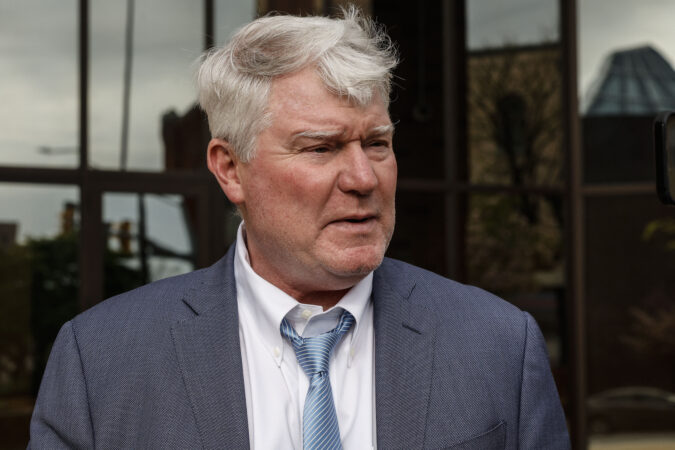
Convicted former labor leader John J. Dougherty is again asking a federal judge to cut short his six-year prison term, this time because he says the recent death of his father-in-law has left his gravely ill wife without a caregiver.
Dougherty made the request in a brief filed last month with U.S. District Judge Jeffrey L. Schmehl, writing that his wife, Cecilia — who for years has suffered from a debilitating brain injury — has been left “entirely alone and without any capable caregiver” since her father died from pancreatic cancer on Nov. 10.
Dougherty has previously argued that he should be granted compassionate release and allowed to serve the remainder of his sentence on house arrest to oversee his wife’s care — a request federal prosecutors have opposed.
In the latest request, Dougherty’s attorney, George Bochetto, wrote that Dougherty’s father-in-law, Joseph Conroy, had been serving as Cecilia Dougherty’s primary caregiver despite his own poor health and that Conroy’s death is “precisely the type of development” that warrants a change to Dougherty’s sentence.
Dougherty, Bochetto wrote, “remains the only person able and willing to provide his wife’s necessary care. No one besides Mr. Dougherty can fill the detrimental need that Mrs. Dougherty requires for survival.”
Federal prosecutors, however, said that Dougherty had previously asserted that Conroy was incapable of serving as Cecilia’s primary caretaker and that his newest motion for relief “directly contradicts” the representations he made in the last one.
“In short, the unfortunate passing of Mr. Conroy has no bearing at all on the circumstances,” prosecutors wrote in a reply brief filed last week.
Dougherty, 65, was once one of the state’s most powerful political figures, serving as the charismatic leader of Local 98 of the International Brotherhood of Electrical Workers with a wide range of connections in City Hall and Harrisburg.
Dougherty’s latest request for relief came several months after he first asked Schmehl for compassionate release.
In August, Bochetto filed an emergency brief saying that a trust fund established to pay for Cecilia Dougherty’s care was about to run out of money and that the couple’s adult daughters were not equipped to serve as permanent caregivers.
It also said Conroy, “once a limited source of support, is now medically incapacitated and permanently unable to contribute to her care in any way.”
Beyond detailing issues around the health of Dougherty’s wife, that filing said that Dougherty had also effectively run out of money and assets since he began serving his sentence at a federal penitentiary in Lewisburg and that he’d suffered from several new health issues while behind bars, including a chronic foot infection that made it hard for him to walk.
Prosecutors at the time wrote that they were sympathetic to the plight of Dougherty’s wife but that his absence from her life “does not distinguish this case from that of countless defendants whose loved ones suffer as a result of their crimes.”
It was not immediately clear when Schmehl might rule on Dougherty’s requested relief, or if he might take any additional action — such as scheduling a hearing — before doing so.
Ramon Roman-Montanez knew the police were watching.
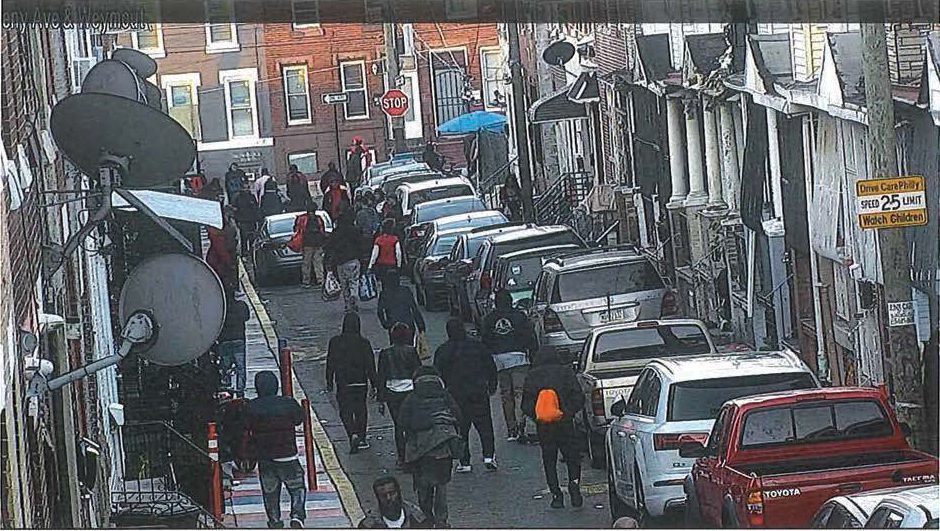
One day last April, as Roman-Montanez prepared to hand out free drug samples to users on Weymouth Street — a common tactic that dealers use to attract customers — he stood in the middle of the Kensington block and spotted a problem.
The cops had put up a pole camera.
Using binoculars, Roman-Montanez scouted out the new device at the end of the block, prosecutors said in court documents. But he had a business to run — and so, after talking with a few associates in the street, he decided that giveaway day would move forward as planned.
Shortly after dawn, prosecutors said, customers were recorded on the new surveillance camera crowding onto the 3100 block of Weymouth to receive their samples.
And in the weeks to come, business continued to boom.
A pole camera placed near Weymouth Street captured potential drug customers coming to the block to receive free samples handed out by the gang that ran the block, prosecutors said.
The camera, however, was just one hint of what authorities now say was a sprawling, multiyear investigation into the gang Roman-Montanez helped lead — a group that sold thousands of doses of heroin, fentanyl, crack, and cocaine over the course of more than a decade, and effectively took over a residential block in a neighborhood that has long suffered from crime, open-air drug dealing, and neglect.
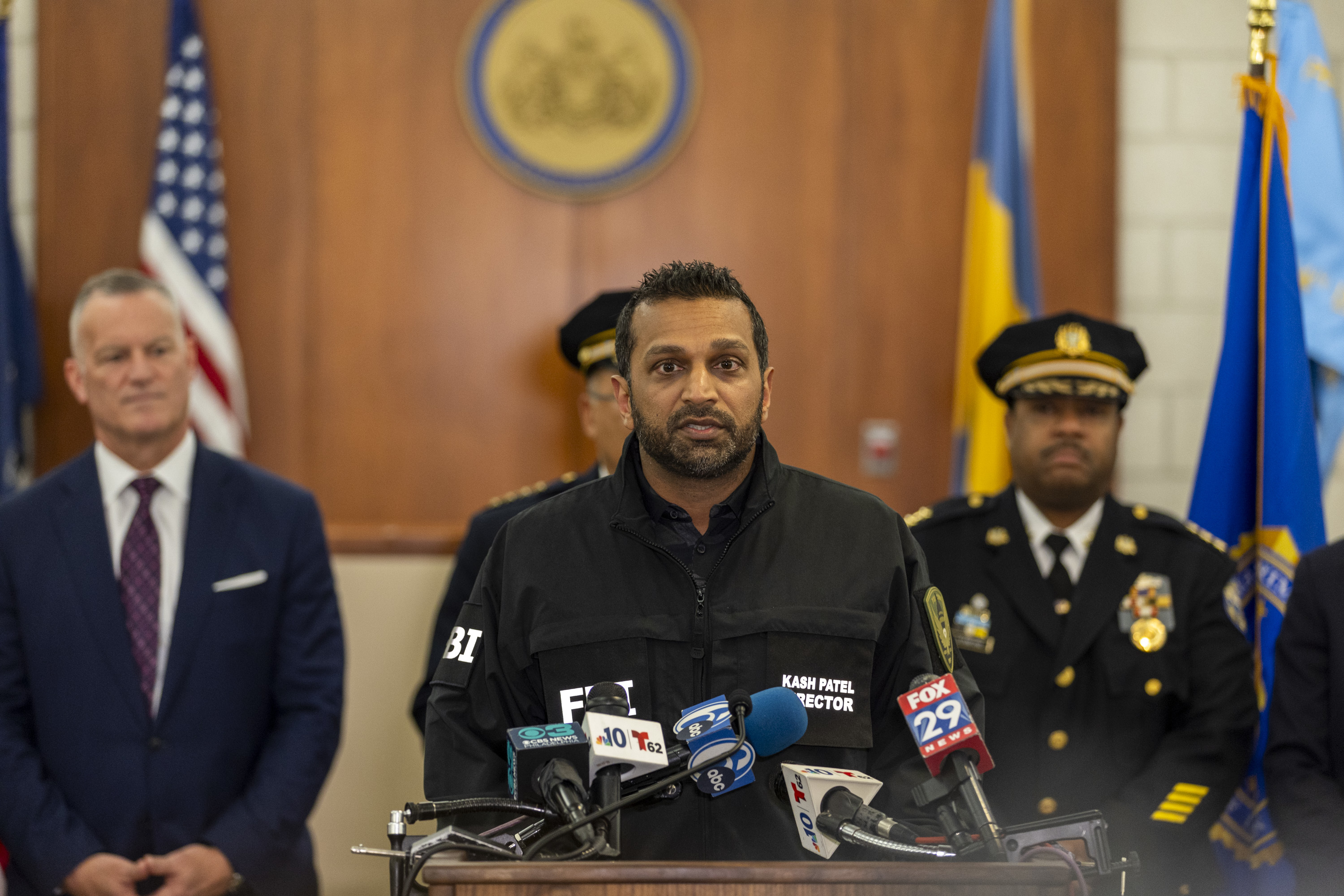
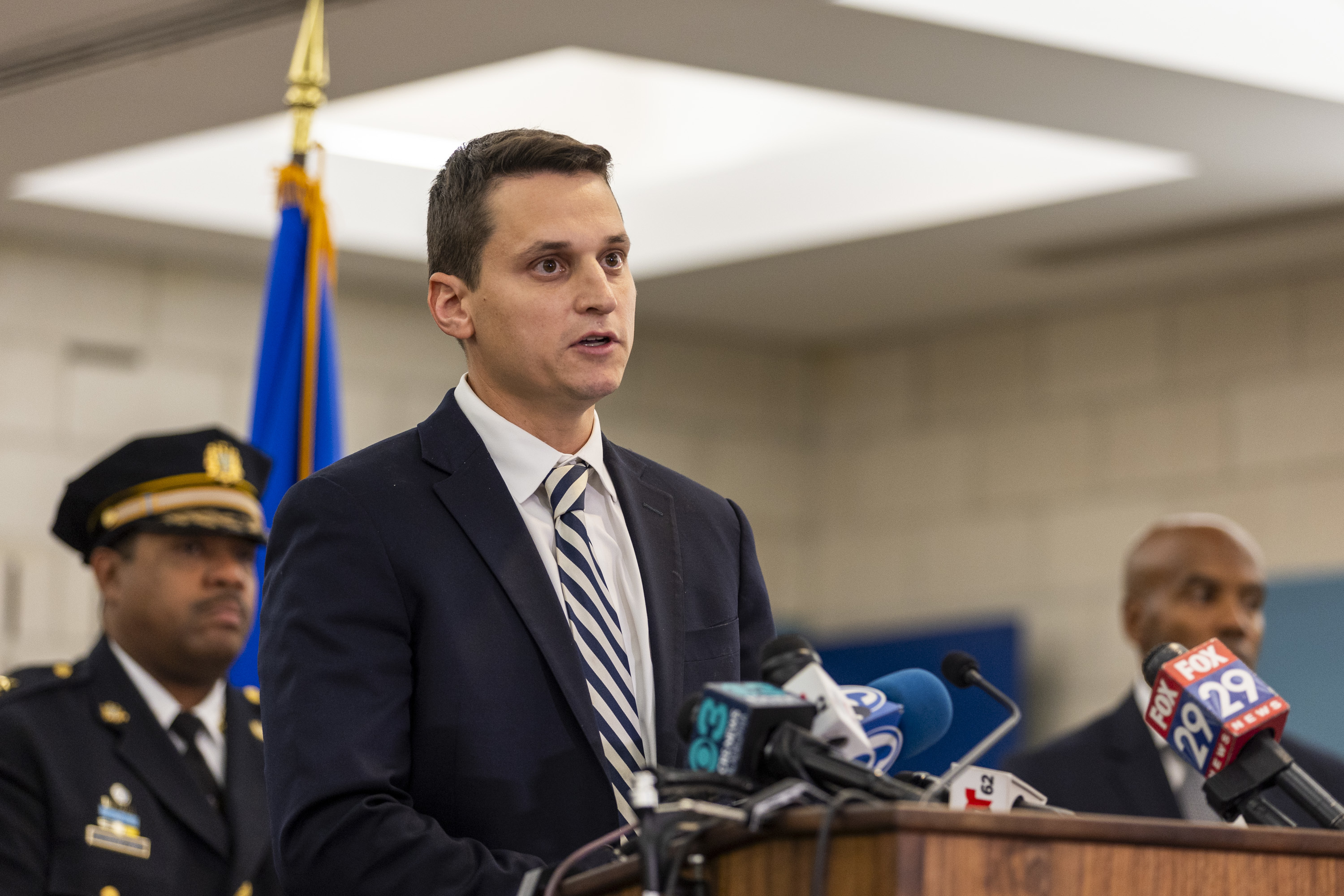
The results of the probe came to light last month, when FBI Director Kash Patel came to Philadelphia to announce that 33 people, including Roman-Montanez, had been indicted on drug charges. Patel called the case a model for law enforcement across the country, and an example of how to take out a drug gang terrorizing a community.
FBI Director Kash Patel speaks to press at the 24th Police District Headquarters in Philadelphia on Oct. 24.
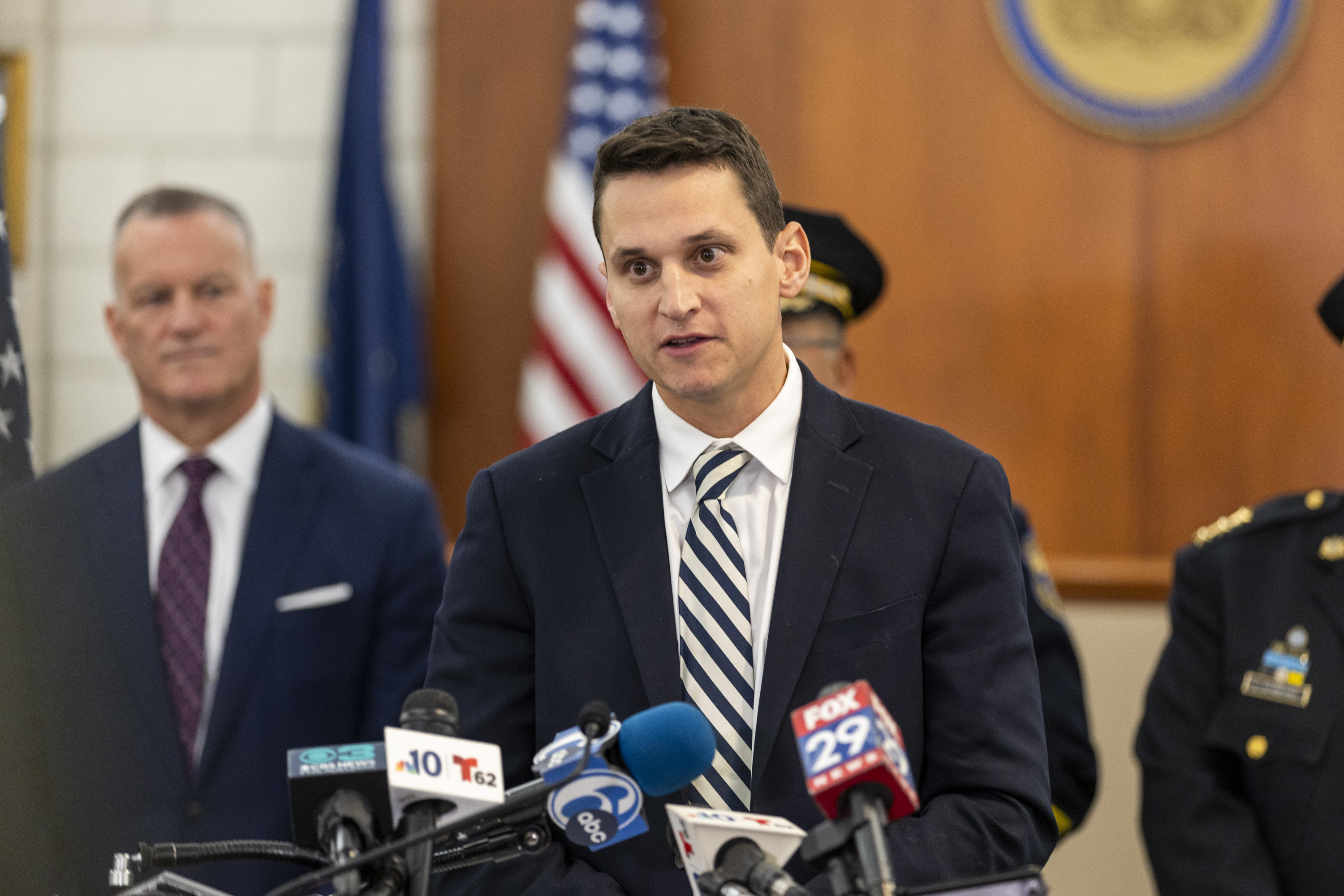
To understand the scope of the case — which U.S. Attorney David Metcalf described as the region’s largest single prosecution in a quarter-century — The Inquirer reviewed hundreds of pages of court records, examined social media accounts and videos connected to the group, and interviewed law enforcement officials and Weymouth Street residents.
The review revealed previously unreported details about the investigation, including that authorities ran monthslong wiretaps on about a half-dozen phones tied to gang members, placed a recording device in a vacant lot the gang used as a meeting place, employed at least seven confidential informants, and believe that over the course of nine years, the group trafficked tens of thousands of doses of drugs into the city — worth millions of dollars.
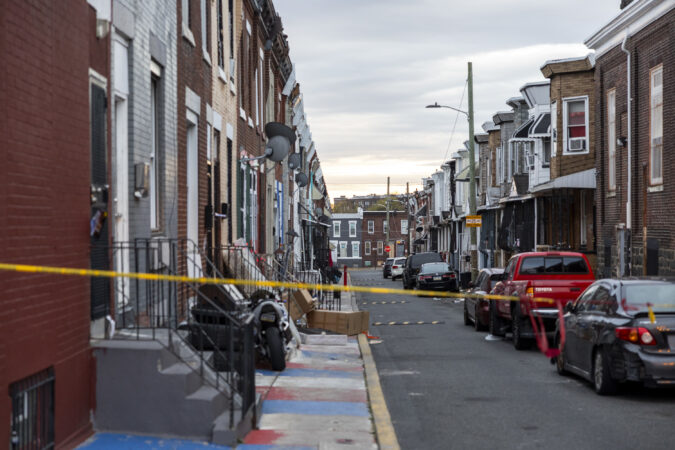
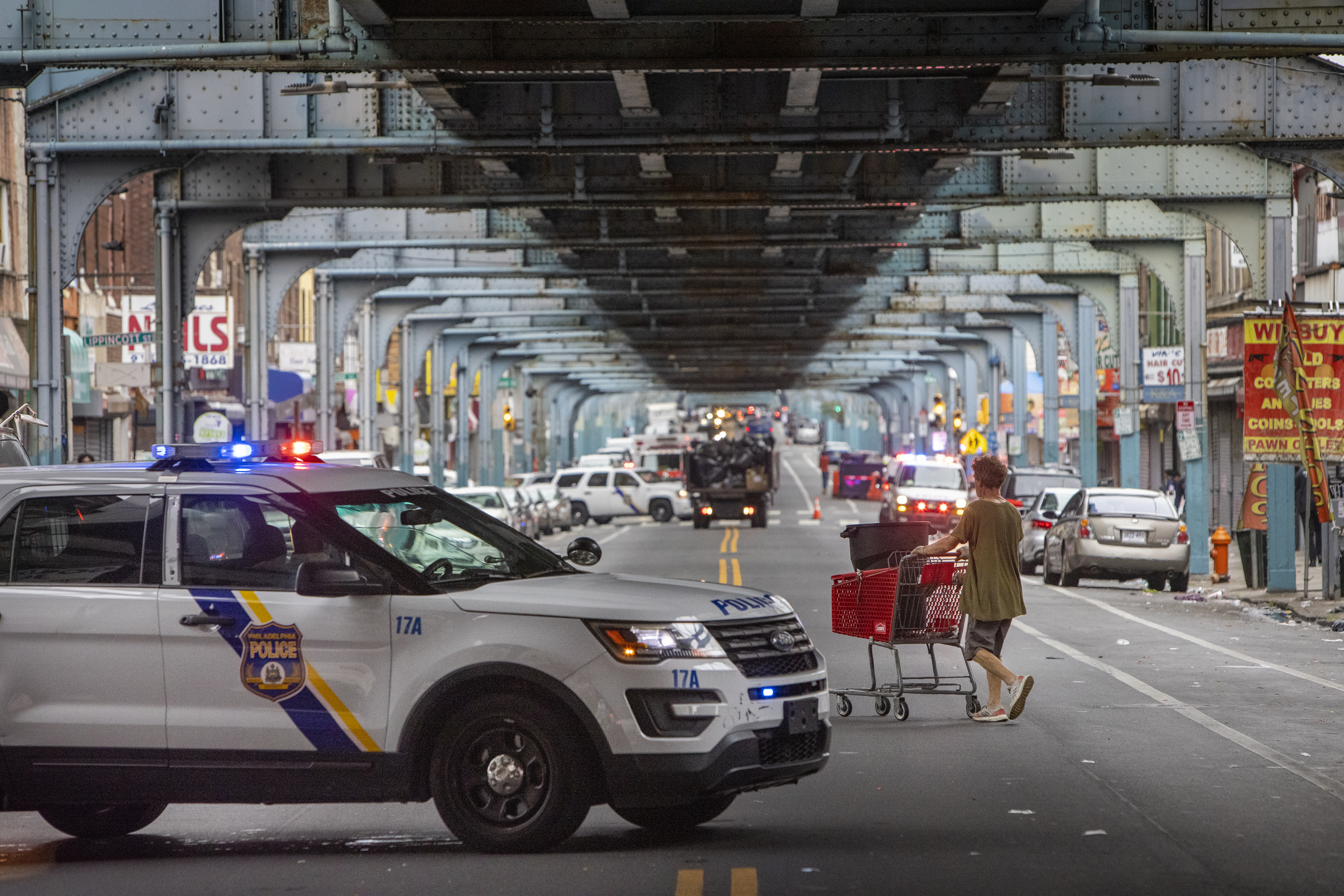
Philadelphia police this month continued to restrict access to Weymouth Street long after gang members had been arrested, a highly unconventional approach that officials said was aimed at sustaining the block’s newfound sense of quiet. Several residents said they didn’t mind the unusual tactic, in part because it helped prevent their block from quickly returning to its status as a marketplace for round-the-clock drug deals.
Those tactics underscored the depth of the investigation, which unfolded in the heart of Kensington — where law enforcement has employed a variety of approaches over the years to try to address crime, drug dealing and violence, sometimes with mixed results.
Philadelphia officials have for years tried a variety of tactics to try and address crime and quality-of-life concerns along Kensington Avenue.
But the review also showed that even as the investigation was underway, the gang continued to operate in the open — and some of law enforcement’s attempts to hold people accountable as the probe was unfolding were unsuccessful.
In August, for example, Roman-Montanez was charged in state court with drug possession and related crimes after police found fentanyl, crack, and $20,000 in cash in his house — the result of a raid on Weymouth Street that was part of the investigation into his gang.
But a few weeks later, his attorneys persuaded a Philadelphia judge to reduce his bail and he walked out of jail. The 40-year-old — who federal prosecutors now say was the de facto chief operating officer of one of the city’s biggest drug conspiracies — was taken back into custody only this month, when federal authorities unsealed his indictment.
Even as investigators were continuing to collect evidence against the gang, members routinely appeared in videos and songs on social media in which they boasted about their gang affiliation, brandished guns, and threatened acts of violence against rivals.
Some of the videos made modest Weymouth Street look more like a nightclub. Men wearing shimmering gold chains can be seen carrying designer bags and waving guns with extended clips at the camera. Others smoke blunts, or mix soda and a purple liquid together to make what appears to be the codeine-infused drink “lean.”
A video for the song “Philly Boy,” uploaded to YouTube last spring, made clear where the debauchery was taking place: It opens with a shot of the Weymouth street sign.
Beyond the fact that people who remained on the street could continue to sell drugs, prosecutors said the gang used threats to maintain control over their territory. And at least two suspected coconspirators were killed as the investigation wore on — sparking the potential for more retaliatory violence. Prosecutors have not yet charged any gang members with any shootings or homicides, but have said their investigation is continuing.
Metcalf, through a spokesperson, declined an interview request to discuss the case in more detail. But while announcing the takedown last month, he said there is always a tension in long-running investigations between making quick arrests and taking time to gather evidence for broader or stronger cases. And in this instance, he said, the goal was clear: Prosecutors were seeking to “eliminate the organization.”
“We could obviously just prosecute individual seizures of guns and drugs. But the organizational prosecution … that’s what’s going to make a difference in the community,” he said. “This neighborhood will be a lot safer than it [would’ve been] if we didn’t take our time to do that.”
U.S. Attorney David Metcalf speaks to press at the 24th Police District Headquarters on Oct. 24.
A sophisticated operation
Weymouth Street is one of a series of narrow, rowhouse-lined blocks in Kensington just a few steps from McPherson Square and near the intersection of Kensington and Allegheny Avenues — long the epicenters of a bustling narcotics bazaar.
Some corners in the area can pull in tens of thousands of dollars a day in drug sales, authorities say. And the competition among dealers has often led to violence, with shootings and homicides in Kensington historically outpacing the rest of Philadelphia.
The crew on Weymouth Street thrived in that environment, prosecutors said, and developed a sophisticated system for seeking to build and protect a business that sold fentanyl, crack, and cocaine 24 hours a day, seven days a week.
Their drugs were branded with unique stamps or names like Ric Flair, Horse Power, Gucci, or Donald Trump. Bags were sold for $5 each, prosecutors said, while “bundles” of about a dozen packets went for between $55 and $75.
The group maintained an internal hierarchy, prosecutors said, with key figures at the top overseeing layers of workers who engaged in hand-to-hand sales, watched out for police, managed the drug supply, or used violence to protect the operation. Many members were related to one another, prosecutors said, and some families had people from multiple generations working for the group.
The leader was Jose Antonio Morales Nieves, prosecutors said, who “owned” the block and allowed people to deal there in exchange for payments he called “rent.”
His top deputies ran the day-to-day operations, prosecutors said, and included Roman-Montanez, nicknamed Viejo, and Roman-Montanez’s paramour, Nancy Rios-Valentin.
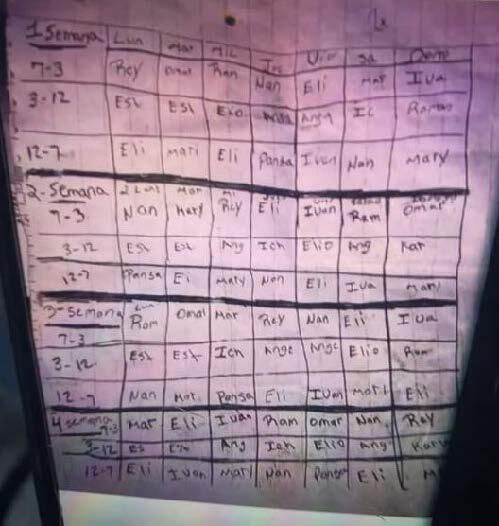
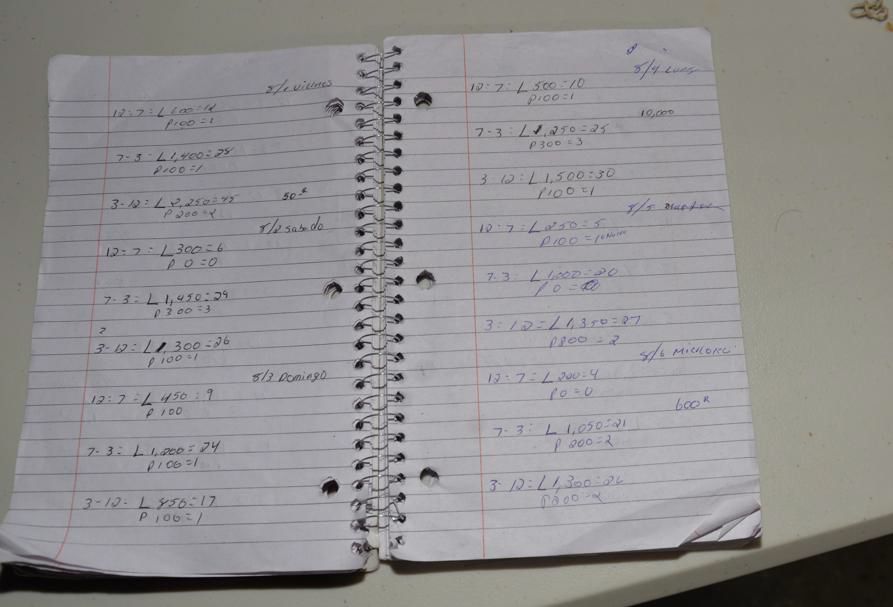
The two set and distributed schedules for lower-level employees, kept track of how and when drug stashes needed to be refilled, and maintained handwritten ledgers tracking sales per shift.
Prosecutors said leaders of the Weymouth Street drug trafficking organization kept detailed schedules on which members would work which shifts.
The first episode in the indictment dates to January 2016, when, prosecutors said, Angel Rios-Valentin — the brother of Nancy Rios-Valentin — stood watch as someone sold drugs to a confidential informant.
A few months later, the indictment said, police conducted a traffic stop on the block, and gang leader Morales-Nieves — also known as Flaco — responded by approaching the officers in a threatening manner carrying a shovel.
As the gang continued to build its business on Weymouth, prosecutors said, several members took up residence on the block, including Roman-Montanez, and members used a variety of houses or abandoned lots to store or sell drugs.
Among them, prosecutors said, was a vacant lot with a tent they labeled the “bunker.” It was next door to the house Roman-Montanez shared with Rios-Valentin, they said, and served as a meeting place, stash location, and place to cook crack.
Last May, prosecutors said, it also served as a site for violence, when Roman-Montanez dragged a man into the bunker, and another gang member — who is not named in court documents — beat him with a rod.
Crimes involving violence
Much of the 170-page indictment revolves around individual episodes in which members of the gang conducted operations that would be considered routine if they weren’t illegal, such as selling drugs to users, managing the block’s supply, or handling illicit proceeds.
The document includes detailed quotes from those accused of taking part in the operation and describes their actions with unusual precision, the result of what prosecutors said were a series of wiretapped phones, cameras — including one inside the bunker — interactions with informants, and seizures of drugs by police.
Police found handwritten ledgers detailing drug activities inside Ramon Roman-Montanez’s house on Weymouth Street, prosecutors said.
Some incidents, however, went well beyond the everyday rhythm of drug sales, prosecutors said.
In November 2024, several gang members ran after a car that had sped down Weymouth, then fired shots at the vehicle after they caught up to it around the corner, the indictment said. The document does not say if anyone in the car was struck.
Six months later, prosecutors said, the pole camera captured footage of two members of the gang — John David Lopez-Boria and Luis Williams — laughing at someone sitting on a front step across the street, then beating the person and dragging the victim into an abandoned lot to continue the assault.
The gang’s violent nature was also captured on YouTube, where gang members appeared in videos taunting rivals and flaunting guns.
In one video, the rapper Sombra PR — whom prosecutors described in court documents as an unindicted coconspirator — made clear that he and a Weymouth Street gang member known as Panza would use a Draco gun to come after anyone who threatened them.
“I’ll get you with Panza with Draco and you’re stiff,” he rapped.
Prosecutors said Weymouth Street members often flaunted guns and boasted about their gang affiliation in YouTube videos.
Panza, whose given name was Heriberto Torres Gual, was described by prosecutors in court documents as one of the group’s enforcers, and he appeared in some of Sombra PR’s videos.
But last month, Gual, 31, was gunned down while riding an electric bike on the 3000 block of Kensington Avenue, just a few blocks from Weymouth, according to police. Surveillance footage showed a torrent of shots being fired out of an SUV that had pulled up beside him.
In all, police recovered 35 spent shell casings from the scene and said it was a targeted attack.
Gual was the second high-ranking gang member to be killed in the last year, authorities said. Last November, Felix Rios-Valentin — the brother of Nancy and Angel Rios-Valentin — was fatally shot in Mayfair.
Police have made no arrests in either case.
After Gual’s death, an Instagram account for a record label dubbed “Weymouth Family” made a post referencing the title of a new song that memorialized Gual. The post tagged Pressure 9X19, the artist behind “Philly Boy.”
And on another account associated with Weymouth-tied rappers was an illustration of an unmistakable street sign: the marker for the intersection of Allegheny Avenue and Weymouth Street.
Evading accountability
During their long investigation, law enforcement did sometimes disrupt the gang’s drug operations and make arrests.
In 2020, Angel Rios-Valentin was convicted in federal court of illegal gun possession after officers found him carrying a loaded handgun that he had taken from Roman-Montanez’s house. He was sentenced to five years in prison and was on supervised release when he was arrested again last month.
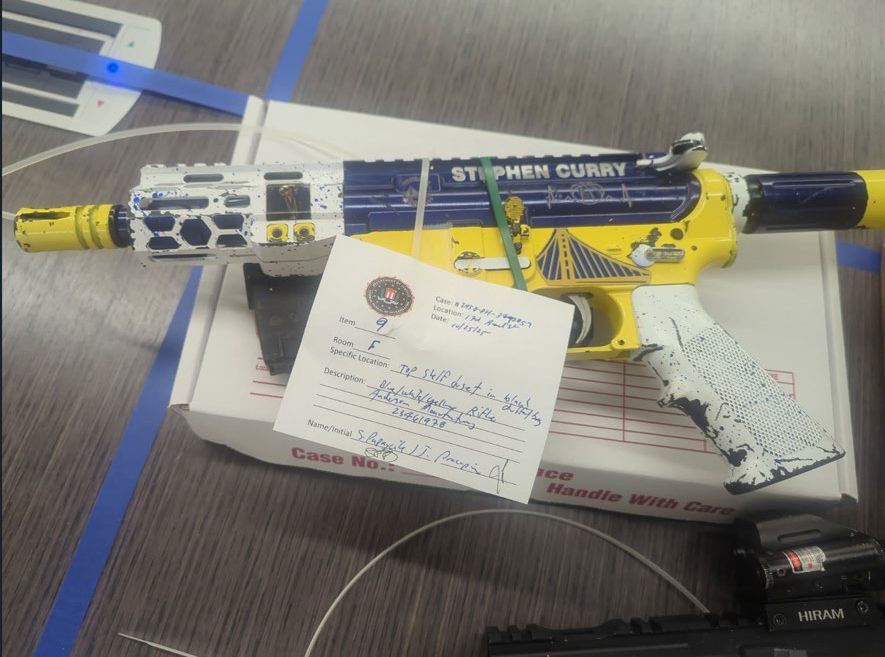
Police found four guns in Rios-Valentin’s house, a discovery that prosecutors said showed his ongoing commitment to the gang.
When Angel Rios-Valentin was arrested, prosecutors said, responding officers found several guns in his house, including this assault rifle.
Roman-Montanez, meanwhile, was arrested twice in the last three years, court documents show — but in both cases managed to avoid significant consequences.
In October 2022, police searched his house and found 96 grams of fentanyl, four loaded guns, and nearly $125,000 in cash, prosecutors said. Roman-Montanez was charged in state court, but the case was withdrawn.
Federal prosecutors did not explain the withdrawal in court documents, and because the case did not result in a conviction, the records are now sealed under Pennsylvania law. The district attorney’s office did not respond to a request for comment.
A source familiar with the case said it collapsed because scheduling issues with lawyers and witnesses delayed the preliminary hearing for more than a year and prosecutors ultimately withdrew the charges.
The second arrest was in August, when police, acting on a search warrant, again searched Roman-Montanez’s house and found more fentanyl, crack, and cash inside, court records show. He was charged with crimes including conspiracy and possession with intent to deliver, and his bail was set at $750,000.
But a month later, his lawyers persuaded a judge to lower his bail.
The prosecutor argued against that, according to a transcript of the bail hearing, saying the sheer amount of drugs and cash involved made clear that Roman-Montanez was “not a minor player.”
But Common Pleas Court Judge Elvin Ross III said details about Roman-Montanez’s role in the conspiracy were lacking. He reduced bail to $300,000, and a few weeks later, Roman-Montanez was back on the street.
Will the quieter aftermath last?
On the morning of Oct. 24, dozens of federal agents and city police officers swarmed Weymouth Street to arrest suspected gang members and gather additional evidence to use in their court case. Some targets were taken into custody elsewhere — the group’s leader, Morales Nieves, was arrested in Luquillo, Puerto Rico.
Patel, the FBI director, said at a news conference afterward that the case “is not just one instance of removing a couple of people — it is an example of how you remove an entire organization that has corrupted not just the city of Philadelphia but the state of Pennsylvania as well.”
Roman-Montanez has pleaded not guilty, as has Nancy Rios-Valentin. Her attorney wrote in court documents that she maintains her innocence, that the case against her was “not strong,” and that she “cannot be convicted on a theory of ‘guilt by association.’” A federal judge on Monday ordered that Rios-Valentin — who has four children — be released from jail and placed in home confinement at her sister’s house while awaiting trial.
On Weymouth Street, residents said in interviews that life has been quieter in the weeks since the raids. Some of that is the result of the ongoing police presence, which began to relax this week as officers resumed allowing passersby to walk or drive through the street.
One resident, who asked not to be identified for fear of retaliation, said he appreciated law enforcement’s attempt to help clean up a struggling area.
But he was skeptical that one prosecution — even one as ambitious as this — would reverse a persistent and neighborhood-wide problem.
“I don’t see it making a big difference any time soon, and it’s nobody’s fault,” he said. “This is not an overnight fix.”
The final defendant in a sweeping corruption probe that uncovered a series of bribes being lavished upon an Amtrak manager during a renovation project at 30th Street Station was sentenced Friday to two months in prison.
Khaled Dallo was an employee at an Illinois-based masonry firm and helped provide a series of extravagant gifts to the Philadelphia-based project manager, Ajith Bhaskaran, including vacations to India and Ecuador, a Tourneau watch, expensive dinners in Center City, a German shepherd puppy, and cash.
In all, prosecutors said, Dallo and supervisors at his company, Mark 1 Restoration, provided Bhaskaran with nearly $330,000 in bribes, and Bhaskaran in turn helped approve tens of millions of dollars in expenses for Mark 1, nearly doubling the cost of restoring the train station’s historic facade.
Dallo, 69, said in court that he was sorry for his misconduct, and that it stood in contrast with how he has tried to live the rest of his life.
“I knew it was wrong,” he said, “and chose to do it anyway.”
His sentencing represents the final chapter in a saga that saw federal prosecutors indict six people connected to the restoration project — four from Mark 1, and two from another contractor.
All of the Mark 1 employees have since been sentenced to prison. Dallo received the shortest term, with prosecutors crediting him for being the first person to plead guilty and saying he served a more subordinate role in the scheme.
Bhaskaran, the Amtrak manager, was charged with unrelated wire fraud, but died of heart failure in 2019.
The renovation project Bhaskaran oversaw at 30th Street was announced in 2015, when the railroad agency signed a $58 million contract with Mark 1 to repair and clean the station’s limestone facade.
Bhaskaran controlled the project’s purse strings, and prosecutors said Mark 1 employees quickly came to realize their conditions on the job site could be improved if he was happy.
About a year into the project, prosecutors said, Bhaskaran began requesting gifts, despite Amtrak rules that bar employees from receiving them. Executives at Mark 1 knew Bhaskaran’s requests were improper, prosecutors said, but went on to fulfill them anyway — in part because Bhaskaran had the ability to approve additional business on the project.
Dallo was among the Mark 1 employees who provided Bhaskaran with dinners at steakhouses, limousine rides, a $5,600 watch, the paid vacations, and a nearly $5,000 check to an Illinois breeder of German shepherds.
Over that same time frame, Mark 1 continued to receive additional funding for its work at 30th Street. In total, prosecutors said, Bhaskaran helped secure the company $52 million in new contracts, about $2 million of which was considered fraudulent overbilling.
The scheme began to fall apart in 2018, when an anonymous tipster sent a letter to Amtrak’s inspector general about Bhaskaran’s suspicious behavior. That led to an investigation involving the FBI and Amtrak’s inspector general.
Dallo acknowledged his wrongdoing about a year later, as soon asfederal agents confronted him, prosecutors said.
Still, U.S. District Wendy Beetlestone told Dallo that his actions were not a onetime lapse in judgment, but a “considered, yearslong” effort that led to taxpayer money being spent on graft.
A former West Philadelphia ward leader and onetime staffer for State Sen. Vincent Hughes was sentenced Wednesday to one year in federal prison for stealing more than $140,000 from his ward and a church where he served as a deacon.
Willie Jordan, 68, had pleaded guilty to two counts of wire fraud over the summer. During his sentencing hearing Wednesday before U.S. District Judge Harvey Bartle III, Jordan said that he was sorry and that there were no excuses for his misconduct.
“It was a bad decision,” Jordan said. “It was just wrong.”
Bartle agreed, telling Jordan that although he appeared to have lived an otherwise noble life — dedicating his time and career to serving the public — stealing from institutions that sought to help people was inexcusable.
“What’s so disappointing is you had a position of trust … and you abused that position of trust,” Bartle said. “And the amount of money you took were not insignificant sums.”
Jordan for years was the unpaid leader of the 44th Ward in West Philadelphia and also a deacon at Mount Calvary Baptist Church in North Philadelphia. Prosecutors said that he had near-total control over the finances of both organizations, and that from 2020 to 2024 he took advantage of that status by writing checks to himself to cover personal expenses, including credit card and utility bills, purchases from airlines and furniture stores, and costs associated with a relative’s funeral.
In all, prosecutors said, he stole more than $57,000 from the church and $85,000 from the ward, and often claimed the money was to reimburse the organizations for expenses they never incurred. To further conceal his wrongdoing, prosecutors said, he sometimes wrote false entries on checks’ memo lines, saying they were to pay for items such as Easter baskets or summer youth programs.
Much of the fraud occurred while Jordan was working in Hughes’ office, prosecutors said, where he was a longtime top aide and had a six-figure state salary.
Jordan’s attorney, Sam Stretton, said that Jordan retired from that job earlier this year amid the federal investigation into his crimes, and that he also is no longer a ward leader.
Assistant U.S. Attorney Louis Lappen said in court that the repeated nature of Jordan’s wrongdoing, and his status as a well-paid public employee, made his crimes stand out.
“He’s somebody who should have known better,” Lappen said.
Stretton said Jordan “made a terrible mistake but is an otherwise good person.” He said Jordan has already repaid the $57,000 he stole from the church and is continuing to donate hundreds of dollars per month to help cover its bills and other expenses. Jordan also is continuing to make restitution payments to the ward, Stretton said.
Several of Jordan’s relatives wept in the courtroom after Bartle imposed his sentence. The judge then paused and addressed Jordan again before adjourning the hearing.
“You’re going to have to pay the price of your crimes, but there is life after prison, and I hope you will continue to be a useful and productive citizen,” Bartle said. “There is redemption.”
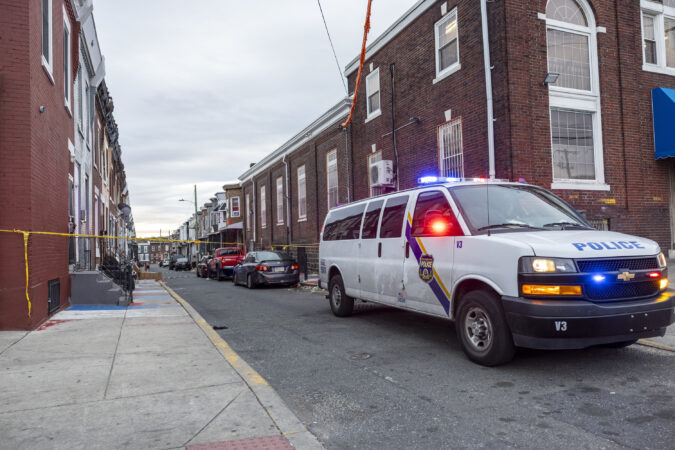
Three weeks after Philadelphia police and federal agents raided Kensington’s Weymouth Street and arrested more than 30 people in what they called the takedown of a decade-old drug-trafficking gang, residents and neighbors are still feeling the constant presence of law enforcement.
That’s because Philadelphia police officers have since been stationed at either end of the narrow block 24 hours a day — asking anyone who wants to pass through to show identification, and declining to let people walk or drive through if they don’t live there.
Deputy Police Commissioner Pedro Rosario said the strategy was part of an attempt to ensure that the block — which had long been a hub of open-air drug dealing — not fall back under control of a new or rival drug organization. Officials who announced the takedown effort last month, including FBI Director Kash Patel, said the case was an attempt to “dismantle” the gang that controlled the 3100 block of Weymouth, and Rosario said he wanted to ensure the results of that investigation had time to take root.
Although limiting public access to a street is unusual, Rosario said that the neighbors he has heard from have been supportive, and that he viewed the effort as an attempt “to stabilize the neighborhood.” Mayor Cherelle L. Parker’s administration has made addressing crime and living conditions in Kensington a priority, employing a variety of sometimes-controversial strategies to combat issues including drug dealing and homelessness.
“This is the department just trying to give the neighborhood a chance to catch its breath,” Rosario said. “I want the power of that investigation to linger. That way, people can really take into account, ‘Should I be doing [drug] business here in Kensington, or is it finally changing?’”
A spokesperson for Parker referred all comments to the police department.
City Councilmember Quetcy Lozada, who represents the area, said that she, too, has received primarily positive feedback from residents about the situation, and that she viewed the heavy police presence as a way to help ensure the block be given a chance to move forward.
“Everyone knows when one operation is broken down and moved out of the way, there’s always someone looking to move in and replace that,” Lozada said. “I think it’s very important for the police to stay around and for the new norm to stay successful.”
Inquirer reporters visited the block on three days this week seeking to interview residents about the aftermath of the raids, but were denied access by officers sitting in patrol cars at either end of the street.
In phone interviews conducted afterward, three residents said they were either indifferent about, or fine with, the ongoing restrictions.
“I’m either going to be for trying to fix this problem or against it,” said one resident, who requested anonymity to discuss a sensitive issue affecting his block. “And if this is what [police] have to do right now, I think I’d rather have the police there than drug [users] running up and down the street.”
Another resident, who also asked not to be named, said he believed police were “keeping people safe.”
“People appreciate it, that we have somebody doing something about it,” he said.
Jimmy Townsend disagreed. The 51-year-old said that he has lived on the block for three years, and that being questioned on the way to his house amounted to “harassment” and a way to impose consequences on an entire block for the actions of others.
“God forbid I forget my mail or ID, I might get stopped from coming to my own house,” Townsend said. “I was not part of that crime.”
Witold J. Walczak, legal director for the American Civil Liberties Union of Pennsylvania, said government agencies generally have “a significant burden” to justify prohibiting access to areas like public streets or sidewalks. And while police can — and often do — limit access to public places in the middle of major operations, Walczak said he was unsure why police in this instance felt the need to place such restrictions on the block if officers were also stationed there in patrol cars.
“If the police are there anyway, I don’t understand how [not] letting people in and out of the area is going to advance their interests,” he said. “The fact that they’re there should do that without restricting access.”
Rosario, the deputy commissioner, said any time police place a heavy emphasis on one patrol area, they will scale back their presence over time as conditions improve. In this case, he said, “I want to be strategic in how we do that.”
In the meantime, he said, police were continuing to allow delivery trucks and other essential vehicles to access the block, even as officers sought to divert most passersby elsewhere.
“This is us really being deliberate,” he said, “to let this sink in for a second.”
A former Philadelphia probation officer and a former city police officer have been charged with illegally connecting bettors to an overseas sports gambling website that allowed them to place hundreds of thousands of dollars in bets over nearly a decade, according to federal authorities.
Joseph Moore and James P. DeAngelo Jr. each face one count of conducting an illegal gambling business, court records show. Moore, the former probation officer, pleaded guilty in federal court Monday.
DeAngelo, the former police officer, is scheduled to appear in court later this week and has been charged by information, which typically indicates that a defendant intends to plead guilty.
Prosecutors said in charging documents that Moore ran the scheme from 2017 to 2025 — operating “block pools” based on NFL or NCAA basketball games, or helping bettors place ordinary wagers on different sporting events. He would sometimes send mass emails to hundreds of bettors advertising pools he was running, the documents said, with entry fees of a few hundred dollars and payouts in the thousands for winners.
Moore often collected 10% of the winners’ earnings as a “tip,” prosecutors said, and he sometimes allowed bettors to place wagers on credit even if they had incurred multiple losses.
He conducted some of his business from his probation office, the documents said, and saved records from the operation on his work computer. At one point, prosecutors said, he recruited another probation officer to help collect and transfer money from bettors using peer-to-peer apps such as Venmo and Cash App.
DeAngelo, meanwhile, helped maintain the operation’s access to the overseas gambling site, prosecutors said, and he sometimes accepted wagers from individual bettors.
Prosecutors did not specify whether the investigation led either man to lose his job. But in charging documents, prosecutors said Moore ran the operation until February 2025, and Martin O’Rourke, a spokesperson for the First Judicial District, said Monday that Moore resigned from the probation department that month.
A police spokesperson did not immediately respond to a request for comment Monday, and DeAngelo did not have an attorney listed in court records.
The case was unsealed Monday, just days after federal prosecutors in New York unveiled two sweeping indictments charging several NBA figures with participating in illegal gambling schemes, one of which involved a player allegedly providing inside information to bettors about specific games.
The fallout from that scandal has come quickly, with some commentators questioning whether sports leagues have grown too close to the betting industry, and Congress requesting a briefing from the NBA’s commissioner, Adam Silver.
FBI Director Kash Patel visited Philadelphia Friday to announce the results of a large-scale investigation into a Kensington-based drug gang — the latest demonstration of how President Donald Trump’s administration is seeking to highlight what it’s called a nationwide crackdown against suspected drug dealers.
The target of the investigation — which spanned several years — was a gang that had long run a 24-hour open-air drug market on the 3100 block of Weymouth Street, according to court documents. The group was sophisticated, the documents said, with dozens of members working specific schedules, performing specific roles — such as block owner, street dealer, or lookout — and seeking to control territory with the threat of violence.
Members dealt drugs including fentanyl, heroin, cocaine, and crack, the documents said, and oversaw “one of the most prolific drug blocks in the city.” They also controlled parts of other nearby streets in a neighborhood where single corners have historically been able to generate tens of millions of dollars per year in drug sales.
Prosecutors indicted 33 people in all, court records show, including Jose Antonio Morales Nieves and Ramon Roman-Montanez, whom they described as two of the group’s leaders. Most defendants were charged with conspiracy to distribute controlled substances or other drug-related crimes.
Moralez Nieves “owned” the 3100 block of Weymouth, prosecutors said, and let dealers sell there by paying him “rent.” Roman-Montanez, meanwhile, organized street-level operations — developing schedules, doling out roles, and managing profits.
U.S. Attorney David Metcalf said the investigation into the Weymouth Street group would effectively eliminate it.
U.S. Attorney David Metcalf said more defendants were indicted in this case than any other federal prosecution in the Philadelphia region in a quarter-century.
And although prosecutors did not estimate how much money the group made during its decade-long run on the block — and none of its members were officially charged with committing acts of violence — Metcalf said the arrests nonetheless “annihilated” a gang that had terrorized a long-suffering part of Kensington.
Patel said the effort was emblematic of how law enforcement — both local and federal — can work together to address chronic issues including drug dealing and gun violence.
“Everyone in America should be looking at this takedown,” Patel said “This takedown is how you safeguard American cities from coast to coast.”
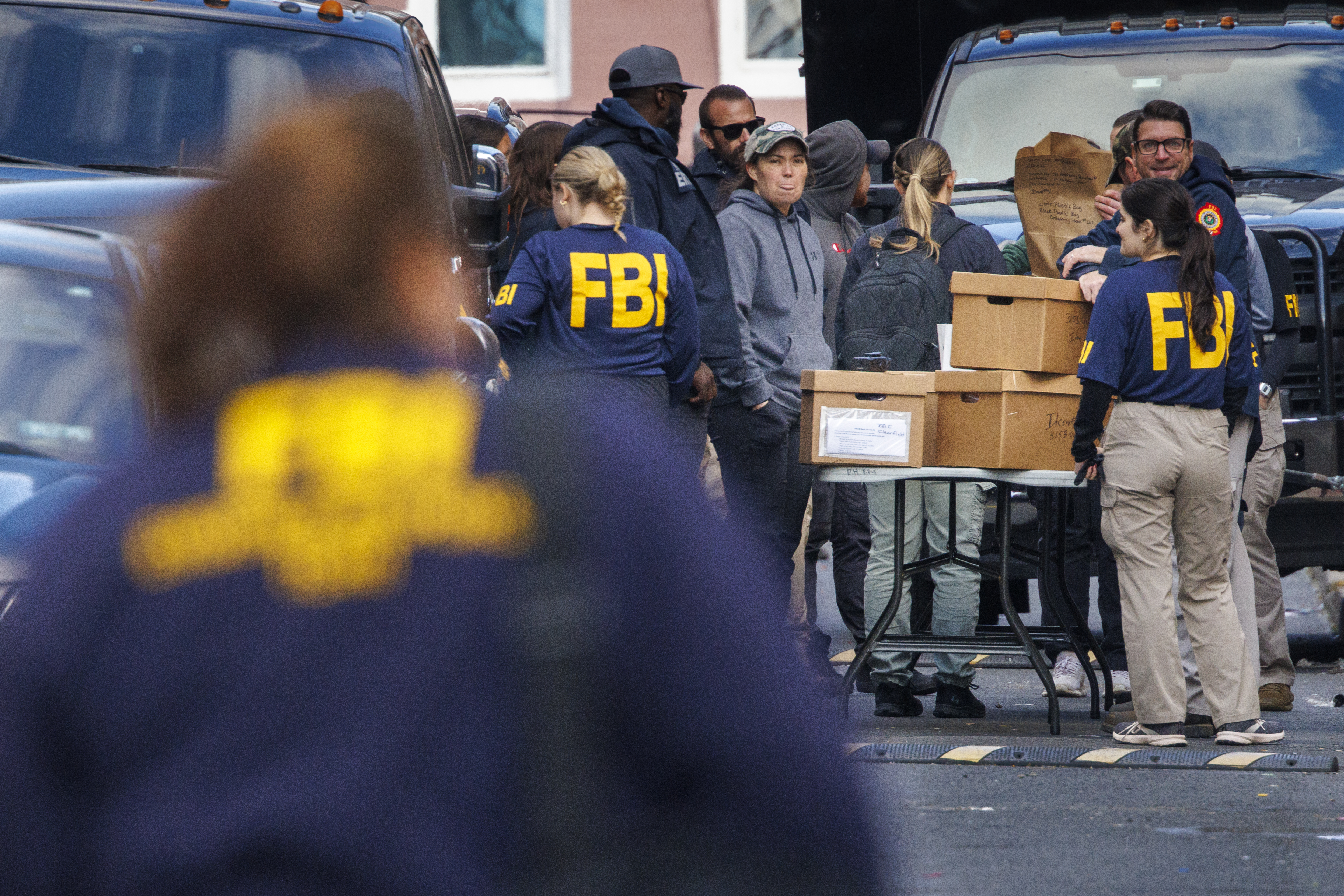
Law enforcement and FBI at Weymouth Street between Clearfield and Allegheny Avenue on Friday, October 24, 2025.
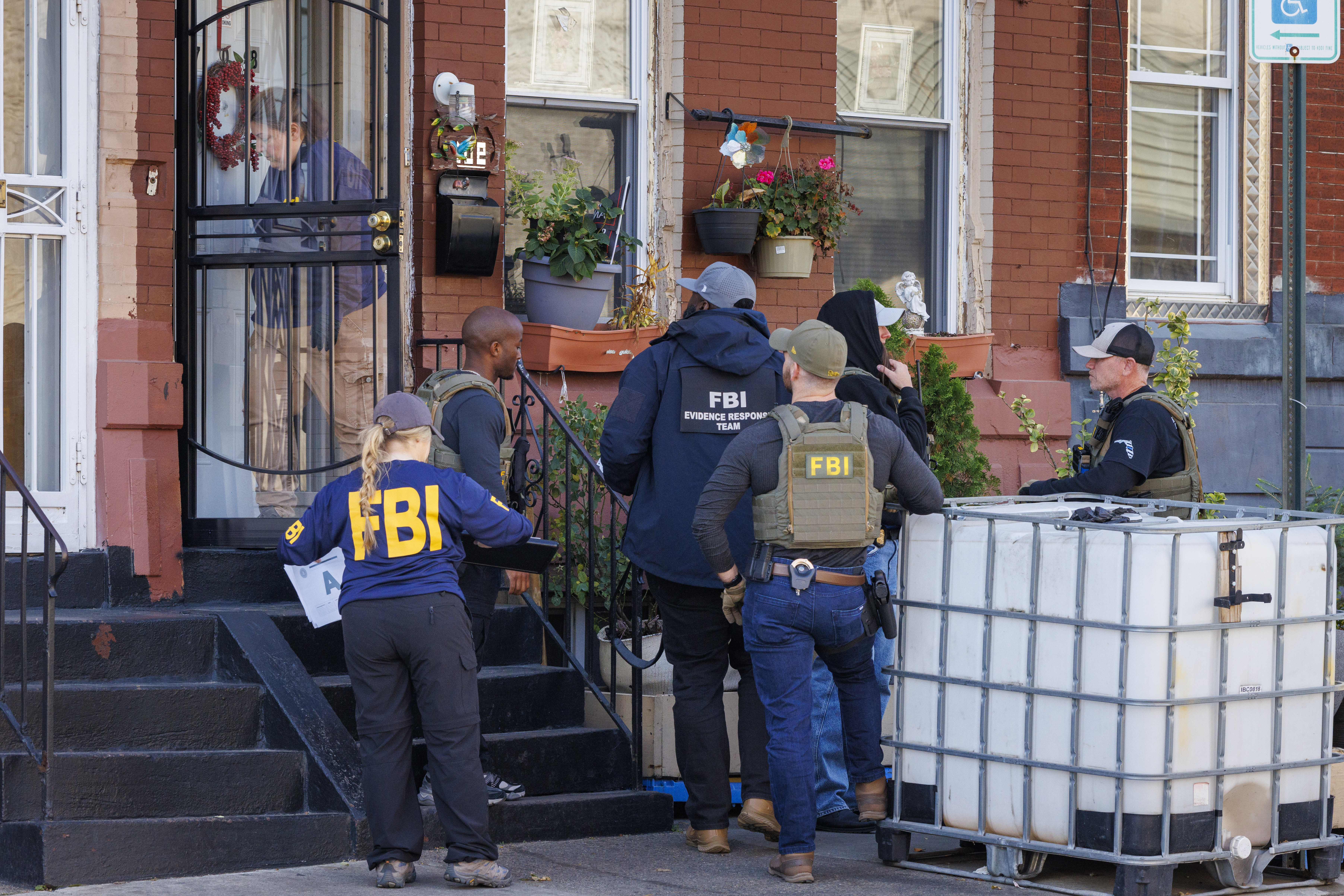
FBI agents and Philadelphia police officers conducted a series of raids in Kensington early Friday morning in support of the initiative. Wayne Jacobs, the FBI’s top official in Philadelphia, said agents served 11 search warrants, and that 30 of the 33 defendants were in custody as of Friday afternoon.
Philadelphia Police Commissioner Kevin Bethel said he was proud that the arrests might help bring “safety, dignity and peace” to Kensington — a neighborhood that Mayor Cherelle L. Parker’s administration has sought to prioritize throughout her two years in office, nearly tripling the police force in the neighborhood.
While officials acknowledged that the investigation began several years ago, the results nonetheless came as Trump and some of his top cabinet officials — including Patel, Attorney General Pam Bondi, and Defense Secretary Pete Hegseth — have sought in recent weeks to promote what they’ve cast as a concerted effort to address crime across the country, particularly involving suspected drug traffickers.
Some of the Trump administration’s initiatives have been relatively conventional, such as Friday’s raids in Philadelphia and other recent takedowns in cities such as Milwaukee and Pittsburgh.
Trump and Patel have also touted the FBI’s arrest numbers this year, saying they are “working non-stop to make America safe again.”
Dan Bongino, one of Patel’s top deputies at the FBI, said Friday that the Philadelphia arrests were part of that mission, writing on social media: “When President Trump told us to ‘go get em,’ he wasn’t kidding. And neither were we.”
FBI agents were on the 700 block of East Clearfield near Weymouth Street on Friday morning.
Still, other aspects of the campaign have been highly controversial, including Trump seeking to deploy federal troops to cities such as Chicago and Portland in response to what he’s called widespread unrest or clashes between protesters and U.S. Immigration and Customs Enforcement agents. Local officials have described Trump’s efforts as unnecessary and challenged them in court.
Trump also moved to effectively federalize law enforcement in Washington, D.C., an effort that local officials called a “baseless power grab” in a lawsuit.
And international tensions have started to rise over the military’s continued bombing of alleged drug-carrying boats in the Caribbean Sea and Pacific Ocean — strikes that have killed dozens of people and raised questions about whether the tactic is legal.
Around Weymouth Street on Friday, SWAT units had dispersed by noon. Residents by then had gathered in the street along the narrow block, where some rowhouse doors were left ajar and several neighbors peered curiously from upper windows.
Victor Ramirez, who has lived near Weymouth Street for 20 years, said police activity has become more common in the area in recent months.
“It’s a different story almost every day,” Ramirez said outside his home.
Ramirez said increased law enforcement activity has frightened his neighbors. He said most are “good people” who work to feed their families. Still, Ramirez said he feels more safe with the increased attention to crime in the neighborhood.
The FBI raid Friday morning felt like a significant escalation, he said. Ramirez was surprised to see agents armed with assault rifles hopping out of armored cars and making arrests.
The raid came on the day of a fall block party on Allegheny Avenue, which stretched between F and G Streets and intersected with neighboring Weymouth Street. The event is popular with local children, Ramirez said, and he hoped it would bring positive energy to a block that experienced an unusual morning.
The wife of the founder of Par Funding, a fraudulent and now-defunct Philadelphia-based lending firm, was sentenced Thursday to one day in jail and 60 days of house arrest for dodging about $1.6 million in taxes she should have paid on income derived from the scheme.
Lisa McElhone apologized for her conduct during a sentencing hearing before U.S. District Judge Mark A. Kearney, saying the spectacular implosion of her husband’s business — and the criminal prosecution of people associated with it — was the “most painful and transformative period of my entire life,” causing her to lose her home and her future, and watch her husband get sent to prison.
“It’s difficult, if not impossible, to express how overwhelming and life-altering this has been,” she said.
Prosecutors acknowledged that McElhone — the owner of an Old City nail salon — had almost nothing to do with Par’s day-to-day operations. And the crimes she was charged with paled in comparison to those of others associated with the business — particularly her husband, Joseph LaForte, who ran the cash-advance firm as a Mafia-style criminal enterprise that defrauded investors out of hundreds of millions of dollars, and resorted to loan shark-style tactics in efforts to collect on debts.
Still, Kearney said, McElhone, 46, did bear some responsibility by failing to question aspects of the life she was afforded that she should have known were too good to be true.
“These things only stop when good people … stop and say, ‘Hey, you’re asking me to go a step too far,’” he said. “That’s the only way these things stop. Because otherwise, if everyone falls in line, everyone goes to jail.”
Kearney said McElhone’s one-day prison stint would be Thursday. She will then serve a three-year term of supervised release, he said, and her 60 days of house arrest will begin in January 2026.
McElhone’s sentencing was notable as the final criminal proceeding for about a half-dozen people charged in connection with Par Funding, which prosecutors have called one of the biggest financial frauds in Pennsylvania history.
LaForte received the stiffest sentence: a 15½-year prison term that Kearney imposed earlier this year. LaForte founded Par to offer quick loans at high interest rates to borrowers deemed too risky to secure financing from traditional banks, but lied to investors about the company’s financial health to raise more money, used thuggish tactics to threaten borrowers who fell into default, and hid tens of millions of dollars from the IRS for his personal use.
Others charged included LaForte’s brother, who also received a lengthy prison term for participating in various aspects of the firm’s crimes. And earlier this week, two financial professionals, Rodney Ermel and Kenneth Bacon, were ordered to serve 2½ years and 6 months, respectively, behind bars for helping devise the fraudulent tax structures connected to the crimes.
Assistant U.S. Attorney Matthew Newcomer said it was perhaps fitting that McElhone’s penalty was the last to be imposed, given her limited connection to the business.
“But I think it does speak to the breadth and severity” of Par’s misdeeds, he said, “that even the least-culpable person is still on the hook for a $1.6 million tax loss.”
Par was founded in 2012 by LaForte, who was legally barred from selling securities because of previous felony convictions for financial crimes.
One way he got around that was to list McElhone as Par’s chief executive on official documents. Then, LaForte and others he recruited to work for him — including experienced financial professionals — ran radio ads and staged fancy solicitation events to raise more than $500 million, all as they portrayed the business as legitimate and lucrative.
In reality, prosecutors said, it was losing tens of millions of dollars a year. But to keep the fraud going, some of Par’s executives lied about the business’ financial health to keep raising money, and others threatened to harm or even kill borrowers who fell into default.
Still, prosecutors said McElhone was effectively uninvolved in the business, spending her workdays instead running the Old City nail salon Lacquer Lounge.
That doesn’t mean McElhone did not benefit from her husband’s grift. LaForte and his partners extracted cash from Par and spent it on things like a private jet, boats, paintings, expensive watches and jewelry, and homes in the Philadelphia area, Florida, and the Poconos.
And in the single count to which McElhone agreed to plead guilty last year, prosecutors said she knowingly signed a tax form claiming she and LaForte were living in Florida — where there is no state income tax — even though they spent most of their time that year in their $2.5 million Haverford home.
That deception led her to avoid paying about $1.6 million in taxes, prosecutors said, an amount she will now be forced to help repay.
Kearney, the judge, said that others might have been more responsible for the wide array of Par’s wrongdoing — but that she needed to be held accountable for failing to stop the wrongs that unfolded before her.
“When you get in a relationship with people,” he said, “make sure you keep your identity. Because you don’t want to be the person going to jail for their crimes.”