Author: Daniel Pearson

  • For the World Cup or the Fourth of July, Philadelphia shows it’s the place to be | Shackamaxon

    Welcome to Shackamaxon, a weekly politics column focused on what’s happening at City Hall and in Harrisburg. It is named for the place where the Lenape chiefs would meet to conduct the people’s business, which is now known as Penn Treaty Park. This week’s edition looks at the ways Philadelphia has changed for the better since the Bicentennial — and the ways things have stayed the same.
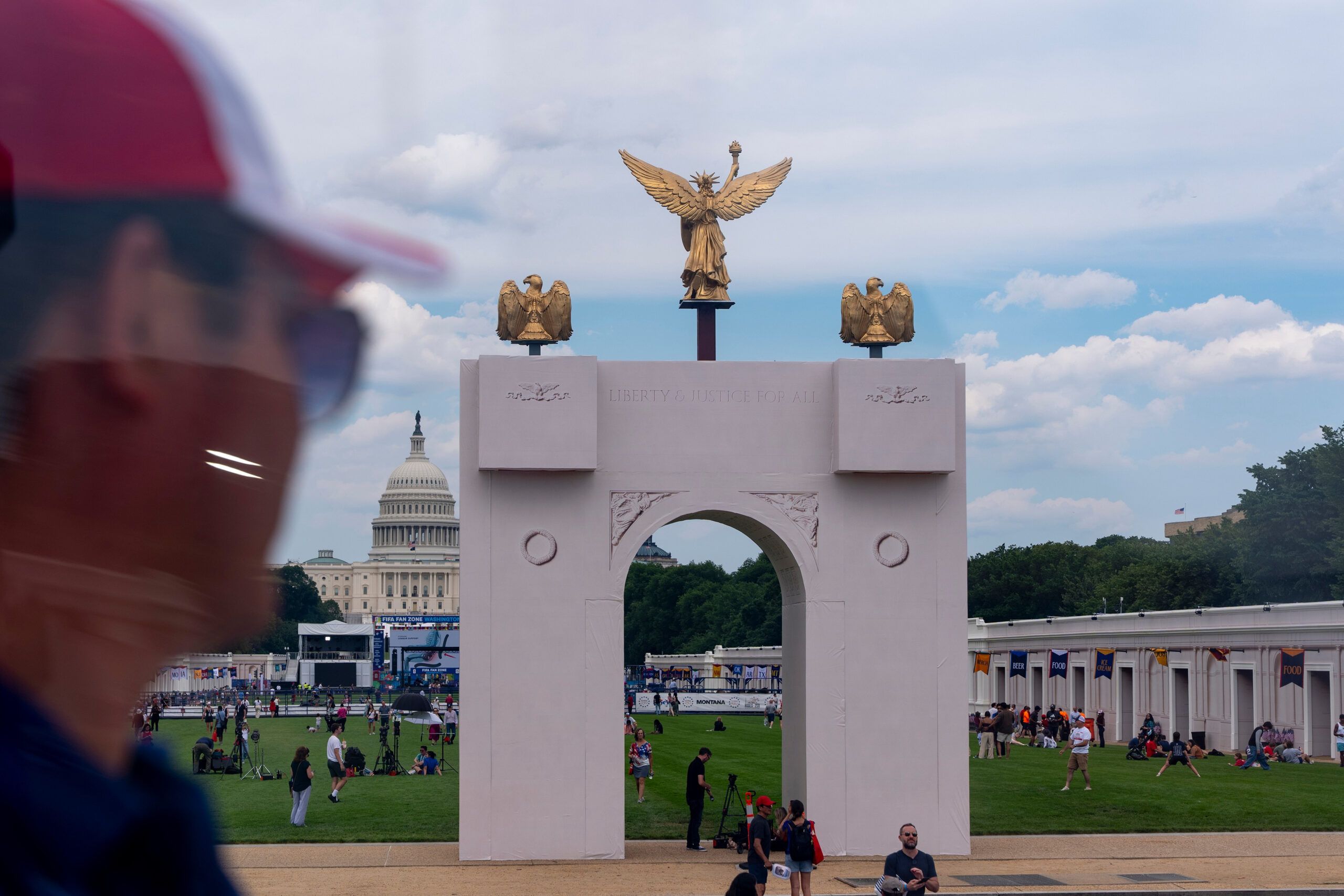
    The U.S. Capitol and a mock-up of President Donald Trump’s proposed triumphal arch are seen from the ferris wheel at the Great American State Fair on the National Mall in June.

    D.C. dud

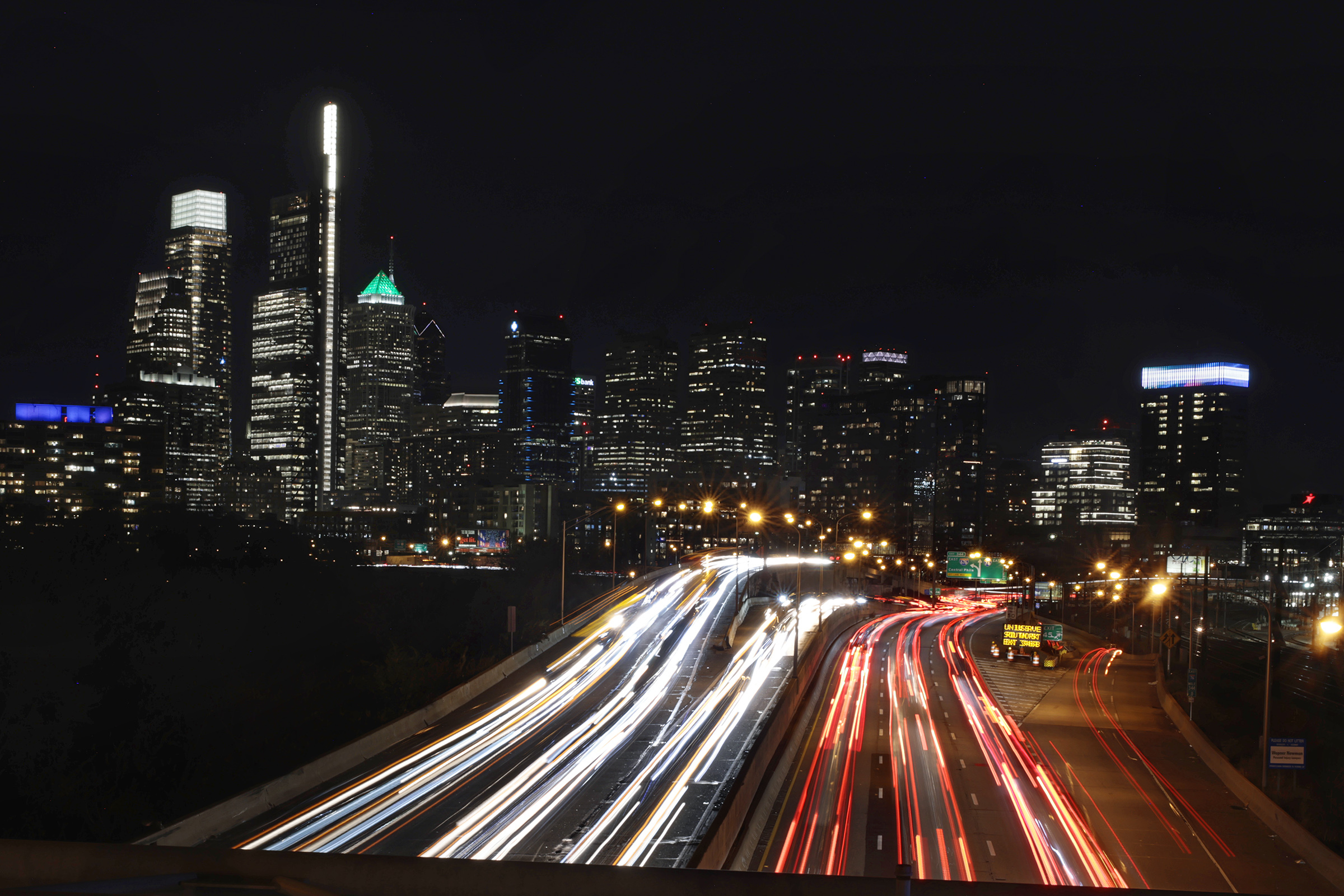
    My fellow columnists Trudy Rubin and Jenice Armstrong have both pointed out how disappointing Washington’s celebrations for America’s 250th anniversary have been. My advice? Skip the city that didn’t even exist in 1776 and visit Philadelphia instead. Skip Boston, the small town with the tall tales, as well. If you are healthy and hydrated enough to withstand the brutal heat wave, the City of Brotherly Love and Sisterly Affection is the best place to celebrate the Fourth.

    Philadelphia embodies the story of America. Our city was founded by William Penn, a Quaker idealist who staunchly defended religious liberty. It was fostered by Ben Franklin, a writer and inventor who embodies our nation’s ingenuity and ambition. Octavius V. Catto, himself a Black man born free, fought for the rights of the enslaved, both before and after the passage of the 13th Amendment.

    A century before the Rev. Dr. Martin Luther King Jr., Catto became a martyr when he was shot and killed on Election Day in 1871 as part of a broader campaign of political violence against Black voters. Catto’s fiancée, Caroline LeCount, desegregated this city’s streetcars long before Rosa Parks did the same for buses across the country. Siegmund Lubin started one of the first movie empires, right here in the city. The iconic Stetson hat, long associated with cowboys and the Wild West? Another product from the city known as the “Workshop of the World.”

    There’s a case to be made that not only did America start here, but our city is the most American of them all. Everything that our country is known for, both for good and for bad, has happened here, as well.

    Ecuadorian soccer fans attend a flag waving event at the Philadelphia Museum of Art steps along the Benjamin Franklin Parkway, ahead of their first round World Cup match against the Ivory Coast, on June 13.

    New narrative

    It always bothered me that our city’s greatest draw seems to be Rocky Balboa, the fictional boxer from the eponymous film. Beyond the fact that this city is where America began, Rocky also memorializes a very specific era of our city’s history, one of decline. The first movie was released in 1976, during a decade when Philadelphia lost over a quarter million residents. Crime, trash, and disorder dominated the city’s streets.

    It’s also worth noting that the film was released in the year of America’s Bicentennial. The celebrations that year were largely a misfire. Then-Mayor Frank Rizzo scared many potential visitors away, and there was an outbreak of Legionnaires’ disease.

    That’s not to say Rocky, or the city he inhabited, was without charm. Despite the challenges, Philadelphians were still full of heart and grit, qualities Sylvester Stallone’s creation exemplified well. But the place shown in the movie doesn’t capture the full spectrum of what Philadelphia had to offer, even during the tumultuous ’70s. Rocky may have run up the Art Museum steps, but he never stepped inside.

    Today’s Philadelphia is a dramatically different city. While the white working-class communities Rocky represented remain an important part of the city, they no longer dominate it. Rizzo would garner very few votes if he were on the ballot today. Philadelphia is now a multicultural, multiracial city on the rise. Rather than repelling visitors and residents, the city welcomes them.

    According to Sports Business Journal, the city’s FIFA Fan Festival is a pacesetter, leading the 13 other public World Cup viewing areas in North America in both single-day and overall attendance. Social media feeds are filled with international visitors praising the city’s culture and cuisine. Some Brazilian fans called it the most beautiful city they have ever seen.

    Throughout the year, city officials have expressed confidence in Philadelphia’s ability to recoup the investment made in hosting the World Cup and other events. The state tourism office has told The Inquirer that early indicators are positive, with flight bookings, Amtrak arrivals, and Airbnb rentals exceeding expectations. While the initial projections were for 500,000 World Cup visitors, we may end up seeing closer to 800,000.

    Beyond the number-crunching, however, there’s a more important goal at stake: changing people’s perceptions of our city.

    That’s something impossible to set a price tag on.

    Councilmember Curtis Jones Jr. and his wife, Jazelle Jones. The couple stand to collect up to $752,000 in combined retirement payouts while keeping their six-figure jobs.

    Same old problems

    So far, one of the biggest reasons to be skeptical about Philadelphia’s future is City Hall. The city’s leaders too often serve their own interests, rather than those of the public.

    Take Curtis Jones Jr., who represents the 4th District on City Council. Jones is certainly capable of being an insightful public official. Since his colleagues passed him over as Council president, however, he’s displayed increasingly questionable behavior.

    Earlier this year, Jones asked Streets Department officials to consider delaying crucial bridge repairs until after his reelection, citing concerns that the public might blame him for their inconvenience.

    Jones, however, ignored the impact of public opinion when it came to his own personal finances. Both he and his wife, Jazelle Jones, who serves as city representative, are planning to take payments through DROP, a retirement program that was never meant to accommodate elected officials. The pair stands to collect up to $750,000 by retiring for a day — and then returning to their six-figure jobs. This may be a rounding error in a city that is planning to spend $7.1 billion in the next fiscal year, but it is also more than 10 times Philadelphia’s median household income.

    Asked about Jazelle Jones’ retention, Mayor Cherelle L. Parker cited the need to stay the course as a factor in making an exception for the city representative. Left unspoken was the fact that if Parker had blocked this payday, it would have likely complicated her relationship with Curtis Jones — one of the mayor’s most reliable supporters on City Council.

    This kind of cronyism only reinforces negative perceptions of the city. Anyone looking for evidence that Philadelphia is the same old parochial, self-dealing city it was known for being in the past has only to try to keep up with the Joneses.
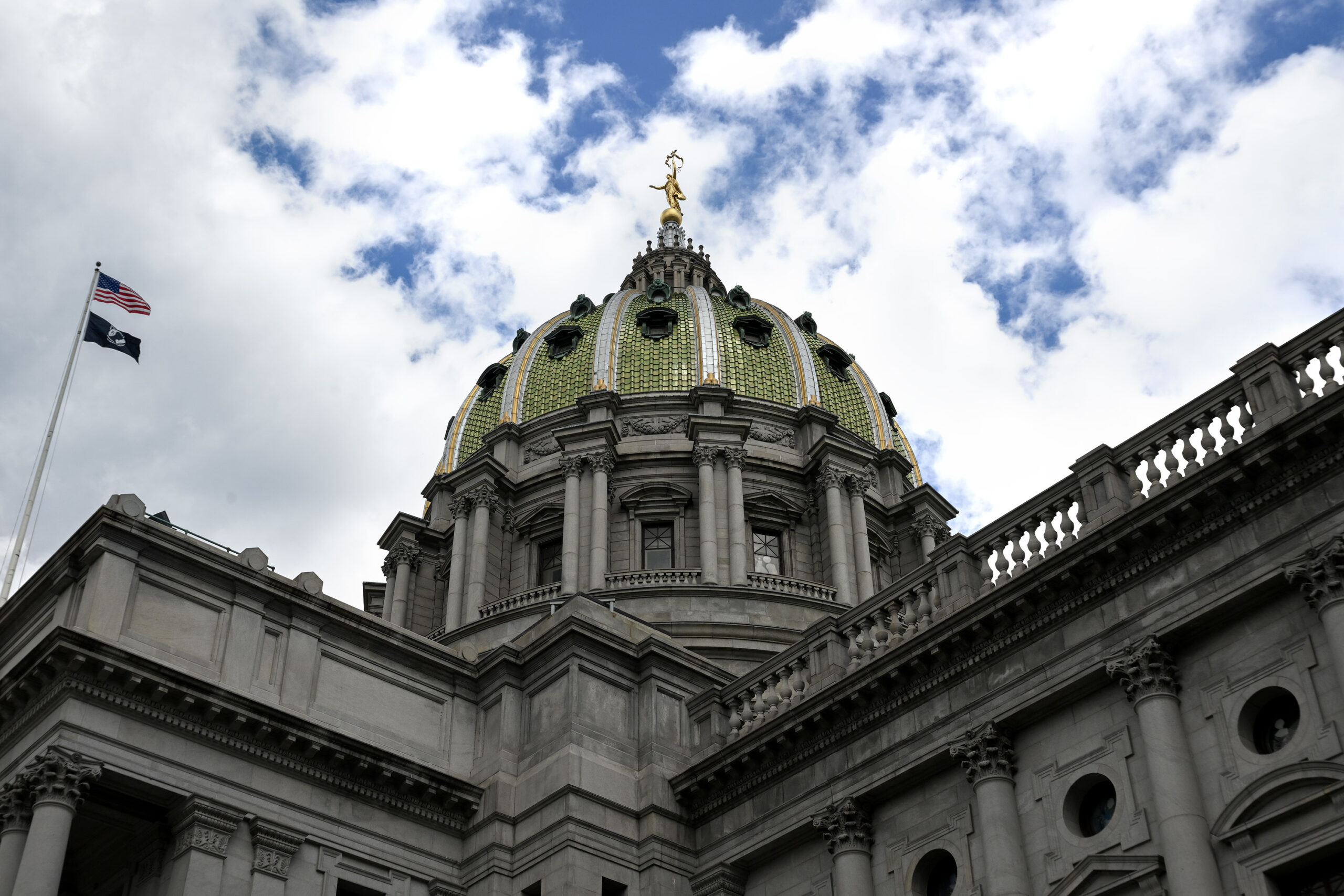
    The Pennsylvania State Capitol on Commonwealth Avenue in Harrisburg. Another year, another blown budget deadline by state legislators.

    Harrisburg holdups

    To be fair, City Hall isn’t the only place that seems like it’s having a hard time getting its act together. Harrisburg has yet again missed its budget deadline.

    While local governments, school districts, and SEPTA are expected to submit their own spending plans in a timely manner, legislators have apparently decided that deadlines don’t apply to them. The Pennsylvania Senate went home early rather than finish negotiations that its own leaders have said are productive.

    Last year, the impasse went on into the fall, forcing some state services to grind to a halt and schools to take out loans in order to pay their bills. The commonwealth simply can’t afford to do that again.

    This year, rising revenues from existing taxes and a potential influx of money from so-called skill games have made the process easier. Still, it is July, and there’s no budget deal.

    What we need is a way to hold legislators accountable for failing to do their jobs. In the past, withholding pay was suggested as a leverage point. State Rep. Natalie Mihalek, a Republican from Western Pennsylvania, has said that failing to pass a budget should lead to a special election, a nod to the concept of “confidence votes” in Westminster parliaments.

    Maybe that will get the General Assembly to take its job seriously.
  • Shining the spotlight on America’s Black Revolutionary Era icons | Shackamaxon

    This Juneteenth edition of Shackamaxon looks at the housing debate in Harrisburg, the recent state Supreme Court decision on skill games, and some Revolutionary Era stories you might not have heard before.

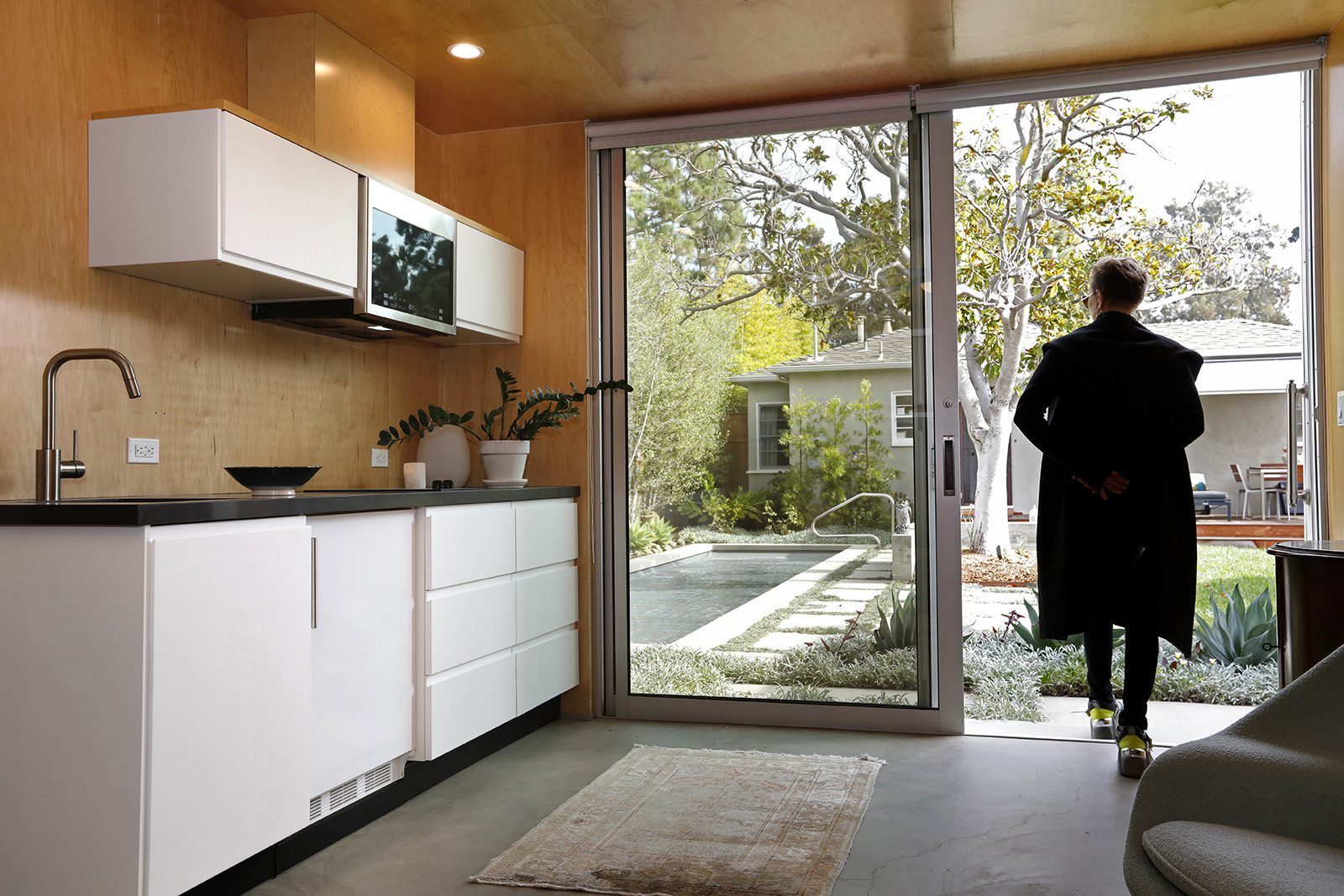
    Erla Dögg Ingjaldsdóttir exits a Santa Monica, Calif., accessory dwelling unit in 2022.

    Preemption the key

    It is increasingly clear that legislators in Harrisburg want to do something about housing affordability in Pennsylvania. What’s less clear is whether they’re willing to take the most necessary step: preempting local governments.

    The recent push to legalize accessory dwelling units, or ADUs, is a classic example of this tension. For the wide coalition of supporters, ADUs — think a backyard apartment — represent an obvious fix to the housing crisis. They allow families to live close to one another without the awkwardness of sharing a kitchen, while empty nesters can monetize their homes without moving and typically rent at affordable rates. There’s also significant demand for them.

    Mario Mascioli, from Acorn Built Homes, says his company gets between 200 and 300 inquiries a month. A recently passed bill in the state House would allow property owners to build one unit per lot and restricts the ability of local authorities to regulate them out of existence.

    It is now up to the state Senate to pass the bill. The Senate’s housing committee has met just twice so far this year. Some Republicans have been reluctant to embrace housing reform, citing a desire to avoid infringing on local control of zoning.

    While the input of local communities will always be part of development politics, housing affordability is a regional issue. Acting as a commonwealth ensures that all of our cities, townships, and boroughs do their share when it comes to new housing — and that no municipality can sabotage ADU construction.

    Additionally, some conservative organizations like Americans for Prosperity have backed the bill. For these groups, property rights and economic opportunity make embracing preemption worthwhile.

    In fact, the coalition to reform housing rules is refreshingly broad. From right-leaning groups like Americans for Prosperity to self-described socialists like State Sen. Nikil Saval, there is a growing understanding that change is essential. This need is underlined by the rapidly increasing costs to purchase a home. In Villanova, even the most affordable options now cost $1 million.

    Unregulated gaming devices known as “skill games” in a barber shop in Hazelton in August.

    Same old slots

    For the entirety of Josh Shapiro’s first term as governor, one question has dominated the revenue side of state budget proceedings. Will Pennsylvania regulate and tax so-called games of skill, and at what rate, and under what authority?

    Proponents of the games argued they are distinct from slot machines and should pay a lower rate. They also want the devices to avoid being placed under the state Gambling Control Board. Critics say otherwise. Some want the machines to be gone altogether, citing their negative impact on communities. Others want them restricted and taxed like slot machines, which can only operate at licensed casinos and hand over most of their revenue to the commonwealth. Efforts by local governments, like Philadelphia’s, to ban the machines have been stymied by the courts.

    At least until this week.

    After years of debate, the state Supreme Court ruled that the devices are actually slots after all, reversing an earlier Commonwealth Court ruling that had maintained there is a difference. This new ruling aligns with my own experience testing the machines. You put in cash, press a button, and hope the symbols align.

    Given this fact, which is now the legal opinion of Pennsylvania, it doesn’t make much sense to tax the machines at a different rate than existing slots. Neither does allowing them to proliferate in every gas station, corner store, and bar that wants them. Like slots, skill games should be limited to operating in designated areas, and access must be controlled by age. They should also be controlled by the same regulators as other gaming devices. While the commonwealth absolutely could use the revenue boost legalizing the machines will bring, the priority should be on mitigating their impact.

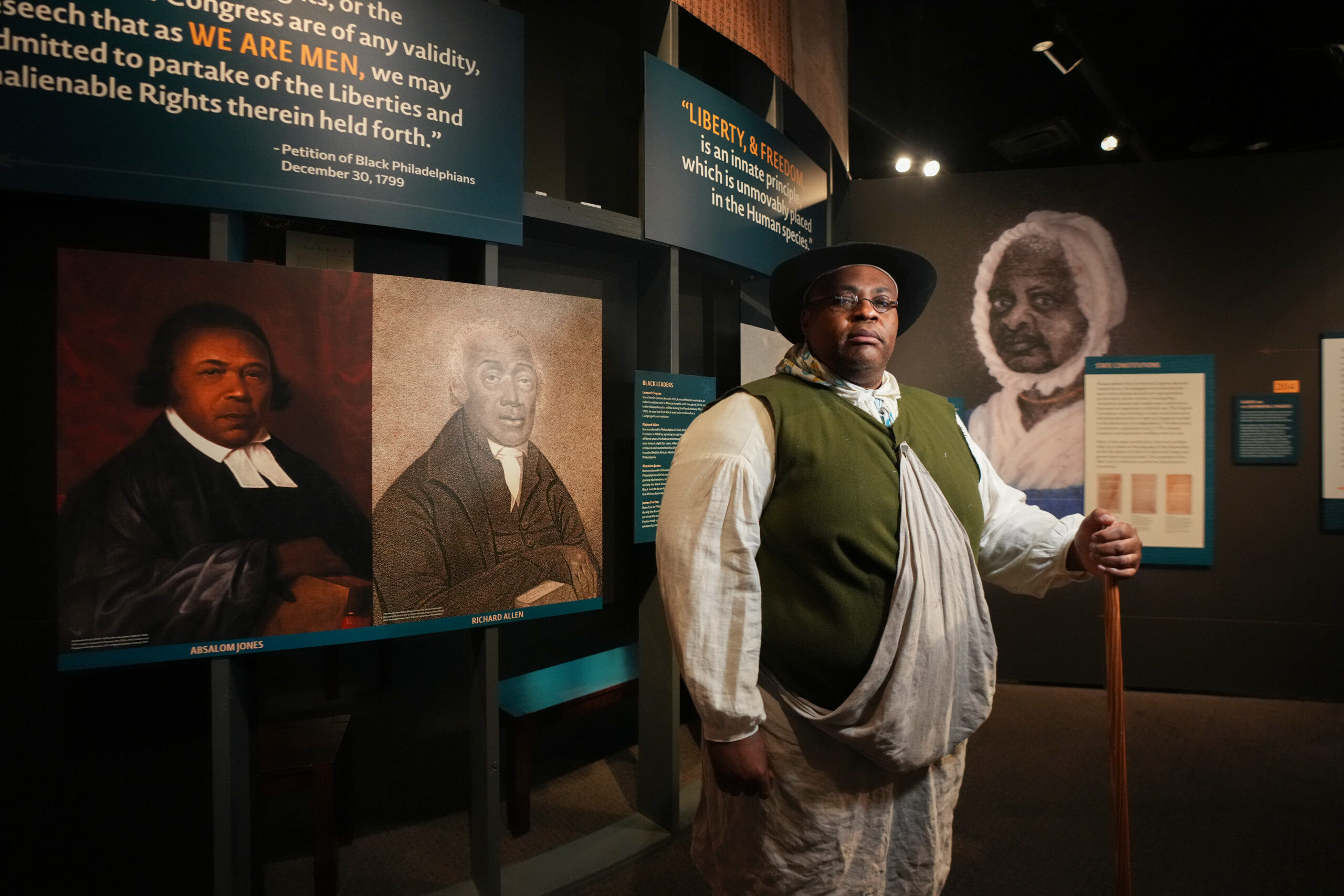
    The historian Michael Idriss dressed as Cyrus Bustill, an 18th-century baker who supplied George Washington’s troops at Valley Forge.

    Remembering revolutionaries

    Philadelphia has been known as the home of Ben Franklin and Betsy Ross for centuries and boasts several professional reenactors who bring these Revolutionary Era leaders to life. While both Franklin and Ross have earned their public profiles, they are far from the only local figures worth memorializing.

    Michael Idriss, a former classmate of mine at Temple University who now manages the Museum of the American Revolution’s African American Interpretive Program, has brought another name to light: Cyrus Bustill, an enslaved baker who freed himself, supplied George Washington’s troops at Valley Forge, and helped found the Free African Society of Philadelphia.

    Idriss also helped set up the museum’s Black Founders exhibit, which focused on James Forten, a Black patriot and business owner who funded abolitionist causes.

    Idriss refers to himself as an interpreter rather than a re-enactor and has brought to light a pivotal but until now under-appreciated Founding Father. Bustill’s work has even qualified his descendants, like Joyce Mosley, for membership in the Daughters of the American Revolution, an elite service organization.

    An elder statesman to figures like Forten, Absalom Jones, and Richard Allen, Bustill represents the lesser-known stories of the Free Philadelphians of African descent before, during, and after the revolution. By 1838, there were 20,000 free Black Philadelphians.

    In many ways, their story should sound familiar. After the revolution, many felt that America should live up to its lofty ideals. Pennsylvania passed a law ensuring gradual emancipation, and many people of all races became abolitionists. Then came the backlash. A populist and crass president had come to power and Black stories were buried. It sounds sadly familiar, doesn’t it?

  • Preserving Philly’s history is important, but historic districts do tend to exclude | Shackamaxon

    Preserving Philly’s history is important, but historic districts do tend to exclude | Shackamaxon

    This week’s column covers an unproductive conversation about public transit in Harrisburg, historic preservation, and what to do with the city’s incoming fiscal windfall.

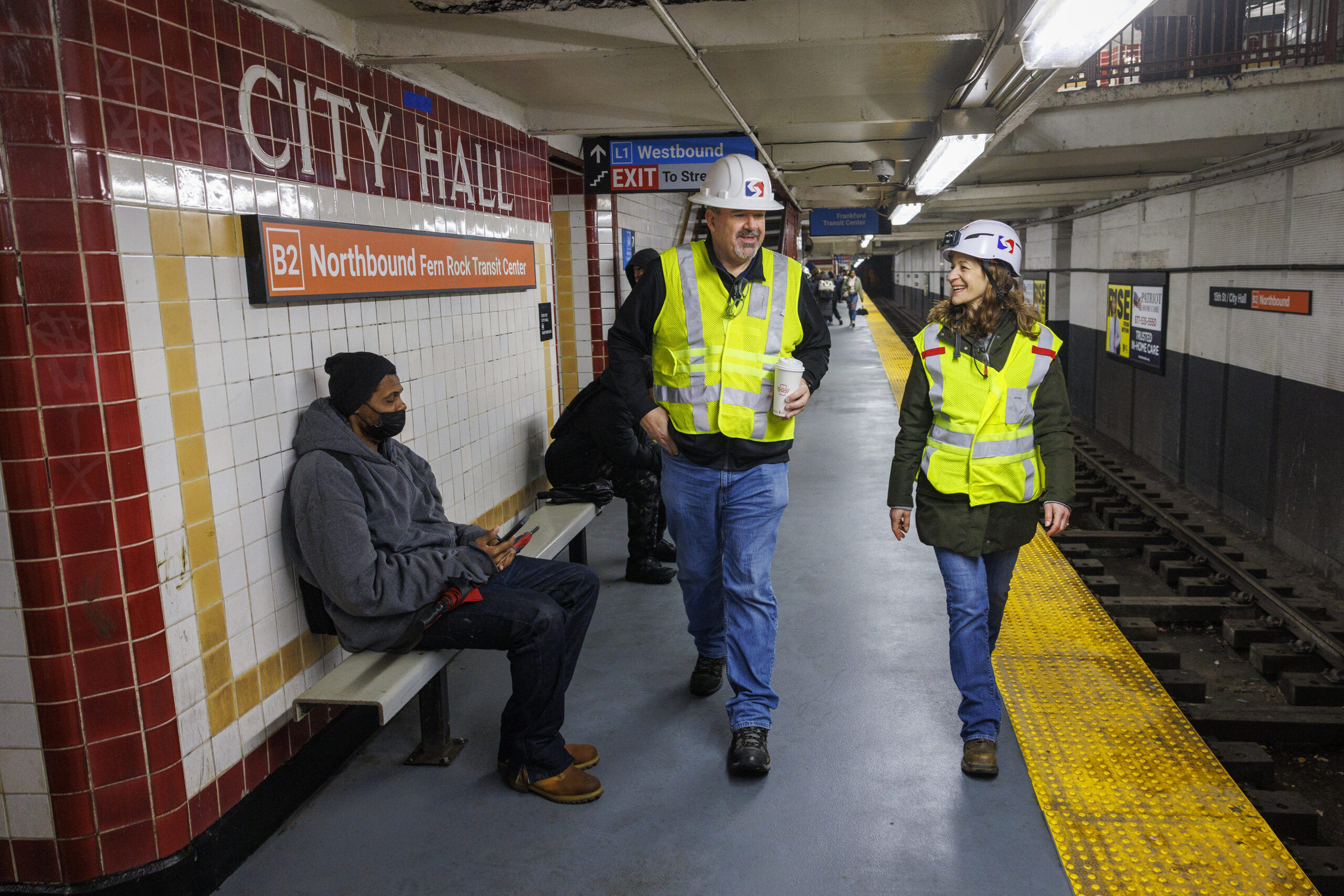
    SEPTA General Manager Scott Sauer and Kate O’Connor, assistant general manager of engineer maintenance construction, make their way through City Hall Station in February.

    Transit takeover

    PennDot’s budget hearings are usually focused on the things the department has direct control over, i.e., Pennsylvania’s state-owned roads and bridges. On Monday, however, the hearing turned into a transit-bashing fest. Senate Republicans used the meeting to push their own plan to exhaust the state’s transportation reserves rather than adequately fund operations.

    There’s just one big problem: The senators frequently did not know what they were talking about.

    Republican State Sen. Tracy Pennycuick asked about the status of the King of Prussia rail project, which has been canceled for almost three years. Her fellow GOP State Sen. Jarrett Coleman asked if SEPTA considered raising fares, which climbed from $2 in November 2024 to $2.90 last year in September, a near 50% increase.

    PennDot’s leaders could have done a stronger job defending themselves. In particular, their inability to produce a list of projects was mystifying. Many of the volunteer transit advocates I know could do so on the spot. It was clear to me that the most knowledgeable person in the room was Delaware County’s Democratic State Sen. Tim Kearney, himself a regular SEPTA rider. At one point, Harrisburg’s State Sen. Patty Kim, a Democrat, suggested that PennDot bring charts next time to help explain complicated financial maneuvers.

    There’s a role Republicans in the General Assembly could play in ensuring SEPTA’s fiscal health, if they were willing to do their homework instead of grandstanding. While SEPTA is more efficient with its use of revenue than critics have claimed, there are still ways to save money and bring down the capital deficit. They are just politically difficult. It would be a lot easier for SEPTA’s board to tell the good people of Eddystone, Angora, or Eddington they are losing their low-ridership Regional Rail stops if they could add “because Harrisburg made us.”

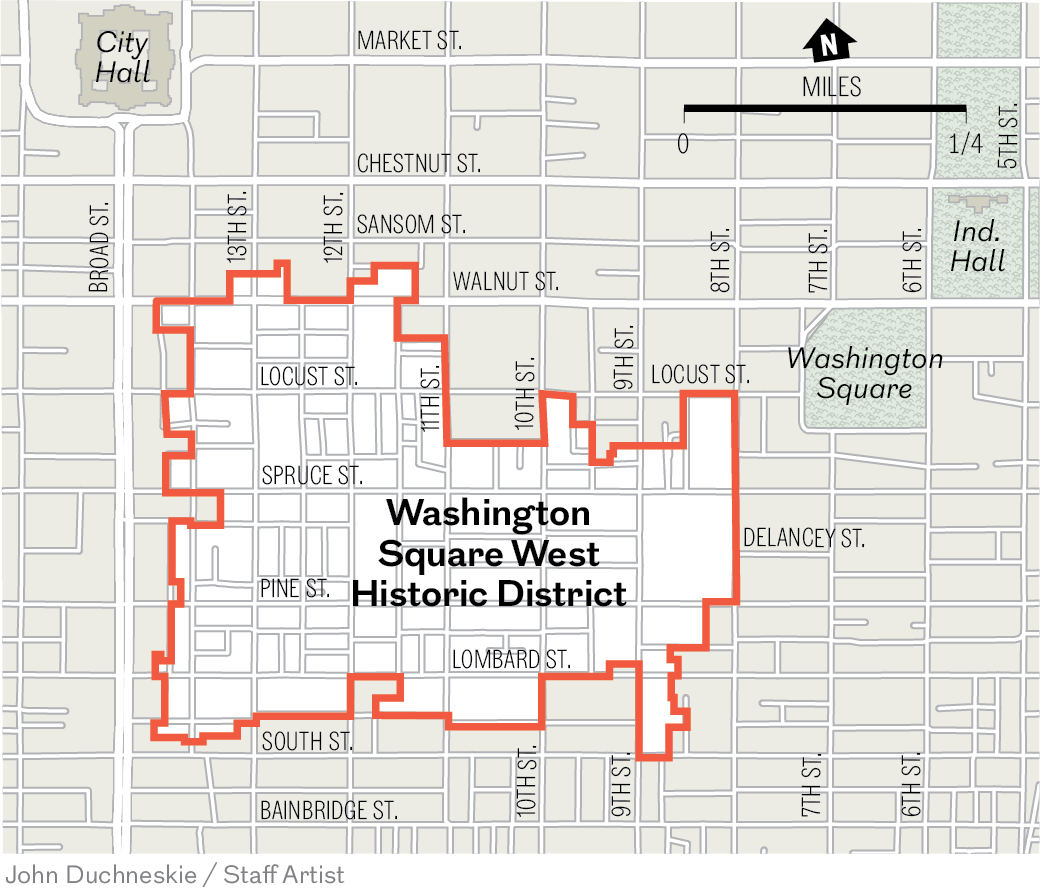
    Map of the Washington Square West Historic District. After some neighbors sued, the district designation was recently revoked in court.

    Historic revocation

    Regular Shackamaxon readers know that while I love our city’s history, that doesn’t mean I expect everyone else to love it, too. After a coalition of neighbors challenged the Washington Square West Historic District, Common Pleas Court Judge Christopher Hall revoked the district, granting a major victory to homeowners who resented their inclusion in the city’s largest and most nebulous historic zone.

    Some residents objected to being part of the district because of the high costs usually associated with making the necessary modifications required to bring their properties in line with the city’s strict codes for historic properties.

    Preservationists, to put it mildly, are miffed. They feel the ruling is deeply unfair and should be overturned.

    Instead, they should treat this as a learning opportunity. The Washington Square West district really was a step too far. While historic districts typically focus on specific architectural styles and eras, this district covered more than a thousand buildings from before the Revolutionary War until after the Second World War. While advocates describe working with the historic commission as painless, everyday homeowners often disagree.

    Additionally, covering the city in preservation districts will have an impact on overall housing supply and, as a result, costs. A recent analysis by CityLab shows how New York’s preservation rules have led to many smaller, more affordable apartment buildings being converted into urban mansions. This means exchanging multiple working- or middle-class residents for one extraordinarily wealthy household.

    While local preservationists commissioned a study they claim debunks this concern, the document’s results fall into the category of correlation, rather than causation. If density and population are growing in historic districts, it is probably because people tend to put historic districts where development is most lucrative. If people truly believed that designation brought only benefits with no drawbacks, we may as well designate the entire city.

    A more exhaustive and balanced report, for the Journal of the American Planning Association, is clear: Historic districts make neighborhoods wealthier, whiter, and more educated than the cities that host them. Many other studies agree.

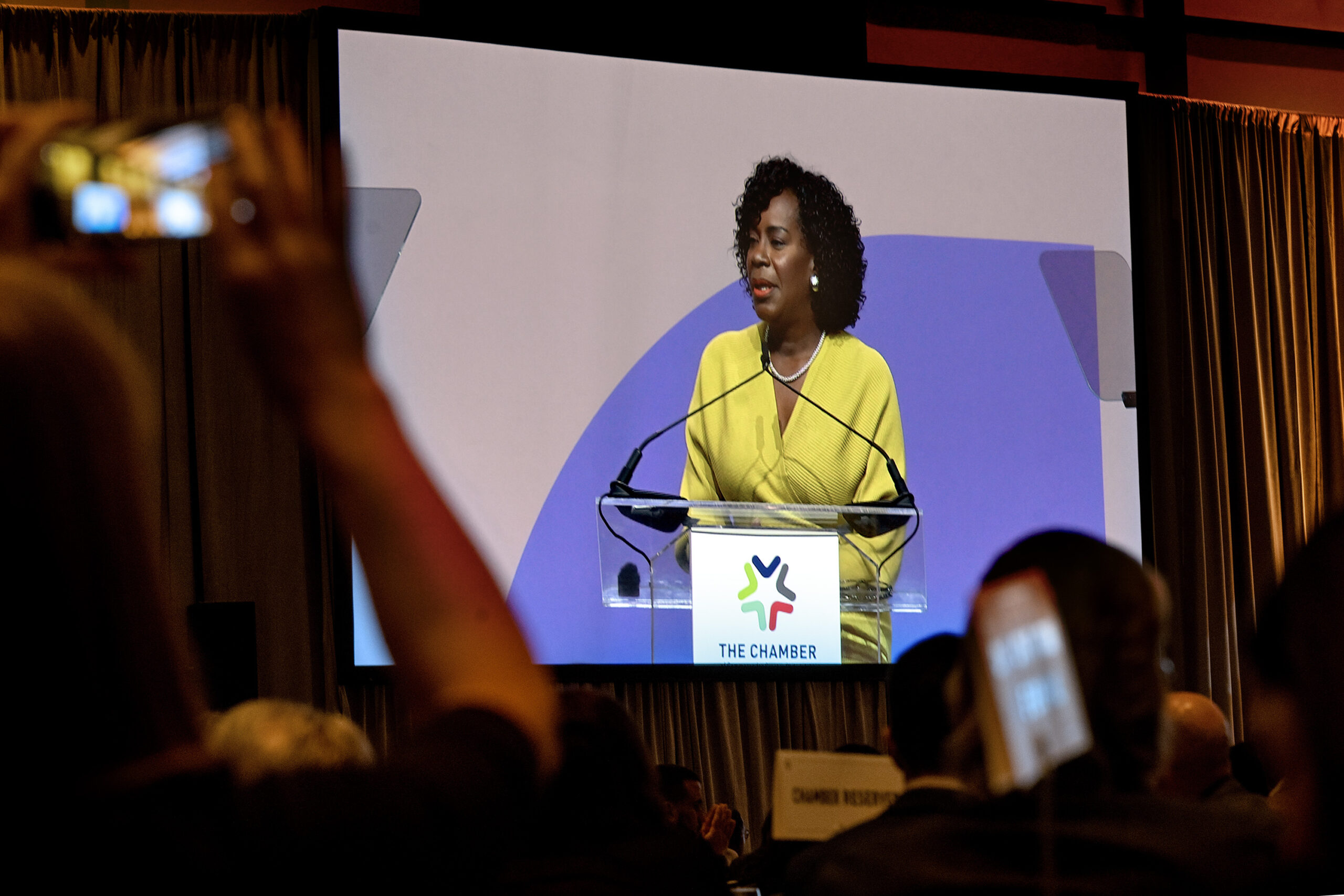
    Attendees record Mayor Cherelle L. Parker as she delivers her keynote address at the Chamber of Commerce for Greater Philadelphia’s Annual Mayoral Luncheon in February.

    Future flush

    According to reporting by my Inquirer colleague Sean Collins Walsh, Philadelphians may soon experience a new reality in civic finance: extra cash.

    For decades, City Hall struggled to pay the bills, as pension costs and low wages sapped the public purse. Now, the city is looking at the prospect of having a budget surplus of $400 million and a fully funded pension system by 2032.

    It is important we begin the discussion now on what to do with that money.

    There is no shortage of need in this city. The school district, affordable housing, SEPTA, parks and recreation, the libraries, and the city’s workforce all have strong arguments to make when it comes to which agencies should receive that money. The boldest course of action, however, might be to set the city on a new economic course entirely by reforming our local tax code.

    Despite Philadelphia’s high tax rates, the city generates relatively little income. Boston spends just over $7,000 per resident, New York City spends over $13,000, and even Baltimore spends over $8,000. Philadelphia spends just $4,250. This gap can’t be fixed by raising our taxes even higher. It requires growing our economy.

    Alongside tax reform — which should attract new businesses — the city should eliminate the restrictive zoning overlays that add significant costs for entrepreneurs in Philadelphia.

    If the City of Brotherly Love could generate as much tax revenue per resident as Charm City or the Hub, City Hall would have more than $12 billion to spend each year. That’s enough money to make a major difference.

  • Candidates line up to replace Rep. Dwight Evans | Shackamaxon

    This week’s column analyzes the city’s camera surge, the need for political challengers, and calls for some basic sense about security.

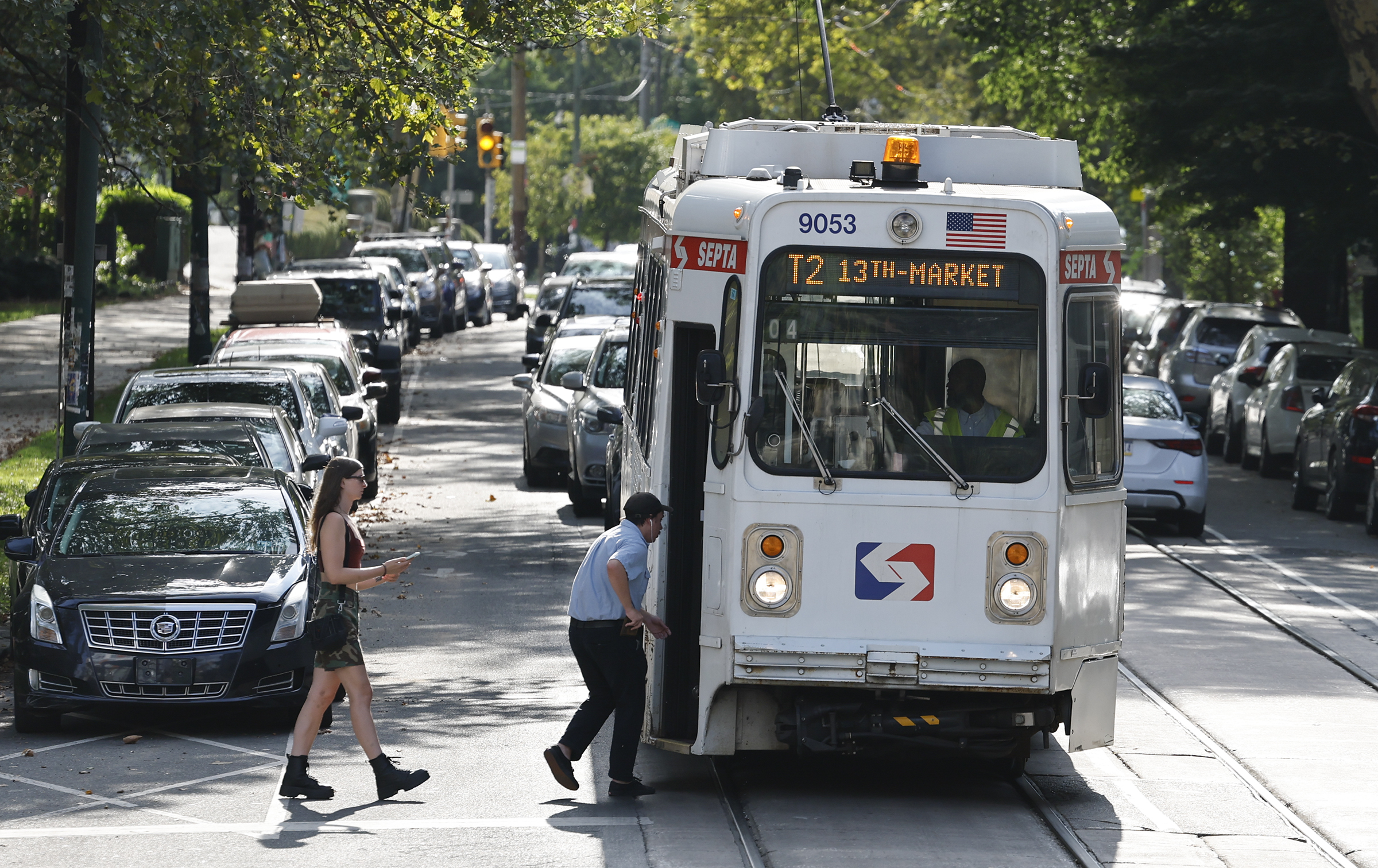
    Passengers board a SEPTA trolley along Baltimore Avenue in West Philadelphia.

    Trolley cams

    Over the last few years, Philadelphians have increasingly come under surveillance. Cameras enforce bus lane violations, issue speeding tickets, and help prevent and solve violent crime. Just this week, the Philadelphia Parking Authority announced it is now adding cameras to the city’s trolleys.

    This surge in surveillance has led to some residents bemoaning what they view as a cash grab. These worries were echoed last year by City Councilmember Jeffery “Jay” Young during a committee meeting in which he held up authorization for school zone cameras. Fortunately, these concerns are unwarranted.

    Our speed and red-light cameras are not designed to raise revenue. While camera systems in states like Illinois are used to pay for regular local government expenses, Pennsylvania’s are earmarked for traffic safety projects. Philadelphia is getting $13 million from the most recent distribution. This leaves politicians with little incentive other than to focus on safety and efficiency when choosing where and why to place the cameras. The system isn’t designed to take advantage of sudden speed traps, a problem that occurs with both automated and traditional traffic enforcement systems.

    Per a PPA spokesperson, 63% of vehicle owners who get a bus camera ticket don’t get a second one.

    In the case of the trolley cameras, it is also a question of basic fairness. If you ride the trolleys enough, you’ll eventually end up stuck. Almost always, it is because someone decided to inconvenience 20 to 40 people to avoid parallel parking or walking a short distance. While no one likes getting a ticket, motorists who opt to block trolleys should be happy with the fact that they aren’t being immediately towed.

    Candidates in the Democratic primary for Philadelphia’s 3rd Congressional District include, clockwise from upper left: State Sen. Sharif Street, State Rep. Chris Rabb, Ala Stanford, and State Rep. Morgan Cephas.

    Marquee matchup

    The race to replace U.S. Rep. Dwight Evans was always going to be close-fought. With the youthful Brendan Boyle occupying the city’s other congressional seat, this could be the best chance to represent Philadelphia in Washington, D.C., for decades. State Sen. Sharif Street (the son of former Mayor John F. Street) and State Rep. Morgan Cephas (who chairs the Philadelphia delegation in the state House) are both long-expected candidates for the job. They’ve been joined by progressive firebrand Chris Rabb, surgeon Ala Stanford, and a handful of other candidates with less funding and political support. For Southeast Pennsylvania politicos, it’ll have to do. There simply aren’t a lot of competitive races this year.

    In state Senate District 34, Towamencin Township Supervisor Kofi Osei is running against party-endorsed candidate Chris Thomas. There are also a couple of contested primaries for state House seats. That’s all, folks.

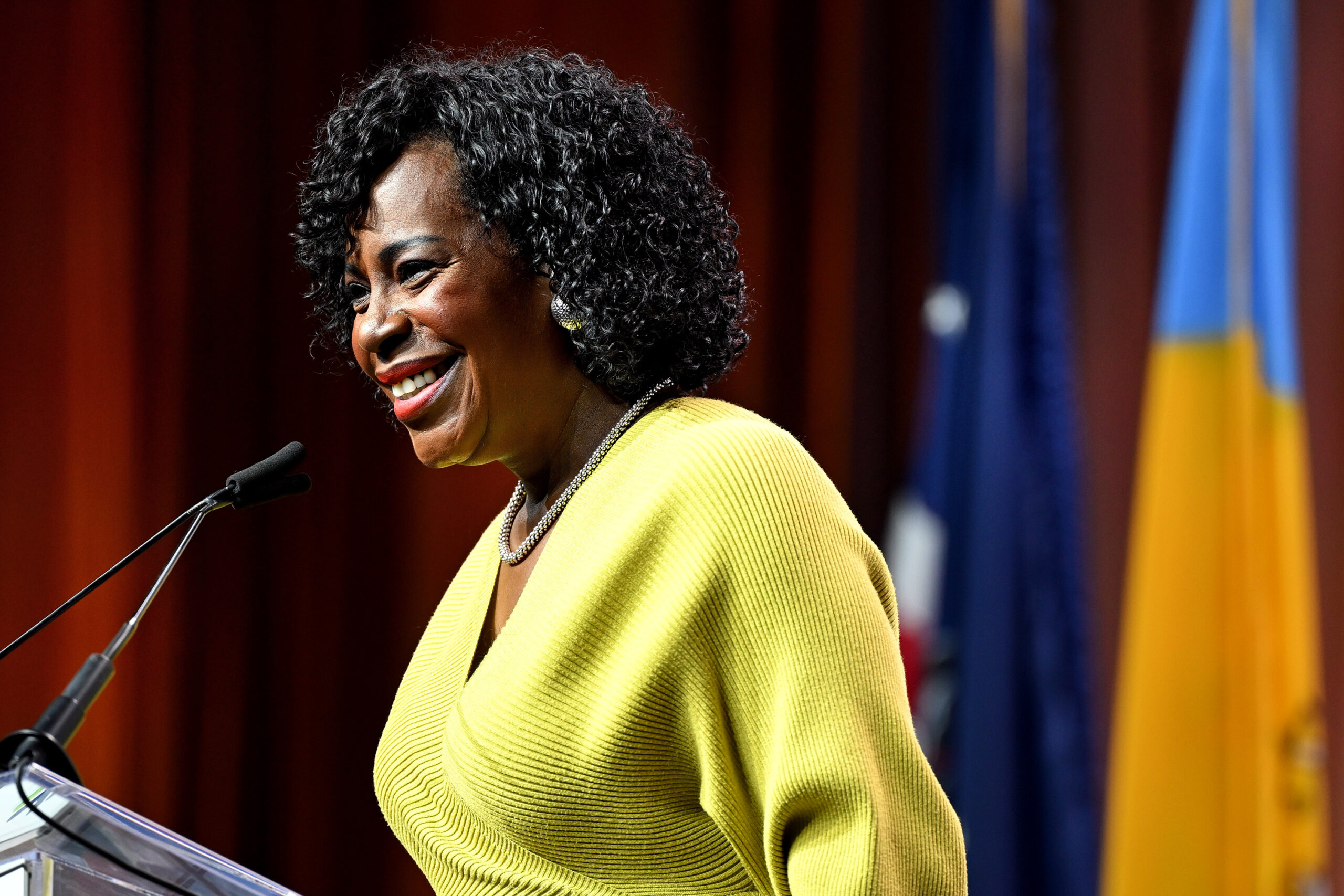
    Mayor Cherelle L. Parker delivers her keynote address at the Chamber of Commerce for Greater Philadelphia’s Annual Mayoral Luncheon, in February.

    Challengers needed

    Next year also looks fairly empty. While some progressive groups have polled residents to gauge the viability of defeating Mayor Cherelle L. Parker, few potential candidates appear eager to take her on. That’s perhaps not surprising. Only one Philadelphia mayor has failed to be reelected in the last 70 years. That includes W. Wilson Goode Sr., who bombed a city block during his first term, and Frank Rizzo, who failed a lie-detector test he himself had suggested.

    What the city really could use are more challengers for City Council seats. So far, I am aware of just one candidate, Jalon Alexander, who has put his hat in the ring. Alexander plans to challenge Young in the 5th District, citing capricious decision-making. But Young, while he may be the most egregious example, is not the only Council member who could use some competition.

    I expect the city’s progressive groups, like Reclaim Philadelphia and the Working Families Party, will eventually find candidates to challenge some of the weaker members, including Young, Cindy Bass, Nina Ahmad, and Jim Harrity. Last cycle, these groups organized around ideas, like rent control, that simply aren’t viable in Philadelphia.

    Despite being mostly frozen out by Council President Kenyatta Johnson and their colleagues, the current progressive delegation has been somewhat unwilling to challenge that body’s status quo. While Councilmember Kendra Brooks voted against a ban on safe injection sites, and Rue Landau voted against one of Young’s ill-considered moves, the city could use at least one councilmember who is willing to consistently challenge their colleagues’ bad decisions.

    Pennsylvania Gov. Josh Shapiro is seen after a B’nai B’rith Youth Organization International Convention on Feb. 12 in Philadelphia.

    Security snafu

    We call Gov. Josh Shapiro the Ambitious Abingtonian here for a reason. The governor is a hard-charging, elbows-up politician who has turned many friends into enemies over the years. Republicans seem to believe they have finally found a weakness in Shapiro’s political armor: the decision to spend taxpayer money to secure his home in Abington, and the seizure of a small strip of adjoining land that accompanied it. State Sen. Tracy Pennycuick, who represents western Montgomery County and eastern Berks County, even opined that Shapiro “put his family at a higher level of risk” by moving them home instead of to a bunker after the April arson attack at the governor’s mansion.

    Of course, the Shapiros just survived an attempted assassination. Let’s be human beings for one second. Shapiro’s shell-shocked children deserved to sleep in familiar settings.

    If Republicans want spending decisions to critique, they should start with Shapiro’s reliance on an opaque group called Team PA to pay for everything from travel to sporting events instead.

  • On crime, public transit, and the economy, Philadelphia counts the ways | Shackamaxon

    On crime, public transit, and the economy, Philadelphia counts the ways | Shackamaxon

    This week’s Shackamaxon is all about the numbers.

    15

    As I write this column, that’s Philadelphia’s total number of homicides for the year so far. It is a 50% decrease from this time in 2025, and a stunning 79% drop from the pandemic-era spike in violence. While it is much too early to make projections, and snowy and freezing weather the last few weeks undoubtedly played a role in keeping people indoors, the decline is genuinely remarkable. Especially when it is accompanied by a similar decline in shooting victims, and double-digit declines in overall violent and property crimes.

    In fact, on a per-capita basis, Philadelphia’s homicide rate is currently not that different from Bucks County’s.

    Given the city just notched its safest year since the 1960s, this progress is exciting. So far, no one has an explanation for why homicide is declining. It may simply be a national trend back to normalcy. If so, it is time to extend it to more parts of life.

    Killings may be down, but homelessness is rising. SEPTA’s Metro system is still overrun with smokers. And the melting snow has revealed that much of the city is covered in too much everyday grime.

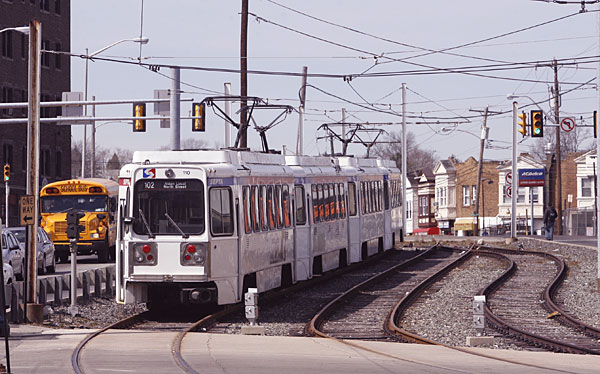
    A Sharon Hill trolley — now known as the D2 — on a low-speed section of track near the 69th Street Transportation Center in Upper Darby. The route, along with its counterpart, the D1, or Media trolley, will have longer trips next week after a safety upgrade to the signal system.

    15

    That’s how many additional minutes trolley trips to Media could take after implementing something called “communications-based train control” at a cost of $75 million. This system takes away discretion from operators, resulting in slower acceleration, longer braking periods, and slower overall speeds. SEPTA says a similar installation on its Regional Rail system also led to initial delays, but those challenges were overcome in time.

    There’s a better solution. SEPTA should restore the gate system that was removed back in 2009. This would eliminate many of the needed slowdowns.

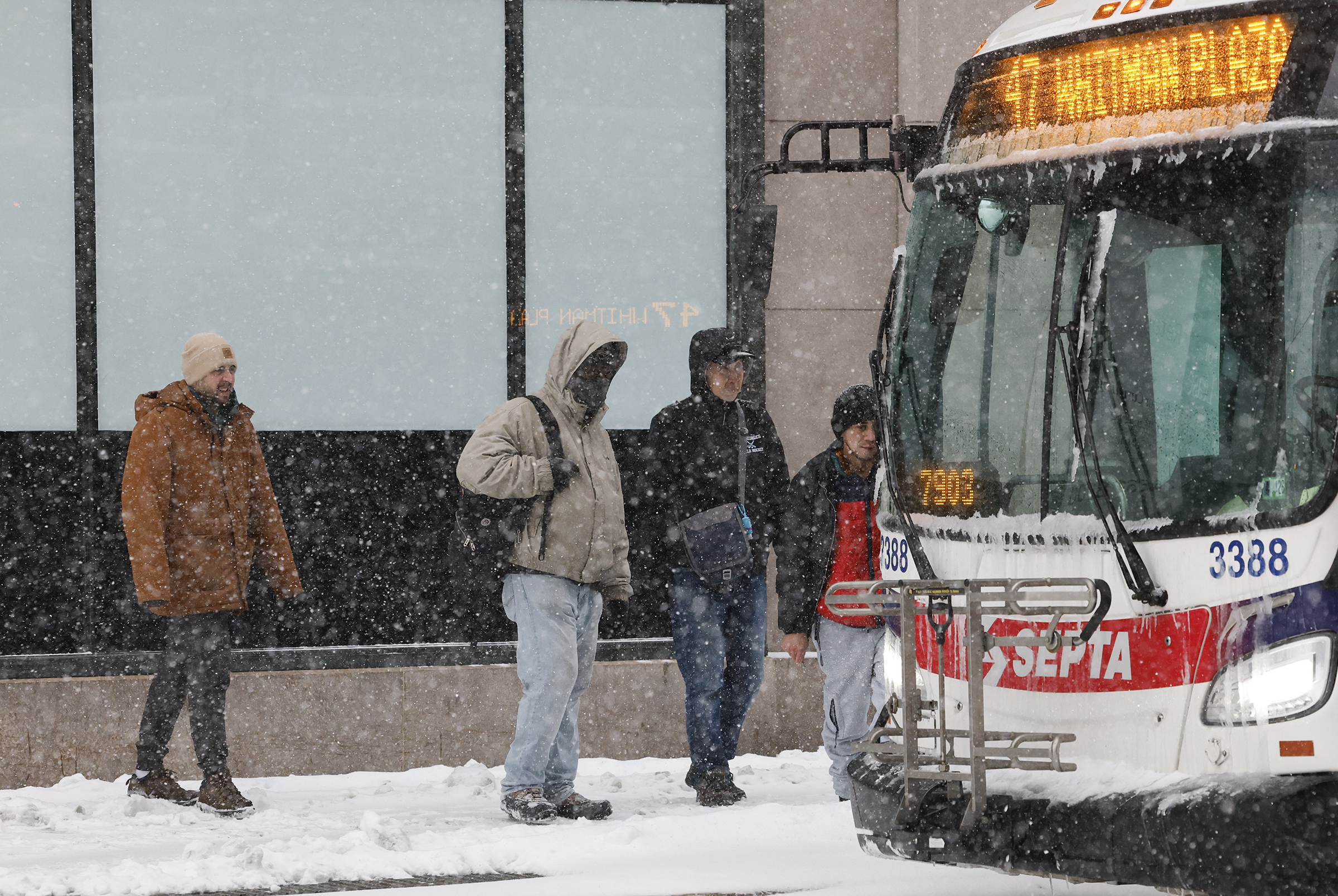
    SEPTA riders board the Route 47 bus at Eighth and Market Streets in January.

    714,475

    That’s how many daily rides SEPTA provided on average last month, an increase of 1% over 2025. Given the struggles the agency went through last year, the fact that ridership continues to grow is remarkable.

    In August, SEPTA scaled back overall service by 20%, before reversing the cuts weeks later under court order — and after a gubernatorial funds transfer. State Senate Majority Leader Joe Pittman essentially called the agency (and our entire region) a bunch of greedy moochers and blocked a plan for sustainable support.

    The Regional Rail network was severely curtailed for months because of aging, exploding train cars. The Center City trolley tunnel was closed for weeks because of maintenance issues. In January, a brutal winter storm made getting to — and on — the bus a struggle. And yet, ridership grew.

    In fact, since the pandemic, SEPTA has routinely been one of America’s strongest transit agencies when it comes to ridership growth. Given there have been zero additional dollars invested in operations for years, the system’s resilience may prove that Philadelphians need mass transit so badly that they’re willing to keep riding through the chaos.

    From left, Joaquin Duato, J&J chairman and CEO, is with Gov. Josh Shapiro and Pennsylvania Department of Community and Economic Development Secretary Rick Siger on Wednesday after Johnson & Johnson announced it will spend $1 billion on a cell therapy plant on its campus in Lower Gwynedd Township.

    5.5

    That’s how much investment, in billions of dollars from pharmaceutical companies, is coming to Eastern Pennsylvania, according to Gov. Josh Shapiro. While this is great news for the Keystone State, it’s hard to avoid noticing that none of these investments are coming to Philadelphia itself. Neither is Merck’s $1 billion new biotech center, which is being built in Delaware. Given our city’s status as a hub for eds and meds — with multiple colleges and medical schools, and a high concentration of skilled workers — this is disappointing.

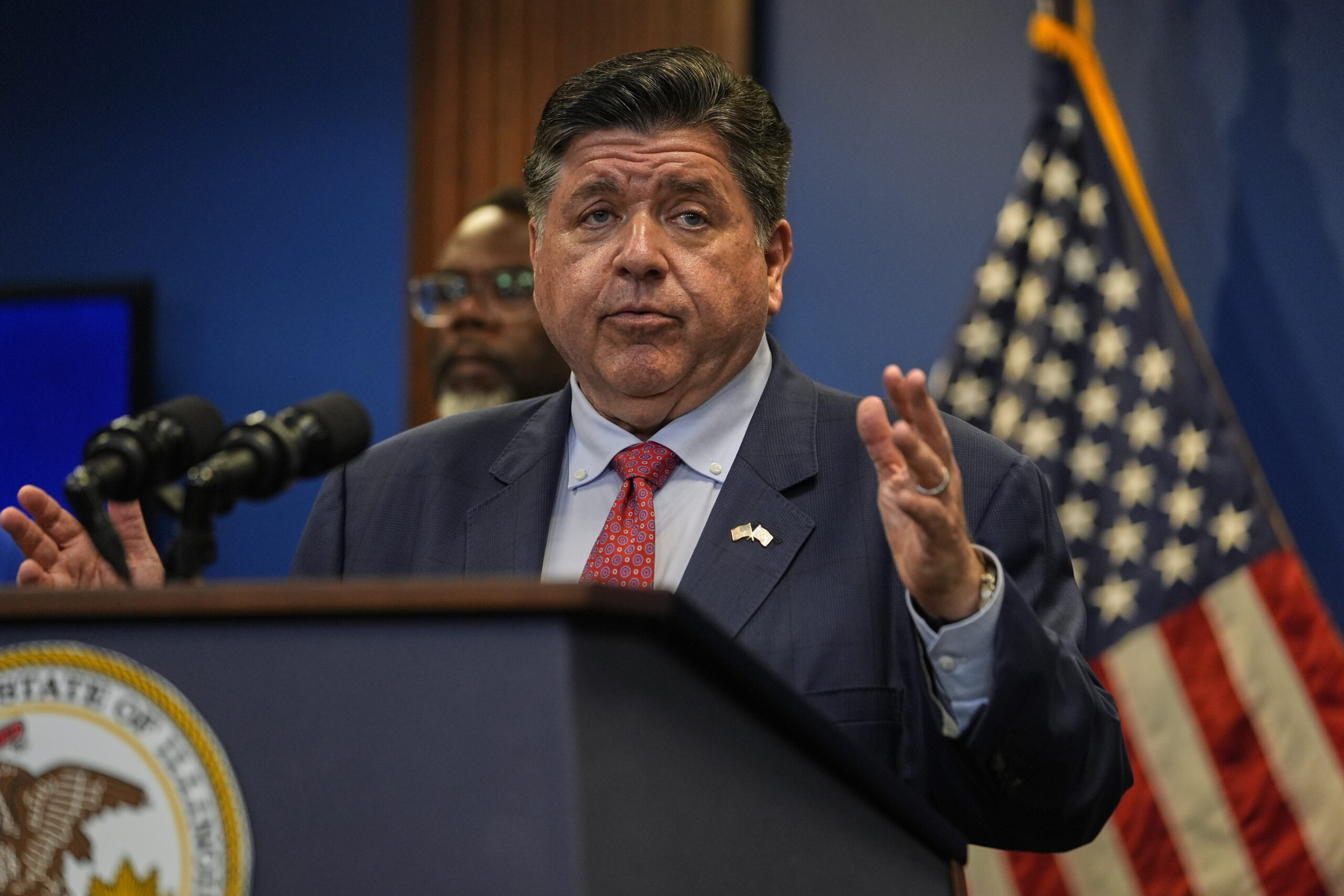
    Illinois Gov. JB Pritzker speaks during a news conference in Chicago in 2025.

    150

    That figure, also in billions of dollars, is how much economic growth Pennsylvania needs in order to bridge the deficit without raising taxes or cutting services, according to an analysis by Athan Koutsiouroumbas, managing director of the Harrisburg-based lobbying and consulting firm Long Nyquist.

    The easiest way to accomplish this is by being bolder on housing policy. As Shapiro has pointed out, Pennsylvania is currently 44th in the nation when it comes to new housing production. Unfortunately, current plans aren’t bold enough to meet the moment. They lack the significant forays into statewide zoning standards that have been embraced by figures like Illinois Gov. JB Pritzker. Shapiro likes to say he’s tired of losing to “frigging Ohio,” but without a more audacious approach to housing policy, he may have to add “frigging Illinois” to the list of states eating our lunch.

    Philadelphia’s economy grew faster than Atlanta, Dallas, Denver, and Phoenix.

    13.6

    If we’re being optimistic, let’s call it almost 14%. That’s how much job growth Philadelphia has experienced since 2020. That’s better than the 11.7% average for the nation’s 25 most populous counties. It is better than the collar counties, and puts Philadelphia ahead of Montgomery County in office employment for the first time in decades.

    Still, economist Mark Zandi urges caution. In the pages of The Inquirer, he points out that much of this has to do with the fact that the national economy is struggling. Given the city has lagged on growth for decades, even incremental steps forward may look more significant here than elsewhere.

    There’s also the fact that much of this growth is in relatively low-paid work, rather than the high-wage “tradeable industries” the city needs to escape decades of economic stagnation.

    Simply put, while working as a home health aide and working in a drone factory both put food on the table, only the latter helps make the regional economy healthier.

  • Change is hard for SEPTA and Philadelphia schools | Shackamaxon

    Change is hard for SEPTA and Philadelphia schools | Shackamaxon

    This week, the Philadelphia School District and SEPTA find it hard to change, the cost of free rides, and City Council finds it hard to listen to public comments.

    Schools and SEPTA in the same boat

    The debate over the school district’s facilities plan is giving me déjà vu. That’s because the city has already had this conversation. It was just that last time, it was about SEPTA’s proposed Bus Revolution.

    Like the facilities plan, Bus Revolution was designed to generate improvements within state-imposed fiscal constraints. By eliminating some bus routes and redrawing others to reduce delays, SEPTA aimed to provide more rides to more riders without hiring more operators or buying more buses. The new system — which is scheduled to debut later this year — promises faster and more frequent service.

    Where both plans struggle is on the political end. After all, opponents have a relatively straightforward story to tell: “Don’t eliminate our bus stop” and “Don’t close our school” are arguments that require little explanation. The benefits, on the other hand, sometimes require a multipage document, and neither institution has done a good job of communicating its goals at public meetings.

    That doesn’t change the fact that the proposed changes are for the better.

    For transit riders, more frequency is life-changing. For schools, shrinking the amount of physical space that needs to be maintained will facilitate investments and upgrades elsewhere. The two beleaguered organizations should compare notes on how best to eliminate their empty seats without provoking public uproar.

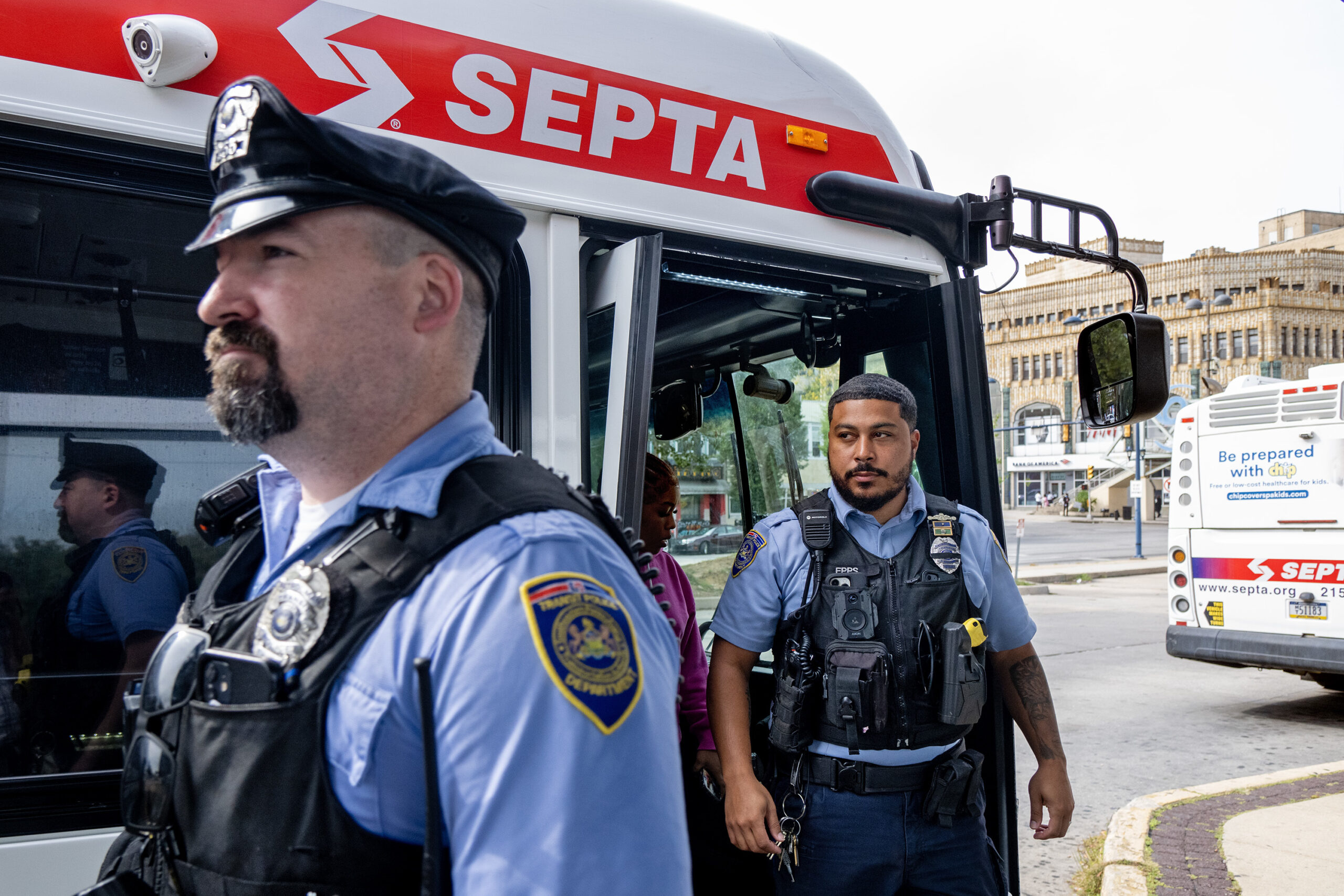
    SEPTA Transit Police patrol officers Brendan Dougherty (left) and Nicholas Epps (right) with the Fare Evasion Unit leave a bus at the 69th Street Transportation Center in September.

    No free rides

    New fare evasion-resistant gates are slowly going up across the SEPTA Metro system, with the Frankford Transportation Center the newest recipient of the upgrades. As is the case when SEPTA tries anything new, this has generated some consternation from riders. Specifically, people have wondered why SEPTA is spending on new fare gates given its well-noted fiscal woes. Given how much is spent just trying to collect the fare, why not just make transit free? After all, New York’s new mayor, Zohran Mamdani, wants to make the buses in his city fareless.

    While that all sounds exciting, it isn’t a good idea. Especially not here.

    The most obvious reason is that SEPTA simply can’t afford to give up the hundreds of millions of dollars it generates in fare revenue each year. In fact, SEPTA is already operating with a deficit, forcing a raid on its (already underfunded) capital budget. Going fare-free would put the future of the system entirely in the hands of Harrisburg politicos, who have demonstrated repeatedly they can’t be trusted to adequately fund the system.

    Plus, as New York’s Metropolitan Transportation Authority CEO Janno Lieber has said, transit is already affordable. A monthly bus pass is almost 90% cheaper than the average cost of car ownership. The biggest reasons people don’t ride are speed, frequency, and the behavior of other passengers, not fares.

    This isn’t just a question of money; it is also about rider and employee quality of life.

    After a surge in fare enforcement and a return to stiffer penalties, crime on the system is down to historic levels. This isn’t the first time that’s happened. While not every fare evader is a troublemaker, nearly everyone who does cause trouble starts by skipping the fare. The new fare gates led to a doubling of revenue at the 69th Street Transportation Center, but a reduction in aggressive behavior is just as valuable.

    In the Bay Area, the BART system has shown another benefit: reduced time spent on what it calls corrective maintenance. After installing new, evasion-resistant fare gates, the agency saw a 961-hour reduction in these issues over six months. That’s a serious drop in time spent cleaning up graffiti, fixing broken screens, and uh, picking up large messes. At many stations, the need was almost completely eliminated. As a regular transit rider, that sounds like it is worth a lot more than $3.

    Don’t just take my word for it. Iconic Philadelphia journalist Dan McQuade — who left us far too soonlooked into it, as well. McQuade wanted to believe in the idea, only to find that “free transit is not the sunshine-and-rainbows image I had in my head.”

    John McAuley, a Republican of Northwest Philadelphia, poses for a portrait outside his home in 2024.

    Public revolt

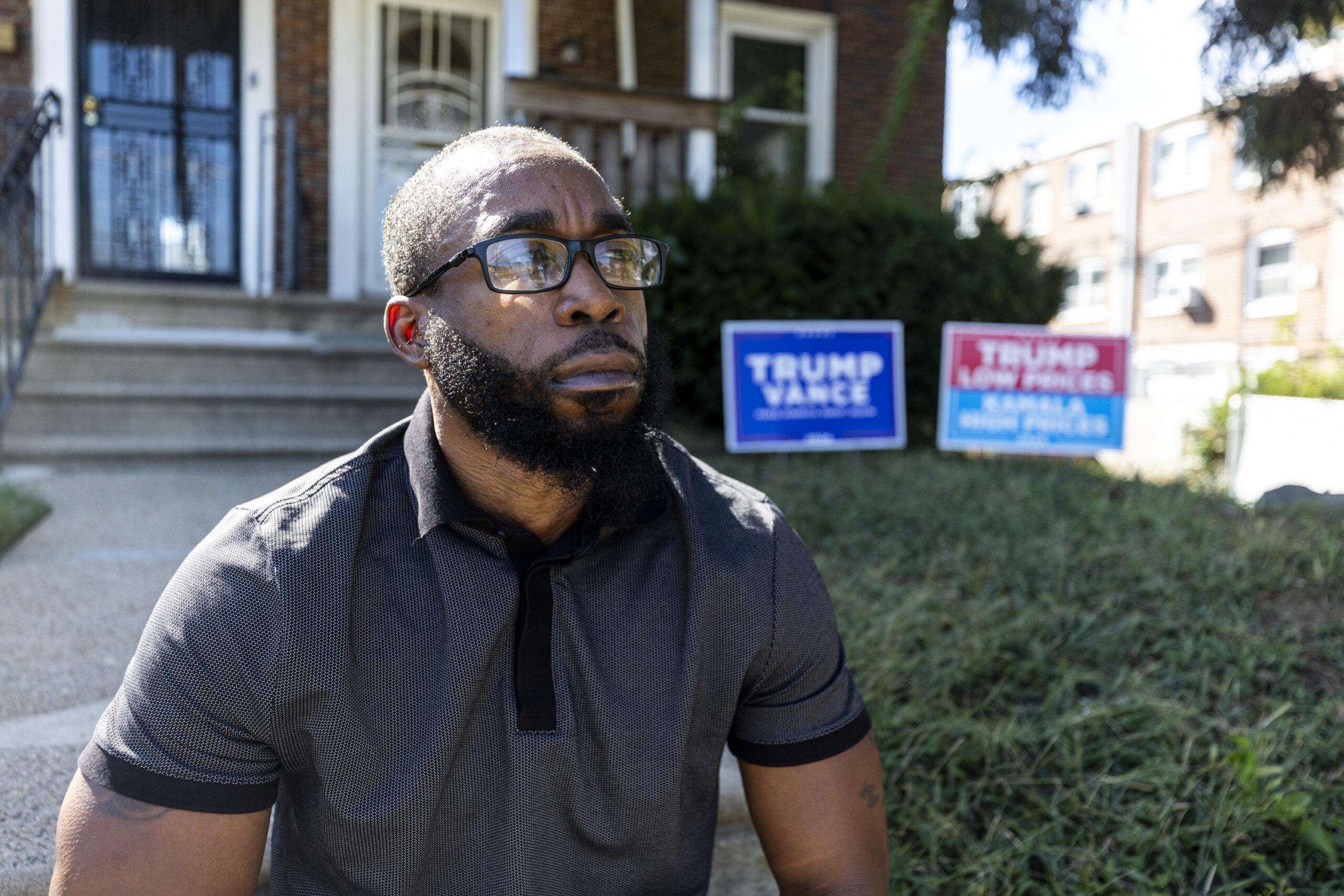
    One of the more entertaining parts of covering City Council is watching the public comment portion of its meetings. Council has attracted a growing chorus of regular speakers, many of whom have things to say that clearly frustrate the members. More recently, the Council’s peanut gallery has been joined by John McAuley, an activist with the Black MAGA group Flip Philly Red.

    Council President Kenyatta Johnson, who is usually a deft hand while leading proceedings, found himself going viral on social media after contentious exchanges with McAuley and longtime speaker Lynn Landes. Johnson sought to keep McAuley on a germane topic and criticized Landes for using the word alien.

    In general, Johnson and his colleagues are better off letting people speak and not reacting to what they have to say. Intervening ensured more people would see their speeches than would have otherwise.

  • State House bills could help round out Gov. Shapiro’s ambitious housing plan | Shackamaxon

    State House bills could help round out Gov. Shapiro’s ambitious housing plan | Shackamaxon

    This week’s column covers housing debates in Harrisburg, admissions policies at the school district, and more bad zoning overlays.

    Go big or go home

    Philadelphia Mayor Cherelle L. Parker is no longer the only person with an ambitious housing plan. Gov. Josh Shapiro joined her this week, pledging in his budget address to create a billion-dollar state fund to encourage housing production in local communities. The guv is echoing a bipartisan consensus that there simply aren’t enough homes to meet the demand. There’s just one problem: Many housing experts say Shapiro’s ideas won’t move the needle on production.

    That’s because his plan is based entirely on carrots, avoiding the creation of the kind of statewide building standards that have been most effective elsewhere.

    While factors like interest rates and the cost of construction impact housing starts, local zoning rules are also a key constraint on homebuilding. Many municipalities maintain strict rules that make it impossible to build anything other than McMansions. In the few towns that do allow for new construction, the mismatch between supply and demand means developers can charge outlandish prices. The new Coulter Place in Ardmore starts at around $3,000 a month for a one-bedroom unit.

    In states like California, the debate over housing has been going on for over a decade. State leaders there also sought to use an incremental approach and avoid attracting the ire of interest groups that are committed to the current system of regulating housing. The result has been the legislature routinely needing to revise the plan. Instead of starting with a half-measure, Pennsylvania should get things right the first time.

    Thankfully, there are plenty of initiatives to do exactly that. State Sen. Sharif Street (who is also running for Congress) is circulating a bill that would align Pennsylvania with international standards on stairwell construction. Advocates claim that allowing for buildings with just one set of stairs will facilitate construction on unique parcels, increase access to natural light for residents, and do so without increasing any safety risks.

    State Rep. Tarik Khan has proposed what he calls the “Golden Girls Law,” named after the famed ‘80s sitcom. Many municipalities restrict unrelated women from living together, which would have made scofflaws out of Blanche, Rose, Dorothy, and her mother if the show were set in Pennsylvania. Khan’s bill would end those bans.

    State Rep. Greg Scott wants to eliminate parking minimums, and State Rep. John Inglis III has introduced bills that would require municipalities to allow for more duplexes and triplexes. Shapiro should put his weight behind these efforts, as well.

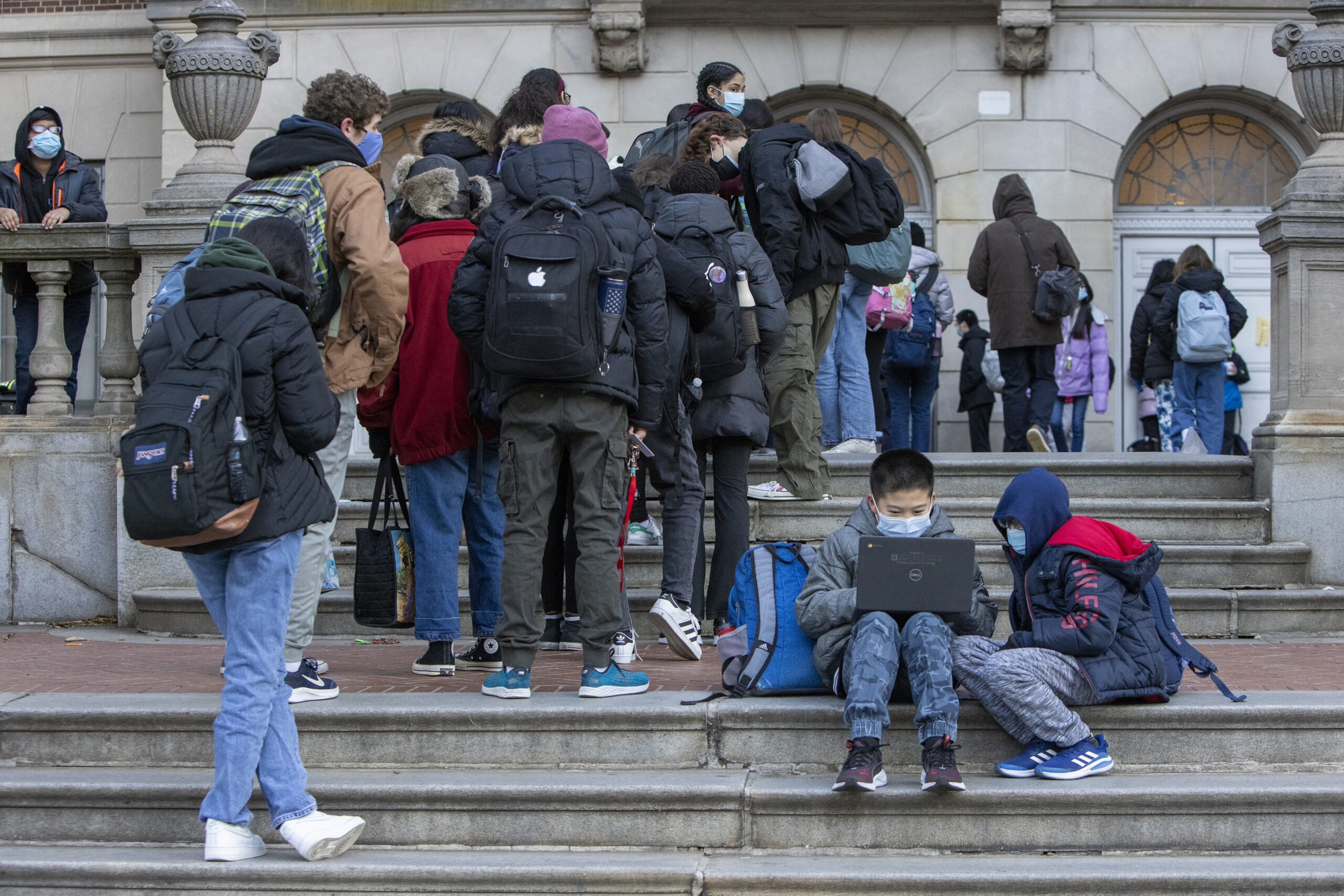
    Students outside Masterman High School in 2022.

    Polarizing magnets

    During the pandemic, the Philadelphia School District was faced with a conundrum: how to decide who got spots at the city’s well-regarded magnet schools, given the state’s cancellation of the Pennsylvania System of School Assessment, or PSSA, standardized tests.

    The schools — and standardized tests — have often been criticized for having cultural and socioeconomic biases. The demographics at Masterman and Central (where I attended) do not match those of the district overall, while standardized test scores tend to reflect the socioeconomic status of the students taking them. To many, this is enough evidence to scrap the magnet system, the tests, or both.

    The district’s solution was to take over admissions, which had traditionally been handled by the schools themselves, and subject applicants to a lottery process. To address equity concerns, some zip codes were given priority access to the schools. Students at predominantly Black George Washington Carver Middle School, who had been promised a spot at the partner high school if they maintained good grades, saw those pledges revoked. The district also created a computer-graded writing test, although that was quickly phased out. Some parents saw the revamp as a blatant attempt to discriminate against Asian students. A bipartisan federal appeals court ruled this week that these families have a case.

    With the state once again administering PSSAs, and with the new lottery system not having a substantial impact on demographics at the schools, it is worth questioning whether the new process represents any improvement at all.

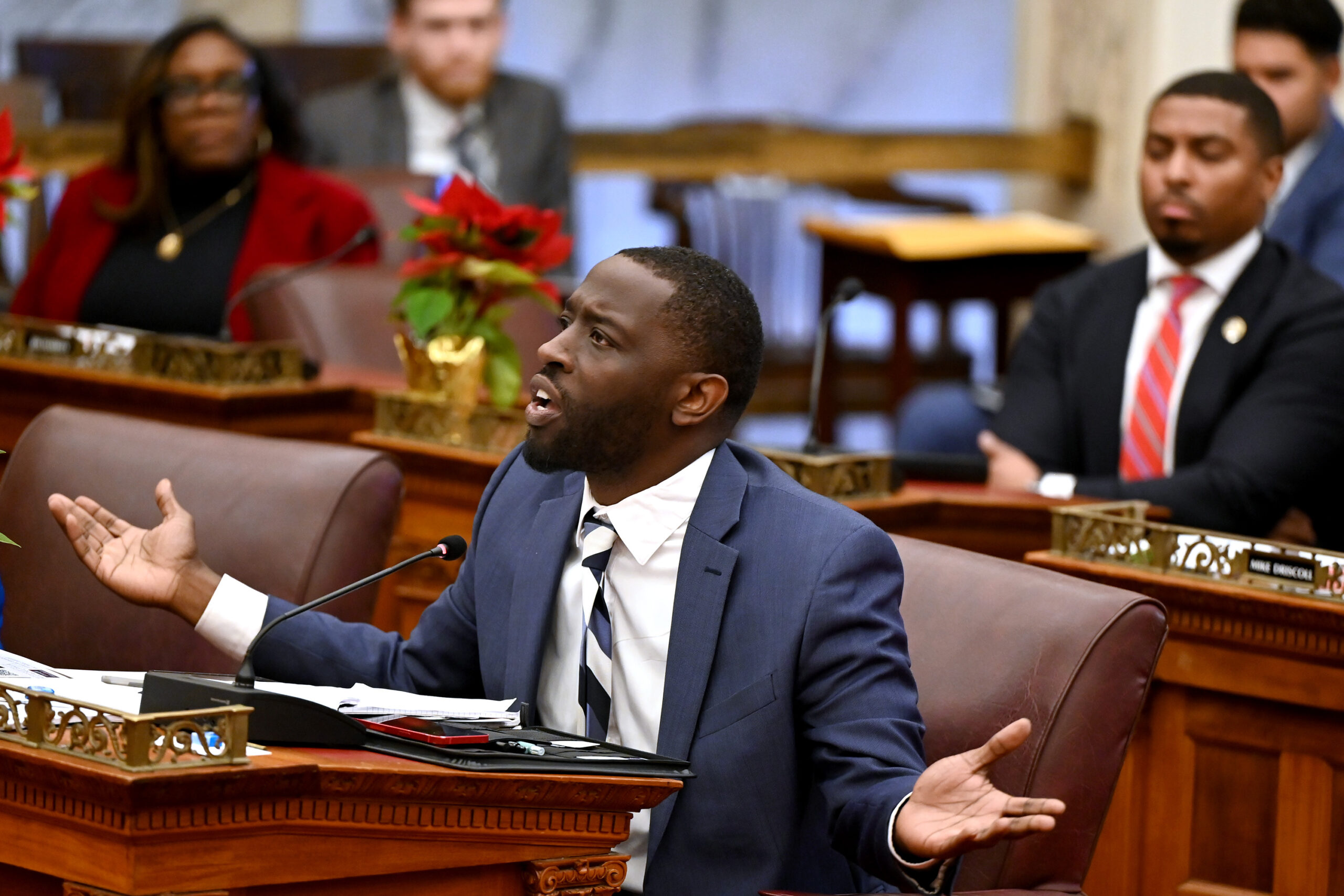
    Councilmember Jeffery Young Jr. in chambers as City Council meets in December.

    Day of Jay

    This column’s favorite City Council member, the 5th District’s Jeffery “Jay” Young Jr., decided not to advance his controversial bill to ban housing construction on or near the former Hahnemann University Hospital campus after serious pushback from local community groups and the Planning Commission. Unfortunately, the attention given to the Hahnemann bill may have helped two of his other bad ideas evade scrutiny.

    Young got two bills through the Rules Committee. One bill is aimed at preventing blight by restricting demolitions of vacant property. Ironically, most development experts say the bill will likely increase blight by incentivizing owners to create hazards to justify demolition or providing more space for squatters to operate.

    Young also introduced a bill creating an 11 p.m. curfew for some businesses within his district, which he said is aimed at stopping nuisance businesses that are selling drug paraphernalia and, per Young, sometimes the drugs themselves.

    By that logic, selling drugs at 10:59 p.m. will still be allowed.

  • Like the 2025 Eagles’ offense, Philly’s 2026 snow response has been underwhelming | Shackamaxon

    Like the 2025 Eagles’ offense, Philly’s 2026 snow response has been underwhelming | Shackamaxon

    This week’s Shackamaxon covers slow snow removal, political incentives, and whether politicians should be able to hedge their electoral bets.

    Snow-go zones

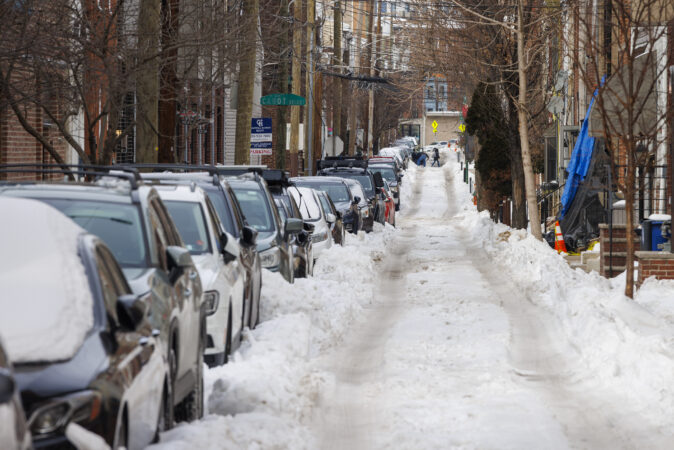
    When the news came through that Philadelphia schools would finally be open on Thursday, the Pearson household cheered. Between some brutal stomach bugs, the Christmas holiday break, in-service days, and the snow, it had felt like my older two children had barely spent any time in class since Thanksgiving. While I’m a strong advocate for snow days, I’m less enthusiastic about snow weeks. For many, the failure to open schools for three days crystallized their frustrations with the way the city handled the weekend onslaught of snow, sleet, and ice.

    TV news and social media are filled with angry residents. Many small streets remain wholly unplowed. Getting on the bus often requires climbing over ice piles. Many feel Mayor Cherelle L. Parker and her team did not adequately prepare for a weather event that everyone knew was coming. One reader even asked me if Carlton Williams, the city’s director of Clean and Green Initiatives and the point person for plowing, was Parker’s version of overmatched Eagles offensive coordinator Kevin Patullo.

    According to contemporary Inquirer reporting, more than 90% of city streets were plowed and passable after a large ice storm in 2016. It is hard to make a direct comparison, but I would be surprised if we were anywhere close. I asked Joe Grace, the mayor’s head of communications, if the city had anyone available to explain any unique challenges this year, but he did not respond.

    Of course, Philadelphia is hardly the only city to struggle with this storm. Washington residents are furious with their city’s snow response, schools across the state of Maryland are still closed, and cities in New Jersey are also struggling to remove the snow and ice. The freezing cold temperatures mean the snow piles are sticking around, rather than melting, and the accumulation is both heavy and frozen solid, making shoveling a difficult process.

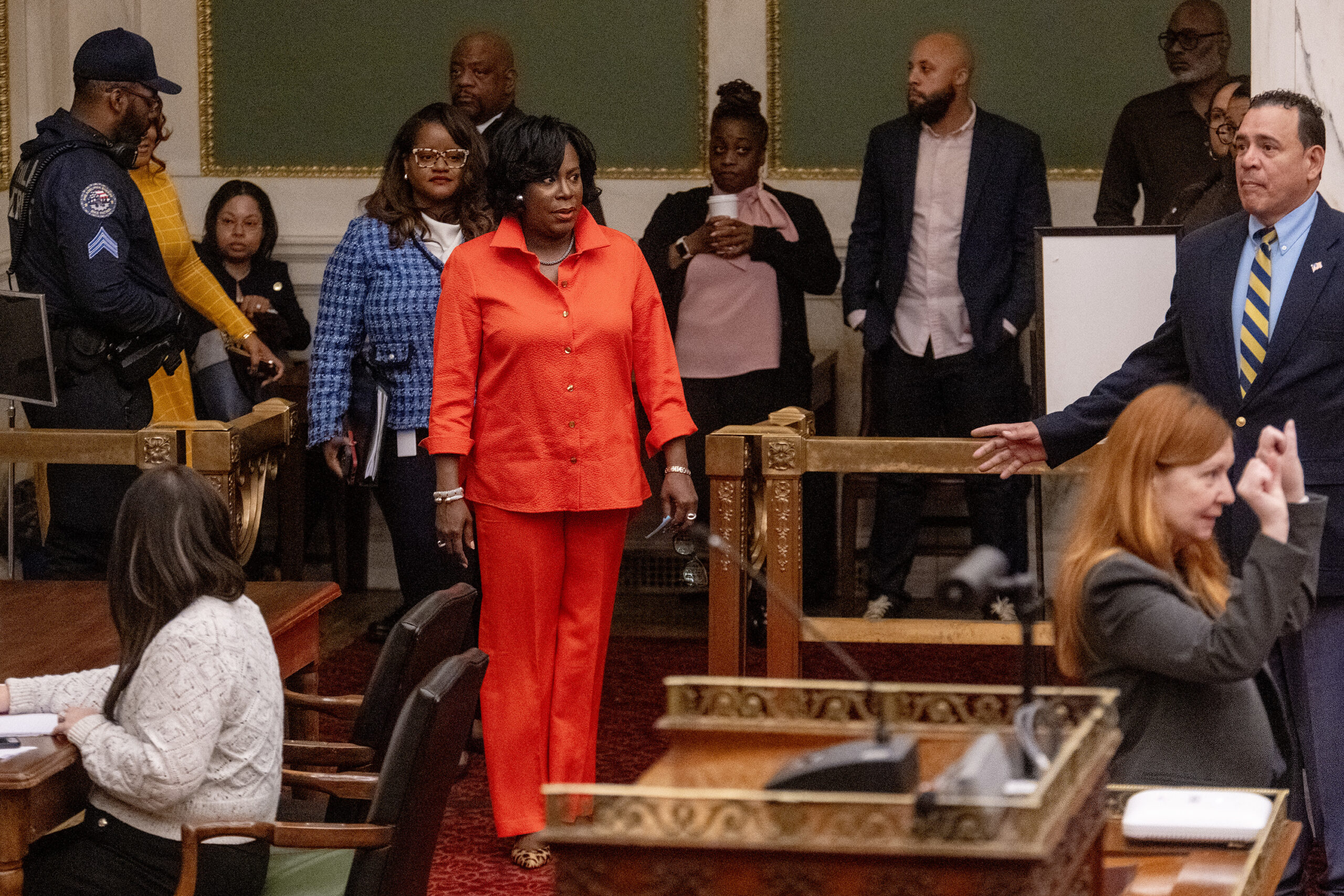
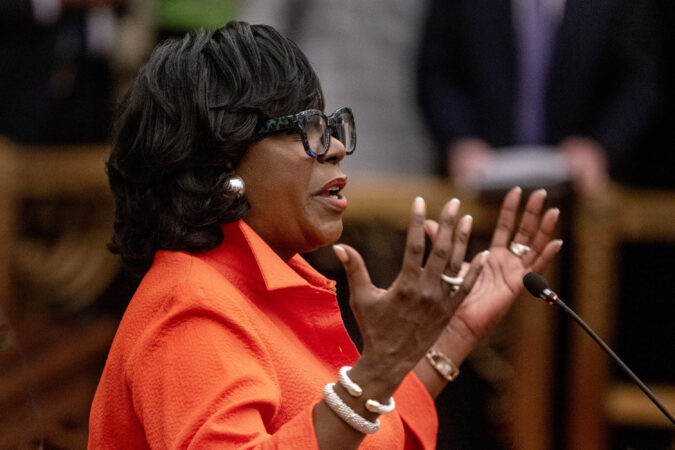
    Mayor Cherelle L. Parker arrives in Council chambers in March.

    A matter of incentives

    The snowfall, and the attendant consternation, is a good way to explain one of my key beliefs about city government: When the mayor disagrees with City Council, the mayor is often right. This isn’t a statement about any particular mayor or councilmember, but rather the different incentives for each office.

    When things go bad in a way that affects everyone, it’s the mayor who gets the blame. While many residents may vent to their district councilmember about the cleanup effort, most understand legislators aren’t in charge of plowing. In the private sector, employers will often talk about “key performance indicators.” For cities, that means things like crime reduction, trash collection, snow removal, and effective schools — which are all under mayoral control.

    With a two-term limit and competitive elections for each vacancy, mayors also have more direct accountability. People know who the mayor is, even if they don’t typically vote in local elections. If you are reading this column, you probably know who your district councilmember is, but around half of your neighbors likely don’t.

    Meanwhile, the things Council gets blamed for, and thus focuses on, tend to be more picayune. Sometimes, the body makes sweeping policy changes based on the testimony of just a few outspoken residents, who themselves often represent a hard-line and unrepresentative “not in my backyard” attitude. This approach leads to a concentration of benefits and the diffusion of costs.

    One former staffer told me councilmembers tend to see themselves as their constituents’ lawyer, rather than agents of systemic change. With challenges rare and vacancies even rarer, members have little incentive to take on new perspectives or alter their approach. Instead, they tend to dance with the ones who brung ‘em. This is particularly acute for members who represent districts, who are a majority of Council.

    The one move that tends to refocus a councilmember’s attention is becoming mayor.

    Parker herself is a great example of this phenomenon. As a district councilmember, she was tough on new development. As mayor, Parker has become a cheerleader for it. That’s because while individual projects may lead to a surge in complaints, they also help the city pay its bills, employ skilled workers, and house residents. The city’s chief executive, no matter who they are, is always likely to side with policy choices that have widespread public benefit because it is in their interest.

    Councilmember Isaiah Thomas in chambers as City Council meets in December.

    Resign to run reforms

    Perhaps lost in the ice removal and “Remove ICE” controversies is an effort from At-Large City Councilmember Isaiah Thomas to reform Philadelphia’s “resign to run” provision. This rule prevents city employees from running for political office without first quitting their day job, including elected officials. Thomas told me he’d like to see the proposed charter change put to the voters this year, perhaps as early as the May primary.

    In the past, efforts to change or eliminate the provision have failed, in part because of an understandable resentment of politicians getting to run for higher office on the public dime. Still, just like debates between mayors and councilmembers, it is worth looking at what kind of behavior this rule incentivizes.

    While the current crop of councilmembers is quite new, that hasn’t always been the case. Growing up, the joke was that people only left Council for three reasons: they retired, they went to jail, or they ran for mayor. The last member of Council to earn a political promotion outside of City Hall was Lucien Blackwell, who won a special election to replace Bill Gray in Congress all the way back in 1991.

    Both of Philadelphia’s current U.S. representatives benefited from holding elected office in Harrisburg, where this provision doesn’t exist. Could Brendan Boyle, famously the son of a janitor, have run for Congress if he had to resign his seat in the state House to run? Probably not.

  • A win-win for Parker and Council brings $800 million housing spending plan closer to reality | Shackamaxon

    A win-win for Parker and Council brings $800 million housing spending plan closer to reality | Shackamaxon

    This week’s Shackamaxon covers the return of City Council, an update on the water wars, and the weekend’s potential snowpocalypse.

    Closer to H.O.M.E.

    Both City Council and Mayor Cherelle L. Parker are calling the compromise agreement on the $800 million housing spending plan a win.

    For councilmembers, the Housing Opportunities Made Easy, or H.O.M.E., proposal was altered to prioritize households at the bottom of the income scale, their main demand throughout the process. For the mayor, Council has approved her signature proposal and done so without significant alterations. That means the city will borrow and spend the first tranche of money soon.

    Frankly, I’m surprised the income limits for just two of the dozens of programs included in the initiative became such a source of contention. Council is right that the neediest should be prioritized, while the mayor is correct in saying that raising the limits is unlikely to create a flood of interest that will squeeze out lower-income homeowners.

    If a house needs modification to facilitate a resident’s physical needs, or has one of the qualifying repairs (like a major roof leak) for the Basic Systems Repair Program, most homeowners with means will address the problem as soon as they can — even if it means spending their own money. Getting help from the city can take months. That’s a lot of time to deal with a leaking roof, crumbling joists, or an inability to access your entire home.

    Perhaps the argument suited both sides. For the mayor, arguing with Council about income limits meant not arguing about whether borrowing nearly a billion dollars for her housing initiative is a good idea. It also meant new concepts like One Philly Mortgage or the property-based Shallow Rent Program mostly went unscrutinized. For councilmembers, it was an opportunity to demonstrate their compassion and score a win over a mayor who doesn’t like to lose.

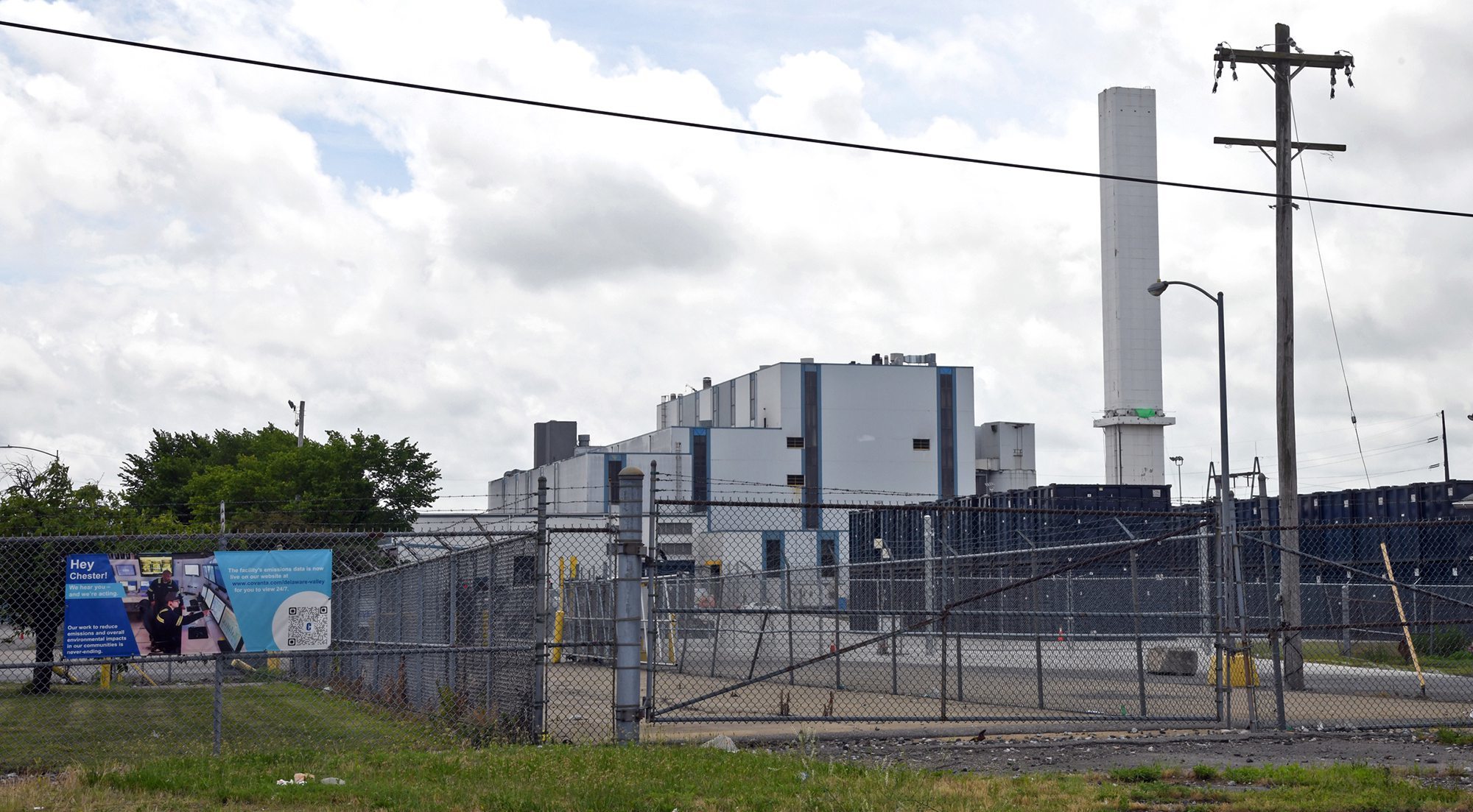
    The Delaware Valley Resource Recovery Facility is a waste-to-energy incinerator in Chester that handles more than a million tons of trash a year.

    Burning desire

    The biggest controversy during Council’s first session of the year was whether or not the city should continue sending trash for incineration at the Reworld Delaware Valley Resource Recovery Facility.

    Chester residents and 3rd District Councilmember Jamie Gauthier want the city to stop a practice they view as unneighborly, blaming Reworld for poor air quality and medical issues. Reworld says incineration is better than the alternative: landfills. Both options lead to increased local emissions. Which one is considered worse often depends on whom you’re talking to.

    One way to reduce the impact of the city’s trash would be to begin a municipal pilot program for composting. While many residents utilize composting services, extending access could lead to a significant reduction in waste. This would mean less impact on the environment and local communities, no matter which option the city ultimately chooses.

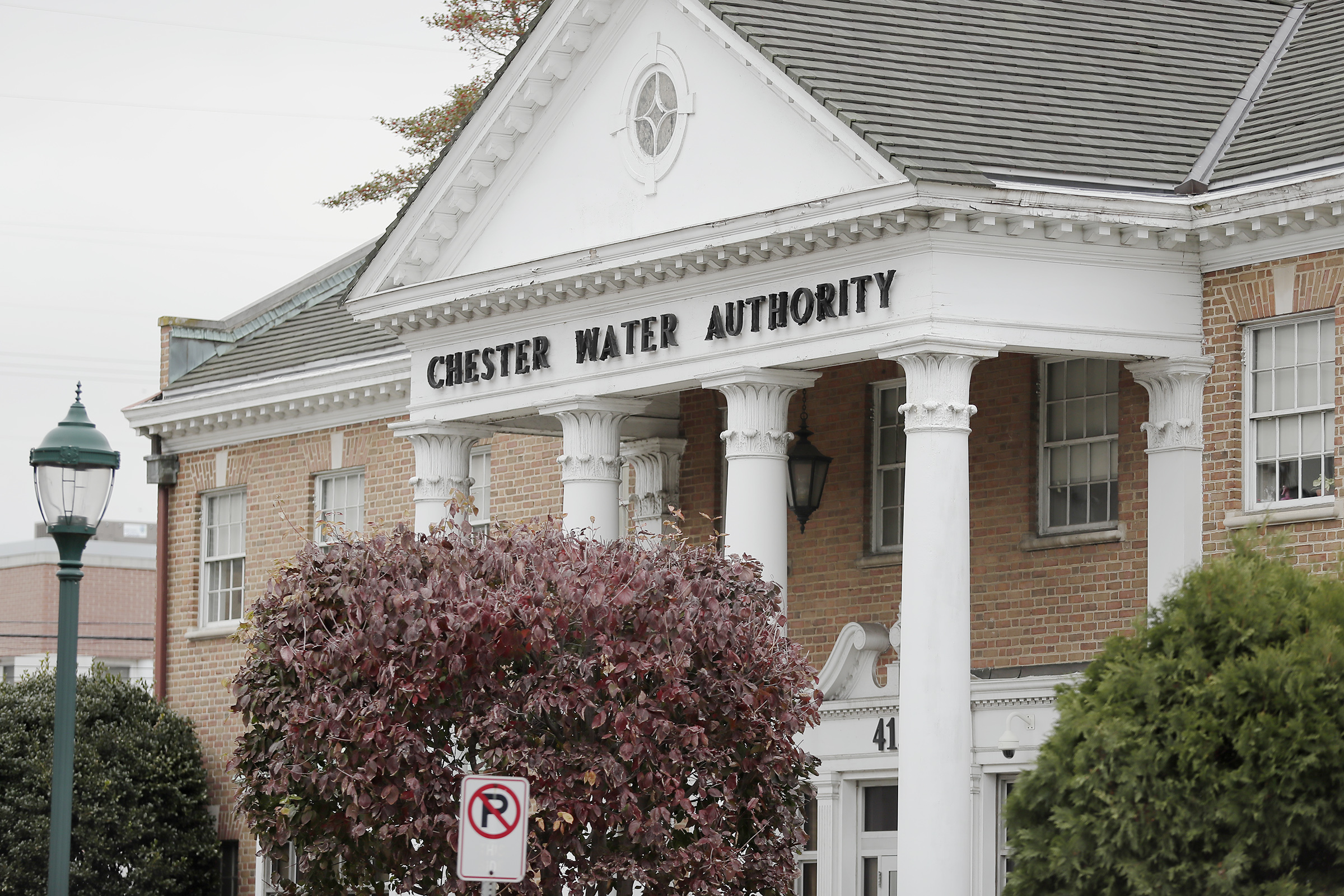
    The Chester Water Authority, located at 415 Welsh St. in Chester.

    Water wars

    The Pennsylvania Supreme Court ruled in favor of the Chester Water Authority, a win for advocates of publicly owned water utilities. The financially distressed Delaware County city had claimed ownership of the authority and its assets, based on the fact that it had originally established the agency decades ago. In the meantime, however, the coverage area has spread, even including much of neighboring Chester County.

    Despite this, the state-appointed receiver for the city of Chester came to see a sale of the authority as a way to rebalance the books. Chester has been under state supervision since 1995 and was placed into receivership by former Gov. Tom Wolf in 2020. When Aqua America offered more than $400 million for the authority, it was hard for the city, which has around $500 million in liabilities, to refuse — even when the authority’s board opposed the deal.

    The court’s ruling ends the push to privatize the authority, which is a win for ratepayers, especially the many who don’t live in the city but still rely on the authority for water. But it leaves Chester City in need of another way out of its long municipal nightmare.

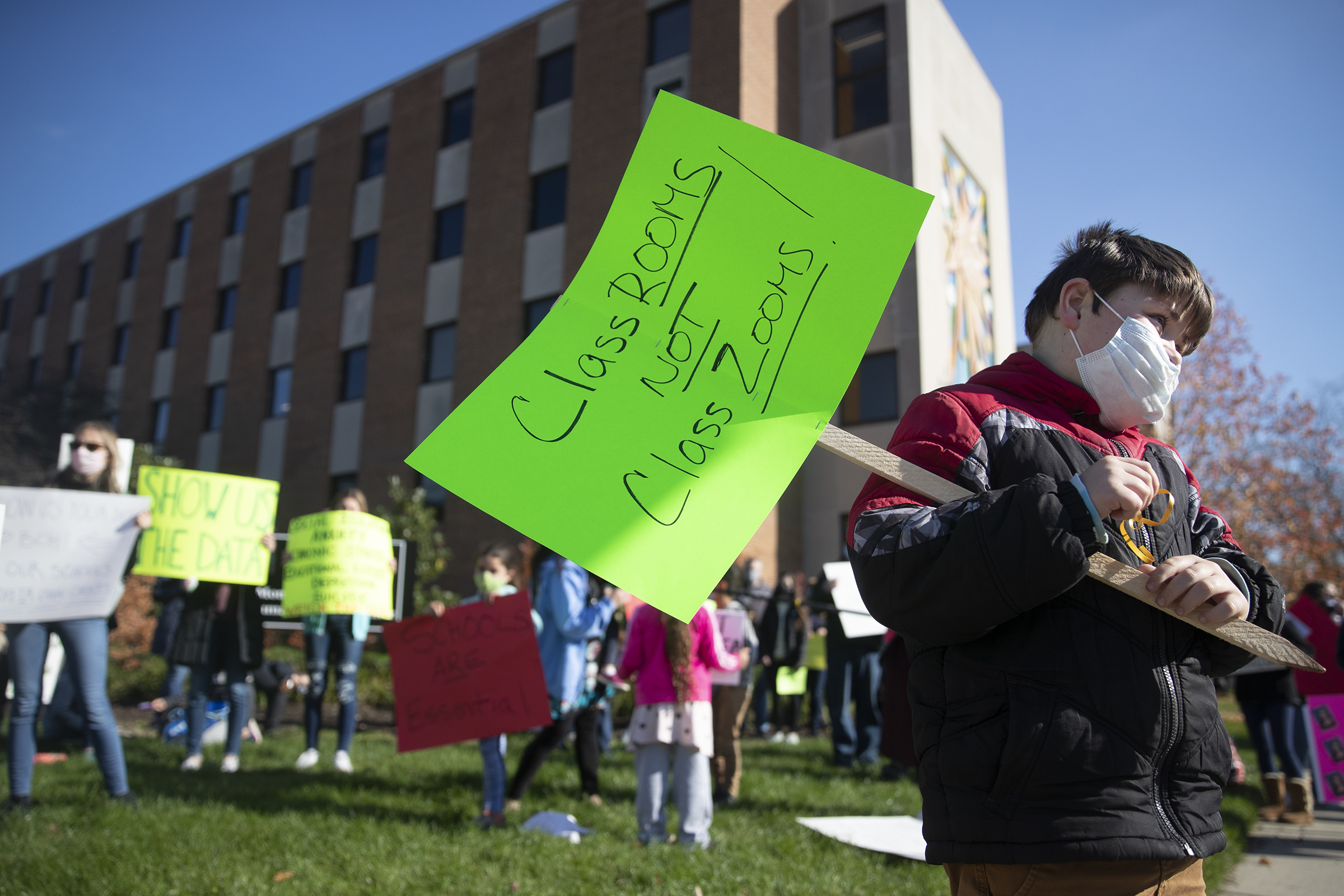
    Colin McAndrew, 9, a fourth grader at North Penn, holds a sign that reads “Classrooms not Class Zooms” during a rally held outside of the Montgomery County Human Services Center in Norristown in 2020.

    No Zoom school

    With Philadelphia expected to receive a huge helping of snow this weekend, I think it is worth reminding regional school administrators that kids deserve better than Zoom school.

    Weather models that are much more accurate than the ones they used back in John Bolaris’ day are predicting a foot or more of snow. That could be enough to make getting to class on Monday unrealistic, especially given how many teachers travel in from the suburbs.

    Losing a day of school is a challenge, but it doesn’t justify forcing kids to spend the day on their laptops, especially given the growing body of evidence showing that digital learning tools simply aren’t as effective. The National Assessment of Educational Progress test scores, often called the Nation’s Report Card, show that students have regressed across the board, erasing decades of progress.

    This decline roughly correlates with the explosion of technology in the classroom. Additionally, children’s behavior worsened overall during the pandemic, with some researchers blaming the shift to screens. UNESCO went as far as to blame it for increasing educational inequality.

    Psychologist Jonathan Haidt wrote a book called The Anxious Generation, which blames a surge in screen time (including for school) and a severe curtailment of unstructured free time for growing teenage anxiety.

    Sadly, too many adults who grew up in a time when children were allowed more freedom and spontaneity keep imposing policies on kids that leave them with less of both.

  • Americans take their heroes where they can get them, but they should look past Philly’s sheriff | Shackamaxon

    Americans take their heroes where they can get them, but they should look past Philly’s sheriff | Shackamaxon

    This week’s column talks about heroes with feet of clay, SEPTA’s starts and stops, and America’s 250th birthday celebrations.

    No one’s hero

    Philadelphia Sheriff Rochelle Bilal is having her 15 minutes of fame this week, with her comments at a news conference alongside District Attorney Larry Krasner spreading across social media. After the killing of Renee Good by U.S. Immigration and Customs Enforcement agent Jonathan Ross in Minneapolis, Krasner stated that he would hold federal officers accountable for any violation of the law. Bilal warned that the feds “don’t want that smoke” and called ICE “fake wannabe law enforcement.” She even scored an interview with CNN’s Erin Burnett.

    That’s all well and good, but there’s one big problem with Bilal’s position: The sheriff ultimately has no ability to protect Philadelphians from ICE.

    Despite her title and natty uniform, it is Police Commissioner Kevin J. Bethel who serves as the city’s top law enforcement official, not Bilal. This is a good thing because the sheriff’s track record is disastrous.

    Despite running for the office in 2019 as a reformer, Bilal began her tenure by firing Brett Mandel, her chief financial officer, just five weeks into his tenure. Mandel had flagged her use of what he described as a slush fund. A longtime good government advocate, Mandel objected to using city funds to pay for things like parking tickets and six-figure media consulting contracts.

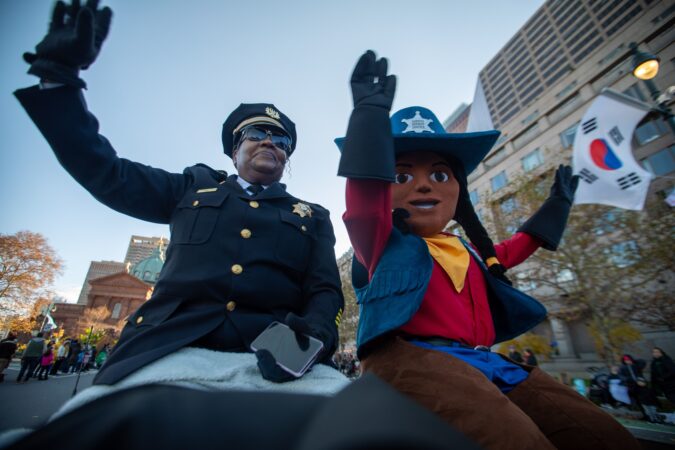
    Things haven’t improved in the years since. Bilal was publicly criticized by the city’s judges for her failure to protect courtrooms, turning over foreclosure sales to an online operator with little notice, covering up the theft of a department-issued vehicle, one of her deputies was caught selling guns illegally, and her office wasted nearly $10,000 on a new mascot no one asked for. The list goes on, yet city officials have mostly steered clear of criticizing the sheriff for her missteps.

    While Bilal was basking in the media spotlight of talking tough against ICE, Bethel was not amused. Given Mayor Cherelle L. Parker’s clear strategy to avoid poking the orange bear, Bilal’s comments forced the commissioner to make clear in a statement that it is the Philadelphia Police Department that runs law enforcement in the city, not the sheriff.

    If people are looking for a genuine local hero in the national crisis over immigration enforcement, why not opt for Keisha Hudson instead? Hudson, who leads the local Defenders Association, has put together a new unit specializing in immigration cases. An immigrant from Jamaica herself, Hudson has both the right job and the right life experience to help residents who have been mistreated by ICE.

    Bilal, on the other hand, can’t even keep ICE from turning the courts she’s responsible for into a hunting ground for the feds.

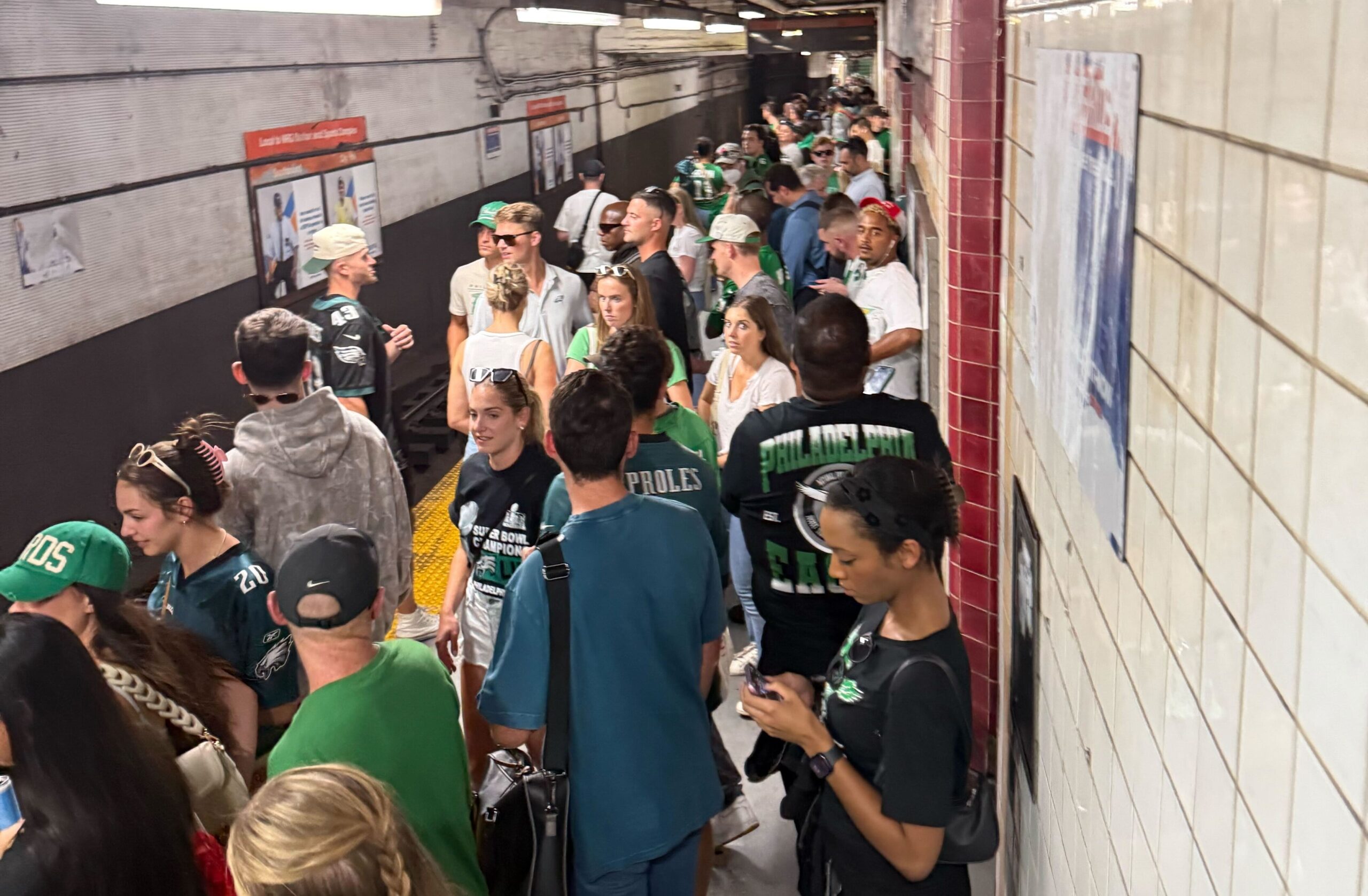
    Eagles fans wait for a Broad Street Line train at City Hall station.

    The wheels on the bus

    During the yearslong debate over transit funding in Pennsylvania, one consistent drumbeat is that SEPTA needed to become more efficient if it wanted to get more support.

    Of course, SEPTA already does more with less when compared with other major agencies, with cost-per-ride lower than in Boston and Washington, D.C. Additionally, trying to save money can sometimes cost agencies in the long run, or at the very least cost scarce political capital.

    In fact, most of the current crises SEPTA faces are the result of trying to save money or insufficient political will. For example, better capitalized agencies would have replaced the Regional Rail fleet a decade or so ago. Meanwhile, the weekslong closure of the trolley tunnel happened because the agency tried using a new part — in the hope that it would be replaced less frequently and cost less.

    Perhaps the Broad Street Line felt left out of the chaos because operations there have become a new pain point for riders. The 1980s Kawasaki trains are well-built. They are also nearly 45 years old. When I first started at The Inquirer five years ago, then-SEPTA General Manager Leslie Richards told me she hoped to avoid replacing the trains until the 2040s. Recent issues on that line make me question that timeline.

    For weeks, the trains have struggled with mechanical issues. Riders have reported jam-packed trains that have been forced to skip stops, line adjustments, and other delays. According to a spokesperson, door faults and general vehicle malfunctions have contributed to the problems.

    It all came to a head at the end of Sunday’s Eagles game.

    After a door issue disabled a train near Snyder Station, already dejected fans were forced to wait until 9 p.m. to catch a ride home. SEPTA is spending $5 million to upgrade the traction motors, which should help. What’s really needed, however, are new trains.

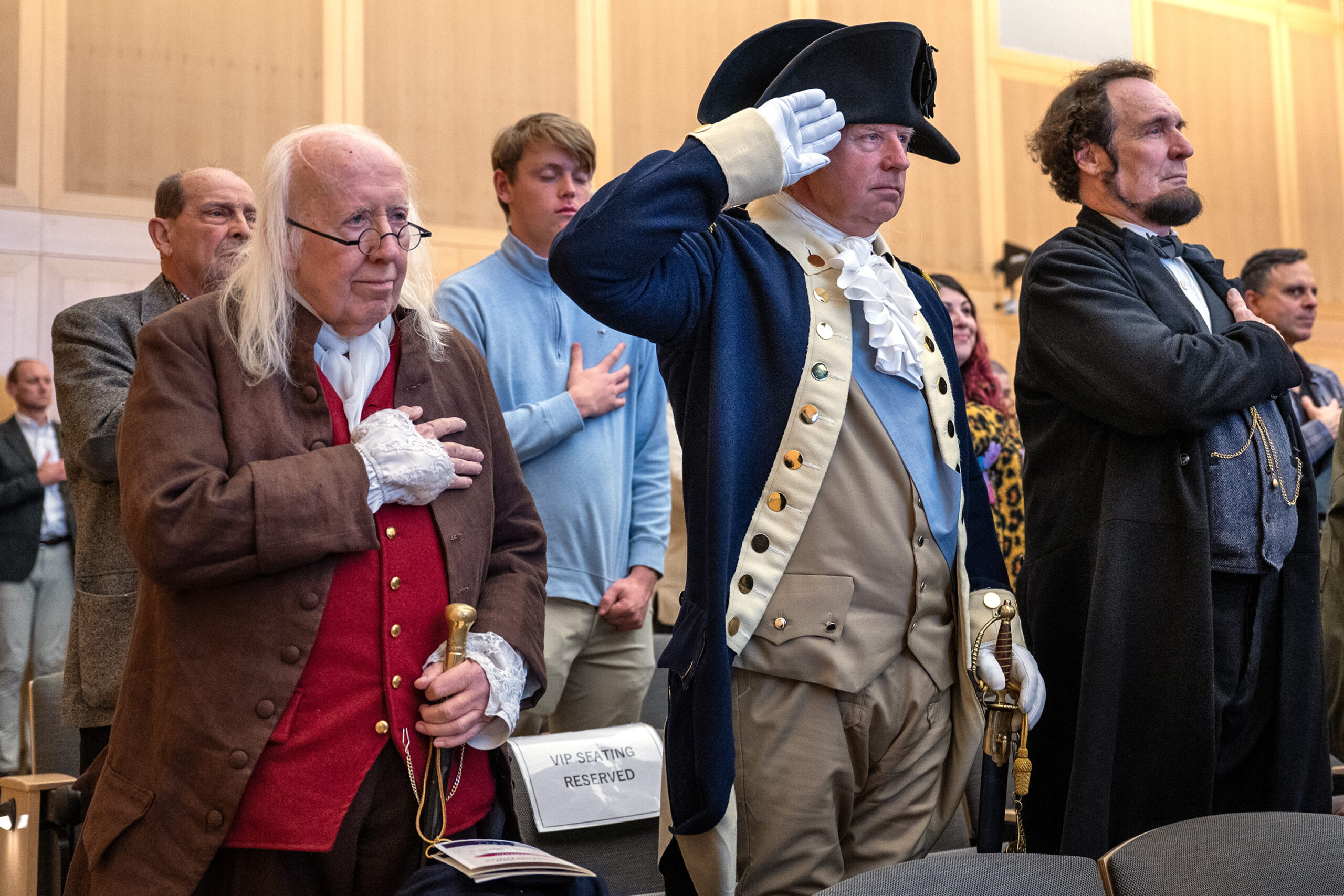
    Historical interpreters (from left) Benjamin Franklin, Gen. George Washington, and President Abraham Lincoln stand with other audience members for the Presentation of the Colors, as the U.S. Mint unveils new coins for the Semiquincentennial at the National Constitution Center in Philadelphia in December.

    Let’s get this party started

    The United States is celebrating a big one this year. America’s big 250th birthday party is here … can you tell?

    I can’t. While big events like the World Cup are planned for later this year, there is currently little to indicate that 2026 is any different from 2025. The patriotic bunting that sprouted all over Philadelphia during the Civil War and the Centennial has yet to appear.

    Still, help is on the way. City and state officials announced an $11.5 million initiative to remove graffiti, plant flowers, and otherwise beautify the city.

    At that price, we should probably do it every year.