Author: Maggie Prosser

  • Amid uncertain future, the President’s House Site celebrates 15th anniversary

    Amid uncertain future, the President’s House Site celebrates 15th anniversary

    Just a few months ago, the future of the President’s House Site on Independence Mall seemed ill-fated: By presidential executive order, contents deemed disparaging by federal officials were to be removed.

    But as of Sunday, the outdoor exhibit at the corner of Sixth and Market Streets, memorializing the nine people enslaved there by President George Washington — and capturing the somber paradox of a young America that exalted freedom for some, while depriving it for others — remains unaltered. Instead, the President’s House Site surpassed a milestone last week: the 15th anniversary of its opening.

    More than 75 activists, preservationists, historians, and public officials gathered at the site Sunday afternoon to commemorate the occasion and mobilize resistance amid its uncertain future. (The event was initially scheduled for Dec. 15, the date of the site’s opening in 2010, but was rescheduled due to snow and subfreezing temperatures.)

    The President’s House Site has become a lightning rod for President Donald Trump, who seeks to remove content from national parks that his administration says “inappropriately disparages Americans past or living” — what activists have said is an effort to sanitize history by omitting slavery from the narrative.

    Starting in 2002, Black leaders and the Avenging the Ancestors Coalition (ATAC) fought to put slavery at the forefront of the exhibit built around the remnants of the country’s original White House. It was a chapter of history the National Park Service was initially hesitant to put on display.
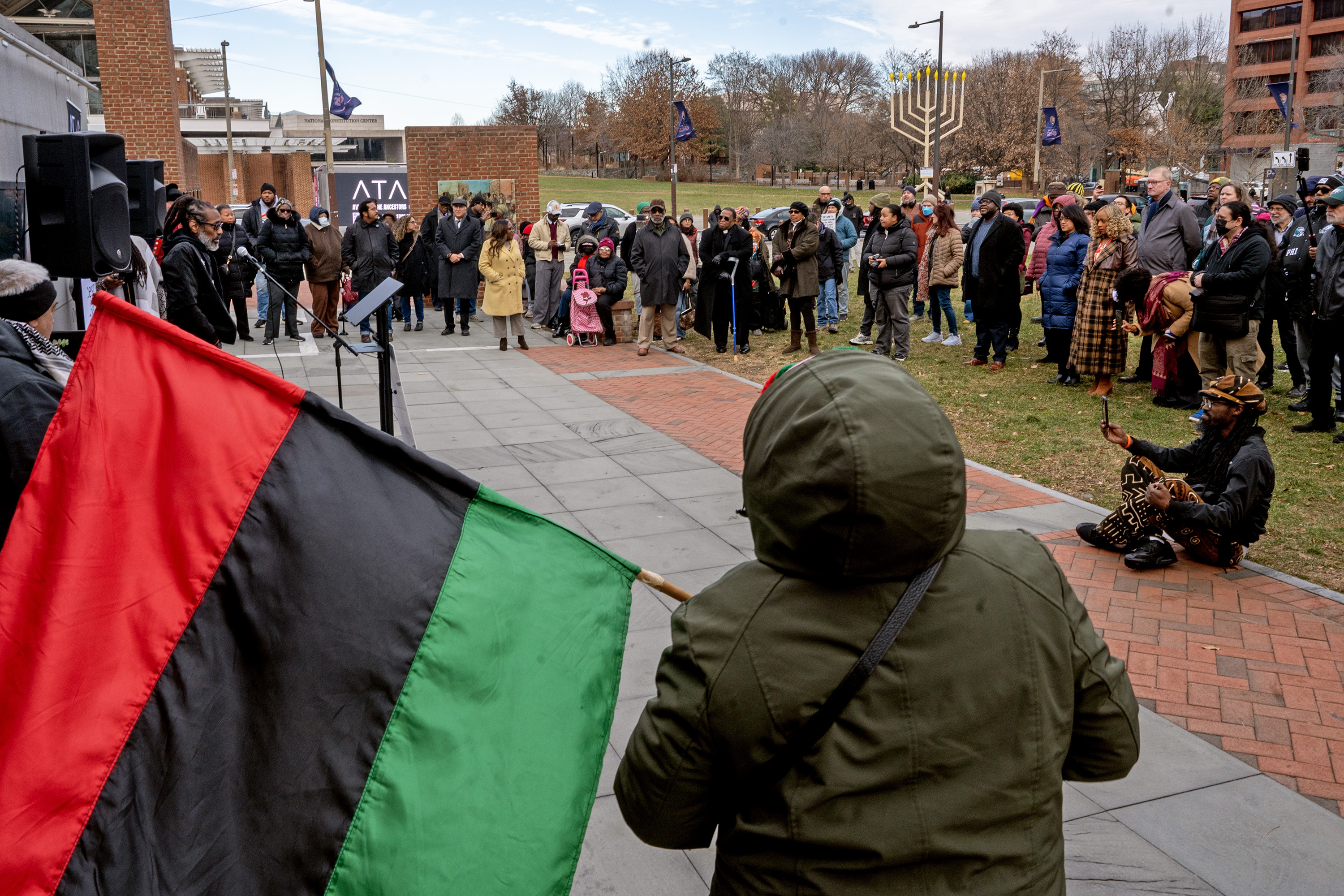
    Michael Coard (left) with the Avenging the Ancestors Coalition speaks on the site as the 15th anniversary of the President’s House exhibit in Independence National Historical Park is celebrated Sunday, Dec. 21, 2025.

    “America is a great country today because they enslaved us yesterday,” Michael Coard, an attorney and founding member of ATAC, said.

    Over the summer, 13 items across six displays at the President’s House were flagged for review as part of Trump’s executive order, and federal authorities set a Sept. 17 deadline to change or remove the disputed content at national parks nationwide. Ninety-five days after the deadline, the President’s House is unchanged, but the exhibit could be seemingly upended any time.

    In an email Friday, a spokesperson for the National Park Service said all “interpretive signage” is under review in accordance with the executive order.

    “As we carry out this directive, we’ll be evaluating all signage in the park along with the public feedback we’ve received,” the statement reads. “This effort reinforces our commitment to telling the full and accurate story of our nation’s past.”

    The turmoil comes ahead of the nation’s semiquincentennial, when its birthplace, Philadelphia, will be in the spotlight. The fate of these displays is poised to be a larger battle over who gets to tell America’s history.

    “We cannot allow [Trump] to erase our history,” said State Sen. Sharif Street, who was among more than a dozen public officials at Sunday’s event. Speakers included seven Philadelphia City Council members, District Attorney Larry Krasner, and fourth, fifth, and sixth graders from the Jubilee School in West Philadelphia.

    Street’s father, former Philadelphia Mayor John F. Street, legitimized ATAC and Coard’s efforts decades ago as the first elected official to start funding their project.
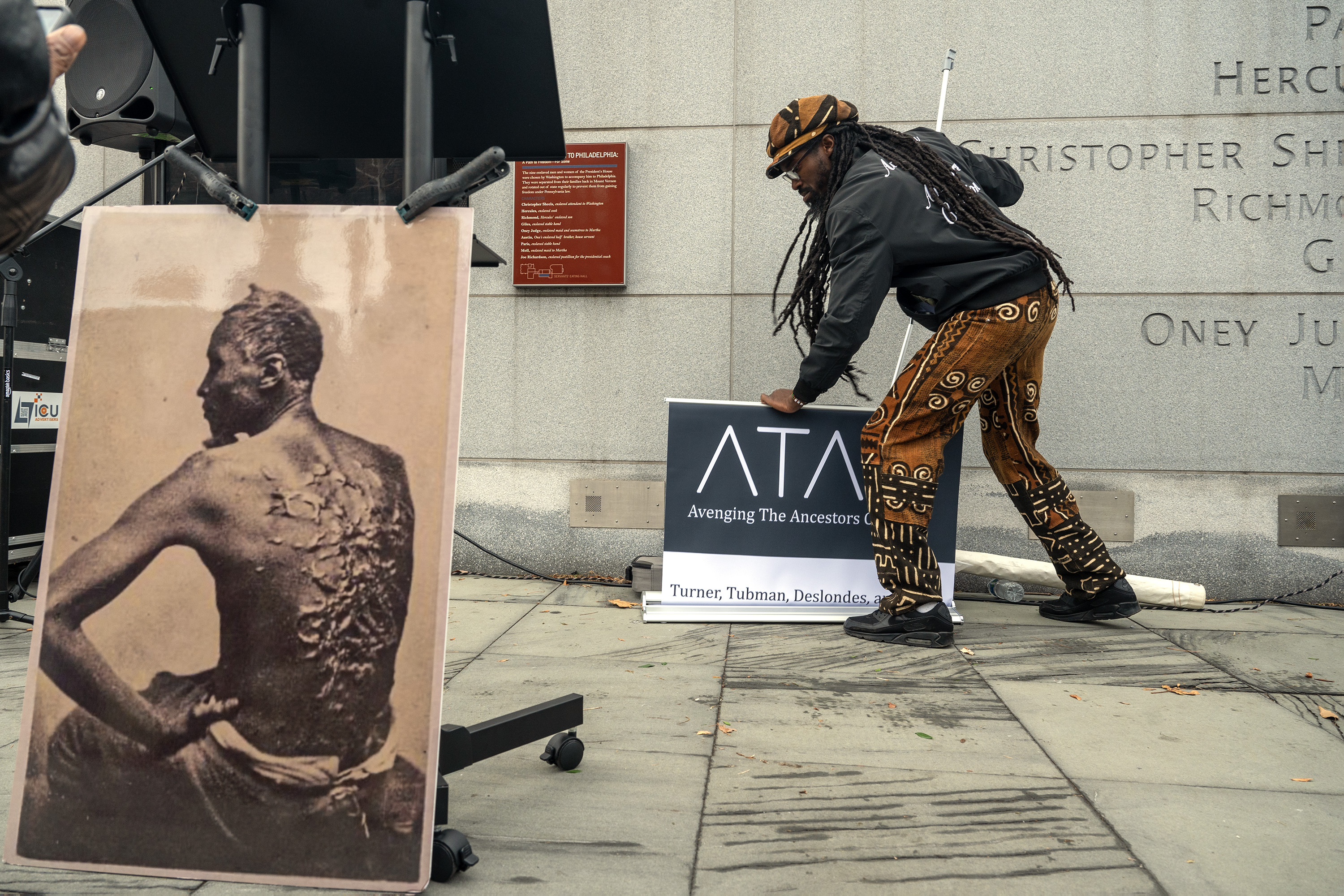
    Farugh Maat of the Avenging the Ancestors Coalition takes down signs at the President’s House Site exhibit in Independence National Historical Park after a 15th anniversary ceremony Sunday, Dec. 21, 2025.

    “America is a great country because we overcame those things, not because they never happened,” Sharif Street said. “We’ve always marched towards progress, not backwards. But the progress we have [made] will only remain if we are willing to fight to preserve it.”

    The message Sunday was clear: Activists will continue to fight for the integrity of the site.

    “You cannot erase, you cannot take away,” said the Rev. Carolyn Cavaness, of the historic Mother Bethel A.M.E. Church, “you cannot delete, you cannot attempt to distract or detour.”
  • One killed, seven others injured in Upper Darby apartment fire Saturday

    One killed, seven others injured in Upper Darby apartment fire Saturday

    One person was killed and at least seven others, including a firefighter, were injured as a fire tore through an Upper Darby apartment Saturday, officials said.

    Firefighters were called about 10:30 a.m. to a three-story building on the 3200 block of Township Line Road, in the Drexel Hill neighborhood, where the blaze had broken out in a second-floor apartment. The flames were contained to the apartment, but the heat, smoke, and water damaged nearby units, Upper Darby Township Fire Chief Nicholas Martin said in a news release.

    Martin said one person died from their injuries after being hospitalized, and another was critically injured. Their identities have not been made public.

    A firefighter was also hospitalized, but later released, for burn injuries sustained while rescuing two people from the apartment. At least five others suffered injuries that were not life-threatening, and about 75 people were displaced from their homes, the news release said.

    “Our thoughts are with the victims of this fire and their families during this tremendously difficult time,” Martin said in the statement.

    The cause of the fire is under investigation.

  • These street sign artists are helping Philadelphia commuters answer an age-old question: Where’s the bus?

    These street sign artists are helping Philadelphia commuters answer an age-old question: Where’s the bus?

    While waiting for a bus earlier this year, two Philadelphia street artists who rely on public transportation diagnosed an all-too-familiar ailment: I have no idea when the bus will be here.

    “No one knows when the bus is coming,” one recalled saying.

    “We should really make something.”

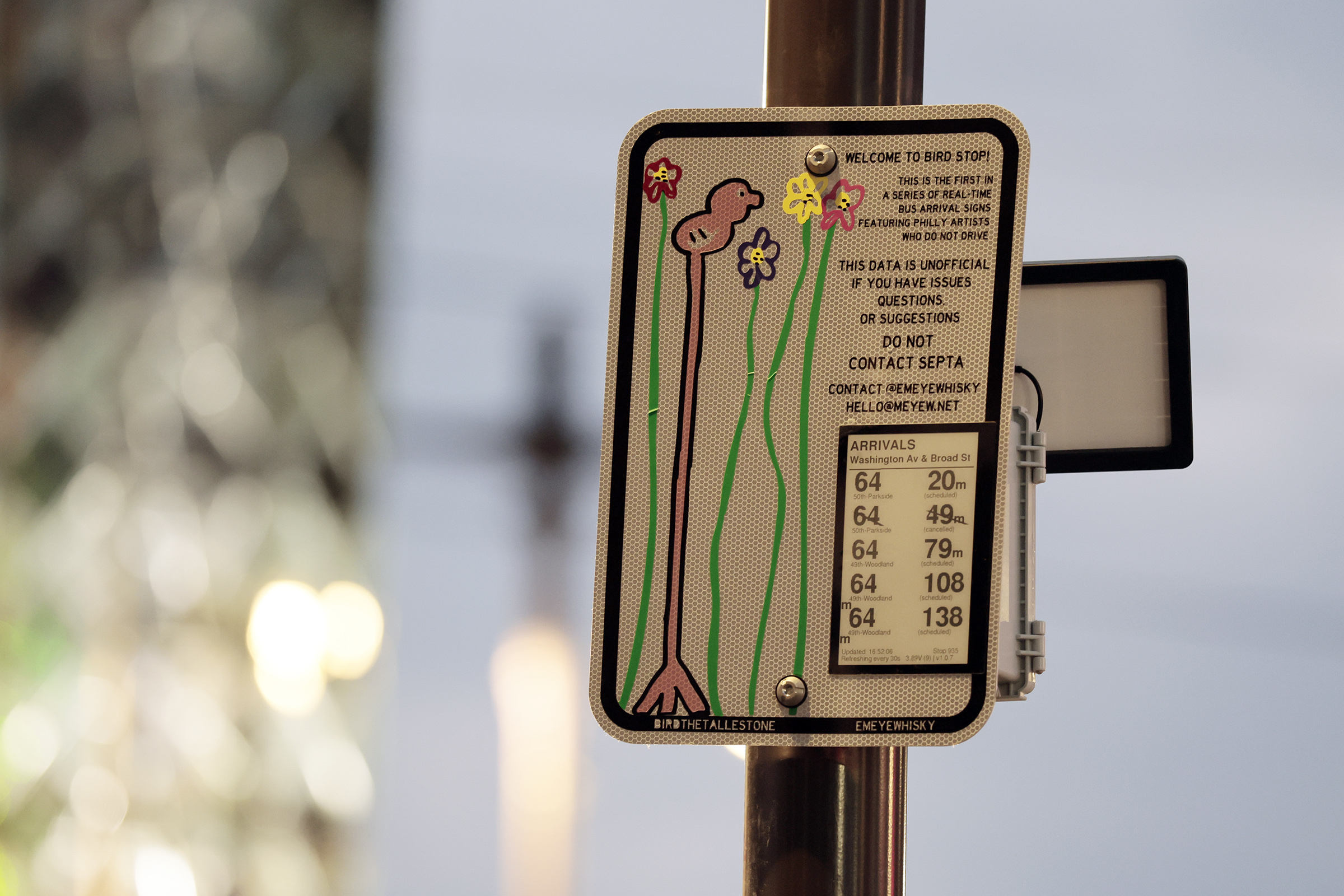
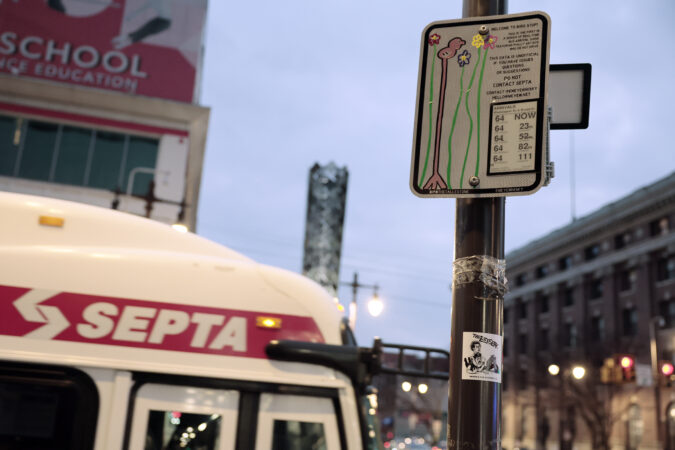
    Earlier this month, their brainchild — a solar-powered e-reader mounted into a street sign that provides bus arrival information — went live on the northeast corner of Broad Street and Washington Avenue in South Philadelphia, along bus Route 64.

    The device pulls real-time arrival times from publicly available data (the same dataset that feeds SEPTA’s app), according to artist Make It Weird, who engineered the rig and asked to remain anonymous because their work meanders into a legal gray area.

    The digital real-time bus tracker that has been installed at the Route 64 bus stop on the northeast corner of Broad Street and Washington Avenue in Philadelphia on Sunday, Dec. 7, 2025.

    Their creation is inconspicuous; to passersby, it could be a road sign graffitied with a lanky bird and stalky flowers. Commuters might get closer and see it reads, “This data is unofficial. … Do not contact SEPTA.”

    “We have a fundamental issue with funding transit in Pennsylvania,” Make It Weird said. “We, as citizens, often make excuses for real quality-of-life improvements that could be made by saying, ‘Well, SEPTA doesn’t have money, so quit complaining.’ We’re just saying, ‘This could be better.’”

    The sign is akin to a Band-Aid on a public transportation network plagued by infrastructure issues, financial turmoil, and an ever-constricting budget, as well as a resource for people who don’t have access to a smartphone with unlimited data or SEPTA’s app, said Make It Weird and collaborator Bird, the alias for the artist whose signature statuesque and slender pink bird appears on the sign.

    “Accessibility is something that’s hugely important to me,” Bird said. “It comes from a really large place of privilege that people always assume that everyone has a phone or can look something up, and that’s just not the case. Trying to provide that kind of accessibility for everyone — I think it’s an important place to start.”

    Late last month, a prototype of the device near South Philly’s Benna’s Cafe caught the attention of Conrad Benner and wound up on Streets Dept’s Instagram.

    The video has garnered more than 8,500 likes; the comments section is filled with fire emojis and clapbacks at SEPTA. One commenter wrote, “This is a sincere public service. Artists are extraordinary. Septa should hire them.” Another said, “Hopefully, it doesn’t find the same fate as Hitchbot did.”

    “I’ve been really appreciative of how many people think it’s cool,” Make It Weird said. “I’ve been also really appreciative of how many people say, ‘Yeah, other cities are doing this.’”

    Digital screens that feed real-time tracking information have already popped up in other major cities, like New York City and Minneapolis. But Philadelphia has been slow to adopt the tech: While a five-year, $6 million contract to install iPad-sized trackers mounted to bus stops was publicized last year, SEPTA spokesperson Kelly Greene said in an email that none of the screens have been deployed yet, citing cybersecurity.

    “We recognize the importance of real-time bus tracking for our customers and will provide an update on this initiative as soon as possible,” Greene said.

    Make It Weird started making goofy and whimsically mock street signs in June; all their signs are configured to meet the federal standards, they said, which helps their art meld with the monotonous “No Parking” and “Tow-Away Zone” verbiage. (One sign near City Hall said, “Stop Parking, Ride SEPTA: Fund Public Transit, Sell Your Car,” in the ubiquitous, red Highway Gothic sans-serif font. Another triptych read, “Go Birds,” “F— ICE,” and “Free Palestine,” quoting Hannah Einbinder’s bleeped Emmy acceptance speech.)

    The Route 64 sign is the first in hopefully a series of 10, all featuring collaborations with other Philly artists who don’t drive.

    “Transportation for all,” Bird said.

    Make It Weird said, “And it’s just fun.”

  • ‘A cautionary tale’: South Carolina Rep. Jim Clyburn discussed his new book with Gov. Josh Shapiro

    ‘A cautionary tale’: South Carolina Rep. Jim Clyburn discussed his new book with Gov. Josh Shapiro

    When U.S. Rep. Jim Clyburn of South Carolina became majority whip, a high-ranking member of Democratic leadership, in 2007 he asked the Library of Congress for photos of eight men to display on the walls of his Washington, D.C., office.

    He recalled, years ago, that a group of visitors stopped and asked who the men were: the first Black U.S. House members from his home state.

    “I thought you were the first,” someone from the group said.

    Clyburn replied: “Before I was first, there were eight.”

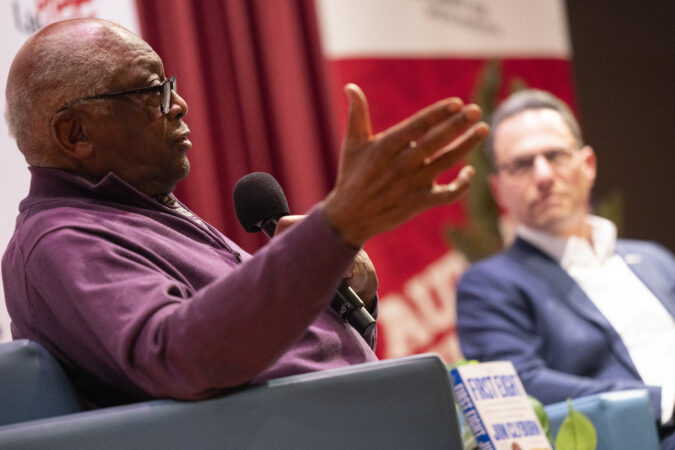
    That became the genesis of his new book, The First Eight: A Personal History of the Pioneering Black Congressmen Who Shaped a Nation, which he discussed at length with longtime friend Pennsylvania Gov. Josh Shapiro on Sunday as part of the Free Library of Philadelphia’s Author Events series.

    “This book is a cautionary tale: Anything that’s happened before can happen again,” Clyburn told a crowded Parkway Central Library auditorium.

    The Free Library of Philadelphia welcomed U.S. Rep. Jim Clyburn, a Democrat from South Carolina, to discuss his new book “The First Eight: A Personal History of the Pioneering Black Congressmen Who Shaped a Nation” on Sunday. Afterward, Clyburn signed copies of his book.

    Released in early November, The First Eight chronicles South Carolina’s Black members of Congress who served during and after Reconstruction: Joseph Rainey, Robert De Large, Robert Elliott, Richard Cain, Alonzo Ransier, Robert Smalls, Thomas Miller, and George Washington Murray. Ninety-five years later, in 1992, Clyburn became the ninth.

    The book blends history with memoir: Clyburn intends it to be a monument to the legacies of these trailblazers and a discerning commentary on modern American politics. It weaves the men’s careers, which have largely been erased from public discourse, with Clyburn’s experience and observations from his storied three decades in Congress.

    The First Eight “allows us to know where we come from, it allows us to know where we need to go in the future, particularly with the challenges we face today,” Shapiro said.

    Clyburn drew parallels between the men’s histories of bitterly contested elections and domestic terrorism to the MAGA movement and Jan. 6, 2021, riot at the U.S. Capitol; he laid out how a series of events — beginning with the assassination of President Abraham Lincoln, the accession of Andrew Johnson, the end of Reconstruction, and rise of Jim Crow — prevented a Black person from representing South Carolina in Congress for nearly 100 years.

    “History is supposed to be instructive,” he said. “I believe that we are at a junction in our history that we must intervene in this process like we’ve never intervened before in order to check the movement currently going to the right.”

    And though the book is South Carolina-centric, there are historical nods to the commonwealth: Smalls, the first Black man to pilot ships for the U.S. Navy, spent time in Philadelphia, according to Clyburn, and Miller graduated from Lincoln University in Chester County, the first degree-granting historically Black university in the nation. (Miller was also a longtime friend of Nelson Nix, the father of Pennsylvania’s first Black representative in Congress, Robert N.C. Nix Sr.)

    Clyburn said the recent results of the consequential governors races in New Jersey and Virginia, as well as the New York City mayoral election, give him hope.

  • ‘Gotta win the Super Bowl again’: Former President Joe Biden at the Linc to see the Eagles take on the Raiders

    ‘Gotta win the Super Bowl again’: Former President Joe Biden at the Linc to see the Eagles take on the Raiders

    The Eagle has landed.

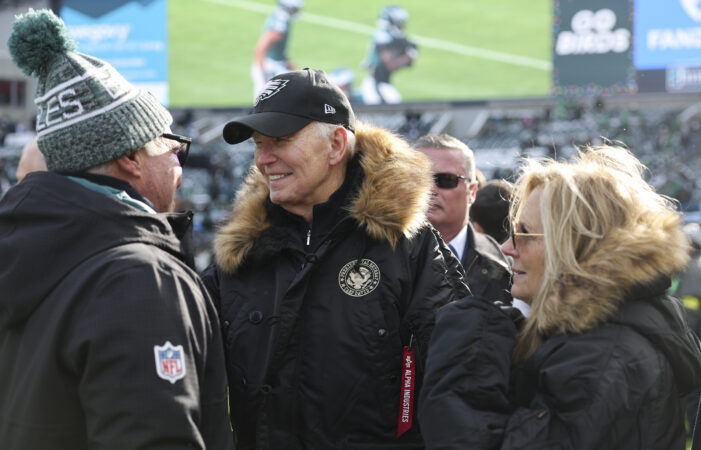
    Former President Joe Biden and former first lady Jill Biden touched down at the Linc for the snowy Sunday matchup between the Philadelphia Eagles (8-5) and the Las Vegas Raiders (2-11). Joe and “that girl from Philly,” Jill, were spotted on the sidelines with Eagles owner Jeffrey Lurie before the 1 p.m. kickoff.

    “Go Birds, man, all the way,” Biden said in a clip posted to NBC10’s John Clark’s Instagram. “Gotta win the Super Bowl again.”

    Jill Biden, who grew up in Willow Grove, is a fervent Eagles fan and has never been shy about her passion for Philly sports. She’s talked about watching the Phillies with her dad, and in 2020, wore an Eagles shirt to a fundraiser with former Dallas Cowboys star Emmitt Smith — as any “good Philly girl” would do.

    Husband Joe, a Delawarean, hasn’t been so forthcoming about his allegiance; ahead of the ill-fated Super Bowl LVII, then-POTUS tweeted, “As your president, I’m not picking favorites. But as Jill Biden’s husband, fly Eagles, fly.”

    Coming off three straight losses and arguably the worst game of Jalen Hurts’ career, the Birds faced the perfect opponent to turn things around in Week 15: The Raiders are tied for the worst record in the league.

    “We got to get ‘em back moving, man,” Joe Biden said.

  • Philadelphia’s Portal goes dark

    Philadelphia’s Portal goes dark

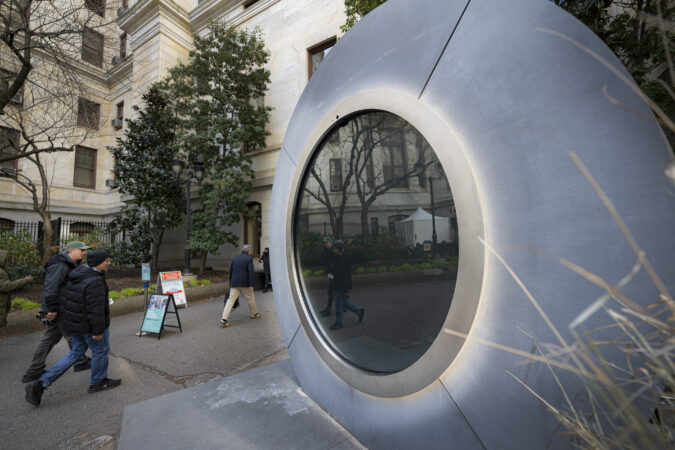
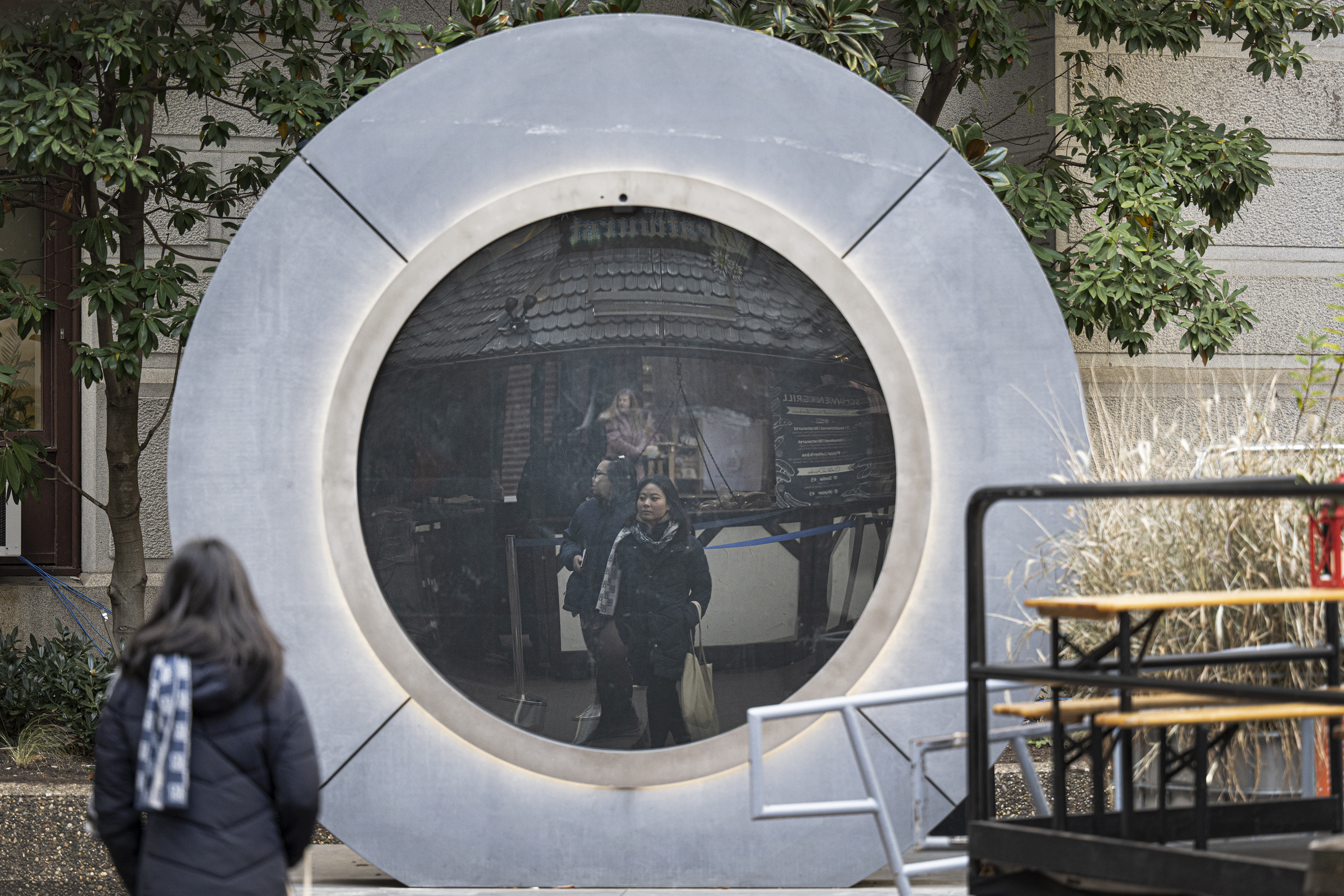
    Philadelphia’s Portal is offline.

    With its screen blank, the sculptural art installation that usually connects people in different cities around the world was akin to a void Friday afternoon, idling in the City Hall courtyard as the magic of Center City’s Christmas Village swirled around it.

    It’s unclear exactly how long the Portal has been out of commission; according to city spokesperson Leah Uko, a technical issue “has disrupted the live stream in recent weeks,” and Portal officials expect a fix next week. The operators of the Portal did not respond to requests for comment by publication time.

    Passersby Friday lamented the blackout.

    “Turn the Portal back on, we demand it,” one onlooker said.

    Another scoffed, “It must be nighttime there.”

    Pedestrians walk by “The Portal” art installation on Friday, Dec. 12, 2025, in the Philadelphia City Hall courtyard.

    Yonas Legesse, 22, and Martina Gebrail, 24, trekked more than two hours from Secaucus, N.J., and Jersey City, respectively, in hopes of seeing the famous Portal.

    “We were definitely gonna stop here, go wave at some people, and now it’s off,” Legesse said. “It kind of hurts.”

    Gebrail was amazed by the technology she saw on TikTok: The 3.5-ton circular video screen beams real-time, 24-hour, unfiltered livestreams from and to places like Dublin, Ireland; Vilnius, Lithuania; and Lublin, Poland.

    The Portal debuted last October at LOVE Park but was moved to its home at City Hall this spring after at least two incidents of vandalism. Thieves cut out a section of copper wire from the installation in February, and March high winds blew off a tarp, revealing damage believed to be caused by rocks. Of the half a dozen Portal locations globally, Philly — known for downing light poles and murdering robots — is the only location to experience such defacement, Portal officials have said.

    Despite their disappointment, Legesse and Gebrail said they would come back to see an operative Portal. It’s expected to stay in Philadelphia through the country’s Semiquincentennial celebration in 2026.

    “You guys owe us one,” Legesse said.

  • Amid City Hall tensions, Mayor Cherelle L. Parker seeks public support at Philly churches for her H.O.M.E. initiative

    Amid City Hall tensions, Mayor Cherelle L. Parker seeks public support at Philly churches for her H.O.M.E. initiative

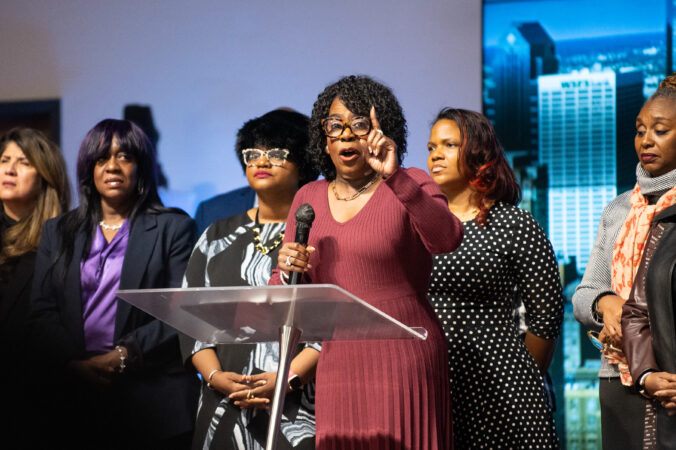
    Mayor Cherelle L. Parker traversed pulpits across West and North Philadelphia on Sunday, promoting her vision for her signature housing initiative that’s heightening tensions in City Hall.

    The 10-church circuit appeared to be a retort to moves by City Council last week to amend Parker’s Housing Opportunities Made Easy (H.O.M.E.) program, changing the initial budget and eligibility requirements to prioritize the lowest-income Philadelphia households.

    Parker, who wants to ensure the initiative helps those with varying incomes, largely opposes the changes, which has caused one of the most notable standoffs between the city’s executive and legislative branches during her mayoralty. From West Philly’s Church of Christian Compassion on Sunday morning, she lobbied her constituents, saying her vision for the housing plan is to avoid “trying to pit the ‘have-nots’ against those who have just a little bit.”

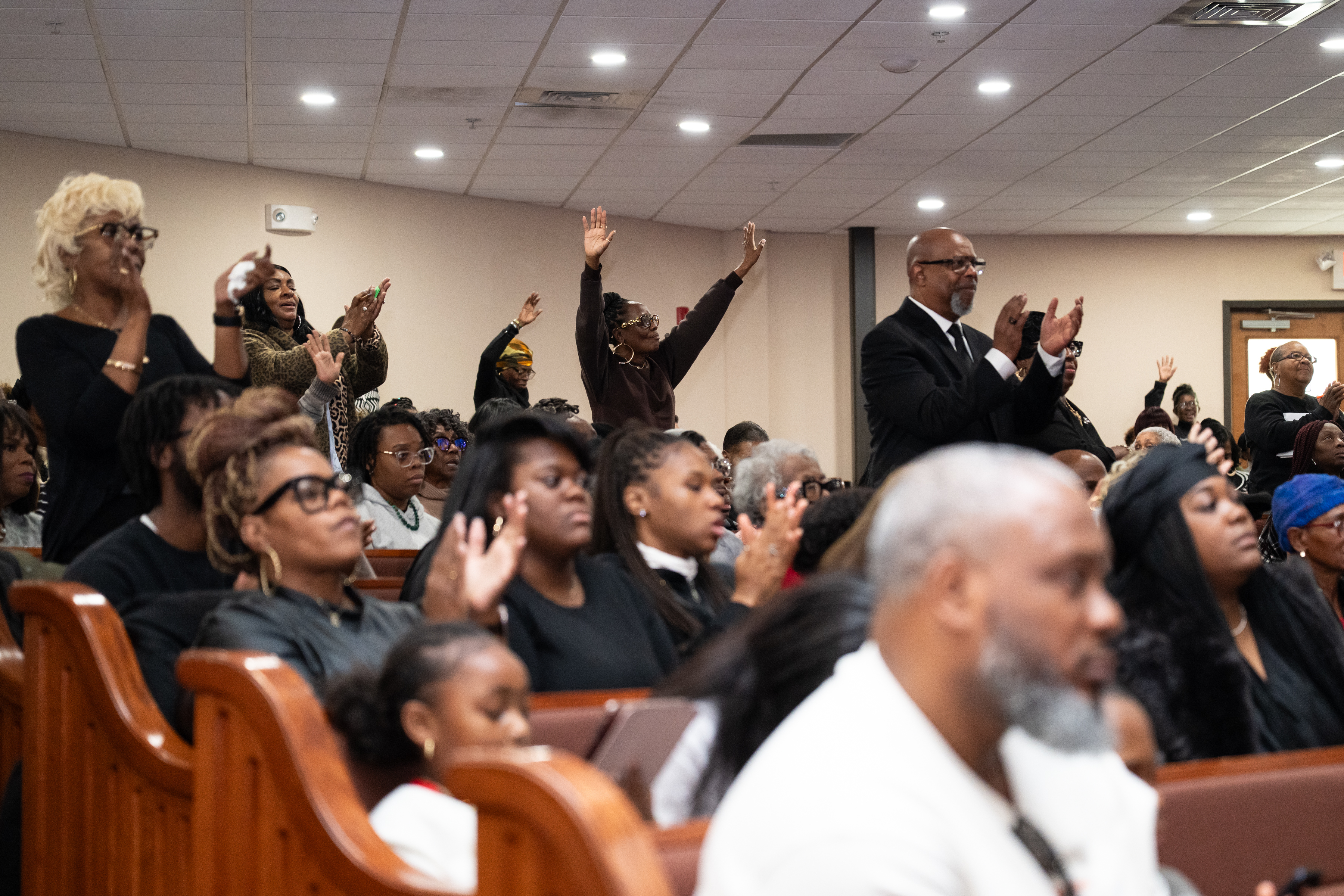
    “We should be about addition, not subtraction,” she said to a packed sanctuary, as she sought to reclaim the narrative surrounding H.O.M.E. Her rousing 10-minute address was met with acclaim and applause, bringing some in the crowd to their feet.

    “We’ve got to take care of the people who are most in need, but we can’t penalize the people who are going to work every day, pay their taxes, contribute to the city, and they can’t benefit from home improvement programs.”

    The H.O.M.E. initiative calls for spending $800 million across dozens of existing programs. The bulk of the funding would go to affordable-housing preservation, the Turn the Key program, the Basic Systems Repair Program, affordable housing production, and One Philly Mortgage, which would provide loans to low income households.

    Councilmember Jamie Gauthier, chair of the Committee on Housing, Neighborhood Development, and the Homeless, and whose district includes Church of Christian Compassion, called Council’s proposal reasonable and compromised and a fiscally responsible response to “Philadelphians who need our help the most in this moment.”

    “The mayor has every right to get out into the public, to tell her side, to talk about her vision,” Gauthier said in an interview, “but I will say there was plenty of time to negotiate with Council on this, and plenty of attempts made from the Council’s side.”

    Despite the disagreement over eligibility rules, Parker and Council are on the same page about the broad strokes of the housing plan; critical pieces of legislation Parker proposed as part of H.O.M.E. were approved by Council earlier this year. The changes last week did not alter the fundamentals of the program, which Parker hopes will achieve her goal of creating or preserving 30,000 units of housing in her first term.

    Congregants at the Church of Christian Compassion cheer as Mayor Cherelle L. Parker addresses the crowd before service in the Cobbs Creek neighborhood of West Philadelphia on Sunday, Dec. 7, 2025.

    The main sticking point in recent negotiations has been eligibility criteria for several programs: Parker, for instance, had proposed that H.O.M.E. funding for the Basic Systems Repair Program — which subsidizes critical home improvements — is open to any homeowner who makes Philadelphia’s area median income, about $119,400 for a family of four. Council’s amendments, however, require 90% of the new funding to go to families making 60% of the area median income or less, about $71,640 for a family of four.

    The changes also raise the first-year budget for H.O.M.E. from $194.6 million to $277.2 million. The city plans to sell a total of $800 million in bonds as part of the housing initiative.

    Gauthier likened what’s in dispute to an emergency room: “The person who’s having a heart attack is going to be seen before the person with a broken leg, because that person who’s experiencing a heart attack might not make it if they don’t get immediate assistance.”

    The squabble has given way to the most significant public dustup between Parker and Council President Kenyatta Johnson. In an uncharacteristically blunt statement last week, Johnson broke from his usual alignment with the mayor and defied her administration’s analysis of the situation.

    In a statement Sunday, Johnson’s spokesperson Vincent Thompson said “Johnson heard clearly and directly from Councilmembers and housing organizations in Philadelphia about critical issues they want addressed in the first-year H.O.M.E. Plan spending. Those concerns center on accountability, neighborhood equity, and — most importantly — making sure that the deepest investments reach the poorest and most vulnerable Philadelphians.”

    The amended budget could be up for a final vote as soon as Thursday, Dec. 11, Council’s last meeting before its winter break, according to Johnson’s office.

  • Fire damages Atlantic City Boardwalk’s iconic Peanut World

    Fire damages Atlantic City Boardwalk’s iconic Peanut World

    A fire Friday tore through the Atlantic City Boardwalk’s Peanut World souvenir shop, according to authorities.

    Atlantic City firefighters battled the blaze that erupted about 4 p.m. at the business off Martin Luther King Boulevard. Heavy smoke billowed out onto the Boardwalk and damaged three other buildings, according to a news release.

    The businesses were closed, and no injuries were reported.

    While the buildings are salvageable, Peanut World’s interior will have to be rehabbed, according to city public safety spokesperson Matt Duffy. City officials will assess the damage next week, he said.

    “We have many buildings of historical significance here in Atlantic City and we really try to keep their integrity whenever possible,” Atlantic City Fire Chief Scott Evans said in a statement.

    Peanut World could not be reached by phone early Saturday.

    The cause of the fire is under investigation.

  • Lincoln University receives $25 million donation from philanthropist MacKenzie Scott

    Lincoln University receives $25 million donation from philanthropist MacKenzie Scott

    MacKenzie Scott, one of the world’s richest women through her Amazon shares, has donated $25 million to Lincoln University, the college announced Friday.

    The money — part of the billionaire philanthropist’s series of multimillion-dollar, unrestricted donations to historically Black colleges and universities — will support scholarships and initiatives, according to a news release.

    Lincoln University officials said the no-strings-attached gift “exemplifies her confidence in the university’s mission, vision, and leadership.”

    “Lincoln University was founded to break barriers and create pathways for African Americans to thrive,” president Brenda A. Allen said in a statement. “This investment honors that legacy and propels us forward, enabling us to build on 171 years of excellence and innovation.

    “It is a powerful affirmation of the enduring value of Historically Black Colleges and Universities.”

    A spokesperson for the university and the board of trustees could not immediately be reached Saturday for additional comment.

    This is Scott’s second donation to the southern Chester County university, the first degree-granting HBCU in the nation. The ex-wife of Amazon founder Jeff Bezos gave $20 million in 2020 — then the school’s largest gift from a single donor in its history. As of June 2023, the school’s endowment was $54 million.

    A number of other historically Black colleges also received money from Scott in recent weeks, including Maryland’s Bowie State and Morgan State Universities and University of Maryland Eastern Shore. Scott’s total donations to higher education institutions this year have topped $1 billion, Forbes reported.

    The windfall comes six weeks after gunfire erupted during Lincoln’s Oct. 25 homecoming celebration, killing a 25-year-old man from Wilmington and injuring six people. At least one person was arrested.

  • The season’s first bout of winter weather is possible in Philly early this week

    The season’s first bout of winter weather is possible in Philly early this week

    Philadelphia could experience the season’s first significant blast of winter weather early this week.

    A brewing winter storm may bring a mix of rain and snow to Philly, Trenton, and Wilmington early Tuesday, impacting the morning rush hour, forecasters at the National Weather Service in Mount Holly said. Up to an inch of snowfall is possible.

    Meanwhile, the southern Poconos and northwest New Jersey could see anywhere from 4 to 8 inches of snow. The weather service has issued a winter storm watch for Carbon and Monroe Counties in Pennsylvania and Sussex County in New Jersey.

    Any snow in Philly could quickly change to rain by mid-morning Tuesday, with high temperatures in the low 40s. More than an inch of rain is possible but flooding is not expected, according to Sunday evening’s forecast. Along the coast, 5- to 8-foot seas and gusty winds are possible Tuesday night.

    Sunny conditions are expected Wednesday.

    Over the last five winters, an average of only 11.3 inches of snow per season has been measured in Philadelphia, which is half the long-term yearly average.

    <iframe title="Winters With the Most and Least Snow in Philly" aria-label="Bar Chart" id="datawrapper-chart-aru6W" src="https://datawrapper.dwcdn.net/aru6W/2/" scrolling="no" frameborder="0" style="width: 0; min-width: 100% !important; border: none;" height="628" data-external="1"></iframe><script type="text/javascript">window.addEventListener("message",function(a){if(void 0!==a.data["datawrapper-height"]){var e=document.querySelectorAll("iframe");for(var t in a.data["datawrapper-height"])for(var r,i=0;r=e[i];i++)if(r.contentWindow===a.source){var d=a.data["datawrapper-height"][t]+"px";r.style.height=d}}});</script>

    In more than a century of recordkeeping, half of the top 10 snow years have occurred in the last three decades. And periods of snow lulls are not uncommon, either: In the five winters ending 1931-32, the average was 10.1 inches, and in the five seasons that ended with the winter of 1952-53, the average was 11.8 inches.