In 2020, he voted for Trump. Four years earlier, he wrote in former Vice President Mike Pence’s name instead of Trump.
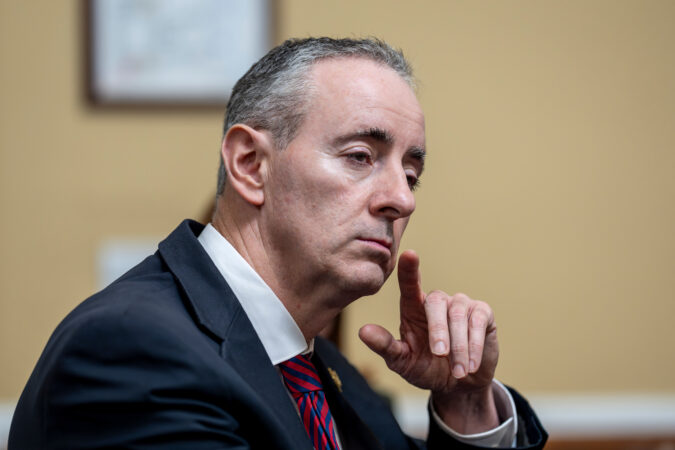
Those decisions by the moderate Republican, who represents purple Bucks County and a sliver of Democratic-leaning Montgomery County, underscore Fitzpatrick’s unique relationship with and perspective of the president, Philadelphia Magazine reported Friday.
There are times when Fitzpatrick is blunt in his opposition, telling Philly Mag that Trump’s placation to Russian President Vladimir Putin is because of a “lack of moral clarity.”
But in other instances, he couches his words against the Trump administration. Fitzpatrick, a former FBI agent, told the magazine that the state of the FBI under Director Kash Patel is “heartbreaking,” but that “we’ve seen the weaponization of the Justice Department now, I believe, in two administrations.”
He also called it “unbecoming” for Trump to accuse six Democratic members of Congress — including U.S. Rep. Chrissy Houlahan of Chester County — of committing sedition after they appeared in a video urging service members to refuse illegal orders.
Trump claimed in a social media post that the lawmakers, all military veterans or former members of the intelligence community, had engaged in behavior that was “punishable by DEATH!”
Fitzpatrick’s comments came in a Philadelphia Magazine profile that details how the Bucks County Republican — who rarely gives interviews to local media — is grappling with an American political system that he wishes was drastically less partisan.
“I could talk for hours about this, but the two-party system needs to go away. We need to move to a coalition government and not the way it is now, which is a zero-sum, all-or-nothing game,” Fitzpatrick said, describing his preference for a form of government in which competing political parties govern and work together.
“In the House, if you get 218 votes on a bill, you get everything. And if you get 217 votes, you get nothing,” he said. “Well, a 218-217 breakdown is representative of a very divided electorate that wants compromise, but they don’t get it. And that’s why we have this great, cavernous divide.”
The interview comes as the lawmaker’s district has been named a key target for Democrats in the midterms, along with the seats of Republican U.S. Reps. Scott Perry of York County, Ryan Mackenzie of Lehigh County, and Rob Bresnahan of Lackawanna County.
“I’m going to keep doing this as long as I can,” Fitzpatrick told the magazine.
Fitzpatrick said that party leadership discourages reaching across the aisle, but that he attempts to do so on certain issues.
Recently, Fitzpatrick, Bresnahan, and Mackenzie joined Democrats to sign a discharge petition on extending Affordable Care Act subsidies. He also voted against the final version of Trump’s domestic policy package, the One Big Beautiful Bill Act.
The latter vote earned Trump’s ire. Without using his name, the president said that Fitzpatrick was disloyal after Trump did him “a big personal favor. As big as you can get having to do with death and life.” This was in reference to Fitzpatrick’s family receiving permission from Trump’s acting secretary of veterans affairs to bury Fitzpatrick’s late brother, Mike Fitzpatrick, who held the seat before him, in a national veterans’ cemetery in Washington Crossing, Pa., that Mike Fitzpatrick had proudly established.
The late representative, a former Navy ROTC enlistee, did not meet the required years of service.
Fitzpatrick told Philly Mag that he thought Trump’s invocation of his brother crossed a line.
“I was really upset to hear that,” he said.
This story has been updated to clarify that Fitzpatrick wrote in Nikki Haley in the 2024 presidential election, following a revision to Philadelphia Magazine’s profile.
Top officials across the Philadelphia region are taking a stand against partnerships with ICE.
On Wednesday, newly inaugurated Bucks County Sheriff Danny Ceisler terminated a 287(g) agreement with ICE initiated by his Republican predecessor that enabled deputies to act as immigration enforcement officers.Haverford Township also passed a resolution barring participation in a 287(g) agreement.
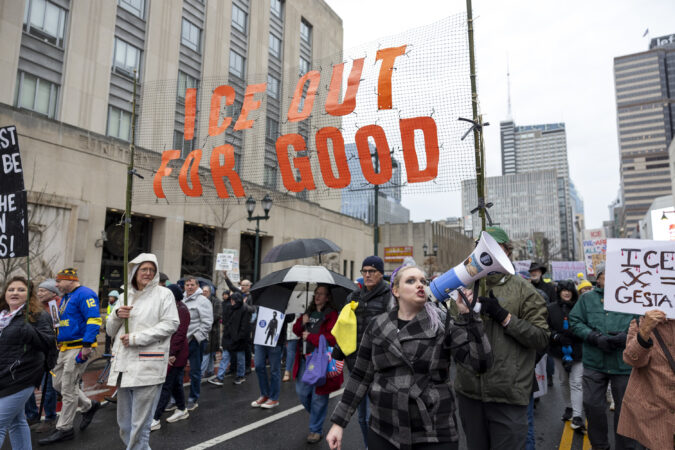
These developments come as protests escalate against President Donald Trump’s deployment of U.S. Immigration and Customs Enforcement agents to U.S. cities, after an agent shot and killed Renee Nicole Good in Minneapolis last week. Good, a poet and mother of three, was in her SUV when the agent fired into the vehicle.
Also on Wednesday, Trump said on his social media platform, Truth Social, that federal funding would be cut from any states that have sanctuary cities. These jurisdictions, which limit local law enforcement cooperation with ICE, have been increasingly targeted by the president’s administration.
As local leaders continue to grapple with the ever-changing and escalating Trump immigration policy, here’s what to know about how local governments are interacting with federal immigration authorities:
Everyone has a theory as to why that might be: Could Trump be avoiding the largest city in the most important swing state? Has Mayor Cherelle L. Parker’s decision to refrain from publicly criticizing Trump played a role?
But regardless of the name, a 2016 executive order signed by former Mayor Jim Kenney on ICE cooperation remains in place under Parker’s administration. The directive orders city authorities to not comply with ICE-issued detainer requests to hold people in custody unless there is a judicial warrant.
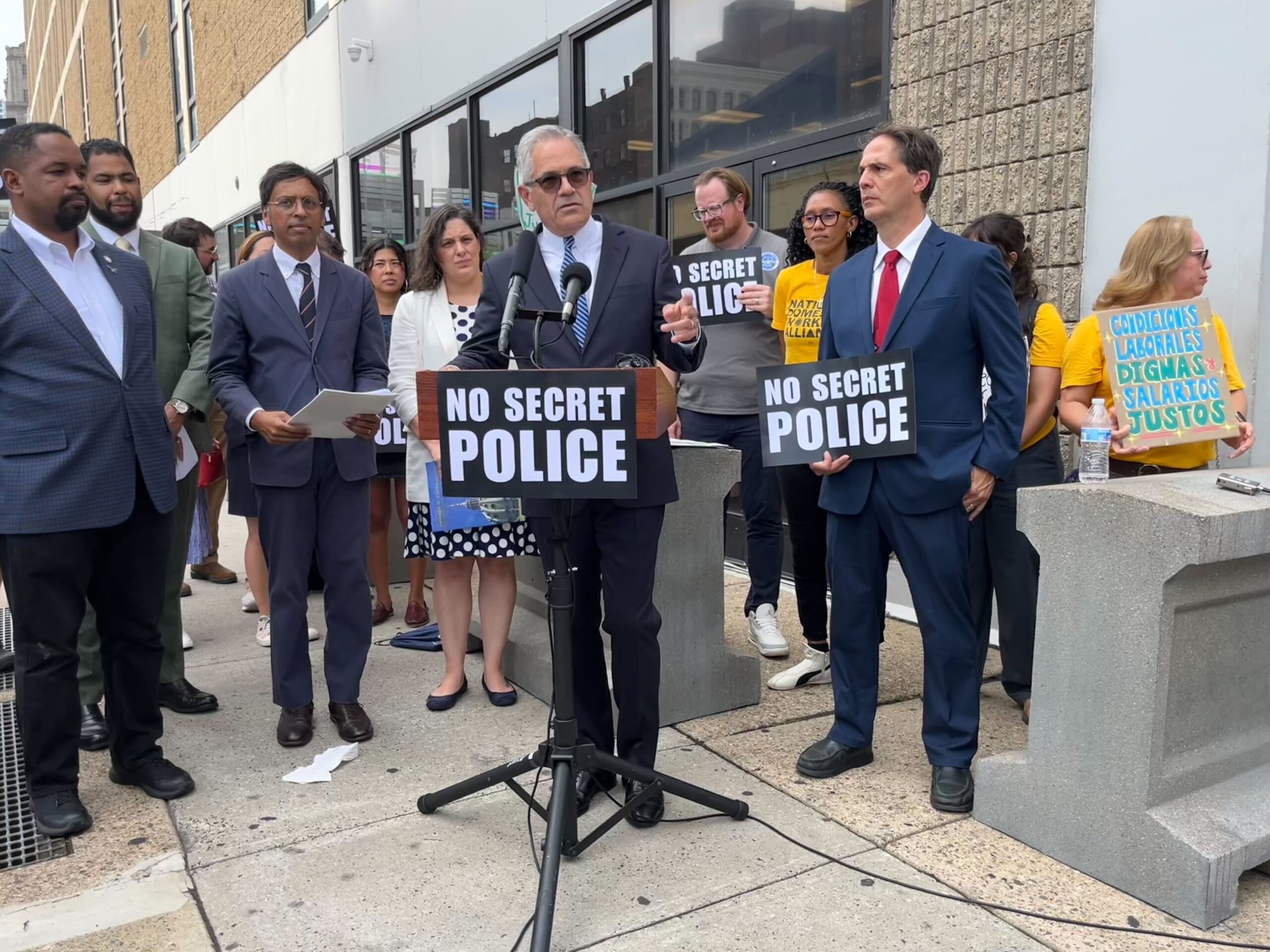
Philadelphia District Attorney Larry Krasner speaks at a news conference outside the Philadelphia Field Office for Immigration Customs Enforcement in Center City in August.
The sheriff terminated a 287(g) agreement with ICE — what does that mean?
Essentially, it means that sheriff deputies are no longer allowed to act as immigration authorities.
Last April, Ceisler’s predecessor, Fred Harran, a Trump-aligned Republican, signed on to thepartnership with ICE, stirring upcontroversy in the swingcounty. Ceisler, a Democrat who defeated Harran in November, made terminating the agreement a focal point of his campaign.
No one in Bucks had been detained under the 287(g) agreement, Ceisler said.
On Wednesday, Ceisler signed another order that prohibits deputies from asking crime victims, witnesses, and court observers their immigration status.
Does Bucks County still work with ICE?
Yes. Bucks County is not a sanctuary county and, in the words of Ceisler, “will never be.”
The Bucks County Department of Corrections will continue to share information with law enforcement agencies, including ICE. The federal agency will also continue to have access to county jails and Bucks will honor judicial warrants from immigration enforcement.
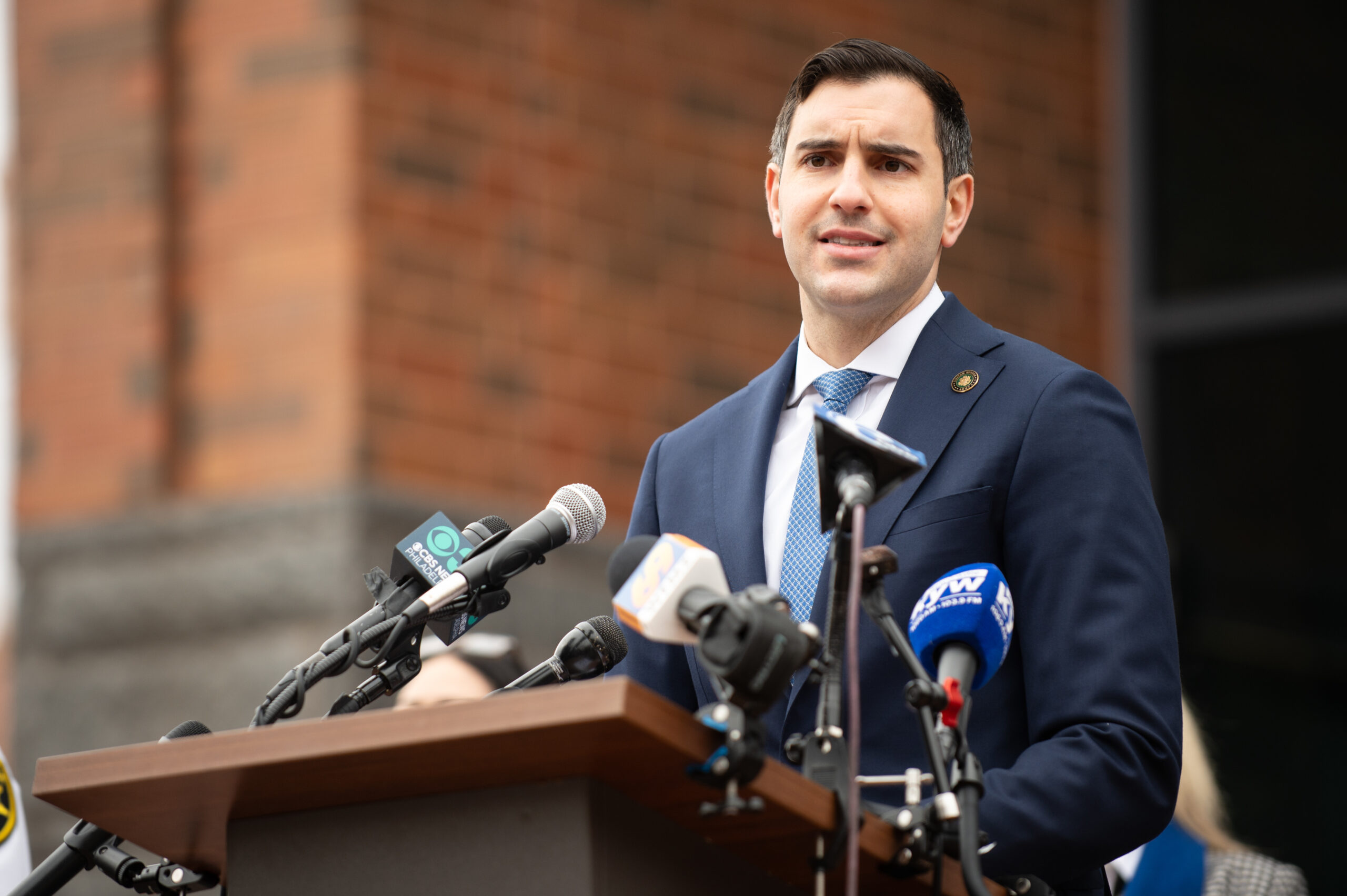
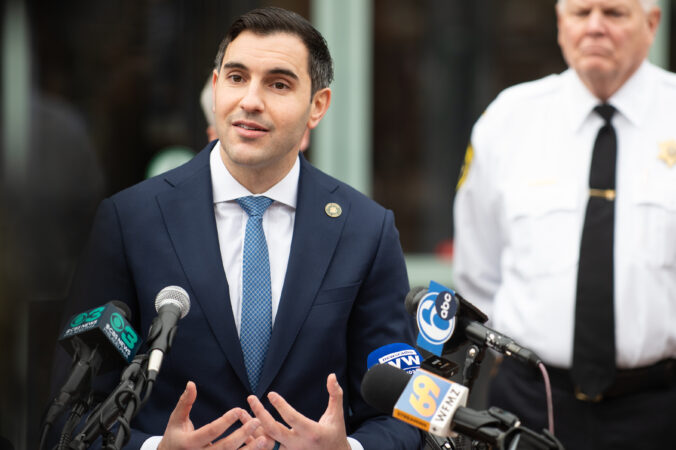
Bucks County Sheriff Danny Ceisler announces the termination of the county’s partnership with ICE, an agreement formally known as 287(g), during a press conference at the Bucks County Justice Center in Doylestown, Pa., on Wednesday, Jan. 14, 2026.
“It’s sporadic, it’s reports,” Ceisler said of ICE’s presence in Bucks.
“I can’t get ICE out of Bucks County,” he added. “I have no authority over them. All I can do is prevent 16 deputies from participating in a program that enables them to perform immigrant enforcement in the community.”
Bucks County was the only county in the Philadelphia region that did not appear on an initial list published by the Trump administration of sanctuary jurisdictions that could have federal funding at risk. That list was later deleted. The most recent list, published by the administration in August, also does not feature Bucks.
Haverford Township
Will Haverford Township participate in a 287(g) agreement?
While the police department has not requested to enter an alliance with ICE, township commissioners passed the resolution as a preventive measure.
Montgomery County
What is Montgomery County’s policy on immigration?
Montgomery County’s Democratic commissioners have not passed a formal ordinance or a resolution labeling Montco a sanctuary or welcoming county, citing limits to their power, concerns about creating a false sense of security, and a preference for internal policy changes.
In early 2025, county officials approved a policy that limits communication between county employees and ICE officials and said they would not answer prison detainer requests without warrants.
Montgomery County activists hold a news conference about ICE incidents in the county last month.
What do Montco residents think about it?
County residentshave urged individual municipalities within the county to limit collaboration with ICE, especially as the county has become a hot spot for immigration enforcement. Norristown, a heavily Latino community, has specifically become a target for ICE.
“ICE has created a crisis in our neighborhoods, and we cannot afford silence, mixed signals, or leadership that only reacts once harm has already happened,” Stephanie Vincent, a resident and leader of Montco Community Watch, said last month during a news conference at a West Norriton church.
As of early December, local organizers estimated that only six out of 62 municipalities had enacted policies, though they consider some to be lackluster.
Staff writer Katie Bernard contributed to this article.
Bucks County Sheriff Danny Ceisler terminated his office’s controversial partnership with ICE Wednesday, citing negative impacts on public safety and immigrants’ trust of law enforcement.
The partnership, known as a 287(g) agreement, which enabled 16 sheriff deputies to act as immigration enforcement, was initiated by formerSheriff Fred Harran,the Trump-aligned Republican who Ceisler defeated in November.
Ceisler said Wednesday that he signed two orders, one revoking the 287(g) partnership, and another that prohibited deputies from asking crime victims, witnesses, and court observers about their immigration status.
“Bucks County is home to over 50,000 immigrants … those immigrants are our neighbors,” said Ceisler, a Democrat who took office last week, during a news conference outside of the Bucks County Justice Center Wednesday. “They are our friends. They are taxpayers and they deserve the protection of law enforcement in this community.”
Ceisler’s decision to terminate 287(g) was expected, but his announcement comes amid a nationwide reckoning over federal immigration agents’ deployments to U.S. cities as ordered by the Trump administration. Protests againstU.S. Immigration and Customs Enforcementescalated across the country, including in Philadelphia, after an ICE agent shot and killed a woman in Minnesota last week.
Wednesday’s decision “has nothing to do with what’s going on in Minneapolis,” Ceisler said.
Other officials in the region have spoken out directly in response to the Minnesota incident. Philadelphia Sheriff Rochelle Bilal’s comments calling ICE “fake, wannabe law enforcement” went viral.
Ceisler, on Wednesday, called Bilal’s comments “completely counterproductive, and said she was the “wrong messenger for them.”
The Bucks sheriff was adamant Wednesday that his order does not make Bucks County a so-called sanctuary jurisdiction, which have been increasinglytargeted by President Donald Trump.
The president announced Wednesday morning that on Feb. 1 he would cut off federal funding to states that have cities with sanctuary policies, which prohibit local law enforcement cooperation with ICE. Ceisler’s directive prohibits sheriff deputies from acting as immigration authorities, but does not cut off the county’s cooperation with ICE.
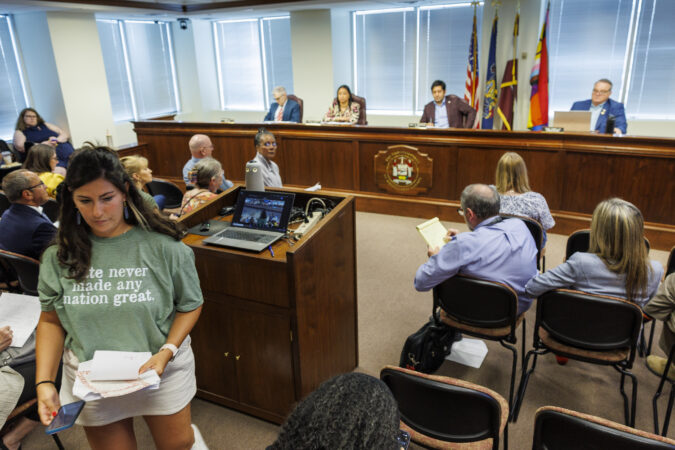
People and press gather at a press conference announcing the termination of Bucks County’s partnership with ICE.
“Bucks County has not, has never been, and will never be a so-called sanctuary county,” Ceisler said. “Our county has not severed all ties with ICE, nor precluded future partnership with ICE when it comes to dangerous criminals. Instead, we are returning to a level of partnership we’ve been operating under for decades.”
Bucks was the only county in the Philadelphia area that wasn’t named as a sanctuary jurisdiction by the Trump administration last year when it rolled out an initial list of state and local governments in danger of losing funding — which was later deleted. Officials from the other collar counties disputed the designation at the time.
Democratic Gov. Josh Shapiro downplayed concerns about Trump’s Feb. 1 funding threat during a Wednesday appearance at the Pennsylvania Farm Show in Harrisburg.
“We don’t pay attention to the bluster, we pay attention to what’s written in the directive,“ Shapiro told reporters. ”Pennsylvania’s not a sanctuary state. I would anticipate us not losing funding at the state level unless they wanna be punitive.”
The sheriff said that the county Department of Corrections will continue to share information with law enforcement agencies, including ICE. Federal immigration agents will also continue to have access to county jails and honor judicial warrants to hold individuals who are incarcerated for immigration enforcement.
The motivation for the sheriff’s orders Wednesday were in response to “heartbreaking feedback” from Bucks’ immigrant community that they were afraid to report crimes or engage with law enforcement, Ceisler said
“To the members of our immigrant communities, you are safe to call 911, you are safe to report crime and you are safe to come into this courthouse and testify,” Ceisler said.
Heidi Roux, an immigration advocate, said her “community is breathing a collective sigh of relief” by ending the 287(g) agreement, but noted that continuing to partner with local law enforcement is crucial to public safety.
“I believe criminal activity can be addressed while simultaneously supporting the human rights and dignity of our residents,” Roux said.
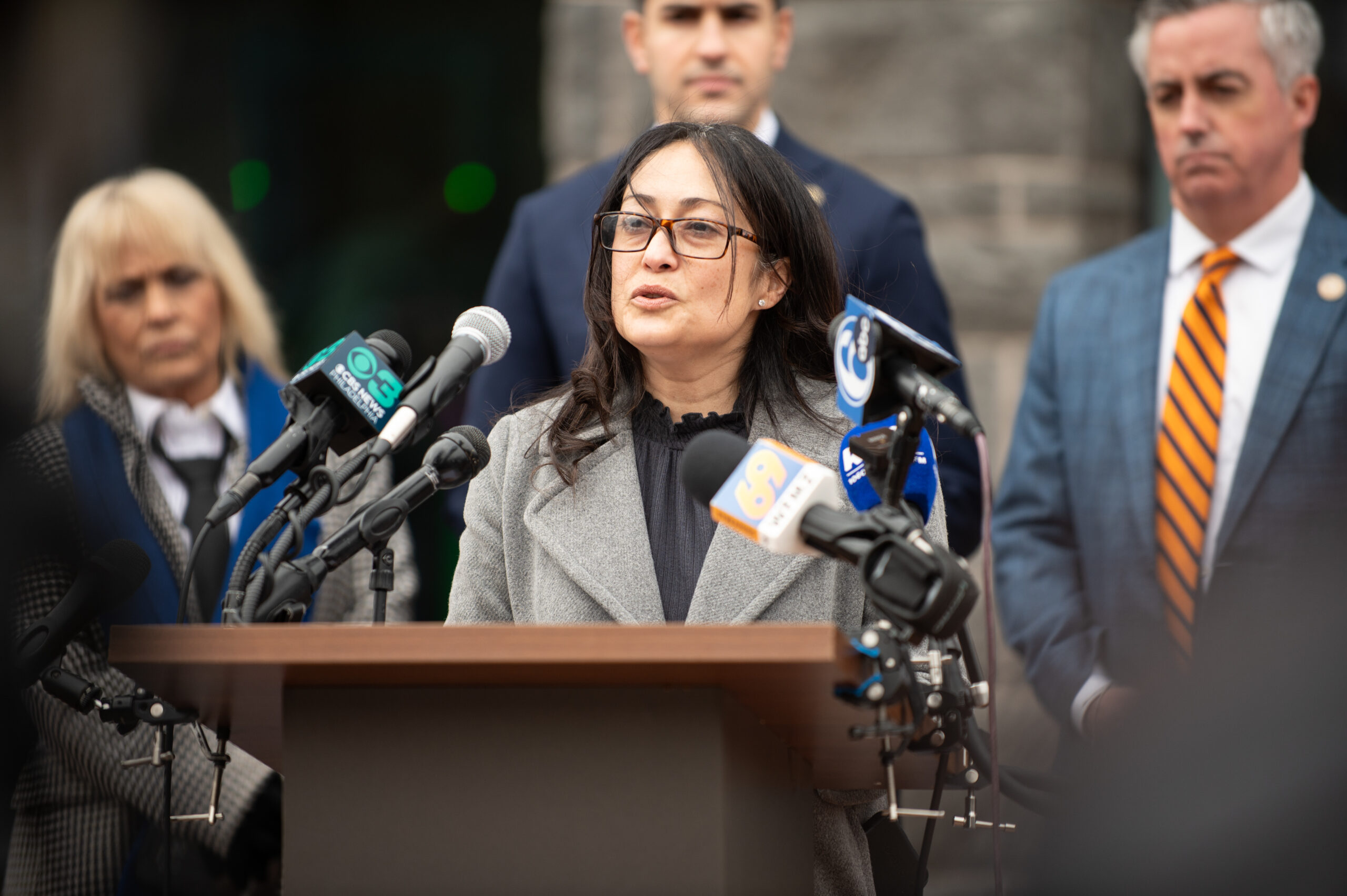
Heidi Roux, executive director at Immigrant Rights Action, speaks at a press conference about the termination of Bucks County’s partnership with ICE.
The 287(g) affiliation stirred up controversy when then-Sheriff Harran announced the department’s alliance with ICE in April of last year. The agency had 455 agreements with police authorities in 38 states across the country.
Since then the number has exploded, to 1,318 in 40 states, with 11 additional agreements pending as of Monday, according to ICE.
ICE says the program helps protect American communities, a force-multiplier that adds strength to an agency workforce that numbers about 20,000 nationwide. Opponents, however, insist that turning local officers into immigration agents breaks community trust with the police and puts municipal taxpayers at risk of paying big legal settlements.
In Pennsylvania, the number of participating agencies has grown from 39 in September to 52 today.
The growth in Pennsylvania and across the nation has been driven by Trump, who has pumped incentive money into the program as he pursues plans to arrest and deport millions of immigrants.
On Trump’s first day in office in January, he directed the Department of Homeland Security to authorize local police to “perform the functions of immigration officers” to “the maximum extent permitted by law.”
No one had yet been detained under that program, but opponents saw Ceisler’s election as the last chance to stop the Sheriff’s Department’s alliance with ICE, and the Democrat said he would act quickly to end the alliance.
The former sheriff said his only goal was to make the community safer, that the department would not conduct random immigration checks or broad enforcement but “those who commit crimes must face the consequences regardless of immigration status.”
The Democratic-led Bucks County Board of Commissioners warned county employees that they could be personally liable for helping ICE, passing a resolution that said the alliance was “not an appropriate use of Bucks County taxpayer resources.” Democratic Commissioners Diane Ellis-Marseglia and Bob Harvie were at Wednesday’s news conference but did not speak.
In October, however, Bucks County Court Judge Jeffrey Traugerruled that Harran’s cooperation with ICE was “clearly lawful under Pennsylvania jurisprudence,” and both “reasonable and necessary” in fulfilling his lawful duty to keep the citizens of Bucks County safe.
Ceisler said that terminating the agreement is the first step to regaining trust of the county’s immigrant communities. Next, he said, comes getting out into the communities.
“It’s about letting people know that they are safe,” he said.
A disabilitywatchdog group has closed its investigation into child abuse in the autistic support program at a Central Bucks elementary school.
The group,Disability Rights PA, published an April 2025 report finding that students were abused at Jamison Elementary School and administrators failed to adequately investigate, setting off a firestorm of district investigations, terminations, and lawsuits.The group visited the elementary school in November and noticed improvements to district practices, policies, and personnel,according to a Dec. 19 letter from Andrew Favini, the organization’s staff attorney, to Central Bucks officials. They then closed the investigation.
In the wake of the initial Disability Rights report, Central Bucks fired former Superintendent Steven Yanni and former Jamison principal David Heineman.Gabrielle McDaniel and Rachel Aussprung, the teacher and education assistant in the classroom who allegedly abused students, have also been terminated, the district said.
During the Novembervisit, Disability Rights PA found “no new reports of abuse and neglect” after conducting interviews with district staff that teach in or provide support to autistic support classrooms, according to the letter.
The organization also interviewed new Jamison principal Lauren Dowd and assistant principal Dave Filson, who, according to Favini, appeared “earnest and sincere.” The administrators shared that they spent “significant time” in the autistic support classrooms and that there is new training on mandatory reporting for child abuse and using restraints in classrooms.
“The changes presented to DRP during the November 21, 2025, visit were substantial and emphasized a focus and dedication to improving the autistic support programs,” Favini wrote in the letter.
A spokesperson for Central Bucks also said the district’s pupil services program will be audited by the Center for Applied Research and Educational Improvement at the University of Minnesota.
The evaluation will, among other things, identify areas for improvement and will focus on staffing, student outcomes, and conformity with state regulations, the spokesperson said.
“The district and school board are committed to continuous improvement and pursuing and implementing multiple strategies to support this effort in all areas,” interim Superintendent Charles Malone said in a statement Monday.
The April Disability Rights PAreport found that McDaniel and Aussprung illegally restrained students in an autistic support classroom and did not report the use of restraints to the Pennsylvania Department of Education. They noted that students also observed or experienced demeaning treatment, nudity, and neglect.
Room 119, the center of Disability Rights PA’s investigation, is no longer being used as an autistic support classroom at Jamison, Favini wrote in his letter. The class that would typically be in 119 has been relocated to another nearby roomthat administrators can more directly access.
While the disability rights watchdog has closed its investigation, Favini noted in the letter that the district must continue to amend necessary policies and “support its staff with heightened awareness of the District’s history.”
“As always, even though the investigation is closed, DRP will remain vigilant regarding reports of abuse within Central Bucks School District; we anticipate the District will do the same,” Favini wrote.
Yanni’s appeal in Bucks County Court of Common Pleas and Wright’s federal lawsuit are still pending, while the stateDepartment of Education has not yet made a decision in Heineman’s appeal.
Staff writer Abraham Gutman contributed to this report.
A Montgomery County office — which one county commissioner described as a far less controversial version of Elon Musk’s Department of Government Efficiency — has helped the county find $14 million in savings within the past year and reduce the deficit by half.
Montgomery County’s Office of Innovation, Strategy, and Performance (OISP), announced in February 2025, spent the last year meeting with department heads to identify areas for cost cutting and streamlining services, such as eliminating almost a dozen vacant positions worth hundreds of thousands of dollars, saving $1.5 million on a prescription benefits provider, and conserving half a million dollars by bringing some county legal services in house.
In 2026, the office could consider integrating artificial intelligence into county services, with the support of all three commissioners, aimed at cutting red tape for residents and county employees.
“It’s kind of like DOGE,” said Commissioner Vice Chair Neil Makhija, a Democrat, noting that the office has “outlived” DOGE’s period of high activity when Musk was in charge before he stepped away last spring.
“We didn’t just take the richest person in the county and tell them to cut, you know, benefits for poor people, which is what the federal DOGE was,” Makhija said.
The office’s work comes on the heels of the county’s $632.7 million operating budget and a roughly $25.5 million deficit, resulting in a 4% property tax increase for residents.
Republicans have made looking for inefficiencies in government part of their brand. But Democratic leaders in Pennsylvania have also started taking on streamlining government.Gov. Josh Shapiro has touted how he’s cut processing time for licensesand accelerated the permitting process for building projects.
And in blue Montgomery County, a bipartisan group of leaders says that responsible government efficiency should be a pillar of good government, regardless of political party.
“What happened with DOGE at the federal level was hard to watch and certainly not the approach that we’re going to take in Montgomery County, but, any leader … has to go through this exercise of are we optimizing our resources? Are we leaving money on the table? Are there opportunities to improve the performance of our people?” said County Commissioner Chair Jamila Winder, a Democrat.
“Like all of those are just disciplines that are industry agnostic, and so I don’t think it’s a Republican or a Democrat thing,” Winder added.
Commissioner Tom DiBello, the only Republican on the board, agrees, saying that he has high expectations for the office and its ability to oversee the adequate spending of taxpayer dollars.
“I mean, that’s our job. It has nothing to do with Republican or Democrat. My feeling, it has to do with taxpayer money,” DiBello said. “We’re supposed to be stewards of taxpayer money.”
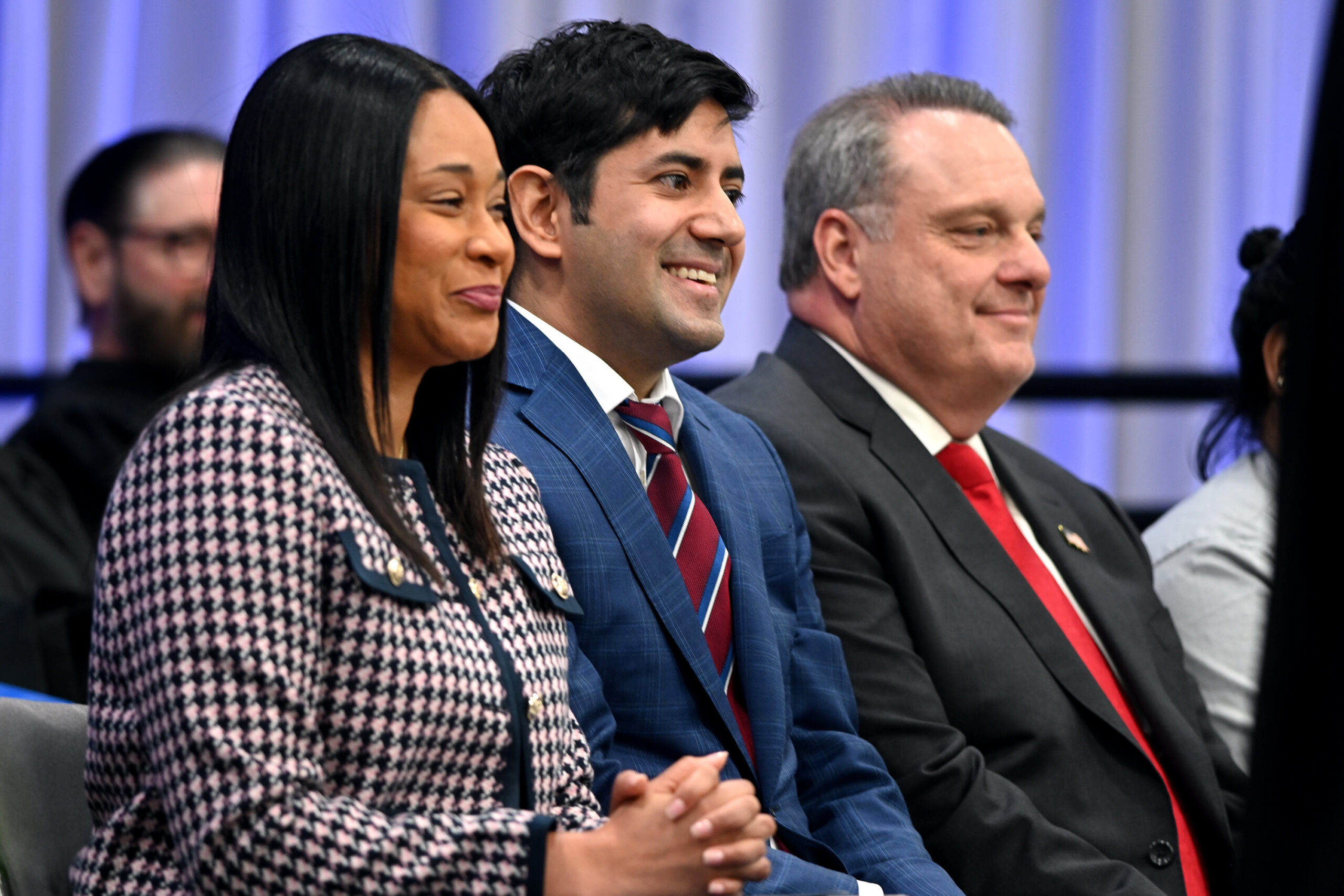
Jamila H. Winder (from left), Neil Makhija, and Thomas DiBello are seated together on stage at the Montgomery County Community College gymnasium Wednesday, Jan. 3, 2024, during ceremonies before they were sworn in as Montgomery County’s new Board of Commissioners.
Is artificial intelligence the next step?
The OISP was launched in February 2025 after the office previously served as the county COVID-19 pandemic “Recovery Office,” ensuring approximately $161 million in funds from the American Rescue Plan Act were being used appropriately.
When Stephanie Tipton, deputy chief operating officer, was hired in Montgomery County in September 2024 after more than 16 years in leadership in Philadelphia, county officials started discussing how to translate that oversight practice at the “Recovery Office” to every facet of county spending and performance.
That mentality helped the OISP cut the county deficit in half and focus on ways to reduce it in the long term, such as eliminating longstanding vacant positions around the county, including on the board of assessment, which does real estate evaluations. The office also helped develop performance management standards for departments.
“What we were really interested in is finding things that we could make repeatable year after year, and that would move forward, whether that was restructuring positions and eliminating vacancies that we don’t carry forward” to doing a trend analysis on spending, said Eli Gilman, project director of the 11-person office.He noted that the team was “kind of building a plane while we were flying.”
County governments are always trying to be efficient with taxpayer dollars, said Kyle Kopko, executive director of the County Commissioners Association of Pennsylvania, especially in the aftermath of last year’s state budget impasse. But Montgomery County’s decision to have a dedicated office for efficiency is fairly unique, he said.
“This is something that has become more and more of a focus of counties everywhere just because we’re not sure if we’re going to have the consistency of on-time state funds,” Kopko said.
The next phase for the office? Cutting red tape for residents. And part of that may be through enlisting artificial intelligence, something the county has been examining through the commissioners’ “Advisory Council on Artificial Intelligence for Public Good” established in April 2025.
“The goal here is like, how can we leverage this new and emerging technology to help us make it easier for residents to access services,” Tipton said. “Make it easier, reduce the burden on our frontline staff, so they can spend more time in sort of customer-facing, client-facing activities.”
AI will be something that many counties across Pennsylvania will be grappling with moving forward, Kopko said. Though some counties are wary of using it for sensitive information.
Everyone has a different idea as to what they would want to see AI used for in Montgomery County.
Makhija wants to make court documents accessible by chatbot. Winder says she wants to see AI help county employees be more efficient in their roles. And DiBello, who worked in tech software, said as long as accuracy is prioritized, AI could one day be used in situations where residents don’t have to speak directly to someone.
But first, Tipton said, the county wants to internally test AI tools to “make sure that we have the right sort of governance and guardrails” before launching it to the public.
When Tipton joined Montgomery County she said she had a “clear mandate from the commissioners” to look at department spending. She also wants it to be a transparent process for residents and the office plans to launch an open data site to the public in the second half of 2026.
“We want to make sure that moving forward, when we are making investments in the budget we can really understand more clearly how that is impacting service delivery, so we can tie that more directly to work that we’re doing,” Tipton said.
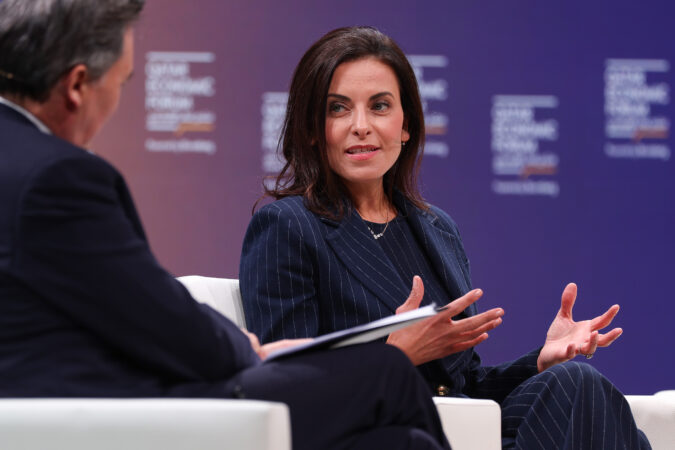
Dina Powell McCormick, a former Trump official and former member of Meta’s board, has been hired as the company’s new president and vice chair, CEO Mark Zuckerberg announced Monday morning.
“Dina has been a valuable member of our board and will be an even more critical player as she joins our management team,“ Zuckerberg wrote on Threads,one of Meta’s platforms alongside Facebook and Instagram. ”She brings deep experience in finance, economic development, and government.“
He also noted that she will be involved in all of Meta’s endeavors, but will particularly focused on ”partnering with governments and sovereigns to build, deploy, invest in, and finance Meta’s AI and infrastructure.”
Powell McCormick has extensive business leadership and government experience. She spent 16 years in different leadership roles at Goldman Sachs, according to her LinkedIn page. Powell McCormick was most recently the vice chair, president, and head of global client services at BDT & MSD Partners, a banking company.
She worked in the White House and the U.S. Department of State under former President George W. Bush and was deputy national security adviser during President Donald Trump’s first term.
The move also signifies what appears to be Meta’s intention to create stronger tieswith the federal government as it develops artificial intelligence tools. Trump praised Zuckerberg’s decision Monday.
“A great choice by Mark Z!!! She is a fantastic, and very talented, person, who served the Trump Administration with strength and distinction!” Trump said on Truth Social, his social media platform.
U.S. Sen. Dave McCormick (R., Pa.), Powell McCormick’s husband, has been heavily involved with AI and tech policy. For instance, he convened an AI summit in Pittsburgh in July 2025 where billions of dollars in planned projects for Pennsylvania were announced.
McCormick, in a post on X Monday, said he is “incredibly proud” of his wife.
Asked about how he would mitigatepotential conflicts of interest that arose from Powell McCormick’s position, a spokesperson for the senator said: “As he has from day one, Senator McCormick will continue to comply with all U.S. Senate ethics rules and honorably and enthusiastically serve the great citizens of Pennsylvania.”
Powell McCormick is also the second former Trump official to be hired by Meta in recent weeks, CNBC reported. Earlier this month, Meta said that it had hired Curtis Joseph Mahoney, a former deputy U.S. trade representative, to be its chief legal officer.
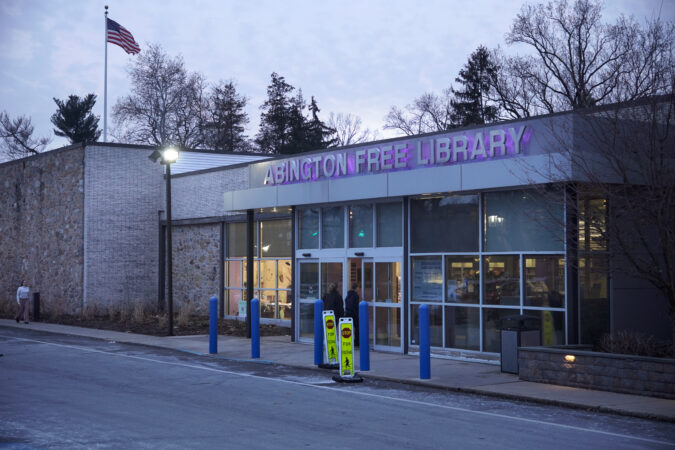
For more than four years, dozens of LGBTQ+ kids and their families have joined the Abington Township Public Library for Rainbow Connections, a monthly Zoom program, to read children’s books, craft, make new friends, and meet interesting people, such as “Jeopardy!” super champ Amy Schneider.
But within the past week, the program — the only one of its kind in Montgomery County libraries — has become a target of a right-wing social media campaign that has circulated misinformation and directed threatening language at the program, prompting the library to release a statement Monday setting the record straight, said Library Director Elizabeth Fitzgerald in an interview Tuesday.
“Rainbow Connections is not a sexual education class. Sexual health, reproduction, puberty, and intimate relationships are not discussed,” the statement said in part.
Though it’s “not different from any other story time or library program,” Fitzgerald says, Rainbow Connections’ mission is to foster a welcoming and intentional environment for LGBTQ+ kids in grades K-5, including those who may be struggling to make friends at school. Its virtual format has allowed families from around the country to join.
“Ultimately just a space where the kids could attend a library program and feel safe,” Fitzgerald said.
Comments attacking the program appeared on the library’s Facebook page early last week. A day later, LibsofTikTok, a controversial far-right social media account founded by Chaya Raichik, as identified by the Washington Post, posted about Rainbow Connections.
LibsofTikTok, which frequently targets LGBTQ+ people nationwide, spurred misinformed outrage from its millions of followers about the program’s upcoming events.
The account’s posts have often provoked real-life consequences. In 2024, after posting about the William Way Community Center, an LGBTQ+-focused nonprofit in Philadelphia, Democratic Sen. John Fetterman and former Democratic Sen. Bob Casey signed a letter requesting to withdraw federal funding from a renovation project that would have made the center’s headquarters more accessible and expanded William Way’s programming space.
“These are difficult times, and I think that the commentary that took off on social media underscores the reason why we need to create spaces where members of the LGBTQ community feel safe,” Fitzgerald said.
Library staff established the program in November 2021 after a community member reached out and asked if the library would help address a need for a safe space for LGBTQ+ kids.
According to anonymous comments from families provided by the library to The Inquirer, parents are profoundly grateful for the safe environment that Rainbow Connections has created for their children. Names were withheld by the library to protect families’ safety and privacy.
“My children live in a two-mom household, so I thought it would be a great program to connect with other kids and possibly see other families that look like ours,” one parent said.
Another parent said they had “tears in my eyes listening to [the kids] introduce themselves, awed by their bravery and vulnerability.”
A family who lives in North Carolina said Rainbow Connections helped their child better understand their identity and build community — “Your program brought us light, hope and education when we were feeling isolated, confused and hopeless.”
In Abington, it’s not the first time that events related to the LGBTQ+ community have been disparaged, said Township Commissioner John Spiegelman, who represents the area where the public library is located. The township’s yearly raising of the Pride flag has provoked a lawsuit against Spiegelman and other members of the board, he said.
“Is it getting worse here and everywhere? Certainly it is,” Spiegelman said.
In the aftermath of the social media posts, Fitzgerald said Rainbow Connections will be contacting parents to say the program will continue and that “their safety is ensured.”
“It is my hope that the children who participate don’t have any idea that this is going on,” Fitzgerald added.
Since the online backlash, the Montgomery County community has rallied around the library and Rainbow Connections, which has served as a model for other Pennsylvania libraries’ programming for LGBTQ+ youth.
“More communities should embrace programs like Rainbow Connections,” said Jason Landau Goodman, board chair of the Pennsylvania Youth Congress, an LGBTQ+ advocacy organization, in a statement. “Young students today read books that feature all types of people because diverse stories reflect the real world we live in.”
“Some students experience bullying or harassment based on who they are — and many still do not get opportunities to see themselves reflected in the stories they learn from,” added Goodman, who is also running for state representative in Montgomery County.
The Abington Human Relations Commission said in a statement Monday that they stand in “solidarity” with the library and encouraged community members to “seek information directly from reliable sources and to engage in dialogue grounded in respect and understanding.”
Fitzgerald said that in spite of the derogatory comments snowballing online, the library has been receiving an onslaught of supportive calls and emails.
“That’s really meant the world to us,” she said. “Just to know that the people who don’t want this program to exist, they’re a vocal, small, nonlocal majority, and that I believe there’s a much larger number of residents who love the library and who care about their neighbors and fellow community members.”
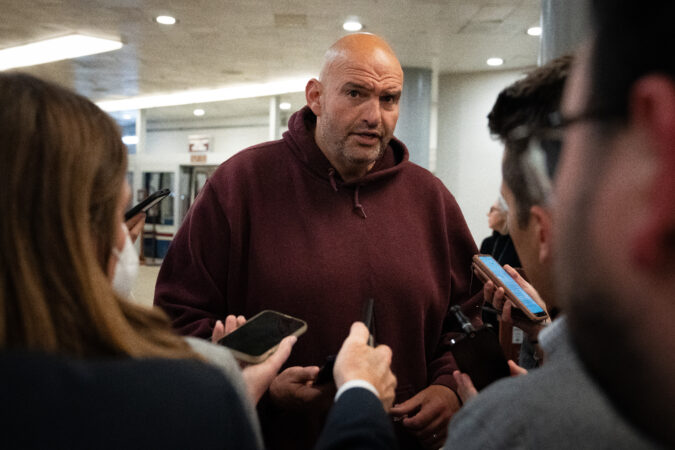
Sen. John Fetterman (D., Pa.) on Monday praised President Donald Trump’s order to capture Venezuelan President Nicolás Maduro and his wife, breaking with most Democrats’ messaging on the military operation that took place early Saturday without congressional authorization.
“I don’t know why we can’t just acknowledge that it’s been a good thing what’s happened. … We all wanted this man gone, and now he is gone,” Fetterman said during an interview on Fox & Friends on Monday morning.
Fetterman’s comments come days after the Trumpadministration orchestrated a strike on Caracas, resulting in the capture of Maduro, Venezuela’s president since 2013, and his wife, Cilia Flores, early Saturday.
The event followed months of escalation by the U.S. military and claims from the Trump administration that Maduro is responsible for large-scale drug trafficking operations. The future of the Venezuelan government is unclear, but Trump has suggested that U.S. involvement will continue.
“I think [the military operation] was appropriate and surgical,” Fetterman said during the interview. “This wasn’t a war, this wasn’t boots on the grounds, and in that kind of way, this was surgical and very efficient, and I want to celebrate our military.”
The military operation provoked mixed reactions from members of the Philadelphia region’s Venezuelan community, some of whom are thankful for Maduro’s ouster but were concerned by Trump’s comments over the weekend that the U.S. would “run” Venezuela.
The incident also garnered sharp disapproval from many Democratic lawmakers.
Sen. Cory Booker (D., N.J.) said in a post on X on Saturday that Maduro is a “brutal dictator who has committed grave abuses” and that the U.S. military carries out their orders with “professionalism and excellence,” but stressed that Trump’s military operation defies the Constitution and isa culmination of a repeated failure by Congress to exercise its check on presidential power.
“We face an authoritarian-minded president who acts with dangerous growing impunity. He has shown a willingness to defy court orders, violate the law, ignore congressional intent, and shred basic norms of decency and democracy,” Booker said.
“This pattern will continue unless the Article I branch of government, especially Republican congressional leadership, finds the courage to act,” Booker said.
Other Democrats and opponents to the military operation havealsoquestioned its legality.
This is not the first time that Fetterman has differed with fellow Democrats on key issues. Recently, the Pennsylvania senator wasone of only a handful of Senate Democrats who supported the Republican-led plan to reopen the federal government without addressing the expiration of healthcare subsidies.
During his interview Monday, Fetterman noted that Democrats, including former President Joe Biden, have called for the ouster of Maduro.
“Why have a bounty of $25 million if we didn’t want him gone? Why would you do these things if you weren’t willing to actually do something other than harsh language,” Fetterman said.
Millions of dollars in federal funding for homeless services are at risk after the Trump administration on Friday moved forward with a plan to cut support for most long-term housing programs that serve people otherwise without stable shelter, according to officials in Bucks and Montgomery Counties.
The plan, which is still being fought in court after the Department of Housing and Urban Development released an earlier iteration of the policy shift in November, seeks to upend the way communities across the nation, including Philadelphia, treat people experiencing homelessness and would reroute the spending of $3.9 billion in grants for a program called Continuum of Care that localities rely on to fund housing programs.
The latestdevelopment came Friday night, when HUD appeared to respond to a judge’s ruling in the legal battle by issuing a new set of rules to apply for the federal awards. The new HUD document reduced the amount of funding available for permanent housing by two-thirds, a drastic decrease, said Kayleigh Silver, administrator of the Montgomery County Office of Housing and Community Development.
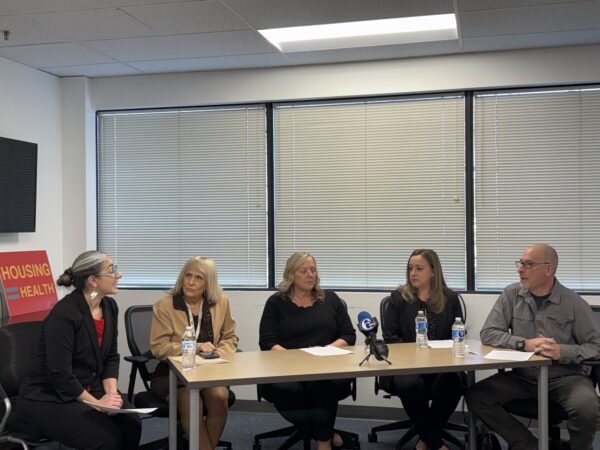
The new plan “we believe will worsen homelessness and destabilize communities, not improve them,” said Kristyn DiDominick, executive director of the Bucks-Mont Collaborative, at a news conference Monday in Warminster. The nonprofit fosters resource sharing between the two counties.
Officials said hundreds of people in the counties, including families, veterans, and people with disabilities, could lose access to housing as a result of the funding shift. Nationwide, the HUD plan could displace 170,000 people by cutting two-thirds of the aid designated for permanent housing, advocates say. In Philadelphia, tens of millions of dollars used to fund the city’s 2,330 units of permanent supportive housing are at risk, city officials said in November
Bucks County Commissioner Diane Ellis-Marseglia, a social worker by trade, said HUD broke its “promise” to continue providing support to programs.
“If we can’t trust HUD, how are we supposed to get the people we work with to trust us?” said Ellis-Marseglia, a Democrat.
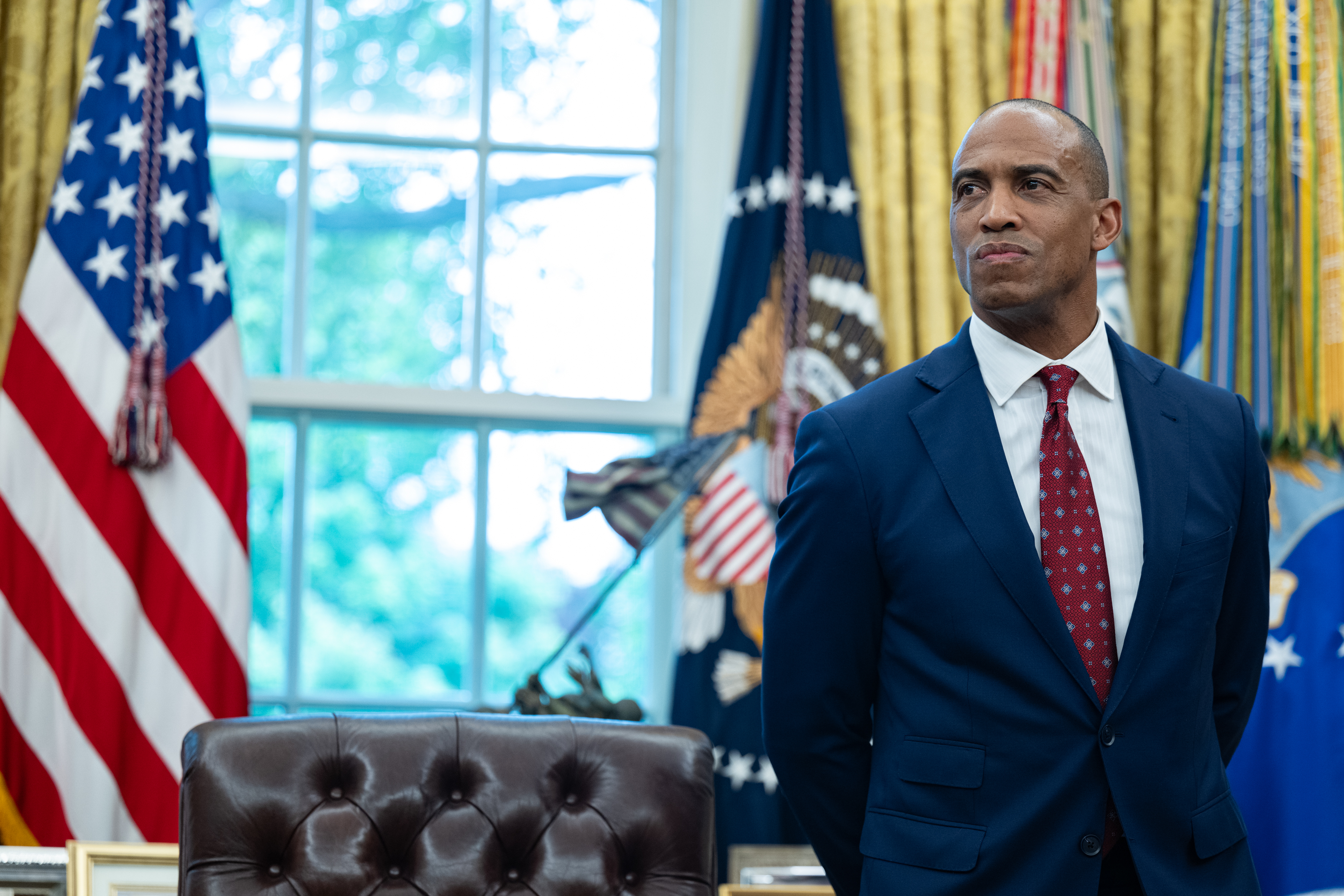
Secretary of Housing and Urban Development Scott Turner in the Oval Office on May 5.
The HUD announcement followed two lawsuits, including one from Pennsylvania Gov. Josh Shapiro and 20 other states’ attorneys general and governors, against President Donald Trump’s administration over the cuts included in the November draft of the plan.
The earlier plan gave HUD the authority to restrict funding for groups that recognize the existence of transgender and nonbinary people, populations that face greater risks for homelessness. County officials are still seeking clarification on whether that provision remains in the new plan.
HUD temporarily rescinded the controversial plan on Dec. 8, just hours before a hearing on the lawsuits, citing an intent to revise it. On Friday, U.S. District Judge Mary S. McElroy, who presided over the hearing, issued a preliminary injunction blocking HUD’s efforts until a new funding notice is issued. It remained unclear to local advocates and service providers the differences between the new plan posted later that night and the original.
“HUD will continue working to provide homelessness assistance funding to grantees nationwide. The Department remains committed to program reforms intended to assist our nation’s most vulnerable citizens and will continue to do so in accordance with court orders,” a spokesperson for the department said in a statement to The Inquirer.
The confusing standoff marks the latest obstacle that nonprofits have had to endure after a lengthy federal government shutdown and Pennsylvania’s state budget impasse, both of which contributed to funding delays and instability.
Bucks and Montgomery County service providers and advocates at Monday’s news conference handed out literature that said“Chaos isn’t a strategy” and called on Congress to step in, noting that the funding process is months behind.
The impacts “land on real people,” DiDominick said.
Housing is also an important resource for survivors of domestic violence, said Stacy Dougherty, executive director of Laurel House, a domestic violence organization in Montgomery County.
“For victims of domestic violence, access to safe housing can be the difference between staying in an abusive relationship and being able to leave, and sometimes even the difference between life and death,” Dougherty said.
Erin Lukoss, CEO of the Bucks County Opportunity Council, added that “housing is the foundation,” a backbone for the entire system that tries to address poverty and food insecurity. A lack of clarity on this funding is another stressor for service providers and those who benefit from the resources
“What makes this moment especially concerning is not just the potential reduction in funding, it’s the instability of the rules themselves,” Lukoss said.
Russell “Rusty” Trubey said he was compelled by God to preach the words that helped set off a national battle over religion at the U.S. Department of Veterans Affairs.
Reading from a sermon titled“When Culture Excludes God,” Trubey, an Army Reserve chaplain, sermonized to a congregation of veterans at the Coatesville VA Medical Center from a Bible passage — Romans 1:23-32 — that refers to same-sex relationships as “shameful.”
Some congregants, upset by the sermon, walked out of the June 2024 service at the Chester County facility, where Trubey has been employed for roughly 10 years. Soon after, Trubey’s lawyers said he was temporarily pulled from his assignment — and transferred to stocking supply shelves — while his supervisors investigated his conduct.
Speaking to Truth and Liberty, a Christian group that advocates for the church to play a greater role in the public sphere, Trubey said he knows that reading the Bible verses about same-sex relationships is “100%” the reason he got in trouble.
One of the entrances leading into Coatesville VA Medical Center.
A month earlier, Trubey’s lawyers had taken hiscase to the White House. In a letter sent a few weeks after President Donald Trump’s inauguration, Trubey’s lawyers asked Trump’s VA secretary, Doug Collins, to interveneon Trubey’s behalf in regard to repercussions for the sermon.
Trubey had delivered the talk during former President Joe Biden’s administration — an environment that Trump officials allege was hostile to Christians.
In the letter, the chaplain’s lawyers from the First Liberty Institute and Independence Law Center accused Trubey’s supervisor of wanting sermons to be screened ahead of time for pre-approval and stated that Trubey received a letter of reprimand, which would later go on to be rescinded by Coatesville VA Medical Center officials.
Soon after the lawyers’ letter reached the new administration, the VA, one of the largest federal employers in Pennsylvania, reinstated Trubey to his position and Collins reaffirmed that chaplains’ sermons would not be censored.
But the fallout from this incident — paired with Trump’s ongoing campaign to root out perceived prejudice against Christians and dismantle diversity, equity, and inclusion — left an undeniable mark on the VA, helping to inspire an agencywide “Anti-Christian Bias Task Force.”
Announced to employees in April 2025, the task force asks employees to report offenses such as “reprimand issued in response to displays of Christian imagery or symbols,” per a department email reviewed by The Inquirer.
And the VA wants names.
In the email, the VA encouraged employees to identify colleagues and workplace practices that violate the policy and send information about the alleged offenses to a dedicated email address. The announcement was in accordance with a Trump executive order from February that ordered federal agencies to “eradicate” anti-Christian bias and create a larger White House task force composed of cabinet secretaries and chaired by Attorney General Pam Bondi.
As of this summer, the VA received more than 1,000 reports of anti-Christian bias and reviewed 500, according to task force documents. Another report is expected in February.
Some of the offenses the VA is on the watch for could be especially pertinent during the holiday season when workers may want their faith represented at their desks.
One union leader at the Veterans Benefits Administration office in Philadelphia called the task force, which does not extend to biases against other religions, “McCarthyism for Christians.”
“What they’re really doing is they’re trying to create a hostile work environment where you’re now afraid to say something because you may be reported,” said the union representative weeks after the VA’s task force announcement. The representative asked to speak anonymously out of fear of workplace retaliation.
The VA said in a statement that the department is “grateful” for Trump’s executive order. The VA did not answer The Inquirer’s questions on an updated number of reports received through the task force, what happens to people or practices that are reported, and next steps of the task force.
“As the EO stated, the prior administration ‘engaged in an egregious pattern of targeting peaceful Christians, while ignoring violent, anti-Christian offenses,’” said VA press secretary Pete Kasperowicz in the statement. “Under President Trump, VA will never discriminate against Veterans, families, caregivers or survivors who practice the Christian faith.”
One of those offenses, as outlined by the VA, is “informal policies, procedures, or unofficial understandings hostile to Christian views.” Another is retaliation against chaplains’ sermons, which appears to be in responseto the Trubey incident from June 2024.
Erin Smith, associate counsel at the First Liberty Institute, who helped represent Trubey said: “If Chaplain Trubey’s story serves as inspiration to help protect the rights of all chaplains in the VA, then that is a wonderful thing to come out of a terrible situation.”
But some VA employees disagree.
Ira Kedson, president of AFGE Local 310, which represents employees at the Coatesville VA Medical Center, said in an interview in June that he heard some employees were “deeply troubled” by the incident with Trubey, especially those who worked in clinical settings with patients who were in attendance of the controversial sermon.
“I was told that some of the residents were deeply hurt and deeply troubled by the situation and it took a long time for them to be able to move past it,” Kedson said.
Religion takes center stage in the Trump administration
Trump is leading what is arguably one of the most nonsecular presidencies in modern United States history with his embrace of a loyal, conservative Christian base.
“We’re bringing back religion in our country,” Trump said at the Rose Garden during the National Day of Prayer in May.
And efforts to elevate religion in the public sphere have gone beyond Trump’s rhetoric. For instance, the Office of Personnel Management, the federal government’s human resources agency, issued guidance that aims to protect religious expression in the workplace for all religions.
Most of the reports submitted to the VA focused on “denying religious accommodations for vaccines and provision of abortion services; mandating trainings inconsistent with Christian views; concealing Christian imagery; and Chaplain program and protections for Chaplains,” according to task force documents.
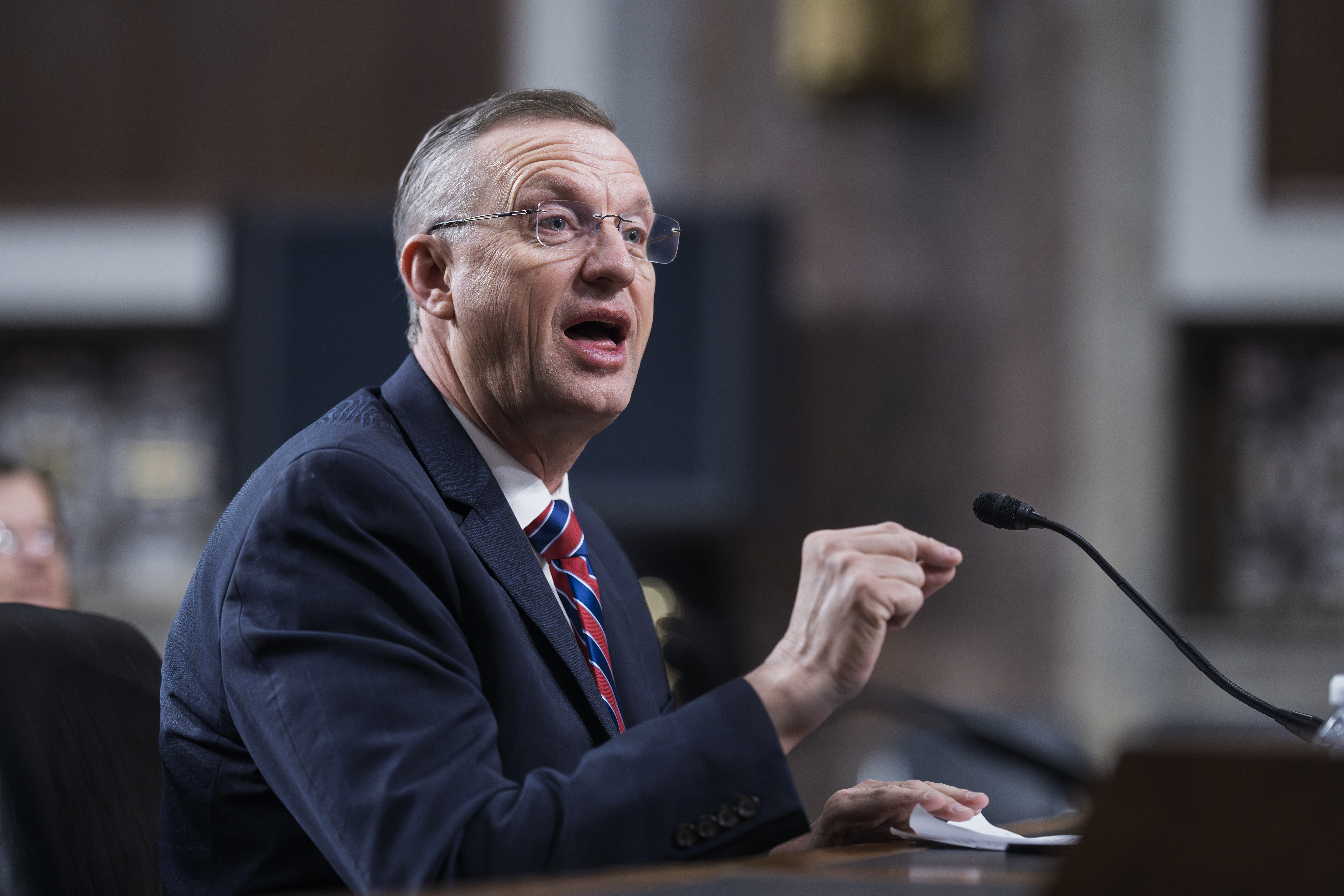
Doug Collins at his Jan. 21 confirmation hearing before the Senate Veterans’ Affairs Committee, at the Capitol in Washington.
Charles Haynes, senior fellow for religious liberty at the Freedom Forum, a nonpartisan organization based in Washington that promotes First Amendment rights, said while it’s not unconstitutional or unprecedented to createa faith-specific task force, “the appearance of [the Christian-bias task force], to many people, is a favoritism of the government for one group over another.”
The White House, in a statement, said Trump has a record of defending religious liberty regardless of faith.
“President Trump has taken unprecedented action to fight anti-Christian, anti-Semitic, and other forms of anti-religious bias while ending the weaponization of government against all people of faith,” said White House spokesperson Taylor Rogers in an email to The Inquirer.
Furthermore, she added, that the media is doing “insane mental gymnastics to peddle a false and negative narrative about the President’s efforts on behalf of nearly 200 million Christians across the country.”
Identifying anti-Christian bias or chasing a ‘unicorn’?
The Trump administration has shared few details about the operations and goals of the anti-Christian bias task force, raising questions from lawmakers and other stakeholders.
Rep. Mark Takano, the ranking member of the House Committee on Veterans’ Affairs, was in a monthslong back-and-forth with VA Secretary Collins, trying to get answers to an extensive list of questions he initially sent in May, with the California Democrat particularly concerned that the scope of the initiative is limited to bias against Christians.
“To preserve this right to religious freedom, the Department cannot prioritize one faith over others, nor can it allow religious considerations to shape its policies in ways that may conflict with the First Amendment,” Takano wrote in May. “Further, the vagueness of the task force’s mission raises significant concerns about how it will be used and whether it is compatible with the mission of the Department.”
Collins responded in June and did not answer most of Takano’s questions, though he did saythat the task force, which reports to the secretary, will identify, strategize, and potentially alter any policies that discriminate against Christians or religious liberty.
The lawmakerfollowed up a week later. Roughly four months later, in October, Collins’ responses were vague once again.Most recently, Takano is asking for both Democratic and Republican members of the House and Senate’s Veterans’ Affairs Committees to be looped in on future correspondence regarding the task force.
The VA, according to a statement from Takano, has not fully answered their questions and has refused to host a bipartisan briefing.
“The lack of transparency and accountability of this task force leaves me with numerous concerns for the due process and privacy of hardworking VA employees,” Takano said. “VA’s silence won’t stop us from asking the questions we are constitutionally obligated to ask.”
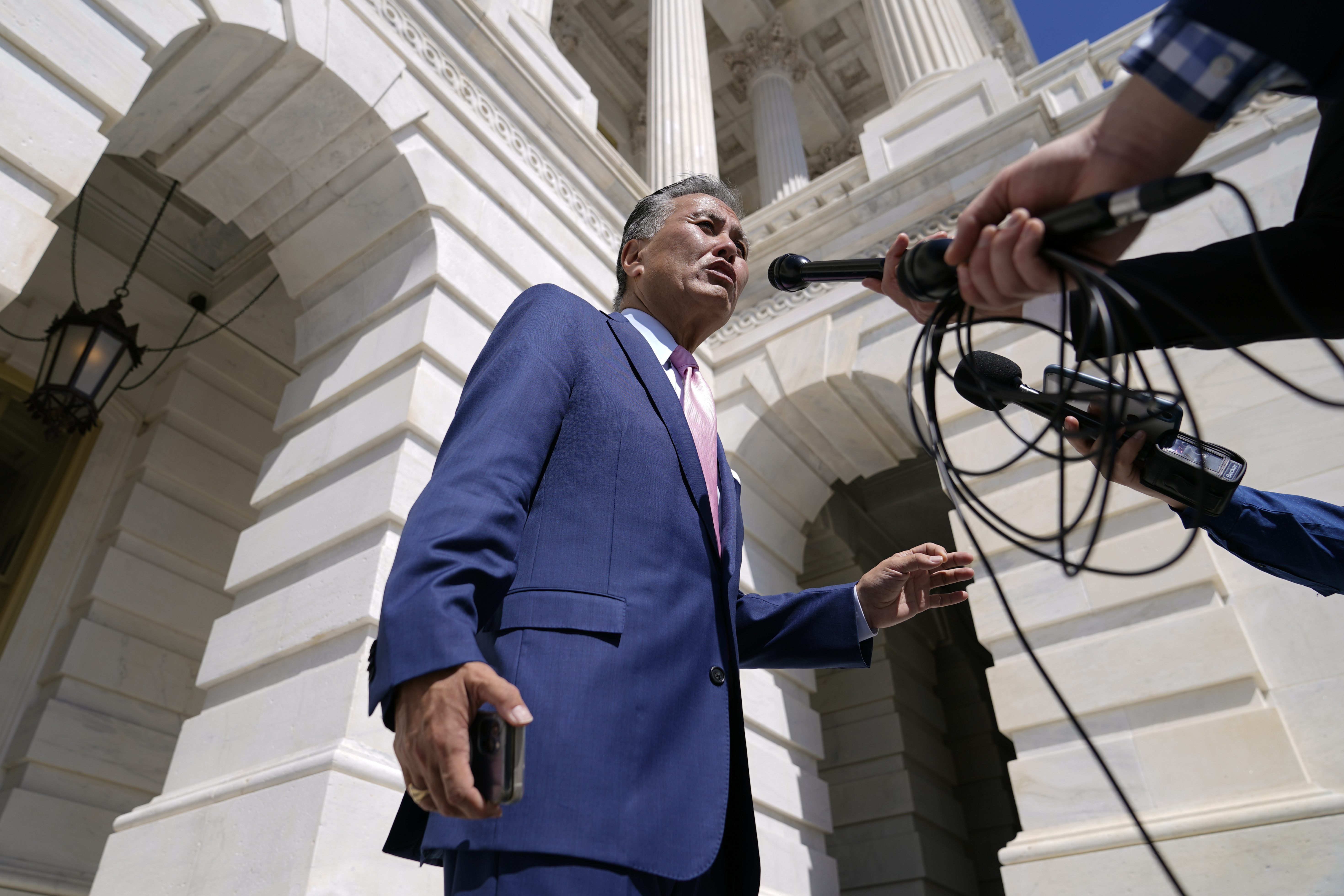
Rep. Mark Takano (D., Calif.) in August 2022, on Capitol Hill in Washington. Takano, ranking member of the House Committee on Veterans’ Affairs, has been trying to get answers from the VA on the Anti-Christian Bias Task Force.
Michael L. “Mikey” Weinstein, former counsel for the Reagan administration turned founder and president of the Military Religious Freedom Foundation, said his group is looking for a plaintiff to sue the government over the task force. The group has been receiving calls from VA employees concerned aboutit, one of whom, he said, was a senior physician at the VA Medical Center in Philadelphia.
The physician, Weinstein said, was distraught to receive the memo about the task force. He had family in town and noted the irony of showing his family around all the historical sites that signified the birthplace of American freedoms while being asked by the federal government to partake in such a project.
“It was like a dagger in his heart,” Weinstein said.
Weinstein is adamant that anti-Christian bias in the federal workforce is nonexistent, like looking for a “unicorn.”
Noticeably absent from the task force, critics say, is any effort to explore instances of discrimination against other faiths within federal agencies.
Trump has historically espoused hateful rhetoric against Muslims, including enacting a travel ban on individuals from predominantly Muslim countries during his first term. The president has issued an executive order this term to combat antisemitism on college campuses, but he also has a history of engaging with antisemites on the political right.
Ahmet Selim Tekelioglu, executive director of CAIR-Philadelphia, a nonprofit that aims to protect the civil rights of Muslims in the U.S., said he believes all forms of discrimination should be stamped out, but he’s concerned the task force isn’t affording those protections to everyone.
“It focuses exclusively on alleged anti-Christian conduct within the federal agencies, and in our opinion of this, risks then entrenching preferential treatment and signaling the protections that should exist for everyone is conditional, right?” Tekelioglu said.
There is hope, however, that this task force could lead to other future initiatives to root out hate, said Jason Holtzman, chief of Jewish Community Relations Council at the Jewish Federation of Greater Philadelphia.
“My hope is that hopefully they’re starting with the task force on Christian bias, and then maybe they’ll initiate one on antisemitism, Islamophobia, because I think task forces need to exist on all of these different forms of hate,” said Holtzman, noting that both Trump and Biden have taken action to combat antisemitism.
Haynes, the religious liberty expert, said anti-Christian bias is a “matter of perspective.”
“How you see it for the conservative Christian, what others would say is just creating an inclusive, safe workplace for everyone, they see, in some respects, as being anti-Christian,” Haynes said.
Haynes said that “anecdotal sort of stories” about prejudice against Christians pushed by conservative groups do not appear to be based in any kind of research into a widespread trend. But it only takes one story — as seen in Trubey’s case — to set off a firestorm.