Author: Fallon Roth

  • CHOP faces threat as Trump administration proposes rules to stop gender-affirming care for minors

    CHOP faces threat as Trump administration proposes rules to stop gender-affirming care for minors

    President Donald Trump’s administration proposed a sweeping set of rules Thursday designed to prevent hospitals from providing gender-affirming care to minors, a move that could have consequential implications for Children’s Hospital of Philadelphia.

    CHOP runs one of the nation’s largest clinics providing medical care and mental health support for transgender and gender-nonbinary children and teens and their families. Each year, hundreds of new families seek care at CHOP’s Gender and Sexuality Development Program, created in 2014. The information of CHOP patients who have sought gender-affirming care had been the target of a recent unsuccessful lawsuit from the Trump administration.

    The proposals constitute the most significant moves the administration has taken to restrict the use of puberty blockers, hormone therapy, and surgical interventions for transgender people under the age of 18 — including cutting off federal Medicaid and Medicare funding from hospitals that provide gender-affirming care to children and prohibiting federal Medicaid dollars from being used to fund such procedures.

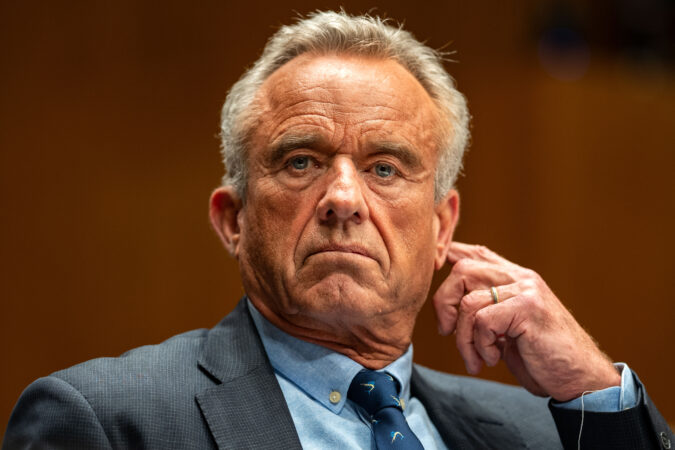
    “This is not medicine, it is malpractice,” Health Secretary Robert F. Kennedy Jr. said, referring to gender-affirming procedures, at a news conference Thursday. “Sex-rejecting procedures rob children of their futures.”

    CHOP, like most other hospitals in the country, participates in both Medicare and Medicaid.

    CHOP declined to comment Thursday.

    The renowned pediatric hospital treats children and teens with gender dysphoria — a medical condition in which a person’s body does not match their gender identity. Its doctors prescribe hormone therapy and puberty blockers.

    The American Academy of Pediatrics and other major medical associations, citing research, widely accept such medications as safe, effective, and medically necessary for the patients’ mental health.

    CHOP has said its doctors do not prescribe any medication before its patients undergo extensive medical and psychological evaluations.

    Gender-affirming care is legal in Pennsylvania, and states, not the federal government, regulate medicine and doctors.

    But Trump has sought to criminalize this care for minors, saying doctors are engaged in “chemical mutilation,” akin to child abuse, and he has called the research “junk science.”

    Just days into his second term in office, the president issued an executive order titled “Protecting Children from Chemical and Surgical Mutilation,” which contains inflammatory and misleading descriptions of largely medically approved transgender care. Kennedy has followed the president’s lead, signing a declaration Thursday rejecting these procedures.

    Other actions proposed Thursday include the U.S. Food and Drug Administration issuing warning letters to 12 manufacturers and retailers for what an HHS news release claims to be “illegal marketing of breast binders to children for the purposes of treating gender dysphoria.”

    The court battle over gender care for minors

    In June, the U.S. Department of Justice issued subpoenas to CHOP and at least 19 other hospitals that treat transgender youth as part of an investigation into possible healthcare fraud. The federal subpoenas demanded patient medical records, including their dates of birth, Social Security numbers, and addresses, as well as every communication by doctors — emails, voicemails, and encrypted text messages — dating back to January 2020.

    The subpoenas touched off a wave of legal battles that continue to play out. Several hospitals around the country, including CHOP, filed motions asking federal judges to block the release of private patient information.

    So far, federal judges in Philadelphia, Boston, and Washington state have sided with the hospitals, ruling the subpoenas were politically motivated.

    In Philadelphia, U.S. District Judge Mark A. Kearney last month determined that the “privacy interests of children and their families substantially outweighs the department’s need to know” such confidential and sensitive information. The federal government has 60 days to appeal the Nov. 21 ruling.

    In September, patients and their parents joined the legal fight to limit the scope of the subpoenas issued to CHOP and UPMC Children’s Hospital of Pittsburgh. The Philadelphia-based Public Interest Law Center (PILC) filed separate but similar legal relief on behalf of families with children and teens who have received gender-affirming care at CHOP and in Pittsburgh.

    The federal judge presiding over the Pittsburgh hospital’s case has yet to issue a ruling. Earlier this week, however, DOJ lawyers said they are willing to accept redacted medical records. They argued that would solve the dispute over patient privacy rights.

    On Thursday, Mimi McKenzie, PILC’s legal director, said the center “strongly disagrees” and would fight the release of redacted medical records.

    “These records are so deeply personal and contain such highly sensitive information about these young patients,” McKenzie said. “There is no anonymization or redaction that can protect their privacy interests.”

    McKenzie said the proposed federal rule to ban all federal funding to hospitals that treat transgender youth would “face a myriad of legal challenges.” She described gender-affirming care as “lifesaving” for many children.

    “The notion that our federal government would tell hospitals to pick which children you want to save — the children who need gender-affirming care or all the other children — is despicable. The cruelty of this administration knows no bounds.”

    Other institutions have recoiled in the face of the Trump administration’s threats.

    Earlier this year, Penn Medicine and Penn State Health cut back gender-affirming care for youth. Nemours Children’s Hospital in Delaware and UPMC Children’s Hospital of Pittsburgh announced they will no longer provide gender-affirming care beyond behavioral health services to new patients.

    All cited fear of federal funding cuts.
  • Palantir CEO Alex Karp was raised in a liberal household outside Philly. Now he’s a top Trump administration contractor

    Palantir CEO Alex Karp was raised in a liberal household outside Philly. Now he’s a top Trump administration contractor

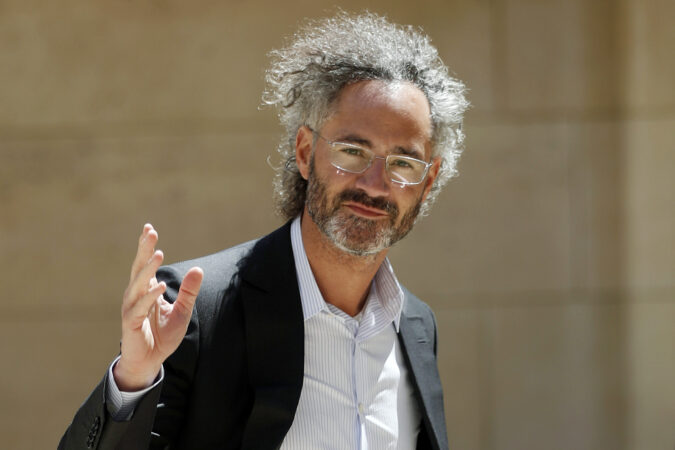
    In the first year of President Donald Trump’s administration, Palantir Technologies has secured major contracts to compile data on Americans, assist the president’s federal immigration enforcement, and play a key role at the height of the Department of Government Efficiency’s efforts to shrink the federal government.

    But just a few years ago, it seemed unlikely that billionaire Alex Karp, CEO of Palantir — a publicly traded data software company that Karp described in 2011 as “deeply involved in supporting progressive values and causes” — would ever strike such deals with Trump.

    Karp grew up in the Philadelphia area in a politically left-leaning household and was critical of Trump during his first White House term. But over time, and catalyzed by Hamas’ Oct. 7, 2023, attack on Israel, his opinion and habits shifted. Quickly, he went from being a major Democratic Party donor to writing a big check to Trump’s 2024 inaugural committee.

    As of May, Palantir has received more than $113 million in federal spending. The company, which builds software to analyze and integrate large data streams for major companies, including defense contractors, sees itself as a beneficial power, but critics are concerned about data being misused or people being surveilled in violation of civil liberties, according to the New York Times’ The Daily podcast.

    And some employees are opposed to the optics of Palantir carrying out the president’s controversial political agenda.

    Here’s what to know about Karp and Palantir.

    What is Palantir?

    Palantir is a publicly traded data analytics software company that was cofounded by Karp, Joe Lonsdale, Nathan Gettings, Stephen Cohen, the company’s president, and Peter Thiel, a billionaire tech investor and cofounder of PayPal. Thiel is a libertarian and is a staunch supporter of right-wing ideology.

    Palantir, based in Denver, grew out of the Sept. 11, 2001, terrorist attacks on the United States and a desire to help improve national security.

    According to The Daily podcast guest Michael Steinberger, who spent six years interviewing Karp for a book, one of Palantir’s major contractors has been the CIA, which was also one of its early investors. Palantir’s technological products also played a key role in assisting Ukraine during the early months of Russia’s war on the country.

    The company started its partnership with U.S. Immigration and Customs Enforcement during former President Barack Obama’s administration, but that contract did not draw controversy until Trump’s first term in the White House, when his immigration crackdown became a key priority, Steinberger, a contributing writer to the Times, said.

    This summer, it was reported that Palantir landed a $10 billion software and data contract with the U.S. Army, months after reports showed Trump tapped the company to compile data on Americans, prompting scrutiny from privacy advocates, labor rights organizations, and student unions.

    Alex Karp, Palantir CEO, has roots in Philadelphia

    Karp was born in New York but grew up in the Philadelphia suburbs, he told the World Economic Forum in 2023. He went on to attend Central High School.

    As Steinberger describes it, “He’s a Philly kid. He grew up in Philadelphia. Grew up in a very left-wing household.” Karp is the son of a Jewish pediatrician and a Black artist. And he’s dyslexic, Steinberger said.

    “It’s like I have this weirdly structured brain,” Karp said in an interview with Steinberger. “The motor is just structured differently.”

    Karp and his younger brother spent time going to antiwar and antinuclear protests, and the older Karp attended Haverford College, Steinberger said. There, he closely identified with his Black heritage, getting involved with Black student affairs and organizing an antiracism conference at Yale University.

    Karp insists that he did not put much effort into his schooling at Haverford, but Steinberger, who was a classmate of Karp’s in college, appears to think otherwise.

    “I think his path in life would suggest otherwise. I think the library saw a lot more of him than it did of me, which may go some way to explaining why he became a billionaire and I did not,” Steinberger said.

    After Haverford, Karp attended Stanford Law School, where he met and became close with Thiel — whose political views were the opposite of Karp’s. Years later, Karp and Thiel reunited after 9/11. Thiel was looking for a CEO for Palantir.

    “Thiel interviews a couple of people for the CEO position, but then he and the other people involved in founding Palantir realized Karp is probably the right guy for the job,” Steinberger said.

    In an interview with Steinberger, Karp admitted that his background made him an unlikely choice for CEO.

    “I wasn’t trained in business. I didn’t know anything about start-up culture. I didn’t know anything about building a business. I didn’t know anything about financing a business,” Karp said.

    From a Philly liberal to a staunch Trump defender

    In Steinberger’s telling, Hamas’ terrorist attack on Israel on Oct. 7, 2023, gave rise to a political environment that would solidify Karp’s rightward shift.

    Over time, Karp had become discouraged with the left’s criticisms of Palantir, but that reached a fever pitch when Palantir offered its services to Israel as the country began its military invasion of Gaza amid protests, including internal dissent from employees, Steinberger said.

    Steinberger said Karp — once a protester himself — became increasingly troubled by college campus protests against Israel’s war in Gaza.

    “He thinks the protests are riddled with antisemitism,” Steinberger said. “They’re very dangerous and he sees this as reflective of a broader rot in his mind on the left.”

    Karp continued to back then-President Joe Biden, who was supportive of the Israeli government, but in December 2023, Karp posed a sort of ultimatum at the Reagan National Defense Forum in California regarding liberals’ stance on Israel and a desire for the Democratic Party to denounce the college campus protests.

    “I’m one of the largest donors to the Democratic Party and, quite frankly, I’m calling it out, and I’m giving to Republicans. If you keep up with this behavior, I’m going to change. A lot of people like me are going to change. We have to really call this out. It is completely beyond the bounds,” Karp said.

    Over time, Karp started donating more “aggressively” to Republicans, Steinberger said, and made clear his support for Trump. Karp wrote a $1 million check to the Trump-Vance Inaugural Committee and later began publicly praising Trump on national security.

    Karp, for his part, still thinks of himself as a progressive.

    “I didn’t shift my politics,” Karp said. “The political parties have shifted their politics. The idea that what’s being called progressive is any way progressive is a complete farce.”

  • Philly federal court judge Emil Bove attended Trump’s Poconos rally. Now he faces an ethics complaint.

    Philly federal court judge Emil Bove attended Trump’s Poconos rally. Now he faces an ethics complaint.

    Emil Bove, a judge in Philadelphia’s federal appeals court and a staunch defender of President Donald Trump, faces an ethics complaint over his decision to attend the president’s rally in Pennsylvania earlier this week.

    The complaint, written by Gabe Roth, who leads the advocacy group Fix the Court, was filed Wednesday with the chief judge of the U.S. Court of Appeals for the Third Circuit, based in Philadelphia. It alleges that Bove’s attendance at the campaign-style rally — which was billed as the first stop on an economic tour but went off-script with partisan attacks on immigrants and his critics — violated parts of the Code of Conduct for United States Judges.

    That code includes provisions that a judge “should avoid impropriety and the appearance of impropriety in all activities” and “should refrain from political activity,” the complaint noted.

    “I believe Judge Bove has violated multiple Canons of the Code of Conduct, should be admonished for his behavior and should be subject to any other discipline under the Judicial Conduct and Disability Act that the Chief Judge and the Judicial Council deem fit,” Roth wrote in the complaint, questioning whether Bove’s attendance hindered his impartiality as a judge.

    A spokesperson for the Third Circuit, where Bove has been serving since his contentious confirmation in July, declined to comment. White House communications director Steven Cheung wrote in a post on X that it is not unusual for a judge, like Bove, to be at a rally.

    “Stop your pearl-clutching,” Cheung wrote in response to another user. “An American citizen is at an event listening to the President of the United States speak. In your world, you’d rather give rights to illegal criminals over Americans.”

    At Tuesday’s event, Bove said that he was “just here as a citizen coming to watch the president speak,” according to a reporter from MS NOW, formerly MSNBC.

    Trump nominated Bove, who had worked as his personal criminal-defense attorney before the president chose him for a prestigious Justice Department role, in May to fill a vacant seat on the Philadelphia-based court. He was confirmed 50-49 by the U.S. Senate in July, with two Republicans voting with Democrats to oppose his appointment. The confirmation solidified Bove, whose career highlights have been defined by his loyalty to Trump, in a lifetime appointment on the bench.

    Soon after coming into office in January, Trump tapped Bove to serve a key role in his administration’s plans to revamp the Justice Department. Bove oversaw swaths of firings and resignations, threatened consequences for officials who did not comply with the Trump administration’s immigration agenda, and secured the vexed dismissal of corruption charges against New York City Mayor Eric Adams.

    He has also been the subject of whistleblower allegations. In June, a former high-ranking department lawyer accused Bove of saying U.S. officials should consider resisting court orders blocking deportations of alleged gang members.

    Bove denied these allegations during a confirmation hearing before the Senate Judiciary Committee by saying, “I did not suggest that there would be any need to consider ignoring court orders.”

    In July, new whistleblower accounts emerged from organizations representing former Justice Department employees. One alleged that an employee was concerned about Bove “actively and deliberately undermining the rule of law” when it came to court orders in an immigration case.

    Another whistleblower said they had evidence that Bove was not truthful to the Senate Judiciary Committee during his confirmation hearing.

    As to what could happen to Bove next when it comes to the misconduct complaint, the chief judge of the Third Circuit could conduct a “limited inquiry” into the allegations, according to the U.S. Courts website. Then, after considering, the chief judge would dismiss or conclude the complaint or appoint a special committee of judges to investigate.

  • Jeffrey Yass, Pennsylvania’s richest man, details how school vouchers drive his massive political spending operation in rare interview with Washington Post

    Jeffrey Yass, Pennsylvania’s richest man, details how school vouchers drive his massive political spending operation in rare interview with Washington Post

    It’s no secret that Jeffrey Yass, Pennsylvania’s richest man, is a big political spender.

    Just within the past year, the billionaire megadonor and founder of the Bala Cynwyd-based Susquehanna International Group largely bankrolled the unsuccessful effort to oust three Pennsylvania Supreme Court justices and has helped pay for President Donald Trump’s presidential transition and controversial White House ballroom.

    But in a rare interview with the Washington Post, published Thursday, Yass shared details on the key motivation behind his political spending: school vouchers, which supporters say will allow parents and students to choose their school. Yass’ unwavering support for vouchers and other school choice measures has led him to throw his dollars to Pennsylvania, other states, and to Trump, whose candidacy he once opposed.

    And in 2026, he said he’ll continue to financially back pro-voucher candidates across the nation.

    “I have come across what I think is a great way to relieve the suffering of tens of millions of kids,” Yass told The Washington Post. “To most people it’s like if you’re a libertarian billionaire, you must be Lex Luthor trying to do something nefarious. If I gave to a hospital, you wouldn’t be saying that.”

    School vouchers, which are opposed by teacher unions and public school advocates, have been a high-profile issue in Pennsylvania’s state budget talks in years past, but they’ve failed to pass it. Yass poured money into that effort, but Democratic Gov. Josh Shapiro, who has embraced — though softened — his support for a voucher program, vetoed the measure from the state budget after it couldn’t pass a Democratic-controlled state House in 2023.

    Yass told the Post that “It was a dramatic failure. We thought we had it.“

    The billionaire saw better success in Texas where he contributed to help defeat anti-voucher Republicans in the primary, creating a more favorable atmosphere for passing the state’s $1 billion voucher program.

    But these instances were hardly the beginning — or the end — of Yass’ involvement with politics. He gave $3.2 million in political contributions in Pennsylvania in 2018, and by last year, that had risen to $35 million, the Post reported.

    Though now known as a major backer of GOP candidates, he has supported Democrats who he believes can help champion the school choice message. The first major beneficiary of Yass’ contributions was State. Sen. Anthony Williams (D., Philadelphia) who unsuccessfully ran for governor in 2010 and Philadelphia mayor in 2015.

    And in 2007, Yass conversed with then-Sen. Barack Obama, who received a $2,300 donation from Yass for his 2008 presidential campaign, the Post reported. Yass believed that Obama would support school choice if elected, but his administration ended up opposing voucher programs for children in the D.C. school system.

    According to the Post, this may have been an indication to Yass that Democrats would not be an ally for the school choice cause.

    His allegiance to school choice also appears to have made him switch his perspective of Trump from an opponent — who spent millions of dollars to back GOP primary opponents in 2024 — to a supporter.

    But after the November 2024 election, where Trump was victorious, Yass changed his tune and helped bankroll Trump’s $14 million presidential transition and donated at least $2.5 million to the president’s proposed White House ballroom.

    The billionaire owed his change of thought on Trump to the president being “a true champion” of school choice, Yass told the post, crediting him for the passage of the Texas voucher bill and a new federal tax credit for donations to scholarship organizations.

    His support for the president also coincides with Yass having business in front of the Trump administration. Yass’ trading firm is a top stakeholder in ByteDance, TikTok’s parent company. Trump is mulling the fate of the popular social media app in the United States and Yass could benefit from a deal supported by Trump to keep TikTok operational here.

  • Montco immigration advocates urge all towns to limit collaboration with ICE as the agency creates ‘a crisis in our neighborhoods’

    Montco immigration advocates urge all towns to limit collaboration with ICE as the agency creates ‘a crisis in our neighborhoods’

    Montgomery County immigration advocates renewed calls for more municipalities to approve policies that would limit police and local government cooperation with U.S. Immigration and Customs Enforcement as President Donald Trump’s administration ramps up enforcement.

    Advocates have been calling for welcoming policies across the county for months but advocates estimated that as of Wednesday, only six of Montgomery County’s 62 municipalities had enacted policies. Even those, they argued, were lackluster.

    Montco Community Watch, a grassroots group of activists who track and document ICE enforcement, said Thursday during a news conference at a West Norriton church that the need for more local governments to set their own is dire.

    “ICE has created a crisis in our neighborhoods, and we cannot afford silence, mixed signals, or leadership that only reacts once harm has already happened,” said Stephanie Vincent, a leader of Montco Community Watch.

    Ambler, Springfield, West Norriton, Abington, Norristown, and Cheltenham had approved policies, advocates said, though they are mostly internal policies that advocates say don’t do enough to protect immigrants.

    Stephanie Vincent, the leader of Montco Community Watch, speaks at a news conference about ICE activity in Montgomery County at Ascension Church in West Norriton Thursday.

    The sense of urgency was palpable Thursday as ICE dramatically expands its presence and visibility, both in the Philadelphia region and across the United States.

    Montco Community Watch has documented at least 97 detentions and 30 suspected ICE detentions in Montgomery County, and “there are likely more detentions that we have not heard about,” Vincent said.

    The group was joined Thursday by representatives for Indivisible Greater Jenkintown, a progressive advocacy group, and the Pennsylvania Immigration Coalition at Ascension Church. Advocates said that strong welcoming policies, sometimes referred to as sanctuary policies, would outline that police will not honor ICE detainer requests without a judicial warrant, that local government resources will not be spent on ICE, and that communities will feel safe to access resources without fear of federal agents.

    The policies that advocates are striving for are often referred to as sanctuary policies, and Trump has threatened to strip federal resources from local governments that do not cooperate with ICE.

    Advocates had been working since the summer to encourage municipalities across Montgomery County to approve policies limiting cooperation with ICE. The county, particularly the Norristown area, had become a hot spot for ICE enforcement in the early months of the Trump administration.

    In July, video of a raid at a West Norriton grocery store appeared to show local police assisting the federal agency; the township said federal authorities had sought assistance to retain order while they served a warrant for tax evasion.

    Super Gigante International Food Market, 1930 W. Main St., in West Norriton on July 16.

    Advocates pushed county leaders to enact a welcoming resolution, but officials consistently reiterated that they lacked any control over local police forces.

    Despite months of requests, Montgomery County has not passed a formal ordinance or resolution declaring itself a welcoming county. The county’s Democratic commissioners have cited limits to their power, concern about creating a false sense of security, and a preference for internal policy changes.

    Earlier this year, county officials approved a policy limiting communication between county employees and ICE and said they would not honor prison detainer requests without warrants.

    Advocates said Thursday that they strongly prefer limitations on local collaboration with ICE to be enshrined in ordinances rather than enacted through internal policies or statements, which can lack transparency and accountability and are not always enforceable.

    “None of [the six municipalities’ policies] are complete and the most visible problem on all of them is a lack of any accountability,” said Rabbi Elyse Wechterman, of Indivisible Greater Jenkintown.

    Julio Rodriguez, from the Pennsylvania Immigration Coalition, added that a lack of clear boundaries between local policies and federal agents creates more confusion and worry in the community.

    “It reinforces that fact the people just don’t know what’s happening,” Rodriguez said.

    Staff writer Jeff Gammage contributed to this article.

  • Donald Trump will visit Northeast Pa. on Tuesday to promote his economic agenda ahead of 2026 midterms

    Donald Trump will visit Northeast Pa. on Tuesday to promote his economic agenda ahead of 2026 midterms

    President Donald Trump will visit Northeast Pennsylvania on Tuesday to promote his economic agenda, including efforts to lower inflation, the White House confirmed to The Inquirer on Thursday.

    The trip will kick off what is expected to be a national tour of Trump touting his economic policies ahead of the 2026 midterms, when Democrats and Republicans will battle for control of Congress.

    The specific location for Trump’s visit has not yet been made public, but Northeast Pennsylvania will be a major battleground in next year’s midterms.

    Democrats believe that they can oust freshman Republican U.S. Rep. Rob Bresnahan, of Lackawanna County, threatening the GOP’s slim House majority. Democrats are also specifically targeting the districts of U.S. Reps. Brian Fitzpatrick, of Bucks County; Ryan Mackenzie, of Lehigh County; and Scott Perry, of York County.

    Trump endorsed Bresnahan and most of Pennsylvania’s GOP delegation on his social media platform, Truth Social, last month. Scranton Mayor Paige Cognetti, a Democrat, is mounting a campaign to unseat Bresnahan, who won by roughly a percentage point last election.

    Affordability — which Trump called a “fake narrative” used by Democrats — has been a top issue for voters, including during November’s blue wave when Democrats won local contests throughout Pennsylvania, in addition to the gubernatorial races in Virginia and New Jersey.

    The president has repeatedly claimed that prices have fallen since he took office in January, but a CNN fact-checking report from November said prices and inflation have increased. Many experts have pointed to Trump’s tariff policies as contributing to increased prices.

    Tuesday’s visit appears to be the president’s first to the Keystone State since attending an energy summit in Pittsburgh in July. In November 2024, Trump defeated former Vice President Kamala Harris and won the presidency with the help of battleground Pennsylvania, garnering more votes than any statewide Republican candidate in history.

    The president had a particularly strong performance in Northeast Pennsylvania. last year, making some of his top gains compared with his 2020 performance in Lackawanna and Luzerne Counties.

  • Jeffrey Yass, Pennsylvania’s richest man, helped bankroll Donald Trump’s $14 million presidential transition

    Jeffrey Yass, Pennsylvania’s richest man, helped bankroll Donald Trump’s $14 million presidential transition

    Pennsylvania’s richest man contributed an undisclosed amount to President Donald Trump’s presidential transition, which raised slightly more than $14 million.

    Jeffrey Yass, a billionaire GOP megadonor, appeared on a list of 46 individuals — obtained by the New York Times and published Wednesday — who helped bankroll Trump’s transition. The publication of the list came a full year after Trump publicly promised to disclose the donors.

    The transition team said it spent $13.7 million, according to the Times.

    Yass’ name appearing on the list of donors was not shocking, as the billionaire has frequently used his financial capital to support Republican candidates both in Pennsylvania and nationally.

    He contributed at least $2.5 million to Trump’s controversial White House ballroom while he and his Bala Cynwyd-based company, Susquehanna International Group, have business in front of the Trump administration. Yass is a major investor in ByteDance, TikTok’s parent company, and Trump has used executive orders to delay a ban of the Chinese-owned social media app passed by Congress under former President Joe Biden.

    Yass’ current net worth, as of Wednesday, is an estimated $65.7 billion, according to Forbes.

    Commerce Secretary Howard Lutnick, who cochaired Trump’s transition team and is Haverford College’s largest donor, also donated to the transition.

    “President Trump greatly appreciates his supporters and donors; however, unlike politicians of the past, he is not bought by anyone and does what’s in the best interest of the country,” Danielle Alvarez, a spokesperson for the Trump transition, said in a statement to the Times. “Any suggestion otherwise is simply false.”

    There had been a back-and-forth as to whether the Trump transition team would release the names of the donors, and transition officials refused to sign an agreement that caps individual donations at $5,000 and prohibits foreign donations. The agreement with the General Services Administration would have required the publication of names of contributors and donation amount within 30 days of the inauguration.

    Prior administrations, including the first Trump administration, had signed this agreement.

  • Bucks County could consider a tax increase to combat a $16.4 million deficit

    Bucks County could consider a tax increase to combat a $16.4 million deficit

    Bucks County’s 2026 proposal for a $516 million operating budget does not include tax increases for residents, but they are not off the table as county commissioners look to combat a projected $16.4 million deficit.

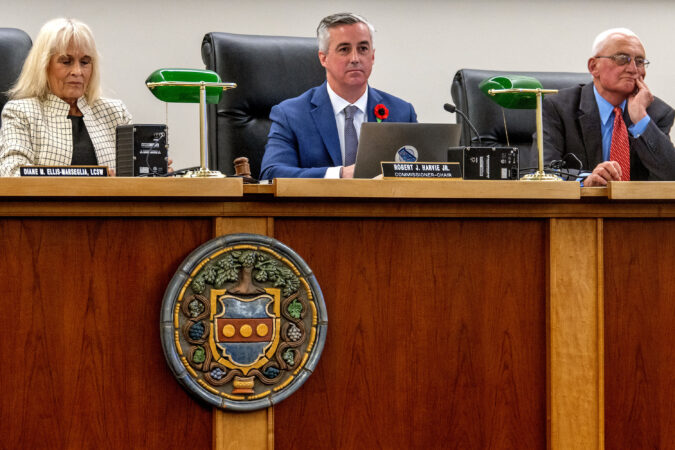
    “There’s no question” that a tax increase is a possibility, Democratic Commissioner Diane Ellis-Marseglia told The Inquirer on Wednesday, noting the budget proposal is currently a “work in progress.”

    “The biggest thing that I’m going to be looking at, besides cutting and seeing what we can do, is if we were to have to increase taxes, to make it, you know, pennies, as small as we can, so that it’s not impacting people,” said Ellis-Marseglia, the board’s vice chair.

    The county’s expenses are projected to increase by 3.2% — more than $16.2 million, according to the budget proposal released Wednesday.

    The increase is driven by requests for required upgrades and replacements of public safety resources, funding for capital improvement projects, and financial support for the county’s library system and Bucks County Community College, according to a county news release.

    Revenue is projected to drop by a little more than $531,000, or roughly 0.1%, according to the proposal.

    “Bucks County residents deserve stability, fiscal security and a high level of service from their County government,” said Jeannette Weaver, the county’s chief financial officer, in the news release. “Over the next few weeks, we will continue working with our many departments and row officers to present a budget that meets those demands.”

    Counties in Pennsylvania can increase their revenue only by raising property taxes. Bucks County was the only Philadelphia collar county that did not enact a tax increase last year. Tax hikes were not outlined in Wednesday’s preliminary budget, but a lack of funding from state budget woes could make the Bucks County commissioners reconsider.

    “It will likely mean that this county will have to consider a tax increase because we need to meet the needs of” residents, Bob Harvie, who chairs the Bucks County commissioners and is running for Congress, told The Inquirer earlier this month.

    Meanwhile, Montgomery County is weighing a proposed 4% property-tax increase and Delaware County could see a 19% increase in property taxes. Chester County did not propose a tax hike for 2026.

    Counties were formulating their budget proposals as Pennsylvania was grappling with its state budget impasse and the federal government underwent its longest shutdown in history.

    “We are facing the same thing everybody is facing,” Ellis-Marseglia said. “But inflation is everywhere. Energy costs are up. Everybody’s having a tough time. So, of course, so is county government, trying to make ends meet.”

    The Bucks County Board of Commissioners will hold a public hearing on Dec. 4 at 2 p.m. for residents to ask questions and provide comments. The commissioners will vote on the final budget on Dec. 17.

  • Josh Shapiro signs CROWN Act into law, prohibiting discrimination based on hair type, texture, or style

    Josh Shapiro signs CROWN Act into law, prohibiting discrimination based on hair type, texture, or style

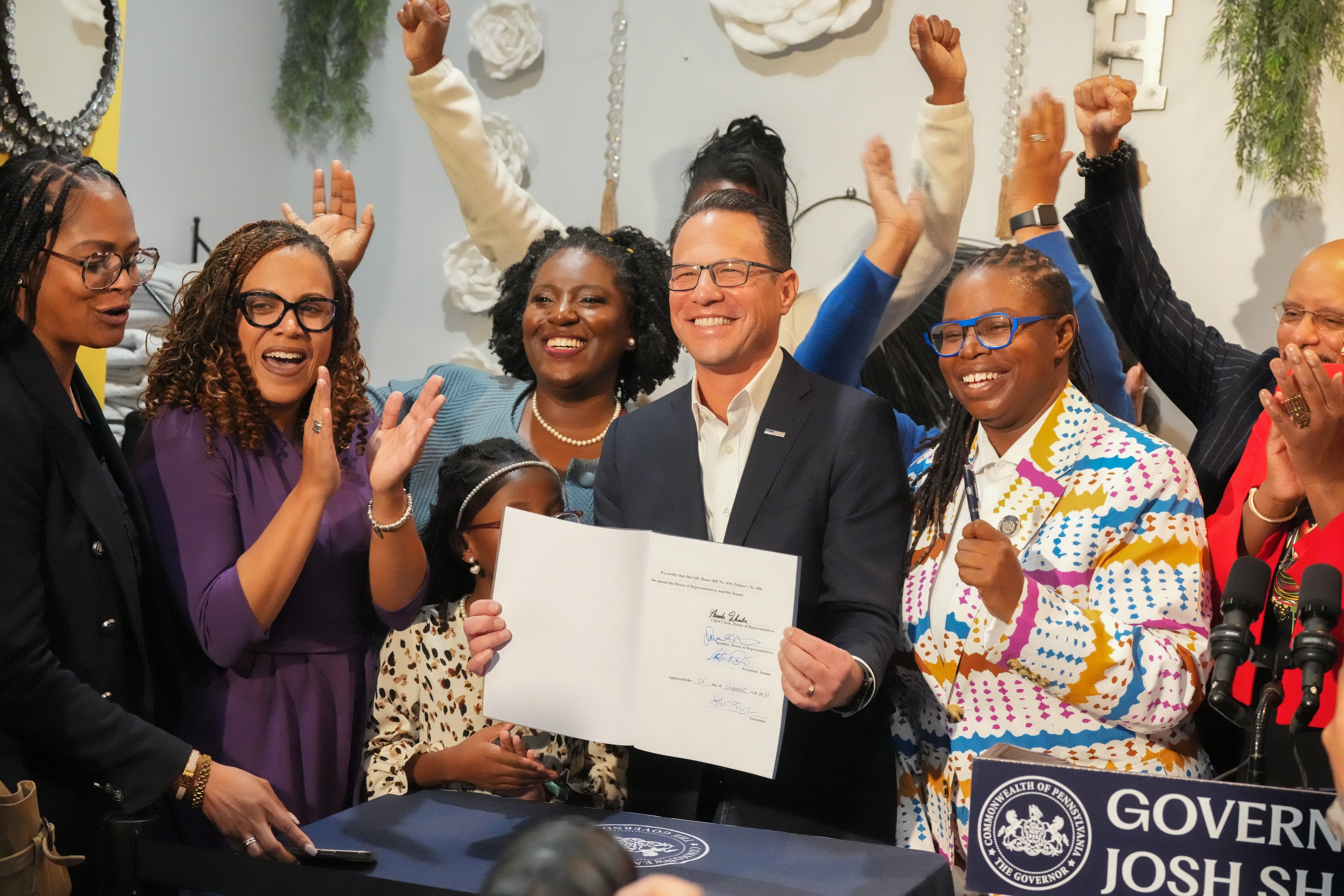
    Gov. Josh Shapiro signed the CROWN Act into law Tuesday, a landmark bill that prohibits discrimination based on a person’s hair type, texture, or style.

    The act, which stands for Create a Respectful and Open World for Natural Hair, applies to every Pennsylvanian, but is especially impactful to Black men and, particularly, women who have been discouraged from or marginalized by wearing natural or protective styles at school or in their places of work.

    At the Island Design Natural Hair Studio Tuesday, where Shapiro signed the bill into law, studio owner Lorraine Ruley said her clients have asked to change their hairstyles because of their workplace or upcoming job interviews. In one instance, Ruley said she had a client who asked to cut their locks because their workplace deemed it “unprofessional.”

    “The experience has been really heartbreaking, but I thank God for the opportunity to be here,” Ruley said. “And I just want to say natural hair rock.”

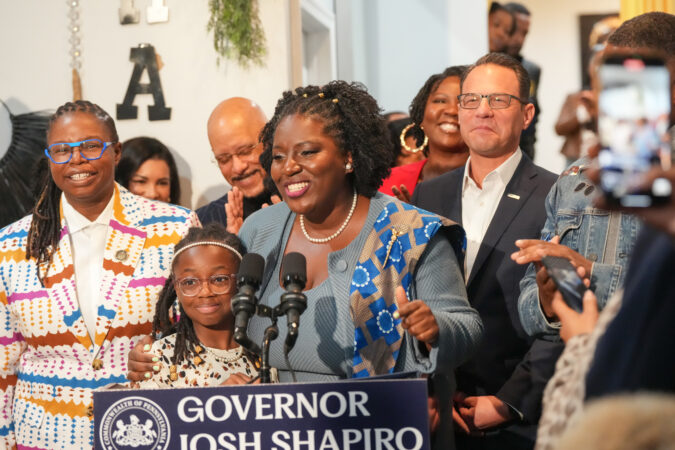
    At the West Philly salon, Shapiro was flanked by prime state sponsor of the CROWN Act, state Rep. La’Tasha D. Mayes (D., Allegheny), and prime cosponsor House Speaker Joanna McClinton (D., Phila), who were overjoyed that their years of fighting for these protections were finally paying off and supported in a bipartisan fashion. The Pennsylvania Senate passed the bill 44-3 last week after it was stuck in committee for years.

    Gov. Josh Shapiro (front center) holds up the signed CROWN Act during a news conference at Island Design Natural Hair Studio, in West Philadelphia Tuesday.

    “This is going to help people by making sure that wherever you work, or wherever you’re applying for a job, they can’t look at your hair and size you up, not based on your qualifications and all of the professional development you have and all of your education,” McClinton said. “They will not look at your hair and decide you can’t work here.”

    Shapiro said the bill is about delivering “real freedom” for Pennsylvanians to protect them against hair discrimination that may at times be subtle.

    Pennsylvania is the 28th state to pass anti-hair discrimination laws. New Jersey signed the CROWN Act into law in 2019. And both Philadelphia and Pittsburgh passed ordinances in 2020 to ban such discrimination, but this law will ensure protections for all Pennsylvanians. Incidents of discrimination can be reported to the Pennsylvania Human Relations Commission.

    For some Black women, the price of trying to conform to a prejudiced setting could come at a risk to their health. There have been some concerns in recent years that frequent use of chemical straighteners, which some women use to more permanently straighten their hair, could increase the risk of cancers of the reproductive system.

    “With an undeniable correlation between the use of chemical relaxers and the increased likelihood of developing uterine fibroids and cancer, the cost of conformity is simply too expensive,” said Adjoa B. Asamoah, a Washington, D.C.-based Temple graduate and architect of the CROWN Act, at the bill signing Tuesday.

    The CROWN Act amends the Human Relations Act to clarify the term race to include traits like hair texture and protective styles. The House bill passed in 2020 and again in 2023. It was later assigned to the Senate where it had been dormant.

    The state House passed the bill once again in March, and McClinton worked with Republican Senate president pro tempore Kim Ward to get the bill to the Senate.

    When asked about the prospects of a bill similar to the CROWN Act becoming federal law, especially under the Trump administration, which has railed against diversity, equity, and inclusion practices, Asamoah said she is hopeful that it will become the law of the land and she “will not rest” until it does. Asamoah added that the bill is crafted carefully to “withstand any judicial scrutiny.”

    Shapiro, for his part, said: “This is law. I don’t care what Donald Trump says. We make the laws here in the Commonwealth of Pennsylvania, and we will protect the Crown Act.” Those gathered clapped and interjected with affirmations.

    And it became clear at the beginning of Tuesday’s bill signing event that the salon likes it when Shapiro wades into national political discourse.

    “We talk about you being president,” Ruley said.

  • A year after Trump’s inroads with Latinos in Pennsylvania, a majority nationwide disapprove of his job performance and policies

    A year after Trump’s inroads with Latinos in Pennsylvania, a majority nationwide disapprove of his job performance and policies

    A majority of Latino adults disapprove of President Donald Trump’s job performance and his policies on immigration and the economy, according to a new Pew Research Center report that offers insight on the shifting opinions of a key voter demographic that Trump made inroads with in 2024.

    The study, published Monday, offers a glimpse into how a majority of Latino adults nationwide have a negative view of Trump’s performance and policies that were important to them during the 2024 election. However, a majority of Latinos who voted for Trump in 2024 remain supportive of the president.

    Pew Research Center based its analysis on two nationwide surveys conducted this fall. The center surveyed almost 5,000 Latino adults from Oct. 6 to Oct. 16 as part of its National Survey of Latinos. A prior survey of U.S. adults, including 629 Hispanic respondents, was conducted from Sept. 22 to 28.

    The report includes the opinions of Latino residents in the United States, including people both eligible and ineligible to vote. A strong majority of Latino voters who supported former Vice President Kamala Harris in 2024 are critical of Trump’s performance, according to the report.

    Among the highlights of the survey, 70% of Latino adults disapprove of Trump’s handling of the presidency, 65% disapprove of the Trump administration’s immigration policies, and 61% say the president’s economic initiatives “have made economic conditions worse,” according to the report.

    Additionally, approximately four in five Latinos say that Trump’s policies “harm Hispanics, a higher share than during his first term.”

    Latinos are among the fastest growing demographic groups in the United States and were a key voting bloc during the 2024 presidential election. Though Trump significantly improved his support among Latino voters in 2024, he did not win the demographic overall. In Pennsylvania, some Latino voters set aside his incendiary rhetoric about their community in favor of his promises to help the economy.

    (function() { var l = function() { new pym.Parent( ‘pew-latino__graphic’, ‘https://media.inquirer.com/storage/inquirer/ai2html/pew-latino/index.html’); }; if(typeof(pym) === ‘undefined’) { var h = document.getElementsByTagName(‘head’)[0], s = document.createElement(‘script’); s.type = ‘text/javascript’; s.src = ‘https://pym.nprapps.org/pym.v1.min.js’; s.onload = l; h.appendChild(s); } else { l(); } })();

    In Philadelphia, Trump won nearly 22% of the vote in majority Latino precincts, compared to more than 6% in 2016 and more than 15% in 2020.

    It remains to be seen how the pessimism with Trump reflected in the report will impact the 2026 midterms, said Luis Noé-Bustamante, a research associate at the Pew Research Center and an author of the report.

    But Latino voters swung back to Democrats during the elections earlier this month, including for Democratic Gov.-elect Mikie Sherrill, whose margins over Republican Jack Ciattarelli ranged from 57 to 71 percentage points in majority Latino municipalities, according to data from Nov. 5.

    Her campaign made efforts to reengage Black and Latino voters, including those who were turned off by Trump’s immigration and economic policies. Sherrill’s campaign was largely focused on affordability and combating Trump.

    “Similar to how the economy and affordability was a top issue among Latinos in the lead up to the 2024 election, it continues to be a priority among them and something in which they continue to have generally pessimistic views,” Noé-Bustamante said. “But that could change. Conditions on the ground could change and of course that could shift opinions of the president and his administration.”

    In the Pew Research Center survey, about two-thirds of Latinos say their situation in the United States is worse today than it was a year ago, the first time in nearly two decades of the Pew Research Center Hispanic surveys.

    Latinos have become increasingly concerned about their belonging in the United States, increasing from 48% in 2019 to 55% in 2025, according to the report. And when it comes to their personal finances, approximately one-in-three Latinos have struggled to pay for groceries, medical care, or their rent or mortgage in the last year. However, half believe their financial situation will improve over the next year and some have had beneficial financial experiences in the last year.

    On immigration, slightly more than half — 52% — of Latino adults say they worry constantly about the prospect that they, or someone they are close to, could be deported amid the Trump administration’s surge of immigration enforcement. About 71% say the administration is “doing too much” when it comes to deporting immigrants who have not legally entered the U.S, according to the report.

    U.S. Immigration and Customs Enforcement has aggressively targeted immigrants in the Philadelphia area, raiding communities and carrying out arrests, which members and allies of the Latino community continue to protest.

    Though a vast majority of Latinos have a critical perspective of Trump, Latinos who voted for Trump in 2024 have largely remained loyal to the president and his ideals, while Latino Republicans who did not vote for him have less favorable views of the president.

    As an example, Trump has an 81% job approval rating among Latinos who voted for him, though this has declined from 93% at the beginning of his term.

    Similarly, a smaller share of Latino Trump voters say their situation has worsened in the United States, that Trump’s policies are harmful to Hispanics, and that they’re worried about their belonging in the U.S.

    That loyalty to Trump has remained among some in places, like Hazleton, the only one of Pennsylvania’s three largest majority-Latino cities to vote for Trump in 2024. Hazleton residents told The Inquirer in August that there was some skepticism around Trump’s economic and immigration policies even as some continued to support him.

    Staff writer Julia Terruso contributed to this article.