Author: Trudy Rubin

  • Holiday lessons about ‘patriotic values’ from Folarin Balogun, Pope Leo XIV, and JD Vance

    Holiday lessons about ‘patriotic values’ from Folarin Balogun, Pope Leo XIV, and JD Vance

    I never thought I’d be writing a column that led off with an analysis of soccer.

    I’d planned to write about the lessons our nation’s 250th birthday party provided for Americans about the real meaning of “patriotic values.” But as it turns out, an examination of the scandal that ensued after President Donald Trump’s shameful World Cup intervention provides the perfect example of what those values are and what they are not.

    Before getting to the game, it’s important to revisit what Thomas Jefferson meant in 1776 when he wrote in the Declaration of Independence that the Creator had endowed all men equally with “the right to life, liberty and the pursuit of happiness.” Although honored in the breach when it came to slavery and women’s rights, these ideals have been the goal toward which America has gradually, but consistently, aspired — until now.

    Many probably assume that “pursuit of happiness” means material success or personal pleasure. But for the Founding Fathers, educated in the philosophy of ancient Greece and Rome, the phrase reflected the classical emphasis on civic duty and character development. In other words, the concept of patriotism was tied to the pursuit of an honorable and civic-minded life.

    Now back to soccer.

    Until the July Fourth weekend, the World Cup matches had provided a brilliant exhibition of the best of America, with cities across the land and fans in every stadium effusively welcoming teams of every race and color. In an incredible burst of U.S. soft power, the global image of Trump’s America as overtly racist, corrupt, and violent gave way before the warmth of ordinary Americans.

    But Trump could not refrain from popping that wonderful bubble. After America’s star striker, Folarin Balogun, received a red penalty card during the team’s 2-0 win over Bosnia and Herzegovina — which would force him to sit out a critical match against Belgium — POTUS phoned FIFA’s president, Gianni Infantino.

    A Trump sycophant who had previously awarded him FIFA’s first medal of peace, Infantino gave the president what he wanted: a reversal of a red card ban during a World Cup game (for the first time since 1962).

    In one move — based on his philosophy that only winners count — Trump cast a pall over the World Cup. He reversed all the goodwill the matches had generated for America at a time when his erratic behavior had sunk global attitudes toward the U.S. to astonishing new lows.

    Yes, Balogun’s violation was accidental, and the red card undeserved, but how many times have we all witnessed wrong calls by referees or umpires that drove us insane? However, under FIFA rules, there is no appeal after a game is over. Imagine if every world leader copied Trump’s utter disdain for rules in sports as well as domestic and international laws, a disdain which is already causing global chaos.

    On Monday, the U.S. team lost 4-1 to Belgium. But Trump’s interference made that defeat more painful by precipitating a wave of global scorn that poured down on an undeserving team. Nor has Trump had one word of praise for this terrific team after their loss.

    However, the lesson from Trump’s soccer debacle is not all negative. Americans should take pride in the achievements of the U.S. team and be inspired by the overall atmosphere of the games before Trump’s ugly intervention.

    And the country should unite in praise for the patriotic virtue displayed by Balogun.

    A day after receiving his red card, the star striker told an interviewer: “It’s been surreal, to be honest. But for me, I think it was just important to stay calm. I never want to react out of anger and out of emotion.

    “There’s still lots of people we’re inspiring, little kids, boys and girls who are watching, and we have to show them the correct way to handle things, even when you think it’s unjust.”

    What a hero! And what an example of patriotic virtue by someone who, under Trump’s attack on birthright citizenship, wouldn’t even qualify to play for Team USA, being born in Brooklyn to Nigerian parents visiting from London.

    Furthermore, the president’s negative example over the holiday — turning the Semiquincentennial into a celebration of himself, even as news broke of the incredible billions POTUS and his family have raked in off his presidency, and even as he upped his efforts to rig the midterm elections — should goad us all to revisit the meaning of “pursuit of happiness” in civic terms.

    Two critiques of Trump over the weekend — one indirect, one powerfully direct — can serve as further inspiration.

    The first comes from Pope Leo XIV, in his powerful livestreamed speech on July 3 at Philadelphia’s National Constitution Center while accepting the prestigious Liberty Medal. “The principles that inspired America’s founders,” he said, “brought them together in … a common dream. Unity lent strength to that dream … E pluribus unum — out of many, one. In order for a nation to flourish, it must be truly united, not by goals bound to momentary endeavors, but by ideals that do not fade with the passing of time.”

    These words need to be taken to heart, to my thinking, especially by progressive Democrats. Their anger is understandable, but in the final instance, they must work together with all those who appreciate the need to curb Trump’s desecration of the founders’ values. That includes all Democrats as well as independents and moderate Republicans who appreciate the need for checks and balances on presidential power.

    As Benjamin Franklin famously said at the signing of the declaration, “We must all hang together, or assuredly we will all hang separately.”

    And finally, some inspiring words from Vice President JD Vance, written in 2016 for the Atlantic before he turned against the values of the founders, and republished by the site on July 4.

    The title of the essay: “Opioid of the Masses.”

    “What Trump offers is an easy escape from the pain,” he wrote. “To every complex problem, he promises a simple solution. He never offers details for how these plans will work, because he can’t. Trump’s promises are the needle in America’s collective vein.

    “The great tragedy is that many of the problems Trump identifies are real … Yet so long as people rely on that quick high … the nation delays a necessary reckoning. There is no self-reflection in the midst of a false euphoria.

    “Trump is cultural heroin. He makes some feel better for a bit. But he cannot fix what ails them, and one day they’ll realize it. And then, perhaps the nation will trade the quick high of ‘Make America Great Again’ for real medicine.”

    In memory of the Founding Fathers, who pursued their principles when the struggle seemed impossible, let us hope such a realization starts this fall.
  • Trump’s Great American State Fair reveals how he has turned the Semiquincentennial into a celebration of himself

    Trump’s Great American State Fair reveals how he has turned the Semiquincentennial into a celebration of himself

    WASHINGTON — The Great American State Fair on the National Mall should have been the rousing centerpiece of America’s 250th birthday celebration. Instead, it is a perfect tribute to President Donald Trump.

    With its cheap, slapdash imagining of Trump’s America and its constant political homage to POTUS and MAGA, the exhibit has little to do with commemorating the Declaration of Independence, U.S. history, or American culture. The exhibits lack even the delicious, tacky, lively atmosphere of state fairs (the few visible animals I saw were all fake).

    With few exceptions, it is a vapid, empty insult to the best aspects of this nation.

    When I remember the Semiquincentennial, I will be thinking more about scenes of Brazilian soccer fans visiting Philadelphia’s Independence Hall and warm interactions between locals across the country and visiting World Cup tourists. These personal exchanges may offset some of the hostility so many countries feel about Trump’s foreign policy.

    And yet, I’m glad I visited the fair on Monday because it reminds me of how different the president’s vision is from the real America that is ignored in this tribute to Trump.

    A true celebration could have displayed the best of this country, what the United States has gotten right, while providing the moment for serious reflection on what has gone wrong — and what needs desperately to be remedied at home and in our foreign relations. No matter how uphill that struggle seems under Trump.

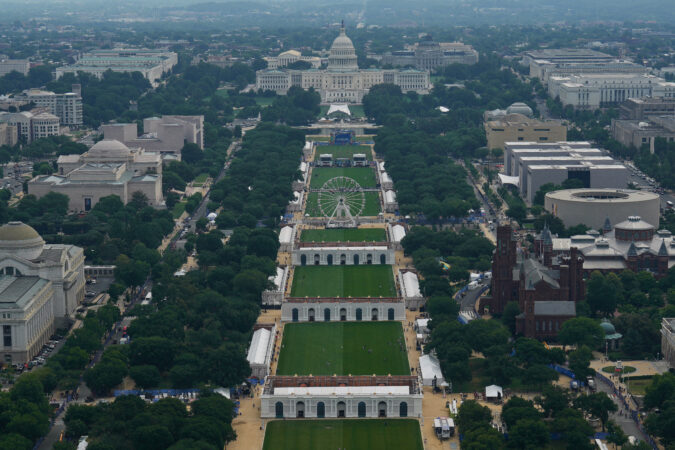
    Instead, the Great American State Fair mainly consists of several long, white, one-story buildings fronted by fake Greek columns and punctuated by closed doors. The structures extend on either side of large expanses of mall greenery which were almost empty, as the 88-degree heat sent the scant numbers of visitors inside in in search of air-conditioning.

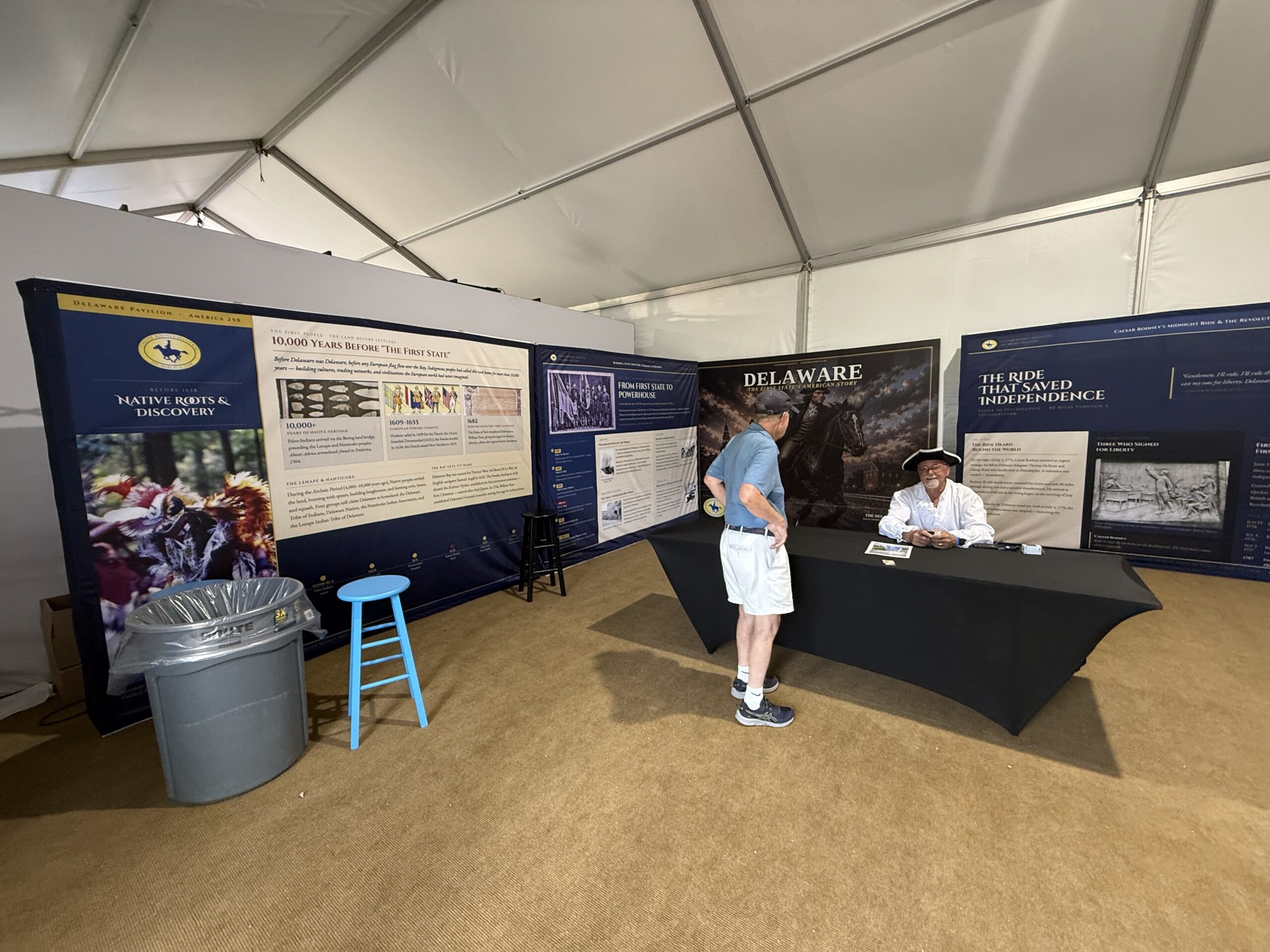
    The state of Delaware’s pavilion at the Great American State Fair Thursday in Washington, D.C.

    Behind those doors are small exhibits by each state (11 of which, including Pennsylvania, opted out due to the politicization of the fair or cost concerns), or by U.S. government departments (including “WAR”) and agencies and religious groups. Most state exhibits are tourism displays with posters, literature, or videos, with a few exceptions like South Dakota, whose state historic commission mounted excellent posters about the vivid characters, including women and Sioux leaders, who settled its land.

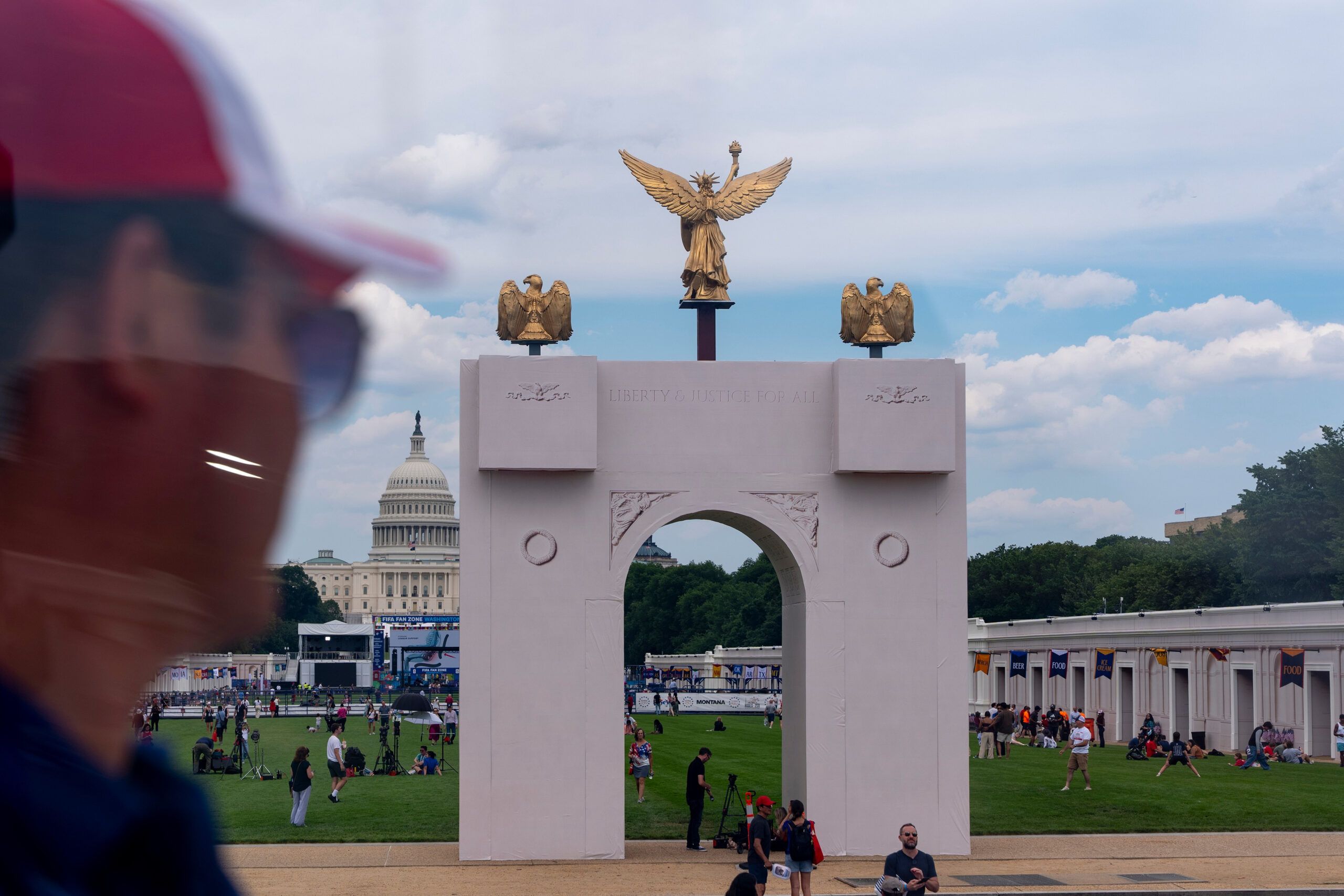
    Towering over the few attendees out in the sun is a 110-foot Ferris wheel (which has been mostly stationary because of electrical problems) and a small mock-up of Trump’s planned and controversial Arch of Triumph topped by gold angels.

    The image portrayed is of a country isolated from its own people and the world.

    However, visitors can collect Trump literature from AMAC (the Association of Mature American Citizens), listen to a Bible lecture, and hear how “America shall be saved” from a group called “The Great Awakening.” They can bid for a $700 “marriage getaway,” sign up their children for a Trump savings account, or fill out a recruitment form for the U.S. military or U.S. Secret Service. They can also view a copy of the limited edition “Patriot Passport” with Trump’s photo on it inside a glass case at the U.S. Department of State exhibit and get a free paper copy.

    Trump, Trump, and more Trump. The Washington celebration of our 250th birthday wasn’t supposed to look this way.

    The U.S. Capitol and a mock-up of President Donald Trump’s proposed triumphal arch are seen from the ferris wheel at the Great American State Fair on the National Mall.

    Congress started planning for this anniversary in 2016, when it created America250, a bipartisan commission that was supposed to program nonpartisan events for all Americans. The idea was to unify the country in celebration.

    Its original plans were focused on a parade through the capital with “diverse floats” and marching bands, along with an energetic festival of the nation’s cultural diversity on the mall organized by the Smithsonian.

    Anyone who has ever attended the annual Smithsonian Folklife Festival on the mall can imagine how wonderful this could have been. On one occasion when I was there, one side of the mall was celebrating the culture of India and the other Louisiana and Cajun culture, with bands of old-timers and their acolytes playing washboards, banjos, and accordions, while tents dished out Cajun food.

    This year, one side of the mall might have hosted cultures of the immigrants who have built America, and the other could have presented tributes to the Declaration of Independence, its impact around the world, and how its flaws regarding slavery and women were remediated by law.

    Instead, Trump squeezed out America250 by virtually replacing it with Freedom 250, which is partly funded with taxpayer money and partly by donors. The New York Times has detailed how donors were offered access to Trump for million-dollar contributions.

    People dance with a U.S. Army robotic dog at the Great American State Fair on the National Mall, Sunday.

    Instead of funding projects connected to key moments in the fight for American independence, Trump’s group focused on his MAGA agenda, his love for spectacle, and his person. Thus, his vision of America’s 250th birthday celebration has centered on his arch, on a $60 million UFC match on the White House lawn, and on an IndyCar race through the capital scheduled for August. As for the fair on the mall, it has been focused on an opening (political) speech by Trump (after most planned musical acts withdrew due to the fair’s partisan nature), and another rally on July Fourth.

    Unity out. Division in. Who cares about celebrating our founding document and the aspirational values on which the country has been built, when Trump can have circuses that celebrate only him?

    And that is why I point to the World Cup games as a sign that Americans still know how to display their best qualities as a people. What particularly moved me was watching the huge kilted Scottish contingent break through sometimes insular Bostonians’ reserve when it belted out John Denver’s “Take Me Home, Country Roads” at Fenway Park.

    Americans are so much better than this sterile exhibition on the mall. In the warmth displayed across the country to World Cup visitors they have shown a welcoming nature still unsullied by Trump’s efforts to make people hate the other.

    Back in the states and cities, many celebrations of July Fourth will probably still capture that warmth. It still exists. In Philadelphia, history museums are doing a terrific job of commemorating the declaration.

    But you can certainly skip visiting Trump’s Great American State Fair, which reveals his total disdain for what this holiday really means.

  • I’ve seen struggles for democracy around the world. It’s painful to see that battle come home.

    I’ve seen struggles for democracy around the world. It’s painful to see that battle come home.

    As we approach the 250th anniversary of America’s founding, I can’t help recalling my 1999 visit to the Central Asian republic of Turkmenistan, whose dictator had a fetish for white marble architecture decorated with gold.

    As I drove around the dusty capital of Ashgabat, it was impossible to escape Saparmurad Niyazov’s face.

    It was emblazoned on banners hanging from government buildings and appeared on every denomination of paper currency. Statues of the dictator (I learned there were more than 2,200 of them in a country of 4.2 million people) loomed all around the city. The oil fields of this desert backwater funded Niyazov’s whims. Much of the country’s budget went into his private slush fund — all while he slashed resources for healthcare and renamed the months of January and April after himself and his mother.

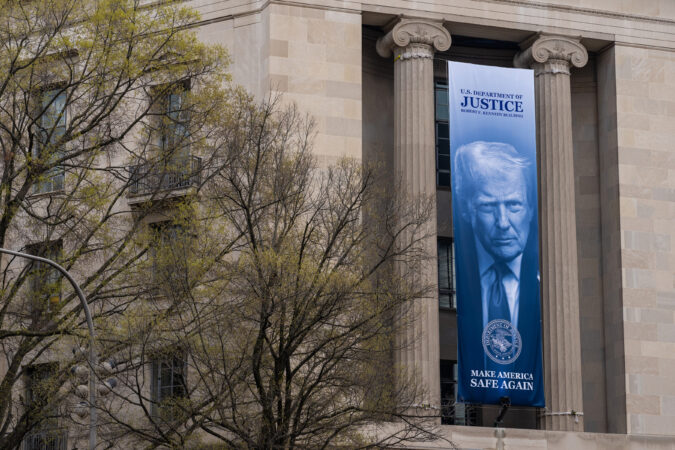
    What sticks out most vividly among my memories, as President Donald Trump turns our nation’s Semiquincentennial into a celebration of himself — festooning government buildings with huge banners of his face and holding a political rally on the mall Wednesday to kick off July Fourth events — is Niyazov’s arch.

    The three-legged arch, sitting in the center of Ashgabat, supported an observation tower that, at 226 feet, soared higher than the nearby presidential palace. The structure was topped by a 36-foot gold plated statue of the Asian potentate that rotated constantly to face the sun. Perhaps if the planned 250-foot high “Arch de Trump” ever gets built, and blocks the view of Arlington National Cemetery, the face on the gold winged figure atop the memorial will look familiar.

    It seems all dictators and wannabes have the same instincts: to build grandiose monuments of marble and gold, the bigger the better, in order to impress their subjects with their magnificence. Back in Ashgabat all that seemed bizarrely amusing. Whoever thought it could happen here?

    Instead of honoring the country’s founding values and documents in this year’s celebrations, Trump is performing like a wannabe Niyazov of Turkmenistan.

    The main point of the Declaration of Independence was that governments “derive their just powers from the consent of the governed,” i.e., the people. The 13 colonies were quitting the British Empire because they refused to submit to a monarch who tried to rule by decree, rather than respect the elected representatives from the colonies.

    Trump, who disdains any restraints on his powers and wants to rig election rules so they guarantee GOP victories, is turning the meaning of the Fourth of July on its head. I find it personally painful how this distortion has changed attitudes toward the United States all around the world.

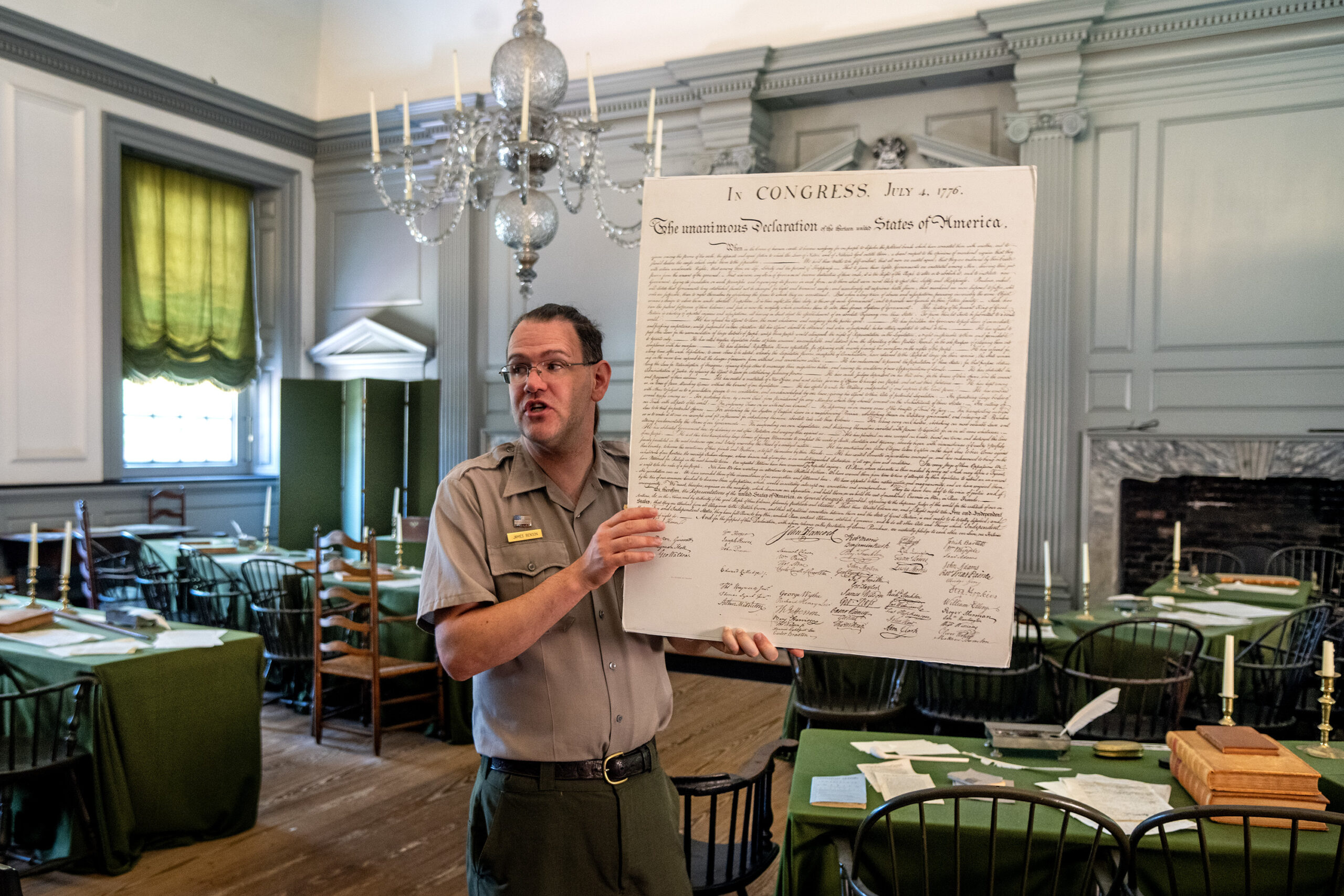
    National Park Service ranger James Benson uses an enlarged copy of the Declaration of Independence while talking to visitors in the Assembly Room — where both the declaration and U.S. Constitution were signed — on the first floor of Independence Hall in Independence National Historical Park in August 2025.

    For decades I’ve reported on the struggles of other countries to achieve the kind of free elections that most Americans have taken for granted for decades. I had the privilege of bearing witness to struggles for some form of democracy in the Soviet Union and China, in new post-Soviet nations, during the 1980s upheavals in the Philippines and South Korea, during the Arab Spring revolts, in post-Saddam Hussein Iraq, and during the post-Taliban interval in Afghanistan.

    Those who struggled for the right to choose their leaders often paid a terrible price. More often than not, their struggles failed or have been reversed after brief periods of freedom.

    Throughout those struggles, the U.S. election system was a lodestar – even though reformers abroad may have opposed specific U.S. foreign policies or the U.S. exercise of overweening power. That admiration was especially evident in the ’80s and ’90s inside communist countries that were trying to break away from their past.

    Russians listened to Voice of America (now nearly shuttered by Trump) and would eagerly query me about U.S. politics on my yearly visits to Moscow during those decades.

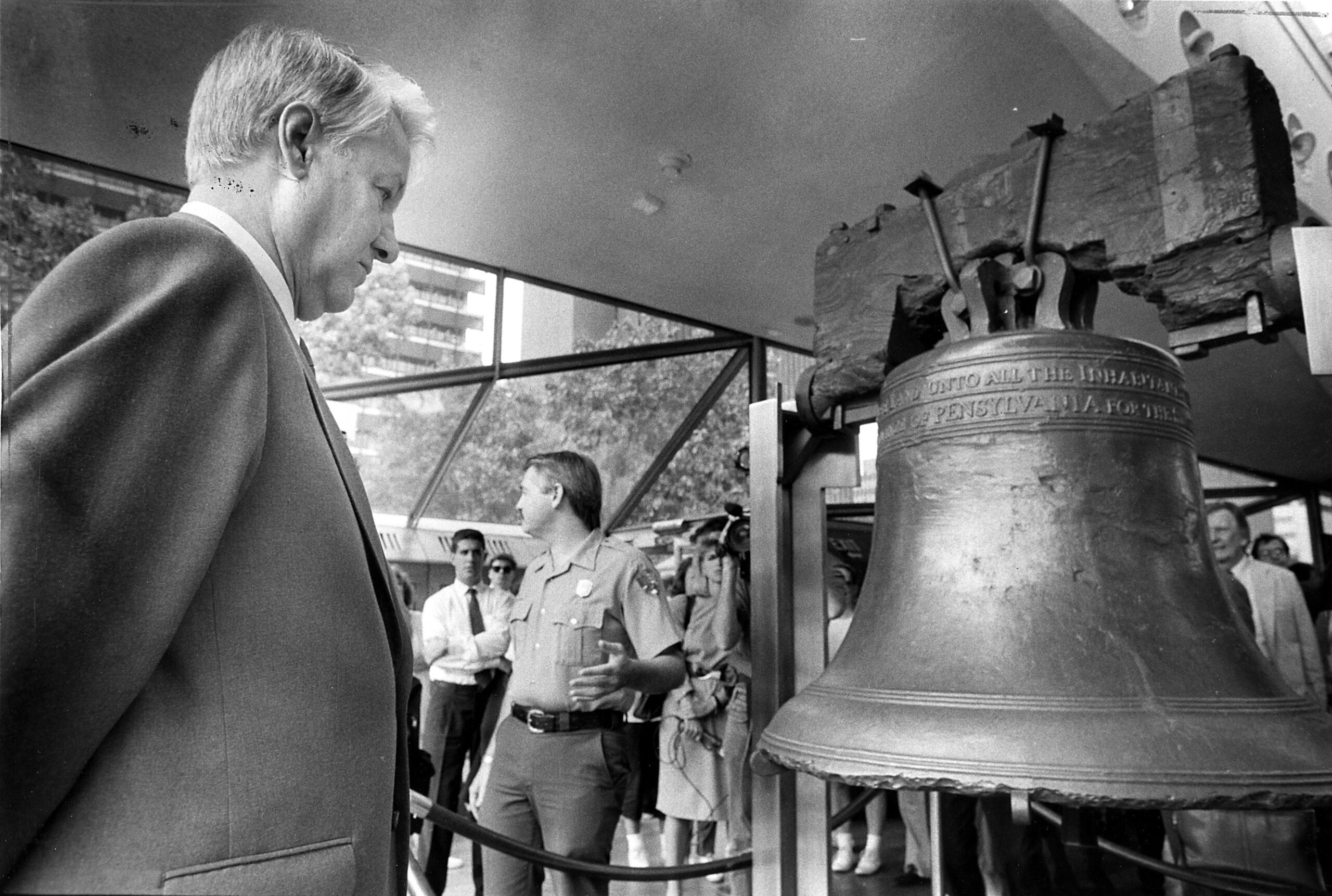
    In 1989, I shadowed then-President of the Soviet Republic of Russia Boris Yeltsin for a day when he visited the room where the Declaration of Independence was adopted inside Independence Hall. He asked the National Park ranger how the American colonies apportioned power between states and central government after independence. I realized only later that he was preparing to take Russia out of the Soviet Union and wanted tips on how the Founding Fathers managed their exit from the British Empire.

    Boris Yeltsin views the Liberty Bell during a visit to Philadelphia in Sept. 13, 1989. Seeking to view U.S. democracy up close, he traveled the country, including a visit to the White House.

    In May 1989, Chinese students erected a 33-foot-tall Goddess of Democracy statue in Tiananmen Square inspired by the Statue of Liberty. I was in Poland at the time, observing that country’s first free parliamentary elections on June 5 that were won by Lech Walesa’s Solidarity movement. But on June 4, I watched with horror on television, along with Polish colleagues, as the Chinese army sent tanks into Tiananmen Square.

    Yet, despite hundreds to thousands of deaths (the exact figure is still unknown), Chinese democrats didn’t give up. In the 1990s, I reported on their efforts to press the central government to permit village, and then town, elections. I interviewed law students at top universities who traveled to small villages to instruct peasants on their rights according to Chinese laws that were ignored by officials.

    This progress has been totally reversed by China’s hard-line dictator Xi Jinping, who also crushed democratic institutions in once autonomous Hong Kong. But as recently as 2023, it was inspiring to hear Hong Kong high schoolers, who were protesting the ongoing crackdown by Beijing, recite from memory their rights under law as they had learned in civics classes. Since then, such classes have been banned, and students must memorize rote lessons on “patriotic education” or “Xi Jinping thought.”

    It saddens me now to hear self-exiled Russian liberals or Hong Kong democrats or visiting Chinese who once worked for some form of democracy at home, express shock at Trump’s attacks on America’s democratic institutions and efforts to rig elections. Repeatedly, I get the same questions expressed with genuine bewilderment: Why isn’t it possible to stop him from doing this? How is it possible that this can happen in the United States?

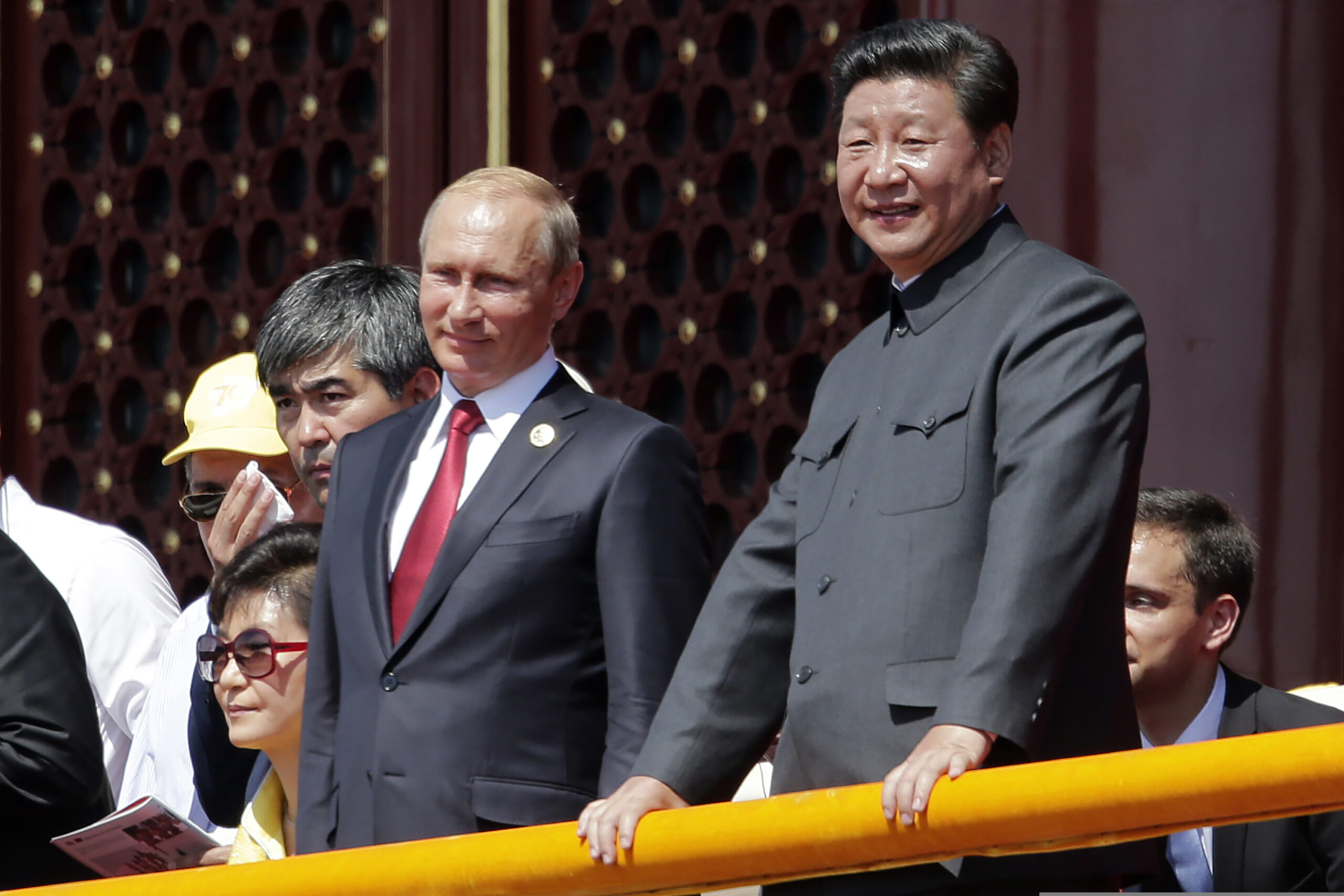
    In this Sept. 3, 2015, file photo, Chinese President Xi Jinping (right) and Russian President Vladimir Putin observe a parade commemorating the 70th anniversary of Japan’s World War II defeat, from Tiananmen Gate in Beijing.

    Ukrainians, who have fought bravely for more than four years to save their independence from Vladimir Putin’s imperialism, ask me how a U.S. president can back a dictator who hates the West, and wants to restore the Soviet empire. As Independence Day approaches, POTUS continues to ignore the parallel between Ukraine’s courageous struggle for freedom and ours long ago against the imperial British.

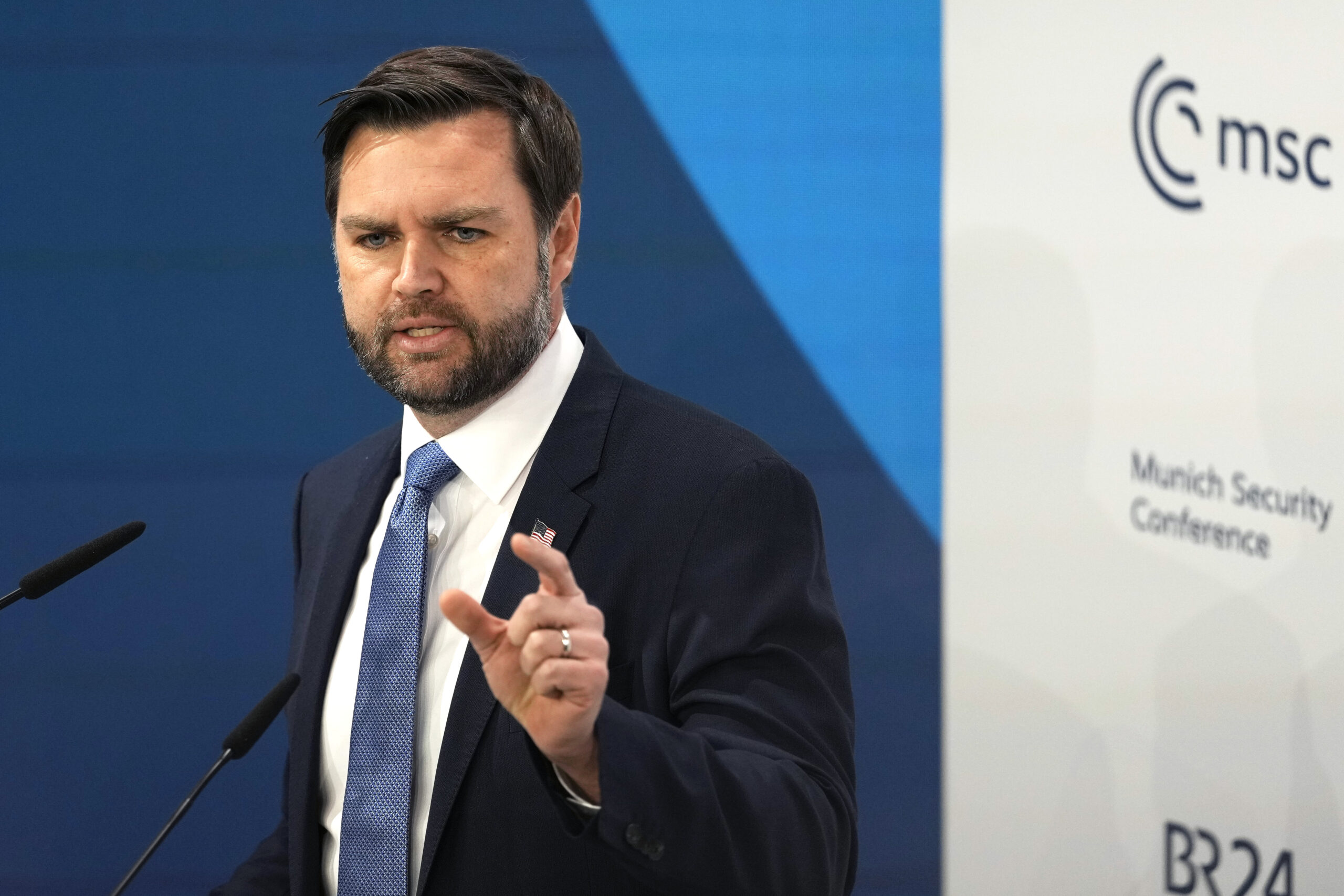
    Europeans have given up on Trump, and I understand why, having watched Vice President JD Vance at the 2025 Munich Security Conference praise far right, neo-Nazi parties and demean Europe’s democracies. Trump, Elon Musk, and other MAGA acolytes continue to support extremist Europeans whose values would make the Founding Fathers gag.

    So it isn’t surprising that a new Pew Research Center poll reveals a steep decline in the popularity of the United States worldwide, especially over the past year. Only a median of 37% of adults polled across 36 countries hold a favorable opinion of our nation. Only 23% express confidence in Trump’s leadership of world affairs, ranking him behind Putin and Xi.

    But what is even more striking is that only 39% believe the U.S. government respects the personal freedoms of its own citizens. This is how the world now views a country that was once seen as a beacon of democracy.

    During July Fourth celebrations across the country, in places far away from Trump’s pollution of the capital, I hope Americans will reflect on what the Founding Fathers bequeathed to us 250 years ago. For inspiration, reread the Declaration of Independence and brainstorm with friends, colleagues, and family on how to prevent the president from desecrating its principles at the polls come November.

  • Failure of Iran war reveals Trump’s inability to deal with America’s security needs

    Failure of Iran war reveals Trump’s inability to deal with America’s security needs

    As we approach America’s 250th anniversary, the political party that brags of its patriotism is actively undercutting national security.

    Although many GOP House members and senators are versed in foreign affairs and grasp the irresponsibility of their actions, they are too cowardly to confront the biggest security threat America has faced in decades: President Donald J. Trump.

    As his Iran debacle laid bare, Trump’s ego-driven foreign policy is making America more vulnerable to our enemies — both at home and overseas. Yet, the aging POTUS seems ever more determined to ignore real security dangers. His main focus is on seeking quick military hits he thinks will win him personal acclaim.

    His failed Iran war perfectly displays his misuse of the U.S. military for unnecessary battles that decrease capacity for any future conflicts with Russia and China. And Republican legislators — who claim a monopoly on love of country — don’t have the guts to call him out.

    Why? Because they value their chairs more than keeping Americans safe.

    The Iran war, and the memorandum of understanding that has temporarily halted it, are a perfect example of Trump’s failure to protect the nation.

    In February 2026, Iran presented no threat to the United States. Tehran’s enriched uranium was deeply buried under rubble after the U.S. and Israel waged a 12-day war on Iran in June 2025.

    But, driven by ego, POTUS let Israel’s Benjamin Netanyahu persuade him that a quick bombing run could achieve regime change in Tehran and remake the entire Middle East.

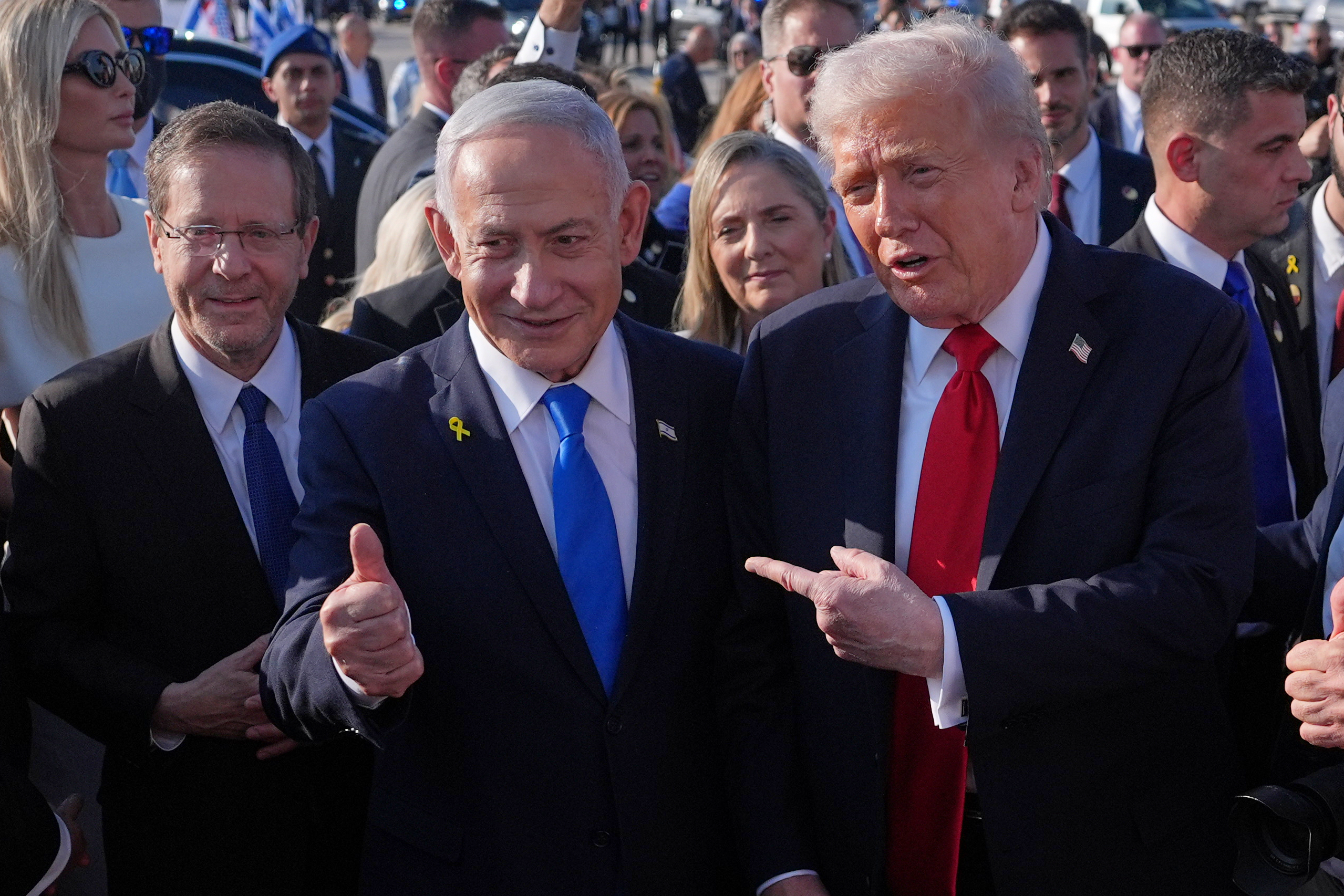
    President Donald Trump poses for a photo in October with Israel’s Prime Minister Benjamin Netanyahu before he boards Air Force One at Ben Gurion International Airport, near Tel Aviv, as Israel’s President Isaac Herzog watches at left.

    Don’t blame Bibi, because only a president who knows nothing about Iran and obsessively seeks a Nobel Peace Prize could have believed such nonsense. POTUS ignored warnings from U.S. military brass that Iran would respond by blocking the Strait of Hormuz, because he insists he knows best.

    After four months of war, what has Trump’s ego wrought?

    In desperation to get Iran to reopen the strait and push gas prices down before the midterms, Trump has promised Tehran huge and immediate economic benefits. Meantime, nuclear talks are pushed back to 60 days of negotiations, which will probably be extended indefinitely.

    The one-and-a-half page memo contained only one paragraph on nuclear talks, but POTUS has already revealed a host of U.S. concessions in interviews. They guarantee that if a nuclear deal is ever reached, which is far from certain, it will be similar or worse than President Barack Obama’s JCPOA nuclear accord, from which he withdrew in 2018.

    Rather than ending Iran’s nuclear program altogether, as Trump promised, any deal will permit Tehran to enrich uranium to low levels, as did the JCPOA. It will also allow Iran to downgrade its highly enriched uranium inside their country, rather than send 97% out of the country as required by Obama’s deal.

    In fact, Trump now debunks the importance of rushing to extract Iran’s enriched uranium from the rubble, because Tehran can’t access it. “Nobody’s touching it,” he said. “We have Space Force cameras [monitoring the sites]. It’s actually not valuable. …”

    So tell me again, Mr. President, why you started this war?

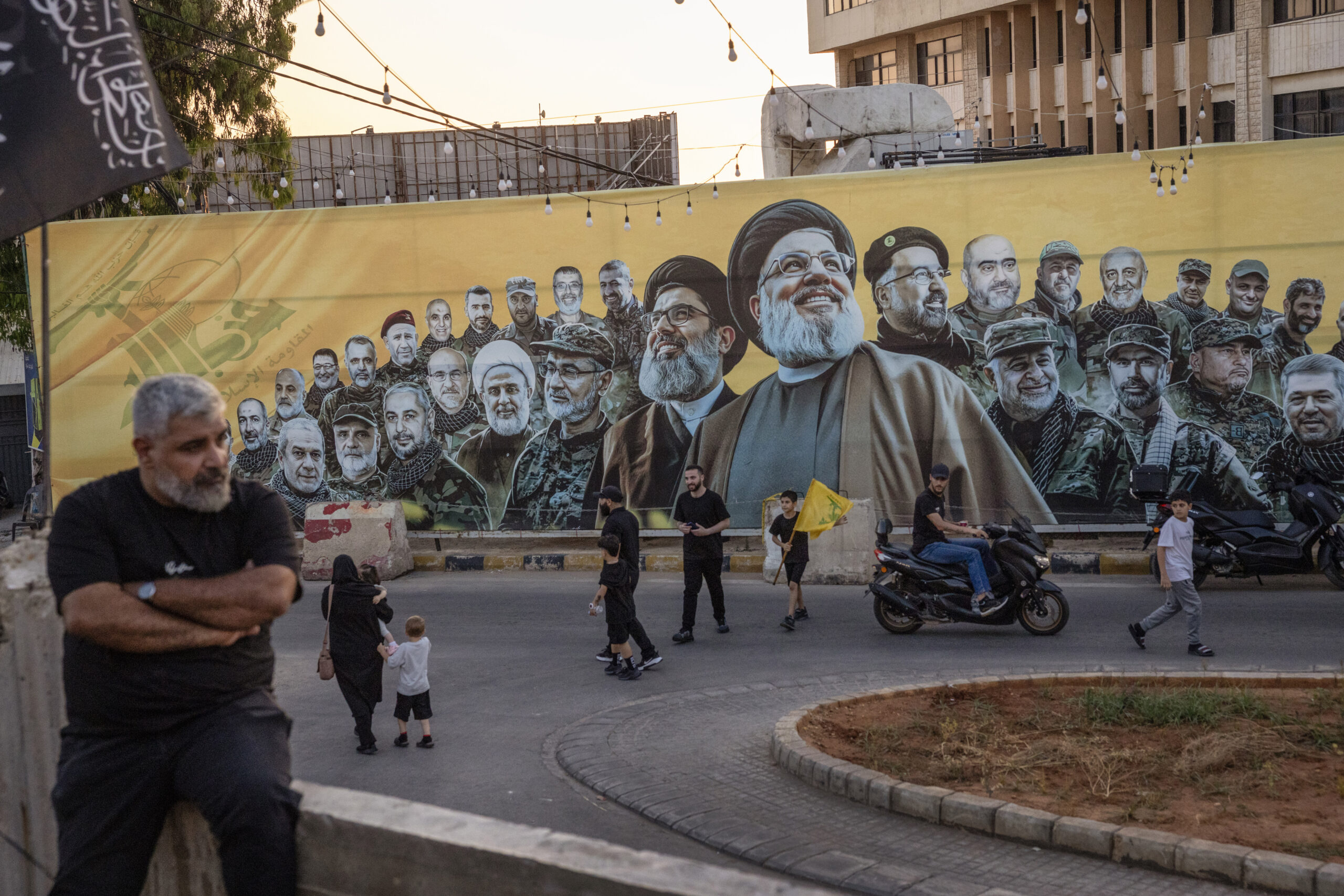
    Supporters pass by a billboard showing leaders of Hezbollah, outside the grave of the late Hezbollah leader Hassan Nasrallah, as they mark the first day of Ashoura in Beirut, Lebanon, on Wednesday. The preliminary agreement between Iran and the United States leaves unresolved the two issues at the heart of the conflict: Israel’s occupation and Hezbollah’s arsenal.

    The list of Trump concessions to Iran goes on, each one explained more bizarrely by the president. Trump casually declared he would allow Iran to keep its ballistic missiles, which were fired at Israel and U.S. bases — a total reversal of his pledge before the war started. “I’m saying that ⁠if other countries have ​them, it’s a little bit ​unfair for them not to have some,” Trump told reporters in Paris the other day. Say what?

    What is particularly dangerous — and requires Congress to confront the president — is that this unnecessary war has degraded the U.S. military, and revealed its weaknesses to our adversaries.

    The war has also exposed the erratic style of the U.S. commander in chief, who treats the U.S. military like his personal plaything. Both he and his showman “secretary of war,” Pete Hegseth, have proved they lack the judgment and temperament to command this force.

    By keeping such a huge percentage of our air force and naval assets in the Mideast for months, Trump has worn out the readiness of our military. This war also used up a staggering amount of U.S. long- and medium-range missiles that are badly needed to stabilize the Indo-Pacific against Chinese aggression, and by NATO allies to ward off Russian aggression.

    Yet, instead of selling such missiles to Taiwan, or letting Europeans buy them to protect Ukraine from massive Russian bombing, Trump used them up against Iran.

    Moreover, the Iran war revealed the continued Pentagon failure to prepare for the new drone and artificial intelligence-driven 21st century form of warfare. The U.S. military used billions worth of $2 million missiles to intercept $20,000 Iranian drones because the Pentagon has been unable to speed up drone production and refuses proffered help from Ukraine.

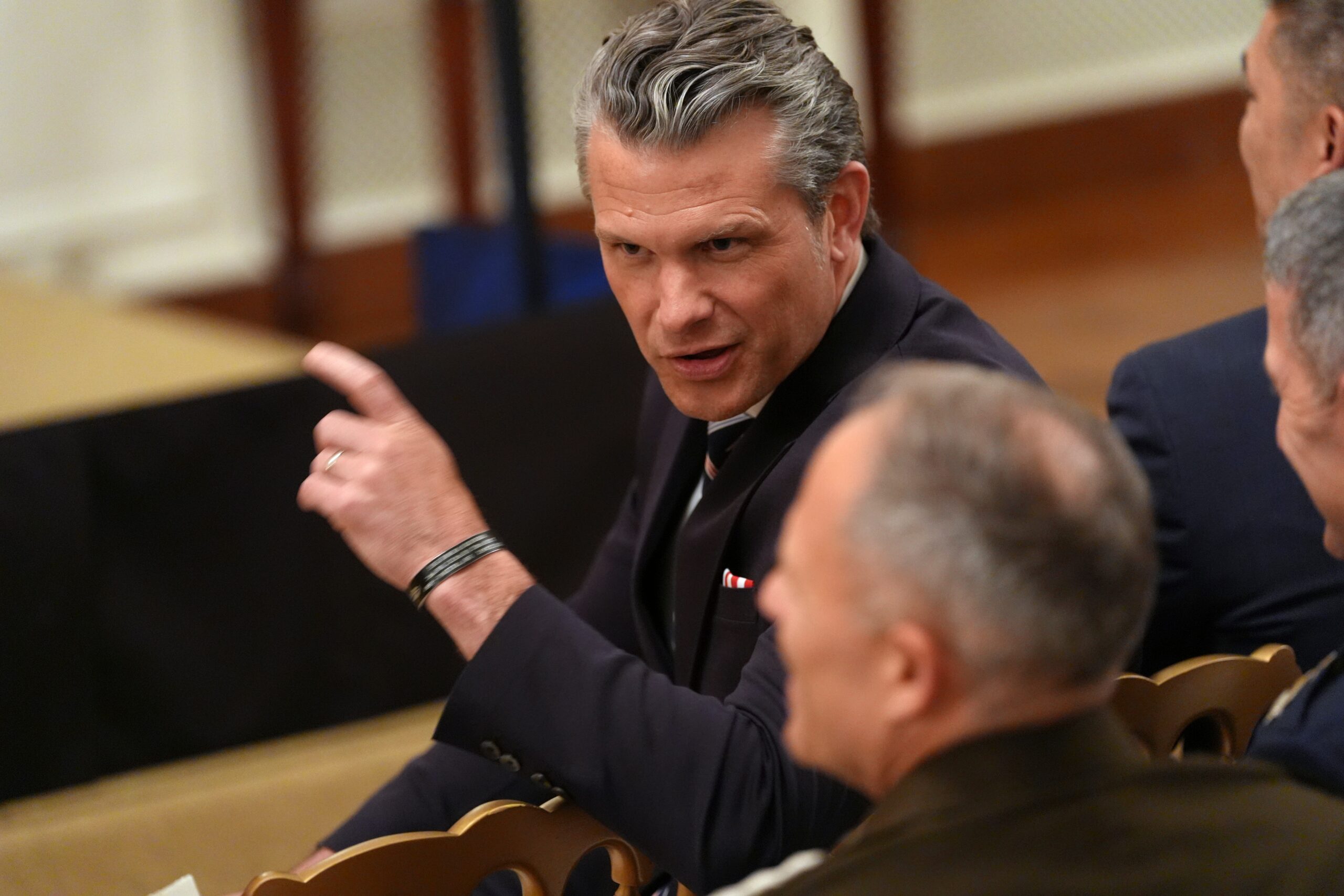
    Defense Secretary Pete Hegseth attends a Medal of Honor ceremony in the East Room of the White House, Thursday.

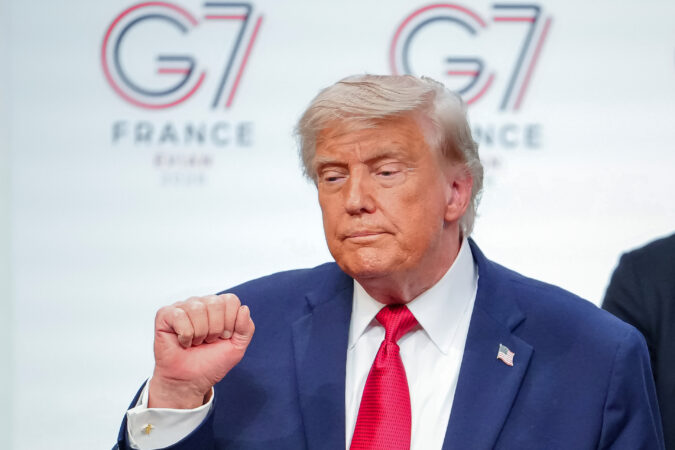
    In fact, at the G7 summit in France on Tuesday, Trump made a point of how unimportant the Ukraine conflict was to America. “Look, we have nothing to do with it,” he said of that war. “It has no impact on us, other than we sell weapons” to Ukraine, he added. “We’re thousands of miles away.”

    That kind of dumb remark, in a world where satellites and electronic warfare make distance irrelevant, is proof positive of Trump’s total misunderstanding of geopolitics. The U.S. abandonment of Kyiv and coddling of Russia enhances China’s belief that America’s power is declining and the global balance of power is shifting.

    Indeed, the most vivid illustration of the president’s blindness to the fallout from his Iran fiasco, came when he thanked Vladimir Putin and Xi Jinping for their help with ending the Iran war. What head spinning brain-blank could prompt gratitude for Putin giving intelligence information to Tehran to target U.S. bases? Or to Xi for providing all the parts for Iranian drones that killed Americans in Kuwait?

    Which side is Trump on?

    POTUS’s conviction that his personal relationships with Putin and Xi will prevent them from doing America harm is endangers America’s safety. He won’t critique them for aiding Iran, because he believes both men are his comrades. His easily manipulated ego plays into both dictators’ hands.

    This war has provided proof that America’s adversaries need only wait and watch as the U.S. president undermines the U.S. military’s fighting capacity by wasting it on delusionary wars.

    Instead, Trump and Defense Secretary Hegseth make a point of slamming our allies, whose help we need to deter to Russian and Chinese imperialism.

    Even as POTUS was signing the surrender document with Iran, Hegseth announced the U.S. will pull back troops from Europe and weapons support for NATO. Thus, Trump openly advances Putin’s dreams of splitting the transatlantic alliance, at a time when Russia is openly hostile to the West.

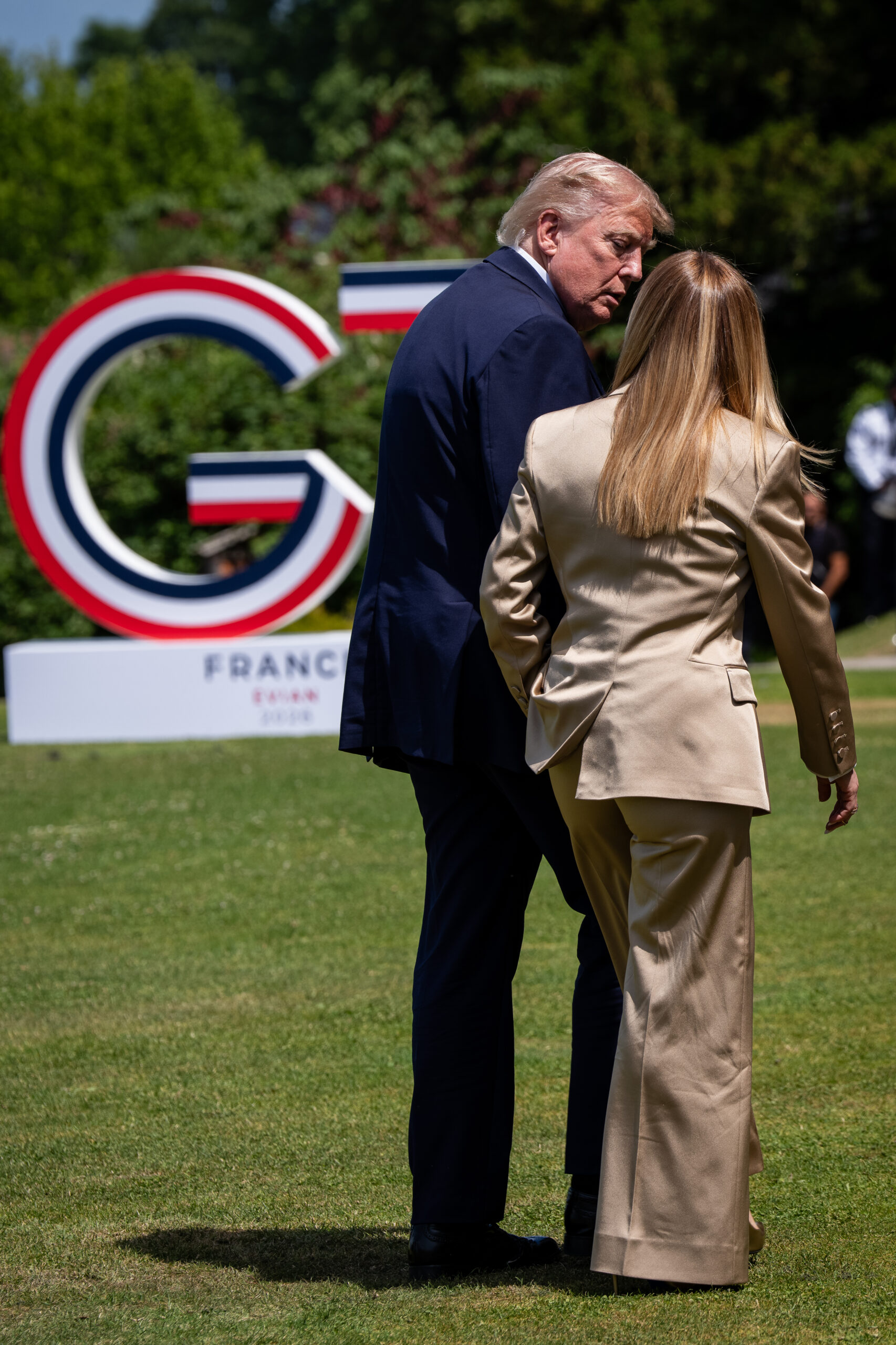
    President Donald Trump with Prime Minister Giorgia Meloni of Italy after a Group of 7 photo in Evian-les-Bains, France, Tuesday.

    POTUS even infuriated his closest European ally, Italian Prime Minister Giorgia Meloni, who accused him of “fabricating” claims that she “begged him” for a joint photo.

    “I can only say it is disappointing that he does not show the same determination with the enemies of the ⁠West and of the United States, whose leaders he instead treats with far ​greater indulgence [than his allies],” Meloni stated angrily.

    There is a name for a leader who coddles the enemy while alienating friendly democracies that share our values. Such treachery, whether carried out wittingly or blindly, betrays our nation.

    Trump’s indifference to U.S. security isn’t just evident in his misadventures abroad.

    At a time when foreign terror threats to the nation are high, the president just refused to reauthorize critical U.S. foreign spy powers, unless they were tied to a voter suppression bill.

    The same week, he used political trickery to officially appoint a fervently loyal ally, Bill Pulte, as temporary director of national intelligence, over bipartisan Senate objections. Pulte has zero intel experience, but is tasked by POTUS to pursue his political enemies and undermine the midterms.

    Never mind the serious risk of terror attacks during FIFA matches or sesquicentennial celebrations — or during fall balloting. GOP senators bowed to their boss man rather than make a big fuss.

    So as July Fourth approaches and Trump busies himself with architectural destruction in the nation’s capital, his GOP enablers in Congress are helping a doddering egomaniac undermine the. security of the citizens he supposedly serves. These Republicans know what POTUS is doing, yet they refuse to stand up and make their voices heard.

    On America’s 250th, GOP pols are aiding Trump in betraying constitution and country. How they can look in the mirror and call themselves patriots mystifies me.

  • Beware the similarities between the wars in Iraq and Trump’s Iran war

    Beware the similarities between the wars in Iraq and Trump’s Iran war

    President Donald Trump and his administration insist their war of choice in Iran bears zero similarity to the bitter Iraq War the U.S. plunged into 23 years ago.

    I disagree.

    Both wars were based on lies about imminent threats from nuclear weapons to justify wars of choice.

    In 2003, the intelligence on Saddam Hussein’s nuclear program was cherry-picked and false. In 2026, Trump told Americans in June that Iran’s nuclear program had been “obliterated” by U.S. and Israeli airstrikes. There is no evidence Tehran will be able to reconstitute the program in the foreseeable, or even the long term — so there was no “imminent threat” from Iran.

    Today, as in 2003, the U.S. president has trouble clarifying the strategic goals of this war, or any plans for “the day after” the war stops. Trump’s aides say the aim is to destroy Iran’s military capacity with airstrikes, without sending in ground troops or conducting “regime change.”

    Yet, POTUS is nurturing fantasies of regime change on the cheap. One day, he urges Iranian civilians to rise up and overthrow the regime, although they are likely to get slaughtered. The next, he demands the right to personally choose Iran’s next leader.

    Such self-delusion propelled Americans to disaster in Iraq. As Trump directs policy solo, based on whim and ill-informed whispers from Jared Kushner and Steve Witkoff, it’s hard to see a happy ending in Iran.

    Few Iranians will mourn the demise of the cruel and murderous Ayatollah Ali Khamenei or his cohorts, and a large segment of Iranians wants the corrupt religious regime gone. But Trump’s treacly protestations of sympathy with brave Iranian civilian protesters ring hollow.

    All signs point to his willingness to abandon them if he needs a quick exit from his war as the U.S. supply of missile and drone interceptors runs short in the next few weeks.

    This potential betrayal of Iranian hopes hits my gut hard because I watched similar scenarios play out when I covered the 1991 and 2003 wars in Iraq.

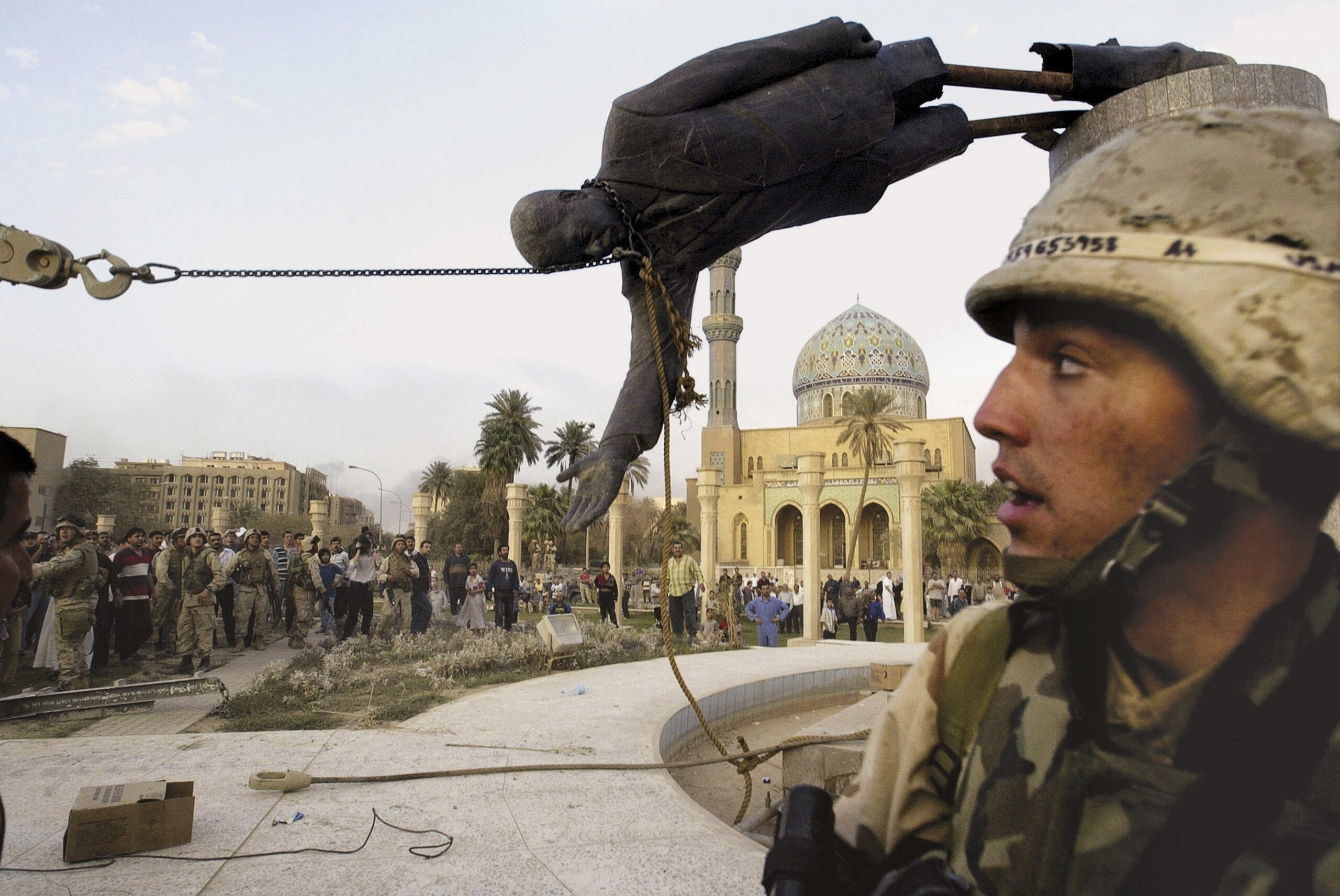
    Iraqi civilians and U.S. soldiers pull down a statue of Saddam Hussein in downtown Baghdad, April 9, 2003.

    In 1991, President George H.W. Bush called for Iraqi Kurds and Shiites to revolt against Hussein (whose mainly Sunni followers controlled Iraq). As the United States pushed into southern Iraq from liberated Kuwait, those Iraqis followed his call.

    But Bush 41 chose not to continue on to Baghdad and depose the Iraqi regime; his advisers (rightly) warned this would spark an Iraqi civil war in which the U.S. would become entangled. When U.S. forces left, Hussein’s army slaughtered around 10,000 Shiites; several hundred thousand Kurds in Iraq’s north fled into the freezing mountains in winter, until the U.S. Air Force established a no-fly zone over Iraqi Kurdistan, and they could return home.

    In February 2003, I crossed from Iran into Iraqi Kurdistan to await the invasion of Iraq by Bush 43, who claimed he had to destroy the (no-longer-existent) Iraqi nuclear program — and bring democracy to the country.

    It was hard not to get swept up in the enthusiasm of Iraqi Kurds for the regime change the Americans were finally promising.

    America’s regional allies, especially Israel, urged Bush to decapitate the Baghdad regime. White House hawks insisted “regime change” would quickly bring peace and democracy to the entire Mideast. So did exiled members of multiple Iraqi opposition groups, with whom I had been in contact since covering the 1991 Gulf War.

    Bush 43 disbanded Iraq’s military and fired much of its government. But the White House had no grasp of the complex ethnic and religious politics of Iraq, which engulfed U.S. forces and ignited an internal Iraqi civil war between Shiite and Sunni Muslims. U.S. troops were caught in the middle, as Bush 41 had feared.

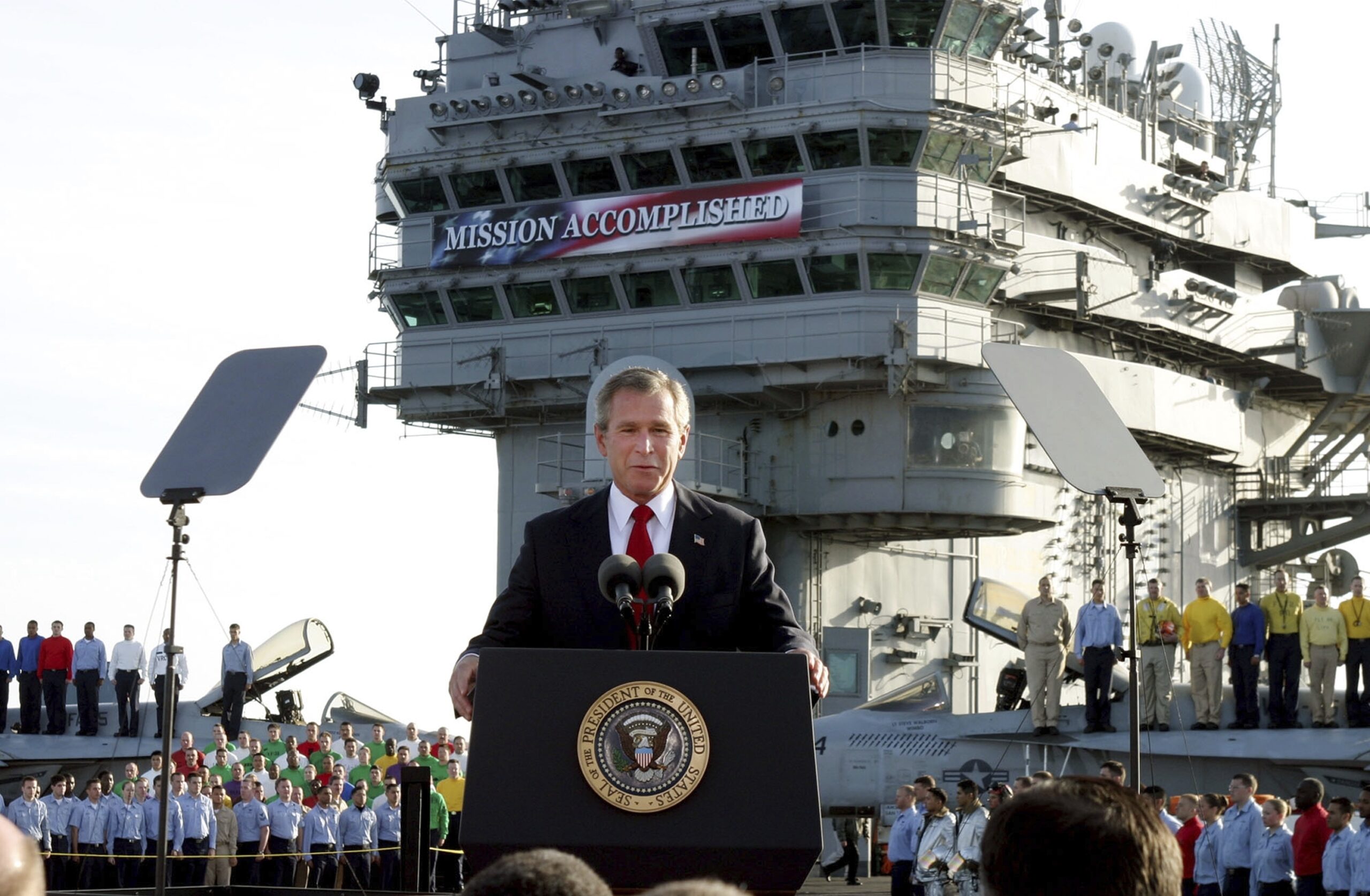
    President George W. Bush speaks aboard the aircraft carrier USS Abraham Lincoln off the California coast on May 1, 2003.

    Fast-forward to Trump. He says he won’t put U.S. boots on the ground but also says he’s not ruling them out “if they were necessary.” (“I don’t have the yips with respect to boots on the ground,” he said Monday. Figure that one out.)

    However, the president has made clear, for now, that he won’t send U.S. troops to help unarmed Iranians retake their country, even as he keeps urging them to overthrow their leaders.

    That may prevent the 2003-style quagmire Bush 43 blundered into. Yet, POTUS appears even blinder than Bush in Iraq about his ability to bend Iran’s future to his will.

    Even though Iran’s 86-year-old supreme leader, Ayatollah Khamenei, was killed by an Israeli airstrike, along with dozens of other Iranian leaders, that’s not likely to end the regime.

    The president has shown little interest — and advanced no concrete plans — for the future of Iran after the U.S. and Israel stop bombing. Trump has upturned the famous doctrine that the late Secretary of State Colin Powell applied to 2003 Iraq, namely, “If you break it, you own it.” The Trump Doctrine posits: “We break it, you own it. Goodbye and good luck.”

    POTUS has stressed it is up to Iran’s people to rise and take over their country, even though civilians are bereft of leaders, organization, guns, or even internet connections (and Reza Pahlavi, the exiled son of the last shah, who hasn’t set foot in Iran for decades, has no armed forces of his own).

    Squeezed by the MAGA faithful and partial to quick hits, Trump insists there will be no long-term U.S. involvement. This may avoid U.S. military casualties, but will probably leave Iran in chaos, ruled by regime holdouts who still retain the guns.

    Indeed, the strongest remaining military force in Iran is the hard-line Islamic Revolutionary Guard Corps (IRGC), which is deeply rooted throughout the country. Behind them are hundreds of thousands of Basij militiamen, who have already killed thousands of unarmed regime opponents.

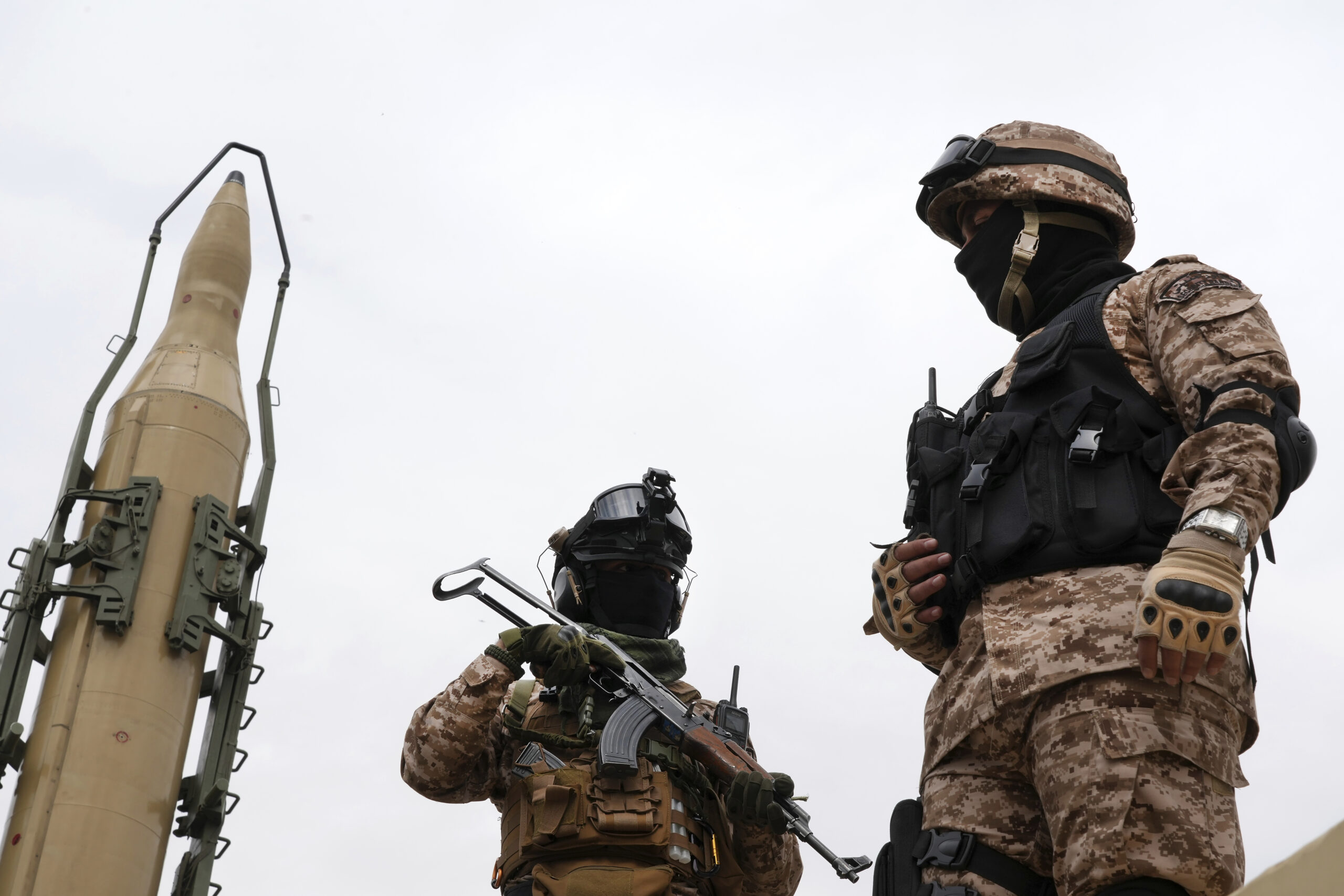
    Iran’s Revolutionary Guard members stand in front of a Shahab-3 missile, which is displayed during the annual pro-Palestinian Al-Quds, or Jerusalem, Day rally in Tehran, Iran, April 29, 2022.

    Perhaps Trump has devised a magical formula to profit from any such bleak denouement for the Iranian people: Iran will become Venezuela.

    Trump has told journalists he wants to model his Iran venture on the U.S. intervention in Caracas, where the top leader, Nicolás Maduro, was kidnapped, and U.S. officials then made a deal with his vice president. Trump eliminated a dictator he disliked, but left in place the previous regime, which, in turn, handed him control over Venezuelan oil.

    Sorry, even the most ill-informed observer can grasp that Iran bears no resemblance to Venezuela: The Islamic regime retains deep roots, many hard-line generals, hundreds of thousands of ideological purists, and many religious followers; it isn’t a one-man show.

    Yet, POTUS insisted again Thursday that “what we did in Venezuela is the perfect scenario.” In an Axios interview, he said that he, personally, had “to be involved in the appointment [of Khamenei’s replacement] like with Delcy [Rodríguez] in Venezuela.”

    In a godlike pronouncement, Trump expects Iran’s hard-line Shiite religious clerics to pick a new supreme leader who pleases him. Or what? He’ll send them to heaven as martyrs?

    The president has already noted that “most people” he had considered for Iran’s top job “are dead” from the recent U.S.- Israel bombing. He speculated that Iran’s future leader could be “as bad” as the last.

    More likely, Trump will try to cook a deal with a senior Iranian official, perhaps an IRGC general, to eliminate the remnants of Iran’s nuclear weapons program and its missile production. Perhaps he dreams of U.S. control of Iranian oil revenue as arranged with Venezuela’s new leader. Perhaps visions of “great U.S. deals” for Iranian oil dance like dollar signs in his head.

    However, hard-line IRGC generals are more likely to fight to the end to hold power at home, even as Iran’s proxy militias in surrounding Arab countries are crushed. IRGC generals who were willing to gun down tens of thousands of Iranian civilians during recent Iranian protests would surely do so again to survive.

    I worry that Trump’s continued call for a civilian uprising holds out the prospect that Iranian civilians will once again be mowed down — even as the president declares victory and sends the U.S. fleet home when his MAGA followers grow antsy. Israel may continue bombing, but that won’t help Iranian protesters topple the regime.

    In a further sign of how the administration may use and abuse Iranians, news reports claim the CIA is arming Iranian Kurds to spark a wider uprising. This is cynicism to the max! Encouraging Iran’s ethnic minorities — Kurds, Azeris, Baluch, and Sunni Arabs — to fight will foment internal civil wars without changing the central regime or delivering a better one. Only a unified Iranian opposition can ultimately achieve that.

    For POTUS, the Iran war is an exhibition of Trumpian power designed to bolster his strongman image, as the GOP faces dicey midterms and the Jeffrey Epstein hangover at home. For Iran’s people, Trump’s reality show is a life-threatening matter. His “we break it, you fix it” doctrine could consign many of them to death as he celebrates U.S. bomb strikes back home.

  • Forget State of the Union sideshow, MAGA’s real chilling message was delivered by Marco Rubio in Munich

    Forget State of the Union sideshow, MAGA’s real chilling message was delivered by Marco Rubio in Munich

    As a matter of journalistic duty, I forced myself to watch the endless State of the Union reality show.

    Punting on all serious issues, President Donald Trump stoked the applause meter by delivering awards to a 100-year-old vet and a brave U.S. pilot, and inviting the entire U.S. men’s Olympic hockey team to celebrate their gold medal win.

    Trump was relentlessly racist (with disgusting slurs against all Somali Americans in Minnesota). His lies were dangerously predictive about the 2026 elections, never tiring of the Big Whopper about winning in 2020 and claiming Democrats must be stopped because they “only win if they cheat.”

    In short, the union is in a dangerous state under an amoral, unprincipled, delusional commander in chief.

    What disturbed me most as I watched Trump rant on is how a president could be so wholly indifferent to the liberal democratic values that underlie the existence of our nation. Although often honored in the breach, they are what have made this country unique. Yet, the sycophants in his administration, along with most GOP legislators, have chosen to abandon those values, or never believed in them from the start.

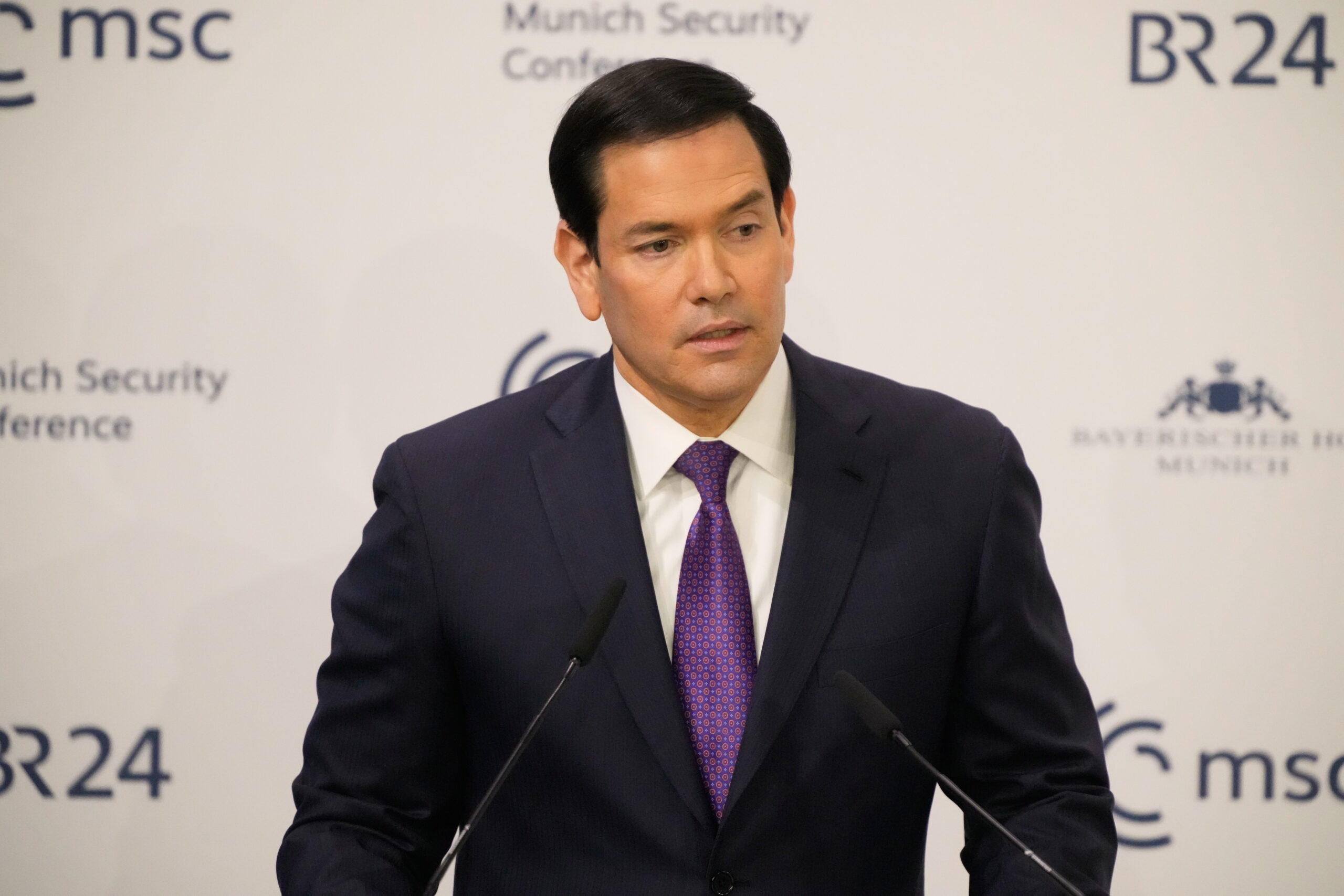
    For that reason, I’d rank Secretary of State Marco Rubio’s speech at the recent Munich Security Conference as far more important than Trump’s sad State of the Union guff.

    That’s because Rubio laid out an alternative set of U.S. values promoted abroad and at home by the political theologians of the Trump regime. Precepts that would make the Founding Fathers revolt anew.

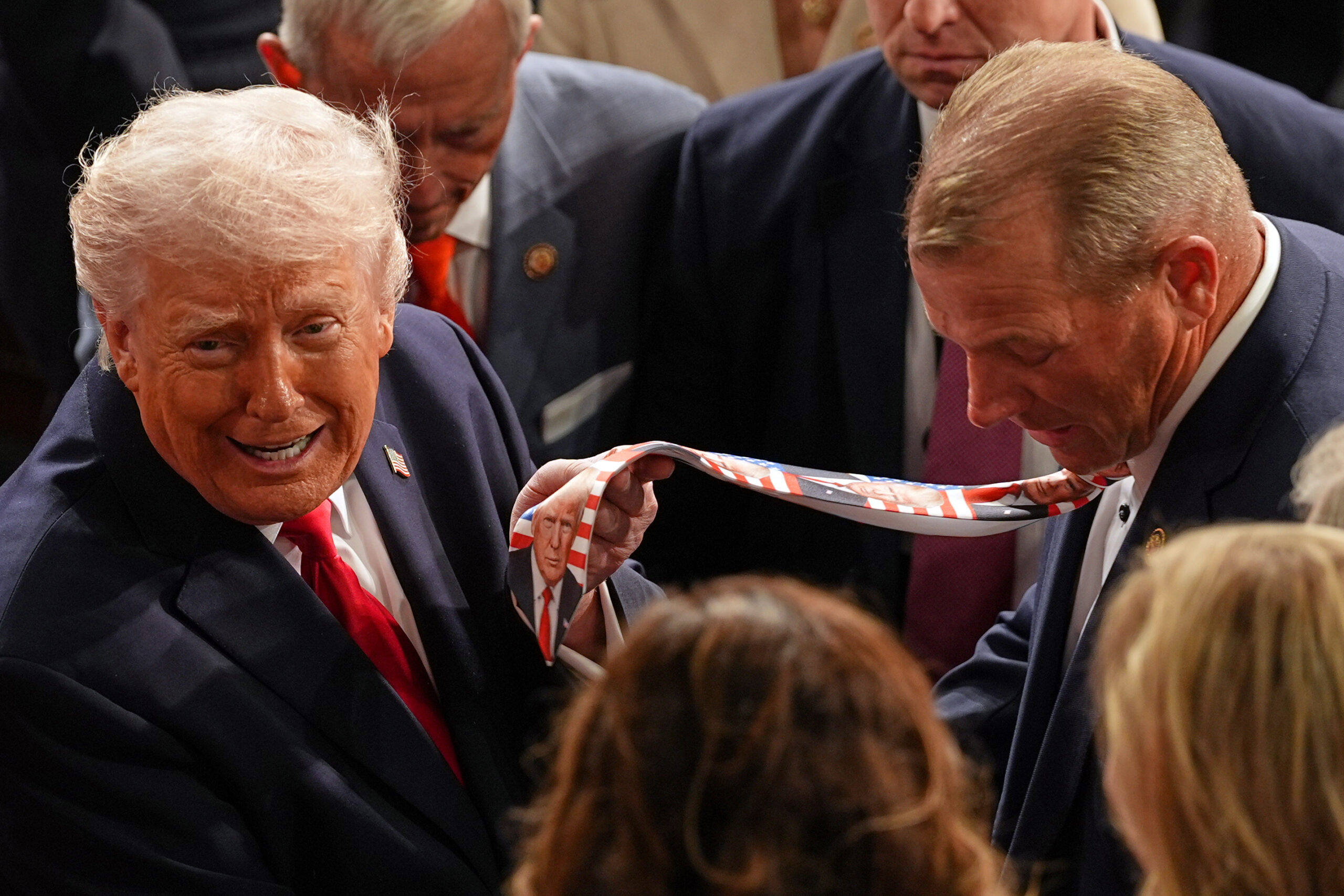
    President Donald Trump holds up U.S. Rep. Troy Nehls’ (R., Texas) tie with his face on it as he departs after delivering the State of the Union address to a joint session of Congress in the House chamber at the U.S. Capitol in Washington, Tuesday.

    The new theology revolves around the theme of saving “thousands of years of Western civilization” from the depredations of “woke” liberal democracy. It is an extension of language long used by white nationalists, and which came back to prominence during the rise of Islamist terrorism in the Mideast, which led to an influx of Syrian and Afghan immigrants into Europe fleeing civil wars at home. It became even more useful to Trumper populists when fanning fears of immigrants at home.

    Former Trump adviser Steve Bannon and current Deputy White House Chief of Staff Stephen Miller latched onto the “saving Western civilization trope” a decade ago, and have embraced its transition into saving Western “Christian civilization.” Somehow, the term, which had been commonly used to describe shared Western religious and cultural identity for decades — Judeo-Christian civilization — has conveniently been shortened.

    Never mind the historical inaccuracy of a term that tries to combine thousands of years of shifting, melding populations, ideas, and religions into one neat sum.

    Yes, there are obvious philosophical threads from Athens to Rome to the Magna Carta, and ultimately to the values of the Enlightenment. But there are centuries of religious, ethnic, and philosophical wars, as well.

    When Vice President JD Vance tried to promote the concept at the Munich Security Conference last year — and to promote white Christian populist parties in Europe as the saviors of “Western civilization” — the audience of European leaders, officials, and think tankers reacted with shock. More so when he berated German leaders for not inviting the neofascist Alternative für Deutschland (AfD) party into the government, even though its leaders have downplayed Adolf Hitler’s crimes. To add insult to injury, he pointedly paid a visit to the AfD’s political leader.

    Vice President JD Vance addresses the audience during the 2025 Munich Security Conference at the Bayerischer Hof Hotel in Munich.

    But Rubio was supposed to be different: the realistic, savvy foreign policy adviser who tried to save Trump from his worst instincts. When the secretary of state delivered remarks that praised U.S.-European ties, the eager audience was at first won over — until reality sank in, and many participants read the text of his speech.

    Indeed, Rubio was warmed-over Vance, blaming liberal democracy (which, in the Enlightenment sense, means individual freedoms, human rights and rule of law, and observance of science) for all the West’s ills, and urging Europeans to junk “the global rules-based order.”

    It got tiresome hearing Rubio tout the dangers of Western “civilizational erasure.” As Hillary Clinton noted — on a panel titled “The West-West Divide” — “When Rubio talks about Western ‘civilization,’ I never knew he was so supportive of Native Americans.” Then she added, “He is wrong historically.”

    Indeed. “Western civilization” has become the MAGA dog whistle that stands for bashing all immigration and playing to racial fears.

    No surprise, Rubio had not a word of criticism for the Russian invasion of Ukraine as an attack on “Western civilization,” although Vladimir Putin’s war crimes have upended the relatively peaceful, post-World War II order. And not a word of apology for Trump’s threat to seize Greenland from a NATO ally, which also threatened that order.

    Nor any word of recognition that a dog-eat-dog world of unrestrained big power dominance resulting from an end to global “rules” will lead back to the violent era preceding World War II.

    Instead, Rubio urged the Europeans not to be “shackled by guilt and shame,” which is a key buzz phrase for the AfD, which urges its members to stop apologizing for Nazi crimes.

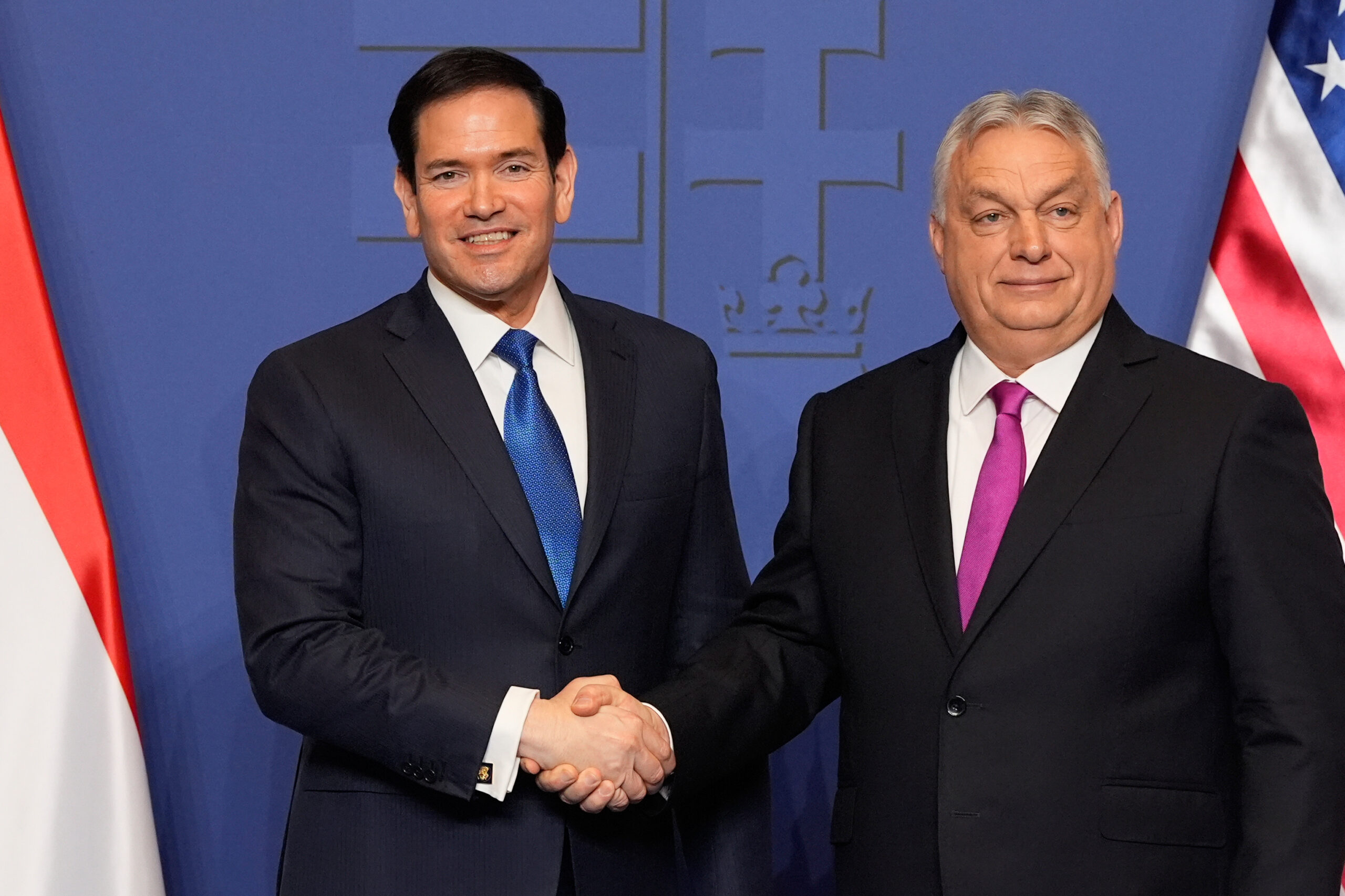
    Secretary of State Marco Rubio (left) and Hungarian Prime Minister Viktor Orbán shake hands after a news conference in Budapest, Hungary, on Feb. 16.

    And right after his speech, the secretary rushed off to Hungary to praise the pro-Putin Prime Minister Viktor Orbán, a Trump ally who has done his best to destroy Hungarian democracy, including press and judicial freedom — and is trying to block European Union aid to Ukraine.

    Yet, Orbán’s corruption and Hungary’s economic decline have become so overwhelming that he may be defeated in an April election. But Trump sent Rubio to bolster this antisemitic autocrat who repeats the “saving white Christian civilization” line.

    It is no wonder the Munich scene erupted into debate about the West-West division over democratic values. As Germany’s Green Party coleader and Bundestag member, Franziska Brantner, stated: “Our values are rooted in the Enlightenment, in reason, science, freedom of religion, equal rights. The Enlightenment is a project, not a period in history. It is about very concrete individual freedoms, about free elections dependent on the will of the people, not run by oligarchs.”

    “I don’t want to go back in history,” Brantner said flatly.

    Norwegian Finance Minister Jens Stoltenberg added, in a restrained poke at Trump, “For all those who believe in liberal values and protection of the truth, it is difficult when we see that not all of our allies agree on these values.”

    In Europe, at least, there is an active debate about the consequences of the junking of rules and history by the world’s most powerful democracy. The dangers to democracy are more immediately apparent to those who live closer to Russia and Ukraine.

    Watching Trump’s performance and Rubio’s subservience, those dangers may seem obvious to many Americans. But they must find a way to get that message across more clearly to those who still doubt the danger here.

  • On 4th anniversary of Ukraine war, Kyiv refuses to cave to Putin’s terror or Trump’s pro-Russia demands

    On 4th anniversary of Ukraine war, Kyiv refuses to cave to Putin’s terror or Trump’s pro-Russia demands

    MUNICH — When Russia invaded Ukraine on Feb. 24, 2022, no one imagined Moscow would be enmeshed in a quagmire four years later, having lost nearly 1.2 million killed, wounded, or missing soldiers to an army a fraction of its size.

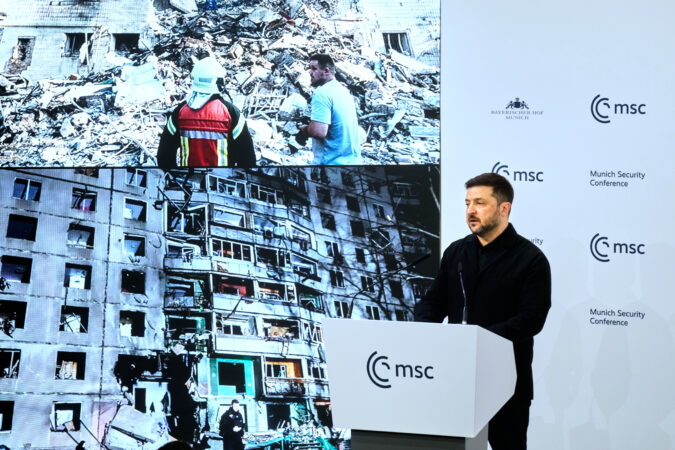
    The price Ukraine has paid for its defiance was written on Volodymyr Zelensky’s face — weary, puffy, aged dramatically beyond his 48 years — as he took the stage at the Munich Security Conference last weekend.

    “I want you to understand the real scale of these attacks on Ukraine,” he told an attentive audience, bluntly detailing the 6,000 attack drones, 150-plus missiles, and more than 5,000 multiton glide bombs Russia had dropped on civilian targets in January alone.

    “Imagine this over your own city,” Zelensky demanded. “Shattered streets, destroyed homes, schools built underground, not a single power plant in the country that has not been damaged by Russian attacks.”

    Yes, imagine those bombs dropping on Temple University and Jefferson Hospital, on apartment towers on Broad Street, and on William Penn atop City Hall. Imagine living under mounds of quilts in your home because power infrastructure had been deliberately destroyed.

    And yet, as Zelensky made clear, Ukraine won’t surrender to Vladimir Putin — nor to Donald Trump.

    Kyiv will not bow to shameful White House demands that it cede critical, fortified territory in the Donbas region to Russia, with no solid U.S. security guarantees to stop Putin from swallowing this gift and attacking again.

    Based on Zelensky’s words, and what I heard from other European leaders, tech executives, Ukrainian military officers, poets, and tech innovators in Munich, here are my takeaways on what to expect in Ukraine as the fifth year of war begins.

    Yuliia Dolotova, 37, uses foam rubber to insulate her children’s bed in her apartment during a power outage caused by Russia’s repeated air strikes on the country’s power grid, in Kyiv, Ukraine, Feb. 2.

    No end in sight

    The war will not end in 2026. Putin isn’t winning, and Ukraine is holding on. Kyiv’s current strategy — as its army eliminates more Russian troops each month than the number of fresh recruits Moscow can send to the battlefield — is to increase that kill ratio, and to batter Russia’s military and economy until the Kremlin is finally forced to negotiate seriously.

    But U.S.-brokered peace talks, whose second round in Geneva broke up abruptly on Wednesday, are headed nowhere so long as Trump only pressures Ukraine.

    Russia hasn’t changed its hard-line demands one iota, still demanding Ukraine slash the size of its army, get rid of Zelensky, and forgo Western security guarantees. In other words, commit suicide.

    Equally absurd, as Zelensky pointedly noted, is that Putin has rejected any European participation in peace talks, with Trump’s acquiescence. Never mind that the European Union and member countries now pay 98% of the cost of military and economic aid to Kyiv, including payments to Washington for limited amounts of U.S. weapons. Meantime, Trump cut off 99% of U.S. aid to Kyiv in 2025.

    “We don’t hear any compromises from Russia,” Zelensky said, citing Moscow’s “strange” demand that Kyiv hold elections amid Russian bombing — a demand that received buy-in from U.S. negotiators.

    “Give us a two-month ceasefire before elections,” Zelensky proposed. “Or we can also give Russia a ceasefire if they will have [free] elections in Russia.”

    The Munich audience cheered.

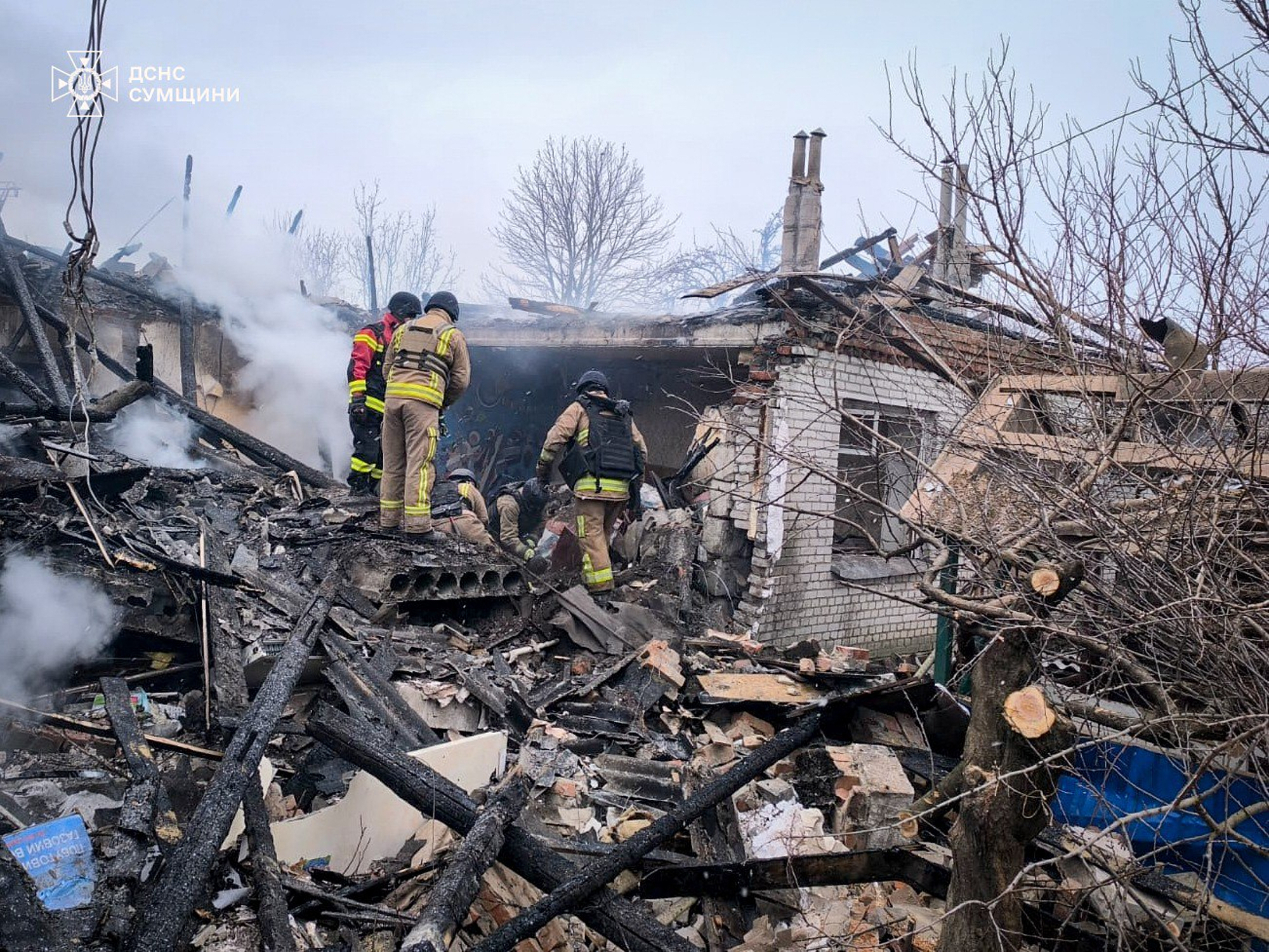
    In this photo provided by the Ukrainian Emergency Service, firefighters put out the fire in private houses following a Russian air attack in Sumy region, Ukraine, Tuesday.

    “Peace can only be built on real security guarantees,” Zelensky rightly insisted on stage, given that Putin has broken every previous accord Russia has made with independent Ukraine over the past three decades.

    Since NATO membership is not on the table, Ukraine requires a legal commitment, not just verbal “assurances” that it will continue to receive European weapons and support for a strong army — along with expedited admission to the European Union. Kyiv also needs a firm U.S. commitment to back up European support before Ukraine makes any compromises on territory.

    When I asked Ukrainian Foreign Minister Andrii Sybiha whether such security guarantees should include the presence of allied troops in Ukraine, he said sharply, “Boots on the ground are essential” in order to encourage investors in a postwar nation.

    Yet, it is still unclear whether any European countries will agree to base military forces on Ukrainian soil, rather than just send “peace monitors.” Moreover, Russia rejects any security guarantees at all, and the White House still won’t spell out what kind of security backstop it will provide for the Europeans, and when.

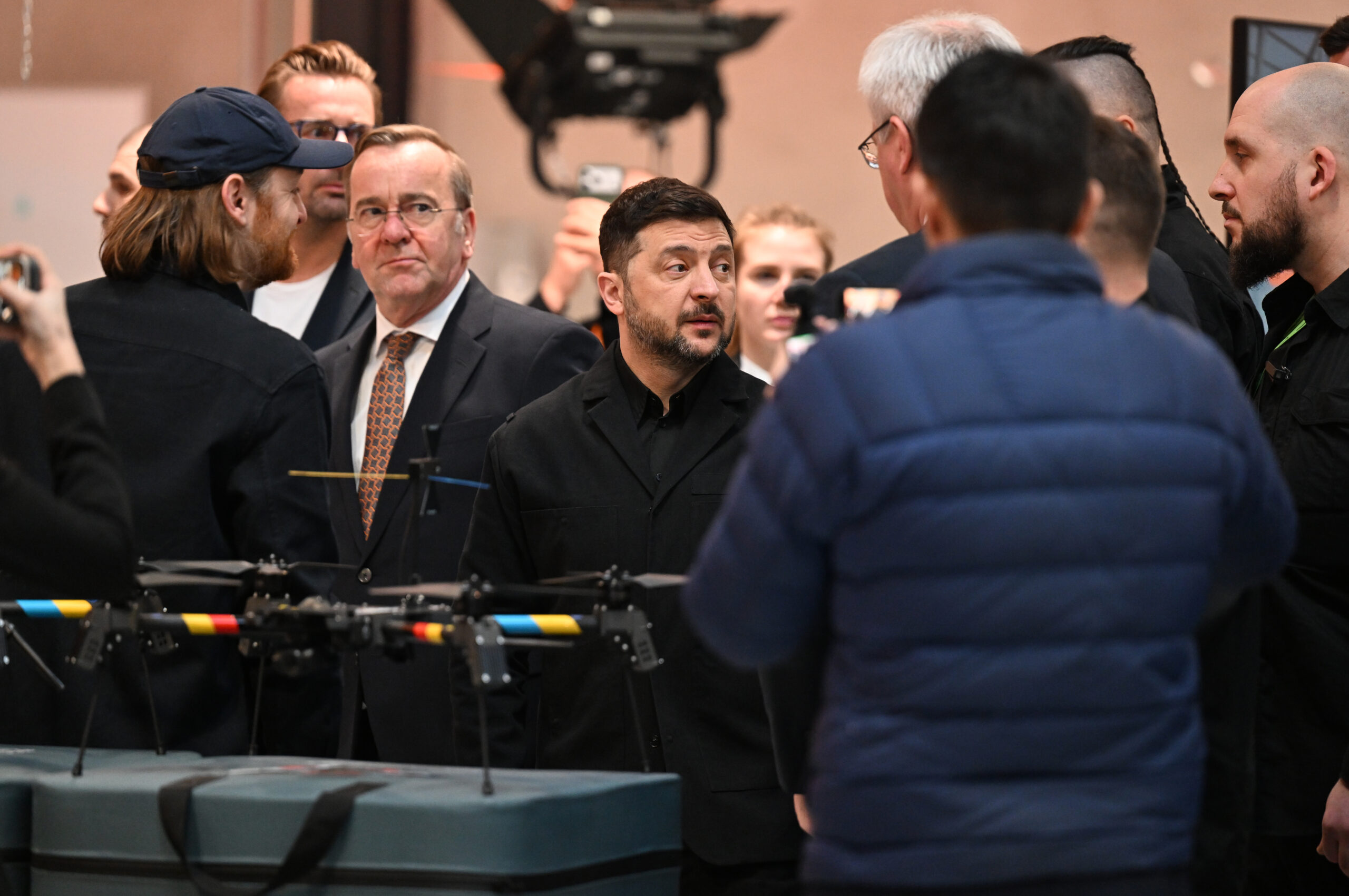
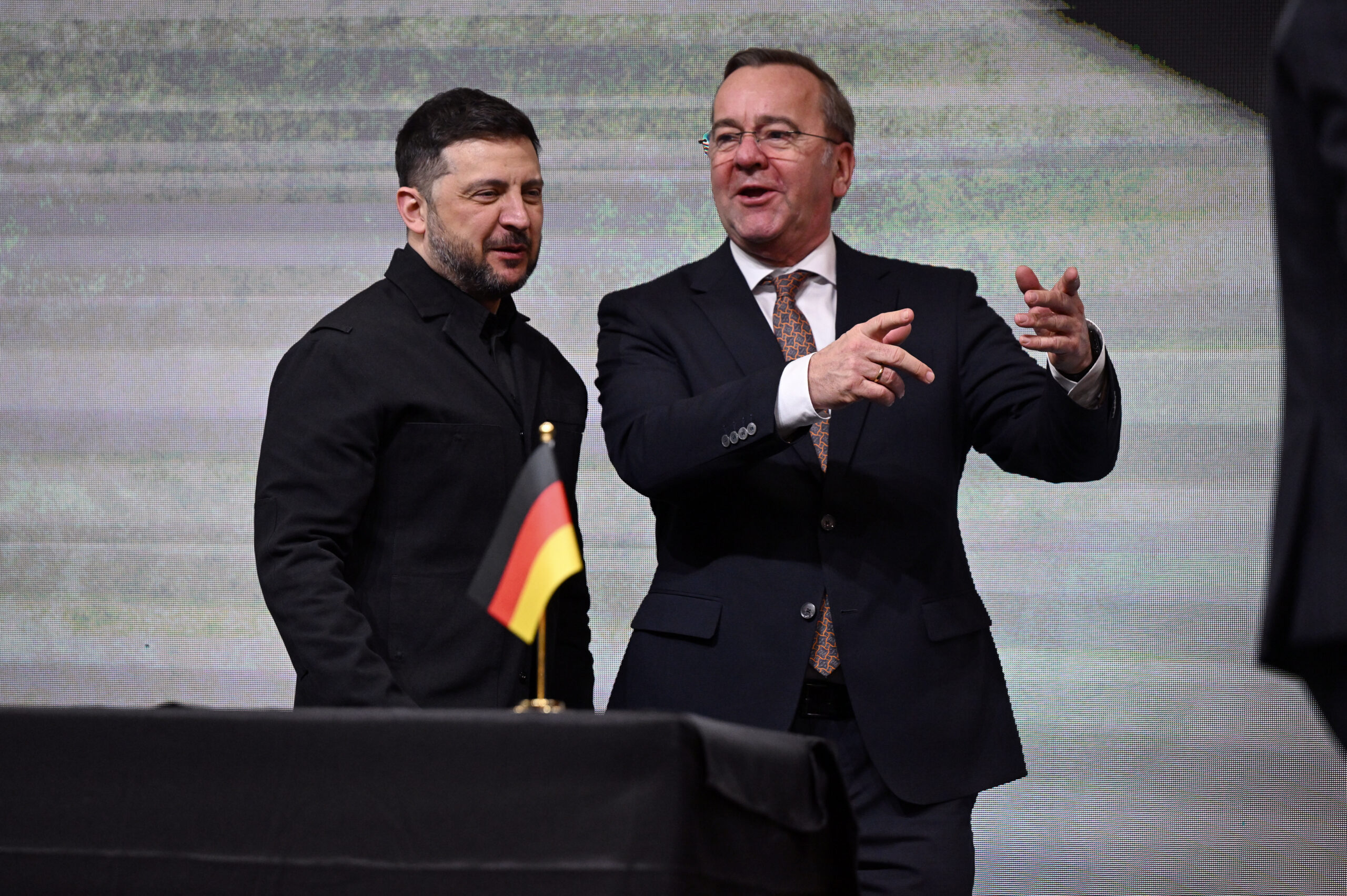
    Ukrainian President Volodymyr Zelensky (right) and German Defense Minister Boris Pistorius visit a drone-producing company, Quantum Frontline Industries, near Munich, on Feb. 13.

    High-tech weapons

    Ukraine will press forward with its efforts to promote joint weapons production with European — and American — firms to advance its amazing innovations in unmanned drone warfare. This tech savvy has enabled Kyiv to push back against Russia’s superior number of troops and increasing number of drones. But Kyiv badly needs more long range missiles (way past time for Germany’s Taurus and U.S. Tomahawks) and more air defenses to take out Russian missiles.

    Representatives of Ukrainian and European military production companies swarmed the sidelines of the conference. Ukrainian officers from specialized drone units displayed their products’ prowess on video screens at side conferences organized by Ukrainian companies and think tanks.

    The annual Munich Ukraine lunch sponsored by the Victor Pinchuk Foundation included attendees such as former Google CEO Eric Schmidt, whose Swift Beat company is working with Ukrainian partners to produce hundreds of thousands of AI-enabled long-range drones and drone interceptors that are the new weapons of modern war.

    Schmidt expressed the opinion heard throughout the conference: When it comes to these weapons, Ukraine “will be the primary producer for all Europe.”

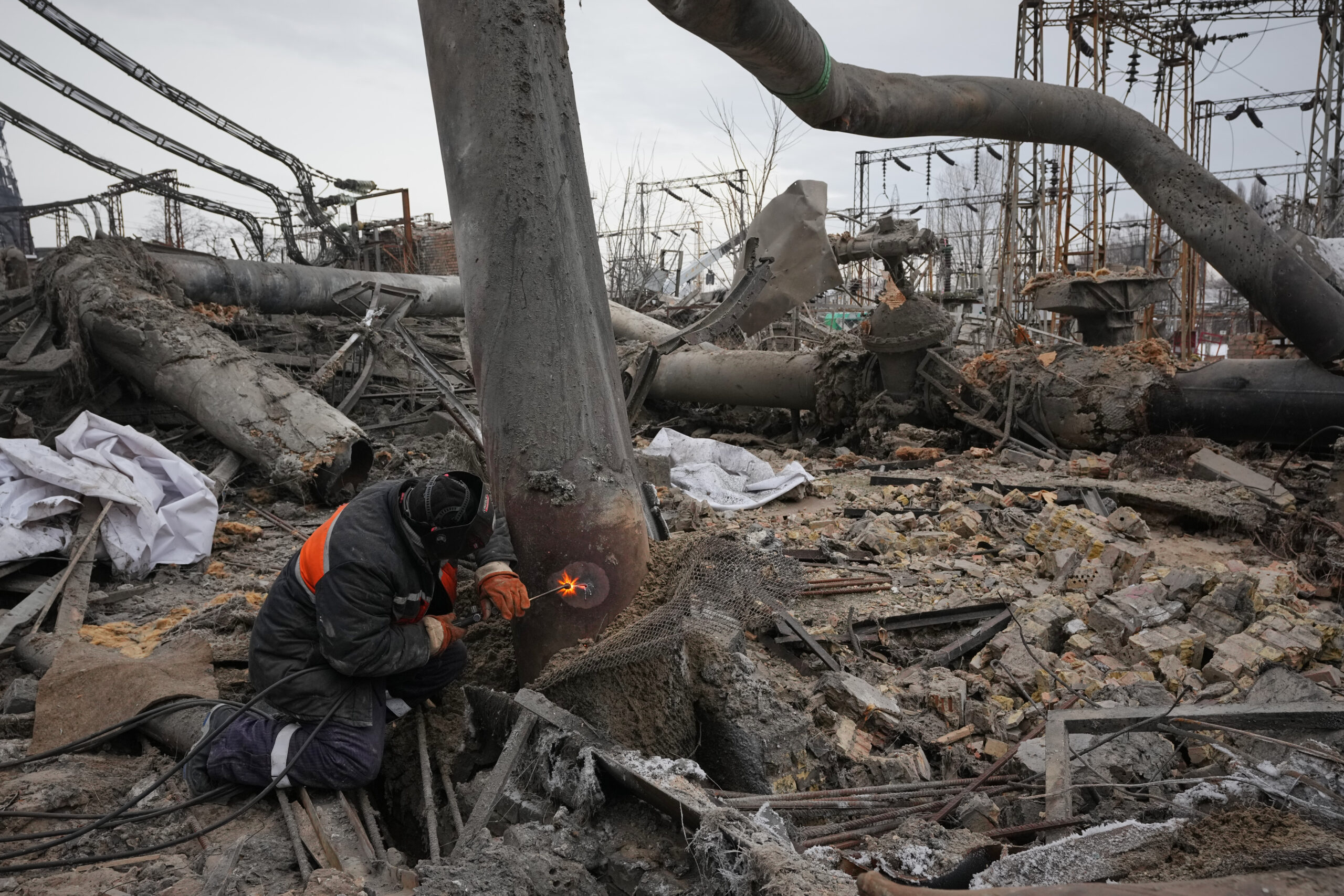
    Workers clean up damage at Darnytsia Thermal Power Plant after a Russian attack in Kyiv, Ukraine, Wednesday, Feb. 4, 2026.

    The will to go on

    The Ukrainian public is demonstrating amazing fortitude, despite the Russian onslaught, and despite Trump’s refusal to support a tough new secondary sanctions package on Russia that a bipartisan Senate majority has had ready for months.

    Zelensky paid tribute to the thousands of energy workers, repair crews, and rescue teams who have been working around the clock to restore heat and electricity each time Russia hits another power plant.

    “Ukraine still has power because of our people,” he said with emotion. “Many politicians could learn how to act immediately … from ordinary electricians.”

    The conference recognized ordinary Ukrainians’ heroism by awarding its annual Ewald von Kleist Award to the people of Ukraine for their “unwavering determination to defend their freedom and all of Europe.” The award is named after the Munich conference’s founder — who participated in the failed 1944 German plot to assassinate Adolf Hitler — and honors outstanding contributions to international peace and conflict resolution.

    What sticks in my mind are the words of Ukraine’s premier poet, songwriter, and novelist Serhiy Zhadan, whose Kharkiv home I visited early in the war, and who spoke to a rapt audience at a Munich cultural center about his beloved city. Kharkiv’s citizens, he said, “reject the Russian goal to make them despair of life.”

    “There is still a huge cultural life in Kharkiv,” he said, “and people refuse to let themselves be scared. At every cultural event, money is collected for kids and soldiers. But the whole society is tired. We want to go back to a normalcy where kids can return to school.”

    The world’s double standards are painful, he continued, citing the ban by the International Olympic Committee on participation by a Ukrainian athlete because he wanted to memorialize his fellow athletes killed by Russia by putting their pictures on his helmet. “This is not a local war,” Zhadan insisted, “this war is about us all.”

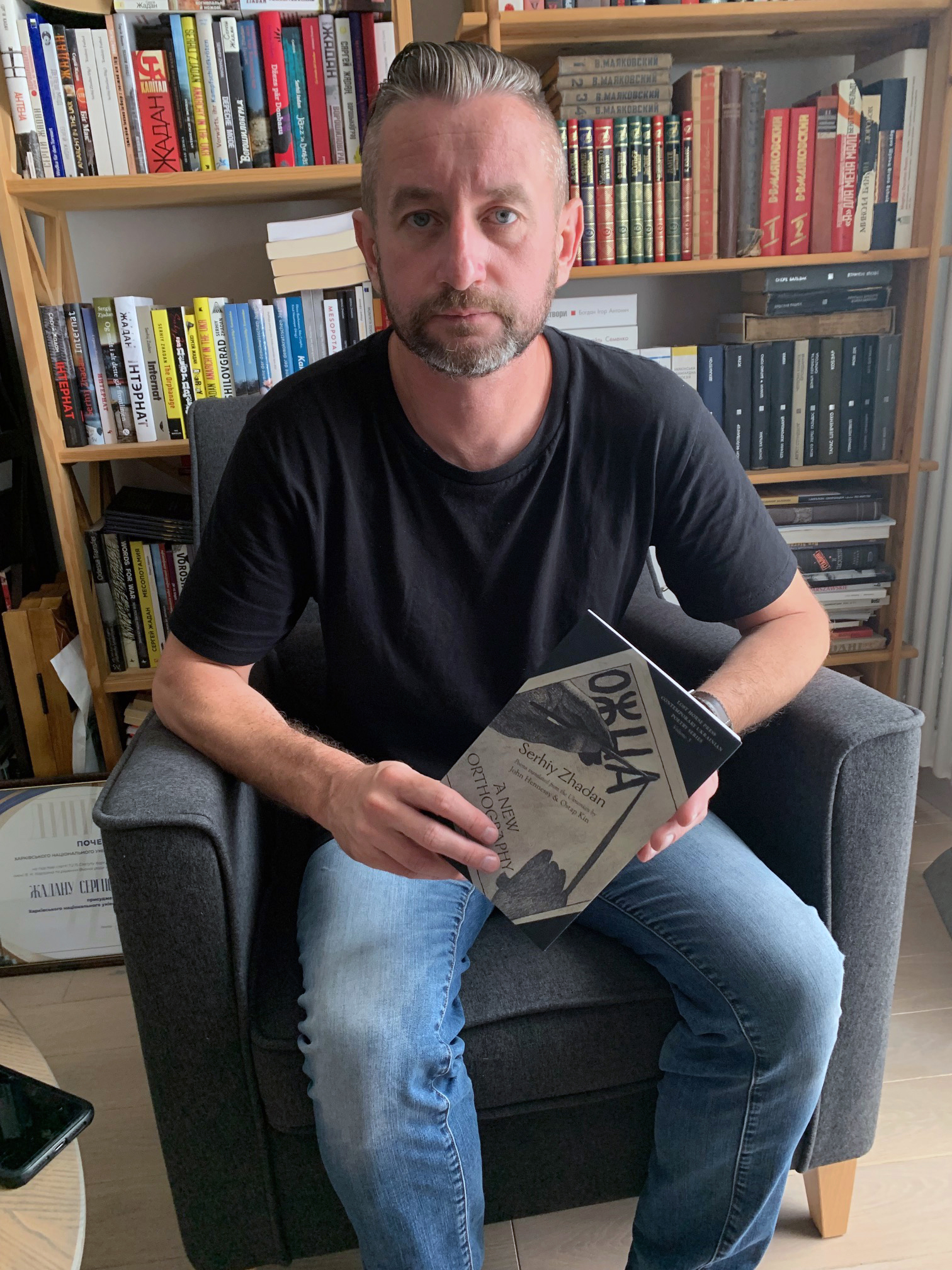
    Serhiy Zhadan sits inside his home in Kharkiv, Ukraine, in 2022.

    “We try to cling to the moments we live in, and not to think of the future,” he explained, in speaking of survival strategies. “If you think of the future, you become vulnerable. If you focus on the need to survive, you might get through.” Yet, he added, “We will enter the future from [this] darkness. This is part of our Ukrainian history. We will marvel at how beautiful the world will be if we only manage to endure this little bit of darkness.”

    Zelensky translated Zhadan’s poetry into hard reality when he reminded a main stage audience that “Putin hopes to repeat 1938, when a previous Putin [Hitler] began dividing Europe.”

    As Zelensky reminds us, it was a historic tragedy for Britain’s Neville Chamberlain to acquiesce to Hitler’s demand to seize part of Czechoslovakia. Far from bringing “peace in our time” Chamberlain’s blindness brought on World War II.

    It is an error of far greater magnitude for Trump to press Zelensky to cave to Putin’s demand that he be handed key Ukrainian territory Russia hasn’t been able to conquer. Unlike Hitler in 1938, Putin has already begun his wider military attack on Europe.

    Such signs of Trumpian weakness only encourage further Putin aggression as well as Xi Jinping’s plans to subdue Taiwan.

    The ultimate message of Munich this year was that Europe needs to step up, and the White House needs to wake up and stop denying the importance of Ukraine. The Russia-China-North Korea axis is already feeding off of Trump’s misunderstanding of Putin in order to undermine U.S. power.

    “Our world of drones is your world of drones,” Zelensky offered. “Our ability to stop [Russian] sabotage is yours. Please pay attention to Ukraine. If this [attention] had happened before this war started, the war would never have begun.”

    The first sign of an American awakening will emerge if GOP members of the large bipartisan congressional delegation at Munich finally blast past Trump’s objections and bring a tough new package of secondary sanctions on Russian energy exports to a floor vote — soon.

  • At Munich Security Conference, European leaders commit to protect Western values that White House abandons

    At Munich Security Conference, European leaders commit to protect Western values that White House abandons

    MUNICH — Last year, at the Munich Security Conference, where top U.S. and European leaders gather each year, Vice President JD Vance gave a shocking speech that nearly broke the NATO alliance of democracies that had kept the peace in Europe for 80 years.

    Vance claimed the threat to Europe was “not Russia, not China,” but rather came “from within” our NATO allies themselves — falsely accusing European democracies of stifling the radical, pro-Russia, and sometimes neo-Nazi parties that the Trump White House openly supports. The veep never even mentioned the threat from Russia, or its war on Ukraine.

    The acrid impact of that speech has hung over U.S.-European relations and the future of the NATO alliance over the past year.

    “Under Destruction” was the title of this year’s conference, held at the elegant Bayerischer Hof hotel. Its annual security report opened with these grim words, aimed at the “current U.S. administration”: “The world has entered a period of wrecking-ball politics. Sweeping destruction — rather than careful reforms and policy corrections — is the order of the day.”

    And yet, this year, I heard a startlingly different tone from European leaders. Stunned by Trump’s demands and disdain, awakened by Russian aggression against Ukraine and much of Europe, furious at President Donald Trump’s threats vs. NATO ally Denmark to seize its sovereign territory of Greenland, European leaders have woken up to the need for dramatic changes — though not in the way envisioned by Trump.

    “Europe has just returned from a vacation from world history,” stated German Chancellor Friedrich Merz, who like other leaders here, recognized they had depended for too long on an American ally they trusted for their postwar defense.

    Merz chose to speak first at the conference, taking a European leadership role (while insisting, with a nod to his country’s history, that Germany would “never again go it alone”).

    “The international order based on rights and rules is currently being destroyed,” he said. “But I’m afraid we have to put it in even harsher terms. This order, as flawed as it has been even in its heyday, no longer exists.”

    Merz added, “It does not mean that we accept it as an inevitable fate. We are not at the mercy of this world. We can shape it. And I have no doubt that we will preserve our interests and our values in this world if we step up together with determination, with confidence in our own strengths.”

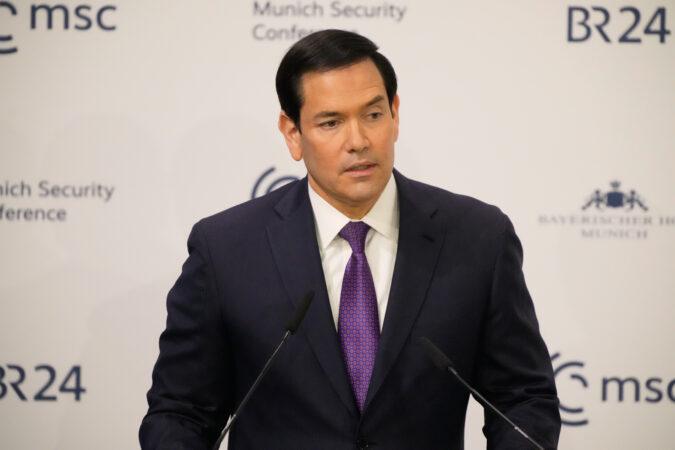
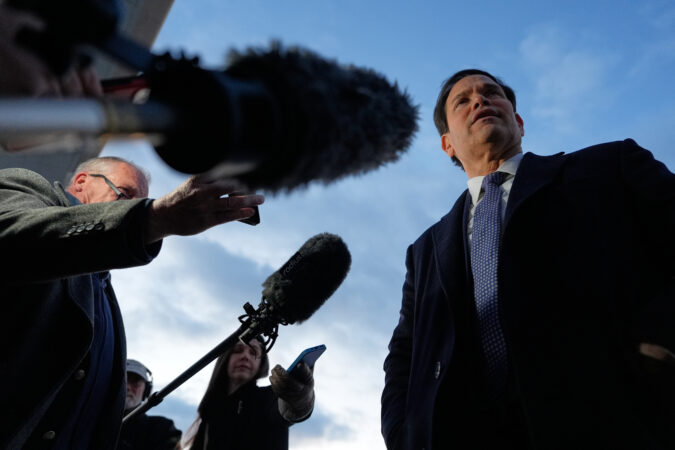
    U.S. Secretary of State Marco Rubio speaks at the Munich Security Conference Saturday.

    Indeed, the message of this European leaders meeting in Munich, in sharp contrast to European paralysis at Vance’s onslaught last year, was that they must and can organize to defend against Russia while protecting democratic values — and Ukraine — even if the United States won’t.

    Of course, skeptics, including Trumpers, will claim that Europe has become irrelevant. But what I heard this weekend is far more realistic than Trump’s fantasies about a Ukraine deal that bows to Putin and envisions big business deals with Russia.

    Pressed by Trump (and this was a good thing), NATO allies have significantly increased their defense budgets. Now that the U.S. has cut off almost all aid to Ukraine, Europe is paying for all U.S. weapons that are purchased for Kyiv, and the EU has pledged to cover most of Ukraine’s military budget for the next two years.

    But, unlike the U.S. president, the Europeans recognize that Ukraine is a symbol of the threat posed by an imperialist, aggressive Vladimir Putin.

    “With the beginning of Russia’s aggression, we entered a new phase of open conflict and wars, which changed the [security] situation more than we ever thought possible a few years ago,” Merz continued.

    The Kremlin also pushes claims of defending its “Russian civilization” to include any territory where it falsely claims that Russians are mistreated. This could include the Baltics, Poland, parts of the Arctic, all of Ukraine, Moldova. The list goes on.

    European officials are acutely aware of Russian threats, since they are the constant victims of Russian sabotage, underwater cable cutting, and political assassinations, all of which the White House downplays.

    During the conference British intelligence announced they had proof that Russia had assassinated opposition leader Alexei Navalyny in prison with a rare toxin, just as Russian agents murdered a Russian dissident on British soil.

    What I heard over and over was European astonishment that the White House ignores the massive slaughter of civilians by Putin, while pressing only for concessions by Ukraine. President Volodymyr Zelensky spoke bluntly at Munich about the need for more air defenses, but only Europe is responding.

    Indeed, Ukraine was central to the whole conference, with many speakers, warm applause, and frequent sessions featuring Ukrainian military innovations, while Europeans emphasized the importance of Ukraine’s trained army to Europe in the future.

    There was constant praise for Kyiv as the defender of Western values, holding the line between Russia and the democratic West.

    Ukrainian President Volodymyr Zelenskyy, left, and German Defence Minister Boris Pistorius talk during their visit of drone producing company Quantum Frontline Industries near Munich Friday.

    Yet, it was clear from the American position at Munich that the administration sees the world entirely in a different light.

    No doubt aware that Vance redux would have been booed off the stage, the White House dispatched the somewhat more diplomatic (but far less powerful) Secretary of State Marco Rubio who soothed European fears slightly with an emphasis on continued U.S.-European ties. However, Rubio pointedly never mentioned the Russian threat hanging over Europe in his speech. He pushed the same nationalist MAGA line about the main threat to “thousands of years of Western civilization” coming from immigrants and multilateral ties.

    More disdainful was Deputy Secretary of Defense Elbridge Colby, who praised Secretary Pete Hegseth repeatedly and fulsomely, and insisted that the essence of Trump foreign policy was “hard-nosed common sense.”

    “You can’t base an alliance on sentiment alone,” he insisted, in a discussion held in the Bar Montez at the Rosewood Hotel, without taking any questions. “Maybe there is a difference in values.” Then he laughed that he had only heard the words “rules-based international order” once in Munich so “that is a piece of progress.”

    It is not clear whether the Europeans can achieve the weapons production goals they discussed and develop an integrated military force that takes over ground protection of Europe within NATO by the end of this decade. And leaders I spoke with recognize they can’t succeed alone without active partnership with — not subordination to — the United States.

    But what I heard in Munich made clear that they are far more aware of the threat democracies face and the values that need to be protected than is the White House.

    “We will preserve our interests and values if we step up together,” said Merz.

    That is wise advice that the White House continues to ignore.

  • Trump helps Putin wage an ‘energy war’ to freeze Ukrainian civilians into surrender

    Trump helps Putin wage an ‘energy war’ to freeze Ukrainian civilians into surrender

    When Philadelphia temperatures dipped to near zero last week, the frigid weather was so unbearable that most of us retreated indoors. Of course, our homes were warm and well-lit, although the threat of losing power was unnerving.

    For my friend Maisie, whose family lives in the Philly area but who is doing research in Kyiv, Ukraine, on blast injuries and coordinating international programs to help amputees, there is no escape from subzero weather.

    When I spoke to her on the weekend, she was huddled in two down parkas, under a mountain of blankets, and hugging her dog, Olly, for warmth, having had no heat for three weeks.

    Thanks to Vladimir Putin, Kyiv and other major Ukrainian cities have been under massive missile and drone attacks deliberately aimed at civilian heating and power infrastructure. All in an effort to freeze Ukrainians into submission.

    Such attacks on civilians are a war crime.

    Donald Trump is helping Putin weaponize winter. The president echoes Russian propaganda, claiming Putin agreed to a weeklong pause in bombing energy infrastructure — even as Putin was raining down record numbers of missiles on apartment buildings, a maternity hospital, and power grids. Kyiv is only expected to receive four to six hours of power daily for the rest of February.

    To make his pro-Russian stance clear, Trump had a framed photo of himself and the Kremlin leader, taken at the failed Alaska summit last August, put up in the White House Palm Room, above one of him and a grandchild. Only Trump could consider it appropriate to hang a photo of a modern-day Adolf Hitler in the White House visitors’ area.

    Moscow, of course, loves it. To quote the X post of Putin’s special envoy, Kirill Dmitriev (who has brainwashed his White House counterpart, Steve Witkoff, into adopting Moscow’s positions): “A picture is worth a thousand words.” Indeed.

    Other pictures to consider are those of mothers and children clinging to each other in underground subway stations — reminiscent of the London Blitz — because they fear repeated Russian drone attacks on apartment blocks, or because they simply have no heat.

    “Even if you can get food, you don’t need a refrigerator,” Maisie, whose last name I’m not using from safety concerns, told me via WhatsApp. “Any food you have freezes.” Her electricity is sporadic, she told me, barely giving time to charge power banks, a small heater, her laptop, and her phone.

    “It got so bad these past weeks that I remember a moment when I realized I hadn’t felt my toes in so long, I took off layers of socks to realize they had blistered so much from the cold that they were bleeding.

    “A lot of grocery stores were closed, and it was a mad rush when they were open. Sheets of ice are coating every street, which makes it particularly difficult for the elderly.

    “Despite all this, Ukrainians are still holding on, adapting, supporting one another and enduring conditions that should never be normal in the civilized world,” she said.

    What infuriated Ukrainians this week was Trump’s repeated claims that his deal-making skills had persuaded Putin to stop bombing energy infrastructure for a week, until the trilateral talks in Abu Dhabi, United Arab Emirates. Putin “kept his word,” Trump told White House reporters on Tuesday.

    No, Putin did not keep his word.

    Drones and missiles on power distribution sites halted for barely two and a half days, during which Russia kept hitting residential buildings — along with workers repairing damaged energy infrastructure. Then, with the missiles saved up from the two-day “energy ceasefire,” Russia launched a massive strike against energy targets even as Trump was touting that he had talked Putin down.

    Any president with minimal smarts would have grasped by now that the Russians are trolling him.

    Trump has been pushing since the Alaska summit for a direct meeting between Putin and Ukrainian President Volodymyr Zelensky, and the Kremlin recently offered one — if it took place in Moscow. The slimy Russian foreign minister, Sergey Lavrov, said his country would guarantee Zelensky’s safety.

    Needless to say, Zelensky — whom the Russians have tried to assassinate many times — declined the honor. One doesn’t have to be a fortune teller to imagine poisoned soup (a tactic used by Russia against a previous Ukrainian president) or a sudden fall from a window. Yet, no doubt, Trump will soon be criticizing Zelensky for refusing this golden opportunity.

    Similarly, the U.S.-Ukraine peace talks pushed by Trump — along with this week’s trilateral meeting of U.S., Ukrainian, and Russian officials — are a farce. That’s because Trump refuses to press Putin to make any concessions, and the Russian leader has yet to veer from his position that Ukraine slash its army, change its president, give up unconquered territory, and refuse any strong Western guarantees.

    In fact, chief White House negotiator Witkoff, an ill-informed real estate mogul who seems to be Trump’s main emissary to everywhere — from Israel to Iran to Russia — insists Kyiv cave to Putin’s key position: give up a belt of Donetsk that Ukraine still holds, which is the main fortified barrier that prevents Russian troops from moving into central Ukraine.

    Witkoff, who, like Trump, thinks only of land deals, might as well be calling on Ukraine to commit suicide. He has actually proposed that this armed Ukrainian territory could become a “free trade zone.” As with the “energy ceasefire,” Putin would respect that zone for about five minutes before sending his troops in.

    Yet, through sheer grit, Ukrainians are enduring and preventing serious Russian gains on the front, as the Kremlin’s war economy sags and Russia suffers staggering numbers of military casualties. I believe if Ukraine can get through this winter, with European help, Russia will be unable to continue the war at this level.

    So now would be the perfect time for Trump to push back strongly against Putin’s “energy war” on civilians. Having basically halted military aid to Ukraine, the president could still help Kyiv by selling Europe desperately needed air defense weapons that it would then pass on to Ukraine. The president could also finally stop blocking a vote on bipartisan congressional legislation to impose more sanctions on Russian oil sales.

    By turning up the heat on Putin, Trump could help turn the heat back on for Ukraine. But don’t hold your breath.

    The only slight opening I can imagine is if the president finally grasps how weak and foolish his bow to Putin makes him look on the world stage, and how dangerous his links to Putin are to his own legacy.

    Rather than be awarded the Nobel Peace Prize, Trump looks more likely to be tarred by his subservience to the greatest war criminal of the 21st century, who played him like a military drum.

  • Trump betrays his pledge to Iran’s protesters by letting clerics crush them

    Trump betrays his pledge to Iran’s protesters by letting clerics crush them

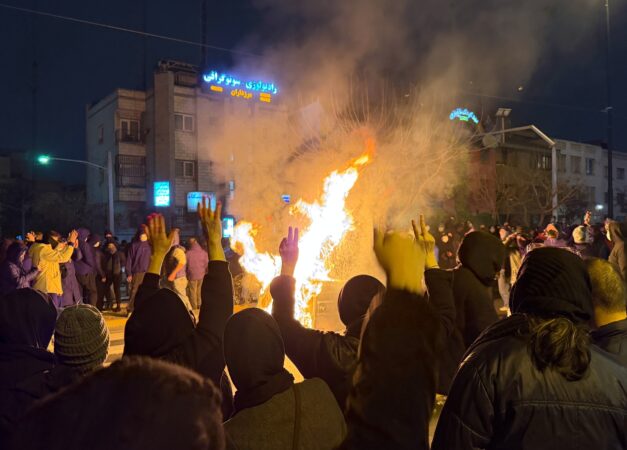
    When President Donald Trump called on Iranian demonstrators to “KEEP PROTESTING — TAKE OVER THE INSTITUTIONS” in early January and pledged “HELP IS ON THE WAY,” I feared a shameful episode of American betrayal was about to be repeated.

    “We are locked and loaded and ready to go,” he had promised these brave Iranians, fed up with decades of corruption and repression by the ayatollahs.

    Human rights activists report that these words encouraged many ordinary Iranians to come to the streets.

    My mind flashed back to January 1991, when President George H.W. Bush urged Iraqis to rise up against Saddam Hussein, as U.S. troops were liberating Kuwait, then allowed the Iraqi Kurds and Shiites who responded to be slaughtered by the thousands. On assignment in Iraq, I saw the bloody consequences, which undermined U.S. forces during the 2003 Iraq War.

    Sure enough, history is repeating itself, this time in Iran. TACO Trump ignored the impact his braggadocio has on real people and reneged on his promises to the Iranians. Many thousands of demonstrators who believed him were shot dead in the streets by regime forces, and many more thousands jailed, beaten, and tortured.

    Human rights groups estimate the number of dead at a minimum of 5,000, but we won’t know if the number is much higher until the regime stops blocking the internet. Iranian officials insist, contrary to Trump’s claims, that they won’t halt executions.

    If Trump had moved quickly to do the possible — aid the protesters with satellite connections, isolate Iran at the United Nations, organize tighter sanctions against their oil sales and shadow fleet, cripple their military and government with cyberattacks — he might have made a difference. He still could.

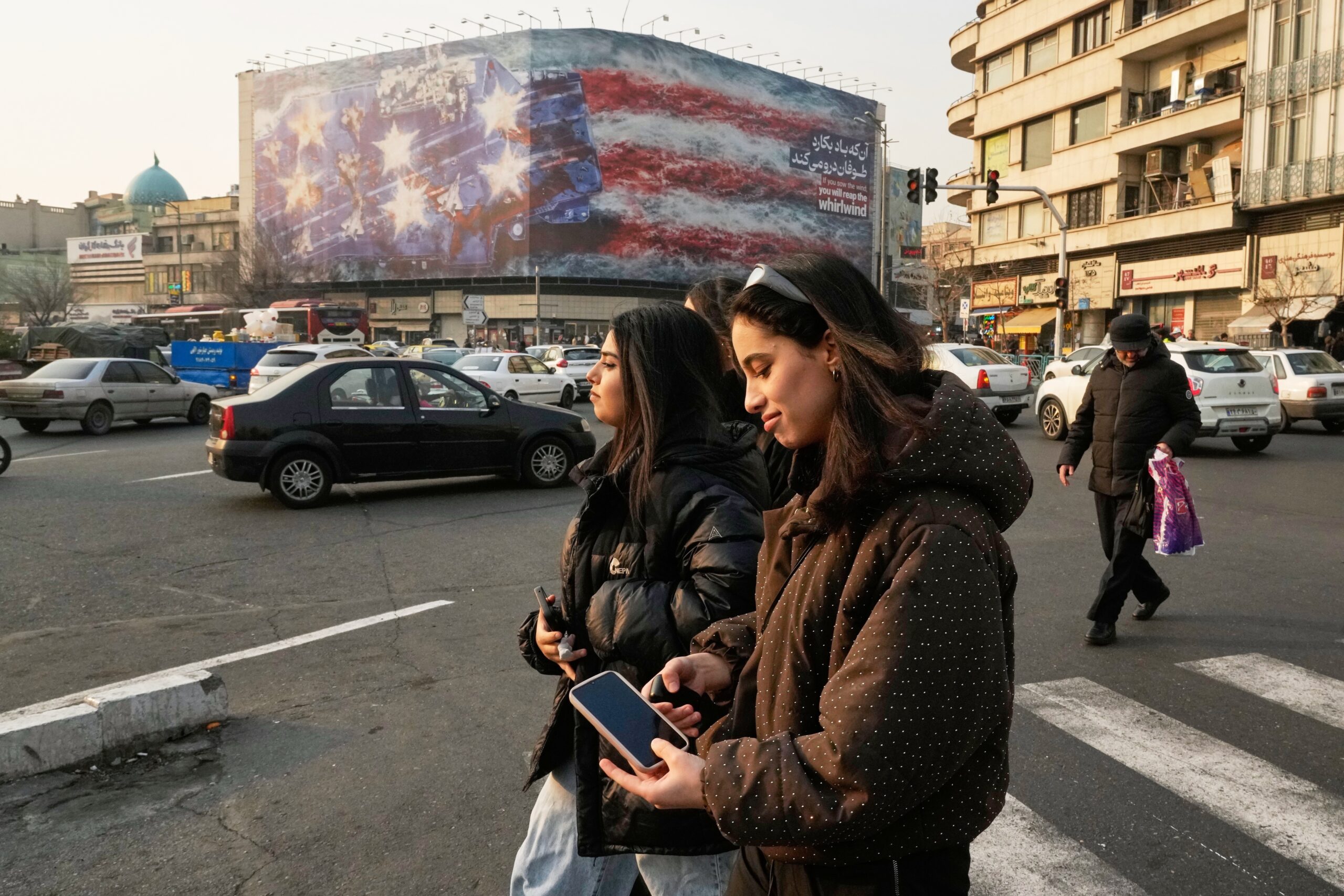
    Two girls, not wearing the legally required headscarves, walk past a billboard depicting a damaged U.S. aircraft carrier with disabled fighter jets on its deck and a sign reading in Farsi and English, “If you sow the wind, you’ll reap the whirlwind,” at Enqelab-e-Eslami (Islamic Revolution) Square in Tehran, Iran, Sunday.

    Instead, convinced of his own brilliance, surrounded by incompetent advisers, and possessed of a mistaken belief that he has the power to reorder the world, he has tweeted cheap rhetoric that only provoked more regime brutality on young people in the streets.

    The consequence of betraying Iran’s citizen uprising will have ripple effects that Trump is unable to foresee.

    “We’re in a very difficult situation,” I was told by Suzanne Maloney, a leading Iran expert who directs the foreign policy program at the Brookings Institution. “President Trump raised hopes without a strategy or the tools to carry it out. The tools [a massive U.S. armada dispatched to the region] have arrived too late to make a difference for the demonstrators on the street.”

    Now that the uprising has been crushed, Trump no longer mentions the murdered protesters. Compassion is not his thing.

    Instead, the president is seeking a deal with the ayatollahs to completely abandon their nuclear program, cut back their missile program, and stop meddling in the region.

    In other words, as in Venezuela, the regime could remain if it bowed to the United States. The demands themselves lay out highly desirable objectives, but the regime recognizes that meeting them would leave them totally at the mercy of the U.S. and Israel. So it will probably delay or reject them.

    Then what? Trump has likely boxed himself into conducting military strikes. Yet, bombs alone aren’t likely to unseat a government in which the military still has plenty of weapons and sees its fate as tied to the Islamic Republic. More likely, U.S. strikes would provoke a wider regional war, with attacks on U.S. bases in Arab countries and on Israel.

    “Trump sees Venezuela as a model,” Maloney said, and indeed POTUS has said so. But in Venezuela, the CIA had inside sources who betrayed Nicolás Maduro and made his extraction possible. Moreover, the United States had previous contacts with Maduro’s vice president, swapping one dictator for another so long as she was willing to let Trump control Venezuelan oil profits. One limited strike, no messy follow-up with ground troops.

    Iran, on the other hand, would be brutal, long, and messy, probably requiring U.S. ground troops, something Trump rightly won’t consider.

    A man holds a poster of the Iranian Supreme Leader Ayatollah Ali Khamenei during a funeral ceremony for a group of security forces, who were killed during anti-government protests, in Tehran, Iran, on Jan. 14.

    In Iran, said Maloney, “with the Revolutionary Guards and the clerical elite, there is not a pathway to a pro-Western leader who will bow to the U.S. They are going to go down fighting.”

    As for Reza Pahlavi, the son of the last shah of Iran, who has some popularity in Iran, he has lived in exile in the United States since the 1979 Iranian Revolution and has no organization inside his homeland. U.S. experience with overhyped Iraqi exiles in 2003 taught diplomatic officials a bitter lesson, about which Trump is probably totally unaware.

    Even if Iran’s supreme leader, Ali Khamenei, were miraculously slain, no one can guarantee what would come after. This is why the Saudis are urging Washington not to pursue regime change, and closing their airspace to any U.S. warplanes headed for Tehran.

    Meantime, the trials and future executions of protesters will go forward.

    So let me return to the bitter consequences of betraying allies who believed in the promises of the U.S.

    The Shiites of southern Iraq never forgot Bush 41’s betrayal, during which he allowed a defeated Saddam to retain military helicopters that were used to slaughter at least 10,000 of their people who had answered the president’s call.

    In 2003, just after the U.S. invasion, I returned to Najaf, the heart of Iraq’s south, where George W. Bush expected the Shiite population to welcome American troops. Instead, clerics and merchants recalled bitterly how their fathers and uncles had been slain in 1991. “You owe us,” one Najaf leader told me. “So kill Saddam and get out of Iraq, or we will turn on you, too.”

    Instead, we remained in Iraq for years, and Shiite militias ultimately took revenge on our soldiers for the earlier betrayal.

    Perhaps the population of Iran will be more forgiving if Trump devises a strategy that will help them, not cause more slaughter. But he doesn’t have much time.