Author: Trudy Rubin

  • Trump’s slurs vs. allied soldiers who died in Afghanistan shake NATO

    Trump’s slurs vs. allied soldiers who died in Afghanistan shake NATO

    Words matter.

    With his nonstop litany of lies and insults, President Donald Trump appears to believe no one will remember what he said yesterday or last week (perhaps he can’t recall, either).

    Yet, just as Americans won’t forget how Kristi Noem smeared Minneapolis nurse Alex Petti as a “domestic terrorist,” European allies won’t forget the most outrageous slur Trump hurled at them at the World Economic Forum in Davos, Switzerland.

    It was a falsehood so painful that it drew criticism from European political parties of the left and right, and even provoked a private caution from Britain’s King Charles III.

    It was an insult so outrageous that it has probably alienated the British and other European publics more than any previous Trump attack.

    Donald Trump, a man who avoided Vietnam service by claiming he had bone spurs, spat on the sacrifice of European soldiers who died fighting alongside American troops in Afghanistan.
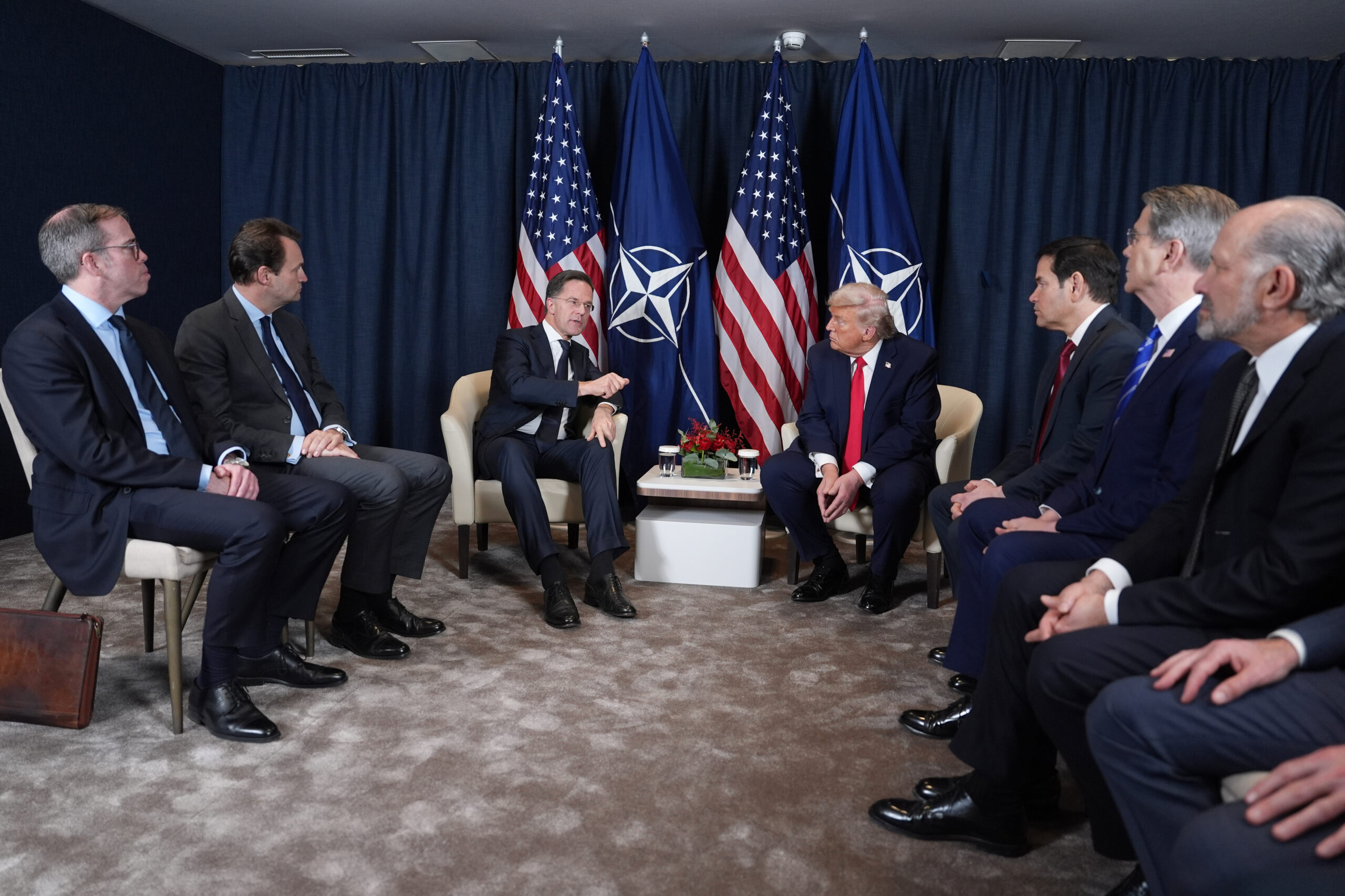
    President Donald Trump meets with NATO Secretary General Mark Rutte (center left) during a meeting on the sidelines of the annual meeting of the World Economic Forum in Davos, Switzerland, on Jan. 21.

    In his Davos speech, Trump mocked NATO and questioned whether the alliance would “be there for us” if the United States needed help — even though European members of NATO rushed to support the U.S. in the wake of 9/11.

    Adding insult to injury, the president falsely claimed on Fox News that the NATO allies “stayed … off the front lines” in Afghanistan.

    Tell that to the families of the 1,160 allied troops who died in the hottest Afghan combat zones, alongside 2,461 fallen Americans. That’s not counting the many thousands of wounded.

    Although the U.S. military took the highest losses, many smaller NATO members came close to or even exceeded the proportion of dead to their population.

    Imagine how Trump’s words affected the mother of Danish machine-gunner Sophia Bruun, killed in action in 2010 at the age of 22, who fought alongside British army troops in the battlefront province of Helmand.
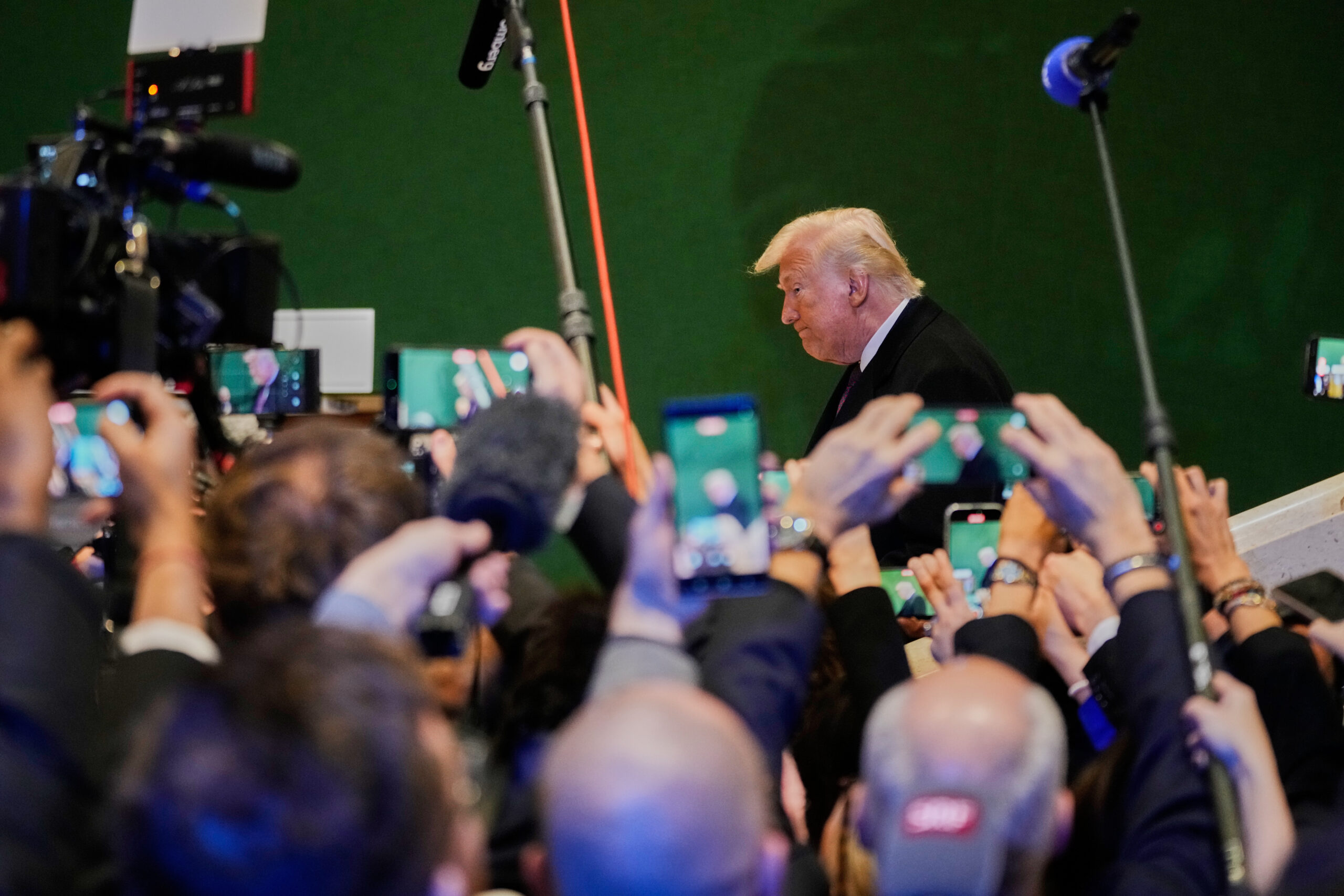
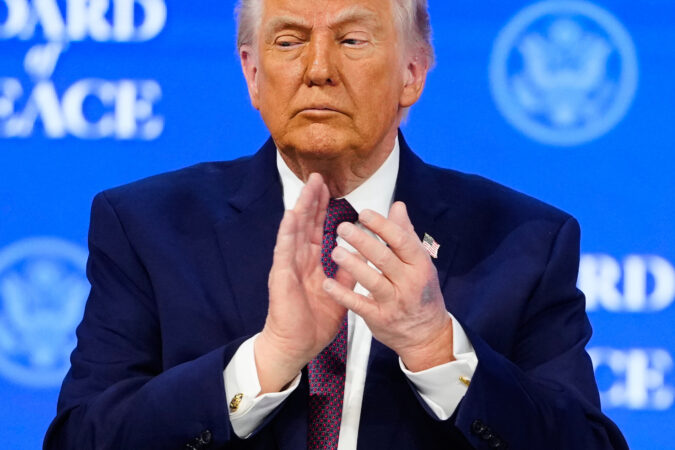
    President Donald Trump attends the annual meeting of the World Economic Forum in Davos, Switzerland, Thursday.

    Denmark, with 44 dead, some from Greenland, and a population of only five million, suffered the highest per capita casualties in the allied coalition. (Yet, even as he denigrated Danish dead, Trump was demanding that Copenhagen, long one of America’s closest allies, turn over Greenland to the United States.)

    Former U.S. Ambassador to NATO Nicholas Burns nailed it when he tweeted: “Shameful comments, I visited NATO troops in Afghanistan. Denmark and Canada fought on the front lines with us and suffered major casualties. We need our allies but are driving them away.”

    After Trump’s denigration of fallen allies, social media was inundated with photos of the fallen and their grieving families, along with pictures of Brits, Canadians, Norwegians, Danish, and other allies bearing the caskets of their war dead back to their home countries.
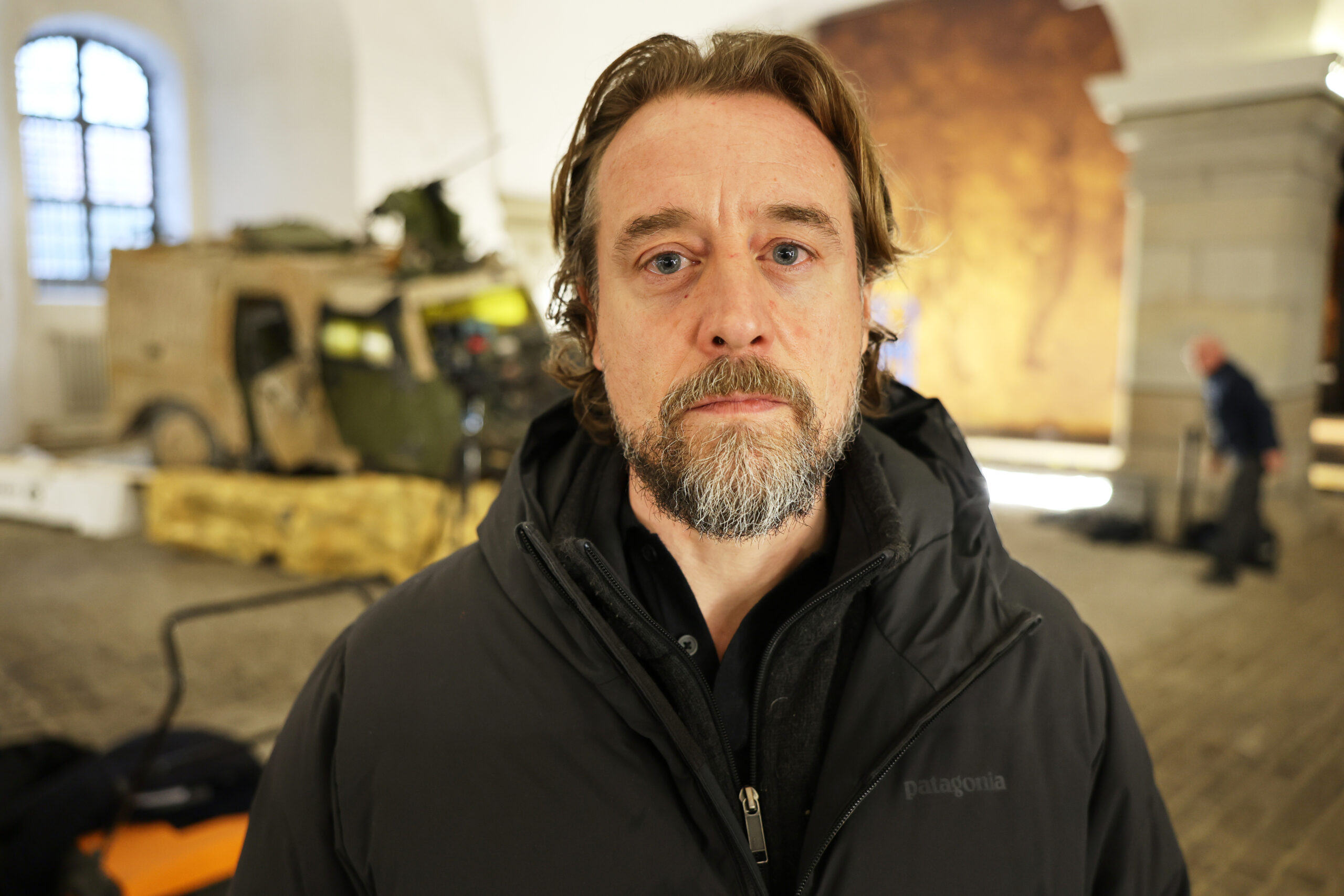
    Former Danish platoon leader Martin Tamm Andersen said that President Trump’s efforts to annex Greenland are “a betrayal of the loyalty of our nation to the U.S. and to our common alliance, NATO.”

    Danish platoon commander Martin Tamm Andersen, who fought with U.S. Marines in Helmand and was nearly killed when his tank was destroyed, told the Associated Press: “When America needed us after 9/11, we were there. As a veteran and as a Dane, you feel sad and very surprised that the U.S. wants to take over part of the Kingdom of Denmark.”

    “It’s a betrayal of the loyalty of our nation to the U.S. and to our common alliance, NATO,” he said.

    The Brits, who lost 457 troops and sent 150,000 personnel to Afghanistan over the course of the U.S.-led war, were even more viscerally upset by Trump’s scorn for the sacrifices of their service members.

    British media was full of angry comments by families of the dead and wounded, like those of Diane Dernie, whose son sustained horrific injuries in Afghanistan in 2006, and who spoke to the Guardian. She urged British Prime Minister Keir Starmer to “call Trump out” and said his comments were “beyond belief.”

    Starmer did call Trump out, stating bluntly, “I consider President Trump’s remarks to be insulting and frankly appalling, and I’m not surprised they caused such hurt to the loved ones of those who were killed or injured.” The British leader called for a Trump apology. None has been offered.
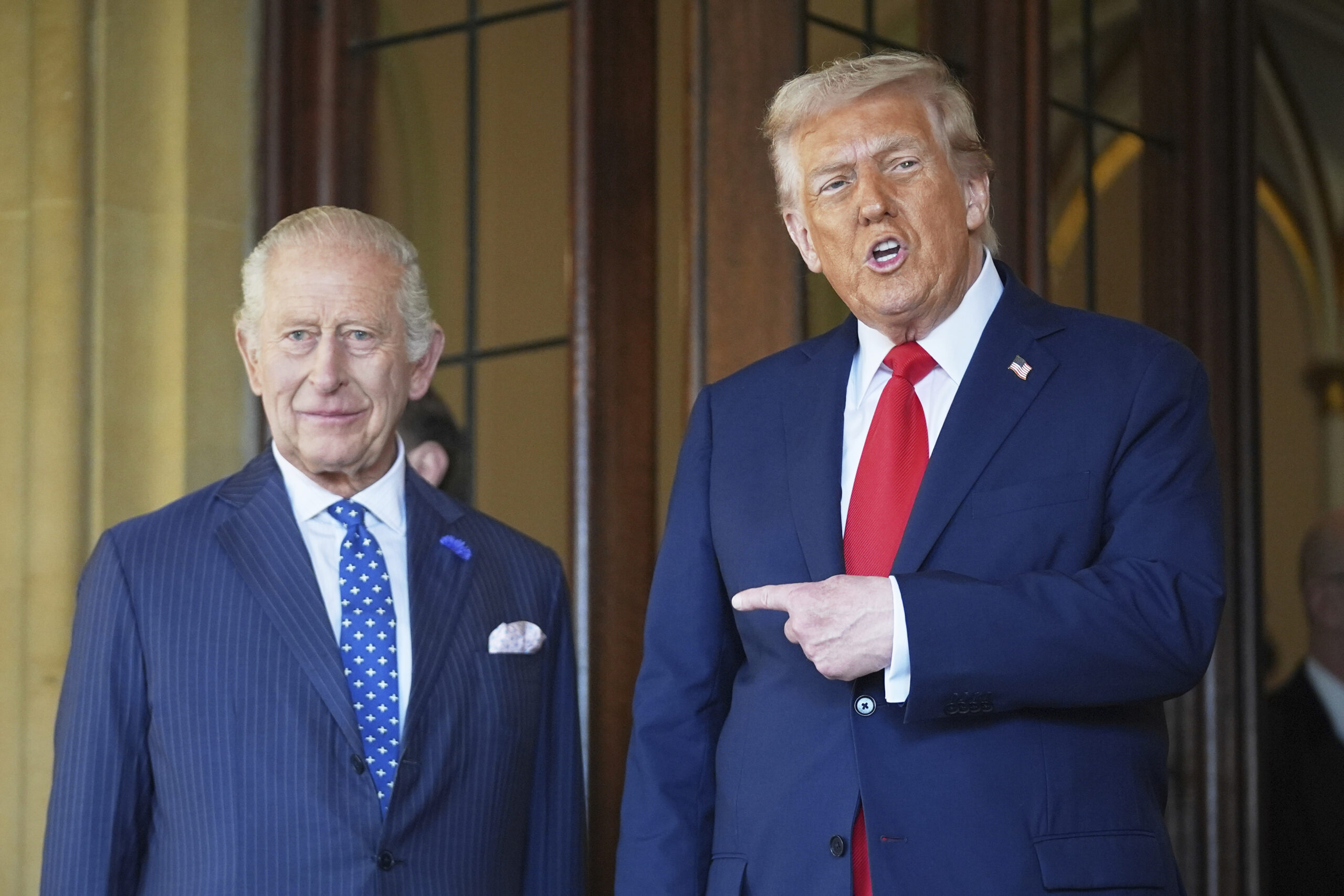
    Britain’s King Charles III privately conveyed his concerns about President Trump’s comments at the Davos summit.

    Prince Harry, who served two frontline tours in Afghanistan, also weighed in, stating that the “sacrifices” of British soldiers “deserve to be spoken about truthfully and with respect.”

    But it was only when Charles III privately conveyed his concerns to the monarch-loving Trump that the president did an about-face and publicly complimented the “GREAT and VERY BRAVE” British forces.

    But an apology? Nope, nada. Not even to the king.

    Nor has POTUS apologized to the American fighters who battled alongside Brits, Canadians, Danes, and other allied forces in Afghanistan and Iraq, and feel insulted, as well.

    I asked best-selling author Elliot Ackerman, a former Marine and CIA special activities officer who served five tours in Iraq and Afghanistan and was awarded the Silver Star and the Bronze Star for Valor, how Trump’s words affected him.

    “It’s beneath the dignity of his office to question the contributions of military allies who came to our aid and spilt their blood, particularly for a commander in chief who has never served,” Ackerman responded. “If I were the mother of a British Marine who died in Helmand …” He hesitated, then continued: “It’s reprehensible. It’s gross.”

    Of course, it’s even more grotesque given that, during his first term, Trump sneered at Americans who died in war as “losers and suckers,” and asked that wounded veterans be kept out of military parades. As Ackerman noted, “If given the opportunity, he will disdain the U.S. military when it serves his purpose.” The former Marine recalled how Trump insulted Sen. John McCain for having been captured in Vietnam, and now disparages former combat aviator and astronaut Sen. Mark Kelly.

    Indeed, Trump’s shameful insults to allied troops are a reflection of how he has misused U.S. armed forces, sending National Guard members into cities to chase peaceful immigrants, and letting U.S. Immigration and Customs Enforcement serve as a rogue militia for the White House’s political ends. He is slightly backing off from the ICE scandal in Minneapolis only because the militia’s sins are costing him polling points.

    With his sneers at foreign troops who sacrificed for America, Trump has done more than alienate America’s closest allies. His words send a message to all Americans: POTUS admires soldiers, both U.S. and foreign, not for what they can do for our country, but only for what they can do for him.
  • European and business leaders force Trump to reverse course on threats to Greenland

    European and business leaders force Trump to reverse course on threats to Greenland

    Donald Trump’s sudden retreat from his military and economic threats to seize Greenland from NATO ally Denmark shows it is still possible to block the president from further foreign policy folly.

    Trump did a complete U-turn at the World Economic Forum in Davos, Switzerland, shortly after berating European allies and NATO in a lengthy, lie-filled speech, insisting he must “own” Greenland. Just two hours later, after a meeting with NATO Secretary General Mark Rutte, the president suddenly announced he had a “framework” for a deal that would satisfy all U.S. needs.

    Make no mistake. No matter how the White House spins Trump’s sudden about-face, he staged a total climb-down from a mess of his own making. Based on early reports, he got almost nothing he couldn’t have agreed on with Denmark months ago, based on a 1951 treaty that permits the U.S. to open multiple bases in Greenland.

    All Trump’s bluster achieved was to totally alienate America’s European allies and deeply wound the NATO military alliance, whose help he needs to block Russian and Chinese aggression in the Arctic and elsewhere.

    So what caused Trump’s sudden reversal? No one can penetrate the president’s aging brain, but the likely reasons have to do with economics and his base, the only factors that seem to move him.

    The financial markets tanked early this week from fear that Trump would invade Greenland. No doubt tech moguls at Davos were warning him. New polls also showed 90% of Americans opposed an invasion.

    Yet, as late as Wednesday afternoon, he was insisting, in his Davos speech, on the need for “title and ownership” of Greenland, and was threatening to impose new tariffs on Denmark and other European allies if they didn’t surrender. “You need the ownership to defend [Greenland],” Trump contended. “Who the hell wants to defend a license agreement or a lease?”

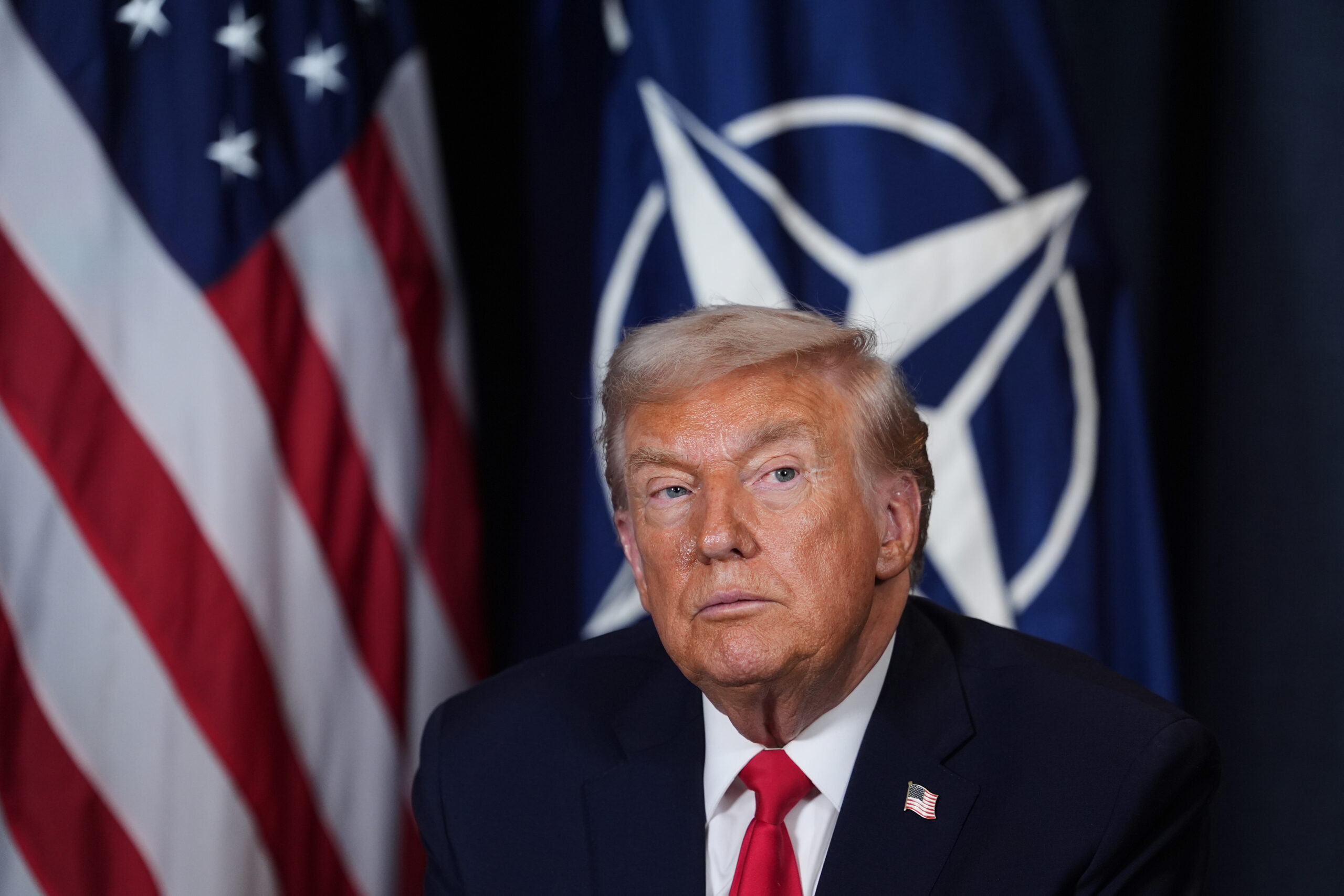
    President Donald Trump during a meeting with NATO Secretary General Mark Rutte on the sidelines of the annual meeting of the World Economic Forum in Davos, Switzerland, on Wednesday.

    Parse those words, and you see they intimate an end to NATO and its Article 5 defense mechanism. After all, if the U.S. doesn’t own Poland or the Baltics or Finland, why should Trump defend them if Russia ever attacks?

    Still, even in his aggressive speech, Trump was hinting he was seeking an off-ramp, stating he wouldn’t use force.

    No doubt he recognized that, despite his open disdain for Europe, its key leaders had abandoned their conciliatory stance and were determined to strike back economically. Last week, the European Union discussed imposing $108 billion worth of retaliatory tariffs on the U.S., as well as restricting American companies from the bloc’s market. The EU-U.S. trade deal agreed to last July was also put on hold.

    European leaders had been reluctant to wage such a trade war, but recognized they had no choice, as Trump threatened the future of the NATO alliance. Instead of focusing on the immediate security threat to the West — namely, Vladimir Putin’s war on Ukraine — Trump was helping the Kremlin by splitting with his European allies.

    Instead of working with Canada and other allies whose territory abuts the Arctic, the White House leader was telling them to get stuffed. No wonder the language heard from once close European allies at Davos was unlike anything heard since NATO was founded.

    “Until now, we tried to appease the new president in the White House, hoping to get his support for the Ukraine war,” admitted Belgian Prime Minister Bart De Wever. “We were dependent on the United States. But now so many red lines are being crossed … Being a happy vassal is one thing, being a miserable slave is something else.”

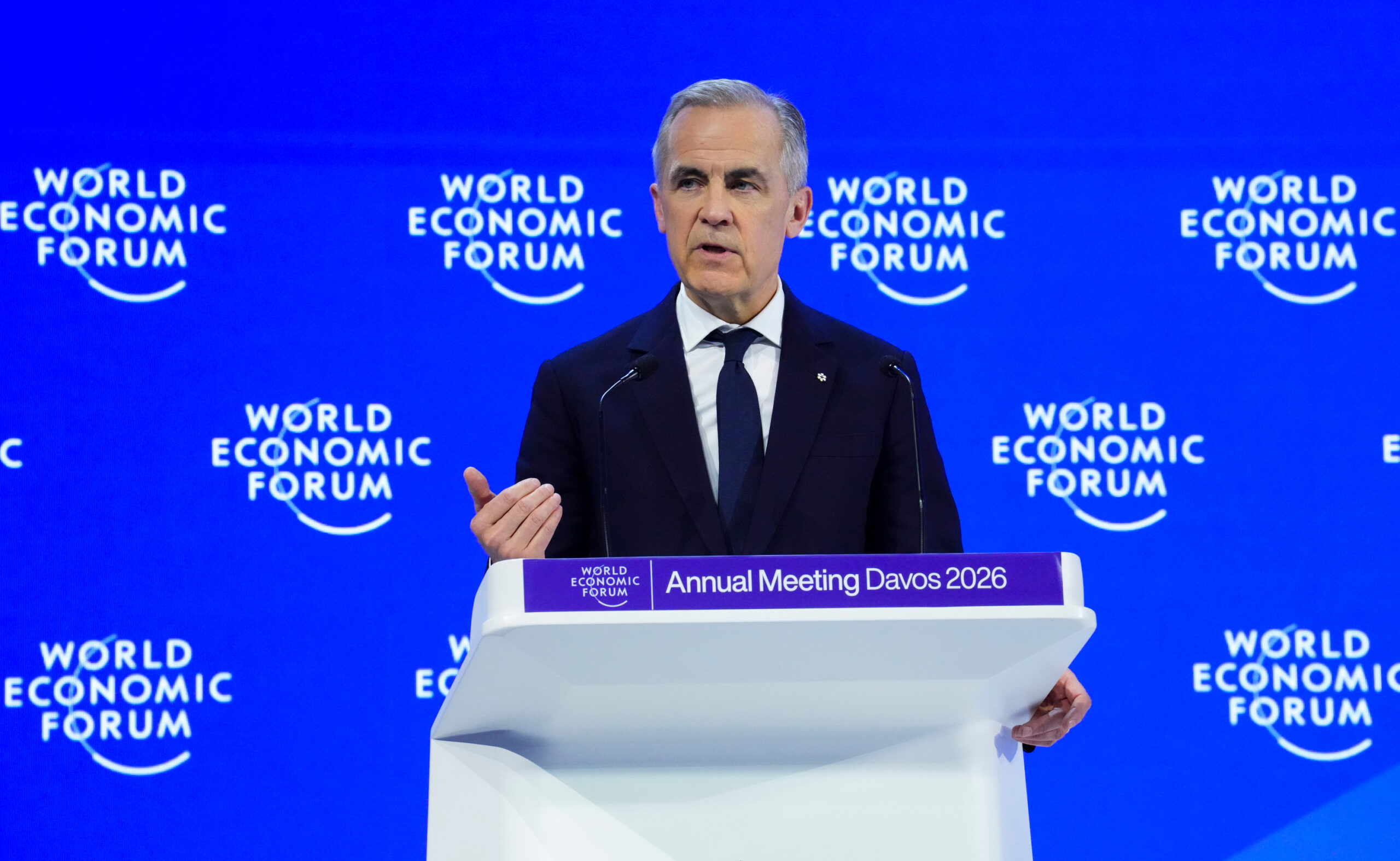
    Even more blunt was Canadian Prime Minister Mark Carney (whom Trump later threatened for his critique).

    Canada Prime Minister Mark Carney delivers a speech at the World Economic Forum in Davos, Switzerland on Tuesday.

    “The United States under President Donald Trump is no longer a reliable or predictable ally,” Carney said frankly. “We are in the middle of a rupture in the world order … where the large, main power … is submitted to no limits, no constraints.”

    Intermediate powers like Canada, however, “are not powerless,” Carney added. Acting together, Canada and European leaders helped force Trump to face that reality this week.

    But the fight over Greenland, and the future of NATO, is far from over, and Trump’s retreat may only be temporary. Denmark and Greenland may or may not agree that the U.S. can have sovereign rights to the territory housing new military bases (a provision under discussion).

    Denmark will not sell or surrender Greenland, however. In fact, there will be no deal at all unless Copenhagen and Greenland approve the terms.

    Moreover, as was clear at Davos from Trump’s speech and actions, he still believes he is the most brilliant leader the world has ever witnessed, which leaves him wide open to Russian and Chinese manipulation.

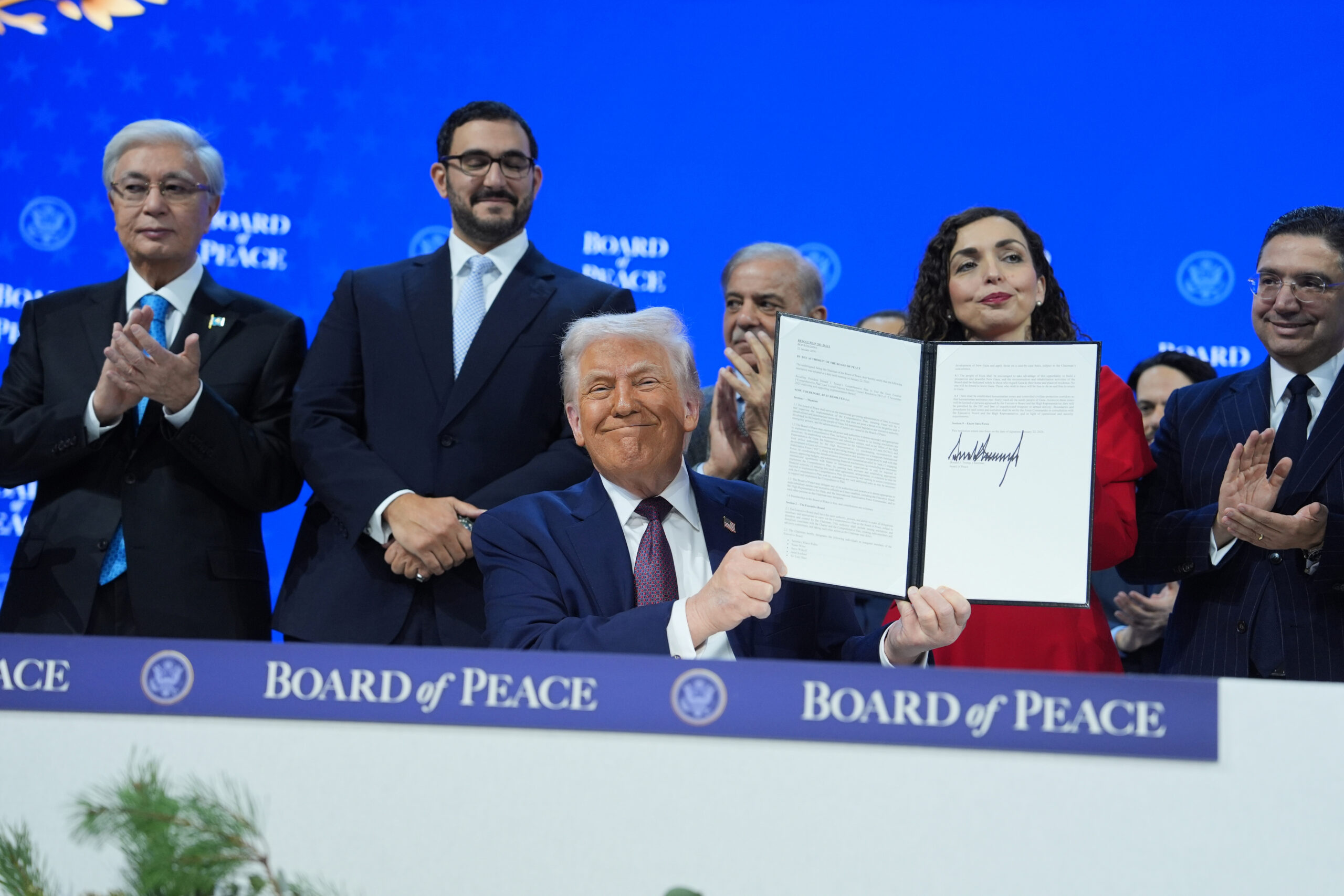
    Nothing so clearly illustrated the president’s megalomania as his inauguration of a so-called Board of Peace. Originally envisioned as a group of world leaders overseeing Gaza’s reconstruction, the board’s newly released charter doesn’t even mention Gaza, but presents its mission as an alternative United Nations, tasked with making peace around the world.

    In reality, it is a mammoth Trump vanity project: He heads the board, and its every action is subject to a presidential veto, according to its charter.

    President Donald Trump holds up a signed Board of Peace charter during the annual meeting of the World Economic Forum in Davos, Switzerland, on Thursday.

    The 20-plus initial participants were mostly Mideast sheikhs, emirs, and kings who can pay the $1 billion fee for permanent membership, along with several other autocrats and military-backed rulers. (The only Europeans signed up so far are pro-Russia Hungary and Bulgaria.)

    War criminal Putin, busy bombing Ukraine’s civilian infrastructure to smithereens, may accept his invitation to the peace board if the United States releases $1 billion in frozen Russian assets to pay the fee. This, according to the Kremlin.

    Meantime, Trump’s son-in-law, Jared Kushner, gave a slide presentation in Davos describing how Gaza could become a futuristic city with apartment towers and resorts in two to three years, a reprise of Trump’s earlier pitch for a Gaza Riviera. This, while the Gaza ceasefire is falling apart, and Israel has banned scores of humanitarian agencies from delivering food or medical treatment to desperate civilians.

    Trump’s link to reality is so tenuous that the president could still resume his war on NATO. Instead of benefiting from his successful push for Europeans to spend more on defense, he may prefer to fight Europeans while conciliating with Russia.

    European allies have finally demonstrated that a unified stand can check some of Trump’s foreign policy delusions. Gutless GOP senators and business leaders who moan privately about Trump’s madness but shut up in public should take note.

  • The madness of King Trump threatens U.S. and global security

    The madness of King Trump threatens U.S. and global security

    Donald Trump now believes he is the master of the universe, not just of the United States and the Americas. This is not hyperbole.

    The president’s determination to seize Greenland from Denmark by bullying or force, his threats to NATO allies, his obsession with the Nobel Peace Prize, the ego-driven list goes on. His speeches and posts reveal a man convinced he is the world’s most brilliant leader, who can split control of the world with Vladimir Putin and Xi Jinping and best both.

    The madness of King Donald has metastasized to the point where it threatens U.S. and global security — unless GOP members of Congress, sane business leaders, and five sober Supremes move to curb him.

    Don’t take my word for how dangerous Trump has become. Take Trump’s.

    “We are going to do something on Greenland whether they like it or not,” he told the press this month. “One way or the other, we’re going to have Greenland.” Never mind that taking Greenland would put the U.S. at war with its NATO allies, including the island’s owner, Denmark.

    Trump has already pledged to slap new tariffs on Copenhagen and seven European allies who support the Danes.

    This is nuts. A 1951 treaty basically lets the U.S. put as many troops and bases in Greenland as it wishes. The island’s government is eager for U.S. investment to mine rare minerals. Yet, the president is ready to destroy NATO, and possibly fight with our closest allies, whose help and Arctic experience are essential to protecting Greenland from Russia and China.

    The only ones to benefit from Trump’s Greenland obsession are Putin and Xi, as they sit back and watch him destroy the NATO alliance they have been eager to shred for decades.

    Indeed, Russian officials and talking heads are exulting over America’s self-destruction, which shifts attention away from Moscow’s ongoing, massive attacks on Ukraine’s urban centers, trying to destroy all electricity and heating during a brutal winter.

    “It would have been difficult to imagine something like this happening before,” Russian Foreign Minister Sergey Lavrov told journalists this week, gloating that Trump’s actions diminished the “prospects of preserving NATO as a unified Western military-political bloc.”

    In other words, Trump’s Greenland mania is undermining U.S. security at a rapid clip. His foolishness raises the possibility of NATO allies shooting at each other, rather than working together to block Russia’s desire for territorial expansion. The White House is putting America in league with Moscow as an aggressor willing to invade or coerce a neighbor into handing over territory.

    And for what reason? So that Trump can boast he has made the best land grab since the Louisiana Purchase?

    The president hints at this with a doctored photo on Truth Social, which shows European leaders in his office looking raptly at a map of Canada, Greenland, and Venezuela covered with American flags.

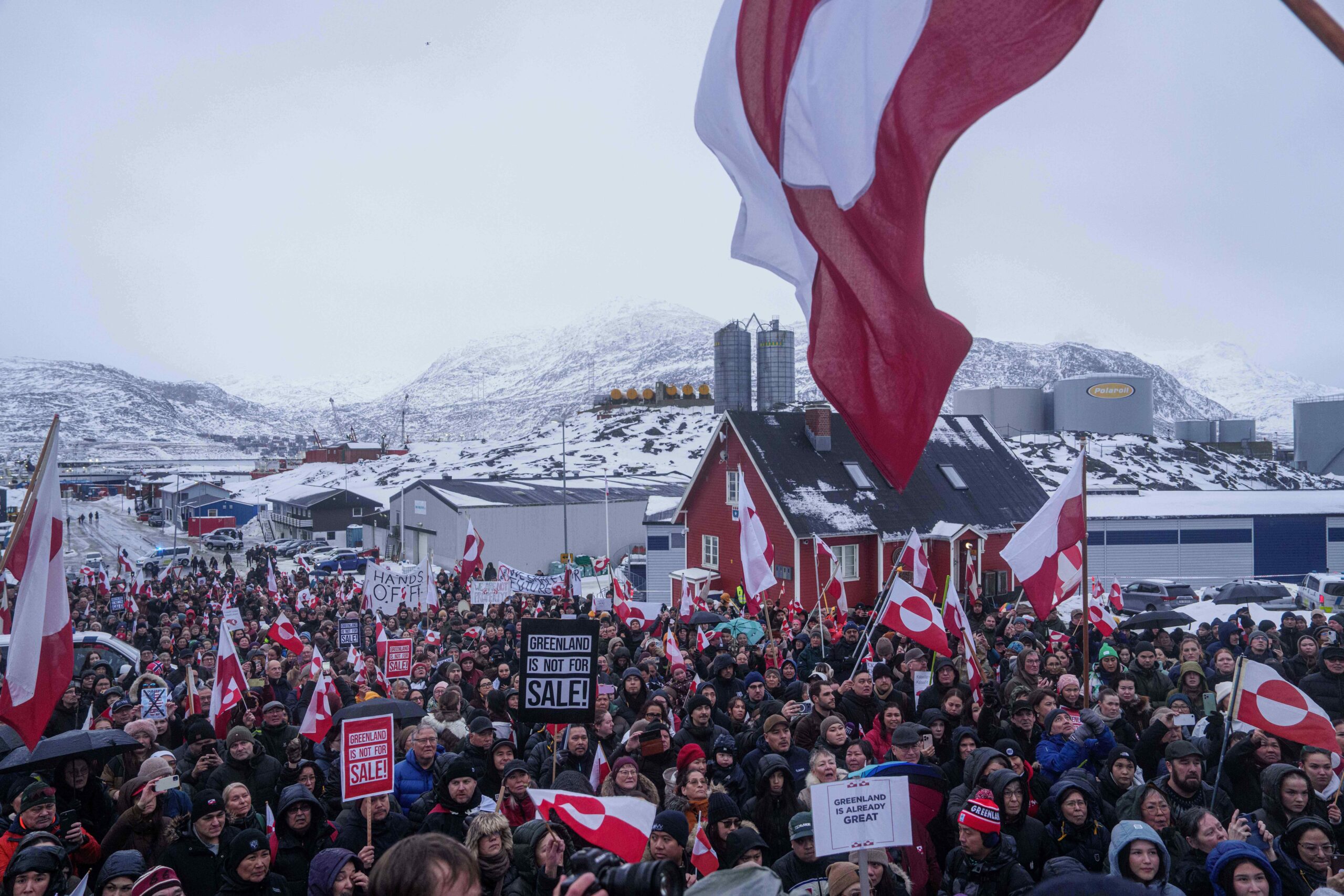
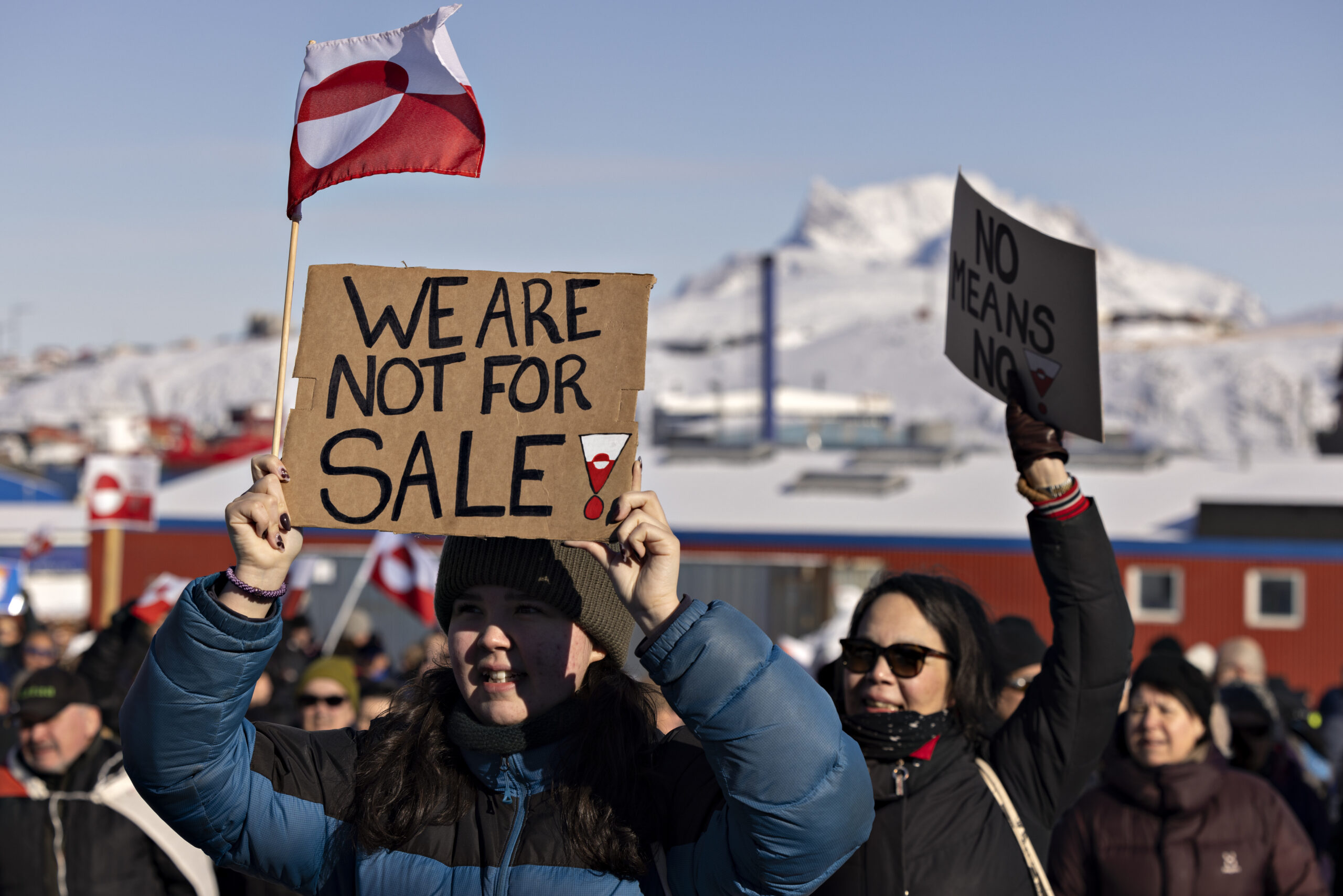
    People protest against Donald Trump’s policy toward Greenland in front of the U.S. Consulate in Nuuk, Greenland, on Saturday.

    Buoyed by the U.S. military’s kidnapping of Nicolás Maduro (a one-off extraction bearing no resemblance to seizing a NATO ally’s territory), Trump acts as if he believes he can grab anything he wants.

    For the 79-year-old president, the signs of dementia — or an ego gone wild — are expanding.

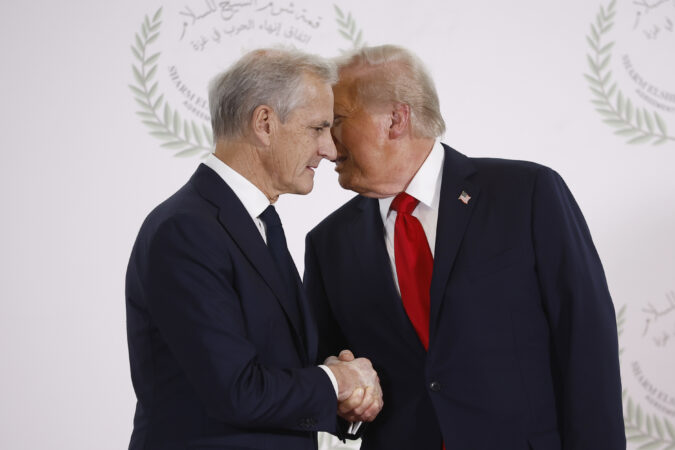
    Boiling with frustrated desire for the Nobel Peace Prize, Trump wrote the Norwegian foreign minister that Oslo’s decision “not to give me the Nobel Peace Prize for having stopped 8 Wars PLUS” was to blame for his aggression toward Denmark. Due to this insult, the president claimed, “I no longer feel an obligation to think purely of Peace … but can now think about what is good and proper for the United States of America.”

    When the Norwegian leader replied that the Nobel was awarded by an independent committee, not the government, Trump insisted this was false. He appeared oblivious to how this churlish behavior makes him and our country look idiotic. All the more so because Trump’s repeated claim about stopping eight wars is a complete falsehood.

    Trump achieved several temporary ceasefires in outbreaks of border violence in Africa, the Caucasus, and Asia, but ended no wars. And the best-known of those ceasefires, in Gaza, is already falling apart.

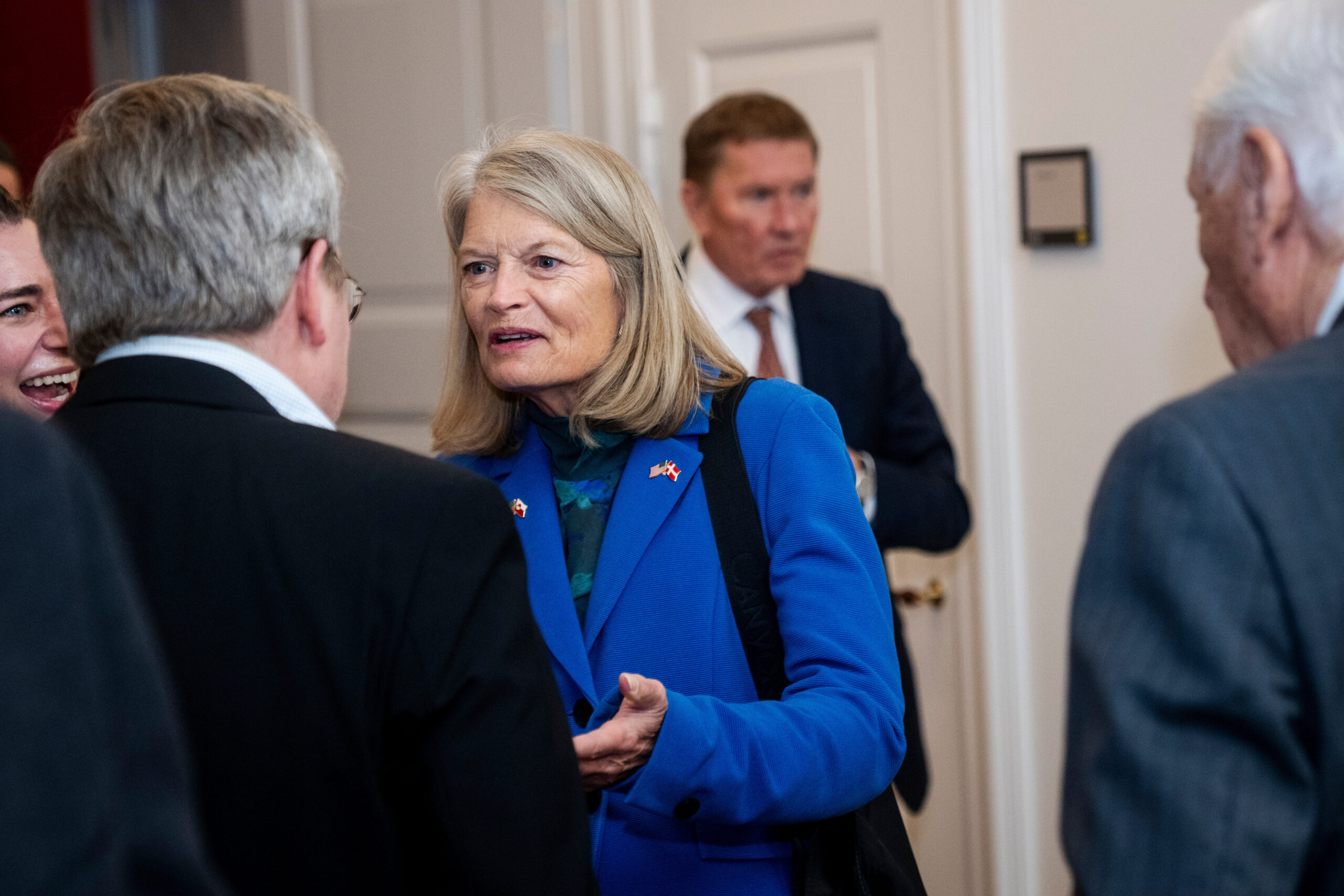
    Sen. Lisa Murkowski (R., Alaska) arrives as members of the Danish Parliament and a Greenlandic committee meet with American members of Congress at the Danish Parliament in Copenhagen, Denmark, on Friday.

    Yet, this week at the World Economic Forum in Davos, Switzerland, the president will unveil his putative “Board of Peace,” a proposed group of top global leaders who would preside over an unwieldy, as yet nonexistent series of subordinate structures tasked with rebuilding and setting up a government for Gaza.

    This concept was endorsed by the U.N. Security Council specifically to deal with Gaza. But in a bait-and-switch, the White House has crafted a charter that ignores Gaza; instead, this aspirational board appears aimed at replacing the United Nations in dealing with global hot spots. At every turn, according to the charter, its players and committees would be subject to Trump’s final control.

    The president has already invited Putin, that great Russian peacemaker, to join the board.

    The top level of the group is supposed to consist “exclusively of heads of state and government” under Trump’s leadership. It’s unclear how many will join. Consider that the entrance fee for full membership is $1 billion, apparently creating a slush fund with no visible rules on whether it will be spent at Trump’s sole discretion.

    What is clear is that Trump’s war on NATO allies and his embrace of Putin — along with his affection for the dog-eat-dog system that led to two world wars — are the work of a president who has lost all moorings. Add to that the economic blindness of a man who, when warned of the grave cost of subordinating the independent Federal Reserve Bank to his political will, responded, “I don’t care.”

    Trump’s behavior is that of a self-appointed Sun King, who is not only convinced that “L’État, c’est moi” but “Le monde, c’est moi.” Unless this madness is checked soon by the other government branches, America may be reverting to the kind of world most of us never imagined we’d face.

  • The view from Greenland: Trump’s yen to take over makes no economic or security sense

    The view from Greenland: Trump’s yen to take over makes no economic or security sense

    Here’s the glaring sign of how drunk President Donald Trump has become on his own power: his ongoing threat to seize Greenland for security reasons, “whether they like it or not.” Anything else is “unacceptable,” Trump ranted last week.

    Never mind that this icebound island is an autonomous territory of Denmark, one of our longest-standing and closest NATO allies. POTUS is trying to bludgeon Copenhagen, along with seven other European allies who back the Danes, by imposing new 10 per cent tariffs on them all unless they bow to his outrageous demands.

    Never mind that seizing Greenland via economic coercion or force would destroy the NATO alliance, handing Russia and China a major victory at zero cost. Never mind that polls show that only one in four Americans want Trump to take control of Greenland, and only 6% of Greenlanders want to become part of the United States.

    The most absurd part of Trump’s crusade is that there is no need to seize or buy Greenland for U.S. security or rare earths as we already have full access to both.

    Yet, Trump is not only treating Denmark like an enemy but openly rebuffing the rights of Greenland’s government and people, who, according to Danish law have the final say about their future.

    To learn more about what Greenlanders want and why Trump’s approach draws outrage, I turned to Galya Morrell, a Greenlander of Komi ethnic origins, who was raised in the Soviet Arctic. She has led an amazing life in journalism, the arts, and Arctic adventures, alongside her late husband, the renowned Greenlandic explorer Ole Jørgen Hammeken.

    Our conversation has been edited for length and clarity.

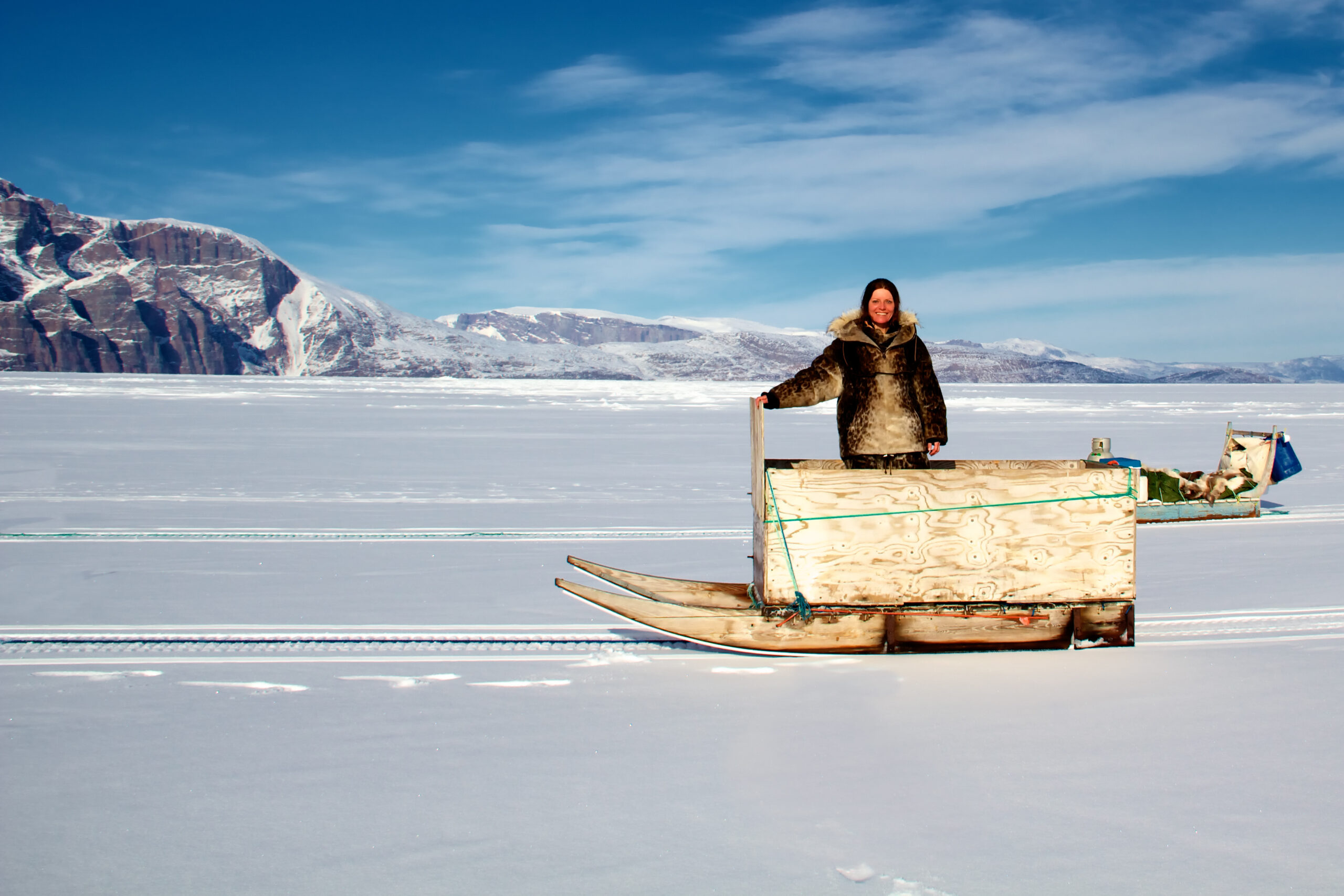
    Galya Morrell stands by her husband’s box sled, which was used to transport killed game, atop the frozen sea ice of Uummannaq Fjord in Northern Greenland.
    ⁠What was the first reaction of most Greenlanders to Trump’s proposal to take control of Greenland?

    When we heard about Trump’s proposal during his first term, everyone took it as a joke. Back then, we still lived in a world where logic mattered. How can you buy a country? What about people living there? Many people saw The Apprentice, that’s how they knew Trump, so they thought that maybe he was going to make a new season about Greenland after he retires from his presidency, and some young aspiring actors were asking if they can join the show.

    ⁠Do they take Trump seriously now, especially after Venezuela?

    Now it’s different. I don’t think that Venezuela played a big role in their perception, because already, people knew that Trump became obsessed with Greenland. At first, people thought that maybe it was even good for Greenland, because finally — finally — Denmark started taking Greenland seriously. Before, many Danes saw Greenlanders as a bunch of drunks and useless folks, which they aren’t, and a burden for Denmark. After Trump said he wanted it, many Danes changed their mind.

    Trump also accidentally woke up Greenlandic nationalism because the Greenlandic independence movement was sleepy and divided. Now there was a foreign bully. Nothing unites people faster than someone who treats them like furniture in the new condo purchase. Suddenly even Denmark looked like a shield [against Trump] instead of a cage.

    A 1951 pact with Denmark offers the U.S. almost unlimited military access on land, air, and sea. As for mining hard-to-access critical minerals, Greenland’s government would eagerly welcome U.S. investment. So what is your take on what Trump really wants?

    About 20,000 U.S. soldiers and technicians were based in Greenland [after World War II] and then suddenly they were all gone. Today only Pituffik Space Base [the former Thule Air Base] is still around with some 150 personnel. So why did the US not bring them back when it was clear that Russia rebuilt and upgraded all the former Soviet bases in the Arctic and became a threat in the region?

    The United States already had Greenland, quietly, through contracts, bases, and the gravitational pull of English. But none of that had Trump’s name on it. And if your name is not on something, do you even own it?

    It appears that [Trump’s need for ownership] is not logical but psychological. I think that his understanding of success or power is only when “there is a deal,” and when someone loses face — very important! And when he gets credit — even more important. Soft power, which America had in Greenland until recently, looks like nothing to him. Because none of what existed had Trump’s name on it.

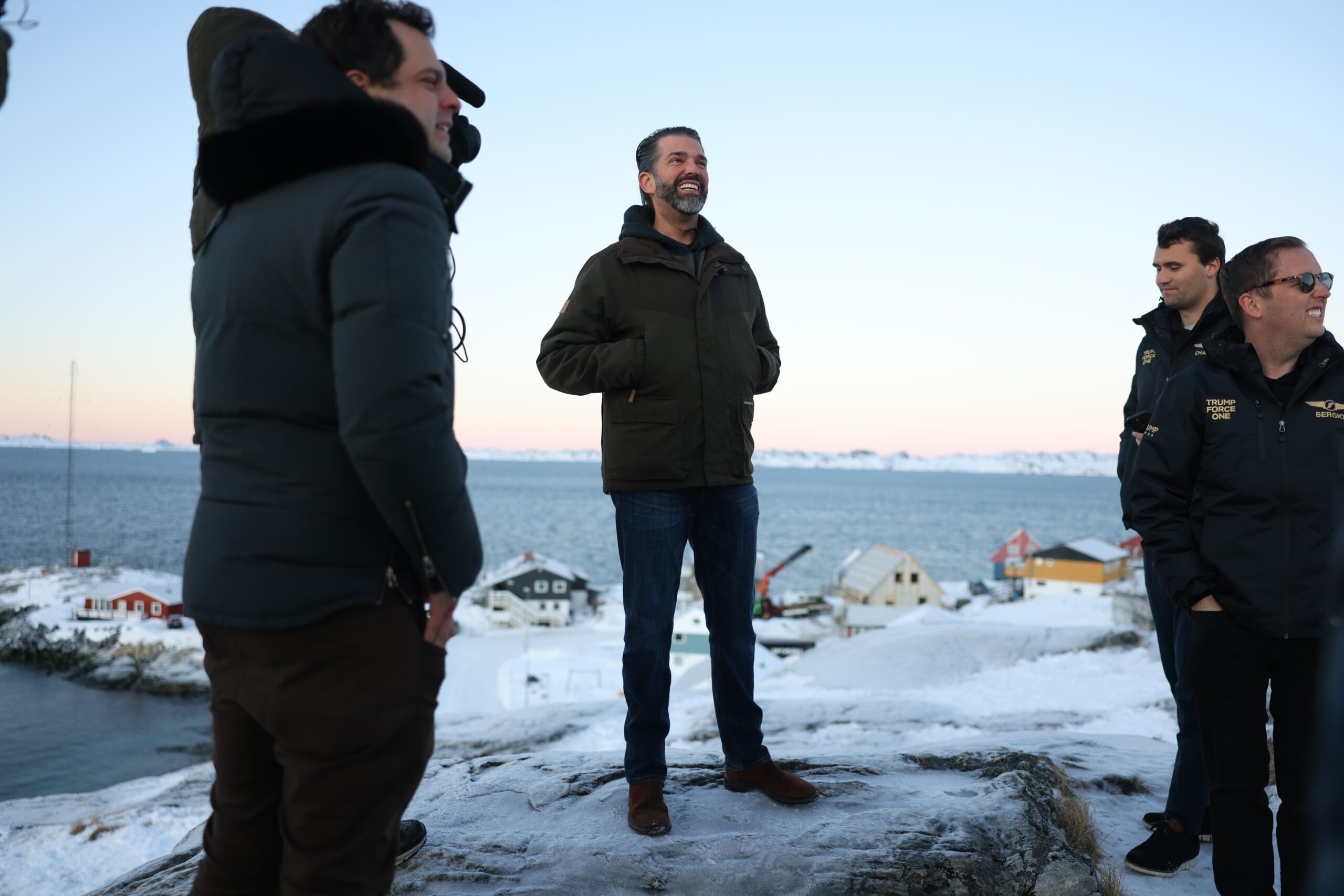
    Donald Trump Jr. (center) smiles after arriving in Nuuk, Greenland, in 2025.
    Are there Trump influencers (or suspected intelligence agents) roaming around, trying to find or buy supporters?

    As a family, we have not seen or met the “agents,” but we certainly saw some people in Nuuk, following Donald Trump Jr.’s visit a year ago, giving money and red MAGA hats to the youngsters, schoolkids, and making them say things on camera. Parents were outraged when they saw their own kids on TV, but it was too late.

    ⁠What really happened when Trump Jr. visited? Why was he so eager to talk about Greenland?

    My late husband, an Inuit elder and explorer, was asked to meet Trump Jr. back in 2015. He wanted to hunt musk ox in Greenland, but not where average tourists hunt. So my husband said that there are a lot of musk oxen around Hammeken Point [a mountain named after him], and he could take him there and be his guide.

    They were planning the expedition for a while, until one day Junior said that he can’t go because his dad decided to run for the presidency. Later, my husband thought that maybe it was all his fault for telling Junior exciting stories about Greenland and about what was hidden there under “all this ice,” and maybe that somehow affected Trump’s father’s interest.

    ⁠Some Trumpers think Greenlanders can be bought. Are some interested?

    We hear rumors that he is thinking of paying $100,000 to each Greenlander. Well, it’s not a lot of money, a boat costs around that, and who will sell the country for the price of a boat? But seriously speaking, today, everyone whom I know says firmly no. There is no price tag, no matter how much. The country is not for sale.

    But we live in a strange world, so I don’t know what will happen for sure. [Opposition leader] Pele Broberg is saying out loud what many politicians think quietly: that Greenland is already being pulled into the American orbit, and that it might as well try to get paid for it.

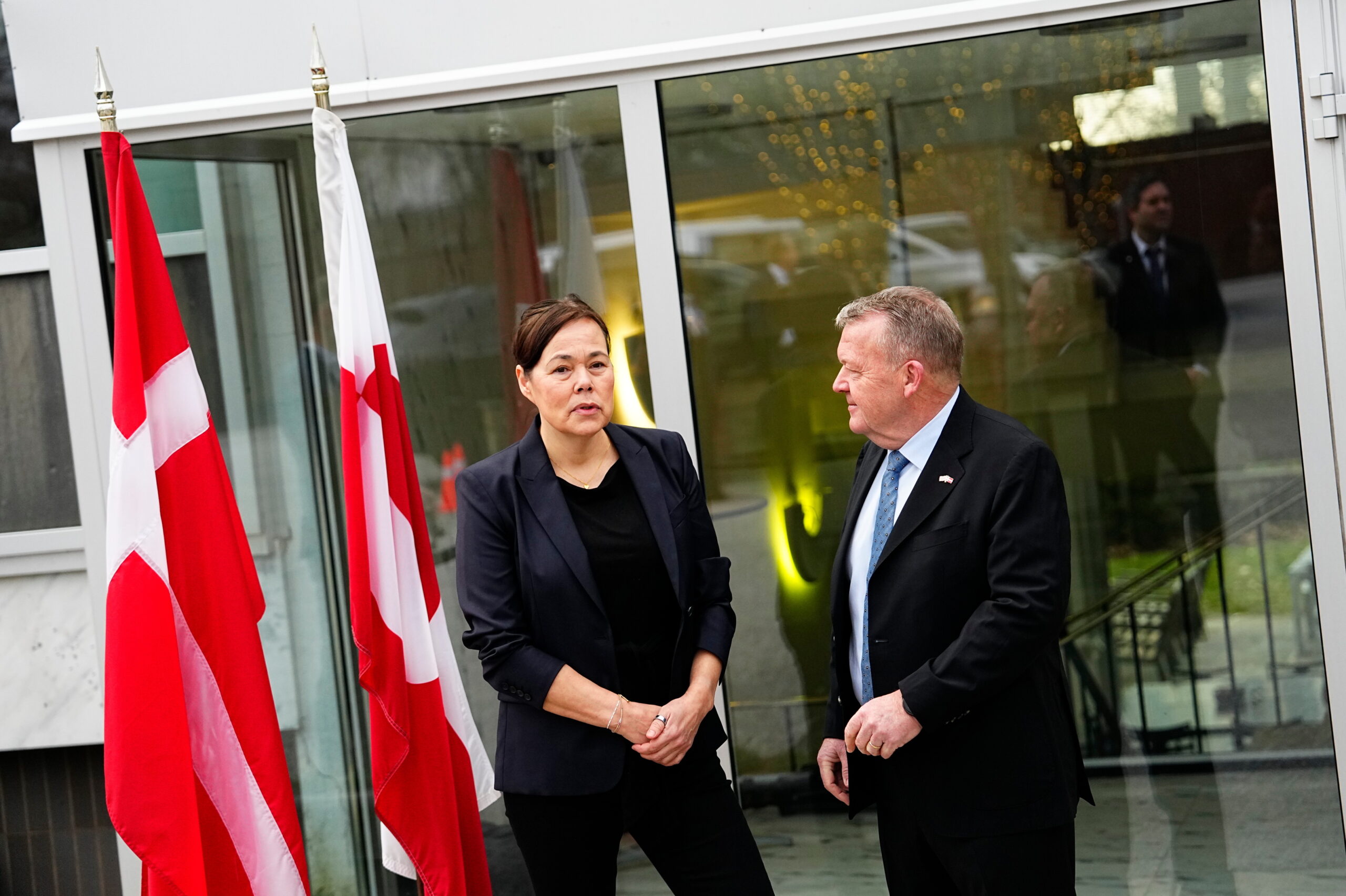
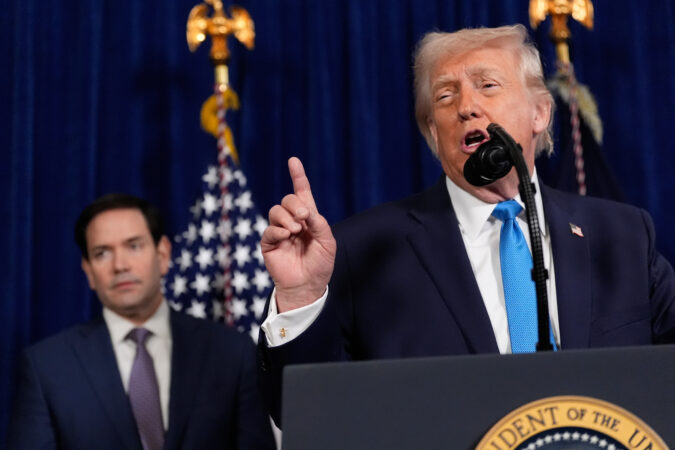
    Denmark’s Foreign Minister Lars Løkke Rasmussen (right) and Greenland’s Minister for Foreign Affairs Vivian Motzfeldt (left) prepare at the Danish Embassy for a meeting with Vice President JD Vance and Secretary of State Marco Rubio in Washington on Wednesday.
    Do some Greenlanders feel that way?

    Yes. Especially younger people, miners, business owners, and those who feel Denmark never gave Greenland a real economy, only a welfare system. For them, a deal with America sounds like a shortcut to dignity, jobs, and finally being taken seriously.

    But there is no such thing as “a deal” between a superpower and a small Arctic society. There is only dependence, dressed up as partnership.

    The United States already has what it needs in Greenland: military access, strategic geography, and preferential access to resources [such as rare earths]. What it doesn’t have is legal ownership or political control. A so-called “deal” would simply move Greenland’s dependency from Copenhagen to Washington. The question is whether Greenland would still be free after it is made.

    Can you imagine a U.S. military takeover attempt? What would be the consequences? Denmark and many other NATO allies are already moving small numbers of troops to Greenland as a tripwire.

    My husband and I had hoped to live the rest of our years in a small village, Siorapaluk. It is such a beautiful and peaceful place. Ironically, it is 92 miles from Pituffik Space Base. We honestly thought it was the most peaceful place on Earth.

    At this moment, we all — I can only talk about our family and friends — hope for a peaceful solution. Any negotiations are better than the war in the Arctic. Real war in the Arctic will be the end to everything.

    If the U.S. really wanted to secure its interests in Greenland what could Trump do legitimately?

    Trump still can return to U.S. bases, build new ones, invest in the population, in their education and knowledge. I see how scientists, glaciologists, marine biologists — 15 different specialties — from Japan’s Hokkaido University work together side by side with the local Inuit hunters, elders, and children in Qaanaaq, very close to Pituffik Space Base. It is an ideal collaboration; they love each other and benefit from each other. But they have a very smart leader, Shin Sugiyama. I think that President Trump could learn from him.

    People take part in a march ending in front of the U.S. consulate, under the slogan, Greenland belongs to the Greenlandic people, in Nuuk, Greenland, in March.
    Trump claims that if the U.S. doesn’t take Greenland, China or Russia will. What is he talking about?

    Russia is expanding its military presence in the greater Arctic region. This is their priority. I was once arrested by Chechen commandoes [on a floating Russian ice base, not part of Greenland but above the disputed underwater location of the North Pole]. So, yes, activity in Arctic waters is very real, and it is increasing. China has a major interest in Greenland. [But Greenlanders and Arctic experts see no signs of the Chinese and Russian ships Trump says are lurking around Greenland.]

    Greenlanders have said no to Russia and China because we don’t want them. A year ago, the Chinese bought some mining rights, but said they would bring their own workers, like what they have done in Yakutia [a northern region of Russia]. Chinese men married Russian women in Yakutia. There is a growing Chinese presence in Siberia. Soon, a majority will be Chinese, but no one sees it. [Fearing a similar outcome, the Greenland government ultimately rejected the Chinese investment.]

    [Russia’s invasion of Ukraine has also increased Greenlanders’ hostility to Moscow. They are painfully aware of “how poorly Russians treat their Arctic minorities” and how “Putin took the poorest people from Arctic villages” to fight and die in Ukraine].

    Should NATO troops be stationed in Greenland alongside more U.S. troops?

    Today the Arctic is becoming a place where three things overlap: military early warning systems, resource competition, and new shipping routes [due to melting ice]. That combination creates the possibility of accidents and miscalculations long before it creates a planned Russian or Chinese invasion.

    The biggest risk is not that someone like Russia or China suddenly wakes up and “takes Greenland.” The risk is escalation. I think that Greenland’s best protection is not a sudden flood of troops. It is a predictable security architecture that everyone understands.

    Greenland needs protection. But we are old enough to remember how conflicts were avoided during the Cold War: There were rules and restraint. There was clarity. Not theater.

    What do you hope for (or dread) after the failure of last week’s meeting at the White House between Vice President JD Vance and Secretary of State Marco Rubio and the foreign ministers of Denmark and Greenland?

    What I hope for is very simple: that adults will run the room. Secretary of State Marco Rubio is not a performer. So I really hope meetings will not be about headlines or symbolic victories. They should be a security conversation and not a dominance ritual.

    As I said before, the U.S. already has what it needs in Greenland in terms of security. My husband said not long before he departed: “Greenland does not need to be rescued. It needs to be respected.”

  • Trump’s imperial Venezuela policy based on lies and delusions

    Trump’s imperial Venezuela policy based on lies and delusions

    No one should mourn for Nicolás Maduro, and the U.S. military extraction of the Venezuelan dictator was a military tour de force.

    Those are the only two positive things to be said about President Donald Trump’s latest made-for-TV foreign operation, which has squandered American guns and taxpayer money on a lunatic venture based entirely on lies.

    Contrary to prior White House claims, the removal of Maduro had nothing to do with drug cartels, terrorism, or threats to U.S. security. Nor was it meant to restore democracy to Venezuela (as Trump stiffs exiled opposition leaders and stifles talk of future elections).

    Instead, based on the president’s own words, this monthslong exercise was aimed at taking control of Venezuela’s oil. It was also aimed at reinforcing Trump’s personal role as virtual emperor of the Western Hemisphere (and expediting the collapse of Cuba).

    Trump’s emperor complex has also renewed threats to seize Greenland or bludgeon longtime NATO ally Denmark into selling the autonomous island.

    In truth, the administration’s Venezuelan adventure threatens to drag America into another foreign quagmire and undermine U.S. security around the world.

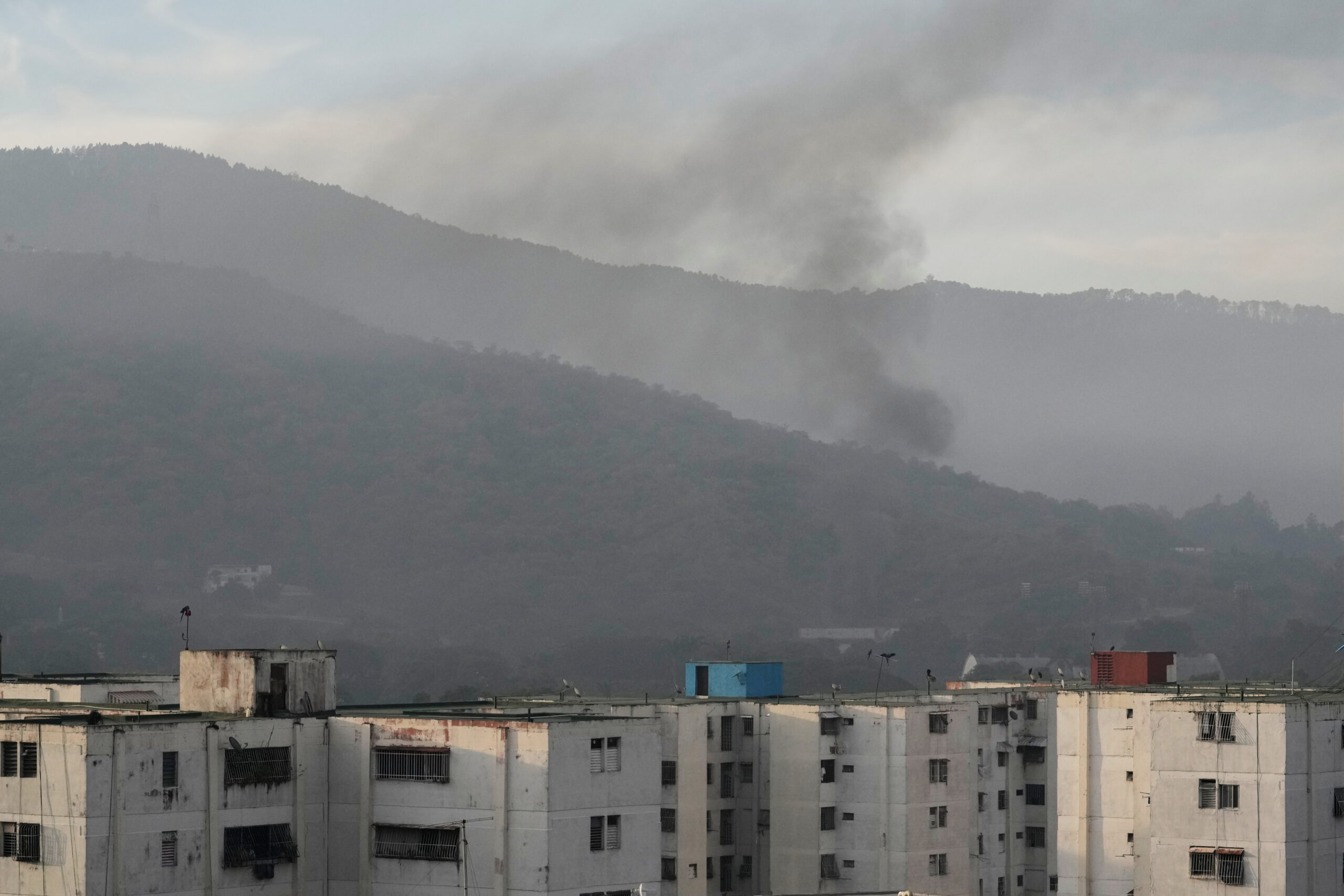
    Smoke rises from Fort Tiuna, the main military garrison in Caracas, Venezuela, after multiple explosions were heard and U.S. aircraft swept through the area Saturday.

    After years of denouncing GOP hawks and Democrats over regime change gone bad in Baghdad and Kabul, Trump now says he intends to “run” Venezuela and manage its oil — indefinitely. While he fixates on the derring-do of the Maduro extraction, the president’s proposals for follow-up are incoherent and contradictory. His intense focus on our hemisphere distracts U.S. attention from the growing Russian and Chinese threats in Europe and the Indo-Pacific.

    As Anne Patterson, a former U.S. ambassador to Colombia and Ecuador who also served as assistant secretary of state for International Narcotics and Law Enforcement Affairs, asked, in frustration: “What is a carrier strike group doing in the Caribbean?

    “We’ve been fighting this drug war for decades,” she recounted, “but it is a huge public health problem, not a security threat. It is nothing like China circling around Taiwan” with warships and planes.

    Instead of facing reality, the White House is trying to sell Trump’s fantasies to the public with an endless stream of falsehoods and fake facts.

    For starters, the Venezuelan regime change will hardly affect the U.S. drug problem. Fentanyl is the drug that has killed hundreds of thousands of Americans and Venezuela neither makes nor exports fentanyl. That drug is manufactured in Mexico using precursor chemicals from China. (Some cocaine passes through Venezuela, but it goes mainly to Europe.)

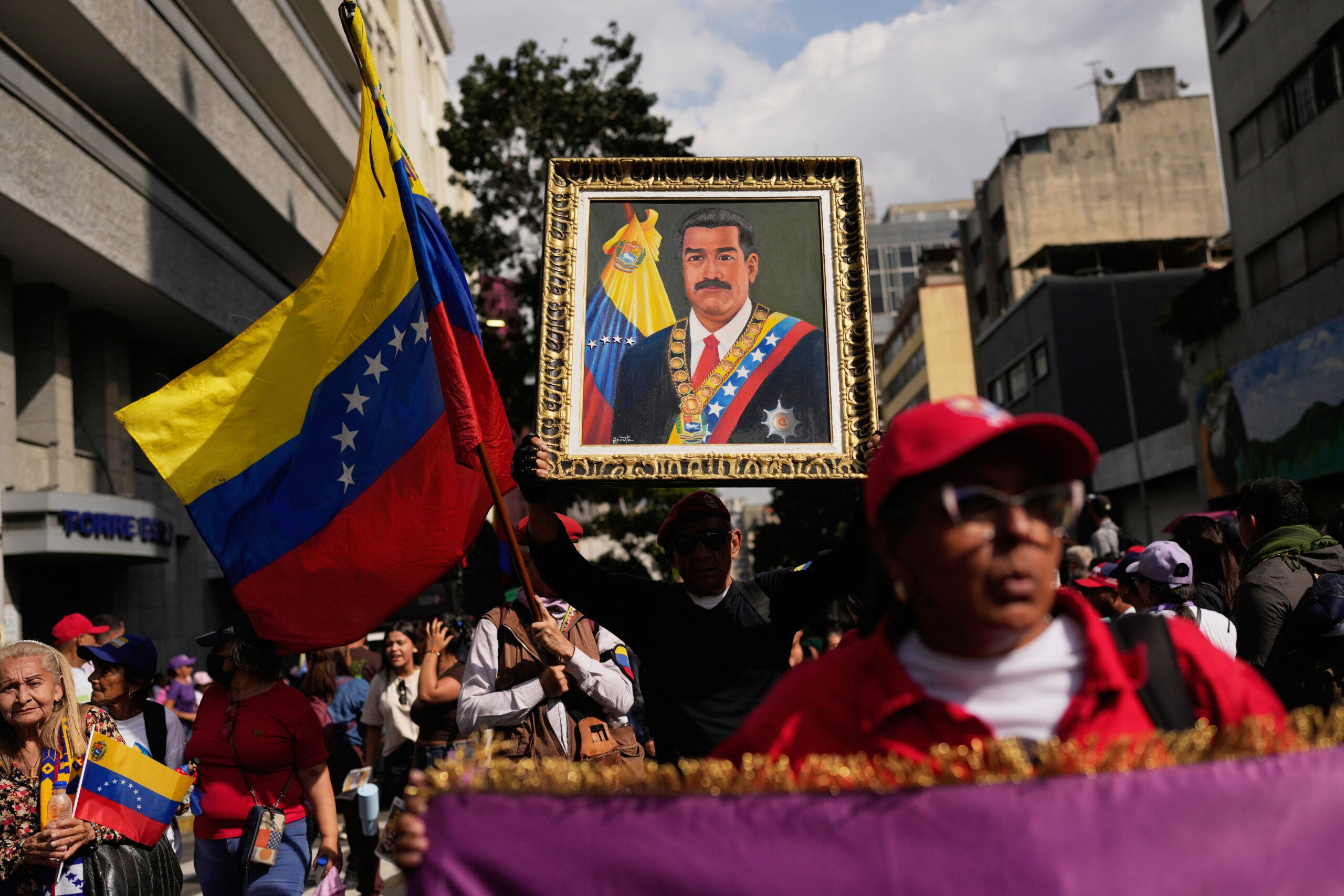
    A government supporter holds an image of President Nicolás Maduro during a women’s march to demand his return in Caracas, Venezuela, on Jan. 6, three days after U.S. forces captured him and his wife.

    In other words, the fentanyl problem Trump claims to be addressing can only be resolved via negotiations with Mexico and China.

    Moreover, the U.S. Department of Justice has just dropped criminal charges that Maduro led a drug cartel. The reason for this shift? As Latin America experts have long contended, the so-called Cartel de los Soles — cited by Trump officials as a terrorist threat — was not a real organization at all. It is a Venezuelan slang term used for officials corrupted by drug money, including the Maduro regime.

    Now that the Justice Department plans to bring Maduro to trial, perhaps Attorney General Pam Bondi realized she could not present fake facts about cartels under oath. Maduro is a corrupt thug who no doubt made money off drug dealers, but he did not lead a terrorist cartel.

    Again, a distinct downgrade from the monster threat the White House has painted as justification for its raid.

    The Trump team has also put forward no plan for a transition from Maduro’s corrupt, repressive government to one that might curb what drug dealing does go on. He has not even spoken to opposition leaders in exile who won the 2024 election before Maduro stole it.

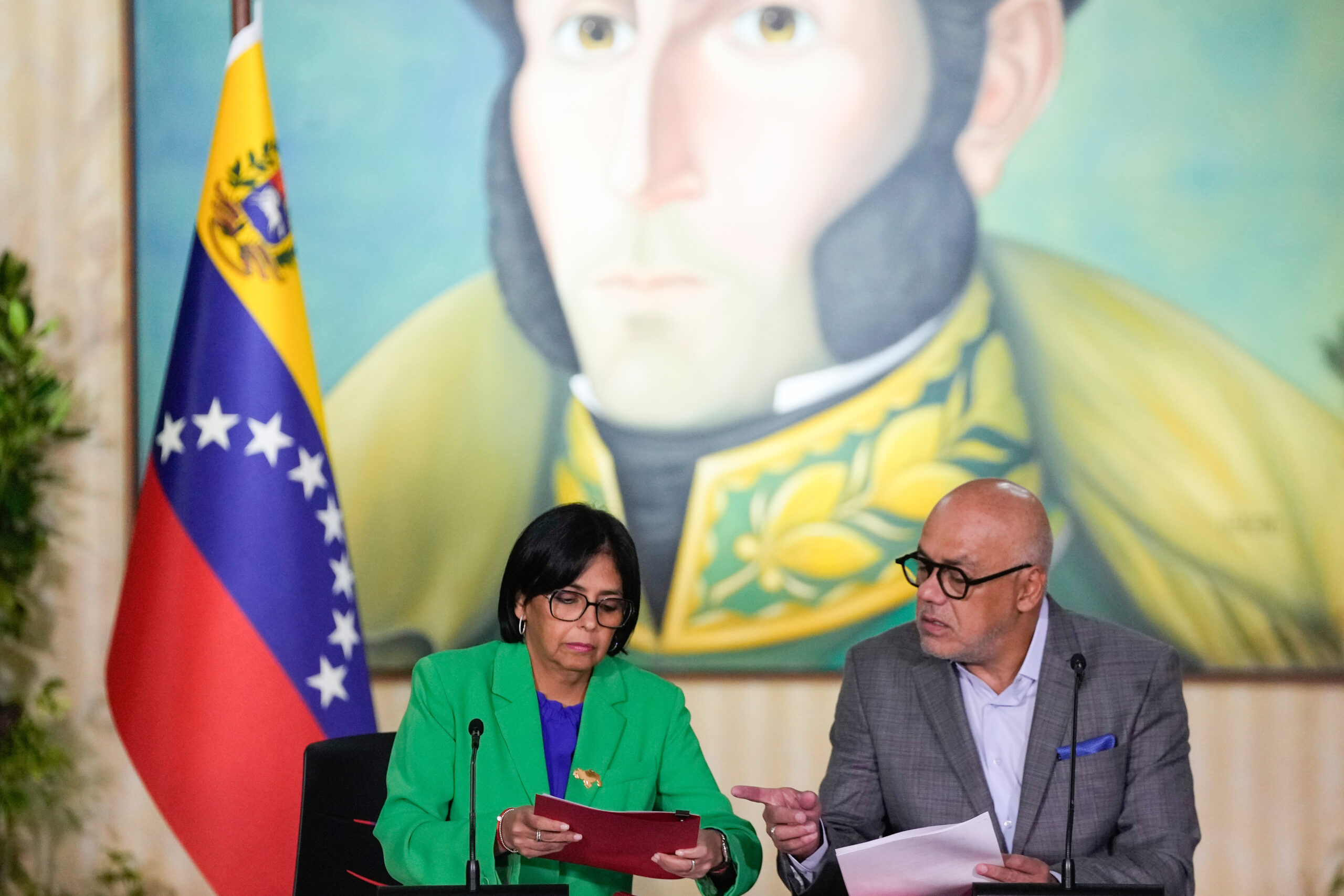
    Delcy Rodríguez meets with her brother, National Assembly President Jorge Rodríguez, at the Foreign Ministry in Caracas, Venezuela, in 2023. Delcy Rodríguez, Maduro’s vice president, has been sworn in as the leader of Venezuela.

    Instead, the president has chosen to recognize Maduro’s vice president, Delcy Rodríguez, and her brutal interior and defense ministers, who have increased repression against political opponents since Maduro was taken.

    “In fact, the government remains the same,” I was told by Venezuelan native Carolina Jiménez Sandoval, the head of the Washington Office on Latin America. “Are we seeing a transition without a transition for another strongman more conducive to American interests? Venezuelans want an answer.”

    In truth, Trump is himself acting like a strongman, insisting he will “run” Venezuela indefinitely. He seems to believe that by enforcing U.S. (and his personal) control of all Venezuelan oil sales and revenues, in a cockamamie scheme that appears both illegal and unmanageable, the repressive regime in Caracas can be forced to do U.S. bidding.

    When asked by the New York Times whether the U.S. would “remain Venezuela’s overlord” for more than a year, the president replied, “I would say much longer.”

    Why? What possible reason is there for Trump to expend U.S. resources on running Venezuela? Even the lure of oil money makes little sense.

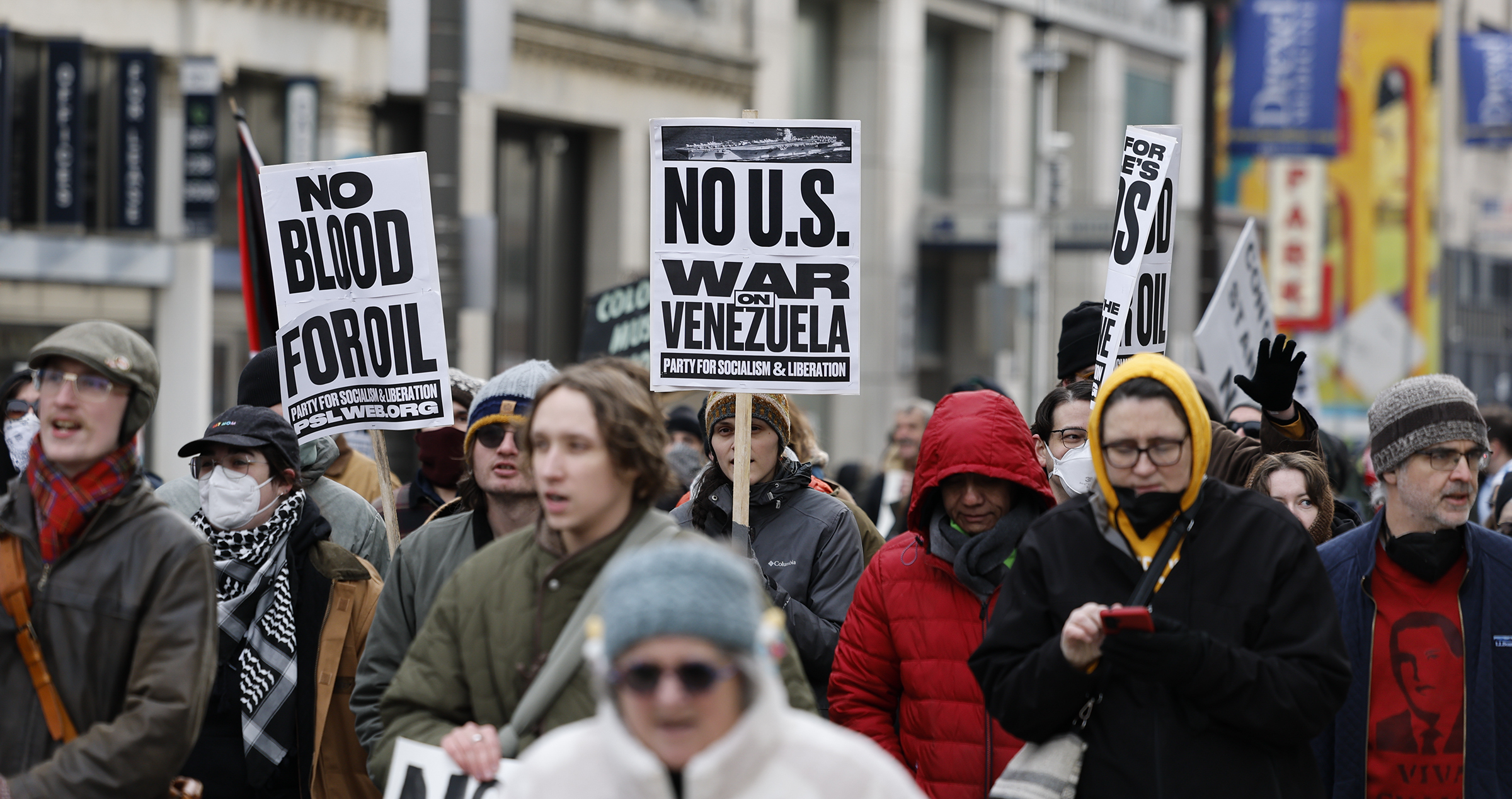
    Demonstrators march along North Broad Street reacting to U.S strikes on Venezuela on Saturday.

    The president insists there are fortunes to be made if U.S. oil firms return to develop its enormous oil reserves. But apart from Chevron, which has remained in the country, large U.S. companies are reluctant. That’s because it will take tens of billions of dollars in investment to make the country’s neglected fields viable, global oil is abundant, prices are low, and Venezuela’s future is uncertain.

    If Venezuela pumps more oil and drives global prices down further — as Trump is demanding — it will negatively affect the interests of oil producers on the U.S. mainland. In fact, large producers’ interest in Venezuela is so tepid that Trump is actually offering to use taxpayer money to subsidize the return of U.S. companies to the country.

    To sum up, neither drugs, nor cartels, nor terrorism, nor oil are valid or legitimate reasons for taking out Maduro, especially as we are leaving his thuggish government in place.

    What’s worse, his Venezuelan venture appears to be inspiring Trump to fantasize about other snatch operations or military takeovers — in tragic imitation of a Vladimir Putin or Xi Jinping.

    Asked in the Times interview if there were any limits on his global powers, Trump said: “Yeah, there is one thing. My own morality. My own mind. It’s the only thing that can stop me.”

    These are the words of a wannabe dictator.

    If they don’t awaken more GOP legislators to vote to curb his future use of military force in Venezuela — via a bipartisan bill now under Senate debate — then they will be complicit in the trashing of U.S. security by an egomaniac who believes his own lies.

  • Susie Wiles reveal: Trump thinks Putin wants all of Ukraine

    Susie Wiles reveal: Trump thinks Putin wants all of Ukraine

    During the Christmas holidays, the word peace makes a frequent appearance, in sermons and carols and frequent performances of Handel’s Messiah, with its glorious Hallelujah Chorus praising “the Prince of Peace.”

    That makes it even more infuriating to watch President Donald Trump demanding that Ukraine (and American’s European allies) agree to a so-called peace deal by the new year that guarantees more war and killing. Equally depressing is to watch much of the media buy the premise that the U.S. and Russia are actually conducting peace talks.

    Baloney. What is going on in Berlin, Miami, Washington, and Moscow is a Trump-led farce. Ukrainian President Volodymyr Zelensky and European leaders are forced to play along lest POTUS cut off crucial U.S. intelligence sharing and halt critical (but limited) sales of U.S. weaponry. They know Trump seeks a deal, any deal, even one on Kremlin terms, in order to claim he achieved peace in Ukraine. Yet the gleam of a Nobel Peace Prize and rare earth business deals with Moscow override any concerns about helping Moscow crush Kyiv.

    Vladimir Putin, on the other hand, has shown no interest in negotiating, but just waits for more Trump concessions. Any deal that protects Kyiv’s future will be rejected by Vladimir Putin, but Trump, following past practice, will likely blame Ukraine.

    That is why many more Americans, and security conscious Republicans in Congress must recognize that Trump is no worldly prince (or king) of peace. Rather, he is a poseur who must be prevented from sacrificing Ukraine on the altar of his ego and endangering the security of Europe and the United States.

    You doubt me? Then read Part Two of the notorious Vanity Fair interviews with Trump’s chief of staff and right-hand woman Susie Wiles, in which she reveals Trump’s mindset regarding Ukraine. Despite debates within Trump’s team over whether Putin wants the whole of Ukraine, she admits, “Donald Trump thinks he wants the whole country.”

    In an interview with Vanity Fair, White House chief of staff Susie Wiles said of the president’s talks with Vladimir Putin about Ukraine: “Donald Trump thinks he wants the whole country.”

    Vanity Fair asked Secretary of State Marco Rubio if he felt the same. He responded that, after watching Putin repeatedly reject freezing the war at the line of conflict, “You do start to wonder, well, maybe what this guy wants is the entire country.” Presumably, the secretary has bothered to read Putin’s speeches in which the Kremlin leader has said over and over again that Ukraine has no right to be a state,

    However, Rubio has been pushed aside as negotiator in favor of the supremely naive and ill-informed real estate mogul Steve Witkoff, who keeps insisting Putin wants peace, an argument repeated by POTUS. Trump initially signed off on a 28-point “peace” plan that was handed by a Putin emissary directly to Witkoff.

    Even though Zelensky and European leaders have gotten some of the most egregious points eliminated, the two biggest obstacles still remain: Putin’s demand that Kyiv turn over critical territory that Russia hasn’t been able to capture in nearly four years, and strategic guarantees of Western military aid to prevent Russia from violating any agreement.

    On both sticking points, the Trump negotiators continue to play into Putin’s hands.

    On the question of territory, what Putin demands is that Kyiv turn over a belt of fortified cities on high ground in the Donetsk region. Moscow has been unable to make major territorial gains in this area since near the beginning of the war, and the gains they have made have incurred terrible Russian casualties.

    This belt “is not easy to conquer because [its cities are] well fortified militarily and naturally due to the landscape,” I was told by Yehor Cherniev, deputy chairman of the Committee on National Security and Defense of the Ukrainian parliament. “It would cost the Russians thousands and thousands of lives and months if not years to take it. I don’t see any compromise on this.”

    From left, German Chancellor Friedrich Merz, British Prime Minister Keir Starmer, Ukrainian President Volodymyr Zelensky, and French President Emmanuel Macron meet at 10 Downing Street, in London earlier this month.

    Yet Putin has persuaded Witkoff to demand that Kyiv turn it over for nothing, which would leave the flat farmlands of central Ukraine open to further Russian attack.

    Compounding the insult, Witkoff has proposed that the area be made into a “demilitarized zone” from which Ukrainian troops would withdraw but Russian troops not enter. No one who has read anything on recent history could be unaware that Putin has zero respect for such nonsense. “We know the Russians would just use this to infiltrate soldiers in civilian clothing and then seize control of the area,” Cherniev said by phone from Kyiv. “It would just be a trap.”

    The second, enormous sticking point, concerns security guarantees for Ukraine in case Putin violates any agreement.

    Putin has broken every accord Russia has signed with modern-day Ukraine. This includes, most notoriously, the 1994 Budapest Memorandum, in which Ukraine handed over its Soviet-era nuclear weapons in return for pledges from Moscow, Washington, and London that Kyiv’s sovereignty would be respected.

    No wonder Zelensky insisted on Monday: “There is one question I — and all Ukrainians — want to get an answer to. If Russia again starts a war, what will our partners do?”

    Putin has made clear he accepts no NATO membership, no Western military guarantees and only a shrunken, disarmed Ukrainian military. As for the Witkoff team, they concur on no NATO membership for Ukraine, but have offered only puffery in its stead.

    The big headline has been that Trump would agree to “Article 5-like” guarantees, a reference to the provision in NATO that an attack on one requires help from every member. But Trump has played up the ambiguity of Article 5, which doesn’t specify that the help needs to be military. “Depends on your definition,” he said in August. “There’s numerous definitions of Article 5.”

    Moreover, Sen. Lindsey Graham (R., S.C.), a golf buddy of Trump, has made clear, that even if the Senate approves security guarantees, it wouldn’t be a treaty but “a congressional blessing, statutory in nature.”

    A “blessing” won’t help Ukraine if Russia pauses, regroups, and attacks again.

    It fascinated me that, after revealing Trump’s awareness of Putin’s goals, Wiles told Vanity Fair she thought Trump’s greatest achievement of 2025 was acting as “an agent of peace.”

    The president’s claim that he ended eight wars is braggadocio: No wars were ended, including in Gaza, where a ceasefire is tottering. The list includes long-standing disputes that remain and outbreaks of fighting that continue, and even a Pakistan-India outbreak, where New Delhi denies Trump played a role in settling it down.

    But if POTUS wants to be known as a peacemaker in Ukraine, it will only happen if he helps Ukraine convince Putin that a unified West will not permit Russia to crush Ukraine. That would require arming Ukraine to the hilt with U.S. and European weapons paid for by Europe, backed with frozen Russian assets or the European Union’s shared budget. It would also require U.S. enforcement of current and future sanctions, which the White House isn’t doing.

    Most of all it would require Trump to pressure Putin, which he shows no signs yet of doing. The Russian despot is vulnerable economically and militarily, and Ukraine won’t lose if POTUS doesn’t betray the country. But Putin will only be persuaded to cease fire if Trump joins Europe in convincing him he can’t afford to continue the fight.

  • New U.S. National Security Strategy slams Europe as greater threat than Russia or China

    New U.S. National Security Strategy slams Europe as greater threat than Russia or China

    Ordinarily, I wouldn’t recommend perusing the annual National Security Strategy of the United States of America. It generally summarizes the foreign policy direction in which the current administration is headed, and makes for lengthy, dry reading.

    But the new 33-page document is so shocking — even given what we already know about this administration’s behavior — that Americans need to pay attention.

    The NSS 2025 ignores the real security threats the U.S. faces in favor of praising white nationalist policies at home and demanding our democratic allies adopt the same. It promotes the myth that President Donald Trump can create a stable world by doing “deals” with authoritarian Moscow and Beijing.

    As for Russia’s invasion and brutalization of Ukraine, no word, except for chastising Europe for obstructing Trump’s efforts to force a pro-Russian “peace” plan on Kyiv. No wonder Kremlin spokesperson Dmitry Peskov quickly announced that the report was “largely consistent with our vision.”

    The document envisions a world in which Trump, Vladimir Putin, and Xi Jinping dominate the globe in concert, each controlling his own sphere of influence; it labels Trump’s intended control over the Western Hemisphere the “Monroe Doctrine Trump Corollary.”

    In reality, if Trump pursues this megalomaniacal mirage, he will facilitate the efforts of China and Russia to undermine U.S. security, destroy U.S. alliances, and dominate the world.

    What’s so revealing about the NSS is how much it has changed from the 2017 version released after Trump’s first year in office. Back then, the strategy referenced “the revisionist powers of China and Russia [who] want to shape a world antithetical to U.S. values and interests.” Russia, the document added, “aims to weaken U.S. influence in the world and divide us from our allies and partners.”

    The security threat from both countries has only worsened since then. What has changed is the personnel around the president.

    Gone are the professionals and knowledgeable advisers (except for Secretary of State Marco Rubio, who has largely been pushed to the sidelines). Present are the sycophants who flatter Trump’s brilliance and advance the white nationalist MAGA line.

    It’s no wonder there’s no reference to rising Chinese military threats to Taiwan. Or to massive Chinese cyberattacks on our country. One, called Salt Typhoon by U.S. intelligence agencies, has compromised U.S. telecommunications networks; another has penetrated U.S. infrastructure, including water supply plants, electricity grids, and transportation.

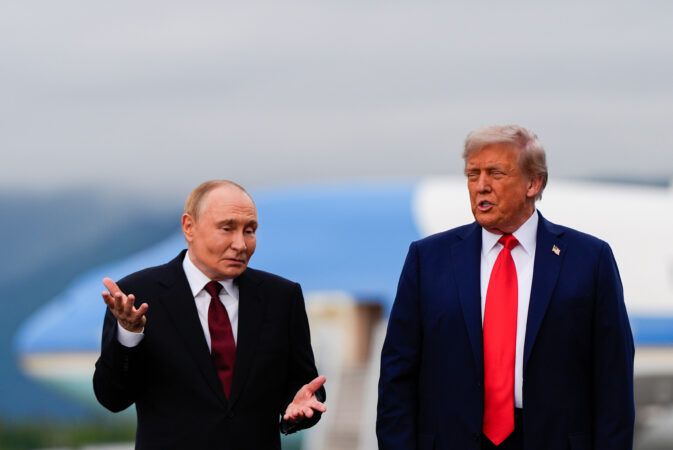
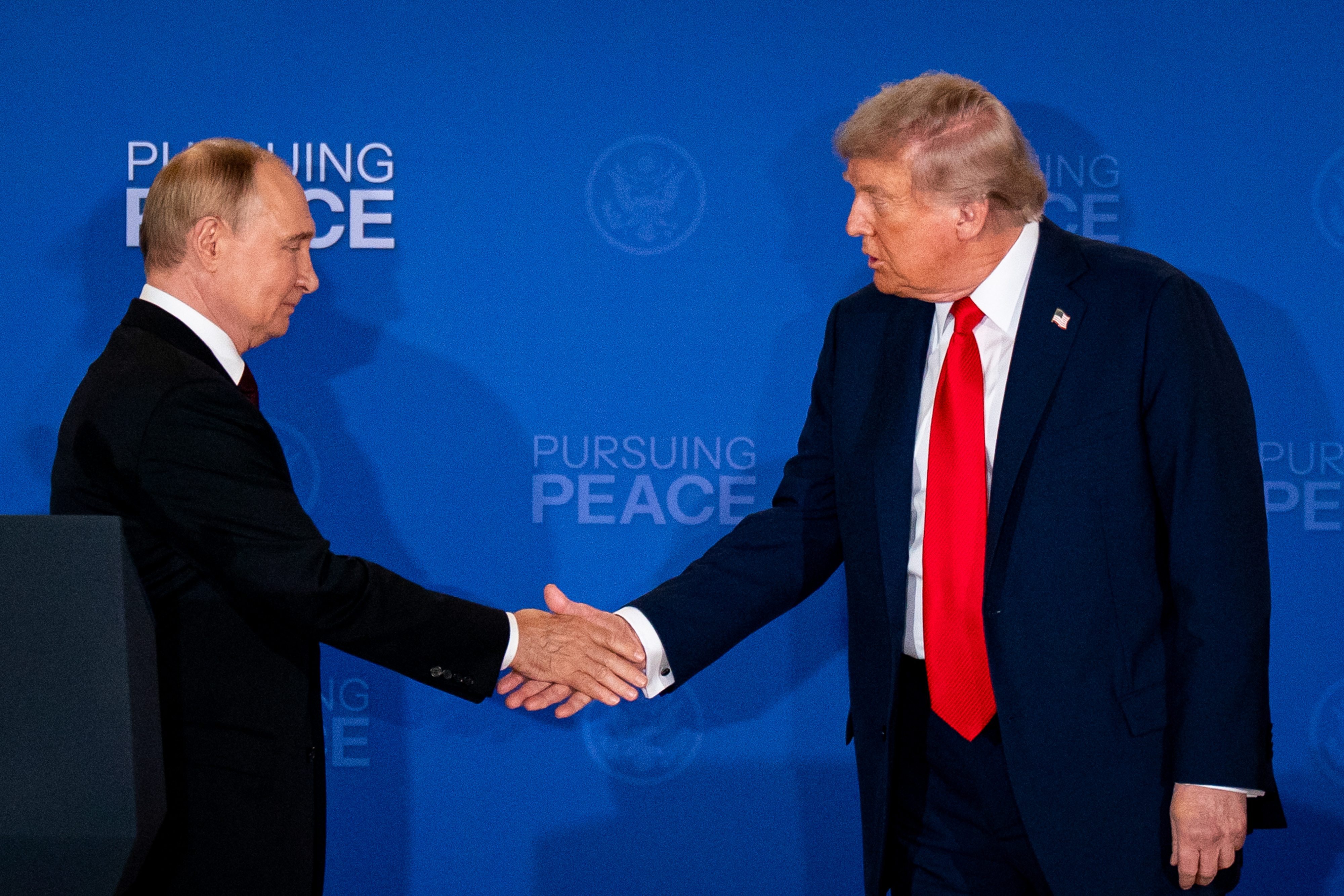
    Vladimir Putin and Donald Trump.

    Yet, in typical contradictory behavior, the Trump administration just halted plans to impose sanctions on China’s Ministry of State Security in response to Salt Typhoon.

    The security plan devotes pages to Trump’s penchant for trade deals and tariffs with Beijing, which it claims will ensure U.S. superiority in advanced technology.

    In another capitulation, however, Trump just agreed that Nvidia can sell advanced H200 chips to China, threatening that very U.S. superiority in advanced technology. Trump apparently wants to avoid displeasing Xi before traveling to Beijing for a summit in April. The president doesn’t want to interfere with his hopes of closing a brilliant trade deal.

    In other words, national security can be ignored when it contradicts the prospect of illusory economic gains — whether it be deals with China or Russia. And the president counts on his brilliance to secure both with his pals Putin and Xi (although he has repeatedly been bested by each of them).

    This fatal flaw is at the heart of NSS 2025.

    But the uglier and more gut-wrenching flaw is the document’s attack on Europe, its democratic values, and its support for Ukraine.

    The 2017 NSS read: “A strong and free Europe is of vital importance to the United States. We are bound together by our shared commitment to the principles of democracy, individual liberty, and the rule of law.”

    The “Promoting European Greatness” section of the new NSS echoes Vice President JD Vance’s tirade against European democracies, which I heard firsthand at the Munich Security Conference in February. Rather than speaking about the Russian war on Ukraine that threatens all of Europe, Vance denounced Germany for not inviting the extreme right, neo fascist Alternative für Deutschland party into a governing coalition.

    The 2025 NSS contends that Europe is on the verge of “civilizational erasure” because of immigration policies; instead, it promotes (white) nationalist, anti-immigration political parties. It slurs the European Union for its multilateralism (which the United States promoted after World War II, and which brought political and economic stability to the continent).

    And instead of supporting NATO allies as Russia attacks them with drones, cuts their underwater cables, and conducts sabotage and assassinations on European soil, the White House blames the Europeans for “regarding Russia as an existential threat.”

    “Our goal,” the document reads, “should be to help Europe correct its current trajectory.”

    There is something truly sick here.

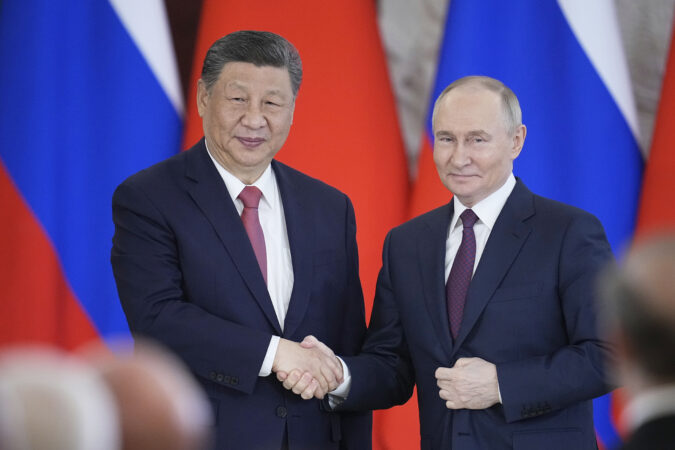
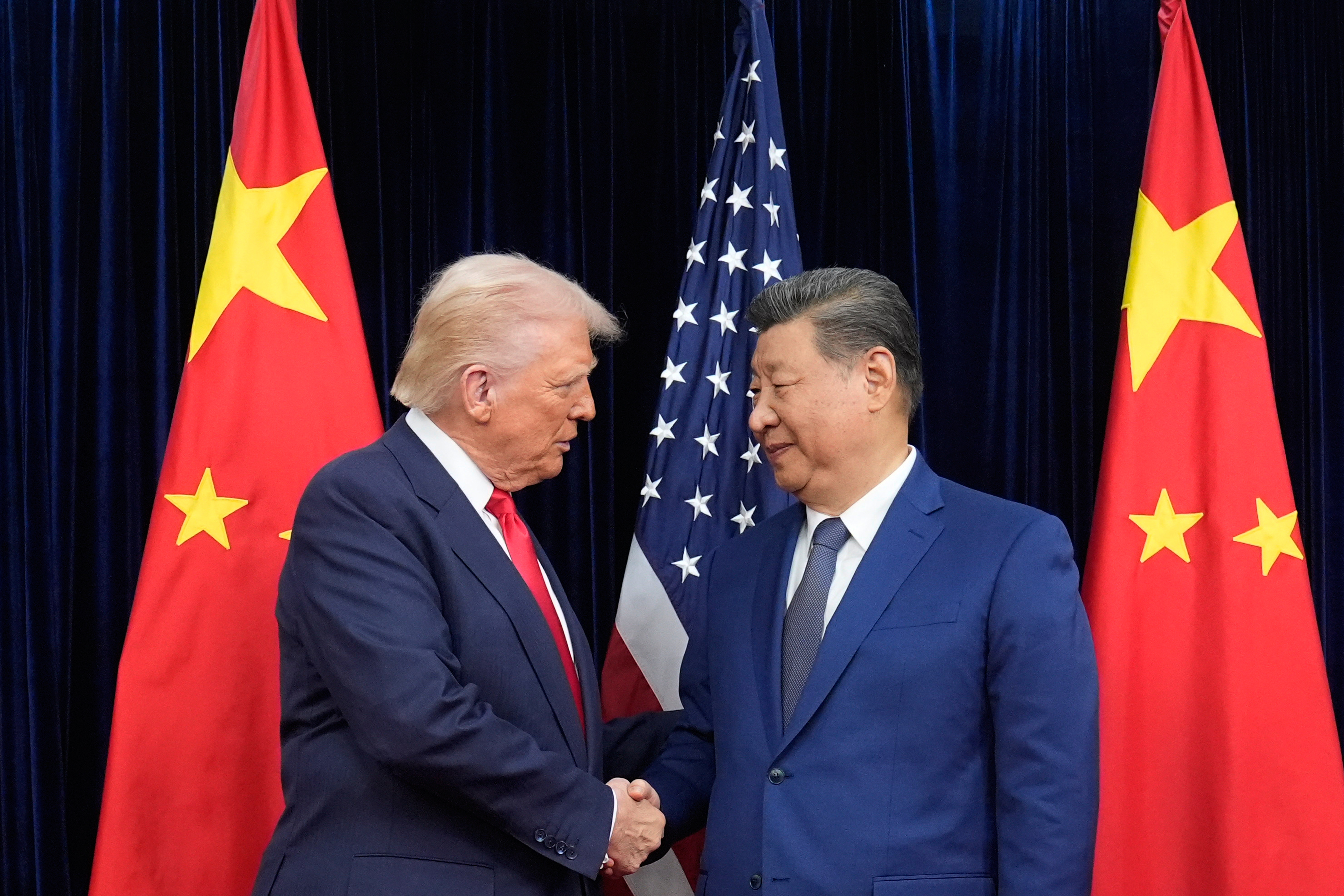
    President Donald Trump and Chinese President Xi Jinping shake hands before their meeting at Gimhae International Airport in Busan, South Korea, in October.

    Trump thinks China and Russia are his potential partners, while Europe is in the way — on Ukraine, on human rights, on warnings about Russia, on its own regulation of technology. Forget about common values or shared commitment to the principles of democracy and the rule of law.

    Unabashed to intervene in domestic European politics, the document calls on Europeans to restore “strategic stability” with Russia, meaning pressure Kyiv into signing a deal that consigns Ukraine to permanent domination by Moscow.

    And the U.S. wants Europe to take over most of NATO’s conventional defense capabilities, from intelligence to missiles by 2027, an impossible feat.

    Moreover, the White House is actively promoting as part of its “security strategy” the success of radical white nationalist parties in Britain, France, Germany, and elsewhere that are pro-Moscow and eager to do any and all business with Beijing. In other words, a Europe led by parties that are hostile to American security interests.

    The NSS 2025 envisions an alliance of authoritarian governments and their imitators, including Russia, China, the United States – and far-right European parties that dislike NATO, want to end the European Union, and prefer deals with dictators to defending democracy.

    This is what Trump advocates, although he doesn’t grasp that it would destroy him as well as his country.

    Fortunately, Europe won’t capitulate, nor will our allies in Asia. Nor would most Americans, I believe, if they only knew what the Trump national security policy is all about.

  • Follow the money to understand Trump’s plan for peace in Ukraine

    Follow the money to understand Trump’s plan for peace in Ukraine

    The Wall Street Journal nailed it last week with a headline that read, “Make Money Not War: Trump’s Real Plan for Peace in Ukraine.”

    That headline captures why the president is so eager to end Vladimir Putin’s war by sacrificing the Ukrainian victim to the Russian aggressor. And it helps explain why Donald Trump’s negotiators are returning home from Moscow empty-handed again.

    Without this explanation, it’s hard to grasp how Trump endorsed a 28-point “peace” plan for Ukraine based on direct input from a Kremlin negotiator, without any Ukrainian or European consultation. (Although a “revised” plan still favors Moscow, Putin continues to demand even more than the initial version.)

    Yes, Trump’s unending quest for a Nobel Peace Prize and his infatuation with the Russian despot figure into his kowtow to Putin. But I believe the Journal’s call to “follow the money” is right on the ruble.

    Trump’s capitulation to the Kremlin shames our country even more than the U.S. killing of civilians clinging to a burned-out Venezuelan boat.

    The Journal’s exposé details how Moscow’s representative sold Trump and his team on the idea they could get inside access to immense riches in Russia if the war were stopped quickly on Putin’s terms. Never mind that meant betraying NATO allies as well as Ukraine.

    Indeed, the Kremlin has long dangled visions of lucrative deals before the White House in an effort to woo the president. Putin has used wealthy Russian businessmen to develop contacts with the Trump administration, dating back to 2016.

    Kirill Dmitriev, the key Russian negotiator in Ukraine talks and head of Russia’s sovereign wealth fund, is the main salesman for a grandiose future that enhances certain Americans’ wealth.

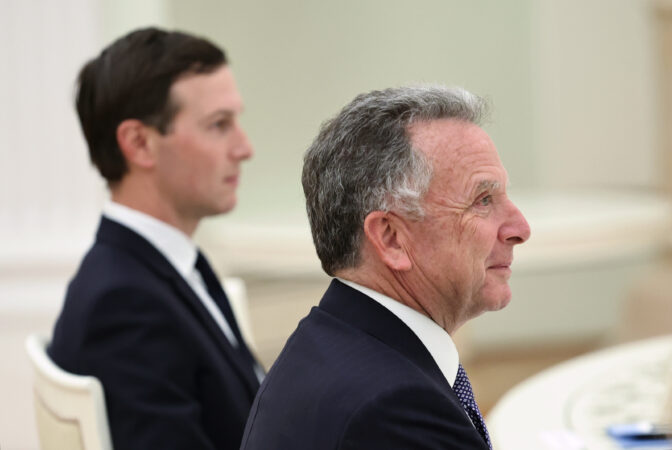
    The Harvard-educated Dmitriev, a Goldman Sachs alumnus, has cleverly played on the greed and naivete of Steve Witkoff and first son-in-law Jared Kushner, real estate moguls turned Trump peace negotiators. He convinced the pair — at a secret meeting at Witkoff’s Miami waterfront mansion in October — to view Russia not as a military threat, but as a cornucopia of investment possibilities to which friendly U.S. investors would have early access.

    That vision depends, of course, on the end of the war, the lifting of sanctions against Russia, and the U.S. welcoming Moscow back into the global economy.

    It was Dmitriev who provided much of the input into the infamous 28-point Trump plan that read like Russian talking points. The proposal made no demands on the Russian aggressor, but required Ukraine give up key defensive positions and land it still controls while shrinking and disarming its military.

    Equally outrageous, however, were the points that called for using much of Russia’s $200 billion-plus of frozen assets in European banks to invest in a U.S.-Russian investment “vehicle” to implement “joint projects” (and much of the rest to facilitate U.S. investment in Ukraine, from which the Americans would take 50% of the profits).

    This is the money the European Union still hopes to use as collateral for loans to arm Ukraine against further Russian advances, or to rebuild in peacetime. Yet, the Trumpers and Russians proposed to seize it — with no input from European allies — to feather U.S. and Russian business nests.

    In this photo provided by the Ukrainian president’s office, President Volodymyr Zelensky (left) shakes hands with U.S. Army Secretary Dan Driscoll in Kyiv, Ukraine, in November.

    As for Witkoff, he is so deep in Russia’s pocket that he was recently heard on a leaked tape tutoring a Russian negotiator on how to win over Trump.

    Meantime, the president, indifferent to the public revelation of U.S.-Russian complicity, continues to send Witkoff on repeated trips to Moscow to negotiate with Putin. Witkoff has never once visited Ukraine.

    The Journal lays out how Dmitriev dangled before Witkoff and Kushner visions of joint U.S.-Russian exploitation of Arctic mineral wealth, and a potential joint mission to Mars with SpaceX, along with multimillion-dollar rare earth deals.

    The Russian money man played brilliantly on Trump’s misguided belief that business deals matter more than sovereignty and can paper over messy and dangerous political disputes — or invasions. Especially if U.S. investors get an inside piece of the action.

    Never mind that this crass theory has already been proven false in Gaza, where Trump still can’t grasp that grandiose visions of prosperity won’t come true when underlying political grievances remain unsettled. Although the Israeli hostages were returned, the rest of Trump’s peace plan is near collapse.

    As for the Ukraine plan, the idea that U.S. investments in Russia (or in Ukrainian rare earths) would prevent further military action is an ahistorical delusion. U.S. investments in both countries did not prevent Moscow from invading Ukraine in 2014 or 2022.

    Putin’s goal is to subordinate Kyiv to Russian domination. If he can’t do it militarily, he will be happy to advance this goal via a peace plan he will surely violate, as he has done with every accord he has previously made with Ukraine. Trump’s dreams of billions in profits will also go down the drain as Putin pursues his dream of conquest.

    POTUS and his real estate pals may think they are New York tough, but Moscow is not the Big Apple.

    Russia is one of the most corrupt countries in the world (154th out of 180 countries, according to Transparency International). Bribery, seizure of huge sums, or nationalization are employed at will by Putin and his oligarch cronies.

    Just consider the experience of William Browder, an American-born British citizen who built up the Heritage Fund into the largest foreign investment portfolio in Russia in the 1990s until he protested government corruption. The Kremlin expelled Browder in 2005 and attempted to assassinate him abroad.

    When Browder’s lawyer, Sergei Magnitsky, challenged a Russian attempt to steal $230 million in taxes that the fund had already paid, his offices were raided. Magnitsky was arrested, tortured, and killed in prison in 2009.

    I spoke with Browder by phone from London, and he had nothing but scorn for the ignorance of the Trump team. “Steve Witkoff and all his pals are not going to make a penny from the Russians,” he told me. “The Russians have a long history of enticing Americans and foreigners. They will defraud, arrest, cheat, and even murder you to prevent you from making a penny.

    “They are masters of expropriation. Every foreign investor has been burned.”

    The tragedy is that Trump, Witkoff and Kushner are willing to burn Ukraine in their quest for more wealth.

  • Trump’s pro-Kremlin ‘peace’ plan for Ukraine will encourage Putin to wage more war

    Trump’s pro-Kremlin ‘peace’ plan for Ukraine will encourage Putin to wage more war

    The made-in-Moscow 28-point “peace” plan President Donald Trump has been trying to force on Ukraine will never bring peace.

    Even the revisions after last week’s international uproar over the outrageously pro-Russian document haven’t resolved key issues. Putin has already made clear this week that he won’t accept less than Ukrainian surrender.

    Trump is ready to press Ukraine to bow to a plan that guarantees further Russian destruction. Let’s hope the backlash to the proposal stiffens the backbone of GOP supporters of Ukraine against the pro-Russian White House crowd.

    The drama hasn’t ended yet.

    The 28-point plan was cooked up by Trump’s feckless negotiator, Steve Witkoff, and first son-in-law Jared Kushner. Two real estate moguls with zero knowledge of Ukraine wrote a draft plan based heavily on input from Kremlin insider Kirill Dmitriev.

    Dmitriev is Putin’s representative for economic cooperation and has wooed Witkoff and Kushner with fantasies of joint U.S.-Russian investment. The three men met for secret talks in October in Miami, at Witkoff’s home.

    The resulting document reads like Kremlin talking points; some Russia experts point out that the English syntax sounds as if it were google translated directly from the Russian text.

    “Even Neville Chamberlain would blush at this,” said Rep. Don Bacon (R-NE), referencing the British prime minister who infamously appeased Adolph Hitler. “It’s embarrassing to our country.”

    Painfully true.

    The deal demands suicidal concessions from Ukraine, the victim of Russian aggression, but none from the Russia invader. The points echoed a Putin wish list, and green-light Moscow’s complete subordination of Ukraine, by shrinking Kyiv’s army, limiting its alliances and weapons, and leaving it wide-open to future Russian attacks.

    Trump was — and still is — ready to sell out Kyiv in pursuit of an imaginary Nobel Peace Prize along with lucrative business deals with Moscow and predatory deals for Ukrainian minerals (both are touted in the plan).

    In clear evidence of Russian untrustworthiness, Dmitriev leaked the proposal last week to journalist Barak Ravid of Axios in order to box in the Americans before consultations with Ukraine. Yet Trump quickly endorsed this capitulation document.

    Dmitriev’s betrayal alone should disqualify him from further negotiations, but there’s no sign Witkoff will abandon his new Russian pal. As for Witkoff and Kushner, Trump is rewarding their blunders by sending them to meet Putin next week.

    Russian President Vladimir Putin’s envoy Kirill Dmitriev (left) and President Donald Trump’s special envoy Steve Witkoff attend talks in St. Petersburg, Russia, in April.

    How do we know for sure that Dmitriev was the leaker? Because Witkoff posted on X, “He [Axios’ Ravid] must have got this from K …,” meaning Kirillov. Apparently, Witkoff thought he was sending a private message, another sign he isn’t up to the job.

    Equally egregious, Secretary of State Marco Rubio, who does know something about Russia, was kept out of the loop by Witkoff. After the leak, he got a firestorm of complaints from upset European counterparts and GOP supporters of Ukraine. That led him to call Sen. Mike Rounds (R., N.D.), who was at an international security conference in Halifax, Nova Scotia, along with a bipartisan Senate delegation.

    Rounds recounted to journalists that Rubio described Witkoff’s plan as a Russian “wish list” and not an actual U.S. proposal. Under White House pressure, Rubio soon reversed himself and posted online that the senators were mistaken. A State Department spokesperson falsely accused the senators of lying

    I spoke to Sen. Chris Coons (D., Del.), who was with the delegation during the call (although not on the phone). “I heard what [my colleagues] said immediately after the call,” he told me. “They couldn’t have been clearer about what Marco said, and what the complications were. I hope after today we’ll see a proposal which enables Ukraine to remain free and sovereign and defend itself in the future.”

    With this White House, don’t hold your breath.

    The pushback from GOP backers of Ukraine, as well as from the EU and Kyiv, was so intense, however, that Rubio rushed to “update” the document in weekend negotiations with Ukrainian officials in Geneva.

    Very sensitive issues remain unresolved, yet Trump is still pressuring Kyiv to sign on this month. There is an acute danger that he and Vice President JD Vance may try again to bushwhack Ukraine’s Volodymyr Zelensky, who will probably visit the White House this month.

    European allies, who were not consulted on the deal, have been desperately trying to bolster Zelensky and get Trump’s ear.

    In this image taken from video provided by Russian Presidential Press Service on Nov. 20, Russian President Vladimir Putin speaks as he visits one of the command posts of the West group of Russian Army in an undisclosed location.

    But given the president’s eagerness for a “deal” — any deal, no matter how fatal to Ukraine — Trump is more likely to squeeze Kyiv than press Putin for concessions. Russian Foreign Minister Sergey Lavrov made clear this week that Putin is only interested in the original pro-Russian points, and not any revision that protects Ukraine from future attack.

    It’s important for Americans to understand why the Putin-Trump 28-point deal wouldn’t stop Russian aggression and would only encourage Moscow to continue the war.

    As former Ukrainian Defense Minister Andriy Zagorodnyuk pointed out: “Ukraine has never attempted to seize Russian territory. Russia, on the other hand, has repeatedly invaded Ukraine and continues to strike Ukrainian cities daily.”

    The bottom line for achieving peace is that any plan must strengthen Ukraine’s defenses and provide concrete U.S. guarantees that Russia won’t destroy the Ukrainian state in the future. The 28-point plan does just the opposite (and the revisions aren’t strong enough.)

    The Kirillov proposal shrinks the size of the Ukrainian army by a third while putting no limits on Russia’s army, which is roughly twice the size of Ukraine’s. It prevents Ukraine from ever joining NATO and forbids NATO peacekeepers on its soil.

    Imagine if Franklin Delano Roosevelt had endorsed a peace plan between Winston Churchill and Hitler in 1940 that left Hitler free to expand his army while demanding Churchill halve his forces, ground his Spitfires, and promise never to ask the Yanks for help.

    Which brings us to the ugliest part of Trump’s fake peace efforts. There is a lot of loose verbiage about “guarantees” against a future Russian invasion in the 28 points, and in a side letter offering Kyiv a “security assurance modeled on the principles of [NATO’s] Article 5.” Note the weasel words.

    Let me assure you, I have read and reread the texts, and they offer Ukraine no firm U.S. or allied commitment to intervene if Russia attacks again.

    The real hint of the worthlessness of this Kremlin-born document comes with point 16, which proclaims: “Russia will enshrine in law its policy of non-aggression toward Europe and Ukraine.”

    Does Trump not know Putin has violated every accord he or his predecessors signed with Kyiv. That includes the 1994 Budapest Memorandum by which Ukraine surrendered its nuclear weapons in exchange for guarantees of sovereignty from the U.S., the U.K., and Russia? We know how much those paper assurances have been worth.

    POTUS refuses to face reality: Putin respects only strength; there will be no peace until the costs of war are more than the Russian economy and military can bear.

    Peace negotiations are worthless unless backed by tougher U.S. sanctions and sales of U.S. air defense systems and missiles to Ukraine.

    By his continual concessions to Moscow, Trump has convinced the Russian leader that he is a weak pushover. That guarantees that Russia will continue the war.

  • ‘2000 Meters to Andriivka’ captures the horror and the hope of Ukraine’s battle against Russia

    ‘2000 Meters to Andriivka’ captures the horror and the hope of Ukraine’s battle against Russia

    How do Ukrainians fight on when the front line is so painful, the Russian bombing of civilians so brutal, and pro-Putin President Donald Trump so eager to stab Kyiv in the back?

    I put that question to Associated Press journalist and filmmaker Mstyslav Chernov, whose 20 Days in Mariupol won the Academy Award for best documentary in 2024. His new masterpiece, 2000 Meters to Andriivka, will premiere on PBS’s Frontline and also begin streaming on Tuesday, Nov. 25.

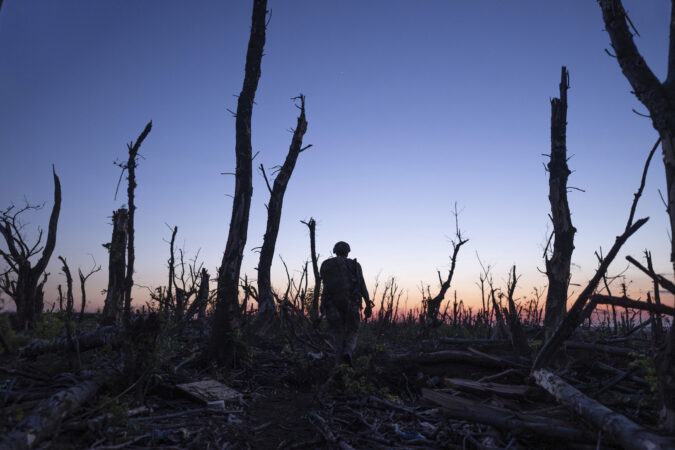
    The film follows a unit of military volunteers in Ukraine’s fabled 3rd Assault Brigade who come from all walks of life, from young to middle-aged. They are trying to advance a little more than a mile along a narrow, mostly destroyed tree line between heavily mined fields,in order to liberate a small village in eastern Ukraine and help cut a Russian supply line to the then-besieged city of Bakhmut.

    This is a raw film, shot from the soldiers’ point of view, not only by Chernov and his AP colleague, videographer Alex Babenko, but by the video cameras many fighters wear on their helmets.

    “I wanted to be as realistic as possible,” Chernov told me. “Showing courage and sacrifice, but also how horrifying and disgusting war is at the core. We try to keep this paradox in the film.”

    What Chernov also achieves, through his voice-over and brief interviews during downtime, is a portrait of why these men won’t stop fighting, no matter the odds, until the Russian aggressor is forced to recognize the sovereignty of the Ukrainian state.

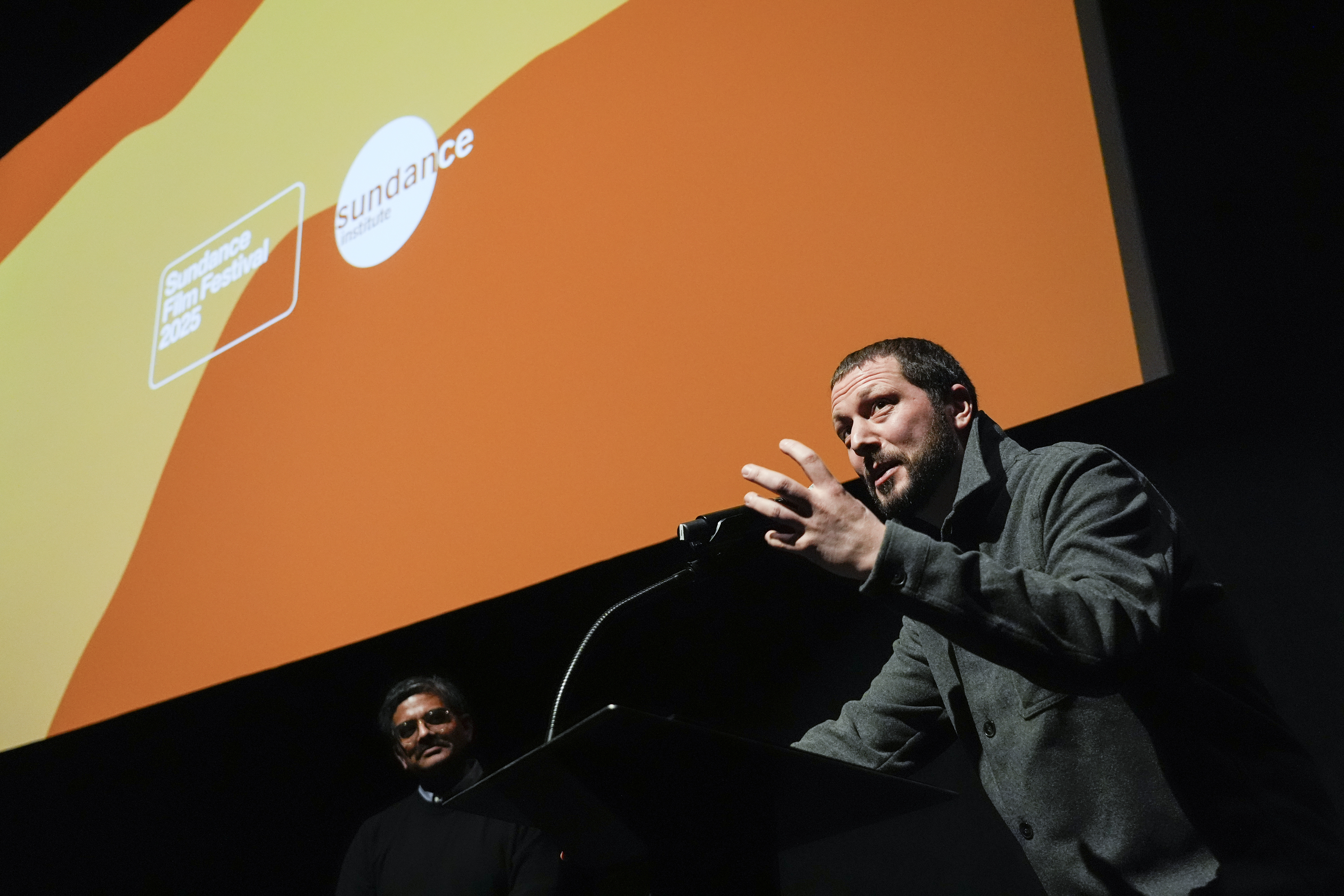
    Mstyslav Chernov speaks at the premiere of “2000 Meters to Andriivka” during the Sundance Film Festival at the Ray Theatre in Park City, Utah, in January.

    When he started this film in 2023, Chernov said, he wanted to make a documentary “about fighting back.” That was a hopeful year, in which Ukrainians were mounting a large counteroffensive against Russia.

    “I searched for hope as much as any Ukrainian,” he recounted. “Raising the flag as a symbol of victory.” He also sought to honor the sacrifice of 3rd Assault Brigade fighters who were liberating the area surrounding his hometown of Kharkiv.

    By the time the film was completed, though, the counteroffensive had failed. Bakhmut had fallen, and Ukrainian forces were weary and undermanned.

    Today, technology has shifted the battlefront into a war of attrition dominated by drones, which can inflict terrible casualties on anything that moves. The Russians are making small advances, and Ukrainian leader Volodymyr Zelensky is fending off a corruption scandal.

    Yet, says Chernov, what you see in 2023 is similar to now.

    The reason Ukrainians keep fighting remains the same, even though many Americans don’t grasp it. “It is a fight for survival, not for a piece of land, but a fight for your life,” he told me. “Stop and you are dead, or fight and you have a chance to survive as a country and with your family.”

    These are the basic truths President Trump and real estate mogul-turned-peace negotiator Steve Witkoff are far too blinkered to grasp.

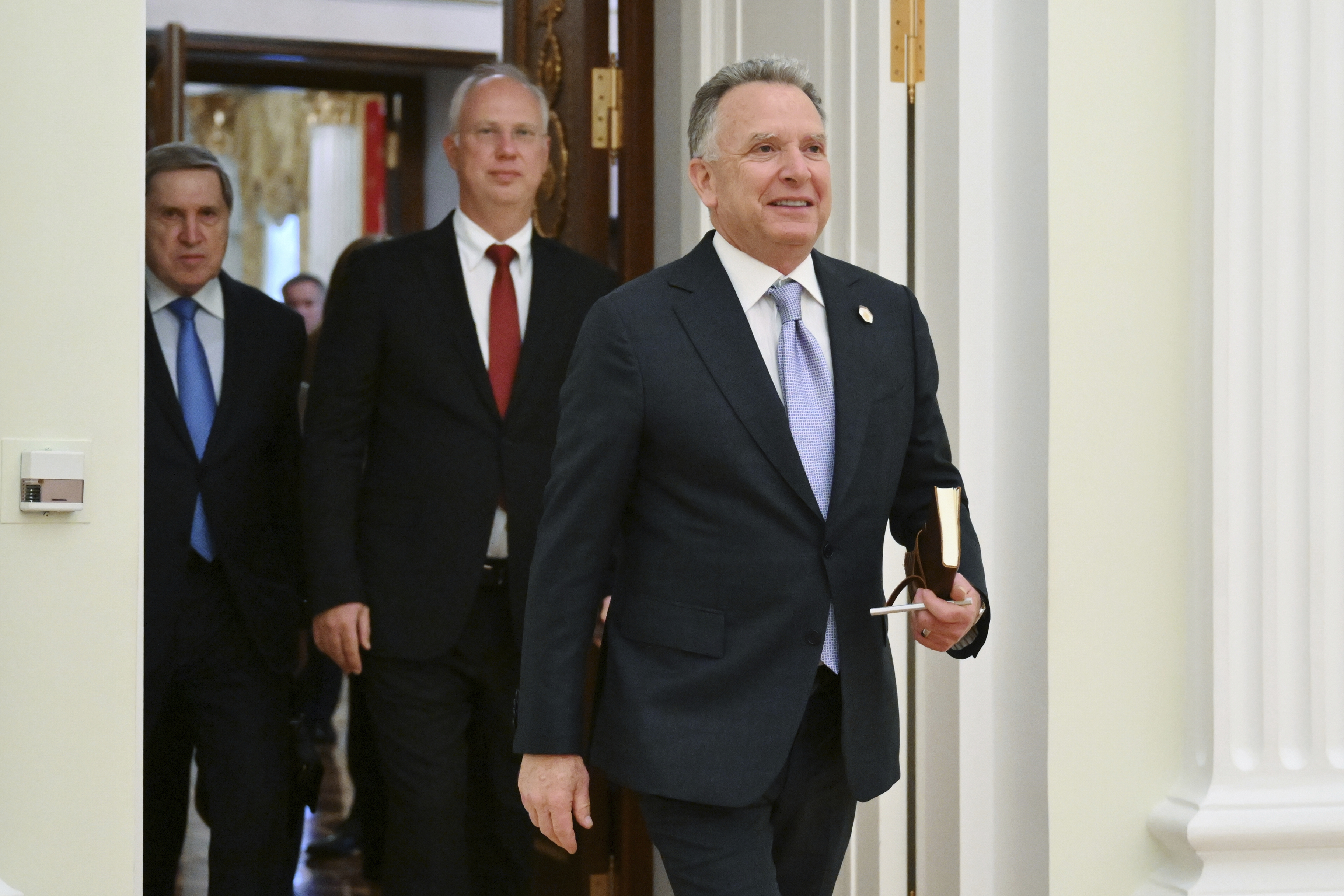
    President Donald Trump’s special envoy Steve Witkoff (foreground), Russian President Vladimir Putin’s investment envoy Kirill Dmitriev (second left), and Russian Presidential Aide Yuri Ushakov (left) arrive to attend the talks with Putin at the Kremlin in Moscow in April.

    Russia’s war is not about real estate deals or land swaps. Vladimir Putin has insisted publicly for years that Ukraine has no right to exist as a state, and that it must be returned to the Russian empire as a subordinate province.

    Any peace plan that hands territory to Russia and fails to provide ironclad military guarantees to Ukraine will only encourage Putin to restart the war. Yet, Witkoff secretly devised a 28-point draft plan with Putin pal Kirill Dmitriev, without consulting Kyiv or our European allies — a plan that leaves Ukraine virtually defenseless.

    This capitulation plan would hand Russia parts of Ukraine that aren’t occupied, while shrinking and largely disarming Kyiv’s forces — and banning the purchase of new Western weapons. It would also ban Ukraine’s future membership in NATO or any peacekeeping troops from NATO members.

    Of course, Putin has endorsed Trump’s plan, which could have and may indeed have been, written in the Kremlin. This shameful document virtually invites the Russian dictator to rebuild his depleted forces and try to end Ukrainian sovereignty for good.

    We already know what has happened in Ukrainian territory that Russia has occupied: the Ukrainian language is banned in schools and from official use, and Ukrainian books are burned. The Ukrainian Orthodox Church is banned, and its priests arrested.

    Ukrainian children in areas under Russian rule are taught that Kyiv is the enemy. They are sent to military camps in Crimea or Russia, and then drafted to fight against fellow Ukrainians. Many younger children have been kidnapped and adopted by Russian families.

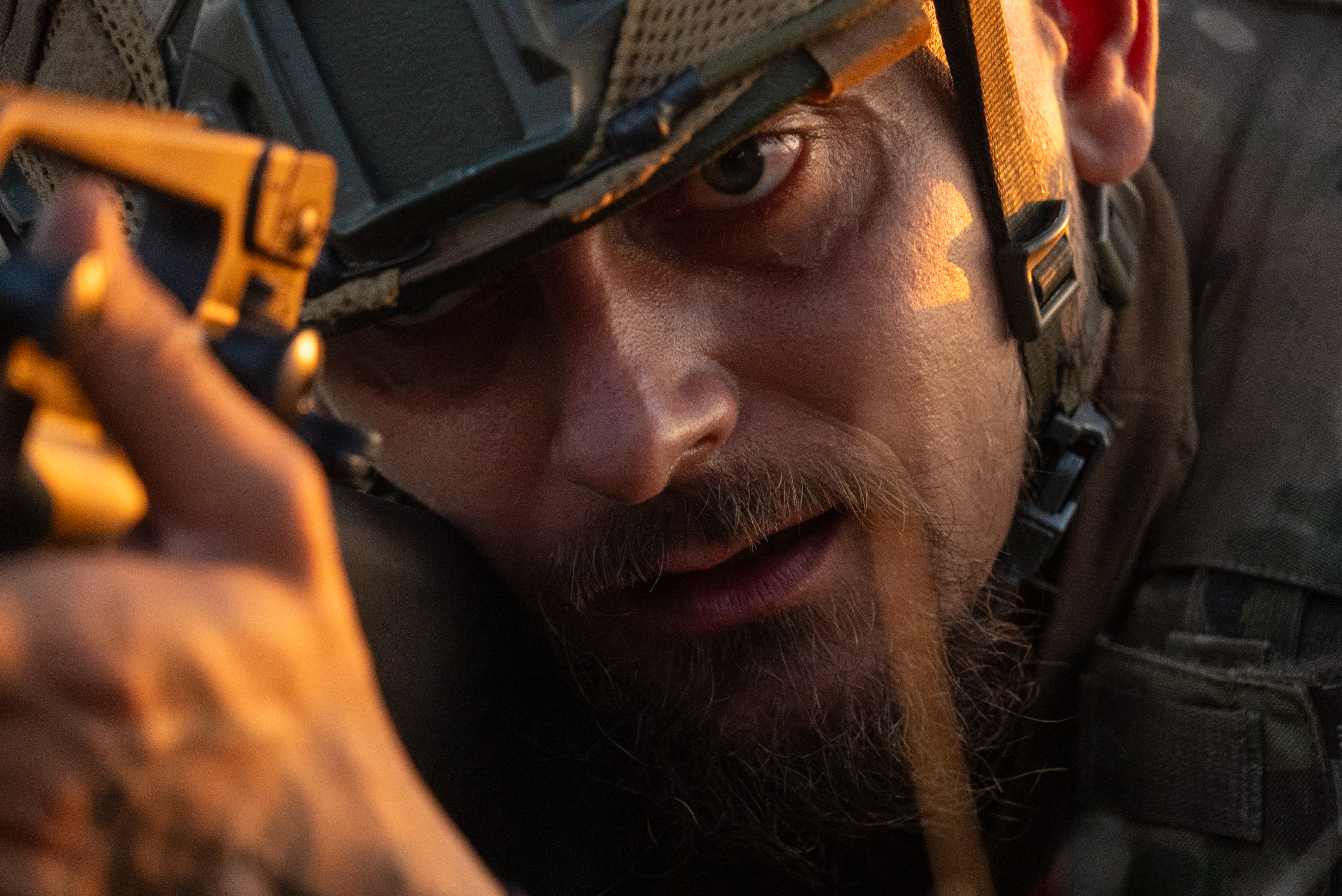
    Kobzar, a Ukrainian serviceman, practices shooting in preparation for the next military operation of the 3rd Assault Brigade. Five months later, he would be killed.

    “If Ukrainians lose,” said Chernov, “not only will Ukraine cease to exist, but it means millions of Ukrainian children will be taken, their Ukrainian identities stolen, and they will be trained to fight for Russia against Europeans. It creates the opportunities for Russia to get more people to fight.”

    “Many people in the U.S. don’t grasp how destructive the Russian narrative is,” the filmmaker added, “how they say the U.S. is the archenemy. Reality can be seen in the Russian media. They laugh at the United States and love the idea of civil war in your country.

    “Russian existence [under Putin] is based on an anti-American narrative. What you see is that they are already at war with the United States and Europe.”

    Indeed, if Ukraine ultimately falls to Russian control — with Trump’s help — the Russian border will move westward, and many NATO countries will be in danger.

    Trump doesn’t care.

    Wooed by visions of U.S.-Russian business deals that have been dangled by Dmitriev, Trump and Witkoff are focused on dollar signs. Like a mafia don, Trump is blackmailing Zelensky to sign this surrender by Thanksgiving, or lose all U.S. support for the war.

    Yet, unlike Trump, Ukrainian soldiers on the front don’t have the luxury of denying the harsh realities they face if Russia isn’t pushed back by force.

    Every soldier I’ve met knows full well that if Russia wins, they and their families have no future. The Kremlin calls brave Ukrainian fighters “Nazis,” and regularly tortures and murders POWs. Under Kremlin rule, any veteran or army member would almost certainly be targeted for prison or death.

    Ukrainian servicemen from the 3rd Assault Brigade at frontline positions near Andriivka, Donetsk region, Ukraine, in 2023.

    So, as Chernov explained, the question of future international aid for Ukraine’s defense “is rarely discussed on the battlefield, because there were so many words of support but so little action. They know they have to fight for survival.”

    After the first meeting of Zelensky and Trump, when the president scolded the Ukrainian leader before the cameras, all illusions were gone, said the filmmaker. “We know the truth of our situation. The only person you can rely on is right next to you or with your unit.”

    The changing nature of the war means the future depends on which country — Ukraine or Russia — can beat the other in the race for technological advantage. “Until Russia feels it can lose they will not want peace, Chernov stated. ”We are bracing for a very long winter.”

    And yet, despite his depiction of the brutality of an unending war in a film that left me in tears, Chernov retains a core of optimism. Drawing strength from the men whose steadfastness he captures with his camera.

    “Seeing those guys, fellow students, policemen, workers being there, making that choice to fight back against all odds. When I watch them …” He paused. “Whenever I lose hope, I go to the front, and I get my hope back.”