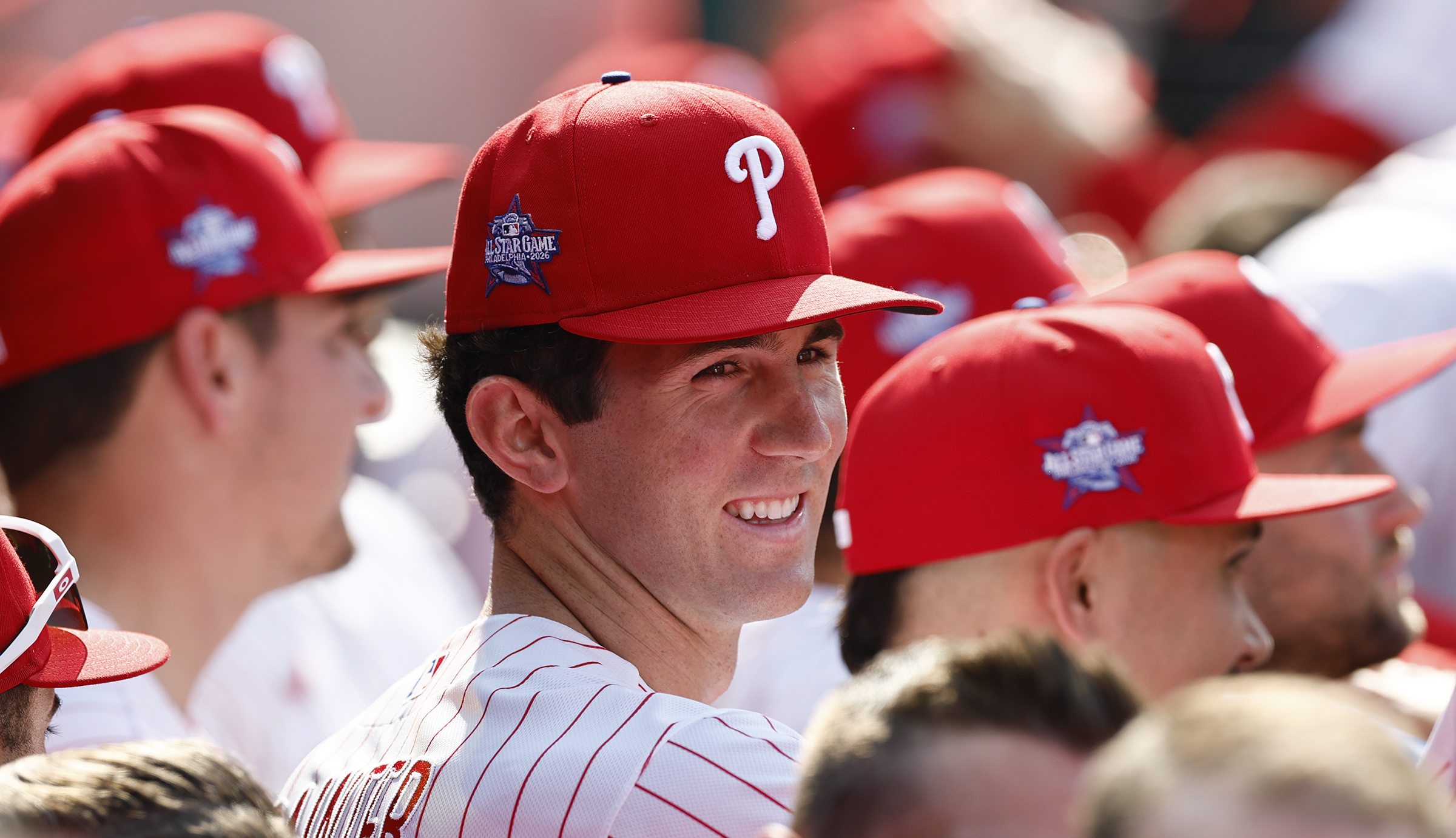
Author: Scott Lauber

  • The Phillies still need a right-handed bat. Let’s take an early dive into some options before the trade deadline.

    The Phillies still need a right-handed bat. Let’s take an early dive into some options before the trade deadline.

    Five months later, almost to the day, Bo Bichette stepped in the batter’s box in Citizens Bank Park.

    Boooooooo!

    (No, they weren’t calling his name.)

    Depending on who you ask, Bichette was either on the verge of signing with the Phillies or deep in talks about their seven-year, $200 million offer. It was the middle of January, a pivot point in the offseason.

    Here’s where the details get fuzzy. Phillies owner John Middleton says he went to sleep on Jan. 15 believing Bichette was coming to Philly; Bichette claims a deal was never that imminent.

    “I thought it was an opportunity, for sure,” he said. “But there was definitely things that needed to be worked out for that to become a possibility. So, no, I didn’t think that [it was close].”

    In any case, Bichette is in town this weekend with the rival Mets, who swooped in with a short-term (three years), high-salary ($126 million) deal with two opt-outs. And not that anyone has forgotten, the visit is a helpful reminder that the Phillies still are searching for a big right-handed bat.
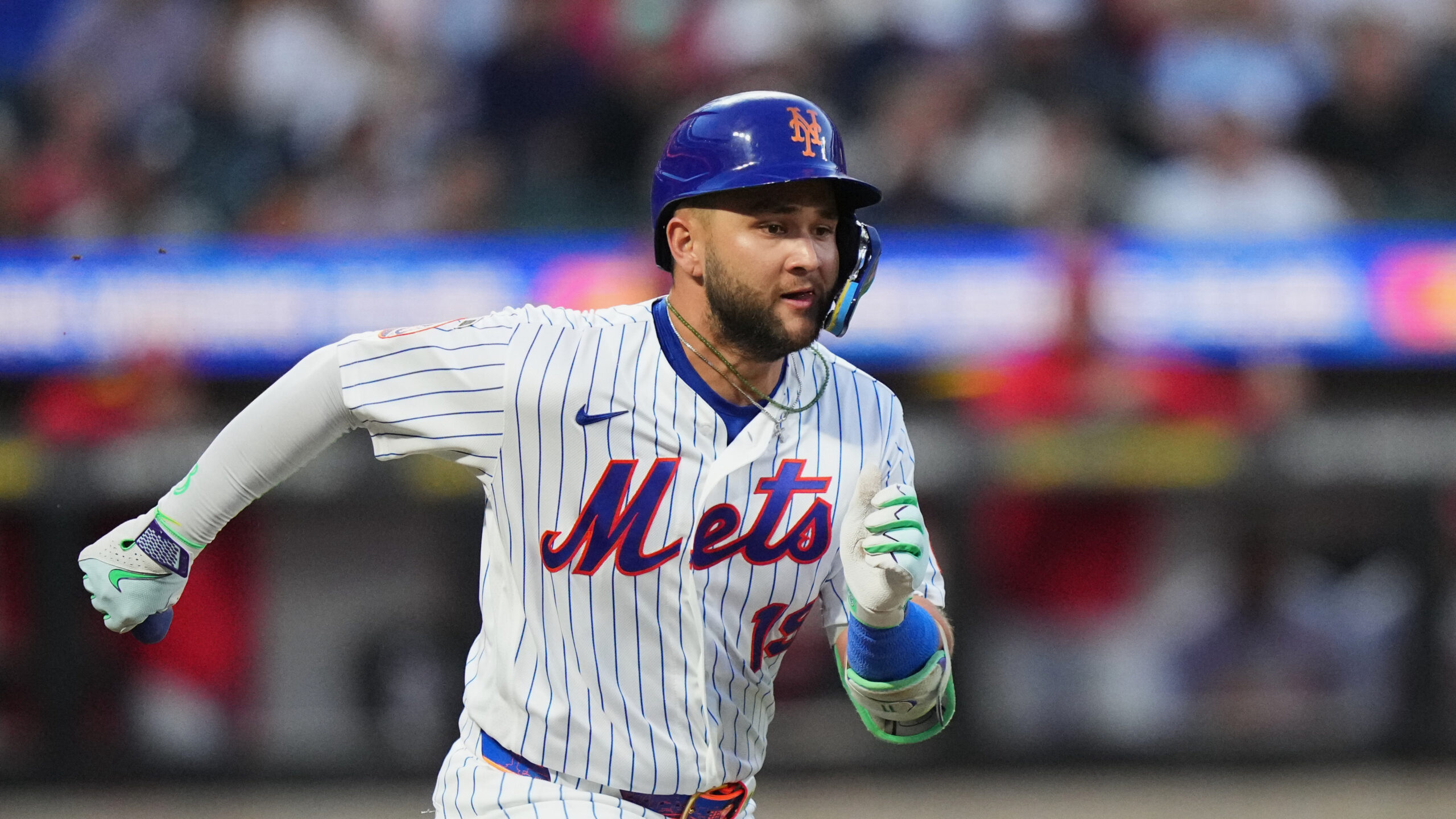
    Bo Bichette, who signed with the Mets over the Phillies’ seven-year, $200 million offer in January, is in town for the first time with his new team.

    The trade deadline is six weeks away — 6 p.m. on Aug. 3, if you want to set a calendar reminder. It’s a long way from here to there. The market hasn’t taken shape and likely won’t for a while.

    Entering the weekend, 12 National League teams and 11 in the American League were no more than three games out of a playoff spot. Some are more realistic contenders than others; none is ready to wave the white flag.

    “It’s pretty quiet right now,” Phillies general manager Preston Mattingly said this week on Phillies Extra, The Inquirer’s baseball podcast. “You’re talking to teams and checking in, and we’re having conversations to kind of lay some groundwork. But pretty quiet right now.

    “I’m sure over the next two to three weeks to one month, things will start to pick up a little bit.”

    The Phillies made a small trade last week to address a lack of outfield depth after losing Adolis García to a season-ending muscle tear near his right shoulder. They sent two minor leaguers to the White Sox for platoon outfielder Derek Hill.

    It’s possible they will have to make a similar trade for starting pitching depth after demoting Andrew Painter to triple A with a 7.06 ERA.

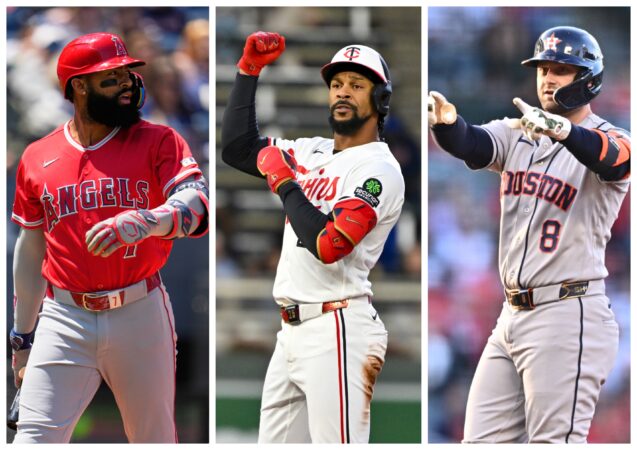
    But the deadline represents a chance to take a bigger swing. And the perception within the sport, based on conversations with league sources, is that the Phillies are prioritizing a right-handed hitter for the top half of the order to offset lefty-swinging Bryce Harper, Kyle Schwarber, and Brandon Marsh.

    Let’s take a still-too-early dive into a few players who may be available before the deadline by dividing them into categories:
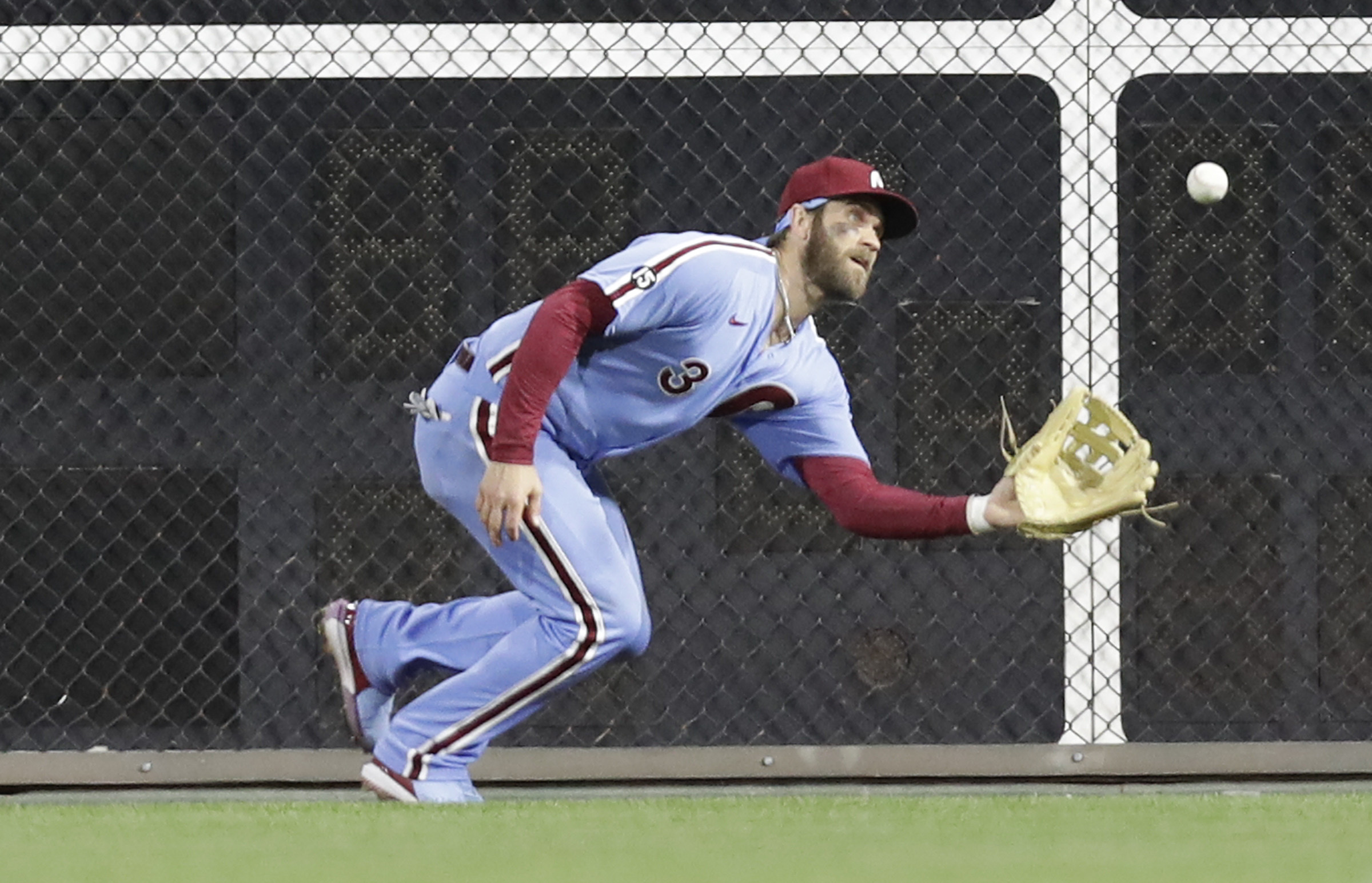
    The Phillies haven’t shown any interest in moving Bryce Harper back to the outfield.

    Non-outfield options

    The outfield is the most obvious place for the Phillies to add a hitter.

    Unless …

    “I’ve said it multiple years before — and this year, still — for the right player, I would do it,” Harper said of moving back to right field. “I mean, that’s as real as it gets. I don’t want to do it long-term. But if the right player comes along and that’s what we need, or if that’s what we want, I’d be open to it at any point.“

    Could the right player be Willson Contreras? Or fellow first baseman Christian Walker? The free-falling Red Sox could move Contreras, who is under contract next year for $18.5 million. Astros owner Jim Crane once vowed to never be a seller. But if Houston keeps fading, Walker and third baseman Isaac Paredes could bring value.

    Harper hasn’t played right field since April 2022, when he tore a ligament in his right elbow. He moved to first base a year later.

    “I still feel like I can throw a baseball from right field, and I can catch a fly ball,” Harper said. “It’s been a long time. But, yeah, I would do it in a heartbeat for us to win a World Series, without a doubt.”

    But the Phillies didn’t take Harper up on his previous offers, and it doesn’t sound like they’re about to start.

    “I know he’s always been very open-minded to trying to help the organization however he can, but we haven’t talked to him,” Phillies president of baseball operations Dave Dombrowski said this week. “And I really don’t contemplate it because I really like the way he goes about his business at first base. … I’m looking at him as being a first baseman.”
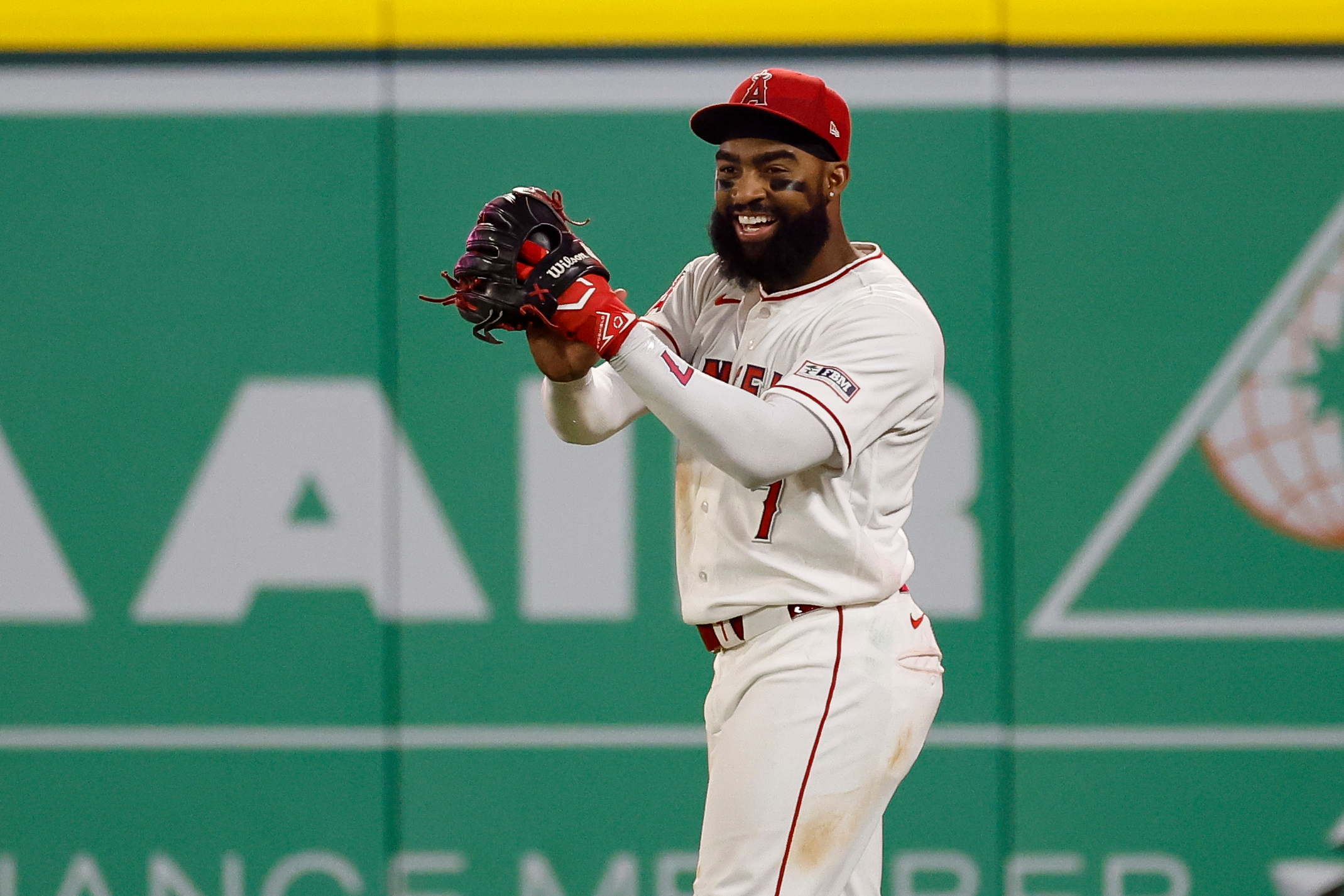
    With the Angels sinking to the bottom of the American League, outfielder Jo Adell could be on the move at the trade deadline.

    Midrange outfield targets

    Drafted a year apart, Marsh and Jo Adell came through the minors together with the Angels and became close friends.

    What if they were reunited with the Phillies?

    “That’d be kind of a cool reunion if they could get Jo there,” former Angels manager Joe Maddon said on a recent episode of Phillies Extra. “Because that man’s got some power.”

    Indeed, Adell broke out last season with 37 homers and a .778 OPS. The 27-year-old’s production has dipped (10 homers, .683 OPS through Thursday) and isn’t helped by a 2.9% walk rate that ranks among the lowest in the majors.

    But Adell would fit the Phillies as a right-handed hitter who bashes lefties (.862 OPS through Thursday). His defense has improved over the years in right field, too.

    And the Angels are headed for their 11th losing season in a row. With one year left on Adell’s contract, this might be their time to cash in, especially if they won’t move Mike Trout, who went on the injured list this week with a hamstring strain.

    Taylor Ward, a former Angels outfielder, represents an option as an outfield rental. A right-handed hitter and a free agent after the season, he has been an on-base machine for the Orioles, reaching at a .394 clip through Thursday, though he hit only three homers.
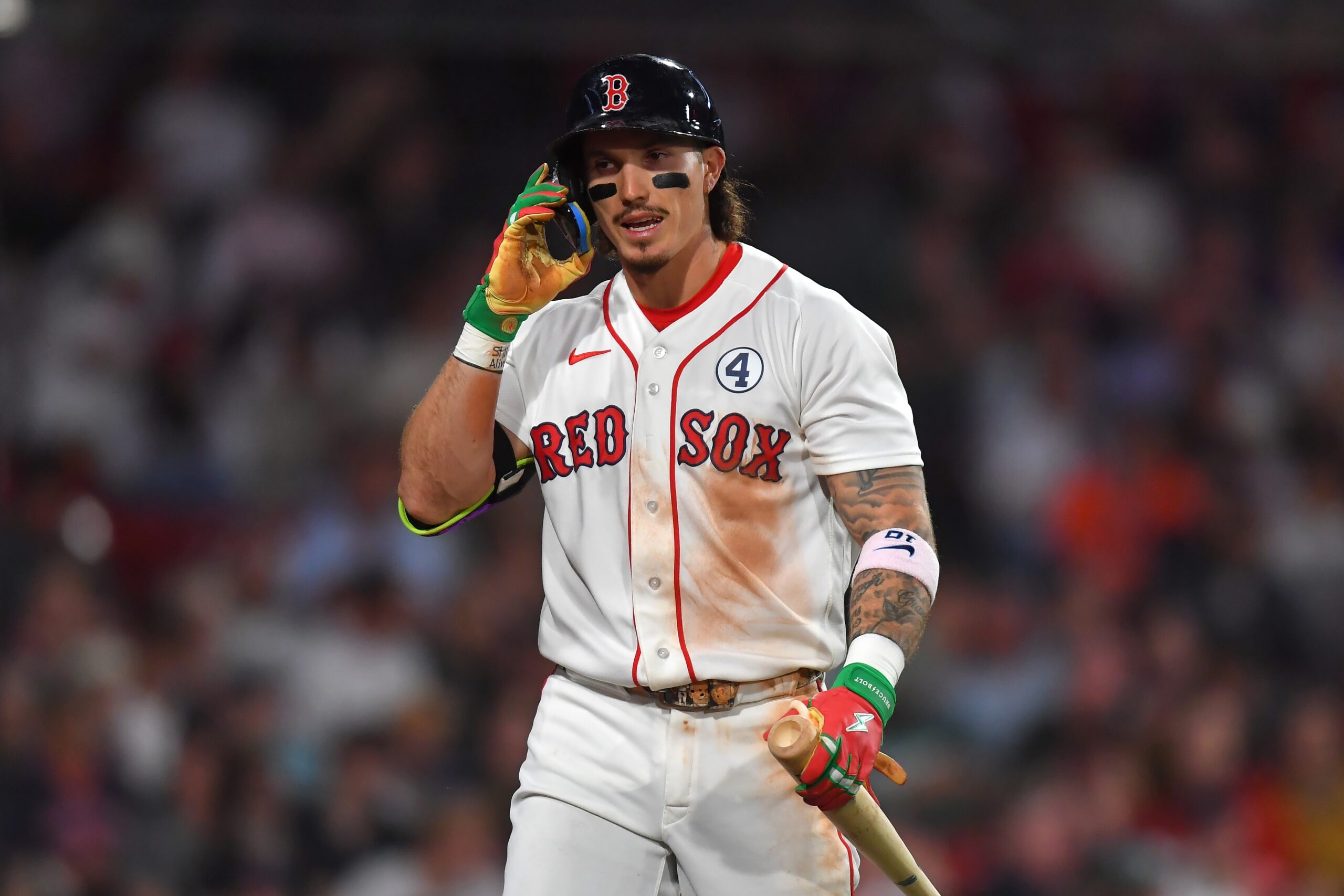
    Lefty-hitting outfielder Jarren Duran is a trade candidate if the Red Sox continue to fall out of contention in the American League.

    Lefty-hitting outfield options

    The Phillies had seven left-handed hitters in the lineup Wednesday against Marlins ace righty Sandy Alcantara.

    “I actually like it,” interim manager Don Mattingly said. “I do. I just think hitting left-handed against righties, it’s an advantage, right? And there’s pitchers that get righties out maybe better. … It just takes certain pitches away from a righty.”

    Said general manager Preston Mattingly: “I probably would side on the side of my dad. I don’t think it’s a bad thing to run out seven, eight, nine left-handed hitters vs. a right-handed pitcher. And I think we have [lefty hitters] that are well equipped to hit lefties.”

    File that away. Because although rival evaluators are expecting the Phillies to hunt for a right-handed hitter, Dombrowski may not shy away from an appealing left-handed bat.

    Maybe someone like Jarren Duran. The Red Sox will have a surplus of outfielders when Roman Anthony returns from an injured finger. Duran, drafted by Boston when Dombrowski headed its baseball operations department, could finally be the odd man out in left field.
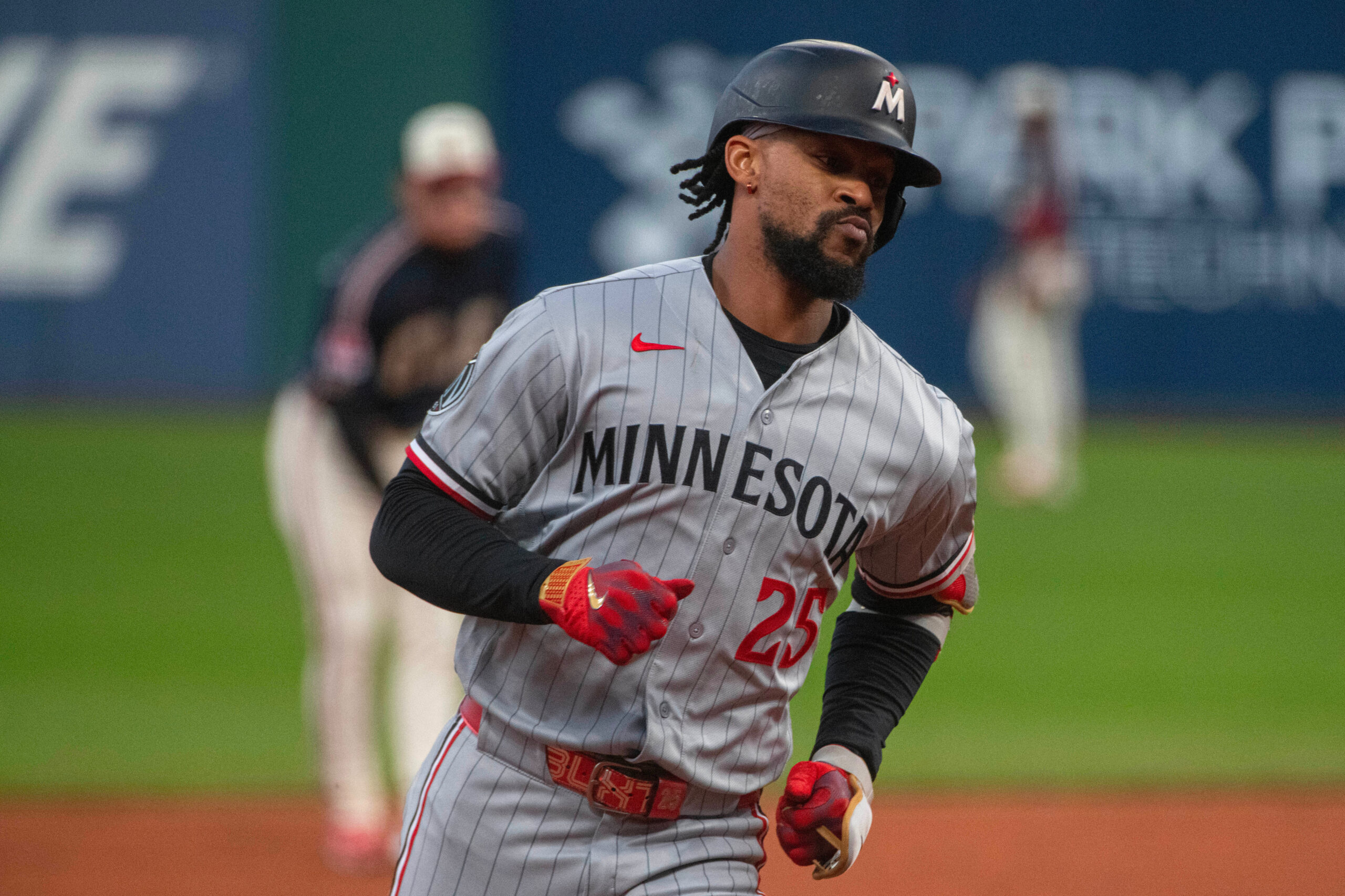
    Twins center fielder Byron Buxton would be among the most coveted hitters on the market if he waived his no-trade clause.

    Pie in the sky

    At last year’s All-Star Game, Byron Buxton pledged his allegiance to the only organization he has known.

    “I’m a Minnesota Twin,” he said, “for the rest of my life.”

    Buxton actually has control over that. The 32-year-old center fielder has no-trade protection and no desire to waive it, even after the Twins traded 10 players at last year’s deadline, including star closer Jhoan Duran and center fielder Harrison Bader to the Phillies.

    Amid another stellar season (23 homers, .919 OPS through Thursday), Buxton is doubling down on his loyalty.

    “I ain’t said nothing about leaving, nor will I,” Buxton told The Athletic. “I’m a Twin.“

    But what if the Twins sell again at the deadline? What if they move ace Joe Ryan and catcher Ryan Jeffers? Maybe that would change Buxton’s tune. Maybe not.

    The Phillies appear to lack the prospect capital to get him anyway. Justin Crawford and Gage Wood might be a start. But the farm system is in the bottom third of the sport, according to many evaluators, after the Phillies used Mick Abel, Eduardo Tait, Starlyn Caba, George Klassen, and Sam Aldegheri in deals over the last two years.

    “We feel good where our system’s at,” Preston Mattingly said. “We’re not concerned about a lack of assets in the minor leagues. A lot of times you see that top-100 [prospects] list. That’s not necessarily what teams internally talk about, and those are not the players they ask about.”

    It would be moot anyway if Buxton wants to be a Twin forever.

  • Phillies Extra with Preston Mattingly

    Phillies Extra with Preston Mattingly

    Father’s Day will hit a little differently this year for Don and Preston Mattingly. After years of working in baseball for different teams, often on opposite sides of the country, they are together with the Phillies as the first father-and-son manager-and-GM combination ever. Preston Mattingly joins Phillies Extra to discuss working with his dad, as well as the Phillies’ decision to demote Andrew Painter to the minors and their preparations for the trade deadline. Watch here.

  • ‘Phillies Extra’ Q&A: Larry Bowa on Philly’s 1976 All-Star Game, a Trea Turner rebound, and more

    ‘Phillies Extra’ Q&A: Larry Bowa on Philly’s 1976 All-Star Game, a Trea Turner rebound, and more

    Larry Bowa remembers the roar.

    Fifty years ago, the All-Star Game came to Philadelphia as part of the country’s bicentennial celebration. Bowa was among five Phillies players in the game, and when they were introduced with the National League squad, the ovation shook Veterans Stadium.

    With the Midsummer Classic set to return to town next month, Bowa, 80, joined the Phillies Extra podcast to recall Philly’s baseball summer of ’76, as well as the state of the current Phillies.

    Here are a few excerpts from the conversation with the World Series-winning former Phillies shortstop. Watch the full interview below and subscribe to the Phillies Extra podcast on Spotify or Apple Podcasts.

    Q: When someone brings up the 1976 All-Star Game in Philadelphia, is there a specific moment or memory that comes to mind?

    A: The fact that we played in our own city was unbelievable. The crowd reaction when they introduced all of us is something that you never, ever forget. With the exception of winning the ’80 World Series, that was an incredible moment for me to play in front of your hometown in your ballpark.

    And looking at the cast of characters, the players on both sides — I happened to just check out the roster a couple days ago — and the American League had some good pitchers there. And the thing that stands out in my mind, you have a meeting before — it’s a lot different now, obviously; it’s more of an entertainment thing now. Back then, it was, “Hey, you better win or you’re going to be embarrassed.”

    I remember Pete Rose. Mark “The Bird” Fidrych was going to pitch against us, and he was on fire. He had one of those years where he’s talking to the ball and doing all that. And three or four of us were sitting around there, and Pete says, “You know what I’m going to do? He’s going to start talking to that ball, I’m gonna hit a base hit up the middle.” … And I knew Pete was a great player, and I said, “Man, if this guy’s that good …” Sure enough, base hit, right up the middle. He’s talking to the ball, and boom. And he looked in the dugout, and he gave me like a little thumbs-up, and I went, this game must be easy for him because to call that against a pitcher that was probably the greatest pitcher at that time in the American League, it was unbelievable.

    Just the reaction of the crowd, especially when they said, “And now from the Phillies,” and they introduced all of us. And if I’m not mistaken, I think there were seven Reds on that team and five Phillie guys, which at that time, those two teams were pretty good. You can throw in the Dodgers, they were really good, too. So, there were three teams there that were well represented in that game.

    Cristopher Sánchez’s streak of scoreless innings ended at 50⅔ on Wednesday, the longest in franchise history.
    Q: Have you ever seen anything like Cristopher Sánchez, just in terms of a transformation or the kind of growth that he’s had?

    A: No, I haven’t. And when I first saw him pitch, the control was a huge issue, and now I’m watching this individual pitch now, and to me, and I know there might be some guys slighted, but he’s the best pitcher in baseball. The outs that he makes other teams get are very soft. As an infielder, as an outfielder, you’re always ready, because he doesn’t walk a lot of guys. He doesn’t run deep counts. His work ethic is off the charts. He’s a very humble individual. Hopefully, this can continue because literally right now we have two No. 1s. I mean, you talk about Sánchez and [Zack] Wheeler, and I still believe in my heart that we’re going to be in the playoffs. I know Atlanta has got a big lead and all that. I’m not even worried about that. But when we get in, and I know we’re going to get in, I wouldn’t want to face this team with the pitching staff that we have, especially in a short series, whether it’s five games, whether it’s seven games.

    Sánchez is the kind of guy that you wouldn’t know if he won 20 games or if he lost 20 games. You wouldn’t know if he’s losing 8-1 or winning 1-0 . He’s a humble individual. … I wish, and I love Ranger [Suárez], [but] I wish Ranger had a little bit of Sánchez’s work ethic because I think Ranger could have attained the same type of success.

    But Sánchez’s work ethic, I haven’t seen anybody — I should say this, Clayton Kershaw worked like that, and that when I watch Sánchez, I’m thinking of Clayton Kershaw, the work ethic that they put in. Hopefully this thing can continue, because right now, when we take the field and we have Wheeler or Sánchez on the mound, it’s almost like that team in ’72 when [Steve] Carlton took the mound, we knew we were going to win. And I think that’s the feeling right now when those two guys take the take the mound in Philadelphia.

    Trea Turner, the reigning National League batting champion, has struggled for most of the 2026 season.
    Q: If they could get Trea Turner going at the top of the order in that one or two spot, that would be a huge boost to an offense that could really use it. What do you see from Trea?

    A: I expect him to be where he’s supposed to be at the end of the year. People don’t see the work he puts in. … This guy works harder than anybody out there. I think sometimes he lets his hitting affect when he goes [on the field at shortstop], not as much as he did the first year when he first came over, but when he feels he’s not helping the ballclub offensively, I think it weighs on him a little bit. I think they made a great move hitting him second.

    I don’t think Trea’s the kind of guy that’s going to work pitchers and all that and look for walks. He’s one of those guys that, once he gets into his groove, I don’t care where you throw him, he’s going to get base hits. And lately he’s been coming on. I expect a good second half … I think he’s going to be fine, but he’s his own worst critic. Believe me, he wants to do well. He knows he’s disappointed the team. It seems like when Trea doesn’t get on — I know we got the big boys in [Kyle Schwarber] and [Bryce Harper] — but when Trea gets on, we’re a very good offensive ballclub. When he’s not, sometimes we have to struggle for runs.

    Nothing against the other guys on the team, but Trea seems to be the guy that ignites us. And them switching the lineup a little bit lately, having Schwarber lead off, I think it might have eased his mind a little bit. But I expect big things from him moving forward, because he’s too good a hitter to be hitting what he’s hitting. To me, he’s the catalyst for our team.

  • ‘He looked like a star:’ Andrew Painter’s impressive debut helps the Phillies snap early-season skid

    ‘He looked like a star:’ Andrew Painter’s impressive debut helps the Phillies snap early-season skid

    Andrew Painter hadn’t even completed his walk in from the bullpen when he heard the first ovation. As he crossed the first-base line, fans behind the Phillies’ dugout stood and cheered, a gesture befitting the occasion.

    But it didn’t compare to the last ovation.

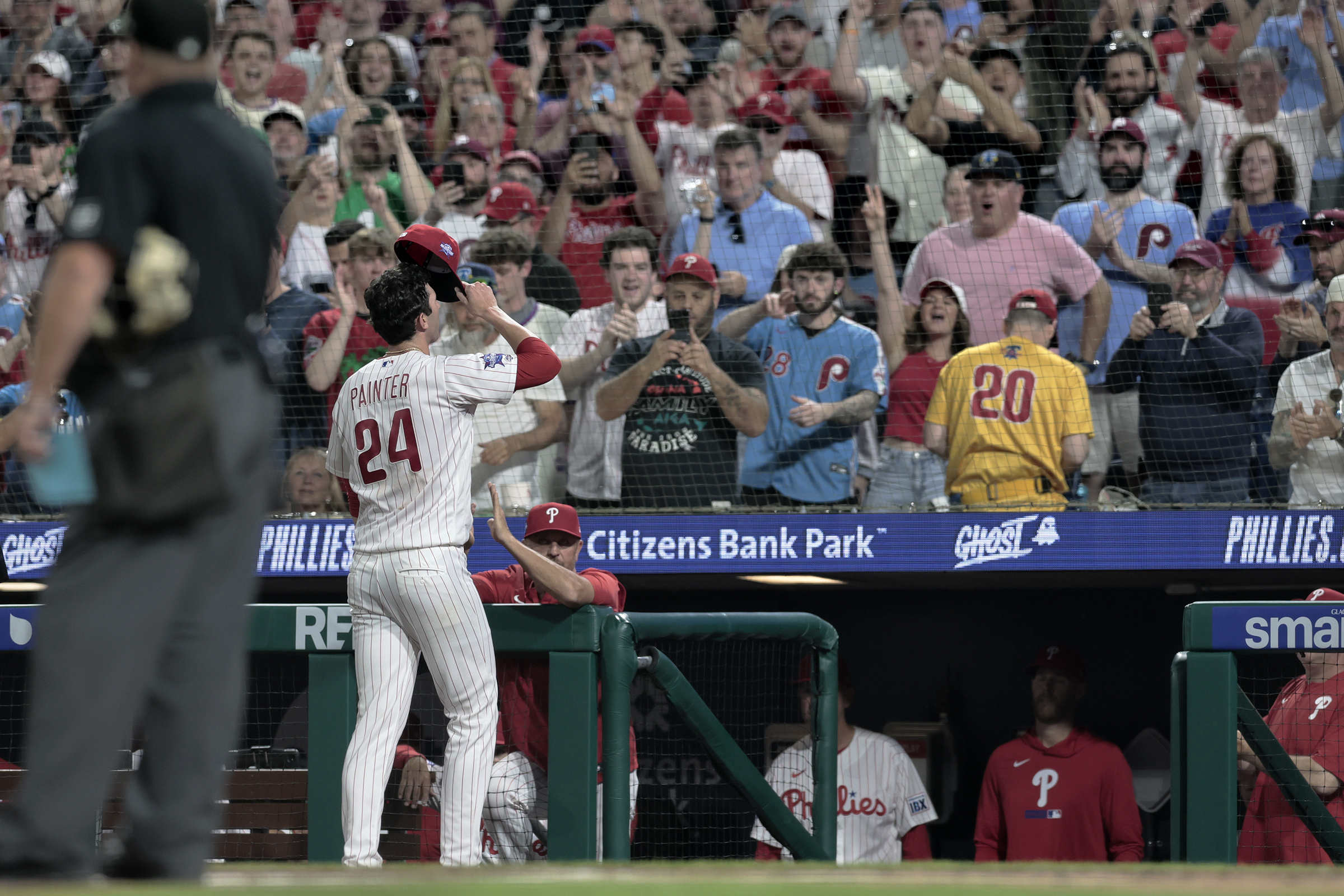
    At 8:02 p.m. Tuesday, 80 minutes after a first pitch that was three years in the making, Painter relinquished the ball and left the mound to a roar that might have lifted the cherry-red cap clear off his head if manager Rob Thomson hadn’t reminded him to do it himself.

    “That was awesome,” Painter said later, after the Phillies held on for a feel-good 3-2 victory over the Nationals. “I don’t think I could’ve drawn it up much better.”

    Somehow, almost impossibly, the most anticipated major-league debut by a Phillies pitcher in two decades, since franchise icon Cole Hamels in 2006, actually lived up to the hype.

    And then some.

    First, the line: 5⅓ innings, four hits, one run, one walk, eight strikeouts, 84 pitches, 57 strikes. But that doesn’t even do justice to how well Painter pitched before 40,708 paying customers at the corner of 11th and Pattison.

    Ten days shy of turning 23, the youngest Phillies starter since Ranger Suárez in 2018 — with “Andrew’s Painters” in Section 302, “Painter’s Painters” in Section 218, and who knows how many other groups of homage-paying fans popping up across the ballpark — Painter dialed his fastball to 98.7 mph, unleashed wicked curveballs and sweepers and bat-slowing changeups, and even got a few strikeouts with a splitter that he’s been perfecting.

    And then there was his demeanor — chill as could be.

    “He didn’t seem fazed by anything,” said Kyle Schwarber, who hit a solo homer in the third inning. “Even before the game, there was no pacing, no nothing. It was pretty cool.”

    J.T. Realmuto added: “He seemed super calm, confident. You would have never known it was his first start.”

    And from Adolis García, who hit his first Phillies homer in the fourth inning: “He looked like a star.”

    Fellow rookie Justin Crawford scored what proved to be the winning run in the fifth inning on an error by Nationals first baseman Luis García Jr. With Crawford in center field, it marked the first time since Aug. 7, 2015, that the Phillies started an under-23 pitcher and position player in a game (Aaron Nola and Maikel Franco).

    “When those young guys come up, there’s a lot of excitement,” Thomson said. “And guys root for them because they remember their first appearance or game in the big leagues.”

    Crawford debuted with two hits on opening day. This was Painter’s moment.

    Take it from the top. His first pitch hummed in at 96.6 mph for a called strike. Realmuto tossed out the ball for a souvenir. Four pitches later, another keepsake: a curveball that struck out Nationals leadoff hitter James Wood.

    Then came a Houdini act. After yielding back-to-back singles to open the second, Painter escaped with three fly balls.

    Nationals manager Blake Butera stacked the lineup with six left-handed hitters and two switch-hitters to increase the degree of difficulty. Lefties batted .287 with an .857 OPS against Painter last season in the minor leagues.

    But Painter mixed his pitches like a blender to the lefties, preventing them from sitting on the heater. And the second time through the order, he began sprinkling in splitters.

    “We were, I mean, not necessarily saving it, but I didn’t feel like he needed it that first time through because he was throwing everything else so well,” Realmuto said. “It’s always good as a starting pitcher to be able to have something in your back pocket for the second or third time through the lineup.”

    It’s part of what makes the special ones great. And make no mistake: The Phillies believe Painter is special.

    For years, president of baseball operations Dave Dombrowski has hung up the phone on rival executives who have made trade offers for Painter. In 2023, when Painter was 19, the Phillies seriously considered him in spring training for a spot in the season-opening starting rotation.

    But then Painter tore an elbow ligament, had surgery, and missed two seasons. When he returned to the mound in triple-A last season, Dombrowski believed he’d be ready for the majors by the summer. But Painter struggled to command his fastball, posted a 5.40 ERA in 22 triple-A starts, and never got called up.

    “We’ve been waiting for a while for this,” Thomson said, “and so have our players.”

    Painter conceded that he thought about his debut often over the last three years. It helped him to get through the long, sweaty days of rehab at the team’s facility in Clearwater, Fla., and the challenging nights last season in Lehigh Valley.

    Was it all that he imagined?

    “It probably exceeded it,” he said. “A lot of people showed up. I think there were about 40 [family and friends] here. Maybe even more, honestly. Just the support system behind me, everyone come out, taking time out of their week to come watch me pitch, it’s great.

    “The crowd showed up tonight and kind of rallied behind me. Just kind of soaked all of it in. I came in, I didn’t want to place an expectation on myself. I just wanted to go out there and make sure I was convicted in every pitch that I was throwing and feel confident with everything that I was throwing.”

    Painter didn’t want to stop throwing in the sixth inning. But after allowing a one-out single to CJ Abrams on his 84th pitch, he got a visit from Thomson, who tapped him on the chest.

    “Did you enjoy it?” the manager said.

    Painter initially shook his head no before realizing what Thomson said. Yes, Painter said. He enjoyed it.

    “Just make sure you tip your cap when you walk off,” Thomson said.

    Cue the ovation.

    “I almost forgot,” Painter said of the cap-tip. “But I did it.”

    Phillies pitcher Andrew Painter tips his hat as he comes out of the game in the sixth inning of his MLB debut.

    With the promise of many more in the future.

    “If we can keep him healthy, this guy’s going to be really good for a long time,” Thomson said. “He’s going to have a really great career. He’s one of those upper-echelon guys that’s got the combination of power and command. The future is bright for him.”

  • Zack Wheeler throws three scoreless innings in rehab start with Lehigh Valley

    Zack Wheeler throws three scoreless innings in rehab start with Lehigh Valley

    ALLENTOWN — Zack Wheeler didn’t have to subject himself to this.

    In planning out where to pitch in a game for the first time since having a rib removed to relieve a compressed vein 186 days ago, the Phillies ace could have opted for the warmth of Clearwater, Fla., where the A-ball season will begin in a few days.

    But Wheeler, whose recovery already is tracking ahead of schedule by several weeks, wanted a bigger test. He took the mound here, then, amid a 46-degree chill Saturday, then threw cold water all over a lineup of triple-A batters.

    “It was really my choice,” Wheeler said after holding Toledo, the Tigers’ triple-A club, to two hits and one walk on 38 pitches in three scoreless innings. “I wanted to see more competitive at-bats and more competitive situations. I knew it was going to be cold, but at the end of the day, this is probably where I need to be facing hitters.”

    Everyone got what they came for.

    Wheeler threw each of his pitches — four-seam fastball, sinker, sweeper, cutter/slider, curveball, and splitter — to a lineup that included outfielder Wenceel Pérez and top Tigers prospects Max Clark and Jace Jung. His fastball sat 92-94 mph, slightly better than in spring training, before dipping in the third inning. His curveball was especially sharp.

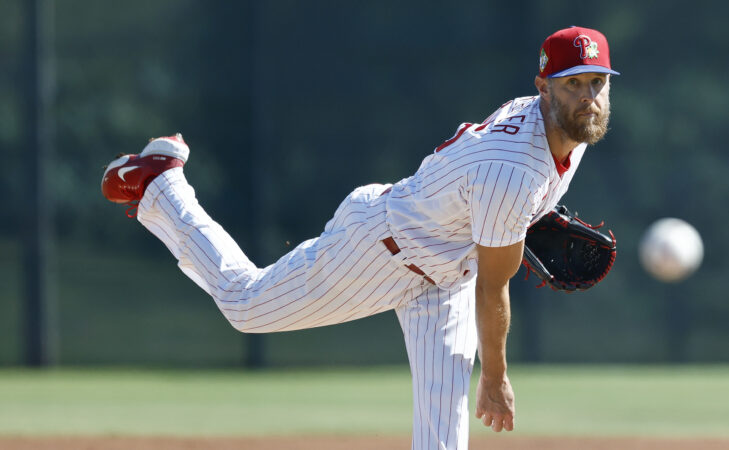
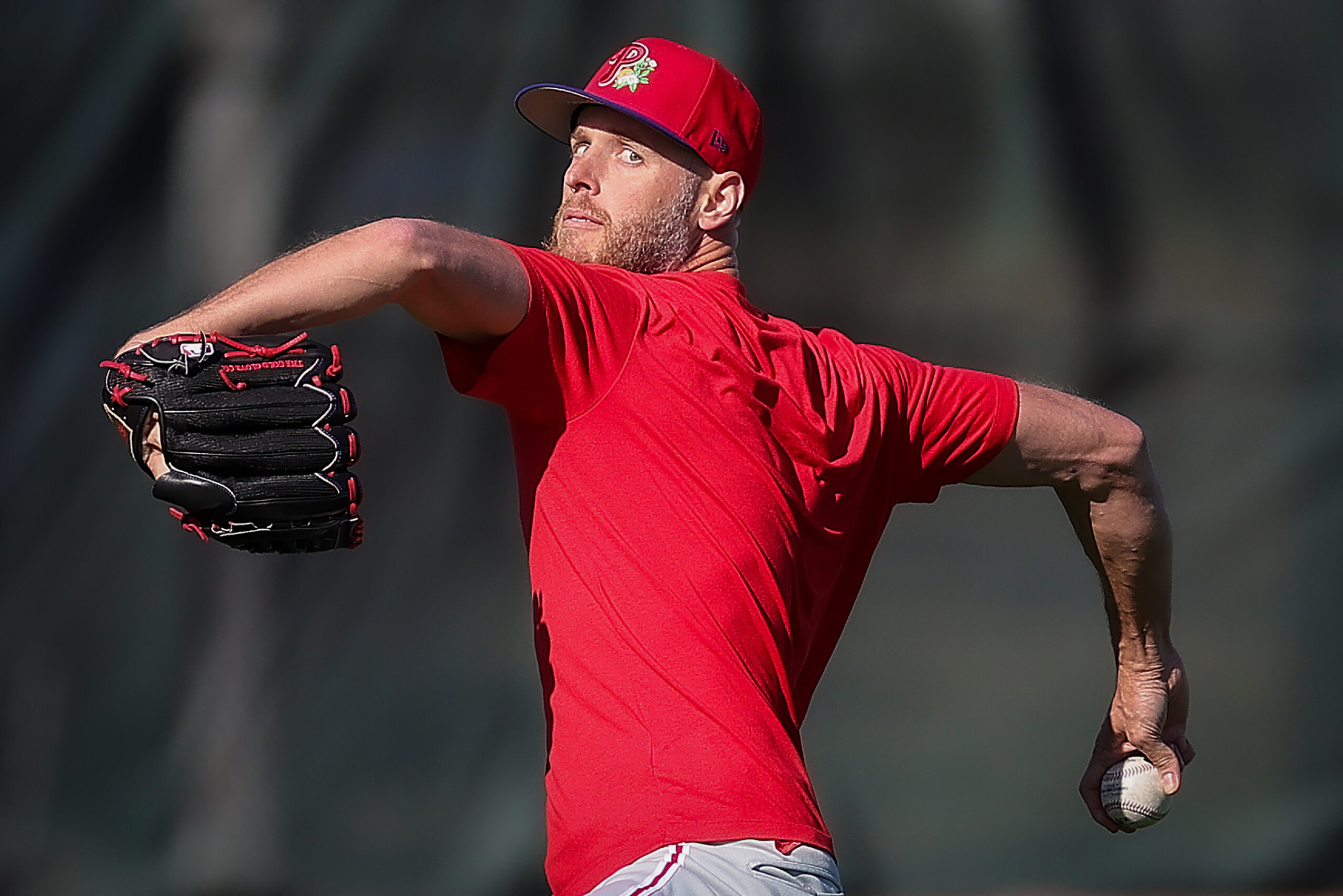
    Philadelphia Phillies pitcher Zack Wheeler long tosses at spring training in Clearwater, Fla. on Monday, Feb. 23, 2026.

    And the IronPigs, the Phillies’ Lehigh Valley-based triple-A affiliate, got to stage “Rehab Ribs Night,” complete with a barbecue buffet in the left-field stands above the bullpen that began an hour before the game and ran through the middle innings for an announced crowd of 6,740.

    “It’s a little aggressive,” Wheeler said, smiling. “Made my bone hurt a little bit, and it’s not even there. No, whatever can help these guys out. It’s minor league baseball. They run a bunch of promotions. Whatever makes a little bit of money, I’m here for it, I guess.”

    Phillies reliever Orion Kerkering was here, too. He followed Wheeler into the game and threw 10 pitches, including two of his newly minted splitters, in a scoreless fourth inning.

    Wheeler and Kerkering returned to Philadelphia after the game but will rejoin the IronPigs next week in Durham, N.C. Kerkering expects to make back-to-back appearances Tuesday and Wednesday before possibly coming off the injured list; Wheeler will start Friday night, then make at least one more minor league start for double-A Reading.

    After that? He could join the Phillies’ rotation.

    Certainly nothing that happened in his first start for Lehigh Valley suggested otherwise.

    “Yeah, it went well, obviously,” Wheeler said. “Felt good. At the end of the day, coming out of it healthy is really all that mattered to me.”

    Wheeler produced seven swings-and-misses, four of which came off his curveball. He struck out Pérez on a curveball to open the game and got Trei Cruz to chase a breaking ball in the dirt to end the first inning, probably his best pitch of the start.

    But despite the results, Wheeler said he wasn’t necessarily satisfied with the spin on his off-speed pitches.

    “Whether it be the curve, sweeper, or even the cutter, they weren’t doing necessarily what I needed them to do,” Wheeler said. “But the curveball, it had good shape on it and it was moving so much that it was effective. It’s something that’ll come with more reps and the higher intent and stuff.”

    Jung had the only hard-hit ball against Wheeler, a scalded single to right field that registered 109.5 mph off the bat. Otherwise, Wheeler got mostly soft contract. All three strikeouts came in the first inning.

    Wheeler, who lost considerable weight after the surgery, said he’s still about 10 pounds lighter than usual for this time of the season. Maybe it has something to do with why he didn’t feel as comfortable pitching out of the stretch in spring training.

    But he was encouraged by his effectiveness out of the stretch. Two of his higher-velocity readings — a 94-mph sinker and a 94.3-mph four-seamer — came out of the stretch to Eduardo Valencia in the first inning.

    Wheeler credited a recent mechanical tweak with pitching coach Caleb Cotham in the way he comes set with his front foot.

    “Just kind of thinking back over the years, what’s worked for me, we made a little adjustment and today I felt a lot better, more in sync-wise,” Wheeler said. “Sometimes you just need those little reminders along the way even though I’ve been doing it for a while. Sometimes it’s the small stuff that you kind of need to nail down as you build up.”

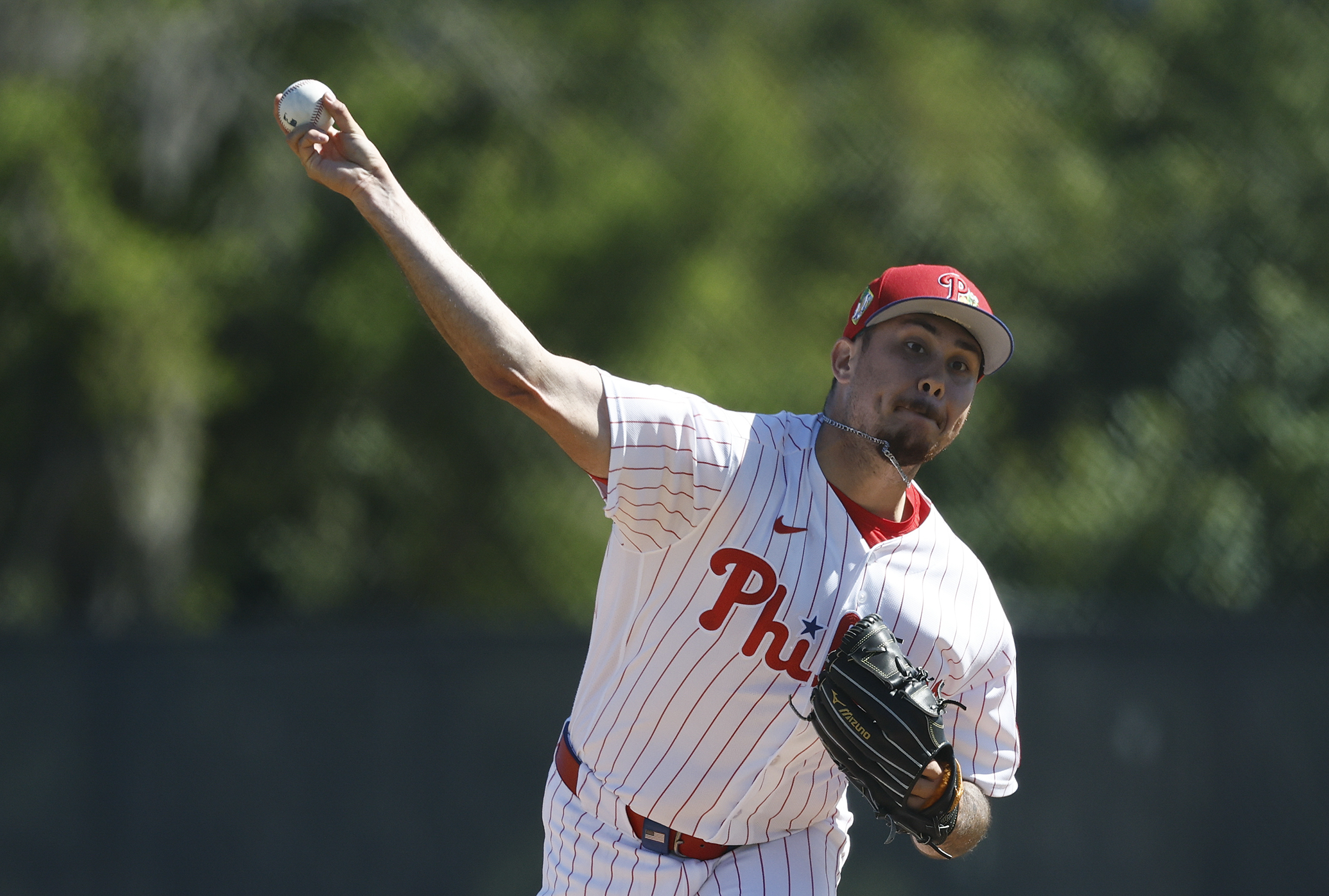
    Phillies pitcher Orion Kerkering, seen here in a simulated game earlier this spring, threw 10 pitches in a scoreless fourth inning on Saturday.

    If you blinked, you missed Kerkering.

    He was slowed in spring training by a strained right hamstring. He also is introducing the splitter to complement his fastball-sweeper tandem. He spiked one in the dirt and got Cruz to foul off another. It remains a work in progress.

    “I think I’m comfortable right now that I can go into a big league game and throw a split,” Kerkering said. “I think tweaking it here, knowing what guys see, kind of judging their swings and trying to reevaluate from there, I think that’s what’s helpful.”

  • From pitching to grilling, ‘Andy’ Painter is (finally) ready to cook for the Phillies

    From pitching to grilling, ‘Andy’ Painter is (finally) ready to cook for the Phillies

    So, you say you want to get to know Andrew Painter better?

    Ask him about pickleball.

    No, wait, not just about the paddle game, which the Phillies‘ best pitching prospect in 20 years enjoys playing after offseason workouts in South Florida. Get him to explain his “signature move,” Spencer Stockton teases, and well, how do you not take that bait?

    “I had the ‘skyball,’” Painter says.

    The skyball?

    “I just hit it up real high,” Painter continues, leaving out the part about yelling “Skyball” at the top of his lungs. “You can ask [Jesús] Luzardo about it. He never returned it. It wasn’t always in. No one ever figured out how to hit it. It was out of bounds most of the time.”

    A trick serve that borders on the absurd and has little chance of actually landing inside the lines? It’s goofy. And quintessentially Painter, scheduled to make the most highly anticipated major-league debut by a Phillies pitcher since Cole Hamels on Tuesday night at home against the Nationals.

    He goes by Andrew on the mound but Andy around friends and peers, most of whom describe him with a common adjective: “happy-go-lucky.” That characterization applied even last October, according to Stockton, who didn’t know what to expect when Painter walked back into Cressey Sports Performance in Palm Beach Gardens, Fla., where many major-league pitchers train in the offseason.

    Phillies fans have heard about Painter for years, since he dominated three levels of the minor leagues in 2022. In 2023, at age 19, he was competing in spring training for a rotation spot — and probably would’ve made the team — when he tore a ligament in his elbow. Rest and rehab didn’t work. He had surgery four months later.

    It was 15 months before Painter would pitch in a game. And after he overpowered hitters for six weeks in 2024 in the Arizona Fall League, Phillies president of baseball operations Dave Dombrowski, who likened Painter before surgery to Justin Verlander, infamously said the 6-foot-7 righty might be ready for the majors by last “July-ish.”

    Phillies pitcher Andrew Painter had a 2.31 ERA in four spring starts.

    But Painter struggled in his first exposure to triple A. Like most pitchers who are returning from Tommy John surgery, his fastball command came and went. His arm angle dipped. He made 22 triple-A starts, not missing any, but posted a 5.40 ERA.

    “July-ish” turned into, well, nothing. Painter made his final triple-A start on Sept. 17 and went home once the season ended.

    Stockton, a former minor-league pitcher with the Reds and now a coach at Cressey, didn’t know what frame of mind his former pickleball partner would be in when he got there.

    “I expected him to be maybe a little morose about what had happened,” Stockton said by phone. “I assumed he was probably going to be a little disappointed. But it was kind of the opposite. He was very driven and very realistic about what happened.”

    And now, at last, Painter is ready for his close-up.

    When he finally takes the mound in Citizens Bank Park, it will be 1,126 days since Painter’s ill-fated spring-training start in 2023 and 980 since his surgery — and 10 days shy of his 23rd birthday. Painter will still be the youngest pitcher to start a game for the Phillies since Ranger Suárez on Aug. 16, 2018.

    Maybe some of the prospect shine has dulled since Baseball America named Painter as the best pitcher in the minors in 2022. But the expectations are every bit as grand as ever.

    “I’ve always followed him because he’s a friend of the family,” said former Phillies manager Joe Girardi, whose son, Dante, played with Painter in high school. “Andrew went through somewhat of a traumatic experience, where he had to rehab his elbow and deal with a lot. It’s great to see him back. We’re pulling for him.”

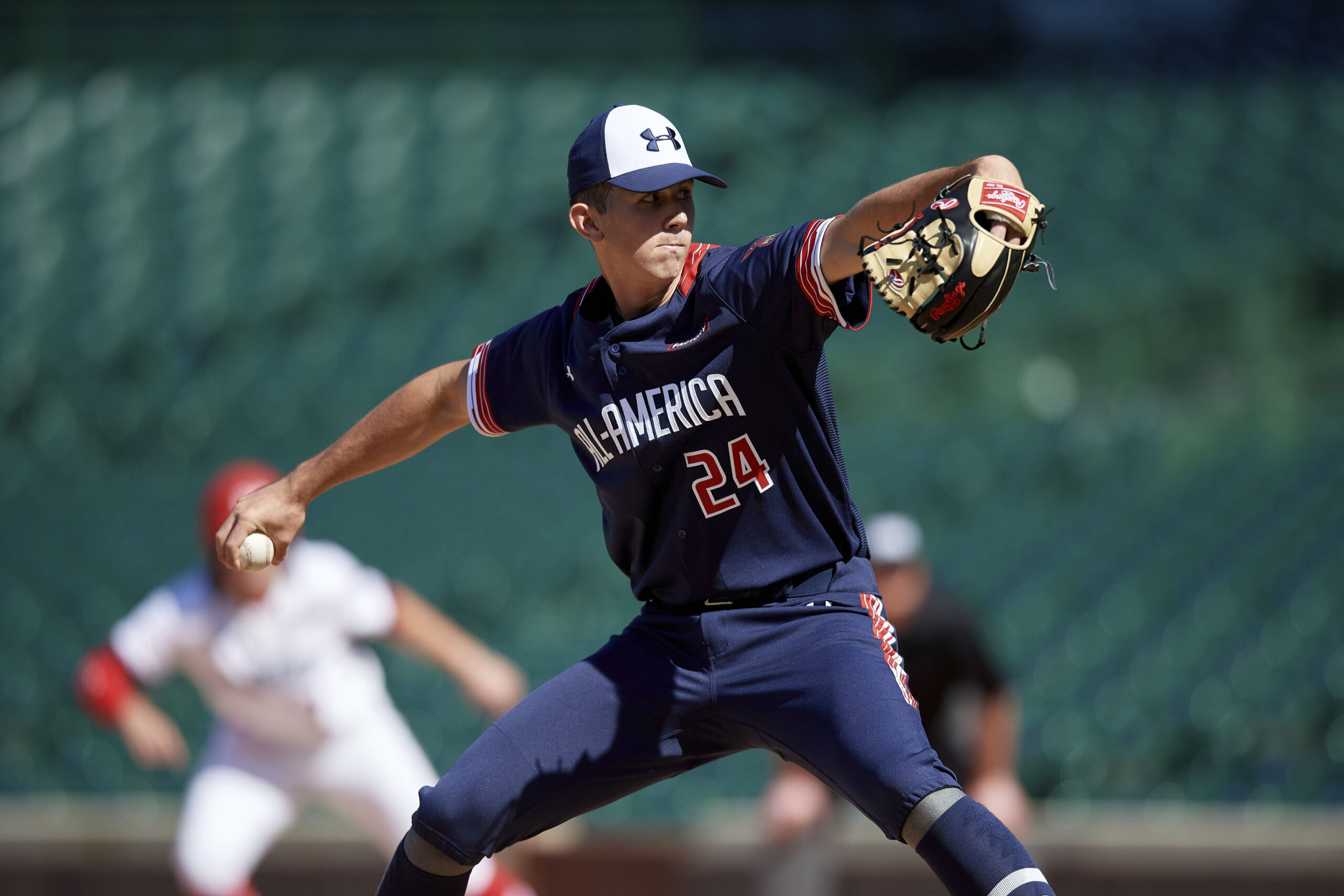
    Andrew Painter, who pitched in the Under Armour All-America Game in 2019 at Wrigley Field, was a high school star in Florida.

    The rise

    Painter pitched in high school at Calvary Christian Academy, a powerhouse program in Fort Lauderdale. As a freshman, he was the No. 4 starter in a rotation that included future Mets right-hander Christian Scott.

    It wasn’t long before Painter moved up the ranks.

    The talent was overwhelming. Girardi recalled attending a tournament at USA Baseball’s headquarters in Cary, N.C., in 2018. Painter faced a team from Mississippi and took a perfect game into the sixth inning.

    “I looked at [his wife] Kim, and I said, ‘There’s a first-round pick in waiting,’” Girardi said by phone. “It was 90 mph; four pitches. He could command them all. He was thin. He hadn’t filled out yet. But there was just so much potential there. You could just see that he was going to be special.”

    Yet Painter seemed unfazed by it all. He took baseball seriously, especially while he was on the mound. But around friends and teammates, he didn’t take himself seriously.

    To wit: Painter, who towered over most teammates, walked into the high-profile National High School Invitational in North Carolina with a Kermit the Frog backpack slung over his shoulders, former Calvary Christian coach Alan Kunkel recalled.

    Girardi remembered Painter begging the coaches to let him hit in batting practice. He shagged fly balls in the outfield with such zeal that Girardi would utter, “Please don’t get hurt.”

    “You saw Andy’s comedic side early,” Kunkel said by phone. “Andy’s always been pretty low-key and shy and just kind of quirky and very funny, very witty. But he’s never wanted to be the guy that’s drawing all the attention.”

    Indeed, Painter will talk forever about college football (he’s a Florida Gators fan) or video games, or his adventures in posting up Max Scherzer in a pickup basketball game after workouts at Cressey. He just isn’t about to post his pitching clips on Instagram.

    Never mind that he was well-known in the South Florida high school baseball world. Luzardo, a prospect in the Nationals’ farm system at the time, heard of Painter and recalls watching him in high school. People would inevitably notice him — “It’s not like you can miss him, man, at 6-6, 6-7,” Kunkel said — but not because he drew attention to himself.

    “We live in a very vain time where, man, it’s hard to find supercompetitive kids that are willing to just grind and put in the time and not care who gets credit for it,” Kunkel said. “Andy is one of those kids. Andy has never cared about the vanity of the sport, or cared about being posterized or put on social media. He’s just wanted to be a big leaguer and just continue to compete.”

    Andrew Painter can appear laid back, but he’s “no more, no less of a competitor than the most competitive kid that I’ve ever coached,” said Alan Kunkel, his former high school coach.

    At times, Kunkel said Painter’s laid-back demeanor would create the wrong impression. Pro scouts often asked about his competitiveness. Kunkel was there to offer reassurance.

    “He’s no more, no less of a competitor than the most competitive kid that I’ve ever coached,” Kunkel said. “I always said he’s got the heart rate to be a surgeon or to be a big league pitcher. Ninth inning, World Series moment, I don’t know that that would bother him any more than having to perform heart surgery on somebody for people who have the talent and drive to do that.”

    The Phillies got several up-close looks at Painter in high school. In addition to area scout Victor Gomez, who attended almost all of Painter’s starts in a 12-month span leading up to the draft, amateur scouting director Brian Barber saw him pitch five times in the summer of 2020 and twice in the spring of ‘21.

    Oh, and they had plenty of inside information on Painter. Girardi was managing the Phillies in 2021. Brian Kaplan, whom the Phillies hired after the 2021 season as director of pitching development, coached Painter at Cressey Sports.

    The only question, it seemed, was whether Painter would still be on the board when the Phillies made the 13th overall pick.

    “I do remember going into that morning [of the draft] thinking, if you had me guess on who we were going to take, it was going to be Andy Painter,” Barber said. “I thought he had a chance to get there, and I knew if he was going to get there, we were going to take him.”

    It was the second consecutive year that the Phillies drafted a high school pitcher in the first round. On Aug. 6, 2022, Mick Abel and Painter started back-to-back in an A-ball doubleheader in Lakewood, N.J. Abel allowed three hits and three walks and struck out eight in six scoreless innings. Painter one-upped him across the board: two hits, one walk, 11 strikeouts in seven scoreless innings.

    “The guy is just an alien,” Abel said a few days later. “He’s awesome.”

    Andrew Painter’s parents and new fiancée will be at Citizens Bank Park on Tuesday for his major league debut against the Nationals.

    The return

    Imagine being 19 years old and “on a rocket ship to what looked like superstardom,” as Barber put it. Now imagine having it taken away.

    How would you cope?

    Painter became a grillmaster.

    “He kind of ventured off and learned how to cook and enjoyed testing out new types of meats and things of that nature,” Kunkel said. “My man was researching seasonings; he was researching meat types. He’s very proud of his cooking arsenal right now.”

    Last season left a sour taste in Painter’s mouth. He got through it healthy, which was the most important part. And there were restrictions. For example, he wasn’t allowed to long-toss from beyond 120 feet.

    But upon returning to South Florida, Painter was energized by the idea of a normal offseason. He got together with Stockton and Phillies assistant pitching coach Mark Lowy, who previously worked at Cressey Sports, to dig in on why triple-A hitters slugged .585 against his fastball last season.

    Among their discoveries: Painter’s arm slot dipped from its presurgery position, which impacted the shape of his heater. The Phillies identified the issue during the season but were cautious among making changes in a competitive environment.

    “He got into some subpar throwing positions, but he was athletic enough to still throw 100,” Stockton said. “When things go wrong and you’ve never struggled, you start to throw things at the wall that maybe aren’t necessarily the best things for you. I think that’s kind of what he ran into last year, and it was like, ‘Well, how do I fix it?’”

    Start by long-tossing from greater distances. There were other drills, too. Stockton gave Painter a red, 6-pound ball and had him throw it as hard as he could from the mound, then do the same with a regular ball. As the shape of his fastball returned, the usual movement came back, too.

    Painter and Luzardo worked out together six days a week with Stockton beginning in November. Painter worked on his changeup, which he threw a lot, especially to righties, in spring training. He worked on separating his sweeper from his traditional slider. He also lost about 15 pounds to get back to 225.

    But Stockton noticed something else about Painter.

    “He was just very motivated to get going from Day 1,” he said. “It’s a testament to how far he’s come. When he was 18-19, even when he was in high school and we were all training together, as you would expect from a kid that throws 100 in high school, he was a little immature. But that was only four years ago, and he’s leaps and bounds ahead of that.

    “It helps him for the future. Is he going to be a Cy Young [winner] this year, or even Rookie of the Year? Chances are, he probably won’t. But when you can get some of these things out of the way at 22-23, those shortcomings that you have early on when you’re supposed to be the guy, it helps the career arc a little bit.”

    Surely, they squeezed in some time for pickleball, too. The “skyball” doesn’t get better without practice.

    But everything will come into focus Tuesday night. Painter’s parents and new fiancée (he got engaged last month) will be there. Kunkel, who now coaches at a high school in Orlando, is even skipping a game — “The first game I’ve ever missed as a high school coach, man,” he said — to be there with his wife and daughters.

    Maybe even Hamels, who works for the Phillies, will be in attendance.

    “Sometimes with young pitchers, you worry about them trying to do too much, and it can manifest itself with a lack of control or getting hurt,” Girardi said. “I think he learned from that experience, and I think he’s going be better for it, and I think he’s prepared for what’s coming up.”

  • Team USA came up short in the WBC final, but Bryce Harper left a mark — with his bat and his words

    Team USA came up short in the WBC final, but Bryce Harper left a mark — with his bat and his words

    MIAMI — The record will reflect that Venezuela, a baseball-rich country with a loaded lineup and passionate fans who ring your ears with songs and chants, won the sixth edition of the World Baseball Classic, 3-2, here Tuesday night.

    Just not before the Showman showed up.

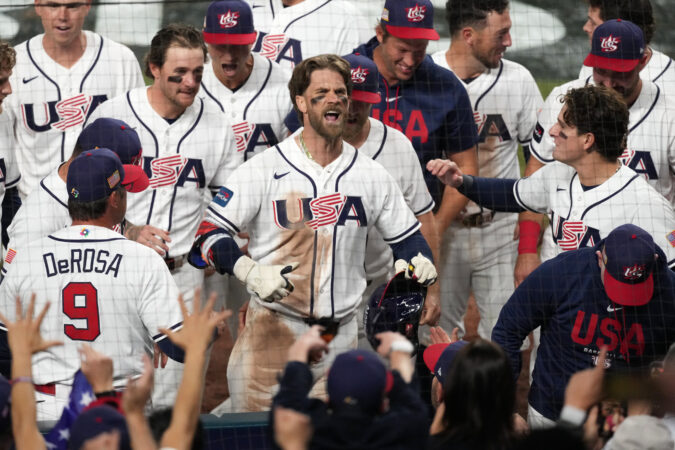
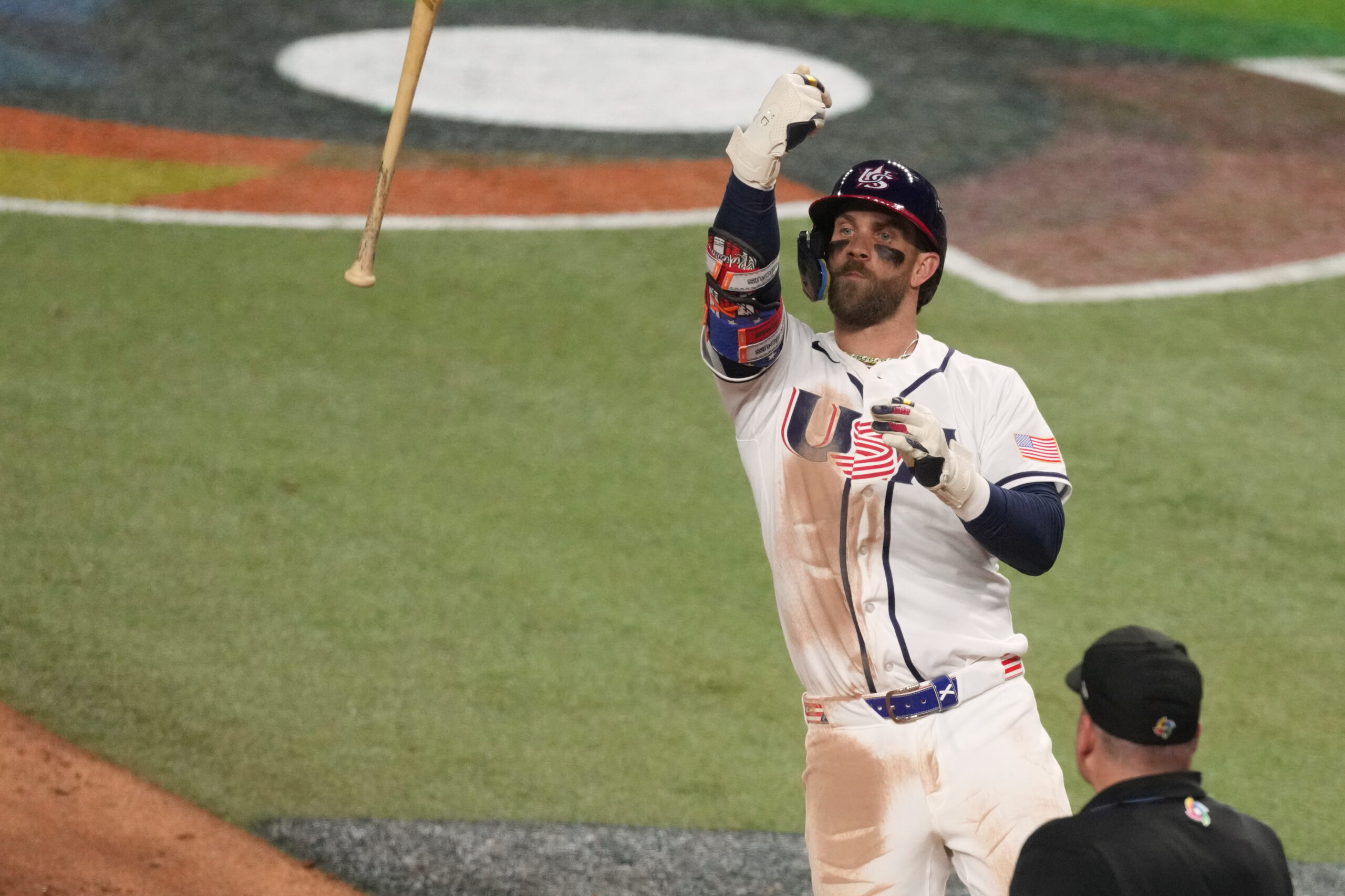
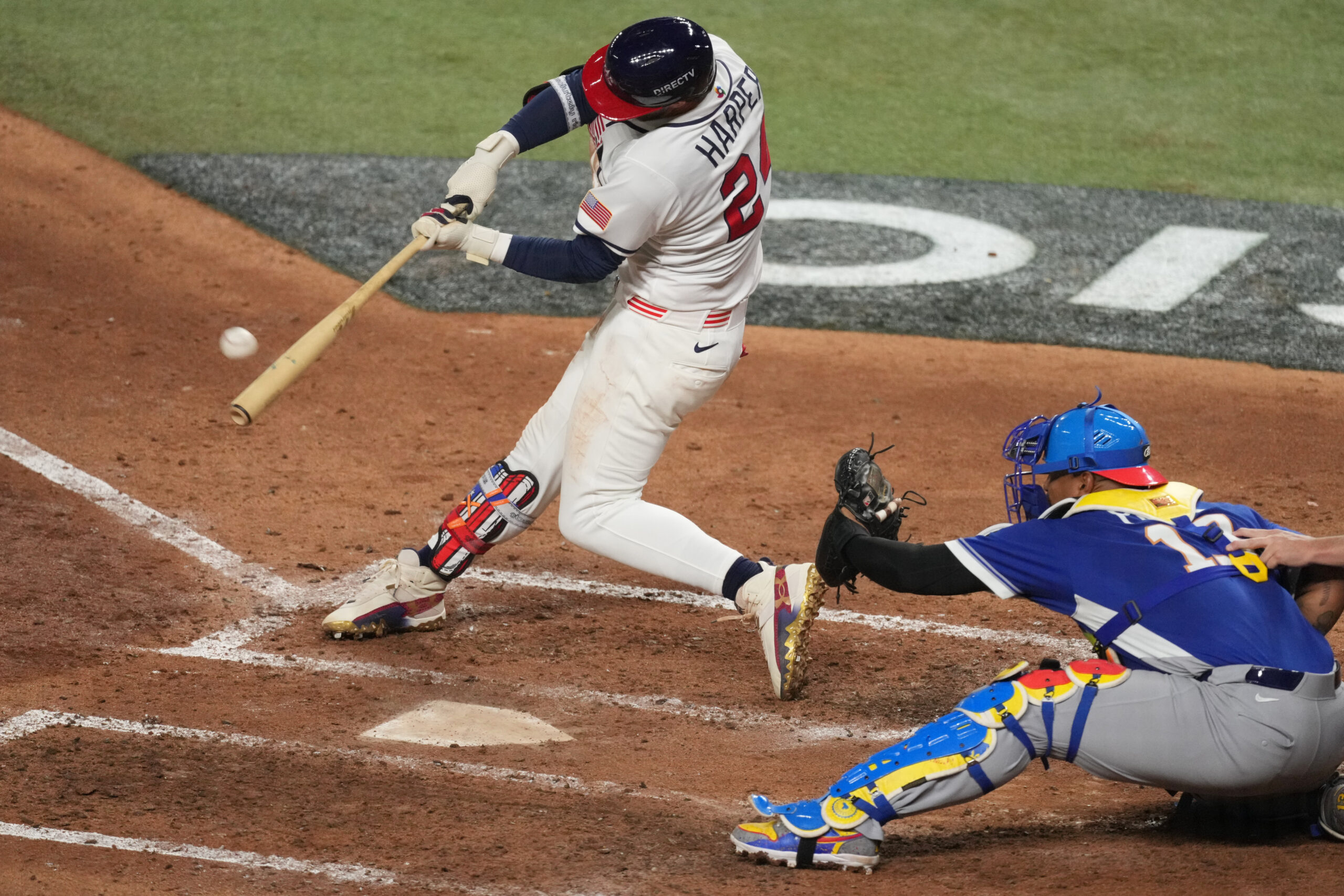
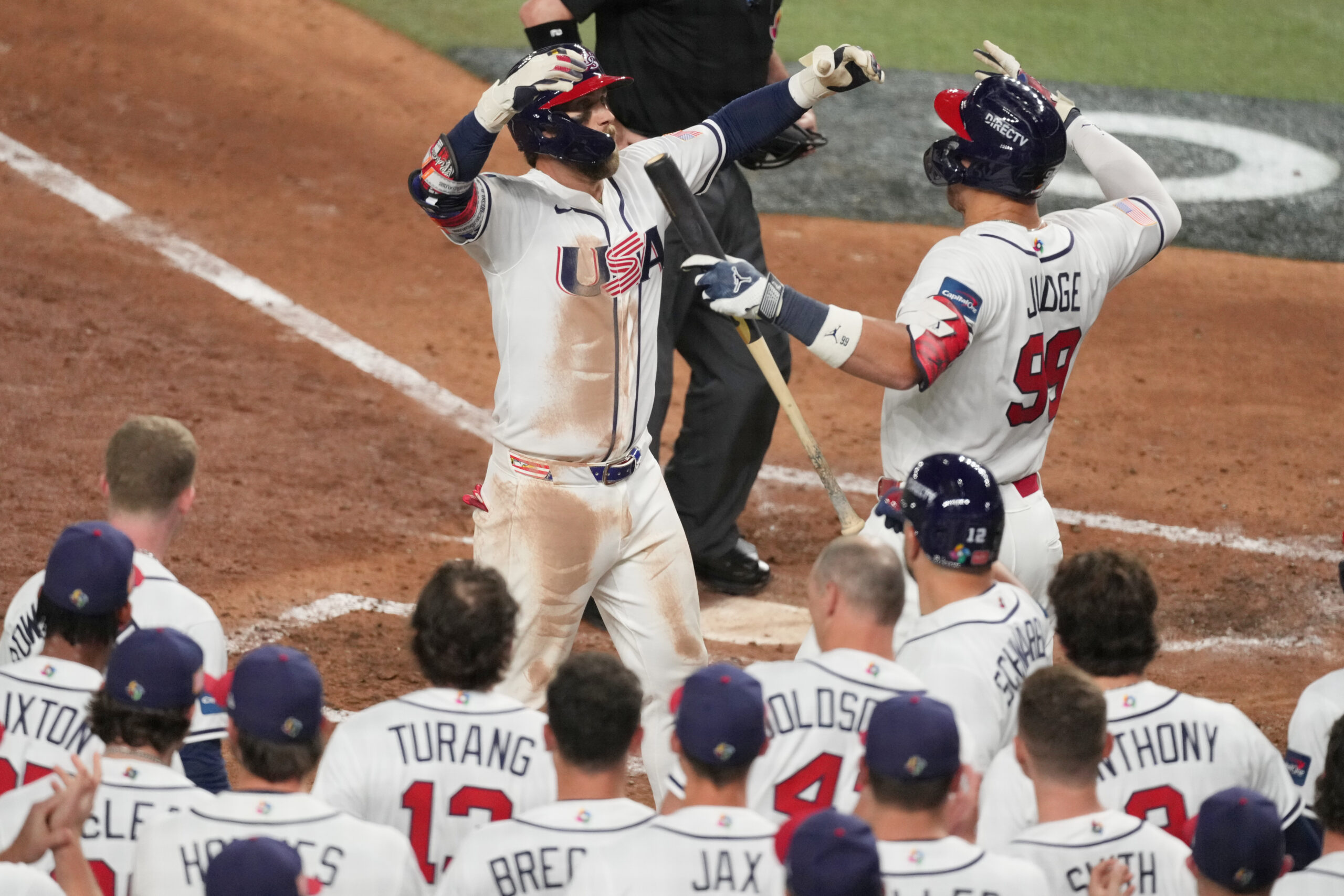
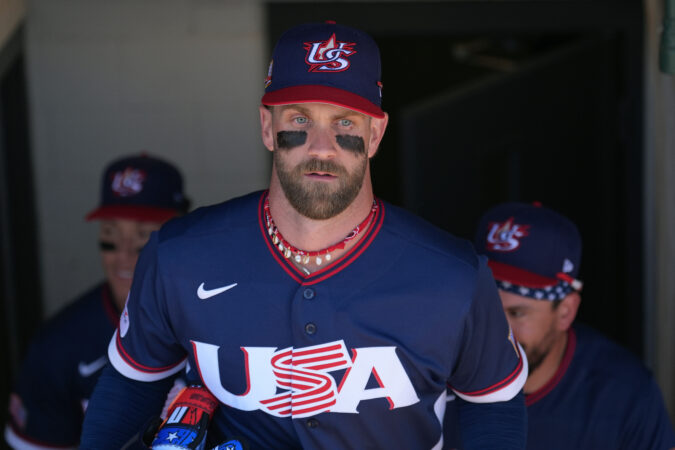
    With the most talented U.S. team ever assembled in danger of getting shut out, and with the pro-Venezuela sellout crowd raring to party, Bryce Harper bashed a game-tying two-run homer to straightaway center field in the eighth inning, javelin-tossed his bat, pointed to the flag on his sleeve and flexed for a camera after rounding third base, and provided irrefutable evidence that Americans do, in fact, have fun playing the game.

    “I was telling people, I go, ‘This isn’t going to shock you guys if it happens,’” said Kyle Schwarber, a witness in the Phillies’ dugout to Bedlam at the Bank and so many other vintage Harper moments. “And then, bam!”

    Said U.S. manager Mark DeRosa: “I knew he was going to have a moment. That’s who he is, right? He has the ability to have big moments in big spots. He wants it. He wants to be up there in that spot.”

    It just wasn’t enough to beat Venezuela. Not after Eugenio Suárez’s double to center field drove in the go-ahead run off reliever Garrett Whitlock in the ninth inning, nearly blowing the retractable roof off Venezuelan.

    Bryce Harper throws his bat after delivering a game-tying two-run homer in the eighth inning of the World Baseball Classic final Tuesday night in Miami.

    But Harper’s seismic shot was the highlight of the two-week tournament for Team USA, which overcame a loss to upstart Italy in pool play and criticism of its manager for being overconfident at best, clueless at worst.

    Leave it to Harper to deliver — and not only with a dramatic homer. He tried to rally Team USA with a pregame speech, too.

    “I think the just biggest thing [Harper said] was just being us, representing us, playing for us,” Schwarber said. “He had a great message. It was from the heart, right? I know getting in front of a group of people isn’t easy sometimes. There was a lot of respect for that.

    “And he had a great performance tonight, too.”

    Harper waited 17 years for this. He hadn’t played for the country since 2009, when he was 16. He raised his hand for the last WBC in 2023 but withdrew after having elbow surgery. He desperately wants MLB to allow players to compete when baseball returns to the Olympics in 2028.

    But Harper was 3-for-20 with seven strikeouts in five games through the quarterfinals. Layer that on top of the Phillies’ divisional-round knockouts in the last two postseasons, and it had been a while — maybe all the way back to the Orlando Arcia game in the 2023 playoffs — since he had “The Moment.”

    Where did this one rank in his 15-year career?

    Bryce Harper hits a 432-foot home run to center field during the eighth inning to tie the game at 2.

    “Probably No. 2,” he said. “Probably right behind the San Diego homer, in Game 5 [to clinch the pennant in 2022]. I’ll probably put this right behind it.”

    The Americans had only three hits against six Venezuelan pitchers. Two belonged to Harper. He lasered a 95 mph sinker to right field for a single in the sixth inning. In the eighth, he got a center-cut pitch from Andrés Machado. Statcast labeled it a changeup, although at 93 mph, it had the characteristics of a heater.

    Either way, Harper unloaded — 109.4 mph off the bat, 432 feet to dead center.

    “Yeah, what a moment,” Harper said. “I love the opportunity. I love the chance. I’m grateful for it. I thought when we tied it up right there that we had a good chance to win the game.”

    And so, the emotion spilled out of him, as Team USA spilled from the dugout and met him at home plate.

    “Just enjoy the moment,” he said.

    The game was played against an unavoidable political backdrop two months after U.S. military forces captured Venezuelan president Nicolás Maduro. But Venezuelan manager Omar López and the native players on the roster repeatedly steered clear of the topic.

    “We’re here to [play] baseball,” Ronald Acuña Jr. said earlier in the week.

    The last few days also sparked a debate about whether Dominican and Venezuelan players, who exude emotion on the field, have more fun than the more staid Americans. Harper, rarely afraid to play with flair, offered himself as proof that they don’t.

    “Every country has their way they play, right?” Harper said a few days ago. “Latin American countries, a lot of energy. And I love watching it because that’s how I played when I was younger. I got in trouble for it, right? I came up, I used gray bats. I used different cleats, got my cleats cut. MLB told me I couldn’t use gray bats, couldn’t use my eye black, all that kind of stuff, right? I kind of got pounded for it.

    “So, there’s an American way of basically what everybody talks about. But I think that’s so far from the truth.”

    Bryce Harper celebrates his home run with Aaron Judge.

    And upon hitting a moonshot in the late innings of a winner-take-all game in international competition, well, Harper didn’t hold anything back.

    When it was over, many of the American players and staff watched from the third-base dugout as a mass of blue, yellow, and red jerseys celebrated around closer Daniel Palencia.

    They arrived dressed in game-worn USA hockey jerseys, a gift from the gold medalists. But they left with silver medals that they took off their necks almost as soon as they were presented to them.

    Harper made a point of shaking hands with many of the Venezuelan players.

    “Venezuela’s a very proud place for their baseball,” he said. “I’m really happy for them. Obviously I want to win no matter what. That’s what I play for, to win championships and gold medals. But in that moment, it’s not about me. It’s about us and our game.

    “They had a great tournament. I just wanted to let them know and say congratulations. They’re the best team in the world.”

    DeRosa said he shared a “special moment” with Harper in his office. They were teammates with the Nationals in 2012, when Harper was a 19-year-old rookie. He couldn’t have imagined the WBC without him.

    “I knew what his career was going to be like, with the multiple MVPs and how he’s competed,” DeRosa said. “I was just proud he was a part of the team, share a clubhouse with him again.”

    Maybe Harper will do it again at the Olympics in two years.

    “I hope so,” he said. “I really do.”

  • Aaron Nola: Team Italy’s surprising run in World Baseball Classic was ‘some of the best times I’ve ever had’

    Aaron Nola: Team Italy’s surprising run in World Baseball Classic was ‘some of the best times I’ve ever had’

    MIAMI — As a way of summarizing Aaron Nola’s two-start guest spot with Italy’s national baseball team, let’s borrow a phrase that fans in his adopted country can appreciate.

    Venit, vidit, vicit.

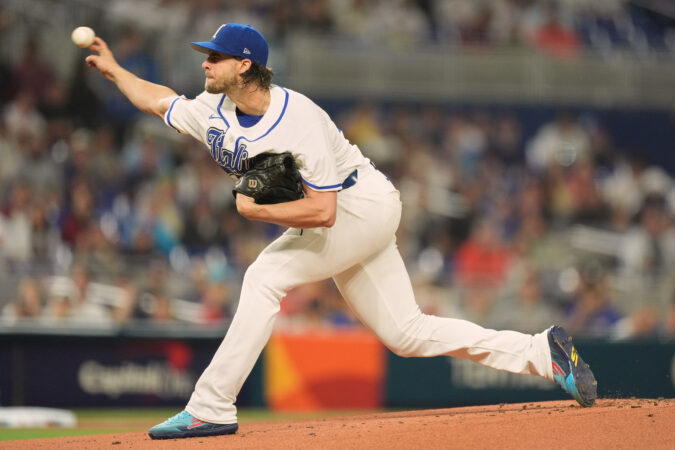
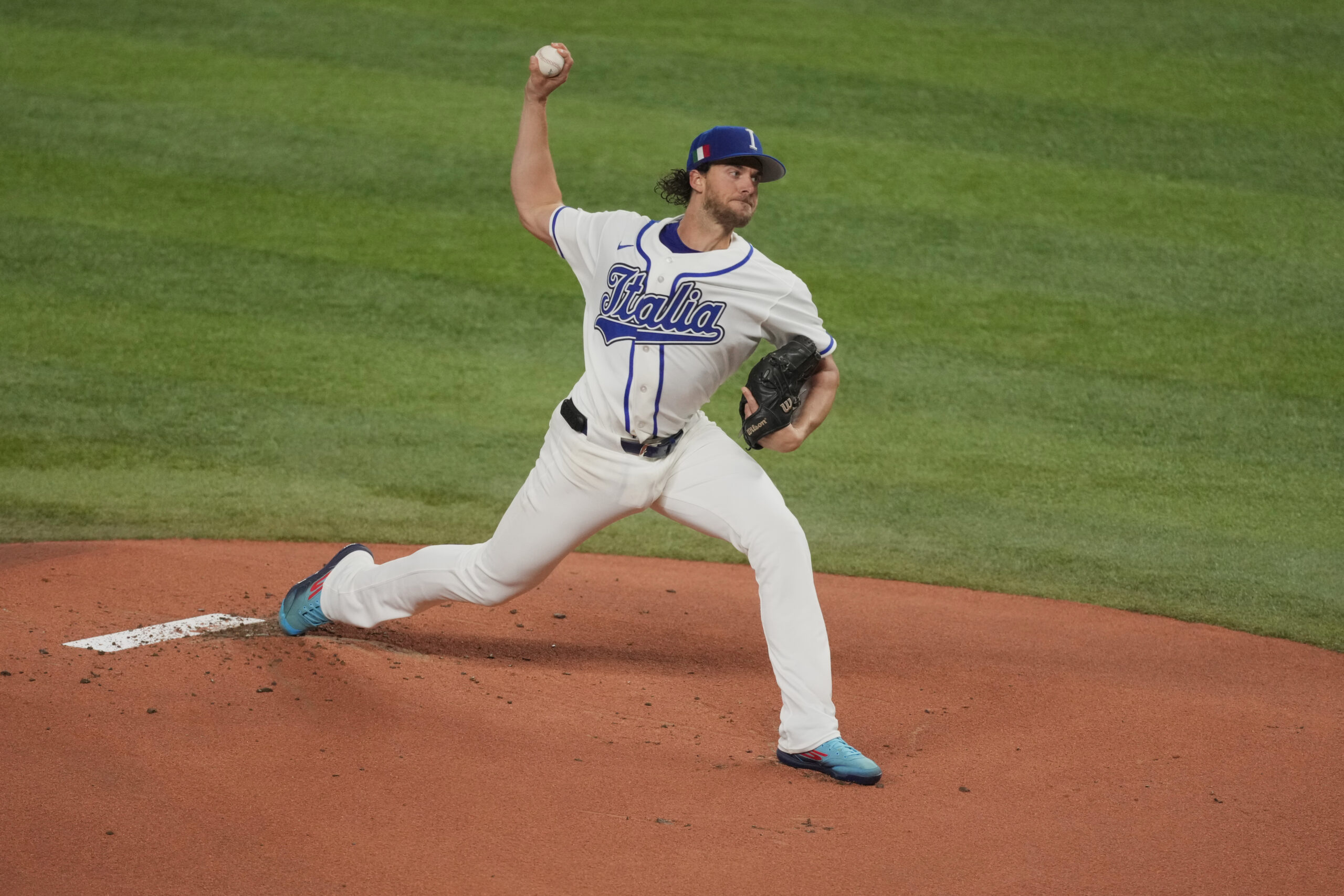
    Because Nola came from Phillies camp. He saw lineups filled with major league stars. And he did his part to help Italy conquer, leaving with a one-run lead after four innings in the World Baseball Classic semifinal here Monday night.

    As it turned out, though, this wasn’t Julius Caesar at the Battle of Zela. Fueled by a potent, relentless, and frenetic offense, Venezuela ran down Italy’s Cinderella run, scoring three times in the seventh inning for a 4-2 victory that kicked off a party among a partisan — and deafeningly loud — sellout crowd in South Florida.

    Next up for the Venezuelans: Team USA for the gold medal — yes, they actually receive medals — at 8 p.m. Tuesday night.

    And for the Italians (or in most cases, Italian Americans)? Only fond memories from what many described as two of the best weeks of their careers. That included Nola, a veteran of 11 major league seasons and four consecutive playoff appearances with the Phillies.

    “It was super cool. Super cool,” Nola said. “We had the time of our lives, man. Some of the best times I’ve ever had.”

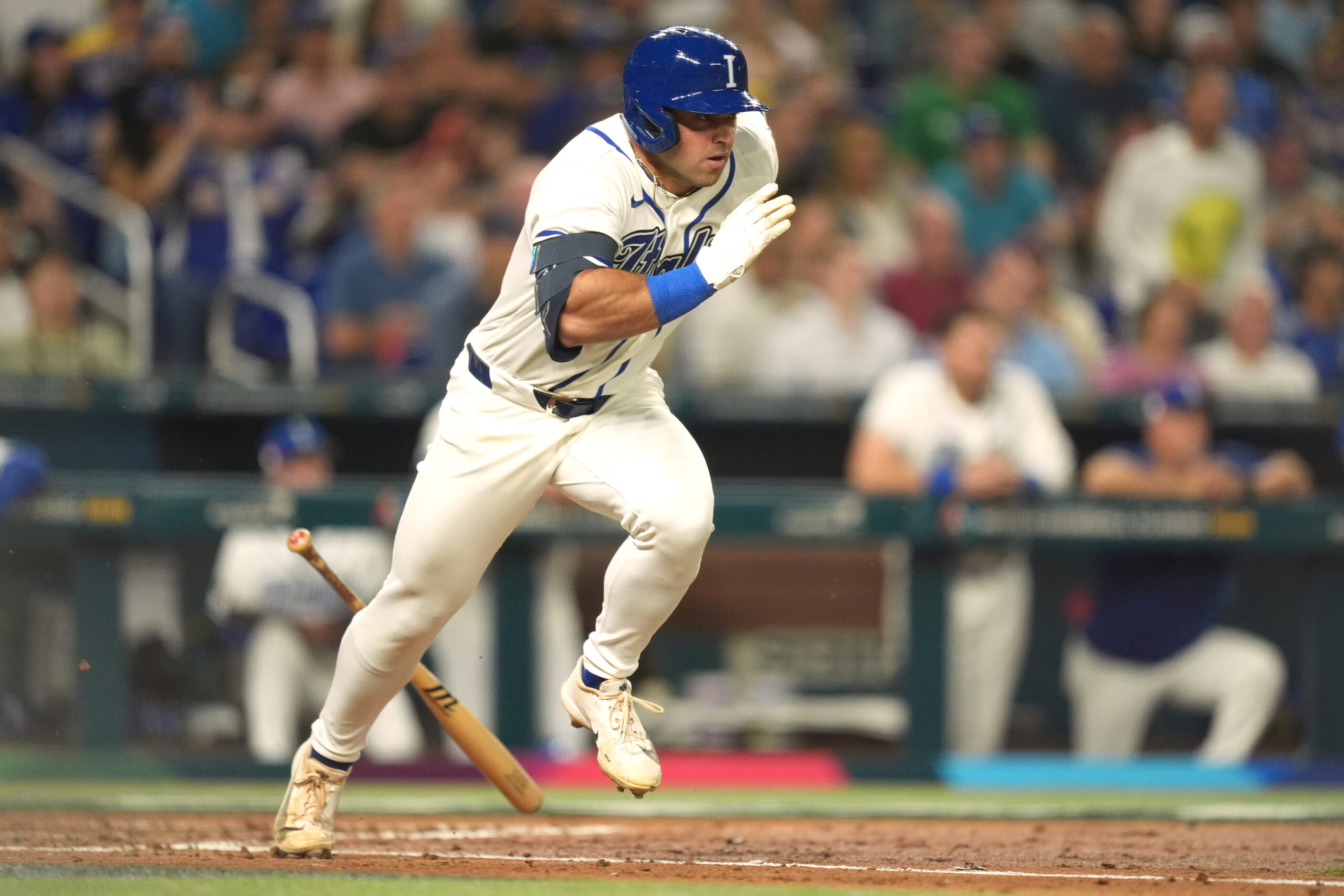
    Say this for Team Italy: It was the darling of the two-week tournament, with an espresso machine in the dugout and contributions up and down the lineup. (Phillies outfield prospect Dante Nori, for instance, went 8-for-20 with two homers and an 1.185 OPS.)

    Initially, manager Francisco Cervelli planned to roll with Michael Lorenzen against Venezuela, but with a taxed bullpen, he went with Aaron Nola on regular (four days) rest.

    And Nola was more than a pitching ringer, even if his initial interest in competing was, in part, to use the intensity of the WBC as a testing lab after making adjustments to his throwing program off the worst season of his career.

    On that count, Nola was mostly, well, eccelente.

    Last Wednesday, he cranked up his fastball to 94.5 mph, uncorked his signature curveball, and dominated Mexico for five scoreless innings to push Italy to the top seed in pool play over the U.S. Against Venezuela, he wasn’t as sharp. He topped out at 94.1 mph, got only two swings and misses, and left a curveball up for Eugenio Suárez’s solo homer in the third inning.

    Yet, he struck out three batters, all on curveballs. He got longtime nemesis Ronald Acuña Jr. (16-for-52 with four homers and a 1.025 OPS in his career against him) looking at a curveball in the third inning. And he left with a 2-1 lead.

    “I kind of felt out of whack today, but battled as best as I could,” Nola said. “I tried to get the sinker down later on. Felt like that was kind of the only thing working. I got some ground balls with it and kept the guys in the game as best I could.”

    Nola also threw only 59 pitches, 10 less than his previous start. The plan, he said, was not to go more than five innings or 80 pitches. But manager Francisco Cervelli opted for a pitching gambit to compensate for a taxed bullpen.

    Rather than starting former Phillies righty Michael Lorenzen against Venezuela and saving Nola for the final, if Italy advanced, Cervelli split the game between them. He used Nola for four innings and tried to get four from Lorenzen. But Jackson Chourio, Acuña, Maikel Garcia, and Luis Arraez notched consecutive singles in the seventh to nearly blow the retractable roof off loanDepot Park.

    Regardless, Nola said he was satisfied with the workload in what amounted to his penultimate start before the season.

    “Overall, my body and arm feels good,” he said. “I mean, I’m built up.”

    Phillies prospect Dante Nori was among the standout players for Italy in the World Baseball Classic.

    Besides, as Nola discovered, the tournament was about something bigger than tuning up for the season.

    “There was a lot of people watching — watching in Italy,” he said. “That was a big goal, to bring more baseball to Italy. And we did. I think most of the American guys in this clubhouse don’t really understand what we did for that country.”

    Nola hasn’t been to Italy. He qualified to represent the country in the WBC because his great-grandparents on his father’s side were from Italy (the Campania region in the south, to be exact). It was supposed to be a family affair. Nola’s brother, Austin, signed up to play but withdrew after getting hired as the Mariners’ bullpen coach.

    But as Nola put it, he left the tournament with two dozen new brothers. And before they went their separate ways, they spent about 90 minutes together in the clubhouse after the game to reflect on the last two weeks.

    “Nobody thought we were going to make it this far, and we did,” Nola said. “We’ve got a great group of guys. I love all those guys in there. I’m really glad I played.”

    For more reasons than he ever imagined.

  • Dreaming of a baseball Dream Team: What the USA roster might look like for the 2028 L.A. Olympics

    Dreaming of a baseball Dream Team: What the USA roster might look like for the 2028 L.A. Olympics

    Who remembers when the greatest collection of basketball talent ever assembled on one roster took the court for the first time at the 1992 Summer Olympics in Barcelona?

    “Yeah,” Kyle Schwarber said, “I was too young for that.”

    Too polite, also, to acknowledge that he wasn’t born yet. But never mind that the Phillies slugger didn’t come along until March 1993. Everyone’s heard about when Michael Jordan, Magic Johnson, and Larry Bird headlined a group of NBA stars that flexed U.S. basketball might on the world stage.

    The story of the “Dream Team” transcends generations.

    Thirty-four years later, USA Baseball has put together its version to compete in the triennial World Baseball Classic and avenge a 3-2 loss to Japan in 2023 on Shohei Ohtani’s championship-clinching strikeout of Mike Trout.

    A few names on the team of U.S. manager Mark DeRosa’s dreams:

    Aaron Judge. Paul Skenes. Cal Raleigh. Tarik Skubal. Bryce Harper. Bobby Witt Jr. And, yes, Schwarber.

    “It’s a great team,” Schwarber said on Phillies Extra, The Inquirer’s baseball podcast. ”Another stacked lineup. The lineup that we had out there in ’23 was full of studs, MVPs, All-Stars, everything. This lineup, All-Stars, MVPs, and the cool thing is there’s a little bit more youth on it, too.

    “You’re starting to see some of these younger faces that could really have those chances to be future MVPs. Those future perennial All-Stars are going to be on this team, as well. I’m just excited about it.”

    It makes you dream, doesn’t it? And not just about whether the most talented American baseball team ever assembled can win the WBC for the first time since 2017.

    No, dream bigger. Dream of 2028, the Summer Olympics in Los Angeles, where baseball will return as a medal sport for the first time since 2020. And dream of a best-on-best international tournament made possible if MLB chooses to pause the season, just as the NHL did in 1998, 2002, 2006, 2010, 2014, and again for 11 riveting days last month in Milan.

    “We have the WBC, but it’s not the same,” said Harper, who has lobbied MLB for years to make concessions for the Olympics. “People can say as much as they want, but the Olympics is so worldwide. The WBC is great and brings a lot of people together, but the Olympics is something you dream about playing in.”

    Indeed, although the WBC generates interest, there are limits to how seriously it can be taken given its timing on the sport’s calendar. It’s still spring training, after all, and for years, many of the best pitchers — American pitchers, in particular — declined a WBC invitation to focus on building arm strength for the season.

    DeRosa, USA Baseball’s “Uncle Sam,” said there was more buy-in for his “I Want You” recruitment this time around, and not only from Skenes, the NL Cy Young Award winner who pitched in college at Air Force and is unlikely to start meaningful games down the stretch for the perennially noncontending Pirates.

    “I just think it was the fear of missing out,” DeRosa said at baseball’s winter meetings in December. “I think guys watched in ’23 and saw the game against Japan, the iconic moment between Trout and Ohtani, Trea Turner’s [grand slam] against Venezuela.

    “These are moments in time. It’s like, you’re going to miss out on three weeks of the greatest time of your life as a professional if you never win a World Series. That’s what this is.

    “You see the way Latin America and Japan is. I just feel like there’s been a groundswell with the United States player that, all right, it’s time for us to go.”

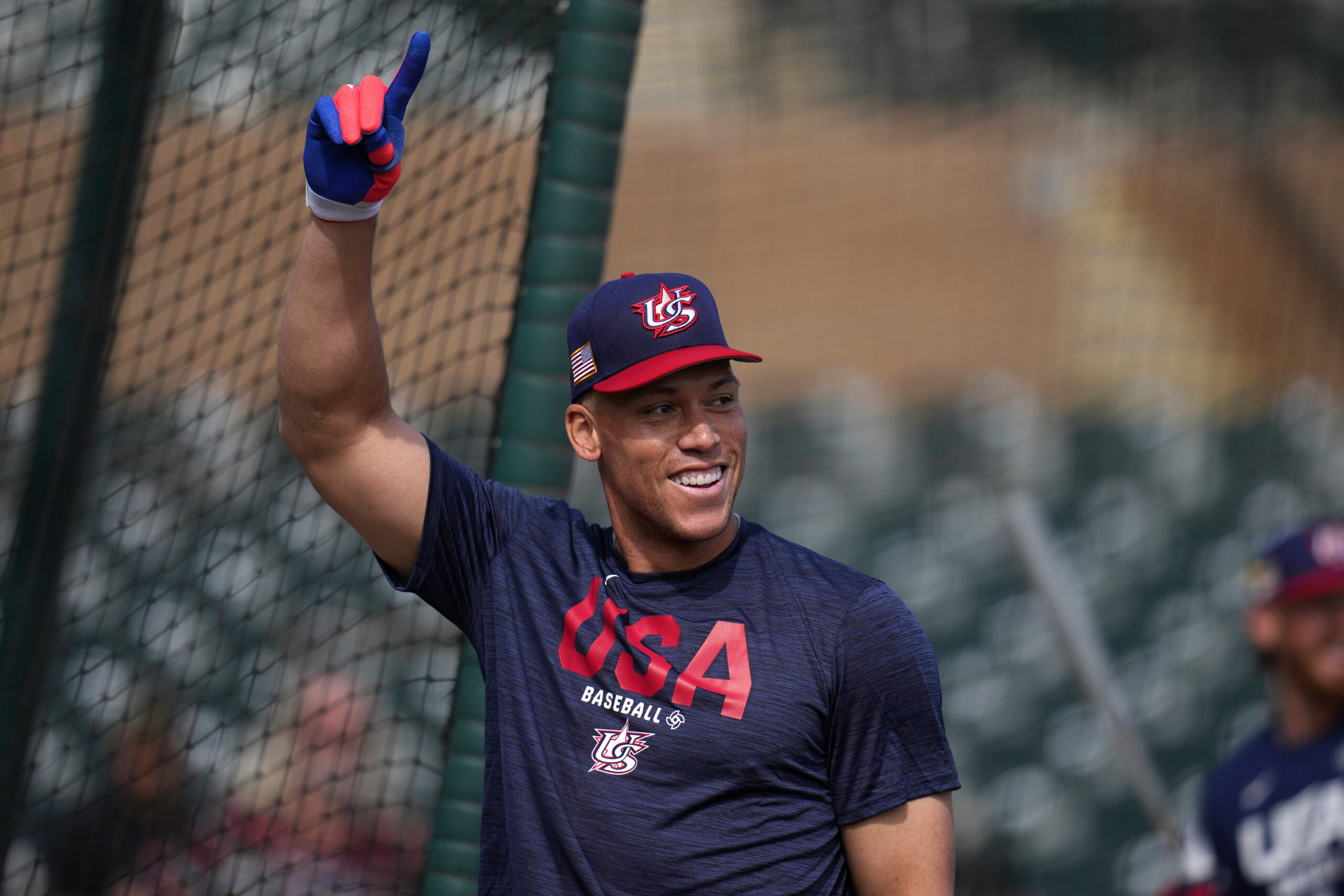
    Yankees slugger Aaron Judge captains a USA team full of All-Stars and future Hall of Famers looking to avenge their WBC title game loss to Japan in 2023.

    Sure, but the WBC lets players go only so far. Pitchers are capped at 65 pitches in the preliminary round, 80 in the quarterfinals, and 95 in the semis and final.

    WBC managers also organized their pitching rotations in consultation with major league teams. Webb started Team USA’s opener Friday night against Brazil because the Giants need their ace to line up for opening day. Skubal will pitch only once. If the U.S. gets to the final, Mets rookie Nolan McLean will likely start, not Skubal or Skenes.

    Most of the restrictions and guardrails could be lifted for the 2028 Olympics, which are scheduled from July 14 to 30. Injuries are unavoidable no matter the time of year. But pitchers will be fully built up, so workloads won’t need to be massaged.

    Harper was among the first players to commit to Team USA in 2023 but withdrew after Tommy John elbow surgery. He signed on for this year’s tournament in December and said he was excited to play for the country for the first time since he was 18 — 15 years ago.

    Yet it feels like only the appetizer before the main course if major leaguers are allowed to play in the Olympics.

    “I think that would be awesome,” Schwarber said. “We all grew up watching the Olympics and watching sports that you never thought that you’d watch.

    “I feel like it would be such a great thing for our game just to have major leaguers there who are performing at the highest level to represent their countries. It would be amazing to have that, not just on the WBC size but on the world size.”

    And then the U.S. could field a baseball Dream Team.

    But a lot can change in two years. Using the WBC roster as a base, and organizing players into tiers (with their 2028 age in parentheses), let’s examine who might get to wear “U-S-A” across their chest when L.A.’s Olympic flame is lit.

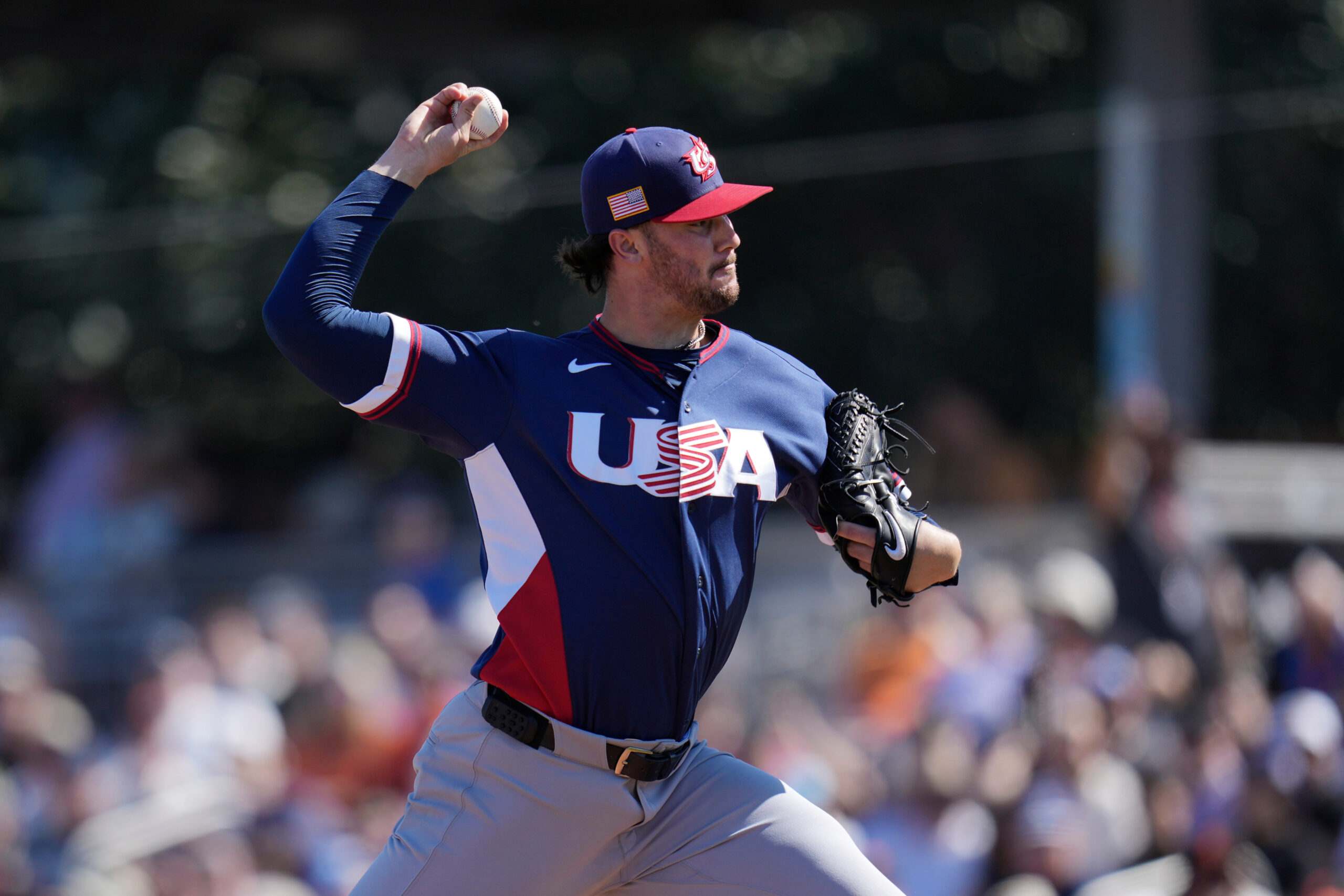
    Pirates ace Paul Skenes will anchor Team USA’s World Baseball Classic pitching staff.

    The ‘pillars’

    • Aaron Judge, RF, Yankees (36)
    • Paul Skenes, SP, Pirates (26)

    After skipping the WBC in 2023, the captain of the Yankees agreed to be Captain America. But Judge’s commitment didn’t signify as much as Skenes’.

    “Every other country, their best arms show up,” DeRosa said. “For whatever reason, in the United States, our best arms don’t show up. We’re trying to change that narrative. [Skenes] has certainly changed it.”

    DeRosa often refers to Judge and Skenes as Team USA’s hitting and pitching “pillars.” They’re set in stone.

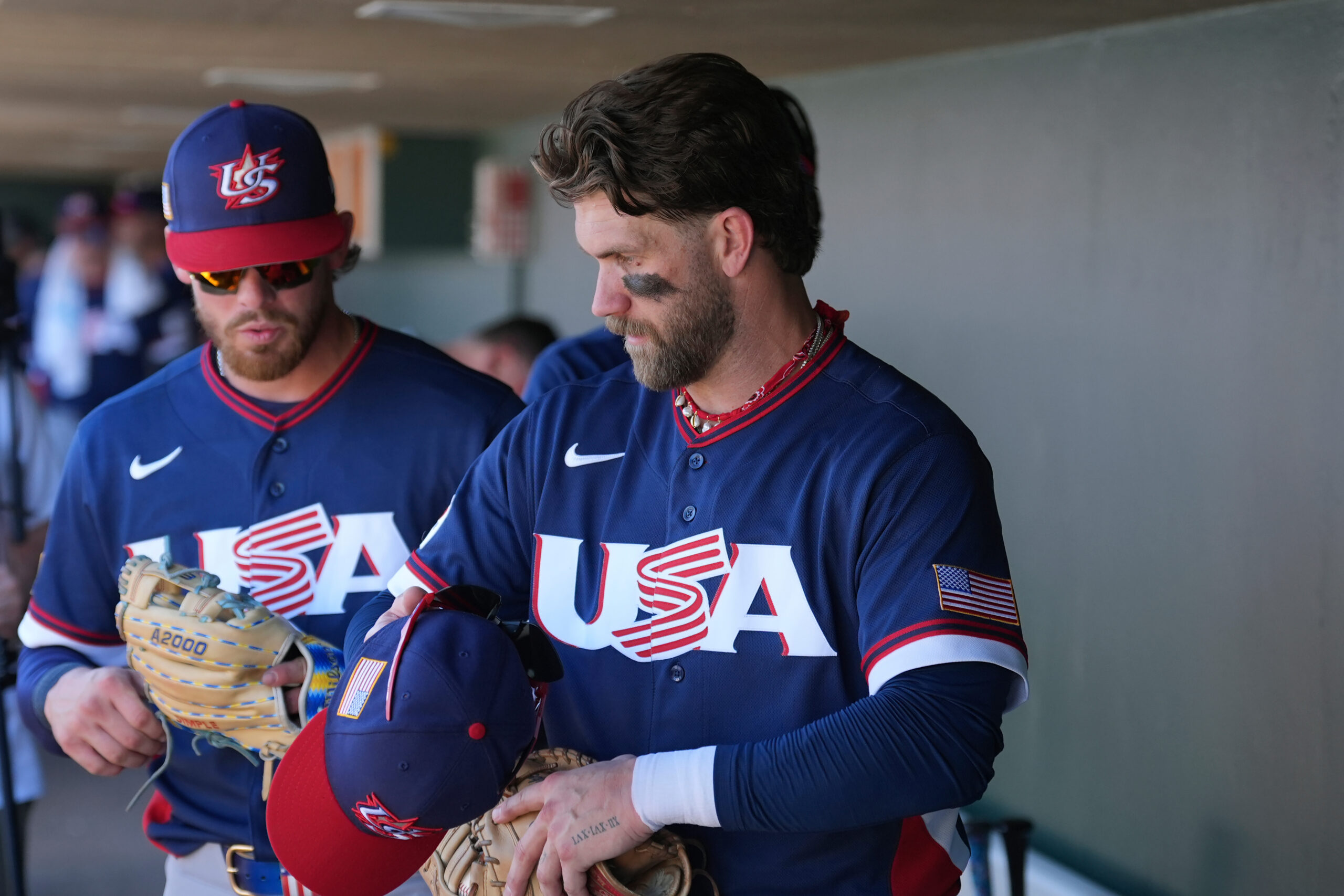
    Bryce Harper (right), with and Bobby Witt Jr., would be 35 during the 2028 Olympics, but he’d still be a surefire pick.

    The core holdovers

    • Bobby Witt Jr., SS, Royals (28)
    • Gunnar Henderson, SS, Orioles (27)
    • Roman Anthony, OF, Red Sox (24)
    • Pete Crow-Armstrong, CF, Cubs (26)
    • Corbin Carroll, OF, Diamondbacks (27)
    • Cal Raleigh, C, Mariners (31)
    • Bryce Harper, 1B, Phillies (35)
    • Tarik Skubal, SP, Tigers (31)
    • Nolan McLean, SP, Mets (26)
    • Mason Miller, RP, Padres (29)

    Turner smashed five homers, including a grand slam, in six WBC games in 2023. This time, the Phillies shortstop said he didn’t even get a call from DeRosa, who went younger at shortstop.

    Tough business.

    A new wave of talent will wash ashore by the summer of 2028. But Witt, Henderson, Anthony, and Crow-Armstrong will still be under 30 and difficult to supplant. Ditto for Carroll, who dropped out of the WBC after breaking a bone in his hand.

    At 35, Harper would be an elder statesman. But unless he gets injured or his production drops off a cliff, his face-of-the-sport star power gets him a place on the roster.

    Kyle Schwarber laughs while talking with Byron Buxton during a Team USA workout for the World Baseball Classic on Thursday.

    The veteran leaders

    • Kyle Schwarber, DH, Phillies (35)
    • Alex Bregman, 3B, Cubs (34)

    Schwarber’s presence in the middle of Team USA’s loaded order is undeniable. But here’s a word on his influence within the clubhouse:

    “He’s the chemistry guy for me,” DeRosa said. “He was the guy. He’s in the dugout going, ‘Everyone relax. Do what you do.’ Even to me, he’s coming up, rubbing my shoulders, just like, ‘I got you.’ There’s just no panic with this guy. … He’s an infectious personality, and everyone loves him. And he backs it up.”

    Bregman brings a similar vibe as a leader and a winner.

    Others whose roster spot will be challenged by younger players: Will Smith, C, Dodgers (33); Byron Buxton, CF, Twins (34); Brice Turang, 2B, Brewers (28); Paul Goldschmidt, 1B, Yankees (40); Logan Webb, SP, Giants (31); Joe Ryan, SP, Twins (33); David Bednar, RP, Yankees (33).

    After playing in the 2023 World Baseball Classic, Mookie Betts is not on the 2026 squad.

    The 2026 outsiders

    • Mookie Betts, SS, Dodgers (35)
    • Trea Turner, SS, Phillies (35)
    • Kyle Tucker, OF, Dodgers (31)
    • Riley Greene, OF, Tigers (27)
    • Pete Alonso, 1B, Orioles (33)
    • Matt Olson, 1B, Braves (34)
    • Cody Bellinger, OF/INF, Yankees (32)
    • Mike Trout, OF, Angels (36)
    • Garrett Crochet, SP, Red Sox (29)
    • Hunter Brown, SP, Astros (29)
    • Bryan Woo (28), SP, Mariners (28)
    • Max Fried, SP, Yankees (34)
    • Hunter Greene, SP, Reds (29)
    • Logan Gilbert, SP, Mariners (31)
    • George Kirby, SP, Mariners (30)
    • Gerrit Cole, SP, Yankees (38)
    • Zack Wheeler, SP, Phillies (38)
    • Chris Sale, SP, Braves (39)
    • Jacob deGrom, SP, Rangers (40)
    • Blake Snell, SP, Dodgers (36)
    • Devin Williams, RP, Mets (33)
    • Josh Hader, RP, Astros (34)

    Imagine if Team USA had Crochet and Brown in the rotation behind Skenes and Skubal. Or if Greene or Tucker were in left field. And how the heck is Betts not on the WBC roster? Wheeler said he considered playing before getting injured last season. Maybe he or Cole could fill Clayton Kershaw’s role on the staff in 2028.

    This is only a partial list of stars who won’t compete in the WBC. And the omissions serve only to amplify the pool of talent that Team USA has at its disposal.

    Young stars like the Athletics’ Nick Kurtz will be in the mix for a 2028 Olympics team.

    The next generation

    • Nick Kurtz, 1B, Athletics (25)
    • James Wood, OF, Nationals (25)
    • Wyatt Langford, OF, Rangers (26)
    • Jackson Merrill, OF, Padres (25)
    • Drake Baldwin, C, Braves (27)
    • Konnor Griffin, SS, Pirates (22)
    • Colson Montgomery, SS, White Sox (26)
    • Kevin McGonigle, SS, Tigers (23)
    • Jackson Holliday, 2B, Orioles, (24)
    • Trey Yesavage, SP, Blue Jays (24)
    • Jacob Misiorowski, SP, Brewers (26)
    • Bubba Chandler, SP, Pirates (25)
    • Andrew Painter, SP, Phillies (25)

    Another partial list. Another trove of talent that will elbow its way into the conversation in two years, assuming that the door to the Olympics is opened to major leaguers.

    “To be able to say that you’re an Olympian, that would be a really cool thing, a bucket-list item that you could cross off,” Schwarber said. “I guarantee you’d have a really big pool of players that would want to sign up and put their name in a hat to represent their country.”

  • Source: Phillies outfielder Johan Rojas faces 80-game suspension for failed drug test

    Source: Phillies outfielder Johan Rojas faces 80-game suspension for failed drug test

    Phillies outfielder Johan Rojas tested positive for a performance-enhancing drug and is facing an 80-game suspension by Major League Baseball, a league source confirmed Tuesday.

    Rojas will appeal the test result, the source said.

    Phillies officials said Tuesday that MLB hasn’t contacted the team about Rojas’ status, although manager Rob Thomson said he was aware of reporter Wilber Sánchez’s post over the weekend that Rojas had failed a drug test.

    Rojas was at the Phillies’ spring training complex on Tuesday but did not speak with the media. Officials from MLB, the MLB Players’ Association, and Rojas’ agent, Rafa Nieves, declined to comment.

    Rojas was scheduled to play for the Dominican Republic in the upcoming World Baseball Classic but didn’t join the team in Miami over the weekend. D.R. general manager Nelson Cruz announced Monday that Rojas withdrew from the tournament for “personal reasons,” adding that the outfielder could explain himself at a later time.

    The Phillies’ outfield depth would be diminished by a suspension to Rojas. Brandon Marsh, rookie Justin Crawford, and Adolis García are locked into outfield spots along with Otto Kemp, who hasn’t been a full-time outfielder.

    Rojas was vying with veteran utility man Dylan Moore and fellow outfielders Pedro León and Bryan De La Cruz for the final spot on the bench. Rojas and León are on the 40-man roster. Moore and De La Cruz are nonroster invitees to camp, although Moore is due a $100,000 retention bonus to go to the minors if the Phillies don’t add him to the 26-man roster five days before opening day.

    Rojas, 25, is regarded as an elite defender in center field but hasn’t produced much at the plate since an impressive 59-game debut as a rookie in 2023. He batted .224 with a .569 OPS in 172 plate appearances last season and got optioned to triple A midway through the year.

    Among 316 players with at least 500 plate appearances since the beginning of the 2024 season, Rojas ranks 308th with a .591 OPS.

    It’s unclear whether Rojas will continue to play in Grapefruit League games during his appeal.