Author: Scott Lauber

  • ‘Phillies Extra’ Q&A: Kyle Schwarber on an epic offseason, why the WBC was an ‘instant yes,’ and more

    ‘Phillies Extra’ Q&A: Kyle Schwarber on an epic offseason, why the WBC was an ‘instant yes,’ and more

    CLEARWATER, Fla. — Kyle Schwarber was scheduled to talk with a Japanese television crew after batting practice on Feb. 22, just as the men’s hockey gold medal game at the Olympics went into overtime.

    How’s that for rotten timing?

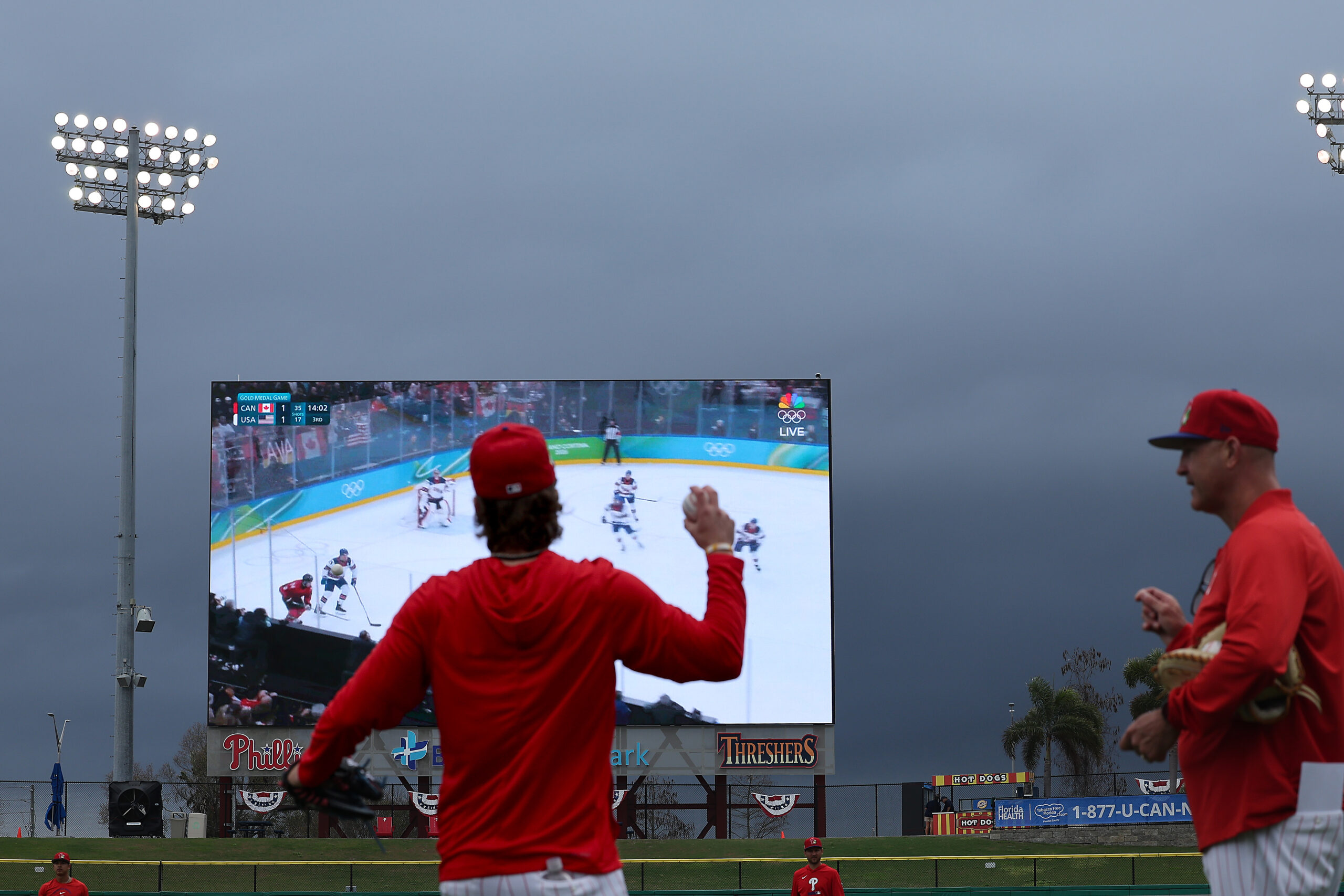
    So, Schwarber did the interview from the Phillies’ dugout, where he could keep one eye on the game on the new 3,200-square foot video board in right field at BayCare Ballpark. And when Jack Hughes scored the golden goal for the Americans, well, Schwarber stopped in mid-answer and reacted as you might expect.

    “I was like, ‘Shoot! Yes!’” Schwarber said later.

    Schwarber conceded that he doesn’t watch much hockey in the offseason at home in Ohio. But he was transfixed by the Olympics, which featured NHL players and elevated the profile of the sport among even casual fans.

    Over the next two weeks, Schwarber will play in the closest thing baseball has to an Olympic competition. He will join Phillies teammates Bryce Harper and reliever Brad Keller at the World Baseball Classic on the most talented U.S. roster ever assembled.

    Before he reported to Team USA, Schwarber made a return appearance on Phillies Extra, The Inquirer’s baseball podcast, to discuss the WBC, the Phillies’ upcoming season, and more.

    Here are a few excerpts from the conversation. Watch the full interview below and subscribe to the Phillies Extra podcast on Spotify or Apple Podcasts.

    Q: I’ll start by congratulating you on a new baby, a new contract, a run to the national championship for Indiana football — during which you were the honorary captain of the Peach Bowl. Did anyone have a better offseason than you?

    A: It was a great offseason. … It all started with the contract and re-signing here in Philadelphia. And obviously that’s a stressful time, just with all the unknowns. But I’m happy that we were able to find the deal for everyone. And I’m happy that this is where we wanted to be. And we got that all said and done. Then [our] baby girl came in on the 14th [of December] … Then Peach Bowl, captain, [Indiana] gave me the call for that. And that was like, I’m just going to stand there and not do anything and don’t get in the way. And it was a great experience. And then, obviously, a national championship, too. It was amazing. And then getting to represent your country for Team USA, and again, in the World Baseball Classic. It’s just been such a great offseason, and just looking forward to what this year has in store for everyone.

    Q: You’ve been fortunate to make the playoffs every year of your career, except for one. When you’re with a team that has that expectation, do you ever have to remind yourself, or maybe remind your teammates to enjoy the ride?

    A: You’re talking my language. You’re hitting the sweet spot. The beautiful thing about our game is that nothing’s ever given. And I always say my worst fear is packing up on, say, Sept. 30. It’s after Game 162, and you’re packing things up to go home. I’ve done it once and it’s just not fun, and I don’t want to do that ever again. I want to still feel like I’m giving everything I can to winning. That’s why I came back here. There’s a lot of other different reasons, but there’s also the reason that this team and our ownership and everything like that, front office, coaching staff, we’re all pushing for that same goal. And that is obviously, one, making the postseason, and two, holding up that trophy at the end of the year. Those are goals, right?

    But there are the steps along the way. There is that, like we say, the quote-unquote, the journey, right? The whole process to it. There’s goals to that. It’s winning the division. If you don’t win the division, we’re finding our way into the postseason trying to weather any kind of storm that could come in a year. Because that’s the thing, is that every year presents a new challenge, and it’s never the same circumstances. …
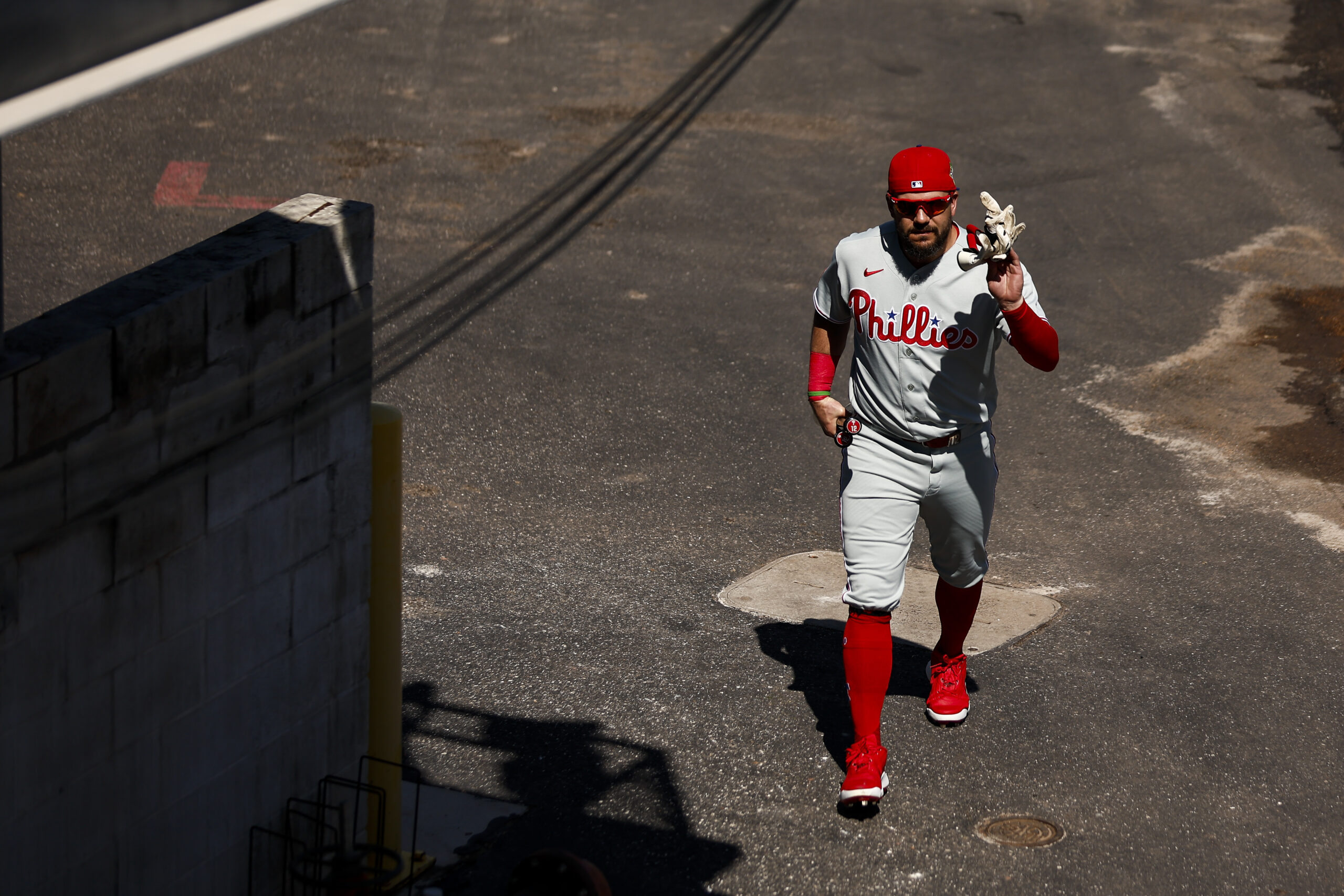
    Kyle Schwarber’s spring training is on pause as he and other Phillies leave to play in the World Baseball Classic.
    Q: One narrative in Philadelphia is that the Phillies are “running it back,” so to speak. You can agree or disagree with that. But I wonder, internally, how do you avoid the staleness that might set in from just being together as a core for so many years? And does the addition of some young guys like Justin Crawford, Andrew Painter, and eventually Aidan Miller help keep things fresh?

    A: I don’t think it’s really ever going to be stale, just for the fact of … we have fun. We poke fun at each other all the time. It’s never like we’re walking in the clubhouse and we’re dreading walking in. That’s not the environment we have … If you go ask pretty much everyone in the clubhouse who’s been there for a while, I guarantee you that everyone’s looking forward to walking into the clubhouse doors and going, ‘What are we going to hear today? What are we going to talk about today? What’s the fun going to be poked at?’ … That’s kind of the environment that we have, and we enjoy that. … It was funny, we were talking about it the other day in the clubhouse, we just missed sitting down in the chairs and just talking B.S. to each other and laughing at each other. It is what it is. It’s never going to get stale. It’s not like we’re hypersensitive to that by any means.

    And I think the youth stuff, you need that in teams. I think that’s very valuable to teams. … We were all the young guy somewhere else. [Aaron Nola] was the young guy here. We were all those young guys who came up and you’re trying to make your mark, and you need that on your team. Because there’s the whole [contractual] control part, but also just for these guys to be able to take their next steps and to keep submitting their name here in Philadelphia. That’s what we need. And we need them to not feel like they’re going to have to get very accustomed to the big league locker room. That’s why we’re trying to always be intermingling with everyone in our clubhouse in spring training.

    You see it every year — injuries happen, and someone’s coming up, and you need them, whenever that person walks through the door, we need them to be them. They need to be the best versions of themselves. They’re getting called up for a reason, or they’re going to break [camp] with us for a reason. They’re good. They’re really good players. And I need them. Everyone needs them to be really good players.

    … It’s fun getting to watch [Justin] Crawford take at-bats in camp. You get to see [Aidan] Miller here in the clubhouse, and you see [Andrew] Painter throwing his lives [bullpen sessions] and seeing how that’s been coming along. Excited to see how the two years after Tommy John [surgery] happens for him. He’s just got to go out there and get his feet wet again and compete. And now he’s making adjustments to get back to a couple different things, which I think is going to be exciting because he’s got the stuff. Crawford’s got the stuff. I’m excited to see what Miller is going to get to have. It’s fun to see these kids come up, and you want them to have instant success right away. And also realize, too, that we have still a lot of really good young players that are on our team still who have been playing here for a while.
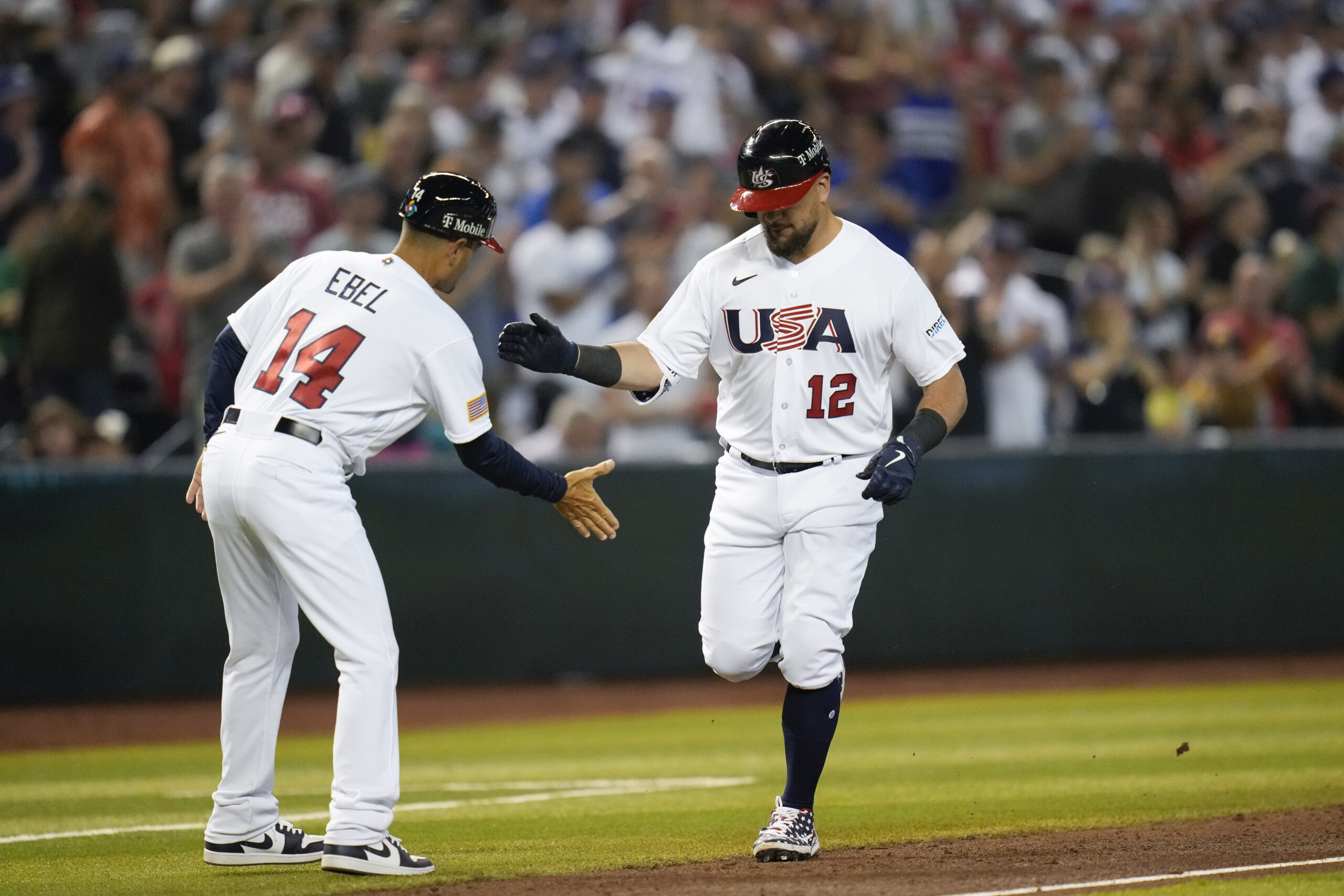
    Kyle Schwarber celebrates with third base coach Dino Ebel after hitting a three-run home run against Great Britain in the 2023 World Baseball Classic.
    Q: Why do you think the interest in participating in the WBC was so high this time? It’s been difficult for Team USA in the past, especially on the pitching side, to recruit the best players. Did you get a sense that guys who maybe said no in the past were more eager to do it this time?

    A: It’s a great question, because I only know me personally that when I got that call back 2023 it was an instant yes. And I know that there’s been a lot of buzz around the pitchers that we have got committed to play for [Team] USA. I know that there’s probably way more details than just someone wanting to say, ‘Yes, I’m in.’ I think that’s been written about and talked about. But also, too, I’m sure there’s even more things. But I think it’s a great team. Another stacked lineup. The lineup that we had out there in 2023 was an amazing lineup full of studs, MVPs, All-Stars, everything. And this lineup that we’re going to have, obviously, MVPs, All-Stars, and I think the cool thing is that there’s kind of a little bit more youth on it, too. We’re starting to see some of these younger faces that could really have those chances to be the future MVPs, or future perennial All-Stars, are going to be on this team as well. So I’m just excited about it.

    When you look at it, from top to bottom, it’s such a deep roster, and I don’t know how you’re going to construct the lineup and how you’re going to decide who’s coming out of the bullpen and things like that. Or who’s starting what game. But I just know that I’m excited to get out there, get with these guys, and I’m excited to watch, I’m excited to see how guys prepare, hear the conversations, talk different things and baseball stuff, and try to take in some knowledge. This is what this is about, too. It’s obviously a great opportunity for all of us to go out there and compete and compete for our country, but also a great opportunity to be around a lot of great players and hear their experiences and hear how they prepare and other things too. So it’s going to be a great time.

  • Phillies Extra with Kyle Schwarber

    Phillies Extra with Kyle Schwarber

    Kyle Schwarber had the best season of his career in 2025, with 56 homers and a runner-up finish for National League MVP. What can he possibly do for an encore? Schwarber joins Phillies Extra to discuss his goals for the season, the Phillies’ chances of getting over the hump in October, playing for Team USA in the upcoming World Baseball Classic, and more. Watch here.

  • Inside the Phillies: Shane Victorino’s advice for Justin Crawford, a changing rotation, and more

    Inside the Phillies: Shane Victorino’s advice for Justin Crawford, a changing rotation, and more

    CLEARWATER, Fla. — Shane Victorino retired to Las Vegas in 2016, three years before Justin Crawford popped up on the scene there at Bishop Gorman High School.

    In December, the former and future Phillies center fielders finally met up at a Vegas-area batting cage.

    “I’m not one to get into the middle of people’s journey, but I would always wonder,” Victorino, a guest instructor in Phillies camp for the past few days, said of Crawford. “And this offseason, we finally decided that we wanted to get some work in together.”

    Victorino, who played in the majors at the same time as Crawford’s dad, was struck by many of the qualities that are impressing Phillies officials this spring. Never mind that Crawford is on track to become the youngest outfielder in a Phillies opening-day lineup since Greg Luzinski in 1973. The 22-year-old has the right mix of confidence and curiosity.

    As manager Rob Thomson puts it, “He acts like he deserves to be here.”

    “Being a son of a big leaguer, he sure didn’t act like one,” Victorino said. “And that was very interesting to me, the humbleness, the kind of kid he is. [The Phillies] have got a good one, bro.”

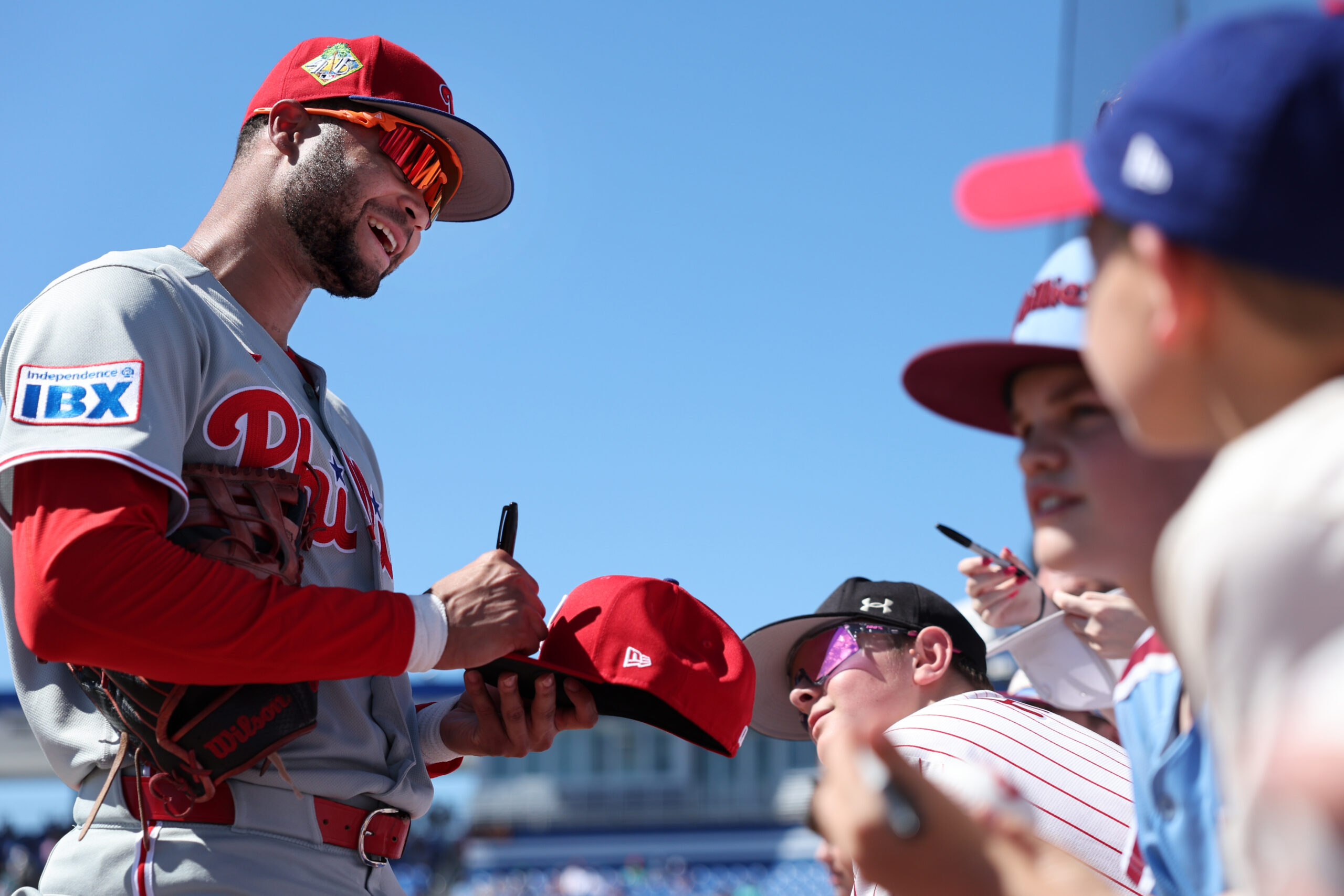
    Phillies center fielder Justin Crawford signs autographs before a spring training game against the Blue Jays on Saturday.

    Crawford’s inner circle is overflowing with major-league influences that extend beyond even his dad, Carl Crawford, a four-time All-Star outfielder with the Tampa Bay Rays. His godfather, Junior Spivey, played five seasons in the majors. Mike Easler, his personal hitting coach, had a 14-year major-league career. Crawford went to Arizona in the offseason to improve his defense — with former star center fielder Eric Davis.

    By all accounts, Crawford is a sponge, soaking in advice and information but also asking pertinent questions. Upon meeting up with Victorino, he wanted to know one thing.

    What’s it like to play in Philadelphia?

    Because it isn’t for everyone. Crawford’s dad came up with the Rays and thrived in small-market Tampa Bay but struggled with the spotlight in Boston after signing a seven-year, $142 million contract with the Red Sox. Philly is a similarly sports-crazed Northeast market.

    Victorino, 45, relished the big-market experience, winning the World Series with the Phillies in 2008 and Red Sox in 2013 and producing big postseason moments during both runs.

    “He wanted to know, like, ‘What are the things that I’ve got to make sure that I’m ready for and that I’m prepared for?’” Victorino recalled. “And I said, ‘You ain’t dumb, bro.’ I said, ‘It’s a hard place to play. It’s a tough fan base.’ But I said, ‘There’s so many things that you bring, the person that you are, the player that you are, that the city’s longing for. So, if you do that, Justin, then the rest will take care of itself.’”

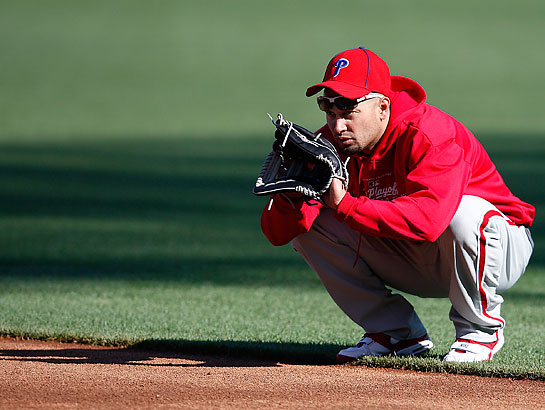
    Former center fielder Shane Victorino is a guest instructor in Phillies camp.

    Victorino offered up two specific tips: Be accountable and play hard.

    “I said, ‘Fly around the bases, play the game right, and this city’s going to love you,’” Victorino said. “‘That’s all they care about. They want you to hit a ground ball and try to beat it out. And when you beat it out, they’re going to have 40,000 [fans] on their feet.’”

    Victorino came to the Phillies in the Rule 5 draft in 2004 and wasn’t a touted prospect. But like Crawford, he had a dominant season in triple A, batting .310 with 18 homers and a .912 OPS in 2005.

    It wasn’t until the Phillies traded Bobby Abreu at the July deadline in 2006 that Victorino got a chance to play every day at age 25. He took over center field once Aaron Rowand left in free agency after the 2007 season.

    The Phillies considered calling up Crawford at times last season but instead left him in triple A, where he won the International League batting crown with a .334 average. Although Crawford is hailed for his bat-to-ball skills and sprinter’s speed, some scouts point to his high ground-ball rate as a reason to be skeptical that he will hit in the majors.

    But Crawford has batted .300 at every level of the minor leagues, and the Phillies believe the time has come to turn over the keys to center field.

    “Just being in the cage with him, his approach, his outlook on the game, his willingness to want to learn and ask questions — the right questions — is what stood out to me,” Victorino said. ”The baseball side, that’s up to [hitting coach Kevin Long]. But I think this organization’s got a great identity of where he is as a player. I think there’s going to be a leash long enough that he’s going to be able to figure it out.

    “I told him, ‘They’re going to forget about guys like me and others because they’re going to fall in love with Justin Crawford.’ And I’m cool with that because that means that the team’s going to be better, the city’s going to be excited, and the fans will be, too.”

    A few other notes from spring training:

    Aaron Nola (left) and Zack Wheeler (right) are no longer the constants in the Phillies starting rotation.

    Changing of the guard

    For five years, the Phillies’ optimism about their chances to make the playoffs, win the division, and go on a deep run through October was rooted in two pitchers.

    Zack Wheeler and Aaron Nola.

    Wheeler ranks first in WAR (30.4) and third in ERA-plus (146) and among 96 pitchers who threw at least 500 innings since 2020. Nola is 16th in WAR (16.0) and 59th in ERA-plus (102) in that span.

    And their durability stood out as much as their dominance. Wheeler ranks third in innings pitched (979) and fifth in pitches thrown (15,319) since 2020; Nola is seventh (944⅓) and ninth (15,002).

    Wheeler and Nola were as reliable as sunrise and sunset.

    It’s unfamiliar, then, that they represent two of the Phillies’ bigger questions this spring. Wheeler, who will be 36 in May, is attempting to return from surgery in which his first rib was removed to relieve a vein that was compressed between his rib cage and collarbone. Nola, 33 in June, is trying to bounce back from an injury-plagued season in which he posted a 6.01 ERA.

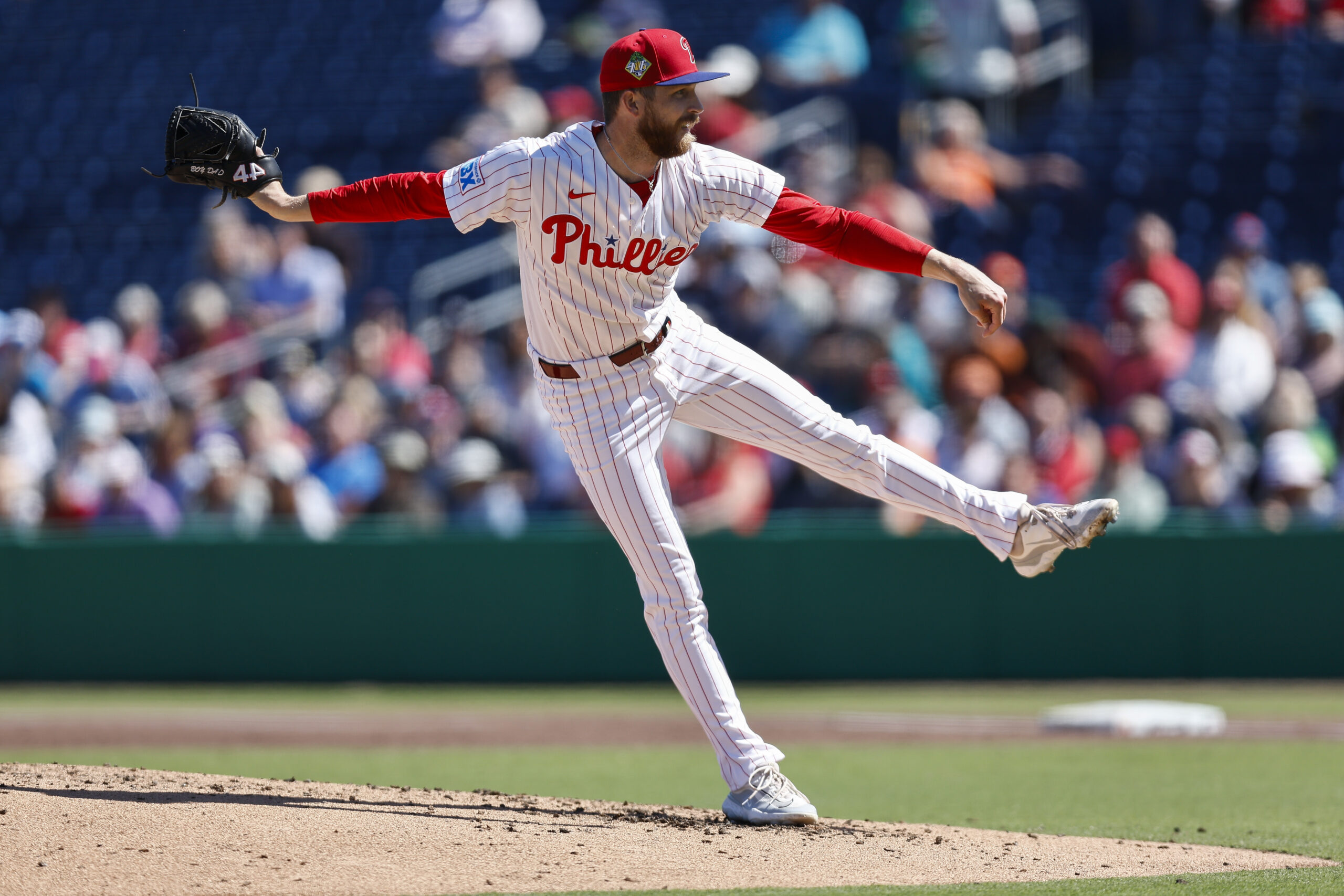
    Suddenly, the surest things in the Phillies’ 2026 rotation are lefties Cristopher Sánchez and Jesús Luzardo. Sánchez, 29, is the Cy Young runner-up; Luzardo, 28, is a candidate for a contract extension with free agency looming after the season.

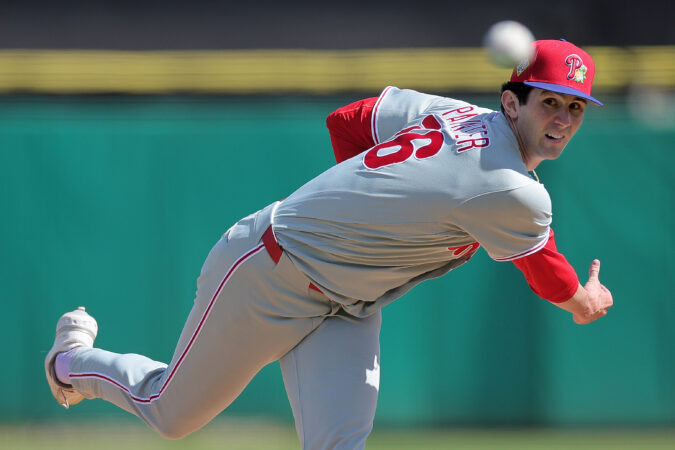
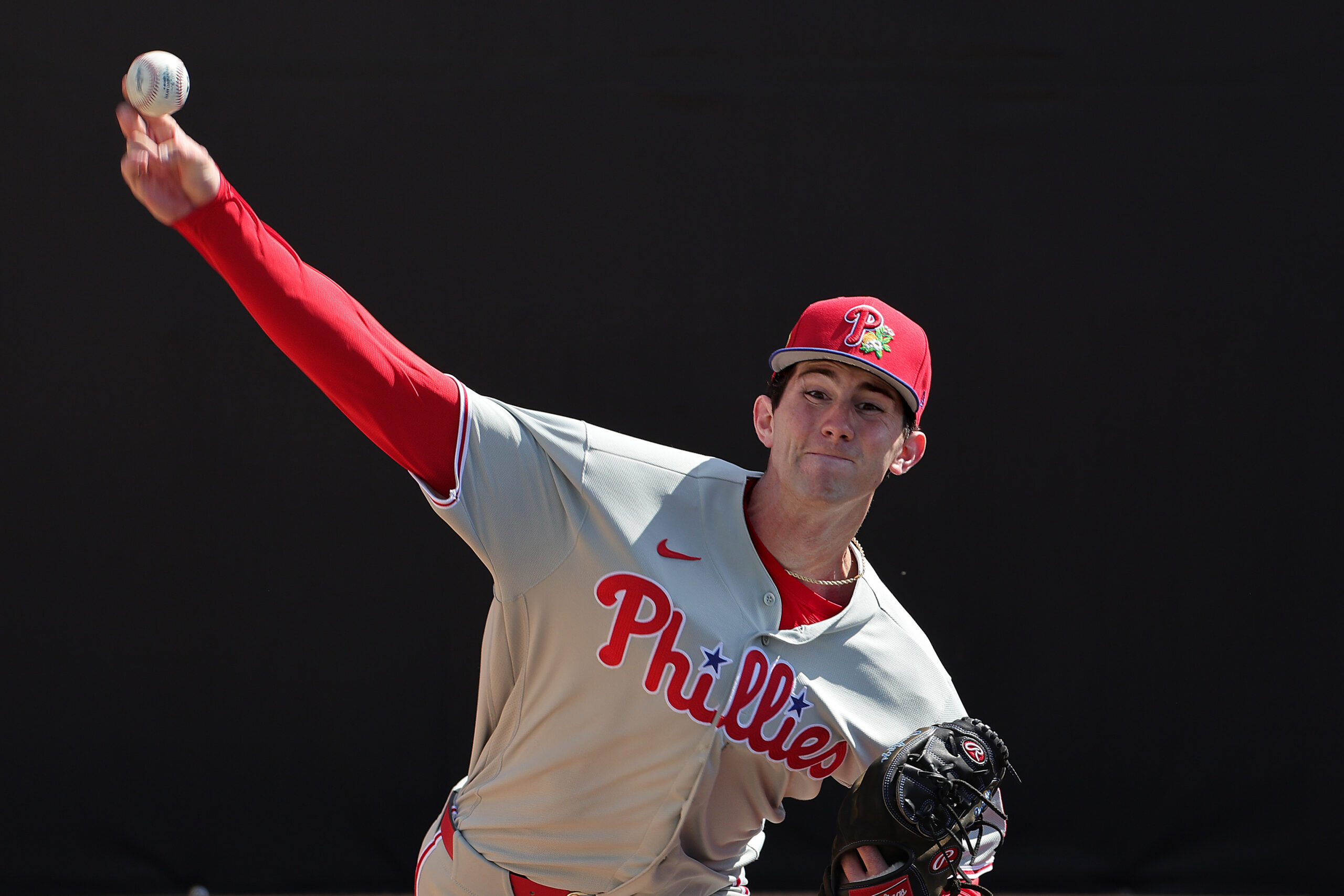
    And then there’s 22-year-old top prospect Andrew Painter, on the verge of making his long-awaited major-league debut.

    Meanwhile, Wheeler and Nola are still around, with corner lockers in the spring-training clubhouse and the potential to still impact the Phillies’ season in a big way.

    “It’s nice having guys develop and taking those next steps because it helps us if we were to maybe take a step back as we get older,” Wheeler said. “They’re getting to where we’ve been, which is just reaching, I don’t want to say your peak, but reaching your potential and being the pitcher who you think you could be and who everybody else thinks you could be.

    “They’re getting to that point. It’s pretty cool to see. And we’ve already been there, and we’re just trying to make that last, me and [Nola].”

    Phillies reliever Orion Kerkering suffered a mild (Grade 1) strain of his right hamstring early in spring training.

    Bullish on the ’pen

    Orion Kerkering uncorked a pitch in a bullpen session before camp opened and felt a grabbing sensation in his right leg.

    “I thought it was just a cramp,” he said.

    It turned out Kerkering suffered a mild (Grade 1) strain of his right hamstring. He’s aiming to throw from a mound Sunday, which would be a big step in a progression that typically involves multiple bullpen sessions and facing hitters in live batting practice before getting into games.

    There’s still time for Kerkering to be ready for opening day. He would join closer Jhoan Duran, Brad Keller, Jonathan Bowlan, and lefties José Alvarado and Tanner Banks as locks in an eight-man bullpen. Do the math, and there are two spots for at least a half-dozen relievers, most of whom have made solid initial impressions.

    Kyle Backhus might have an inside track. Not only does Thomson prefer a third lefty, but as a sidearmer, Backhus provides a unique look. The 28-year-old posted a 4.62 ERA and 22 strikeouts in 25⅓ innings last season for Arizona. The Phillies traded for him in December for single-A outfielder Avery Owusu-Aseidu.

    It was one in a series of offseason dart throws to add bullpen depth. The Phillies acquired right-handers Yoniel Curet from the Rays and Chase Shugart from the Pirates for minor leaguers. They signed righty Zach Pop as a free agent and selected righty Zach McCambley in the Rule 5 draft.

    Pop, 29, features a sinker that Thomson described as a “bowling ball.” He’s out of options and would need to clear waivers. McCambley, 26, must remain on the Phillies’ active roster all season or be offered back to the Marlins, his former organization, for $50,000.

    Kyle Backhus might have an inside track on one of the two remaining bullpen spots.

    Maybe that gives them an edge over Backhus, Curet, Shugart, and holdovers Seth Johnson and Max Lazar, all of whom have minor-league options.

    Veteran relievers Lou Trivino and lefty Tim Mayza are also in camp as nonroster invitees. Because they finished last season in the majors, have six years of service time, and signed minor-league deals, they are entitled to a $100,000 retention bonus to go to the minors if the Phillies don’t add them to the 26-man roster five days before opening day.

    It all sets up an intriguing competition over the next few weeks.

    “We’re going to have some tough decisions at the end of this thing,” Thomson said.

    Extra bases

    Alvarado committed to pitch for Venezuela in the World Baseball Classic but had to withdraw due to issues in obtaining insurance. The Phillies will have 11 participants: Bryce Harper, Kyle Schwarber, and Keller (U.S.); Sánchez and outfielder Johan Rojas (Dominican Republic); righty Taijuan Walker (Mexico); catcher Garrett Stubbs and Lazar (Israel); infielder Edmundo Sosa (Panama); Nola and outfield prospect Dante Nori (Italy). … Veteran utility man Dylan Moore is competing for the final spot on the bench after signing a minor-league contract a few days before camp opened. Moore, who is also eligible for the retention bonus if he isn’t added to the roster before opening day, said he wanted to join the Phillies for the opportunity to work with Long. “He pointed out some things in my swing that he thought he could really help me with,” said Moore, a .206 hitter with a .693 OPS in seven major-league seasons. “That was a huge factor. I think he could help me.”

  • A frustrated Aidan Miller says his sore back is ‘getting better,’ but his return is uncertain

    A frustrated Aidan Miller says his sore back is ‘getting better,’ but his return is uncertain

    CLEARWATER, Fla. — Aidan Miller isn’t on social media, so it wasn’t until his father sent along a television clip last Sunday that he realized Bryce Harper told Phillies fans everywhere that he’s injured.

    “I was like, ‘Oh, that’s pretty cool,’” Miller said with a laugh Thursday. “’He’s talking about me on the broadcast.’”

    If anything, it speaks to how highly the face of the Phillies thinks of the 21-year-old top prospect that the status of Miller’s sore lower back is on Harper’s mind. Soon, though, Miller hopes Harper will be talking about him more for what he does on the field.

    Miller’s work largely has been confined to the training room since the Grapefruit League schedule opened last weekend. He awoke one day last week, and his back was “super tight.” The feeling didn’t subside with treatment.

    “We decided to take a couple of days off to just kind of let it relax, and now I’m kind of building back,” Miller said. “I feel like I’m in a better spot than I was. It’s getting better.”

    The Phillies haven’t announced a timeline for Miller’s return, but they won’t rush him back.

    “I still think I’m going to get into some games toward the end,” Miller said. “It’s definitely frustrating. I feel like it’s a big camp. Just really trying to stay present. My mind’s been spiraling a little like, ‘When am I going to get into games? Is it going to be next week? The week after?’ But I’m trying to just get better every day.”

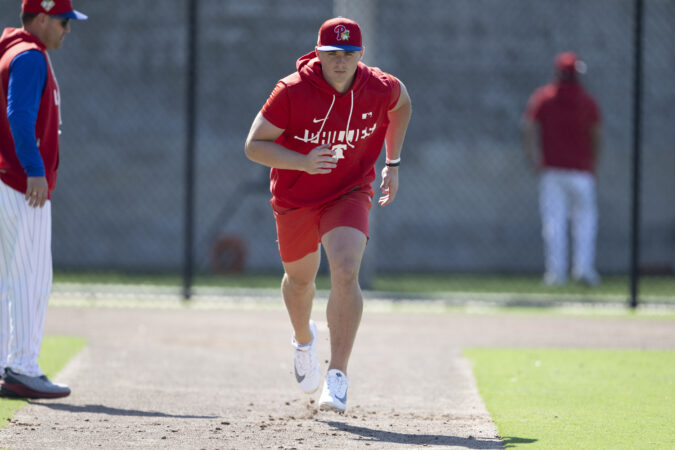
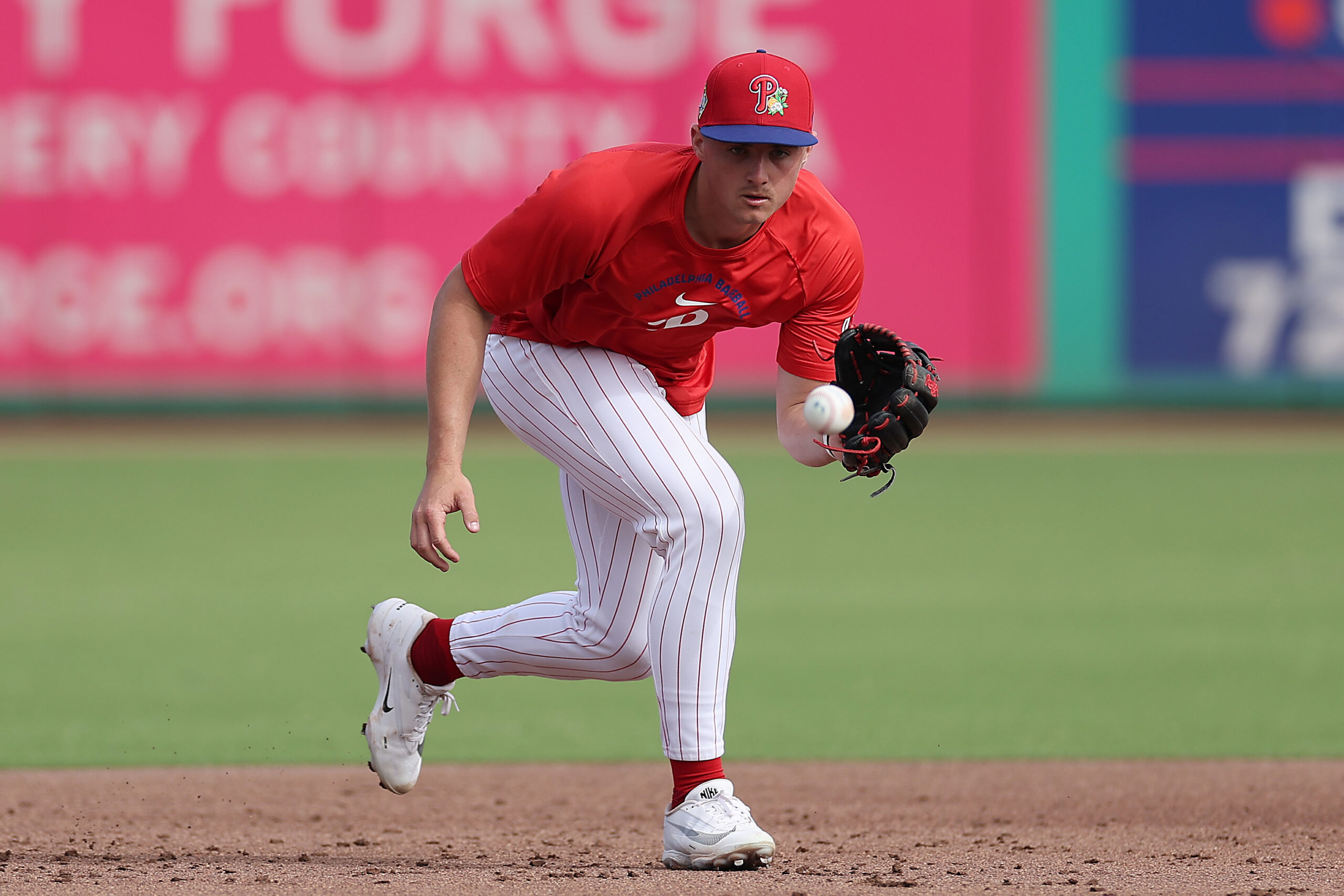
    The Phillies plan to give Aidan Miller reps this spring at shortstop, third base, and second when he’s healthy.

    Miller was a long shot to make the Phillies’ opening day roster. But he was expected to get reps in spring training at third base and second base, in addition to shortstop, in preparation for a potential midseason call-up.

    The root of the lower back soreness is unclear, according to Miller, who said it wasn’t a specific incident on the field. He said he felt similar soreness late last season. Miller was ticketed to play in the Arizona Fall League, but the Phillies told him to stay home. At the time, farm director Luke Murton said Miller had “some nagging things physically.”

    “It went away for a little bit, and I thought it was gone,” Miller said. “Structurally, there’s nothing wrong there. It’s just, I think swinging a bat 100,000 times a year, we put a little bit of a toll on it. I think it’s just finding a good routine that could help me and prevent flare-ups in the future. I’m not worried about it at all.”

    Miller, whose spring training locker is sandwiched between those of Harper and J.T. Realmuto, said he has asked older teammates about best practices for dealing with similar issues.

    “They’re texting people for me and trying to help me out,” Miller said. “They’ve been a huge help, just kind of bouncing questions off them.”

    Miller, the Phillies’ first-round draft pick in 2023, has shot through the farm system over the last two years. Last season, he batted .264 with 27 doubles, 14 homers, 59 stolen bases, and an .825 OPS between double-A Reading and triple-A Lehigh Valley.

  • Don Mattingly could give Bryce Harper’s career a boost with the Phillies. Maybe Harper can reciprocate.

    Don Mattingly could give Bryce Harper’s career a boost with the Phillies. Maybe Harper can reciprocate.

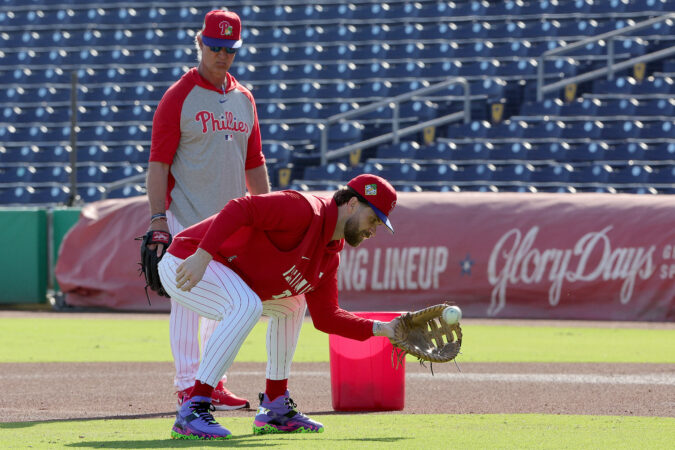
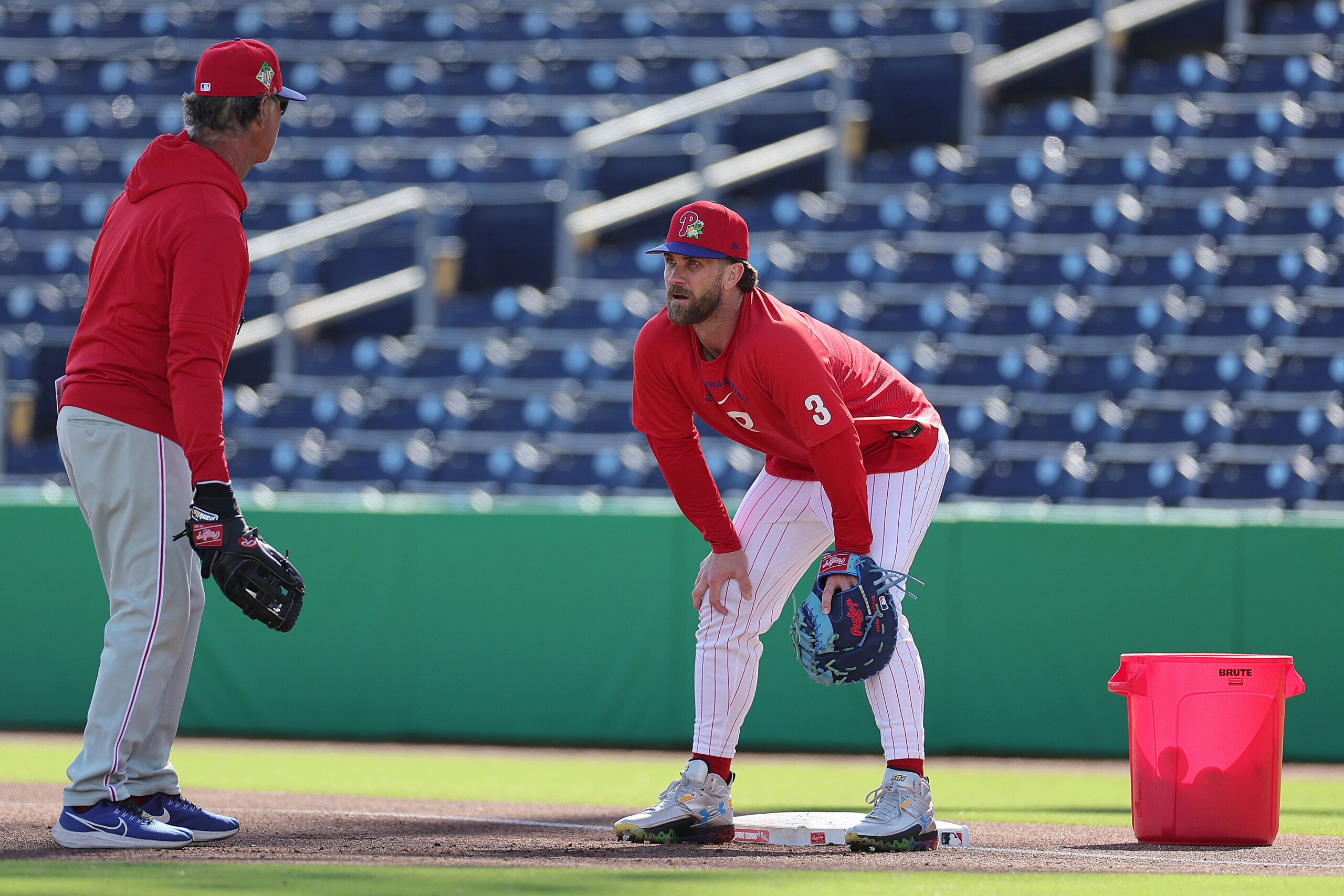
    CLEARWATER, Fla. — For 30 minutes Wednesday, on the half-field adjacent to the Phillies’ clubhouse, Larry Bowa flipped baseballs to Bobby Dickerson, who hit one-hoppers and choppers and line drives at Bryce Harper.

    Over and over. Again and again.

    Ninety feet from Harper, a nine-time Gold Glove-winning first baseman and former captain of the Yankees stood with a glove on his right hand and a paper folded lengthwise in his back pocket. He didn’t say much. Mostly, he observed.

    Then, after the drill, Don Mattingly conferred with Harper.

    The Hitman and the Showman.

    Imagine being a fly on the wall for that.

    “I mean, it’s Donnie Baseball,” Harper said, smiling. “I grew up a Yankee fan, so knowing he played first base in the Bronx and had a great, storied career in the Bronx and was one of the best first basemen to ever do it, I have such a respect for him and the way he went about it.”

    The admiration is mutual.

    “He’s going on his 15th year, and I’m like, ‘Wow,’” Mattingly said. “I had a decent career, but I don’t know if I really can talk about some of the things that he can do. Because he can do things that, I think he’s kind of that Barry Bonds-type guy. It’s different.”

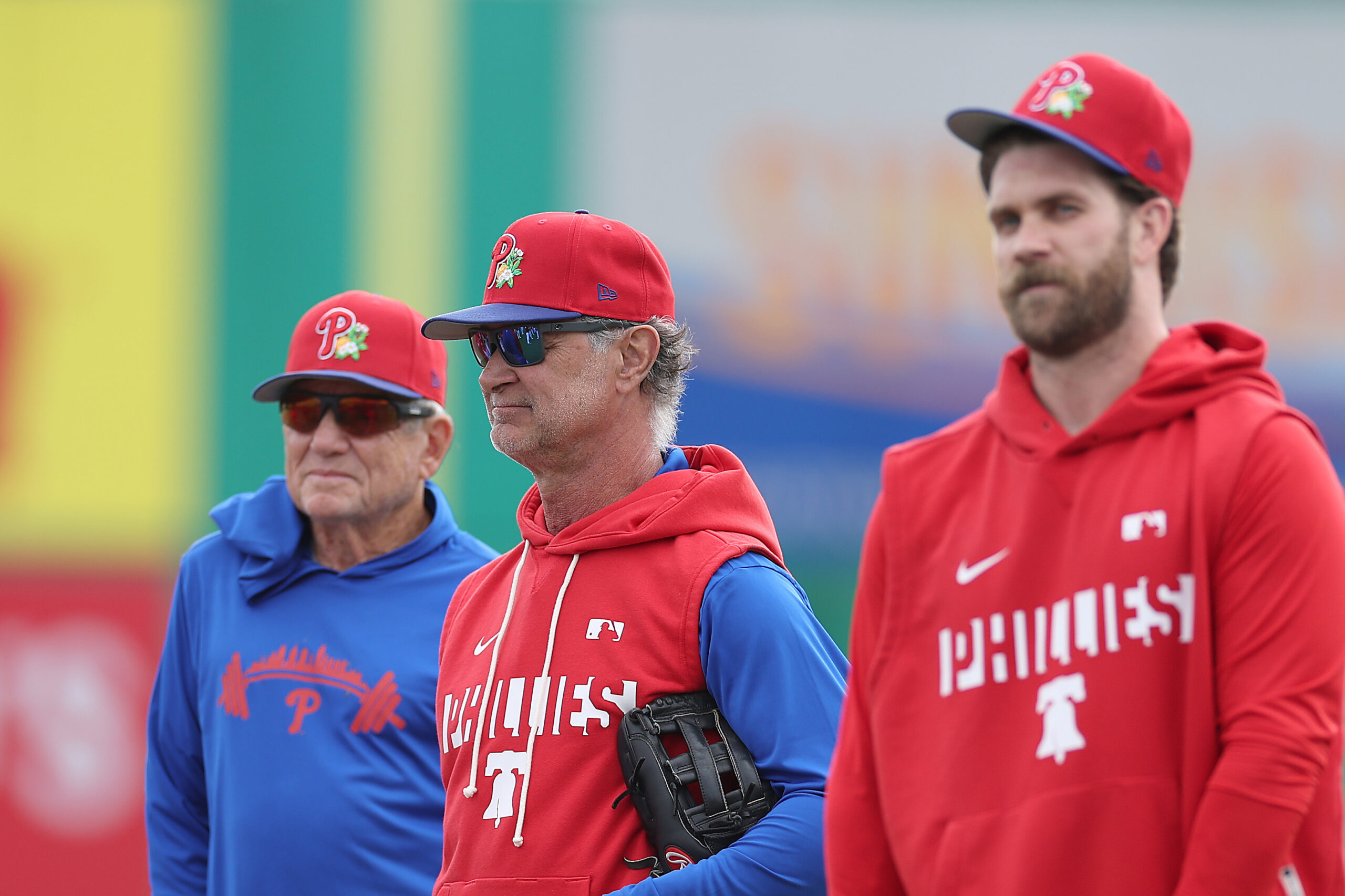
    Phillies first baseman Bryce Harper (right) has an appreciation for the career of new bench coach Don Mattingly (center).

    OK, let’s move beyond the pleasantries — and Mattingly’s modesty about a Hall of Fame-worthy playing career in New York — and get to what Mattingly and Harper can do for each other, notably winning the World Series championship that has eluded both.

    The Phillies didn’t hire Mattingly to be their bench coach because of the effect he could have on any one player. But they do believe he will bring a different form of credibility to a coaching staff that is well-regarded within the sport but light on major league playing experience.

    Harper has solid relationships with manager Rob Thomson and especially hitting coach Kevin Long and Dickerson, the infield coach who slings grounders with a fungo bat and a roux of encouragement and trash talk through a Mississippi drawl. All are good at their jobs. None played a day in the majors.

    But Mattingly was the face of baseball back when baseball could still call itself the national pastime. A word from him surely resonates differently with Harper, among the biggest stars in the sport for a decade and a half.

    “We have such a good staff, and to be able to bring him in and be part of that, he’s just going to make us that much better,” Harper said. “Being able to have a guy on the staff — and no disrespect to anybody — that has done it at the highest of levels, it’s so good to be able to bounce stuff off of him.”

    Two weeks into camp, Mattingly said he’s still getting a feel for everyone, including Harper. He isn’t the hitting coach or the infield instructor. Long and Dickerson have those areas covered. But he’s a fresh set of eyes on a staff that has been together since Thomson took over as manager in 2022.

    And after two weeks of watching pitcher fielding practice, live batting practice, and baserunning drills, peeking on hitters in the cage, and offering feedback to Thomson and the coaches, Mattingly has a few observations.

    “I like the way guys work here,” he said. “It’s concentrated when they’re in the cage, and the work’s been good on the field for pitchers. It’s not like you’re coming in here to a 96-win team and try to say, ‘You guys should be doing this, this, or this.’ It’s a really good club.

    “You’re just trying to find the details of how do you get a little bit better?”

    Marginal improvements could make the difference between the Phillies losing three games by a total of four runs to the Dodgers in the divisional round and advancing to the NL Championship Series.

    Phillies bench coach Don Mattingly (left) talks with first baseman Bryce Harper in Clearwater, Fla., on Monday.

    In the case of Harper, who will play this season at age 33, Mattingly’s influence could help extend his peak.

    Harper was still in diapers when Mattingly retired in 1995. But as a baseball obsessive with an appreciation for the sport’s past, Harper has studied highlights — “ESPN Century, all that kind of stuff,” he said — from Mattingly’s career.

    “The little crouched-down stance,” Harper said. “Bat-to-ball skills were unbelievable. The short porch [in right field at Yankee Stadium] was really good for him. But just a doubles machine that knew how to hit.“

    Mattingly hit it off with star infielder Bo Bichette in his last job as bench coach of the Blue Jays. Last season, Bichette batted .311 with 44 doubles, 18 homers, and a 129 OPS-plus.

    “I think they really came together, and you saw Bo have the great year that he had,” Harper said. “Probably learned a lot of stuff from Donnie and what he does. It’s no coincidence.

    “And I love being coached. I don’t care where I’m at or how old I am. I love being coached at the highest level by guys like him because just an ounce of information from him could change the dynamic of somebody’s career. I think everybody should have an open mind and open ears to him.”

    Harper is 3-10 in 13 career postseason series. The Nationals famously won the World Series one year after Harper joined the Phillies.

    Mattingly is chasing something similar. A year after he retired from playing, the Yankees began their run of four World Series championships in five years. He managed the Dodgers before they became a dynasty. The Blue Jays just lost in Game 7 of the World Series.

    After 14 seasons as a player, 12 as a manager, and 10 as a coach, Mattingly is still aiming to win a World Series.

    With a talented Phillies lineup, Don Mattingly says, “You’re just trying to find the details of how do you get a little bit better.”

    Maybe Harper can help with that.

    They’re still getting to know each other. Mattingly’s early observations include Harper’s attention to detail in the batting cage and solid footwork around first base. Harper will leave camp Saturday to join Team USA for the World Baseball Classic. Upon his return, the work with Mattingly will continue.

    “He’s a different animal than almost anybody else as far as, he’s been here for a long time, still in great shape, still big-time bat speed,” Mattingly said. “He’s a guy that has a chance to win a Gold Glove, in my mind. I’ve had different first basemen, and he’s as good as any.

    “Sometimes I think guys like that, you start to take for granted how good they are. And that’s what I think about with him. That doesn’t mean you don’t try to get better in different areas. But he’s going to have a pile of numbers there that, as he gets toward the end of his career, people are going to be going, ‘Holy [bleep], this guy’s been incredible.’”

    A mid-career boost from Donnie Baseball can’t hurt.

  • Zack Wheeler’s outlook might be a mystery, but he says there’s no reason he can’t ‘be who I am’ in 2026

    Zack Wheeler’s outlook might be a mystery, but he says there’s no reason he can’t ‘be who I am’ in 2026

    CLEARWATER, Fla. — It’s a long, scary-sounding procedure — venous thoracic outlet decompression surgery — so let’s just ask Zack Wheeler to explain what it entailed on that Tuesday in September at a St. Louis hospital.

    OK, Zack, don’t spare any details.

    “Basically all they do,” the Phillies ace said Tuesday, “is go in, chop the bone, get rid of that [rib] because that’s what’s causing it, get rid of the blood clot, and then open up the vein. My vein closed back, I think two different times, so they had to go back and open it. If it happened again, I think they were just going to do a stent. But so far, so good.

    “And that’s really about it, honestly.”

    Oh, is that all?

    Five months later, there’s a matter-of-factness with which Wheeler talks about all of this, from the onset of symptoms on the eve of an Aug. 15 start in Washington to the tension-filled days and weeks that followed.

    Maybe it’s because the 35-year-old righty endured injury-related misery early in his major-league career. In the spring of 2015, he suffered a torn elbow ligament and had Tommy John surgery. Setbacks in his recovery led to a second procedure and caused him to miss two seasons.

    Compared to that, Wheeler says this is “not that bad.”

    “Knock on wood,” he added, tapping the side of his locker.

    Since he signed with the Phillies in 2020, Zack Wheeler leads all major-league pitchers with 28.6 wins above replacement, according to Fangraphs.

    Wheeler remains in the long-toss phase of his comeback, playing catch from as far as 120 feet. He’s inching closer to throwing from the mound. The standard buildup will follow: bullpen sessions, facing hitters in live batting practice, more bullpen sessions, and a few starts in the minor leagues.

    Although Wheeler won’t be ready in time for opening day, he and the Phillies believe he will pitch a lot of innings this season. But beneath the optimism is an underlying mystery raised the other day by none other than Bryce Harper.

    “We have no idea what Wheels is going to look like,” Harper said. “We all hope that Wheels comes back and is Zack Wheeler because there’s nobody better in baseball when he’s going good. But we have no idea.”

    In classic Wheeler fashion, he insists he isn’t worried.

    “I don’t think there’s any reason why I wouldn’t be who I am,” he said. “It’s not like a major surgery. I just got a rib taken out. It might sound like a crazy situation, or crazy surgery, or whatever, but mentally, I’m not really stressed about it. Physically, I’m not really stressed about it.”

    Not since that Friday night in D.C., at least, when a late-night consultation by the Nationals team physicians after a five-inning start led to the next-day diagnosis of a blood clot near his right shoulder.

    In detailing for the first time those few days in August, Wheeler said he felt “like a full feeling” as he went through arm exercises in the training room on Aug. 14. He chalked it up as “something wacky,” and went outside to play catch. The sensation didn’t subside.

    Phillies pitcher Zack Wheeler was diagnosed with a blood clot near his right shoulder after a start in Washington on Aug. 15 of last season.

    When they work out, Phillies pitchers often wear a cuff that partially restricts blood flow to help the arm recover. As Wheeler put it, “your veins start popping up.”

    “That’s literally what I felt like,” he said.

    Only he wasn’t wearing the cuff.

    Wheeler said he reported the issue to head athletic trainer Paul Buchheit, with whom he has developed a close relationship since both joined the Phillies in the 2019-20 offseason. He also told Buchheit about “a little bubble in my armpit” that looked like a lymph node.

    Everything checked out in the training room. Wheeler said the “full feeling” went away, then returned the next day in the bullpen before his start, then went away again. He held the Nationals to two runs in five innings, threw 97 pitches, and topped out at 95.7 mph, a 1.5-mph gain over his previous start.

    But the bubble was still there.

    “Paul was like, ‘Let’s just get it checked out,’” Wheeler said. “The D.C. doctors came over, and they’re like, ‘Uh, it’s not a lymph node. You need to go get that checked out tomorrow morning, first thing.’ And that was kind of what started the whole thing.”

    Doctors diagnosed the blood clot. Wheeler went back to Philadelphia and underwent a venogram, a test to detect blood flow in his veins. The conclusion: The clot was caused by a vein that got compressed between Wheeler’s rib cage and collarbone.

    If anything, Wheeler actually felt relieved.

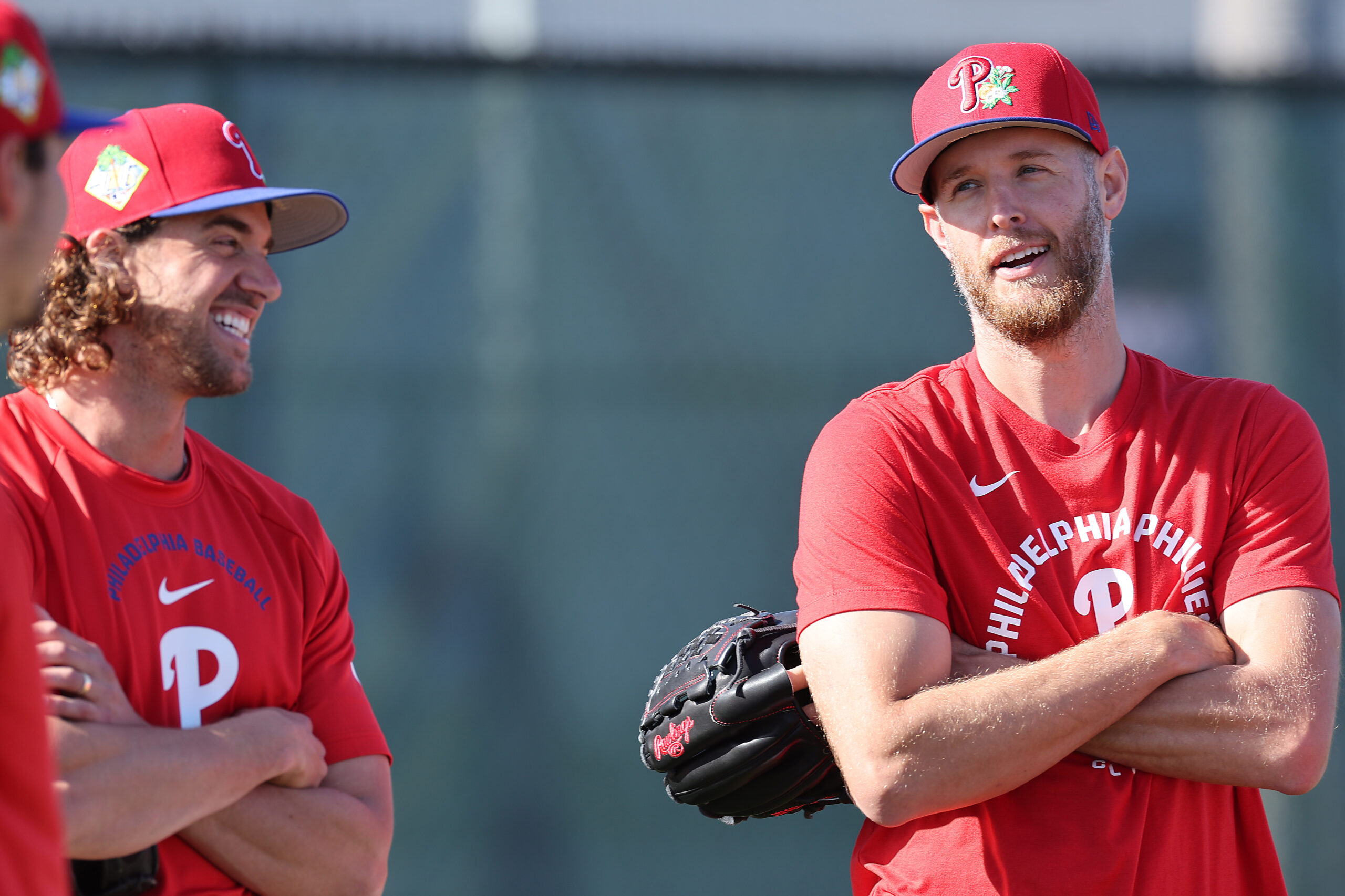
    Phillies pitcher Aaron Nola (left) listens as Zack Wheeler jokes around during spring training in Clearwater, Fla.

    “Even though like the whole blood clot thing was pretty serious, I didn’t even find it that scary,” he said. “Maybe I’m just naive to it. But I didn’t get a blood clot because of my health or anything like that. It’s just two bones were pinching together. That’s why it happened. So, that kind of eased the thoughts in my head.”

    Wheeler underwent a thrombolysis on Aug. 18 at Thomas Jefferson University Hospital to remove the clot and open the vein. After taking blood thinners for five weeks, Wheeler had surgery Sept. 23 to remove the rib. The vein had closed again and a second clot was forming.

    It was “nothing out of the ordinary,” according to Wheeler, who said his St. Louis-based vascular surgeon, Robert W. Thompson, warned that the vein might not stay open until after they removed the rib.

    “Just from hearing what they were saying, if it stayed open, hooray. But I don’t think they really expected it to,” Wheeler said. “The rib was still there. The clavicle is obviously still there.”

    Before Wheeler left the hospital, doctors went in again to make sure the vein hadn’t closed again. It had not.

    Then came the hard part: weeks of physical therapy and rehab, including a strict diet of what Wheeler described as “small amounts and healthy stuff,” not easy for an unabashed fast-food and junk-food lover. He’s unsure how much weight he lost but said it was “a good bit.”

    “You can’t have fats or something like that,” said Wheeler, who rejoined the team Oct. 4 for pregame introductions before Game 1 of the division series against the Dodgers. “I lost a lot of weight doing that because I could barely eat, really.

    “It was pretty painful that first week. It was rough. But since then it’s been pretty smooth sailing.”

    Wheeler spent most of the winter in Philadelphia, rehabbing under Buchheit’s supervision. There’s a history of pitchers returning from this particular form of thoracic outlet syndrome. Among the success stories: Merrill Kelly, at age 31, had surgery in September 2020, made it back by April 2021, and is still going.

    So, while outsiders — and even some of his teammates — wonder if Wheeler will be Wheeler again after a procedure that he insists wasn’t as scary as it sounds, he puts in the work each day with his usual nonchalance.

    “I mean, it might be a little thought, but at the same time, you can’t worry about that kind of stuff,” Wheeler said. “There’s no hesitation at all.”

  • ‘Phillies Extra’ Q&A: Brad Keller on committing to being a reliever, advice for Andrew Painter, and more

    ‘Phillies Extra’ Q&A: Brad Keller on committing to being a reliever, advice for Andrew Painter, and more

    Brad Keller sat at a gate at Philadelphia International Airport, awaiting a flight home after signing with the Phillies, when his phone rang with an invitation to join the most talented American baseball roster ever assembled.

    And in that moment, on a cold day in December, it must have dawned on Keller how much his life had changed.

    A year ago, Keller was in spring training with the Cubs, trying to make the team as a nonroster invitee on a minor-league contract. But after a dominant 2025 season (2.07 ERA in 68 appearances), he’s one of the best setup relievers in the sport, earning a two-year, $22 million contract from the Phillies and a spot in Team USA’s bullpen for the upcoming World Baseball Classic.

    Keller, 30, sat down last week with Phillies Extra, The Inquirer’s baseball podcast, for a wide-ranging conversation about his first few weeks in Phillies camp, wearing the stars and stripes, why he believes he’s more than a one-year bullpen wonder, and more.

    Here are a few excerpts. Watch the full interview below and subscribe to the Phillies Extra podcast on Spotify or Apple Podcasts.

    Q: What makes you confident that you can take the terrific year you had in 2025 with the Cubs and build on it?

    A: I think that’s exactly it, just continuing to build on it. I have a good set of cues that I was using all year last year, kind of even when I went through some ruts and things like that, that kind of got me out of it pretty quickly. So, just trust the work that I put in, trust the process. I know the relieving lifestyle. It’s not always going to be perfect, but ultimately we’re just trying to do our job out there. And just try to put up a zero. It might be [with] some runners on, might have to battle through some traffic, but ultimately our job is to put a zero up and pass it on to the next guy. So, just building on what I did last year and continue to get better.

    Going into spring this year, we’re still working on some things. Last year, my sweeper at times was a little not as consistent as [I was] hoping it to be. So this year it has kind of been my point of emphasis, going through spring, just kind of nailing that in, really [homing] in, when I want it for a strike, when I want it for a ball, things like that. There’s always things to work on. And I’m not just trying to sit there and just be like, ‘OK, last year’s last year.’ There is still even things last year that I would like to get better at going into this year. And so there’s always work to be had.

    Brad Keller emerged as a key arm in the Cubs bullpen last season, posting a 2.07 ERA in 68 games.
    Q: From what I heard in the offseason, there were some teams that looked at you as a potential starter. What can you tell me about your free agent experience and why you chose to continue down the path as a reliever?

    A: … I had a couple of teams reach out this year that were like, ‘Hey, we think that there’s a chance that you could still do it, and we believe that you could still be a starter.’ And I told them, ‘Yeah, I’m down to start. That’s great.’ But I loved the bullpen last year. There was nothing like the adrenaline rush that you would get going into a game, big moment, big situation, like getting out of it, pitching in the playoffs, coming into big games like that. That gives me chills thinking about it, because it was just such a special experience.

    And so part of me was like, ‘I don’t want to give that up.’ And I know even when we were talking about the starter route, it was like, ‘There was always the fallback plan, and if it doesn’t work out, we’ll still just put you in the bullpen.’ But I had success with it last year. I had success with it in the past, beginning [of] my career, so maybe we should just dive full in because at the beginning of the last year, even when I was in the bullpen, I was still the two-inning guy, still the long guy. So it was still always like am I going to start?

    … So finally, when I felt like I put all those to the side and just commit to being in the bullpen, commit to being a reliever, that’s when I feel like my season kind of changed. Going into free agency I was like, let’s just commit to this. I really enjoyed it. It’s not like something that I was on the fence about. Once I was all in, I was like, this is a lot of fun. And I had a good group of guys last year that really kind of showed me the ropes, especially transitioning into just a completely different role, being able to be ready every single day vs. one every five days or so. So that helped out a ton.

    Andrew Painter, 22, is expected to crack the Phillies’ rotation in 2026.
    Q: You were 22 and you skipped over triple A when you made your major league debut in 2018 and you had a really good year for the Royals. The Phillies are most likely going to give a 22-year-old rookie, Andrew Painter, a spot in the rotation. What do you remember about being in his position, and what’s your advice for him?

    A: I think the most important thing is just don’t try to make it more than what it is. It’s still the same game. You’ve still got to throw the ball 60 feet, 6 inches. … The lights are brighter. Obviously you’re facing guys that you’ve seen on TV, or you’ve heard the name a million times, but it’s the same game. You’ve just got to put on that competitive hat and just go to work. And it’s obviously intimidating when you’re 22 and you’re facing a bunch of guys.

    But for me, I was just trying to be a sponge my rookie year. Just try to soak in as much information as I could. Good, bad, obviously, you got to filter out that stuff, but you just try to enjoy every moment. It’s such a short time in our lives. A career span is so short in the grand scheme of things. So just try to make the most of it. Try to make all the memories. Try to soak in all the information.

    We have a lot of veteran guys on our team, hitters, pitchers, especially in our starting staff. He’s got a lot of guys around him that he can lean on, which is really cool — [Aaron Nola], [Zack] Wheeler and [Jesús] Luzardo, and those guys. That’s just awesome to learn from and follow suit with those guys. But I think just enjoy it. It’s a once-in-a-lifetime opportunity. And like I said, it goes by fast. This is Year 9 for me, and I feel like I remember myself as a rookie walking into the clubhouse for the first time. So it’s fun, but … it’s still the same game.

    Watch the entire interview for Keller’s thoughts on the Phillies bullpen, playing for Team USA in the World Baseball Classic, and meeting new teammate Kyle Schwarber at the College Football Playoff national championship game in Miami.

  • Andrew Painter is ready, three years later than he expected. And maybe that’s a ‘blessing in disguise.’

    Andrew Painter is ready, three years later than he expected. And maybe that’s a ‘blessing in disguise.’

    CLEARWATER, Fla. — Before he reported to his first major league spring training camp in 2023, Andrew Painter met with his agent.

    “Ideally,” Scott Boras said, “I would love it if you didn’t throw your first pitch in the big leagues until you’re 22.”

    Sure thing, Painter thought. One problem: He was 19, and the Phillies were dangling a spot in the season-opening starting rotation.

    “I remember looking at him like, ‘All right, what do you want me to do?’” Painter recalled Monday. “I was 19, I’m coming in, hoping to break in, so I’m sitting there like, ‘You want me to put some weight on? What do you want me to do?’”

    Three years later, Painter finds the whole thing to be oddly prophetic. Because if, as expected, the 6-foot-7 righty breaks camp with the Phillies, he will be 22 — a few days shy of his 23rd birthday on April 10 — when he makes his major league debut.

    Just as Boras hoped, albeit for much different reasons.

    Boras’s concern in 2023 stemmed from a belief, rooted in his experience with other clients, that most pitchers don’t physically mature until their early 20s. To prove his point, he rattles off a list of pitchers who debuted at 19 or 20 and flamed out by 29 or 30.

    Phillies pitcher Andrew Painter is two years removed from Tommy John elbow surgery.

    Fernando Valenzuela. Bret Saberhagen. Steve Avery. Kerry Wood. Félix Hernández. Madison Bumgarner.

    But after being crowned by Baseball America as the sport’s best minor league pitcher in 2022, with a chance to be the first teenager to start a game for the Phillies since Mark Davis in 1980, Painter put his foot on the gas in the spring of 2023. In his first Grapefruit League start, he touched 99 mph in the first inning against then-Twins star Carlos Correa and uncorked a cutter that he’d only recently started throwing.

    And he tore a ligament in his right elbow.

    You know the rest. Doctors recommended rest and rehab, but Painter couldn’t avoid surgery. He didn’t pitch competitively for two seasons. Upon returning last year — amid expectations that he might reach the majors by “July-ish,” as Dave Dombrowski outlined — he struggled with wayward fastball command and didn’t get out of triple A.

    So here he was Monday, a fully formed 22-year-old pitcher with his top-prospect shine only slightly dulled, facing the meat of the Phillies’ order — Kyle Schwarber, J.T. Realmuto, Bryson Stott, Bryce Harper, Alec Bohm, and Brandon Marsh — in live batting practice in preparation for his first Grapefruit League start later in the week or this weekend.

    “Overall I thought his stuff was really good,” Schwarber said. “I thought the fastball had some life. Definitely had its good profile that it should have. The thing that’s going to really help him out is having his fastball and knowing where he’s going to put it. Right?”

    Did anything look different from three springs ago, before the elbow injury, when Schwarber memorably took Painter deep in the direction of U.S. 19 traffic beyond the right-field fence on a back field at the Carpenter Complex?

    “It’s a good question,” Schwarber said. “He’s getting a feel for things and making adjustments with his arm angle. I think you’re going to see a really good version of him.”

    Painter’s arm angle dropped throughout last season. Maybe it was the toll of pitching 118 innings after a two-year absence. Maybe it was something else. He said he wasn’t overly aware of it. Besides, his focus was getting through the season healthy.

    But the Phillies believe the lower arm slot affected his ability to spot his fastball consistently. And triple-A hitters teed off, batting .329 and slugging .585 against Painter’s four-seamer.

    “In the season it’s kind of hard to keep up with that stuff, and you don’t want to mess with it in season,” Painter said. “It’s something you kind of just go back and look and you’re aware of it, but you really dial it in in the offseason.”

    When Painter went home to South Florida and resumed his offseason training at Cressey Sports Performance, he set out to raise his arm slot again. The first few weeks of spring training have been reinforcing those habits.

    Painter has made other tweaks, including the grip on his changeup. He developed blisters early last season in triple A and wasn’t able to throw the changeup as often as he wanted. It’s probably his best offspeed pitch. He also throws a hard slider, sweeper, and curveball.

    “The changeup is a big thing,” Painter said. “The changeup was really good for me last year. Kind of bringing back the sweeper. Last year I was searching for a sweeper, and that was where the arm started to drop. So, I’m getting back to the one I threw pre-TJ [Tommy John surgery].

    “Just being able to come in here and do my thing, without having to worry about pitch count or anything like that, just going out there and pitch, it’s nice.”

    Pitchers often say everything is crisper and sharper in the second year after Tommy John surgery. The Phillies are hoping that will be the case for Painter.

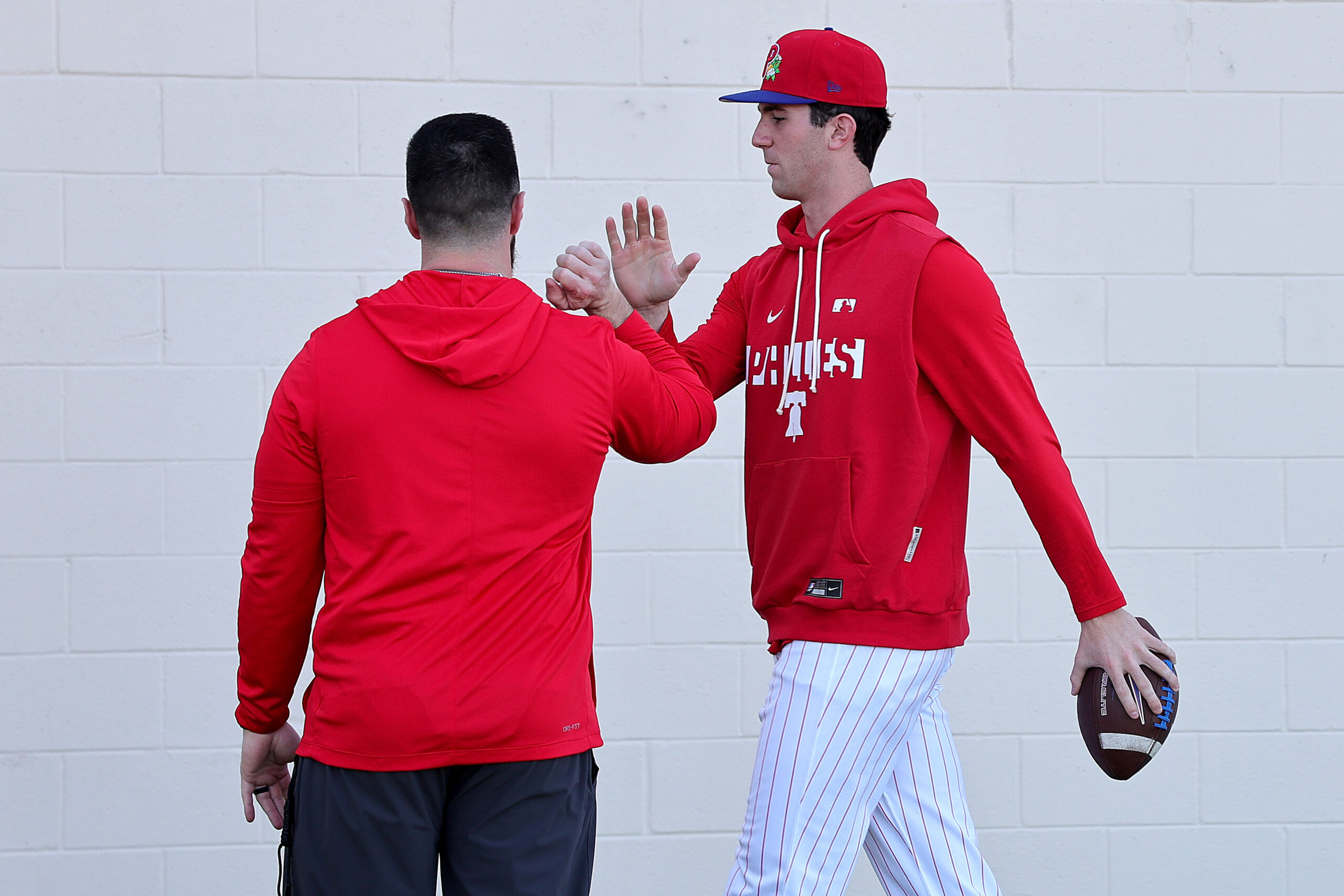
    Phillies pitcher Andrew Painter finishes warming up with a football during a spring training workout in Clearwater, Fla.

    But maybe Painter will benefit from finally graduating to the majors. Because team officials were salivating three years ago over the possibility that he would crack the rotation and thought for sure he would pitch in the majors last year.

    The opportunity exists for him now while Zack Wheeler is coming back from a complicated surgery to relieve pressure on a vein that was compressed between his collarbone and rib cage. The Phillies want Painter to earn a spot, but they won’t have anyone else to fall in line behind Cristopher Sánchez, Jesús Luzardo, Aaron Nola, and Taijuan Walker.

    Painter’s time is now. At last. At age 22, just as Boras hoped.

    “I didn’t know what to make of it at the time,” Painter said. “It was weird. But guys when they’re 19, you go out there, it’s almost like your body’s not ready. It can’t handle that load. So, yeah, I do think maybe this was all kind of a blessing in disguise.”

    Extra bases

    Orion Kerkering, slowed by a strained right hamstring, is targeting the end of the week to throw a bullpen session. … The Phillies will face the Marlins at 1:10 p.m. Tuesday in Jupiter, Fla., before returning to Clearwater on Wednesday to face the Tigers.

  • Phillies Extra with Brad Keller

    Phillies Extra with Brad Keller

    A year ago, Brad Keller was trying to win a job with the Cubs as a nonroster invitee to spring training. Now, he’s a key member of the Phillies’ bullpen on a two-year contract. And in a few days, he will join the most talented U.S. team ever assembled for the World Baseball Classic. Keller sat down with Phillies Extra, The Inquirer’s baseball podcast, to discuss how much has changed in a year, what led him to Philadelphia, why he believes he can duplicate his success in 2025, and more. Watch here.

  • Olympic hockey drama left Phillies spellbound. Kyle Schwarber and Bryce Harper hope to join baseball’s fun in the ’28 Games.

    Olympic hockey drama left Phillies spellbound. Kyle Schwarber and Bryce Harper hope to join baseball’s fun in the ’28 Games.

    CLEARWATER, Fla. — Bryce Harper couldn’t look away.

    Ninety minutes before the start of the Phillies’ first home spring-training game Sunday, as teammates moved about the clubhouse like commuters through 30th Street Station, Harper stood still in front of a TV and watched the NHL superstars from Team USA receive their gold medals.

    Players skated victory laps with American flags draped over their shoulders. The national anthem played. Cue the team photo.

    And Harper was transfixed.

    For years, Harper has advocated for Major League Baseball to do what the NHL does and stop the season so that the best players in the world can compete in the Olympics. Its next chance will come in Los Angeles in 2028, when baseball will return as a medal sport after an eight-year hiatus.

    What would a global best-on-best baseball tournament look like?

    Exactly what the world just witnessed between the U.S. and Canada in what Phillies manager/proud Canadian Rob Thomson described as “one of the best games you’ll ever see.”

    It was so good that the Phillies put it on the new 3,200-square-foot LED video board at BayCare Ballpark as they took batting practice during the third period and overtime. Kyle Schwarber did an interview from the third-base dugout so he would be able to keep one eye on the action.

    Phillies second baseman Bryson Stott watches the U.S.-Canada Olympic gold medal game as he warms up Sunday in Clearwater, Fla.

    “Yeah, that was awesome,” Schwarber said. “That was amazing. Probably one of the more exciting hockey games in a long time. I don’t get to watch hockey that much, but that will probably get me back into watching a lot more.”

    Which is precisely why MLB needs to follow the NHL’s lead.

    Harper and Schwarber are among 10 Phillies who will leave camp Saturday to join their respective countries’ delegations for the World Baseball Classic. For two weeks in March, national pride will be at stake.

    And players seem to be taking the WBC as seriously as ever.

    Since the tournament’s inception in 2006, Team USA has had difficulty recruiting the best pitchers, in particular, to compete in an international exhibition in the middle of spring training. But this time, both reigning Cy Young Award winners — the Pirates’ Paul Skenes and Tigers’ Tarik Skubal — signed on to wear stars and stripes.

    Shohei Ohtani, who famously struck out Mike Trout to end the last WBC in 2023, will return to lead Japan, albeit only as a hitter. The Dominican Republic’s lineup is loaded, with Juan Soto, Manny Machado, Vladimir Guerrero Jr., Julio Rodríguez, and Fernando Tatis Jr. Venezuela, Mexico, and Puerto Rico are stacked, too.

    “This is our time to represent our country,” Schwarber said. “It gives you that motivation, you know? Being that we’re going to be heading into that and knowing what to expect. Obviously we’re not Olympians. But it’s our mini-Olympics. Right?”

    Sure. And players will compete with intensity. Anyone who thinks it doesn’t mean much to the players should hear Schwarber talk about what he did with his silver medal in 2023.

    “I don’t know where it’s at,” he said. “You only probably care about the gold one. You don’t want to get the second-place one.”

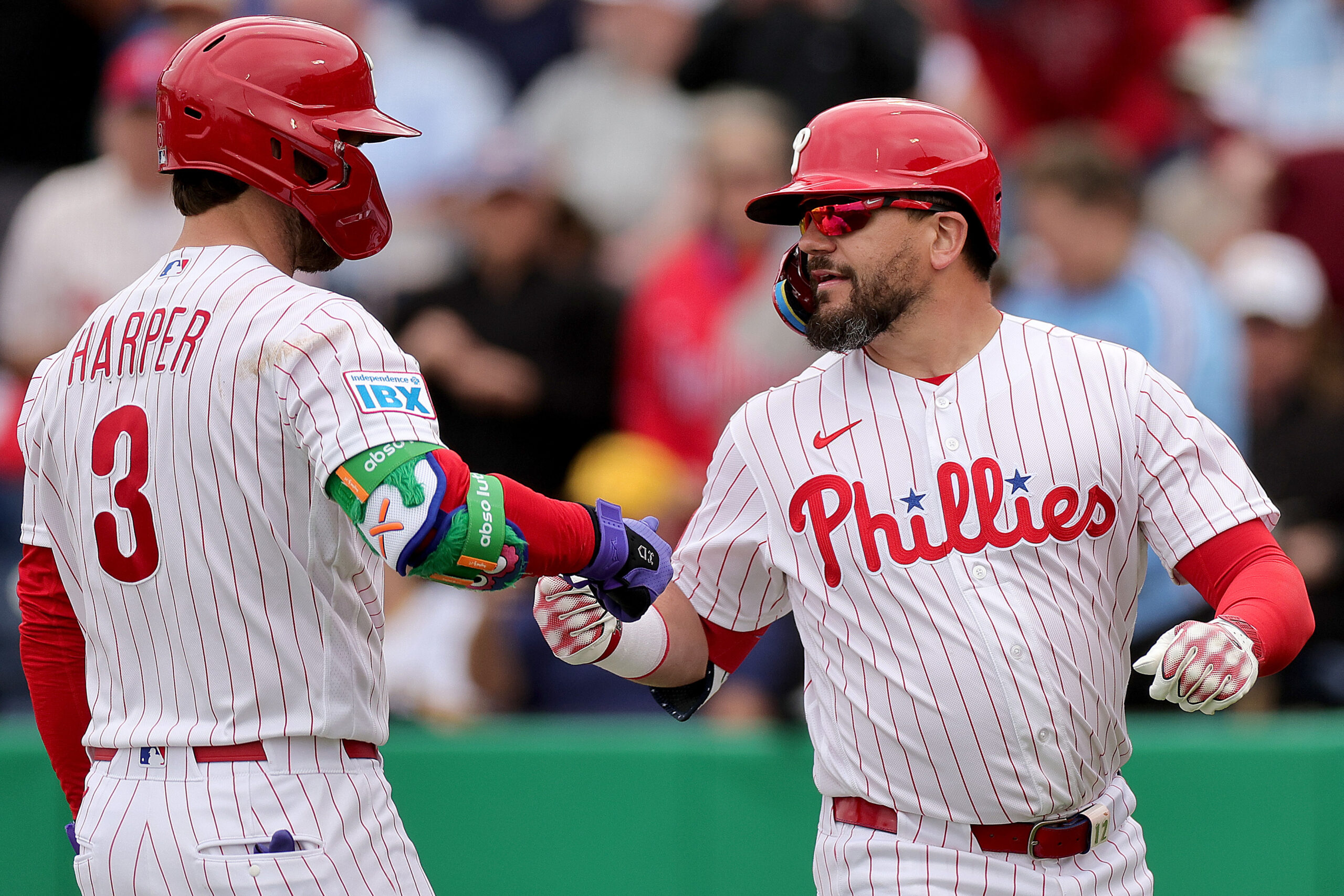
    Phillies designated hitter Kyle Schwarber (right) celebrates his solo home run with Bryce Harper on Sunday.

    But because of when the WBC is contested, there will be pitch limits and other health-related restrictions. At training camps in Florida and Arizona, teams will cross their fingers and toes that their players return intact.

    If anything, then, the WBC is closer to hockey’s 4 Nations Face-Off, last February’s riveting tournament that was still only the appetizer to the main course in Milan.

    Still, as international competitions go, it’s the best baseball has.

    Unless …

    “I know Bryce has been very outspoken about it, and I think [the Olympics] would be great for us,” Schwarber said. “We all grew up watching the Olympics and being kids and just tuning into all different kinds of events. Back in the day, the TV dinners, go get the pull-out tray, throw it on the couch, all the family sitting down at night. We’re watching the Olympics. We’re watching the gymnasts, the swimming, the diving. Those were all big ones. I loved watching the sprinters run.

    “It’d just be great for our game in general, to where you go to the Olympics and it’s worldwide. Everyone would see it, and it might reach a broader audience than just some countries that are really in tune to it.”

    But would the players buy in? Part of what makes Olympic hockey such a draw is the passion exhibited by the players, especially among the Americans and Canadians, many of whom put aside their day jobs as teammates in the NHL to pound on one another on an international stage.

    “It’d be a no-doubter for a lot of guys,” said Schwarber, who played for Team USA in college. “When they ask you, you’re like, ‘Yeah, absolutely.’ And the cool thing for us is we have so many different cultures in our game that everyone’s going to separate from the [MLB] organization side of things and go to the country side.

    “I know, if I’m freaking 50 and they go, ‘Hey,’ I’ll be like, ‘Yes.’ I might be playing softball by then, but I’d say yes.”

    Harper was among the first players to commit to Team USA for the WBC in 2023 but had to withdraw after having elbow surgery in the preceding offseason. He hasn’t played for his country since he was a teenager.

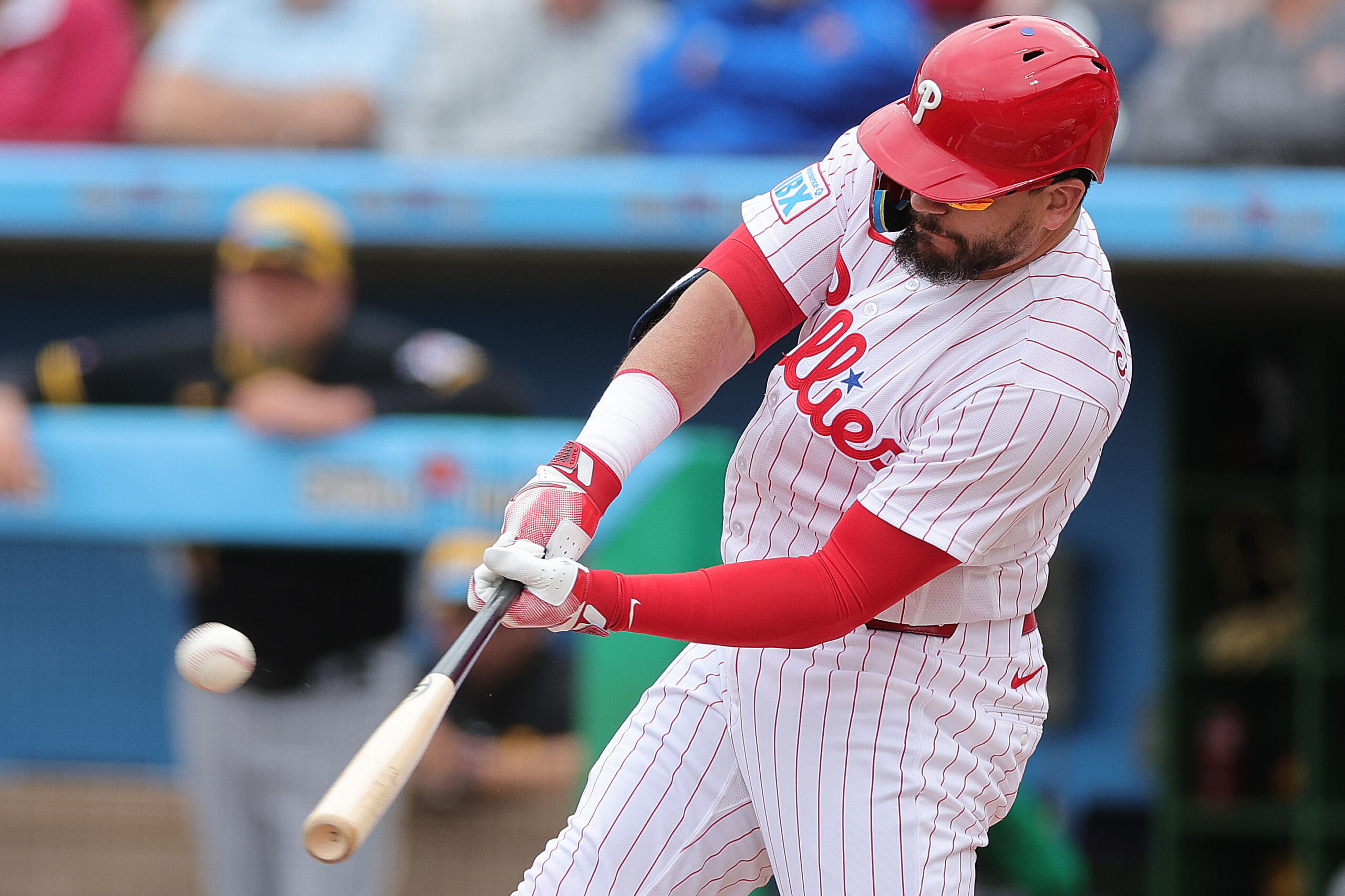
    Kyle Schwarber hits a solo home run for the Phillies in the first inning against the Pittsburgh Pirates.

    “I can’t wait,” Harper said the other day. “Representing your country, there’s nothing better. Nothing better. The feeling of putting ‘USA’ on your chest and playing for something so much bigger than yourself, representing your whole country, there’s nothing greater.

    “And having Aaron Judge hit behind me is going to be a lot of fun, as well.”

    When Harper at last turned away from the television Sunday morning and walked to his locker, he politely declined to talk about the game. He appeared emotional, especially after watching Team USA bring two of the late Johnny Gaudreau’s children, Noa and Johnny Jr., onto the ice as part of the celebration.

    Watching it all, Harper surely must have thought about the possibility of 2028 in Los Angeles.

    “We’ll see,” he said.

    But anyone could plainly see what it would mean for baseball to have the best players in the world in the next Olympics.