Author: Mike Sielski

  • Drexel’s Terrence Butler died two years ago. The reasons for his passing still elude everyone who loved him.

    Drexel’s Terrence Butler died two years ago. The reasons for his passing still elude everyone who loved him.

    BRANDYWINE, Md. — No one knows exactly when Terrence Butler began keeping a journal, but there is a best guess. The first and only time someone noticed that he was writing something that he clearly wanted to keep private was the evening of Saturday, July 29, 2023, four days before he died.

    He had spent that morning and afternoon at his mother’s townhouse here, curling and bending his 6-foot-7 body to lounge on the couch, cozy in a hoodie, gym shorts, and white socks, quiet, sometimes reading his Bible. His behavior was nothing out of the ordinary for whenever he was in town, though there was something about her son’s visit, this particular visit, that Dena Butler thought strange. Throughout Terrence’s two years at Drexel University, before and after he had stopped playing for the men’s basketball team, he merely had to call Dena whenever he had wanted to come home, and she would drive the 150 miles north to West Philadelphia to pick him up. This time, though, he had taken an Amtrak train from 30th Street Station, arriving in New Carrollton, Md., at close to 11 o’clock Friday night. He had never done that before.

    His older sister Tiara was with him all day at Dena’s, happy to dote on her little brother, helping Dena prepare his favorite meals — bacon and eggs for breakfast; chicken fingers with his favorite condiment, Sweet Baby Ray’s barbecue sauce, for lunch — the two of them good-naturedly complaining that the Jamie Foxx movie they were watching was too slow and not all that funny.

    It started to rain in the afternoon, and Terrence walked over to the wide window at the front of the house. He stood there for a while, leaning back a bit, his eyes turned to the charcoal clouds outside. Tiara remembers that moment still. “He loved the rain,” she said. “It wasn’t odd for him to do, but now, looking back on it, he was very somber, looking into the sky.”

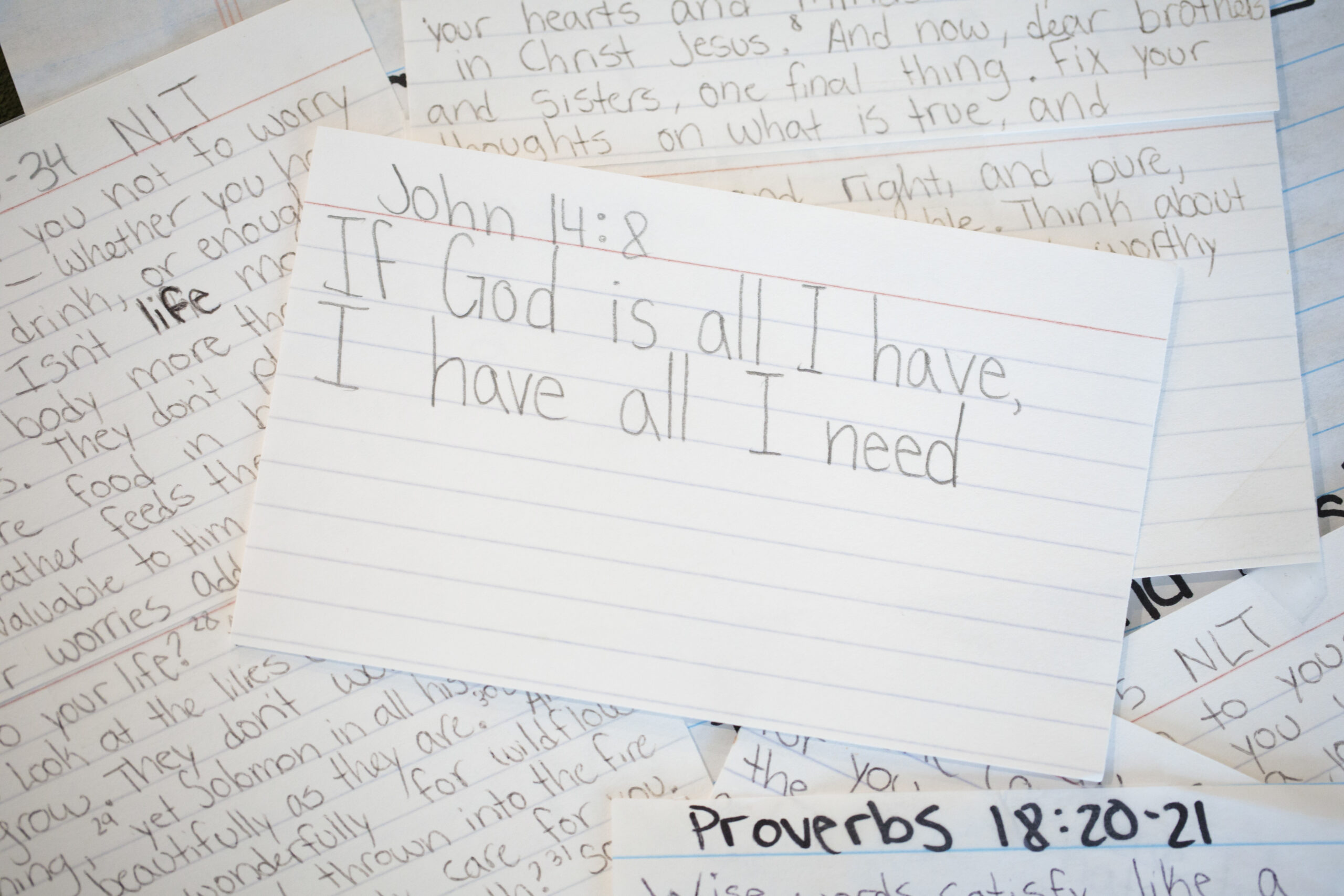
    A journal that belonged to Terrence Butler at his mother’s home reads, “I’m sorry. I really tried.”
    Some of Terrence Butler’s notes displayed at Dena Butler’s home in Brandywine, Md.

    She drove Terrence back to their house; he would stay there that night, with Tiara and her husband, Arthur Goforth, to wake up for a 6:32 train back to Philadelphia the next morning. Before he went to bed, he sat on a barstool at Tiara and Arthur’s island, the farthest seat in their kitchen from their living room. In his hands were a black-ink pen and a notebook with a sky-blue cover.

    Tiara assumed that he was finishing up some schoolwork. “After I got a little closer, he slowed down with the writing,” she said. “When I was further away, he was hunched over, writing.” She didn’t think anything of it until Wednesday, Aug. 2, when she and her family were combing through Apartment 208 of The Summit at University City, Terrence’s apartment, desperate for any clue that might tell them why he had shot himself.
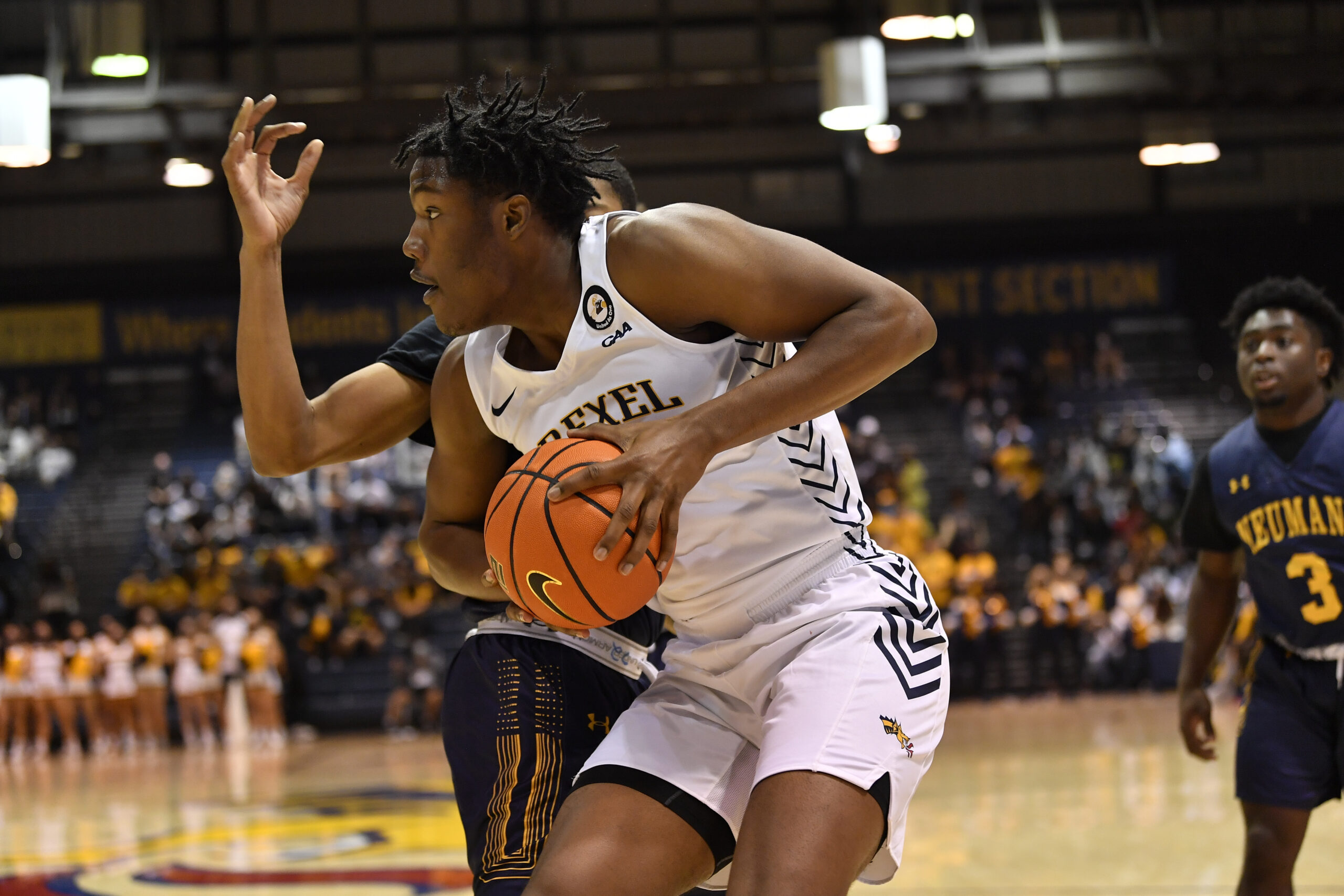
    Terrence Butler appeared in just eight games for the Drexel men’s basketball team over his two years at the university.

    The story of a young life

    Twelve photographs on a wall in Zach Spiker’s office at Drexel tell the story of his decade as the university’s men’s basketball coach. There was Matey Juric, the 5-11 backup guard who was an “empty-chair kid” when Spiker recruited him: “I went to watch him play, and there were four chairs for college coaches, and they were all empty.” He’s in medical school now. There were team photos from the Dragons’ recent trips to Australia and Italy, from their celebration of their 2021 Colonial Athletic Conference Tournament championship. And there — in the picture from Italy, blending in among his friends and teammates — was Terrence Butler. It’s the only photo on the wall that Spiker took himself.

    “It’s there for a reason,” he said, “and it will be as long as I’m here.”

    Terrence Butler’s college basketball career comprised just eight games over two seasons at Drexel. His death at age 21, on Aug. 2, 2023, was at once core-shaking to those who knew and cared for him and, after a few days, just another speck of troubling news during troubling times to those who did not. It marked one of the rare occasions in which someone, especially someone so young, had died by suicide and the manner of death was immediately acknowledged and publicly revealed.
    Terrence Butler spent two seasons with the Drexel Dragons from 2021 to 2023.

    Within 48 hours of the discovery of Terrence’s body, the Philadelphia Department of Public Health confirmed to media outlets that he had killed himself, for there was no way to euphemize it and no point in trying. The cold and clinical language of the medical report — that a “normally developed, well nourished … black man whose appearance is consistent with the reported age of 21 years” had died — left no space for doubt.

    The reasons that Terrence had died … they were a different matter. They would remain shrouded in grief and incomprehension, in blindness born of love and admiration and disbelief that he was capable of such an act — in an innocent unwillingness or inability to see.

    Like all those who die at their own hands, he was locked in battle with himself. It was a struggle whose scope and depth he alone knew, and only by tugging a thread of the tapestry of circumstances and events and achievements that were sewn together to form his too-brief life can anyone even attempt to make sense of its ending.
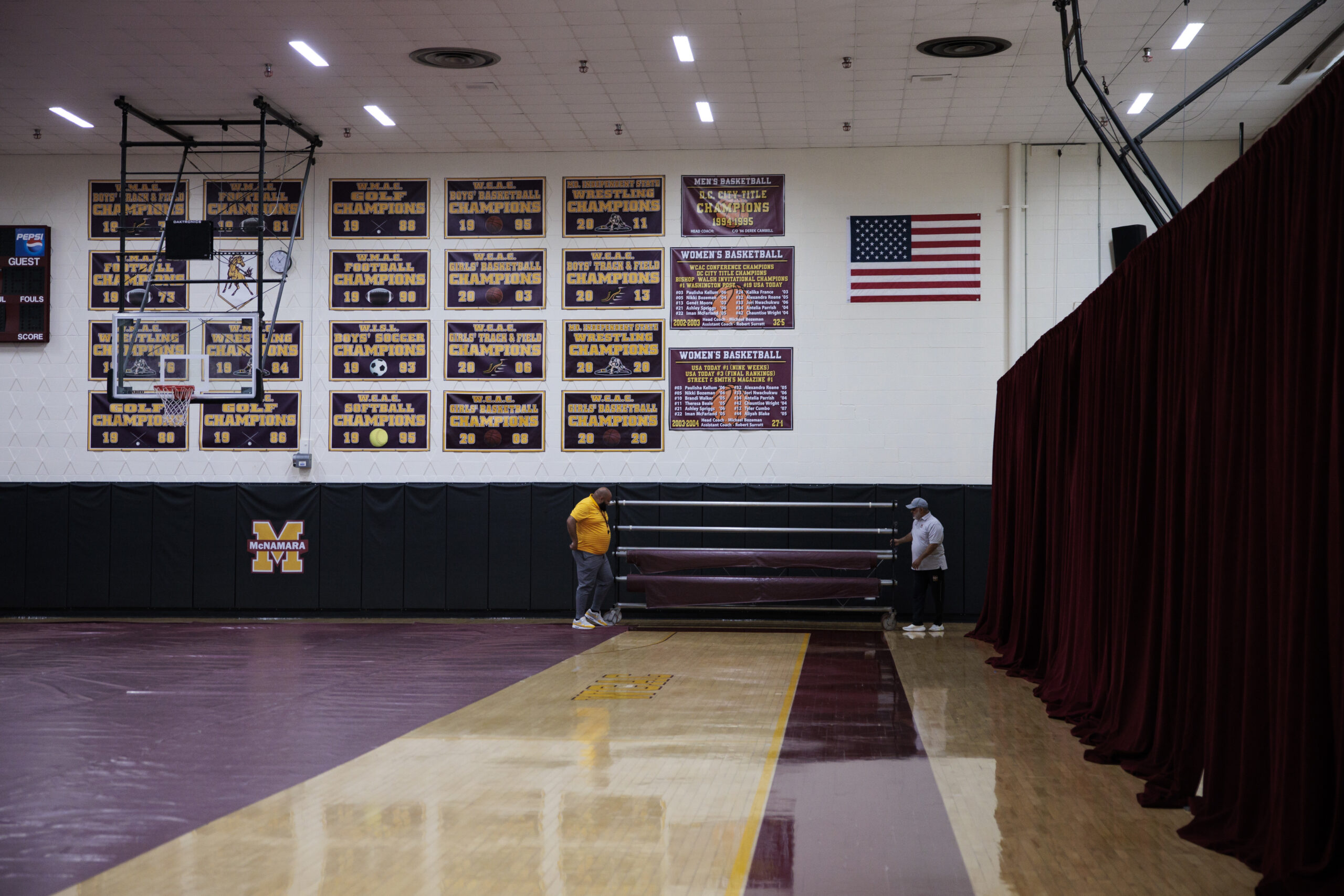
    The gym at Bishop McNamara High School in Forestville, Md.

    Why would anyone want to see the signs, after all? And who would have been capable of seeing them? Spiker couldn’t spot them on the day he met Terrence. No coach could. It was a camp at Drexel, just one stop on a tour of colleges and universities and programs for Terrence, and there he was, in the summer after his sophomore year at Bishop McNamara High School in Forestville, Md., grabbing a rebound in one pickup game inside the Daskalakis Athletic Center, scanning the court to throw an outlet pass, seeing no one open, pulling the ball down and dribbling the length of the floor to throw down a dunk himself. Spiker offered him a scholarship then and there. Take your tour. See those schools. Go through your process. Just remember: You have a home here at Drexel.

    “We loved the skill set,” Spiker said. “We loved his motor, his size, typical basketball things. He was big. He was strong. He was respectful, a super-engaging, super-likable, smiling guy. Man, TB, he was a very impressive young man.”

    Terrence’s parents, Tink and Dena, had charted a particular course for him and his sisters to try to prepare them for the demands and rewards of the pursuit. Tink saw sports as the children’s primary path. Growing up near Washington, D.C., he had boxed in the AAU and Golden Gloves programs before entering the Army, which promptly sent him to Colorado Springs to train to make the 1988 U.S. Olympic team as a light heavyweight.

    “Was doing well,” he said. “Winning all my fights.”

    Except he dislocated his left shoulder. No one knew; he popped it back in and hid the injury from the coaches, for a while. He started fighting southpaw, throwing all his real punches with his right hand, faking haymakers with his left … except the shoulder popped out again, and he couldn’t hide it any longer, and he had to have surgery, and his Olympic dream vanished. “I don’t know how far I could have gone,” he said one day in his living room. “I probably would have won a gold medal.”

    Dysfunction framed Dena’s early life. She was 2 when her parents split up, both of them alcoholics, her mother moving from Memphis to the D.C. region to escape Dena’s father. Tall for her age, Dena began driving when she was 10 and working when she was 14, putting the money she earned from fast food restaurant and retail jobs toward rent.

    “I didn’t sleep as a child,” she said. “I never slept. I just couldn’t. There was always something happening, and I just decided not to live like that when I had kids. I didn’t want that for them. These can be cycles if you’re not intentional and deliberate about your choices. Your choices affect your kids. Every choice my parents made affected me.”
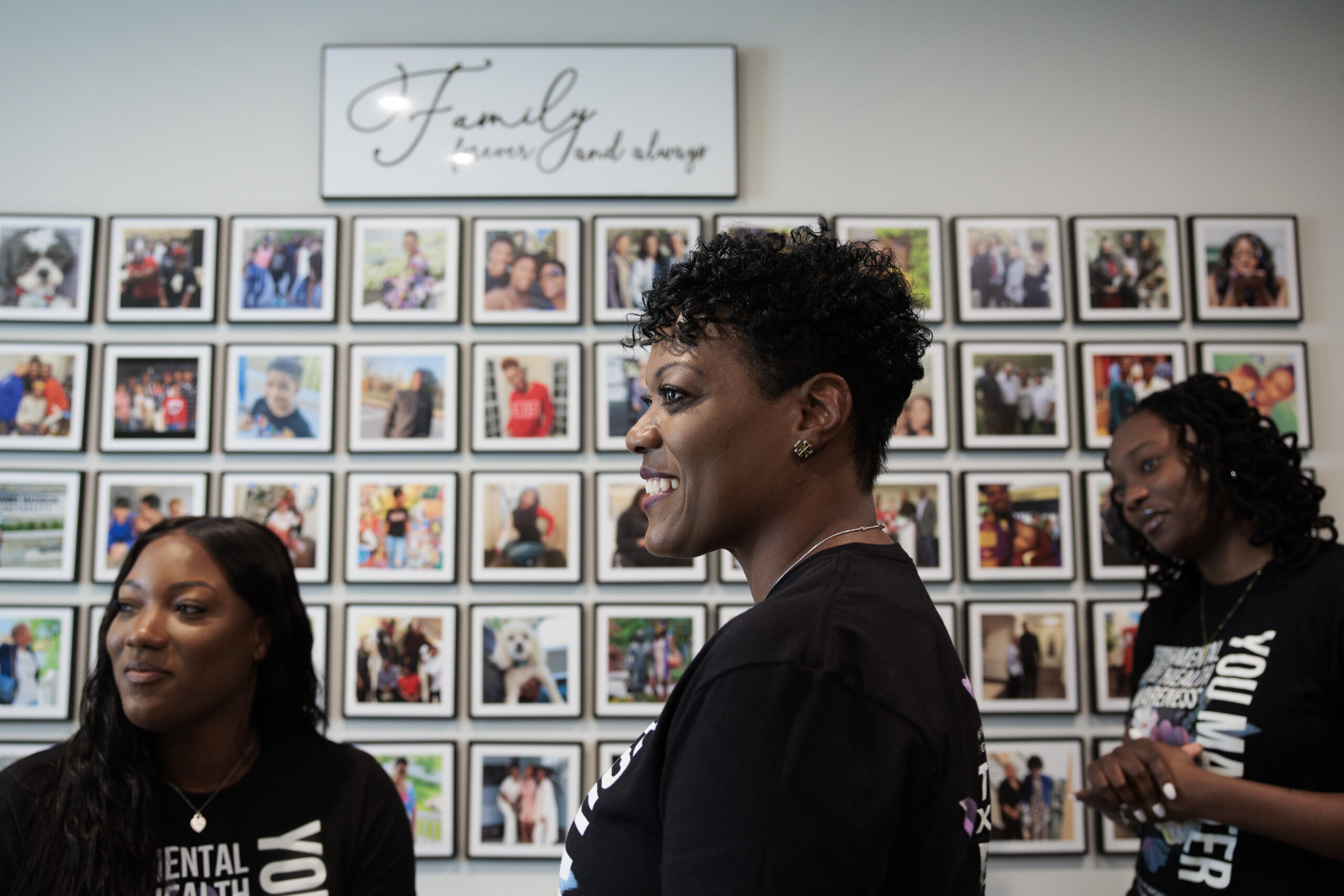
    Tasia (left), Dena, and Tiara Butler pose for a portrait in front of their family wall at Dena’s home in Brandywine, Md.

    Once Dena and Tink met and got married and started their family, as he moved from one solid job to another — from a power-company technician to a crane operator to a D.C. government supervisor — and she settled in as a resources analyst for NASA, they established a certain culture, with certain norms and standards, for their children. There would be a consuming emphasis on academics and athletics and, more importantly to Dena, a balance of those two foci.

    Tiara was born in 1992, and a second daughter, Tasia, arrived three years later, and the sisters grew up hearing the same daily phrases from Dena: TV will kill your brain. … Go look it up in the dictionary. … Smart people ask questions. … “But the biggest philosophy we learned,” Tasia said, “was ‘Work first so you can play later.’”

    Dena Butler with her daughters, Tasia (left) and Tiara (right).

    The playing came naturally to all of them. The only driving Tiara did when she was 10 was when she had a basketball in her hands and an open road to the hoop. She got her first Division I scholarship offer when she was 14, then picked Syracuse. Tasia preferred dancing — hip-hop, ballet, tap, jazz — to dribbling, but she followed Tiara to Syracuse on a full ride for basketball before transferring to James Madison.

    The understanding that sports could be a vessel shepherding the two of them to college, to a terrific education, to stability and success in their lives was doctrinal among mother, father, and daughters. Family time morphed into basketball time, and basketball time morphed into vacation time, and there was less vacation time as life went on.

    Tink, in fact, spent so many mornings and afternoons and nights in gymnasiums and arenas with Tiara and Tasia, became so familiar a presence at AAU tournaments and all-star camps, chatted with so many coaches and recruiters and shared so many tidbits and observations about players that he parlayed his daughters’ careers into a new profession. Into a scouting service. Into a subscription-based website: prepgirlshoops.com. Into more than $100,000 in annual revenue. After Terrence was born in 2002, he was a fixture in those gyms and near those courts just like his parents and sisters were.

    “When he first started playing,” Tiara said, “he would run up and down the court, saying, ‘Look at me,’ smiling and leaping. Always passed the ball. So kind to teammates and opponents. He really just wanted the snacks afterward.”

    He wanted to be “T.J.,” but it never stuck. His sisters shortened the nickname they had given him when he was a baby, “Man-Man,” to just “Man.” It was all they called him. By age 10, he was playing high-level AAU ball, growing on a vegetable-free diet of chicken nuggets and french fries. Heredity was on his side. Tink was 6-3. Dena was 5-10. “I’m thinking he’s going to be 6-6 or 6-7,” Tink said, “and Michael Jordan was 6-6.”

    Tink took him to one football practice when Terrence was 11, to try to toughen him up. All it took was a helmet to the stomach in his first tackling drill to get him coughing and wheezing and whining, to have him decide he hated football. Good, Tink thought, now we can concentrate fully on basketball. So Tiara and Tasia — don’t let those soft features and sad eyes, just like their brother’s, fool you — would roughhouse Terrence in their one-on-one games.

    “May have gotten carried away,” Tasia said.
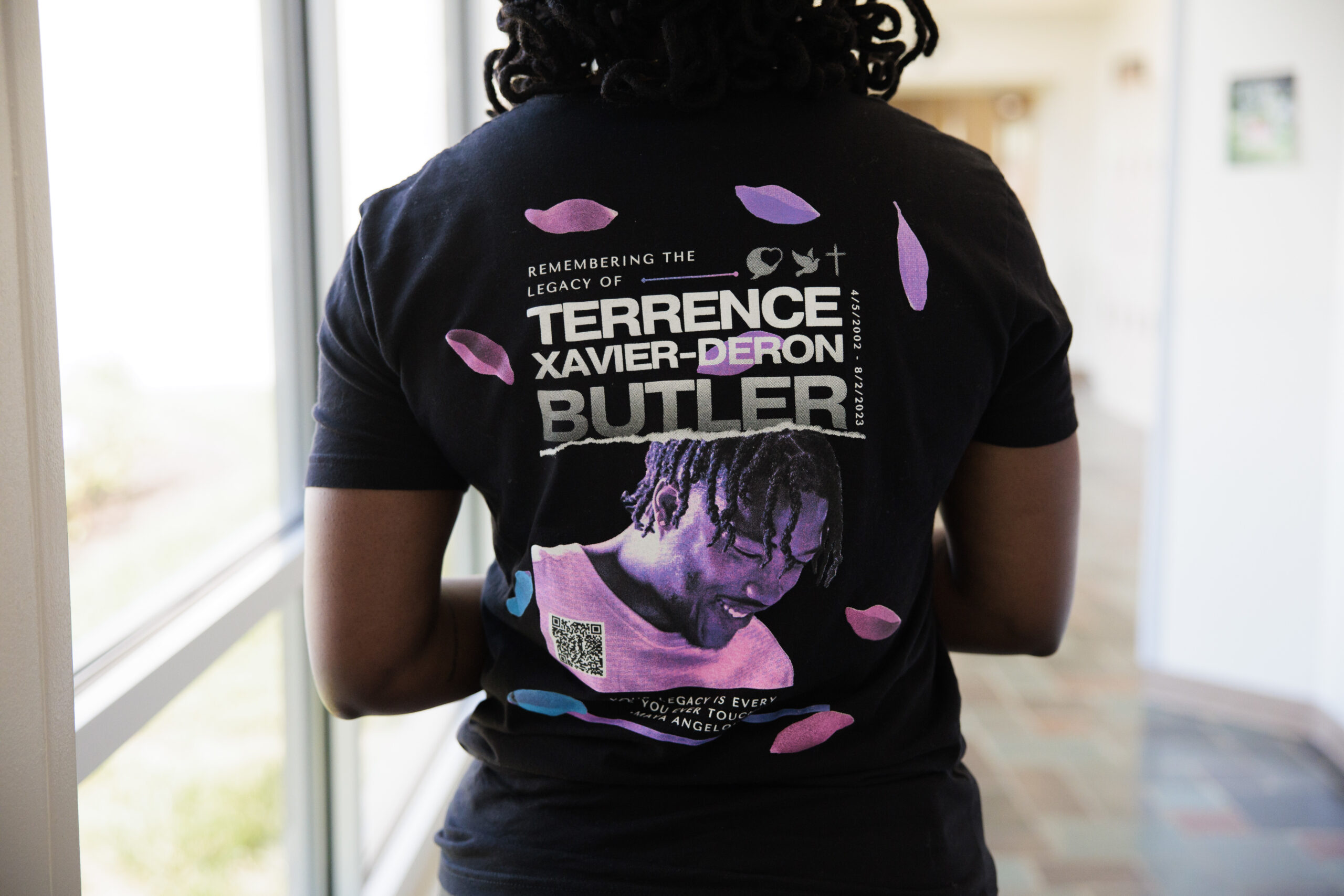
    Tiara Butler, a visual arts teacher at Bishop McNamara High School, wears a T-shirt in remembrance of her brother, Terrence, at the school in Forestville, Md.

    ‘We were a unit’

    His sisters’ recruiting visits were groundwork-layers for him, at least in his father’s eyes. When he was 9, he got pulled out of the crowd at a Towson University game for a free-throw contest. He sank 12 straight, right in front of the cheerleaders. When he was in sixth grade, the family joined Tasia for a visit to the University of Miami, and men’s coach Jim Larrañaga took one look at Terrence, at a pair of prepubescent arms already showing muscle and definition, and said, I’m giving you an offer!

    He did the AAU circuit: DC Thunder, DC Premier, Team Takeover, Team Durant. Tink would bounce from Tiara’s game to Tasia’s to Terrence’s; Dena was always at Terrence’s. So he’d call her for updates.

    How’s he doing?

    OK … Oh, wait. He just scored.

    A necklace features charms with photographs of Terrence Butler and his grandmother, Connie S. Hill, at Dena Butler’s home.

    As the kids’ basketball schedules, especially Terrence’s, took up more days on the calendar, there were more dinners in restaurants, fewer at home around the table. But Tink and Dena still made time to serve in ministry at The Soul Factory, an evangelical church in Largo, Md., even serving as premarital counselors to engaged couples. “We were always on the road,” she said, “but we lived selflessly. We were a unit.”

    Then, a potential setback: July 2016. The summer between his seventh- and eighth-grade years. An AAU tournament in Atlanta. He jumped, landed on someone’s foot, wrenched his right knee. A torn meniscus. Surgery. Nine months of rehabilitation.
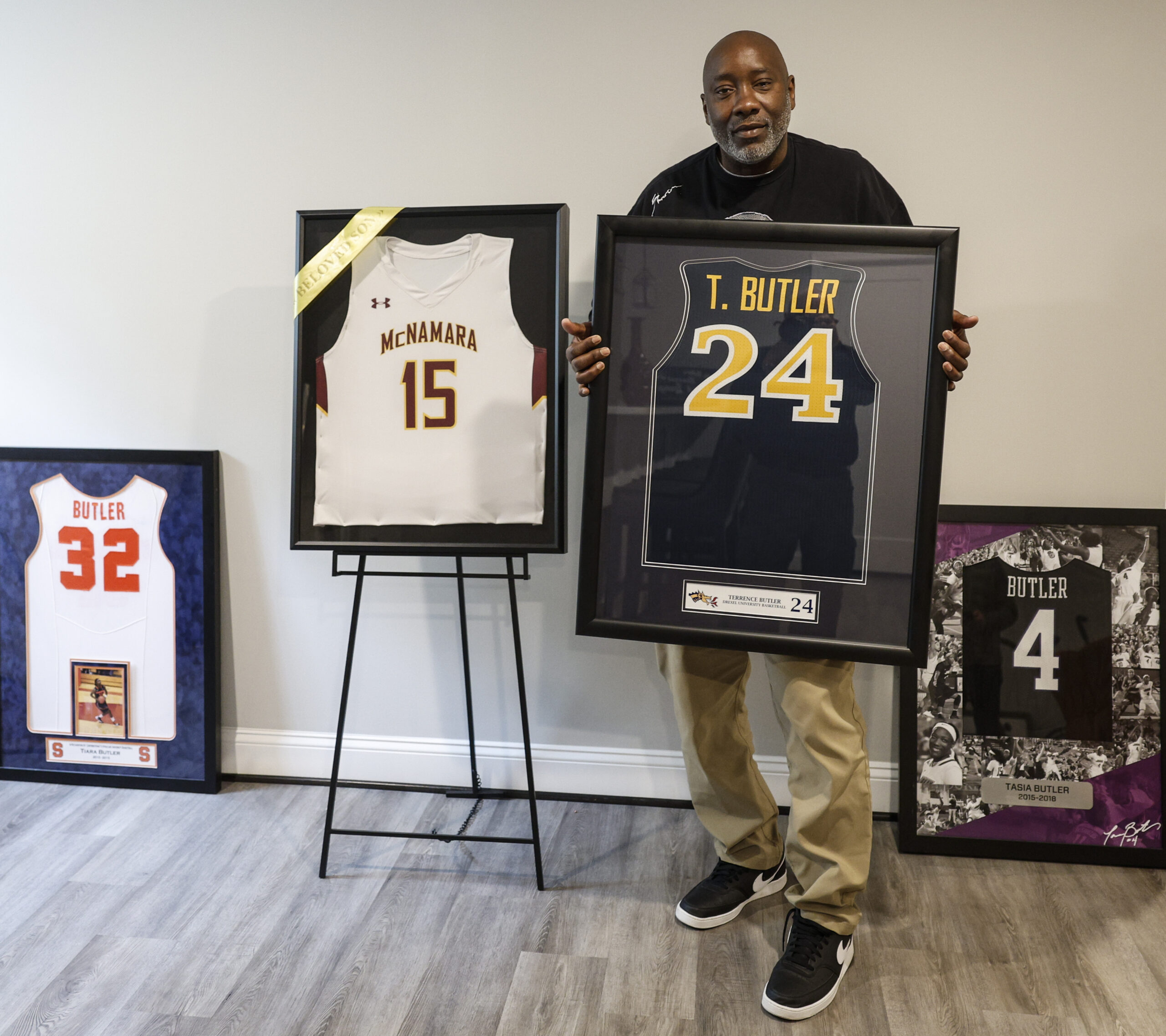
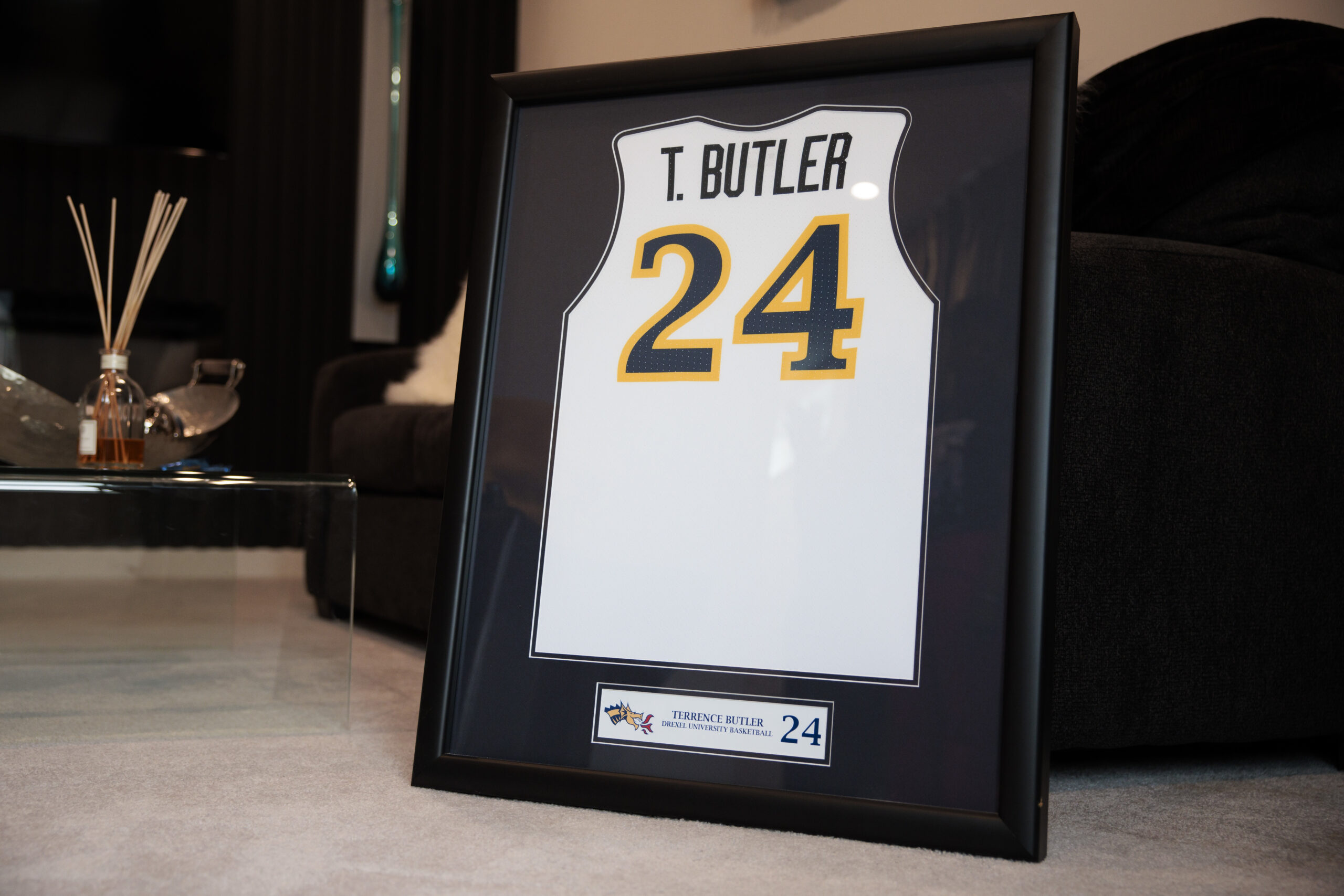
    Tink Butler with framed jerseys honoring his son, Terrence, in Clinton, Md.

    The big private high schools in and around D.C. had been scouting him; the injury might scare them away. No. Bishop McNamara, just a five-minute drive from the Butlers’ house, followed through with a basketball scholarship. Affiliated with the Congregation of the Holy Cross, its campus a strip of gleaming modern architecture and emerald land in Prince George’s County, with an enrollment that its admissions officers limit to roughly 900 students in grades nine through 12, McNamara is one of the most respected high schools in Maryland. Its alumni include several professional athletes, an astronaut, and Jeff Kinney — the author of Diary of a Wimpy Kid. The school fit perfectly with Dena’s plan for her children, with the idea of segueing from sports to a career or vocation beyond sports.

    In his first year at McNamara, Terrence was the only freshman to play varsity basketball. The following year, the school hired a new head coach, Keith Veney, who immediately made Terrence the centerpiece of the team. He called Terrence “T-Butts” and would push him to shoot more frequently, questioning him every time he passed the ball and ending up half-impressed and half-exasperated at the answer Terrence always gave: Because the guy was open, Coach.

    Still, Terrence had the ball in his hands often enough to be named the Mustangs’ most valuable player as a sophomore. “He would pass up those shots on purpose,” Tink said, “so that it wouldn’t be about him. He liked the accolades, but he didn’t want the attention.”

    What did he want? It was hard to know sometimes. From the time Terrence began playing, Tink would give him a dollar for every rebound he grabbed in a game. One day, he opened up Terrence’s bank and found $1,200. Other than the occasional game of Fortnite, the kid didn’t buy anything for himself, didn’t crave the trendy clothes or the coolest sneakers. “He was the banker,” Tasia said. “We’d ask him, ‘You have change for a $50?’”

    He embraced McNamara’s dress code: shirt, tie, hair cropped close. At home, he’d sit down and read the Bible, watch CNN, make an offhand joke whenever Dena would wonder how he had done on a school assignment. Got an A. Could’ve gotten an A+ if I tried. He had one girlfriend in high school, but Tink was pretty sure that Terrence hadn’t done much more with her than carry her books to class and sit with her on a stoop. “Waiting for marriage,” Tink said.

    Terrence towered over the student body yet managed to keep himself on his peers’ level. “He was just a cool guy,” said Herman Gloster, McNamara’s dean of students. “You would see him before he’d see you. He was a kid who you could feel coming down the hallway — tall, always smiling. It was like a light force was behind him. Very respectful. Never had a detention. Just a great spirit. If you didn’t like Terrence Butler, something was wrong with you.”
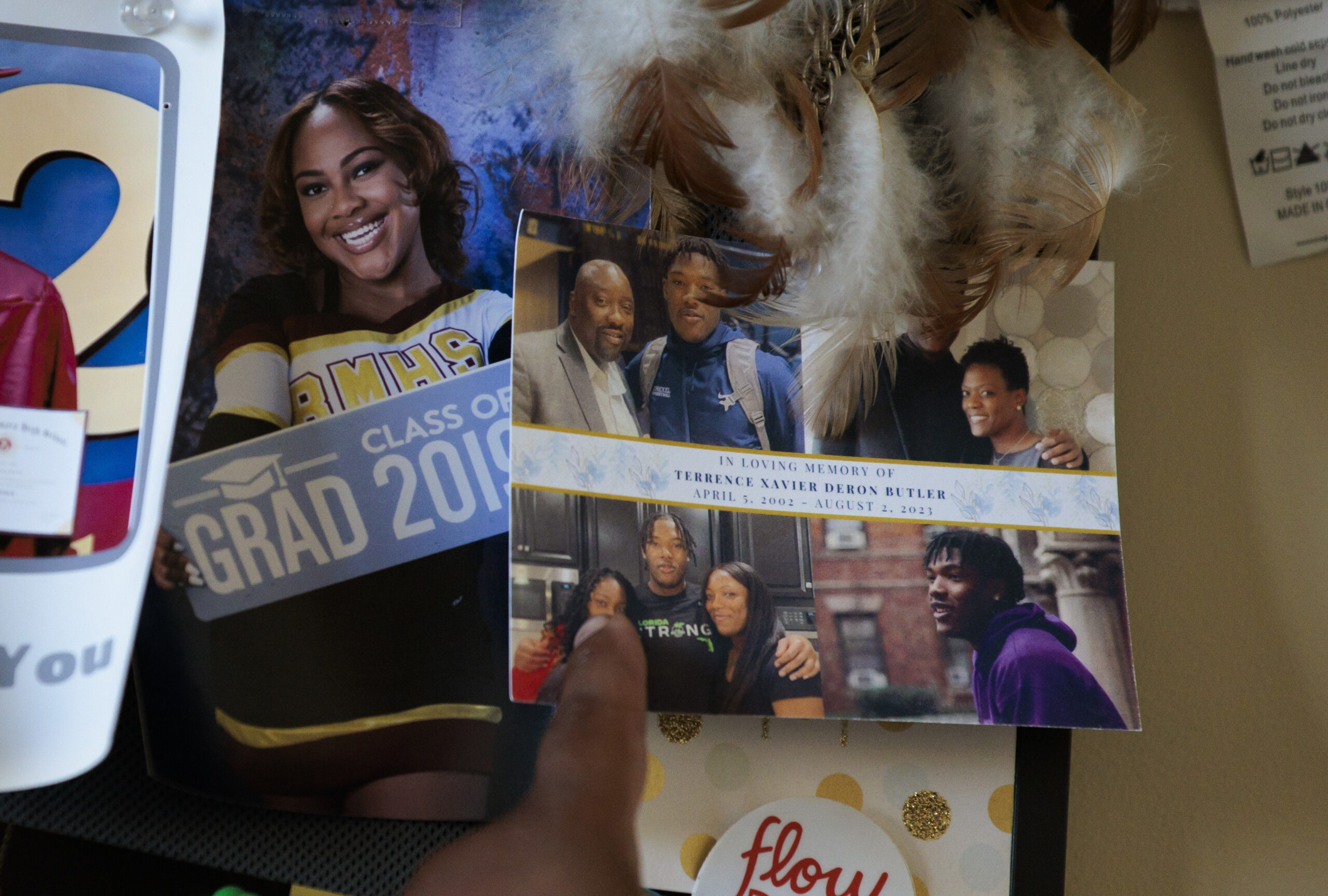
    A memorial card for Terrence Butler hangs on the wall in dean of students Herman Gloster’s office at Bishop McNamara High School in Forestville, Md.

    When McNamara shut down its building for the COVID-19 pandemic in March 2020, it kept its doors closed and its students learning virtually for 12 months, from the middle of Terrence’s junior year to the middle of his senior year. The administration created “The Mustang Mix,” clusters of faculty and students who would gather on Zoom calls to stay connected with one another.

    “A lot of people were complaining that seniors weren’t coming to the mixes,” said Dian Carter, McNamara’s principal. “Terrence came every day faithfully. He was always on camera, making breakfast, frying eggs.”

    Once the school reopened, it did so partially. Students returned on a staggered schedule based on where their last names fell alphabetically. Plexiglas dividers separated them at each cafeteria lunch table. The entire building was cleaned every Wednesday. “It was the craziest thing,” Carter said, and she could sense Terrence’s hunger to be around and engage face-to-face with his friends and classmates again. Ms. Carter, he’d ask her, can’t we come here every day?
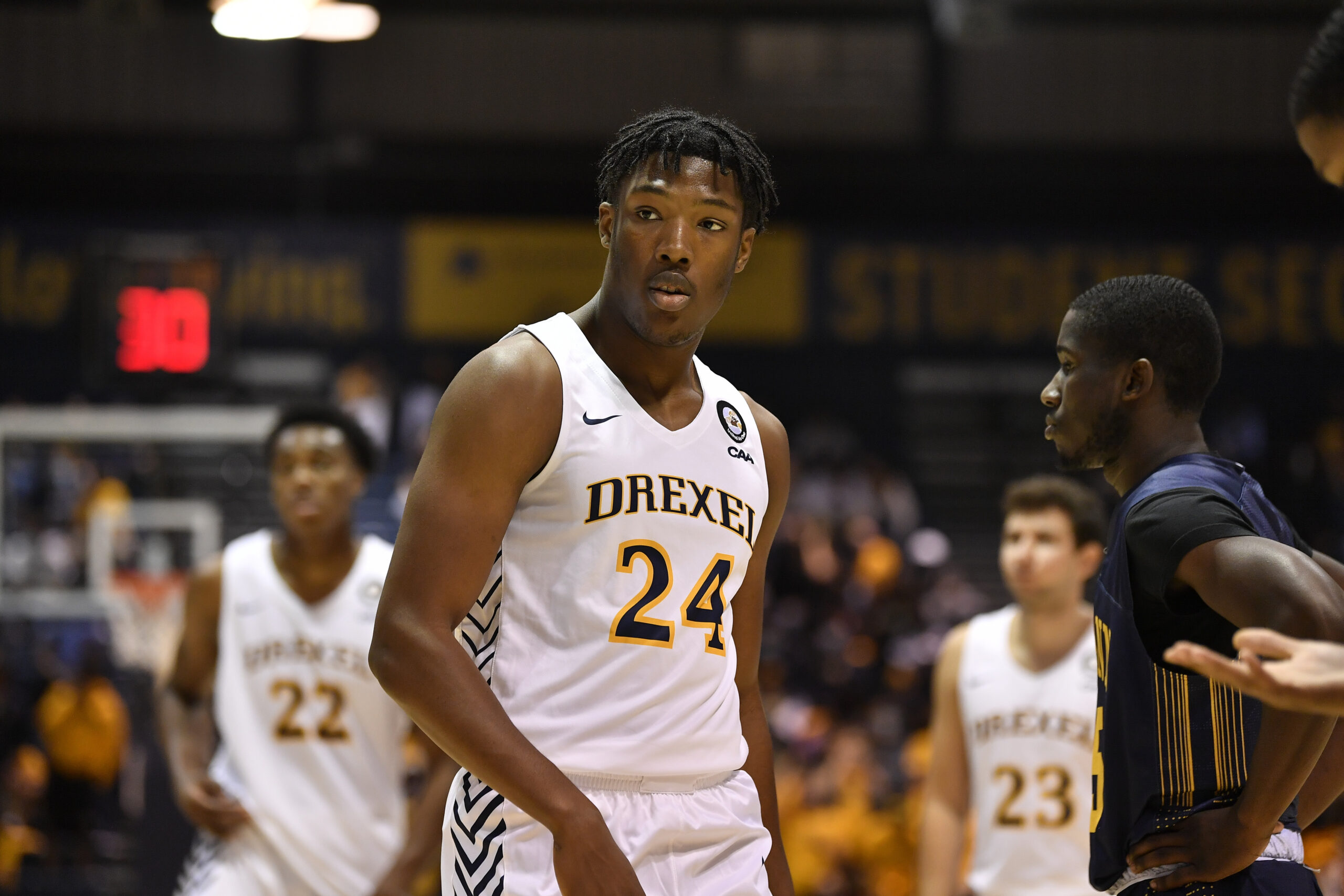
    Terrence Butler was troubled by knee injuries throughout his time at Drexel.

    Injury problems

    The court was hardly a refuge for him. Throughout the first month of the lockdown, he and Tink searched for places where he could play and train. They found one guy who had a small private gym and was willing to open it. On a Sunday, Terrence was going full-court against some eighth and ninth graders, players younger and less skilled than he was, and one of them bumped into Terrence, and that brief contact was all it took. No, my knee! An MRI test confirmed it: He had retorn his right meniscus.

    Another surgery, this one in April 2020. Another nine months without basketball. OK, Terrence could still be a McDonald’s All American nominee his senior year at McNamara … and was. Terrence could still be ready for the start of his freshman season at Drexel, and Spiker had remained loyal to him, had been the first coach to offer him a scholarship and had never rescinded it, had shown that he was authentic and real and that his word meant something. Terrence could still stand there inside the DAC in June 2021, alongside Drexel’s other incoming recruits, for a private ceremony honoring the Dragons’ conference-tournament title three months earlier, and he could hear Spiker say, I know you guys didn’t play in these games, but you’re part of this program. I’m super-excited you’re here to see this, and this is the standard we’re shooting for. Terrence could …

    … no, maybe he couldn’t. During a workout just weeks after the ceremony, he tore his left meniscus — not as severe as his previous injuries, just a two-to-four-month rehab this time, but … Lord, three knee operations, and he hadn’t suited up for a single official practice for Spiker yet.
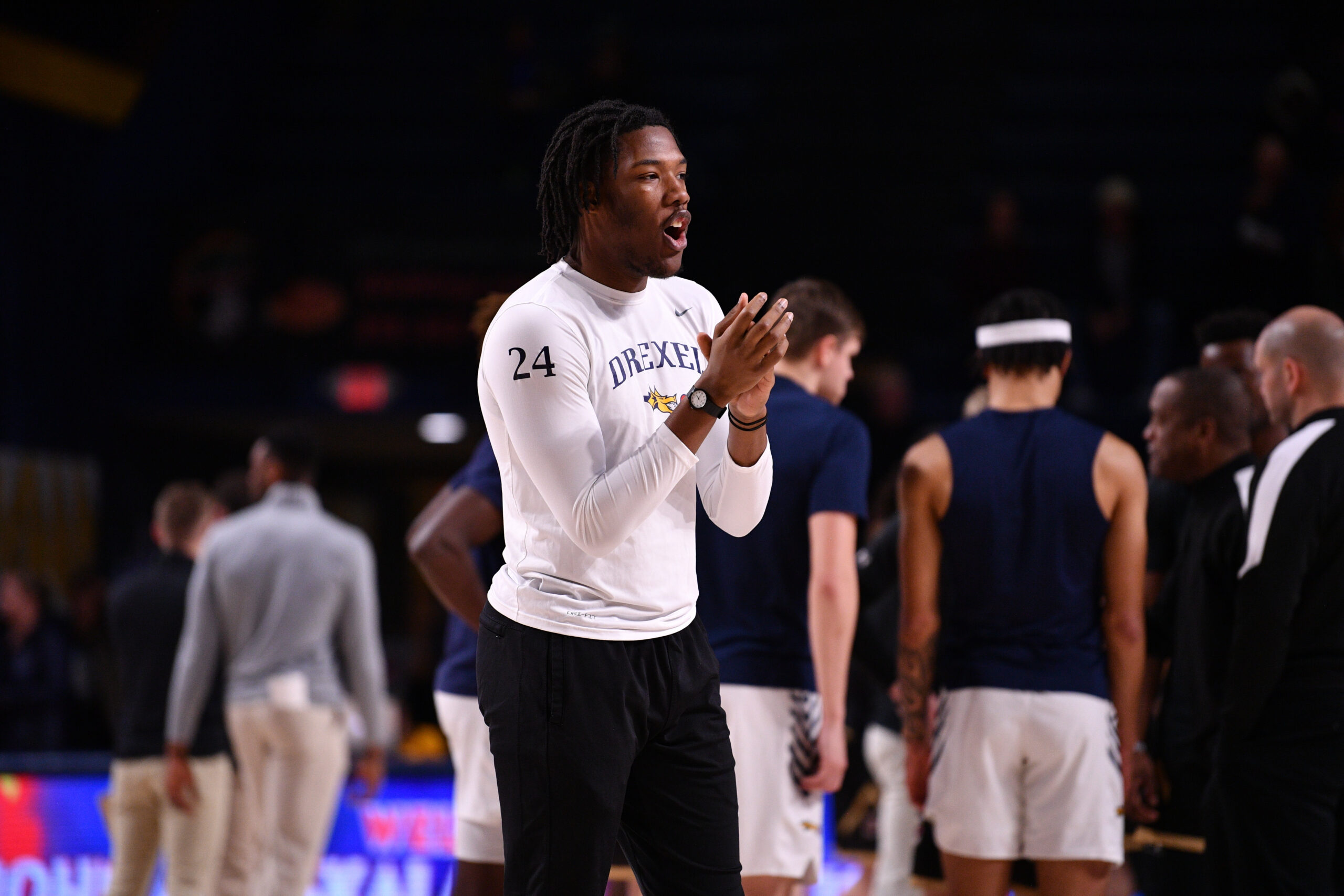
    Terrence Butler cheering on his Drexel teammates during his time on the sideline.

    Rough as that misfortune was, Dena trusted that her son could handle it. “It was almost like he was always doing a self-examination to see if something resonated with him,” she said. “He had a mentality of ‘I could take it or leave it. I’m good wherever I am. If I choose to go to school, I can do that. If I choose to play ball, I can do that. If I choose to write novels, I can do that.’ He was never a person you could put in some type of box. He was completely different. You could not read him in that manner. He was like, ‘Wherever God leads me.’ He would just be in that moment. If he’s playing ball, he’s going to give you ball. If he’s in school, he’s going to give you school.”

    These were more than a proud mother’s words. Terrence wrote biblical verses in pencil on index cards and carried the cards with him. Galatians 5:16: So I say, let the Holy Spirit guide your lives. Then you won’t be doing what your sinful nature craves. There was no preaching or proselytizing, just the self-assurance of a person who appeared fully comfortable with himself. Is there a more appealing quality in a human being? It didn’t take him long to become one of the most popular figures on campus. He majored in engineering, joined Drexel’s chapter of the Fellowship of Christian Athletes, and had the time and the opportunities to move within the university’s varied worlds.

    Spiker would stop in at a coffee shop to grab a drink, and a student would recognize him and say, Coach, I know Terrence Butler. He’s one of the nicest guys I’ve ever met. So Spiker would take a selfie with the student and text it to Terrence, and Terrence would respond, One fan at a time, Coach. One day, the two of them strolled across campus, and Spiker felt like he was with a celebrity.

    “It was two girls from the lacrosse team: ‘Hey, TB,’” he said. “It was two girls from the dance team. It was two guys from FCA. A lot of people identified with him. He knew as many people as the rest of our team combined. This dude was very outgoing and had a big reach.”

    Imagine if he had been playing any meaningful minutes for the Dragons. Imagine what his reach would have been then. He’d set the coaches’ grease board in his lap, pick up a marker, and design plays for his teammates. He’d call his brother-in-law, Arthur, who was a personal trainer, and press him for insights and advice: What can I do to be the best athlete I can be, to strengthen my body so I won’t get injured again? Push-ups, sit-ups, stretching — he devised his own exercise routines.

    Luke House, one of Terrence’s teammates and roommates, would join him for long weightlifting sessions that they’d pause only when Terrence set his face in “The Look,” House once wrote, which meant “it was time to tuck our shirts in because the weights were getting heavy.”

    After one victory over Towson, after Terrence had spent two days of practice dragging his damaged leg up and down the floor, refusing to sit out, insisting on suiting up for the Dragons’ scout team, Spiker turned to one of his assistant coaches and said, I don’t think we win that game if TB doesn’t give us all he had. He was doing his best to contribute, to get back on the court. Everyone could see that.

    Then in January 2022 he was running during a pickup game and felt his right knee pop and found out that he had torn that damned right meniscus for a third time.
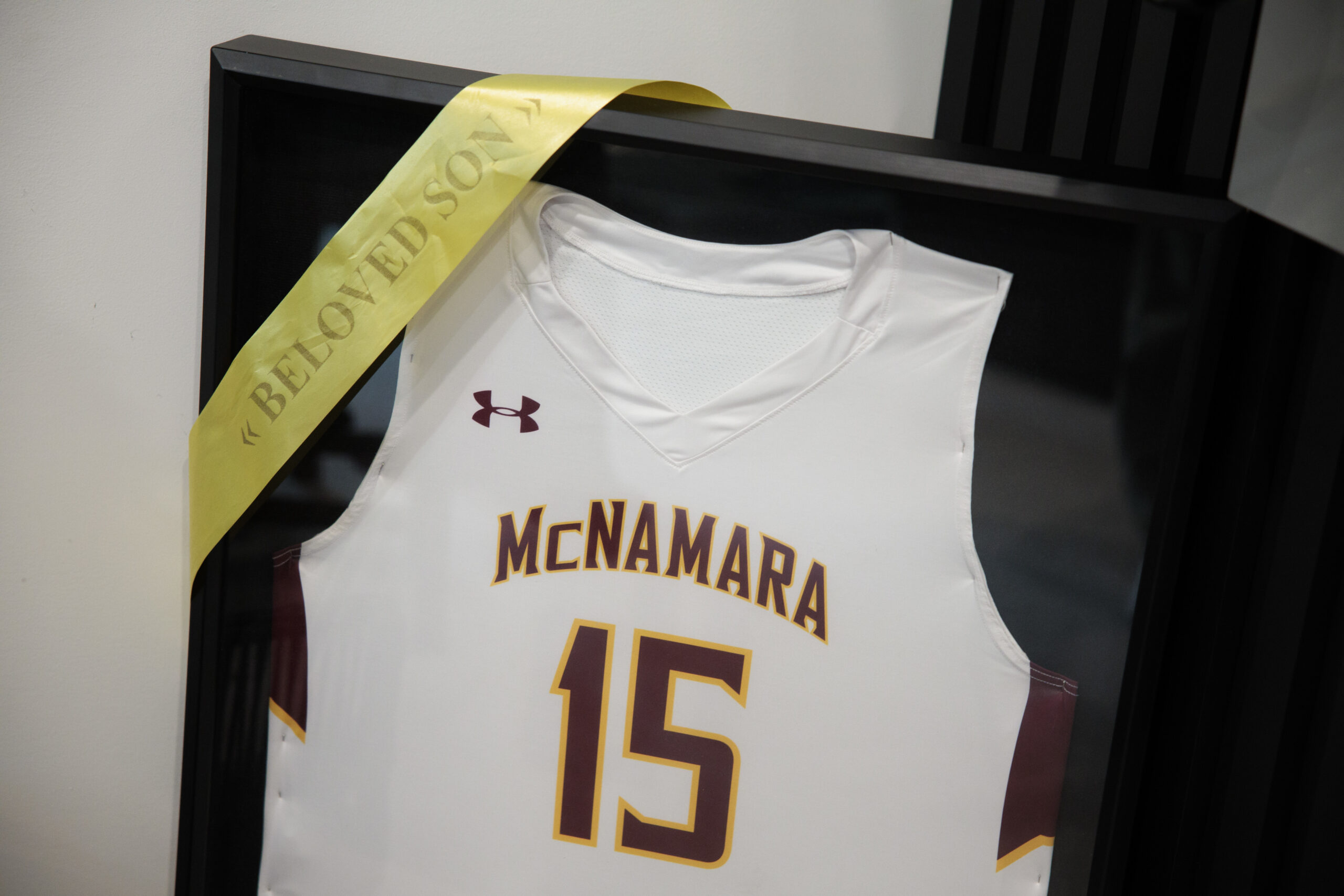
    Terrence Butler’s Bishop McNamara High School basketball jersey is framed at his mother’s home.

    The doctors and trainers recommended that he not play anymore. Tink called him. Did he want to transfer? Tink had been working the phones, talking to coaches in other programs. No, Terrence wanted to stay. Spiker and Drexel put him on a medical hardship scholarship. He could get his engineering degree, be part of the team in another role or capacity. I’m good, Dad, he said. I’m good.

    Dena … well, it never crossed her mind that Terrence might transfer. She had attended all of his games at McNamara, and she attended every Drexel home game whether he played in any of them or not. And he would play just those eight times, never seeing the floor for more than 12 minutes in any of them, never pulling down more than five rebounds, never scoring more than two points. She attended every game even though she and Tink had been drifting from each other for a while, even though he was spending more time at work and at games — among Tiara and Tasia and Terrence and his scouting service and his tournaments and his website, where did business end and family begin? — even though they divorced in 2021.

    It was raw. It was painful. It was the breakup of The Butlers — that’s how everyone knew them, spoke of them. The Butlers. They had been a unit, as Dena said, and now they weren’t.

    Terrence was managing to handle it, as she trusted he would. At least he seemed to be managing. Spiker noticed nothing out of the ordinary. Still the same old TB. Still in good spirits. Still the same terrific student — he made the Colonial Athletic Association’s honor roll in 2022, the same year basketball stopped for him. In June 2023, he was taking a summer class, Introduction to Africana Studies, and earned an A on a five-page paper about the corrosive effects of American slavery. He wrote in part:
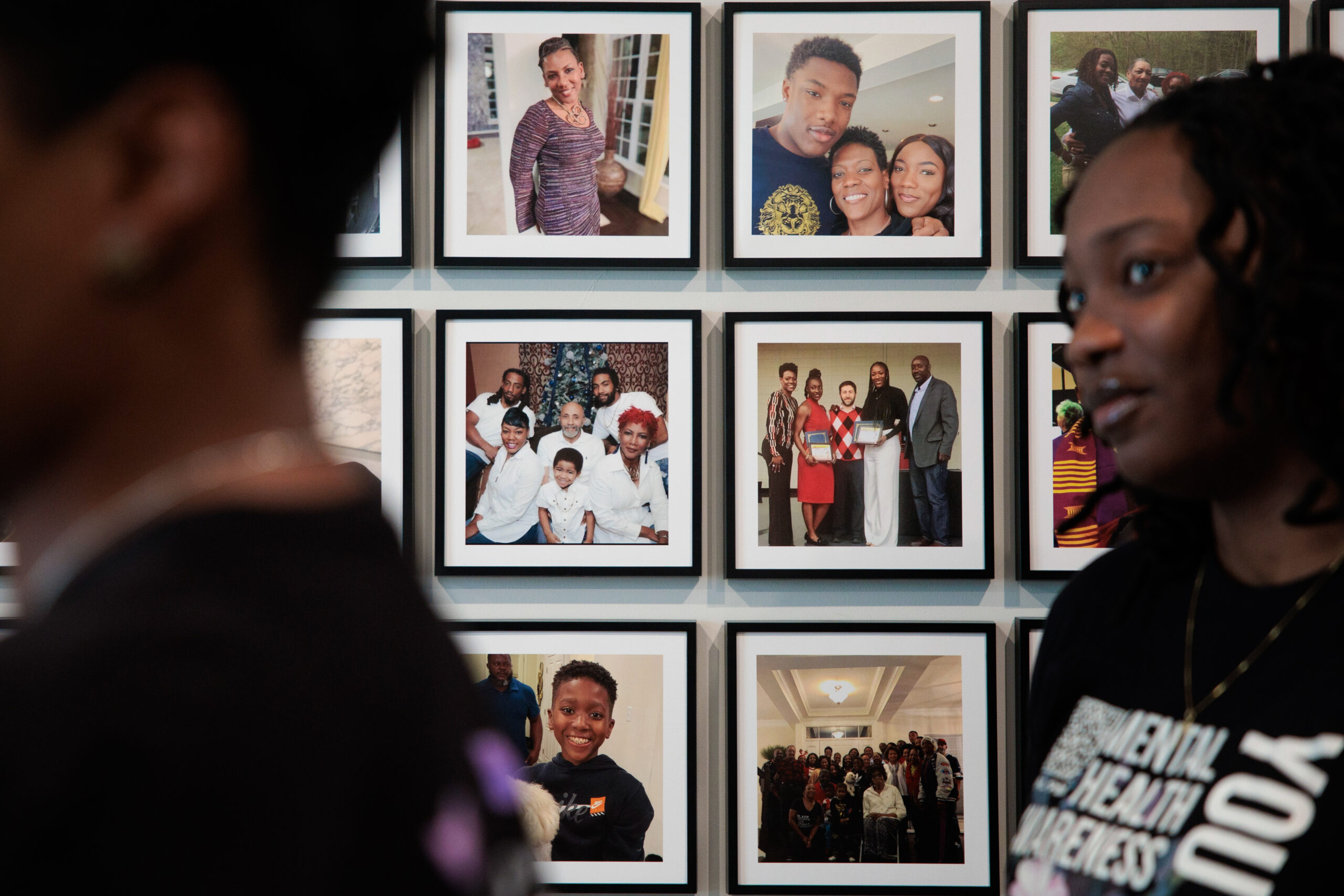
    Dena Butler and Tiara Butler stand in front of the family wall.

    The solution begins with education and must start at a young age. … Until we start to seek knowledge and dig up the roots of America rather than trimming branches, black people will always be disproportionately affected, with no understanding why.

    A month and a half later, Terrence took that train ride down to Maryland to visit his family. Tink was hosting a party at his house on the night of Saturday, July 29, for a world welterweight championship bout between Errol Spence Jr. and Terence Crawford — 70 people, food, drinks, a television on the outside deck. Terrence declined to attend, which didn’t strike anyone as unusual. People would have asked him about Drexel and basketball, would have made a fuss over him, and he wouldn’t have wanted to be an object of attention at such a large gathering. He preferred a quiet night at his sister’s house. Arthur offered to cut his hair.

    Just before Terrence and Tiara left Dena’s house, the three of them gathered on the front stoop to snap a photo of themselves in the summertime’s evening light. But as he stepped outside, Terrence paused. Hold on, he said. I forgot something. He went back inside, reemerging after a few moments. The picture, in hindsight, is telling. Dena is in the middle. She smiles wide, her teeth sparkling white. Tiara, on the left, has a knowing, closed-mouth grin. Terrence towers above them. His face is stone.
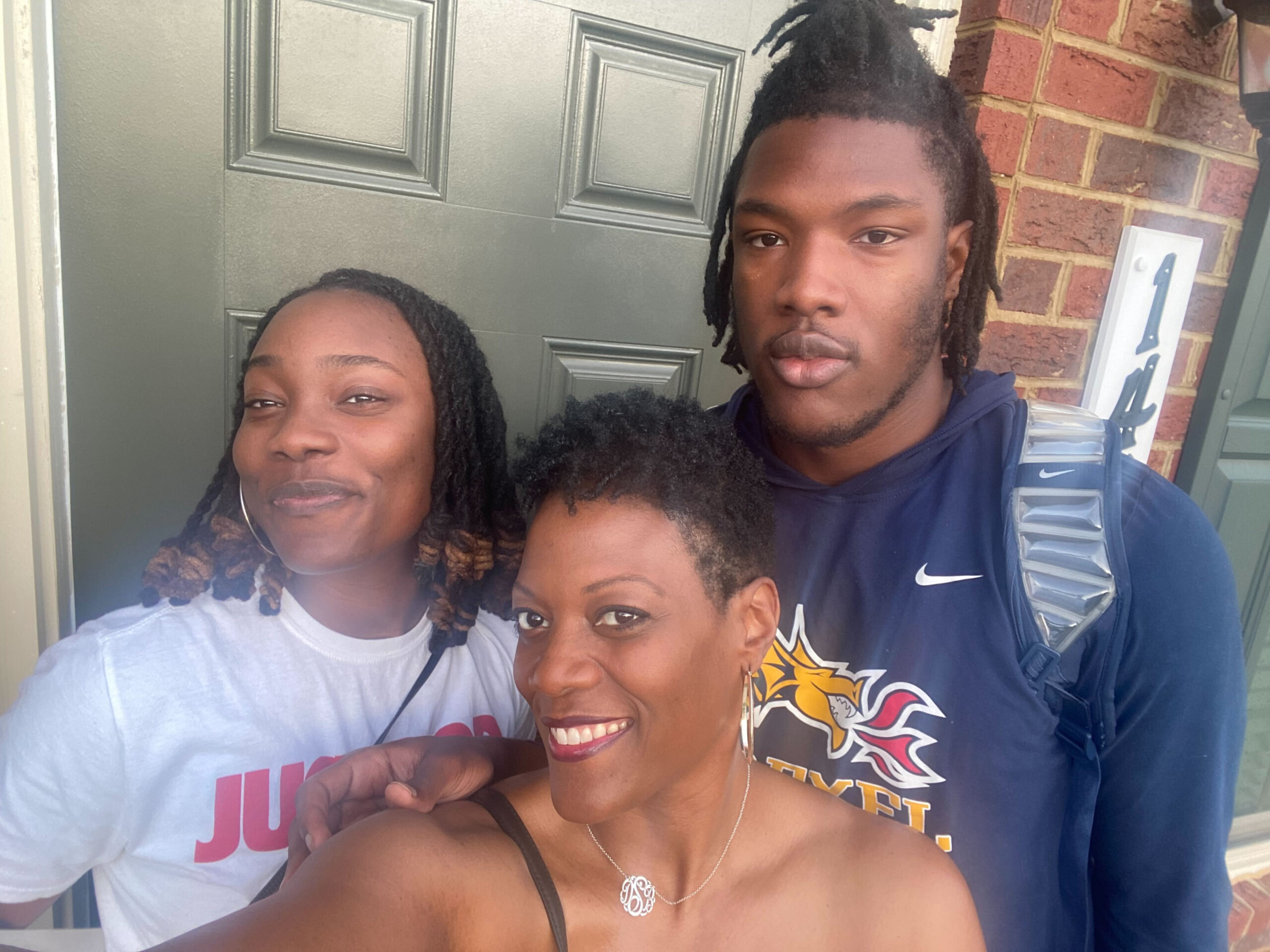
    Tiara (left) with mom Dena and Terrence Butler.

    He texted Dena at 9:19 a.m. Sunday to let her know that he had arrived safely. But on Wednesday, Aug. 2 — a cerulean, temperate, just perfect Aug. 2 in Philadelphia — Terrence missed a team breakfast. He was tracing a different academic arc from most of the other players, taking a full schedule of summer classes, on track to graduate in a year, while his teammates were taking a course or two. So Spiker chalked up his absence to his study habits, and it wasn’t until the guys started to murmur that they hadn’t seen him in a few days that Spiker began to wonder and worry.

    He called and texted Terrence immediately. No response. He called Dena, who told him that she hadn’t heard from Terrence since he got back to Drexel. He called campus security and requested a wellness check and stayed on the phone while the officers unlocked and opened the door to Terrence’s bedroom and discovered that something horrible had happened.

    When her phone buzzed and a police detective told her that her son was dead, Dena managed to ask, How? She listened to the answer, then ran upstairs. After she and Tink had divorced, she knew that she would be living alone, in a new house, in an unfamiliar neighborhood. So she had purchased a black .357 revolver for self-defense. All three of her children knew exactly where she kept the gun: out of sight, on the floor, under the headboard of her bed. She looked there. It was gone.
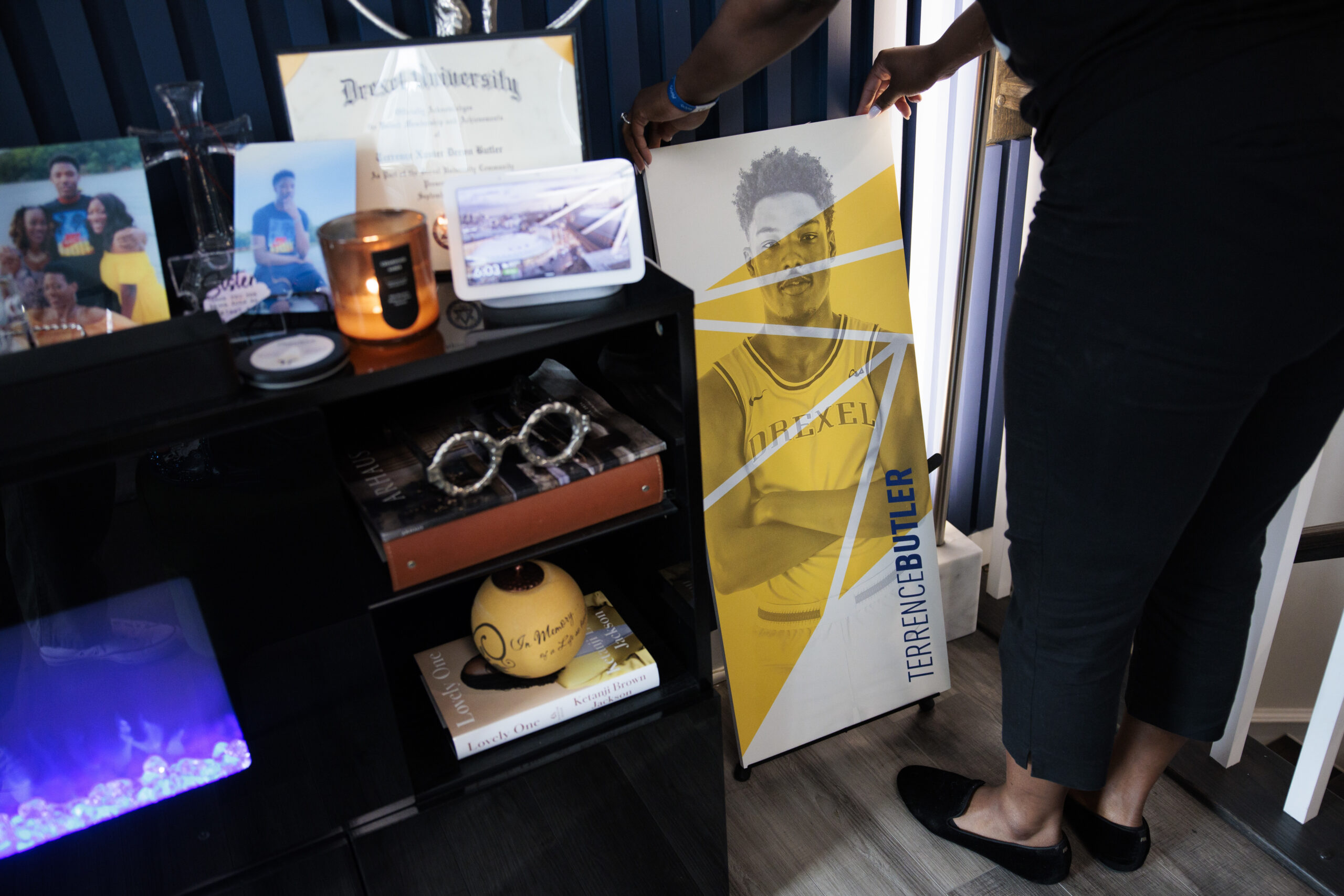
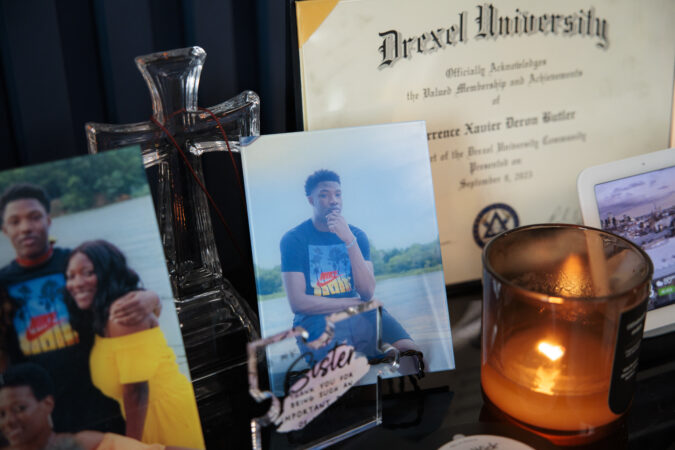
    Photos of Terrence Butler on display at Dena Butler’s home in Brandywine, Md.

    A terrible conundrum

    At Terrence’s funeral, inside Zion Church in Greenbelt, Md., Tink and Dena stood side by side behind a lectern, holding hands, eulogizing their son. “I thank God for loaning him to us for 21 years,” Tink said during his short speech. Dian Carter, McNamara’s principal, had been on vacation, sunning herself on a beach near Houston, when she heard the news of Terrence’s death. No, she thought, that can’t be right. Terrence must have been attacked. Suicide? Terrence? What were the signs?

    Now here she was, sitting and weeping among the congregation at Zion, and she had never seen anything like Tink and Dena’s gesture, their grip, that coming together of a couple who were now separate. She found it comforting, but it did not answer the question that Carter was still asking herself, the question that everyone in the church had to have been asking themselves: The worst thing that can happen to a family, to a young person in the prime of life, had happened to this family, to this young man. Why?

    That is the conundrum that cuts to the core not just of Terrence’s death, but of suicide in the United States. There are so many contextual factors and contradictory trends that anticipating when someone might end his or her life or reaching a definitive conclusion about why someone did is akin to grasping at vapor.

    Kelly Green, a psychologist and senior researcher at the University of Pennsylvania’s Perelman School of Medicine, said in an interview that the most recent available data on suicides are from the same year that Terrence died: 2023. Medical examiners must report suicide deaths to states, and states must report them to the Centers for Disease Control, and the slow grind of that bureaucratic machinery causes an information lag.

    “One of the frustrations is that we’re always a couple of years behind what’s happening now,” Green said. “We’re always playing catch-up.”

    Though Green noted that suicide “is still a very low base rate event — it happens rarely” — its current has been flowing in a concerning direction. The overall national rate jumped 37% from 2000 to 2018, according to the CDC, dipped by 5% between 2018 and 2020, then peaked in 2022. It held relatively steady in 2023, when 14.2 out of every 100,000 deaths were suicides.

    Terrence fell within the age range, 15-24, with the second-lowest suicide rate, which would cast his death as an awful anomaly. But the CDC has reported that, although men make up 50% of the population, they account for nearly 80% of all suicides, and among Black men, according to the American Foundation of Suicide Prevention, the rate climbed from 9.41 per 100,000 deaths in 2014 to 14.59 in 2023, which would cast Terrence’s death as one stirring of the sea in a destructive tide.

    “I would go even a step further,” Derrick Gordon, an associate professor of psychiatry at the Yale School of Medicine, said in an interview. “In the Black community, the data show that, traditionally, suicide was not seen as a Black thing. The norm has been, ‘That’s a white thing.’ It’s sometimes seen as the antithesis of the Black faith tradition. ‘My faith isn’t strong enough to help me get past this thing, and it should, and it’s not working.’ Faith doesn’t reduce the burden. It adds to the burden.

    “For a long time, there was this myth: ‘We don’t have to worry about Black people and suicide. They’re at low risk. They have more community or are more connected to their faith — a lot of buffers to protect them.’ Well, we’re seeing that’s not true.”
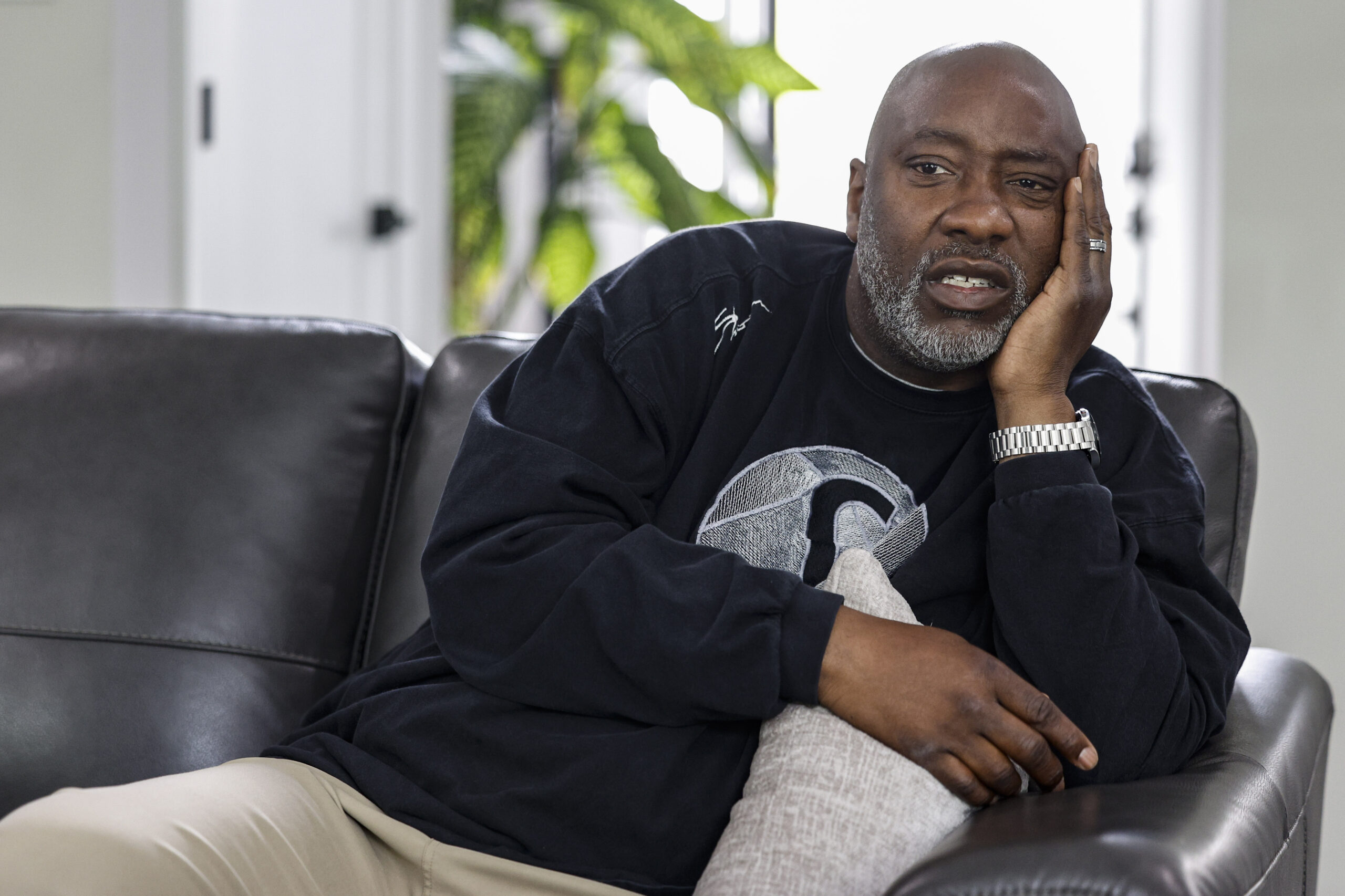
    Tink Butler at his home in Clinton, Md. He remains involved in basketball.

    Parents, siblings, loved ones: These would presumably be the strongest guardrails. But as Gordon noted, the factors that compel a person to attempt suicide are always unique to that person, and since even those closest to him or her often don’t pick up on any indications of deep distress, predicting or preventing a suicide is challenging at best and impossible at worst.

    “Families never think of suicide as a possibility,” Gabriela Khazanov, a clinical psychologist and assistant professor at Yeshiva University in New York, said in an interview, and they can inadvertently create conditions that heighten the risk.

    Terrence was one of the more than 49,000 people who died by suicide in 2023, according to the CDC … and one of the more than 55% of those who used a firearm to do it. The combination of suicidal thoughts and easy access to a gun can be lethal, in part because “it’s not that people who are suicidal want to die,” Green said. “It’s that they want to stop an intolerable situation or problem. They seek an escape,” and they are often willing to act without hesitation to relieve their pain.

    A January 2009 study published by the Journal of Clinical Psychology showed that half of all suicide attempts result from less than 10 minutes of planning.

    “The impulse might be quick, but the issue is, do you have means?” Gordon said. “I can think about it all I want to, but if I don’t have access to means, that’s an issue.”

    Terrence Butler did have means, but it would be wrong to call his decision to use his mother’s gun impulsive. He had carried the revolver with him in his navy blue Drexel backpack on the ride from Dena’s house to Tiara and Arthur’s. He had kept it in that backpack for several hours at their home — kept it there overnight, in fact. He kept it there during the short car ride to New Carrollton Station and throughout the 1-hour, 45-minute train ride back to Philadelphia. He kept it there as he walked the three-fifths of a mile from 30th Street Station to The Summit, to a vibrant college setting in a vibrant city, and he kept it there as he opened the door to Apartment 208, to his living space with his personal effects and the memories they inspired.

    It is one of the most excruciating aspects of his death: Terrence Butler had time to consider what he was going to do. He also had time to consider all the reasons, in his mind, that he had no choice but to do it.
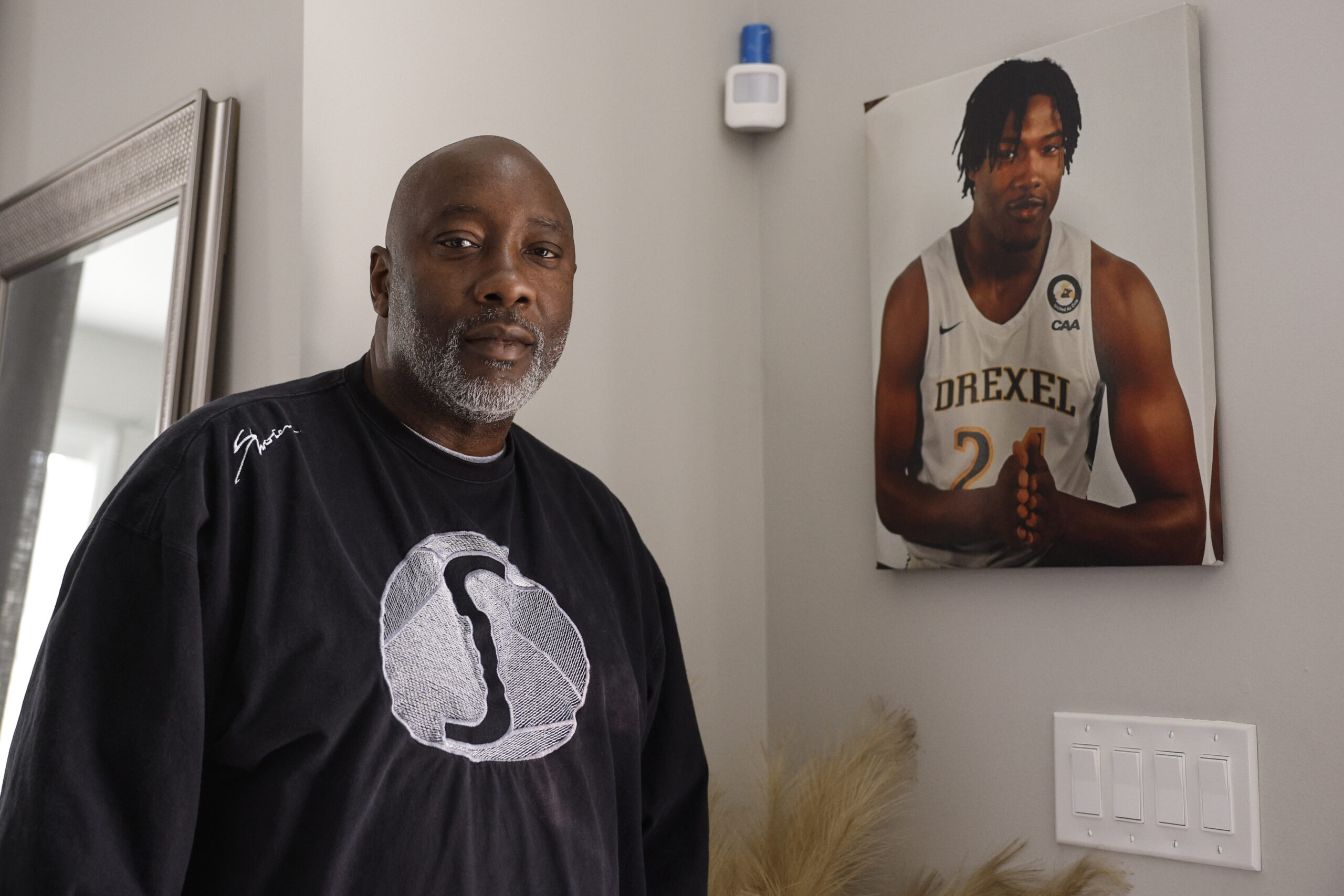
    “I thank God for loaning him to us for 21 years,” Tink Butler said during his son’s memorial service.

    Signs no one could see

    Inside the dimly lit auditorium of Archbishop Carroll High School in Washington, some 150 parents, coaches, teachers, and administrators gathered on a night in October 2024 and learned about Terrence Butler from the women who knew him best. The school was holding a symposium about athletes’ mental and emotional health, and Dena, Tiara, and Tasia were the first speakers. They wore black T-shirts with his picture on them. Behind a table atop a stage, Dena sat between her daughters, one arm draped over Tiara’s shoulders, one arm draped over Tasia’s. There was an empty chair next to them, for Terrence.

    Three siblings. Three honor students. Three Division I basketball players. A veneer of perfection, or as close to it as a family can get. And now …

    “You can have all that,” Dena said to the audience, “and your child may not want to be there.”

    Tiara and Tasia did not want to be there. Over the two years since Terrence’s death, the Butlers and others have plumbed their memories and searched within themselves for hints and connections that might help them explain the inexplicable. The sisters keep returning to their own childhoods and adolescence — to Tiara’s desire to draw and paint and write and Tasia’s to dance, to Tink training them to be competitive and never treat their opponents as friends, to Dena reminding them that athletics was their conduit to college, to the pressure they felt to perform.

    Before every basketball game he played, Terrence would dash to the bathroom, as if he were seasick, and his hands would sweat so much that he could barely grip the ball. He’d douse them in powder to dry them only to have it turn into paste in his palms.

    At Syracuse, Tiara often couldn’t eat before games because she was so nauseous from nervousness, then would shake as she sat on the bench. And it was only after her brother had died that Tiara confessed to her family that in her instances of greatest stress she would hear noises in her head — loud, indescribable noises — that she could not quell.

    “I don’t really know where it came from,” she said, “but it showed itself in my body. It showed itself in my handshake. It showed itself with me being out of breath, with my voice shaking.

    “I know what that feels like, what he was feeling. You can’t really control it. If you’re not playing, there’s that daunting feeling on top of that. Am I good enough to get on the court? Part of you is like, ‘OK, I didn’t play today, so I didn’t mess up today.’ But the other part, especially when you’re away from home and you didn’t play, is that you have to explain yourself to someone who’s not there and asks, ‘Hey, what’s going on?’ You’re thinking, ‘I’m working hard, doing all that I can do. It’s someone else’s decision.’ Now you’ve got to listen to that voice, too: ‘Hey, what’s really going on?’ It’s just a tough balance, especially as a kid. Then you’re going off to be by yourself, high level, lights always on …”
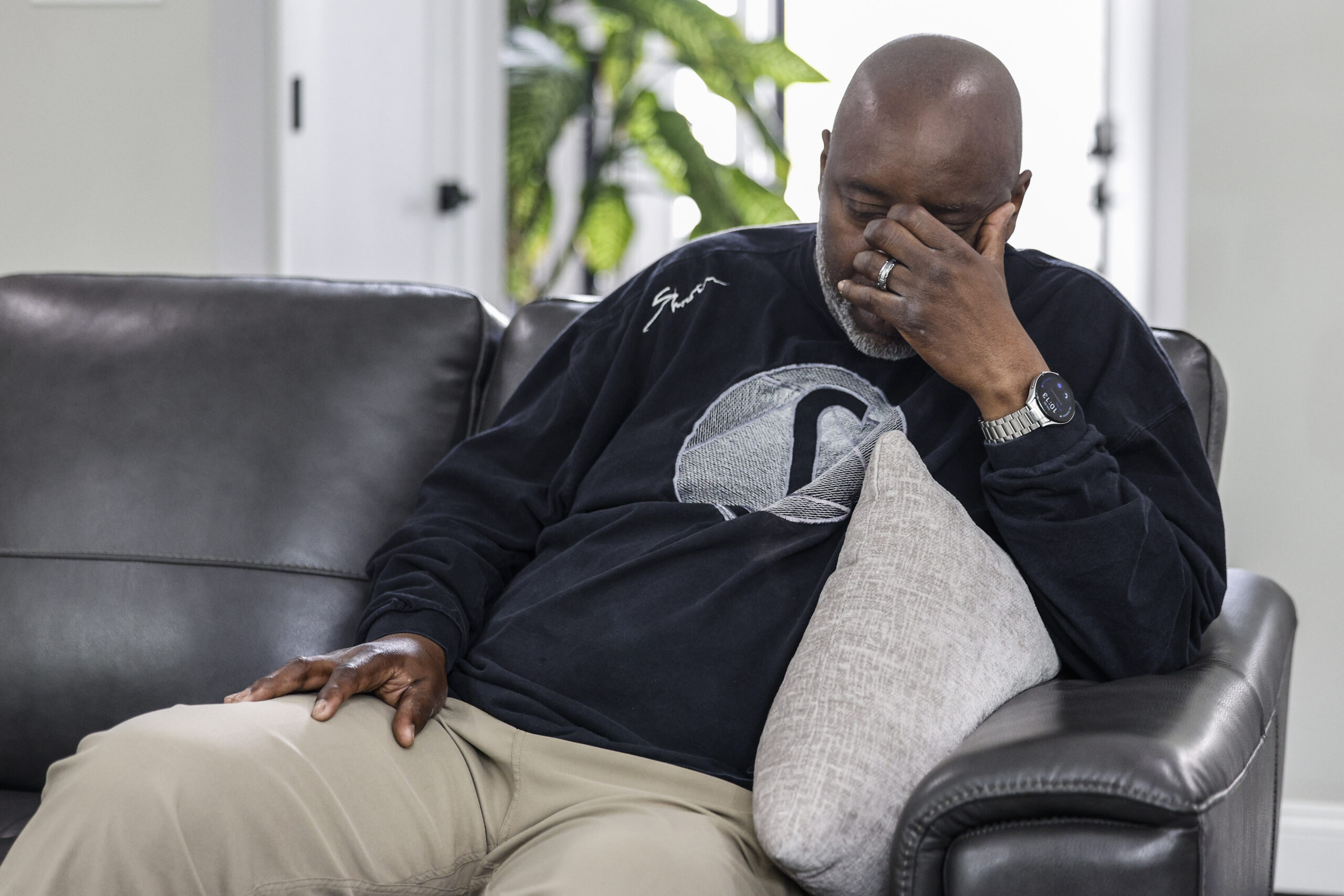
    Tink Butler says he remains troubled daily by his son’s death.

    Guilt creeped into Tink’s thoughts. Was his children’s performance anxiety purely genetic, or had he pushed them too hard? Once, when Tiara wasn’t yet a teenager, she had moseyed after a rebound during a workout, and he chucked the ball to the opposite end of the gym and bellowed at her, “RUN!” When she came back, there were tears in her eyes and a whimper in her words. You yelled at me. He backed off some with Tasia, then backed off even more with Terrence — in his tone, but not in the time, the effort, the aspirations.

    “My whole life was basically getting rebounds for him,” Tink said. “That was the plan from the time I saw I was having a son: I’m going to mold this guy into a basketball player.”

    Dena second-guessed herself about how she and Tink handled their divorce. She had filtered all her parenting decisions through the lens of her own childhood, through the experience of growing up in a broken home, and she wanted to spare Tiara, Tasia, and Terrence any trauma. She and Tink had taken care never to argue in front of them, hiding the hard reality of their disintegrating marriage, opening up fully about the divorce only after Tink had remarried.

    “I was playing God,” she said, “in trying to control everything so they wouldn’t see certain things.”

    But the upshot was that, when the three kids finally found out their parents were splitting up, they were shocked. They never saw it coming, and Terrence was the youngest, the most impressionable, the baby of the family. In trying to protect them, had Dena failed to prepare them? Had she failed to prepare him?

    “It could have handicapped them,” she said. “I’m supposed to be their training ground.”

    She carried similar concerns once he went off to Drexel, and she wasn’t the only one. The pandemic had already isolated Terrence, pulling him away from his friends and his social life while he was still at McNamara, from an environment and experience that, even if the lockdowns hadn’t disrupted it, would have been its own kind of cocoon.
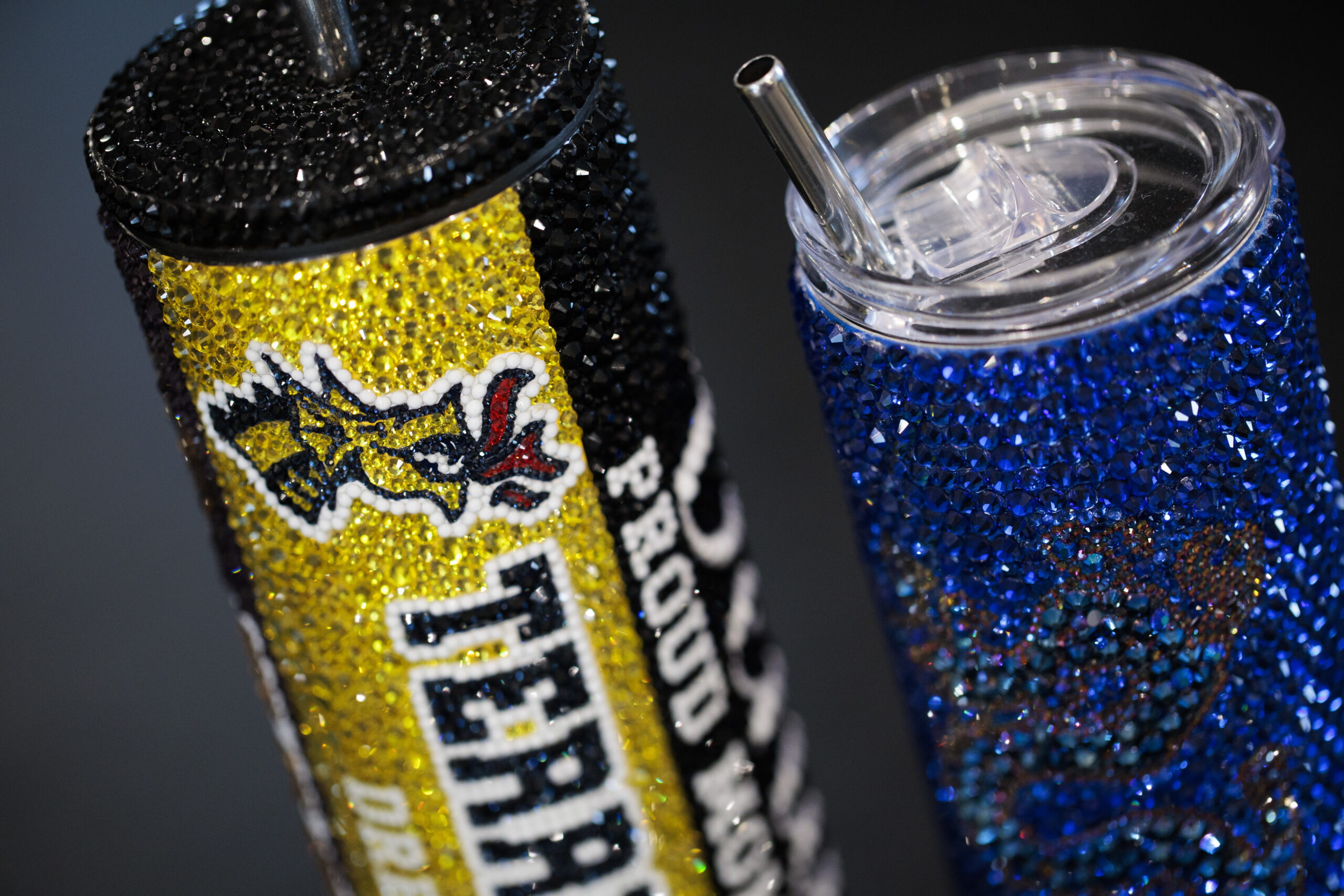
    Dena Butler’s “Proud Momma” cups featuring the school colors and logos for her three basketball-playing children.

    “Prince George’s County can give you a false sense when you leave here,” said Gloster, the McNamara dean — and a former police officer. “It’s a county of wealthy African Americans, and you don’t find many Catholic schools with so many Black students where parents are paying a tuition of $22,000. Then they get out in the real world, and it’s, ‘Maybe I’m too Black. Maybe I’m not Black enough. Maybe I didn’t realize there was a lot of racism in the world. Maybe I didn’t realize I had demons inside that hadn’t surfaced.’”

    Now Terrence was living in an unfamiliar campus in an unfamiliar, more economically distressed neighborhood in an unfamiliar city, and whenever Dena or Tiara or Tasia saw a news story about violence in Philadelphia, one of them would call him. Hey, don’t go outside today. Dena would warn Terrence — 6-foot-7, 235-pound, Division I athlete Terrence — not to get into a stranger’s car, and Tasia would remind him that, as a Black male college student, he “fit the description of someone who could be in trouble.”

    He could be a target for a criminal or a cop, could be taken for an easy victim or presumed to be a thug, so he should get to know as many people at Drexel as possible, make sure that everyone knew his face … starting with the campus police. His popularity was based on his personality, yes, but also on self-preservation.

    Near the end of his freshman year, he confessed to Arthur that he was contemplating giving up basketball after college, even during college. He had realized that the sport at these levels was a business, and he wanted to enjoy the game, not have it be his job.

    He had considered transferring from Drexel when Tink pitched him the idea, but no, he told his family — and himself — that being around the team, contributing to it whenever and however he could, and graduating with his engineering degree would satisfy him.
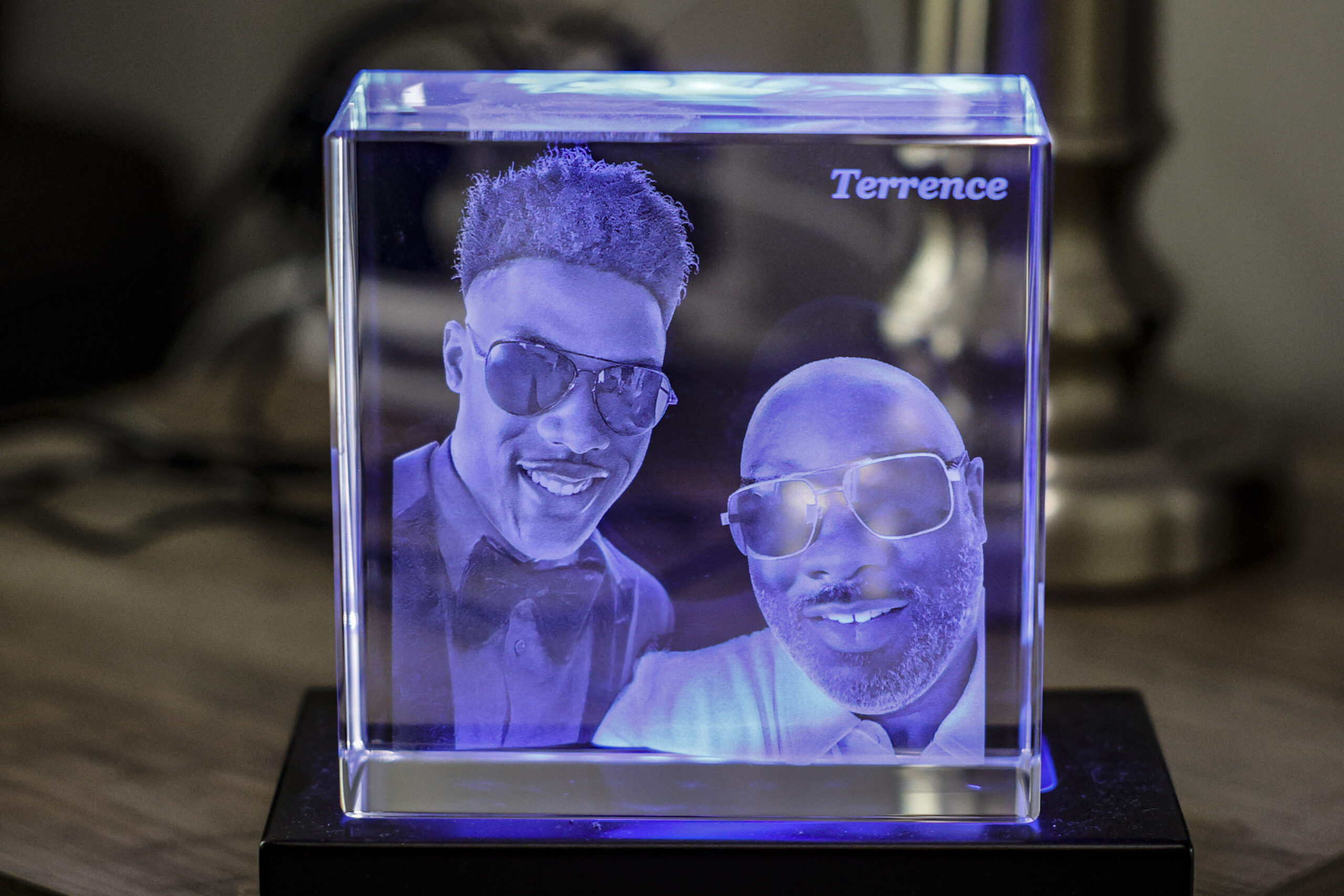
    Drexel basketball player Terrence Butler (left) and his father, Tink, on artwork at his home in Clinton, Md.

    Besides, what guarantee would there be that he wouldn’t be trapped in limbo in another program just like he was at Drexel? Would transferring allow him to say goodbye to all the rehab and the ice packs and those platelet-rich-plasma injections, all those needles to his knees to stem the swelling and stoke some healing, and become the player he might have been? Would anything be different anywhere else?

    But maybe he needed basketball more than he let on, more than even he understood or acknowledged. His faith calmed him only so much. Those biblical excerpts weren’t the only index cards he kept on his person at all times. He had others that were daily reaffirmations, prompts to remember that he mattered: I AM Valuable. I AM A Masterpiece. Even the white throw pillow on his bed, with a single word stitched across it, seemed to carry a double meaning. Whether asleep or awake, Terrence should RELAX.

    He couldn’t. He asked Tiara to put him in touch with a therapist. She did, paying for his sessions. How much progress he was making, only he knew. He sought the counsel of Jordan Lozzi, the director of the Fellowship of Christian Athletes at Drexel and at Penn. On Nov. 28, 2022, Terrence sent a text message to Dena.

    I do think I have a lot of unchecked thoughts. There are times where I know the truth but I try to solve everything on my own without guidance. I’ve been taking some baby steps here and there but I feel like I’m moving in slow [motion].

    On March 10, 2023, he texted Dena again, confirming what he had earlier said to Arthur about his future, or lack of one, in basketball.

    To be honest, it does not necessarily bother me that I’m not playing because I don’t have a passion to continue playing basketball after college. I’m still in the process of learning that my identity and worth [do] not come from basketball.

    Later, another message to his mother:

    I’ve always had this idea in my head that I needed to be perfect, and whenever I miss the mark or mess up in any way it messes with my head. It kind of reminds me of how I would feel after most games I played growing up. It’s difficult for me to focus on the good that comes out of situations. I may recognize it but the overwhelming negativity clouds the positive.

    Dena responded at length.

    I appreciate your honesty and transparency. You are not in denial about where you are which gives the Holy Spirit something to work with. Here is something that should support you in dealing with the spirit of perfectionism.

    Possible things you’ll need to accept: that you’ll never be perfect and neither will your projects, but since life is about God — not perfect projects — this isn’t really a big deal.

    Possible things you’ll need to confess: that you’re making something more important than God wants you to make it, that you’re seeing yourself through the culture’s eyes rather than God’s eyes, that you’re hurting others in your quest for perfection, and that you don’t have time to do the things God wants you to do because you’re too busy trying to be perfect.

    She suggested that he consult the Gospel of Matthew, to remind himself that God would comfort him. Then she concluded her text:

    Your goal is to please God. He is your source and once you understand that and align with His trust and what He says about you, He will cause the people to follow His plan for your life.
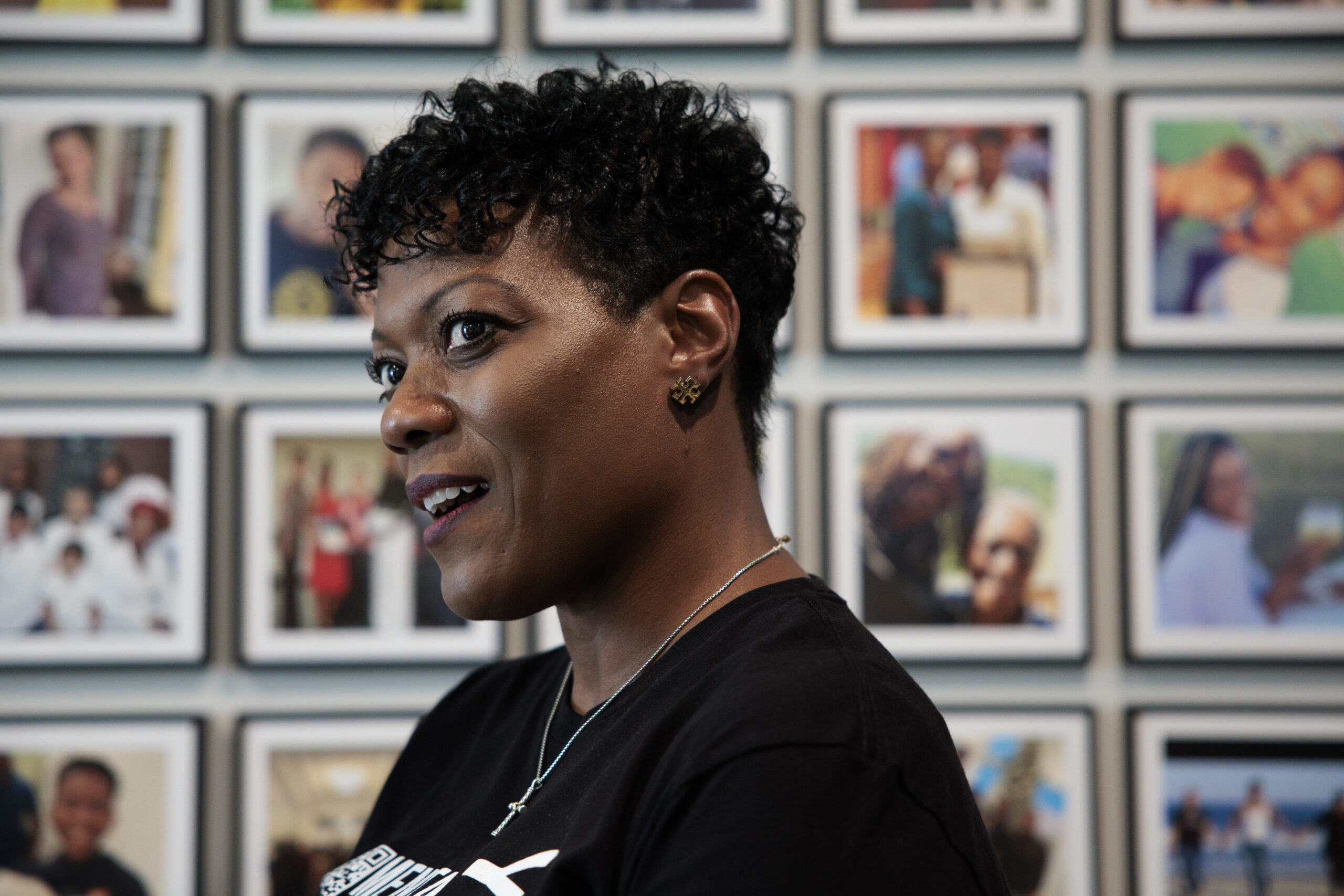
    Dena Butler at her home in Brandywine, Md.

    She keeps screenshots of these messages on her phone. They provide her no solace, no consolation, and no explanation. In November 2024, she contacted Lozzi, texting him four questions about what Terrence might have shared with him during their conversations and what actions Lozzi did take or could have taken to help him. The answers were revealing.

    Terrence, Lozzi told Dena, “disclosed that he had harmed himself” sometime in April 2023, not long after he turned 21; Lozzi provided no details about how. Terrence had said it was the first time he had done anything like that.

    Dena asked Lozzi if he was mandated to report any such occurrences of self-harm to a licensed therapist.

    “In the college space,” Lozzi wrote, “we are mandated reporters, but I believe there is no mandated reporting for self-harm with adults. The mandated reporting in the college space is around sexual violence or relational abuse. To connect someone to suicide watch from my understanding they must be a present danger to themselves. In any of my interactions with Terrence I don’t believe there was anything that would have qualified to admit him to suicide watch.”

    Lozzi was asserting that he wasn’t allowed to tell anyone that Terrence had committed harm to himself — that because Terrence was an adult, either Lozzi or a mental-health professional would have needed Terrence’s consent to disclose the incident to Dena, to another therapist, to anyone else, and Terrence had not given that consent. In his final text to Dena, Lozzi wrote that he “did propose for [Terrence] to see Drexel’s school counselors.”

    When asked via email earlier this year if he would speak on the record about Terrence’s death, Lozzi responded that he had “sent your request to the appropriate person to get in touch with you right away.” He had forwarded the message to Hamilton Strategies, a public relations firm that represents the Fellowship of Christian Athletes. “Unfortunately,” an executive with the firm said in an email, “Jordan is unable to interview for your story. Thank you!” A second request for comment, sent in November to Lozzi and the executive, went unanswered.
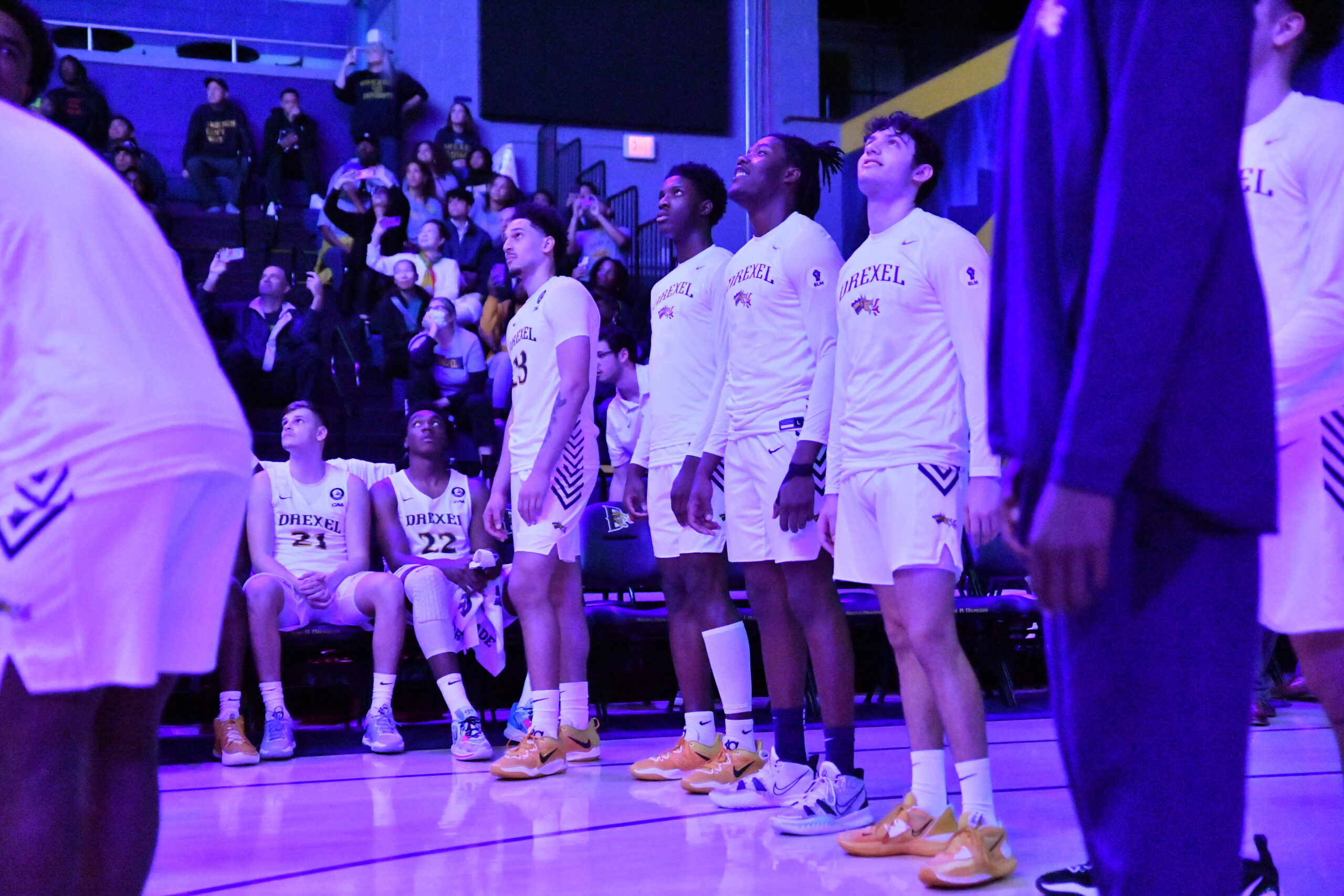
    Terrence Butler at a game with his Drexel teammates.

    The struggle of hope

    The why of Terrence Butler’s suicide eludes everyone who loved him. Tiara teaches art at Bishop McNamara, her brother’s alma mater, and most of her students don’t know about Terrence’s death unless she mentions him, and once she does, sometimes one of them will approach her in her classroom and say, I just wanted to give you a hug. Tink will break down over his son once or twice a day, then just continue with his office work. He still asks himself haunting questions: How much did the divorce affect Terrence? How much did the knee injuries affect him? Did he consider himself a burden to his parents, as if he owed them a debt for all the time they had spent with him and money they had spent on him — a debt that he could never repay?

    After Philadelphia police had ruled Terrence’s death a suicide, Dena said, she pleaded with them to unlock his cell phone. Perhaps he had written something in his notes app. Perhaps he kept a meaningful or revelatory photo stored in it. But the police, she said, told her that they would do that only in an open investigation — a homicide, for instance, in which they were trying to find and extract evidence. Here, they already knew what had happened, even if no one else really does. The department’s public affairs office did not respond to an inquiry about how, in general, police handle such situations.

    Having the service provider unlock the phone wouldn’t accomplish anything either, Dena said, because only Terrence knew the passcode; resetting the phone without the code would erase all its data. She recently had the phone disconnected. It was a bitter symbol of the absence of closure.

    “What I struggle with the most to understand in all this,” she said, “is that my son was devoid of hope, that he was in such despair, and he didn’t want anybody to help him. As a mom, to know your child didn’t have hope anymore … and hope is what gets us. Hope is what propels us. Hope is the motivator for why we keep going. And to know he didn’t have that, that’s hard.”

    Zach Spiker finds himself slower to anger whenever one of his players happens to be late for a team meeting, for a practice, for anything. “I just want to make sure they’re safe,” he said. “Then we talk about it.” He saw a counselor himself, just a few sessions. “I had to,” he said. “I need to figure out things. I still have questions. There are still breadcrumbs, and you want to solve the mystery.”

    They hoped that they had on the day that Terrence died. That night, 11 people crowded into his apartment: Dena, Tiara, Tasia, Tink and his wife, cousins and close family friends. Everything in the place was clean. There was nothing on his bed but a bare mattress. “You would have never known,” Tiara said later.

    Tasia peered into the bedroom trash can. It was empty. She noticed Terrence’s Drexel backpack next to his bed. She picked it up, brought it into the living room, plopped it on the floor, and began rifling through it. She found random items, things that one would expect to find in a college student’s backpack: Terrence’s schoolwork, his headphones. Then she found something else.
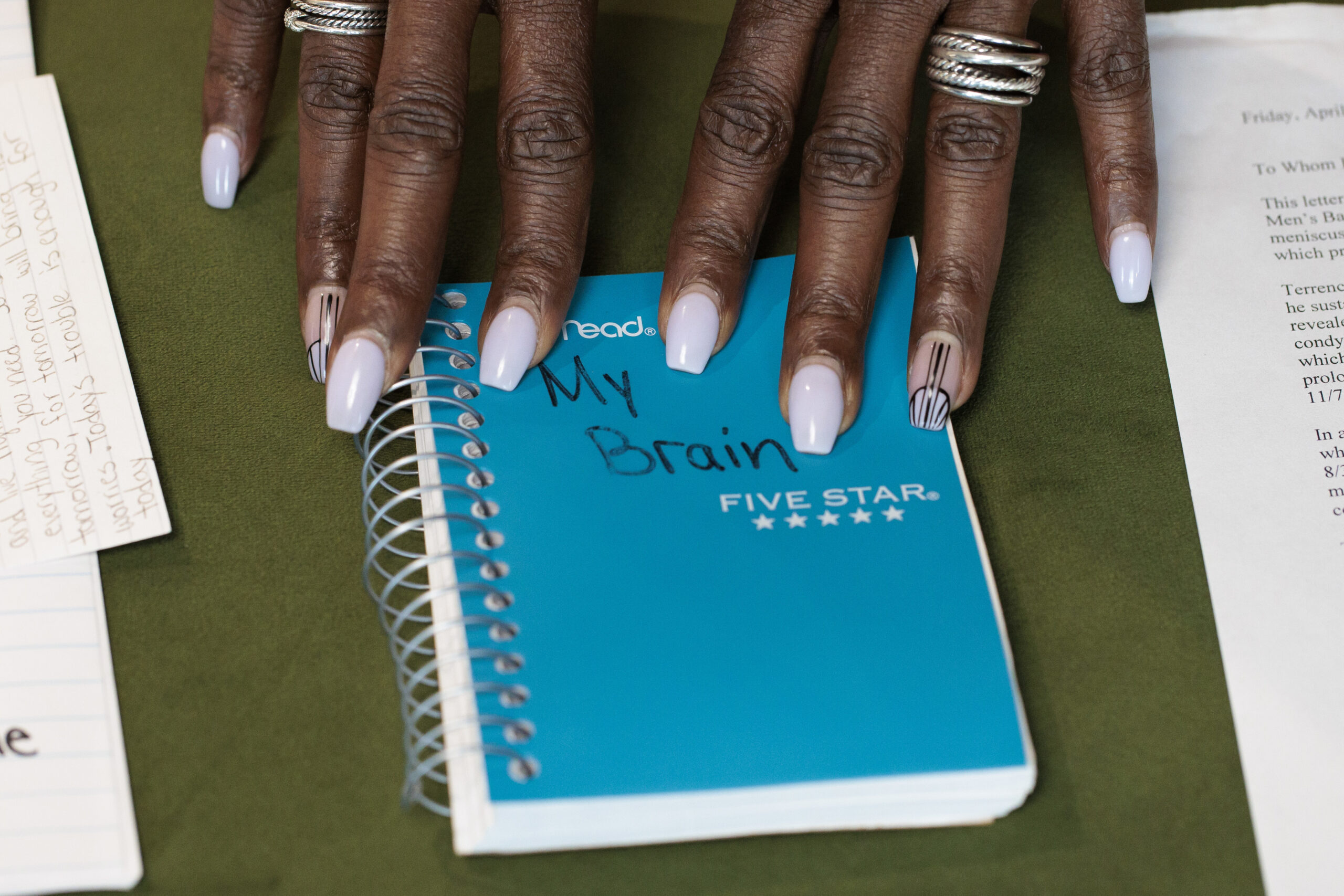
    Dena Butler touches a journal that belonged to her son, Terrence.

    The spiral 5×7 notebook, more than a half-inch thick from its 160 pages, was buried at the bottom of the bag. Tasia stopped. Tiara recognized the book, that sky-blue cover that she had glimpsed just four days before: It’s the same one he was writing in when he was at my house. Across the cover, Terrence had printed two words in black marker: My Brain.

    This was it. This had to be it. This was Terrence’s journal, so this had to be the missing piece, the unknown explanation. Everyone in the apartment froze, went silent, then sat down. Tasia opened the book.

    On the first page, on the top line, Terrence had written, I’m sorry. I really tried.

    On the second page, on the top line, he had written, The noise is too loud.

    On the third page, on the top line, in the top left-hand corner, he had written just one letter, just one word: I.

    Tasia turned the page. And the next page. And the next. The family waited for a revelation that would never come. There were 157 pages remaining in the notebook. Terrence Butler had left all of them blank.
  • Let us raise a glass to the Tush Push. It’s dead, and the Eagles have to find an alternative.

    Let us raise a glass to the Tush Push. It’s dead, and the Eagles have to find an alternative.

    We are football followers, Eagles followers, so … no lies between us.

    The Tush Push had its moments. Yes, it did. You remember the first touchdown of Super Bowl LIX, the ease with which Jalen Hurts slipped through the Kansas City Chiefs’ defensive line and into the end zone? The Tush Push was the first sign of the rout to come. And the fourth-and-1 from the Eagles’ 26-yard line against the Miami Dolphins two years ago? In a one-score game? That was the Tush Push at its best. And the NFC championship game in January. The two Hurts TDs from the Washington 1-yard line. The Frankie Luvu leaps. The high comedy.

    The Tush Push took a lot of close games and put them away. Yes, indeed. It won more games for the Eagles than it lost, as much as any strategy or ploy. Did it tick off an NFL coach or three? No doubt. I think the league actually kind of got used to it, thank God. Did it cause controversy and enrage owners and get people in the media saying silly things about “nonfootball plays?” Hell, yes. Was it as much a fad, a passing fancy, as the run-and-shoot and the Wildcat and an RPO-based offense? Abso-freaking-lutely. But the Tush Push stood against that dark tide, and it helped make the Eagles of Philadelphia a great team. A championship team.

    ♦ ♦ ♦

    LANDOVER, Md. — Here at Northwest Stadium, just 35 miles from the city that was the setting for David Simon’s magisterial series The Wire, it is only fitting that, as if attending a barstool wake among Baltimore po-leece, we eulogize the Tush Push. The play that once gave the Eagles a physical, psychological, and strategic edge over every opponent they encountered is, by all available indications, dead.

    Three times during their 29-18 victory Saturday over the Commanders, the Eagles tried to run their unique and once-unstoppable version of the quarterback sneak. Three times, it failed. Once, tackle Fred Johnson committed a false-start penalty. Once, Hurts gained no yardage. Once, guard Landon Dickerson committed another false-start infraction. And with his offense facing a (relatively long) fourth-and-1 on its first possession, coach Nick Sirianni had the Eagles punt from their own 41 instead of attempting the play.

    This was the flat line across the electrocardiogram screen. In 2023, the Eagles led the NFL in fourth-down conversion percentage, at 67.9%. Last season, they were third, but their efficiency rate (71%) was higher. This season, they entered Saturday at 61.1%, seventh-best in the league — good, but not dominant, not close.

    “Teams adjust; we’ve got to continue to adjust,” Sirianni said. “Credit to them. They did a really good job of stopping us there. … We have to get this play working the way it’s been in the past, which we’ll work our butts off to do. But we were really able to overcome.”

    They were. They got Hurts’ 15-yard touchdown pass to Dallas Goedert late in the third quarter — a nifty bit of improvisation after Dickerson’s penalty and a holding call against Johnson had pushed them back from the Commanders’ 1. They got Saquon Barkley gaining 132 yards and running like all the members of Washington’s defense had insulted his mother. And they got the benefit of playing a bad team that started its backup quarterback (Marcus Mariota) and had to turn to its third-stringer (Josh Johnson).

    But the demise of the Tush Push is real, and it has to be a worry as the Eagles look ahead to the postseason. Hurts has made it clear that he had grown tired of running it anyway, and the league officials had raised their level of scrutiny of it, calling more penalties against the Eagles this season. It has gone from an automatic first down to an unreliable chore. They will have to find a new way to remain aggressive, and to succeed, in fourth-and-short situations.

    “The play might not even be around next year, to be honest, the way they’re officiating it,” tackle Jordan Mailata said. “Last week, it was that our shoulders have to be parallel to the line of scrimmage. They can’t be angled in. Great. They’re officiating us a little harder. If this is the last year that we can run it, we’ll just run it till we can’t run it anymore.

    “The history that we have with that, we’re pretty successful, so when we lean on that play, you expect us to convert. One-yard line — we just didn’t do it. I was pretty happy that Dallas and Jalen could bail us out on that one, but sometimes, that’s just how it goes. Teams this year have done a great job of stopping that play, so we’ve got to do a better job of executing it and go from there.”

    Understand: The Eagles brought these challenges upon themselves, in the best way possible. They pioneered the Tush Push, then perfected it, then used it so frequently in the course of winning a Super Bowl that they inspired a campaign against it. Teams are better prepared for it now, and the officials are eyeballing the Eagles every time they line up to run it. And yet, like mourners over a casket, they spoke Saturday as if they haven’t reconciled themselves to the hard, heartbreaking truth. “It’s in a good place,” Hurts said, and center Cam Jurgens insisted, “It’s still our bread and butter. It might get a little dry at times, but bread and butter is bread and butter.” But these words seemed the bittersweet valediction for a play that will send an opposing defense to its knees no more.

    The Tush Push worked, and now its prime has passed. Raise your glass. It was called. It served. It is counted.

  • The Eagles are about to win the NFC East again, as usual. Here’s how they’ve done it.

    The Eagles are about to win the NFC East again, as usual. Here’s how they’ve done it.

    The Eagles are going to win their division. They need just one victory to clinch first place, and they’re likely to get that victory Saturday night against the Washington Commanders. And even if, by some minor miracle, they manage to lose to a 4-10 team that will be quarterbacked by Marcus Mariota, they can still just wait until the Dallas Cowboys lose again, which would bring its own kind of satisfaction.

    One way or another, the Eagles will end up atop the NFC East, becoming the first team to repeat as the division’s champion since they won it four straight times from 2001 through 2004. That statistic makes the last quarter-century of NFC East history sound more competitive and equitable among the Eagles, Cowboys, New York Giants, and Washington than it has actually been. In 2001, the Eagles won their first division title and reached their first NFC championship game with Andy Reid as their head coach and Donovan McNabb as their starting quarterback. That season was, really, the start of the general dominance that has followed. Here’s the breakdown of these 25 years, assuming the Eagles finish first again this season:

    Eagles

    Overall record: 240-160-2

    Winning seasons: 18

    Playoff berths: 16

    Division titles: 12

    Conference championship games: 8

    Super Bowl appearances: 4

    Super Bowl victories: 2

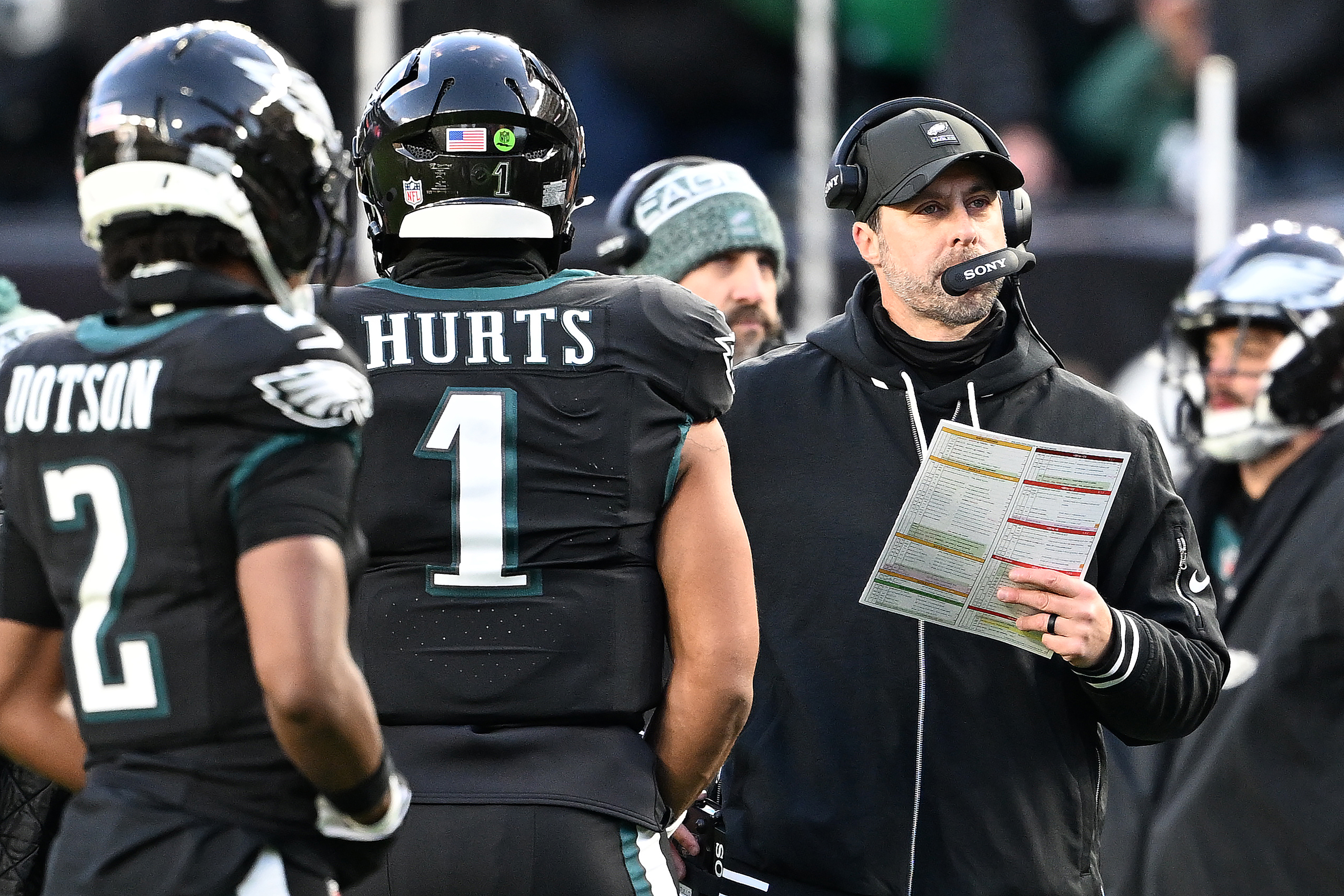
    Nick Sirianni (right) has carried on the Eagles’ winning tradition that started with Andy Reid.

    Cowboys

    Overall record: 218-183-1

    Winning seasons: 13

    Division titles: 7

    Conference championship games: 0

    Super Bowl appearances: 0

    Super Bowl victories: 0

    Giants

    Overall record: 176-225-1

    Winning seasons: 9

    Division titles: 3

    Conference championship games: 2

    Super Bowl appearances: 2

    Super Bowl victories: 2

    Washington

    Overall record: 166-234-2

    Winning seasons: 6

    Division titles: 3

    Conference championship games: 1

    Super Bowl appearances: 0

    Super Bowl victories: 0

    Whatever crises the Eagles might be undergoing are framed through a different lens from any other team in the division. They judge themselves and are judged by the answer to one question: Are we good enough to win the Super Bowl? Their divisional foes’ standard has not been quite as high: Are we good enough to keep from embarrassing ourselves again?

    Quarterback Jayden Daniels and the Commanders took a big step backward in an injury-plagued season.

    Less than a year ago, for instance, the Commanders’ appearance in the NFC championship game was supposed to augur a new rivalry between them and the Eagles at least and a new era for the division at best. That’s why the teams’ two games this season were scheduled in the season’s final three weeks. Huge head-to-head matchups to decide the division, right? Instead, the Eagles trounced the Commanders by 32 points to reach Super Bowl LIX. Jayden Daniels, Washington’s wonderful young quarterback, has played just seven games this season because of injuries, and even if Daniels had remained healthy, the Commanders might be floundering anyway; their front office built the oldest roster in the NFL around him.

    So what happened? How did the Eagles manage to create so much distance between themselves and the NFC East field? As with all big questions, there’s not just one big answer, but here are a few explanations:

    Jeffrey Lurie, Joe Banner, and Howie Roseman have been forward-thinkers.

    From strategic massaging of the salary cap to aggressive play-calling on fourth down, Lurie has empowered his executives (and, in that middle-management position, his head coaches) to be creative, to posit how the NFL would evolve and how the Eagles might get ahead of those changes.

    Jerry Jones can’t put his ego aside for the sake of a Super Bowl.

    Jones has been a true visionary when it comes to the NFL’s growth into the pop-cultural monster it is today. He recognized America’s insatiable appetite for pro football and has built one trough after another to feed us, and he does want to win championships. But he’s not willing to sacrifice the publicity and the credit, to stand aside and let someone smarter handle the Cowboys’ football-related decision-making. It is not enough that the Cowboys win. Jones must be perceived as the reason they have won, and it’s that very thinking that keeps them from matching the Eagles’ success.

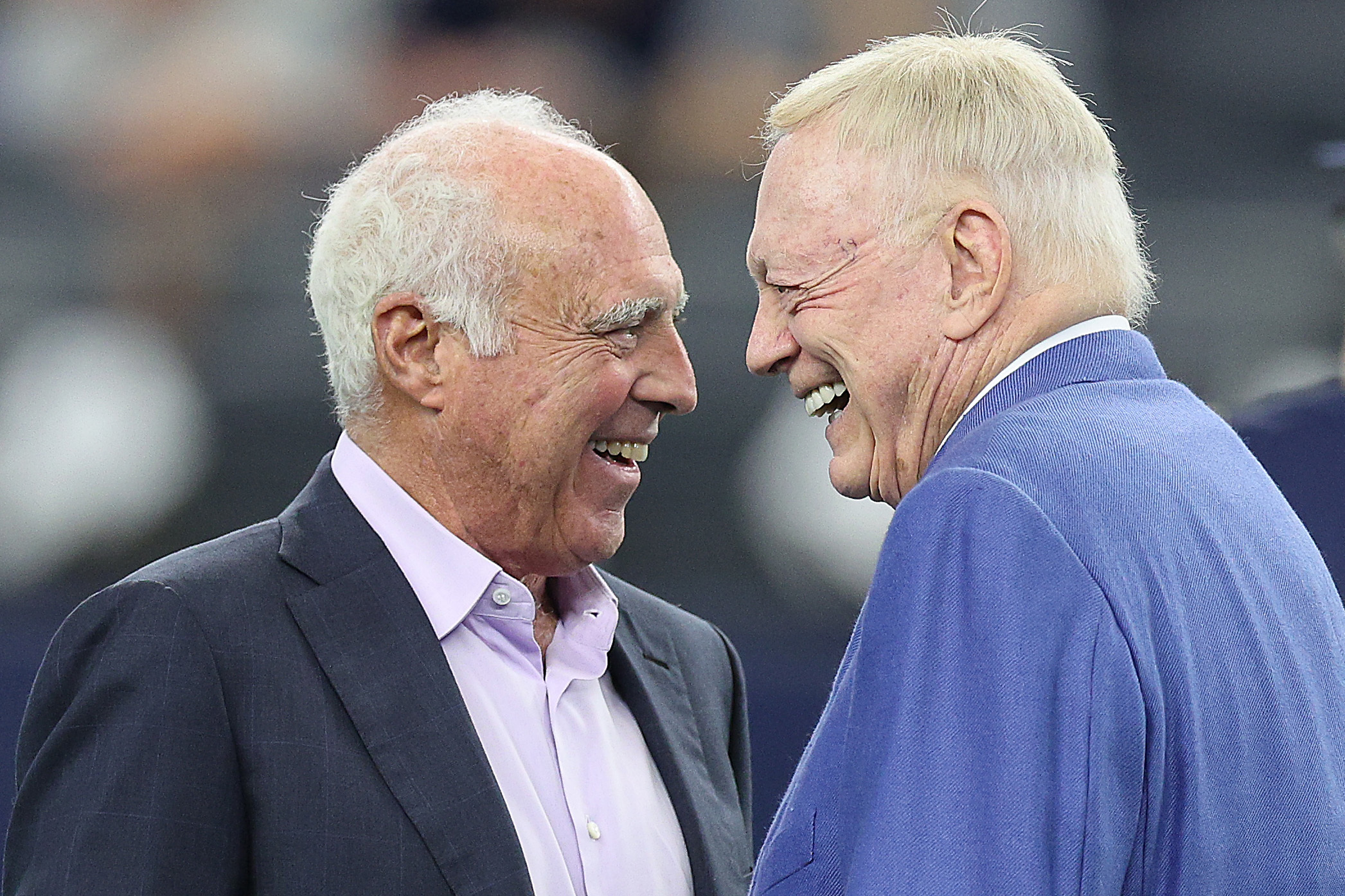
    Jerry Jones (right) and the Cowboys have not been able to keep up with Jeffrey Lurie’s Eagles.

    Daniel Snyder.

    That’s it. The man pretty much single-handedly destroyed one of the best and most popular franchises in the league. As just one example, Washington’s coaching staff in 2013, under head coach Mike Shanahan, included Sean McVay, Kyle Shanahan, Matt LaFleur, Mike McDaniel, and Raheem Morris — and Snyder let all of them get away. (Or run away, as the case may be.)

    Eli Manning retired.

    Sounds crazy, right? It’s not. When Manning was in his prime, the Giants went through an eight-year stretch in which they qualified for the postseason five times, won two Super Bowls, and never finished under .500. The Giants haven’t been able to replace him, and that has been a bigger failure even than allowing Saquon Barkley to sign with the Eagles.

    Jeff Stoutland has given the Eagles an edge in the trenches.

    Yes, the Eagles have long maintained that games are won and lost along the offensive and defensive lines. Any franchise’s coaching staff can chant that mantra, though. Few, if any, can develop linemen like the Eagles, and Stoutland’s presence and expertise are invaluable in that regard. Ask yourself if Jordan Mailata would have become an elite left tackle anywhere else.

    The Eagles value depth at quarterback.

    They won one Super Bowl with their backup quarterback (Nick Foles), won another with a player who had been drafted to be their backup quarterback (Jalen Hurts), made a season-saving run to the NFC divisional round in 2006-07 with their backup quarterback (Jeff Garcia), and have generally hired head coaches who know how to implement and oversee quarterback-friendly systems.

  • The Eagles can still get to the Super Bowl, but only if their defense drags them there

    The Eagles can still get to the Super Bowl, but only if their defense drags them there

    For an Eagles team desperate to stop a losing streak, a coach turned to Scripture the other day to inspire a few members of the one unit that has been pretty much beyond reproach. Jeremiah Washburn, who’s in charge of the Eagles’ defensive line, shared a message with the team’s tackles and ends from Isaiah 6:8: Then I heard the voice of the Lord saying, “Whom shall I send? And who will go for us?” And I said, “Here am I. Send me!”

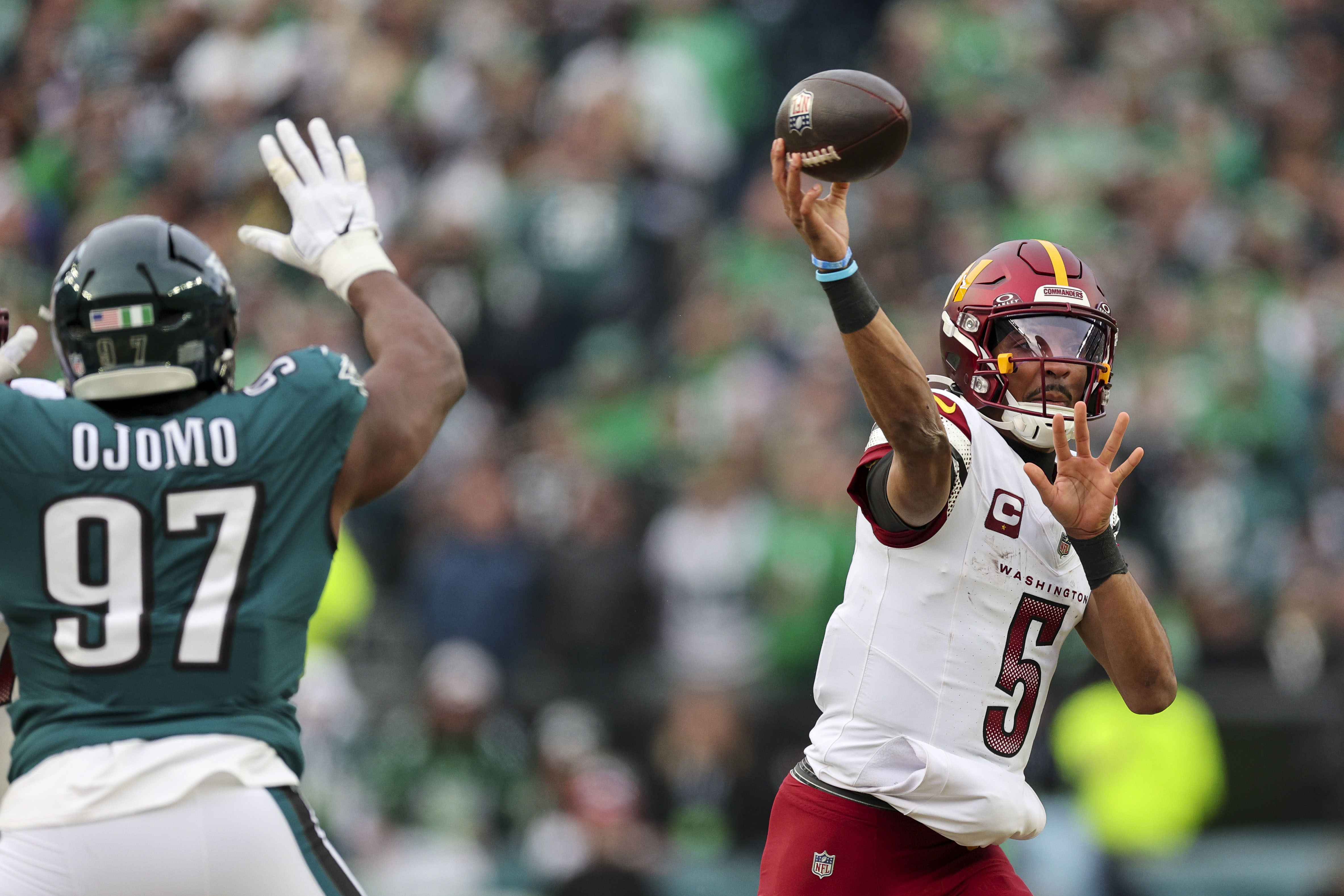
    “The perspective of the D-line — it’s like, ‘Send me,’” tackle Moro Ojomo said. “That was kind of our mentality heading into this game.”

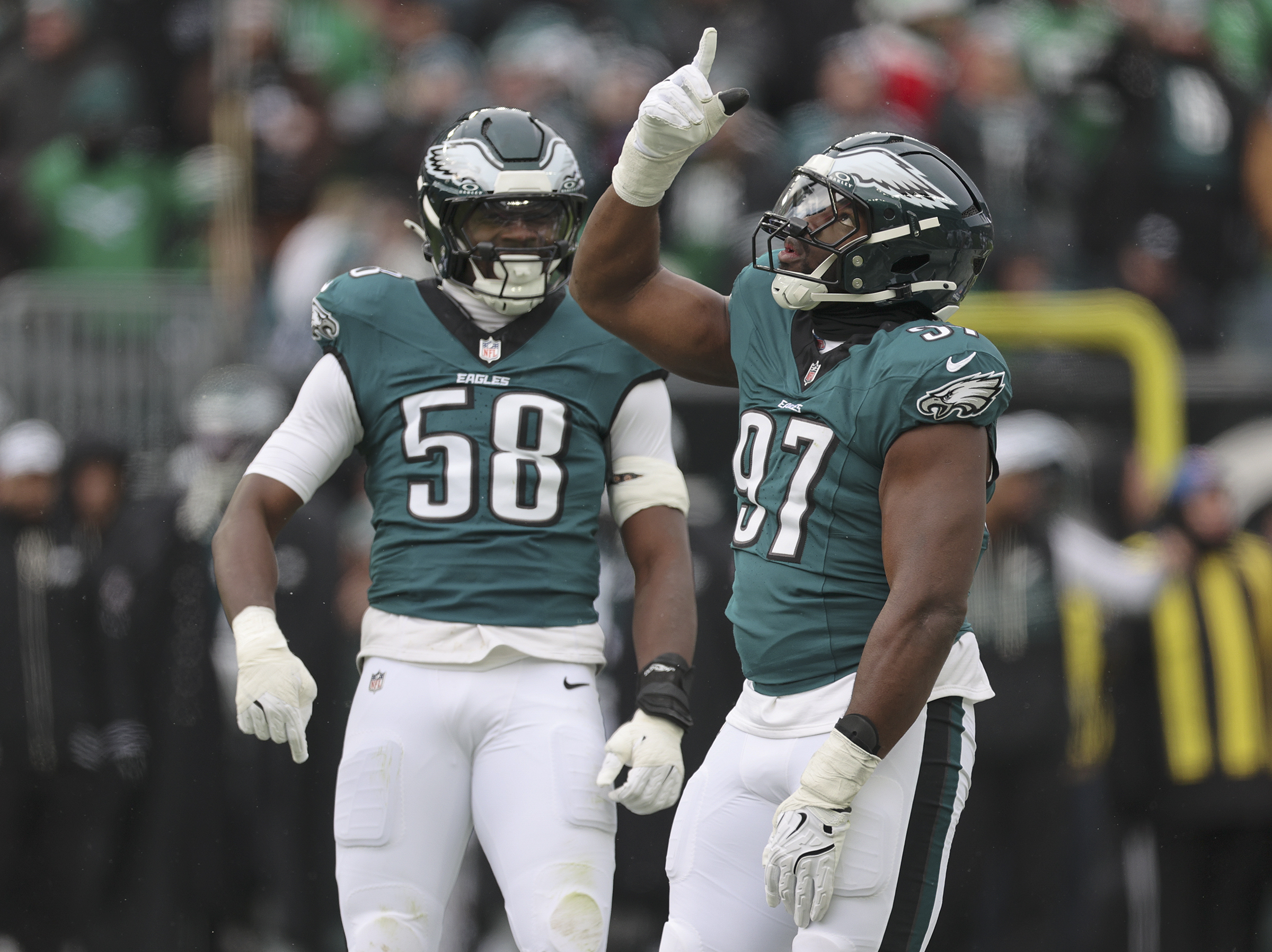
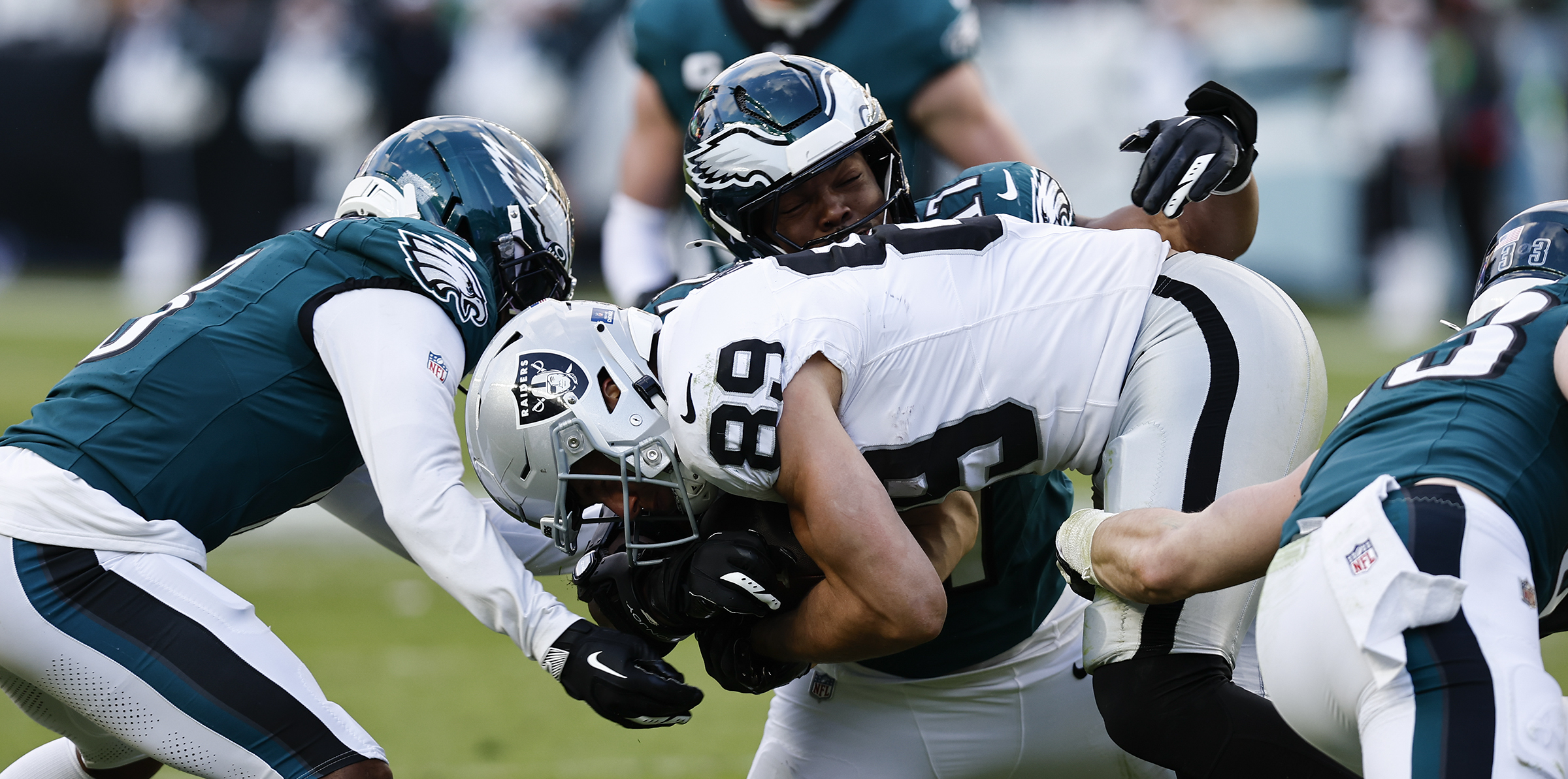
    So on Sunday against the two-win Las Vegas Raiders, the Eagles sent Ojomo, who had a sack and two quarterback hits. And they sent Brandon Graham, who had two sacks while lining up at tackle. And they sent Zack Baun, who had four tackles and an interception. And they sent the Raiders back to the Strip wearing the scarlet letter of having produced the worst offensive performance of any Eagles opponent ever. It wasn’t just that the Eagles won 31-0 — their first shutout in nearly seven years. It was that they allowed the Raiders to gain just 75 yards of total offense.

    Combine those two figures, the 0 and the 75, and you get what was, statistically speaking, the best game any Eagles defense has ever played. You get a game in which the Raiders’ longest gain on any play was 15 yards … on an unnecessary roughness penalty by Cooper DeJean. And as pitiful as Las Vegas was Sunday and has been offensively all season — the Raiders entered the game last in the NFL in points and next-to-last in yardage — you still got a glimpse of what might yet be the Eagles’ saving grace in their quest to win a second straight Super Bowl. As ragged and inconsistent as their offense has been, their defense is good enough to get them there.

    “Our mindset, regardless, is, ‘If they don’t score, they don’t win,’” Ojomo said. “You saw that today. That’s the mindset we’ve got to have. The offense has to have the mindset of not necessarily depending on us, and what you get is that perfect marriage. They do their thing. We do our thing. We’re always going to raise the standard.”

    “If they don’t score, they don’t win,” Moro Ojomo (right) said after Sunday’s victory.

    They have to. Maybe Jalen Hurts, Saquon Barkley, and the rest of the offense will raise their level of play over the next three weeks and beyond. Maybe this dominant performance against a terrible team can allow the Eagles to get their groove from last season back. But to be in their locker room after Sunday’s game was to observe a different collective disposition from one side of the ball to the other.

    Hurts delivered one curt, clipped answer after another in his postgame news conference, as if he were offended that the people in the room had pointed out that he’d committed five turnovers six days earlier against the Los Angeles Chargers. Nick Sirianni, Landon Dickerson, and other members of the offense kept up that same standoffish pose. Meanwhile, the team’s defensive players were ebullient and enthusiastic and generally have been all season. With the exception of the 281 rushing yards they gave up to the Chicago Bears two weeks ago, they have done their part to keep the Eagles in contention in the NFC.

    They let the Eagles get away with victories against the Green Bay Packers and the Detroit Lions. They surrendered a touchdown on the Chargers’ first possession last Monday night, and they haven’t given up another in the 20 possessions since. They have a high standard, and they keep meeting it, and it was telling to hear, for instance, linebacker Nakobe Dean describe a lesson he learned from the unit’s perfect performance Sunday.

    “There are plays we’re going to look back at and be like, ‘Oh, man, we could have [done] this better,’” he said. “I had a blitz. I was too high. I didn’t have great pad level. I got blocked by [running back] Raheem [Mostert], and the last couple of weeks I’ve been running through guys. So it’s like, yes, I have something to build on. I got blocked trying to bull [rush]. Now it’s time to stick/swat. Now it’s time to spin, do something like that. At first, I was thinking I was going to do it from the beginning. It was ‘Do this until they block it.’ Now it’s blocked. Now you can add a little something.”

    Eagles linebacker Nakobe Dean (center) and cornerback Adoree’ Jackson stop Las Vegas Raiders tight end Brock Bowers in the fourth quarter of Sunday’s win.

    The striking aspect of this dynamic — the inconsistency of the offense, the consistent excellence of the defense — is the lack of dissension within the locker room. Dean and Ojomo and their defensive teammates would be well within their rights to resent how much they’ve had to carry the Eagles. But there’s no indication that such a fissure exists. That’s a credit to coordinator Vic Fangio, sure, and it’s a credit to a unit full of young, homegrown players who aren’t surly, cynical veterans, who aren’t mercenaries, who don’t know any better but to ball out.

    “We’re hungry, and we run around, and we want to be great,” Ojomo said. “We want to go and get it. It’s like this perfect thing, but the reality is, we’ve got to do it again.”

    And again. And again. And again into January, if the Eagles are to have any hope of playing into February. A Super Bowl is still possible for them. Their defense will have to drag them there.

  • Forget 2023. The Eagles are in bigger trouble now after their loss to the Chargers.

    Forget 2023. The Eagles are in bigger trouble now after their loss to the Chargers.

    INGLEWOOD, Calif. — So we know what kind of team the Eagles are now. It took 13 games, and to watch most of them was to experience the same amount of pleasure as when you slam your fingers in a door. But they have revealed themselves, and there’s no use disputing the diagnosis.

    The Eagles are an excellent defensive team, and that is all, and that is not enough, not even close. Not with an offense like this. Not with this team’s tendency to commit untimely and inexcusable penalties. Not with so many questions that don’t get answered and so many problems that don’t get solved.

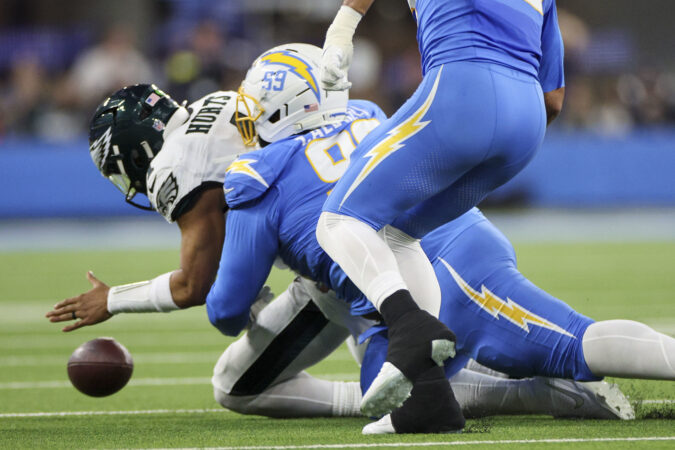
    They lost Monday night to the Los Angeles Chargers, 22-19 in overtime, and we know now that the most basic assessment of their status is deceiving. They still are 8-5, still in first place in the NFC East, still on track to make the playoffs and, in theory, have a shot at winning another Super Bowl in a conference without a dominant team. But anyone who has watched them can see through that spin, that false representation of who they are and how the rest of this season could play out.

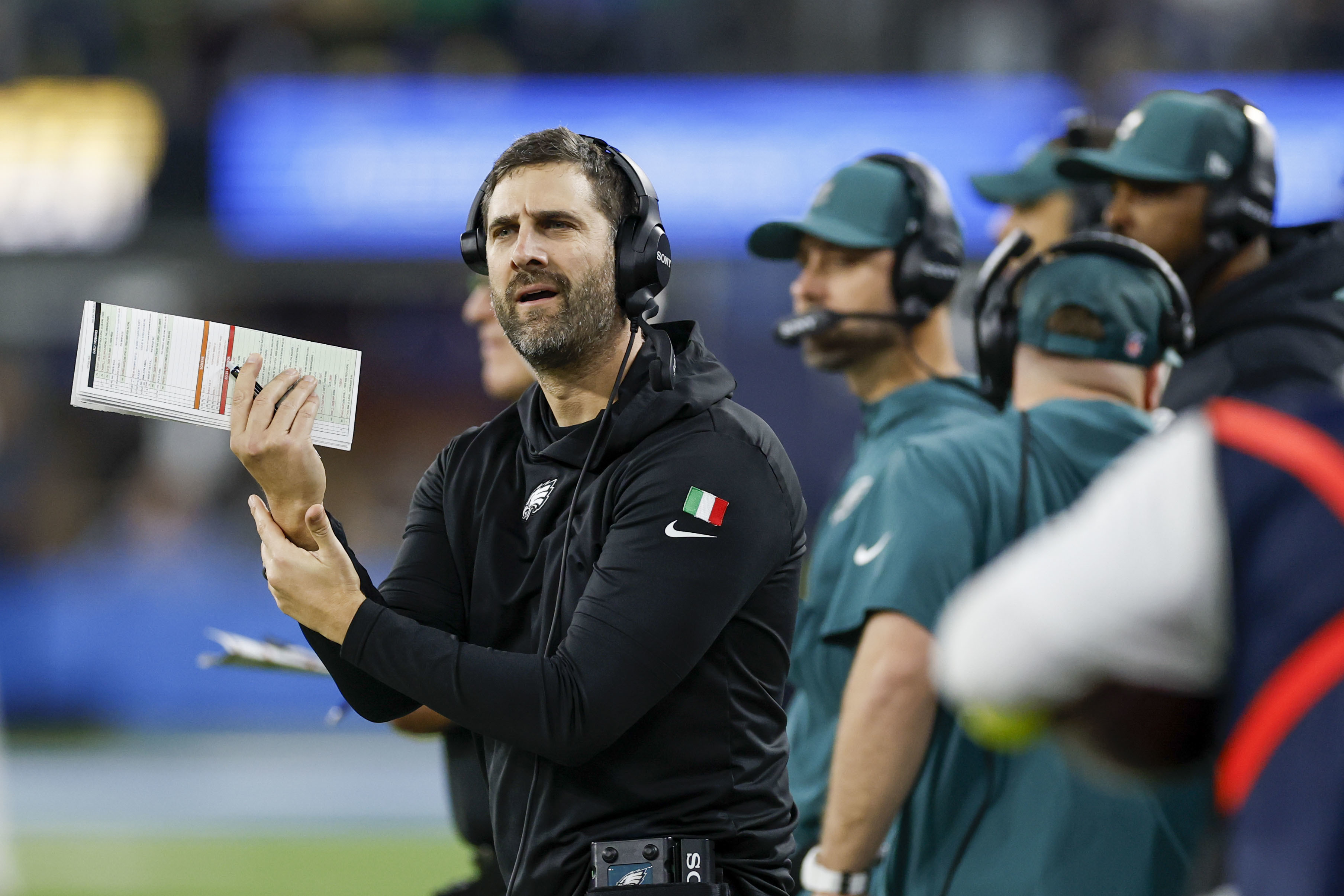
    Coach Nick Sirianni complains to the officials after the Eagles were called for holding late in the second quarter at SoFi Stadium.

    They have lost three straight games, and they are poised for a breakdown as bad or worse than their collapse in 2023. That was six losses in seven games and a franchise that faced an inflection point with its head coach. This is different. This disintegration, if it continues, will be harder and graver, because it will mean their season is transforming from an attempt to defend a championship into a referendum on the coach, the quarterback, and any number of players who were presumed to be part of a talented and tested team’s core.

    “Who said it was going to be easy?” Brandon Graham said. “This year, coming off a Super Bowl, man, all we got to do is make sure we stay together.”

    Easy to say. Challenging to do. The dynamic within the Eagles right now, the divide in performance between one side of the ball and the other, is fertile ground for dissension to bloom. Anyone who has paid attention to them over the last five games could tell you what Monday made clear: that they are regressing on offense, that some of their best and highest-compensated players are letting them down, and that there’s little or no reason to believe that anything about the unit is going to improve in the short term.

    Since their bye five weeks ago, the Eagles have played one good stretch on offense, and that stretch was brief. In their loss to the Cowboys on Nov. 23, they scored 21 points in the game’s first 18½ minutes, then didn’t score again. Those 18½ minutes seem like a mirage now. They marked the only game in a month and a half that the Eagles put up more than 19 points, and the offense’s performance against the Chargers only reinforced the reality that something about it has to change.

    Jalen Hurts was a mess. Kevin Patullo’s play calls are too predictable too often, the offensive line didn’t help Hurts much, and A.J. Brown helped him even less, dropping a deep ball on the game’s first play, then T-Rex-arming an over-the-middle pass in the fourth quarter that led to an interception. But even with those excuses or extenuating circumstances, Hurts was still a mess.

    He threw four interceptions. He failed to see some open receivers and threw wildly to others. His play this season is raising the question of whether, assuming he remains their starting quarterback for several more years, the Eagles will be able to win another Super Bowl, or even come close again, if they don’t surround him with the best roster in the NFL.

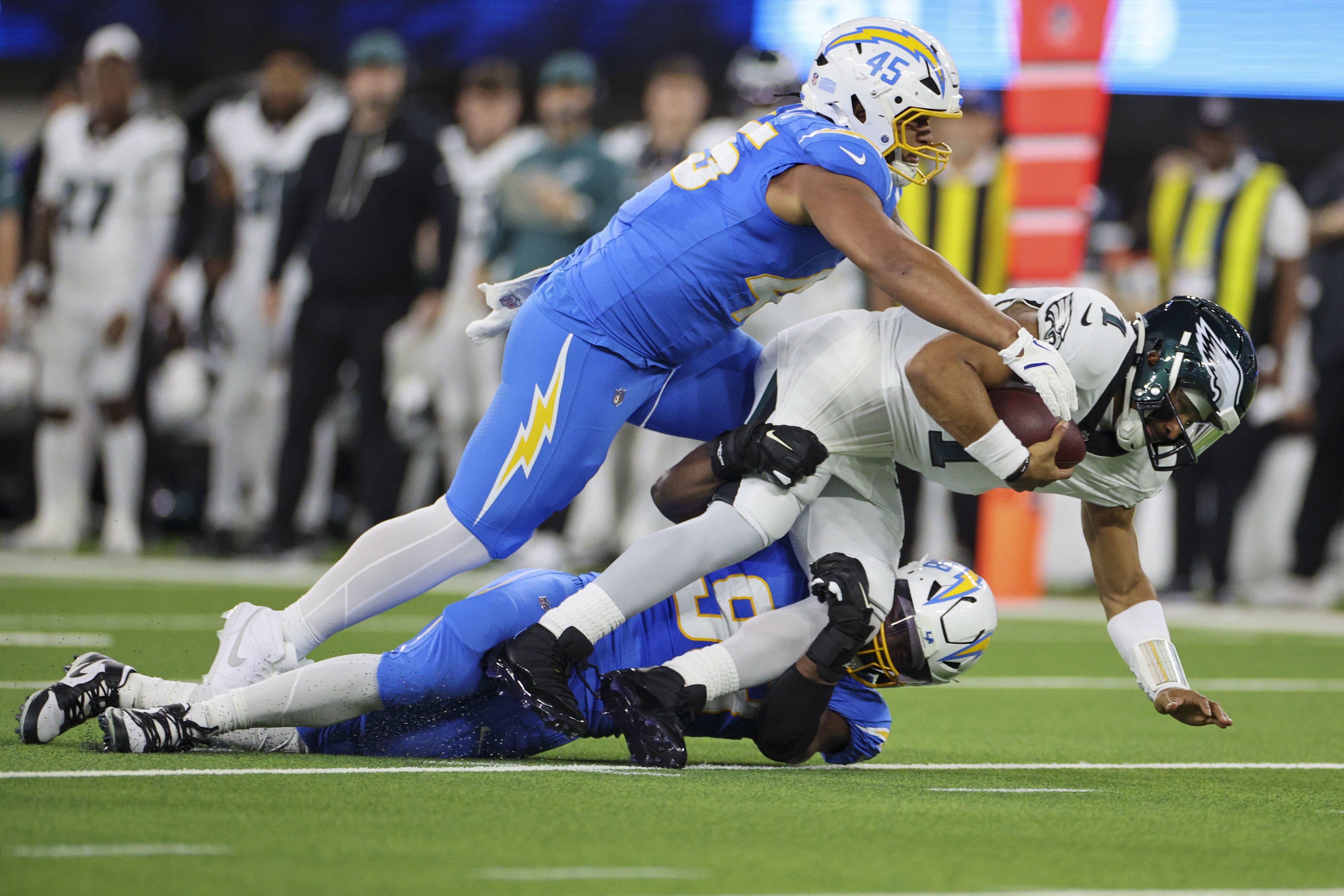
    Jalen Hurts is sacked by Chargers linebackers Tuli Tuipulotu and Odafe Oweh during the first quarter.

    We’re getting to the point where removing Hurts and inserting Tanner McKee would be helpful, just to create a control in this ugly experiment that is the Eagles offense. It’s unlikely to happen, and it’s possible, even probable, that such a change would do more harm than good. It would create an instant controversy, no doubt. Hurts might take the demotion as an insult, in the same way Carson Wentz viewed the decision to draft Hurts in 2020, and demand to be traded. There are an infinite number of scenarios that could play out from such a seismic move. One of them, though, could be that the Eagles would acquire some certainty about who and what have been the real problems with the offense all along.

    That decision would come with enormous risk for the man who presumably would make it. Nick Sirianni would be acknowledging that he and his handpicked offensive coordinator can’t fix Hurts, can’t help him get back to being someone who at least didn’t hurt the Eagles’ chances of winning. Once Sirianni crosses that bridge, there’s no going back, and there’s nothing Jeffrey Lurie is less willing to forgive than a head coach who fails to allow the franchise quarterback to thrive.

    “The people we have in there have won a lot of football games,” Sirianni said. “Right now, we’ve lost three in a row. Again, I saw a great, great week of preparation, and I’m confident in the coaches that we have, the players that we have, the owner that we have, the front office that we have — that we’re built to overcome. We know how to do that.”

    Then they’d better get to doing it. Fast. No, this wasn’t just another loss for the Eagles, and this is no small slump. This is a test for everyone in that locker room. And let’s be honest here: Have they given anyone any reason to believe that they’re going to pass it?

  • The narrative around A.J. Brown, Tyrese Maxey vs. Allen Iverson, and other thoughts …

    The narrative around A.J. Brown, Tyrese Maxey vs. Allen Iverson, and other thoughts …

    First and final thoughts …

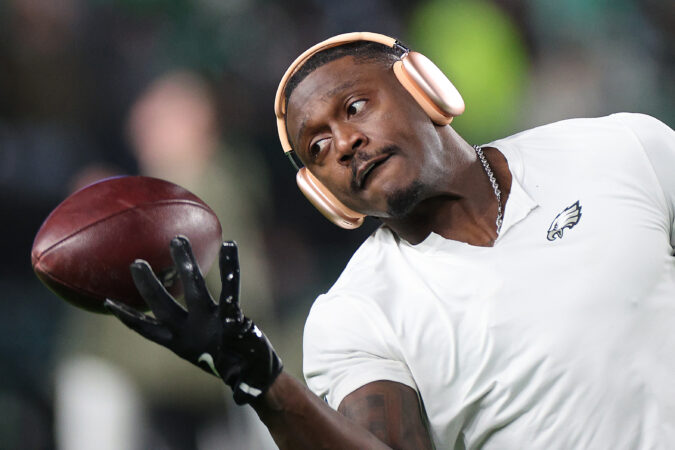
    It has been a few weeks since A.J. Brown has been a major topic of consternation and conversation around the Eagles. The easy explanation for the relative quiet is that Brown hasn’t posted anything on social media lately that would get people to raise their eyebrows. The even easier explanation — and maybe so easy that it’s a cheap shot against Brown — is that he caught 18 passes for 242 yards and three touchdowns against the Bears and the Cowboys, and even though the Eagles lost both of those games, Brown must be content that he’s finally getting his numbers again.

    That narrative — that Brown is only about Brown, and his selfishness damages the Eagles — has never held up under much scrutiny. Should he stay off social media more? Of course he should. But they have a 53-18 record (in regular-season and postseason games), have won a Super Bowl, and reached another since acquiring him. At least 29 other teams in the NFL would sign up for that level of damage.

    What’s more, there’s nothing inherently wrong with Brown wanting the ball more in the name of benefiting himself and benefiting the Eagles. The two goals aren’t mutually exclusive, and it’s understandable that Brown would raise a stink with Jalen Hurts, Kevin Patullo, or both if he didn’t believe he was being used properly or frequently enough.

    Think of it like this: Brown is to the Eagles’ offense as an outstanding reporter or writer is to a news organization, and Patullo and Hurts are his editors. If the editors relegated that reporter to the least important and relevant assignments — when he has produced and is capable of producing well-read, Pulitzer-caliber journalism — he would be within his rights to tell them, Hey, you aren’t maximizing my skills, and it’s hurting the whole news operation, too.

    Would that make him selfish? Maybe. Would it make him self-interested? Yeah. Would it make him right? Absolutely.

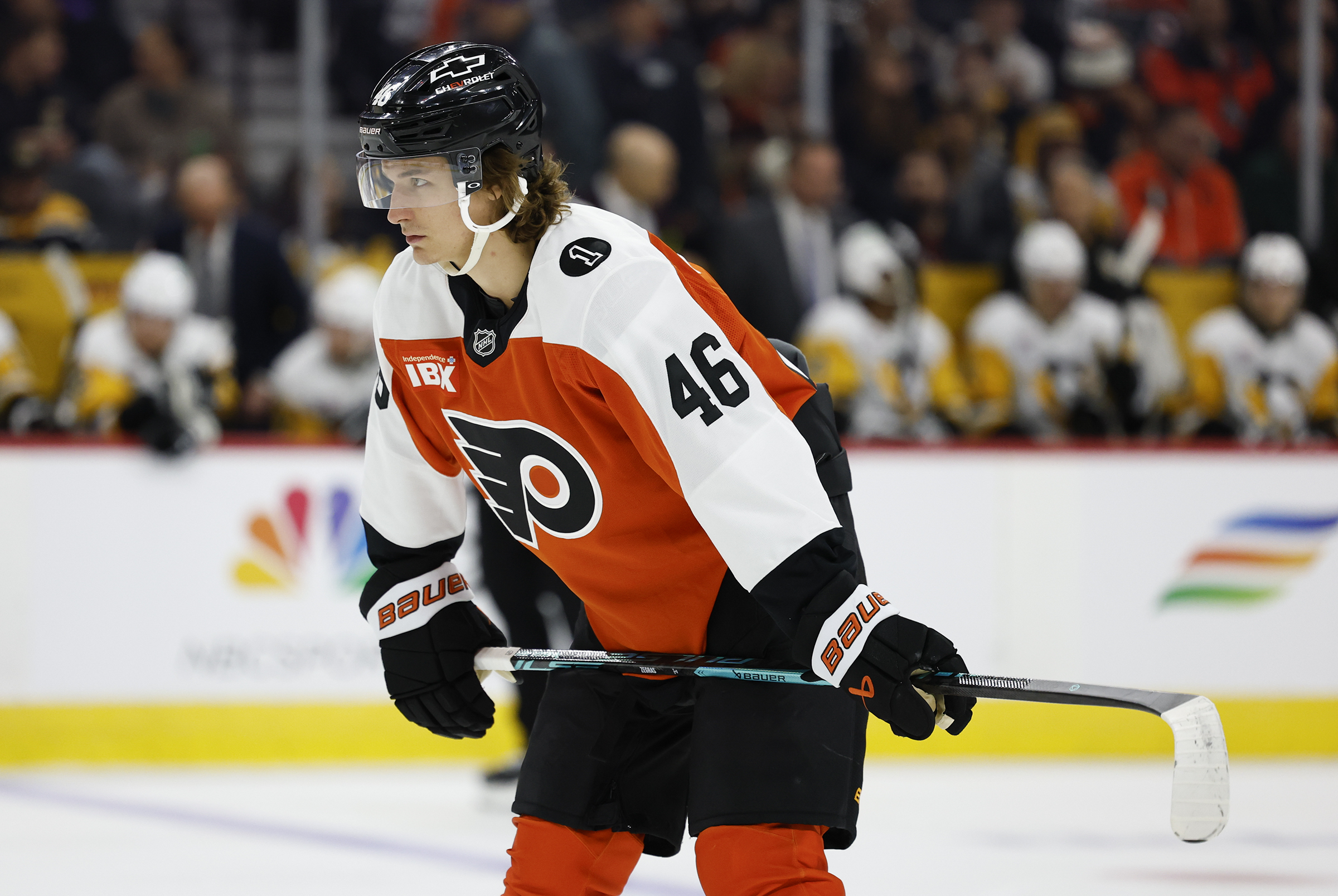
    Maybe tap the brakes on the Trevor Zegras anointment?

    Have you forgotten Andrew MacDonald?

    Trevor Zegras has been terrific so far, but before anyone starts thinking about making him a Flyer for life, can he get through half a season here first?

    Kyle and the cash register

    The very simple reason to be optimistic that the Phillies will re-sign Kyle Schwarber comes down to three words.

    Butts in seats.

    Yes, Schwarber has improved as a hitter over the last two years, putting the ball in play more often and raising his batting average without sacrificing any of his power. Yes, he’s an outstanding clubhouse leader. And yes, his presence is necessary if the Phillies are to get over their October bugaboos, get back to the World Series, and win it. Those factors make him vital to the franchise.

    But a baseball season, despite the attention and excitement that the playoffs generate, is not the playoffs alone. The 162-game march to the postseason matters too. It matters a lot. And Schwarber has overtaken Bryce Harper as the player on the Phillies roster whose at-bats are true can’t-miss theater. If you’re at Citizens Bank Park on a chilly night in early May, waiting to get your hot dog and beer, the chance to see Schwarber blast one 450 feet is probably one of the reasons you’re at the ballpark in the first place. And if he comes up and you’re still waiting, you might just hop out of that long line to make sure you don’t miss one of his lighting bolts. He’s the guy who makes you stop and watch.

    Sports is still first and foremost an entertainment product, and Schwarber provides more entertainment night to night than any other Phillies player. John Middleton isn’t likely to let someone steal such an asset away, for any price. He’d be a fool if he did.

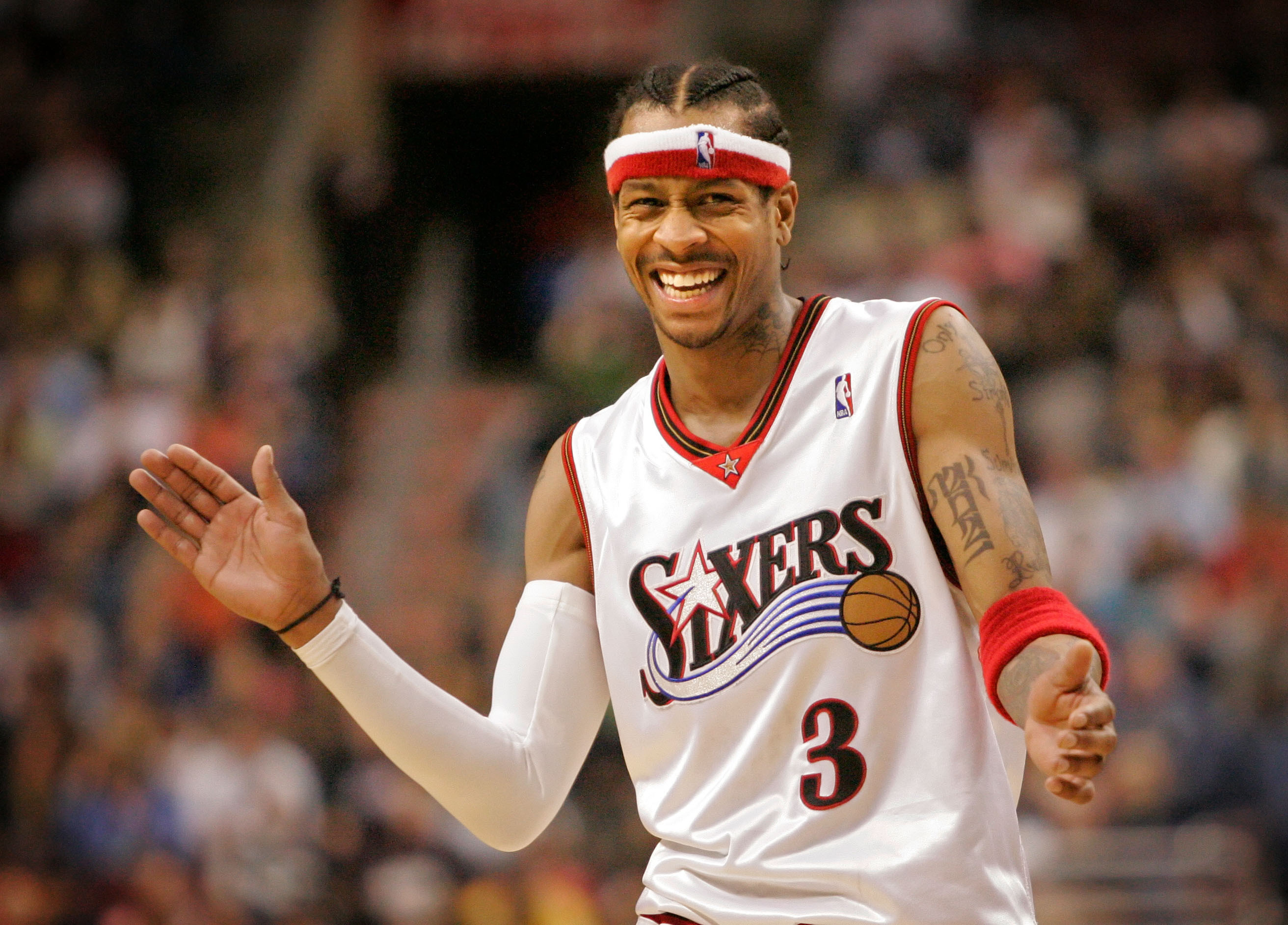
    Allen Iverson was a 40-plus-minute man before the term “load management” entered the NBA vernacular.

    Maxey and A.I. as iron men

    Ahead of the 76ers’ matchup in Milwaukee against the Bucks on Friday night, Tyrese Maxey was leading the NBA in minutes played per game. His average: 40.0.

    All kudos to Maxey for bringing it every night for as long as he does. But just for some perspective, it’s worth noting that for a 10-year period, from the 1998-99 season through the 2007-08 season, Allen Iverson never averaged fewer than 40.8 minutes. And over his six seasons from 2001 through 2007, he averaged 42.5 minutes and led the league in minutes five times. When the man said he played every game like it was his last, he meant it.

  • If you haven’t been paying attention to the Eagles’ troubles, let’s get you up to speed

    If you haven’t been paying attention to the Eagles’ troubles, let’s get you up to speed

    One of the regrettable developments of the modern media age is that, too often, coverage of a particular subject — whether it’s sports, politics, or whatever strange currents were vibrating between Robert F. Kennedy Jr. and Olivia Nuzzi during the summer of 2024 — presumes that news consumers already are intimately familiar with a story’s background and details.

    The truth is that not everyone, not even most of us, can know the ins and outs of every single news item that pops up, slot-machine-style, on our smartphones and social media scrolls. People are busy and preoccupied, especially this time of year. They have jobs to work, bills to pay, kids to raise, decorations to put up, gifts to buy, and gatherings to plan, and they’re going to spend whatever free time they have left watching the latest episodes of Stranger Things, because holy mother of mercy are those episodes long.

    Here at The Inquirer, we’re not about to make that same mistake. Sure, it might seem like everyone in the Philadelphia area has a firm grasp of all the problems plaguing the Eagles these days. But there are plenty of people out there who either don’t follow the Eagles closely or pay just enough attention to wonder why fans and media are making such a fuss about them. Didn’t they just win the Super Bowl? And isn’t their record pretty good? And don’t they still have that cutie-patootie Cooper DeWhatshisname?

    So in the interest of getting everyone up to speed on the big issues around this team ahead of its game Monday night against the Los Angeles Chargers, here’s a quick review of what’s been happening. Once you read this summary, you’ll be able to speak with total confidence about the Eagles at any holiday party, even to those insufferable neighbors whose Christmas lights are brighter and redder than a Kenny Rogers Roasters sign.

    Let’s start with Nick Sirianni, the Eagles’ coach. Over his four-plus seasons, Sirianni has pulled off the remarkable feat of leading the team to the playoffs four times, winning one Super Bowl, reaching another, compiling the fifth-highest winning percentage among the 537 head coaches in the 105-year history of the National Football League, and still convincing most Eagles fans that he has no idea what the hell he’s doing. In fact, many Eagles fans wonder exactly what Sirianni does do, since he does not call plays on offense, does not have much to do with the defense, has minimal say-so over personnel matters, and has instilled so much discipline and precision in his players that they have committed the fifth-most penalties in the league this season.

    Eagles offensive coordinator Kevin Patullo has received a lot of heat from fans because of the offense’s struggles this year.

    The offense has struggled, and coordinator Kevin Patullo has come under fire for his rudimentary play design, his unimaginative play calling, and his inability to persuade quarterback Jalen Hurts to throw to receivers who aren’t already standing alone in an empty cornfield. The public anger at Patullo became so intense that, on the morning after the Eagles’ recent loss to the Chicago Bears, his house was egged — a stupid, childish, and completely indefensible act, especially since there’s no evidence that Patullo gave out apples and black licorice on Halloween this year.

    Hurts has faced his share of criticism, as well, and not merely because wideouts A.J. Brown and DeVonta Smith could run their routes, recite the first four stanzas of The Waste Land, then rerun their routes — and Hurts still would be holding the ball, waiting for them to get really open. The Eagles used to have Hurts carry the ball a lot. But not anymore. For a couple of weeks, the Eagles had Hurts take more snaps from under center, which allowed them to use a wider array of plays. But not anymore.

    The general belief is that Hurts isn’t totally comfortable and on board with those tactics, so they have been phased out of the offense, much like the entire running game has. Hurts also has taken to speaking during postgame press conferences as if he were cracking open fortune cookies and reading the messages, and his admiration of Michael Jordan and his affiliation with the Jordan Brand have become such a huge part of his persona that it won’t be long before he starts answering the question, How’s it going, Jalen? by turning to an invisible TV camera and saying, I took that personally.

    Brown himself has been the source of a good bit of controversy for his frequent, cryptic social media posts — an unnecessary distraction, given that retweeting a Mike-Myers-as-Dr.-Evil THROW ME A FRICKIN’ BONE HERE meme would have sufficed. People have been debating whether Brown is a team-first guy who is using extreme means to call attention to the Eagles’ lousy passing game or a me-first diva who is most happy when he gets his. No one seems to accept that the correct position to take on the matter is Yes.

    Meanwhile, Saquon Barkley has morphed into DeMarco Murray. The offensive line is beat up, hasn’t been blocking well even when its members were reasonably healthy, and lately has been failing to push Hurts’ tush. The defense just lost its most talented player to a shoulder procedure, still hasn’t solidified its No. 2 cornerback spot, and this week attempted to solidify that spot not by putting Cooper Patootie there but by hoping to bring back a nearly-35-year-old former No. 2 cornerback. And Jeffrey Lurie would like to see if all these issues might be resolved by having someone else pay to build him a domed stadium.

    That about does it. Now you have the skinny on the 2025 Eagles. You wouldn’t know, from this synopsis of their season, that they’re 8-4, in first place in their division, and likely to be favored in four of their remaining five games. But at least you’ll have the requisite information and context to hold your own in any conversation about them. Unless your Kenny Rogers neighbor asks for your thoughts on going for two when you’re down nine. In that case, make a beeline for the bar and don’t look back.

  • Nick Sirianni defended Kevin Patullo, but it might not matter if Jeffrey Lurie decides he must act to save the Eagles’ season

    Nick Sirianni defended Kevin Patullo, but it might not matter if Jeffrey Lurie decides he must act to save the Eagles’ season

    It was easy to catch the chants rising out of the Lincoln Financial Field stands Friday, a call for change that feels closer and closer to happening, no matter what Nick Sirianni might say, no matter how much the Eagles head coach might stand behind his friend and offensive coordinator Kevin Patullo. Those “FIRE-KEVIN” singsongs were clear to everyone inside the stadium and to a nationwide streaming audience on Prime Video.

    Just like the Eagles’ 24-15 loss to the Chicago Bears and another ragged offensive performance, those chants and that atmosphere of frustration and disgruntlement were a sign that this season is reaching a tipping point. And for all the loyalty to Patullo and defiance to reality that Sirianni flashed after the game, his words might not end up meaning much.

    “No, we’re not changing the play-caller,” Sirianni said, “but we will evaluate everything.”

    The most important word in that sentence from Sirianni, though, was we, because we could end up including team chairman Jeffrey Lurie and vice president Howie Roseman, and those members of we have filmed this movie before — and not that long ago. Sirianni was equally steadfast in 2023 about taking up for then-defensive coordinator Sean Desai, but, sure enough, Sirianni’s defense of him was about as strong and effective as the Eagles’ defense under Desai and his replacement, Matt Patricia. That is, not very.

    Now Patullo has become the latest poster child for the Peter Principle. He’s gregarious and friendly and has spent a lot of time in the NFL coaching quarterbacks but had spent no time calling plays until Sirianni turned the offense over to him. Now a unit that boasts some of the most talented and accomplished and highly paid skill-position players and offensive linemen in the league is among the worst offenses in the league. Twelve games this season, and the Eagles have scored 24 points or fewer in eight — two-thirds — of them, including the last four.

    Lurie and the Eagles aren’t about to bench Jalen Hurts or A.J. Brown or Saquon Barkley or anyone else. And even if Patullo is hamstrung as a play-caller by Hurts’ height, by his reluctance or inability to throw the ball into tight windows of space, by the injuries and spotty play of the offensive line, he also hasn’t shown that he’s creative and imaginative enough to overcome those flaws and shortcomings in the offense.

    Sirianni’s mantra, since his arrival, has been that players make plays, that a wide receiver or a lineman or a tight end, if he’s coached well enough in the fundamentals, ought to prevail in his one-on-one matchup against a cornerback or a defensive end or a linebacker. The problem for the Eagles is that they’re winning fewer of those micro-contests, those games within the game, than they did a year ago, and Patullo isn’t helping them win more of them.

    A simple question was put to tight end Dallas Goedert after Sunday’s game: How often do you guys feel like you have a strategic advantage on a defense, where you’re going to fool them or you’re going to run something that they don’t see coming?

    Goedert paused for five seconds, then answered.

    “Tough question. I don’t know if I really have an answer for that one. We’ve got to make plays. We’ve got to execute better. And all 11 have to be on the same page.”

    Something is missing offensively for the Eagles, and it might be Kevin Patullo who will have to answer for it.

    Barkley refused to chalk up the Eagles’ struggles to their strategy or system. “I don’t really look into plays like that,” he said. “The times that we have successful plays, it’s not just because we have a strategic edge. We’ve got guys making plays. We’ve got coaches making great calls.

    “I don’t want to put words in your mouth, but I know what everyone is probably saying. When you go back and watch the film, we’ve got some great calls, and we just didn’t make the plays, or we’ll have a penalty. We keep seeing the same stuff. I get up here and say the same thing, and it’s not like I’m just feeding you guys these answers to, I don’t know, be a pro. But it’s the truth, and I guarantee Jordan [Mailata’s] saying the same thing. Zack [Baun’s] saying the same thing. Lane [Johnson’s] saying the same thing. The reality is, we’ve got to go do it.”

    There is a chicken-or-egg element to the Patullo question. No one, other than Patullo himself, can say for certain whether he’s orchestrating this offense to account for Hurts’ weaknesses, whether he’s calling what Hurts is comfortable with and capable of carrying out, whether Hurts’ limitations are limiting Patullo’s options. There’s no getting around the reality that the Eagles have made Hurts and the passing game the locus of their offense before — early in 2021, early in 2024 — and each time, they shifted their play selection toward running the ball, toward taking it out of Hurts’ hands.

    Last season, they won a championship with that approach because Barkley and the offensive line were that good, that dominant. The Eagles could afford to be predictable then; their opponents knew what was coming and still were powerless to stop it.

    Now the Eagles’ opponents know what’s coming, know how to stop it, and do stop it. Lurie has always placed a premium on having a team that could score lots of points and do so relatively easily, and he can’t be happy with this two-game losing streak, this season-long slog, and the offense’s contributions to those developments. What had been a slump is now a slide and could yet be another collapse, and Lurie isn’t likely to let his head coach’s assertions and assurances stand in the way of a change that he deems necessary to save a shot at another Super Bowl.

  • Book it: The Eagles’ loss to Dallas will put their coaches under Jeffrey Lurie’s microscope

    Book it: The Eagles’ loss to Dallas will put their coaches under Jeffrey Lurie’s microscope

    There are games in the NFL that have repercussions. The Eagles’ 24-21 loss Sunday to the Cowboys — a game in which they blew a 21-point lead, throttled back their offense after taking that lead, and committed one egregious mistake after another — is likely to be one.

    Those repercussions might yet be good for the Eagles. The NFL is so parity-ridden, each team separated from the other by such small differences, that it’s possible that Sunday’s meltdown will inspire the Eagles to clean up their sloppy play, beat the Chicago Bears on Black Friday, and embark on another deep playoff run. They’re still going to win the NFC East, at a minimum. It will be difficult to call such a season, no matter its final endpoint, a complete failure.

    But Eagles chairman Jeffrey Lurie stopped judging his franchise by that standard a long time ago. Sunday’s loss went from See, the team is rounding into form to HOLY HELL EVERYONE’S WORST FEARS HAVE BEEN CONFIRMED in a matter of minutes. That sudden reversal of fortune, though, really had been the culmination of a steady accumulation of inconsistent performances, injuries to important players, and consternation both inside and outside the locker room.

    Those conditions are the kind that, in the past, have compelled Lurie to act. It is, of course, true that the offensive line’s decline is a huge factor in the Eagles’ overall regression, maybe the biggest factor, and that reality, one could argue, should absolve Nick Sirianni, Kevin Patullo, Jalen Hurts, and anyone else for an 8-3 team that feels like it’s 3-8. But it’s naive to think, given the nature of Sunday’s loss and the arc of this season, that Lurie isn’t taking a long, hard look at the coaching staff, Sirianni included.

    Raising such questions might seem premature or unnecessary. It’s not. There are reasons for Sirianni to be worried here — not necessarily that he’s going to be fired after the season, but that he’s more vulnerable than he once was. Nine months after winning the Super Bowl, six months after getting a contract extension, he ought to understand that, if recent history is any indication, there’s a lot at stake for him over the next 6-12 weeks. Consider:

    1) The Eagles aren’t playing offense the way Lurie has generally wanted his teams to play offense.

    This assertion is obvious, and it’s based on the Eagles’ production, or lack thereof. But it’s also based on the Eagles’ style of play.

    For years, dating to the Andy Reid era, the Eagles made their bones by remaining aggressive in their play-calling even after taking a big lead, by using analytics to set themselves apart from the rest of the league. Sometimes, it cost them games. In February 2018, it won them their first Super Bowl. Lurie loves that approach.

    The last two years, however, the Eagles have turned themselves into a full-fledged running team. Lurie is not necessarily anti-running the ball — not when it leads to the big plays and the Super Bowl victory that Saquon Barkley and that dominant offensive line delivered last season. But those plays haven’t materialized and the line hasn’t dominated this season, and Sirianni’s response has been to lean into being uber-conservative. He doesn’t call plays, no, but the offense is his, and he hasn’t prioritized piling up points. He has prioritized protecting the football, eliminating turnovers, and walking a thinner line to victory. He has tempted fate by trying to win games in a manner Lurie is inclined to reject once it fails.

    2) Lurie has never hesitated to insist upon coaching changes when he has thought them necessary.

    After the 2019 season, for instance, the Eagles parted ways with then-offensive coordinator Mike Groh and then-wide receivers coach Carson Walch. A year later, after the team’s disastrous 4-11-1 season in 2020, then-head coach Doug Pederson was fired.

    For the moment, Patullo is a great shield for Sirianni. Everyone knows that Patullo is the Eagles’ offensive play-caller. Everyone knows that he’s a neophyte when it comes to this role and its responsibilities. And everyone can see that the Eagles offense has not been good this season, even though it has plenty of superstar-level players to whom Lurie is paying superstar-level dollars. So if the Eagles offense remains dysfunctional — and it really hasn’t been functional at all, not to the degree it was expected to be — Patullo will be and has been the coach who bears the blame, and a layer of protection will have been removed from Sirianni.

    Eagles quarterback Jalen Hurts on the sideline with head coach Nick Sirianni (right) during Sunday’s loss in Dallas.

    3) Lurie expects his franchise quarterback to grow into greatness, then remain there.

    One of the problems that the Eagles’ play-not-to-lose strategy creates for Sirianni is the implication that Hurts can’t be trusted or isn’t at his best when asked to operate a more dynamic, more daring offense. Lurie doesn’t care and doesn’t want to hear that the Eagles’ coaches feel like they have to run a Frankenstein’s monster style of offense, patching together parts from several systems just to maximize Hurts’ skill set. He wants his franchise quarterback to be worth the franchise-quarterback money he’s paying him, and if that player isn’t meeting those expectations, Lurie will greenlight a search for a replacement only as a last resort.

    Remember: Even after Carson Wentz’s horrible 2020 season, the Eagles fired Pederson first. They were willing to make it work with Wentz until they finally understood they couldn’t. Only then did they trade him.

    4) Sirianni’s personality is different from Pederson’s, and that difference doesn’t help Sirianni.

    Pederson was a go-along-to-get-along kind of guy, at least as much of one as an NFL head coach ever is. But after he won the Super Bowl, he started to assert himself. He wrote his autobiography. He sought more power within the organization, at least with respect to his assistants. Lurie eventually disabused him of those notions.

    Sirianni is naturally more emotional and combative than Pederson. He, too, has won a Super Bowl, and his winning percentage is among the best of any head coach in league history. It’ll be interesting to see whether he’ll have to quell his assertiveness with Lurie and Howie Roseman — and if he’s able.

  • The Eagles had problems with the Tush Push against the Lions. Nick Sirianni has to adjust his coaching accordingly.

    The Eagles had problems with the Tush Push against the Lions. Nick Sirianni has to adjust his coaching accordingly.

    Seven hundred and twenty-four days ago, Nick Sirianni stared into a bank of TV cameras and dared the NFL — hell, dared the whole world — to stop the play that the Eagles had mastered and no one else in pro football had. It was late October 2023, and while holding a seven-point lead against the Miami Dolphins, the Eagles ran a quarterback sneak, a Tush Push, on fourth-and-1 with 10 minutes, 1 second left in regulation. That wasn’t the striking part. Neither, really, was the fact that Jalen Hurts powered forward for a first down. The striking part was that the Eagles were on their own 26-yard line, a set of circumstances that made a bold postgame assertion from Sirianni all the more memorable.

    “If everybody could do it,” he said that night, “everybody would do it.”

    Well, there the Eagles were Sunday night, and for once, the Tush Push was an issue for them. For once, it wasn’t automatic. For once, its magic was gone, and of all the ramifications of the Eagles’ 16-9 victory over the Detroit Lions, that relative demystifying of their signature, unstoppable play was among the most concerning. For these last few years, the Tush Push had given them an innovative and significant advantage over their opponents, had meant the Eagles really needed just 9 yards to get a first down, because the 10th yard was a fait accompli.

    Nothing was that easy Sunday. The Eagles succeeded just once — Hurts’ second-quarter touchdown, the team’s only one of the game — in their six sneak attempts. They false-started. They were stuffed. With 2:54 left in regulation, with the Eagles up 10 and facing fourth-and-1 from their own 29-yard line — a situation similar to the one they confronted against the Dolphins in ’23 — Hurts went nowhere, and that failure invited the Lions back into the game by handing them at least a chance to cut the lead to a single score.

    “I’d do it again over and over,” tackle Jordan Mailata said. “I’d take us any day. Now, we’ve got to go back and watch that play and see what went wrong. But I’d still take us any day of the week. When you have a defense like ours, it does make it easier to go for it on fourth down. There’s the trust and faith in the guys up front, but also, if we don’t get it, there’s the trust and faith in the guys on defense.”

    That was the knee-jerk justification for a call that, in the context of this particular game and the condition of this particular Eagles offensive line, Sirianni never should have made. When he had the Eagles go for it from their own 26 nearly two years ago, his decision was surprising because it was so unconventional at the time. He was correct then: The Eagles were the only team that could run the Tush Push with so high a rate of success, and they could because of the players they had blocking on the play: Jason Kelce, Lane Johnson, Mailata, all healthy.

    Jalen Hurts has been frequently working behind a different version of the O-line than the dominant one that patented the Tush Push.

    Sunday was so far from that same scenario. Johnson was ruled out at halftime with a foot injury, and center Cam Jurgens, having missed the previous two games with a knee injury and already playing through the painful effect of offseason back surgery, had exited, too, with 5:06 to go. So two backups, Fred Johnson and Brett Toth, were subbing for them. And the NFL and its officials and a chorus of complainers are now watching every twitch and subtle hint of movement every time the Eagles run the Tush Push. And now a play that was once a slam dunk is something closer to a midrange jump shot.

    “They’re homing in on it,” Hurts said. “They’re very strict on the guard and the center and how they operate. They’ve got their eyes on it, and we’ve got to go out there and be as clean as possible.”

    This sliver of doubt when it comes to the Tush Push might seem a small matter. It isn’t. The play’s reliability was a tangible symbol of the strength of the Eagles offense: the manner with which they controlled the line of scrimmage. Lane Johnson’s warning last month, after a loss to the New York Giants, about the offense becoming “predictable” was in that sense silly. No offense in the NFL last season was more predictable than the Eagles’. Everyone knew Saquon Barkley was getting the ball, and still no one could stop it.

    This season, the worry for a team that is 8-2 and atop the NFC is simple: That inevitable dominance hasn’t been there, and that reality has to change the calculus when it comes to the Eagles’ trademark aggressiveness in their play-calling. They could afford to go for it anytime, anywhere in short-yardage situations when they had the best collection of blockers in the league. The line’s regression should compel Sirianni to coach the team he has right now, not the one he used to have or the one he wished he had, and over the rest of the season, he has to weigh how much he asks of a defense that is carrying the Eagles, that allowed them to get away with two subpar offensive performances against two playoff-caliber teams.

    “Always. Always. You always think about those things,” he said. “You think about how it plays in-game, but you also think about your past experiences. Everything is taken into account. But you definitely think about how it’s playing in-game. … Any time we don’t get a fourth-down conversion, I’m going to put that on myself. I’m always going to be hypercritical of myself. Obviously, if I had known we weren’t going to get it, I would have punted it.”

    He couldn’t have known it, but he could have suspected it, and he has to start asking himself a question that he once didn’t have to contemplate. Of course, if everybody could do the Tush Push, everybody would. But what if the Eagles can’t?