Author: Scott Sturgis

  • 2026 Volkswagen ID.4: Large and in charge?

    2026 Volkswagen ID.4: Large and in charge?

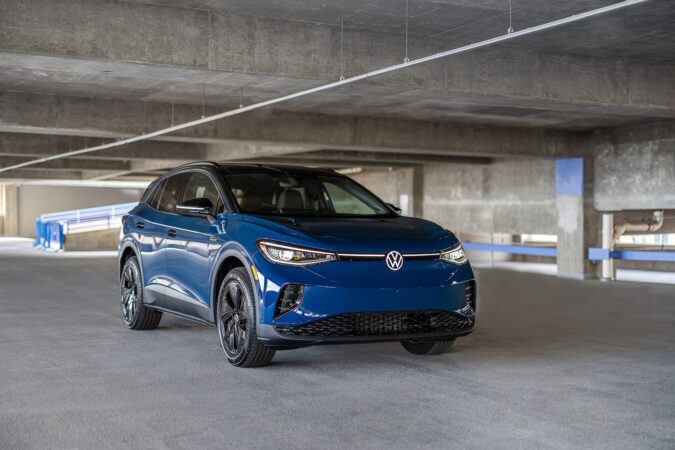
    2026 Volkswagen ID.4 AWD Pro S: Bigger is better?

    Price: It starts at $54,095 for this higher-end model tested.

    Conventional wisdom: Car and Driver likes the ID.4’s “good price, good range, good space.” They complained that the “infotainment system is still wonky, base model lacking in range, it’s not the GTI of EVs.”

    Marketer’s pitch: “The future of driving is here. And it’s electric.”

    Reality: The driving experience can be awkward, but there may be another big reason to avoid ID.4.

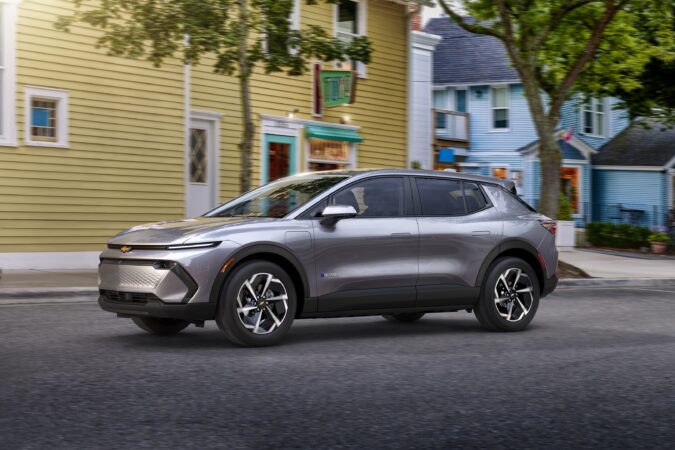
    Catching up: So we’ve already tested a bargain-priced Chevrolet Equinox, and a Hyundai Ioniq 5 that’s a fairly nice price match for the ID.4.

    What’s new: After upgrades in performance for 2024, the ID.4 only gets an adapter for Tesla Superchargers for the 2026 model year.

    Competition: In addition to the above models, there are the Ford Mustang Mach-E, Honda Prologue, Kia EV6, Mini Countryman EV, Subaru Solterra, and Tesla Model Y.

    Up to speed: Like most EVs, the ID.4 makes quick work of getting on the move. I could pull in front of cars I would never consider when driving most gasoline-engine vehicles, and passing could be a real treat.

    The 335 horses available in the all-wheel-drive version tested get the EV SUV to 60 in a quick 4.8 seconds, according to Car and Driver.

    Rear-drive models offer 282 horses and a 0-60 time of 7.3 seconds.

    Back down again: The ID.4 has a one-pedal feature, which allows for driving without using the brake much at all. Unfortunately, it required so much foot pressure to get moving that it made me nervous in parking lots, worried I would overcompensate and smash into something. Without that feature on, pulling out is easier, but when it’s time to slow down, the brakes are exposed as the indifferent bastards that they are.

    Shifty: The twisty stalk gear selector in last week’s Hyundai Ioniq 5 impresses, but a similar setup in the ID.4 irked me. The type on the ID.4 is subtle and easy to misunderstand; Hyundai makes it obvious what to do with theirs.

    On the road: Drive mode control is tucked away in the touchscreen, but it’s easy to get to and to follow. Sport mode did tighten up the steering and boost the acceleration but the suspension became so firm I felt like I was driving a brick, and the ID.4 hit potholes with a thud.

    Because the ID.4 is larger, the drive experience had a Jeep feel without any of the retro touches or quirky handling that add a sense of fun. Even the ID.Buzz minivan is a better drive.
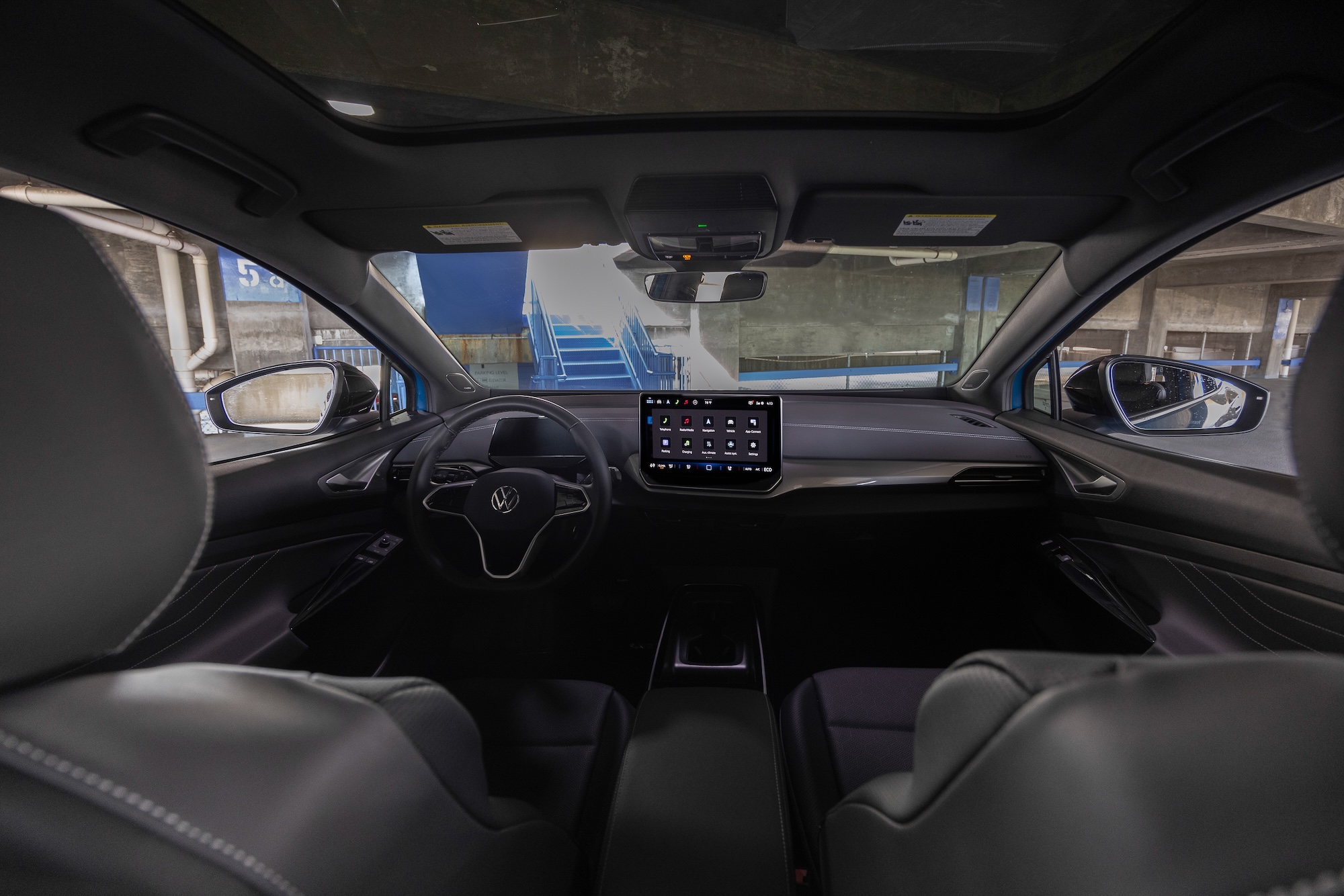
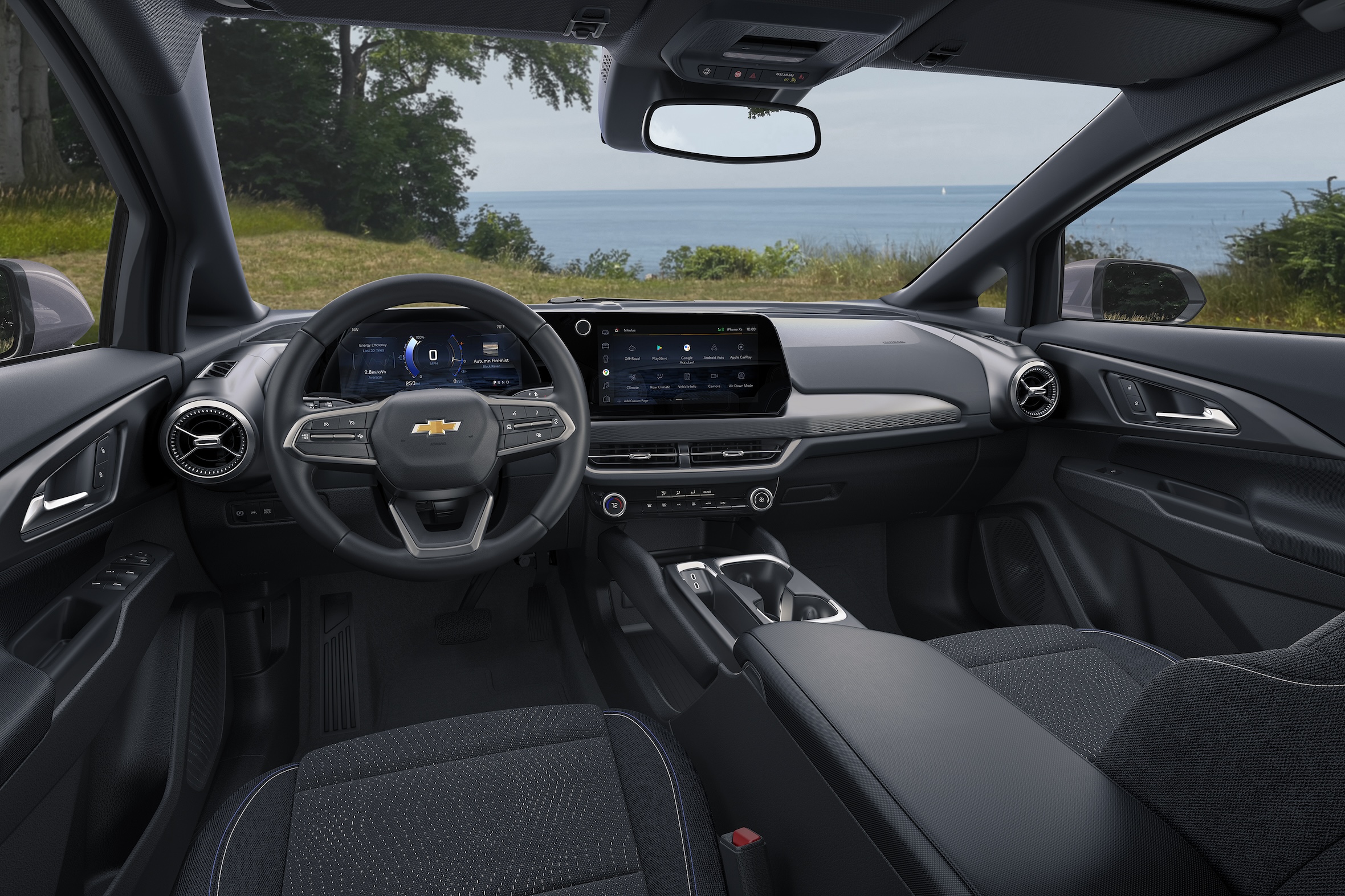
    The 2026 Volkswagen ID.4 interior is definitely a hip place to be in all black, but function and comfort are lacking.

    Driver’s Seat: The speedometer and gauges also disappoint. The diminutive through-the-steering-wheel display can be difficult to inform at a glance. The long-ago Chevrolet Spark and Sonic sported a similar motorcycle-esque unit, but those were easy to read.

    Seat comfort is also lacking; the Driver’s Seat is almost rock hard without wings or bolsters to hold you in place.

    Later that day I became even more annoyed when the seat lumbar support seemed to be knuckling my kidneys. Try as I might I couldn’t release the pressure. Soon I realized that the massage feature somehow activated itself and proceeded to give me the saddest massage I have gotten in a long time.

    Friends and stuff: The rear seat offers plenty of legroom and foot room. Headroom is not bad but I expected more from this tall vehicle.

    The rear seat seems angled a little far back for me and matches the front for comfort, or lack thereof.

    Cargo space is 30.2 cubic feet behind the rear seat and 64.2 with the seat folded, the giant among the three EVs tested, and similar to a Volkswagen Tiguan.

    In and out: It’s only a tiny step up into the ID.4.

    Play some tunes: The giant 12.9-inch touchscreen offers quick access to most of the usual functions, and the home screen features big, clear icons for all the choices.

    The touchscreen’s stand-up iPad-like configuration provides a nice way to hold your hand in place while selecting functions, and that makes operation easier.

    I neglected to note the sound from the Harman Kardon stereo system. It’s scored an A- in other VW SUVs and an A+ in the EV ID.Buzz minivan. I’d lean toward the lower score; Mr. Driver’s Seat would have been typing furiously about the sound if it were an A+.

    Keeping warm and cool: The ID.4 continues with the tiny touchslider thingies to adjust the temperature, and also activate the HVAC screen controls. These were the most cumbersome part of the screen, not quite user-friendly for adjustment on the fly.

    The required buttons for front and rear defroster are on the left with the light control. It works in the sense that we’re supposed to use the lights when the wipers are on, but not in the sense of being away from the touchscreen where the rest of the HVAC controls are.

    The big touchscreen means the center vents have been pushed disappointingly far down on the dashboard. It made cooling down difficult after one humid post-YMCA adventure, and the ambient temperature may have only been about 70 degrees.

    Fuel economy: The range advertised in the vehicle was about 260 miles, but it seemed to exceed that more than a few times.

    Where it’s built: Chattanooga, Tenn.

    How it’s built: The ID.4 gets a 2 out of 5 reliability rating from Consumer Reports.

    I don’t usually delve into recalls too deeply — the Sturgis family Kia Soul has been recalled nearly half a dozen times, but has never shown any of the potential problems so it’s just another inconvenience.

    But Do Not Drive orders have been issued for the ID.4 for the second time, this time for wheels that could fall off — the first was for potential fire hazards in 2023. And I’ve collected anecdotal information on ID.4 troubles.

    In the end: Hyundai has proven themselves over and over again in the EV world, and the Chevrolet might be worth a look. But I’d leave the ID.4 alone.
  • 2026 Hyundai Ioniq 5 XRT: Built for the rail trail?

    2026 Hyundai Ioniq 5 XRT: Built for the rail trail?

    2026 Hyundai Ioniq 5 AWD XRT: Off-road electric?

    Price: $57,085. Floor mats added $210.

    Conventional wisdom: Motor Trend likes that the Ioniq 5 XRT offers “proper fun in mild dirt,” that it’s “great as an everyday do-it-all crossover,” with “built-in NACS convenience.” But they lament the “off-road gear brings on-road compromises, using Tesla Superchargers not yet optimal,” and the “price close to high-end Ioniq 5 Limited trim.”

    Marketer’s pitch: “Our fast-charging electric SUV that goes the distance.”

    Reality: The off-road accoutrements are so limited, you might as well get one with more range.

    Catching up: Last week, we tested a Chevrolet Equinox EV, which seemed like a real bargain until we started digging deeper.

    This week we blow another $20,000 and see what we have to show for it.

    What’s new: The Ioniq 5 received a refreshed appearance for 2025. It adds the NACS charging port, allowing easy access to Tesla superchargers, and boosts the size of the batteries across all models.

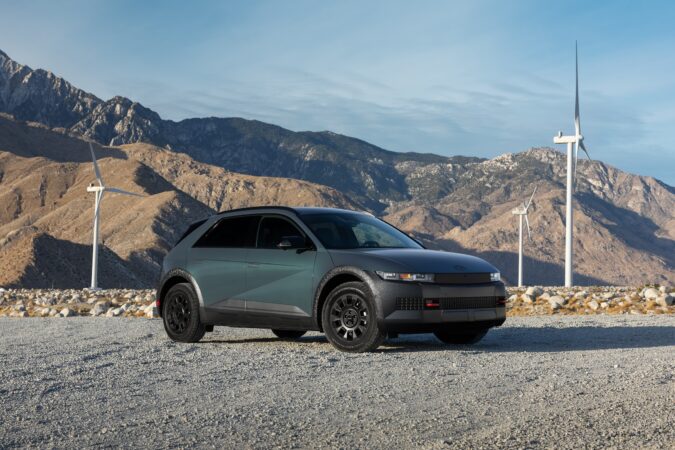
    The new XRT model is marketed as a more rugged version, slightly lifted and with all manner of cladding and black.

    Unfortunately it still has the Ioniq 5 look, which I find hearkens back to 1980s econohatches, specifically the Mitsubishi-made Dodge Colt/Plymouth Champ.

    Competition: In addition to last week’s Chevrolet Equinox, there are the Ford Mustang Mach-E, Honda Prologue, Kia EV6, Mini Countryman EV, Subaru Solterra, and Tesla Model Y.

    Up to speed: The Ioniq 5 gets to 60 mph as fast as any EV. It reaches the magic number in just 4.5 seconds, according to Motor Trend. Unlike last week’s stripped-down Equinox, the Ioniq 5 offers power aplenty throughout the range of driving, as well as through the range of models.

    Shiftless: I’ve been singing the praises of the Hyundai twisty-stalk gear selector, and that will continue.

    On the road: The Ioniq 5 handled nicely on highways and wasn’t too bouncy for its squared-off shape. Country roads were quite fun, especially in Sport mode.

    The Ioniq 5 did have more than its share of rattles, though, from either the hatchback door or the rear cargo area; the squarish shape of the vehicle is probably a factor here.

    In the rain: EV makers put low-resistance tires on to help with range. I can’t specifically recall having any other EV in the rain, but the Ioniq 5 with its 235/60/R18 all-terrain tires designed for off-ish roading seemed like it would slide on wet roads. Test drive in the rain, if you can.

    Steady speed: The Smart Cruise Control with curve control feature in the Ioniq 5 felt dumber than advertised. I’ve noticed many test vehicles from all brands slowing on curves while the cruise is set, and it’s a welcome feature, but more than a few times I found myself shouting at the dashboard as the Ioniq 5 suddenly started to slow dramatically from my set speed. The cruise was still engaged, too, so it required me taking complete control and starting from scratch.

    This can all be controlled through the various settings, but I never found one that I thought worked as well as other manufacturers’ offerings.

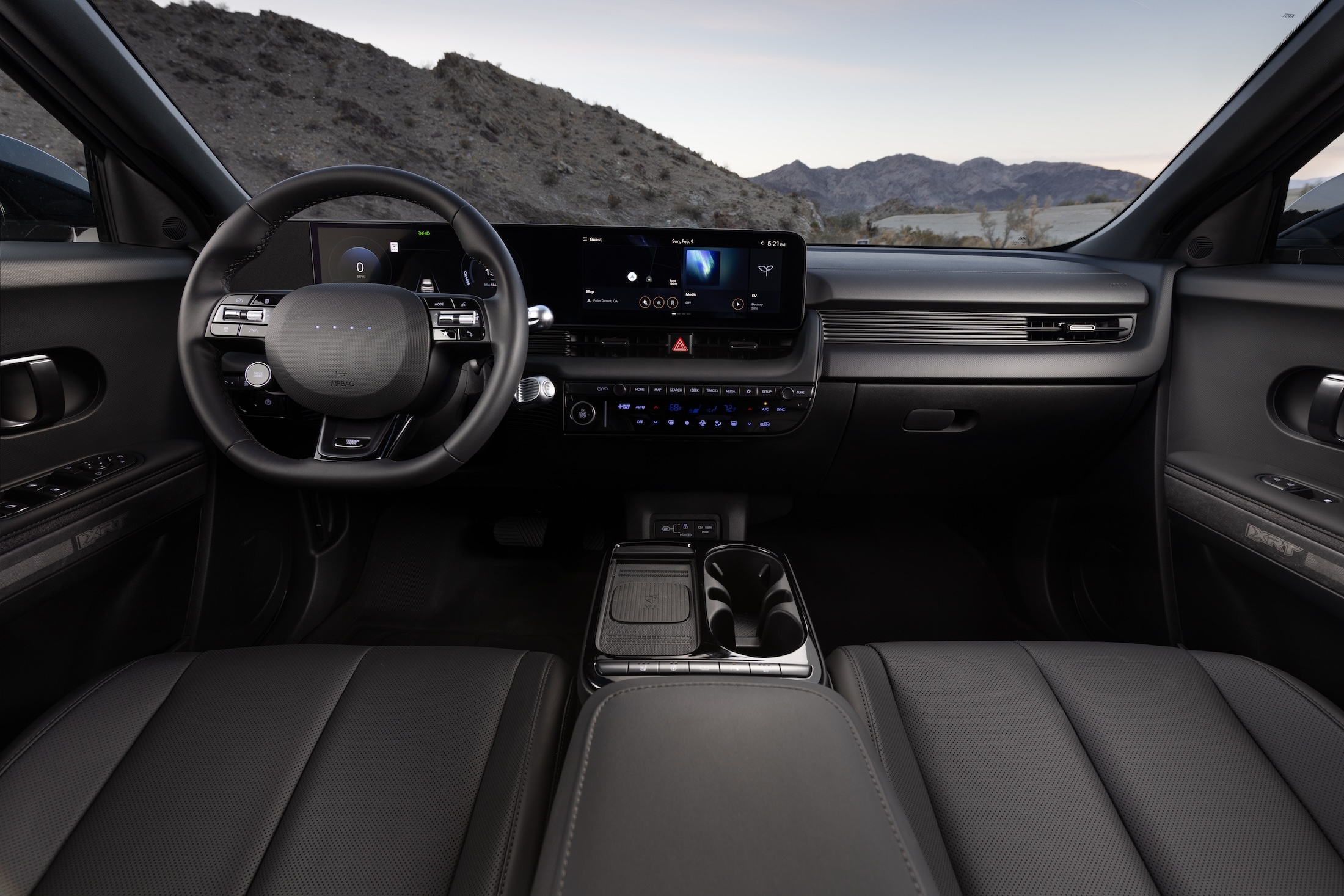
    The interior of the 2026 Hyundai Ioniq XRT offers plenty of comfort and easy operation.

    Driver’s Seat: The leather-covered seat was geared for comfort but still supportive. It held me in place while not getting fresh. The lumbar bolster was just fine and the seat bottom stretched to my knees, something often lacking at this vehicle size.

    The seat heater operation and some other functions are in a row of silver buttons (yay!) on the console that will help you in yoga class, requiring a sharp contortion just to reach them (boo!).

    Friends and stuff: Sturgis Kid 4.0 blessed the rear seat as comfortable and roomy on a trip to the Sweetest Place on Earth. The flat floor means middle seat occupants won’t feel too bad.

    Cargo space is 26.3 cubic feet behind the rear seats and 58.5 when it’s folded.

    Play some tunes: Sound from the system is pretty good, about an A-, maybe a B+.

    The 12.3-inch touchscreen makes playing tunes and getting to other functions easy enough, and buttons and dials underneath offer a real assist. The home screen has large icons that make navigation swift.

    Keeping warm and cool: I was at first pleased at the HVAC’s use of real buttons underneath the infotainment display. But things were not exactly as they appeared; those were just faux buttons of the highly sensitive touch pad variety. Every time my hand got close, I seemed to adjust three things I didn’t intend to. So the driver’s attention is still stolen away from the driving portion of our adventure and is instead trying to fix things that have been changed by accident.

    Range: The Ioniq 5’s advertised range of 258 miles was about spot on, as determined by our trip to the AACA (Antique Automobile Club of America) museum in Hershey. We used up about 200 miles of range in 180 miles or so of travel — about half of them keeping up with turnpike traffic; those high speeds suck down the juice. (I could slow down, and yet, I don’t.)

    A less expensive SE model would get you beyond 310 miles on a charge. Recharging from 10% to 80% takes as little as 20 minutes.

    Where it’s built: Ellabell, Ga. This was the site of an ICE raid in September. It remains to be seen how long the Ioniq 5 will actually come from there, also considering recent trends in EV sales. Stay tuned.

    The U.S. and Canada supply 29% of the parts; South Korea another 29%; and Hungary, 33%.

    How it’s built: Consumer Reports predicts the reliability to be a 2 out of 5.

    In the end: The Ioniq 5 has always been tied with the Kia EV6 on my list of EV champs; the Kia looks a little less stupid, so I’d probably go that direction. But the Equinox is a strong challenger and is worth a look.

    A lower price and more range makes any of them more attractive.

    Next week: How does the Volkswagen ID.4 compare?

  • 2026 Chevrolet Equinox EV: The price is nice, but there’s a catch

    2026 Chevrolet Equinox EV: The price is nice, but there’s a catch

    2026 Chevrolet Equinox EV LT front-wheel drive: A no-bells, no-whistles EV test.

    Price: $36,495 as tested. No options on test vehicle; price is up by $1,500 from the 2025 model tested.

    The all-wheel-drive model starts $5,000 higher and sacrifices about 10 miles of range.

    Conventional wisdom: Car and Driver likes that it has “more range than rivals, competitively priced” and is “available with Super Cruise and other tech.” They didn’t love the “underpowered front-drive model, less cargo space than the gas model, no Apple CarPlay or Android Auto.”

    Marketer’s pitch: “America’s most affordable 315+ mile range EV.”

    Reality: Definitely affordable. Will it be worth the trade-offs?

    Plug them in: Mr. Driver’s Seat has compiled a few EVs for comparison. So over the next two weeks you’ll see how this compares to more expensive electron-driven options from Hyundai and Volkswagen.

    What’s new: The Equinox EV carries on pretty much unchanged since its 2024 debut, although all-wheel-drive models boast a range boost for 2026.

    Competition: In addition to the above models, there are the Ford Mustang Mach-E, Honda Prologue, Kia EV6, Mini Countryman EV, Subaru Solterra, and Tesla Model Y.

    Up to speed: Car and Driver got one thing right — the 0-60 time is not the stuff of EV legend. The Equinox EV in its barest front-wheel-drive form will not plaster you to the seat when it’s time to leave the red light, but it does move with ease. It’s worth noting that pickup for passing will still leave most drivers impressed, and this can be an important test.

    Car and Driver puts the 0-60 time at 7.7 seconds, a not-unexpected number from a small SUV with 220 horsepower. All-wheel drive ups the ante to 300 horses, and it moves to 60 mph in 5.8 seconds.

    Shiftless: The Mercedes-ish wiper stalk on the steering column requires a pull and up for Reverse and a pull and down for Drive. The pull is a nice touch, so you don’t feel like you’ll make any stupid mistakes while riding around, the kind I’ve made now and again with these shifters.

    On the road: The Equinox EV handles with great ease, being pulled to the road by the heavy batteries in the floor. Highways are smooth, and country roads are nicely followed, with a touch of fun added as well.

    The interior of the 2026 Chevrolet Equinox EV LT1 is quite literally the cheap seats. The front are comfortable, but the rear seat is lacking. Upgrades are available.

    Driver’s Seat: The cloth seats in the basic model tested provided plenty of comfort and support, although they felt a little warm as the humidity stayed up even as the temperatures fell to high 70s at the end of August.

    (If you want heated and ventilated seats, you have to add $7,000 for the LT2 model, and then you have the privilege of paying extra for those options.)

    The starter is in the seat sensor, which is not my favorite way to get going, but this one seemed to work more consistently than some I’ve experienced. GM also has added a touchscreen on-off icon for the times when the Equinox can’t tell you’re done driving.

    Friends and stuff: Rear seat room is nice in the corners, but the center seat passenger will feel the hump and the console. The seat is designed presumably to make your passengers whine during the test drive, so you buy an upgrade. It’s firm and has weird indentations in the lumbar area.

    You can always counter back from the Driver’s Seat that legroom, foot room, and headroom are all awesome so everyone back there should be thankful they’re not riding around in the back of 1980s front-wheel-drive Buicks, because there was a sad seat.

    Cargo space is 57.2 cubic feet with the seat folded and 26.4 behind the rear seat.

    Play some tunes: The infotainment center features a gigantic 17.7-inch display that’s clear and pretty easy to follow.

    The volume dial is a wide shallow thing that GM keeps putting into cars. It reduces me to tears at least once a week after accidentally rubbing the touchscreen and changing something important.

    Like maybe the music. Sound from the system is very good, about an A, so any interference becomes a personal affront. (Don’t interrupt the tunes, as the lovely Mrs. Passenger Seat and all the point-ohs know.)

    CarPlay is gone, but my notes didn’t mention missing it, so maybe that’s not the end of the world after all.

    Keeping warm and cool: Actual knobs control temperature and fan speed, and buttons let you do some of the simple functions. It’s nice that the big touchscreen didn’t eliminate the old-style controllers, even as temperature and fan control options reside in the bottom corners of the touchscreen.

    You can really get some air out of the blowers, which is nice. The corners have the round vents that make me happy with their ease of direction and on-off control.

    Range: A 319-mile range is great to have, but charging can be slow. InsideEVs tested one at three different chargers in February, and it averaged around 40 minutes to get from 10% to 80%, far slower than most competitors.

    Chevrolet advertises just 285 miles of range for the AWD models from 2025 but 309 for the 2026 AWD models.

    Where it’s built: Ramos Arizpe, Mexico. Mexico supplies 46% of parts; South Korea, 20%; the U.S. and Canada, 12%.

    How it’s built: Consumer Reports predicts the reliability of the Equinox EV to be a 2 out of 5.

    In the end: If you don’t mind missing some creature comforts, the Equinox EV can get you charging for a nice price.

    Next week: Hyundai Ioniq 5.

  • Pa. and N.J. are getting more electric-vehicle chargers even as EV sales start to dip

    Pa. and N.J. are getting more electric-vehicle chargers even as EV sales start to dip

    The electric-vehicle business has been an unpredictable venture. Analysts and automakers have long been forecasting the downturn of the EV market.

    The end of EV rebates in September seems to have finally made for a downward trend in U.S. EV sales. But on the other side of the equation, EV charging stations are forging ahead, and EV charging suppliers are not losing their motivation.

    Public and private investment have helped take one of the EV’s two biggest snags — range anxiety — out of the equation. And that’s despite the Trump administration’s failed attempt to halt a federal charging station program. (The as-yet unresolved snag: price.)

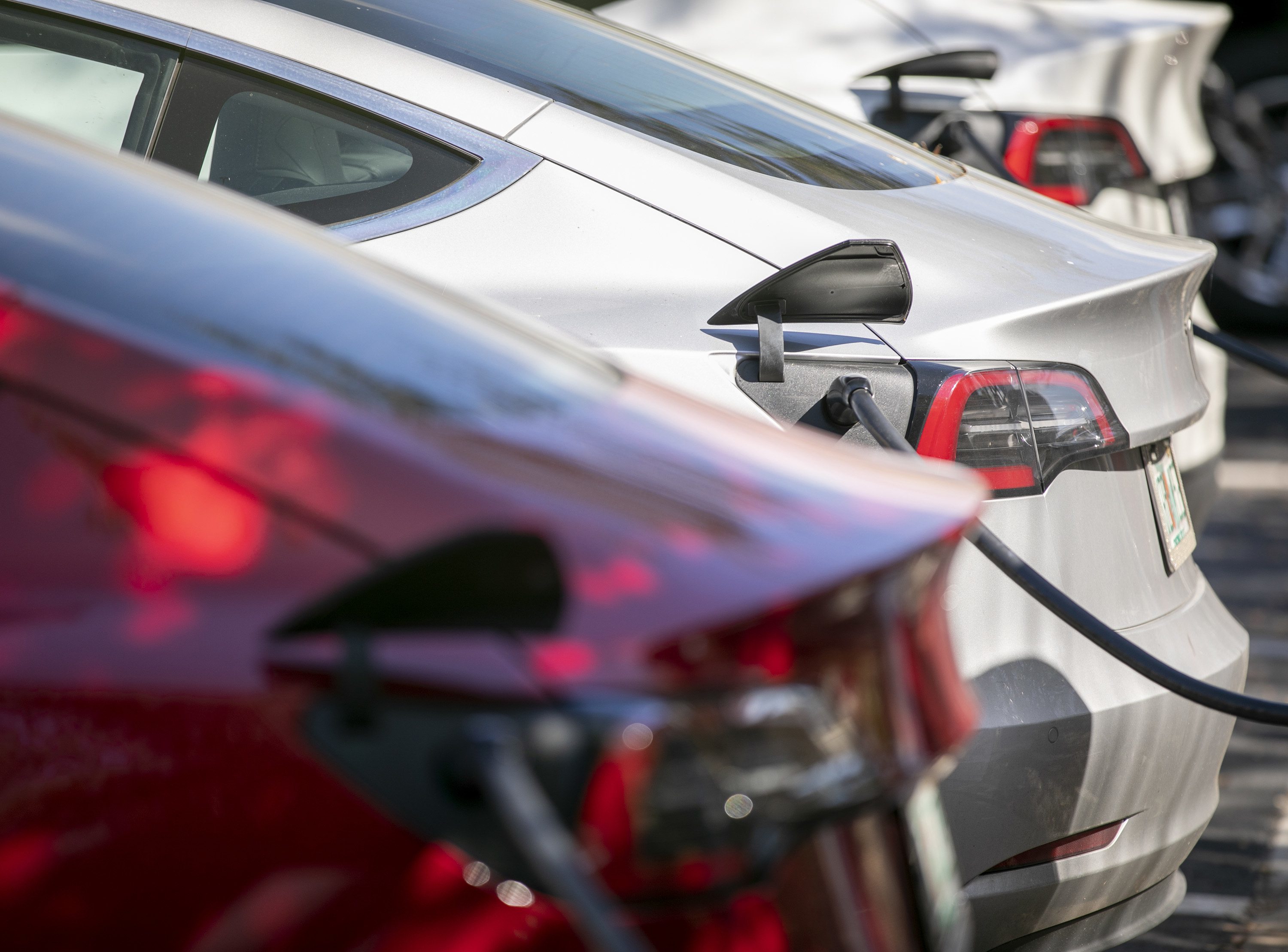
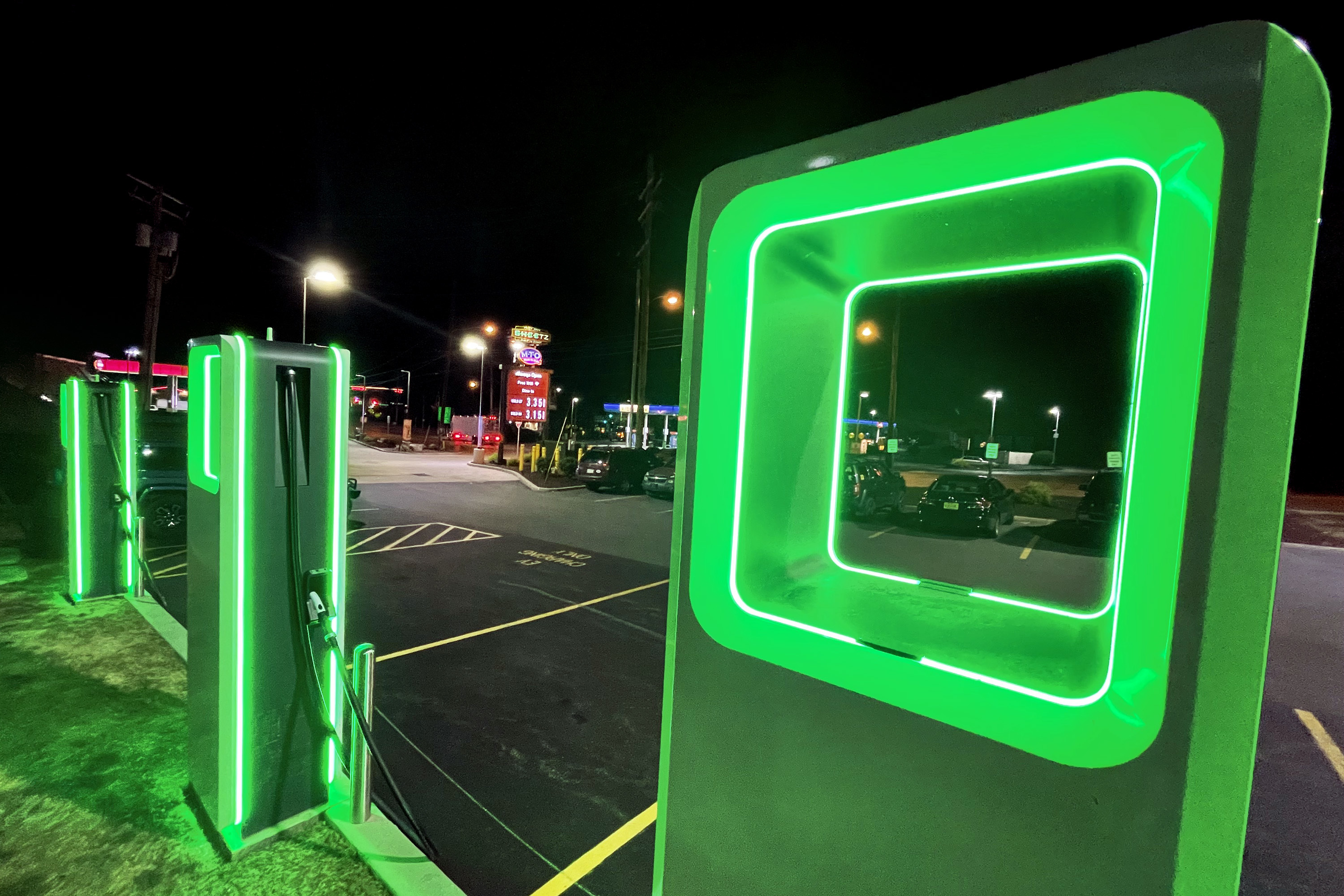
    The U.S. Department of Energy’s Alternative Fuels Data Center’s website shows 16,579 high-speed charging stations across the United States with a total of over 71,000 charging ports. Pennsylvania has 382 stations with nearly 1,700 high-speed charging ports. New Jersey has 389 stations with more than 1,800 ports. The New York Times reported last month that EV fast-charging stations in the U.S. soared from 1,000 in 2015 to 12,000 now.

    “Every time I open this map, the number has gone up,” said Ingrid Malmgren, senior policy director for the EV advocacy nonprofit Plug in America.

    Private investment

    There’s plenty of private investment in charging for EVs, and convenience stores are at the forefront.

    Wawa, Sheetz, and Pilot are deep into the EV charging game, and the Transportation Energy Institute — a research arm of the National Association of Convenience Stores — said this month that charging remains a focus of the industry.

    “Despite recent news indicating a slowdown in vehicle electrification, the data is clear that electric vehicles will continue to gain ground, although at a slower than anticipated rate,” said a white paper released earlier this month. “This means that the demand for reliable charging infrastructure will also continue to grow.”

    Wawa currently has 210 EV charging locations, Sheetz more than 125, and Pilot 218.

    Tesla vehicles at charging stations in 2022 at a Wawa gas station in Clearwater, Fla.

    “The convenience industry is an industry built on mobility, so, yeah, they will have to figure this out,” said Karl Doenges, executive director of the Transportation Energy Institute’s Charging Analytics Program and liaison to the EV industry for NACS. “They’re going to deal with refined products, and they’re going to deal with electrons.”

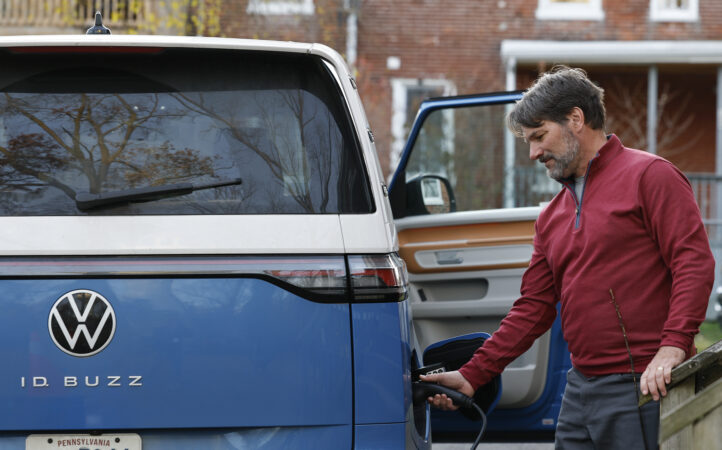
    EV owners like Peter Doehring of Kennett Square are noticing the changes. He has owned four EVs in total since 2019 and currently has a Ford Lightning, Tesla Model Y, and a VW ID. Buzz.

    “We’ve done a bunch of road trips for each of the vehicles,” Doehring said. “So for the Tesla, that network was not great when we started — like [when] we had a long-distance trip we really had to plan in advance.”

    Now, though, “I feel pretty comfortable I can find a charger almost anywhere unless I’m really out of the major areas,” Doehring said.

    Outside the Tesla network, though, it’s not so good.

    Public investment

    The Trump administration in February froze funding for the $7.5 billion National Electric Vehicle Infrastructure (NEVI) program and Charging and Fueling Infrastructure (CFI) grant program, part of the Bipartisan Infrastructure Law passed in 2021. The NEVI program planned a network of charging stations every 50 miles on major highway corridors, and CFI will fill in EV charging gaps.

    The end of the NEVI program didn’t survive a court challenge after 14 states sued. A judge in the Western District of Washington ordered funds to be released in late June, according to NPR.

    Pennsylvania was among states that forged ahead regardless because it already had its funds obligated for its 86 stations. In March, eight charging stations were in place and operational; 22 are online now, according to PennDot, which expects another dozen stations online shortly. (True to Malmgren’s word, this number rose twice in two days the week before Thanksgiving.)

    Still, there’s a question of how effective federal dollars will be.

    “Frankly, if you can’t make a charger work without government subsidies, then you need to take a hard look if it’s a good investment regardless, because at some point it has to stand on its own two feet,” Doenges, of the Transportation Energy Institute, said.

    But chargers in remote areas become a lifeline for travelers. The more recent NEVI-funded stations arose in remote, highway-adjacent places like Chambersburg, Altoona, and Slippery Rock, and in Clearfield, Clinton, and Lebanon Counties.

    The Department of Transportation did announce slightly adjusted rules in August, allowing states more control, specifically easing the rule that stations must be available every 50 miles.

    Electric-vehicle charging stations at a Bedford gas station in 2021, just off the milepost 145.5 exit of the Pennsylvania Turnpike.

    The new Trump administration guidance “has been helpful‚” said Andrew Wishnia, a senior vice president at Boundary Stone Partners, the former deputy assistant secretary for climate policy at the U.S. Department of Transportation, and a principal architect of the Bipartisan Infrastructure Law.

    Wishnia said the more flexible rules make it easier for states to address their individual needs, pointing in particular to Wyoming’s approved NEVI plan as one example. That sparsely populated state popular with tourists was able to count privately funded charging stations already in place along some corridors in its plan and instead build more public chargers near national parks and other sites. “It’s totally consistent with the design and architecture of a national EV charging network,” he said.

    A PennDot spokesperson said there has been no change in the map for Pennsylvania based on those new guidelines.

    The end of rebates

    Two months after EV rebates ended, EV futures can appear quite bleak. Malmgren said some reports show October sales were down 50% compared to September, and average prices in October hit an all-time high.

    Car and Driver reported sales of the Hyundai Ioniq 5 dropped 63% and the Kia EV6 was down 71%.

    Getting a clear picture before the end of 2025 is difficult because not all carmakers report monthly sales. Also, the drop-off in October followed a spike in September, as buyers rushed to grab rebates.

    Still, consumer interest remains strong. A Nov. 7 J.D. Power report shows that 24.2% of active new-vehicle shoppers “very likely” will consider buying or leasing an EV in the next 12 months, up from 21.6% in September, the highest level since January.

    “We’ll see the shakeout of supply and demand in the next year,” said Sam Fiorani, vice president of AutoForecast Solutions in Chester Springs.

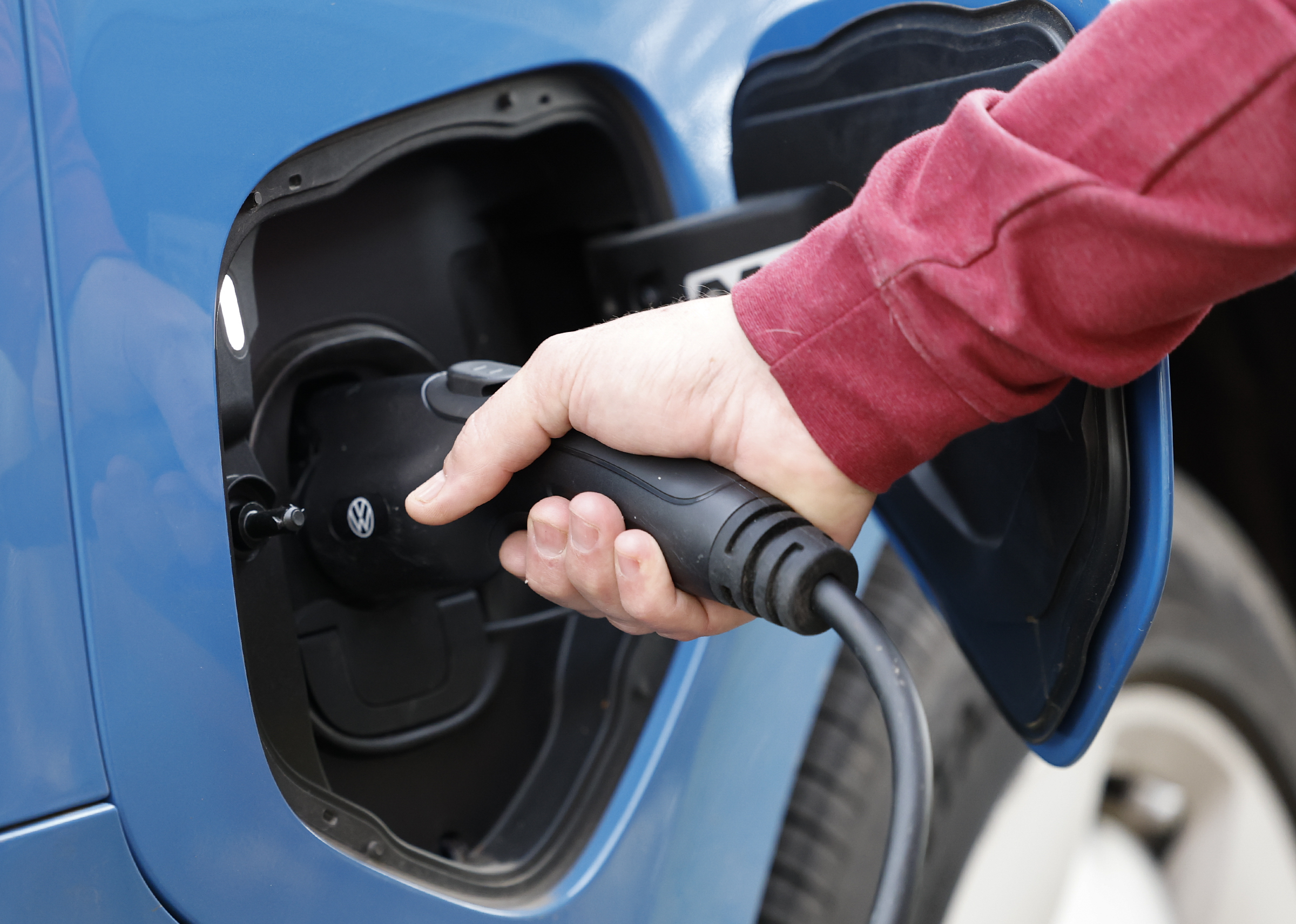
    Peter Doehring plugs the charger into his electric Volkswagen ID. Buzz van.

    Federal funds slowdown

    So despite the turmoil and changes of 2025, 2026 holds the promise of more EV charging money for Pennsylvania.

    This second part of the NEVI program is designed to fill in the gaps around the original 86 NEVI stations along major highway corridors. PennDot will accept new proposals until Jan. 30, according to a PennDot spokesperson.

    Public or private, adding charging stations remains important, even to those who have already purchased EVs.

    John Fetters of Kennett Square bought his 2023 Hyundai Ioniq 5 new. He loves the smooth ride and being able to start from home with a full charge, thanks to a simple 220-volt outlet he had installed. And yet he relies on the family’s Subaru Outback for long trips.

    “As much as we’re loving the EV, I’m just not always having full confidence on availability and accessibility of charging stations,” Fetters said.

    Still, the selling points of EVs for consumers like Fetters and Doehring show there’s still room for growth.

    “We definitely believe that EVs are the future,” Malmgren said. “The rest of the world is moving forward with EVs. We’d like to see policies that accelerate it.”

  • 2026 BMW 228i xDrive: Screen grab

    2026 BMW 228i xDrive: Screen grab

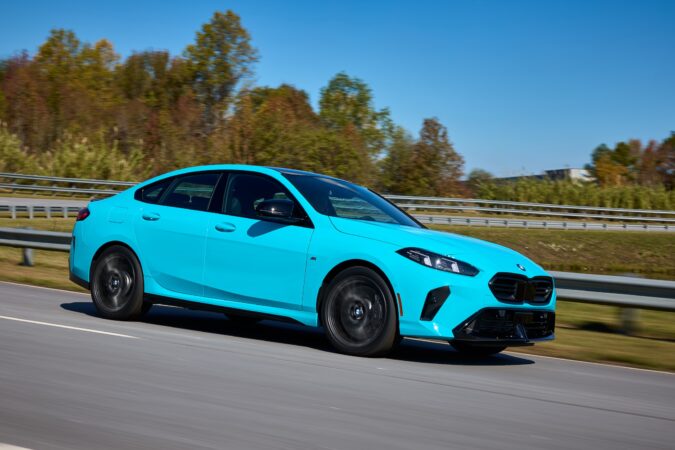
    2026 Audi S3 Prestige vs. 2026 BMW 228i xDrive Gran Coupe: Battle of the little racers.

    This week: BMW 228i

    Price: Starts at $41,600 for both the 2025 and 2026 model years. Advantage, BMW.

    Conventional wisdom: Car and Driver liked the “Refined balance of ride and handling, eager powertrains, purposeful near minimalist interior design and materials,” but not the “compromised cargo and rear passenger space,” and that the “front and rear fasciae appear a bit forced on otherwise sleek bodywork.“

    Marketer’s pitch: “Strikingly sporty.”

    Reality: “Striking.” I was afraid of striking things as I tried to make simple adjustments.

    Catching up: Last week Mr. Driver’s Seat enjoyed the Audi S3 — until he landed on the highway, or tried to squeeze in some luggage.

    What’s new: The 2 Series received more horsepower and a new look for 2025, and carries on pretty much unchanged for 2026.

    Competition: In addition to the S3, there are the Acura Integra, Cadillac CT4, and Mercedes-Benz CLA.

    Up to speed: The 2 Series’ speed would be the first question mark. The 2.0-liter TwinPower turbo provides 241 horsepower, almost 100 fewer than last week’s Audi S3; would it keep up?

    Yet the version tested gets to 60 mph in 5.1 seconds, according to Car and Driver, just 0.7 seconds slower than the S3. A more souped-up model with a 3-liter six-cylinder engine gets there in just 3.6 seconds.

    Shifty: The seven-speed dual-clutch transmission is super smooth, worlds above any attempt from Kia or some other inexpensive offerings.

    The slider PRND operator looks cool but doesn’t offer much feel or add any usable space. Shift via the steering wheel paddles.

    On the road: Handling is quite nice, perhaps in part because of the M Sport Package, which adds adaptive suspension along with other decals and stuff, plus the aforementioned dual-clutch.

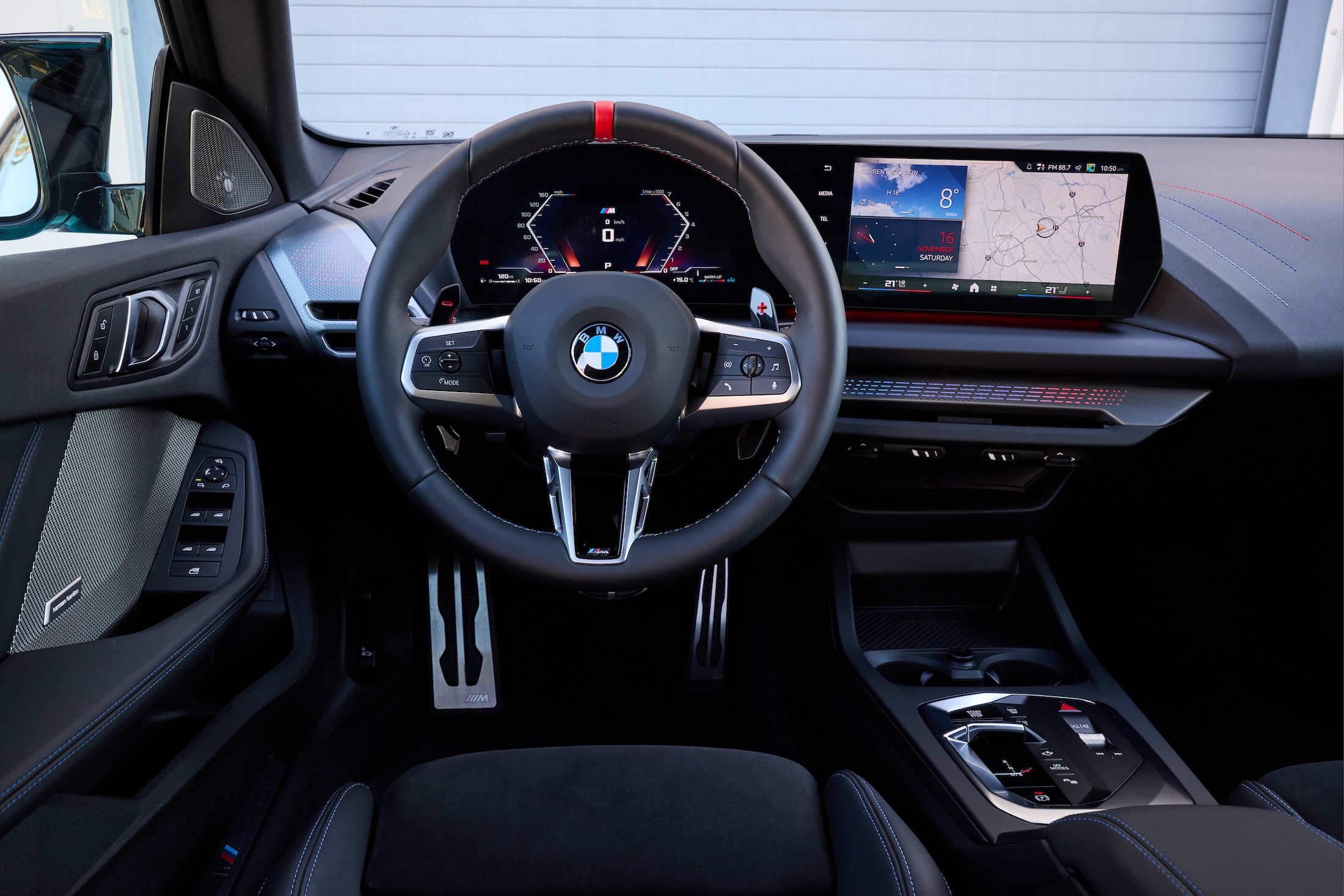
    In the first of several “improvements” designed to make the interior feel more high tech, Sport mode requires finding the button on the console touch pad (no solid way to feel your way to it) and then pressing the large icon on the screen. So there’s two instances you’re looking away from the road while trying to operate the vehicle.

    But at least compared to last week’s Audi S3, the BMW doesn’t rattle your brain on the highways at all.

    The cockpit of the 2025 BMW 2 Series looks as inviting as ever but operation does not live up to expectations.

    Driver’s Seat: The sport seats that come with the M Sport package are supportive and comfortable, and I never adjusted it beyond forward and backward. No annoying lumbar or grippy seat corners.

    The materials all feel upscale, an improvement over the X2 SUV I tested this year. Everything about that small SUV felt cheap and plasticky.

    The materials seem especially scuff prone, though. I brushed out the carpet and seats when I was done with my loan and it seemed the bristles and the plastic handle left marks on the seat and in the plastic door frame bottom. Be sure this fabric fits your lifestyle.

    Friends and stuff: Sturgis Kid 4.0 laughed at how tight the rear seat was. He sat stretched into the middle just to make it workable.

    He’s not wrong. My own head was squashed up against the ceiling in the corner, although foot room and legroom were pretty good. Entry and exit are challenging because the door is narrow and the seat actually sits up kind of high (not something I expected to write in this review). The middle seat is compromised by the hump and the console and the corner people trying to find a place for their heads.

    Cargo space is 13.8 cubic feet, far higher than the S3.

    Play some tunes: Sound from the Harman Kardon system might be better than I heard, but I could never find the audio tuning adjustment when I had CarPlay activated. It would only show up in the touchscreen when I left CarPlay off, so it was difficult to make the most of my favorite songs. B-, because why make it so hard?

    BMWs once had a superb dial and button system for operating the infotainment, and some models still have it. It takes a bit of practice but you can really run it by feel after a while. Now it’s all about the touchscreen, with a roller dial on the console for volume.

    Keeping warm and cool: The temperature controls appear as small +/- adjustments at the corners of the touchscreen. There’s no way to feel for them, and your eyes are off the road while you adjust.

    But wait! There’s more! To make further HVAC adjustments, click on the tiny fan icon between them to open up all the controls. These are fairly clear, but I’ve already looked at the screen and away from the road twice now, just to cool off (or warm up).

    Fuel economy: I neglected to note the fuel economy. (Hangs head in shame, then blames BMW for the confusion.) The window sticker says 30 mpg combined, but that seems optimistic.

    Where it’s built: Leipzig, Germany. Germany is the source of 24% of the car’s parts. None of it comes from the United States or Canada.

    How it’s built: Consumer Reports gives the 2 Series Gran Coupe a predicted reliability rating of 3 out of 5.

    In the end: The 228i was definitely fun to drive, but too many drawbacks made me long for the real delight of the S3. Just pack ibuprofen for the highways.

  • 2026 Audi S3: Looks fun, sounds fun, drives fun, but keep it casual

    2026 Audi S3: Looks fun, sounds fun, drives fun, but keep it casual

    2026 Audi S3 Prestige vs. 2026 BMW 228 xDrive Gran Coupe: Battle of the little racers.

    This week: Audi S3

    Price: The 2025 starts at $48,700, according to the window sticker of the test model; the 2026 starts at $52,000.

    Conventional wisdom: Car and Driver likes the “entertaining handling, responsive powertrain, sophisticated and luxurious interior.” They were less fond of the “limited trunk space,” that there was “some road noise at higher speeds,” and that it was “not quite as raucous as the RS3.”

    Marketer’s pitch: “Upgrade the everyday.”

    Reality: It depends where all you go every day.

    What’s new: We’ve been exploring efficiency over the last two weeks with the Accord Hybrid and Prius Plug-In. The Prius had some kick, but the Audi and BMW really pack a punch.

    The little Audi sedan (which the EPA surprisingly classifies as “midsize”) is the souped-up version of the A3. That’s not to be mistaken for the super souped-up version, the RS3. Just think of the abbreviations as “Speedy” and “Really Speedy.”

    The sedan got a power boost and handling improvements for 2025. The 2026 carries on fairly unchanged.

    Competition: In addition to the BMW 2 Series, there are the Acura Integra, Cadillac CT4, and Mercedes-Benz CLA.

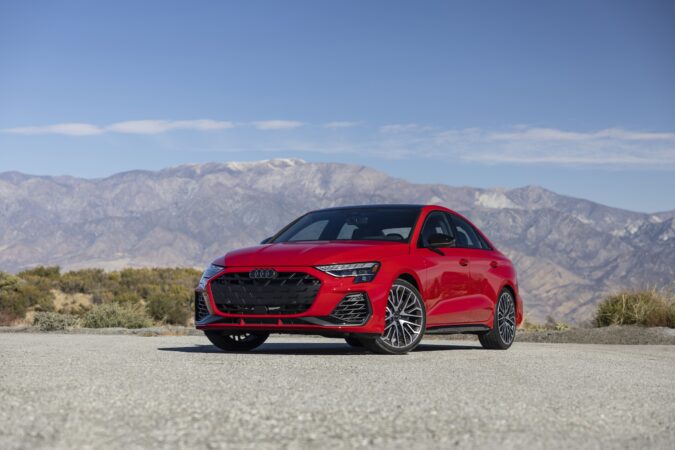
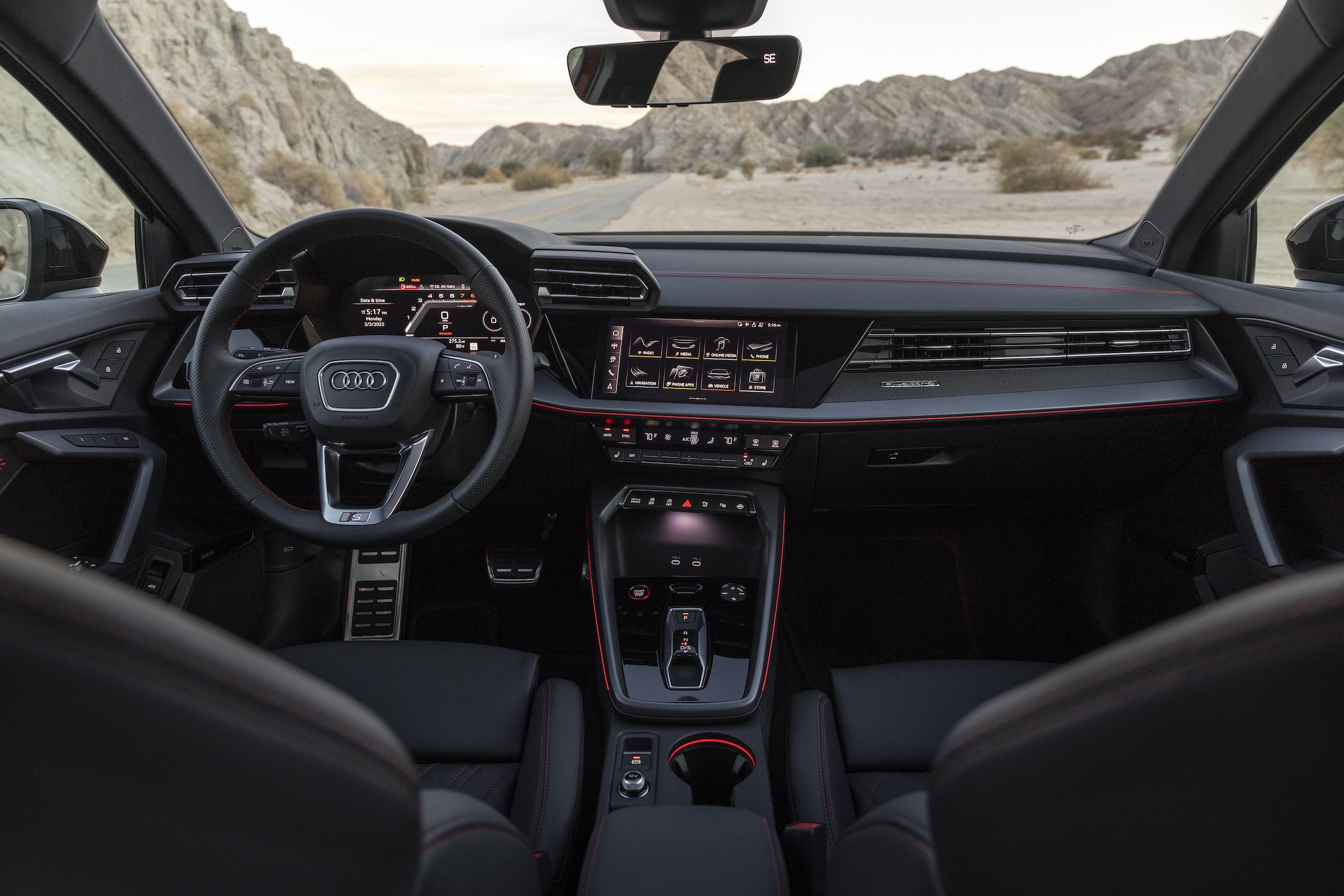
    The interior of the Audi S3 is comfortable when you’re riding up front, but not so much in the back row. The trunk helps teach how to travel light.

    Driver’s Seat: At first sit, the S3 started off strong. I hopped inside and felt instantly smitten with the no-nonsense black Dynamica faux leather interior, the firm but mostly comfortable seat, the narrow fonts in the typeface.

    Then I fired it up and heard the throaty exhaust recording that generally comes with Audi. But could this love last?

    Up to speed: The S3 certainly can get a move on. It’s powered by a 2.0-liter turbocharged four-cylinder engine that creates 328 horsepower, a lot for a small sedan, which kicks it to 60 mph in 4.4 seconds, according to Audi.

    Shifty: Audi has progressed even beyond its groundbreaking shift toggle switch and now has a shiny small shift mouse, for lack of a better term. Hold two fingers over it and push forward for Reverse and back for Drive. Kinda cool.

    You can shift the 7-speed automatic through the paddles, but with a vehicle as quick as the S3 you need to be in second gear before you finish rounding the corner at an intersection, so good luck finding the toggle. Here’s where a gearshift would come in handy.

    On the road: The S3 dazzles. It corners impressively and takes on country roads with a sense of wild abandon. What’s to prevent everyone from racing around the world like maniacs in this sedan?

    But what the Quattro all-wheel-drive system giveth, the suspension taketh away. The S3 starts to lose its charm on the highways; road seams and pocked road surfaces really jolt the little sedan abruptly. Be sure to check your dental plan before purchasing.

    Friends and stuff: You won’t squeeze much of either inside, friends nor stuff, not with this leg room, that hump, or the trunk. Feet and legs are pretty smushed.

    Farther back, the trunk seemed to identify as bigger but it’s rated at a snug 8.3 cubic feet, closer to a Miata (4.59) than a Civic (14.8). The rear seat does fold down, making things a little better.

    Play some tunes: Sound from the Sonos premium sound system is awesome — an A+. There’s a heavy echo in the surround sound, but I decided to live with it, as it only interfered with a few songs.

    Operation is all through the touchscreen. In a depressing application of function following form, the forward-reverse-volume controls live on a little round button on the console that matches the engine Start button. Beautiful to look at; disturbing to operate.

    I always love the Google Earth feature in Audi maps; it makes driving around quite scenic. Although so is looking at the actual road.

    Keeping warm and cool: The heater features a row of toggles that you push to lower and pull to raise. Somehow, though I’ve seen various toggles in different vehicles and they worked well, these black toggles felt hard to operate and distracting from the road.

    The blowers are also right in the driver’s face, which I was less enthusiastic about; there was no real way to send the air away from me.

    Fuel economy: I averaged about 24 mpg in a lively week of testing; every red light was an acceleration test. About 100 of those miles were there before me.

    Where it’s built: Ingolstadt, Germany. Just over half the parts hail from Germany as well (51%), and a mere 1% come from the U.S. or Canada.

    How it’s built: The less-fun A3 rates a 3 out of 5 from Consumer Reports for reliability, so that likely applies to the S3 as well.

    In the end: If your every day involves lots of highway, maybe this isn’t the choice.

    Next week: Let’s see how the BMW 228 compares.

  • 2025 Toyota Corolla: One way to stay under $30K

    2025 Toyota Corolla: One way to stay under $30K

    2025 Toyota Corolla FX vs. 2025 Buick Envista Avenir: Two options to avoid being spendy.

    This week: Toyota Corolla

    Price: $29,089 as tested. Convenience Package added blind-spot monitor and cross-traffic alert for $530; black roof, $500; and connected services trial, $325.

    Conventional wisdom: Motor Trend liked the “$27,785 base MSRP, cool black accents, and bigger, more readable screen”; on the down side, it was “not particularly quick,” the “engine drones,” and it’s a “dated cabin.”

    Marketer’s pitch: “Introduce fun to every day.”

    Reality: You’re going for the fun angle, Toyota? Really, now?

    What’s new: The Corolla adds a new FX model for 2025, which pays homage to the old FX16, something I’d never heard of before writing this. Still, I feel I can say with confidence, it doesn’t live up to that.

    Not so new: How thankful I am to have two small, inexpensive cars to test. They’re a rare treat among model lineups and even rarer among vehicles I get to test, and readers are clamoring for them. Manufacturers want to make money selling you expensive things we don’t really need.

    The Corolla is a sedan and the Envista is a crossover, so very different directions indeed.

    Competition: Honda Civic, Hyundai Venue, Hyundai Elantra, Kia Niro, Kia Soul, Mazda 3, Nissan Kicks, Subaru Impreza, Toyota Prius, to name just a few.

    Up to speed: The Corolla is not winning any races. The 2.0-liter four-cylinder engine creates 169 horsepower and gets to 60 mph in 8.2 seconds, according to Motor Trend.

    Still, I was pleased enough with most of the performance, though I was traveling solo through almost all of it. A packed car would suffer a bit of malaise under the extra strain.

    Shiftless: The continuously variable transmission in the Corolla saps power as much as any. The gearless setup offers infinite ratios in theory but in actuality some examples make hill-climbing and hard acceleration something you’d just rather avoid. The Corolla’s version sits about in the middle, not the worst or the best.

    On the road: The Corolla has never been anything like fun, although the XSE version gets close. The FX model doesn’t get there, though, although handling is small-car good. Still, you won’t confuse it with a Golf or Mazda3.

    Driver’s Seat: Sturgis Kid 1.0 once purchased a new Scion iM (the Corolla Hatchback before it was called that) based solely on the dreamy front seats. Every time I borrowed that car, I noted how comfortable it was.

    The Corolla FX tested had sport fabric-trimmed seats with orange stitching that matched that feel. They were soft but supportive seats and made all the Schuylkill Expressway stop-and-go feel lots better.

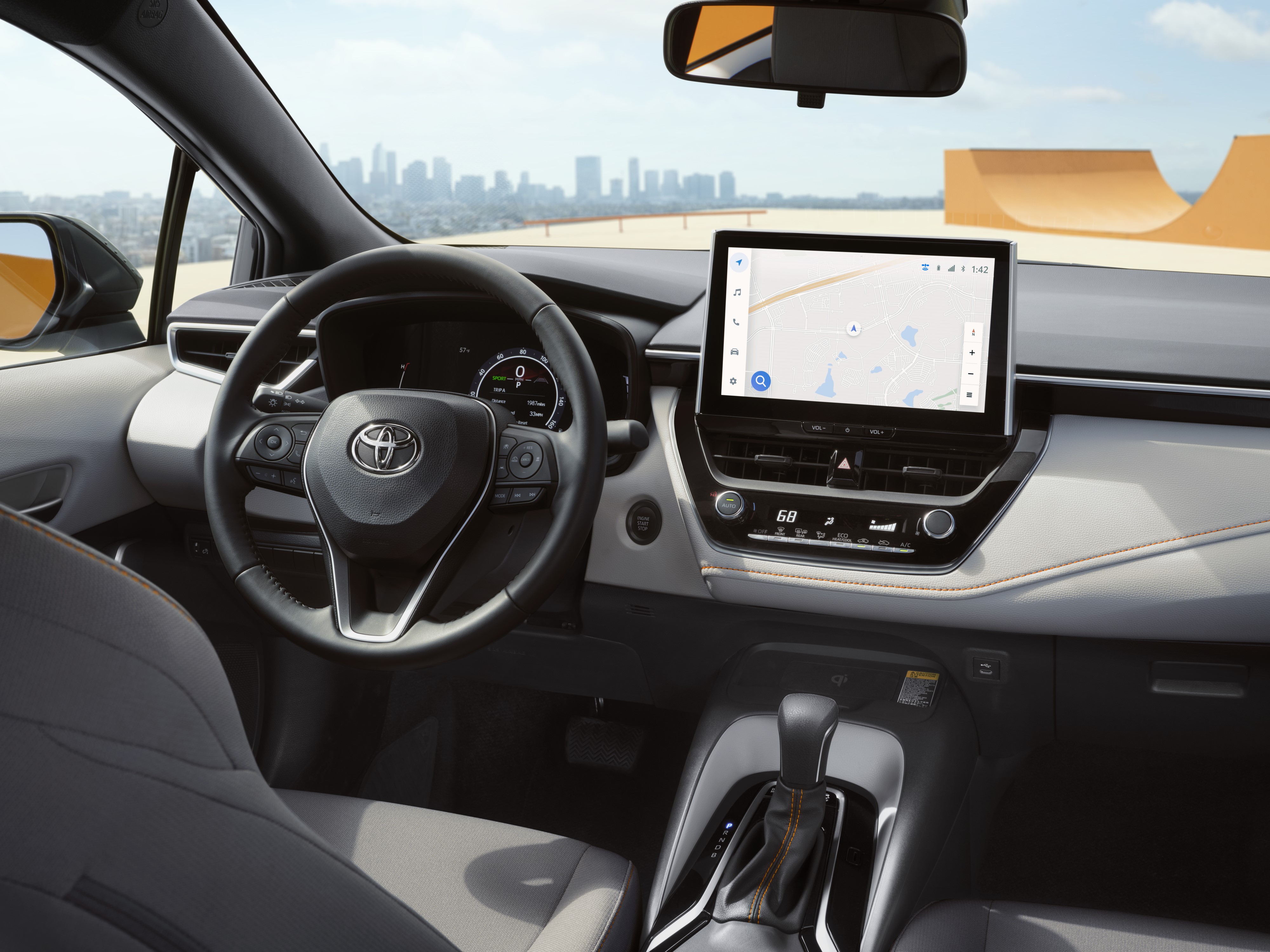
    The Corolla also benefits from the simple gauge setup that Toyota offers in its base models. Changing the screen to fit your needs is simple with the steering wheel controls.

    The interior of the 2025 Toyota Corolla adds a 10.5-inch infotainment screen, and the seats remain among the most comfortable among all sizes of vehicles, not just small cars.

    Friends and stuff: The rear seat is pretty good for a small car. Headroom is dear — my head doesn’t hit the ceiling but it’s close — while legroom and foot room are nice. The door requires care when getting in and out because it’s a bit of a squeeze.

    The middle seat passenger will be perched on a narrow cushion and a tall floor hump, and will be permitted to throw small food items at everyone else, or to at least choose the evening’s movie later.

    Cargo space is 13.1 cubic feet. The seat folds to create a pass-through.

    Play some tunes: The new 10.5-inch touchscreen helps with navigating through the sources and whatnot. But somewhere a designer is patting themselves on the back for the sleek control panel, which trades a volume dial for pushbutton -/+ system. Boo!

    The stereo offers pretty good playback, especially by Toyota standards, about an A- or B+.

    Keeping warm and cool: Kudos for the simplest controls I’ve seen in a long time — one dial for air speed, another for temperature, and silver buttons for everything else.

    Fuel economy: I averaged about 32 mpg in an unusual array of Mr. Driver’s Seat testing. A very stop-and-go round trip to Center City figured mightily into the week. Otherwise it was mostly highway and side roads.

    Where it’s built: Blue Springs, Miss.

    How it’s built: Consumer Reports predicts the Corolla reliability to be a 5 out of 5. (Like, duh.)

    Next week: Buick Envista Avenir