A Colwyn woman and her boyfriend took on the responsibility of caring for the woman’s 20-year-old cousin after her previous caregiver died, Delaware County prosecutors said Thursday.
But instead of providing the woman, who has Down syndrome, with a safe environment, they fed her table scraps, beat her whenever she attempted to sate her hunger, and ultimately kicked her out of their home, into freezing April rain, for eating their Goldfish crackers.
Yahnae Clegg-Brown taunted the woman, whom police did not name in court filings, as she stood, rain-soaked, begging to be let back inside, according to the affidavit of probable cause for her arrest. Naiyr Sanders, Clegg-Brown’s boyfriend, demanded that she leave the property, according to the affidavit, then punched her in the head and pushed her down the house’s front steps.
A concerned neighbor called 911 after seeing the woman shivering and calling for help after a night spent outside, the affidavit said. When officers took the woman to Mercy Fitzgerald Hospital for treatment, she weighed just 80 pounds.
Clegg-Brown, 35, and Sanders, 31, have been charged with neglect of a care-dependent person, abuse of a care-dependent person, and related crimes. They remained in custody with bail set at 10% of $250,000. There was no indication they had hired attorneys.
District Attorney Tanner Rouse, in announcing the charges, said the case was heartbreaking and beyond comprehension.
“Those entrusted with another person’s care have a responsibility to protect them,” he said. “My office will continue to stand up for victims who cannot always stand up for themselves and will work tirelessly to hold those responsible accountable.”
Investigators said the woman began living with Clegg-Brown in November 2023 after the death of Clegg-Brown’s father, who had been caring for her.
The woman’s living conditions at Clegg-Brown’s home on Ellis Avenue were spartan, according to police: She was sleeping in an upstairs bedroom on a “deteriorating mattress” with no bed linens, the affidavit said.
Clegg-Brown had placed a surveillance camera on top of the refrigerator in the home’s kitchen, which she later told police was used to make sure her cousin was not “stealing” her food. Investigators noted in the affidavit that the woman was receiving regular government-assistance benefits, and that the money was supposed to be spent on her living expenses.
Clegg-Brown never took her cousin to her scheduled doctor’s appointments, and did not enroll her in school, the affidavit said. During meal time, she forced her cousin to sit on the floor and fed her leftovers or ramen noodles and oatmeal. As a result, the woman developed type 2 diabetes from malnutrition, according to the affidavit.
Clegg-Brown told investigators the “final straw” came on April 25, when she found her cousin hiding in her bedroom, eating a package of Goldfish crackers.
She and Sanders forced the woman outside, placed her clothes and bedding in trash bags that were too heavy for the woman to carry, and locked the door behind her, the affidavit said.
Clegg-Brown told the woman she was tired of dealing with her, and told her to find somewhere else to live, according to the affidavit.
Since her hospitalization, the woman has been placed in a new home with a different caregiver, police said, recovered to a healthy weight, and is now attending school.
Montgomery County prosecutors have withdrawn criminal charges against longtime Philly sports personality Mike Missanelli, ending their investigation into an alleged domestic dispute between him and his fiancee.
Missanelli, a former Inquirer sportswriter best known for his 15-year stint as a host at 97.5 The Fanatic, was arrested in April and charged with simple assault and harassment after his fiancee accused him of slapping her across the face during an argument inside their home in Lower Merion.
During a preliminary hearing late last month, prosecutors declined to move forward with the case.
In a statement Wednesday, Kate Delano, a spokesperson for District Attorney Kevin Steele, said that “after reviewing additional information, the office made the determination that it would withdraw the charges.”
“In every case, we are always continuing to investigate after charges are filed,” she said.
Missanelli’s attorney, Brian McMonagle, declined to comment Wednesday. Missanelli did not respond to a request for comment.
In the affidavit of probable cause filed by Lower Merion police, officers wrote that Missanelli, 70, was in a heated argument with his fiancee over their engagement. His fiancee’s name was redacted from court records.
Police responded to a 911 hangup shortly after midnight, and Missanelli told officers the argument led to a “scuffle.”
The fiancee struck him in the chest and Missanelli’s “open hand slapped her on the left side of her face/head,” the affidavit said. One officer said he saw fresh blood on the woman’s forehead from a laceration allegedly caused by the slap.
Missanelli was fired from WIP in 2006 after he punched a producer. He was then fired by 6abc in 2017 for misogynistic comments he made about Beth Mowins, an ESPN broadcaster.
In recent years, Missanelli has been in the news for various job changes. After 15 years with 97.5 The Fanatic, he was pushed out by management in 2022, then brought back in 2024, only to be ousted once more last August.
Currently, he is embroiled with a legal battle with JAKIB Media and its owner, Joe Krause, for their alleged failure to pay him $85,000.
Staff writer Rob Tornoe contributed to this article.
Robinson, 37, and Walton, 57, were held for trial on charges of murder, conspiracy, and related crimes after an hours-long preliminary hearing before District Judge Dawn L. Vann.
An autopsy revealed that Frank died in November from a laceration to his liver that caused significant internal bleeding, as well as bleeding in his brain that a forensic examiner said Tuesday was caused by either blunt trauma or severely shaking the boy.
Those injuries, Kemp said, were caused by Robinson, who has a documented history of abusing all four of her children, and who had been seen beating and striking Frank whenever he cried at the couple’s house in Chester.
Kemp said though Robinson dealt the fatal injuries, Walton was just as culpable — he waited to call 911 until the boy had died, despite seeing his condition worsen in the hours after the beating.
Walton also agreed to lie to police and attempt to blame his son’s injuries on his then-3-year-old daughter, whom Robinson claimed had pushed the boy down the stairs, Kemp said. The girl, according to testimony Tuesday, had spent the entire day with Walton and had not been home.
“They were afraid of law enforcement and investigators seeing that every aspect of that child had been abused,” Kemp said. “Only one thing could’ve happened with that baby, and that was his death.”
Robinson’s attorney, Michael Dugan, said that there was no evidence his client had intended to kill her son.
“At the end of the day, who calls 911? Mom. Who does CPR? Mom,” Dugan said. “I don’t think either one of these parents knew this child was dying, and when they knew his extreme condition, they called for help.”
Walton’s attorney, Wana Saadzoi, asserted that the charges against him should be dropped — he had never been seen abusing his son, and the mortal injuries took place when he was out working.
“He couldn’t have prevented it from happening if he wasn’t present,” she said. “This was a tragic failure that he was unable to appreciate the seriousness of his injuries.”
But Kemp doubted that theory of the case, saying Walton was well aware of Robinson’s history of child abuse and should have done more to protect the toddler.
“As a parent, you don’t get to bury your head in the sand,” she said. “You have an affirmative duty to intervene and save your child.”
Frank was born prematurely, according to the affidavit of probable cause for his parents’ arrests, and tested positive for cocaine and fentanyl. He was placed in foster care as a result, but was returned to his parents in May 2025.
Robinson’s half brother, Jason Weldon, testified Tuesday that he saw her carry Frank down the stairs by his T-shirt and drop him onto his back from about waist height hours before the boy died.
He said he saw Robinson slap Frank and forcibly cover his mouth when he cried, and heard her say she was going to “beat this little [expletive].”
Weldon testified that he threatened to report Robinson to county officials, but that she begged him not to because she did not want the boy to be taken away again.
He said he told Walton about the abuse and that he needed to protect his kids.
“If I would’ve known [Frank Jr. would be killed], I would’ve done something about it,” Weldon said.
Weldon said he woke up on the night Frank died to see Robinson frantically performing CPR on the boy. And he was in the room when she told police that her daughter had pushed Frank down the stairs, he said, but he “didn’t think it went down that way.”
An autopsy revealed that the injuries the boy sustained, especially the laceration to his liver, required force only an adult could apply, according to testimony Tuesday.
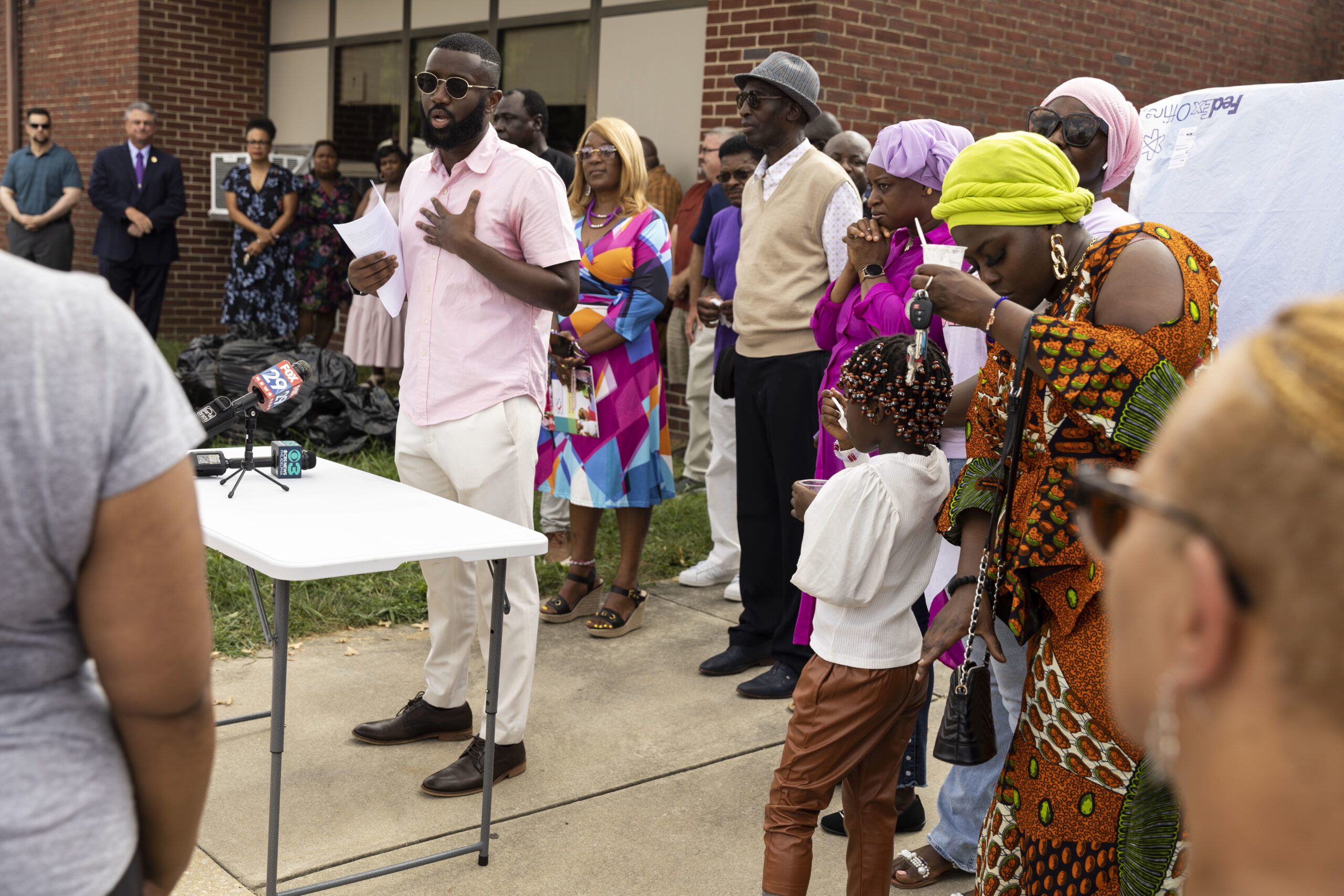
Siddiq Kamara remembers standing side by side with his aunt outside of the Delaware County courthouse and calling for changes in how police are trained after a stray bullet fired by Sharon Hill police officers killedhis cousin Fanta Bility.
Three years later, his office is inside that same building.
Kamara, 30, became the youngest sheriff in Delaware County history when he cruised to victory in November with 63% of the vote. The son of Liberian immigrants, Kamara turned his family’s tragedy into a platform for improving the way community policing is carried out in his home county.
“The people in Delaware County, I’m here to work with them, and my office is going to do that every single day,” he said.
“This is the greatest country in the world. Being 30, being Muslim, being a first-generation immigrant and being the sheriff of one of the biggest counties in Pennsylvania, it’s unheard of. And I don’t take that lightly.”
In his first six months in office, Kamara equipped all of his deputies with body cameras and beefed up recruiting efforts, including open fitness tests throughout the county, to help fill the 35 vacancies he inherited. He’s mandated de-escalation and regular firearms training for his deputies, in memory of his cousin.
Siddiq Kamara (left) stood by his aunt, Tenneh Kromah, in January 2025 as they renamed a park in Sharon Hill after his cousin Fanta Bility.
Delaware County Council President Monica Taylor said Kamara is bringing a fresh perspective to a row office that often gets overlooked.
“He doesn’t just talk. He does the work,” Taylor said. “That’s what makes him a great public servant. He’s bringing everyone to the table to make these improvements.”
That’s notable for a county sheriff, given the role traditionally, doesn’t require officials to stray too far beyond the county courthouse. But Kamara wants to change that, making sure he and his deputies are a frequent presence in the towns they serve.
That desire comes from Kamara’s own experience. After serving six years in the Army National Guard, Kamara became a police officer in Yeadon. He later took a job in the state Attorney General’s Office, working in various roles including narcotics and the personal protection detail for then-Attorney General Josh Shapiro.
Kamara’s cultural background and linguistic skills — he speaks African dialects including Mandingo and Fula, as well as French — were called upon by federal investigators as they built their case against Laye Sekou Camara, a Liberian war criminal.
He said he became a police officer because so many people in his community in Upper Darby, drawing on their experiences in their home countries, were distrustful of police.
“We interact with the public every single day, and sometimes these individuals, we’re not getting them at their happiest time. It’s their most vulnerable time, and you have to use empathy,” he said. “So we’ve been sending some of our supervisors to trainings so they can understand the tools when they’re out there in the community and they can teach their fellow colleagues how to de-escalate situations.”
But when Fanta Bility was gunned down in August 2021, Kamara’s professional ambitions changed. The 8-year-old was struck by a stray bullet after three Sharon Hill officers opened fire toward a crowd leaving a high school football game. They were aiming at a car they mistakenly believed was the source of a nearby shooting.
Those officers were later fired and pleaded guilty to reckless endangerment. But Kamara knew something had to change.
“If you understand what happened that day to my cousin, cops, unfortunately, we can’t make mistakes. It costs people’s lives,“ he said. ”And, that day, it cost my cousin’s life, so I wanted to make sure that in my capacity, as the sheriff, our officers are properly trained.”
Siddiq Kamara speaks during a backpack giveaway at Sharon Hill Elementary School in August 2023 held in memory of Fanta Bility.
State Sen. Anthony Hardy Williams, a Democrat who sponsored a bill nicknamed “Fanta’s Law” that would require all Delaware County police departments to be accredited and receive annual use-of-force training, has been a mentor and friend to Kamara for years.
“Back then, he was annoying,” Williams joked. “But he learned from my team, and it grew from him just being unapologetically persistent and curious, to him understanding he has a real value.”
From Kamara’s early days of volunteering at political events, it was clear to Williams that he was dedicated to public service. “Fanta’s Law,” Williams said, is their latest collaboration.
“He’s here to improve things, not just here to say ‘I have a title and have a position,’” Williams said. “It’s clear he wants to find out how to use this position to improve the office and also improve the lives of people who don’t even know about the office.”
Kamara, for his part, said he’s thankful for the opportunity to enact change in the county that raised him.
“When you’re in an office, and I teach my deputies this all the time, is that we do the protection part, but we’ll forget sometimes about serving,” he said. “And serving goes a long way.”
Christopher Reynolds thought he was talking to a woman looking to exchange money for sex with her 13-year-old daughter, Bucks County prosecutors said Thursday.
Reynolds was adamant about certain graphic details while negotiating the price for the encounter, and even offered a higher rate so the woman could buy her daughter an emergency contraceptive pill, according to the affidavit of probable cause for his arrest.
But in reality, Reynolds was speaking to an undercover detective who investigates human trafficking. And Reynolds, 35, was arrested late Wednesday after driving nearly an hour from New Jersey to a motel in Bensalem.
Reynolds, of Browns Mills, Burlington County, has been charged with criminal attempt to engage or perform a commercial sex act with a minor, criminal attempt to commit trafficking in individuals, and related crimes. He was held in lieu of $500,000 bail, and there was no indication that he had hired an attorney.
District Attorney Joe Khan said Reynolds’ arrest “sends an unmistakable message to those who look to prey on children in our communities.”
“This is the exact kind of proactive, aggressive enforcement the public can expect from our office’s revamped anti-trafficking operation,” he said. “We are going to use every tool and technology at our disposal, and we will continue to hunt down those who attempt to exploit vulnerable individuals.”
Investigators say the undercover detective first started communicating with Reynolds on Tuesday, after he responded to an ad on a website offering “taboo” with an underage girl, the affidavit said.
After negotiating the price and duration of the encounter, Reynolds agreed to meet the girl’s mother at a motel on Lincoln Highway. He nearly called off the appointment when detectives declined to send nude images of the girl, but relented when they sent a digitally de-aged photo of a female detective.
Investigators arrested Reynolds as soon as he entered the motel, the affidavit said. He was carrying $300 and a bottle of Mountain Dew, items the undercover detective told him to bring to the meeting while posing as the girl’s mother.
Reynolds is scheduled to appear before a district judge for his preliminary hearing on July 16.
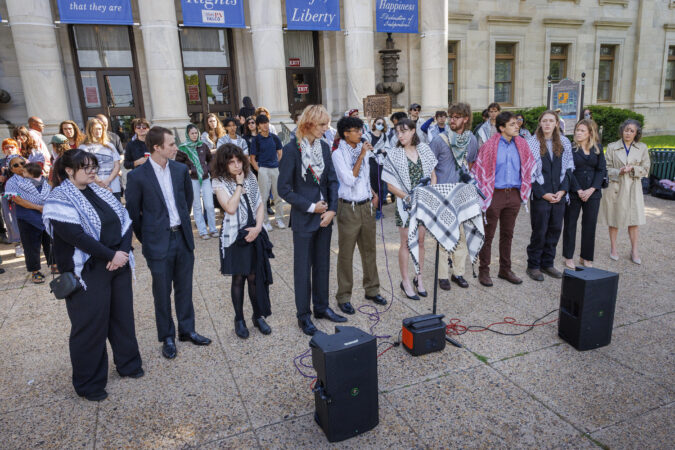
The so-called Swarthmore 9 entered the pleas late Monday, the day before their trial was expected to begin before Delaware County Court Judge Dominic Pileggi.
As part of the plea negotiation, all nine agreed to perform eight hours of community service and pay court costs.
The group had been charged with misdemeanor trespassing, and had refused to accept an earlier, similar plea offer made by District Attorney Tanner Rouse that would have had the same outcome. Doing so, they said at the time, could chill future student protests.
In a statement Tuesday, members of the group said the decision to take the plea deal was “an incredibly difficult and far from unanimous decision.” They said they felt they had “no good options” and accepted the deal to avoid probation or jail time.
“We are deeply grateful for the outpouring of support in solidarity with our case,” the statement said. “The community’s work in pressuring the DA and condemning Swarthmore’s repression and complicity only strengthens our upcoming fight for divestment and an end to the genocide.”
Rouse, for his part, said the case came to a close in “the same way that every other defiant trespass case that we have handled during my time in the office has concluded.”
“This offer had been on the table since the morning of their arrest, and in fact the case would have been withdrawn entirely, as they requested and as other protesters have had their cases withdrawn, if they had performed the same community service before formal arraignment,” he said in a statement Tuesday.
The others — Jonathan Britt, Mara Helen Cahill, Daria C. Dressler, Thomas Falcone, Colin Buckley Malcarney, Riley J. McManus, and Andrew Thomas — are not affiliated with Swarthmore.
Last week, Pileggi denied a motion to dismiss the charges against them, ruling that prosecutors had presented sufficient evidence for the case to proceed to trial.
Swarthmore issued multiple orders to protesters last spring to leave the campus, citing concerns over vandalism and public safety. Many of the protesters wore masks, refused to identify themselves, and were not affiliated with the school, according to administrators at the college.
Prosecutors noted that other protesters at the encampment avoided arrest by following an order to leave the area and were allowed to continue chanting and holding protest signs elsewhere on the campus.
An Olney man posing as a teenager groomed an underage student into a relationship, police said Tuesday, and persuaded her to enter Cheltenham High School after hours and have sexual contact.
Jamaal Raheem, 21, has been charged with unlawful sexual contact with a minor, corruption of minors, and related crimes for the incident, which came to light late last week after Raheem’s preliminary hearing when administrators at Cheltenham School District sent a letter to parents about the case.
Raheem was released on $100,000 unsecured bail. His attorney, Kenneth Carlton Edelin Jr., did not immediately return a request for comment.
The letter to parents about the incident came days after Abington School District announced a review of its security protocols following the arrest of a man who, in a nearly identical case, repeatedly gained unauthorized access to the district’s high school from a female student.
Cheltenham investigators say Raheem and a female Cheltenham High student were found inside the school on April 29. The two gained access to the building and walked throughout it until stopping at a stairwell, where the girl performed oral sex on him, according to the affidavit of probable cause for Raheem’s arrest
District officials found them and asked them to leave, according to a letter from Cheltenham Superintendent Dr. Brian W. Scriven. The district filed a report with the state Department of Human Services ChildLine system and contacted local police as well as the girl’s parents.
“While it’s unfortunate that this incident occurred, we are reassured that our recently updated building safety protocol prompted administration to respond in a timely manner,” Scriven said in his letter.
Two days later, the girl’s parents met with Cheltenham Police, the affidavit said. In an interview with detectives, the girl said that she met Raheem through Snapchat and that he told her he was 17. He had sent her explicit images and asked her to send some of herself, which she declined to do.
The two continued to talk through social media and eventually agreed to meet. Police found that Raheem also attempted to get a job at the restaurant where the girl worked but that his application was denied.
After they were caught in the school, the girl tried to arrange a meeting between Raheem and her parents, according to the affidavit. He asked her whether they knew the two were dating.
Later, when the girl’s mother texted Raheem using her daughter’s cell phone, telling him she was contacting the police, he lied and said he was 18, “is also a child,” and is still in high school.
In the Abington case reported last week, Raeem Grange-Allen, 25, met a female Abington Senior High School student online and later asked the girl to let him into the school “and requested she perform oral sex on him behind a stairwell,” according to the affidavit of probable cause for his arrest.
The girl told police that she “saw him or let him into the school approximately three to four times.”
Grange-Allen later tried to rape the girl inside her home, according to police. His criminal trial on attempted rape by force and attempted statutory sexual assault is pending.
Mirvan Dinler, 27, was set to begin his trial before Delaware County Court Judge Mary Alice Brennan when he instead entered the no-contest plea to rape of an unconscious victim. Prosecutors said Dinler attacked the woman after driving her home from a bar in North Philadelphia and walking her to her dorm room as she drifted in and out of consciousness.
Semen found on a comforter and towel inside the dorm room were found to be a match to Dinler’s DNA, according to Assistant District Attorney Danielle Gallaher. And surveillance footage taken from cameras outside of the dorm building showed Dinler escorting her inside, arm-in-arm, because she was too intoxicated to walk on her own, the prosecutor said.
In agreeing to plead no-contest, Dinler did not admit guilt but did not dispute the prosecution’s statement of the facts in the case.
Gallaher said she would seek a prison term of three to six years at sentencing in October.
Dinler’s attorney, Shaka Johnson, did not return a request for comment Monday. Previously, Johnson said there were “glaring, glaring cracks” in the woman’s account of what happened that night.
The woman, who was a senior at Villanova at the time, testified at a preliminary hearing that she woke up, drunk and disoriented, as Dinler raped her in September 2024. She said she was too terrified to fight back or call out for help.
Earlier that evening, she said, she had been drinking with friends on campus before the group headed to Warehouse on Watts, a bar in North Philadelphia.
The woman said she did not drink regularly, but on that night had three glasses of wine and two shots of liquor. After arriving at the bar in the city, she said she felt dizzy and ill, and decided to return home.
“I knew I wasn’t feeling good, and I didn’t want my friends to have to babysit me,” she said.
The woman ordered an Uber, and Dinler arrived in his Toyota Prius to pick her up, she said.
Her memory was spotty, she said, until waking up to find that Dinler was raping her.
After the assault, she said, Dinler returned to the dorm and loudly banged on her door, demanding that she pay a cleaning fee because she had vomited in his car during the ride.
Gallaher, the prosecutor, said there was evidence that Dinler, using the victim’s phone with her permission, sent a $150 payment to a friend of his through Venmo. That person then transferred the money to Dinler’s bank account.
A former employee at a Hatboro daycare injured a child with special needs by slamming him, hard, into a chair and, later, onto the floor, Montgomery County prosecutors said Wednesday.
Thomas Coleman, 42, of Holland, Bucks County, has been charged with endangering the welfare of a child and simple assault in connection with the March 23 incident involving a 4-year-old boy at KinderCare on Warminster Road.
Coleman remained in custody Wednesday with bail set at $25,000. His attorney, Stephen Jones, did not return a request for comment.
Coleman had been the subject of two previous investigations of his conduct toward children at KinderCare, according to the affidavit of probable cause for his arrest. Those incidents involved him “putting a kid down on a mat too hard and yelling at students,” the affidavit said.
Administrators at KinderCare placed Coleman on leave after the earlier incidents, the affidavit said, but they allowed him to return to work after completing training.
After the latest incident, however, he was fired, the affidavit said.
KinderCare’s director, Ashley Ross, did not return a request for comment Wednesday.
Hatboro police learned of the alleged assault when the boy’s parents contacted them in March, the affidavit said.
The mother said another parent had seen Coleman pick up her son, who is autistic, by his arms and roughly place him in a chair, hitting the boy’s neck on the back of the chair, and then forcefully push the chair into a nearby desk, the affidavit said.
The boy then got out of his seat and walked to a carpeted area of the room, according to the parent who witnessed the assault. Coleman, appearing frustrated, than grabbed the boy by his chin and slammed him down onto the floor, the parent said.
When the boy’s mother picked him up from daycare, she said, she noticed scratches and marks on his neck. Coleman told her the injuries were self-inflicted but would not provide more details, the affidavit said.
Later, the woman had her son examined by a chiropractor, who told her the boy’s hips were out of alignment.
Coleman is scheduled to appear before a district judge for a preliminary hearing on July 2.
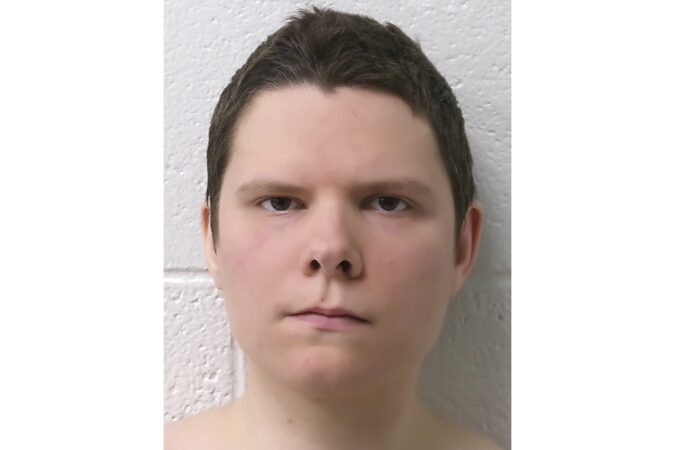
A former Delaware County woman tied to an extremist group known as the Zizians has been charged with killing her parents, execution-style, inside their Chester Heights home in December 2022.
Michelle Zajko, 33, has long been a person of interest in the slayings of her parents, Richard and Rita Zajko. After years of investigation, Delaware County District Attorney Tanner Rouse filed first-degree murder charges Wednesday and accused her of shooting the couple on her 30th birthday.
New information obtained in the last few months, including ballistics evidence and an extensive download of text messages and other data from Zajko’s cell phone, allowed prosecutors to piece together the case against her, according to the affidavit of probable cause for her arrest.
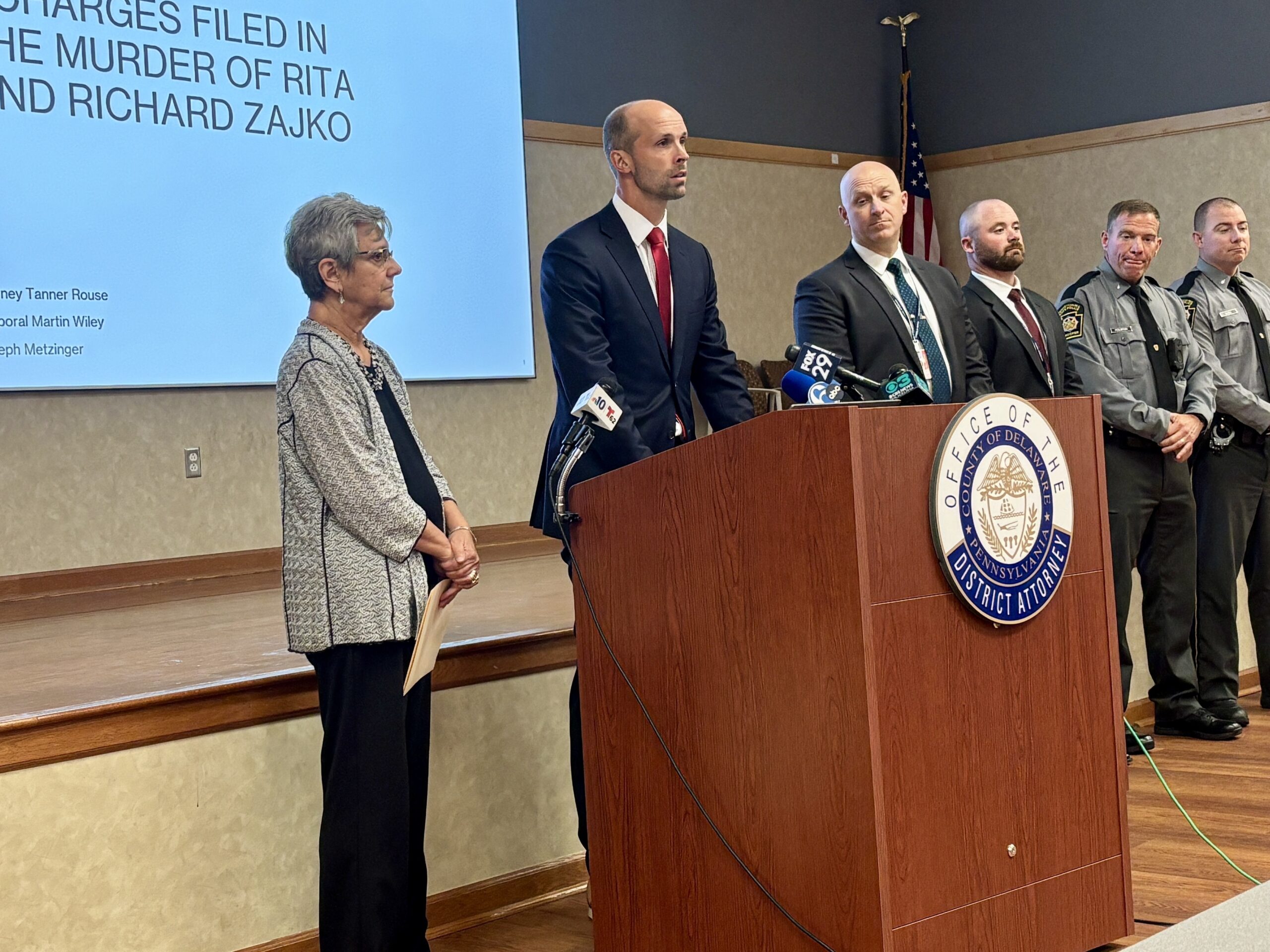
Rouse, in announcing the charges Wednesday, said he believes that while Zajko planned and carried out the killings, she likely did not act alone. The investigation is continuing, he said.
Building the case against her, he said, took years of skilled and disciplined police work as investigators interviewed dozens of people and connected threads of information in several states.
“I want to emphasize — I cannot stress this enough — this is just about as exhaustive of an investigation that I’ve been a part of in my 16 years as an attorney,” Rouse said. “We don’t have a smoking gun. It is piece after piece after piece of evidence that has been collected painstakingly over many years.”
Investigators say Zajko, an alumna of Cardinal O’Hara High School and Cabrini University, drove to her childhood home on Highland Circle in Chester Heights with a plan to kill her parents. She shot them both in the head, leaving their bodies for police to find days later, after a concerned friend reported they had missed an appointment to care for Rita Zajko’s elderly mother.
The motive for the killings remains unclear.
Rita and Richard Zajko, seen here in a 1993 family portrait.
Zajko told friends she had a difficult relationship with her mother, and accused her of years of emotional abuse. In online writings, Zajko said her mother criticized her constantly, arguing with her over religion and her desire to be vegan.
That strained relationship was detailed in the final text messages Zajko sent her father days before authorities say she killed him, according to the affidavit.
“Every time I interact with mom in a nonsuperficial way she spends the time insulting a life she knows nothing about, makes assumptions that imdoing nothing, etc,” Zajko wrote, the document said. “Itsuncalled for. I don’t want to speak to someone who treats me like that.”
But Rita Zajko, just nine hours before she was killed, attempted to reconcile with her daughter, sending her a happy birthday text and apologizing for whatever she had done to alienate her, according to the affidavit.
On Wednesday, Rosanne Zajko, the wife of Richard Zajko’s brother, stood alongside the prosecutor as he announced the charges against her niece. Losing her brother- and sister-in-law, she said, was “like the lights going out of our lives.”
“We don’t know yet if the trial will begin to heal the void in our lives and the ache in our hearts,” she said. “But we do know that the detectives, the DA’s office, and we, the family, have done everything possible to achieve justice for Rick and Rita.”
Delaware County District Attorney Tanner Rouse announces murder charges Wednesday against Michelle Zajko. Zajko’s aunt, Rosanne (left) spoke briefly about the impact the killings has had on her family.
Michelle Zajko, for her part, has said she had been unjustly accused.
In a sprawling, handwritten letter sent to The Inquirer and other news outlets last year, Zajko insisted she did not kill her parents. Rosanne Zajko said Michelle Zajko told her at the couple’s funeral in January 2023 that she had not killed her parents, but said she knew who did. She would not name the killer, her aunt said.
“I’m viscerally reminded of the witch hunts, of the Satanic Panic, of the mob that burned Joan of Arc at the stake, and of the mob that ripped apart Hippolyta,” Michelle Zajko said in the letter, written in a jail cell in Maryland, where she is awaiting trial on trespassing, gun, and drug charges. “The papers are lying. … I did not murder my parents.”
Sources familiar with the investigation say it is possible that, as an only child, Zajko may have expected to inherit her parents’ substantial estate. The value of the estate has not been made public, but the sources, who spoke on the condition of anonymity to discuss an ongoing case, say it is worth several million dollars.
A person close to Zajko said she had contacted an attorney in the weeks after her parents were killed to discuss how she could access her parents’ estate.
Zajko remains in custody in western Maryland with two other members of the Zizians, including the cultlike group’s leader, Jack “Ziz” LaSota, who identifies as female.
Zajko is also charged with illegally supplying the guns used by other members of the Zizians in a fatal shootout with a U.S. Border Patrol agent weeks before her arrest in Maryland.
In her letter from jail, Zajko said she and her friends were innocent of all criminal charges they face. She said they were being targeted by other members of the Bay Area tech community seeking to discredit them.
Members of the Zizians — a group whose philosophy encourages making decisions through reason and logic, rather than emotion — are connected to six killings across the country, authorities say. Prosecutors have denounced the group as extremists and accused them of using violence when their worldview is challenged.
For years, the deaths of Richard and Rita Zajko remained the only ones tied to the Zizians that remained unsolved.
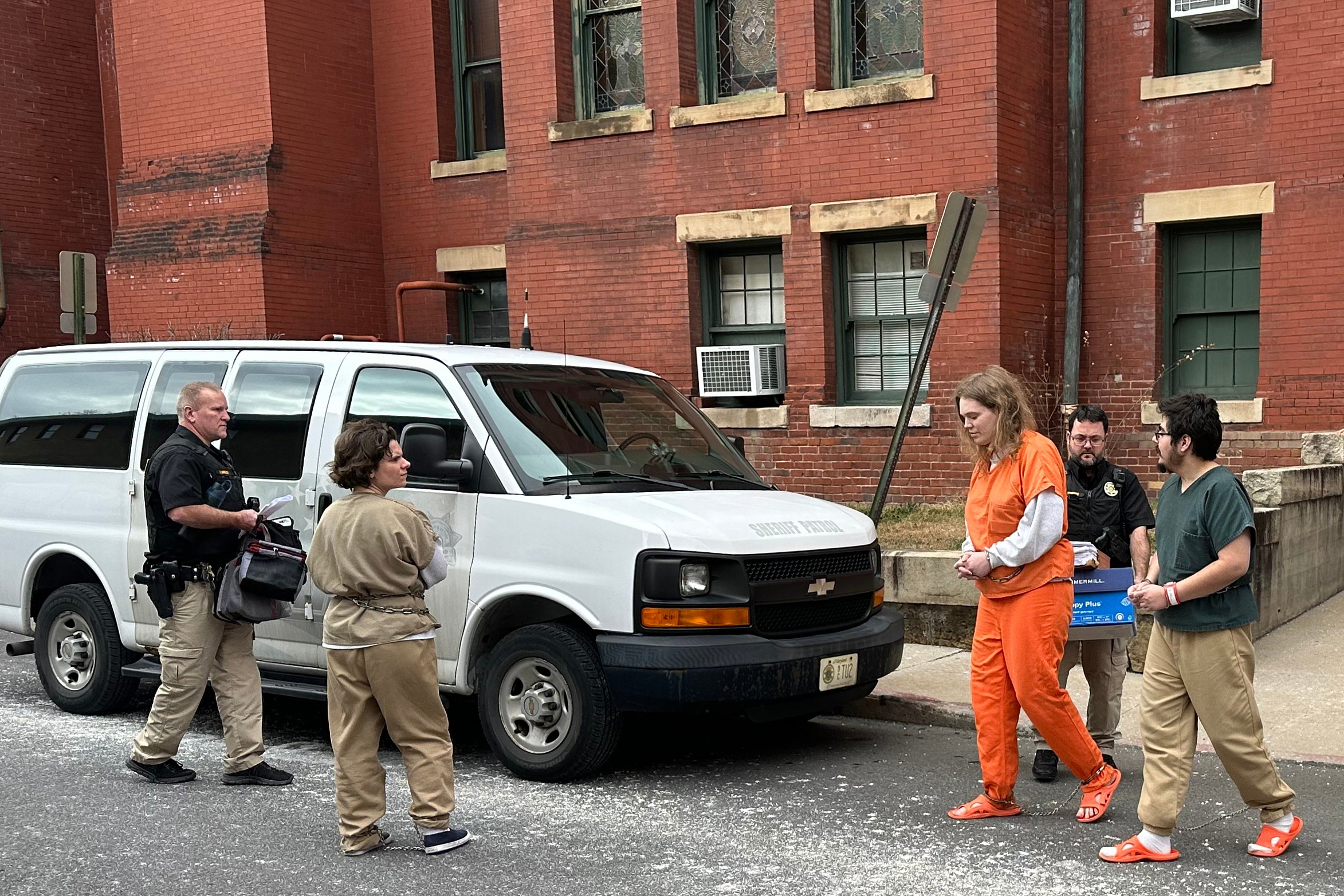
Deputies escort Michelle Zajko, left, Daniel Blank, right, and Jack LaSota, in orange, from the Allegany County Courthouse in Cumberland, Md. in January.
Almost immediately after the killings, investigators in Delaware County learned that Zajko had been at her parents’ home on the night they were shot — a neighbor’s Ring security camera recorded someone screaming “Mom!” shortly before police believe the fatal shots were fired.
The couple were found in their daughter’s childhood bedroom, which had remained virtually unchanged since she had moved out of the house decades earlier, the affidavit said.
The gun used to kill the couple was the same caliber as, and a similar model to, one Zajko had purchased in Vermont weeks earlier, investigators said. She was labeled a person of interest in the case as a consequence. But authorities said there was not enough evidence to prove she had committed the crime.
That changed this week, prosecutors said.
When investigators spoke with Zajko at her home in Vermont after her parents’ killings, she showed them a different type of ammunition from the kind found at the Chester Heights home, the affidavit said. However, while serving a subsequent search warrant there, detectives found cartridges that were an exact match — and that they said Zajko had hidden from them.
Initially, forensic investigators said they were unable to determine if the shell casings found near Rita and Richard Zajko’s bodies had been fired from their daughter’s gun. But late last fall, other casings found near trees behind Michelle Zajko’s home in Vermont, which she had used for target practice, had been fired by the same gun that killed her parents, authorities said.
Another crucial piece of evidence, investigators said, was a list found on Zajko’s cell phone titled “There are so many things we f— up” that detailed missteps, including not taking shell casings from the homicide scene, according to the affidavit.
The murder charges mark an unexpected turn for Zajko, whom friends and loved ones described as an ambitious, accomplished young woman with a keen interest in science. In her early 20s, Zajko pursued a career in bioinformatics and conducted research at Children’s Hospital of Philadelphia with colleagues from the University of Pennsylvania.
At the same time, Zajko became immersed in the Zizianmovement through online message boards, and met some of the group’s members while interning with NASA in California.
The Chester Heights, Delaware County home where Richard and Rita Zajko were murdered on New Years Eve 2022.
In 2021, partly in reaction to the COVID-19 pandemic, Zajko abandoned her scientific research and moved to rural Vermont, where she lived with other Zizians and grew close to LaSota, the group’s leader.
Zajko, in her prison letter, said that she rejects the characterization of LaSota as her “leader” and that the group does not refer to themselves as Zizians. Instead, she said that she and LaSota are close friends, and that she loves LaSota “infinitely more than I could ever express.”
Investigators now believe that Zajko, LaSota, and Daniel Blank, another Zizian, traveled to Chester Heights together on the day Zajko’s parents were killed, and intentionally left their cell phones in Vermont to prevent authorities from tracking their movements, according to the affidavit.
The three made that trip a second time weeks later, in January 2023, so Zajko could attend her parents’ funeral in Marple Township. Pennsylvania State Police troopers investigating her parents’ killings briefly detained Zajko and Blank at a hotel where they were staying in Chester.
LaSota, however, refused to answer the troopers’ questions, was charged with obstruction of justice, and remained in custody in Delaware County for months before being released on unsecured bail.
LaSota did not show up for subsequent hearings, and a bench warrant for her arrest was still active when Maryland State Police took her into custody last year alongside Zajko and Blank.
As Zajko awaits trial in both cases, Rouse, the prosecutor, said her crimes “go beyond comprehension and circumstance.”
“This is a child who killed her parents, who walked into her childhood home, took her mother to her childhood playroom, and executed her,” Rouse said. “There aren’t words or emotions that can capture it.”