Author: Anthony R. Wood

  • Winter storm warning for Philly; blizzard conditions expected at the Shore

    Winter storm warning for Philly; blizzard conditions expected at the Shore

    A winter storm warning is in effect for Sunday — a blizzard warning for the Jersey Shore — and Sunday into Monday Philly’s snow has a shot at doubling the amount that fell on Jan. 25, the National Weather Service says.

    “At this point, that’s certainly possible,” Zachary Cooper, meteorologist with the National Weather Service said Saturday. The official forecast is calling for just over a foot in the city, with the potential for the total reaching 18 inches.

    Blizzard warnings up for the Shore, where onshore winds are forecast to howl past 35 mph, with moderate to major flooding possible.

    While it wasn’t in the official language, the weather service on a Saturday morning might well have included a supermarket stampede warning.

    The actual winter storm warning is in effect from 7 a.m. Sunday until 6 p.m. Monday.

    With a surprising level of agreement computer models and their interpreters Saturday were seeing the storm as being inevitable. It was forecast to affect the I-95 corridor from Washington to Boston — a rarity in recent winters.

    The weather service listed a 25% chance that totals could approach two feet in the city.

    “It’s going to be a long-duration event,” said Cody Snell, meteorologist with NOAA’s Weather Prediction Center in College Park, Md.

    On the plus side, this will not have the staying power of the 9.3 punitive inches that accumulated on Jan. 25 and spent a three-week vacation in the region. No ice is in the forecast, and daytime temperatures above freezing and the February sun likely will erase most it by the end of the workweek.

    (function () {window.addEventListener(‘message’, function (e) { var message = e.data; var els = document.querySelectorAll(‘iframe[src*=”‘ + message.id + ‘”]’); els.forEach(function(el) { el.style.height = message.height + ‘px’; }); }, false); })();

    What time would the snow begin in Philly?

    Precipitation is expected to begin Sunday morning, said Snell, possibly as a mix of snow and rain that becomes all snow.

    Snow may have a hard time sticking during the day, said Tom Kines, senior meteorologist with AccuWeather Inc., since temperatures will be near or slightly above freezing and the late-winter sun will be a factor, even it’s just a rumor in the sky.

    Plus the ground won’t be especially cold after a Saturday in which the temperature may approach 50 degrees.

    However, the upper air is going to be quite cold, Snell said, and when the snow is falling heavily, as it is expected to do Sunday night, “it will cool the column.”

    He said areas that get caught in heavy snow “bands” would see the highest amounts.

    What would be so different about this storm?

    The storm is forecast to mature into a classic nor’easter, so named for the strong winds generated from the Northeast.

    Nor’easters are the primary source of heavy snows along I-95, but the ones that produce heavy snow from Washington to Boston have been scarce lately.

    “Over the past several years, they’ve been few and far between,” Kines.

    The Jan. 25 storm was not a nor’easter per se, said Snell, but more of a case of the “overrunning” of warm air over cold air producing the snow and sleet.

    John Gyakum, an atmospheric scientist at McGill University in Montreal and a winter storm specialist, said he anecdotally has seen a trend of coastal storms intensifying too far north to have much of an impact on the Philly region.

    If that were the case, it could be a symptom of global warming, said Steve Decker, meteorology professor at Rutgers University. Storms form where cold and warm meet, and that may have been happening farther north lately.

    In any event that evidently won’t be the case Sunday.

    What could go wrong with the forecasts?

    Are you new around here?

    The storm consists of multiple moving parts, and as it bounds off the Southeast coast, it is due to intensify rapidly over the warm Atlantic waters.

    Meteorologists advised it was still unclear precisely how intense it would become and what path it would take.

    Forecast busts have been known to happen, including a famous one 25 years ago. On a Friday, the weather service warned of a storm of “historic” proportions to begin that Sunday.

    What Philly got was about an inch of snow that fell over three uneventful hours.

    In 2015, the head of the Mount Holly weather service office publicly apologized for a busted forecast.

    However, in recent years, the region hasn’t had all that many serious snow scares.

    In this case, expect details to jump around even as the precipitation is falling, but Snell said “confidence is growing” that substantial snow is going to happen.

    Inquirer staff writer Stephen Stirling contributed to this article.
  • Accumulating snow is looking more likely for the Philly region Sunday into Monday

    Accumulating snow is looking more likely for the Philly region Sunday into Monday

    Whatever unfolds almost certainly won’t resemble what came down from the skies on Jan. 25 or its obstructive aftermath, but accumulating snow Sunday into Monday is looking more likely.

    The National Weather Service on Friday listed a 90% chance of precipitation, with a 75% likelihood of two inches or more of snow for the immediate Philadelphia region, and about a one in three shot of at least six inches.

    And add about a 100% chance of uncertainty regarding how this would play out, said Richard G. Bann, a forecaster with the National Oceanic and Atmospheric Administration’s Weather Prediction Center, in College Park, Md.

    Computer models continued to show a wide range of outcomes from a storm that was still two days away from developing, ranging from a gentle snowfall to a school and road closer. Expect differences to persist.

    In addition to snow, a potent storm with powerful onshore winds could result in coastal flooding, the weather service office in Mount Holly advised.

    “I don’t think we would jump to either end of the extremes,” Bann said, “but we can’t say anything is completely out of the realm of possibility just yet.”

    The storm would evolve from multiple moving parts before maturing off the Southeast coast, he added. “Part of the equation is starting to come together but we’re still not there yet.”

    By Saturday, he said, “hopefully we’ll kind of know what part of the chessboard we’re working on.”

    When snow might begin in the Philly region

    Timing issues are among those likely to be fine-tuned in the next couple of days, but the early thinking is that snow, or rain changing to snow, would arrive in the Philly region Sunday morning or in the afternoon, continuing into Monday.

    The intensity of the snow and winds would depend on the strength of the storm, precisely where over the ocean it ripens, and the eventual track.

    The U.S. model has been bullish on bringing it close enough for a major snowfall along I-95. The other models, not so much, but the weather service noted that one of the balkers, the European, had come on board with at least light accumulations for the region.

    “We’re definitely going to be spinning up an area of low pressure,” Bann said, “but exactly what that means for D.C., Philly — any of us — is still in question.”

    But on the plus side: No ice is expected in this go-round.

    So much for the remnants of Jan. 25

    One of the most-stubborn snowpacks in the period of record, which has mutated into one of the uglier snowpacks in the period of record, should be pretty much erased by the time any flakes start falling Sunday.

    Submerged objects have been reappearing, evoking a surfacing submarine, and bare ground is becoming ever more visible.

    A decent, soaking rain on Friday — perhaps double Philly’s month total so far, a mere 0.25 inches — and temperatures in the 40s, combined with a sunny Saturday with high near 50 degrees, should pretty well clear the yards. Those plowed-snow mountains are likely to survive a while longer.

    The snowpack’s tenacity had everything to do with the two to three inches of sleet — melt-resistant white ice — that fell atop the several inches of snow on Jan. 25. The entire mess was locked in by an Arctic freeze.

    Bann endured similar conditions in his area, and recalled that it was way harder to move out of the way than the Mid-Atlantic mega-snows of February 2010, when 35 to 45 inches accumulated.

    He said he shoveled awhile, took a break, and then was astonished to see that his neighbors were finishing his work.

    Asked if he sent them any thank-you gifts, he replied: “I haven’t stopped.”

  • Another weekend snow threat is in the outlook for the Philly region

    Another weekend snow threat is in the outlook for the Philly region

    You may have read this somewhere before: Computer models are seeing the potential for a significant winter storm to affect the Philly region on yet another weekend.

    Those ingenious machines continue to predict that a storm will intensify off the Southeast coast Sunday into Monday. But “a large amount of uncertainty” remains about whether it will generate accumulating snow in the Philadelphia region, the National Weather Service said in its morning discussion Thursday. In the early going, areas south and east of Philly were the likeliest targets.

    Based on past experience, not to mention the nonlinear chaos of the atmosphere, about the only thing certain was that they would be changing their stories multiple times in the next few days, as would their virtual peers.

    In the short term, it is highly likely that, along with a certain dreariness, the region will be getting something that has been mighty scarce lately — rain. Philly’s rain total this month is under 15% of normal. Over the last 60 days throughout the region, it has been 40% to 50% below normal.

    The forecast for the rest of the workweek in Philly

    The freshness date on the snowpack has about expired and about now looks like it could use a good scrubbing, along with the air.

    Atop the remnants, generally light winds have been aiding and abetting a rather stagnant air mass. A “code orange” air quality alert was in effect for South Jersey Thursday, and health officials advised those with respiratory conditions to limit outdoor exposure.

    The primary irritants were tiny particulates, about 30 times smaller in diameter than a human hair.

    Rain is likely to be in the air Thursday night into Friday, and it could be a substantial amount, on the order of a half-inch or more. So far this month, officially 0.25 inches have been measured at Philadelphia International Airport.

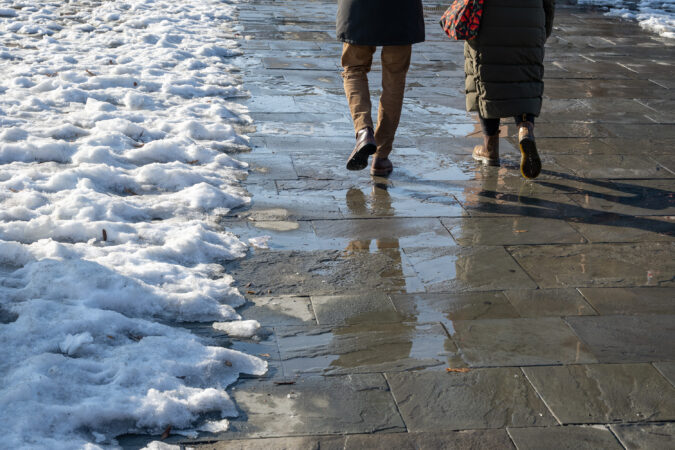
    The moist air and the rain should erase more of the snowpack, “but we don’t want the snow and ice to melt too quickly,” said Ray Martin, a lead meteorologist at the National Weather Service Office in Mount Holly. No significant flooding is expected, just some potential damage to footwear.

    Temperatures are expected to top out in the 40s Thursday and Friday.

    About the weekend storm potential

    It may hit 50 degrees on Saturday with an appearance of the sun. So much for the easy part.

    Come Sunday, “there could be some rain or snow,” said Matt Benz, senior meteorologist with AccuWeather Inc.

    A storm is due to slide across the South and eventually regroup off the Atlantic coast on Sunday.

    But Benz pointed out that a key feature of the potential storm still was over the Pacific and not due to make landfall until sometime later Thursday, when it would be captured by land-based observation and give the machines a clearer idea of its intentions.

    And it is not at all clear how much cold air would be available for snow, Benz said, but if the storm intensifies sufficiently, “it can manufacture its own cold.” Another factor is just where off the coast the storm would be when it matured.

    In case you’re wondering why the atmosphere seems to pick on Sundays, having storms show up in seven-day cycles is a common phenomenon.

    They often migrate in 3½-day cycles, which has to do with the rhythms of storm movements as they travel across the country, and it so happens that the more significant one has been arriving on the seventh day.

    It keeps happening until it doesn’t, and it’s still very possible that it doesn’t this time around.

    Said Benz: “We have a long way to go to Sunday.”

  • One of Philly’s longest snow-cover streaks is over, at least officially

    One of Philly’s longest snow-cover streaks is over, at least officially

    Officially* one of Philadelphia’s region’s most impressive and enduring snow-cover streaks in the period of record ended peacefully at 7 a.m. Tuesday.

    After 23 consecutive days of at least an inch on the ground at Philadelphia International Airport, the National Weather Service observer reported a mere “trace” at 7 a.m. Tuesday, meaning that whatever was left was hardly worth a ruler’s time.

    “I can’t imagine too many people are sad about this,” said Mike Silva, meteorologist at the weather service office in Mount Holly.

    The news might have evoked vast choruses of “good riddance” were it not for the fact that mass quantities of the snow and ice remain throughout the region, enough to contribute to the formation of dense fog late Tuesday night into Wednesday morning, the weather service warned.

    And regarding that asterisk, observations at PHL have been known to differ from actual conditions elsewhere, if not common sense.

    Plus, computer models are seeing yet another weekend winter-storm threat.

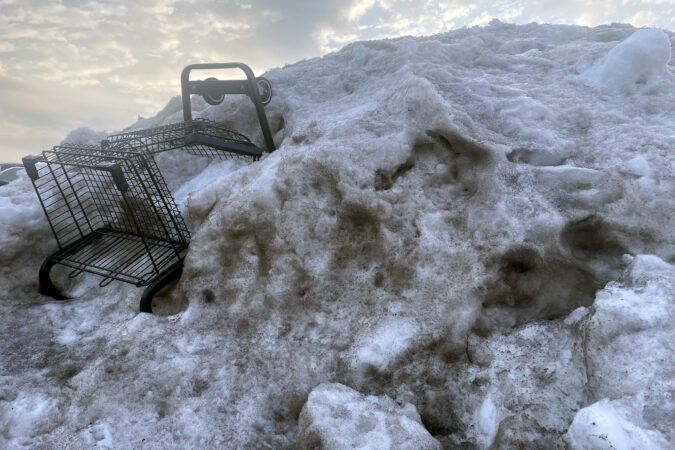
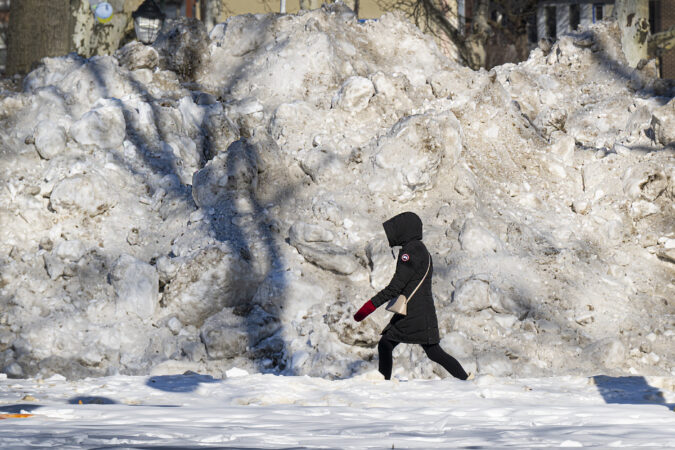
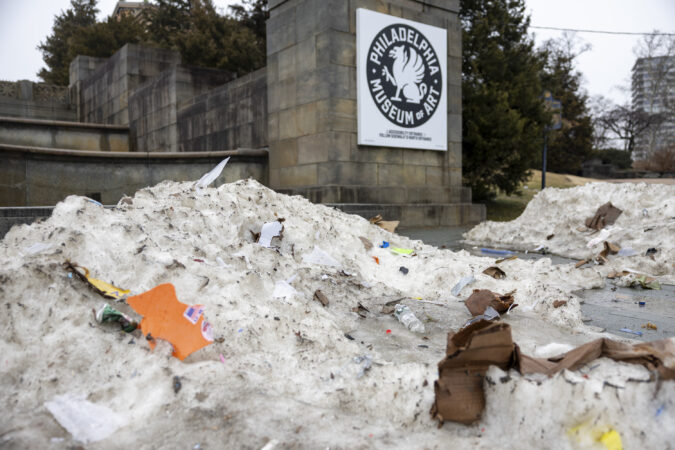
    In the meantime, heaps of aging, graying plowed snow are ubiquitous around the great Philadelphia city-state. As for melting “those big mountains, that’s going to take forever,” Silva said.

    For 18 days after 9.3 inches of snow and sleet was measured at the airport, the official snowpack had been 3 inches or more, the longest such streak in 65 years.

    The 23-day run of an inch or more, which began on Jan. 25 when the snow started, was the longest since 2003.

    The endurance had to do with the melt-resistant icy sleet that fell atop several inches of snow and the Arctic freeze that followed. Temperatures remained significantly below normal for 17 consecutive days.

    The great melt is picking up steam in the Philly region

    However, the melting process is at long last accelerating. Bare ground is appearing around tree roots, and evidence of vegetative life has been poking through the snow cover.

    Temperatures above freezing and the February sun have been making hay, but so has the return of invisible atmospheric moisture, even as precipitation remains far below normal.

    When warm, moist air comes in contact with snow, it condenses and yields latent heat that accelerates melting. That is evident in the swelling ranks of rivulets on driveways and in the streets.

    The combination of the moisture, the cold snow and ice pack, and generally calm winds will result in fog that could reduce visibilities to a quarter mile at times. The weather service issued a dense fog advisory, in effect from 10 p.m. Tuesday until 10 a.m. Wednesday.

    Melting conditions should be excellent the rest of the workweek, with highs in the 40s and light rain possible Wednesday night, and likely on Friday.

    Temperatures are due to remain above freezing into the weekend, but “then we’ll have to see what happens Sunday,” Silva said.

    Another storm is due to develop in the Southeast, and expect another week of computer-model vacillation on whether it will produce rain, snow, or partly cloudy skies.

    “We have some models that say snowstorm, and others that say nothing,” Silva said.

    It’s been a while since computer model forecasts have been this conflicted about a weekend storm — about a week.

  • Philly’s snowpack reaches a 65-year milestone, and here’s when it finally may disappear

    Philly’s snowpack reaches a 65-year milestone, and here’s when it finally may disappear

    You may not have noticed, but that endless snowpack has developed a slow leak — in this case historically slow.

    Its endurance continues to climb the charts among the snowpacks of yesteryear — and in at least one way may well be unprecedented in the period of record dating to the late 19th century.

    As of 7 a.m. Friday, officially at Philadelphia International Airport, three inches of the snowy and icy remnants of what fell on the region on Jan. 25 had survived.

    That made this the most-enduring snowpack of at least three inches in 65 years, said Alex Staarmann, a meteorologist at the National Weather Service in Mount Holly, the office’s climate specialist.

    That earlier one, which lasted from Jan. 20 to Feb. 14, 1961, was replenished by multiple significant snowfalls, as did others at the top of the endurance list; the 2026 version was basically one-and-done after 9.3 inches were measured at the airport.

    This one — and it still has its sparkle where it hasn’t mutated into frozen sludge — even has bested the snow cover attending the 44 inches that accumulated in a six-day period in February 2010, when at least four inches survived for 17 days.

    The latest batch was at four inches for 18 days, good for fourth place all-time.

    Not that it hasn’t had some aesthetic benefits. It can be like light therapy in the morning, and a spectacular screen for the tree shadows. It has beautifully entombed all that unfinished yard work.

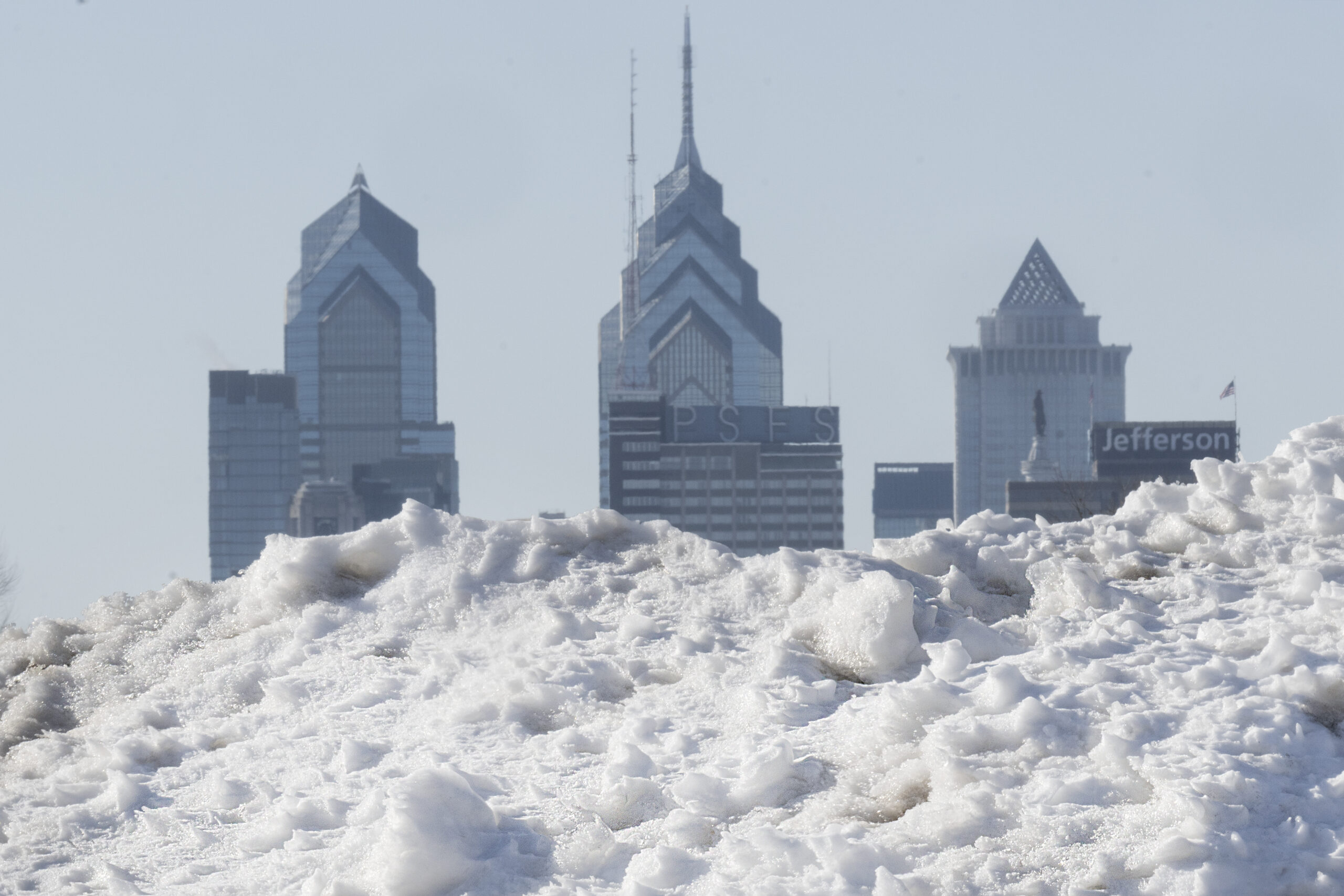
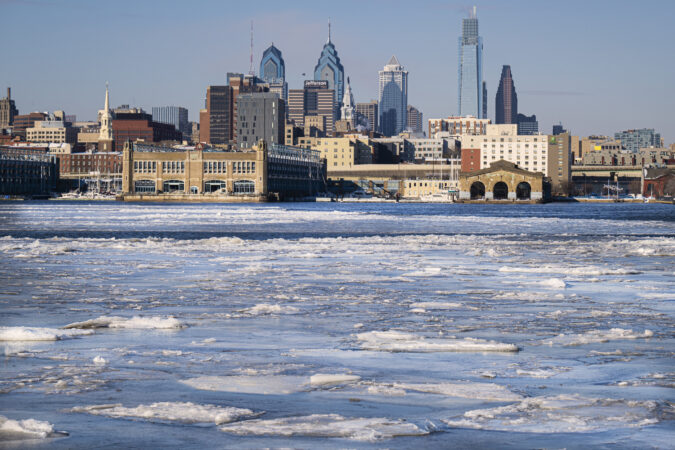
    Snow and ice debris is piled along the Camden waterfront in Camden, N.J., framing the Philadelphia skyline across the Delaware River, Thursday, Feb. 5, 2026.

    But it’s also been a royal pain throughout the region and begged the question: When it will go away?

    When will bare ground emerge in the Philly region?

    A farewell tour is likely next week as a snow threat for the holiday weekend remains a remote one, with accumulations only between “wet flakes” and “a dusting” possible, said Staarmann.

    And you might keep an eye on Tuesday for a melt watch. Temperatures are forecast to fall below freezing Monday morning, and then stay above 32, even at night, through the workweek.

    Highs are expected in the 40s Saturday through Monday, and then 50 or better the next three days.

    More significantly for melting, the air will become noticeably more moist on Tuesday, and that should accelerate the melting. Your skin might even notice the difference.

    Why has the snowpack been so enduring in Philly?

    Since the precipitation ended on Jan. 25, the air has been remarkably dry, an underrated factor in the persistence of the ground cover, along with what happened after the snow stopped that day.

    After more than seven inches of snow had fallen, it was topped with several hours of accumulating sleet.

    Those miniature ice balls turned out to be a mighty additive: Ice may be way slower to accumulate, but it is also way slower to melt, giving the snowpack staying power.

    “If we hadn’t had this much sleet, we might have some evidence of it, but it wouldn’t be this deep or persistent,” said Staarmann.

    The Arctic freeze that followed and the consistently arid air have been the ideal preservatives.

    Moist air, an efficient melter, has been absent.

    When enough invisible water vapor comes in contact with snow and ice, it condenses and gives off latent heat that can liquefy the pack in a hurry.

    After Philadelphia’s record 30.7-inch snowfall of Jan. 7-8, 1996, it was a moisture surge 11 days after the snow stopped that had a whole lot to do with erasing the snowpack even before the modest rains that followed, recalled David Robinson, the longtime New Jersey state climatologist.

    The melt set off disruptive flooding, but even though rain is in the forecast for midweek, anything resembling a repeat is unlikely this time around.

    Is that all there is for the winter of 2025-26?

    NOAA’s Climate Prediction Center on Friday had odds favoring above-normal temperatures through Feb. 23, followed by a possible cool down.

    Regarding any potential for snow, “We still have a few weeks left of opportunities,” said Staarmann.

    As long as computers are operating, snow chances will never die.

    However, the February sun is getting stronger by the day and lasting longer. If it does snow again, it’s a near certainty that it won’t match this one for staying power.

  • Philly’s snowpack is making history, along with misery

    Philly’s snowpack is making history, along with misery

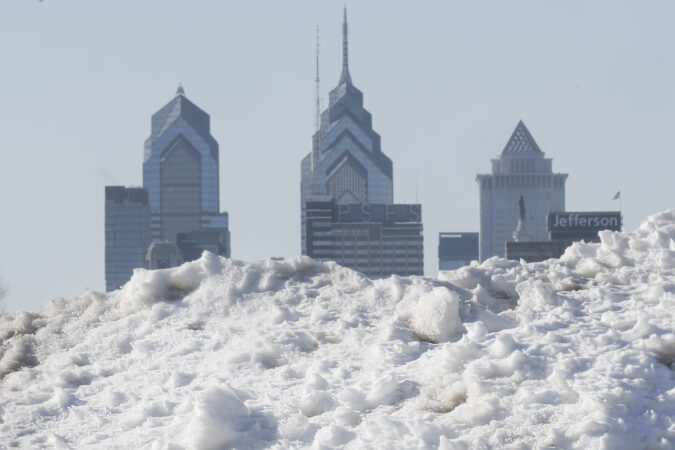
    That inert, frozen mass that has turned parking and walking and the routine business of life into punitive experiences around here is a certifiable Philadelphia rarity.

    It almost certainly will take a significant hit this week — temperature readings may reach the big 4-0 (hold the applause; a downside is possible) — but the snowpack already has earned historic status in Philly’s weather annals.

    The official snow depth at Philadelphia International Airport at 7 a.m. Monday was 5 inches, the 15th consecutive day that it has weighed in at 5 inches or more.

    That is tied for the fourth-longest streak in National Weather Service records dating to the late 19th century. But this one arguably is more impressive than its predecessors.

    The Philly snow cover’s staying power

    The staying power of the other snow-cover streaks at the top of the list were the results of heavy snow followed by additional snowfall of 10 inches or more that replenished the snow pack. That list includes the 44 inches that fell in a six-day period in February 2010.

    window.addEventListener(“message”,function(a){if(void 0!==a.data[“datawrapper-height”]){var e=document.querySelectorAll(“iframe”);for(var t in a.data[“datawrapper-height”])for(var r,i=0;r=e[i];i++)if(r.contentWindow===a.source){var d=a.data[“datawrapper-height”][t]+”px”;r.style.height=d}}});

    This time around, only 0.3 inches have been measured since the 9.3 inches of snow and white ice stopped falling on Jan. 25.

    The sleet that fell atop the several inches of snow added considerable durability to the pack, since ice melts more slowly than snow, and then it all was rock-frozen by a memorable arctic freeze, followed by reinforcements.

    Temperatures the last 15 days have averaged 10 to 15 degrees below normal, and Sunday’s low of 8 was the coldest of the season to date.

    It isn’t often that the Philadelphia region experiences such “magnitude … and persistence” of cold, said Kyle Imhoff, the Pennsylvania state climatologist. Plus, typically big snows are followed by a thawing period of few days later. What’s happened since Jan. 25, he said, “is a much rarer occurrence.”

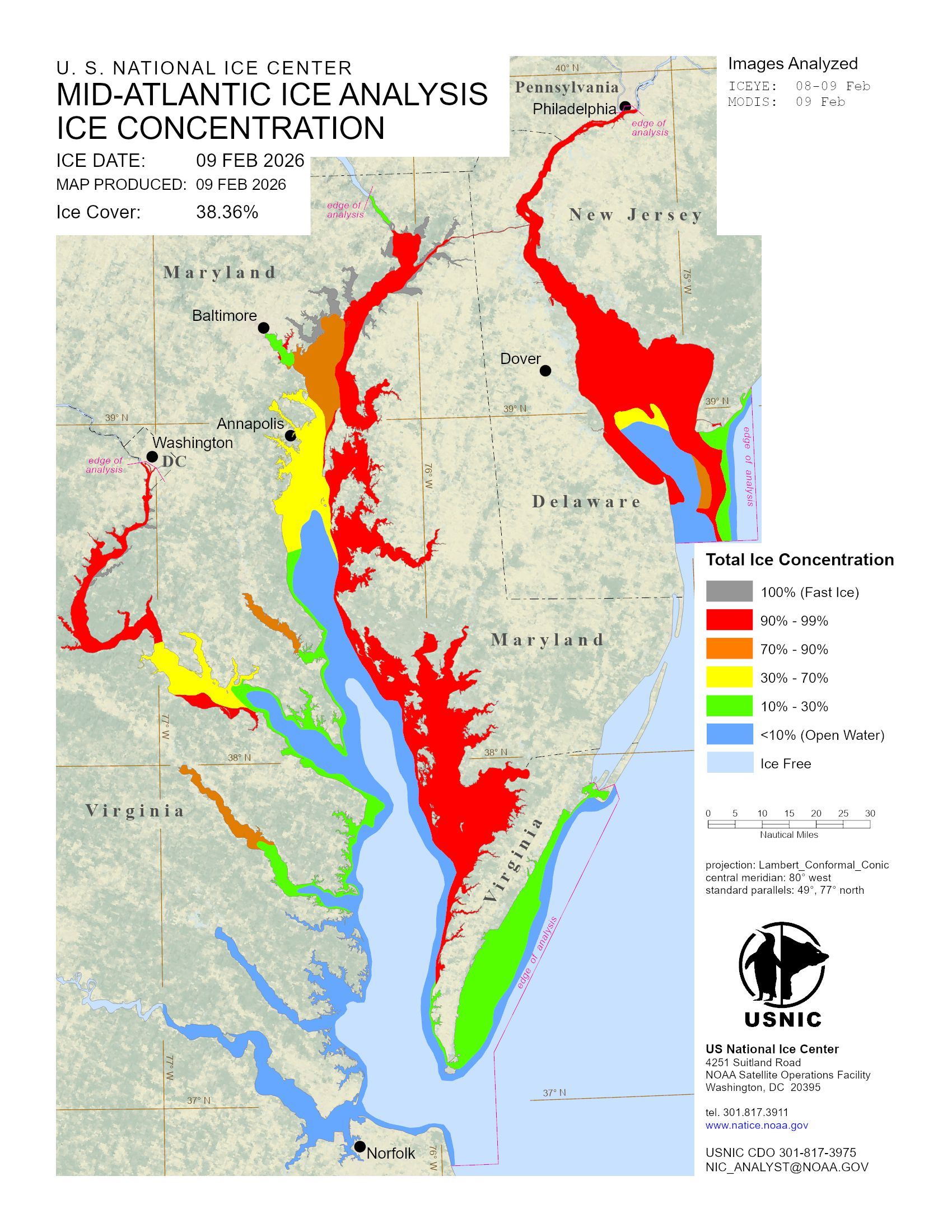
    The cumulative effects have been evident along the Schuylkill, which is looking (deceptively) fit for skating, and the Delaware River navigation channel. The river and most of Delaware Bay are between 90% and 99% ice covered, the U.S. National Ice Center reported Monday.

    It hasn’t been just us. Data pulled by Samantha Borisoff, climatologist at the Northeast Regional Climate Center, showed impressive snow-cover endurance streaks in Wilmington, Atlantic City, Washington, and New York.

    Ice cover throughout the Mid-Atlantic region expanded Sunday, said ice center physical scientist Jonathan Edwards-Opperman. While Saturday was harsher with winds gusting past 50 mph and below-zero windchills from midmorning on in Philly, the “strong winds pushed a lot of the existing ice into the shore, which exposed open water,” he said.

    Ice levels along Midatlantic waterways on Monday, Feb. 9, 2026.

    When the gusts backed off Sunday, the ice went to town. “We saw rapid new growth,” he said.

    Said PhilaPort spokesperson Ryan Mulvey, “Talking with people around the port we haven’t seen ice like this in over 10 years.”

    That said, however, he added that the Coast Guard has kept the traffic moving and “we have not experienced any ice-related delays.”

    It is about to get better

    It did not get to freezing Monday afternoon, but it should make it to the upper 30s, or perhaps the low 40s by midweek, said Amanda Lee, a meteorologist with the National Weather Service in Mount Holly.

    And daytime highs should go above 32 at least through the workweek. That combined with the growing power of the February sun — its daily wattage will be about 10% higher on Tuesday than it was on Feb. 1, according to NASA — should lessen the snow and ice cover considerably.

    That thaw, however, could come with some bumps in the road.

    “I think it’s fair to expect potholes to grow or develop as the weather gets warmer,” said PennDot spokesperson Helen Reinbrecht. Patching crews will be out there, conditions, permitting, she said.

    Those conditions should persist at least until the weekend, when another storm could affect the region, said Lee.

    It’s only Monday, which means the computers still have several more days of disputation.

    In the meantime, you may not be seeing much in the way of bare ground, but expect an outbreak of puddles. It’s been a while.

  • Ice is building on Philly’s waterways as the snowpack persists and the cold intensifies

    Ice is building on Philly’s waterways as the snowpack persists and the cold intensifies

    Accompanying one of the more-enduring snowpacks in the period of record, ice has continued to build in the Philadelphia region’s waterways, and all indications are that it’s going to intensify in the next three days, perhaps significantly.

    With temperatures expected to fall to single digits by Saturday night and wind gusts up to 55 mph, the region is about to experience an assault from a “cold air gun,“ said Alex Sosnowski, senior meteorologist at AccuWeather Inc.

    The combination, plus the below-freezing temperatures at least through Monday and the ongoing cold spell that began last month, will not only deepen the ice cover but will make it more uniform by freezing over breaks in the ice.

    “You’re going to see the ice-over become more extensive,” Sosnowski said.

    Earlier in the week, icing temporarily stranded a vessel on the Delaware River that was delivering much-needed salt supplies to Philly. (They did eventually get here.)

    The U.S. Coast Guard was using a 175-foot-long cutter to break up ice on a portion of the river channel that runs from the mouth of the ice-covered Delaware Bay — where Cape May-Lewes Ferry service was disrupted this week — to Trenton.

    As of Friday morning, the craft had been ramming ice for 45 hours since the freeze began at the end of last month, U.S. Coast Guard Petty Officer Matthew West said.

    So far, however, the ice hasn’t reached crisis levels, said Ryan Mulvey, a spokesperson for the Philadelphia Regional Port Authority. For ship traffic on the river, it’s been more a matter of “road work ahead” rather than ”road closed.”

    “We’re open as usual,” he said. “I think the largest ships help with breaking up some of the ice flow.”

    One thing is certain, meteorologists are warning: The ice factory is going to be in full production mode until Tuesday.

    And, ironically, even as precipitation deficits and drought conditions persist, flooding potential is a source of concern.

    The short-term outlook for icing in the Philly region

    A key to melting, said Sosnowski, is having a sequence of daily average temperatures above freezing, not just daytime highs above 32 degrees. Nights also have to warm up.

    The prospects of that happening aren’t looking good for the next several days. Officially, Friday was the 12th consecutive day of a snowpack of at least 5 inches at Philadelphia International Airport, the seventh-longest such stretch in records dating to the winter of 1884-85.

    Daily average temperatures have been below freezing every day since Jan. 23.

    Highs on Saturday and Sunday, even in the city, may struggle to reach 20 degrees, with lows in single digits Sunday and Monday mornings.

    A promised warmup during the workweek wasn’t looking as toasty on Friday as it was earlier in the week. Monday’s temperatures were forecast to top out in the 20s, and no daily average temperatures are forecast above freezing through Friday.

    Some rain or snow also is possible Wednesday, said Nick Guzzo, a meteorologist with the National Weather Service in Mount Holly. A storm is possible next weekend, but computer models continue to disagree with each other, and themselves.

    To erase the snowpack, the region could use a warm, moist air mass and rain that would produce “river rises” that would help break up the ice, the weather service says.

    But not too much rain.

    The long-term outlook: Flooding concerns amid a drought

    Some of the worst flooding on record has resulted from ice-jamming, a signature example occurring after Philadelphia’s mammoth 1996 snowstorm.

    Moist air preceding a rainfall all but erased the snowpack with a historic melt. When that air came in contact with the snow, it condensed, releasing latent heat that sped up the melting.

    Rain followed, and liberated ice jams led to destructive flooding along the Delaware and the Susquehanna Rivers and a presidential disaster declaration.

    NOAA’s Middle Atlantic River Forecast Center is well aware of the potential and is monitoring conditions, said senior hydrologist Johnathan Kirk.

    “That’s what we have to watch for,” said Sosnowski, who well remembers 1996.

    “It is going to take one of the more mild-mannered thaws to avoid ice-jam flooding,” he said.

    A mild thaw is possible, Sosnowski said, but “the odds are stacked against it. It’s been so cold for so long.”

  • A dash of snow, an Arctic chill, and 55 mph wind gusts are possible this weekend in Philly

    A dash of snow, an Arctic chill, and 55 mph wind gusts are possible this weekend in Philly

    By now Arctic air may qualify for a frequent-visitor pass around here, but the version coming this weekend will be of a different quality and have a particular sting.

    “It’s going to be a slap in the face,” said Cody Snell, a meteorologist with the National Oceanic and Atmospheric Administration’s Weather Prediction Center.

    After a day in which highs will be around freezing on Friday — a solid 10 degrees below normal — some nuisance snow is possible late in the day or evening and early Saturday, and maybe even squalls. Then temperatures are going to tumble through the teens in the wake of another potent Arctic front.

    They might not see 20 degrees in the Philly region until Monday.

    Adding bite will be winds that could gust to 55 mph, and the National Weather Service says wind chills of 10 and 15 below are likely Saturday in the immediate Philly area. The agency has issued an “extreme-cold warning” — a relatively new addition to the advisory list — in effect Saturday afternoon through Sunday morning. Wind chills of 17 below zero are possible, and winds could gust to 55 mph, the weather service says.

    Said Ray Martin, a lead meteorologist at the weather service office in Mount Holly, “It’s going to be awful.” Among the recent sequence of Arctic invasions, “it looks like the worst.”

    In short, that unusually tenacious snowpack that was left over from the 9.3 inches of snow and white ice that fell on Jan. 25 and has since mutated into a form of frozen slurry will be spending at least another weekend in Philly.

    What’s more, it’s likely to be a harvest weekend for the ice that is solidifying upon the region’s waterways, a growing concern.

    A warm-up is due to begin Monday and pick up steam during the workweek, with highs maybe reaching 40 degrees on Thursday. But it may encounter some resistance, and another storm threat might be brewing for next weekend, forecasters say.

    The snowpack already has achieved an elite status

    Friday marked the 12h consecutive day in which the official snow cover at Philadelphia International Airport, measured daily at 7 a.m., was at least 5 inches.

    In the 142-year period of record, that ties for seventh place for a snow-cover duration of that depth.

    “To hold on to a snowpack like this is unusual,” said Johnathan Kirk, senior hydrologist at NOAA’s Middle Atlantic River Forecast Center, in State College, Pa., which is keeping a close eye on the waterway icing.

    The Schuylkill in Philly is ice-covered, as is the Delaware River from Trenton to Washington Crossing.

    In addition to an eight-day stretch when temperatures failed to reach 30, the durability is related to the 2 or so inches of sleet that capped the snow on Jan. 25. Sleet is white ice that melts more slowly than snow.

    The dry and cold air has been a natural preservative; snow and ice melt more readily when the air is moist.

    Another factor was the impressive liquid content of the snow and sleet, Snell said. The frozen mass contained 1.39 inches of liquid, the weather service said, comparable to what is contained in 15 to 18 inches of snow.

    As temperatures finally nudged above freezing, some melting did occur this week, which would explain that unsightly slushy porridge at Philly intersections. However, the official snow depth lost only an inch between Jan. 27 and Wednesday.

    The snowpack may receive a fresh frosting Friday night into early Saturday with up to an inch of snow, Martin said, but it’s not going to have the same staying power.

    What’s different about this Arctic air mass

    Any snow that falls is likely to get blown away in a hurry, Martin said, as winds will pick up before daybreak Saturday and gusts howl to 50 mph by late morning.

    Typically, cold air pours into the region from the northwest and becomes modified as it passes over land, the Great Lakes, and the mountains.

    This is going to be a straight-up Arctic shot. It will come more or less from the north, and the icy lakes are not going to do much to impede it, said Matt Benz, senior meteorologist at AccuWeather Inc.

    The weather center’s Snell said a weak storm system moving off the Atlantic coast is forecast to blow up as it interacts with warm Gulf Stream waters. The differences between the cold high pressure with its heavier air over the East and the lighter air of the storm are going to place the Philadelphia region in a frigid sandwich.

    Heavier air tends to rush toward lighter air, like air escaping from a punctured tire.

    A thaw is coming to Philly, eventually

    Just how warm it gets next week remains unclear, AccuWeather’s Benz said.

    “Arctic air is hard to dislodge sometimes,” he said, adding that recent model trends suggest the warm-up will not be quite as robust as expected earlier.

    A wild card would be a potential storm next weekend. The European forecast model was seeing rain and 60 degrees, Martin said, while the U.S. model was suggesting a blizzard.

    His take: “I have no clue at this point.”

    An anniversary of note

    On Feb. 5, 2010, 6.6 inches of snow fell upon the airport, the beginning of an unprecedented siege in which 44.3 inches accumulated in a six-day period.

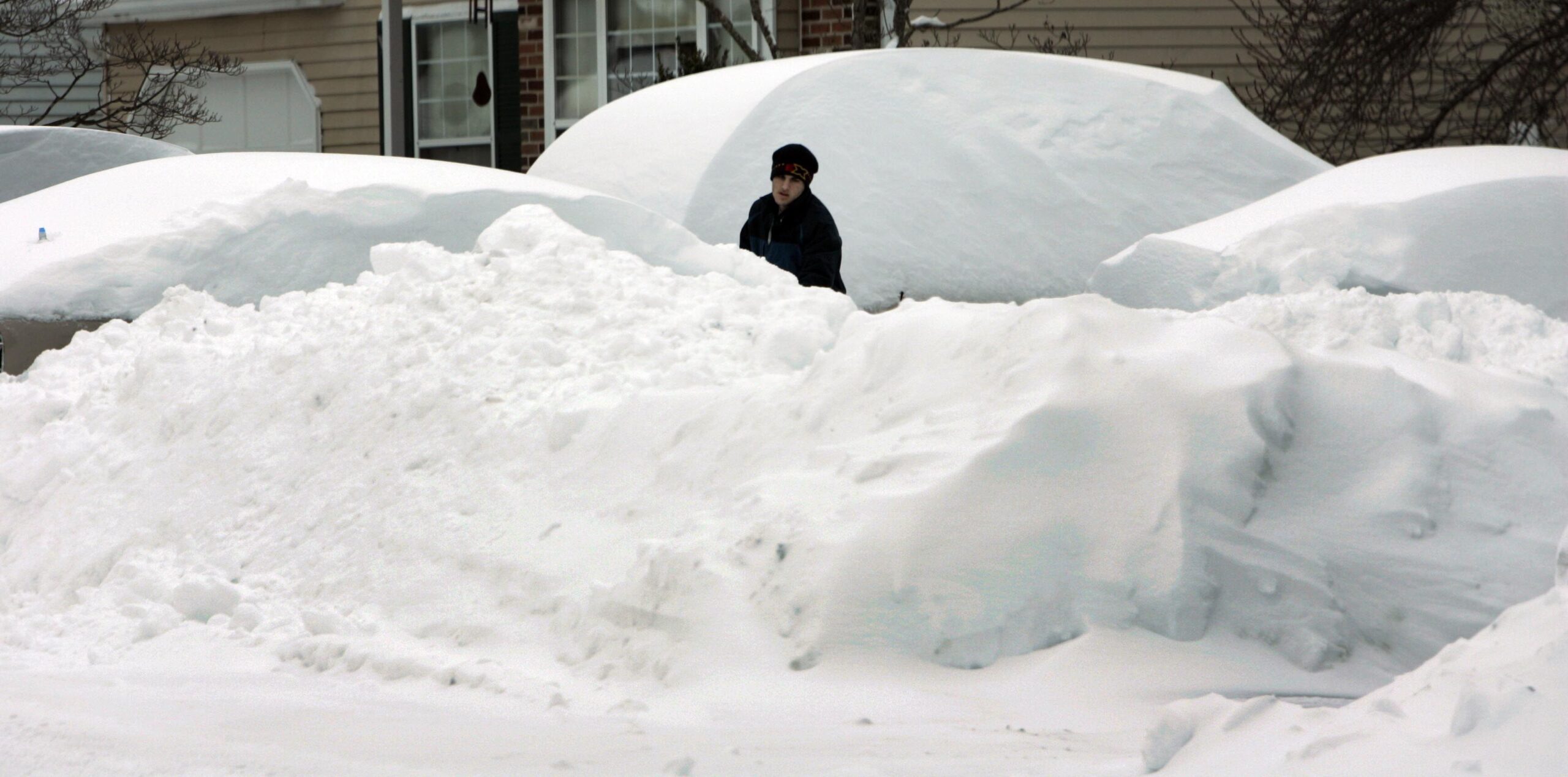
    A man shovels cars out under mountains of snow in West Bradford Township, Chester County, during the incredible snow siege of February 2010.

    Twelve days after the snow stopped, the official snow depth was down to 4 inches.

  • It’s ‘Groundhog Day’ in Philly this week as snow and ice persist

    It’s ‘Groundhog Day’ in Philly this week as snow and ice persist

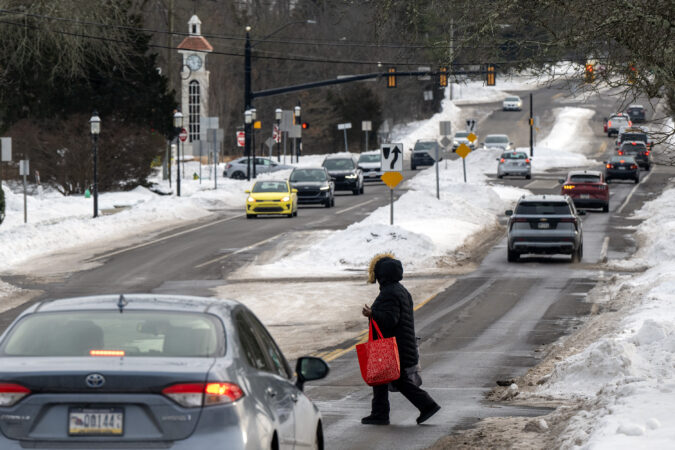
    If it appears that the tenacious meringue of snow and ice that landed on the region two weekends ago hasn’t budged, it hasn’t.

    Among Philadelphia winters, this one is approaching a rarefied status.

    Not long after Phil predictably saw his shadow in Punxsutawney, the National Weather Weather Service contractor at Philadelphia International Airport reported a snow depth of six inches on Monday.

    That marked the eighth consecutive day of a snow cover of at least six inches, a streak unmatched since February 2010 — which included a five-day period in which 44 inches of snow had fallen.

    And what’s out there now may get a fresh frosting on Tuesday night that could affect the Wednesday morning commute, and perhaps snow squalls on Friday with the approach of another Arctic front as the freezer reopens.

    Don’t be surprised if next Monday morning looks a lot like this one.

    “The snowpack is not going anywhere,” said Amanda Lee, meteorologist at the weather service office in Mount Holly.

    What explains the durability of the snow cover

    The primary factor locking in the regional glacier has been the obvious — the cold. Sunday marked the ninth consecutive day that temperatures failed to surpass freezing, the longest stretch since 2004. The temperature did reach above freezing at Philadelphia International Airport on Monday.

    Temperatures since Jan. 24 have averaged 14 degrees below normal in Philly. January temperatures ended up finishing 2.2 degrees below normal, even though the month had a nine-day warm spell in which the highs went past 55 on five days.

    In addition to the cold, the icy layers of sleet that have put a cap and a patent-leather sheen on the several inches of snow that fell Jan. 25, have limited melting. Ice is way slower to melt than snow.

    Eight days after an official 9.3 inches of snow and ice was measured officially, about two-thirds of it has survived.

    The forecast for the next several days

    The region is in for a modest — very modest — warming trend. Readings cracked freezing Monday, reaching 35 degrees at 4 p.m. and are forecast to top out near 32 on Tuesday and Wednesday, and hold in the upper 20s Thursday. Those readings still would be several degrees below normal.

    Some light snow is possible Tuesday night, “maybe up to an inch,” Lee said. The weather service on Monday was listing a 72% probability of something measurable — defined as 0.1 inches or more — falling in Philly.

    Given the cold and the solidly frozen paved surfaces, “it could make things slippery for the morning commute on Wednesday,” said Matt Benz, senior meteorologist with AccuWeather Inc.

    Friday afternoon, he said, the region could see snow squalls — brief, mini-blizzards that can come on without notice and reduce visibility dangerously.

    Then it’s back to the freezer with expected weekend lows in single digits and highs struggling to reach 20.

    For those ready for something completely different, NOAA’s Climate Prediction Center on Monday suggested the potential for significant pattern change, although this may require a little patience around here.

    Its extended outlook for the six-to-10 day period that begins Sunday has most of the nation warmer than normal, with odds strongly favoring below-normal readings in the Philadelphia-to-Boston corridor. But a “rapid warmup” in the Philly region is possible around mid-month, the climate center says.

    In the short term, it appears that Philly is in for a repetitive sequence evocative of the 1993 movie classic Groundhog Day.

    “We’ve had lots of very similar days,” Lee said.

    We’ve noticed.

  • The arctic cold persists, and so does Philly’s snowpack. Both may even go away some day.

    The arctic cold persists, and so does Philly’s snowpack. Both may even go away some day.

    It looks like the Philly region will evade any snow generated by that coastal “bomb cyclone” during the weekend, but the disruptive snowpack on the ground continues to melt at a glacial pace. Maybe ever slower.

    “For now, it’s not budging,” said David Robinson, the New Jersey state climatologist who is an international expert on snow cover.

    And, ironically, that has a whole lot to do with what happened in the hours right after the snow stopped around 11:30 a.m. Sunday.

    Add one of the more signifiant Arctic cold spells in Philadelphia’s period of record, and the entire region has endured a white and wintry week rarely experienced around here.

    As of Friday morning, the official snow depth at the airport still was 6 inches, about two-thirds of what was measured when the storm ended five days before.

    For perspective, the depth was 6 inches five days after a snowstorm in 2016 — after 22.4 inches had fallen.

    The cold won’t be as harsh during the workweek, but a thaw isn’t imminent, and some snow is possible Wednesday.

    Temperatures are forecast to drop deep into the single digits Saturday morning, flirting with records. It is not due to get into the 20s until Sunday, when backlash winds from the potent coastal storm are expected to drive wind chills below zero.

    Those winds may contribute to significant flooding at the Shore, where they could gust to 50 mph.

    About last Sunday in Philly

    About 7.5 inches of snow had fallen officially by 11:30 a.m. Sunday at Philadelphia International Airport, more in some other places, when it yielded to several hours of sleet that accumulated 2 to 3 inches, coating the snow with a sparkling, icy veneer.

    “You can’t help but recognize the beauty of it,” said Robinson, a Rutgers University geography professor and keeper of the Rutgers Snow Lab.

    While it may be an aesthetic pleasure, especially at night under the full “snow moon” rising this weekend, it has had a profoundly chilling effect on cleanup efforts.

    The sleet, liquid that freezes before it lands, literally put an ice cap on the snow. “Ice pellets are tougher to melt,” said PennDot’s Thomas Rogal, a maintenance supervisor for the Philadelphia district. In a melting race, a homely sleet ball wouldn’t have a chance against a six-sided snowflake.

    On Sunday, said Rogal, the sleet was a game-changer for the road crews. Instead of just plowing, crews were “scraping the road surfaces,” he said. Sleet added a stubborn stickiness to the mass of frozen material.

    It also contained about as much liquid as several inches of snow, said Robinson.

    The surprisingly cold temperatures, in the lower 20s and teens, inhibited the effectiveness of salt on Sunday. “The material just didn’t function,” said Rogal.

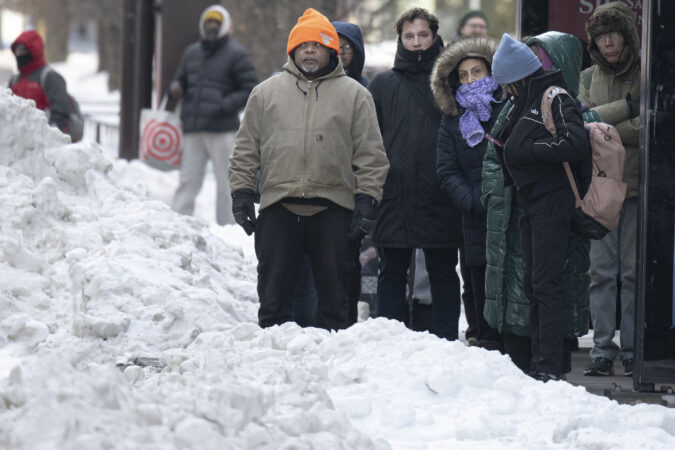
    In the city, the glacial mass has been especially disruptive, a royal, inconvenient pain for people living on side streets, for street crews, for anyone who has tried shoveling, and for the schools.

    In addition to the snow and ice challenges, the cold has stressed aging heating systems in the public schools, once they reopened.

    A thermometer in a Central High School classroom on Friday read 39 degrees. That’s colder than the normal high for the date in Philly — outdoors.

    When will all this go away?

    Philly hasn’t had a stretch of days like this in which the temperature has failed to reach 30 degrees since 1979, according to records tracked by the Pennsylvania state climatologist.

    And it likely is going to finish in the top 10 for consecutive days in which readings didn’t get past freezing, said Mike Silva, a meteorologist with the National Weather Service in Mount Holly.

    Low temperatures Thursday and Friday morning, 13 and 11, respectively, were several degrees above the forecasts. That probably was related to the winds at the airport, he said.

    It also may be related to the sleet, said Robinson: Ice doesn’t have quite the same chilling effect as fresh snow.

    Conditions Saturday morning — clear skies and lighter winds — should be more conducive for daytime heating (we use the term loosely) to radiate into space. Morning lows could approach the record of 3 degrees, set in 1948.

    Some moderation is expected with the workweek, but not much. “We were hoping to get to the mid-30s,” said Sliva, but “it looks like we may barely get to freezing.”

    Even at those temperatures, some melting should occur.

    The total daily solar energy beaming toward Philly now is about 30% higher than it was on Jan. 1, according to NASA’s calculations, and the sunrise-to-sunset time is increasing by about two minutes a day.

    Even the cold has a bright side, said PennDot’s Rogal. Potholes, it turns out, have something in common with a lot of humans: “They aren’t particularly fond of this weather.”

    “The freeze-thaw is what always gets us,” he said. “We’re actually in better shape when the cold sets and stays.”

    Even if it snows next week — “There’s a couple of systems that could affect us,” said Silva — based on 150 years of official record-keeping for Philly, it is going to warm up and the ground will reappear.

    Eventually.