Big Tech is taking on record levels of debt, marking a new chapter in the artificial intelligence boom as names such as Oracle, Alphabet, and Meta pour big money into massive data centers and the energy systems needed to run them.
Technology companies issued a record $108.7 billion in corporate bonds in the last three months of 2025, according to data from Moody’s Analytics. That’s the largest total for any quarter and roughly double that of the previous three months.And the trend is extending into 2026:Some $15.5 billion in bonds were issued in the first two weeks of the year alone.
For now, investors are assuaged by the eye-popping cash flow numbers from major tech companies. In the past 20 years, Big Tech companies including Google, Microsoft, Meta, Amazon, and Apple have built what are arguably the most profitable business models in history. In the third quarter, Google brought in just over $100 billion, with a margin of over 30%. All five are trillion-dollar companies, as are such AI darlings as Nvidia, Broadcom, and TSMC.
But some economists and business analysts say the massive new bonds are spreading risk throughout the economy, with hundreds of billions being spent on a technology whose profit-making potential is not yet clear.
“It’s a lot of debt, and a lot of it all of a sudden,” said Mark Zandi, chief economist for Moody’s. When companies are funding risky ventures with debt “it does put the broader financial system at risk. If the financial system is at risk, then the broader economy is.”
A bond is a form of debt that companies or governments can use to raise large sums of money, typically from investment banks or private-equity firms, to be paid back with interest. They historically have been used to fund major infrastructure projects such as power plants, natural gas drilling operations, or offshore wind farms — projects with large up-front costs that are expected to generate revenue for many years. Once issued, a bond can be bought, sold, or packaged into other debt products, which can end up in the portfolios of unrelated investments such as pension funds.
Automakers, utilities, and other mainstays of heavy industry have historically been the biggest issuers of corporate bonds, Moody’s data shows. Analysts note that in past technology build-outs, such as the rise and rapid investment in internet-based companies in the 1990s, companies didn’t have to spend nearly as much on infrastructure.
That hasnow changed, given the unprecedented energy demands of running and training AI algorithms. While tech companies took on more debt, adjusting for inflation, in 2021 than in 2025 — with a total of $296.6 billion in 2025 dollars issued that year — interest rates were significantly lower at the time. That made financing debt cheaper.
“The technology industry has gone from being an also-ran in terms of corporate debt, to becoming the largest player of investment-grade corporate debt, out of nowhere, compared to two years ago,” said venture capitalist Paul Kedrosky.
Because training and running AI algorithms take up much more computing power and energy than previous forms of technology, staying ahead in the AI race costs billions. Google, Microsoft, Amazon, and Meta indicated in company announcements that they planned to collectively spendwell over $300billion on AI data centers in 2025 alone.
If they continue to spend at that rate, they may have to take on even more debt.
“If these companies are so profitable, why are they using debt?” Kedrosky said. “It gives you a sense of the scale of what’s going on.”
Amazon spokesperson Amy Diaz said the proceeds from Amazon’s bond issuance in November are being used to support business investments, capital expenditures, and repayment of earlier debt, adding that the company regularly evaluates its operating plan to make financing decisions. (Amazon founder Jeff Bezos owns the Washington Post.)
Representatives from Alphabet, Meta, andOracle either declined to comment or did not answer questions. An Apple spokesperson referred to the company’s SEC filing, which states that proceeds from the bond issuance would be used for “general corporate purposes” including stock buybacks and unspecified capital expenditure, among other uses.
Among large tech companies, Meta used the most debt to fund its data center build-out in 2025, according to Moody’s. The social media company has invested deeply in AI in a race to become the leading AI assistant for companies and everyday people, putting it in a tight race with Microsoft, Apple, and Alphabet.
Mark Mahaney, who has covered tech companies for more than two decades and is now managing director at the investment bank Evercore ISI, views the bonds as part of a strategy by tech firms to raise money without degrading their stock price. Bond offerings are a sign that management is “confident or cocky” about their future, as they’ve taken on debt that requires steady cash flow to pay down, Mahaney said.
Also loading up on debt is Oracle, which issued some $25.75 billion in bonds last year as it seeks to become the AI computing power provider of choice. In September it disclosed a $300 billion deal with OpenAI, prompting an immediate 36% spike in its stock price that briefly made founder Larry Ellison the richest man in the world. (The Post has a content partnership with OpenAI.)
But in the ensuing weeks investors became uncomfortable with Oracle’s debt.Citi analyst Daniel Sorid told CNBC in December that there was something “inherently uncomfortable” about the “enormous” amount of capital Oracle will require.
The stock has declined about half from its Sept. 10 peak. Bondholder Ohio Carpenters’ Pension Plan recently sued Oracle and several investment banks, alleging that Oracle failed to disclose how much debt it needs.
“The sheer scale of new debt issuance has forced investors to reassess whether the economics of relentless AI [spending] are truly sustainable,” said Thomas Urano, chief investment officer at Sage Advisory in Austin.
Urano added that many of the companies getting AI-driven investment are part of the infrastructure that enables today’s AI chatbots and other applications, which cannot be immediately monetized.
“This creates a paradox: The strategic case for AI is compelling, but the revenue model is still evolving,” Urano said.
At least one firm has raised the prospect of getting government support to build out more data centers. OpenAI’s chief financial officer, Sarah Friar,said in November that it will require “innovation” on the finance side, with government providing a “backstop” or “guarantee.” Her comments triggered backlash from politicians and tech critics, who questioned whether taxpayers should take on some of these private companies’ risk. Friar and CEO Sam Altman both later clarified that they weren’t seeking federal guarantees for OpenAI data centers specifically, although Altman did say in a lengthy social media post that a government-funded “strategic national reserve of computing power” would make sense.
The Trump administration has gone all in on AI, pushing aside concerns within the MAGA movement and seeking to sweep away regulations that it says hamper innovation. But neighbors of the vast warehouses of computer chips that form the technology’s backbone — including in conservative states — have objected to how the facilities sap power from the grid, guzzle water to stay cool, and secure tax breaks from local governments. President Donald Trump has recalibrated his approach, pushing tech companies to fund their own power.
“Historically, when we’ve had major bubbles they’ve tended to be about real estate, or technology, or government policy,” Kedrosky said. “This is the first bubble in history that combines all of these things.”
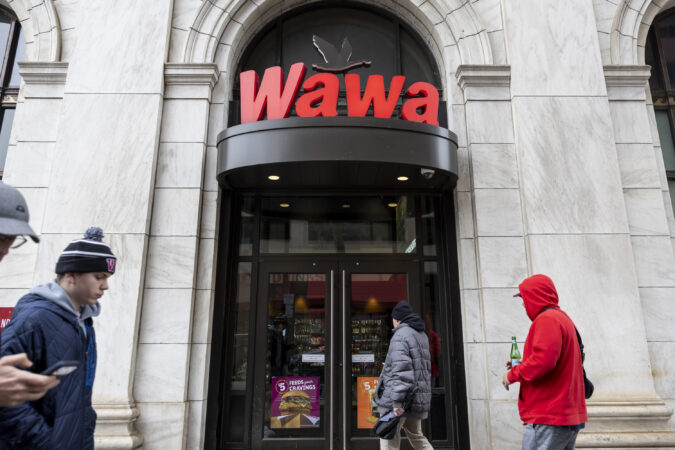
Wawa customers have been able to order roasted chicken on sandwiches, salads, burritos, and more since summer 2024. Hoagie-loving Philadelphians may scroll past the high-protein option on Wawa’s trademarked built-to-order screens, while others tap its icon instinctively in their rush to order lunch.
Wawa CEO Chris Gheysens said he sees the chicken breast differently.
From idea to inception, “that was a labor of love for quite a long time,” Gheysens said in a recent interview. “It’s 37 grams of protein, something consumers are really looking for today.”
And, he added, “it’s still highly customizable, which our customers love doing at Wawa.”
To Gheysens, the menu addition shows how the Delaware County-based company responds to consumer demand. Just as it did decades ago when Philly-area store managers began brewing coffee for customers on the go, and in 1996, when Wawa executives decided to start selling gasoline.
Even now, with nearly 1,200 stores in 13 states and Washington, D.C., Wawa is still listening to consumer feedback, Gheysens said. And despite expanding as far away as Florida and Kentucky, the CEO said, the convenience-store giant remains especially in tune with its hometown fans.
“For a lot of people, it’s their daily routine,” said Gheysens, a South Jersey native. “It becomes a part of their neighborhood. It’s a relationship that’s built on consistency, on trust” — and on getting customers out the door in five minutes or less, depending on the time of day.
(function() { var l = function() { new pym.Parent( ‘wawa-stats__graphic’, ‘https://media.inquirer.com/storage/inquirer/ai2html/wawa-stats/index.html’); }; if(typeof(pym) === ‘undefined’) { var h = document.getElementsByTagName(‘head’)[0], s = document.createElement(‘script’); s.type = ‘text/javascript’; s.src = ‘https://pym.nprapps.org/pym.v1.min.js’; s.onload = l; h.appendChild(s); } else { l(); } })();
Customers say they are drawn to the homegrown chain for its convenience, consistency, quality, and wide-ranging menu of grab-and-go and made-to-order items (even though some miss the old Wawa delis where lunch meat was sliced on the spot).
In Runnemede, 78-year-old Barbara MacCahery said she goes to her local Wawa at least a couple of times a week — “sometimes for breakfast, sometimes for a sandwich, a lot of times for coffee.”
In MacCahery’s mind, she said, the chain has proven itself time and time again for decades: “It’s very rare that you’ll have a bad experience.”
Wawa’s ‘secret sauce’ for success
More than 100 years ago, Wawa started out as a dairy, delivering milk to Philadelphia-area households.
Wawa has set a national standard for success in the convenience-store industry, said Z. John Zhang, a marketing professor at the Wharton School of the University of Pennsylvania.
“It really is some kind of a secret sauce,” said Zhang, who studies retail management. “For many people, Wawa has become a destination store,” one that combines “speed, customization, and perceived high quality” with near-constant availability — many Wawa stores are open 24/7.
The company got its start as a dairy, delivering milk to Philly-area households. In 1964, it opened its first store in Folsom. Soon, the family-owned company expanded into New Jersey and Delaware, and established a reputation for quality and speed, with slogans like “People on the Go — Go to Wawa Food Markets.”
Wawa’s first convenience store opened in Folsom, Delaware County in 1964.
Wawa is privately held, owned in part by workers who get a percentage of their earnings contributed to an employee stock-ownership plan. Zhang said this program likely leads to more-invested employees who provide better customer service.
Because Wawa is not public, it is not required to disclose its finances, and company executives declined to discuss them.
But by many appearances, Wawa seems to be doing well: Over the last decade, the company has increased its store count by about 65% and doubled its workforce to about 50,000 associates.
Philly-area Wawas are often crowded, too, which is key to making money in the convenience-store industry.
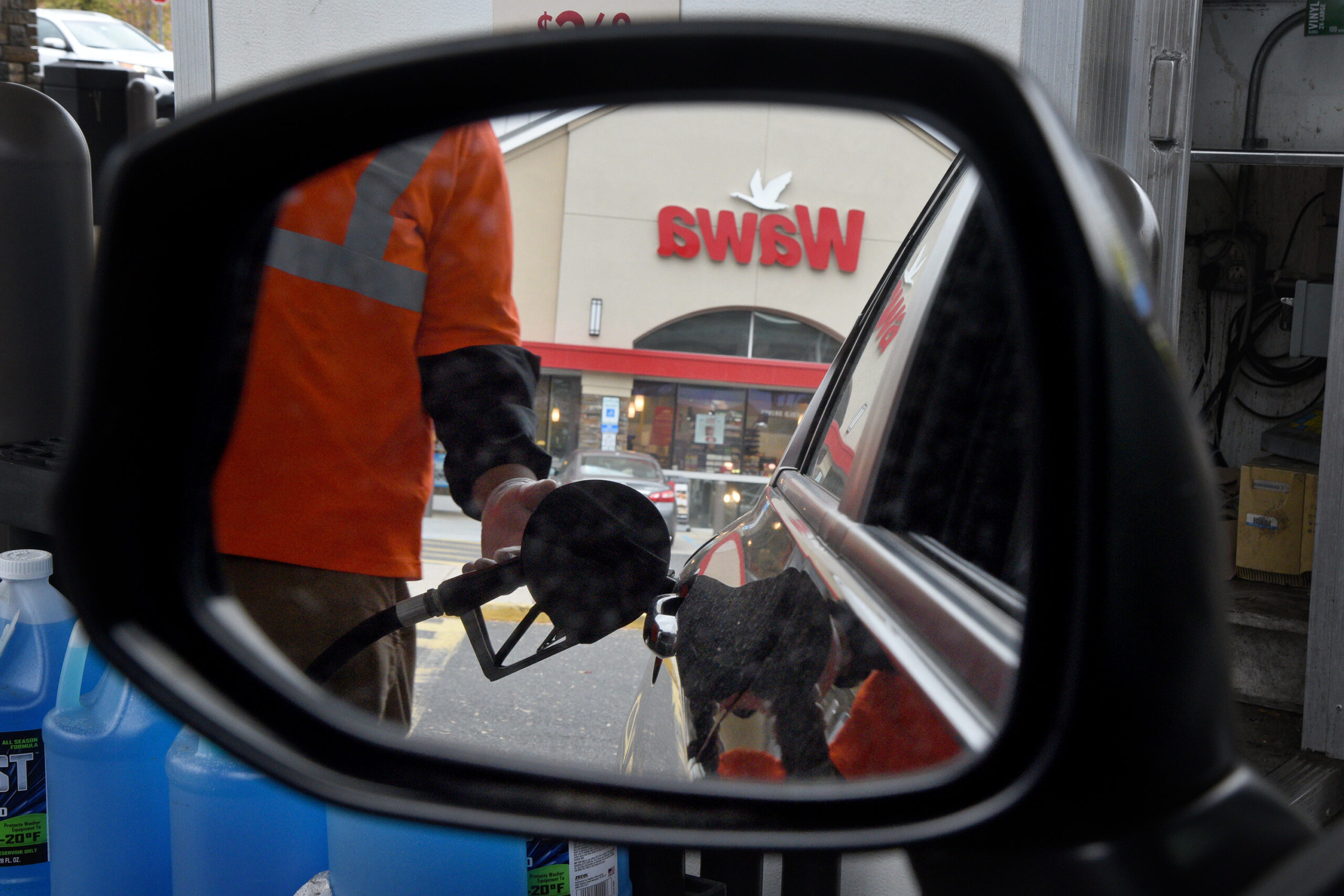
A gas attendant fills up a customer’s tank at a Wawa in Pennsauken in 2020.
“We think it’s high-impulse, but 80% of all people who walk into a convenience store pretty much know what they want,” said Zelinski, who consults with retailers. (He declined to discuss specific companies and said he has never worked for Wawa.)
Successful operators have encouraged customers to spend more by adding seating and improving their food service, Zelinski said. And stores with better food see higher profit margins.
“Once you have somebody that’s addicted to your food service program, they’re more likely to come back to your store vs. a competing store,” he said.
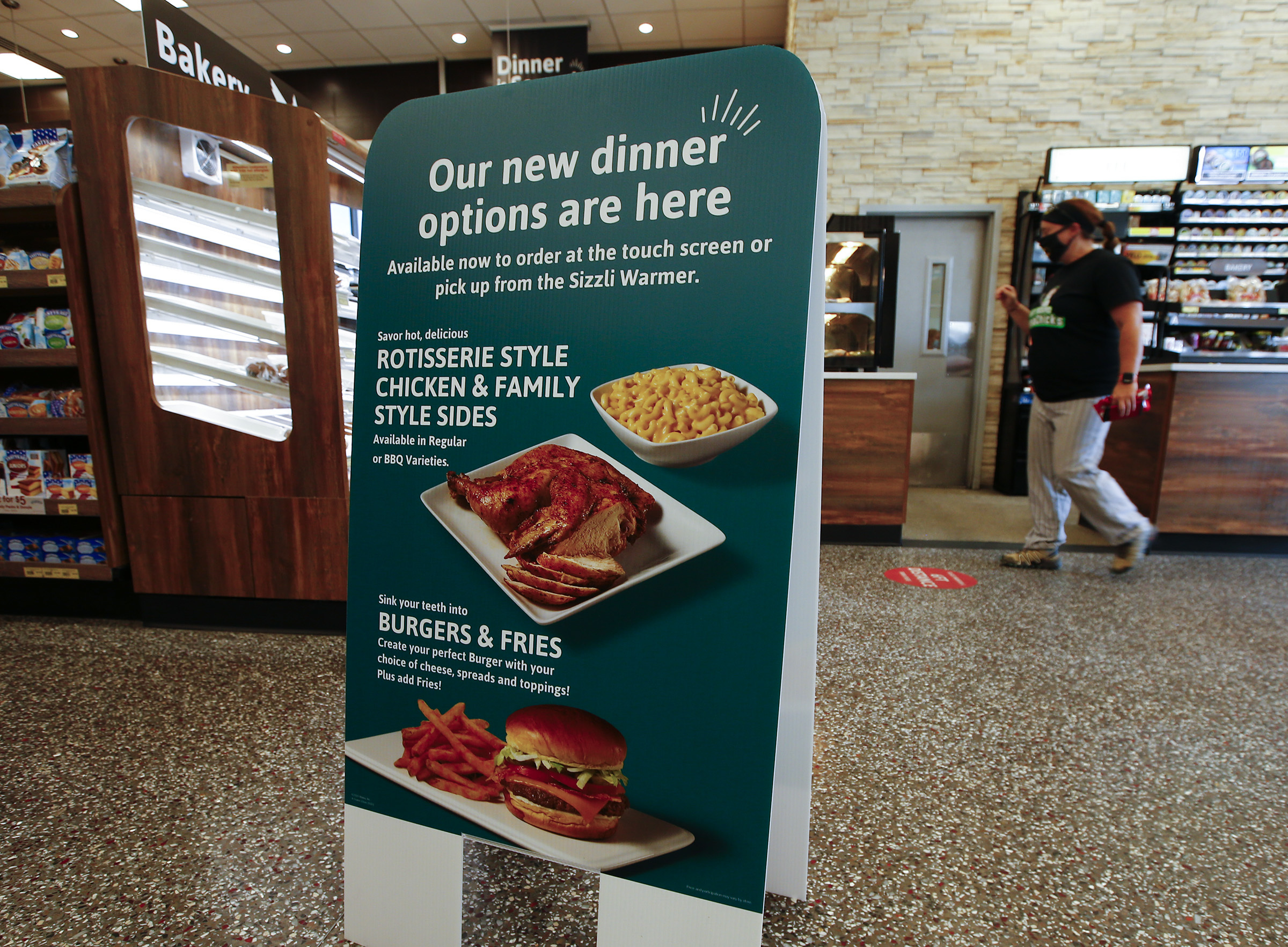
In 2020, Wawa debuted new menu offerings, including hamburgers, pot roast, rotisserie chicken, pasta alfredo, and kids meals, at a tasting in Media.
Wawa has certainly gotten people hooked on their coffee, hoagies, and ever-expanding menu, Zhang said. Options added in recent years include pizza, wraps, protein-packed “power meals,” limited-edition coffee flavors, and smoothies “boosted” with protein, vitamins, and minerals.
This older Wawa in Cherry Hill closed in 2024. The township has six remaining Wawas.
Despite Wawa’s best efforts, not all stores thrive, Gheysens said. But “luckily for us, we’re still in growth mode, and don’t have to worry about closures in a broad way.”
Gheysens said he sees room for more Wawas in the Philadelphia market — even as convenience-store competitors like Maryland-based Royal Farms and Altoona-based Sheetz have opened new stores in the region.
Wawa executives want “to make sure that we are the number-one convenience store in the area, that’s important to us,” Gheysens said. “These are our hometown counties.”
What keeps Philly-area consumers going to Wawa
A Wawa customer eats a breakfast Sizzli during the 2024 grand opening of the company’s first central Pennsylvania store.
Many Philly-area consumers grew up alongside Wawa.
In interviews with nearly a dozen of them, some were quick to reminisce about early memories of their local stores, such as the distinct smell of coffee and deli meat or the excitement of a Wawa run with high school friends. Others bemoan what has changed with the company’s expansion, including more congested parking lots.
Most have a quick answer when asked what their Wawa order is.
Rick Gunter, 45, of Royersford, misses the Wawa of his youth. Back in the day, he said, the Wawa hoagies “hit different,” with lunch meat fresh off the slicer.
Contrary to some customers’ beliefs, most stores still bake Amoroso rolls — a custom recipe made exclusively for Wawa — fresh in store multiple times a day, Gheysens said. As for the deli meat, the CEO said that was another decision rooted in customer preference.
When customers have participated in blind tests of the pre-sliced meat Wawa uses today against a fresh-sliced alternative, “they can’t tell the difference,” Gheysens said. “They would choose our pre-sliced meats, because of what we’ve done in terms of quality and the supply chain and the ability to deliver them at such a pace.”
A sandwich maker at Wawa wraps a hoagie with turkey, provolone, tomato, and lettuce in this 2020 file photo.
Some customers disagree.
“It was way better when it was kind of also a deli. Now they try to make everything for everybody,” said Bill Morgan, 79, of East Coventry Township. “I’m within five miles of three Wawas, but I rarely eat their food. Only under extreme duress.”
Morgan acknowledged he must be in the minority, given how crowded Wawas are at lunchtime. And despite his distaste for much of their food, he said he still gets gas there and loves their coffee. And he can’t help but admire their business model.
WASHINGTON — U.S. economic growth slowed in the final three months of last year, dragged down by the six-week shutdown of the federal government and a pullback in consumer spending.
The nation’s gross domestic product — the total output of goods and services — increased at a 1.4% annual rate in the fourth quarter, the Commerce Department reported Friday, down from 4.4% in the July-September quarter and 3.8% in the quarter before that.
The figures point to what could be a more modest pace of growth in the coming quarters, as consumers have taken on more debt and saved less to maintain their spending, a process that may be difficult to sustain. Business investment, other than data centers and equipment dedicated to artificial intelligence, grew at only a moderate pace.
Still, a measure of underlying growth that focuses on consumer and business spending was mostly healthy at 2.4%, economists said. The sharp slowdown in government outlays because of the shutdown shaved a full percentage point from growth.
Consumers and companies spent at a “reasonably solid” pace, said Martha Gimbel, executive director of the Budget Lab at Yale and former economist in the Biden White House. “This is not a disastrous report.”
Also Friday, the Supreme Court struck down many of President Donald Trump’s tariffs, which have lifted inflation slightly and likely discouraged many companies from hiring by raising their costs. At a news conference, Trump quickly promised to reimpose the tariffs under different laws than the one the court invalidated.
Consumer spending also rose 2.4% in the fourth quarter, a solid increase but notably below the third quarter’s healthy 3.5% gain. Federal government outlays plunged nearly 17% amid the shutdown. That decline should mostly reverse in the coming quarters, however.
The outsize growth last summer and fall — when the economy expanded at about a 4% annual pace — partly reflected sharply lower imports. Companies ramped up imports in the first quarter of last year to get ahead of President Donald Trump’s tariffs. After boosting growth in the second and third quarters, trade had little impact at the end of last year.
Diane Swonk, chief economist at KPMG, said the report reflected a “one-legged” economy boosted mostly by artificial intelligence, which is fueling business spending and has also lifted wealth for those households that own stocks and have benefited from rising share prices.
Many households, however, have had to take on more debt to fuel their spending. The saving rate dropped to just 3.6% in the fourth quarter, the second-lowest figure since August 2008, when the economy was mired in the Great Recession.
“The economy looks golden on paper, but beneath the surface is lead,” Swonk said.
Early Friday, before the figures were released, Trump attacked congressional Democrats for shutting down the government last fall. He also reiterated his criticism of Federal Reserve Chair Jerome Powell for not cutting interest rates more quickly.
“The Democrat Shutdown cost the U.S.A. at least two points in GDP,” Trump posted on his social media site. “That’s why they are doing it, in mini form, again. No Shutdowns! Also, LOWER INTEREST RATES. “Two Late” Powell is the WORST!!!”
A separate report Friday showed that inflation, according to the Fed’s preferred measure, accelerated in December, as the cost of goods such as furniture, clothes, and groceries picked up. That makes it less likely the Fed will reduce its key interest rate in the coming months.
Earlier this month, Trump predicted a blowout gain in GDP of more than 5% even if the government shutdown was factored into the figures. Trump has been trying to claim that the economy is at its strongest point in history, even though the new data shows that growth slowed, compared with 2024, following his return to the White House.
The data arrives before Trump delivers the State of the Union address on Tuesday, where he is expected to say that the economy is booming.
The report also underscores an odd aspect of the U.S. economy: It is growing steadily, but without creating many jobs. Growth was a solid 2.2% in 2025, yet a government report last week showed that employers added less than 200,000 jobs last year — the fewest since COVID struck in 2020.
Economists point to several possible reasons for the gap: The Trump administration’s crackdown on immigration has sharply slowed population growth, reducing the number of people available to take jobs. It’s one reason that the unemployment rate rose only slightly — to 4.3% from 4% — last year, even with the nearly non-existent hiring.
Some businesses may also be holding back on adding jobs out of uncertainty about whether artificial intelligence will enable them to produce more without finding new employees. And the cost of tariffs has reduced many companies’ profits, possibly leading them to cut back on hiring.
The economy is also unusual right now because growth is solid, inflation has slowed a bit, and unemployment is low, but surveys show that Americans are generally gloomy about the economy. In January, a measure of consumer confidence fell to its lowest level since 2014, yet consumers have kept spending, propelling growth.
Some of that spending may be disproportionately driven by upper-income consumers, in a phenomenon known as the “K-shaped” economy. Yet data from many large banks suggests lower-income consumers are still raising their spending, even if by not as much.
WASHINGTON — The Supreme Court struck down President Donald Trump’s far-reaching global tariffs on Friday, handing him a stinging loss that sparked a furious attack on the court he helped shape.
Trump said he was “absolutely ashamed” of some justices who ruled 6-3 against him, calling them “disloyal to our Constitution” and “lapdogs.” At one point he even raised the specter of foreign influence without citing any evidence.
The decision could have ripple effects on economies around the globe after Trump’s moves to remake post-World War II trading alliances by wielding tariffs as a weapon.
But an unbowed Trump pledged to impose a new global 10% tariff under a law that’s restricted to 150 days and has never been used to apply tariffs before.
“Their decision is incorrect,” he said. “But it doesn’t matter because we have very powerful alternatives.”
The court’s ruling found tariffs that Trump imposed under an emergency powers law were unconstitutional, including the sweeping “reciprocal” tariffs he levied on nearly every other country.
Trump appointed three of the justices on the nation’s highest court during his first term, and has scored a series of short-term wins that have allowed him to move ahead with key policies.
Tariffs, though, were the first major piece of Trump’s broad agenda to come squarely before the Supreme Court for a final ruling, after lower courts had also sided against the president.
The majority found that it is unconstitutional for the president to unilaterally set and change tariffs because taxation power clearly belongs to Congress. “The Framers did not vest any part of the taxing power in the Executive Branch,” Chief Justice John Roberts wrote.
Justices Brett Kavanaugh, Samuel Alito, and Clarence Thomas dissented.
“The tariffs at issue here may or may not be wise policy. But as a matter of text, history, and precedent, they are clearly lawful,” Kavanaugh wrote. Trump praised his 63-page dissent as “genius.”
The court majority did not address whether businesses could get refunded for the billions they have collectively paid in tariffs. Many companies, including the big-box warehouse chain Costco, have already lined up in lower courts to demand refunds. Kavanaugh noted the process could be complicated.
“The Court says nothing today about whether, and if so how, the Government should go about returning the billions of dollars that it has collected from importers. But that process is likely to be a ‘mess,’ as was acknowledged at oral argument,” he wrote.
The Treasury had collected more than $133 billion from the import taxes the president has imposed under the emergency powers law as of December, federal data show. The impact over the next decade has been estimated at some $3 trillion.
The tariffs decision doesn’t stop Trump from imposing duties under other laws. Those have more limitations on the speed and severity of Trump’s actions, but the president said they would still allow him to “charge much more” than he had before.
Vice President JD Vance called the high court decision “lawlessness” in a post on X.
Questions about what Trump can do next
Still, the ruling is a “complete and total victory” for the challengers, said Neal Katyal, who argued the case on behalf of a group of small businesses.
“It’s a reaffirmation of our deepest constitutional values and the idea that Congress, not any one man, controls the power to tax the American people,” he said.
It wasn’t immediately clear how the decision restricting Trump’s power to unilaterally set and change tariffs might affect trade deals with other countries.
“We remain in close contact with the U.S. Administration as we seek clarity on the steps they intend to take in response to this ruling,” European Commission spokesman Olof Gill said, adding that the body would keep pushing for lower tariffs.
The Supreme Court ruling comes after victories on the court’s emergency docket have allowed Trump to push ahead with extraordinary flexes of executive power on issues ranging from immigration enforcement to major federal funding cuts.
The Republican president had long been vocal about the tariffs case, calling it one of the most important in U.S. history and saying a ruling against him would be an economic body blow to the country. But legal opposition crossed the political spectrum, including libertarian and pro-business groups that are typically aligned with the GOP. Polling has found tariffs aren’t broadly popular with the public, amid wider voter concern about affordability.
While the Constitution gives Congress the power to levy tariffs, the Trump administration argued that a 1977 law allowing the president to regulate importation during emergencies also allows him to set import duties. Other presidents have used the law dozens of times, often to impose sanctions, but Trump was the first president to invoke it for tariffs.
“And the fact that no President has ever found such power in IEEPA is strong evidence that it does not exist,” Roberts wrote, using an acronym for the International Emergency Economic Powers Act.
Trump set what he called “reciprocal” tariffs on most countries in April 2025 to address trade deficits that he declared a national emergency. Those came after he imposed duties on Canada, China, and Mexico, ostensibly to address a drug trafficking emergency.
A series of lawsuits followed, including a case from a dozen largely Democratic-leaning states and others from small businesses selling everything from plumbing supplies to women’s cycling apparel.
The challengers argued the emergency powers law doesn’t even mention tariffs and Trump’s use of it fails several legal tests, including one that doomed then-President Joe Biden’s $500 billion student loan forgiveness program.
Justices reject use of emergency powers for tariffs
The three conservative justices in the majority pointed to that principle, which is called the major questions doctrine. It holds that Congress must clearly authorize actions of major economic and political significance.
“There is no exception to the major questions doctrine for emergency statutes,” Roberts wrote. The three liberal justices formed the rest of the majority, but didn’t join that part of the opinion.
The Trump administration had argued that tariffs are different because they’re a major part of Trump’s approach to foreign affairs, an area where the courts should not be second-guessing the president.
But Roberts, joined by Justices Neil Gorsuch and Amy Coney Barrett, brushed that aside, writing that the implications for international relations don’t change the legal principle.
Small businesses celebrated the ruling, with the National Retail Federation saying it provides “much needed certainty.”
Illinois toy company Learning Resources was among the businesses challenging the tariffs in court. CEO Rick Woldenberg said he expected Trump’s new tariffs but hoped there might be more constraint in the future, both legal and political. “Somebody’s got to pay this bill. Those people that pay the bill are voters,” he said.
Ann Robinson, who owns Scottish Gourmet in Greensboro, N.C., said she was “doing a happy dance” when she heard the news.
The 10% baseline tariff on U.K. goods put pressure on Robinson’s business, costing about $30,000 in the fall season. She’s unsure about the Trump administration’s next steps, but said she’s overjoyed for now. “Time to schedule my ‘Say Goodbye to Tariffs’ Sale!”
NEW YORK — The nation’s highest court struck down some of President Donald Trump’s most sweeping tariffs on Friday, in a 6-3 decision that he overstepped his authority when using an emergency powers law to justify new taxes on goods from nearly every country in the world.
Trump has launched a barrage of new tariffs over the last year. Despite Friday’s ruling, many sectoral levies remain in place — and the president has already said that he’ll turn to other options for more import taxes, including plans to impose a new 10% tariff globally. But the Supreme Court decision upends a core set of tariffs that Trump rolled out using the 1977 International Emergency Economic Powers Act, or IEEPA.
IEEPA authorizes the president to broadly regulate commerce after declaring a national emergency. Over the years, presidents have turned to this law dozens of times, often to place sanctions on other countries. But Trump was the first to use it to implement tariffs.
Here’s a look at the now-overturned tariffs Trump imposed using IEEPA — and other levies that still stand today.
‘Liberation Day’ tariffs
Trump used IEEPA to slap import taxes on nearly every country in the world last spring. On April 2, which Trump called Liberation Day, he imposed “reciprocal” tariffs of up to 50% on goods from dozens of countries — and a baseline 10% tariff on just about everyone else.
The 10% tax kicked in early April. But the bulk of Liberation Day’s higher levies got delayed by several months, and many rates were revised over time (in some cases after new “framework” agreements). Most went into effect Aug. 7.
The national emergency underlying these tariffs, Trump argued at the time, was the long-running gap between what the U.S. sells and what it buys from the rest of the world. Still, goods from countries with which the U.S. runs a trade surplus also faced taxes.
Major trading partners impacted by Liberation Day tariffs include South Korea, Japan and the European Union — which combined export a range of products to the U.S., like electronics, cars, and car parts and pharmaceuticals. Following trade talks, Trump’s rates on most goods stood at 15% for the EU, Japan and South Korea ahead of Friday. But just last month, Trump threatened to hike levies on certain South Korean products to 25% — and countries worldwide still face sector-specific, non-IEEPA tariffs.
‘Trafficking tariffs’ on Canada, China and Mexico
At the start of his second term, Trump used IEEPA to impose new tariffs on America’s three biggest trading partners: Mexico, Canada, and China.
Ahead of Friday’s decision, “trafficking tariffs” on Canadian and Mexican imports were 35% and 25%, respectively, for goods that don’t comply with the 2020 United States-Mexico-Canada Agreement. China, meanwhile, faced a 10% fentanyl-related tariff. That’s down from 20% imposed by Trump earlier last year. Chinese goods also once saw sky-high levies after Liberation Day, but rates had since come down during trade talks.
Top U.S. imports from China include mobile phones and other electronics, as well as clothing, toys and household appliances. Meanwhile, Canada and Mexico are both major sources of cars and auto parts. Canada is also the U.S.’s largest supplier of crude oil. And Mexico is a key exporter of fresh produce, beverages and more.
Tariffs on Brazil over Bolsonaro trial
Trump also used IEEPA to slap steep import taxes on Brazilian imports over the summer, citing the country’s policies and criminal prosecution of former President Jair Bolsonaro.
Brazil already faced Trump’s 10% baseline Liberation Day rate. The Bolsonaro-related duties added another 40%, bringing total levies to 50% on many products ahead of Friday.
The U.S. has actually run a consistent trade surplus with Brazil over the years. But top exports from the country include manufactured products, crude oil and agricultural products like soybeans and sugar.
Tariffs on India linked to Russian oil
India has faced additional IEEPA tariffs, too. After Liberation Day, Trump slapped a 25% levy on Indian imports — and later added another 25% for the country’s purchases of Russian oil, while also citing the emergency powers law, bringing the total to 50%.
But earlier this month, the U.S. and India reached a trade framework deal. Trump said Prime Minister Narendra Modi agreed to stop buying Russian oil, and that he planned to lower U.S. tariffs on its ally to 18%. Meanwhile, India said it would “eliminate or reduce tariffs” on all U.S. industrial goods and a range of agricultural products.
India’s top exports to the U.S. include pharmaceuticals, precious stones, clothing and textiles.
What are other non-IEEPA tariffs that countries still face today?
Despite the Supreme Court knocking down sweeping import taxes Trump imposed with IEEPA, most countries still face steep tariffs from the U.S. on specific sectors.
Citing national security threats, Trump has used another law — Section 232 of the 1962 Trade Expansion Act — to slap levies on steel, aluminum, cars, copper, and lumber worldwide. He began to roll out even more Section 232 tariffs in September, on kitchen cabinets, bathroom vanities and upholstered furniture.
Amid pressure to lower rising prices, Trump has rolled back some of his tariffs recently. Beyond trade frameworks, that’s included adding exemptions to specific levies and scrapping import taxes for goods like coffee, tropical fruit and beef.
Still, Trump has threatened more sectoral levies are on the way. And following Friday’s decision, he said that he would sign an executive order to enact a 10% global tariff — using another federal law, known as Section 122. Those tariffs would be limited to just 150 days, unless they are extended legislatively.
The University of Pennsylvania Health System had an operating profit of $189 million in the first six months of fiscal 2026, up from $117 million in the same period a year ago, the nonprofit reported to bond investors Friday.
Operating income increased, even after Penn put $43 million put into reserves for medical malpractice claims. Two years ago, Penn had recorded charges totaling $90 million for the same purpose.
Here are more details on Penn’s results:
Revenue: Penn had $6.76 billion in total revenue, up nearly 12% even adjusting for the inclusion of Doylestown Health in fiscal 2026. Penn acquired Doylestown last April.
“We’ve had good volume growth over the prior year, particularly in our outpatient activity,” the health system’s chief financial officer, Julia Puchtler, said in an interview.
The system has also had an increase in the acuity level on the inpatient side, she said. That translated into more revenue.
Expenses: The $43 million malpractice charge boosted overall malpractice expenses through December to $125 million, from $69 million in the same period a year ago.
It’s not that Penn is seeing more claims, Puchtler said. “It’s really the average reserve per claim that we’re seeing accelerate,” she said.
Notable: Excluding Doylestown, Penn saw a 5.9% increase in patient volumes, Puchtler said. “That’s mostly outpatient,” she said. “Outpatient surgery, endoscopy, and some of our other infusion therapy are all increased over the prior year.”
Editor’s note: This article has been updated to reflect an additional medical malpractice charge in 2024, bring the total to $90 million.
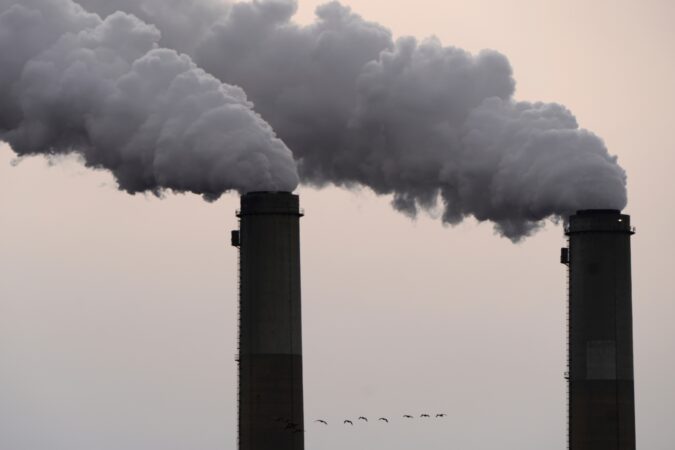
WASHINGTON — The Environmental Protection Agency on Friday weakened limits on mercury and other toxic emissions from coal-fired power plants, the Trump administration’s latest effort to boost the fossil fuel industry by paring back clean air and water rules.
Toxic emissions from coal- and oil-fired plants can harm the brain development of young children and contribute to heart attacks and other problems in adults. The plants are also a major source of greenhouse gas emissions that drive climate change. The EPA announced the move at a massive coal plant next to the Ohio River in Louisville, Ky.
“The Trump EPA’s action follows the rule of law and will reduce of cost of generating baseload power, lowering costs and improving reliability for consumers,” EPA Deputy Administrator David Fotouhi said in a statement. The agency said the change should save hundreds of millions of dollars.
The final rule reverts the industry to standards first established in 2012 by the Obama administration that have reduced mercury emissions by nearly 90%. The Biden administration had sought to tighten those standards even further after the first Trump administration had moved to undermine them.
Coal-fired power plants are the largest single human source of mercury pollutants. Power plants release the mercury into the atmosphere, which then falls in rain or simply by gravity, entering the food chain through fish and other items that people consume.
Environmental groups said the tightened rules have saved lives and made communities that live near coal-fired power plants healthier. But industry groups argued that the tougher standards, along with other rules that limited emissions from coal plants, made operating them too expensive.
They accused the Biden administration of piling on so many requirements that it would drive a rush of plant retirements.
“The reliability of the electric grid is in a better place because of the administration’s swift repeal of this rule. As crafted, the rule would have dealt a crippling blow to power plants that are essential to maintaining grid reliability,” said Jim Matheson, CEO of the National Rural Electric Cooperative Association.
The coal industry’s outlook has changed dramatically in the last year.
In March, the EPA promoted the “biggest deregulatory action in U.S. history,” announcing their intention to peal back dozens of environmental protections. The Biden administration’s focus on climate change was over — EPA Administrator Lee Zeldin said the actions marked “the death of the ‘green new scam.’” Fossil fuel rules were big targets, including major efforts to reduce carbon emissions from coal plants and mandate greenhouse gas reporting. The Trump administration has also extended deadlines for dozens of coal-fired power plants to comply with certain Clean Air Act rules.
Beyond fewer environmental protections, the Trump administration has issued emergency orders halting the planned shutdown of several coal plants. Officials say the plants produce consistent power during major storms or at other times when need is high. Removing coal would reduce the grid’s reliability, especially at time when a rush of new data centers is demanding more than ever from the grid, they say. Officials have dismissed concerns about higher customer costs from keeping coal plants operating, their plentiful emissions, and their significant contribution to climate change.
And earlier this month, the EPA revoked a finding that climate change is a threat to public health, which has long been the basis for U.S. action to regulate greenhouse gas emissions. Recently, President Donald Trump hosted a group of coal miners who honored him as the “Undisputed Champion of Beautiful, Clean Coal.”
Activists say favoring coal makes little sense at a time when renewables are cleaner, cheaper, and reliable.
Gina McCarthy, who headed the EPA under former President Barack Obama, said the Trump administration will be remembered for helping the coal industry at the expense of public health.
“By weakening pollution limits and monitoring for brain-damaging mercury and other pollutants, they are actively spiking any attempt to make America – and our children – healthy,” said McCarthy, who is also the chair of the climate action group America Is All In.
The grandson of the inventor of Reese’s Peanut Butter Cups went viral after penning an open letter to Pennsylvania’s Hershey Company on Feb. 14. But it was far from a valentine.
Brad Reese, 70, accused the confectionery manufacturer of hurting the brand his grandfather H.B. Reese began a century ago, cutting corners with its chocolate quality. Within the week, Reese’s post has sparked discussions about brand integrity, ingredients, and legacy.
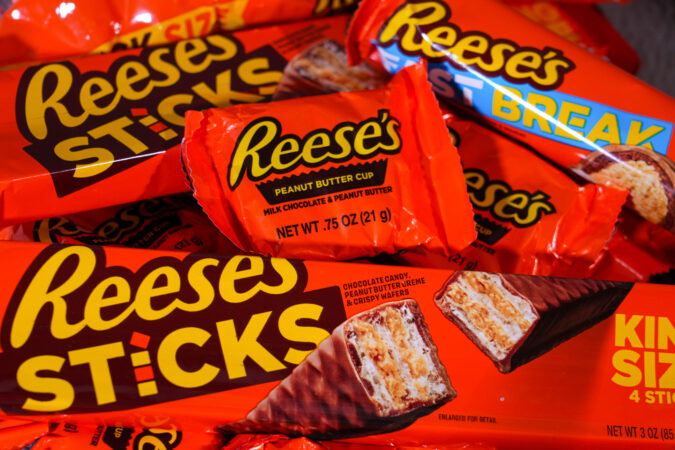
In a LinkedIn post, Reese said Hershey’s assortment of Reese’s products (including the valentine heart-shaped ones he had recently sampled) include different, cheaper ingredients, swapping milk chocolate for compound coatings and peanut butter for peanut butter créme.
“How does The Hershey Co. continue to position Reese’s as its flagship brand, a symbol of trust, quality, and leadership, while quietly replacing the very ingredients (Milk Chocolate + Peanut Butter) that built Reese’s trust in the first place?” Reese wrote.
Reese isn’t wrong. Several Reese’s products today — including the valentine’s hearts and the Easter egg-shaped versions — use chocolate-flavored coatings that cannot be legally called “milk chocolate,” a term that’s regulated by the Food and Drug Administration. It’s unclear exactly when the swaps occurred.
The flagship Reese’s Peanut Butter Cups continue to list milk chocolate and peanuts as the first two ingredients.
Still, the product line’s variance represents a shift across the candy industry as cocoa prices continue to rise, driven by a combination of factors, including climate-sparked changes in supply, tariffs, and labor shortages, the New York Times reports. Chocolate companies, including Hershey’s, have responded by making cost-effective ingredient swaps. The Times reported that several chocolate-forward Hershey’s candies no longer listed milk chocolate among their ingredients during last Halloween season.
Hershey doesn’t deny the swaps, but is defending its quality.
The company said in a statement Wednesday that Reese’s Peanut Butter Cups are made the same way they’ve always been, with house-made milk chocolate and roasted peanuts, but that ingredients for some other Reese’s products can vary based on demand.
“As we’ve grown and expanded the Reese’s product line, we make product recipe adjustments that allow us to make new shapes, sizes, and innovations that Reese’s fans have come to love and ask for, while always protecting the essence of what makes Reese’s unique and special: the perfect combination of chocolate and peanut butter,” the company said.
A package of Reese’s Hearts is shown on Tuesday, Feb. 17, 2026, in New Jersey. (AP Photo/Pablo Salinas)
A government database last updated in 2023 shows changes to the ratio of peanuts and milk chocolate used in Reese’s Peanut Butter Eggs over the years. Three years ago, the egg chocolates had more peanuts and milk chocolate than anything else. But the current formula lists sugar and vegetable oil first — and no milk chocolate.
Reese said he thinks Hershey has gone too far this time.
He picked up a bag of Reese’s Mini Hearts for Valentine’s Day, but threw them away after sampling.
“It was not edible,” Reese told The Associated Press. “You have to understand. I used to eat a Reese’s product every day. This is very devastating for me.”
Reese’s grandfather, H.B. Reese, spent two years at Hershey before leaving to form his own company, H.B. Reese Candy Co. in 1919. The company manufactured about 12 types of chocolate, made with ingredients that included real cocoa butter, fresh cream, and freshly roasted peanuts.
He invented Reese’s Peanut Butter Cups in 1928. They were a hit and had wrappers included the slogan: “Made in Chocolate Town, so they must be good.” H.B. Reese died in 1956. His six sons eventually sold his company to Hershey in 1963.
Now, Reese is waging war.
He redesigned his personal website to take on Hershey’s ingredient swaps. The lead photo on the homepage shows an orange cap with the phrase “MAKE REESE’S GREAT AGAIN” stitched on the front. He says the website is devoted to “protecting Reese’s brand integrity.” It includes a list of news coverage his LinkedIn call-out has received to date.
“Right now, the REESE’S story is diverging from what’s inside REESE’S products. And that divergence puts REESE’S and the legacy behind it, at risk,” Reese said on LinkedIn. “As the grandson of the man who created REESE’S Peanut Butter Cups, I’m not asking for nostalgia. I’m asking for alignment. For truth in REESE’S brand stewardship.”
The Supreme Court ruled Friday that most of President Donald Trump’s widespread tariffs put in place last year are invalid — but that doesn’t mean shoppers will suddenly see prices drop.
The high court ruled that Trump overstepped his authority by relying on a decades-old emergency law to impose tariffs on goods from nearly every country.
Now, the fate of the tariffs is uncertain. Trump indicated at a news conference Friday that he would not back off from his prominent economic policy and would impose tariffs using other laws.
Here’s what the ruling means for American consumers and what happens next.
Does this mean all tariffs are off?
No. The Supreme Court’s ruling applies to the tariffs Trump imposed under the International Emergency Economic Powers Act (IEEPA). That includes the country-specific tariffs such as a 15% levy on goods from European Union countries or a 20% tariff on imports from Vietnam.
That includes most of the tariffs Trump put into place last year, but not all of them. Sector-specific tariffs, such as duties on steel, aluminum, and autos will remain in place.
What does this mean for prices?
Tariffs contributed to rising prices throughout the past year, though not as significantly as some analysts had initially feared. Still, the Yale Budget Lab estimates that the average household would lose about $1,800 because of the cost of tariffs in the short term.
Federal Reserve Chair Jerome H. Powell said in December that tariff price increases caused much of the overshoot in inflation, which has remained stubbornly higher than the Fed’s target rate of 2%.
But even with IEEPA tariffs gone, consumers are unlikely to see much immediate relief in their shopping bills.
“Generally, prices don’t go down once they’ve gone up,” said Joe Feldman, senior managing director and retail analyst at Telsey Advisory Group. “We might see a little bit of relief.”
Companies may be wary to reduce prices when so much uncertainty remains about the future of tariffs.
For months last year, many companies stocked up on imports in anticipation of tariffs. That gave them a cushion before they had to raise prices to make up for the increased cost of goods. That advance inventory started running out for many late last year, but it’s possible that throwing out the IEEPA tariffs will prevent future price increases that would have otherwise taken place.
Will I get any rebates?
Probably not. For the most part, tariffs are paid by importing companies during a Customs and Border Protection process. Individual consumers eventually see some of those fees in the form of cost increases but do not pay tariffs directly.
It’s unlikely that individual businesses will refund customers for price increases.
Trump said several times last year that he planned to use the tariff revenue, which was about $200 billion as of mid-December, to give stimulus checks to Americans. But there are many challenges inherent in that plan, including that tariff funds go to the Treasury and must be allocated by Congress before they are used.
Will businesses get refunds from tariff payments?
Maybe. There’s already a process in place for importers to adjust and dispute the duties they’ve paid at the border, and it’s possible that companies will use that system to appeal the fees they’ve paid over the past several months.
But the government has yet to say if or how refunds would work or how long they might take to reach companies. The Supreme Court did not address what to do about refunds.
At a news conference shortly after the decision was announced, Trump criticized the Supreme Court for not addressing the refund issue.
“I guess it has to get litigated for the next two years,” he said.
Businesses are preparing for a potential refund process, and some had already started petitioning CBP for refunds even before the court ruled, in the hopes of getting put in the front of the line.
Costco, one of the nation’s largest retailers, sued customs officials in late November, saying separate legal action was needed to guarantee its refund rights.
What does this mean for the future of tariffs?
Trump is unlikely to simply dismiss the idea of tariffs because of the legal setback. Members of the Trump administration have already discussed other avenues to impose levies. After the Supreme Court oral arguments, Trump told reporters his team would “develop a ‘game two’ plan.”
There are more traditional — albeit slower — ways to put tariffs in place, such as the sector-specific tariffs on steel, aluminum, and copper. Those are generally proceeded by a government investigation and are more specific than the countrywide tariffs Trump imposed last year.
Trump said Friday after the decision that the government would use a separate law, Section 122, to implement a 10% global tariff. That law allows tariffs to be imposed for 150 days.
He also said he would impose “several” new tariffs under Section 301, which applies to unfair trade practices.
One way Trump might proceed would be to use a different law to temporarily put in place tariffs of up to 15% for about five months, said Patrick Childress, an international trade attorney at Holland & Knight in D.C. and a former assistant general counsel at the Office of the U.S. Trade Representative. During that time, the Trump administration could conduct investigations using a separate law to potentially put in place country-specific tariffs.
“This is the path I think the administration is most likely to take because it gives them speed. They have flexibility to raise tariffs up or down, and they result in country-specific tariffs much like the IEEPA tariffs,” Childress said.
If that’s how the White House ultimately tackles tariffs, it could mean that not much changes at all for consumers.
Justices wrote the Constitution “very clearly” gives Congress the power to impose taxes, which include tariffs, and that Trump could not invoke emergency powers to impose them.
Philly area lawmakers, area businesses react to Supreme Court ruling
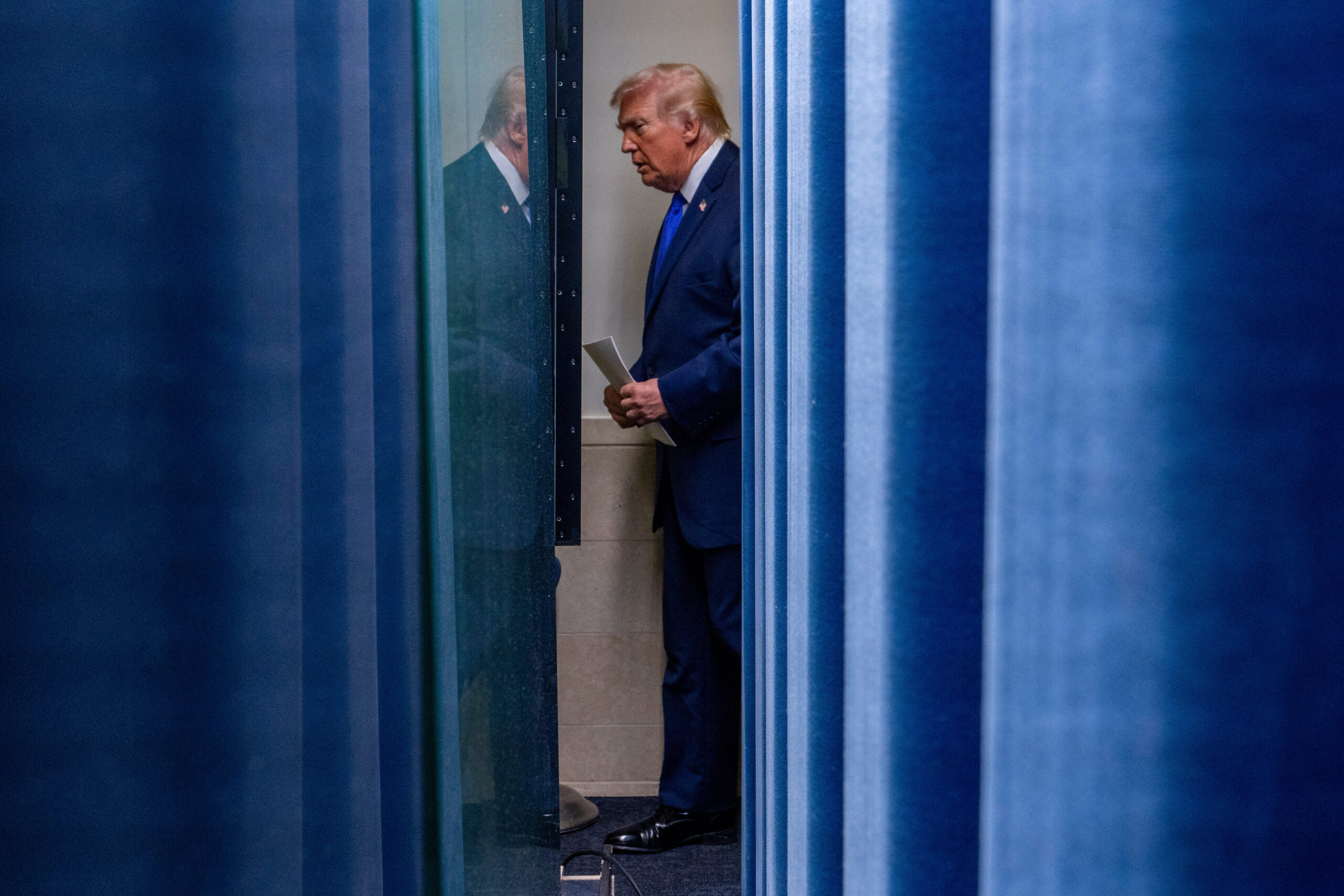
President Donald Trump slammed Republican-nominated Supreme Court justices who ruled against him Friday.
Pennsylvania lawmakers say Congress should reclaim its power over taxes and tariffs after the U.S. Supreme Court quashed President Donald Trump’s controversial global tariffs.
The nation’s high court ruled 6-3 Friday that Trump overstepped with tariffs imposed under an emergency powers law, dealing a significant blow to the president’s economic agenda and reasserting congressional authority.
Chief Justice John Roberts and Justices Neil Gorsuch and Amy Coney Barrett — both Trump nominees — joined liberal justices in the majority. Justices Brett Kavanaugh, Clarence Thomas, and Samuel Alito dissented.
Trump told reporters at the White House Friday that he was “ashamed” of the three Republican-appointed justices for not having “the courage to do what’s right for our country.”
But local lawmakers celebrated the decision as a step toward alleviating inflation exacerbated by Trump’s tariffs.
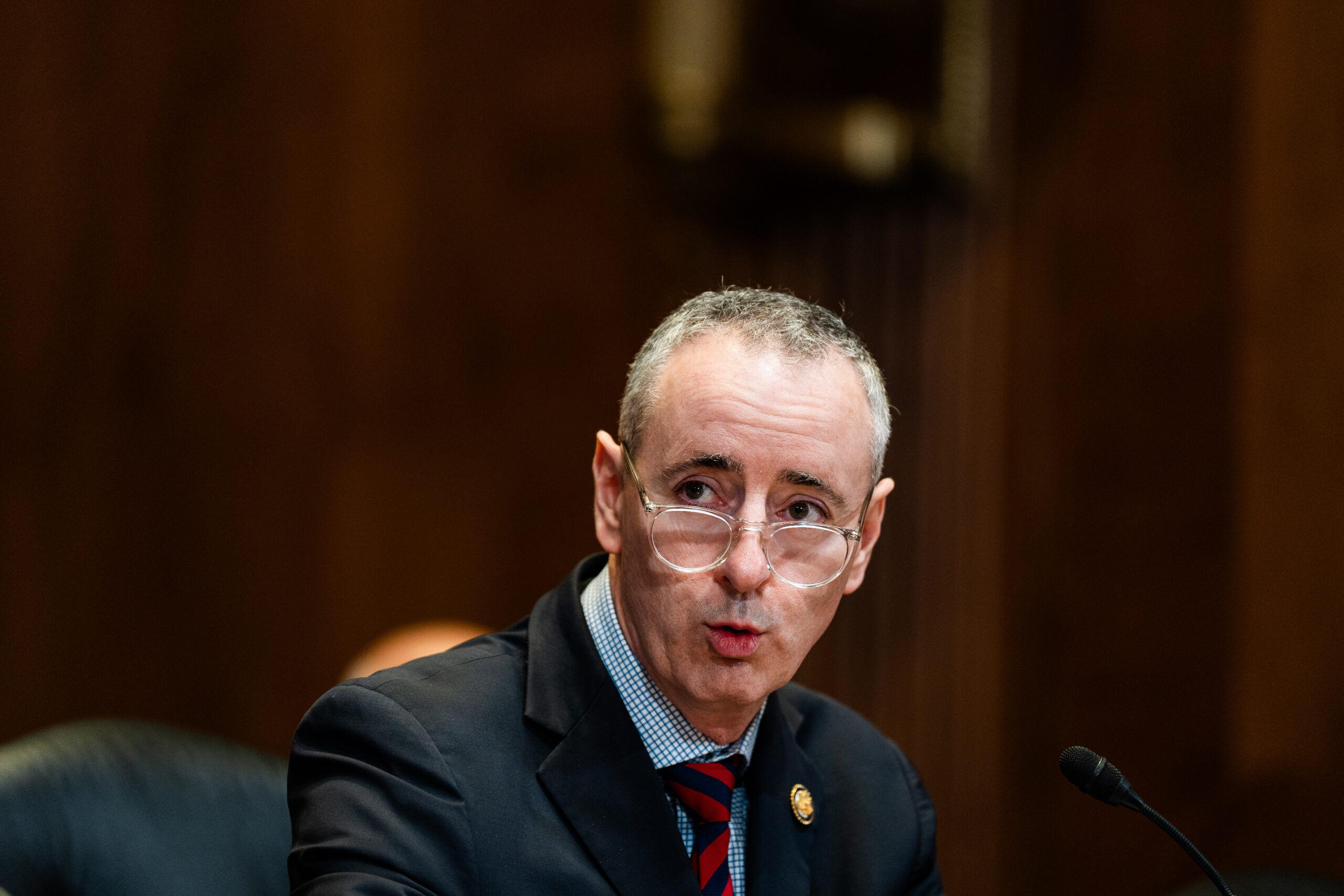
It’s “the first piece of good news that American consumers have gotten in a very long time,” said U.S. Rep. Brendan Boyle (D., Philadelphia), the ranking member of the House Budget Committee.
The decision is likely not the end of the road for Trump’s efforts to impose tariffs. The court struck down the broad authority Trump had claimed to impose sweeping tariffs but he could still impose additional import and export taxes using powers he employed in his first term.
President of Philly port operator says Supreme Court ruling ‘hard to interpret’
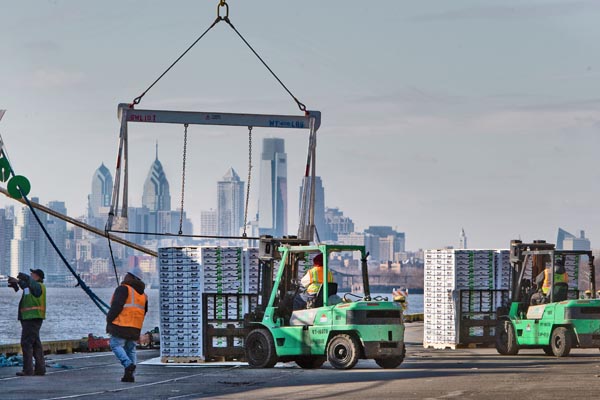
Workers move cargo at the Tioga Marine Terminal in Port Richmond.
Andrew Sentyz is president of Delaware River Stevedores, which operates the Port of Philadelphia’s publicly owned Tioga Marine Terminal in Port Richmond.
“It’s kind of hard to interpret,” he said of the Supreme Court ruling. “…I don’t know if I have a handle on what exactly it’s going to impact, and what it’s not. Some [tariffs] are still there, some are not.”
“Our business is a lot like a public utility in that there’s a demand and there’s a supply and we’re like the conduit the goods pass through,” he said. “…Trade policy massively affects how much moves or how much doesn’t move and in which direction.”
Sentyz said he’s cautiously optimistic about a normalization in trade.
“From the perspective that people have more certainty, I think it is welcome,” he said of the court ruling. “People receiving the cargo, they like a market that’s predictable. When it’s unpredictable it makes their business much harder. We’re impacted by how much they buy or sell.”
Will companies get refunds for paying tariffs the Supreme Court has now ruled were illegally imposed?
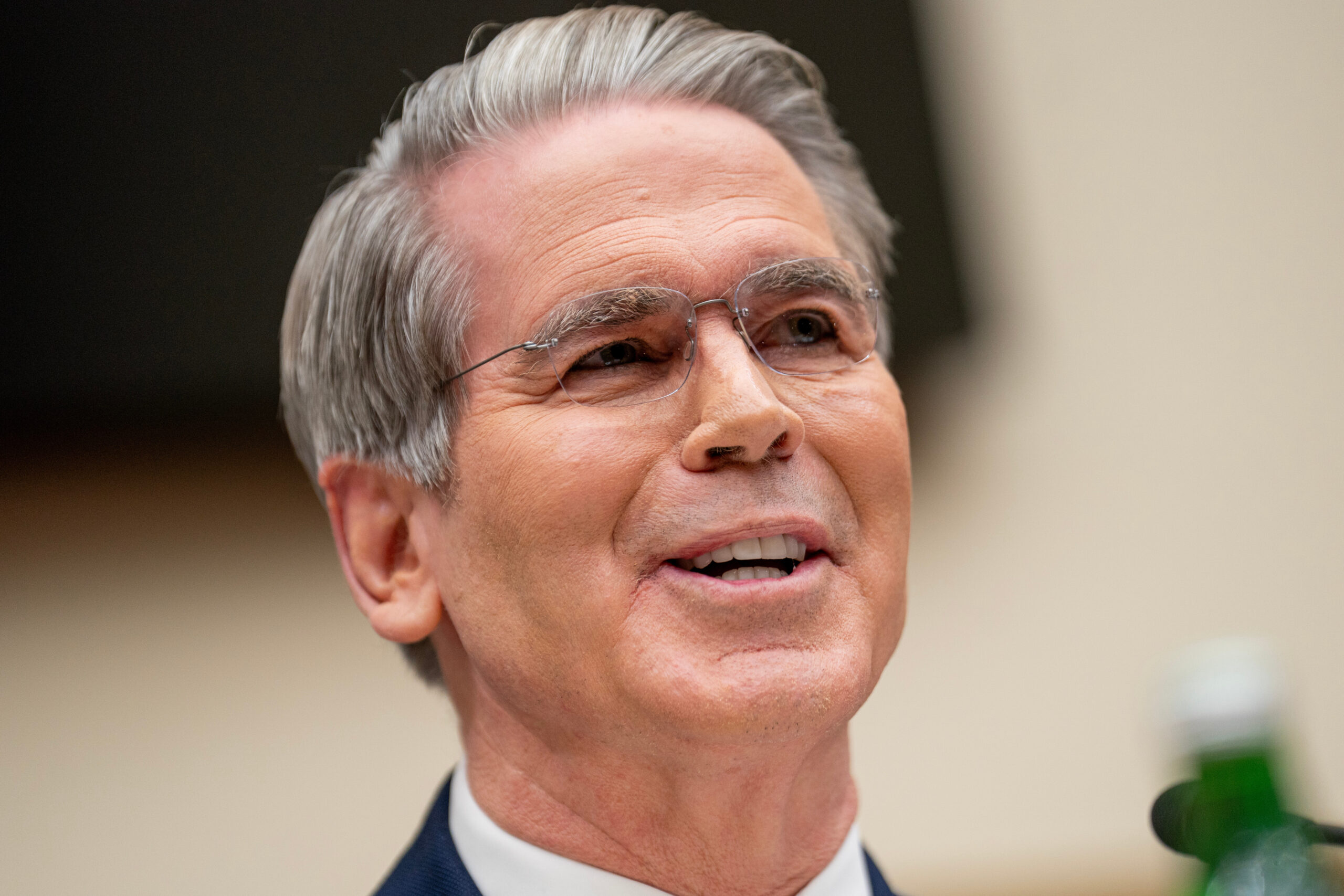
Treasury secretary Scott Bessent doesn’t think it’s likely.
“I got a feeling the American people won’t see it,” Bessent said during an interview at the Economic Club of Dallas Friday,
Bessent said he expects tariff revenue to be “virtually unchanged” in 2026 because the administration plans to turn to alternate methods to collect the levies.
Trump has already announced he plans to impose a 10% global tariff using an untested section of the 1974 Trade Act meant to address issues with international payments.
Reaction from Europe focuses on renewed upheaval, confusion
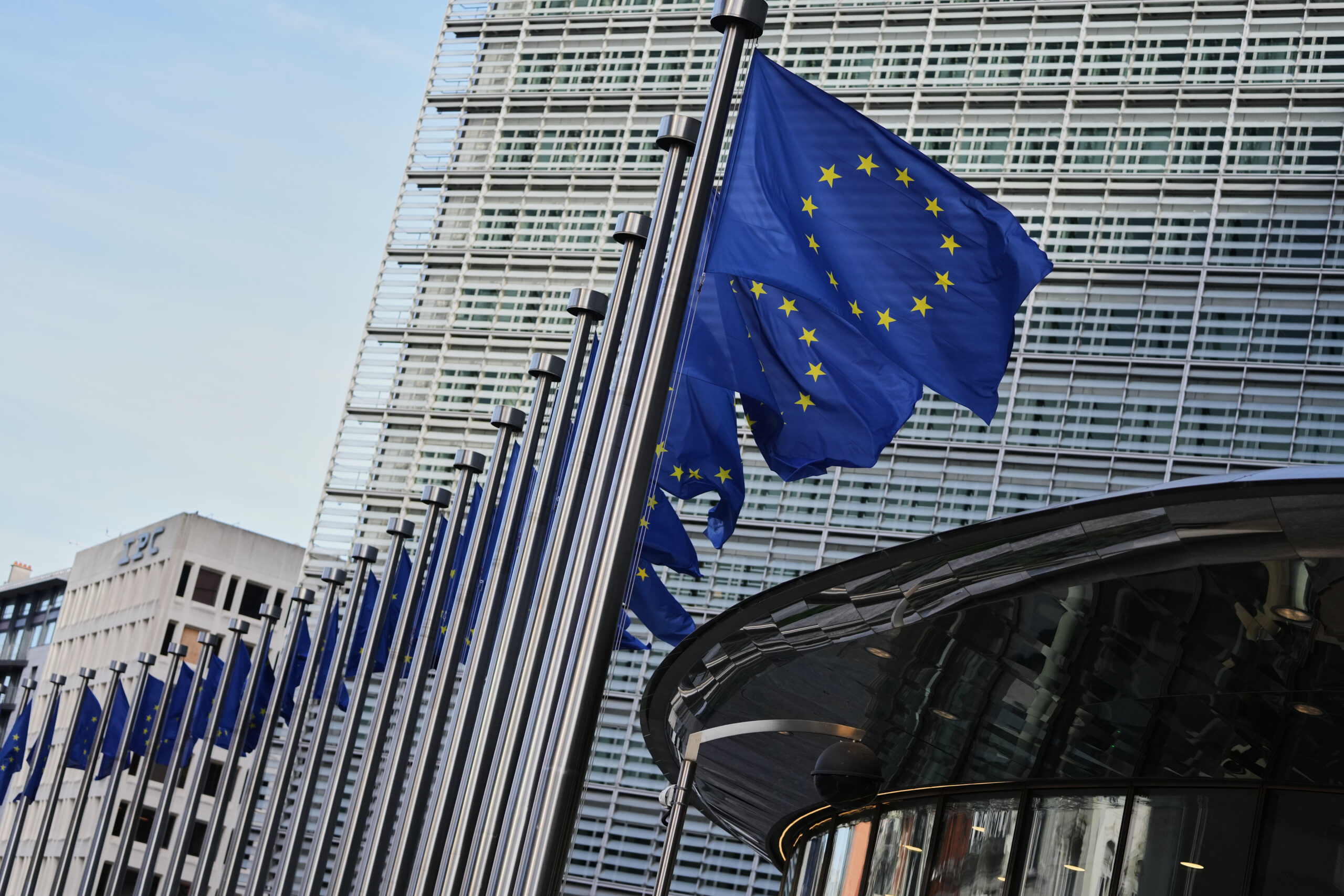
European Union flags flap in the wind outside of EU headquarters in Brussels.
The initial reaction from Europe focused on renewed upheaval and confusion regarding costs facing businesses exporting to the US.
The European Commission had reached a deal with the Trump administration capping tariffs on European imports at 15%. The deal gave businesses certainty that helped them plan, a factor credited with helping the 21 countries that use the euro currency skirt a recession last year.
“Uncertainty remains high for German enterprises doing business in the US,” said the German Chamber of Commerce and Industry. “Because there are other instruments for trade limitations in the hands of the US administration that German companies must prepare themselves for.”
Trump could resort to laws permitting more targeted tariffs that could hit pharmaceuticals, chemicals and auto parts, said Carsten Brzeski, global head of macro at ING bank: “Europe should not be mistaken, this ruling will not bring relief. … The legal authority may be different, but the economic impact could be identical or worse.”
— Associated Press
// Timestamp 02/20/26 3:08pm
Supreme Court ruling the beginning of a long legal battle
Among those following the issue, the Supreme Court ruling was “widely expected,” said Villanova University professor of international business Jonathan Doh.
In oral hearings, the Trump administration had argued that the tariffs were necessary due to trade disputes that constituted an emergency, said Doh, who had served as a trade policy negotiator during the 1990s.
However, the administration then touted the tariffs’ revenue-generating capacity — saying they’ve raised about $175 billion, Doh said. Supreme Court justices took notice of this when they weighed whether this was really an emergency.
“The justices spent as much time arguing about whether the remedy [for the trade dispute] was tariffs,” Doh said.
The 6-3 decision is having immediate effects, Doh said. Importers can no longer collect tariffs through this act. Companies are already looking for ways to recoup what they paid from the federal government. And the Trump administration has already announced it plans to implement “temporary” tariffs through another legal mechanism.
This “shifting playing field” only adds uncertainty to a business community that’s been watching tariffs closely since the start of Trump’s second term, Doh said. All of this will play out in legal battles in the lower courts.
“The decision was extremely significant, but it’s not the end of the story,” Doh said. “In some ways it’s just the beginning.”
Shapiro calls on Trump to ‘listen’ to the Supreme Court
Speaking to reporters on Friday, Gov. Josh Shapiro said he agreed with the Supreme Court’s decision to strike down Trump’s tariffs.
“I have made no bones about the fact that these tariffs are really harming,” the governor said. “I spend a lot of time on farmlands in our commonwealth. Farmers are getting killed by this.”
“We are hearing from folks in our rural communities sort of questioning why would the president do this,” Shapiro continued. “At the same time we’re seeing grocery prices go up, consumer goods go up, and there is a direct line connecting those price increases to the president pushing the tariff.”
Inflation reports show Trump’s tariffs inflated prices across household consumer items by as much as 5% at times.
Shapiro concluded by taking a jab at the president.
“I think the Supreme Court got it right. I say that as a former attorney general, and I say that as someone who actually follows the law,” he said. “And I think the president needs to actually listen to the Supreme Court and drop this and stop the pain for Pennsylvania and stop the pains for the Americans who are dealing with rising prices directly as a result of his tariffs.”
Bucks County Republican Rep. Brian Fitzpatrick ‘applauds’ Supreme Court decision
U.S. Rep. Brian Fitzpatrick (R., Pa.) is a moderate who represents Bucks County.
Casey-Lee Waldron, a spokesperson for U.S. Rep. Brian Fitzpatrick (R., Bucks), said in a statement Friday the lawmaker “applauds” the high court’s decision, “which validates the Congressman’s opposition to blanket and indiscriminate tariffs that are not narrowly tailored, and that do not lower costs for the American consumer.”
Waldron added that Fitzpatrick, a moderate who represents purple Bucks County, supports enforcing trade laws but that “This should always be done in a collaborative manner with a bipartisan, bicameral majority in Congress.”
Rep. Mary Gay Scanlon, a Delaware County Democrat, joined the chorus of lawmakers applauding the decision Friday afternoon.
In a post to X she called the decision a “win for the American people.”
“If the President stands by his disastrous tariff policy, it’s because he doesn’t care about lowering costs for American families,” Scanlon wrote.
Trump says he’ll impose a 10% tariff on all countries using untested statute
President Donald Trump speaks with reporters Friday.
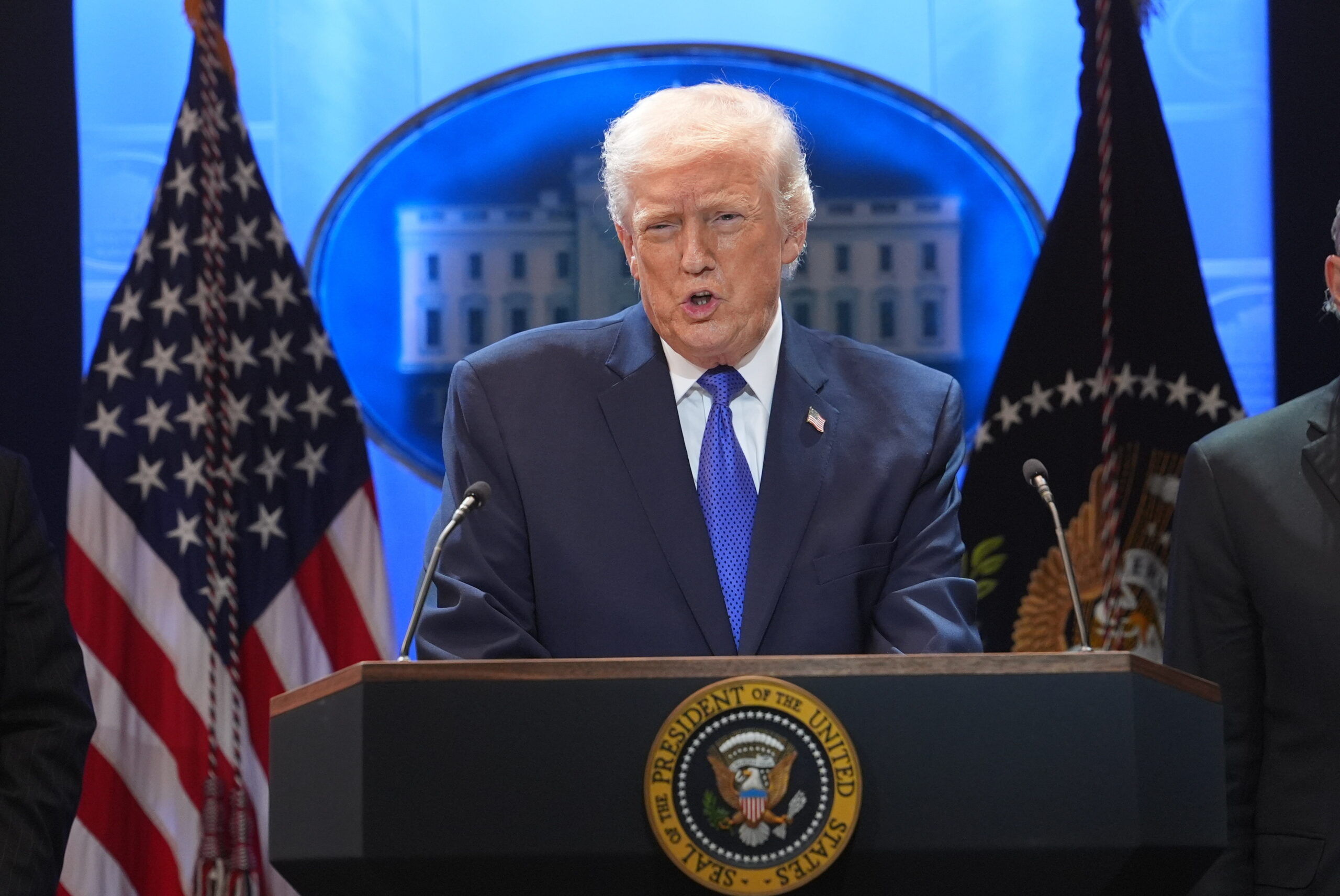
President Donald Trump told reporters he plans to sign an executive order enacting 10% global tariffs following the Supreme Court’s decision.
“Today, I will sign an order to impose a 10% global tariff under Section 122, over and above our normal tariffs already being charged,” Trump said Friday. “And we’re also initiating several section 301, and other investigations to protect our country from unfair trading practices of other countries and companies.”
Section 122, a statute created by the 1974 Trade Act, allows the president to impose temporary tariffs on countries to address issues with international payments. The statute, which has never been invoked by a president, limits tariffs to 150 days.
National Association of Manufacturers president: U.S. trade policy needs ‘clarity and durability’
Jay Timmons, president of the National Association of Manufacturers, said he and other leaders of the 14,000-member manufacturers’ group share President Trump’s goal of “ushering in the greatest manufacturing era.” But, he added, the court decision “underscores the importance of clarity and durability in U.S. trade policy.”
Timmons was in Philadelphia Friday morning to meet with leaders from the port, shipyard, Chamber of Commerce, and others in industry.
Stable tariffs and policies boost investment and hiring, but “legal and policy uncertainty make it more difficult” for American companies to compete, Timmons added in a statement. Since the court has ruled, “now is the time for policymakers to work together to provide a clear and consistent framework for trade.”
In the future, tariffs should be limited, according to the NAM leader. Timmons said punitive tariffs should target “specific unfair trade practices,” especially in “nonmarket” nations where government controls production.
NAM has pledged to work with Congress and the Trump administration on “durable” solutions to boost U.S. manufacturing and factory workers, he concluded.
‘Fools and lapdogs’: Trump says Republican-appointed Supreme Court justices lacked loyalty in tariff ruling
President Donald Trump speaks to reporters Friday.
President Donald Trump slammed three Republican-appointed Supreme Court justices for voting in favor of striking down his tariffs on foreign goods.
Two justices Trump nominated — Neil Gorsuch and Amy Coney Barrett — joined with chief justice John Roberts in ending Trump’s central economic policy.
Speaking to reporters at the White House Friday, Trump said he was “ashamed” the three justices — two of whom he nominated — didn’t have “the courage to do what’s right for our country.”
Trump also went after the court’s three Democratic appointees, calling them “automatic no” votes on any of his policies that make their way to the Supreme Court.
“You can’t knock their loyalty,” Trump said. “It’s one thing you can do with some of our people … They’re just being fools and lapdogs for the RINOs and radical-left Democrats.”
“Trump’s tariffs are FAR from over,” says Gene Marks, small business columnist for The Inquirer and founder of small-business consulting firm Marks Group in Bala Cynwyd.
Marks notes, “As Karoline Leavitt said back in June ‘we can walk and chew gum at the same time’ and as Scott Bessent said in December: ‘The administration will be able to replicate tariffs even if the SCOTUS rules against.’”
Some ways it could do so, Marks added, include:
The 1930 Smoot Hawley Act allows the U.S. to impose tariffs up to 50% on imports from countries that “discriminate” against U.S. goods through unfair duties, taxes, or regulations. But it requires congressional approval.
Section 122 of the Trade Act of 1974 gives the president “balance-of-payments” authority. This has a 150-day limit unless extended by Congress, and a 15% maximum rate.
Section 232 of the Trade Expansion Act of 1962/Section 301 of the Trade Act of 1974 allow tariffs on sectors or industries. These would require investigations and public comment.
“The only thing certain about tariffs in 2026 is that there will be a lot of uncertainty,” Marks said.
Tariffs had been impacting business at the Port of Philadelphia
Cranes at the Packer Avenue Marine Terminal in South Philadelphia.
Tariffs have slowed business at the Port of Philadelphia lately, with cargo volume down across the board — containers, steel, automobiles, and other commodities.
Philly is a major gateway for produce, bringing in more fresh fruit than any other U.S. port, largely from Central and South America. The port saw record container volume last year, handling almost 900,000 units, up 6% over 2024. About two-thirds of that cargo was refrigerated — fruit and meat, for example.
But the year got off to a slow start. “The story is increased competition and tariffs,” Sean Mahoney, marketing director at the Philadelphia Regional Port Authority (PhilaPort), said during the agency’s board meeting on Wednesday.
Container volume in January was down 14% over the year-earlier period. Auto imports fell 17%, and breakbulk cargoes (steel, paper, lumber) fell too. (Tariffs weren’t the only factor; Mahoney noted that ports in early 2025 happened to see more cargo than usual in part because shippers ordered more goods amid labor negotiations between employers and unions representing dockworkers.)
Shapiro hails Supreme Court decision to stop Trump’s ‘reckless approach’
Pennsylvania Gov. Josh Shapiro has been a vocal opponent of Trump’s tariffs.
Gov. Josh Shapiro, who has been a frequent critic of the tariffs, posted to X Friday applauding the Supreme Court’s decision.
“Donald Trump’s tariffs have been a disaster — wreaking havoc on Pennsylvania farmers, small business owners, and families who are just trying to make ends meet,” Shapiro wrote.
He urged Trump to follow the court’s ruling and “drop this reckless approach to economic policy that has done nothing but screw over Americans.”
New Jersey import-export company doesn’t expect it will be easy to get refunds
Now that the Supreme Court has made its decision, one big question for companies is whether they’ll be able to get refunds for the additional tariffs they’ve paid since “liberation day” 10 months ago, said Tim Avanzato, vice president of international sales at Lanca Sales Inc.
The New Jersey-based import-export company should be eligible for as much as $4 million in tariff refunds, Avanzato said. But getting that money is far from guaranteed.
“It’s going to create a paperwork nightmare for importers,” he said, and he doesn’t expect the Trump administration to make it easy.
He’ll also be on the lookout for other ways the Trump administration may implement tariffs, further complicating the matter.
Avanzato said President Trump was right when he said that other countries have been taking advantage of the U.S. with their tariffs — and in principle, the president was right to apply his own.
“He should have done more with a scalpel than with a bomb,” Avanzato said.
Though companies may be able to recoup some of what they lost, the same won’t go for consumers, he noted.
“Companies are not very good at passing on savings,” Avanzato said. “Nobody is going to rush to drop their prices.”
Supreme Court ruling brings uncertainty to Pennsylvania businesses
Canada is Pennsylvania’s biggest export market, with the state sending more than $14 billion in goods there in 2024.
The Supreme Court’s decision may be welcome news for U.S. businesses that pay the import taxes, but one immediate effect is more uncertainty as firms weigh whether to hire and make investments.
Not all of President Donald Trump’s tariff increases came through the use of the International Emergency Economic Powers Act and therefore some will remain in place, said Julie Park, a partner at London-based tax and business advisory firm Blick Rothenberg.
“This decision brings further uncertainty for businesses,” she said in a statement. That’s in part because Trump could seek to reimpose tariffs through other legal tools, leaving “businesses in limbo about if they will get refunded.”
U.S. exporters will also be closely following what happens next, since the fate of Trump’s tariffs will likely affect whether other countries like Canada keep their retaliatory measures in place. Canada is Pennsylvania’s biggest export market, with the state sending more than $14 billion in goods there in 2024. Top exports included machinery, cocoa, iron, and steel.
Pennsylvania’s dairy industry has also been caught in the middle of the global trade war, as China and Canada imposed extra taxes on those goods in response to U.S. tariffs.
President Donald Trump will hold a news briefing at 12:45 p.m. to address the Supreme Court’s ruling, White House Press Secretary Karoline Leavitt announced on social media.
// Timestamp 02/20/26 12:17pm
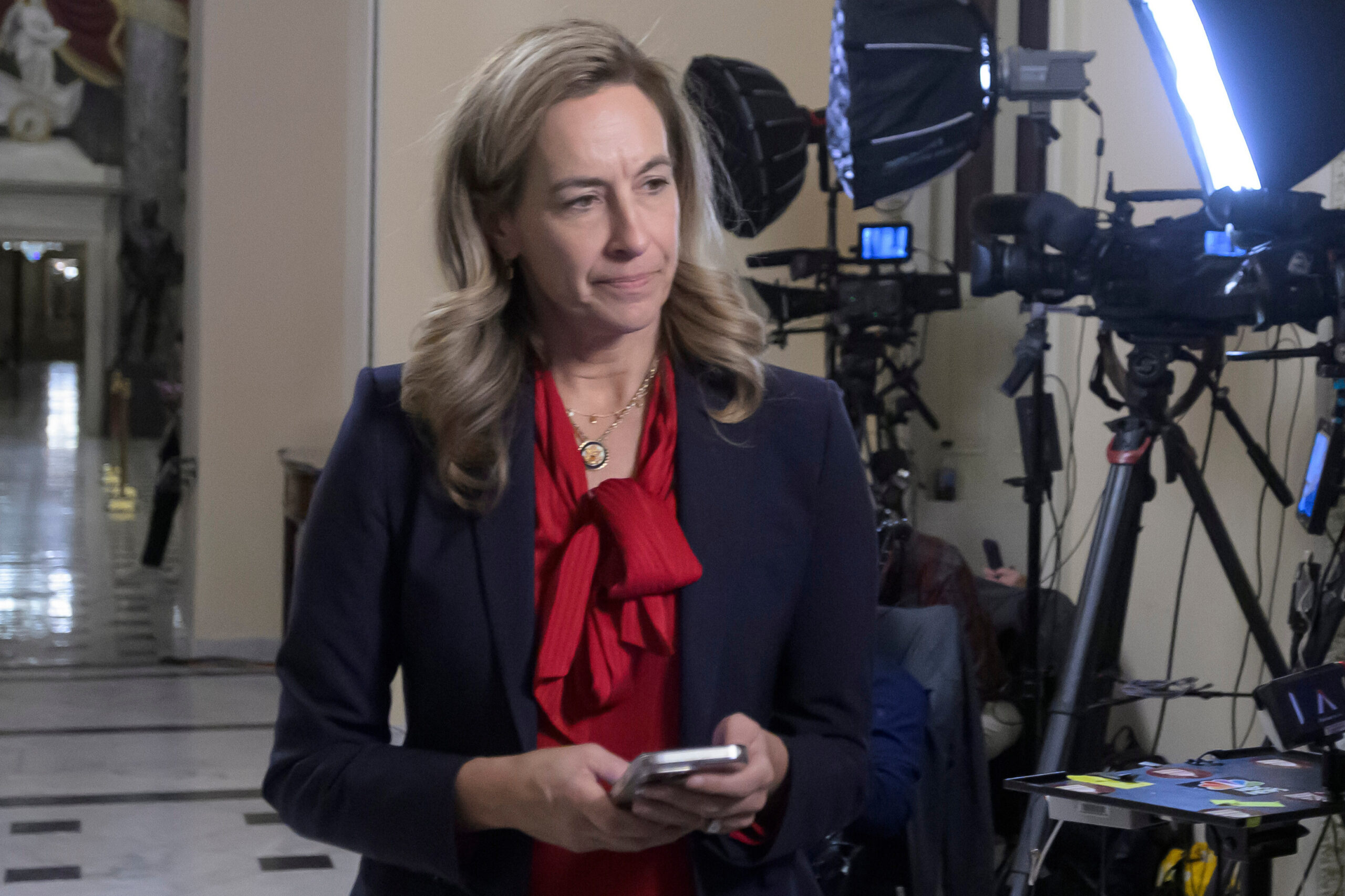
Gov. Mikie Sherrill, other New Jersey officials celebrate Supreme Court ruling
New Jersey Gov. Mikie Sherrill, seen here in November.
New Jersey Gov. Mikie Sherrill celebrated the court ruling on President Donald Trump’s tariffs, which she said have raised costs by $1,700 per New Jersey family and had a negative impact on small businesses and jobs.
“I’m thrilled that folks and businesses will start to see the relief they deserve – with no thanks to the president,” she added.
The new governor ran on a message combining affordability and fighting Trump. She took particular aim at his tariffs and visited small businesses in South Jersey to discuss their impact on local economies in the state.
Sen. Andy Kim, a South Jersey Democrat, said the Supreme Court’s decision is “a step” in righting wrongs by Trump’s administration, but that there’s “so much more to go.”
Calling the tariffs “unpopular and illegal,” the senator said the president cost Americans “a lot of money.”
“Trump 2.0: You pay for his tariffs, tax breaks for his billionaire donors, & insane corruption for his friends and family,” he added in a social media post.
Sen. Cory Booker, a North Jersey Democrat, lauded the Supreme Court for ruling “what we’ve all known: this administration cannot ignore the rule of law and Congress’ role to protect America’s economy from reckless and chaotic tariffs.”
“For nearly a year, Trump abused our trade tools to curry favors with foreign officials and exact revenge on his rivals, all while America’s working families and small businesses paid the price,” Booker said on social media. “Trump raised the cost on everything from the food we eat to the clothes we wear, and also failed to bring back good-paying jobs or fix our broken economy.”
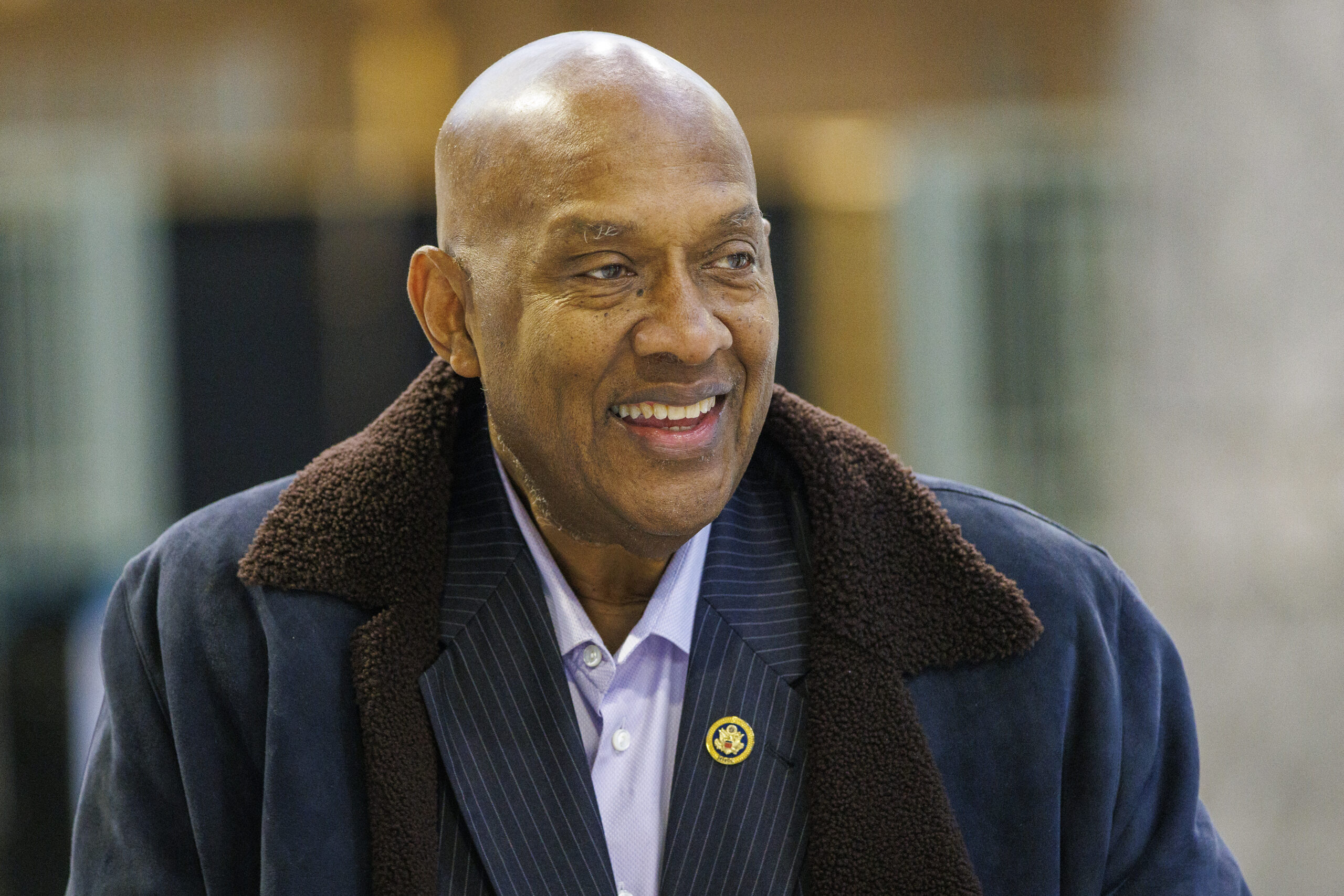
Philly Rep. Dwight Evans calls on Congress to reassert its constitutional power
Congressman Dwight Evans, seen here in 2025.
U.S. Rep. Dwight Evans (D., Pa.), who represents parts of Philadelphia, called the ruling a win for the wallets of Americans and called on Congress to reassert its power over the country’s economy.
“The Constitution is clear — only Congress has the power to levy tariffs and other taxes,” Evans wrote on social media. “I’m a co-sponsor of legislation to return this power to Congress — it’s long past time Republicans work with Democrats to pass it!”
The bill, which has no chance of passing in the Republican-controlled House, would require congressional approval for all new tariffs and the reversal of tariffs imposed on Mexico and Canada enacted through the United States-Mexico-Canada Agreement.
His call was echoed by Sen. Chuck Grassley, an Iowa Republican who serves as the chairman of the Senate Judiciary Committee.
In a statement, Grassley wrote, “I’ve made clear Congress needs to reassert its constitutional role over commerce, which is why I introduced prospective legislation that would give Congress a say when tariffs are levied in the future.”
President Trump described the Supreme Court decision as “a disgrace” when he was notified in real time during his morning meeting with several governors.
That’s according to someone with direct knowledge of the president’s reaction, who spoke on the condition of anonymity to discuss the private conversation. Trump was meeting privately with nearly two dozen governors from both parties when the decision was released.
— Associated Press
// Timestamp 02/20/26 11:03am
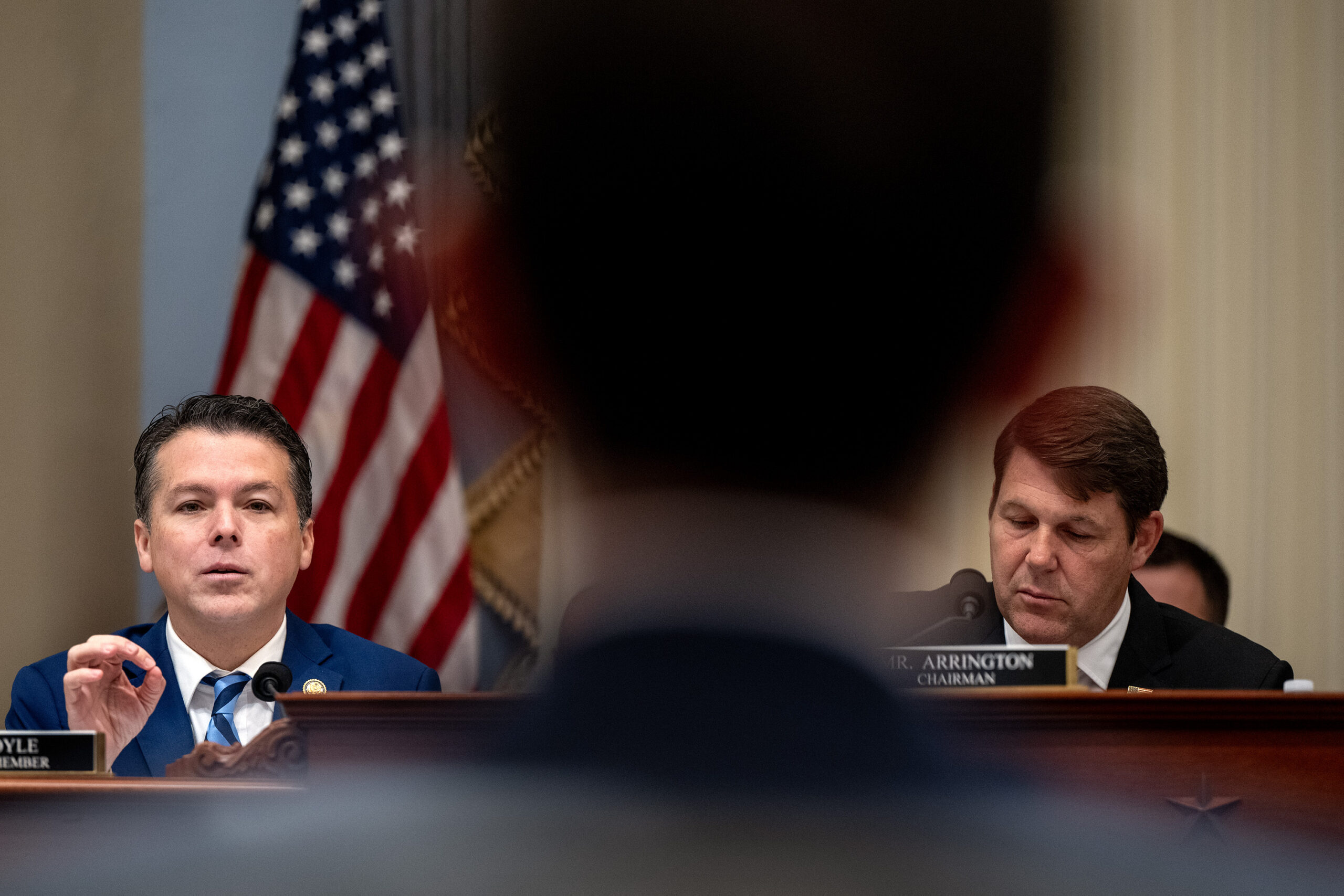
Brendan Boyle celebrates Supreme Court ruling as ‘good news’ for consumers
U.S. Rep. Brendan Boyle during a hearing on Capitol Hill in Washington, D.C., in November.
The decision is “the first piece of good news that American consumers have gotten in a very long time,” said U.S. Rep. Brendan Boyle (D., Philadelphia), the ranking member of the House Budget Committee, said in an interview Friday.
Boyle noted that the public will eventually see prices go down, but it remains unclear what will happen to tariff revenue that’s already been collected. But Pennsylvania lawmakers, including Boyle, are pushing for Congress to reassert its power to control the country’s purse strings.
“As the Supreme Court validated this morning, Congress has the authority to levy taxes and tariffs,” Boyle said. “It’s time now for us to finally reclaim that authority and bring some certainty and rationality to our tariff policy, which under Donald Trump has been all over the map and changes day by day, even hour by hour.”
Boyle and U.S. Rep. Dwight Evans (D., Philadelphia) have cosponsored a bill that would require congressional approval for all new tariffs and the reversal of tariffs imposed on Mexico and Canada enacted through the United States-Mexico-Canada Agreement. It’s unlikely that it will pass the Republican-controlled U.S. House.
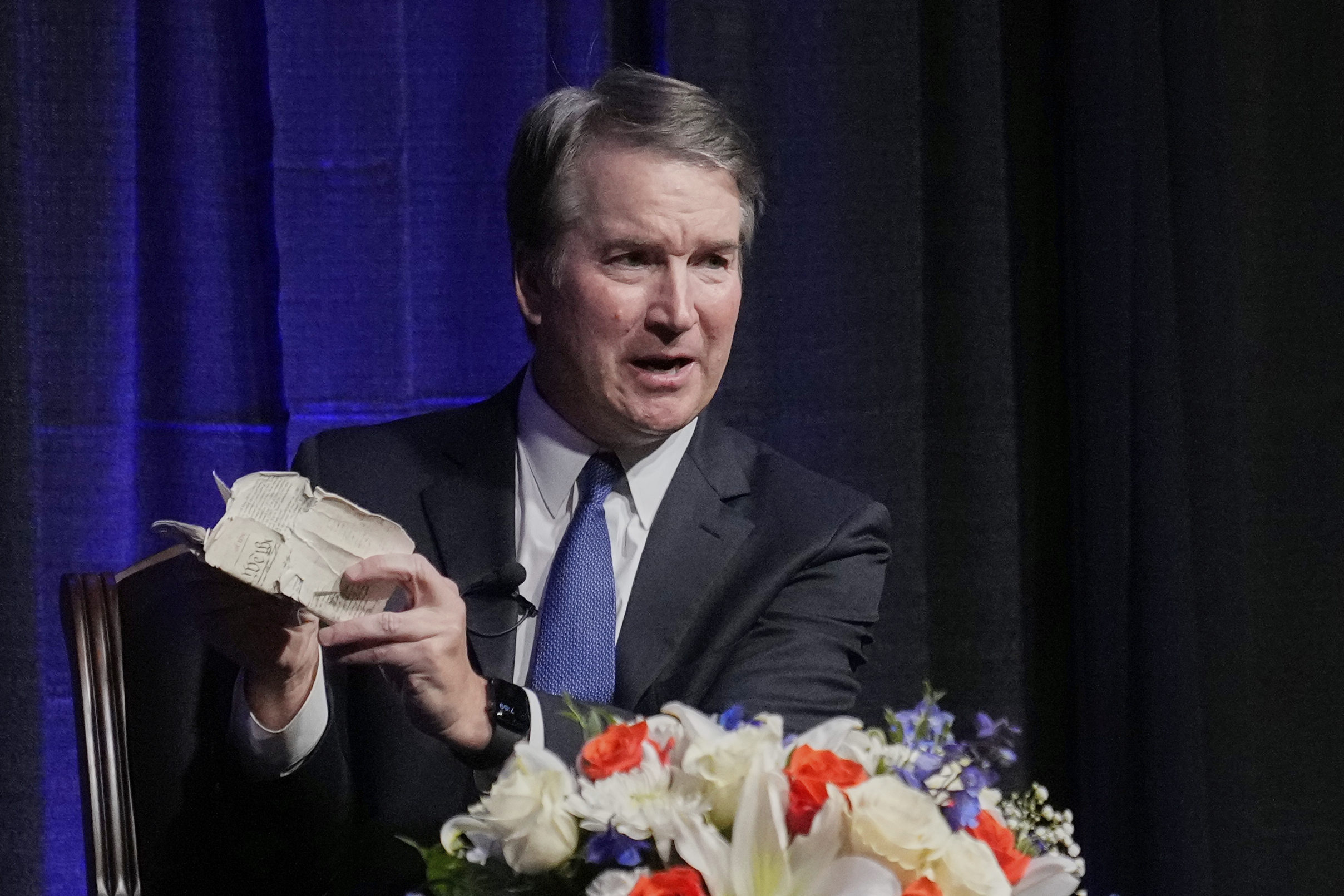
Will businesses get refunds? One Supreme Court justice says the process will be a ‘mess’
Supreme Court Justice Brett Kavanaugh, who was one of three who ruled against striking down the tariffs.
Companies have collectively paid billions in tariffs. Many companies, including the big-box warehouse chain Costco, have already lined up for refunds in court, and Justice Brett Kavanaugh noted the process could be complicated.
“The Court says nothing today about whether, and if so how, the Government should go about returning the billions of dollars that it has collected from importers. But that process is likely to be a ‘mess,’ as was acknowledged at oral argument,” Kavanaugh wrote in the dissent.
We Pay the Tariffs, a coalition of more than 800 small businesses that has been advocating against the tariffs, said a process for refunding the tariffs is imperative.
“A legal victory is meaningless without actual relief for the businesses that paid these tariffs,” executive director Dan Anthony said in a statement. “The administration’s only responsible course of action now is to establish a fast, efficient, and automatic refund process that returns tariff money to the businesses that paid it.”
— Associated Press
// Timestamp 02/20/26 10:36am
The Supreme Court strikes down Trump’s tariffs
The Supreme Court struck down President Donald Trump’s far-reaching global tariffs on Friday, handing him a significant loss on an issue crucial to his economic agenda.
The 6-3 decision centers on tariffs imposed under an emergency powers law, including the sweeping “reciprocal” tariffs he levied on nearly every other country.
It’s the first major piece of Trump’s broad agenda to come squarely before the nation’s highest court, which he helped shape with the appointments of three conservative jurists in his first term.
The majority found that the Constitution “very clearly” gives Congress the power to impose taxes, which include tariffs. “The Framers did not vest any part of the taxing power in the Executive Branch,” Chief Justice John Roberts wrote.
Justices Samuel Alito, Clarence Thomas, and Brett Kavanaugh dissented.
“The tariffs at issue here may or may not be wise policy. But as a matter of text, history, and precedent, they are clearly lawful,” Kavanaugh wrote in the dissent.
The economic impact of Trump’s tariffs has been estimated at some $3 trillion over the next decade, according to the Congressional Budget Office. The Treasury has collected more than $133 billion from the import taxes the president has imposed under the emergency powers law, federal data from December shows. Many companies, including the big-box warehouse chain Costco, have already lined up in court to demand refunds.
— Associated Press
// Timestamp 02/20/26 10:34am
Trump could still impose tariffs under other laws
The Supreme Court’s tariffs decision doesn’t stop President Donald Trump from imposing duties under other laws.
While those have more limitations on the speed and severity of Trump’s actions, top administration officials have said they expect to keep the tariff framework in place under other authorities.
“It’s hard to see any pathway here where tariffs end,” said Georgetown trade law professor Kathleen Claussen. “I am pretty convinced he could rebuild the tariff landscape he has now using other authorities.”
The Constitution gives Congress the power to levy tariffs. But the Trump administration argued that a 1977 law allowing the president to regulate importation during emergencies also allows him to set tariffs. Other presidents have used the law dozens of times, often to impose sanctions, but Trump was the first president to invoke it for import taxes.
Trump set what he called “reciprocal” tariffs on most countries in April 2025 to address trade deficits that he declared a national emergency. Those came after he imposed duties on Canada, China, and Mexico, ostensibly to address a drug trafficking emergency.
A series of lawsuits followed, including a case from a dozen largely Democratic-leaning states and others from small businesses selling everything from plumbing supplies to educational toys to women’s cycling apparel.
The challengers argued the emergency powers law doesn’t even mention tariffs and Trump’s use of it fails several legal tests, including one that doomed then-President Joe Biden’s $500 billion student loan forgiveness program.
— Associated Press
Two Trump Supreme Court appointees ruled against his tariffs
Chief Justice John Roberts wrote the court’s majority opinion, joined by Justices Neil Gorsuch and Amy Coney Barrett, two of Trump’s three Supreme Court picks. The three liberal justices were also part of the majority.
Justice Brett Kavanaugh, Trump’s other appointee, wrote the main dissent, joined by Justices Clarence Thomas and Samuel Alito.