Category: Business

Business news and market updates

  • Dot cake went from TikTok trend to Philly bakeries. Here’s how 3 small businesses jumped on the bandwagon.

    Dot cake went from TikTok trend to Philly bakeries. Here’s how 3 small businesses jumped on the bandwagon.

    Michael Ibrahim, general manager of the Bakery House in Bryn Mawr, said custom orders for dot cakes, the latest viral TikTok food trend, started trickling in at the end of May. By June 1, the Bakery House posted the new menu addition on Instagram and Facebook.

    Within 15 minutes, they were sold out.

    “We ordered more material, made more the next week, and then we made sure to never run out of it again,” Ibrahim said.

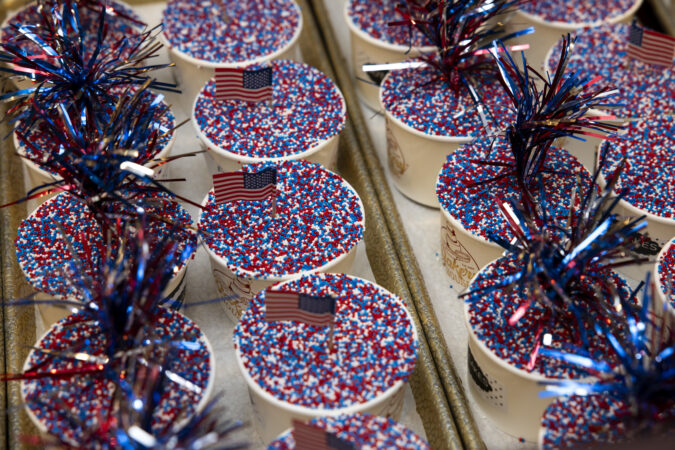
    The dessert — a layered cake in a cup coated in nonpareil sprinkles — was created in 2017 by mother-daughter duo Alex and Sondra Posner of the Dot Cakes in Roslyn, N.Y. It reached national audiences this past May when influencers began reviewing the bakery’s dot cakes sold in New York City’s Butterfield Market. In June, the New York Times Style section reported people standing in line at 6 a.m. for a taste of the sweet treat.

    Elizabeth Aversa, owner of the Margate location of Aversa’s Italian Bakery, said her shop is now regarded as “cool” after introducing dot cakes.

    “I’m getting these new, trendy people that we were never getting before,” Aversa said. “Before, we were just like a mom-and-pop, old-school store … but now they come to us.”

    With viral trends appearing and fading almost as fast as they arrive — remember crookies and butter boards? — deciding which fad to hop on can be a challenge for small businesses.

    Ray Sheehan, founder of Old City Media, said businesses have to identify when viral trends will stick around long enough to be worth the investment. That most often occurs when they cut across several consumer demographics.

    “When things take off like this, it’s almost like pop music,” Sheehan said. “It just speaks to so many different people.”
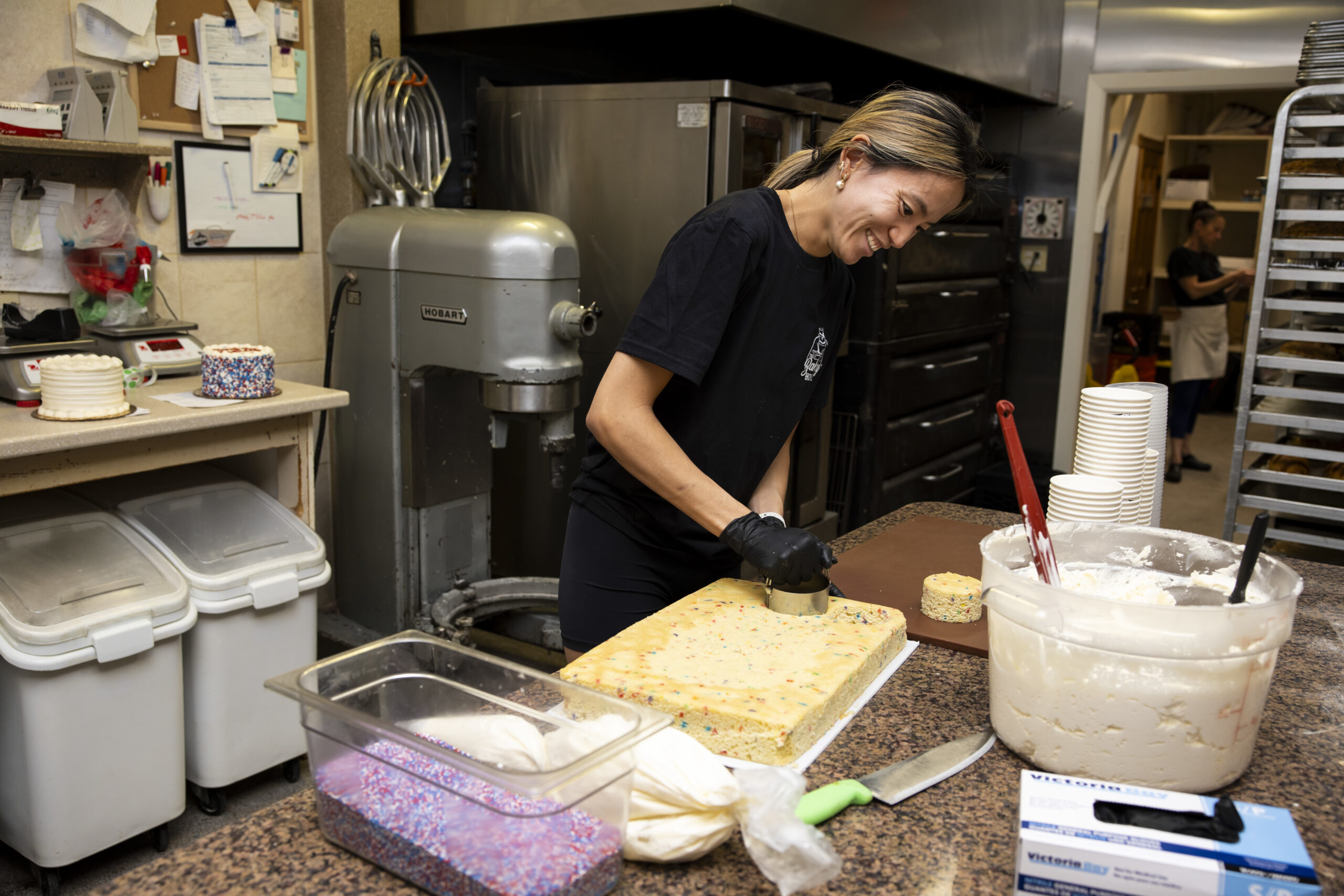
    Lily Diebold assembles dot cakes at the Bakery House.

    ‘Everybody started calling’

    When the Bakery House got its first order for dot cake, Ibrahim thought it was an easy request. The bakery already had everything needed to prepare the dessert: cake ingredients, frosting, and nonpareil sprinkles

    “Then, the customers told each other, and then everybody started calling,” Ibrahim said. “All of a sudden, we had about 60 custom orders for dot cake.”

    Ibrahim said that the team usually avoids bending to the whims of social media trends — notably, they skipped the “crookie” despite offering both croissants and cookies on their menu.

    “We didn’t do it in the store because we didn’t feel that anybody was asking for it,” Ibrahim said.

    Dot cake, however, was so popular among customers that the Bakery House decided to put it on the menu permanently.

    According to Sheehan, adapting to a viral trend is one of the best ways for businesses to show consumers that they are relevant.

    “If I’m a customer, it feels like this bakery is in tune and that they’re talking to me,” Sheehan said. “I’m resonating with their brand because they understand me, and that this thing is so popular.”
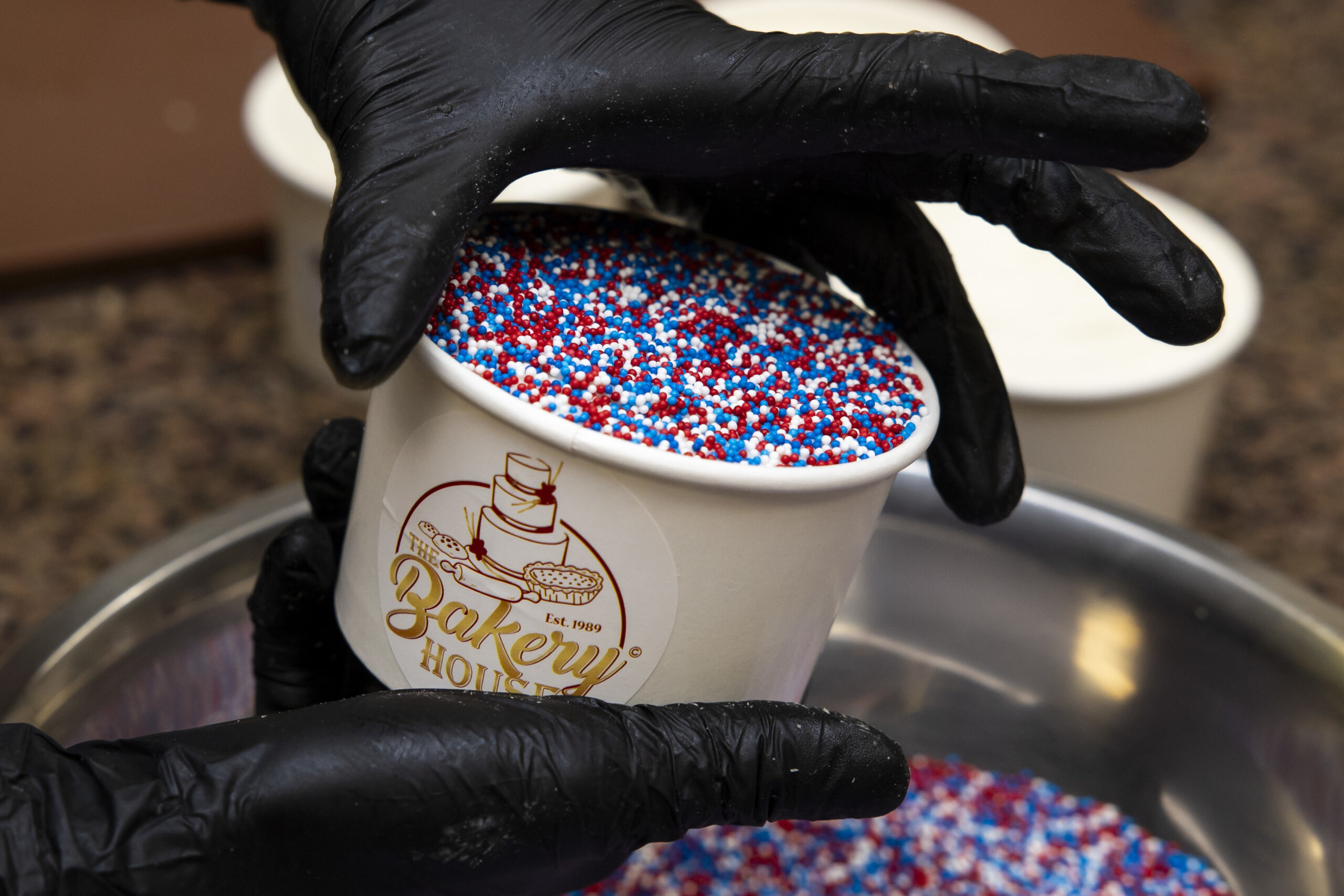
    Dot cakes have been around for years, but only recently became popular nationwide due to TikTok.

    Ibrahim said the bakery now has two employees dedicated to making dot cakes all day, and the fervent demand has caused a dip in sales for traditional cupcakes.

    Though, he says, it’s a net gain. Ibrahim estimated that for every loss of 100 cupcakes, 200 dot cakes are sold. On top of that, dot cakes are priced about $5 more than the bakery’s most basic cupcake, generating greater revenue.

    A middle schooler’s suggestion

    At Aversa’s bakery, the decision to start making dot cakes was a family affair.

    Aversa’s 14-year-old son, Ralph, saw the viral dessert on TikTok and he asked his mother to make dot cakes for a school party.

    It was a popular choice: ”He was a rock star at the party,” Aversa said.

    Ralph wanted to bring dot cakes to the bakery. His mother let him go for it, thinking it would be a fun summer activity.

    Then they flew off the shelves.

    “We put 20 out; they sold out. Then 40, then 50,” Aversa said. “Now we’re selling almost 100 a day.”

    Aversa said that dot cake sales are not replacing regular items but rather bringing in new customers. The younger demographic, drawn in by the dot cakes, may bring their parents, who then come across Aversa’s chicken salad or Caesar salad wraps.

    “Some people maybe never would have come to Aversa’s if it wasn’t for the dot cakes,” she said.
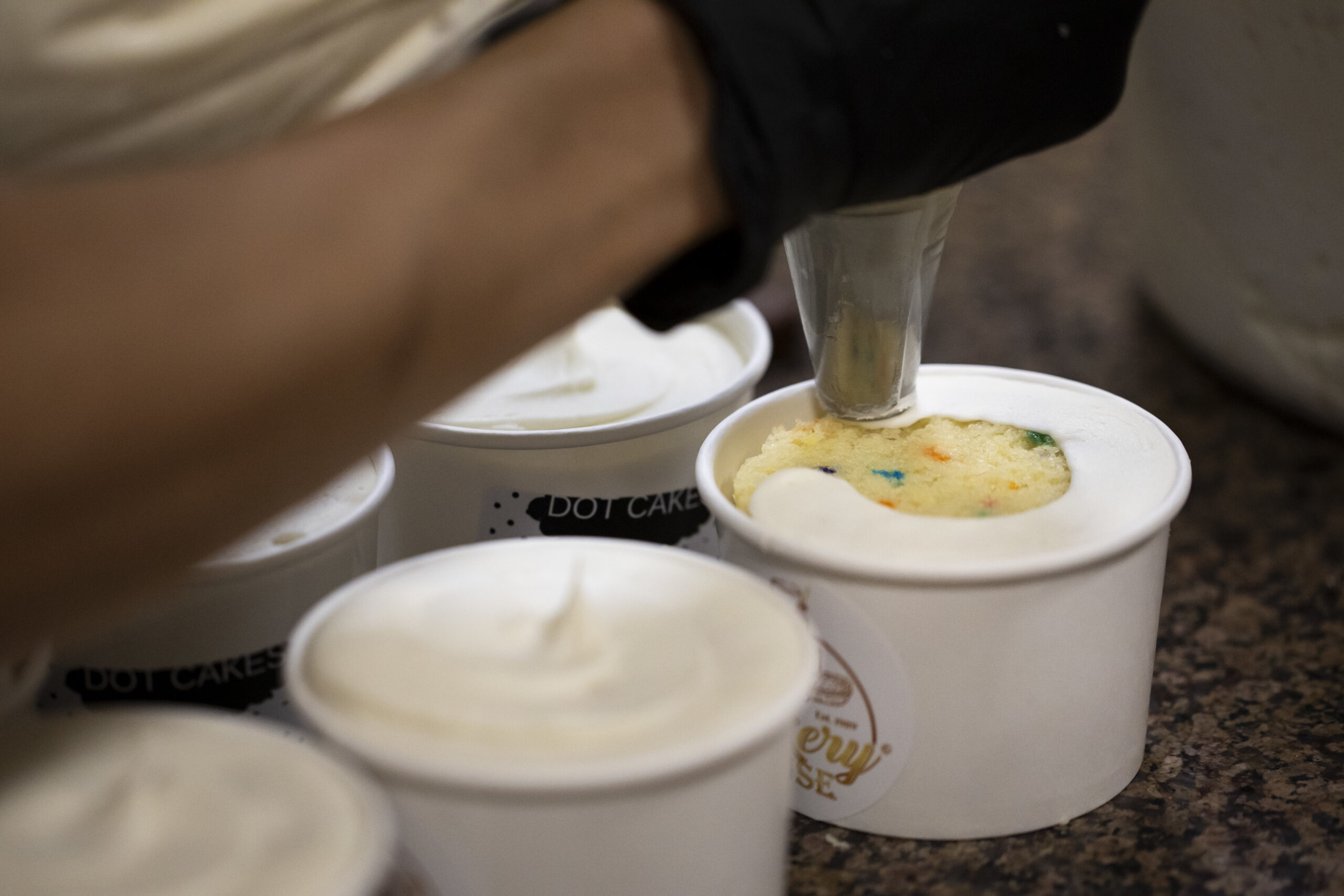
    Dot cakes get a layer of icing and then a crunchy topping of nonpareil sprinkles.

    Influencer tips

    At Sweet Box Bakery on South 13th Street, owner Gretchen Fantini said a well-known social media personality who frequents the shop tipped her off to dot cakes.

    Destiny Deniz, a Philly-based creator with nearly 177,000 followers on TikTok, told Fantini that the dessert was blowing up in New York, and Sweet Box should hop on the trend. At first Fantini was reluctant, but then she started seeing it all over her feed.

    “We have everything here,” Fantini said she thought at the time. “We should just do this.”

    Since the business — and local influencers — started advertising Sweet Box’s dot cakes, Fantini said their Instagram has grown by almost 1,000 followers.

    Sweet Box’s feed features collaborative posts with local food Instagrammers showcasing the viral dot cakes, including @josheatsphilly (197,000 followers), @phlfoodstagram (42,900 followers), and @phillyfoodies (135,000 followers).

    Fantini said the bakery’s influencer relationships are built organically. Creators may pop into the shop, and she’ll give them a taste of her baked goods for free, but she has not done a paid partnership so far.
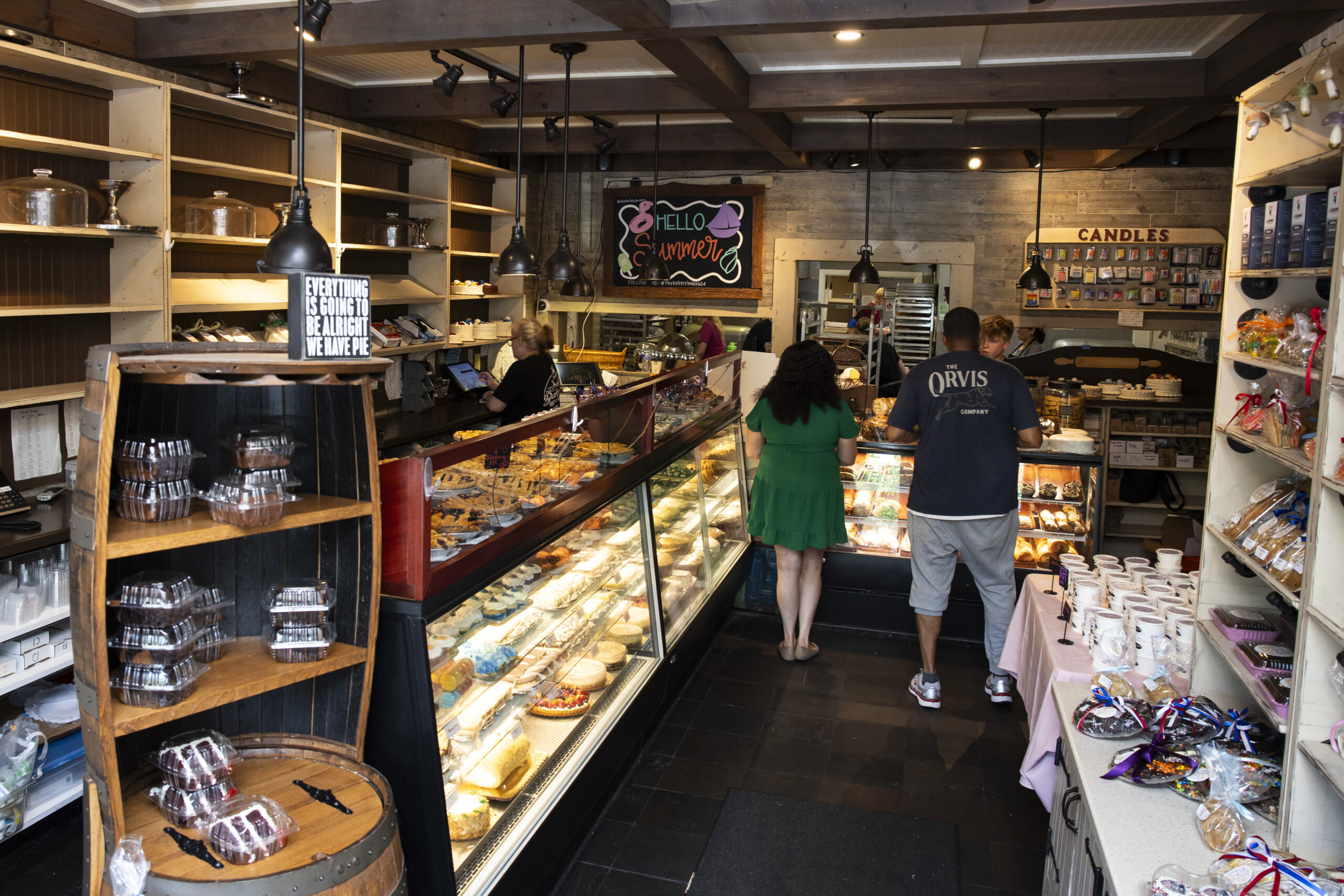
    Customers line up at the Bakery House in Bryn Mawr, which recently starting selling more dot cakes than cupcakes each day.

    “I’m Italian, so if you come into my bakery and I’m baking something, I’m going to give it to you to try,” Fantini said.

    Dot cakes are hit at Sweet Box, but so far sales have not surpassed cupcakes, the bakery’s specialty. On a day where the bakery sells 500 cupcakes, Fantini said they typically sell about 250 dot cakes.

    This isn’t the first time Sweet Box has adopted social media-fueled food trends. In 2017, the bakery introduced edible cookie dough, which was a breakout dessert of the year.

    “I want to make my customers happy,” Fantini said. “If I can stay true to what I’m making, and if it’s something that they want, I’m going to make it.”
  • Business owners near the FIFA Fan Festival prepared for crowds. Not all saw them.

    Business owners near the FIFA Fan Festival prepared for crowds. Not all saw them.

    Yolanda Welch, owner of All Day Hoagies, walked down West Girard Avenue to grab lunch. It was just a couple hours before the start of another World Cup match in Philly, but near the FIFA Fan Festival, Brewerytown’s main drag was nearly empty.

    “Normally, I’m not able to do this,” Welch said, as the lunchtime rush usually keeps her too busy to leave her post.

    She had free time on Thursday, she said, because the regular midday crowd had thinned ever since the FIFA Fan Festival arrived at Lemon Hill, about a half-mile away.

    City officials have estimated that hundreds of thousands of people have flocked to the monthlong World Cup watch party, which started in mid-June and is set to run through mid-July. But last week some Brewerytown business owners said they had yet to reap the benefits.

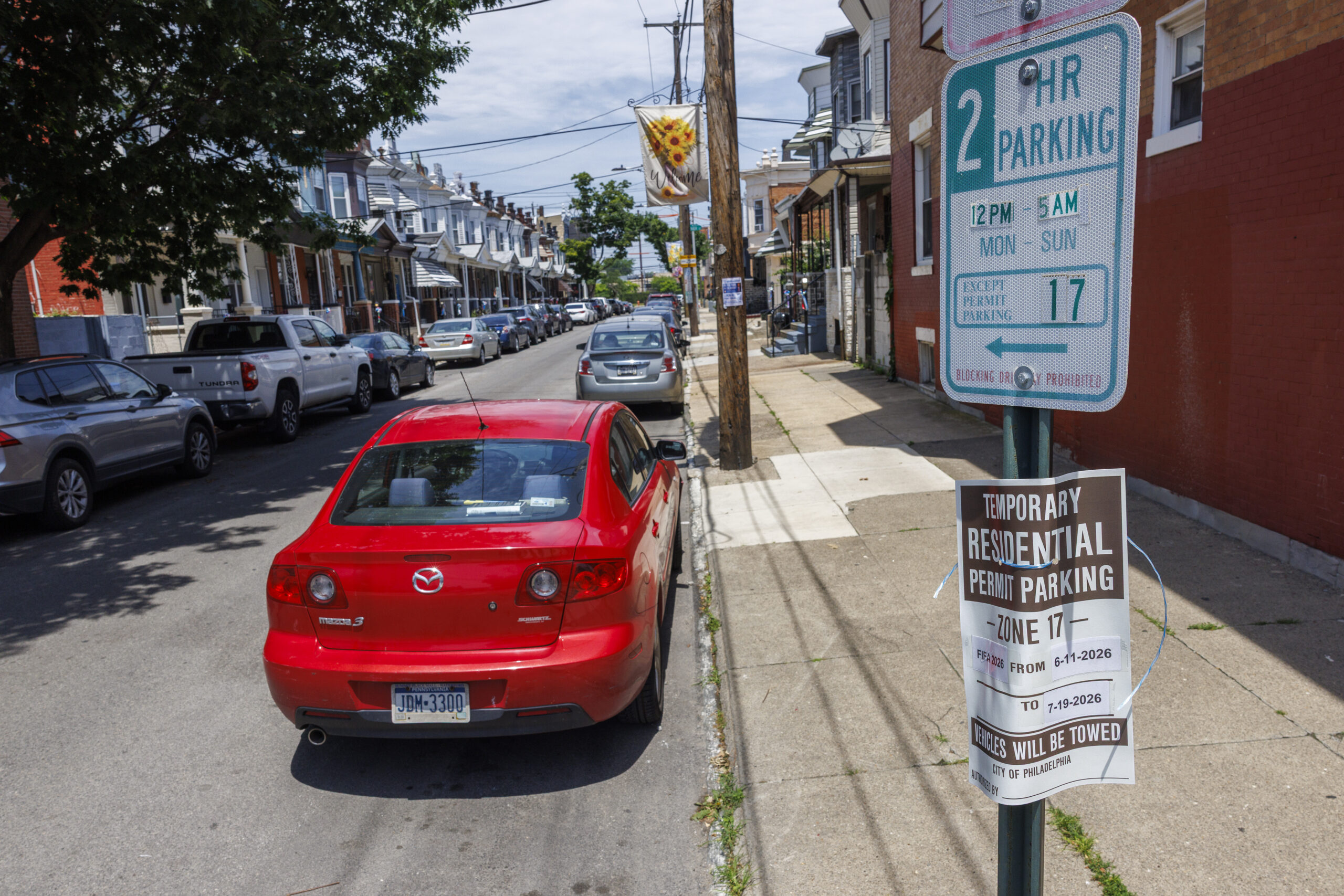
    In nearby Fairmount, some bar managers said they had seen a soccer-fueled boost in business. But several other neighborhood shop owners said they were only breaking even, with the slight increase in tourist traffic offset by a sharp drop in regular customers. Parking restrictions and street closures have kept many locals away, business owners said.

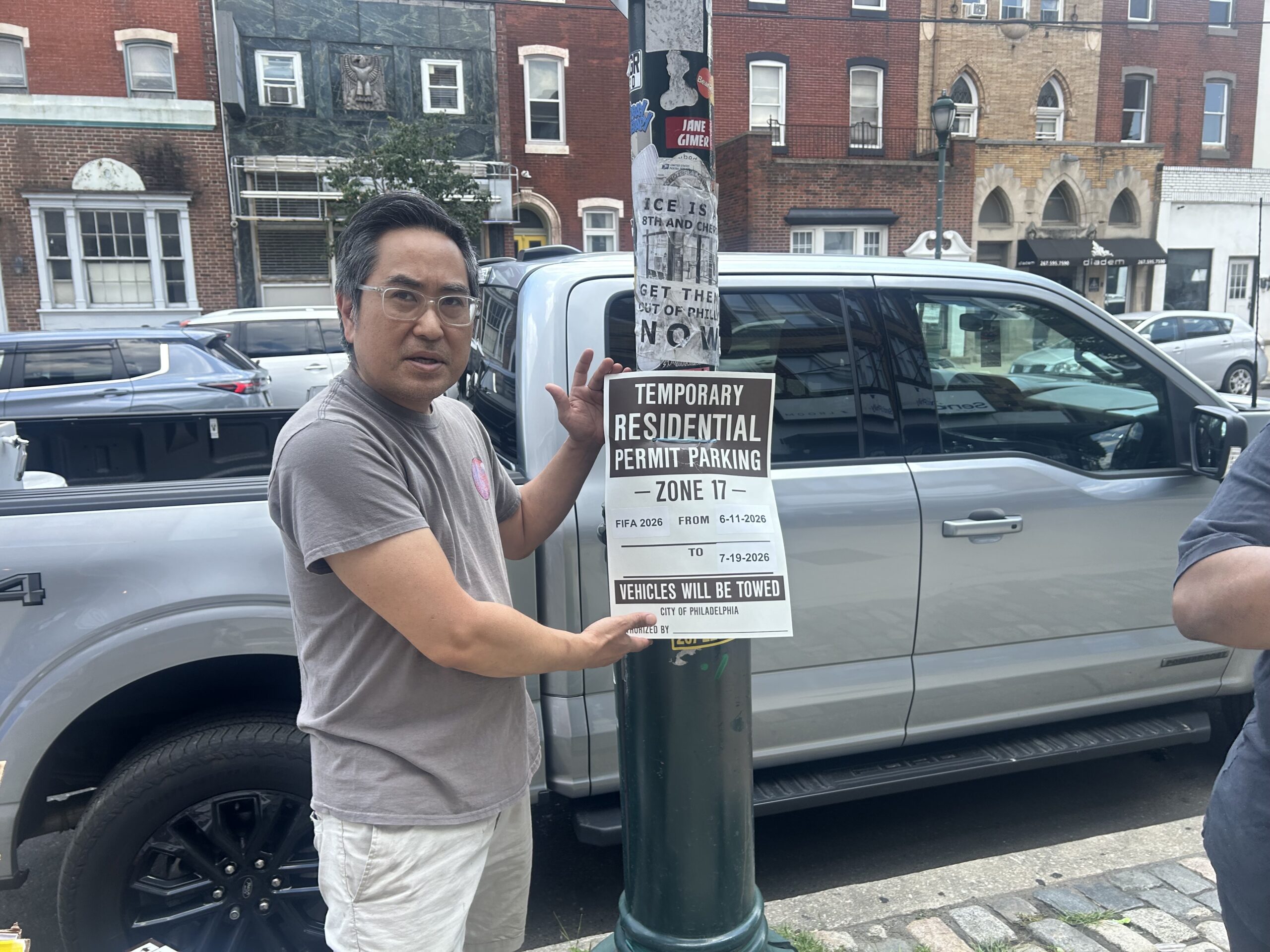
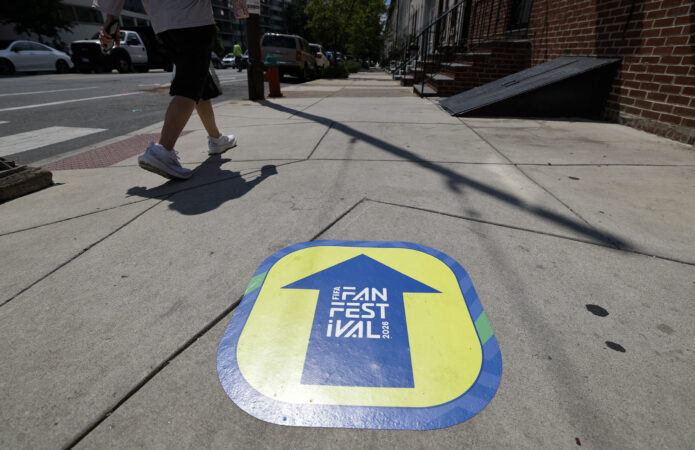
    Temporary parking restrictions near the FIFA Fan Festival are keeping some customers away, said local business owners.

    A World Cup let-down for some in Brewerytown

    Many Philadelphia business owners said they had high expectations for the World Cup: Some near the Fan Festival stocked up on inventory and even hired extra staff.

    “I ordered all kinds of soccer stuff to put in ice cream,” said Welch, who owns the hoagie shop and I Scream for Ice Cream. “I bought a whole [World Cup] banner.”

    As of Thursday, Welch said she hadn’t seen enough soccer fans to justify putting out the merchandise or unfurling the banner, which still sat in her car.

    Business is down precipitously at All Day Hoagies, which usually goes through 200 rolls a day. Since the World Cup began, the number has dropped to 125 or fewer.

    Across the street, AJ Kim, front-of-house manager at Baby’s Kusina + Market, hired two extra employees to run food ahead of the festival.

    “We were prepared for a huge crowd,” Kim said. “But it wasn’t much at all.”

    Like other business owners, Kim said the temporary parking rules have confused regular customers, and stories of residents being ticketed and towed are scaring many patrons away. According to Kim, a Baby’s chef was among those erroneously ticketed by the Philadelphia Parking Authority, despite displaying the required temporary permits.

    Every night, a handful of people cancel their Baby’s reservations, saying they are worried about parking, Kim said. Staff has tried to dispel misinformation on social media, and lends temporary parking passes to diners, but uncertainty remains.

    Some spots see steady business

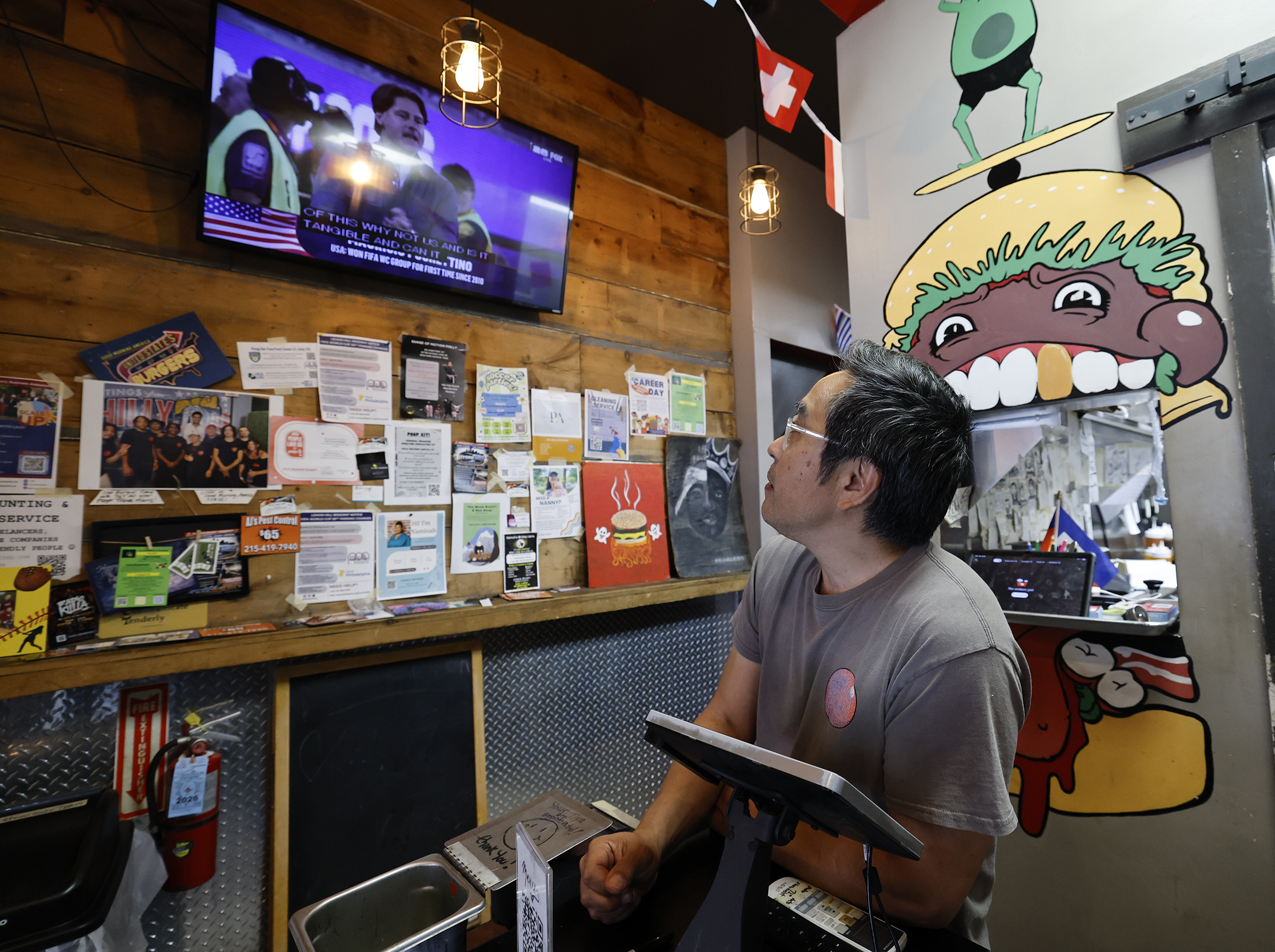
    Josh Kim, owner of Spot Gourmet Burgers, watches World Cup programming from his Brewerytown burger joint.

    Some businesses are faring better than others, even if they aren’t seeing crowds of soccer fans every day.

    Josh Kim, owner of Spot Gourmet Burgers in Brewerytown, said international tourists have made special trips to his restaurant for one thing: American cuisine.

    “When people go to Italy, they want pasta and pizza,” Josh Kim said. “When they come to America, they want burgers.”

    June 19 was a particularly busy day for him: After the Brazil-Haiti match in South Philly, Spot’s sold 200 burgers in less than an hour, he said.

    But no other recent days have been as lucrative, and Josh Kim said he worries it could take a while for regular customers to return to Girard Avenue once the World Cup games — and the restrictions — are over.

    Josh Kim, owner of Spot Gourmet Burgers, points out a temporary residential parking permit sign on Girard Avenue. He said parking confusion has hurt business in the neighborhood during the FIFA Fan Festival.

    “Consumers are habitual,” Josh Kim said. “If [they] break that habit, they no longer think about going to Girard Avenue. … They’ll go up Ridge.”

    On Boathouse Row, across the street from the Fan Festival, Cosmic Café and Ciderhouse has seen steady business, manager Sachael Sciarretta said. About 30% of the cafe’s regulars drive there, and he said he hasn’t seen them since the festival began. But business from soccer fans has made up for the loss.

    Fairmount bars and restaurants seem to have been among the biggest World Cup winners. On Thursday afternoon at the Black Taxi, an Irish pub a few blocks from the festival, almost every seat was filled — several by customers donning soccer jerseys.

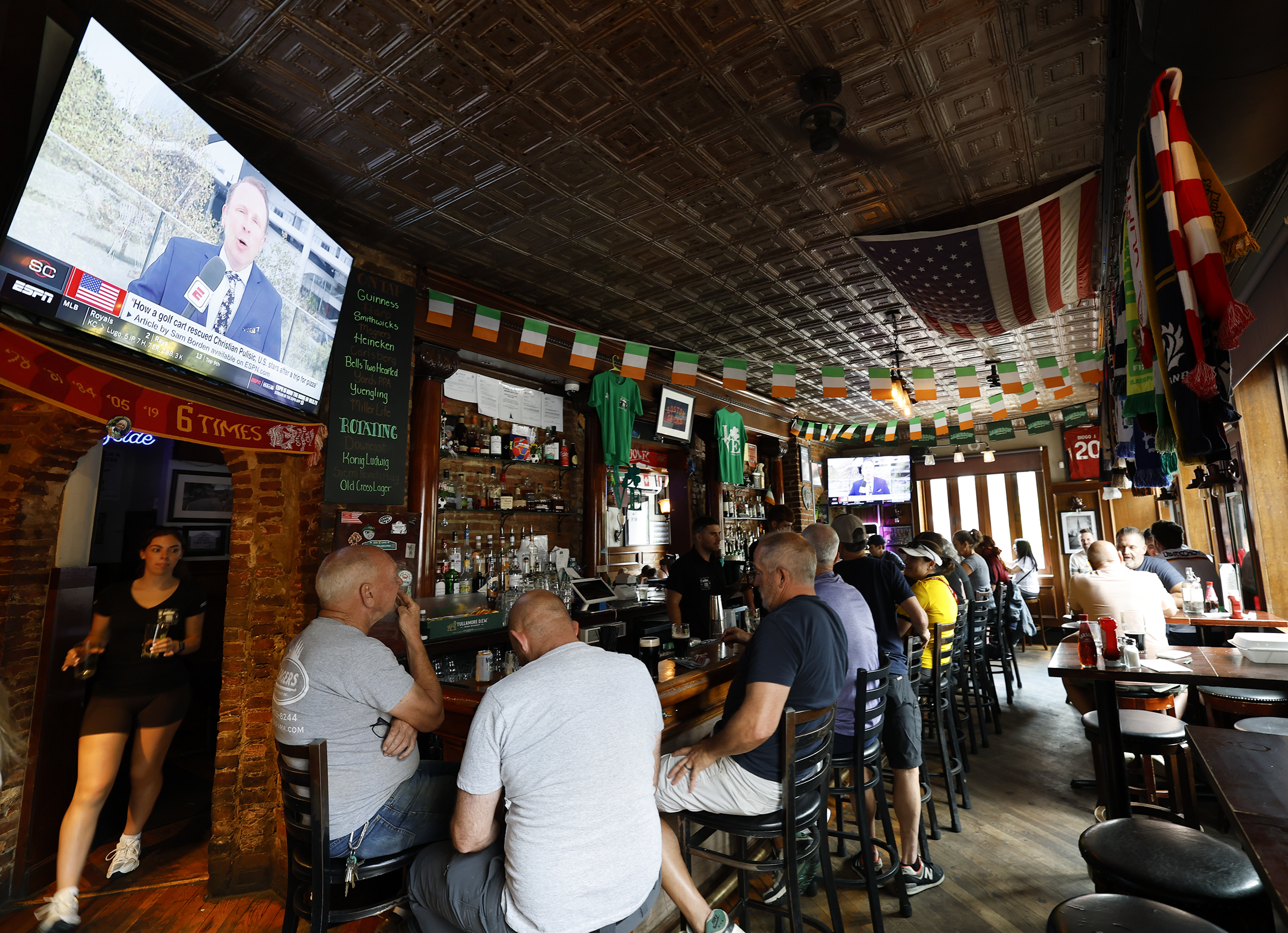
    Regulars and soccer fans eat and drink at the Black Taxi Irish Pub in Fairmount on Thursday, June 25.

    “Foot traffic has been great, and the neighborhood is buzzing,” said manager Neil McKernan, who estimated that sales are up 30%.

    In the dining room, the Trainor family enjoyed a meal before walking to the Fan Festival to watch the 4 p.m. match between Curacao and Ivory Coast.

    It was the first time that Kelly Trainor, 42, of Glenside, had been to the Fairmount watering hole, and she brought along her three young children.

    “We can’t afford tickets to the game,” Trainor said. “So this is the next best thing.”

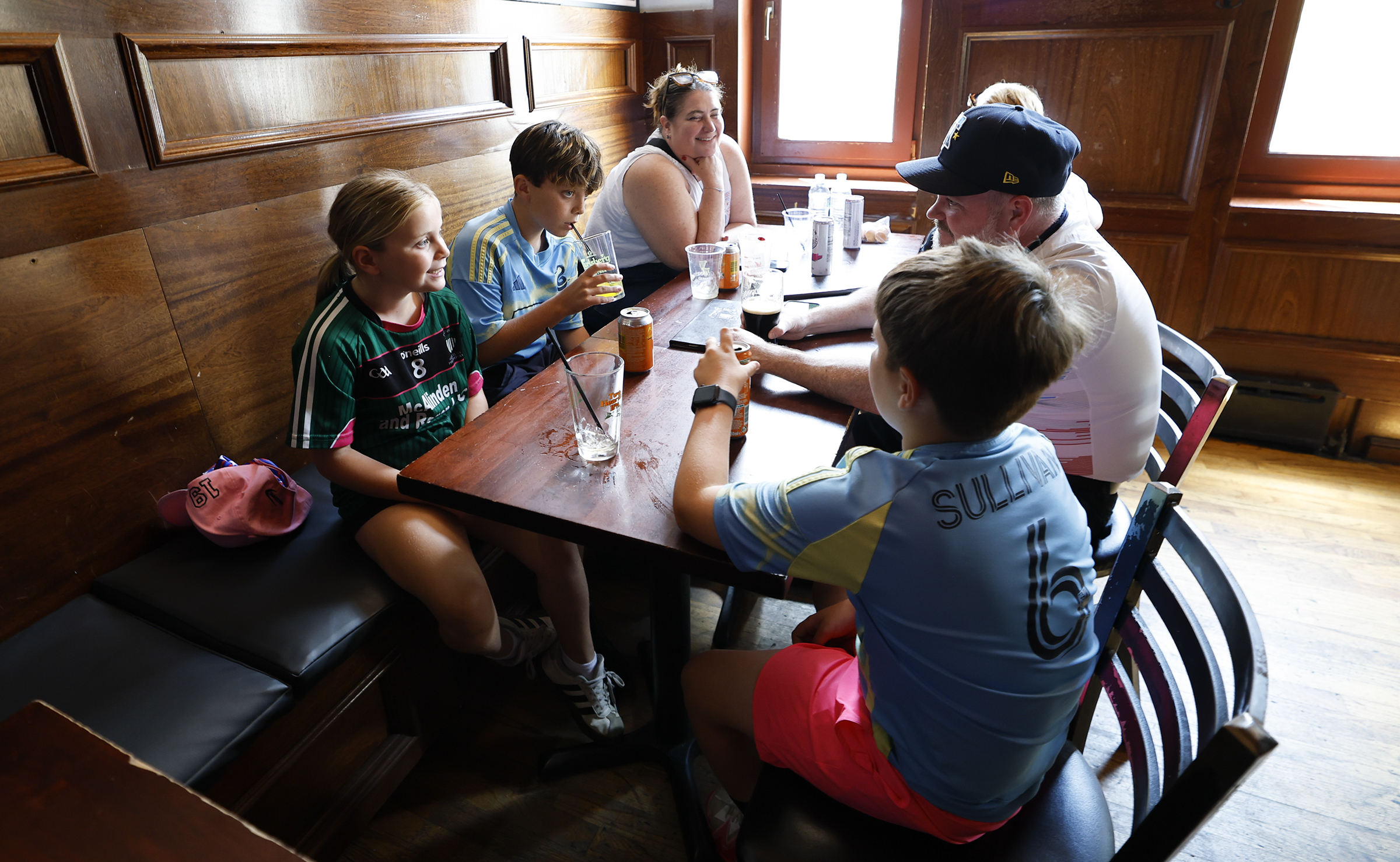
    The Trainor family, of Glenside, enjoyed refreshments at the Black Taxi before attending the FIFA Fan Festival.

    Back in Brewerytown, where the business corridor was quiet, some owners said they wished they could have been more involved in the festivities. Josh Kim, of Spot Gourmet Burgers, said perhaps organizers could have allowed local restaurateurs to sell from food trucks outside the fan entrance.

    “If we were able to activate this corridor, it would have been a lot different,” Kim said.

    “Why didn’t they work with the local businesses so we could make the money?” added Welch, of All Day Hoagies. “Because we ain’t making none.”

  • Dollar hits 13-month high as foreign investors overlook worries about Trump

    Dollar hits 13-month high as foreign investors overlook worries about Trump

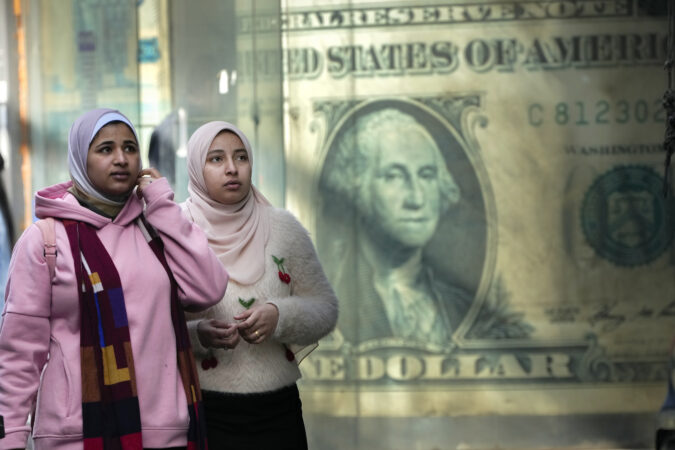
    Global investors last week drove the dollar to its highest value in more than a year, as the appeal of the U.S. artificial intelligence boom and the prospect of higher interest rates eclipsed doubts about President Donald Trump’s erratic policymaking.

    The greenback’s more than 5% gain since the end of January has quieted — for now — talk of the “Sell America” trade that emerged following the president’s April 2025 global tariffs announcement. At that time, financial markets, spooked by Trump’s plan for the highest import taxes since the 1930s, sent U.S. stocks, bonds, and currency sliding in an unusual trifecta of losses.

    Foreign investors remain wary of the unpredictable U.S. president. But eager to capitalize on the historic AI boom, they have piled into fast-growing technology stocks such as ASML Holding, a maker of semiconductor equipment that is up nearly 125% over the past year, and they’ve bought dollars to do so.

    New Federal Reserve Chairman Kevin Warsh fueled the dollar’s rise this month by vowing to “unambiguously” curb inflation, reassuring markets at his public debut that he would ignore the president’s demand for lower interest rates. With inflation still above the Fed’s price stability target, rates may head higher, drawing in more foreign capital.

    “You might hate the U.S. government, but if you love the opportunity presented by U.S. companies, you’re going to come here,” said Rebecca Patterson, former chief investment strategist for Bridgewater Associates, now with the Council on Foreign Relations.

    The revived dollar has reversed a portion of the 12% decline from its January 2025 peak under President Joe Biden to its low ebb in January of this year. The currency traded last week at its highest mark since May 2025.

    American tourists in Europe or Japan will find travel more affordable. But companies that depend on foreign markets, including technology giants such as Intel, Microsoft, and Qualcomm, could see earnings hit when they convert their overseas profits into dollars. U.S. exports, which have risen for four consecutive months, also could sag.

    The turnaround at the Fed is the biggest force driving the dollar rally.

    After the central bank cut its benchmark borrowing rate three times in the final months of 2025, investors began this year anticipating additional monetary easing.

    But the energy price shock from the Iran war, coupled with the effects of tariffs and the surge in AI-related spending, aggravated inflation. Prices, excluding volatile food and energy costs, were up 3.4% in May from one year ago, according to the Fed’s preferred inflation gauge.

    The Fed’s policymaking committee made clear this month that after five years of above-target inflation, higher interest rates may be needed to cool off prices. Nine of the 18 members of the rate-setting Federal Open Market Committee projected at least one rate increase this year. Only one official forecast a cut.

    “Foreign investors continue to invest in America in a pretty big way,” said Adam Turnquist, chief technical strategist for LPL Financial. “But certainly momentum now, I think, has more to do with the kind of definitive shift in monetary policy that we’re seeing.”

    Higher U.S. interest rates would mean more expensive mortgages and business loans for Americans. But they would deliver higher returns for investors, especially compared with what is available in other developed markets. The European Central Bank raised its main policy rate this month to 2.4% while the Fed’s benchmark holds in a range of 3.5% to 3.75%.

    Given the weak state of the euro-area economy, which contracted by 0.2% in the first quarter, the ECB has little room to raise rates further while a majority of investors expect a U.S. rate hike at the Fed’s September meeting, according to CME Group’s Fedwatch, which tracks prices in the Fed futures market.

    The increasingly healthy U.S. economy is catnip for foreign investors. The Commerce Department last week said growth in the first three months of the year hit an annual 2.1% rate, up from its initial 1.6% estimate. The pace may be quickening, according to the Federal Reserve Bank of Atlanta, which forecasts a 2.5% rate for the April-June period.

    After a weak 2025, hiring has strengthened. Employers through the first five months of this year created an average of 114,000 jobs per month, more than 10 times last year’s anemic pace, according to the Bureau of Labor Statistics.

    “We’ve had very resilient economic data. So not only are we getting the hawkish Fed, but we’ve got what appears to be a restrengthening of the U.S. economy,” said Marc Chandler, chief market strategist for Bannockburn Capital Markets in New York.

    Some foreign markets this year, notably including Japan’s Nikkei index, have outperformed their U.S. counterparts. But U.S. stocks have a long history of outperformance. Over the past 20 years, an investor would have earned an annual return of 9% vs. just 2.4% in the rest of the world, according to a J.P. Morgan Asset & Wealth Management analysis.

    In a recent speech, Treasury Secretary Scott Bessent touted the U.S. attributes that attract global capital: “the deepest, most dynamic markets; the preeminent role of our dollar; and an ecosystem of innovation that has pushed the boundaries of the possible for two and a half centuries.”

    The broad “Sell America” trade, which Bessent derided earlier this year as a “false narrative,” faded as Trump dialed back his most extreme tariff plans and backed off his threats to the central bank’s independence and U.S. short-term rates began rising.

    In a sign of the dollar’s endurance, its use as a global payments currency has actually increased since Trump unveiled his tariffs to 51% of all transactions from 49%, according to the Society for Worldwide Interbank Financial Telecommunication, which operates a secure financial messaging network.

    Yet even as foreign financial institutions and individual investors load up on dollars, global central banks are edging away. For the past four years, as geopolitical risk flared, including from an unpredictable United States, central banks seeking an alternative to the dollar purchased unusually large amounts of gold.

    As the price of gold roughly doubled over the past two years, the metal’s share of central bank reserves topped that of U.S. Treasurys. Gold now accounts for 27% of the assets central banks use to backstop their currencies compared with 22% held in U.S. government securities, the European Central Bank said this month.

    Since Russia’s 2022 invasion of Ukraine, the heaviest buyers of gold have been located in areas facing the greatest conflict risk, including China, Poland, Turkey, and India, the ECB said.

    The embrace of gold is part of a slow shift from the dollar. Over the past 20 years, the greenback’s share of reserves has dropped to around 57% of the total from more than 66%, according to the International Monetary Fund.

    “All the central banks are just saying, ‘Do I have too many dollar assets, generally, given the risk around the U.S.?’” Patterson said.

    Overseas anxieties about the disruptive U.S. administration were highlighted by the president’s January demand for the U.S. to control Greenland, a NATO ally. But the dispute was shelved and, in hindsight, the episode marked the end of the dollar’s relative decline.

    Foreign investors, however, are troubled by the deteriorating U.S. government fiscal situation. Since the 2020 pandemic, Washington has incurred unusually large amounts of red ink.

    The federal budget deficit for the current fiscal year is expected to exceed $1.8 trillion or nearly 6% of the economy, a level historically seen only during war or financial crisis, according to the Congressional Budget Office.

    With the $31.6 trillion U.S. public debt now larger than the economy, Washington’s annual interest bill hovers around $1 trillion. Some foreign investors worry that borrowers will demand higher returns, hurting the value of the U.S. securities they own. Earlier this year, AkademikerPension, a small Danish pension fund, sold its $100 million Treasury holdings, citing worries over the U.S. public debt.

    The use by multiple presidents of punitive export controls and financial sanctions — plus emerging restrictions on the most advanced AI models — also has foreign governments reluctant to deepen their reliance on the United States. The dollar’s recent rise, as a result, should be viewed with caution.

    “Even though financial markets are reacting in the normal way that we would expect them to based on the fundamentals of the economy and interest rates, this is still not an accurate barometer that trust in the U.S. has been restored writ large,” said Matt Swinehart, a managing director at Rock Creek Global Advisors in Washington.

  • Peco workers went on strike after the company and its union failed to reach a deal

    Peco workers went on strike after the company and its union failed to reach a deal

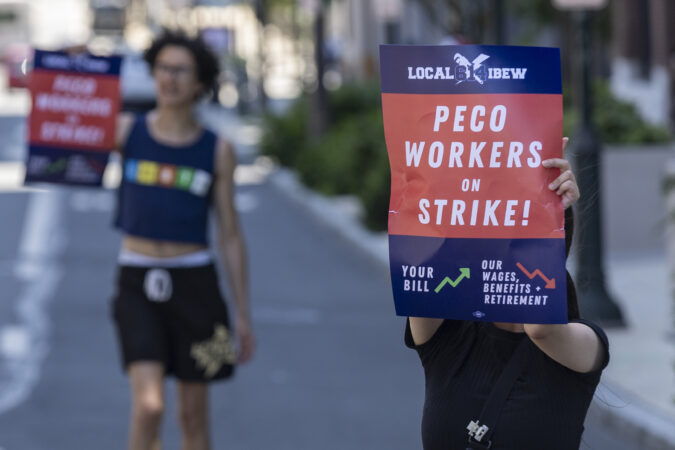
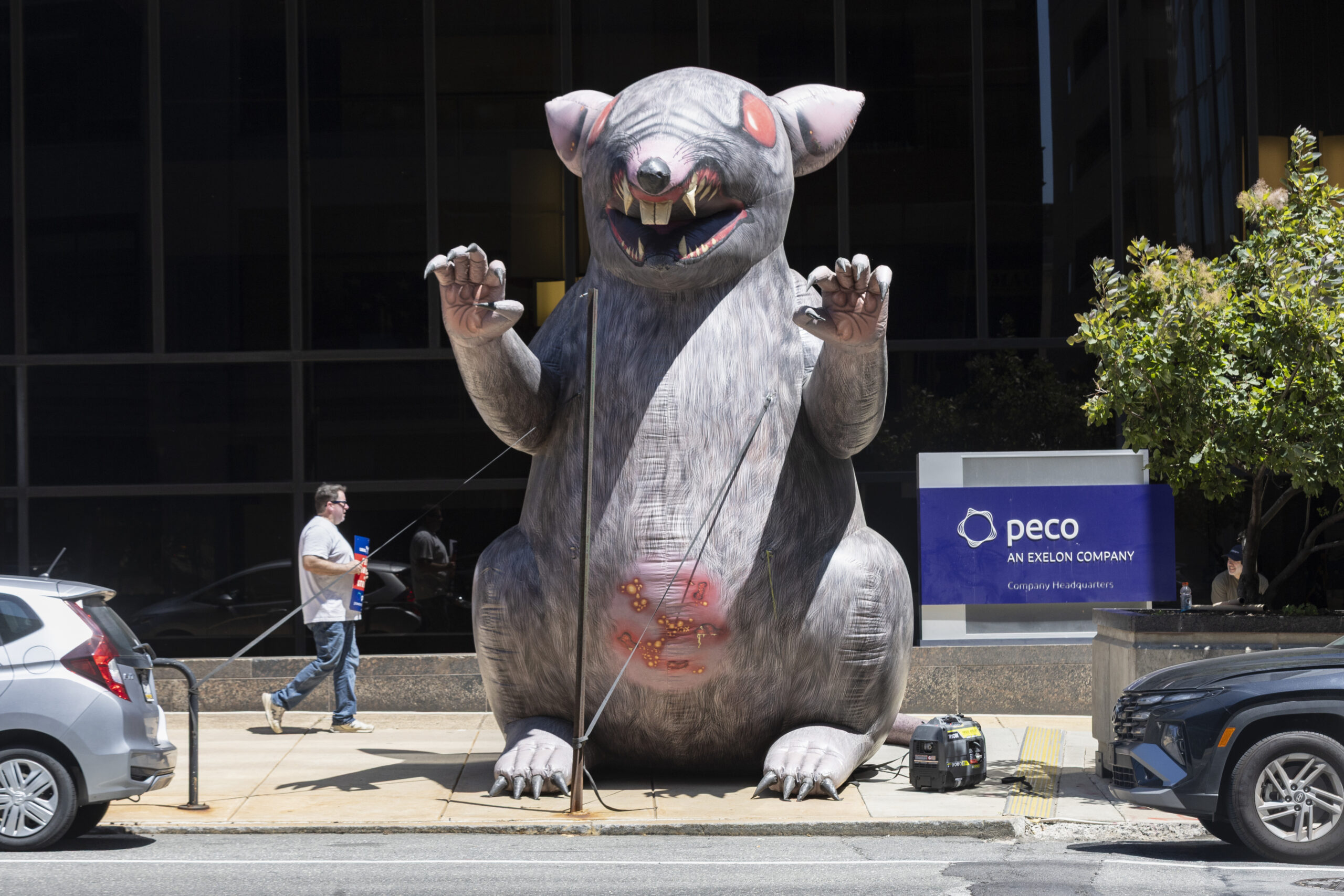
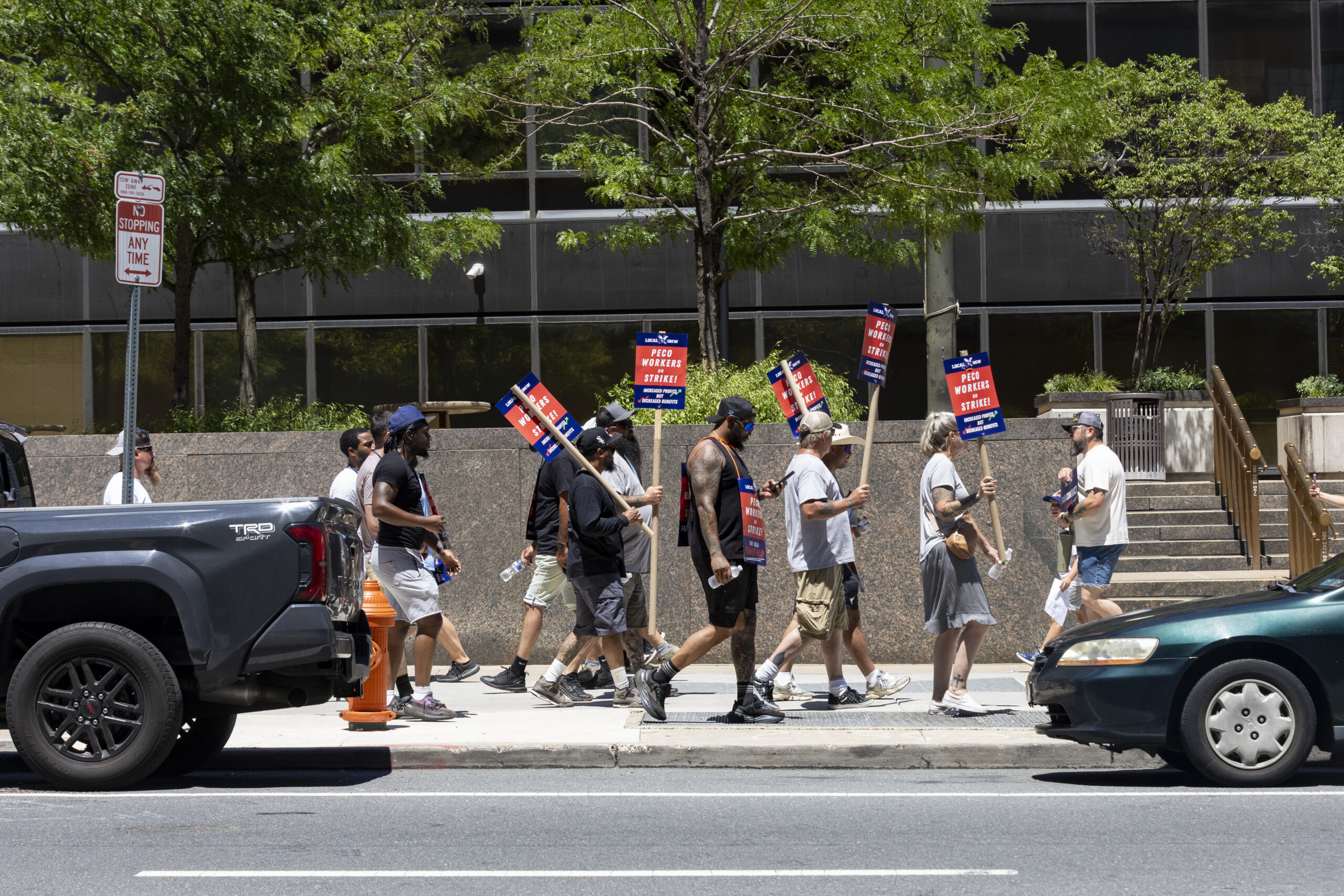
    Linemen, call center workers, and other Peco employees went on strike Saturday. The roughly 1,500 unionized workers, part of IBEW Local 614, officially walked off the job just after midnight, becoming the first employees to strike in Peco’s history.

    The work stoppage marks an escalation in what have been challenging negotiations between the union and Peco. The IBEW contract expired March 31, and both sides have accused the other of using unfair tactics.

    Joseph Vassallo, 43, was among a dozen Peco workers picketing in the sun outside Peco’s Market Street building on Saturday. He expressed frustration that things had to come to this. The union business agent has worked for almost two decades as a Peco power line worker.

    “I have been working 16-hour shifts almost every day before this,” Vassallo said. “The amount of time, effort, wear and tear on your body is a lot, and this is what they think our value is?”

    Peco has a contingency plan in place, and customers shouldn’t expect delays or interruptions in service, Nicole LeVine, the company’s chief operating officer, has said.

    “Our employees are the backbone of our business, and we recognize the talents and value they bring to the company,” Peco said in a statement after the strike announcement. ”We are bargaining in good faith and provided a competitive offer that is fair for employees and customers. Unfortunately, the contract between Peco and IBEW Local 614 expired on March 31, and the union has elected to strike.

    “We are committed to engaging in good-faith negotiations to reach an agreement that is fair to our employees, while supporting the long-term needs of our customers and the communities we serve. We encourage continued dialogue and hope the union will work with us to reach a mutually beneficial agreement.”

    Negotiations continued amid the strike Saturday, but Peco and the union failed to come to an agreement before wrapping up at 9 p.m., IBEW Local 614 said in a statement. Bargaining was slated to resume at 10 a.m. Sunday, and pickets would continue throughout the region, the union said.

    In addition to raises and better healthcare benefits, the union wants its contract to include a uniform retirement plan for all members. Some 600 workers who were hired in recent years haven’t had a pension, while other groups have pension plans with varying terms.

    Peco said that it had offered a nearly 20% wage increase over five years, as well as improvements to retirement and medical benefits.

    In Southeastern Pennsylvania, Peco provides electricity to 1.7 million customers and natural gas to 553,000.

    IBEW Local 614 said in a news release Friday that the union local representing Peco contractors and a half dozen locals representing workers for other regional utilities had directed their members not to cross the picket line.

    Members of the LBEW Local 614 go on strike outside of the Peco headquarters on Saturday in Philadelphia.

    Union president Larry Anastasi announced the strike just before midnight Friday outside the Hilton Hotel at Penn’s Landing, where negotiations had been taking place earlier in the day. With a large group of union members behind him, Anastasi was asked by a reporter whether workers were supportive of the strike.

    “Hey, boys, they want to know if you’re ready to strike,” the union president said, letting the group answer.

    “Yeah!” they responded in uproarious unison.

    “We wish we had better news,” said Stuart Davidson, the union’s attorney.

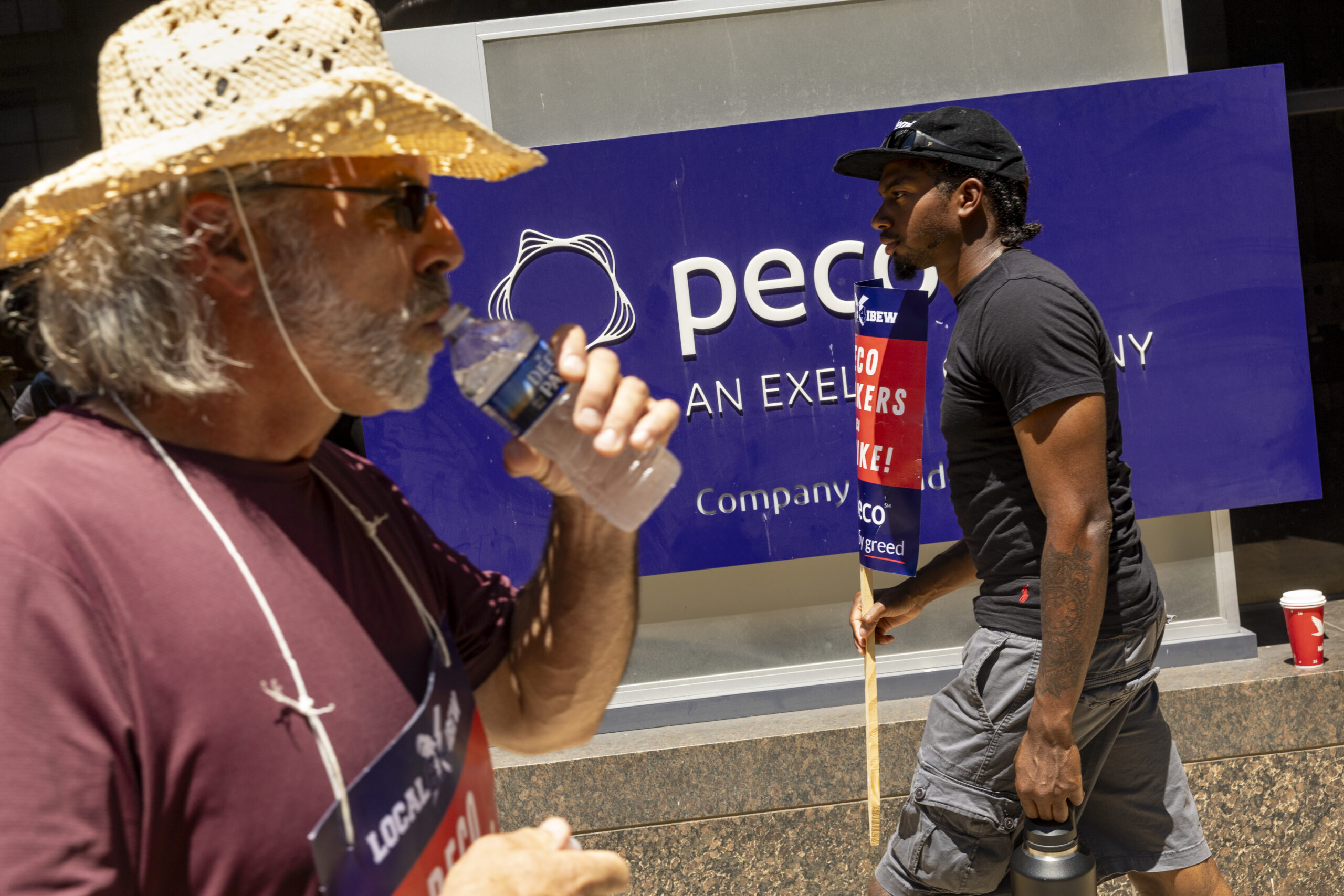
    Members of the LBEW Local 614 go on strike outside Peco headquarters Saturday in Philadelphia.

    What a strike means for Peco and its employees

    Peco has said its contingency plan includes some workers who are familiar with the company’s specific system and others coming in from outside the region. The company has said customers should not expect delays or interruptions in service.

    But utility companies sometimes encounter challenges when they bring in temporary staff from outside the region, says William Dwyer, associate teaching professor at Rutgers University School of Management and Labor Relations.

    If they don’t know the area well, it takes them longer to get around, noted Dwyer, who previously worked in labor and employment relations at PSE&G in New Jersey.

    Temporary workers “may not be familiar with Peco’s particular distribution network, the way that the system is designed, so there could be delays in operating based on safety concerns around that,” Dwyer said. “There’s a lot of efficiency that’s lost when you’re not dealing with your regular workforce doing the work.”

    But if Peco’s contingency plan works efficiently, he says “that takes away a lot of the union’s leverage at the table.”

    “They might end up accepting what they walked away from on the day of the strike,” he said.

    Utility companies started moving away from providing pensions to new hires in the 1990s, Dwyer said, leaving a 401(k) as the typical retirement benefit. At Peco that happened later — the company stopped putting new hires into its pension plan in 2021, according to the union.

    Peco and IBEW Local 614 now find themselves in a “high stakes” situation, says Dwyer.

    There are downsides to a strike on both sides, he says. There’s the possible “loss of efficiency” at the company, and the “after effects of a strike or a lockout could take decades to get over in terms of damage to morale and the spirit of the workforce.”

    Staff writer Michelle Myers contributed to this article.

    Members of the LBEW Local 614 go on strike outside of Peco headquarters Saturday in Philadelphia.
  • Where are tourists traveling to Philadelphia from for the World Cup?

    Where are tourists traveling to Philadelphia from for the World Cup?

    With Philadelphia’s final World Cup game Saturday, the city’s international soccer tourists, who have created generational memories for weeks here, will be heading home.

    From the sea of yellow-jerseyed Ecuadorians taking over the Rocky steps, and possibly cursing the team, to Ivorian soccer fans dancing outside the streets of Fan Festival, or the four Frenchmen who lied to their bosses to be here, global soccer fans have been thriving in Philadelphia.

    And there’s no better place in the world to celebrate fandom than in Philly, said Côte d’Ivoire-born Philadelphian Ahmadou Dia, who moved to the city a decade ago.

    “This is wonderful for Philadelphia and wonderful for America, welcoming everybody into this beautiful country,” Dia said. “The World Cup, the football itself, brings every country, every single person, together regardless of color. It doesn’t matter what you look like, because on the field or in that stadium, we’re family.”

    The World Cup is one of those global events where fans save thousands of dollars for years to make their way across the world to watch their favorite team.

    Ecuadorian native Francisca Castellanos traveled 14 hours to meet her father and other family in Quito, before heading to Philadelphia in time for the World Cup. Her father, Francisco, has attended the last 10 World Cup tournaments, including the 2022 World Cup in Qatar. When the United States was announced as a World Cup host, the Castellanoses were overjoyed.

    “A World Cup in the U.S is a lot more accessible to Ecuadorians because a lot of our population already lives in the U.S., and the currency is the same,” Castellanos said. “There is also language accessibility because people speak English here, unlike in Qatar, where communication was harder.”

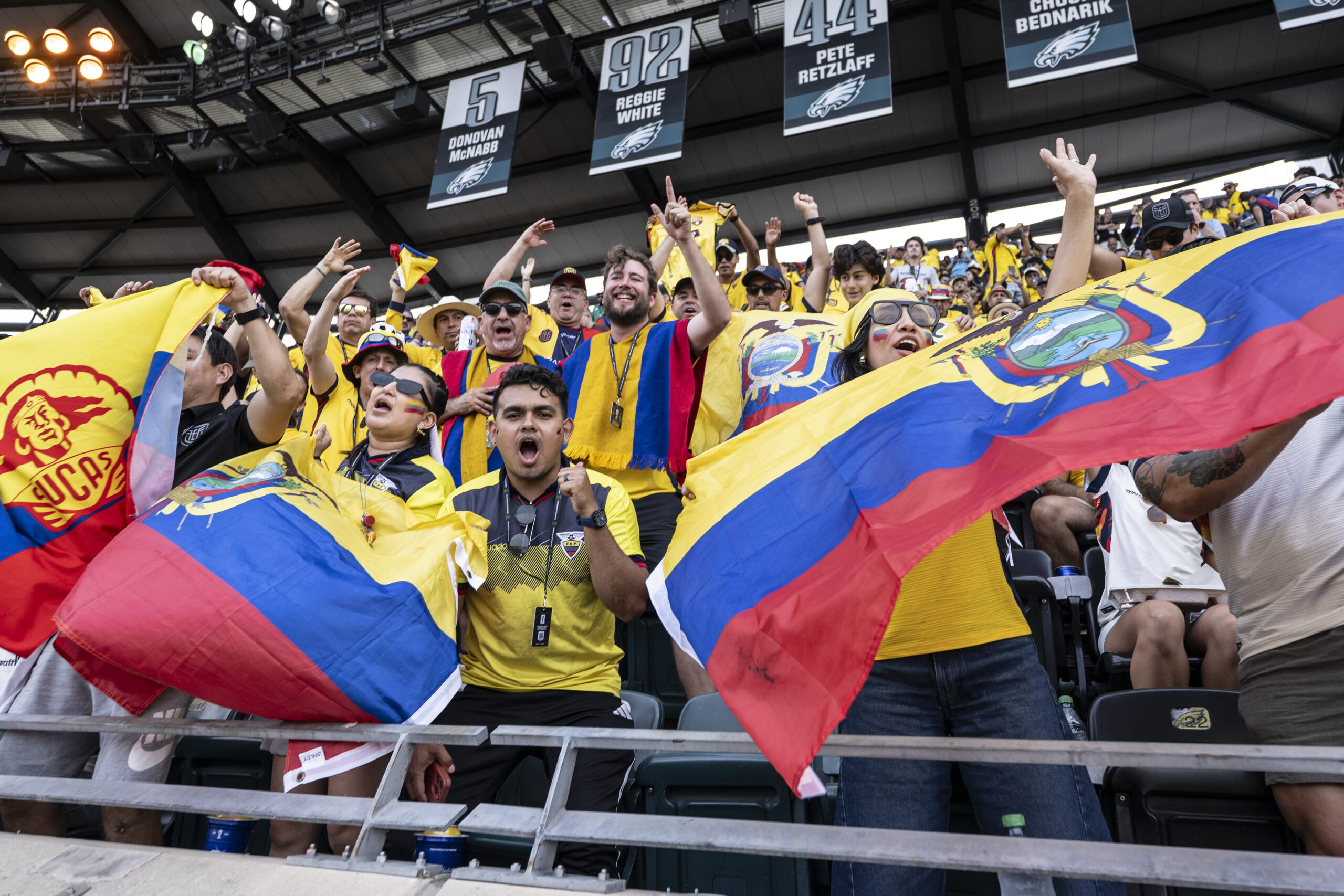
    Ecuador national team fans cheer during the national anthems before the FIFA World Cup Group E match between Ecuador and Côte d’Ivoire on June 14, 2026, at Lincoln Financial Field in Philadelphia. The match marked the first FIFA World Cup game played in Philadelphia.

    The six matches played in Philadelphia brought tourists from Brazil, Côte d’Ivoire, Croatia, Curaçao, Ecuador, France, Ghana, Haiti, and Iraq, but where Philly’s World Cup and America’s 250th tourists are coming from spans the globe.

    Fraser McNaughton, a Scot visiting Philadelphia with family, couldn’t believe how inviting Philadelphians have been as he took photos with the Rocky statue last week.

    “Everywhere we’ve went, everyone’s been so friendly, so welcoming, helping us out when we need it,” McNaughton said. “It’s just a brilliant city.”

    “They go out of their way to say ‘Hello’ or ‘Welcome to Philly’ here,” said fellow Scot Michelle Thomson. “We’ve really loved it.”

    Here are the main takeaways, based on flight data shared by Sojern, a hospitality marketing platform that provides travel data to hotels, airlines, and tourism boards.

    (function () {window.addEventListener(‘message’, function (e) { var message = e.data; var els = document.querySelectorAll(‘iframe[src*=”‘ + message.id + ‘”]’); els.forEach(function(el) { el.style.height = message.height + ‘px’; }); }, false); })();

    Ecuadorian travelers surged this World Cup

    Ecuadorians don’t make up a sizable chunk of the international travelers coming to Philadelphia this summer. Canada, the United Kingdom, and Italy take that crown, in that order.

    However, Ecuadorian travelers, like the Castellanoses, were so pumped to experience a World Cup in person that the number of flights booked from Ecuador to Philadelphia surged by 622% compared to the year prior. Philadelphia hosted Ecuador’s first group match in the World Cup, convincing many Ecuadorians to make the 2,760-mile trip to the City of Brotherly Love.

    Danilo Carrión is a member of the group that organized the Ecuadorian event at the Rocky steps, where more than 2,000 Ecuador fans showed up to dance, sing, and accidentally jinx their team after putting Ecuador merch on Rocky.

    “It was the first game for Ecuador, so a lot of the Ecuadorians from Ecuador and the U.S. had to be here because there was a lot of expectation,” Carrión said.

    To the Ecuadorian-American who lives in New York, the influx of people was facilitated by an ease of travel between the South American country and the U.S.

    “It’s easier for us to travel to the States than to Europe or Qatar,” Carrión said. “And there are direct flights to LaGuardia and New York.”

    Ecuadorians require visas to enter Europe, Canada, and the United States. Even traveling to Mexico can involve visa procedures if they don’t have a U.S. visa first, a formality that has become more complex since Ecuador and Mexico broke international relationships in 2024, Carrión said.

    (function(){function e(){window.addEventListener(`message`,function(e){if(e.data[`datawrapper-height`]!==void 0){var t=document.querySelectorAll(`iframe`);for(var n in e.data[`datawrapper-height`])for(var r=0,i;i=t[r];r++)if(i.contentWindow===e.source){var a=e.data[`datawrapper-height`][n]+`px`;i.style.height=a}}})}e()})();

    Dutch Caribbean islands show up for Curaçao

    The small autonomous nations of Curaçao, Aruba, and Sint Maarten, all part of the Kingdom of the Netherlands, have seen a huge surge in flights this summer.

    Curaçao had the largest increase, almost 240%, despite being the smallest nation ever, with a population of 158,006 people, to qualify for the FIFA World Cup.

    “When we won tickets through the FIFA lottery for the Curaçao versus Ivory Coast in Philadelphia, we knew we had to make it happen, especially since the Curaçao match falls on my husband’s birthday,” said Vanessa Santine-Vinck, who traveled here from Curaçao with her partner and two sons.

    Travel from Sint Maarten and Aruba are also up — 193% and 117% respectively.

    Croatia and Hungary aren’t missing Philly’s World Cup

    Croatia claimed victory over Ghana at Philadelphia Stadium on June 27, and flights from the European country have jumped almost 100%.

    Neighboring Hungary has also seen a dramatic increase. There are almost 200% more flights from Hungary this summer than last summer.

    Dominican Republic shows steady growth

    Philadelphia’s Dominican community has grown in recent years, helping drive population growth in the city.

    With the World Cup in Philly this summer, travel from the Caribbean nation has increased 34%. While DR is not in the World Cup, their neighbor, Haiti, faced Brazil on June 19, losing 3-0.

    Philly’s French connection brings throngs of tourists

    This summer has brought a notable uptick in French tourism to Philadelphia, with 33% more flights. The cross-cultural connection runs deep, Parisian aesthetics have long influenced the city’s architecture.

    Throngs of Francophones across the city cheered on their national team to a 3-0 victory against Iraq on June 22.

    (function(){function e(){window.addEventListener(`message`,function(e){if(e.data[`datawrapper-height`]!==void 0){var t=document.querySelectorAll(`iframe`);for(var n in e.data[`datawrapper-height`])for(var r=0,i;i=t[r];r++)if(i.contentWindow===e.source){var a=e.data[`datawrapper-height`][n]+`px`;i.style.height=a}}})}e()})();

    France also ranks fourth in terms of total foreign travel this summer after Canada, the U.K.I, and Italy. Between the architecture, the French cuisine, and the fact that two of his family’s favorite teams, France and Côte d’Ivoire, would play in Philadelphia, traveling to the city was an easy choice for Frenchman Elias Pierson.

    He had already heard of the comparisons between the city and Paris, and as he walked through Independence Hall with his family last week, much of the architecture he saw reminded him of home.

    “We have a good relationship with the people of Philadelphia. We were just in the train station with a Philadelphian, and she explained to us where we needed to go and where the best French restaurants are,” Pierson said. “My favorite part of Philadelphia so far is City Hall and Old City because of the very beautiful buildings.”

    Now, before Pierson heads home, he said he hopes to get a coveted seat at Philly’s world-famous French bistro, Parc.

  • NovaCare Rehabilitation’s parent, Select Medical, was sold in $3.9 billion private equity deal

    NovaCare Rehabilitation’s parent, Select Medical, was sold in $3.9 billion private equity deal

    NovaCare Rehabilitation’s parent company, Select Medical Holdings Corp., was taken private in $3.9 billion private equity deal this week.

    NovaCare has more than 100 physical therapy locations in the Philadelphia region, including some through a partnership with Rothman Orthopaedics.

    For 25 years, NovaCare sponsored the Philadelphia Eagles practice complex in South Philadelphia. Jefferson Health took over the sponsorship this year.

    Top management joined private-equity firm Welsh, Carson, Anderson & Stowe in the acquisition of Select Medical, which is based in Mechanicsburg, Pa. The sale was completed Wednesday. The price per share was $16.50 per share, an 18% premium to the latest close before the deal was announced in November.

    In addition to outpatient physical therapy through NovaCare and other subsidiaries at 1,850 locations in 36 states, Select Medical operates 104 long-term acute-care hospitals in 28 states and 38 rehabilitation hospitals in 15 states. The company has more than 45,000 employees and had $5.5 billion in revenue last year.

    Select Medical acquired NovaCare in 1999. Publicly traded NovaCare fell on hard times because of Medicare reimbursement changes under the federal Budget Reconciliation Act in 1997. The law capped reimbursement for speech, physical, and occupational therapy in nursing homes.

    The company, then headquartered in King of Prussia, lost $700 million in annual revenue because of those changes, The Inquirer reported at the time.

  • J. Crew Factory and other outlets are often selling worse-quality goods than main stores | Expert opinion

    J. Crew Factory and other outlets are often selling worse-quality goods than main stores | Expert opinion

    The words outlet mall or factory store make many shoppers envision marked-down designer bags, slightly damaged furniture, or last season‘s fashions at steep discounts. But a new study by Consumers’ Checkbook found that many are churning out cheaper merch specifically for their “discount” locations. Checkbook staffers spent three months visiting 40 brand-name outlets, scrutinizing online terms and conditions to learn what exactly off-price stores were selling.

    What we found was that about half the off-price stores we investigated — particularly for mid-priced apparel stores like J. Crew and Banana Republic — are selling made-for-outlet goods, usually with cheaper fabrications and fewer fine details than mainline store merchandise.

    Other factory stores mix made-for-outlet products with clearance items from their original brands. Houseware chains and some high-end designers operate genuine clearance centers with discounted merchandise that once appeared in regular stores: a floor model Pottery Barn dresser; last season’s Burberry trench coat.

    The evolution of outlet shopping

    Outlet stores started as small, manufacturer-run businesses — often near factories — selling past-season, overstock, or slightly damaged products at big discounts. Outlet malls began popping up in the late 20th century, fueled by big name factory stores from the likes of L.L. Bean and Coach. But the rise of fast fashion — and an increasingly bargain-hungry populace — meant shoppers wanted more deals.

    So brands like Ann Taylor, Gap, and J. Crew opened off-price stores. These became so popular that they were impossible to fill with leftovers or older goods. So many retailers started manufacturing completely different, lower-quality, lower-priced merchandise for their “outlet” or “factory” locations.

    Often, these outlet stores have obtuse signage, product labels, and logos. Many outlet stores bear signs with the company name but no mention of outlet, clearance, or factory. Some use different labels and logos on outlet merchandise, but it’s often an if-you-know-you-know secret.

    “Companies are subtle about branding and labels for outlets because they don’t want to lose their magic,” said Gonca Soysal, who led a study on outlet shopping when at the University of Texas in Dallas. “If they say, ‘this is a different product,’ then that illusion vanishes.”

    Another hint that the stuff at outlets may never have been on the floor at your local mall? Many brands now operate more off-price stores than regular price ones. For instance, there are 96 Ann Taylor stores — but 122 Ann Taylor Factory stores — across the U.S., and just 93 Nordstrom department stores compared to 269 Nordstrom Racks.

    Yes, prices at outlet stores are usually lower than those at mainline stores for similar items, but even a casual glance at a fabric composition tag or a look at the stitching on a bag reveals significant quality differences. If you want to do some outlet shopping, arm yourself with a few tips.

    Know which stores offer only made-for-outlet merchandise

    Checkbook made a list of stores that only (or mostly) stock made-for-outlet items. If you shop at them, you’re getting a completely different product than you’ll find at department stores or mainline shops. “A brand you know at full price might have a certain standard of quality that isn’t the same at the outlet,” said Pamela N. Danziger, an outlet mall expert and author of Why People Buy Things They Don’t Need.

    Don’t believe tags with ‘compare at’ prices

    These are outlet and off-price marketing tricks and don’t mean anything. If an item came from an original store or maker, it’ll usually have a price tag reflecting that (i.e. a mainline Nordstrom tag), sometimes with little low-tech stickers planted over original prices.

    Know your brand

    Whether you’re bargain hunting for last-season or overstock stuff at a clearance center or a thrift store, it helps to be familiar with the mainline brand’s styling, fabrication, construction, and quality. This can also help you separate made-for-outlet wares from better-made original items: For instance, the ballet flats we spotted at the Tory Burch outlet have plastic soles and retail for around $120; mainline Tory ballerinas cost $200 or more and usually sport leather soles.

    Expect chaos, limited sizing, restrictive return policies, and slight damage

    True outlets (aka clearance centers) are a mixed bag, stocking things people didn’t buy at regular price in regular stores, floor model furniture, and, in the case of Anthropologie and Free People’s Reclectic outlets, used rental garments. Part of the reason off-price stores started producing made-for-outlet goods was that consumers got tired of this treasure hunt.

    Compare prices

    Check prices of similar items currently for sale at the mainline store. If Banana Republic’s regular store is running 40% off, you’ll probably get a nicer sweater or shirt there than if you buy the made-for-outlet version.

    Similarly, when shopping outlet or factory stores for Nike, Polo Ralph Lauren, New Balance, and other brands that also sell stuff in department stores, Amazon, etc., compare what you’ll pay in the brand-operated stores with what you’d pay elsewhere. Our researchers often dug up better deals by buying online, not from outlets.

    Check for coupons

    Outlet malls and stores often have discount coupons, usually digital but occasionally old-school paper.

    Delaware Valley Consumers’ Checkbook magazine and Checkbook.org is a nonprofit organization with a mission to help consumers get the best service and lowest prices. It is supported by consumers and takes no money from the service providers it evaluates. Until Aug. 5, readers can access Checkbook’s full outlets report, and all its ratings and advice free at Checkbook.org/Inquirer/outlets.

  • Connolly Dermatology, a once fast-growing practice, faces N.J. lawsuit over unpaid wages

    Connolly Dermatology, a once fast-growing practice, faces N.J. lawsuit over unpaid wages

    A former Connolly Dermatology employee filed a lawsuit Thursday in Atlantic County, N.J., seeking unpaid wages for herself and other employees of the once fast-growing skin care practice.

    The plaintiff, Tracy Piccardo, worked in the Linwood office as a receptionist. More than 70 employees owed back pay had been identified, according to her lawsuit, filed in Superior Court by David R. Castellani. Piccardo did not immediately respond to a text seeking comment on the lawsuit.

    The practice’s owner, dermatologist Coyle S. Connolly, did not provide an on-the-record comment.. At its peak, Connolly had 30 locations, mostly in New Jersey and Pennsylvania. It’s not clear if any of them are open now.

    Connolly’s practice stood out as Medicare’s top biller three consecutive years for a skin cancer treatment that saw a 40% reimbursement cut this year under the government insurance program.

    The lawsuit alleges violations of the state’s Wage Payment Law/Wage Theft Act, breach of contract, and unjust enrichment.

    It seeks payment of back wages with interest, damages to be determined at trial, and attorney’s fees. The complaint had no estimate of how much money is at stake.

    Increasing financial pressure

    Piccardo told The Inquirer in May that the practice had been short on supplies, such as paper towels, toilet paper, paper toner for months.

    At that point, Piccardo and other employees hadn’t been paid for three weeks, she said at the time. That was the second payroll lapse this year, Piccardo and other employees told The Inquirer.

    The New Jersey Department of Labor said in May that it was investigating complaints about missed payrolls.

    At least two Connolly landlords have sued over unpaid rent since May.

    In early May, the owner of a Montgomeryville office sued to take possession of it after Connolly allegedly failed to pay rent in April.

    Last month, a landlord sued Connolly for unpaid rent on a property in Middle Township, N.J., that the practice had occupied since 2007. The lawsuit says Connolly was delinquent on more than $39,000 of rent.

  • King of Prussia Mall to get new stores including Pop Mart and Candyland Adventure playground

    King of Prussia Mall to get new stores including Pop Mart and Candyland Adventure playground

    The King of Prussia Mall is set to get several new shops and restaurants in the coming months.

    As some other retail centers struggle, die, and transform, the massive Montgomery County complex has remained a thriving shopping destination, with a wide array of retailers, dining options, and experiential concepts.

    Over the past year, the 2.9 million-square-foot mall has become home to the world’s first Netflix House — which contains a restaurant and four paid immersive experiences in an old Lord & Taylor — as well as Eataly, an Italian marketplace, and the Philly region’s first Sloomoo Institute, an interactive slime playground.

    More experiential retail is in the works. Next year, Level99 is set to open a 46,000-square-foot live social-gaming venue on the ground floor of the former JCPenney.

    The mall’s expansion comes as others in the region have become ghost towns. One of the vacant complexes, Exton Square Mall, closed Tuesday after more than six decades as a Chester County retail hub.

    Stores coming soon to the King of Prussia Mall

    By the end of 2026, the mall plans to open the following stores:

    The Pandora store will also move from the Court to the Plaza, and the David Yurman store will undergo a facelift. David Yurman will open a temporary boutique near Neiman Marcus while its permanent location is renovated.

    King of Prussia Mall Tuesday, May 10, 2016.

    New stores at the King of Prussia Mall

  • How unknown Chinese ‘insider traders’ cost Jeff Yass’ firm more than $70 million

    How unknown Chinese ‘insider traders’ cost Jeff Yass’ firm more than $70 million

    Susquehanna Investment Group, the Bala Cynwyd investment and trading firm that has made cofounder Jeff Yass the richest man in Pennsylvania, on Monday persuaded a federal judge in New York to freeze accounts of up to 100 options traders, who the firm contends used inside information to book illegal profits of over $100 million, largely at Susquehanna’s expense.

    The firm won the temporary injunction even though Susquehanna acknowledged it didn’t know the names of any of the alleged inside traders. It hopes the freeze will force them into the open.

    Susquehanna’s lawsuit, accusing them of illegal insider trading and unjust enrichment, identifies each as “John Doe” and asks the court to order the traders to pay back their illegal profits, plus expenses.

    “The timing, size, type and pattern of their trading, and the lack of any plausible alternative explanation” for some 200,000 “short-dated put options” are “powerful evidence” of the scheme, according to Susquehanna’s June 29 complaint. The company alleges that someone traded illegally on inside information about the Chinese government’s planned May 22 crackdown on international trading platforms.

    At the firm’s request, Judge Arun Subramanian of U.S. District Court in Manhattan signed an order that day freezing the unknown traders’ profits from suspiciously successful bets that the valuations of two online trading firms would shortly crash:

    • Futu Holdings Ltd. (which trades under the share symbol FUTU), a Hong Kong-based, Nasdaq-listed online brokerage
    • UP Fintech Holdings Ltd. (TIGR), the Singapore-based, Nasdaq-listed owner of New York-based TradeUp Securities, another electronic trading platform.

    The preliminary injunction stopped the unknown traders from cashing out Futu and UP Fintech options held in their accounts at brokerages associated with both of the firms and with Interactive Brokers Group Inc., billionaire online-trading pioneer Thomas Peterffy’s Connecticut-based trading platform. The brokerages themselves were not accused of wrongdoing.

    The traders will have a chance to ask the court to release their assets at a hearing July 10 in New York, after posting $100,000 in advance — effectively identifying themselves as defendants in Susquehanna’s suit. The court order also authorizes Susquehanna to subpoena broker records in an effort to learn their identities.

    On Wednesday, Bloomberg reported the SEC is investigating the case.

    According to Susquehanna’s complaint, the traders, operating through their brokerage accounts, bought $12 million worth of low-cost options in Futu and UP Fintech, betting the stocks would decline in the days before China announced stern penalties on brokers accused of illegally moving cash to foreign markets.

    The purchases were many times the usual volume of Futu and UP Fintech options trades and accounted for most of the trades in those options during that period, according to the suit.

    Futu and UP Fintech announced on the day of the crackdown that they were, in fact, facing enforcement actions by China regulators, with proposed multimillion-dollar penalties.

    That news sent each stock crashing more than 30%, according to the lawsuit — a loss for shareholders and for other options traders who were betting the stocks would rise, but enriching the unknown traders who had bet on a drop.

    In all, the news boosted the value of the unknown traders’ investments by more than $100 million, according to the suit.

    More than $70 million of the profit was made on options purchased from Susquehanna, the suit says.

    The options purchases were so closely coordinated, their expiration dates so soon after May 22, that the trades “suggest inside knowledge” of the crackdown, the suit contends.

    Susquehanna suggested two possible groups of insiders, who either “tipped” favored traders to buy the options, or illegally traded on the inside information themselves:

    • Futu and UP Fintech staff “who had knowledge of discussions with Chinese securities regulators” or
    • Corrupt Chinese securities regulators who knew in advance of their agency’s own enforcement actions.

    Acting on such insider information is illegal under Chinese and U.S. law, according to the lawsuit, and adding the scale of the profits makes this “one of the largest documented cases of insider trading in recent memory.”

    Susquehanna asked for a jury trial, the return of $71.4 million it lost to the traders, plus costs and other payments.

    Susquehanna is one of the biggest U.S. “proprietary trading” firms that buy and sell securities, mostly using their partners’ funds.

    Under Yass, it has also been a pioneering, long-term investor in China-based digital companies. That includes large positions in TikTok owner ByteDance.

    Because of the fraught U.S.-China relationship and concerns by Congress members of both parties about TikTok’s influence over U.S. consumers, President Donald Trump and other U.S. officials have mulled potential restrictions on TikTok’s ownership and operations, and Susquehanna and other investors in that business have been obliged to engage with them. Yass is a prolific political donor.

    Susquehanna has reinvested profits from its large, lucrative trading operations into more than 350 China-based tech, retail, and industrial companies. Some of them have prospered, and for many more profits have been elusive.

    The firm also has funds that invest in U.S., European, and Israeli private and public companies, and in South and Southeast Asian companies.