Category: Business

Business news and market updates

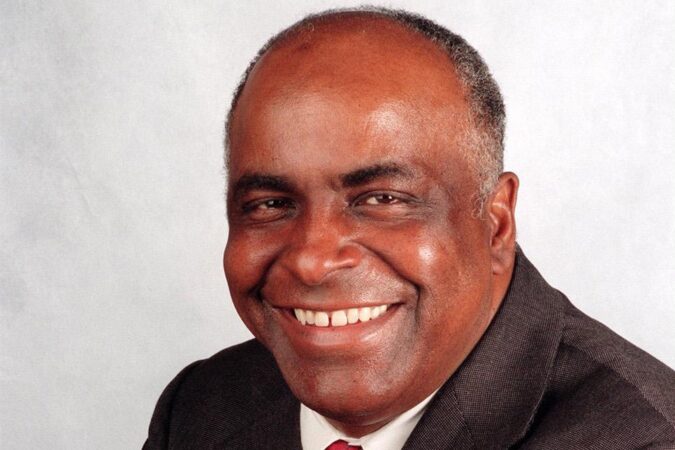
  • Richard H. Glanton, longtime lawyer, business entrepreneur, and innovative former president of the Barnes Foundation, has died at 79

    Richard H. Glanton, longtime lawyer, business entrepreneur, and innovative former president of the Barnes Foundation, has died at 79

    Richard H. Glanton, 79, formerly of Philadelphia, longtime lawyer, onetime executive deputy counsel to former Gov. Dick Thornburgh, business entrepreneur, former Lincoln University trustee, and innovative former president of the Barnes Foundation, died Sunday, June 21, of a heart attack at his home in Princeton.

    Born and reared in rural Georgia and one of the first Black graduates of what is now the University of West Georgia, Mr. Glanton went on to become a prominent Philadelphia lawyer, state government policy and administration expert, corporate vice president, and indefatigable president of the Barnes Foundation’s collection of Impressionist, post-Impressionist, and modern art.

    He was elected president of the Barnes Foundation in 1990, served until 1998, and championed a series of controversial initiatives to finance extensive gallery renovations and the operation of its art collection and related educational programs. To raise the money, he suggested, among other things, selling 15 of the collection’s hundreds of paintings, charging million-dollar fees for a worldwide lending tour of 83 paintings, extending visiting hours, increasing admission, building a new parking lot, selling a coffee-table catalog, and renting out its art studios.

    All of his ideas, several of which did not take place, drew supporters and critics, and Mr. Glanton, also a Barnes trustee, spoke often of his policy discussions with other Barnes officials, art experts around the world, politicians, and neighbors of the foundation building in Lower Merion Township. In 1990, he told The Inquirer. “I never purported to know anything about art. But I can lead.”

    His most successful project turned out to be a two-year world lending tour of 83 foundation paintings that raised about $20 million and drew raves from museum leaders in Washington, Paris, Tokyo, Fort Worth, Toronto, and Philadelphia. The exhibition in Paris drew a then-record 1.5 million visitors, and Mr. Glanton was feted at every stop.

    “Richard is somebody who started out by wanting to do something good and important and substantial, and persevered to do it despite a great deal of criticism,” Glenn D. Lowry, then director of the Art Gallery of Ontario, told The Inquirer in 1995.

    Some critics said Mr. Glanton and others valued the foundation’s commercial success over its original educational role and what The Inquirer’s Edward J. Sozanski called “the Barnes mystique.” When the lending tour ended at the Philadelphia Art Museum in 1995, Mr. Glanton told The Inquirer: “I never realized or understood that it could be controversial to make available to the public a collection that is a public trust.

    “But I think if you think something’s right, you should do it, whether or not people disagree, and whether it is popular or not. … You have to think not only in terms of your lifetime, but in 100 years, 1,000 years. And when you do, these little slings and arrows don’t really matter that much.”
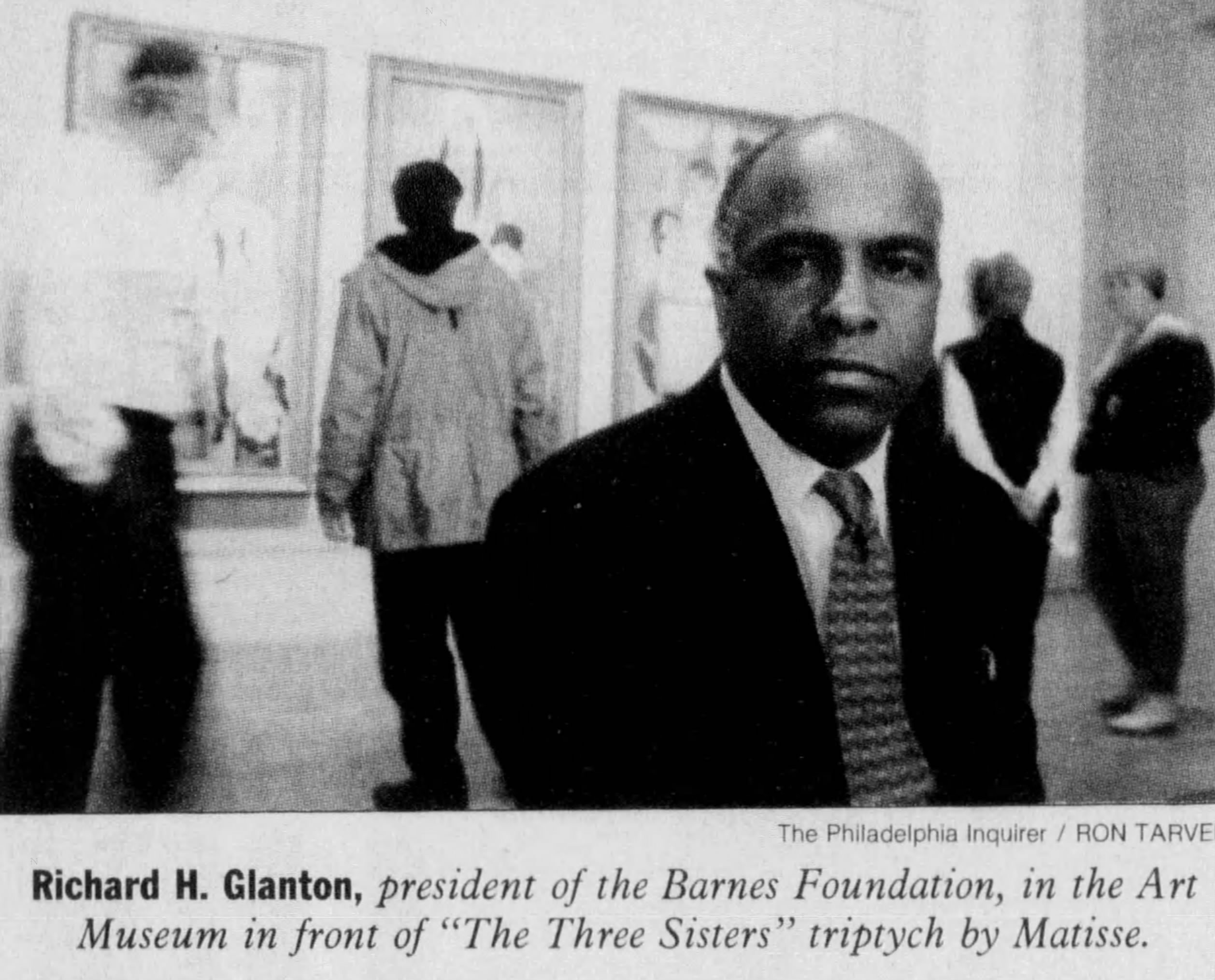
    A story and this photo of Mr. Glanton appeared in The Inquirer in 1995.

    Mr. Glanton was executive deputy counsel to Gov. Thornburgh from 1979 to 1983, and he met often with constituents and helped fill judicial vacancies. “Richard is a political animal,” Ted Pillsbury, then director of the Kimbell Art Museum in Fort Worth, told The Inquirer in 1995. “He understands politics. He understands what makes politics work, and he understands people. And he does not take certain things personally.”

    Mr. Glanton earned his law degree at the University of Virginia School of Law in 1972 and spent several years with the Equal Employment Opportunity Commission, United Airlines, and other companies. In Philadelphia, he represented politicians and other notable clients, and specialized in energy, insurance, and real estate cases for firms known now as WolfBlock, and Reed Smith.

    He was also senior vice president of corporate development at Exelon Corp., founder of a local TV station, social media company, and consulting firm, and board member at Aqua America, the Morris Arboretum, Children’s Hospital of Philadelphia, and other groups. He ended a workplace sexual harassment suit with a private settlement in the early 1990s and had public policy spats with local government officials and former Lincoln president Niara Sudarkasa.

    He considered running for mayor in 1995. Former Gov. Ed Rendell said: “He was exceptionally bright, courageous, and never afraid to challenge the status quo in pursuit of what he believed was right.”
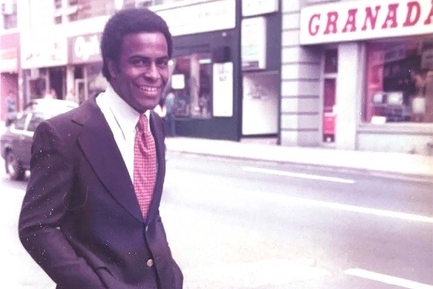
    Mr. Glanton was at home in a suit jacket and tie.

    One of 11 children, Richard Howard Glanton was born Nov. 21, 1946. He was reared in rural Villa Rica, Ga., didn’t start school until the fourth grade, and he and his siblings worked for years on the family farm.

    He earned a bachelor’s degree in English and, in 2005, was awarded an honorary doctorate from West Georgia. He married Scheryl Williams, and they had a daughter, Morgan, and a son, David.

    After a divorce, he married Eileen Candia, and they had a daughter, Georgia. They lived in Philadelphia and Chicago, and moved to Princeton in 2009.

    Mr. Glanton was a doting father, his family said. He taught his children to ride bikes and read Shakespeare. “He taught me that there was no room in which I didn’t belong or couldn’t strive to enter,” his daughter Morgan said. “I love him for that.”

    Mr. Glanton was an avid reader and golfer.

    Nearly everyone he met remembered his laugh and perpetual suit jacket and tie. He played golf, was an avid reader, and would talk politics for hours.

    “He was fearless in his conviction to do what he believed was necessary and proper to achieve his goals and provide for his family,” his son said. His wife said: “He was kind and generous. He made everyone he spoke to feel special. He was always bringing you in.”

    In addition to his wife, children, and former wife, Mr. Glanton is survived by two sisters, four brothers, and other relatives. One sister and four brothers died earlier.

    Memorial services are to be held at noon Saturday, July 18, at Pleasant Hill United Methodist Church, 119 Thomas Dorsey Dr., Villa Rica, Ga. 30180, and at 11 a.m. Friday, Sept. 18, at the Union League, 140 S. Broad St., Philadelphia, Pa. 19102.

    Donations in his name may be made to the University of Virginia Law School Foundation’s Elaine R. Jones Scholarship, 580 Massie Rd., Charlottesville, Va. 22903.
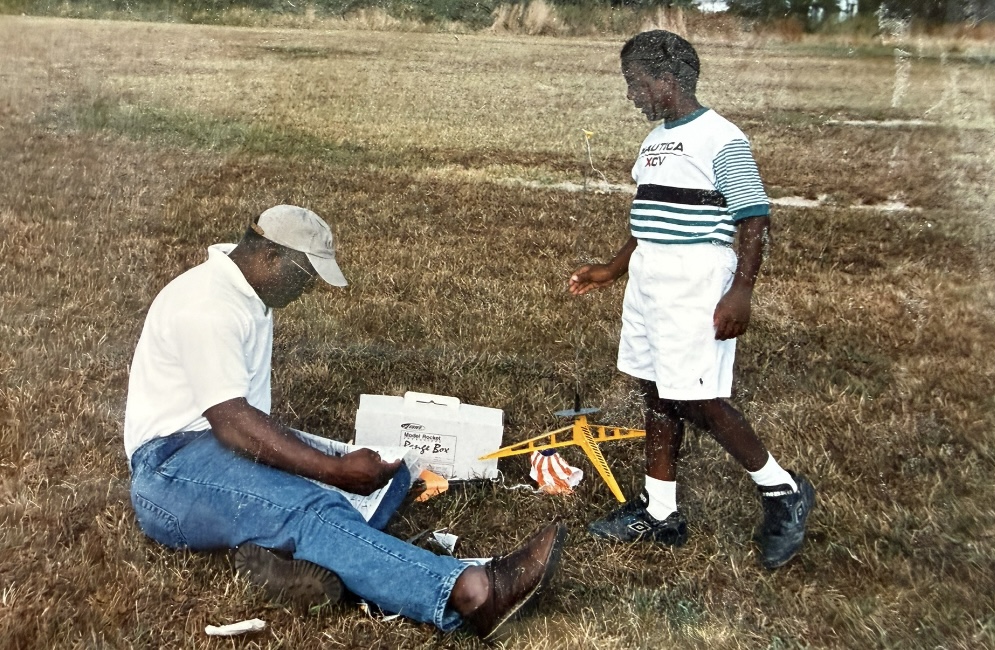
    Mr. Glanton (left) enjoyed working on projects.
  • Peco buys property in Chester County, part of larger growth strategy

    Peco buys property in Chester County, part of larger growth strategy

    Peco is expanding its real estate footprint in the Philadelphia region.

    The gas and electric utility company purchased a property at 100 Chesterfield Parkway in Malvern for $5.95 million in January, according to Chester County property records. The Philadelphia Business Journal first reported the purchase.

    The building had previously been leased by Vanguard, which still has offices nearby and has been working toward moving more of its Malvern employees to the company’s main campus. The investment company most recently closed one of its Malvern offices spanning 137,000 square feet.

    Peco’s Malvern acquisition “is part of a comprehensive, multi-year strategy to support the recent expansion and future growth of our operations teams,” Peco spokesperson Matthew Rankin said Thursday.

    Administrative staff and “other support teams,” will work out of the new office, Rankin said, but did not say how many.

    The property is near Peco operations facilities, Rankin said.

    Peco’s expansion comes as the company brought in $814 million in net income in 2025, up 48% from the previous year. Exelon, the utility’s parent company, has said the increase was in part due to “favorable weather” and higher distribution rates.

    The company proposed a rate hike again this year, but quickly withdrew the proposal after backlash. Peco had said it needed to increase prices for upgrades, to meet demand, including to prepare for data centers, and increase grid reliability. The company also cited extreme weather conditions, which can damage infrastructure.

    Peco and its worker union, IBEW local 614 reached a tentative agreement on a new union contract this week, ending the company’s first worker strike in its history, which lasted three days.

  • A small-format Ikea is open at the old Granite Run Mall

    Ikea has opened its first Delaware County location, though it doesn’t look like its massive stores in Conshohocken and South Philly.

    The home design company’s “plan and order point” in Media opened Wednesday. At less than 4,000 square feet, the outpost is a fraction of the size of its typical stores, with square footage in the hundreds of thousands.

    The company operates more than a dozen of these locations nationwide, including one in Cherry Hill.

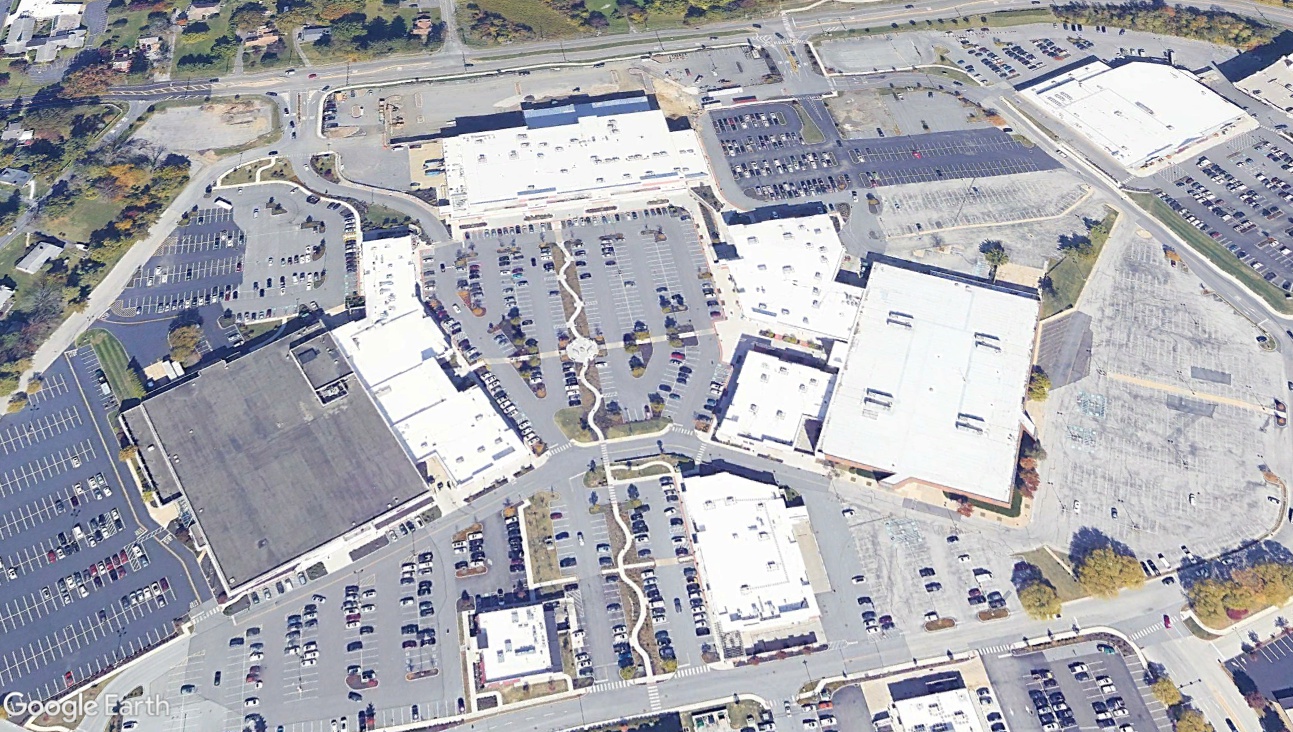
    This latest one is located in the Promenade at Granite Run, a mixed-use complex on the site of the old Granite Run Mall.

    Ikea, which has its U.S. headquarters in Conshohocken, said in a statement this fall that the location would provide design consultation services for more complex projects like kitchens, bedrooms, and bathrooms. But the space doesn’t contain inventory. Instead, customers can order items for delivery or on-site pickup.

    For some Delaware County residents, the new location means “no more trekking through that notorious I-476 ‘Blue Route’ traffic” to get to the Conshohocken or South Philly stores, Ikea U.S. market manager George Holtkamp said in an October statement.

    But if those customers get a craving for the popular Ikea meatballs, they’ll still have to make the longer trip, as the Media site does not have an in-store Swedish bistro.

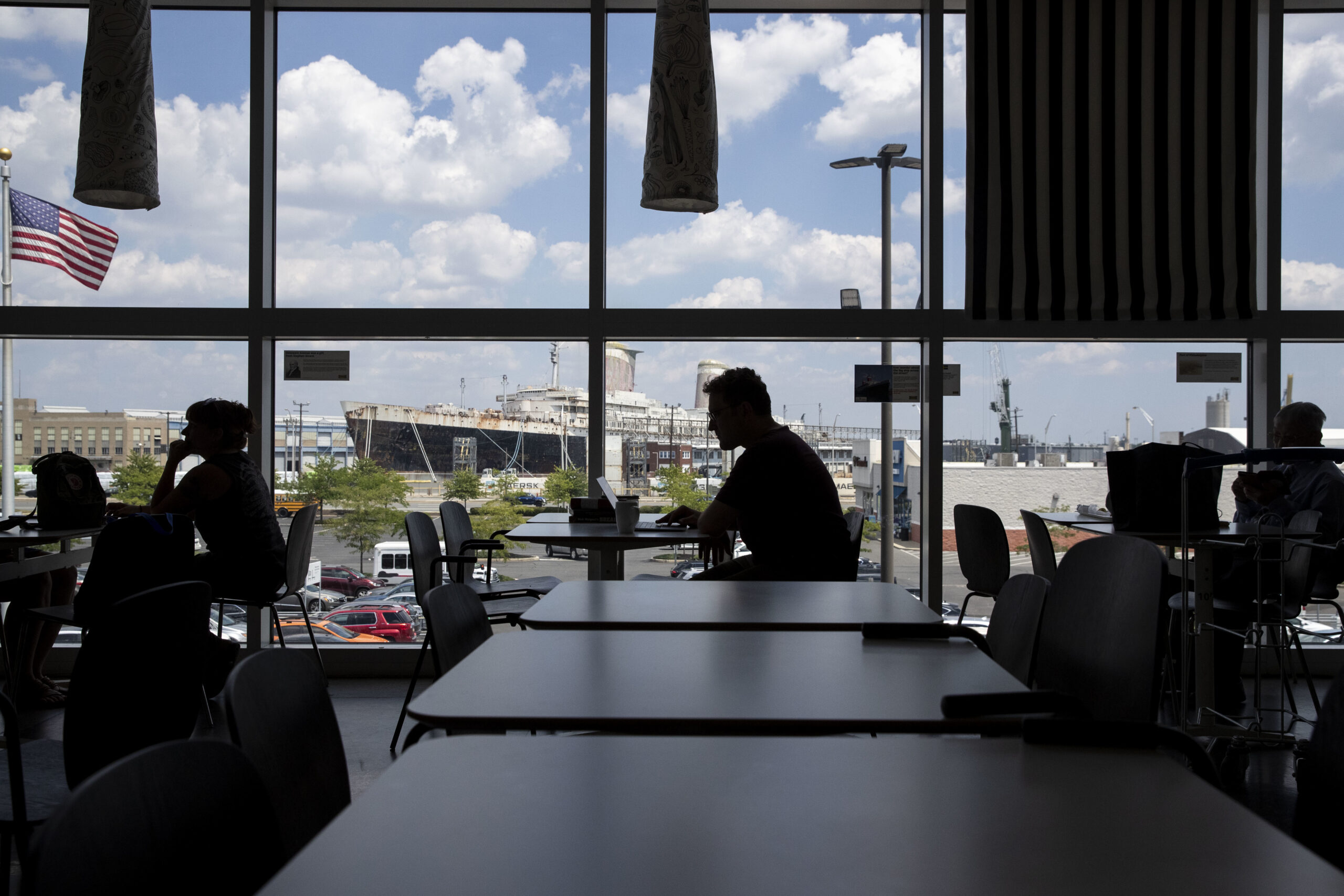
    People worked in the cafeteria of the 300,000-square-foot Ikea in South Philly in 2022.

    Ikea has been adding more locations after its U.S. arm reported $5.3 billion in sales last year, the majority of which were made in-person. Over the same period, about 61 million people visited its physical stores, while more than 457 million people browsed the website.

    In Media, Ikea joins Michaels, TJ Maxx, Kohl’s, Boscov’s, and a slate of other stores that occupy the 830,000-square-foot retail section of the Promenade at Granite Run. The complex exemplifies how struggling malls can be reborn.

    After the Granite Run Mall closed in 2015, BET Investments spent more than $100 million to demolish the building and build the open-air town center in its place, according to president Michael Markman. Along with an array of retailers, the complex now contains 400 luxury apartments, as well as several restaurants and medical offices.

    An aerial photo shows the Promenade at Granite Run in June 2022.

    Markman said in April that the retail portion of the complex is almost fully leased.

    “Its only gotten better since we originally tenanted it,” Markman said at the time. “We signed a Nordstrom Rack. We signed a small-scale Ikea.”

    The Nordstrom Rack is expected to open in the fall, according to the retailer.

  • 2026 Kia K4 Hatchback: Bigger and better than you’d think

    2026 Kia K4 Hatchback: Bigger and better than you’d think

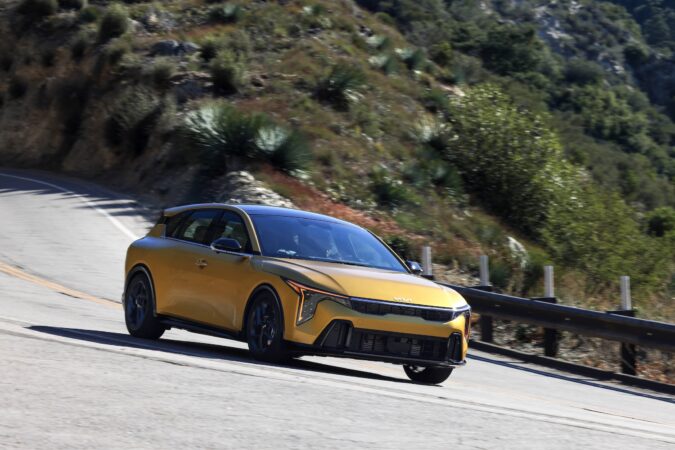
    2026 Chevrolet Trax 1LT vs. 2026 Kia K4 Hatchback GT-Line Turbo: Battle of the low(ish)-payment models.

    This week: Kia K4 Hatchback

    Price: $32,770 as tested. A GT-Line tech package adds ventilated front seats, various collision avoidance features, surround-view camera, and more for $2,395. Heated front seats come standard.

    What others are saying: “Highs: Attractively modern styling, adult-friendly back seat, high-value standard features list. Lows: Ho-hum handling, base engine lacks oomph,” says Car and Driver.

    What Kia is saying: “Sculpted, sophisticated, and made to be seen.”

    Reality: It’s attractive and does many things quite well, but does it beat the Trax?

    What’s new: After the introduction of the K4 sedan for 2025, the hatchback joins the lineup this year.

    The GT-Line has a turbocharged engine available that we tested here.

    Competition: A surprising number of contenders still ride in the small-car club. In addition to the Trax, there’s the Buick Envista, Honda Civic, Hyundai Elantra, Kia Niro, Mazda3, Nissan Versa, Subaru Impreza, Toyota Corolla, and Toyota Prius.

    Safety equipment: While the Trax offers forward collision alert, lane keeper with departure warning, automatic emergency braking, and following distance indicator, the K4 website only mentions the last three. It does note rear cross-traffic collision avoidance, so both are well stocked with features.

    Up to speed: In lieu of the 2.0-liter four-cylinder engine in the standard GT-Line, this version gets a 1.6-liter four married to a turbocharger, giving the little hatchback 190 horsepower, 43 more than standard.

    A 2025 model reached 60 mph in 7.3 seconds, according to Car and Driver. This is 1.5 seconds faster than the Trax.

    But life on the road was quite nice, at least when minding your own business. The little hatchback kept up over hill and dale. But in passing maneuvers and in pulling into traffic, the K4 still fell a little short.

    Shifty: Instead of the CVT in the basic model, this one gets an eight-speed shiftable automatic. It can be a little balky before the vehicle is warmed up, hanging onto lower gears for a concerning amount of time at first. Use that snazzy T-bar shifter if needed. Score one for Kia.

    On the road: The K4 was bright and cheerful on country roads, nice even for a small front-wheel-drive car. It didn’t offer the kind of zig you might get from a Mazda or a Volkswagen, but it’s easy to go where you point it. This is a tie with the Trax.

    Set speed: Kia and Hyundai cruise-control systems can occasionally have a mind of their own. On highways with concrete barriers and some traffic, the sensors hallucinate reasons to slow down, likely as annoying to other drivers as to Mr. Driver’s Seat. I’d be requesting a long demonstration with a salesman on this topic before I signed the papers.

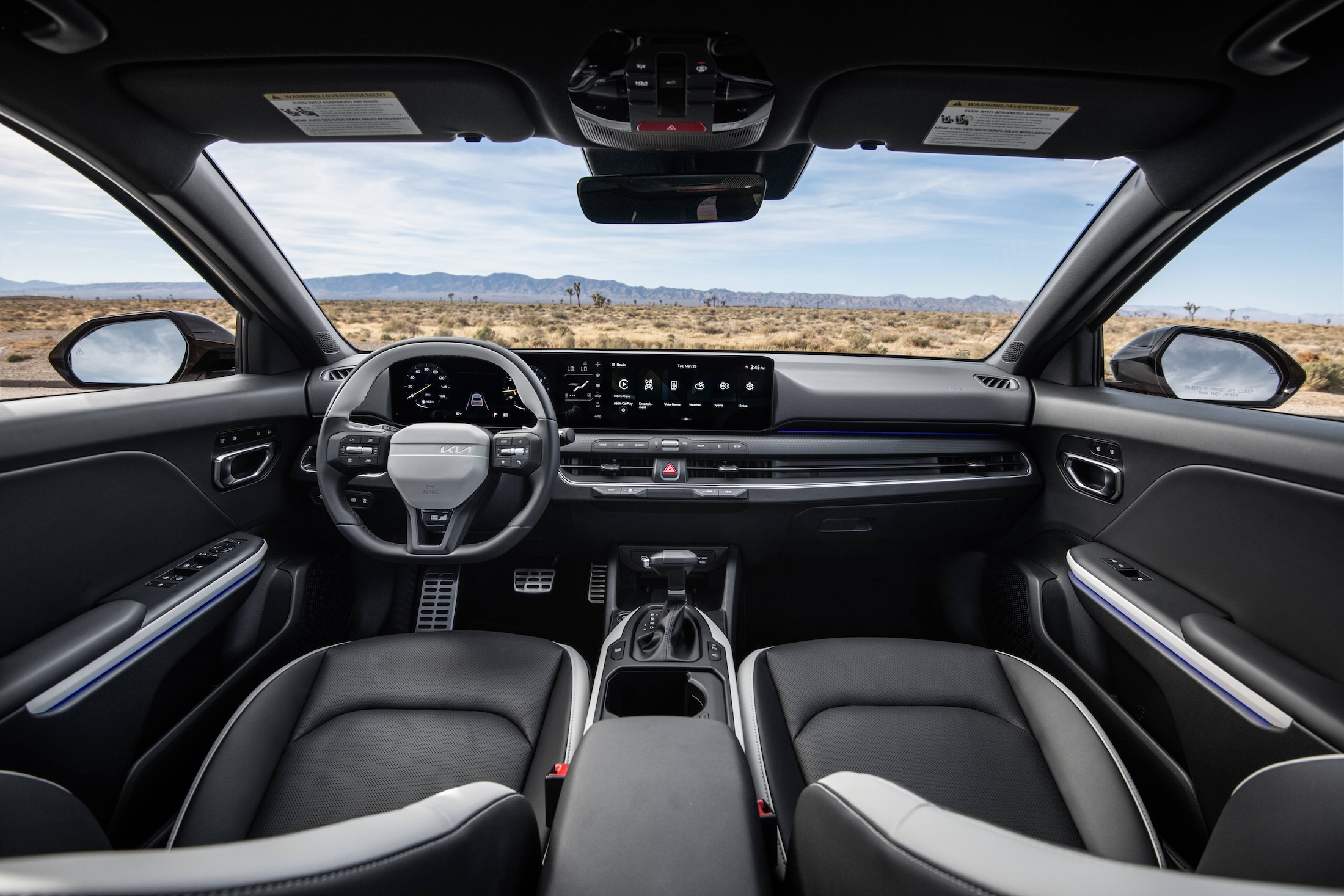
    The interior of the 2026 Kia K4 Hatchback offers plenty of comfort and good looks for the money spent, and rear-seat passengers will especially appreciate the accommodations.

    Driver’s Seat: The seat feels a little on the small side. At about 5-foot-10, I’m fairly average, and I’ve driven a lot of small cars over the years, so the fact that I noticed this one is telling. Otherwise it’s quite comfortable and supportive, surprisingly so for the price point.

    The dashboard is standard Kia, easy to use the steering wheel controls to scroll through your choices. This I’d call a tie as well.

    Friends and stuff: Rear passengers get a comfortable seat that’s perfectly angled (but no recline). Headroom is good, legroom is really good for the size, and only foot room is a little snug. Strong advantage Kia.

    Cargo space is 22.2 and 59.3 cubic feet, putting the Trax’s numbers in the middle of that. Kia wisely gives more space to the rear passengers.

    In and out: It’s a bit of a step down into the K4, almost to sports car levels, so be prepared when you sit.

    Play some tunes: The standard 12.3-inch touchscreen is a generous size for a small car, about half an inch bigger than the Chevrolet, and has the added bonus of a row of buttons across the dashboard underneath, allowing for easy maneuvering. A side row of icons and the home screen’s large icons help the process.

    Sound from the Harman Kardon system (standard in the GT-Line) is OK, about a B+ or an A-. Kia would do well to put some more effort into their sound systems. A tie; Kia for size and usability, Chevy for sound.

    Keeping warm and cool: The controls are a combination of simplistic and advanced that kind of works when you figure it out. A row of cheap-feeling plastic toggles blends into the cheap-feeling dashboard curves and those toggles adjust the temperature, fan speed, and blower setting.

    Except … if you want all defroster, you have to hit the nifty, premium touch pad next to the infotainment screen. Same for the rear defroster. This extra touch pad pushes the dashboard blower down a bit, interfering with cooling. Trax wins this category.

    Fuel economy: The K4 Turbo reported about 26 mpg in a mix of highway and secondary road trips, about par for the small-fast-car course. I thought this would beat the Trax by more than one tick, but alas, there’s a turbo to feed.

    Where it’s built: Pesqueria, Mexico

    How it’s built: Consumer Reports predicts the K4 reliability to be a 3 out of 5, a notch lower than the Trax.

    In the end: Really, with two models that actually get you from point A to point B for under $30,000, either of these is a real winner. And even though the two mostly tied, the K4 does so many things better.

    In the category, though, a little more scratch gets you a Corolla or a Prius, which are probably better bets in the long run.

  • Philadelphia’s politics were reshaped by the effort to win the 1936 Democratic Convention

    Philadelphia’s politics were reshaped by the effort to win the 1936 Democratic Convention

    In late April, Ken Martin, chair of the Democratic National Committee (DNC), visited Philadelphia to assess the possibility of the city hosting the 2028 Democratic National Convention. He toured Xfinity Mobile Arena and met with Mayor Cherelle L. Parker and business leaders, who rolled out a “blue carpet” aimed at charming him.

    It seemed natural to see business leaders working with local politicians to try to convince the DNC to choose Philadelphia, as well as helping to raise the funds required for the city to be eligible to host the convention. Democrats dominate the city’s politics, and its elected officials tend to share local business executives’ visions for economic development.

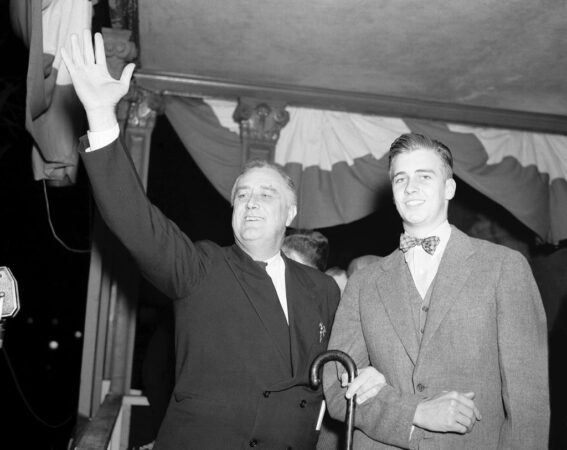
    But these groups weren’t always aligned. In 1936, when Philadelphia made a similar push to host the Democratic Convention, the effort aroused skepticism in a city that had been a Republican stronghold for decades. Much of the skepticism was centered in the business community — where many vehemently opposed the policies of President Franklin D. Roosevelt.

    It took a push by coalition builders like Albert Greenfield, a powerful business leader, to win over skeptics. Greenfield sold his fellow businessmen by framing the pursuit not as something partisan or political, but as a venture in civic boosterism. This argument proved compelling, and business support helped land the convention for Philadelphia. Today, Greenfield’s efforts provide a model for how to bring diverse interests together to boost a city, even in times of polarization.

    Before the 1930s, Philadelphia was firmly a Republican city. In this era, the national party’s platform was dominated by pro-business politics, aligned around policies aimed at enhancing economic growth and competition.

    A thoroughly corrupt political machine led by William Vare dictated the city’s politics. Each ward had Republican committee people who purchased individual votes at a going rate of one dollar. Loyal to the Vare machine, they also ensured voters headed to the polls on Election Day. In exchange, many of these committee people were rewarded with spots on the city payroll.

    The flow of money linked voters and committee people alike to Vare and the GOP. The machine’s dominance meant that the Republicans won most local elections, and the city gave its votes to their party in federal and state contests, including in every presidential election dating back to 1856. That even included in 1932 when Roosevelt was first elected by a large margin nationally.

    The Democratic Party — which, in other cities, drew power from local machines — remained weak and made little headway because Democrats, too, relied upon patronage favors from the dominant Republicans. That made them hesitant to rock the boat or wage an assault on the Vare machine and the status quo.

    At the beginning of Roosevelt’s first term, however, the city’s politics began to shift thanks to the new president and his New Deal. Struggling Philadelphians started to feel the tangible effects of New Deal policies at precisely the same moment that changes began to occur in both parties’ leadership locally. The result was a restoration of genuine two-party competition.

    The same Depression-era pressures loosening working-class loyalty to the Republican machine also began to pull Greenfield — who had once been a staunch Republican, but had soured on Herbert Hoover — toward the Democratic Party. The businessman benefited from several million dollars in funding from the Reconstruction Finance Corporation, the governmental lender of last resort, to prop up his business enterprises. Experiencing the benefits from New Deal policies firsthand, Greenfield started to express cautious support of Roosevelt.

    From his position as chairman of the Philadelphia Chamber of Commerce Convention and Tourist Committee, Greenfield also launched an effort to recruit the Democratic Convention to Philadelphia.

    His colleagues in the Chamber of Commerce shared Greenfield’s vision of landing a party convention in 1936 — but they didn’t care which party. Greenfield himself, however, remained focused on the Democrats in part because of his friendship with the liberal newspaper publisher J. David Stern.

    In December 1935, he began soliciting donations from the city’s business leaders with the goal of raising $150,000 (more than $3.6 million in 2026 dollars) to help lure the Democrats. He framed the convention not only as an opportunity to increase business activity, but also as a means of enhancing the city’s national reputation.

    Greenfield appealed to a wide range of constituencies, at times striking an unrelenting tone in his correspondence with business leaders. In one letter, Greenfield wrote that members of the Chamber, “feel that each individual enterprise has a moral obligation and responsibility with respect to the financial requisites for securing the convention.”

    Made By History sponsors. FOR USE ON MADE BY HISTORY STORIES ONLY.

    Greenfield’s efforts quickly bore fruit. Ledgers show contributions from both businesses and individual donors in sectors ranging from dentistry to distilling and hospitality. He also sold his fellow businessmen on their contributions being a non-partisan investment that would be “returned manyfold” to those who donated. This framing made it easier for many of his still staunchly Republican peers to support the bid.

    In January 1936, after the Chamber formally invited the Democratic National Committee to hold its convention in Philadelphia, news headlines reflected the importance of the incentive package organized by Greenfield. When Philadelphia won the bid — with a financial package that ended up totaling $200,000 — The New York Times characterized the proceedings as an “auction and now a poker game.” The money Greenfield raised ultimately compelled national Democrats to shift their preference from Chicago to Philadelphia as their host city.

    Greenfield soon became the chair of the city’s convention planning committee. In that role, he assembled a cohort of other prominent business and financial figures to orchestrate the programming surrounding the convention. He promised them pomp and circumstance — which he delivered.

    When the convention finally arrived in Philadelphia in June, flags bearing the names of U.S. states and festive decorations lined Broad Street; ceremonial stamps depicted a triumphant, sun-illuminated city; press photographers documented a ceremony in which city officials registered a donkey that was part of the New York delegation to vote. The city even suspended its blue laws to allow Sunday drinking.

    In bringing the convention to Philadelphia, Greenfield constructed his own alliance that worked to replace the system long sustained by Vare and the Republican machine. While he did not offer jobs and cash to individuals in exchange for loyalty like Vare did, he created a mechanism by which the success of the convention became materially valuable to the city’s business establishment.

    If members of the city’s business community sought to access the economic benefits of this national political event, they had to do so through Greenfield, further aligning Philadelphia’s commercial interests with an individual who wanted the convention to succeed not only financially but politically as well.

    What may have begun as tentative, pragmatic support for hosting the convention evolved into a more explicit embrace of the Democratic Party, with many businesses ultimately associating themselves with Democratic messaging. One newspaper advertisement praised the efforts of Roosevelt as a force behind Philadelphia’s economic revitalization. That message received endorsements from more than a dozen small businesses, whose names were featured alongside the message of support for the president.

    At the close of the convention, Greenfield told delegates that their enthusiasm might one day lead historians to view the city as a Democratic stronghold — a prediction that ultimately proved correct. By constructing a new network of support within Philadelphia’s business community, Greenfield helped rally backing for a convention that proved to be far more than an economic boost or mere “convention fireworks.” Instead, the gathering would serve as an engine for a realignment that would hold the city for the Democratic Party through the next two decades.

    The day after the 1936 election, the city of Philadelphia awoke to stunning results. Roosevelt had carried 43 of the city’s 50 wards and the city that the Philadelphia Bulletin had confidently described as unlikely to depart from “its long tradition” as a Republican stronghold had broken sharply with it. In 1940, when the city again explored hosting either the Republican or Democratic convention, the same committee which had led fundraising in 1936 initiated both efforts. Reflecting the changes in Philadelphia politics, however, the fundraising effort to attract the Democratic convention was far more successful than efforts to court its GOP counterpart. The business community in a city that had voted reliably Republican just four years earlier now raised three and half times as much money for potentially hosting the Democratic convention as the Republican one.

    As business leaders in Philadelphia work to bring the convention back to the city, they are drawing from Greenfield’s playbook 90 years ago that brought together a new alliance of business leaders in support of a convention that proved to be a political inflection point.

    Ethan Young is a rising senior at the University of Pennsylvania studying history and political science.

    Made by History takes readers beyond the headlines with articles written and edited by professional historians. Opinions expressed do not necessarily reflect the views of The Inquirer.

  • Rothman Orthopaedics is refocused on Philly region, opening three new surgery centers

    Rothman Orthopaedics is refocused on Philly region, opening three new surgery centers

    Rothman Orthopaedics plans to open three new surgery centers over the next year and keep adding doctors in its Philadelphia-area market, as the large physician-owned group refocuses growth efforts on its original territory.

    “Our biggest priority in the near term is strengthening our core business here, in Southeastern Pennsylvania and New Jersey,” Rothman CEO Christian Ellison said. “We’re not gonna ignore opportunities. We’ll be opportunistic around things that make strategic sense.”

    The new approach comes after a now abandoned effort to break into the New York market, first in a partnership with Northwell Health in 2017 and then with NYU Langone Health. That foray ended last year with the sale of Rothman Orthopaedics of Greater New York and its three locations to NYU Langone.

    Rothman has seen more success after following the lure of fast population growth to Florida, where it opened offices in the Orlando area in 2020 in partnership with AdventHealth.

    “Florida has been a big success, because we’ve had the partnership down there with Advent Health that’s been kind of mutually beneficial,” said Ellison, who became Rothman’s CEO last fall.

    The Philadelphia draw

    The practice headquartered in Center City already has 24 locations in the Greater Philadelphia market. That number includes facilities that Rothman operates in partnership with Jefferson Health, Main Line Health, AtlantiCare, and RWJ Barnabas.

    Rothman located its newest office in West Chester, an area where Rothman had little market share, according to Ellison. He also sees opportunity in other parts of the Philadelphia region and contiguous markets.

    To make that growth possible, Rothman is partway through an effort to hire 41 physicians by the end of this year. That represents a 20% increase and will bring Rothman’s total to 214 physicians, the company said.

    The need for ambulatory surgery centers

    Rothman is a partner in nine surgery centers in Pennsylvania and New Jersey and two surgical hospitals (Rothman Orthopaedic Specialty Hospital in Benslam and Physicians Care Surgical Hospital in Limerick).

    Those outpatient facilities account for nearly two-thirds of Rothman’s surgeries. Even the surgical hospitals function primarily as ambulatory centers, Ellison said. The remaining third of surgeries takes place in acute-care hospitals.

    “We are challenged for operating room capacity right now, both in the acute care hospitals, as well as in our ASCs, and so we feel like we need to bring more operating rooms online,” Ellison said.

    What’s more, Medicare and private insurers want more procedures done in lower-cost surgery centers. In the future, insurers will pay the same price for an outpatient knee replacement whether its done in a hospital of freestanding surgery center, Ellison predicted.

    Rothman hasn’t finalized locations for the new surgery centers, but Ellison said he expects two to be in Southeastern Pennsylvania and one in New Jersey. The centers will likely be in areas where Rothman has an established patient base.

    The physician group prefers to open the new centers independently, as opposed to going through partnerships like it has historically. “We think we’re uniquely positioned to manage that patient experience in the surgical environment,” Ellison said.

  • William T. Hangley, celebrated cofounder and chair emeritus of Hangley Aronchick Segal Pudlin & Schiller, has died at 85

    William T. Hangley, celebrated cofounder and chair emeritus of Hangley Aronchick Segal Pudlin & Schiller, has died at 85

    William T. Hangley, 85, of Philadelphia, celebrated cofounder and chair emeritus of the Hangley Aronchick Segal Pudlin & Schiller law firm, longtime litigator, judge-appointed legal adviser, substitute Common Pleas Court judge, former student organizer, mentor, and onetime music teacher, died Tuesday, June 23, of esophageal cancer at his home in Center City.

    A lifelong advocate of music, education, and the law, Mr. Hangley earned a bachelor’s degree in music education, taught elementary school students in Long Island for a year, and got his law degree with high honors at the University of Pennsylvania in 1966.

    He was a senior student leader at the State University of New York at Fredonia in 1963, and a dean recognized his organization and leadership skills. So he suggested that Mr. Hangley forgo the music classroom for the courtroom.

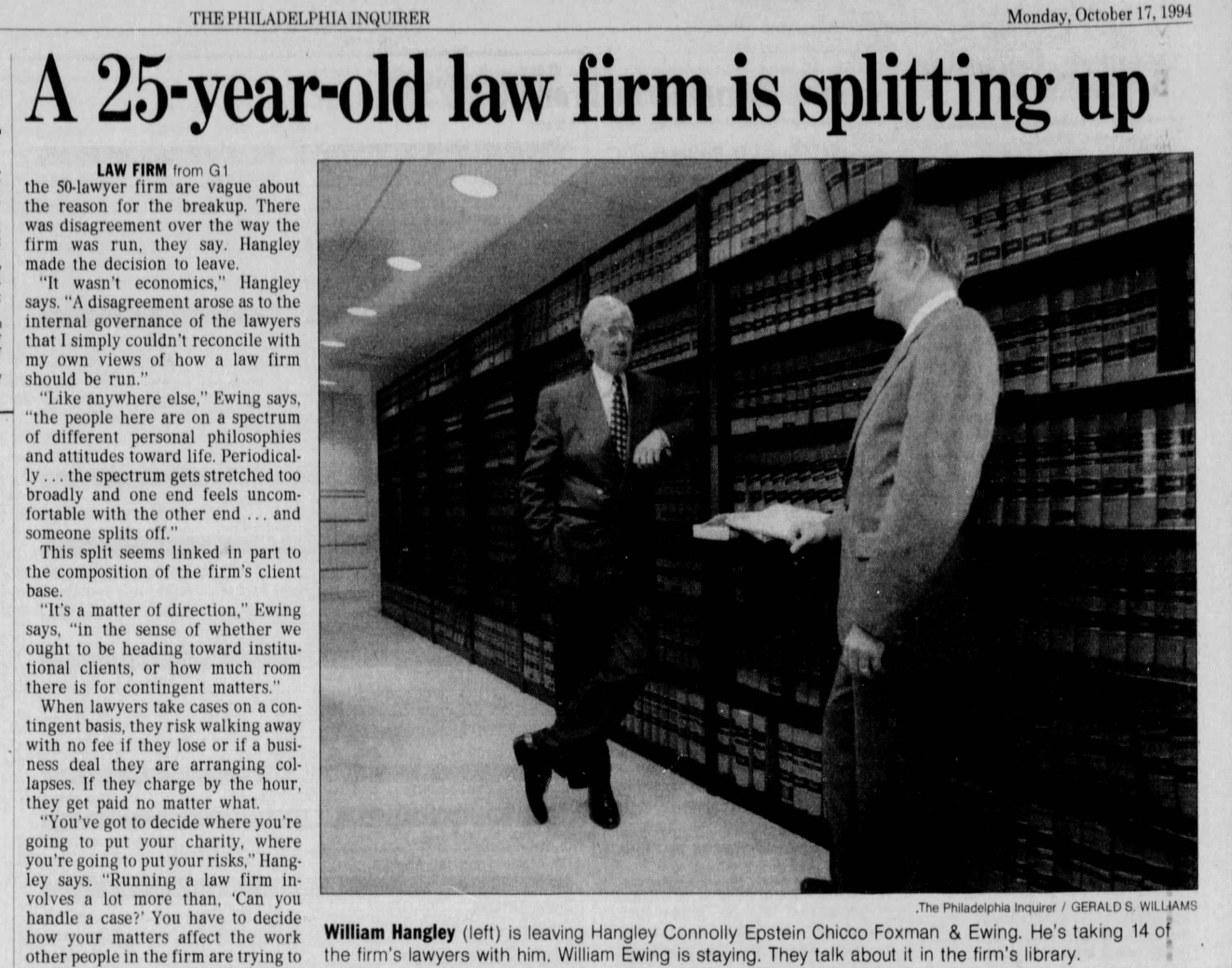
    A story and this photo of Mr. Hangley (left) appeared in The Inquirer in 1994.

    Mr. Hangley did, and, over the next 60 years, until recently, he tried all kinds of court cases and counseled business owners, executives, employees, students, government officials, journalists, and, in one of his career highlights, a client who was incorrectly sentenced to death.

    He was an expert in business litigation and professional liability defense, and he tackled cases about intellectual property, business contracts, antitrust, real estate, malpractice, capital punishment, and other issues.

    “He set a standard for integrity, rigor, and creative problem solving,” his family said in a tribute. “He could take virtually any kind of case to trial and win.”

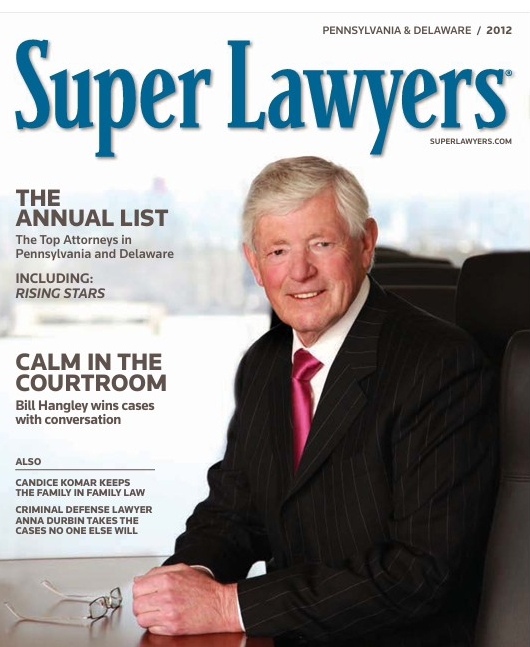
    Mr. Hangley appeared on the cover of Super Lawyers magazine for Pennsylvania and Delaware in 2012.

    Colleague David Pudlin said: “Bill was a giant at everything he did.”

    Mr. Hangley won especially notable cases for The Inquirer, Children’s Hospital of Philadelphia, the Albert Einstein Healthcare Network, heirs to the Tylenol fortune, the Temple University student government, and women athletes at Temple. “The ones I enjoy the most,” he told Super Lawyers magazine in 2012, “are when I get to represent the little guy.”

    In 1996, Mr. Hangley won a complex libel case for The Inquirer, and a now-former editor, in a personal letter to Mr. Hangley, said his closing argument “lit up the First Amendment like bolts of lightning in a night sky.”

    Mr. Hangley was funny, daring, and dapper, friends and colleagues said.

    He was known for his people skills, wide range of expertise, concise legal writing, and crafty courtroom communication techniques. “Some lawyers are confrontational,” he told Super Lawyers. “They want to make a witness feel like dirt, and then he’s putty in their hands. That’s not my approach. I think a lot of witness examination should be freestyle, where the witness is invested in the conversation.”

    He cofounded what is now Hangley Aronchick Segal Pudlin & Schiller in 1994, served as chair until 2014, and helped the firm grow to include experts in estate planning and real estate, tax, corporate, and family law. He continued to advise and counsel as chair emeritus until a few months ago.

    Earlier, he worked at Schnader Harrison Segal & Lewis, Goodman & Ewing, and Hangley Connolly Epstein Chico Foxman & Ewing.

    Mr. Hangley and his wife, Mary, were married for nearly 61 years.

    Mr. Hangley was funny, daring, and dapper, friends and colleagues said. He wore Gucci ties in the courtroom and joked with judges and other lawyers. He told The Inquirer after a case in 1978: “We got a good settlement, and I managed to get off a good one-liner. What man could ask for more?”

    He was onetime chair of the Good Judges for Philadelphia political action committee and a special master in district court cases. He served on committees for the American Bar Association and was active with the American College of Trial Lawyers and the Institute for the Advancement of the Legal System.

    He earned appointments to advisory roles from Supreme Court Justice John G. Roberts Jr., former Pennsylvania Chief Justice Ronald Castille, and Judge Anthony Scirica of the U.S. Court of Appeals for the Third Circuit. In 1970, he ran unsuccessfully for the state Senate as a Democrat.

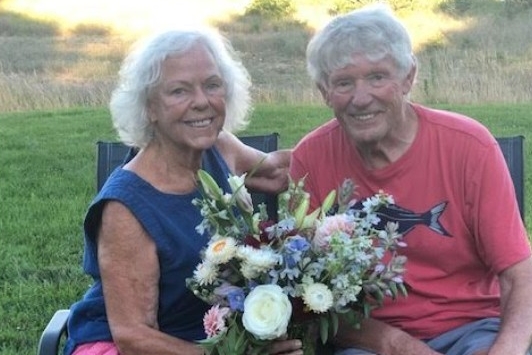
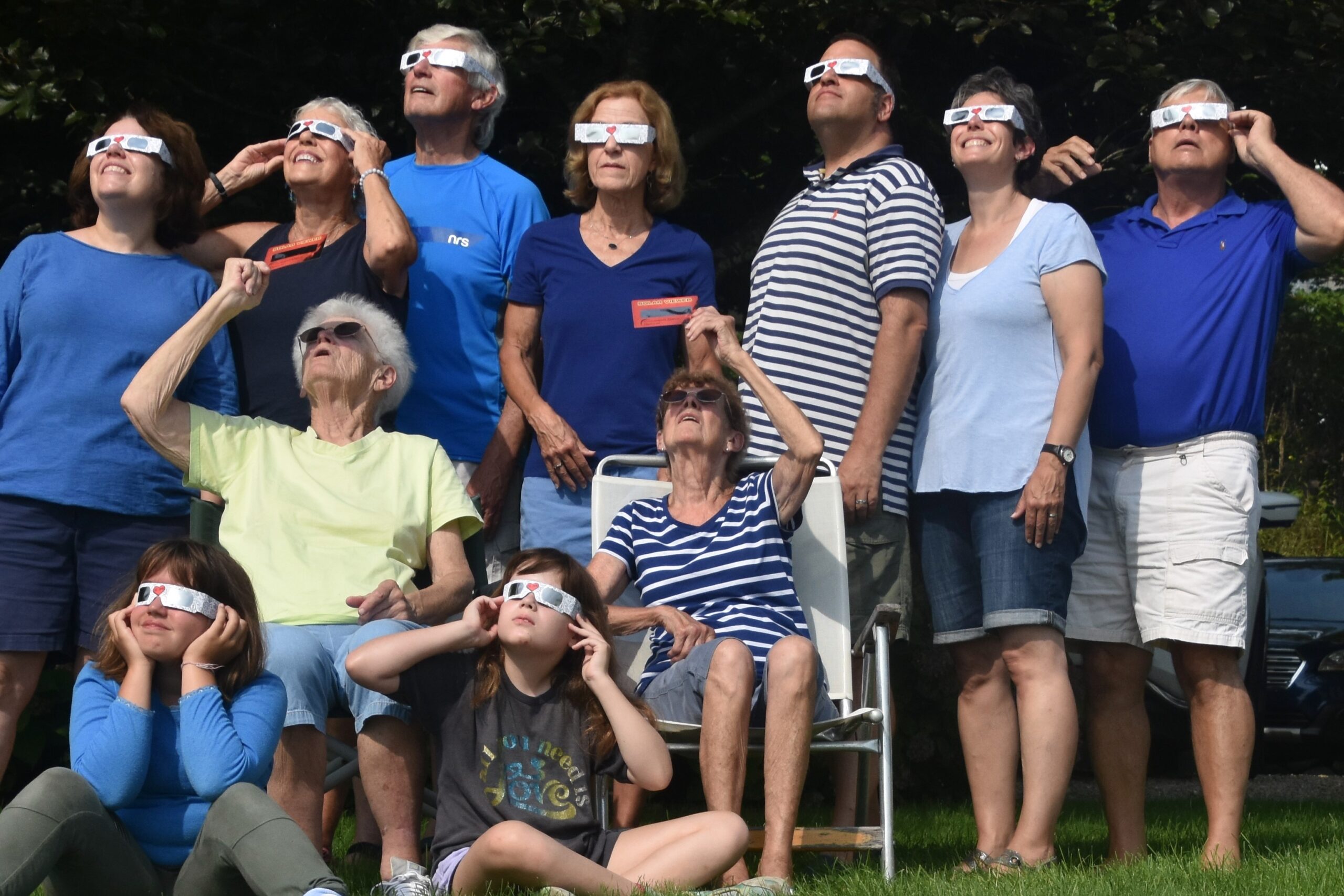
    Mr. Hangley (middle left) enjoyed time with his family.

    “I can’t think of anything else I could have done with my life that I would have enjoyed as much as what I’m doing now,” he told Super Lawyers. “I really hit the big one.”

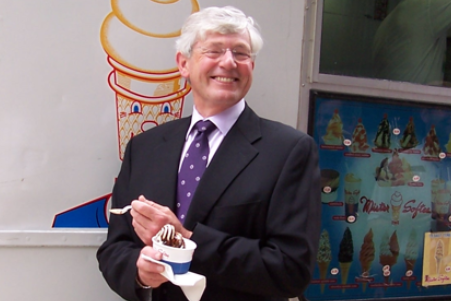
    The youngest of 11 children, William Thomas Hangley was born March 11, 1941. He worked as a beach club cabana boy and an ice cream vendor in Long Beach, N.J., when he was young.

    He met fellow teacher Mary Dupree after college and asked her to go bowling on their first date, and they married in 1965. They had daughters Michele and Katie and a son, Bill Jr., and lived in Center City and West Mount Airy.

    Mr. Hangley and his family enjoyed memorable vacations at their summer home in Martha’s Vineyard, Mass. He followed the Eagles, loved dogs and classical music, and supported the Philadelphia Orchestra and other cultural groups.

    “My dad described himself as an optimist,” Mr. Hangley’s daughter Katie said.

    He and his wife hosted rollicking holiday parties, and he sang and danced. He doted on his children and grandchildren, and was onetime president of the C.W. Henry Elementary School and home association.

    “My dad described himself as an optimist, a gambler at heart, and a person who was grateful for all the joy he had experienced,” said his daughter Katie, “and eager for more.”

    His son, Bill, said: “He stood for integrity.” His daughter Michele said: “He told us, ‘I’ve had a good run,’ and he was right.”

    In addition to his wife and children, Mr. Hangley is survived by two grandchildren and other relatives. Five sisters and five brothers died earlier.

    A private service was held earlier. A celebration of his life is to be held later.

    Donations in his name may be made to the Academy of Vocal Arts, 1920 Spruce St., Philadelphia, Pa. 19103; Community Legal Services of Philadelphia, 1424 Chestnut St., Philadelphia, Pa. 19102; and the Crossing, 8855 Germantown Ave., Philadelphia, Pa. 19118.

  • Escape Lounges is opening a new location at the Philadelphia airport

    Escape Lounges is opening a new location at the Philadelphia airport

    A new airport lounge is landing soon in Philadelphia.

    Escape Lounges is set to open a location at the Philadelphia International Airport later this year, according to MarketPlace PHL, which manages the airport’s concessions. The lounges run on a pay-per-visit model, with food and drink included, and do not require customers to have a certain credit card.

    Escape’s 1,500-square-foot space in Terminal D will serve food and drinks, according to MarketPlace PHL, and include a bar and other seating areas that overlook the runways.

    The U.K.-based Escape Lounges operates 20 U.S. locations, including Syracuse and Providence, R.I. The lounges are open to all travelers within three hours of their departing flights, according to the company’s website.

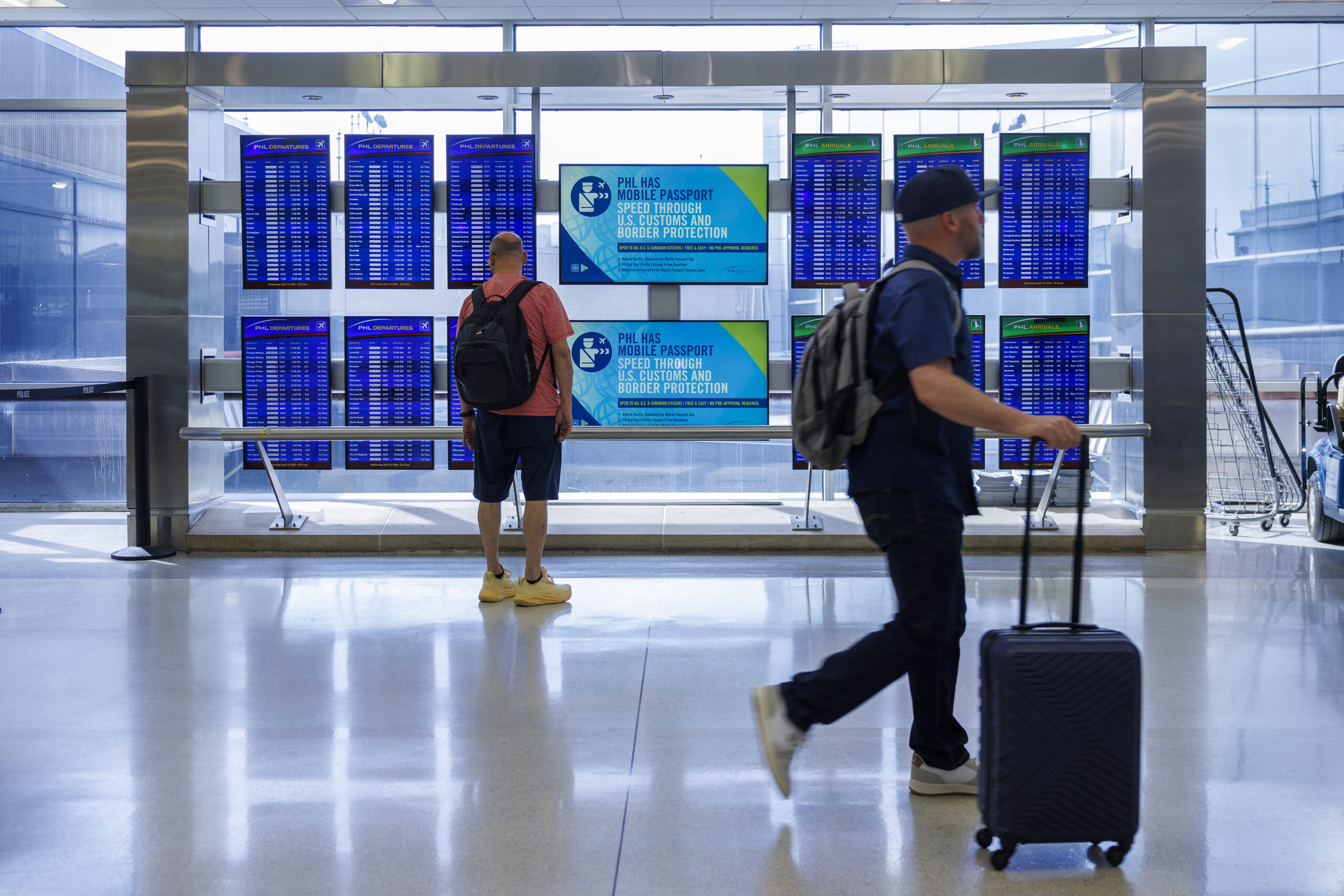
    Someone looks at the arrivals and departures board at Philadelphia International Airport in April.

    Prices fall between $45 and $65 per person for walk-ups, while customers who pre-book online can get reduced rates starting at $32. Complimentary access is available for American Express cardholders.

    The cost includes food and drink, including wine, beer, and spirits, according to Escape. Customers also get private Wi-Fi, charging ports and outlets, printing and copy services, and PressReader, which provides digital access to more than 7,000 newspapers and magazines.

    The news comes at a time when airport lounges have become more accessible than ever — and often more crowded. A growing number of credit cards offer lounge access, and travelers without the required cards can buy day passes to most spots.

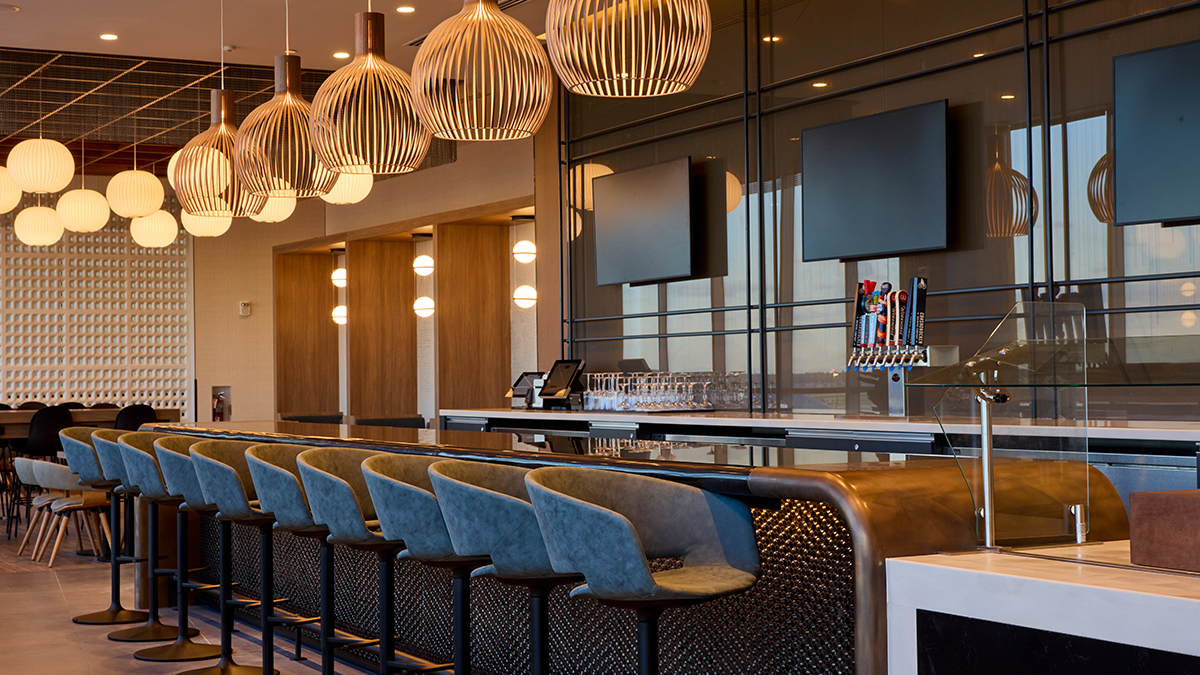
    The bar at the American Airlines Flagship Lounge at Philadelphia International Airport.

    As a result, the airport lounge market is evolving and growing, with analysts expecting it to reach $6.4 billion by next year.

    Last year at Philadelphia International Airport, Chase Sapphire opened a lounge between Terminals D and E, and American Airlines opened neighboring lounges in Terminal A-West.

    American Express and British Airways also operate lounges in Terminal A-West, from which many international flights depart.

    The airport also has a United Club between Terminals C and D, and Delta Sky Club between Terminals D and E, as well as private Minute Suites between Terminals A and B.

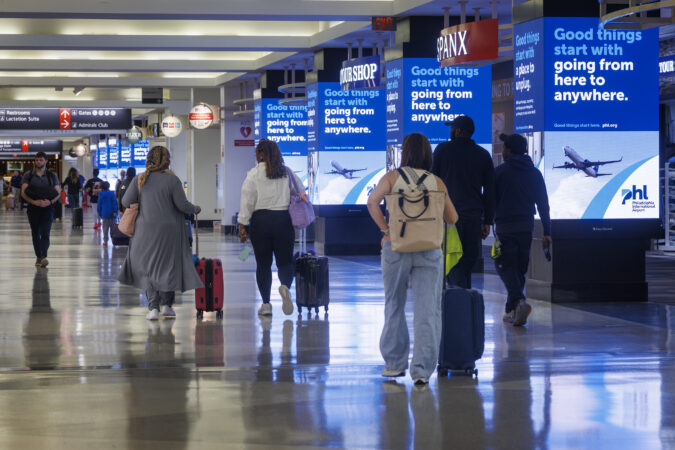
    Travelers walk through Philadelphia International Airport in April.

    Last year, more than 30.1 million travelers passed through Philadelphia International Airport, which is getting $500 million in upgrades.

    While the total number of 2025 passengers dropped slightly from the prior year, the airport saw a 7.5% increase in international travelers, executives said.

    It was also the first time since before the pandemic that the airport recorded two consecutive years with more than 30 million annual passengers.

  • Rite Aid is gone. Its shells remain, with some becoming gyms and car washes.

    Rite Aid is gone. Its shells remain, with some becoming gyms and car washes.

    It’s been almost a year since the last Philly-area Rite Aids closed their doors for good after years of financial trouble.

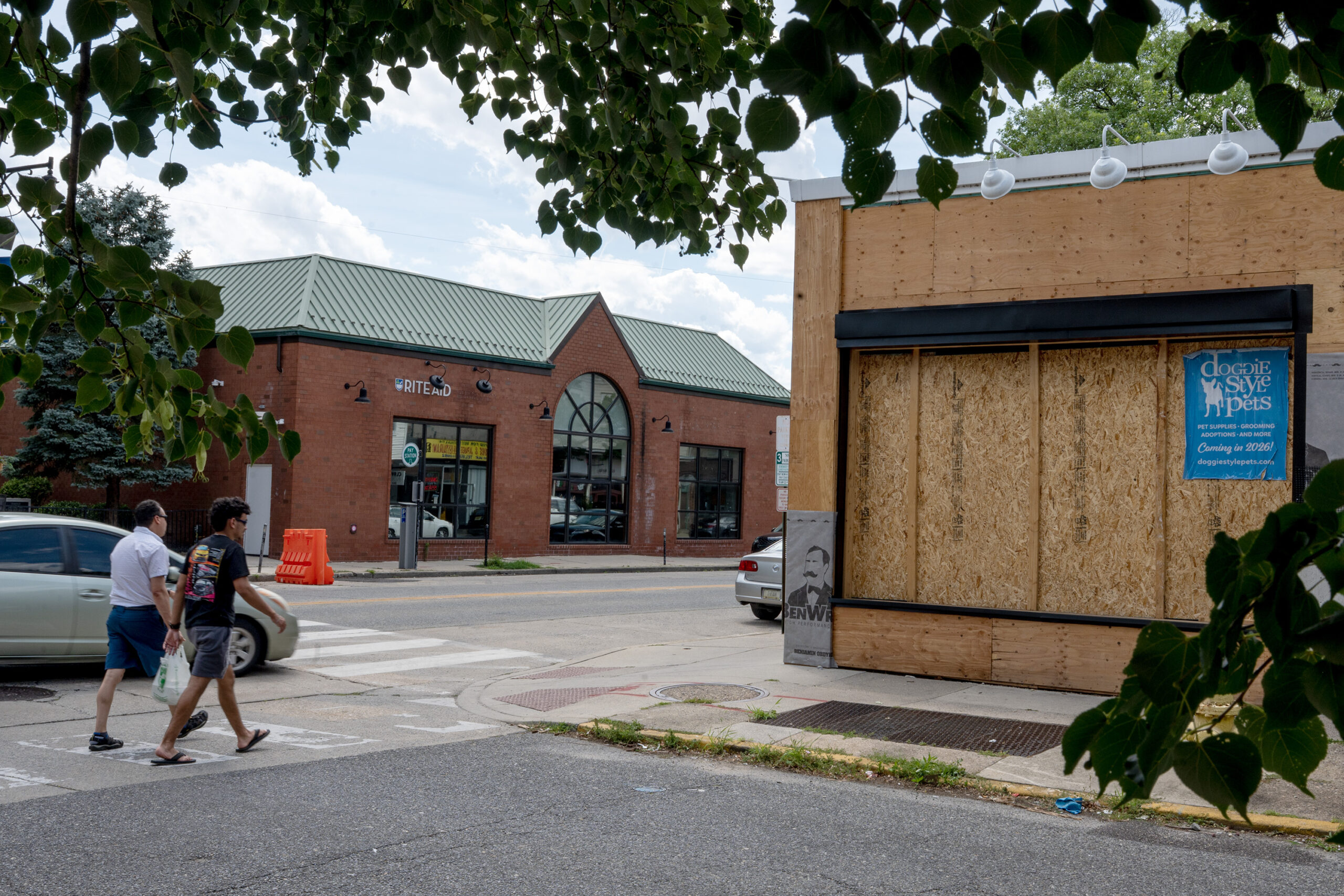
    But the pharmacy chain’s distinct facade still dots the landscape — in suburban shopping centers, on the corners of congested intersections, sometimes even smack dab in the middle of city blocks.

    Some of these buildings are still vacant, surrounded by overgrown grass and empty parking lots. Others are getting new life as dollar stores, medical clinics, daycares, Spirit Halloweens, and a Rally House sports retailer.

    A former Rite Aid (left, rear) and former Wawa (right) sat empty in Collingswood in June.

    The 8,000- to 16,000-square-foot shells are ideal for only so many tenants, real estate experts have said, and it is not unusual for these kinds of properties to take several months or more to lease.

    Here is a look at what’s happening at a few local zombie Rite Aids:

    South Jersey Rite Aids are becoming fitness centers

    A former Rite Aid in Blackwood, Camden County, has been a gym for more than a year, and its owners soon plan to open a second location at another old Rite Aid in Cherry Hill.

    Nick Bennett, CEO of the Bunker Fitness Center, said the owner of the Blackwood Rite Aid building approached him after seeing the gym’s content on TikTok. At the time, Bennett said, the gym was outgrowing its 3,000-square-foot space in Franklinville, Gloucester County.

    When he went to see the 13,000-square-foot former Rite Aid in Blackwood, he said, it had already been demolished inside.

    “It was just wide open,” Bennett said. “That floor plan works for our business model because gyms are open. You don’t really need to put up walls.”

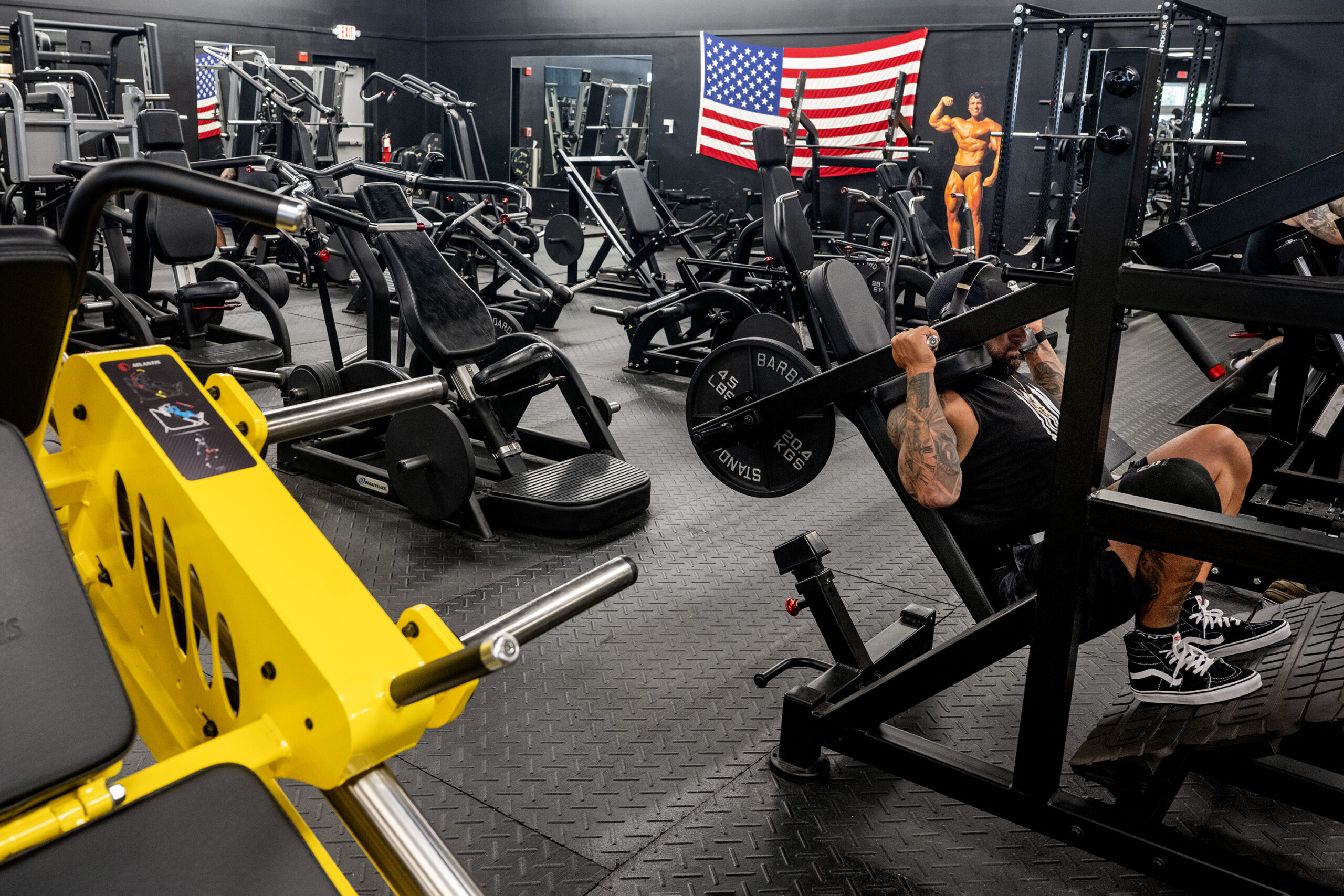
    Steve Cristelli works out at the Bunker Fitness Center in Blackwood.

    Another plus, he said: Pharmacies have rows of refrigerators, which require electrical outlets, and the Bunker crew could use those outlets to plug in workout equipment.

    The old Rite Aid on Black Horse Pike needed “very little” work, just paint and rubber floors, Bennett said, and was easily transformed into the exercise and recovery space he had envisioned. The gym opened in 2025.

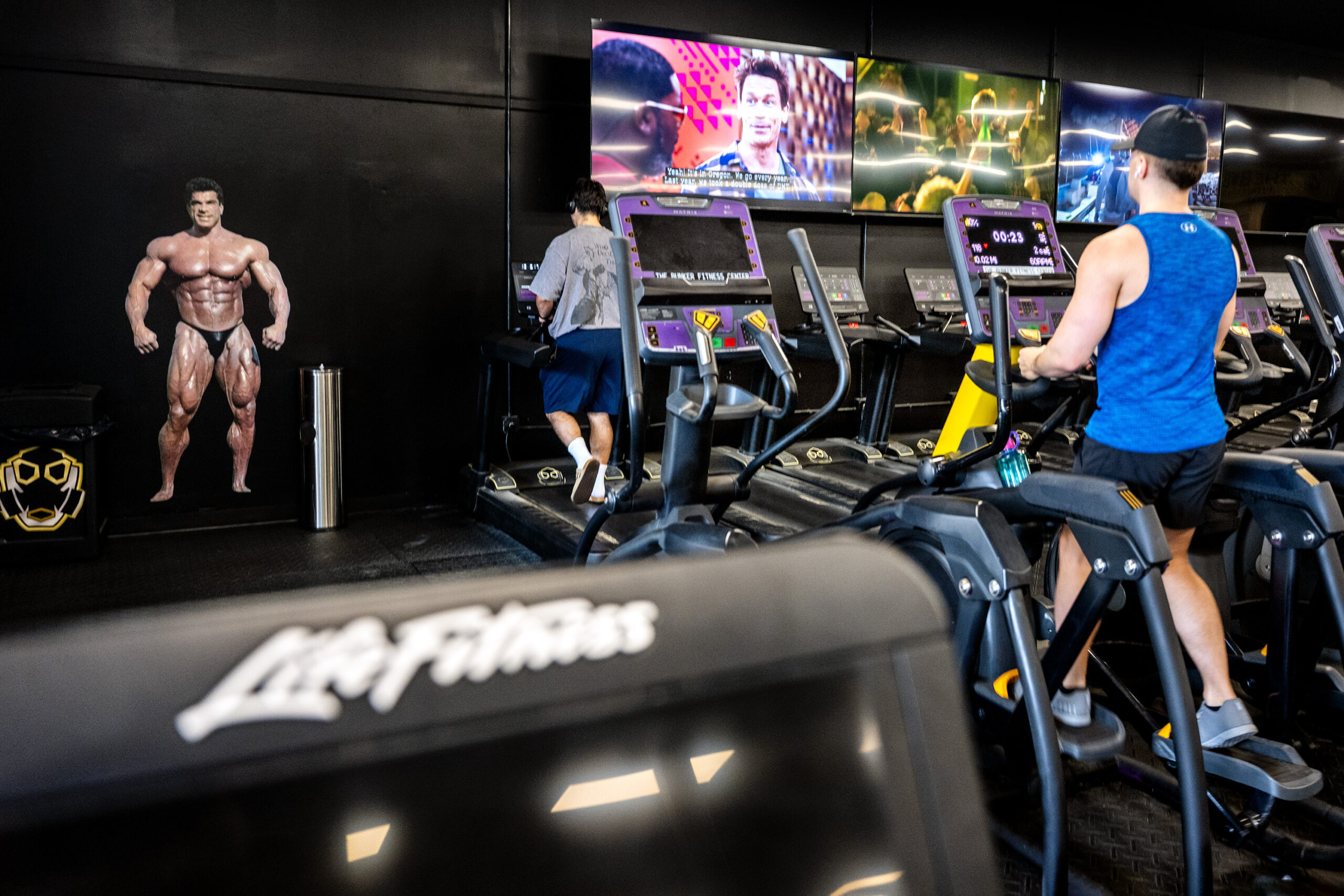
    “We’re smashing it,” Bennett said, with thousands of members who pay between $49 and $59 a month for the 24/7 gym, which has cardio and strength machines, weights, a sauna, and a cold plunge. He declined to provide specific sales or membership figures for competitive reasons.

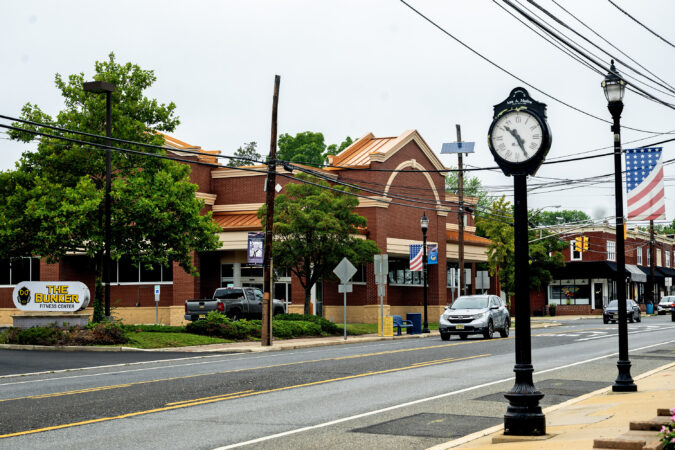
    The Bunker Fitness Center operates inside a former Rite Aid in Blackwood.

    But Bennett said the business is doing so well that it is expanding into another former Rite Aid, 12 miles away in Cherry Hill with franchisee Jack Prendergast.

    That 10,000-square-foot pharmacy shell at Brace and Kresson Roads closed more recently and needs a bit more work inside, Bennett said. When they signed the lease, he said, it “looked like a Rite Aid.”

    Bennett said he and Prendergast are demolishing the interior, aiming for a September opening.

    In Delco, a Rite Aid could become a township’s first car wash

    The former Rite Aid in Newtown Square may get new life as a car wash.

    The store at West Chester Pike and St. Alban’s Circle closed last year. In February El Car Wash, a Florida-based chain looking to expand into Pennsylvania, New Jersey, and Maryland, applied to open there, said Newtown Township Solicitor Rich Sokorai.

    On its website, El Car Wash lists several other Philly-area locations as “coming soon,” including Cherry Hill, Drexel Hill, Feasterville, and Maple Shade.

    The Newtown Square Rite Aid operated a drive-through, Sokorai said, and drive-throughs are permitted in that commercial zone. After a June meeting, the township zoning hearing board is considering whether to permit the car wash, with a decision expected in the coming weeks.

    A Rite Aid with a “store closing” sign last summer.

    If approved, it would be the only car wash in Newtown Township, the solicitor said.

    Residents of the neighborhood behind the old Rite Aid have expressed concerns to local officials, Sokorai said, “because they fear traffic.”

    Others have said they are looking forward to a new business moving into the vacant space on a prime corner, Sokorai said. Even before the Rite Aid closed last summer, its shelves were often empty, the solicitor said, and “it was dying a slow death.”

    Temple University buys another old Rite Aid

    Temple “T” flags fly on North Broad Street.

    Temple University recently bought a second former Rite Aid on North Broad Street.

    The school recently closed on the old Rite Aid building on the 2100 block of North Broad for $9.25 million, according to spokesperson Stephen Orbanek. He said ArchWell Health, which operates a primary-care clinic for seniors there, will remain the tenant.

    “This property’s location, directly across the street from James S. White Residence Hall, supports the priorities of our campus safety and physical environment plan,” Orbanek said.

    This latest Rite Aid acquisition comes two years after Temple bought a Rite Aid and its surrounding shopping center near Temple University Hospital for $8.2 million. The Rite Aid is being converted into Temple Health neurology offices.

    The moves are part of a broader expansion of the university’s footprint on Broad Street, which includes the January acquisition of a vacant property at the site of a former McDonald’s for $8 million.

    Editor’s Note: This story has been updated to indicate that Temple Health plans to open neurology offices at the previously acquired Rite Aid building.

  • A W hotel building contractor is hit with another court judgment, this time for $42.4 million

    A W hotel building contractor is hit with another court judgment, this time for $42.4 million

    One of the largest building contractors in the United States has been hit by another multimillion judgment as a result of the dispute over the W and Element hotels in Center City.

    Philadelphia Common Pleas Judge James Crumlish III ordered California-based Tutor Perini Building Corp. to pay $42.4 million in damages to the subcontractor retained to install the building’s exterior, the Chicago-based Ventana DBS LLC.

    “Throughout the project, Ventana was forced to navigate numerous obstructions and obstacles, stemming from Tutor Perini’s pervasive material breaches of contract,” Crumlish’s ruling read last week.

    That judgment comes on top of a $174.7 million judgment Crumlish issued earlier this year for 2,797 days of construction delays to the 51-story building, to be paid to Philadelphia-based Chestlen Development LP.

    A Tutor Perini spokesperson said in April that the firm disagreed with the decision and intended to appeal it.

    The contractor declined to comment on the new developments.

    “This ruling is an important affirmation of the facts and of the principles that govern successful project delivery,” said Bob Clark, executive chairman of Clayco, a real estate development company that is Ventana’s parent company.

    “We are pleased that the Court awarded Ventana $42 million in damages and recognized that Tutor Perini failed to properly coordinate its subcontractors while acting in bad faith by concealing its knowledge of significant concrete defects,” said Clark.

    The judgment is the latest in the fallout from a construction project that Crumlish has said in an earlier ruling went “off the rails” because of Tutor Perini. Five years after the W hotel opened, the litigation is ongoing.

    Tutor Perini was in court again Tuesday for the start of a new trial, this time for the judge to assess how much a concrete subcontractor, Thomas P. Carney Inc. Construction, owes Tutor for botching the job.

    The proceeding had a tense opening as attorneys for Tutor Perini and Carney spent the morning arguing over motions.

    Crumlish, who has previously chastised the parties for their animosity and turning the litigation into a “challenging behemoth,” expressed frustrations at times and ordered everyone to stop talking.

    “I’m getting cranky, I will admit it,” the judge said at one point.

    Disruptive and costly delays

    Tutor Perini retained Ventana in 2015 for $14 million to assist in the design and installation of the building’ exterior and window-wall systems for floors nine to 50.

    But when Ventana moved to install the hotel’s wall-window systems, they immediately noticed a “big problem,” according to the judge’s October memo. In many places, the concrete was not level or did not meet the elevation requirements in the design.

    Tutor Perini denied there was a problem, while quietly attempting to grind the edges of the concrete slabs to address the issue.

    By failing to supervise the concrete pours, Crumlish wrote in the recent ruling, Tutor Perini caused the “inefficient, obstructed, and impaired installation” of the window-wall systems.

    “Ventana repeatedly encountered disruptive and costly delays due to Tutor’s lack of coordination while attempting to install its window wall systems,” the judge’s memo said.

    Tutor Perini, for example, didn’t clear debris left by other subcontractors, the judge said, to allow the Ventana team to transport the window-wall components.

    And while Tutor’s consultants confirmed the problem was the concrete pour, the company rejected Ventana’s delay notices and stopped paying the contractor.

    Crumlish ordered Tutor to pay Ventana the $7.5 million unpaid subcontractor balance, $7.3 million in labor inefficiency costs, and $2.4 million unpaid change order requests, and $18 million in other costs.

    The company is also on the hook for $7.1 million in attorney’s fees, expert witness fees, and litigation costs, bringing the total judgment to $42.4 million.

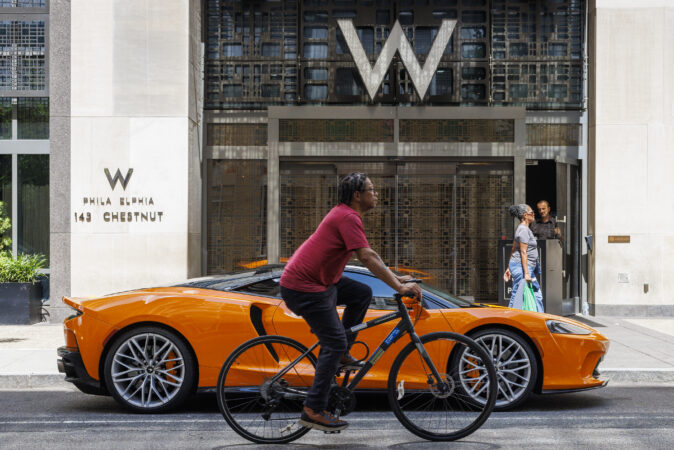
    The W hotel opened in 2021 at 15th and Chestnut Streets, three years after its intended opening date, and it still cannot be fully occupied because some window vents are inoperable.

    The project was developed by Brook Lenfest, son of former Inquirer owner H.F. “Gerry” Lenfest, whose foundation continues to own the newspaper.

    Editor’s note: This article has been updated with a statement from the subcontractor Ventana’s parent company.