Category: Business

Business news and market updates

  • Pennsylvania state government relies on H-1B workers. Trump wants to charge employers $100,000 for those visas.

    Pennsylvania state government relies on H-1B workers. Trump wants to charge employers $100,000 for those visas.

    Government contractors are among the big employers grappling with President Donald Trump’s plan to charge employers $100,000 for new H-1B visas, which allow hundreds of thousands of workers from foreign countries to work in the United States every year.

    Leading contractors such as Amazon Web Services at the federal level and Deloitte Consulting in Pennsylvania rely on H-1B visas to bring in foreign skilled professionals for their U.S. workforces.

    Once a supporter of the 35-year-old program, Trump said in a September executive order that he now agrees with critics that “systemic abuse” of the visas has displaced U.S. workers, “discouraging Americans from pursuing careers in science and technology,” and driving down wages. He announced a fee of $100,000 for new H-1B visas, which would significantly boost costs for government contractors and other employers that continue to use the visas.

    U.S. immigration officials issue up to 85,000 new H-1B visas a year. Generations of engineers and technical workers have moved to the United States to work for government agencies using these visas. Some remain as permanent residents and become citizens.

    window.addEventListener(“message”,function(a){if(void 0!==a.data[“datawrapper-height”]){var e=document.querySelectorAll(“iframe”);for(var t in a.data[“datawrapper-height”])for(var r,i=0;r=e[i];i++)if(r.contentWindow===a.source){var d=a.data[“datawrapper-height”][t]+”px”;r.style.height=d}}});

    About 50% of all U.S. H-1B visa holders arrive from India, and the percentage is higher in technical fields. More than 80% of Deloitte H-1B visa holders stationed in the Harrisburg area from 2022-2024 originated in India, according to federal visa data. These professionals earned a median of around $100,000 a year.

    Recruiters promoted the visas extensively in 2000 to help U.S. companies update systems under Y2K programs, said Akanksha Kalra, an immigration attorney in Philadelphia who has represented many H-1B visa holders. Since then the program became so popular among employers and applicants that H-1B visas have been awarded through a lottery.

    Here’s what you need to know about H-1B visas.

    Who are the largest employers of H-1B workers in Pennsylvania?

    Among Pennsylvania-based employers, Deloitte Consulting is by far the top H-1B contractor. More than 3,000 of the 9,930 H-1B visas the government granted in Pennsylvania last year were for Deloitte Consulting and its tax and accounting affiliates. The company ranked among the 10 largest H-1B visa users across the U.S. last year. Pennsylvania was a major Deloitte client, paying $260 million for its services to state health, labor, and transportation programs, among others.

    window.addEventListener(“message”,function(a){if(void 0!==a.data[“datawrapper-height”]){var e=document.querySelectorAll(“iframe”);for(var t in a.data[“datawrapper-height”])for(var r,i=0;r=e[i];i++)if(r.contentWindow===a.source){var d=a.data[“datawrapper-height”][t]+”px”;r.style.height=d}}});

    How long can people with H-1B visas work in the U.S.?

    Employers can apply to have H-1B visas extended for a total of six years, boosting the total of H-1B workers in the country at any one time to hundreds of thousands. Spouses of H-1B visa professionals often apply for H-4 work visas.

    Another program popular with employers, the Optional Practical Training work authorization, is available to foreign students entering the workforce, for up to three years; more than 400,000 were granted in 2024.

    Which states have the most H-1B workers?

    Six states — California, Texas, New York, New Jersey, Virginia, and Pennsylvania — account for more than half the 283,000 new and returning H-1B visas approved by the federal government for fiscal year 2024, the most recent data available.

    window.addEventListener(“message”,function(a){if(void 0!==a.data[“datawrapper-height”]){var e=document.querySelectorAll(“iframe”);for(var t in a.data[“datawrapper-height”])for(var r,i=0;r=e[i];i++)if(r.contentWindow===a.source){var d=a.data[“datawrapper-height”][t]+”px”;r.style.height=d}}});

    The largest H-1B employers include Amazon’s Virginia operations, whose clients include the Pentagon and other U.S. security, surveillance, and technology agencies; other Big Tech employers such as Meta, Oracle, and Google; banks such as J.P. Morgan and Goldman Sachs; and manufacturers, such as automakers General Motors, Ford, and Tesla. Hospitals use the visas to bring in doctors, universities for professors.

    How does Pennsylvania state government rely on H-1B workers?

    Besides Deloitte, the visas are popular among small firms that specialize in IT contracting for Pennsylvania state government, according to a check of information technology firms contracted to Pennsylvania state departments under the no-bid Information Technology Supplemental Assistance (ITSA) program, which started in 2010 as a way to add short-term technical project assistance.

    Payments to ITSA contractors rose from $24 million in 2010 to $188 million last year, spread among hundreds of mostly small and specialized firms, according to data The Inquirer obtained in a Right to Know request.

    In each year, more than half of ITSA spending went to firms that were granted at least one H-1B visa. Together ITSA firms were awarded 171 H-1B visas last year, not counting Deloitte.

    What do Pennsylvania officials say about Trump’s $100,000 plan?

    A spokesperson for Gov. Josh Shapiro’s administration said state officials are studying Trump’s proposal.

    State agencies don’t themselves sponsor H-1B visa applicants, and the state “does not have information hired by suppliers through the federal H-1B visa program,” said Dan Egan, a spokesperson for the state Office of Administration.

    However, OST Inc., the state contractor that oversees hundreds of information technology contractors to more than 30 Pennsylvania state agencies, requires them to report H-1B visa holders, as well as participants in other foreign guest worker programs such as the OPT visa. OST didn’t respond to inquiries.

    Is a scarcity of Pennsylvania tech talent forcing employers to bring in staff from abroad?

    The National Bureau of Economic Research says H-1B has reduced employment and wages for U.S. citizen data scientists but also cut technology costs, benefiting the economy. American workers have testified in Congress about being laid off by employers who hired visa holders.

    Pennsylvania legislators who held hearings on the ITSA program in 2017 did not dispute that the state faced a shortage of tech talent in the Harrisburg area. Contractors said the state should verify visa holders’ education and work experience to avoid overpaying.

    The Shapiro administration says it has created technology apprenticeship, internship, and fellowship programs that help Pennsylvanians without a college degree qualify for state tech jobs and help fill IT positions.

    Several publicly traded companies formerly based in central Pennsylvania, including TE Connectivity, Enviri, and Rite Aid moved their headquarters from the Harrisburg area to the Philadelphia metropolitan area in recent years. Each cited the difficulty finding American tech workers and managers willing to live in Central Pennsylvania.

    Why is Trump so interested in H-1B visas?

    In his Sept. 19 executive order, Trump noted that the visas are supposed to go to people who could do “high-skilled” jobs that Americans aren’t doing — but, he said, technology employers “have abused the H-1B statute and its regulations to artificially suppress wages” to the disadvantage of U.S. workers.

    That’s a switch for Trump, who last December defended H-1B. “I’ve always liked the visas. I have always been in favor of the visas. That’s why we have them,” Trump told the New York Post last December. “I have many H-1B visas on my properties. I’ve been a believer in H-1B. I have used it many times. It’s a great program.”

    How are business and labor reacting to Trump’s H-1B plan?

    Though labor groups have long called for employers who use H-1B staff to pay higher wages, the United Auto Workers and American Association of University Professors have joined in a lawsuit to stop Trump from imposing what they call an illegal fee. On Oct. 16, the U.S. Chamber of Commerce also sued, calling Trump’s action “unlawful.”

  • Ambler’s small businesses want to make the borough a destination

    Ambler’s small businesses want to make the borough a destination

    Maura Manzo, founder and director of yoga studio Camaraderie in Ambler, previously owned the Yoga Home studio in Conshohocken but stepped away during the pandemic.

    When she was looking to get back into the business, she chose Ambler.

    “I was looking for a vibrant, walkable downtown, rooted in community,” Manzo said.

    She was encouraged by the presence of a food co-op, Weavers Way, which “signaled to me that this is a community invested in sustainable, healthy living — values that align beautifully with a yoga community,” as well as the other businesses around.

    “There’s a balance of restaurants, arts and culture, and shopping that creates a wonderful, rich community and attracts people,” Manzo said.

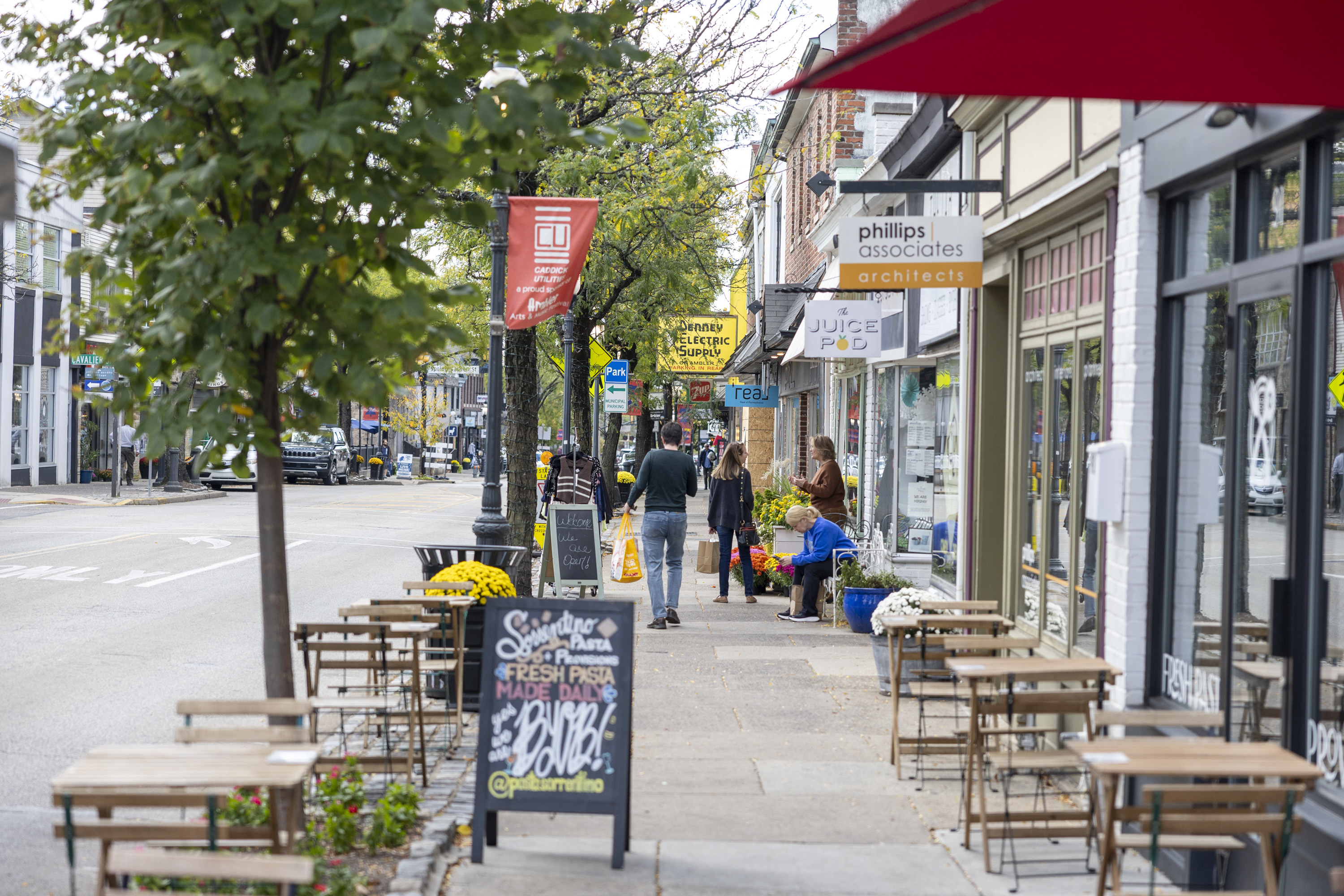
    Centrally located in Montgomery County, the borough of Ambler has become home to an eclectic blend of retailers, restaurants, and services. Its downtown business district includes a spa, tuxedo rentals, a bakery, a tattoo parlor, hair salons, and restaurants from all different culinary genres.

    People walk along Butler Avenue among various shops and restaurants in Ambler.

    The borough started as a mill town in the 1700s and evolved into a factory town run by the Keasbey & Mattison Co. in the 1800s. Many of the original buildings from that period still exist in the downtown district.

    The borough has been consistent in its preservation efforts. Recently an ordinance passed to be sure that any new construction reflects the existing architectural charm, said Ambler Main Street manager Elizabeth Wahl Kunzier.

    Still, the area has continued to evolve, recently adding a food hall with 10 vendors, seeing the merger of two established Ambler boutiques into one new storefront, and promoting downtown events on social media. With the holiday season approaching, business owners are looking ahead to their busiest time of year and gearing up for a number of seasonal events.

    “We have a pretty good organic social media reach,” Wahl Kunzier said. “It took a long time to get that where it is today, but given the nature of how the public gets information, it is very important to have a good following.”

    Building momentum behind the scenes

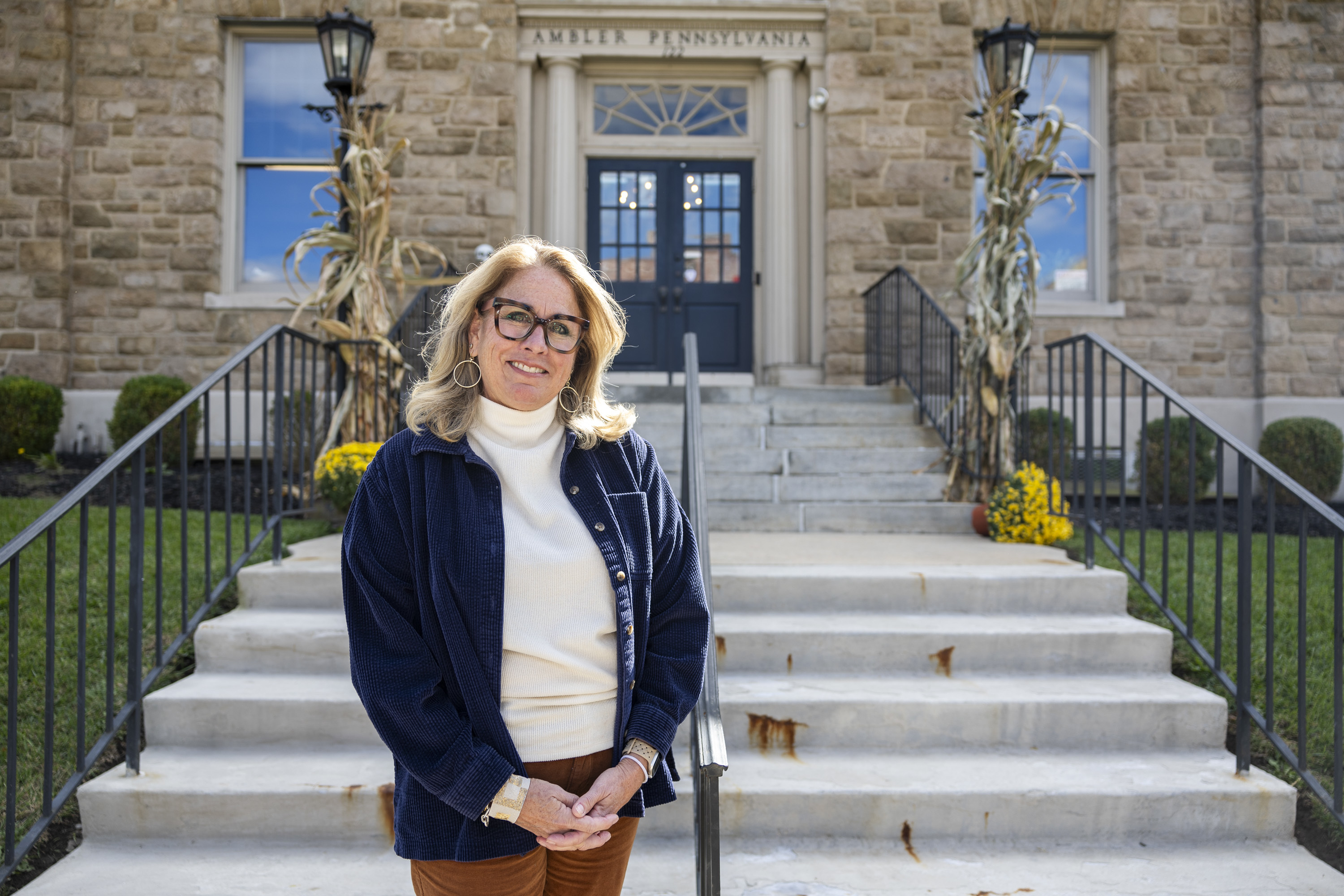
    Elizabeth Wahl Kunzier, Ambler Main Street manager.

    Wahl Kunzier serves as the marketing lead for Ambler Main Street — the name of the nonprofit that promotes downtown Ambler, even though many of its businesses are on Butler Avenue rather than Main Street. She monitors the businesses’ social media accounts daily to see what they’re advertising and share the information more broadly.

    Her office also organizes special events such as a semiannual restaurant week and a holiday shopping weekend. And the borough hosts a Farmer’s Market every Saturday from May through the weekend before Thanksgiving at the old Ambler train station.

    “I work with business owners brainstorming on everything from vacant storefronts to customized events to keep the foot traffic coming,” Wahl Kunzier said.

    The small business district and the community’s “people” are what drew Daniel J. DeCastro to Ambler, where he opened Ridge Hall last month.

    “They were a large family of small businesses that looked out for each other and supported one another while also having patrons who were cheerleaders of their businesses,” he said.

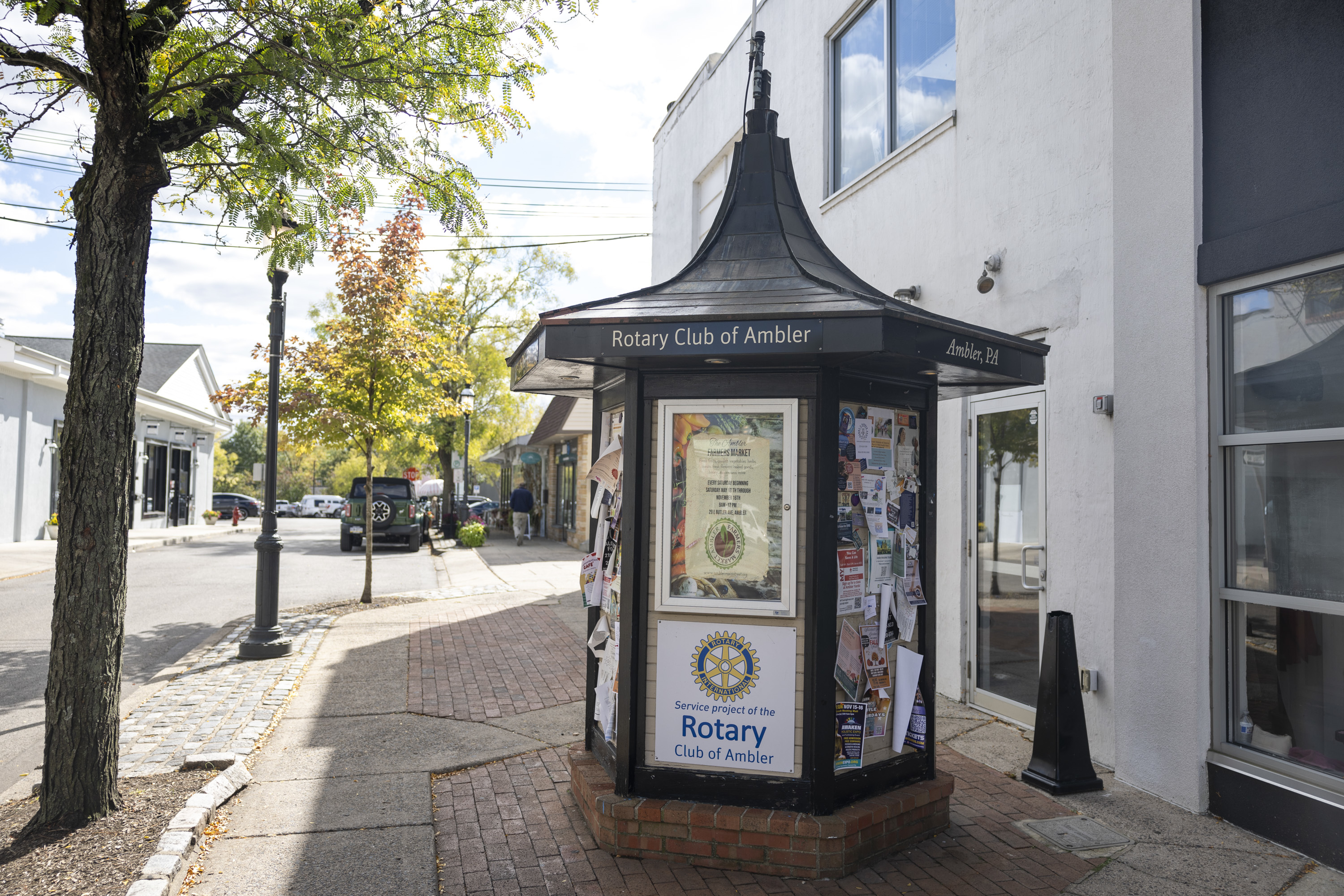
    An event board with various posters and advertisements for Ambler businesses and events.

    Located in a historic warehouse, Ridge Hall has 10 dining spots and a second-floor venue called The Mercantile.

    DeCastro is optimistic this food hall and retail concept will do well in Ambler, which he described as “on the cusp of breaking through as a destination town.”

    “Chestnut Hill, Doylestown, New Hope, and Phoenixville have become towns that you simply go to without a commitment. Unless you live in Ambler, it takes a commitment to drive into town,” DeCastro said. With Ridge Hall, “I wanted to create a destination that would entice people to stay for the day and return sooner rather than later.”

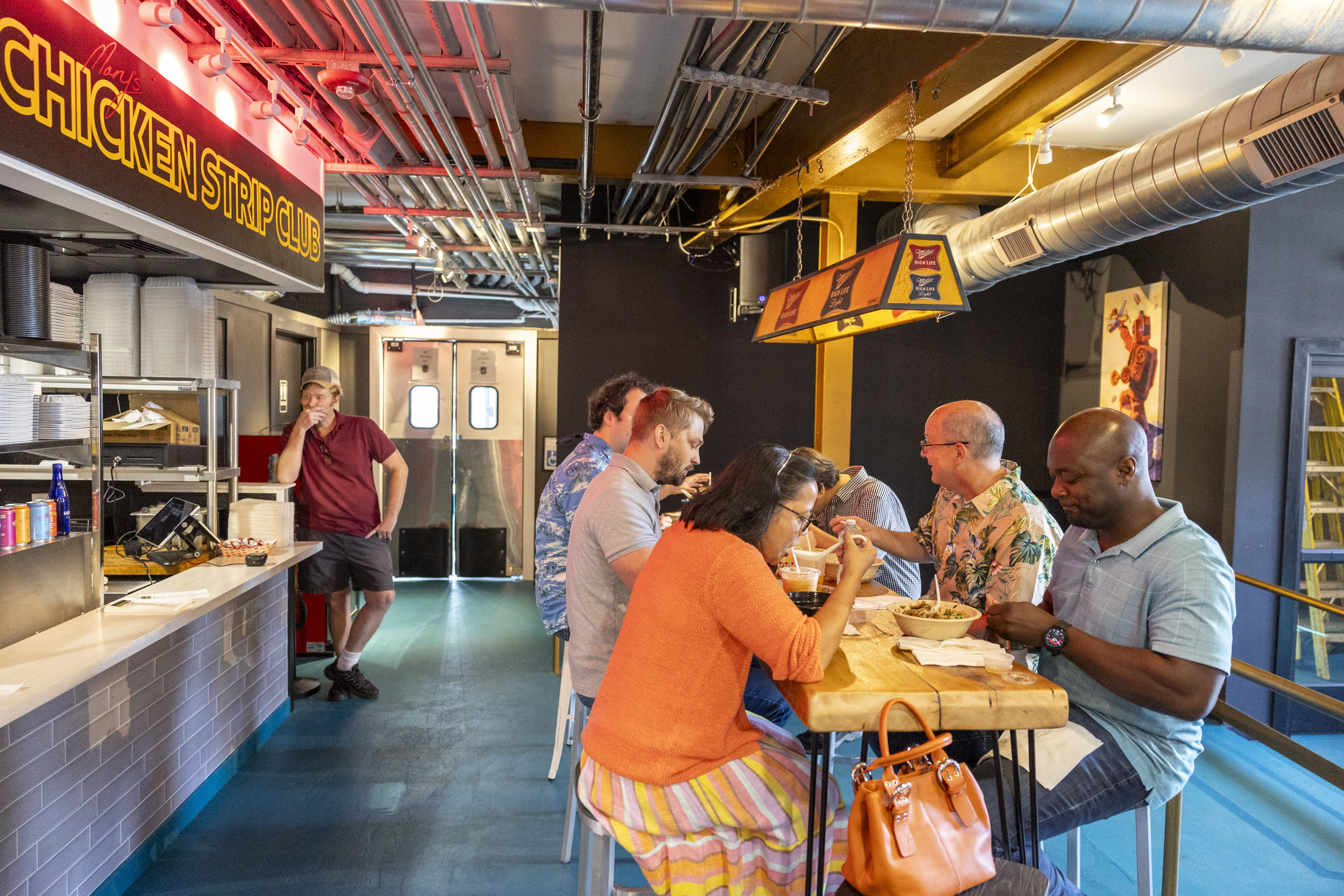
    Customers dine at Ridge Hall in front of Mary’s Chicken Strip Club.

    Some of the district’s established restaurateurs perhaps would argue that Ambler was already a destination.

    At Sorrentino Pasta + Provisions, customers find fresh pasta, house-made focaccia, and imported Italian goods for sale. The restaurant is open for lunch Wednesday through Sunday and dinner Thursday through Saturday, and it’s a BYOB.

    “Lunch is steady and a great opportunity to grab a table since it’s a little more difficult at dinner time,” proprietor Rich Sorrentino said. “We are extremely lucky to have the customers we do. Most are from the borough, but a surprising amount travel a bit to come join us.”

    Geronimo’s Peruvian Cuisine, also a BYOB, offers signature dishes such as ceviche, lomo saltado, anticucho de corazón, arroz con mariscos, pollo a la brasa, and many other authentic Peruvian dishes, said co-owner Daniel Salazar. It’s open Wednesday through Sunday.

    “Weekends are busy nights for us, we highly recommend calling the restaurant for a reservation,” she said. “Our goal here is to bring a cultural experience, to share a great cuisine that has history, flavor, and a little bit of mystery.”

    A tale of two stores

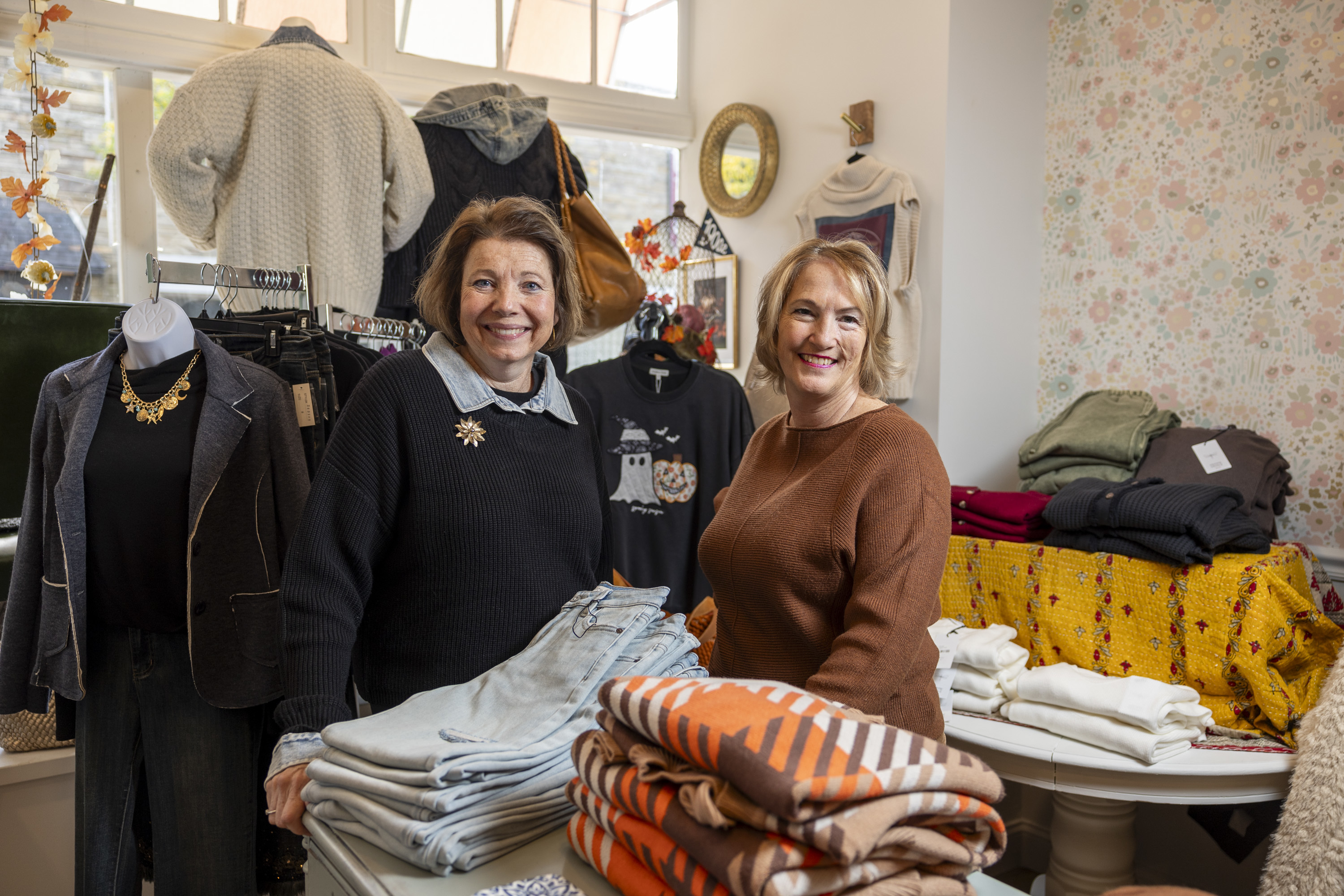
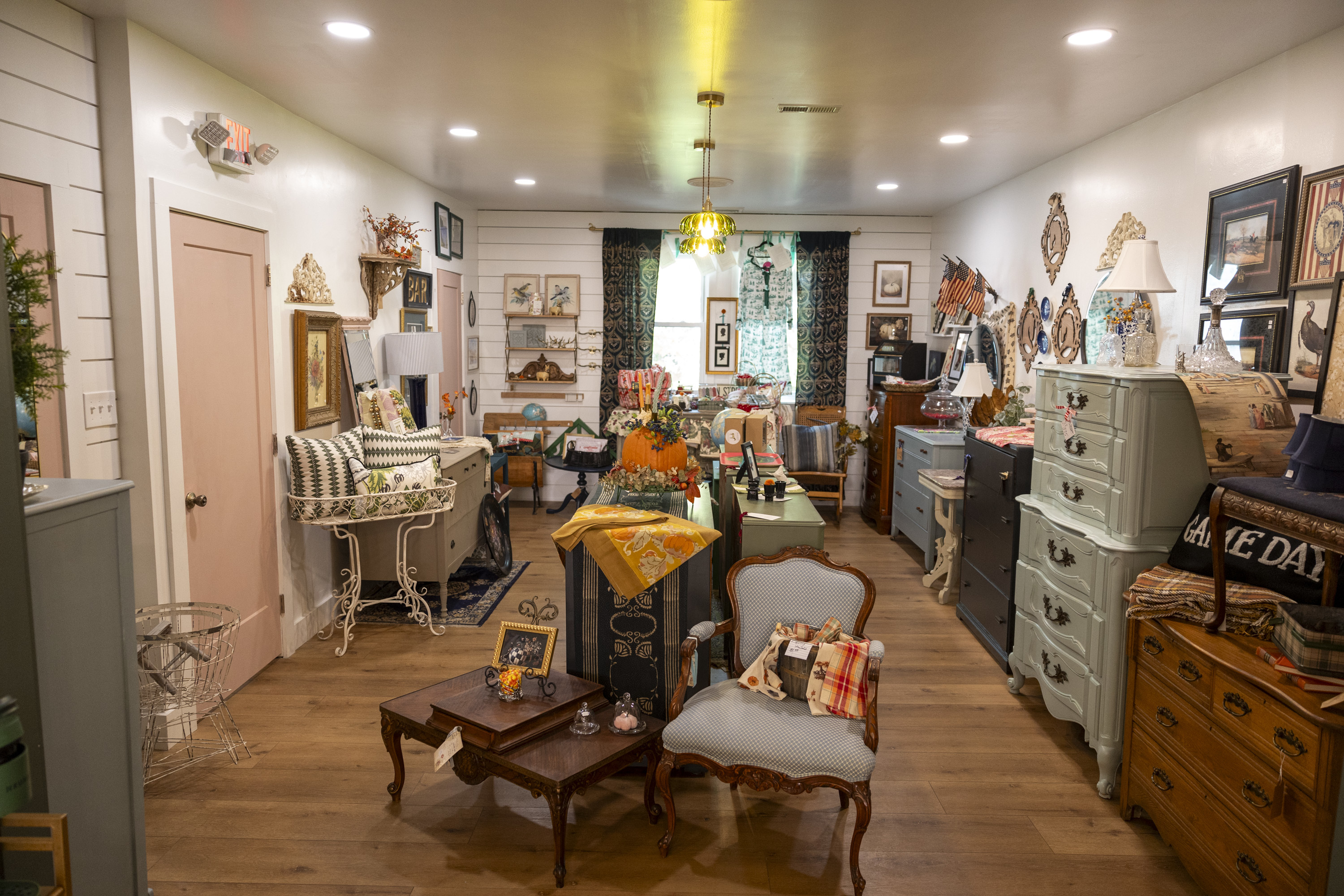
    Jeanne Cooke (left) and Barb Asman in their combined store, which opened earlier this year, bringing together XTRA Boutique and Main Street Vintage.

    Jeanne Cooke, owner of Main Street Vintage, sold painted furniture, vintage wood furniture, new and vintage home accessories, and artwork at her Butler Avenue shop for years. Just down the street, Barb Asman’s XTRA Boutique was selling women’s clothing.

    In August, they combined their businesses, merging into one larger storefront on Butler.

    “Barb and I have been looking in windows in Ambler for years. We felt we needed more square footage to take our businesses to the next level,” Cooke said. “The merge was seamless. I guess because we talked about it for quite some time.”

    The new experience is like shopping in a beautifully decorated home where you can buy all the furnishings. The two owners design the merchandising collaboratively, and the two businesses are intertwined.

    The back of the store, where Main Street Vintage’s furniture and home decor are on display.

    Asman said they are excited for what the future holds.

    “I sometimes stand in the middle of the store and say: ‘Wow, this feels so good.’ It’s hard to put it into words,” Asman said. “It’s a really good feeling.”

  • A changing death industry puts Philly cemeteries at risk

    A changing death industry puts Philly cemeteries at risk

    It always figured to be an emotional day when the Alter family gathered at Har Jehuda Cemetery in Upper Darby. They were commemorating their mother’s first yahrzeit, the anniversary of death in the Jewish tradition.

    But when the family arrived at her grave, they found it in devastating condition.

    Beatrice Reina Alter, 93, was buried last year next to her husband, Milton Alter, in plots that the couple bought in the Jewish cemetery in the 1990s. When their family came together for her yahrzeit in August, they expected there to be a new headstone to match Milton’s.

    Instead, her grave was covered in a fresh mound of dirt. The corner of a plywood board stuck out. And there was no headstone to be seen.

    “We were shaken and appalled,” said Daniel Alter, one of the couple’s five children.

    Yet issues at the cemetery — and for the burial industry — extend beyond placing headstones on time. Har Jehuda reflects an industry facing serious challenges to its longevity, where sometimes small, antiquated businesses must reinvent themselves. The country’s relationships with cemeteries and burials are changing, putting a seemingly timeless business at risk.

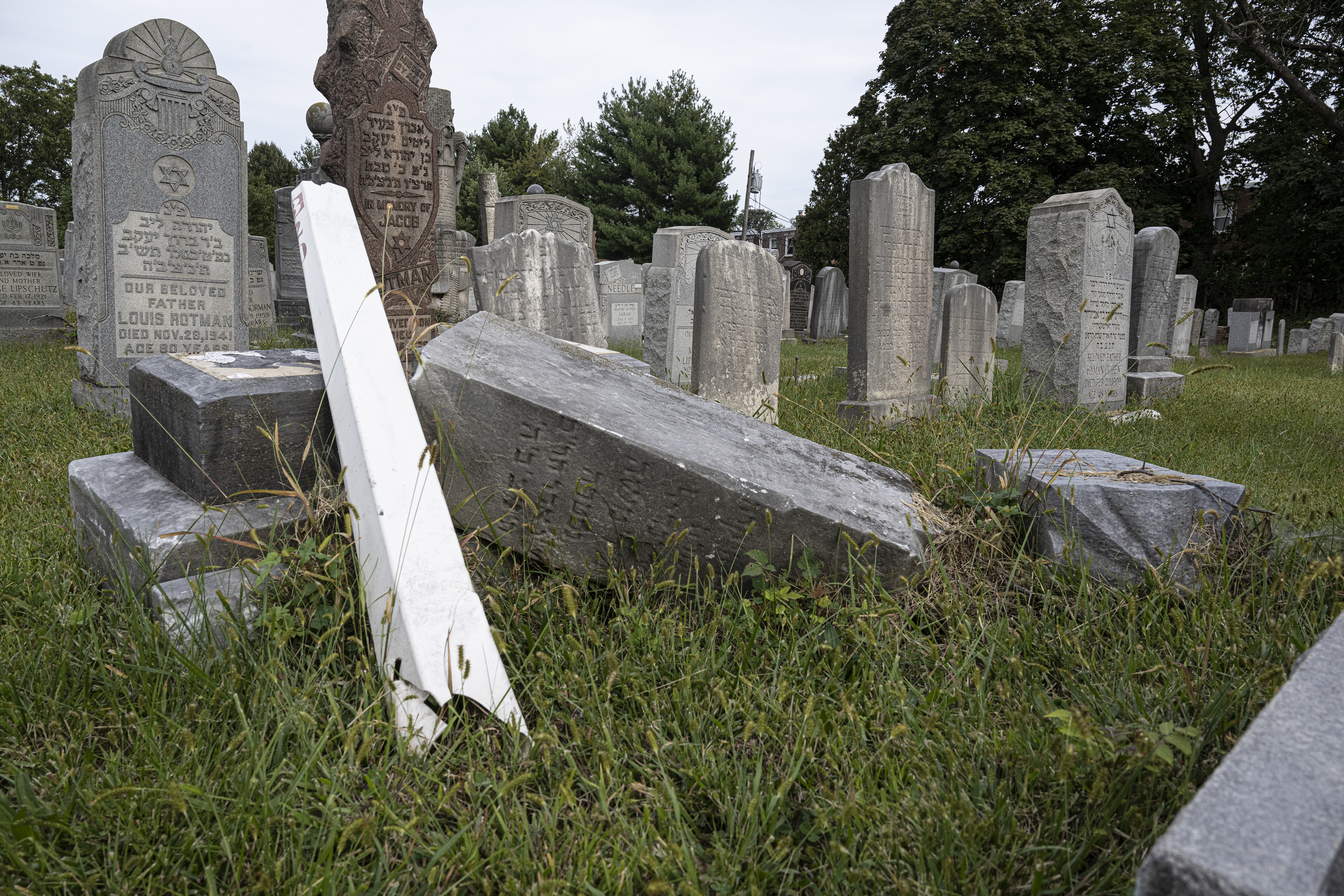
    Har Jehuda, for instance, has been an important institution for the region’s Jewish community since its founding in the 1890s, holding more than 20,000 graves. But today, its grounds are largely overgrown and unkept, and numerous gravestones have fallen into disrepair. A volunteer group has stepped in to cover some of the maintenance and landscaping costs but fears it cannot sustain the cemetery for long.

    Overgrown weeds and displaced headstones at Har Jehuda Cemetery in Upper Darby.

    “The reality is that there are not enough staff or funds to maintain the cemetery, and there hasn’t been for years,” Randi Raskin Nash, a member of the Friends of Har Jehuda Cemetery group, said by email.

    The cremation boom

    A hundred years ago, cremation was an unusual choice in the United States. Things started to shift in 1963, when the Catholic Church lifted its prohibition of the practice and Jessica Mitford’s book The American Way of Death, an exposé of the death industry, was published. Before then the cremation rate was reported to be in the single digits, and even as it rose, by 1999 only about 25% of Americans were cremated. But that is changing.

    Cremations are expected to double the number of burials in 2025, according to a report from the National Funeral Directors Association. By 2045, the cremation rate in Pennsylvania is projected to reach over 82%, with burials dropping to just under 14%.

    Several factors appear to be driving the shift, according to Christopher Robinson, the president of the association’s board of directors. Those include costs, environmental concerns, declines in religious affiliation, and growing cultural acceptance of cremation.

    window.addEventListener(“message”,function(a){if(void 0!==a.data[“datawrapper-height”]){var e=document.querySelectorAll(“iframe”);for(var t in a.data[“datawrapper-height”])for(var r,i=0;r=e[i];i++)if(r.contentWindow===a.source){var d=a.data[“datawrapper-height”][t]+”px”;r.style.height=d}}});

    But that is not the business model that most cemeteries were built upon.

    When folks secure a plot for interment, they are really buying an easement for burial rights, or essentially a license to use the cemetery’s land. Plots can cost thousands of dollars and are often nonrefundable.

    Once it comes time for a person to be buried, the cemetery may charge for other parts of the process, like digging and closing the plot, creating a headstone monument, or supplying a vault for the casket.

    Most cemeteries sustain themselves for the future by putting a portion of that revenue into an endowment fund, where the return on investment can be used for maintenance and repairs. Friends of Har Jehuda estimates that it requires roughly $50,000 to $75,000 just to cover lawn mowing and weeding per season.

    Cremations are much less profitable, particularly if a cemetery does not actually perform it — a walled recess with an engraved cover for a loved one’s urn may cost only a few hundred dollars.

    It’s unknown exactly how many cemeteries have formally closed or been abandoned in recent years, since the statistic does not appear to be widely tracked. What is clear is that cremation trends and dwindling space for future burials have left cemeteries struggling.

    “There’s going to be a lot of cemeteries going out of business in the next 20 years,” said Tanya Marsh, a law professor at Wake Forest University who teaches funeral and cemetery law, in an episode of The Economics of Everyday Things podcast last year.

    Would you get married at a cemetery?

    Some cemeteries have embraced the changes and creatively diversified their offerings.

    “We’re an outdoor museum. We’re a sculpture garden, we’re an arboretum … we’re more than just a cemetery,” said Nancy Goldenberg, CEO of Laurel Hill Cemeteries in Philadelphia.

    Laurel Hill uses its combined 265 acres on both sides of the Schuylkill to its advantage. On a given day at the historic cemetery, you might see visitors on a history tour, stretching out to watch a movie screening, attending a wedding, or meeting with the official book club, Boneyard Bookworms.

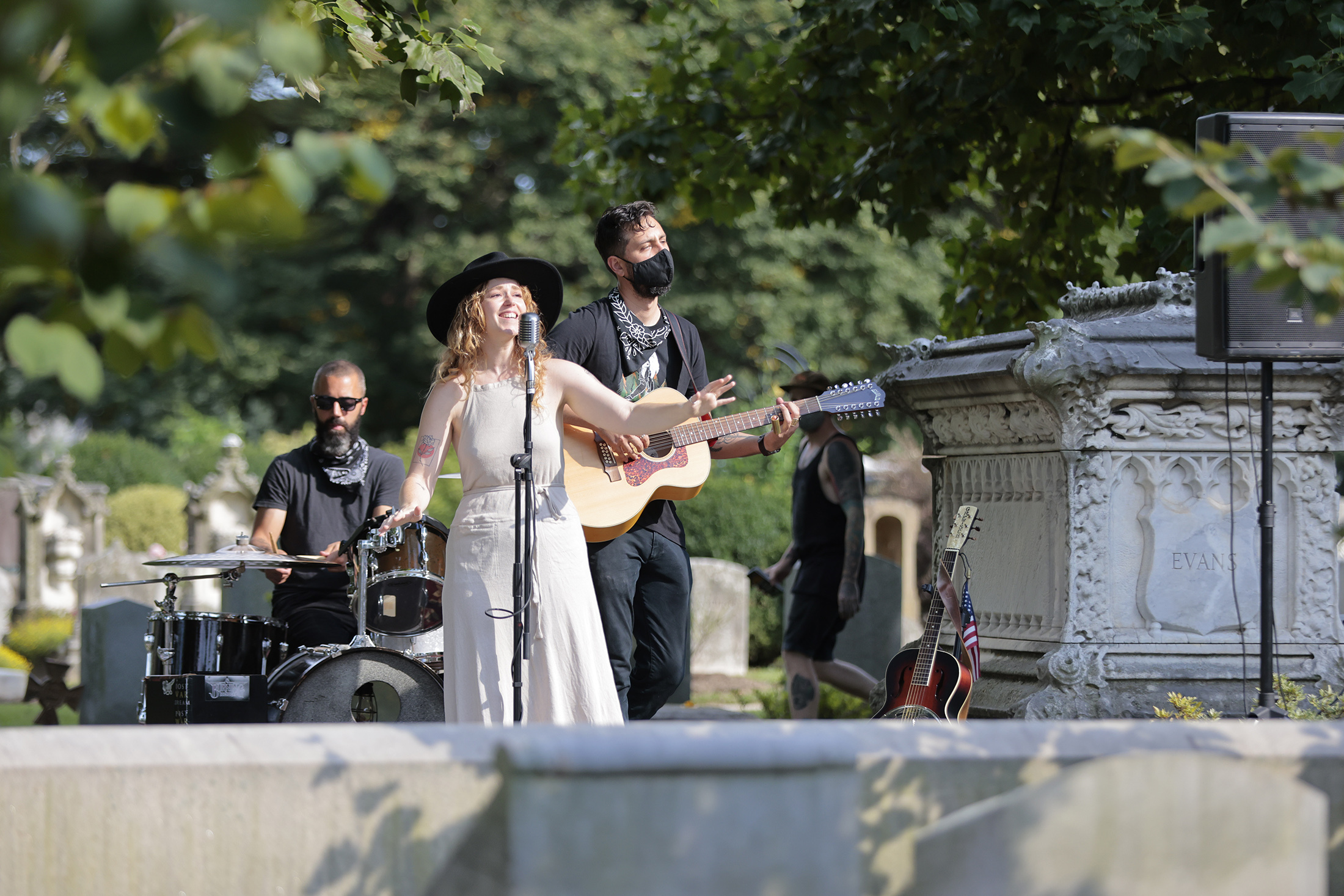
    The 49 Burning Condors singer Kimber Dulin, Christopher Tremogile on guitar and Jason Gooch on drums play as folks shop for unusual antiques, vintage items, artwork and handmade wares at the Market of the Macabre at the Laurel Hill Cemetery in 2021.

    Goldenberg said the extensive offerings are meant to build connections between people and the cemetery: They will be more likely to contribute money, or when they eventually need a resting place for their loved ones, they will look there first.

    This all used to be more common — the first U.S. cemeteries in the mid-19th century also served as the country’s first public parks, with open grassy fields fit for a picnic. Before then, people buried their dead in smaller graveyards that eventually became overcrowded and sources of disease.

    Laurel Hill is readying itself for a changing death industry, too. Goldenberg said she anticipates a rise in “green burials,” in which a person is buried without embalming or a casket, and said the cemetery was designating a section for them.

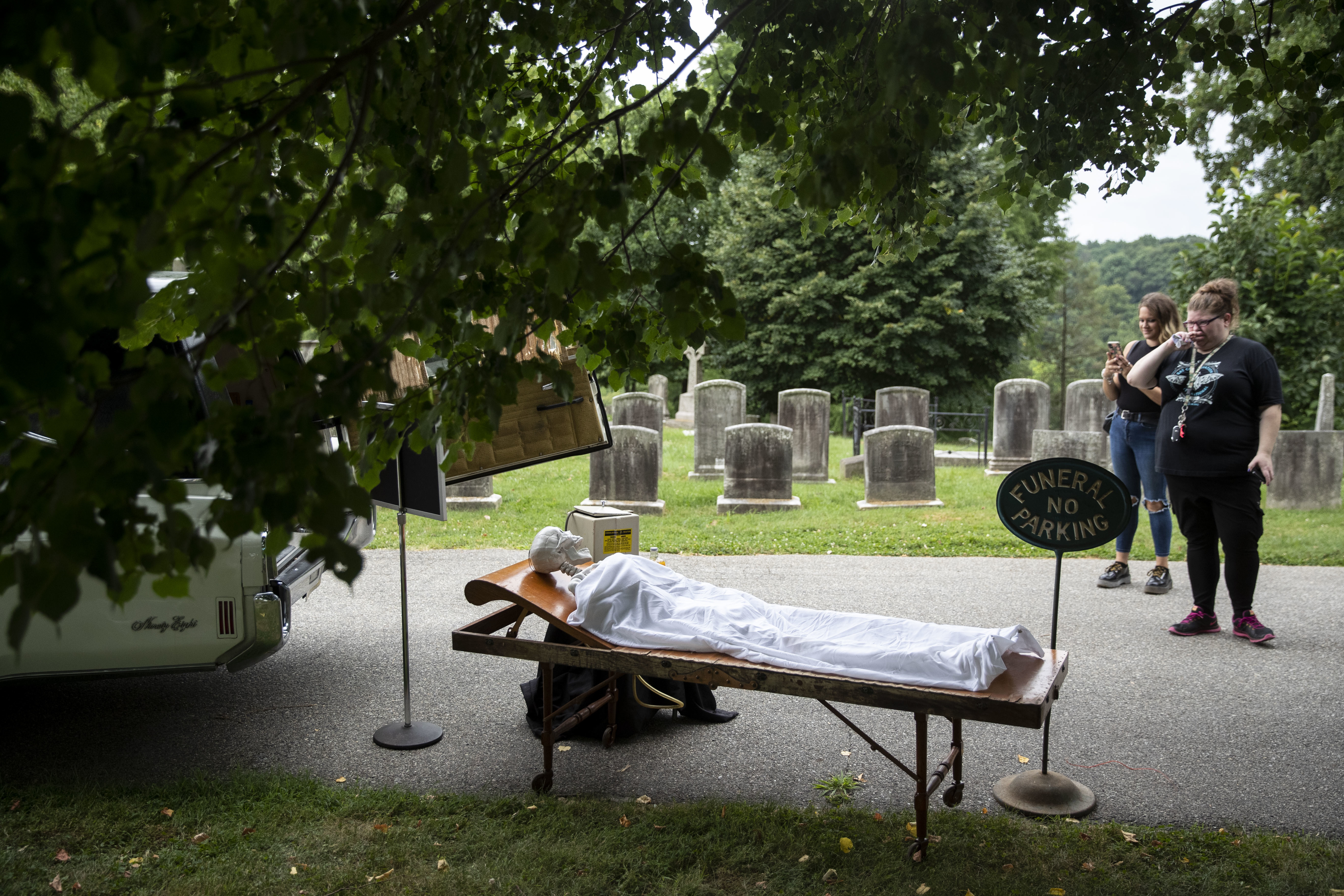
    Visitors view a display behind a hearse during the 13th Car & Hearse Show presented by the Mohnton Professional Car Club at Laurel Hill Cemetery in 2021.

    And while Goldenberg said she would be long gone before the cemetery runs out of space for new burials, it is a reality officials are planning for.

    Laurel Hill is adding space for an additional 225 niches for cremated remains.

    “There are small cemeteries, and once they fill up, that’s the revenue stream. … You have to be prepared for that,” she said.

    “If you don’t, that’s when you fall on hard times.”

    If a cemetery reaches the point of closure or abandonment, it’s not always clear what would happen to it. Last year, Gov. Josh Shapiro signed into law a bill sponsored by State Rep. Tim Brennan (D., Bucks) that would give financial relief to municipalities that take over abandoned cemeteries, since doing so can be a costly burden that local governments want to avoid.

    Uncertain futures for cemeteries

    Days after the Alter family made it through the prayers and memorial they planned, the emotional weight of the experience hit them even harder.

    Daniel Alter later confirmed with Har Jehuda that a fresh grave had been dug where he believed his mother was buried. Recently, he hired a ground-penetrating radar company to examine the burial site, which determined the freshly dug grave was directly adjacent to where his mother was buried. While Alter was relieved to learn his mother’s grave had not been disturbed, he said Har Jehuda could have prevented the anguish he and his family have felt over the last few months.

    Har Jehuda Cemetery’s owner, Larry Moskowitz, declined to comment for this article. Moskowitz was previously prosecuted by the state attorney general’s office over allegations that his other business, Wertheimer Monuments, had failed to deliver headstones to people who had paid for them. Complaints like these against the burial industry happen occasionally — the attorney general’s office also sued another Philadelphia monuments company in 2023 for failing to deliver headstones. There are multiple organizations dedicated to protecting consumers against predatory burial providers.

    The Alters, like other families, continue to visit and bury their loved ones at Har Jehuda, but they hope that no one else goes through their experience.

    “Our collective wish is that it never, ever, ever happens again to anyone in the Philly area,” Daniel Alter said.

  • Gloria Del Piano, celebrated silk clothing and jewelry designer, has died at 72

    Gloria Del Piano, celebrated silk clothing and jewelry designer, has died at 72

    Gloria Del Piano, 72, of Philadelphia, celebrated designer of silk clothing, fashion accessories, and jewelry, former Italian TV producer and public relations director, energy therapist, Italian translator, voice-over actor, and community volunteer, died Wednesday, Oct. 1, of complications from cancer at the Hospital of the University of Pennsylvania.

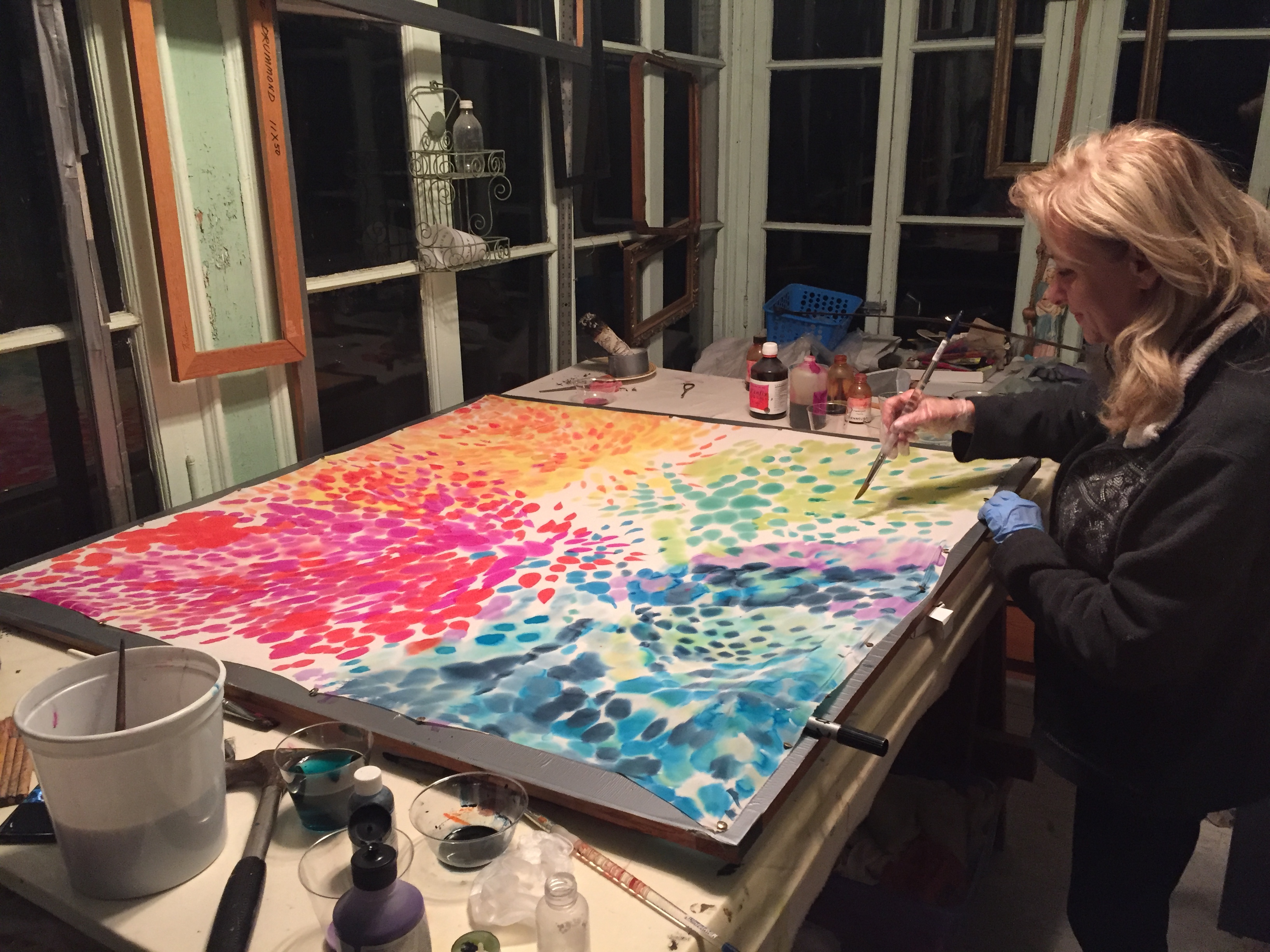
    Energetic, artistic, and indomitable, Ms. Del Piano was 31 when she arrived in Philadelphia from Rome in 1984. She had little money and knew little English. But she discovered her skill for silk painting in a do-it-yourself class, and the colorful hand-painted silk scarves, evening wraps, handkerchiefs, handbags, and original jewelry she went on to create turned Gloria Del Piano Accessories LLC into a fashion powerhouse.

    In just a few years, she opened a store on Bainbridge Street and contracted with Bergdorf Goodman, Neiman Marcus, Nan Duskin, Nordstrom, and hundreds of other fashion outlets to carry her designs in Philadelphia, New York, Los Angeles, San Francisco, Detroit, Minneapolis, and elsewhere around the country. Locally, her signature scarves and earrings were featured at gallery exhibits, charity benefits, private homes, and fashion shows at Penn’s Landing, Fairmount Park, the Wayne Art Center, and elsewhere.

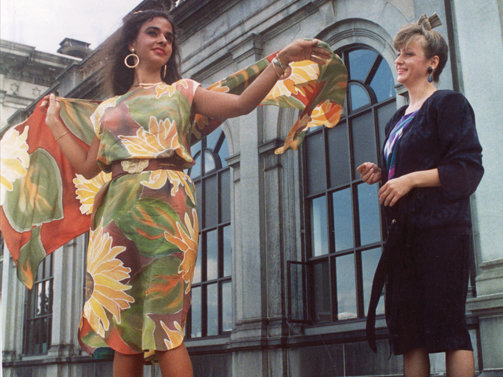
    Many of Ms. Del Piano’s designs were colorful.

    Her line of accessories won awards for excellence and creativity at the Philadelphia Dresses the World fashion expos in 1986 and ’87, and she was inducted into the Philadelphia Get to Know Us Fashion Hall of Fame in 1988. The Inquirer, Daily News, Los Angeles Times, and other outlets publicized her exhibits, and a fashion writer for Newsday called her scarves, with flower and bird patterns, “exquisite” in a 1986 story.

    Some of her scarves were priced between $220 and $300 in 1986, and a black cape listed in 1988 at $495. In 1993, a gold lace-trimmed handkerchief was $45. A fellow artist exhibited with Ms. Del Piano at a Philadelphia festival and said in a fashion blog: “We watched her tie a scarf so many ways so fast it was like a magic act.”

    Earlier, from 1976 to 1984, Ms. Del Piano worked as a program producer and public relations director at GBR-TV in Rome during the station’s glory years. She also did Italian voice-overs, interpretations, and translations for clients of all kinds.

    Ms. Del Piano (right) smiles at a model wearing her designs at an event at Memorial Hall in Fairmount Park.

    She served on the board of the nonprofit Enabling Minds, volunteered in Philadelphia as a Court Appointed Special Advocate for Children, and raised funds for other organizations she championed. In a Facebook tribute, a friend said she was “bigger than life itself” with “a flare of the Italian opera star and the warmth of the Mother Earth itself.”

    Her partner, Wainwright Ballard, said: “She was generous and empathetic. She took care of everyone, including those abandoned or forgotten by others.”

    Gloria Del Piano was born Jan. 20, 1953, in Rome. She was artistic as a girl and always interested in spiritual growth and personal transformation. She studied sociology and business administration after high school in Italy, was certified by the Florida-based Barbara Brennan School of Healing in 2000, and led seminars in healing therapy for years.

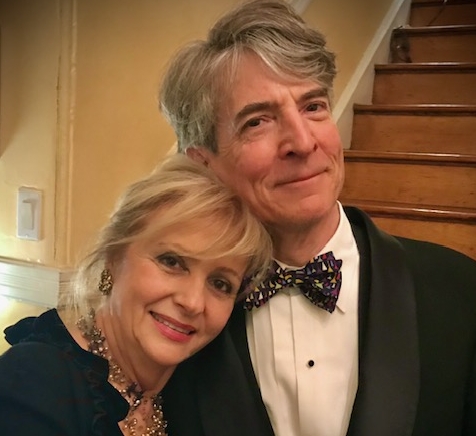
    Ms. Del Piano and her partner, Wainwright Ballard, met in Chestnut Hill.

    She married Roberto Borea in 1985, and they divorced in 1992. She met Ballard at the Mermaid Inn in Chestnut Hill, and they spent the last eight years dancing, traveling, and enjoying life together.

    Ms. Del Piano doted on her family and friends in the United States and Italy, and returned often to Rome for reunions. She lived in Mount Airy and then a 20-room house in Germantown, and visitors marveled at her eclectic collection of art and antiques.

    She enjoyed music, gardening, thrift shopping, and chatting with friends. Friends called her “a philosopher,” “a noble soul,” and “a magician in the kitchen.” She delighted in cooking and entertaining, Ballard said, and always sent guests home with armloads of leftovers.

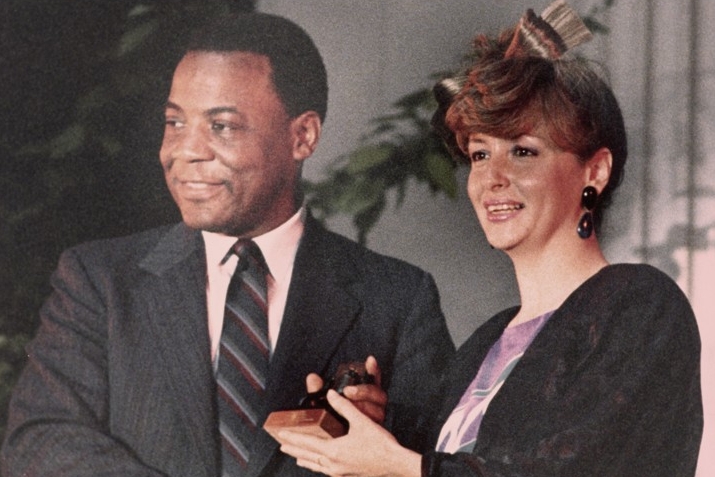
    Ms. Del Piano receives an award from then-Mayor Wilson Goode at a fashion expo in Philadelphia.

    Her “fabulous parties” were “fun and adventurous,” a friend said. Ms. Del Piano said on Facebook: “You never know how wonderful what you have is when you have it. It is when you miss it that we realize how lucky we were.”

    A friend said her “optimism, tenacity, enthusiasm, kindness, beauty, and elegance will always be with us.” Another friend said: “My life has been made richer having known Gloria Del Piano.”

    In addition to Ballard, Ms. Del Piano is survived by a brother, two sisters, and other relatives. Her former husband died earlier.

    A funeral mass is to be held at 9:30 a.m. on Tuesday, Nov. 4, at St. Vincent de Paul Church, 109 E. Price St., Philadelphia, Pa. 19144.

    Donations in her name may be made to Unite for Her, 22 E. King St., Malvern, Pa. 19355.

    Many of Ms. Del Piano’s designs featured flowers and birds.
  • Temple’s College of Public Health has a new building where students can simulate patient interactions in a restaurant, ER, or rowhouse

    Temple’s College of Public Health has a new building where students can simulate patient interactions in a restaurant, ER, or rowhouse

    For years, students at Temple University’s College of Public Health trekked to classes and met professors across two campuses and 10 buildings in North Philadelphia.

    That changed this school year when the college finally moved into its own building, the first dedicated to public health since its founding in 1966.

    Paley Hall is an expansion and renovation of the former Samuel L. Paley Library, which sat at the heart of Temple’s main campus on North Broad Street.

    Jennifer Ibrahim, the college’s dean, spoke with The Inquirer about the new building and amenities designed for public health studies, including a “simulation” space with a replica park, restaurant, emergency room, and even a rowhouse where students can act out interactions with patients. The interview was lightly edited for length and clarity.

    Why did Temple pick the former Paley library for the new College of Public Health building?

    About eight years ago, we started the conversations about renovating Paley to become the new home of the School of Public Health. It’s at the center of campus, and public health has so many collaborations with medicine, with dentistry, with public policy, with law, that it felt really special and appropriate, given how collaborative and interdisciplinary we are.

    Once Paley Hall was gutted, the beauty of the building was that it was created to hold books — to bear the weight of books. That allowed us to add two more floors and extend an east wing and a west wing, significantly increasing the square footage, and that made the building large enough for our different academic units to move into.

    How does consolidating academic departments into one space help students and faculty?

    We have so many different disciplines — public health, social work, nursing, speech, physical therapy, occupational therapy, athletic training, recreational therapy. And we have been in as many as 11 buildings over the history of the college on the main campus, but also on the health science campus [farther north on Broad Street]. It’s not that far, but it does create challenges for collaboration.

    Jennifer Ibrahim, dean of Temple University’s College of Public Health, spoke with The Inquirer about the college’s new headquarters on Temple’s main campus.

    That ability to bump into one another in the same physical space — just having those impromptu conversations brings a warmer human element to the interactions that we have.

    What are some of the amenities in the new building?

    There’s a couple of interesting spaces in the building. We have four classrooms in the building, and then we have the Aramark Community Teaching Kitchen, which is a kitchen space with capacity for 24 students to be learning.

    The simulation center is at the heart of it. This was a collaboration from faculty across all of our disciplines.

    When individuals have an acute injury, or a chronic condition, what we aim to do is get them back into the community and back into their social support system.

    So about 40% of our simulation center is a community. There’s an ambulance bay, there’s a park, there’s a restaurant, there’s a corner grocery store, there’s a replica rowhouse, there’s a street, there’s a sidewalk — all of that allows students to practice safely before they go out and work with our community partners, to learn and to receive feedback.

    The other half of our simulation center is more traditional. We have an inpatient and an outpatient area where students will be interacting with simulated patients as well as mannequins to help them learn [bedside manner].

    We’re really excited for our disciplines to come together and get creative about ways that we can better prepare students for what it’s going to be like when they enter the workforce. We also feel that we have an obligation to our local and regional workforce, that we are putting out the best-prepared students to hit the ground running.

    What does Temple’s investment in a project like Paley Hall say about its commitment to public health as a profession?

    We know that there is an evidence base for what works and what doesn’t work.

    We have an obligation to educate the public.

    We have an obligation to conduct research to advance the evidence of what we know does and does not work.

    We have an obligation to develop policy with our elected officials to figure out what can we do to protect the population in any way that we can.

    I think Temple’s investment in this space is a statement about the importance of public health and health professionals more broadly.

    Now is the time that we have to double down on our investments in public health, and Temple has done just that.

  • The Franklin Mills mall opened in Northeast on this week in Philly history

    The Franklin Mills mall opened in Northeast on this week in Philly history

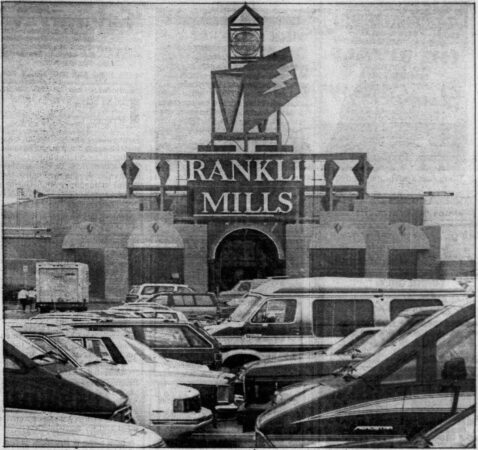
    The design of the Franklin Mills mall was inspired by disaster.

    “The mall was built in the fashion of a modified train wreck,” Jeffery Sneddon, the mall’s general manager, told The Inquirer in 1989, the year it opened. “There are several buildings connected at odd angles.”

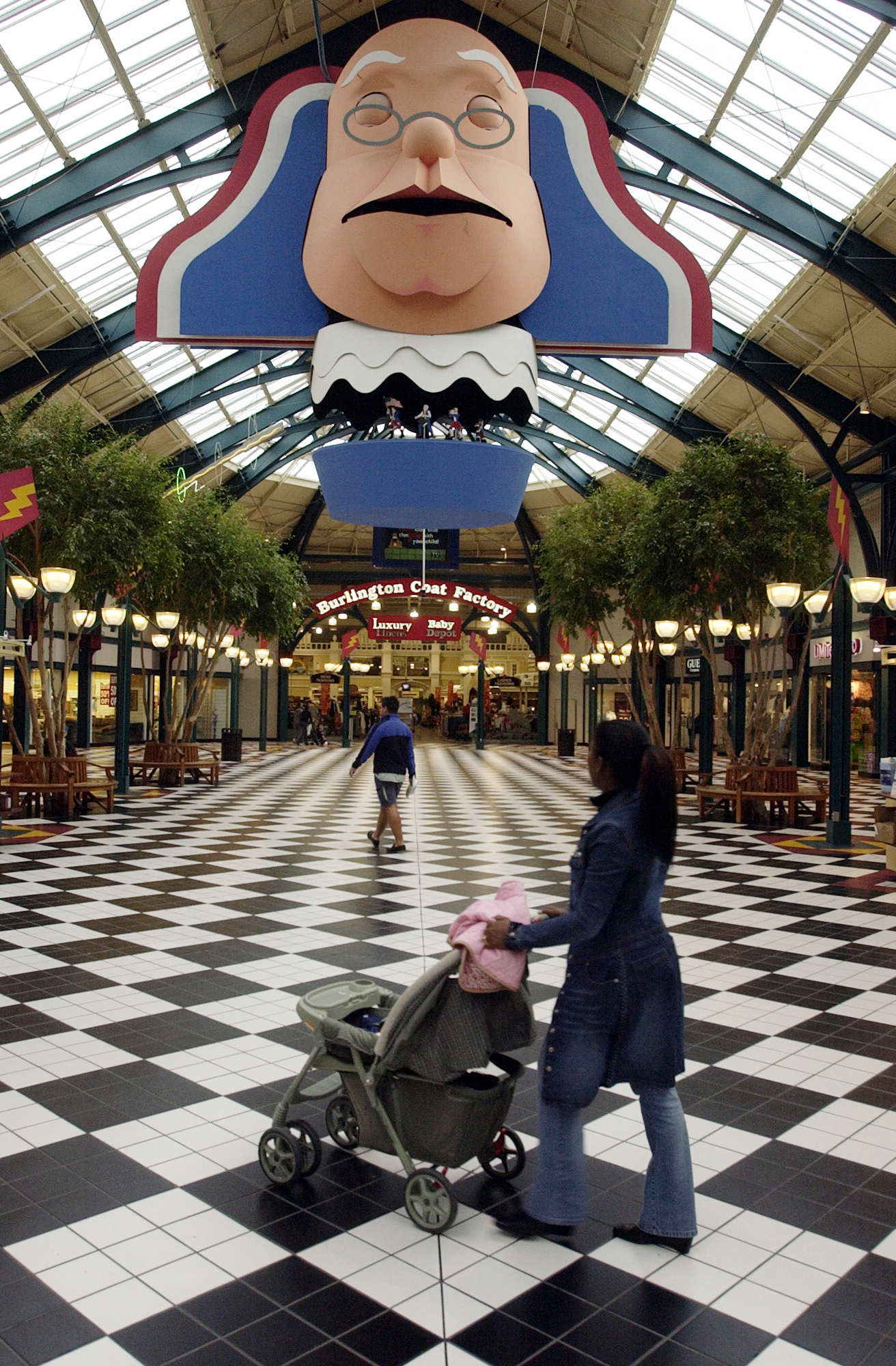
    Years later, the inspiration for the mall’s design underwent a little revisionist history, with publicists claiming the mall’s shape was inspired by the lightning bolts courted by Ben Franklin.

    Appropriate, as change would ultimately become the story of the mall in Northeast Philadelphia.

    At the outset, the goal of the design was to break up the long stretches of the single-level space.

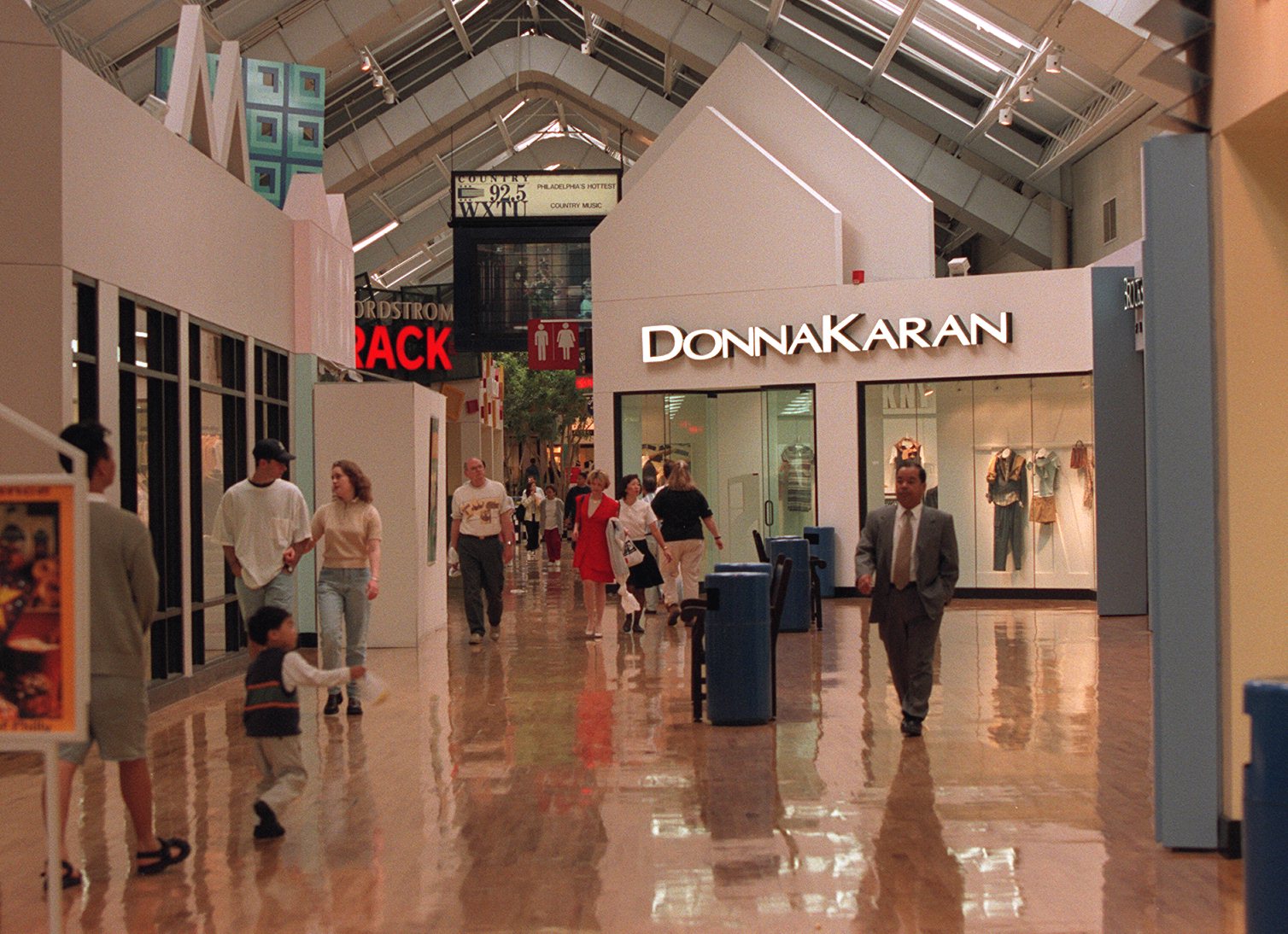
    Shoppers at Franklin Mills walk through the mall in 1997.

    The result was a mile of winding concourse lined with 250 storefronts, and organized so a shopper would always have merchandise shoved into their face.

    The 1.8 million-square-foot mall was built at Knights and Woodhaven Roads on the former Liberty Bell racetrack site. The build cost was $300 million, about $773 million in today’s money.

    When the doors opened on May 11, 1989, to the then-world’s largest outlet mall, the shops were 70% leased, with 120 stores rented by shoe and clothing outfits, restaurants, and anchor stores like a J.C. Penney Outlet and Sears Outlet.

    The title of world’s largest had previously belonged to the Potomac Mills mall, which was a prototype in the suburbs of Washington, D.C. Both shopping meccas were the brainchild of Washington-based commercial real estate tycoons Herbert S. Miller and Richard L. Kramer.

    The duo wanted to build destination venues with value stores. And they paired that with an aggressive marketing campaign that targeted tourists, as well as shoppers who lived up to 60 miles away.

    And it worked. Far Northeast Philadelphia became a destination in the shopping mall era. They’d later add a movie theater, a skate park, and a Jillian’s restaurant and arcade. The mall would host autograph signings and celebrity appearances. And throughout the 1990s and early aughts, it was a popular hangout for discount shoppers and teenagers, and attracted nearly 20 million shoppers yearly.

    Shoppers stroll through the Franklin Mills mall in 2014.

    But by the 2010s, it started to lose its charm. It changed names multiple times, became a haven for flash mobs, and saw its share of Black Friday melees, and a fatal shooting in the food court.

    The fall of the mall concept and the rise of online shopping added to its financial issues, and the building is in receivership as debt holders determine next steps, according to the Business Journal.

    John Chism, manager of Granite Run Mall in Middletown Township back in ’89, didn’t see the mall’s value at the time.

    “Malls are in business to sell,” he said, “not to be attractions for sightseers.”

    But that was the innovation of the Franklin Mills.

    It aimed to be both.

  • The classic Pennsylvania Lottery Christmas commercial is back. We explain the beloved ad’s history.

    The classic Pennsylvania Lottery Christmas commercial is back. We explain the beloved ad’s history.

    Picture it: The Birds game is on, you’re snacking on the couch, and suddenly, you hear it: “This holiday season, my good friend gave to me: seven Powerball tickets — .” With the start of Pennsylvania’s annual showing of its prized lottery Christmas commercial, the holiday season is truly here.

    Dating to 1992, the ad, which is titled “Snowfall,” features a group of carolers singing an abridged and heavily modified version of “The Twelve Days of Christmas,” swapping the usual swans a-swimming and geese a-laying for an array of lottery games.

    On social media, the return of the ad — which typically begins airing in early November — is celebrated. “It’s practically a holiday tradition,” one Reddit user wrote 13 years ago about the ad (from a Reddit thread in 2011 discussing its return that holiday season). A new Reddit thread posted this week also embraced the holiday ad.

    “The moment they hear the carolers sing, many Pennsylvanians reflexively smile, sing along, and mentally count the weeks until they can put up the tree,” Drew Svitko, the Pennsylvania Lottery’s executive director, said in 2016 ahead of the ad’s 25th anniversary. “We are proud that our popular commercial brings back so many warm memories for viewers and has become a Keystone State holiday tradition.”

    But the ad we see today is not the exact ad that was shown over three decades ago.

    The original version was filmed in Pittsburgh ahead of its 1992 debut. It features an older man, Joe, leaving his place on a snowy night to dole out lottery ticket gifts throughout his neighborhood, including to coffee- and newsstand owners. Carolers sing. That version was shown from 1992 through 2011.

    In 2011, the Pennsylvania Lottery reproduced the holiday commercial in high-definition video and to accommodate modern TV specs. This time, the shoot took place in Philadelphia. But the shot-for-shot remake was so carefully executed, many viewers didn’t notice the difference when it was shown in 2012 until it was pointed out.

    “The lottery took great care in recreating the beloved ad,” Pennsylvania Lottery spokesperson Ewa Swope said Tuesday. “By retaining the original audio track and voice-over, along with the shot-for-shot remake, we stayed true to the look and feel of the original spot.”

    Local Philly blog Crossing Broad posted a side-by-side comparison of the 1992 and 2012 ads to highlight the matching.

    Of course, the 2012 ad has been tweaked slightly over the years to account for changes to the lottery’s game offerings. Swope said a visual card within the ad is also updated annually to spotlight a featured holiday scratch-off game — this year’s is the Jingle Jangle Jackpot.

    “Because the original spot is so beloved, we didn’t want to upset anyone by going in a vastly different creative direction,” Connie Bloss, a marketing pro who worked on both the 1992 and 2012 “Snowfall” ads, told the Associated Press at the time of the new spot’s debut. “We meticulously examined each frame to match the outfits, props, location, and other small details. We really wanted to get it right.”

    Swope said the ad’s aim has always been the same: to remind consumers that lottery products can be given as gifts. Becoming a holiday classic was just a bonus.

    “We could not have imagined in 1992 that this spot would become such a holiday classic,” Swope said. “We routinely hear from players that when they see the commercial, they know the holiday season is starting. We are happy that so many players enjoy and look forward to this spot as a part of their holiday tradition.”

    You can watch the latest version of “Snowfall” below:

  • Starting a gym was one scary workout for City Fitness’ Ken Davies

    Starting a gym was one scary workout for City Fitness’ Ken Davies

    Think your gym time is killer? That hour on the elliptical machine? That muscle-taxing combination of burpees, lunges, and side planks that make you want to collapse in a pile of sweat and tears?

    Try owning the gym.

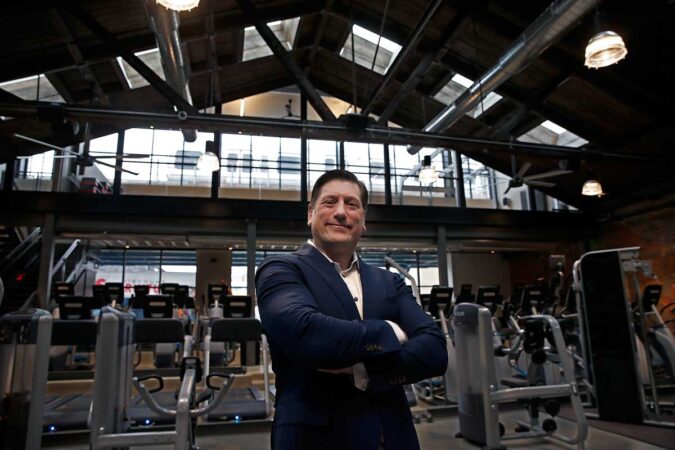
    With his fifth City Fitness location recently opened in Fishtown, and No. 6, the biggest and swankiest of them all, planned for 44,000 square feet in the Sterling apartment building at 18th  Street and JFK Boulevard late this year or early next, founder and CEO Ken Davies is in a good place. But it wasn’t that long ago just the opposite was true.

    The financial hole Davies was in was the ultimate cardio challenge.

    He hit bottom in 2008, a year after opening the first City Fitness on the edge of Northern Liberties, at Second and Spring Garden Streets, just as a recession was bearing down. He reached the precipice of bankruptcy before pulling back.

    “I was beat up,” Davies, 44, a standout wide receiver at Radnor High School and Millersville University, recalled recently. “I didn’t even enjoy it anymore. I wasn’t even working out.”

    It’s a wonder he was making it out of bed those days.

    Davies, who is divorced, had drained the $175,000 he had accumulated in a 401(k) from earlier lucrative jobs in risk management and commercial real estate. He was missing mortgage payments on a house in Stratford, which he had remortgaged for $125,000 and then for an additional $25,000, to help meet his capital needs. He also was delinquent on repayment of a $1.25 million loan from the U.S. Small Business Administration, owed $75,000 on credit cards, had an unsecured loan for $50,000, and needed to repay $70,000 he had borrowed from two friends.

    Plus, he had lost his primary job in information, analytics, and marketing for the commercial real estate industry because he didn’t disclose his gym business.

    One of the worst times, Davies said, was “when I basically slept in a van for a week because I was locked out of my house because I couldn’t pay my mortgage.” The other was when his debit card was declined at Wawa for a $1 purchase.

    “That was the lowest point in my life,” he said.

    City Fitness is now profitable, with gross revenues of $7.5 million, 100 employees, and national growth aspirations, Davies said.

    “I believe he is someone to watch in the fitness industry,” said Wes Deming, principal of All Commercial Capital L.L.C., who was a member of City Fitness before agreeing three years ago to serve as its financial adviser. As such, he is helping Davies locate expansion financing.

    “It can be tough,” Deming said.

    That’s true for many reasons, said Mike Trimble, a vice president in commercial lending at TD Bank. Lack of collateral is one, because most gym owners lease facilities. Another is uncertainty of membership duration.

    Which explains the lack of enthusiasm Davies encountered early on:

    “One banker said, ‘If you were Walt Disney, we wouldn’t lend to you if it was a gym.’ They hated gyms. Even to this day, even with my success, it’s still difficult.”

    Incorporating in May 2005, Davies started paying $20,000 a month to rent the Second and Spring Garden location, which he expected to have open for business in 2006. He was selling memberships for $29.99 a month based on poster-board depictions of what he planned for the site.

    About 300 memberships were sold. Buyers turned against Davies when no gym materialized, accusing him on at least one blog site of stealing their money, he said.

    It took five months to secure the Small Business Administration loan. Build-out  took  an additional six or seven. The first City Fitness gym opened in August 2007. By then, about 10 percent of the presale members had asked for refunds, Davies said.

    Then “things turned from bad to worse,” as can be expected when expenses — equipment leases, instructors, software, office and cleaning supplies, rent — exceed income. Membership sales were slow and revenue from personal training virtually nonexistent, which Davies largely attributed to the recession. Debt mounted.

    To help turn things around, he borrowed the low-cost strategy of a competitor, Planet Fitness. City Fitness memberships dropped to $19.99 a month, quickly attracting 1,000 sign-ups.

    “They have a great model,” Davies said of Planet Fitness, where memberships are currently offered for $10 a month. “But you can’t provide the gym I wanted.”

    That’s a place where equipment is replaced every three years, a robust schedule of group exercise is offered along with top-notch training programs, and where service with a smile and fastidious cleaning are priorities, said Tom Wingert, marketing director for City Fitness. Memberships now start at $49.99 a month.

    “City Fitness’ costs are a direct result of how expensive it is to maintain the level of quality seen in our clubs,” said Wingert, who last year created the city wellness initiative, My City Moves, to achieve another City Fitness objective: community-building.

    “Fitness is a moving target,” said Tracy Shannon, an owner of competitor Sweat, which has been in business since 1997 and plans to open its eighth gym in March at 1 South Broad Street.

    Success is “about staying ahead of the game” and keeping members happy, Shannon said. “If you think you have it figured out, it changes.”

    It wasn’t until 2012 that Davies could open a second location, in the city’s Graduate Hospital section. A smaller “express gym” opened in South Philadelphia in November 2014, followed in April 2015 by what Davies said has been the only failure so far, a personal-training studio in Society Hill at Fourth and Walnut Streets. It reopened Feb. 6 as an express gym.

    Opening in December in Fishtown was a full-scale gym that will offer 25,000 square feet of workout space when fully built out. TD Bank is sold on what Trimble said is “a model that works.”

    Integral, he said, is “an unbelievably strong brand particularly driven by the quality of the offering and Ken’s commitment to building a culture there.” TD has provided $1 million in financing for Fishtown, and a $100,000 letter of credit to support the Sterling lease.

    These days, Davies said, he functions in a state of  “productive paranoia”  because “things can always change.”

    “It’s something that keeps me driven but grounded at the same time.”