Category: Business

Business news and market updates

  • Wall Street CEOs warn Trump: Stop attacking the Fed and credit card industry

    Wall Street CEOs warn Trump: Stop attacking the Fed and credit card industry

    NEW YORK — Up until this week, Wall Street has generally benefited from the Trump administration’s policies and has been supportive of the president. That relationship has suddenly soured.

    When President Donald Trump signed the One Big Beautiful Bill into law in July, it pushed another significant round of tax cuts and also cut the budget of the Consumer Financial Protection Bureau, at times the banking industry’s nemesis, by nearly half. Trump’s bank regulators have also been pushing a deregulatory agenda that both banks and large corporations have embraced.

    But now the president has proposed a one-year, 10% cap on the interest rate on credit cards, a lucrative business for many financial institutions, and his Department of Justice has launched an investigation into Federal Reserve Chair Jerome Powell that many say threatens the institution that is supposed to set interest rates free of political interference.

    Bank CEOs warned the White House on Tuesday that Trump’s actions will do more harm than good to the American economy.

    BNY CEO Robin Vince told reporters that going after the Fed’s independence “doesn’t seem, to us, to be accomplishing the administration’s primary objectives for things like affordability, reducing the cost of borrowing, reducing the cost of mortgages, reducing the cost of everyday living for Americans.”

    “Let’s not shake the foundation of the bond market and potentially do something that could cause interest rates to actually get pushed up, because somehow there’s lack of confidence in the Fed’s independence,” Vince added.

    The Federal Reserve’s independence is sacrosanct among the big banks. While banks may have wanted Powell and other Fed policymakers to move interest rates one way or another more quickly, they have generally understood why Powell has done what he’s done.

    “I don’t agree with everything the Fed has done. I do have enormous respect for Jay Powell, the man,” JPMorgan Chase CEO Jamie Dimon told reporters Tuesday.

    Dimon’s message did not seem to resonate with President Trump, who told journalists that Dimon is wrong in saying it’s not a great idea to chip away at the Federal Reserve’s independence by going after Powell.

    “Yeah, I think it’s fine what I’m doing,” Trump said Tuesday in response to a reporter’s question at Joint Base Andrews after returning from a day trip to Michigan. He called Powell “a bad Fed person” who has “done a bad job.”

    Along with the attacks on the Fed, President Trump is going after the credit card industry. With “affordability” likely to be a key issue in this year’s midterm elections, Trump wants to lower costs for consumers and says he wants a 10% cap on credit card interest rates in place by Jan. 20. Whether he hopes to accomplish this by bullying the credit card industry into just capping interest rates voluntarily, or through some sort of executive action, is unclear.

    The average interest rate on credit cards is between 19.65% and 21.5%, according to the Federal Reserve and other industry tracking sources. A cap of 10% would likely cost banks roughly $100 billion in lost revenue per year, researchers at Vanderbilt University found. Shares of credit card companies like American Express, JPMorgan, Citigroup, Capital One, and others fell sharply Monday as investors worried about the potential hit to profits these banks may face if an interest rate cap were implemented.

    In a call with reporters, JPMorgan’s chief financial officer, Jeffrey Barnum, indicated the industry was willing to fight with all resources at its disposal to stop the Trump administration from capping those rates.

    “Our belief is that actions like this will have the exact opposite consequence to what the administration wants in terms of helping consumers,” Barnum said. “Instead of lowering the price of credit, it will simply reduce the supply of credit, and that will be bad for everyone: consumers, the broader economy, and yes, for us, also.”

    Trump seemed to double down on his attacks on the credit card industry overnight. In a post on his social media platform Truth Social, he said he endorsed a bill introduced by Sen. Roger Marshall (R., Kansas) that would likely cut into the revenue banks earn from merchants whenever they accept a credit card at point-of-sale.

    “Everyone should support great Republican Senator Roger Marshall’s Credit Card Competition Act, in order to stop the out of control Swipe Fee ripoff,” Trump wrote.

    The comments from Wall Street are coming as the major banks report their quarterly results. JPMorgan, the nation’s largest consumer and investment bank, and The Bank of New York Mellon Corp., one of the world’s largest custodial banks, both reported their results Tuesday with Citigroup, Bank of America, Wells Fargo, and others to report later this week.

  • Family budgets are stretched, and bargain grocer Aldi seizes the moment in a rapid expansion

    Family budgets are stretched, and bargain grocer Aldi seizes the moment in a rapid expansion

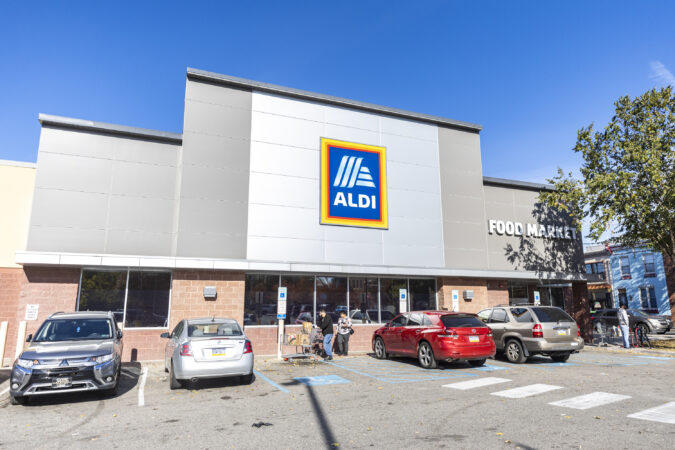
    The discount grocery chain Aldi is expanding rapidly and plans to open more than 180 U.S. stores this year as more Americans skip nights out at restaurants and cook at home due to anxiety over the nation’s economy.

    The chain, with U.S. operations based outside of Chicago, went on an expansion tear soon after inflation began to spike in 2021 and opened a record number of new stores last year.

    Food inflation has slowed, but it was still up 2.4% last year, according to U.S. data, and has soared about 25% since the pandemic. On Tuesday, the U.S. Labor Department said that grocery prices jumped 0.7% in December from the previous month, and that price hikes accelerated faster in 2025 than they had in the previous two years.

    Last month beef and veal prices climbed 1% from November, and are up 16.4% from last year. Coffee prices increased 1.9% in a month and are up almost 20% over a year. Egg prices dropped 8.2% in December, continuing to fall after surging last year after a bird flu outbreak.

    The vast majority of U.S. adults say they’ve noticed higher than usual prices for groceries and electricity in recent months, according to a survey from the Associated Press-NORC Center for Public Affairs Research.

    Aldi has sought to snap up market share as more families trade down, meaning they are changing where they shop to cut costs.

    Americans are dropping trusted name brands for cheaper store-brands and swapping out the places they’ve shopped for years in favor of discount or thrift stores. It’s been a boon for national bargain stores chains such as Dollar General and Dollar Tree.

    That shift had begun before President Donald Trump’s trade war began, but appears to have accelerated over the past year.

    Aldi said in 2024 that it planned to open 800 new stores by 2028 as inflation worries spread. It announced plans to open a record 225 locations last year in the U.S.

    Aldi said Tuesday that it will add new distribution centers in Florida, Arizona, and Colorado, and is still committed to investing $9 billion in the U.S. through 2028. The company is also looking to open more than 50 stores in Colorado within the next five years and plans to double its Las Vegas store count by 2030.

    The expansion will give Aldi almost 2,800 stores by the end of the year, which gets its closer to its goal of 3,200 stores by 2028.

    Traditional grocers are under pressure from bargain chains, massive retailers like Walmart, and also relatively new players like Amazon.com. In December, Amazon said same-day perishable grocery delivery had been expanded to more than 2,300 cities and towns, and the online giant said it has more expansion plans for this year.

  • Trump visits a Ford pickup truck factory, aiming to promote his efforts to boost manufacturing

    Trump visits a Ford pickup truck factory, aiming to promote his efforts to boost manufacturing

    DETROIT — President Donald Trump offered a full-throated defense of his sweeping tariffs on Tuesday, traveling to swing-state Michigan to push the case that he’s boosted domestic manufacturing in hopes of countering fears about a weakening job market and still-rising prices that have squeezed American pocketbooks.

    Trump visited the factory floor of a Ford plant in Dearborn, where he viewed F-150s — the bestselling domestic vehicle in the U.S. — at various stages of production. That included seeing how gas and hybrid models were built, as well as the all-gas Raptor model, designed for off-road use.

    The president chatted with assembly line workers as well as the automaker’s executive chairman, Bill Ford, a descendent of Henry Ford. “All U.S. automakers are doing great,” Trump said.

    He later gave a speech to the Detroit Economic Club that was meant to be focused on his economic policies but veered heavily to other topics as well. Those included falsely claiming to have won Michigan three times (he lost the state in 2020 to Joe Biden) and recalling the snakes that felled workers during U.S. efforts to build the Panama Canal more than a century ago.

    “The results are in, and the Trump economic boom has officially begun,” the president said at the MotorCity Casino. He argued that “one of the biggest reasons for this unbelievable success has been our historic use of tariffs.”

    Trump insists tariffs haven’t increased costs

    The president said that tariffs were “overwhelmingly” paid by “foreign nations and middlemen” — even as economists say steep import taxes are simply passed from overseas manufactures to U.S. consumers, helping exacerbate fears about the rising cost of living.

    “It’s tariffs that are making money for Michigan and the entire country,” the president said, insisting that “every prediction the critics made about our tariff policy has failed to materialize.”

    But voters remain worried about the state of the economy. Tuesday’s visit — his third trip to a swing state since last month to talk about his economic policies — followed a poor showing for Republicans in November’s off-year elections in Virginia, New Jersey, and elsewhere amid persistent concerns about kitchen table issues.

    The White House pledged after Election Day that Trump would hit the road more frequently to talk directly to the public about what he is doing to ease their financial fears. The president tried to drive that home on Tuesday, but only amid lengthy asides.

    “I go off teleprompter about 80% of the time, but isn’t it nice to have a president who can go off teleprompter?” he said, before mocking Biden, suggesting his predecessor gave short speeches and doing an impression that included a dramatic clearing of his throat.

    Trump promised to unveil a new “health care affordability framework” later this week that he promised would lower the cost of care. He also pledged to soon offer more plans to help with affordability nationwide — even as he blamed Democrats for hyping up the issue.

    “One of our top priorities of this mission is promoting greater affordability. Now, that’s a word used by the Democrats,” Trump said. “They’re the ones who caused the problem.”

    Trump eased some auto tariffs

    Despite cheering tariffs, Trump has actually backed off the import taxes when it comes to the automobile sector. The president originally announced 25% tariffs on automobiles and auto parts, only to later relax those, seeking to provide domestic automakers some relief from seeing their production costs rise.

    Ford nonetheless announced in December that it was scrapping plans to make an electric F-150, despite pouring billions of dollars into broader electrification. That followed the Trump administration slashing targets to have half of all new vehicle sales be electric by 2030, eliminated EV tax credits and proposed weakening the emissions and gas mileage rules.

    While touring the assembly line, Trump suggested that a major North American trade agreement he negotiated during his first term, the United States-Mexico-Canada trade pact, was irrelevant and no longer necessary for the United States — though he provided few details.

    The pact, known as the USMCA, is up for review this year.

    Trump largely sidesteps Powell probe

    The president’s attempt to shift national attention to his efforts to spur the economy comes as his Department of Justice has launched a criminal investigation into Federal Reserve Chair Jerome Powell, a move that Powell says is a blatant endeavor to undermine the central bank’s independence in setting interest rates.

    Critics of the move include former Fed chairs, economic officials and even some Republican lawmakers. During the Michigan visit, Trump lobbed his often-repeated criticisms of Powell but offered little mention of the investigation.

    Some good economic news for Trump arrived, though, before he left Washington, with new data from December showing inflation declined a bit last month as prices for gas and used cars fell — a sign that cost pressures are slowly easing. Consumer prices rose 0.3% in December from the prior month, the Labor Department said, the same as in November.

    “We have quickly achieved the exact opposite of stagflation, almost no inflation and super-high growth,” he said in his speech.

    Other economic policy speeches

    The Michigan stop follows speeches Trump gave last month in Pennsylvania — where his gripes about immigrants arriving to the U.S. from “filthy” countries got more attention than his pledges to fight inflation — and North Carolina, where he also insisted his tariffs have spurred the economy, despite residents noting the sting of higher prices.

    Like in Michigan, Trump also used a casino as a backdrop to talk about the economy in Pennsylvania, giving his speech there at Mount Airy Casino Resort in Mount Pocono.

    Trump carried Michigan in 2016 and 2024, after it swung Democratic and backed Biden in 2020. He marked his first 100 days in office with a rally-style April speech outside Detroit, where he focused more on past campaign grudges than his administration’s economic or policy plans.

    Democrats seized on Trump’s latest visit to the state to recall his visit in October 2024, when Trump, then also addressing the Detroit Economic Club, said that Democrats’ retaining the White House would mean “our whole country will end up being like Detroit.”

    “You’re going to have a mess on your hands,” Trump said during a campaign stop back then.

    Michigan Democratic Party Curtis Hertel said in a statement that “Trump’s speech showed just how out-of-touch he is with reality, claiming that affordability is ‘fake’ as Michiganders have less money in their pocketbooks because of the Republicans’ price-hiking agenda.”

  • U.S. plane used in boat strike was made to look like civilian aircraft

    U.S. plane used in boat strike was made to look like civilian aircraft

    The Trump administration’s first deadly strike on an alleged drug smuggling boat, in early September, was conducted by a secretive military aircraft painted to look like a civilian plane, multiple officials confirmed to The Washington Post on Monday.

    The crewed aircraft did not have any weapons showing when the attack occurred, two officials said, speaking, like some others, on the condition of anonymity to discuss a sensitive matter. Instead, the munitions were fired from a launch tube that allows them to be carried inside the plane, not mounted outside on the wing.

    Use of the plane prompted legal debate after the Sept. 2 operation over whether the concealment of its military status amounted to a ruse that violated international law, said current and former officials familiar with the matter. Eleven people were killed, including two who survived the initial attack by U.S. forces but died in a controversial follow-on strike.

    Feigning civilian status and then carrying out an attack with explicit intent to kill or wound the target is known as “perfidy” under the law of armed conflict, a war crime, according to legal experts.

    “If you arm these aircraft for self-defense purposes, that would not be a violation” of the law of war, said Todd Huntley, a former military lawyer who advised U.S. Special Operations forces for seven years at the height of the Pentagon’s counterterrorism campaign that followed 9/11. “But using it as an offensive platform and relying on its civilian appearance to gain the confidence of the enemy is.”

    The Trump administration has claimed that its lethal strikes on alleged drug boats in the waters around Latin America are lawful because President Donald Trump has determined the United States is in an “armed conflict” with drug cartels. That contention is widely disputed by legal experts, who say the U.S. is not at war with drug traffickers and that killing suspected criminals in international waters is tantamount to murder. Several analysts and former national security officials have said the entire campaign is, at its foundation, unlawful.

    “This isn’t an armed conflict,” said Huntley, director of the national security law program at Georgetown Law. “But what makes this so surprising is that even if you buy their argument, it’s a violation of international law.”

    The Pentagon did not immediately respond to requests for comment. A spokesperson for U.S. Special Operations Command, which carried out the Sept. 2 operation, declined to comment.

    The New York Times first reported the plane’s civilian paint scheme earlier Monday.

    The Sept. 2 military strike was the first of almost three dozen to date. The attacks have killed more than 100 people.

    The initial strike raised questions — among Democrats and law of war experts, principally — about whether a crime was committed when U.S. forces returned to the boat wreckage after the first strike to fire again and kill the two survivors as they clung to the hull.

    While the “double tap” to kill the survivors has drawn scrutiny on Capitol Hill, the military has closely guarded specifics of the aircraft involved in the operation.

    According to multiple officials, the plane is part of a fleet of crewed U.S. Air Force aircraft painted in civilian schemes and used in situations where it would not be advantageous for the military’s typical gray paint scheme to be seen. One official said the plane was already painted to look like a civilian aircraft before the Sept. 2 operation — it was not painted specifically for the boat strike, this person said.

    Firing on the alleged drug boat from an aircraft that looked like a civilian plane and had no visible weapons on it raised debate among some Pentagon officials after the strike, as well as concern that a classified capability was being “burned” in an operation targeting “civilians in a boat who pose no threat,” a former official said.

    “It’s not like they’re infiltrating downtown Tehran to kill some IRGC leader or something,” said the former official, referring to Iran’s military, the Islamic Revolutionary Guard Corps.

    Those familiar with the matter said the aircraft was broadcasting as a military aircraft. However, unless the men on the boat had technology on board to receive those transmissions, they would not have known it was a U.S. military plane.

    The Post reported late last year that Defense Secretary Pete Hegseth gave his approval ahead of the Sept. 2 operation to kill the passengers, sink the boat and destroy the drugs it was suspected of carrying. As the two survivors clung to the wreckage, Adm. Frank M. Bradley, the strike commander, determined they were still viable targets and, after consulting with a military lawyer, ordered a second strike that killed them, people familiar with the matter said.

    Shortly before the second strike, real-time surveillance video showed the two men waving their arms and looking skyward, people who saw the footage told The Post in December. But Bradley explained to lawmakers scrutinizing the operation that it was unclear why they were doing so, people familiar with his account said then.

    During multiple meetings with lawmakers after news of the double tap surfaced, Bradley said he looked for signs the men were surrendering, such as waving a cloth or holding up their arms, people familiar with his account have said. The admiral noted that he saw no such gesture, and did not interpret their wave as a surrender, people familiar with his interviews have said.

  • Ena Widjojo, owner and longtime celebrated chef at Hardena in South Philadelphia, has died at 73

    Ena Widjojo, owner and longtime celebrated chef at Hardena in South Philadelphia, has died at 73

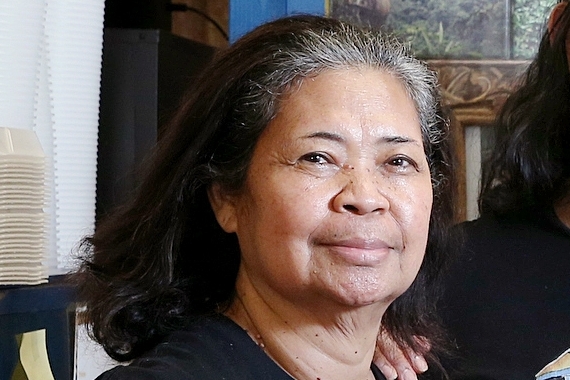
    Ena Widjojo, 73, of Philadelphia, owner and longtime celebrated chef at the Hardena restaurant in South Philadelphia, mentor, and mother, died Wednesday, Dec. 24, of cancer at her home.

    Born and reared in Java, Indonesia, Mrs. Widjojo came to the United States in 1969 when she was 17. She opened a cantina at the Indonesian Consulate in New York in 1977, worked as a caterer in the 1990s after the cantina closed in 1989, and moved to Philadelphia in 2000 to open Hardena with her husband, Harry.

    Over the next decade and a half, until she retired in 2017, Mrs. Widjojo grew Hardena, described by the Daily News in 2007 as “a postage-stamp-size luncheonette at Hicks and Moore Streets in a gritty section of South Philly,” into a culinary and cultural connection for thousands of local Indonesians and other diners who enjoyed her homemade Southeast Asia cuisine.

    The corner restaurant’s name is a blend of their names, Harry and Ena, and features Indonesian specialties such as golden tofu, goat curry, saté chicken, beef rendang, and tempeh. “It’s the best Indonesian food in Philadelphia, a great mix of Indian and Chinese flavors,” elementary schoolteacher Aaron MacLennan told the Daily News in 2007.

    This photo of Mrs. Widjojo appeared in the Daily News in 2007

    In 2012, Philadelphia Magazine named Hardena one of its Best of Philly Indonesian restaurants, calling it a “no-frills, high-flavor buffet.” In February 2018, Mrs. Widjojo and two of her three daughters were named semifinalists for the James Beard Foundation’s best chef award for the Mid-Atlantic states. In October 2018, Inquirer food critic Craig LaBan praised the restaurant’s “aromatic steam table of homestyle cooking that’s been a well-priced anchor of Indonesian comfort for 18 years.”

    Friendly and ever present at the lunch and dinner rushes, Mrs. Widjojo was known as Mama to many of her customers and friends. She learned how to bake and cook from her mother, a culinary teacher in Java, and later incorporated many of her mother’s recipes into her own memorable melting pot of Indian, Chinese, Arab, Portuguese, Spanish, English, and Dutch dishes at Hardena.

    “She served me greens once, and I felt like I was at home,” a friend said on Instagram.

    She and her husband traveled weekly between Philadelphia and Queens while their daughters — Diana, Maylia, and Stephanie — finished school in New York. Maylia and Diana assumed control of Hardena when Mrs. Widjojo retired, and Diana opened the restaurant Rice & Sambal on East Passyunk Avenue in 2024.

    Earlier, at the consulate in New York, Mrs. Widjojo made meals for former Secretary of State Henry Kissinger and former Indonesian President Suharto and his large entourage. “I cooked for all the diplomats.” she told The Inquirer in 2018.

    Mrs. Widjojo (second from right) smiles with her husband and three daughters.

    She grew chili peppers and lime trees in her South Philly backyard, was happy to share kitchen tips and cultural traditions with visitors and cooking classes, and helped her daughters cater the 2019 James Beard Foundation’s annual Media Awards in New York.

    She worked six days a week for years and told edible Philly in 2017 that her retirement was good for her daughters. “If I’m cooking all the time,” she said, “they’re not learning.”

    Ena Djuneidi Juniarsah was born April 24, 1952. She baked cakes in a charcoal oven for her mother in Java and sold cookies and pastries after school when she was young. “

    Her mother was strict about cooking, Mrs. Widjojo said in 2018, and discarded any and all imperfect creations. “Like me, with my kids’ cooking,” she said, “if you’re not good, that’s no good.”

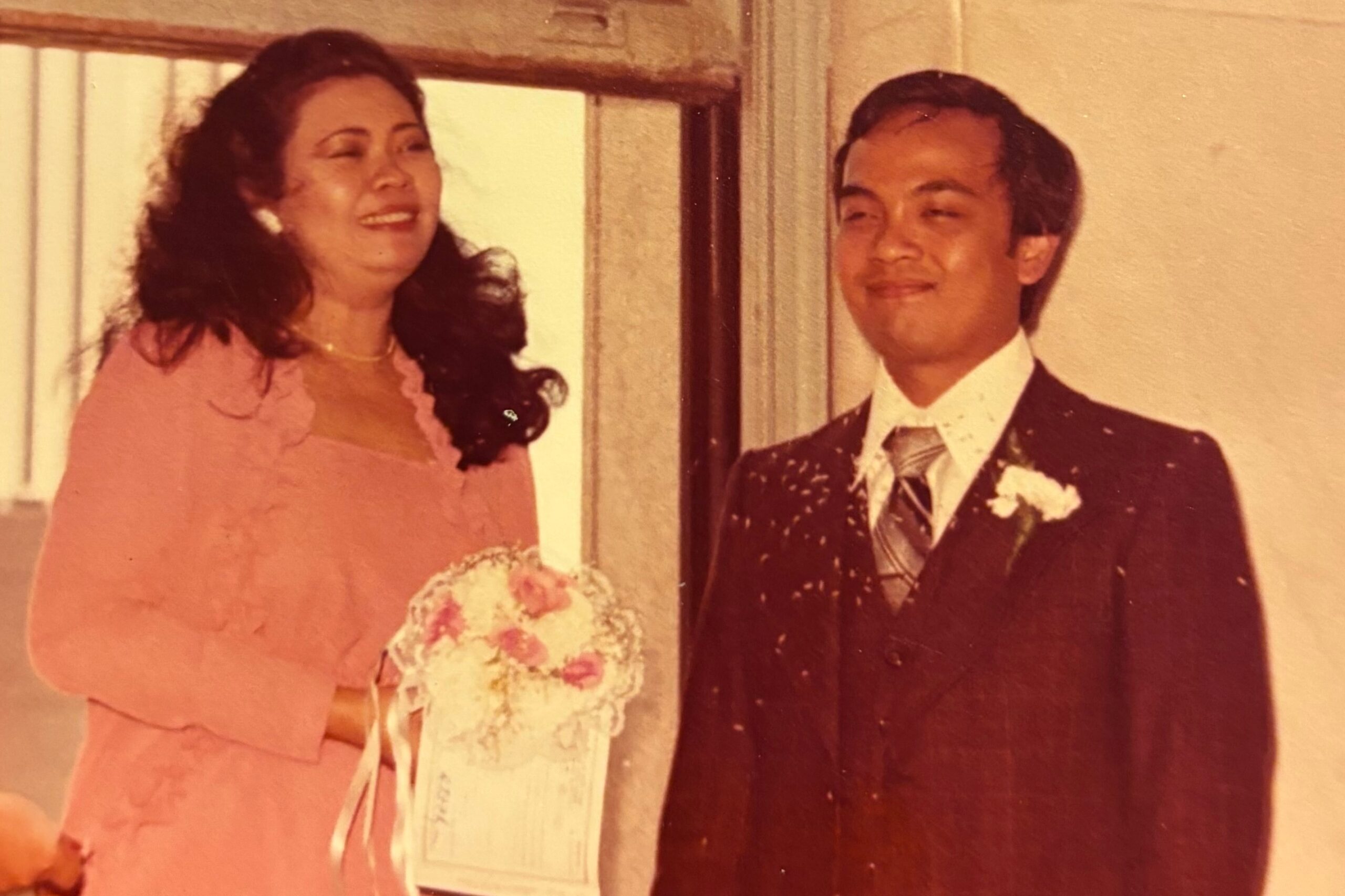
    She married fellow restaurateur Harry Widjojo in New York and spent time as a singer, beautician, florist, and nanny before cooking full time. Away from the restaurant, she enjoyed drawing, painting, crocheting, and family strolls in the park.

    Mrs. Widjojo and her husband, Harry, were married in New York.

    She could be goofy, her daughters said. She sang “You Are My Sunshine” when they were young and served as their lifelong mentor and teacher.

    Friends called her “sweet,” “amazing,” “a beautiful soul,” and “warm and welcoming” on Instagram. She was diagnosed with cancer in 2015.

    “Her life, generosity, and talent enriched the hearts of all who met her,” her family said in a tribute. “She taught us that feeding people is one of the purest ways to show love, have pride in our culture, and support our family.”

    Maylia said: “She was always giving.”

    Stephanie said: “She was always there for me.”

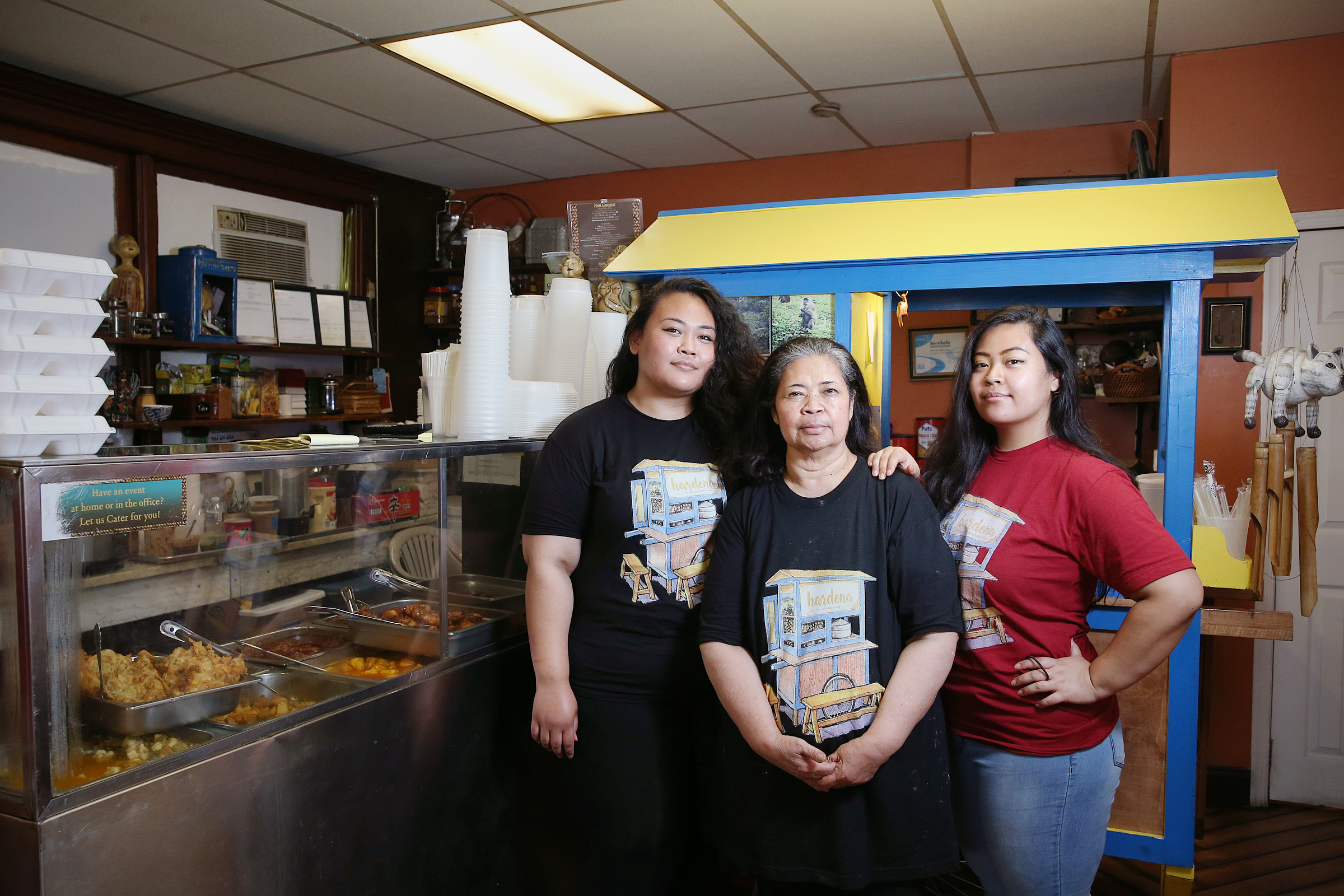
    Mrs. Widjojo (center) stands in Hardena with her daughters Maylia (left) and Diana in 2020.

    Diana said: “She saw the world with open arms and an open heart. She was a wonder woman.”

    In addition to her husband and daughters, Mrs. Widjojo is survived by two grandchildren, a sister, two brothers, and other relatives. A sister and two brothers died earlier.

    A celebration of her life was held Dec. 27.

    Donations in her name may be made to Masjid Al Falah Mosque, 1603 S. 17th St. Philadelphia, Pa. 19145.

    Mrs. Widjojo came to the United States from Java when she was 17.
  • Wawa is closing another Philly store after its new format fell flat

    Wawa is closing another Philly store after its new format fell flat

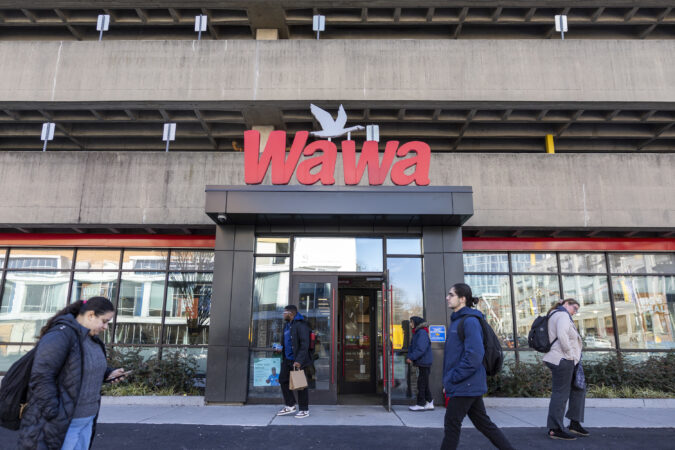
    Wawa is closing a store on Drexel University’s campus, nearly three years after remodeling to a digital-order-only concept with no products on shelves.

    The 3300 Market St. location, which has been open since 2018, is set to close Jan. 21.

    It was remodeled in 2023 to test the new store format, which required customers to order all items on a touch screen, with no shelves of product to browse. The pilot was not a success, leading to the store’s planned closure, said a company statement shared by Wawa spokesperson Lori Bruce Tuesday.

    Prior to the pandemic, this store saw more food-service than any other Wawa, CEO Chris Gheysens previously told the Philadelphia Business Journal.

    “Over the years, we have made several attempts to address business and operational challenges at this location,” said the company statement shared by Bruce, which did not provide details about those challenges.

    That effort “includes partnering with property owner, Drexel University, in an attempt to address some of these issues, and most recently making investments in our store design to test a fully digital format. Unfortunately, this test did not adequately improve performance or deliver an enhanced customer experience, which ultimately led to the decision to close the store‚” Wawa’s statement said.

    Wawa had informed Drexel about its plans to close the location, university spokesperson Niki Gianakaris confirmed Tuesday in a statement from the university. Drexel did not respond to a question about what will occupy the space going forward.

    Employees will be offered positions at other nearby Wawas. Nearby stores include those at 36th and Chestnut Streets, and 38th and Spruce Streets.

    The Wawa at the corner of 34th and Market Streets near Drexel University will close this month.

    Wawa has closed a number of stores in the city in recent years.

    Wawa closed two locations in the Northeast last year.

    In 2024, the company closed a Port Richmond store that was one of its oldest, a Cherry Hill location that had been operating for 51 years, and a store near the Philadelphia Art Museum, as well as a Center City location at 16th and Ranstead Streets that had been testing a small-store concept.

    Meanwhile, Wawa competitor Sheetz recently announced it will open its first Philadelphia-area outpost, in Montgomery County, next month.

  • Fewer Americans sign up for Affordable Care Act health insurance as costs spike

    Fewer Americans sign up for Affordable Care Act health insurance as costs spike

    NEW YORK — Fewer Americans are signing up for Affordable Care Act health insurance plans this year, new federal data shows, as expiring subsidies and other factors push health expenses too high for many to manage.

    Nationally, around 800,000 fewer people have selected plans compared to a similar time last year, marking a 3.5% drop in total enrollment so far. That includes a decrease in both new consumers signing up for ACA plans and existing enrollees re-upping them.

    The new data released Monday evening by the Centers for Medicare and Medicaid Services is only a snapshot of a continuously changing pool of enrollees. It includes sign-ups through Jan. 3 in states that use Healthcare.gov for ACA plans and through Dec. 27 for states that have their own ACA marketplaces. In most states, the period for shopping for plans continues through Jan. 15 for plans that start in February.

    But even though it’s early, the data builds on fears that expiring enhanced tax credits could cause a dip in enrollment and force many Americans to make tough decisions to delay buying health insurance, look for alternatives or forgo it entirely.

    Experts warn that the number of people who have signed up for plans may still drop even further, as enrollees get their first bill in January and some choose to cancel.

    Healthcare costs at the center of a fight in Congress

    The declining enrollment comes as Congress has been locked in a partisan battle over what to do about the subsidies that expired at the start of the new year. For months, Democrats have fought for a straight extension of the tax credits, while Republicans have insisted larger reforms are a better way to root out fraud and abuse and keep costs down overall. Last week, in a remarkable rebuke of Republican leadership, the House passed legislation to extend the subsidies for three years. The bill now sits in the Senate, where pressure is building for a bipartisan compromise.

    Up until this year, President Barack Obama’s landmark health insurance program had been an increasingly popular option for Americans who don’t get health coverage through their jobs, including small business owners, gig workers, farmers, ranchers and others.

    For the 2021 plan year, about 12 million people selected an Affordable Care Act plan. Enhanced tax credits were introduced the following year and four years later enrollment had doubled to over 24 million.

    This year’s sinking sign-ups — sitting at about 22.8 million so far — mark the first time in the past four years that enrollment has been down from the previous year at this point in the shopping window.

    The loss of enhanced subsidies means annual premium costs will more than double for the average ACA enrollee who had them, according to the healthcare research nonprofit KFF. But extending the subsidies would also be expensive for the country. Ahead of last week’s House vote, the nonpartisan Congressional Budget Office estimated that extending the subsidies for three years would increase the nation’s deficit by about $80.6 billion over the decade.

    Americans begin looking for other options

    Robert Kaestner, a health economist at the University of Chicago, said some of those who abandon ACA plans may have other options, such as going on a partner’s employer health plan or changing their income to qualify for Medicaid. Others will go without insurance at least temporarily while they look for alternatives.

    “My prediction is 2 million more people will lack health insurance for a while,” Kaestner said. ”That’s a serious issue, but Republicans would argue we’re using government money more efficiently, we’re targeting people who really need it and we’re saving $35 billion a year.”

    Several Americans interviewed by The Associated Press have said they’re dropping coverage altogether for 2026 and will pay out of pocket for needed appointments. Many said they are crossing their fingers that they aren’t affected by a costly injury or diagnosis.

    “I’m pretty much going to be going without health insurance unless they do something,” said 52-year-old Felicia Persaud, a Florida entrepreneur who dropped coverage when she saw her monthly ACA costs were set to increase by about $200 per month. “It’s sort of like playing poker and hoping the chips fall and try the best that you can.”

  • Camden’s planned 25-story Beacon Building could get a boost from new N.J. tax credit bill

    Camden’s planned 25-story Beacon Building could get a boost from new N.J. tax credit bill

    New Jersey lawmakers on Monday approved a bill that would make it easier for development projects in Camden to qualify for hundreds of millions of dollars in tax credits.

    That could be a boon to the Beacon Building — a planned 25-story office tower downtown whose backers have said they intend to seek state incentives — among other projects, according to the bill’s supporters.

    Under current law, most commercial real estate developers must show their projects would generate more dollars in economic activity than they would receive in subsidies in order to qualify for tax credits under New Jersey’s gap-financing program, known as Aspire.

    The new legislation — which was introduced late last month and approved by the Democratic-led Legislature days before Democratic Gov. Phil Murphy is to leave office — would exempt certain projects from the program’s so-called net benefit test.

    Lawmakers on Monday also passed a bill increasing the cap on the size of the Aspire tax-credit program from $11.5 billion to $14 billion and authorized $300 million in tax breaks to renovate the Prudential Center in Newark, home of the New Jersey Devils hockey franchise. The team is owned by Harris Blitzer Sports & Entertainment, which also owns the Philadelphia 76ers.

    ‘Competitive market’

    Supporters of the Camden bill, A6298/S5025, said it would make South Jersey more competitive in the Philadelphia market, while critics contended it would weaken a provision of a 2020 economic development law signed by Murphy that was intended to ensure fiscal prudence.

    The test has impeded big projects in South Jersey, said Assembly Majority Leader Louis Greenwald (D., Camden), a sponsor of the bill. Since the law was signed, the region hasn’t attracted a single “transformative project” — a designation in the Aspire program for developments that have a total cost of $150 million and are eligible for up to $400 million in incentives over 10 years, Greenwald said.

    “We started to ask people, what’s the barrier?” he said. “And when you look at the competitive market of what [developers] can get in Philadelphia or Pennsylvania compared to other areas in the state that don’t have to compete with that, that net operating loss test, that net benefits test, is a barrier.”

    The legislation was not drafted with a specific project in mind, Greenwald said, but he acknowledged that one that might benefit is Beacon, which would feature 500,000 square feet of office space.

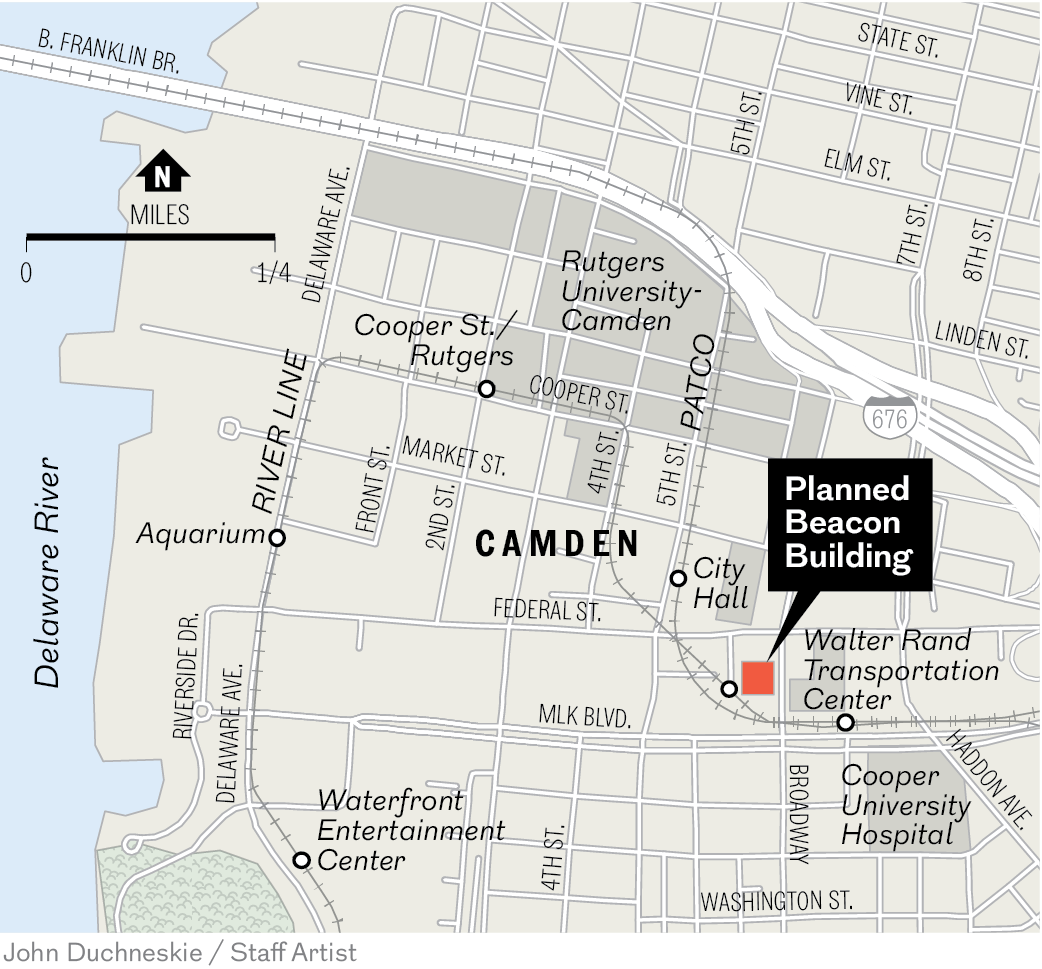
    Developer Gilbane is leading the project with the Camden County Improvement Authority at a vacant site on the northwest corner of Broadway and Martin Luther King Boulevard across the street from the Walter Rand Transportation Center and Cooper University Hospital.

    Map of the planned Beacon Building in Camden.

    “The goal is to attract projects, maybe like Beacon Tower, to capitalize off of the growth that we’ve seen in Camden city,” Greenwald said.

    Any project seeking Aspire subsidies must apply to the Economic Development Authority.

    Camden County officials have said they expect tenants to include Cooper University Health Care, which has said it needs additional office space to accommodate its $3 billion expansion. They also hope to entice civil courts to relocate there.

    County Commissioner Jeff Nash said last year that tenants had yet to commit, in part because the development team was still working on an application for Aspire tax credits.

    The incentives will help determine rent, he told the Cherry Hill Sun. The land is owned by the Camden Parking Authority, and Nash has said officials are still trying to determine who will own the site and the building going forward, according to Real Estate NJ.

    County spokesperson Dan Keashen said that those talks remain ongoing and that the improvement authority may issue a request for proposals for a new developer. Gilbane, the current master developer, didn’t respond to a request for comment.

    Wendy Marano, a spokesperson for Cooper University Health Care, said she didn’t have an immediate answer to a question about whether the hospital network planned to obtain an equity stake in the development.

    In 2014 the state awarded $40 million in tax credits to incentivize Cooper Health’s relocation of suburban office jobs to Camden, and Cooper later bought a stake in the development.

    The possible new state investment in Camden comes after Murphy’s administration separately allocated $250 million to renovate the state-owned Rand center — which serves two dozen NJ Transit bus lines and the River Line, and includes PATCO’s Broadway station.

    Construction on the transit center is expected to begin soon, according to county officials. While that renovation is underway, the Beacon site will serve as a temporary bus shelter, Keashen said, adding that possible construction on an office tower is still years away.

    Fast track

    Critics of the bill said that it was rushed through the Legislature with minimal public input and outside the normal budget process, and that it appeared to be designed to benefit specific projects. The bill passed the Assembly, 48-25, and the Senate, 24-14. It now heads to Murphy’s desk. The governor’s second term ends on Jan. 20, when he is to be succeeded by fellow Democrat Mikie Sherrill.

    The legislation applies to redevelopment projects located in a “government-restricted municipality” — language included in the Aspire program’s statute — “which municipality is also designated as the county seat of a county of the second class.” The project must also be located in “close proximity” to a “multimodal transportation hub,” an institution of higher education, and a licensed healthcare facility that “serves underrepresented populations.”

    “I say to you that there’s going to be one project that fits all those criteria,” Assemblyman Jay Webber (R., Morris) said on the floor of the chamber during debate Monday.

    “The net benefits test was put in as an accountability measure to make sure these projects were at least by some measure benefiting the taxpayer,” Webber added in an interview.

    “And now apparently one or more projects can’t meet that test,” he said. “And so rather than stick to the rules that they agreed to and pull the credits, they’re going to change the rules, lower the bar so that somebody can step over it. It’s wrong.”

    Greenwald said the legislation has “nothing to do with [Beacon] in particular,” adding that he hopes it is one of many projects that could benefit. Possible developments in Trenton and New Brunswick could also qualify for incentives under the bill, he said.

    Assembly Majority Leader Louis Greenwald in 2019.

    The net benefit test

    The test relies on economic modeling based on data such as projected jobs and wages. Under current law, most commercial projects seeking Aspire credits must demonstrate a minimum net benefit to New Jersey of 185% of the tax credit award — meaning, for instance, an applicant that receives $100 million in credits must generate $185 million in economic activity.

    The credits can be sold to the state Treasury Department for 85 cents on the dollar.

    Projects located in “government-restricted municipalities” — a half-dozen cities, including Camden, selected by the Legislature — already face a lower threshold of 150%, according to the state Economic Development Authority.

    Some projects, including residential and certain healthcare centers, are exempt from the net benefit test.

    The test was strengthened in the Economic Recovery Act of 2020, signed by Murphy, because “we saw in previous iterations of the tax credit program that if the guardrails weren’t strong enough … then companies could simply not meet the test, or, you know, not follow through on their promises, and nonetheless collect the funds,” said Peter Chen, senior policy analyst at New Jersey Policy Perspective, a liberal-leaning think tank.

    The 2020 law changed that, he said. “It’s one of the most important guardrails of the entire corporate tax credit program,” Chen said in an interview last week. “So exempting any project from the net benefit test requires a pretty large, pretty strong reason for doing so, and in this case, no reason was given.”

    Criminal case

    The renewed push for tax credits in South Jersey comes as a criminal case involving an earlier round of corporate subsidies continues to play out in court.

    Democratic power broker George E. Norcross III — founder of a Camden-based insurance brokerage and chairman of Cooper Health — and five codefendants were indicted in 2024 on racketeering charges related to development projects on the city’s waterfront.

    A judge dismissed the charges last year, and the state Attorney General’s Office is appealing the decision. Norcross has denied wrongdoing. He and his allies say state incentives have helped revitalize the city.

    During his floor speech on Monday, Webber alluded to “incredible allegations of corruption” in the earlier economic development program and noted that Murphy had previously championed reform of the system.

    The governor’s spokesperson, Tyler Jones, declined to comment on pending legislation.

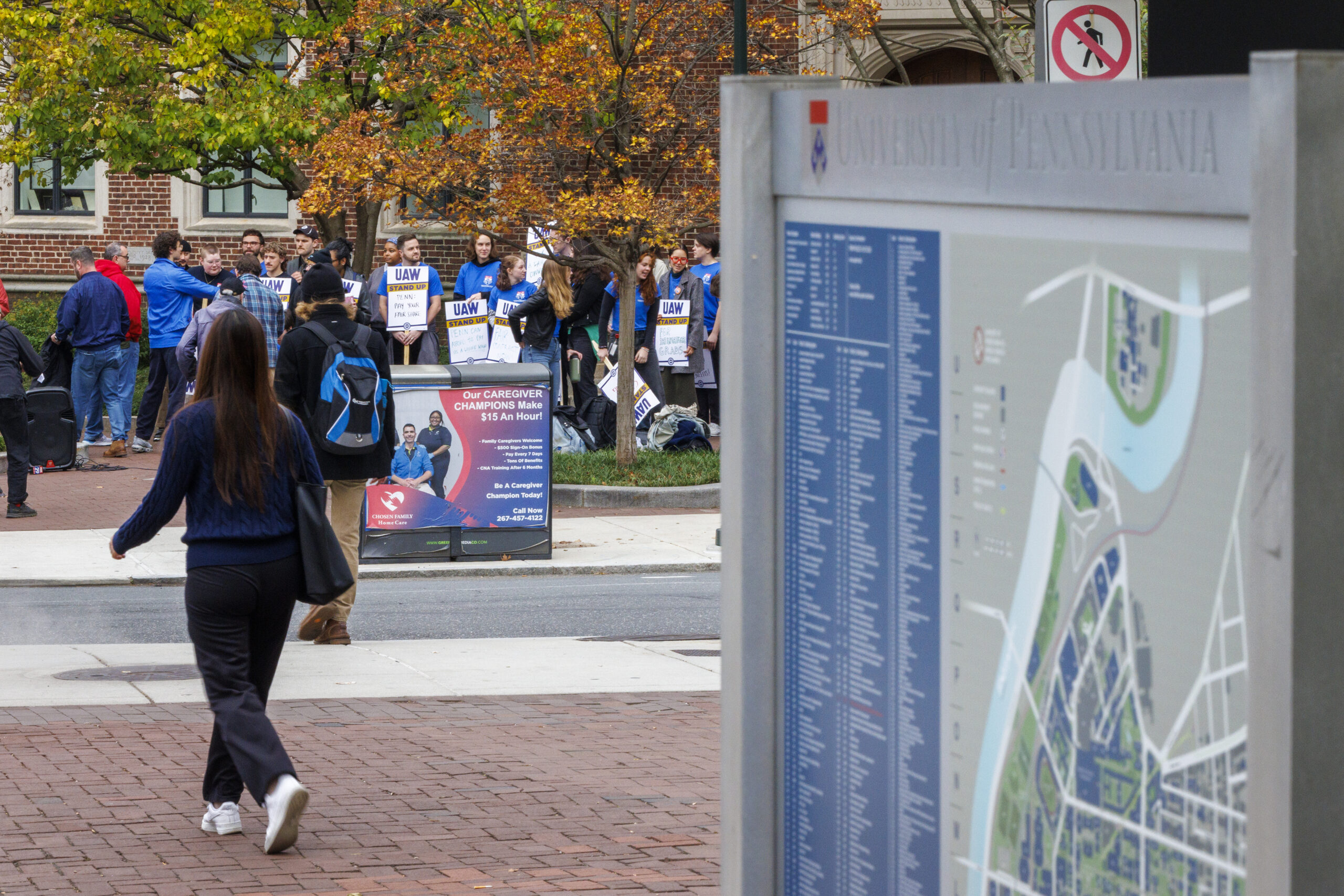
  • Penn graduate student workers could strike next month

    Penn graduate student workers could strike next month

    The union that represents about 3,400 University of Pennsylvania graduate student workers says they will go on strike Feb. 17 if they do not reach a contract deal with the university by then.

    “We love our jobs, but Penn’s administration is leaving us no choice but to move forward with a strike,” said Nicolai Apenes, a Ph.D. candidate and research assistant in immunology, in a statement shared by the union Tuesday. “We are ready to stand up and demand that our rights are respected.”

    Penn’s graduate student workers voted to unionize in 2024. The union has been negotiating with the university since October 2024 for a first contract, and some tentative agreements have been reached on a number of issues.

    Sticking points in bargaining include wages, healthcare coverage, and more support for international student workers.

    In November the teaching and research assistants voted to authorize a strike if called for by the union, which is known as Graduate Employees Together-University of Pennsylvania (GET-UP) and is part of the United Auto Workers (UAW).

    A spokesperson for the University of Pennsylvania said in a statement Tuesday that Penn has engaged in good faith negotiations with the union, and has reached 23 tentative agreements through 39 bargaining sessions with additional sessions planned.

    “We believe that a fair contract for the Union and Penn can be achieved without a work stoppage, but we are prepared in the event that the Union membership strikes,” said the Penn spokesperson. “Efforts are underway to ensure teaching and research continuity, and the expectation is that classes and other academic activities will continue in the event of a strike.”

    “While we hope that Penn comes to the table and negotiates a fair contract for these essential workers, we know that these workers are a powerful force that Penn cannot break,” said Daniel Bauder, Philadelphia AFL-CIO president, in a statement Tuesday. “We are proud to stand with them and the broader Coalition of Workers at Penn as they fight the biggest employer in the region and bring union power to the University of Pennsylvania.”

    Penn, the largest employer in Philadelphia, has seen a wave of student-worker organizing in recent years, including resident assistants, graduate students, postdocs and research associates, as well as training physicians in the University of Pennsylvania Health System.

    The region has also seen a couple other university strikes in recent years. In 2023 graduate workers at Temple University walked off the job for 42 days amid contract negotiations, and in a separate action at Rutgers University, educators, researchers, and clinicians went on strike for a week.

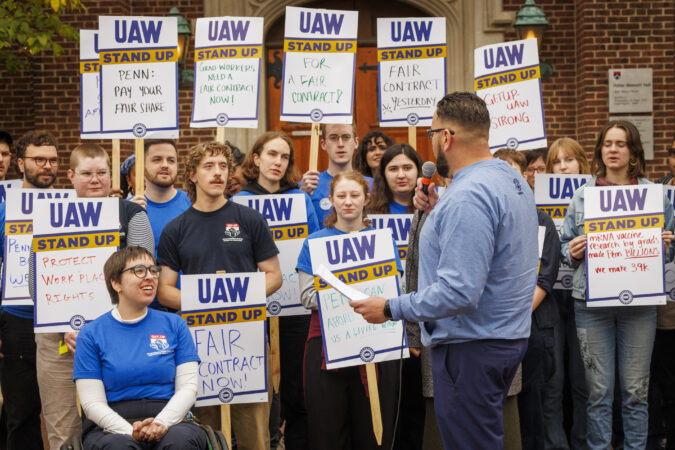
    University of Pennsylvania graduate students hold a press conference and rally calling for a strike vote against the university at the corner of South 34th and Walnut Street, Monday, Nov. 3, 2025.
  • Hungry for nostalgia? Visit this rare ‘classic’ Pizza Hut in Northeastern Pa.

    Hungry for nostalgia? Visit this rare ‘classic’ Pizza Hut in Northeastern Pa.

    Imagine it’s a Friday night in 1985.

    You just finished watching Back to the Future with your parents and cousins at the multiplex, and now it’s time to pile into the Chevy Caprice wagon with faux wood-paneled sides. You beg your dad to put in the Wham! cassette, one more time.

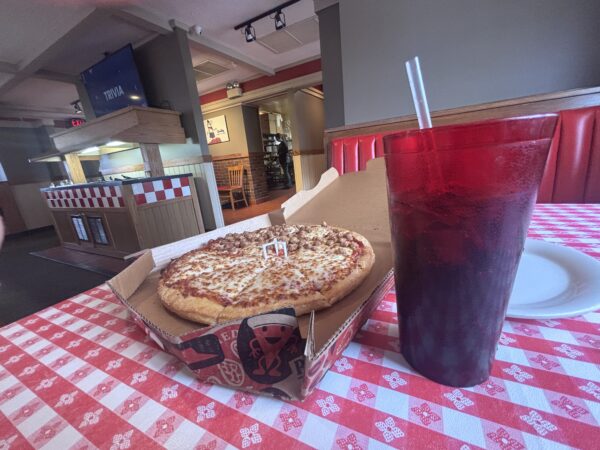
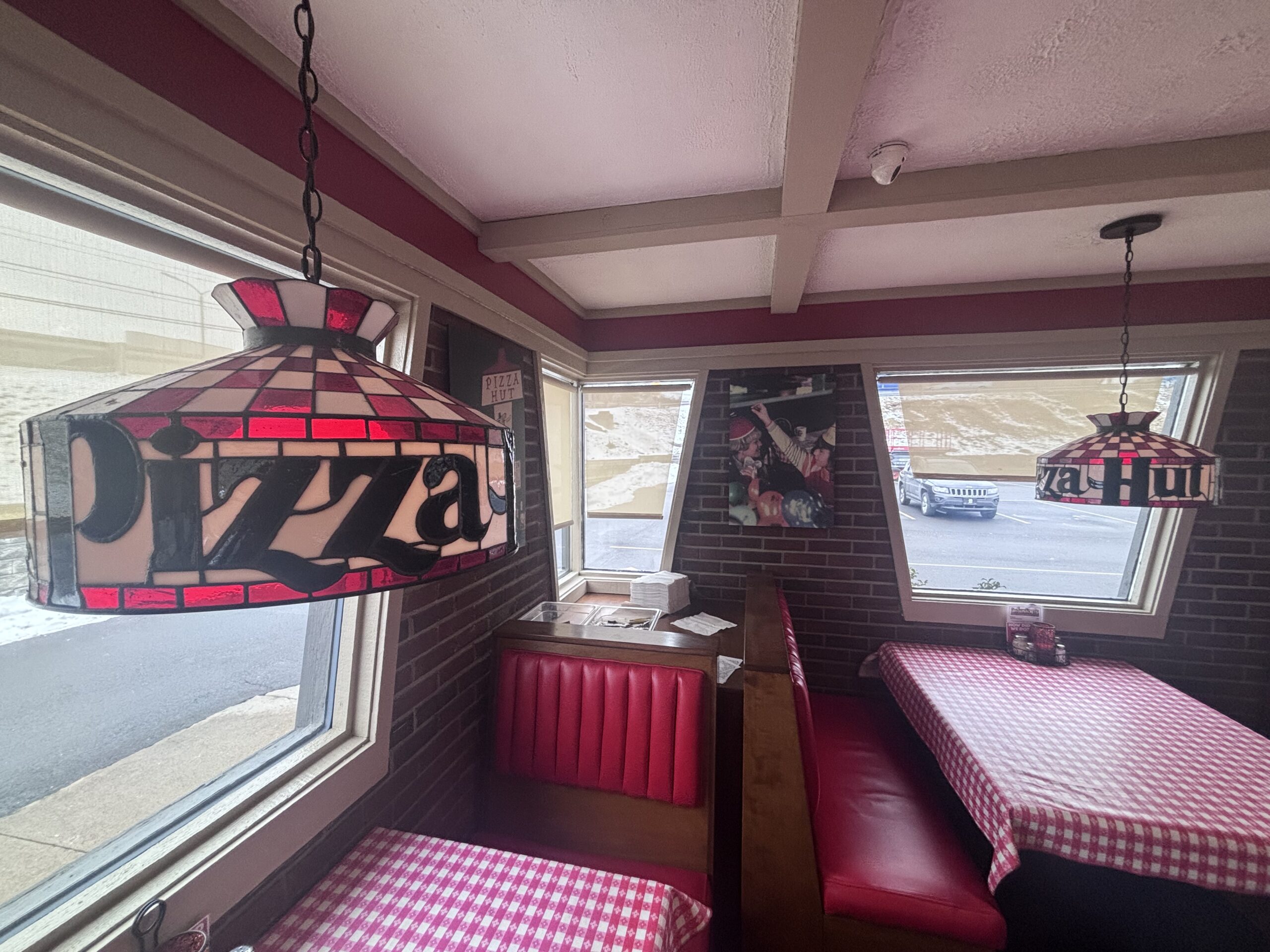
    You’re going to Pizza Hut, of course, and the parking lot is packed. Inside, there are stained-glass lamps hanging over the checkerboard tables, a salad bar, and those red plastic cups.

    The server brings out your deep-dish pies. They smell almost buttery. You grab your fork and knife because, well, that’s how you eat at Pizza Hut.

    Can you smell it? Taste it? Ah, nostalgia.

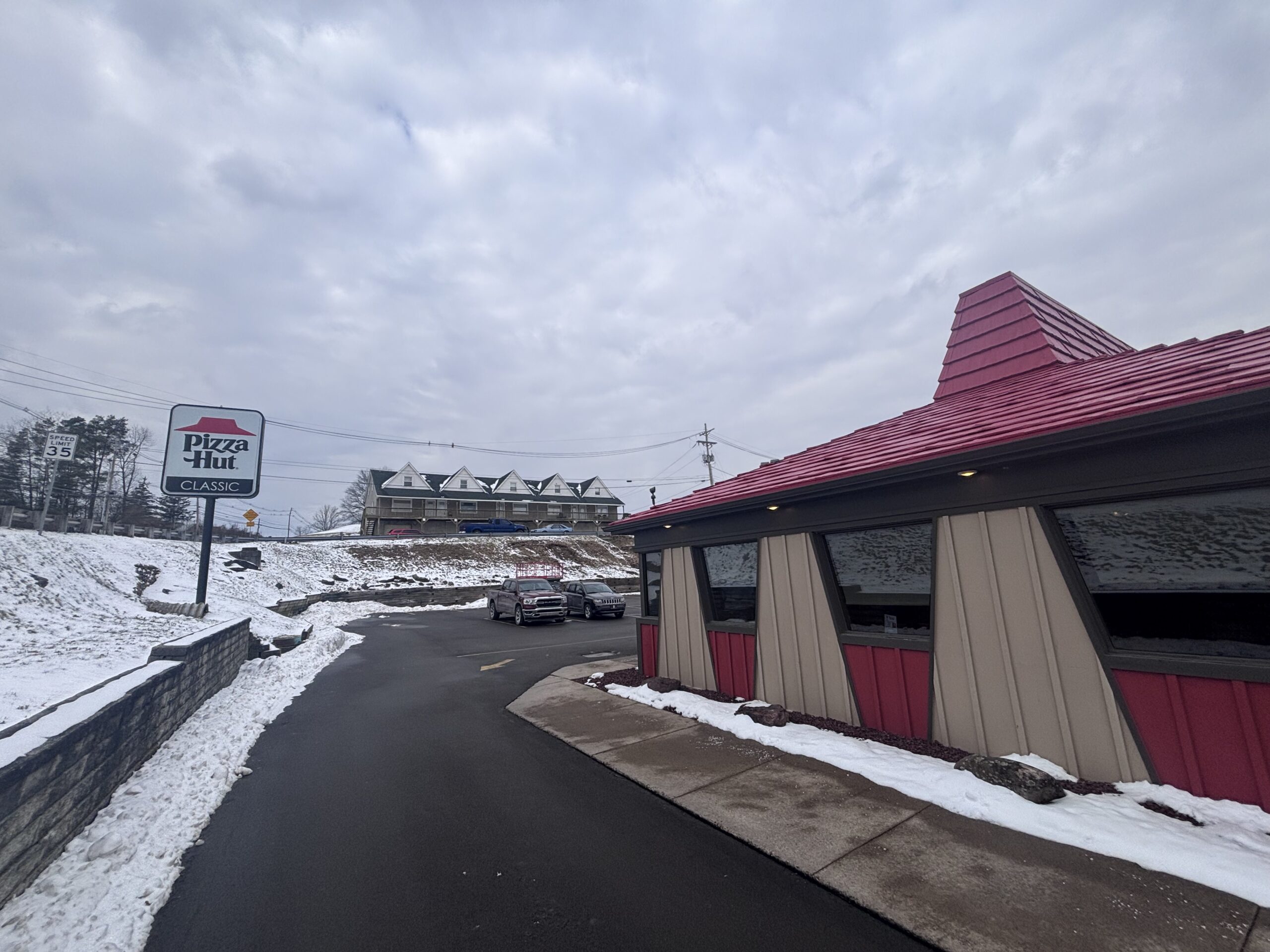
    A Pizza Hut location in Wyoming County, Pennsylvania, was remodeled into a “classic” location, featuring the salad bar, red, plastic cups and other vintage touches.

    If you’re hankering for Pizza Huts of bygone days or places like the “birthday room” at McDonald’s, you often have to travel back into your memory. Not anymore.

    Pizza Hut has tapped into the power of nostalgia across the United States by resurrecting some “classic” restaurants. There’s one in Tunkhannock, a small town in the Endless Mountains of Wyoming County, about 140 miles northeast of Philadelphia.

    The Pizza Hut, which has been in a shopping center parking lot for decades but was totally revamped — restored? — into a classic location, complete with the red, angled roof.

    A Pizza Hut location in Wyoming County, Pennsylvania, was remodeled into a “classic” location, featuring the salad bar, red, plastic cups and other vintage touches.

    “No touchscreen kiosks, no sleek redesign, just the classic dine-in Hut experience you thought was gone forever. It’s more than pizza. It’s a full-blown childhood flashback served with breadsticks and a plastic red cup!” the Just Pennsylvania Facebook page wrote in May in a post that received 7,500 shares.

    It’s not clear how many Pizza Hut Classic locations exist in the United States, and, oddly, the company did not return multiple requests for comment. According to the Retrologist website, the Tunkhannock location is the only one in Pennsylvania. There appears to be about two dozen in the United States, according to the site, though none in New Jersey or Delaware. The only New York location is in Potsdam, which is closer to Canada than to Pennsylvania.

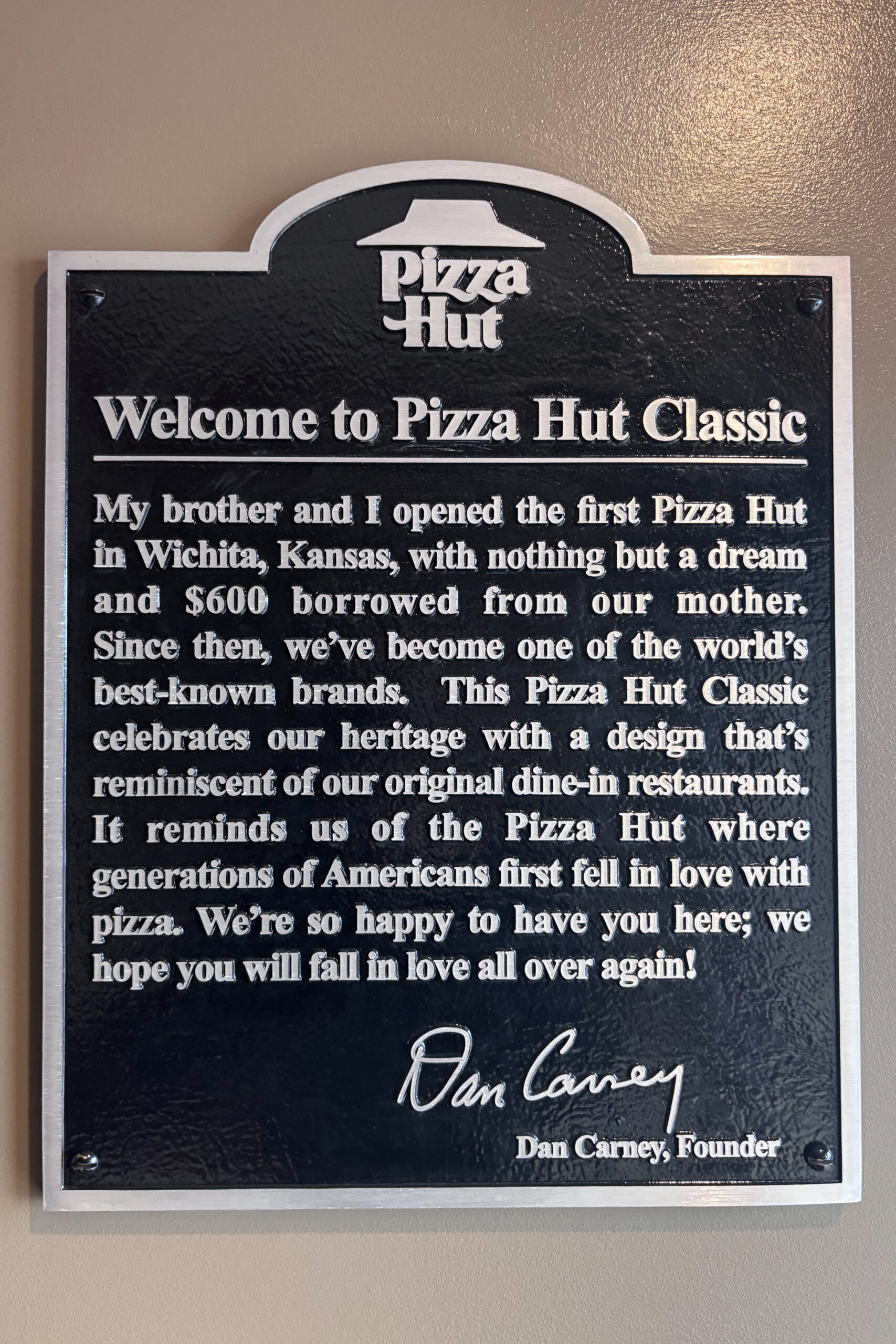
    A plaque on the wall of the Tunkhannock location, written by Pizza Hut founder Dan Carney, explains the concept.

    “It reminds us of the Pizza Hut where generations of Americans first fell in love with pizza,” Carney wrote.

    When The Inquirer visited early on a recent Monday, a lunch crowd was beginning to file in.

    “It was probably 10 years ago that they turned it into a classic, and our business has really exploded in the last year,” said Paul Bender, a shift leader at the Tunkhannock location. “I don’t know how it happened, but people really began to notice. I’ve had customers come in from Wisconsin, Oregon, Michigan, and, obviously, Pennsylvania and New Jersey. We get a lot of people in the parking lot making videos.

    Bender said the Tunkhannock location is still hoping for a jukebox and old-style video games, like the tabletop Ms. PAC-MAN.

    “That would seal the deal,” Bender said.

    Bender has wondered why more iconic chains haven’t created throwback locations, like Pizza Hut. He’s seen the power of nostalgia firsthand.

    “Instead, it seems like more and more are getting rid of dine-in altogether, ” Bender said. “But I’ve seen grown men, in tears here, saying they came here with their father and mother.”

    Last year, it was reported that a Pittsburgh-area Pizza Hut was bringing back dine-in service, though videos show that it’s only gone half-classic so far.

    A Pizza Hut location in Wyoming County, Pennsylvania, was remodeled into a “classic” location, featuring the salad bar, red, plastic cups and other vintage touches.