Category: Business

Business news and market updates

  • Philadelphia is a top place to launch a start-up — but success requires more than passion | Expert Opinion

    Philadelphia is a top place to launch a start-up — but success requires more than passion | Expert Opinion

    It seems that Philadelphia’s reputation as a good place to start a business got a boost this past year.

    The city ranked 13th among 350 “start-up ecosystems” worldwide in Startup Genome‘s 2025 Global Startup Ecosystem Report, which considers educational resources, labor, taxes, and funding opportunities.

    The region attracted over $900 million in equity funding and acquisitions in 2024-25, according to the Greater Philadelphia Chamber of Commerce; expanded biotech and robotics facilities; and launched AI education initiatives — all supported by public-private partnerships and university-led R&D.

    Chamber CEO Chellie Cameron said the Startup Genome ranking “affirms our region’s emergence as a global destination for innovation, business, and opportunity.”

    From 2019 to 2024, the U.S. saw more than 21 million new business applications, marking the largest-ever spike.

    Software giant Intuit recently reported that and “33% of U.S. adults plan to start a business or side hustle next year — a 94% year-over-year increase.” LinkedIn says the number of “founders” listed on the platform grew 69% last year.

    Are you thinking of starting a business this year? Before you quit your job, here’s some practical advice.

    Get your finances in order

    When I started my business, I did so while having a full-time job. I worked a lot of hours. But that’s because I needed to build up an income stream to support me for when I eventually left the corporate world.

    Smart entrepreneurs know their finances. They’re good at math or have advisers that help them. They recognize the importance of accounting.

    Gabriella Daltoso, a founder and CEO of Philadelphia-based medical device start-up Sonura, recognized the importance of understanding her numbers and embarked on a program to learn the basics of accounting. A trained scientist, she sought out help from people with business expertise at the University of Pennsylvania, where she spun out the business.

    “I got a freshman finance textbook, learned the terms, and then learned from other founders’ experiences,” Daltoso said. “I found mentors and professors who would help me at Penn. People can be incredibly helpful when you reach out.”
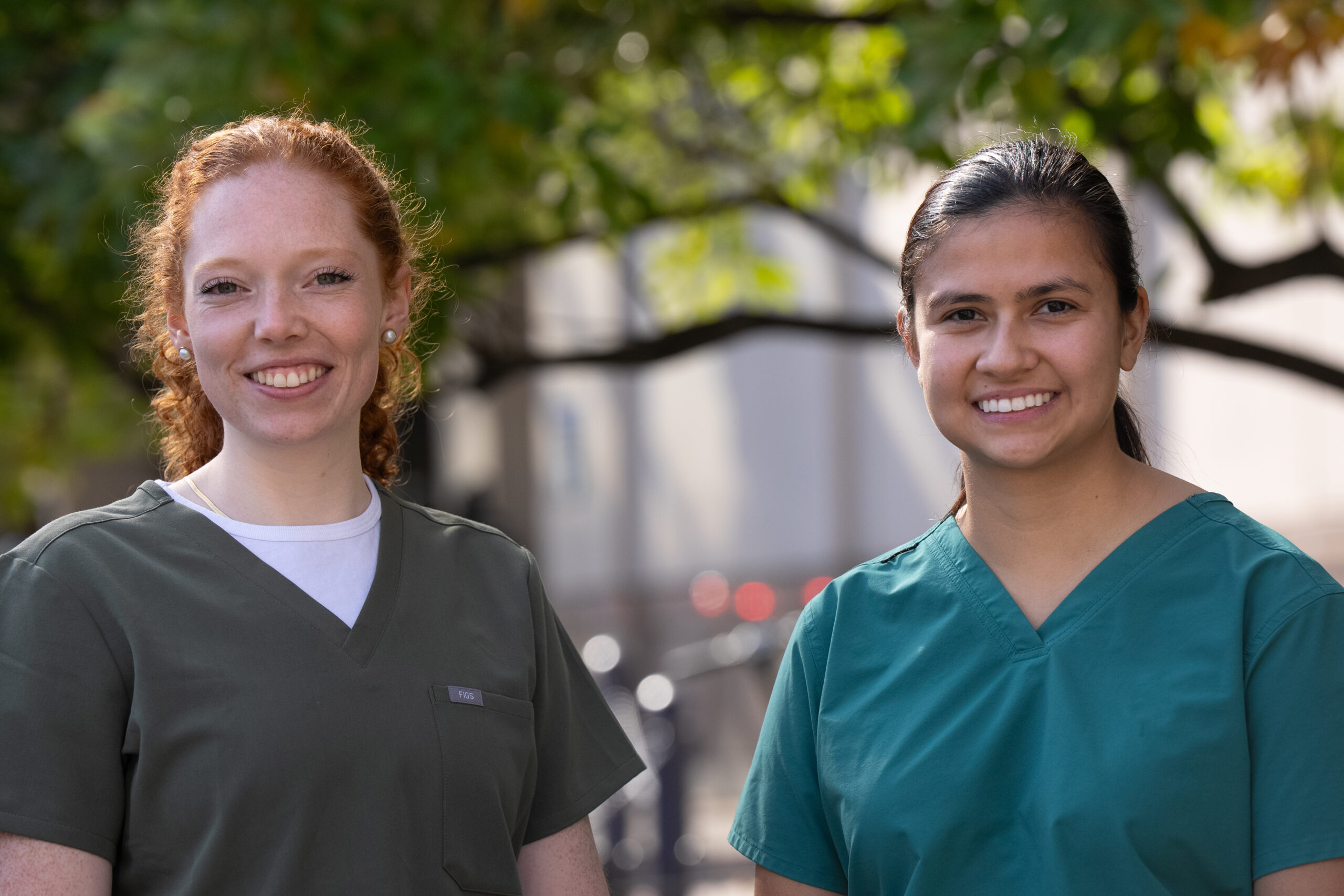
    Sonura founders Gabriella Daltoso (left) and Sophie Ishiwari at the Hospital of the University of Pennsylvania in November.

    Start-ups need capital, and for financing, it’s important to have a solid business plan with realistic projections of revenues and expenses. You need to establish relationships with banks, investors, family members, friends, venture capitalists, or anyone else that could be a source of financing. You should have enough money in the bank to support yourself and your family for at least two years because it will likely take that long to get your business cash positive.

    James Massaquoi, a board member at the Seybert Foundation and former analyst at Philadelphia venture capital firm Osage Partners, emphasizes planning capital needs early, ideally before launching. Massaquoi urges founders to deeply understand their cost structure and assumptions before getting in too deep.

    “Talk to bankers and other sources of capital before you really start the business, so it’s a conversation — not another checklist,” he said. “Spend more time modeling out costs than forecasting profits because costs fluctuate dramatically, especially in the first two years.”

    Make sure your family is on board

    Think you’re busy now? Wait until you start a business.

    You will spend much more time launching, running, and growing your enterprise than you expect. You will work nights, weekends, and crazy hours. People will be happy for you and supportive, but in the end, it’s all on your shoulders.

    This kind of stress could put a strain on your personal life. You will not succeed unless your family members understand this and are ready to support you.

    “Work-life balance is really about how much work you need to do for this to be successful — and how much pressure you feel to make it succeed,” Massaquoi said.

    Be realistic

    Passion for your business venture is important, but profits are just as important. Your model needs to be satisfying a market need if it’s going to have a legitimate chance.

    The typical life span of a start-up is two to five years, with 70% going out of business before reaching their fifth year. The odds are against you.

    The ones that do survive fix problems and do so better than their competitors. They watch their pennies and are open to change based on what their customers need.

    Take your business seriously

    Talk to a tax and legal adviser and form a company — maybe a corporation, partnership, or limited liability company. Use these advisers to help you register your business with the state and the federal government.

    Create a professional website. Establish a commercial mailing address (not your home) and a toll-free phone number.

    Pay in your estimated taxes, and file your tax returns on time.

    As you hire employees, create policies and procedures and try to offer the types of benefits that established businesses provide like health insurance, retirement plans, and flexible time off.

    If you are truly running a business (and not just a hobby), you need to act like a business.

    Lean on local resources

    As a start-up founder in Philadelphia, you’re not alone. The area has a number of great resources to help your small business get funding and grow.

    Introduce yourself to the Small Business Development Center at Temple University’s Fox School of Business. Reach out to SCORE, which is part of the Small Business Administration. Get involved with nonprofits that provide education, financing help, and mentorship to start-ups, such as: the Philadelphia Alliance for Capital and Technologies, Venture Lab (University of Pennsylvania), Broad Street Angels, Startup Leaders, Entrepreneur Works, and Urban League Entrepreneurship Center.

    Take advantage of the free space and other resources offered by the Free Library of Philadelphia.

    Also, surround yourself with as many experts as you can afford. Have a good accountant, lawyer, coach, and advisers on hand to help you make decisions. Build these costs into your business plan and projections because these people are critical for your business success.

    “Your expertise isn’t having all the answers; it’s learning from anyone who’s willing to share,” Daltoso said. “It’s really important to hear everyone, synthesize what’s useful, and move forward with confidence.”

  • This $8M federal college grant will train Hanwha shipyard workers

    This $8M federal college grant will train Hanwha shipyard workers

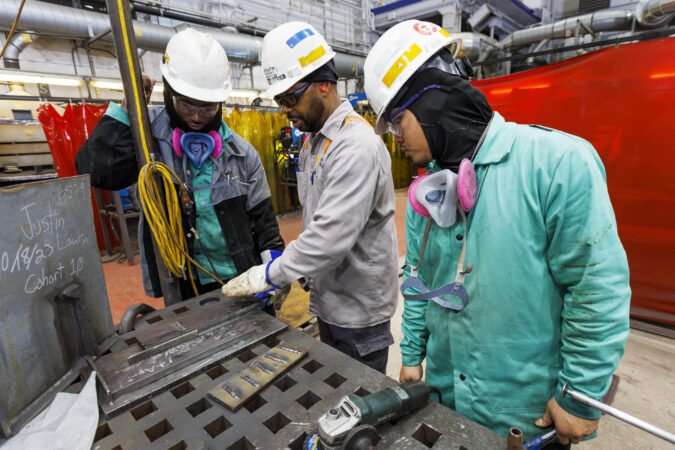
    A consortium set up in 1996 to train future shipyard workers at the former Philadelphia Navy Yard says a new U.S. Department of Labor grant will prepare workers for Korean-owned Hanwha Philly Shipyard. The group hopes to quadruple apprenticeship graduates from around 120 workers a year to around 500.

    “In line with President [Donald] Trumpʼs executive orders, these projects will help train our next generation of shipbuilders,” U.S. Labor Secretary Lori Chavez-DeRemer said in a statement.

    Led by Delaware County Community College, the effort includes other area colleges, partnered with Hanwha and the nonprofit Collegiate Consortium for Workforce & Economic Development.

    The Delco-led effort will set up “a new model of education and training for U.S. shipbuilding that will include sending U.S. instructors and workers overseas to learn advanced shipbuilding techniques” to be used at yards including Hanwha’s in South Philadelphia, the college said in a statement.

    The money will help pay for training simulation models, online courses, and other programs for “an internationally recognized curriculum for shipbuilding skilled trades” to help trade unions, schools, and shipyards prepare new apprentices and more-experienced journeymen union workers, veterans, welders, steelworkers, electricians, steamfitters, and carpenters.

    The partners “will accelerate the transfer of proven global shipbuilding practices to the U.S.,” Hanwha Philadelphia Shipyard chief executive David Kim said in a statement.

    The consortium is chaired by Marta Yera Cronin, who is also the Delco community college president.

    The shipyard, bought by South Korea’s family-owned Hanwha industrial group for $100 million in late 2024, employs around 1,700 but wants to double that. It plans to bring in new automated equipment to build ships and drones for the Navy, other government agencies, and private shippers.

    Hanwha sends workers from its giant shipyards on Geojedo island, South Korea, to help complete work on civilian ships in Philadelphia.

    The company has pledged to invest $5 billion in the yard, backed by U.S. government grants and loans. It says it wants to boost output from the current one ship every eight months to 10 to 20 a year.

    Trump has said he’d like to see Hanwha technology used by U.S. workers to build nuclear submarines and battleships in Philadelphia.

    That would require extensive new dry docks, cranes, power plants and other large capital investments, and a lot more ground and dock space than the 118-acre Hanwha-owned yard or the neighboring former Navy site where family-owned Rhoads Industries repairs and fabricates parts for General Dynamics, a major Navy submarine builder.

    A separate $5.8 million Labor Department grant is going to the Massachusetts Maritime Academy, one of several civilian officer training schools slated to receive Korean-designed training vessels that the Philadelphia yard has been building in recent years. That money will develop additional shipbuilder training with foreign partners.

    Under current contracts with the Philadelphia metalworkers’ union group that represents yard workers — itself a joint effort of the boilermakers, operating engineers, carpenters, and other unions — newly qualified workers can earn around $30 an hour. Experienced workers can qualify for as much as $100,000 a year, including overtime.

    According to the consortium, community colleges have added trades education following a drop in U.S. public school shop classes and a shortage of U.S. workers interested in industrial work, including shipbuilding, which involves high-heat tools, dangerous materials, and outdoor work in all weather.

    The grant will speed expansion of the consortium, which has received grants from Citizens Bank and support from port-related agencies in past years.

    The college says it has trained more than 600 apprentices in all fields over the past 20 years. It stepped up its focus on shipbuilding beginning in 2017.

  • An artsy new restaurant and cocktail bar is coming to Kennett Square

    An artsy new restaurant and cocktail bar is coming to Kennett Square

    Birch Street will get a new restaurant and cocktail lounge this summer as its makeover in Kennett Square continues.

    Opus, a New American upscale restaurant with a second-floor cocktail lounge, will open at 201 Birch St., adjoined to Artelo, a 14-room boutique hotel. Opus is a new initiative for Square Roots Collective, an organization that builds businesses and uses the profits to support nonprofits in southern Chester County.

    Opus will boast 125 seats in its 6,000 square-foot building, with outdoor dining and a two-story terrace. During the day, the cocktail bar will serve breakfast to the public and guests of Artelo.

    The restaurant, which will be adorned by curated art pieces and a hand-painted ceiling mural, is an extension of Artelo, which Square Roots Collective opened in 2024. The hotel, which replaced the former Birch Inn, offers an immersive art experience, with each room painted by a local or regional artist, creating a living piece of art.

    That same principle will follow in Opus, said Luke Zubrod, chief of staff for Square Roots Collective.

    “It’s kind of the anchor to Birch Street,” he said. “It’s really kind of setting the tone for the street as a whole — and the tone it’ll set is really an artistic tone. This is a street kind of filled with beauty, and I think that that theme will be more evident over time.”

    It’s part of a larger effort to revitalize Birch Street, which has in recent years seen more development, including Square Roots Collective’s beer garden The Creamery, and streetscaping. In the coming years, the street will be resurfaced, and the borough plans to add a trail on one side and sidewalk on the other, along with new streetlights and crosswalks. Square Roots Collective worked with the borough to secure funds for that investment, leaning on grant dollars from the state and county, Zubrod said.

    “In addition to the Opus itself, there’s a lot to look forward to,” Zubrod said. “This street is really receiving some public investment that will make it a really vibrant and beautiful place.”

    Along with Artelo and The Creamery, 100% of Opus’ funds will go to the organization’s nonprofit, focused on community improvement, he said.

    “I think in addition to just being a really exciting restaurant concept, it’s also one people can feel really good about in terms of helping to make the community better,” he said.

    Another boutique hotel coming

    The Francis, a boutique hotel in central Kennett Square, is slated to open this year. The eight-room hotel will reimagine an 18th century home, and pay homage to the region’s history.

    Meanwhile, also coming this year, the collective will open another boutique hotel, at 205 S. Union St. The Francis, an ode to Francis Smith who named Kennett Square for his home back in England, will have eight rooms, each dedicated to the history of the town.

    The hotel will reimagine an 18th-century home, and offer single rooms and loft suites with kitchenettes, plus balcony or courtyard access.

    One room — “The Watchmaker” — will honor a former resident and watchmaker, Thomas Milhous. Another room, “The Gardener,” will pay homage to the region’s first big harvest: flowers. Others nod to battlegrounds, four generations of a local family, education, plus the region’s history with the Underground Railroad, the Lenni-Lenape tribe and its “rich immigrant history.”

    The collective plans on luscious landscaping, with a courtyard serving as “a little bit of an oasis,” said Zubrod.

    “There is an appetite to have kind of quaint boutique hotels in the area to meet the needs of people who are coming for Longwood [Gardens] especially,” he said.

    This suburban content is produced with support from the Leslie Miller and Richard Worley Foundation and The Lenfest Institute for Journalism. Editorial content is created independently of the project donors. Gifts to support The Inquirer’s high-impact journalism can be made at inquirer.com/donate. A list of Lenfest Institute donors can be found at lenfestinstitute.org/supporters.

  • Dina Powell McCormick, former Trump official and Dave McCormick’s wife, will be president of Facebook’s parent company

    Dina Powell McCormick, former Trump official and Dave McCormick’s wife, will be president of Facebook’s parent company

    Dina Powell McCormick, a former Trump official and former member of Meta’s board, has been hired as the company’s new president and vice chair, CEO Mark Zuckerberg announced Monday morning.

    “Dina has been a valuable member of our board and will be an even more critical player as she joins our management team,“ Zuckerberg wrote on Threads, one of Meta’s platforms alongside Facebook and Instagram. ”She brings deep experience in finance, economic development, and government.“

    He also noted that she will be involved in all of Meta’s endeavors, but will particularly focused on ”partnering with governments and sovereigns to build, deploy, invest in, and finance Meta’s AI and infrastructure.”

    Powell McCormick has extensive business leadership and government experience. She spent 16 years in different leadership roles at Goldman Sachs, according to her LinkedIn page. Powell McCormick was most recently the vice chair, president, and head of global client services at BDT & MSD Partners, a banking company.

    She worked in the White House and the U.S. Department of State under former President George W. Bush and was deputy national security adviser during President Donald Trump’s first term.

    The move also signifies what appears to be Meta’s intention to create stronger ties with the federal government as it develops artificial intelligence tools. Trump praised Zuckerberg’s decision Monday.

    “A great choice by Mark Z!!! She is a fantastic, and very talented, person, who served the Trump Administration with strength and distinction!” Trump said on Truth Social, his social media platform.

    U.S. Sen. Dave McCormick (R., Pa.), Powell McCormick’s husband, has been heavily involved with AI and tech policy. For instance, he convened an AI summit in Pittsburgh in July 2025 where billions of dollars in planned projects for Pennsylvania were announced.

    The senator is also a member of the Senate Banking Committee and the Subcommittee on Digital Assets, which, among other things, oversees cryptocurrency and stablecoins. Last spring, Fortune reported that Meta could return to the crypto space after scrapping its initial foray, Diem, in 2022.

    McCormick, in a post on X Monday, said he is “incredibly proud” of his wife.

    Asked about how he would mitigate potential conflicts of interest that arose from Powell McCormick’s position, a spokesperson for the senator said: “As he has from day one, Senator McCormick will continue to comply with all U.S. Senate ethics rules and honorably and enthusiastically serve the great citizens of Pennsylvania.”

    Powell McCormick is also the second former Trump official to be hired by Meta in recent weeks, CNBC reported. Earlier this month, Meta said that it had hired Curtis Joseph Mahoney, a former deputy U.S. trade representative, to be its chief legal officer.

  • Pa. loggers want a bailout for Trump tariff damage. Without it, they say layoffs could be next

    Pa. loggers want a bailout for Trump tariff damage. Without it, they say layoffs could be next

    In Pennsylvania — Penn’s Woods — centuries after settlers began cutting native forests, decades after once-thriving furniture makers like Pennsylvania House and Home Line shut or moved away — lumber remains a basic industry. Upstate sawmills send logging crews to buy and cut walnut, cherry, and other hardwoods to export to global flooring and furniture enterprises.

    But dozens of the state’s remaining mills, loggers, and industry groups, long accustomed to blights and other natural disasters, say they now face a plague made in Washington, D.C. — and would welcome a government bailout.

    Some 48 of the state’s surviving mills, lumber companies, and industry groups joined 400 other U.S. forest-based businesses last month to ask President Donald Trump for relief payments to ease the impact of his U.S. import taxes and foreign retaliatory tariffs, which they say have slowed export demand for their products, while boosting the cost of buying and operating their machinery.

    These and other “rural, almost entirely family-owned businesses” and the workers and contractors who depend on them want to be included alongside farmers, whom Trump has promised a $12 billion tariff bailout, according to a statement by the Heartwood Heartland coalition formed to make their case. The U.S. Census counts more than 10,000 logging and sawmill firms, not counting lumber truckers and other related businesses.

    Earlier tariffs and foreign competition had already hurt U.S. hardwood exporters, who were excluded from a farm tariff compensation program in the previous Trump administration, according to the coalition.

    U.S. hardwood lumber sales dropped 20%, to around $2.7 billion, in 2022-2024, according to the coalition. Log sales fell 11% to around $1.8 billion, and employment in U.S. woods shrunk 10%, to around 360,000, as more sawmills closed, over the same period.

    The U.S. remains a leading exporter of hardwoods, but its share of the China market shriveled, from $1.5 billion or a third of the market in 2017, to around $700 million or one-fifth of the market in 2024, since the “trade war” during Trump’s first term drove importers to rival nations.

    Chinese manufacturers are buying more wood from Russia, Southeast Asia, and other regions. This threatens a collapse in the U.S. forest industry echoing the earlier “collapse of the U.S. furniture sector,” the coalition said in a December letter to the president and cabinet members.

    Further sales losses will result in the U.S. “losing the skilled workforce” and relying on more imports, predicts Dana Lee Cole, the federation’s executive director. That’s the opposite of the president’s stated goal in boosting protective tariffs.

    Among the signers were several businesses in Southeastern Pennsylvania, including Stoltzfus Forest Products LLC in Lancaster County. Philip Smith, chief operating officer of business and its affiliate, Stoltzfus Hardwoods, agreed to answer questions about his enterprise and the impact of tariffs. Edited for brevity and clarity.

    How old is your company and who works there?

    The parent company built a sawmill in 1990. We moved the location when we had a large expansion in 2016. We employ about 65 people at the two companies. We have three of our own logging crews, two mechanized and one that’s hand cutters. We use a subcontractor logger and trucker as well. The owners and a majority of the workers are Amish.

    What do you harvest and where?

    We take Appalachian hardwoods from up to about 175 miles of our location — white oak, poplar, walnut, hickory, a little soft maple, and cherry. We go down to the Eastern Shore of the Chesapeake, out toward Chambersburg, up into the Lehigh Valley and Schuylkill County.

    And the Philadelphia area, we just did a golf course. It got bought [by a developer], and we ended up harvesting the trees.

    We bring the trees to the mill [and make boards and trim-sized pieces]. We sell to molding companies, flooring companies, and to companies that make furniture and cabinets.

    What would be affecting us with the tariffs, we have material that will go to China and to Germany and [other] EU countries.

    Why don’t foreign importers pay the tariffs?

    To get an order, we have to agree, if the tariff went above a level, we pay part of the cost.

    In China, they made temporary agreements for when our lumber got ready. If it was on the ocean before the tariff dates, we weren’t affected.

    So we had a scare last spring [when Trump proposed punishing increases to wood tariffs]. And we had a scare again in the fall.

    So the full tariffs haven’t actually been implemented?

    The biggest thing we notice with tariffs is the uncertainty. The economy was already crappy. Now the tariffs bring another factor into the way people interpret [costs].

    For some reason, the U.S. sells logs to Vietnam, and then Vietnam is [milling] American walnut, selling it as American walnut, and undercutting finished American walnut [from the U.S.]. Vietnam is paying their people almost nothing. Add the tariffs, we are less competitive.

    Has that uncertainty cost you orders?

    It has affected how people perceive costs. It has affected cash flow. Some items are moving slower.

    There’s another thing: Equipment in the forest industry, a lot of it comes out of Canada. Log trucks. Specialty trailers.

    With the uncertainty, truckers that focus on logging tell us they have canceled stuff on order.

    And we use Leadermac wood-moulder machines that come out of Taiwan. There’s a tariff there, too. We were told there’s a 24% increase in price.

    Have you canceled equipment orders as a result?

    We have put the brakes on making some decisions.

    Despite the squeeze you are in today, can tariffs help move wood industry to the U.S. over time?

    With the tariffs, it’s not so much we are against the idea of leveling the playing field. There’s definitely countries abusing America. We are pro trying to fix this stuff.

    But there is pain in doing it. We are paying the tariff on equipment, but I don’t see any tax break. They are just adding another tax on us. You need to give us a break that we can recoup that money.

  • More workers are stuck in part-time jobs, in warning for the economy

    More workers are stuck in part-time jobs, in warning for the economy

    In a slowing labor market, even people with jobs are increasingly making do with less-than-ideal arrangements. They’re stuck in part-time positions or patching together multiple jobs to make ends meet, employment data shows.

    The number of part-time workers who say they would prefer full-time positions jumped sharply in November to an eight-year high.

    Meanwhile, those with multiple jobs — 5.7% of the workforce — is at its highest level in more than 25 years, according to monthly figures from the Bureau of Labor Statistics. In all, a record 9.3 million Americans worked more than one job in November, a 10% increase from a year earlier.

    The data reflects, at least partially, disruptions from the recent government shutdown, which left hundreds of thousands of Americans furloughed without pay from Oct. 1 to Nov. 12. Many of those workers — along with contractors, consultants, and others who felt the ripples of the shutdown — may have picked up side jobs or part-time gigs to make up for lost pay.

    But economists also point to a broader shift in Americans’ finances and rising concerns about affordability that is driving them to pick up more work. Of particular note: The number of Americans with two full-time jobs jumped by 18% in the past year, with women making up the bulk of that increase.

    “When people start adding jobs, and certainly a second full-time job, that says something about affordability, and about needing more money to meet household expenditures,” said Laura Ullrich, director of economic research at the Indeed Hiring Lab. “In theory, yes, if people ‘want’ to have multiple jobs, and they’re able to find them, that’s a good thing. But from a human perspective, the fact that more people are working two full-time jobs is hard to think of as a positive development.”

    Although federal workers received back pay when the government reopened, that wasn’t the case for its network of contractors and consultants.

    Joshua Beers, a government contractor in Columbia, Md., took a second job delivering food for Uber Eats during the shutdown. Without his usual paychecks — or any hope of back pay – he quickly depleted his savings, and fell behind on credit card and loan payments. The $400 a week from his side hustle wasn’t much, he said, but it was enough to temporarily cover the basics.

    Now, even with his full-time job back, Beers is still making deliveries, late at night and on weekends, to make up for lost income. Plus, he said, he worries about the slowing job market: His wife has been looking for work for over a year.

    “The job market feels really confusing right now,” he said. “I don’t want to give up anything I can do for additional income on the side.”

    The U.S. labor market has cooled markedly in the past year. Employers added 584,000 jobs in 2025, an average of about 49,000 jobs per month. That’s a significant drop from the 2 million jobs added over 2024, or about 168,000 per month. The unemployment rate ticked down Friday to 4.4%.

    That’s left job-seekers in a tough position. Layoffs are still relatively low in a sign that companies would rather cut expansion plans than get rid of existing workers, making it difficult for newcomers to break in.

    To that end, the number of people working part-time because they couldn’t find full-time jobs has gradually picked up since 2023. The surge in November — a 62% increase from a year earlier — was the biggest annual jump on record, going back to 1956.

    “There’s been cooling in the labor market, but the most worrisome sign on its own is a big increase in the number of people working part-time for economic reasons,” said Guy Berger, director of economic research at the Burning Glass Institute. “This is a classic barometer of underemployment, and it tends to go up when the labor market is getting worse.”

    In Wisconsin, Rachel Fredrickson picked up a part-time job in retail in November, after eight months of unemployment from the manufacturing industry. Even with 14 years of experience in search engine optimization, she said it’s been impossible to find a full-time digital marketing position.

    Instead, Fredrickson has been working on a sales floor for up to 20 hours a week. Now, with the holiday rush over, she’s bracing for even fewer hours.

    “I’m back to having weeks where I don’t work at all,” said Frederickson, 38. “My husband and I are getting by, but we have virtually no savings left at this point.”

  • A $400,000 payout after Maduro’s capture is putting prediction markets in the spotlight

    A $400,000 payout after Maduro’s capture is putting prediction markets in the spotlight

    Prediction markets let people wager on anything from a basketball game to the outcome of a presidential election — and recently, the downfall of former Venezuelan President Nicolás Maduro.

    The latter is drawing renewed scrutiny into this murky world of speculative, 24/7 transactions. In early January, an anonymous trader pocketed more than $400,000 after betting that Maduro would soon be out of office.

    The bulk of the trader’s bids on the platform Polymarket were made mere hours before President Donald Trump announced the surprise nighttime raid that led to Maduro’s capture, fueling online suspicions of potential insider trading because of the timing of the wagers and the trader’s narrow activity on the platform. Others argued that the risk of getting caught was too big, and that previous speculation about Maduro’s future could have led to such transactions.

    Polymarket did not respond to requests for comment.

    The commercial use of prediction markets has skyrocketed in recent years, opening the door for people to wager their money on the likelihood of a growing list of future events. But despite some eye-catching windfalls, traders still lose money everyday. And in terms of government oversight in the U.S., the trades are categorized differently than traditional forms of gambling — raising questions about transparency and risk.

    Here’s what we know:

    How prediction markets work

    The scope of topics involved in prediction markets can range immensely — from escalation in geopolitical conflicts, to pop culture moments, and even the fate of conspiracy theories. Recently, there’s been a surge of wagers on elections and sports games. But some users have also bet millions on things like a rumored — and ultimately unrealized — “secret finale” for Netflix’s Stranger Things, whether the U.S. government will confirm the existence of extraterrestrial life, and how much billionaire Elon Musk might post on social media this month.

    In industry-speak, what someone buys or sells in a prediction market is called an “event contract.” They’re typically advertised as “yes” or “no” wagers. And the price of one fluctuates between $0 and $1, reflecting what traders are collectively willing to pay based on a 0% to 100% chance of whether they think an event will occur.

    The more likely traders think an event will occur, the more expensive that contract will become. And as those odds change over time, users can cash out early to make incremental profits, or try to avoid higher losses on what they’ve already invested.

    Proponents of prediction markets argue putting money on the line leads to better forecasts. Experts like Koleman Strumpf, an economics professor at Wake Forest University, think there’s value in monitoring these platforms for potential news — pointing to prediction markets’ past success with some election outcomes, including the 2024 presidential race.

    Still, it’s never a “crystal ball,” he noted, and prediction markets can be wrong, too.

    Who is behind all of the trading is also pretty murky. While the companies running the platforms collect personal information of their users in order to verify identities and payments, most people can trade under anonymous pseudonyms online — making it difficult for the public to know who is profiting off many event contracts. In theory, people investing their money may be closely following certain events, but others could just be randomly guessing.

    Critics stress that the ease and speed of joining these 24/7 wagers leads to financial losses everyday, particularly harming users who may already struggle with gambling. The space also broadens possibilities for potential insider trading.

    The major players

    Polymarket is one of the largest prediction markets in the world, where its users can fund event contracts through cryptocurrency, debit or credit cards, and bank transfers.

    Restrictions vary by country, but in the U.S., the reach of these markets has expanded rapidly over recent years, coinciding with shifting policies out of Washington. Former President Joe Biden was aggressive in cracking down on prediction markets and, following a 2022 settlement with the Commodity Futures Trading Commission, Polymarket was barred from operating in the country.

    That changed under Trump late last year, when Polymarket announced it would be returning to the U.S. after receiving clearance from the commission. American-based users can now join a platform “waitlist.”

    Meanwhile, Polymarket’s top competitor, Kalshi, has been a federally-regulated exchange since 2020. The platform offers similar ways to buy and sell event contracts as Polymarket — and it currently allows event contracts on elections and sports nationwide. Kalshi won court approval just weeks before the 2024 election to let Americans put money on upcoming political races and began to host sports trading about a year ago.

    The space is now crowded with other big names. Sports betting giants DraftKings and FanDuel both launched prediction platforms last month. Online broker Robinhood is widening its own offerings. Trump’s social media site Truth Social has also promised to offer an in-platform prediction market through a partnership with Crypto.com — and one of the president’s sons, Donald Trump Jr., holds advisory roles at both Polymarket and Kalshi.

    “The train has left the station on these event contracts, they’re not going away,” said Melinda Roth, a visiting associate professor at Washington and Lee University’s School of Law.

    Loose regulation

    Because they’re positioned as selling event contracts, prediction markets are regulated by the CFTC. That means they can avoid state-level restrictions or bans in place for traditional gambling and sports betting today.

    “It’s a huge loophole,” said Karl Lockhart, an assistant professor of law at DePaul University who has studied this space. “You just have to comply with one set of regulations, rather than (rules from) each state around the country.”

    Sports betting is taking center stage. There are a handful of big states — like California and Texas, for example — where sports betting is still illegal, but people can now wager on games, athlete trades, and more through event contracts.

    A growing number of states and tribes are suing to stop this. And lawyers expect litigation to eventually reach the U.S. Supreme Court, as added regulations from the Trump administration seem unlikely.

    Federal law bars event contracts related to gaming as well as war, terrorism, and assassinations, Roth said, which could put some prediction market trades on shaky ground, at least in the U.S. But users might still find ways to buy certain contracts while traveling abroad or connecting to different VPNs.

    Whether the CFTC will take any of that on has yet to be seen. But the agency, which did not respond to request for comment, has already taken steps away from enforcement.

    Despite overseeing trillions of dollars for the overall U.S. derivatives market, the CFTC is also much smaller than the Securities and Exchange Commission. And at the same time event contracts are growing rapidly on prediction market platforms, there have been additional cuts to the CFTC’s workforce and a wave of leadership departures under Trump’s second term. Only one of five commissioner slots operating the agency is currently filled.

    Still, other lawmakers calling for a stronger crackdown on potential insider trading in prediction markets — particularly following suspicion around last week’s Maduro trade on Polymarket. On Friday, Democratic Rep. Ritchie Torres introduced a bill aimed at curbing government employees’ involvement in politically-related event contracts.

    The bill has already gotten support from Kalshi CEO Tarek Mansour — who on LinkedIn maintained that insider trading has always been banned on his company’s platform but that more needs to be done to crack down on unregulated prediction markets.

  • These old Exton offices are becoming ‘hotel-apartments’

    These old Exton offices are becoming ‘hotel-apartments’

    While the battle rages over how much redevelopers should cram into the former Exton Mall site, investors on the ridge just to the north have turned one of Great Valley’s vacant office buildings into a suburban rarity: 24 studio and 8 single-bedroom apartments.

    They’re equipped with kitchens, bathrooms, and washer/dryers, and they’re being marketed as monthslong hotel accommodations for consultants and visitors to nearby employers.

    The owners, a group led by Main Line real estate lawyer David McFadden, broker John McGee, and investment partner Chiu Bai, hope the building, which they’re calling the Flats on 100, will be a model for reusing orphan buildings that stud the Great Valley and other suburban office, industry, and retail zones.

    David McFadden of Chester Springs (left) and John McGee of Wayne are co-partners and owners of the Flats on 100 in Exton.

    The trio picked up the 53-year-old, 30,000-square-foot building and grounds at 319 N. Pottstown Pike (State Route 100) in 2023 for $1.5 million from family-owned Kelsch Disability Services.

    “Fifty bucks a [square] foot” seemed like a bargain, even though the partners didn’t have specific plans for it, McFadden said.

    “Office buildings are being given away these days. What do we do with them when there’s no demand for office space?” he said. “At the right discount, developers can afford to turn them into something sustainable that people want.”

    As offices, the building was broker-rated Class C, the least desirable. The partners paid cash, figuring they could borrow millions for capital improvements if they could show lenders a credible plan to turn it into something more profitable.

    “We got lucky with the zoning,” McFadden said. West Whiteland’s “town center” designation allows a wide range of uses.

    The partners chose what McFadden calls “hotel-apartments.” He compared it to projects built by Level Hotels & Furnished Suites, with locations in Chicago and the West Coast, and by family-owned, locally based Korman Communities’ AVE Living, with its furnished apartments at Philadelphia’s Navy Yard and other local sites.

    McFadden says the model offers “a place that feels like home, with the amenities of larger buildings but a boutique feel.” The units are fully furnished, including appliances, dishes, and linens, as well as cleaning and other services as requested.

    Lender Trupert Ortlieb from TruMark Financial, one of the area credit unions bulking up with business loans, arranged $5.7 million in financing for capital improvements.

    The outside of the Flats on 100 apartments, a redevelopment of a commercial building.

    Contractors demolished and replaced interior walls; added sprinklers, triple-glazed windows, and insulation; and replaced heating and air-conditioning. The reclad of the interior with aluminum finished like pine was picked up by Chiu in China for $30,000 (half that for the materials, $4,000 for shipping, and $11,000 to cover tariffs).

    Because the project qualifies as a hotel, it could add a liquor license without the higher cost of a tavern license. A first-floor retail space has been leased to a dentist.

    The partners expect interest from nearby employers such as Vanguard Group, QVC, West Pharmaceutical Services, and Accenture.

    The Fairfield shopping center, with a Giant supermarket, fast-casual restaurants, and retail stores, is within walking distance. The Exton SEPTA Regional Rail station is two miles down Pottstown Pike.

    Seeking light in what had been gloomy space, the developers brought in architect Martin Kimmel from Blue Bell. He persuaded them to replace half “gun-slit” windows with 5-foot-wide glass sheets, which turned out to be more work than expected, trimming 12-inch blocks topped by 4-inch bricks.

    Other amenities include a barbecue pit, an outdoor dog walk, a pet-washing room, basement fitness center, conference room, bar, pool table, and walk-on services like massage and physical therapy.

    This space in the studio apartment can be used as a sitting area or a bedroom.
    The Ori bed lowers from the ceiling for sleeping.

    Kimmel and the partners looked at New York apartment plans to see how many one-person units they could fit into the three stories. Beds could be stowed for work-at-home hours, but “we didn’t want those old fold-out Murphy beds,” McFadden said.

    They bought canopy beds from Hasier Larrea’s Ori flexible-furniture-systems firm. The beds lower from the ceiling onto couch bases, plus facing rows of shelves can open as a walk-in closet. The bed controls, like the digital room locks, are remote-accessible and have manual overrides in case of power failure.

    The narrow building admits more light for that suburban feel.

    “Not every office building converts well to apartments,” McGee said. “This was perfect — 65 feet deep, you have a central corridor with apartments. If it were 200 feet deep, you’d have very narrow apartments with one window at the end.”

  • Trump pushes a 1-year, 10% cap on credit card interest rates and banks balk

    Trump pushes a 1-year, 10% cap on credit card interest rates and banks balk

    NEW YORK — Reviving a campaign pledge, President Donald Trump wants a one-year, 10% cap on credit card interest rates, a move that could save Americans tens of billions of dollars but drew immediate opposition from an industry that has been in his corner.

    Trump was not clear in his social media post Friday night whether a cap might take effect through executive action or legislation, though one Republican senator said he had spoken with the president and would work on a bill with his “full support.” Trump said he hoped it would be in place by Jan. 20, one year after he took office.

    Strong opposition is certain from Wall Street and the credit card companies, which donated heavily to his 2024 campaign and to support his second-term agenda.

    “We will no longer let the American Public be ripped off by Credit Card Companies that are charging Interest Rates of 20 to 30%,” Trump wrote on his Truth Social platform.

    Researchers who studied Trump’s campaign pledge after it was first announced found that Americans would save roughly $100 billion in interest a year if credit card rates were capped at 10%. The same researchers found that while the credit card industry would take a major hit, it would still be profitable, although credit card rewards and other perks might be scaled back.

    Americans are paying, on average, between 19.65% and 21.5% in interest on credit cards according to the Federal Reserve and other industry tracking sources. That has come down in the past year as the central bank lowered benchmark rates, but is near the highs since federal regulators started tracking credit card rates in the mid-1990s.

    The Republican administration has proved particularly friendly until now to the credit card industry.

    Capital One got little resistance from the White House when it finalized its purchase and merger with Discover Financial in early 2025, a deal that created the nation’s largest credit card company. The Consumer Financial Protection Bureau, which is largely tasked with going after credit card companies for alleged wrongdoing, has been largely nonfunctional since Trump took office.

    In a joint statement, the banking industry was opposed to Trump’s proposal.

    “If enacted, this cap would only drive consumers toward less regulated, more costly alternatives,” the American Bankers Association and allied groups said.

    The White House did not respond to questions about how the president seeks to cap the rate or whether he has spoken with credit card companies about the idea.

    Sen. Roger Marshall (R., Kan.), who said he talked with Trump on Friday night, said the effort is meant to “lower costs for American families and to rein in greedy credit card companies who have been ripping off hardworking Americans for too long.”

    Legislation in both the House and the Senate would do what Trump is seeking.

    Sens. Bernie Sanders (I., Vt.) and Josh Hawley (R., Mo.) released a plan in February that would immediately cap interest rates at 10% for five years, hoping to use Trump’s campaign promise to build momentum for their measure.

    Hours before Trump’s post, Sanders said that the president, rather than working to cap interest rates, had taken steps to deregulate big banks that allowed them to charge much higher credit card fees.

    Reps. Alexandria Ocasio-Cortez (D., N.Y.) and Anna Paulina Luna (R., Fla.) have proposed similar legislation. Ocasio-Cortez is a frequent political target of Trump, while Luna is a close ally of the president.

  • Kenneth W. Ford, hydrogen bomb physicist, educator, and author, has died at 99

    Kenneth W. Ford, hydrogen bomb physicist, educator, and author, has died at 99

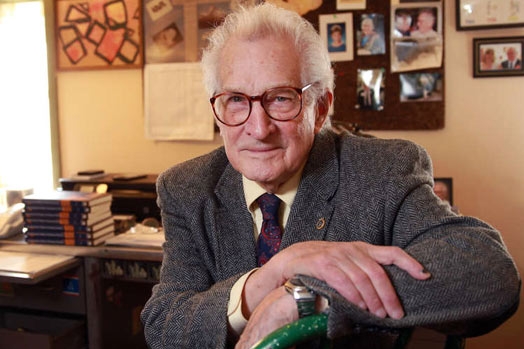
    Kenneth W. Ford, 99, of Gwynedd, Montgomery County, theoretical physicist who helped develop the hydrogen bomb in 1952, university president, college professor, executive director, award-winning author, and Navy veteran, died Friday, Dec. 5, of pneumonia at Foulkeways at Gwynedd retirement community.

    Dr. Ford was a 24-year-old physics graduate student at Princeton University in 1950 when he was recruited by a colleague to help other scientists covertly build a hydrogen bomb. “I was told if we don’t do it, the Soviet Union will,” Dr. Ford told The Inquirer in 2023, “and the world will become a much more dangerous place.”

    So he spent one year at the Los Alamos National Laboratory in New Mexico and another back at Princeton, creating calculations on the burning of the fuel that ignited the bomb and theorizing about nuclear fission and fusion. The H-bomb was tested in 1952.

    Dr. Ford’s expertise was in nuclear structure and particle and mathematical physics. He and Albert Einstein attended the same lecture when he was young, and he knew Robert Oppenheimer, Fredrick Reines, John Wheeler, and dozens of other accomplished scientists and professors over his long career.

    He came to Philadelphia from the University System of Maryland in 1983 to be president of a startup biotech firm. He joined the American Physical Society as an education officer in 1986 and was named executive director of the American Institute of Physics in 1987.

    “He always seemed to be the head of something,” his son Jason said.

    He retired from the AIP in 1993 but kept busy as a consultant for the California-based Packard Foundation and physics teacher at Germantown Academy and Germantown Friends School. Michael Moloney, current chief executive of the AIP, praised Dr. Ford’s “steady and transformative leadership” in a tribute. He said: “His career in research, education, and global scientific collaboration puts him among the giants.”

    As president of the New Mexico Institute of Mining and Technology from 1975 to 1982, Dr. Ford oversaw improvements in the school’s enrollment, faculty, budget, and facilities. He “was an accomplished researcher, scholar and teacher,” Michael Jackson, interim president of New Mexico Tech, said in a tribute, “a techie through and through.”

    Dr. Ford wrote “Building the H Bomb,” and it was published in 2015.

    Before Philadelphia, he spent a year as executive vice president of the University System of Maryland. Earlier, from 1953 to 1975, he was a researcher at Indiana University, physics professor at Brandeis University in Massachusetts and the University of Massachusetts, and founding chair of the department of physics at the University of California, Irvine.

    Officials at UC Irvine said in a tribute: Dr. Ford “leaves an enduring legacy as a scientist, educator, and institution builder. … The School of Physical Sciences honors his foundational role in our history and celebrates the broad impact of his distinguished life.”

    He told The Inquirer that he hung out at the local library as he grew up in a Kentucky suburb of Cincinnati and read every book he could find about “biology, chemistry, geology, you name it.” He went on to write 11 books about physics, flying, and building the H-bomb.

    Two of his books won awards, and 2015’s Building the H Bomb: A Personal History became a hit when the Department of Energy unsuccessfully tried to edit out some of his best material. His research papers on particle scattering, the nuclear transparency of neutrons, and other topics are cited in hundreds of publications.

    Dr. Ford was a popular professor because he created interesting demonstrations of physics for his students.

    In 1976, he earned a distinguished service citation from the American Association of Physics Teachers. In 2006, he earned an AAPT medal for notable contributions to the teaching of physics.

    He was the valedictorian at Phillips Exeter Academy in New Hampshire in 1944. He served two years in the Navy and earned a summa cum laude bachelor’s degree in physics at Harvard University and his doctorate at Princeton in 1953.

    In 1968, he was so opposed to the Vietnam War that he publicly declined to ever again work in secret or on weapons. “It was a statement of principle,” he told The Inquirer.

    Kenneth William Ford was born May 1, 1926, in West Palm Beach, Fla. He married Karin Stehnike in 1953, and they had a son, Paul, and a daughter, Sarah. After a divorce, he married Joanne Baumunk, and they had daughters Caroline and Star, and sons Adam and Jason. His wife and former wife died earlier.

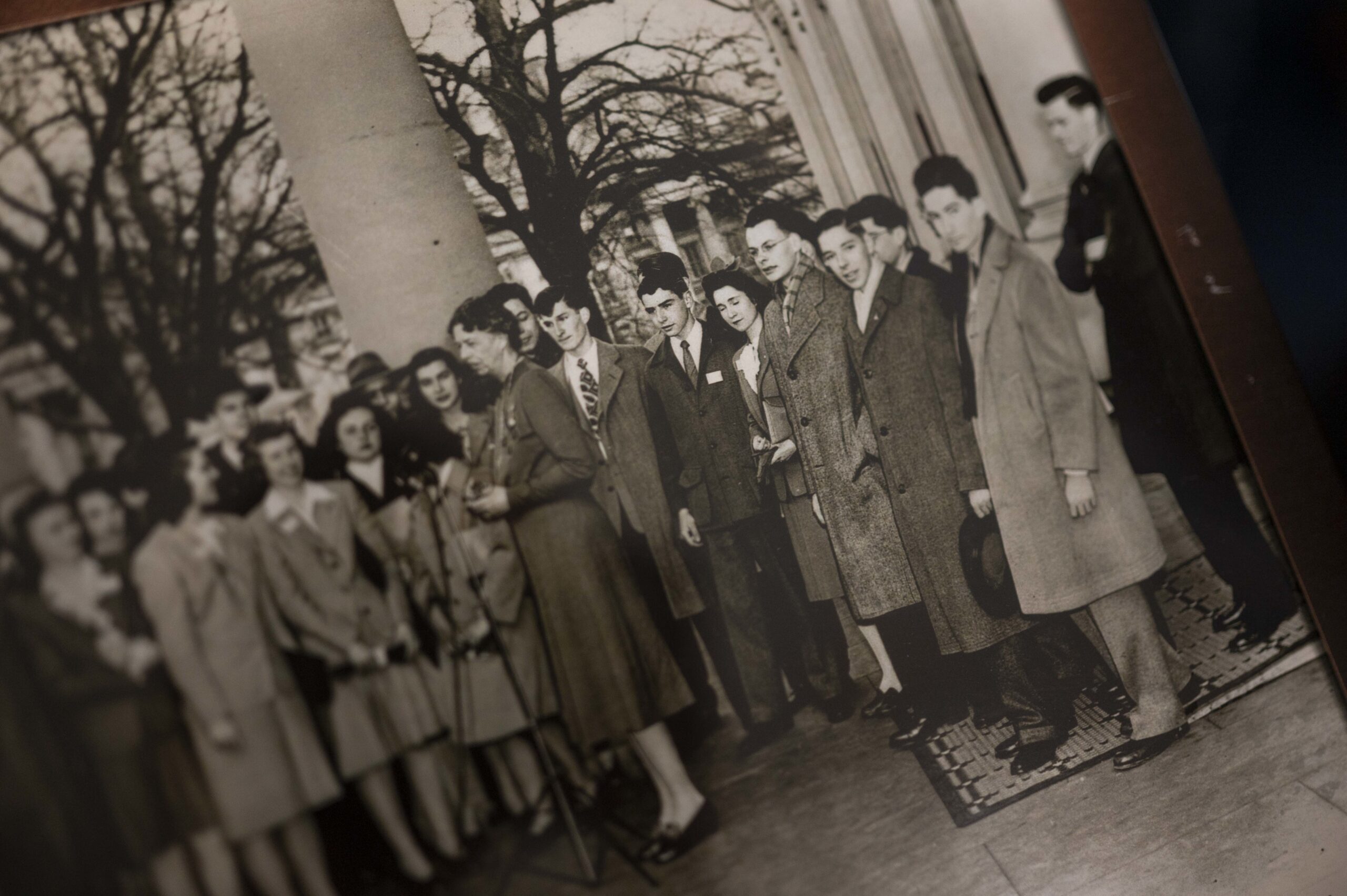
    This photo shows Dr. Ford (center) and other students listening to former First Lady Eleanor Roosevelt speak in 1944.

    Dr. Ford lived in University City, Germantown, and Mount Airy before moving to Foulkeways in 2019. He was an avid pilot and glider for decades. He enjoyed folk dancing, followed the Eagles closely, and excelled at Scrabble and other word games.

    He loved ice cream, coffee, and bad puns. He became a Quaker and wore a peace sign button for years. Ever the writer, he edited the Foulkeways newsletter.

    In 2023, he said: “I spent my whole life looking for new challenges.” His son Jason said. “He found connections between things. He had an active mind that went in all different directions.”

    In addition to his children, Dr. Ford is survived by 14 grandchildren, a great-grandson, a sister, a stepdaughter, Nina, and other relatives.

    Services are to be from 2 to 4:30 p.m., Saturday, Jan. 24, at Foulkeways at Gwynedd, 1120 Meetinghouse Rd., Gwynedd, Pa. 19436.

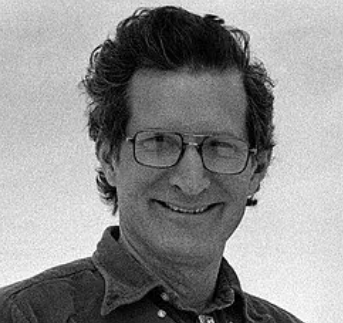
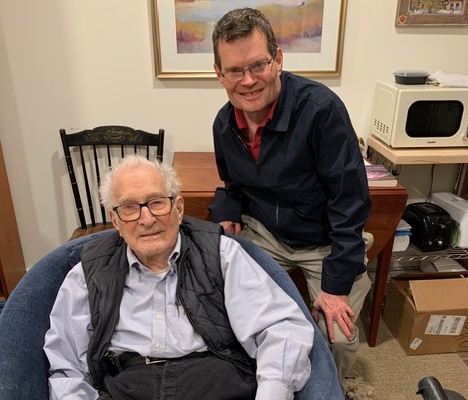
    Dr. Ford and his son Jason
    Dr. Ford wore a peace sign button for years.