Category: Business

Business news and market updates

  • Avelo stops deportation flights in Arizona; protesters in Delaware applaud

    Avelo stops deportation flights in Arizona; protesters in Delaware applaud

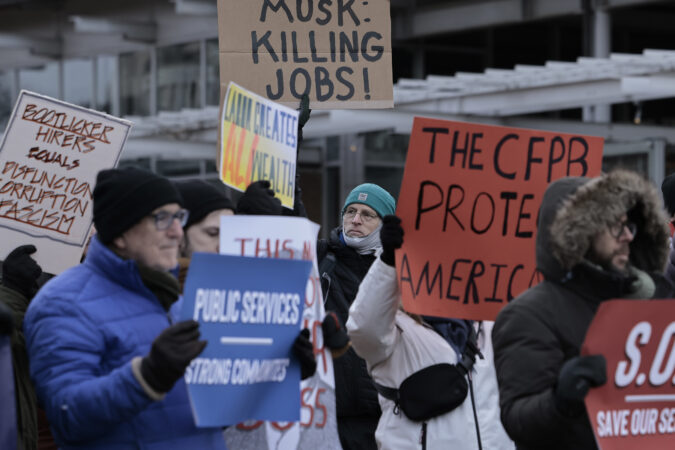
    Avelo, the only commercial airline serving Wilmington’s airport, has ended its contract flights to carry foreign nationals detained by U.S. immigration agents. The change takes place amid a larger consolidation of Avelo’s routes.

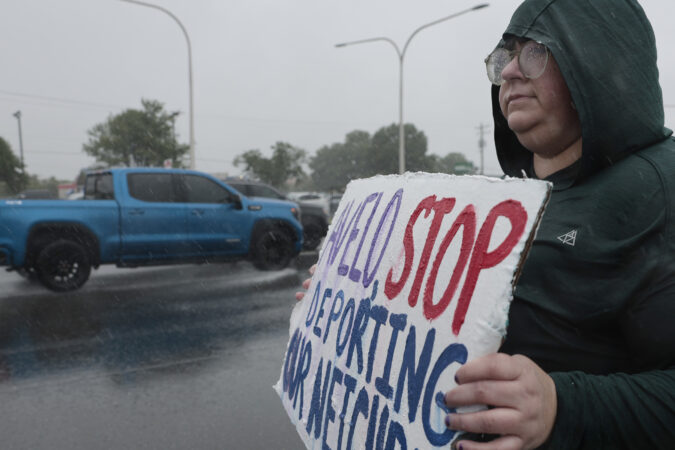
    The Delaware Stop Avelo Coalition of groups critical of President Donald Trump’s deportation policies hailed the airline’s move. They had been leading pickets at the Wilmington airport in New Castle, Del., since last spring, when Avelo joined several charter airlines transporting deportees for the Department of Homeland Security.

    For Avelo, the latest move was part of a cost-cutting reorganization “streamlining its network” to four of its regional bases: Wilmington; New Haven, Conn.; Charlotte/Concord, N.C.; and Lakeland, Fla. Among the regional bases it is closing is Mesa, Ariz., which handled deportation flights.

    “Avelo will close the base” in Arizona, where it had managed what the airline called “removal flights” for the government, “and will conclude participation in the DHS charter program” by Jan. 27, Avelo spokesperson Courtney Goff said in a statement. The airline said earlier that it had not moved deportees through Delaware.

    Avelo also said it has gotten rid of six Boeing jets. Airline industry information sites are reporting DHS has picked up at least some of those former Avelo airliners, as if moving deportation capacity in-house.

    Avelo plans a new base at the McKinney National Airport, near Dallas, later this year.

    Avelo CEO Andrew Levy last year said the DHS contract was part of the airline’s plans for growing and maintaining operations. Levy started the airline in 2020 and has rapidly increased its route network, but also has acted quickly to cut and shift unprofitable service.

    The coalition, a group including local Democratic Party activists in chapters of the Indivisible organization, Working Families Party affiliates, the Delaware Democratic Socialists of America, and Unitarian-Universalists, said in a statement that it welcomed Avelo’s decision to end deportation flights, “especially those without due process.”

    “We don’t know, to be honest, but we have indications from behind the scenes that we had some effect. Sometimes these things build and build,” said Gayle Gibson, an engineer who serves as coalition spokesperson.

    The coalition also coordinated some of the sign-waving picketing with actions at other airports Avelo serves around the country.

    Gibson noted that Wilmington City Council passed a resolution calling on Avelo to stop flying deportees rushed into custody without due process. State legislators drafted similar bills, which had not yet advanced to a vote, and “hundreds” of protesters had turned out to airport picket lines, local-government meetings, and University of Delaware rallies to pressure Avelo. Leaders also met with Gov. Matt Meyer and other top state officials.

    Safety concerns raised by Avelo employees also had an impact, Gibson said. “This shows Delaware stands behind businesses that operate according to laws and value people and due process.”

    The organizers in their statement took credit for making Avelo’s deportation flights “politically and reputationally radioactive,” leading to the company’s decision to stop.

    Avelo cited poor financial returns. The program did not pay Avelo enough “to overcome its operational complexity and costs,” according to Goff’s statement.

    State and local officials in Connecticut, New York, and other states had called on Avelo to stop the deportation-related flights.

    Meyer, who welcomed Avelo to the airport when he was New Castle County executive in the early 2020s, had said he personally boycotted Avelo after the protests began.

    Activists said they couldn’t measure the effect of any customer boycott.

    “We did not see an impact regarding customers choosing to fly,” said Goff, the airline spokesperson. Customer flights rose to 2.6 million last year, up 11% from 2024, as planes were fuller. She credited low fares and on-time reliability.

    The protests put Meyer and other Democratic officials in a quandary. They had encouraged Avelo to begin service from the airport, which formerly managed only charter, corporate, and general-aviation flights, as a way of boosting Delaware’s corporate employment sector as the state economy turns from heavy and chemical manufacturing toward biotech and other developing industries.

    Meyer did not act on protesters’ demands that the state cancel tax incentives and other Avelo financial benefits to pressure the airline to end the flights.

    The airport is operated by the Delaware River and Bay Authority, which also controls the Delaware Memorial Bridge and Cape May-Lewes ferry. The authority’s board represents the Democratic-led states of Delaware and New Jersey.

    Like the governor, the authority declined activist requests to pressure Avelo, saying the airline had the right to conduct its business the way it sees fit.

    “We’re aware of the community concerns regarding Avelo’s past operations at other airports,“ James Salmon, the authority’s spokesperson, said in a statement after Avelo announced an end of the flights. “We’ve consistently maintained a neutral position” and focused on keeping the airport accessible to customers for Avelo’s flights to Florida and other destinations. The airline’s flights from other airports were “outside the scope” of the agency’s authority.

    “This decision proves that public pressure really works,” the coalition said in its statement. It said it would keep pushing proposed laws to prevent airlines receiving state benefits from “quietly” resuming flights or other deportation contractors from winning government support.

  • After striking gold in Paris in 2024, can NBC do it again at the Winter Olympics in Milan?

    After striking gold in Paris in 2024, can NBC do it again at the Winter Olympics in Milan?

    NEW YORK — In the lead-up to the Summer Olympics in Paris two years ago, there was no small amount of fear that the Games were losing their luster.

    It probably didn’t help that there were three straight Olympics in Asia, which meant most of the action was overnight for U.S. television viewers. And the pandemic definitely didn’t help, because sports without crowds in the stands weren’t as fun to watch.

    But NBC went all-in on Paris anyway, and was rewarded with huge ratings. Yes, people did still care, and they showed up to prove it.

    Now the network faces the challenge of bringing that energy to next month’s Winter Olympics in Milan and Cortina d’Ampezzo, Italy. The winter edition has historically drawn lower audiences than the summer no matter the circumstances, but NBC once again is going all-in.

    The Winter Olympics start Feb. 6 in Milan and Cortina d’Ampezzo, Italy.

    “We know the Winter Olympics haven’t been fully attended in eight years,” NBC’s Olympics executive producer Molly Solomon said at a media preview event last week. “We can’t take anything for granted. The media landscape has completely changed since 2018. So what have we got to do? We’ve got to win back viewers, we’ve got to show them why they should watch.”

    As with two years ago, there will be a lot of coverage on the big broadcast network, starting with at least five live hours a day. Because of the six-hour time difference between Italy and the eastern United States, the traditional prime time show will be like it was in Paris, with a mix of highlights and features.

    There will also be a lot of broadcasts on the USA Network and CNBC cable channels, and every event will be live on NBC’s Peacock streaming platform.

    If it feels natural to say all that, veteran Olympics fans will remind you quickly of how different things used to be. For many years, NBC held back showing some big events live to save them for the big prime time show.

    South Jersey-raised figure skater Isabeau Levito will likely be the highest-profile name from the Philadelphia area competing at the Winter Olympics.

    Paris was the first time NBC really opened everything up. It isn’t a coincidence that those were the first Games after Rick Cordella was promoted to president of NBC Sports, and the first outside of Asia after Solomon was promoted to her job in 2019.

    “The Olympics in Paris proved the Olympics are back, and remain an unrivaled media property with the unique abilities to captivate the nation and generate audiences across all demographics for 17 days and nights,” Cordella said. “We expect Milan-Cortina to carry on that legacy.”

    Solomon said she “felt as though we handed the viewer the remote control, and we said, ‘Hey, we’re going to give you different ways to watch the Olympics.’ And we’re now going to take all those learnings and build on them for Milan-Cortina.”

    With dramatic backdrops like the Eiffel Tower, the 2024 Summer Olympics in Paris proved to be a hit with U.S. TV viewers.

    A big bet paid off

    For as much as fans welcomed NBC’s change in philosophy, there was no guarantee it would succeed. If the prime time show’s ratings had flopped, some critics might have said the old way was more profitable.

    Instead, the network shot out of the gate. An average of 34.5 million viewers watched the first three days of competition in what were seen as the two “prime” slots, live coverage from 2-5 p.m. Eastern time then the nighttime highlights show — including a massive 41.5 million on the first Sunday.

    The average over the whole Summer Games ended at 30.4 million, which NBC said was up 80% from 2021 in Tokyo.

    Solomon said that when Cordella called her after the first weekend with the early returns, “I burst into tears, because those numbers — I didn’t think it was possible. … We didn’t even dream that big.”

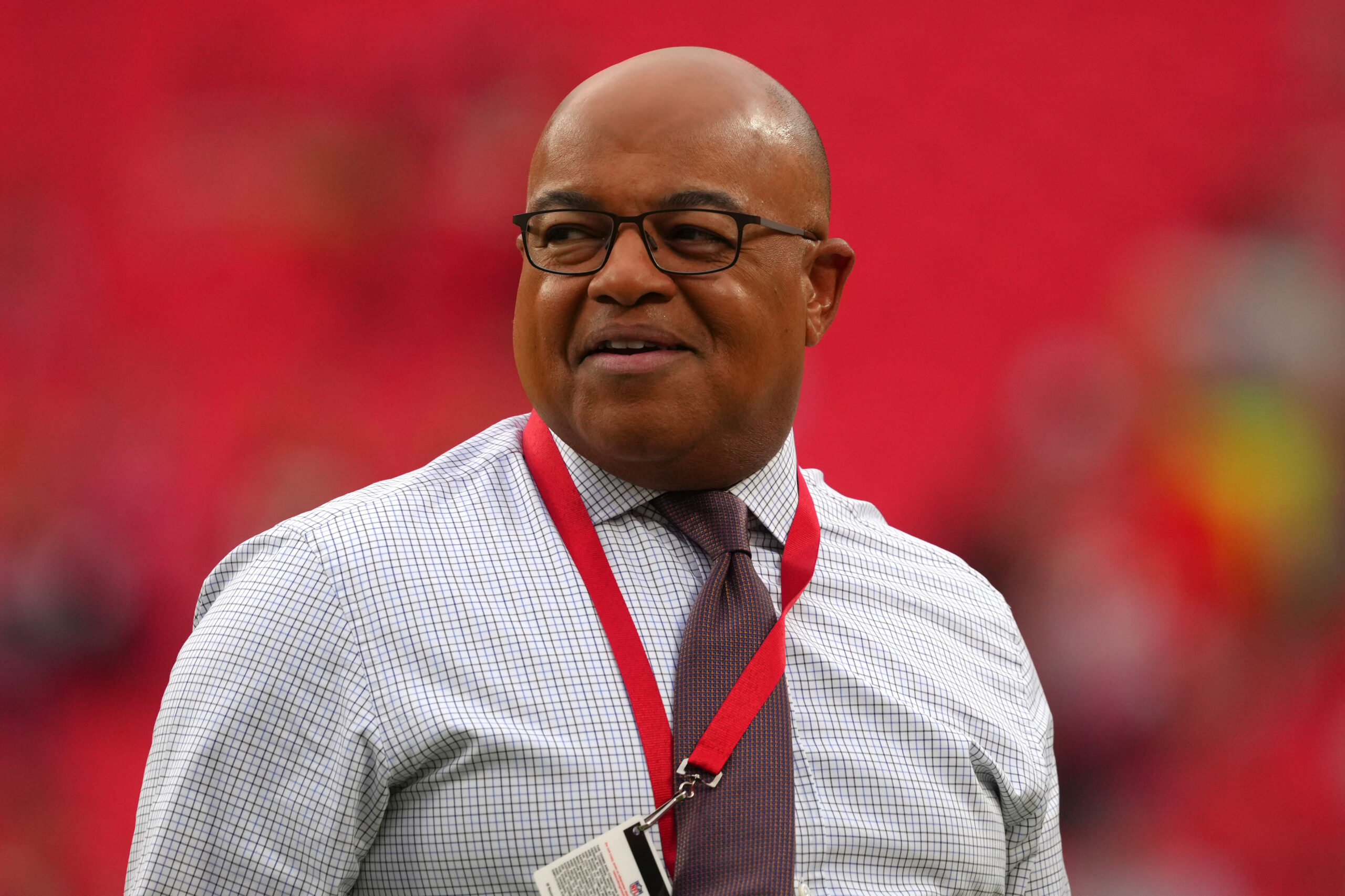
    NBC’s lead Olympics host Mike Tirico said he could tell from the studio that things were working.

    “We saw that there was a formula for the prime time show: that [showing an event] live and then showing it again, and there was enough differentiation in what we showed again, that it was connecting with viewers,” he said. “And then hearing back from people who were home: ‘Hey, this is so great, I’m enjoying watching it at night after we watch all the daytime events.’ Probably day four, I would say that Monday or Tuesday, was [when] I got feedback that it was working.”

    The 2028 Summer Olympics in Los Angeles will be different again, since they’ll be on home turf. Then the 2030 Winter Olympics will be back in Europe in the French Alps.

    Who knows what the media landscape will look like by then, given how quickly things change these days, but it’s hard to believe NBC will ever revert to its past.

    Mike Tirico does lots of things at NBC, from hosting the Olympics to calling NFL and NBA play-by-play.

    “Just as a sports fan, I would say not,” Tirico said. He emphasized he was speaking just for himself, not his bosses, but his opinion counts for something.

    “I think we’ve seen because of streaming, you can access anything you want at any time,” he continued. “There’s still the largest audience sitting there at the end at night, and you want to give them the biggest events [as highlights]. So holding them doesn’t make any sense in this day and age. And we had long talks about that before Paris, and I think we saw a formula that worked.”

    This year’s new additions

    There will be a few new toys for viewers to enjoy next month. Peacock will have extra camera angles available for figure skating — including some behind-the-scenes ones — and ice hockey.

    Solomon worked with the International Olympic Committee to get live drone cameras into coverage, to get microphones on some athletes, and to get into warmup areas to show how athletes get ready for their big moments.

    Skiing superstar Lindsey Vonn will be at her fifth Olympics, 24 years after her first.

    “We’ve really pushed everybody to go places, and take the viewer places they’ve never seen before,” she said. “Because in the winter, you’re covered with goggles and head gear. So we need to be at the place before they put this stuff on. We need to see faces. And the International Olympic Committee has been great about granting us that access.”

    The biggest new thing might be an expansion of the popular “Gold Zone” whip-around live highlights show. From 8 a.m. to around 4 p.m. each day, it will be televised not just on Peacock but on the recently relaunched NBCSN cable channel.

    That means more viewers will have access, but it also takes away an incentive to subscribe to Peacock if you don’t yet.

    “I think the NBA would say that would drive people to subscribe to Peacock, or Premier League [soccer], and now that’s available on NBCSN,” Cordella said. “And so our view of NBCSN is that we’re going to be agnostic to how people consume our content, as long as we’re getting adequately paid for it [by distributors]. We did a deal with YouTube [TV], we’ve done a deal with our parent company Comcast, and hopefully we’ll do a deal with others, but NBCSN is a big part of our strategy moving forward.”

    For the most part, everyone speaking at the media preview event stayed away from another addition to the landscape: the United States’ current hostilities with Venezuela and Greenland, the Russia-Ukraine war, and the turmoil within U.S. borders over ICE and many other subjects.

    But they did not stay away from the subject completely.

    “I’ve just been thinking a lot about this: In this increasingly divided and isolated world, there’s not many moments when we all come together anymore,” Solomon said. “Sports does bring us together, but I think the Olympics is really even more unique.”

    Comcast CEO Brian Roberts also alluded to wider affairs in his speech at the end of the event.

    “Bringing our country together when a lot of things are pulling us apart is just a fabulous opportunity,” he said.

  • Pa. and N.J. lost thousands of jobs after federal workers signed up for Trump resignation program

    Pa. and N.J. lost thousands of jobs after federal workers signed up for Trump resignation program

    The number of federal government employees in the Philadelphia region plunged in October, according to new employment data that appear to reflect the departure of thousands who opted into President Donald Trump’s resignation program.

    Trump’s cuts to the federal workforce over his first year in office became clearer Wednesday with the release of new employment data from the U.S. Bureau of Labor Statistics (BLS). Across Pennsylvania and New Jersey, thousands of federal jobs were cut from September to October.

    It was the first time the government’s deferred resignation program has been reflected in local employment data. First offered in January 2025, this program allowed federal employees to resign from their jobs while continuing to receive pay. For many, the program ended Sept. 30. While it may have been months since they had completed duties related to their federal jobs, the end of the deferred resignation period is when they officially stopped being employed by the government for purposes of employment data.

    window.addEventListener(“message”,function(a){if(void 0!==a.data[“datawrapper-height”]){var e=document.querySelectorAll(“iframe”);for(var t in a.data[“datawrapper-height”])for(var r,i=0;r=e[i];i++)if(r.contentWindow===a.source){var d=a.data[“datawrapper-height”][t]+”px”;r.style.height=d}}});

    “The federal workforce is …in communities like Philadelphia, and we are part of the economy,” said Philip Glover, a union leader with AFGE District 3, which represents federal workers in Pennsylvania and Delaware. The recent local job loss will have ripple effects, he said. It “affects stores, transit, it affects tax bases, all of those things are affected,” he said.

    Federal agencies in the Philadelphia metro area — a region that includes Camden and Wilmington — shed about 2,900 jobs in October, down 5.3% from September. It was the steepest month-over-month decline since July 2010 and the fourth biggest since at least 1990.

    Pennsylvania lost overall about 4,800 federal jobs in October, a 4.8% drop and the largest month-over-month decrease since October 2020.

    New Jersey lost about 1,200 federal jobs in October.

    In nearly five years, employment overall has grown 12.6% in the Philadelphia metro area, but regional gains in federal employment have now been completely wiped out by job losses in the past year.

    window.addEventListener(“message”,function(a){if(void 0!==a.data[“datawrapper-height”]){var e=document.querySelectorAll(“iframe”);for(var t in a.data[“datawrapper-height”])for(var r,i=0;r=e[i];i++)if(r.contentWindow===a.source){var d=a.data[“datawrapper-height”][t]+”px”;r.style.height=d}}});

    The handful of larger prior declines in federal employment for Pennsylvania and Philadelphia came during the recessions of the early 1990s and 2000s, the Great Recession and its aftermath, or the COVID-19 pandemic — periods during which economic activity slowed and the federal government experienced a decline in tax revenue.

    The deferred resignation would have been reflected in a November release, but it was delayed because of the federal government shutdown, which stretched through early November.

    The federal employment figures include all full- and part-time civilian employees, including those of the Postal Service. But it does not include armed forces and intelligence agencies such as the CIA and NSA.

    Why federal workers resigned

    Paul Kenney spent almost 30 years at the National Park Service in Philadelphia — more than two decades in the Northeast Regional Office on Market Street in river protection and six years at Independence National Historical Park.

    All that came to a halt in March 2025. Kenney decided the Trump administration’s efforts to significantly reduce the federal workforce was too much. He felt demoralized and also concerned that a bill in Congress at the time would impact his pension.

    The 59-year-old decided to retire three years early, despite wanting to stay in the workforce. He had just scored some highly coveted grants for restoration efforts in the parks. He remains involved with his union, AFGE Local 2058, as a vice president.

    By the end of May, five people from Kenney’s 11-person team at the Northeast Regional Office left; almost all had opted to take an early retirement.

    “The pressure really was all DOGE,” Kenney said, referring to the Department of Government Efficiency Trump launched soon after taking office. It was a “grim” experience for those in the federal workforce, he added.

    Kenney is one of the thousands no longer on government payroll. Federal employees were laid off, took early retirements, and resigned in 2025 amid Trump’s workforce overhaul.

    Beyond layoffs earlier in 2025, the Trump administration sent termination notices during the government shutdown that started on Oct. 1. Those firings were ordered to be reversed under the deal to end the shutdown.

    Where are federal workers employed?

    In Pennsylvania, federal employment represented about 1.52% of all jobs as of November, down from around 1.69% for the same month in 2024, according to the new data.

    In New Jersey, federal workers represented about 1.05% of jobs overall as of November, down from around 1.13% in November 2024.

    The most recent BLS data are not broken down by agency or department, but data from March 2025 from Pennsylvania’s Department of Labor and Industry indicate that in Southeastern Pennsylvania, the largest employers of federal workers are the U.S. Postal Service, the Department of Defense, and the Department of the Treasury.

    window.addEventListener(“message”,function(a){if(void 0!==a.data[“datawrapper-height”]){var e=document.querySelectorAll(“iframe”);for(var t in a.data[“datawrapper-height”])for(var r,i=0;r=e[i];i++)if(r.contentWindow===a.source){var d=a.data[“datawrapper-height”][t]+”px”;r.style.height=d}}});

    Nationally, the federal government shed about 162,000 jobs in October, down 5.6% from September and 8.7% from the previous October. The government lost a further 6,000 jobs in November.

    There were about 2.74 million federal employees nationwide as of November, compared with about 3.02 million at the start of 2025. The country experienced a loss of 271,000 federal jobs from January through November.

    That’s not far off the 300,000 federal jobs that the Trump administration had said would be cut by the end of 2025. Data for the remainder of the year will be available later this month.

    “What it’s doing is putting a strain on the remainder of the workforce to continue operations,” said Glover. “That increases stress levels, it doesn’t increase efficiency.”

    Meanwhile, the federal government could shut down again, albeit partially, if legislators don’t reach a funding deal by Jan. 30.

    And with that in mind, Glover said, additional federal workers may be thinking about quitting. “I think people are making decisions now whether they’re gonna stay if that happens again.”

  • At CES, auto and tech companies transform cars into proactive companions

    At CES, auto and tech companies transform cars into proactive companions

    LAS VEGAS — In a vision of the near future shared at CES, a girl slides into the back seat of her parents’ car and the cabin instantly comes alive. The vehicle recognizes her, knows it’s her birthday, and cues up her favorite song without a word spoken.

    “Think of the car as having a soul and being an extension of your family,” Sri Subramanian, Nvidia’s global head of generative AI for automotive, said Tuesday.

    Subramanian’s example, shared with a CES audience on the show’s opening day in Las Vegas, illustrates the growing sophistication of AI-powered in-cabin systems and the expanding scope of personal data that smart vehicles may collect, retain, and use to shape the driving experience.

    Across the show floor, the car emerged less as a machine and more as a companion as automakers and tech companies showcased vehicles that can adapt to drivers and passengers in real time — from tracking heart rates and emotions to alerting if a baby or young child is accidentally left in the car.

    Bosch debuted its new AI vehicle extension that aims to turn the cabin into a “proactive companion.” Nvidia, the poster child of the AI boom, announced Alpamayo, its new vehicle AI initiative designed to help autonomous cars think through complex driving decisions. CEO Jensen Huang called it a “ChatGPT moment for physical AI.”

    But experts say the push toward a more personalized driving experience is intensifying questions about how much driver data is being collected.

    “The magic of AI should not just mean all privacy and security protections are off,” said Justin Brookman, director of marketplace policy at Consumer Reports.

    Unlike smartphones or online platforms, cars have only recently become major repositories of personal data, Brookman said. As a result, the industry is still trying to establish the “rules of the road” for what automakers and tech companies are allowed to do with driver data.

    That uncertainty is compounded by the uniquely personal nature of cars, Brookman said. Many people see their vehicles as an extension of themselves — or even their homes — which he said can make the presence of cameras, microphones, and other monitoring tools feel especially invasive.

    “Sometimes privacy issues are difficult for folks to internalize,” he said. “People generally feel they wish they had more privacy but also don’t necessarily know what they can do to address it.”

    At the same time, Brookman said, many of these technologies offer real safety benefits for drivers and can be good for the consumer.

    On the CES show floor, some of those conveniences were on display at automotive supplier Gentex’s booth, where attendees sat in a mock six-seater van in front of large screens demonstrating how closely the company’s AI-equipped sensors and cameras could monitor a driver and passengers.

    “Are they sleepy? Are they drowsy? Are they not seated properly? Are they eating, talking on phones? Are they angry? You name it, we can figure out how to detect that in the cabin,” said Brian Brackenbury, director of product line management at Gentex.

    Brackenbury said it’s ultimately up to the car manufacturers to decide how the vehicle reacts to the data that’s collected, which he said is stored in the car and deleted after the video frames, for example, have been processed.

    “One of the mantras we have at Gentex is we’re not going to do it just because we can, just because the technology allows it,” Brackenbury said, adding that “data privacy is really important.”

  • 2026 Mercedes GLE 450 SUV: Showing the others how it’s done

    2026 Mercedes GLE 450 SUV: Showing the others how it’s done

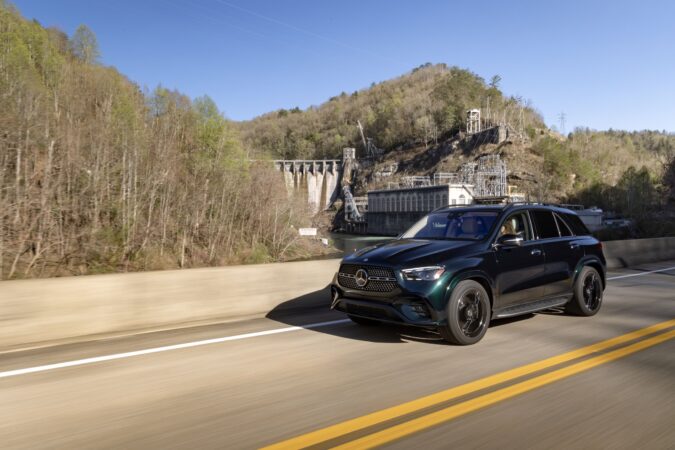
    2026 Genesis GV80 Coupe 3.5T E-supercharger vs. 2026 Land Rover Defender 130 V-8 vs. 2026 Mercedes-Benz GLE 450 4Matic SUV: Off-roading in high style.

    This week: Mercedes-Benz GLE 450 SUV

    Price: $79,100 as tested.

    What others are saying: “Highs: A powertrain for every need, well-appointed and spacious interior, legitimately capable; Lows: Rivals offer smoother rides and better handling, Benz charges extra for ubiquitous features.” — Car and Driver

    What Mercedes is saying: “It’s innovative. Intelligent. And just a bit indulgent.”

    Reality: Cushy, yet satisfying.

    What’s new: The GLE 450 SUV carries on fairly unchanged since the 2024 model year, when it received tech updates and available hybrid power.

    Competition: In addition to the GV80 Sport and the Defender, there are the BMW X5, Lexus RX, Lincoln Nautilus, and Toyota Land Cruiser.

    Up to speed: The GLE 450 is powered by a 3-liter inline six-cylinder engine with a mild hybrid system. It creates 375 horsepower. It gets to 60 mph in 5.3 seconds, according to Car and Driver.

    I never found the GLE lacked power, but it definitely seemed sedate. I used it in Sport mode, and nobody ever felt planted in their seats during test maneuvers. Strange how it was almost an exact match with the GV80’s 5.2-second time, but somehow the Genesis felt much more exuberant.

    Shifty: Mercedes originated the latest incarnation of the column shifter, with a bump up for Reverse and down for Drive. Shifting of the 9-speed automatic transmission happens through steering wheel paddles.

    On the road: The GLE handled about as I expected from a Mercedes — very smooth, almost to a fault. Pennsylvania’s ruttiest roads, including Route 202 around King of Prussia, could send the GLE into jumping fits, but the rest of the time the SUV felt serene, quiet, cushy.

    Speaking of cushy, that’s where the GLE handling lives — don’t expect this SUV to perform feats of derring-do on country roads. But stay within its limits and life is pleasant.

    At least when you’re in Sport mode. The vehicle defaults to Comfort mode, and that has a sway and bounce that takes cushy into nauseating.

    The interior of the 2026 Mercedes-Benz GLE 450, on the other hand, could very well win several beauty contests.

    Driver’s Seat: Ooo, aaah. Great leather coverings, not too firm, not too soft. The front seats are wide as well, perfect for large dinners at fancy restaurants.

    Visibility up front could be a bit challenging. I raised the seat up quite high and still was unsatisfied with what I could see in the corners. But I did ace a couple head-first parking lot episodes, which normally I find can be rather difficult in SUVs, so maybe it’s better than I think.

    The interior is fancy like a Mercedes should be, but the trim around the HVAC vents leaves something to be desired. They come in a contrasting color and look like I could pop them out with a small screwdriver, if I were so inclined. Why offer this?

    Friends and stuff: The other couple you bring along to show off your Mercedes (practice saying it like Cary Grant in North by Northwest — “Laura’s Meh-seddies”) will definitely be impressed. The seat is awesome, and there’s so much room to spread out, you’ll feel like you’re being chauffeured.

    A third row is optional.

    Cargo space is 33.3 cubic feet in the back and 74.9 with the seat folded.

    Towing capacity maxes out at 7,700 pounds, just 500 less than the Defender and more than 1,500 over the GV80.

    In and out: The GLE 450 sits up a little high so entry and exit are not the easiest in the world, but it sure beats the Defender.

    Play some tunes: Sound from the system is delightful, an A veering close to A+ territory.

    My ratty old iPhone plugged in and just worked, a nice touch. I’m forever getting defaulted to Bluetooth in various vehicles and then I have to fight and do dances to get it to link. But this one worked every time.

    The screen offers a simple CarPlay tab and another main tab. Console controls are also available, for those who are used to them.

    Keeping warm and cool: A row of silver toggles underneath the infotainment system looks sharp and operates with ease. I could change the temperature and the fan speed without looking after a couple tries, as it should be.

    Large vents provide plenty of airflow but never seemed to blast us.

    Fuel economy: That mild hybrid is definitely mild, as the GLE averaged 18.5 mpg for me. Gulp, but still the winner among the three tested.

    Where it’s built: Vance, Ala. Germany supplies 34% of the parts; Mexico 17%.

    How it’s built: Consumer Reports predicts the GLE SUV reliability to be a 3 out of 5.

    In the end: I felt a little bad about setting up this trio, as they do aim in different directions. But the Genesis fell short in so many areas that had nothing to do with its size — comfort and handling among them. The Land Rover really was quite nice, but their reliability reputation makes that a gamble.

    Fortunately, the Mercedes was hands down the nicest among the three, slightly sippier, more comfortable, and nice to drive. And there’s enough money left over among the three to consider a hybrid model.

  • Warner Bros rejects Paramount takeover again and tells shareholders to stick with Netflix bid

    Warner Bros rejects Paramount takeover again and tells shareholders to stick with Netflix bid

    NEW YORK — Warner Bros. again rejected a takeover bid from Paramount and told shareholders Wednesday to stick with a rival offer from Netflix.

    Warner’s leadership has repeatedly rebuffed Skydance-owned Paramount’s overtures — and urged shareholders just weeks ago to back the sale of its streaming and studio business to Netflix for $72 billion. Paramount, meanwhile, has made efforts to sweeten its $77.9 billion hostile offer for the entire company.

    Warner Bros. Discovery said Wednesday that its board determined Paramount’s offer is not in the best interests of the company or its shareholders. It again recommended shareholders support the Netflix deal.

    “Paramount’s offer continues to provide insufficient value, including terms such as an extraordinary amount of debt financing that create risks to close and lack of protections for our shareholders if a transaction is not completed,” Warner Bros. Discovery Chair Samuel Di Piazza Jr. said in a statement. In contrast, he added, the company’s agreement with Netflix “will offer superior value at greater levels of certainty.”

    Paramount did not immediately respond to a request for comment. The company’s hostile bid is still on the table. Warner shareholders currently have until Jan. 21 to “tender” their shares.

    Late last month, Paramount announced an “irrevocable personal guarantee” from Oracle founder Larry Ellison — who is the father of Paramount CEO David Ellison — to back $40.4 billion in equity financing for the company’s offer. Paramount also increased its promised payout to shareholders to $5.8 billion if the deal is blocked by regulators, matching Netflix’s breakup fee.

    In its Wednesday letter to shareholders, Warner expressed concerns about a potential deal with Paramount. Warner said it essentially considers the offer a leveraged buyout, which includes a lot of debt, and also pointed to operating restrictions that it said were imposed by Paramount’s offer and could “hamper WBD’s ability to perform” throughout a transaction.

    The battle for Warner and the value of each offer grows complicated because Netflix and Paramount want different things. Netflix’s proposed acquisition includes only Warner’s studio and streaming business, including its legacy TV and movie production arms and platforms like HBO Max. But Paramount wants the entire company — which, beyond studio and streaming, includes networks like CNN and Discovery.

    If Netflix is successful, Warner’s news and cable operations would be spun off into their own company, under a previously-announced separation.

    A merger with either company could take over a year to close — and will attract tremendous antitrust scrutiny along the way. Due to its size and potential impact, it will almost certainly trigger a review by the U.S. Justice Department, which could sue to block the transaction or request changes. Other countries and regulators overseas may also challenge the merger. And politics are expected to come into play under President Donald Trump, who has made unprecedented suggestions about his personal involvement on whether a deal will go through.

    Trade groups across the entertainment industry have continued to sound the alarm about both deals.

    In a statement addressed to a Congressional antitrust subcommittee on Wednesday, Cinema United — which represents more than 60,000 movie screens worldwide — reiterated it was “deeply concerned” that Netflix’s acquisition could harm both moviegoers and people who work in theaters, pointing to the streaming giant’s past reliance on its online platform. The group said its concerns were “no less serious” for Paramount’s bid — warning of consequences of further consolidation overall, which it said could result in job losses and less diversity in filmmaking.

  • U.S. vows to control Venezuela oil sales ‘indefinitely’

    U.S. vows to control Venezuela oil sales ‘indefinitely’

    Energy Secretary Chris Wright announced Wednesday that the Trump administration will take control of all existing flows of oil from Venezuela for the foreseeable future as it struggles to persuade U.S. firms to invest in expansive drilling operations there.

    Speaking at a Goldman Sachs energy industry event in Miami, Wright said the United States will allow Venezuelan oil under U.S. sanctions to flow again, but only to U.S. refineries. He said the sales will be “done by the U.S. government and deposited into accounts controlled by the U.S. government.”

    “From there, those funds can flow back into Venezuela to benefit the Venezuelan people,” Wright said. “We need to leverage and control those oil sales to drive the changes that must happen in Venezuela.”

    Wright’s comments followed an announcement from President Donald Trump on Tuesday night that tens of millions of barrels of Venezuelan oil currently blocked by a U.S. embargo will be shipped to refineries in the U.S. The directive enables revenue to start flowing to Venezuela, but even that arrangement could be complicated because those refineries get abundant oil from North America.

    On Wednesday, Wright framed the effort as crucial to re-establishing a viable oil industry in Venezuela. He said the revenue generated could be used to help rebuild the badly rotting oil infrastructure in that country and to help lure U.S. firms to invest there. He said the U.S. will control Venezuelan oil flows “indefinitely.”

    The unorthodox arrangement puzzled some analysts. The reason oil had not been flowing to the U.S. refineries was that U.S. sanctions prohibit it. If the sanctions were lifted, they say, market forces would already guide most of the Venezuelan oil to the U.S., which has refineries specially equipped to handle the heavy type of crude pumped there.

    “So much Venezuelan oil is exported to China, India, and other markets because of sanctions,” said Ben Cahill, an energy markets scholar at the University of Texas at Austin. “If the goal is to redirect it to U.S. refiners, sanctions relief could do that on its own.”

    The Venezuelan oil will be flowing at a time forecasts project the U.S. refining market will have more than enough oil.

    “I don’t see how this benefits the American people,” said Amos Hochstein, managing partner at the investment holding company TWG Global, who was a senior economic and national security adviser in the Biden White House. “If anything, we may have an oversupply, which is why oil prices are in multiyear lows and declining. Nor do I see how this helps the people of Venezuela.”

    An oil tanker is docked at El Palito Port in Puerto Cabello, Venezuela, last month.

    The effort is underway as Wright also runs point on the White House effort to coax U.S. oil companies to invest in Venezuela, according to industry officials. As the companies express reticence, the White House is working aggressively to try to lure them.

    Trump has started telling reluctant oil company leaders that he might make it worth their while.

    Within days after sending Special Operations forces into Venezuela to arrest Nicolás Maduro, Trump suggested that U.S. taxpayers could help foot the bill to drill the vast reserves of the Latin American nation.

    “A tremendous amount of money will have to be spent, and the oil companies will spend it, and then they’ll get reimbursed by us or through revenue,” he told NBC on Monday.

    Using taxpayer-funded cash subsidies to incentivize oil companies to pump abroad would be unprecedented, industry analysts say. But the White House faces a steep challenge persuading firms to drill in a politically and economically unstable country that has burned them in the past by expropriating assets worth billions and then leaving U.S.-built oil infrastructure to rot.

    The firms themselves are still working out what they want to request from the White House, according to a half-dozen individuals close to the companies who spoke on the condition of anonymity to talk speak frankly.

    Since Monday, Wright has talked with the CEOs of the three major oil companies that would be positioned to drill there: Chevron, the sole remaining U.S. firm that has operations in Venezuela; ConocoPhillips, which is still owed some $8 billion after its assets were taken when it exited nearly two decades ago; and ExxonMobil, which also previously operated in Venezuela and is owed about $1 billion. The Energy Department said in an email that Wright would meet privately with executives from the firms at the Goldman Sachs event Wednesday.

    ConocoPhillips said in a statement that “it would be premature to speculate on any future business activities or investments.” The other companies did not respond to requests for comment.

    The White House declined to answer detailed questions.

    According to one lobbyist close to the conversations, some company officials have been pondering the possibility of proposing a joint venture with the U.S. government, in which American taxpayers would invest in drilling in return for a stake in any profits.

    The conversations are focused on how to make it viable to invest tens of billions of dollars in such a high-risk country at a time when oil prices are low and there are many other safer, more attractive places for them to drill, such as nearby Guyana.

    “The companies are scrambling right now,” said a senior oil industry executive who has been involved in conversations with the administration. “I don’t think this was on anybody’s bingo card when they were making their [corporate] budgets for 2026.”

    “I have talked to all of the CEOs at companies that could be in a position to engage there,” said the executive. “There were no conversations between the industry and the White House or the president about what would happen. Maybe the president said something to somebody, like ‘be ready’ at some casual conversation. If it happened, it happened months and months ago.”

    The executive was also skeptical that companies would want subsidies, because partnering with the U.S. government carries its own risks. The next administration could be hostile to fossil fuels, and the companies would find themselves tied to it financially, as these agreements would pencil out only if they were in place for at least a decade or two. “We are a free-market industry,” the executive said. “We have benefited from not having state control of oil companies.”

    Still, the firms, indebted to a White House that has been a relentless booster of the industry, are under considerable pressure to deliver in Venezuela, even as company officials warn privately that Trump’s vows that expanded pumping will begin in as soon as 18 months are out of touch with reality.

    Despite other corporate partnerships undertaken by the administration around the world, it’s unclear how serious officials are about providing financial help for oil producers. Involving U.S. taxpayers is politically fraught and would probably confront opposition in Congress, industry analysts said.

    “These companies being asked by the Trump administration to dive into Venezuela are confronting enormous risks,” said Bob McNally, president of Rapidan Energy Group, a research firm that serves the industry. “It is like walking into a factory left to rot for 2 1/2 decades, or like asking yourself, ‘How bad is this house we just bought?’ I imagine they would want to mitigate those risks however they can.”

    The administration has offered financial incentives elsewhere around the world to entice companies and countries to align with the White House. In Ukraine, it struck a deal to create a Reconstruction Investment Fund, through which companies that invest in that country can tap into a fund generated with the help of natural-resource revenue from Ukraine.

    Ted Posner, a partner at Baker Botts, a global law firm that advises major oil companies, said the Trump administration could do something similar for U.S. corporations investing in Venezuela “as a way of demonstrating that the U.S. government has skin in the game. It’s here by your side.”

    But the levels of industry investment the White House wants to see in Venezuela — estimated at as much as $100 billion — dwarf what is being considered in Ukraine, and it is unclear if such partnerships would help sway oil company executives and their reluctant shareholders.

    “There are carrots available” to entice companies to drill, Posner said. “What I don’t know is if there are enough.”

    One oil company executive who has firsthand experience with the challenges in Venezuela warned that the administration’s rosy projections ignore realities on the ground.

    Even the firms that are owed billions of dollars, the executive said, will be reluctant to return, because recouping their investments would almost certainly require them to spend billions more.

    The reimbursement for seized assets would be the obligation of the Venezuelan state oil company, and it won’t have the funds if Venezuela does not restore its production capacity, which has collapsed after decades of neglect.

    “The only way to recoup that funding is through [pumping] crude oil,” the executive said. “But that will not happen overnight. Will you be fully compensated at the end of the day? Maybe. Maybe not.”

    “The U.S. government is going to have a hard time making this sales pitch,” this individual said. “Some companies are going to say, ‘We appreciate this, but we have our shareholders to think about and just cannot do it.’ Other companies will make demands to the U.S. that they want to be made whole if something happens. … How can you commit the U.S. Treasury to backstop these issues in Venezuela? Think about all the geopolitics around that. That alone could be tied up with lawyers for a year.”

    As oil executives grapple with all of this uncertainty, Trump continues to indicate that he expects all of them to align with his plans.

    On Tuesday he told reporters that he will personally be meeting with companies. “You know what that’s about,” he said, alluding to Venezuela. “We got a lot of oil to drill, which is going to bring down oil prices even further.”

  • The Pittsburgh Post-Gazette is shutting down

    The Pittsburgh Post-Gazette is shutting down

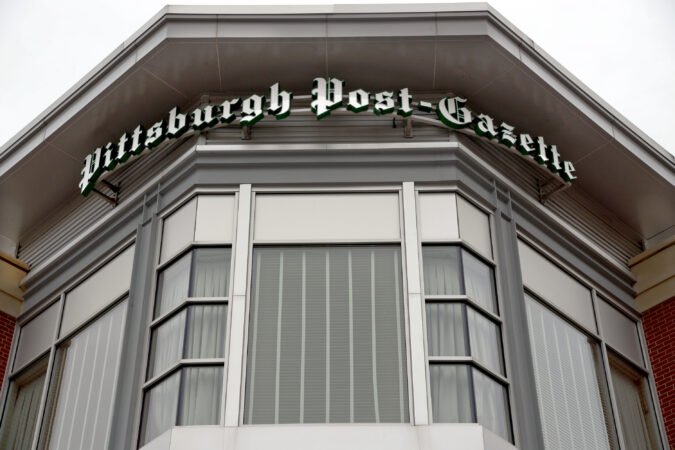
    The Pittsburgh Post-Gazette will fold after nearly a century. The paper will cease operations entirely — both its digital and physical versions — on May 3.

    The announcement comes on the heels of years of declining ad revenue and internal strife within the newsroom, including a yearslong labor strike.

    With the paper’s closure, there are concerns that Pittsburgh could become a news desert, leaving locals without a range of diverse and credible outlets to turn to in an age of increasing misinformation.

    The Post-Gazette was led by former Inquirer senior vice president and executive editor Stan Wischnowski. He resigned from The Inquirer in 2020 after a controversy following a headline after the murder of George Floyd.

    Block Communications, the paper’s owners, released a statement Wednesday about the shutdown, citing “continued cash losses” that were “no longer sustainable.” About 150 union, nonunion, and management employees are impacted.

    The owners added that the paper has lost more than $350 million in operational funds over the last 20 years.

    The paper’s union, meanwhile, said the closure was a result of “losing a nearly decade-long attempt to bust unions at the paper.”

    Andrew Goldstein, current president of the Newspaper Guild of Pittsburgh, said in a statement that “instead of simply following the law, the owners chose to punish local journalists and the city of Pittsburgh.”

    A Zoom announcement

    Post-Gazette staff said they found out about the paper’s closure via a companywide prerecorded Zoom announcement just moments before the news went public. Multiple reporters told The Inquirer that no company representatives spoke live during the video and that there was no opportunity provided for follow-up questions or discussion.

    In a leaked recording of the Zoom announcement obtained by Pittsburgh’s KDKA Radio, a spokesperson asked staff to continue to publish under “business-as-usual conditions” for the paper’s remaining months. The spokesperson added that Block Communications would “of course” give the Post-Gazette the opportunity to break the news of the closure first.

    News desert concerns

    Block Communications, the family-owned multimedia company based in Toledo, Ohio, owns several broadcast news stations, the Post-Gazette, and the Toledo Blade, the Post-Gazette’s sister newspaper. The Blade is unaffected by the shutdown, owners said.

    Earlier this week, the company also announced the closure of City Paper, the Pittsburgh alt-weekly that first published in 1991, “effective immediately.”

    The closure will leave the Pittsburgh Tribune-Review as the region’s last major newspaper. The Tribune-Review is a digital-only publication. Other specialized publications, including the New Pittsburgh Courier and Pittsburgh Business Times, also remain.

    Tim Franklin, the founding director of the Medill Local News Initiative, a research and development project designed to bolster local news sustainability, said the closure was “startling,” given the paper’s size and the region’s market size. Pittsburgh is considered a competitive news market.

    “Even in this economic climate, it’s unusual to see a metro daily newspaper shutter,” he said. “This may be the first metro newspaper closure since the Tampa Tribune in 2016,” which was acquired by the Tampa Bay Times on May 3, 2016, and ceased publication.

    Franklin says the Post-Gazette’s closure symbolized a deepening crisis in local news nationwide, which has led to almost 150 newspaper closures in the past year, according to Medill data, or an average of more than two closures a week.

    According to the Medill State of Local News Report, the country has lost nearly 40% of its newspapers in the past 20 years.

    “Today’s news, though, is especially troubling because it highlights a newer, growing trend — the loss of independent, largely family-owned local newspapers,” Franklin said.

    In the past, the bulk of newspaper closures were attributed to large chains closing clusters of outlets. Now, Franklin says, there’s a rising trend in independently owned papers closing. “If even longtime independent owners are hanging it up, that shows the seriousness of the challenges facing the industry.”

    Allegheny County Executive Sara Innamorato said in a statement that she was troubled by the Post-Gazette’s closure, calling it “devastating” for the region.

    “This is a major loss to the people of Pittsburgh when it comes to transparency in government, accountability from our institutions, and learning about what is happening in our communities,” she said.

    Innamorato added that she wasn’t sure if Block Communications pursued other pathways for buyers or alternatives to shutting down both the Post-Gazette and City Paper entirely.

    “But destroying two legacy papers in a week leaves a gaping hole in our local news environment,” she said.

    Block Communications could not be reached for comment as of publication time.

    On social media, readers expressed contempt toward ownership for the decision and concern regarding whom to turn to for local news.

    “This is a huge loss,” one user commented on a Reddit thread about the closure. “Who will do the work of journalism? … Will we all be going off rumors on Reddit and Nextdoor?”

    A complicated past

    The Pittsburgh Gazette Times, a weekly publication, was founded in 1786. It’s regarded as the oldest newspaper published west of the Allegheny Mountains. The paper took on its current form as the Post-Gazette in 1927 as part of a merger between the Gazette Times and the Pittsburgh Post.

    The newspaper’s shutdown comes on the heels of several internal challenges in recent years.

    In 2019, tension grew between the newsroom staff and Post-Gazette publisher and co-owner John Robinson Block regarding his “bizarre” and “violent” behavior toward employees.

    At the time, according to multiple accounts, Block entered the newsroom in an agitated state with his 12-year-old daughter on a weekend night and appeared out of control as he ranted about the newspaper’s union and its employees.

    That year, the paper cut its print edition from daily to three days a week, citing declining ad revenue.

    Then came the monumental labor strike.

    In 2022, the Post-Gazette saw significant labor disputes, leading to a Guild-approved strike that lasted three years. During the strike, many of the employees impacted established the Pittsburgh Union Progress, a strike paper that published over 4,000 stories covering community news, the strike, and more.

    In November, a federal appeals court ordered the newspaper to reinstate its 2014 union contract, forcing the return of the striking journalists. The U.S. Third Circuit of Appeals ruled that the paper had illegally removed benefits and would need to restore conditions and return to bargaining.

    Block Communications in its statement about the paper’s closure said that those recent court decisions legally requiring it to follow its 2014 labor contract would make it impossible to keep the paper running.

    Union leaders say it’s a cheap excuse after years of attempted union-busting from company owners.

    “The Pittsburgh Post-Gazette and Blocks spent millions on lawyers to fight union workers, fight journalists, and break federal labor law,” said NewsGuild-CWA President Jon Schleuss. “They lost at every level, including now at the Supreme Court. Pittsburgh deserves better and we will continue to fight to make sure all news companies follow the law and serve our communities.”

    Franklin, with the Medill Local News initiative, says it’s inevitable that some people will say the Post-Gazette’s closure is a “special case” because of its extended labor dispute that threw the paper into turmoil for years.

    “And certainly, that standoff played a role in today’s news,” he said. “But the fact that the Post-Gazette owners saw no other option but closure is chilling.”

    The company’s statement went on to say it regretted how the decision would affect Pittsburgh and its surrounding coverage area.

    The Block family said it was “proud of the service the Post-Gazette has provided to Pittsburgh for nearly a century.”

    As for what’s next, Goldstein with the local guild says readers should stay tuned for more from its journalists.

    “Post-Gazette journalists have done award-winning work for decades and we’re going to pursue all options to make sure that Pittsburgh continues to have the caliber of journalism it deserves,” he said.

  • S&P downgraded ChristianaCare’s credit rating

    S&P downgraded ChristianaCare’s credit rating

    ChristianaCare, Delaware’s largest health system, received a one-notch credit-rating downgrade from Standard & Poor’s, to “AA” from “AA+’.

    S&P attributed the downgrade of the nonprofit health system’s rating to inconsistent operating performance in recent years and the planned addition of $350 million in debt early this year through a bond offering, according to a report Tuesday.

    In the year ended June 30, 2025, ChristianaCare’s financial results were weaker than expected because of low surgical volume related to physician turnover, S&P said. Another factor was higher-than-anticipated medical malpractice reserves, S&P said.

    One of ChrisitianaCare’s financial strengths is that it typically gets half of its revenue from private insurers, which pay higher rates and are more profitable than Medicare and Medicaid, S&P noted.

    Despite its strong financial condition, ChristianaCare has a relatively small service area, given its concentration in northern Delaware, compared to other health systems with “AA” ratings, S&P said. If ChristianaCare’s expansion into Southeastern Pennsylvania is successful, it would help alleviate that problem, the agency said.

    ChristianaCare opened a micro-hospital in western Chester County last summer and is building a second one in Aston, Delaware County. It also has plans to put one in Springfield Township. In addition, ChristianaCare spent $50 million to step into the leases that the bankrupt Crozer Health had at five outpatient facilities in Broomall, Glen Mills, Media, and Havertown.

    S&P said ChristianaCare has no plans for significant acute-care hospital expansion.

    Last month, ChristianaCare and Virtua Health, South Jersey’s largest health system, ended negotiations on a possible merger.

  • The best (and weirdest) tech we found at CES 2026

    The best (and weirdest) tech we found at CES 2026

    LAS VEGAS — This week, 2.5 million square feet of prime Las Vegas real estate is packed with visions of the future. Some of them are sensible and going on sale soon, others are way out there and still in development.

    That’s business as usual at CES, the massive tech confab once known as the Consumer Electronics Show that opens today. It’s a place where robots roam free, TVs tower over footsore onlookers, and artificial intelligence lurks around every corner.

    Here’s what has stood out from the crowd so far.

    Uber’s new robotaxi

    The ride-booking giant’s road to robotaxis has been a complicated one: An early Uber self-driving test vehicle killed a pedestrian in 2018. The company sold off its autonomous driving project in 2020 and has since partnered with its would-be rival Waymo in some parts of the country.

    Now, Uber is getting ready to roll its own self-driving cars onto city streets once again.

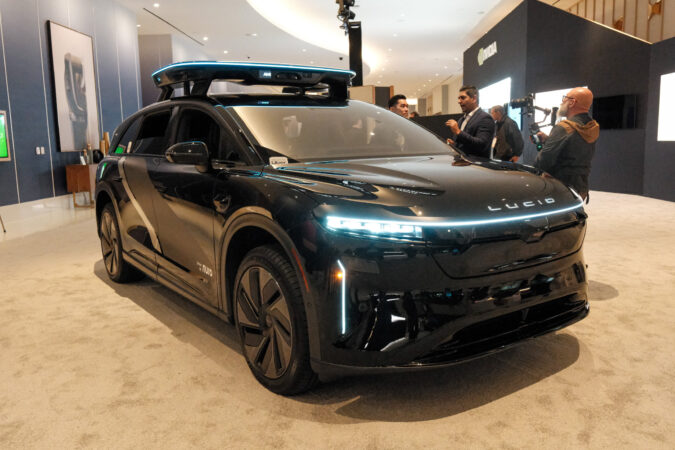
    The ride-hailing company didn’t build this thing from scratch. Autonomous driving company Nuro provided the cameras, sensors, and self-driving smarts, all of which are integrated into a Gravity model three-row electric SUV from Lucid Motors.

    Uber invested $300 million in Lucid last year and fleshed out the in-car experience for riders. You’ll be able to pick out playlists, adjust the cabin temperature, and make other customizations that are also already offered by Alphabet’s Waymo robotaxis.

    On Monday, Uber said that its Lucid vehicles are already being tested on public roads. It plans to make robotaxis available to Uber riders in the San Francisco Bay Area later this year.

    There’s no word yet on when these new self-driving Ubers will make it out of California, but at least it doesn’t seem like you’ll have to pay extra for one. When you hail a ride where these vehicles are active, the company says, you won’t have the option of selecting a robotaxi until you’ve already locked in a fare.

    A CES attendee sits on VOVO’s $4,990 Smart Toilet Neo.

    A toilet that can call for help

    VOVO’s $4,990 Smart Toilet Neo comes with now-standard niceties like a built-in bidet and automatic flushing. And VOVO claims its built-in urine analysis sensor can provide deeper insights into a user’s overall health, splashed across a screen meant to be installed nearby.

    Scanning one’s pee is par for the course at CES though: stand-alone liquid waste sensors have been floating around the show for years. The Smart Toilet Neo’s standout feature? When installed in a senior’s home, it can send messages to family members if no one has used it for more than eight hours, prompting loved ones to check in and make sure everyone is OK.

    Samsung’s 130-inch Micro RGB TV.

    A TV for the ‘size matters’ crowd

    Samsung’s 130-inch Micro RGB TV broke cover this week, and is so big that the svelte metal frame surrounding it looks barely up to the job.

    Long story short, Micro RGB TVs use gobs of incredibly small LEDs in red, green, or blue to light up the screen. That makes them better at delivering bright, accurate colors compared to a more standard LED TV.

    It’s unclear when Samsung plans to offer this monstrosity up to consumers, but when it does be sure to steel yourself before checking out the price tag. The company began selling a similar 115-inch model last year for an eye-watering $30,000.

    The Pinwheel Home phone.

    A retro landline phone for kids

    If you’re old enough to remember the pre-cellphone days, cast your mind back to all the time you spent tying up your parents’ phone line when you were young. A company called Pinwheel wants kids of the smartphone era to know what that feels like — without getting distracted by a screen.

    The $99 Pinwheel Home, slated for sale in the coming months, is a dead ringer for the corded phones you’d find affixed to kitchen walls in the 1980s. The company says it’s designed to help young ones hone their verbal and social skills by chatting with a handful of preset contacts.

    Calling other households with a Pinwheel Home costs parents nothing, but placing calls to regular phone numbers will set you back $9.99 a month. To sweeten the deal and help this throwback gadget further appeal to youngsters, the device will ship with a sheet of stickers.

    A portable, battery-powered food allergen detector

    For people allergic to gluten or dairy, even a simple meal out can feel like a minefield. Allergen Alert, spun out of a family-owned French biotech firm, wanted to help — by building a $200 portable allergen-sensing gadget they allege delivers lab-grade results.

    Here’s how it works: You unpack one of the company’s test pouches (available in packs of five to seven as part of a monthly subscription), and cram a bit of a suspect meal into a slender spoon. Pack all of that into the sensing device, which is about the size of a thick paperback, and you’ll get a result back in a few minutes.

    The catch? For now, the company only offers gluten test kits. It says that dairy-specific models will launch soon and that by 2028 the lineup will include tests for most major food allergens, including nuts and dairy.

    LEGO chief product and marketing officer and executive vice president Julia Goldin talks as a Wookiee stands behind her during a LEGO news conference ahead of the CES tech show Monday, Jan. 5, 2026, in Las Vegas.

    Star Wars and Lego announce a new partnership

    When Lucasfilm chief creative officer David Filoni brought out an array of X-Wing pilots, Chewbacca, R2D2, and C-3PO, he won the Star Wars fandom for Lego.

    Lego announced its Lego Smart Play platform on Monday, which introduces new smart bricks, tags, and special minifigs for your collection. The new bricks contain sensors that enable them to sense light and distance, and to provide an array of responses, essentially lights and sounds, when they are used in unison.

    Combine this with a newly announced partnership with the Star Wars franchise, and now you can create your own interactive space battles and light-saber duels.

    An LG Electronics home robot interacts with the audience during an LG news conference ahead of the CES tech show Monday, Jan. 5, 2026, in Las Vegas.

    LG reveals a new robot to help around the home

    File this one under intrigued, for now.

    The Korean tech giant LG gave the media a glimpse Monday of its humanoid robot that is designed to handle household chores such as folding laundry and fetching food. Although many companies have robots on display at CES, LG is one of the biggest tech companies to promise to put a service robot in homes.

    The Associated Press contributed to this article.