Category: Business

Business news and market updates

  • Amtrak can’t fully run its new fleet of next-gen trains in 2026 due to facility upgrade delays

    Amtrak can’t fully run its new fleet of next-gen trains in 2026 due to facility upgrade delays

    Some of Amtrak’s fleet of next-generation Acela and Airo trains will likely sit idle in 2026 as the national railroad company faces delays in upgrading maintenance facilities.

    Amtrak is behind schedule on completing the necessary facilities upgrades to maintain its newest fleet of trains, inspectors told Amtrak in a new report. Delays in next-gen fleet rollouts, of which there have been several, cost the company millions in lost revenue.

    Early missteps in planning, like starting its fleet upgrade efforts in 2010 but its facilities upgrades in 2016, led to a “schedule misalignment,” inspectors said in the report.

    Amtrak is in the process of acquiring three fleets of trains from manufacturers — NextGen Acela, Airo, and Long Distance — to the tune of $8 billion. The national railroad corporation rolled out a handful of NextGen Acela trains in August. Airo trains are scheduled to roll out in 2026 and Long Distance trains in the early 2030s, according to Amtrak.

    In a recent review of the NextGen Acela trains, The Inquirer lauded the train for its smoother, faster ride, comfortable seats, and above all, its cleanliness, but lamented its infrequency and cost as the older Acela trains on Keystone and Northeast Regional services still carry the bulk of trips for a cheaper ticket.

    NextGen Acela and Airo trains offer faster travel with speeds of up to 160 mph and 125 mph, respectively, and modernized cabins featuring upgraded seats, improved Wi-Fi, and expanded dining options.

    A business-class car in the NextGen Acela in Washington on Aug. 27.

    The latest report from the Amtrak Office of Inspector General details that under its current facility construction schedule, Amtrak will only be able to operate the first 24 out of 28 NextGen Acela trains and the first 12 out of the planned 83 Airo trains hitting the tracks in 2026.

    Facilities in Philadelphia; Seattle; Boston; New York; Washington, D.C.; and Rensselaer, N.Y., are being upgraded to maintain this new fleet, which is the most substantial upgrade since Amtrak introduced the Acela in 2000. Amtrak broke ground on Philadelphia’s new $462 million facility in October 2024.

    Amtrak Acela trains sit in the Amtrak yard adjacent to 30th Street Station in Philadelphia in August 2023.

    While the company began considering plans to replace its aging trains 15 years ago, Amtrak didn’t start addressing facility upgrades until 2016 for NextGen Acela and 2021 for Airo. Additionally, Amtrak took a targeted individual site approach to facility planning instead of an “overarching” one, according to inspectors.

    Amtrak approved a new strategic fleet and facilities plan to align both efforts last month. However, inspectors found the company failed to appropriately define the scope of the six years of work that remains.

    In the report, a senior Amtrak official described the current system as “building a house without ensuring the garage fits the vehicles.”

    Amtrak officials agreed to implement a new management framework to streamline facility upgrade efforts by the end of March 2026.

  • Resilient U.S. consumers drive strongest economic expansion in two years

    Resilient U.S. consumers drive strongest economic expansion in two years

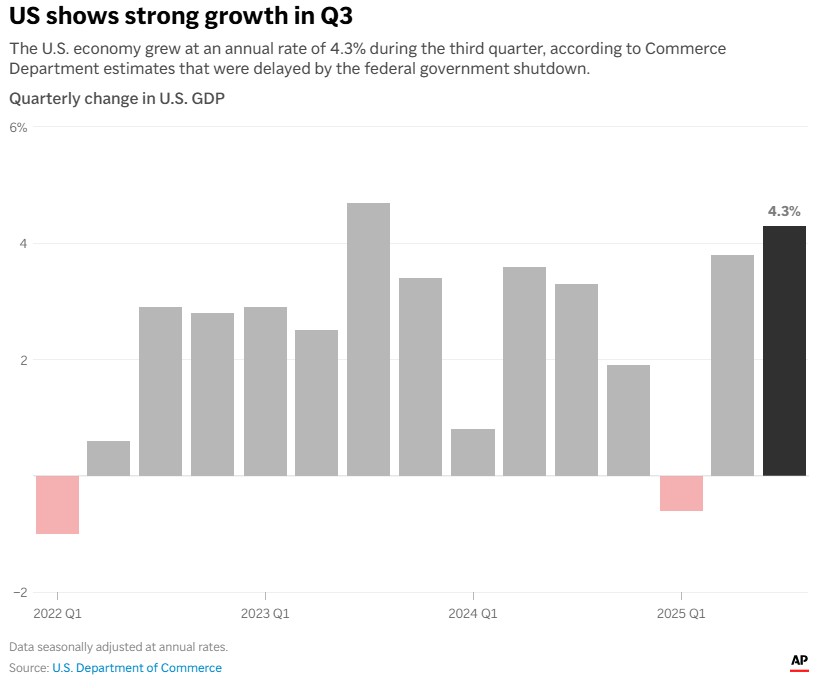
    WASHINGTON — The U.S. economy grew at a surprisingly strong 4.3% annual rate in the third quarter, the most rapid expansion in two years, driven by consumers who continue to spend in the face of ongoing inflation.

    U.S. gross domestic product from July through September — the economy’s total output of goods and services — rose from its 3.8% growth rate in the April-June quarter, the Commerce Department said Tuesday in a report delayed by the government shutdown. Economists surveyed by the data firm FactSet forecast growth of just 3% in the period.

    The U.S. economy grew at an annual rate of 4.3% during the third quarter, according to Commerce Department estimates that were delayed by the federal government shutdown.

    As has been the case for most of this year, the consumer is providing the fuel that is powering the U.S. economy. Consumer spending, which accounts for about 70% of U.S. economic activity, rose to a 3.5% annual pace last quarter. That’s up from 2.5% in the April-June period.

    A number of economists, however, believe the growth spurt may be short-lived with the extended government shutdown dragging on the economy in the fourth quarter, as well as a growing number of Americans fatigued by stubbornly high inflation.

    A survey published by the Conference Board Tuesday showed that consumer confidence slumped close to levels not seen since the U.S. rolled out broad tariffs on its trading partners in April.

    “The jump in consumer spending reminds me a lot of last year’s (fourth quarter),” said Stephen Stanley, chief U.S. economist at Santander. “Consumers were stretching. So, as was the case entering this year, households probably need to take a breather soon.”

    However, at least in recent years, consumer spending has held up even when data suggests they’ve grown more anxious about money.

    Tuesday’s GDP report also showed that inflation remains higher than the Federal Reserve would like. The Fed’s favored inflation gauge — called the personal consumption expenditures index, or PCE — climbed to a 2.8% annual pace last quarter, up from 2.1% in the second quarter.

    Excluding volatile food and energy prices, so-called core PCE inflation was 2.9%, up from 2.6% in the April-June quarter.

    Economists say that persistent and potentially worsening inflation could make a January interest rate cut from the Fed less likely, even as central bank official remain concerned about a slowing labor market.

    “If the economy keeps producing at this level, then there isn’t as much need to worry about a slowing economy,” said Chris Zaccarelli, chief investment officer for Northlight Asset Management, adding that inflation could return as the greatest threat to the economy.

    Another consistent driver in the U.S. economy, spending on artificial intelligence, was also evident in the latest data.

    Investment in intellectual property, the category that covers AI, grew 5.4% in the third quarter, following an even bigger jump of 15% in the second quarter. That figure was 6.5% in the first quarter.

    Consumption and investment by the government grew by 2.2% in the quarter after contracting 0.1% in the second quarter. The third quarter figure was boosted by increased expenditures at the state and local levels and federal government defense spending.

    Private business investment fell 0.3%, led by declines in investment in housing and in nonresidential buildings such as offices and warehouses. However, that decline was much less than the 13.8% slide in the second quarter.

    Within the GDP data, a category that measures the economy’s underlying strength grew at a 3% annual rate from July through September, up slightly from 2.9% in the second quarter. This category includes consumer spending and private investment, but excludes volatile items like exports, inventories and government spending.

    Exports grew at an 8.8% rate, while imports, which subtract from GDP, fell another 4.7%.

    Tuesday’s report is the first of three estimates the government will make of GDP growth for the third quarter of the year.

    Outside of the first quarter, when the economy shrank for the first time in three years as companies rushed to import goods ahead of President Donald Trump’s tariff rollout, the U.S. economy has continued to expand at a healthy rate. That’s despite much higher borrowing rates the Fed imposed in 2022 and 2023 in its drive to curb the inflation that surged as the United States bounced back with unexpected strength from the brief but devastating COVID-19 recession of 2020.

    Though inflation remains above the Fed’s 2% target, the central bank cut its benchmark lending rate three times in a row to close out 2025, mostly out of concern for a job market that has steadily lost momentum since spring.

    Last week, the government reported that the U.S. economy gained a healthy 64,000 jobs in November but lost 105,000 in October. Notably, the unemployment rate rose to 4.6% last month, the highest since 2021.

    The country’s labor market has been stuck in a “low hire, low fire” state, economists say, as businesses stand pat due to uncertainty over Trump’s tariffs and the lingering effects of elevated interest rates. Since March, job creation has fallen to an average 35,000 a month, compared to 71,000 in the year ended in March. Fed Chair Jerome Powell has said that he suspects those numbers will be revised even lower.

  • Chesco has seen ‘entrepreneurial spirit’ this year, with more new businesses to start 2026

    Chesco has seen ‘entrepreneurial spirit’ this year, with more new businesses to start 2026

    As major retailers made Chester County home in 2025, start-ups were the fastest-growing group that the Chester County Economic Development Council found itself providing support for this year.

    The region saw interest in expansions from big manufacturers — think chemical tech company Johnson Matthey, or coffee manufacturer Lavazza — and major retailers, like a Trader Joe’s in Berwyn and Exton, or even a Sheetz deep in Wawa country in Downingtown.

    But in a continued trend from the pandemic, which saw a surge in “entrepreneurial spirit,” the county has seen a continuation of new, small businesses taking shape, said Mike Grigalonis, president and COO for the county’s economic development council.

    “That’s our biggest area of growth, services that we’re providing to start-up businesses and entrepreneurs,” Grigalonis said. “That ranges from a salon, or a cafe, or a retail shop — any of those Main Street mom-and-pop businesses that you might think of — all the way to very kind of cutting-edge high tech, emerging tech — whether that be a new med device, a new drug, a new app, and everything in between.”

    The county’s wide-ranging restaurant scene saw a number of businesses planning new locations.

    Here’s a look around the county at some of the comings and goings in the final stretch of 2025.

    New local spots

    Expansions are on the menu. Stubborn Goat Brewing — which boasts craft beers, food, and a live music lineup — opened its doors this year in West Grove, and is planning an expansion into Kennett Square in 2026.

    Our Deli & Cafe, which has enjoyed four decades in Paoli, opened a second location in Phoenixville this month at 498 Nutt Road.

    The borough also recently welcomed The Local, a breakfast and lunch restaurant at 324 Bridge St.

    In West Chester, Olive & Meadow, a business focused on charcuterie boards and grazing tables, opened its brick-and-mortar location at 1388 Old Wilmington Pike this month.

    The business, which began in 2020 when Ariel LeVasseur dropped off charcuterie boards for her friends to enjoy while they chatted from afar on Zoom, grew from custom orders prepared in a commercial kitchen to a spot where customers can seek grab-and-go board items.

    “I love Chester County. I’m from Delco, but I think Chester County is so historic and beautiful,” she said. “I feel like everybody is very welcoming, and I know that a lot of people like supporting small businesses.”

    The new shop near the former Dilworthtown Inn offers all that, and everything else LeVasseur hopes will make hosting a breeze. Coming next year, she hopes to partner with local wineries and host workshops.

    “I just want them to feel like they stepped into my home, and grab some gourmet cheeses and meats and like, share the love of charcuterie that I have,” she said.

    Others close their doors

    As new businesses enter the scene, the community is also losing some favorites: Bookstore Bakery, a bookstore that offers gourmet pastries at 145 W. Gay St., will be closing its doors by the end of the year after having opened in 2024.

    LaCava Coffee, a neighbor on Gay Street, is also winding down its brick-and-mortar, but will continue selling its coffee beans online.

    “I always wanted to create something that connects my roots and that I can be connected to my home country,” said its owner, Jose Oliva, who is from Honduras. “I started the dream of creating a brand, and by 2022 we were able to accomplish a dream, and by personal efforts, we opened a very beautiful store that we ran and operated into November 2025.”

    Oliva said the increased cost of coffee, a lack of substantive foot traffic, and the initial difficulty in opening the location, which sapped his capital, ultimately led to the decision. He is eyeing a relocation to Virginia.

    “In a business if you don’t have a working capital for innovation, for development, for marketing, it is very difficult. Even so, we did it for almost two years and a few months,” he said. “We did it very successfully and with a lot of pride and we always maintain our customer service at its fullest.”

    This suburban content is produced with support from the Leslie Miller and Richard Worley Foundation and The Lenfest Institute for Journalism. Editorial content is created independently of the project donors. Gifts to support The Inquirer’s high-impact journalism can be made at inquirer.com/donate. A list of Lenfest Institute donors can be found at lenfestinstitute.org/supporters.

  • Can’t score a Longwood Gardens reservation this week? See these other festive Philly-area options.

    Can’t score a Longwood Gardens reservation this week? See these other festive Philly-area options.

    Deanna Baker made reservations for A Longwood Christmas in late summer.

    The 32-year-old Downingtown resident has been gifted a Longwood Gardens membership each of the past five years, but even the member reservations for the annual holiday light show book up well in advance. So she secures her family’s time slots while the weather is still warm.

    “Yes, it’s ridiculous this time of year,” she said of the Longwood demand at Christmastime. But “yes, it’s worth it.”

    Baker, who works in operations for Victory Brewing Co., said there is “a magical element” to the experience, whether she’s going with her toddler or her adult friends and relatives. She went once in early December and plans to return in the afternoon on Christmas Day.

    Every holiday season, hundreds of thousands of people visit A Longwood Christmas, which serves as an “economic engine” for the business communities in Kennett Square and surrounding towns, as Cheryl B. Kuhn, CEO of the Southern Chester County Chamber of Commerce, recently described it.

    Longwood Gardens’ holiday attendance has increased nearly 42% since pre-pandemic times. Last year, 650,000 people visited the gardens at Christmas, up from 609,000 the prior holiday season and from 458,000 during the 2019-2020 event (the show ends in the beginning of January).

    Many of these guests book months in advance, leaving last-minute planners few options for afternoon and nighttime visits during the holiday week.

    More than 500,000 lights shimmer at Longwood Gardens’ A Longwood Christmas through Jan. 11, 2026.

    “We open ticketing in July, and there are always a few early planners that buy tickets and make reservations then,” Longwood Gardens spokesperson Patricia Evans said in a statement. “By late Octoberish, the most desirable evening time slots on the weekends and the week of and following Christmas tend to be sold out.”

    But as of Monday, Evans noted, some tickets were available for time slots before noon and after 8:30 p.m. for the remaining days of December. Availability opens up in January, she added. The holiday lights stay on through Jan. 11.

    If nonmembers snag tickets, the experience will cost $45 a person for adults and $25 a person for kids, which Evans said is a $2-$3 per person increase from last year. Children 4 and under are free.

    window.addEventListener(“message”,function(a){if(void 0!==a.data[“datawrapper-height”]){var e=document.querySelectorAll(“iframe”);for(var t in a.data[“datawrapper-height”])for(var r,i=0;r=e[i];i++)if(r.contentWindow===a.source){var d=a.data[“datawrapper-height”][t]+”px”;r.style.height=d}}});

    Philly-area holiday attractions that have availability

    For Philly-area residents who want to enjoy a festive experience before 8 p.m., or at a slightly lower price point, other options have availability this week.

    As of Monday afternoon, the ice skating rinks at City Hall and Penn’s Landing had online reservations available for any day this week, though spokespeople said some time slots can sell out around the holidays. Both cost about $20 per person for admission and a skate rental.

    LumiNature at the Philadelphia Zoo also still had tickets available every operating night through Jan. 3 as of Monday afternoon.

    A family walked into the Philadelphia Zoo’s LumiNature holiday light display in this December 2021 file photo.

    “While tickets are available, the most popular times that guests reserve their tickets for are from 5-6 p.m., and it is likely that that particular hour will sell out on our most popular nights,” zoo spokesperson Maria Bryant said.

    Last year, LumiNature saw nearly 70,000 guests, according to Bryant, and it is on pace to exceed that number this season.

    Depending on the day, tickets cost between $25 and $29 per nonmember 12 and over, and $20 and $24 per child between the ages of 2 and 11. Younger children are free.

    Nighttime turned the Philadelphia Zoo into a wonderland of lights as LumiNature returned for its third year in December 2022.

    In the suburbs, the Elmwood Park Zoo’s Wild Lights “will not sell out,” with “plenty of tickets for each day of the rest of the event,” marketing director Kyle Gurganious said. Guests can buy at the gate, he added, or book online to save $1 per person.

    For nonmembers, online tickets are $27 per person 13 and older and $24 per child between the ages of 3 and 12. Children under 3 are free.

    Last season, the Norristown attraction brought in about 50,000 visitors, a number Gurganious said the zoo is “on track to eclipse … significantly” this year.

    Throughout the region, there also free events, such as the Wanamaker Light Show and the Comcast Holiday Spectacular. But be prepared: They can come with long lines and large crowds at popular times.

    Another holiday sellout in Philly

    A miniature Art Museum was on display in the Holiday Garden Railway at the Morris Arboretum & Gardens in 2023.

    At least one other Philly-area holiday attraction is completely sold out this week: The Holiday Garden Railway Nighttime Express at the Morris Arboretum & Gardens.

    Because it’s “so popular and because we only have a limited number of nights, the Nighttime Express sells out every year,” said Christopher Dorman, the director of visitor experience for the arboretum, which is part of the University of Pennsylvania.

    Those looking to snag tickets for next year may want to mark their calendars: Holiday tickets go on sale at the beginning of November for arboretum members and a week later for the general public.

    Added Dorman: “While the Nighttime Express is sold out, folks can still see the trains all lit up [and the rest of the garden] during normal daytime hours through Dec. 30.”

    And for those turned off by the planning — and expense — required for these paid festivities, there’s always the low-cost, low-commitment option: touring your neighborhood’s home light displays.

  • It’s almost time to file tax returns. Watch out for these limits on the tips and overtime deductions.

    It’s almost time to file tax returns. Watch out for these limits on the tips and overtime deductions.

    By now, most people have heard about the “no tax on tips” and “no tax on overtime” provisions of “One Big Beautiful Bill” that became law during the summer. It sounds great. But unfortunately, the new legislation is not all that it seems. Why?

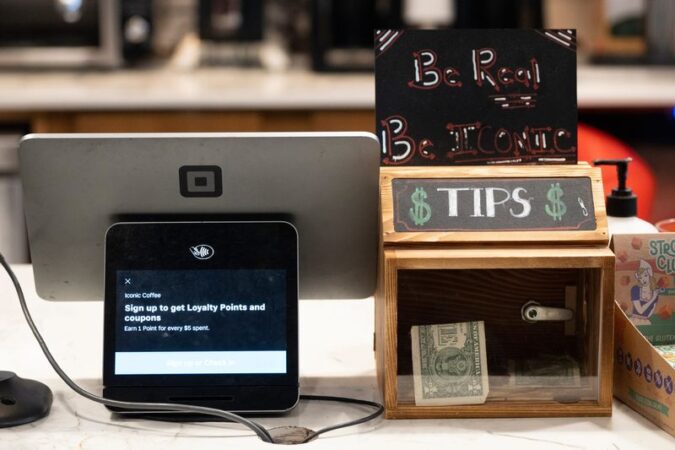
    Yes, there is a “no tax on tips” benefit. But be careful because you may not be eligible.

    A specific list shows all the jobs that qualify. As a rule of thumb, you’ll be eligible for the tipped income deduction if you work in a business where tips are common. Regardless, you should know that the deduction is limited to $25,000 per person and begins to phase out once you start earning more than $150,000 individually and $300,000 if you file a joint return.

    You can only take advantage of the deduction when you file your individual tax returns after the year has ended. And if these deductions result in you getting a tax refund, you’ll have to wait until next year, when your 2025 return can be filed and processed by the IRS.

    Remember too that this deduction is scheduled to expire in 2028, so you’ve only got a few years to take advantage. So does the deduction on overtime wages.

    The overtime deduction is even more limited. It only applies to the “overtime” wages you receive, which means that if you receive time-and-a-half for overtime worked, you get to deduct only the amount related to the “half.”

    For example, if your base wage is $20 an hour and you get paid $30 for one hour of overtime, only the $10 difference is eligible for the deduction. Also, the overtime deduction is limited to $12,500 for individuals and $25,000 for joint-filers, and it begins to phase out after you’ve earned more than $150,000 individually or $300,000 if you’re filing a joint return. And, depending on prevailing wage rules or overtime calculations that are part of union contracts, some of these wages may not be eligible at all.

    Even though the new law promises “no taxes” on tipped and overtime income, that’s not entirely true either. Social Security and Medicare taxes will still be required by both employees and their employers. Most states — including Pennsylvania and New Jersey — are not excluding tipped or overtime income from their tax calculations.

    “It’s kind of a misnomer,” said Andrew Gargana, a federal compliance analyst at HR firm Paychex. (Gargana is a client of my firm.)

    “Yes, no tax on tips or overtime sounded great on the campaign trail, but the reality is that an employee is still paying some taxes on this income,” Gargana said.

    If you’re an employer that has tipped workers or pays overtime, you are looking at potential reporting headaches.

    Employees now must know the correct amount of tipped wages and overtime to include in their tax returns. Usually, this will come from their W-2 form, which is used to report wages and is required to be mailed by the employer to both the employee and the IRS by the end of January.

    The IRS has released a draft form W-2 for 2026 that enables an employer to separately report these amounts. But what about 2025?

    According to a blog post from Bala Cynwyd-based accounting firm Isdaner & Co., the IRS announced that the 2025 versions of Form W-2 — where overtime wages are not broken out from total compensation — will be unchanged.

    Gargana says 2025 reporting will be like the “Wild West.”

    “The IRS’s guidance just offers ‘transition relief’ to employers and employees for 2025,” he said. “As long as an employer makes reasonable attempt at reporting, the IRS is not going to penalize. They’re acknowledging that employers and employees were not tracking this information in the form they needed at the beginning of the year.”

    But what is “reasonable”? And what if their mistakes cause a significant mistake on their employee’s tax return? It is unclear how much leeway employers will get. Accuracy still matters, and a big enough miscalculation could mean potential penalties and interest for employees that underreport taxes due and a potential legal problem for the employer.

    In the end, the responsibility of filing a correct individual tax return still rests with the individual.

    “Employers and payroll management companies should begin tracking qualified tip and overtime income immediately and implement procedures to retroactively track qualified tip and overtime income amounts that were paid going to Jan. 1, 2025,” accounting firm Isdaner said in an email to clients.

    This is a looming hassle for employers. Whether they’re required to report externally or not, workers and their accountants will want to take advantage of this deduction, and if the amounts they need are not disclosed on their W-2, they’re going to be pressing their bosses for the correct information for their individual tax returns.

    Both Paychex and Isdaner are warning their clients to get on top of this issue to avoid confusion when employees start filing their individual returns. Gargana said employers may even provide a separate statement along with employees’ W-2 forms.

    “Communication is critical,” Gargana said. “Employers should expect questions and proactively share available data.”

  • Trump administration pauses five offshore wind projects on the East Coast

    Trump administration pauses five offshore wind projects on the East Coast

    WASHINGTON — The Trump administration said Monday it is pausing leases for five large-scale offshore wind projects under construction in the East Coast due to unspecified national security risks identified by the Pentagon.

    The pause is effective immediately and will give the Interior Department, which oversees offshore wind, time to work with the Defense Department and other agencies to assess the possible ways to mitigate any security risks posed by the projects, the administration said.

    “The prime duty of the United States government is to protect the American people,” Interior Secretary Doug Burgum said in a statement. “Today’s action addresses emerging national security risks, including the rapid evolution of the relevant adversary technologies, and the vulnerabilities created by large-scale offshore wind projects with proximity near our east coast population centers.”

    The administration said leases are paused for the Vineyard Wind project under construction in Massachusetts, Revolution Wind in Rhode Island and Connecticut, Coastal Virginia Offshore Wind, and two projects in New York: Sunrise Wind and Empire Wind.

    The Interior Department said unclassified reports from the U.S. government have long found that the movement of massive turbine blades and the highly reflective towers create radar interference called “clutter.” The clutter caused by offshore wind projects obscures legitimate moving targets and generates false targets in the vicinity of wind projects, the Interior Department said.

    The action comes two weeks after a federal judge struck down President Donald Trump’s executive order blocking wind energy projects, saying the effort to halt virtually all leasing of wind farms on federal lands and waters was “arbitrary and capricious” and violates U.S. law.

    Judge Patti Saris of the U.S. District Court for the District of Massachusetts vacated Trump’s Jan. 20 executive order blocking wind energy projects and declared it unlawful.

    Saris ruled in favor of a coalition of state attorneys general from 17 states and Washington, D.C., led by New York Attorney General Letitia James, that challenged Trump’s Day One order that paused leasing and permitting for wind energy projects.

    Trump has been hostile to renewable energy, particularly offshore wind, and prioritizes fossil fuels to produce electricity.

  • Drug distribution giant Cencora is boosting its reach in medical specialties

    Cencora Inc., a drug-distribution giant based in Conshohocken, is expanding its presence in oncology and retina care, two medical specialties that rely heavily on pharmaceuticals.

    The company announced on Dec. 15 that it had agreed to buy out its private-equity partner in a national cancer practice management company, OneOncology, for $5 billion in cash and debt.

    Cencora already owned 35% of OneOncology, which has a small presence in the Philadelphia area.

    In January, Cencora spent $5 billion, including contingency payments, for Retina Consultants of America, a network of specialized practices with locations in 23 states, including two in Pennsylvania outside the Philadelphia area.

    The deals are part of Cencora’s effort to extend its reach into medical specialties that rely heavily on pharmaceuticals to treat patients. By positioning itself closer to patients, Cencora can capture more of the profit margin that goes along with selling drugs.

    “We like those two spaces because they’re pharmaceutical centric,” Cencora’s CEO Robert Mauch said at the 2025 J.P. Morgan Healthcare Conference. He said the company doesn’t see other specialties with the same makeup as oncology and retina.

    “That’s where we will continue to focus,” he said. “Now as we look forward, there could be other specialties. There could be other innovations in the pharma industry that create something in another area.”

    Cencora had $321 billion in revenue in its fiscal year that ended Sept. 30. It had $1.5 billion in net income. That’s a great deal of money, but amounted to less than half a percent of its revenue.

    McKesson and Cardinal Health, Cencora’s two biggest U.S. competitors in the drug-distribution business, face similarly narrow margins from drug distribution. Both also own companies that manage cancer practices. Among the benefits of owning the management companies is securing the customer base.

    Cencora’s follow-up to 2023 deal

    Cencora, then known as AmerisourceBergen, paid $718.4 million for a 35% stake in OneOncology in June 2023. That deal, in partnership with TPG, valued OneOncology at $2.1 billion. The seller was General Atlantic, a private equity firm that had invested $200 million in the Nashville management services company in 2018, according to the Wall Street Journal.

    The deal announced last week valued OneOncology at $7.4 billion, including debt. The big increase in value came thanks to a doubling in the company’s size. OneOncology now has 31 practices with 1,800 providers who treat 1 million patients across 565 sites, according to the company.

    Rittenhouse Hematology Oncology, which has offices in Bala Cynwyd, Brinton Lake, King of Prussia, and Philadelphia, became part of OneOncology last year.

  • How Philly-area grocery workers handle the holiday stress — and find joy along the way

    How Philly-area grocery workers handle the holiday stress — and find joy along the way

    Crowds of last-minute shoppers, customers looking for seasonal ingredients, sappy hands from tying Christmas trees to cars, and of course, hours and hours of cheery holiday music playing on a loop.

    Such is the life of a grocery worker during the holidays.

    “Everyone wants to get, like, the biggest tree on, like, the smallest car,” said Edward Dupree, who has worked at the Center City Whole Foods for over nine years.

    Working at a grocery store during the holiday season can be hectic and intense, requiring a lot of patience, he said.

    “It’s, I think, definitely under-appreciated,” said Dupree.

    Grocery employees from across the region say this time of year brings a surge of stressed shoppers making larger purchases, even in the age of DoorDash, grocery delivery, and curbside pickup.

    Customers rush into the store for their last-minute shopping, said Erika Keith, who works at the Fox Street ShopRite in Nicetown. And they’re often hurried as they fill their carts, said Charletta Brown, of the Acme in Trooper, juggling year-end demands at work and pressures at home as they prepare for the holidays.

    “Those three days moving into Thanksgiving are just insane,” said Dupree. He said the store starts getting busier in September as students return to the area, and it stays hectic through the end of the year.

    Customers aren’t just getting their regular groceries and Christmas trees. They’re looking for specialty seasonal items including cranberries, decorative gourds, chestnuts, eggnog, and black-eyed peas for the New Year.

    “Even in spite of the current economy — we do hear a lot that things are a little rougher than they have been in past years — people still want that tradition,” said Brown.

    Specific holiday wishes

    As the holidays approach, the Philadelphia Whole Foods bakery makes hundreds of pies and a slew of custom orders, said baker Jasmine Jones. During the holidays, they said, “the cakes get bigger.”

    Many are seeking out pie crusts and fillings, as well as phyllo dough to make hors d’oeuvres, said Brown, of Acme. These freezer items are hidden “way in the back” for most of the year, but they get the star treatment, “front and center” for the holidays.

    Keith, of ShopRite, said the holidays bring in more business for the store’s Western Union service, as people send money to loved ones as gifts.

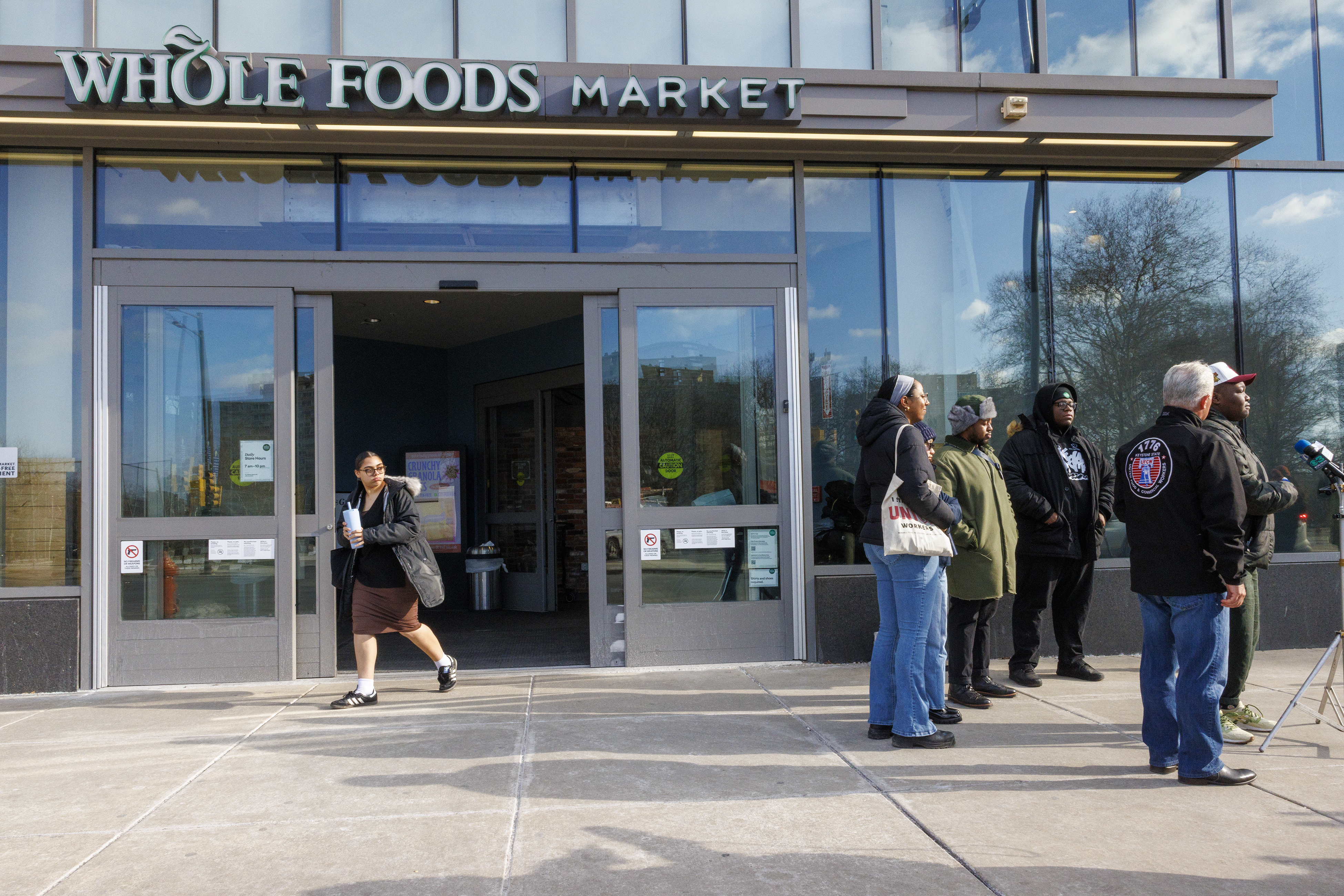
    Union workers gather outside the Center City Whole Foods Market in January.

    At the Trooper Acme, Brown said, shoppers start looking for Ivins Famous Spiced Wafers starting around Halloween, and as the holiday season progresses, they’re looking for specific nostalgic sweets to fill their candy dishes — minty After Eight chocolates or the multicolored, straw-shaped Plantation hard candies, for example.

    “Some people say, ‘We don’t eat them, but we just want them to sit out in the candy dish, because I had that as a kid, and my mother and father always had it out,’” she said.

    Holiday gripes

    For Jones, Whole Foods is a second job on weekends. They said they’re “stretched kind of thin” during the holidays as they juggle another full-time job. Jones sometimes volunteers to work extra hours for the money during the holidays, but they don’t like losing the time with loved ones.

    And, Jones added, the holiday music is not a perk.

    “It kind of makes me angry,” said Jones, adding that they’re “still an overworked worker.”

    “It kind of just reminds me that I could be home if you paid me more.”

    Shoppers peruse the Save-a-Lot grocery store in Atlantic City in this Jan. 2024 file photo.

    Dupree, also of Whole Foods, isn’t a fan of the constant seasonal music either.

    “If I want to go listen [to the song] ‘This Christmas,’ I’ll listen to it on my own — don’t play it 82 times a day,” he said. “It’s a bit intrusive.”

    The customers

    Some customers, for their part, avoid the busiest times at the grocery store.

    In Wayne, Lisa Goldschmidt has become dependent on Instacart grocery deliveries most of the year. But when it’s time to shop for her holiday dinners, she makes a couple in-person trips to her local Acme. For her sanity, she keeps to a personal code, she said: “Avoid the weekends and the after-work times when it typically gets crazy.”

    Goldschmidt, a 58-year-old attorney who works from home, said she’s fortunate that she can run out midday on weekdays to buy her holiday essentials, which include an expansive antipasto assortment that her family eats on Christmas Eve and the prime rib they make on Christmas Day.

    April Beatty, 51, of Broomall, also tries to avoid peak shopping times at her go-to stores — Wegmans, Trader Joe’s, and Gentile’s produce market. She aims to pick up all her groceries at least a couple days before Christmas, and she also buys more this time of year with her two children home from college.

    But her job, too, keeps her busy during this season — she works in supply-chain logistics — so shopping the way she prefers, at “off times, just because it’s more efficient,” isn’t always an option.

    This year, her Wegmans trip for Thanksgiving happened during a shopping rush: “aisles packed, parking lot packed,” she said. During the holidays, she added, “at least people are polite.”

    Customers browse Iovine Brothers Produce at Reading Terminal Market in this 2022 file photo.

    Customers at Whole Foods are more outgoing during the holidays, said Dupree, part of a kind of jolly Christmas mentality around this time of year.

    The days leading up to Thanksgiving are usually the busiest — more so than Christmas — but he didn’t notice quite as much Thanksgiving hustle this year.

    “I wonder if this is because, you know, people’s pockets are hurting,” Dupree pondered aloud.

    At ShopRite, Keith said, some of the busiest shopping days she recalls are the day before Thanksgiving and Christmas Eve.

    “We have our last-minute shoppers — and, you know, I get it. I get the busy life,” she said.

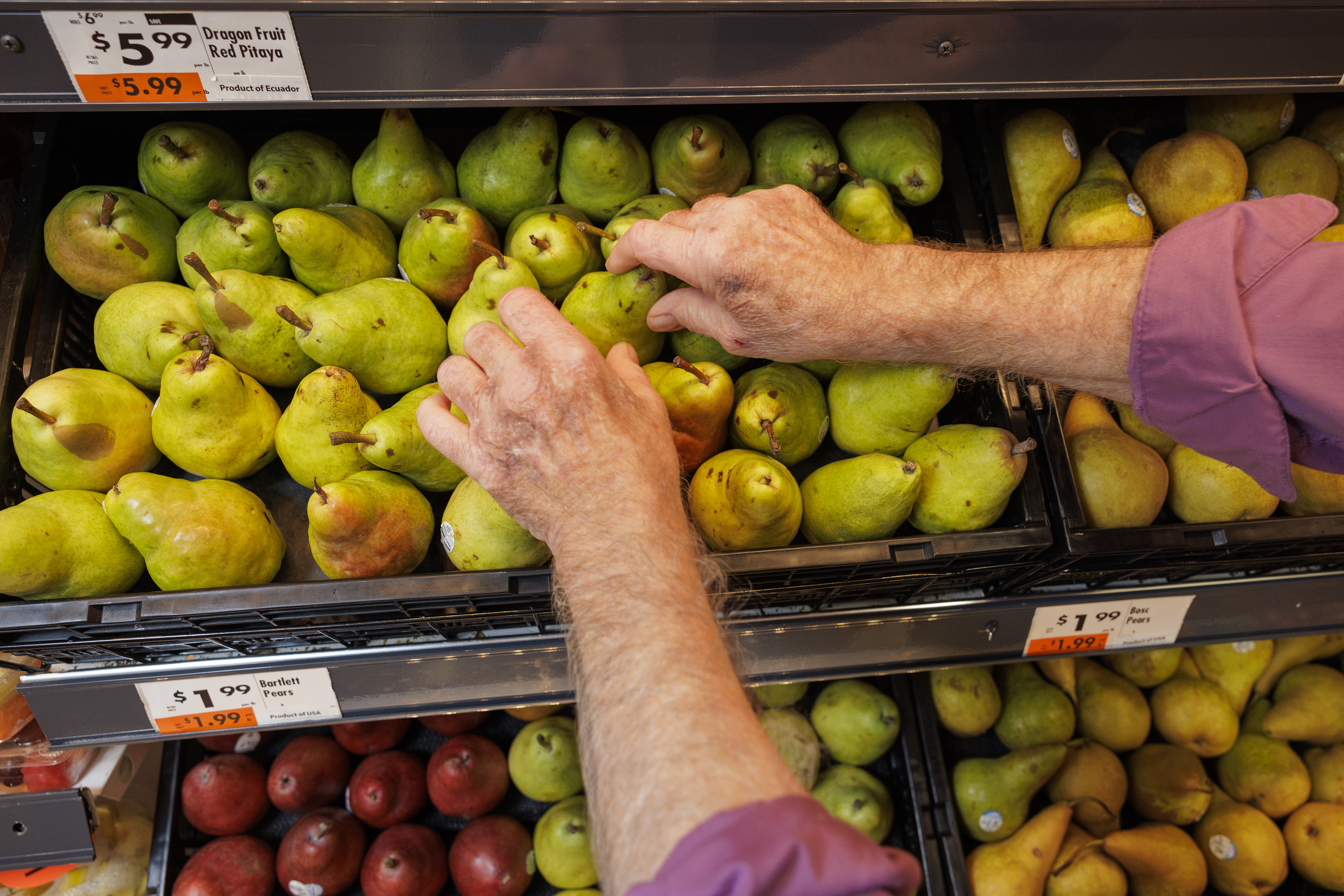
    A Save-a-Lot supermarket employee arranges pears at the chain’s Camden store in this January 2024 file photo.

    At Acme, Brown sees pressure and stress on some customers.

    “Being sympathetic to that, listening to them, is probably half the battle of dealing with any stresses or strain that I might be under — and also what they might be under,” she said.

    Brown said she tries to get a head start on her own holiday decorating and planning each year because there isn’t a lot of downtime once the store gets busy.

    “I have to manage that time effectively in order to be able to really decompress and enjoy the holidays myself,” she said.

    This year, for the first time in a while, she won’t be working on Christmas Eve because it‘s on a Wednesday, her usual day off.

    But Brown said she actually loves working Christmas Eve, “because it just seems to me like everybody’s just so happy.”

  • Trump’s return brought stiff headwinds for clean energy. So why are advocates optimistic in 2026?

    Trump’s return brought stiff headwinds for clean energy. So why are advocates optimistic in 2026?

    There were some highs amid a lot of lows in a roller coaster year for clean energy as President Donald Trump worked to boost polluting fuels while blocking wind and solar, according to dozens of energy developers, experts, and politicians.

    Surveyed by the Associated Press, many described 2025 as turbulent and challenging for clean energy, though there was progress as projects connected to the electric grid. They said clean energy must continue to grow to meet skyrocketing demand for electricity to power data centers and to lower Americans’ utility bills.

    Solar builder and operator Jorge Vargas said it has been “a very tough year for clean energy” as Trump often made headlines criticizing renewable energy and Republicans muscled a tax and spending cut bill through Congress in July that dramatically rolled back tax breaks for clean energy.

    “There was a cooldown effect this year,” said Vargas, cofounder and CEO of Aspen Power. “Having said that, we are a resilient industry.”

    Plug Power president Jose Luis Crespo said the developments — both policy recalibration and technological progress — will shape clean energy’s trajectory for years to come.

    Energy policy whiplash in 2025

    Much of clean energy’s fate in 2025 was driven by booster Joe Biden’s exit from the White House.

    The year began with ample federal subsidies for clean energy technologies, a growing number of U.S.-based companies making parts and materials for projects, and a lot of demand from states and corporations, said Tom Harper, partner at global consultant Baringa.

    It ends with subsidies stripped back, a weakened supply chain, higher costs from tariffs, and some customers questioning their commitment to clean energy, Harper said. He described the year as “paradigm shifting.”

    Trump called wind and solar power “the scam of the century” and vowed not to approve new projects. The federal government canceled grants for hundreds of projects.

    The Republicans’ tax bill reversed or steeply curtailed clean energy programs established through the Democrats’ flagship climate and healthcare bill in 2022. Wayne Winegarden, at the Pacific Research Institute think tank, said the time has come for alternative energy to demonstrate viability without subsidies. ( Fossil fuels also receive subsidies.)

    Many energy executives said this was the most consequential policy shift. The bill reshaped the economics of clean energy projects, drove a rush to start construction before incentives expire, and forced developers to reassess their strategies for acquiring parts and materials, Lennart Hinrichs said. He leads the expansion of TWAICE in the Americas, providing analytics software for battery energy storage systems.

    Companies can’t make billion-dollar investments with so much policy uncertainty, said American Clean Power Association CEO Jason Grumet.

    Consequently, greenhouse gas emissions will fall at a much lower rate than previously projected in the U.S., said Brian Murray, director of the Nicholas Institute for Energy, Environment, and Sustainability at Duke University.

    Still, solar and battery storage are booming

    Solar and storage accounted for 85% of the new power added to the grid in the first nine months of the Trump administration, according to Wood Mackenzie research.

    That’s because the economics remain strong, demand is high, and the technologies can be deployed quickly, said Mike Hall, CEO of Anza Renewables.

    Solar energy company Sol Systems said it had a record year as it brought its largest utility-scale project online and grew its business. The energy storage systems company CMBlu Energy said storage clearly stands out as a winner this year too, moving from optional to essential.

    “Trump’s effort to manipulate government regulation to harm clean energy just isn’t enough to offset the natural advantages that clean energy has,” Democratic U.S. Sen. Sheldon Whitehouse said. “The direction is still all good.”

    The Solar Energy Industries Association said that no matter the policies in Washington, solar and storage will grow as the backbone of the nation’s energy future.

    Nuclear, geothermal had a good year, too

    Democrats and Republicans have supported investing to keep nuclear reactors online, restart previously closed reactors, and deploy new, advanced reactor designs. Nuclear power is a carbon-free source of electricity, though not typically labeled as green energy like other renewables.

    “Who had ‘restart Three Mile Island’ on their 2025 Bingo card?” questioned Baringa partner David Shepheard. The Pennsylvania plant was the site of the nation’s worst commercial nuclear power accident, in 1979. The Energy Department is loaning $1 billion to help finance a restart.

    Everyone loves nuclear, said Darrin Kayser, executive vice president at Edelman. It helps that the technology for small, modular reactors is starting to come to fruition, Kayser added.

    Benton Arnett, a senior director at the Nuclear Energy Institute, said that as the need for clean, reliable power intensifies, “we will look back on the actions being taken now as laying the foundation.”

    The Trump administration also supports geothermal energy, and the tax bill largely preserved geothermal tax credits. The Geothermal Rising association said technologies continue to mature and produce, making 2025 a breakthrough year.

    Offshore wind had a terrible year

    Momentum for offshore wind in the United States came to a grinding halt just as the industry was starting to gain traction, said Joey Lange, a senior managing director at Trio, a global sustainability and energy advisory company.

    The Trump administration stopped construction on major offshore wind farms, revoked wind energy permits and paused permitting, canceled plans to use large areas of federal waters for new offshore wind development, and stopped federal funding for offshore wind projects.

    That has decimated the projects, developers, and tech innovators, and no one in wind is raising or spending capital, said Eric Fischgrund, founder and CEO at FischTank PR. Still, Fischgrund said he remains optimistic because the world is transitioning to cleaner energy.

    More clean energy needed in 2026

    An energy strategy with a diverse mix of sources is the only way forward as demand grows from data centers and other sources, and as people demand affordable, reliable electricity, said former Democratic Sen. Mary Landrieu. Landrieu, now with Natural Allies for a Clean Energy Future, said promoting or punishing specific energy technologies on ideological grounds is unsustainable.

    Experts expect solar and battery storage to continue growing in 2026 to add a lot of power to the grid quickly and cheaply. The market will continue to ensure that most new electricity is renewable, said Amanda Levin, policy analysis director at the Natural Resources Defense Council.

    Hillary Bright, executive director of Turn Forward, thinks offshore wind will still play an important role too. It is both ready and needed to help address the demand for electricity in the new year, which will become increasingly clear “to all audiences,” she said. Turn Forward advocates for offshore wind.

    That skyrocketing demand “is shaking up the political calculus that drove the administration’s early policy decisions around renewables,” she said.

    BlueWave CEO Sean Finnerty thinks that states, feeling the pressure to deliver affordable, reliable electricity, will increasingly drive clean energy momentum in 2026 by streamlining permitting and the process of connecting to the grid, and by reducing costs for things like permits and fees.

    Ed Gunn, Lunar Energy’s vice president for revenue, said the industry has weathered tough years before.

    “The fundamentals are unchanged,” Gunn said, ”there is massive value in clean energy.”

  • U.S. tariffs take a bite out of Germany’s iconic nutcracker industry

    U.S. tariffs take a bite out of Germany’s iconic nutcracker industry

    MARIENBERG, Germany — In a workshop tucked into the rolling hills of eastern Germany’s Ore Mountains, rows of wooden soldiers stood at attention. Their red coats gleamed and their square-jawed mouths — designed to crack nuts but mostly decorative — formed the trademark stiff grin of Steinbach Nutcrackers.

    For decades, these handmade figures have sailed across the Atlantic and into American homes, filling mantels and collectors’ shelves and appearing in countless Christmas card photos. Alongside gingerbread houses and fir trees with all the trimmings, they are one of the most recognizable German exports of the holiday season.

    This year, however, tariffs imposed by President Donald Trump have given the stern-faced ornaments a new reason to grimace: About 95% of sales by the family-founded manufacturer, Steinbach Volkskunst, come from the United States, and the company’s most reliable market has become its biggest bureaucratic headache.

    Under a deal between Trump and the European Union reached earlier this year, most exports to the U.S. are subject to a 15% tariff. Separately, the Trump administration also ended the “de minimis” exemption — a rule that had allowed small parcels under $800 to enter duty-free.

    The move was aimed at curbing low-cost imports from Chinese e-commerce giants such as Temu and Shein. But for niche businesses that rely on direct-to-consumer shipments, like Steinbach, that change hit even harder than 15% tariff.

    “The biggest concern wasn’t price — it was instability,” CEO Rico Paul said, standing in front of a glass cabinet filled with colorful nutcrackers. “Policies changed depending on political mood. For us, planning ahead is essential. One day, the rules were one way, the next day they changed.”

    For six months after Trump’s inauguration, confusion reigned. Initially, the president threatened tariffs of 30% or more on most goods, prompting the E.U. to ready plans for retaliation. The deal on 15% tariffs, reached in late July, ended that uncertainty.

    But in late August, Trump issued an executive order ending the de minimis exemption, meaning a slew of new paperwork and bureaucracy.

    Costs rose and delays mounted as Customs and Border Protection grappled to keep up with the surge in new parcels requiring clearance. With the holiday season approaching, Steinbach faced the possibility of its nutcrackers getting stuck in customs warehouses.

    More than half of Steinbach’s business comes from online orders shipped directly to American doorsteps, and customers soon felt the increase. Prices are up roughly 25% compared to last year, because of the tariffs and customs costs, as well as rising wages.

    “In the United States, our name is extremely well known,” Paul said. “We’re practically synonymous with the word nutcracker.” The outsize U.S. demand for Steinbach products, he added, “was always an advantage — until the tariff dispute.”

    American affection for Steinbach’s products seems undiminished by the price increases. “We were worried Americans wouldn’t pay more,” Paul said, pulling up a fresh order from Monticello, Fla., on his phone. “But the loyalty is incredible. They’re still buying, even if it’s more expensive.”

    That loyalty stretches back to the 1950s, when U.S. service members stationed in postwar Germany discovered the nutcrackers and brought them home as souvenirs. They quickly became a cultural shorthand for an authentic European Christmas.

    The nutcracker legacy itself is older. In Saxony’s Ore Mountain region, miners began carving these wooden figures in the 1600s, meant to bring protection and keep evil spirits at bay during the darkest months of winter.

    French author Alexandre Dumas’ adaptation of E.T.A. Hoffmann’s 1816 story “The Nutcracker and the Mouse King” later inspired Tchaikovsky’s 1892 ballet The Nutcracker. The ballet, initially a flop in Russia, became an American holiday institution in the mid-20th century — catapulting the nutcracker to global fame as a Christmas icon.

    On a late November morning at the Steinbach factory, about 40 artisans carved, sanded, and painted wooden limbs, while sewing machines upstairs stitched miniature outfits. Outside, snow settled on fir branches as workers packaged the finished products for their long journey.

    One detail is new: a bright yellow sticker on every box, addressed to the person who will decide if the toy enters the United States smoothly: “Dear U.S. Customs Officer,” it says, “Thank you for keeping the trade flowing.”

    It may be wishful thinking. In October, U.S. news outlets reported that thousands of packages had stalled in customs hubs under the new rules. Some carriers reportedly disposed of abandoned shipments.

    “Because of changes to U.S. import regulations, we are seeing many packages that are unable to clear customs due to missing or incomplete information,” UPS, the shipping company, said in a statement. “Our goal is to speed every package to its destination, while complying with federal customs regulations.”

    In late November, UPS said that its brokerage team was clearing more than 90% of packages on the first day — but not without complications.

    Still, Steinbach nutcrackers continue to sell well, particularly those with pop culture and political themes.

    Last year, Steinbach introduced a pair of nutcrackers dubbed “Republican” and “Democrat,” bearing more than a passing resemblance to Trump and Kamala Harris. The Republican model sold out before Election Day.

    Prices for the smallest nutcrackers start at about $150, while the largest and most intricate figures cost more than $700. Alongside traditional soldiers and Santas, Steinbach has embraced the American appetite for nutcrackers in all forms, including Star Wars stormtroopers, Wizard of Oz characters, and even Pope Leo XIV.

    But the tariffs and customs delays have prompted Steinbach to seek a work-around. “We are building a warehouse in Pennsylvania and hiring staff,” Paul said.

    The nutcrackers will still be made in Germany — local craftsmanship remains a central selling point — but preshipping and storing finished goods in the United States stands to insulate the business from further regulatory whiplash. The tariffs and additional costs of maintaining and staffing the warehouse will be passed on to customers, but the move should eliminate paperwork and delays for shipments to individual buyers.

    Steinbach is not alone. Across Germany, exporters large and small are recalculating.

    “The escalation of U.S. import duties — now effectively averaging 15% on key industrial goods — has hit Germany particularly hard,” said Andreas Baur, foreign trade expert at the Munich-based Institute for Economic Research. “If you take January to September and compare it to the previous year, we have a decline [in exports] of about 8%, and for cars around 14%.”

    But beyond automakers, chemical giants, and heavy industrial goods, the regulatory shift has quietly reshaped the fate of artisans whose exports trade more in memories than volume.

    On the outskirts of Dresden, a 90-minute drive northeast of the nutcracker workshop, the sweet smell of raisins and butter filled Bäckerei Gnauck in the district of Ottendorf-Okrilla.

    Bäckerei Gnauck is one of about 100 bakeries permitted to bake true Dresdner Christstollen — a dense fruitcake that is tightly regulated by the Dresden Stollen Protection Association.

    Here too, the lifting of the de minimis rule has left fifth-generation baker Marlon Gnauck kneading frustration into this year’s cake loaves.

    Stollen, another German Christmas tradition that has gone global, has deep roots in and around Dresden, where it first appeared in the 14th century as a simple, butter-free loaf made under strict Advent fasting rules.

    That changed in 1491, when Pope Innocent VIII issued the “Butter Letter,” allowing bakers to enrich the dough. Spices, candied fruit, and almonds followed and, by the 18th century, Dresden bakers were presenting enormous loaves to royalty, securing the bread’s vaunted holiday status.

    Today, mass-produced versions fill German supermarkets, but only a small group of certified bakeries may call their loaves Dresdner Stollen. Dotted with raisins, and carefully folded together before being baked and doused in confectioners sugar, Stollen is supposed to represent the image of a swaddled baby Jesus.

    Every holiday season since 1999, Gnauck, a fifth-generation baker in his family, has shipped some of his stollen to Americans — half as corporate gifts, he estimates, and a quarter to families with German ancestry.

    He has enjoyed hearing from happy customers, even those who make him wince with their “American innovations” such as toasting stollen or spreading it with peanut butter.

    “Just a good slice of stollen, with a cup of coffee — that’s it, ” he said. “That’s how it should be enjoyed.”

    But now a single two-kilogram shipment, with postage and duties, costs more than $170, he said as he attached the required documents to parcels bound for Dorchester, Mass.; Raleigh, N.C.; and Houston.

    “You’re looking at paying between $60 and $70 in import charges for a two-kilo stollen,” Gnauck said. “The product costs 50 euros [about $59]. Shipping is almost another 50. And then roughly $70 of customs and administrative fees.”

    Only about 2% of Gnauck’s sales are to the United States, but the time required for paperwork and the additional costs for longtime customers have tainted the festive cheer. Gnauck’s verdict: “The Grinch lives in the White House,” he said. “Because what he’s actually doing is completely ruining the gifts.”

    In October, after the first seasonal orders were shipped across the Atlantic, Gnauck temporarily stopped shipping to the U.S. after customers complained about unpredictable costs.

    “We called the next 50 customers who had placed an order,” he said. “A quarter of them canceled. Another quarter of them reduced their order to a 1 kg, and the rest said they’d pay no matter what.”

    Sending stollen to America was never economically logical, he said. “It was emotional. A gesture. And now that gesture is expensive.”

    Some Dresden bakeries have stopped exporting to the United States altogether. But like Paul, the Steinbach CEO, Gnauck isn’t ready to quit. Both men said they simply want one thing from Trump: predictability.

    Paul said a limited-edition nutcracker resembling Trump at the Resolute Desk — with a price tag of $399 — has nearly sold out. “The president is sitting at his desk and is signing a declaration, granting the Steinbach company duty-free status for all eternity,” he quipped.

    For now, that remains fantasy: a wooden wish for stability in a season built on nostalgia — and customs logistics.