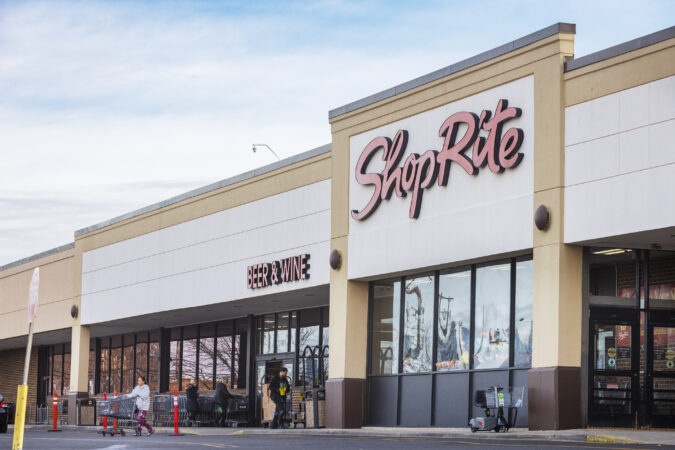
Christmas Day is Thursday this year, and with it comes a wave of closures across the Philadelphia region. If you’re planning last-minute errands or outings, knowing what’s open, and what’s not, will save you time and frustration.
Trash and recycling collection will be impacted, with pickups running one day behind schedule all week.
From city services and grocery stores to pharmacies and big-box retailers, here’s your guide to navigating holiday hours in Philadelphia.
City government offices
❌ City of Philadelphia government offices will be closed Dec. 25.
Free Library of Philadelphia
❌ The Free Library will be closed Dec. 25.
Food sites
✅ / ❌ Holidays may impact hours of operation. Visit phila.gov/food to view specific site schedules and call ahead before visiting.
Trash collection
❌ No trash and recycling collections on Christmas Day. Collections will be picked up one day behind the regular schedule all week. To find your trash and recycling collection day, go to phila.gov.
❌ UPS, FedEx, and DHL will be closed Christmas Day. There will be no delivery or pickup services either, except for critical services.
Banks
❌ Most, if not all, banks including TD Bank, Bank of America, Wells Fargo, Chase Bank, and PNC Bank will be closed on Christmas Day.
Pharmacies
CVS
✅ CVS locations will operate on modified business hours for Christmas Day with most open from 8 a.m. to 9 p.m. Call ahead to your local store before visiting or view hours at cvs.com/store-locator/landing.
Walgreens
✅ Walgreens locations will be open but hours have not been announced — check your local store at walgreens.com/storelocator.
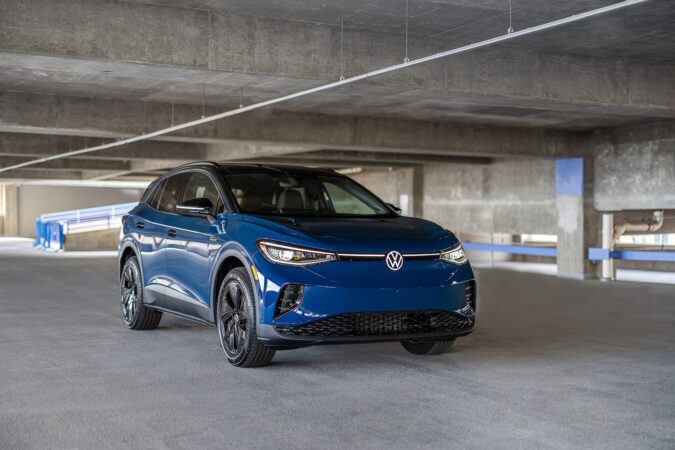
Price: It starts at $54,095 for this higher-end model tested.
Conventional wisdom: Car and Driver likes the ID.4’s “good price, good range, good space.” They complained that the “infotainment system is still wonky, base model lacking in range, it’s not the GTI of EVs.”
Marketer’s pitch: “The future of driving is here. And it’s electric.”
Reality: The driving experience can be awkward, but there may be another big reason to avoid ID.4.
Catching up: So we’ve already tested a bargain-priced Chevrolet Equinox, and a Hyundai Ioniq 5 that’s a fairly nice price match for the ID.4.
What’s new: After upgrades in performance for 2024, the ID.4 only gets an adapter for Tesla Superchargers for the 2026 model year.
Up to speed: Like most EVs, the ID.4 makes quick work of getting on the move. I could pull in front of cars I would never consider when driving most gasoline-engine vehicles, and passing could be a real treat.
The 335 horses available in the all-wheel-drive version tested get the EV SUV to 60 in a quick 4.8 seconds, according to Car and Driver.
Rear-drive models offer 282 horses and a 0-60 time of 7.3 seconds.
Back down again: The ID.4 has a one-pedal feature, which allows for driving without using the brake much at all. Unfortunately, it required so much foot pressure to get moving that it made me nervous in parking lots, worried I would overcompensate and smash into something. Without that feature on, pulling out is easier, but when it’s time to slow down, the brakes are exposed as the indifferent bastards that they are.
Shifty: The twisty stalk gear selector in last week’s Hyundai Ioniq 5 impresses, but a similar setup in the ID.4 irked me. The type on the ID.4 is subtle and easy to misunderstand; Hyundai makes it obvious what to do with theirs.
On the road: Drive mode control is tucked away in the touchscreen, but it’s easy to get to and to follow. Sport mode did tighten up the steering and boost the acceleration but the suspension became so firm I felt like I was driving a brick, and the ID.4 hit potholes with a thud.
Because the ID.4 is larger, the drive experience had a Jeep feel without any of the retro touches or quirky handling that add a sense of fun. Even the ID.Buzz minivan is a better drive.
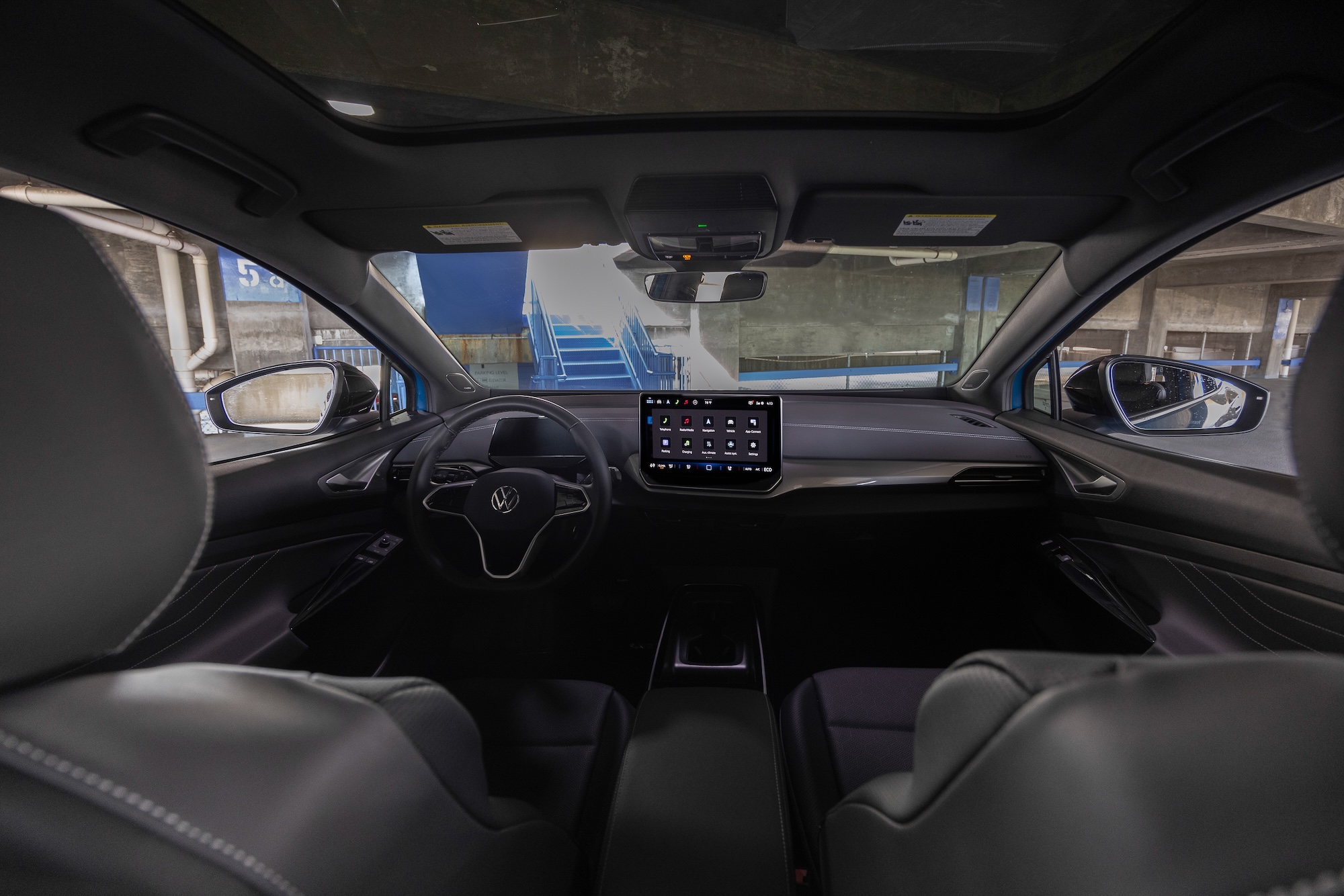
The 2026 Volkswagen ID.4 interior is definitely a hip place to be in all black, but function and comfort are lacking.
Driver’s Seat: The speedometer and gauges also disappoint. The diminutive through-the-steering-wheel display can be difficult to inform at a glance. The long-ago Chevrolet Spark and Sonic sported a similar motorcycle-esque unit, but those were easy to read.
Seat comfort is also lacking; the Driver’s Seat is almost rock hard without wings or bolsters to hold you in place.
Later that day I became even more annoyed when the seat lumbar support seemed to be knuckling my kidneys. Try as I might I couldn’t release the pressure. Soon I realized that the massage feature somehow activated itself and proceeded to give me the saddest massage I have gotten in a long time.
Friends and stuff: The rear seat offers plenty of legroom and foot room. Headroom is not bad but I expected more from this tall vehicle.
The rear seat seems angled a little far back for me and matches the front for comfort, or lack thereof.
Cargo space is 30.2 cubic feet behind the rear seat and 64.2 with the seat folded, the giant among the three EVs tested, and similar to a Volkswagen Tiguan.
In and out: It’s only a tiny step up into the ID.4.
Play some tunes: The giant 12.9-inch touchscreen offers quick access to most of the usual functions, and the home screen features big, clear icons for all the choices.
The touchscreen’s stand-up iPad-like configuration provides a nice way to hold your hand in place while selecting functions, and that makes operation easier.
I neglected to note the sound from the Harman Kardon stereo system. It’s scored an A- in other VW SUVs and an A+ in the EV ID.Buzz minivan. I’d lean toward the lower score; Mr. Driver’s Seat would have been typing furiously about the sound if it were an A+.
Keeping warm and cool: The ID.4 continues with the tiny touchslider thingies to adjust the temperature, and also activate the HVAC screen controls. These were the most cumbersome part of the screen, not quite user-friendly for adjustment on the fly.
The required buttons for front and rear defroster are on the left with the light control. It works in the sense that we’re supposed to use the lights when the wipers are on, but not in the sense of being away from the touchscreen where the rest of the HVAC controls are.
The big touchscreen means the center vents have been pushed disappointingly far down on the dashboard. It made cooling down difficult after one humid post-YMCA adventure, and the ambient temperature may have only been about 70 degrees.
Fuel economy: The range advertised in the vehicle was about 260 miles, but it seemed to exceed that more than a few times.
Where it’s built: Chattanooga, Tenn.
How it’s built: The ID.4 gets a 2 out of 5 reliability rating from Consumer Reports.
I don’t usually delve into recalls too deeply — the Sturgis family Kia Soul has been recalled nearly half a dozen times, but has never shown any of the potential problems so it’s just another inconvenience.
But Do Not Drive orders have been issued for the ID.4 for the second time, this time for wheels that could fall off — the first was for potential fire hazards in 2023. And I’ve collected anecdotal information on ID.4 troubles.
In the end: Hyundai has proven themselves over and over again in the EV world, and the Chevrolet might be worth a look. But I’d leave the ID.4 alone.
For a little while, Philadelphia’s Fishtown Analytics looked as if it might put the city where the modern computer was born back on the tech map as a software headquarters.
Cofounders Tristan Handy, Connor McArthur, and Drew Banin started their company in 2016. They created the Data Build Tool, which helps a range of employers — Philly firms like Gopuff, business software makers like GitLab, HubSpot, and New Relic, publisher Condé Nast, manufacturer Thermo Fisher Scientific, airline JetBlue — manage their proliferating databases out in the cloud of rent-a-servers.
As the tool caught on, they talked of taking the company public, drawing investors and hundreds of software recruits to one of the city’s popular neighborhoods, proof that Philadelphia is a place tech leaders flourish.
But that’s not quite how things worked out. In 2021 the start-up raised $150 million from Roblox backer Altimeter Capital and Silicon Valley giants Sequoia Capital and Andreessen Horowitz. Thefounders dropped the Fishtown name in favor of dbt Labs, for their software tool’s initials.
Then in October, they agreed to a merger with a larger data-integration software company and sometime-partner, Fivetran, with headquarters in California. The 20-person Spring Garden Street office will remain.
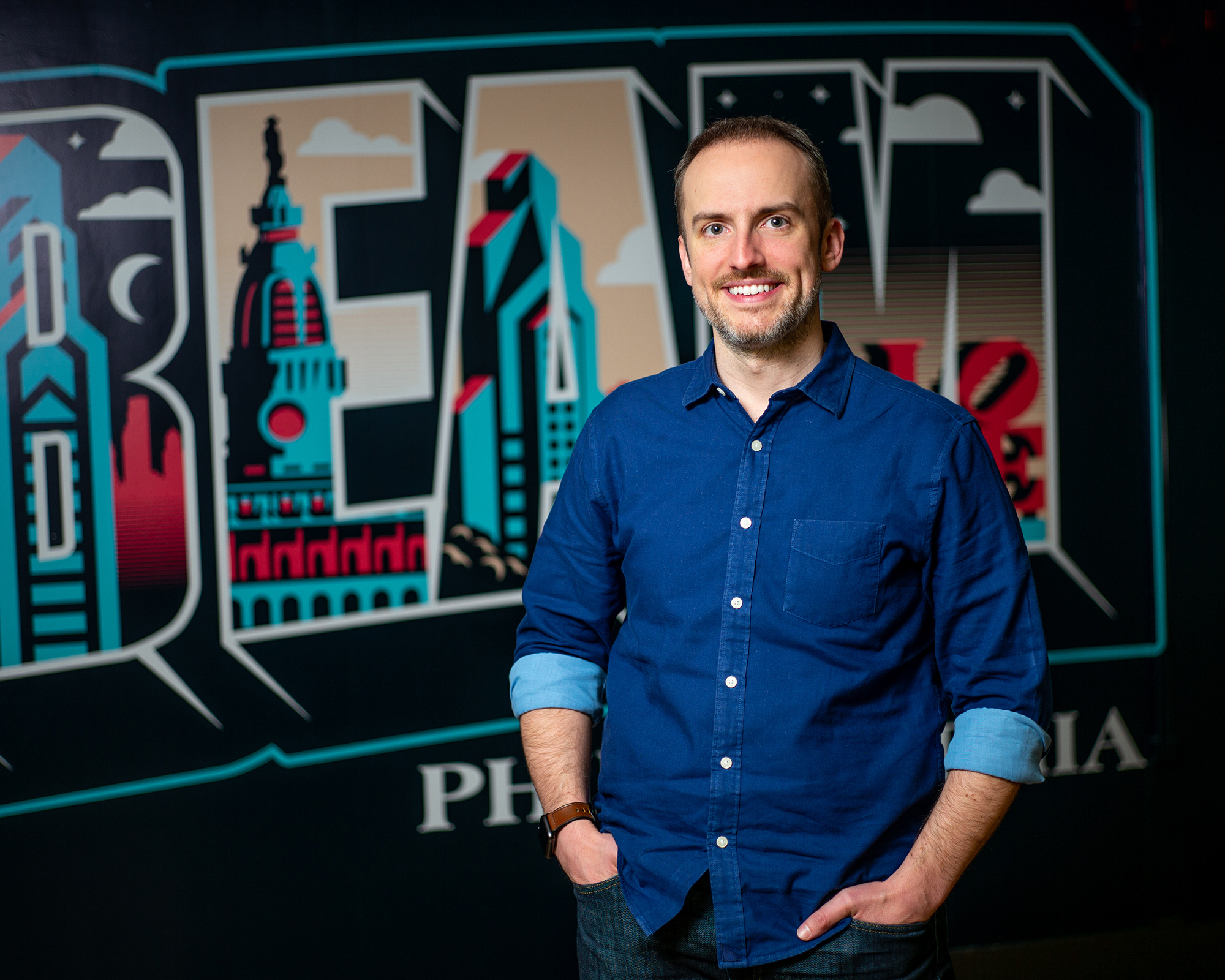
Handy agreed to talk with The Inquirer about what was, what might have been, and what’s next. He came to the interview wearing an Eagles No. 27 jersey. The conversation has been edited for length and clarity.
I talked to Bob about lessons learned. Bob is focused on his relationship with the Reveal founder. He says everything else is solvable, as long as the relationship between the founders is strong.
Bob Moore has founded a string of Philadelphia software companies. Crossbeam, “LinkedIn for businesses,” raised $76 million in October 2021, from firms led by Silicon Valley venture capital giant Andreessen Horowitz.
Are customers glad you’re consolidating or worried at losing a choice?
We have a lot of customers we share with Fivetran. In general we are finding excitement, with a little initial trepidation.
George [Fraser, Fivetran’s CEO] and I have spent a lot of time thinking about what our customers need to hear and to de-stress them. Generally the reactions are positive. It’s not uncommon we will hear from a customer: ‘I was thinking about what I was going to do with this set of data pipelines, and now we should talk about that.’ Which is part of the point of all this.
We are still pre-closing. We need to seek [U.S.] Department of Justice input. We are waiting to see if we meet that test — if DOJ will care about us at all. The answer should be no.
Does Philadelphia make enough software to be a ‘tech center?’
All three of us cofounders came out of Bob Moore’s RJMetrics, and then our first employee, Erin Vaughan [head of customer services], came out of RJ. Bob sent me a note after that: ‘Maybe you should hire some other people.’
A big part of the reason I started Fishtown Analytics was that in 2016, RJ was coming close to the end of its main chapter. I didn’t see other start-up opportunities locally that I was excited about. My wife had just gotten a job at CHOP. We weren’t moving. I had to figure something out.
So you built it. Was Philly a good place to start and then grow?
I just turned 45. A bunch of people I know have moved back to the area from San Francisco. A lot of times that is because you want to be close to family when you have kids or it’s a higher quality of life around here.
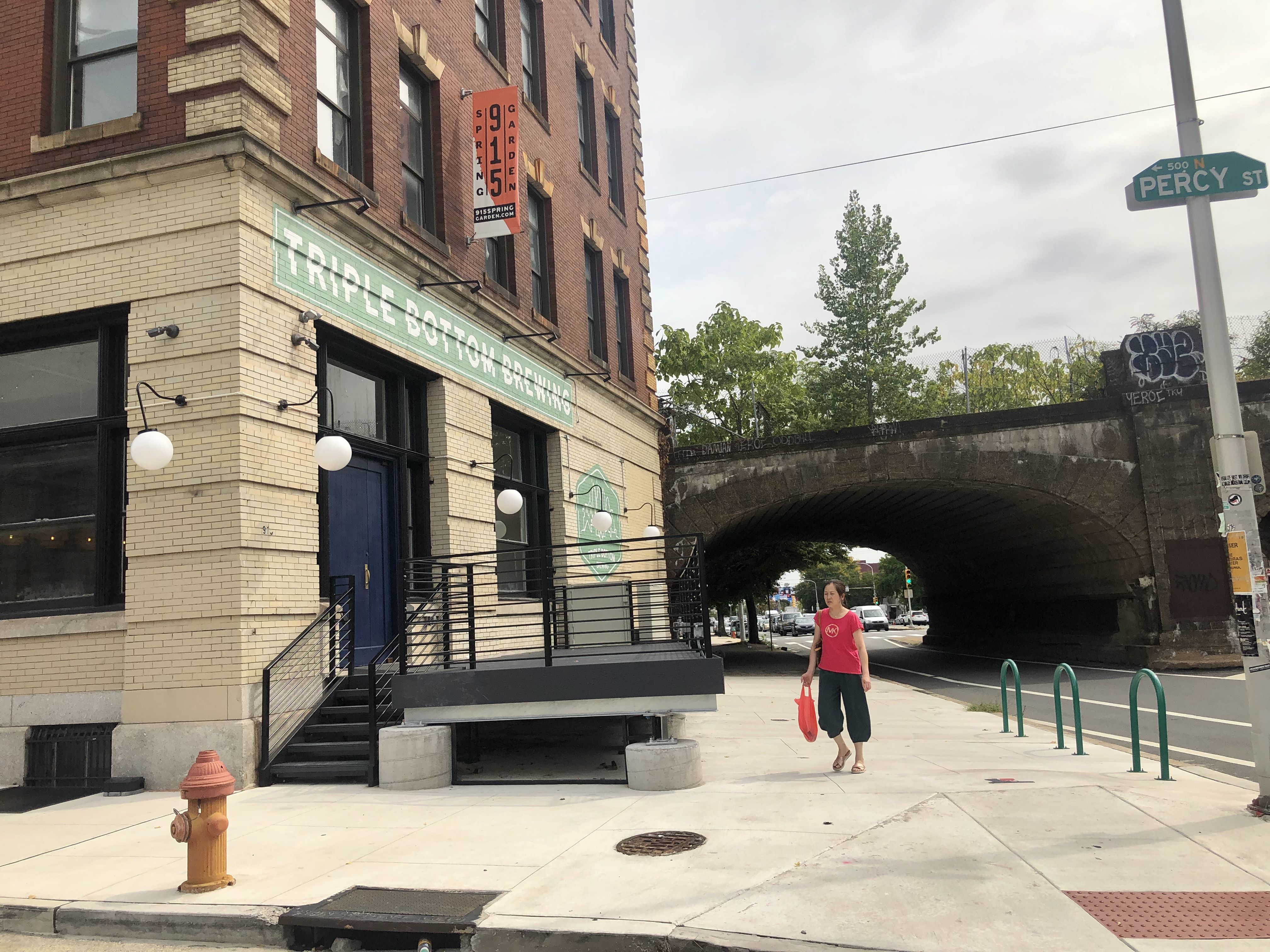
We are at 915 Spring Garden St. The elevator is always broken. We are still about 20 people there — the same as when we raised money [in 2021].
But my network is now nationwide. We are a distributed business with 730 people. And Fivetran has a big headquarters in Oakland, Calif.
dbt Labs employs more than 700, but most work remotely. Its headquarters, with 20 people including some of its founders and earliest employees, is upstairs at 915 Spring Garden St., a former Reading Railroad building whose first floor is home to Triple Bottom Brewing.
Will the merger mean expansion and hiring, or consolidation and firing?
Growth is good, and in general, we are not imaging cost-cutting targets. There is figuring out who occupies the leadership ranks. That is the main area where there might be some departures.
It’s a consolidation move from a products perspective. Historically in our space, the products Fivetran sells and the products we sell have been sold together. Our customers have budget lines for that combination.
Both companies are on track. Both companies were going to IPO at some point. This brings that date in closer. Combined, we have the growth and scale to go public. We just need to get through the integration and prove to everybody we have effectively combined these companies, and need a few quarters of numbers.
Why did you drop ‘Fishtown’ from the name?
Every sales call started out with ‘What’s Fishtown?’ Locally people have a lot of pride in Fishtown. But nobody else knew what it meant.
Both companies are keeping their brands. We’ll figure out what to call the combination.
Do you hire a lot of Philly engineers?
We did originally. Our first class of data people we trained, there were two Penn people and a Princeton person. For a long time that was the plan: continue hiring incredibly talented people from these schools. But then we went in a different direction.
Why, when Fivetran expanded in Oakland, did you not do the same in Philly?
It’s real hard to do any kind of office-space culture for tech workers in Philly because SEPTA is so bad.
As the people in the company start to age into having kids and move out to the suburbs, it is getting very challenging to come into the office. Even from the Main Line, the train is once an hour. That’s very hard.
Bob Moore calls you a pillar of the Philly start-up ‘connectivity’ who helps other founders and causes. Are you planning to stay around?
Dean J. Vagnozzi, whose King of Prussia insurance and investment business was taken over by a court-ordered receiver in the federal investigation of the Par Funding Ponzi scheme, has sued the U.S. government, accusing federal officials of abuse of process, negligence, and unconstitutional search and seizure.
In the lawsuit, Vagnozzi says he was a Par victim, his business wrongfully destroyed amid the investigation that led to criminal charges that have sent eight former Par Funding officials, debt collectors, and accountants to prison after they pleaded guilty to ripping off 1,600 people. Those clients included hundreds of Vagnozzi’s customers and members of his family, and the scheme ended up owing them $240 million.
Vagnozzi attracted customers with radio ads urging investors to consider alternatives to the stock market. He paid civil settlements totaling $5.7 million to the U.S. Securities and Exchange Commission (SEC) and smaller amounts to state securities agencies to settle complaints for selling unregistered securities, including those of Par Funding, a cash-advance lender to businesses that had trouble qualifying for bank loans and others. Vagnozzi blamed the failure to register on bad advice from his longtime lawyer, whose insurers agreed to pay investors, Vagnozzi, and others $47 million to settle their claims.
In contrast with the Par Funding operators, Vagnozzi has not been charged with crimes.
The complaint
Vagnozzi’s lawyer, George Bochetto, argued in the complaint filed Dec. 8 in federal court in Philadelphiathat it was “egregious government overreach” for the SEC to allege illegal acts in a petition that convinced U.S. District Judge Rodolfo Ruiz to include Vagnozzi’s former business, A Better Financial Plan, alongside Par-related assets seized in a 2020 court order,
The complaint contends that the SEC should have known the investment funds it initially accused Vagnozzi of setting up for Par founder Joseph LaForte to evade Pennsylvania investigators were actually started by Vagnozzi on his then-lawyer’s advice whenVagnozzi was unaware of the state’s investigation.
The suit adds thatVagnozzi could have shown this, if the SEC had asked before acting, by citing correspondence and records, including the SEC’s own documents, which he submitted as case exhibits.
The court issued a sweeping order based on the SEC petition. So “on Tuesday, July 28, 2020, a court-appointed receiver arrived unannounced at Vagnozzi’s office, ordered him, his son, his sister, his father-in-law, and the rest of his staff into the conference room, and told them to leave immediately. Vagnozzi’s business, ABetterFinancialPlan.com LLC, which he had carefully built over 17 years, was effectively shut down and placed out of business,” according to the lawsuit.
The seizure of his company and accounts left more than a dozen employees out of a job and Vagnozzi unable to earn a living. His reputation was “irreparably harmed and his assets and businesses ruined,” the suit contends.
When the company was seized, Vagnozzi’s businesses unrelated to Par Funding were collecting revenues at the rate of $4 million a year and growing, according to Bochetto.
At that rate, Bochetto estimates Vagnozzi’s lifetime losses as a result of the SEC’s actions at more than $50 million.
The SEC declined to comment on the litigation.
Vagnozzi’s suit accuses Amie Berlin, an SEC lawyer who led the case for the agency’s Florida office, and other, unnamed federal agents of “malicious” infringement on Vagnozzi’s constitutional right against unreasonable searches or seizure. Berlin didn’t respond to a request for comment.
Vagnozzi the victim?
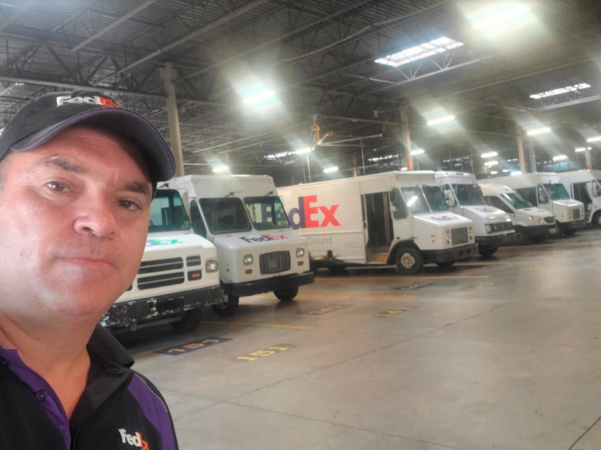
After losing his company, Vagnozzi ran a Federal Express route for 2½ years and worked in sales for a home-improvement company. He has applied for reinstatement of his Pennsylvania insurance license, which was suspended in 2022 after his company’s seizure.
According to the lawsuit, the SEC wrongly “assumed without legitimate basis” that Vagnozzi had been a “coconspirator” and a “criminal.” The suit also alleges that the SEC failed to give Vagnozzi “prior notice of the investigation and an opportunity to respond” before his business was shut down and his accounts frozen.
The suit depicts Vagnozzi as a victim of Par, a firm whose associates included some that “turned out to be members of the Gambino crime family.”
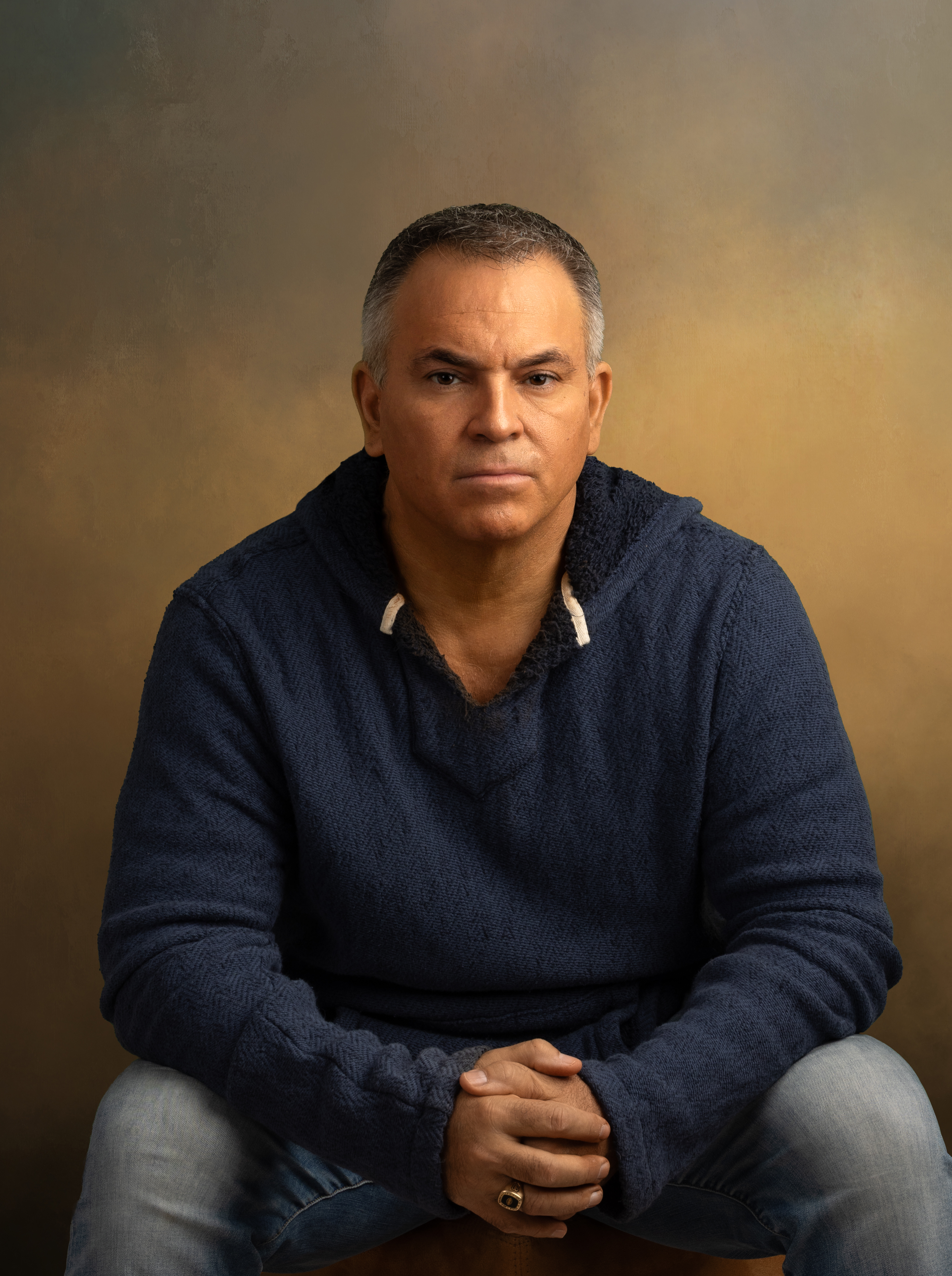
Dean Vagnozzi had this photo taken in 2025 for use in a book he says he’s writing about his business and its closure by a court-ordered receiver amid a federal investigation of Par Funding, whose investments he sold.
One of the eight people sentenced in the Par case, former collections head James LaForte, was identified in a separate New York indictment as a member of a Gambino mob crew. James LaForte has denied that allegation. A collector working for James Laforte was also named as a Gambino associate.
“Vagnozzi, apart from having an Italian surname, had nothing in common with the criminals that ran Par Funding,” who “lied to, manipulated, and duped Dean into raising funds for Par Funding’s criminal enterprise, which he genuinely thought was a legitimate business,“ according to the complaint. He ”was not a fraudster nor [a Par] insider” but “an innocent victim of government overreach,” of his lawyer, and “of Par Funding’s fraud and deceit.”
Vagnozzi earlier accused his longtime lawyer, John Pauciulo, of giving him bad advice contributing to Vagnozzi’s failure to ensure clients’ Par investments were registered with the SEC.
Pauciulo has denied wrongdoing. He is the subject of a disciplinary board procedure based on his representation of Vagnozzi that could affect his law license.
Some 1,600 investors, including hundreds of Vagnozzi’s former clients, have so far received about half their investment principal back from the court-appointed receiver that collected Par assets to repay them. Judge Ruiz last week agreed to release another 40%, bringing total payback to around $210 million. A third, smaller payout is expected as additional money is collected.
“This case is truly about runaway regulators that well exceed the boundaries of due process and constitutional fairness,” Bochetto said in an interview Tuesday. He said there have not been a lot of successful complaints against the federal government for overreach but was confident the facts in the Vagnozzi case justified a court review.
On a frigid Tuesday morning, stakeholders from across Delaware County toasted champagne and popped mini pastries under the roof of Middletown Township’s new Hilton Garden Inn.
“We may be the only Hilton Garden Inn in the world that serves Wawa coffee and drinks it all the time,” quipped hotel owner Patrick J. Burns, standing before a sea of family members, hotel staffers, business associates, and elected officials.
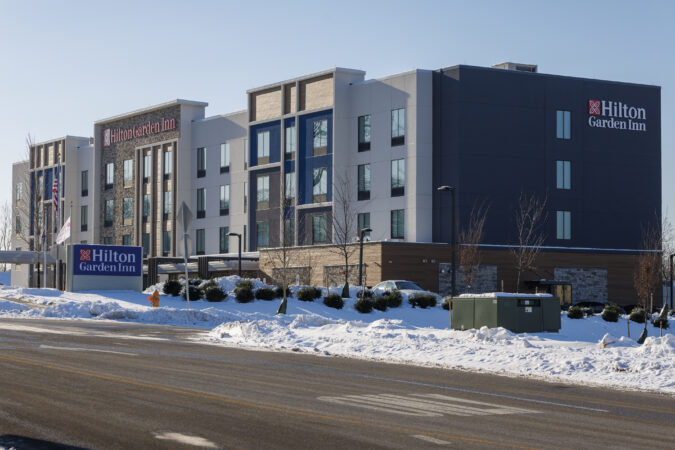
The 107-room, 67,000-square-foot Hilton, located off Baltimore Pike at the former Franklin Mint site, is open and welcoming guests. It’s the 42nd hotel in Delaware County and first full-service hotel in Middletown Township.
The hotel features app-to-room device integration, mobile key and contactless check-in, meeting and banquet spaces, an outdoor patio with fire pits, a fitness center, and the Garden Grill, a restaurant serving “American cuisine with local flair” that will be open to the public.
The hotel is long awaited, borne from a yearslong planning process and delayed by pandemic-era construction slowdowns. On Tuesday, attendees expressed gratitude that what was once an economic dream for the township was finally becoming reality.
The Hilton marks an important expansion of the collar county’s tourism economy, according to Delaware County’s major economic stakeholders. And as far as tourism in Delco, they say, it’s only up from here.
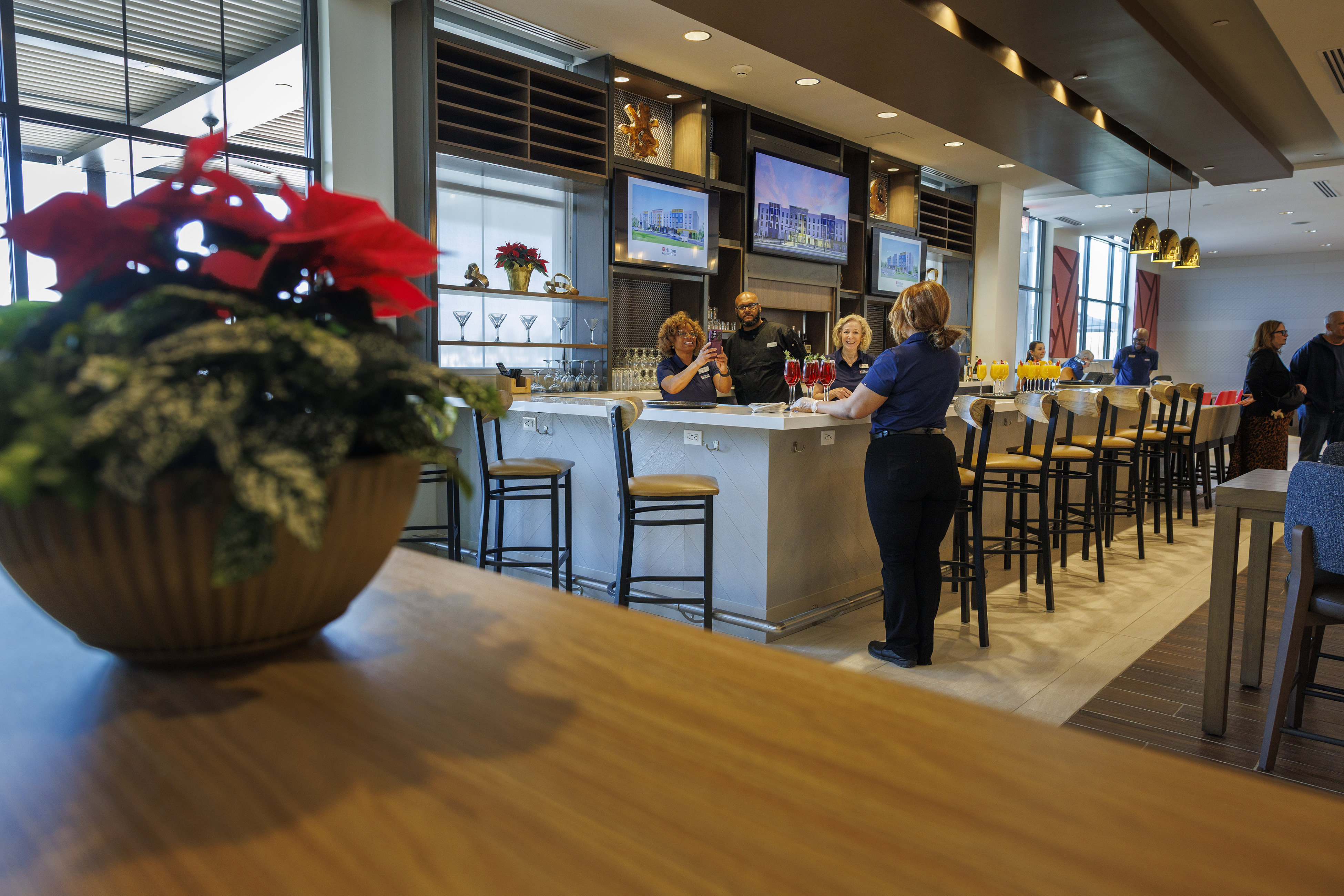
The bar area off of the lobby at the new Hilton Garden Inn of Middletown Township on Tuesday, Dec. 16, 2025.
Delaware County hosted 4.5 million visitors in 2024, according to Steve Bryne, executive director of Visit Delco. Those visitors spent $860 million, generated $1.2 billion in economic impact, and sustained 13,000 jobs. In 2025, the county is on track to sell more than one million hotel room nights for the first time in its history.
Representatives from the Hilton say it created 200 construction jobs and 40 new hospitality jobs.
Bryne said tourism to Delaware County is a “combination of everything.” The county doesn’t have one major anchor (like Longwood Gardens in Chester County, for example). Rather, it’s home to 12 colleges and universities, major corporate employers like Wawa, and sports complexes like IceWorks and Subaru Park, home of the Philadelphia Union. That means regular tournaments, business conferences, parents weekends, homecomings, and graduations — events that, collectively, help power the county’s economy.
Already, Penn State Brandywine, located down the road, has named the Hilton Garden Inn its host hotel.
Delaware County also gets spillover from visitors to Philadelphia, especially those who want proximity to Philadelphia International Airport.
The hotel is a property of Metro Philly Management, owned by Burns. Burns’ management company also owns the Courtyard by Marriott in Springfield, the Fairfield Inn & Suites in Broomall, and the Springfield Country Club, as well as numerous grocery stores and restaurants.
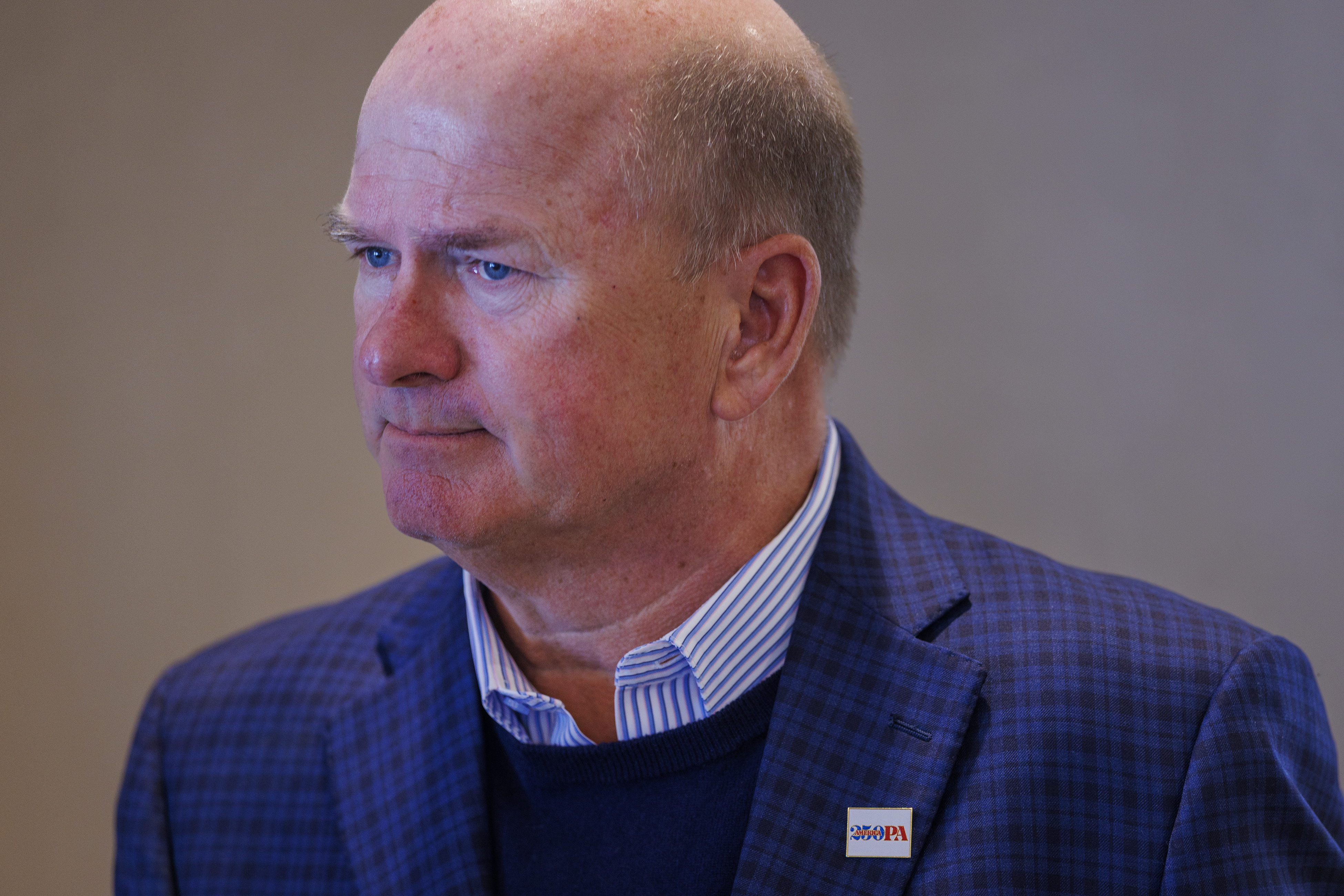
Patrick J. Burns, pictured at Middletown Township’s new Hilton Garden Inn on Tuesday, Dec. 16, 2025. The hotel is owned by Burns’ company, Metro Philly Management.
Stakeholders lauded the hotel’s location in a central, and rapidly developing, part of Middletown Township.
The former Franklin Mint complex, now home to the Hilton, has been a hotbed of development in Middletown Township since the mint shuttered in 2004. Two newer housing developments — Pond’s Edge and Franklin Station — have added over 450 units of housing to the site. Middletown Township outpaced its neighbors — Media, Nether Providence, and Upper Providence — in populationgrowth in 2024.
“Middletown Township is such a vital corridor of Delaware County,” Burns said.
The hotel’s opening coincides with major events coming to the region in the coming months: semiquincentennial celebrations in Philadelphia and in Delco, the FIFA World Cup, the PGA Championship at Aronimink Golf Club, and the MLB All-Star Game. For the PGA Championship alone, Delaware County is expecting 200,000 visitors and $125 million in economic impact.
This suburban content is produced with support from the Leslie Miller and Richard Worley Foundation and The Lenfest Institute for Journalism. Editorial content is created independently of the project donors. Gifts to support The Inquirer’s high-impact journalism can be made at inquirer.com/donate. A list of Lenfest Institute donors can be found at lenfestinstitute.org/supporters.
“We strongly believe that Netflix and Warner Bros. joining forces will offer consumers more choice and value, allow the creative community to reach even more audiences with our combined distribution, and fuel our long-term growth,” Warner Bros. said Wednesday. “We made this deal because their deep portfolio of iconic franchises, expansive library, and strong studio capabilities will complement—not duplicate—our existing business.”
Paramount went hostile with its bid last week, asking shareholders to reject the deal with Netflix favored by the board of Warner Bros.
Paramount’s bid isn’t off the table altogether. While Wednesday’s letter to shareholders means Paramount’s is not the offer favored by the board at Warner Bros., shareholders can still decide to tender their shares in favor of Paramount’s offer for the entire company — including cable stalwarts CNN and Discovery.
Unlike Paramount’s bid, the offer from Netflix does not include buying the cable operations of Warner Bros. An acquisition by Netflix, if approved by regulators and shareholders, will close only after Warner completes its previously announced separation of its cable operations.
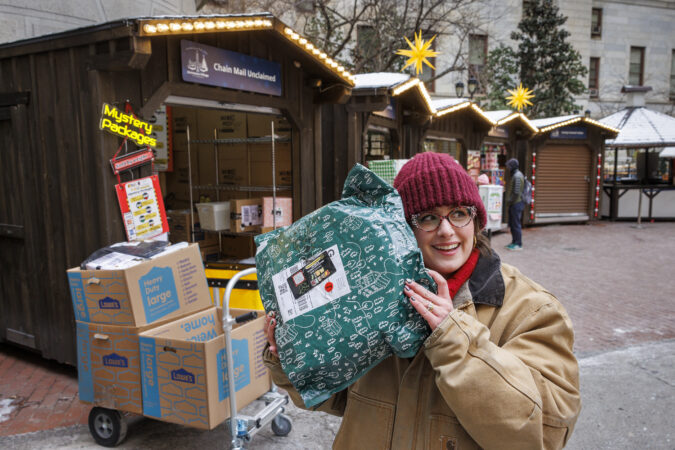
Emma Zielinski wasn’t sure how her business selling unclaimed mystery mail would fare at the Christmas Village in Philadelphia this year, or if she’d even be accepted into the holiday market at all.
“I didn’t think they’d take us because we’re not handmade, but when I picked up my vendor badge, they were like, ‘We’ve been waiting for you to apply!’” she said.
As it turns out, thousands of people from across the region have also been waiting for the chance to buy orphaned packages that never found their way home and nobody went to look for — the contents of which remain shrouded to both Zielinski and the buyers until after they are purchased.
“The Christmas Village has really turned my business upside down,” she told me. “I don’t think anyone realized this was going to happen.”
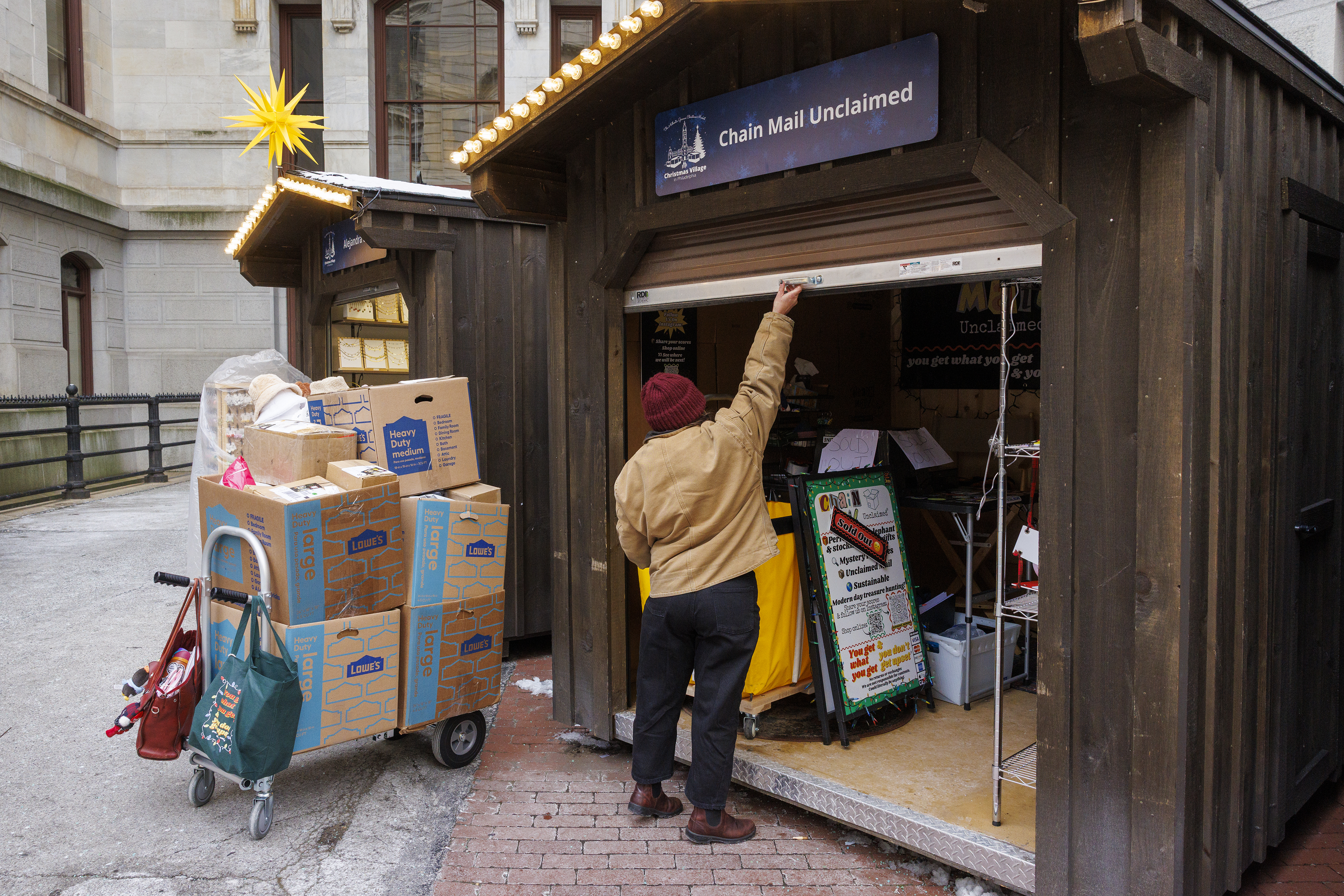
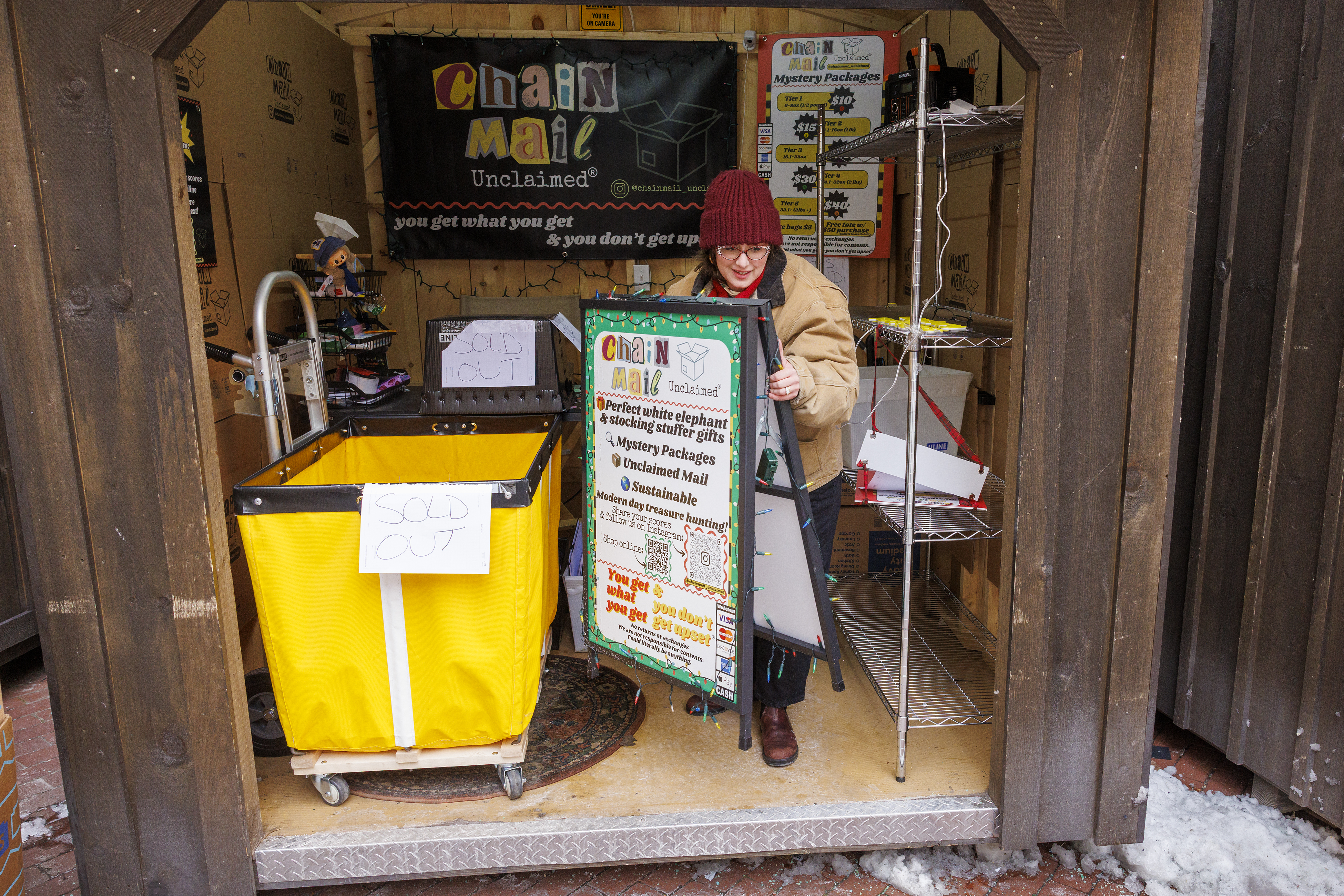
Emma Zielinski, owner of Chain Mail Unclaimed, opens for business at the Christmas Village at City Hall.
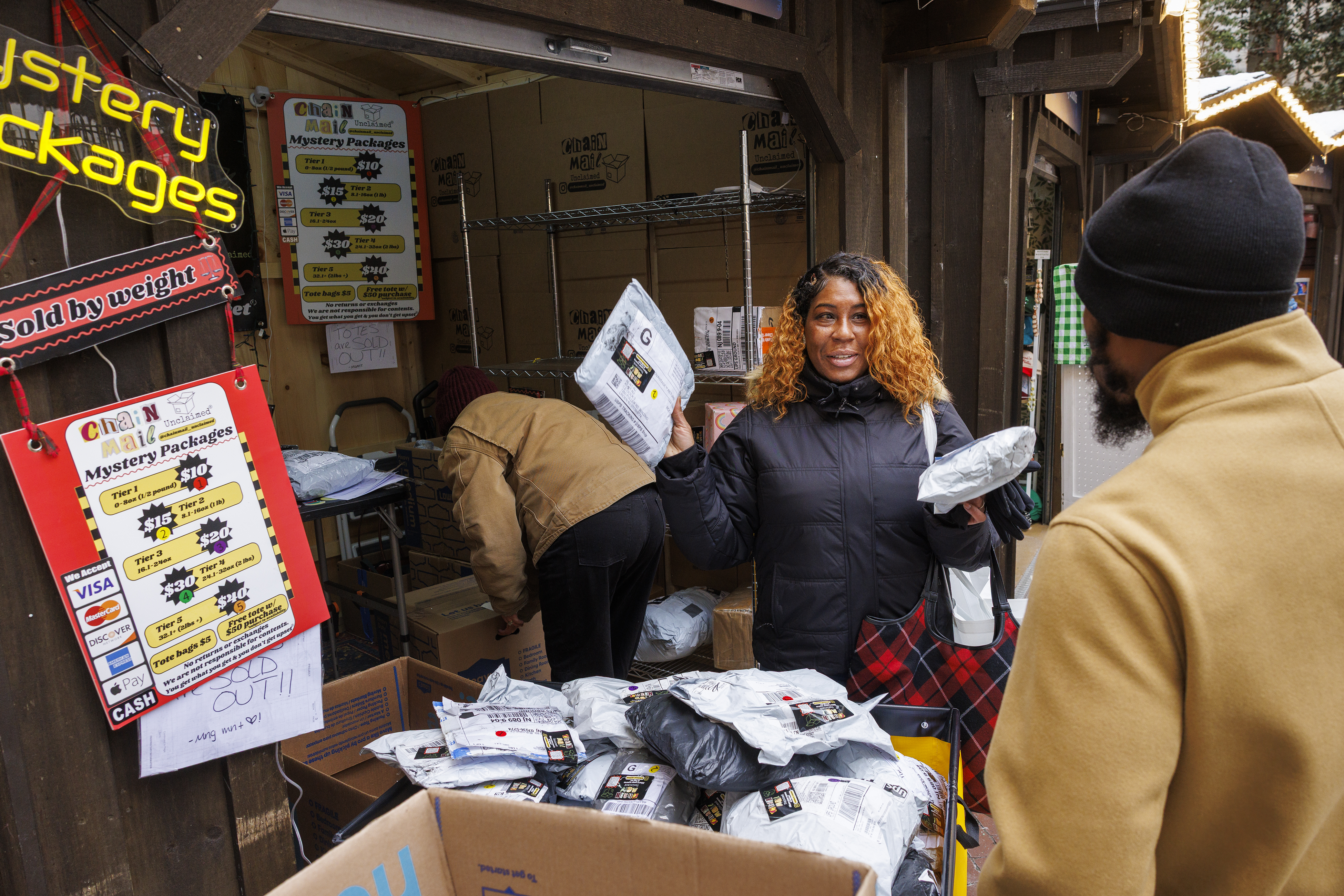
From boxes to heavily-taped-up opaque bags, Zielinski is selling about 300 to 500 items a day, each between $10 and $40 a pop, based on weight. On the opening weekend for her Chain Mail Unclaimed hut, which is located in the interior courtyard of City Hall, she sold two weeks of inventory in just two days — and business hasn’t slowed down since.
Philadelphians, she’s found, are always up for a good surprise.
“They are down to party and see what’s going on,” Zielinski said. ”It’s a really good vibe in Philly when we do events, people are a lot of fun and up for trying something new and playing along.”
The element of surprise
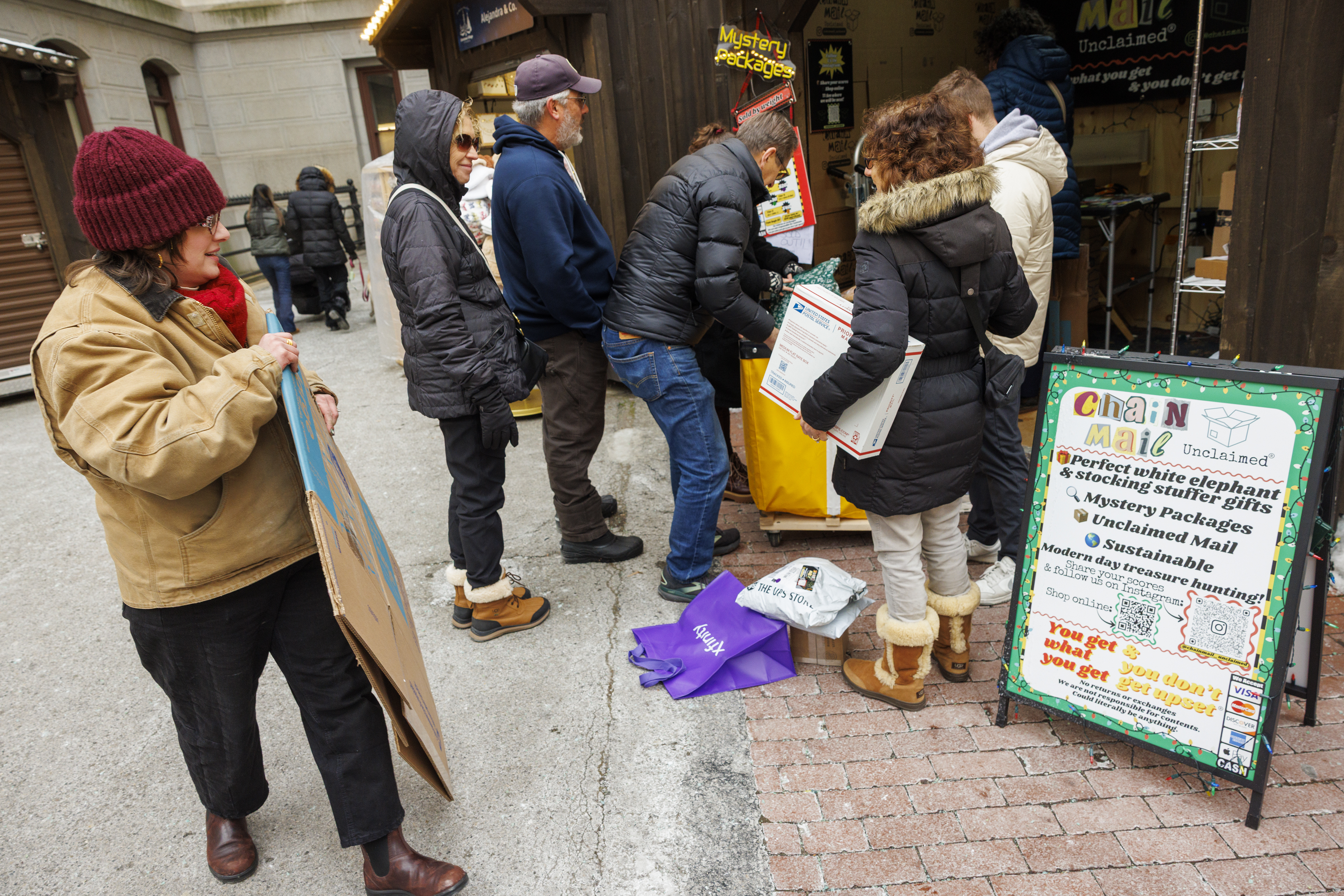
When I arrived around 1 p.m. on Thursday, I was shocked to find Chain Mail Unclaimed had one of the only lines at the Christmas Village, aside from the ever-popular raclette cheese stand.
“To be compared to the raclette stand is quite an honor,” Zielinski said.
As I was waiting in line, a young man who’d just purchased a package opened it on the spot and pulled out what appeared to be a spandex elf suit — in a women’s medium.
“At least it’s seasonally appropriate,” I said.
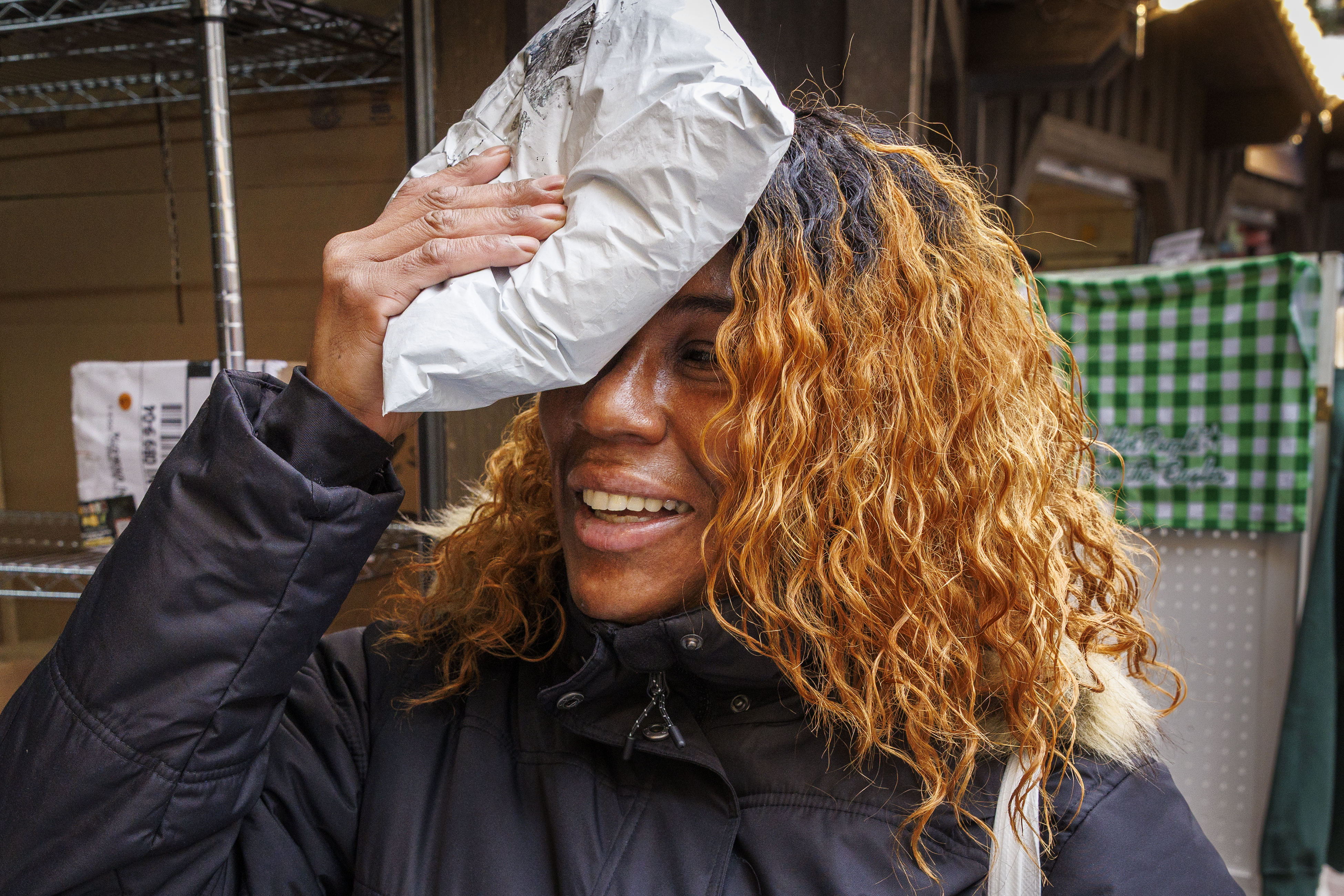
When my turn came, I dug in a large bin and rustled through a couple shelves with the crowd, massaging the bags and shaking the boxes to see if I could prognosticate what was inside of them. Unlike Christmas at home, these tactics are totally fair game at Chain Mail Unclaimed.
Mayumi Burgess takes a guess at what’s inside a package for sale at Chain Mail Unclaimed.
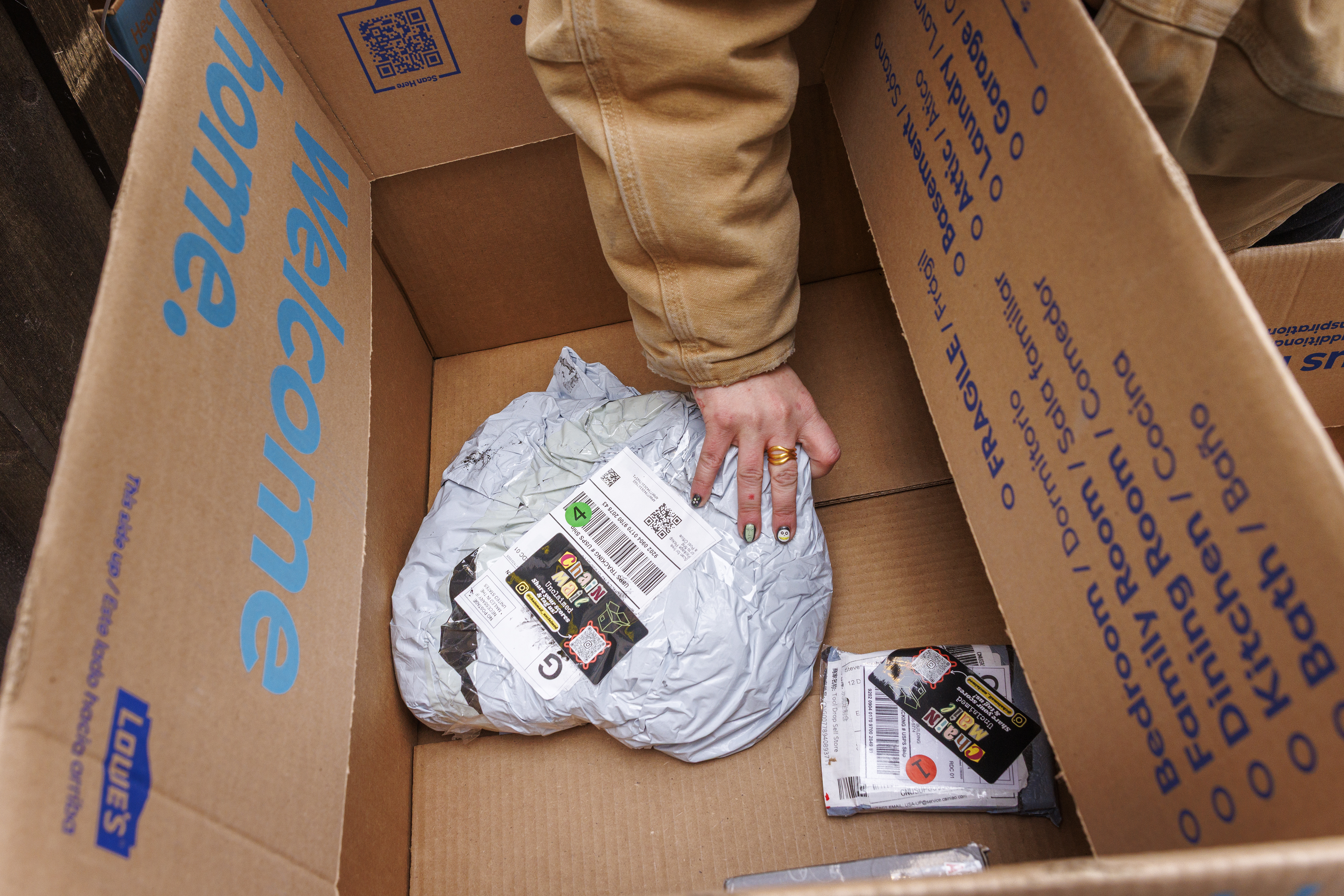
I was pretty sure one of the packages had wicker baskets in it, and another, a pair of shoes, but beyond that it was hard to decipher the contents. All of the $10 items were gone, so I settled on two $15 packages and one for $20. All three are soft goods in opaque bags secured with clear tape, two of which came from the U.S. Postal Service and one from the UPS Store.
Beyond that, I know nothing about them. Even the sender and intended recipient’s names have been artfully covered up with Chain Mail Unclaimed stickers by Zielinski and her crew.
I intend to give one package to my husband (he signed up to deal with the consequences of marrying a total rando) and one each to my Secret Santa recipients at our respective family gatherings.
I can’t wait to see what’s inside. I’m getting older and by the time Christmas rolls around, sometimes I forget what I’ve bought people anyway, but with this it’s guaranteed to be a surprise for the recipients and for me.
I mean, these gifts could literally be anything! They could contain lost Inca gold, the French crown jewels stolen from the Louvre, or a heretofore unknown Dunlap broadside printing of the Declaration of Independence.
Emma Zielinski, owner of Chain Mail Unclaimed, unloads merchandise at her booth at the Christmas Village at City Hall.
Of course, they could be total rubbish or completely embarrassing. I hope my beloved, self-proclaimed “spinster aunt” isn’t going to open a gift of lacy red lingerie before our entire family this Christmas, but sometimes, these are the chances we take in life, and actually, that would be pretty entertaining.
Because part of the fun of giving a gift like this is getting to tell the story behind it, which is why I pshawed a fellow customer in line who requested that I open my packages on the spot.
“Ma’am, these are gifts,” I said, before walking away with my treasures.
‘The tip of the iceberg’
Zielinski, of Lawrenceville, N.J., said she was inspired to create her business after seeing a video of someone on social media visiting a similar pop-up shop at a farmers market in Paris.
She was already attending vendor events in the region for her permanent jewelry business, Off the Chain Studios, and thought this could be a good companion to it.
“It’s exciting, it builds a crowd, and it’s also an entirely different crowd,” Zielinski said. “The person who gets a bracelet welded on won’t necessarily buy an unclaimed package.”
Chain Mail Unclaimed — a name that’s a nod to both her original business and the archaic tradition of chain mail letters — opened in April 2024. Zielinski started with pop-up shops at area weekend events like the Trenton Punk Rock Flea Market and the Northern Liberties Night Market before leveling up to the multiweek Christmas Village in Philadelphia this year.
At left is Emma Zielinski, owner of Chain Mail Unclaimed, a business in the City Hall courtyard of the Christmas Village, looks on as customers sort through packages.
She works with a broker who deals with warehouses across the country where mail sits unclaimed, overstocked, or returned and then gets auctioned off.
“The amount of unclaimed packages is insane. This is the tip of the iceberg, if they don’t get bought, they get incinerated,” she said. “I think we’ve all returned something, but you don’t think what the next step is.”
Zielinksi said she was already aware of human overconsumption as a whole, having been a fashion school student, but she told me this business gives her a whole new perspective.
“People question the legality — yes, it’s legal. Where do you think it goes? It doesn’t just go somewhere and live a happy life, it gets thrown out,” she said.
And suddenly, I was transported to the Island of Misfit Toys from Rudolph the Red-Nosed Reindeer, and my heart ached. Charlie-in-the-box deserves a happy life too, darn it, especially around the holidays!
‘Who ordered these?’
Zielinski usually orders six months of stock, or 24 pallets, at a time, but the Christmas Village has upended her business and she’s ordered three times that in the last two weeks alone. Her broker is now on stand-by for the remainder of the season and her staffing has tripled to match the demand.
“People are excited this is here. It also fills a great white elephant gift niche,” she said. “It takes the responsibility off of you if you don’t know what to get someone and it’s a fun talking point.”
Mayumi Burgess and her husband, Alfonso Burgess, of Philadelphia, look for mystery packages sold by weight at the Chain Mail Unclaimed business at the Christmas Village at City Hall.
Packages are typically sold through her website as well, but right now that’s on pause as she tries to keep the Christmas Village stocked. Sometimes she’ll get big items she can’t sell in a palette, like furniture, and she works with Habitat for Humanity and local nonprofits to give those things away.
Zielinski swears she doesn’t open any package before she sells it, nor does she keep any for herself (“I am a total maximalist so once I get started, I could not stop”), but she does love hearing about what her customers received.
So far, the most impressive find was an 18-karat gold diamond bracelet that retails for $4,000.
And the strangest?
“It was a set of animal pregnancy tests, which really took me back,” she said. “Who ordered these? What are the circumstances? I need to know the backstory. That part drives me crazy.”
Emma Zielinski, owner of Chain Mail Unclaimed, opens for business at the Christmas Village at City Hall.
Zielinski said what’s considered a good find is also very subjective. The other day, a woman opened a package and discovered a deadbolt inside. She told Zielinski her door’s been blowing open and it was just what she needed.
“Once, a girl got the perfume she wears,” Zielinski said. “It’s bizarre, but sometimes these items find their way back to where they’re supposed to be.”
DETROIT — Sixteen states and the District of Columbia are suing President Donald Trump’s administration for what they say is the unlawful withholding of more than $2 billion dollars in funding for two electric vehicle charging programs, according to a federal lawsuit announced Tuesday.
The lawsuit filed Tuesday in the U.S. District Court for the Western District of Washington is the latest legal battle that several states are pursuing over funding for EV charging infrastructure that they say was obligated to them by Congress under former President Joe Biden, but that the Department of Transportation and Federal Highway Administration are “impounding.”
“The Trump Administration’s illegal attempt to stop funding for electric vehicle infrastructure must come to an end,” California Attorney General Rob Bonta said in a release. “This is just another reckless attempt that will stall the fight against air pollution and climate change, slow innovation, thwart green job creation, and leave communities without access to clean, affordable transportation.”
The Department of Transportation did not immediately respond to request for comment.
The Trump administration in February ordered states to halt spending money for EV charging that was allocated in the bipartisan infrastructure law passed under the previous administration.
Several states filed a lawsuit in May against the administration for withholding the funding from the $5 billion National Electric Vehicle Infrastructure program for a nationwide charging buildout. A federal judge later ordered the administration to release much of the funding for chargers in more than a dozen states.
Tuesday’s separate lawsuit addresses the withholding of funding obligations for two other programs: $1.8 billion for the Charging and Fueling Infrastructure Grant program, as well as about $350 million in Electric Vehicle Charger Reliability and Accessibility Accelerator money.
Tuesday’s lawsuit is led by attorneys general from California and Colorado, joined by the attorneys general of Arizona, Delaware, Illinois, Maryland, Massachusetts, Michigan, New Jersey, New York, Oregon, Rhode Island, Vermont, Washington, Wisconsin, the District of Columbia, and the governor of Pennsylvania, Josh Shapiro.
The Trump administration has been hostile to EVs and has dismantled several policies friendly to cleaner cars and trucks that were put in place under Biden, in favor of policies that instead align with Trump’s oil and gas industry agenda.
Once in office a second time, President Trump immediately ordered an end to what he has called Biden’s “EV mandate.” While Biden targeted for half of new vehicle sales in the U.S. to be electric by 2030, policies did not force American consumers to buy or automakers to sell electric vehicles.
Biden did set stringent tailpipe emissions and fuel economy rules in an effort to encourage more widespread EV uptake, as the auto industry would have had to meet both sets of requirements with a greater number of EVs in their sales mix.
Under the Biden administration, consumers could also receive up to $7,500 in tax incentives off the price of an EV purchase.
The Trump administration has proposed rolling back both tailpipe rules and the gas mileage standards, cut the fines to automakers for not meeting those standards, and eliminated the EV credits.
The lawsuit comes amid those regulatory changes and as the pace of EV sales have slowed in the U.S. as mainstream buyers remain concerned about both charging availability and the price of the vehicles.
New EVs transacted for an average of $58,638 last month, compared with $49,814 for a new vehicle overall, according to auto buying resource Kelley Blue Book.
Automakers, meanwhile, have responded to consumers accordingly.
Earlier this week, Ford Motor Co. announced it was pivoting away from its once-ambitious, multibillion-dollar electrification strategy in lieu of more hybrid-electric and more fuel-efficient gasoline-powered vehicles.
Capstan Therapeutics’ sale this year for $2.1 billion, the highest price paid for a private early-stage biotech company since 2022, was a triumph for its founders at the University of Pennsylvania.
Unfortunately for Philadelphia, the company is based in San Diego. Investors wanted an executive who lives there to be CEO.
Capstan was a miss for Philadelphia, said Jeffrey Marrazzo, who cofounded a high-profile regional biotech company, Spark Therapeutics, and is now an industry investor and consultant.
If Philadelphia had a bigger talent pool of biotech CEOs, “it would have and should have been here,” he said.
The Philadelphia region has lagged behind other biotech centers in landing companies and jobs, but industry experts are working to close the gap and better compete with Boston, the San Francisco Bay Area, and San Diego.
According to Marrazzo and others, the Philadelphia region’s relatively shallow pool of top biotech management is a key challenge.
Big investors go to managers who have proven ability to deliver big investment returns, said Fred Vogt, interim CEO of Iovance Biotherapeutics, a California company with a manufacturing facility in the Navy Yard.
“They want the company to perform. They’ll put it in Antarctica, if that was where the performance would come from,” he said.
The Lilly announcement last month also reflects Philadelphia’s national biotech stature. It’s the fourth U.S. city to get a Lilly Gateway Lab, behind Boston, the San Francisco Bay Area, and San Diego.
Those places have far outpaced Philadelphia in the creation of biotech research and development jobs, even as the sector’s growth has slowed.
From 2014 through last year, the Boston area added four biotech research and development jobs for every one job added here, according to an Inquirer analysis of federal employment data.
window.addEventListener(“message”,function(a){if(void 0!==a.data[“datawrapper-height”]){var e=document.querySelectorAll(“iframe”);for(var t in a.data[“datawrapper-height”])for(var r,i=0;r=e[i];i++)if(r.contentWindow===a.source){var d=a.data[“datawrapper-height”][t]+”px”;r.style.height=d}}});
Penn’s role in Philadelphia biotech
Philadelphia’s reputation as an innovation center — boosters like to call the region “Cellicon Valley” — starts with the University of Pennsylvania, which has long been a top recipient of National Institutes of Health grants to advance scientific discovery.
Research at Penn has contributed to the creation of 45 FDA-approved treatments since 2013, according to the university.
“Penn discoveries help spark new biotech companies, but we can’t build the whole ecosystem in this area alone,” said John Swartley, Penn’s chief innovation officer. “Great science is just one ingredient. We also need capital, experienced leadership, real estate and manufacturing infrastructure, and strong city and state support.”
Penn was one of two Philadelphia institutions receiving more than $100 million in NIH funding in the year that ended Sept. 30. The otherwas the Children’s Hospital of Philadelphia.
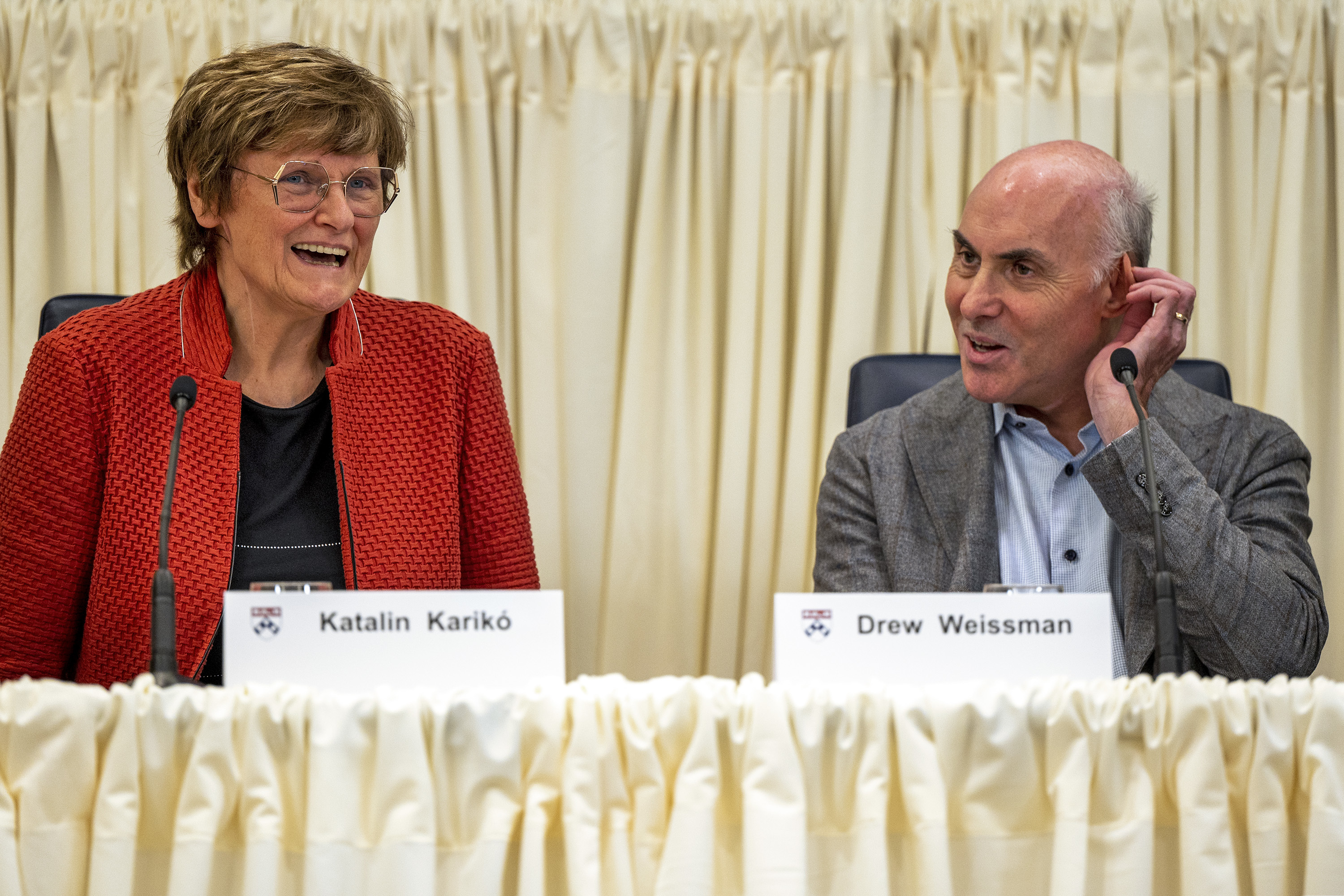
Katalin Karikó and Drew Weissman spoke at a University of Pennsylvania news conference after they were named winners of a 2023 Nobel Prize in medicine. Their work was instrumental to modifying mRNA for therapeutic uses, such as the rapid development of lifesaving vaccines during the COVID-19 pandemic.
By contrast, the Boston area was home to 10 institutions with at least $100 million in NIH grants, generating more spinoffs and jobs.
The Philadelphia region has a healthy number of biotech spinouts, but the biggest markets have more from a larger number of research institutions, said Robert Adelson, founder Osage University Partners, a venture capital firm in Bala Cynwyd.
That concentration of jobs and companies in the Boston area — where nearly 60,000 people worked in biotech R&D last year — makes it easier to attract people. By comparison, there were 13,800 such jobs in Philadelphia and Montgomery County, home to the bulk of the regional sector.
If a startup fails, which happens commonly in biotech, “there’ll be another startup or another company for me to go to” in a place like Boston, said Matt Cohen, a managing partner for life science at Osage.
Another challenge for Philadelphia: It specializes in cell and gene therapy, a relatively small segment of the biotech industry, whose allure to investors has faded in the last few years.
Such market forces shaped the trajectory of Spark, a 2013 Children’s Hospital of Philadelphia spinout that developed Luxterna, the first FDA-approved gene therapy, used to treat an inherited form of blindness. The promise of Spark’s gene therapy work for a form of hemophilia spurred its 2019 acquisition by Swiss pharmaceutical titan Roche for $4.8 billion.
The company still employs about 300 in the city, a spokesperson said, and work continues on its $575 million Gene Therapy Innovation Center at 30th and Chestnut Streets in University City.
The long arc of biotech
A handful of companies dominated the early days of U.S. biotech. Boston had Biogen and Genzyme, San Francisco had Genentech, San Diego had Hybritech, and Philadelphia had Centocor. All of them started between 1976 and 1981.
Centocor started in the University City Science Center because one of its founders, virologist Hilary Koprowski, was the longtime director of the Wistar Institute. Centocor’s first CEO, Hubert Schoemaker, moved here from the Boston area, where he had gotten his doctorate at the Massachusetts Institute of Technology.
Another drug still under development at the time of the sale, Stelara, went on to become J&J’s top-selling drug as recently as 2023 with $10.9 billion in revenue. Stelara, approved to treat several autoimmune disorders, remains a testament to Centocor’s legacy.
Despite its product success, Centocor didn’t have the same flywheel effect of creating new companies and a pipeline of CEOs as peer companies did in regions outside of Philadelphia.
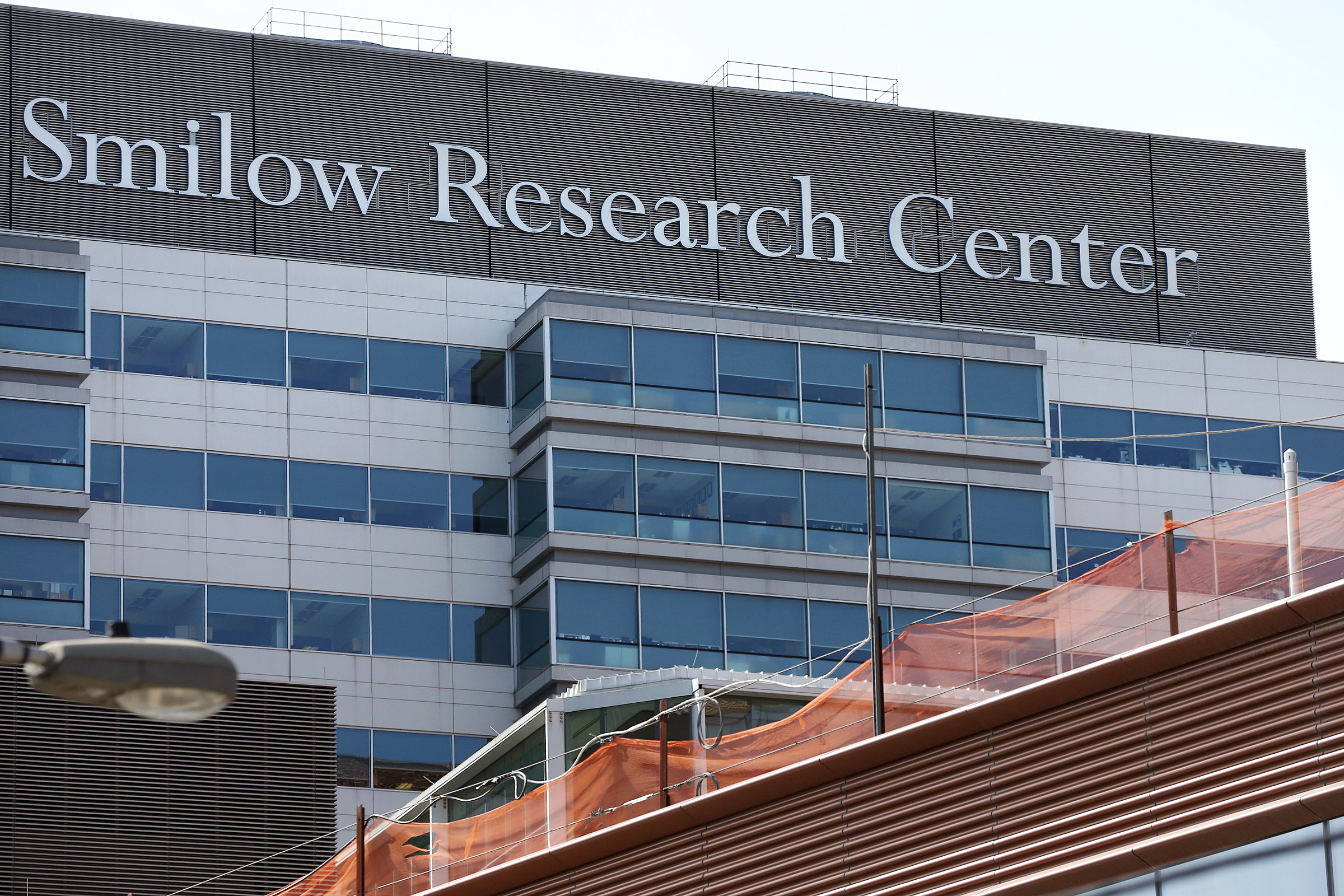
The University of Pennsylvania’s Smilow Center for Translational Research, shown in 2020, is one of the school’s major laboratory buildings.
“There are a lot of alums of Centocor that are really impressive, but they seem to have wound up elsewhere,” said Bill Holodnak, CEO and founder of Occam Global, a New York life science executive recruitment firm.
Among the Centocor executives who left the region was Harvey Berger, Centocor’s head of research and development from 1986 to 1991. He started a new company in Cambridge, Mass.
At the time, the Philadelphia area didn’t have the infrastructure, range of scientists, or management talent needed for biotech startups, he said.
Since then, he thinks the regional market has matured.
“Now, there’s nothing holding the Philadelphia ecosystem back. The universities, obviously Penn, and others have figured this out,” Berger said.
Conditions have changed
Penn’s strategy for helping faculty members commercialize their inventions has evolved significantly over the last 15 years.
It previously licensed the rights to develop its research to companies outside of the area, such as Jim Wilson’s gene therapy discoveries and biochemist Katalin Karikó and immunologist Drew Weissman’s mRNA patents. Now it takes a more active role in creating companies.
Among Penn’s latest spinouts is Dispatch Bio, which came out of stealth mode earlier this year after raising $216 million from investors led by Chicago-based Arch Venture Partners and San Francisco-based Parker Institute for Cancer Immunotherapy.
Dispatch, chaired by Marrazzo, is developing a cell therapy approach that uses a virus to attach what it calls a “flare” onto the cells it wants the immune system to attack.
Marrazzo said in July that he wasn’t going to be involved in Dispatch if it wasn’t based largely in Philadelphia. As of July, 75% of its 60 employees were working in Philadelphia. Still, Dispatch’s CEO is in the San Francisco Bay Area.
The Philadelphia region is increasingly well-positioned for the current biotech era, said Audrey Greenberg, who played a key role in launching King of Prussia’s Center for Breakthrough Medicines about five years ago. The center is a contract developer and manufacturer for cell and gene therapies.
“You no longer need to move to Kendall Square to get a company funded,” she said, referring to Cambridge’s biotech epicenter. “You need good data, a credible translational plan, experienced advisers, and access to patient capital, all of which can increasingly be built here.”
Greenberg now works as a venture partner for the Mayo Clinic, with the goal of commercializing research discoveries within the health system’s network of hospitals in Minnesota, Arizona, and Florida.
She plans to bring that biotech business to the Philadelphia region.
“I’m going to be starting my companies all here in Philadelphia, because that’s where I am. And I know everybody here, and everybody I’m going to hire in these startups that are going to be based here,” she said.
Automakers Hyundai and Kia must offer free repairs to millions of models under a settlement announced Tuesday by Minnesota’s attorney general, who led an effort by dozens of states that argued the vehicles weren’t equipped with proper anti-theft technology, leaving them vulnerable to thefts.
Under the nationwide settlement, the companies will offer a free repair to all eligible vehicles at a cost that could top $500 million, Minnesota Attorney General Keith Ellison said. Hyundai and Kia must also outfit all future vehicles sold in the U.S. with a key piece of technology called an engine immobilizer and pay up to $4.5 million of restitution to people whose vehicles were damaged by thieves.
The settlement was reached by 35 states, including Pennsylvania, New Jersey, California, and New York. The vehicles eligible for fixes date as far back as 2011 and as recently as 2022. About 9 million eligible vehicles were sold nationwide.
Thefts of Hyundai and Kia vehicles soared in part because beginning in 2021, videos posted to TikTok and other social media demonstrated how someone could steal a car with just a screwdriver and a USB cable. Minneapolis reported an 836% increase in Hyundai and Kia thefts from 2021 to 2022. Ellison announced an investigation into the automakers in early 2023.
Ellison said the two companies installed engine immobilizers on cars sold in Mexico and Canada, but not widely in the U.S., leading to car thefts, crimes, and crashes that injured and even killed people, including teenagers.
“This crisis that we’re talking about today started in a boardroom, traveled through the Internet, and ended up in tragic results when somebody stole those cars,” Ellison said at a news conference.
He was joined by Twin Cities officials, a woman whose mother was killed when a stolen Kia crashed into her parents’ vehicle, and a man whose car was stolen nine times — as recently as Monday night, and including seven times after a previous software fix.
Under the settlement, Hyundai and Kia will install a zinc sleeve to stop would-be thieves from cracking open a vehicle’s ignition cylinder and starting the car.
Eligible customers will have one year from the date of the companies’ notice to get the repair at an authorized dealership. The repairs are expected to be available from early 2026 through early 2027.
In a statement, Kia said the agreement is the latest step it has taken to help its customers and prevent thefts.
“Kia is eager to continue working with law enforcement officers and officials at federal, state, and local levels to combat criminal car theft, and the role social media has played in encouraging it, and we remain fully committed to upholding vehicle security,” the company said.
Hyundai said, “We will continue to take meaningful action to support our customers and ensure peace of mind.”