The safety practices of major artificial-intelligence companies, such as Anthropic, OpenAI, xAI, and Meta, are “far short of emerging global standards,” according to a new edition of Future of Life Institute’s AI safety index released on Wednesday.
The institute said the safety evaluation, conducted by an independent panel of experts, found that while the companies were busy racing to develop superintelligence, none had a robust strategy for controlling such advanced systems.
The study comes amid heightened public concern about the societal impact of smarter-than-human systems capable of reasoning and logical thinking, after several cases of suicide and self-harm were tied to AI chatbots.
“Despite recent uproar over AI-powered hacking and AI driving people to psychosis and self-harm, U.S. AI companies remain less regulated than restaurants and continue lobbying against binding safety standards,” said Max Tegmark, MIT professor and Future of Life president.
The AI race also shows no signs of slowing, with major tech companies committing hundreds of billions of dollars to upgrading and expanding their machine-learning efforts. The Future of Life Institute is a nonprofit organization that has raised concerns about the risks intelligent machines pose to humanity. Founded in 2014, it was supported early on by Tesla CEO Elon Musk. In October, a group including scientists Geoffrey Hinton and Yoshua Bengio called for a ban on developing superintelligent artificial intelligence until the public demands it and science paves a safe way forward.
A Google DeepMind spokesperson said the company will “continue to innovate on safety and governance at pace with capabilities” as its models become more advanced, while xAI said, “Legacy media lies,” in what seemed to be an automated response.
Anthropic, OpenAI, Meta, Z.ai, DeepSeek, and Alibaba Cloud did not immediately respond to requests for comment on the study.
WASHINGTON — President Donald Trump on Wednesday announced a proposal to weaken vehicle mileage rules for the auto industry, loosening regulatory pressure on automakers to control pollution from gasoline-powered cars and trucks.
The plan, if finalized next year, would significantly reduce fuel economy requirements, which set rules on how far new vehicles need to travel on a gallon of gasoline, through the 2031 model year. The rules will increase Americans’ access to the full range of gasoline vehicles they need and can afford, officials said. The administration projects that the new standards would set the industry fleetwide average for light-duty vehicles at roughly 34.5 miles per gallon in the 2031 model year.
The move is the latest action by the Trump administration to reverse Biden-era policies that encouraged cleaner-running cars and trucks, including electric vehicles. Burning gasoline for vehicles is a major contributor to planet-warming greenhouse gas emissions.
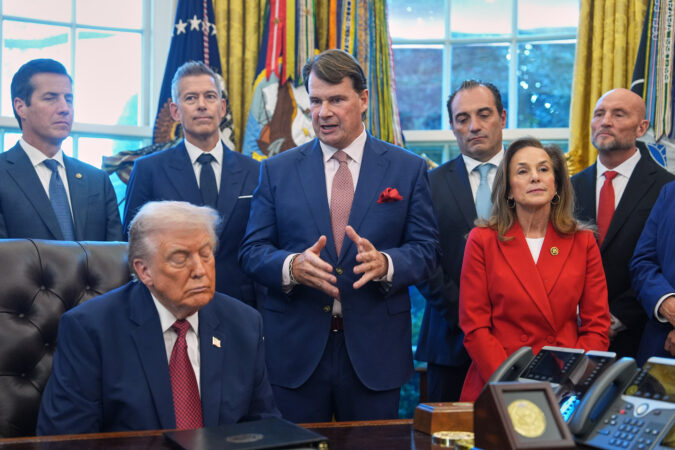
“From Day One I’ve been taking action to make buying a car more affordable.” Trump said at a White House event that included top executives from the three largest U.S. automakers.
The rule reverses a Biden-era policy that “forced automakers to build cars using expensive technologies that drove up costs, drove up prices, and made the car much worse,” Trump said.
Rule change will save money, Trump says
The action is expected to save consumers about $1,000 off the price of a new car, Trump said. New cars sold for an average of $49,766 on average in October, according to Kelley Blue Book.
Automakers applauded the planned changes. They had complained that the Biden-era rules were difficult to meet.
Ford CEO Jim Farley said the planned rollback was “a win for customers and common sense.”
“As America’s largest auto producer, we appreciate President Trump’s leadership in aligning fuel economy standards with market realities. We can make real progress on carbon emissions and energy efficiency while still giving customers choice and affordability,” Farley said.
Stellantis CEO Antonio Filosa said the automaker appreciates the administration’s actions to “realign” the standards “with real world market conditions.”
Environmentalists decried the rollback in mileage standards.
“In one stroke Trump is worsening three of our nation’s most vexing problems: the thirst for oil, high gas pump costs, and global warming,” said Dan Becker, director of the Safe Climate Transport Campaign for the Center for Biological Diversity.
“Gutting the [gas-mileage] program will make cars burn more gas and American families burn more cash,’’ said Katherine García, director of the Sierra Club’s Clean Transportation for All program.
Polluting cars to stay on road
“This rollback would move the auto industry backwards, keeping polluting cars on our roads for years to come and threatening the health of millions of Americans, particularly children and the elderly,” she said.
Trump has repeatedly pledged to end what he falsely calls an EV “mandate,” referring incorrectly to Democratic President Joe Biden’s target that half of all new vehicle sales be electric by 2030. EVs accounted for about 8% of new vehicle sales in the United States in 2024, according to Cox Automotive.
No federal policy has required auto companies to sell EVs, although California and other states have imposed rules requiring that all new passenger vehicles sold in the state be zero-emission by 2035. Trump and congressional Republicans blocked the California law earlier this year.
Transportation Secretary Sean Duffy urged his agency to reverse existing fuel economy requirements, known as Corporate Average Fuel Economy, soon after taking office. In June, he said that standards set under Biden were illegal because they included use of electric vehicles in their calculation. EVs do not run on gasoline. After the June rule revision, the traffic safety agency was empowered to update the requirements.
Under Biden, automakers were required to average about 50 miles (81 kilometers) per gallon of gas for passenger cars by 2031, compared with about 39 miles (63 kilometers) per gallon today. The Biden administration also increased fuel-economy requirements by 2% each year for light-duty vehicles in every model year from 2027 to 2031, and 2% per year for SUVs and other light trucks from 2029 to 2031. At the same time, it called for stringent tailpipe rules meant to encourage EV adoption.
The 2024 standards would have saved 14 billion gallons of gasoline from being burned by 2050, according to the National Highway Traffic Safety Administration’s 2024 calculations. Abandoning them means that in 2035, cars could produce 22,111 more tons of carbon dioxide per year than under the Biden-era rules. It also means an extra 90 tons a year of deadly soot particles and more than 4,870 tons a year of smog components nitrogen oxide and volatile organic carbons going into the air in coming years.
Mileage rules have been implemented since the 1970s energy crisis, and over time, automakers have gradually increased their vehicles’ average efficiency.
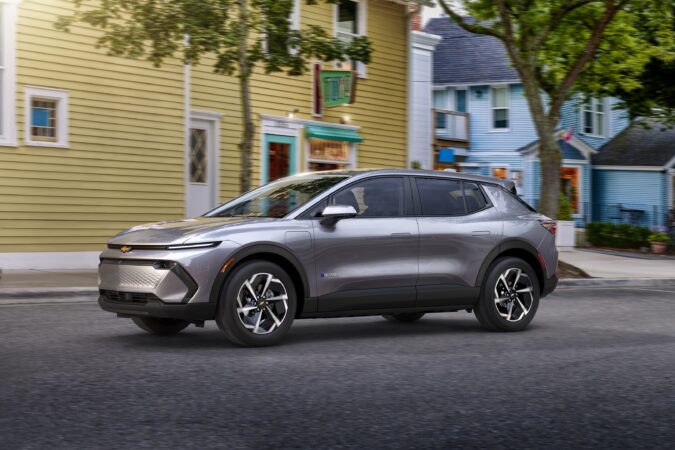
2026 Chevrolet Equinox EV LT front-wheel drive: A no-bells, no-whistles EV test.
Price: $36,495 as tested. No options on test vehicle; price is up by $1,500 from the 2025 model tested.
The all-wheel-drive model starts $5,000 higher and sacrifices about 10 miles of range.
Conventional wisdom:Car and Driver likes that it has “more range than rivals, competitively priced” and is “available with Super Cruise and other tech.” They didn’t love the “underpowered front-drive model, less cargo space than the gas model, no Apple CarPlay or Android Auto.”
Marketer’s pitch: “America’s most affordable 315+ mile range EV.”
Reality: Definitely affordable. Will it be worth the trade-offs?
Plug them in: Mr. Driver’s Seat has compiled a few EVs for comparison. So over the next two weeks you’ll see how this compares to more expensive electron-driven options from Hyundai and Volkswagen.
What’s new: The Equinox EV carries on pretty much unchanged since its 2024 debut, although all-wheel-drive models boast a range boost for 2026.
Up to speed: Car and Driver got one thing right — the 0-60 time is not the stuff of EV legend. The Equinox EV in its barest front-wheel-drive form will not plaster you to the seat when it’s time to leave the red light, but it does move with ease. It’s worth noting that pickup for passing will still leave most drivers impressed, and this can be an important test.
Car and Driver puts the 0-60 time at 7.7 seconds, a not-unexpected number from a small SUV with 220 horsepower. All-wheel drive ups the ante to 300 horses, and it moves to 60 mph in 5.8 seconds.
Shiftless: The Mercedes-ish wiper stalk on the steering column requires a pull and up for Reverse and a pull and down for Drive. The pull is a nice touch, so you don’t feel like you’ll make any stupid mistakes while riding around, the kind I’ve made now and again with these shifters.
On the road: The Equinox EV handles with great ease, being pulled to the road by the heavy batteries in the floor. Highways are smooth, and country roads are nicely followed, with a touch of fun added as well.
The interior of the 2026 Chevrolet Equinox EV LT1 is quite literally the cheap seats. The front are comfortable, but the rear seat is lacking. Upgrades are available.
Driver’s Seat: The cloth seats in the basic model tested provided plenty of comfort and support, although they felt a little warm as the humidity stayed up even as the temperatures fell to high 70s at the end of August.
(If you want heated and ventilated seats, you have to add $7,000 for the LT2 model, and then you have the privilege of paying extra for those options.)
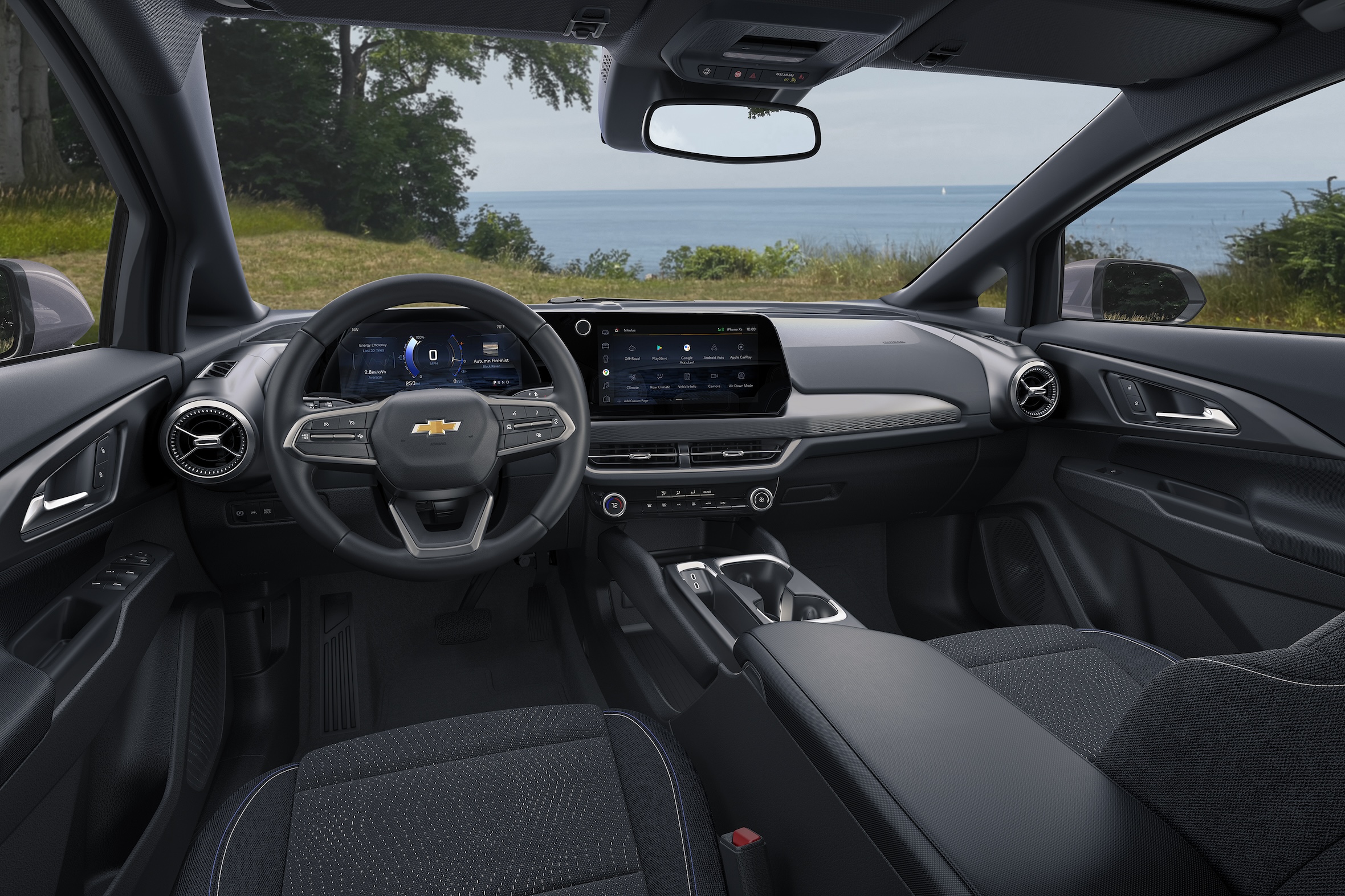
The starter is in the seat sensor, which is not my favorite way to get going, but this one seemed to work more consistently than some I’ve experienced. GM also has added a touchscreen on-off icon for the times when the Equinox can’t tell you’re done driving.
Friends and stuff: Rear seat room is nice in the corners, but the center seat passenger will feel the hump and the console. The seat is designed presumably to make your passengers whine during the test drive, so you buy an upgrade. It’s firm and has weird indentations in the lumbar area.
You can always counter back from the Driver’s Seat that legroom, foot room, and headroom are all awesome so everyone back there should be thankful they’re not riding around in the back of 1980s front-wheel-drive Buicks, because there was a sad seat.
Cargo space is 57.2 cubic feet with the seat folded and 26.4 behind the rear seat.
Play some tunes: The infotainment center features a gigantic 17.7-inch display that’s clear and pretty easy to follow.
The volume dial is a wide shallow thing that GM keeps putting into cars. It reduces me to tears at least once a week after accidentally rubbing the touchscreen and changing something important.
Like maybe the music. Sound from the system is very good, about an A, so any interference becomes a personal affront. (Don’t interrupt the tunes, as the lovely Mrs. Passenger Seat and all the point-ohs know.)
CarPlay is gone, but my notes didn’t mention missing it, so maybe that’s not the end of the world after all.
Keeping warm and cool: Actual knobs control temperature and fan speed, and buttons let you do some of the simple functions. It’s nice that the big touchscreen didn’t eliminate the old-style controllers, even as temperature and fan control options reside in the bottom corners of the touchscreen.
You can really get some air out of the blowers, which is nice. The corners have the round vents that make me happy with their ease of direction and on-off control.
Range: A 319-mile range is great to have, but charging can be slow. InsideEVs tested one at three different chargers in February, and it averaged around 40 minutes to get from 10% to 80%, far slower than most competitors.
Chevrolet advertises just 285 miles of range for the AWD models from 2025 but 309 for the 2026 AWD models.
Where it’s built: Ramos Arizpe, Mexico. Mexico supplies 46% of parts; South Korea, 20%; the U.S. and Canada, 12%.
How it’s built: Consumer Reports predicts the reliability of the Equinox EV to be a 2 out of 5.
In the end: If you don’t mind missing some creature comforts, the Equinox EV can get you charging for a nice price.
Americans gave $4 billion to nonprofits on Giving Tuesday in 2025, an increase from the $3.6 billion they gave in 2024, according to estimates from the nonprofit Giving Tuesday.
More people also volunteered their time on the Tuesday after Thanksgiving this year, which fell on Dec. 2 and has become a major fundraising day for nonprofits. This year, 11.1 million people in the U.S. volunteered, up from, 9.2 million last year.
Giving Tuesday started in 2012 as a hashtag and a project of the 92nd St Y in New York and has since become an independent nonprofit. The organization estimates how much was given and how many people volunteer using data from a wide variety of sources, including giving platforms, payment processors and software applications that nonprofits use.
Woodrow Rosenbaum, the chief data officer for Giving Tuesday, said both the number of people giving and the overall donation amount may have increased this year as people seek a sense of belonging and connection.
“Generosity is a really powerful way to get that,” Rosenbaum said in an interview with The Associated Press. ”But I think mostly it’s just that when people see need, they want to do something about it and Giving Tuesday is an opportunity to do that in a moment of celebration as opposed to crisis.”
Overall donations increased 8.1% from last year when adjusted for inflation. Giving Tuesday has also seen the average donation increase in size over time and Rosenbaum said people may be seeking additional ways to give as well.
“Volunteering is a way that you can add to your impact without it costing you money,” he said.
Not everyone who volunteers their time does so through a nonprofit. They may volunteer with mutual aid groups or by helping out family members or neighbors, he said.
Giving Tuesday does not include donations from corporations or foundations in their estimate, Rosenbaum said, as they are focused on the everyday generosity of individuals. That means they did not include the gift from billionaires Michael and Susan Dell of $6.25 billion to encourage families to claim new investment accounts created by the Trump administration.
President Donald Trump hosted the Dells at the White House Tuesday, calling their commitment “one of the most generous acts in the history of our country.” The Dells will offer $250 to 25 million children 10 years old and younger to invest in accounts that the U.S. Department of Treasury will create next year. The ” Trump accounts ” were part of the administration’s tax and spending legislation passed in the summer.
A significant portion of charitable giving to nonprofits happens at the end of the calendar year and Giving Tuesday is an informal kick off to what nonprofits think of as the giving season. A combination of economic and political uncertainty has meant it is hard to predict how generous donors will be this year. Rosenbaum said that the generosity demonstrated on GivingTuesday is an extremely encouraging bellwether for how the rest of the giving season will go.
“What we really hope is that nonprofits and community groups see this as an opportunity that we are in a moment of abundance and that people are ready and willing to help,” Rosenbaum said.
WASHINGTON — Treasury Secretary Scott Bessent said Wednesday he would push a new requirement that the Federal Reserve’s regional bank presidents live in their districts for at least three years before taking office, a move that could give the White House more power over the independent agency.
In comments at the New York Times’ DealBook Summit, Bessent criticized several presidents of the Fed’s regional banks, saying that they were not from the districts that they now represent, “a disconnect from the original framing” of the Fed.
Bessent said that three of the 12 regional presidents have ties to New York: Two previously worked at the New York Federal Reserve, while a third worked at a New York investment bank.
“So, do they represent their district?” he asked. “I am going to start advocating, going forward, not retroactively, that regional Fed presidents must have lived in their district for at least three years.”
Bessent added that he wasn’t sure if Congress would need to weigh in on such a change. Under current law, the Fed’s Washington, D.C.-based board can block the appointment of regional Fed presidents.
“I believe that you would just say, unless someone’s lived in the district for three years, we’re going to veto them,” Bessent said.
Bessent has stepped up his criticism of the Fed’s 12 regional bank presidents in recent weeks after several of them made clear in a series of speeches that they opposed cutting the Fed’s key rate at its next meeting in December. President Donald Trump has sharply criticized the Fed for not lowering its short-term interest rate more quickly. When the Fed reduces its rate it can over time lower borrowing costs for mortgages, auto loans, and credit cards.
The prospect of the administration “vetoing” regional bank presidents would represent another effort by the White House to exert more control over the Fed, an institution that has traditionally been independent from day-to-day politics.
The Federal Reserve seeks to keep prices in check and support hiring by setting a short-term interest rate that influences borrowing costs across the economy. It has a complicated structure that includes a seven-member board of governors based in Washington as well as 12 regional banks that cover specific districts across the United States.
The seven governors and the president of the New York Fed vote on every interest-rate decision, while four of the remaining 11 presidents vote on a rotating basis. But all the presidents participate in meetings of the Fed’s interest-rate setting committee.
The regional Fed presidents are appointed by boards made up of local and business community leaders.
Three of the seven members of the Fed’s board were appointed by Trump, and the president is seeking to fire Governor Lisa Cook, which would give him a fourth seat and a majority. Yet Cook has sued to keep her job, and the Supreme Court has ruled she can stay in her seat as the court battle plays out.
Trump is also weighing a pick to replace Chair Jerome Powell when he finishes his term in May. Trump said over the weekend that “I know who I am going to pick,” but at a Cabinet meeting Tuesday said he wouldn’t announce his choice until early next year. Kevin Hassett, a top economic adviser to Trump, is widely considered Trump’s most likely choice.
The three regional presidents cited by Bessent are all relatively recent appointees. Lorie Logan was named president of the Dallas Fed in August 2022, after holding a senior position at the New York Fed as the manager of the Fed’s multitrillion dollar portfolio of mostly government securities. Alberto Musalem became president of the St. Louis Fed in April 2024, and from 2014-2017 was an executive vice president at the New York Fed.
Beth Hammack was appointed president of the Cleveland Fed in August 2024, after an extended career at Goldman Sachs.
Musalem is the only one of the three that currently votes on policy and he supported the Fed’s rate cuts in September and October. But last month he suggested that with inflation elevated, the Fed likely wouldn’t be able to cut much more.
Logan has said she would have voted against October’s rate cut if she had a vote, while Hammack has said that the Fed’s key rate should remain high to combat inflation. Both Hammack and Logan will vote on rate decisions next year.
Bessent argued last month in an interview on CNBC that the reason for the regional Fed banks was to bring the perspective of their districts to the Fed’s interest rate decisions and “break the New York hold” on the setting of interest rates.
__
Associated Press Writer Fatima Hussein contributed to this report.
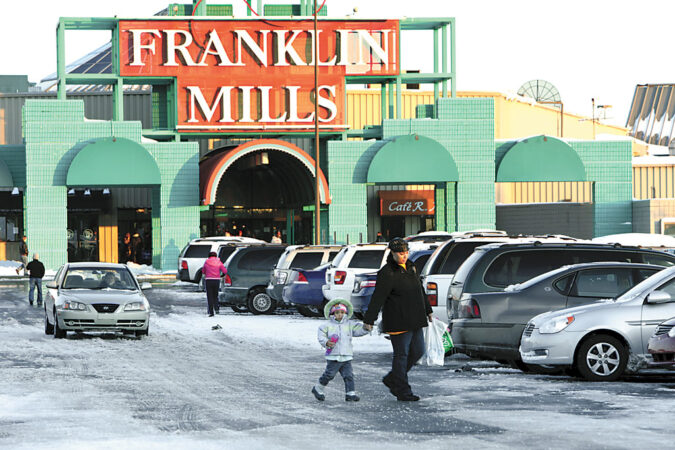
Northeast Philadelphia’s Franklin Mall — better known by its original name, Franklin Mills — is for sale after years of plummeting valuation, occupancy, and visitor numbers.
A listing on the website of real estate brokerage Jones Lang LaSalle (JLL) includes possible uses a new owner can consider, including industrial and office development. The parcels including Sam’s Club and Walmart are not included in the sale.
“Franklin Mall presents the opportunity to acquire meaningful control of more than 137 acres … in a densely populated location that may support additional densification and redevelopment,” the listing reads.
The move comes amid a wave of mall sales and redevelopments in the region, with demolition and residential construction a common fate for many struggling shopping centers.
Over 68% of Franklin Mall is occupied, which could be an incentive for continued retail operations. But sales and visitor numbers have been falling for years,and JLL reports the average existing lease lasts for only another 1.7 years.
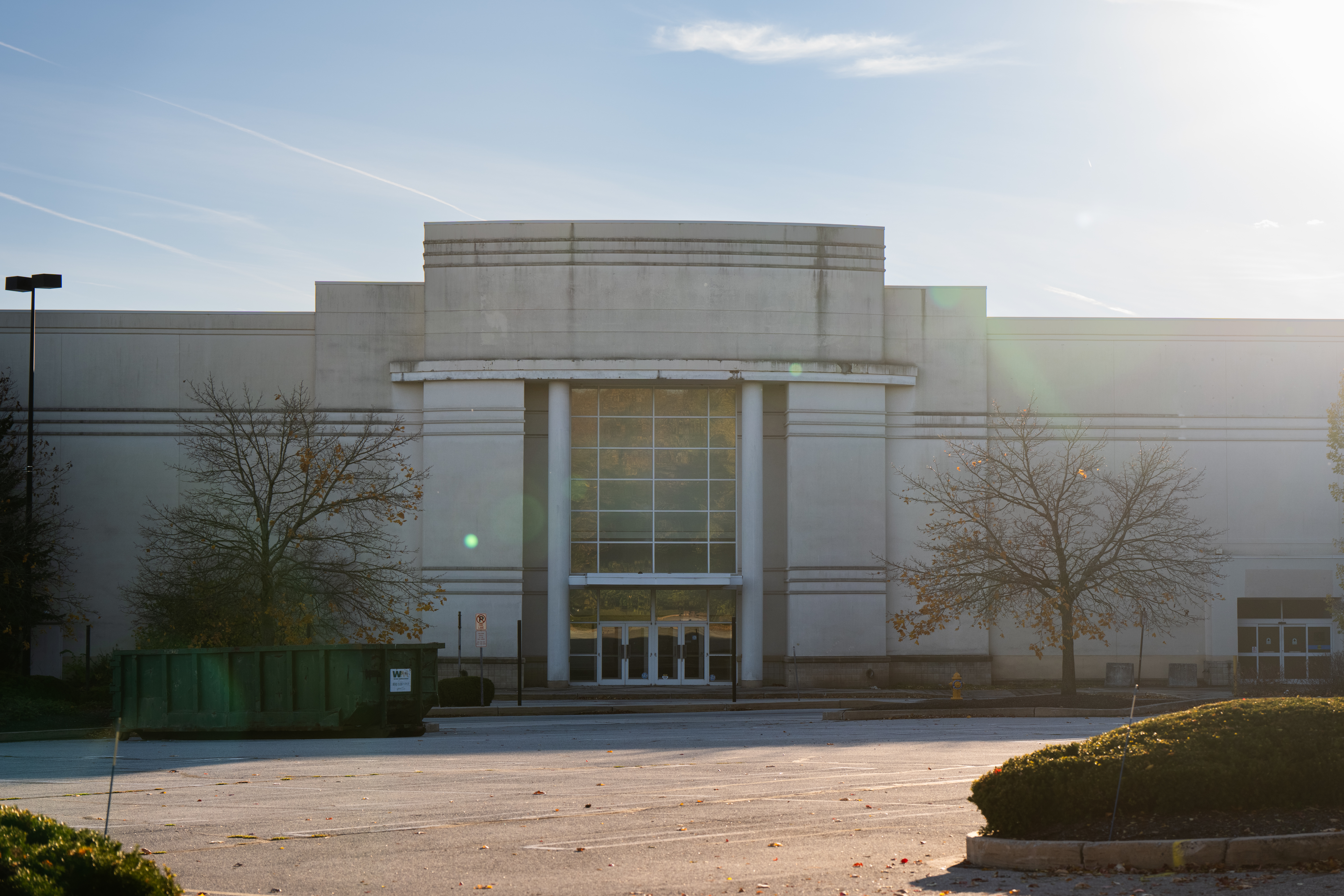
If a new use is sought, the mile-long, one-story structure would be difficult to repurpose.
“I think it’s unlikely to be a shopping mall” again, said Jerry Roller, founder of the design firm JKRP and a longtime architect in Philadelphia. “What could it be? Obviously, residential. It might be a warehouse. It’s essentially a large vacant piece of land. It was fairly inexpensive when it was built, so it’s not hard to demolish.”
The hundred acres of land that Franklin Mills sits on at the edge of Far Northeast Philadelphia is zoned for auto-oriented commercial use.
JLL’s listing advertises the site’s suitability for industrial redevelopment.
“The property’s infill location and highway access make it a strong candidate for redevelopment into a modern industrial facility,” the listing reads. The zoning “could provide a basis for an investor to pursue the development of up to 1.4 million square feet of new warehouse space.”
The residential redevelopment opportunities for the site could be aided by a promised 20-year property tax abatement for the conversion or demolition of outmoded commercial buildings into housing, which Mayor Cherelle L. Parker’s administration promises next year following enabling legislation from Harrisburg.
But the existing zoning would not allow that, so a residential project would need to win the permission of the city’s Zoning Board of Adjustment or have the land-use rules changed legislatively by Councilmember Brian O’Neill.
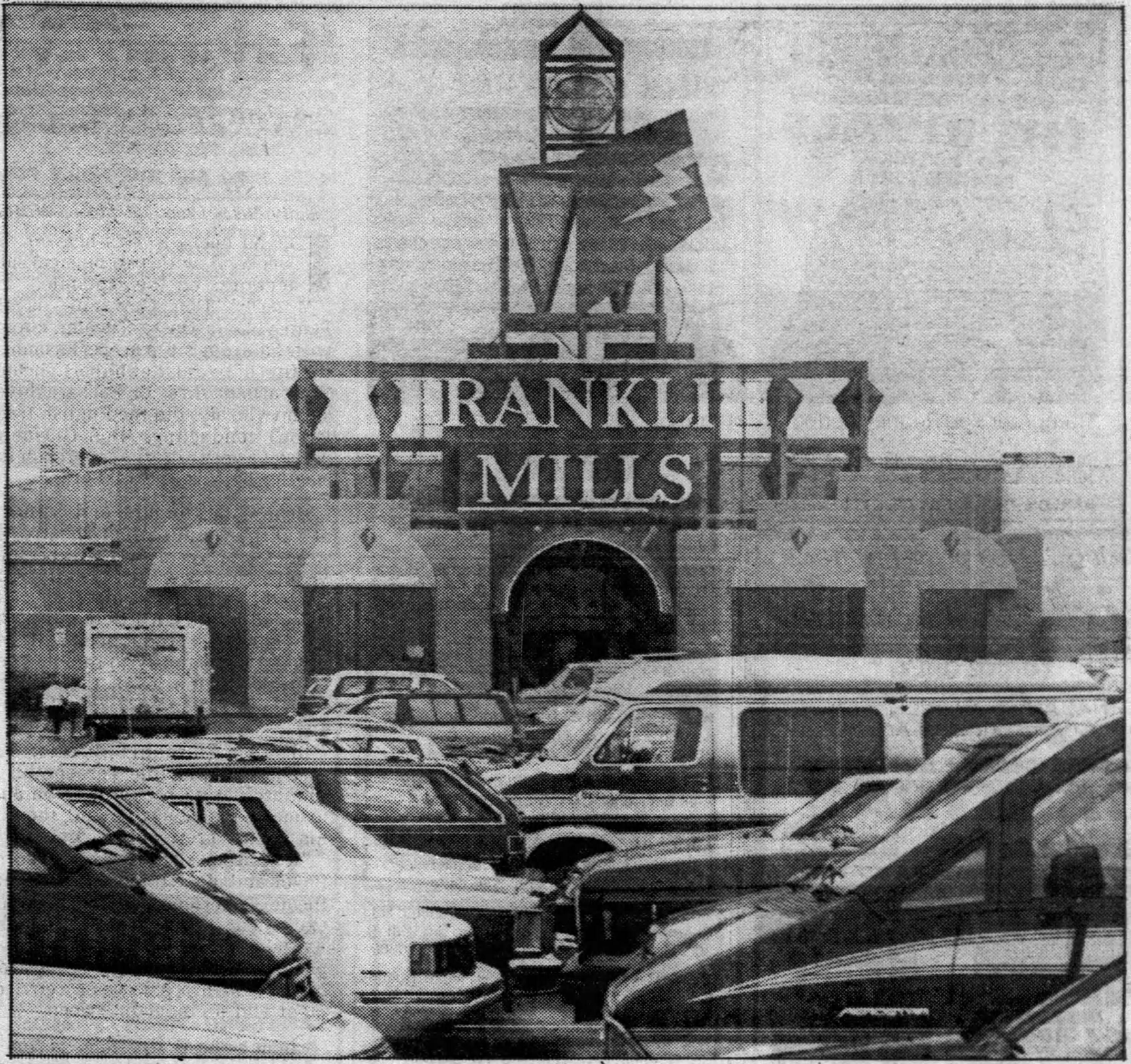
The mile-long Franklin Mills mall drew Christmas-size crowds at its opening in May of 1989.
Tribulations of a Northeast Philly icon
The 36-year-old, 1.8-million-square-foot facility at Knights and Woodhaven Roads is the second largest mall in the Philadelphia area after King of Prussia. But while its larger cousin remains a dominant retail force, Franklin Mall has been struggling for years.
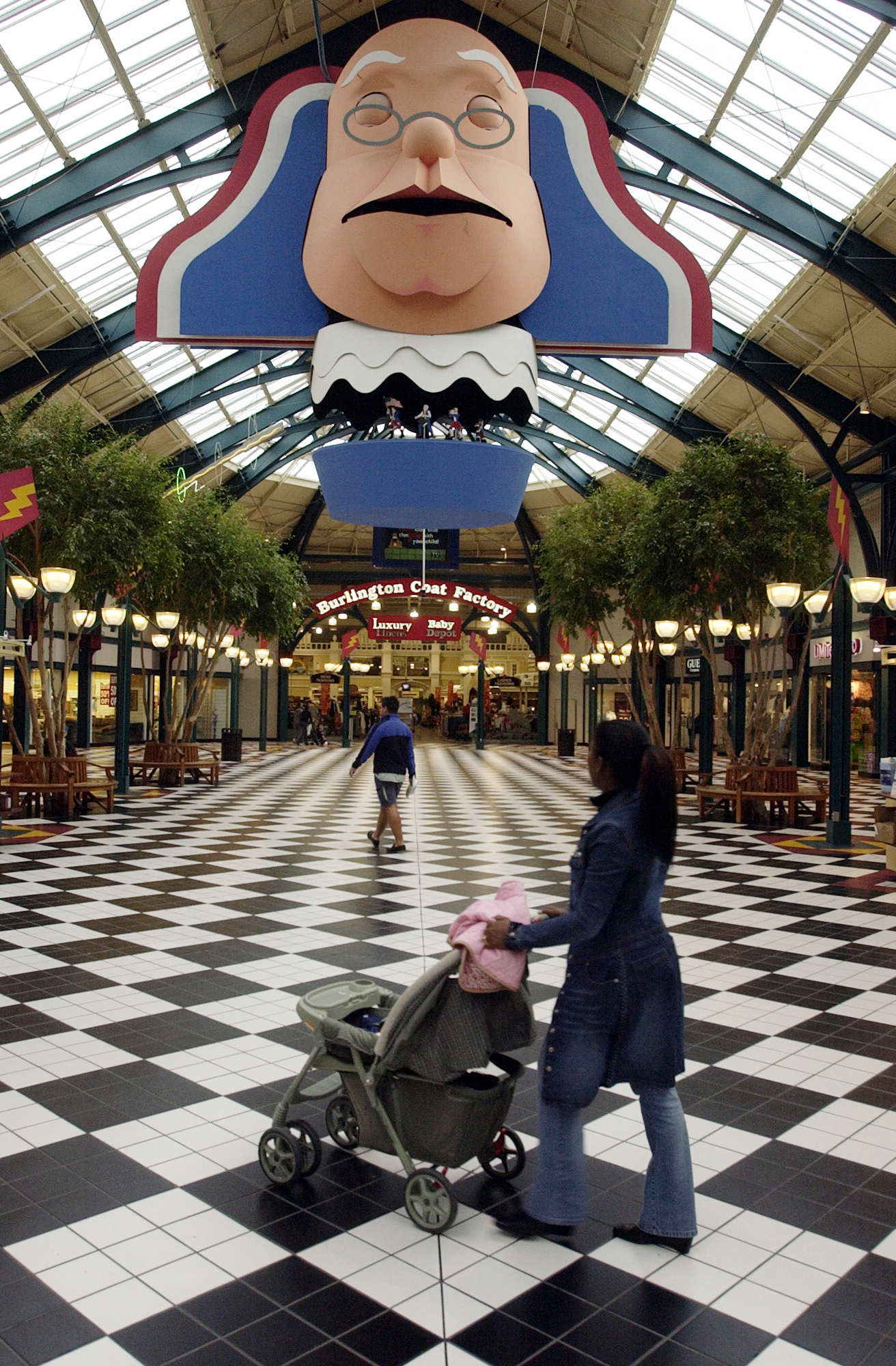
The mall opened in 1989 to great fanfare as the largest outlet mall ever, with an iconic zigzag-shaped concourse that stretched for 1.2 miles.
In 2007, in retrospect near the end of Franklin Mills’ golden era, the property and the rest of the Mills Corp. was taken over by Simon Property Group, the largest mall owner in the country. The new ownership group rehabbed the property in 2014, although there were already signs Simon was distancing itself by moving Franklin Mills (renamed Philadelphia Mills) into a different balance sheet category than its core properties.
Simon’s loan on the property had been intermittently distressed since 2012. An April 2024 report from real estate analytics firm Morningstar Credit was headlined “Legacy Philly Mall Back to Special Servicing for the Umpteenth Time.”
Shoppers stroll through the Franklin Mills mall in 2014.
The 2007 loan still had an outstanding balance of almost $250 million when it came to maturity in July 2024. Simon stepped away from the day-to-day operations at that time, with Philadelphia-based OPEX CRE Management appointed as receiver of the distressed property. The name was changed to Franklin Mall because Mills was trademarked by Simon.
Last year Franklin Mall’s appraised value was $76 million, a precipitous decline from its $201 million valuation in 2012 and $370 million in 2007. According to Morningstar Credit, a new appraisal is likely in the next month.
Full financials haven’t been publicly updated since last year, but at that time, the cash flow for the property was $9.5 million, the lowest since Simon took over in 2007. That’s down from 2019, when cash flow was $17.5 million, according to Morningstar, and from $11 million in 2022.
According to Morningstar, the latest reports from the special servicer for the property, Greystone Servicing Co., say cash flow is even lower this year and occupancy has fallen to 65.4%.
Possible reuses for Franklin Mills
Franklin Mall’s for-sale status comes as some old-school regional shopping destinationsare declining.
While some of its counterparts like King of Prussia and the Cherry Hill Mall are still thriving, there has been a wave of sales and redevelopments of area malls as the nature of retail evolves.
Some ailing malls have been purchased on the cheap, allowing their new owners to reinvest and refurbish the property in its previous mold.
“In terms of using the buildings that are there, it’s a challenge because they are generally big box retail, and they’ve got a center mall, which is completely out of fashion,” Roller said. “Could somebody, if they had the right tenants, recreate the mall? Turn it inside out, open the thing up?”
“Maybe it’s possible,” Roller said. But “I don’t see a lot of uses for the buildings that are there right now.”
The redevelopment of Exton Square Mall is in legal limbo.
When regional malls are redeveloped, more commonly, the retail options are reduced with much of the old structure demolished. Diverse new uses often take a faded shopping center’s place.
In New Jersey, the Echelon, Moorestown, and Burlington Center malls have or are going through a variety of demolition and redevelopment options. The commonality is that residential building is a part of all three plans.
At Franklin Mall, redevelopment would likely require demolition of the existing building.
“Ultimately, it may just be a piece of land” for sale, said Roller.
JLL’s listing, however, pitches the property as either redevelopment or continued mall use.
“This offering presents prospective purchasers with the opportunity to acquire a strategically positioned super regional shopping center with significant upside potential and/or redevelopment opportunity,” it reads.
JLL’s managing directors on the sale are John Plower, David Monahan, and Jim Galbally.
A $78.6 million ferry, slated to join the fleet of vessels connecting Cape May and Lewes is one step closer to getting built. It will be the first hybrid ferry on the three-ship line that operates between the two beach destinations in New Jersey and Delaware.
The Delaware River and Bay Authority (DRBA) announced Tuesday that it had awarded the contract to build the ferry to Rhode Island-based Senesco Marine. The DRBA owns and manages the ferry line, which operates year-round.
Once built, the diesel-hybrid ship is expected to accommodate up to 75 vehicles and 400 passengers.
“For sustainable ferry operations in the future, it’s imperative we make this necessary capital investment today,” said DBRA executive director Joel Coppadge. “The ferry’s a critical piece of regional infrastructure, and we’re proud of the ferry’s heritage and link between two historic destinations. The new hybrid ferry is the start of the next chapter in the proud history of the Cape May-Lewes Ferry.”
A rendering of the $78.6 million ferry that is slated to join the fleet of vessels connecting Cape May and Lewes.
The Rhode Island firm tasked with building the ferry has been operating since 1999 and works both on new construction and vessel repairs. Construction is set to begin next year and is expected to be completed by the summer of 2029. The project is funded in part by a $20 million grant from the U.S. Department of Transportation.
The new ferry will replace a diesel craft that’s over 40 years old. Currently three ferries operate between Cape May and Lewes.
The new ship will have fewer emissions and be more cost-efficient, according to the DRBA.
Annually, the ferry line transports some 750,000 passengers and over 250,000 vehicles, according to James Salmon, a spokesperson for the DRBA. That number has declined over the years — roughly 1.1 million passengers used the ferry line in 2007.
A rendering of the interior of the new ferry, which is expected to begin construction in 2026 and be complete by 2029.
“The Cape May-Lewes Ferry is a vital transportation link and an economic catalyst for the southern regions of Delaware and New Jersey,” said Heath Gehrke, director of ferry operations, noting that some passengers use the service to commute to work.
Adults pay between $14 and $18 roundtrip depending on the season to make the roughly 85-minute trip. For a vehicle, it costs between $39 and $82 roundtrip depending on the time of year and day of the week. Bicycles can be brought onboard for free with the purchase of a passenger ticket, and there is separate pricing for motorcycles and scooters.
A rendering of the $78.6 million hybrid ferry slated to join the fleet of vessels connecting Cape May and Lewes.
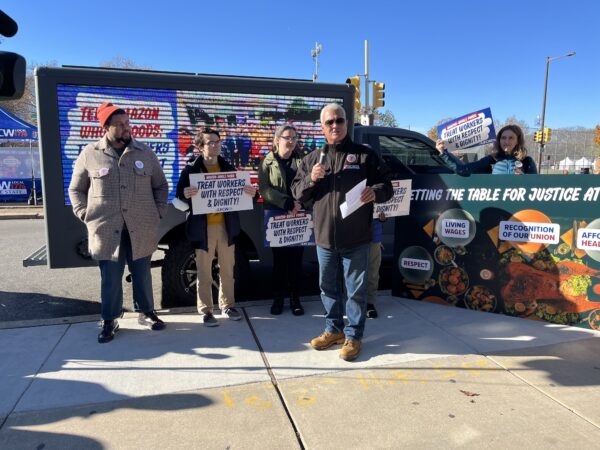
Nearly a year after Philadelphia Whole Foods workers voted to form a union, becoming the first group in the grocery chain to do so, their union’s ability to move forward and negotiate a contract is locked in a procedural standstill.
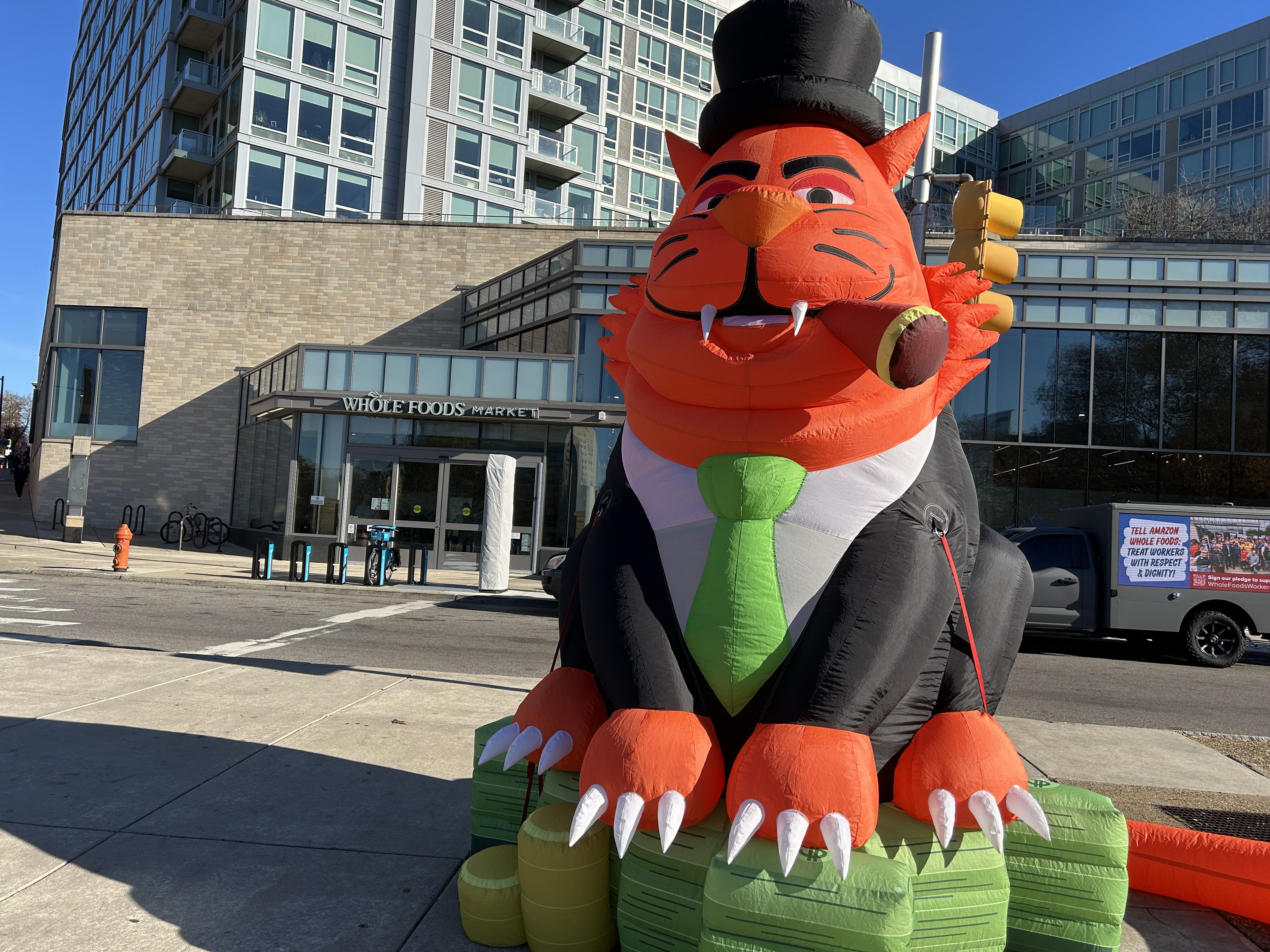
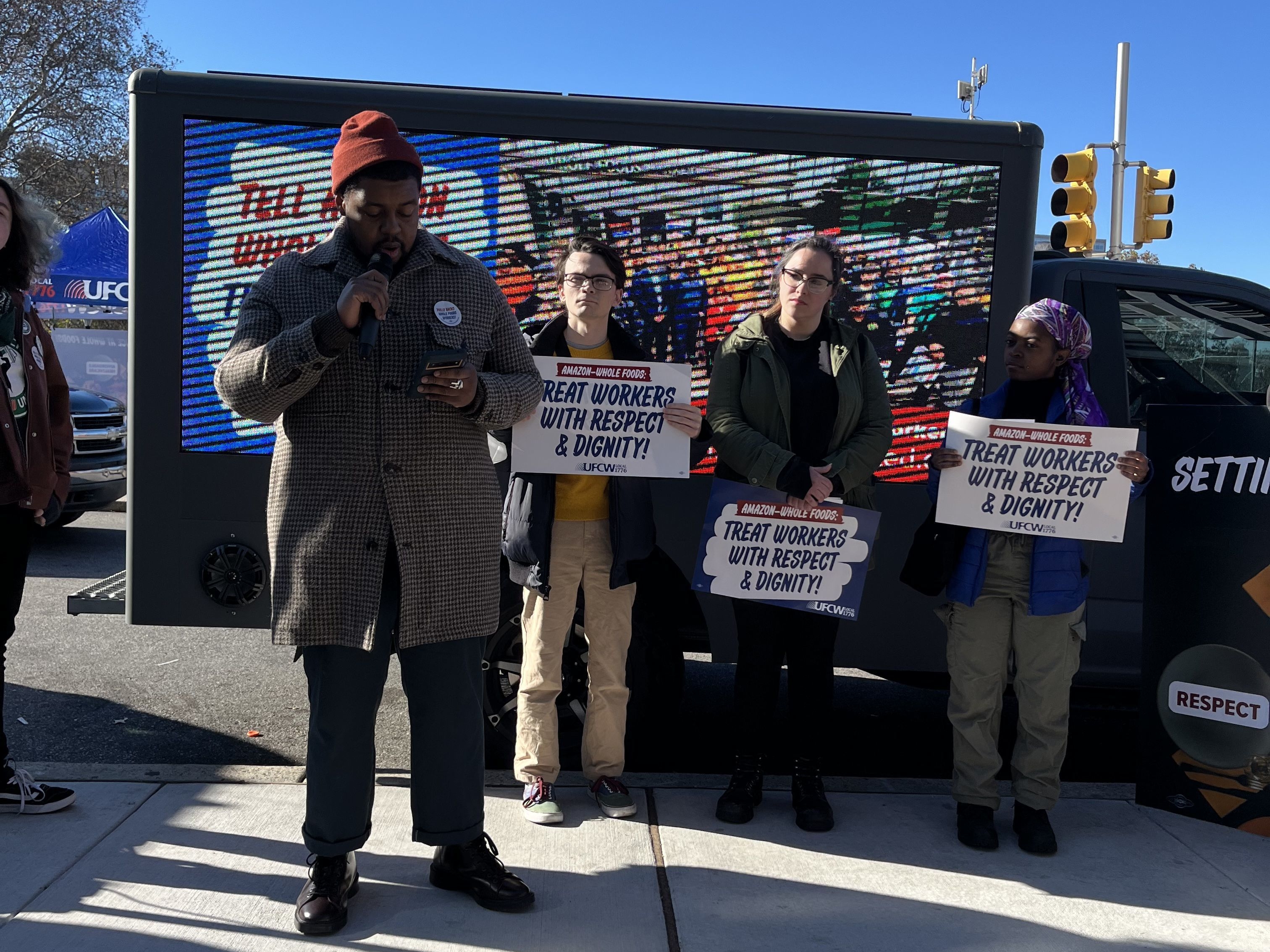
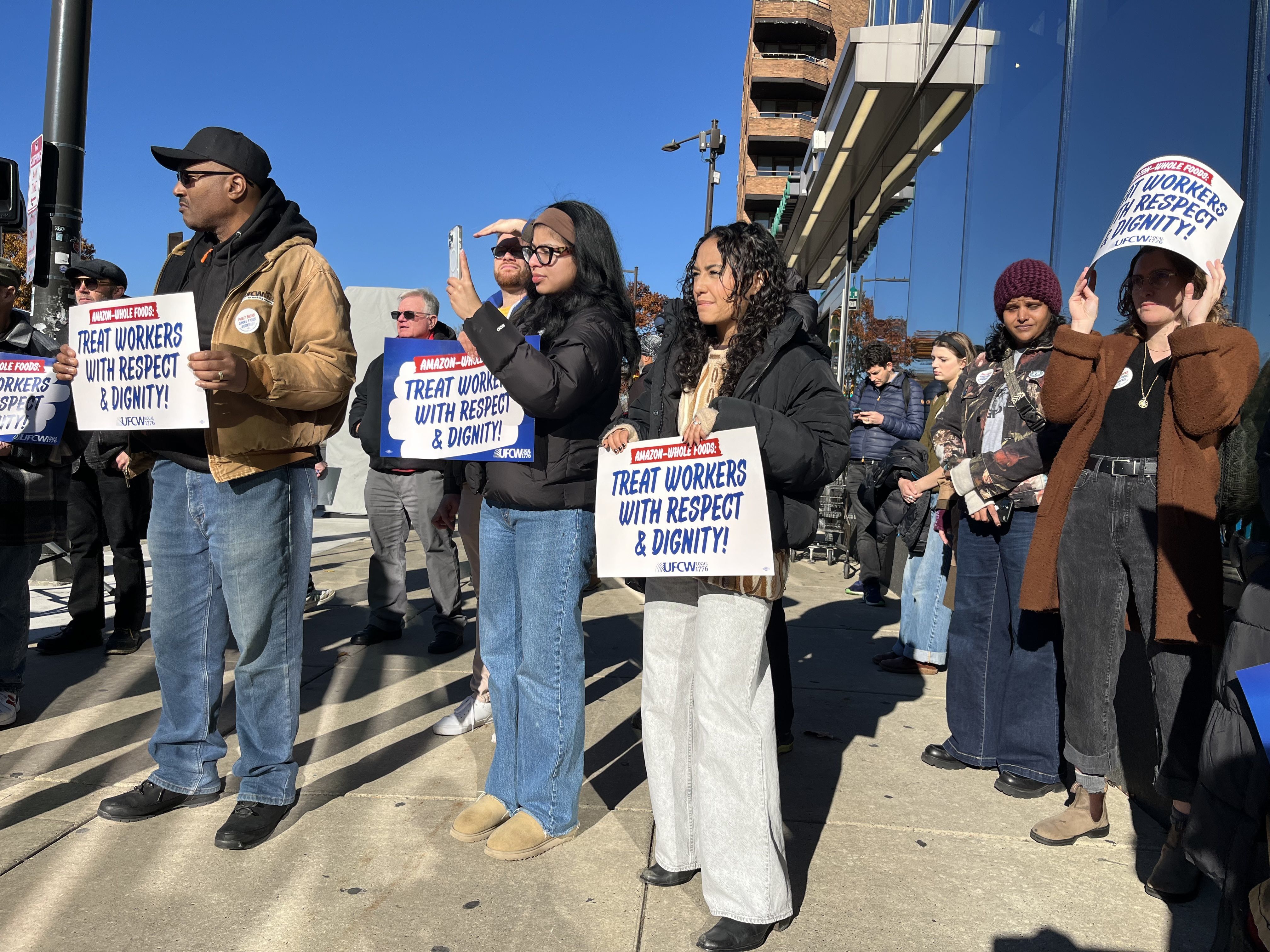
The Monday before Thanksgiving, workers and supporters gathered outside the Pennsylvania Avenue store, holding signs that read “Amazon-Whole Foods: Treat workers with respect & dignity!” Nearby, an inflatable “fat cat,” used by labor organizers and often denoting a person who uses wealth to exert power, stood tall outside the Whole Foods store.
Edward Dupree, who has been employed at Whole Foods for over nine years and works in the produce department at the Philadelphia store, told the crowd that in the 1970s, unionized grocery employees could maintain a middle-class family, but today workers are facing rising housing and healthcare costs as well as uncertainty in the economy.
“There’s been a concerted effort by billionaire business class — folks like [Amazon and Whole Foods owner] Jeff Bezos — to crush working class power by fighting unions like this,” said Dupree. “For 50 years, we’ve seen the worsening of living standards in tandem with the drop of unionization rates. It’s been long due for us to stand up for one another and fight back for a better future.”
Workers at the Philadelphia grocery store filed a petition to unionize with the National Labor Relations Board in November 2024 and made history in January as the first company store to successfully vote to unionize.
Employees want the company to begin negotiating a first contract, but for now, the case is at a standstill. Whole Foods has challenged the union election, and resolution of the issue lies with the National Labor Relations Board, which for months has been without the required quorum to make a decision since President Donald Trump fired a board member.
“We want Whole Foods to do what they’re obligated to do. What’s right to do is sit down and bargain a contract,” said Wendell Young IV, president of UFCW Local 1776, the union that Whole Foods workers elected to join. “We understand there’s a give and take in that process, but that’s from both sides. They’re refusing to even sit down and begin those discussions for a contract.”
An inflatable fat cat is seen outside the Whole Foods at 2101 Pennsylvania Ave. on Nov. 24, marking a year since workers first filed their intention to form a union with the National Labor Relations Board.
Why is the Whole Foods case at a standstill?
Whole Foods raised multiple objections to the worker union election earlier this year including alleging that the union promised employees would get a 30% raise if they voted for a union.
In May, the National Labor Relations Board’s regional director dismissed the challenge by Whole Foods, but the company asked for that decision to be reviewed. The union, for its part, has tried to block that review, but the board can’t make a decision either way without the required quorum.
“As previously stated, we strongly disagree with the regional director’s conclusion, and as demonstrated throughout the hearing earlier this year, including with firsthand testimony from various witnesses, the UFCW 1776 illegally interfered with our team members’ right to a fair vote at our Philly Center City store,” a spokesperson for Whole Foods Market said via email.
A union spokesperson said via email that they must wait until the board again has at least three members to review the case and added, “We expect that we will be successful at that time.”
Young, the president of the union local, has said in the meantime that the company is hiding behind the situation at the NLRB “to refuse to bargain.”
Edward Dupree, a Whole Foods worker, gathers with colleagues and supporters outside on Nov. 24 asking that the company come to the bargaining table and negotiate a first contract.
In the 1960s and into the 1970s, when it was not uncommon in the U.S. to see grocery workers strike or threaten to, Republicans and Democrats in office understood that unions were a permanent part of the economy, said Francis Ryan, a labor history professor at Rutgers University who has been a member of UFCW local 1776. The NLRB “provided some balance between the company and the union,” acknowledging that both parties “had an important role to play in our society,” he said.
“What we have in more recent years is a much more polarized political context, where the National Labor Relations Board is sometimes stocked with people who are aggressively anti-union,” said Ryan.
The Trump administration firing an official at the NLRB and not replacing them “is a deliberate attempt to make the process of collective bargaining and also organizing much more difficult,” said Ryan, adding that this is playing out in the case of Whole Foods.
Whole Foods workers and supporters outside the Center City grocery store on Nov. 24.
UFCW Local 1776, which Whole Foods workers in Philadelphia elected to join, represents thousands of workers across Pennsylvania and neighboring states in drugstores and food processing facilities, among other areas of work. The union represents grocery employees at ShopRite, Acme, and the Fresh Grocer.
Under the ownership of Amazon, the quality of work life at Whole Foods has deteriorated, said Young, adding that the company has unrealistic expectations and doesn’t compensate workers fairly in terms of wages, healthcare, retirement security.
“These people have no say in any of that — and that’s what led them to organize,” he said.
Whole Foods has said employee benefits include 20% off in-store items, as well as a 401(k) plan that offers a company match. The company also says it evaluates wages to ensure it is offering a competitive rate.
The number of unionized workers at grocery stores grew in the 1950s and 1960s in large part because areas of the U.S. were becoming more suburban and adding new grocery stores in the process, according to Ryan.
“You had thousands of workers in these new supermarkets that were unionized, and they made the retail clerks union one of the largest unions in the United States by the time you get to the 1970s — and Philadelphia was one of the real centers of supermarket unionization.”
It wasn’t unusual in the 1960s and 1970s for someone to make a living as a supermarket worker, although it was not uncommon for workers to have more than one job, said Ryan. In some cases, workers would stay at a grocery store for decades, he says, where they made decent wages and had a stable job indoors, adding that between 1965 and 1975 the wages of retail workers in Philadelphia nearly doubled.
Since then, it’s become much harder to make a living overall in the service industry, says Ryan.
But having unionized grocery stores amid other nonunion stores today can help shape the economy of the industry, says Ryan. A business that wants to maintain a nonunionized workforce might try to pay their workers the same starting rate that union workers make in wages, for example.
Unionized grocery stores “have a hidden-planet kind of role: They have this gravitational pull on the industry that actually raises conditions for everyone,” Ryan said.
While the Whole Foods store in Philadelphia is the first of the company’s locations to vote to form a union, others seem to be following.
“We now have active organizing going on, not only in other Whole Food stores in the area and around the country, but other grocery stores,” said Young.
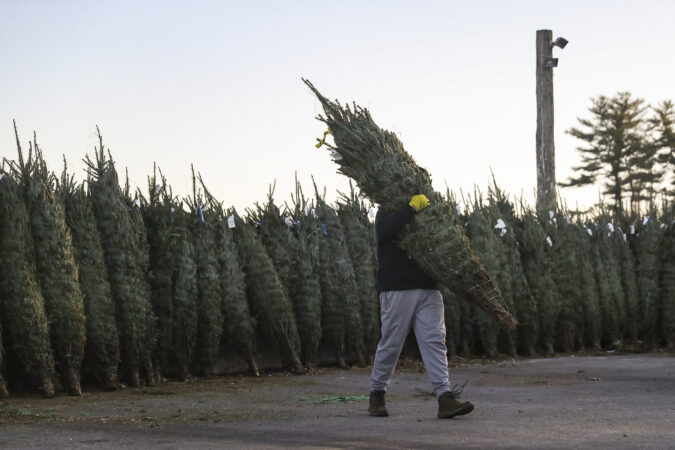
If you need a Christmas tree to brighten your living room with the smell of freshly-cut pines and a medley of lit ornaments without the typical holiday crowd, you’re in luck.
These decadent evergreens can arrive without you ever setting foot outside of your house, thanks to an array of local delivery services.
Place an order, and the following business will transport a tree straight to your doorstep. Many will even set it up for you, or you can opt for a contactless delivery. There are even some offering recycling services once the holiday season comes to an end.
Here’s where to order a tree for delivery in Philadelphia and the surrounding suburbs.
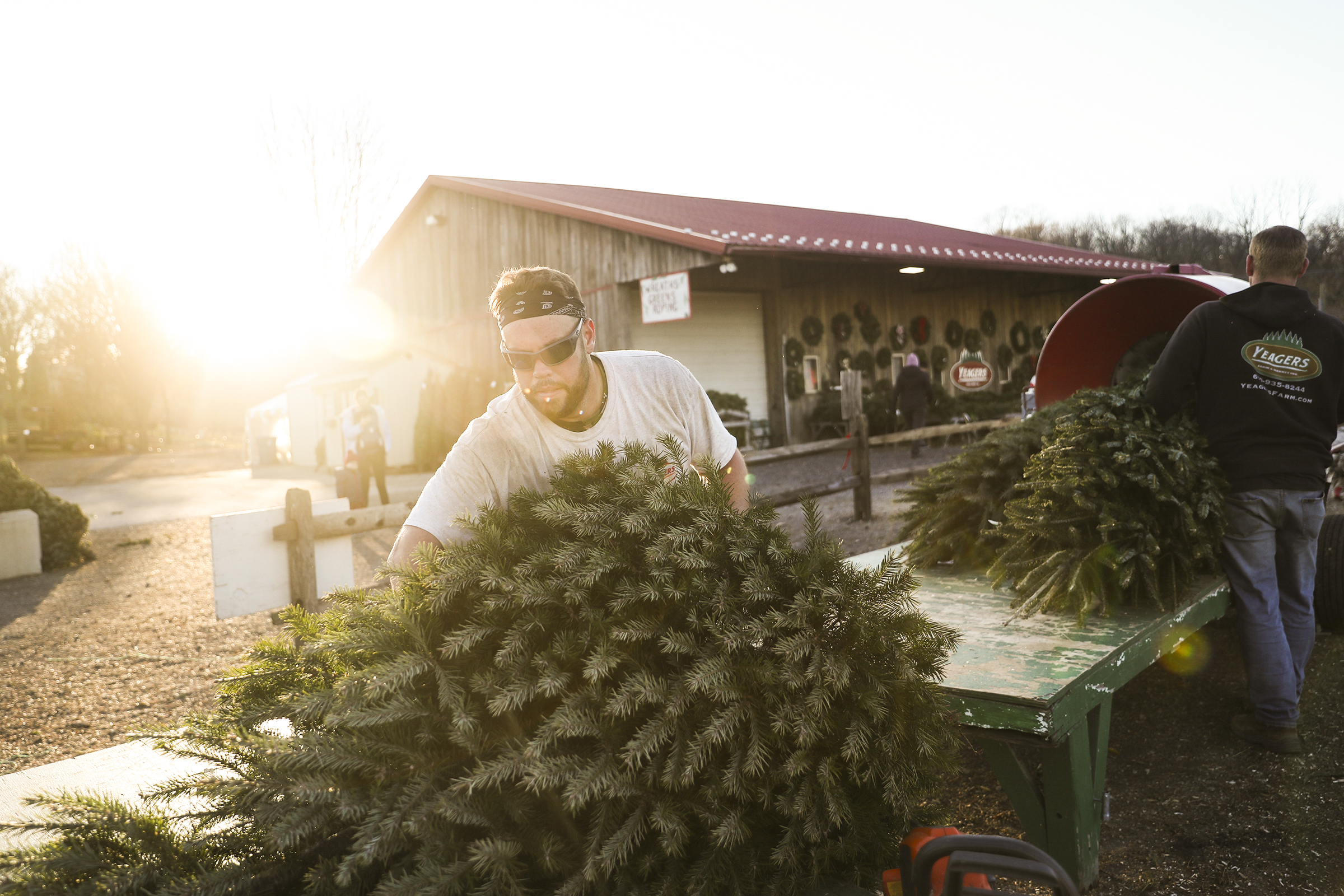
Ross Varanyak helps prepare Christmas trees for customers at Yeager’s Farm in Phoenixville, Pa. on Friday, Dec. 2, 2022.
Philadelphia
The Christmas Tree Stand
Choose between a Living Emerald green (3 to 4 inches tall) and Fraser or Douglas firs (3 to 16 feet tall) at the Christmas Tree Stand. Both the Fishtown and West Chester locations offer tree delivery services seven days a week between 8 a.m. and 8 p.m.
Next-day delivery is available in the city and in select suburbs throughout the region. Visit the website to select the tree type, size, and delivery option. The tree will be transported straight to your doorstep. Upgrade to the premium package to have your tree set up with a stand. Once the holidays pass, you can also schedule a pickup and recycling service in January. Wreaths and garlands are also available for purchase.
Stop by Walt’s Christmas Trees in Northeast Philly for a variety of Fraser, West Coast Douglas, and Pennsylvania Douglas firs. The 47-year-old family business is kicking off its inaugural Christmas delivery season with the help of a third-party service. Visitors can stop by the main location or one of the other five hubs and choose a tree ranging between 5 and 14 feet tall. Once selected, the tree will be delivered for a $40 fee within a 10-mile radius. Delivery will be available until Christmas Eve.
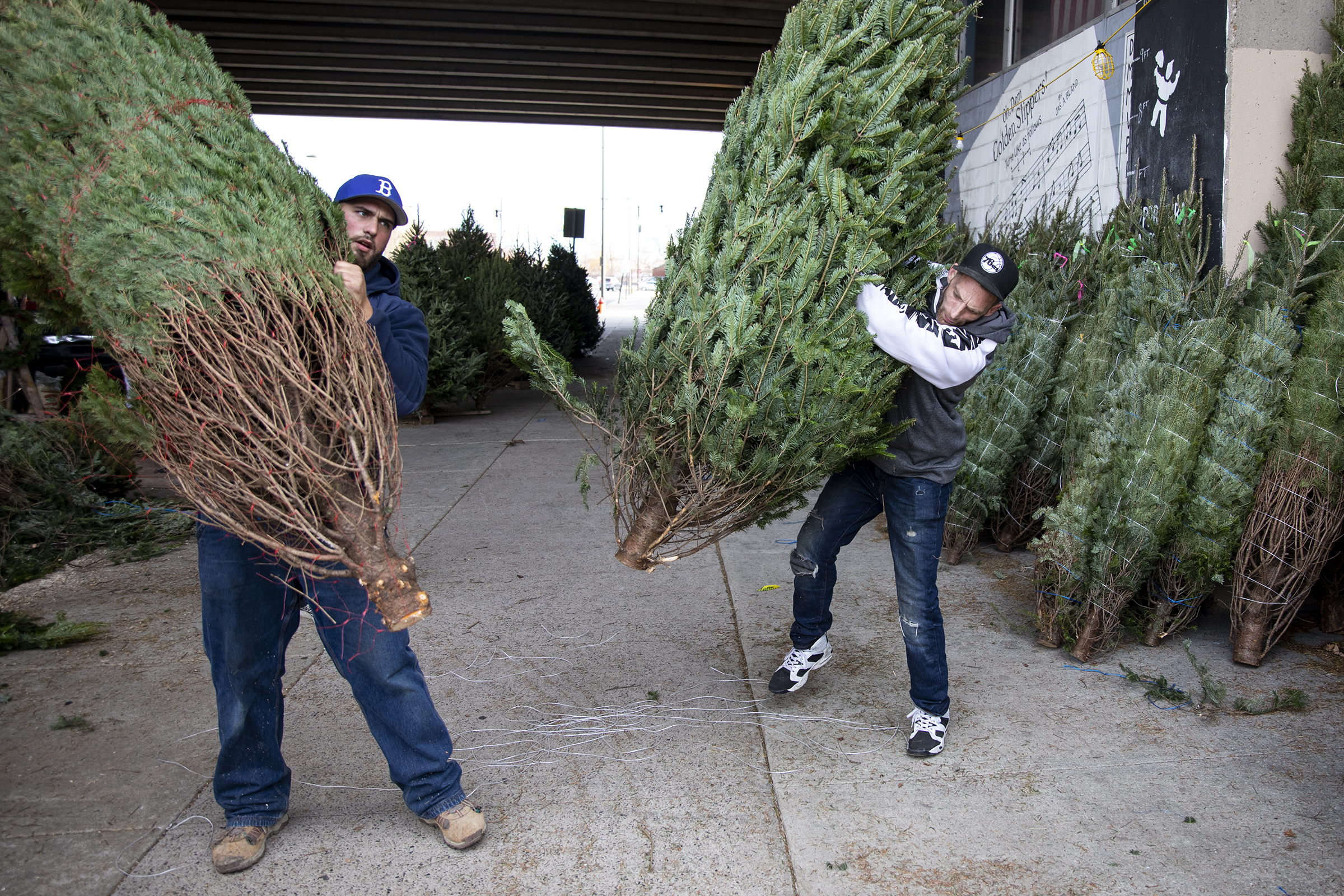
Rob Felker, 34, of South Philadelphia, slams a christmas tree to unveil the size and branches for customers on Saturday, Nov. 30, 2019. Felker is Rocky Yo-Mo’s nephew. “I love Christmas,” Felker said. “I love going up to Pittsburgh and bringing the trees down here so people can have trees in their house.”
Rocky Yo-Mo’s Christmas Trees
Looking for a Christmas tree without sacrificing convenience? Rocky Yo–Mo’s will deliver the tree to your front door for free. Check out the selection (Monday to Saturday, 10 a.m. to 10 p.m., and 10 a.m. to 9 p.m. on Sunday) at the South Philly lot. Decide between a Fraser, concolor, or Douglas fir, and schedule your at-home delivery. Payments are made in cash.
Founded in 2020 with the late Trevor Budny and his brother, Anthony Price, Cousin Eddie’s Tree Delivery is back to dispatch fresh-cut, 6-to-7-foot-tall Douglas firs across the Philadelphia area. Check out their Instagram account @cousin_eddies to view available trees and claim one via direct message.
The trees are claimed on a first-come, first-served basis and are offered until the supply runs out. All trees and sizes come at a flat rate, which includes contactless delivery. Cousin Eddie’s also offers a tree stand and post-holiday removal for an additional charge,
People shop for Christmas trees at Yeager’s Farm in Phoenixville, Pa. on Friday, Dec. 2, 2022.
Suburbs
Yeager’s Farm & Market
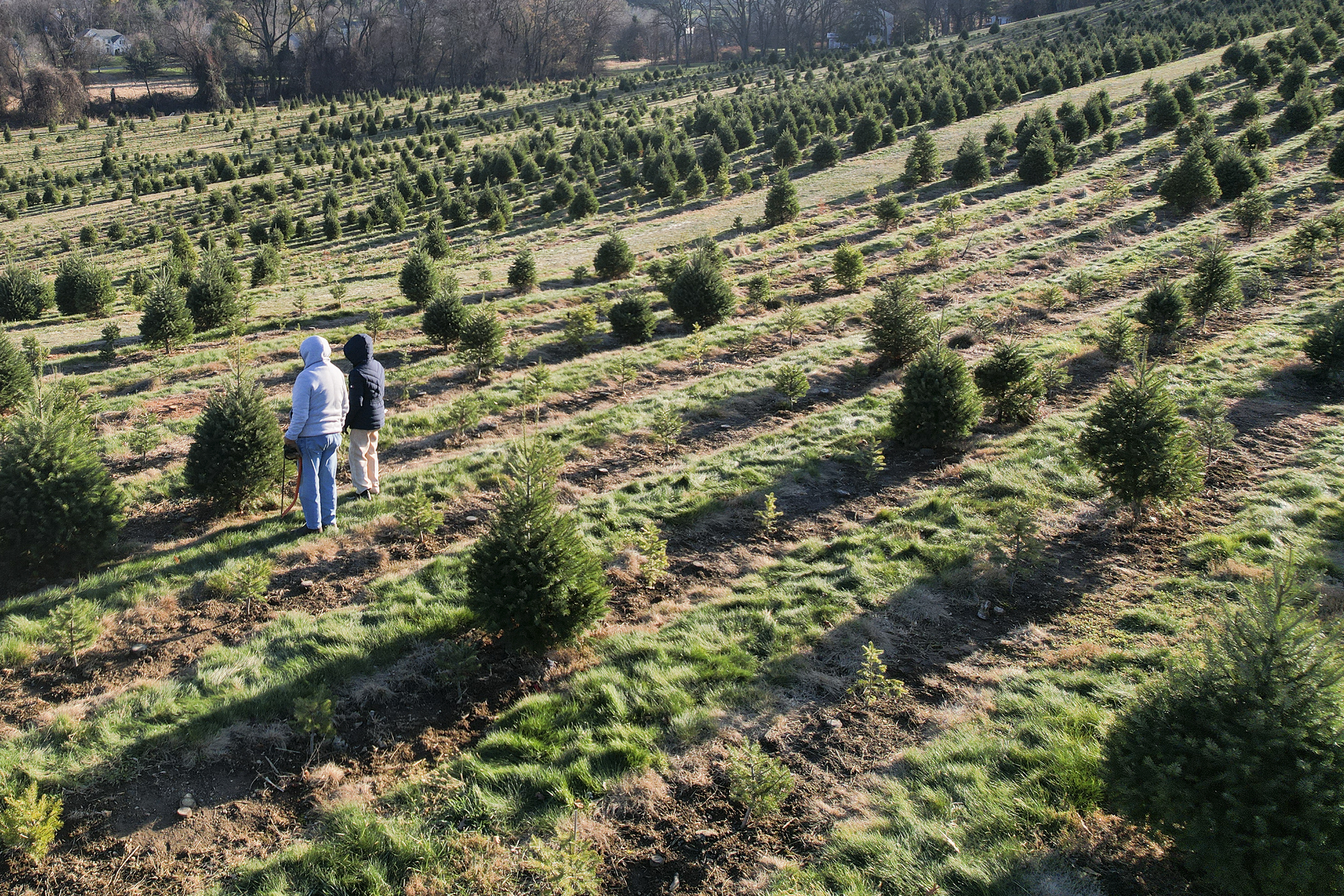
The Yeager family has been farming in northern Chester County for 200 years. Pick your tree at this Phoenixville farm, and they’ll deliver it to you. Cut your own Douglas, Fraser, Canaan, concolor, or Nordmann fir for $15 per foot. Fresh-cut 6-to-10-foot-tall Douglas and Fraser firs are available for $50 to $299. Trees will be delivered and set up on Mondays, Tuesdays, and Wednesdays.
💵 Cut your own: $15 per foot; fresh cut: $100 to $350,📍1015 Pike Springs Road, Phoenixville, Pa. 19460, 📞 610-935-8244, 🌐 yeagersfarm.com
Colavita Christmas Tree Farm
More than two dozen varieties of trees fill this Yardley farm, offering delivery across Lower Bucks County and other nearby areas. A stand and set up are available for an additional charge.
Call the farm to arrange delivery within your area, or swing by any day of the week (9 a.m. to 4:30 p.m.) to cut or choose your own tree, which range from 4 to 12 feet tall. The farm makes fresh wreaths daily, too.
For its 62nd season, this Buckingham farm offers a wide variety of 3-to 17-foot trees. Call to set up delivery in the Doylestown area, or show up at the farm to pick up a precut Fraser, Douglas, and concolor fir. All trees come with a free holiday mug, while supplies last. Farm hours are Monday to Sunday, 10 a.m. to 5 p.m.
This family-owned business delivers trees throughout the region, with fees starting at $50for areas near West Chester. Any delivery beyond 30 minutes starts at $75. Call ahead for exact pricing to your home, or visit one of the Wiggins’ three farms.
The West Chester location offers Douglas firs ranging from 7 to 8 feet tall, and the Cochranville location has trees from 2 to 10 feet tall. The precut lot at 1301 Westchester Pike in West Chester offers trees between 5 to 11 feet tall for $59 to $229. Purchase with cash, Monday to Friday 10:30 a.m. to 9 p.m., Saturday to Sunday 9 a.m. to 9 p.m.
💵 $59 to $229,📍2176 Gap Newport Pike, Cochranville, Pa. 19330, or 1257 Westtown Thornton Road, West Chester, Pa. 19382, 📞 610-344-7822, 🌐 wigginschristmastrees.com
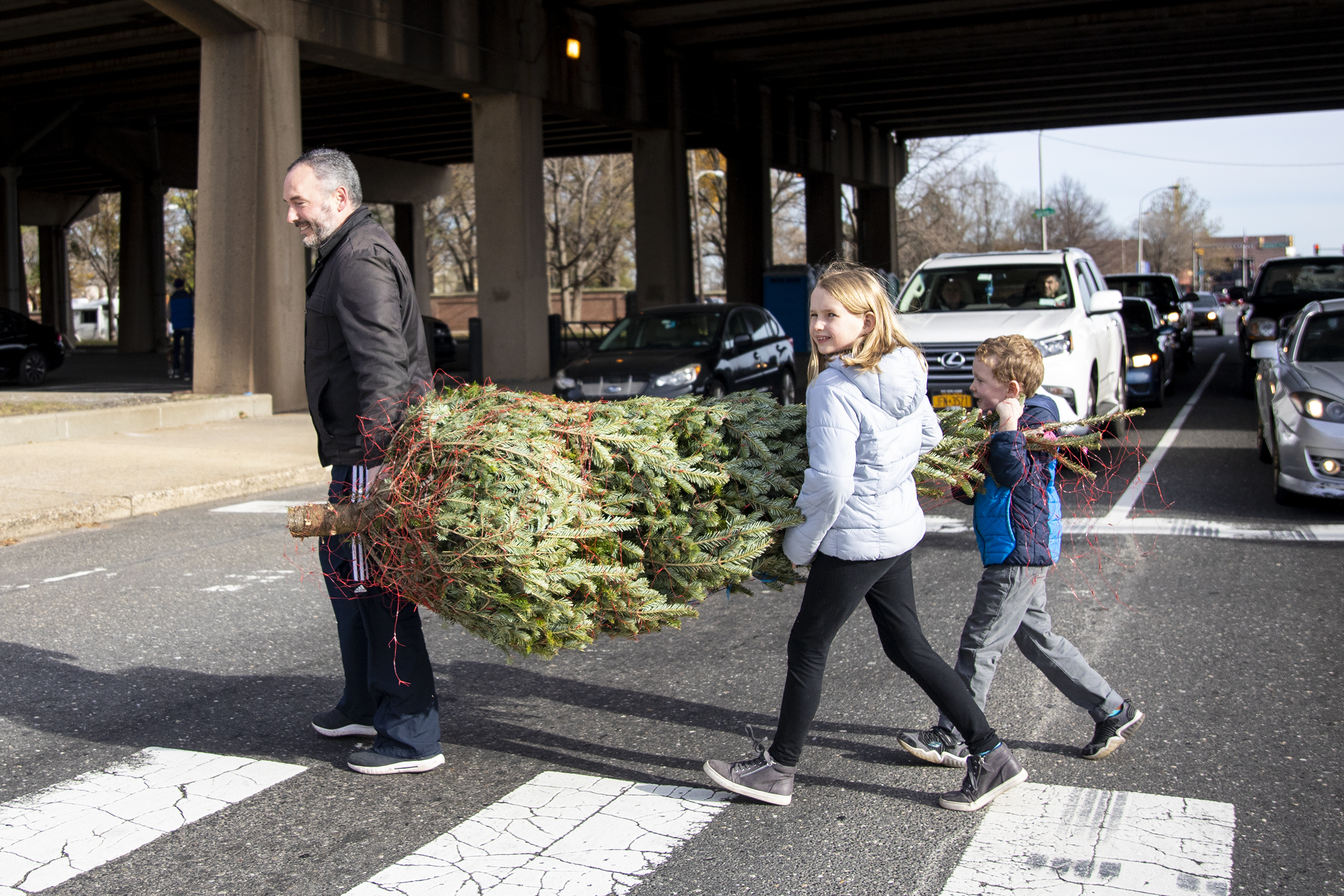
Tom Barrett, 43, of Queen Village, carries a new Christmas tree from Rocky Yo-Mo’s Christmas Trees with his kids Chloe Barrett, 9, and Callum Barrett, 6, to their home on Saturday, Nov. 30, 2019.
From spreading out payments to dodging impulse purchases, holiday shoppers this year took a more judiciousapproach to spending over the Black Friday-Cyber Monday sales weekend, recent data shows.
Underscoring this trend, “buy now pay later” services such as Klarna, Affirm, Afterpay, and PayPal Pay Later are increasingly popular among consumers of all income levels — whether shoppers are looking for convenience or seeking to spread out their budget, according to David Tinsley, a senior economist at the Bank of America Institute. Most customers are “light users,” he said, meaningthey have about one to four transactions in their account, he added.
So far this holiday season — beginning in November — the services have driven $10.1 billion in spending, a 9% jump from last year, according to Adobe Analytics. Cyber Monday was the single largest day for BNPL, accounting for a record $1.03 billion, a more than 4% increase over last year. That’s about 7% of what Americans spent online that day.
Meanwhile, PayPal reported its BNPL transactions increased 23% year over year in the days leading up to Black Friday.
“Consumers are planning ahead, prioritizing value, and making the most of how they spend their money,” Michelle Gill, the general manager of small business and financial services at PayPal, wrote in a news release on the rise of BNPL.
Another factor is that these services are becoming more widely available each year at checkout. “BNPL could also just be going up because e-commerce is going up,” said Sucharita Kodali, an analyst at Forrester.
There are also risks that come with these flexible payment methods. Some services charge interest on missed payments, and experts warn it could lead to overspending, especially for financially vulnerable consumers.
Preholiday caution
More broadly, the rising cost of groceries, housing, and energy — as well as tariff-induced price increases on core gifting categories including apparel, toys, and electronics — has forced consumers to be savvier when their dollar isn’t going as far, analysts said.
“People are being cautious,” Kodali said. “The other shoe is going to drop any day now — the economy from a retail standpoint has been really positive … and this can’t go on forever.”
While the National Retail Federation forecasts spending in November and December will break a record $1 trillion — an increase of between 3.7% and 4.2% over the same period last year — that doesn’t mean people are buying more, rather that things are costing more, analysts say.
Still, there were signs of strength. Online sales on Cyber Monday reached $14.5 billion, while Black Friday hit $11.8 billion, according to Adobe Analytics. That’s a 7.1% and 9.1% surge over last year, respectively, and both surpassed Adobe’s forecasts.
But in-store shopping slumped. Visits to malls and downtown areas on Black Friday fell a respective 2.5% and 2.6% compared to last Black Friday, according to MRI Software, which tracks pedestrian traffic. Small Business Saturday mall visits fell 4.3% while downtown traffic dropped 6%.
RetailNext, which tracks in-store traffic for more than 560 brands, recorded a steeper decline. Visits fell 3.6% on Friday and 8.6% on Saturday.
The slowdown doesn’t mean consumers weren’t spending, said Joe Shasteen, global head of advanced analytics at RetailNext, but a shift in how they intended to spend.
“Shoppers showed they’re done with the impulse-driven, one-day frenzy,” he said in a news release. “Prices, tariffs, and tighter budgets pushed people to shop with discipline, not adrenaline, and they responded by turning Black Friday into a value calculation.”
Consumers also took advantage of markdowns on everyday essentials. Among the top product categories from Shopify sellers were vitamins and supplements, followed by skin care and activewear. Adobe Analytics projects online grocery sales will drive $23.5 billion in revenue, a 9.3% year-over-year increase.
“We’re seeing promotions on essentials and the things that consumers feel they need first,” said Marshal Cohen, chief retail adviser at market research firm Circana. “When they have the opportunity to buy grocery and pharmaceutical products at a discount, they’re going to do so.”
But that doesn’t mean all shoppers are avoiding more exciting gifts.
“Santa Claus is going to show up — and is he going to show up with vitamins? Yeah. But he’s also going to show up with a toy here and there,” he said.