Shwego is Philly-speak for “‘Should We Go?’ Go here, go there, go where you need to be,” said Sam Puleo, a former door-to-door sales manager who gave his software start-up that name.
Launched last year, Fort Washington-based Shwego tracks trucks and tradespeople for a collection of home service companies: several plumbers, a painter, electrician, mover, air-conditioning and heating, and solar electric contractors. Most serve Philly’s rowhouse neighborhoods and suburbs, plus outposts from Brooklyn to Miami.
Contrasting expensive, feature-laden enterprise packages from big Silicon Valley companies, Shwego says it offers “easy-to-use software to contractors for quoting, job scheduling, dispatching, invoicing, and payments.”
“This app makes it so much easier to steer the ship. You can’t order pizza this fast,” said Ryan Larrimore, founder of Express Drains, an early Shwego client.
Puleo said he and business partner Junny Kim, a past Accenture IT consultant, are in growth mode, meeting demand from small businesses looking for simple digital systems without the expensive features the Silicon Valley giants sell.
They are family men who spend less time than they’d like at home. Puleo sold his digital marketing firm to focus day, night, and weekends on Shwego. Kim has kept his day job, running a Gong Cha bubble-tea franchise in Chalfont.
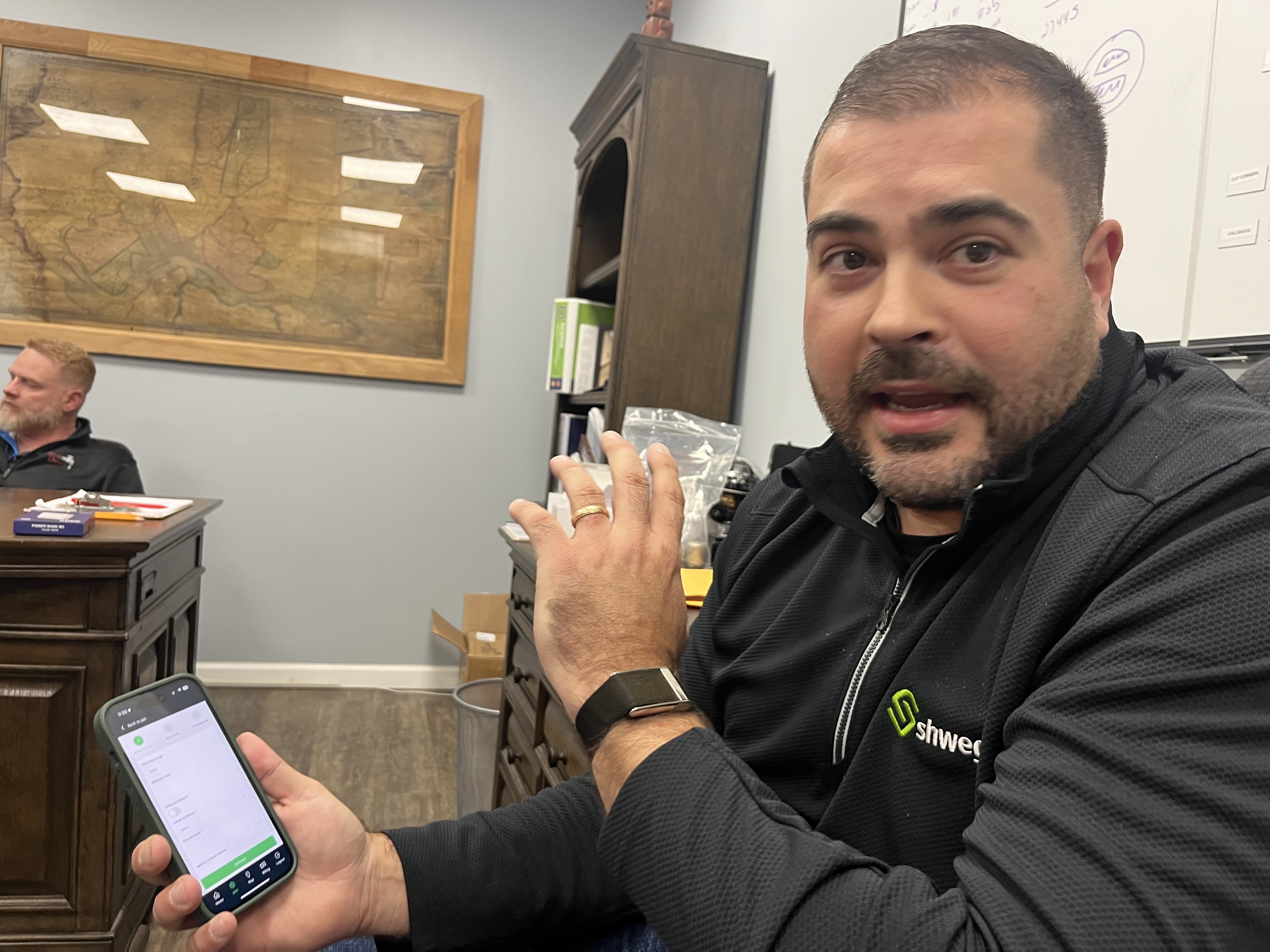
Sam Puleo, cofounder of Shwego, in client Express Drains’ office in Warminster. Express Drains owner Ryan Larrimore is at left.
Not ‘the dinosaur way’!
Their first and so far biggest client is Larrimore’s Express Drains, which contracts with plumbers to unstop customers’ pipes.
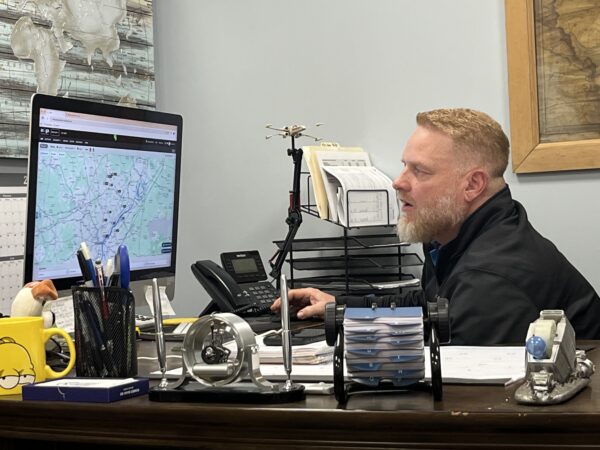
“Those guys streamlined my whole business,” he said at his Warminster office and truck-repair garage. “They save me hours every night. They made it so simple. With notes, like in grade school. We do a job, the pin goes off the map. New job comes up, we see who’s nearby that can do it faster. We know where guys are. It’s like now we are playing a chess game three moves ahead.“
Larrimore and a partner started Express Drains in 2008 after they lost their jobs when package-delivery giant DHL shut the hub where they worked. They began with a set of Spartan tools, Larrimore’s Teamsters union severance, and a $20,000 loan from Philadelphia Police and Fire Federal Credit Union.
“I felt like Indiana Jones, stepping onto that invisible bridge,” Larrimore said.
The service caught on fast. “Six months later we were doing 25-30 calls a week, and we figured we could use another truck,” Larrimore said.
Soon he was paying off truck loans, buying a $4,000 sewer camera — “Worth it!” — and training friends. Apartment building owner Allan Domb is a regular client.
Larrimore hired workers he now pays more than $30 an hour. By last year, Larrimore had a problem other small businesses might like: Too much work.
“We were doing 100 service calls a day,” he said. “Guys were working 10 hours a day running through the whole city. It was getting crazy.”
Revenues totaled $3.6 million last year; an average job paid $180.
But Larrimore’s management tools hadn’t kept pace. Orders went out on a single Gmail account to which all drivers had access. Updates were a challenge.
Someone would accidentally delete a job, he said, which meant lost work.
Financial records were kept on paper. “Saturday night, me and my wife would separate all the bills and put it into an Excel spreadsheet. Every Monday, I’d drop a printout on [clients’] desks, and they’d give me a check for the previous week.”
Larrimore’s brother, Josh, disapproved. “I yelled at him: ‘You can’t do everything via email. This is the worst idea ever. This is the dinosaur way.”
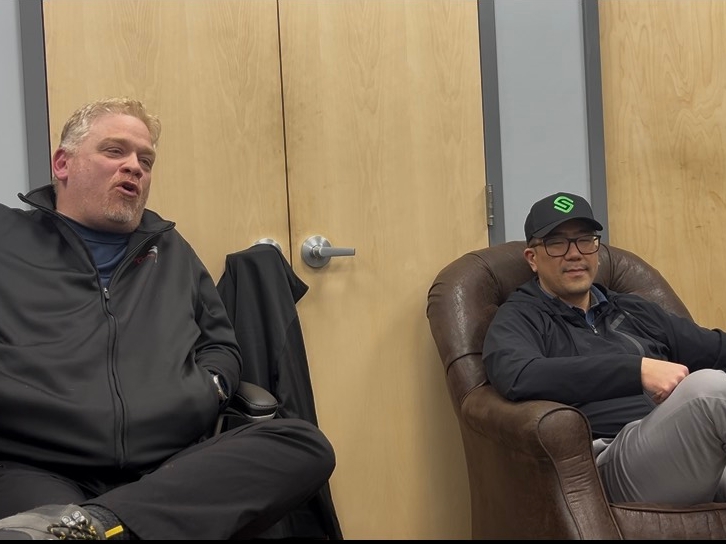
Josh Larrimore (left), who works with his brother Ryan’s company, Express Drains, with Junny Kim, cofounder of Shwego, the app Express Drains uses to schedule dozens of drain-cleanings daily.
Ryan Larrimore finally went shopping for business software — but warily.
From ServiceTitan, the $800 million yearly sales Silicon Valley company whose software platform focuses on home-service providers, he got a quote of $5,000 a month, a big expense for a subcontractor with tight margins. Josh yelled at him some more.
Larrimore connected with Shwego after a cold call from Puleo. “I was doing digital advertising for plumbers,” Puleo recalled. “I saw these guys got good reviews on Google.”
Larrimore paid Puleo to update his website and online ads. On his next visit, Puleo asked, “What else do you need?”
“I said, ‘Build me an app for dispatching,” Larrimore recalled. “He changed my life,” delivering the Shwego app for $1,100 a month.
Simplify
“Our number one thing is: Keep it simple,” Puleo said.
Neither he nor Kim is a software engineer. Backed by a loan from a Lehigh Valley utility auditor, Puleo built the Shwego prototype using a Google app builder and tested it with Larrimore’s company in 2023: “I know enough to be dangerous.”
Kim, he said, is the “logical and level-headed” partner, who oversees the five outside software developers who built the commercial app Shwego, rolled out in late 2024.
Son of a doctor, Puleo graduated St. Joseph’s Prep in 2006 but dropped out of Temple University during what he now calls his “knucklehead” youth. After a disastrous foray into deregulated electricity brokerage (he pleaded guilty to a fraud count for his role in a 2012 price-changing scheme), Puleo went into natural gas sales, with the Pennsylvania Public Utility Commission’s blessing.
When COVID rules stopped in-person selling in 2020, he started the digital-marketing firm, which he sold last year to a Lancaster company to concentrate on Shwego.
Shwego is Philadelphia dialect for “Should we go?” according to cofounder Sam Puleo, who founded the business last year with partner Junny Kim to make software for what Puleo calls “blue-collar” clients that need similar solutions for scheduling, payments, and other basics.
As an IT consultant, Kim, a Neshaminy High School and Penn State graduate, was on the road “90% of the year.” As his family grew, he sought to work for himself, close to home.
Puleo met Kim through his office landlord. By the time they connected, Kim had already committed to running the bubble-tea store.
They got a business license, bank account, and insurance. After a bad initial experience with software development, they hired professional programmers in Eastern Europe, where Puleo’s wife has family.
Last Thanksgiving, with Kim’s store shut for the holiday, the pair met at 6:30 a.m. to begin final prep for taking the improved Shwego app live.
“We burned the midnight oil” evenings and weekends, Kim said. “We probably speak to each other more than our spouses.”
Last December, they put Express Drains on the new app, “just the basic bones,” as Kim put it.
“It still looks the same now, like pins in a map. But we have added a lot of efficiencies and features,” Kim said. “Now we are ramping up to allow payments over mobile phones.”
Next in line: adding QuickBooks integration and an improved calendar feature. Customers are asking for project management and inventory.
Happy customers
Shwego has a function for drivers to mark failed calls and route them back to the dispatcher, then move right to the next job.
“We are making the product more streamlined and efficient,” Kim said. “Our main goal is to keep this product simple, so we don’t overwhelm clients” who are going electronic for the first time.
“There’s a sense of satisfaction, fixing something,” Larrimore said. “It feels pretty good, and the customer’s happy.”
Puleo said Larrimore has referred additional customers from the plumbers who hire his drain service.
“I swear we have plumbers that still run paper,” Larrimore said. “You can hear it rustling when you talk on the phone. They are still stuck in their ways. I tell ‘em, ‘You should talk to Sam.’”
NEW YORK — Billionaires Michael and Susan Dell pledged $6.25 billion Tuesday to provide 25 million American children 10 and under an incentive to claim the new investment accounts for children created as part of President Donald Trump’s tax and spending legislation.
The historic gift has little precedent, with few single charitable commitments in the last 25 years exceeding $1 billion. Announced on GivingTuesday, the Dells believe it’s the largest single private commitment made to U.S. children.
Its structure is also unusual. Essentially, it builds on the “Trump Accounts” program, where the U.S. Department of the Treasury will deposit $1,000 into investment accounts it sets up for American children born between Jan. 1, 2025, and Dec. 31, 2028. The Dells’ gift will use the “Trump Accounts” infrastructure to give $250 to each qualified child under 11.
“We believe that if every child can see a future worth saving for, this program will build something far greater than an account. It will build hope and opportunity and prosperity for generations to come,” said Michael Dell, the founder and CEO of Dell Technologies whose estimated net worth is $148 billion, according to Forbes.
Though the “Trump Accounts” became law as part of the president’s signature legislation in July, the Dells say the accounts will not launch until July 4, 2026. Michael Dell said they wanted to mark the 250th anniversary of U.S. independence.
“We want these kids to know that not only do their families care, but their communities care, their government, their country cares about them,” Susan Dell told the Associated Press.
Under the new law, “Trump Accounts” are available to any American child under 18 with a Social Security number. Account contributions must be invested in an index fund that tracks the overall stock market. When the children turn 18, they can withdraw the funds to put toward their education, to buy a home or to start a business.
The Dells will put money into the accounts of children 10 and younger who live in zip codes with a median family income of $150,000 or less and who won’t get the $1,000 seed money from the Treasury. Because federal law allows outside donors to target gifts by geography, the Dells said using zip codes was “was the clearest way to ensure the contribution reaches the greatest number of children who would benefit most.”
The Dells hope their gift will encourage families to claim the accounts and deposit more money into it, even small amounts, so it will grow over time along with the stock market.
There is a political benefit for Trump and fellow Republicans. The accounts will become available in the midst of a midterm election, providing money to millions of voters — and a campaign talking point to GOP candidates — at a critical time politically. The $1,000 deposits are slated to end just after the 2028 presidential election.
At the White House on Tuesday, Trump praised the Dells saying their gift was, “truly one of the most generous acts in the history of our country.”
Trump said many companies and many of his friends would also be donating, adding “I’ll be doing it, too.”
Brad Gerstner, a venture capitalist, who championed this legislation, said the accounts will give all children renewed hope in the American dream.
“It’s hard to give effective dollars away at scale, particularly to the country’s neediest kids in a way that you have confidence that those dollars are going to compound with the upside of the U.S. economy,” said Gerstner, who is also the founder of Invest America Charitable Foundation, which is supporting the Treasury in launching the accounts.
“Fundamentally, we need to include everybody in the upside of the American experiment. Otherwise, it won’t last. And so, at its core, we think it can re-energize people’s belief in free market, capitalist democracy,”″ Gerstner said of the accounts.
About 58% of U.S. households held stocks or bonds in 2022, according to the U.S. Securities and Exchange Commission, though the wealthiest 1% owned almost half the value of stocks in that same year and the bottom 50% owned about 1% of stocks.
In 2024, about 13% of children and young people in the U.S. lived in poverty, according to the Annie E. Casey Foundation, and experts link the high child poverty rates to the lack of social supports for new parents, like paid parental leave.
While the funds in the Trump Accounts may help young adults whose families or employers can contribute to them over time, they won’t immediately help to diminish childhood poverty. Cuts to Medicaid, food stamps and childchildcare were also included in the spending package are likely to reduce the support children from low-income families receive.
Ray Boshara, senior policy adviser with both the Aspen Institute and Washington University in St. Louis, said he is excited about the idea that the Trump Accounts will be able to receive contributions from the business, philanthropic and governmental sectors.
“We would like to see this idea continue and get better over time, just like any big policy,’ said Boshara, who co-edited the book The Future of Building Wealth. “The ACA, Social Security — they start off fairly flawed, but get much better and more progressive and inclusive over time. And that’s how we think about Trump Accounts. It’s a down payment on a big idea that deserves to be improved and there’s bipartisan interest in improving them.”
Through the Michael & Susan Dell Foundation, the Dell’s have reported giving $2.9 billion since 1999, with a large focus on education.
Michael Dell said they had not initially envisioned committing so much to boost the child investment accounts, but Susan Dell said that changed over time.
“We’re thrilled to be spearheading this in the philanthropy sector and are so excited because we know that more people are going to jump on board because really, we can’t think of a better idea and better way to help America’s children,” she said.
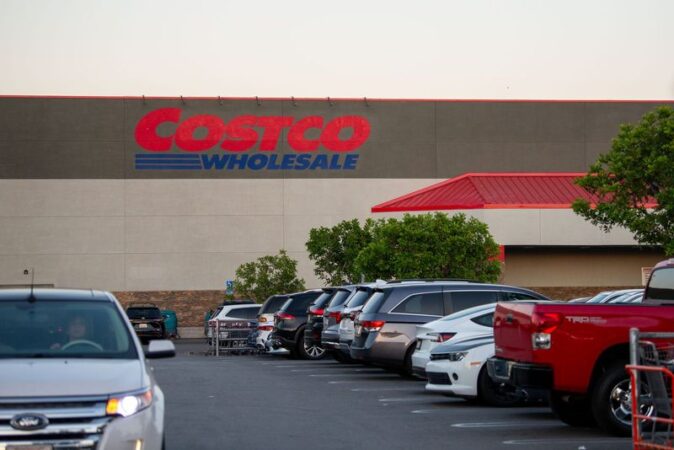
Wholesale retail giant Costco has sued the federal government to ensure it will receive a “complete refund” on import duties if the Supreme Court rules against President Donald Trump’s sweeping tariffs.
The lawsuit, filed in the U.S. Court of International Trade in New York on Nov. 28 and reviewed by USA TODAY, asked the court to find Trump’s use of the International Emergency Economic Powers Act to impose tariffs as unlawful.
Costco, the largest warehouse club operator in the United States, said it has been the “importer of record” for products affected by the tariffs, but did not provide a specific dollar amount it is seeking in damages. The corporation noted in the filing that the suit was necessary because importers are not guaranteed to receive a refund if the high court strikes down the tariffs, unless they sue.
Costco also claims in the lawsuit that Customs and Border Protection (CBP) denied its request to delay the calculation of the total tariffs that it owes. The lawsuit claims that Costco’s ability to receive a refund will be significantly impacted if those calculations are completed.
The suit is separate from the larger case challenging Trump’s tariffs that the Supreme Court heard on Nov. 5.
Other companies have sued to preserve refund rights, but the Issaquah, Washington-based retail warehouse club operator is among the largest to sue the administration so far. Others that have sought to protect tariff refunds include Bumble Bee Foods, eyeglass giant EssilorLuxottica, Kawasaki Motors, Revlon, and Yokohama Tire, court records show.
Costco and the CBP did not immediately respond to USA TODAY’s requests for comment on Dec. 1.
During nearly three hours of debate on Nov. 5, Supreme Court justices questioned whether Trump has the power to impose sweeping tariffs on most imports using the 1977 International Emergency Economic Powers Act. Several legal experts said the justices’ questions reveal a lot about where they stand on Trump’s policy.
Ashley Akers, a former Justice Department attorney now with the law firm Holland & Knight, previously told USA TODAY that she heard a “notable skepticism from justices across the ideological spectrum.”
“Overall, it felt like a strong day for the tariff challengers, though it feels like this will be a razor-close case,” Akers said.
Several justices were concerned that if they sided with Trump, Congress would lose control over tariffs, even though the Constitution gives that power to lawmakers, said Curtis A. Bradley, an expert on foreign relations law at the University of Chicago Law School.
Oliver Dunford, an attorney with the libertarian Pacific Legal Foundation, said the case is complicated enough without a majority of the court focusing on just one legal argument.
“If I had to guess,” Dunford said, “I’d guess that the court will rule against the president without agreeing on the reason.”
The Supreme Court took the tariff case on an accelerated basis, but has not said when it will rule.
Contributing: Maureen Groppe, Bart Jansen, and Aysha Bagchi, USA TODAY; Reuters
This article originally appeared on USA TODAY: Costco sues US to preserve tariff refunds if Trump loses appeal
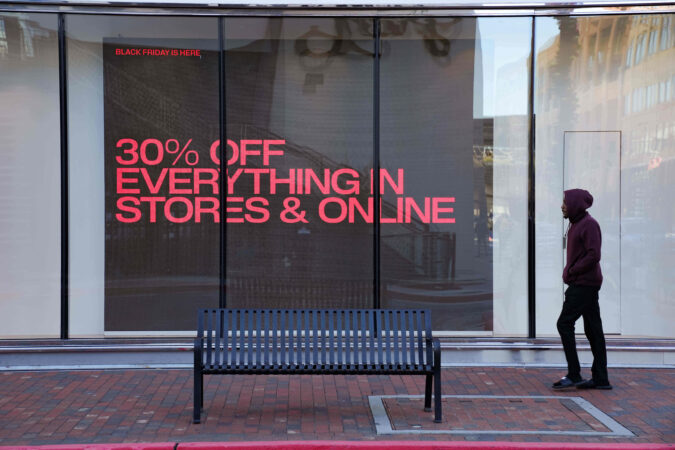
NEW YORK — After four days of deal-fueled spending sprees that kicked off on Thanksgiving, shoppers shifted their focus on Cyber Monday, which is again expected to be the biggest sales day of the year for online retailers.
Walmart was promoting up to 50% off on fashion on its website among some of the deals, while online juggernaut Amazon was hoping to ply customers with discounts of up to 55%.
It’s no secret that buying things online is now a staple of many people’s everyday routines. And year after year, those purchases mount during the gift-giving holiday rush. Experts expect consumers to drive record Cyber Monday spending this year, despite wider economic uncertainty.
Adobe Analytics estimated that U.S. shoppers will spend $14.2 billion online Monday, or 6.3% more than in 2024. Spending was expected to peak between the hours of 8 and 10 p.m. local time, when Adobe expected $16 million to pass through online shopping carts every minute nationwide.
U.S. consumers already spent $11.8 billion online for Black Friday, $6.4 billion on Thanksgiving Day, and another $11.8 billion over the weekend — exceeding Adobe’s forecasts. Purchases made across Cyber Week — the five major shopping days between Thanksgiving and Cyber Monday — provides a strong indication of how much shoppers are willing to spend for the holidays.
“Cyber Week is off to a strong start,” Vivek Pandya, lead analyst at Adobe Digital Insights, said. “Discounts are set to remain elevated through Cyber Monday, which we expect will remain the biggest online shopping day of the season and year.”
Pandya said he will be analyzing Adobe data capturing Cyber Monday sales to see if some of the spending momentum dissipated after a strong weekend.
Deals on electronics and apparel were expected to peak Monday at 30% and 26% off average listed prices, per Adobe’s latest estimates. But other categories will still continue to see deep discounts — including toys, which Adobe expects to reach 27% off listed prices.
Meanwhile, software company Salesforce — which tracks digital spending from a range of retailers, including grocers — estimated Cyber Monday’s online sales will total $13.4 billion in the U.S. and $53.7 billion globally.
While the amount of money going into online shopping carts was expected to reach new heights Monday, rising retail prices also may contribute to any record sales figures that materialize. Consumers may be buying fewer total items. Experts say tighter budgets are causing many to shop with more precision than in years past — such as focusing on a few “big ticket” purchases, for example, and spreading out what they buy over days of promotions in hopes of getting the most bang for their buck.
Businesses and households have watched anxiously for financial impacts from U.S. President Donald Trump’s tariffs on foreign imports. Workers in both the public and private sectors are also struggling with anxieties over job security amid both corporate layoffs and the aftereffects of the 43-day government shutdown.
For the November-December holiday season overall, the National Retail Federation estimates that U.S. shoppers will spend more than $1 trillion for the first time this year. But the rate of growth is slowing — with an anticipated increase of 3.7% to 4.2% year over year, compared with 4.3% during last year’s holiday season.
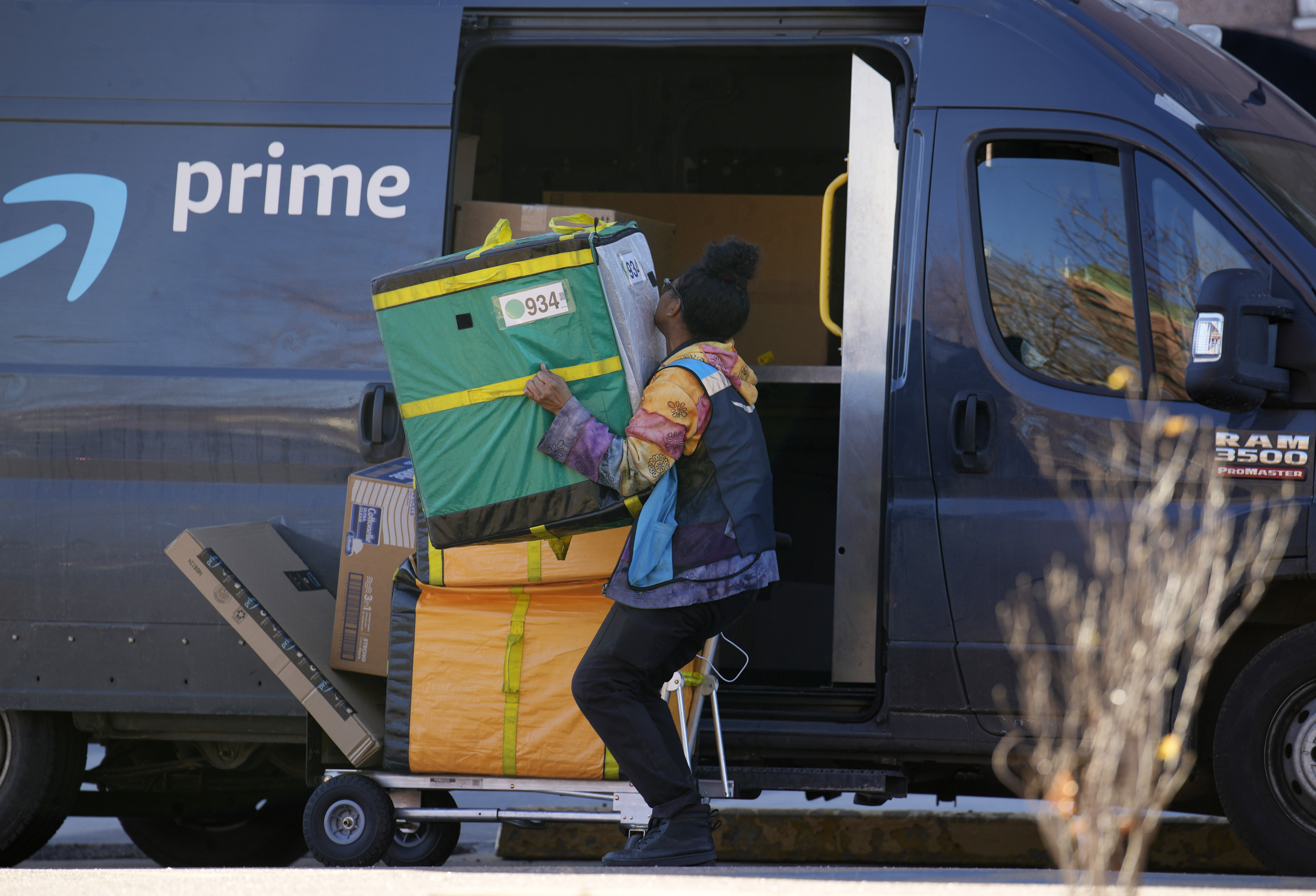
An Amazon Prime delivery person lifts packages while making a stop on Nov. 28, 2023, in Denver.
Buy now, pay later loans are expected to drive $20.2 billion in online spending this holiday season, according to Adobe, up 11% from last year. The firm predicted that buy now, pay later loans would pass a new $1 billion milestone on Cyber Monday, the vast majority involving purchases made on mobile devices.
Overall, mobile devices have become the dominant shopping platform consumers are turning to for the holidays. Adobe expects smartphones, wearable tech, and other handheld electronics to account for 58% of online spending this season.
Five years ago, a majority of online purchases were made on desktops.
Shopping services powered by artificial intelligence are also expected to play a role in what consumers choose to buy. For Black Friday, Salesforce estimated that AI assistants and digital agents contributed to $14.2 billion of the total $79 billion it said was spent online worldwide.
Across the holiday season, “hot sellers” will include gaming consoles such as the Nintendo Switch 2 and toys-turned-fashion statements like Labubu Dolls, Adobe said. The analytics company anticipates the newest editions of popular consumer electronics — including the iPhone 17, Google Pixel 10, and Samsung Galaxy S25 — will also see high demand.
To many, Cyber Monday is billed as the “last call” to take advantage of the deepest discounts in the days following Thanksgiving. But its reach has grown over the years.
Cyber Monday is two decades old now, dating back to when the National Retail Federation first coined the term in 2005. Today, sales continue to bubble up throughout the week — riding on the hype that the industry has built to fuel consumer spending.
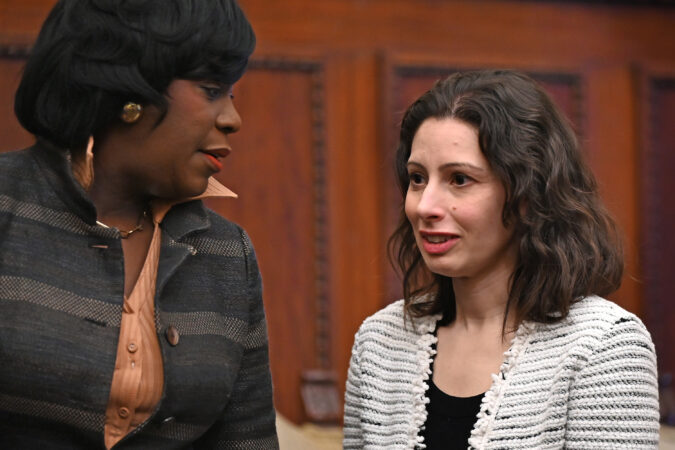
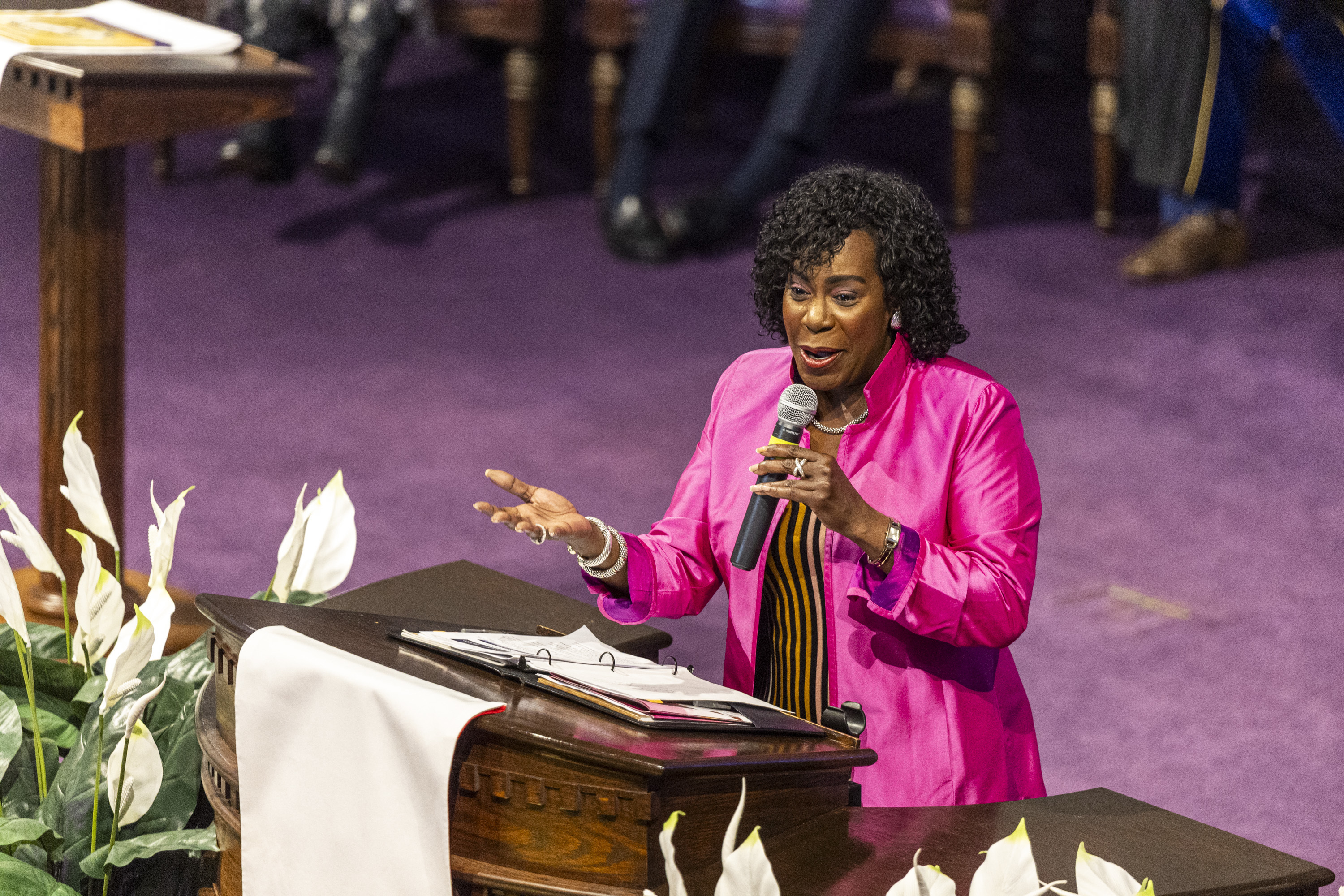
Mayor Cherelle L. Parker has said her administration relied on expert advice from a top law firm when it decided to end a Philadelphia policy prioritizing businesses owned by women or people of color in city contracting following recent court rulings that limited affirmative action-style government programs in hiring and contracting.
“I call them my genius attorneys because they all clerked for Supreme Court justices, and they handle the hardest cases throughout the country,” City Solicitor Renee Garcia, the city’s top lawyer, recently said of the New York-based firm Hecker Fink.
“And we went back and forth,” Garcia said. “Can we do this? Can we do this? What about this? What about that?”
But when it came time to replace the city’s old program with a new policy, the Parker administration didn’t adopt all of the suggestions it received from Hecker Fink, internal administration documents obtained by The Inquirer show.
Hecker Fink attorneys suggested that Philadelphia replace its old contracting system with one that favors “socially and economically disadvantaged” businesses, the documents show. Parker instead created a new policy favoring “small and local” companies.
The differences between Parker’s program and alternatives the city could have adopted are highly technical but hugely important, attorneys and researchers who study government contracting told The Inquirer.
Critics say the new policy indicates Philadelphia took the easy way out in the face of conservative legal attacks, instead of fighting to preserve the spirit of the old program: promoting equity and diversity in city contracting.
Parker, however, is adamant that her “small and local” policy will achieve that goal, given that many small companies in the city are owned by Black and brown Philadelphians who have faced discrimination.
“Our small and local business program is our disadvantage program,” Garcia said in a written statement. “Considering counsel’s advice, the City determined that a small and local business program is the best way to incorporate social and economic disadvantage in a way that is objective, content-neutral, consistent, demonstrable, and could be stood up very quickly.”
The documents, which include confidential legal memos from Hecker and internal administration emails, show how top city officials attempted to navigate a new legal landscape after the U.S. Supreme Court in 2023 upended decades of jurisprudence on affirmative action and other race-conscious policies.
Mayor Cherelle L. Parker said her “small and local” contracting policy will boost Philadelphia companies.
In early 2025, the Law Department provided a spreadsheet of line-by-line edits to the city’s Five Year Plan, a long-term budgeting document, to remove language about racial and gender-equity goals submitted by city departments.
When the Office of Community Empowerment and Opportunity, for instance, wrote that its mission involved “advancing racial equity,” the Law Department simply wrote, “remove racial,” as it did for several other agencies.
The edits signify a stark contrast to the city’s approach under former Mayor Jim Kenney, who in 2020, operating under very different circumstances, instructed all departments to craft comprehensive racial-equity plans.
There is no indication in the internal documents, which are primarily from 2024 and 2025, that Parker, the city’s first Black female mayor, or administration officials were eager to make those changes. And no city officials appeared in the documents to view the “small and local” policy as less aggressive or safer than the other options at Parker’s disposal when she replaced the city’s race-conscious contracting system.
But for Wendell R. Stemley, president of the National Association of Minority Contractors, the mayor’s choice was revealing.
“The cities that want to cave in on this issue without doing the hard work are just doing small [and] local, race- and gender-neutral,” Stemley said.
‘Disadvantaged’ vs. ‘small and local’
The documents obtained by The Inquirer show that Hecker recommended the city abandon its decades-old contracting system — responsible for allotting more than $370 million each year in city contracts to historically disadvantaged firms — due to the threat of potential legal challenges, as Parker and Garcia have said.
But they also show that the firm proposed replacing that policy with a system “setting mandatory goals for hiring socially and economically disadvantaged businesses or persons,” a race- and gender-neutral standard based on the federal Small Business Administration’s 8(a) business development program.
Like the city’s contracting policies, the federal program previously had a stated policy of aiding business owners who were members of specific historically disadvantaged groups, such as women and Black people. But a 2023 federal court ruling in Washington, D.C., prohibited the SBA from presuming that members of those groups had faced barriers and required 8(a) applicants to demonstrate social and economic disadvantages.
The change allowed the program to pass legal muster by not favoring race or gender groups, while still allowing the agency to consider whether each applicant had faced discrimination on an individual basis.
Hecker, a litigation and public interest firm, suggested that Philadelphia adopt a similar approach.
“Adopting mandatory goals for hiring socially or economically disadvantaged individuals or businesses, defined along the same race-neutral lines as in the SBA’s 8(a) program, would likely be defensible if challenged,” Hecker lawyers wrote in a May 5 memo to the city.
An internal administration memo analyzing the city’s options on May 16 said that Hecker “recommended taking a look at the federal SBA 8(a) Business Development Program as a model.”
“This is a program to recognize small and disadvantaged businesses,” the city’s memo said, adding that the SBA defines socially disadvantaged individuals as “those who have been subjected to racial or ethnic prejudice or cultural bias within American society because of their identities as members of groups and without regard to their individual qualities.”
The executive order governing the city’s old minority contracting program, which aimed to award 35% of contracts to historically disadvantaged firms, expired at the end of 2024, and the city quietly ended it at some point earlier this year.
The key difference between Parker’s program and the 8(a) model is that the city’s new policy gives no explicit consideration for social disadvantage, prejudice, or cultural bias.
Garcia, the city solicitor, firmly pushed back against the notion that the city had ignored Hecker’s advice on reshaping its contracting landscape and contended that the “small and local” policy will result in equitable outcomes because many of Philadelphia’s small businesses are owned by people of color and have faced discrimination and other barriers to growth.
“The City’s small and local business program … is more aggressive [than an SBA 8(a)-style policy] in that it is broadly applicable to small and local businesses, without creating unnecessary hurdles and confusion over the word ‘disadvantage’ or requiring onerous paperwork” for business owners to demonstrate their disadvantages, she said.
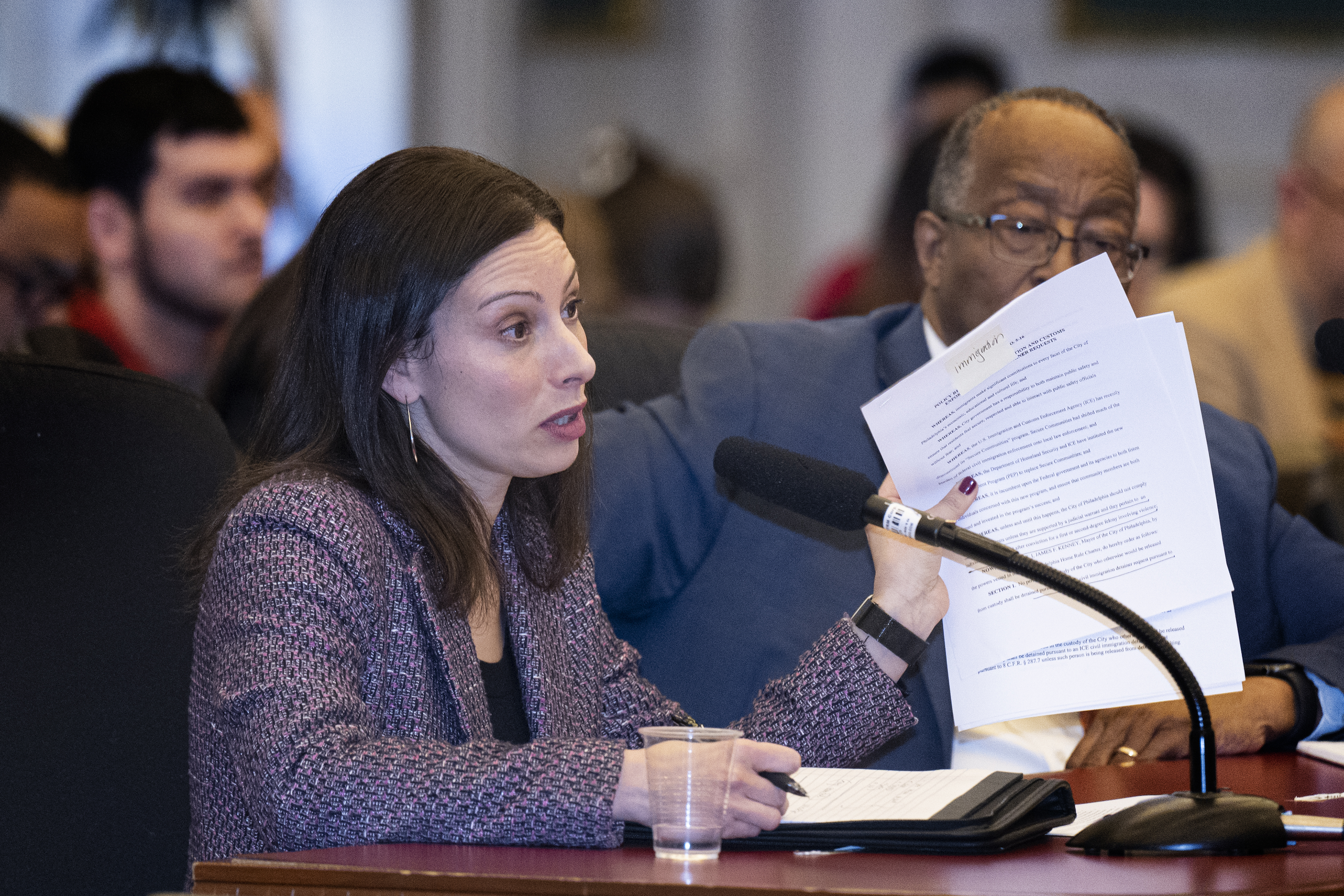
City Solicitor Renee Garcia is the Parker administration’s top lawyer.
Although Parker’s new program is not exclusively available to disadvantaged firms, Garcia said it “has built-in elements of social and economic disadvantaged programs like the SBA 8(a) and [U.S. Department of Transportation] programs, such as utilizing SBA business size standard caps, examining years in business, examining employee count, and personal net worth considerations.”
But Andre M. Perry, a senior fellow at the Brookings Institution, said that while the city may be intending to help disadvantaged businesses with its “small and local” approach, specifying that goal in writing is important. The mayor’s executive order does not use the word disadvantage.
“They are different,” said Perry, the author of Black Power Scorecard, an examination of access to property, education, and business success. “The downside of any approach that does not use some criteria for being disadvantaged is that you can ignore them.
“There is a history that suggests that you absolutely need some process to identify groups of people who have been ignored by the city. It’s certainly not a given that you will touch those communities that have been denied opportunities in the past under ‘small and local,’” Perry said.
‘Too early to tell’
Parker’s move to abandon the city’s goal of prioritizing businesses owned by women and Black and brown people has become the latest flashpoint in the debate over the centrist Democrat mayor’s approach to the new political reality under President Donald Trump’s second administration, as critics like progressive City Councilmember Kendra Brooks have accused her of “caving” to Trump.
Parker, however, said the city had little choice but to end the old system following Students for Fair Admissions v. Harvard, a 2023 Supreme Court ruling that prohibited affirmative action in college admissions and has had widespread consequences for race-conscious government programs.
“There were people who told us that leadership meant justifying the [old] law,” Parker said at a recent news conference announcing the contracting policy changes. “They said, ‘Forget about the Supreme Court ruling. Philadelphia should just continue functioning and operating its program even if your Law Department and these genius lawyers at [Hecker] who have clerked for Supreme Court justices [recommended abandoning it.]’
“I want to take some advice from somebody to interpret the Supreme Court ruling right for some folks who have worked there.”
The U.S. Supreme Court upended the legal landscape for race-conscious government programs with a 2023 case ending affirmative action in college admissions.
But Parker also said she felt that the city’s old system was “broken” long before the Harvard decision because it failed to achieve its goal of boosting the number of “Black and brown and women and disabled business owners” in Philadelphia.
Parker, who as a lawmaker worked on policies aimed at boosting economic opportunities for minority- and women-owned firms, said she was optimistic that pivoting to a focus on “small and local” firms would produce better results.
Parker has not publicly discussed suggested alternatives to her new policy, including the 8(a)-style approach.
Several government contracting attorneys and researchers interviewed by The Inquirer said that both “small and local” and “socially disadvantaged” programs have downsides and that the success of either would primarily depend on how well it is executed. Details are scant on what the new policy will actually look like, making it difficult to evaluate the potential impact.
But experts said choosing a policy that seeks to favor disadvantaged businesses rather than any small Philadelphia firm would indicate the mayor was fighting to maintain the spirit of the old program, which sought to boost companies owned by women and people of color who have long been underrepresented among business owners and government contractors.
“Adopting an 8(a)-style program with language prioritizing contracts for socially disadvantaged businesses would signal a desire to maintain the pre-2024 understanding that cities can procure goods deliberately, intentionally, in different ways, with preferences from disadvantaged businesses,” said Brett Theodos, a senior fellow at the Urban Institute who has written a paper about how governments can use contracting to promote equity, despite recent court decisions. “Having an (8)a-style [program] would signal that the mayor wanted to try something more.”
Parker has defended her policy shift by invoking the bona fides of the Hecker attorneys who worked with the city. She and other city officials have noted that one clerked for liberal U.S. Supreme Court Justice Sonia Sotomayor and now works for the American Civil Liberty Union — “not somebody who would have had a conservative mindset,” as Garrett Harley put it. (Those comments later prompted the ACLU-PA to distance itself from what it described as the city’s “DEI rollback.”)
To be sure, adopting a program in which contractors need to demonstrate social disadvantages, such as past instances of discrimination, has its own drawbacks.
Following the 2023 federal court decision, the SBA now requires 8(a) applicants to submit “social disadvantage narratives,” or essays, increasing administrative burdens and potentially favoring savvier contractors. The U.S. Department of Transportation has a similar essay-based approach.
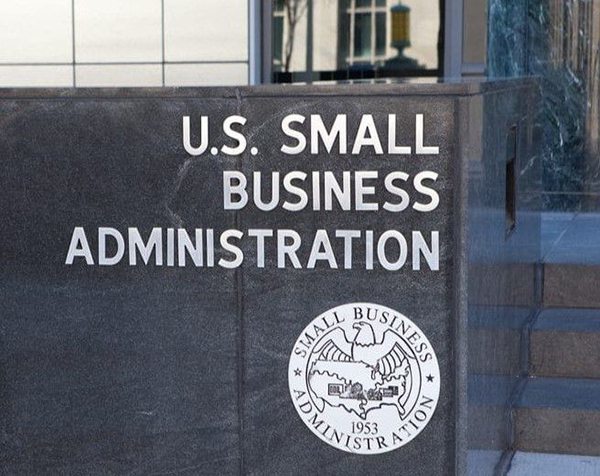
The U.S. Small Business Administration’s 8(a) business development program is aimed at helping “socially and economically disadvantaged” firms.
“We have heard from our businesses it is already too hard to do business in Philadelphia; these kinds of additional requirements will exacerbate an already difficult and burdensome process,” Garcia said.
And despite being a race- and gender-neutral federal policy, the current 8(a) standard, which was adopted in President Joe Biden’s administration, may still be challenged in court.
The lawyers at Hecker Fink, however, believed that a Philadelphia version of the policy could withstand scrutiny.
“The next wave of conservative litigation in this space may target such programs, arguing that social or economic disadvantage is a proxy for race,” Hecker attorneys wrote in the May 2025 memo. “However, based on our assessment of the current legal landscape, the City would have a strong chance of defeating such challenges.”
Like many diversity, equity, and inclusion initiatives cast as discriminatory by the president, the 8(a) program has come under siege since Trump took office in January. On the agency’s website, hyperlinks to guidelines on how companies can demonstrate social disadvantage have gone dead, and the Trump administration has launched an audit of the program in the wake of an alleged bribery scheme.
None of those issues, however, address the question of whether a similar policy crafted for the city would be legally defensible. Despite Trump’s attacks, the current version of the 8(a) program’s focus on “socially disadvantaged” firms has not been overturned in court.
Regina Hairston, president and CEO of the African-American Chamber of Commerce of PA, NJ, and DE, said the organization will wait and see how Parker’s new policy shakes out.
“It’s too early to tell if the mayor’s policy is the right policy, but from what I’ve seen across the country, other cities are moving to [prioritize] small, medium enterprises,” Hairston said. “We don’t know if that’s the answer, but we will be monitoring it.”
Staff writer Anna Orso contributed to this article.
Drivers in Philadelphia’s Logan Square neighborhood should expect new delays as the city continues to prepare for America’s 250th birthday next summer.
Construction is set to cause lane closures in both directions on weekdays from Dec. 1 until May 19, Pennsylvania Department of Transportation officials said in a statement.
“This project will improve the safety and accessibility for Logan Square residents and the increased number of visitors during 2026 events,” city officials said Saturday.
Drivers won’t be able to use the interior lane around Logan Circle, the left inbound lane on the Benjamin Franklin Parkway, and the left lane on 19th Street north of the circle, according to the city.
The work is set to occur between 7 a.m. and 3:30 p.m. on weekdays, according to PennDot, and will be weather dependent.
“Motorists are advised to allow extra time when traveling through the work area because backups and delays will occur,” PennDot officials said.
During construction, pedestrians will also be unable to use the sidewalk around the circle or access Swann Memorial Fountain at its center, according to the city.
The beloved 101-year-old fountain hasn’t been fully operational since 2023 due to vandalism. Philadelphia Parks and Recreation Commissioner Susan Slawson said in September that the city is making repairs, with plans to have the fountain completely restored by May 2026.
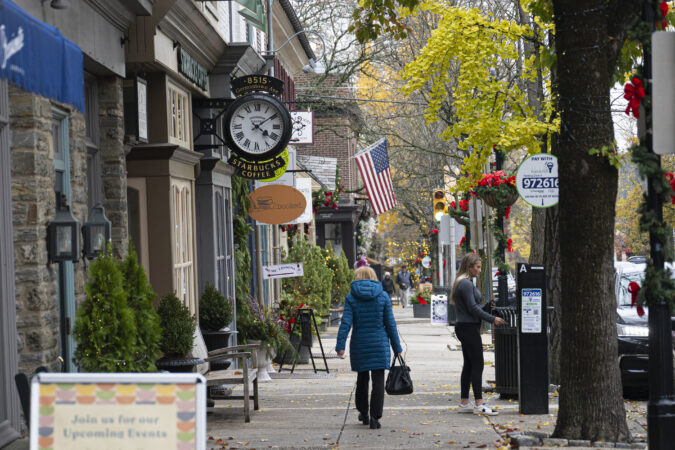
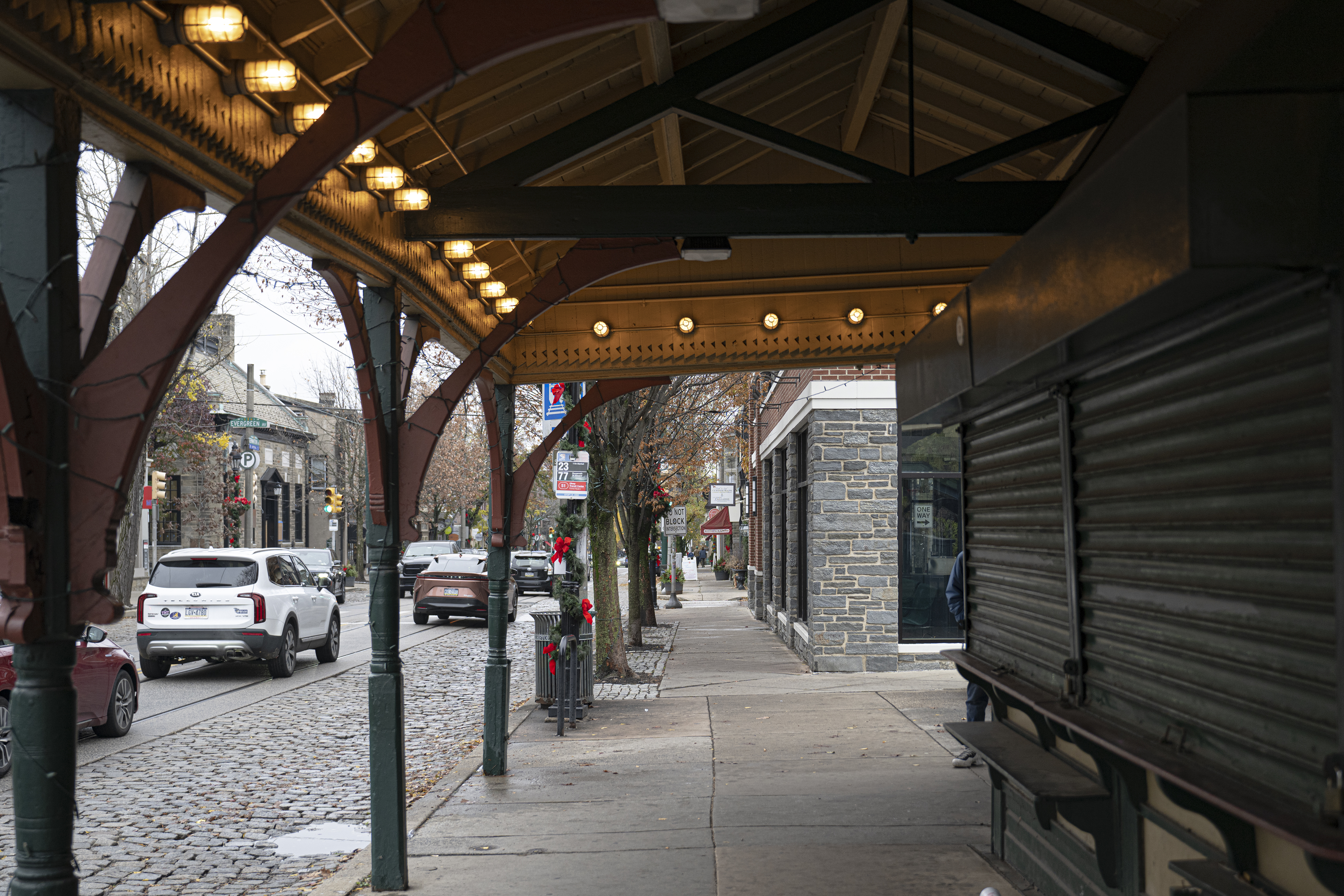
At lunchtime on a Thursday, a week before Thanksgiving, Chestnut Hill was buzzing.
Inside the newly expanded Matines Café, almost every table was full. People sipped warm drinks from large mugs and ate Parisian croissants and quiche. Bottles of prosecco sat on ice by one large table adorned with Happy Birthday balloons.
McNally’s Tavern was bustling, too, with regulars sitting at the bar and at tables inside the cozy, nearly 125-year-old establishment atop the hill. Multiple generations gathered — a son taking a father out to lunch, a mother with a baby in a stroller, and two sisters, Anne and Meg McNally, running the place.
Behind the storefronts along Germantown Avenue’s main drag, some people perused the boutiques, while others typed away on laptops in coffee shops.
In the northwest Philadelphia neighborhood known for its wealth and postcard-picturesque aesthetic, the small-town charm of longstanding establishments — four are more than 100 years old — is now complemented by the shine of some newer shops and restaurants. Several Chestnut Hill business owners said the variety has helped both old and new spots succeed despite broader economic challenges, including inflation and tariffs, and the loss of a few restaurants.
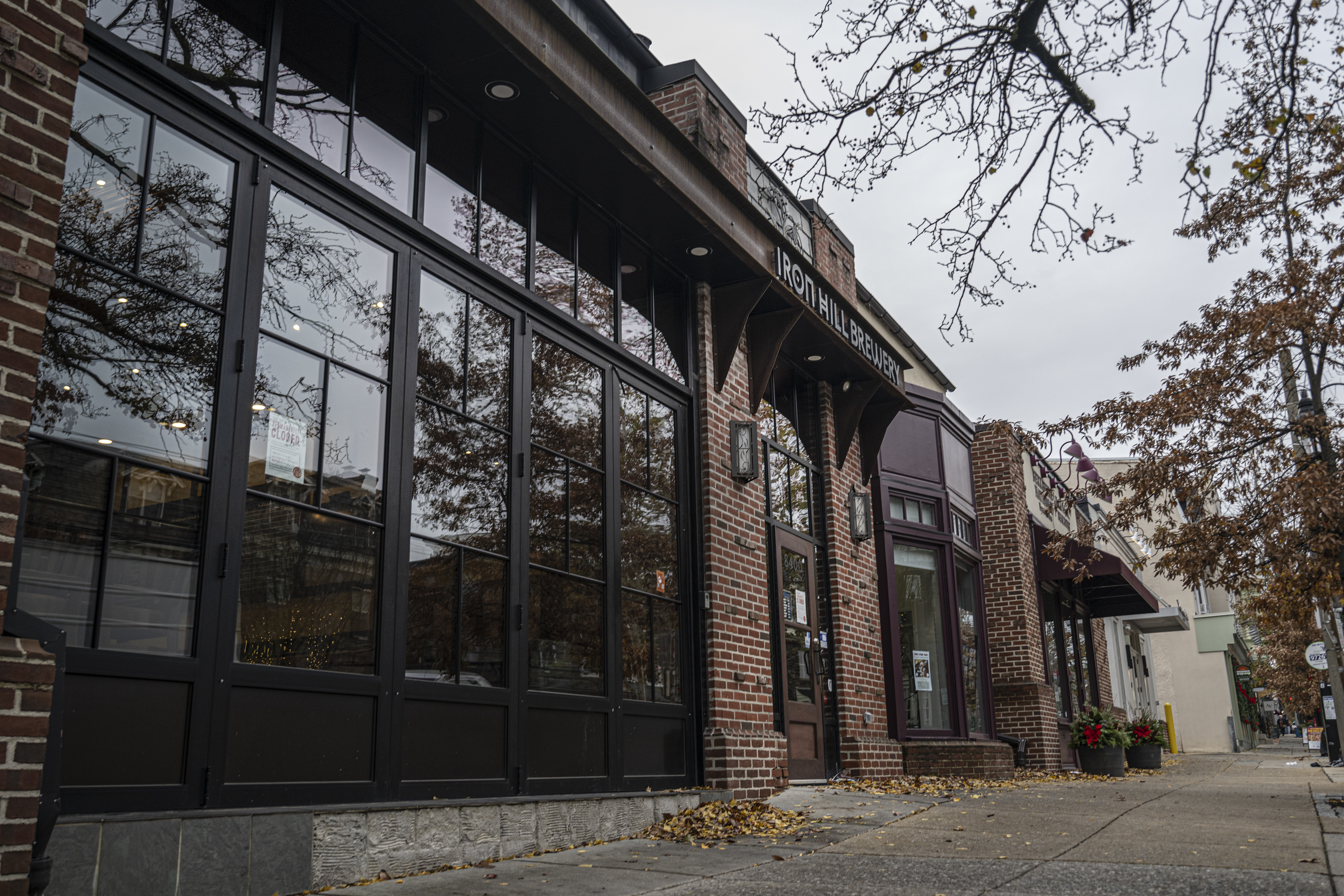
A view down Germantown Avenue from the Chestnut Hill SEPTA Regional Rail station.The closed Iron Hill Brewery is shown in downtown Chestnut Hill on Nov. 19.
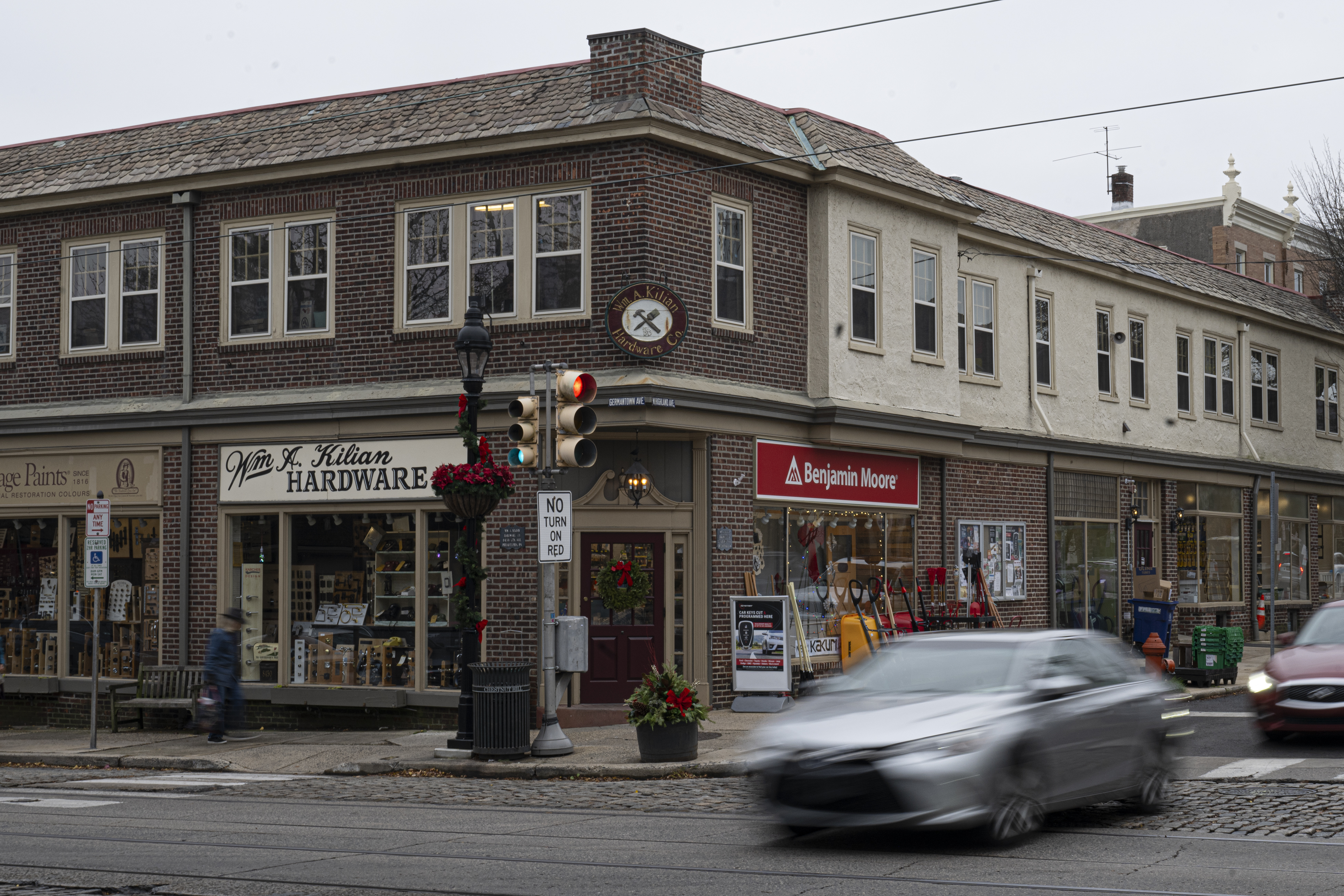
As the owner of Kilian Hardware, which has been in business for 112 years, Russell Goudy Jr. has watched the avenue change. Fifty years ago, he said it was “basically like a shopping mall,” a one-stop shop for everyday needs.
In recent years, however, the neighborhood has focused on attracting and retaining unique food and beverage businesses, “quaint, specialty shops,” and service-oriented businesses, which Goudy said offer experiences Amazon and other e-commerce platforms can’t replicate.
“If you’re not giving people an experience in today’s economy, it’s very tough to compete,” said Nicole Beltz, co-owner of Serendipity Shops, which for a decade has had an expansive store on Germantown Avenue. And providing a memorable experience is never more important than during the lucrative last few months of the year.
“When you come to Chestnut Hill over the holidays, you get what you came for,” Beltz said. “You get that charming feeling of being somewhere special for the holiday.”
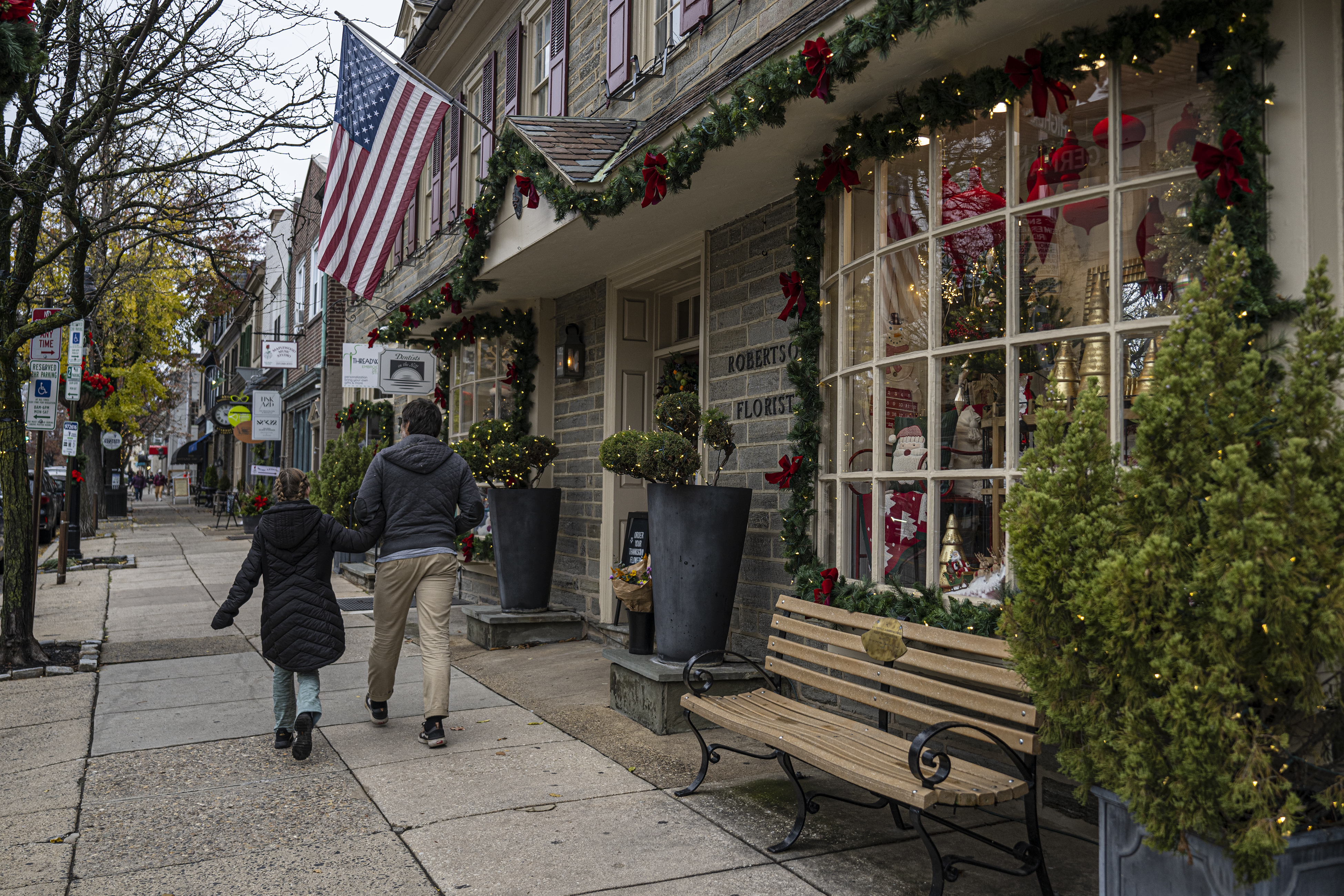
People walk by holiday decor outside Robertson’s Flowers & Events in Chestnut Hill earlier this month.
‘New vitality’ coming to the Chestnut Hill restaurant scene
During the holidays and all year long, Chestnut Hill business owners said they’re grateful that the neighborhood has held onto its charm despite recent challenges.
During the pandemic, “it definitely felt a little grim and dark,” said Ann Nevel, retail advocate for the Chestnut Hill Business District. “The impressive thing is the old-timers, the iconic businesses, and some of the newer restaurants … pretty much all were agile enough to tough it out.”
And a slew of other businesses have moved into the community since then. In the last four years, 20 retail shops, 20 service businesses, and 10 food and beverage spots opened in Chestnut Hill, Nevel said, while several existing establishments expanded.
Among them was Matines Café, which opened a small spot on Bethlehem Pike in 2022 and expanded this fall to a second, much larger location on Highland Avenue. The café serves 500 people or more on weekdays, according to its owners, and even more on weekends.
Sitting inside their original location, which is now a cozy children’s café, Paris natives Amanda and Arthur de Bruc recalled that they originally thought they’d open a café in Center City, where they lived at time. Then, they visited Chestnut Hill and fell in love, despite “a lot of empty spots” there around 2022, Amanda de Bruc said.
A colorful storefront along Germantown Avenue in Chestnut Hill.
“We liked the idea of living in the suburbs, which technically Chestnut Hill is not the suburbs, because it’s still Philly,” she said. But “we were looking for something that we were more used to, like Paris. There are so many boutiques in such a small area,” and everything is walkable.
The opening of shops and cafés like Matines became a “catalyst for this new vitality, a new, more contemporary energy that has taken hold in Chestnut Hill,” Nevel said. Soon, “we’re going to see that new vitality in the restaurant scene,” including in some long-vacant storefronts.
In 2026, former Four Seasons sommelier Damien Graef is set to open a wine bar, retail store, and fine-dining spot called Lovat Square off Germantown Avenue, Nevel said. On the avenue, a café-diner-pub concept called the Blue Warbler is under construction and also slated to open sometime next year.
Kilian Hardware in Chestnut Hill has been in business for 112 years.
In downtown Chestnut Hill, there are still a few empty spots, including those left by Campbell’s Place, a popular restaurant that closed this summer; Diamond Spa, which closed this fall; Iron Hill Brewery, which closed in September (right before the regional chain filed for bankruptcy); and Fiesta Pizza III, which closed last year.
Kismet Bagels, a popular local chain, was set to fill one of the spots this summer, but its deal fell through, co-owner Jacob Cohen said in a statement. He said they could “revisit the Chestnut Hill neighborhood” in the future.
While the future of Iron Hill will be dictated by bankruptcy proceedings — which include an auction of assets set for next month — stakeholders say conversations are ongoing about some of the other vacancies.
Steve Jeffries, who is selling the Campbell’s building for $1.5 million, said he’s gotten a lot of interest from people who want to revive the nearly 3,000-square-foot space as a neighborhood pub, but one that is “more cutting edge.” Perhaps, he said, one that is not focused on craft beer, which has decreased in popularity, especially among younger generations.
“The town is just screaming for other opportunities for nightlife and sports bars,” said Jeffries, executive vice president of Equity CRE. “There has been a connotation in the market that Chestnut Hill was kind of older, stuffy, that it wasn’t a nightlife town.”
But that’s changing, Jeffries said.
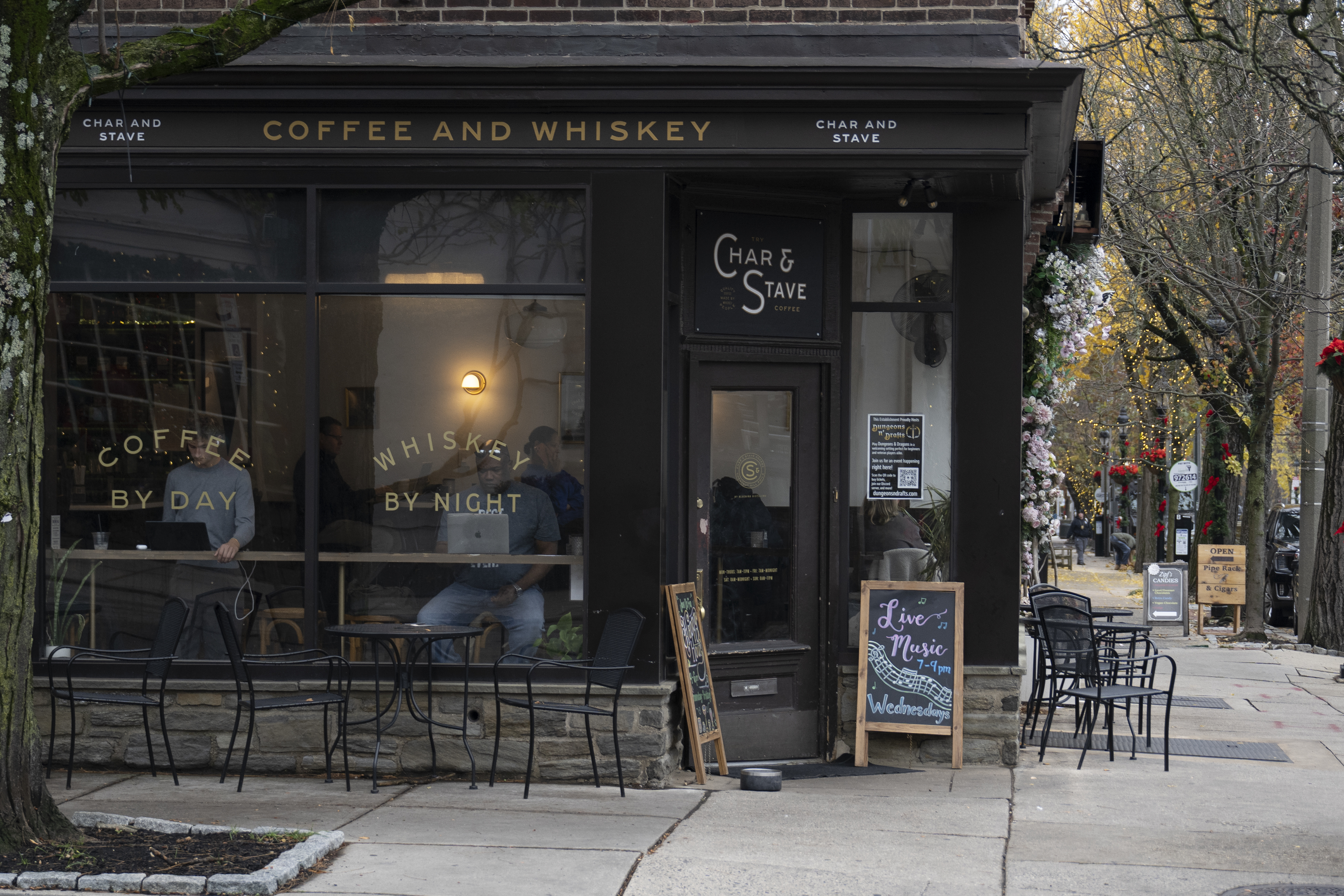
Char & Stave, an all-day coffee and cocktail bar, has done great business since moving into Chestnut Hill, its owner, Jared Adkins, said.
Just ask Jared Adkins, owner of Char & Stave, an all-day coffee and cocktail bar at the corner of Germantown and Highland Avenues.
After Nevel visited Ardmore and saw the success of Adkins’ original Char & Stave, she recruited him to open a Chestnut Hill location. It started as a holiday pop-up in 2022, then became a permanent presence the next year.Since he moved into town, Adkins said, business has been booming.
“We’re really just busy all day long,” said Adkins. The café is open until 11 p.m. during the week, midnight on the weekends, and it often brings in musicians and hosts events.
Adkins describes Char & Stave as a place where drinkers and nondrinkers alike can spend time together, and where people can get work done with coffee or a cocktail beside them: “It’s really a gathering place that fills a niche of a nice cocktail place.”
More changes to come for Chestnut Hill
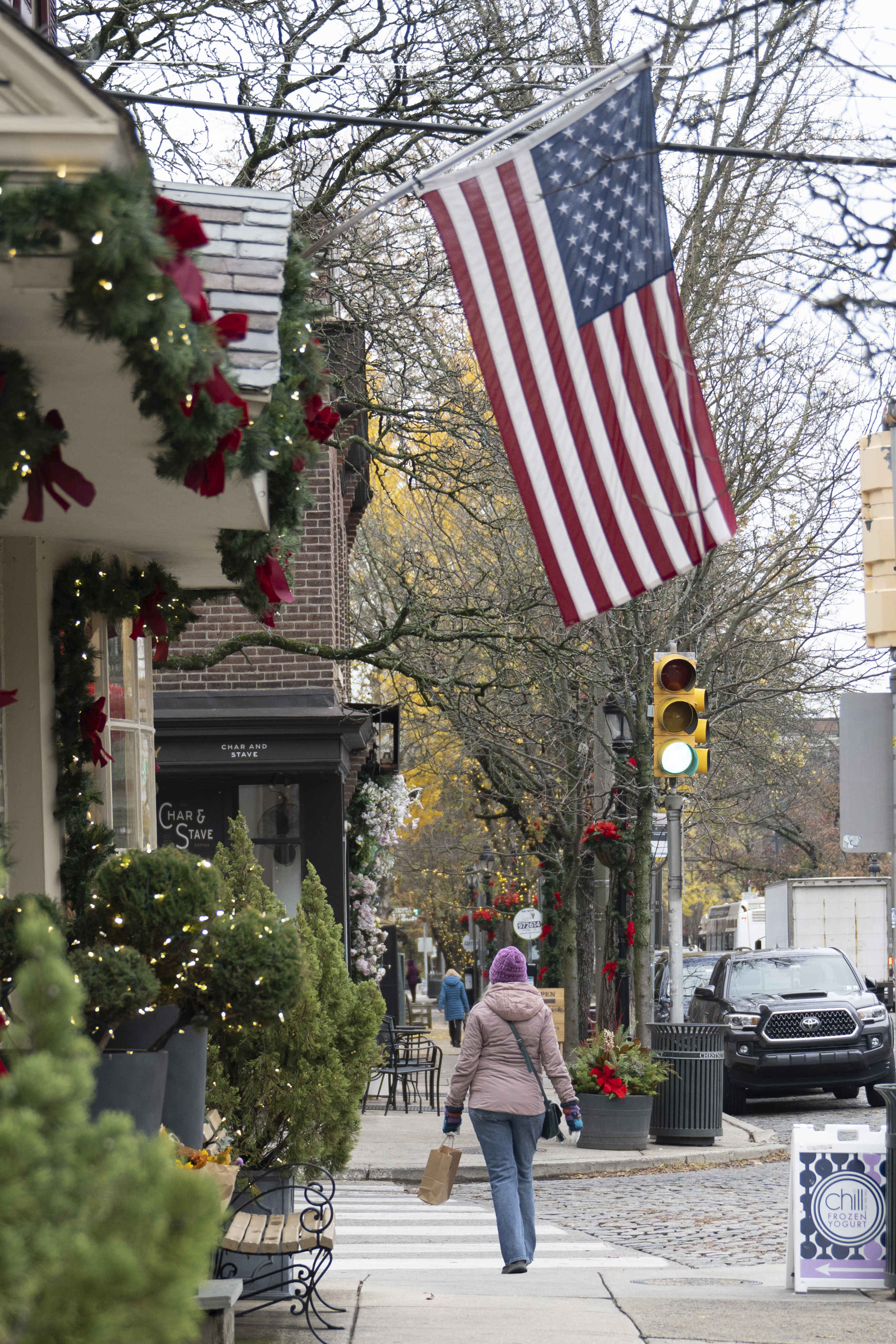
Businesses along Germantown Avenue in Chestnut Hill are decorated for the holidays.
Chestnut Hill business leaders and community members say they’re optimistic about the neighborhood’s continued evolution.
As Brien Tilley, a longtime resident and community volunteer, ate lunch inside Cosimo’s Pizza Cafe, he said the community is doing well. But, he added, “it could always do better. It’s always in transition.”
Nevel noted that restaurants require more capital to open than other businesses, so it can take awhile to fill those larger holes downtown.
“The economy is tough,” said Anne McNally, a fourth-generation owner of McNally’s, as she sat by the tavern’s front window overlooking Germantown Avenue. But in Chestnut Hill, she gets the vibe that the community “wants us to be successful.”
McNally and Goudy, of Kilian’s, both noted that their families bought their buildings decades ago. That has contributed to their longevity, both said, as has evolving with the customer base.
For the McNally family, that meant transitioning from a “bar-bar,” with no clock or phone, to a bar-restaurant that closes at 10 p.m. For Goudy, it meant soliciting online orders and walk-in business from out-of-town and even out-of-state customers whose older homes require unique hardware.
“Everything is changing,” Goudy said. “It’s important to keep changing and not to try to go back to where you were before.”
Even after more than two decades of operating a financial advisory in the Philadelphia region, Joel Steele is inspired when clients tell him they want to donate money to charity.
“But the problem is that it’s gotten much more difficult to know if your donations are going to the people you are directly trying to help,” said Steele, co-owner and financial adviser with Steele Financial Solutions in Cherry Hill. “Charity scammers are running rampant.”
Solicitors are on the phone, at your door, in your email, and in your mailbox.
“We’re constantly inundated with people looking to take our money and put it in their pockets for the wrong reasons,” Steele said. “This has led many people to back off — in part or in full from — donating to charities.”
One way to reduce the chance of misappropriation is to contact the charity directly, Steele said. “Yes, it’s easier to put cash in a tin can or buy things from a stranger, but these are more likely to end up in that person’s pocket.”
Also, he recommends, when you donate directly to charities, get a receipt and check with your income tax preparer or review deduction guidelines to understand potential tax benefits.
Evaluating Giving Tuesday solicitations
Everyone knows about Black Friday shopping, and recent years have seen the additions of Small Business Saturday and Cyber Monday in the days after Thanksgiving.
In 2012, Giving Tuesday joined the lineup, promoted by the 92nd Street Y in New York and the United Nations Foundation. It caught on quickly, as more organizations joined in on the opportunity to fundraise.
Giving Tuesday encourages generosity, but it’s also a time for scammers to ramp up fraud tactics. Scammers may use fake charities or misuse real ones to take advantage of donors.
If you get direct mail or a call, text, email, or social media message asking you to donate to a nonprofit, pause for a moment to dig deeper.
Your heart immediately wants to say “yes,” said Katherina ‘Kat’ Rosqueta, founding executive director of the Center for High Impact Philanthropy at the University of Pennsylvania. But unless you have personally been helped by that nonprofit or know someone who was, it’s hard to know whether the nonprofit is actually making a difference.
“That’s where your head comes in,” Rosqueta said. Consider running a quick Internet search for the charity’s name, along with “scam” or “complaints” to see if there have been any negative feedback or investigations, she said.
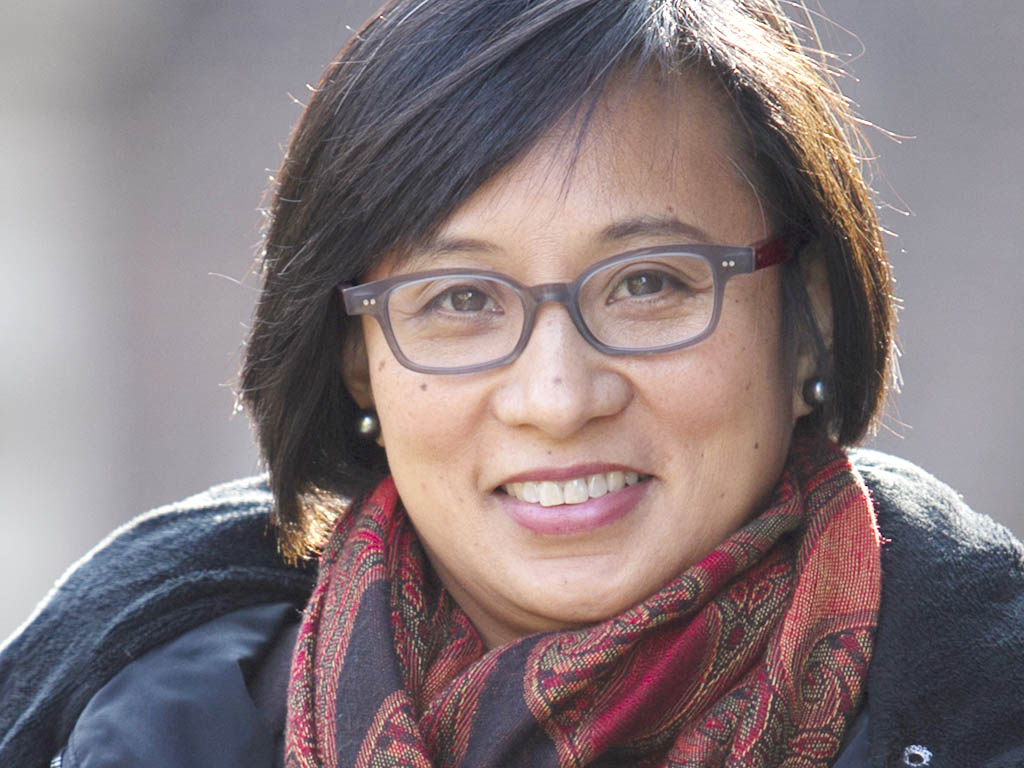
Katherina Rosqueta is the founding executive director of the Center for High Impact Philanthropy at the University of Pennsylvania.
Of course, most donors want to do more than just avoid fraud.
“They want their donation to make a real difference,” Rosqueta said.
Her center at Penn created a “High Impact Giving Toolkit,” updated each year and available for free. It highlights vetted nonprofits and provides links to organizations like Candid, Charity Navigator, and BBB Wise Giving Alliance, where potential donors can learn about organizations’ programs, team, and finances.
“Once you feel confident about a nonprofit’s work, consider donating online through an official, secure nonprofit website that uses HTTPS encryption,” Rosqueta said.
“Avoid links in unsolicited emails or social media posts. Credit cards and checks offer better fraud protection than debit cards or wire transfers,” Rosqueta said.
How to make online donations safer
The key to understanding fraud is that most scammers prey on your emotions.
“Fear, urgency, and promise of a quick win are some elements that exist in so many scam scenarios,” said Christopher Blackmore of TD Bank in Mount Laurel, who works in customer education in financial crimes prevention.
Blackmore said most “bad actors” will reach out and provide a number to call, link to click, or instructions for payment. “The goal is to make scenarios seem so real that you feel you must reply or something will happen.”
Financial industries should never ask for login credentials, passwords, or one-time pass codes, Blackmore said. “Technology is making it very difficult to identify what is real vs. fake.”
A text, email, or phone call is a very quick and easy way to contact a lot of people quickly and ask for a donation.
“These tactics are known as phishing, vishing, and smishing,” Blackmore said. A newer tactic, known as “Quishing,” utilizes QR codes.
When a donation ask includes a request for payments using gift cards, wires, and cryptocurrency, that should immediately raise caution, Blackmore said.
Donors might want to consider a third-party platform like PayPal, which safeguards sensitive financial information.
“Donors should stay mindful online and keep an eye out for the warning signs of common scams, including being wary of unexpected messages from strangers,” said Nick Aldridge, Global CEO of PayPal Giving Fund.
“We always encourage supporting causes you care about through trusted channels like PayPal Giving Fund, the PayPal Cause Hub, and Venmo Charity Profiles,” Aldridge said.
The electric-vehicle business has been an unpredictable venture. Analysts and automakers have long been forecasting the downturn of the EV market.
The end of EV rebates in September seems to have finally made for a downward trend in U.S. EV sales. But on the other side of the equation, EV charging stations are forging ahead, and EV charging suppliers are not losing their motivation.
Public and private investment have helped take one of the EV’s two biggest snags — range anxiety — out of the equation. And that’s despite the Trump administration’s failed attempt to halt a federal charging station program. (The as-yet unresolved snag: price.)
The U.S. Department of Energy’s Alternative Fuels Data Center’s website shows 16,579 high-speed charging stations across the United States with a total of over 71,000 charging ports. Pennsylvania has 382 stations with nearly 1,700 high-speed charging ports. New Jersey has 389 stations with more than 1,800 ports. The New York Times reported last month that EV fast-charging stations in the U.S. soared from 1,000 in 2015 to 12,000 now.
“Every time I open this map, the number has gone up,” said Ingrid Malmgren, senior policy director for the EV advocacy nonprofit Plug in America.
Private investment
There’s plenty of private investment in charging for EVs, and convenience stores are at the forefront.
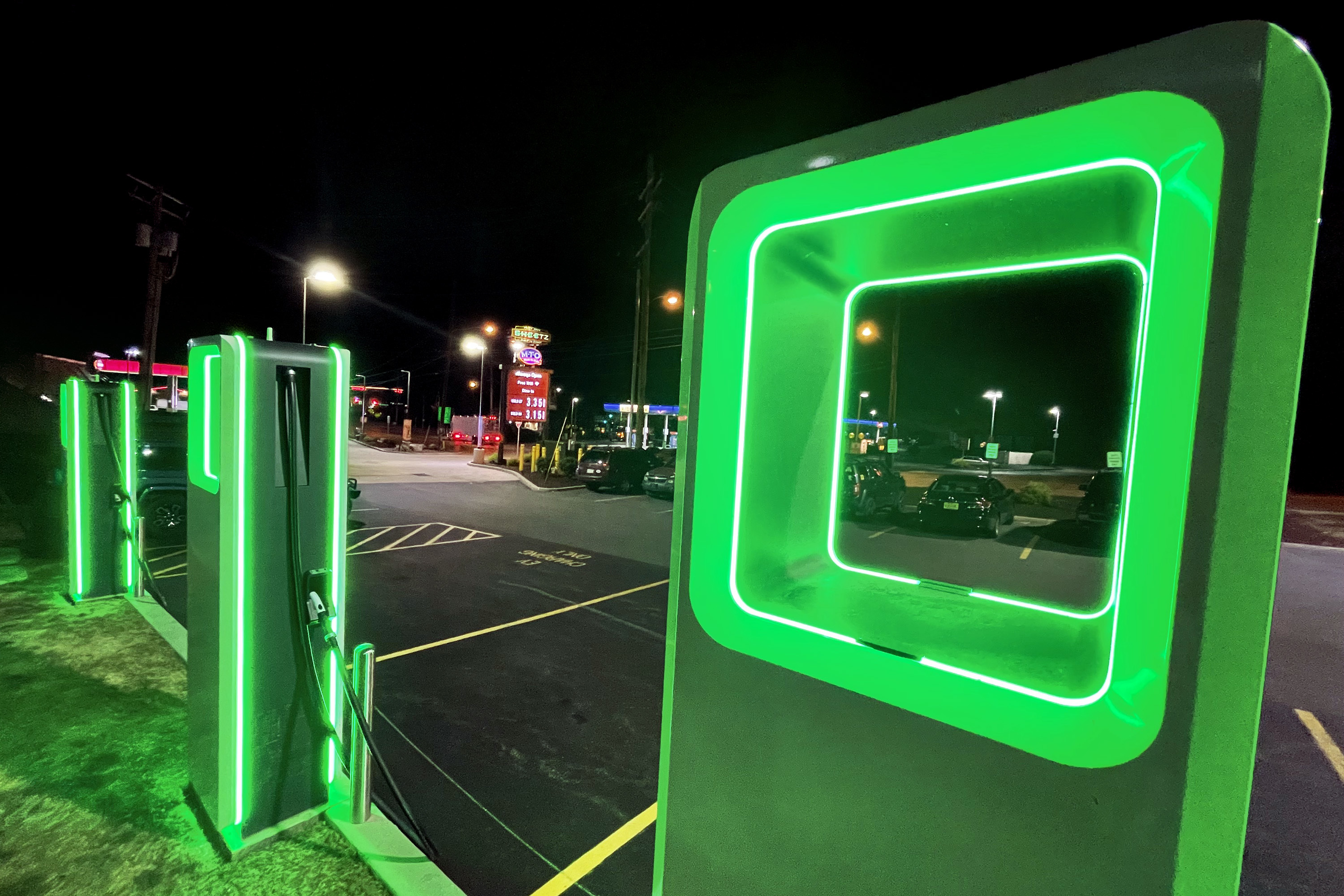
Wawa, Sheetz, and Pilot are deep into the EV charging game, and the Transportation Energy Institute — a research arm of the National Association of Convenience Stores — said this month that charging remains a focus of the industry.
“Despite recent news indicating a slowdown in vehicle electrification, the data is clear that electric vehicles will continue to gain ground, although at a slower than anticipated rate,” said a white paper released earlier this month. “This means that the demand for reliable charging infrastructure will also continue to grow.”
Wawa currently has 210 EV charging locations, Sheetz more than 125, and Pilot 218.
Tesla vehicles at charging stations in 2022 at a Wawa gas station in Clearwater, Fla.
“The convenience industry is an industry built on mobility, so, yeah, they will have to figure this out,” said Karl Doenges, executive director of the Transportation Energy Institute’s Charging Analytics Program and liaison to the EV industry for NACS. “They’re going to deal with refined products, and they’re going to deal with electrons.”
EV owners like Peter Doehring of Kennett Square are noticing the changes. He has owned four EVs in total since 2019 and currently has a Ford Lightning, Tesla Model Y, and a VW ID. Buzz.
“We’ve done a bunch of road trips for each of the vehicles,” Doehring said. “So for the Tesla, that network was not great when we started — like [when] we had a long-distance trip we really had to plan in advance.”
Now, though, “I feel pretty comfortable I can find a charger almost anywhere unless I’m really out of the major areas,” Doehring said.
Outside the Tesla network, though, it’s not so good.
Public investment
The Trump administration in February froze funding for the $7.5 billion National Electric Vehicle Infrastructure (NEVI) program and Charging and Fueling Infrastructure (CFI) grant program, part of the Bipartisan Infrastructure Law passed in 2021. The NEVI program planned a network of charging stations every 50 miles on major highway corridors, and CFI will fill in EV charging gaps.
The end of the NEVI program didn’t survive a court challenge after 14 states sued. A judge in the Western District of Washington ordered funds to be released in late June, according to NPR.
Pennsylvania was among states that forged ahead regardless because it already had its funds obligated for its 86 stations. In March, eight charging stations were in place and operational; 22 are online now, according to PennDot, which expects another dozen stations online shortly. (True to Malmgren’s word, this number rose twice in two days the week before Thanksgiving.)
Still, there’s a question of how effective federal dollars will be.
“Frankly, if you can’t make a charger work without government subsidies, then you need to take a hard look if it’s a good investment regardless, because at some point it has to stand on its own two feet,” Doenges, of the Transportation Energy Institute, said.
But chargers in remote areas become a lifeline for travelers. The more recent NEVI-funded stations arose in remote, highway-adjacent places like Chambersburg, Altoona, and Slippery Rock, and in Clearfield, Clinton, and Lebanon Counties.
The Department of Transportation did announce slightly adjusted rules in August, allowing states more control, specifically easing the rule that stations must be available every 50 miles.
Electric-vehicle charging stations at a Bedford gas station in 2021, just off the milepost 145.5 exit of the Pennsylvania Turnpike.
The new Trump administration guidance “has been helpful‚” said Andrew Wishnia, a senior vice president at Boundary Stone Partners, the former deputy assistant secretary for climate policy at the U.S. Department of Transportation, and a principal architect of the Bipartisan Infrastructure Law.
Wishnia said the more flexible rules make it easier for states to address their individual needs, pointing in particular to Wyoming’s approved NEVI plan as one example. That sparsely populated state popular with tourists was able to count privately funded charging stations already in place along some corridors in its plan and instead build more public chargers near national parks and other sites. “It’s totally consistent with the design and architecture of a national EV charging network,” he said.
A PennDot spokesperson said there has been no change in the map for Pennsylvania based on those new guidelines.
The end of rebates
Two months after EV rebates ended, EV futures can appear quite bleak. Malmgren said some reports show October sales were down 50% compared to September, and average prices in October hit an all-time high.
Car and Driver reported sales of the Hyundai Ioniq 5 dropped 63% and the Kia EV6 was down 71%.
Getting a clear picture before the end of 2025 is difficult because not all carmakers report monthly sales. Also, the drop-off in October followed a spike in September, as buyers rushed to grab rebates.
Still, consumer interest remains strong. A Nov. 7 J.D. Power report shows that 24.2% of active new-vehicle shoppers “very likely” will consider buying or leasing an EV in the next 12 months, up from 21.6% in September, the highest level since January.
“We’ll see the shakeout of supply and demand in the next year,” said Sam Fiorani, vice president of AutoForecast Solutions in Chester Springs.
Peter Doehring plugs the charger into his electric Volkswagen ID. Buzz van.
Federal funds slowdown
So despite the turmoil and changes of 2025, 2026 holds the promise of more EV charging money for Pennsylvania.
This second part of the NEVI program is designed to fill in the gaps around the original 86 NEVI stations along major highway corridors. PennDot will accept new proposals until Jan. 30, according to a PennDot spokesperson.
Public or private, adding charging stations remains important, even to those who have already purchased EVs.
John Fetters of Kennett Square bought his 2023 Hyundai Ioniq 5 new. He loves the smooth ride and being able to start from home with a full charge, thanks to a simple 220-volt outlet he had installed. And yet he relies on the family’s Subaru Outback for long trips.
“As much as we’re loving the EV, I’m just not always having full confidence on availability and accessibility of charging stations,” Fetters said.
Still, the selling points of EVs for consumers like Fetters and Doehring show there’s still room for growth.
“We definitely believe that EVs are the future,” Malmgren said. “The rest of the world is moving forward with EVs. We’d like to see policies that accelerate it.”
How they’re communicated matters, according to a recent study by Sunil Wattal, associate dean of research and doctoral programs at Temple University’s Fox School of Business.
Wattal found that users of an online forum, Stack Overflow, were more likely to return after their submissions were rejected if they had received a detailed reason for their rejection.
Stack Overflow has been known for “treating its contributors harshly” because of its “rigorous quality control,” the study said, but in 2013, its rejection notice language changed to be more explanatory. Wattal compared the before and after and found that newusers were more likely to return when they knew more about why their submission was rejected.
Wattal’s findings were recently published in the study “Not Good Enough, but Try Again! The Impact of Improved Rejection Communications on Contributor Retention and Performance in Open Knowledge Collaboration.” The coauthor of the study is Aleksi Aaltonen of the Stevens Institute of Technology in Hoboken.
While Wattal’s study focused on rejection in one online platform, he says the findings could apply in many other settings. The Inquirer spoke with him about the implications for rejection in the workplace. The conversation has been edited for length and clarity.
What was your main finding?
We found overall that the platform was better off — that Stack Overflow is better off — because it increased the quantity of the postings but did not decrease the quality. So there was no significant impact on the quality of posting. The net effect is the platform gained more content without really losing any quality.
So you found that people returned more often if they were told why they were being rejected.
Yes, the likelihood of returning was much higher if they were told more clearly why they were being rejected.
Obviously nobody likes rejection, but sometimes, if they feel that they know the reason why it was rejected and they get a sense that they were being treated fairly, I think that kind of softens the blow in a way.
What can your findings tell us about communicating rejection in the workplace, such as not getting hired or getting laid off?
You see rejection in all kinds of different applications — in business, in society. Rejections are everywhere.
E-commerce sites like Amazon, Etsy, eBay, every now and then, they encounter a product which doesn’t comply with either the ethical standards or for some other reason, and they have to take down some of those listings. Or even in companies, somebody thinks they come with a great idea, and their boss just says, No, this is not great.
Even in those cases, I think it really helps if you give them an explanation of why their idea was rejected, and it encourages them to come back in the future and still be engaged with either the organization or the website.
In customer service, sometimes people have to hear a “no,” that their complaint isn’t legitimate, or they’re not getting that refund. In those cases, communicating well and giving a more informative explanation of why they’re being denied is always a good idea.
In your study with Stack Overflow, that platform wants users to keep coming back to the website to contribute to the online forum, so there’s a vested interest in sending a rejection notice that would get people to return. In business, what kind of incentive does an employer have to explain a rejection?
In the case of, say, for example, job postings, maybe that applicant was not a good fit with that particular posting, but they could still be valuable to the company in a different role.
It’s not a good idea, basically, to burn bridges, and it doesn’t cost a whole lot to be nice or to give a decent explanation. In terms of the cost-benefit analysis even, it’s always a good idea to give a more informative explanation just to maintain the relationship.
Does it matter whether it’s a human that’s delivering a rejection notice, versus a computer or automated response, in terms of the outcome?
There’s a lot of work going on right now about exactly these things, like: How do people feel about interacting with computers when computers make decisions that affect their lives in some way? I’m not sure exactly if anybody has studied rejections by computers, but I would expect that there would be some difference in the way people take rejection from humans versus computers.
Some companies use applicant tracking systems for hiring, which screen applicants and filter candidates out. And we know that some applicants never hear back about their application. Can your study tell us anything about the effect of ghosting?
Especially in some cases where companies receive tens of thousands of applications [for just a few open roles], probably, from a very myopic perspective, they don’t care about a lot of them. But again, from an overall brand perspective, it doesn’t take a whole lot to send out that rejection in a timely way, in a way that seems fair, to explain why it was rejected — maybe there were other better applicants, or it was not the right fit. People want to know so that they can maybe improve in the future.