Category: Business

Business news and market updates

  • Mark Hallett, world-renowned neuroscientist and groundbreaking researcher, has died at 82

    Mark Hallett, world-renowned neuroscientist and groundbreaking researcher, has died at 82

    Mark Hallett, 82, of Bethesda, Md., world-renowned scientist emeritus at the Maryland-based National Institute of Neurological Disorders and Stroke, former chief of the clinical neurophysiology laboratory at Brigham and Women’s Hospital in Boston, associate professor of neurology at Harvard Medical School, groundbreaking researcher, prolific author, mentor, and world traveler, died Sunday, Nov. 2, of glioblastoma at his home.

    Dr. Hallett was born in Philadelphia and reared in Lower Merion Township. He graduated from Harriton High School in 1961 and became a pioneering expert in movement, brain physiology, and human motor control.

    He spent 38 years, from 1984 to his retirement in 2022, at the National Institutes of Health in Bethesda and was clinical director and chief of the medical neurology branch of the National Institute of Neurological Disorders and Stroke. He and his colleagues examined the human nervous system and the brain, and their decades of research helped doctors and countless patients treat dystonia, Parkinson’s, and other neurodegenerative diseases.

    “When I met him, I was in bad shape,” a former patient said on Instagram. “I’d also been told … that no one would ever figure out the source of my illness. … He and his team diagnosed me, and thereby, I’m pretty sure, saved my life”

    Dr. Hallett told the Associated Press in 1992: “The more that we know about the way these cells function, the better off we are.”

    He founded the NINDS’ human motor control section in 1984, cofounded the Functional Neurological Disorder Society in 2018, and served as the society’s first president. He cultivated thousands of colleagues around the world, and they called him a “giant in the field” and a “global expert” in online tributes.

    Barbara Dworetzky, current president of the FNDS, said Dr. Hallett was a “brilliant scientist, visionary leader, and compassionate physician whose legacy will endure.” Former NIH colleagues called his contributions “astounding” and said: “The scope and impact of Dr. Hallett’s work transcend traditional productivity metrics.”

    He chaired scientific committees and conferences, and supervised workshops for many organizations. He earned honorary degrees and clinical teaching awards, and mentored more than 150 fellows at NIH. “Our lab’s demonstration of trans-modal plasticity in humans was another milestone,” he told the NIH Record in 2023. “And, of course, I am particularly proud of the fellows that I have trained and their accomplishments.”

    In a tribute, his family said those he mentored “valued his intellect, his encouragement, his kindness, and his humor.”
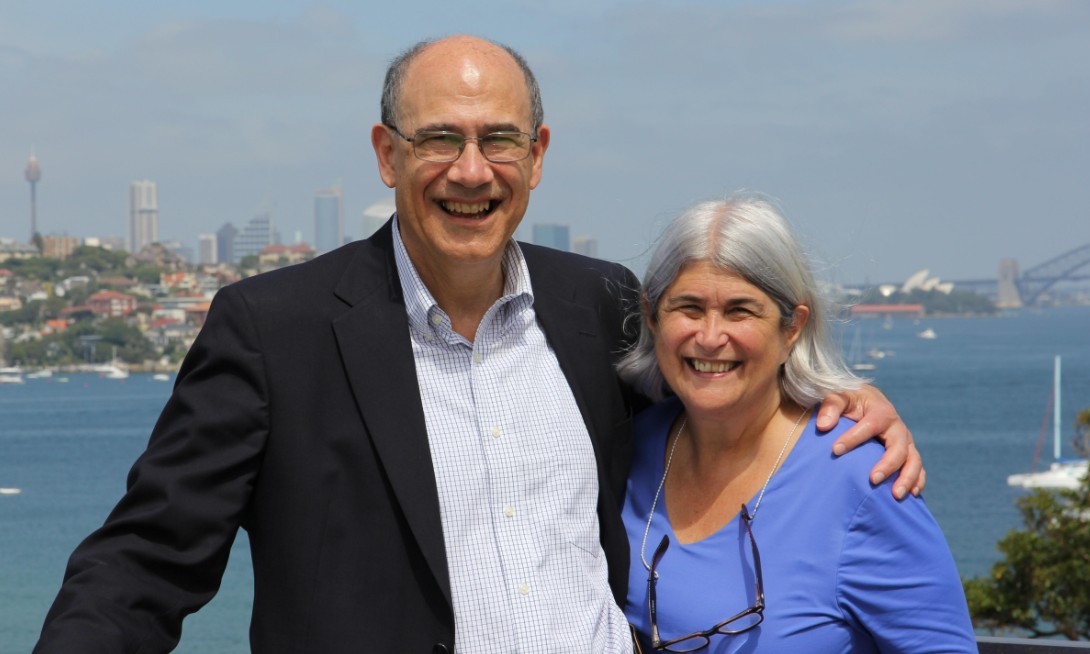
    Dr. Hallett and his wife, Judy, married in 1966.

    Dr. Hallett had planned to study astronomy at Harvard University after high school. Instead, he earned a bachelor’s degree in biology in 1965 and a medical degree at Harvard Medical School in 1969. He completed an internship at the old Peter Bent Brigham Hospital, now part of Brigham and Women’s, and joined a research program at the NIH in 1970 to fulfill his military obligation during the Vietnam War.

    A fellowship in neurophysiology and biophysics at the National Institute of Mental Health sparked his interest in motor control, and he served a neurology residency at Massachusetts General Hospital in 1972 and a fellowship at the Institute of Psychiatry in London in 1974.

    He returned to Brigham and Women’s in 1976 to supervise the clinical neurophysiology laboratory and rose to associate professor of neurology at Harvard. In 2019, he earned the Medal for Contribution to Neuroscience from the World Federation of Neurology, and former colleagues there recently said his work “had a lasting global impact and shaped modern clinical and research practice.”

    He also studied the scientific nature of voluntary movement and free will. He wrote or cowrote more than 1,200 scientific papers on all kinds of topics, edited dozens of publications and books, and served on editorial boards.

    He was past president of the International Federation of Clinical Neurophysiology and the International Parkinson and Movement Disorder Society, and vice president of the American Academy of Neurology.

    At Harriton, he was senior class president, a star tennis player, and a leading man in several theatrical shows. “The only time he disobeyed his parents,” his family said, “was when he decided to leave Philadelphia to attend Harvard College.”

    Mark Hallett was born Oct. 22, 1943. The oldest of three children, he was a natural nurturer, a longtime summer camp counselor, and the winner of an Alfred P. Sloan Foundation national scholarship award in high school.

    He grew up in Merion and met Judith Peller at a party in 1963. They married in 1966 and had a son, Nicholas, and a daughter, Victoria.

    Dr. Hallett (center) was a star on the Harriton High School tennis team.

    Dr. Hallett was an avid photographer and a master of the family group shot. He championed a healthy work-life balance, and his family said: “He eagerly built sand castles, skipped stones, and started pillow fights. His easy laugh was contagious.”

    He enjoyed hiking, biking, jazz bands, and organizing family vacations. “He was a natural leader,” his son said, “self-assured and patient of others, with a deep sincerity and a desire to help people.”

    His daughter said: “People were constantly turning to him for medical advice, and he was always willing and eager to help.”

    His wife said: “He was very high energy. He brought out the best and the most in young people. He made them feel good about themselves.”

    Dr. Hallett traveled the world on business and family vacations.

    In addition to his wife and children, Dr. Hallett is survived by two granddaughters, a sister, a brother, and other relatives.

    A memorial service is to be held later.

    Donations in his name may be made to the Functional Neurological Disorder Society, 555 E. Wells St., Suite 1100, Milwaukee, Wis. 53202; and the International Parkinson and Movement Disorder Society, 555 E. Wells St., Suite 1100, Milwaukee, Wis. 53202.

  • The affordability squeeze has consumers gloomy

    The affordability squeeze has consumers gloomy

    Many Americans are deeply unhappy with their financial situation, and with good reason. They are grappling with a serious affordability squeeze.

    Prices for many things, from groceries to car insurance, are high and continue to climb. Meanwhile, pay increases are slowing as job growth has stalled and unemployment is on the rise.

    Americans’ unease with their finances is apparent in the long-running University of Michigan survey of consumer sentiment. This survey of consumers’ financial well-being has been conducted monthly since the early 1950s, and in the past few weeks, the responses have been about as weak as ever.

    The survey likely overstates consumers’ collective gloominess, as political biases are increasingly shaping people’s feelings about almost everything, including their finances. Democrats have been more glum than Republicans since President Donald Trump’s election, whereas the opposite was true under President Joe Biden. Even so, the survey results send a loud and clear message.

    The angst over affordability was also front and center in the recent election results. The cost of living was far and away the top concern of voters in New York City’s mayoral race, and in the governors’ races in New Jersey and Virginia. The high and rising cost of electricity, healthcare, and housing were especially prominent in voters’ decisions.

    The affordability squeeze has been a long time in the making.

    Prices jumped during the COVID-19 pandemic, as global supply chains and labor markets were upended. Then, the Russian invasion of Ukraine drove up food prices, and at the height of the economic fallout from that war, the cost of a gallon of gasoline reached a record $5 in some U.S. locations.

    Consider the increases in consumer prices for some basic necessities since the pandemic. Healthcare costs are up by 16%, childcare by 18%, groceries and rent by 28%, used cars by 30%, electricity by 34%, and car maintenance by 41%.

    Overall, prices across all goods and services are up by 24%, just about double what the Federal Reserve deems as optimal inflation.

    Adding to Americans’ financial pain, the Fed aggressively raised interest rates in an effort to slow the economy down and rein in the high inflation. This exacerbated the affordability squeeze, particularly with the cost of homeownership.

    Prior to the pandemic, the typical monthly mortgage payment was no more $1,000. Once the Fed had finished increasing rates, the monthly payment was well over $2,000. Homeownership, a key part of Americans’ definition of financial success, is completely out of reach for most.

    Despite all of this, it did appear, coming into this year, that the worst of the affordability squeeze had passed. Inflation was quickly receding and headed back toward the Fed’s inflation target. Fed officials were so confident in this forecast that they began cutting interest rates.

    But, alas, the forecast was wrong. The Trump administration’s higher tariffs, highly restrictive immigration policy, and broader de-globalization efforts have upended that outlook.

    De-globalization scrambles global supply chains, which raises costs, reduces competition, weakens productivity growth, and leads to labor shortages. Inflation now appears set to remain uncomfortably high for the foreseeable future. The affordability squeeze is intensifying again, leading to renewed anguish among consumers and voters.

    De-globalization is also weighing heavily on the job market and incomes, adding to the country’s affordability woes. Job growth has come to a virtual standstill, as businesses, unsure of how the tariffs and other policies will play out, enact hiring freezes. They aren’t all laying off workers — that would be a recession — but they’ve done everything but.

    Unemployment remains low, but it is steadily increasing, particularly for younger workers seeking new employment opportunities. Wage growth is thus throttling back.

    The upcoming cuts to federal government benefits for lower-income households, included as part of the One Big Beautiful Bill Act, will worsen the affordability problem. Tax subsidies to help pay for the cost of health insurance under the Affordable Care Act have been scaled back, and cuts to the Medicaid program and SNAP, the food assistance program, are looming. As these programs are cut back, the cost of living for families reliant on them will increase.

    Congress appears to have taken the election results to heart and seems to be focused on ways to ease the affordability squeeze. Lawmakers are holding hearings on how to reduce the financial burden on Americans from electricity, food, healthcare, and housing costs. But this won’t be easy, as there are no slam-dunk legislative solutions.

    Trump has proposed providing a $2,000 stimulus check to families with an annual income of less than $100,000 — similar to the checks sent during the pandemic. Of course, like then, this might merely provide temporary financial relief, as it boosts consumer spending, pumps up inflation, and ultimately worsens the affordability squeeze.

    The quickest way to address the affordability squeeze is to relax tariffs and immigration policies. The president has taken this approach on a case-by-case basis, reducing tariffs on bananas, beef, and coffee, and halting some ICE raids on agricultural workplaces that heavily rely on immigrant workers.

    However, it remains to be seen if he will further backtrack on his signature economic policies. If not, the affordability squeeze and the tough financial times facing many Americans are sure to persist.

  • The ‘supercenter’ effect can fuel overconsumption

    The ‘supercenter’ effect can fuel overconsumption

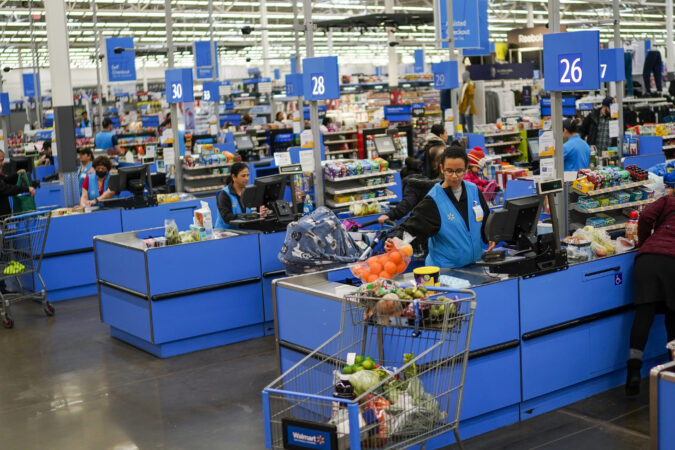
    Imagine walking out of a Walmart, Target, or Costco. As you push your large shopping cart to your car, you ask yourself: Did I really need all that stuff?

    The answer is you probably didn’t.

    In a recent study, my coauthors, Lina Wang and Sungho Park, and I found that the presence of supercenters — large retailers that sell groceries alongside general merchandise — results in a significant uptick in consumer waste due to overpurchasing.

    These supercenters often sit on lots in excess of 150,000 square feet. But figuring out how all that real estate affects people’s shopping habits — if it does at all — is tricky. That’s because a lot of factors influence how much people buy on a single shopping trip.

    To answer this question, we looked at the impact of the spread of Walmart supercenters across the U.S. over a decade, using a technique called difference-in-differences — an analytical method in which we compared consumer waste trends in counties that saw supercenter launches with “matched” counties that did not. This matching ensured that counties were otherwise closely comparable on socioeconomic factors such as housing, income, and education.

    Our analysis showed that the launch of a supercenter results in an increase in consumer waste of up to 7%. Furthermore, this increase in consumer waste is larger for new supercenter openings compared with conversions, when existing regular stores are expanded into large-format ones.

    Why it matters

    For decades, neighborhood stores across the U.S. were edged out by large-format retailers: department stores, supercenters, and shopping malls. Although there is evidence that many of these big-name retailers are beginning to look toward smaller stores, the shopping landscape remains dotted by supercenters.

    And these large stores stimulate mass consumption through gradual shifts in consumer behaviors. For example, in their attempt to generate more sales, large-format retailers often underprice smaller neighborhood stores.

    Take, for example, Walmart’s “everyday low price” strategy, which is key to its business model. This pricing strategy offers shoppers a largely consistent year-round low price rather than relying on occasional sales and discounts.

    Further contributing to overpurchasing is the supercenters’ typical location, which tends to be away from residential areas. Naturally, in their effort to avoid multiple trips, consumers tend to maximize the utility of each visit by making their basket sizes larger.

    Unfortunately, this overpurchasing often leads to waste as more goods reach expiration date or sit unused in people’s homes.

    While this may be a profitable strategy for retailers, it’s bad for society and the environment and creates billions of dollars in waste. To put this into context, the United States generates close to 300 million tons of consumer waste every year, and then spends billions of dollars managing this waste.

    What still isn’t known

    Now that we have measured the “supercenter effect,” we are keen to look at potential solutions to this problem. Some existing solutions are based on implementing policies that encourage behavioral shifts in consumers. For example, many cities have adopted a pay-as-you-throw policy that charges people based on the volume of waste generated.

    Other solutions are more structural, such as bringing back neighborhood stores and developing stronger circular economy channels. For example, neighborhood stores can play an important role in mitigating the supercenter effect and could allow for smaller, more frequent shopping trips and significantly less waste.

    In many cities, initiatives promoting local vendors and stores are gaining momentum. Such solutions would not only encourage sustainable consumption but also have benefits for local economic growth by promoting small businesses that have historically accounted for 62% of net new job creation.

    A second solution entails leveraging the “reuse economy,” which can provide a back-end channel for circulating surplus and used goods. While both offline and online reuse channels exist – through the likes of thrift stores, food banks, and Facebook Marketplace, for example — they currently remain vastly underused.

    Identifying and aggressively implementing such solutions might turn out to be both economically meaningful and environmentally beneficial. But more work needs to be done to figure out which solutions are more effective, and why.

    Suvrat Dhanorkar is an associate professor at the Georgia Institute of Technology. This article is republished from The Conversation. Read the original article at theconversation.com/us.

  • 2026 BMW 228i xDrive: Screen grab

    2026 BMW 228i xDrive: Screen grab

    2026 Audi S3 Prestige vs. 2026 BMW 228i xDrive Gran Coupe: Battle of the little racers.

    This week: BMW 228i

    Price: Starts at $41,600 for both the 2025 and 2026 model years. Advantage, BMW.

    Conventional wisdom: Car and Driver liked the “Refined balance of ride and handling, eager powertrains, purposeful near minimalist interior design and materials,” but not the “compromised cargo and rear passenger space,” and that the “front and rear fasciae appear a bit forced on otherwise sleek bodywork.“

    Marketer’s pitch: “Strikingly sporty.”

    Reality: “Striking.” I was afraid of striking things as I tried to make simple adjustments.

    Catching up: Last week Mr. Driver’s Seat enjoyed the Audi S3 — until he landed on the highway, or tried to squeeze in some luggage.

    What’s new: The 2 Series received more horsepower and a new look for 2025, and carries on pretty much unchanged for 2026.

    Competition: In addition to the S3, there are the Acura Integra, Cadillac CT4, and Mercedes-Benz CLA.

    Up to speed: The 2 Series’ speed would be the first question mark. The 2.0-liter TwinPower turbo provides 241 horsepower, almost 100 fewer than last week’s Audi S3; would it keep up?

    Yet the version tested gets to 60 mph in 5.1 seconds, according to Car and Driver, just 0.7 seconds slower than the S3. A more souped-up model with a 3-liter six-cylinder engine gets there in just 3.6 seconds.

    Shifty: The seven-speed dual-clutch transmission is super smooth, worlds above any attempt from Kia or some other inexpensive offerings.

    The slider PRND operator looks cool but doesn’t offer much feel or add any usable space. Shift via the steering wheel paddles.

    On the road: Handling is quite nice, perhaps in part because of the M Sport Package, which adds adaptive suspension along with other decals and stuff, plus the aforementioned dual-clutch.

    In the first of several “improvements” designed to make the interior feel more high tech, Sport mode requires finding the button on the console touch pad (no solid way to feel your way to it) and then pressing the large icon on the screen. So there’s two instances you’re looking away from the road while trying to operate the vehicle.

    But at least compared to last week’s Audi S3, the BMW doesn’t rattle your brain on the highways at all.

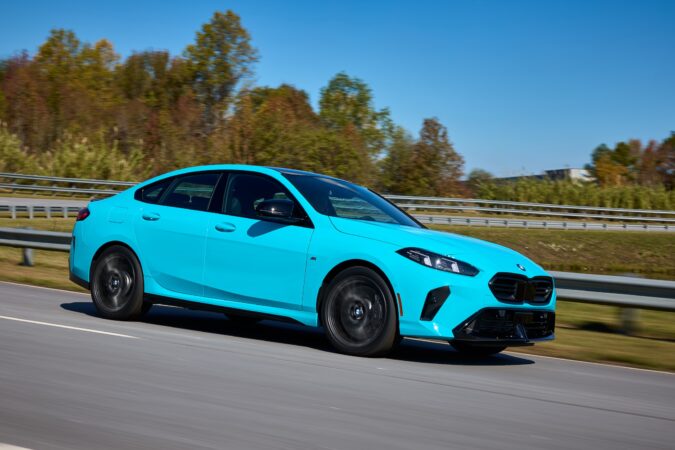
    The cockpit of the 2025 BMW 2 Series looks as inviting as ever but operation does not live up to expectations.

    Driver’s Seat: The sport seats that come with the M Sport package are supportive and comfortable, and I never adjusted it beyond forward and backward. No annoying lumbar or grippy seat corners.

    The materials all feel upscale, an improvement over the X2 SUV I tested this year. Everything about that small SUV felt cheap and plasticky.

    The materials seem especially scuff prone, though. I brushed out the carpet and seats when I was done with my loan and it seemed the bristles and the plastic handle left marks on the seat and in the plastic door frame bottom. Be sure this fabric fits your lifestyle.

    Friends and stuff: Sturgis Kid 4.0 laughed at how tight the rear seat was. He sat stretched into the middle just to make it workable.

    He’s not wrong. My own head was squashed up against the ceiling in the corner, although foot room and legroom were pretty good. Entry and exit are challenging because the door is narrow and the seat actually sits up kind of high (not something I expected to write in this review). The middle seat is compromised by the hump and the console and the corner people trying to find a place for their heads.

    Cargo space is 13.8 cubic feet, far higher than the S3.

    Play some tunes: Sound from the Harman Kardon system might be better than I heard, but I could never find the audio tuning adjustment when I had CarPlay activated. It would only show up in the touchscreen when I left CarPlay off, so it was difficult to make the most of my favorite songs. B-, because why make it so hard?

    BMWs once had a superb dial and button system for operating the infotainment, and some models still have it. It takes a bit of practice but you can really run it by feel after a while. Now it’s all about the touchscreen, with a roller dial on the console for volume.

    Keeping warm and cool: The temperature controls appear as small +/- adjustments at the corners of the touchscreen. There’s no way to feel for them, and your eyes are off the road while you adjust.

    But wait! There’s more! To make further HVAC adjustments, click on the tiny fan icon between them to open up all the controls. These are fairly clear, but I’ve already looked at the screen and away from the road twice now, just to cool off (or warm up).

    Fuel economy: I neglected to note the fuel economy. (Hangs head in shame, then blames BMW for the confusion.) The window sticker says 30 mpg combined, but that seems optimistic.

    Where it’s built: Leipzig, Germany. Germany is the source of 24% of the car’s parts. None of it comes from the United States or Canada.

    How it’s built: Consumer Reports gives the 2 Series Gran Coupe a predicted reliability rating of 3 out of 5.

    In the end: The 228i was definitely fun to drive, but too many drawbacks made me long for the real delight of the S3. Just pack ibuprofen for the highways.

  • Campbell’s exec loses job after alleged racist comments and claims of 3D-printed chicken, company says

    Campbell’s exec loses job after alleged racist comments and claims of 3D-printed chicken, company says

    Campbell’s Co. said on Wednesday that a vice president reportedly caught on an audio recording disparaging the Camden-based soup giant’s products — claiming the company uses bioengineered meat, which Campbell’s denies — and allegedly making racist comments is no longer an employee.

    The allegations emerged after Robert Garza, another former employee, filed a lawsuit last week claiming that he was fired for reporting in January to his manager that Martin Bally, who had a position at Campbell’s as chief information security officer, had made problematic comments to him during a meeting in November 2024.

    According to the five-page lawsuit, Bally “made several racist comments about Indian workers at the company.”

    Bally also told Garza that Campbell’s products were highly processed food for “poor people,” according to the lawsuit, which was filed in Michigan, where both Garza and Bally live and worked for the company.

    Garza, who worked as a cybersecurity analyst for Campbell’s, did an interview last week with WDIV-TV, an NBC affiliate in Detroit, and provided at least some portions of secretly recorded audio of the meeting to the station for broadcast.

    The audio recording is not mentioned in the lawsuit. However, it is legal in Michigan for one party in a conversation to make a recording without the consent of the other party.

    The person in the recording, alleged to be Bally, says: “We have s— for f— poor people.” The speaker then acknowledges rarely buying Campbell’s products, saying they are unhealthy.

    The voice says that Campbell’s uses “bioengineered meat. I don’t wanna eat a piece of chicken that came from a 3D printer.” The speaker then goes on to make racist comments about coworkers.

    “After a review, we believe the voice on the recording is in fact Martin Bally,” Campbell’s Co. said in a statement on Wednesday.

    “The comments were vulgar, offensive and false, and we apologize for the hurt they have caused. This behavior does not reflect our values and the culture of our company, and we will not tolerate that kind of language under any circumstances,” the company said.

    “As of November 25, Mr. Bally is no longer employed by the company,” Campbell’s said.

    Bally could not be reached for comment on Wednesday.

    Campbell’s said in its statement that the company makes food from high-quality ingredients, including real chicken meat.

    “We’re thankful for the millions of people who buy and enjoy our products and we’re honored by the trust they put in us,” the company said.

    Campbell’s has a new page on its website to answer questions about its food that were raised by the former vice president’s alleged comments.

    One section responds to the question: “Is Campbell’s chicken 3D printed?”

    “No. We do not use 3D-printed chicken, lab-grown chicken, or any form of artificial or bioengineered meat in our soups,” the website said.

    On Monday morning, James Uthmeier, the attorney general of Florida, responded to a post on X from an account apparently based in Ohio raising concerns about “FAKE MEAT that comes from a 3-D printer.”

    Uthmeier said: “Florida law bans lab-grown meat. Our Consumer Protection division is launching an investigation and will demand answers from Campbell’s.”

  • Trail project planned near King of Prussia Mall gets new funding

    Trail project planned near King of Prussia Mall gets new funding

    A trail planned in Montgomery County is getting new funding to take the project to the next step.

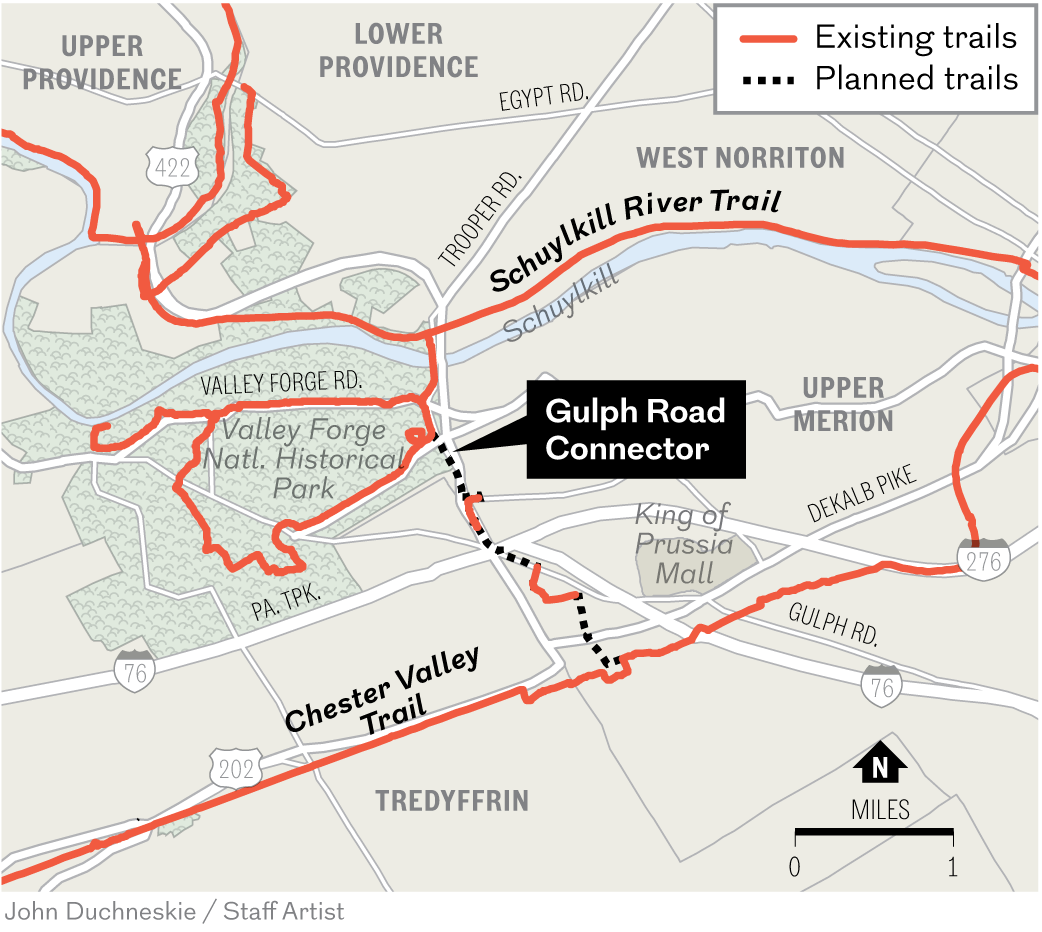
    The “Gulph Road Connector,” as it is currently called, is slated to connect to the Chester Valley Trail near the King of Prussia Mall, cross through Valley Forge National Historical Park, and link with the Schuylkill River Trail when completed.

    The project was recently awarded a three-year $326,900 grant from the William Penn Foundation, which will begin in January, said Eric Goldstein, president and CEO of the King of Prussia District, which is leading the project. The official name of the trail has not been determined.

    The influx of funds is slated for education, advocacy, and marketing, said Goldstein, who noted that the foundation is supporting “efforts to build a coalition of advocates” for the trail. The money will not be used for design or construction.

    Segments of the planned 2.8-mile trail connector are in stages of design and construction, with some already built, Goldstein said.

    “What we’re trying to do is ultimately fill in the blanks to make the 2.8-mile section complete,” he said.

    Goldstein said the new funds will allow the King of Prussia District to work with different partners along the trail. The aim is to build a coalition and raise awareness of the proposed trail, which ideally would lead to more grant money down the line for design and construction, he said.

    Map of the planned Gulph Road Connector trial near King of Prussia.

    The new funding is “the impetus for this trail to start moving toward completion,” said Molly Duffy, executive director of the Valley Forge Park Alliance, a partner organization in the trail’s development.

    There is no estimate yet for the total cost of the project, Goldstein said.

    The project is part of the Circuit Trails, a regional network that aims to have more than 850 miles of trails through nine counties. Once the trail is built out, Goldstein said, he expects it will be managed by multiple entities, depending on the section.

    He hopes to be able to complete the trail in the next 10 years.

    Some parts of the trail are “enormously complex,” he noted, adding that pedestrian bridges over sections of highway would require complex engineering and be costly — which requires raising funds.

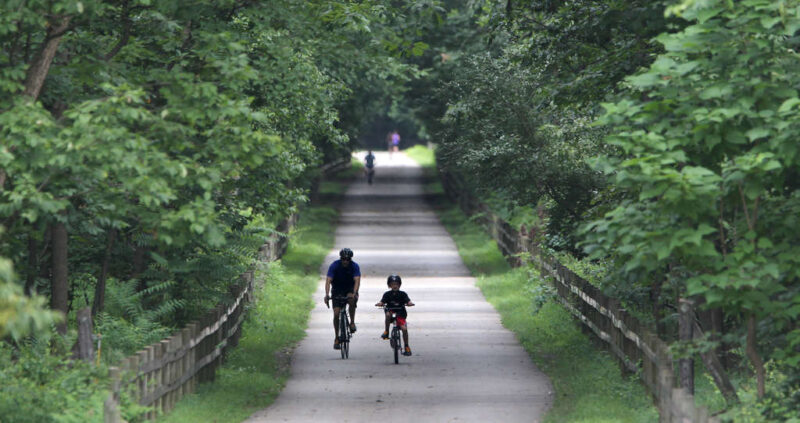
    While the trail is expected to be used for recreation, it could also be an option for commuting to work.

    “The second audience of this proposed trail network is employees that work in Upper Merion Township that are seeking alternative modes of transportation to get to and from work,” he said.

    The trail also could make Valley Forge National Historical Park more accessible by ways other than driving, Duffy said.

    “We want people to be able to get here,” Duffy said. “Knowing where this is — in this super densely populated suburban area — we know that there’s this missing link, really, between these two major trails that, once built, will literally connect thousands and thousands of people who live in the area, work in the area, are visiting the area.”

  • Jean E. Corrigan, former Montgomery County manager and longtime assistant to then-State Rep. Josh Shapiro, has died at 70

    Jean E. Corrigan, former Montgomery County manager and longtime assistant to then-State Rep. Josh Shapiro, has died at 70

    Jean E. Corrigan, 70, of Roslyn, Montgomery County, retired fleet and operations manager for the Montgomery County Department of Assets and Infrastructure, onetime constituent services representative for then-State Rep. Josh Shapiro, hair salon owner and operator, disability services advocate, and award-winning volunteer, died Saturday, Nov. 22, of non-alcoholic cirrhosis of the liver at her home.

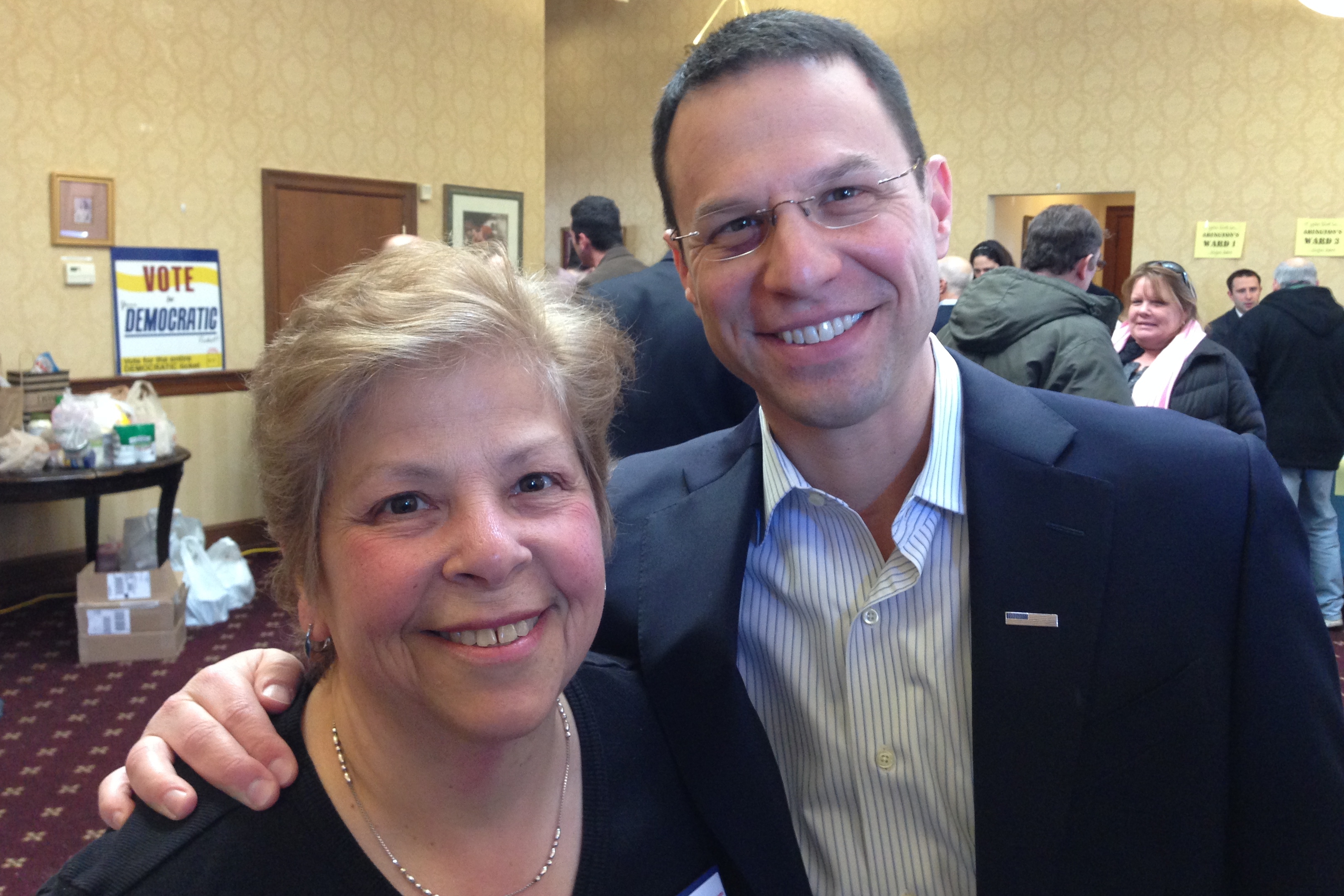
    A lifelong resident of Glenside and nearby Roslyn, Mrs. Corrigan was vice chair of the Abington-Rockledge Democratic Committee from 1995 to 2013, and served as Gov. Shapiro’s constituent service agent when he represented the 153rd Legislative District in the Pennsylvania House of Representatives from 2004 to 2012.

    “Jean was the very first volunteer on my very first campaign,” Shapiro recalled. “We knocked doors together, met our neighbors together, and, after winning, served our community together.”

    In addition to breaking down bureaucratic delays and solving all kinds of constituent problems for Shapiro, Mrs. Corrigan doggedly championed fair wages, reproductive freedom, increased funding for special education and disability services, and improved healthcare. Colleagues called her a “super volunteer” and a “campaign mom” because she helped so many candidates win elections.

    Gov. Shapiro said Mrs. Corrigan “made her neighbors’ lives better.”

    She hosted visiting campaign workers at her home for years, took charge of distributing lawn signs and sample ballots, and organized other preelection events at her dining room table. She was named the local committee’s Democrat of the Year in 2002 and earned several awards from community service organizations.

    “Through that work, I got to see just how much of herself she gave to others,” Shapiro said. “Where there was a need in the community, she worked to address it. When someone needed help, she lent a hand. She made her neighbors’ lives better, and I will forever be grateful for her life of service.”

    In 2001, Mrs. Corrigan ran unsuccessfully for Abington Township commissioner, finishing second among three candidates and losing to a long-entrenched incumbent. In a preelection profile in The Inquirer, she listed “responsible growth” as a top value and “maintain integrity of Abington Township” as a main goal.

    “Jean was passionate about serving others,” her family said in a tribute. “She believed that politics and civic activism could make a positive difference in people’s lives.”

    Mrs. Corrigan was called a “super volunteer” by colleagues and friends.

    At work, Mrs. Corrigan managed Montgomery County’s fleet of vehicles from 2015 to her retirement in 2022. She joined the county’s assets and infrastructure department in 2012 as operations manager for public property and supervised the county’s building services, construction carpenters, project collaboration, and computer-aided design.

    She studied beauty science and hair styling in high school, attended the Willow Grove Beauty Academy, and ran her own salon called Shears to You from 1993 to 2001. As a volunteer, she was one-time president of the Abington School District Special Education Parent Advisory Council, copresident of the Abington Junior High School parent-teacher organization, and chair and vice chair of several Abington Township community initiatives.

    She raised funds for school events and served on the board of the Abington YMCA. “Jean was selfless, empathetic, blunt, affectionate, caring, plainspoken, honest, and incredibly hard-working,” her family said. “There was no ego, no vanity.”

    Jean Elizabeth Fanelli was born Aug. 30, 1955, in Abington Township. She grew up with a brother, Angelo, and graduated from Abington High School in 1973. She was interested in clothing design as well as beauty culture and took classes at Temple University.

    Mrs. Corrigan stands with her husband, Peter, and son David

    After a brief marriage to Bruce Cunningham was annulled, she married Peter Corrigan — an usher at her first wedding — in 1977, and they had sons Joseph and David and a daughter, Pauline. They lived in Glenside for decades, in the same house in which she grew up, and moved to Roslyn a few years ago.

    Mrs. Corrigan enjoyed shopping trips with her daughter and baking holiday cookies. She liked to entertain and cook for everybody.

    She doted on her two granddaughters and spent memorable summers near Arrowhead Lake in the Pocono Mountains. She could talk to anybody, her family said.

    “She was a wonderful mother,” her daughter said. “I learned to have respect and manners from her.”

    Mrs. Corrigan (front right) enjoyed time with her family.

    Her son David said: “She taught me to be considerate and understanding of everyone I encounter, a lesson I will never forget.”

    Her son Joseph said: “She was incredibly generous with her time and resources. She could build relationships, and a theme of her life was caring for people.”

    Her husband said: “She was one of a kind.”

    In addition to her husband, children, granddaughters, and brother, Mrs. Corrigan is survived by other relatives.

    A private celebration of her life is to be held later.

    Donations in her name may be made to Hedwig House Inc., 1920 Old York Rd., Abington, Pa. 19001.

    Mrs. Corrigan’s smile could light up a room, her family said.
  • After 30 years, this Long Beach Island pizzeria needs a new home

    After 30 years, this Long Beach Island pizzeria needs a new home

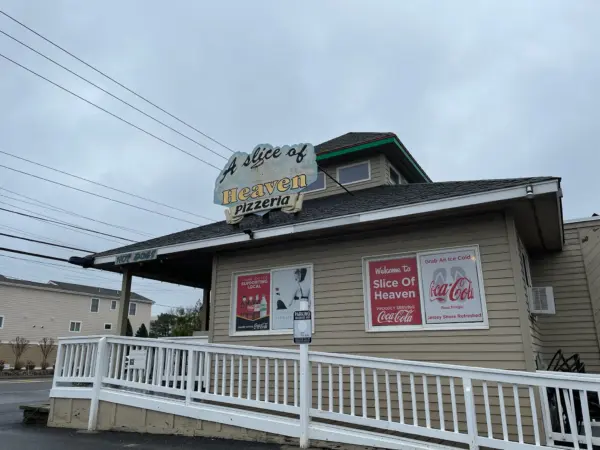
    In the early ’90s, Colleen Mazzella walked into a newly opened pizzeria and met the man who would become not only her boss, but her husband.

    She was visiting a friend who had been hired at Italian Affair in Stafford, and owner Dominick Mazzella, then a recent Staten Island transplant, offered her a job, too.

    They soon became a couple, and a year later, in May 1995, opened A Slice of Heaven across from Fantasty Island Amusement Park on Long Beach Island. The building at 7th Street and Bay Avenue in Beach Haven had housed a car wash, candy store and photo shop through the years, and when the two met with owner Peter Buterick, “he said ‘I’m going to take a chance on you. I’ve got a good feeling about this,’” Mazzella said.

    They made a name for themslves, thanks to a menu of dishes like stuffed cheesesteak pizza, scratch-made meatballs and cheesesteaks.

    Thirty years later, the building is full of memories that became precious to Mazzella after Dominick died just days before his 50th birthday in 2024. She recalls the Stanley Cup being brought to the restaurant (“My husband was a gigantic hockey fan,” she said), staying open to serve pizza until 4 a.m. and borrowing ingredients from other restaurant owners to get through busy days.

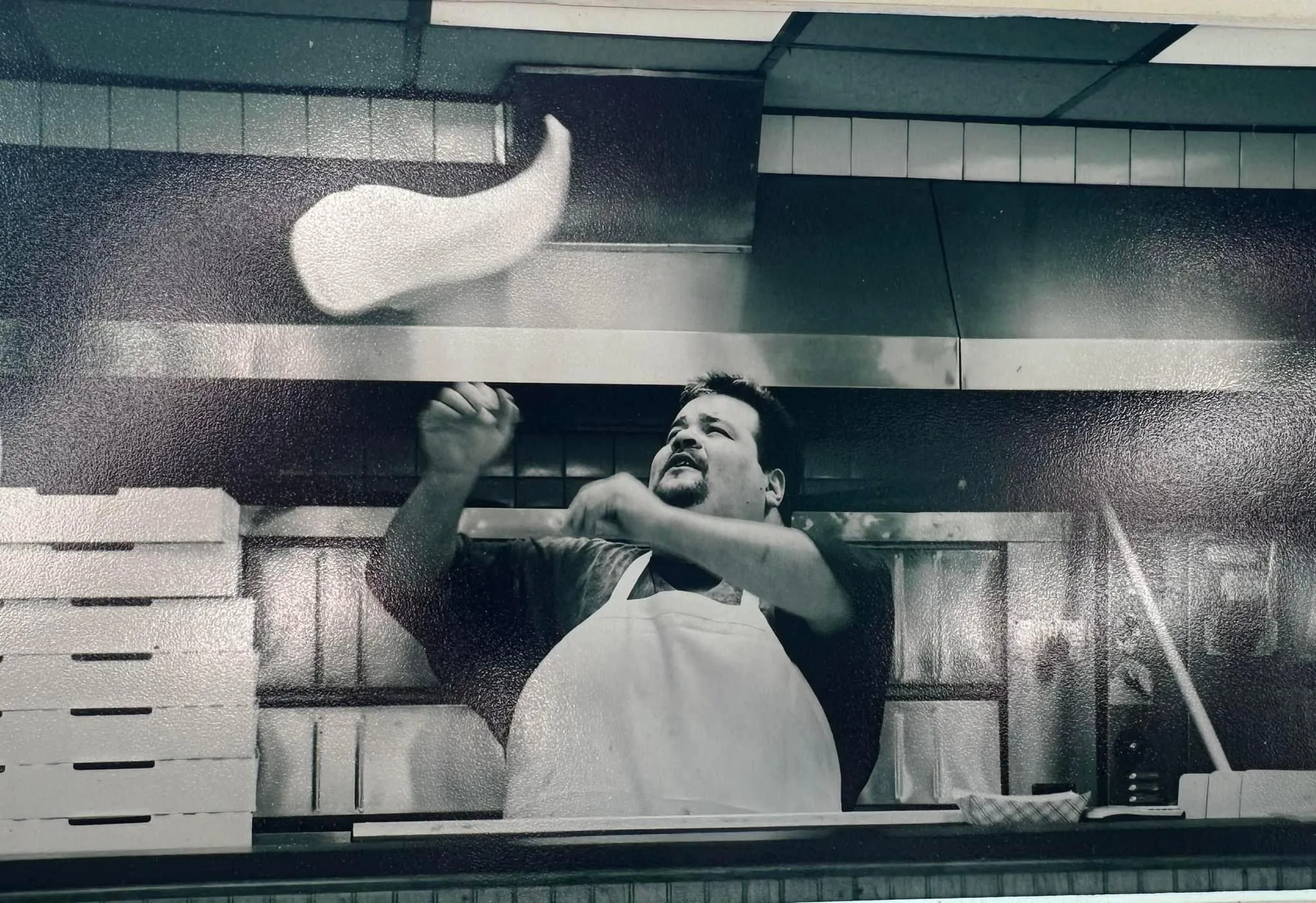
    Dominick Mazzella is pictured behind the counter of A Slice of Heaven, the Long Beach Island pizzeria he opened with his wife, Colleen, in 1995.

    She remembers when a family who lost their father stopped in for his favorite pizza before spreading his ashes on the beach, rebuilding after Superstorm Sandy sent four feet of water into the dining room and making pizza by flashlight during a power outage.

    The restaurant is also where Dominick taught his son to make pizza, a legacy the 18-year-old — also named Dominick — has dreamed of continuing.

    But it will have to happen somewhere else, as A Slice of Heaven closed earlier this month. The Mazzellas leased their restaurant space and the building has been sold.

    “The plan was to take this place over,” Mazzella said of her and her husband’s plans for their son, a third-generation pizza maker whose grandfather emigrated from Naples, Italy, and owned restaurants in New York before opening the Stafford pizzeria with Dom.

    A Slice of Heaven’s last day in business was Nov. 17, and Mazzella must vacate the building by the end of the month. She has been searching for a new location since learning of the impending sale several years ago, and while she wants to keep the restaurant on Long Beach Island, rentals that will work for her business are hard to come by, she said.

    “My intention is to be on the island,” said Mazzella, who grew up in Brant Beach and now lives in Cedar Run on the mainland. “I love the people here. I grew up here. I love everything about it.”

    “It’s just a fact of finding a place to land,” she said. “It’s been tough. I just have to keep believing that the places that I found that didn’t work out didn’t work out for a reason, and that it’s because we’re waiting for the right place.”

    “We’ll find something,” she said. “I gotta believe that.”

    Since announcing the closing date in early November, Mazzella has seen an outpouring of support online and in person, with customers sharing memories and well wishes.

    One spoke of how the elder Dominick fulfilled her request to spell “It’s a boy!” in pepperoni on a pizza for her gender reveal. Another customer wrote of how the restaurant’s delivery driver checked on her elderly father when she couldn’t reach him. Dozens more said A Slice of Heaven’s pizza is part of their vacation tradition.

    For Mazzella, it is stories like these that make giving up not an option.

    “Absolutely not,” she said. “We’re not done.”

  • Temple Health reported a $15 million operating loss in the first quarter of fiscal 2026

    Temple Health reported a $15 million operating loss in the first quarter of fiscal 2026

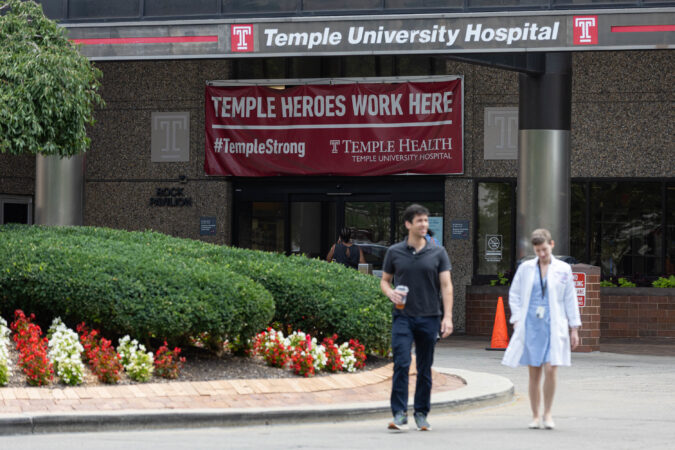
    Temple University Health System reported a $15 million operating loss in the three months that ended Sept. 30.

    The result for the first quarter of fiscal 2026 was an improvement from the North Philadelphia nonprofit’s $17 million loss last year.

    “We’re pretty happy where we are,” CEO Mike Young said Wednesday. Revenue was above budget and labor costs were on budget in the first quarter for the first time in several years.

    Here are some details:

    Revenue: Total revenue was $800 million, up 13% from $712.5 million a year ago. Outpatient revenue increased by nearly $62 million, much of it from the health system’s specialty and retail pharmacy business.

    Temple participates in a federal program for safety-net hospitals that allows it to buy certain drugs at a discount and then get full reimbursement from insurance companies.

    Expenses: Temple noted in its report to municipal bond investors Tuesday that salaries, including higher pay rates for nurses, and higher drug spending for outpatient infusions and other pharmacy business were the biggest expense increases.

    Notable: On the labor front, several job categories remain hard to fill, Young said. Those are CT techs, nurse anesthetists, and lab techs. “Other than those three [specialties], it’s not where it was three years ago, where you couldn’t find anybody,” he said.

  • Christmas tree retailers find lots to like at a Pennsylvania wholesale auction

    Christmas tree retailers find lots to like at a Pennsylvania wholesale auction

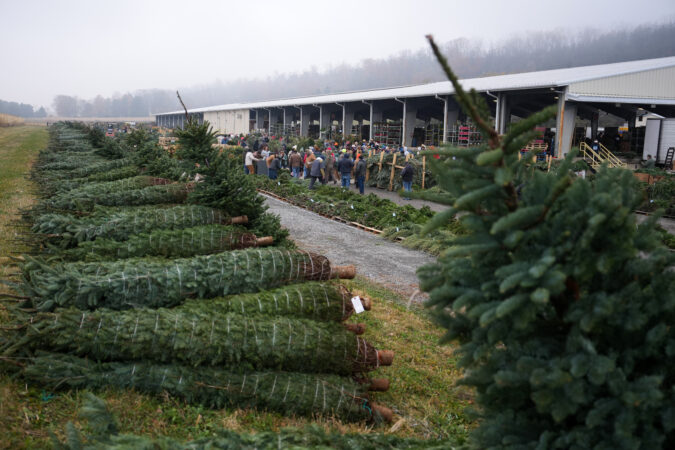
    MIFFLINBURG, Pa. — Christmas went on the auction block last week in Pennsylvania farm country, and there was no shortage of bidders.

    About 50,000 Christmas trees and enough wreaths, crafts, and other seasonal items to fill an airplane hangar were bought and sold by lots and on consignment at the annual two-day event put on at Buffalo Valley Produce Auction in Mifflinburg.

    Buyers from across the Northeast and Mid-Atlantic were there to supply garden stores, corner lots, and other retail outlets for the coming rush of customers eager to bring home a tree — most commonly a Fraser fir — or to deck the halls with miles of greenery.

    Bundled-up buyers were out in chilly temperatures to hear auctioneers hawk boxes of ornaments, bunches of winterberry, cotton branches, icicle lights, grave blankets, red bows, and tree stands. It was nearly everything you would need for Christmas except the food and the presents.

    A worker transports holiday decorations at Buffalo Valley Produce Auction in Mifflinburg, Pa.

    Americans’ Christmas tree buying habits have been evolving for many years. These days homes are less likely than in years past to have a tree at all, and those that do have trees are more likely to opt for an artificial tree over the natural type, said Marsha Gray with the Howell, Michigan-based Real Christmas Tree Board, a national trade group of Christmas tree farmers.

    Cory Stephens was back for a second year at the auction after his customers raved about the holiday decor he purchased there last year for A.A. Co. Farm, Lawn & Garden, his store a three-hour drive away in Pasadena, Md. He spent nearly $5,000.

    “It’s incredible, it’s changed our whole world,” Stephens said. “If you know what you’re looking for, it’s very hard to beat the quality.”

    Ryan Marshall spent about $8,000 on various decorations for resale at Ward’s Berry Farm in Sharon, Mass. Among his purchases were three skids of wreaths at $29 per wreath — and he expected to double his money.

    “The quality’s good, and it’s a place that you can pick it out yourself,” he said.

    Gray said her group’s research shows the main reason people pick a real tree over an artificial tree “is the scent. They want the fresh scent of a real Christmas tree in their home.” Having children in the house also tends to correlate with picking a farm-grown tree, she said.

    An August survey by the Real Christmas Tree Board found that 84% of growers did not expect wholesale prices to increase this season.

    Buffalo Valley auction manager Neil Courtney said farm-grown tree prices seem to have stabilized, and he sees hope that the trend toward artificial trees can be reversed.

    “Long story short — we’ll be back on top of the game shortly,” Courtney said. “The live tree puts the real Christmas in your house.”

    A survey by a trade group, the National Christmas Tree Association, found that more than 21 million farm-grown Christmas trees were sold in 2023, with median price of $75. About a quarter of them were purchased at a “choose-and-cut” farm, one in five from a chain store, and most of the rest from nurseries, retail lots, nonprofit sales, and online.