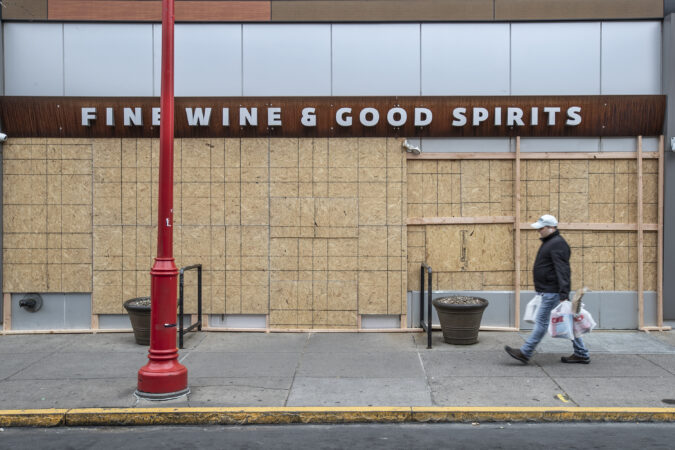
Thanksgiving is almost here, and whether you’re putting the turkey in early, running out for last-minute butter, or realizing you forgot to buy wine (again), knowing what’s open — and what’s not — can save you a scramble.
From grocery stores and pharmacies to transit, trash pickup, and big-box retailers, here’s what’s open and closed in the Philadelphia region on Thanksgiving.
Grocery stores
Acme Markets
✅ Acme Markets locations will be open from 7 a.m. to 4 p.m. Check your local store’s hours at local.acmemarkets.com.
Whole Foods
✅ Most Whole Foods locations will be open on Thanksgiving from 7 a.m. to 1 p.m. Check your local store’s hours at wholefoodsmarket.com/stores.
For more detailed information about route detours, check SEPTA’s System Status Page at septa.org.
PATCO
✅ PATCO will be running on a holiday schedule, which you can view at ridepatco.org.
Pharmacies
CVS
✅ All non-24-hour CVS locations will close early on Thanksgiving. Call your local store before visiting or view hours at cvs.com/store-locator/landing.
Walgreens
❌ All non-24-hour Walgreens locations will be closed for Thanksgiving Day. Check your local store’s hours at walgreens.com/storelocator.
Trash collection
❌ There is no trash or recycling pickup during Thanksgiving or Black Friday. Trash pickup will resume two days later than scheduled. To find your trash and recycling collection day, go to phila.gov.
Big-box retail
Costco
❌ Costco will be closed on Thanksgiving Day, but reopen at 9 a.m. on Black Friday. Check your local Costco for Black Friday hours.
Target
❌ Target will be closed on Thanksgiving Day, but reopen at 6 a.m. on Black Friday.
Lowe’s
❌ Lowe’s stores will be closed on Thanksgiving Day, but reopen at 6 a.m. on Black Friday.
Home Depot
❌ Home Depot locations will be closed on Thanksgiving Day, but reopen at 6 a.m. on Black Friday.
Walmart
❌ Walmart locations will be closed on Thanksgiving Day, but reopen at 6 a.m. on Black Friday.
Shopping malls
❌ The Shops at Liberty Place will be closed on Thanksgiving and reopen at 7 a.m. on Black Friday.
❌ Fashion District Philadelphia won’t be opening on Thanksgiving, but will reopen on Black Friday at 10 a.m.
❌ Franklin Mall, King of Prussia Mall, and Cherry Hill Mall will be closed on Thanksgiving. On Black Friday, Franklin Mall will open at 10 a.m., King of Prussia Mall will open at 6 a.m., and Cherry Hill Mall will open at 7 a.m.
Every day, millions of people across the U.S. turn to ChatGPT and other AI tools, searching for answers.
Some of their questions are mundane: What should they make for dinner with these four ingredients? What other movies was this actor in? Where could they go on a weekend getaway for under $1,000?
Others use AI in life-saving research and for society-changing innovations.
How these tools work — and at what cost — is at the heart of the ongoing debate over the rapid construction of data centers.
At some proposed sites in the Philadelphia region, neighbors are rallying in opposition, saying the community’s health, safety, and quality of life are at stake. Meanwhile, developers, elected officials, and other proponents tout economic benefits.
If you’re trying to make sense of all the buzz about AI data centers, here’s what three human reporters think you should know.
What is a data center?
A data center is a building or campus that handles cloud-storage and computing needs of Amazon, Google, Microsoft, Meta, and the like. People, hospitals, banks, businesses, and governments rely on the cloud to store and retrieve vast troves of records, videos, and pictures.
Generative artificial intelligence (AI) has exponentially increased demand for specialized data centers powerful enough to execute ever more complex requests in the form of text, code, images, audio, or video.
A single AI query consumes multiple times the power of an ordinary search engine query, resulting in the need for additional servers to handle the load when multiplied across millions of queries.
window.addEventListener(“message”,function(a){if(void 0!==a.data[“datawrapper-height”]){var e=document.querySelectorAll(“iframe”);for(var t in a.data[“datawrapper-height”])for(var r,i=0;r=e[i];i++)if(r.contentWindow===a.source){var d=a.data[“datawrapper-height”][t]+”px”;r.style.height=d}}});
Newer hyperscale data centers can reach 1 million square feet or larger. For comparison, the Cherry Hall Mall is 1.3 million square feet.
Where are data centers in Pennsylvania and New Jersey?
window.addEventListener(“message”,function(a){if(void 0!==a.data[“datawrapper-height”]){var e=document.querySelectorAll(“iframe”);for(var t in a.data[“datawrapper-height”])for(var r,i=0;r=e[i];i++)if(r.contentWindow===a.source){var d=a.data[“datawrapper-height”][t]+”px”;r.style.height=d}}});
Not all of these properties are AI data centers: Comcast’s facilities, for example, connect thousands of local customers to internet, cable, and phone services, and have been doing so for decades.
Where are new data centers being built in Pa. and N.J.?
In East Vincent Township, Chester County, a 1.3-million-square-foot data center is proposed at the former Pennhurst State School and Hospital, now a popular Halloween attraction.
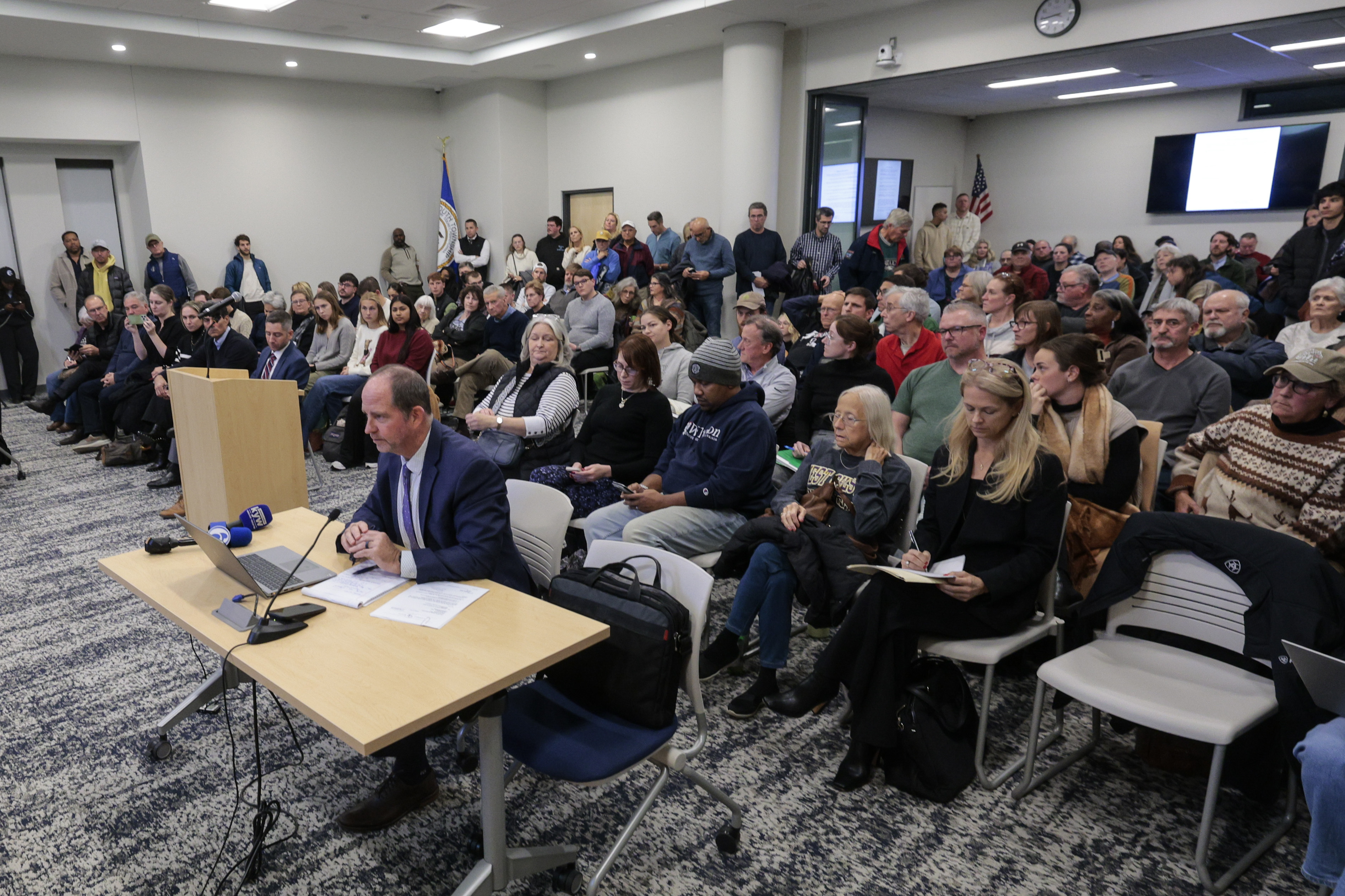
Less than a mile from downtown Conshohocken, Main Line developer Brian O’Neill wants to build a 2-million-square-foot data center at a shuttered steel mill. Last week, O’Neill’s team was forced to withdraw the application due to legal issues. However, they can resubmit another proposal at any time.
Edmund J. Campbell, attorney for Main Line developer Brian O’Neill, speaks to the Plymouth Township zoning hearing board on Monday Nov. 17 before abruptly withdrawing his client’s application over legal issues.
Unlike residential redevelopment, data centers don’t increase demands on local schools or EMS services, data center proponents say. Nor do they bring in added traffic like fulfillment warehouses or other industrial uses.
Opponents of data centers worry about pollution, noise, power and water use, and the impact another data center could have on their electric bills. In some areas, they decry the loss of open space and express broader concerns about whether the AI boom is a bubble that could burst before all this data-center investment pays off.
How are data centers impacting my electric bill?
Generative AI tools like ChatGPT and DALL-E are major drivers behind the dramatic increase in energy demand. Every ChatGPT query, for example, is estimated to use five times more electricity than a simple web search.
An average query uses about the power that an oven would use in a little over one second or a high-efficiency light bulb would use in a couple of minutes, according to Sam Altman, CEO of OpenAI, the company behind ChatGPT.
In 2023, U.S. data centers consumed about 4.4% of total U.S. electricity, compared to 15% for all residential use. Data center demand is expected to rise, potentially consuming 6% to 12% of total U.S. electricity by 2028, according to a 2024 report by Lawrence Berkeley National Laboratory.
window.addEventListener(“message”,function(a){if(void 0!==a.data[“datawrapper-height”]){var e=document.querySelectorAll(“iframe”);for(var t in a.data[“datawrapper-height”])for(var r,i=0;r=e[i];i++)if(r.contentWindow===a.source){var d=a.data[“datawrapper-height”][t]+”px”;r.style.height=d}}});
When energy demand rises without a proportional increase in supply and capacity, experts say, consumers see higher bills. Although it’s possible prices would lower with increased demand as long as there is sufficient existing capacity in place, say some experts.
“There’s a variety of factors, but it isn’t really transparent when you look at your electricity bill,” said John Quigley, senior fellow at the University of Pennsylvania’s Kleinman Center for Energy Policy.
What are some environmental concerns regarding data centers?
Water: Data centers require significant amounts of water to cool servers and IT equipment. Some cooling systems are more efficient than others.
A Virginia legislative audit report said 11 data center buildings each used over 50 million gallons, including one building that used 243 million gallons in 2023. While some data centers use substantial amounts of water, most use similar or less than other large commercial and industrial water users, Virginia found.
Based on available data, most data centers use about 6.7 million gallons of water a year, about the same as an average large office building.
Land use: Some proposals would require substantial clearing for forested or unused land, as in a 1,000-acre proposal in Covington and Clifton Townships in the Poconos. Residents in East Vincent Township in Chester County have mobilized to save the rolling hills, farms, and rural character near the proposed Pennhurst site.
Air pollution: The electricity that powers data centers comes from a grid powered by plants that run on natural gas, a fossil fuel that emits pollutants such as nitrogen oxides, fine particulate matter, and a precursor to smog. The plants also release carbon dioxide, a greenhouse gas. Backup generators are often fired by diesel. Amazon and Microsoft have plans to tap nuclear power, which does not produce air pollutants, though it does produce toxic waste.
Noise: Data centers sometimes emit hums and vibrations produced by servers, whirring fans, HVAC systems, and other sources.
What kinds of jobs do data centers create?
Construction of a data center requires hundreds of temporary tradespeople, such as masons, electricians, plumbers, and HVAC technicians.
Once open, data centers typically need very few full-time employees. Even the largest usually employ fewer than 150 people, sometimes as few as 25. Permanent positions can include IT specialists, data analysts, electricians, maintenance workers, and security personnel. Sometimes certain employees can work remotely.
Developers of some data centers currently proposed in Pennsylvania estimate hiring between 30 and 70 permanent workers. Data center technician jobs at Amazon’s Salem Township facility come with starting salaries between $50,000 and $152,000 a year, according to job listings on Indeed.com.
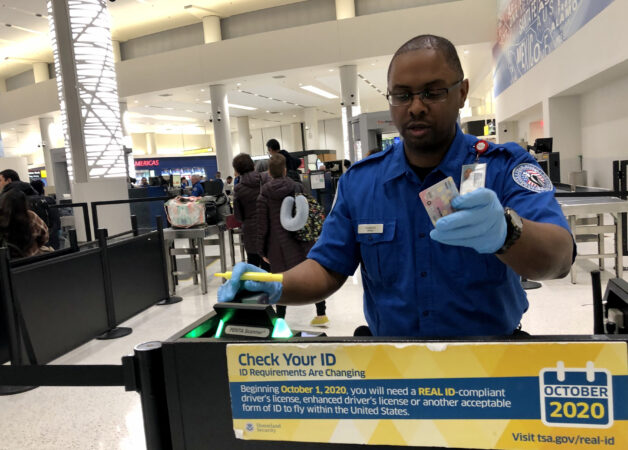
A new program from the Transportation Security Administration will charge travelers $18 to pass through airport security if they are not carrying valid identification, such as Real ID or a passport.
According to the agency, the fee will cover the cost of a “modernized alternative identity verification program” that relies on biometrics instead of documents or interviews.
A Federal Register notice posted Thursday explained the new initiative. Travelers who arrive at the airport without correct identification can choose to use the automated biometric kiosk. The $18 fee, which will “address the government-incurred costs,” is nonrefundable and valid for 10 days. Even with payment, entry into the secured area is not guaranteed, the register noted.
The memo did not mention a timeline for the installation and deployment of the kiosks, which airports will participate in the program, or how people will submit their payment. According to the notice, TSA will open registration for the identity-verification program before it begins collecting fees.
“This notice serves as a next step in the process in REAL ID compliance, which was signed into law more than 20 years ago and finally implemented by Secretary Noem as of May 2025,” the TSA said in a statement. “Additional guidance will be announced in the coming days.”
The majority of travelers are ID-compliant — around 94%, according to the TSA. However, Caleb Harmon-Marshall, a former TSA officer and founder of the travel newsletter Gate Access, said people are still showing up at security unprepared.
“Travelers arriving at TSA checkpoints without proper ID is very common,” Harmon-Marshall said. “It’s so common that now the government can capitalize off of it.”
Gary Leff, founder of the travel blog View From the Wing, said a few hundred people a day are subjected to alternative screening because they lack proper ID.
“When you don’t have ID, they don’t send you away,” Leff said. “There’s a process where they get commercially available information about you and have you verify your identity with questions like what addresses have you had in the past, where have you worked, and what car have you owned.”
Leff said the biometric kiosk will replace this more time-consuming method, an advantage echoed by the TSA.
“The current alternative identity verification process is time and resource intensive, limiting the number of individuals for whom TSA can provide the service,” the Federal Register post said.
The TSA noted that the $18 fee falls under a congressional directive that allows the agency to “impose a fee for any registered traveler program undertaken by the Department of Homeland Security.” The amount cannot “exceed the aggregate costs associated with the program.”
According the Federal Register memo, the fee will cover such expenses as information technology infrastructure and services; software development; identity verification and validation; mobile computing; data infrastructure, integration, security and compliance; program management; and customer service and administrative expenses.
The TSA said it will publish the fees on its website and may “update” the program’s amount and availability in the Federal Register.
Warner Bros. Discovery has received preliminary buyout bids from rivals Paramount Skydance, Philadelphia-based Comcast, and Netflix, a source familiar with the matter said on Thursday, kicking off a potential sale of the century-old Hollywood studio.
The bids set the stage for a significant consolidation in the media industry and will determine the future of prized assets such as HBO, the Warner Bros. film library, and the DC Comics universe.
Paramount is expected to bid for all of Warner Bros. Discovery, including its cable television networks. Paramount’s bid is backed by the studio’s controlling shareholder, billionaire Oracle co-founder Larry Ellison, who is among the world’s richest men. The potential combination would enhance Paramount’s presence in movie theaters, giving it a 32% share of the North American theatrical market, according to Comscore, and strengthen its streaming service by combining HBO Max with Paramount+.
Reuters exclusively reported that Warner Bros. Discovery’s board rejected a mostly cash offer of nearly $24 a share for the company, valuing it at $60 billion, and publicly announced it would evaluate strategic options for the studio.
NBCUniversal’s corporate parent, Comcast, is interested in Warner Bros.’ film and television studios and HBO, whose characters, including Superman and Batman, would strengthen its theatrical and streaming business and its theme parks. The merged studios’ share of the North American theatrical market would exceed 43%, according to Comscore.
Netflix is also courting Warner Bros.’ studio and streaming businesses, aiming to gain access to Warner Bros.’ extensive film library and established entertainment franchises, such as Harry Potter and Lord of the Rings. Warner Bros. Discovery previously announced plans to split into two publicly traded companies, separating its studios and streaming business from its fading cable networks.
Warner Bros. Discovery did not immediately respond to Reuters’ request for comment. Comcast and Paramount Skydance declined to comment. Netflix could not be reached for comment. The New York Times first reported the development.
At the King of Prussia Mall, you can add some slime (the fun kind) to your holiday shopping experience this year.
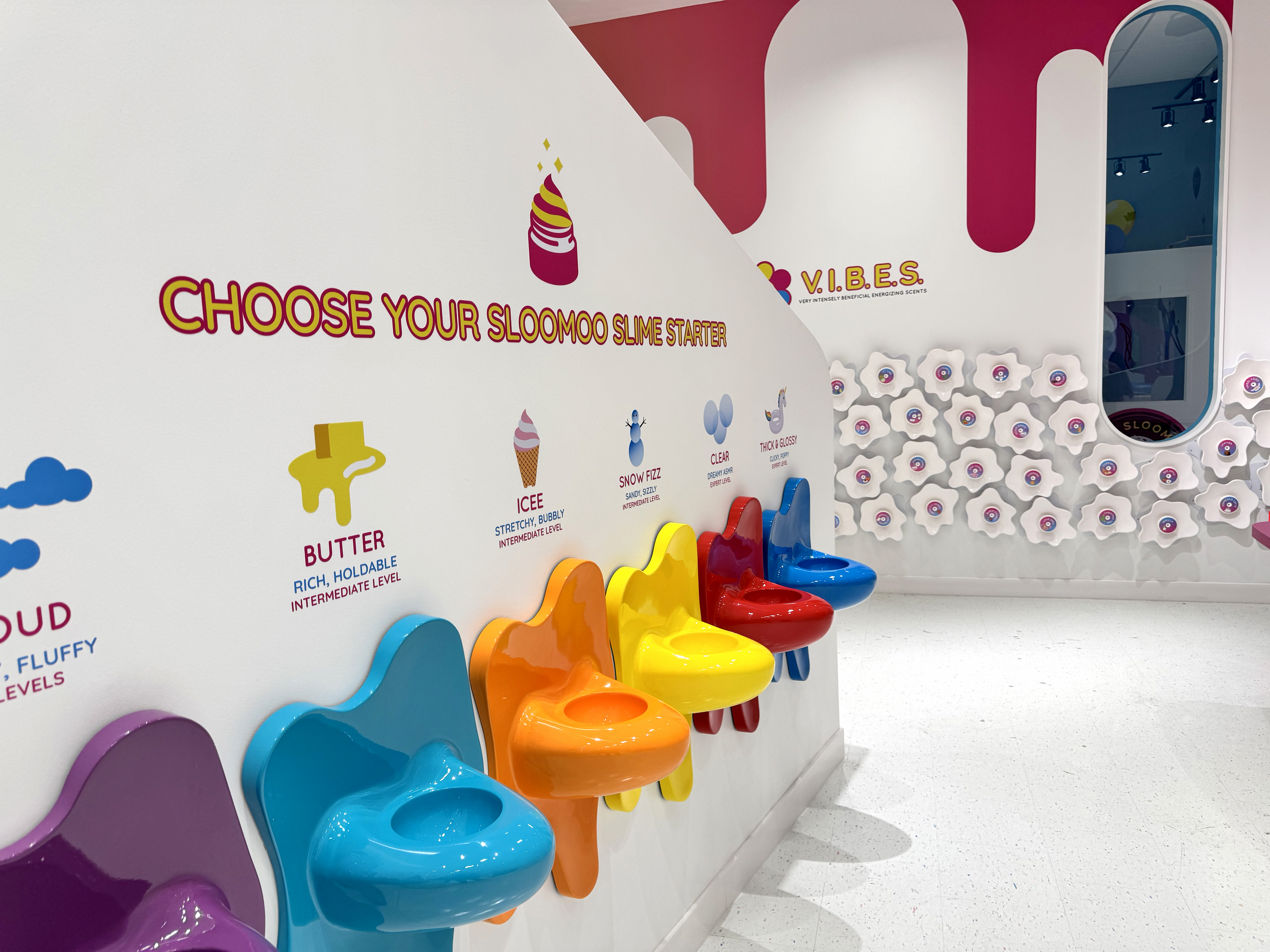
Fresh off the opening of the first-ever Netflix House, the Montgomery County mall this week welcomed the Sloomoo Institute’s first Philly-area location. The sensory slime experience’s latest outpost is called a Sloomoo MiniMoo, and it’s a scaled-down, 3,000-square-foot version of its flagship stores.
For between $24 and $26 a person, King of Prussia Sloomoo customers can design their own slime, choosing from different textures, colors, scents, and charms. They can also smush slime onto the wall, send it flying through the air with a slingshot, go elbow-deep in vats of slime, and take slime-making classes.
Guests can also browse slime toys and other squishy, sensory gifts at the Sloomoo retail store, no ticket required.
“King of Prussia is a playground for families,” cofounder Sara Schiller said in a statement, “and we’re bringing a world of slime designed to spark curiosity and pure, unfiltered joy.”
Customers play with slime at another Sloomoo Institute location. The King of Prussia Mall opened a Sloomoo MiniMoo experience this week.
They opened their first location in New York in 2019, went viral on TikTok during the pandemic, and then expanded nationwide, opening outposts in Atlanta, Chicago, Houston, and Los Angeles. A Sloomoo MiniMoo also recently opened in Boston.
Earlier this year, the founders told CNBC that Sloomoo brings in as much as $4.3 million a month in revenue from ticket sales alone.
A look inside the King of Prussia Mall’s Sloomoo MiniMoo experience, which opened this week ahead of Black Friday and the holiday shopping season.
At King of Prussia, Sloomoo MiniMoo welcomed its first customers last weekend, but it will celebrate its grand opening this Saturday, when the first 200 ticketed customers will receive a complimentary hot chocolate and “limited-edition Philly Cheesesteak-themed slime,” according to company officials. The first 100 guests on Saturday will get a bag charm.
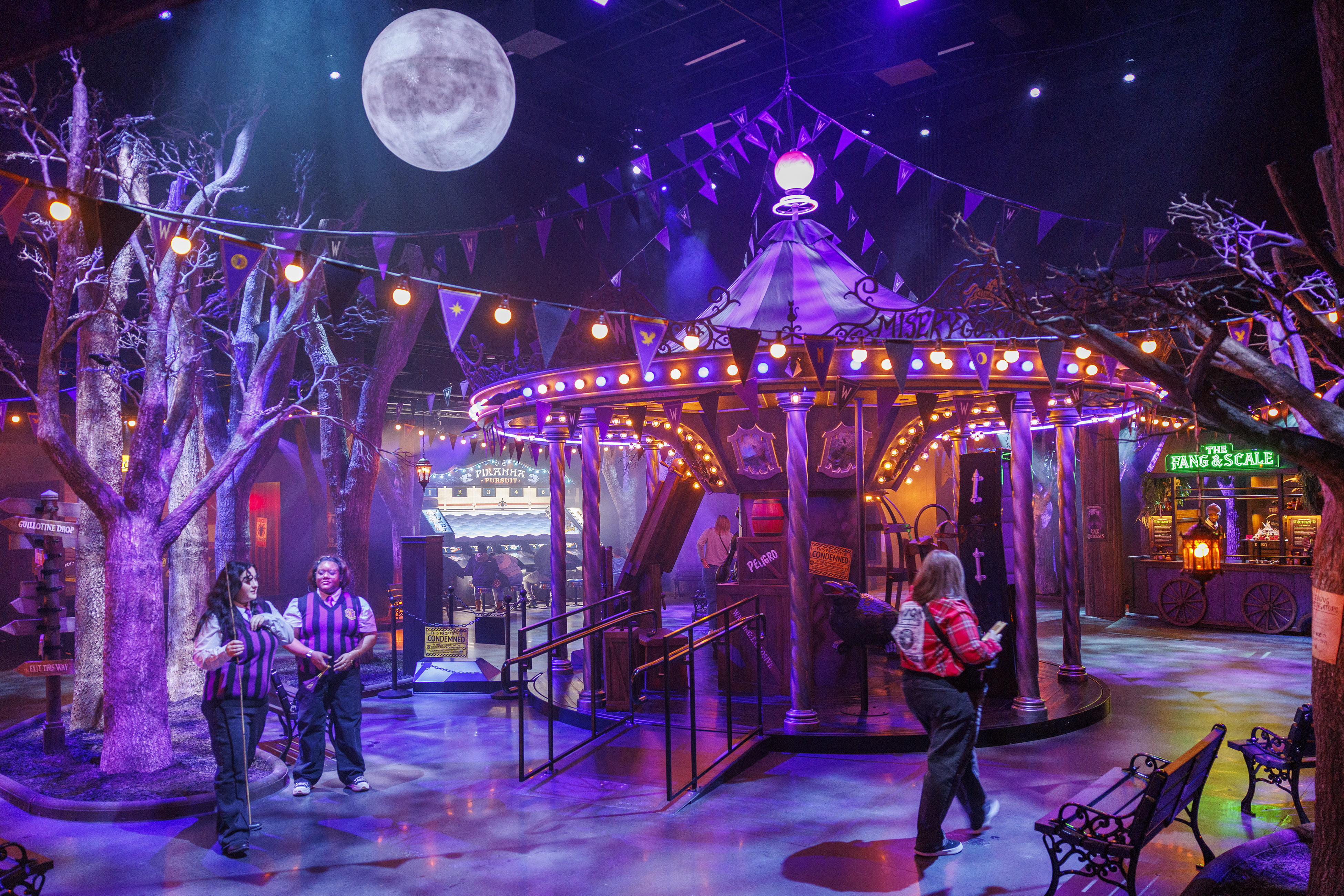
Aside from Sloomoo, the mall has welcomed several other new stores, restaurants, and interactive experiences since August. A few retailers, including Lululemon, Abercrombie & Fitch, and Mejuri, have also expanded or relocated.
As holiday shopping season kicks into high gear, customers can check out the following new additions:
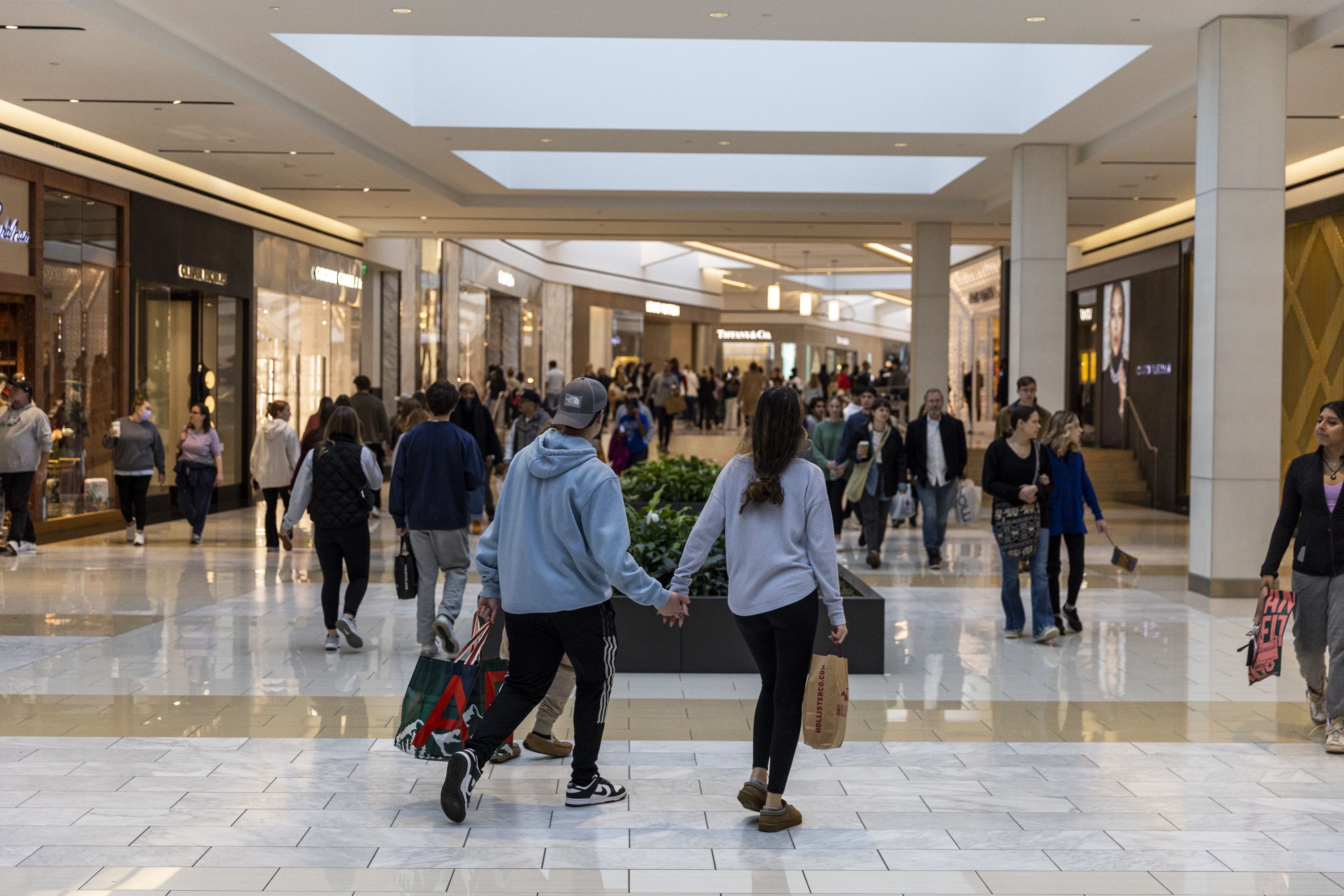
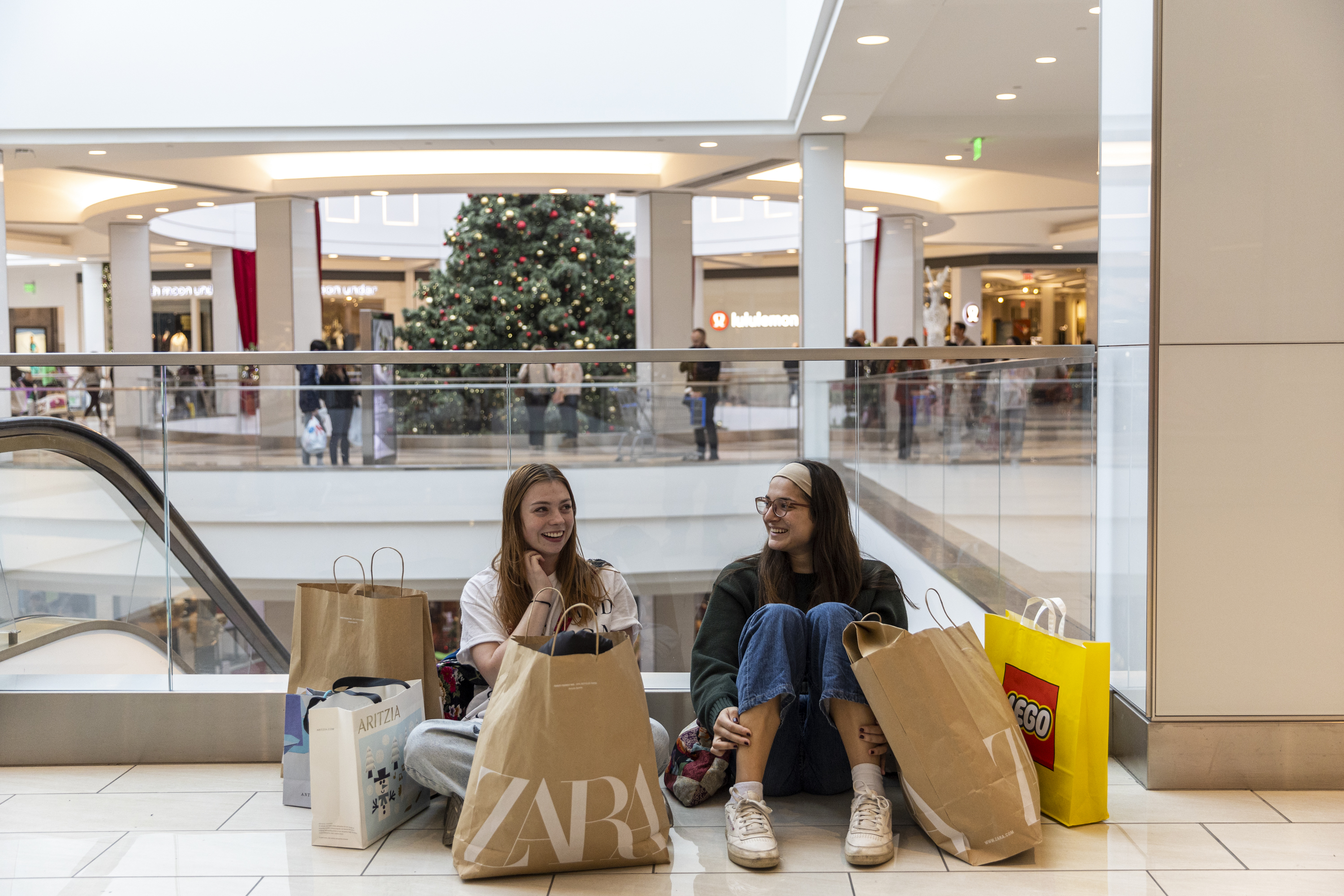
Shoppers sit with their bags at the King of Prussia Mall on Black Friday 2022.
If you’re doing holiday shopping later in the season, or taking a trip to the mall between Christmas and New Year’s, you might be able to visit the following stores. All of them are set to open their first Philadelphia-area locations this December:
In early 2026, Adidas and Columbia Sportswear are set to open stores in the King of Prussia Mall. Exact locations for those stores have yet to be announced.
U.S. Rep. Brian Fitzpatrick, a Republican, introduced a bill Thursday with a Democratic co-sponsor to modernize pipelines and emergency responses in the wake of a leak of a Sunoco pipeline detected this year in Bucks County.
The bill is named after the Wojnovich family, whose well was tainted with 12½ feet of jet fuel.
It would set aside $500 million in grants spread over five years to replace or upgrade high-risk hazardous liquid lines, “to facilitate the improved safety and modernization of hazardous liquid distribution infrastructure.”
In addition, it would require that prospective homeowners be made aware of nearby pipelines, what fuel they carry, any history of incidents, and who operates the lines.
Fitzpatrick introduced the bill, H.R. 6187, the Wojnovich Pipeline Safety Act of 2025, with U.S. Rep. Tom Suozzi, a Democrat from New York.
Fitzpatrick is up for reelection in 2026 in the 1st Congressional District, which includes all of Bucks County and a sliver of Montgomery County. As the last remaining Republican representing the Philadelphia suburbs in the U.S. House, Democrats believe he is vulnerable.
Fitzpatrick — as well as other federal, state, and local elected officials — has been involved since January, when a jet fuel leak from the Sunoco Twin Oaks pipeline was detected.
He and others have called for the line to be shut down. Fitzpatrick has called for independent testing of wells and “complete remediation” in the Mt. Eyre Manor neighborhood where the leak was detected.
“What families endured during this leak exposed areas where the state response was not fully equipped to meet the moment,“ Fitzpatrick said Friday in an email, ”which is why I have called on the responsible state agencies to produce a codified and consistently enforced plan that will guarantee clean water and long-term protections.”
He credited a neighborhood task force from Mt. Eyre with helping him write the bill,“from the ground up.”
The Wojnoviches live in the suburban Bucks County neighborhood near the popular Delaware Canal State Park towpath and only a few thousand feet from the Delaware River. Theirs was one of six wells thattested above state maximum contaminant levels. Other wells tested positive for contaminants, but under those levels.
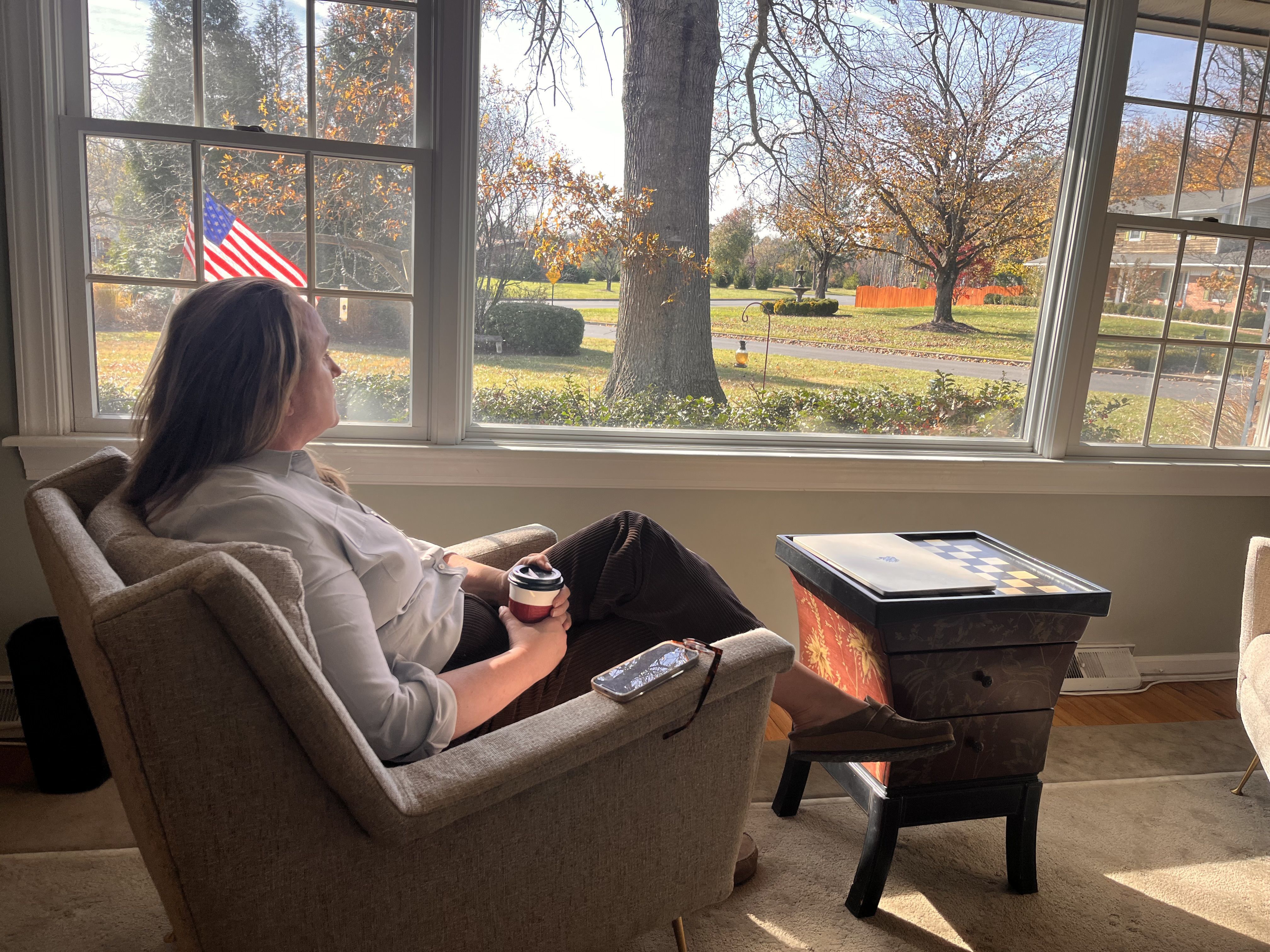
Kristine Wojnovich at home in the Mt. Eyre neighborhood in Washington Crossing, Bucks County on Nov. 7, 2025. Just out of view, is the top of a 400 foot drinking water well contaminated after a Jan. 2024 jet fuel leak was detected in Sunoco’s Twin Oaks pipeline.
The family began noticing a petroleum odor in their tap water as far back as September 2023 and reported it to Sunoco, which is owned by Energy Transfer. However, the company initially informed the Wojnoviches that their water simply had bacteria.
It wasn’t until an inspection by the state Department of Environmental Protection in late January 2025 that a leak was confirmed.
“Every page of this bill is shaped by what Upper Makefield families lived through,” Fitzpatrick said in the release, noting, “the gaps in testing, the delays in information, the uncertainty about their water, and the absence of clear standards for communication and emergency response.”
Specifically, the bill would also require:
That real estate contracts include disclosure of any hazardous liquid pipeline easements within one-half mile of a property, whether the line has undergone repairs in the past 10 years, and a list ofany leaks or failures.
Overhaul of the U.S. Department of Transportation’s and the Pipeline and Hazardous Materials Safety Administration’s current online pipeline viewer so that leak, inspection, and remediation data are readily available.
Updates to local emergency alert systems and response plans.
Pipeline operators to conduct in-person tests of water, soil, or air for potential pipeline leaks or failures.
Penalties for leaks, failures, and delayed reporting, ranging from $2.5 million to $5 million.
The reimbursement of fire departments and EMS for equipment, overtime, and cleanup costs.
Establishing an Office of Public Engagement and regular federal reporting.
Kristine Wojnovich said she’s honored by the bill’s introduction, and credits both Fitzpatrick and the neighborhood task force that’s pushed for legislation.
“Aging pipelines and outdated leak detection methods are all over this country,” Wojnovich said. “And the leak and contamination that happened in our community could have happened anywhere. This legislation is a meaningful step forward.”
Clean Earth, based in King of Prussia, serves manufacturers such as Boeing, Merck, computer-chip makers, and hospitals. Veolia operates local water utilities in towns across the U.S., including a slice of Delaware County and northern Delaware.
Clean Earth employs around 1,800, and already uses Veolia incinerators to burn hazardous medical waste and other refuse. Enviri bought that business for $625 million in 2019. Veolia says it plans to cut $120 million in spending as it integrates Clean Earth, to make the deal more profitable.
Combined with Veolia’s existing hazardous-waste business, Veolia says it will be among the largest businesses of its kind. Veolia also bought medical-waste companies in New England and California earlier this year, and it has incinerators in Texas, Illinois, and Arkansas.
Clean Earth includes tar-contaminated soil collection treatment centers on the Schuylkill in Southwest Philadelphia; in Morrisville, Bucks County; and New Castle, Del.; and a hazardous-waste and chemical disposal site in Hatfield, Montgomery County, among 82 waste-management and 19 federally-permitted treatment sites, along with hundreds of trucks. Veolia has industrial facilities in Bridesburg and Pennsauken, among other area locations.
Veolia will pay cash worth around $15.50 a share, or $1.3 billion, to Enviri shareholders for Clean Earth; plus $1.35 billion to pay down some of Enviri’s debt load; and around $400 million to help finance Enviri as it restructures as a smaller company and issues new shares. Both boards have approved the deal, pending a vote by Enviri shareholders next spring.
The price to shareholders is a premium to Enviri’s recent share value, and triple what it was worth at its recent low in March. But it’s also less than the stock was worth as recently as 2022, before the company changed its name from Harsco and moved from central Pennsylvania to Philadelphia, where its leaders said it’s easier to recruit engineers and managers.
The sale leaves Enviri with two remaining business lines: steel-mill slag management and railroad track equipment and maintenance. The latter business faces large environmental expenses, and Enviri had earlier tried to sell it.
After selling Clean Earth to Veolia and reducing management costs, Enviri will spin off the remaining businesses into a new company, under the same name.
Announcing the deal, Enviri chief executive F. Nicholas Grasberger also said he’ll be stepping down from the company’s top job, to be succeeded by Russell Hochman, a ten-year Enviri veteran who already serves as the company’s senior vice president, top lawyer, and compliance officer.
F. Nicholas Grasberger, chairman & CEO of Enviri, at the company’s Philadelphia headquarters in 2023. He will be stepping down as the company sells its hazardous-waste division to France’s Veolia.
The restructured Enviri will have more cash to invest in its businesses and lower finance costs, Grasberger said in a statement. He praised successor Hochman’s “deep business acumen and proven ability to navigate mergers and acquisitions, regulatory matters, and transformation efforts.”
The boost in Enviri’s capital “will create enhanced opportunities” for both slag and rail, Hochman said in a statement.
Graduate student workers at the University of Pennsylvania have voted to strike if their union calls for it, as they work toward a first contract with better pay and benefits.
The graduate students, who research and teach at the university, voted to unionize last year, after two decades of organizing attempts.
The union’s total membership is about 3,400, and 2,416 participated in the strike vote. Of them, 92% voted in favor of calling a strike if needed to reach an agreement.
“As the city of Philadelphia’s largest employer and a world-class research institution, Penn must do better by the workers that ensure its continued success,” Katelyn Friedline, a bargaining committee member and Ph.D. student, said at a news conference earlier this month.
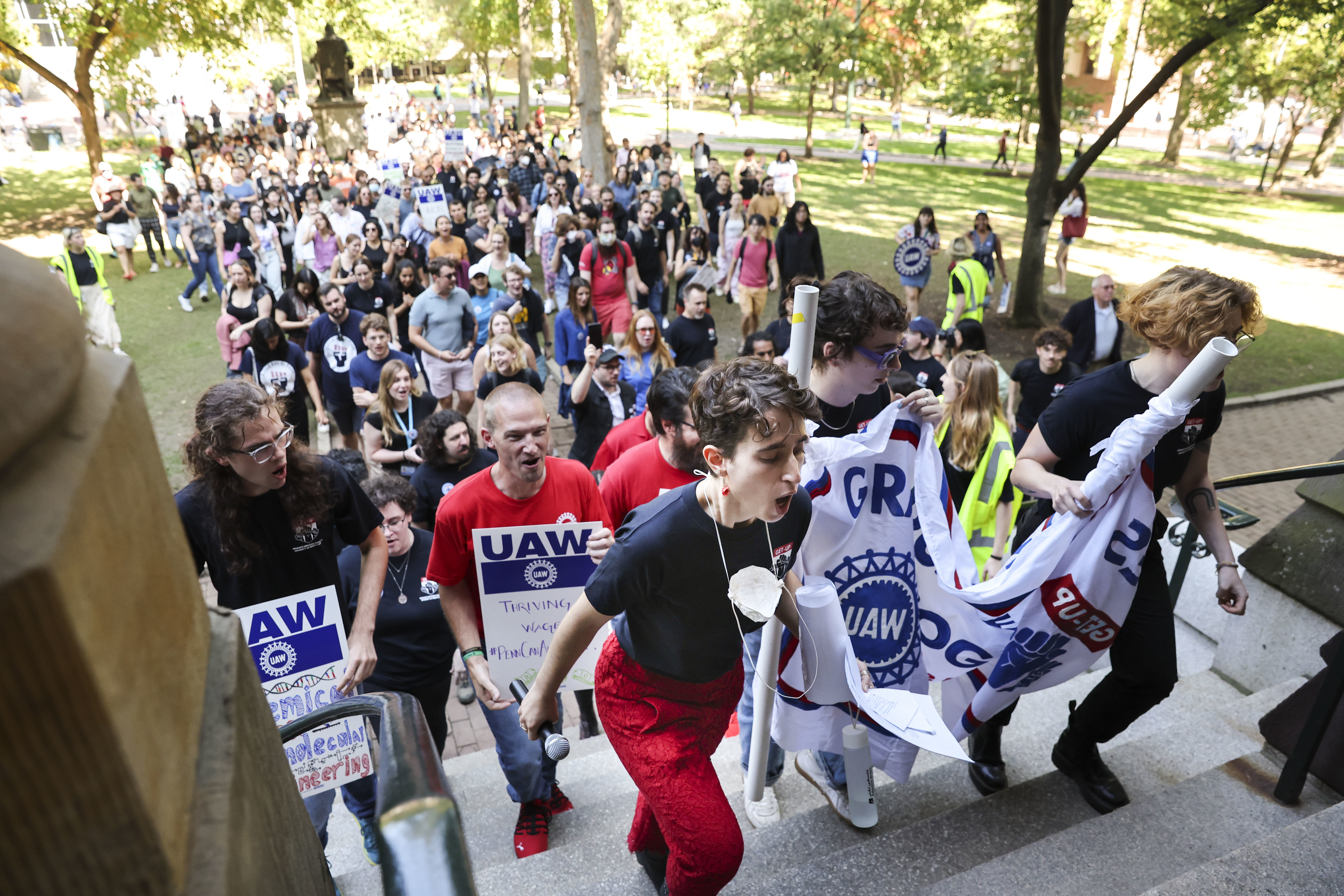
The union, Graduate Employees Together-University of Pennsylvania (GET-UP) is part of the United Auto Workers (UAW), which represents groups of university workers across the country, including Penn postdoctoral researchers and research associates who voted to unionize in July.
The strike vote comes amid a wave of labor actions across Penn and other campuses. Duringcontract negotiations in 2023, TempleUniversity graduate workers went on strike for 42 days. The same year, Rutgers University educators, researchers, and clinicians walked off the job for a week.
GET-UP has been bargaining with Penn since October 2024, but sticking points include wages, healthcare coverage, and more support for international student workers.
Hilah Kohen, a Ph.D. student in comparative literature, and hundreds of supporters march into College Hall during a GET-UP rally in October 2023.
A strike would be disruptive, said Sam Schirvar, a Ph.D. candidate in history and sociology of science, and would be a “last resort” for the union.
“A work stoppage would really inhibit the basic teaching and research functions of Penn, and would make it very difficult for it to operate as it does as an academic institution,” said Schirvar, who has been organizing with the union for over five years.
A university spokesperson, Ron Ozio, said via email on Thursday that Penn has been bargaining in good faith with the union.
“We believe that a fair contract for the union and Penn can be achieved without a work stoppage, but we are prepared in the event that the union membership votes to authorize a strike,” said Ozio.
What are graduate workers asking for?
“There’s still a lot of room between the kinds of things that we’re calling for and the kinds of things that management is proposing,” said Schirvar.
Wages
The majority of the bargaining unit is made up of Ph.D. students who are paid an annual stipend, while workers pursuing master’s degrees receive hourly pay.
Stipend workers make a minimum of about $39,000 annually, and hourly workers have no university minimum, Schirvar said.
In its most recent proposal, the university offered $19 an hour for hourly employees and a minimum of $44,000 for the annual stipend starting in July 2026. The union is asking for a minimum wage of $37 an hour for those paid hourly and $55,500 for those on an annual stipend upon ratification of the contract.
“While we’re asking for these things because it would make meaningful and life changing differences in our own individual lives, it also helps keep Penn a competitive, world-class institution,” said Friedline.
Healthcare improvements
The union is asking for the university to cover the full cost of health insurance for graduate student workers including dental, vision, and dependent coverage. The university already pays full healthcare benefits for graduate student workers, and some dental reimbursements depending on their department, said Friedline.
Support for international students
The union is also asking for more protections for international student workers on visas, who represent roughly a third of the bargaining unit, said Friedline. That support is important at this time, Friedline said, “amidst a national anti-immigrant political climate.”
The union wants Penn to reimburse up to $3,000 of immigration expenses, bar immigration enforcement agents from entering nonpublic areas of campus unless legally required to, and alert the union if access is granted for a search or arrest warrant.
Guruprerana Shadadi, a second-year Ph.D. student in the computer science department and an international graduate worker from India, said he had to cover the costs of moving to the U.S. before getting his first paycheck from the university, which included visa expenses.
“I was lucky enough to be able to afford this, but I know several international graduate workers who found it extremely hard to go through this process,” he said. “Receiving a livable wage and higher stipends would go a long way for international students who literally have to start from zero to set up their lives here when they move to the United States.”
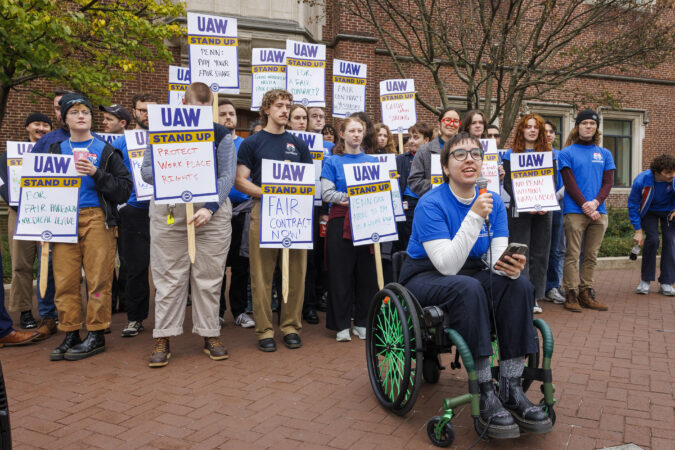
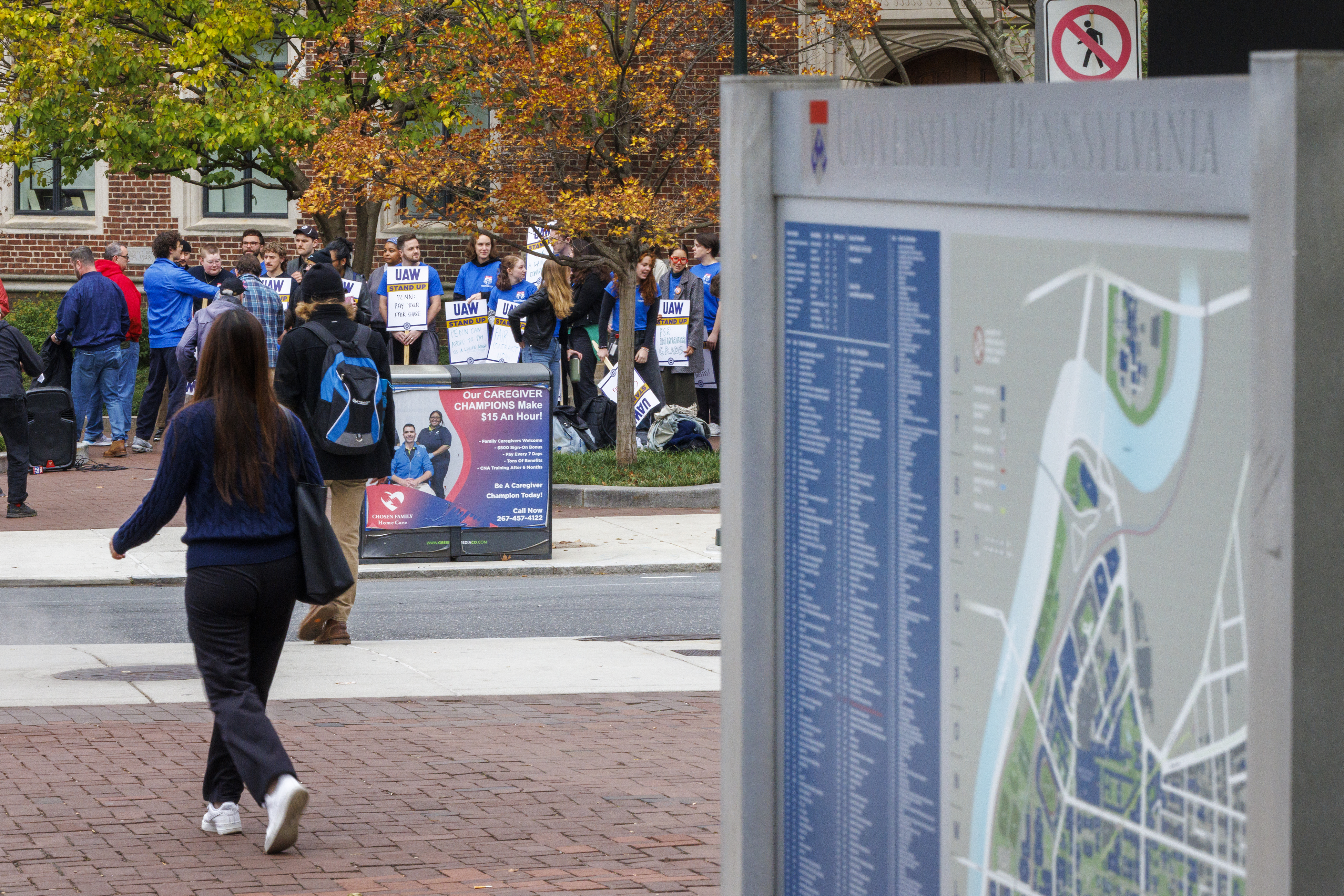
University of Pennsylvania graduate students held a news conference and rally calling for a strike vote Nov. 3.
Vacation days
The union is asking for 20 paid vacation days and 20 sick days in a year. University leadership has said that this proposal exceeds what full-time staff get in their first few years. The university has proposed five paid days off per fiscal year and noted in a proposal that workers can “request flexibility in scheduling” when sick.
Penn doesn’t currently have a centralized paid time-off policy for graduate student workers, and employees may be grading student work, preparing teaching materials, or working in a lab during the university’s academic breaks, said Schirvar.
Why are graduate students organizing now?
The academic job market has changed in recent decades, said Adrienne Eaton, a distinguished professor in the Rutgers School of Management and Labor Relations. In the past, graduate student workers might have been more willing to get paid less, knowing that time would ensure they could get good jobs later on.
“You could kind of sacrifice those wages, that salary for a while, because you were pretty sure that when you finished, you were going to be able to get a tenure track job — and that just hasn’t been true, probably more like 20 years, depending on what field you’re in,” she said.
Meanwhile, the cost of living has risen, said Eaton. “Those stipends that used to be kind of OK, I think, have gotten to be viewed as much more inadequate.”
Whether or not Penn graduate workers actually strike, Eaton noted that passing a strike authorization vote typically sends a message.
“It’s a leverage tool in bargaining to kind of let the employer know we’re serious about this, and you need to be serious about what you’re doing at the bargaining table,” she said.
They’re cute, even cuddly, and promise learning and companionship — but artificial-intelligence toys are not safe for kids, according to children’s and consumer advocacy groups urging parents not to buy them during the holiday season.
These toys, marketed to kids as young as 2 years old, are generally powered by AI models that have already been shown to harm children and teenagers, such as OpenAI’s ChatGPT, according to an advisory published Thursday by the children’s advocacy group Fairplay and signed by more than 150 organizations and individual experts such as child psychiatrists and educators.
“The serious harms that AI chatbots have inflicted on children are well-documented, including fostering obsessive use, having explicit sexual conversations, and encouraging unsafe behaviors, violence against others, and self-harm,” Fairplay said.
AI toys, made by companies including Curio Interactive and Keyi Technologies, are often marketed as educational, but Fairplay says they can displace important creative and learning activities. They promise friendship but disrupt children’s relationships and resilience, the group said.
“What’s different about young children is that their brains are being wired for the first time, and developmentally it is natural for them to be trustful, for them to seek relationships with kind and friendly characters,” said Rachel Franz, director of Fairplay’s Young Children Thrive Offline Program. Because of this, she added, the amount of trust young children are putting in these toys can exacerbate the harms seen with older children.
Fairplay, a 25-year-old organization formerly known as the Campaign for a Commercial-Free Childhood, has been warning about AI toys for years. They just weren’t as advanced as they are today. A decade ago, during an emerging fad of internet-connected toys and AI speech recognition, the group helped lead a backlash against Mattel’s talking Hello Barbie doll that it said was recording and analyzing children’s conversations.
This time, though AI toys are mostly sold online and are more popular in Asia than elsewhere, Franz said some have started to appear on store shelves in the U.S. and more could be on the way.
“Everything has been released with no regulation and no research, so it gives us extra pause when all of a sudden we see more and more manufacturers, including Mattel, who recently partnered with OpenAI, potentially putting out these products,” Franz said.
It’s the second big seasonal warning against AI toys since consumer advocates at U.S. PIRG last week called out the trend in its annual Trouble in Toyland report that typically looks at a range of product hazards, such as high-powered magnets and button-sized batteries that young children can swallow. This year, the organization tested four toys that use AI chatbots.
“We found some of these toys will talk in-depth about sexually explicit topics, will offer advice on where a child can find matches or knives, act dismayed when you say you have to leave, and have limited or no parental controls,” the report said. One of the toys, a teddy bear made by Singapore-based FoloToy, was later withdrawn, its CEO told CNN this week.
Dana Suskind, a pediatric surgeon and social scientist who studies early brain development, said young children don’t have the conceptual tools to understand what an AI companion is. While kids have always bonded with toys through imaginative play, when they do this they use their imagination to create both sides of a pretend conversation, “practicing creativity, language, and problem-solving,” she said.
“An AI toy collapses that work. It answers instantly, smoothly, and often better than a human would. We don’t yet know the developmental consequences of outsourcing that imaginative labor to an artificial agent — but it’s very plausible that it undercuts the kind of creativity and executive function that traditional pretend play builds,” Suskind said.
Beijing-based Keyi, maker of an AI “petbot” called Loona, didn’t return requests for comment this week, but other AI toymakers sought to highlight their child safety protections.
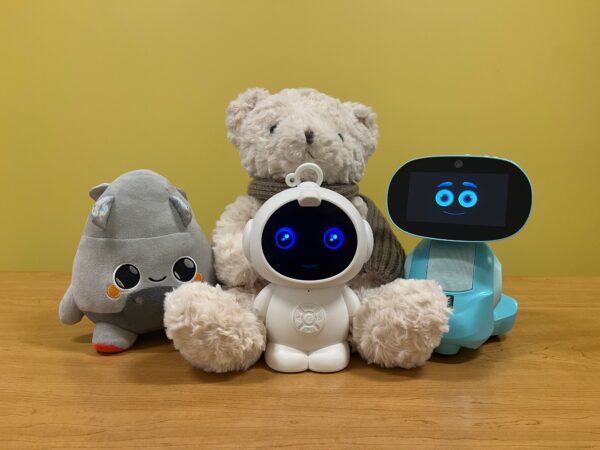
California-based Curio Interactive makes stuffed toys, like Gabbo and rocket-shaped Grok, that have been promoted by the pop singer Grimes. The company said it has “meticulously designed” guardrails to protect children, and the company encourages parents to “monitor conversations, track insights, and choose the controls that work best for their family.”
In response to the earlier PIRG findings, Curio said it is “actively working with our team to address any concerns, while continuously overseeing content and interactions to ensure a safe and enjoyable experience for children.”
Another company, Miko, based in Mumbai, India, said it uses its own conversational AI model rather than relying on general large language model systems such as ChatGPT in order to make its product — an interactive AI robot — safe for children.
“We are always expanding our internal testing, strengthening our filters, and introducing new capabilities that detect and block sensitive or unexpected topics,” said CEO Sneh Vaswani. “These new features complement our existing controls that allow parents and caregivers to identify specific topics they’d like to restrict from conversation. We will continue to invest in setting the highest standards for safe, secure and responsible AI integration for Miko products.”
Miko’s products are sold by major retailers such as Walmart and Costco and have been promoted by the families of social media “kidfluencers” whose YouTube videos have millions of views. On its website, it markets its robots as “Artificial Intelligence. Genuine friendship.”
Ritvik Sharma, the company’s senior vice president of growth, said Miko actually “encourages kids to interact more with their friends, to interact more with the peers, with the family members etc. It’s not made for them to feel attached to the device only.”
Still, Suskind and children’s advocates say analog toys are a better bet for the holidays.
“Kids need lots of real human interaction. Play should support that, not take its place. The biggest thing to consider isn’t only what the toy does; it’s what it replaces. A simple block set or a teddy bear that doesn’t talk back forces a child to invent stories, experiment, and work through problems. AI toys often do that thinking for them,” she said. “Here’s the brutal irony: When parents ask me how to prepare their child for an AI world, unlimited AI access is actually the worst preparation possible.”
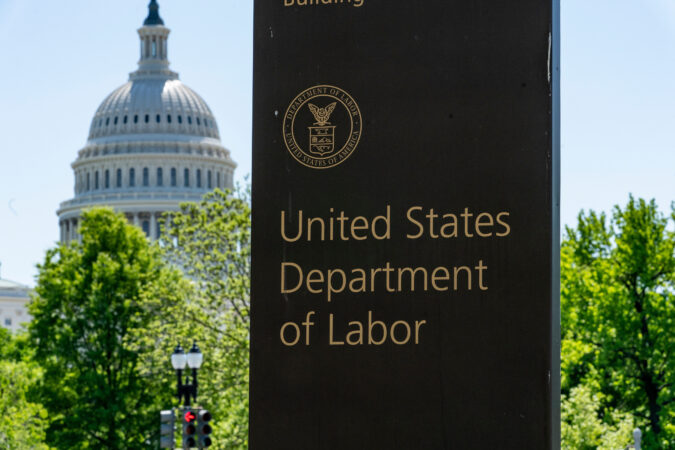
WASHINGTON — U.S. employers added a surprisingly solid 119,000 jobs in September, the government said, issuing a key economic report that had been delayed for seven weeks by the federal government shutdown.
The increase in payrolls was more than double the 50,000 economists had forecast.
Yet there were some troubling details in the delayed report.
Labor Department revisions showed that the economy lost 4,000 jobs in August instead of gaining 22,000 as originally reported. Altogether, revisions shaved 33,000 jobs off July and August payrolls. The economy had also shed jobs in June, the first time since the 2020 pandemic that the monthly jobs report has gone negative twice in one year.
And more than 87% of the September job gains were concentrated in two industries: healthcare and social assistance and leisure and hospitality.
“We’ve got these strong headline numbers, but when you look underneath that you’ll see that a lot of that is driven by healthcare,’’ said Cory Stahle, senior economist at the Indeed Hiring Lab. ”At the end of the day, the question is: Can you support an economic expansion on the back of one industry? Anybody would have a hard time arguing everybody should become a nurse.”
The unemployment rate rose to 4.4% in September, highest since October 2021 and up from 4.3% in August, the Labor Department said Thursday. The jobless rate rose partly because 470,000 people entered the labor market — either working or looking for work — in September and not all of them found jobs right away.
The data, though late, was welcomed by businesses, investors, policymakers and the Federal Reserve. During the 43-day shutdown, they’d been groping in the dark for clues about the health of the American job market because federal workers had been furloughed and couldn’t collect the data.
The report comes at a time of considerable uncertainty about the economy. The job market has been strained by the lingering effects of high interest rates and uncertainty around Trump’s erratic campaign to slap taxes on imports from almost every country on earth. But economic growth at midyear was resilient.
Healthcare and social assistance firms added more than 57,000 jobs in September, restaurants and bars 37,000, construction companies 19,000 and retailers almost 14,000. But factories shed 6,000 jobs — the fifth straight monthly drop. The federal government, targeted by Trump and billionaire Elon Musk’s DOGE cost cutters, lost 3,000 jobs, the eighth straight monthly decline..
Average hourly wages rose just 0.2% from August and 3.8% from a year earlier, edging closer to the 3.5% year-over-year increase that the Federal Reserve’s inflation fighters like to see.
The latest reading on jobs Thursday makes a rate cut by the Fed officials at their next meeting in December less likely. Many were already leaning against a cut next month, according to minutes of their October meeting released Wednesday. Steady hiring suggests the economy doesn’t need lower interest rates to expand.
The September jobs report will be the last one the Fed will see before its Dec. 9-10 meeting. Officials are split between those who see stubbornly high inflation as the main challenge they need to address by keeping rates elevated, and those who are more concerned that hiring is sluggish and needs to be supported by rate reductions.
Hiring has been strained this year by the lingering effects of high interest rates engineered to fight a 2021-2022 spike in inflation and uncertainty around Trump’s campaign to slap taxes on imports from almost every country on earth and on specific products — from copper to foreign films.
Labor Department revisions in September showed that the economy created 911,000 fewer jobs than originally reported in the year that ended in March. That meant that employers added an average of just 71,000 new jobs a month over that period, not the 147,000 first reported. Since March, job creation has fallen farther — to an average 59,000 a month.
With September numbers out, businesses, investors, policymakers and the Fed will have to wait awhile to get another good look at the numbers behind the American labor market.
The Labor Department said Wednesday that it won’t release a full jobs report for October because it couldn’t calculate the unemployment rate during the government shutdown.
Instead, it will release some of the October jobs data — including the number of jobs that employers created last month — along with the full November jobs report on Dec. 16, a couple of weeks late.
The 2025 job market has been marked by an awkward pairing: relatively weak hiring but few layoffs, meaning that Americans who have work mostly enjoy job security – but those who don’t often struggle to find employment.
Megan Fridenmaker, 28, lost her job last month as a writer for a podcast network in Indianapolis. She’s applied for at least 200 jobs and landed just one interview. “I am far from the only unemployed person in my friend group,’’ she said. “Where the job market’s at right now – people will apply for hundreds and hundreds (of jobs) before getting one interview.’’
“Out of everything I’ve applied for, I get a response from maybe a quarter of them,’’ she said. “And the vast majority of the responses are the automated – ‘Thank you so much, but we’ve gone with another candidate.’ ‘Thank you so much, but we’ve already filled the position.’
“The whole job-hunting experience has felt so cold and so distant and so removed from who we are as humans.”