Philadelphia’s nonprofit Center for Advocacy for the Rights and Interests of Elders, known as CARIE, is closing next Wednesday after nearly 50 years, the organization’s board announced Tuesday in an email to supporters.
Few details were available on what led to the decision to close abruptly the day before Thanksgiving. CARIE’s new executive director, Brian Gralnick, did not reply to an email or voicemail asking for more information.
Board chair Joan Davitt, an associate professor and geriatric scholar at the University of Maryland School of Social Work who lives in the Philadelphia area, also did not respond to requests for comment.
The organization lists 26 employees on its website. Its most recent audited financial statements show that it had $2.9 million in revenue and a $177,307 operating loss in the year that ended June 30, 2024.
An unaudited financial report for the seven months that ended in January warned that CARIE “was facing financial risks, including the potential default on its line of credit.” At the end of January, CARIE only had enough cash to pay its bills for two weeks, the report obtained by The Inquirer said.
This year, CARIE lost two of its largest contracts, effective next year. Those contracts were to provide long-term care ombudsman services for the elderly in most of Philadelphia and in Montgomery County. An ombudsman’s job is to provide independent advocacy for residents of long-term care facilities and to help resolve complaints about care and living conditions.
In Philadelphia, CARIE had provided the service since 1981, four years after its founding. Philadelphia Corporation for Aging, which manages the contracts, is still finalizing the selection of the new providers.
CARIE started providing ombudsman services in Montgomery County in 2022, but the county’s Office of Aging Services is taking the service back in-house on Feb. 1.
Menio’s successor, Whitney Lingle, lasted just 19 months. She was followed by an internal acting executive director for a year. Gralnick took over in September.
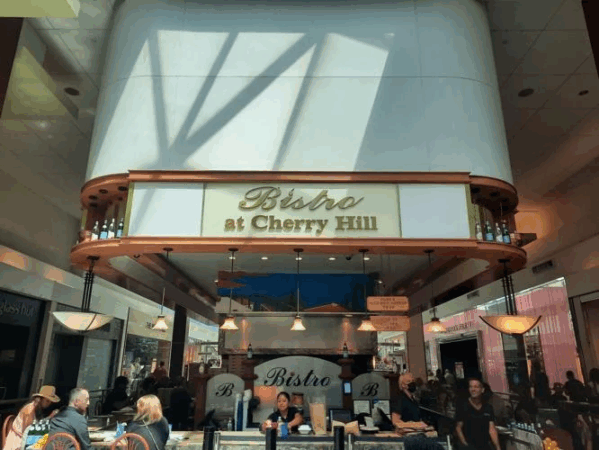
The owner of the beleaguered Bistro at Cherry Hill, a longtime mall fixture that closed this summer amid bankruptcy proceedings, has been indicted on charges of tax fraud.
The New Jersey Attorney General’s Office announced the indictment against Andrew Cosenza Jr. on Tuesday, saying an investigation found that he had failed to send the state more than $270,000 in sales tax paid by Bistro customers in 2021 and 2022.
The 57-year-old Cherry Hill resident was indicted Oct. 29 on several charges, including tax fraud.
“Everyone is required to pay their fair share of taxes,” New Jersey Attorney General Matthew J. Platkin said in the statement. “This form of tax fraud will not be tolerated.”
Cosenza did not return a request for comment on Tuesday. No defense attorney was listed on court documents as of Tuesday, and an attorney representing Cosenza in a new Chapter 11 bankruptcy case did not return requests for comment.
Cosenza had owned the Bistro at Cherry Hill for more than 25 years. The beloved restaurant operated out of a 12,000-square-foot kiosk in the middle of the Cherry Hill Mall. This summer, it closed abruptly, saddening loyal customers.
In July, Cosenza told The Inquirer that the sudden closure was the result of a communication “breakdown” regarding a Chapter 11 bankruptcy petition that he filed in May. It was the restaurant’s second bankruptcy filing since 2017.
While Cosenza was incapacitated by medical issues over the summer, he said the Bistro’s Chapter 11 bankruptcy petition had been converted to a Chapter 7, which involves the liquidation of assets, without his consent. Cosenza said his brother showed up to open the Bistro on July 10 and found the doors locked.
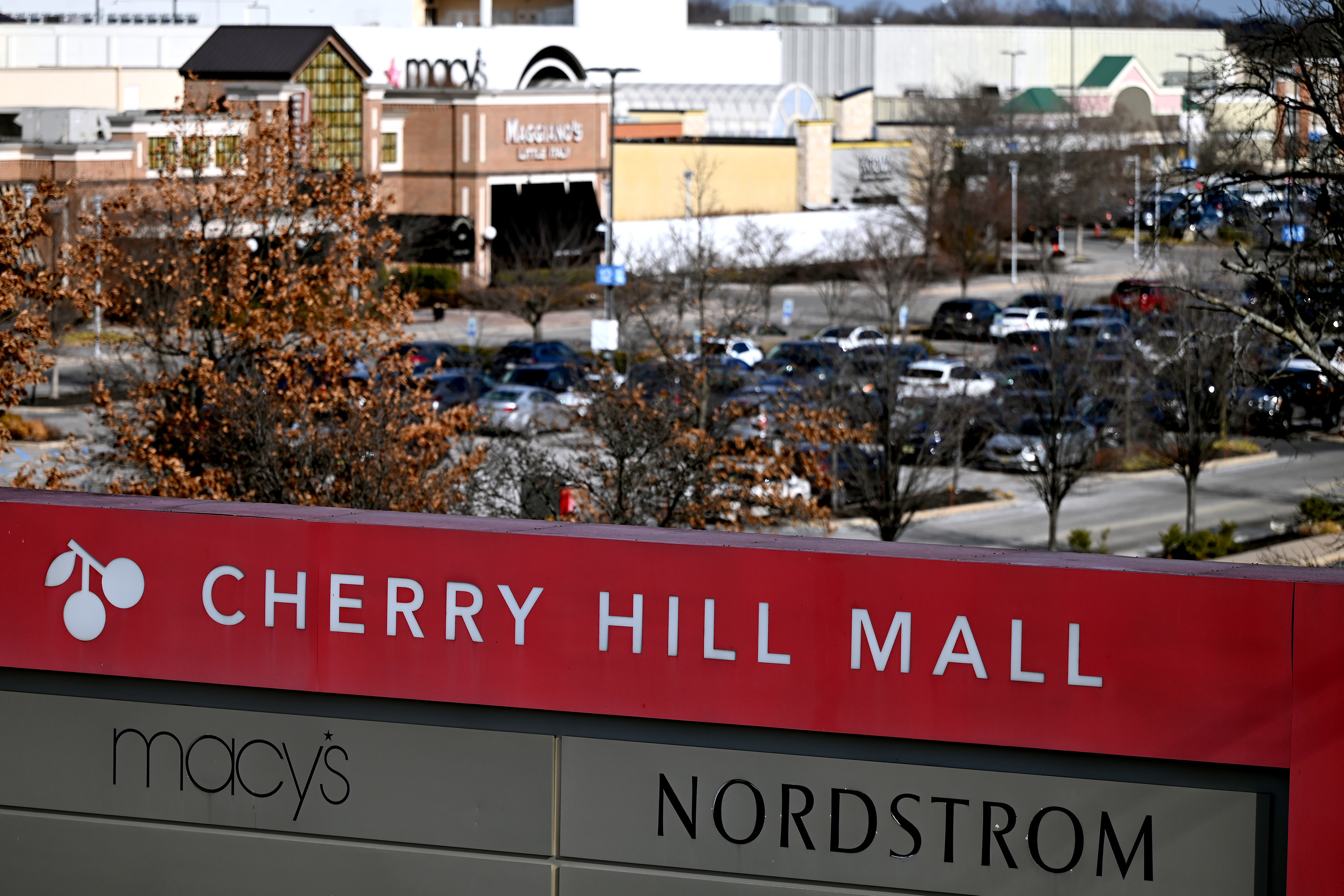
The Cherry Hill Mall, where the Bistro at Cherry Hill operated for 27 years, is shown in January.
“This is not a case of mismanagement or inability to meet financial obligations,” Cosenza said in a July interview. He said that the bankruptcy was the result of lingering pandemic-related issues and that he had a plan for repaying his debts.
In early October, the Bistro’s bankruptcy case was dismissed. Cosenza told The Inquirer on Oct. 10, two weeks before the indictment, that he planned to keep fighting to reopen the Bistro. On Oct. 15, he filed for Chapter 11 bankruptcy as a small-business debtor.
The charges against Cosenza stem from a 2023 joint investigation by the New Jersey Division of Taxation’s Office of Criminal Investigation and the Division of Criminal Justice. Investigators said they found discrepancies between the gross sales tax amounts that Cosenza reported on his business tax returns and the amounts turned over to the state.
If found guilty of the charges, Cosenza could face five years or more in state prison and fines of more than $150,000, according to the prosecutor’s office.
A Main Line developer’s plan to turn a shuttered steel mill into a 2-million-square-foot AI data center on the outskirts of Conshohocken was stymied Monday when he was forced to withdraw his application over legal issues.
At the Plymouth Township zoning hearing board meeting, Brian O’Neill’s team had been set to make their case for an exception that would allow a data center to be built at 900 Conshohocken Rd.
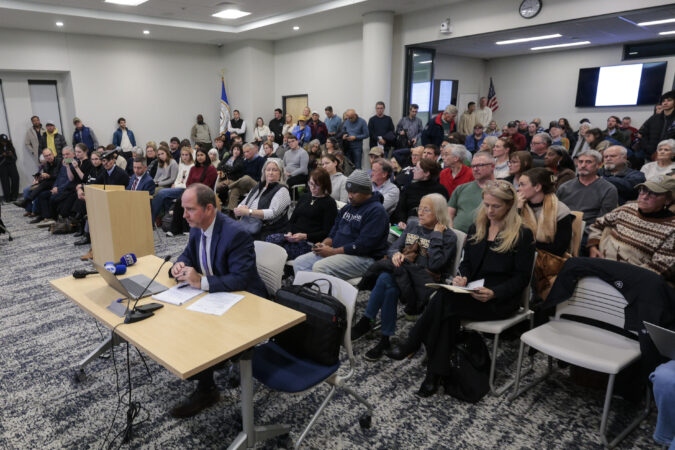
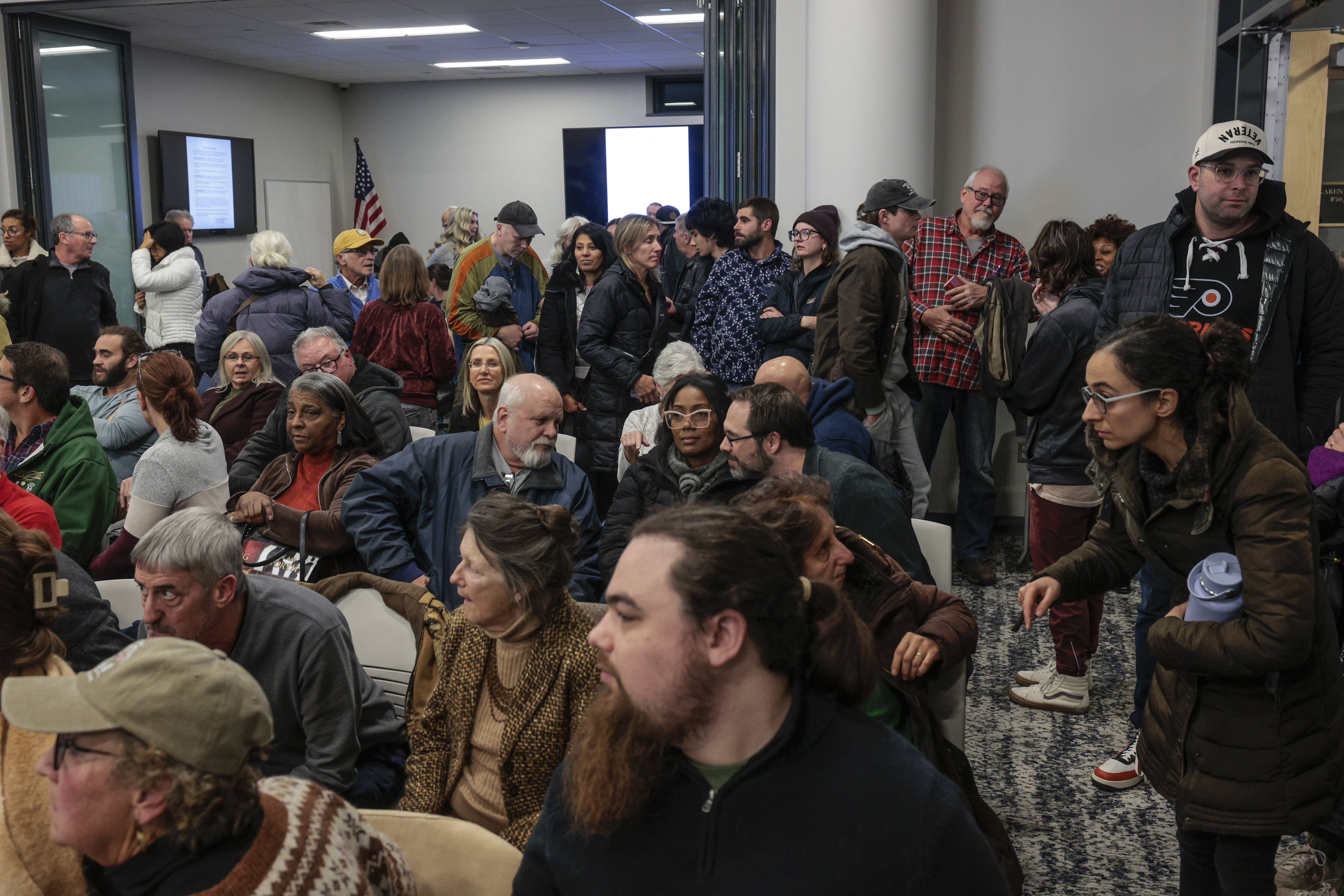
The plan has faced neighborhood pushback, and hundreds of people packed the meeting room on Monday night. O’Neill did not appear to be among them.
Edmund J. Campbell Jr., an attorney for O’Neill, said they wished to move the hearing to the township’s December meeting. Then an attorney for Cleveland-Cliffs, the property owner, said the prospective buyer did not have legal standing to do so.
An agreement of sale had not been approved prior to the meeting, said Heather Fine, the attorney for Cleveland-Cliffs.
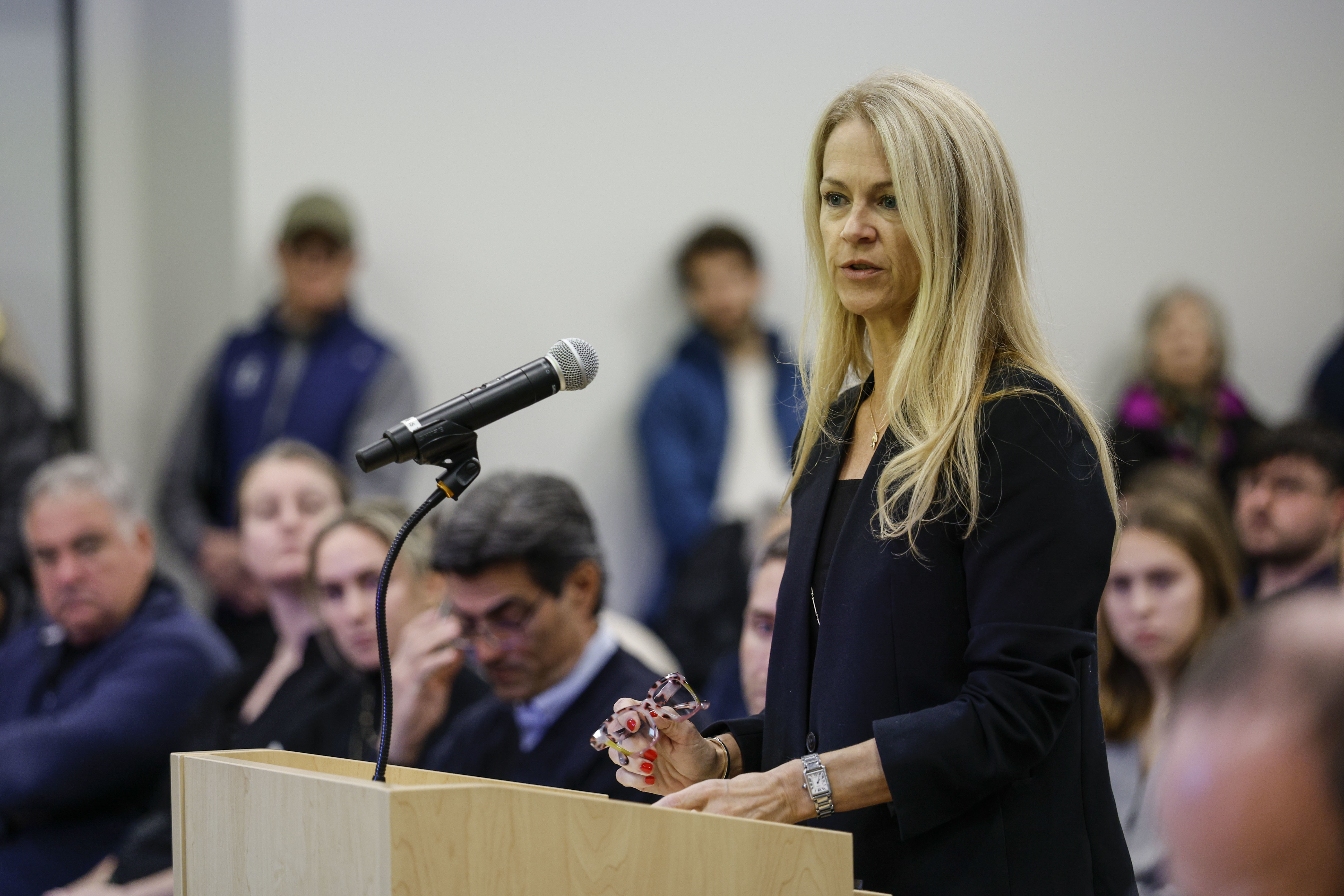
Heather Fine, an attorney for Cleveland-Cliffs, addresses the Plymouth Township zoning hearing board on Monday.
Campbell later asked Fine and then the board for permission to withdraw the application. Both declined to provide additional comment.
Residents who had spent more than a month organizing in opposition to the project said they had mixed emotions.
“It is the smallest of small wins, because we’re making it harder for something bad to happen to our community,” said Nick Liermann, an attorney who lives in a neighborhood near the former steel mill. “But we will be back in this room in a few months.”
“Communities can be effective,” said Patti Smith, a neighbor of Liermann who has spearheaded the local data-center opposition efforts. “We have to stand up for ourselves.”
With the withdrawal, the data center proposal is officially off the docket in Plymouth Township, zoning officer Joel Rowe said, but the applicant can resubmit a plan at any time, restarting the process.
What the data center proposal entailed
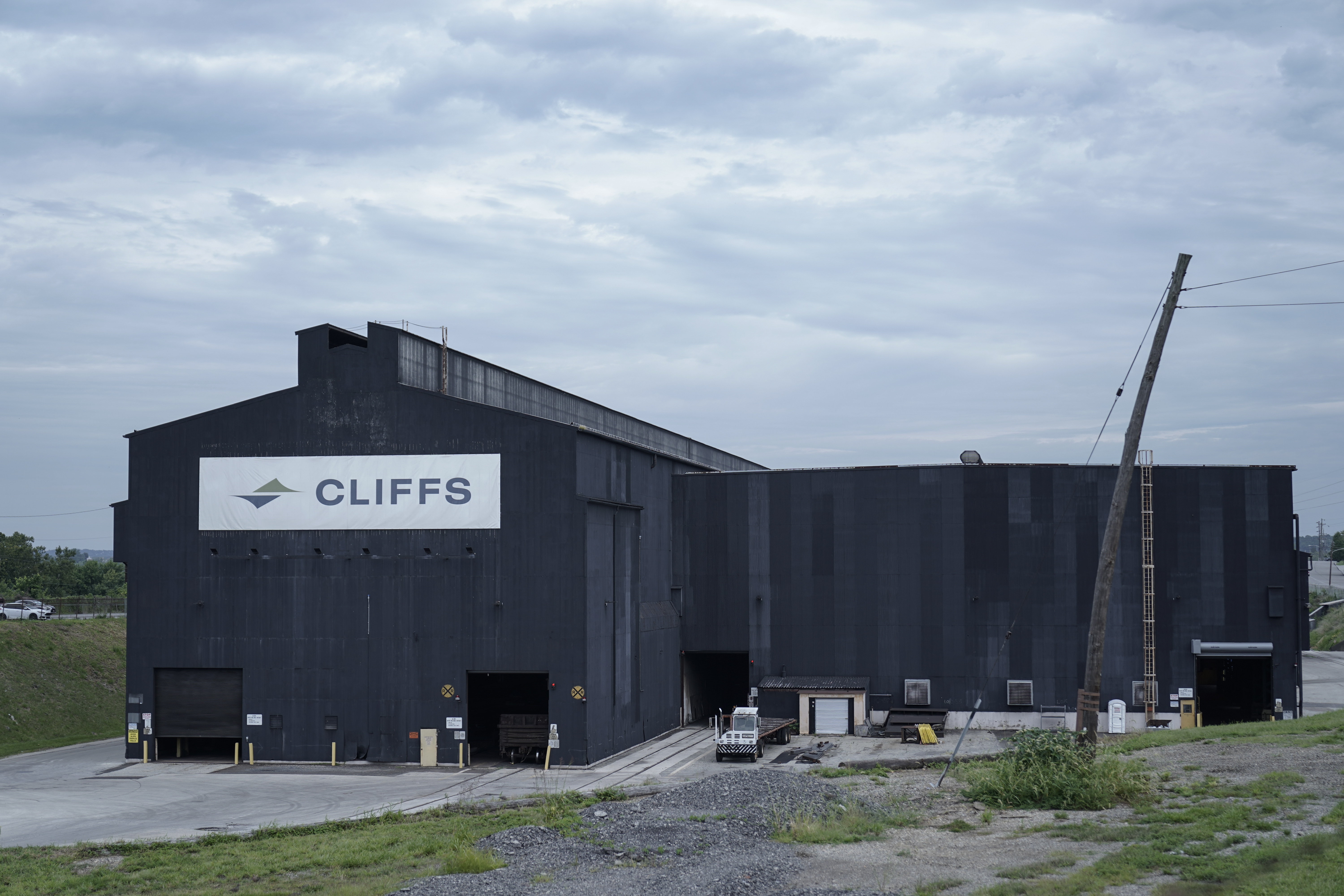
The now-closed Cleveland-Cliffs plant near Conshohocken is shown in this 2023 file photo. A data center has been proposed for the site.
This latest development in the Conshohocken-area data center saga occurs amid broader controversy about such facilities, which handle cloud-computing and storage for Big Tech companies.
The construction of data centers has been fast-tracked to meet the growing demands of power-hungry AI tools like ChatGPT. Politicians on both sides of the aisle, including President Donald Trump and Gov. Josh Shapiro, have pushed for more centers, while some neighbors near proposed sites have mounted fierce pushback.
In the Philadelphia area, Amazon is building a 2-million-square-foot data center on a former steel mill in Falls Township, Bucks County. And a 1.3-million-square-foot data center has been proposed at the former Pennhurst State School and Hospital in East Vincent Township, Chester County.
In Plymouth Township, O’Neill had not revealed the potential tenant for his proposed data center, but indicated it would be related to the life sciences.
The data center is proposed for a 66-acre property along the Schuylkill in the Connaughtown section of the township. The site is less than a mile from downtown Conshohocken. Its neighbors include the Proving Grounds sports complex, Tee’s Golf Center, and dozens of homes.
A crowd of people leave the Plymouth Township zoning hearing board meeting on Monday.
Some Connaughtown residents, along with other data center opponents from across the Philadelphia region, have rallied against the proposal. As of Tuesday, more than 1,000 people had signed an online petition urging township officials not to grant a zoning exception for the data center, citing concerns about light, noise, and air pollution; water usage; and electricity costs.
O’Neill, meanwhile, had argued that a data center should be permitted in the “heavy industrial” zone due its to similarity to a warehouse and laboratory, which are both permitted uses under township code. He had also touted the center’s potential economic benefits, saying it could bring in $21 million in annual tax revenue and attract other companies to the area.
“Industry hasn’t come and gone. It’s simply changed,” O’Neill said at last month’s planning board meeting. “What I’m proposing is to put 21st-century industry into an industrial building.”
Why the data center plan was withdrawn
The Plymouth Township zoning hearing board had been set to hear Brian O’Neill’s proposal for an AI data center outside Conshohocken on Monday.
At the start of Monday’s standing-room-only meeting, Plymouth Township officials were expecting a long and potentially tense night.
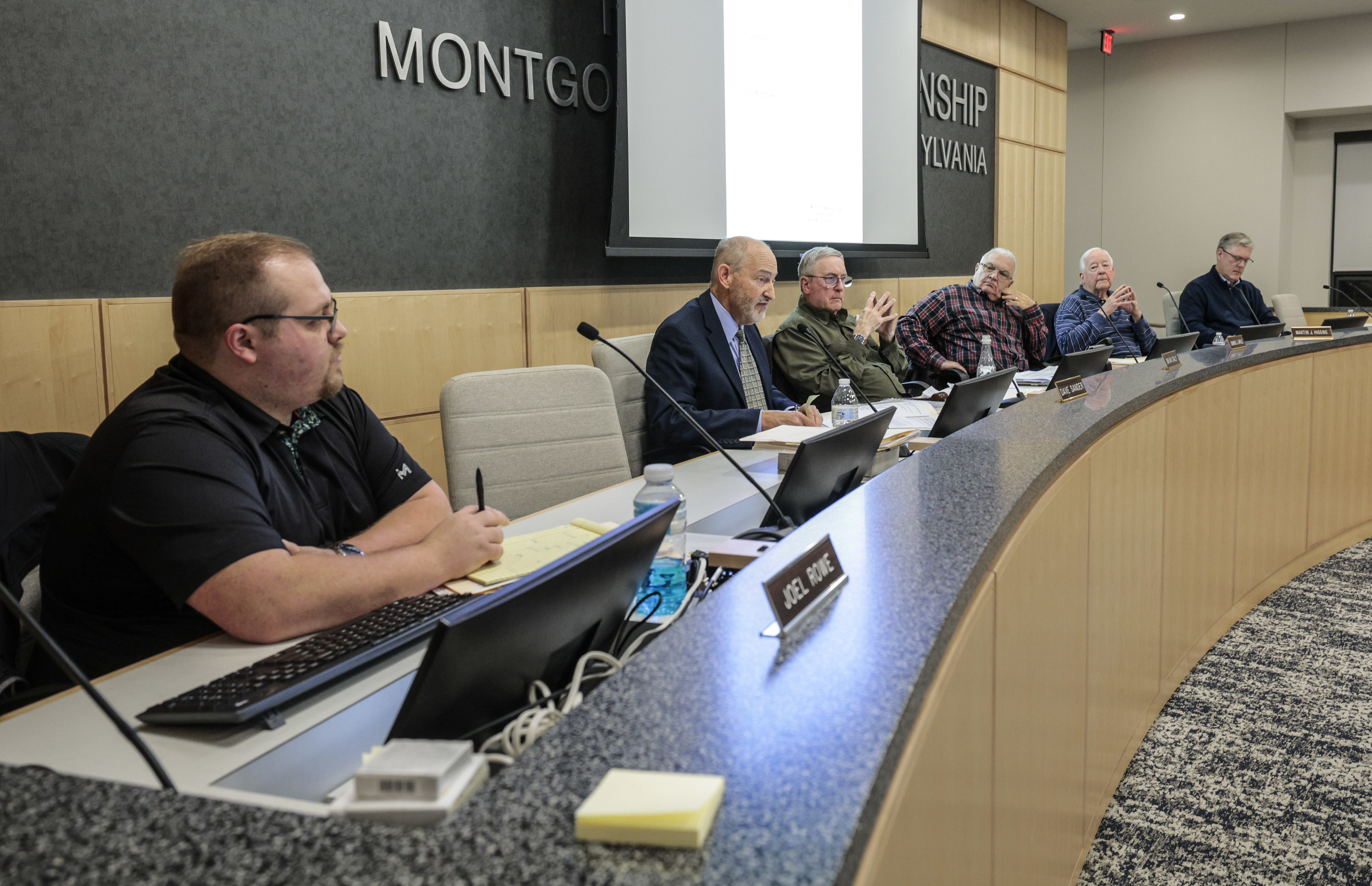
Solicitor Dave Sander began by warning the crowd that they must maintain decorum, and said he would cut off the proceedings at 10 p.m. Police officers stood outside the room.
Quickly, however, it became clear that Campbell, O’Neill’s attorney, had other plans, requesting a continuance to the Dec. 15 meeting. If granted, it would have marked the hearing’s second continuance: The proposal was initially supposed to be discussed at an October meeting.
“My client would like an additional opportunity to review with [community members] the project,” Campbell said. “When we proceed, if we have had a more robust dialogue with those participants, this hearing on the 15th would be significantly more efficient.”
Neighbors, some of whom had already attended a private meeting with O’Neill last month, objected to the last-minute request, saying that it was unlikely their minds would be changed if no significant changes had been made to the plan.
“Is the proposal significantly different than what was displayed to community members at the Oct. 8 meeting?” asked Smith, who organized neighborhood opposition.
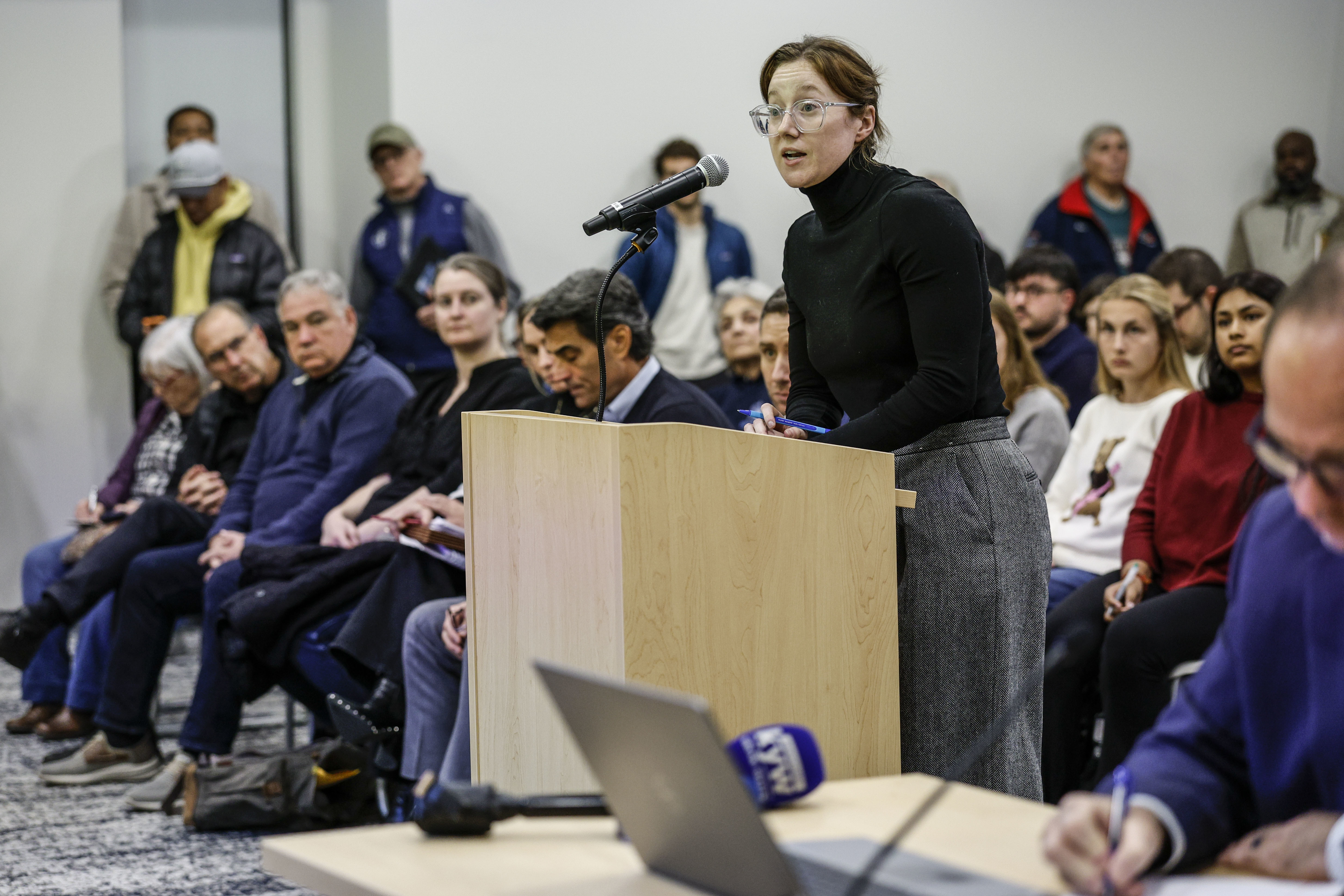
Patti Smith, resident and organizer of anti-data center movement in the neighborhood, addresses the Plymouth Township zoning hearing board at Monday’s meeting.
“No,” Campbell responded, later adding that they wanted more residents to be able to attend the meeting and hear from their experts who could speak to concerns, including about noise and emissions.
Before the zoning hearing board could vote on the continuance request, Fine, the attorney for property owner Cleveland-Cliffs, took to the podium.
“There is no standing for the prospective buyer to proceed with the application this evening,” Fine said. “That authority was not extended to the prospective buyer from the owner. There is no LOI [letter of intent] in place.”
“My client delivered a signed agreement of sale to the owner this evening,” Campbell said. “Based on that, we have standing. … We made our application with the express consent of the owner.”
Sander turned to Fine, asking if that was true.
“It’s not entirely true, no,” Fine said. “The signed agreement that was transmitted to my colleague at 5:51 p.m. this evening had redline changes. Those have not been accepted by my client.”
She did not elaborate on what those changes entailed.
The zoning hearing board recessed before returning to accept Campbell’s motion to withdraw the application.
As a neighbor to the site, Liermann said the unexpected turn of events left him with a more sour taste in his mouth about the developer: “The last-minute request in an attempt to obstruct the process and dissuade the public from participating, and then this ‘confusion’ over whether or not an LOI was actually signed between the developer and the owner, is incredibly disturbing.”
Axalta, the Philadelphia-based automobile paint and coatings maker, is set to be acquired by AkzoNobel NV, the Netherlands-based maker of Dulux and other paint and coatings brands, in an all-stock deal worth $6 billion.
Both companies have plants in the Philadelphia area, among other locations worldwide.
AkzoNobel, which employs around 34,500, almost three times Axalta’s 12,600, last year promised to update its powder coatings plant near Reading. AkzoNobel also has a Sikkens vehicle refinishings plant near Malvern.
“The last few years have been really challenging,” Axalta CEO Chris Villavarayan told investors in a morning conference call. “The market has gone sideways at best. Coatings demand is still below 2019 levels. At some point there’s going to be some kind of recovery.”
He predicted that sales will benefit as soon as next year as auto, shipbuilding, and other cyclical markets rebound, and that the merger will help boost sales of both companies’ products, after cutting costs.
AkzoNobel CEO Greg Poux-Guillaume will head the combined company, with sales totaling around $17 billion a year, across 160 countries. Poux-Guillaume said in the conference call that’s large enough to earn it a listing on the S&P 500, like rival PPG.
Poux-Guillaume said the combined company will maintain Axalta’s main office in Philadelphia as a second headquarters.
AkzoNobel shares slipped around 3% to $55 on Tuesday. Axalta shares closed down 0.64% to $28, well below the $30 to $40 range where the stock traded last winter.
The deal, if completed on schedule by early 2027, ends years of Axalta merger talks that began soon after its 2013 spinoff from the DuPont Co., with Axalta periodically discussing possible deals with competitors including PPG and Kansai, as well as AkzoNobel. AkzoNobel’s Dulux is also a former DuPont brand.
“The stars have finally aligned for this longtime proposed transaction,” said Georgina Fraser, a stock analyst at Goldman Sachs, during the companies’ conference call with investors.
“The industrial logic has been very clear,” Poux-Guillaume said: combined, the company, whose new name hasn’t been chosen, can push more AkzoNobel products in the Americas and other areas where Axalta sales are concentrated, while Axalta paints can find bigger markets in Europe and Asia.
Axalta CEO Villavarayan will serve as deputy CEO in charge of cost-cutting $600 million from current expenses by 2030. Villavarayan said the company would also spend $400 million a year on research and development, enough “to drive growth.”
Rakesh Sachdev, a senior adviser at New Mountain Capital and Axalta’s chairman who served as interim CEO before Villavarayan took the job in 2022, will serve as chairman of the combined board, with four directors from each company and three outsiders. AkzoNobel shareholders will hold around 55% of the combined company’s shares.
It’s official. Medicare costs will eat up much of older Americans’ Social Security cost-of-living increase next year.
The standard monthly premium for Medicare Part B, which covers outpatient care, doctors’ services, durable medical equipment and preventive service, will be $202.90 in 2026, the Centers for Medicare and Medicaid Services said on Nov. 14. That’s up $17.90, or nearly 9.7%, from $185.00 in 2025.
It’s smaller than the $21.50 increase the Medicare Trustees had forecast earlier but still the second largest dollar jump in program history behind 2022’s $21.60 gain and almost 3.5 times the 2.8% Social Security raise for next year. That means seniors will probably see a drop, again, in their standard of living, experts said.
Seniors were the only ones who saw an increase in poverty in 2024. All other age groups saw a decrease or stayed the same.
“The public is likely to perceive this Part B increase as taking a significant chunk of or even most of their COLA,” said Mary Johnson, independent Social Security and Medicare policy analyst. “In other words, another continuation in relentless cost increases battering consumer finances.”
Monthly Social Security checks will rise $56, on average, starting in January because of the 2.8% COLA, the Social Security Administration said. After the $17.90 increase in Medicare Part B, the average monthly COLA increase is cut to $38.10.
Hold-harmless provision
Such a large increase in Medicare Part B will likely trigger the hold-harmless provision for Social Security recipients with a Social Security benefit of $640 or less, Johnson said.
The Medicare hold-harmless provision prevents the Part B premium increase from being larger than the Social Security COLA. If a premium increase is higher than the COLA, the rule prevents the beneficiary from paying the full increase. The portion of the increase those beneficiaries don’t pay is spread out among others who aren’t protected by the rule.
For those people with a Social Security benefit of $640 or less, the 2.8% COLA next year would mean just less than an $18 per month increase in their Social Security checks. Without the hold-harmless rule, the Part B premium increase would swallow the entire COLA.
In 2022, only about 1.5% of Medicare beneficiaries had their Part B premiums limited by the hold-harmless provision, government data showed. Part B rose $21.60 to $170.10 in 2022 while the average monthly COLA increase boosted Social Security checks by $92.
In 2017, when Medicare premiums jumped 10%, or $12.20, to $134.00 and far outpaced the 0.3%, or $5 average, monthly COLA increase, 70% of Medicare Part B enrollees paid a lower-than-standard Part B premium due to the hold-harmless provision.
Hold-harmless rule isn’t panacea for all costs
The hold-harmless provision can protect seniors from Part B premium surges, but other costs may bite, Johnson said.
“If individuals have other automatic deductions such as for Medicare Advantage or Part D premiums, increases in those premiums could reduce Social Security benefits,” Johnson said. The optional Part D covers prescription drugs.
Some Part D plans are increasing premiums by as much as $50 in 2026, the maximum allowed under a Part D Premium Stabilization Demonstration Program, according to the nonprofit, nonpartisan research organization KFF.
“To complicate things, there are fewer stand-alone Part D plans to choose from,” Johnson said. The total number of prescription drug plans has dropped by half since 2024, KFF said.
Is everyone eligible for hold harmless?
Those who aren’t eligible for the hold-harmless provision include:
New Medicare enrollees
People who aren’t receiving Social Security benefits
High-income earners
What about deductibles?
In addition to higher premiums, higher annual deductibles next year will make health insurance even more expensive for Medicare enrollees.
The annual deductible for all Medicare Part B beneficiaries before insurance covers costs will be $283 in 2026, up $26 from $257 in 2025, CMS said.
Could it have been worse?
The Part B premium could have been higher, CMS said.
“If the Trump Administration had not taken action to address unprecedented spending on skin substitutes, the Part B premium increase would have been about $11 more a month,” CMS said. “However, due to changes finalized in the 2026 Physician Fee Schedule Final Rule, spending on skin substitutes is expected to drop by 90% without affecting patient care.”
Skin substitutes are materials like biologic, synthetic or biosynthetic products that mimic human skin and are used to cover and treat chronic wounds, such as diabetic foot ulcers. The Trump administration reclassified these bandages so they aren’t billed separately. CMS estimates the change would reduce Medicare spending on these products by nearly 90% in calendar year 2026.
Medicare Trustees also estimated earlier this year the standard monthly Part B premium would rise $21.50 to $206.50 in 2026 from $185 in 2025. That would have been more than the $17.90 increase to $202.90 in 2026.
Cloudflare, an internet infrastructure platform, is experiencing an outage that appears to be affecting websites across the internet, including the social media platform X.
The company said in a status update before 7 a.m. EST on Nov. 18 that it was aware of “an issue which potentially impacts multiple customers,” and was investigating the problem.
In a statement to USA TODAY around 8:30 a.m. EST, Cloudflare said it “saw a spike in unusual traffic” to one of its services around 6:20 a.m. EST.
“That caused some traffic passing through Cloudflare’s network to experience errors. We do not yet know the cause of the spike in unusual traffic. We are all hands on deck to make sure all traffic is served without errors. After that, we will turn our attention to investigating the cause of the unusual spike in traffic,” the statement said.
Many X users reported having problems loading the social media app.
According to Downdetector, an outage-tracking website, thousands of users of several popular websites were reporting issues or outages as of 8 a.m. EST, including X, Spotify, OpenAI, League of Legends and more.
By 8:30 a.m. EST, though, Downdetector also appeared to be having connectivity issues tied to the Cloudflare outage.
Is Cloudflare down?
Cloudflare said it is experiencing issues with its global network, causing outages at many websites that rely on the platform.
Shortly after 8 a.m. EST, Cloudflare said it had identified the issue and made changes to recover its Cloudflare Access and WARP system, which both help protect companies’ traffic and devices.
“We are continuing to work towards restoring other services,” Cloudflare said.
More updates will be available on its status website.
Cloudflare is a platform which many websites use to improve their performance and functionality.
Which websites are down from Cloudflare outage?
According to Downdetector, the following websites were reporting increased outages as of 9 a.m. EST:
X, formerly Twitter
Spotify
OpenAI
League of Legends
Grindr
Google Store
Archive of Our Own
Uber
Quizlet
Canva
Claude AI
Character AI
Indeed
Truth Social
Dayforce
ChatGPT
Letterboxd
Square
Rover
Zoom
Canvas
Ikea
Downdetector also appeared to be impacted by the outage, as did news outlet Axios. Both websites loaded a banner that said, “Please unblock challenges.cloudflare.com to proceed.”
From inflation to tariffs to labor shortages, small businesses in Philadelphia have faced many challenges in 2025. But they remain resilient and, for the most part, are optimistic about the coming year.
But that, of course, depends on the type of business.
For example, the Monkey’s Uncle, a retro Philly sports apparel boutique located in Doylestown, had an “exceptionally strong” year, which was mostly driven by the Eagles’ Super Bowl win. Co-owner Derrick Morgan expects the holiday season to be busy but observes more people are shopping for holiday gifts much earlier this year as consumers are “spreading out their spending much more.”
For small businesses in the Philadelphia region, consumer sales were up 2.4% in October compared to a year before, according to a monthly index from payment technology provider Fiserv. That’s compared to a 1.5% increase nationally. Small-business optimism remains above its 52-year average and uncertainty dropped this month, according to the National Federation of Independent Businesses.
All in all, it hasn’t been such a bad year for most, despite the uncertainty.
Looking to 2026, Morgan is optimistic due to Philadelphia hosting a number of major sporting events (like the MLB All-Star Game), and he is already coordinating commemorative merchandise with licensed vendors. But it’s not economic uncertainty that impacts his business as much as Jalen Hurts or Bryce Harper.
“The nature of our business is very much at the mercy of the wins and losses from our Philly sports teams, which can certainly be unpredictable,” he said.
Regardless of the economic uncertainty, physical fitness remains popular. Valerie Plummer’s Germantown-based Pilates studio — Pilates by Valerie — has had a “profitable and expansive year” thanks to “rising client retention, steady new enrollments, and an increasingly strong sense of community.”
Plummer has used this year to double down on her business by broadening her programming with a series of new classes and apparatus trainings while developing instructor materials, improving internal systems, and strengthening her long-term training pipeline. As for next year? Plummer’s optimistic.
“I am confident in the direction of the studio, the relationships we are building, and the value we are providing — and I’m excited for what’s ahead,” she said.
The restaurant industry has been hit hard recently, thanks mainly to increasing costs and labor shortages. In Media, Rainy Culbertson’s breakfast restaurant, The Corner, has had a difficult year.
“Customers are uncertain about their finances,” she said. “Eating out is a luxury and is one of the first cuts to a person’s budget in economically uncertain times. We’ve had ups and downs this year, but mostly down.”
Like many restaurants, The Corner faces challenges in labor retention, cost increases, and competitive issues. And they’re still recovering from the pandemic, Culbertson said.
“Most restaurants have not recovered from COVID, it’s just that we stopped talking about it because folks want it behind them, ourselves included,” she said. “Most restaurants still carry debt from COVID and now they have to deal with economic uncertainty and painfully thin profit margins due to inflation.”
It’s not surprising that Culbertson remains very uncertain about 2026.
“I’m optimistic it will be better but realistically, it will probably be more chaos and stress dealing with inflation and tariffs,” she said. “A lot depends on how long this madness of inflation, tariffs, and the unstable economy drags on. I’m really close to calling it quits.”
Heather Herbert, the co-owner of Tail Spinz in Montgomeryville says her family-owned dog daycare has grown every year since its opening in 2023. It saw growth this year too, but some months were slower.
“2025 has had its ups and downs, with some months of steady growth and others that have leveled off a bit,” she said. “Our business is built almost entirely on word-of-mouth and referrals, which creates a slower but more sustainable kind of growth. We have had a few families scale back or pause daycare due to budget changes, and we completely understand that we’re a ‘nice-to-have’ rather than a necessity for everyone.”
Herbert is looking forward to even more growth next year and is currently gearing up for the holidays, with “a full lineup of festive events planned” including “a visit from Santa” with holiday photo ops and treats.
“When you provide great care, build genuine relationships, and create a space that dogs are excited to come to, it’s hard not to feel positive about what’s ahead,” she said.
Even in an uncertain economy, specialized businesses like Blevins Sommelier Services can flourish. Focused on bringing “affordable luxury experiences” directly into their clients’ homes, the company, which offers wine tasting and bourbon education events, has experienced strong growth this year with monthly bookings doubling over the prior year.
“I’m optimistic for 2026,” said Amanda Blevins, who operates her business out of her home in Glen Mills. “The demand for wine events remains steady, and the demand for bourbon tastings has increased.”
Tariffs and supply shortages have impacted Blevins’ business, particularly on wines from Italy and France, but like many business owners she’s pivoted and now features more local wines.
“In many cases, hosting private in-home celebrations is more affordable than entertaining at a restaurant or larger rented venue,” she said. “There is always something new to discover in the world of wine and whiskey, and I consider it a wonderful life-long journey.”
Ford Motor Co. has struck a deal with Amazon.com Inc. to sell certified used cars through its e-commerce website, becoming the second major automaker to reach customers through the massive online retailer.
Ford joins Hyundai Motor Co. on the Amazon Autos portal, which allows car buyers to browse, finance, and purchase a used car by clicking on the familiar “add to cart” icon. Hyundai began selling new cars through the platform late last year, but Ford is only offering its “Blue Advantage” certified used cars on the site, the second-largest U.S. automaker said Monday in a statement.
Car buyers will take delivery of their vehicles through Ford dealers participating in the program. So far, Ford dealers in Los Angeles, Seattle, and Dallas have signed up, but Ford plans to roll out the program nationally in the coming months. The automaker said about 200 of its 2,800 dealers nationwide have expressed interest in selling on Amazon.
Ford’s move comes as consumers are looking for simpler and faster ways to buy cars and are increasingly patronizing online car sellers such as Carvana Co. and CarMax Inc.
It also comes at a time when average new car prices have topped a record $50,000 and more mainstream buyers are turning to used car lots to find something they can afford. The average price of a three-year-old used car was $31,067 in the third quarter, the highest in three years, according to automotive researcher Edmunds.com.
Some auto manufacturers have attempted to emulate Tesla Inc.’s online sales model that bypasses traditional dealers, but Ford is working with its independent retailers to sell on Amazon.
“Everyone has an Amazon account,” Wendy Lane, senior manager of Ford’s Blue Advantage unit, said in an interview. “Knowing that it is a trusted source for consumers and having our vehicles listed there, we’re really excited to see how it works and how well consumers adopt it.”
Ford’s goal is to drive traffic to its dealers used-car lots so that car buyers stay in “Ford’s ecosystem” for service and future purchases, Lane said.
The company will take what it learns from selling certified used cars on Amazon to see if it eventually wants to add new cars to the online retailer’s automotive storefront.
The used vehicles will be sold at a set price, with no haggling. They will have received multipoint inspections, and Ford will offer limited warranties of up to one year or 12,000 miles. The Amazon search tool enables buyers to see a vehicle’s service history and condition reports.
“By working with exceptional Ford dealers who share our commitment to customer service, we’re creating a car buying experience that combines trusted vehicle certification with the convenience Amazon is known for,” Fan Jin, global leader of Amazon Autos, said in a statement.
WASHINGTON — More people are falling behind on paying their bills to keep on the lights and heat their homes, according to a new analysis of consumer data — a warning sign for the U.S. economy and another political headache for President Donald Trump.
Past-due balances to utility companies jumped 9.7% annually to $789 between the April-June periods of 2024 and 2025, said the Century Foundation, a liberal think tank, and the advocacy group Protect Borrowers. The increase has overlapped with a 12% jump in monthly energy bills during the same period.
Consumers usually prioritize their utility bills along with their mortgages and auto debt, said Julie Margetta Morgan, the foundation’s president. The increase in both energy costs and delinquencies may suggest that consumers are falling behind on other bills, too.
“There’s a lot of information out there about rising utility costs, but here we can actually look at what that impact has been on families in terms of how they’re falling behind,” Margetta Morgan said.
Troubles paying electricity and natural gas bills reflect something of an economic quandary for Trump, who is promoting the build-out of the artificial intelligence industry as a key part of an economic boom he has promised for America. But AI data centers are known for their massive use of electricity, and threaten to further increase utility bills for everyday Americans.
These troubles also come as Trump faces political pressure from voters fed up with the high cost of living. The president spoke about the economy and affordability issues Monday at an event hosted by the McDonald’s fast food company.
“We have it almost at the sweet spot and prices are coming down on different things,” Trump said at the event, adding that inflation has been “normalized” at a “low level.”
Trump has put a particular emphasis on prices at the pump. Gasoline accounts for about 3% of the Consumer Price Index, slightly less than the share belonging to electricity and natural gas bills — meaning that possible savings on gasoline could be more than offset by higher utility bills.
The president maintains that any troubling data on inflation is false and that Democrats are simply trying to hurt his administration’s reputation.
“In fact, costs under the TRUMP ADMINISTRATION are tumbling down, helped greatly by gasoline and ENERGY,” Trump posted on social media Friday. ”Affordability is a lie when used by the Dems,”
Nearly 6 million households have utility debt “so severe” that it will soon be reported to collection agencies, according to the foundation’s analysis, drawn from the University of California Consumer Credit Panel.
During Trump’s first six months in office, there was a 3.8% increase in households with severely overdue utility bills.
“Voters are frustrated and families are hurting because these tech giants are cutting backroom deals with politicians, and it’s causing their power bills to go up,” said Mike Pierce, executive director of Protect Borrowers. “If the Trump administration doesn’t want to do its job and protect families and make life more affordable, I guess that’s its choice.”
Both Margetta Morgan and Pierce previously worked at the Consumer Financial Protection Bureau, a government agency formed in part to track trends in household borrowing to prevent potential abuses. The Trump administration has essentially shut down the bureau.
The administration has so far said it has no responsibility for any increases in electricity prices, since those are often regulated by state utility boards. The White House maintains that utility costs are higher in Democratic states that rely on renewable forms of energy.
“Electricity prices are a state problem,” Treasury Secretary Scott Bessent told ABC News this month. “There are things that the federal government can control. Local electricity prices are not one of them.”
The new analysis of utility bills by the groups counters that the Trump administration is contributing to higher utility costs “by impeding renewable energy generation” including solar and wind power.
While that analysis is a warning sign, other economic analyses on consumers suggest their finances are stable despite some emerging pressures.
The New York Federal Reserve has said delinquency rates of 90 days or more for mortgages, auto loans, and student debt have each increased over the past 12 months, though it said mortgage delinquencies are “relatively low.” An analysis of debit and credit card spending by the Bank of America Institute showed that consumers’ “overall financial health looks sound.”
The families of two Mexican nationals killed in a Northeast Philly jet crash have filed a wrongful-death suit against a medical airline, alleging its negligence was responsible for the Jan. 31. disaster that killed eight people, seriously injured at least 20 more, and devastated a neighborhood.
The complaint, filed Monday in Philadelphia’s Court of Common Pleas, was brought by the estates of Raul Meza Arredondo and Lizeth Murillo Osuna against Med Jets, a Mexican air carrier that operates specialized airplanes for medical transport.
Osuna was homebound for Tijuana following her young daughter’s successful medical treatment at Shriner’s Hospital when the Learjet 55 abruptly dove about a minute after takeoff from Northeast Philadelphia Airport and slammed into Cottman Avenue.
Osuna and her daughter, 11-year-old Valentina Guzman Murillo, were killed instantly, along with the pilot, co-pilot, a paramedic, and Arredondo, a pediatrician.
The suit broadly accuses Med Jets of “carelessness, negligence, and recklessness” for failing “to ensure the aircraft was in a safe and operable condition.”
It notes details from a still-ongoing federal investigation — which revealed that the “black box” and other components on the jet were inoperable — and an earlier fatal crash involving a Med Jet plane in Mexico. It leaves open the possibility that the Tijuana-bound plane could have crashed due to pilot error.
“Today’s filing is an important step on behalf of the victims of this tragedy to hold those responsible for this deadly crash fully accountable,” said Jeffrey P. Goodman, an attorney with Saltz Mongeluzzi & Bendesky, who represents the estates of two families. “Unfortunately, given the lack of functioning onboard recording systems, much remains to be determined as to the cause of this crash.”
The complaint, which seeks unspecified compensatory damages, also names as defendants still-unidentified people “responsible for inspection, maintenance, repairs” of aircraft operated by Med Jets, and corporations involved in the manufacture of Learjet components.
A spokesperson for Med Jets did not immediately respond to a request for comment.
The crash occurred after 6 p.m. on a Friday. After plummeting 1,650 feet at more than 235 miles per hour, the jet left a crater that the suit says resembled one created by heavy military artillery. The black box was buried eight feet in the ground.
A 37-year-old Mount Airy motorist was killed when the jet’s fuel set his car ablaze.A passenger in the same vehicle was critically injured and succumbed to her injuries in April. The driver’s 9-year-old son also suffered serious burns, requiring extensive medical treatment.
The scope of damage to nearly six blocks of rowhouses and businesses near the Roosevelt Mall has already led aMexican insurer for Med Jets, which also does business as Jet Rescue Air Ambulance, to preemptively file an action in federal court, pleading that claims related to the incident would far exceed a $10 million limit on the carrier’s policy.
The city of Philadelphia alone reported more than $2.5 million in damages related to the local emergency response effort, and the case has already drawn dozens of other claimants. The insurer has requested that a federal judge oversee distribution of the limited funds.
The defective black box, referenced in the lawsuit, left National Transportation Safety Board investigators with few clues as to what occurred on board in the moments leading up to the crash.
Their efforts were further frustrated by the sheer force of the impact and an ensuing blaze, which incinerated much of the plane wreckage.