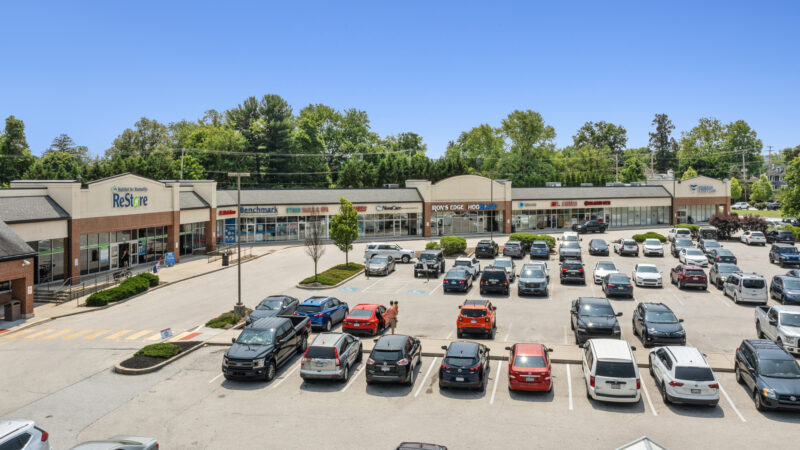
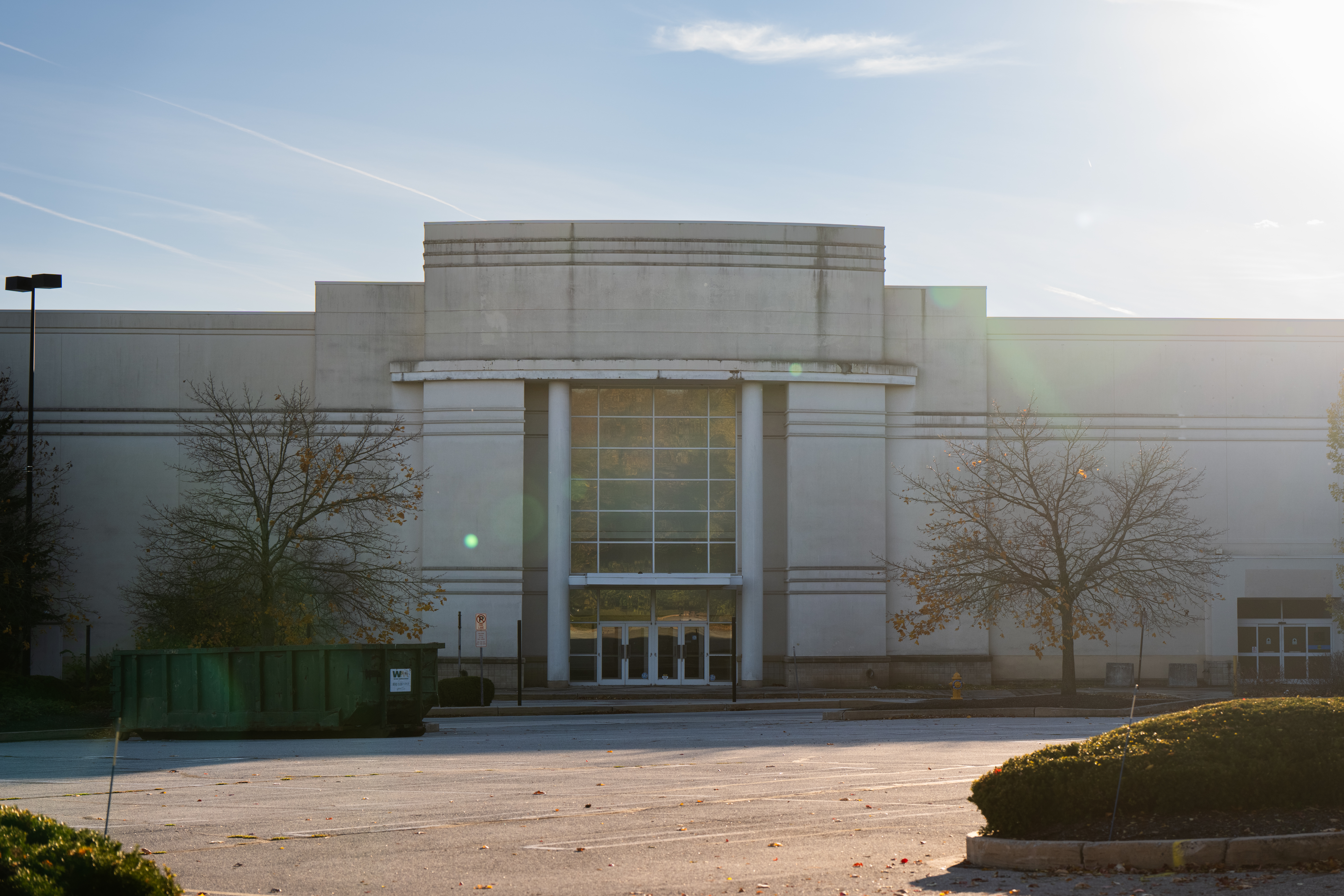
A fully occupied shopping center near downtown Phoenixville recently sold for nearly $7.4 million.
Chester County property records show that the 33,000-square-foot complex was sold in late November by one private investor based in Malvern to another based in Glen Mills, with both registered as limited liability companies. The sale was first reported Thursday by the Philadelphia Business Journal.
Located at 785 Starr St., the center is about a mile down the road from Phoenixville’s main drag. It is shadow-anchored by a corporately owned Acme, according to Marcus & Millichap, the firm that represented the seller. The Acme is connected to the rest of the shopping center — and drives traffic to other stores — but was not included in the sale.
The center’s other tenants include Benchmark Federal Credit Union, Habitat for Humanity ReStore thrift store, Fresenius Kidney Care, Labcorp, NovaCare Rehabilitation, and State Farm. It also has a martial arts gym, a dry cleaner, and several quick-service restaurants.
“This closing highlights the strength of essential-service tenants, 100% occupancy, and strong tenant performance,” Scott Woodard, senior director of investments for Marcus & Millichap, said in a statement. “Phoenixville’s expected population growth and proximity to major anchors, such as Acme, made this center a standout asset with long-term stability.”
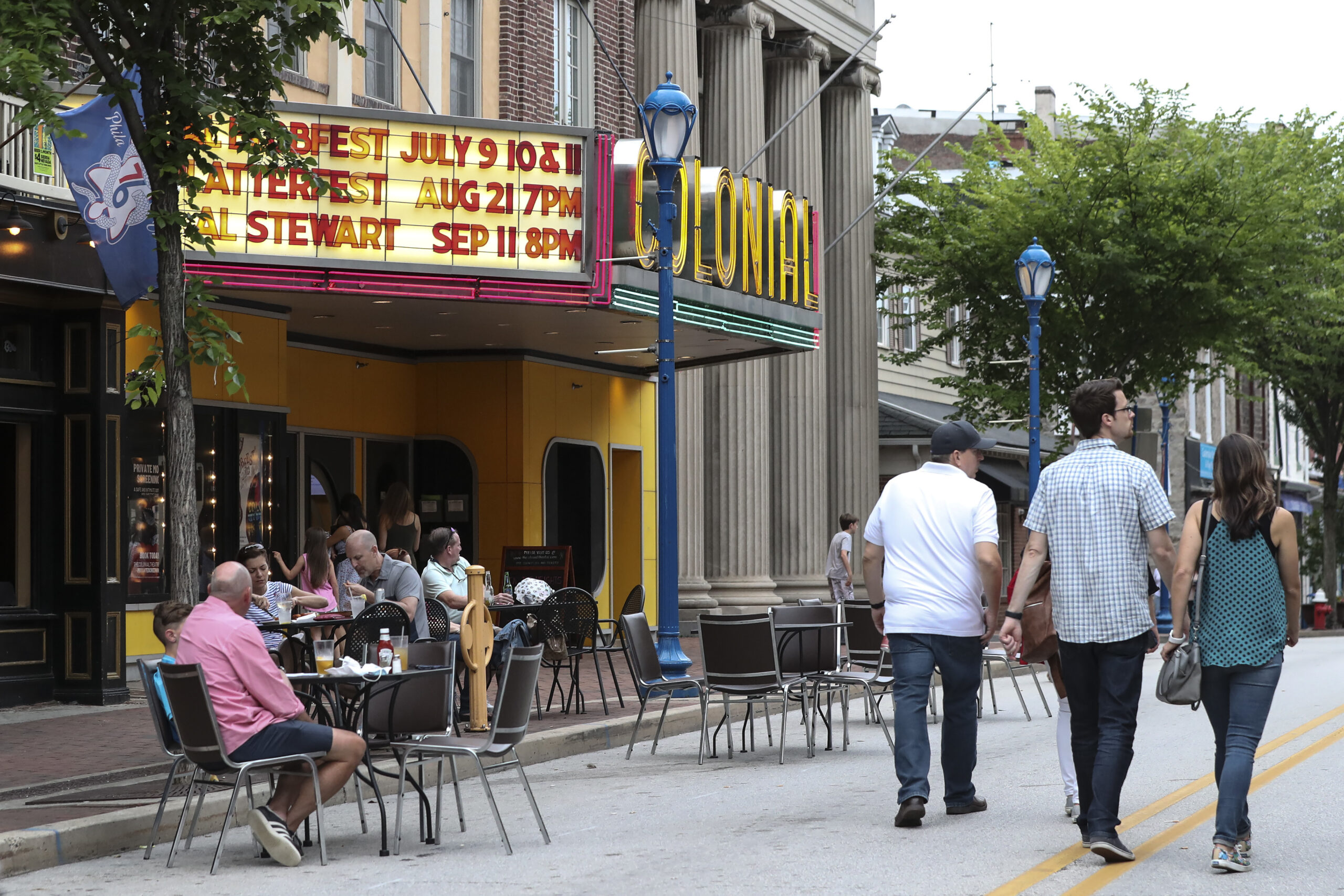
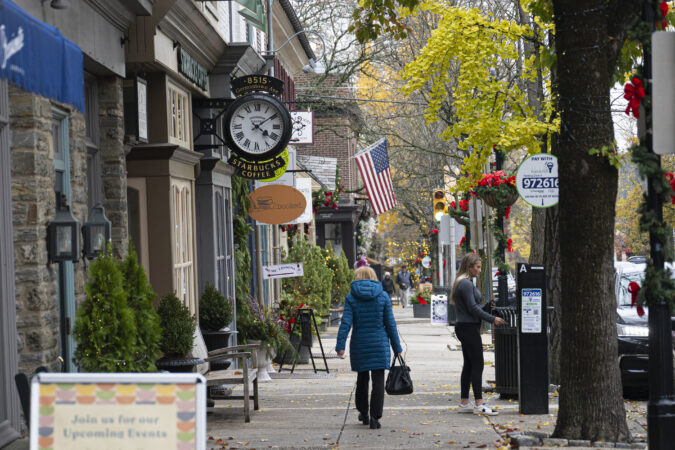
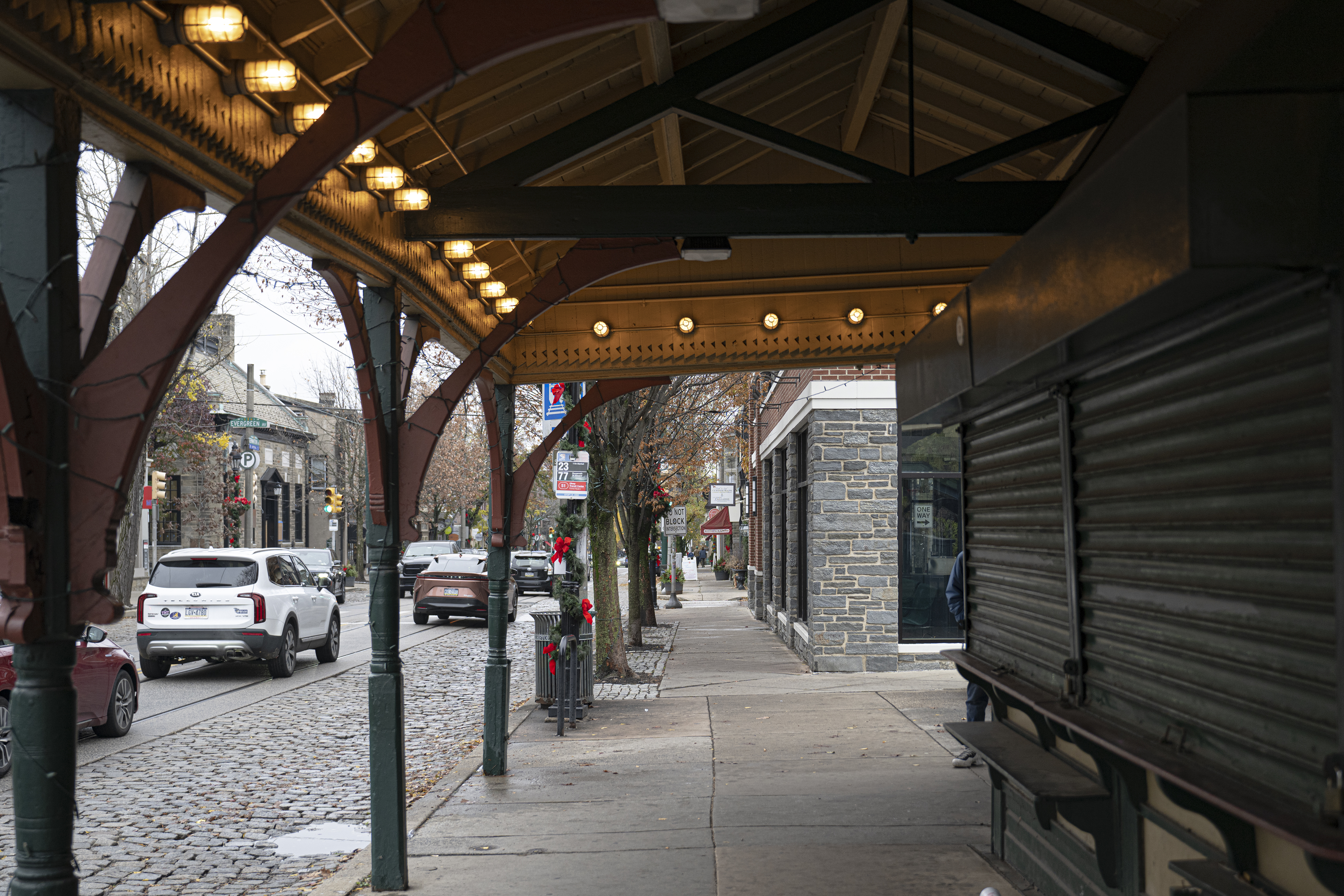
People walk along Bridge Street by the historic Colonial Theatre in Phoenixville in this June 2021 file photo.
Woodard represented the seller alongside Derrick Dougherty, senior managing director of investments.
The shopping center sits on 3.7 acres, near the corner of Nutt Road and Starr Street, and was built in 2007. According to Chester County property records, it previously sold for $6.35 million in 2018.
Prior to that, the property had last changed hands in 2006, when the land was purchased for $325,000, according to the records.
Its restaurant and bar scene has flourished, and Bridge Street is bustling, especially on the weekends. Luxury apartment complexes have attracted both millennials and empty nesters to the quaint 3.8-square-mile borough.
Since the pandemic, Phoenixville has continued to grow: Its population increased 9% between 2020 and 2024, according to census data.
In 2010, it was home to roughly 16,000 people. Today, that number is estimated to be more than 20,000.
The Acme shopping center sits just inside the bounds of Phoenixville, near its border with Schuylkill Township and not far from Valley Forge National Historic Park.
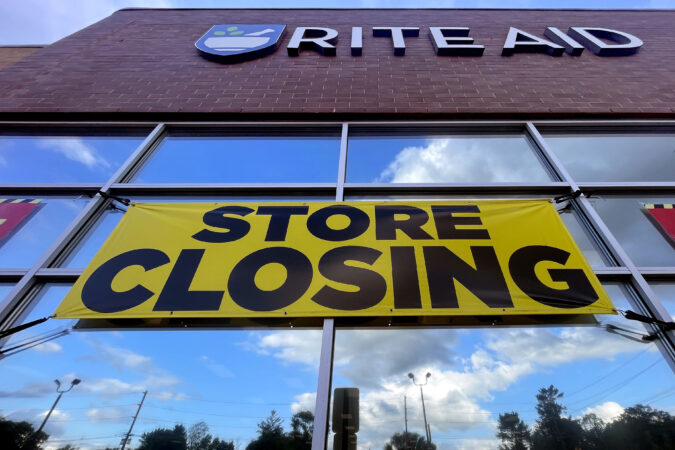
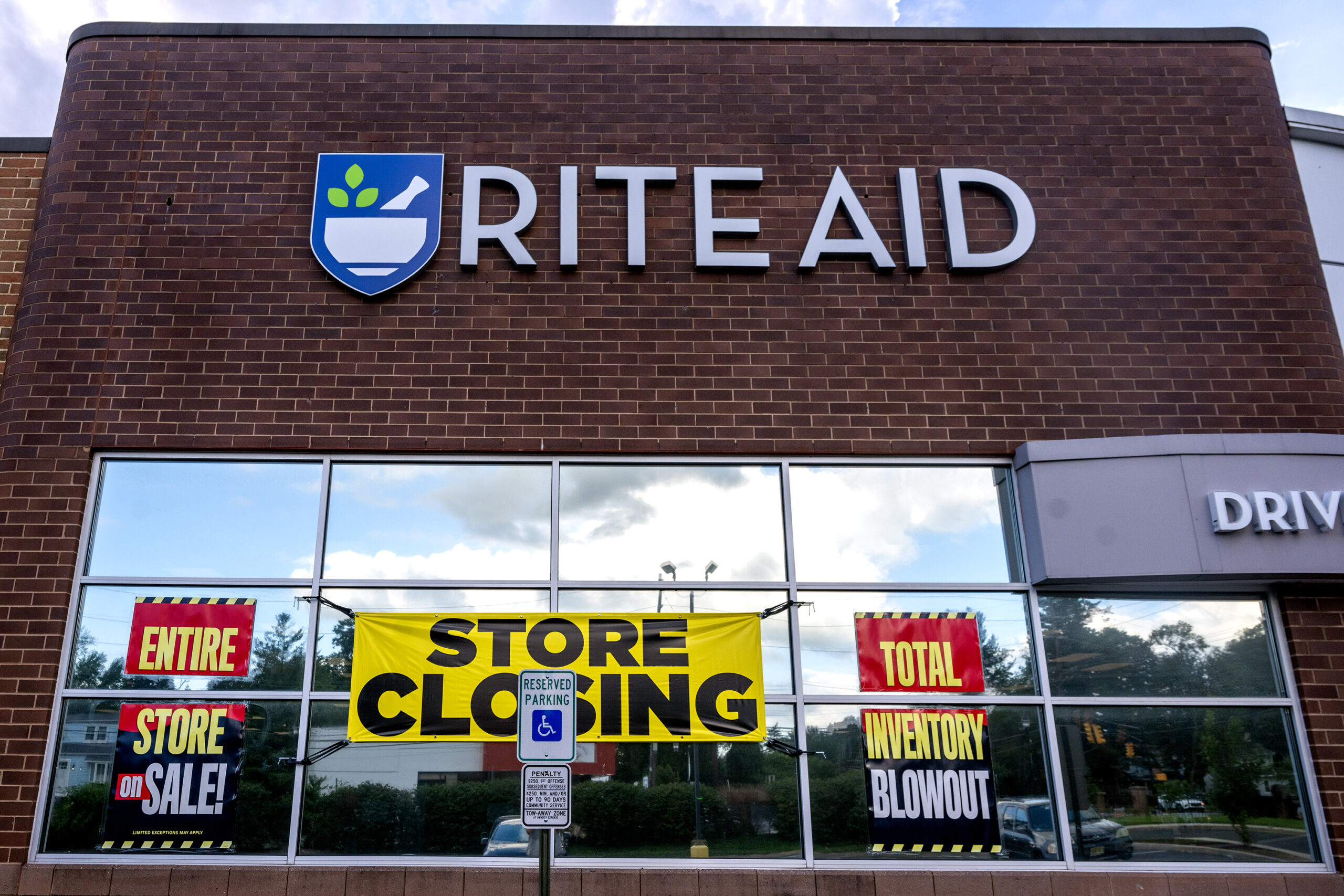
In filing for bankruptcy again, Rite Aid announced that it would be closing or selling all locations. At the time, it had about 1,000 stores nationwide, including about 100 in the Philadelphia region.
The closures further exacerbate pharmacy access issues, especially for lower-income Philadelphians who don’t have cars. People in more isolated rural areas are also impacted: The 46,000 residents of Perry County, west of Harrisburg, lost half their pharmacies when their three Rite Aids closed.
Adieu to Iron Hill Brewery
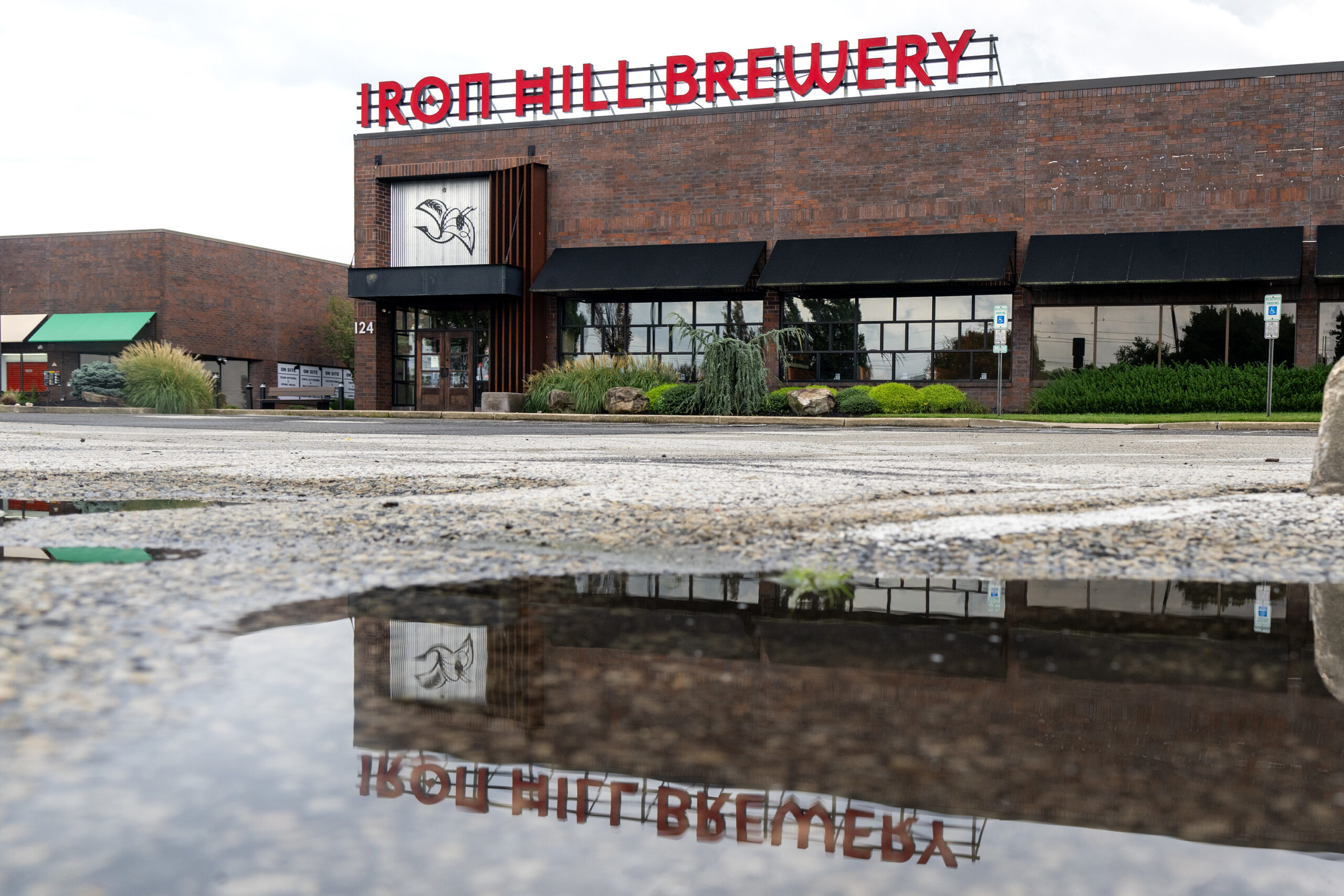
A view from the outside looking in of a shuttered Iron Hill Brewery in West Chester in October.
On a Thursday morning in late September, the nearly 30-year-old company, considered by many to be a pioneer of the local craft-brewing scene, announced that its brewpubs had closed their doors for the last time.
The closed Iron Hill Brewery in Maple Shade in September.
Bankruptcy filings shed more light on the Exton-based company’s financial straits: Iron Hill owed more than $20 million to creditors and had about $125,000 in the bank.
In November, a bankruptcy judge approved an offer by Jeff Crivello, the former CEO of Famous Dave’s BBQ, to resurrect 10 Iron Hills, including in Center City and West Chester, pending landlord negotiations. The restaurants could be reopened as Iron Hills or as other brands.
Crivello said he plans to reopen the Rehoboth Beach brewpub — as well as the Iron Hill restaurants in Columbia and Greenville, S.C. — as locations of Virginia-based Three Notch’d Brewing Co.
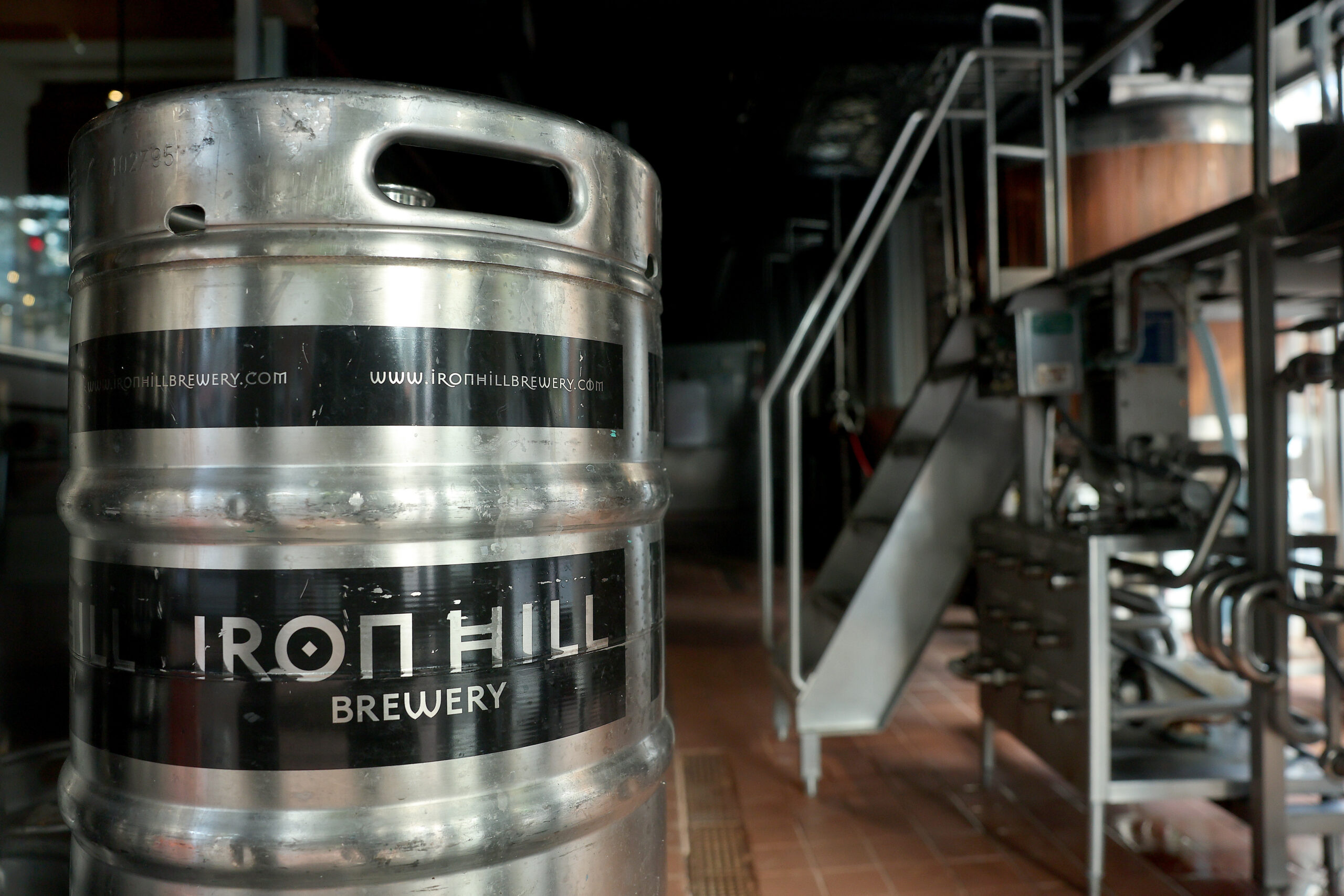
The fates of the other ex-Iron Hills will be determined in the bankruptcy process. Brewing equipment, furniture, and other items from the closed restaurants were auctioned off earlier this month.
Mainstays say goodbye in the Philly burbs
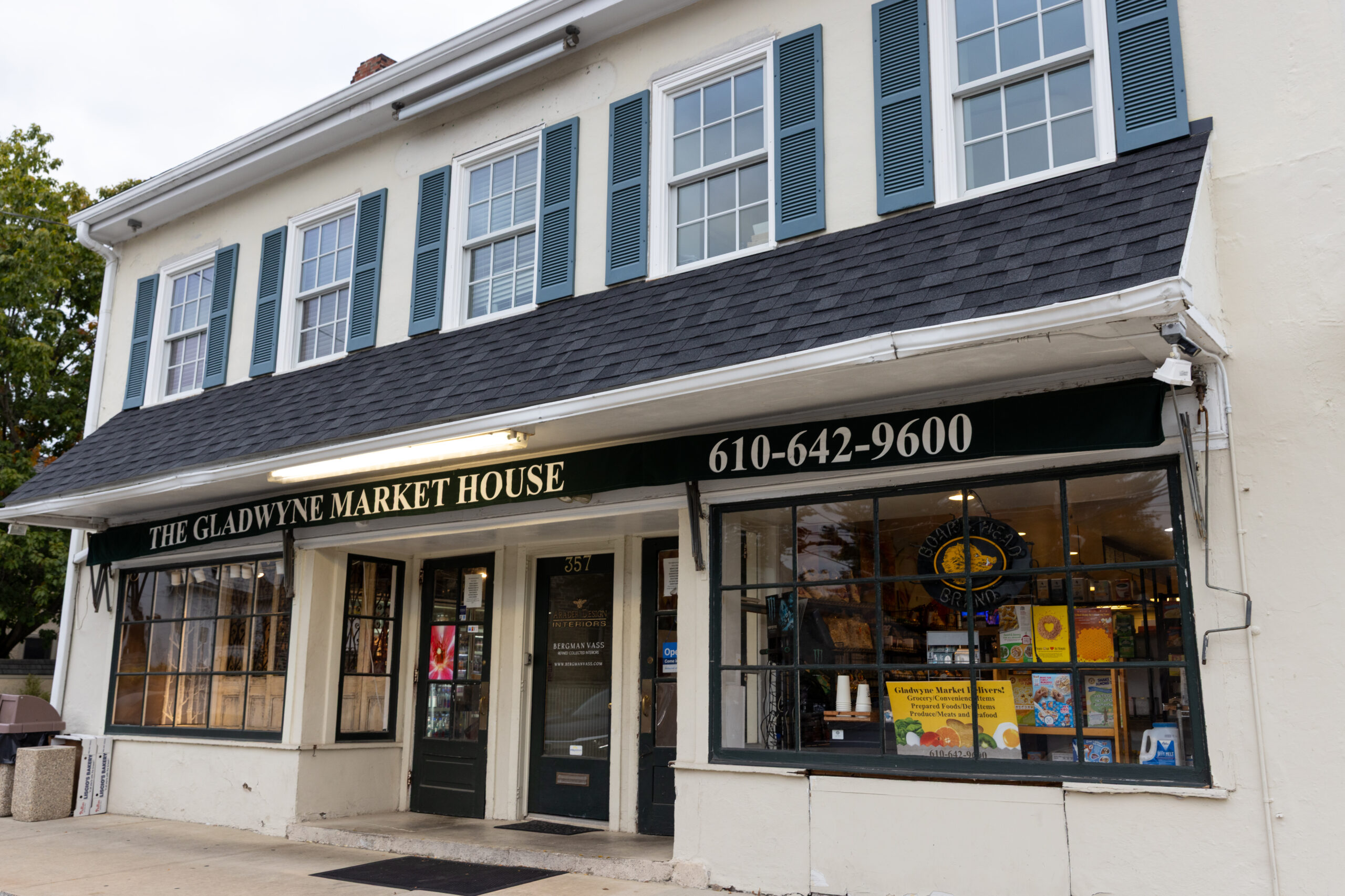
Gladwyne Market as pictured in October.
Local chains weren’t the only business casualties of 2025.
In South Jersey, the Bistro at Cherry Hill, a beloved restaurant that operated in a 1,200-square-foot mall kiosk for 27 years, closed abruptly in July.
At the time, the restaurant’s president, Andy Cosenza, said the closure was due to a communication “breakdown” that had resulted in his voluntary Chapter 11 bankruptcy petition being converted to a Chapter 7, or liquidation, without his knowledge. Since then, however, Cosenza has been indicted on charges of tax fraud. The Bistro has remained closed.
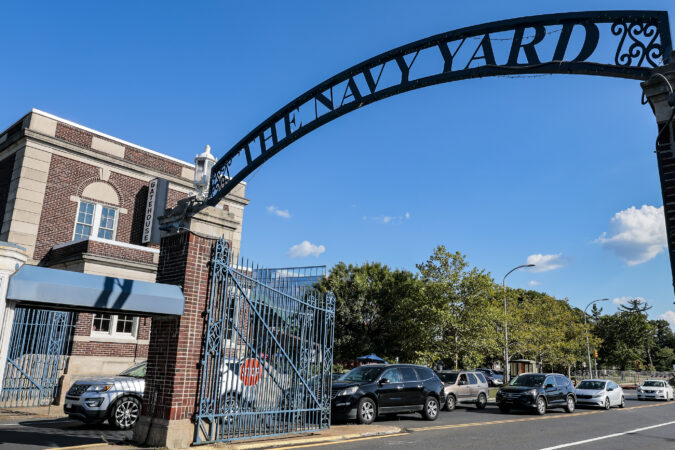
Executives at Happy Bear, which has sold coffee online for the past two years, said they recently signed a lease for a 3,000-square-foot space on the ground floor of 1201 Normandy Place, a mixed-use lab building optimized for life-science tenants, including those who do gene and cell therapy research and development.
The Happy Bear cafe is set to serve coffee, wine, and grab-and-go food, including sandwiches, breakfast items, soups, salads, flatbreads, and tomato pie made in partnership with Carlino’s, the Ardmore-based specialty-food purveyor.
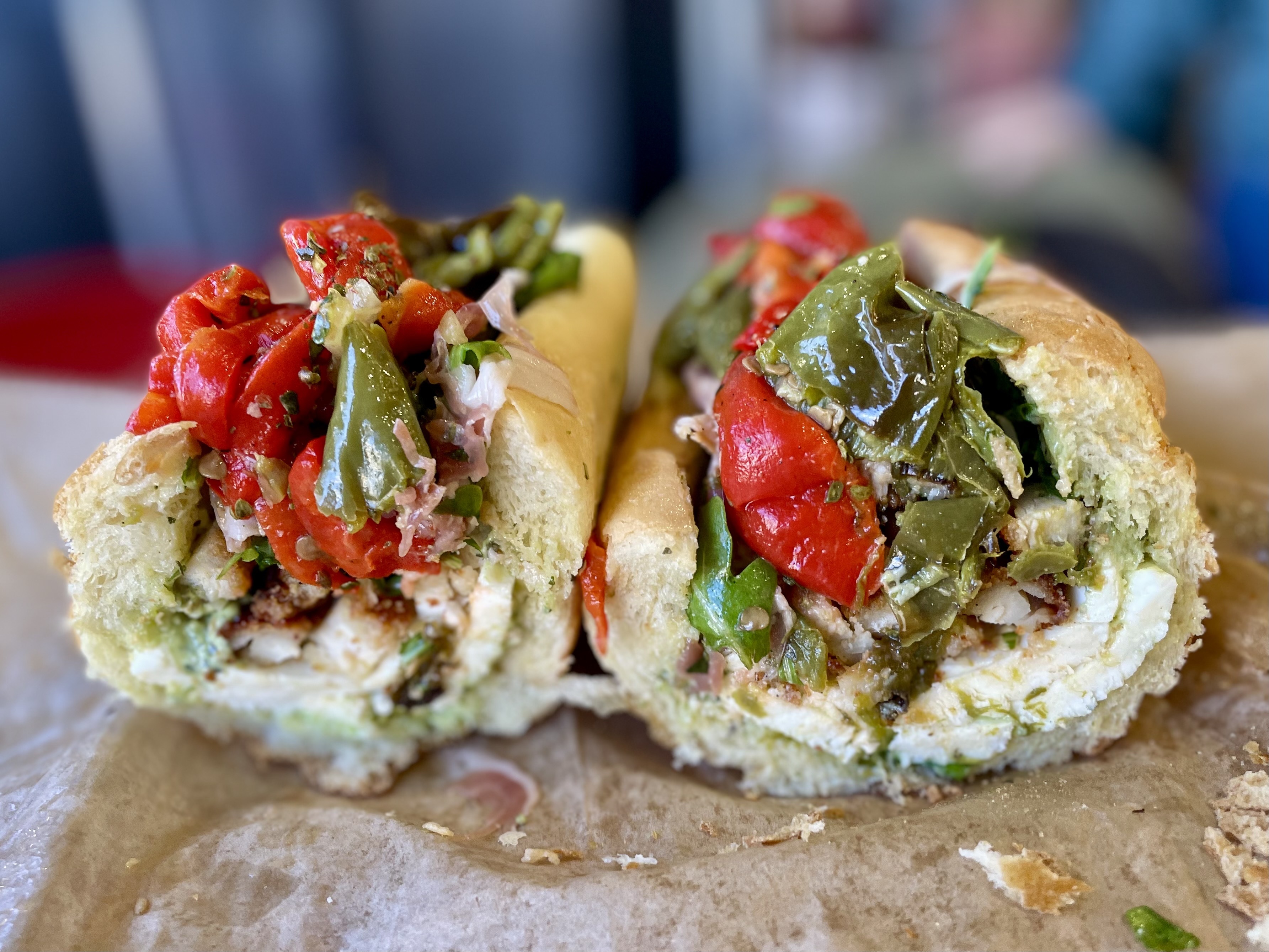
A Saquon hoagie special at Carlino’s Market in Ardmore. The specialty-food purveyor’s food will be available at the the Happy Bear Coffee Company’s first physical store at the Navy Yard.
The cafe will have indoor and outdoor seating overlooking the five-acre Central Green Park, and provide “a versatile setting for morning coffee, a quick lunch, or an evening glass of wine,” according to the news release.
“We wanted to create a place that feels like a daily ritual and a small retreat all in one,” Happy Bear cofounder Dan Kredensor said in a statement.
“With Carlino’s expertise as one of our culinary partners, we’re building a cafe that brings together wonderful specialty coffee, great flavors, and a welcoming atmosphere, right in the heart of the Navy Yard’s most exciting new district.”
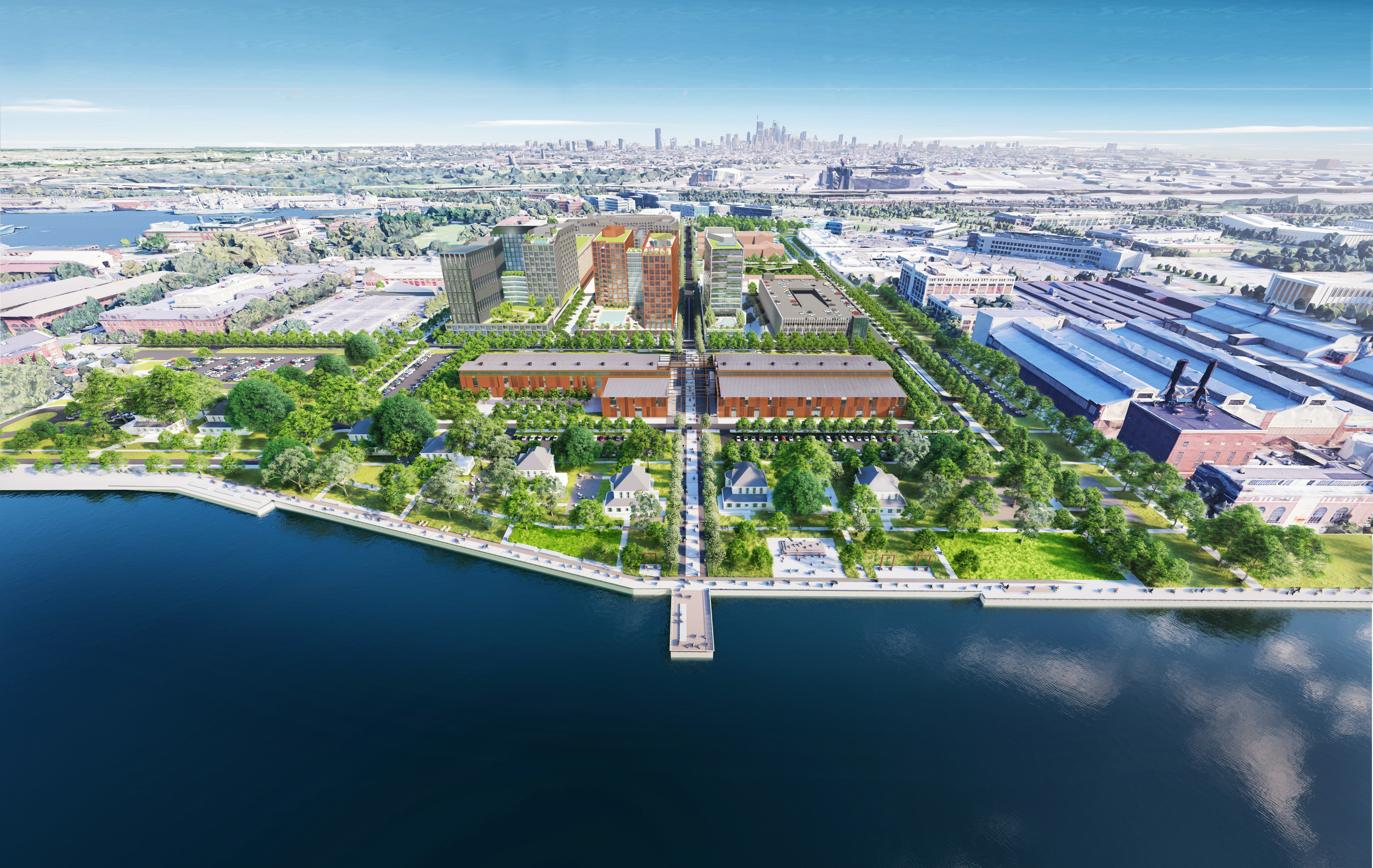
An artist’s rendering shows an aerial view of the proposed development plan for the Navy Yard.
Ensemble Real Estate Investments, of California, and Philly’s Mosaic Development Partners were selected in 2020 to lead an estimated $2.5 billion redevelopment of 109 acres of the former base.
Construction of 1201 Normandy was part of Ensemble/Mosaic’s first phase of redevelopment, which was estimated to cost $400 million.
“Happy Bear represents the type of dynamic, community-focused retail that will define the Navy Yard as it enters its next phase of growth,” said Nelson Way, vice president of leasing and development for Ensemble.
Happy Bear was founded by longtime friends Kredensor and Frank Orman, who bonded by exploring Philly’s coffee shops during their college years.
The pair’s first cafe will be near a 12-acre section of the Navy Yard that’s being called the Historic Core District, combining historic buildings with new construction.
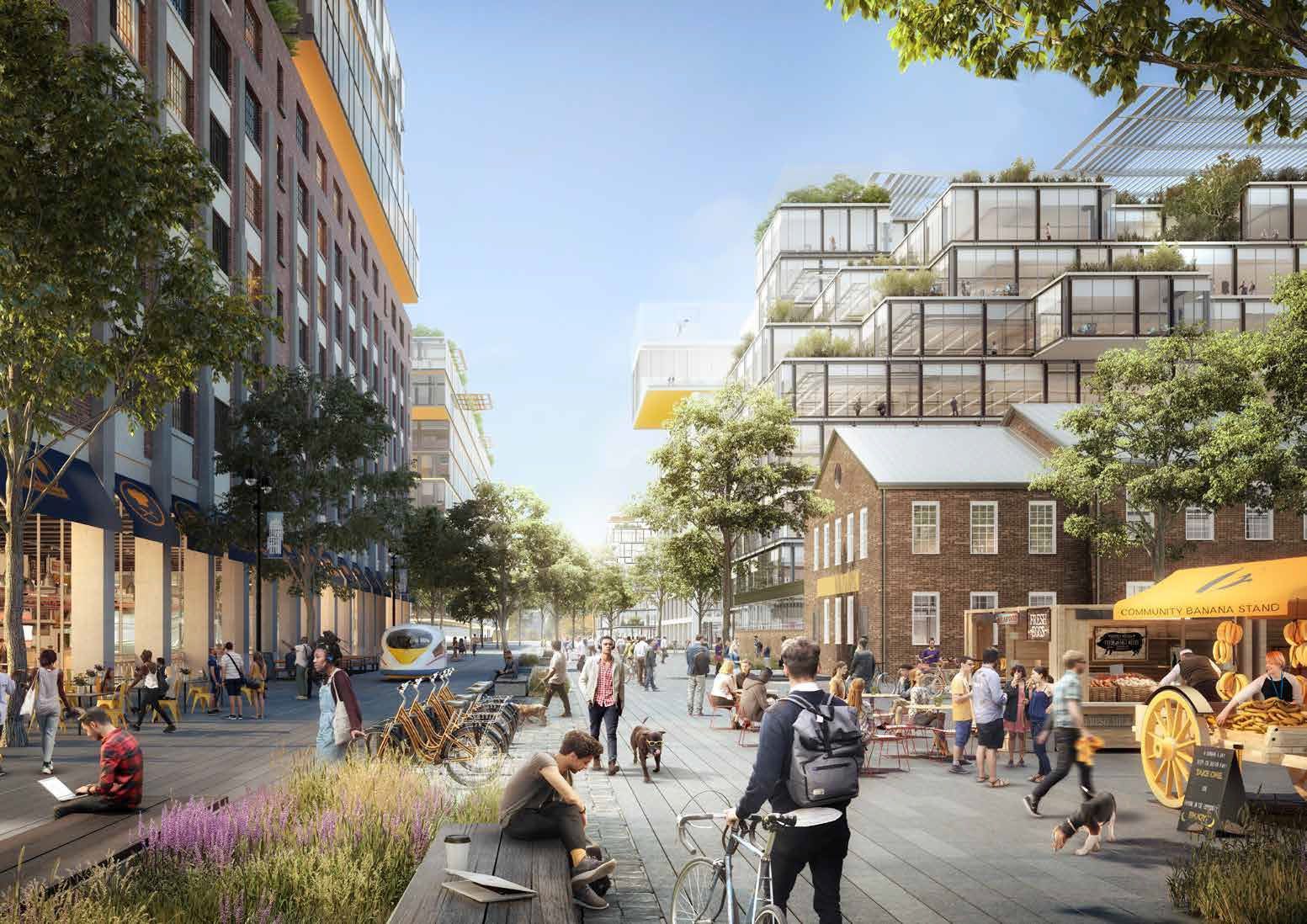
An artist’s rendering of PIDC’s vision for the Navy Yard Historic District Core district, which would combine historic buildings and new construction.
In the same area, developers have built more than 600 apartments in a mixed-use community called AVE Navy Yard, which is expected to open next year.
The Philadelphia Industrial Development Corporation (PIDC), an independent nonprofit, manages the Navy Yard on the city’s behalf. It has owned the 1,200-acre site since the U.S. Defense Department decommissioned it as a military base in 2000.
The Navy Yard is home to 150 companies that employ 16,000 people, according to its online directory. Its tenants include Urban Outfitters, which is headquartered at the site, and Jefferson Health.
The property also has a Courtyard Marriott, several daytime food options, and a full-service restaurant called the Gatehouse.
Navy Yard stakeholders want the campus to eventually have nearly 4,000 new apartments; 235,000 square feet of retail; and more than 4.2 million square-feet of office, research and development, and manufacturing space, according to its 2022 redevelopment plan. Developers also want to bring another hotel to the site.
It’s your city. It’s your (Ritten)house. It’s your Rally House.
The sports apparel store with the earworm of a jingle plans to open its first Center City location in a former Rite Aid near Rittenhouse Square.
The Kansas-based chain has asked the city’s art commission for approval to put up signage outside the nearly 13,000-foot storefront at 17th and Chestnut Streets, according to its application, which is set to be reviewed at a Wednesday meeting. Rally House spokespeople did not return requests for comment Tuesday.
The company’s application was first reported Monday by the Philadelphia Business Journal.
Since the Rittenhouse Rite Aid closed, Spirit Halloween has occupied the storefront in the months leading up to Halloween.
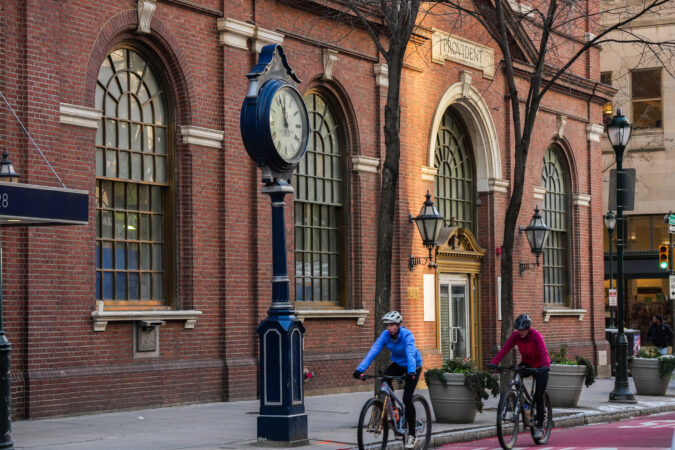
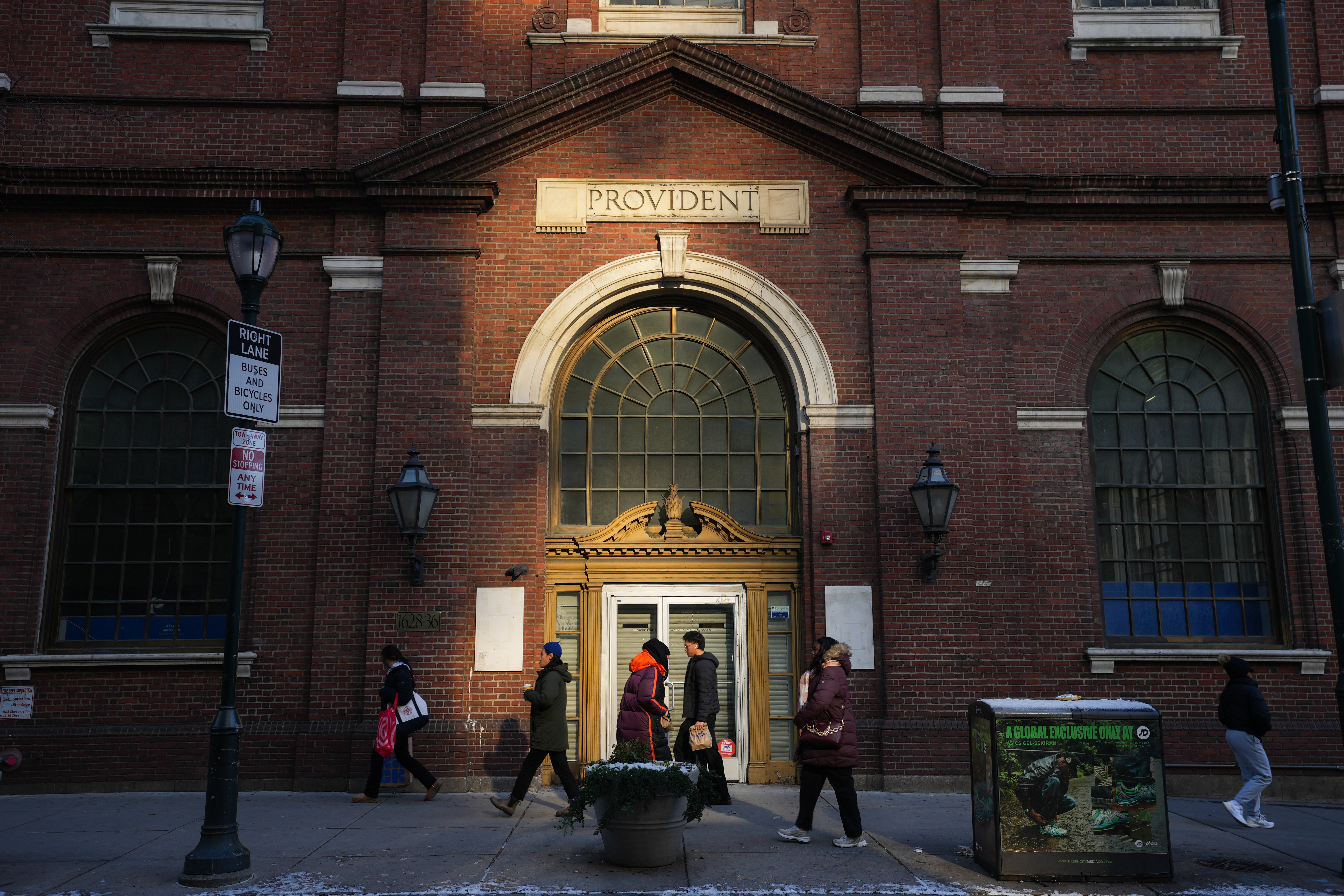
Since Rite Aid closed two years ago, the ground-floor retail space in the Provident Trust Co. building has been occupied seasonally by Spirit Halloween, but is otherwise vacant.
The building is owned by a partnership registered to Philadelphia-based developer Neal Rodin, according to property records. Rodin did not return requests for comment Tuesday.
Rally House already has about two dozen locations in the Philadelphia region, but the vast majority of them are in the suburbs. It has three city locations — on Temple’s campus, in West Philadelphia near Drexel and Penn, and in Roxborough.
If Rally House opens at 17th and Chestnut, it would bring continued momentum to the retail corridor around Rittenhouse Square, which has recently welcomed a slew of new businesses, including the luxury women’s fashion company Aritzia and North America’s first Nike Jordan World of Flight store.
It would also mark the latest example of how zombie Rite Aids can be resurrected.
Over the past three years, more than 170 Rite Aids have shuttered across the Philadelphia region, with dozens of stores closing even before the chain announced it was going out of business.
Like the Rittenhouse space, former Rite Aids are often 8,000 to 16,000 square feet, which is not ideal for many potential tenants, experts say. But some of these pharmacy shells have found new life as small grocers, discount stores, and medical offices.
Soon, sports apparel store may be added to that list.
Kacii Hamer has no financial stress this holiday season.
In past years, “holidays were always ‘give, give, give,’ and that’s what I always felt like I had to do,” said Hamer, a 33-year-old pre-K teacher and wedding photographer. Back then, “I couldn’t imagine thrifting gifts or DIYing gifts. You have that fear of ‘Oh my god, are these people going to judge me?’ or ‘Is this good enough?’”
This year, however, Hamer is celebrating “Thriftmas,” a social-media trend where participants buy many of their holiday gifts secondhand.
Between a family Pollyanna, a gift for her boyfriend, and a present for her goddaughter, she plans to spend no more than $150 total. For her goddaughter, she is sanding and repainting a $14 rocking horse that she got at the 2nd Ave. Thrift store in South Philadelphia.
The thrift-focused holiday season will mark a fitting end to what Hamer calls her first “hardcore” low-buy year, one during which she cut out most nonessential spending.
Hamer, who splits her time between the Philadelphia region and Scranton, was one of several low- and no-buyers whom The Inquirer talked with in April.
The frugal challenge took off this year amid broader economic pressures, including continued inflation. Philly-area participants said they were trying to save money, pay off debt, reduce waste, and, in some cases, stop patronizing large retailers that don’t align with their values.
Now as the holidays approach, some low- and no-buyers are making exceptions for gifts, or using some of their recent savings to fund their festivities.
Others, however, are standing firm in their low-spending habits. They’re setting budgets, trimming their gift-recipient lists, or shopping secondhand.
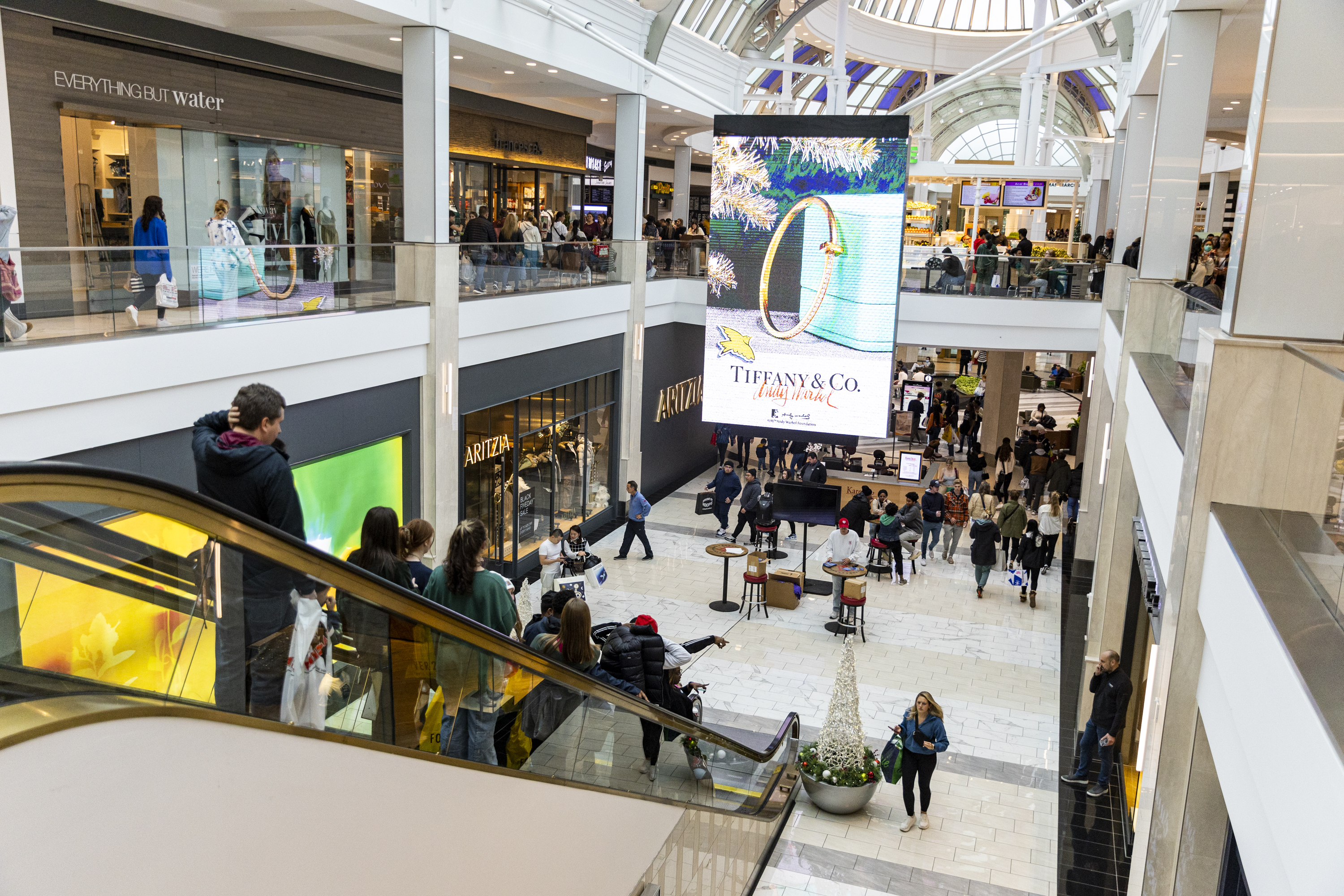
Shoppers descend on the King of Prussia Mall on Black Friday in this 2022 file photo.
This time of year, some local low-buyers said, it requires extra strength to resist consumerist pressures and go against the norm. Each U.S. adult is expected to spend about $628 on average on holiday gifts this year, according to the National Retail Federation, which anticipates overall holiday spending will surpass $1 trillion for the first time ever.
At the same time, others say economic uncertainty has made for easier conversations about gifting.
“I’m not under pressure to spend, and I think this year it’s actually easier to [cut back on gifts]than in years past,” said Mylena Sutton, 48, of Voorhees. “A lot of my friends are sensitive to what’s happening in the economy … you don’t have to explain.”
Parents buying less for Christmas
Some Philly-area parents have found that Santa can be thrifty, too.
Heather Fertig, 38, of Fishtown, said about 80% of her toddler’s Christmas gifts will be secondhand. They’ll include a marble run, which she bought this week from a local thrift store, and a wooden train table, for which she remains on the hunt.
Thanks to secondhand stores, Facebook marketplace, and neighborhood parent groups, Fertig, a stay-at-home mom, said she and her husband will likely spend about $150 in all.
Her motivation is as much environmental as it is financial.
After having her son, she realized, “Wow, there is so much waste,” Fertig said. “I kind of felt, previous to that, that there was a stigma around getting things secondhand.”
But “it was never there,” she added. “It was this made-up thing that everything had to be brand-new to you.”
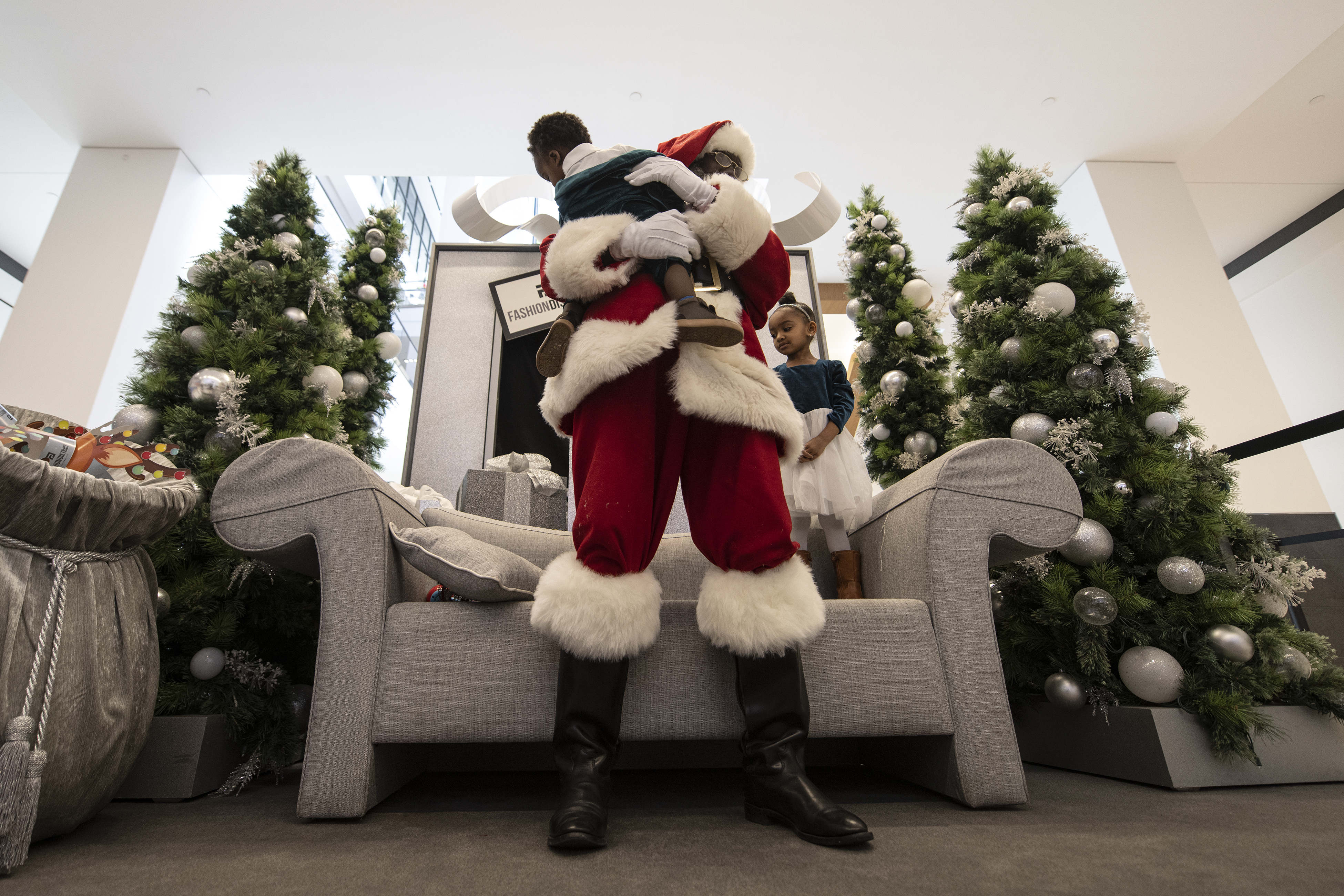
Santa James Claus greets children at the Fashion District in this 2022 file photo. Some local parents have found Santa can cut back on spending, too.
For young children, whose interests change so quickly, it makes even more sense to buy items secondhand, Fertig said. On Christmas morning, her 2-year-old doesn’t know the difference.
“He’s just as happy as if I bought it straight from Walmart,” she said.
In Montgomery County, Jenna Harris-Mosley said she takes a combo approach to gift-giving for her 5-year-old daughter, whose birthday is on New Year’s Eve.
The 41-year-old bought some smaller, new gifts, including Shrek snow globes and Squishmallow stuffed toys, throughout the year to spread out spending.
She plans to get other items secondhand, including one or two American Girl dolls for $20-$30 each. And she will set aside some money for experiences, such as an upcoming day trip to New York City for tea at the American Girl store — with the new-to-her doll, of course.
Harris-Mosley said she took an especially intentional approach to spending this year after getting laid off from her job in tech sales in October. It has helped that she had already bought many of her daughter’s Christmas and birthday gifts when she found deals earlier in the year, she said.
“I have things hidden in every corner of my house,” she said. And as for grown-ups “I don’t stress myself about holiday gifts,” figuring most adults in her life have the things they need — and can buy things they don’t.
In Port Richmond, Rachel Dwyer is making homemade felt ornaments for the adults on her list, and getting two books for each child. The 34-year-old nanny has learned that too many toys and trinkets can be overwhelming for kids and parents.
“It’s just a lot of clutter,” she said, “and a lot of junk.”
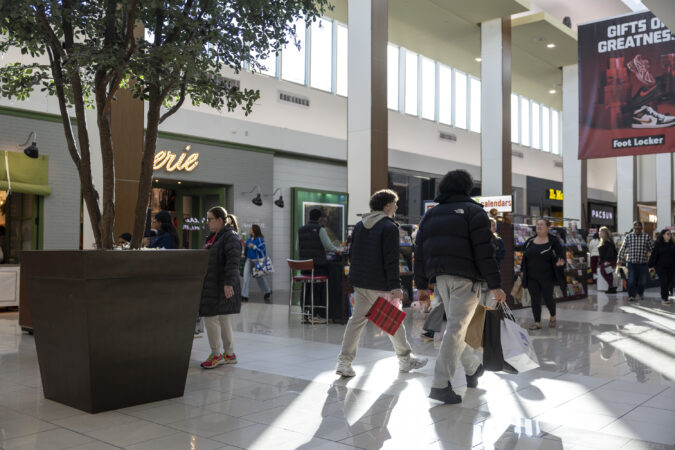
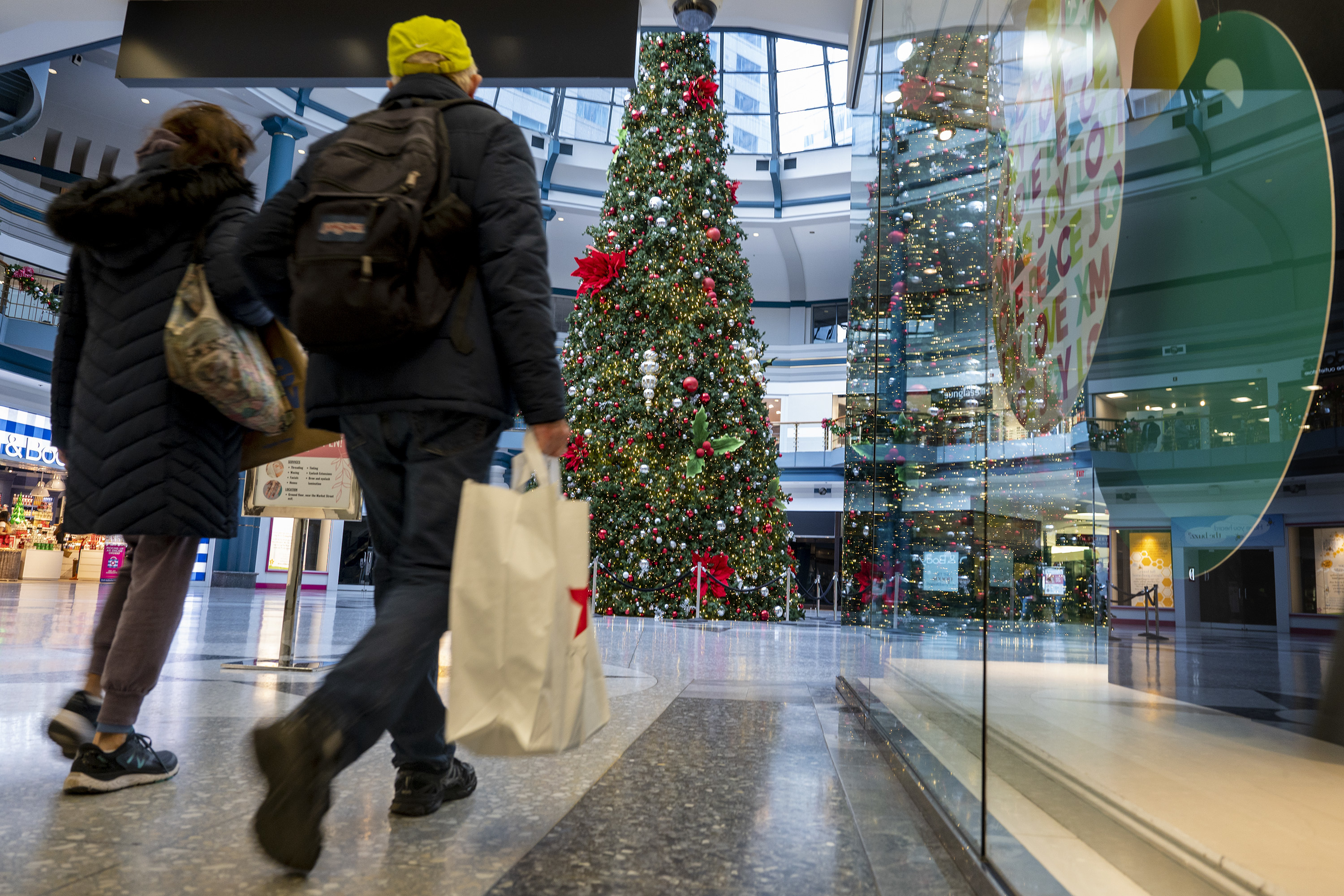
People walk through the Shops at Liberty Place in this 2021 file photo.
How to spend less on holiday gifts
Seasoned low-buyers say it’s hard to cut back on spending. But once you get over the initial hurdle, they say, it’s freeing.
“Push through the fear,” Hamer said. “It feels nice going into the holidays with such a positive attitude.”
In South Jersey, Sutton has never been a big holiday gift-giver, saying she prefers to buy loved ones presents intentionally throughout the year.
If others feel overwhelmed by their holiday gifts-to-buy list, she recommends they ask themselves: “Do you do these things because they have value for you? Or do you do these things because they are expected?”
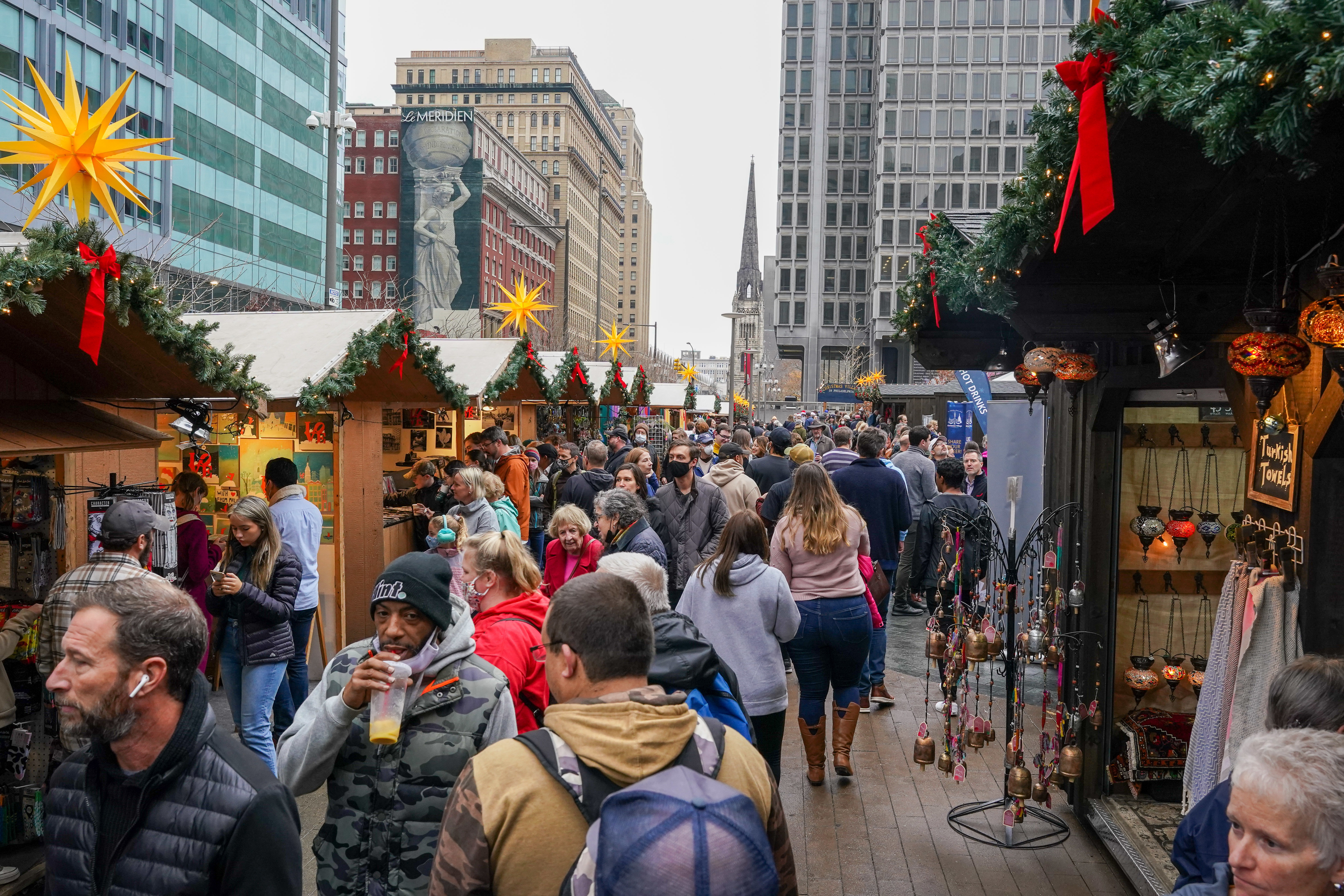
People browse the Christmas Village at LOVE Park in this 2021 file photo.
“Be brazen about it,” said Sutton, a consultant and leadership coach. That might mean telling people: “If you only get me a gift because you expect an exchange, don’t buy me one.”
“People who have stayed away from thrifting should get back into it,” said Jen Benner, 34, of Conshohocken. “The thrift stores are jam-packed with very good stuff.”
If you aren’t sure about buying secondhand, “start small. Start with a child’s gift or a truck or a train or something little,” Fertig said. “Work your way up to bigger items.”
Benner, a real estate agent, keeps a running list on her phone of gift ideas that her loved ones mention throughout the year. This can save time and anxiety around the holidays, and reduce the urge to overspend.
Remember, too, that the most meaningful gifts can be among the least expensive, Dwyer said. She recommends personalized, handmade gifts or framed photos, as well as gifts of time or skills, such as a babysitting session, a home-cooked meal, or a family-photo session.
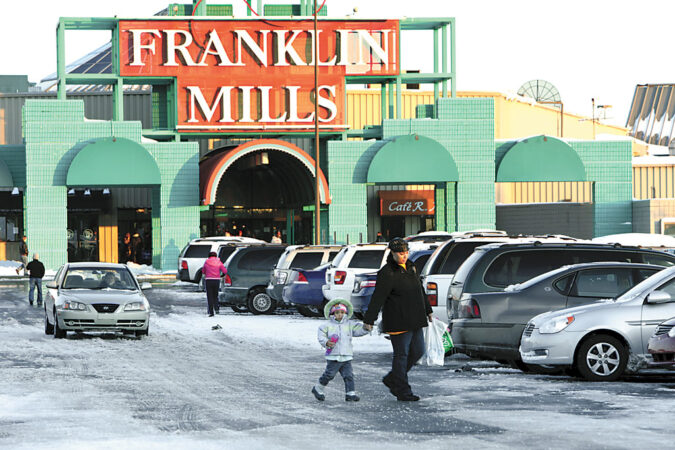
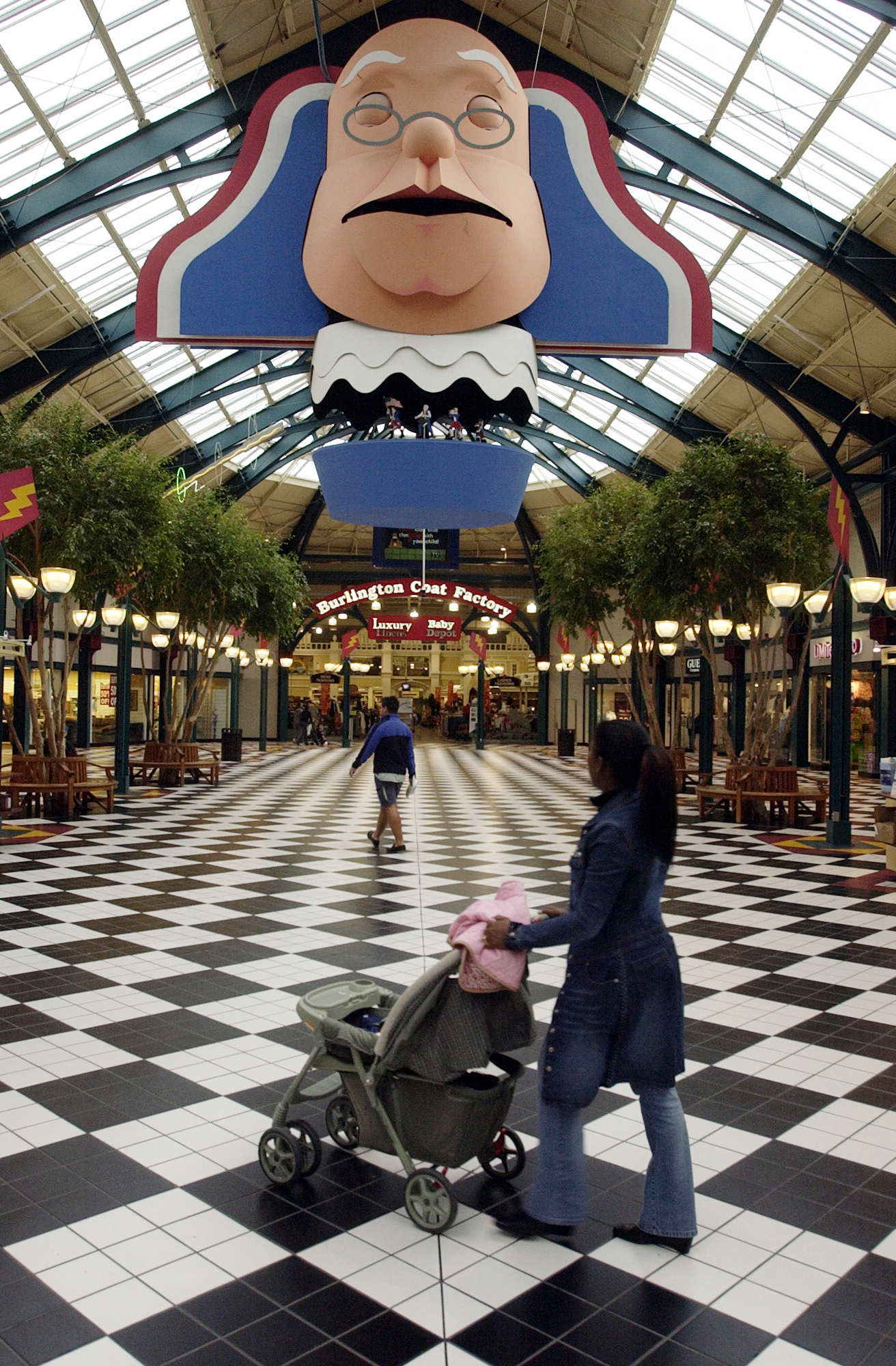
Northeast Philadelphia’s Franklin Mall — better known by its original name, Franklin Mills — is for sale after years of plummeting valuation, occupancy, and visitor numbers.
A listing on the website of real estate brokerage Jones Lang LaSalle (JLL) includes possible uses a new owner can consider, including industrial and office development. The parcels including Sam’s Club and Walmart are not included in the sale.
“Franklin Mall presents the opportunity to acquire meaningful control of more than 137 acres … in a densely populated location that may support additional densification and redevelopment,” the listing reads.
The move comes amid a wave of mall sales and redevelopments in the region, with demolition and residential construction a common fate for many struggling shopping centers.
Over 68% of Franklin Mall is occupied, which could be an incentive for continued retail operations. But sales and visitor numbers have been falling for years,and JLL reports the average existing lease lasts for only another 1.7 years.
If a new use is sought, the mile-long, one-story structure would be difficult to repurpose.
“I think it’s unlikely to be a shopping mall” again, said Jerry Roller, founder of the design firm JKRP and a longtime architect in Philadelphia. “What could it be? Obviously, residential. It might be a warehouse. It’s essentially a large vacant piece of land. It was fairly inexpensive when it was built, so it’s not hard to demolish.”
The hundred acres of land that Franklin Mills sits on at the edge of Far Northeast Philadelphia is zoned for auto-oriented commercial use.
JLL’s listing advertises the site’s suitability for industrial redevelopment.
“The property’s infill location and highway access make it a strong candidate for redevelopment into a modern industrial facility,” the listing reads. The zoning “could provide a basis for an investor to pursue the development of up to 1.4 million square feet of new warehouse space.”
The residential redevelopment opportunities for the site could be aided by a promised 20-year property tax abatement for the conversion or demolition of outmoded commercial buildings into housing, which Mayor Cherelle L. Parker’s administration promises next year following enabling legislation from Harrisburg.
But the existing zoning would not allow that, so a residential project would need to win the permission of the city’s Zoning Board of Adjustment or have the land-use rules changed legislatively by Councilmember Brian O’Neill.
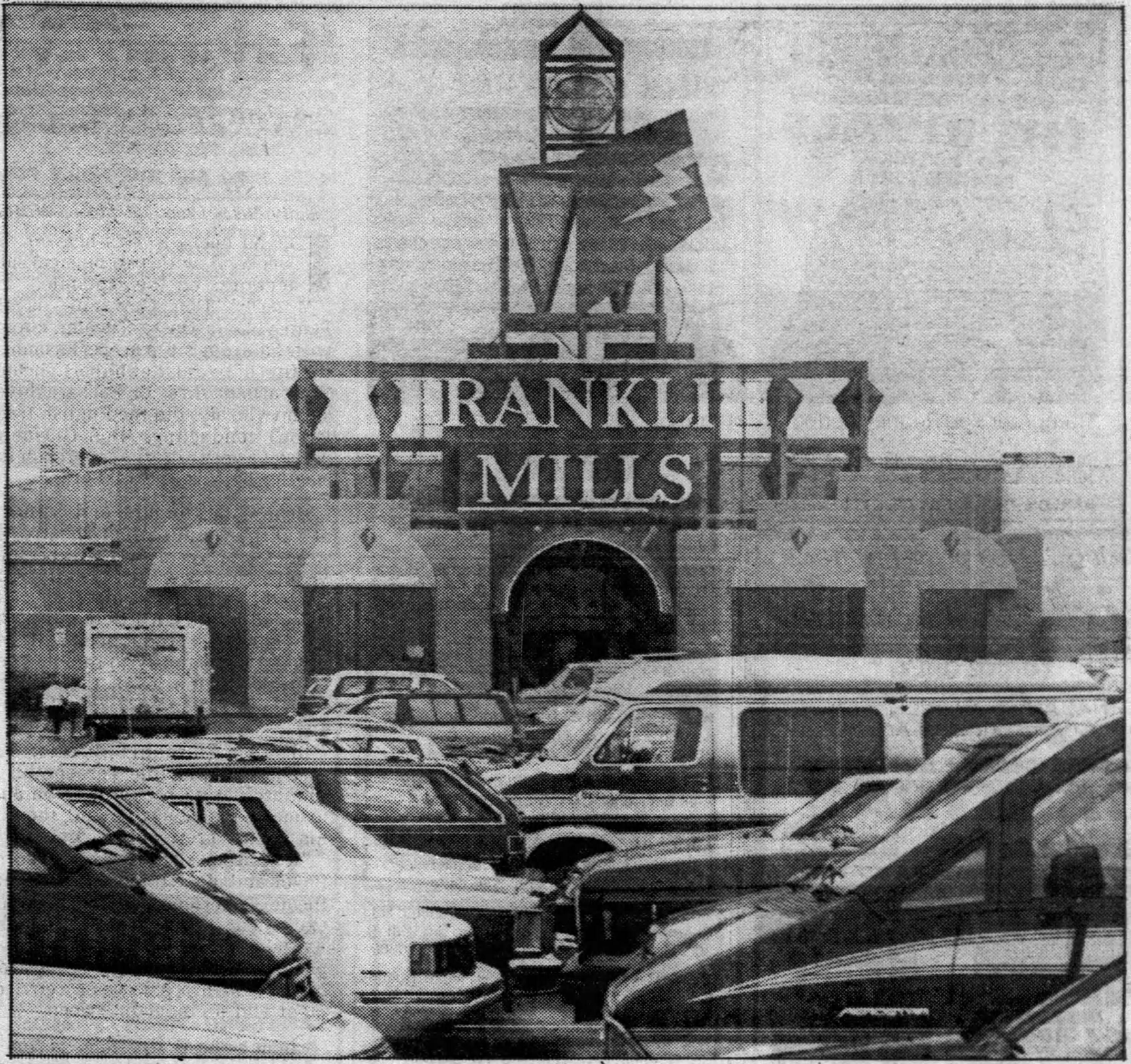
The mile-long Franklin Mills mall drew Christmas-size crowds at its opening in May of 1989.
Tribulations of a Northeast Philly icon
The 36-year-old, 1.8-million-square-foot facility at Knights and Woodhaven Roads is the second largest mall in the Philadelphia area after King of Prussia. But while its larger cousin remains a dominant retail force, Franklin Mall has been struggling for years.
The mall opened in 1989 to great fanfare as the largest outlet mall ever, with an iconic zigzag-shaped concourse that stretched for 1.2 miles.
In 2007, in retrospect near the end of Franklin Mills’ golden era, the property and the rest of the Mills Corp. was taken over by Simon Property Group, the largest mall owner in the country. The new ownership group rehabbed the property in 2014, although there were already signs Simon was distancing itself by moving Franklin Mills (renamed Philadelphia Mills) into a different balance sheet category than its core properties.
Simon’s loan on the property had been intermittently distressed since 2012. An April 2024 report from real estate analytics firm Morningstar Credit was headlined “Legacy Philly Mall Back to Special Servicing for the Umpteenth Time.”
Shoppers stroll through the Franklin Mills mall in 2014.
The 2007 loan still had an outstanding balance of almost $250 million when it came to maturity in July 2024. Simon stepped away from the day-to-day operations at that time, with Philadelphia-based OPEX CRE Management appointed as receiver of the distressed property. The name was changed to Franklin Mall because Mills was trademarked by Simon.
Last year Franklin Mall’s appraised value was $76 million, a precipitous decline from its $201 million valuation in 2012 and $370 million in 2007. According to Morningstar Credit, a new appraisal is likely in the next month.
Full financials haven’t been publicly updated since last year, but at that time, the cash flow for the property was $9.5 million, the lowest since Simon took over in 2007. That’s down from 2019, when cash flow was $17.5 million, according to Morningstar, and from $11 million in 2022.
According to Morningstar, the latest reports from the special servicer for the property, Greystone Servicing Co., say cash flow is even lower this year and occupancy has fallen to 65.4%.
Possible reuses for Franklin Mills
Franklin Mall’s for-sale status comes as some old-school regional shopping destinationsare declining.
While some of its counterparts like King of Prussia and the Cherry Hill Mall are still thriving, there has been a wave of sales and redevelopments of area malls as the nature of retail evolves.
Some ailing malls have been purchased on the cheap, allowing their new owners to reinvest and refurbish the property in its previous mold.
“In terms of using the buildings that are there, it’s a challenge because they are generally big box retail, and they’ve got a center mall, which is completely out of fashion,” Roller said. “Could somebody, if they had the right tenants, recreate the mall? Turn it inside out, open the thing up?”
“Maybe it’s possible,” Roller said. But “I don’t see a lot of uses for the buildings that are there right now.”
The redevelopment of Exton Square Mall is in legal limbo.
When regional malls are redeveloped, more commonly, the retail options are reduced with much of the old structure demolished. Diverse new uses often take a faded shopping center’s place.
In New Jersey, the Echelon, Moorestown, and Burlington Center malls have or are going through a variety of demolition and redevelopment options. The commonality is that residential building is a part of all three plans.
At Franklin Mall, redevelopment would likely require demolition of the existing building.
“Ultimately, it may just be a piece of land” for sale, said Roller.
JLL’s listing, however, pitches the property as either redevelopment or continued mall use.
“This offering presents prospective purchasers with the opportunity to acquire a strategically positioned super regional shopping center with significant upside potential and/or redevelopment opportunity,” it reads.
JLL’s managing directors on the sale are John Plower, David Monahan, and Jim Galbally.
At lunchtime on a Thursday, a week before Thanksgiving, Chestnut Hill was buzzing.
Inside the newly expanded Matines Café, almost every table was full. People sipped warm drinks from large mugs and ate Parisian croissants and quiche. Bottles of prosecco sat on ice by one large table adorned with Happy Birthday balloons.
McNally’s Tavern was bustling, too, with regulars sitting at the bar and at tables inside the cozy, nearly 125-year-old establishment atop the hill. Multiple generations gathered — a son taking a father out to lunch, a mother with a baby in a stroller, and two sisters, Anne and Meg McNally, running the place.
Behind the storefronts along Germantown Avenue’s main drag, some people perused the boutiques, while others typed away on laptops in coffee shops.
In the northwest Philadelphia neighborhood known for its wealth and postcard-picturesque aesthetic, the small-town charm of longstanding establishments — four are more than 100 years old — is now complemented by the shine of some newer shops and restaurants. Several Chestnut Hill business owners said the variety has helped both old and new spots succeed despite broader economic challenges, including inflation and tariffs, and the loss of a few restaurants.
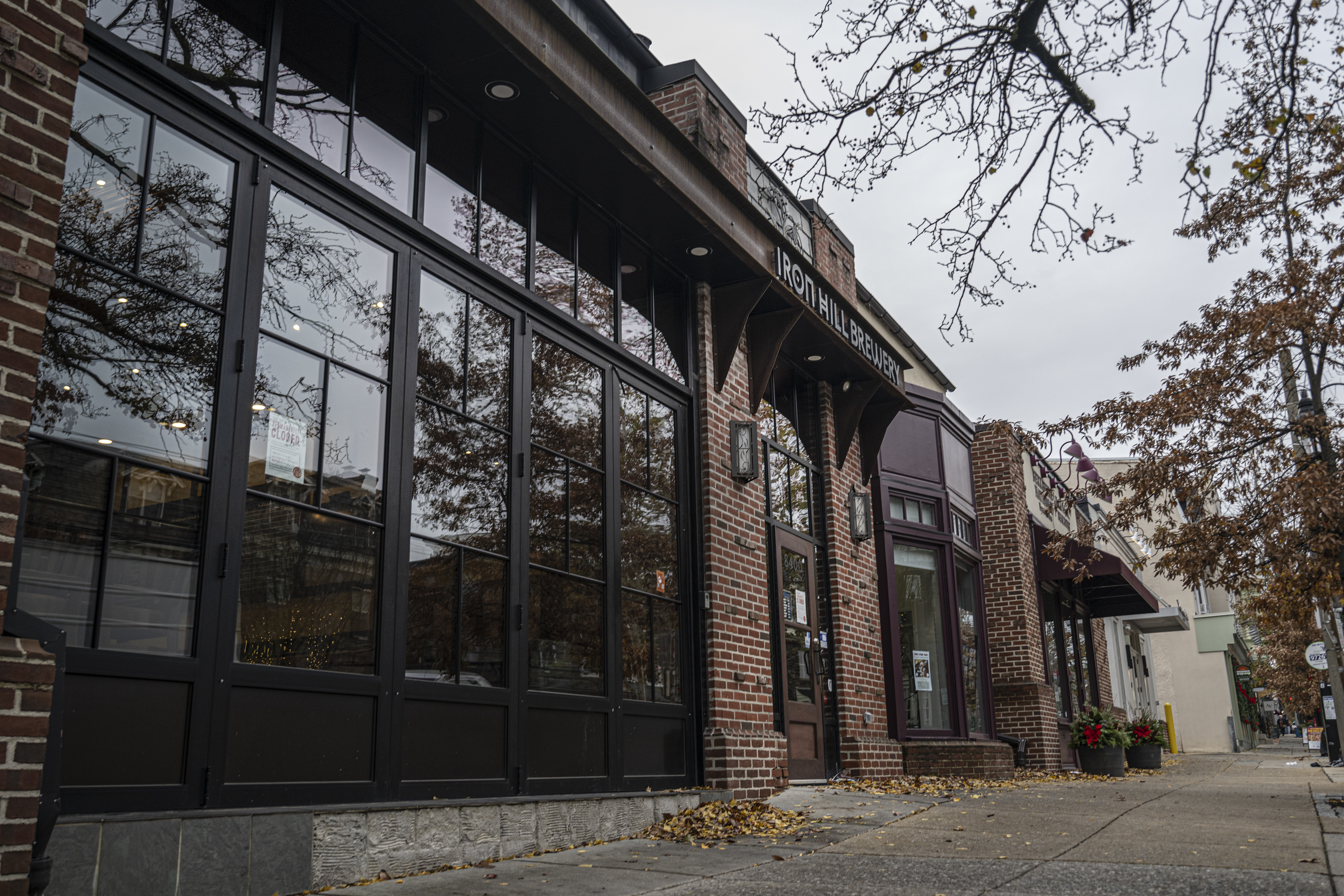
A view down Germantown Avenue from the Chestnut Hill SEPTA Regional Rail station.The closed Iron Hill Brewery is shown in downtown Chestnut Hill on Nov. 19.
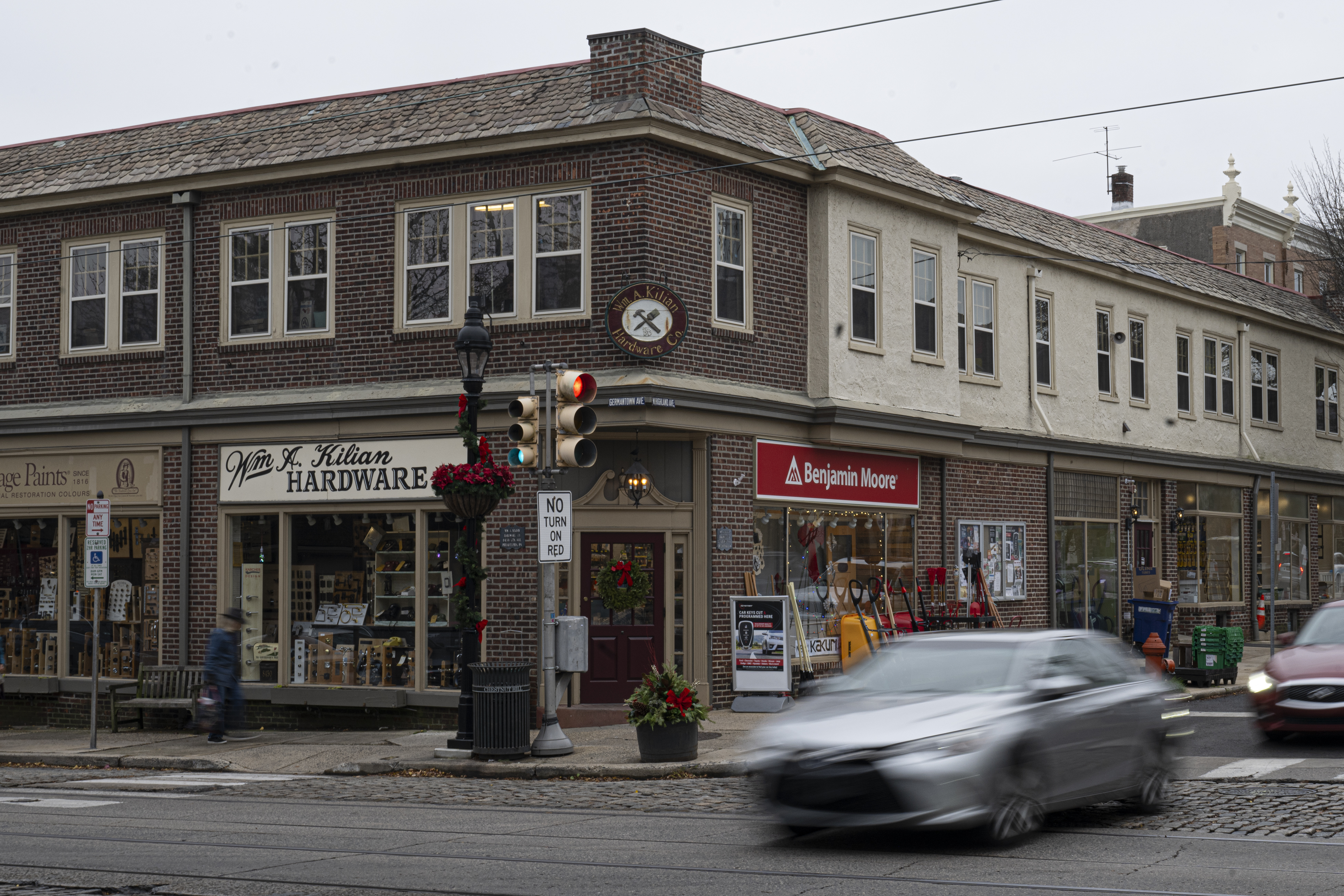
As the owner of Kilian Hardware, which has been in business for 112 years, Russell Goudy Jr. has watched the avenue change. Fifty years ago, he said it was “basically like a shopping mall,” a one-stop shop for everyday needs.
In recent years, however, the neighborhood has focused on attracting and retaining unique food and beverage businesses, “quaint, specialty shops,” and service-oriented businesses, which Goudy said offer experiences Amazon and other e-commerce platforms can’t replicate.
“If you’re not giving people an experience in today’s economy, it’s very tough to compete,” said Nicole Beltz, co-owner of Serendipity Shops, which for a decade has had an expansive store on Germantown Avenue. And providing a memorable experience is never more important than during the lucrative last few months of the year.
“When you come to Chestnut Hill over the holidays, you get what you came for,” Beltz said. “You get that charming feeling of being somewhere special for the holiday.”
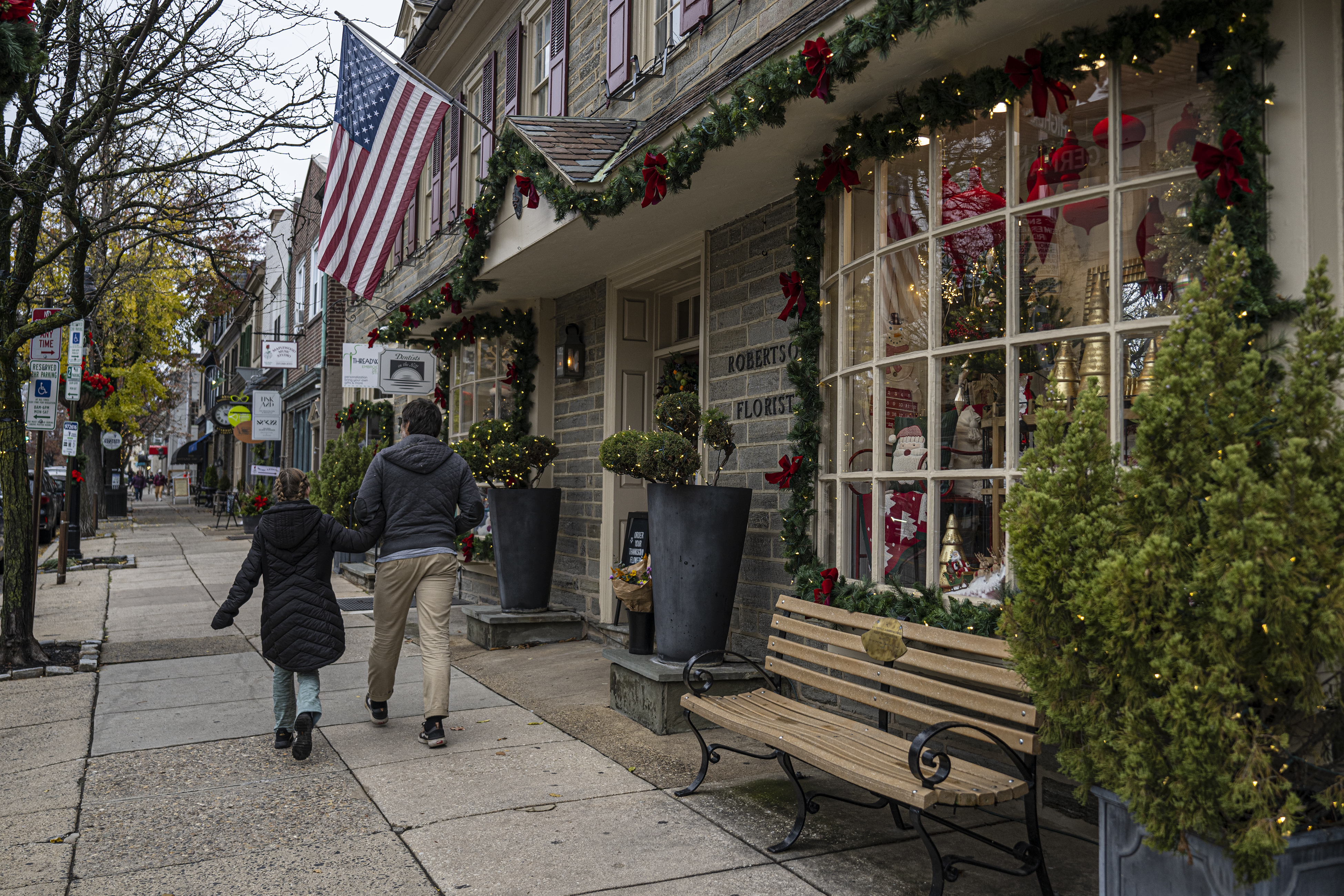
People walk by holiday decor outside Robertson’s Flowers & Events in Chestnut Hill earlier this month.
‘New vitality’ coming to the Chestnut Hill restaurant scene
During the holidays and all year long, Chestnut Hill business owners said they’re grateful that the neighborhood has held onto its charm despite recent challenges.
During the pandemic, “it definitely felt a little grim and dark,” said Ann Nevel, retail advocate for the Chestnut Hill Business District. “The impressive thing is the old-timers, the iconic businesses, and some of the newer restaurants … pretty much all were agile enough to tough it out.”
And a slew of other businesses have moved into the community since then. In the last four years, 20 retail shops, 20 service businesses, and 10 food and beverage spots opened in Chestnut Hill, Nevel said, while several existing establishments expanded.
Among them was Matines Café, which opened a small spot on Bethlehem Pike in 2022 and expanded this fall to a second, much larger location on Highland Avenue. The café serves 500 people or more on weekdays, according to its owners, and even more on weekends.
Sitting inside their original location, which is now a cozy children’s café, Paris natives Amanda and Arthur de Bruc recalled that they originally thought they’d open a café in Center City, where they lived at time. Then, they visited Chestnut Hill and fell in love, despite “a lot of empty spots” there around 2022, Amanda de Bruc said.
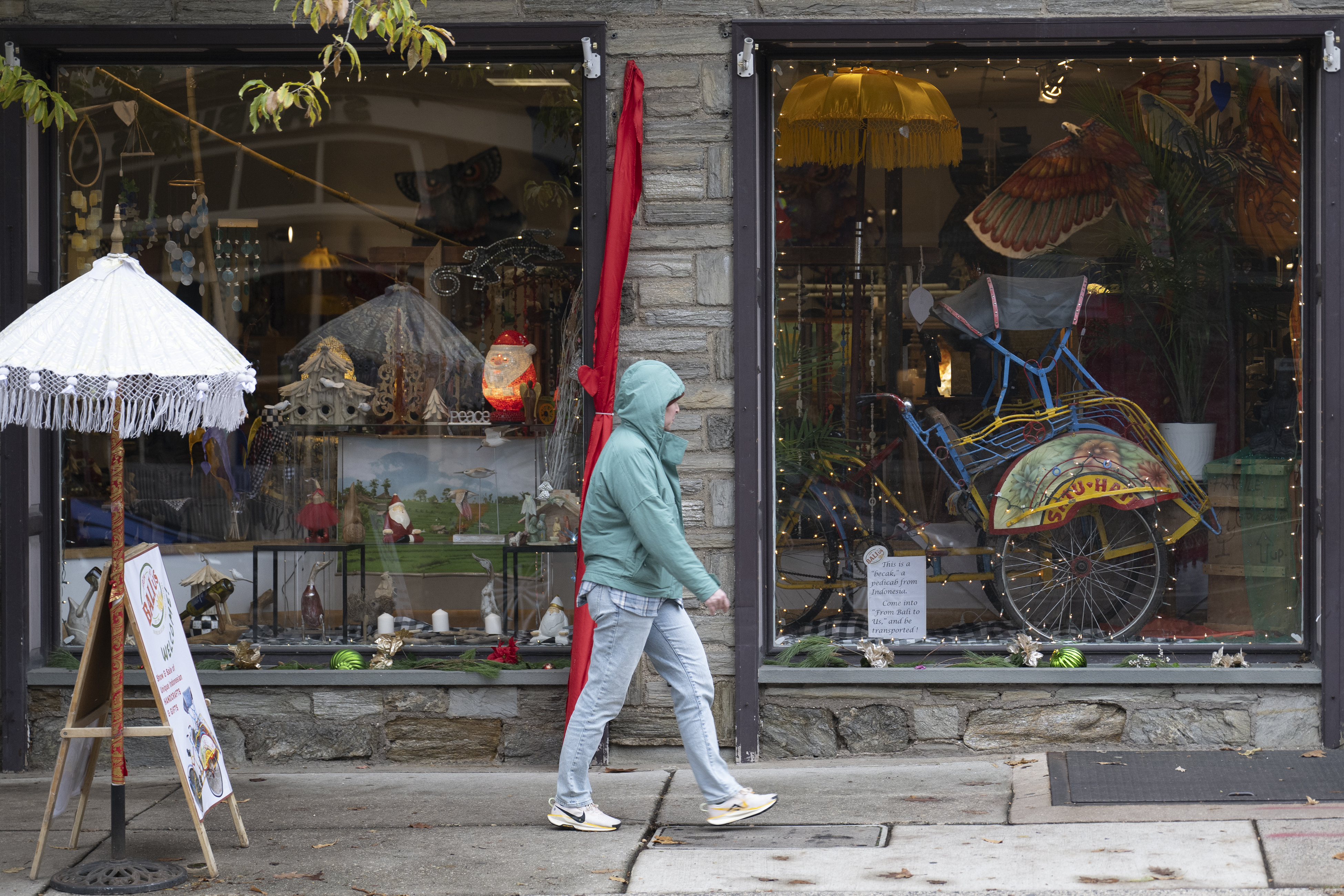
A colorful storefront along Germantown Avenue in Chestnut Hill.
“We liked the idea of living in the suburbs, which technically Chestnut Hill is not the suburbs, because it’s still Philly,” she said. But “we were looking for something that we were more used to, like Paris. There are so many boutiques in such a small area,” and everything is walkable.
The opening of shops and cafés like Matines became a “catalyst for this new vitality, a new, more contemporary energy that has taken hold in Chestnut Hill,” Nevel said. Soon, “we’re going to see that new vitality in the restaurant scene,” including in some long-vacant storefronts.
In 2026, former Four Seasons sommelier Damien Graef is set to open a wine bar, retail store, and fine-dining spot called Lovat Square off Germantown Avenue, Nevel said. On the avenue, a café-diner-pub concept called the Blue Warbler is under construction and also slated to open sometime next year.
Kilian Hardware in Chestnut Hill has been in business for 112 years.
In downtown Chestnut Hill, there are still a few empty spots, including those left by Campbell’s Place, a popular restaurant that closed this summer; Diamond Spa, which closed this fall; Iron Hill Brewery, which closed in September (right before the regional chain filed for bankruptcy); and Fiesta Pizza III, which closed last year.
Kismet Bagels, a popular local chain, was set to fill one of the spots this summer, but its deal fell through, co-owner Jacob Cohen said in a statement. He said they could “revisit the Chestnut Hill neighborhood” in the future.
While the future of Iron Hill will be dictated by bankruptcy proceedings — which include an auction of assets set for next month — stakeholders say conversations are ongoing about some of the other vacancies.
Steve Jeffries, who is selling the Campbell’s building for $1.5 million, said he’s gotten a lot of interest from people who want to revive the nearly 3,000-square-foot space as a neighborhood pub, but one that is “more cutting edge.” Perhaps, he said, one that is not focused on craft beer, which has decreased in popularity, especially among younger generations.
“The town is just screaming for other opportunities for nightlife and sports bars,” said Jeffries, executive vice president of Equity CRE. “There has been a connotation in the market that Chestnut Hill was kind of older, stuffy, that it wasn’t a nightlife town.”
But that’s changing, Jeffries said.
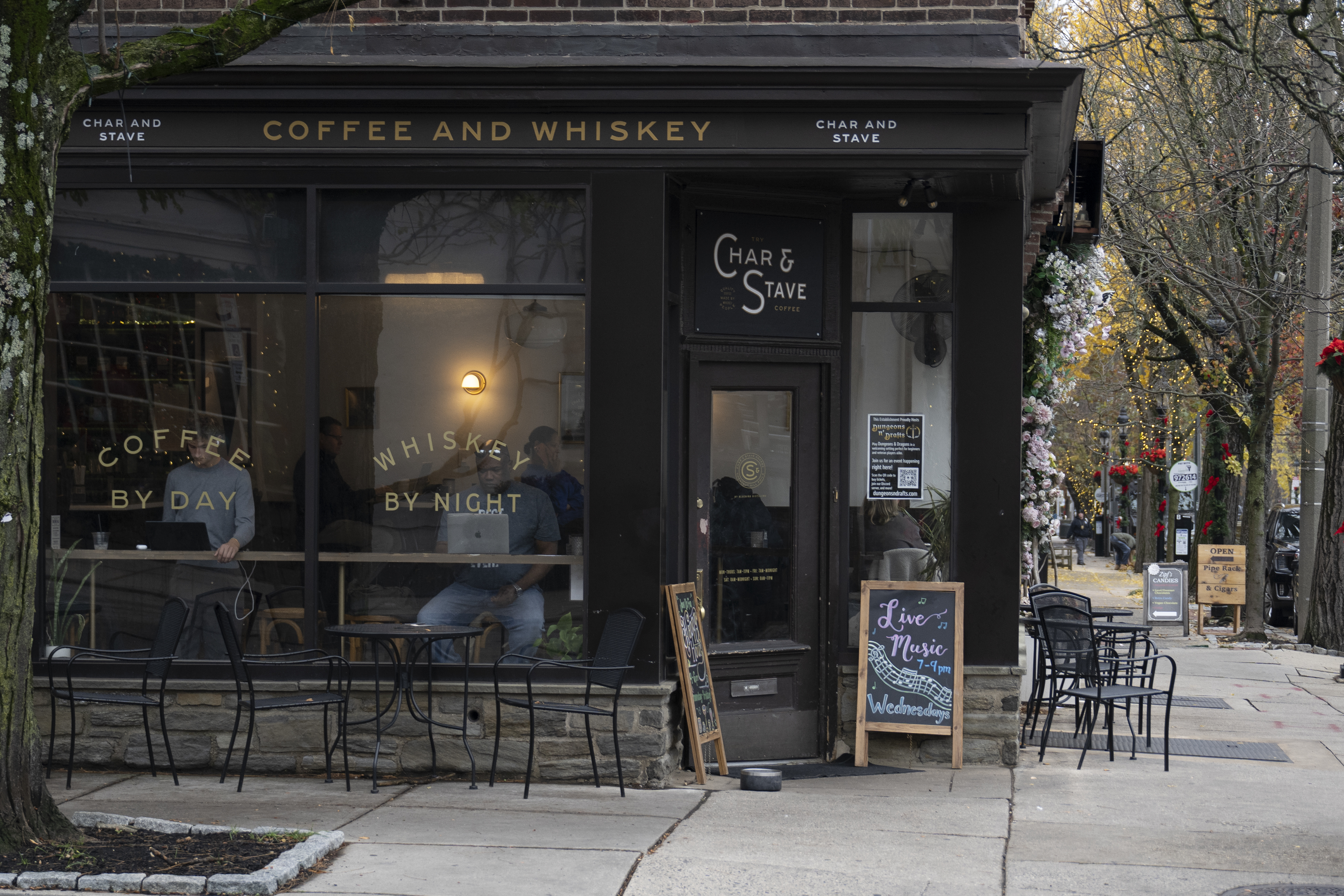
Char & Stave, an all-day coffee and cocktail bar, has done great business since moving into Chestnut Hill, its owner, Jared Adkins, said.
Just ask Jared Adkins, owner of Char & Stave, an all-day coffee and cocktail bar at the corner of Germantown and Highland Avenues.
After Nevel visited Ardmore and saw the success of Adkins’ original Char & Stave, she recruited him to open a Chestnut Hill location. It started as a holiday pop-up in 2022, then became a permanent presence the next year.Since he moved into town, Adkins said, business has been booming.
“We’re really just busy all day long,” said Adkins. The café is open until 11 p.m. during the week, midnight on the weekends, and it often brings in musicians and hosts events.
Adkins describes Char & Stave as a place where drinkers and nondrinkers alike can spend time together, and where people can get work done with coffee or a cocktail beside them: “It’s really a gathering place that fills a niche of a nice cocktail place.”
More changes to come for Chestnut Hill
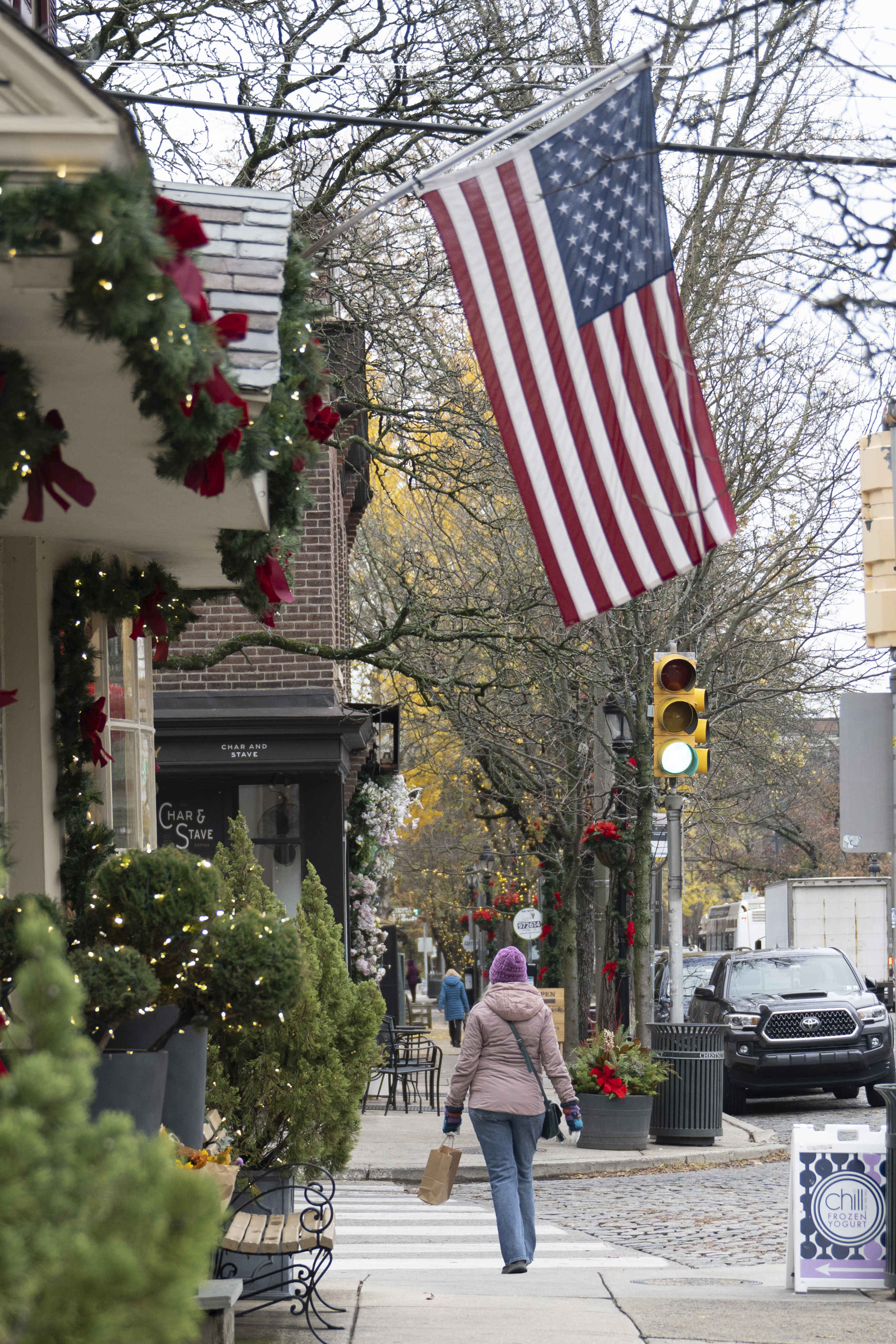
Businesses along Germantown Avenue in Chestnut Hill are decorated for the holidays.
Chestnut Hill business leaders and community members say they’re optimistic about the neighborhood’s continued evolution.
As Brien Tilley, a longtime resident and community volunteer, ate lunch inside Cosimo’s Pizza Cafe, he said the community is doing well. But, he added, “it could always do better. It’s always in transition.”
Nevel noted that restaurants require more capital to open than other businesses, so it can take awhile to fill those larger holes downtown.
“The economy is tough,” said Anne McNally, a fourth-generation owner of McNally’s, as she sat by the tavern’s front window overlooking Germantown Avenue. But in Chestnut Hill, she gets the vibe that the community “wants us to be successful.”
McNally and Goudy, of Kilian’s, both noted that their families bought their buildings decades ago. That has contributed to their longevity, both said, as has evolving with the customer base.
For the McNally family, that meant transitioning from a “bar-bar,” with no clock or phone, to a bar-restaurant that closes at 10 p.m. For Goudy, it meant soliciting online orders and walk-in business from out-of-town and even out-of-state customers whose older homes require unique hardware.
“Everything is changing,” Goudy said. “It’s important to keep changing and not to try to go back to where you were before.”
Stephanie Greenleaf has Black Friday down to a science.
Every year, the Moorestown resident hosts Thanksgiving. The next morning, she, her sister-in-law, and her mother hit the Cherry Hill Mall early. They start at Nordstrom, then head to Soma for pajamas, Urban Outfitters for her teenagers, and anime stores for the younger kids.
“We have it down,” she said, standing next to a Christmas ornament display around 8:30 a.m.
“As my mom always says, ‘I just want to be out in it,’” she added. “It’s not the same when you’re sitting on your couch.”
Despite inflation, rising prices, and the omnipresent e-commerce ecosystem, a familiar Black Friday hustle was in the air at the Cherry Hill Mall on Friday morning. Shoppers filed into the parking lot early, toting shoppingbags and holiday-flavored lattes. Labubus and puffer jackets were displayed in store windows.Teenagers flocked to Abercrombie and Zara.
While some retailers reported business as usual, others described the South Jersey shopping destination as more subdued than in years past as consumers contend with an uncertain economic landscape and e-commerce giants continue to cut into a market long dominated by malls.
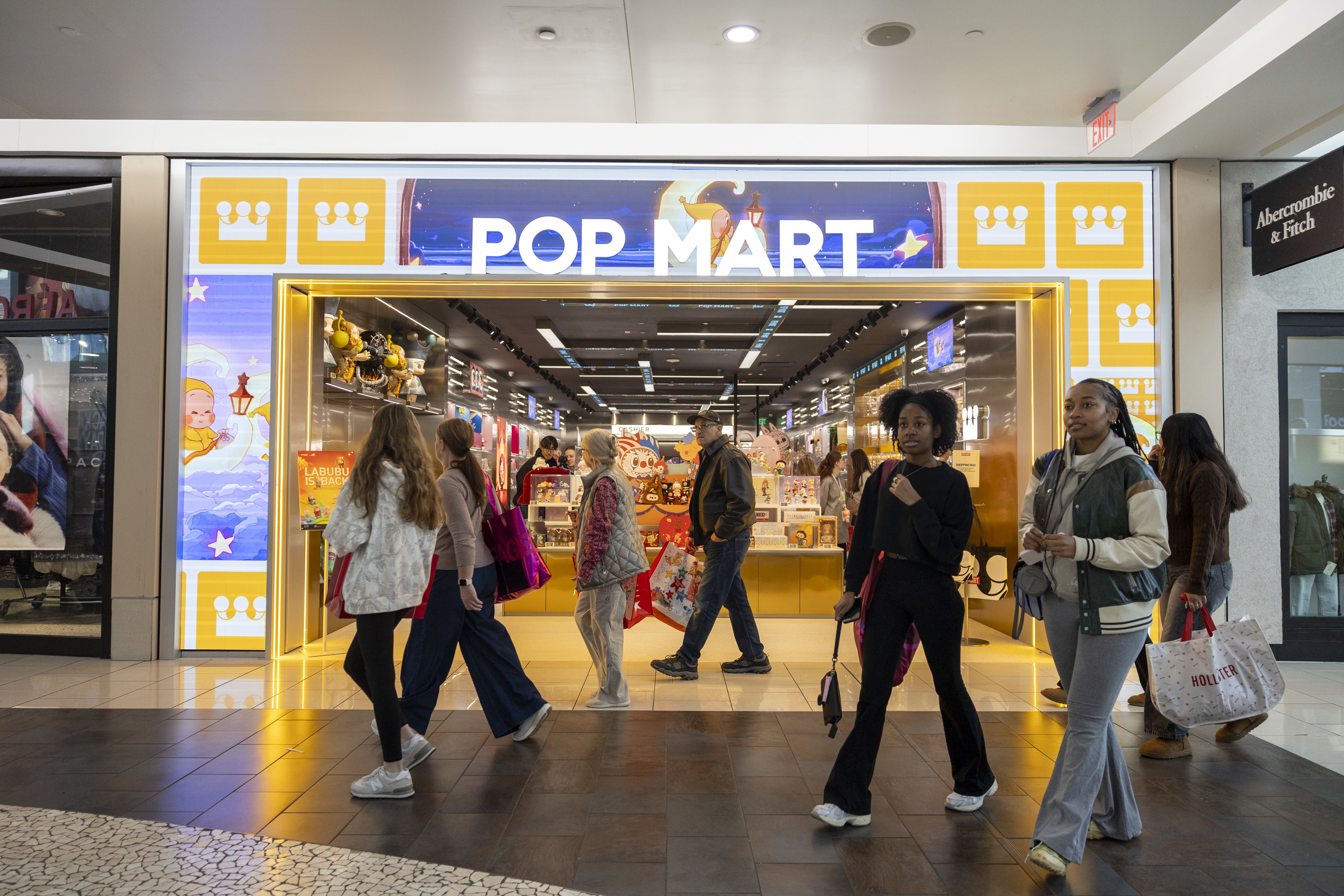
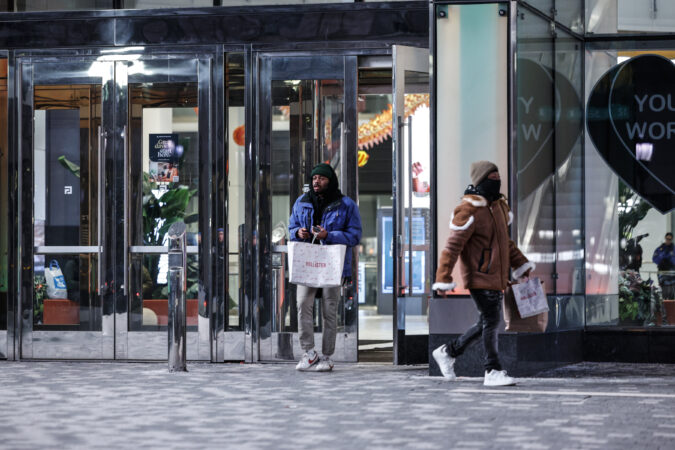
People walk pass Pop Mart during their shopping on Black Friday at the Cherry Hill Mall in Cherry Hill, N.J., on Friday, Nov. 28.
Black Friday, then and now
The term “Black Friday” has Philly origins. Beginning in the 1960s, tourists would descend on Philly the day between Thanksgiving and the annual Saturday Army-Navy football game. Philadelphia police reportedly began calling the day Black Friday after they were forced to work long hours and manage heavy traffic and unruly crowds. Years later, Americans would latch onto the tale that Black Friday got its name because it was the day retailers would move from being “in the red” to being “in the black” (finally making a profit after running a loss).
The retail-oriented holiday has morphed over the years from a one-day shopping bonanza to a month of deals. Now, the pervasiveness of e-commerce has muddied the Black Friday tradition, forcing retailers to attract shoppers both online and in stores.
Barbara Kahn, professor of marketing at the University of Pennsylvania’s Wharton School, calls this an “omni-channel experience.”
“It’s really more of an integration between both modalities now‚” Kahn said.
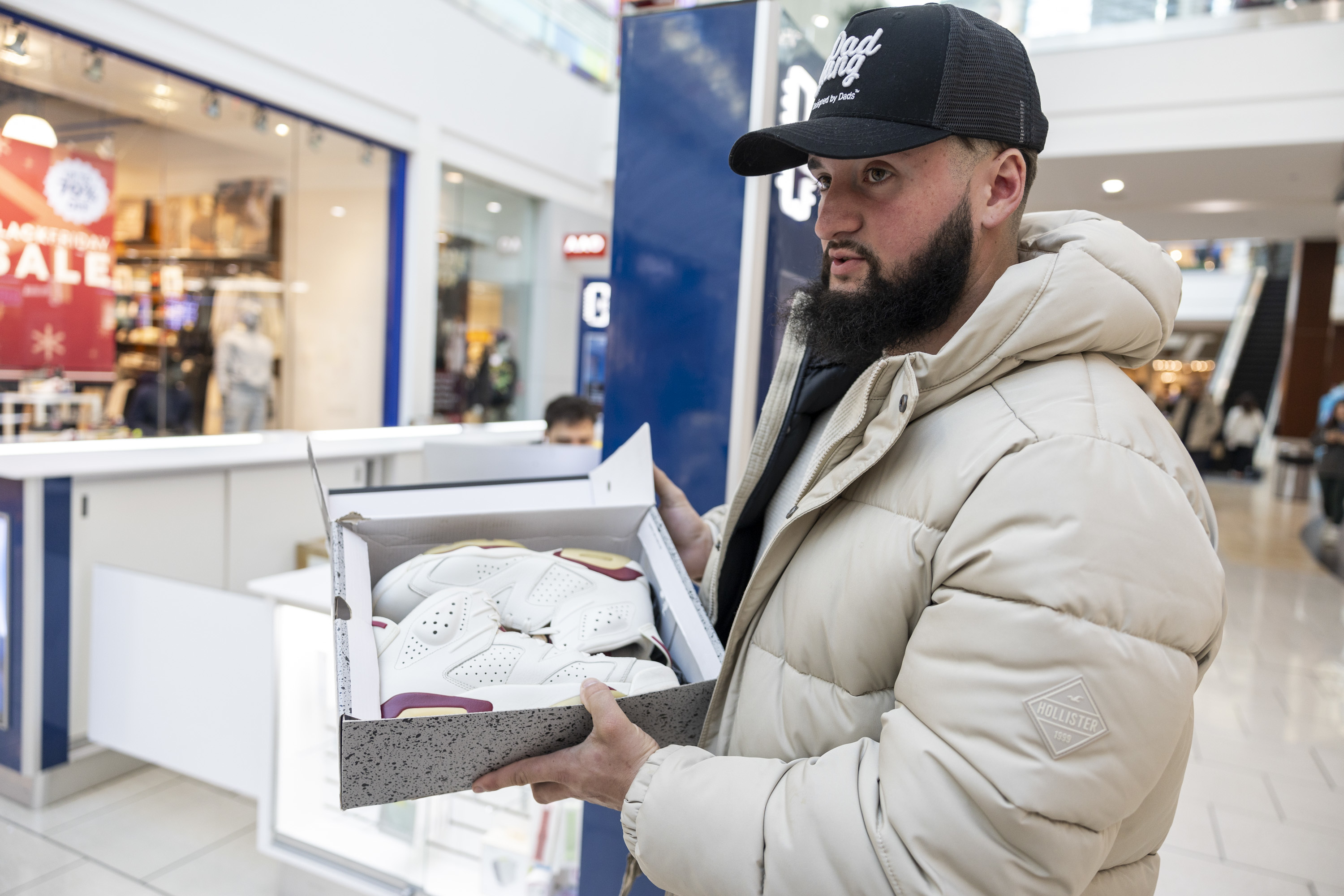
Daniel Leslie, 23, of Franklinville, N.J., showing off a pair of Maroon Jordan 6’s he bought on Black Friday at the Cherry Hill Mall.
Two major changes stick out to Kahn. First, the ability to compare prices online (and now with AI) has made shoppers more “price sensitive,” forcing retailers to stay competitive. Second, stores are turning to “experiences” to draw people in through giveaways, events, or exclusive items.
“Part of what people are shopping for is not necessarily the utility of buying a particular item,” Kahn said. Rather, it’s the experience “wrapped around the actual purchase.”
Shoppers at the Cherry Hill Mall said they had come out onBlack Friday for the nostalgiamore than for once-a-year deals.
Karrim Gordon, 48, said he is “not at all” a regular Black Friday shopper. But, with his young son in tow, the South Philly dad said he wanted to give his kids the true “Black Friday experience.” They got to the mall when it opened at 7 a.m. and hoped to hit Psycho Bunny for his son, then Aéropostale and Pop Mart for his daughter.
Daniel Leslie, 23, of Franklinville, said an Instagram ad for a sneaker deal had caught his eye. He was the first in line at a shoe store Friday morning, walking away with a pair of Timberland boots and a pair of Nike Air Force 1 sneakers for $20 each.
Was economic anxiety curbing his holiday shopping? Not really, Leslie said.
“The deals are just too good to pass up.”
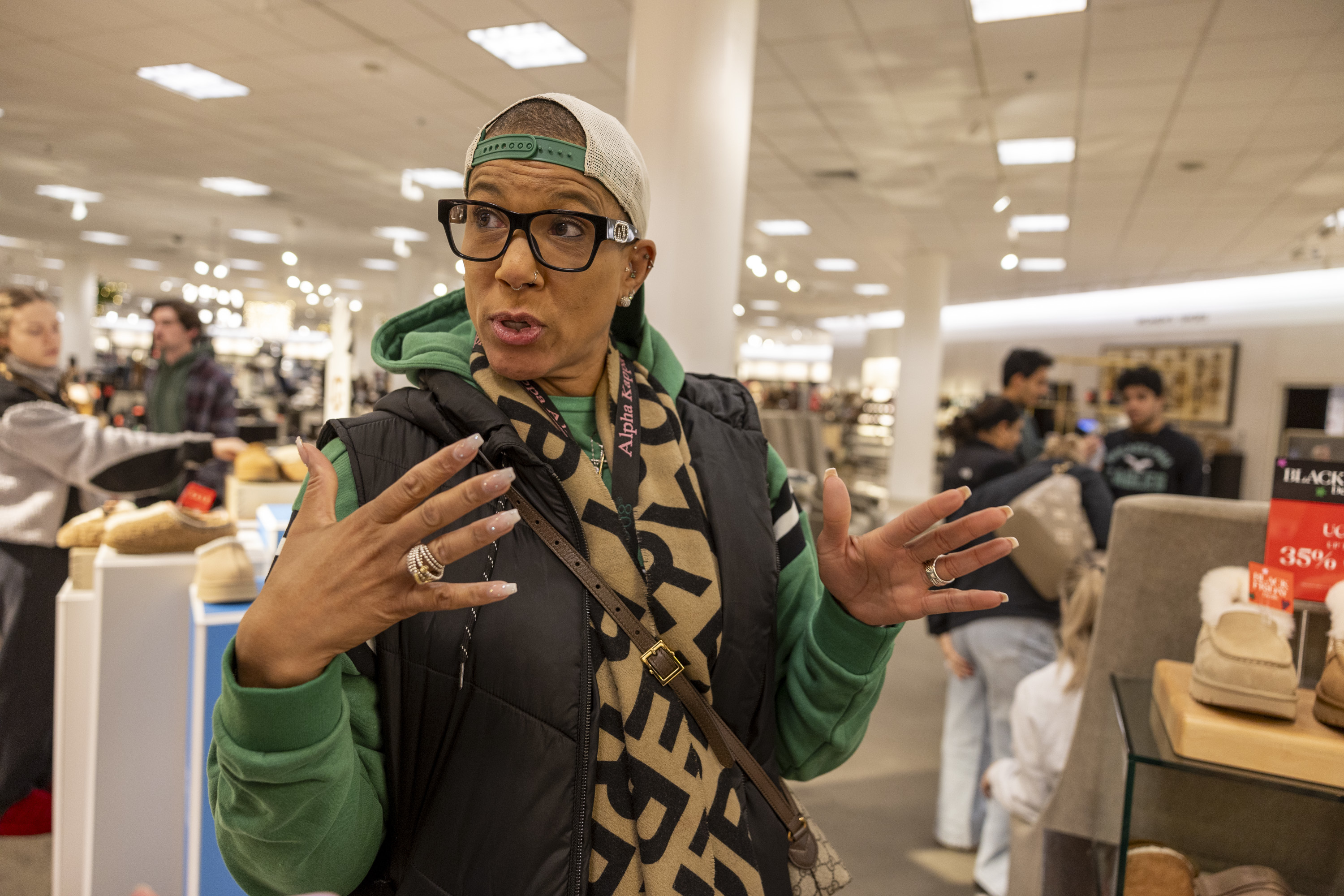
Alicia Hall, of Philadelphia, shops at Nordstrom at the Cherry Hill Mall on Friday, Nov. 28. Hall is a regular at the mall, but said the Black Friday shopping experience isn’t what it used to be.
Economic doom and gloom didn’t deter Alicia Hall, 54, from hitting the mall, either.
Hall is a Cherry Hill Mall regular, driving over from Philly a few times a month to browse. For years, she would wake up early and wait in line for the big sales. Now, she said, “nothing is open like it used to be.”
Though she sometimes thinks about looming economic concerns, “retail therapy” remains an important part of her life.
“I go to work every day, and I work hard,” she said. “I might as well spend it.”
This suburban content is produced with support from the Leslie Miller and Richard Worley Foundation and The Lenfest Institute for Journalism. Editorial content is created independently of the project donors. Gifts to support The Inquirer’s high-impact journalism can be made at inquirer.com/donate. A list of Lenfest Institute donors can be found at lenfestinstitute.org/supporters.
Center City was resilient this year, reporting slight increases in foot traffic and overall retail occupancy despite high-profile closures along Market Street.
About 84% of Center City storefronts were occupied as of October, up one percentage point from the same time last year, according to the Center City District’s annual survey of business owners. Occupancy has hovered around that point since at least 2023 and has yet to recover to its pre-pandemic level of 89% in 2019.
So far in 2025, an average of 343,540 people walked through Center City each day, an increase of more than 3% from last year, the survey found. Each section of Center City, from the beleaguered Market East to the thriving Rittenhouse Square area, saw at least a 1% bump in average daily foot traffic, according to the survey.
Some retail corridors, however, are looking more vibrant than others.
window.addEventListener(“message”,function(a){if(void 0!==a.data[“datawrapper-height”]){var e=document.querySelectorAll(“iframe”);for(var t in a.data[“datawrapper-height”])for(var r,i=0;r=e[i];i++)if(r.contentWindow===a.source){var d=a.data[“datawrapper-height”][t]+”px”;r.style.height=d}}});
Market Street continues to struggle on both sides of Broad Street.
As of October, the office-centric western side of Market had the lowest occupancy in Center City at 62%.
Market East, the future of which continues to be debated by city stakeholders, had a 72% occupancy rate. It has been impacted by a slew of recent closures, including Macy’s, Rite Aid, Iron Hill Brewery, and Giant Heirloom supermarket. The Center City District calculates occupancy rates by number of storefronts, not total square footage.
On Chestnut Street, the eastern and western sections have vastly different occupancies. The eastern side recorded a 71% occupancy rate in October, according to the survey, while 81% of stores on the western side were occupied.
Walnut Street continues to be the district’s shining star, with 86% occupancy in both the eastern and western sections, according to the survey. In the report, the Center City District highlighted several new additions, including the luxury women’s fashion company Aritzia and North America’s first Nike Jordan World of Flight store.
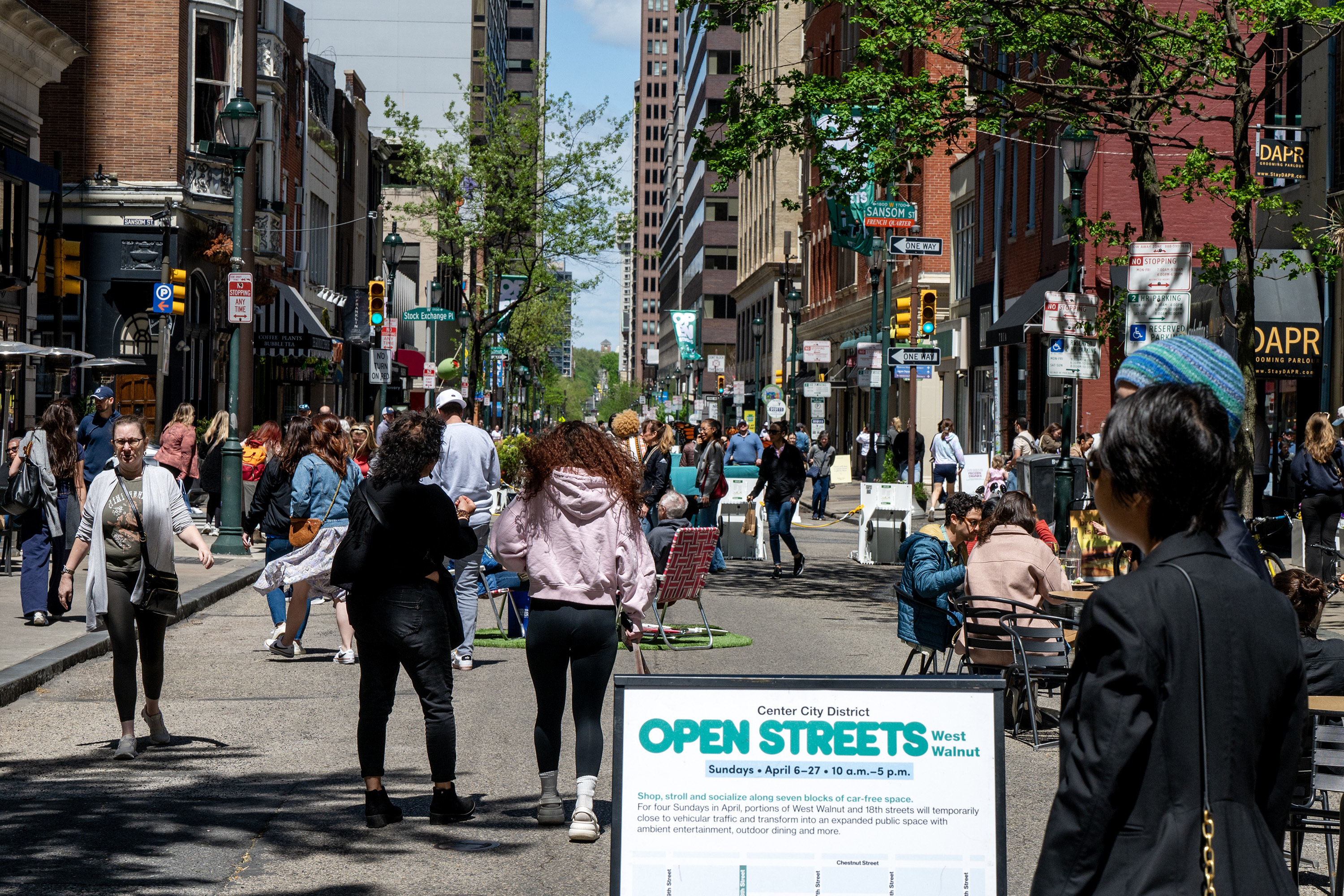
The report once again highlighted the success of the Open Streets program, during which roads are closed to car traffic and become pedestrian walkways for shopping and dining. There have been 21 Open Streets events since its inception in September 2024, with more planned for December and next year.
The events bring out more than 10,000 people on average, according to the report, and typically result in a 65% boost in businesses’ foot traffic and a 39% bump in sales volume.
An Open Streets in April. There have been 21 Open Streets events since its inception in September 2024, with more planned for December and next year.
Looking to the future, the district surveyed 700 Philadelphia renters to ask what types of retailers they’d like to see more of in Center City.
“Downtown residents seek convenient access to everyday goods, full-service grocery stores and home furnishing options — all within walking distance,” district executives wrote in the report, noting that these types of businesses could fill vacancies in office buildings or in the concourse around Suburban Station.
“CCD looks forward to convening office district stakeholders in 2026 to discuss a coordinated retail attraction strategy that could reposition the office district as a place to accommodate many of the retailers Center City is currently missing.”
Editor’s note: A previous version of this story included an incorrect comparison between 2025 and 2024 for occupancy on Market Street.
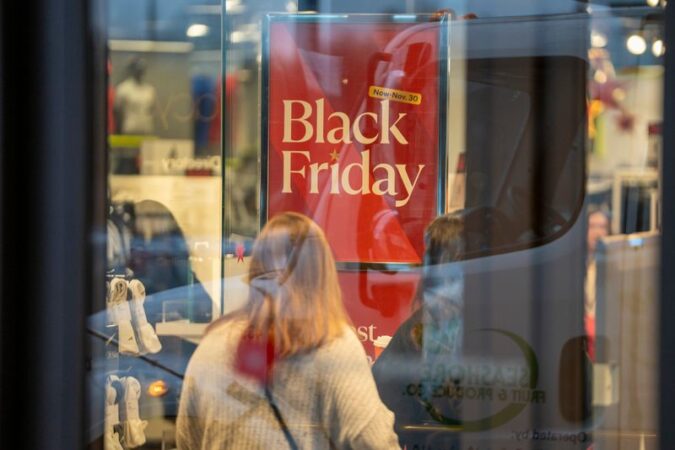
NEW YORK — Unprecedented numbers of Americans are expected to hit stores this Black Friday, but they are likely to curtail their spending as they find fewer bargains from tariff-hit retailers.
Marking the biggest turnout ever for the five-day stretch between Thanksgiving and Cyber Monday, 186.9 million people will shop, up from 183.4 million last year, the National Retail Federation projects. But sales growth for the last two months of the year, crucial for retailers, is expected to slow.
“Everything seems to be way more expensive” at malls, said Kate Sanner, a New Yorker who runs an online aggregator for secondhand listings. Last year, Sanner, 33, spent around $500 on gifts, but this season she plans to trim her budget to $300, eschewing most Black Friday discounts for targeted deals on specific products.
Thanksgiving falls on Nov. 27 this year, giving retailers an extra day in the holiday window, which typically accounts for a third of annual profits. Retailers have launched early promotions to lock in sales: Walmart’s began on Nov. 14 and will run in three phases through Dec. 1, with Walmart+ members getting early access. Amazon started its Black Friday deals week on Thursday, while Macy’s has opened a dedicated Black Friday portal.
Sales in November and December — in physical stores and online — are forecast to top $1 trillion for the first time, rising between 3.7% and 4.2%, but are likely to grow at a slower pace than last year’s 4.8% gain, NRF projections show.
Shoppers avoid dipping into savings for purchases
While the sticker shock alone could deter some buyers, others are budgeting for the increased costs of other necessities.
“Knowing that our healthcare premium bill is going to jump astronomically in 2026 … all of our discretionary spending has dropped significantly,” said Liz Sweeney, founder of marketing agency Dogwood Solutions, who lives in Boise, Idaho.
“While we spent close to $2,000 on gifts in 2024, our 2025 budget is $750,” said 52-year-old Sweeney, who is skipping electronics and big buys this year, sticking to shoes, books, and kitchenware.
Shoppers still have plenty in the bank, with households across all income levels holding more deposits than they did in 2019, before the COVID-19 pandemic, November data from Bank of America data shows. Consumers were also not using a significant portion of their savings, the data showed.
“Consumers are sentimentally weak and fundamentally sound,” said Mark Mathews, the NRF’s chief economist. “U.S. household balance sheets are still strong.”
The federation estimates average spending on gifts and seasonal items such as decorations, cards, food and candy will reach $890 per person, slightly less than last year’s $902. Nearly two-thirds of the 8,427 consumers polled say they will wait for Thanksgiving weekend deals, up from 59% in 2024, with older shoppers driving the trend.
‘Definitely seen fewer promotions’
“Knowing when is the right time to buy this year is more difficult,” said Edgar Dworsky, founder of Consumer World, who tracks holiday pricing. “With so many pre-Black Friday sales, there are no assurances the same deals will be offered again on the real Black Friday or that popular items will still be in stock.”
Historically, Dworsky said, stores such as Kohl’s, JC Penney, and Macy’s offered small kitchen appliances for as little as $5 after some combination of sales prices, percentage-off coupons, and mail-in rebates, but many of those discounts have disappeared. Kohl’s, for instance, is offering toasters, blenders, and electric frying pans for $9.99 without a rebate but with a coupon for 15% off this year, he said.
“I’ve definitely seen fewer promotions this year both in-store and online. The first two weeks of November usually bring some activity — though in recent years the discounts haven’t been very deep — but this year there’s been very little and much more full price,” said Jessica Ramirez, who runs brand consultancy the Consumer Collective.
“When promotions do show up, they’re spot promotions, meaning they aren’t set and don’t last long,” she added.
While some retailers appear to be pulling back on promotions, Walmart is teasing some aggressive price cuts for Black Friday.
Some of Walmart’s featured deals include an 85-inch TCL Roku TV, originally priced at $678, marked down to $498 for Black Friday, according to a Reuters review of the retailer’s website. Last year, Walmart highlighted a $120 discount on a 75-inch Vizio TV. This year’s lineup also features a Blackstone outdoor grill offered at $157, reduced from its list price of $224.