Category: Small Business

  • It’s almost time to file tax returns. Watch out for these limits on the tips and overtime deductions.

    It’s almost time to file tax returns. Watch out for these limits on the tips and overtime deductions.

    By now, most people have heard about the “no tax on tips” and “no tax on overtime” provisions of “One Big Beautiful Bill” that became law during the summer. It sounds great. But unfortunately, the new legislation is not all that it seems. Why?

    Yes, there is a “no tax on tips” benefit. But be careful because you may not be eligible.

    A specific list shows all the jobs that qualify. As a rule of thumb, you’ll be eligible for the tipped income deduction if you work in a business where tips are common. Regardless, you should know that the deduction is limited to $25,000 per person and begins to phase out once you start earning more than $150,000 individually and $300,000 if you file a joint return.

    You can only take advantage of the deduction when you file your individual tax returns after the year has ended. And if these deductions result in you getting a tax refund, you’ll have to wait until next year, when your 2025 return can be filed and processed by the IRS.

    Remember too that this deduction is scheduled to expire in 2028, so you’ve only got a few years to take advantage. So does the deduction on overtime wages.

    The overtime deduction is even more limited. It only applies to the “overtime” wages you receive, which means that if you receive time-and-a-half for overtime worked, you get to deduct only the amount related to the “half.”

    For example, if your base wage is $20 an hour and you get paid $30 for one hour of overtime, only the $10 difference is eligible for the deduction. Also, the overtime deduction is limited to $12,500 for individuals and $25,000 for joint-filers, and it begins to phase out after you’ve earned more than $150,000 individually or $300,000 if you’re filing a joint return. And, depending on prevailing wage rules or overtime calculations that are part of union contracts, some of these wages may not be eligible at all.

    Even though the new law promises “no taxes” on tipped and overtime income, that’s not entirely true either. Social Security and Medicare taxes will still be required by both employees and their employers. Most states — including Pennsylvania and New Jersey — are not excluding tipped or overtime income from their tax calculations.

    “It’s kind of a misnomer,” said Andrew Gargana, a federal compliance analyst at HR firm Paychex. (Gargana is a client of my firm.)

    “Yes, no tax on tips or overtime sounded great on the campaign trail, but the reality is that an employee is still paying some taxes on this income,” Gargana said.

    If you’re an employer that has tipped workers or pays overtime, you are looking at potential reporting headaches.

    Employees now must know the correct amount of tipped wages and overtime to include in their tax returns. Usually, this will come from their W-2 form, which is used to report wages and is required to be mailed by the employer to both the employee and the IRS by the end of January.

    The IRS has released a draft form W-2 for 2026 that enables an employer to separately report these amounts. But what about 2025?

    According to a blog post from Bala Cynwyd-based accounting firm Isdaner & Co., the IRS announced that the 2025 versions of Form W-2 — where overtime wages are not broken out from total compensation — will be unchanged.

    Gargana says 2025 reporting will be like the “Wild West.”

    “The IRS’s guidance just offers ‘transition relief’ to employers and employees for 2025,” he said. “As long as an employer makes reasonable attempt at reporting, the IRS is not going to penalize. They’re acknowledging that employers and employees were not tracking this information in the form they needed at the beginning of the year.”

    But what is “reasonable”? And what if their mistakes cause a significant mistake on their employee’s tax return? It is unclear how much leeway employers will get. Accuracy still matters, and a big enough miscalculation could mean potential penalties and interest for employees that underreport taxes due and a potential legal problem for the employer.

    In the end, the responsibility of filing a correct individual tax return still rests with the individual.

    “Employers and payroll management companies should begin tracking qualified tip and overtime income immediately and implement procedures to retroactively track qualified tip and overtime income amounts that were paid going to Jan. 1, 2025,” accounting firm Isdaner said in an email to clients.

    This is a looming hassle for employers. Whether they’re required to report externally or not, workers and their accountants will want to take advantage of this deduction, and if the amounts they need are not disclosed on their W-2, they’re going to be pressing their bosses for the correct information for their individual tax returns.

    Both Paychex and Isdaner are warning their clients to get on top of this issue to avoid confusion when employees start filing their individual returns. Gargana said employers may even provide a separate statement along with employees’ W-2 forms.

    “Communication is critical,” Gargana said. “Employers should expect questions and proactively share available data.”


  • Business owners should consider these strategies to reduce their future taxes

    Business owners should consider these strategies to reduce their future taxes

    Thanks to the tax and spending bill enacted in July, many small-business owners I know are moving forward with long-term strategies that will cut their corporate tax bills in the future.

    The new tax law included more tax incentives for companies and made other substantial provisions permanent. Here are a few strategies to consider for your business.

    Invest in longer-term assets

    The new tax law made permanent big deductions for capital equipment, and introduced a significant deduction for manufacturers building new facilities.

    “Bonus depreciation” deductions — which were being scaled back over the past few years — are now permanent, and allow businesses to write off the costs of qualifying property when they’re put into use, according to Mitch Gerstein, a senior tax adviser at Isdaner & Co. LLC in Bala Cynwyd.

    “Eligible items that may qualify include computer systems and software, office furniture, certain vehicles, and qualified improvement property,” he said. “This immediate expensing can significantly improve cash flow and lower taxable income, an especially valuable benefit for businesses investing in growth.”

    Scott Jillard has been encouraging his clients to make new capital investments where it seems appropriate. His firm, Jillard & Associates in Media, helps businesses take advantage of available federal tax credit programs.

    “This is significant for all commercial and investment property owners,” Jillard said. “It allows them to accelerate their depreciation schedules, which offsets income taxes from their rentals and encourages them to either improve their properties or add to their portfolio.”

    For manufacturers, there is now a 100% deduction for qualified production property, which allows eligible companies to immediately deduct the entire cost of new facilities used in qualified production activities like manufacturing. To qualify, the property must be new, located in the U.S., and meet specific construction timelines, with office or administrative areas excluded.

    “It’s important to take advantage of these tax deductions to help drive your top-line growth, while still minimizing your tax liability,” said Rich Petillo, a partner at Centri Business Consulting in Philadelphia.

    Cost segregation

    Given the more favorable tax rules, many tax experts like Jillard are also recommending that their clients look more deeply into cost segregation.

    Cost segregation is a tax strategy employed by purchasers of new commercial properties to increase their tax benefits, said Jillard. It involves reclassifying building components to accelerate depreciation deductions. This reclassification allows certain elements, such as HVAC systems and lighting, to be depreciated over shorter periods, reducing taxable income.

    “Doing this can result in lower tax liabilities, improved cash flow, and enhanced return on investment,” he said. “Additionally, cost segregation can speed up the payback period for the property and potentially increase its resale or refinancing value.”

    Revisit your corporate structure

    2026 will be a good time to take another look at the tax structure of your business.

    Because the “pass-through” deduction for S corporations, partnerships, and similar entities was made permanent, more businesses can take write off as much as 20% of their profits before that income “passes through” to their individual returns, said Linda Scheer, a tax director at J. Cohen CPAs & Advisors in Philadelphia. This deduction would have sunset at the end of this year had it not been extended permanently, she added.

    “We plan to review our small-business clients’ 2025 pass-through status,” Scheer said.

    Petillo says that while pass-throughs are very popular with small-business owners, much of this income will be taxed at higher individual rates (the top tax rate is as high as 37%) while the corporate rate is still fixed at 21%.

    “Maybe an S corporation or partnership is perfect for you and minimizes your ultimate tax liability,” he said. “But perhaps converting to a C corporation is more attractive to potential future investors.”

    Spend on research

    Thanks to the new tax bill, businesses can now fully deduct the cost of their research and development expenses in the year incurred, a benefit that had phased out in 2022. Small businesses (those with average annual gross receipts of $31 million or less) can retroactively apply full expensing to tax years 2022, 2023, and 2024 by filing amended tax returns. The deadline to do so is July 4, 2026.

    This deduction is not to be confused with the research and development tax credit, which is a credit against either income or payroll taxes owed. Business owners may be able to amend this credit to also take advantage of expenses going back to 2022.

    “These benefits are enormously advantageous to business owners of innovative and creative companies that engage in experimentation and are taking financial risk in improving their processes and procedures,” said Jillard.

    Consider starting a Qualified Small Business

    Those looking to start new companies should consider it as a Qualified Small Business under Section 1202 of the tax code, Gerstein said.

    Such an entity must be a U.S. C corporation with newly issued stock that is actively engaged in qualified trade or business like manufacturing, technology and software development, life sciences, engineering, industrial, distribution, or a research and development-heavy business. The new tax law made it even easier to form and invest in these types of companies, and the long-term benefits are substantial because the longer investors hold on to the stock, the more tax benefits can be realized.

    “Changes to these rules offer new opportunities for investors and founders,” he said. “Noncorporate investors can now exclude 50% of gains on small business stock after three years, 75% after four, and 100% after five or more.”

    And, he added, “Being a Qualified Small Business is a powerful tool for attracting investment, planning future exits, and encouraging long-term growth.”

  • A worker cooperative is a different form of employee benefit. Some say it’s better

    A worker cooperative is a different form of employee benefit. Some say it’s better

    Thinking of selling your business? Or starting a business? You may want to consider a worker cooperative.

    This type of business structure is different from a consumer cooperative, where customers each own a piece of the organization in exchange for a membership. It’s also different from an employee stock ownership plan where ownership is assigned to employees based on other factors such as compensation, responsibility, and tenure; retirement value builds up; and day-to-day control is given up to management.

    A worker cooperative is a form of business organization where all workers equally own the business. There are no majority shareholders. Management is elected by the workers and reports to the workers. All profits are shared equally.

    One example is Home Care Associates of Philadelphia, a worker-owned, women-led cooperative providing in-home personal care, mobility support, and household assistance to seniors and people with disabilities in the Philadelphia region. Employees can buy one share of the company for $500 via payroll after a probationary period.

    “You have full rights at that point to run for a seat on the board, to participate in the worker-owner meetings, and to vote,” said CEO Tatia Cooper. “If anyone decides not to be a worker-owner anymore, they get the full amount back that they invested.”

    Pennsylvania is one of the easier places in the country to form a worker’s cooperative, according to Kevin McPhillips, the CEO of the Havertown-based nonprofit Pennsylvania Center for Employee Ownership, because the commonwealth has designated this type of organization separately from other business forms like corporations and partnerships. New Jersey also has specific regulations enabling the formation of worker cooperatives.

    Why should a business consider the worker cooperative structure?

    For many it builds stronger retention and loyalty to the organization. When people are owners, they have more devotion to the company, so turnover is generally lower, resulting in lower costs for recruiting, hiring, and onboarding.

    Some believe worker cooperatives are more apt to deliver better service because the employees care more about their end work product. They’re more devoted to safety, quality, and minimizing waste.

    “Home care agencies struggle with retention and providing consistent care,” says Cooper. “For the simple fact that you have workers who stay longer, it really impacts your bottom line.”

    Cooper also believes that when workers have a say in how the business is run and the work that they do, they feel more empowered and that then translates to better care.

    Scott Moon, the executive director at Baker Project, an employee ownership advocacy group related to the Pennsylvania Center for Employee Ownership, says that while worker cooperatives can be a good vehicle for succession planning, owners will need to make some hard decisions about their objectives if they’re looking to sell their business.

    “Business owners who are having a difficult time finding a buyer for their company but want to see it continue to exist and support their employees can use a worker cooperative as a way to pass their work to a new generation of owners,” he said.

    Jobs and the company’s brand can be kept in place and the owner can be paid for the value of their company by the workers via a seller’s note or through a bank loan, which is serviced by the company.

    “There are many owners who feel it’s not just about selling and that their business has an ongoing responsibility to their employees, their customers, and their community,” Moon said. “So this type of strategy best fits those goals.”

    Cooper has found that their organization has a unique culture because of their employee ownership structure.

    “It’s the kind of environment where workers can say, ‘Hey, listen, I see a problem, I see a gap. Here’s how I think we should solve it. What do we need to do to make it happen?,” she said. “We have a happiness committee, we have a policy action group, we have a safety committee all led by board members who are worker-owners.”

    Downsides of worker cooperatives

    Worker cooperatives have their drawbacks. Owners need to understand that they’re giving up complete control.

    Because decisions are being made by elected groups of managers that need approval from employees, processes can be slower and potentially messier. Everything is open for scrutiny, and sometimes this level of transparency can hinder decision-making. Some employees may be enthusiastic about attending meetings and paying attention to the organization’s management, but others may not be up for the time and responsibility it takes.

    Financing is also harder. According to Cooper, banking is a “real challenge” because, in her experience, worker cooperatives can’t apply for typical small-business loans.

    “Most financial entities are looking for someone who owns 5% or more of the company, and we’re constantly explaining to banks and other institutions that this is a different model,” she said. “This is something that we’ve been advocating for with legislators, but it still continues to be a struggle.”

    For those interested in forming a worker’s cooperative, many organizations can help. For example, the U.S. Federation of Worker Cooperatives and the Democracy at Work Institute both provide technical assistance, education/training, advocacy, and a directory of worker co-ops. Other organizations like the ICA Group, Project Equity, and Workers to Owners Collaborative help businesses transition from a traditional form of ownership to worker ownership.

    Cooper acknowledges that worker cooperatives aren’t for everyone, but they do present a “unique way” of viewing work.

    “In my opinion, the benefits outweigh the challenges,” she said. “It’s about everyone feeling empowered to do their best.”

  • Jean E. Corrigan, former Montgomery County manager and longtime assistant to then-State Rep. Josh Shapiro, has died at 70

    Jean E. Corrigan, former Montgomery County manager and longtime assistant to then-State Rep. Josh Shapiro, has died at 70

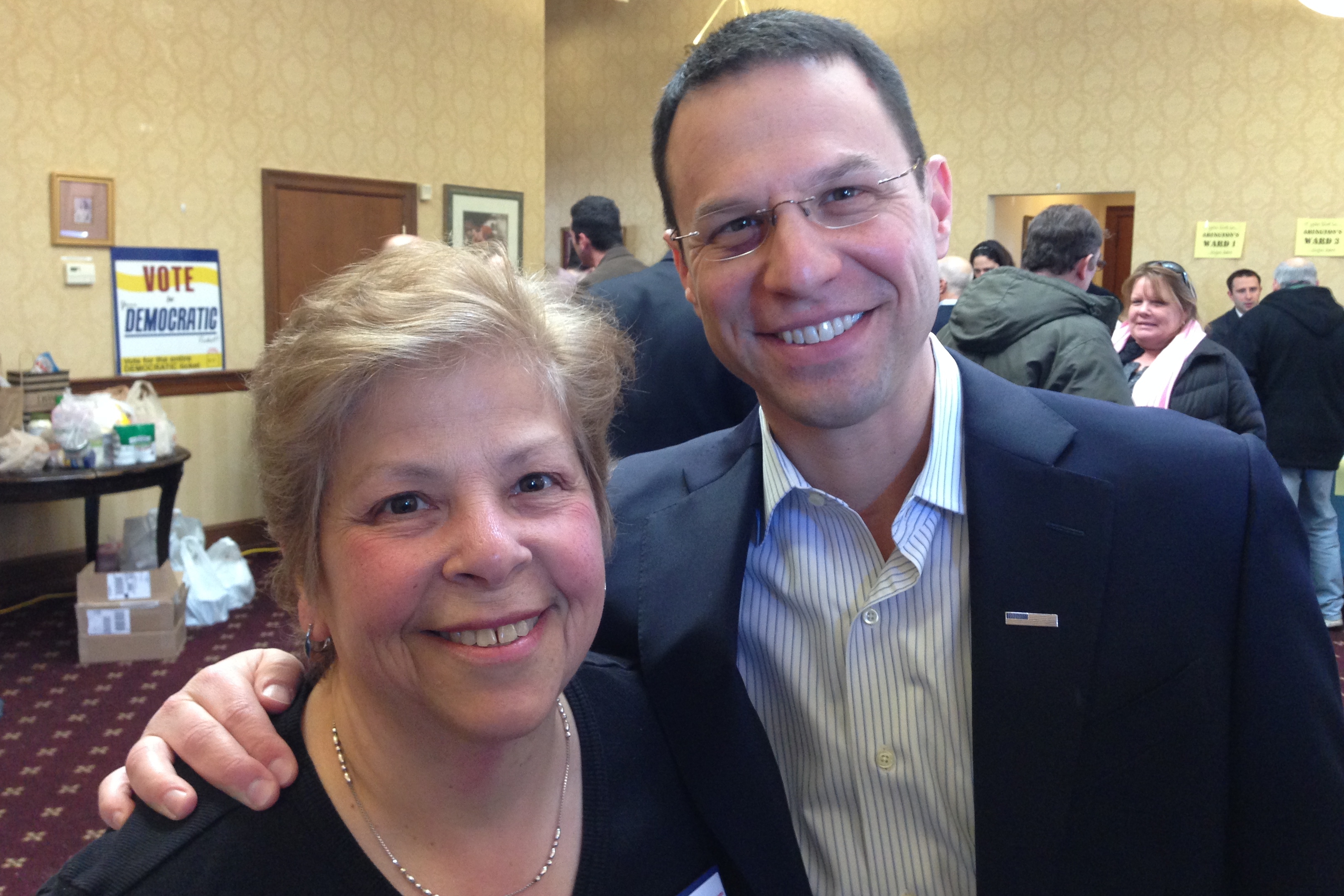
    Jean E. Corrigan, 70, of Roslyn, Montgomery County, retired fleet and operations manager for the Montgomery County Department of Assets and Infrastructure, onetime constituent services representative for then-State Rep. Josh Shapiro, hair salon owner and operator, disability services advocate, and award-winning volunteer, died Saturday, Nov. 22, of non-alcoholic cirrhosis of the liver at her home.

    A lifelong resident of Glenside and nearby Roslyn, Mrs. Corrigan was vice chair of the Abington-Rockledge Democratic Committee from 1995 to 2013, and served as Gov. Shapiro’s constituent service agent when he represented the 153rd Legislative District in the Pennsylvania House of Representatives from 2004 to 2012.

    “Jean was the very first volunteer on my very first campaign,” Shapiro recalled. “We knocked doors together, met our neighbors together, and, after winning, served our community together.”

    In addition to breaking down bureaucratic delays and solving all kinds of constituent problems for Shapiro, Mrs. Corrigan doggedly championed fair wages, reproductive freedom, increased funding for special education and disability services, and improved healthcare. Colleagues called her a “super volunteer” and a “campaign mom” because she helped so many candidates win elections.

    Gov. Shapiro said Mrs. Corrigan “made her neighbors’ lives better.”

    She hosted visiting campaign workers at her home for years, took charge of distributing lawn signs and sample ballots, and organized other preelection events at her dining room table. She was named the local committee’s Democrat of the Year in 2002 and earned several awards from community service organizations.

    “Through that work, I got to see just how much of herself she gave to others,” Shapiro said. “Where there was a need in the community, she worked to address it. When someone needed help, she lent a hand. She made her neighbors’ lives better, and I will forever be grateful for her life of service.”

    In 2001, Mrs. Corrigan ran unsuccessfully for Abington Township commissioner, finishing second among three candidates and losing to a long-entrenched incumbent. In a preelection profile in The Inquirer, she listed “responsible growth” as a top value and “maintain integrity of Abington Township” as a main goal.

    “Jean was passionate about serving others,” her family said in a tribute. “She believed that politics and civic activism could make a positive difference in people’s lives.”

    Mrs. Corrigan was called a “super volunteer” by colleagues and friends.

    At work, Mrs. Corrigan managed Montgomery County’s fleet of vehicles from 2015 to her retirement in 2022. She joined the county’s assets and infrastructure department in 2012 as operations manager for public property and supervised the county’s building services, construction carpenters, project collaboration, and computer-aided design.

    She studied beauty science and hair styling in high school, attended the Willow Grove Beauty Academy, and ran her own salon called Shears to You from 1993 to 2001. As a volunteer, she was one-time president of the Abington School District Special Education Parent Advisory Council, copresident of the Abington Junior High School parent-teacher organization, and chair and vice chair of several Abington Township community initiatives.

    She raised funds for school events and served on the board of the Abington YMCA. “Jean was selfless, empathetic, blunt, affectionate, caring, plainspoken, honest, and incredibly hard-working,” her family said. “There was no ego, no vanity.”

    Jean Elizabeth Fanelli was born Aug. 30, 1955, in Abington Township. She grew up with a brother, Angelo, and graduated from Abington High School in 1973. She was interested in clothing design as well as beauty culture and took classes at Temple University.

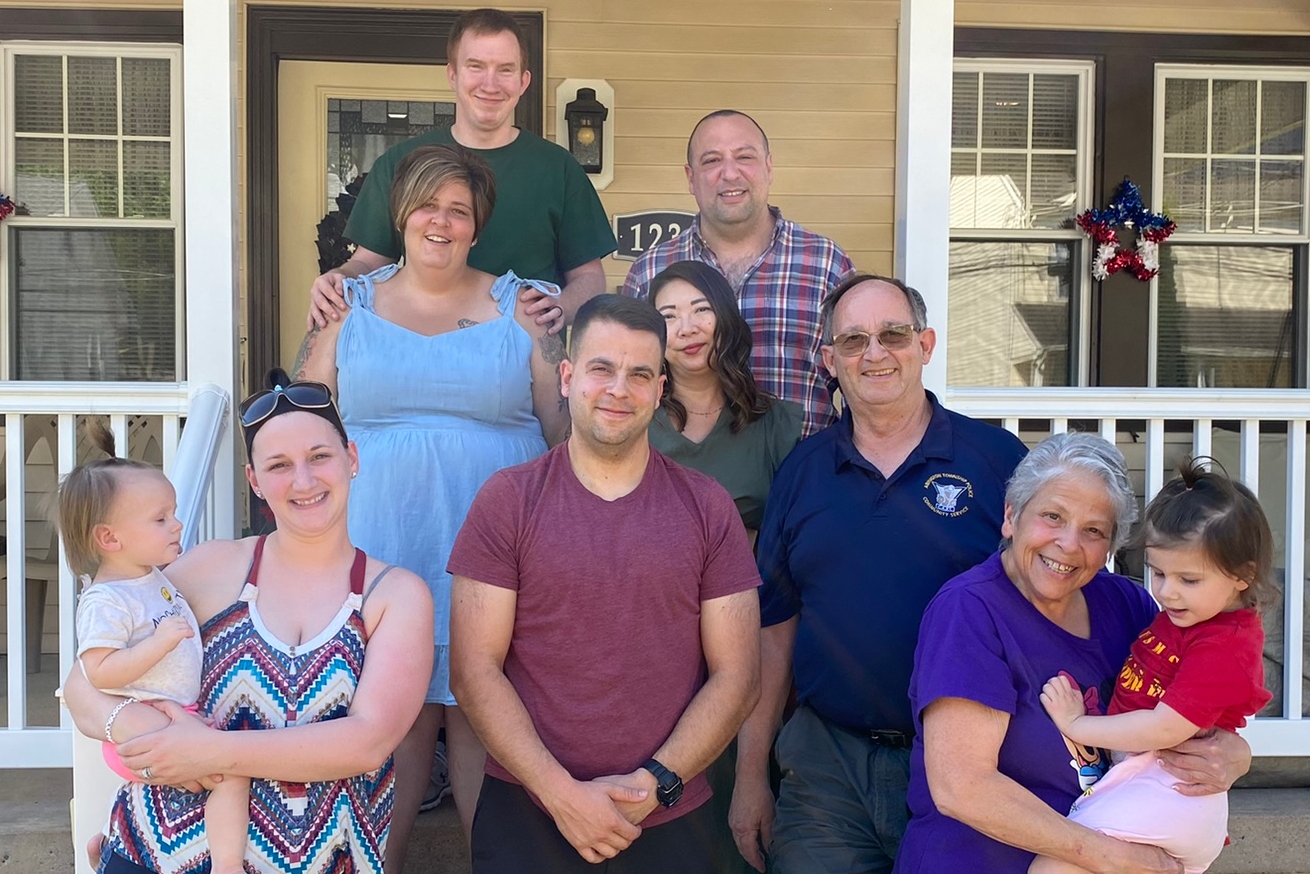
    Mrs. Corrigan stands with her husband, Peter, and son David

    After a brief marriage to Bruce Cunningham was annulled, she married Peter Corrigan — an usher at her first wedding — in 1977, and they had sons Joseph and David and a daughter, Pauline. They lived in Glenside for decades, in the same house in which she grew up, and moved to Roslyn a few years ago.

    Mrs. Corrigan enjoyed shopping trips with her daughter and baking holiday cookies. She liked to entertain and cook for everybody.

    She doted on her two granddaughters and spent memorable summers near Arrowhead Lake in the Pocono Mountains. She could talk to anybody, her family said.

    “She was a wonderful mother,” her daughter said. “I learned to have respect and manners from her.”

    Mrs. Corrigan (front right) enjoyed time with her family.

    Her son David said: “She taught me to be considerate and understanding of everyone I encounter, a lesson I will never forget.”

    Her son Joseph said: “She was incredibly generous with her time and resources. She could build relationships, and a theme of her life was caring for people.”

    Her husband said: “She was one of a kind.”

    In addition to her husband, children, granddaughters, and brother, Mrs. Corrigan is survived by other relatives.

    A private celebration of her life is to be held later.

    Donations in her name may be made to Hedwig House Inc., 1920 Old York Rd., Abington, Pa. 19001.

    Mrs. Corrigan’s smile could light up a room, her family said.
  • Why your small business needs an AI policy

    Why your small business needs an AI policy

    It’s no secret that the use of both generative and agentic AI will proliferate over the next few years as the technology becomes more reliable and pervasive.

    More than 58% of small businesses are already using AI in their companies, according to a recent study from the U.S. Chamber of Commerce, and that usage is expected to rise this year. For now, most of that can be attributed to chatbots like ChatGPT, Gemini, Copilot, and others.

    Because of this, your business needs to create and maintain a strict AI policy. Why?

    “An AI policy places guardrails around the usage of AI by your employees,” said Philadelphia attorney David Walton, who chairs the artificial intelligence team at Fisher & Phillips. “It allows your employees to use AI faster and better.”

    Without an AI policy, a business would be exposed to reputational damage that’s caused by AI “hallucinations” or errors, Walton said. In addition, a company’s proprietary data — pricing, contracts, customers information, processes — could be exposed to the public, particularly when employees use free AI tools that offer less protection.

    Lawyer Star Kashman, founding partner of Cyber Law Firm, warns her clients that without an AI policy, employers could be exposed to claims of bias and other lawsuits.

    “For example, there might be some resumes from people of certain races, people of certain genders that maybe aren’t as accepted by the AI system, and you’re automatically rejecting great candidates,” she said. “You’re going to be the one that has a huge lawsuit on your hands, even for your employees’ actions, if you weren’t able to protect it.”

    A good AI policy should include the following.

    Include a statement of purpose for AI

    The policy should be clear that AI is allowed only when used responsibly and with guardrails.

    It should also be clearly stated that AI tools are used only when they can improve productivity, provided that they are safe and confidential.

    Provide a list of approved applications

    A company’s AI policy should specify which tools and software are approved by management, both lawyers said.

    The tools should be used for business purposes only. Free tools should not be allowed because of their privacy concerns, and if a tool is not listed in the policy, permission is required from management to use it.

    When employees use AI on a personal account, Walton said, “it’s hard for the business to control privacy settings, and confidential data may leak into free or public AI models.”

    Consider a proprietary information ban

    It’s still unclear how safe our data is when AI applications are being used. To that end, it’s a good practice to avoid or even ban the entry of private information into these platforms.

    This would include customer data, financial statements, contracts, pricing information, personal identifying factors, trade secrets, or anything medical, legal, or human resources related.

    State the ownership of AI work

    When an employee makes a “prompt” into an AI chatbot, that query, as well as any resulting workflows and custom instructions, are all assets of the company and should be stated as so.

    A company’s AI policy should state that employees must return all AI-created work at separation, cannot export data into their personal accounts, and cannot use their own agents or tools for company work.

    Avoid AI in HR

    AI applications shouldn’t be used in hiring or performance reviews, both Kashman and Walton said. Many platforms leverage AI to perform these functions, but these tools could create more headaches than benefits.

    “HR is the front line for legal problems tied to AI,” Walton said. “Relying on AI to make hiring, firing, or performance review decisions could be very problematic.”

    Ban certain outputs

    An AI policy should ban the use of images, videos, or voice without management approval. NSFW (not-safe-for-work), pornographic, or defamatory content should be off limits. This can help protect against reputation damage, deepfakes, and offensive content.

    Always use human oversight

    We know today’s AI tools are far from perfect. Your policy should state that everything AI produces must be validated, checked, sourced, and edited by a human.

    Explain why the AI policy exists

    AI is new, and your employees are already concerned about this new technology. Kashman said it’s important to explain the “why” behind each rule in your policy.

    “Instead of just ‘don’t,’ explain the risk to the employee and company such as hallucinations, data leaks, bias, etc.” she said. “Employees follow rules better when they understand them.”

    The uncertain regulatory environment is another big reason for creating an AI policy. Regulation of AI use shouldn’t be expected anytime soon, Walton said.

    “Businesses must prepare for state-level AI regulation, especially around risk assessment and bias, because the federal government is unlikely to pass comprehensive laws anytime soon,” he said.

    However, some states — like New Jersey — have proposed bills that would require businesses to do formal risk assessments and acceptable-use policies. Meanwhile, President Donald Trump is considering an executive order limiting states from regulating AI.

    Kashman said the lack of regulations will leave business owners vulnerable “because tech companies aren’t going to be as liable for harms.” So small businesses “must protect themselves with strong internal policies,” she said.

    “An AI assistant or chatbot can help businesses draft a policy or template, especially for nonlawyers who need structure or a first draft,” Kashman said. It’s important to frequently update this policy because the technology, models, privacy terms, and data breaches change rapidly, she added.

    “However, be careful,” she said. “AI can’t understand the nuances of a specific business or legal risk, so human review from legal counsel or an expert is necessary.”

  • Despite challenges in 2025, Philly-area small businesses remain resilient and optimistic

    Despite challenges in 2025, Philly-area small businesses remain resilient and optimistic

    From inflation to tariffs to labor shortages, small businesses in Philadelphia have faced many challenges in 2025. But they remain resilient and, for the most part, are optimistic about the coming year.

    But that, of course, depends on the type of business.

    For example, the Monkey’s Uncle, a retro Philly sports apparel boutique located in Doylestown, had an “exceptionally strong” year, which was mostly driven by the Eagles’ Super Bowl win. Co-owner Derrick Morgan expects the holiday season to be busy but observes more people are shopping for holiday gifts much earlier this year as consumers are “spreading out their spending much more.”

    For small businesses in the Philadelphia region, consumer sales were up 2.4% in October compared to a year before, according to a monthly index from payment technology provider Fiserv. That’s compared to a 1.5% increase nationally. Small-business optimism remains above its 52-year average and uncertainty dropped this month, according to the National Federation of Independent Businesses.

    All in all, it hasn’t been such a bad year for most, despite the uncertainty.

    Looking to 2026, Morgan is optimistic due to Philadelphia hosting a number of major sporting events (like the MLB All-Star Game), and he is already coordinating commemorative merchandise with licensed vendors. But it’s not economic uncertainty that impacts his business as much as Jalen Hurts or Bryce Harper.

    “The nature of our business is very much at the mercy of the wins and losses from our Philly sports teams, which can certainly be unpredictable,” he said.

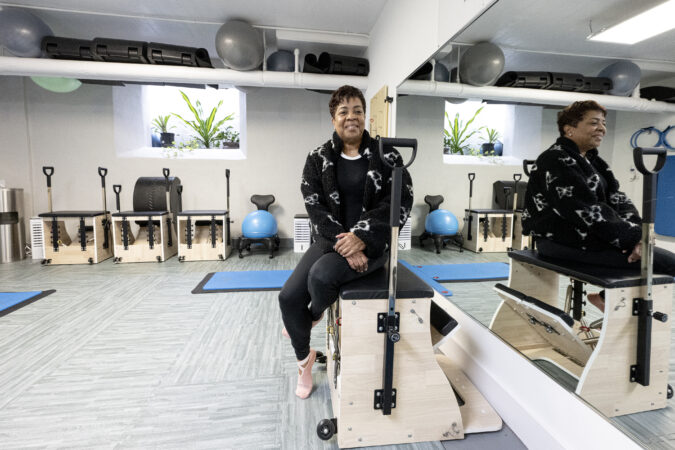
    Regardless of the economic uncertainty, physical fitness remains popular. Valerie Plummer’s Germantown-based Pilates studio — Pilates by Valerie — has had a “profitable and expansive year” thanks to “rising client retention, steady new enrollments, and an increasingly strong sense of community.”

    Plummer has used this year to double down on her business by broadening her programming with a series of new classes and apparatus trainings while developing instructor materials, improving internal systems, and strengthening her long-term training pipeline. As for next year? Plummer’s optimistic.

    “I am confident in the direction of the studio, the relationships we are building, and the value we are providing — and I’m excited for what’s ahead,” she said.

    The restaurant industry has been hit hard recently, thanks mainly to increasing costs and labor shortages. In Media, Rainy Culbertson’s breakfast restaurant, The Corner, has had a difficult year.

    “Customers are uncertain about their finances,” she said. “Eating out is a luxury and is one of the first cuts to a person’s budget in economically uncertain times. We’ve had ups and downs this year, but mostly down.”

    Like many restaurants, The Corner faces challenges in labor retention, cost increases, and competitive issues. And they’re still recovering from the pandemic, Culbertson said.

    “Most restaurants have not recovered from COVID, it’s just that we stopped talking about it because folks want it behind them, ourselves included,” she said. “Most restaurants still carry debt from COVID and now they have to deal with economic uncertainty and painfully thin profit margins due to inflation.”

    It’s not surprising that Culbertson remains very uncertain about 2026.

    “I’m optimistic it will be better but realistically, it will probably be more chaos and stress dealing with inflation and tariffs,” she said. “A lot depends on how long this madness of inflation, tariffs, and the unstable economy drags on. I’m really close to calling it quits.”

    Heather Herbert, the co-owner of Tail Spinz in Montgomeryville says her family-owned dog daycare has grown every year since its opening in 2023. It saw growth this year too, but some months were slower.

    “2025 has had its ups and downs, with some months of steady growth and others that have leveled off a bit,” she said. “Our business is built almost entirely on word-of-mouth and referrals, which creates a slower but more sustainable kind of growth. We have had a few families scale back or pause daycare due to budget changes, and we completely understand that we’re a ‘nice-to-have’ rather than a necessity for everyone.”

    Herbert is looking forward to even more growth next year and is currently gearing up for the holidays, with “a full lineup of festive events planned” including “a visit from Santa” with holiday photo ops and treats.

    “When you provide great care, build genuine relationships, and create a space that dogs are excited to come to, it’s hard not to feel positive about what’s ahead,” she said.

    Even in an uncertain economy, specialized businesses like Blevins Sommelier Services can flourish. Focused on bringing “affordable luxury experiences” directly into their clients’ homes, the company, which offers wine tasting and bourbon education events, has experienced strong growth this year with monthly bookings doubling over the prior year.

    “I’m optimistic for 2026,” said Amanda Blevins, who operates her business out of her home in Glen Mills. “The demand for wine events remains steady, and the demand for bourbon tastings has increased.”

    Tariffs and supply shortages have impacted Blevins’ business, particularly on wines from Italy and France, but like many business owners she’s pivoted and now features more local wines.

    “In many cases, hosting private in-home celebrations is more affordable than entertaining at a restaurant or larger rented venue,” she said. “There is always something new to discover in the world of wine and whiskey, and I consider it a wonderful life-long journey.”

  • Six months in, how are Philly-area businesses handling Trump’s tariffs?

    Six months in, how are Philly-area businesses handling Trump’s tariffs?

    It’s been six months since President Donald Trump announced new tariffs on U.S. imports. For local small-business owners, the impact so far depends on what they sell. But they’re all thinking ahead about more adjustments they will have to make.

    Trump declared an “Independence Day” on April 2, implementing a minimum 10% tariff on all countries selling products into the U.S., with larger ones on countries including India and China. Since then the president has either threatened or implemented additional tariffs on certain products such as steel and aluminum, sectors such as furniture, and “reciprocal tariffs” on countries to match their tariffs on American imports.

    Many economists have warned that these higher costs will drive up inflation, slow our economy, and hurt many small businesses that rely on imported goods.

    Fred Woll, president of Philadelphia packaging products supplier F.P. Woll & Co., said he’s seen tariffs from overseas suppliers but “decided to eat a 5% price increase.” He doesn’t think he can do that again.

    “We have been in business in the City of Philadelphia since 1907, and gone through many, many challenges over the last 100-plus years,” he said. “This current challenge may end up being existential, and it’s our country doing it to itself.”

    George Patti, the owner of Head Start Shoes in Philadelphia, is also feeling pressure.

    “Everything is costing me more money and the dollar has dropped in value,” Patti said. “The costs of our merchandise is higher, and we’ve had to raise prices 10% to 15%.”

    At Tildie’s Toy Box in East Passyunk and Haddonfield, owner Michelle Gillen-Doobrajh said tariffs have made this year “confusing and difficult” and the added costs will “absolutely” have an impact on how they do business going forward.

    Michelle Gillen-Doobrajh (right) talks with 10-year-old customer Harlowe McGrath at Tildie’s Toy Box shop in downtown Haddonfield.

    “I am beginning to pass on items where the cost has gone up too much to be realistic for the consumer,” she said. “I fear that product selection will decrease, and many manufacturers will end up going out of business and retailers will follow.”

    “We will have to get used to paying more money for less product,” Gillen-Doobrajh added.

    Not every company is suffering. The family-run Trappe Tavern in Trappe, Montgomery County, has not seen a significant impact.

    “We’ve had some prices creep up,” David Duryea, the restaurant’s owner said. “In general, it hasn’t really had much of an effect at all.”

    If the costs of his food and other supplies continue to go up, Duryea said, people will eventually cut back on their spending and that could affect his business.

    “If that happens, we’re going to have to raise prices like everyone else,” he said.

    Despite new tariffs on steel, Upper Darby-based Delaware Valley Steel has not been significantly impacted, at least for now. That’s because “we don’t import any of our inventory,” said Jerry Sharpe, the company’s CEO.

    However, Sharpe warns that whenever tariffs are applied, the domestic steel mills that sell him products see that as an opportunity to raise prices.

    “If demand picks up, which I believe it will later this year, we will see increased pricing from the domestic mills,” he said. “We’re also going to be hit with a 20% tariff on an expensive piece of machinery we have ordered.”

    Kevin McLaughlin, a partner at business advisory firm Centri Consulting in Philadelphia, said the common theme among his firm’s clients is uncertainty.

    “While the full impact of tariffs has not yet sifted through every corner of the economy, growing businesses and businesses with thinner margins and less negotiating power than large corporations are often the first to feel the pressure,” he said.

    Ten year-old customer Harlowe McGrath looks through figures — all of them 3D printed in the U.S. — at Tildie’s Toy Box shop in downtown Haddonfield Wednesday, Oct. 15, 2025. Store owner Michelle Gillen-Doobrajh is one of many Philly-area business owners dealing with tariffs. McGrath, who lives in town, was shopping with her mother, Kimberly McGrath.

    How small-business owners are navigating tariff uncertainty

    Woll says he’s focusing on cutting his overhead and may lay off employees. Gillen-Doobrajh is changing her product mix by “stocking up where tariffs are low” and foregoing unnecessary items.

    “I’m trying to be really smart and frugal with buying overall,” she said. “I am also paying attention to where items are made and holding out hope that these tariffs will dissolve so that our industry can survive.”

    Frank Cettina, who runs operations at Computer Components Corp., a precision tools contract manufacturer based in Philadelphia, is passing along any added costs to customers, with transparency. Tariff-related cost increases are noted separately and determined “on a customer-by-customer basis,” he said.

    “We are not making blanket cost increases because our intention is to remove them when and if they go away or change,” Cettina said. “We are also offering any alternative sources where we can.”

    Patti said he will likely buy less product but will also “buy higher quality just to pick up my margins” and compensate for the loss of volume.

    McLaughlin, the consultant, struck a more positive tone. He said clients are “stress-testing” multiple “what-if” scenarios so their businesses can adapt quickly.

    “With all the uncertainty, we are consistently encouraged by how resourceful our clients are through this unique time,” he said. “Many are using this moment as an opportunity to strengthen supplier relationships, accelerate efficiency, and polish their value propositions.”

  • Ambler’s small businesses want to make the borough a destination

    Ambler’s small businesses want to make the borough a destination

    Maura Manzo, founder and director of yoga studio Camaraderie in Ambler, previously owned the Yoga Home studio in Conshohocken but stepped away during the pandemic.

    When she was looking to get back into the business, she chose Ambler.

    “I was looking for a vibrant, walkable downtown, rooted in community,” Manzo said.

    She was encouraged by the presence of a food co-op, Weavers Way, which “signaled to me that this is a community invested in sustainable, healthy living — values that align beautifully with a yoga community,” as well as the other businesses around.

    “There’s a balance of restaurants, arts and culture, and shopping that creates a wonderful, rich community and attracts people,” Manzo said.

    Centrally located in Montgomery County, the borough of Ambler has become home to an eclectic blend of retailers, restaurants, and services. Its downtown business district includes a spa, tuxedo rentals, a bakery, a tattoo parlor, hair salons, and restaurants from all different culinary genres.

    People walk along Butler Avenue among various shops and restaurants in Ambler.

    The borough started as a mill town in the 1700s and evolved into a factory town run by the Keasbey & Mattison Co. in the 1800s. Many of the original buildings from that period still exist in the downtown district.

    The borough has been consistent in its preservation efforts. Recently an ordinance passed to be sure that any new construction reflects the existing architectural charm, said Ambler Main Street manager Elizabeth Wahl Kunzier.

    Still, the area has continued to evolve, recently adding a food hall with 10 vendors, seeing the merger of two established Ambler boutiques into one new storefront, and promoting downtown events on social media. With the holiday season approaching, business owners are looking ahead to their busiest time of year and gearing up for a number of seasonal events.

    “We have a pretty good organic social media reach,” Wahl Kunzier said. “It took a long time to get that where it is today, but given the nature of how the public gets information, it is very important to have a good following.”

    Building momentum behind the scenes

    Elizabeth Wahl Kunzier, Ambler Main Street manager.

    Wahl Kunzier serves as the marketing lead for Ambler Main Street — the name of the nonprofit that promotes downtown Ambler, even though many of its businesses are on Butler Avenue rather than Main Street. She monitors the businesses’ social media accounts daily to see what they’re advertising and share the information more broadly.

    Her office also organizes special events such as a semiannual restaurant week and a holiday shopping weekend. And the borough hosts a Farmer’s Market every Saturday from May through the weekend before Thanksgiving at the old Ambler train station.

    “I work with business owners brainstorming on everything from vacant storefronts to customized events to keep the foot traffic coming,” Wahl Kunzier said.

    The small business district and the community’s “people” are what drew Daniel J. DeCastro to Ambler, where he opened Ridge Hall last month.

    “They were a large family of small businesses that looked out for each other and supported one another while also having patrons who were cheerleaders of their businesses,” he said.

    An event board with various posters and advertisements for Ambler businesses and events.

    Located in a historic warehouse, Ridge Hall has 10 dining spots and a second-floor venue called The Mercantile.

    DeCastro is optimistic this food hall and retail concept will do well in Ambler, which he described as “on the cusp of breaking through as a destination town.”

    “Chestnut Hill, Doylestown, New Hope, and Phoenixville have become towns that you simply go to without a commitment. Unless you live in Ambler, it takes a commitment to drive into town,” DeCastro said. With Ridge Hall, “I wanted to create a destination that would entice people to stay for the day and return sooner rather than later.”

    Customers dine at Ridge Hall in front of Mary’s Chicken Strip Club.

    Some of the district’s established restaurateurs perhaps would argue that Ambler was already a destination.

    At Sorrentino Pasta + Provisions, customers find fresh pasta, house-made focaccia, and imported Italian goods for sale. The restaurant is open for lunch Wednesday through Sunday and dinner Thursday through Saturday, and it’s a BYOB.

    “Lunch is steady and a great opportunity to grab a table since it’s a little more difficult at dinner time,” proprietor Rich Sorrentino said. “We are extremely lucky to have the customers we do. Most are from the borough, but a surprising amount travel a bit to come join us.”

    Geronimo’s Peruvian Cuisine, also a BYOB, offers signature dishes such as ceviche, lomo saltado, anticucho de corazón, arroz con mariscos, pollo a la brasa, and many other authentic Peruvian dishes, said co-owner Daniel Salazar. It’s open Wednesday through Sunday.

    “Weekends are busy nights for us, we highly recommend calling the restaurant for a reservation,” she said. “Our goal here is to bring a cultural experience, to share a great cuisine that has history, flavor, and a little bit of mystery.”

    A tale of two stores

    Jeanne Cooke (left) and Barb Asman in their combined store, which opened earlier this year, bringing together XTRA Boutique and Main Street Vintage.

    Jeanne Cooke, owner of Main Street Vintage, sold painted furniture, vintage wood furniture, new and vintage home accessories, and artwork at her Butler Avenue shop for years. Just down the street, Barb Asman’s XTRA Boutique was selling women’s clothing.

    In August, they combined their businesses, merging into one larger storefront on Butler.

    “Barb and I have been looking in windows in Ambler for years. We felt we needed more square footage to take our businesses to the next level,” Cooke said. “The merge was seamless. I guess because we talked about it for quite some time.”

    The new experience is like shopping in a beautifully decorated home where you can buy all the furnishings. The two owners design the merchandising collaboratively, and the two businesses are intertwined.

    The back of the store, where Main Street Vintage’s furniture and home decor are on display.

    Asman said they are excited for what the future holds.

    “I sometimes stand in the middle of the store and say: ‘Wow, this feels so good.’ It’s hard to put it into words,” Asman said. “It’s a really good feeling.”

  • Gloria Del Piano, celebrated silk clothing and jewelry designer, has died at 72

    Gloria Del Piano, celebrated silk clothing and jewelry designer, has died at 72

    Gloria Del Piano, 72, of Philadelphia, celebrated designer of silk clothing, fashion accessories, and jewelry, former Italian TV producer and public relations director, energy therapist, Italian translator, voice-over actor, and community volunteer, died Wednesday, Oct. 1, of complications from cancer at the Hospital of the University of Pennsylvania.

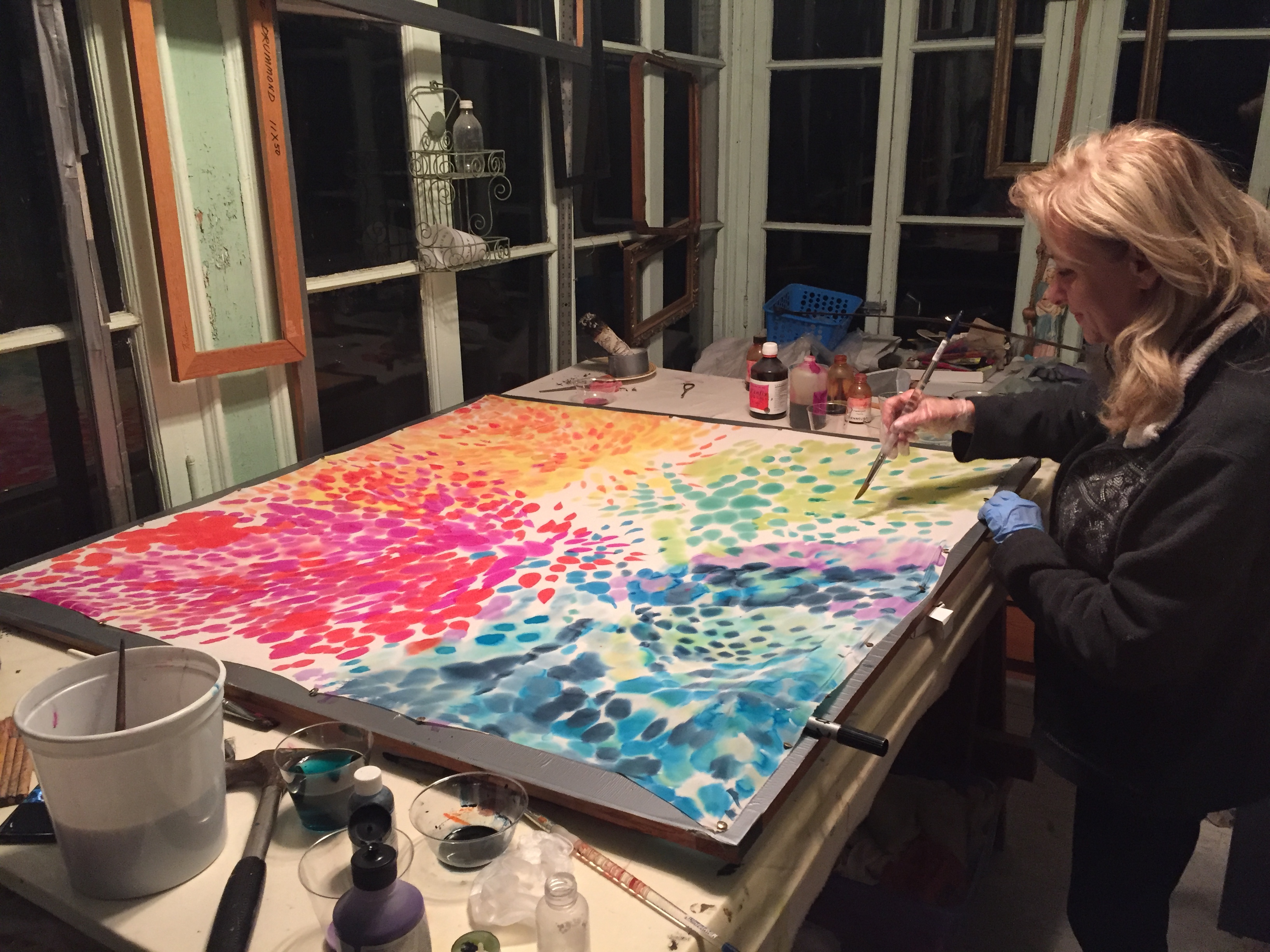
    Energetic, artistic, and indomitable, Ms. Del Piano was 31 when she arrived in Philadelphia from Rome in 1984. She had little money and knew little English. But she discovered her skill for silk painting in a do-it-yourself class, and the colorful hand-painted silk scarves, evening wraps, handkerchiefs, handbags, and original jewelry she went on to create turned Gloria Del Piano Accessories LLC into a fashion powerhouse.

    In just a few years, she opened a store on Bainbridge Street and contracted with Bergdorf Goodman, Neiman Marcus, Nan Duskin, Nordstrom, and hundreds of other fashion outlets to carry her designs in Philadelphia, New York, Los Angeles, San Francisco, Detroit, Minneapolis, and elsewhere around the country. Locally, her signature scarves and earrings were featured at gallery exhibits, charity benefits, private homes, and fashion shows at Penn’s Landing, Fairmount Park, the Wayne Art Center, and elsewhere.

    Many of Ms. Del Piano’s designs were colorful.

    Her line of accessories won awards for excellence and creativity at the Philadelphia Dresses the World fashion expos in 1986 and ’87, and she was inducted into the Philadelphia Get to Know Us Fashion Hall of Fame in 1988. The Inquirer, Daily News, Los Angeles Times, and other outlets publicized her exhibits, and a fashion writer for Newsday called her scarves, with flower and bird patterns, “exquisite” in a 1986 story.

    Some of her scarves were priced between $220 and $300 in 1986, and a black cape listed in 1988 at $495. In 1993, a gold lace-trimmed handkerchief was $45. A fellow artist exhibited with Ms. Del Piano at a Philadelphia festival and said in a fashion blog: “We watched her tie a scarf so many ways so fast it was like a magic act.”

    Earlier, from 1976 to 1984, Ms. Del Piano worked as a program producer and public relations director at GBR-TV in Rome during the station’s glory years. She also did Italian voice-overs, interpretations, and translations for clients of all kinds.

    Ms. Del Piano (right) smiles at a model wearing her designs at an event at Memorial Hall in Fairmount Park.

    She served on the board of the nonprofit Enabling Minds, volunteered in Philadelphia as a Court Appointed Special Advocate for Children, and raised funds for other organizations she championed. In a Facebook tribute, a friend said she was “bigger than life itself” with “a flare of the Italian opera star and the warmth of the Mother Earth itself.”

    Her partner, Wainwright Ballard, said: “She was generous and empathetic. She took care of everyone, including those abandoned or forgotten by others.”

    Gloria Del Piano was born Jan. 20, 1953, in Rome. She was artistic as a girl and always interested in spiritual growth and personal transformation. She studied sociology and business administration after high school in Italy, was certified by the Florida-based Barbara Brennan School of Healing in 2000, and led seminars in healing therapy for years.

    Ms. Del Piano and her partner, Wainwright Ballard, met in Chestnut Hill.

    She married Roberto Borea in 1985, and they divorced in 1992. She met Ballard at the Mermaid Inn in Chestnut Hill, and they spent the last eight years dancing, traveling, and enjoying life together.

    Ms. Del Piano doted on her family and friends in the United States and Italy, and returned often to Rome for reunions. She lived in Mount Airy and then a 20-room house in Germantown, and visitors marveled at her eclectic collection of art and antiques.

    She enjoyed music, gardening, thrift shopping, and chatting with friends. Friends called her “a philosopher,” “a noble soul,” and “a magician in the kitchen.” She delighted in cooking and entertaining, Ballard said, and always sent guests home with armloads of leftovers.

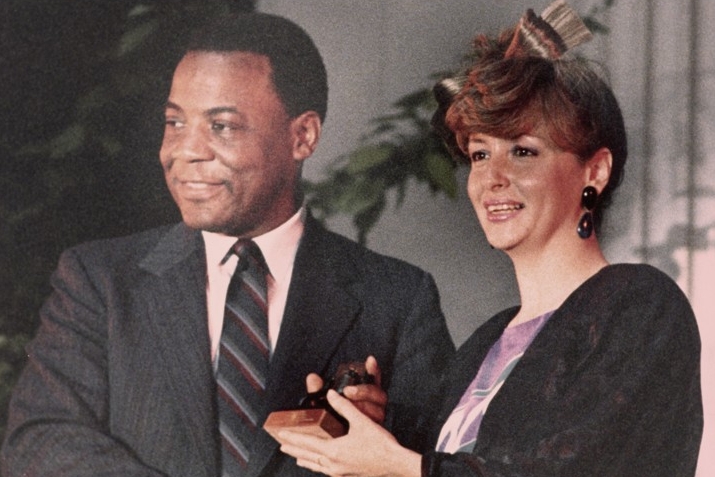
    Ms. Del Piano receives an award from then-Mayor Wilson Goode at a fashion expo in Philadelphia.

    Her “fabulous parties” were “fun and adventurous,” a friend said. Ms. Del Piano said on Facebook: “You never know how wonderful what you have is when you have it. It is when you miss it that we realize how lucky we were.”

    A friend said her “optimism, tenacity, enthusiasm, kindness, beauty, and elegance will always be with us.” Another friend said: “My life has been made richer having known Gloria Del Piano.”

    In addition to Ballard, Ms. Del Piano is survived by a brother, two sisters, and other relatives. Her former husband died earlier.

    A funeral mass is to be held at 9:30 a.m. on Tuesday, Nov. 4, at St. Vincent de Paul Church, 109 E. Price St., Philadelphia, Pa. 19144.

    Donations in her name may be made to Unite for Her, 22 E. King St., Malvern, Pa. 19355.

    Many of Ms. Del Piano’s designs featured flowers and birds.
  • Starting a gym was one scary workout for City Fitness’ Ken Davies

    Starting a gym was one scary workout for City Fitness’ Ken Davies

    Think your gym time is killer? That hour on the elliptical machine? That muscle-taxing combination of burpees, lunges, and side planks that make you want to collapse in a pile of sweat and tears?

    Try owning the gym.

    With his fifth City Fitness location recently opened in Fishtown, and No. 6, the biggest and swankiest of them all, planned for 44,000 square feet in the Sterling apartment building at 18th  Street and JFK Boulevard late this year or early next, founder and CEO Ken Davies is in a good place. But it wasn’t that long ago just the opposite was true.

    The financial hole Davies was in was the ultimate cardio challenge.

    He hit bottom in 2008, a year after opening the first City Fitness on the edge of Northern Liberties, at Second and Spring Garden Streets, just as a recession was bearing down. He reached the precipice of bankruptcy before pulling back.

    “I was beat up,” Davies, 44, a standout wide receiver at Radnor High School and Millersville University, recalled recently. “I didn’t even enjoy it anymore. I wasn’t even working out.”

    It’s a wonder he was making it out of bed those days.

    Davies, who is divorced, had drained the $175,000 he had accumulated in a 401(k) from earlier lucrative jobs in risk management and commercial real estate. He was missing mortgage payments on a house in Stratford, which he had remortgaged for $125,000 and then for an additional $25,000, to help meet his capital needs. He also was delinquent on repayment of a $1.25 million loan from the U.S. Small Business Administration, owed $75,000 on credit cards, had an unsecured loan for $50,000, and needed to repay $70,000 he had borrowed from two friends.

    Plus, he had lost his primary job in information, analytics, and marketing for the commercial real estate industry because he didn’t disclose his gym business.

    One of the worst times, Davies said, was “when I basically slept in a van for a week because I was locked out of my house because I couldn’t pay my mortgage.” The other was when his debit card was declined at Wawa for a $1 purchase.

    “That was the lowest point in my life,” he said.

    City Fitness is now profitable, with gross revenues of $7.5 million, 100 employees, and national growth aspirations, Davies said.

    “I believe he is someone to watch in the fitness industry,” said Wes Deming, principal of All Commercial Capital L.L.C., who was a member of City Fitness before agreeing three years ago to serve as its financial adviser. As such, he is helping Davies locate expansion financing.

    “It can be tough,” Deming said.

    That’s true for many reasons, said Mike Trimble, a vice president in commercial lending at TD Bank. Lack of collateral is one, because most gym owners lease facilities. Another is uncertainty of membership duration.

    Which explains the lack of enthusiasm Davies encountered early on:

    “One banker said, ‘If you were Walt Disney, we wouldn’t lend to you if it was a gym.’ They hated gyms. Even to this day, even with my success, it’s still difficult.”

    Incorporating in May 2005, Davies started paying $20,000 a month to rent the Second and Spring Garden location, which he expected to have open for business in 2006. He was selling memberships for $29.99 a month based on poster-board depictions of what he planned for the site.

    About 300 memberships were sold. Buyers turned against Davies when no gym materialized, accusing him on at least one blog site of stealing their money, he said.

    It took five months to secure the Small Business Administration loan. Build-out  took  an additional six or seven. The first City Fitness gym opened in August 2007. By then, about 10 percent of the presale members had asked for refunds, Davies said.

    Then “things turned from bad to worse,” as can be expected when expenses — equipment leases, instructors, software, office and cleaning supplies, rent — exceed income. Membership sales were slow and revenue from personal training virtually nonexistent, which Davies largely attributed to the recession. Debt mounted.

    To help turn things around, he borrowed the low-cost strategy of a competitor, Planet Fitness. City Fitness memberships dropped to $19.99 a month, quickly attracting 1,000 sign-ups.

    “They have a great model,” Davies said of Planet Fitness, where memberships are currently offered for $10 a month. “But you can’t provide the gym I wanted.”

    That’s a place where equipment is replaced every three years, a robust schedule of group exercise is offered along with top-notch training programs, and where service with a smile and fastidious cleaning are priorities, said Tom Wingert, marketing director for City Fitness. Memberships now start at $49.99 a month.

    “City Fitness’ costs are a direct result of how expensive it is to maintain the level of quality seen in our clubs,” said Wingert, who last year created the city wellness initiative, My City Moves, to achieve another City Fitness objective: community-building.

    “Fitness is a moving target,” said Tracy Shannon, an owner of competitor Sweat, which has been in business since 1997 and plans to open its eighth gym in March at 1 South Broad Street.

    Success is “about staying ahead of the game” and keeping members happy, Shannon said. “If you think you have it figured out, it changes.”

    It wasn’t until 2012 that Davies could open a second location, in the city’s Graduate Hospital section. A smaller “express gym” opened in South Philadelphia in November 2014, followed in April 2015 by what Davies said has been the only failure so far, a personal-training studio in Society Hill at Fourth and Walnut Streets. It reopened Feb. 6 as an express gym.

    Opening in December in Fishtown was a full-scale gym that will offer 25,000 square feet of workout space when fully built out. TD Bank is sold on what Trimble said is “a model that works.”

    Integral, he said, is “an unbelievably strong brand particularly driven by the quality of the offering and Ken’s commitment to building a culture there.” TD has provided $1 million in financing for Fishtown, and a $100,000 letter of credit to support the Sterling lease.

    These days, Davies said, he functions in a state of  “productive paranoia”  because “things can always change.”

    “It’s something that keeps me driven but grounded at the same time.”