Category: College Sports

  • Penn State and Pitt to renew battle of Pennsylvania at the Palestra

    Penn State and Pitt to renew battle of Pennsylvania at the Palestra

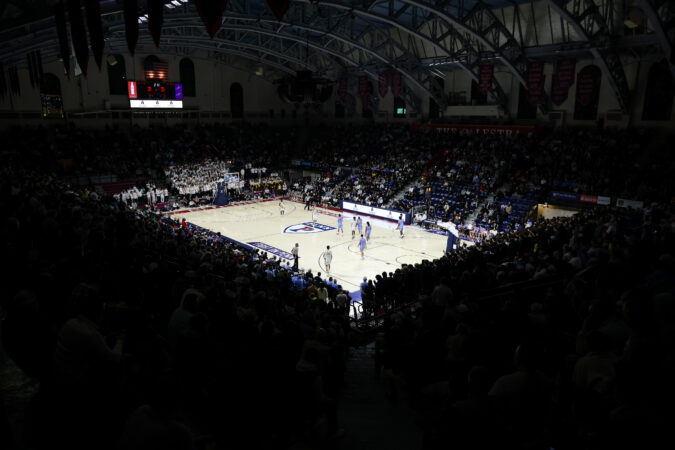
    For the Palestra’s 100th anniversary, Penn State is returning to the storied arena to face a Keystone State rival, Pittsburgh.

    The matchup will be Nov. 8, and it’s the second straight season in which the programs have played at a neutral site — they faced off at the Giant Center in Hershey on Dec. 21, 2025. Penn State holds an 76-73 advantage all-time over Pitt.

    This is also the fifth consecutive season in which the Nittany Lions will play at the Palestra.

    “Games like this are what college basketball is all about,” Penn State coach Mike Rhoades wrote in a release. “Great history, passionate fan bases, and high-level competition. The Palestra is one of the most iconic venues in college basketball, and the opportunity to celebrate its 100th anniversary while renewing an in-state rivalry for the 150th time makes this a special event for everyone connected to our program.

    Pitt coach Jeff Capel added: “Every basketball player and coach in this country understands the significance of playing at the Palestra. It’s one of the great venues in the history of the sport, and to play Penn State there in its 100th Anniversary year is a truly unique opportunity. Our players will be walking into a building with a century of history behind it, and after the atmosphere we saw in Hershey last year, I can’t wait to see the energy our fans bring to a place like the Palestra.”

    The matchup is the second major addition to the Palestra’s 100th anniversary slate announced this week. On Tuesday, Penn announced that its annual Cathedral Classic will expand from four to five teams, ditching its round-robin format. The event, which is Nov. 27-28, will feature host Penn, La Salle, Bucknell, Buffalo, and Towson.

    Penn announced in January that the Palestra’s anniversary celebration will begin in late August.

  • The Supreme Court freed college athletes to earn. Collective bargaining is the next step.

    The Supreme Court freed college athletes to earn. Collective bargaining is the next step.

    It is past time for Division I colleges and universities to recognize that their student-athletes deserve both the right to bargain collectively and recognition that they are employees because of the compensation their institutions provide to them and the control those institutions have over them.

    A deluge of media coverage has been aimed at other issues in big-time college sports, particularly football and basketball, but too little attention has been given to what should be center-stage — how student-athletes should be fairly treated by the institutions that benefit from their athletic prowess.

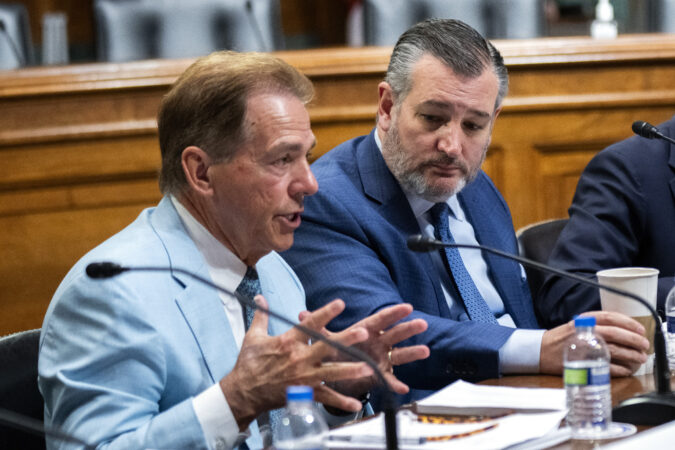
    The Senate Commerce Committee recently held a hearing on the Protect College Sports Act of 2026, sponsored by Sens. Ted Cruz (R., Texas) and Maria Cantwell (D., Wash.), to “restore order” to college sports. This 111-page legislative effort is the latest in a series of approximately 40 bills aimed at reversing judicial rulings that oblige universities to share financial gains with their players.

    Like their legislative predecessors, the 2026 bill limits or ignores existing player rights and immunizes universities from antitrust liability resulting from player-initiated litigation and substitutes Congress’ judgment for the courts, players, and universities.

    Thus, the 2026 bill restricts the ability of players to transfer through a “portal” from one college to another and limits player eligibility to five years beyond the day of high school graduation. The bill would preclude awarding antitrust damages to players who seek to increase their mobility and earnings. It would also preempt state laws guaranteeing players compensation for their names, images, and likenesses used, for instance, on video games and athletic clothing (this has come to be called NIL money).

    Until the last decade, the unchallenged position of the National Collegiate Athletic Association was that all college players are amateurs entitled to no more than athletic scholarships and frequently inadequate reimbursement for college expenses. Post-World War II football and basketball were dominated by the Southeastern Conference and the Big Ten, and both were big businesses.

    Notwithstanding this reality, the NCAA maintained that the players were amateurs who could not be paid until the U.S. Supreme Court in 2021 ruled that the NCAA and its member campuses were liable for treble damages when they conspired to deny the players “educational” compensation beyond athletic scholarships and reimbursements.

    Universities became involved in class-actions brought by their players about player transfers, eligibility, and related issues following that Supreme Court ruling. The ruling recognized that the universities have always treated athletes differently from other students, sometimes providing them with preferred admissions as well as under-the-table monies and other benefits, frequently in conjunction with wealthy alumni and “boosters.”

    With California leading the way, many states enacted so-called NIL laws that allow players to be compensated for use of their names, images, and likenesses.

    But the NCAA continued to insist the players were amateurs. As a result, outside “booster” groups or “collectives” were created to provide business deals to attract or retain college athletes from a source other than the universities.

    Meanwhile, institutions of higher learning went to war to attract coaches with multimillion-dollar salaries, often exceeding those of any other employee, and — among state universities — any other state employee, including governors.

    In the wake of these developments, an immediate response was the negotiation of financially lucrative media deals by the universities and a realignment of college conferences.

    Stanford University, for example, left the Pac-12 Conference to join the Atlantic Coast Conference, requiring all its varsity athletes to travel regularly across the country, increasing the separation from their classrooms.

    Further, NIL procedures have become a kind of Wild West, sometimes composed of shadowy characters and “agents” who operate without any regulation as is provided in the professional leagues.

    Earlier this year, President Donald Trump convened a meeting of business and university officials in connection with a new executive order to preempt state regulation. The 2026 Cruz-Cantwell bill is the most recent response. It consigns players to minority representation on an athletic “governing board” or “rulemaking committee.”

    Deeply troubling, it avoids even a mention of collective bargaining or employee status for the players. The current National Labor Relations Board is unlikely to address these issues effectively. And this Congress is unlikely to act on the Cruz-Cantwell bill.

    Some, we realize, claim we should go back to an earlier era when money was not center stage in every aspect of Division I college sports. But it is too late to return that genie to its bottle.

    Rather than wait for voluntary recognition of the organizing power of college players, or for state legislatures to take action, Congress should amend the National Labor Relations Act to allow student-athletes to exercise their collective bargaining rights.

    This step by a new Congress in 2027 could provide much-needed protections for college athletes in terms of adequate compensation, health and safety protections, as well as a reasonable measure of player mobility fashioned by both students and universities seeking a balance between freedom and a disruptive revolving door.

    After all, the most appropriate forum for resolving the complex matters around modern-day college athletics isn’t through one-off legislation or the occasional court ruling, but rather at the collective bargaining table.

    Thomas Ehrlich is the president emeritus of Indiana University, former provost of the University of Pennsylvania, and former dean of Stanford Law School. Currently, he is an adjunct professor at the Stanford University Graduate School of Education. William B. Gould IV is the Charles A. Beardsley Professor of Law, emeritus, at Stanford Law School. He is a member of the National Academy of Arbitrators and former chairman of both the National Labor Relations Board and the California Agricultural Labor Relations Board.

  • The fifth annual Cathedral Classic returns to the Palestra with expanded five-team field

    The fifth annual Cathedral Classic returns to the Palestra with expanded five-team field

    With this year marking the Palestra’s 100th anniversary, the fifth annual Cathedral Classic is expanding.

    The multiteam event, which previously was a four-team round robin, will boast five teams this year: host Penn, La Salle, Bucknell, Buffalo, and Towson. The classic also is shifting from three days to two and no longer will crown a winner.

    The two days of doubleheaders span Thanksgiving weekend, Nov. 27-28, and open with La Salle vs. Bucknell at 3:30 p.m., then Penn vs. Towson (6 p.m.). The next day, Towson takes on Buffalo (3:30 p.m.), and Penn will face Bucknell (6 p.m.).

    “The Penn men’s basketball program is excited to celebrate 100 years of the Palestra with the return of the Cathedral Classic,” Penn coach Fran McCaffery said in a release. “There is no better way to honor our historic arena than with a weekend of great basketball games.”

    La Salle coach Darris Nichols added: “We’re grateful for the opportunity to play at the Palestra during its 100th anniversary. Honoring the venue’s legacy was important to us when we first talked about this year’s schedule, and we’re excited to take on a good Bucknell team.”

    Last season, Hofstra was crowned the tournament’s champion after defeating Penn to finish 3-0 in the round robin. However, for Big 5 fans, the most memorable game was on Day 2, when the Quakers faced La Salle. In that matchup, Penn erased a 15-point deficit to defeat the Explorers, 73-71.

  • Former strength coach charged with criminal hazing in death of Bucknell University football player

    Former strength coach charged with criminal hazing in death of Bucknell University football player

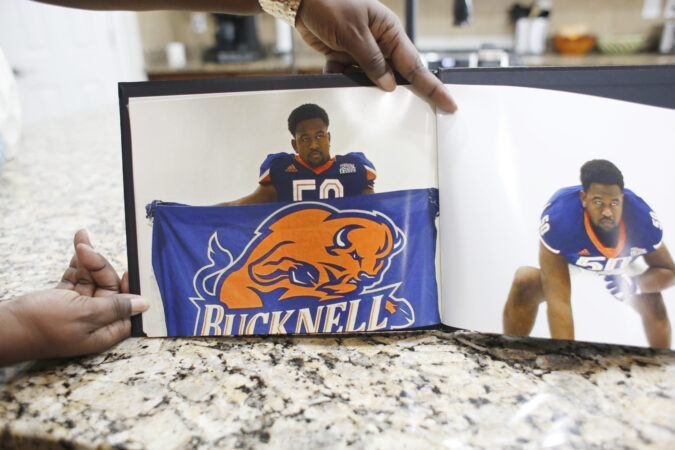
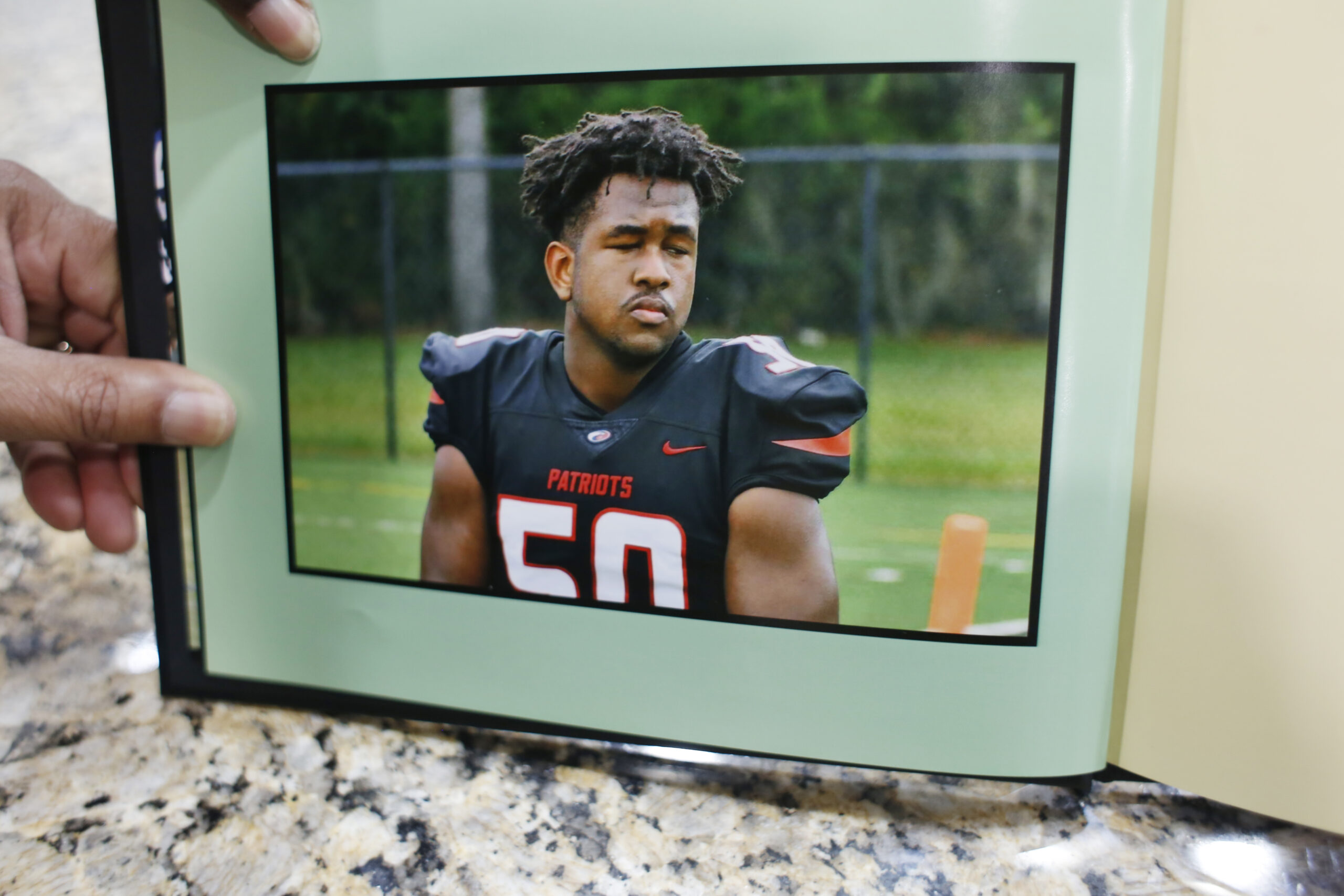
    A former strength coach at Bucknell University was charged Monday with criminal hazing in the 2024 death of Calvin “CJ” Dickey Jr., an 18-year-old freshman football player with a known medical condition who collapsed after being required to perform drills until he passed out, Pennsylvania Attorney General Dave Sunday said.

    Mark Kulbis, 34, who worked for Bucknell at the time, surrendered to authorities late Monday morning and was arraigned on the charges, Sunday said. Bail for Kulbis was set at $10,000 unsecured.

    Dickey, originally from Florida, was participating in the first day of freshman football practice for the university in Lewisburg, Pa., on July 10, 2024, “when he was directed to do extensive calisthenics, which put him in risk of death due to his sickle cell trait,” the attorney general’s office said.

    Kulbis allegedly “subjected Dickey to the hazing, even after being made aware of Dickey’s medical condition and receiving training from the university on sickle cell trait and state law and NCAA standards regarding hazing,” Sunday’s office said.

    Dickey was required to perform 100 “up-downs” and several full-body plank drills: “both considered extraneous calisthenic exercises. This was done in spite of training and direction from other coaches that such exercises were not appropriate or safe for use as part of training,” the attorney general’s office said.

    Dickey, who was recruited to play lineman positions, “was visibly struggling with the exercises and Kulbis, the only coach in the training room, did not summon help until Dickey passed out,” Sunday’s office said.

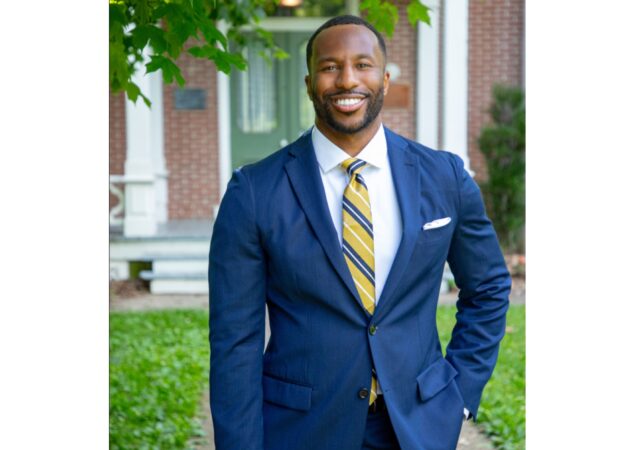
    Photo of Calvin “CJ” Dickey Jr. The 18-year-old died in 2024 after collapsing on the first day of freshman football practice for Bucknell University.

    Dickey was hospitalized, but died on July 12, 2024. An autopsy determined that Dickey’s death “was caused by Kulbis subjecting Dickey to the exercises in combination with Dickey’s Sickle Cell trait, body weight, and exertional rhabdomyolysis,” the attorney general’s office said.

    “This is an extraordinary tragedy, worsened by the fact that C.J.’s death was preventable,” Sunday said in a statement.

    The sickle cell trait can make intense exercise dangerous in certain situations. It used to be the leading cause of death in college football, but the rate of death associated with it among Division I football players dropped by nearly 90% after the NCAA began requiring testing and education in 2010, according to a report published in Sports Health Journal.

    NCAA guidelines say coaches should allow student athletes to set their own pace, build up slowly while training, and rest and recover between intense bouts of exercise.

    The criminal case was referred to state prosecutors last year by the Union County District Attorney, Sunday said. The campus in Lewisburg, located about a hour north of Harrisburg, is located in Union County.

    In an emailed statement, Bucknell University said Monday that university officials were aware of the criminal charges announced against Kulbis.

    “Bucknell has cooperated with the Pennsylvania Attorney General’s Office throughout its investigation,” the university said.

    “Because this is now an active criminal matter, and related civil litigation remains pending, the university will not comment on the allegations or legal proceedings,” the university said.

    “We continue to remember Calvin ‘CJ’ Dickey, Jr. and extend our deepest sympathies to his family and friends,” Bucknell said.

    Barbara Zemlock, an attorney for Kulbis, could not be reached for comment. ESPN reported that Zemlock provided a statement defending Kulbis.

    “While the death of Calvin Dickey is tragic, Mark Kulbis did not contribute to it and is not responsible for it,” Zemlock told ESPN.

    “The strength and conditioning program that was implemented was appropriate and in accordance with the training that Mr. Kulbis received, and with applicable standards.”

    Zemlock added: “There are facts and other circumstances surrounding this matter that, once presented at the appropriate time, will demonstrate that Mr. Kulbis did not commit the crimes charged,” and that “we intend to vigorously defend the charges.”

    Late last month, a federal judge allowed a lawsuit to proceed against Bucknell University filed by Dickey’s parents.

    Kulbis was charged with felony aggravated hazing and misdemeanor counts of involuntary manslaughter, reckless endangerment, and hazing. Sunday said.

    The aggravated hazing charge was made into Pennsylvania law in response to the 2017 hazing death of Penn State University student Tim Piazza.

    “This law exists because it recognizes what hazing is: criminal conduct that, in the best possible scenario, humiliates and dehumanizes an individual — and at its worst, takes lives and leaves families and friends forever devastated,” Sunday said.

  • La Salle names Jarett Gerald as its new director of athletics

    La Salle names Jarett Gerald as its new director of athletics

    La Salle has found its new athletic director after Ash Puri departed from 20th and Olney for the same job at St. Joseph’s.

    The university announced Monday that Jarett Gerald will take over as vice president of athletics & recreation and director of athletics, starting in August. He’ll oversee the school’s 23 Division I programs, while managing a recreation department that serves nearly 3,500 students.

    “We are building tremendous momentum across our university, and I believe Jarett is exactly the kind of leader who will accelerate that momentum within Explorer Athletics,” wrote La Salle President Daniel J. Allen. “He understands that athletics is about far more than competition. It is about developing young people, strengthening our university, inspiring alumni and donors, and elevating the La Salle experience for our student-athletes and our entire campus community.”

    Gerald, who has spent 15 years in college athletics, previously served as assistant athletics director for major gifts at the University of Missouri, where he developed a naming rights and an endowment strategy, and secured six- and seven-figure commitments from donors.

    “Great institutions are built by people who believe deeply in a purpose greater than themselves,” Gerald wrote. “Throughout this process, I came to appreciate the strong foundation of faith, hope, and service that defines La Salle, along with the shared belief that the university’s best days are still ahead.”

    Prior to Mizzou, the Columbia, S.C. native spent about four years at Duke, where he moved roles from director of revenue strategy and associate director of administrative operations to the major gifts officer. He was credited for landing $11 million in athletic commitments, including multiple seven-figure gifts.

  • What to know about the proposed Protect College Sports Act and its impact on NCAA athletics

    What to know about the proposed Protect College Sports Act and its impact on NCAA athletics

    A landmark bipartisan bill aimed at stabilizing college sports and protecting student-athletes cleared the U.S. Senate Commerce Committee on June 18 and is expected to receive a Senate floor vote in July. This marks the first time a major college reform bill has advanced this far in the Senate.

    Spearheaded by Sens. Ted Cruz, R-Texas., and Maria Cantwell, D-Wash., the Protect College Sports Act was introduced last month to regulate college sports and provide antitrust protection to the NCAA.

    “We need order and stability now,” Cantwell said in her opening statement on June 18. “The craziness that is happening in this marketplace with cutting of thousands of roster slots, the taxing students’ fees for education to pay for football, the arms race that is basically taking money away from research and development. Our task here is to win the race in innovation.”

    The bill was voted 19-9 and included support from Sen. John Fetterman, D-Pa. It now must pass the 60-vote threshold in the Senate before advancing to the House of Representatives. If approved by both chambers, it would then be sent to President Donald Trump’s desk. The bill can still be challenged and changed throughout this process.

    The history behind the proposed legislation

    The NCAA has sought congressional intervention for years to help regulate college athletics. College sports officials have asked Congress to help them create a national standard for how athletes are paid and for antitrust protections to avoid continuous legal challenges.

    “There have been dozens of attempts at congressional intervention in college athletics for decades, but it certainly has increased the past 10 years because of justified litigation over a broken college sports model and restricting athletes’ rights,” said David Ridpath, a professor of sports business at Ohio University and an expert on NCAA governance.

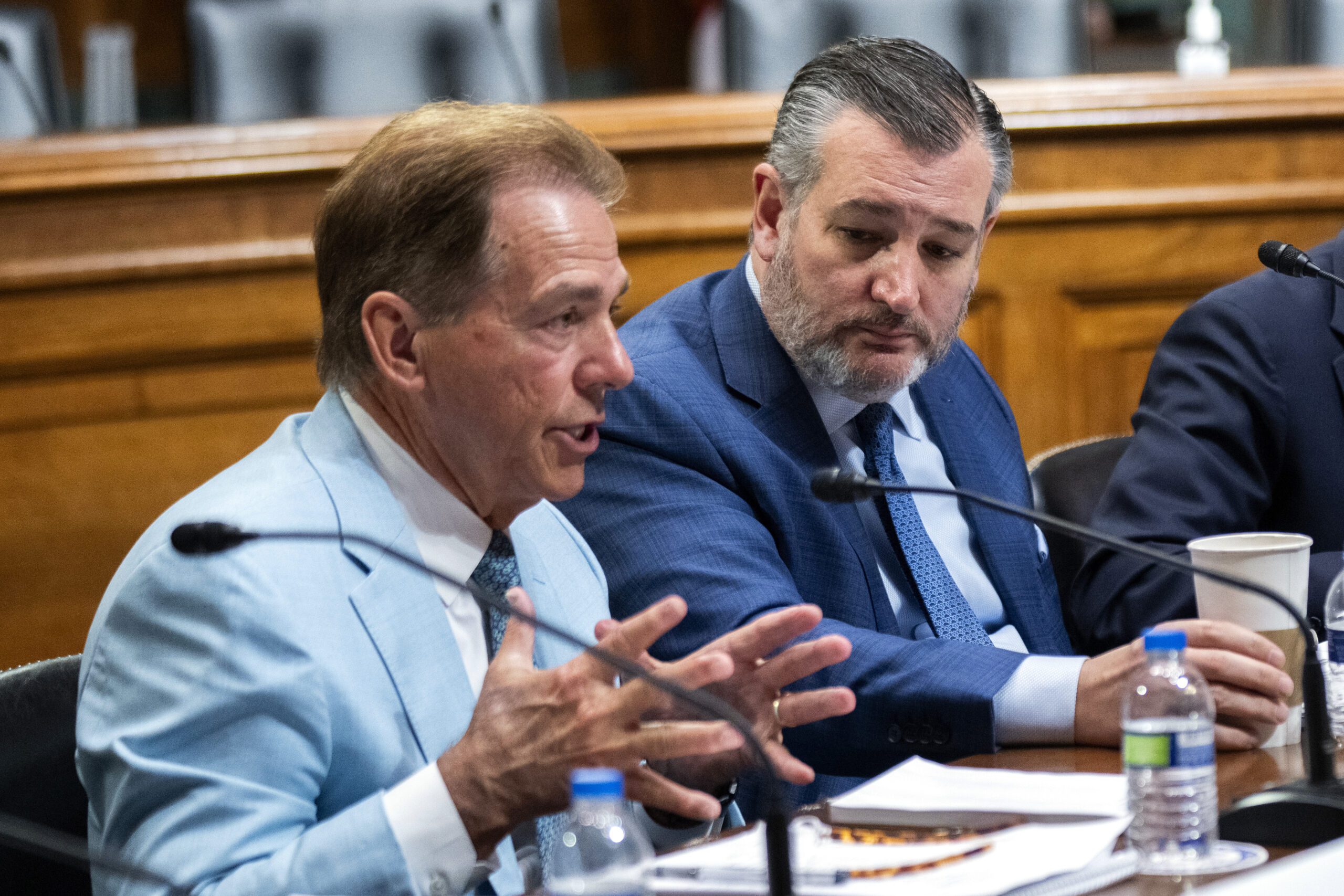
    The Protect College Sports Act has been spearheaded by Senators Ted Cruz (right) and Maria Cantwell.

    Last year, the SCORE Act advanced through two major House committees but did not reach the floor for a vote. That proposed bill was focused on creating a national framework for name, image, and likeness compensation and failed because it did not receive bipartisan support.

    What does the bill say?

    The proposed bill would provide an antitrust exemption, allowing the NCAA to regulate athlete transfers and eligibility within certain guidelines. It would also establish limits on athletes’ compensation and prohibit coaches from leaving before the season ends with their current team. Coaches who violate this rule would be ineligible to coach for the following season.

    The legislation also seeks to protect women’s and Olympic sports programs. Major colleges and universities would not be able to cut the number of women’s and Olympic sports programs, roster spots, or scholarship opportunities below current levels. The U.S. Olympic and Paralympic Committee endorsed the bill.

    “The revised version of the Protect College Sports Act ensures that higher-resourced NCAA Division I athletic departments — those with annual revenues exceeding $80 million — will maintain at least the same number of roster spots as in the 2024-2025 academic year,” wrote the U.S. Olympic and Paralympic Committee in a statement. “We welcome that the agreement provides reasonable flexibility, including traditional protections for mid-sized institutions, while preserving overall participation opportunities.”

    Student-athletes would be allowed only one unrestricted transfer during the NCAA designated windows in their career. Any other transfer would cost the athlete a year of eligibility.

    The bill would also allow colleges and conferences to voluntarily pool their media rights under a single entity rather than negotiate deals solely through individual conferences. The NFL voiced its support for the voluntary pooling of media rights, according to ESPN.

    What are the experts saying?

    Ridpath said pooling media rights could generate more revenue and allow colleges and universities to share that revenue across the entire college athletic ecosystem.

    “That could be used to help expand sports offerings and save current sports,” Ridpath said. “College sports is an incubator for Olympic and national teams, and if we start cutting these sports, we’re going to become less competitive.”

    Ridpath said this bill is a “fair effort” to regulate college athletics, but his biggest issue is the lack of direct negotiation with student-athletes.

    “If the NCAA wants real legal and antitrust protection, if they would sit down and negotiate with the athletes as a collective body, that would give you legal cover because everyone has agreed to the rules,” he said. “Until you speak directly with the athletes, I think we are still going to have litigation.”

    What are people saying?

    College sports stakeholders have voiced mixed opinions on the bill.

    More than 20 conferences, including the American, Big East, and Atlantic 10, have expressed support for the bill. The NFL, MLB, and the National Basketball Players Association sent statements to Congress voicing their support as well.

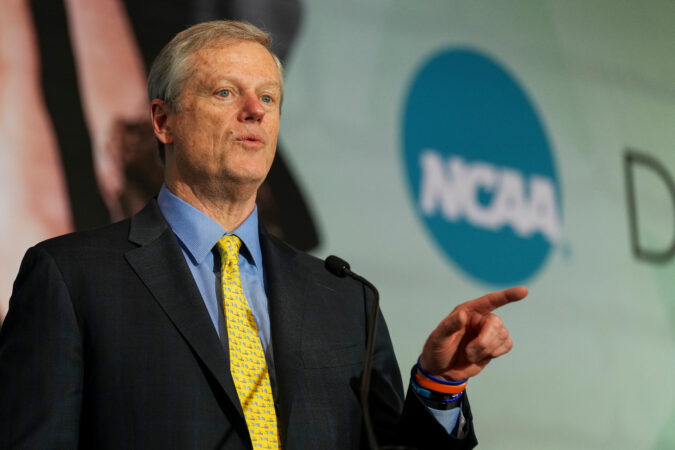
    Charlie Baker, the NCAA president and former governor of Massachusetts, publicly backed the bill on social media.

    “Every sports league needs rules, and there are certain challenges to NCAA rules that only Congress can address,” he wrote. “The bipartisan Protect College Sports Act’s sections bolstering eligibility, transfer and agent policies are needed now to deliver on that obligation. As a former governor, I understand that getting important legislation done requires compromise. While the bill does not address every issue college sports face, the current state of play cannot continue, and we must move the bill forward.”

    However, the Big Ten and SEC, the wealthiest college conferences, oppose the bill as it stands, saying revisions are needed to gain their approval. Part of the bill prevents conferences that declare more than $1 billion in revenue on their 2025 tax returns — the SEC and Big Ten — from forming a “super-league.”

    “From the outset, we identified a set of essential revisions to the PCSA necessary for the long-term sustainability of college athletics,” the two conferences wrote in a joint statement on June 18. “We have worked with both majority and minority staff to advance those revisions, which focus on better supporting student-athletes and stabilizing the college sports environment.”

    Letters obtained by The Inquirer from former Penn State trustee Anthony Lubrano showed Penn State president Neeli Bendapudi writing on June 17 to Sens. Fetterman and David McCormick in opposition to the bill, saying “significant problems remain” in the legislation.

    Lubrano, whose term ended Tuesday, said Bendapudi did not collaborate with the board of trustees on the correspondence with Fetterman and McCormick. He believes it would be in Penn State’s best interest to support the proposed legislation.

    “For Penn State, we’d be best served to embrace the legislation and work to enhance and improve it over time,” Lubrano said. “But in the absence of perfection today, we shouldn’t allow perfection to get in the way of being good, and so we should be behind it.”

    The bill, he said, protects all student-athletes and the non-revenue Olympic sports at Penn State.

    “Listening to the senators on a number of calls I’ve had with them, it’s clear that one of their primary concerns revolves around the Olympic sports,” Lubrano said. “If you do nothing, schools will likely discontinue some of their programs in the non-revenue sports, and a lot of those are Olympic sports. So consequently, you can envision a day where the United States isn’t competitive on a world stage at the Olympics. Is that what we want to see happen?”

  • Supreme Court upholds state laws banning transgender girls and women from school athletic teams

    Supreme Court upholds state laws banning transgender girls and women from school athletic teams

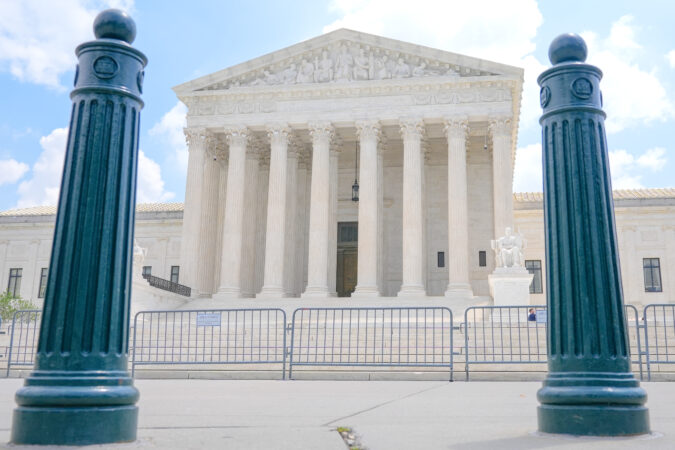
    The Supreme Court on Tuesday upheld bans in Idaho and West Virginia on transgender athletes playing on girls’ and women’s sports teams, the latest in a string of legal setbacks for the LGBTQ+ community before the high court.

    In a decision led by the court’s six conservatives — but joined in parts by its three liberals — the justices found that states can separate teams based on “biological sex” without offending the Constitution’s guarantee of equal protection and Title IX, a landmark 1972 antidiscrimination law involving education.

    “Separate sports teams for biological males and biological females are reasonable: Given the inherent physical differences between the sexes, allowing only biological females to play on women’s and girls’ teams can reduce the risk of physical injury and ensure fair competition,” Justice Brett M. Kavanaugh, who coached his daughter’s youth basketball team, wrote for the majority.

    The court’s three liberals, led by Justice Sonia Sotomayor, agreed that West Virginia’s ban did not violate Title IX. But they disagreed with the majority on several fronts, especially the conclusion that the West Virginia law withstands scrutiny under the Constitution’s guarantee of equal protection for all.

    Sotomayor wrote that a lower court should have the chance to sort out a question central to the case of the teenage plaintiff from West Virginia, Becky Pepper-Jackson: whether trans girls who have not undergone male puberty have physical advantages in sports.

    “Because of the Court’s decision today, West Virginia, and any other state actor, can deny B.P.J. and others like her these experiences simply because it thinks they have an inherent athletic advantage, even if the facts show that they do not,” Sotomayor wrote.

    The court did not address what is arguably the flip side of its ruling — whether schools and states can adopt policies allowing transgender athletes to compete on girls’ and women’s teams, as some liberal states and communities do.

    “That question is currently the subject of litigation in some lower courts,” Kavanaugh wrote in a footnote. “Nothing in this opinion is intended to decide that question.”

    The ruling is among several in recent terms that are consequential for the LGBTQ+ movement. The Supreme Court in March ruled a Colorado law banning “conversion therapy” for gay and transgender youths probably violated the free-speech rights of a religious counselor who wants to counsel such young people according to biblical teachings.

    Earlier that month, the court sided with Christian parents in blocking, for now, California policies that discourage schools from informing parents of a student’s sexual orientation or gender identity without the student’s consent. Last year, the court upheld bans on gender transition treatment for minors.

    Questions over whether transgender girls and women should play on girls’ and women’s sports teams has been a particular flash point in a broader conversation about transgender rights. Dozens of states have bans amid intense public debate about fairness at all levels of competition.

    The debate over the allowance of transgender women in collegiate athletics gained national attention in 2022 after Penn swimmer Lia Thomas won the national title in the women’s 500-yard freestyle. Thomas, who is a transgender woman, competed for the Quakers men’s team during the 2018-19 season before medically transitioning.

    In July 2025, Penn struck a deal with the Trump administration regarding Thomas’ participation. According to the deal, Penn agreed to ban transgender athletes, vacate Thomas’ records, release a statement in support of Title IX “as interpreted by the Department of Education,” and send personalized letters of apology to Thomas’ former women’s teammates. The deal came after the White House had paused $175 million in federal funding to Penn because of Thomas’ participation on the Quakers’ women’s team in 2021-22. The federal funding was restored following the agreement.

    The issue came to the high court in a pair of cases, brought separately by Pepper-Jackson, a teen from West Virginia, and Lindsay Hecox, a Boise State University student in Idaho. Both argued that the bans in their states discriminated on basis of sex and violated the Constitution’s equal protection clause. In January, the justices appeared sympathetic to arguments for keeping the bans in place as the cases were argued back-to-back.

    LGBTQ+ activists said the decision would be devastating for some young people.

    “This is a heartbreaking ruling for our clients and transgender girls like them who’ve asked for nothing more than the same opportunities afforded to their peers,” said Joshua Block, senior counsel for the American Civil Liberties Union’s LGBTQ & HIV Rights Project, who argued the case for Pepper-Jackson.

    Sasha Buchert, director of nonbinary and transgender rights at Lambda Legal, said the decision was upsetting but also narrow.

    The ruling is “a serious loss — we’re not minimizing that,” she said. But noting that the court did not impose a national ban on transgender athletes in female sports, Buchert added, “This ruling says, sure, a state may discriminate, not that they must discriminate.”

    Twenty-seven states have passed laws banning transgender student-athletes from competing on women’s or girls’ sports teams. Supporters of the bans say they are necessary to ensure fairness and safety because of inherent physical differences between males and females. Opponents say the laws discriminate against trans people and should be struck down.

    President Donald Trump early last year signed an executive order aimed at keeping transgender women out of women’s sports. The administration has argued that there are only two sexes — male and female — and that they “are not changeable.”

    Soon after the executive order on sports, the NCAA and the U.S. Olympic and Paralympic Committee updated their policies to bar trans women from playing on women’s sports teams. Since then, the administration has aggressively investigated schools that allow trans girls to participate in girls’ and women’s sports.

    Education Secretary Linda McMahon welcomed the court’s decision Tuesday.

    “For years, ideologues distorted Title IX to advance a radical transgender agenda, subjecting women to immeasurable harm,” she said in a statement.

    Nicole Neily, founder and president of Defending Education, a conservative advocacy group, called the decision an “exercise in judicial humility” and noted that it may be disappointing to conservatives in liberal states that allow transgender athletes to participate.

    “Although it’s certainly not as sweeping as parent activists would have liked, it means that the action shifts to the states and is now a persuasion game,” she said in a statement.

    Views among Americans on transgender issues are nuanced. A Pew Research Center survey published in February 2025 showed 56% of adults support policies aimed at protecting transgender people from discrimination in jobs, housing, and public spaces.

    But over the past few years, Americans also have become more supportive of restrictions for transgender people, according to the Pew survey. Fifty-six percent of Americans supported bans on providing gender transition care for minors, up 10 percentage points from 2022, the study found.

    But athletics have always stood out.

    The Pew survey found that 66% favored laws that require trans athletes to compete on teams that match their sex assigned at birth, up eight points from 2022. Even before the general shift in public opinion, a majority of Americans opposed allowing trans women to compete against other women at all levels of sports, according to a Washington Post-University of Maryland poll.

    The science concerning biological advantages of transgender girls and women in sports is evolving and remains hotly debated. The case featured competing evidence about whether transgender girls are inherently better at sports. The transgender plaintiffs presented evidence that transitioning before puberty prevents them from building enough body mass to have an advantage in high school and college sports.

    Lawyers for the states countered with studies that showed that nontransgender boys and men perform better at all ages. The study found that boys between the ages of 7 and 12 ran about 4% faster and jumped about 7% farther than girls in the same age group.

    “The legislatures and the schools are better equipped — and under the Constitution, are the more appropriate entities — to assess the competing medical and scientific considerations and draw appropriate lines,” Kavanaugh wrote in the majority opinion. “Of course, no line that the States draw will satisfy everyone.”

    While there’s no comprehensive tally of trans athletes nationally, an estimated 300,100 transgender youths between the ages of 13 and 17 live in the United States, according to the Williams Institute at the UCLA School of Law. The Human Rights Campaign, an LGBTQ+ advocacy group, has estimated that 14% of trans boys and 12% of trans girls play on a sports team.

    Inquirer Staff Writer Conor Smith contributed to this article.
  • 2026 men’s college basketball transfer portal tracker: Latest Big 5 moves, where Philly-area recruits are heading

    2026 men’s college basketball transfer portal tracker: Latest Big 5 moves, where Philly-area recruits are heading

    The college basketball season is officially over, which means it’s time for the transactional period to begin. Welcome to the 2026 transfer portal.

    More than 1,500 men’s basketball players were in the portal in the first 24 hours after it officially opened on April 7. The portal is open for two weeks, but players do not need to make their commitment to a new school during that window. The next few weeks will be filled with salary negotiations during the yearly NCAA free agency process.

    We’ll be tracking it all here, from players moving in and out of — or around — the Big 5 to keeping tabs on Philly-area players at other schools. We’ll also take a look at where some of the top local high school recruits from the Class of 2026 will be playing in the fall.

    Big 5 portal entries

    Here are the players who were at Big 5 schools during the 2025-26 season but have entered the transfer portal.

    Villanova

    • Acaden Lewis (point guard) started for the Wildcats during his freshman year and averaged 12.2 points, 5.3 assists, and 3 rebounds. (Transferring to Miami.)
    • Bryce Lindsay (guard) was a redshirt sophomore and Villanova’s best scorer during its nonconference schedule. (Transferring to Indiana.)
    • Malachi Palmer (forward) was a solid contributor off the bench who started down the stretch after Matt Hodge went down. But Villanova recruited multiple forwards out of the portal. (Transferring to Minnesota.)
    • Chris Jeffrey (guard), a freshman backup point guard who missed time after knee surgery but had promising moments.
    • Braden Pierce (center), a redshirt freshman reserve who followed coach Kevin Willard from Maryland, played 6.5 minutes per game and averaged 1.2 points. (Transferring to College of Charleston.)
    • Zion Stanford (forward/West Catholic graduate) transferred to Villanova from Temple, left the team in March after playing in 10 games. (Transferring to Towson.)
    • Tafara Gapare (forward), a senior, left the program at midseason after playing in just nine games.

    Temple

    • Aiden Tobiason (guard) averaged 15.3 points, second on the team, and led the Owls with 39 steals. He’ll have two years of eligibility left. (Transferring to Syracuse.)
    • Babatunde Durodola (forward), a sophomore, started as a freshman and was a key rotational player this season. (Transferring to Ball State.)
    • Jamai Felt (forward) started in 23 games and averaged 4.1 rebounds. (Transferring to Arkansas-Little Rock.)
    • AJ Smith (guard) averaged 7.8 points in eight games and had his season cut short by a shoulder injury.
    • Spencer Mahoney (forward) made 13 appearances as a redshirt sophomore. (Transferring to Denver.)
    • Ayuba Bryant Jr. (forward) appeared in 27 games, averaging 8.1 minutes.
    • Connor Gal (guard/Great Valley High graduate) played 12 minutes across five games and will have one year of eligibility left.
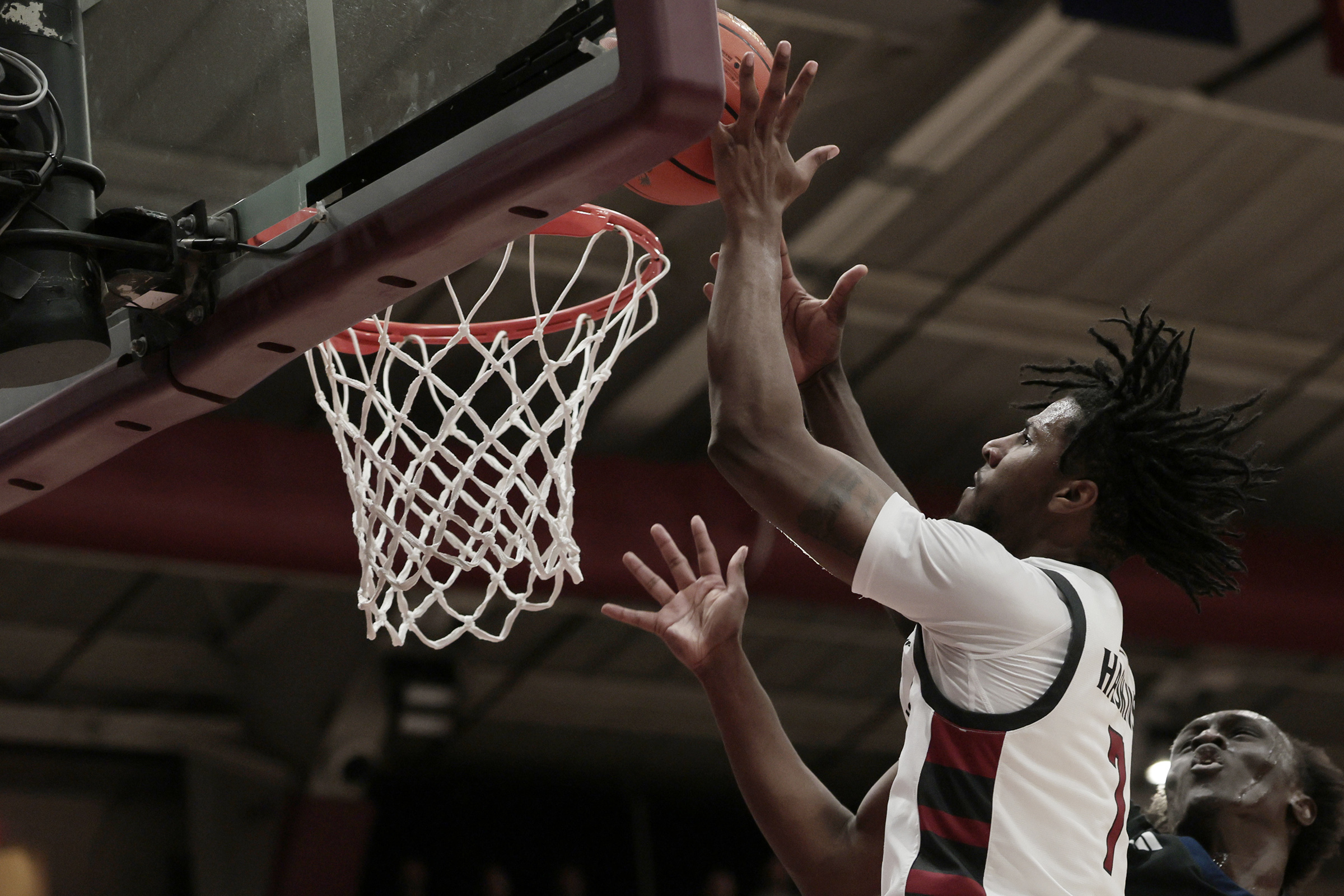
    Dasear Haskins was a key starter for the Hawks this season.

    St. Joseph’s

    • Deuce Jones (guard/La Salle), who led the Hawks in scoring during the first two months of the season, was dismissed from the team in December. (Transferring to Alabama-Birmingham.)
    • Dasear Haskins (guard/Camden High graduate) averaged 11.1 points and started for the Hawks as a redshirt sophomore. (Transferring to Ole Miss.)
    • Anthony Finkley (forward/Roman Catholic graduate), a junior, averaged 19 minutes in 35 games. (Transferring to La Salle.)
    • Kevin Kearney (forward) appeared in 14 games as a redshirt freshman. (Transferring to Manhattan.)
    • Jaden Smith (center) averaged 2.8 points and 1.8 rebounds in 9.1 minutes after transferring from Fordham. (Transferring to Ball State.)
    • Steven Solano (center), a redshirt freshman, played in eight games. (Transferring to Delaware.)
    • Al Amadou (center/Springside Chestnut Hill Academy graduate) transferred from Marquette and appeared in 11 games. (Transferring to Wisconsin-Milwaukee.)

    Penn

    • Ethan Roberts (forward) has one year of eligibility remaining — the Ivy League prohibits graduate students from playing intercollegiate athletics — and was the Quakers’ leading scorer (16.9 points per game). (Transferring to Notre Dame.)
    • Cam Thrower (guard), a senior who spent four years at Penn, averaged 17 minutes in 27 games. (Transferring to Elon.)
    • Dylan Williams (guard) played in seven of Penn’s first 10 games before the senior missed the rest of the season with an injury. (Transferring to Northwestern)
    • Michelangelo Oberti (center) appeared in 12 games. (Transferring to Boston University)
    • Alex Massung (guard), who averaged 5.6 minutes in 10 games played. (Transferring to Saint Anselm.)
    • Bradyn Foster (forward) saw action in Penn’s season opener.

    Drexel

    • Shane Blakeney (guard) was Drexel’s leading scorer, averaging 14.2 points in 33 games as a junior. (Transferring to South Carolina.)
    • Kevon Vanderhorst (guard) averaged 9.3 points and 2.9 assists while starting all 33 games for the Dragons. (Transferring to Iona.)
    • Villiam Garcia Adsten (guard), a junior, averaged 17.5 minutes in 32 games. (Transferring to Maine.)
    • Horace Simmons Jr. (forward/La Salle College High School graduate) appeared in 13 games.

    La Salle

    • Ashton Walker (guard) started 21 games and averaged 8.2 points as a freshman. (Transferring to Monmouth.)
    • Eric Acker (guard), a junior, appeared in 26 games, starting 10, and averaged 18.9 minutes. (Transferring to Northern Kentucky.)
    • Nas Hart (forward) played in 20 games as a freshman. (Transferring to Quinnipiac.)
    • Edwin Daniel (forward) played 31 games (14.5 minutes) and averaged nearly four points and 3.5 rebounds. (Transferring to Stephen F. Austin.)
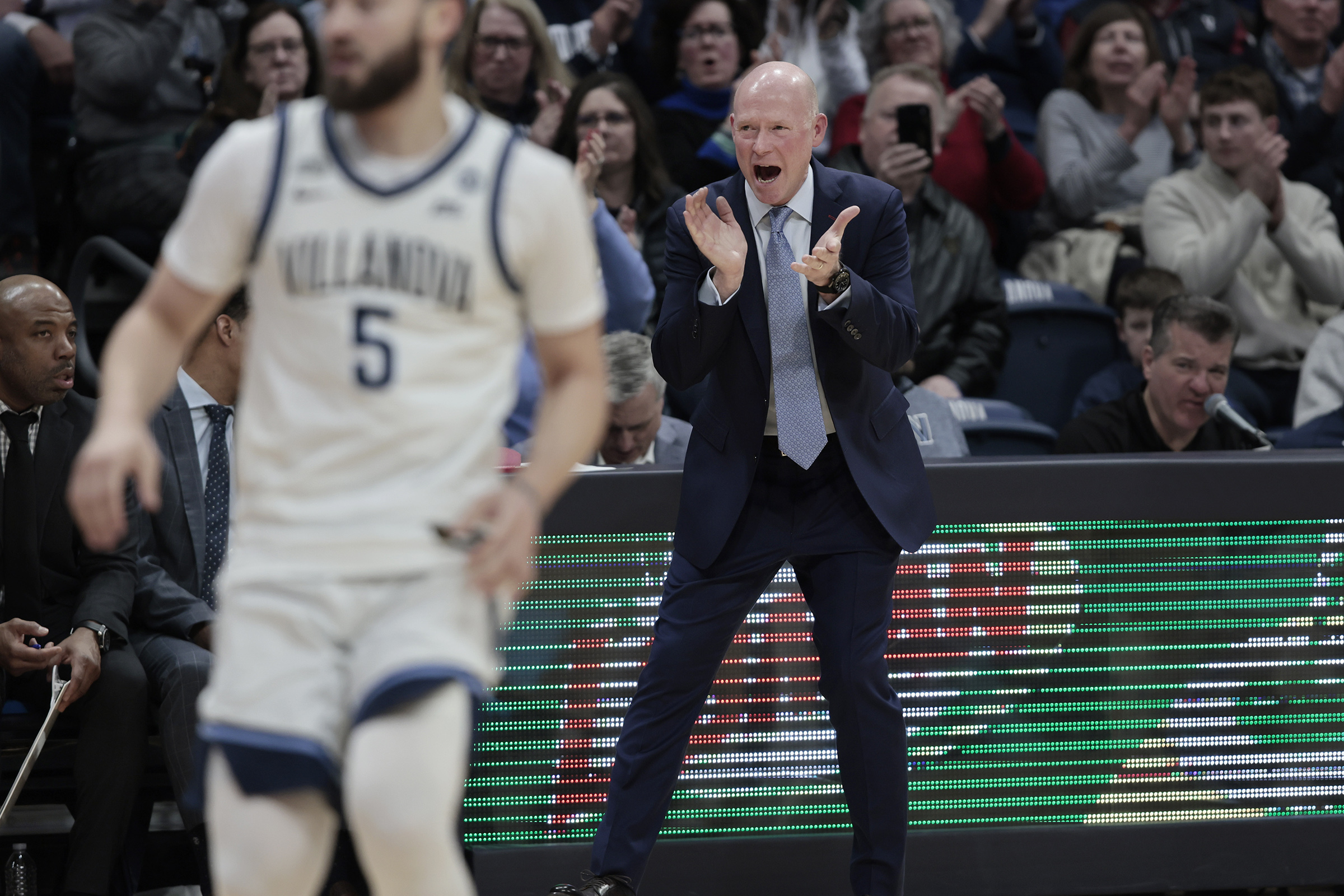
    Villanova coach Kevin Willard directs his team against Butler on Feb. 25.

    Big 5 portal additions

    These are the players who are transferring to Big 5 schools.

    Drexel

    • Panagiotis Pagonis (forward/New Orleans)
    • LaDricus Pittman (guard/LeMoyne-Owen College)
    • Adrian Petkovic (guard/Germany)

    La Salle

    • Trey Moss (guard/George Washington)
    • Vice Zanki (forward/Niagara)
    • Anthony Finkley (forward/St. Joe’s)
    • Jamison Lynam (guard/Arcadia)
    • Kam Burton (guard/Stephen F. Austin)
    • Devin Booker (guard/George Mason/Cristo Rey HS)
    • Eunique Rink (forward/Hampton)

    Penn

    • Sir Mohammed (guard/Notre Dame)

    St. Joe’s

    • Gavin Marrs (center/Oregon State)
    • Logan Carey (guard/Maine)
    • Don Flamer (forward/Elizabeth City State – Division II)
    • Sean Logan (center/Davidson)

    Temple

    • Dez White (guard/Oregon State)
    • Dallis Dillard (guard/Indiana University of Pennsylvania)
    • Baboucarr Njie (forward/UTSA)
    • Cam Scott (guard/South Carolina)
    • Jason Drake (guard/Indiana)
    • Jordan Marsh (guard/USC)
    • Sir Isaac Herron (forward/Louisiana Tech)

    Villanova

    Local portal entries

    In addition to the local players in the Big 5 mentioned above, here are some notable players from the Philly area who are on the move:

    • Kevair Kennedy, Merrimack to Wake Forest (guard/Father Judge)
    • Jalil Bethea, Alabama to Pittsburgh (guard/Archbishop Wood)
    • DJ Wagner, Arkansas to Maryland (guard/Camden)
    • Justin Moore, Loyola-Chicago to Hofstra (guard/Drexel, Archbishop Wood)
    • Budd Clark, Seton Hall to Ole Miss (guard/West Catholic)

    Where local 2026 recruits are going to college

    Here’s a look at where some of the area’s top boys’ basketball players are heading off to play in the fall.

    • Sammy Jackson, Virginia Commonwealth (small forward/Roman Catholic)
    • Ethan Johnston, Marquette (shooting guard/Hill School)
    • Xavier Blake, Hofstra (shooting guard/Phelps School)
    • Derrick Morton-Rivera, Temple (shooting guard/Father Judge)
    • Mani Sajid, Towson (shooting guard/Plymouth Whitemarsh)
    • Darnell Lloyd, Boston University (center/Perkiomen School)
    • RJ Smith, La Salle (guard/Roman Catholic)
    • Michael Pereira, Penn (center/Plymouth Whitemarsh)

    2026 recruits headed to Big 5 schools

    Villanova

    Penn

    • Isaiah Carroll (small forward/Blair Academy of Warren County)
    • Ethan Lin (point guard/Montgomery High of Somerset County)
    • Michael Pereira (center/Plymouth Whitemarsh)
    • Chase Geremia (guard/Newman School)
    • Finley Billy (forward/Bullis School)
    • Johnny Keenan (guard/St. Thomas More)

    Temple

    La Salle

    • RJ Smith (guard/Roman Catholic)
    • Breylon Webb (guard/Western Reserve Academy)

    Drexel

    • BJ Brown (guard/Sumter)
    • Tre Paulding (forward/Lee’s Summit North)

    St. Joe’s

    • BJ Ranson (guard/Mount St. Joseph)
    • Keoni Sacco (forward/Fork Union Military Academy)
  • From Philadelphia to Henley: Drexel men’s rowing takes on the world’s most prestigious regatta

    From Philadelphia to Henley: Drexel men’s rowing takes on the world’s most prestigious regatta

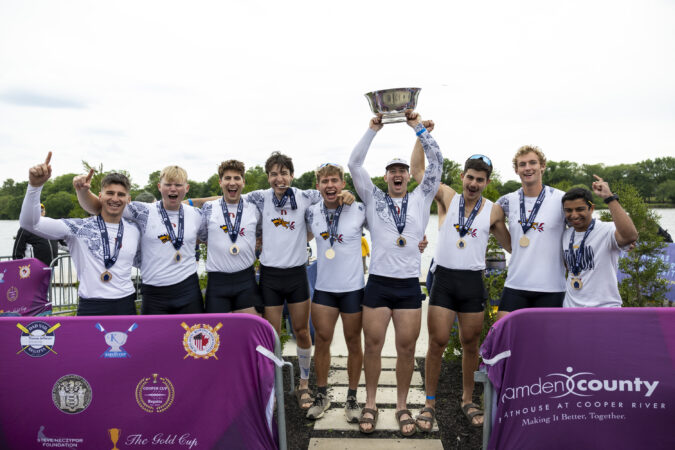
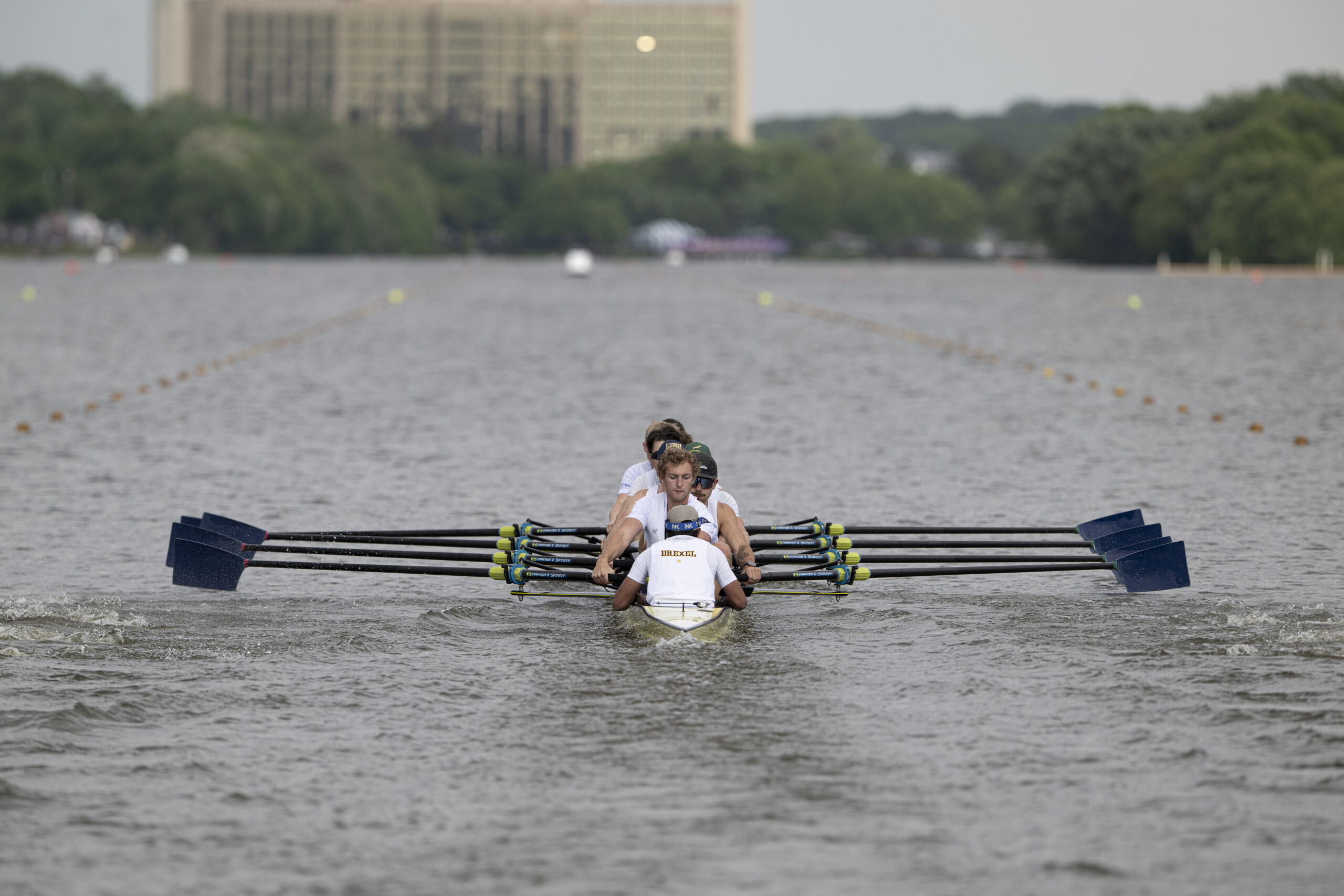
    Drexel men’s rowing has long dominated on the Schuylkill and Cooper Rivers, but now, it will have to navigate international waters.

    The Dragons are racing in the Henley Royal Regatta, which takes place on the River Thames in Henley-on-Thames, Oxfordshire, England. They will compete in time trials on Saturday before they begin racing on Wednesday in an event that continues through July 5.

    Drexel won its fifth consecutive points title at the Jefferson Dad Vail Regatta in May, with the varsity eight boat reclaiming first place for its fourth top finish in five years. Head coach Matt Weaver said throughout the season that each race has felt like preparation for the Henley Regatta. The Dragons also competed at the IRA National Championship at Gold River in California three weeks after the Dad Vail.

    “The Dad Vail was the deepest field ever this year, competitors from all over the country and even into Canada, so we feel like that prepared us really well,” Weaver said. “and then [since IRA we’ve] kind of been doing a training camp here in Philly with some good practices. We did some races against Vesper Boat Club, and we’re excited, and we’re going to feel good heading into Henley.”

    Making the trip to England for the Henley for the first time in four years, the men’s team has been working on fundraising and logistics since the 2022 trip ended.

    And since January, the team has been in collaboration with Drexel fashion design professors Liz Goldberg and Jaeyoon Jeong, along with three students, to design the blazers that the rowers will wear at the regatta.

    “We’re really proud to have these designed and made here at Drexel, and in Philadelphia, specifically,” Weaver said. “I think there’s probably never been a rowing blazer that’s been specifically designed and constructed in Philly brought over to Henley, so probably the first of its kind there.”

    With the program taking a trip overseas, Weaver said the rowers have focused on jet lag protocol ahead of their flight to make sure they are adjusted to the time zone.

    During their day off on Sunday, the Dragons plan to roam London, Weaver said, hoping to gain educational and cultural experiences, but the focus is always on rowing and their upcoming races.

    This is the first time Weaver is making the trip since becoming the head coach ahead of the 2023-24 season. He has, however, done it a few times as an assistant coach at the high school and college levels. He’s seen how the trip “pays huge dividends” for the following season, from connecting in races to the team living together in a shared house.

    And it offers a new experience in terms of race format.

    Unlike the other regattas the Dragons have participated in this season, Henley features a head-to-head, bracket-style format. Weaver described it as “a little bit like March Madness,” with the crew hoping for some upsets, and having to bring their best every day. The hope is that the Dragons make it to next weekend, but it all depends on their draw, Weaver said.

    Drexel had head-to-head races against Columbia, Cornell, and Navy this season, but did not have the bracket style that Henley uses. In the head-to-head races, the varsity eight won against Columbia and Navy but fell to Cornell.

    Drexel men’s rowing has three boats competing in the Henley Royal Regatta, which starts on Saturday with time trials.

    The varsity eight is one of three Drexel boats racing in England.

    The eight will be competing for the Temple Challenge Cup and face other college entries from around the world. The Dragons will also bring a coxed four to compete for the Prince Albert Cup, another college event. The third boat is a pair competing in an open event, which is the only pair event of the regatta and includes Olympians and high schoolers. The pairs race is for the Silver Goblets & Nickalls’ Challenge Cup.

    “It’s an opportunity for us to get out and race some of the best crews in the world, even outside the U.S., so for us, it’s definitely a unique experience,” Weaver said. “This will set us up really well for next season. We return like 49 of the 55 guys that were on our team. So, the guys that are making this trip are setting the tone for next year.”

  • Plymouth Whitemarsh’s Michael Pereira brings professor-like IQ and ‘Hulk mode’ to Penn hoops

    Plymouth Whitemarsh’s Michael Pereira brings professor-like IQ and ‘Hulk mode’ to Penn hoops

    Before games, Michael Pereira needs some time alone to visualize the moment.

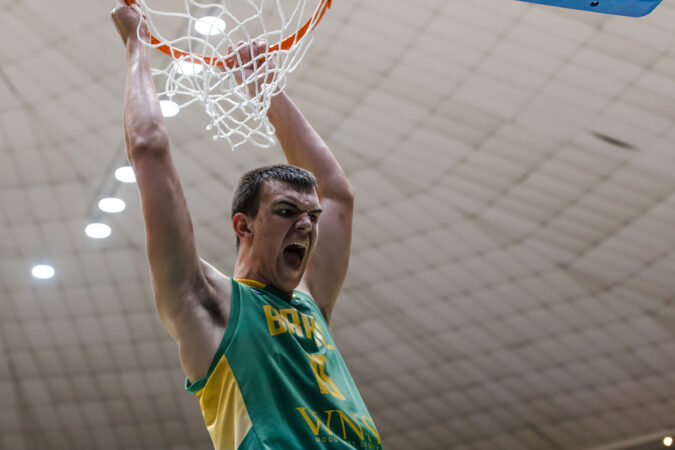
    “I’m thinking about what I’m going to do and also trying to feel the emotion that would come with doing that thing,” Pereira said. “I’ll think of me dunking, and then feel the jolt of energy you get after you dunk it.”

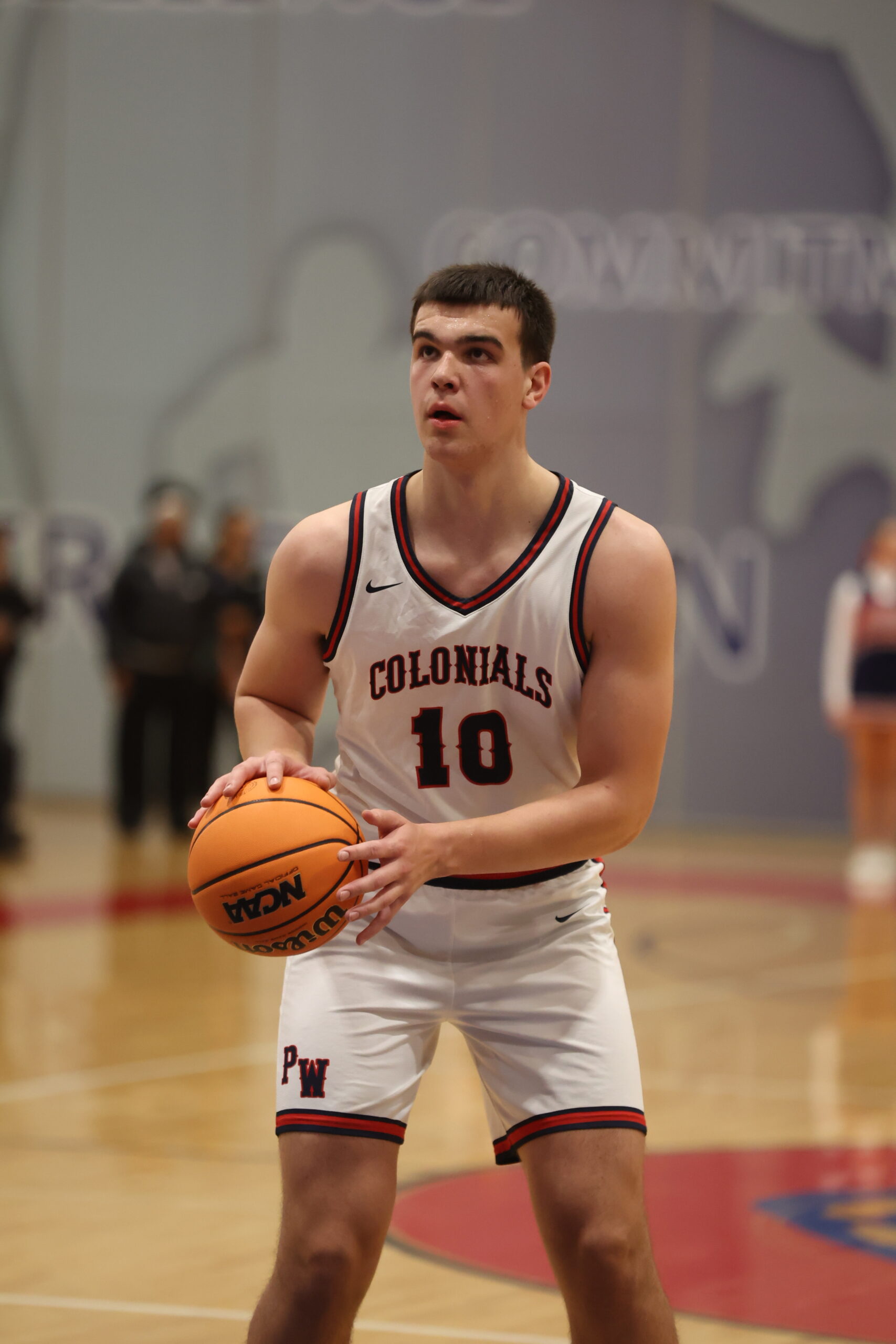
    It’s a practice he learned from his mother, and being a visionary through his four years at Plymouth Whitemarsh High School has taken the 6-foot-10 center pretty far. After starring for the Colonials, Pereira has been playing internationally for Brazil, where his father was born.

    In June, he missed his senior prom to help the country’s under-18 national team place third in the FIBA AmeriCup in Mexico. Come fall, Pereira will join Penn, where he’s a member of Fran McCaffery’s first recruiting class.

    Pereira is hoping to bring what he learned from international play to Penn.

    “[The AmeriCup] was a great learning opportunity, definitely,” Pereira said. “The pace of play, the physicality of the game was faster because everyone was higher level there compared to what I’m used to.”

    After falling to the United States, 102-56, in the semifinals, Brazil faced Puerto Rico in the third-place game on June 7. At halftime, Puerto Rico led by 19. It seemed as if Brazil would end AmeriCup play with back-to-back blowout losses. Then, Brazil came storming back and took the lead in the closing minutes of the fourth quarter. From there, it was able to hold on to claim an 83-77 victory. Pereira notched 4 points, 11 rebounds, and 2 blocks.

    Michael Pereira averaged 14.1 points, 7.6 rebounds, and 1.3 blocks this season with Plymouth Whitemarsh.

    Three days later, he was back at Plymouth Whitemarsh for his graduation.

    “He’s a serious student-athlete,” said Plymouth Whitemarsh coach Jim Donofrio. “Anyone that can get accepted into Wharton early admissions obviously has a good resumé academically. Michael is a very curious guy when it comes to learning; he is open-minded to learning anything, he has high standards to want to excel in anything he takes on.”

    ‘Something special’

    Pereira’s curiosity drove him into his coach’s Honors Philosophy & Ethics course. In class, Pereira did not shy away from offering his thoughts on whatever topic Donofrio covered that day. But before interjecting, Pereira would always stop and take in the concept.

    Donofrio said this quality has become rare in today’s “hyper impatient society.”

    However, it did not surprise the longtime coach that his player was a diligent and thoughtful student. Pereira showed the same characteristics in practice.

    “One thing in the coaching world that we should emphasize constantly is when I’m talking to you, I want pure eye contact,” Donofrio said. “Michael gives you nothing but eye contact, he almost looks through you. He takes the message and he absorbs it, and that’s mind training — for a young guy to have that kind of discipline to want to listen.”

    Pereira picked up the sport relatively late, in sixth grade. His parents had Chuck and Ronald Moore, two former Plymouth Whitemarsh players who went on to play collegiate basketball, train Pereira and his older brother Will. When Pereira entered eighth grade, Ronald was his coach.

    Then, in high school, Chuck oversaw Pereira’s development as Donofrio’s assistant.

    After McCaffery was hired by Penn, he brought in three assistants. One of them was Ronald Moore, who played under him at Siena. It was Ronald who put Pereira on his former coach’s radar.

    “Tons of respect for Jimmy [Donofrio] and the job that he’s done for so many years there,” McCaffery said. “Also aware of the quality of play in that conference, the teams they played against, and I felt very strongly that Mike would be ready when he got here.

    “When I saw him his junior year, I thought he had a chance. When I saw him his senior year, I knew he was going to be something special.”

    Pereira received offers to play at various high-level prep schools for his senior season, but he wanted to stay at Plymouth Whitemarsh. His decision paid off. Pereira averaged 14.1 points, 7.6 rebounds, and 1.3 blocks, while leading the Colonials to a PIAA District 1 Class 6A championship.

    “Something I liked about Plymouth Whitemarsh was that I could do more stuff, I could try stuff that was out of my comfort zone,” Pereira said. “Since it wasn’t like insanely good competition, I would get away with some stuff.

    “I’ve tried different footwork. I would shoot a three or two in a high school game. But just considering my role in international play, I wasn’t really doing any of that, I was more so just doing what got me on the team in the first place.”

    Improving as a Quaker

    The Colonials’ 2026 campaign ended with a loss to Father Judge in the PIAA Class 6A quarterfinals. Pereira, who logged a double-double, wanted to get his mind off the defeat.

    Coincidentally, Penn was playing in the Ivy League championship against Yale the next day.

    “I don’t want to be depressed after this loss. Let’s just drive up,” Pereira said.

    The game, played at Cornell, offered much more than a distraction. Penn junior forward TJ Power poured in 44 points to lead the Quakers to an 88-84 overtime victory and a ticket to the NCAA Tournament.

    “I still think it’s one of the best games I’ve ever watched in person,” Pereira said.

    Penn is expecting eight newcomers on the roster next season. Going into his second season at the helm, McCaffery has valued acquiring size and flexibility.

    He certainly has found that in Pereira.

    In order to take advantage of his frame, Pereira will need to continue his rapid progression as a player. McCaffery does not believe this will be an issue, noting he expects his new center to develop a “year-round obsession” with improvement under his watch.

    Meanwhile, Donofrio believes that Pereira’s game will translate to the next level if he can better balance his intellectual side.

    “He has to use his humble ability to listen like crazy and his curiosity,” Donofrio said. “All that stuff is really important, but he’s then going to have to learn how to be as aggressive as he can with that body without fouling out, but I almost want him to foul out a few times.”

    “I always said, ‘Mike, you’re like in professor mode, then there’s the Hulk mode, where you turn into the Hulk.’ If we can just get the professor and the Hulk merged together, you got a guy that might be making money at the game someday.”