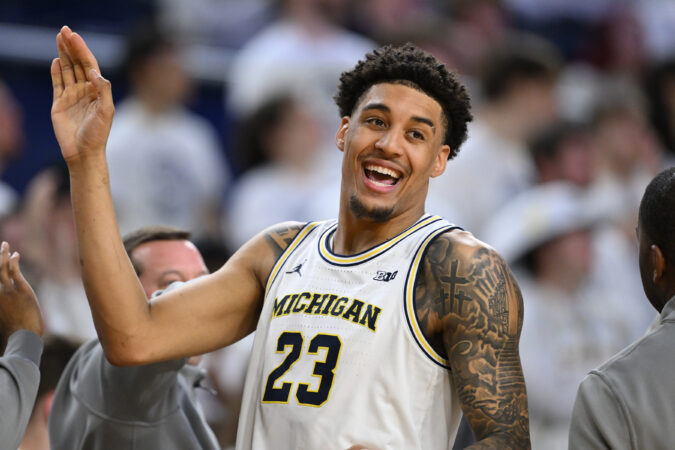
Yaxel Lendeborg went from playing one varsity season at Pennsauken High School to an NBA lottery pick.
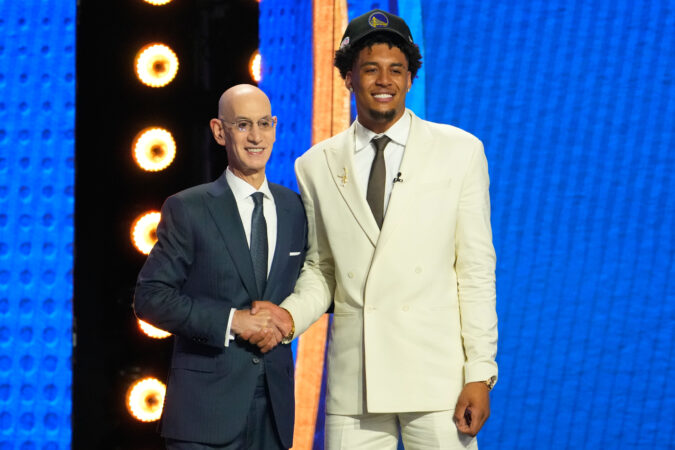
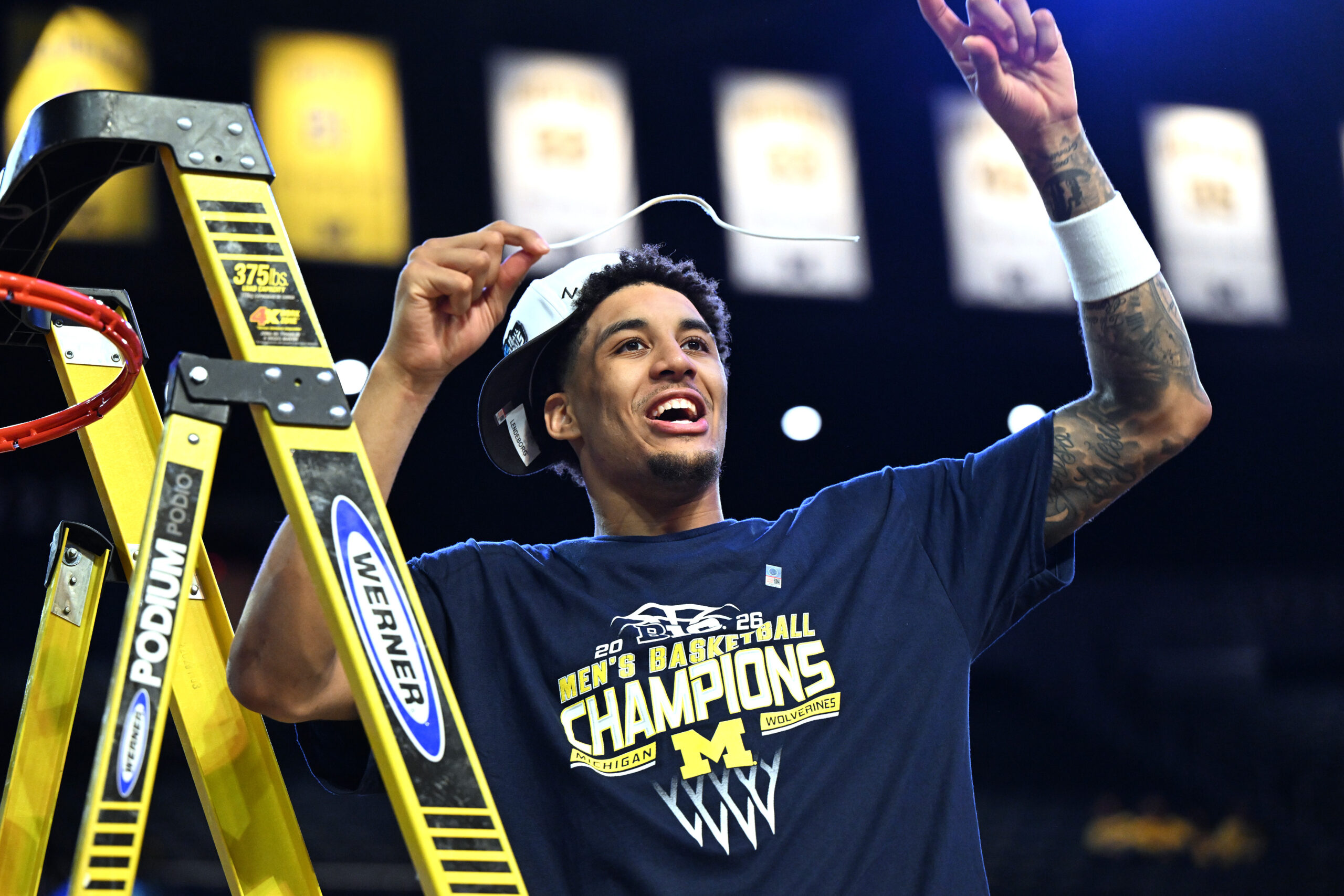
The 23-year-old forward, who was the Big Ten Player of the Year this season at national champion Michiganwas picked No. 11 by Golden State in the first round on Tuesday night.
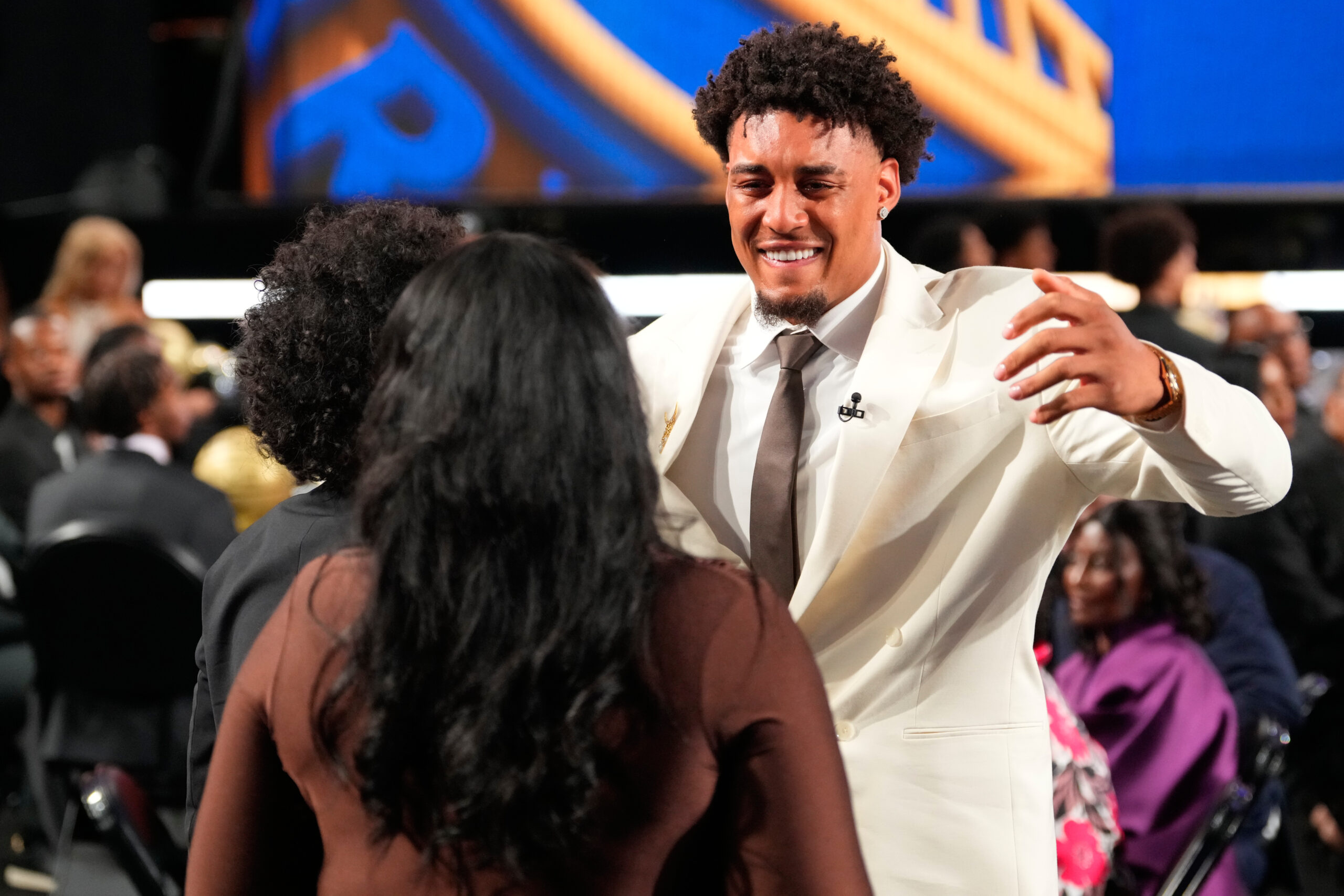
Expressing emotion when hearing his name called at the Barclays Center in Brooklyn, Lendeborg embraced his mother, Yissel, in tears.
He said on the ESPN telecast that “I don’t deserve to be here right now. I didn’t have the traditional path. … I can’t believe it.”
Lendeborg thought his basketball career was over in high school. He played in just 11 games his senior year after being academically ineligible to play for his sophomore and junior seasons.
That was until an opportunity arose — thanks to his mother — at the junior college level with Arizona Western College.
“That kid got here because of her,” Lendeborg said on the telecast. “She pushed a dream, forced me to go out there and become a man.”
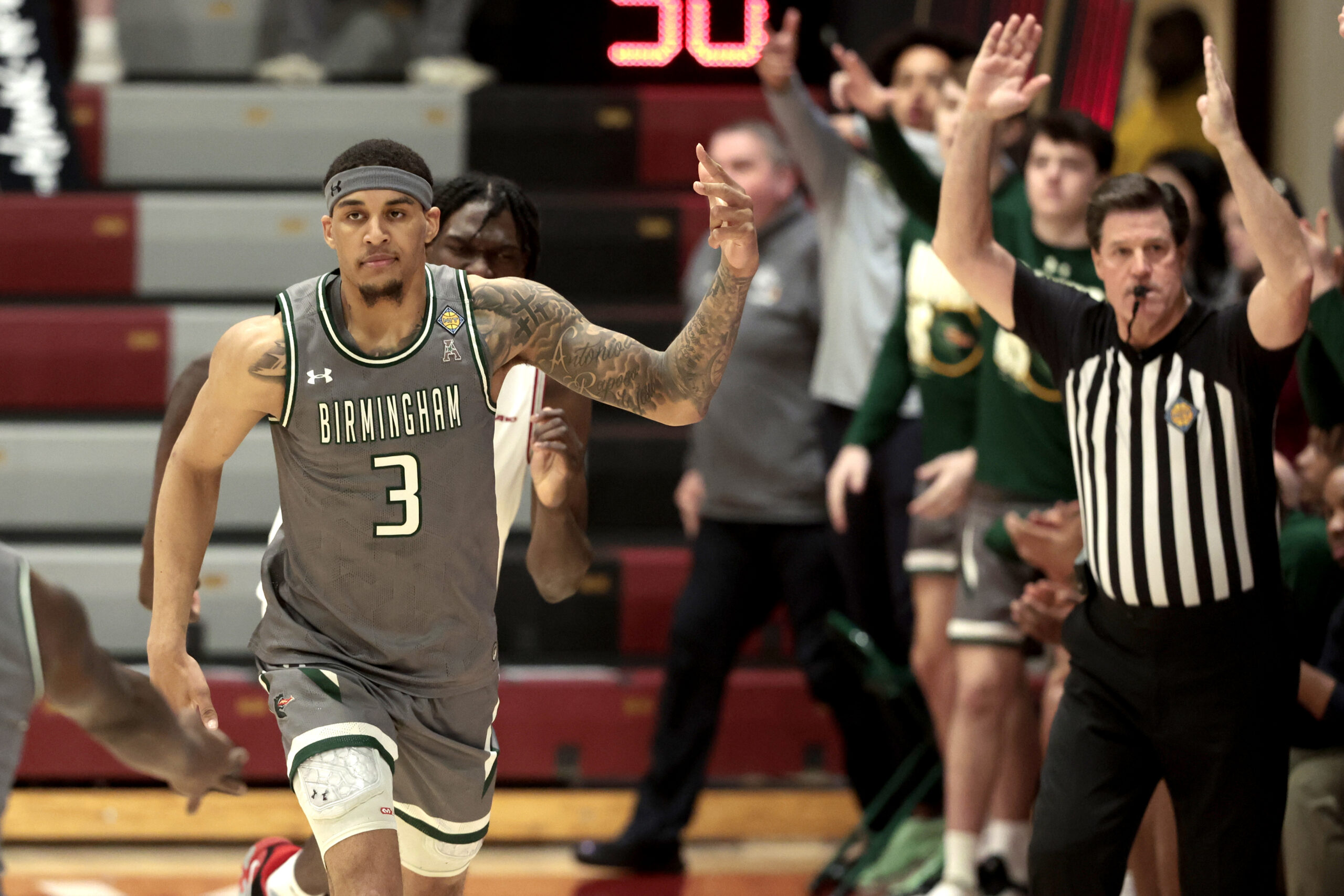
He spent three seasons at Arizona Western, including a COVID-19 season, where he emerged in his third year, averaging 17.2 points and 13 rebounds. In 2023, he transferred to Alabama-Birmingham and played two seasons with the Blazers.
Yaxel Lendeborg celebrates with his family after being selected by the Golden State Warriors.
In his final season at UAB, he averaged 17.7 points and 11.4 rebounds. He also was named the American Conference’s Defensive Player of the Year and an all-conference selection twice.
Lendeborg, who is 6-foot-9, graduated from UAB in 2025 and entered the transfer portal for his final year of eligibility, which brought him to Michigan. Lendeborg averaged 15.1 points and 6.8 rebounds in 40 games for the Wolverines.
Tuesday was the second time in Michigan program history that three players were drafted in the first round.
Center Aday Mara was picked by the Oklahoma City Thunder at No. 12 after forward Morez Johnson Jr. went ninth overall to the Mavericks, reuniting with his college coach, Dusty May, who on Tuesday was named Dallas’ head coach.
After he was selected, Lendeborg said his mother told him, “We did it. All the sacrifice we made, we finally accomplished it — you did it.”
He’ll join a Golden State team that finished 10th in the Western Conference, with a 37-45 record this season.
Eager to lessen the chaos of the transfer portal era and court fights with players trying to extend their careers, the NCAA approved a new eligibility model for Division I athletes on Tuesday that will allow five seasons of competition over a five-year period that begins with their full-time enrollment or the academic year following their 19th birthday, whichever occurs first.
The Division I Cabinet unanimously approved the change from the longstanding tenet of college sports that gave athletes five years to complete four seasons of competition with their eligibility clock starting at the time of enrollment, regardless of age.
The move will all but eliminate waivers or redshirt years for extended eligibility except for religious missions, maternity leave or active-duty military service. No longer will extensions be considered for athletes who are injured.
“While previous NCAA rules have served college sports well for a long time, we heard also loud and clear from NCAA members and student-athletes that eligibility rules should be easier to understand,” NCAA President Charlie Baker said.
The NCAA believes the age-based model will make rules easier to administer and help make roster management more predictable for coaches.
“I think this new rule is one of the most sensible things the NCAA has ever done, and it will absolutely eliminate the type of eligibility litigation that’s predominated lately,” said attorney Tom Mars, who represented Ole Miss quarterback Trinidad Chambliss in his successful quest for an additional year of eligibility in a case that went to the Mississippi Supreme Court.
Mars added, “Let me put it in bottom-line language: There’s no way somebody could file an eligibility case based on a medical waiver now with the new rule. Can’t be done. You can file it, I guess, but it will be immediately dismissed.”
The rules, which will become official when the Cabinet adjourns its meetings on Wednesday, are set to take effect this fall. Division I includes more than 350 schools, some 200,000 athletes and, with football and basketball leading the way, is by far the most lucrative of the three in the NCAA.
The five-in-five language also is included in Senate legislation intended to address numerous concerns across college sports and comes after a wave of lawsuits from athletes seeking to extend their college careers and ability to earn money through revenue sharing and name, image and likeness deals. Still to be seen is whether the new rules will withstand legal scrutiny alongside the existing challenges.
Heisman Trophy runner-up and Vanderbilt quarterback Diego Pavia remains the lead plaintiff in a lawsuit challenging an NCAA rule counting seasons spent at junior colleges against players’ Division I eligibility time. That case is slated for trial in February.
“I wouldn’t say that the rule change itself will slow lawsuits down,” said Sam Ehrlich, a Boise State assistant professor of legal studies in business and management who tracks litigation against the NCAA.
Ehrlich said athletes very well could continue to petition courts for extended eligibility based on antitrust arguments, but appellate courts recently have delivered wins for the NCAA by overturning preliminary injunctions in several cases.
The new eligibility model will affect all athletes who enroll in 2027-28. Currently enrolled athletes with eligibility after the 2025-26 academic year, and those who are incoming freshmen this fall, can apply the age-based model or continue under previous eligibility rules. It would be advantageous this year for some incoming freshman hockey players to use the traditional model if they are coming from the junior ranks and are 20, as is common in the sport.
For schools with current athletes who may be eligible for hardship waivers or extensions of eligibility under current rules, the D-I Cabinet indicated the deadline to submit requests to the NCAA is July 31. After that date, waivers would no longer be available.
Ryan Downton, the attorney for Pavia in his case against the NCAA that won him a sixth year of eligibility last season, said he was happy to see athletes allowed five seasons of competition. But he said it was likely that high school class of 2022 athletes who are now cut off from further competition will go to court.
“These athletes are still within their five-year eligibility window and spent their entire college careers competing against fifth- and sixth-year players due to the COVID waiver,” Downton wrote in an email to The Associated Press. “We hope the courts will correct the unfairness of the NCAA’s ruling and allow class of 2022 players to play their fifth season in 2026-27.”
Ramogi Huma, executive director of the National College Players Association, wrote in a text to the AP that he had not seen the final language that was adopted but that the rule’s “general structure that has been discussed is within reason.”
“But it’s important for athletes to have an opportunity to seek hardship waivers,” he wrote.
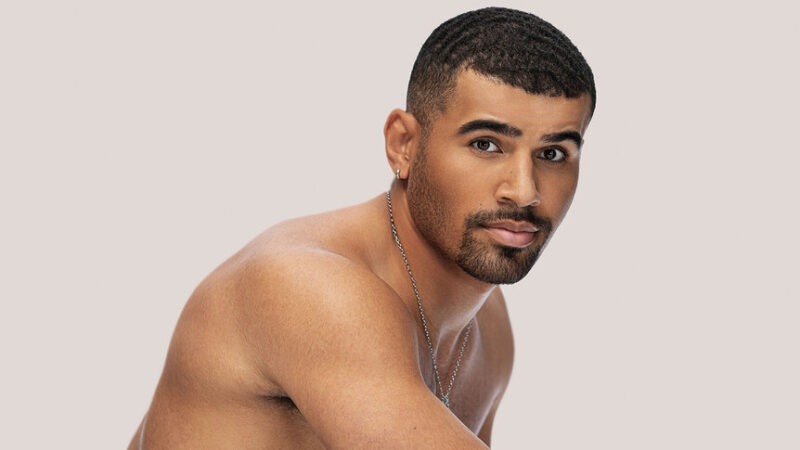
Sporting orange swim trunks and not much else, Gunter was one of 12 new men who entered the show on episode 18 of Love Island USA.
It’s all part of Casa Amor, the mid-season twist where OG contestants split off into two villas and are forced to explore new connections. Gunter, 25, was one of a dozen men and six women who’ve been introduced to the show in the last two nights.
He was also one of the men chosen to stay: Those 12 men were quickly cut to six in the same episode.
Proving Philly is the center of the universe — even on a remote Fijian island and even at Casa Amor, Gunter was quick to tell North Philly native Melanie Moreno that he went to Drexel.
In a prior episode, Moreno, 24, told her most consistent connection, Sincere Rhea — who’s from Cape May — that her dream first date for them would be to walk through Penn’s Landing.
But with Rhea away at the other villa with new arm candy and the OG women forced to explore connections with their own new crop of islanders, Gunter stood out.
He chose to kiss both Moreno and Jen Terry as part of a challenge and later won the women over by talking about family life and his cooking chops.
“I want my wife sipping red wine on the countertop while I’m cooking,” he said. “I love to chef. Y’all will never go hungry with me around.”
While attending college in Philly, where he majored in sports studies, Gunter achieved virality for his likeness to Hurts.
Two years ago, in a TikTok reshared by accounts including ESPN, Gunter’s then-girlfriend (now-former Division I golfer and prominent sports broadcaster and social media personality Emma Carpenter) said he’d get mistaken for Hurts “everywhere we go.”
Gunter told The Inquirer at the time that the comparisons started coming around his sophomore year — along with stares and photo requests — but he welcomed the attention for the most part.
“I think it’s funny. And I mean, he’s not a bad guy to be compared to,” he said. “It’s an awesome comparison to be mistaken for that guy.”
Even Drexel’s Lacrosse program got in on the fun, posting on Instagram in 2023: “All we’re saying is that we’ve never seen @_ronniegunter and @jalenhurts together.”
Born and raised in Minnesota before heading Northeast for school, Gunter lives in New York these days, where he works as a program director for the nonprofit Harlem Lacrosse.
So far, no one on Love Island has made any comments about Gunter’s resemblance to Hurts. But there’s a lot more island time to play out.
On Tuesday night, Yaxel Lendeborg will likely be a first-round pick in the NBA draft.
But the Pennsauken High graduate’s basketball career nearly ended after playing just 11 varsity games. If not for his mom, Yissel, Lendeborg might not ever have played Division I basketball, much less become a lottery pick.
“Seeing him, and seeing his mother, and how much she has [meant] to him, and how much work she’s done to be able to help guide him mentally, and obviously on the court, it’s been the honor of my coaching career,” Pennsauken coach Harrison Carsillo said.
Lendeborg wasn’t academically eligible to play basketball for a large portion of high school. He played on Pennsauken’s freshman team, but was held out for his sophomore and junior seasons, and most of senior year. He trained in the summer with coaches and friends from Pennsauken, but watched from the sidelines during the school year.
In a Players’ Tribune article, Lendeborg said that the turning point for him was during his senior year. One night, after staying out late with his friends playing video games, his mom confronted him and told him that he needed to focus to even graduate from Pennsauken, much less play basketball.
“This is no joke right now,” Lendeborg said in the article. “Nobody is smiling here. You have your mom up in this minivan crying her eyes out because you don’t know how to be a good son. Your own mom! Who does everything for you. Works two jobs. Shows you love no matter what. And this is how you’re being?!?!?!”
Yaxel Lendeborg averaged 15.1 points and 6.8 rebounds in 40 games for Michigan last season.
During that final year, Lendeborg improved his grades enough to play the final 11 games of the high school season, even competing in the NJSIAA playoffs. But he thought his basketball career was over, until his mom set him up to attend junior college at Arizona Western College. Lendeborg wrote that she planned the going-away party without even telling him he was going, because she knew he needed that push.
From there, Lendeborg had one of the most improbable rises to the draft, transferring to Alabama-Birmingham in 2023 and then Michigan before last season, where he won Big Ten Player of the Year and an NCAA title. Lendeborg, a 6-foot-9 forward, averaged 15.1 points and 6.8 rebounds in 40 games for the Wolverines.
Lendeborg was always talented, Carsillo said. His biggest problem was not believing in himself. Carsillo and Lendeborg’s mom forced him to pick up the phone after Division I schools started calling him about transferring, because he wasn’t sure if that was the right fit for him.
“He didn’t answer the phone, and I said to him, ‘If you don’t answer that phone call, I’m going to take your phone, and I’m going to smash it, or rip your sneakers.’ I [was] going to be so upset, because he didn’t believe in himself that he could actually do what we knew he could do, if he put his mind to it,” Carsillo said.
“It was a really funny moment. I obviously wasn’t going to rip his sneakers or smash his phone, but I was very upset, because it was almost just a mental thing going into it, because he had so much potential that he didn’t even see himself.”
After two years at UAB, Lendeborg was a fringe first-round prospect. He could have ended his college career there, but instead spent another year in college to develop further, and prove to himself and to NBA draft scouts that he could succeed at that highest level. Carsillo said that Lendeborg’s year at Michigan has him more confident and aware of his sky-high potential.
But what’s stood out the most to Carsillo over the years is Lendeborg’s selflessness, on and off the court. In the Final Four, Lendeborg suffered an MCL and ankle sprain. Some advised him not to play to protect his draft stock, but Lendeborg insisted on helping his teammates see it through and vowed, “I’m playing no matter what.”
At halftime of the national championship game on April 6, he said he felt “awful,” but still gritted out a 13-point, 36-minute performance in the 69-63 win over UConn.
Yaxel Lendeborg spent two seasons at UAB after attending Arizona Western College.
“That’s him,” Carsillo said. “He could have easily just said, ‘No, I’m good.’ He knows he’s going to get drafted. He knows he’s changed his family’s life. It’s amazing. That’s exactly who he is, 100%, and he was like that at Pennsauken, just much lower stakes.”
Lendeborg even has a chance to reunite with his college coach, Dusty May, who reportedly accepted the Dallas Mavericks’ head coaching job on Monday. The Mavericks hold the No. 9 pick in the draft, slightly above where Lendeborg has been projected, but Lendeborg joked Monday that he’s “going to tell him he better pick me up. If he doesn’t, I’m going to be mad. I might block him.”
The forward has grown up a lot since high school. He’s one of the oldest prospects in the draft, but he’s played only about six seasons of organized basketball. He grew up playing baseball, and told ESPN that he first learned how to play basketball through the NBA 2K video game.
“He still has so much room to grow, and he’s still learning how to become a better basketball player; it’s remarkable,” Carsillo said. “He has a little bit of self doubt, but not much anymore. This whole process with the NBA and Michigan turned his eye and turned his mindset around to be able to prove to himself, like, ‘I can do what my mother has always told me I could do.’”
Lendeborg’s mom can’t attend as many games as she used to. She’s currently nearing the end of her treatment cycle for appendix cancer, which she initially kept hidden from Lendeborg to keep him focused on his season at Michigan. But planned to be in Brooklyn on Tuesday to watch her son’s NBA journey begin — a journey he’d never have come close to if not for her pushing him every step of the way.
Rumors of Villanova’s interest in 7-foot-3 Italian center Luigi Suigo already were swirling when assistant coach Ricky Harris posted a photo last month on his Instagram page from Milan, not far from Suigo’s hometown of Tradate. Villanova was trying to keep its pursuit of Suigo under the radar, but Harris’s post only fueled the speculation.
Villanova is visiting Suigo in Milan! The staff is all-in on adding the future NBA center! Kevin Willard really wants the cherry on top for this roster rebuild!
Let’s play a little game of Two Truths and a Lie.
No, Villanova didn’t send Harris to Milan to visit its next center. The other things are true, though. And the lie is only a partial one. It wasn’t Harris visiting Suigo, it was Willard. Harris was just in Italy enjoying an offseason vacation, with the bulk of the roster overhaul already done. But it wasn’t Milan where Willard went, it was Belgrade, Serbia, where Suigo played this past season with Mega Basket of the Adriatic League.
“Belgrade was beautiful,” Willard said Monday, nine days after Suigo announced he was leaving the NBA draft and signing with Villanova. “Food was great, people were awesome.”
It was a short business trip, less than 48 hours. Willard had spent the past month reassembling the Wildcats’ roster. Only two players who dressed in a game from last season’s team, Tyler Perkins and Matt Hodge, returned. The staff surrounded them with plenty of talent, but still needed a true center to round out the roster. Any starting-caliber center would have been fine. The offseason had largely been a success even after losing a few top players like Acaden Lewis and Bryce Lindsay to the transfer portal.
“We could have gone in a couple directions,” Willard said of the center spot. “For us, it was like, all right, how are we trying to win a championship here?”
On film, Suigo looked the part of a player who could take the roster to the next level. The size component is obvious. But Suigo is a “really skilled center that can shoot it, that can pass at a high level,” Willard said. “I think one of his best attributes is that he’s extremely unselfish. He’s a great passer.”
Willard wanted more than film studying, though, so he got on a plane and flew halfway across the world to watch Suigo practice in person, to meet with his coaches, to sit down with him for dinner.
“Sometimes you can watch clips and you can get fooled,” Willard said. “When I went over there and talked to him in person, met him in person, and saw him play, it was like, yeah, this kid is the real deal.
“He’s very professional. He knows what he wants. He knows how he wants to play. He knows where he needs to get better at.”
In 26 games with Mega Basket, Suigo, 19, posted averages of 7.9 points, 5.1 rebounds, and 1 block in 18.8 minutes. He shot 64.9% on his 111 two-point shots, 27.1% on 48 three-point attempts, and 64.7% on 34 free throws.
Draft evaluators had Suigo projected near the end of the first round or early in the second round. Luring a player out of that range surely was costly for Villanova. Willard declined to discuss financials with The Inquirer. But the region’s rich Italian-American culture and the timing of watching the Knicks on their championship run with Jalen Brunson, Mikal Bridges, and Josh Hart were added bonuses.
Plus, Suigo was open about wanting to be a top-20 pick throughout the draft process.
“I think he maybe would have gotten drafted late in the first round, but he doesn’t want that,” Willard said. “He wants to make sure when he gets drafted he’s going to play. The big thing is I think he needs to get Americanized a little bit, to American basketball. I think that’s why college will be really good for him. Get in shape a little bit, just kind of get used to American basketball. I think once he does, the sky is the limit for him.”
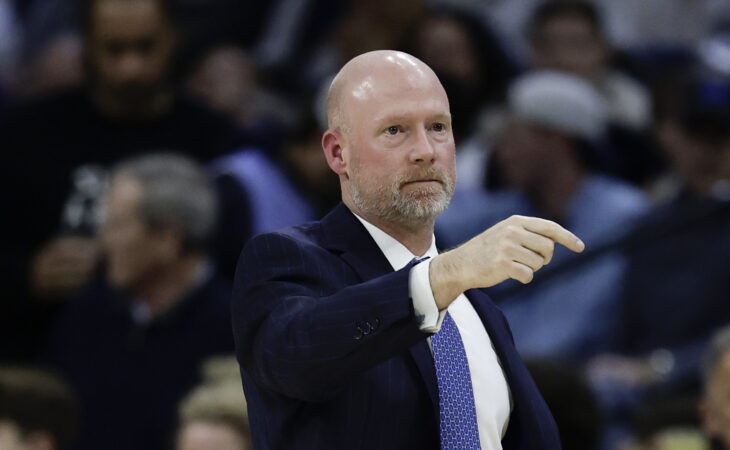
“We wanted to make sure that we just didn’t get manhandled the way we got manhandled last year against the top teams,” Willard said.
He was talking about national champion Michigan and the two top Big East teams, Connecticut and St. John’s. Willard’s first season at Villanova was a success. A streak of three consecutive missed NCAA Tournaments was stopped, though Villanova lost as a No. 8 seed in the first round because it lacked experience and physicality against a veteran Utah State team.
Tyler Perkins (left) and Matt Hodge (right) will be key contributors again for the Wildcats in 2026-27.
The first additions of the offseason aimed to address that. Villanova signed Oregon’s Kwame Evans Jr. and Ohio State’s Devin Royal. Both players are incoming seniors who averaged more than 13 points in the Big Ten last season. Evans is 6-10 and Royal is 6-6 but is a physical player who averaged seven rebounds in 2024-25 and nearly six last season.
With those two and Perkins and Hodge in the fold, the attention turned to the backcourt, specifically to the point guard spot. Willard said he watched more film to fill this spot than any other position during the offseason. Perhaps, then, he could ace a quiz on Illinois-Chicago hoops. Elijah Crawford scored 14 points and dished out five assists in 26 minutes per game last season. More importantly, his decision-making out of pick-and-roll stood out, as did his 75.3% rate from the free-throw line.
Crawford is the likely starting point guard next to Perkins, with Royal, Evans, and Suigo rounding out the starting five.
Backcourt depth was a problem at times last season. On paper, it won’t be in 2026-27. The Wildcats added Cornell shooting guard Jake Fiegen, who Willard said “analytically, was probably one of the highest-rated guys.” Fiegen shot 41.4% from three-point range on 5.5 attempts per game. He thrived in catch-and-shoot situations, of which he will have plenty with this Villanova roster.
Then there’s St. Bonaventure transfer Buddy Simmons. Willard said the staff was actually watching another Atlantic 10 player when they became enamored with Simmons, a 5-11 guard who scored 16.4 points per game and shot 42.5% from deep. While Fiegen is more of a standstill shooter, Simmons produces off the dribble.
Incoming freshman guard Adam Oumiddoch also is expected to contribute right away. He’ll add to a versatile bench that also includes Hodge, who Willard said is tracking toward being ready for the beginning of the season after undergoing surgery to repair a torn ACL in March.
Evans could play some minutes at center, as could returning redshirt freshman Nico Onyekwere.
Villanova hit the offseason trying to build a roster to compete with Dan Hurley’s UConn program.
“We can play small or we can play really big,” Willard said. “That was my goal. Last year we were kind of hampered in how we could play. This year I think we have so much more flexibility.”
Signing a 7-3 center helps.
But Suigo’s signing should have done more than raise the expectations for the 2026-27 season. Sure, the Wildcats may get some preseason top 25 love. But they also showed they can compete financially with other programs.
“From Father Peter to the board to our alumni and our donors, everyone understands how important Villanova basketball is,” Willard said. “We will never be the highest spender. That’s not in our DNA and it’s not what it is. But I will say that the university understands and financially has been extremely supportive of this program and the women’s program.”
About those expectations …
“I’m the head coach at Villanova,” Willard said. “The expectations are huge every year. I knew that when I took this job. I knew that when I took the Maryland job. It’s just part of the job. It’s what makes this job so great. You want those expectations.”
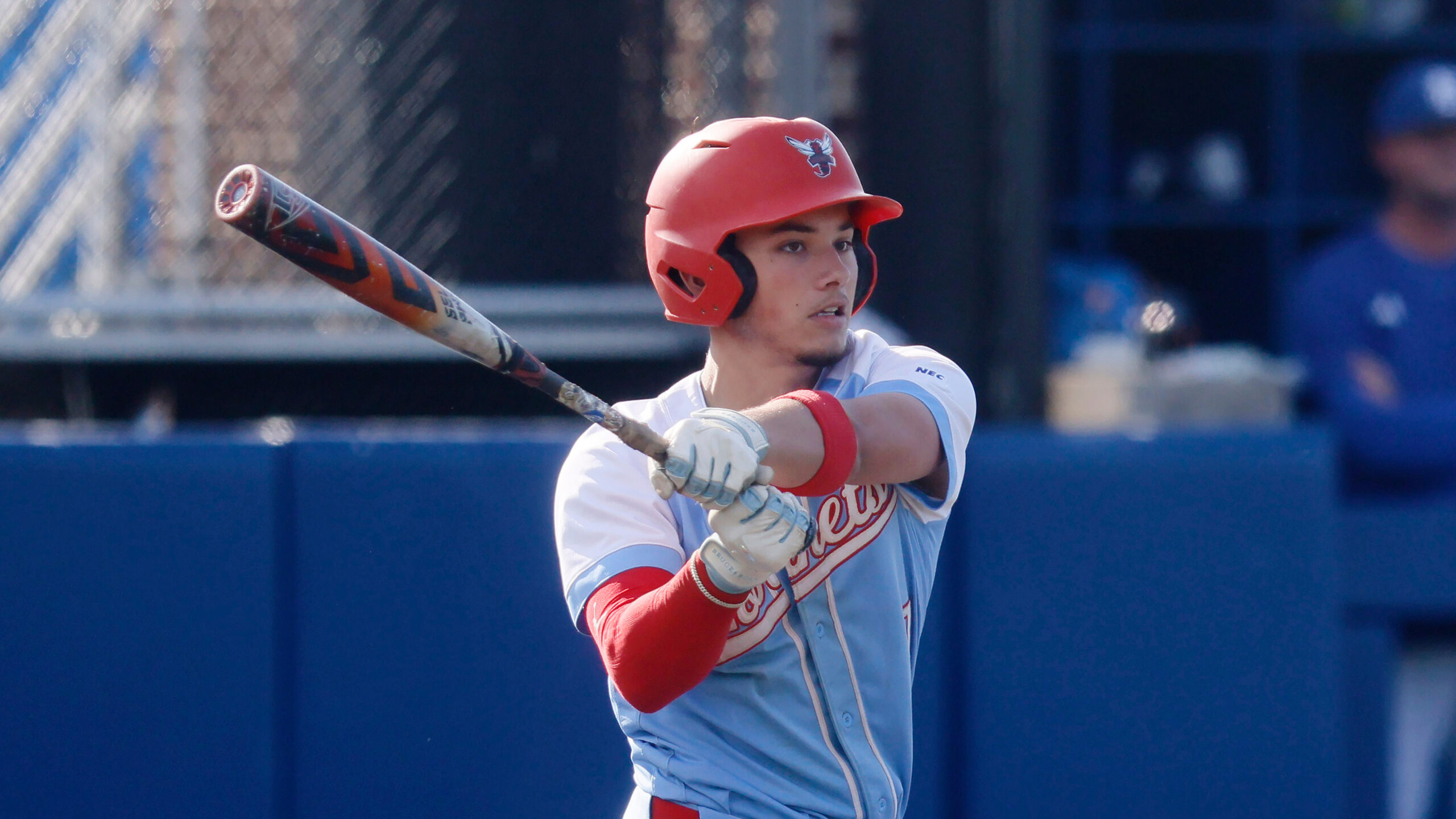
Santino Harwood was set on playing baseball at a Division I school but his chances were dimming when he started his senior year at Roman Catholic without a college offer. He had chances to play at Division II and Division III schools but the infielder from Mayfair always dreamed of Division I.
“Kids these days want to hear that they’re a D-I player and going to a D-I institution,” said his father, Edgar. “I said, ‘That really does not matter.’ You need to go where you fit in and where you like the program. They feel like they’re disfigured if they’re D-II or D-III and they don’t have that status symbol next to them.”
Santino played like a Division I player in high school, but he was just 5-foot-11, causing college coaches to overlook the shortstop. Finally, an assistant at Delaware State noticed. They didn’t have a scholarship for him but told him he could walk on. Deal, he said. And then the coach made sure Harwood knew that the school was a historically Black college and university.
“He said, ‘You have to understand that you’re going to be a minority’,” said Edgar, as his son is white.
Santino didn’t mind. He just wanted a chance. He was in. The shortstop hit .296 this season, played crisp defense, and stole bases with ease for Delaware State, which reports its student body as 76% Black. Harwood grew up playing baseball with kids of various races — “Being from Philly, my friend group is mostly Black,” he said — so being a white kid at an HBCU was nothing new.
“It’s a great environment to be around,” Santino said of Delaware State. “It’s a great energy. They make you feel comfortable … I feel like baseball has the most diverse community. We have a lot of Hispanic, Black kids, white kids. Everyone comes together and is here for the same reason. That’s why we all get along.”
And next month, he will represent Delaware State at Citizens Bank Park days before the All-Star Game when he plays in the HBCU Swingman Classic on July 10.
The event was developed by Hall of Famer Ken Griffey Jr. to give players from HBCU schools — overlooked guys like Harwood — a chance to showcase their skills. Jimmy Rollins will manage a team, Griffey will be there, and Harwood will get his chance to star in a big-league park.
“Our president Dr. [Tony] Allen, his goal is to create the most diverse HBCU at Delaware State University,” baseball coach Pedro Swann said. “If you walk around campus, you’ll see all types of shade. There’s a mixture of everything. Plus, Santino has a little drip and a little swag to him. So he fits right in and has no problem blending in with the HBCU culture. That’s what I love about him. He’s friends with everyone.”
Santino Harwood (second from right) and his brother, Edgar; father, Edgar, and mom, Michelle after a game at New Foundations Charter School.
The Santino Rule
The 8- and 9-year-olds from Holy Terrors were called to the stage at the end-of-season banquet years ago when a table in the catering hall started to boo. Edgar looked around and saw it was another team from Northeast Philly that played in the age group above his son’s team. Fine, he thought. We’ll play up in age and beat them.
Holy Terrors — a youth organization at Brous and Princeton Avenues — won the Department of Recreation title against 11- and 12-year-olds despite 8-year-old Santino batting leadoff. Opposing teams were livid.
“I said, ‘Why are you mad? He’s 8 years old,’” Edgar said. “‘He’s my leadoff hitter. Just strike him out if you can. But that’s probably not going to happen.’”
A year later, Edgar said the league instituted a new rule that banned players from playing up in age.
“The Santino Rule,” Edgar said. “The pamphlet came out, and, boy, they put that sucker in boldface lettering. It was really weird. For me, playing up is a bonus if you can do it and you can hold your water.”
Edgar soon started a travel team called Falcons Baseball that practiced for three to four hours at fields in the Northeast. Even that wasn’t enough for his son, as the coach often would cap practice by driving his car up to the cage and turning on the headlights so Santino could get more swings after dark.
“There was always that want and desire,” Edgar said.
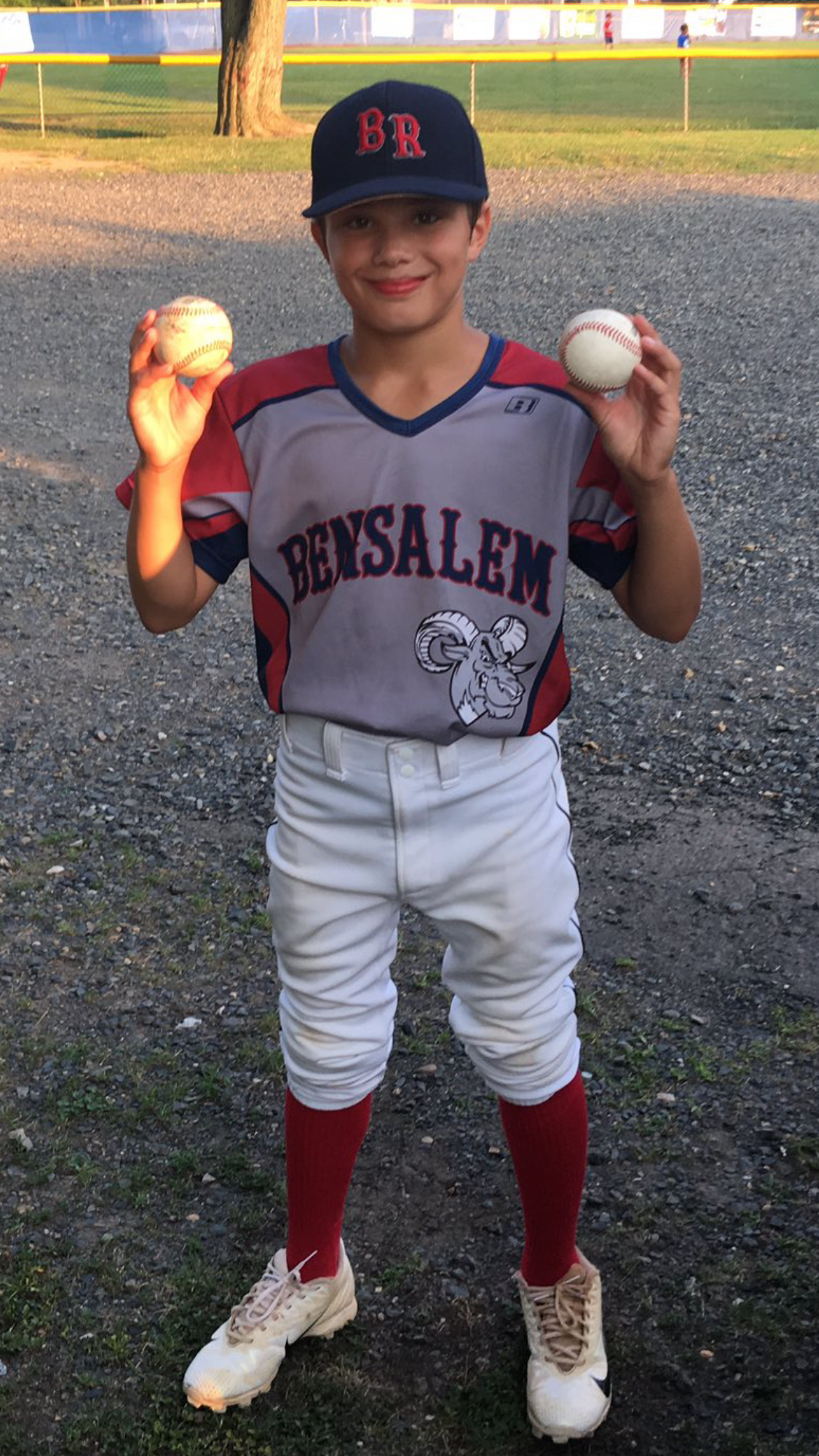
Santino Harwood after a game with the Bensalem Ramblers.
Those Falcons teams were diverse — “Black, white, Hispanic,” Edgar said — and the players became more than teammates. They hung out at the Harwoods’ home, barbecued, and bonded like “brothers” over their love of baseball.
“You have a melting pot of identities in the United States now,” Edgar said. “You have to get an understanding and learn to love one another and understand each other. Just like brothers, you’re going to bump heads. Everyone bumps heads whether you’re at work or on the baseball field or with your neighbor.
“But you have to learn these things now that you have to understand each other. You have to have a respect for different attitudes, different thought processes, different identities, cultural or national.”
Santino Harwood went to Delaware State without a scholarship.
Earning his way
The Delaware State baseball team is full of players like Santino, who were overlooked by other programs before finding their way to the Hornets. The roster is racially diverse, just like that Falcons team.
“Last season, we had a guy from Idaho,” Swann said. “You pair him with someone from like Teaneck, N.J., and it’s polar opposites. But the guys got along. When you get out on that field, it’s not about what color you are. It’s about how you catch and throw the ball.”
Santino went to Delaware State without a scholarship, but his dad told him not to worry.
“You need to be prepared for the opportunities that can get you to that scholarship,” Edgar said. “Whether or not you think someone in front of you doesn’t deserve it, that’s irrelevant. When you have your opportunities, can you showcase to the point where you get that same bonus or package?”
He hit .296 as a freshman in 2025, and his coach called him into the office after the season. He was no longer a walk-on. Harwood called home and told his parents. They were thrilled.
He stole 15 bases last season as a sophomore with a .413 on-base percentage in 44 games. Swann told him early in the season that he was building a case to be picked in the Swingman game.
“I said, ‘Man, that would be cool. You’d get to play in your hometown. That would be awesome,’” Swann said. “Then he ended up getting selected. He took the lead role in the infield this season and was our quarterback out there. He never backed down from any battle. He’s a Philly kid, so he has that fighting spirit and chip on his shoulder. I love the way he plays the game.”
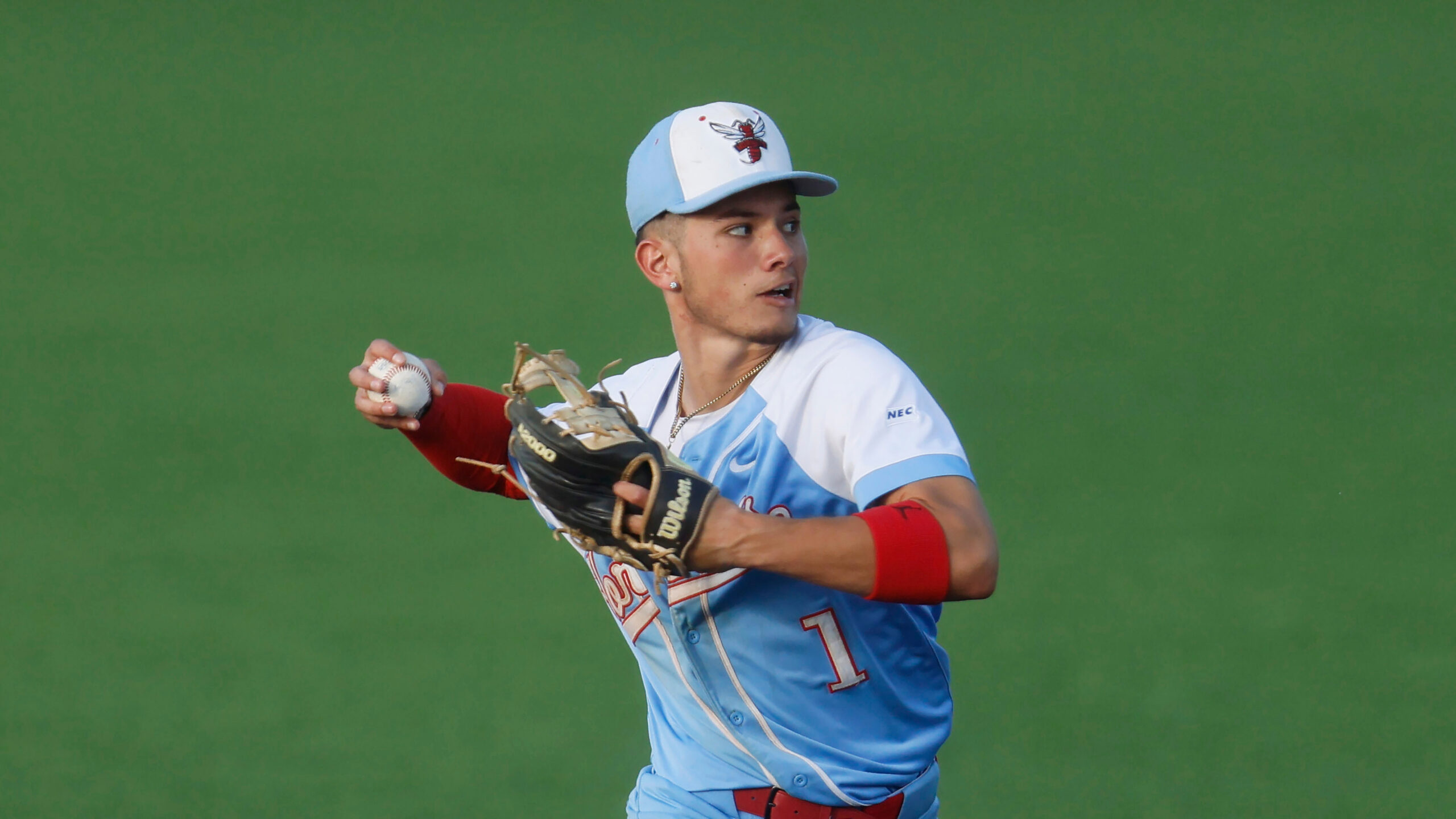
Delaware State shortstop Santino Harwood had a .409 on-base percentage and 15 stolen bases in 45 games last season.
Santino grew up an Atlanta Braves fan — his dad is from Georgia — but still is honored to play at Citizens Bank Park.
“This is a once-in-a-lifetime experience,” he said. “It’s a privilege to play there. I feel like that’s every kid’s dream. For me to get a taste of it in the Swingman is nothing more than a blessing.”
Santino dreamed of playing Division I baseball but had to wait for his opportunity. Even then, he had to earn a scholarship. First, his coach had to make sure he would be comfortable. Santino didn’t think twice about it. The HBCU, he said, has felt like home. And he’ll represent it next month on a big stage.
“I’m so happy to see him get an opportunity that he’s really worked so hard for,” Edgar said. “No one knows the hours and the days that we’ve been out there trying to get him better at this sport. And it doesn’t really matter if anyone knows or not, right? It’s an opportunity that me and his mom are going to enjoy.”
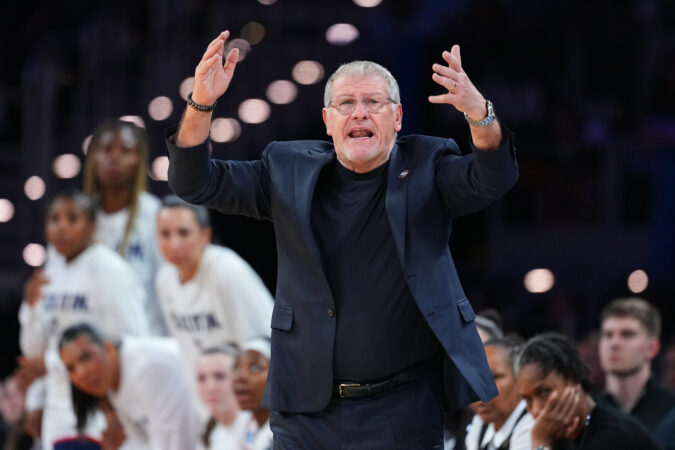
FORT WORTH, Texas — UConn coach Geno Auriemma is ripping the double-regional format being used in the women’s NCAA Tournament, saying it doesn’t make sense for the teams still playing or for efforts to grow the game.
Auriemma brought up attendance, bad shooting percentages, and teams having to come to the arena early and late on the same day when taking aim at the format that’s in place for the fourth year and set to continue for at least five more.
“Well, I think the first question you’d have to ask is why did they go from four [sites] to two. What was the rationale?” the 12-time national champion coach, who grew up in Norristown and graduated from Bishop Kenrick High School and West Chester University, said Saturday. “If they can explain it legitimately and then prove that it works, then great. So what was the reason?”
NCAA officials didn’t immediately respond to a request for comment from ghe Associated Press.
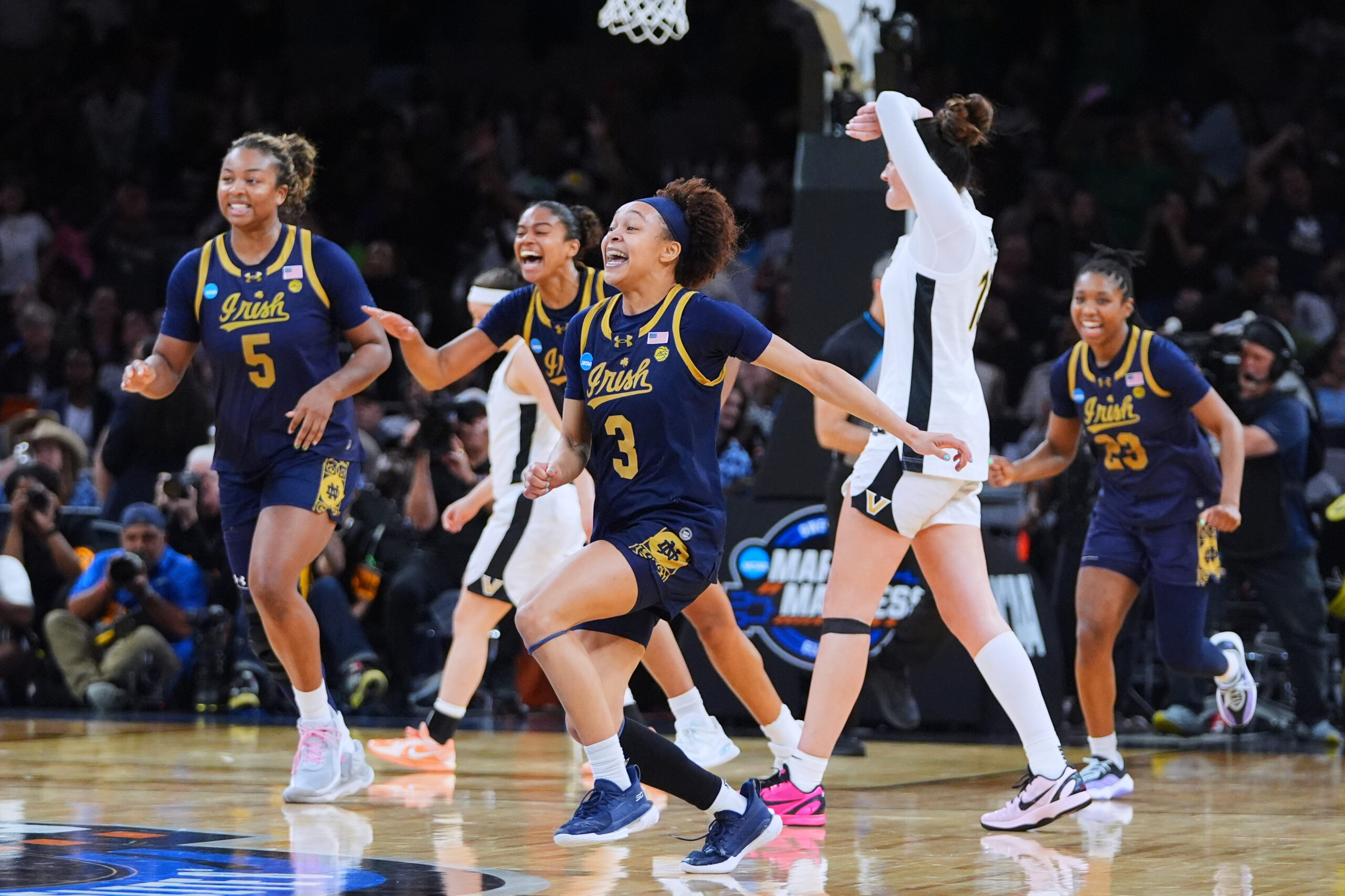
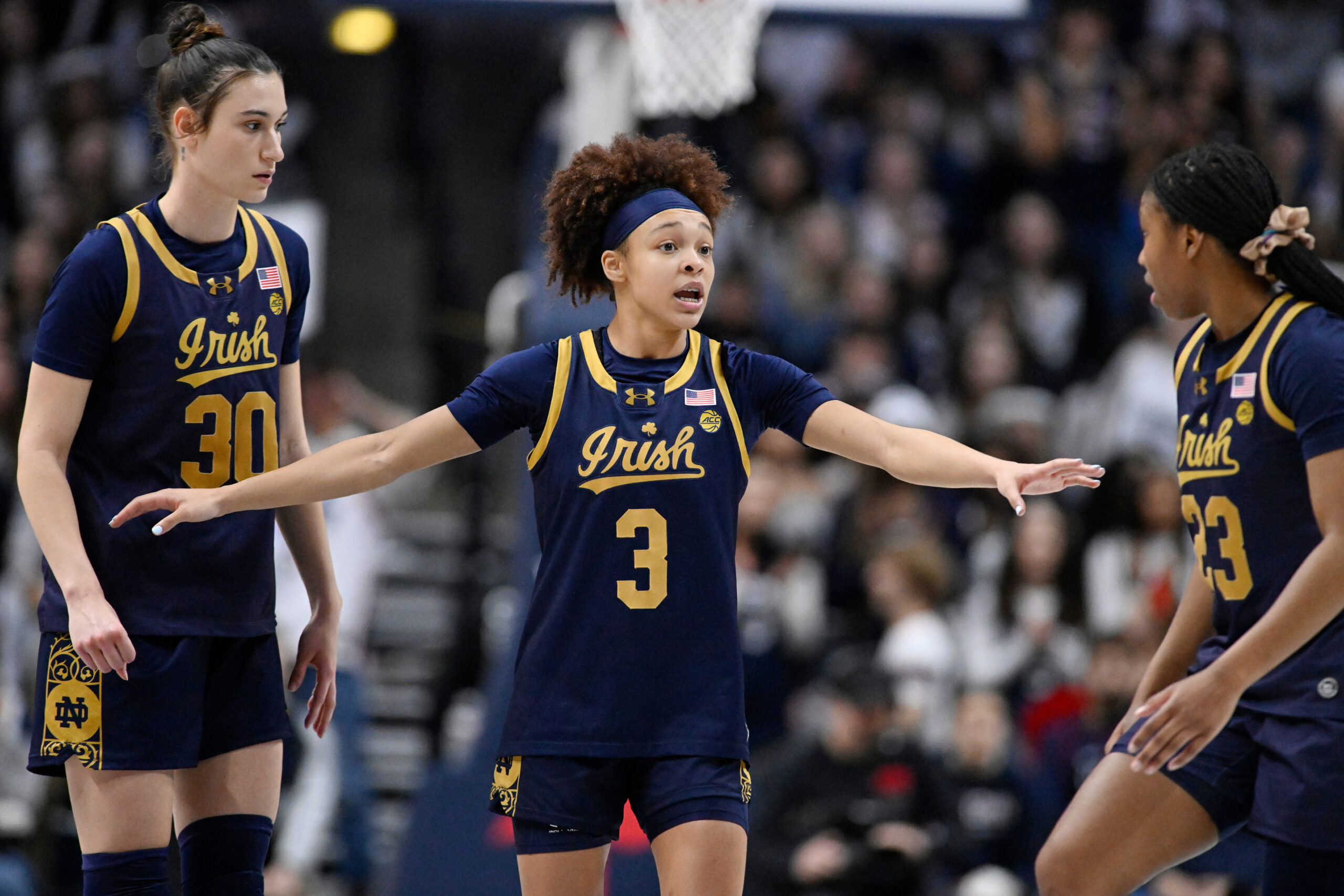
Hannah Hidalgo (3), Malaya Cowles (5), Iyana Moore (23), and their Notre Dame teammates will face UConn on Sunday.
The Huskies held their required media availability Saturday morning, after the Fighting Irish had already completed their session and before two Sweet 16 games in Fort Worth Regional 3 were played at Dickies Arena. UConn and Notre Dame had scheduled practice times there later in the evening.
“So we had to get our kids up, come over here. You already knew who we were playing last night, but we can’t get on the court, and neither can the other teams,” Auriemma said. “Does anybody who makes these decisions ever ask the coaches and the players, ‘Hey, does this work?’”
“Everyone’s trying to figure that out right now,” Fudd said. “Every team is going through that. There’s no excuse in that. So we’ll figure it out. We’re making it work, but it definitely isn’t the most ideal setup.”
Auriemma, the winningest men’s or women’s NCAA basketball coach with 1,287 victories, didn’t wait for a question from reporters to share his thoughts on the format, opening his session by reading a sequence of numbers off a piece of paper: 4 for 20, 4 for 22, 1 for 17, 5 for 17, 4 for 16, 7 for 26.
“That’s the three-point shooting yesterday across the country. How many arenas are we going to sell out with that [expletive]?” he said. “Now, maybe it was just a bad day shooting by everybody. These are all teams that average probably 30 [percent], over 30, for the season. Know what time our shootaround was yesterday? Six in the morning, 6:20, I think, for half an hour.”
He also mentioned the total combined attendance (18,821 announced) at the two venues Friday, in Fort Worth and Sacramento, Calif.
UCLA coach Cori Close, whose team is the top seed in Sacramento Regional 2 and plays Duke in an Elite Eight game on Sunday, said it is important to get maximum exposure and coverage while also looking for the best setup to have high-level basketball played on the court.
“I think that I was in favor of going to the two regional sites when that happened,” Close said. “I think every year we should look and go, Where are we in our game? How did this play out, efficiency-wise, from a student-athlete wellbeing side. Is there some ways in which we can organize to make things a little bit more cohesive so teams aren’t going back and forth from media coverage to practices later and those kinds of things?’”
Auriemma said there is a lack of input from coaches, and that nothing changes, even when the NCAA sends representatives to schools every year after the tournament.
“Hopefully I’m speaking for the other coaches,” he said. “Some coaches might think I’m full of it. And this is not about UConn. I hope everybody understands that. This is not about us, because we’ve managed to go to the Final Four and win national championships, no matter where they’re played, when they’re played, what time they’re played, whatever.
“I think there is a level of frustration right now among the coaches that’s higher than any time I’ve ever seen it.”
Duke coach Kara Lawson would like more practice time on the game court, especially more than the designated half-hour on game days for shootarounds, which routinely last about an hour the rest of the season.
“That would be the only thing I’d change. I mean two regionals, I think the arena thing is the thing that’s hard,” Lawson said. “It’s not that we’re in the same city, it’s that we don’t get long enough practice or shootaround times in the venue for your most important games of the season.”
For the second day in a row, Auriemma mentioned new rims and new basketballs being used during NCAA Tournament games and the impact those have on shooting.
“It’s hard to make shots in the postseason. They just break out these new baskets, new rims, and then it gets in the kids’ heads,” Auriemma said Friday after UConn’s 63-42 win over North Carolina, in which the teams were a combined 8 of 42 on three-pointers.
The coach on Saturday again brought up “new basketballs right out of the box” and the rims.
“Got people dribbling the ball off their feet,” he said. “You got people missing layups all over the place. You bounce the ball, and it goes up to the ceiling. There’s just no concept of how basketball is played. Not that I have any of the answers. Believe me, I just have questions.”
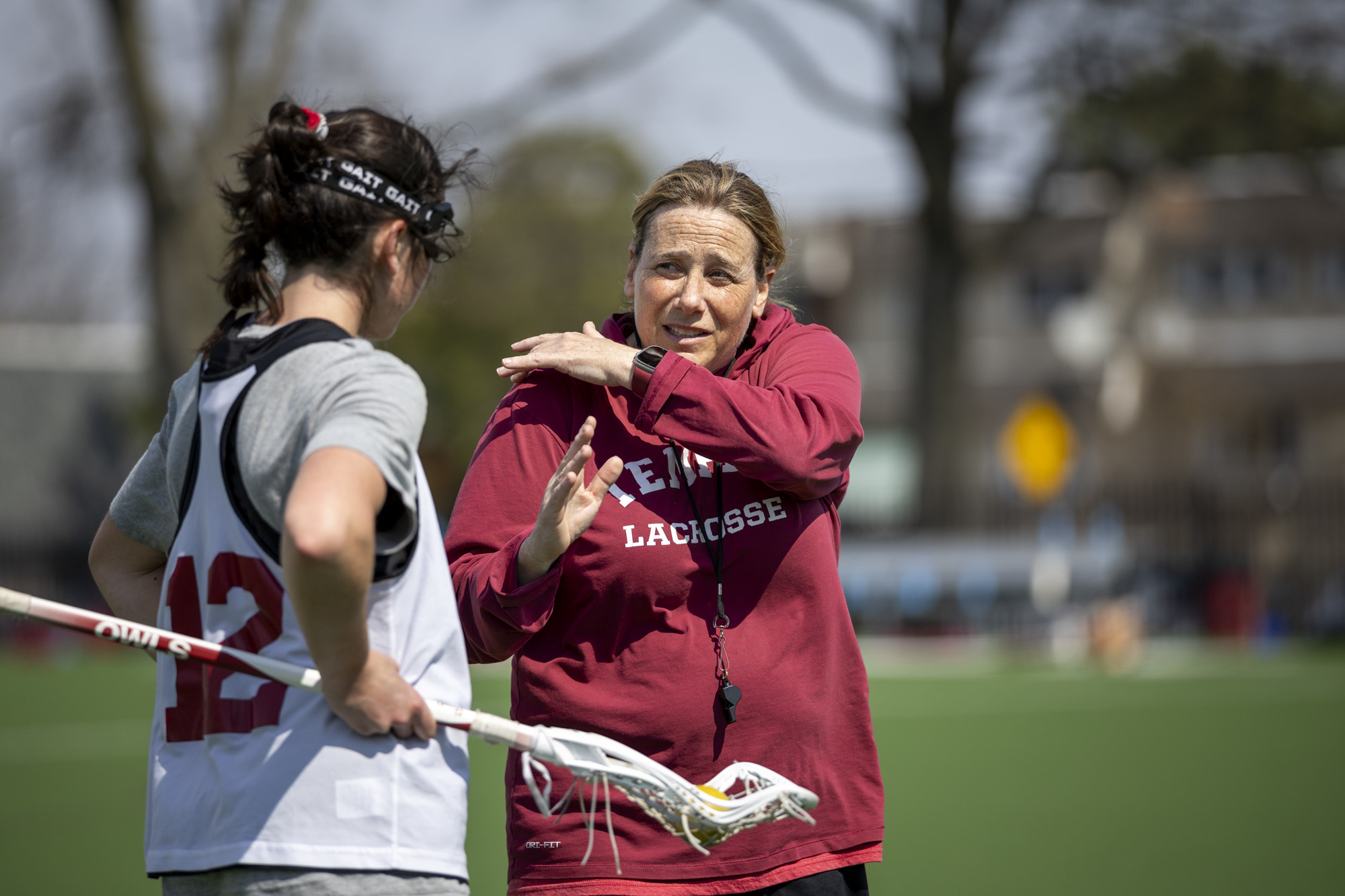
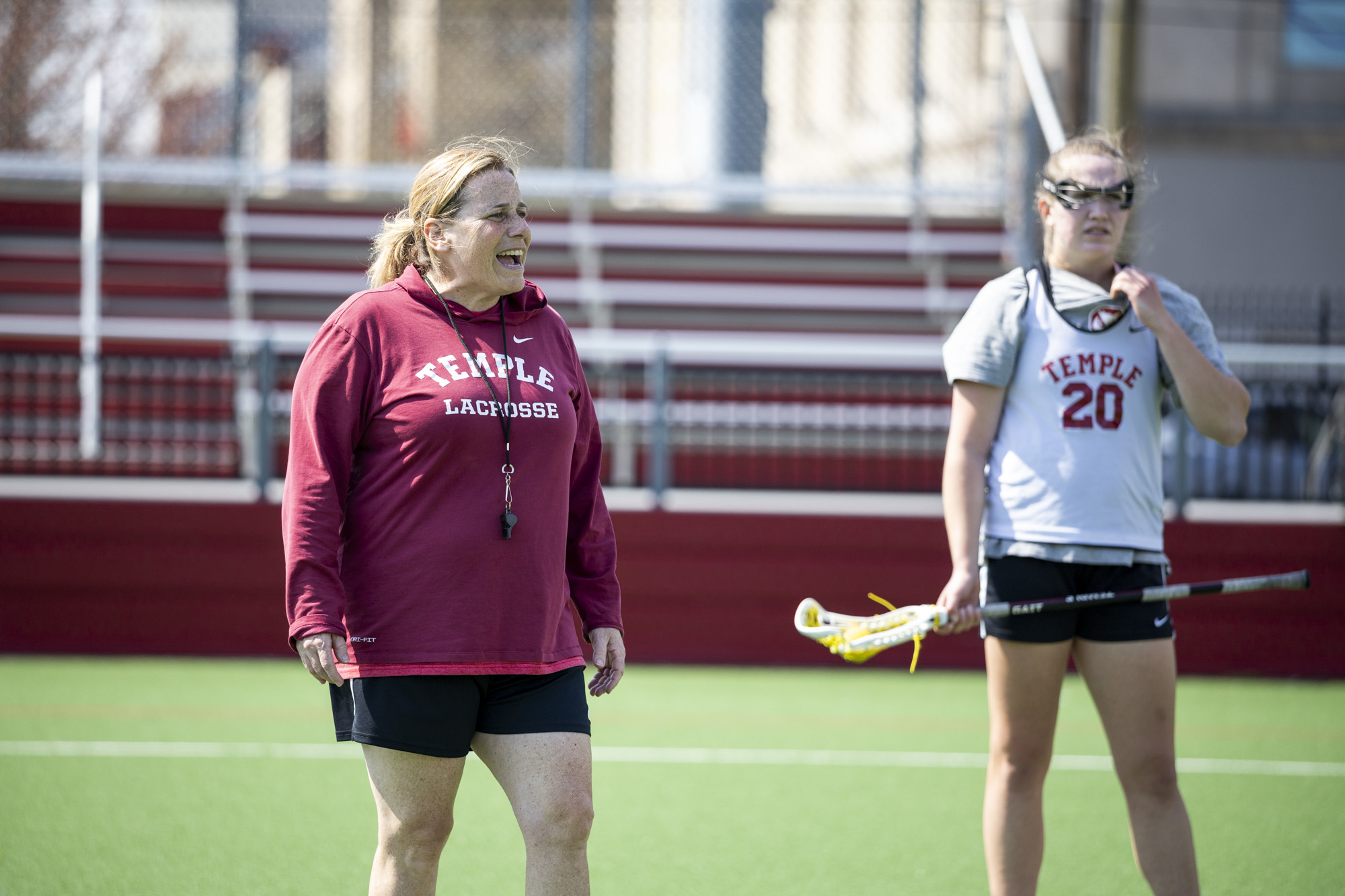
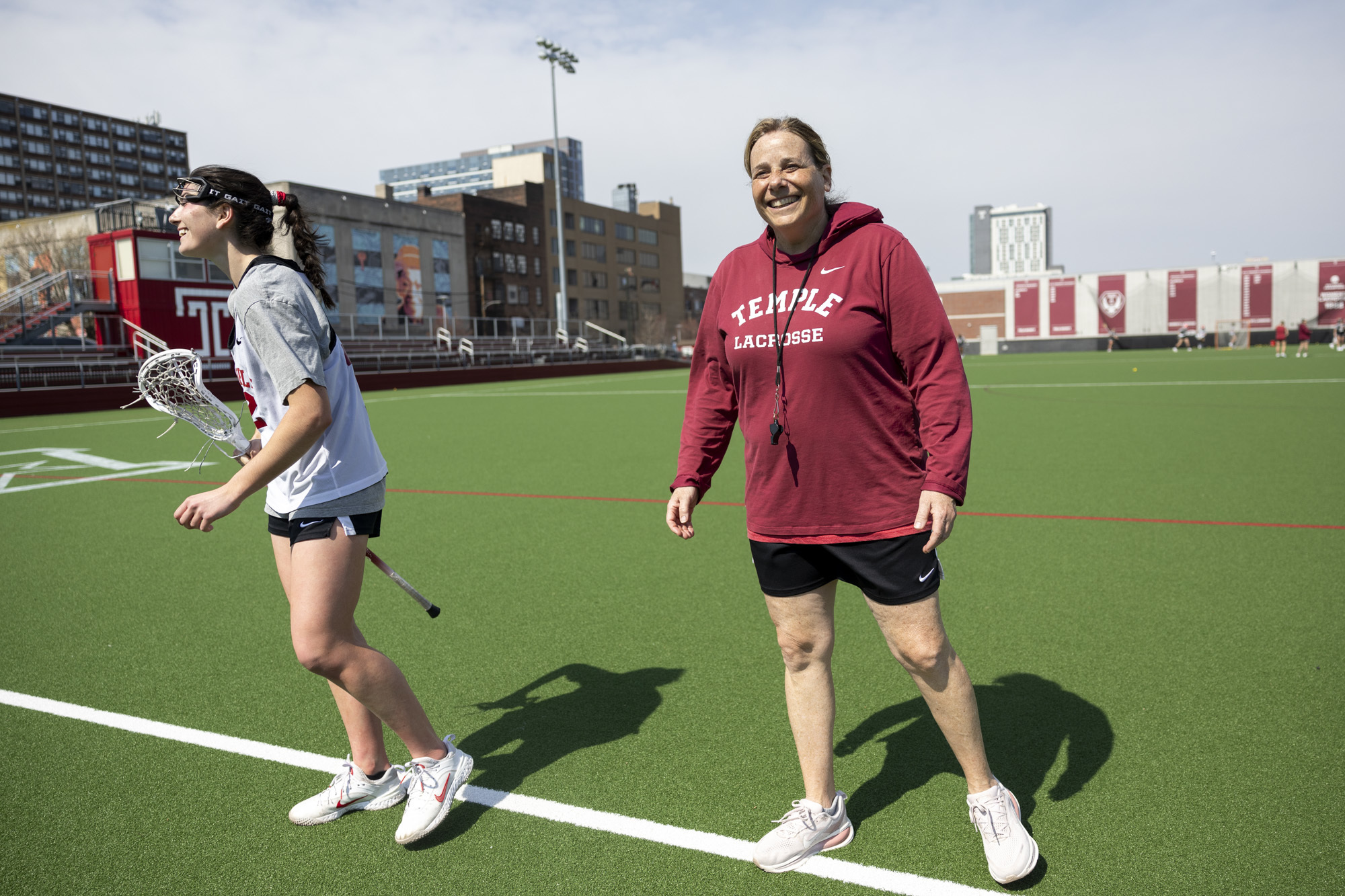
Three days before Temple’s women’s lacrosse season opener, Bonnie Rosen had an unexpected visitor join the longtime coach and her team at practice.
Two trumpeter swans, a protected bird species not native to Philadelphia, flew onto Howarth Field, giving Rosen another new experience in her coaching journey. One flew off, but the other hung around.
Rosen and the team spent the day working with a biology professor from Temple and a volunteer animal rescuer to capture and properly release the swan. It was something Rosen never thought she would be doing.
“It’s never a dull moment and there’s always something new,” said Rosen, who has been at the helm for 20 years at Temple.
It was just the latest memory in a career full of success for Rosen. Her achievements stack up against some of the best to ever coach women’s lacrosse. She has more than 230 career wins, has been to 12 conference tournaments, two NCAA Tournaments and is a member of both the National Lacrosse Hall of Fame and Philadelphia Sports Hall of Fame.
Through the years, Rosen has adapted to the changes in the sport. After a down 2025 season, she led the Owls to eight straight wins to open 2026, their best start since 1988, when they went undefeated and won the national championship. Temple is 8-4.
“I’m just super grateful to be doing something that I love and didn’t know when I was growing up that this is what I was going to do,” Rosen said. “But it’s been a great journey and I hope I have many, many, many more years to coach.”
Unlocking a passion
Rosen, a Bala Cynwyd native, was a standout lacrosse and field hockey player at Harriton High School. She played both sports at the University of Virginia, winning a lacrosse national championship in 1991 and being named MVP in both sports as a senior.
She played 13 years on the U.S. women’s national lacrosse team, where she won gold medals in 1997 and 2001 in the World Cup championships.
Coaching never really crossed her mind, as she had other career interests.
“The people I met are what kind of drove me into coaching,” Rosen said. “I was on track and was really interested in being a physical therapist. I really enjoy the medicine side of things. I really enjoy working with people and that was kind of my plan.”
Before Temple, Bonnie Rosen got her start as an assistant coach at Yale under Amanda O’Leary.
When Rosen crossed paths with former Temple standout Amanda O’Leary, now in her 16th season at the University of Florida, it was 1994 and O’Leary had recently completed her first season at Yale. She was looking for a new assistant coach and convinced Rosen to take the job.
Within three months, Rosen knew she had found her purpose.
“Having watched her play — she is somebody who just played with so much lacrosse IQ. It was off the charts,” said O’Leary, one of the winningest head coaches in women’s college lacrosse. “She knew the game, she was a constant competitor. When I made the phone call, I really wanted her to join me. She was somebody who I had been watching and I knew she would be an amazing addition to my staff. It was everything that I could ask for.”
At Yale, Rosen was on staff for a team that won the Eastern College Athletic Conference Division I championship in 1995 and finished second in the Ivy League in 1996.
In 1997, she decided to take the next step in her coaching career.
UConn was starting its women’s lacrosse program and reached out to Rosen with an offer to become the head coach. She knew it was an opportunity she could not pass up.
“I was like, ‘Well, it’s down the road. I don’t need to be a head coach, but I think I could be a really good head coach, I should throw my hat in the ring,’” Rosen said. “[O’Leary] was super supportive of me and looking back, it was so gracious of her because I ended up leaving midyear.”
Building a legacy at Temple
Rosen never imagined leaving the program she helped launch. However, after a decade with the Huskies, she needed to be closer to her family to take care of her father.
She was hired at Temple before the 2007 season. Departing from the program she helped start was difficult, but Rosen knew it was for the better.
“One of the first big emotional decisions in my life was when I knew the job opened up, that I had to go after it,” Rosen said. “Because I had been thinking, ‘Am I going to be forced at some point to decide to move back home and have to leave a profession — because family meant the world to me?’ So when the job opened up, it was like, I’ve got to go.
“Fortunately, Temple felt the same way about me.”
Temple coach Bonnie Rosen, a Bala Cynwyd native who graduated from Harriton High School, joined the Owls in 2007.
Rosen guided the Owls to the NCAA Tournament in her second season at the helm, which marked the program’s first appearance in four years. Temple has since been a regular contender in its conferences, which have included the Atlantic 10, Big East, and now the American.
She had arguably her most successful season in 2021, as she guided Temple to a 7-3 record in the American and an NCAA Tournament victory, its first since 1998.
“Quite honestly, there was nobody that I could even imagine taking over that program that I knew would do a better job than her,” O’Leary said. “She is just so committed not only to the successes of her players on the field, but more importantly, to their successes off the field.”
More than a coach
California coach Jennifer Wong, who played for Rosen at UConn and spent 14 years across two stints on her staff at Temple, cherishes the relationship she built with Rosen and her ability to connect with players and coaches on a human level.
“She really just cares about everyone as human beings,” Wong said. “Like, yes, we are in it to win lacrosse games, and she goes for it. It’s not like she holds back. But whenever any player or any staff member needs anything, Bonnie pauses and she’s there for them as a human.”
Her style of coaching has led to several graduates continuing to show support for the program as alumni.
Bonnie Rosen says coaching is about “trying to understand growing and not just focusing on success.”
“She has the ability to recruit such an amazing group of girls,” senior midfielder Sabrina Martin said. “Our team gets along so well, and I don’t think I would change that for anything. It goes back to the player connection piece. … We all just get along so well. All truly best friends.”
Over 30 years, Rosen has impacted countless players and coaches as a head coach, and she does not plan on stopping soon.
“It’s why I stay coaching because I think all the lessons from coaching are the same things I apply to life,” Rosen said. “Coach people, don’t just coach the game. It is always about trying to understand growing and not just focusing on success.”
Villanova is the only school representing the Big 5 in the women’s NCAA Tournament. The Wildcats, a No. 10 seed, are set to play No. 7 seed Texas Tech on Friday (8:30 p.m.) in Baton Rouge, La.
But players connected to the Philadelphia area are competing on rosters across this year’s March Madness bracket.
Here are the local women’s basketball players to watch:
While many know graduate guard Olivia Miles as one of the nation’s top players with No. 3 seed TCU, Miles got her start with the Philadelphia Belles, an AAU team. The Phillipsburg, N.J., native is a three-time All-American who spent her first four years of college at Notre Dame.
Several Catholic League standouts will also be taking the court during March Madness.
Three players will represent Cardinal O’Hara: senior forward Annie Welde of Villanova, Richmond senior forward Maggie Doogan, and Fairfield’s Sydni Scott, a senior guard. From Archbishop Wood, sophomore guard Ava Renninger will compete with Fairleigh Dickinson and senior guard Ryanne Allen with Villanova.
James Madison forward Grace McDonough was a standout at Lansdale Catholic.
Also for Villanova, senior guard Maggie Grant is an Archbishop Carroll graduate. And freshman forward Grace McDonough, who attended Lansdale Catholic, will compete with James Madison.
No. 1 seed Connecticut looks to defend last year’s national championship with Tonya Cardoza on staff as an assistant coach. Cardoza was Temple’s head coach from 2008 to 2022.
The NCAA women’s tournament is usually pretty chalky, and this one likely won’t be any different. But that’s not just because of the perennial early-round home advantage for the top four seeds in each region. Or even because the bracket hasn’t set up many potential upsets where they more likely happen: in games between two teams traveling to someone else’s floor.
This time, it’s because of the strength of the four No. 1 seeds: Connecticut, UCLA, South Carolina, and Texas. They are so far ahead of almost the entire rest of the field that they’ll all be clear favorites to reach the Final Four. And if they do, that will make up for some of the dullness along the way.
The alignment of regions means there would be a UConn-South Carolina matchup in the semifinals, which has never happened. Geno Auriemma and Dawn Staley have met three times in the tournament before: the 2025 and 2023 title games and the 2018 East Regional final.
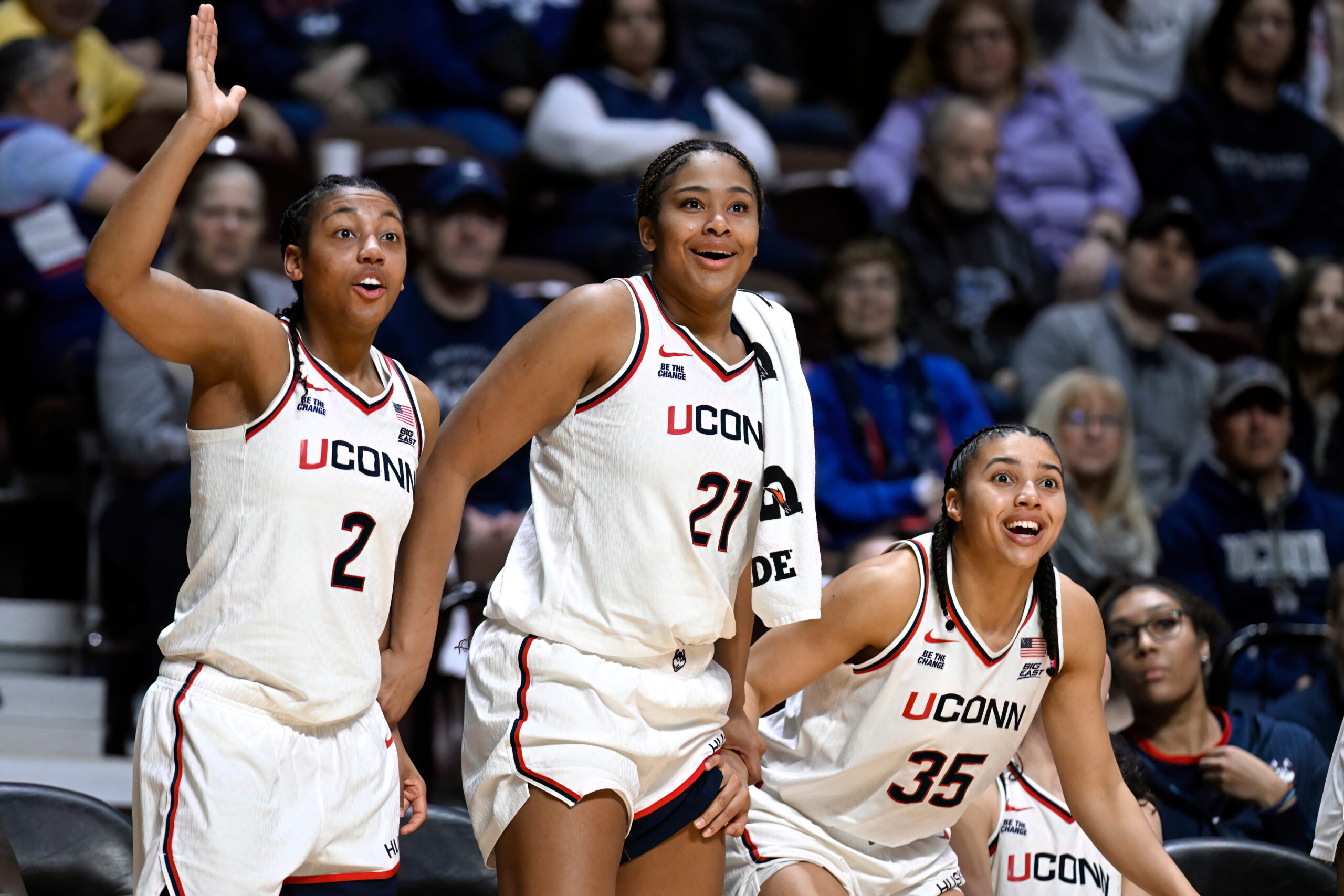
Connecticut’s star trio of (from left) KK Arnold, Sarah Strong, and Azzi Fudd.
Who can challenge the top quartet? The list starts with No. 2 seed LSU. The Tigers are led by veteran guards Flau’jae Johnson and South Carolina transfer MiLaysia Fulwiley, and coached by four-time national champion Kim Mulkey. She’s as controversial as she is successful, but she knows how to win in March.
LSU finished fourth in the ultra-competitive SEC, thanks to a January swoon when they lost to Kentucky and Vanderbilt. They also lost at Texas and twice to South Carolina, at home in the regular season, then in the conference tournament semifinals. But the rest of the record is stacked with big wins: at Duke, home vs. Texas, and two over Oklahoma.
Expect the Tigers to eat up either Villanova or Texas Tech in the second round, on the way to the Elite Eight. (And yes, Villanova can win that first-round game.)
No. 2 seeds have interesting stories
UCLA might be quite annoyed that the best No. 2 seed landed in its region. Not only would anyone want to avoid the Tigers, but the 31-1 Bruins believe they deserved the No. 1 overall seed.
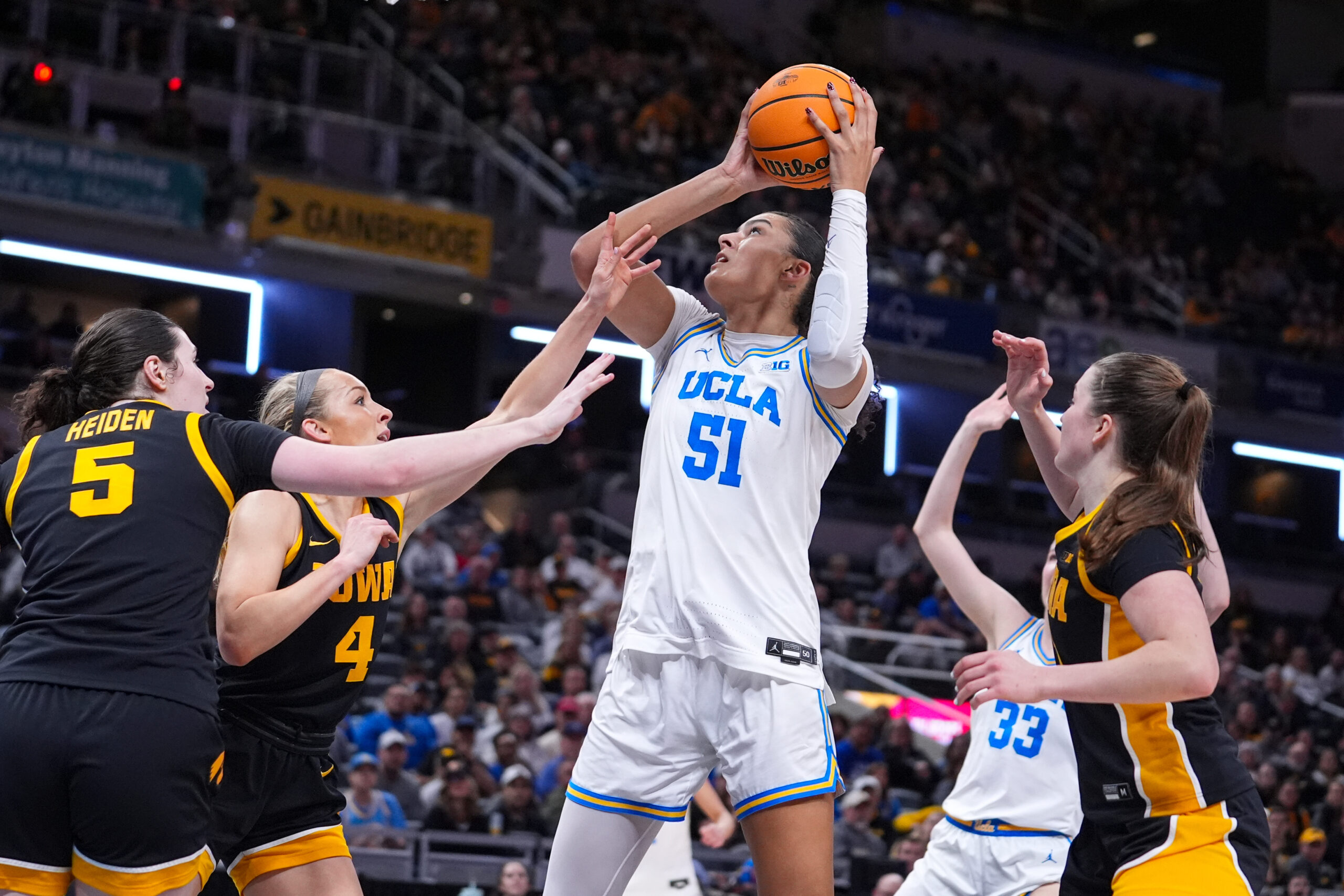
UCLA’s Lauren Betts goes up for a basket during the Big Ten women’s tournament title game.
They took the regular season and tournament in the Big Ten, a tougher conference than the Big East, with 12 wins over teams ranked at the time of the contest. Their only loss was to Texas on a neutral floor, and it was back on Thanksgiving.
LSU might in turn be annoyed that a rematch with Duke looms in the Sweet 16. Though the Blue Devils had six nonconference losses — including South Carolina, UCLA, and LSU in one seven-day stretch — they won the ACC regular season and tournament. They finished No. 8 in the NCAA’s NET rating, and the fourth No. 2 seed, Iowa, finished 10th.
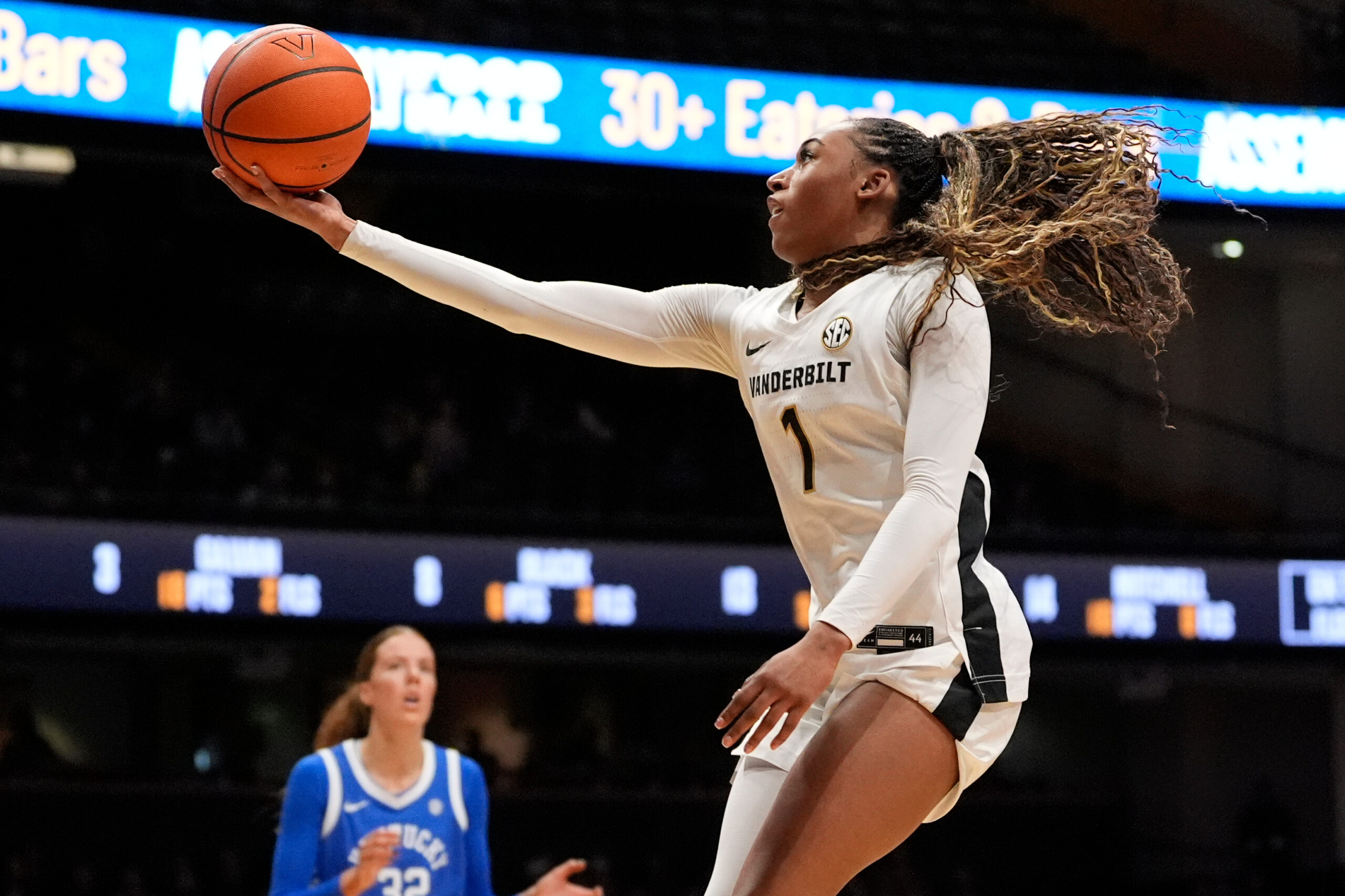
Another No. 2 seed, Vanderbilt, will get a lot of attention. Guard Mikayla Blakes is the nation’s top scorer at 27 points per game, and also averages 4.4 assists, 3.8 rebounds, and 2.9 steals.
The Commodores started the season 20-0, including wins over LSU at home and Michigan on a neutral floor. Then came a trip to South Carolina, and Staley reminded them who runs the show with a 103-74 flattening.
Vanderbilt’s head coach is UConn legend Shea Ralph. If you think the selection committee has a sense of humor, you might think it’s no coincidence that the Huskies are the No. 1 in that region.
Vanderbilt’s Mikayla Blakes is the nation’s leading scorer.
Michigan is the No. 2 in Texas’ region, and has a high-ceiling pair of sophomores in Syla Swords and Olivia Olson. But the Wolverines could be tested early by the N.C. State-Tennessee winner, with a little extra juice if it’s the Lady Vols.
Further down the field
There are storylines among the No. 3 seeds, too. We’ve mentioned Duke already, and two others deserve attention.
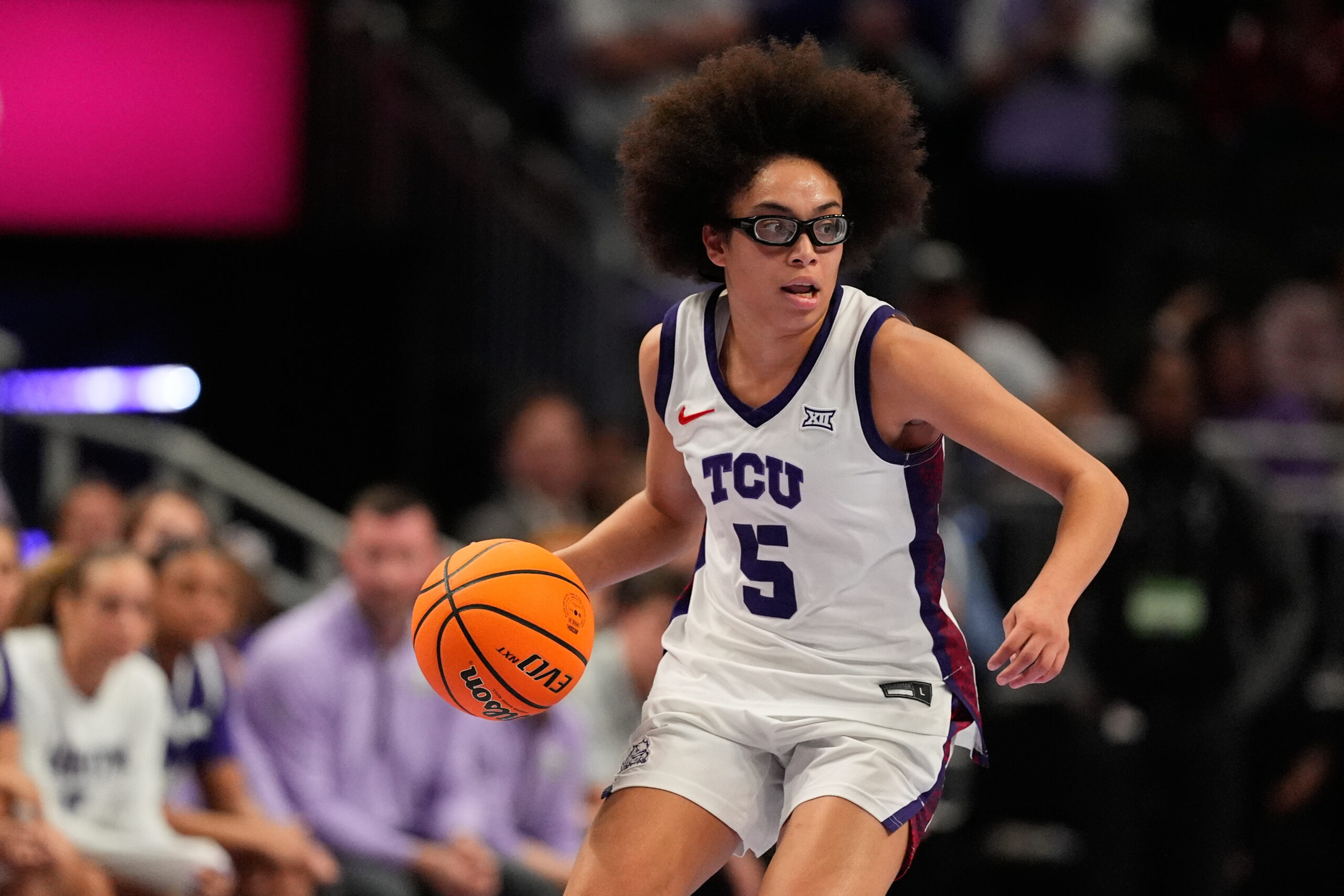
First is TCU. Guard Olivia Miles earned fame at Notre Dame, and this season led the Horned Frogs to the Big 12 regular-season title. She’ll be another marquee WNBA draft pick, and forward Marta Suárez could join her in the first round. Add that to Iowa being arguably overseeded, and there’s a recipe for an Elite 8 run.
The other is Ohio State. The Buckeyes are stuck with Notre Dame as the nearby No. 6 seed and Vanderbilt as the No. 2. But Jaloni Cambridge has pro potential, and Notre Dame will have its hands full with Fairfield.
Olivia Miles could take TCU on a long March run before heading to the WNBA.
That’s the cue to turn to where the real upsets could lurk.
Fairfield went 28-4 this season, won at Villanova early, and tested itself later with losses to North Carolina on a neutral floor and at Iowa. The AP poll’s voters recognize the Stags’ quality, putting them two spots outside the top 25.
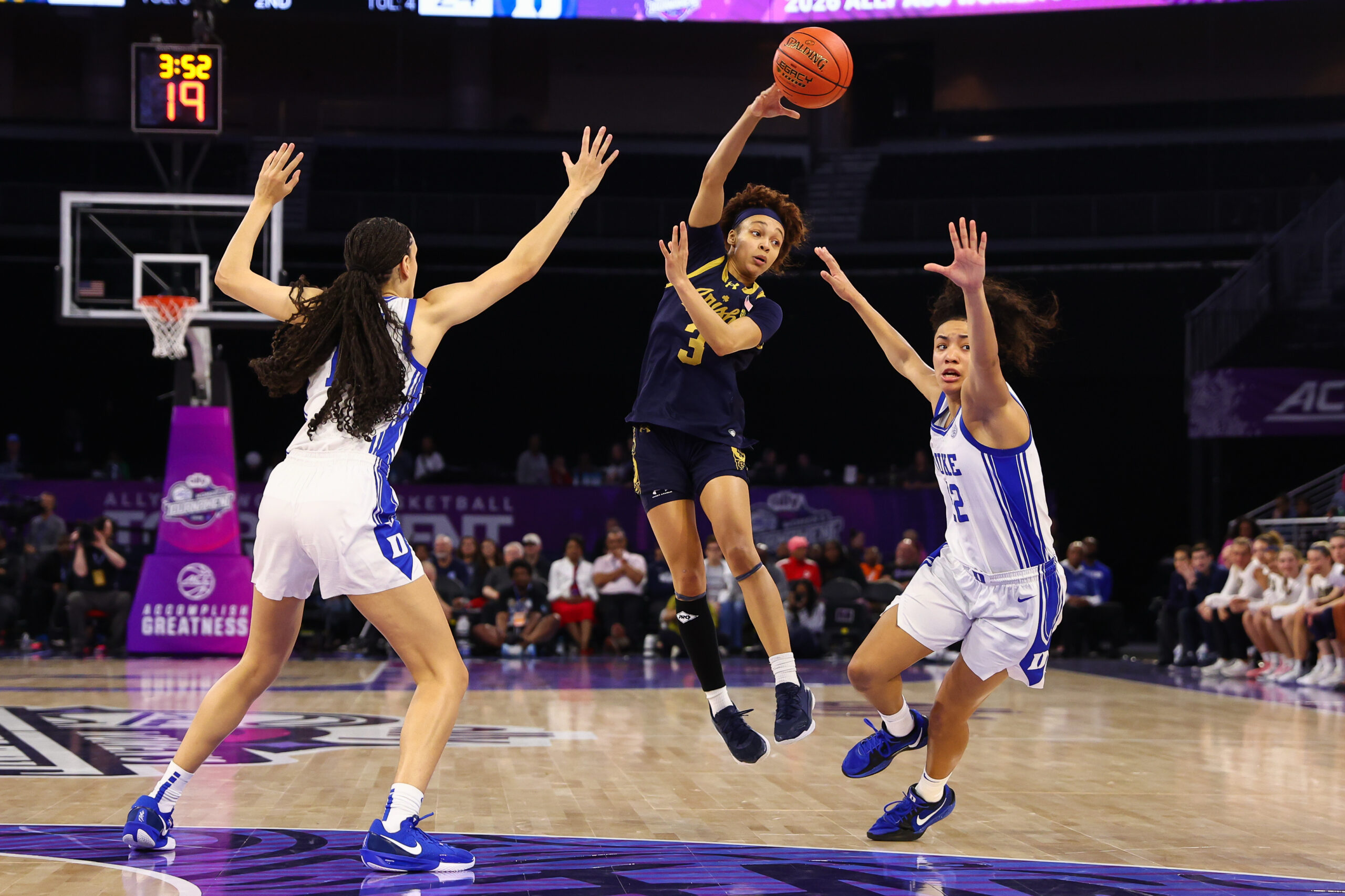
South Jersey native Hannah Hidalgo has the Fighting Irish getting back on track after some ugly stretches in conference play. She’s third in the nation in scoring at 25.2 points per game, is leading the nation again with 5.41 steals per game, and is averaging 5.3 assists and 6.4 rebounds too.
How will it go on a neutral floor? Well, let’s see how neutral it actually is. The game will be played at Ohio State right after the Buckeyes’ opener, and if the home fans stick around, they’ll give Notre Dame an earful.
Hannah Hidalgo (center) lining up a pass during the ACC tournament.
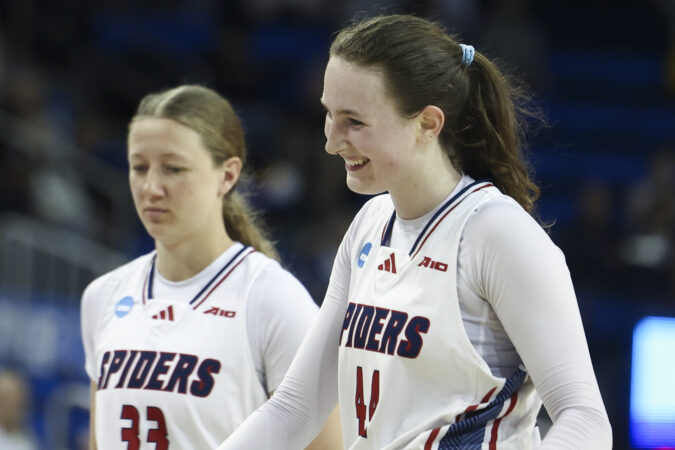
Richmond, led by former Cardinal O’Hara star Maggie Doogan, got stuck in the play-in game after losing to George Mason in the conference semifinals. But we’ll back the Spiders to beat a Nebraska team that got in despite finishing 12th in the Big Ten with an 18-12 record, including 7-11 in conference play. After that, if Doogan’s on, the Spiders can take a swing at Baylor in a game that Duke will host.
If you don’t count an 8-9 game as an upset, then you won’t count Princeton beating Oklahoma State. But we will on the principle of an Ivy League team beating a Big 12 team, even if that Ivy League team is deservedly No. 23 in the AP poll. The Cowgirls didn’t even receive votes this week, though they are 29th in the NET to the Tigers’ 38.