Category: Drexel

  • 2026 men’s college basketball transfer portal tracker: Latest Big 5 moves, where Philly-area recruits are heading

    2026 men’s college basketball transfer portal tracker: Latest Big 5 moves, where Philly-area recruits are heading

    The college basketball season is officially over, which means it’s time for the transactional period to begin. Welcome to the 2026 transfer portal.

    More than 1,500 men’s basketball players were in the portal in the first 24 hours after it officially opened on April 7. The portal is open for two weeks, but players do not need to make their commitment to a new school during that window. The next few weeks will be filled with salary negotiations during the yearly NCAA free agency process.

    We’ll be tracking it all here, from players moving in and out of — or around — the Big 5 to keeping tabs on Philly-area players at other schools. We’ll also take a look at where some of the top local high school recruits from the Class of 2026 will be playing in the fall.

    Big 5 portal entries

    Here are the players who were at Big 5 schools during the 2025-26 season but have entered the transfer portal.

    Villanova

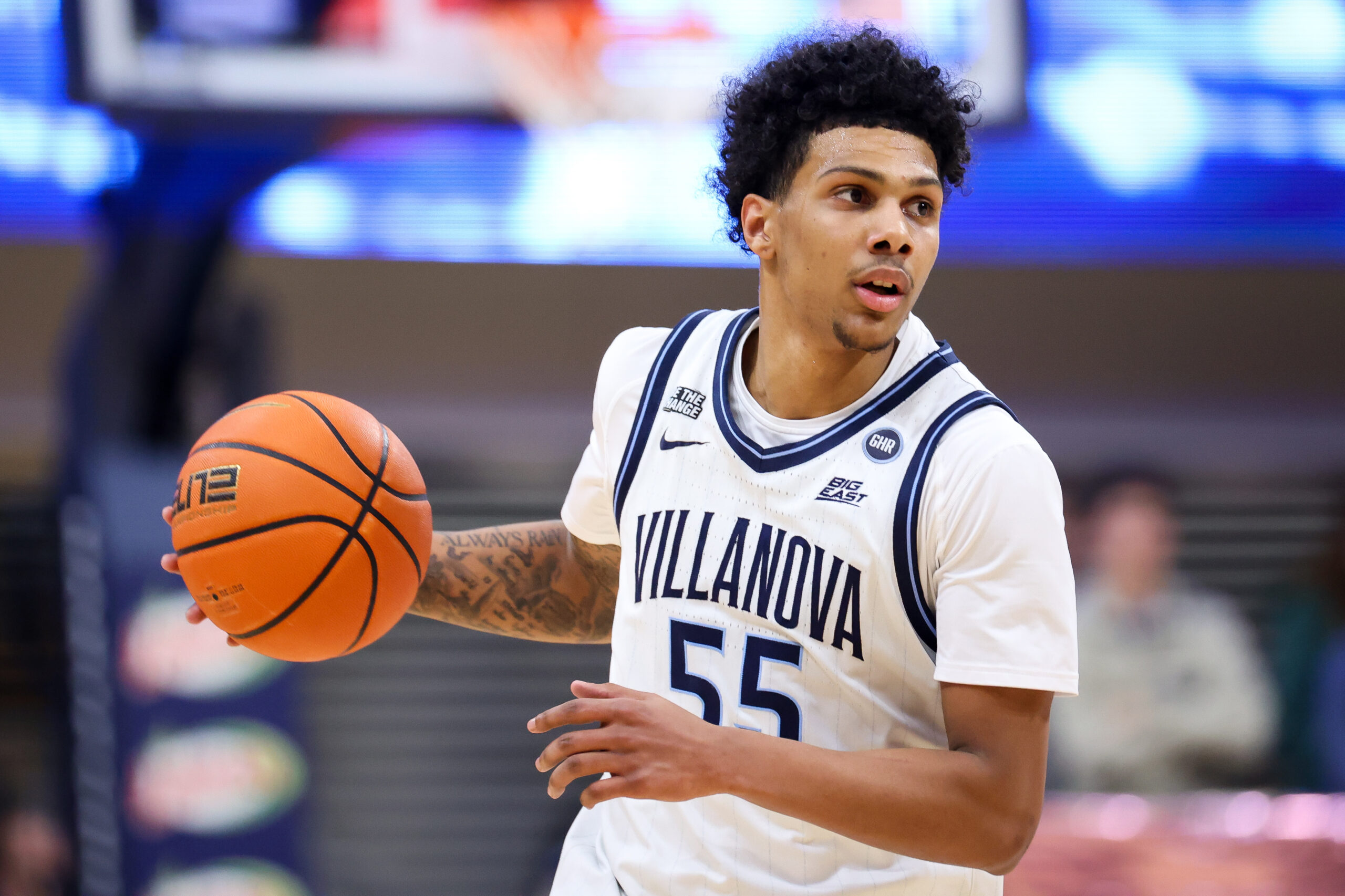
    • Acaden Lewis (point guard) started for the Wildcats during his freshman year and averaged 12.2 points, 5.3 assists, and 3 rebounds. (Transferring to Miami.)
    • Bryce Lindsay (guard) was a redshirt sophomore and Villanova’s best scorer during its nonconference schedule. (Transferring to Indiana.)
    • Malachi Palmer (forward) was a solid contributor off the bench who started down the stretch after Matt Hodge went down. But Villanova recruited multiple forwards out of the portal. (Transferring to Minnesota.)
    • Chris Jeffrey (guard), a freshman backup point guard who missed time after knee surgery but had promising moments.
    • Braden Pierce (center), a redshirt freshman reserve who followed coach Kevin Willard from Maryland, played 6.5 minutes per game and averaged 1.2 points. (Transferring to College of Charleston.)
    • Zion Stanford (forward/West Catholic graduate) transferred to Villanova from Temple, left the team in March after playing in 10 games. (Transferring to Towson.)
    • Tafara Gapare (forward), a senior, left the program at midseason after playing in just nine games.

    Temple

    • Aiden Tobiason (guard) averaged 15.3 points, second on the team, and led the Owls with 39 steals. He’ll have two years of eligibility left. (Transferring to Syracuse.)
    • Babatunde Durodola (forward), a sophomore, started as a freshman and was a key rotational player this season. (Transferring to Ball State.)
    • Jamai Felt (forward) started in 23 games and averaged 4.1 rebounds. (Transferring to Arkansas-Little Rock.)
    • AJ Smith (guard) averaged 7.8 points in eight games and had his season cut short by a shoulder injury.
    • Spencer Mahoney (forward) made 13 appearances as a redshirt sophomore. (Transferring to Denver.)
    • Ayuba Bryant Jr. (forward) appeared in 27 games, averaging 8.1 minutes.
    • Connor Gal (guard/Great Valley High graduate) played 12 minutes across five games and will have one year of eligibility left.
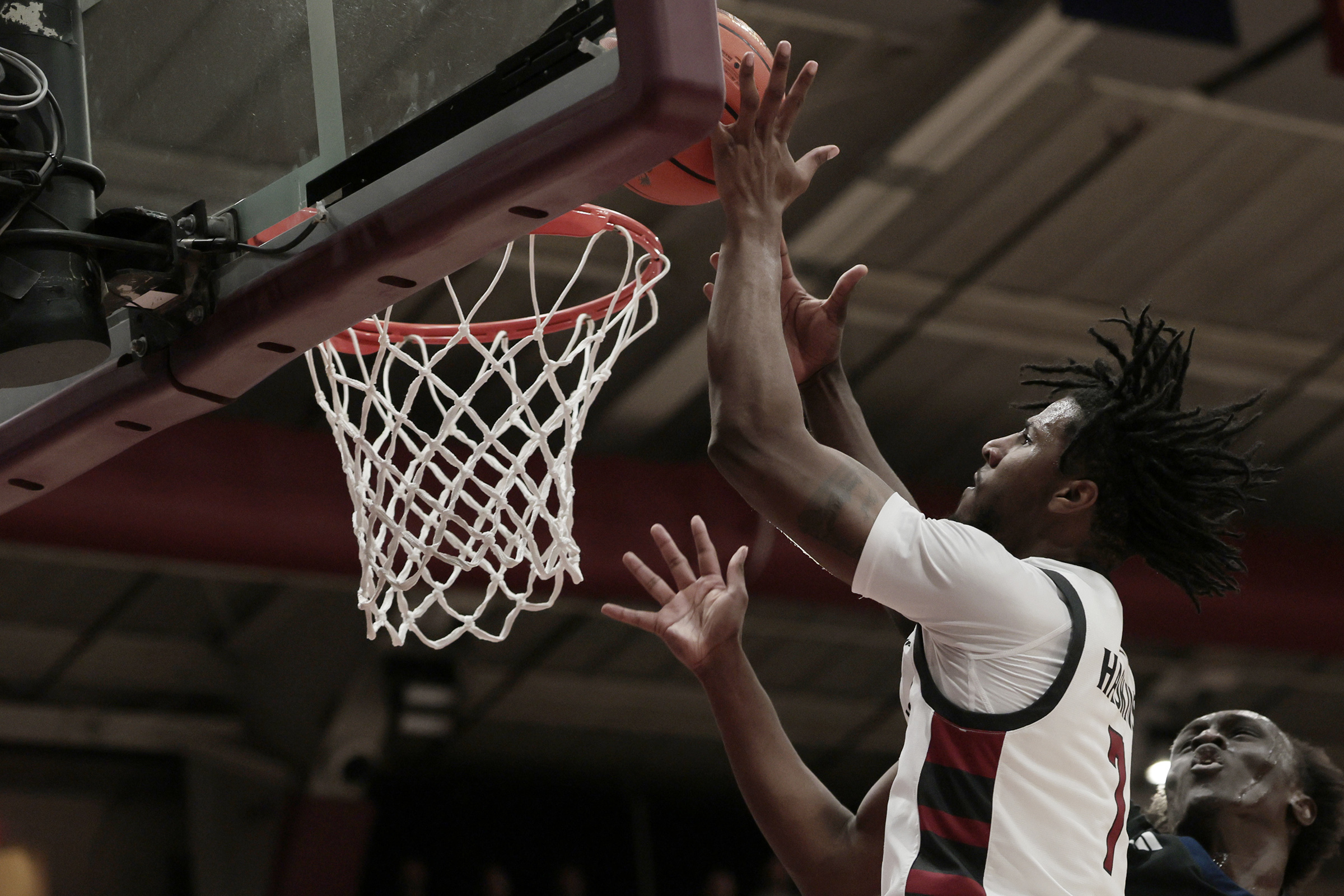
    Dasear Haskins was a key starter for the Hawks this season.

    St. Joseph’s

    • Deuce Jones (guard/La Salle), who led the Hawks in scoring during the first two months of the season, was dismissed from the team in December. (Transferring to Alabama-Birmingham.)
    • Dasear Haskins (guard/Camden High graduate) averaged 11.1 points and started for the Hawks as a redshirt sophomore. (Transferring to Ole Miss.)
    • Anthony Finkley (forward/Roman Catholic graduate), a junior, averaged 19 minutes in 35 games. (Transferring to La Salle.)
    • Kevin Kearney (forward) appeared in 14 games as a redshirt freshman. (Transferring to Manhattan.)
    • Jaden Smith (center) averaged 2.8 points and 1.8 rebounds in 9.1 minutes after transferring from Fordham. (Transferring to Ball State.)
    • Steven Solano (center), a redshirt freshman, played in eight games. (Transferring to Delaware.)
    • Al Amadou (center/Springside Chestnut Hill Academy graduate) transferred from Marquette and appeared in 11 games. (Transferring to Wisconsin-Milwaukee.)

    Penn

    • Ethan Roberts (forward) has one year of eligibility remaining — the Ivy League prohibits graduate students from playing intercollegiate athletics — and was the Quakers’ leading scorer (16.9 points per game). (Transferring to Notre Dame.)
    • Cam Thrower (guard), a senior who spent four years at Penn, averaged 17 minutes in 27 games. (Transferring to Elon.)
    • Dylan Williams (guard) played in seven of Penn’s first 10 games before the senior missed the rest of the season with an injury. (Transferring to Northwestern)
    • Michelangelo Oberti (center) appeared in 12 games. (Transferring to Boston University)
    • Alex Massung (guard), who averaged 5.6 minutes in 10 games played. (Transferring to Saint Anselm.)
    • Bradyn Foster (forward) saw action in Penn’s season opener.

    Drexel

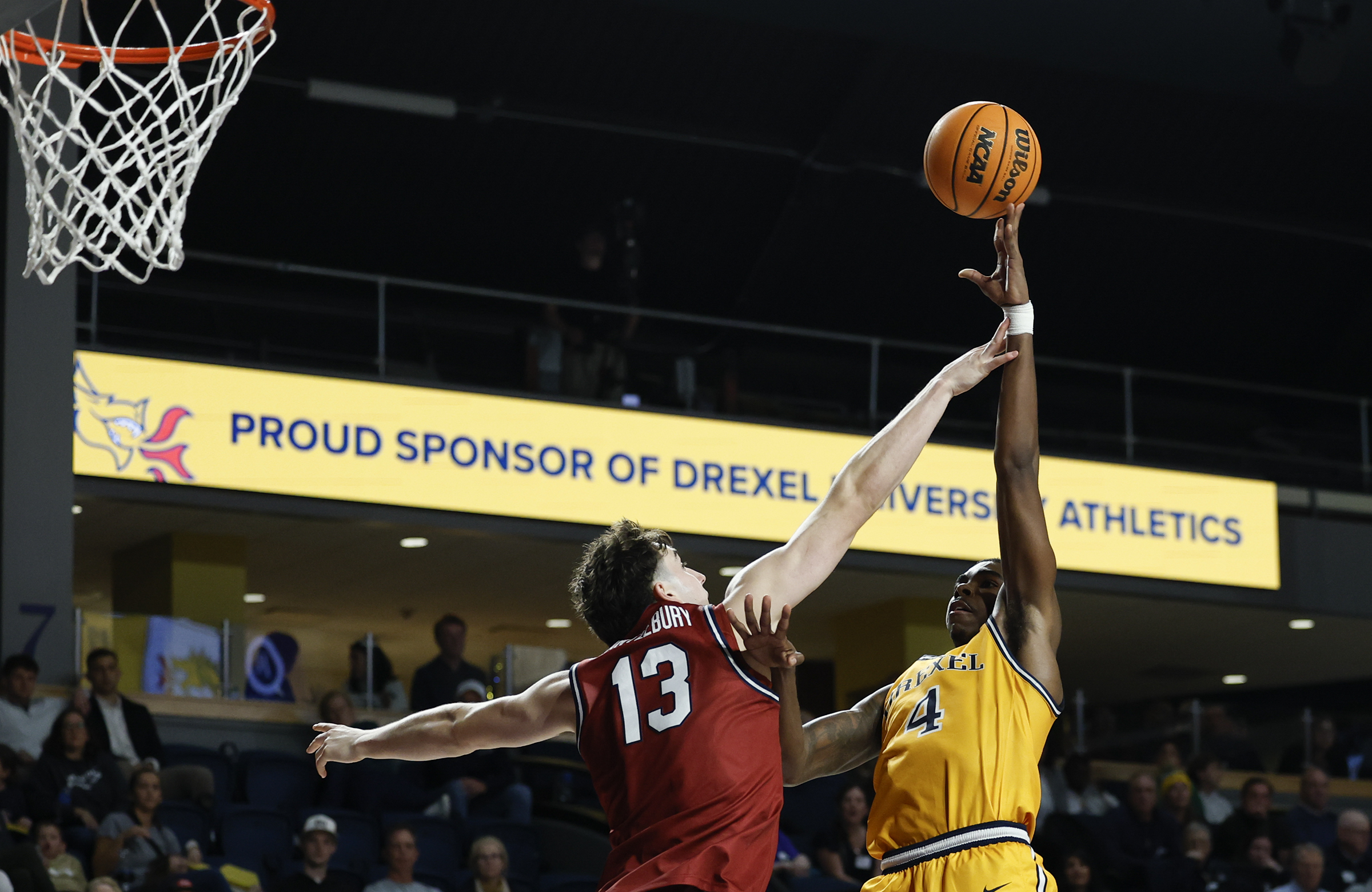
    • Shane Blakeney (guard) was Drexel’s leading scorer, averaging 14.2 points in 33 games as a junior. (Transferring to South Carolina.)
    • Kevon Vanderhorst (guard) averaged 9.3 points and 2.9 assists while starting all 33 games for the Dragons. (Transferring to Iona.)
    • Villiam Garcia Adsten (guard), a junior, averaged 17.5 minutes in 32 games. (Transferring to Maine.)
    • Horace Simmons Jr. (forward/La Salle College High School graduate) appeared in 13 games.

    La Salle

    • Ashton Walker (guard) started 21 games and averaged 8.2 points as a freshman. (Transferring to Monmouth.)
    • Eric Acker (guard), a junior, appeared in 26 games, starting 10, and averaged 18.9 minutes. (Transferring to Northern Kentucky.)
    • Nas Hart (forward) played in 20 games as a freshman. (Transferring to Quinnipiac.)
    • Edwin Daniel (forward) played 31 games (14.5 minutes) and averaged nearly four points and 3.5 rebounds. (Transferring to Stephen F. Austin.)
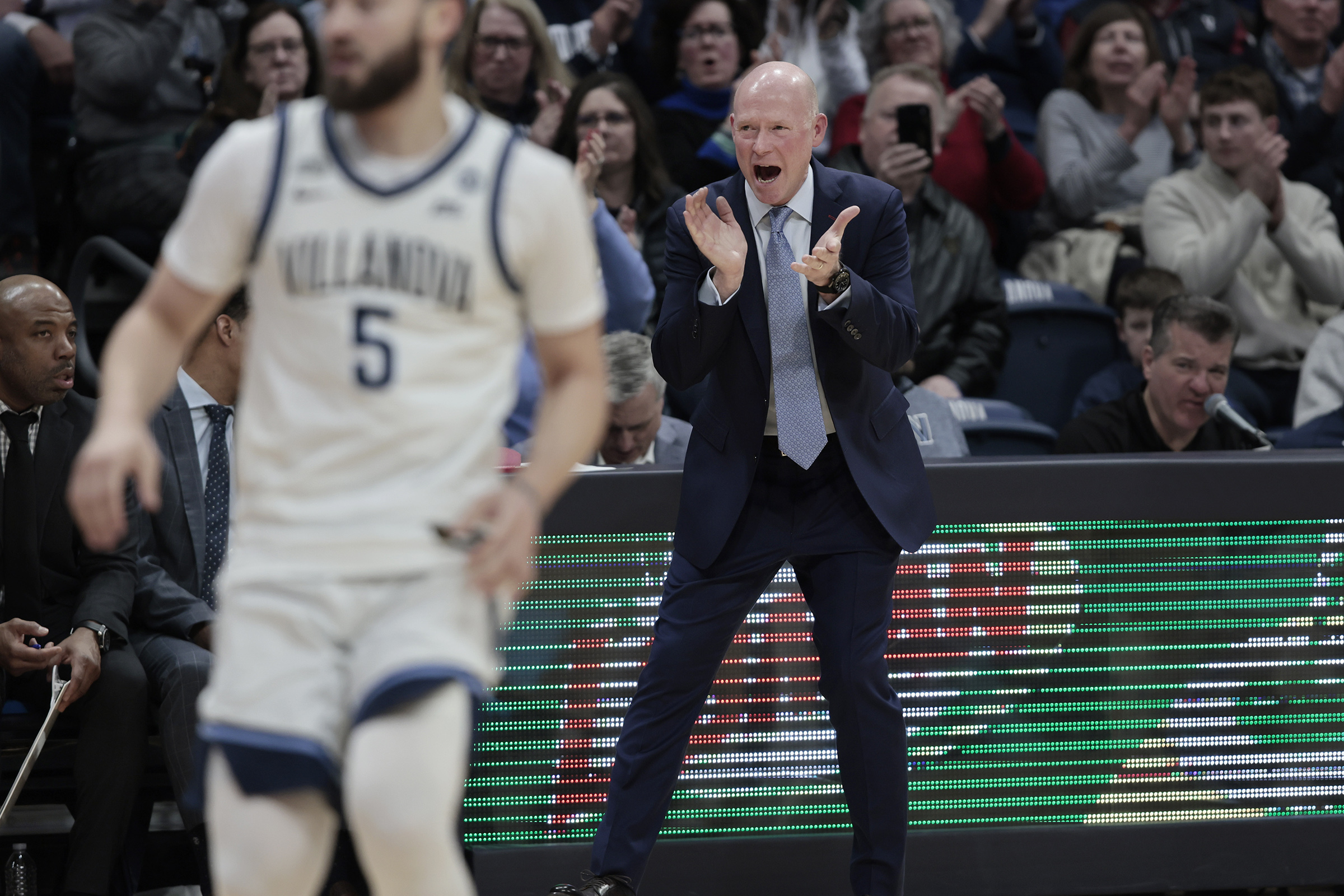
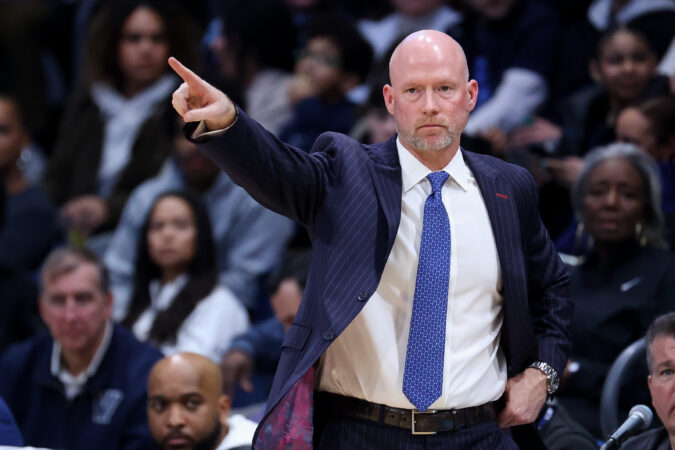
    Villanova coach Kevin Willard directs his team against Butler on Feb. 25.

    Big 5 portal additions

    These are the players who are transferring to Big 5 schools.

    Drexel

    • Panagiotis Pagonis (forward/New Orleans)
    • LaDricus Pittman (guard/LeMoyne-Owen College)
    • Adrian Petkovic (guard/Germany)

    La Salle

    • Trey Moss (guard/George Washington)
    • Vice Zanki (forward/Niagara)
    • Anthony Finkley (forward/St. Joe’s)
    • Jamison Lynam (guard/Arcadia)
    • Kam Burton (guard/Stephen F. Austin)
    • Devin Booker (guard/George Mason/Cristo Rey HS)
    • Eunique Rink (forward/Hampton)

    Penn

    • Sir Mohammed (guard/Notre Dame)

    St. Joe’s

    • Gavin Marrs (center/Oregon State)
    • Logan Carey (guard/Maine)
    • Don Flamer (forward/Elizabeth City State – Division II)
    • Sean Logan (center/Davidson)

    Temple

    • Dez White (guard/Oregon State)
    • Dallis Dillard (guard/Indiana University of Pennsylvania)
    • Baboucarr Njie (forward/UTSA)
    • Cam Scott (guard/South Carolina)
    • Jason Drake (guard/Indiana)
    • Jordan Marsh (guard/USC)
    • Sir Isaac Herron (forward/Louisiana Tech)

    Villanova

    Local portal entries

    In addition to the local players in the Big 5 mentioned above, here are some notable players from the Philly area who are on the move:

    • Kevair Kennedy, Merrimack to Wake Forest (guard/Father Judge)
    • Jalil Bethea, Alabama to Pittsburgh (guard/Archbishop Wood)
    • DJ Wagner, Arkansas to Maryland (guard/Camden)
    • Justin Moore, Loyola-Chicago to Hofstra (guard/Drexel, Archbishop Wood)
    • Budd Clark, Seton Hall to Ole Miss (guard/West Catholic)

    Where local 2026 recruits are going to college

    Here’s a look at where some of the area’s top boys’ basketball players are heading off to play in the fall.

    • Sammy Jackson, Virginia Commonwealth (small forward/Roman Catholic)
    • Ethan Johnston, Marquette (shooting guard/Hill School)
    • Xavier Blake, Hofstra (shooting guard/Phelps School)
    • Derrick Morton-Rivera, Temple (shooting guard/Father Judge)
    • Mani Sajid, Towson (shooting guard/Plymouth Whitemarsh)
    • Darnell Lloyd, Boston University (center/Perkiomen School)
    • RJ Smith, La Salle (guard/Roman Catholic)
    • Michael Pereira, Penn (center/Plymouth Whitemarsh)

    2026 recruits headed to Big 5 schools

    Villanova

    Penn

    • Isaiah Carroll (small forward/Blair Academy of Warren County)
    • Ethan Lin (point guard/Montgomery High of Somerset County)
    • Michael Pereira (center/Plymouth Whitemarsh)
    • Chase Geremia (guard/Newman School)
    • Finley Billy (forward/Bullis School)
    • Johnny Keenan (guard/St. Thomas More)

    Temple

    La Salle

    • RJ Smith (guard/Roman Catholic)
    • Breylon Webb (guard/Western Reserve Academy)

    Drexel

    • BJ Brown (guard/Sumter)
    • Tre Paulding (forward/Lee’s Summit North)

    St. Joe’s

    • BJ Ranson (guard/Mount St. Joseph)
    • Keoni Sacco (forward/Fork Union Military Academy)
  • From Philadelphia to Henley: Drexel men’s rowing takes on the world’s most prestigious regatta

    From Philadelphia to Henley: Drexel men’s rowing takes on the world’s most prestigious regatta

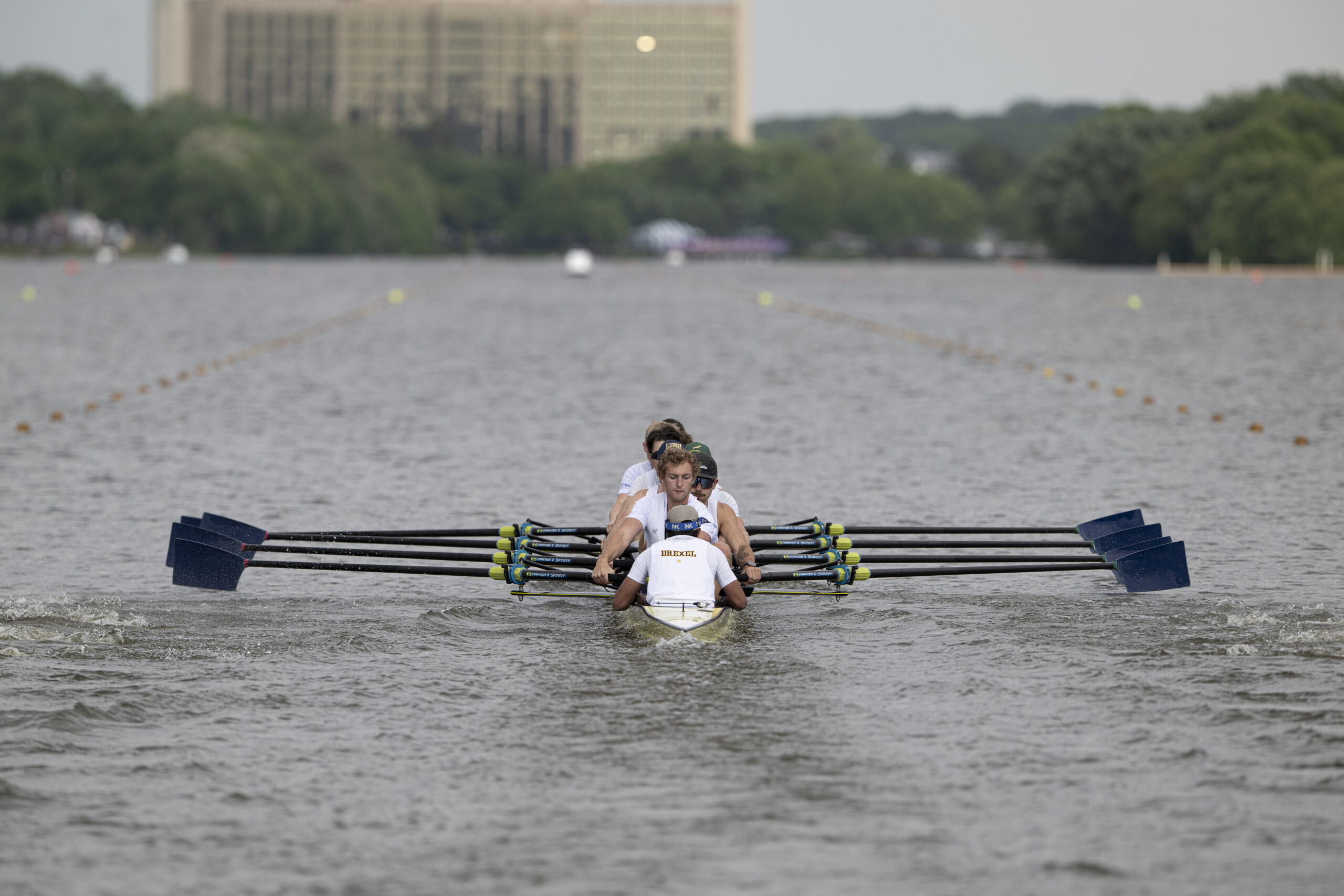
    Drexel men’s rowing has long dominated on the Schuylkill and Cooper Rivers, but now, it will have to navigate international waters.

    The Dragons are racing in the Henley Royal Regatta, which takes place on the River Thames in Henley-on-Thames, Oxfordshire, England. They will compete in time trials on Saturday before they begin racing on Wednesday in an event that continues through July 5.

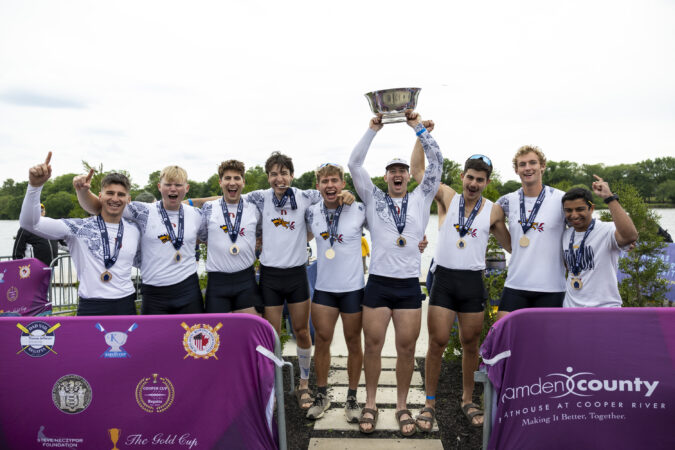
    Drexel won its fifth consecutive points title at the Jefferson Dad Vail Regatta in May, with the varsity eight boat reclaiming first place for its fourth top finish in five years. Head coach Matt Weaver said throughout the season that each race has felt like preparation for the Henley Regatta. The Dragons also competed at the IRA National Championship at Gold River in California three weeks after the Dad Vail.

    “The Dad Vail was the deepest field ever this year, competitors from all over the country and even into Canada, so we feel like that prepared us really well,” Weaver said. “and then [since IRA we’ve] kind of been doing a training camp here in Philly with some good practices. We did some races against Vesper Boat Club, and we’re excited, and we’re going to feel good heading into Henley.”

    Making the trip to England for the Henley for the first time in four years, the men’s team has been working on fundraising and logistics since the 2022 trip ended.

    And since January, the team has been in collaboration with Drexel fashion design professors Liz Goldberg and Jaeyoon Jeong, along with three students, to design the blazers that the rowers will wear at the regatta.

    “We’re really proud to have these designed and made here at Drexel, and in Philadelphia, specifically,” Weaver said. “I think there’s probably never been a rowing blazer that’s been specifically designed and constructed in Philly brought over to Henley, so probably the first of its kind there.”

    With the program taking a trip overseas, Weaver said the rowers have focused on jet lag protocol ahead of their flight to make sure they are adjusted to the time zone.

    During their day off on Sunday, the Dragons plan to roam London, Weaver said, hoping to gain educational and cultural experiences, but the focus is always on rowing and their upcoming races.

    This is the first time Weaver is making the trip since becoming the head coach ahead of the 2023-24 season. He has, however, done it a few times as an assistant coach at the high school and college levels. He’s seen how the trip “pays huge dividends” for the following season, from connecting in races to the team living together in a shared house.

    And it offers a new experience in terms of race format.

    Unlike the other regattas the Dragons have participated in this season, Henley features a head-to-head, bracket-style format. Weaver described it as “a little bit like March Madness,” with the crew hoping for some upsets, and having to bring their best every day. The hope is that the Dragons make it to next weekend, but it all depends on their draw, Weaver said.

    Drexel had head-to-head races against Columbia, Cornell, and Navy this season, but did not have the bracket style that Henley uses. In the head-to-head races, the varsity eight won against Columbia and Navy but fell to Cornell.

    Drexel men’s rowing has three boats competing in the Henley Royal Regatta, which starts on Saturday with time trials.

    The varsity eight is one of three Drexel boats racing in England.

    The eight will be competing for the Temple Challenge Cup and face other college entries from around the world. The Dragons will also bring a coxed four to compete for the Prince Albert Cup, another college event. The third boat is a pair competing in an open event, which is the only pair event of the regatta and includes Olympians and high schoolers. The pairs race is for the Silver Goblets & Nickalls’ Challenge Cup.

    “It’s an opportunity for us to get out and race some of the best crews in the world, even outside the U.S., so for us, it’s definitely a unique experience,” Weaver said. “This will set us up really well for next season. We return like 49 of the 55 guys that were on our team. So, the guys that are making this trip are setting the tone for next year.”

  • New ‘Love Island’ contestant is a Drexel grad and ‘Jalen Hurts doppelganger’

    New ‘Love Island’ contestant is a Drexel grad and ‘Jalen Hurts doppelganger’

    A new bombshell has entered the villa, and it’s not Jalen Hurts — but, uh, close enough!

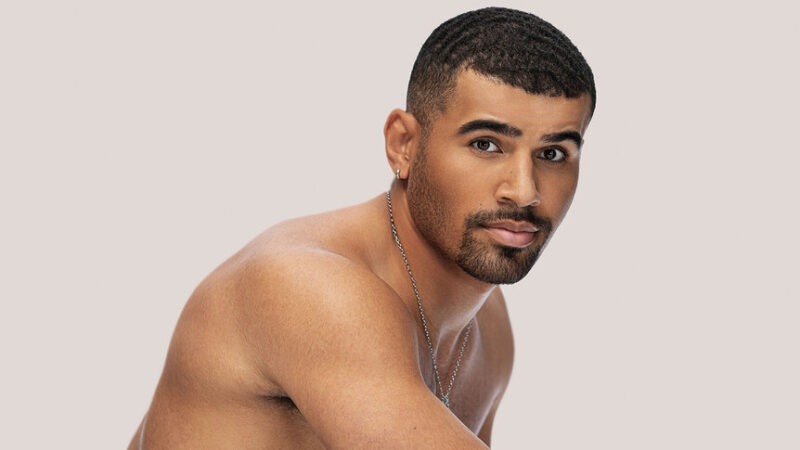
    Ronnie Gunter, a lacrosse player and recent Drexel graduate best known for his viral resemblance to the Eagles quarterback, made his TV debut Monday night.

    Sporting orange swim trunks and not much else, Gunter was one of 12 new men who entered the show on episode 18 of Love Island USA.

    It’s all part of Casa Amor, the mid-season twist where OG contestants split off into two villas and are forced to explore new connections. Gunter, 25, was one of a dozen men and six women who’ve been introduced to the show in the last two nights.

    He was also one of the men chosen to stay: Those 12 men were quickly cut to six in the same episode.

    Proving Philly is the center of the universe — even on a remote Fijian island and even at Casa Amor, Gunter was quick to tell North Philly native Melanie Moreno that he went to Drexel.

    In a prior episode, Moreno, 24, told her most consistent connection, Sincere Rhea — who’s from Cape May — that her dream first date for them would be to walk through Penn’s Landing.

    But with Rhea away at the other villa with new arm candy and the OG women forced to explore connections with their own new crop of islanders, Gunter stood out.

    He chose to kiss both Moreno and Jen Terry as part of a challenge and later won the women over by talking about family life and his cooking chops.

    “I want my wife sipping red wine on the countertop while I’m cooking,” he said. “I love to chef. Y’all will never go hungry with me around.”

    While attending college in Philly, where he majored in sports studies, Gunter achieved virality for his likeness to Hurts.

    Two years ago, in a TikTok reshared by accounts including ESPN, Gunter’s then-girlfriend (now-former Division I golfer and prominent sports broadcaster and social media personality Emma Carpenter) said he’d get mistaken for Hurts “everywhere we go.”

    @emmacarpenter

    No cuz it’s everywhere we go 😭

    ♬ MILLION DOLLAR BABY (VHS) – Tommy Richman

    Gunter told The Inquirer at the time that the comparisons started coming around his sophomore year — along with stares and photo requests — but he welcomed the attention for the most part.

    “I think it’s funny. And I mean, he’s not a bad guy to be compared to,” he said. “It’s an awesome comparison to be mistaken for that guy.”

    Even Drexel’s Lacrosse program got in on the fun, posting on Instagram in 2023: “All we’re saying is that we’ve never seen @_ronniegunter and @jalenhurts together.”

    Notably, Gunter’s comparisons to Hurts — and his graduation from Drexel — predated the popular look-alike contests that popped up nationwide months later. A different ringer won Philly’s grassroots quest for a Hurts double.

    Born and raised in Minnesota before heading Northeast for school, Gunter lives in New York these days, where he works as a program director for the nonprofit Harlem Lacrosse.

    So far, no one on Love Island has made any comments about Gunter’s resemblance to Hurts. But there’s a lot more island time to play out.

  • Villanova’s teams are going to the NCAA Tournament. Will they have any company from the Big 5?

    Villanova’s teams are going to the NCAA Tournament. Will they have any company from the Big 5?

    The three-year drought with no men’s team from the Big 5 in the NCAA Tournament will end, finally, with Villanova seemingly locked into the field of 68 for the first time since 2022.

    Kevin Willard’s Wildcats (23-7, 14-5 Big East) finish their regular season Saturday at home against Xavier before embarking on their postseason run beginning next week at the conference tournament in New York.

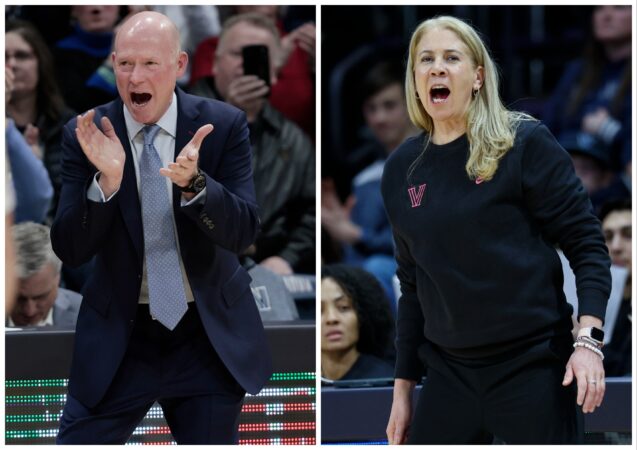
    Villanova’s women, too, appear on their way to the dance after a two-year drought. The Wildcats (23-6, 16-4) were projected as a No. 9 seed in ESPN’s latest women’s bracketology, and it’s hard to imagine that an opening-round loss in the Big East tournament would slide Denise Dillon’s team back to the bubble.

    Will Villanova have any local company?

    The contenders

    St. Joseph’s men: The Hawks may not have the best mathematical chance among the rest of the pack (more on that soon), but it’s worth starting here because they pulled off a pretty impressive road win Wednesday night at Davidson and secured their first double-bye and top-4 seed in the Atlantic 10 tournament since 2018.

    St. Joe’s coach Steve Donahue has his team in the Atlantic 10 tournament with a double-bye and top-4 seed for the first time since 2018. Could the Hawks make a run and reach the NCAA Tournament?

    This has been a pretty remarkable season on Hawk Hill considering all of the context. Former coach Billy Lange bolted for the NBA in the fall. Steve Donahue, whom Lange hired as an assistant after Penn fired him, was given the keys.

    The Hawks stumbled a bit at the start of the season, and then starting guard Deuce Jones was off the team by the holidays. But a team meeting in January helped turn the tide, and Derek Simpson, Jaiden Glover-Toscano, and company have been on a roll.

    Will they cut the nets down in Pittsburgh? It’s still pretty hard to imagine, given the talent of Saint Louis and Virginia Commonwealth at the top of the conference.

    But the double-bye means the Hawks will start the tournament in the quarterfinals, needing just three wins in three days to reach the dance. Bart Torvik’s NCAA hoops analytics site gives the Hawks a 7.8% chance based on thousands of simulations. That’s not nothing.

    Penn men: While we’re on the subject of math, it’s the Ivy League tournament that makes any of its participants more likely than those in other conferences to run the table simply because only four teams are invited and only two wins are needed to win an automatic bid.

    Penn is back in Ivy Madness for the first time since 2023.

    The Quakers, under Fran McCaffery, are back in Ivy Madness for the first time since 2023. They have plenty of talent with Ethan Roberts and TJ Power leading the way. Penn is the No. 3 seed and plays Harvard in the semifinals, a team the Quakers beat at home last weekend. A win would likely mean a date with Yale, the top team in the Ivy. But the Bulldogs just lost to fourth-seeded Cornell, which is the host site for the tournament. Penn beat Cornell twice this season.

    Torvik has the Quakers at 14.7% to win the league.

    Drexel women: The Dragons have one regular-season game remaining, Saturday at Towson, and sit second in the Coastal Athletic Association with a 13-4 record. That’s certainly good enough to be labeled a contender, especially considering that Amy Mallon led a 10-8 CAA team to a conference tournament championship two seasons ago.

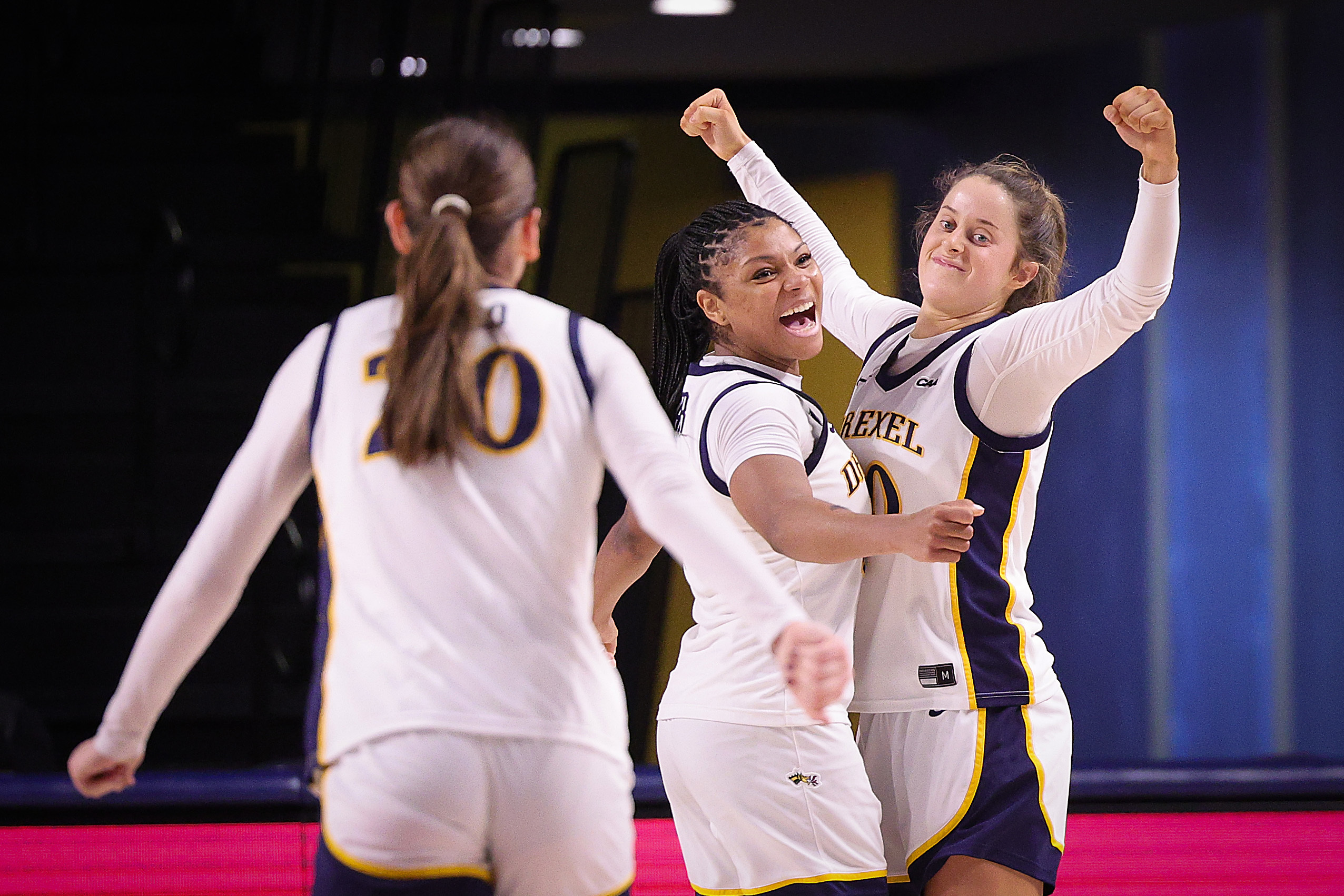
    Drexel guard Laine McGurk (right) celebrates with guard Amaris Baker (center) as Molly Rullo (left) joins them after they defeated North Carolina A&T on March 1.

    This year’s squad has won 11 of 12 and has two local products leading the way. O’Hara’s Amaris Baker, a senior, is second in the CAA in scoring with 19.0 points per game, and her backcourt mate, West Chester Rustin’s Laine McGurk, was at 13.2 points and 4.1 rebounds per game.

    The long(er) shots

    Drexel men: The CAA tournament is usually wide open. Twelfth-seeded Delaware reached the final game last season, a year after seventh-seeded Stony Brook took top-seeded Charleston to overtime in the final. Two years before that, Delaware took a 10-8 conference record and the fifth seed and went all the way to the NCAA Tournament.

    That’s where Drexel stands ahead of its first conference tournament game Saturday, at 10-8 and the No. 5 seed. The Dragons started 0-3 in conference and are 10-5 since. And though they haven’t beaten any of the four seeds ahead of them, weird things tend to happen at the CAA tournament. Torvik says this weird occurrence has a 4.5% chance of happening. So, not all that different from the Hawks running the table in the A-10.

    La Salle coach Mountain MacGillivray has led his team to go 10-8 in the conference.

    La Salle women: Mountain MacGillivray should be getting some coach of the year love both in his conference and locally in the Big 5. The Explorers won three A-10 games last season and five the year before. They went 10-8 this year. They faced Richmond in a tournament quarterfinal Friday night.

    Better luck next year

    La Salle men: Darris Nichols’ first season in Olney was marred by injuries, and though the Explorers have been a tough out at times, it’s bordering on impossible for them to get through the gauntlet that would be five wins in five days. (Torvik chances: 0.1%)

    Temple men: The Owls went from vying for the No. 2 seed and a bye to the semifinals in their conference tournament to needing a win Thursday just to qualify for it. They got that, but the prospect of running the table and winning five games in five days seems too daunting for a team that has seemingly been running out of gas. (Torvik chances: 1%)

    St. Joe’s women: Like La Salle, the Hawks went 10-8 in the A-10 and owned the tiebreaker to get the fifth seed. They lost in the quarterfinals Friday night to Davidson, 64-59, after a 66-45 win over 12th-seeded Duquesne on Thursday.

    Temple women: Temple is 7-10 entering its final regular-season game Saturday at home against Florida Atlantic. The Owls are minus-97 in point differential in seven games against the top four teams in the conference.

    Penn women: The Quakers are 6-7 in the Ivy and have one game remaining, Saturday at home against Brown, but they will not qualify for the four-team league tournament.

  • What happened to the Big 5? The decline of Philly basketball’s one-time legendary alliance began a long time ago.

    What happened to the Big 5? The decline of Philly basketball’s one-time legendary alliance began a long time ago.

    One afternoon in early December, Bill Raftery and Tim Legler, both La Salle alumni, returned to campus for an hourlong panel discussion about their careers in sports media, only to have the conversation shift to a topic with broader implications.

    It was a point of pride for the university to welcome back Raftery, who has been college basketball’s preeminent analyst for more than a quarter-century, and Legler, who has reached a comparable status at ESPN with his insights into the NBA. But 33 minutes into the event, the first question from an audience member wasn’t about the origins of Raftery’s trademark catchphrases (The kiss! … Onions! … Laundry on the deck!) or Legler’s game-film breakdowns.

    Bill Raftery, now broadcaster, graduated from La Salle and was inducted into the Big 5 Hall of Fame.

    “Can we bring the Big 5 back to its glory?” a man in the auditorium asked. “Because it was a national thing, right? It wasn’t just a Philly thing.”

    These days, most people who follow college basketball, if they’re being honest, have to acknowledge that the Big 5 isn’t much of anything anymore. The round-robin rivalries among La Salle, Penn, St. Joe’s, Temple, Villanova, and more recently Drexel have lost most of their juice.

    That white-hot competition, fueled by the benign hatred that only proximity and familiarity can ignite, used to define Philadelphia hoops. It has cooled. Now, just one school, Villanova, enters each season with the baseline expectation that it will qualify for the NCAA Tournament, and the pipeline of local recruits that once sustained these programs has all but dried up.

    window.addEventListener(“message”,function(a){if(void 0!==a.data[“datawrapper-height”]){var e=document.querySelectorAll(“iframe”);for(var t in a.data[“datawrapper-height”])for(var r,i=0;r=e[i];i++)if(r.contentWindow===a.source){var d=a.data[“datawrapper-height”][t]+”px”;r.style.height=d}}});

    Three of the six schools — Drexel, La Salle, and Penn — don’t have a Philadelphia native on their rosters. Interest in the city series has plummeted. A 2022 doubleheader at the Palestra drew an official attendance of just 3,300 people. And the Big 5 Classic, conjured in the aftermath of that alarming display of indifference, hasn’t revitalized the rivalries or restored any prestige to them.

    While this season has seen an uptick in the programs’ quality of play — Villanova is virtually assured of an at-large bid, and Penn, St. Joe’s, and perhaps Drexel could be strong enough to win their conference tournaments — that improvement hasn’t been enough to stem the dismal tide.

    Tim Legler, who led La Salle to the 1988 NCAA Tournament, said the Big 5 was once a “transformative” environment to play in.

    For their part, the panelists at La Salle mustered some nostalgia but weren’t optimistic. Legler, who grew up in Richmond, Va., remembered attending a Palestra doubleheader on a recruiting trip and marveling at the atmosphere: the streamers, the cheering, the chanting.

    “I turned to my parents and said, ‘This is the environment I want to play college basketball in,’” he said. “It was literally that transformative.”

    Still, he had no solution for salvaging the Big 5, and neither did Raftery, who suggested that smaller programs throughout the NCAA would soon be casualties of this new era of college basketball.

    “They’re trying to freeze [out] a lot of programs and leagues,” he said, “and I can envision maybe two or three conferences. They’ll run the whole thing, and the networks will pay for it. That’s the way it is.”

    It’s convenient to point to the sport’s lurch into modernity — into the era of Name, Image, and Likeness; of pay-for-play; of the permeable membrane of the transfer portal — as the cause of the decline. And it’s true: With the exception of Villanova, which is ensconced in the Big East and supported by engaged donors with deep pockets, college hoops’ evolution has made everything more difficult for the other, more vulnerable programs in the city. But this train has been rumbling down the tracks for a while, and its arrival should compel a reevaluation of the Big 5’s history, of the decisions and unstoppable forces that led it here, to the brink.

    To those Baby Boomers and GenXers weaned on the Big 5’s traditions, it’s surely incomprehensible and saddening to hear Raftery contemplate a world without it. But if the institution as Philadelphia knew it is fading away — and it appears to be, if it hasn’t already — the proper question isn’t Can it be saved? That one has been asked and is on its way to being answered.

    No, the better questions to chew on are these: How did the Big 5 survive, and at times thrive, as long as it did? And did any of the attempts over the years to preserve it and its identity actually contribute to its downfall?

    Villanova has become the only school in the Big 5 that enters each season with the baseline expectation that it will qualify for the NCAA Tournament.

    The seeds of rebirth and decline

    It’s tempting to picture the Big 5’s history as an unbroken string of unforgettable nights at the Palestra, great teams playing great games inside a gym packed to its uppermost corners with 9,000 people, give or take a few rascals who managed to sneak in for free. There were hundreds of such nights, to be sure. But it’s striking to put that past into a wider context and see how much certain changes and trends fostered and then jeopardized everything that made the Big 5 wonderful and unique.

    Those fond memories often gloss over a relatively fallow period for the Big 5 during the 1970s. Villanova had three consecutive losing seasons from 1972 to 1975. Temple went 16-37 over the ’74-75 and ’75-76 seasons and qualified for the NCAA Tournament once in an 11-year span from 1972 to 1983. St. Joe’s went 8-17 in ’74-75, the first of six straight seasons in which the Hawks missed the NCAAs. Penn was the exception, and La Salle held its own, but a Daily News back-page photo captured the overall listlessness perfectly: Harry “Yo-Yo” Shiffern, the lovable vagrant who was the city series’ unofficial mascot, fast asleep during a Palestra doubleheader.

    The Big 5 was in a collective funk, and it took a few pivotal developments to snap it back to prominence and position it to flourish further.

    Lionel Simmons (center) is the Big 5’s all-time leading scorer and fifth in NCAA history with 3,217 career points.

    College basketball’s landscape was flatter then. The NCAA Tournament went to 32 participants in 1975 and to 40 in 1979, and many of the qualifying programs were mid-majors. During the ’70s, each of these teams reached the Final Four: Jacksonville, St. Bonaventure, New Mexico State, Western Kentucky, Marquette, UNC Charlotte — and, in ’79, Penn. The Quakers upset North Carolina, Syracuse, and St. John’s before Magic Johnson and Michigan State pulverized them in the national semis. But their run was the most improbable of the decade, and their timing was impeccable.

    The following season, after a star turn at the Pan-American Games in Puerto Rico, La Salle’s Michael Brooks was named the Kodak National Player of the Year. As terrific as Brooks’ senior campaign was — he averaged more than 24 points and 11 rebounds, scoring 51 points in a triple-overtime loss at BYU — his candidacy for the honor was buoyed by Indiana’s Bob Knight, who had coached him at the Pan-Am Games and touted him to reporters.

    “If I were allowed to start my own team tomorrow,” Knight said in January 1980, “the first person I would pick would be Michael Brooks.”

    Such praise from the best, the most famous, and the most temperamental coach in the country carried weight, and Knight’s words elevated the reputations of both Brooks and Philadelphia basketball. That ascendance continued in March 1981, when St. Joe’s, under Jim Lynam, won the East Coast Conference tournament, knocked off top-ranked DePaul in the second round of the NCAAs, and advanced to the regional final before losing to the eventual national champs: Knight, Isiah Thomas, and the Hoosiers.

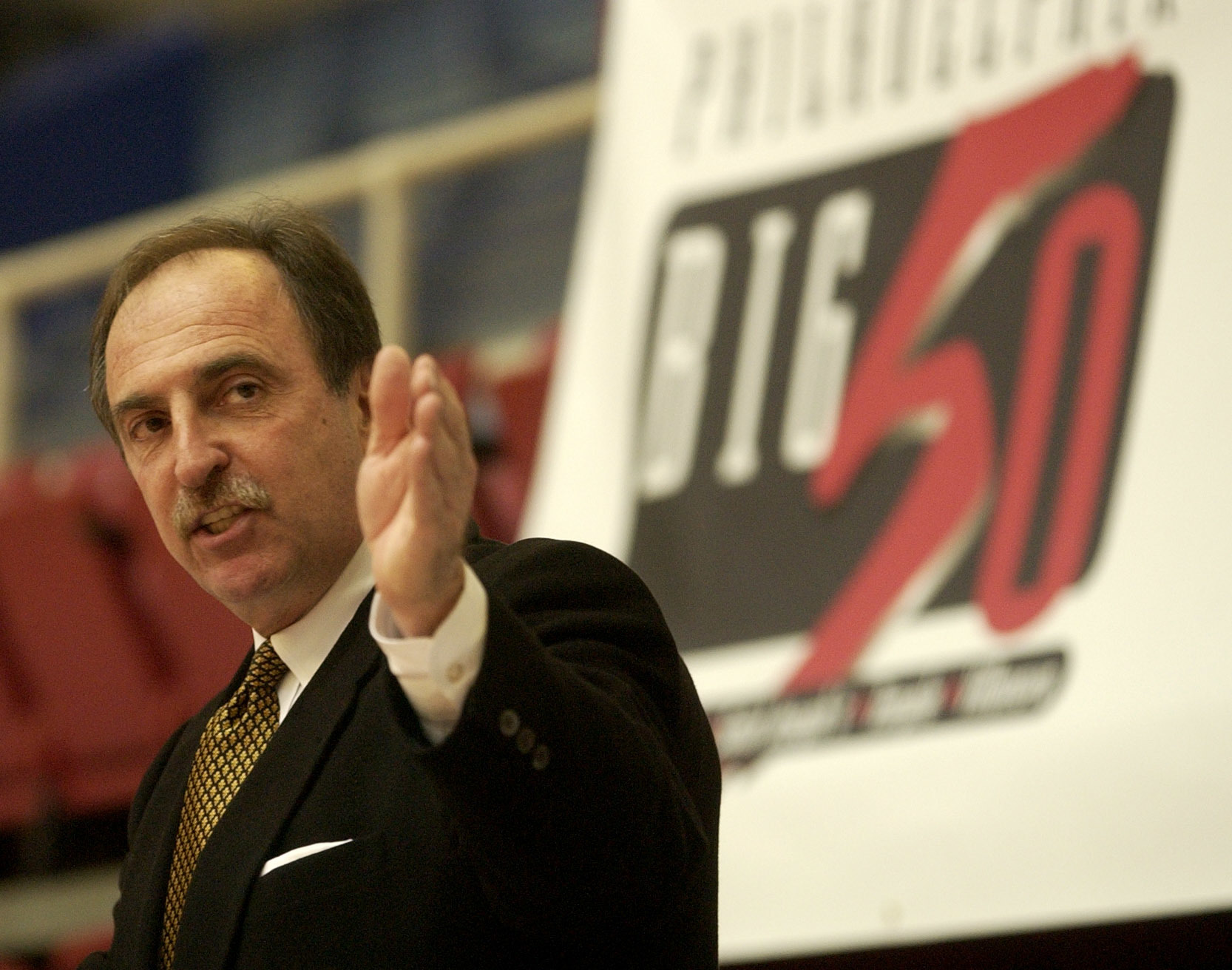
    Fran Dunphy coached more than 1,000 games as a Division I head coach.
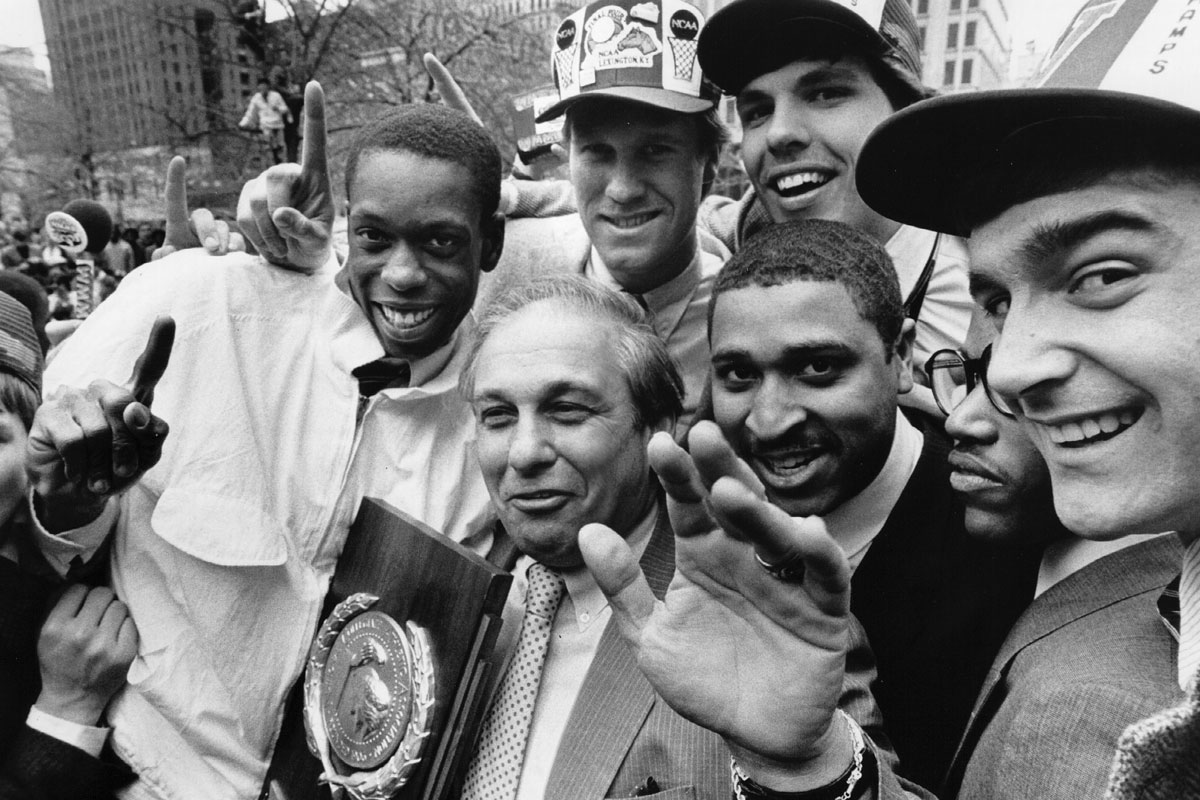
    Villanova coach Rollie Massimino gathers in Center City with players Ed Pinckney, Wyatt Maker, Chuck Everson, Dwight Wilbur, Veltra Dawson, and Brian Harrington in 1985 after winning the national title.

    So the Big 5 was on its way back, regaining relevance among casual college hoops fans and among the sport’s cognoscenti. The two most significant factors in its renaissance, though, happened off the court. In March 1980, Villanova left the Eastern Eight and jumped to the Big East. And in August 1982, Temple hired John Chaney as its head coach.

    Those moves and the rewards they wrought thrust those two programs, and in turn the entire Big 5, into a higher realm. Villanova won the national championship in 1985 — an underdog triumphant, a marvelous story enhanced by the Wildcats’ status as a program in a major conference in a sport whose vast national reach was still expanding: Magic vs. Larry Bird in ’79, North Carolina State surviving and advancing in ’83, Dick Vitale, CBS, ESPN, Big Monday, Selection Sunday, March Madness consuming a month’s worth of America’s attention.

    Chaney was this wild-eyed, lesson-teaching, justice-preaching wizard, confounding opponents with his matchup-zone defense, crafting the hardest schedule in the nation every year to battle-test his teams, leading the Owls to a No. 1 ranking in 1988 and three Elite Eight appearances in a six-year span.

    Fran Dunphy led Penn to a 69-14 record and three NCAA Tournament appearances from 1992 to 1995.

    Nestled in the Metro Atlantic Athletic Conference (MAAC) with schools of similar profiles, La Salle went to the NCAA Tournament four times and the NIT twice in Speedy Morris’s first six years as head coach and had another national player of the year: Lionel Simmons. From 1992 to 1995, Penn dominated the Ivy League under Fran Dunphy: a 69-14 record, three NCAA Tournament appearances and a first-round victory over Nebraska, Jerome Allen and Matt Maloney forming one of the best backcourts in the country. St. Joe’s went 26-7 and advanced to the Sweet 16 in 1996-97, the season that introduced that notorious wallflower Phil Martelli to the rest of the country.

    Those were high times. They wouldn’t last. In fact, by the time St. Joe’s enjoyed its remarkable 2003-04 season and Jay Wright was restoring Villanova to national-title contention, the seeds of the Big 5’s diminishment had already been planted.

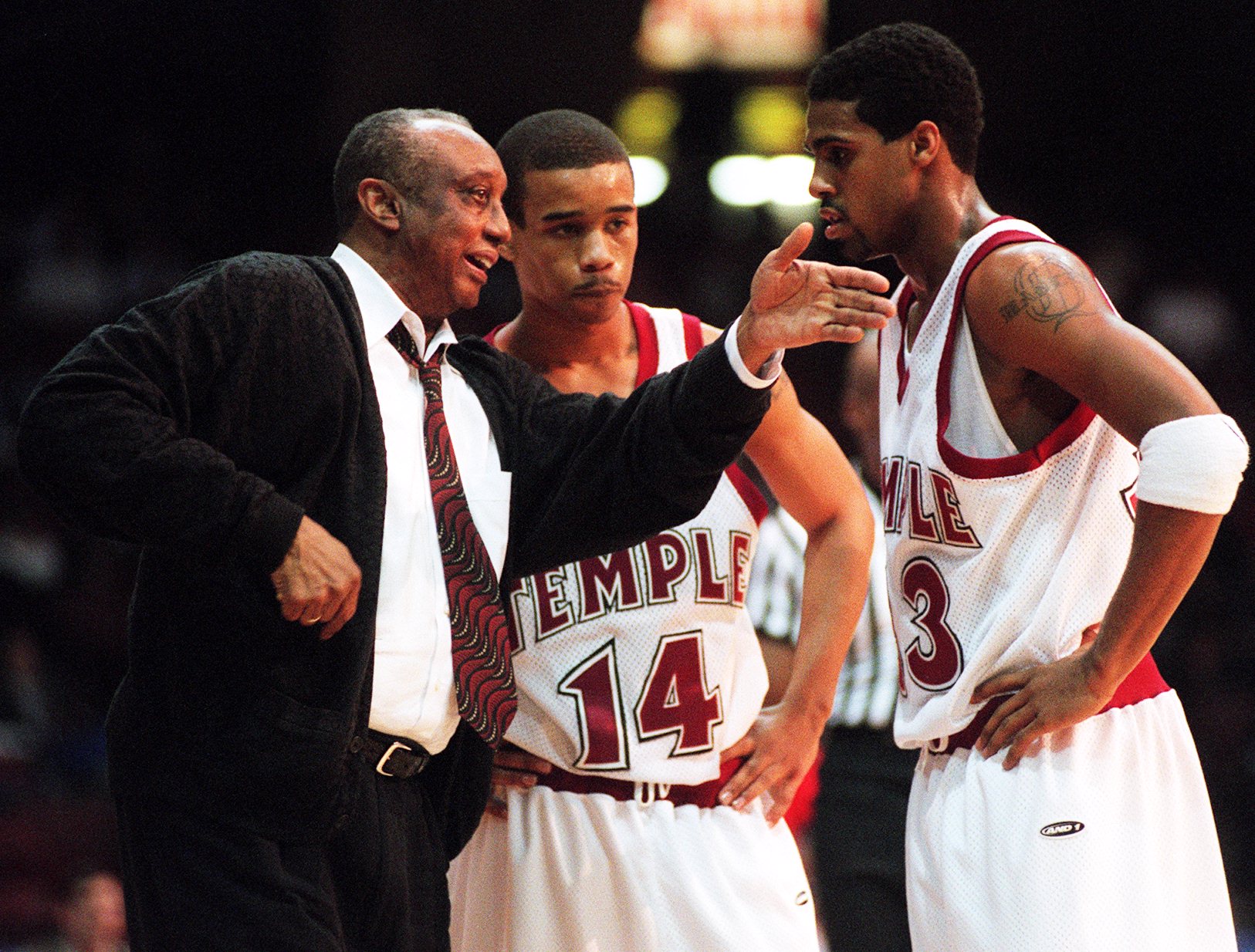
    Former Temple coach John Chaney with players Lynn Greer and Quincy Wadley.

    Hard circumstances and poor decisions

    The factors that damaged the Big 5 were legion. Some applied to just one or two programs. Some applied to all of them. Some were mistakes, bad choices. Some were unavoidable and beyond the programs’ control.

    Start with La Salle. Given an opportunity in 1990 to build an 8,000-seat on-campus basketball arena — Tom Gola offered to raise the funding for it — the university said no. Then its leadership made what is commonly considered the disastrous decision to relocate from the MAAC to the Midwestern Collegiate Conference. The program has never recovered.

    Look at Temple. Chaney, a singular presence and attraction, retired in 2006. Though Dunphy, his successor, guided the Owls to six consecutive NCAA Tournament appearances, the university’s quest for football dollars led it to leave the Atlantic 10 for the American Athletic Conference — and abandon its basketball-first identity.

    Again: individual schools, individual issues. But those problems were byproducts of college basketball’s overall reshaping during the 1980s and ’90s. In retrospect, the most infamous moment in Big 5 history — the dissolution of the round-robin, at the insistence of Villanova and coach Rollie Massimino, after the 1990-91 season — was an acknowledgment of those changes, and the attempts to preserve the Big 5 as it had always been would inevitably fail.

    Phil Martelli led St. Joe’s to go 26-7 and advanced to the Sweet 16 in 1996-97.
    Former Villanova coach Steve Lappas jokes with the other Big 5 coaches during a taping of the Comcast basketball show in 1997.

    When Villanova pushed to cut back on city series games and Temple pushed for more of those matchups to be played at campus sites other than the Palestra, they weren’t merely trying to make things easier for themselves. They were responding and reacting to college basketball’s new conditions for success.

    Sneaker companies had begun financing all-star camps, AAU programs, and college programs. Now coaches didn’t have to rely on local high school teams to find players, and great Philly players were no longer making their names solely in the Public League, the Philadelphia Catholic League, or the Sonny Hill League. They were traveling to play AAU. They were seeing other cities, meeting other coaches. They weren’t as likely to stay home to play college ball.

    “The most important recruiting device is recognition,” Chaney told author Bob Lyons in Palestra Pandemonium: A History of the Big Five, “and recognition comes from national TV. … They don’t know what the Big 5 is outside of this area. They knew who Villanova was when they won the national championship, so you could always attach yourself to them. But it wasn’t going to get you very far because no one knew the history and tradition of the Big 5.”

    In that way and others, the inherent parochialism of the Big 5 worked against it. For instance, Dave Gavitt, the founding commissioner of the Big East, struck a deal in 1980 with ESPN, then a fledgling sports network hungry for programming, for the exclusive rights to televise the conference’s games. That arrangement made it difficult, if not impossible, for Villanova and any other Big East school to be involved in a 7 p.m./9 p.m. Palestra doubleheader and for a national television audience to watch that doubleheader.

    “We needed the game between Villanova and Georgetown at 8 p.m. to go on our network,” Gavitt told Lyons. “We couldn’t clear games at 7 p.m. because of the game shows that all the local stations carried.”

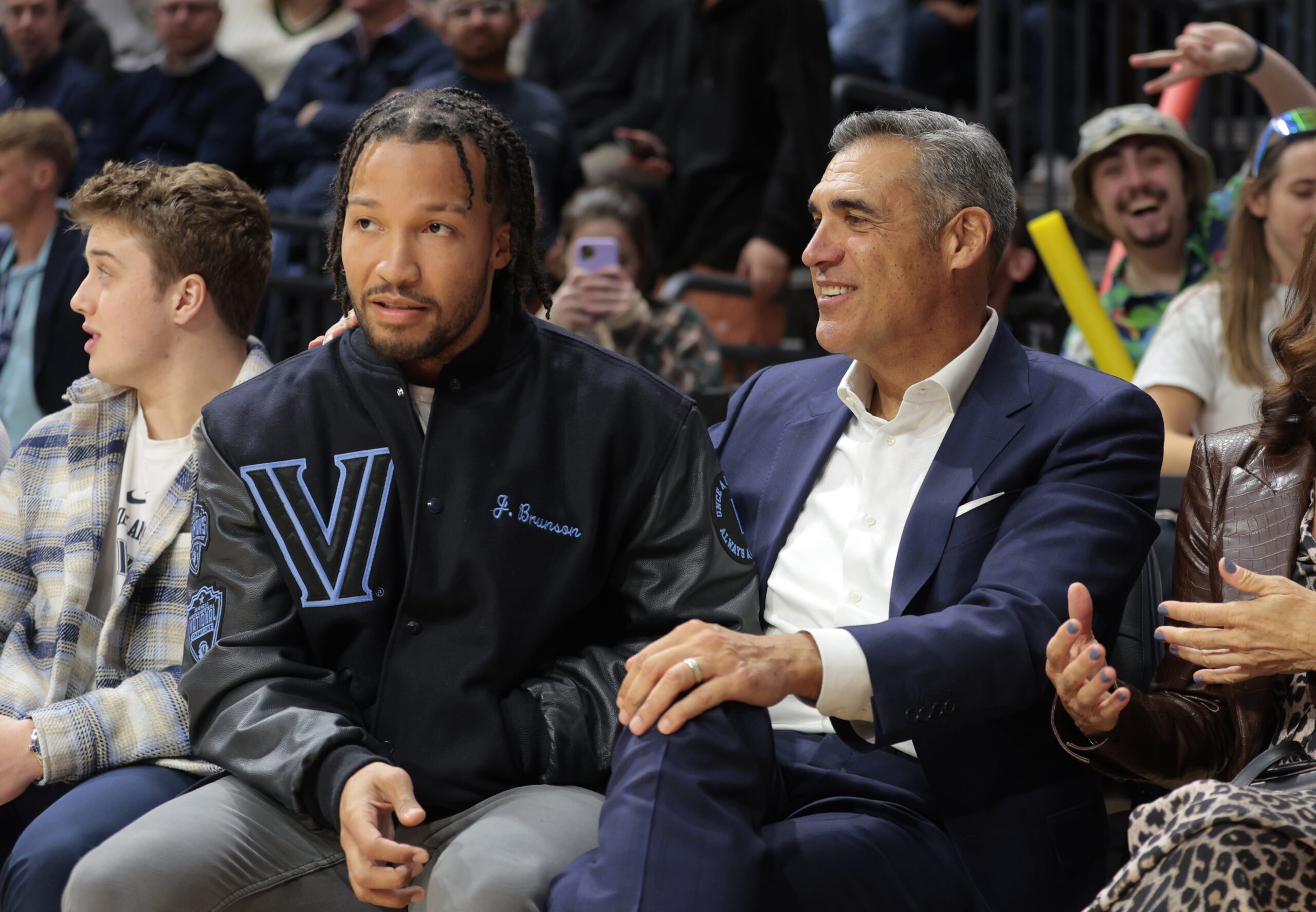
    Jalen Brunson and former Villanova coach Jay Wright at the Finneran Pavilion on Feb. 8, 2023.

    As it was, the Big 5 had a TV deal of its own, with the Philly-based premium cable channel PRISM, starting in 1978. Yet the PRISM commitment actually limited the exposure of some of the Big 5’s schools.

    During the 1989-90 season, as one example, the Atlantic 10 wanted to place a Temple-La Salle game on ESPN so that it would be telecast nationally. “ESPN,” Lyons wrote, “subsequently refused to carry it, however, because it did not want to black it out in PRISM’s trading area.”

    So hoops fans in the Delaware Valley could watch the game at home, but no one else could. At a time when college basketball was becoming more accessible, the Big 5 was cutting itself off from everyone who wasn’t already familiar with it.

    That history might seem ancient. It’s not. Wright’s tenure and the economics of the sport have placed Villanova on a separate tier from the other programs. And now that he, Chaney, Dunphy, Martelli, and Morris — the local legends who were the backbone of the Big 5 — aren’t coaching anymore, the remaining infrastructure hasn’t been strong enough to restore the teams to excellence and maintain the intensity of the rivalries.

    It’s a shame, but it was only a matter of time. Yes, the Big 5 was a Philly thing. Yes, it was a national thing. Yes, it was a glorious thing. And now it’s gone, and all the wistfulness and wishful thinking in the world won’t change the hard and inescapable truth: That glory isn’t coming back.

  • How Shane Blakeney went from deep reserve to Drexel’s leading scorer

    How Shane Blakeney went from deep reserve to Drexel’s leading scorer

    As an incoming freshman at Drexel, Shane Blakeney showcased his potential halfway across the world.

    In the summer of 2022, Drexel played a mix of professional and club teams in Italy as part of an international tournament. In one of those games, Dragons center Garfield Turner found himself under the rim to grab an easy put-back shot. Then, a lengthy freshman swooped in.

    “Out of nowhere, I just see this long arm come behind me and just punch it [in],” Turner said, laughing. “We were joking about that for a little bit. It was his first time Shane dunked on somebody in college.”

    Now, the 6-foot-5, 200 pound junior is leading Drexel (16-14, 10-7 CAA) with a team-high 14.5 points per game, while spearheading the Dragons defense. Drexel is allowing the fewest points per game (65.1) in the conference, and Blakeney has come away with 22 blocks and 35 steals.

    Drexel guard Shane Blakeney is averaging a team-high 14.5 points this season.

    When he first arrived on campus, the guard was 25 pounds lighter. He struggled to get on the court due to his slender frame and had a few lingering injuries, so he was granted a redshirt year.

    “Between high school and college, I went through some injuries, which was rough and kind of put me out of touch with basketball,” Blakeney said. “I hadn’t [gone] a year without basketball ever since I started, so I think transitioning back in that redshirt freshman year was difficult.”

    Coach Zach Spiker added: “He’s playing 38 minutes a night. A guy that wasn’t able to physically get on the floor. Now we can’t get him off.”

    ‘Committed to the work’

    Growing up in Rock Hill, S.C., Blakeney’s parents introduced him to several sports. He played soccer and football — attempted baseball, though he “wasn’t a big fan” — and swam competitively.

    However, basketball was the sport with which his family was most connected.

    Blakeney’s uncle, Charles Kirkland, was a standout at Cheyney University and played professionally in the Netherlands for nearly a decade. His cousin is Jazian Gortman, a former five-star recruit in the Overtime Elite League who played on the Dallas Mavericks and Oklahoma City Thunder’s G League affiliates.

    At 7, Blakeney started practicing with Bobby “ICE” Isom, a South Carolina-based basketball trainer, and stayed with him throughout high school. When Drexel is on a break, Blakeney will drop by to work with Isom.

    “[Blakeney] was committed to the work and never complained about it either,” Isom said. “I knew he was going to be a special talent at a young age.”

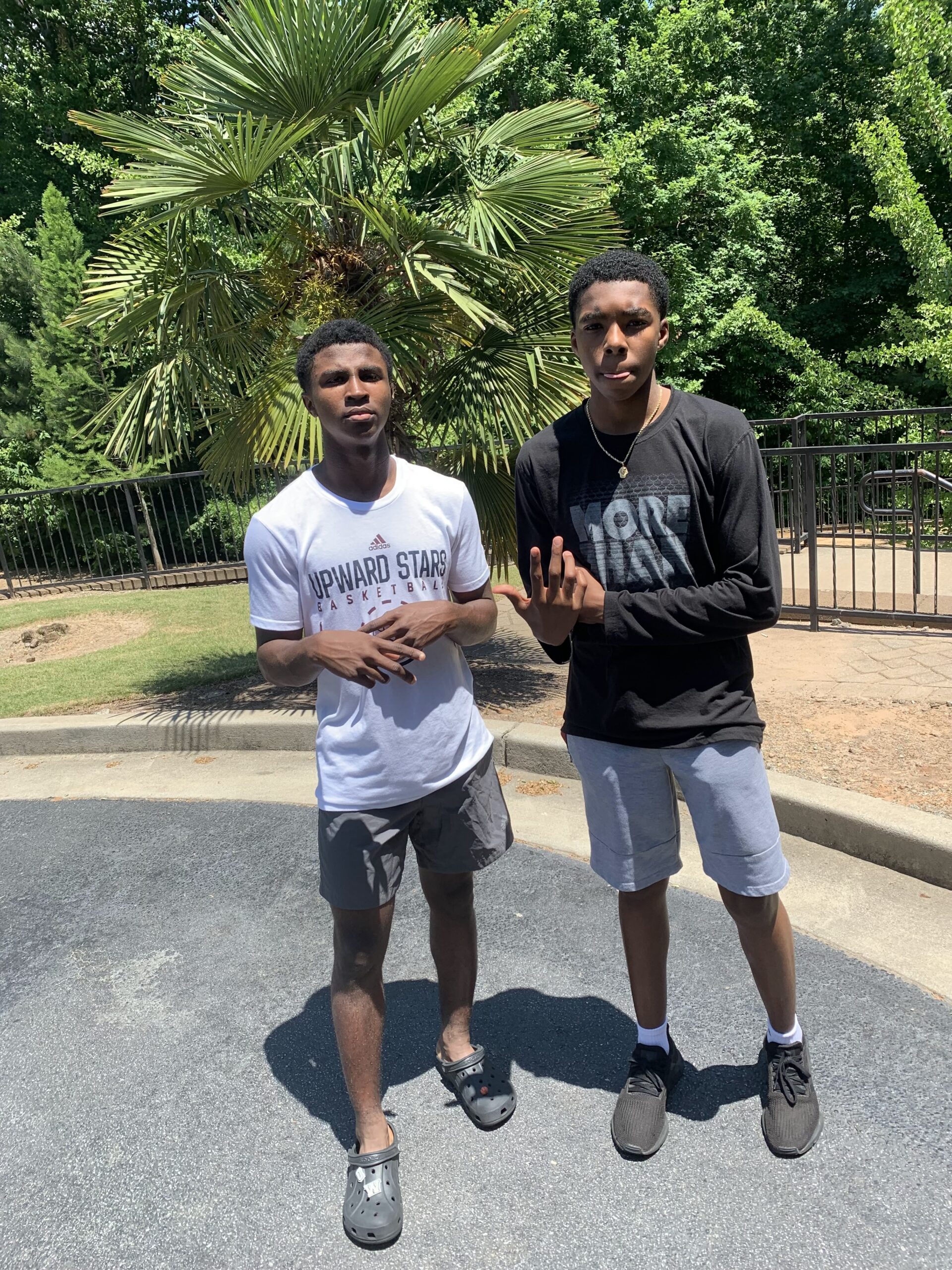
    Blakeney started AAU basketball in third grade, and at age 15 jumped to Upward Stars Southeast, a premier travel team on the Adidas Circuit. There, he met Dylan Williams, now a 5-11 senior guard at Penn.

    Penn’s Dylan Williams and Drexel’s Shane Blakeney played AAU basketball together in South Carolina.

    When Williams was looking to transfer to Penn from Triton College in 2023, his former teammate was one of the first peoplehe called.

    “The Shane then is a different type of build [compared to] now,” Williams said. “He’s more cut, taller, way taller. … We were like the same height [then] because I really haven’t grown since.”

    Isom added: “I think encouragement was what [Blakeney] needed most while he was a scrawny, short kid heading into high school, trying to find his way in the world of basketball.”

    At Legion Collegiate Academy, Blakeney played four years on varsity and surpassed 1,000 career points.

    “South Carolina [basketball] is pretty similar to Philly,” Blakeney said. “I would say probably a little bit more skilled, but toughness wise, you got a lot of athletes down south that bump and bang. They all play football. It’s physical, and if you can’t be physical, you won’t really last.”

    Spiker also has the same mentality. During a high school practice that college coaches came to visit, Blakeney slugged at the back of sprint lines. The Drexel coach took notice.

    “[Spiker] pulled me into the office afterward and kind of chewed me out,” Blakeney said. “A lot of the people would be like, ‘Oh, this coach is tripping.’ But our family was like, ‘Hold on, this is our values.’”

    ‘Never a dull moment’

    Turner nicknamed Blakeney “motor mouth” because he’s always talking.

    Drexel guard Kevon Vanderhorst described his teammate as a “hilarious dude,” saying there is “never a dull moment with him.” While Spiker believes Blakeney’s personality is “refreshing and genuine.”

    “I think I’m more of a bubbly personality than maybe some other teammates,” Blakeney said. “I like seeing that side come out of them. Talking, having fun, laughing is kind of what life’s experiences are about. … I’ve always been kind of a silly guy, so I had to learn to tone it down in class growing up.”

    On the court, Blakeney is no joke.

    “There’s two different people on the court and off the court,” said Vanderhorst. “I’d say off the court, Shane is funny, he’s very outgoing. On the court, Shane is straight business. Not a guy with a lot of jokes, and not a guy that’s going to take a lot of jokes.”

    Blakeney has emerged on Drexel’s roster. He cracked the rotation in 2023, averaging 5.5 minutes. Then, he stepped into the team’s sixth man role, notching an average of 7.6 points last season.

    “I had to learn to start taking a role of support and doing what you need to do to win,” Blakeney said. “And you don’t do that in high school. High school, you’re the man everybody loves. You go score points and look cool.”

    Now the leader, Blakeney will be expected to carry his team in the conference tournament. Drexel will visit Hofstra on Tuesday (7 p.m., Fubo) in the final game of the regular season. The Dragons are in fourth place in the CAA, and if they can stay in the top four, they will receive a bye in the 13-team tournament.

    “Just seeing the work [Blakeney’s] put in, seeing his growth since we’ve been here, little skinny Shane when we first got here to now our top scorer — it’s great,” Turner said.

  • Amaris Baker scores 27 as Drexel holds off Elon’s late rally to win 68-59

    Amaris Baker scores 27 as Drexel holds off Elon’s late rally to win 68-59

    Drexel is winning at the right time.

    On Friday, Drexel defeated Elon, 68-59. After starting out 0-2 in Coastal Athletic Association play, the Dragons have rattled off eight wins in their last 10 conference outings.

    The Dragons (15-8, 8-4 CAA) pushed their lead to 19 points late in the third quarter behind fifth-year guard Amaris Baker’s 27 points. The Phoenix cut Drexel’s lead to single-digits in the fourth, but ultimately dropped their ninth consecutive game to the Dragons.

    Drexel currently sits in fifth place in the CAA standings with six games remaining. If Drexel can clinch a top four seed in the conference, the team will receive a first-round bye in the CAA Tournament.

    “Every game at this point is going to be a position game for us,” said Drexel coach Amy Mallon. “I think that really has to be the mentality of this team. … We always take it game by game and possession by possession, but they have to understand right now where we are and where we fall.”

    Local leaders

    Baker, the CAA’s leading scorer and a Cardinal O’Hara graduate, notched her 14th game this season scoring at least 20 points. She also logged five rebounds and two assists.

    “[Baker’s] composure this year with what she’s seen as one of the best players in the league, as far as scoring — they’re keying in on her every week,” said Mallon. “So the fact that she’s still capable of putting up the numbers she has been able to put up just goes to show the discipline she has.”

    Drexel’s Amaris Baker (right) is the leading scorer in the CAA.

    Behind her in the stat sheet was another local product, Archbishop Wood’s Deja Evans. The junior forward logged 14 points and a team-high seven rebounds. Evans’ efforts on the board were a major factor in Drexel winning the rebounding battle, 31-20.

    After trailing big in the third quarter, Elon made the game competitive in the fourth behind freshman center Tamia Watkins. The three-time CAA rookie of the week scored 10 of her team-high 16 points in the final period.

    Elon cold from deep

    The Dragons were perfect from deep through the first quarter, shooting 4-for-4 from three-point range. Baker made two of those threes.

    Meanwhile, Elon’s (11-13, 6-6) shooting woes started early and carried throughout the game. The Phoenix shot 23.8% from deep compared to Drexel’s 63.6% from three

    “We mostly just locked in on defending them outside the three, and when we’re in our 2-3 [zone defense], we just were moving well together, and we’re just communicating well together,” said Evans.

    The Dragons turned the ball over 10 times in the first half, taking a nine-point lead to the half. In the second half, Drexel cleaned up their ball security, turning it over nine times.

    ‘Staying composed’

    A 12-0 run powered by Watkins helped Elon cut Drexel’s lead to six points with just over four minutes to go.

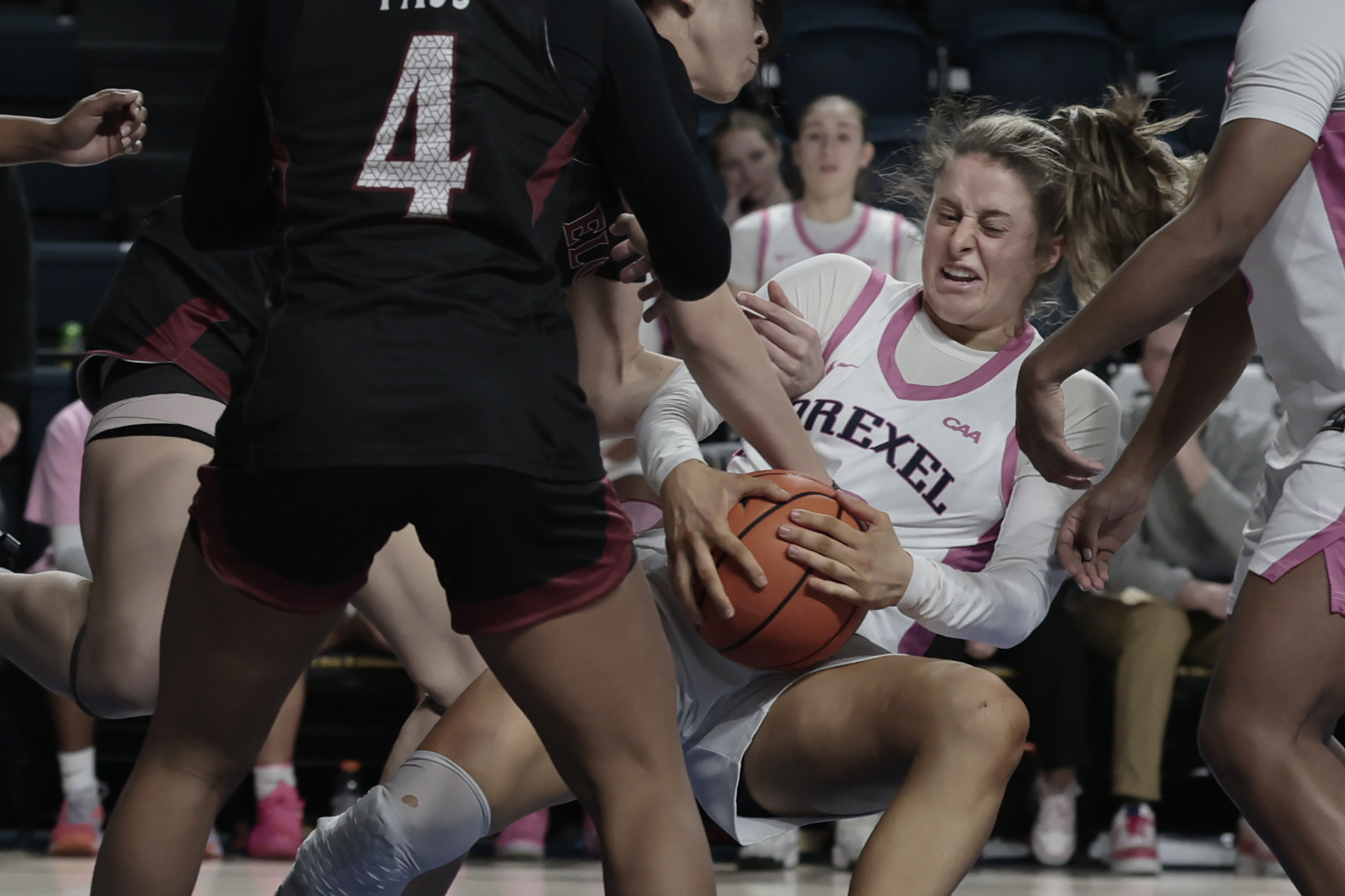
    Drexel’s Laine McGurk (center) falls backward trying to control a loose ball against Elon.

    Eight of Drexel’s 15 points in the fourth quarter came from the line to help the Dragons outlast the Phoenix.

    “In a fourth quarter, they go on a run, and you can sustain and make sure you stay disciplined. Teams are going to have runs,” said Mallon. “I thought we did a nice job staying composed, understanding what needs to be done.”

    Up next

    Drexel goes on the road next Friday to face Hampton for a second time this season (7 p.m., FloCollege).

  • Big 5 hoops: Why Kevin Willard doesn’t mind a Villanova shot clock violation, predicting award winners, and more

    Big 5 hoops: Why Kevin Willard doesn’t mind a Villanova shot clock violation, predicting award winners, and more

    Every once in a while, Kevin Willard loves when the shot clock expires before a Villanova shot attempt.

    There really is a time and place for everything.

    “Everyone will say, ‘You’re nuts,’” Willard said Tuesday night after Villanova rallied late to beat Marquette. “It takes 30 seconds; it sets up our defense. The worst thing you can do is come down and jack up a shot with 2 seconds on the shot clock, long rebound, your defense isn’t set. I’d rather have a shot-clock violation, set my defense up, have them work for 25 seconds, and then take 30 seconds and the game’s over.”

    Villanova has taken its share of violations in the second half of victories this season. There were two during a 12-point win over Seton Hall on Feb. 4 while the Wildcats held leads of 14 and 12 inside of five minutes. They took one vs. Providence up by 19 points with four minutes left. They took one vs. Butler while ahead by 12 with 2½ minutes to go. And they had three during their Big East opener on Dec. 23, when they built a big lead over Seton Hall on the road and won by eight.

    To be clear, there were no such violations during Tuesday’s win. So how did we get to this topic? Willard was asked after the game about tempo and whether he thought the team could play a little faster. The Wildcats are ranked 337th by KenPom’s adjusted tempo metric and 296th in average possessions per game (68.4).

    Willard, who has the Wildcats at 19-5 overall and 10-3 in the Big East entering Saturday’s game at Creighton, is a passionate talker of tempo. He went on a mini rant about the subject in April at his introductory news conference at Villanova. He focuses on defensive tempo, he explained then, the amount of time it takes for an opponent to get off a shot. On the offensive side, the difference between shot speed from top to bottom is only a matter of a few seconds, he said.

    “You know the difference between the 20th fastest team and us?” Willard asked Tuesday. “1.6 seconds.”

    By average number of possessions, the difference between Villanova at 297th and the 100th-ranked team (Miami) is just four possessions.

    Freshman point guard Acaden Lewis is charged with setting Villanova’s tempo on offense.

    “I have a young team, and when we get up I’m going to control the ball and take the air out of the ball,” Willard said. “That’s one of the reasons why our tempo is so low is if you watch any time we’ve gotten up more than 12, I’ve taken the air out of the ball and we have run the clock down. One of the easiest ways to lose leads is to take quick shots.

    “I think we play pretty fast. It’s not like he walks the ball up,” Willard said, pointing to freshman point guard Acaden Lewis. “It’s not like we’re ever walking the ball up. It’s 1.6 seconds. Everyone gets stuck on that tempo s—.”

    Award season approaching

    Less than a month of regular-season basketball remains, so it feels like a good time to round up who could win Big 5 awards.

    Let’s start with the coaches. The easy answer here is Villanova sweeping. Willard is on his way to stopping the three-year NCAA drought on the men’s side. Denise Dillon has her fifth 20-win season in six years as Wildcats coach. But those are the obvious answers partially because they coach teams that entered the season with at-large NCAA Tournament chances.

    But how about Mountain MacGillivray, the La Salle women’s coach? The Explorers went 4-15 in the Atlantic 10 last season. They’ve nearly doubled that total so far in 2025-26 and still have five games left. And what about Adam Fisher? The Temple men’s coach had to rebuild another roster in the offseason and has the Owls at 7-4 in the American Conference and in the mix. Or Steve Donahue, who stepped into a weird situation at St. Joseph’s, got off to a slow start, and has the Hawks in fourth place in the A-10?

    La Salle’s Ashleigh Connor is guarded by St. Joseph’s Rhian Stokes on Jan. 28.

    As for player of the year on the men’s side, Villanova’s Tyler Perkins and Lewis have good arguments, as do Penn’s Ethan Roberts, Derek Simpson of St. Joe’s, and Temple’s Derrian Ford. On the women’s side, it might be Villanova sophomore Jasmine Bascoe’s award to lose. But La Salle’s Ashleigh Connor is having a great season, as is Drexel’s Amaris Baker and Gabby Casey of St. Joe’s.

    Dillon’s Wildcats on the bubble

    The Villanova women won by 40 Wednesday night at Xavier and Bascoe reached the 1,000-point plateau in less than two full seasons. The Wildcats are rolling. They’re 13-3 in the Big East and firmly in second place, two games clear of Seton Hall in the loss column.

    But they’re also firmly on the NCAA Tournament bubble. ESPN’s latest bracketology had the Wildcats as a No. 10 seed and in the “last four byes” group. The projected field capped just six spots behind them.

    Villanova coach Denise Dillon with her star guard, Jasmine Bascoe.

    Like the men, the women are in Omaha, Neb., this weekend. They play a Creighton team on Sunday that they already beat by 10 at home. It’s not a great time to have a slip-up, because after that it’s the annual home game vs. No. 1 UConn, which is undefeated and already beat Villanova by 49. Just two games are on the schedule after that: a home game vs. fourth-place Marquette and a road showdown at Seton Hall. Then comes the conference tournament.

    It’s crunch time for the Cats.

    Speaking of the NCAA Tournament

    We’ve mentioned a few times in recent weeks that the Villanova men are closing in on locking up an at-large NCAA Tournament bid. The Wildcats are at 99.1% to make the NCAA Tournament, according to Bart Torvik’s analytics site.

    Since we last took stock of the Big 5 men’s teams, a few more got on the positive side of .500 in league play, which brings a better possibility of running the table come conference tournament time.

    What’s Torvik’s math — which is based on thousands of simulations — for the rest of the pack?

    • Penn: 10.1%
    • Drexel: 3%
    • Temple: 2.9%
    • St. Joe’s: 2.6%
    • La Salle: 0.1%

    The Big 5’s streak of no men’s teams looks like it’s ending. Just don’t count on Villanova having any company at the dance.

  • Drexel starts slow and can’t keep pace with Monmouth in 93-73 loss

    Drexel starts slow and can’t keep pace with Monmouth in 93-73 loss

    Drexel came out flat vs. Monmouth on Thursday.

    The Dragons were dominated by Monmouth from tipoff, losing 93-73. The Hawks’ 93 points were the most points allowed by Drexel this season.

    The Dragons trailed by as many as 27 points in the second half.

    “Today, it stings, and frankly … I want it to sting because hopefully that adversity can propel us forward. So we need to sit in this a little bit. That’s how you grow,” said Drexel coach Zach Spiker.

    Drexel has lost two of its last three and have dropped to fifth in the Coastal Athletic Association standings. The top four seeds in the CAA receive a bye in the conference tournament.

    Monmouth’s McLain shows out in return

    Entering Thursday’s game, Drexel (13-13, 7-6 CAA) boasted a balanced offense with five players scoring at least nine points a game. Their leading scorer in the blowout loss was not one of their usual five.

    Sophomore guard Dillon Tingler, who was averaging 3.6 points before facing Monmouth, led the way for the Dragons with a career-high 19 points and six rebounds. Sixteen of Tingler’s points came in the second half.

    Drexel’s usual suspects also made their way into the box score. Junior guard Shane Blakeny, the team’s leading scorer, notched 17 points and forward Victor Panov added 14.

    Meanwhile, the Hawks (13-12, 7-4) were willed by a new face to the lineup.

    Kavion McClain, a shifty 5-foot-10 point guard, led the way for Monmouth with 20 points, six assists, and three steals. Thursday was just McClain’s second game of the season. The NCAA forced McClain to sit out until now due to a former teammate at Abilene Christian being indicted in a point-shaving scandal.

    “They have good basketball players, right?” said Spiker. “And they’ve added another good basketball player to that lineup. When you do that, you become more dynamic.”

    Drexel doomed by drought

    Drexel played without fifth-year big man Garfield Turner. Although the center has only started in three games this year, he averages 19 minutes — the most by a center on the team.

    Spiker did not comment on Turner’s absence, but noted the team “hope[s] to get him back soon.”

    Without Turner, Monmouth consistently outrebounded Drexel. The Hawks outrebounded the Dragons 23-12 in the first half, with 11 of their 45 points coming on second chance buckets.

    With just over 12 minutes to go in the first, Drexel senior guard Eli Beard made his second three-pointer to bring the Dragons’ deficit to 21-14. After Beard’s bucket, Drexel did not score for the next seven minutes while Monmouth continued to build its lead.

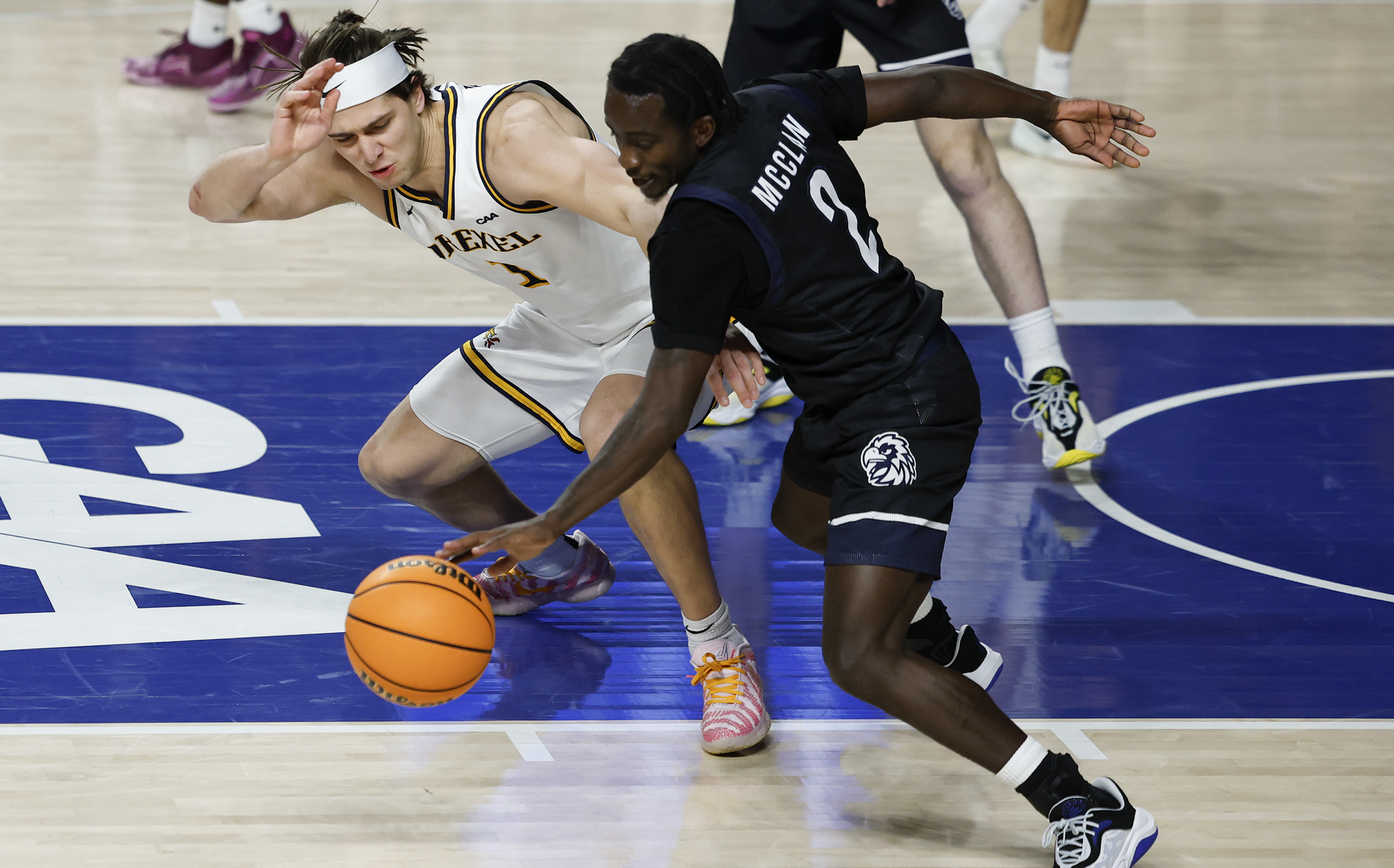
    Drexel forward Victor Panov (left) loses the ball while being defended by Monmouth guard Kavion McClain during the second half on Thursday night.

    Defensive breakdown

    From a Jan. 8 win over Stony Brook through the end of the month, Drexel allowed just 56.3 points per game, winning six of seven in the process. The Dragons also had the best defensive effective field goal percentage in the NCAA in January .

    Through their first three games in February, Drexel is allowing 85.3 points. Despite missing Garfield’s defensive presence , it was the Hawks’ starting backcourt that made Drexel pay.

    “Defensively, we did some things [well],” said Spiker. “Anything that we did well, we didn’t sustain. And to win a game, you got to sustain.”

    Up next

    Drexel goes back on the road to face Stony Brook on Monday (8 p.m., CBS Sports Network).

  • Is Drexel a sneaky NCAA Tournament contender? A big final month will tell the tale.

    Is Drexel a sneaky NCAA Tournament contender? A big final month will tell the tale.

    Drexel started off more than slow.

    After an offseason that saw Zach Spiker’s squad lose four of its five starters to the transfer portal, the Dragons went 6-7 in nonconference play, dropping all three of their Big 5 matchups in the process. The team started its Coastal Athletic Conference campaign looking for relief but was confronted with more of the same: It lost three in a row to tip off conference play. The season looked like a loss.

    Then, on Jan. 8, a switch seemed to flip. The Dragons shut down Stony Brook, limiting the Seawolves to just 37 points in a win. From there, Drexel started rattling off victories powered by its defense, winning six of seven games to move into conference contention. The Dragons have held opponents to an average of 56.3 points over that stretch

    Drexel (12-11, 6-4 CAA) is in a tie for third place ahead of Thursday’s matchup (7 p.m., FloSports) at Campbell (10-13, 4-6). The Dragons will receive a first-round bye in the CAA Tournament if they stay in the top four.

    The potential for the program’s first NCAA Tournament berth since 2021 has offered some guarded optimism for the Dragons.

    “I don’t feel a recent surge in excitement and fun after winning,” junior guard Shane Blakeney said. “We’re all taking a deep breath like this is what it should have been like. We’re frustrated because we should have been playing like this, and we also still feel like we haven’t played our best yet.”

    Added junior guard Kevon Vanderhorst: “We’re constantly learning through our losses … It’s not necessarily that we’ve just had a reawakening. It’s [that] we’ve been learning the whole time.”

    In their last outing on Saturday, Drexel outlasted North Carolina A&T, 61-60, in a slugfest that came down to the final whistle.

    With no timeouts and down by one point, the Dragons had to advance the length of the court in 3.2 seconds. After a bit of backcourt misdirection, the ball was inbounded to Vanderhorst. The guard beat his defender down the court, converting a contested scoop at the buzzer to win the game.

    “We practice shots like that … three seconds on the clock, somebody has to go get a bucket,” Vanderhorst said. “In terms of just our process, nothing really has changed here.”

    Although the team has practiced that situation countless times, hitting the buzzer-beater in a game garnered national attention. Vanderhorst’s sprint to the bucket landed third on SportsCenter’s daily top 10 plays feature.

    “It’s definitely been a surreal moment,” Vanderhorst said. “I think that’s the perfect word for it. Growing up, SportsCenter top 10 is that show you turn on in the morning [when] you want to see all the highlights from the day before.”

    Vanderhorst, who is averaging 9.6 points, is part of an offense that boasts five players scoring eight or more points per game. Blakeney averages a team-high 13.3 points. The balanced offensive approach has made it difficult for opposing defenses to focus on a single player.

    “Our coaches recruited talent. It’s shown in a lot of plays especially through this stretch of the season,” Blakeney said. “Teams can’t really be surprised when we play together — we look good. … We play fast, play connected.”

    Drexel has been dominant defensively. The program logged the best defensive effective field goal percentage in the NCAA during January. Since the start of conference play, Drexel is allowing an average of 6.8 fewer points than Hampton, the CAA’s second best statistical defense.

    Despite the team’s prowess on defense, not one Drexel player can be found in the top 10 in total steals or blocks among CAA players since the beginning of conference play. Like the offense, Drexel’s suffocating defense has been a team effort.

    The Dragons have had the luxury of not leaving campus in two weeks, playing their last three at home. Starting with Campbell on Thursday, though, five of their final eight games are away. Despite boasting a 10-3 record at home, the team is a combined 2-8 in away and neutral games.

    “I think this home stretch was nice because it’s given us confidence a little bit,” Vanderhorst said. “In those past games that we had away in Monmouth and Towson, I think dudes were really just getting the hang of sticking together through adversity.

    “[Doing that] on the road and [in] those environments is super important, so I don’t think it’s anything that needs to change. I think we’ve kind of gotten the hang of it now.”