Category: Drexel

  • Rollouts have ‘twisted the knife’ at Big 5 games for 70 years, but can the tradition endure?

    Rollouts have ‘twisted the knife’ at Big 5 games for 70 years, but can the tradition endure?

    The banner made its way to the bottom of the student section, and a crew of security guards soon was hovering. Everyone had to go, they said.

    “We were like ‘What?,’” said Luke Butler, who led the crew of Temple students that night at La Salle.

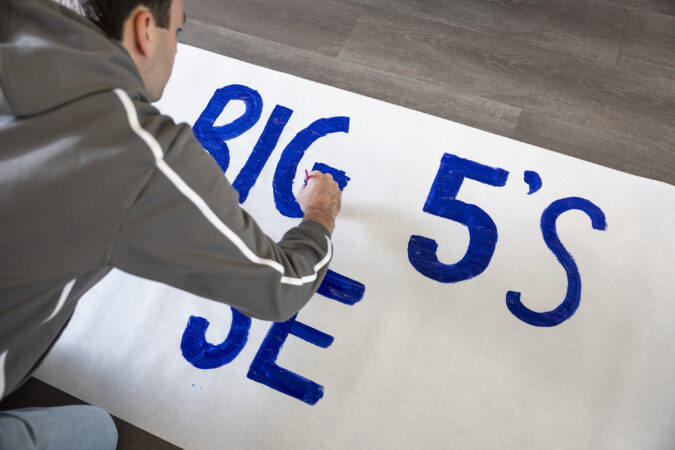
    The fans — the Cherry Crusade — spent a few days crafting one-liners to paint onto 30-foot banners that would be rolled out during the Temple-La Salle basketball game. The “rollouts” have been a Big 5 tradition since the 1950s, even surviving a brief ban when the schools thought the messages had become too racy.

    The rollouts often are a play on words or innuendoes that make light of the opposing school. You roll out your banner and then hold your breath while the other school shows theirs. Each student body takes turns dissing each other like kids in a schoolyard. The best rollouts, Butler said, are the ones that “twist the knife” just a little.
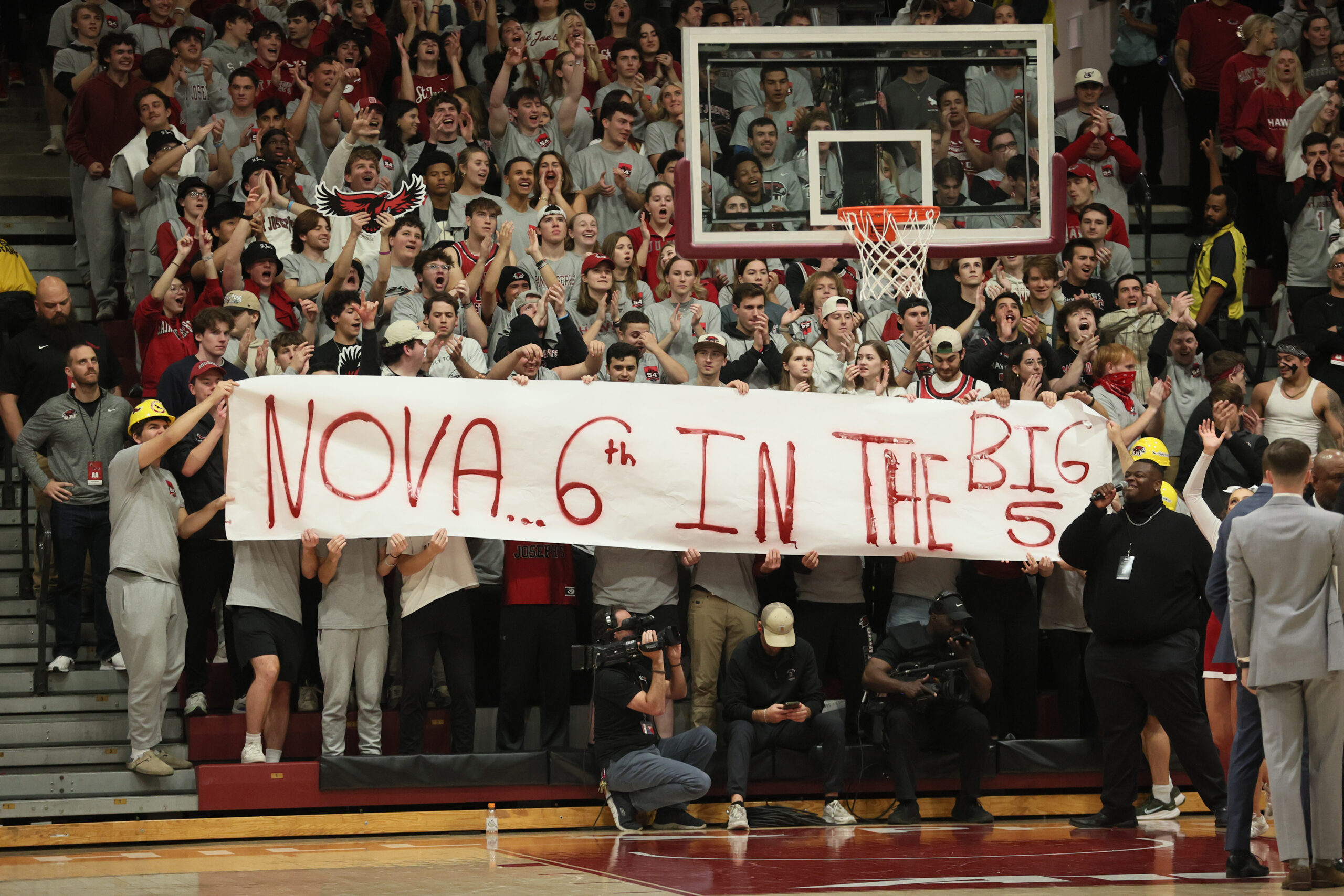
    St. Joe’s students unveil a banner referring to Villanova finishing last in the Big 5 Classic last year.

    But this one, Butler learned, twisted a little too much.

    The Explorers entered that game in February 2010 on a seven-game losing streak, and Ash Wednesday had been two weeks earlier. Temple, down a point at halftime, raced away in the second half. And here came the rollout: “LA SALLE GAVE UP WINNING FOR LENT.”

    The Temple students — the same crew who held a “funeral” a year later for the St. Joe’s Hawk — thought it was good banter. But a priest was offended, and security had instructions.

    “They were like ‘Father is pissed. You basically affronted their faith, and they don’t want you in the building,’” Butler said. “That was a good example of a rollout where we said ‘This will get a good reaction.’ It did. It just wasn’t the reaction we were thinking of.”

    70 years of rollouts

    The rollouts trace back to the Palestra, when the building was the home of the Big 5 and basketball doubleheaders. The bleachers were filled, the basketball was good, and the crowds were lively. Philly was the center of the college basketball universe, and the Palestra was a scene.

    The “rooters” who sat behind the baskets would roll out banners during the games about opposing schools. The messages were a chance for a student body to take a shot at their rivals from across the court. When La Salle students hung a dummy of their coach in the early 1960s from a campus flagpole, St. Joe’s rolled out a banner a week later that said “We Fly Flags on our Flagpole.”

    The messages became more pointed, as the Daily News wrote in January 1966 that “the rollouts wandered from the realm of good taste.” The Big 5 athletic directors agreed to ban them, saying that “certain rollout subject matter has been offensive and detrimental to the best interests and continued success of the Palestra program.”

    The president of the St. Joe’s student section protested the decision at the Big 5’s weekly luncheon, telling the athletic directors that they were ruining “the greatest spectator participation event in sports” and the rollouts were part of the “spectacular” that was basketball at the Palestra.

    “It’s not a spectacular,” said Jack Ramsay, then the coach and athletic director for St. Joe’s. “We’re down there to play basketball. If the students want to join in, that’s fine.”

    No longer allowed to roll out their messages, students at the Palestra began to shout what they would have written. Banner Ball gave way to Chorus Ball, the Daily News wrote. A year later, the students won, and rollouts were welcomed back to the Palestra as long as messaging was preapproved by the school’s athletic office.

    The banners became as integral to a Big 5 game as a soft pretzel from the Palestra concession stand. You didn’t miss a basket during a doubleheader, but you also made sure you caught the dig the opposing students made during a timeout about your school.

    The banners were the game within the game as the student sections planned their rollouts like a comedian preparing a stand-up skit. The jokes had to be fresh. How many times can you call the other coach ugly before it’s no longer funny? They had to be timely and tap into current events. That scandal involving a prominent alumni from the other school? Fair game. The football team stinks? That’ll work. A basketball player got arrested? There’s a rollout to be made.

    And they had to be timed just right. You can’t come out swinging with your best bit. You have to build up the crowd with a few decent banners and then roll out the one you know will hit.

    “You could tell from the other alumni if they were like, ‘Whatever,’ or if it really pissed them off,” Butler said. “Ultimately, that’s what you’re looking for. From brainstorming, to the making of them, to rolling them out, you’re looking for that reaction of them saying ‘Ugh.’”

    A fading tradition

    The rollouts, just like the Big 5, seem to be waning. Student attendance at local games is no longer what it was. The basketball programs have been down, the transfer portal has made players hard to identify, and conference realignment has introduced games with unfamiliar opponents.

    Villanova — the lone Big 5 school to make an NCAA Tournament in the last five years — is the only team that regularly draws a large swath of students. Most schools fill up a student section for the marquee games but attract just a small group on most nights. Attracting students to a once-integral aspect of campus life has become a challenge.

    Each school is trying to confront the decline of student participation, and Temple decided last year to revamp its student section. The Cherry Crusade does not have a student president, and the rollouts are made by athletic department staffers.
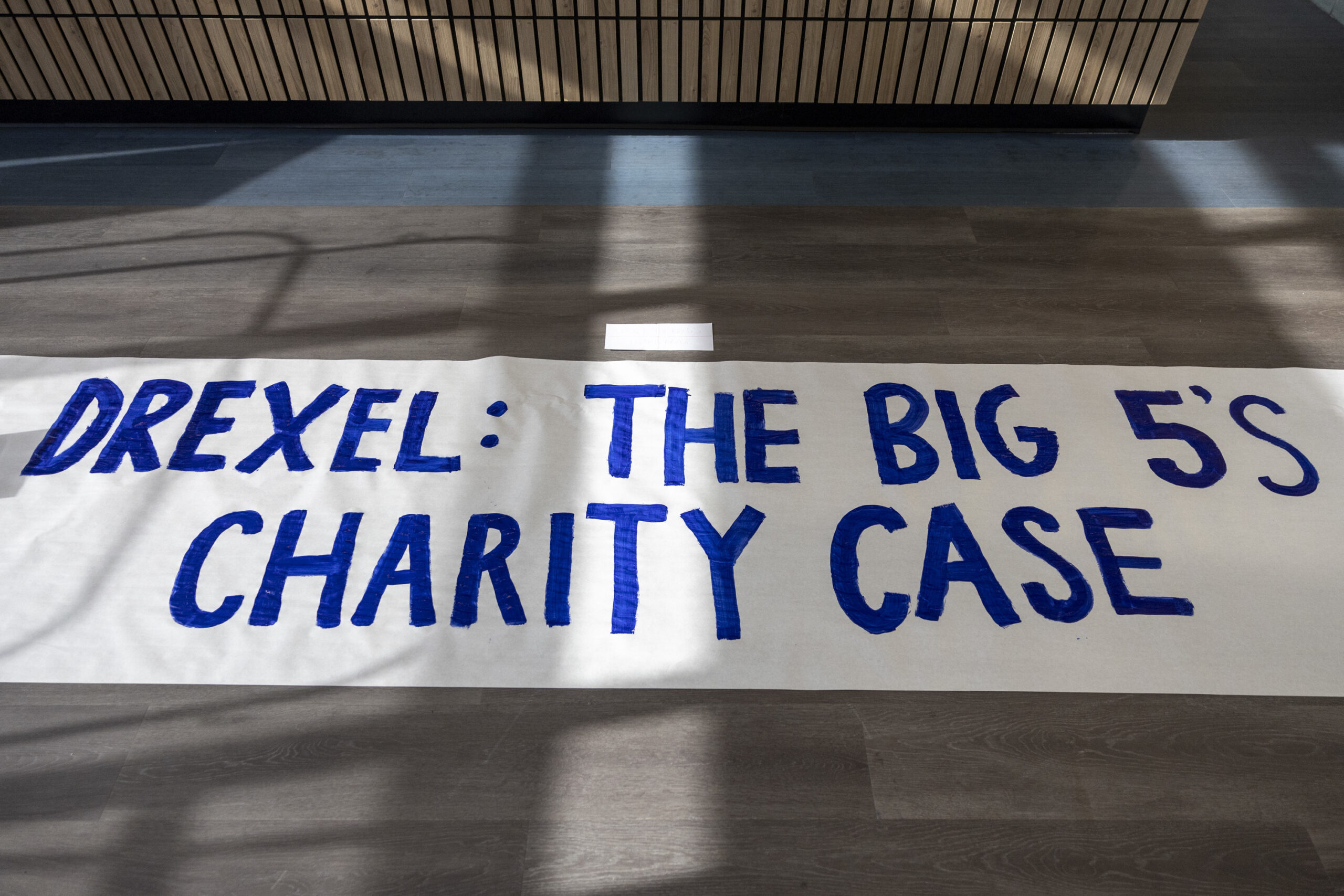
    A banner made by the Olney Outlaw’s La Salle Student Section on Thursday.

    They sold out their tickets two years ago when they reached the final of the Big 5 Classic and still fill the student section for a big game. The challenge has been to build a consistent presence.

    “We want to find those passionate fans to bring back what the Cherry Crusade was,” said Katie Colbridge Ganzelli, Temple athletics’ marketing coordinator for on-campus initiatives. “They’re still there. We’re just trying to find those passionate students who want to be in charge of the student section like it used to be.”

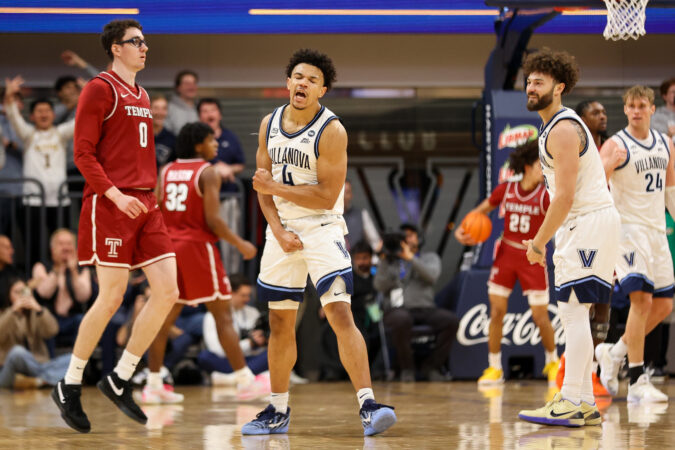
    Villanova’s rollouts earlier this week vs. Temple — “Rocky would’ve gone to Villanova,” one said — didn’t twist the knife. Penn’s student section is dormant, forcing the band to provide rollouts. The tradition seems to be fading across the Big 5, but credit La Salle for trying to keep the edge.

    The school revived its student section this season, and the Olney Outlaws took aim at a Big 5 coach for being follically challenged and used another rollout to dunk on Villanova and St. Joe’s. They’re twisting the knife in Olney.

    “We had noticed a lack of student engagement and thought this would be a fun way to get kids involved,” said Paige Mitchell, a senior marketing major who founded the Olney Outlaws. “I was working in the athletic department, and my boss at the time gave me a project to come up with something that would get everyone more engaged. It’s grown from there.”

    The group of students — “I have a couple guys in the group who are pretty clever,” Mitchell said — brainstorm ideas for the rollout before they meet to paint their signs. They’re ready for Saturday, when La Salle plays Drexel in the Big 5 Classic.

    “It’s stressful making sure they get rolled out at the right time,” said Mitchell, who’s also a center forward on the Explorers’ water polo team. “But I love seeing the way the students react. I have a couple friends who were sitting behind the rollout, and they’re blowing up my phone like, ‘What did it say?’ It’s just exciting.”

    Perfectly Philly

    Butler asked the La Salle security guard if he could talk to the priest, hoping he could ask for absolution. The priest was still steaming as Butler told him it was a misunderstanding. It was just some college kids making a joke, he said. The priest offered Butler penance: the Temple students could stay, but they had to hand over the rest of their banners.

    But the Owls were going to clinch the Big 5 title that night, and the Cherry Crusade brought a rollout to celebrate it. Butler pleaded with the priest to allow them to keep that sign. He rolled it out to show the priest and security guard what it said. “Fine,” said the priest. The rollouts, once again, would not be banned. A perfectly Philly tradition lived on.

    “There’s something in the Philly culture that rollouts hit a perfect vein,” Butler said. “The thing about people from here is that there is respect if you can dish it and you can take it. People love to twist that knife. When people did good rollouts against us, you were angry, but there was respect there.

    “It’s making fun of people who appreciate it, but also hate it, and it gives you an opportunity to be a little bit of an a—. At the end of day, it’s all love. We all love Philly basketball, even though I’ll never root for St. Joe’s and I’ll never root for Villanova. But I still want them around. I want everyone to do well, so then the hate means something.”
  • Kevin Willard may soon have his Massimino moment at Villanova, but does this Big 5 format make sense for all?

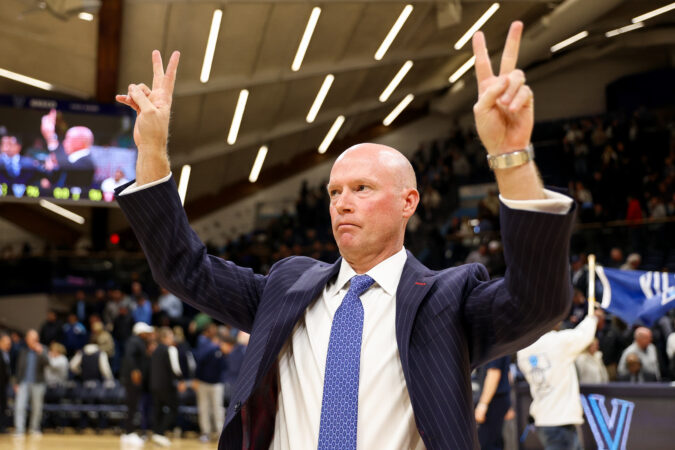
    Kevin Willard may soon have his Massimino moment at Villanova, but does this Big 5 format make sense for all?

    In 1991, a Villanova coach whose team had risen to national prominence was vilified for killing the Big 5 when the association of Philadelphia’s Division I hoops programs moved away from its round-robin format to a scaled-down version.

    Thirty-five years later, new Villanova coach Kevin Willard may soon face his Rollie Massimino moment.

    “It’s not going to go away,” Willard said of the Big 5 in an interview over the summer. “I think there’s ways to make things better.

    “I want to go through it and figure out what’s best for it.”

    On Saturday, Villanova will play for a Big 5 Classic championship vs. Penn. But what’s best for Villanova probably isn’t what’s best for the other five schools, and what’s best for Penn, St. Joseph’s, or Temple might not be what’s best for La Salle or Drexel.

    To be sure, the sport has changed greatly since 1991. The gap between Villanova and the other local programs has not just grown, it’s never been greater — with Jay Wright’s run of dominance and, more relevantly, the implementation of a payment structure in college sports. Villanova is the only Big 5 school in a power conference with a major television deal and probably can afford to spend more money on its men’s basketball roster than the other five Big 5 programs combined. It probably will be a 15-point favorite over Penn on Saturday in the title game.

    The money is at the heart of all of this. Forget your grandfather’s Big 5; this isn’t even your older brother’s Big 5. There are myriad reasons why the rivalries themselves aren’t the same, and they have been covered ad nauseam over the years: Young people don’t attend college basketball games the way they used to, the teams haven’t been very good, the transfer portal era has created a culture of mercenaries who travel from school to school year after year, and so on.

    Fran Dunphy, the man they call “Mr. Big 5,″ who still watches plenty of basketball in his retirement, had an entire row to himself at Glaser Arena for a large part of the La Salle home game vs. Villanova last month. The Palestra has been removed from the equation almost entirely. The Villanova-St. Joe’s rivalry won’t happen this season for the first time in nearly 30 years. All of that is to say things change and nothing lasts forever.

    But the financial component of it is why the current format of the Big 5 in its nascent stages — in which the six teams are divided into two rotating pods before playing two pool games to determine which teams match up in first-, third-, and fifth-place games during the Big 5 Classic tripleheader — seems unlikely to last very long.

    The House v. NCAA settlement that resulted in schools directly paying players has only increased the need for financial diligence.

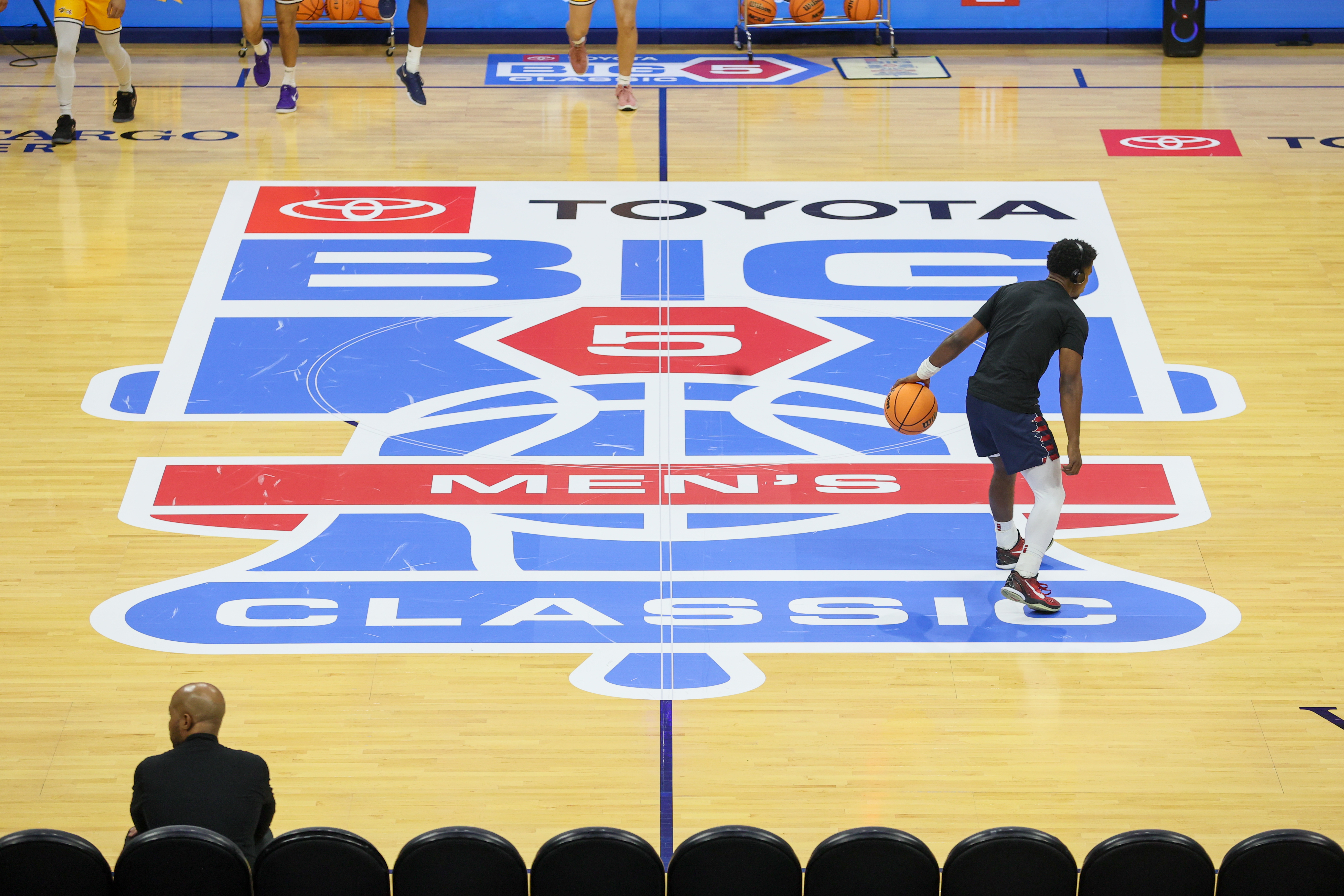
    Players warm up before the start of the Big 5 Classic games on Dec. 7, 2024.

    Villanova has to be considering the merits of keeping together an aging tradition vs. the cost of doing so, and it shouldn’t be alone in its considerations.

    Instead of taking a bus ride to Olney to play at La Salle and winning by 15 in a sleepy building, wouldn’t Villanova have been better off having a home game, even if that means spending something like $100,000 to have a lesser opponent come to Finneran Pavilion? Maybe it’s not a buy-game and is instead another opportunity to host a team like Pittsburgh, which Villanova will do on Dec. 13.

    Regardless of the replacement opponent, the current format means Villanova could be missing out on essentially two home games. One is the automatic road game from the two pod-play contests, the other is the Big 5 Classic itself, which divvies the pot from ticket sales seven ways between the six schools and the building.

    That’s hundreds of thousands of dollars in revenue Villanova isn’t bringing in. Sure, your reaction to that can be “boo-hoo,” but that could be the salary of a rotational player floating away for the sake of nostalgia.

    “When you play 20 conference games, playing an [Atlantic 10] road game every year is really difficult,” Willard said in June. “You’re also taking away a home game when revenue has become extremely important.”

    Which brings us to the other element of this, and why Villanova isn’t alone, even if the Main Line school again will be vilified publicly for whatever happens next to the Big 5 (if its competition, for example, ends up being something like a one-day-only event with rotating matchups).

    Let’s take Drexel or La Salle, for example. What if instead of playing two of these three Big 5 games, those schools got $100,000 to fly to a high-major program? A few hundred thousand may be a rotational player at Villanova, but that’s a starter or two at either of the aforementioned schools.

    It may be reductive to view all of this through that lens, but that’s the reality for these schools. Money is all that matters, and the toothpaste is out of the tube in that regard. There will be no going back, which means traditions, even new takes on them, can’t last forever.

    The new Big 5 format breathed some life into one that was getting stale, but it was agreed upon before the House settlement. The six athletic directors soon will have to put their heads together and figure out the best path forward.

    “Scheduling is as important as anything in college sports,” Willard said. “Scheduling is everything.”

    Massimino felt something similar in the early ’90s, too. That much hasn’t changed, but the financial implications certainly have.

  • Here’s how the men’s and women’s brackets shape up in the Big 5 Classic

    Here’s how the men’s and women’s brackets shape up in the Big 5 Classic

    The third annual men’s Big 5 Classic returns to Xfinity Mobile Arena on Saturday. The event will feature the teams from the Division I Philadelphia schools, a tradition that has been around for more than 70 years.

    The Villanova women are in the championship for the second consecutive year on Sunday at Finneran Pavilion in the women’s Big 5 Classic.

    Here’s a look at the men’s and women’s Big 5 brackets:

    Men’s bracket

    • Fifth place: Drexel vs. La Salle, 2 p.m. Saturday
    • Third place: St. Joseph’s vs. Temple, 4:30 p.m.
    • Championship: Penn vs. Villanova, 7:30 p.m.

    All games will be broadcast on NBC Sports Philadelphia. The championship features two teams that are seeking their first Big 5 crown in the new format. This also is the teams’ first appearance in the championship game.

    Both teams have first-year coaches, with Kevin Willard at Villanova and Fran McCaffery at Penn, and both won pod games by double digits to earn a spot in the final.

    The men’s side tips off on Saturday for the third straight year, but there is one change in the matchups. For the first time since the format debuted, St. Joe’s will not be in the championship to defend its crown.

    St. Joe’s will play Temple in a rematch of the 2023 title game for third place. St. Joe’s beat Drexel on Nov. 8 to begin pod play, setting up a showdown with Penn. The Quakers’ 83-74 upset win sent them to their first Big 5 championship game.

    Temple returns to the third-place game for the second consecutive season. Coach Adam Fisher’s team defeated La Salle, 90-63, but was unable to beat Villanova in what essentially was a semifinal game. The Wildcats outscored the Owls by 17 in the second half for a 74-56 victory.

    La Salle will take on Drexel in the fifth-place game . The Explorers lost to St. Joe’s in the championship last season but lost both of their pod games, to Temple (90-63 on Nov. 11) and Villanova (70-55 on Nov. 19) this season.

    Drexel coach Zach Spiker uses a timeout to draw up some plays for his team against St. Joe’s on Nov. 8.

    Drexel is in the fifth-place game for the third consecutive year after being added to the Big 5. The Dragons lost to St. Joe’s (76-65 on Nov. 8) and Penn (84-68 on Nov. 21) in pod play.

    Women’s bracket

    • Fifth place: Penn vs. La Salle, noon Sunday
    • Third place: Drexel vs. Temple, 2:15 p.m.
    • Championship: St. Joe’s vs. Villanova, 4:30 p.m.

    Temple entered the season on a mission to defend its Big 5 championship. Those aspirations were dashed after the Owls’ 88-58 loss to Villanova on Nov. 22 in a rematch of last year’s final.

    Now the Wildcats will be playing in the main event on Sunday (all games on NBC Sports Philadelphia+ and the NBC Sports app) after losing a year ago. They will play St. Joe’s, which is a year removed from a third-place finish. The Hawks earned their way to the championship game after defeating Penn, 74-53, on Nov. 24 and beating Drexel, 57-55, five days later.

    Temple’s loss to Villanova sends it to the third-place game against Drexel. The last time the teams played was Nov. 23, 2024, and the Owls won, 52-43.

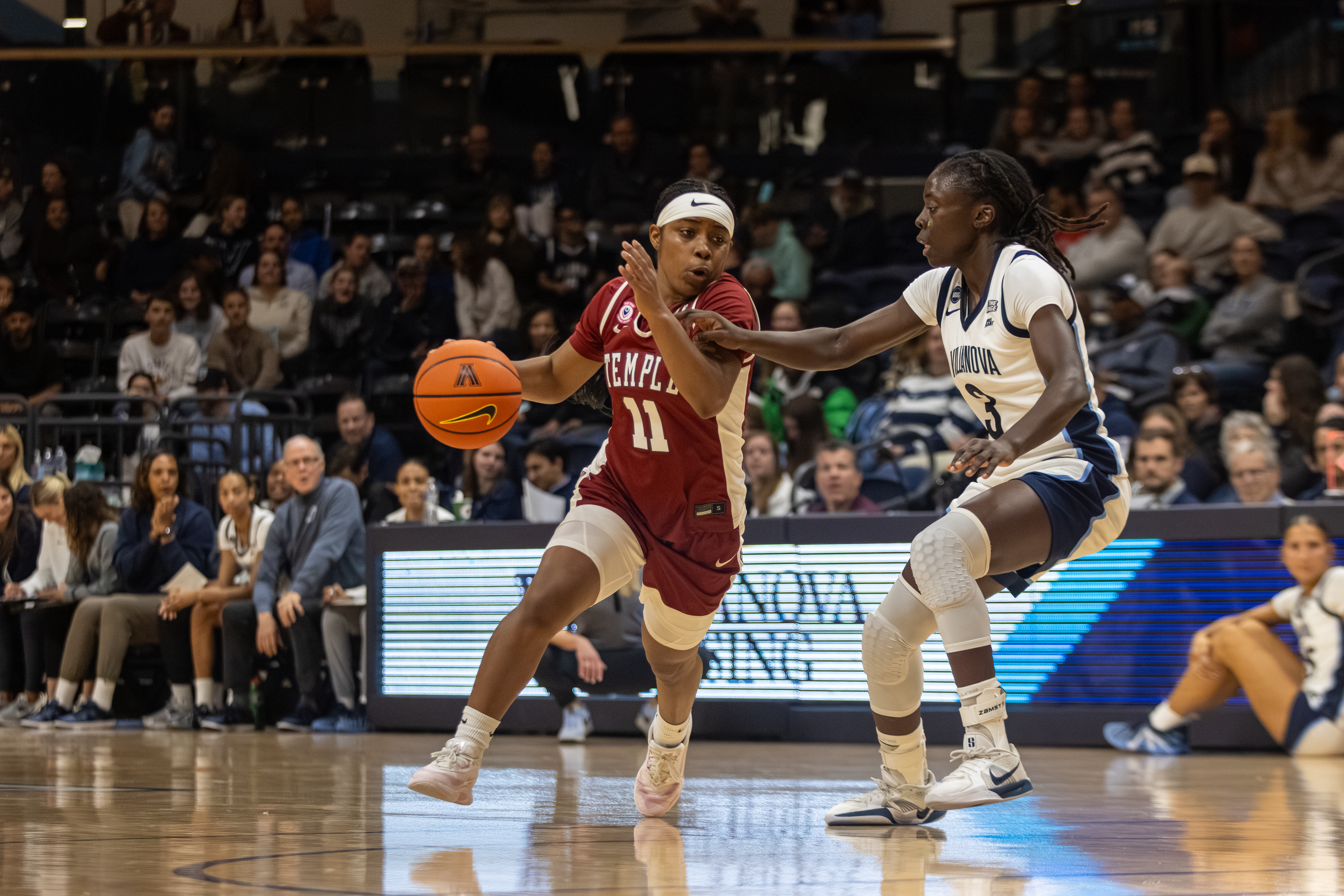
    Temple’s Tristen Taylor drives against Villanova’s MD Ntambue on Nov. 22.

    The Dragons beat Penn, 72-55, on Nov. 3 and had the two-point loss to St. Joe’s on Saturday.

    The first game of the day will feature La Salle and Penn. The Explorers are 5-2 but have yet to win a Big 5 pod game in the two seasons of the new format for the women. La Salle has lost its four pod games by an average of 17.8 points, and both of its losses this season are by double digits.

  • Penn tops Drexel, 84-68, to earn a spot in the Big 5 Classic final

    Penn tops Drexel, 84-68, to earn a spot in the Big 5 Classic final

    After finishing last in Big 5 play the previous two seasons, Penn men’s basketball is set to compete for a Big 5 Classic Championship inside Xfinity Mobile Arena on Dec. 6, following the Quakers’ 84-68 victory over Drexel on Friday.

    Penn (3-2) was led by Ethan Roberts (30 points and 8 rebounds) and TJ Power (18 points). While Drexel (2-4) countered with its bench mob, outscoring the Quakers 40 to 10 at the substitutions table — led by Josh Reed’s 21 points on 9 of 14 shooting, a career high.

    “It’s just exciting,” Roberts said. “We are just excited about the team in general, but even more so, having Coach Fran McCaffery here.”

    Next, Penn will host Merrimack on Nov. 28 (4:30 p.m./ESPN) and Drexel faces Old Dominion on Sunday at home (2 p.m.).

    Top scorer

    Roberts set the tone, notching his second straight 30-point performance. He had a 31-point outburst in Penn’s victory over St Joe’s on Monday.

    Roberts scored 11 of Penn’s first 19 points and finished the half with 19, with an efficient 8 of 12 shooting.

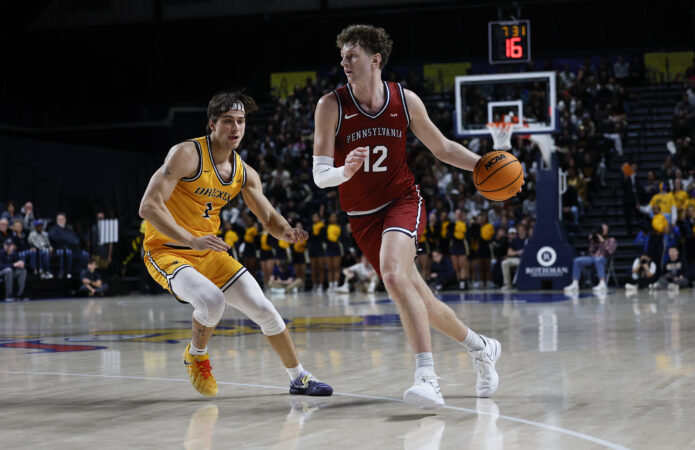
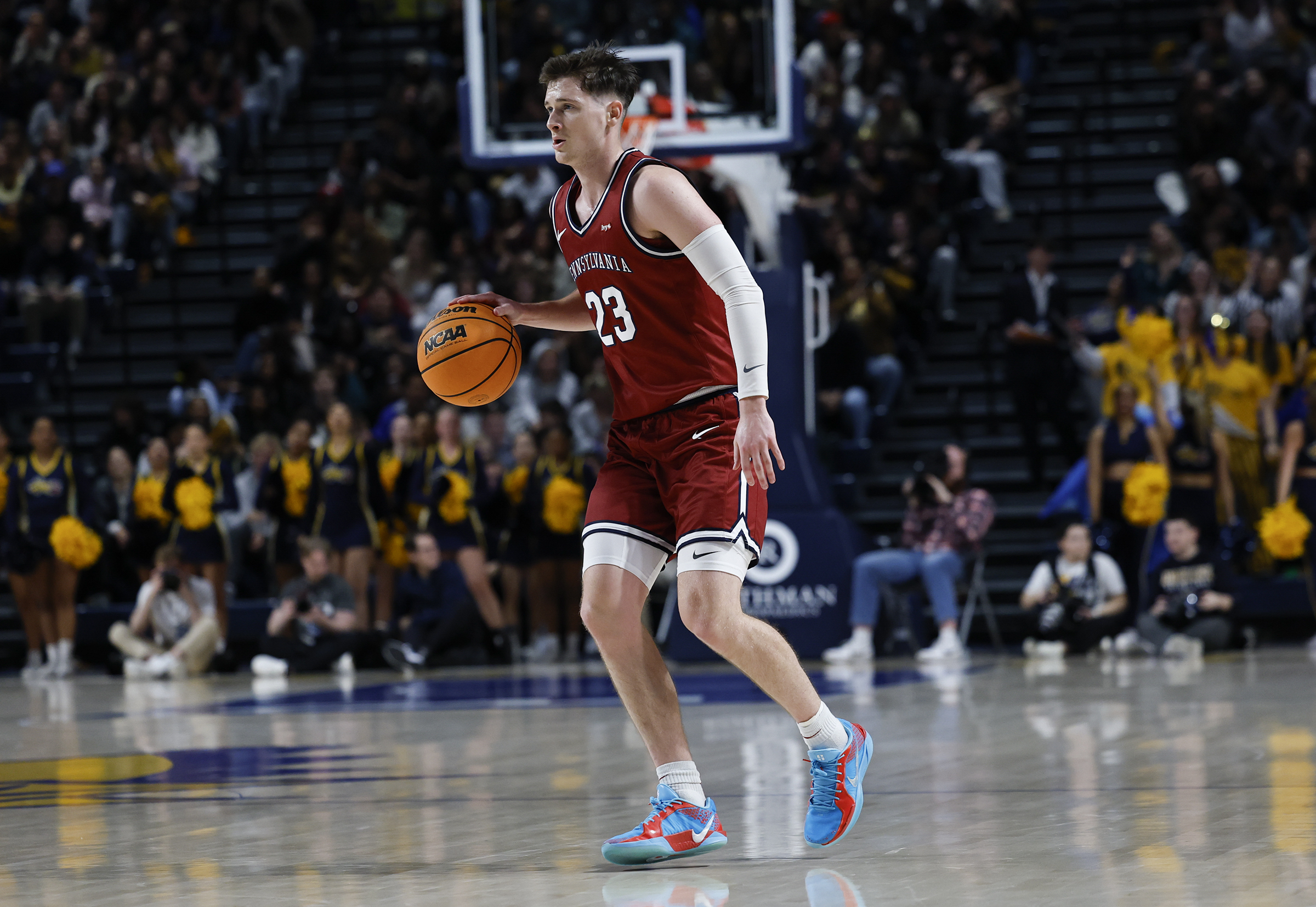
    Penn forward Ethan Roberts dribbles the basketball against Drexel on Friday.

    “It’s just a natural fit in coach McCaffery’s system,” Roberts said in reference to his hot start this year. “I work really hard, so there is an expectation that I get a little bit better each season.”

    Bought in

    Penn dominated the second half. The Quakers made 13 of 25 attempts (52%) and contained the Dragons to 30 points, as they made 10 of 26 shots from the field.

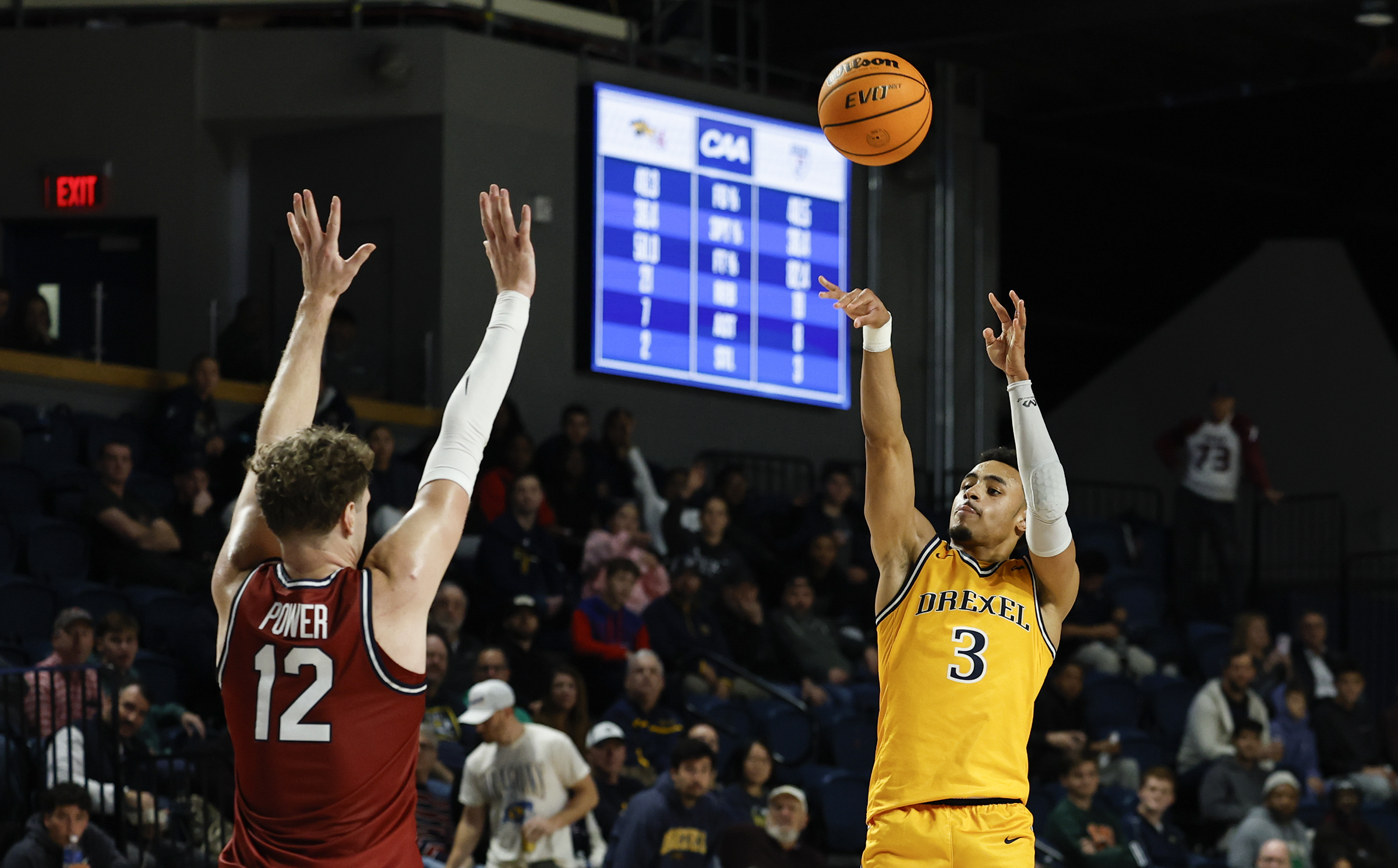
    Drexel guard Kevon Vanderhorst shoots the ball against Penn forward TJ Power on Friday.

    “These guys want to be coached,” McCaffery said. “They’re listening and they’re making appropriate changes, both individually and collectively.”

    The Dragons’ starters scored only 28 of the team’s 68 points, with Eli Beard, Kevon Vanderhorst, and Shane Blakeney scoring 24 combined.

    Drexel coach Zach Spiker believes his team wasn’t aggressive enough in response to the Quakers’ run-and-gun offense, commenting on the free-throw disparity. The Quakers made 22 of 28 attempts at the free-throw line, while Drexel went 7-for-17.

    “We’ve got to do a better job of defending without fouling and then find a way to put that pressure on the other end,” Spiker said.

  • There won’t be a Villanova-St. Joe’s Big 5 title game this season, but Penn earned its final berth

    There won’t be a Villanova-St. Joe’s Big 5 title game this season, but Penn earned its final berth

    The scene Friday at Drexel was one that wasn’t supposed to happen, at least for some people.

    When the Big 5’s organizers rearranged the pods for this season, they knew they were taking a risk. Splitting St. Joseph’s and Villanova took away a guaranteed contest of the city’s most famous rivalry for the first time since the 1997-98 season, but opened the door for an even bigger matchup in the title game.

    At the time the decision was made — and that time was before last season’s Big 5 Classic, when the word first got out — there were enough reasons to believe the title game clash would happen.

    Sure, Villanova was down, but not far enough down to not be favored against Temple and La Salle. Steve Donahue wasn’t gone from Penn yet, Billy Lange was far from gone from St. Joe’s, TJ Power was still at Virginia, and Xzayvier Brown was still on Hawk Hill.

    Shuffling the pods really felt like two things at the time. A St. Joe’s-Penn-Drexel pod made the Hawks clear favorites on paper, while a Villanova-Temple-La Salle pod guaranteed the schools with the two biggest fan bases would face off. As long as the Hawks made the final, a matchup with Villanova or Temple would be intriguing — and good for the box office, too.

    By the time the season tipped off, the scene looked totally different. And when the Hawks walked out of the Palestra on Monday on the losing end, the dream final was halfway to going up in smoke.

    A new player learns an old lesson

    St. Joe’s needed a Drexel win, which would have left all three teams at 1-1. The tiebreaker is the NCAA’s NET rating, the first edition of which lands on Dec. 1 — the day Villanova hosts Temple in the last pod game of the season — and the Hawks would presumably have taken it. At Friday’s tipoff, they were No. 151 in Ken Pomeroy’s rankings to Drexel’s 249 and Penn’s 265.

    Now the die is officially cast. Led by Power and Ethan Roberts, Penn never trailed against Drexel and ended up rolling to an 84-68 win at the Daskalakis Athletic Center. Roberts scored 30 points for his third 20-plus game of the year, and his second straight with 30; and Power continued to show his talents with 18.

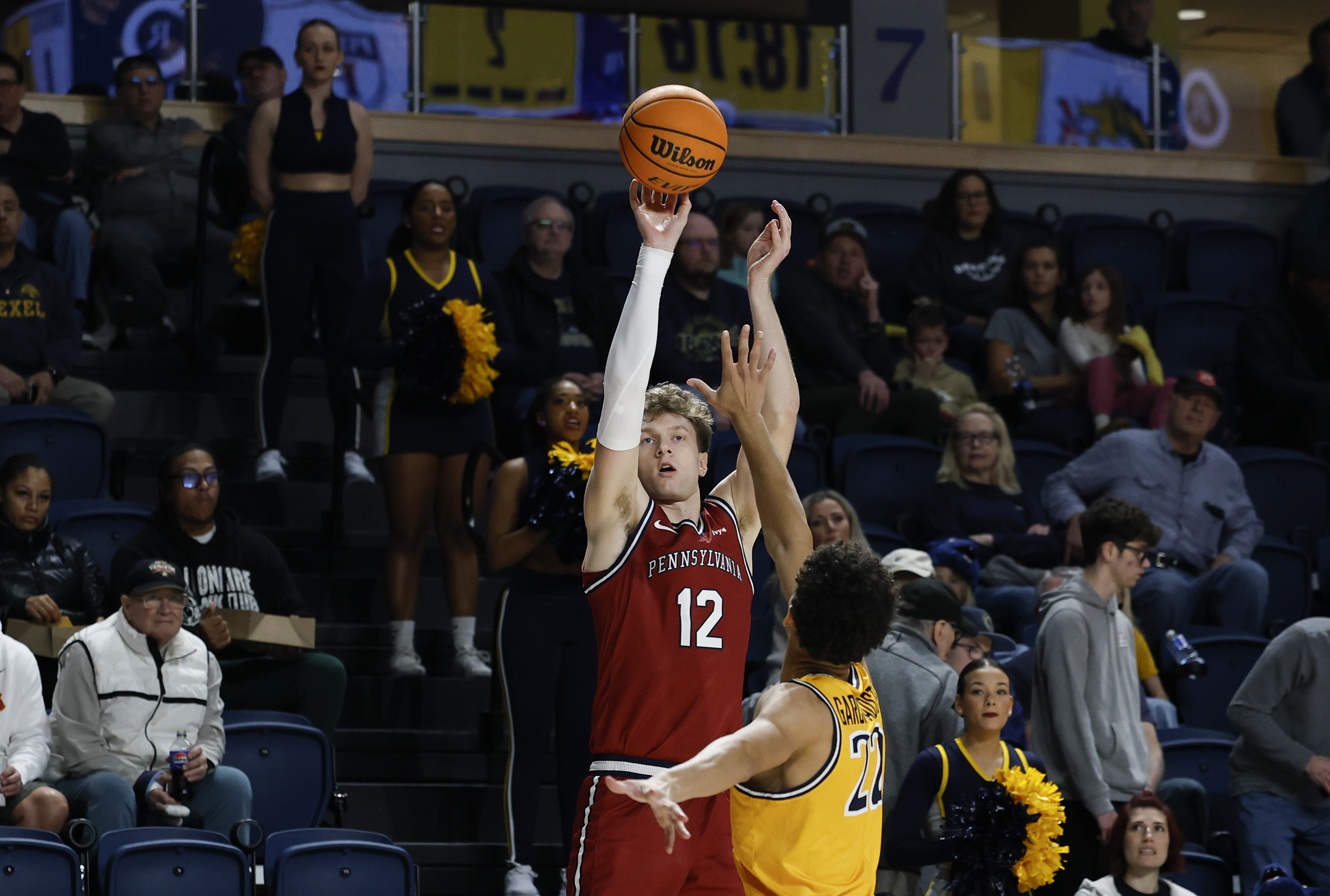
    Penn’s TJ Power shoots over Drexel’s Villiam Garcia Adsten during the first half.

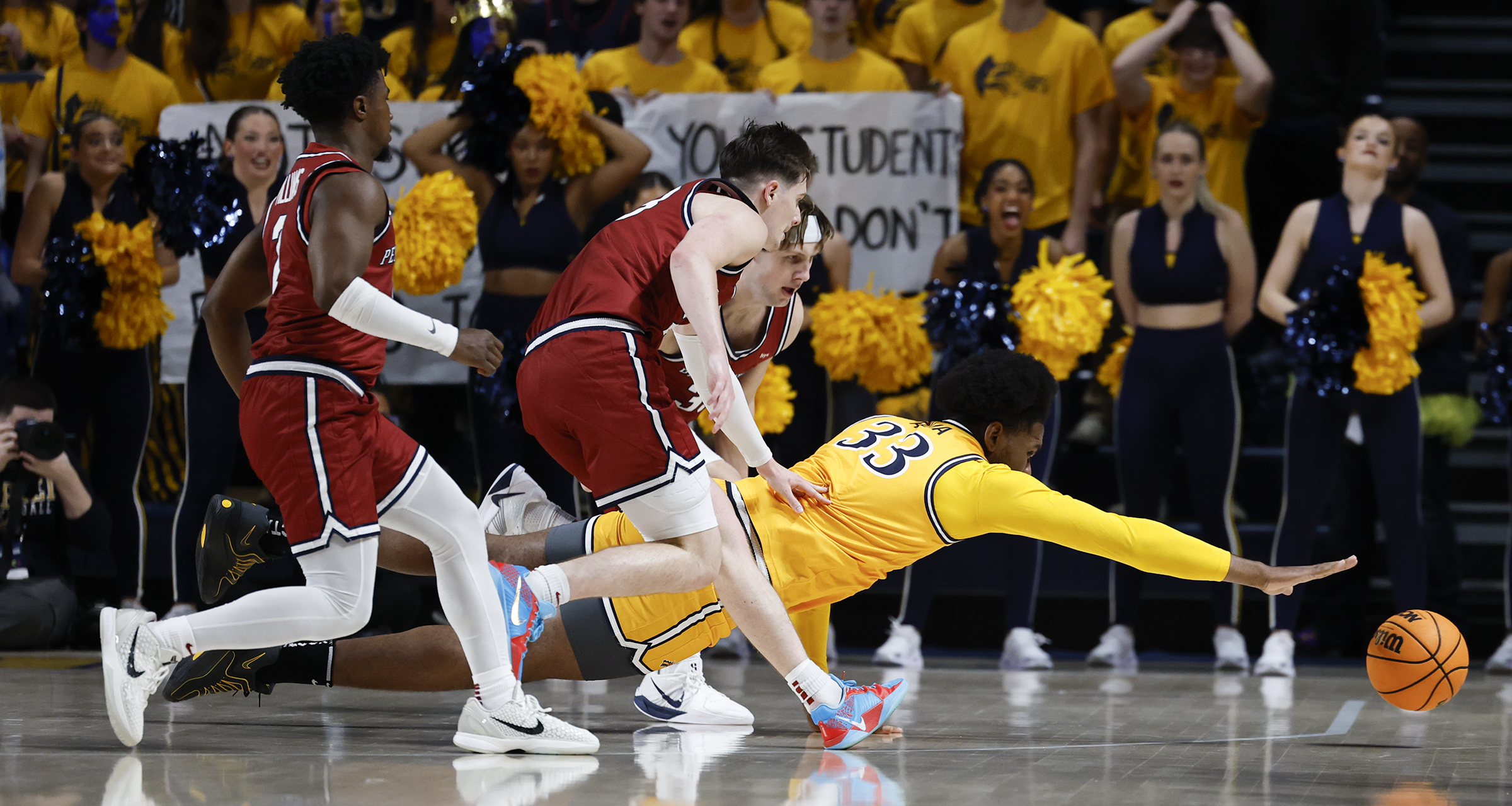
    The crowd on Market Street was lively and bipartisan, announced as 1,984 — a few hundred short of a full house, and not far from the lowly 2,384 crowd at St. Joe’s-Penn on Monday. Drexel’s student section turned out well, and at one point unfurled an old-fashioned rollout mocking Penn’s students for not showing up at the Palestra.

    They had a point, and would have in many past years, too. But for this night, the atmosphere felt real.

    “I think coming in as a transfer, you don’t completely understand the Big 5 hype until you play in those games,” said Power, whose former Duke teammate Jared McCain was in the stands with the Sixers off. “These past two games have been some of the most intense games I’ve played in, and for us to get to that championship [final] in coach’s first year, it’s a real feeling, I think. I’m looking forward to playing in that championship game.”

    The action was not just intense, but good quality for two teams still getting to know themselves. Penn shot 50% from the floor and Drexel shot 42.2%. That doesn’t always happen in the City Series, a fact some long-timers might not want to admit while reminiscing about the old days.

    (This writer, for example, has been scarred for 21 years by the 2004 Temple-Villanova game at the Palestra: a 53-52 Owls win where the teams missed a combined 80 of 120 shots.)

    “Jared’s my best friend since my freshman year at Duke, and to have him in the city has been really cool,” Penn’s TJ Power (right) said of the Sixers’ Jared McCain (left).

    The big picture

    Does missing out on a St. Joe’s-Villanova final mean the risk wasn’t worth taking? The ticket sales for the Big 5 Classic on Dec. 6 will offer one verdict, and fans can decide if they want to offer another.

    If there isn’t going to be a full round-robin, there shouldn’t be anything wrong with the principle of changing up the pods from time to time. This season was the first time that happened, and it’s expected that the new groups will run for two years as the first set did.

    Was there a way to keep St. Joe’s and Villanova together in the first change? There weren’t many moves to make, since St. Joe’s and La Salle have to stay separate being in the same conference.

    A St. Joe’s-Temple-Villanova pod obviously would not make sense. So the only other option besides the move they settled on — swapping Villanova and Drexel — would have put Villanova, St. Joe’s, and Drexel together. That would have sent the Wildcats to the city’s smallest gym in one of the two years, which felt unlikely this early in the pod system.

    Drexel’s Ralph Akuta (right) dove for a loose ball in front of the Dragons’ student section as they held up a banner mocking Penn students for not showing up to their team’s games.

    So it was understandable that the people in charge tried. A little uncertainty is no bad thing anyway, as it livens up the early-season slate. And though the Big 5 still feels stratified, the pod format also heightens the stakes of each game. One loss can tip the whole thing, as just happened to the Hawks.

    It could happen again if Temple upsets Villanova on the Main Line. That would give us a ‘Nova-St. Joe’s game after all, just in the third-place game.

    What the final will look like is a different question, but that’s not Penn’s problem for now. Coach Fran McCaffery, Power, and the rest can celebrate just getting there — and laying down a strong marker to start McCaffery’s tenure at his alma mater.

    “When you come into a season, there are certain things that you hope to be able to accomplish collectively, and that clearly is one,” he said. “I think everybody knows the respect I have for the Big 5 and its history, and also for the level of talent and coaching in all the teams. We just beat two really good teams, two really well-coached teams, and then we’ll get to play another one.”

    This time, it will be on the city’s biggest stage.

    What Big 5 pods work? Reality limits the answer.

    St. Joe's and La Salle can't be in the same pod since they're in the same conference.

    It doesn't make sense to have Villanova, St. Joe's and Temple all on the same side.

    That leaves only six possible combinations.

    www.inquirer.com/college-spor…

    [image or embed]

    — Jonathan Tannenwald (@jtannenwald.bsky.social) November 22, 2025 at 11:18 AM