Category: College Sports

  • Penn women are ‘not where we wanted to be’ after starting 0-3 in Ivy League play

    Penn women are ‘not where we wanted to be’ after starting 0-3 in Ivy League play

    Entering this season, Penn was looking to break its yearly cycle of finishing fourth in Ivy League women’s basketball.

    Now, with the team off to an 0-3 start in league play for the first time since Mike McLaughlin’s first season as head coach in 2009-10, the Quakers look ahead to an uphill battle.

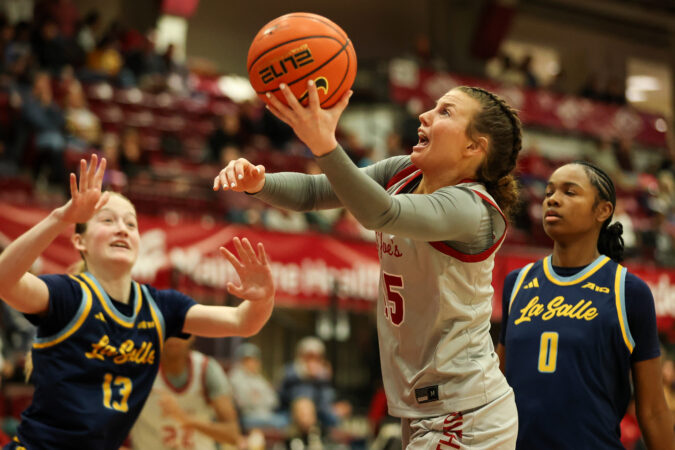
    On Saturday, Penn (10-6, 0-3 Ivy) got off to a 10-0 start against Harvard (9-7, 2-1), relying on high energy and pressing defense to control the pace. Once the game settled, Penn’s offense flatlined, with the Quakers scoring only four total field goals through the second and third quarters — leading to a 53-42 Harvard victory.

    “Great start,” McLaughlin said. “Really proud of the way we came out. Obviously, get out on that type of lead. We just struggled. Struggled to score the ball. Score in transition was probably our biggest challenge.”

    Next up, Penn will host Dartmouth on Monday (2 p.m., ESPN+).

    ‘Not where anyone wants to be’

    After finishing their nonconference games on a five-game winning streak, the Quakers then dropped three straight against Princeton, Brown, and Harvard to fall to the bottom of the Ivy League standings, alongside Yale and Dartmouth.

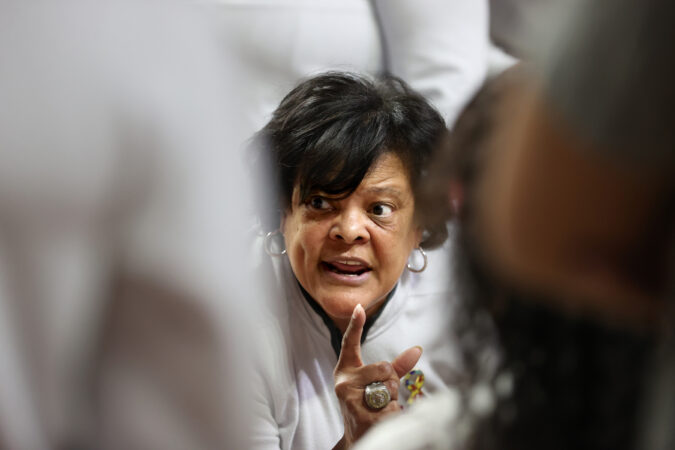
    “Playing against Princeton in the beginning,” McLaughlin said. “A tough road trip to Brown and a good Harvard team. You know, I don’t want to say it’s just the opponent. I don’t think we’ve played well enough the last two times on the offensive side to beat whoever in our league. Coming in after league play, I was expecting us to come out of the gate a little bit faster, to be honest with you. This makes a lot of pressure on Monday to have some success here, for sure.”

    Despite being three weeks into league play, Penn finds itself searching for a must win this week. A loss to the Big Green on Monday would cement Penn at the bottom of the Ivy League standings.

    “Oh-and-three in the league is not where we wanted to be,” McLaughlin said. “It’s not where anyone wants to be, but this team’s got a lot of basketball to go. Monday’s really vital for this program to get where we need to go, and we’ll respond.”

    Not enough help

    During its three-game skid, Penn has been overly reliant on junior guard Mataya Gayle, who led the team with 16 points against Harvard.

    McLaughlin is aware of his team’s top-heavy disposition on offense and hopes other guards will step up in the coming weeks to alleviate defensive attention from Gayle, who shot 39.2% from the field over this three-game stretch.
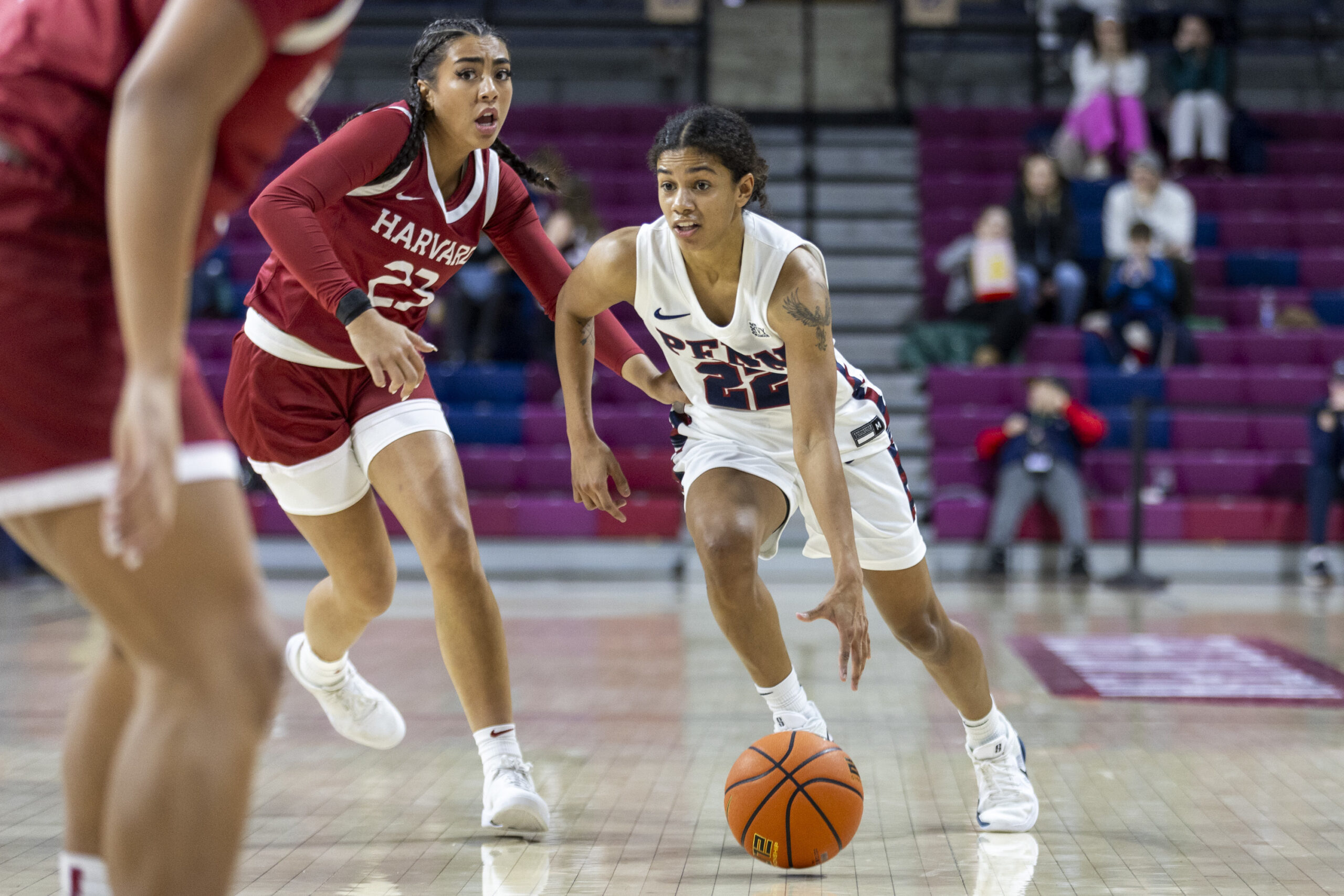
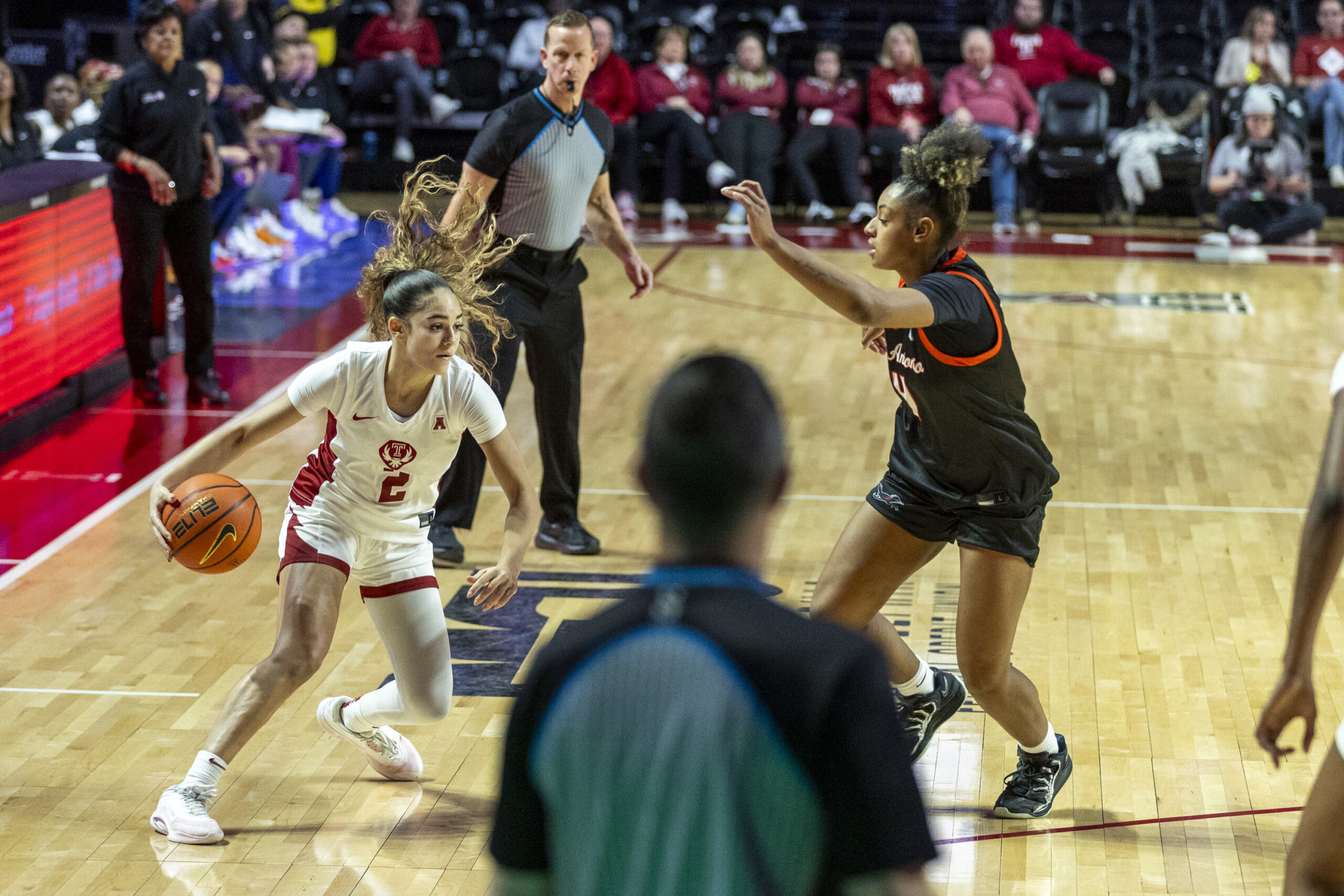
    Penn’s offense has relied heavily on Mataya Gayle this season.

    “Unfortunately, Mataya has taken some really difficult shots,” McLaughlin said. “I see it. You see it. Everyone sees it. But I think not having other kids that are able to make a play at times [and] pushes the ball back in her hands. That’s a tough hill to get over. With good players you’re playing against, they’re the type of shots you’re going to get, and I don’t like that for us to win.”

    ‘Playing to exhaustion’

    Meanwhile, the 2025 Ivy League Rookie of the Year, Katie Collins, is carrying an even larger weight for the Quakers.

    Ranked ninth in scoring, averaging 13.1 points, second in rebounds per game (6.4), and second in blocks per game (1.8) in the Ivy League, Collins, a sophomore, has excelled in a larger role after the departure of frontcourt partner Stina Almqvist.

    “I do think Katie has definitely stepped up,” McLaughlin said. “I mean, this girl is, as you see her, she’s playing to exhaustion. She’s playing both ends of the floor at full pace. I think she’s taken that next step for sure.”
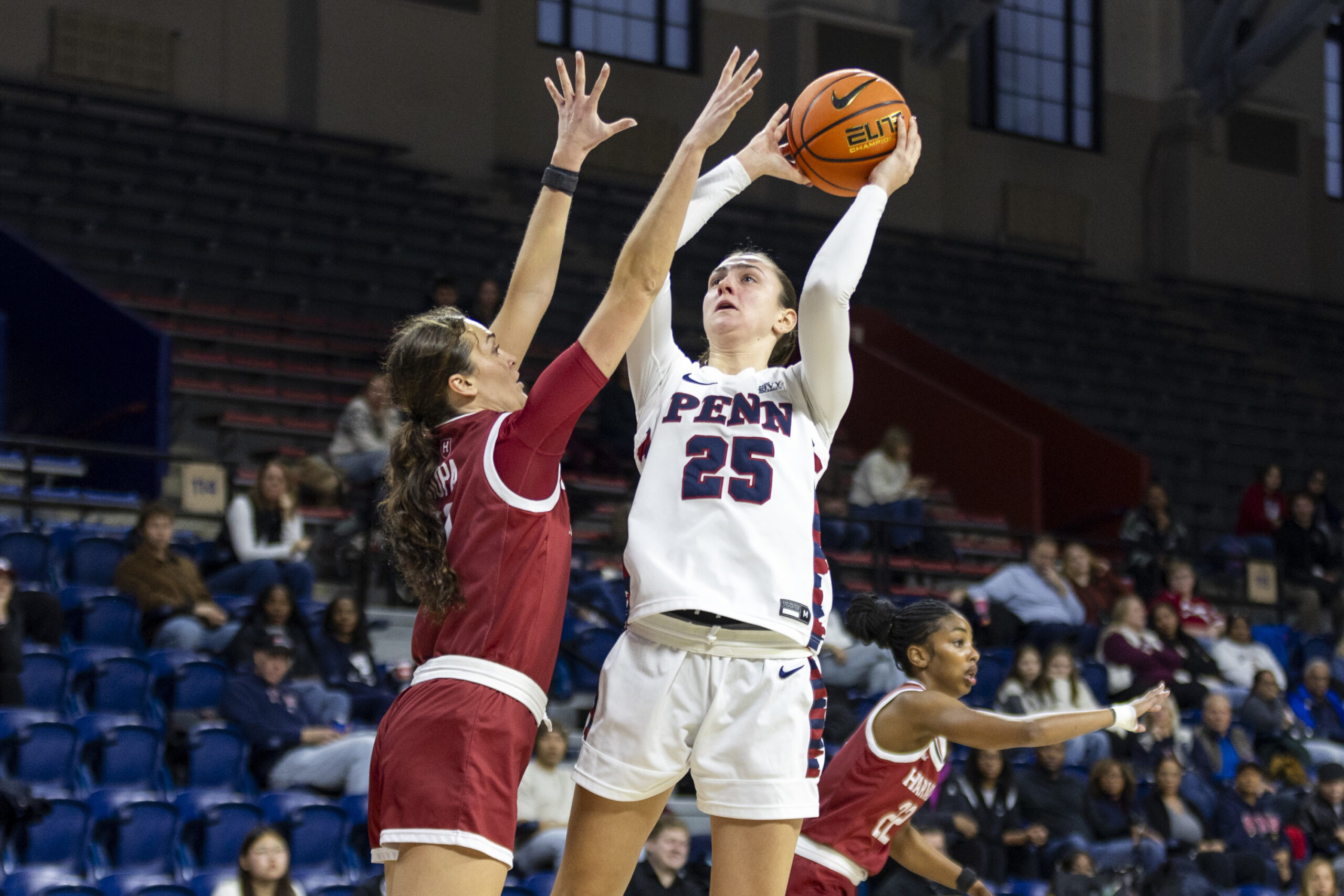
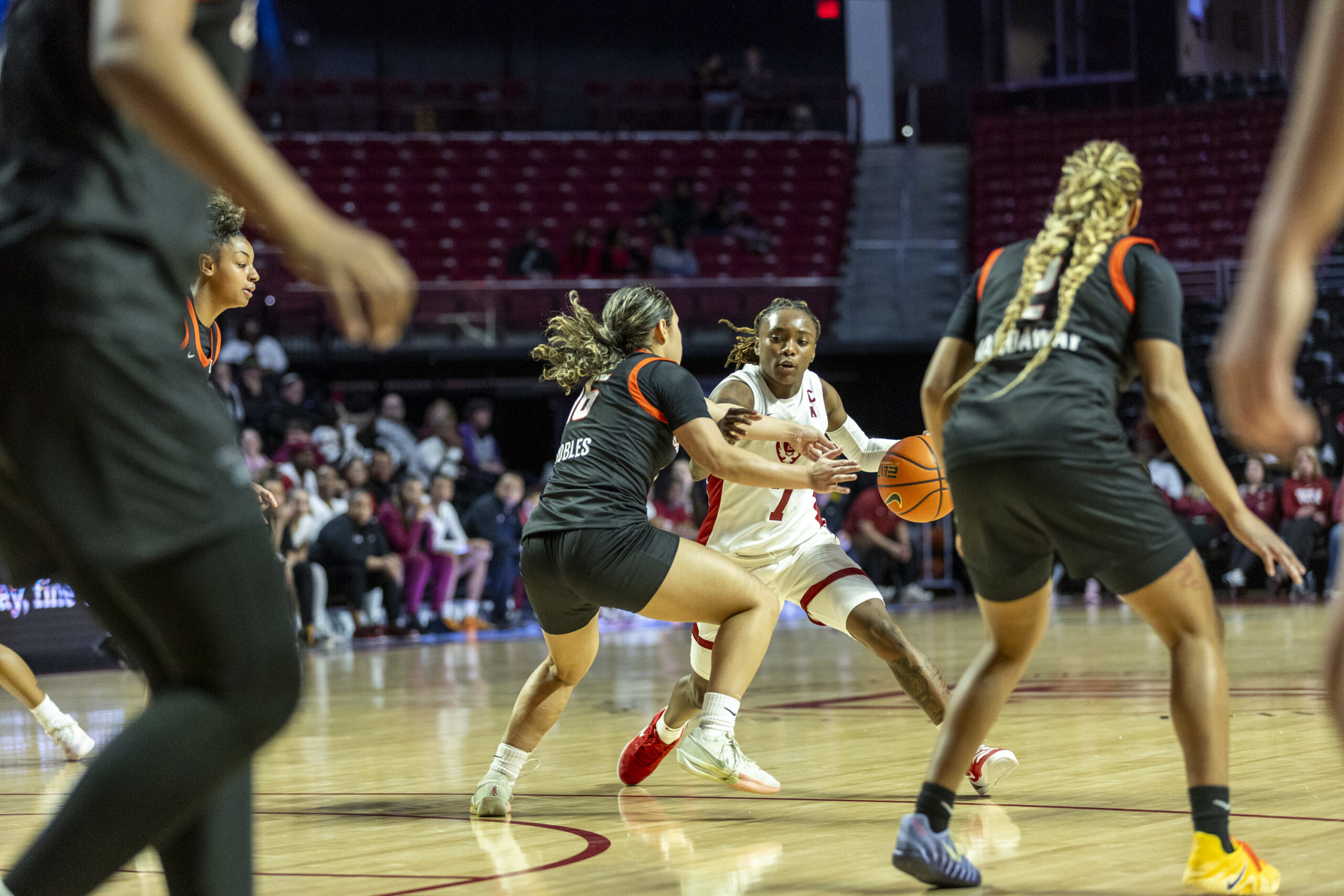
    Katie Collins, a sophomore, is ninth in the Ivy League in scoring.

    Collins also ranks third in total minutes (34.6 per game) in the Ivy League. Against Brown, Collins played 48 of 50 minutes in a double-overtime loss.

    Collins transitioned from center to power forward in the offseason to fill Almqvist’s role in the lineup, which has left a gap at center. Tina Njike and Gabriella Kelley have filled that role, but with a lack of offensive production, McLaughlin has experimented with moving Collins back to center, while subbing in players like Brooke Suttle to boost the lineup.

    “We need her,” McLaughlin said regarding Suttle. “She is going to be in the middle of the lane most of the possessions on both sides of the ball. But some opportunities around the rim, we need more out of her. She’s got to put the ball in the basket. She puts the ball in the basket there, things could change.”
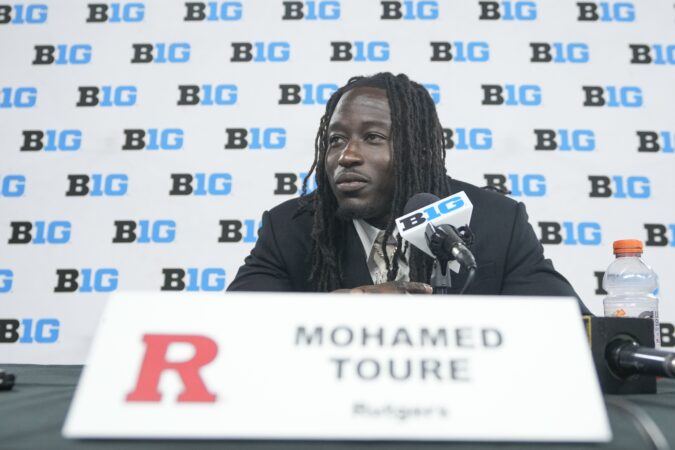
  • Mohamed Toure once transformed Pleasantville’s football team. Now, he’ll play for a national title.

    Mohamed Toure once transformed Pleasantville’s football team. Now, he’ll play for a national title.

    Mohamed Toure may have the chance to lift a trophy in the final game of his seven-year college football career.

    Toure, a native of Pleasantville, Atlantic County, will take the field alongside his Miami teammates as the 10th-seeded Hurricanes seek their first national championship since 2001 against top-seeded Indiana on Monday in Miami (7:30 p.m., ESPN).

    In his first year at Miami, Toure has been the anchor of a defensive unit that has allowed 14 points per game, ranking fifth in the Football Bowl Subdivision.

    Toure transferred to Miami in May to use his final year of graduate eligibility after playing three seasons in six years at Rutgers. He redshirted, played through the pandemic-shortened 2020 season, and suffered two ACL tears while with the Scarlet Knights, which makes Toure a seventh-year player.

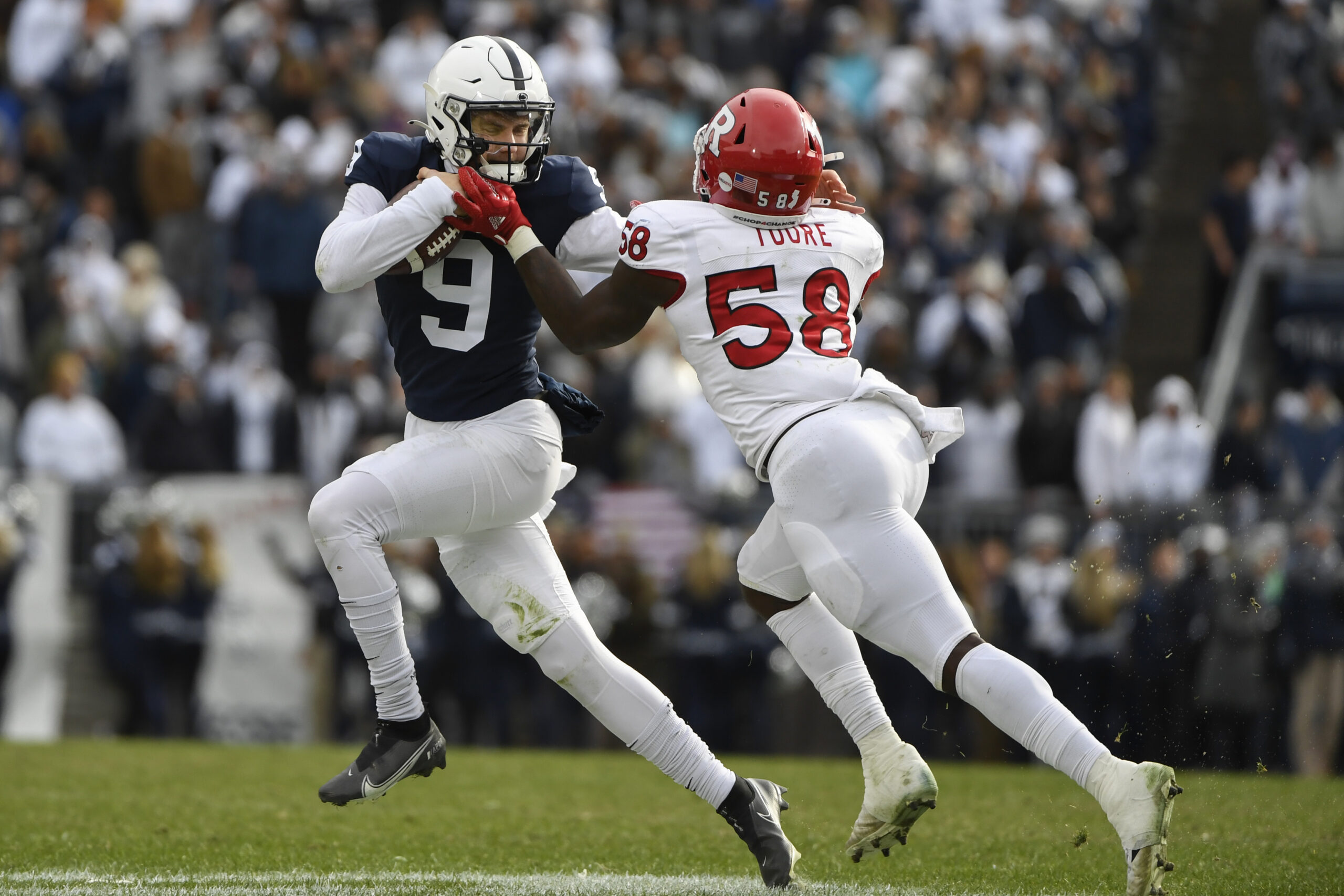
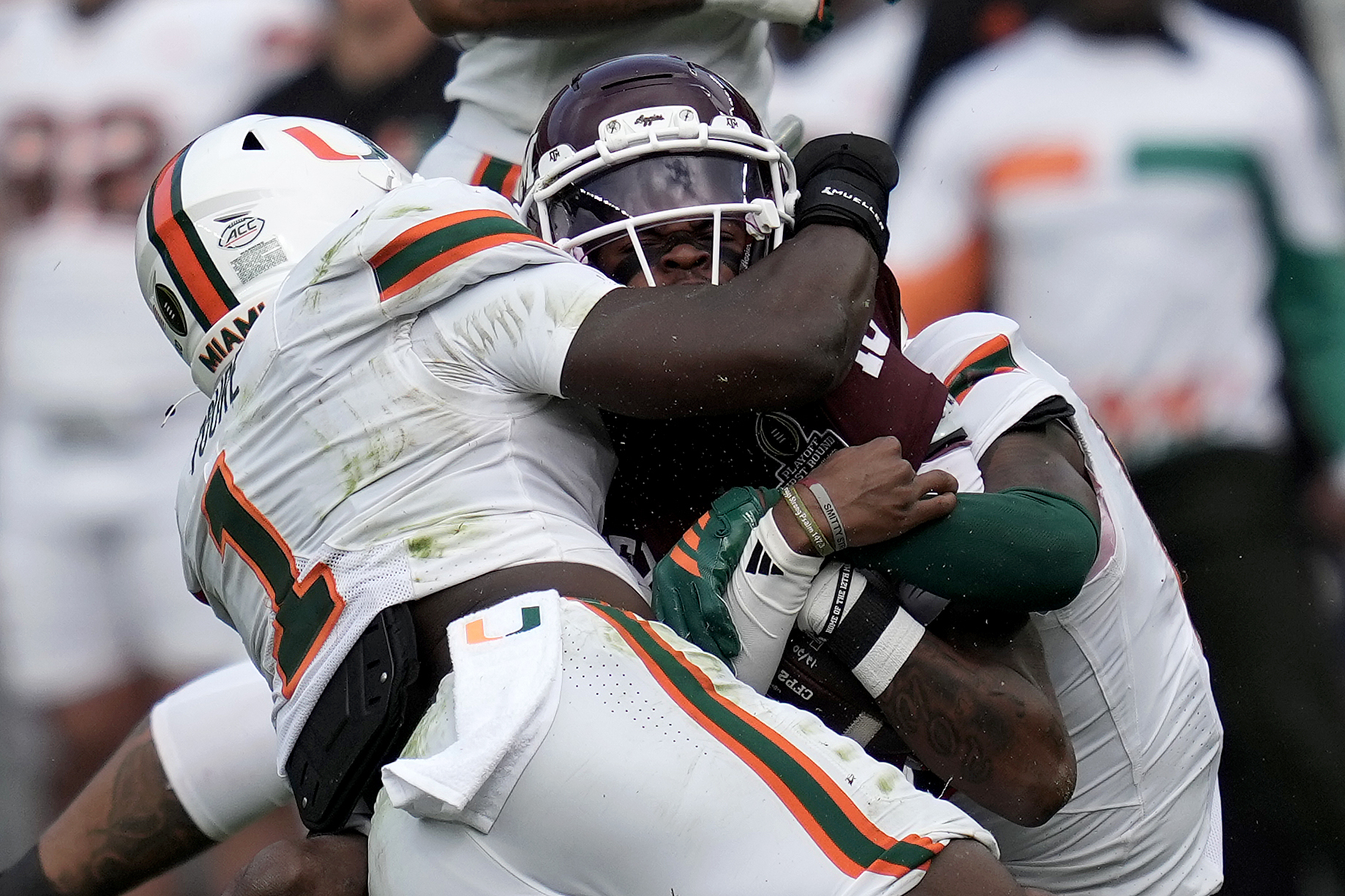
    Texas A&M quarterback Marcel Reed is tackled by Miami linebacker Mohamed Toure on Dec. 20.

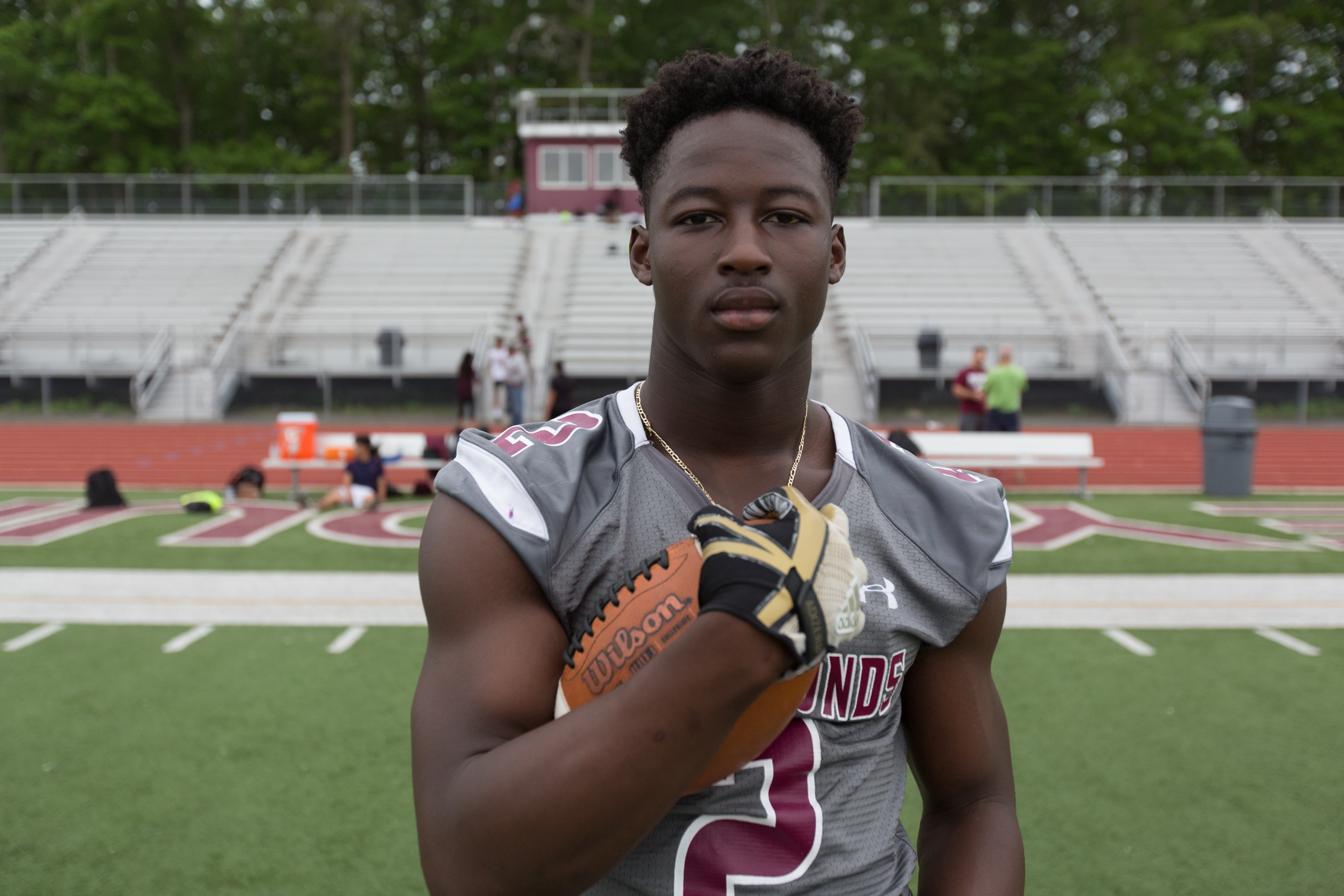
    But before Rutgers and Miami, Toure was a star running back and linebacker at Pleasantville High School.

    “To see him play at a high level, and for them to be playing where they’re at right now, it’s just surreal to watch,” said former Pleasantville teammate Elijah Glover, now the school’s head coach. “It’s something I couldn’t imagine when we were 10th graders.”

    Jersey journey

    Toure and Glover, who played college football at Villanova, were freshmen when Chris Sacco took over as head coach for the Greyhounds in 2015. Pleasantville had won just three games over the previous five seasons before Sacco took over, including winless campaigns in 2010, 2011, 2012, and 2014.

    The Greyhounds went winless again in Sacco’s first season but improved the following season to 4-6. In 2017, the program posted a 7-3 record behind a breakout season from Toure, playing both running back and linebacker. Glover recalls Toure’s 95-yard game-winning fumble return in overtime against Buena Regional High as one of the many moments when he realized his teammate had a future in football.

    “It didn’t happen by accident,” Glover said. “That was the first game of the season. Junior year, he went crazy. It was just like, ‘He’s for real.’”

    Mohamed Toure played running back and linebacker at Pleasantville High School.

    In his senior season, Toure led the Greyhounds to an 8-3 record, rushing for 981 yards and 11 touchdowns, while adding 69 tackles and five sacks on defense. He was named to the all-South Jersey first-team by The Inquirer in 2018.

    The personal accolades for Toure reflected an improbable turnaround for Pleasantville’s football program. Sacco, who is now the athletic director at Hammonton High School, said Toure’s leadership and commitment to Pleasantville was a crucial part of the program’s transformation.

    “It would have been easy for him, as the type of player that he was, and is, to leave and go to an established program,” Sacco said. “To stay and build something, I always said, ‘it’ll mean more to you, especially down the road. It’ll mean more to your friends and your community. It’ll mean more to the school and this program.’ And I think when you see what he did by staying and essentially helping transform a program, you don’t get much better leadership than that.”

    Road to Rutgers

    Toure’s teammates and coaches at Pleasantville knew that the linebacker would end up playing college football at a power conference school. Toure made explosive plays on the field, but he was also a force off it.

    “You definitely could see it, just in the weight room,” Glover said. “He was doing stuff that none of us could do.”

    Sacco said the recruitment process for Toure started slowly, something the former head coach attributed to the program’s losing reputation. But it picked up during Toure’s junior year, as he led the Greyhounds to a winning season for the first time in a decade.

    Toure was ranked as a three-star recruit and had 17 scholarship offers before he decided on Rutgers. He took a redshirt year in 2019, but in the pandemic-shortened 2020 season, Toure led the Scarlet Knights with 4½ sacks in their nine-game campaign.

    He built on that performance with another 4½-sack season in 2021.

    Mohamed Toure, a former Rutgers linebacker, recorded 93 tackles and 4 1/2 sacks in 13 games in 2023.

    Toure was set to be a key piece for new Rutgers linebackers coach Corey Hetherman in 2022, but his season was derailed by an ACL tear in the spring. He returned for the 2023 campaign, serving as a team captain. Toure recorded 93 tackles and 4½ sacks in 13 games that season.

    Toure planned to finish out his college career at Rutgers in 2024 while playing alongside his younger brother Famah, a junior wide receiver. But another preseason ACL tear led Toure to change his plans. He entered the transfer portal after the 2024 season, looking to use his final year of eligibility elsewhere.

    “Both the situations were very unfortunate, but I also think that he utilized that,” Sacco said. “Instead of feeling sorry for himself, he just refocused that energy into, ‘This is what I need to do to get back and better.’”

    Toure reunited with Hetherman, his former coach at Rutgers, in Miami. Hetherman spent the 2024 season as the defensive coordinator in Minnesota before joining Mario Cristobal’s staff in the same role ahead of the 2025 season.

    Toure, who leads the Hurricanes with 73 tackles, has been a key piece of Hetherman’s defense.

    Pleasantville power

    Toure stepped into a bigger spotlight as Miami made its improbable run to the national championship game.

    The 10th-seeded Hurricanes became the first double-digit seed to win a game in the playoff with a 10-3 road defeat of No. 7 seed Texas A&M. Without Toure, it could have been the Aggies moving on.

    Toure recorded eight tackles and kept Texas A&M’s Rueben Owens from catching a potentially game-tying touchdown pass with 28 seconds remaining. Toure delivered a vicious hit on the goal line to break up the pass, and the Hurricanes secured the win two plays later.

    Miami then pulled off a 24-14 upset against No. 2 seed and defending national champion Ohio State in the Cotton Bowl quarterfinal. The Hurricanes beat No. 6 seed Ole Miss, 31-27, in the Fiesta Bowl semifinal, with Toure recording four tackles and a sack.

    Their path through the bracket has led the Hurricanes back to Miami, where they will have an opportunity to compete for a title on their home field. While the Hurricanes will likely have the advantage of a home crowd on Monday, Toure will also have a number of fans cheering for him in Atlantic County.

    “It means a lot to the community,” Sacco said. “I know it means a lot to the younger kids to be able to, look at the school and say there’s somebody playing on Monday night for the national championship that went here, and recently.”

    For Glover, Toure’s steps to the national spotlight are a chance to show the high schoolers on his team, including Toure’s youngest brother Sekou, that effort and dedication can take them anywhere, whether in football or in life.

    “It’s definitely something I’m using just to let them know, like, ‘Yo, it’s possible if you just put the work in and stay down and let things end up how they’re going to be for you,’” Glover said. “Everybody won’t be a Division I recruit, that’s just impossible. But they can end up anywhere they want to be.

    “That’s really the message, besides it being Miami or football. It’s really like, ‘You could go on a big stage of anything you want in this life if you just follow these steps.’”

  • Villanova hits a ‘bump in the road’ after struggling with the physicality and experience of St. John’s

    Villanova hits a ‘bump in the road’ after struggling with the physicality and experience of St. John’s

    Six minutes was all it took for the things that had to have worried Kevin Willard ahead of Villanova’s Saturday night showdown with St. John’s to make the difference.

    Villanova’s deficit at halftime was just one point, but by the time St. John’s converted the fifth Villanova turnover of the second half into a layup, the deficit was 56-39 with 14 minutes to go in an eventual 86-79 St. John’s victory.

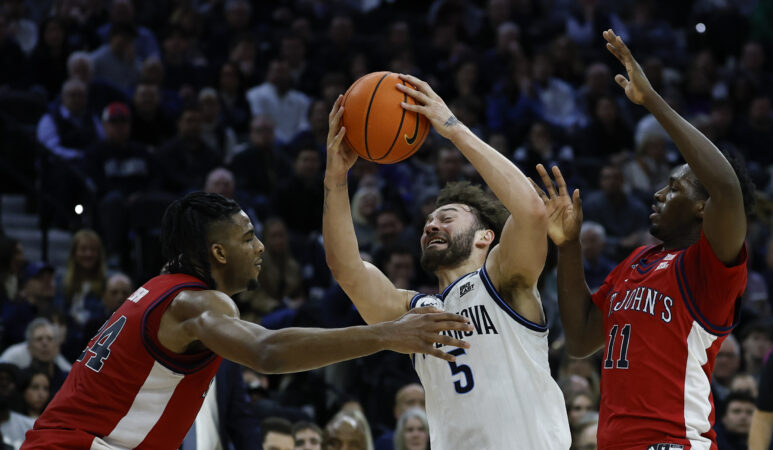
    Some inherent disadvantages were working against Villanova at Xfinity Mobile Arena. Chief among them were the size, strength, and experience that St. John’s possesses, and the way its defensive pressure can be unrelenting. Three of Villanova’s top five scorers — Acaden Lewis, Bryce Lindsay, and Matt Hodge — are in their first or second season playing college basketball. The Red Storm, meanwhile, starts four seniors to Villanova’s one. All of that showed during a 20-4 run.

    St. John’s had 12 offensive rebounds to Villanova’s seven. Four of the 12 came during that fateful six-minute stretch. Each team had eight turnovers by halftime, but Villanova finished with 14, five during the opening six minutes of the second half, and St. John’s had just one over the final 20 minutes. The Red Storm converted those Villanova turnovers into 17 points. St. John’s had 42 paint points to Villanova’s 22.

    The youthful Wildcats eventually got back in the game and trailed by five with 6 minutes, 36 seconds left and again inside of a minute to play. But St. John’s was too big, too strong, and too experienced for Villanova to get over the hump, no matter how hard junior Tyler Perkins and senior Devin Askew — who scored 23 and 21 points, respectively — tried.

    Villanova’s lone senior starter, center Duke Brennan, a transfer from Grand Canyon, was no match for his experienced Big East counterparts. Zuby Ejiofor had 17 points and seven rebounds. Bryce Hopkins had 20 and six. Brennan was minus-14 on the night. Lewis finished with a season-low three points and a season-high six turnovers and was on the bench for the final 11 minutes.

    Lewis, who was also minus-14, looked like a freshman, which has only happened a few times this season. Hodge normally scores 10.6 points per game but was held to four. Lindsay entered Saturday scoring 15.2 points per game and scored 11, all in the second half.

    “Acaden, Bryce, Matt — freshman, freshman, sophomore — against grown men,” Willard said. “That’s why Devin and Tyler played well, because they’re grown men. They’re physical, able to play against a St. John’s where I think Acaden, Bryce, and Matt are all trying to figure out, ‘How do I play when I play against a physically dominant team?’ We’ve struggled against physically dominant teams for that reason.”

    Saturday night offered Villanova (14-4, 5-2 Big East) a chance for its first real signature win. Instead, it showed, for now, where the Wildcats are. They have beaten teams projected to make the NCAA Tournament like Wisconsin and Seton Hall, but they have been knocked off by the three big dogs on the schedule so far: BYU, Michigan, and now St. John’s. Villanova is where it is — ranked 25th in the NCAA’s NET rankings and 27th at KenPom as of Saturday — in large part because it has beaten the teams it’s supposed to beat.

    Villanova entered Saturday as the 21st team in ESPN bracket guru Joe Lunardi’s projected NCAA Tournament field. The best of all the No. 6 seeds. St. John’s, meanwhile, was 26th. Saturday should at least cause a flip-flop.

    “You’ve got to sit back as a coach every once in a while and realize there is a process to this,” Willard said. “Sometimes you’ve got to play bad and go back and watch film and kind of … we did some things in the second half late, defensively, that made no sense.”

    It is not a talent thing, Askew said. Villanova has the players, but it needs to play in games like Saturday’s to get better.

    “It’s an experience thing,” said Askew, a sixth-year senior who is averaging 18 points off the bench in his last three. “As they play more games in atmospheres like that, they’ll get better. … They just have to get used to it and they will.”

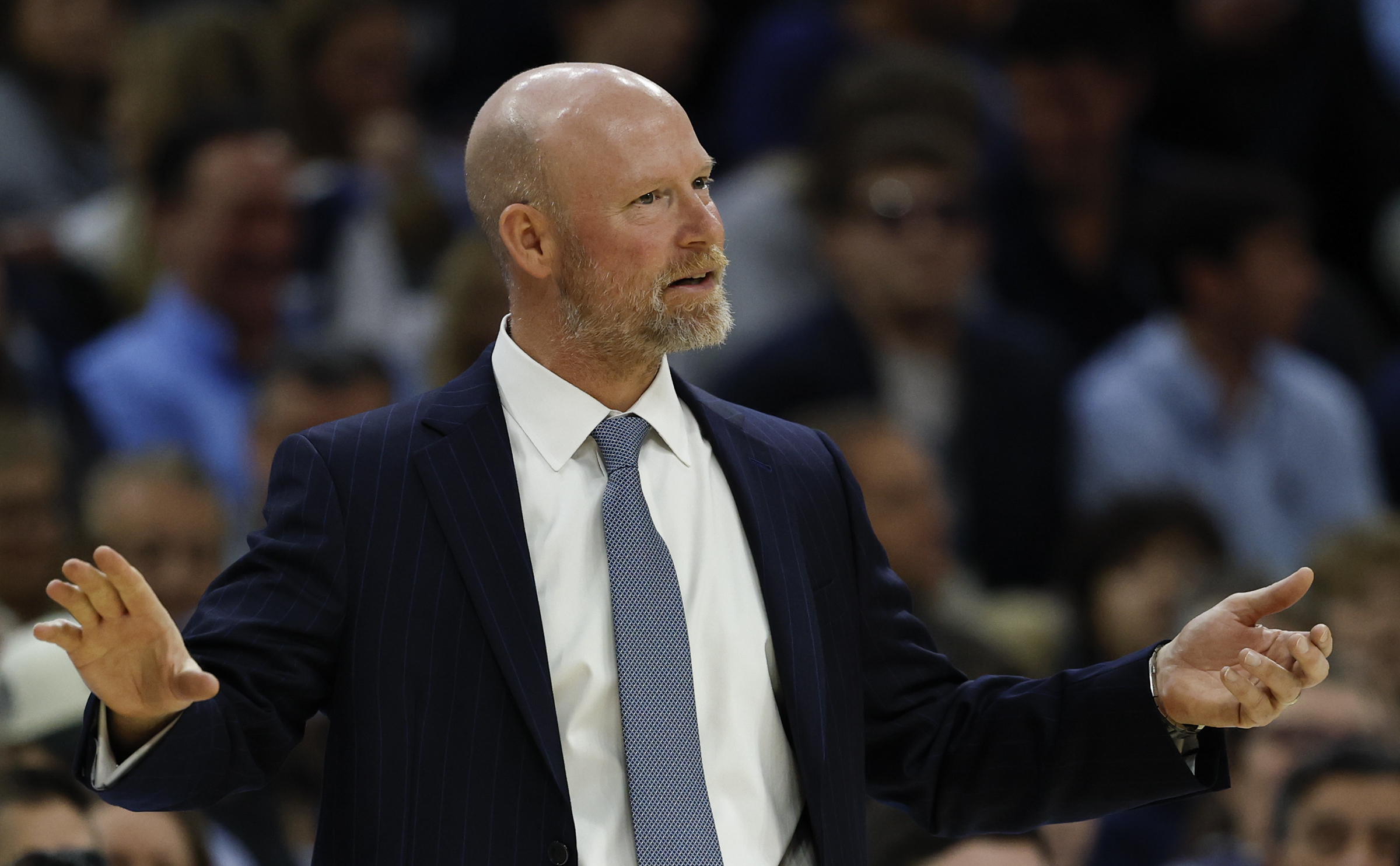
    Villanova coach Kevin Willard believes his team is still learning to deal with physical opponents.

    The good part for Villanova is that very few teams in the Big East are built to hurt Villanova the way St. John’s can.

    The Wildcats are back at the Finneran Pavilion on Wednesday night against Georgetown, which is 1-6 in the Big East. After that is another big test — a road game at No. 3 UConn next Saturday afternoon that will give Villanova a chance to quickly show what it learned from its step up in competition.

    “It’s a little bit of a learning process,” Willard said. “This group, they have a great attitude, they work hard. We’re going to have some bumps in the road. It’s a part of conference play.

    “We’re not at the level where we’re going to pitch a shutout. We can’t give up 50 points in the second half. We can’t give up nine offensive rebounds in the second half. We can’t come out and turn the ball over three times. That’s all part of the learning curve a little bit.”

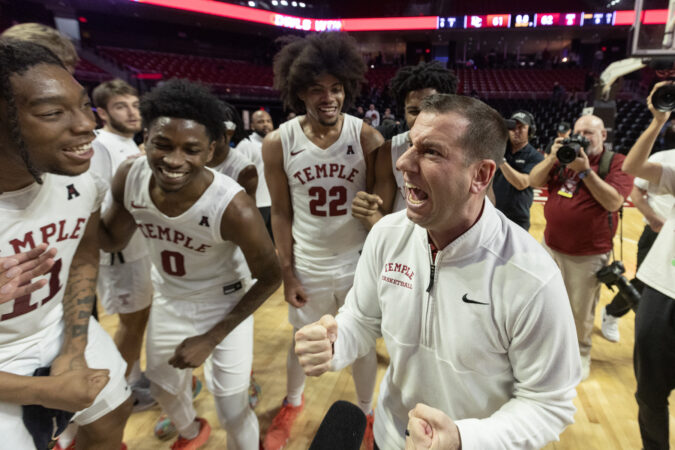
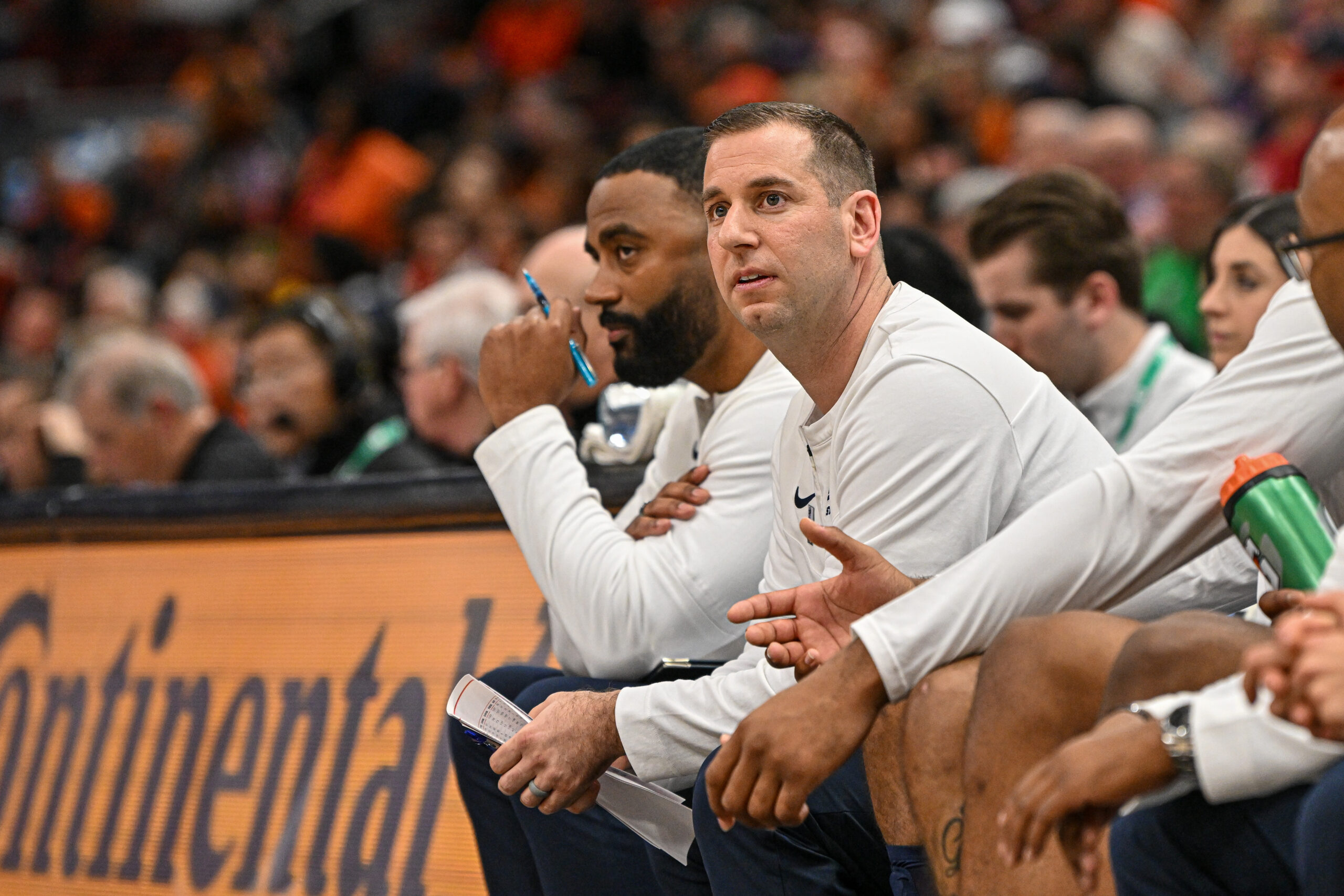
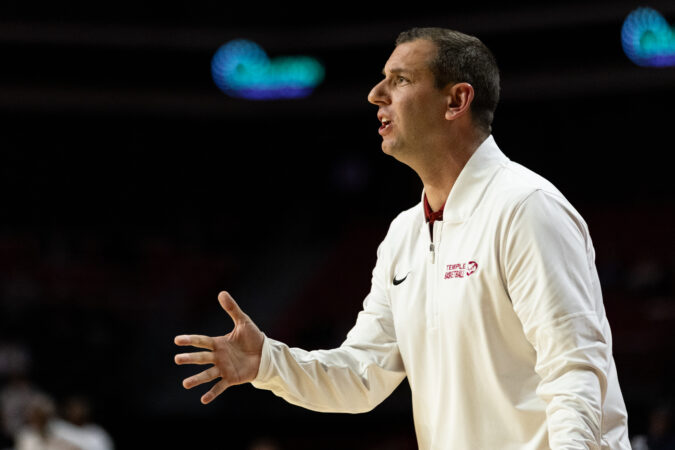
  • Adam Fisher is fulfilling a dream as Temple’s coach. He hopes to be ‘here for a long time.’

    Adam Fisher is fulfilling a dream as Temple’s coach. He hopes to be ‘here for a long time.’

    When Adam Fisher was in the second grade, he was asked to write down things about himself.

    Most of the questions were simple, like his favorite food. Then there was the question, “What do you want to be when you grow up?”

    While most kids jotted down doctor or chef, he said, Fisher proudly wrote that he wanted to be a college basketball coach.

    “Why? I have no idea,” Fisher said. “I love college basketball. I love the students when you pack an arena, I love the band, and the comradery of bringing people together that are at the university currently and then you want to go back as an alumni.”

    Nearly three decades later, the Bucks County native, who graduated from Penn State in 2006 and immediately dove in the coaching world, has been living out his dream. Fisher worked under former Penn State and current Florida Gulf Coast coach Pat Chambers and Hall of Famers Jay Wright and Jim Larrañaga at Villanova and Miami, respectively.

    At each stop, he grew and learned from other coaches, as he waited for the chance to lead his own team. That finally came in 2023, when he became Temple’s head coach.

    Now, Fisher is in his third year, and has Temple (11-6, 3-1 American) trending in the right direction. In November, he received a two-year extension through 2030. While the program has expressed its faith in Fisher, he hopes to build the team back into an NCAA tournament contender.

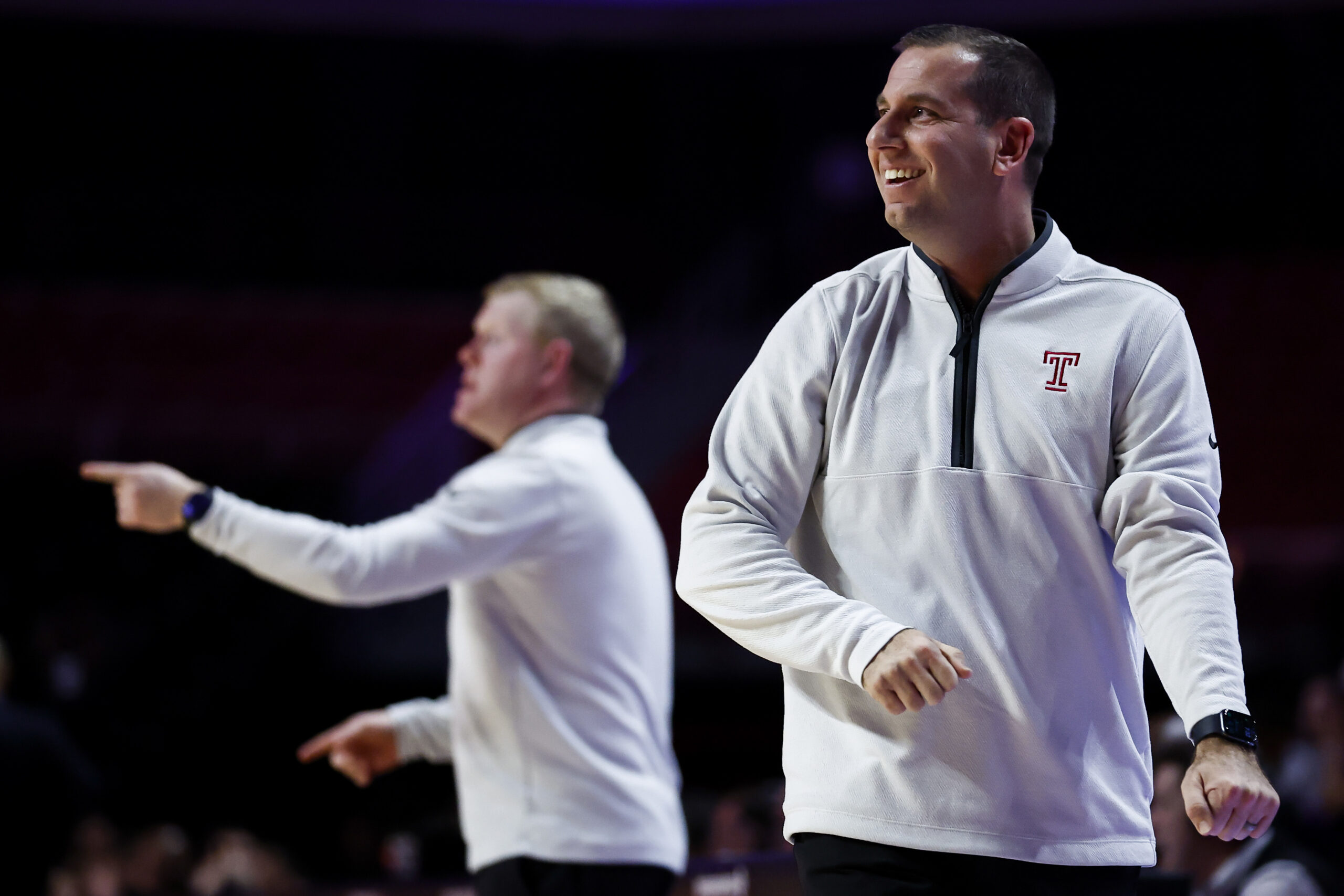
    Adam Fisher during a game against East Carolina at the Liacouras Center on Jan. 7.

    “Every job has pressure no matter what your profession is,” Fisher said. “With this job, the pressure is the great history, the rich tradition that comes with taking over a program like Temple. For me, you got to fuel yourself on the pressure and it’s something that is there and it kind of helps motivate, to get back to where Temple basketball was … it helps fuel you to not ever be outworked, to make sure you’re doing everything you possibly can for the program and put yourself in the best situation possible.”

    ‘You can win and have fun’

    Fisher credits his father Neil for giving him the itch to coach. Neil was he and his brother’s first coach while they played basketball, among other sports, in the Warrington Athletic Association.

    Fisher’s friends still bring up the times they had Fisher’s father as a coach. Neil’s impact went beyond sports as well, as Fisher’s family owned a restaurant. He watched his father run it on his own.

    “All our friends still to this day will talk about playing for my dad, and that’s really cool when you know that somebody makes that impact,” Fisher said. “I think that was when I learned I want to coach, I want to impact lives the way he did in the way he helped change people for the better. And bring people together and show that you can win and have fun and all those things.”

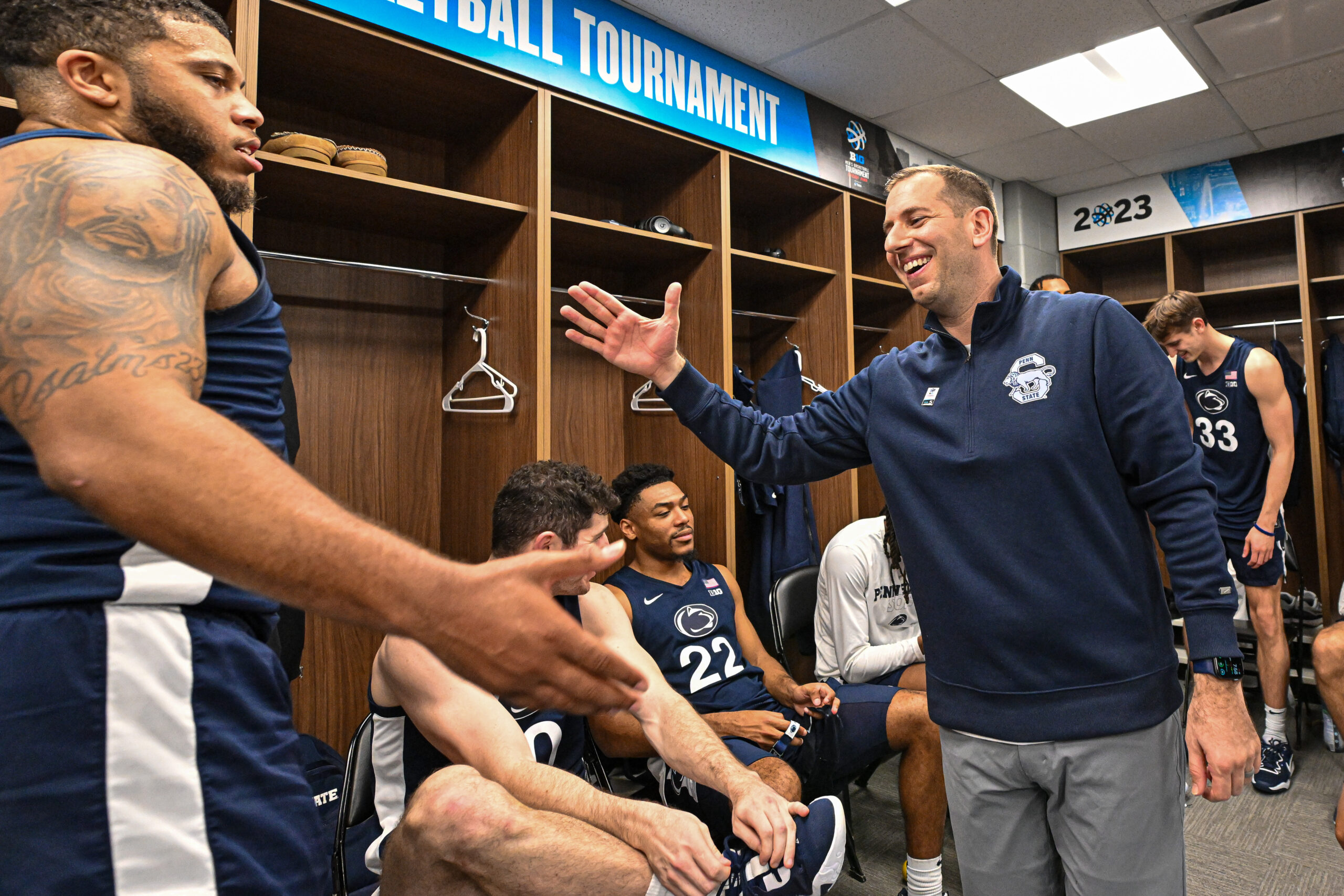
    Adam Fisher was an associate head coach at Penn State prior to being hired as Temple’s next head coach.

    Fisher bounced between schools after graduating with a kinesiology degree from Penn State. He served as a graduate assistant at Villanova under Wright, where he eventually followed then assistant coach Chambers to Boston University and Penn State, when Chambers took over those programs.

    He held various roles; director of operations, video coordinator, and director of player personnel. But in 2013, he got his break.

    A father figure

    Former Miami assistant coach Michael Huger got in Larrañaga’s ear about a coach at Boston University. The Hurricanes had an open spot for a director of player operations and hired Fisher, who learned under Huger and Larrañaga’s tutelage.

    Huger let Fisher join his recruiting visits and even let him crash in his office while he worked. Larrañaga became a father figure for the budding coach, whom he called the best director of player operations he’s ever had.

    He wasn’t a bench coach yet, but he coached 35-year-olds during the summer in a fantasy camp, where he impressed with his ability to build relationships, something that would come in handy down the line.

    But Fisher wasn’t someone Larrañaga could let go.

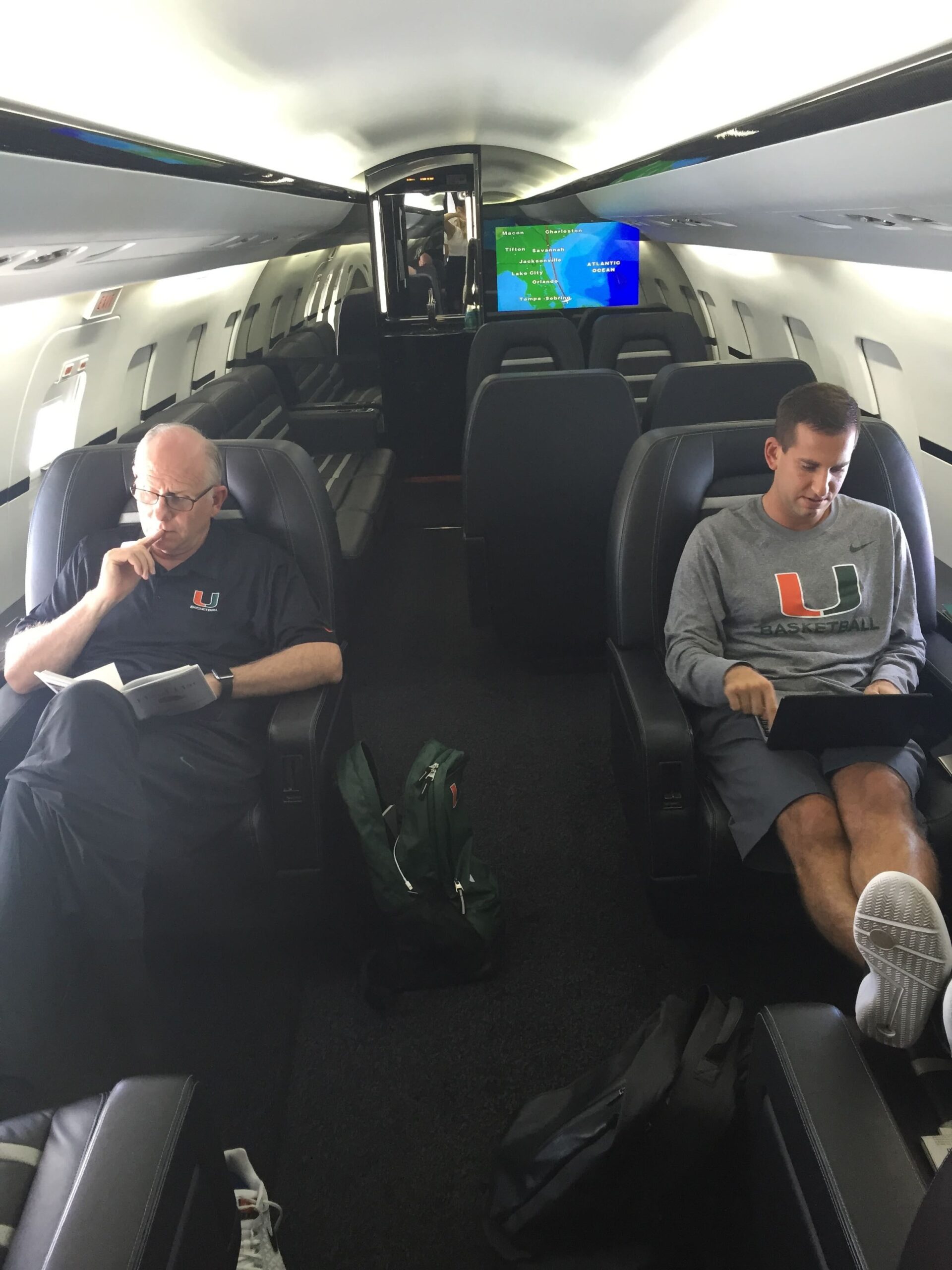
    Former Miami coach Jim Larrañaga and Adam Fisher on a plane together.

    “He was going to go to Bowling Green State University with Michael Huger. My wife said to me, ‘You can’t lose Adam. You speak so highly of him and you need to figure out a way to keep him,’” Larrañaga said. “So I called Adam back and said, ‘Instead of going to Bowling Green, I’d like you to stay here as the ops, but I’ll promise you, the first time one of my assistants leaves, I’ll elevate you.’”

    His tenure as director of player operations didn’t last long. Assistant coach Eric Konkol was hired as the head coach of Louisiana Tech. Larrañaga stuck to his word and promoted Fisher to a bench coach, where he stayed for seven seasons.

    Fisher began looking at Larrañaga as a father figure as their families became friends. When he married his wife Rebecca, Larrañaga was at the wedding. He even showed up a few days early to avoid a hurricane in Miami, while other staff members had to miss it because of the storm.

    “That just shows you who he is,” Fisher said. “That’s the guy he is. I’m interviewing for the Temple job and he’s getting ready to play in the Elite Eight and he has time out of his day to call Arthur Johnson the day of an elite eight game. That’s why I think he’s the greatest. He’s a Hall of Fame coach and Hall of Fame person.”

    Even after he left for Penn State in 2021 to work under Micah Shrewsberry, the two stayed in contact.

    Continue to build

    While at Happy Valley, it was Fisher’s job to handle recruiting in the Philadelphia area. He added players such as Jameel Brown, Demetrius Lilley, Cam Wynter, and Andrew Funk to the team, and helped the Nittany Lions reach the NCAA Tournament in 2023.

    Fisher later took the head coaching job at Temple. While he began building a foundation with the Owls, he tapped back into the relationships that he made during his career.

    Huger had been fired by Bowling Green that offseason, and his protégé hired him as the Owls’ associate head coach. Jimmy Polisi, who had spent a season with Fisher in Miami, was hired as the director of player operations, the same role that gave Fisher his start.

    Adam Fisher, while serving as Penn State’s associate head coach, helped the team reach the NCAA tournament in 2023.

    When guard Jamal Mashburn Jr. was heading into his junior season of high school, Fisher and Larrañaga camped out in a movie theater parking lot to wait for July 1 to offer Mashburn Jr. a scholarship.

    Mashburn Jr. never committed to Miami, instead he went to the University of Minnesota and then New Mexico, but when he entered the transfer portal in 2024, he had a familiar face reach out — Fisher. He only spent a year with the team, but the two still talk.

    “I was reaching out to him about a lot of stuff, just keeping my mind right. And, you know, he’s a positive person,” said Mashburn Jr., who competes on the Grand Rapids Gold of the NBA G League. “He’s someone who believes in me.”

    Fisher still has players reach out that are no longer in the program, like Mashburn Jr. and forward Steve Settle III. Settle tries to watch every Temple game when he can.

    Fisher’s first year at the helm saw Temple make a Cinderella run to the American championship game. While Temple got blown out of the tournament in the first round of the 2024-25 season, the Owls are making strides this season.

    The roster looks well connected compared to the last two season. A defense that needed fixing has improved and the offense has been multidimensional.

    The Owls have more than a month until the American tournament in March, and were riding a seven-game winning streak before falling to Memphis on Wednesday.

    Fisher is hopeful that his team will continue to have success, and he’s committed to get there.

    “This is where my family and I want to be,” Fisher said. “We’re excited to be here and continue to build this thing. We knew it was going to take time, taking over the job and where we were in the state of college athletics, we knew this was going to be a challenge early on.

    “We’re excited to be here for a long time.”

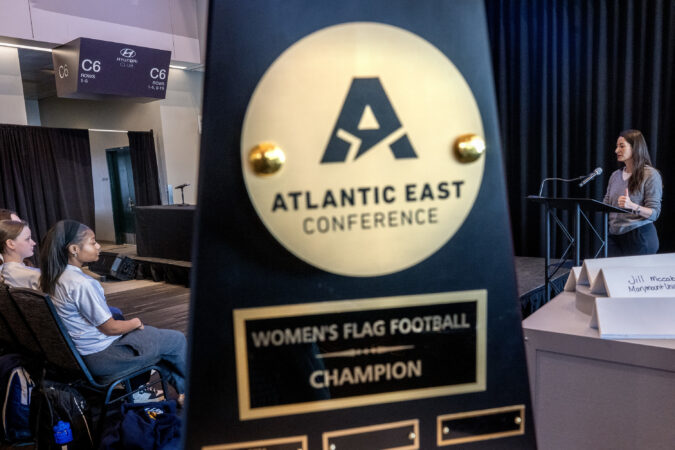
  • NCAA takes a step toward adding flag football by including it in its Emerging Sports for Women program

    NCAA takes a step toward adding flag football by including it in its Emerging Sports for Women program

    The NCAA has added flag football to its Emerging Sports for Women program, effective immediately, the organization announced Friday.

    Flag football was approved to join the Emerging Sports program by representatives from Division I, Division II, and Division III, giving it a path to becoming an NCAA championship sport in the coming years.

    Since its creation in 1994, the Emerging Sports for Women program has identified sports that “help schools provide more athletics opportunities for women and more sport-sponsorship options for institutions,” according to its website.

    Eight sports included in the Emerging Sports for Women program have been elevated to full NCAA championship status since 1996, including rowing, ice hockey, water polo, bowling, beach volleyball, and women’s wrestling. At the 2026 convention, the NCAA elevated stunt and acrobatics & tumbling from emerging sports to championship sports.

    Several NCAA schools have added seven-on-seven flag football ahead of its inclusion in the 2028 Summer Olympic games in Los Angeles, including some in the Philadelphia area.

    Holy Family, Immaculata, and Neumann fielded teams for the Atlantic East Conference’s inaugural flag football season last spring, and Chestnut Hill will compete in the Atlantic East this season. After competing in the Atlantic East in 2025, Eastern’s team will compete in both the Eastern College Athletic Conference and the Atlantic East in 2026.

    Flag football joins rugby, triathlon, and equestrian on the NCAA’s list of emerging sports. For flag football to be considered for championship status, it needs a minimum of 40 schools sponsoring it at the varsity level. It also will need to meet “minimum contest and participation requirements,” per the NCAA’s release.

    The NCAA’s sports sponsorship data shows that 40 schools either currently field a flag football team or plan to this spring. Of the 40 schools included in the NCAA’s data, three are Division I, 14 are Division II, and 23 are Division III.

    While the NCAA did not set forth a timeline for flag football to be added as a championship sport, it does expect sponsorship of the sport to increase as a result of its inclusion in the Emerging Sports for Women program.

  • Temple dismisses CJ Hines from men’s basketball program following alleged involvement in point-shaving case

    Temple dismisses CJ Hines from men’s basketball program following alleged involvement in point-shaving case

    Temple guard CJ Hines is no longer with the men’s basketball team, the program announced in a statement, after being referenced in a basketball gambling indictment by federal prosecutors in Philadelphia on Thursday.

    Hines transferred to Temple in May 2025 but didn’t play in a game this season after the university announced on Nov. 5 that he was under investigation for eligibility concerns prior to his enrollment at Temple.

    According to the indictment, Hines, who played two seasons at Alabama State, was allegedly involved in point-shaving efforts with former teammate Shawn Fulcher during the Hornets’ 2024-25 season. Hines will be charged elsewhere if he is found guilty.

    The indictment names more than two dozen players on 17 different NCAA teams in the basketball gambling scheme, which also targeted the Chinese professional league for attempting to fix games from September 2022 to October 2025.

    Temple coach Adam Fisher brought Hines in to add scoring depth after Hines averaged 14.1 points and shot 37.8% on three-pointers for Alabama State last season. Hines led the Hornets to the NCAA Tournament in the 2024-25 season.

    The 6-foot-2 guard amassed more than 1,500 points during his career at Faulkner and Alabama State.

  • Top-ranked UConn routed Villanova, but there were still plenty of lessons to learn

    Top-ranked UConn routed Villanova, but there were still plenty of lessons to learn

    No. 1 UConn continued to storm through the Big East — and women’s college basketball in general — with a 99-50 rout of Villanova on Thursday night in Storrs, Conn.

    UConn brought the intensity on defense that has helped the defending national champions hold opponents to 51.7 points per game and maintain a 38.7 scoring margin. The Huskies (18-0, 9-0 Big East) took control early and repeatedly stifled Villanova possessions.

    UConn limited Villanova to more than 20 points below its per-game average of 73.8 points and just 27.7% shooting from the field, including 25% from three.

    Villanova (14-4, 7-2 Big East) remains in second in the conference. Freshman guard Kennedy Henry led the Wildcats in scoring with 12 points and four rebounds.

    Here’s what we learned from Villanova’s showdown with the nation’s top team:

    UConn defense looks unbreakable

    The Huskies were spearheaded by sophomore forward Sarah Strong, who recorded 24 points, nine rebounds, and five blocks.

    The versatile Strong proved difficult to stop from the beginning and scored 15 of her points in the first half. Junior guard KK Arnold (13 points) facilitated UConn’s offense with a team-high seven assists.

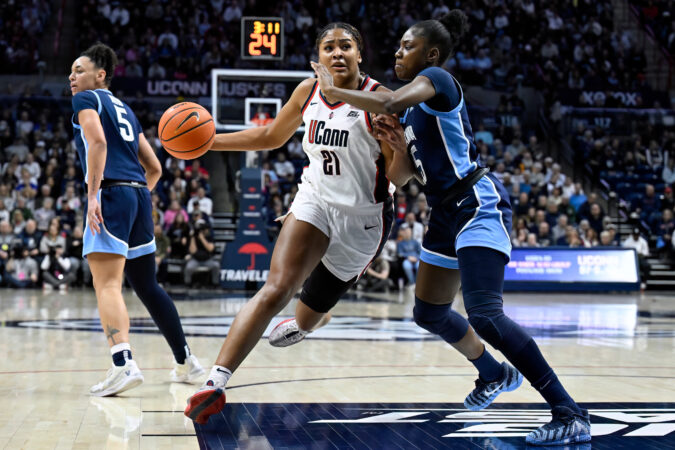
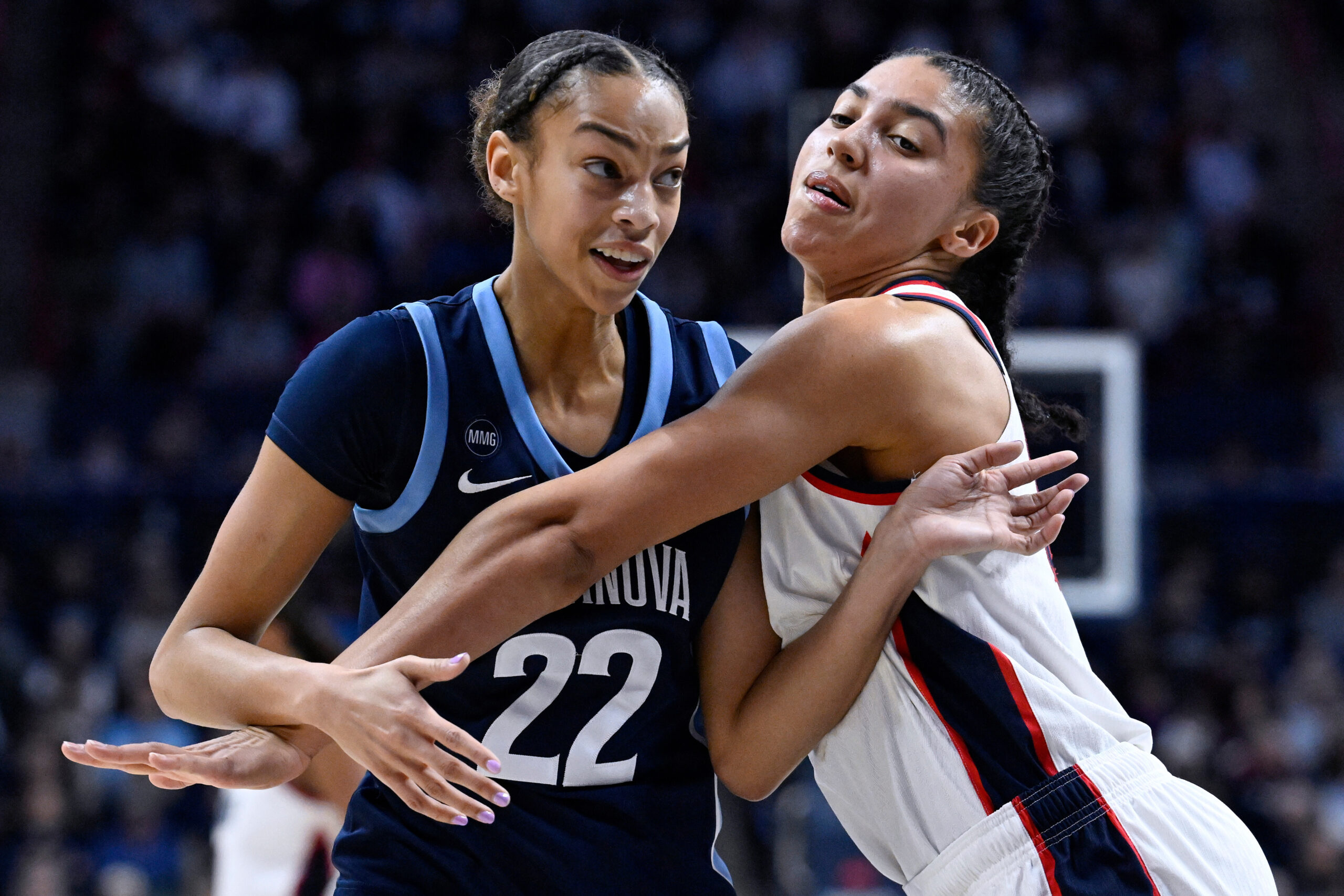
    Villanova guard Kennedy Henry (22), who’s being guarded by UConn star Azzi Fudd, was the team’s leading scorer on Thursday.

    Villanova made just three baskets in the first quarter, as UConn raced out to a 26-8 lead. The Huskies defense didn’t let up, forcing 26 turnovers, which they parlayed into 36 points.

    UConn also benefited from a significant size advantage and won the rebound battle, 46-34. That advantage also paid off in the paint, where the Huskies scored 58 of their 99 points.

    Henry, McCurry lead the way

    UConn swarmed sophomore guard Jasmine Bascoe, who’s Villanova’s scoring leader this season and the third-leading scorer in the Big East. Instead, Henry and junior forward Brynn McCurry (11 points, five rebounds, and three blocks) led the Wildcats in scoring.

    The Huskies forced the Wildcats outside and allowed just one made basket in the paint in the first half and 12 points in the paint overall.

    Instead, Villanova found looks from beyond the arc to create offensive momentum late in the second quarter. The Wildcats put together a 10-0 run over 1 minute, 26 seconds that was sparked by a three-pointer by senior guard Ryanne Allen to close the deficit to 38-23 with 2:58 left in the first half.

    But that was the closest that Villanova would get. Bascoe was fouled with three seconds until halftime and left the court after making both foul shots. She played just five minutes in the second half and finished with eight points.

    Villanova struggled to get around UConn’s press and shot just 2-for-16 from the field in the fourth quarter. By the final three minutes, UConn held a 40-point lead.

    Up next

    Villanova has a few days to recover from its battle at UConn, next hosting Butler on Sunday (2 p.m., ESPN+) at Finneran Pavilion. The Bulldogs (8-10, 2-6 Big East) are 10th in the 12-team conference.

  • Diane Richardson says Temple’s recent play is ‘unacceptable’ as the Owls ride two-game skid

    Diane Richardson says Temple’s recent play is ‘unacceptable’ as the Owls ride two-game skid

    Temple had high expectations entering the 2025-26 season after back-to-back 20-win campaigns.

    The Owls were picked to finish fourth in the American Conference preseason poll and head coach Diane Richardson believed her team had the talent to win the conference.

    After the Owls’ 71-58 loss to Tulane on Tuesday, they look far from the conference contenders they were expected to be. Temple is just 1-3 in the American and sitting in 10th place. In Richardson’s eyes, her team has not been playing “Temple basketball,” and it was especially evident against the Green Wave.

    “That was a piss-poor performance,” Richardson said after the loss. “It was terrible and not Temple basketball at all. It’s got to be fixed.”

    Richardson’s passionate words came after the Owls shot 32.1% from the field, including 5-for-23 in three-pointers, and were out-rebounded, 39-31. Temple was outscored, 21-12, in the final quarter, and its late-game execution ultimately cost the Owls a chance at a victory.

    Temple trailed 65-58 with 22 seconds remaining. Tulane guard Shiloh Kimpson was at the free-throw line for two shots. The next 22 seconds saw Temple fail to get out of its own way.

    Kimpson missed both free throws, but the Green Wave got the offensive rebound and made their next two attempts. Then, guard Tristen Taylor got a five-second call on an inbounds pass, Temple surrendered another offensive rebound from a missed free throw and then missed two free throws of its own.

    The performance caused Richardson’s frustrations to fully boil over, after previous poor showings.

    “No pride. No pride in going after the ball,” Richardson said. “They wanted it more than we did and the 50/50 balls killed us. They went after them and we did not. We can’t sit back and let any team come into the Liacouras Center and do what they did to us. It is unacceptable.”

    Before the season, Richardson envisioned her team playing fast, getting to the basket in transition, and most importantly, playing as a team. However, that version has been absent.

    The Owls have struggled with starting slow on offense, and while that wasn’t the case against Tulane, it was a major issue against Drexel in the Big 5 Classic and UTSA. Temple scored just 52 points in a seven-point loss to Drexel on Dec. 7, and Richardson mentioned her team’s lack of urgency.

    Temple’s Brianna Mead during a game against UTSA at the Liacouras Center on Jan. 3.

    Less than a month later, the same issue occurred against the Roadrunners on Jan. 3, and Richardson expressed more concern about the type of basketball her team was playing. Temple lost 50-47 and was largely uncompetitive until the fourth quarter.

    “I don’t think we played hard enough,” Richardson said following Temple’s loss to UTSA. “I think we waited until the fourth quarter to play Temple basketball. We can not go through the conference like that, and that’s going to be a reality. It’s got to change.”

    Over three games since Temple’s loss to UTSA, little has changed.

    The Owls split road games with a win against Wichita State and a loss to Tulsa before returning home to face a similarly struggling Tulane team. Instead of bouncing back, Temple hit a new low.

    Temple briefly took the lead in the third quarter before they collapsed in the final 10 minutes. The lack of urgency was clear. The Owls took their foot off the gas, while the Green Wave scored the last five points of the quarter to regain control.

    Temple attempted to turn to the three-point line to recover in the fourth, which Richardson did not want to see happen. The Owls went 1-for-9 in three-pointers in the final frame.

    “I thought we took quick shots in threes and we kept saying get to the rim,” Richardson said. “But again, that selfishness came back and they just wanted to shoot threes. You can’t expect the ball to go in when you’re shooting 21% and just keep trying.”

    Richardson also called out her team for a lack of accountability, as she saw them attempt to shift blame after a mistake.

    “We have to play harder and each person has to step up and do what their job is and not look around for somebody else to do it,” Richardson said. “Today, we kind of sat back and looked around to see who else was going to do something, or it wasn’t my fault because she didn’t do this. That is not playing together, and we have to play together in this conference.”

    Temple’s Kaylah Turner has been the Owls’ leading scorer this season, averaging 17.1 points.

    The Owls’ 1-3 American record is their worst four-game start in conference play since the 2018-19 season. The road ahead is no easy task to get back on track.

    Three of Temple’s next four games will be against the top three teams in the American: East Carolina, South Florida, and Rice. Richardson has not seen her team play its brand of basketball, but she said, it has to change to remain competitive.

    “Again, we have to play Temple basketball: the confidence, the grit, and the resilience. The ‘I’m going to throw my body on the line to get these 50/50 balls. I’m going to box out and get rebounds,’” she added. “We need them to take that on personally and not look to someone else to do it.”

  • After its Big Three moved on, St. Joe’s women’s basketball leadership has a decidedly Philly flair

    After its Big Three moved on, St. Joe’s women’s basketball leadership has a decidedly Philly flair

    Any good team is built on trust, and when two teammates have played together as long as Gabby Casey and Aleah Snead have, trust comes naturally at this point.

    Snead and Casey played AAU hoops together with the Philadelphia Belles and were members of the Philadelphia Belles Bluestar National Team in 2023. During that 2022-23 season, they also played against each other in high school, Casey at Lansdale Catholic and Snead at Penn Charter.

    Then, in the fall of 2023, Snead and Casey set off for their freshman season at St. Joseph’s.

    Now as juniors, the pair isn’t just playing together, they’re leading the Hawks together, in the box score and the locker room.

    “Trust takes time, and we’ve been together for so long, so now we trust each other on the court to make big plays for each other,” Snead said. “Even to be a leader. I trust Gabby in her opinion on everything.”

    Wherever you look on the St. Joe’s stat sheet, you’ll likely find Casey and Snead at or near the top. Casey leads the Hawks in scoring, (15.7 points per game), rebounds (6.9 per game), and steals (35). Snead follows directly behind her in each of the categories, averaging 10.9 points and 5.4 rebounds, and totaling 23 steals this season. Snead leads the team in minutes played, while Casey is just behind her.

    Saint Joseph’s guard Aleah Snead leads the team in minutes this season.

    Hawks coach Cindy Griffin said that the duo understands these individual accomplishments don’t come without collective success for the team, which currently is 12-5 (3-3 Atlantic 10). Griffin said Snead and Casey have “taken a lot on their shoulders” offensively and defensively for the Hawks, put in the day-to-day work at practices, and bring the team closer.

    After graduating two of its top players in Talya Brugler and Mackenzie Smith, and with a third, Laura Ziegler, transferring to Louisville, Griffin said Snead and Casey knew it was “their time to step up.”

    “This is their team,” Griffin said. “They felt like they were putting in the work, putting in the time, and [have] a true understanding of what that looks like. And both have stepped up tremendously.”

    Casey had a big jump last season and earned the Big 5’s Most Improved Player award. And as the A-10 Sixth Woman of the Year last year, Snead was no stranger to the “next player up” mentality, so it was only natural for the two to step into the role their teammates needed from them.

    With Brugler and Smith as examples, Snead said it was easy to pass on what she learned from them when assuming her leadership role.

    “I was a good follower, so becoming a leader myself was easy, and these people, my teammates, are easy people to lead on the court,” Snead said. “I just trusted myself and my ability to be able to support and make big plays for my team.”

    It helps to lead alongside Casey, someone she trusts and with whom she is comfortable. Casey said they know how to run the court together and play off each other, which their coach saw even before they were her players.

    Griffin’s youngest daughter, Hannah Griffin, played on the Philadelphia Belles with Snead and Casey, which allowed Griffin to get to know both the players and their families before they were Hawks.

    “When it was time for summer, you could see the bond between the two of them and just being able to complement one another,” Griffin said. “You can see it on the court. They look for each other, they find each other, they trust each other, and they know that each is going to show up for each other.”

    Snead and Casey were 1,000-point scorers in high school. Casey holds the program scoring record at Lansdale Catholic was MaxPreps’ Pennsylvania High School Basketball Player of the Year and the Gatorade Pennsylvania girls’ basketball player of the year her senior year.

    Casey and Snead were MVP of the Catholic League and Inter-Ac League, respectively, during the 2022-23 season, so both knew what it meant to play Philly basketball even before they arrived at St. Joe’s.

    “Being home is a fun place and environment to be in, so I kind of am spirited and wear that on my chest,” Snead said. “I’m from Philly, I’m playing in Philly, people are coming to see us, and that’s why I just try to tell my teammates too.”

    Gabby Casey (center) left Lansdale Catholic as the program’s all-time scoring leader.

    Griffin said with players from the area like Casey and Snead, there is an understanding of the grit and competitiveness that accompanies playing in the city.

    Casey experienced this during her time in the PCL, playing against other high school players with Division I aspirations.

    “I think that really just helped me with the physicality level and the speed that we were able to play at in high school,” Casey said. “Philly basketball is tough, and it’s competitive, and I think that it really helped me transition into college.”

    Now, that grit and competitiveness is helping to fuel the Hawks through the back half of the season, which Griffin said the team is taking one game at a time.

    St. Joe’s was picked to finish sixth out of 14 teams in the A-10, and Casey said the Hawks used that as a “spark plug” to help them catch some opponents off guard.

    But, ultimately, it comes back to trust, which starts with Casey and Snead.

    “We just come out like we have nothing to lose and just give our all every single game, and we just really trust each other on and off the court,” Casey said. “That helps as well, just knowing what we can get done on the floor and ultimately coming out with wins.”

  • Memphis snaps Temple’s seven-game win streak as comeback falls short

    Memphis snaps Temple’s seven-game win streak as comeback falls short

    Memphis held on for a 55-53 victory over visiting Temple on Wednesday, snapping the Owls’ seven-game win streak.

    Down by as many as 13 points in the second half, Temple (11-6, 3-1 American) relied on free-throw shooting and timely defense to get within two points with 13 seconds left. Guard Jordan Mason got an open shot near the basket that would have tied the game, but he missed it to give Memphis (8-8, 3-1) the win.

    Guard Gavin Griffiths’ 15 points led the Owls, who had a 41-35 rebounding advantage. The game was Temple’s first since assistant coach Bill Courtney died suddenly on Tuesday at the age of 55.

    First-half struggles

    Both offenses struggled in the first half, combining for just 17 field goals.

    Temple forwards Jamai Felt and Babatunde Duradola picked up two fouls in the first, forcing them to sit for extended periods.

    Owl guards Aiden Tobiason and Derrian Ford struggled to get into a rhythm against the pressure of Memphis, which is third in the conference in turnovers forced per game (14.3). The Tigers attacked Temple with a full-court press that set its offense out of sync and forced Tobiason and Ford into tough shots. Tobiason was 1-for-7 in the first half, and Ford was 1-for-4.

    The Tigers forced eight second-half turnovers and 14 total, a season-high for Temple.

    Guard Jordan Mason, shown during a Jan. 7 game against East Carolina, scored a season-low five points against Memphis on Wednesday.

    Cold from three

    An important factor in the Owls’ seven-game win streak was their three-point shooting. They shot over 40% from beyond the arc in every game and made at least 10 threes in three of them.

    But Temple’s three-point touch disappeared against Memphis.

    The Owls went just 1-for-13 from three and missed their final 10 attempts from deep in the first half. Griffiths, who entered shooting 41.4% from three and had 11 threes in the last two games, shot just 1 of 5 from deep in the first half.

    Temple limited its three-point attempts in the second half, going 1 for 6 as it put more of an emphasis on driving to the rim and getting to the free-throw line. That change of pace on offense helped guide the Owls back from a 13-point deficit and nearly pull off the comeback.

    Griffiths got an open look from three with 1:44 left and Temple down by two, but he missed, part of a 1-for-8 night from long range for the junior guard of the game.

    Overall, the Owls shot just 2 for 19 from three-point range.

    Uncharacteristic play from Mason

    Mason has been a revelation for Temple’s offense since transferring in from the University of Illinois-Chicago.

    He typically provides the Owls with a steady hand at point guard and excels at finding open teammates and directing traffic. His play was a major factor in Temple’s win streak as he scored in double figures in every game, including a double-double with 15 points and 12 assists against UTSA on Jan. 3.

    But against Memphis, Mason shot just 2 of 9 for a season-low five points. He also committed a season-high five turnovers with three assists.

    Next

    Temple will host another top team in the American in Florida Atlantic (11-6, 3-1) on Sunday (noon, ESPNU).