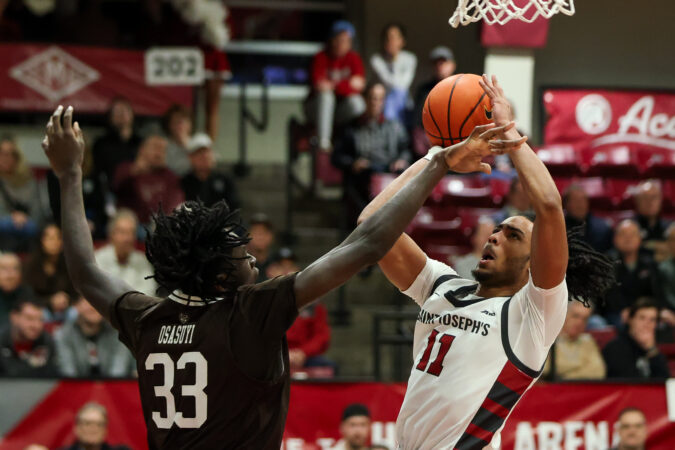
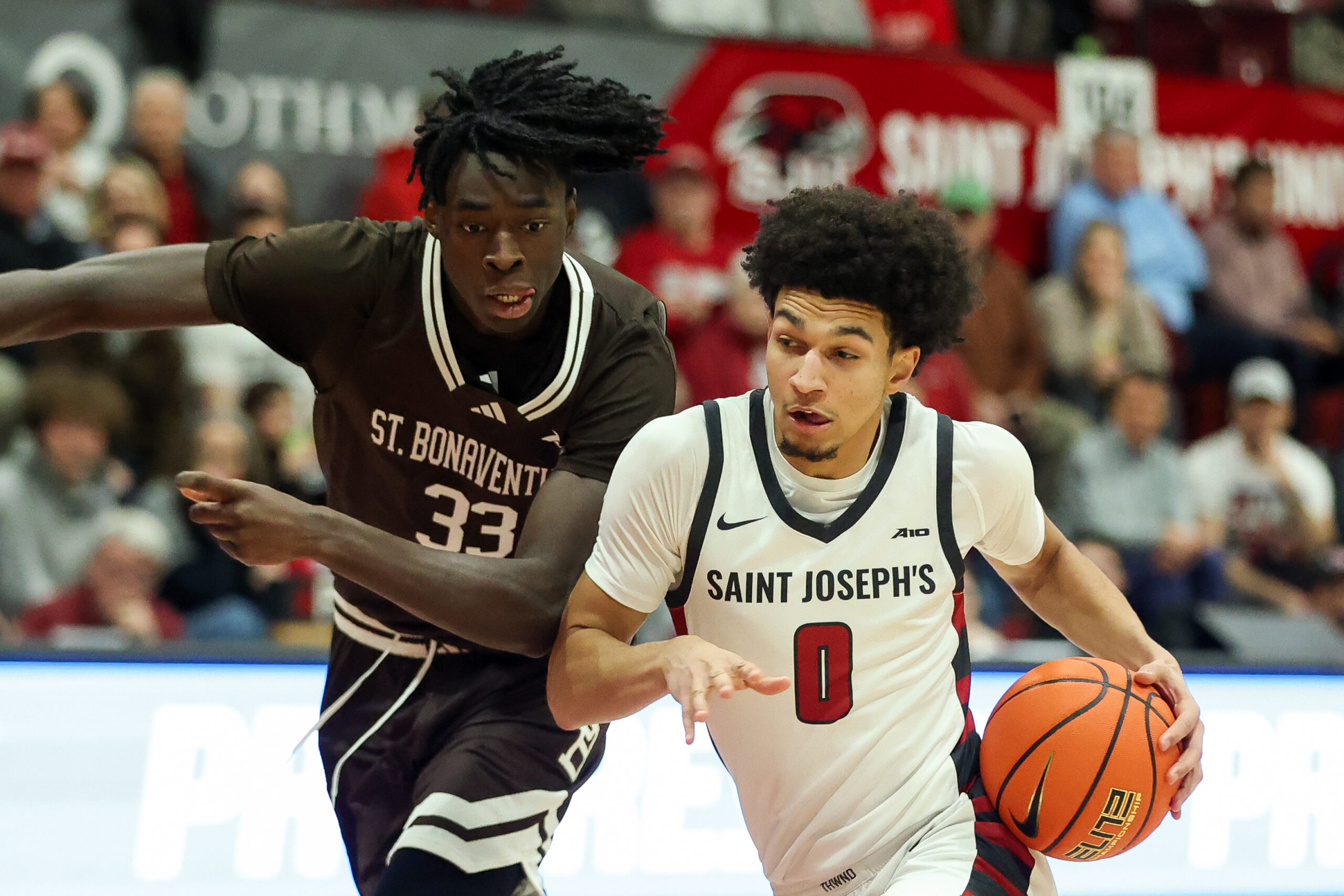
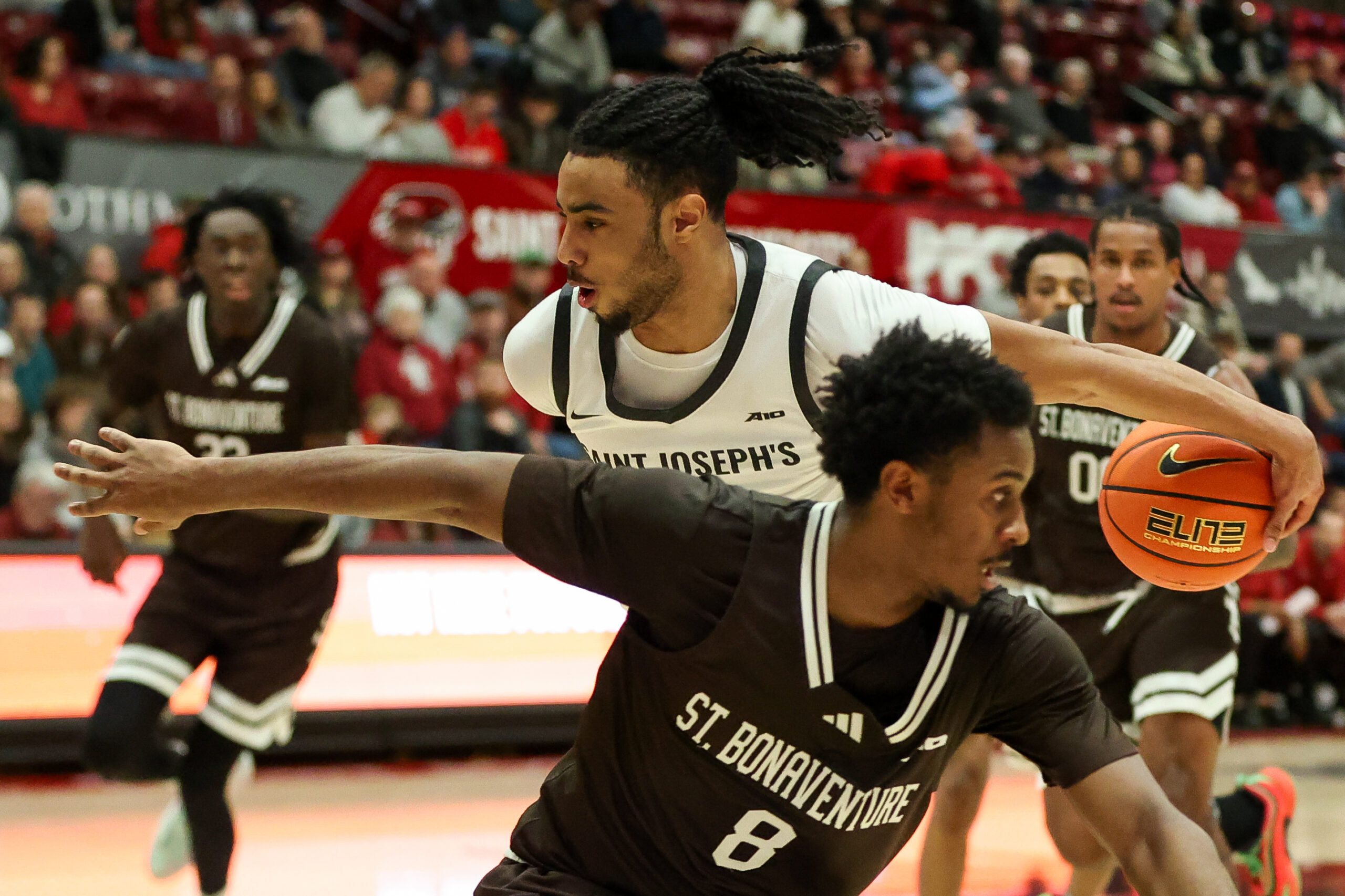
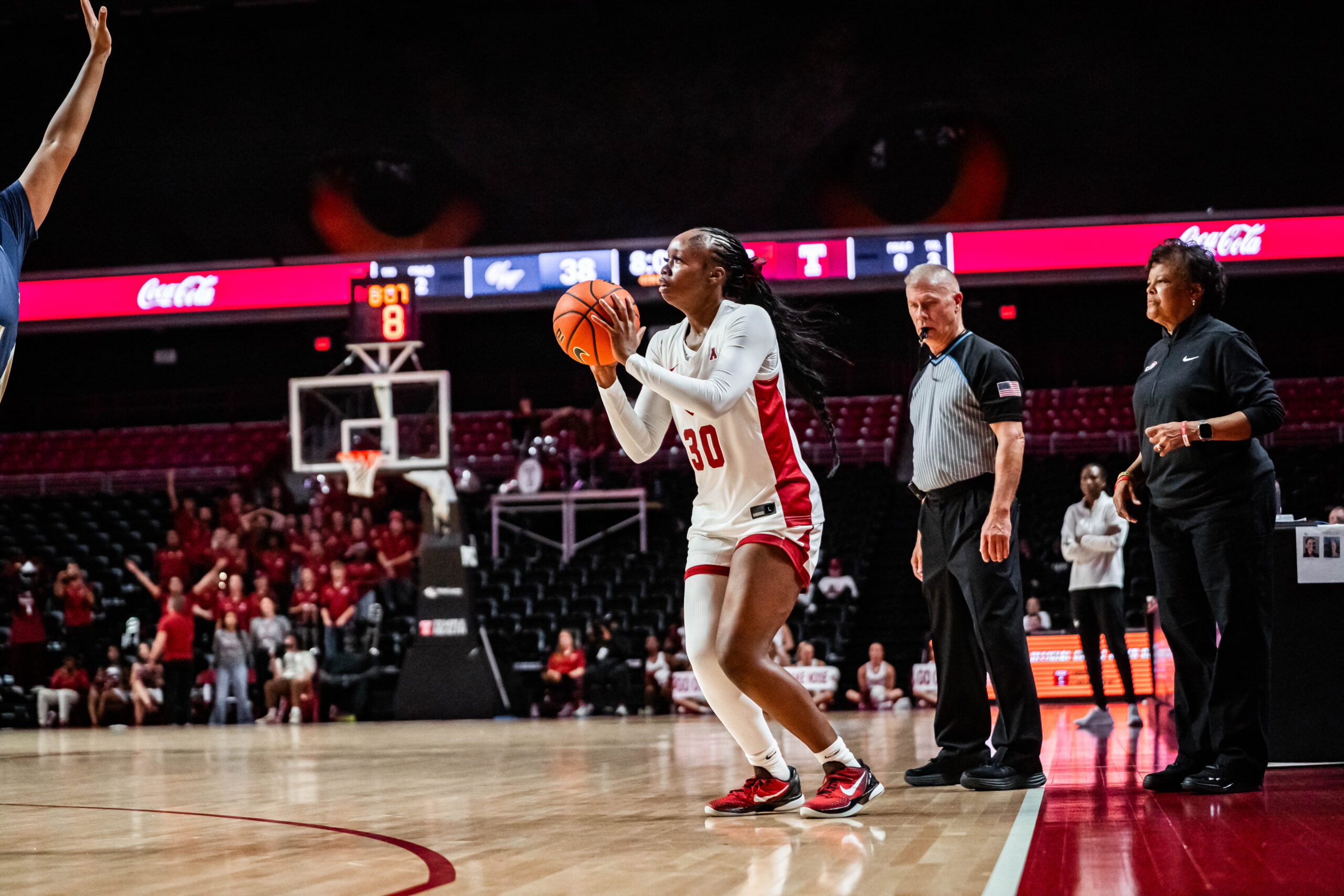
In the waning minutes, St. Joseph’s allowed St. Bonaventure to take a one-point lead, after the Hawks carried a double-digit lead in the first half, which had the crowd at Hagan Arena roaring on Wednesday night.
Then guard Darryl Simmons II launched a three-pointer, hoping to give the Bonnies (11-6,0-4) a four-point lead with 36 seconds remaining, but the ball clanked off the rim. Hawks guard Dasear Haskins grabbed the rebound.
He threw the ball to guard Jaiden Glover-Toscano, who finished with a game-high 23 points. Glover-Toscano made a layup and free-throw to reclaim a two-point lead.
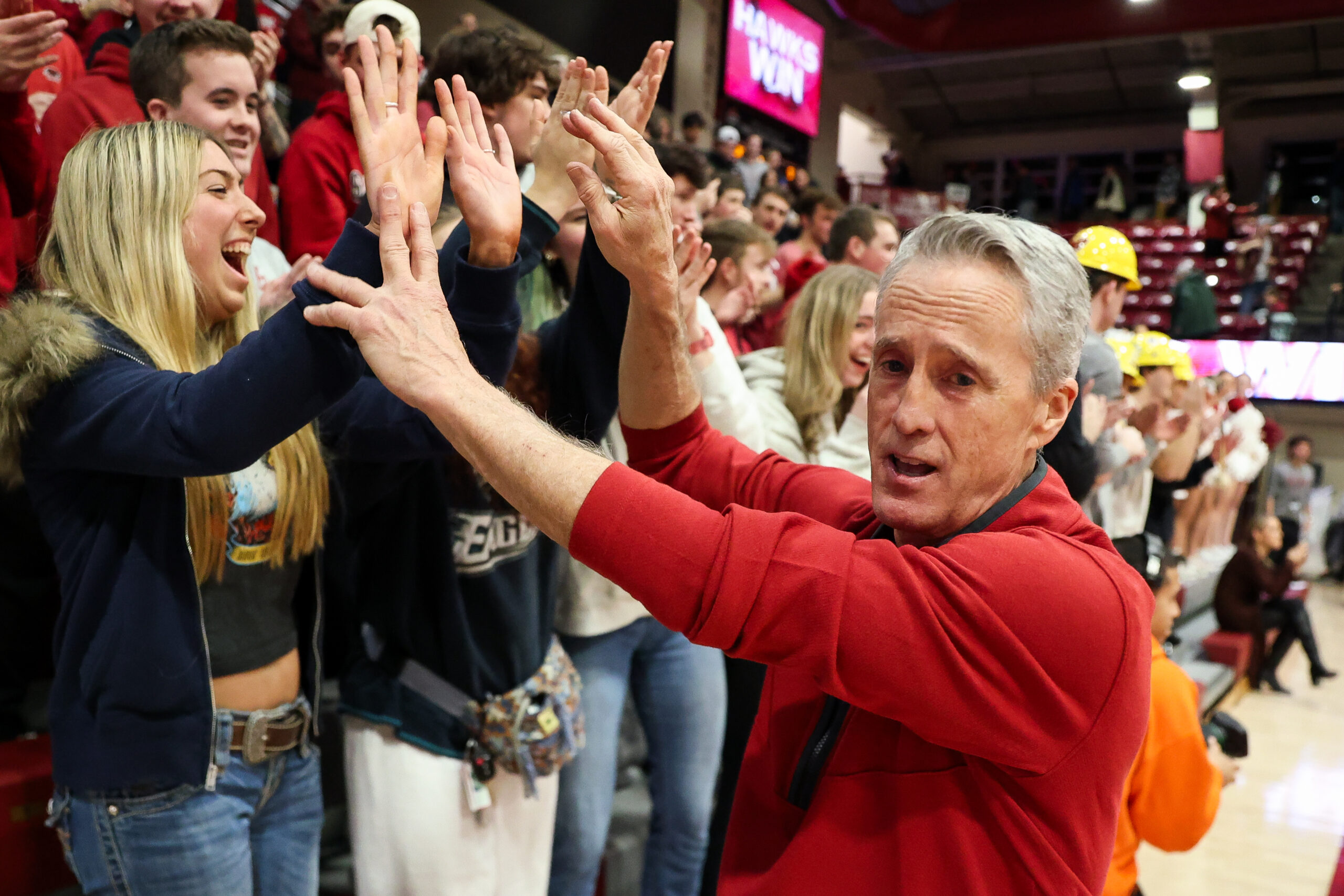
Hawks coach Steve Donahue reacts with the crowd after his team’s 68-64 win against St. Bonaventure on Wednesday.
However, there was still time, and Simmons wanted redemption. He had an open three-pointer, but Glover-Toscano swatted the ball away to seal the Hawks’ 68-64 victory to extend their winning streak to three games after starting off conference play 0-2.
“I was really just trying to win,” Glover-Toscano said. “I was hungry. The whole team was hungry.”
The Hawks (11-7, 3-2 Atlantic-10) will visit Virginia Commonwealth University (12-6, 3-2) on Monday (3:30 p.m., CBS Sports Network).
Push the pace
A dunk by Haskins to open the game showed St. Bonaventure how the first half was going to go.
The Hawks’ offense, which made 14 of 27 attempts (51.85%) in the first half, had the Bonnies on their toes. St. Joe’s had nine fast break points in the first off of forced turnovers.
St. Joe’s guard Derek Simpson finished with 11 points and five rebounds against St. Bonaveture.
The Hawks also had eight players contribute in scoring.
However, the Hawks’ speed led to sloppiness. They gave the ball up nine times, allowing the Bonnies to catch up after establishing an 11-point lead, it’s largest of the game. St. Joe’s entered the half up, 35-28. .
Entering Wednesday, St. Joe’s ranked last in the Atlantic-10 in three-point percentage (27.7%). Against St. Bonaventure, it showed in the first 30 minutes, where the Hawks made 4 of 11 three-pointers.
St. Joe’s went cold in the second half, while the Bonnies began to heat up.
First it was forward Frank Mitchell, who finished with a team-high 22 points. He got St. Bonaventure within five points before the end of the first half.
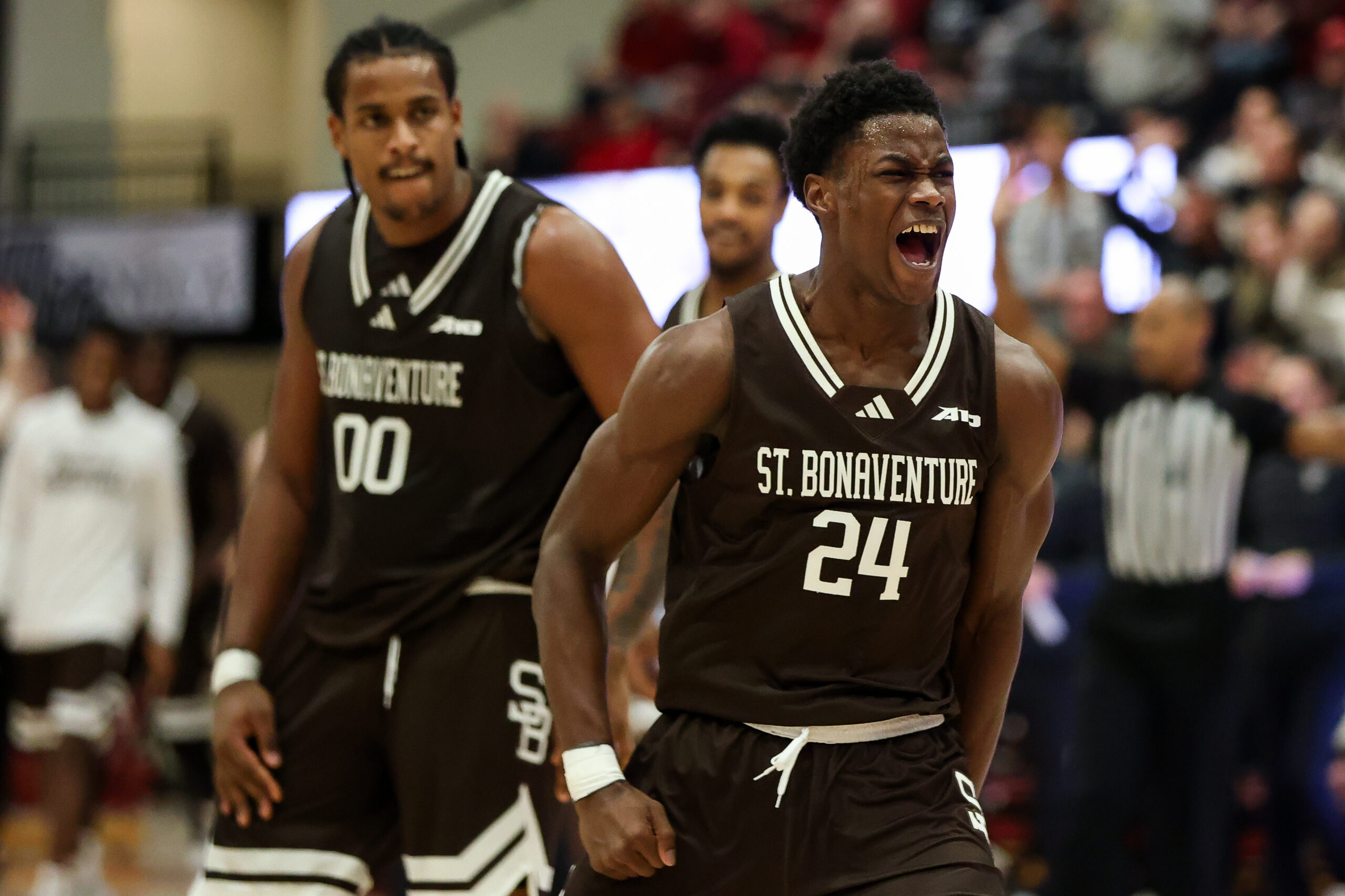
St. Bonaventure guard Cayden Charles (24) reacts after making a three-point basket on Wednesday.
The Hawks contained Mitchell in the second, but Simmons and guard Cayden Charles stepped to add 14 and 17 points, respectively.
The Bonnies bounced back from shooting 11 of 33 in the first to going 14-for-34 in the second, as the Hawks went 9-for-28 in the final frame.
“I just didn’t think we were gritty enough in the first half, even though we were ahead,” said coach Steve Donahue. “I thought we weren’t making shots in the second half, but we were grittier. We got loose balls, and we made it really hard for them to score.”
Battling back
Despite being down four points with about three minutes remaining, St. Joe’s battled back.
After Simmons made a miracle floater to push the Bonnies’ lead to four, Haskins knocked down a three-pointer to cut it to one.
But, it was Glover-Toscano who took over.
Before he got his go ahead and-one layup, he knocked down back-to-back shots that tied the game at 64.
Jaiden Glover-Toscano helped propel St. Joe’s to a victory over St. Bonaventure on Wednesday.
Derek Simpson also connected on crucial free throws, while Haskins, who finished with a double-double (16 points, 11 rebounds), grabbed key defensive rebounds.
“They showed great resilience,” Donahue said. “I thought six weeks ago, this group would have hung their heads and we’re not going to be able to do it, type of attitude. I don’t have to say it now, they know what it’s about.”
At local colleges with major sports programs, some student athletes are now getting paychecks — from their athletic departments.
Pennsylvania State University, Temple, Villanova, St. Joseph’s, Drexel, and La Salle are among the Pennsylvania schools that have begun to directly pay athletes following a settlement last year in federal class-action lawsuits over student athlete compensation.
The move arguably ends college athletes’ status as amateurs and begins to address long-standing concerns that players haven’t fairly profited from the lucrative business of some college sports.
It also raises questions about how schools will fund the athletes’ pay and whether equity complaints will arise if all athletes are not comparably awarded. Some also question how it will impact sports that are not big revenue makers.
Locally, most colleges have been mum on how much they are paying athletes, and some have also declined to say which teams’ athletes are getting money through revenue sharing, citing competitive and student privacy concerns. Villanova, a basketball powerhouse that has 623 athletes across 24 sports, said it will provide money primarily to its men’s and women’s basketball teams.
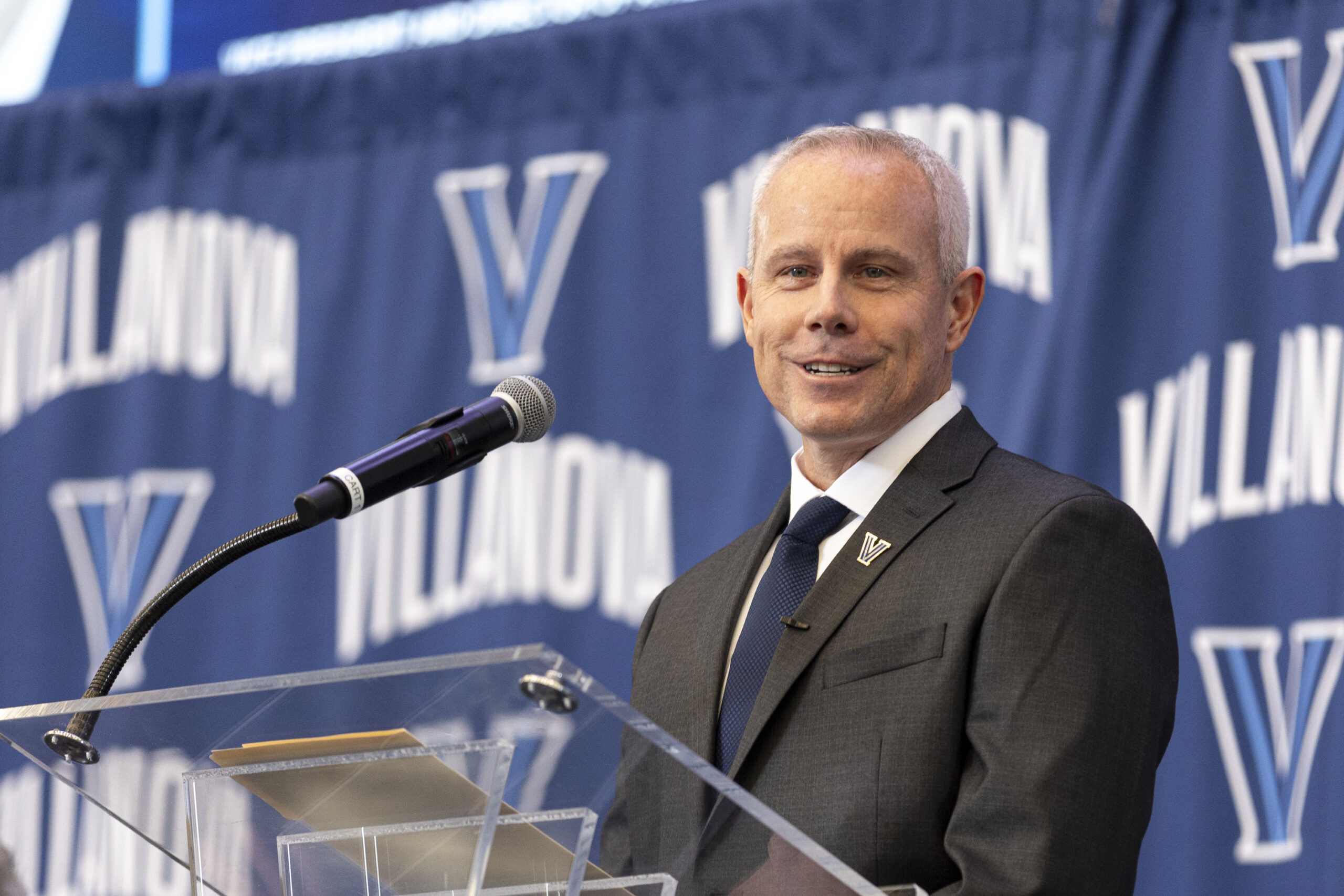
Erica Roedl, Villanova’s vice president and athletic director, speaks during a news conference at the school’s Finneran Pavilion in 2024.
“Our objective is to share revenue at levels which will keep our basketball rosters funded among the top schools in the Big East [Conference] and nationally,” Eric Roedl, Villanova’s vice president and director of athletics, said in a June message after the court settlement.
St. Joe’s, another basketball standout, said its arrangement is also with men’s and women’s basketball athletes, like its peers in the Atlantic 10 Conference.
Temple University established Competitive Excellence Funds that allow all of its 19 teams to raise money for revenue sharing, but declined to say which teams are currently distributing money to athletes.
“Donors could, if they wanted to, make sure their money went to a certain sport,” said Arthur Johnson, Temple’s vice president and director of athletics. “They have that ability.”
Other local colleges, including St. Joseph’s and Villanova, also launched funds to help raise money for revenue sharing. And all three schools also plan to use athletic revenue.
Under the revenue-sharing framework established by the court settlement, each college can pay its athletes up to a total of $20.5 million this academic year. Football powerhouse Penn State, which has about 800 athletes, has said it intends to reach the cap, according to a June 7 statement from athletic director Pat Kraft.
“This is a rapidly evolving environment that we are monitoring closely to ensure our approach remains consistent with applicable rules, while supporting the well-being and academic success of our student-athletes,” said Leah Beasley, Penn State’s deputy athletic director for strategic engagement and brand advancement.
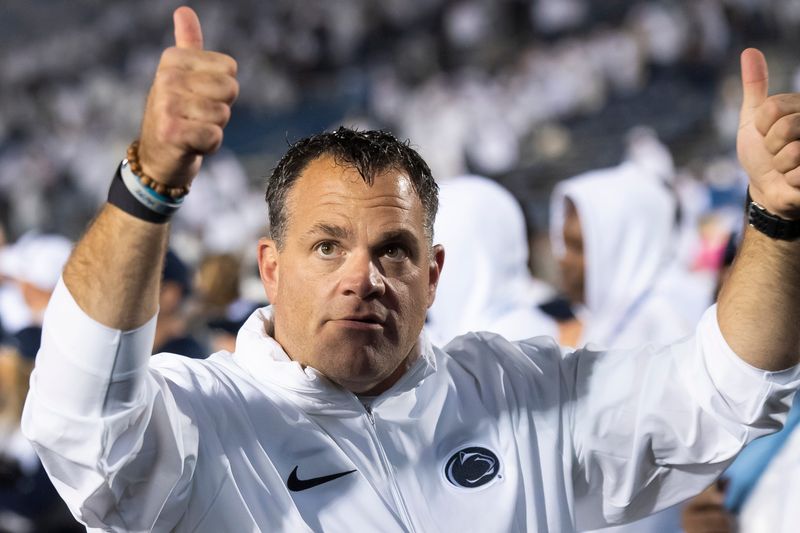
Penn State athletic director Pat Kraft gives two thumbs up to the student section following a 31-0 win in a football game against Iowa in 2023.
‘It’s a job’
To athletes, revenue sharing seems only fair, given many are so busy practicing and playing through summers and other breaks that they don’t have time to work.
“It is a job at the end of the day,” said former Villanova University basketball player Eric Dixon, who holds the Wildcats’ record as all-time leading scorer. “You put a lot of time into it every single day, every single week.”
Players get hurt and can see their sports careers harmed or halted, said Dixon, who grew up in Abington and played at Villanova from 2020 to 2025. College may be their only time to earn money for their sports prowess.
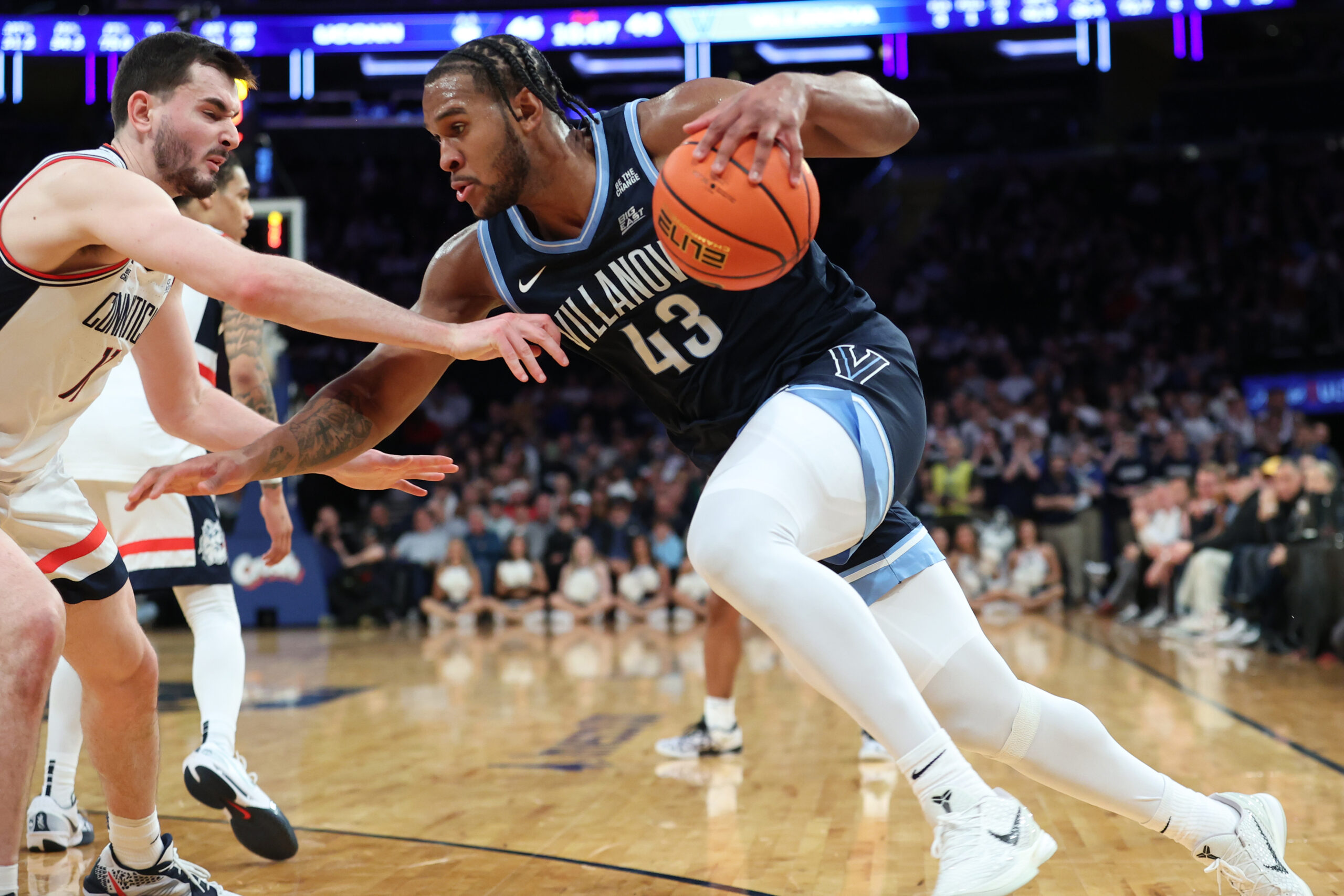
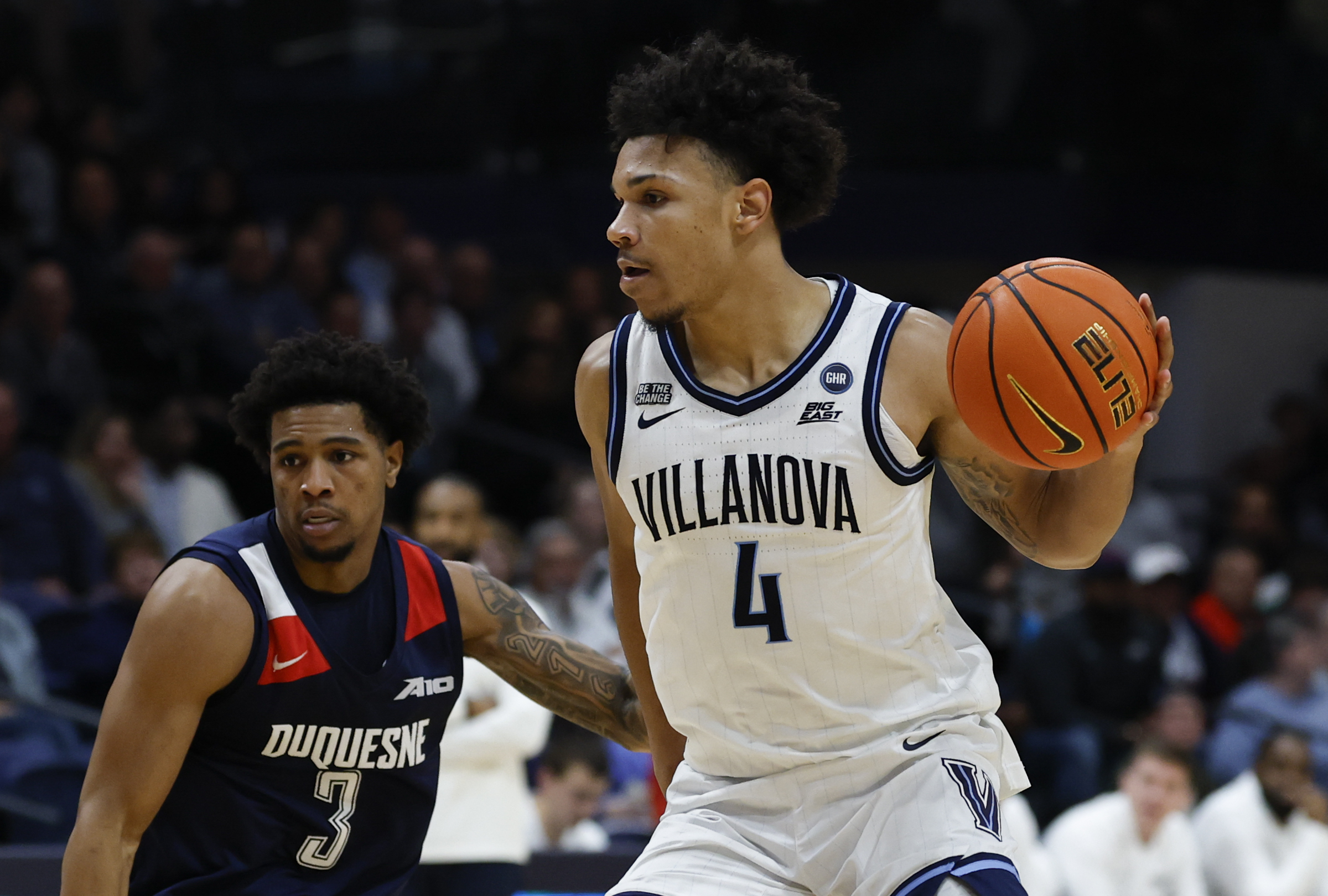
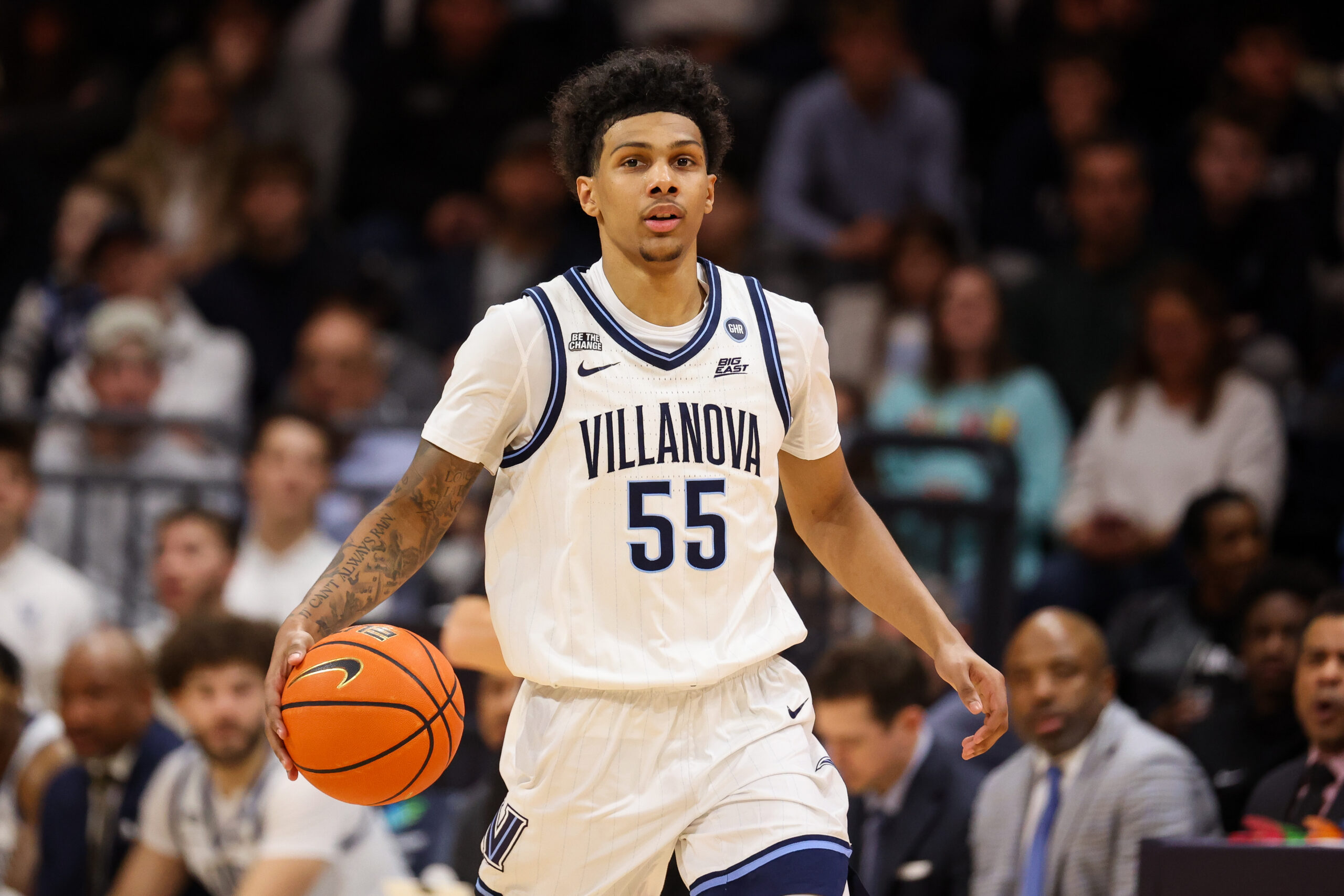
Villanova’s Eric Dixon drives against Alex Karaban of UConn during the 2025 Big East Tournament at Madison Square Garden in New York.
Dixon didn’tbenefit from revenue sharing. But he got money through external name, image, and likeness (NIL) endorsements and sponsorships that the NCAA began allowing in 2021. Dixon declined to specify how much he received, but said it was “seven figures” over four years and allowed him to help his family.
Like some other schools, Villanova, he said, provided players with financial guidance so they could make wise decisions on how to use their money.
External NIL arrangements, though, he said, were a little “like the Wild West.”(NIL compensation is allowed to continue under the lawsuit settlement, but deals of more than $600 have to be reported.) Revenue sharing from colleges will offer athletes more predictable income, said Dixon, who now plays for the Charlotte Hornets’ affiliated team in the G League.
Tyler Perkins, a Villanova junior from Virginia, currently plays for the Wildcats, who won national championships in 1985, 2016, and 2018. While he declined to say how much he is receiving, he said revenue sharing is helping him prepare for his future and “set up for the rest of my life.”
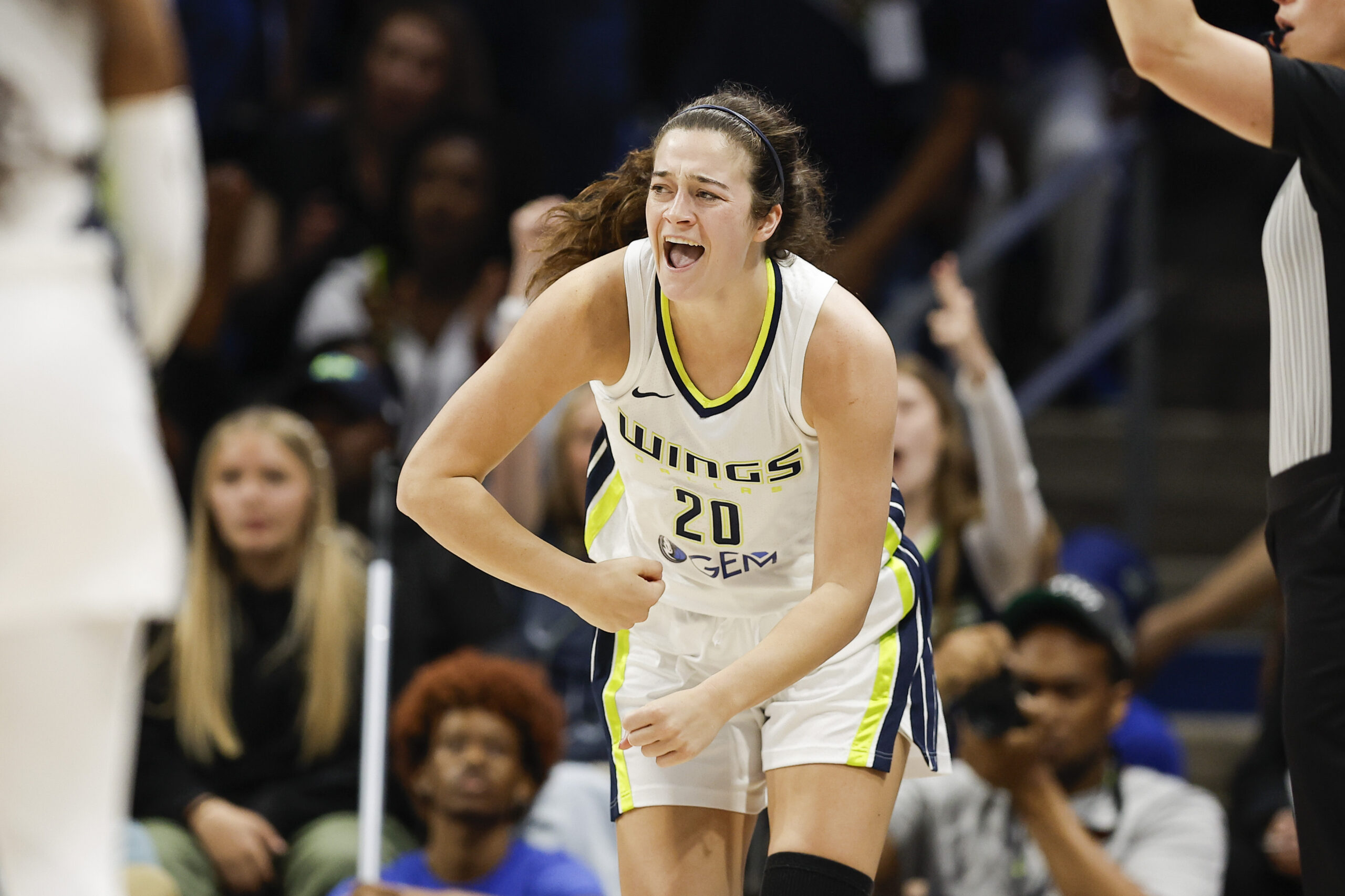
Maddy Siegrist, also a former Villanova basketball player who now plays for the Dallas Wings in the WNBA, is pleased universities are able to share revenue directly with athletes.
“It will be interesting to see how it all plays out,” said Siegrist, the Big East’s all-time leading scorer in women’s basketball and Villanova’s overall highest scorer, of men’s and women’s basketball.
Dallas Wings forward Maddy Siegrist celebrates a three-point shot during a WNBA basketball game against the Chicago Sky in 2024 in Arlington, Texas.
While the big revenue sports are likely to see the money first, she said, “I would hope there will be a trickle-downeffect where almost every sport is able to benefit.“
A lawsuit spurs changes
For years, there have been growing concerns that athletes were not getting their fair share of the profits from college sports, which make money onbroadcast rights, ticket sales, and sponsorships. Meanwhile, coaches can be among the highest paid in a university’s budget.
In 2020, former Arizona State swimmer Grant House became the lead plaintiff in House vs. NCAA, a class-action antitrust lawsuit that argued athletes should be able to profit from the use of their name, likeness, and image and schools should not be barred from paying them directly.
The settlement approved in June of that suit and two others against the NCAA requires the NCAA and its major conferences to pay $2.8 billion in damages to current and former Division 1 athletes. Another provision gave rise to the revenue sharing.
It initially applied to the major sports conferences: the Big Ten, Atlantic Coast Conference, Southeastern Conference, and the Big 12. Penn State belongs to the Big Ten and the University of Pittsburgh to the Atlantic Coast.
But other athletic conferences, along with many of their members, decided to opt in to the agreement to remain competitive in select sports. St. Joseph’s, La Salle, Villanova, Drexel, and Temple all are part of conferences participating in revenue sharing with athletes this year.
“We support student-athletes’ ability to pursue value among their peers and to leverage commercial opportunities that may benefit them or the institution,” said Maisha Kelly, Drexel’s vice president and director of athletics and recreation.
Temple belongs to the American Athletic Conference, which said its members must agree to pay at least $10 million over three years to its athletes. Johnson, Temple’s athletic director, noted that total also includes new scholarships, not just pay.
No tuition, state dollars to be used
Pitt alumnus J. Byron Fleck has called on the Pennsylvania State Board of Higher Education to advise three state-related colleges — Penn State, Temple, and Pitt — not to use tuition dollars, student fees, or state appropriations to fund athlete payments.He also asked lawmakers to take action.
“It doesn’t relate to any educational or academic purpose,” said Fleck, a 1976 Pitt alumnus and lawyer in California.
Karen Weaver, an expert on college athletics, higher education leadership, and public policy, said the same concerns about public funds being used to pay athletes have risen in other states, including Michigan and Washington.
But Penn State, Temple, and Pitt all said in statements that they would not use tuition, student fees, or state appropriations to fund revenue sharing with athletes.
“Penn State Intercollegiate Athletics is a self-sustaining unit of the university,” said Beasley, Penn State’s deputy athletic director.
Pitt said it would use athletic revenues.
In addition to donations, Temple, too, is using athletic department revenues, such as ticket sales, but it is also looking at other “nontraditional ways” to raise money, Johnson said.
“We’re turning over every stone,” he said.
Weaver, an adjunct professor at the University of Pennsylvania, said she worries that as the caps on revenue sharing get higher and costs grow, schools, especially those tight for cash, may start raising recreation and other student fees. The University of Tennessee added a 10% student talent fee for season ticket renewals, according to the Associated Press, while Clemson is charging a $150 per semester student athletic fee, according to ESPN.
Roedl, the Villanova athletic director, said in a statement that it had launched the Villanova Athletics Strategic Excellence (VASE) Fund to raise money for the payments.
“Additionally, we are looking for other ways to maximize revenue through ticketing, sponsorships, and events, and identifying cost efficiencies throughout our department,” he said.
St. Joe’s, which has about 450 student athletes, said that it started a Basketball Excellence Fund to raise revenue and that payments also are funded by the basketball program. Athletes that receive funds “serve as brand ambassadors for the university,” the school said in a statement. “… These efforts have included community engagement — particularly with youth in the community — and marketing initiatives that directly support the Saint Joseph’s University brand.”
La Salle declined to say how much student athletes receive or in what proportion.
“We can share that any funds provided to students come from external sources and not tuition dollars,” said Greg Nayor, vice president for enrollment management and marketing.
Weaver, author of a forthcoming book, Understanding College Athletics: What Campus Leaders Need to Know About College Sports, said plans that call for the bulk of revenue sharing to go to football and basketball players would lead to legal action, charging that female athletes are not being treated equally.
“Any day now I expect we’ll see a huge Title IX lawsuit,” she said.
As college football has evolved with Name, Image, and Likeness, the transfer portal has moved to the forefront of the offseason for teams. It allows teams to rebuild rosters quickly by filling needs for college players who are looking for a fresh start.
Temple has taken advantage of the portal to refresh its team in recent years, rostering at least 30 transfers in each of the last three seasons. Some of those transfers gained significant roles and became critical players.
However, the transfer portal also gave former Owls the chance to leave the program and play elsewhere. Temple lost important transfers, including a few who turned into NFL players.
Let’s break down some of the most impactful players to transfer in and out of Temple in the last few years.
Transferred in
Evan Simon
Temple quarterback Evan Simon moves out of the pocket against Navy on Oct. 11, 2025.
Simon spent the last two seasons at quarterback and helped lead the Owls to their best season in half a decade.
The Lancaster County native spent the first four years of his career at Rutgers, where he threw five touchdowns and seven interceptions. Simon entered the transfer portal after the 2023 season and landed at Temple to compete for the starting job.
Simon lost the job to Forrest Brock out of training camp, but he took over in Week 3 of the 2024 season and never looked back. He started the final nine games and passed for 15 touchdowns and nine interceptions. Simon chose to return to Temple in 2025 and put together an even better season.
After beating out Oregon State transfer Gevani McCoy in training camp, Simon led Temple to a 5-7 record, its most wins since 2019. He passed for 2,097 yards and 25 touchdowns, the most in a season in Temple history, and had two interceptions. He also tied the program record for passing touchdowns in a game with six against UMass on Aug. 30.
Simon leaves the Owls eighth in passing yards in program history with 4,129, and tied for fifth in career touchdowns with 40.
Rock Ya-Sin
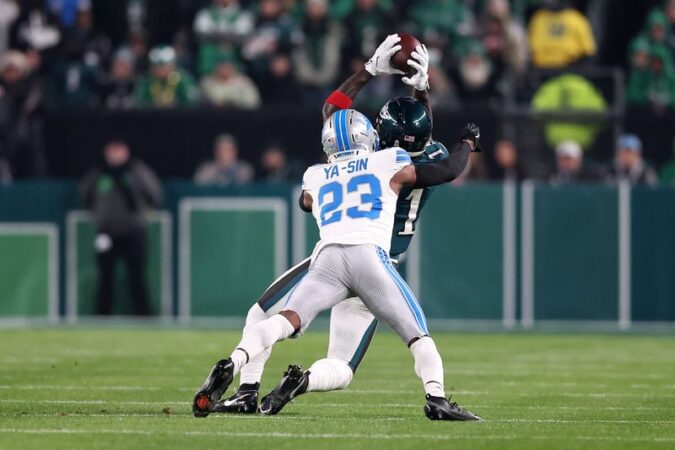
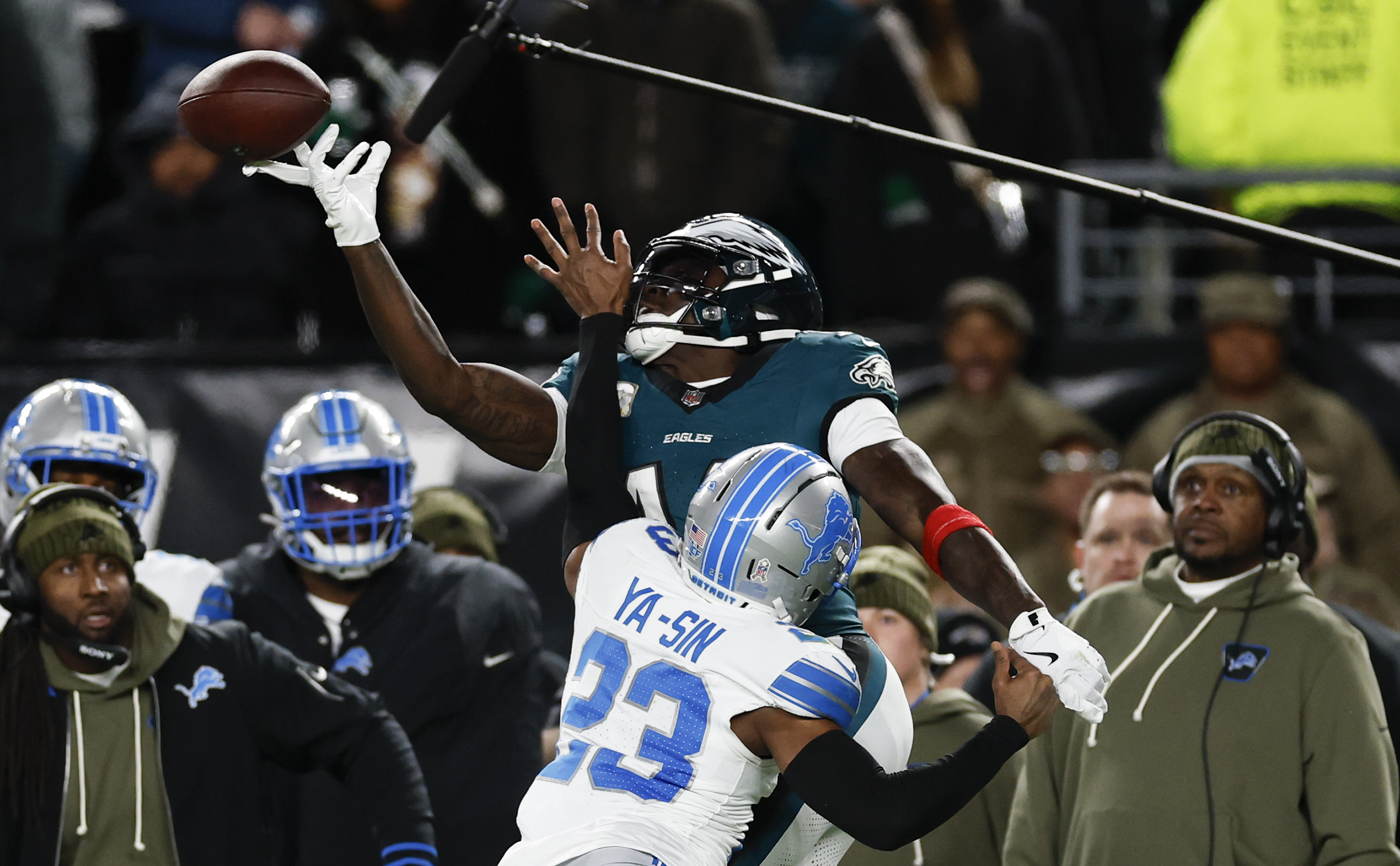
Eagles wide receiver A.J. Brown attempts to catch the ball against coverage by Detroit’s Rock Ya-Sin on Nov. 16.
Ya-Sin joined Temple as a transfer cornerback in 2018 before NIL changed how players and programs view the portal.
He spent his first three years at FCS Presbyterian College in South Carolina but chose to transfer after the program announced it would move down to Division II. Ya-Sin played one season at Temple, but he made his mark.
Ya-Sin earned a prestigious single-digit jersey number before the season. He racked up 47 tackles, two interceptions, and a team-high 12 pass breakups as the Owls finished 8-4.
The Indianapolis Colts selected him 34th overall in the 2019 NFL draft. Ya-Sin has played for five teams in seven seasons in the NFL, most recently with the Detroit Lions in 2025, when he had 47 tackles and nine passes defended.
Maddux Trujillo
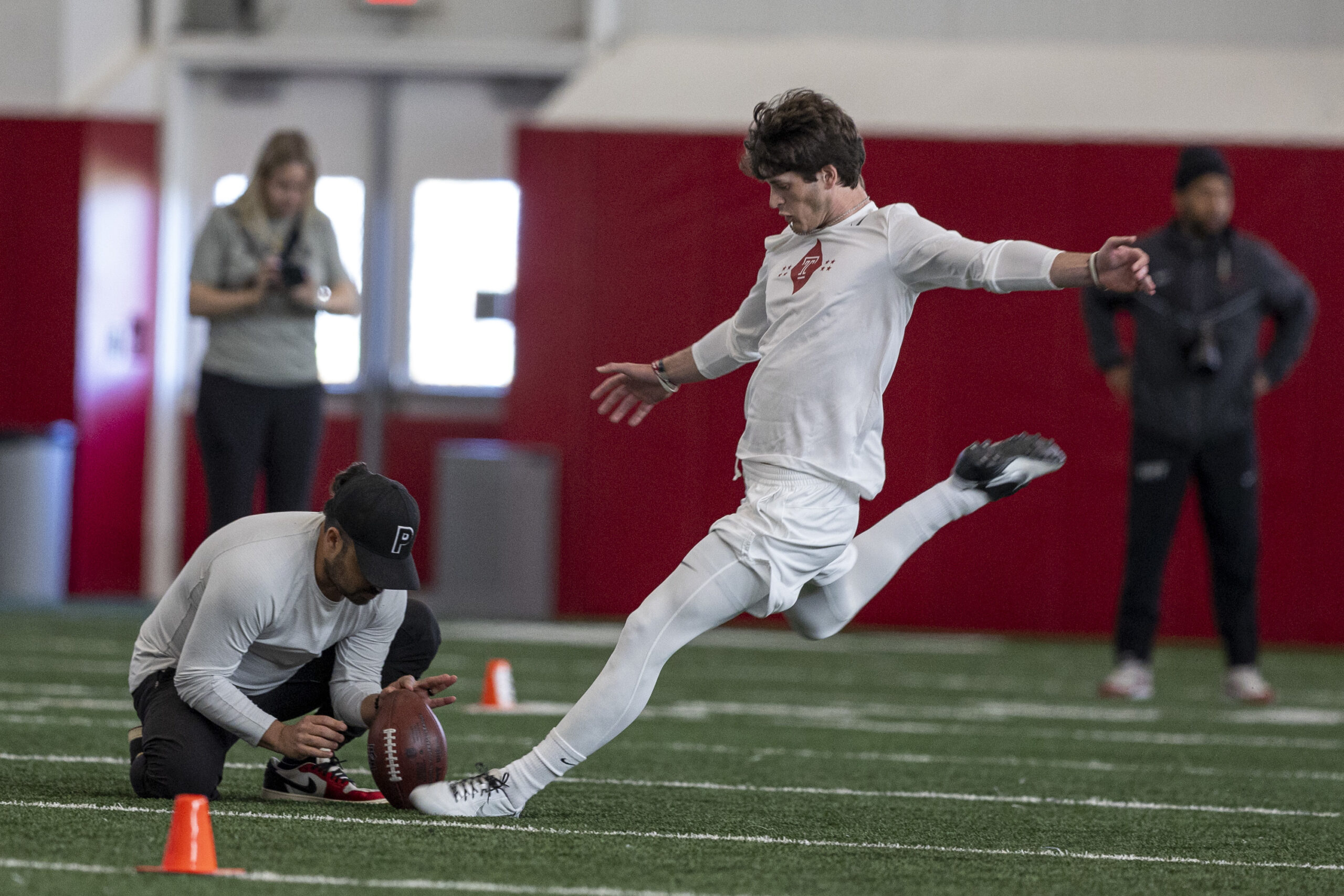
Temple kicker Maddux Trujillo during the Owls’ pro day on March 27, 2025.
While few positives emerged from Temple’s 2024 season, in which Stan Drayton was fired, Trujillo was one of the bright spots.
Trujillo spent three years at FCS Austin Peay, where he made 38 field goals. He transferred to Temple and took over as its main placekicker.
He made 16 of his 22 field goal attempts and converted all 21 point-after attempts. Trujillo made headlines in Temple’s 45-29 win against Utah State on Sept. 21, 2024, when he made a 64-yard field, the longest ever at Lincoln Financial Field. He made five field goals from 50 yards or longer.
Trujillo went undrafted in 2025 but latched on with the Colts to compete for their starting kicker spot. He lost the job to Spencer Shrader and was later cut from the team.
He spent the 2025 season as a free agent and most recently signed a reserve/futures contract with the Buffalo Bills on Jan. 6.
Dante Wright
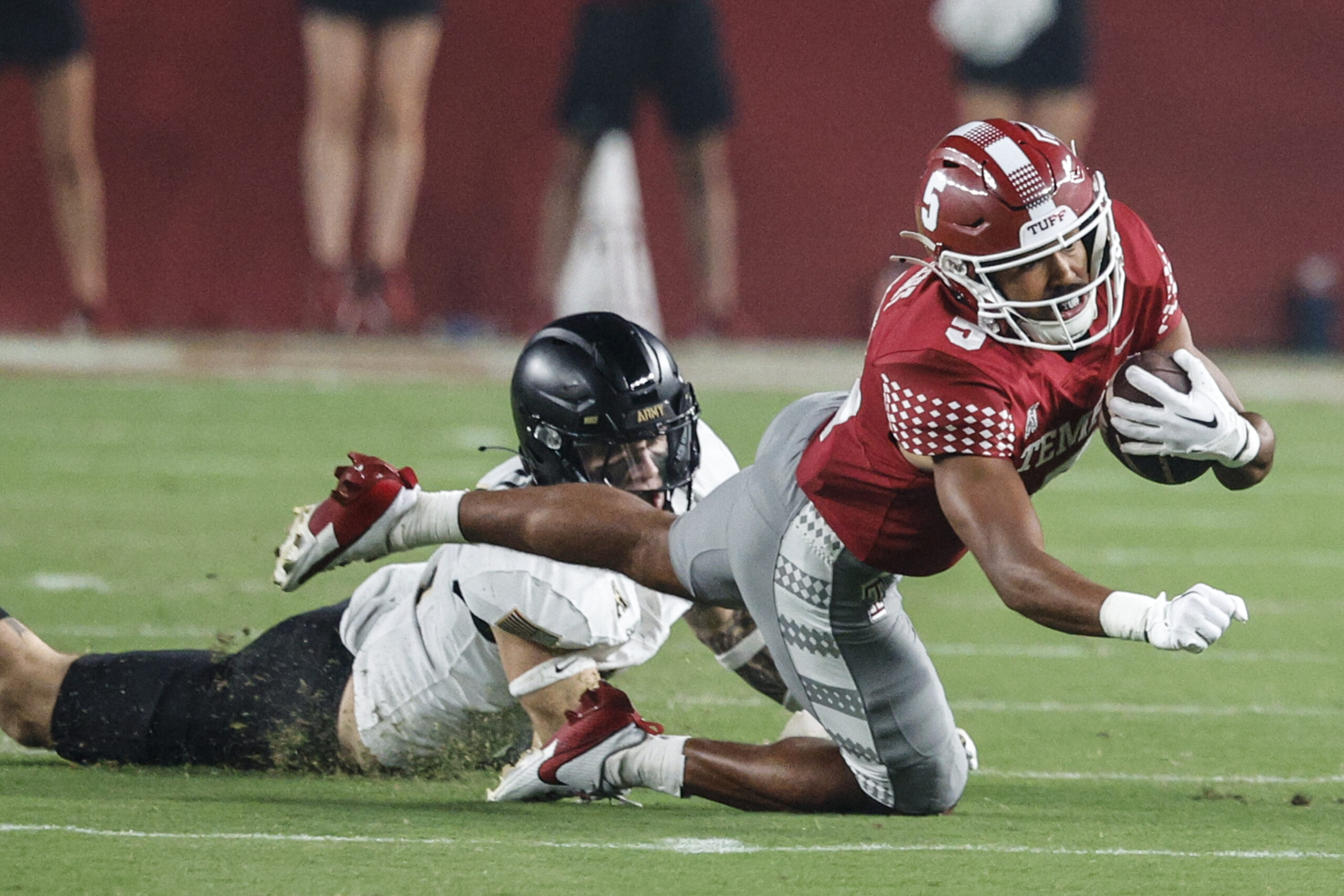
Temple receiver Dante Wright against Army on Sept. 26, 2024.
Wright was a productive wide receiver from 2019-22 at Colorado State before transferring to Temple for the 2023 season. He became an impactful weapon in the passing game during his two years with the Owls.
He had 39 catches for 507 yards and four touchdowns during his first year with the program in 2023, then became the go-to receiver in 2024.
Wright hauled in 61 catches for 792 yards and six touchdowns. He went undrafted in 2025 but earned an invitation to the Kansas City Chiefs’ rookie minicamp. Wright did not stick with the Chiefs and was a free agent this season.
Transferred out
Ray Davis
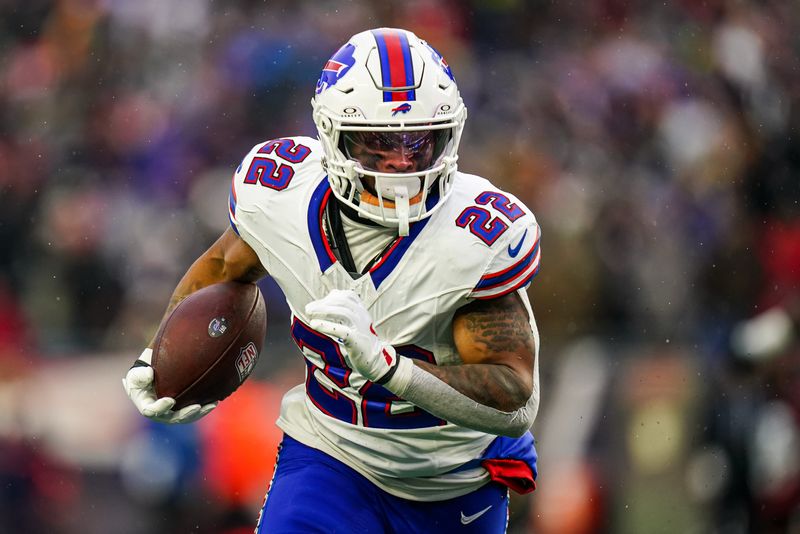
Buffalo Bills running back Ray Davis runs the ball against the New England Patriots.
Davis joined Temple as a running back out of Blair Academy in Blairstown, N.J., and showed immediate promise as a freshman in 2019. Then known as Re’Mahn Davis, he rushed for 936 yards and eight touchdowns while adding 181 receiving yards and two touchdowns. He had more than 100 rushing yards in three games and appeared to be a building block for the Owls.
However, he played just four games in the COVID-19-shortened 2020 season, when he rushed for 323 yards on 78 carries. Davis entered the transfer portal following the season and joined Vanderbilt.
Davis played three games in 2021 before truly breaking out for the Commodores in 2022. He had 1,042 rushing yards and five touchdowns, adding three more on receptions. Davis entered the portal again after the 2022 season and went to Kentucky for his final year.
He had his best season with the Wildcats, compiling 1,129 rushing yards, 14 rushing touchdowns, and seven receiving touchdowns. His 21 total touchdowns were the most in a season in Kentucky history and he earned first-team All-SEC honors.
The Bills selected Davis in the fourth round of the 2024 draft. He earned a first-team All-Pro selection this season as a kick returner.
Arnold Ebiketie
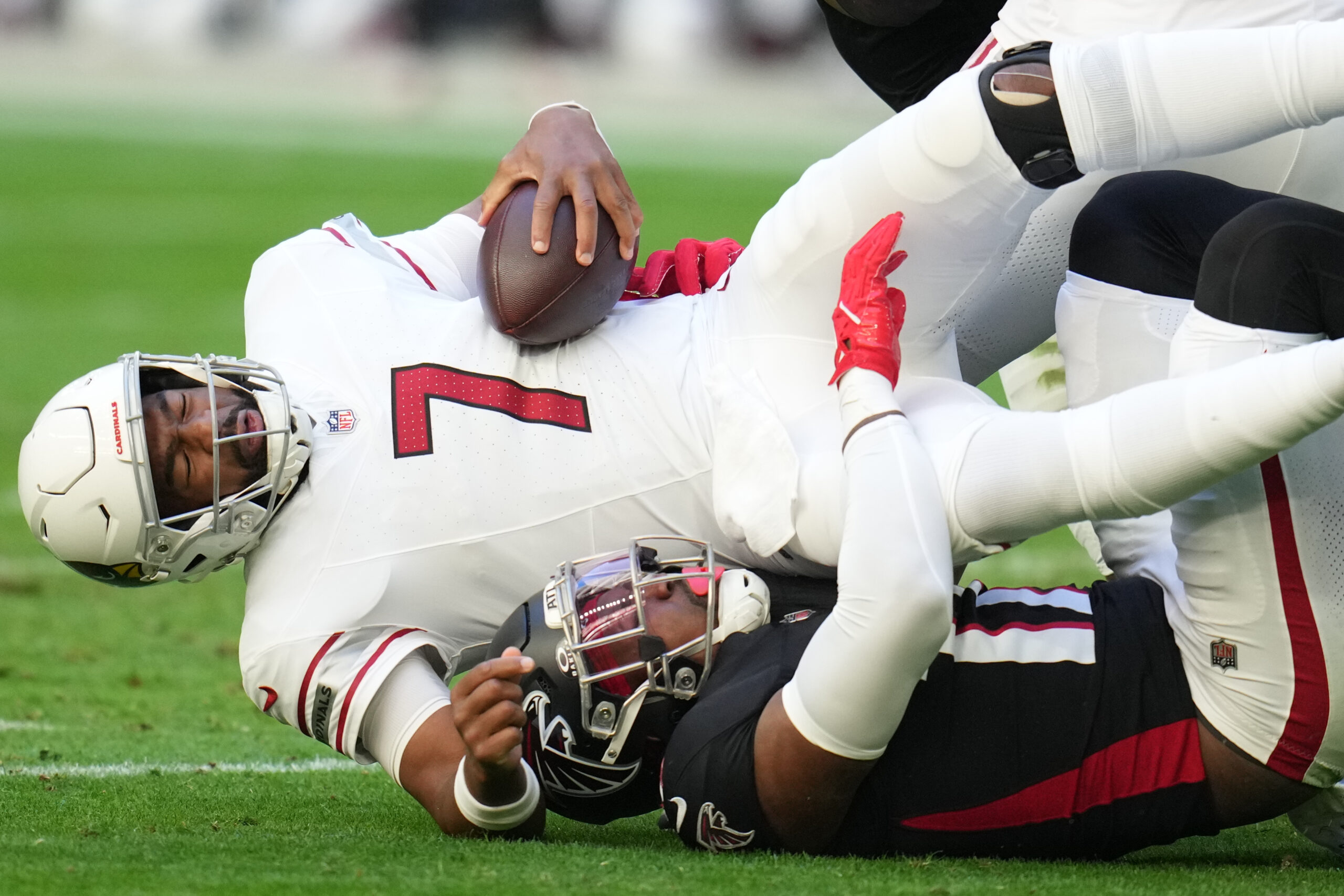
Atlanta Falcons linebacker Arnold Ebiketie sacks Cardinals quarterback Jacoby Brissett on Dec. 21.
Ebiketie played defensive end for Temple from 2017-20, serving as a rotational player for his first three seasons before breaking out in 2020.
He recorded 42 tackles, 8½ tackles for losses, four sacks, and three forced fumbles. Ebiketie earned second-team all-American Athletic Conference honors and decided to enter the portal for his redshirt senior season.
Ebiketie had a standout year at Penn State, racking up 17 tackles for losses and 9½ sacks. He earned first-team All-Big Ten honors from the coaches and media. The Atlanta Falcons drafted him in the second round in 2022 and he has recorded 16½ sacks in four NFL seasons.
Kobe Wilson
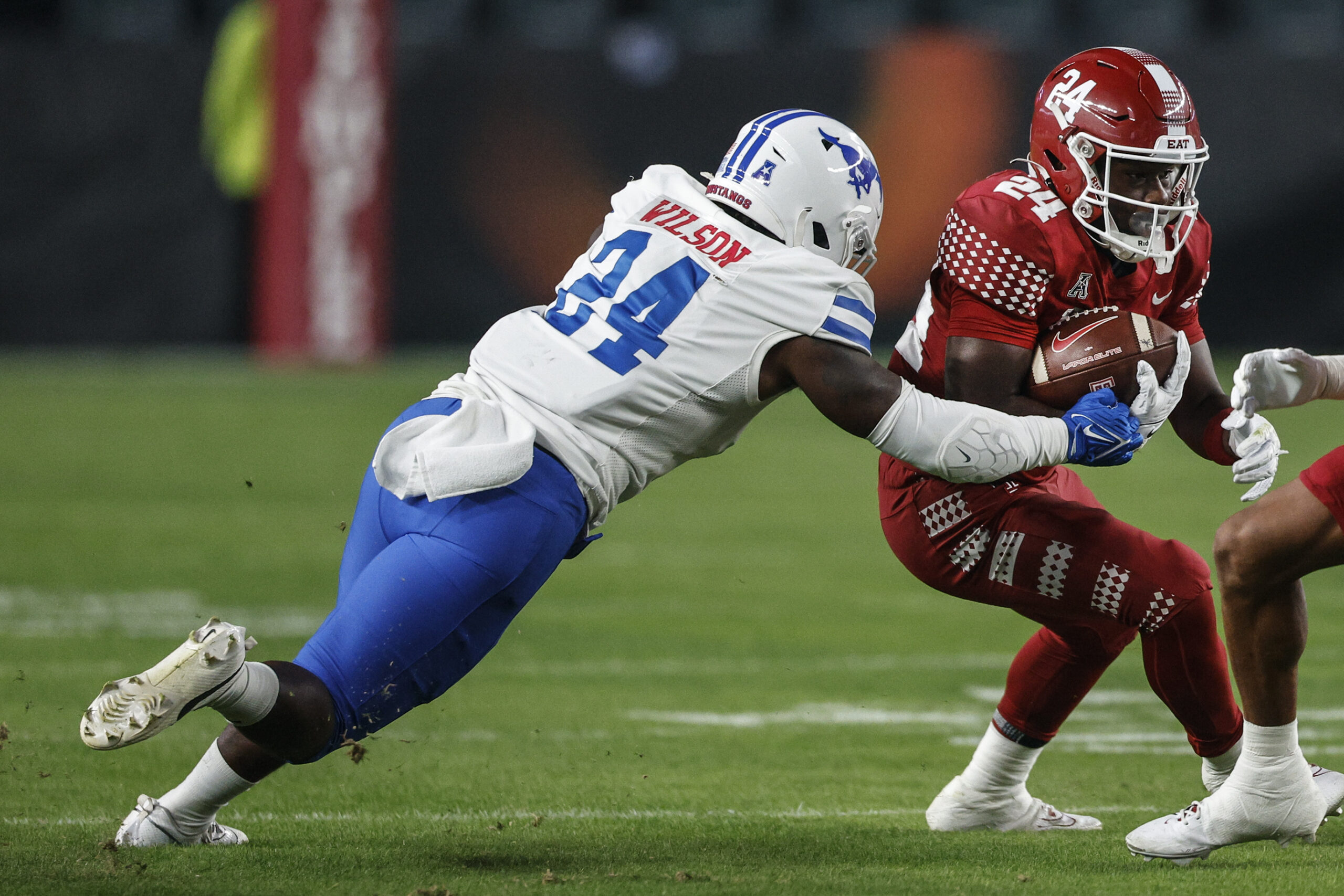
SMU linebacker Kobe Wilson makes a tackle against Temple, his former team, on Oct. 20, 2023.
Wilson joined Temple in 2020 as a linebacker out of Parkview High School in Georgia, and he spent three seasons with the Owls.
Wilson became a regular contributor on defense, totaling 124 tackles and 11½ tackles for losses. He entered the portal after the 2022 season and landed at Southern Methodist, Temple’s conference foe at the time.
He turned into one of the Mustangs’ top players over two seasons. In 2023, Wilson had 80 tackles and an interception. He had 117 tackles, three sacks, and two interceptions in the next season. He earned second-team All-AAC honors in 2024 for an SMU team that appeared in the College Football Playoff. Wilson did not receive an NFL opportunity in 2025.
Christian Braswell
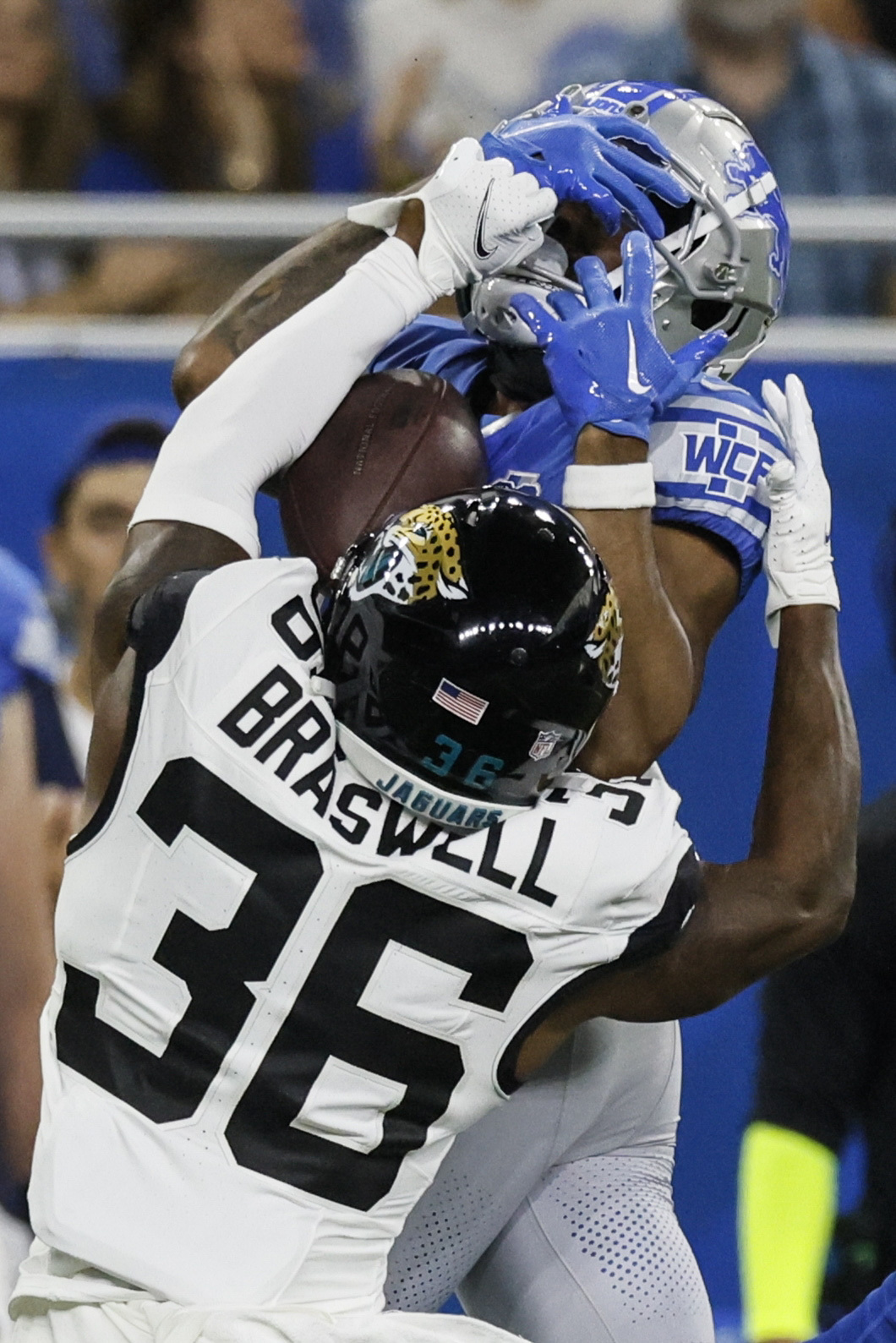
Jaguars cornerback Christian Braswell tackles Detroit’s Trinity Benson during a preseason game on Aug. 19, 2023.
Braswell was a rotational cornerback from 2018-20 at Temple, where he recorded 61 tackles, three interceptions, and 16 passes defended. The Washington native entered the portal after the 2020 season and committed to Rutgers.
He did not see game action in 2021, but the next season, Braswell had five starts and recorded three interceptions and 37 passes defended, earning second-team All-Big Ten honors from Pro Football Focus.
The Jacksonville Jaguars drafted Braswell in the sixth round of the 2023 draft and he played in all 17 games this season.
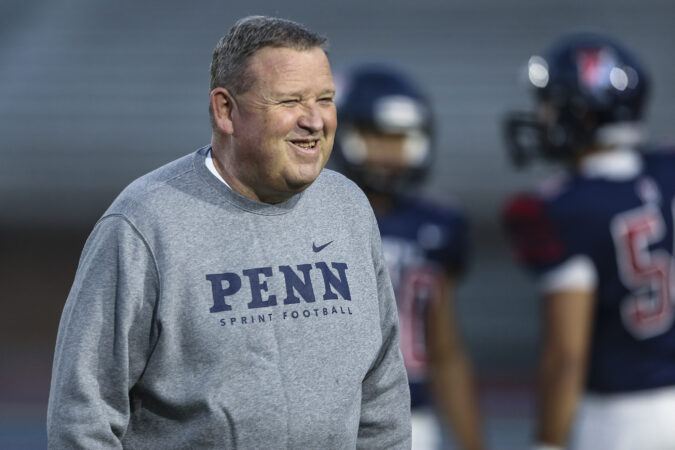
Penn sprint football coach Jerry McConnell will not return next season, the school announced Wednesday in a release.
McConnell served as the program’s head coach since 2019 and posted a 17-18 career record. Penn finished 2-6 this season, losing all three contests in conference play. Penn failed to win a Collegiate Sprint Football League title during McConnell’s tenure.
In sprint football, players must weigh under 178 pounds to participate. The sport is played at nine colleges in the nation and has been at Penn since 1931.
“We are grateful for Jerry’s nearly two decades of service and dedication to our student-athletes in the Penn sprint football program, both as head coach and offensive coordinator,” Penn athletic director Alanna Wren said in the statement.
“This leadership change is an important step toward elevating the program’s competitive success and enhancing the overall experience for our student-athletes. We wish Jerry the very best in his next chapter.”
BREAKING – Penn sprint football coach Jerry McConnell will not be returning next season, per release.
McConnell has been with the program since 2007, taking over head coach responsibilities in 2019. He posted a 17-18 as head coach.
McConnell joined the sprint coaching staff in 2007, serving as the team’s offensive coordinator under longtime coach Bill Wagner. Penn won two CSFL championships during McConnell’s time as offensive coordinator.
Since Denise Dillon’s playing days at Villanova, much has changed in the Big East — and college basketball in general. But one constant has been the presence of Geno Auriemma.
Auriemma has been the head women’s basketball coach at Connecticut since 1985, so he already was well-established by the time Dillon was playing for Villanova from 1992 to 1996. Dillon has continued to face Auriemma, who grew up in Norristown, since she took over as Villanova’s coach in the 2020-21 season.
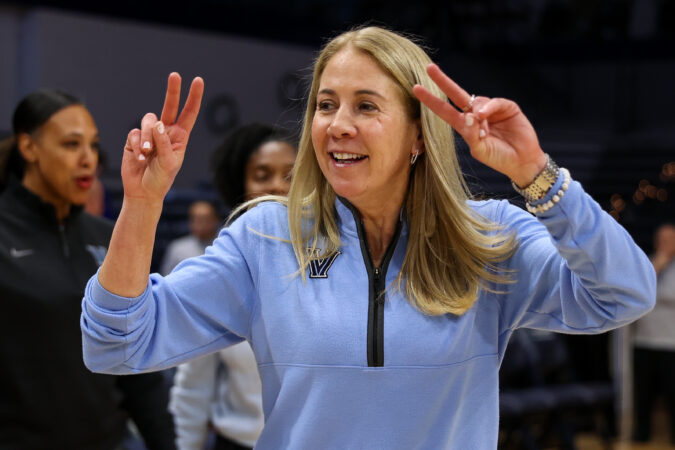
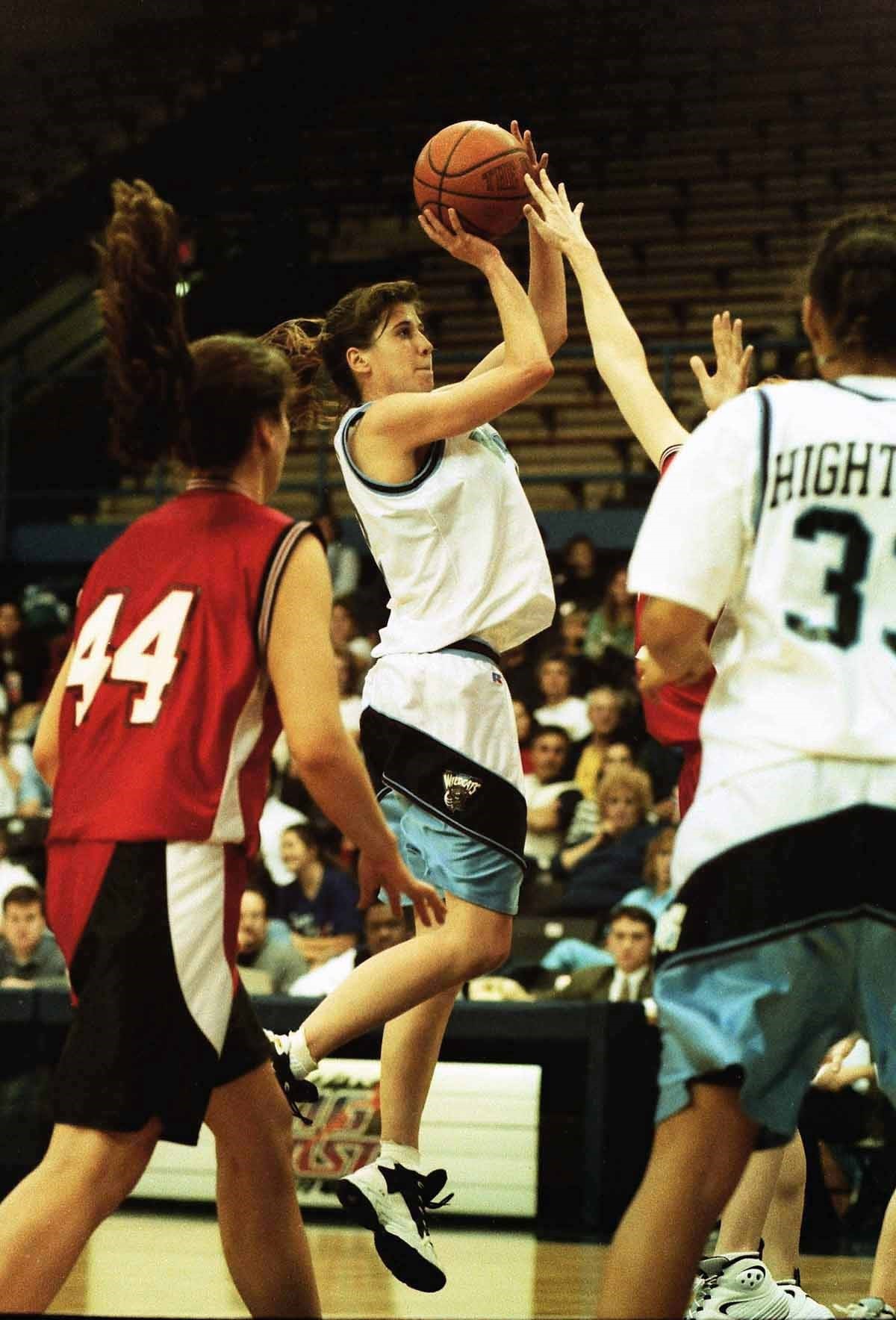
Denise Dillon played for Villanova from 1992-96.
As the winningest coach in college basketball, Auriemma has been both an opponent and a mentor for Dillon over the years.
“I have the utmost respect for Geno,” Dillon said. “The wins column speaks for itself, but also just what he’s done for the game. He was a women’s basketball coach before it was popular and has seen how it’s evolved. But he’s always given back to the game, and by giving back to the game, he’s given to coaches.”
Villanova (14-3, 7-1 Big East) is second in the conference as it enters its biggest test of the season yet. The Wildcats head to Storrs, Conn., on Thursday for their first matchup this season with the Huskies (7 p.m., FS1).
No. 1 UConn (17-0, 8-0) looms over the Big East, with an average scoring margin of 38.1 points.
The defending national champions are led by the returning duo of sophomore forward Sarah Strong and graduate guard Azzi Fudd. Strong, the Big East’s leading scorer, averages 18.4 points and 8.1 rebounds.
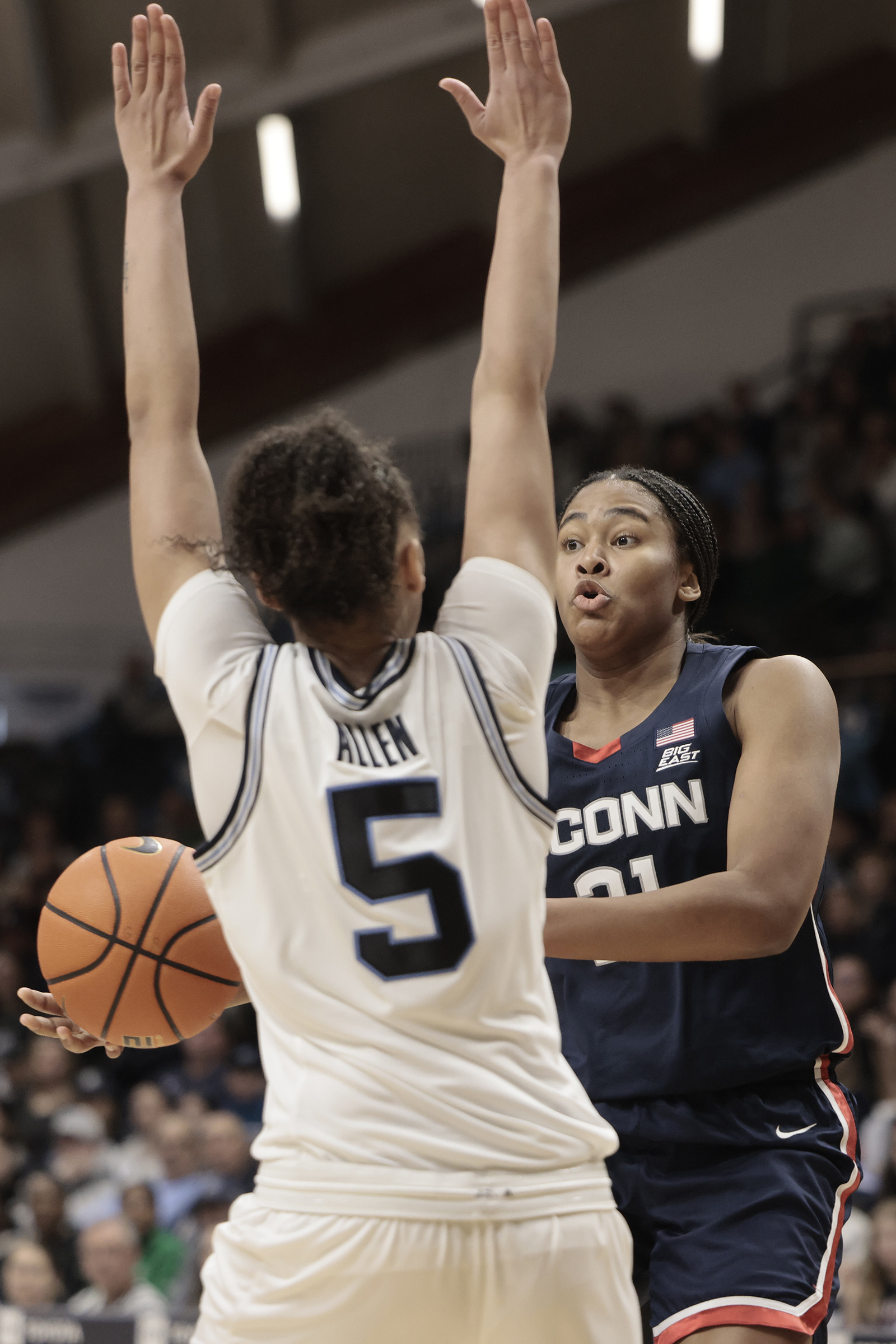
UConn’s Sarah Strong, here being guarded by Villanova’s Ryanne Allen in a game at Finneran Pavilion last season, currently is the Big East’s leading scorer.
Auriemma’s characteristic high-pressure defense has overwhelmed opponents this season. The Huskies have limited opponents to just 51.8 points per game.
The Huskies won soundly in each of last year’s meetings with the Wildcats. Their last regular-season matchup was a 100-57 rout on Jan. 22, 2025, in Storrs. UConn also has knocked Villanova out of the Big East tournament in three of the last four seasons.
Under Dillon’s leadership, Villanova has posted a 1-9 record against UConn, which has claimed the conference title every year since rejoining the Big East in 2020-21, the season when Dillon took over on the Main Line.
Villanova veterans like graduate forward Denae Carter and sophomore guard Jasmine Bascoe anticipate the intensity of a matchup at a loud UConn home court.
“Playing [UConn] at any point is a challenge, but seeing them the first time this year on the road will be one that we’re going to rely on some of those who have experienced it, just to prepare the others,” Dillon said.
When it comes to attacking UConn’s press, Villanova aims to utilize the depth that has led to success in conference play.
With the additions of junior forward Brynn McCurry, who missed last season with an injury, and graduate forward Kylee Watson, a Notre Dame transfer, the Wildcats have a much different look than the last time they traveled to Storrs.
“A key point for us has always been having those versatile post players, with Denae Carter, Brynn McCurry, and Kylee Watson, and making sure that they are ready and willing to initiate the offense for us, being there with the press break,” Dillon said.
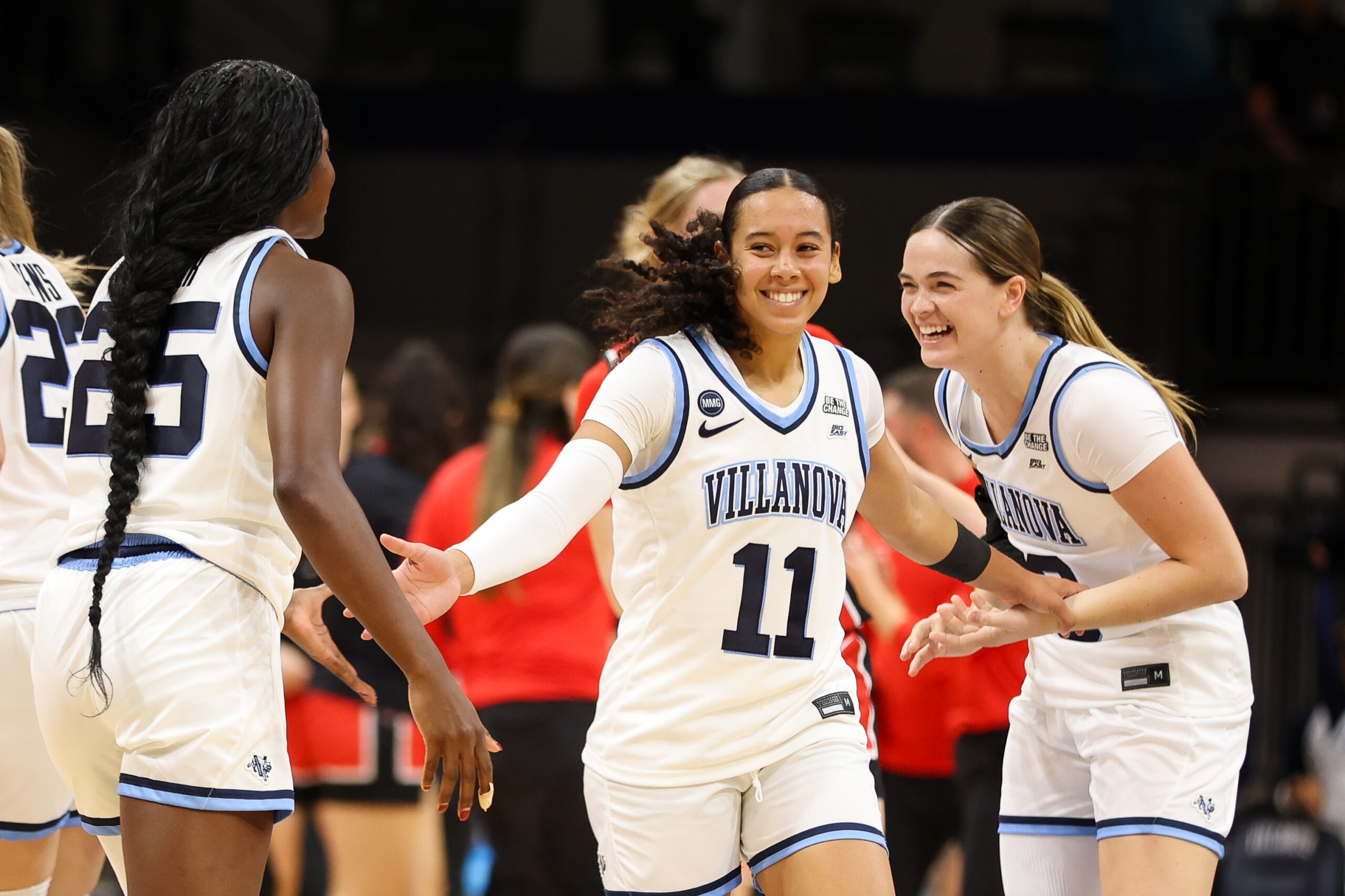
From left, Denae Carter, Jasmine Bascoe, and Brynn McCurry will be key players for Villanova in Thursday’s matchup with UConn.
Since UConn has a grip on the top spot in the conference, stacking wins over other Big East rivals has been crucial for Villanova. A 85-69 loss to Marquette on Jan. 4 provided what Dillon called a “wake-up call” for the team.
“There were lessons learned out there in Milwaukee against a very good Marquette team,” Dillon said. “It just shows that if you don’t come in mentally ready for the battle of the Big East, you’re going to get taken advantage of.”
Auriemma and the Huskies continue to uphold top-tier standards for the Big East. In Dillon’s view, Thursday’s trip to Storrs will be a chance for Villanova to compete against the nation’s best and show its program-wide improvement.
“It does start with that mental prep of where we need to be in order to embrace some of the blows we’re going to take in the game,” Dillon said. “That’s what we want this group to recognize: You have an opportunity to get better together every time you step on the floor. So take it in one possession at a time, as we say with every game, and see where we stand. Fight till the end.”
Villanova picked up its fourth consecutive Big East road win Tuesday with an 88-82 victory at Providence.
Villanova (14-3, 5-1 Big East) was able to outscore Providence (8-9, 1-5), which entered the game averaging 89.1 points. Devin Askew led the Wildcats with 20 points and seven assists off the bench.
“I thought we did a good job in the first half of slowing them down,” coach Kevin Willard said. “We gave up a lot of twos, but once a game gets up and down, sometimes you’ve got to find ways to score. And I think against them, you’ve got to get up and down a little bit.”
The Friars were the highest-ranked KenPom offense (36th) Villanova has faced since its 89-61 loss to Michigan on Dec. 9. Providence’s leading scorer Jason Edwards, who is scoring 17.2 points per game, missed Tuesday’s matchup because of a foot injury.
Three Friars — Jaylin Sellers (24), Jamier Jones (23), and Stefan Vaaks (21 points) — combined for 68 of their 82 points.
“You’ve got to match [Providence’s] pace,” Willard said. “[Even] on the road, where I don’t like to do that. They just get out and go so well. And they have so many guys that can hurt you that you’ve got to take advantage and go right back down.”
The Wildcats collected 14 offensive rebounds, with Duke Brennan being responsible for five of them. Brennan totaled 14 points and eight rebounds.
Villanova shot 32-for-64 from the field, 10-for-28 beyond the arc.
Villanova guard Tyler Perkins, shown on Nov. 15, scored 15 points on Tuesday night.
Perkins is rejuvenated
Tyler Perkins scored 15 points for the Wildcats, shooting 6-for-12 from the field, along with eight rebounds.
He came up big in key moments, especially in the second half. Perkins scored on a post-up in the paint while Providence was trying to cut into Villanova’s double-digit lead.
“That was huge because that kind of got us back up [by eight points],” Willard said when asked about Perkins. “I thought [that] was huge at that point.”
Perkins is averaging 14.4 points and 5.4 rebounds on 48% shooting over the last five conference games.
Villanova’s bench helps drive offense
Outside of Askew, Villanova’s bench has been quiet offensively since conference play began. Askew scored eight points during a 10-0 scoring run early in the first half.
He has come off the bench in all of Villanova’s games this season besides the season opener against Brigham Young.
During conference play, Askew has developed into a veteran Willard can lean on in difficult moments. Askew is averaging 10.8 points over his last five games.
Malachi Palmer collected 10 points in the first half to tie his career high, which he set at Maryland last year.
“My mindset is just come in and play as hard as possible and whatever happens, happens,” Palmer said.
Being unselfish
Willard has consistently talked about the unselfishness of his team this season. Acaden Lewis has been the prime example of what Willard has harped on.
The four-time Big East Freshman of the Week dished out a team-high eight assists while scoring only seven points, marking his fourth consecutive and ninth overall game with six or more assists.
Villanova guard Acaden Lewis, shown last week against Creighton, had a team-high eight assists on Tuesday night.
As a whole, Villanova had 21 assists, its second-best total this season. The Wildcats had 28 against Sacred Heart on Nov. 11.
Six of eight Villanova players who played collected at least one assist.
Up next
Villanova will host St. John’s (12-5, 5-1) in its first game at the Xfinity Mobile Arena this season on Saturday (8 p.m., Peacock). St. John’s entered the season ranked in the AP Top 25 poll, but has since dropped out.
Villanova split the regular-season series with St. John’s last year.
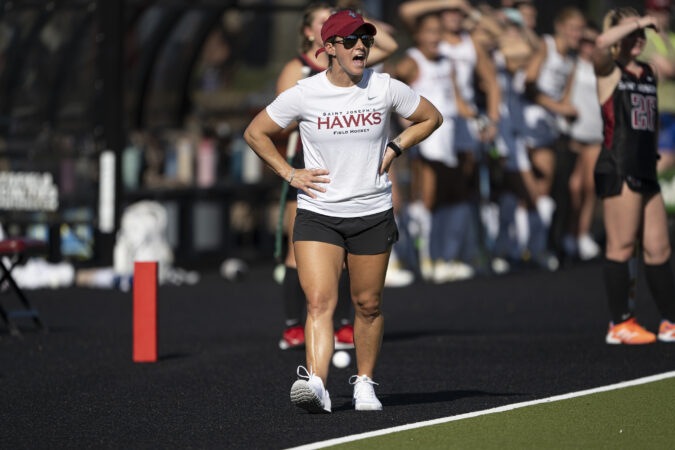
STATE COLLEGE, Pa. — After amassing a 64-14 record across four seasons at St. Joseph’s, Hannah Prince on Tuesday was named the head field hockey coach at Penn State.
Prince, 33, had served as the Hawks’ head coach since 2022. St. Joe’s made the NCAA Tournament in each of her four seasons — success that included two Atlantic 10 regular-season titles and four A-10 tournament titles. In 2024, the Hawks won a program-record 20 games and reached the NCAA championship game, a first in any team sport in school history.
“I am deeply grateful to Saint Joseph’s University and to Vice President and Director of Athletics Jill Bodensteiner for trusting me with the opportunity to lead the field hockey program on Hawk Hill over the past four seasons,” Prince said Tuesday in a statement. “The student-athletes are truly the heart of this program. This team means more to me than I can put into words, and it has been an honor to coach such a resilient, kind, and committed group. I will miss them tremendously and will always be proud to be a Hawk. I wish the program nothing but continued success in its next chapter.”
Following the historic 2024 campaign, Prince and her staff were named the National Field Hockey Coaches Association Mid-Atlantic Region Coaching Staff of the Year. She then led the team to its fifth straight A-10 tournament title and another NCAA Tournament, where St. Joe’s beat Drexel before falling to North Carolina.
“I am incredibly grateful for the opportunity to lead the Penn State field hockey program,” Prince said. “ … I am honored to join an athletic department with such a strong tradition of success and pride. I am excited to work with our field hockey student-athletes, bringing my passion for the game every day as we uphold the values of Penn State.”
Prince’s coaching career, which began at New Hampshire in 2015, includes stops as an assistant at St. Joe’s and Princeton and later as an associate head coach at Louisville.
Before coaching, Prince was a four-year starter at Massachusetts, where she won three A-10 titles. She was named NFHCA first-team all-region and first-team all-conference and also has represented the United States in international competition, winning a gold medal at the 2017 Pan American Cup.
Prince’s Hawks teams were mainstays in the NCAA Tournament and in the NFHCA rankings. Now, she’ll look to bring the Nittany Lions back to contention. They last reached the NCAA Tournament in 2022 and finished with a 7-10 record in 2025.
“Nittany Lion Field Hockey has a proud and storied tradition, and I am ready to pour my passion and energy into building a program that competes for championships,” Prince said.
Some are calling Penn State the Nittany Cyclones. Take one look at the Nittany Lions’ transfer portal additions and it is easy to see why.
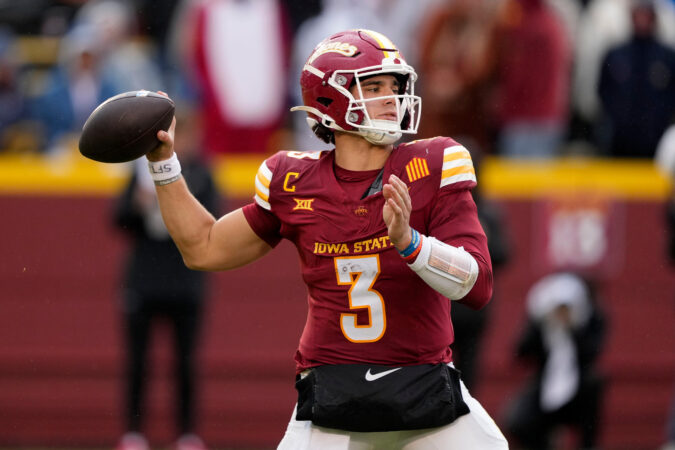
Since the portal opened on Jan. 2, Penn State reportedly has added 35 players, and 22 of them are from Iowa State, following their former head coach Matt Campbell to Happy Valley.
That list includes Iowa State’s top passer (Rocco Becht), top rusher (Carson Hansen), three of its top receiving targets (Chase Sowell, Benjamin Brahmer, and Brett Eskildsen), two of the three top tacklers (Marcus Neal and Caleb Bacon), and two of the three top interception leaders (Neal and Jamison Patton).
In addition, Penn State brought in Becht’s backup, Alex Manske, to be the potential future quarterback after 2026. Brahmer’s backups at tight end, Greg Burkle and Cooper Alexander, are also joining the Nittany Lions.
However, 50 players from Penn State’s roster in 2025 had entered the portal as of Monday night, meaning Campbell and his staff have their work cut out for them to continue to build up the roster for next season and beyond. Among those key departures include Chaz Coleman, Zuriah Fisher, Ethan Grunkemeyer, Amare Campbell, Dejuan Lane, King Mack, A.J. Harris, and Luke Reynolds.
But the staff has also retained 33 players from last season’s roster, including starters Anthony Donkoh, Tony Rojas, Audavion Collins, Ryan Barker, and Zion Tracy, along with several other key contributors like Max Granville, Andrew Rappleyea, Cooper Cousins, and prized freshmen Koby Howard and Daryus Dixson.
Outside of Becht and some key starters who transferred in from Iowa State, Penn State added potential key contributors in UCLA defensive tackles Keanu Williams and Siale Taupaki, both of whom worked closely with new defensive line coach Ikaika Malloe, and Ohio State running back James Peoples, who scored three touchdowns this season.
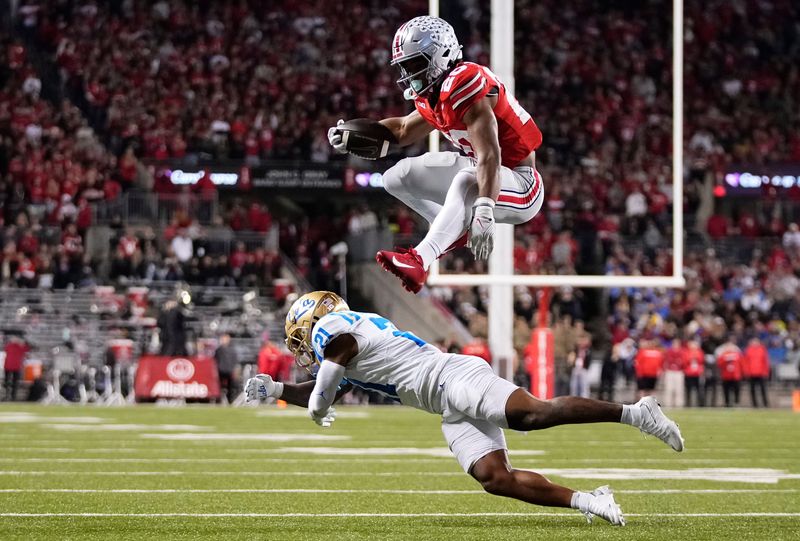
Ohio State’s James Peoples hurdles UCLA Bruins defensive back Cole Martin on his way to scoring a touchdown on Nov. 15.
The Nittany Lions also made additions along the offensive line, which is losing four of its five starters from last year. Brock Riker, a redshirt freshman who started at center for Texas State last season, is transferring to Penn State, and allowed just six pressures over 800 snaps in 2025, according to Pro Football Focus. Along with Riker, Iowa State transfer offensive lineman Trevor Buhr brings in starting experience at left guard, while several offensive linemen from the Cyclones’ roster, including Will Tompkins, Vaea Ikakoula, and Kuol Kuol II, figure to be part of the future.
After pulling in the largest high school recruiting class in school history in December, Temple isn’t done adding to its roster for next season and beyond, utilizing the transfer portal to pick up some key players.
The school had added 20 players through the portal as of Monday, with 11 of them coming from Power Four schools. Two of the additions were quarterbacks who could compete for the starting quarterback position next season.
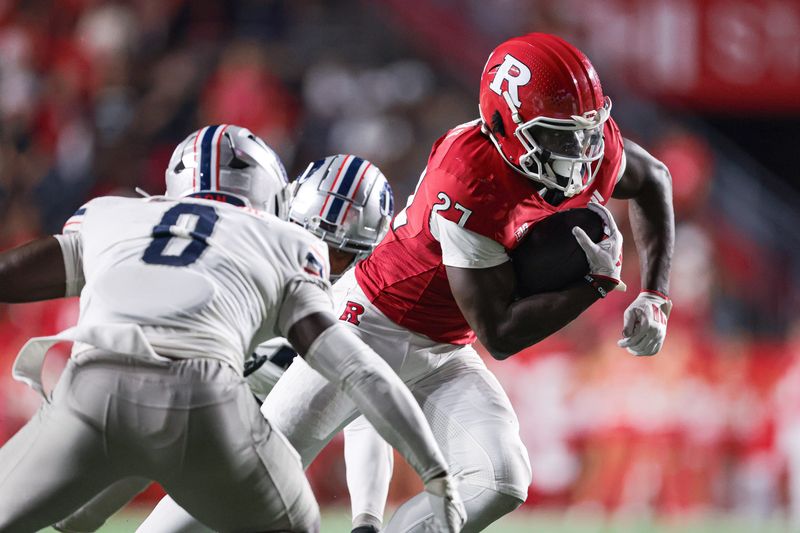
Among the transfers is running back Samuel Brown V, who played at La Salle College High School and spent four seasons at Rutgers. Brown burst on the scene as freshman for the Scarlet Knights, posting a 101-yard rushing game before suffering a season-ending injury seven games into the campaign. He was buried on the depth chart behind Kyle Monangai and Antwon Raymond the next three seasons and totaled 828 yards and eight touchdowns in 28 games.
Samuel Brown scores a receiving touchdown against Howard on Aug 29, 2024.
A few other players from the area or New Jersey are also transferring to Temple. Illinois safety Saboor Karriem (West Orange, N.J.), Albany defensive lineman Deshon Dodson (Neumann Goretti), and Central Florida defensive back Jaeden Gould (Somerset, N.J.) join Brown as players with ties to the region.
Temple also is bringing in former Penn State quarterback Jaxon Smolik and Washington State signal caller Ajani Sheppard, neither of whom has starting experience.
Sheppard began his career at Rutgers, where he intersected with Evan Simon, and played 37 snaps, attempted two passes, and had four rushes for 34 yards in two seasons. He did not see the field at Washington State in 2025.
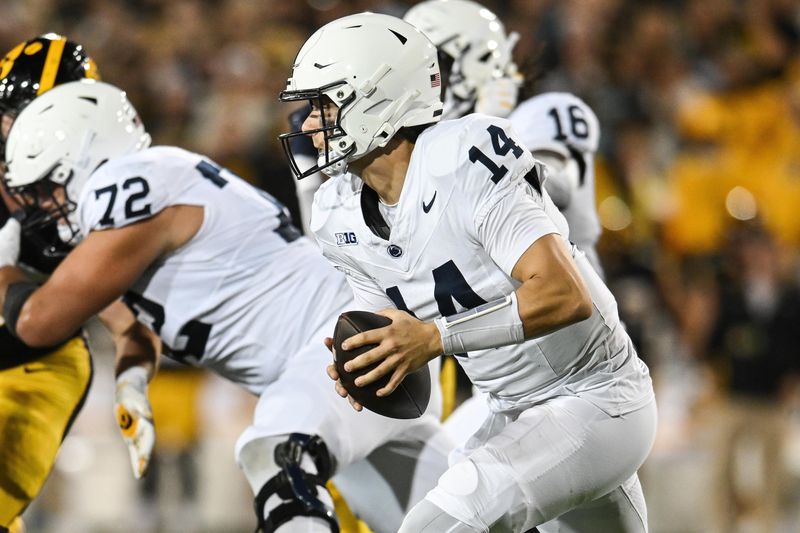
Smolik was buried on Penn State’s depth chart behind Drew Allar and Beau Pribula in 2023, was out for the season with an injury in 2024, and appeared in just three games in 2025 after losing the backup role to Grunkemeyer in the preseason. He has never attempted a pass in a college game and rushed four times in a loss to Iowa earlier this season before leaving that game with a wrist injury.
Jaxon Smolik scrambles during the first quarter against Iowa on Oct 18.
The duo joins a quarterback corps full of young, inexperienced players, including rising sophomore Camren Boykin along with incoming recruits Lamar Best, Brody Norman, and Brady Palmer. Boykin did not appear in a game in 2025, and the program lost Simon, Gevani McCoy, and Anthony Chiccitt to graduation while Tyler Douglas and Patrick Keller entered the portal. Smolik and Sheppard will likely have the chance to compete for the starting role during the spring and potentially summer camp, as McCoy and Simon did last year.
K.C. Keeler and the Owls pulled in four players from Penn State (Smolik, Kaleb Artis, Kolin Dinkins, and Joey Schlaffer) and three from Rutgers (Brown, John Stone, and Zach Aamland).
Of the positions the Owls restocked the most, the line, secondary, and wide receiver seem to be a heavy focus. All three offensive linemen (Stone, Aamland, Louisville’s Ransom McDermott) and safeties (Karriem, Gould, Dinkins) came from Power Four schools, while just one of the four defensive linemen and wide receiver transfers was a Power Four addition.
The portal additions included players from the Football Championship Subdivision (Lafayette DL Jaylon Joseph, Stony Brook WR Jayce Freeman, Albany’s Dodson) and Division II (Midwestern State WR Demonte Greene, Tiffin DL Kevin Hornbeak).
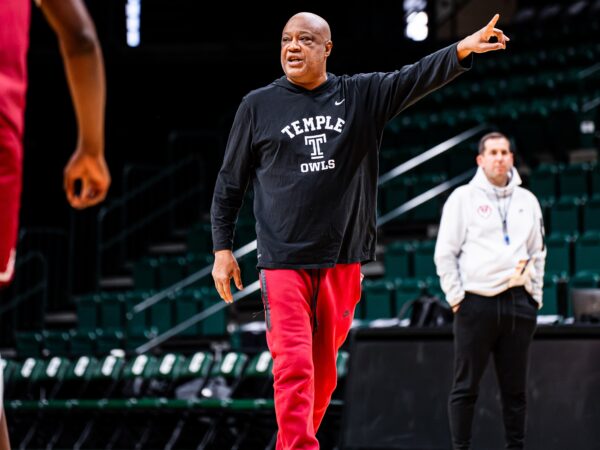
Temple assistant men’s basketball coach Bill Courtney died suddenly at the age of 55, the school announced Tuesday morning.
“I am shocked and heartbroken by the tragic news and passing of my close friend Bill Courtney,” Temple coach Adam Fisher said in a statement. “Bill made such a big impact on our program in such a short time. He was one of the most respected coaches in the country — thoughtful, prepared, and deeply committed to the game and to winning the right way. Bill made every program he touched better, and his loss is felt profoundly by everyone who knew him. Our thoughts and prayers go out to Bill’s family during this extremely difficult time.”
Mr. Courtney was in his first season with the Owls. He joined Fisher’s staff after spending six seasons in assistant and associate head coaching roles at Miami. He stepped in as Miami’s interim head coach for 19 games last season after Jim Larrañaga retired. Mr. Courtney was the head coach at Cornell from 2010 to 2016, and before that, he spent time as an assistant at Virginia Tech, Virginia, Providence, George Mason, Bowling Green, and American.
Temple University is deeply saddened to announce the sudden passing of assistant men’s basketball coach Bill Courtney.
“We are deeply saddened by the passing of Temple men’s basketball assistant coach Bill Courtney,” said Tim Pernetti, commissioner of the American Conference. “In over 30 years as a basketball coach, Courtney had a profound impact on his colleagues and student-athletes.
“He helped lead Miami to the Final Four and programs to nine postseason tournaments, but his [effect] on the lives of the student-athletes and coaches who worked with him will be his ultimate legacy.”
A native of Alexandria, Va., Mr. Courtney played at Bucknell University, where he was inducted into the school’s Athletics Hall of Fame in 2007 and remains among the program’s all-time leaders in points and assists. He graduated from Bucknell in 1992 with a degree in education.
Temple (11-5, 3-0 American) traveled to Memphis Tuesday afternoon as scheduled, according to a source, and will play Wednesday night’s game vs. the Tigers.
“In the short time that he has been part of the Temple family, I saw the impact that he had on our program with the joy that exuded from him on and off the court,” Temple athletic director Arthur Johnson said in a statement. “He will be missed by his immediate family, his Temple basketball family, and the greater basketball community.”
Mr. Courtney is survived by his wife, Gina, and two sons, Billy and Derek.
The school said information regarding memorial services will be announced later.
Temple sought to regain momentum with a two-game road trip after an ugly 50-47 loss to Texas-San Antonio in its American Conference women’s basketball opener on Jan. 3. It was successful at first.
The Owls cruised by Wichita State, 70-50, on Jan. 6 for their first conference victory. However, against a potential contender in Tulsa on Friday, Temple faltered in a 94-82 loss, allowing the most points in a conference game since the 2018-19 season.
Temple (7-8) is 1-2 in the American, but both losses have come to unbeaten teams in conference play. The Owls offense seems to be trending in the right direction, but questions remain about their depth.
Next, the Owls will host Tulane (6-10, 1-3) on Tuesday (7 p.m., ESPN+).
Offense gets on track
Offensive inconsistency defined Temple’s nonconference slate. The Owls struggled to knock down open shots and had turnover problems. They started games slowly, forcing quick shots and not letting the offense come to them.
The struggles reached a pinnacle against UTSA, when Temple shot just 20.5% through three quarters and scored just 47 points.
But the offense improved on the road trip. The Owls scored 70 and 82 points against Wichita State and Tulsa, respectively, and shot better than 40% from the field in both matchups. Temple used a strong offensive second half against Wichita State to turn a nine-point halftime lead into a comfortable 20-point win.
Drew Alexander scored 27 points for Temple in the loss to Tulsa.
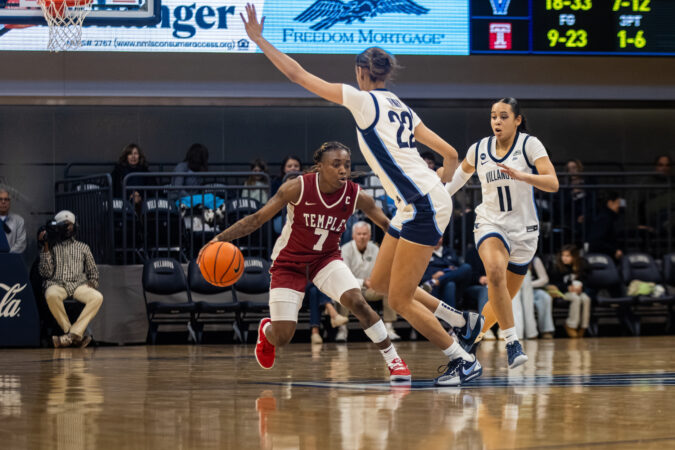
Against Tulsa, the Owls sank 10 threes and put up 80 points for the first time in four games. Guard Kaylah Turner scored 31 points and made five triples, but the efforts on offense were spoiled by poor defense.
Defensive setbacks
Against Wichita State, Temple forced 25 turnovers and held the Shockers to just 50 points. That defense took a big step backward against Tulsa, the top-scoring offense in the conference.
The Golden Hurricane led by as many as 21 points in the first half, thanks to their 60% shooting clip from the field and an even better 81.8% from beyond the arc. Tulsa scored 53 first-half points.
The defense improved slightly for the Owls in the second half as they trimmed their deficit to six points in the fourth quarter. But Temple could not come up with enough stops as Tulsa made eight of its final nine shots to pull away.
Despite the Owls’ 19 forced turnovers, they allowed the hosts to shoot 58.9% from the field and 76.5% from three. Tulsa guard Mady Cartwright scored a career-high 31 points on 5-for-5 shooting from three.
Help from the bench?
Last season, Temple had strong bench production from Turner, who was named the conference’s Sixth Player of the Year, and forward Anissa Rivera. Turner moved to the starting lineup and Rivera graduated, leaving coach Diane Richardson needing a new spark off the bench.
That need is still apparent. In the Owls’ loss to Tulsa, their reserves scored just one point.
Guard Drew Alexander seemed to be that spark early in the season, but she has moved into the starting lineup, initially replacing Tristen Taylor and now in place of Savannah Curry, who is out with an undisclosed injury.
Alexander poured in 27 points against Tulsa. Now Temple needs someone to step up in reserve. No bench player is averaging more than four points.
With Curry expected to be out for the foreseeable future, Temple is going to need better production out of players like Kelian Cedano or Brianna Mead.