Category: College Sports

  • Villanova suffers worst loss in 29 years in drubbing to St. John’s: ‘We’re going to move on’

    Villanova suffers worst loss in 29 years in drubbing to St. John’s: ‘We’re going to move on’

    NEW YORK — Kevin Willard spent his formative years in coaching working under Rick Pitino, first with the Boston Celtics and then later in the college ranks at the University of Louisville.

    So the Villanova coach didn’t have to imagine what practice was like for Pitino’s No. 15 St. John’s team this week after it was blown out and embarrassed by No. 6 UConn Wednesday night.

    He lived it.

    “I don’t have hair because of him,” Willard said after Villanova was throttled in an 89-57 loss — the worst defeat for the program in 29 years — that was all but over before halftime. “I had a full set of hair when I started working for him. It’s the most miserable experience in life. You fear for your life every day. Everyone laughs when I say that, but no, you think you’re going to get fired, and it’s miserable.”

    The game was already going to be hard to begin with. Villanova (22-7, 13-5) is on its way to the NCAA Tournament, but it has failed to show it can compete with the two teams at the top of a Big East conference that will send just three teams to the dance, barring a miracle run at Madison Square Garden in two weeks. Add to the equation that St. John’s was coming off a 32-point drubbing, the Garden was sold out, and those rough and rowdy Red Storm practices this week, and you get a recipe for disaster.
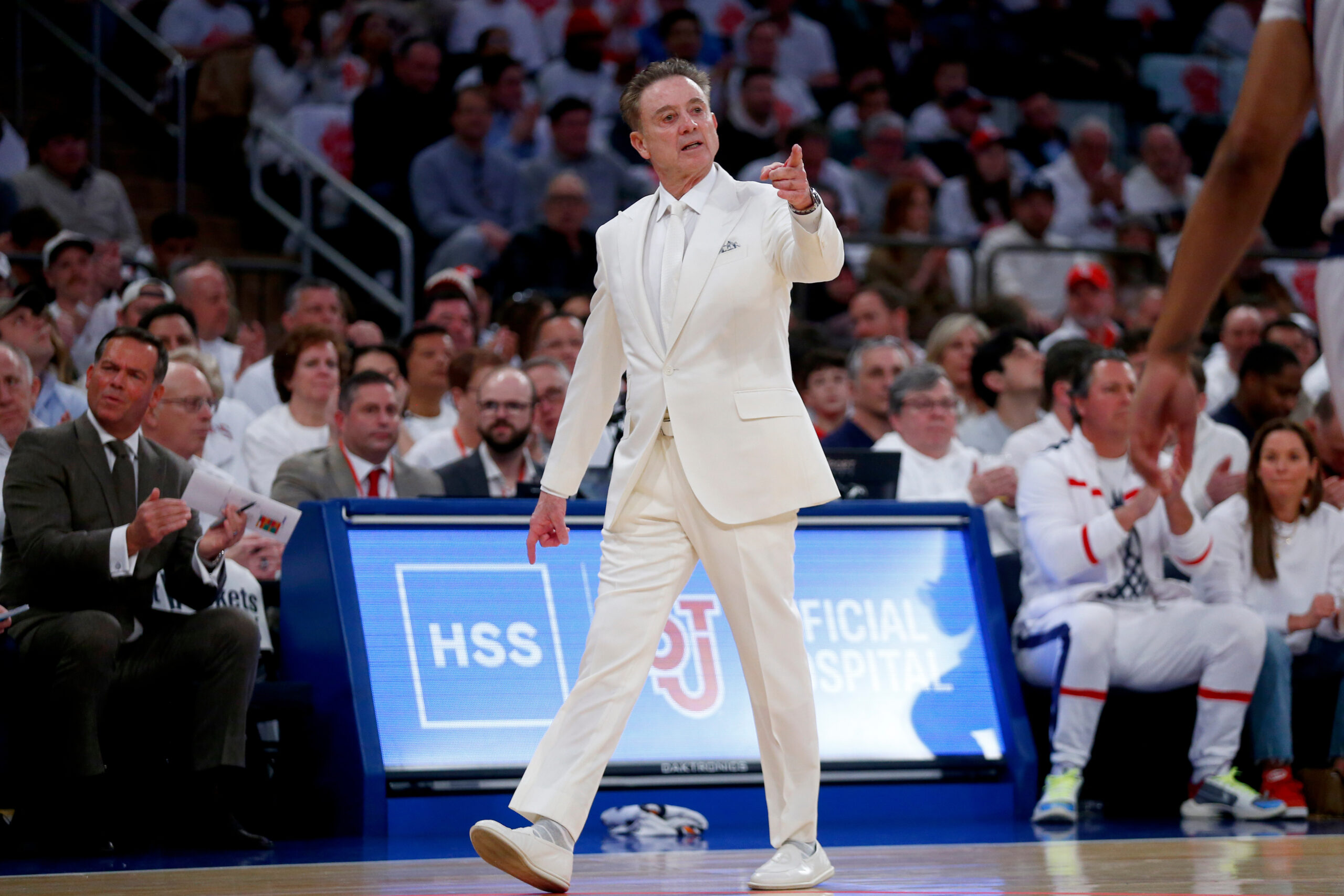
    St. John’s coach Rick Pitino walks by the bench against Villanova on Saturday.

    Pitino told reporters ahead of Saturday that the game against UConn was the biggest since he arrived on campus in 2023. It is the hyperbole you resort to after you lose a game by 32. St. John’s held a White Out and gave out white t-shirts for lower-level ticket holders, and Pitino emerged from the tunnel onto the floor before the game wearing a white suit. The crowd loved it, and Pitino’s players made sure they continued having things to cheer about.

    It was 11-2 after three quick Villanova turnovers. Later, two more consecutive turnovers led to easy dunks and a 28-14 deficit. Willard used multiple timeouts during the first half, but Villanova had no answers for the defensive pressure and intensity from St. John’s. It was 48-23 by the time the first-half buzzer mercifully sounded, and the first-half stats told the story.

    St. John’s held an 18-0 advantage in points off turnovers. Villanova had more turnovers (eight) than it did made baskets (seven). The Wildcats shot 25.9%. Tyler Perkins, Villanova’s leading scorer, was minus-32 in 17 first-half minutes.

    “I think the biggest difference is that they’re a veteran team,” Willard said. “You knew Zuby [Ejiofor] wasn’t going to come out and lay an egg, and he didn’t.”

    The St. John’s center became the fourth known Red Storm player to record a triple-double. He had 16 points, 12 rebounds, and 10 assists. The superlatives didn’t stop with him. The 32-point victory was the largest St. John’s has ever recorded vs. Villanova in what was the 135th matchup between the two teams.

    Further, it was the worst Villanova loss since the Wildcats lost by 37 in a February 1997 game vs. Kentucky.

    Who coached that Kentucky team? Pitino.
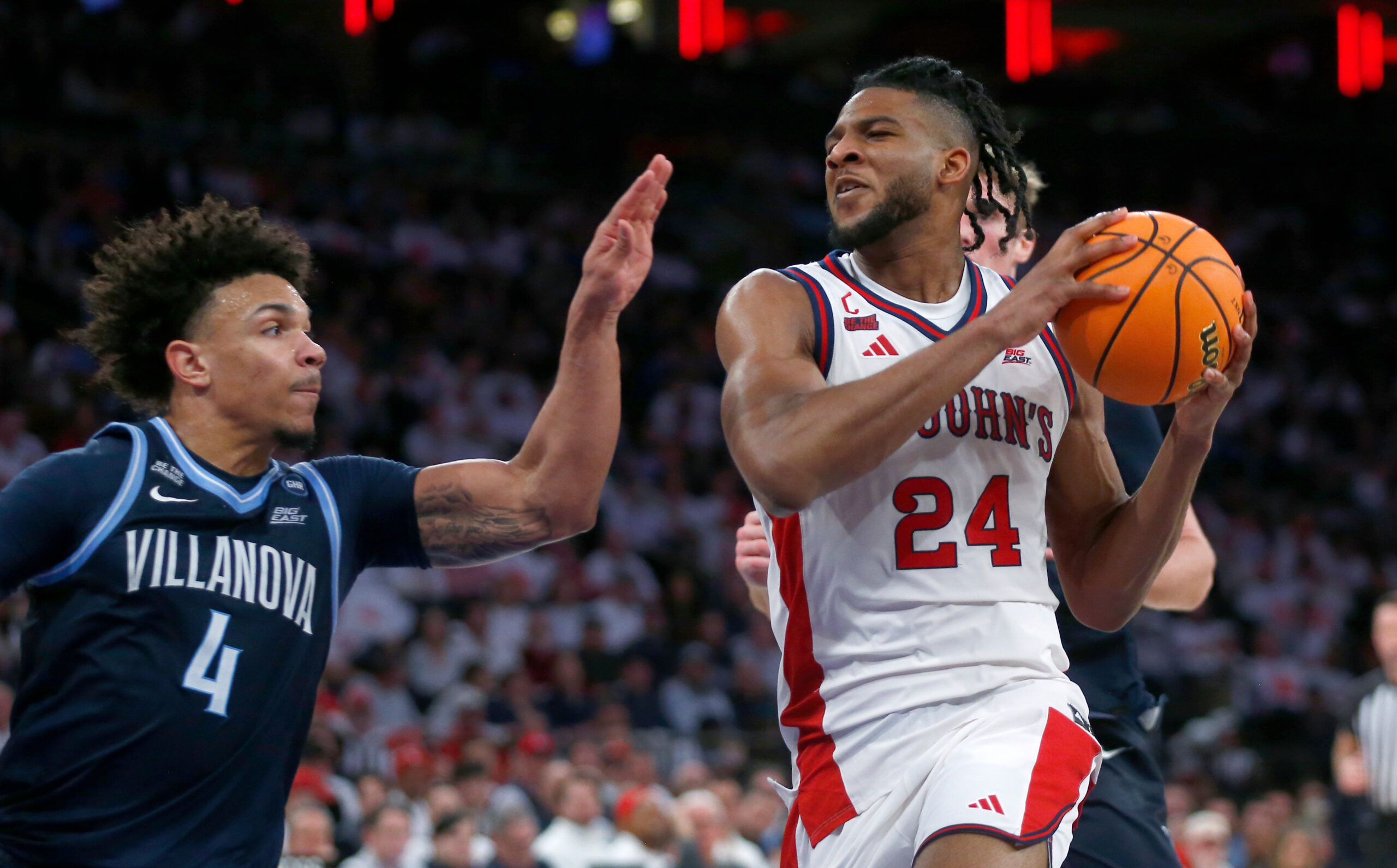
    Villanova guard Tyler Perkins defends St. John’s forward Zuby Ejiofor on Saturday.

    Back to the present day, Willard’s Wildcats on consecutive Saturdays received a dose of reality vs. the conference’s elite, but they also survived a rough stretch during Wednesday’s win over Butler.

    “We still won seven out of nine games,” Willard said when asked if he was concerned about the timing of it all. “We lost to UConn and St. John’s. Unfortunately, I caught UConn after they played their worst game of the year and it seems like God is punishing me for my sins.

    “We’re going to move on. We have two more games left. Life happens, man. You get your [butt] kicked every once in a while.”

    Willard had a similar thing to say last week after a 10-point loss to UConn that wasn’t as close as the final score indicated. Villanova bused home late Saturday night and is back on the road for a Wednesday night game at DePaul. The regular season finishes Saturday with a home game vs. Xavier before the Big East tournament begins.

    How will Villanova respond to its worst loss of the season?

    Perhaps Willard can channel Pitino at Monday’s practice.

    No update on Matt Hodge’s injury

    Villanova redshirt-freshman forward Matt Hodge went down with what appeared to be a right leg injury early in the second half. Hodge was on the floor in pain for a few moments and then struggled to put any weight on his right foot as he was helped off the floor and into the locker room.

    Willard did not have an update on Hodge’s status after the game.
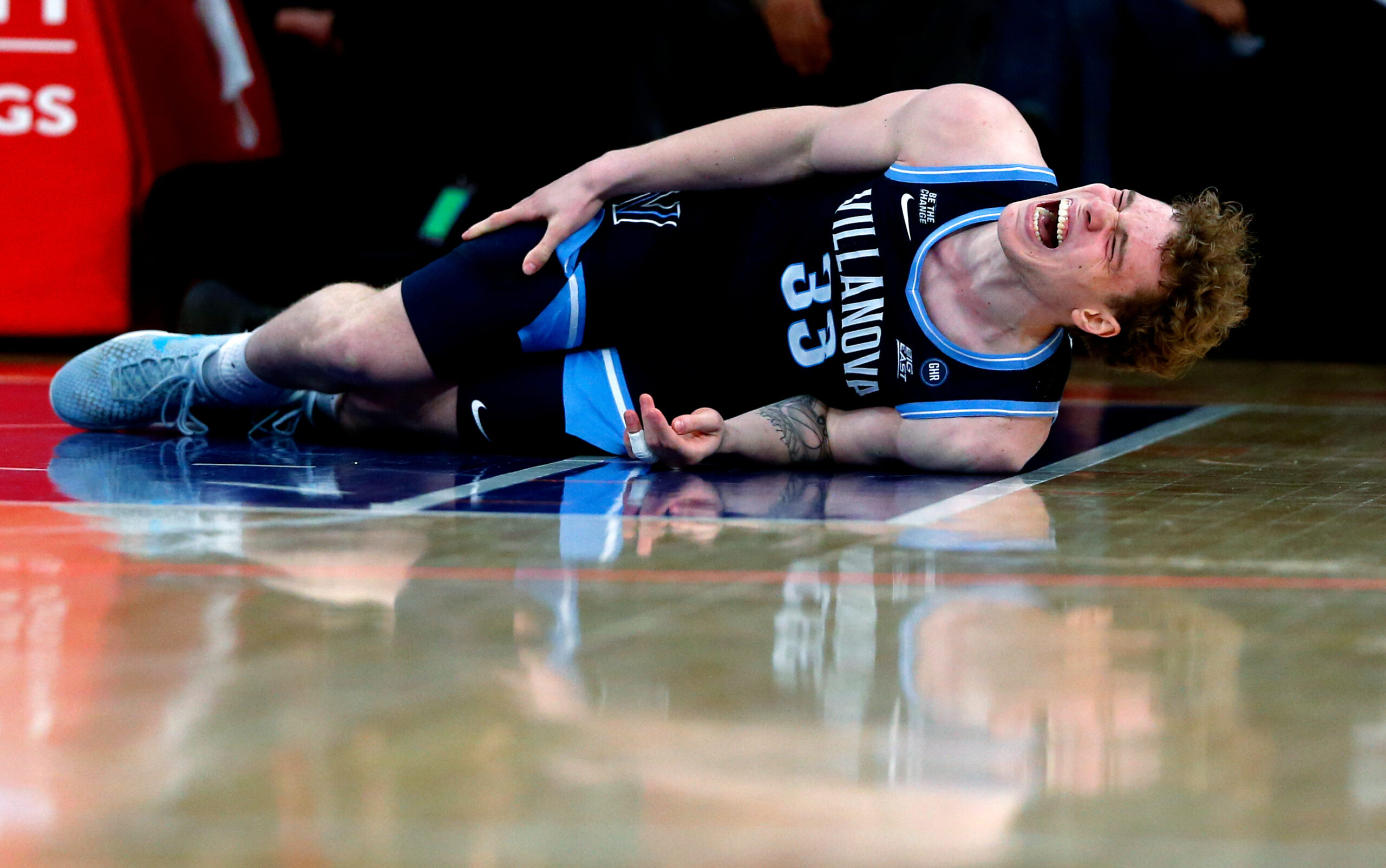
    Villanova forward Matt Hodge goes to the floor with an apparent injury during the second half against St. John’s on Saturday.

    Wildcats locked into Big East seed

    The loss Saturday means Villanova can’t possibly climb higher than third in the Big East conference. For reference, the Wildcats were picked seventh in the preseason poll. But there appears to be a steep drop off from UConn and St. John’s at the top.

    The No. 3 seed means the Wildcats will open the Big East tournament with a 9:30 p.m. quarterfinal game vs. the winner of the game between No. 6 and No. 11.
  • Penn’s men are going back to the Ivy League tournament, but they took the long way to get there

    Penn’s men are going back to the Ivy League tournament, but they took the long way to get there

    March was six hours away when the ball was tipped at the Palestra on Saturday, and it had been a while since that mattered for Penn’s men.

    Fran McCaffery’s squad has clearly improved over the course of this season, but just how much has been hard to tell at times. A senior night showdown with tied-for-first Harvard offered a proper test, and a win would clinch the Quakers’ first Ivy League tournament berth in three years.

    Which Penn team would show up?

    The one that fell behind Dartmouth by 12 points a night before, or the one that rallied to win? The one that nearly threw away a late lead to Princeton at the start of the month, or the one that finally ended a 14-game, eight-year losing streak to its historic rival?

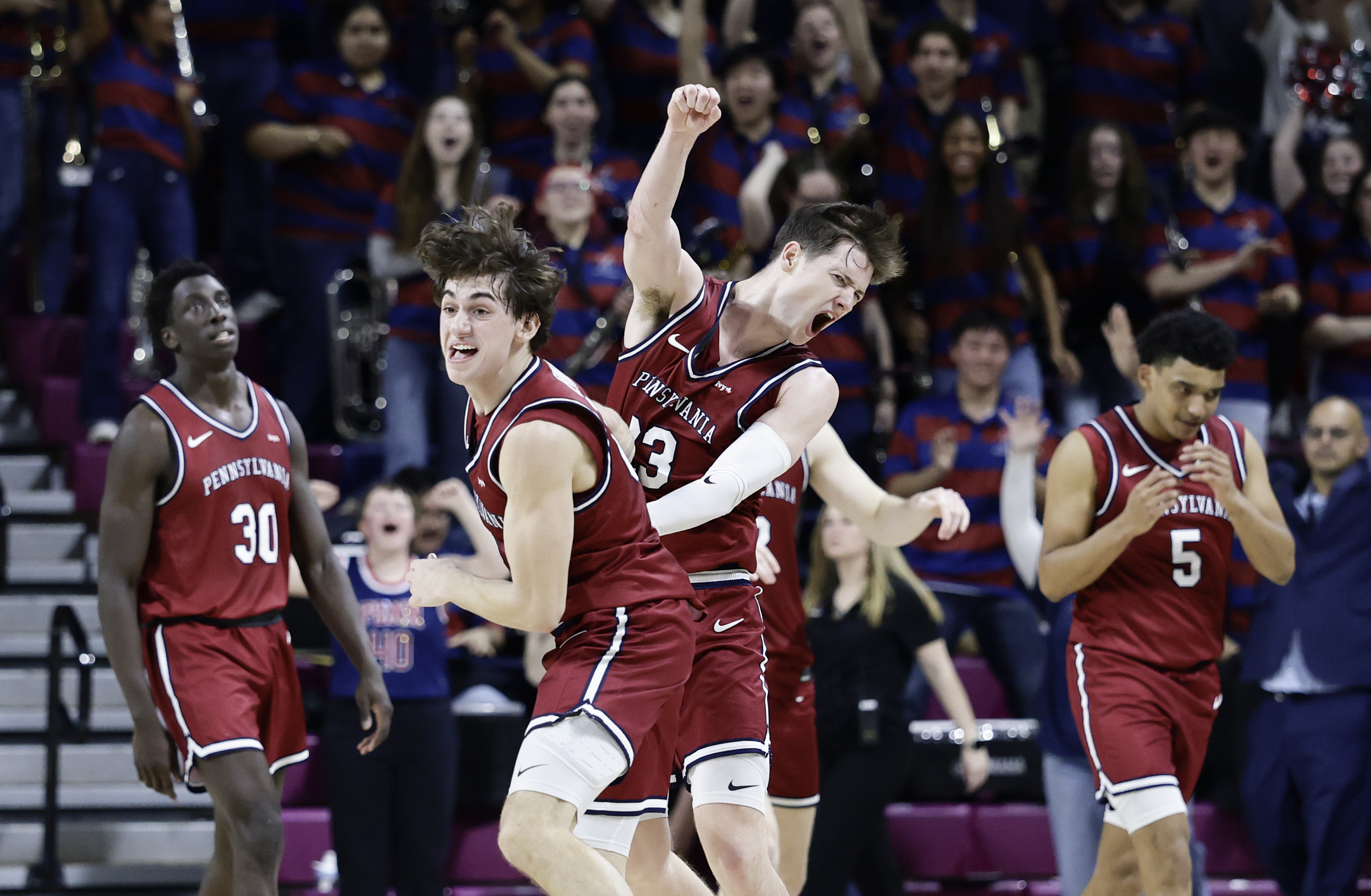
    All of them, it turned out. Penn trailed 31-21 at halftime, then charged back to lead 56-50 with 5 minutes, 37 seconds to play. But the Quakers almost gave it up before holding on to win, 64-61.

    There was plenty of noise from the 2,877 fans on hand at the buzzer, a reminder that even a paltry crowd can make a great atmosphere at the 99-year-old shrine. It might have been as much out of relief as anything else, but it was still a release.

    “I think that’s what makes it emotional, is we’ve been so close,” senior forward Ethan Roberts said after his Palestra finale. “So to see these wins and the season transpire the way it did, we’re in a great spot, and we just learned from it. We kept fighting, and it was ugly at times, but it just makes it all worth it.”

    The team’s ‘north star’

    It’s easy to say that this Penn team goes as far as TJ Power takes it. He took it to an extreme on Friday, scoring 38 of his team’s 80 points against the Big Green. But Roberts matters too, and this was his best game in weeks: 21 points, three assists, and four rebounds, including the game-sealer in the closing seconds.

    “I kind of blacked out after the buzzer hit,” Roberts said. “Our team, our entire year since last summer when we had the coaching change [and] we see coach McCaffery is coming here, it’s like, ‘All right, we’re winning.’ And to see we’re in this position today … this is literally all we’ve worked for. This has been our north star.”

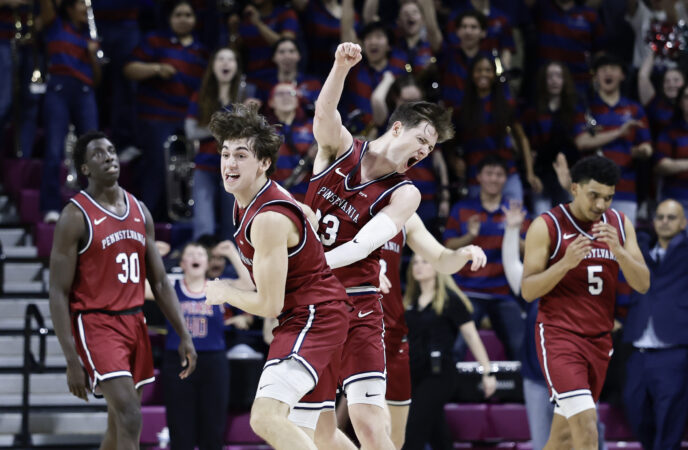
    Penn’s AJ Levine (left) and forward Ethan Roberts celebrate after the final buzzer.

    AJ Levine, the sophomore starting point guard, is another big factor — and not always in a good way. He’s a tenacious defender, and is capable of great passes and shots. But he’s also capable of driving into any lane in front of him, even if it’s a trap.

    It’s not a coincidence that he played much more within himself in the second half of conference play, and that Penn went 6-1 in those seven games.

    “He’s always going to have an aggressive mindset, and you don’t ever want to take that away from him,” McCaffery said, with a towel draped over his shoulders after a postgame water-dousing in the locker room. “He gets emotional, and you don’t want to take that away from him either, but you can’t let it get you to where you’re focused on, ‘I got a bad call,’ or ‘He [a teammate] should have cut backdoor.’ When he’s under control and he’s locked in like he was in the second half, he’s really good.”

    What to know about the Ivy League tournament

    Now, after the regular-season finale at Brown on Friday, it will be off to Cornell’s arena for a rematch with the Crimson in the Ivy tournament semifinals. All four seeds are set with a game to spare.

    AJ Levine drives for a layup during the second half.

    “It’s great feeling as a coach when you know you have a group of guys that have bought in from day one since I got here, and want to experience success,” McCaffery said. “And then to see them celebrate in the locker room — the thing we have to do now, and they both [Roberts and Levine] said it, which is good, is we have to stay locked in. We earned an opportunity. We have to play well next week, and then get ready to play well against two really good teams.”

    (If you’re wondering, there’s no word when the event will next be at the Palestra. All that’s known is the 2027 edition will be at Dartmouth, and Hanover, N.H., is as glamorous as central New York is in mid-March.)

    No. 1 Yale will be the favorite on paper, No. 66 in the NCAA’s NET rating while the other three teams are all in the 150s. But the top seed has only won the tournament twice in its seven editions, as the five-time finalist Bulldogs know well.

    This time, they’ll have to beat the hosts in the semis. Yale won its home game vs. Cornell in a 102-68 blowout, then the Big Red won the regular-season round in Ithaca on Friday on a last-second three.

    Penn and Harvard also split their games, with the Crimson winning by 64-63 in Boston on Jan. 19.

    “There’s the frustrating losses, there’s the hard-fought wins like today,” Levine said. “When that buzzer went off and I realized what we’ve done — and how it’s just the start, really, because we’re going to go compete there — I mean, it felt amazing to just see that hard work pay off a little bit. But it will really pay off when we go up there and we do what we do.”

    Those words might have been a little too accurate for their own good. Still, they have a chance, and that’s more than Penn could say the last two seasons.

  • Penn is playing in the Ivy tournament thanks to a game against Harvard that showed heart

    Penn is playing in the Ivy tournament thanks to a game against Harvard that showed heart

    Let the Madness begin.

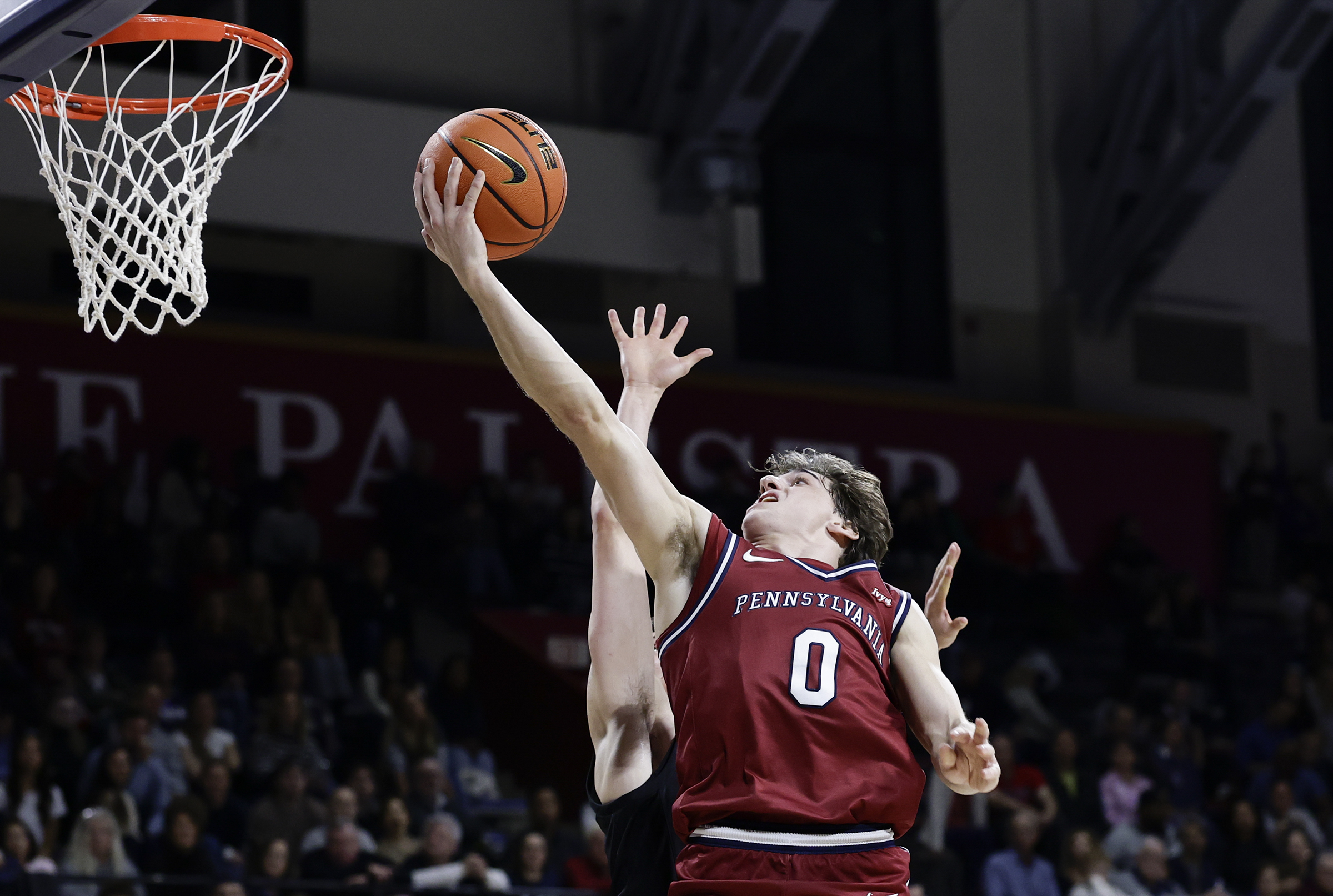
    On Saturday, Penn men’s basketball took down Harvard, 64-61, securing a bid to the Ivy League Tournament. As the game came down to a back-and-forth, one-possession game, senior forward Ethan Roberts (21 points) took over for the Quakers — scoring eight straight in the final minutes to secure the victory.

    “It meant everything,” Roberts said. “I kind of blacked out when the buzzer hit. This is what we wanted our entire year. Since last summer, we had a coaching change. We see McCaffery coming here, and to see that we’re in this position today, it’s like, back me up, this is literally all we work for. Our North Star. It’s emotional, and I can’t really put it into words.”

    Roberts, along with Cam Thrower, Dylan Williams, and Johnnie Walter, were honored pregame as a part of Penn’s senior night celebrations.

    Playoff ready

    The Quakers took control of their own destiny by defeating Harvard, with the win securing Penn an Ivy League tournament bid in head coach Fran McCaffery’s first year as head coach.

    Penn last won the Ivy League tournament in 2018, and will look ahead to a rematch with Harvard, the two seed, in the semi-final round on March 14th at noon in Ithaca, New York.

    “It’s not like we don’t know each other,” McCaffery said in reference to Harvard. “We have a lot of respect for them. We played twice, we won by three and they lost by one. Expect a good fight; we expect to have our guys ready.”

    The Quakers can’t wait for Ivy Madness to start, with the team being proud of their “roller coaster” regular season nearing its end.

    This ivy season has been a roller coaster,” AJ Levine said. “It’s been so hard fought. I mean, we know every single game we go into, we have an opportunity to win. We’ve had so many close games, some that we won, some that we lost, but you know, those all make us better, and they all prepare us for this postseason.

    Comeback kids

    Harvard’s league-leading defense dismantled Penn in the first half, holding the Quakers to only 21 points on 24 percent shooting, forcing six turnovers en route to a 10 point halftime lead, 31-21.

    The Quakers’ three-headed attack of TJ Power, Michael Zanoni, and Ethan Roberts went a collective 2 of 19 from the field — with starting point guard AJ Levine only playing 10 minutes.

    In the second, in just the first four minutes of play, Penn turned the tide — forcing four turnovers and scoring an electric 15 points, with every point coming from one of Roberts, Power, or Levine.

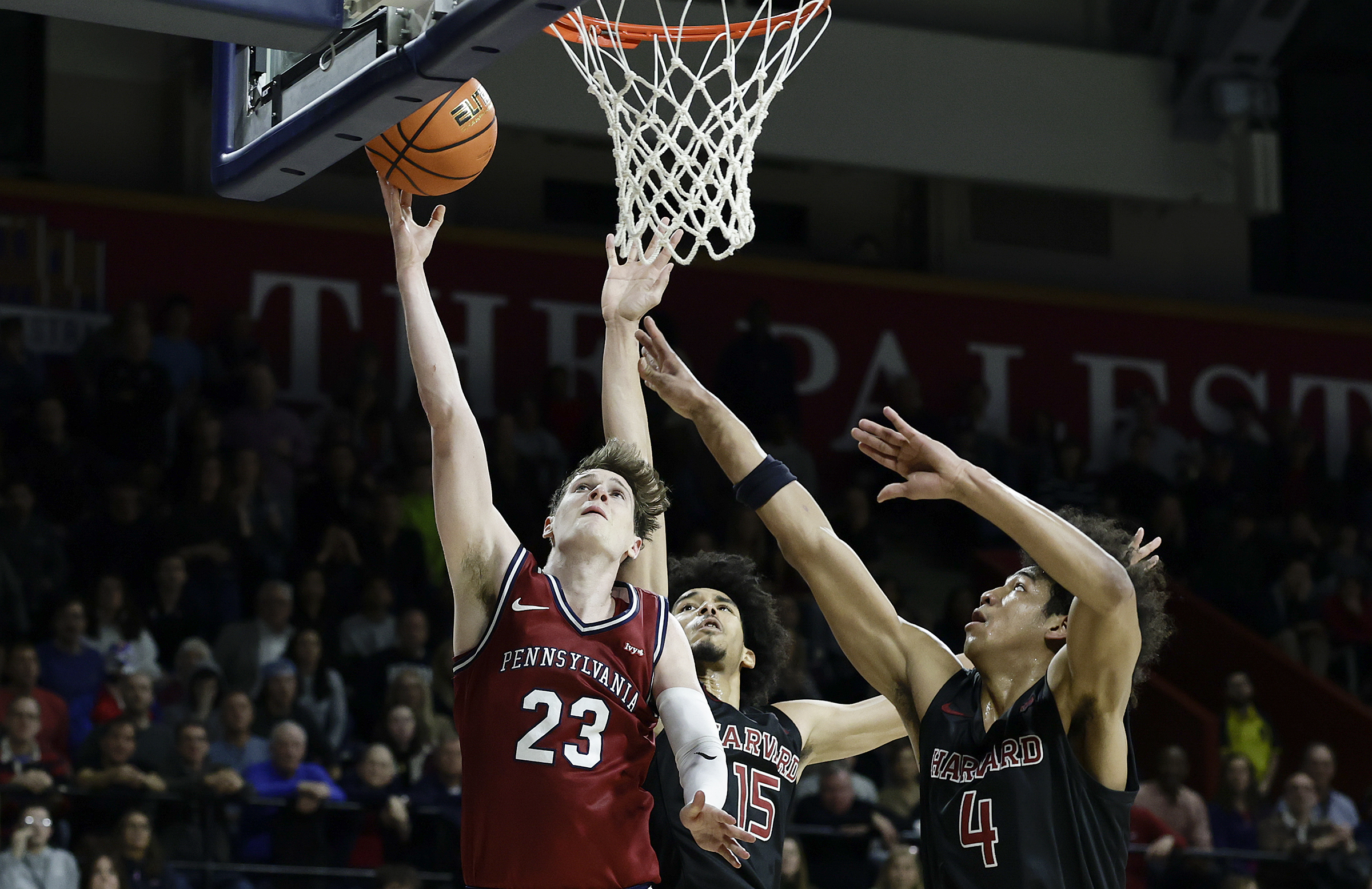
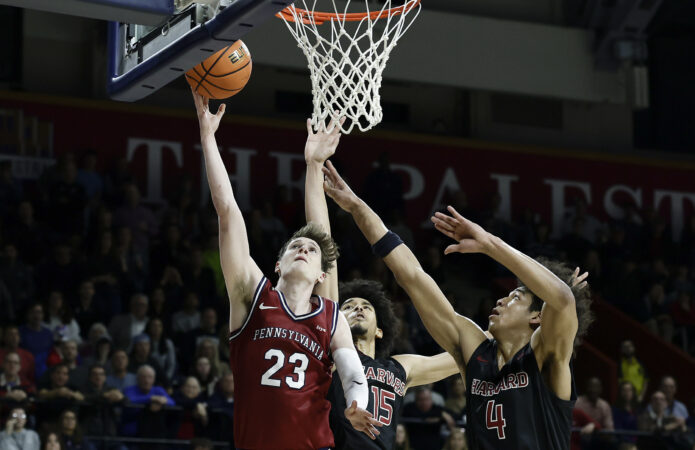
    Penn forward Ethan Roberts lays up the basketball past Harvard forward Thomas Batties III (center) and guard Robert Hinton during the second half on Saturday.

    “I think the huge thing is defensive intensity,” Levine said in reference to what the team changed at half time. “ [We were} a little quiet on defense and not as energetic, and that was a huge point at halftime, that we’re gonna come out, and we’re gonna get stops, we’re gonna get on this glass and push the ball, that’s where our best offense is, and we want to really capitalize on that.”

    Quakers continued to pile on, with the trio scoring a collective 36 of the team’s 41 points in the second half. Power provided much-needed versatility — hitting three of four from behind the arc with four boards, while Levine was ferocious downhill, going four of five with two made free throws for 10 points.

    “But to his credit, he showed maturity today,” McCaffery said regarding Levine. “Figured it out. And I think you could know, with all due respect to the game Ethan had, I think you could really look at AJ and say, Okay, that was a difference. The way you played at the start of the second half changed everything.”

    Roberts, in his final regular-season home game donning the Red and Blue, controlled the pace, using his physicality and outside touch to uphold the offense, scoring 17 in the second half.

    In the end, the former transfer sealed the game for the Quakers and showed emotion after his final home game with Penn.

    “I love this place,” Roberts said regarding his performance. “And I just want to give everything back to Penn. How much it means to me to wear this jersey. So to do that means a lot, and I hope that caps off my legacy, but I still got more to go, because, you know, I want to win.”

    Like Mike

    Zanoni, a senior, was left out of the senior night celebrations. McCaffery, when questioned post-game, confirmed that Zanoni is expected to return to Penn next year.

    While Zanoni struggled tonight, his impact this season has been felt — as the Greensboro, North Carolina, native averages 12.1 point per game.

    His best performances came against Providence (30 points) and Ivy League leading Yale (20 points), with his outside shooting looking to boost McCaffery’s fast-paced offense for at least one more year.

  • Aryss Macktoon breaks a La Salle record in win over Loyola Chicago

    Aryss Macktoon breaks a La Salle record in win over Loyola Chicago

    During La Salle’s last game against Loyola Chicago on Jan. 21, the Explorers led by nine entering the fourth quarter. It was all for naught, though, as the Ramblers stormed back for a four-point win.

    Just over a month later, the teams faced off again. And again, La Salle held a nine-point lead entering the fourth quarter. But this time, the Ramblers couldn’t rally, and the Explorers won, 70-57. La Salle’s victory in the regular-season finale broke a tie for sixth place in the A-10 standings.

    “I was really pleased that we turned the loss out there into a win here,” Explorers coach Mountain MacGillivray said. “Identical scores going into the fourth quarter. In this one, we found a way to extend the lead and come away with the win.”

    Statistical leaders

    Redshirt junior guard Ashleigh Connor tied her career high with 26 points and added nine rebounds. Aryss Macktoon and Kiara Williams scored 11 points each, and Macktoon also had 11 rebounds and four steals. More on those steals later.

    The Explorers (17-12, 10-8 A-10) shot 46.3% from the floor, while limiting Loyola Chicago to 35%, including just 17.4% from deep.

    Alex-Anne Bessette and Alexus Mobley led the Ramblers (13-16, 9-9) with 13 points each. Mobley added 10 rebounds.

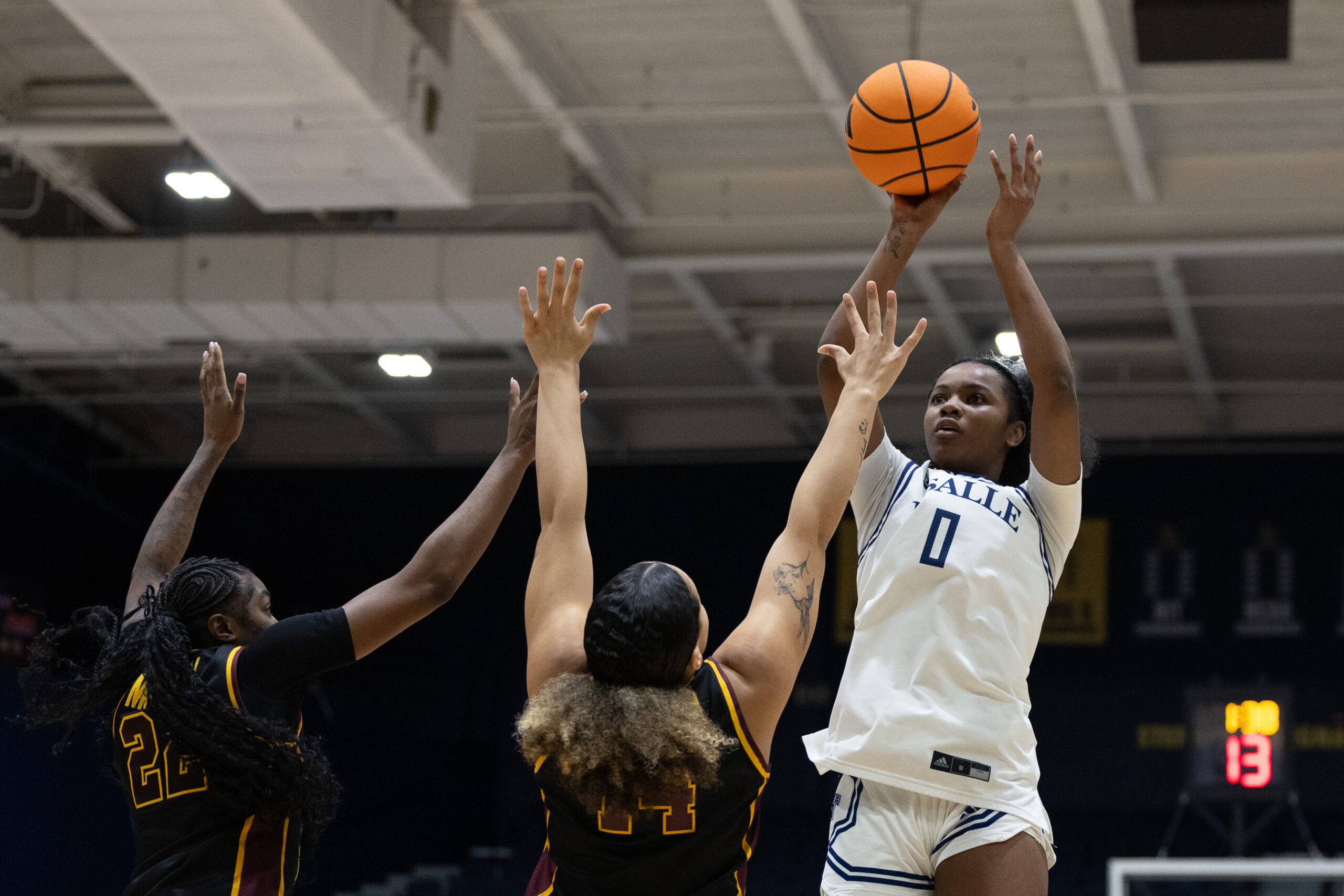
    Explorers guard Aryss Macktoon (0) shoots the during Saturday’s game. She finished with a double-double.

    What we saw

    Connor helped La Salle jump out to a 7-0 lead as part of her 12-point, two-assist first half.

    “We are fighting for the highest-place seed we can get, and so trying to just leave it all out there,” Connor said. “Giving everything I got for these girls just because they deserve it.”

    The Ramblers wouldn’t remain silent, though. Senior guard Kira Chivers (11 points) scored five points in 18 seconds to cut Loyola’s deficit to two, but Connor drilled a three-pointer to swing momentum back toward La Salle. Loyola got within three early in the second quarter, but despite a nearly two-minute drought from the field to close the first half, La Salle went into intermission up, 31-25.

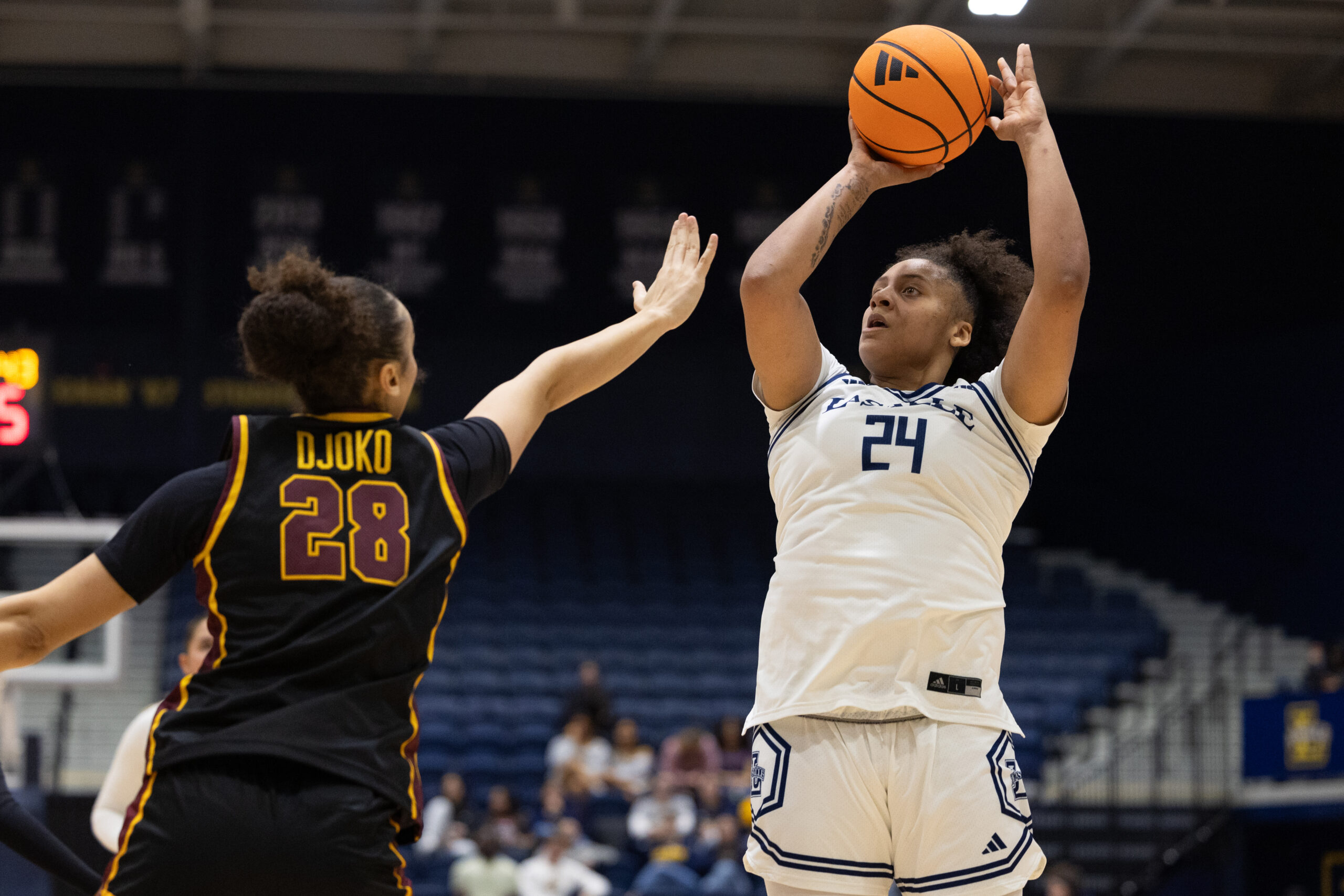
    La Salle forward Kiara Williams (24) shoots the during Saturday’s game against Loyola Chicago.

    Despite not scoring in the first half, Macktoon was all over the court for La Salle. She had six rebounds, three assists, and two steals through 20 minutes. The scoring began to click in the second half, though, and Loyola had no answers for her. Macktoon hit a three to give La Salle a 39-29 lead at the 6-minute, 29-second mark of the third quarter then combined with Connor to score 15 of their team’s 21 fourth-quarter points.

    Macktoon’s record

    Macktoon knew she was approaching the La Salle single-season steals record of 95, set by Ashley Gale in 2010-11. But it was business as usual after the opening tip.
    Macktoon entered Saturday’s game with 92 and tied the record early in the third quarter. Loyola Chicago trailed by nine with three minutes left and had a chance to keep the game close. Instead, Macktoon poked the ball away from Mobley for the record and derailed the chances of a Ramblers comeback.

    Up next

    La Salle locked up the No. 6 seed in the A-10 tournament and will play the winner of the No. 11 seed and No. 14 seed on Thursday (7:30 p.m., ESPN+).

  • St. Joseph’s women drop their regular-season finale to Richmond

    St. Joseph’s women drop their regular-season finale to Richmond

    Maggie Doogan left it all out on the floor in what may be the final college game in her hometown.

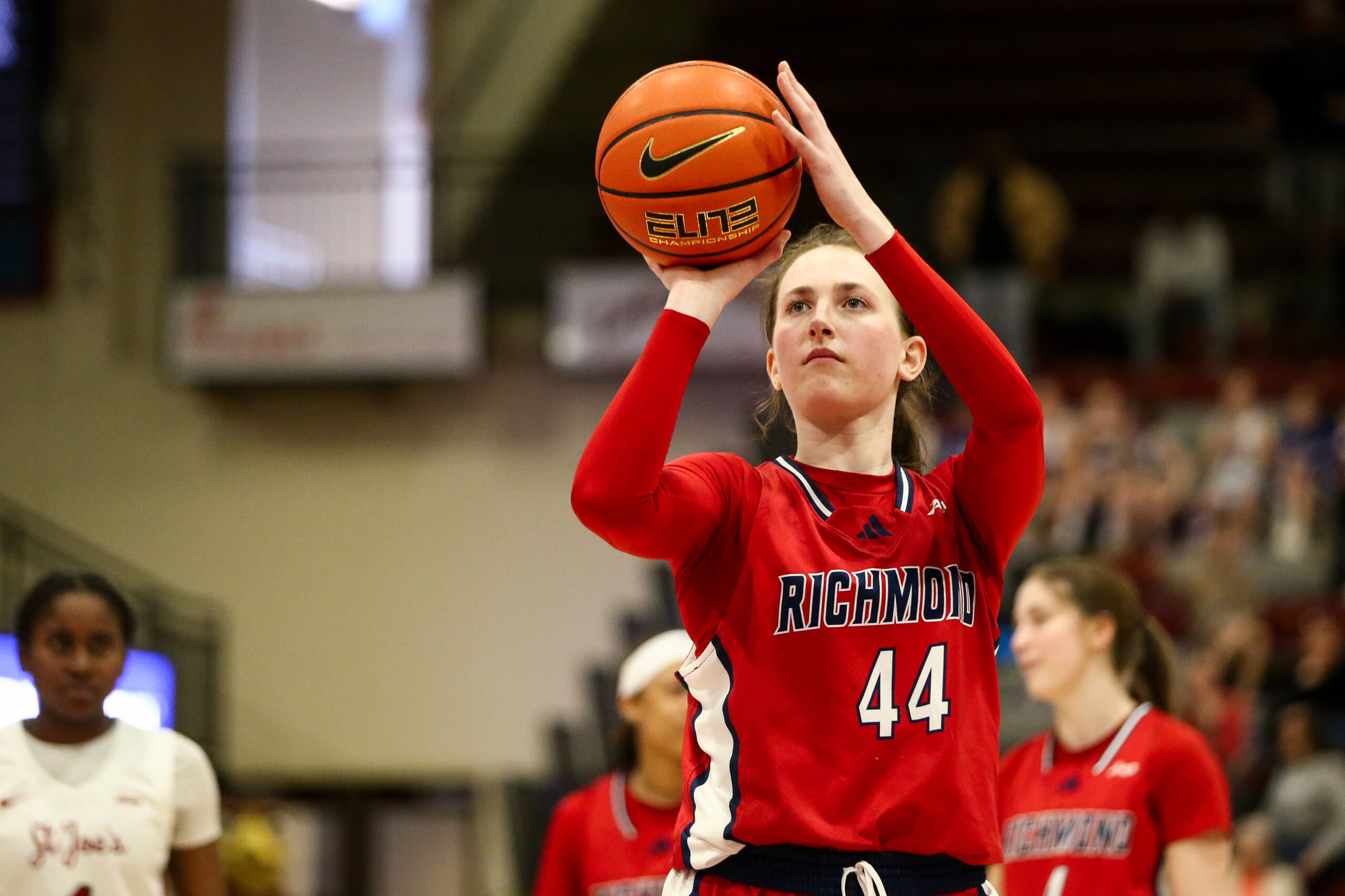
    Doogan, a graduate of Cardinal O’Hara, scored a game-high 35 points to lead Richmond past local Atlantic 10 rival St. Joseph’s, 72-61, at Hagan Arena in what was the final regular-season game for the Hawks.

    It was the third time Doogan, the reigning A-10 Player of the Year, has scored 30 or more points this season for Richmond (25-6, 15-3 A-10).

    Saturday was senior day for St. Joe’s (19-10, 10-8), which honored its two senior players, forward Faith Stinson and Emirson Devenie. Stinson scored eight points, while Devenie logged four minutes.

    Statistical leaders

    Gabby Casey, the Hawks’ leading scorer, did not play due to an injury.

    With Casey sidelined, Rhian Stokes led the Hawks with 15 points and went 6 of 6 from the free-throw line. Kaylinn Bethea and Emily Knouse, both freshman guards, added 12 apiece off the bench.

    Hawks guard Emily Knouse finished with 12 points off the bench on Saturday.

    Bethea was 4 of 5 from the field, while Knouse hit four three-pointers as St. Joseph’s tried to mount a fourth-quarter comeback.

    “Just to see both of them put up numbers today was really awesome,” said Hawks coach Cindy Griffin. “It’s just important. We need to have a punch off the bench.”

    Doogan led Richmond with her second-best scoring performance of the season, pouring in 35 points on 9-for-16 shooting. The senior forward made all 14 free throws.

    Spiders scuttle away

    After taking a six-point lead into halftime, Richmond began the third quarter on an 11-4 run to build its lead to 13. The Spiders had a 49-35 lead, their largest of the game, with 1 minute, 49 seconds to play in the third quarter.

    But St. Joe’s mounted a comeback in the fourth behind a three-point barrage from Knouse.

    Knouse knocked down 4 of 8 three-pointers in the fourth quarter, including a three from the left wing that cut Richmond’s lead to six with 4:38 remaining.

    Richmond forward Maggie Doogan finished with 35 points, her second-best scoring performance of the season.

    But Doogan kept the Hawks at bay with a 12-point quarter of her own. Doogan hit seven foul shots in the final quarter to seal a win for the Spiders.

    “I thought they all really stepped up today, and they needed to,” Griffin said. “We just needed a little bit more.”

    Tournament time

    St. Joe’s finished its season tied with La Salle for the fifth-best record in the A-10 at 10-8.

    Thanks to two regular-season wins over the Explorers, the Hawks hold the head-to-head tiebreaker and will enter the A-10 tournament as the No. 5 seed.

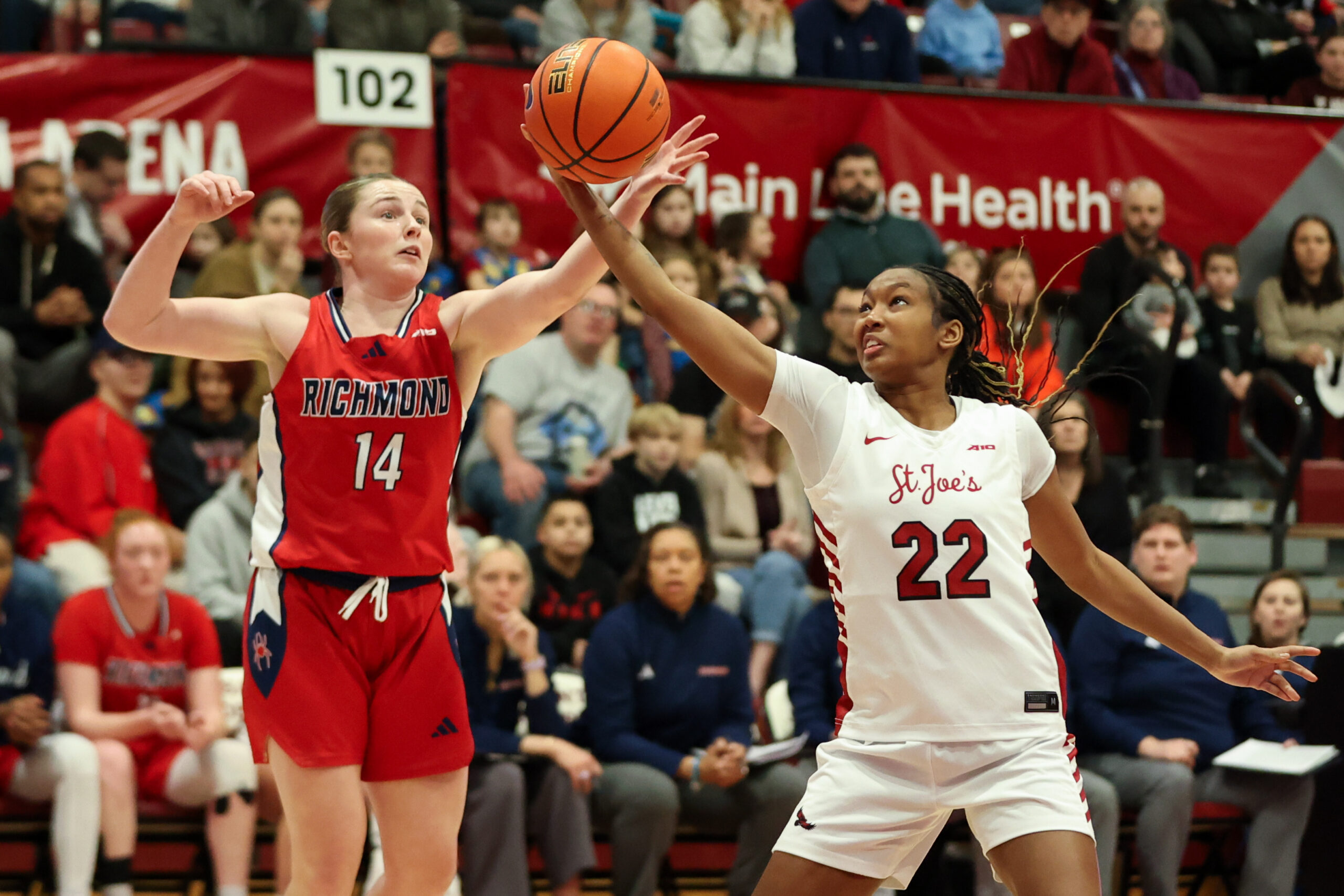
    Richmond guard Ally Sweeney (14) and St. Joe’s guard Kaylinn Bethea (22) reach for the ball on Saturday.

    “I like where we are, and it’s a new season,” Griffin said. “It doesn’t matter what your record is, who you beat, who you didn’t beat. It’s a new season, and I think it’s a good place to be.”

    St. Joe’s will have a bye in the tournament’s first round, which consists of two games between the bottom four teams.

    The Hawks will face the winner of a first-round game between Duquesne and Virginia Commonwealth in the second round on Thursday (1:30 p.m., ESPN+). The A-10 tournament will begin on Wednesday at the Henrico Sports & Events Center in Henrico, Va.

  • Penn State’s Dan Barefoot came late to skeleton, but it was worth the wait

    Penn State’s Dan Barefoot came late to skeleton, but it was worth the wait

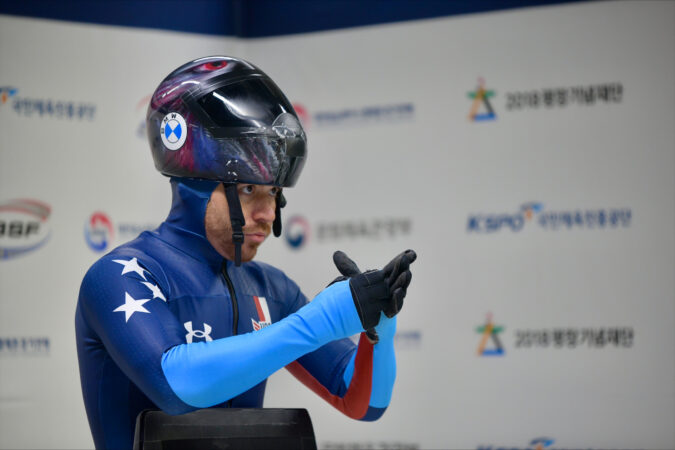
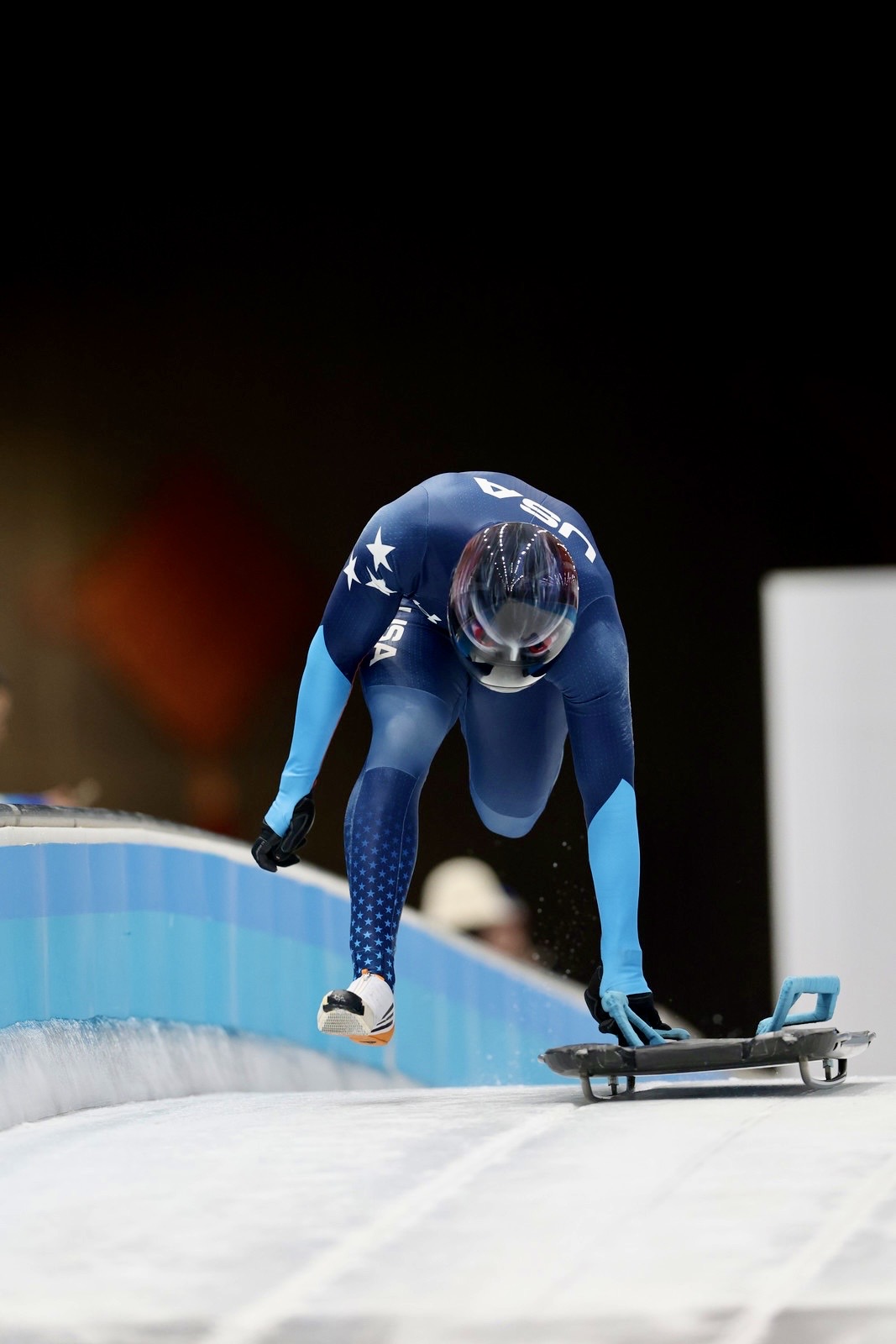
    Penn State alumnus Dan Barefoot adjusted to a new full-time career when a winter in West Chester, Pa., left him searching for something more. A Google search at age 26 introduced him to skeleton, a sport he would quietly pursue before it carried him to the Olympic stage.

    The 2026 Milan-Cortina Winter Games were Barefoot’s first time competing at the Olympics, and it was an unprecedented road. He had recently graduated from an intensive five-year landscape architecture program, often resulting in him spending six to eight hours in the studio per day. The transition to post-graduate life in West Chester provided Barefoot with more free time, leading to his discovery of skeleton.

    “I started looking up winter sports, and thank you to bobsled for being alphabetically at the top. I clicked on that, and I read about it, and I was like, ‘Man, I think I could try out for this,’” Barefoot said.

    And what began as curiosity quickly became a personal challenge, one he chose to pursue quietly.

    “I wasn’t telling anybody,” said Barefoot, who competed in the first week of the Games but did not medal. “I wasn’t telling my friends, co-workers, or family.”

    Much of what Barefoot relied on in skeleton, he traces back to the habits formed long before he ever touched a sled. The sport rewards sustained focus after the visible action ends, traits he learned through years of detail-heavy academic work.

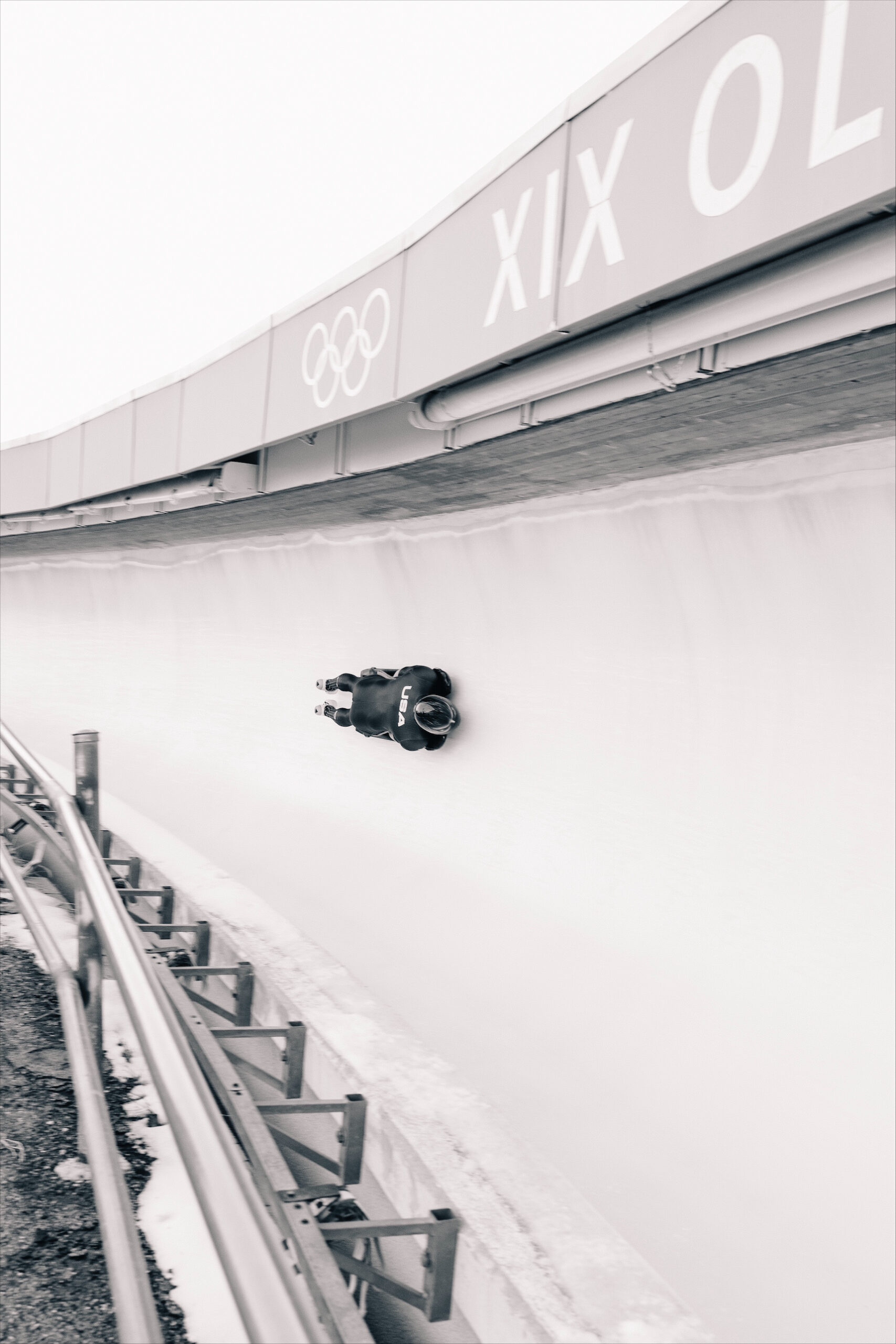
    “You have to have attention to detail and interest the whole time,” said Barefoot, a native of Johnstown, Pa. “We only go down the track for like a minute, but to get good at that, it’s like hours and hours and hours of mentally doing it. Pretending you’re doing it, lying on a sled, watching YouTube videos from past races, working on your equipment, which is way more time than a lot of people prefer.”

    This progress brought unexpected pressures, and confidence became something to manage as carefully as speed or technique.

    “You can quickly lose confidence in what you’re doing,” Barefoot said. “You can be the same guy, no issues physically, exactly the same, and play completely different from day to day, because it’s all in your head. So it’s balancing all those small pieces [that] is actually the hardest thing.”

    As his training progressed, the idea became reality. Barefoot earned enough points to qualify for a tryout at the Olympic Training Center in Lake Placid, N.Y., marking the first moment he felt compelled to share what he had been working toward.

    “I just witnessed, I encouraged, and I was amazed the whole time,” said David, Dan’s brother, on his journey toward the Olympics.

    “We only go down the track for like a minute, but to get good at that, it’s like hours and hours and hours of mentally doing it,” Dan Barefoot said.

    For much of his career, that balance was driven internally. But this season, Barefoot noticed a change.

    “This year, the external motivation has ramped up, and I wasn’t really expecting it,” he said. “When I showed up here, it felt more like a win for my community than it was for me.”

    Penn State overseas

    While his family played a central role, the support behind Barefoot extended far beyond them. Two Penn State students express what it means to have Dan Barefoot compete in the Olympics

    “As part of the Penn State community, sports are a huge part of our campus culture. It’s truly inspiring to see an alum compete in the Olympics and watch the community rally in support.” shared Lucas Conlon, a senior. “ It’s thrilling to see a Nittany Lion on the big screen.”

    Nick Harrison, a junior, added “It’s so amazing to see Penn State represented 4,000 miles away from home. I do triathlons, so seeing Dan accomplish this after college is really motivating.”

    For Barefoot, those reactions underscored his unconventional path. He didn’t discover skeleton until after college, a fact he says he hopes resonates with people watching from afar.

    “Oh, I love that,” Barefoot said. “I didn’t even try out until I was 26. It’s never too late.”

    The support extends further. Barefoot’s social media has been filled with messages from co-workers, friends, and even celebrities, including Jason Kelce and Flavor Flav.

    “We’re talking to celebrities, people that you watch growing up, people you see on TV and now they’re dapping you up every time you see them,” Barefoot said.

    Penn State, Dan Barefoot’s alma mater, was well-represented at these Games to watch him compete.

    Beyond the Olympics, Barefoot said he is looking forward to rebalancing time between his work and the people closest to him. The conversation eventually turned lighter, touching on his last name and the unexpected ways it has followed him onto a much larger stage.

    “I feel like it’s one of those names that really would connect,” Barefoot said. “I’ve reached out to a couple partnerships. It’d be awesome.”

    The idea made him laugh, but it also reflected how much his world has expanded through a few minutes of competition built on years of preparation.

    Barefoot arrived at the Olympics expecting to compete only in the men’s skeleton event, where he finished 20th with a combined time of 3 minutes, 49.86 seconds. The result marked the culmination of a journey that began quietly years earlier, far from Olympic ice.

    Then, a day before the mixed skeleton event, his Games unexpectedly continued.

    Paired with Kelly Curtis, Barefoot returned to the track for the mixed competition, where each athlete completed one run and their times were combined. The duo finished 10th, with Curtis recording a 1:01.30 and Barefoot posting a 1:00.13 for Team USA.

    For Barefoot, the extra run offered another marker of how far an unplanned path had taken him.

  • How Shane Blakeney went from deep reserve to Drexel’s leading scorer

    How Shane Blakeney went from deep reserve to Drexel’s leading scorer

    As an incoming freshman at Drexel, Shane Blakeney showcased his potential halfway across the world.

    In the summer of 2022, Drexel played a mix of professional and club teams in Italy as part of an international tournament. In one of those games, Dragons center Garfield Turner found himself under the rim to grab an easy put-back shot. Then, a lengthy freshman swooped in.

    “Out of nowhere, I just see this long arm come behind me and just punch it [in],” Turner said, laughing. “We were joking about that for a little bit. It was his first time Shane dunked on somebody in college.”

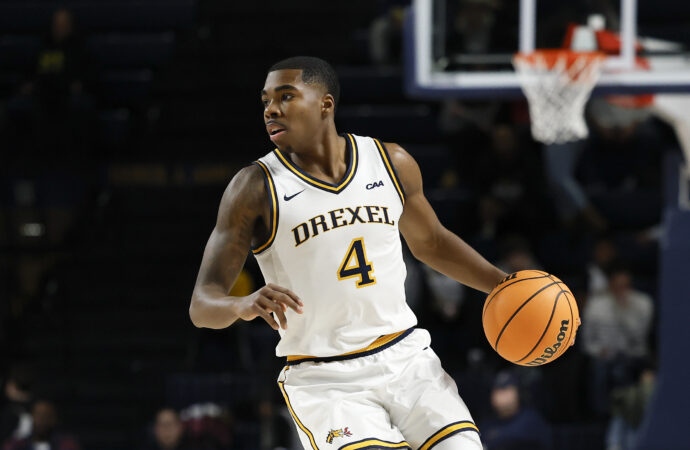
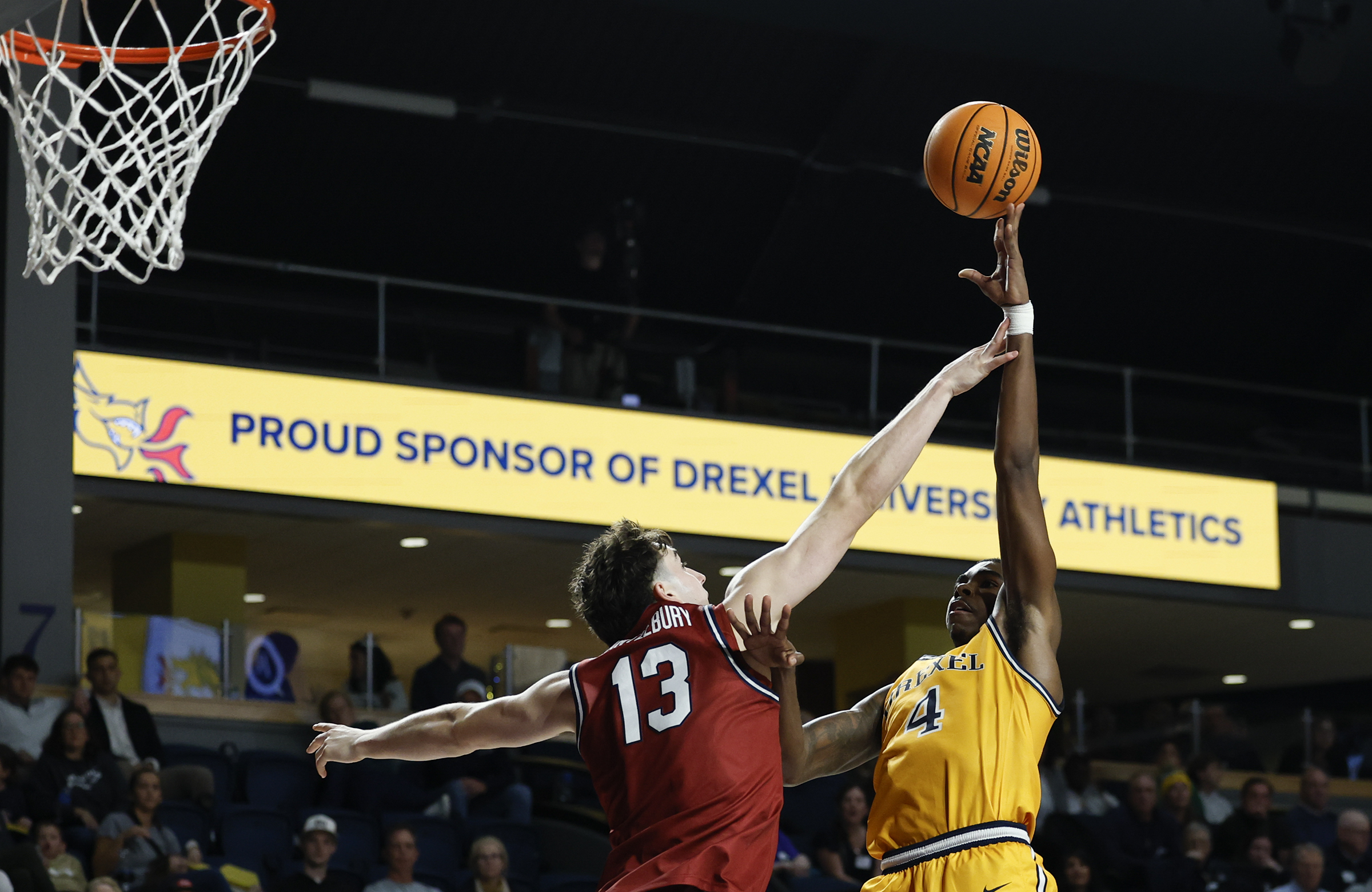
    Now, the 6-foot-5, 200 pound junior is leading Drexel (16-14, 10-7 CAA) with a team-high 14.5 points per game, while spearheading the Dragons defense. Drexel is allowing the fewest points per game (65.1) in the conference, and Blakeney has come away with 22 blocks and 35 steals.

    Drexel guard Shane Blakeney is averaging a team-high 14.5 points this season.

    When he first arrived on campus, the guard was 25 pounds lighter. He struggled to get on the court due to his slender frame and had a few lingering injuries, so he was granted a redshirt year.

    “Between high school and college, I went through some injuries, which was rough and kind of put me out of touch with basketball,” Blakeney said. “I hadn’t [gone] a year without basketball ever since I started, so I think transitioning back in that redshirt freshman year was difficult.”

    Coach Zach Spiker added: “He’s playing 38 minutes a night. A guy that wasn’t able to physically get on the floor. Now we can’t get him off.”

    ‘Committed to the work’

    Growing up in Rock Hill, S.C., Blakeney’s parents introduced him to several sports. He played soccer and football — attempted baseball, though he “wasn’t a big fan” — and swam competitively.

    However, basketball was the sport with which his family was most connected.

    Blakeney’s uncle, Charles Kirkland, was a standout at Cheyney University and played professionally in the Netherlands for nearly a decade. His cousin is Jazian Gortman, a former five-star recruit in the Overtime Elite League who played on the Dallas Mavericks and Oklahoma City Thunder’s G League affiliates.

    At 7, Blakeney started practicing with Bobby “ICE” Isom, a South Carolina-based basketball trainer, and stayed with him throughout high school. When Drexel is on a break, Blakeney will drop by to work with Isom.

    “[Blakeney] was committed to the work and never complained about it either,” Isom said. “I knew he was going to be a special talent at a young age.”

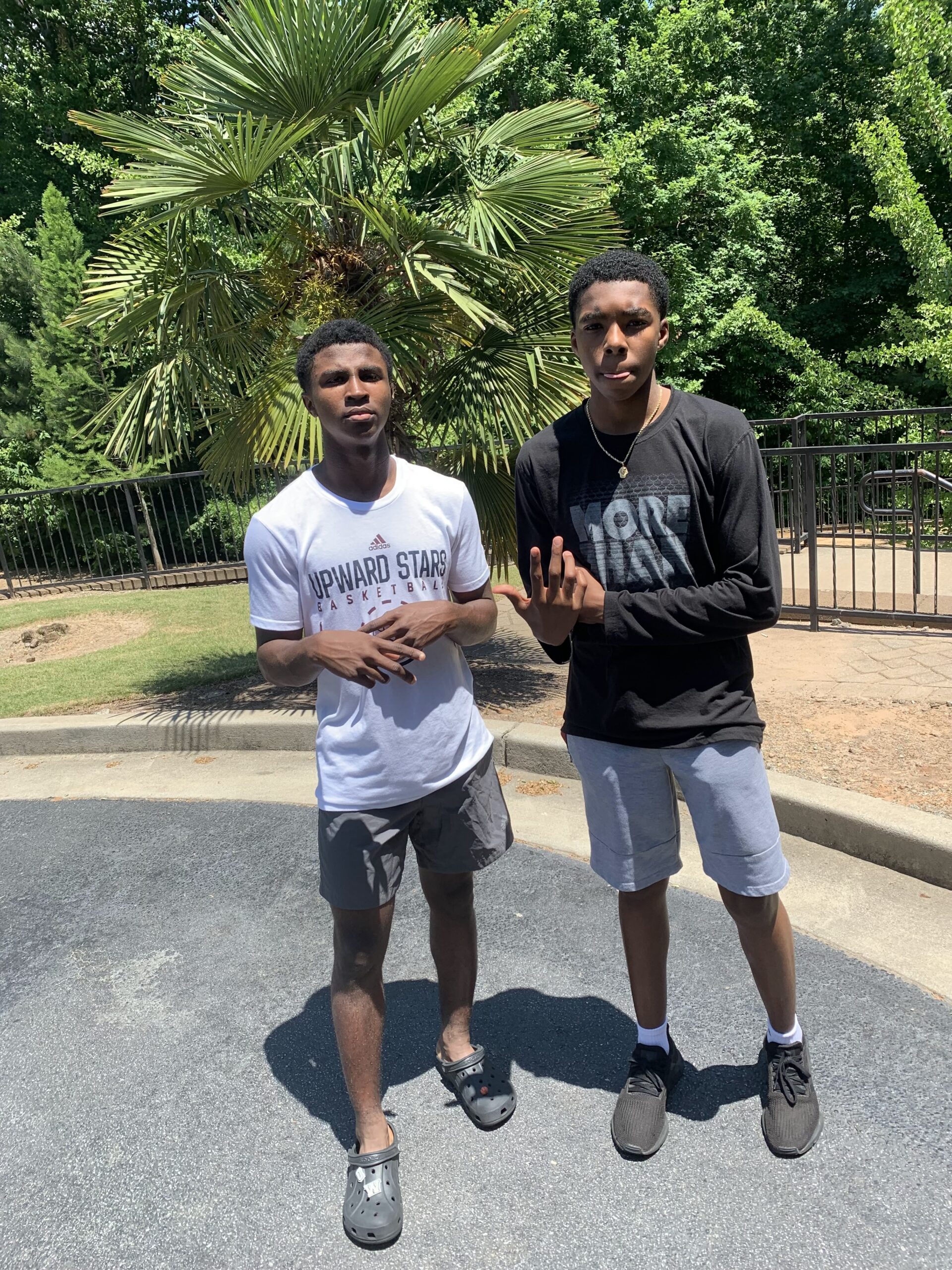
    Blakeney started AAU basketball in third grade, and at age 15 jumped to Upward Stars Southeast, a premier travel team on the Adidas Circuit. There, he met Dylan Williams, now a 5-11 senior guard at Penn.

    Penn’s Dylan Williams and Drexel’s Shane Blakeney played AAU basketball together in South Carolina.

    When Williams was looking to transfer to Penn from Triton College in 2023, his former teammate was one of the first peoplehe called.

    “The Shane then is a different type of build [compared to] now,” Williams said. “He’s more cut, taller, way taller. … We were like the same height [then] because I really haven’t grown since.”

    Isom added: “I think encouragement was what [Blakeney] needed most while he was a scrawny, short kid heading into high school, trying to find his way in the world of basketball.”

    At Legion Collegiate Academy, Blakeney played four years on varsity and surpassed 1,000 career points.

    “South Carolina [basketball] is pretty similar to Philly,” Blakeney said. “I would say probably a little bit more skilled, but toughness wise, you got a lot of athletes down south that bump and bang. They all play football. It’s physical, and if you can’t be physical, you won’t really last.”

    Spiker also has the same mentality. During a high school practice that college coaches came to visit, Blakeney slugged at the back of sprint lines. The Drexel coach took notice.

    “[Spiker] pulled me into the office afterward and kind of chewed me out,” Blakeney said. “A lot of the people would be like, ‘Oh, this coach is tripping.’ But our family was like, ‘Hold on, this is our values.’”

    ‘Never a dull moment’

    Turner nicknamed Blakeney “motor mouth” because he’s always talking.

    Drexel guard Kevon Vanderhorst described his teammate as a “hilarious dude,” saying there is “never a dull moment with him.” While Spiker believes Blakeney’s personality is “refreshing and genuine.”

    “I think I’m more of a bubbly personality than maybe some other teammates,” Blakeney said. “I like seeing that side come out of them. Talking, having fun, laughing is kind of what life’s experiences are about. … I’ve always been kind of a silly guy, so I had to learn to tone it down in class growing up.”

    On the court, Blakeney is no joke.

    “There’s two different people on the court and off the court,” said Vanderhorst. “I’d say off the court, Shane is funny, he’s very outgoing. On the court, Shane is straight business. Not a guy with a lot of jokes, and not a guy that’s going to take a lot of jokes.”

    Blakeney has emerged on Drexel’s roster. He cracked the rotation in 2023, averaging 5.5 minutes. Then, he stepped into the team’s sixth man role, notching an average of 7.6 points last season.

    “I had to learn to start taking a role of support and doing what you need to do to win,” Blakeney said. “And you don’t do that in high school. High school, you’re the man everybody loves. You go score points and look cool.”

    Now the leader, Blakeney will be expected to carry his team in the conference tournament. Drexel will visit Hofstra on Tuesday (7 p.m., Fubo) in the final game of the regular season. The Dragons are in fourth place in the CAA, and if they can stay in the top four, they will receive a bye in the 13-team tournament.

    “Just seeing the work [Blakeney’s] put in, seeing his growth since we’ve been here, little skinny Shane when we first got here to now our top scorer — it’s great,” Turner said.

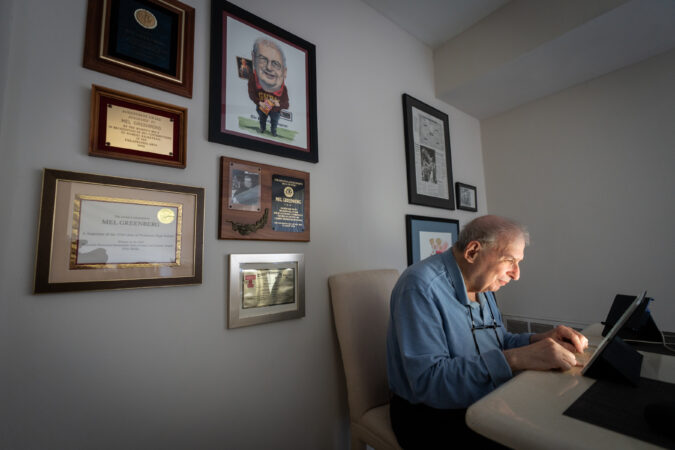
  • The making of ‘the Guru’: How creating the AP women’s basketball poll changed Mel Greenberg’s life

    The making of ‘the Guru’: How creating the AP women’s basketball poll changed Mel Greenberg’s life

    These days, when traveling for WNBA coverage or big women’s college basketball games, a conversation with the Uber or Lyft driver may touch on the event.

    To my surprise the dialogue often extends to my 40-plus years at The Inquirer, which culminated in the spring of 2010. The driver, especially if they’re knowledgeable of sports, may ask, what is your name?

    When given, the immediate response might be Oh, I’ve read your stuff, or Yeah, I know you. You’re a legend!

    Similar discourse may occur if I’m writing the overnight roundup for my blog on my iPad in a restaurant or sports bar.

    And perhaps I shouldn’t be shocked when recognition comes up in Connecticut when covering the dynasty built by Norristown’s Geno Auriemma.

    These are moments that would not have occurred long ago.

    In fact, I might have mentioned employment at The Inquirer, but with little or no reference to women’s hoops, since those once involved with the sport were a limited sect of participants and other media, covering their own teams.

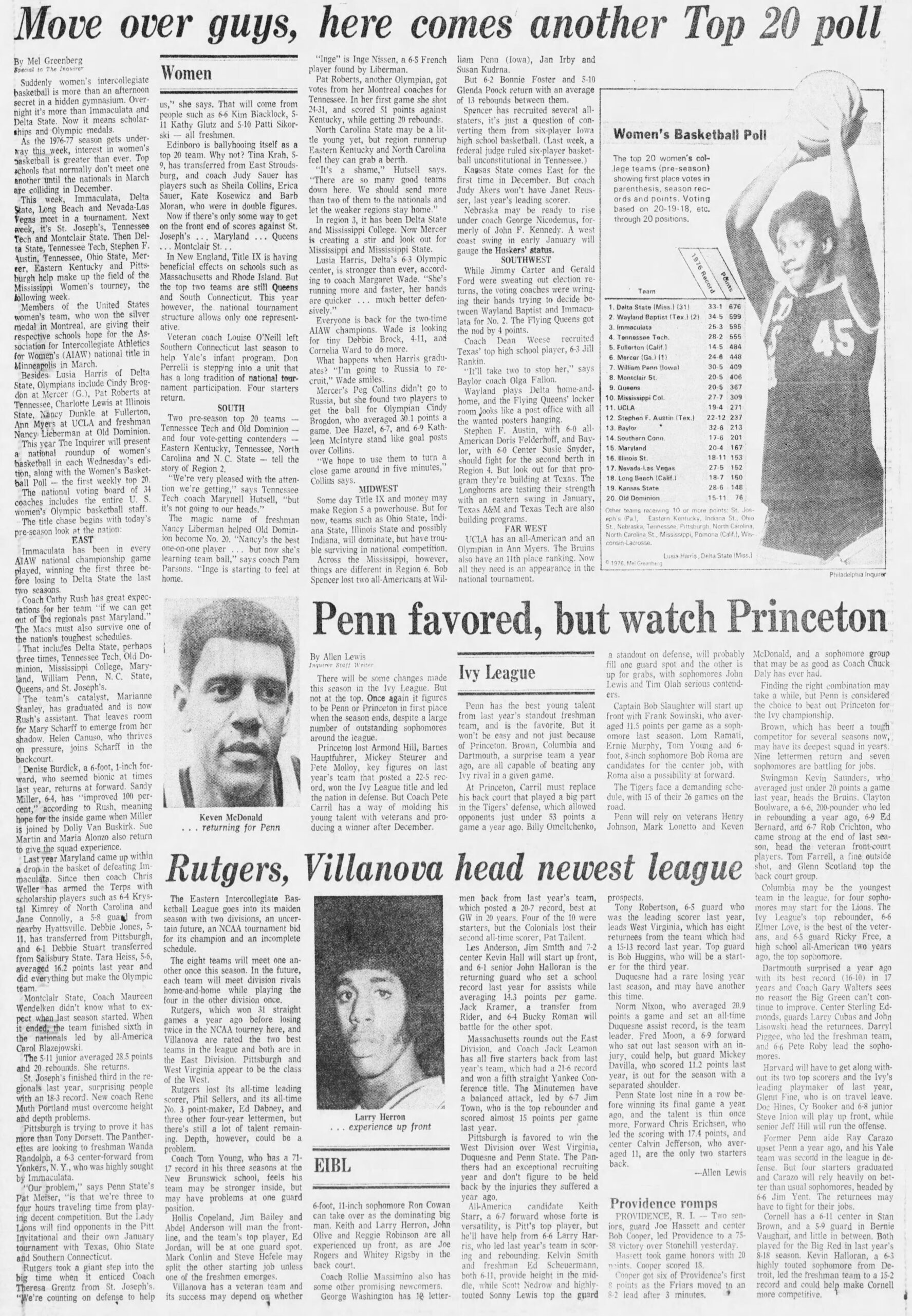
    So now it’s the 50th anniversary of the Associated Press women’s basketball poll, begun by yours truly at The Inquirer.

    Since there are now lots of years of involvement that include lots of tales along the way, many have urged me to author a book.

    There’s no book yet, but what follows are moments along the way to becoming the trip lever to a sport now heavily attended and watched by millions on TV.

    My interest in journalism in my formative years and time as a manager for the Temple men’s basketball team — in the heyday of the Big 5 when the Owls won the 1969 NIT — were backgrounds when applying for a copy boy slot at the paper down Broad Street, which a few days later turned into a promotion to an editorial clerk on the business page.

    Inquirer sportswriter Mel Greenberg in 1981.
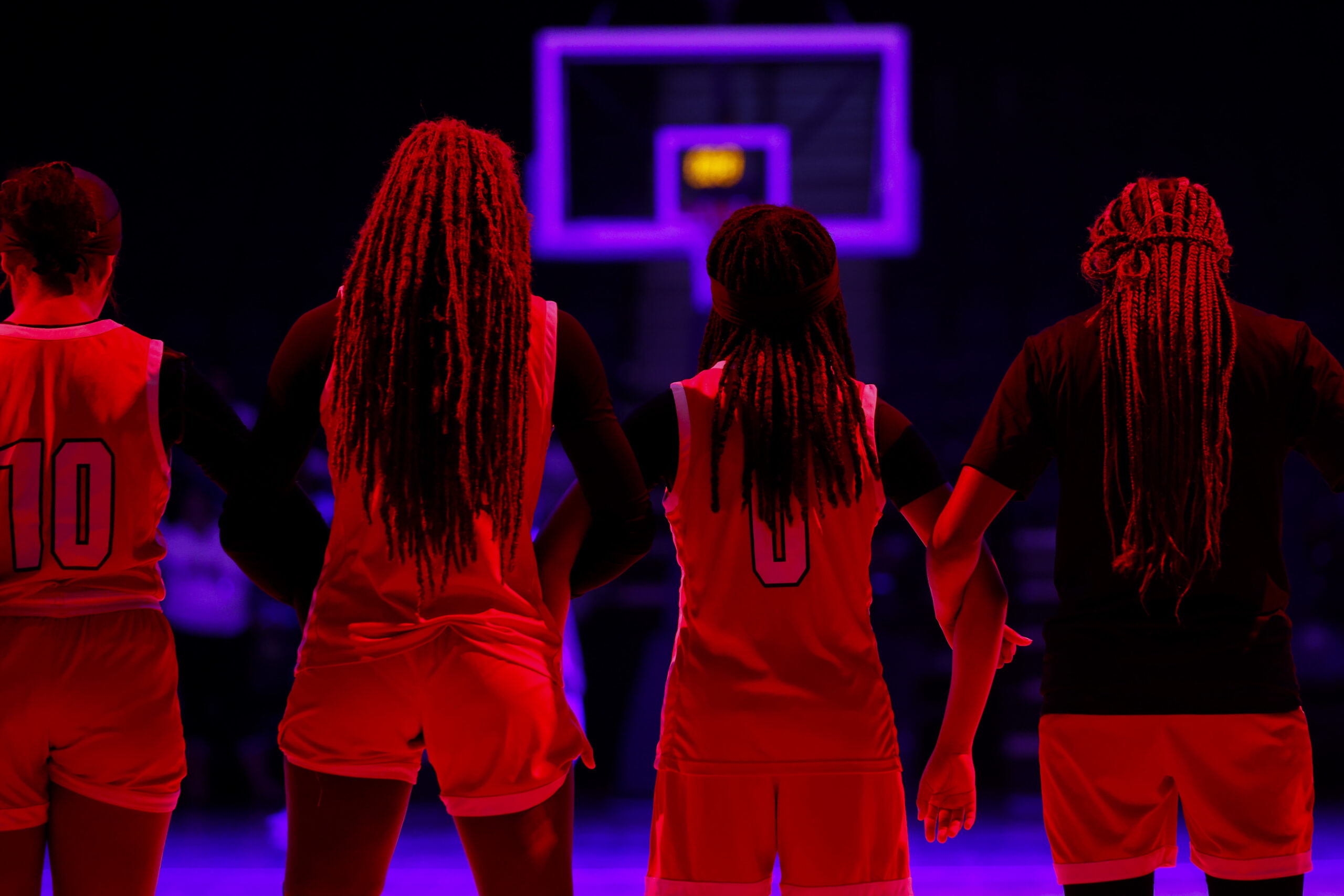
    The thought of being in sports was nonexistent then since in those days beats were held by longtime veterans.
    Now it’s the fall of 1975, and the late Jay Searcy becomes sports editor. He’d been writing a women’s column at the New York Times and was very aware of Immaculata, which was winning national titles, and he asks me to basically create the women’s beat.

    A formal role on the writing staff came much later. My “day job” was in other duties, which is its own tale.

    I used to joke with women’s basketball coaching legend C. Vivian Stringer, “I’m like you. I teach gym and coach, and all they’re interested in is make sure l’m on time in the morning for gym class.”

    But of course, pioneering a beat had its luxury.

    When time came to start the poll, I used the way presidential elections were covered on TV, making knowledgeable sources in the nine regions of the Association for Intercollegiate Athletics for Women, which governed women’s sports before the NCAA took over.

    Ed Jaworski, then the media contact for Queens College in New York, was my go-to.

    He was so thrilled in the first month of the poll that he wrote a piece for Editor & Publisher, the weekly bible for newsroom executives, that became a two-page center spread under the headline “You May Ask, What is The Greenberg Poll,” which was a stunner to The Inquirer’s bosses when the edition arrived on their desks.

    A clipping from the Sunday, November 28, 1976, edition of The Philadelphia Inquirer.

    What the poll did initially, as I said at the time, was give teams an identity. That created an early impact: The day after Texas hosted Stephen F. Austin, now a top-five contest, a call came from the Lone Star State telling of the massive crowd at the annual game.

    When I’d make calls in the early days, they’d start like, “Hi, my name is Mel Greenberg,” “Who?” “At The Philadelphia Inquirer.” That quickly evolved to a Hey, how are you doing? before I could finish my introduction.

    In the spring of 1976, Penn State was hosting the AIAW’s 16-team national finals.

    In spending hours writing a preview, I thought, If I’m going to get into this, I’m doing it for every writer coming after me who won’t go through the same agony.

    This is still in the last stages in the world of typewriters.

    I added my own top 20 and noted four key potential upsets in the first round.

    That night, a call came from State College. All four had happened.

    I thought, this is fun but if I’m going to do a poll, I need someone to blame it on — hence coaches because there wasn’t enough media to be weekly voters.

    Five weeks into that first season, I wasn’t keeping records, which caused the late N.C. State coach Kay Yow to call and lecture me, saying I’m going to be the keeper of history moving forward.

    Fortunately, a double floppy disc software program called Reflex came along. Those original files from me have migrated into thousands of lines on spreadsheets of Microsoft Excel that enable to note that this week, No. 901 in Year 50, UConn’s Auriemma passed retired Stanford coach Tara VanDerveer with 655 appearances. His Huskies have been ranked a record 622 consecutive weeks dating to preseason 1993-94, a year before their first national title season.

    Two years into the rankings, the Collegiate Sports Information Directors Association urged the AP to start running the poll, which began the relationship, with my name attached, and appearing with stories in papers across the nation.

    I once told coaches in the early days to be patient. Newsroom executives are getting younger and have daughters in athletics.

    Things took a dramatic turn internally when Gene Foreman, our No. 2 in the newsroom, said his daughter, a swimmer at Virginia, also was going to be a trainer on the women’s basketball team, where she and North Philly native Dawn Staley became friends.

    Soon, the nicknames started, mainly Mr. Women’s Basketball, but soon enough to Women’s Hoops Guru, the name of my blog, and just when in person, simply Guru.

    I recently noted when accepting a special achievement award from the Philadelphia Sports Writers Association at the annual dinner, like Woody Allen in the movie Zelig being at many moments in world history, l’m the equivalent in women’s hoops.

    I helped in the AIAW evolve the tournament into a Final Four format for better media and public understanding; together with retired St. Joseph’s coach Jim Foster and retired Villanova coach Harry Perretta, helped formalize women’s Big 5 play; saw the launch of ESPN and the WNBA; and remained deeply involved in the coming of NCAA women’s competition.

    Players I’ve covered have become coaches such as Villanova’s Denise Dillon, St. Joe’s Cindy Griffin, and Drexel’s Amy Mallon, while younger media types have gravitated, too.

    Yes, there’s much more to tell, but the word limit, even for the internet, is approaching, and so is the deadline.

    In later years the many awards have been nice, but it’s the friendships that have made it all worthwhile.

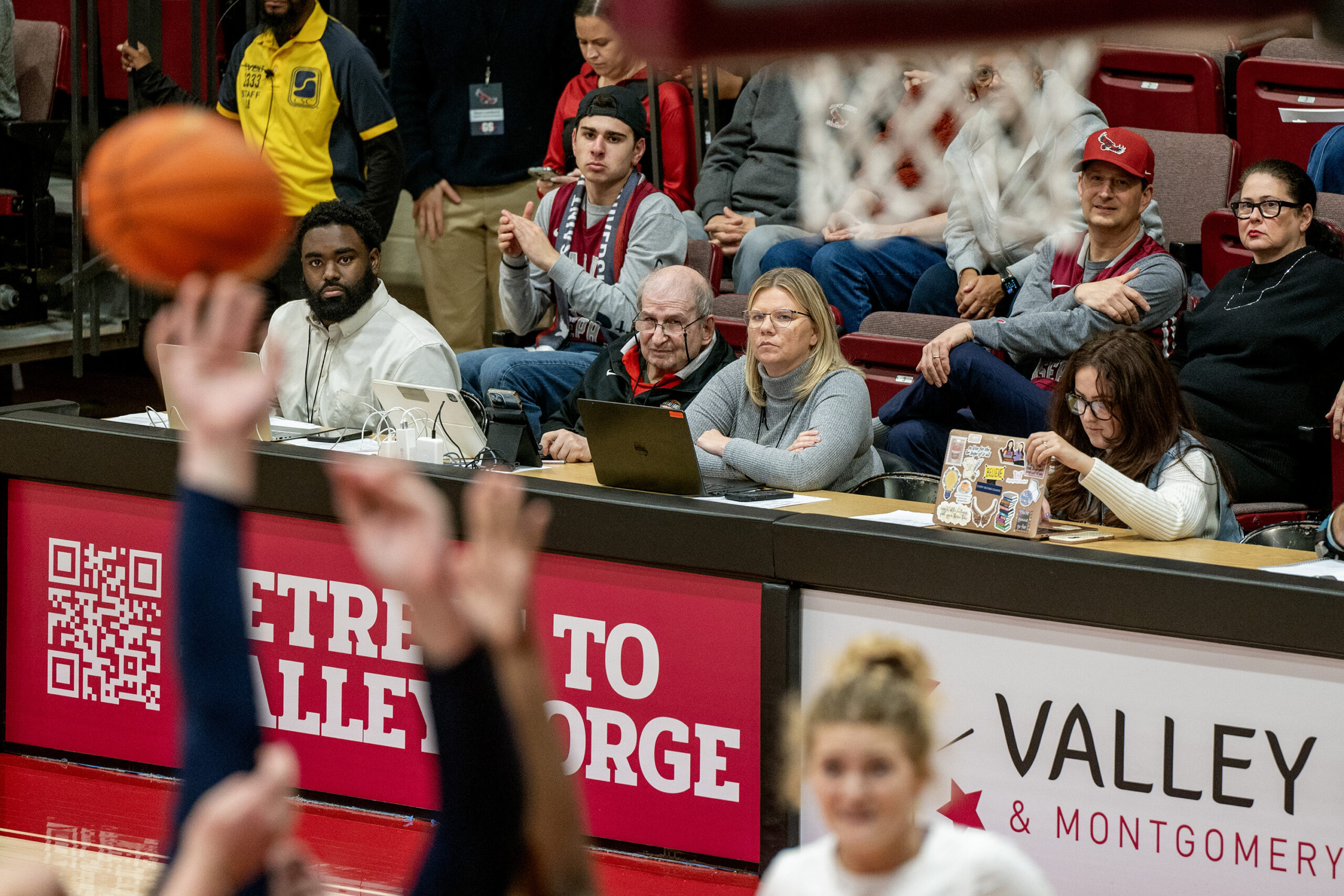
    Former Inquirer sportswriter Mel Greenberg (center) works the St. Joseph’s-Penn State women’s basketball game on Nov. 16. Current Inquirer Sixers beat reporter Gina Mizell is at right.
  • The Big Picture: High school hoops dynasties, Phillies fans in Clearwater, and our best sports photos of the week

    The Big Picture: High school hoops dynasties, Phillies fans in Clearwater, and our best sports photos of the week

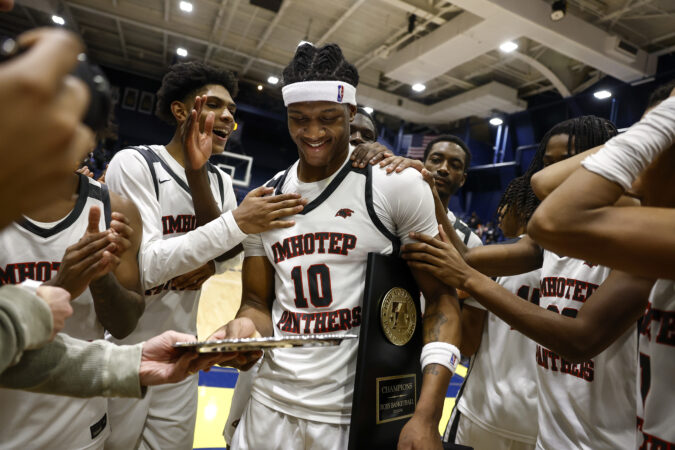
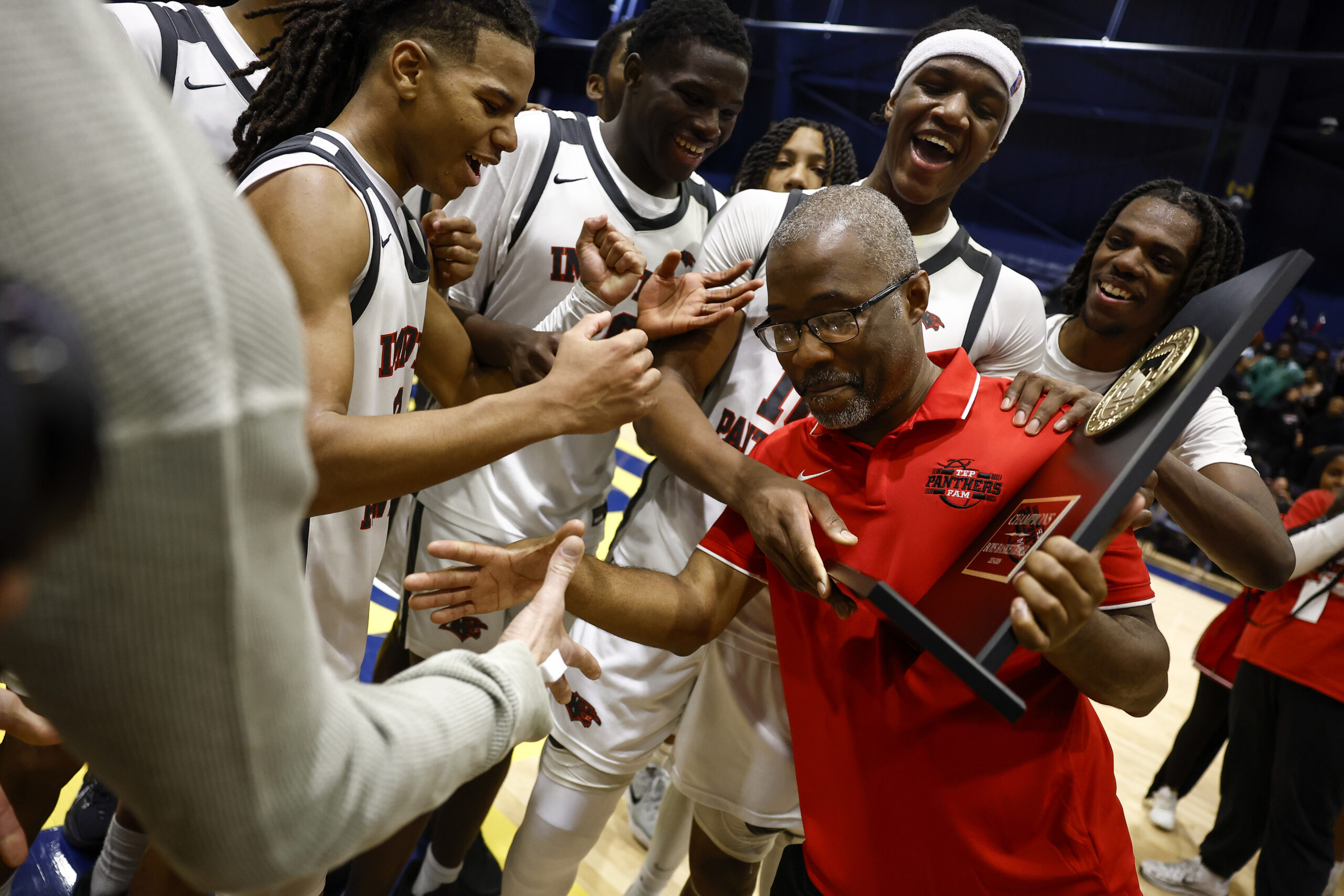
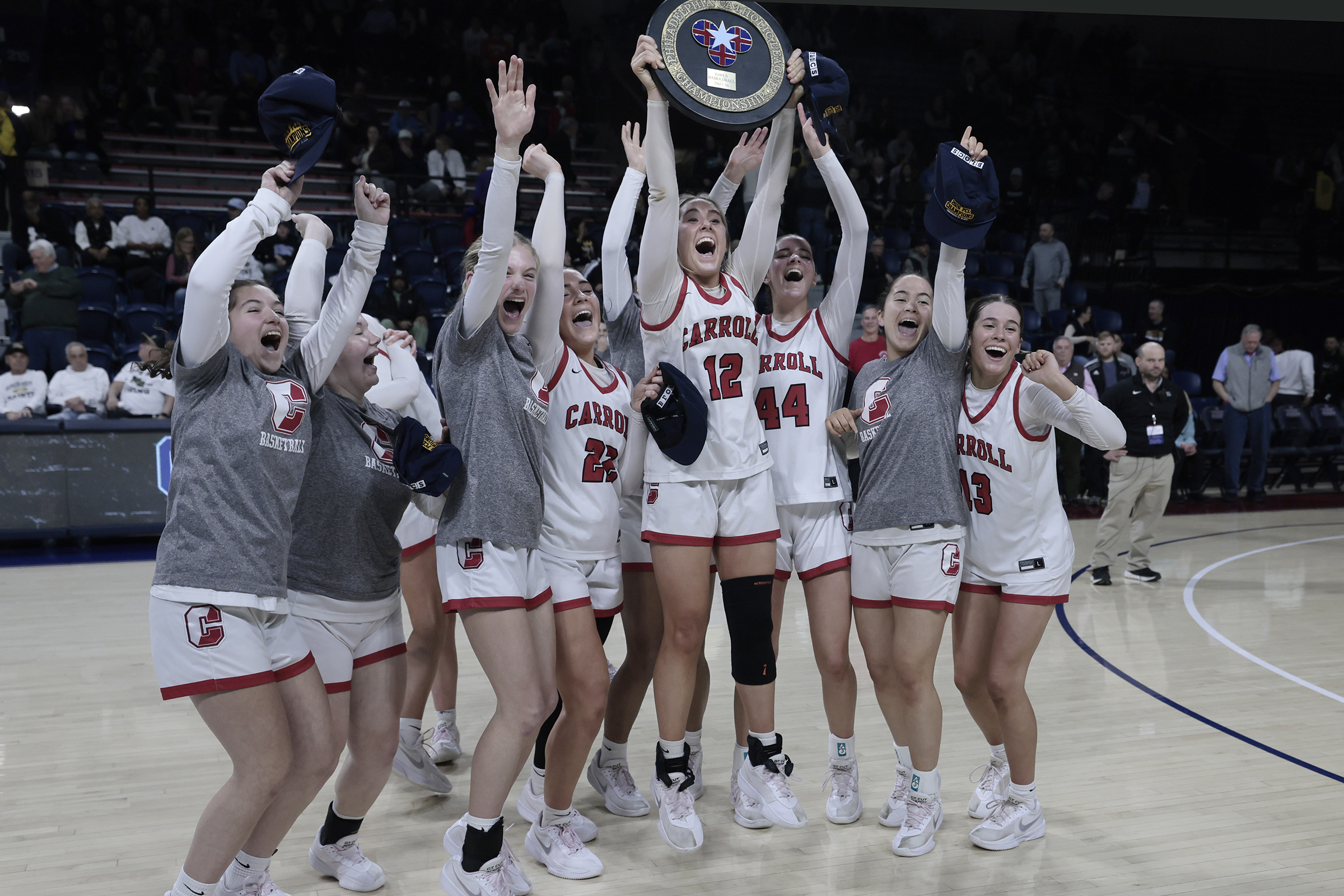
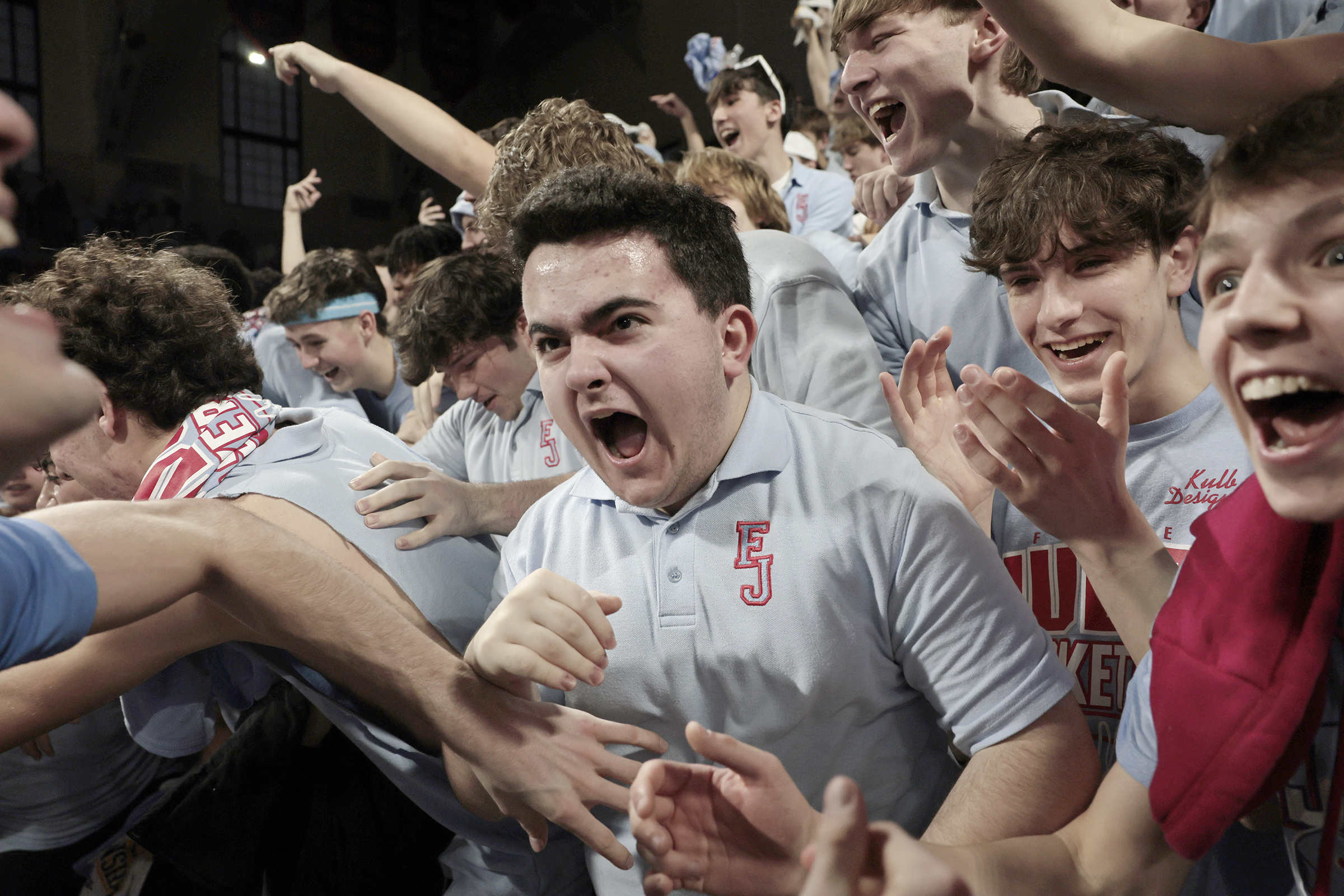
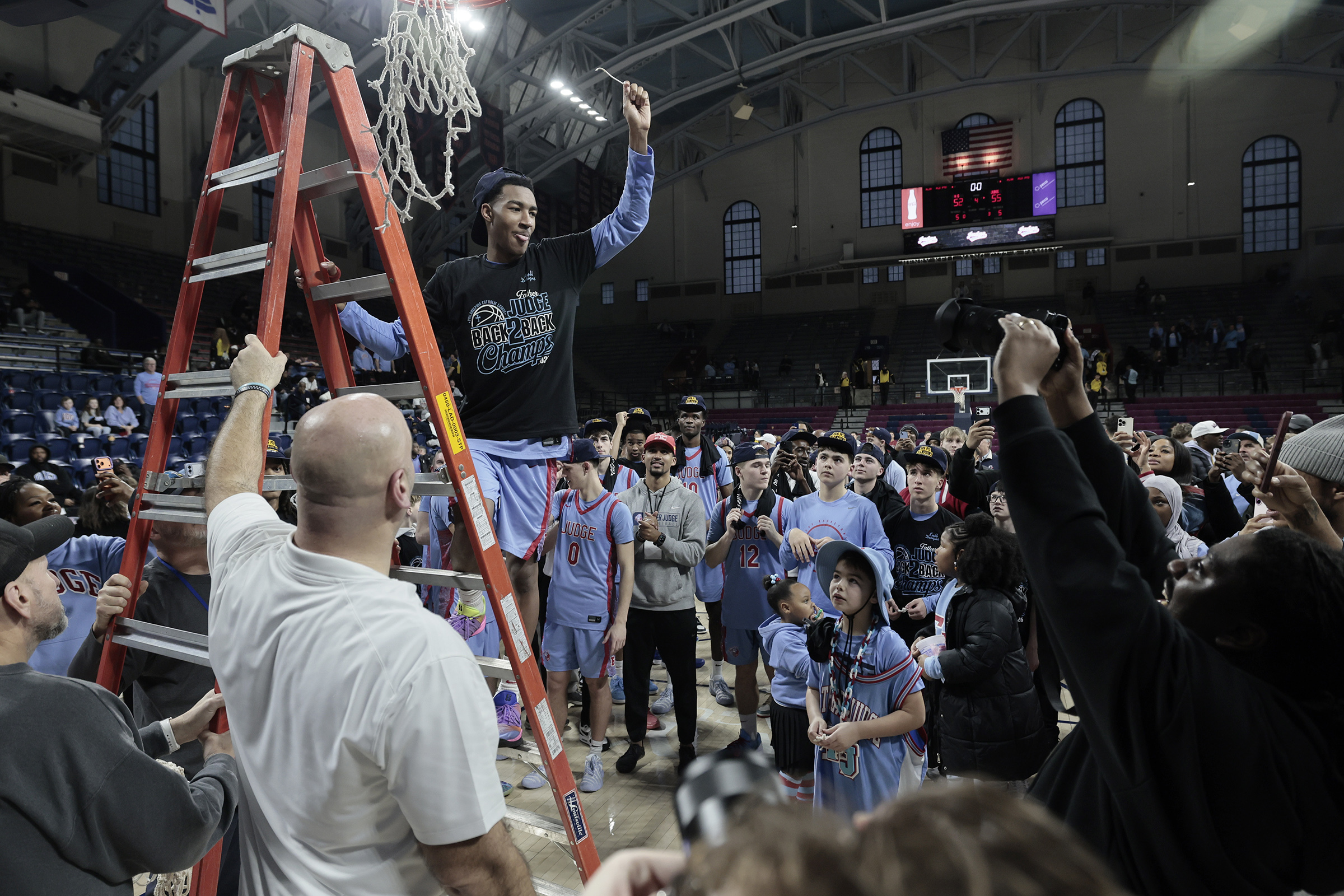
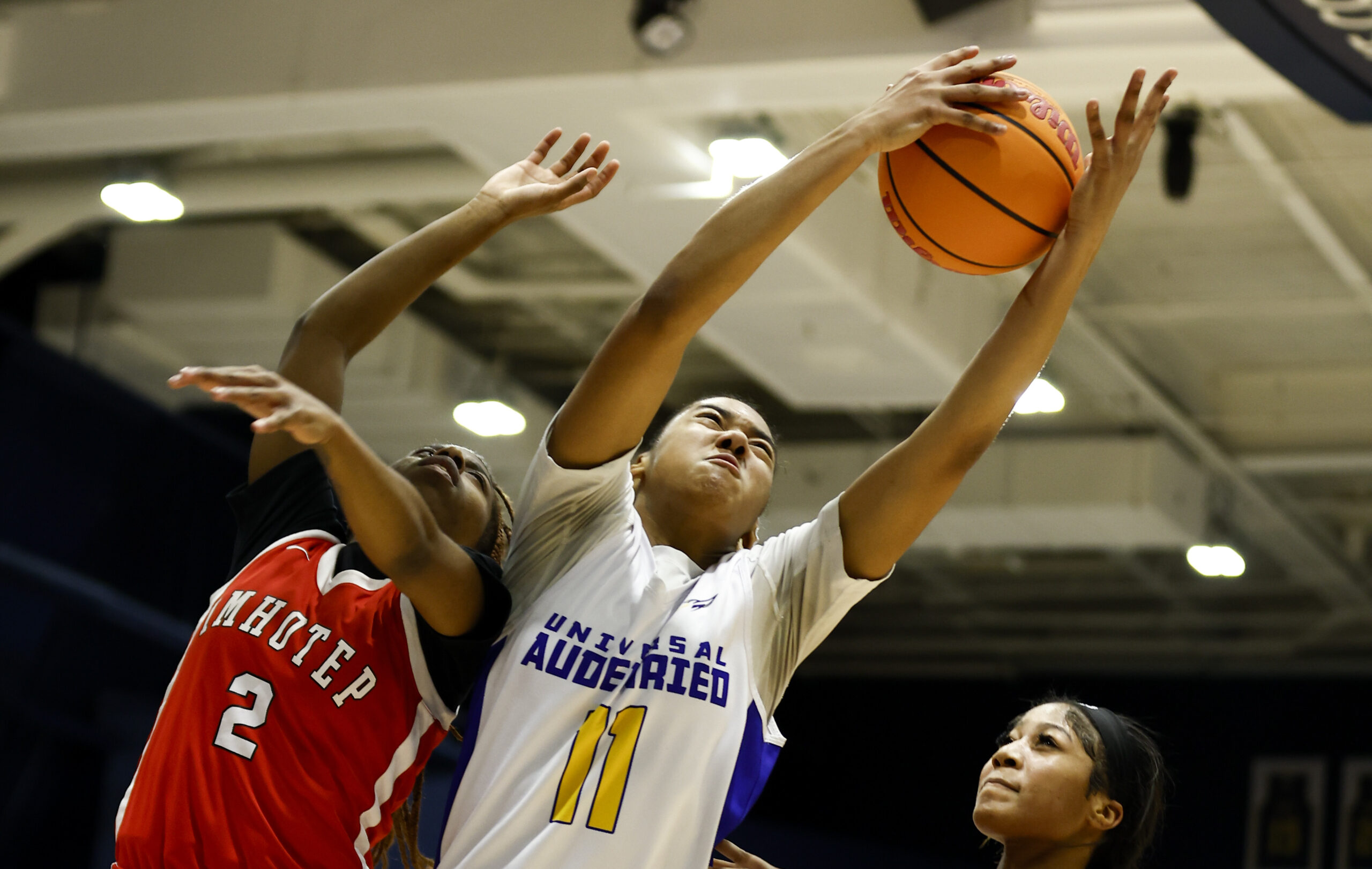
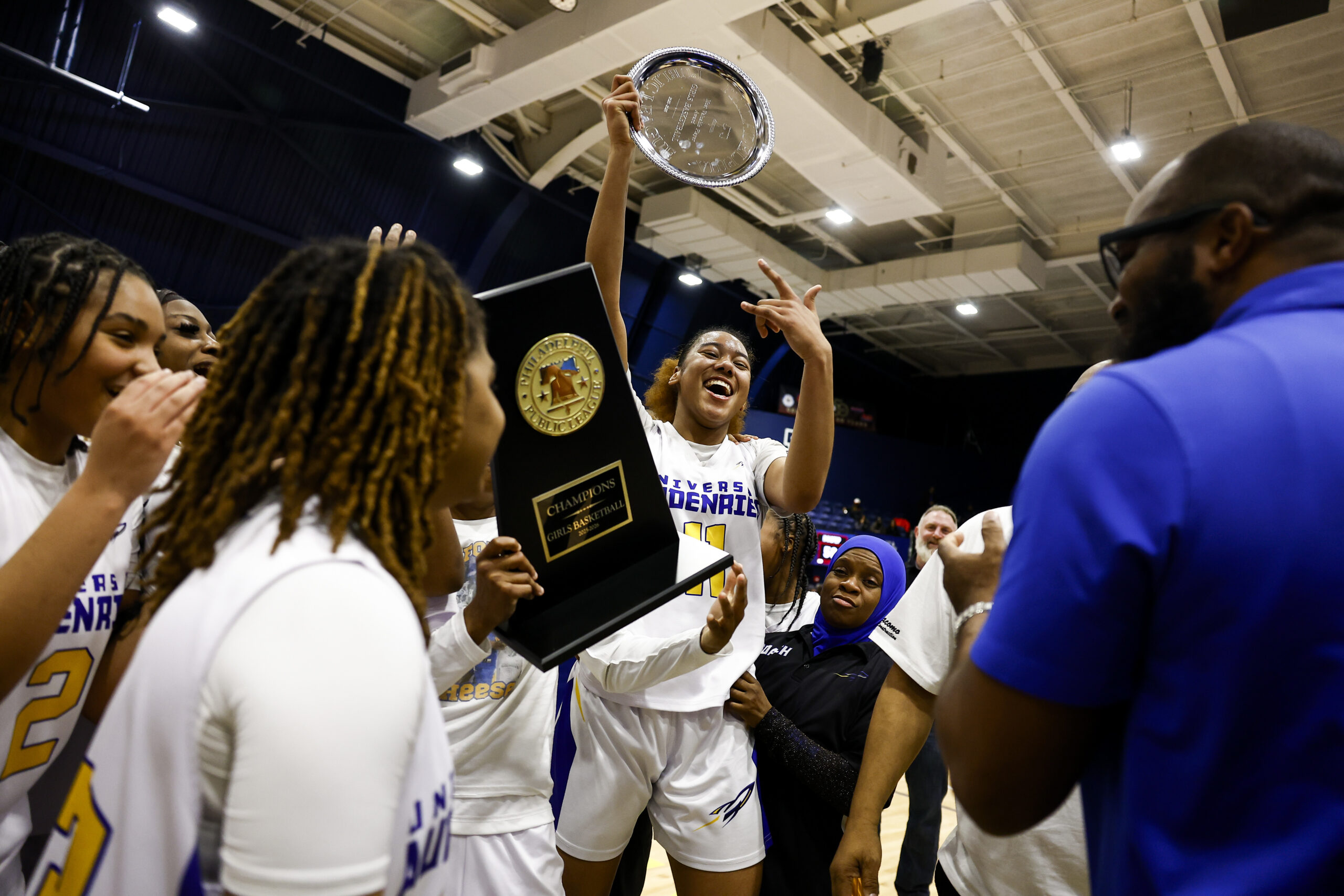
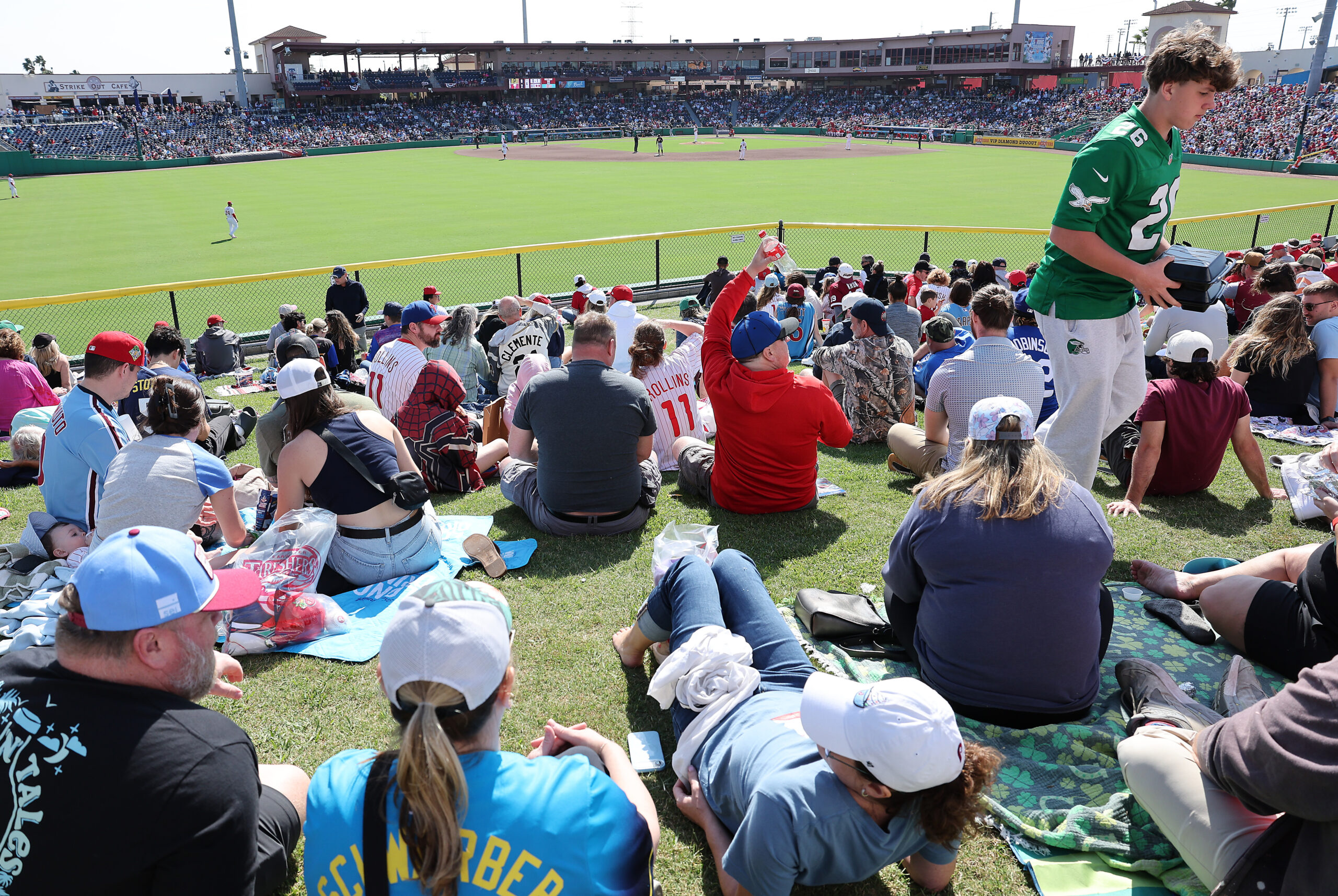
    Each Friday, Inquirer photo editors pick the best Philly sports images from the last seven days. This week, the Philadelphia Public and Catholic League basketball playoffs were decided, with three of the four champions — Imhotep and Father Judge on the boys’ side and Audenried on the girls’ — picking up where they left off last year. In the case of Imhotep, it was the sixth straight Public League title, while Audenried captured its fourth. Meanwhile, the Archbishop Carroll girls won their first title since 2019. Down at spring training in Clearwater, the Phillies’ Grapefruit League schedule began, giving fans their first taste of baseball in more than four months.

    Imhotep Institute Charter players celebrate their sixth straight Philadelphia Public League boys basketball title with head coach Andre Noble (red shirt). They beat West Philadelphia High School, 39-35, on Sunday at La Salle University’s John E. Glaser Arena.
    Archbishop Carroll won the Philadelphia Catholic League girls’ championship behind the trio of senior Alexis Eberz (holding trophy), and her sisters, sophomores Kayla and Kelsey Eberz.
    Father Judge fans celebrate after their team won its second straight Catholic League boys’ championship. Last year, the Crusaders followed it up with a state title.
    Father Judge’s Derrick Morton-Rivera holds up a piece of the net after the team captured a second straight Catholic League title.
    Imhotep had a chance to win both the boys’ and girls’ titles, but Universal Audenried Charter and junior Nasiaah Russell took home the school’s fourth straight crown Sunday at John E. Glaser Arena.
    Nasiaah Russell (center) was named MVP of the game after scoring 22 points for the Lady Rockets in their 64-50 win.
    Andrew Painter spent most of last season in Lehigh Valley with the IronPigs, where he was selected to represent the Phillies at the 2025 All-Star Futures Game. He’s expected to be a part of the big-league rotation this season.
    Phillies shortstop Edmundo Sosa hugs new outfielder Adolis García during Wednesday’s 5-3 win over the Detroit Tigers in Clearwater. The victory was the Phillies’ first of spring training.
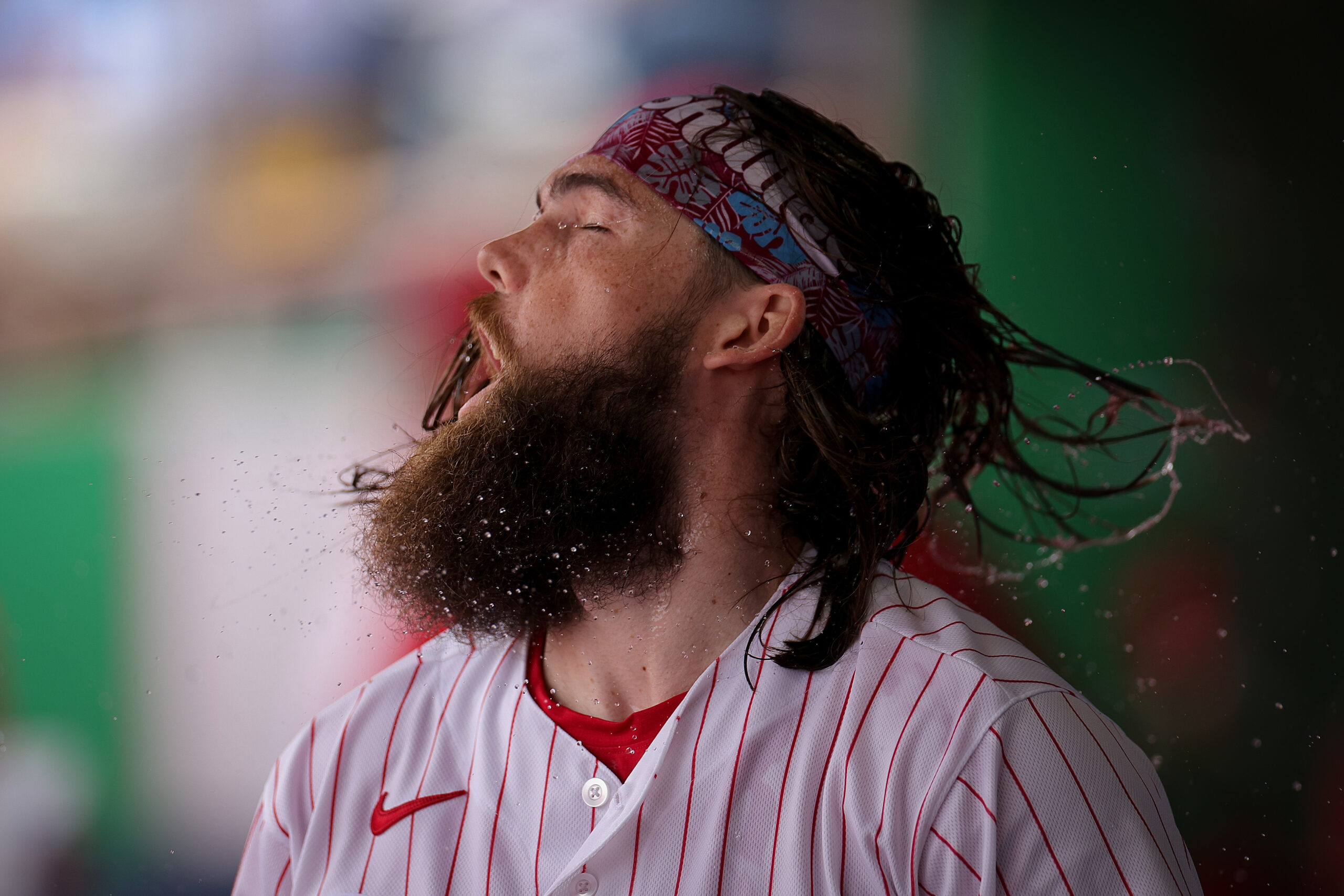
    It might be spring training, but Phillies center fielder Brandon Marsh’s beard and hair are in midseason form — and dripping wet, as usual.
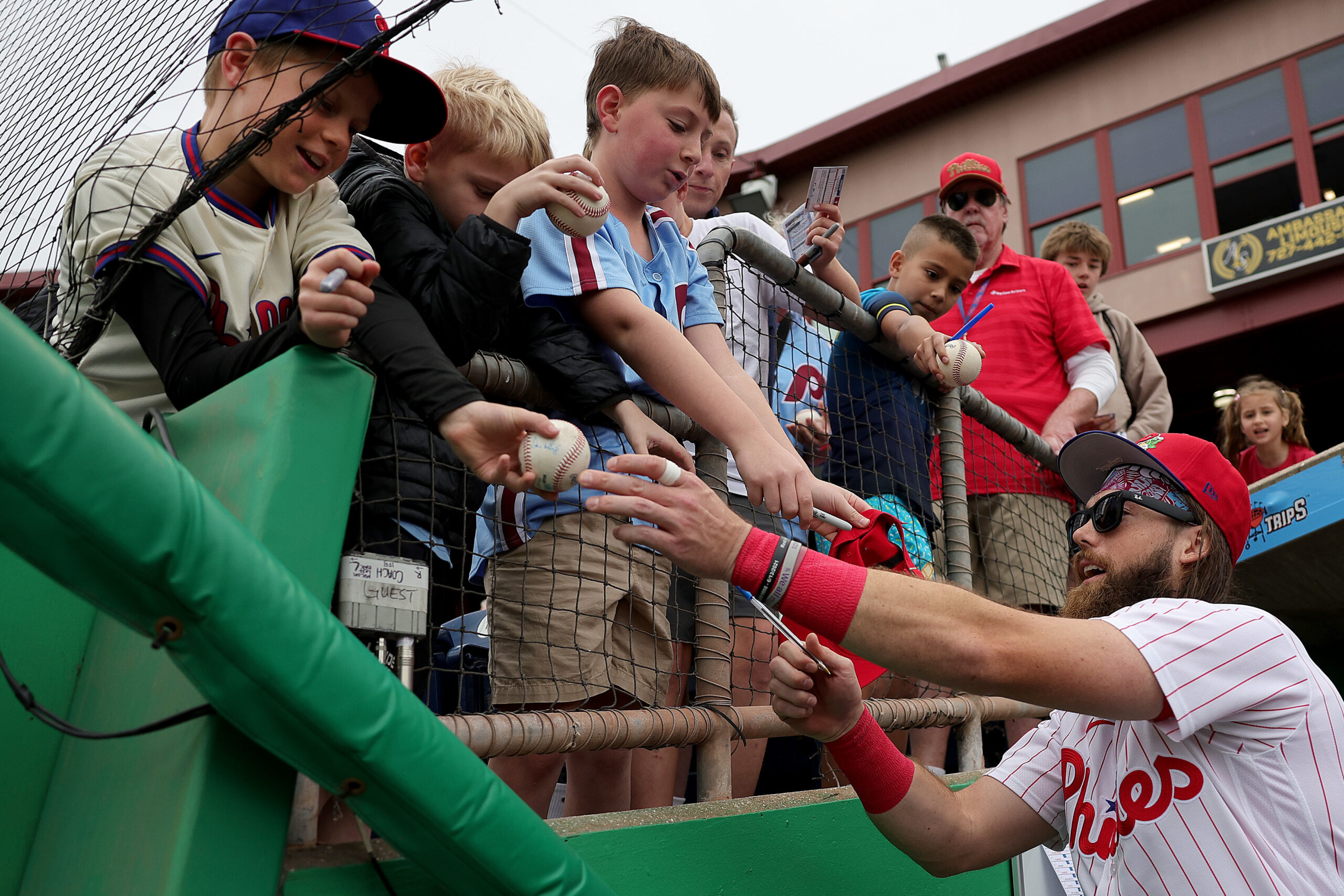
    Marsh takes a break from wetting his hair to sign some autographs before a spring training game against the Pittsburgh Pirates.
    Even on the berm at BayCare Ballpark in Clearwater, Eagles fans aren’t hard to find, including this one in a kelly green Saquon Barkley jersey. It was Sunday.
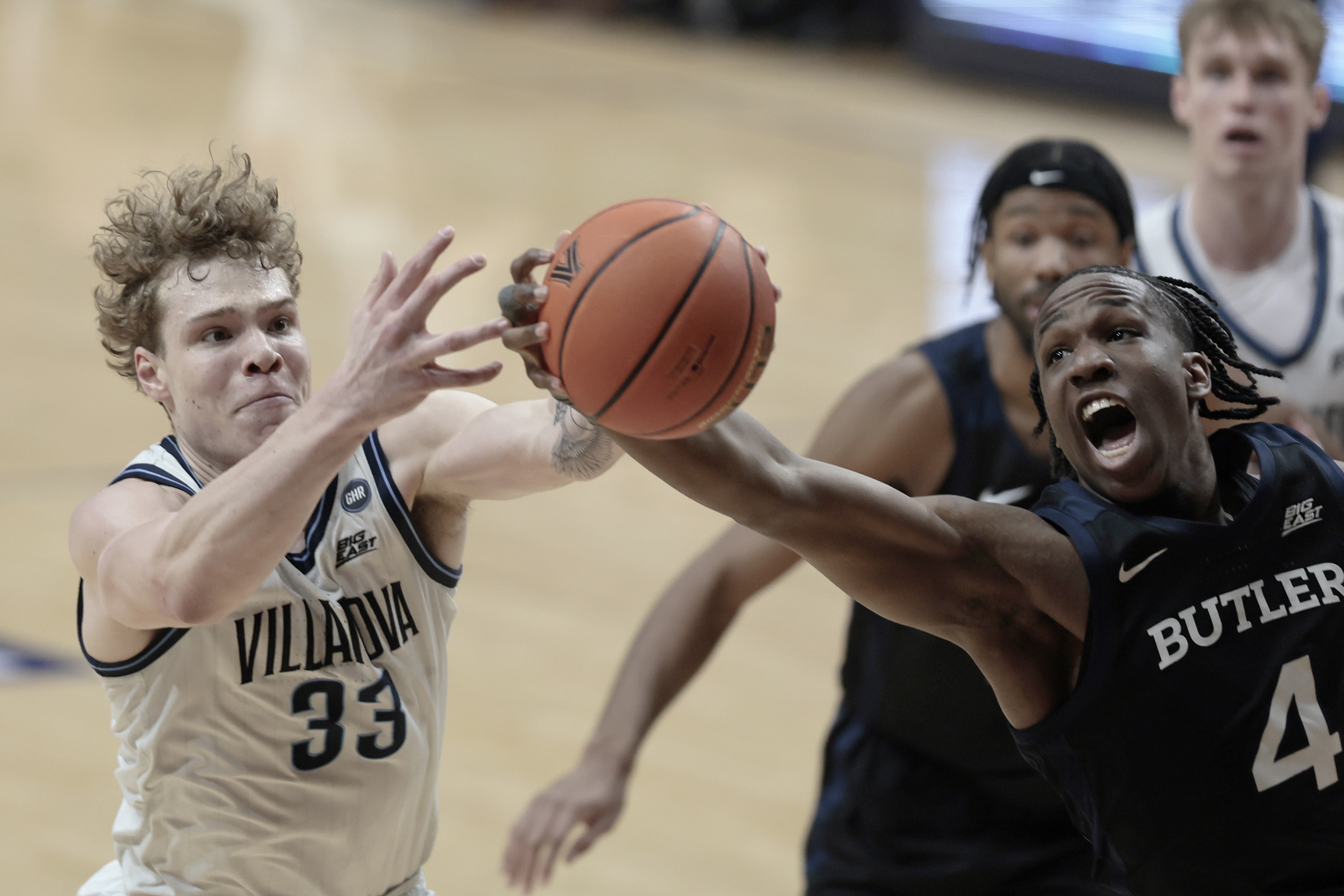
    Villanova and Matt Hodge (left) bounced back from their loss to UConn with a win over Butler as they near the end of their Big East schedule.
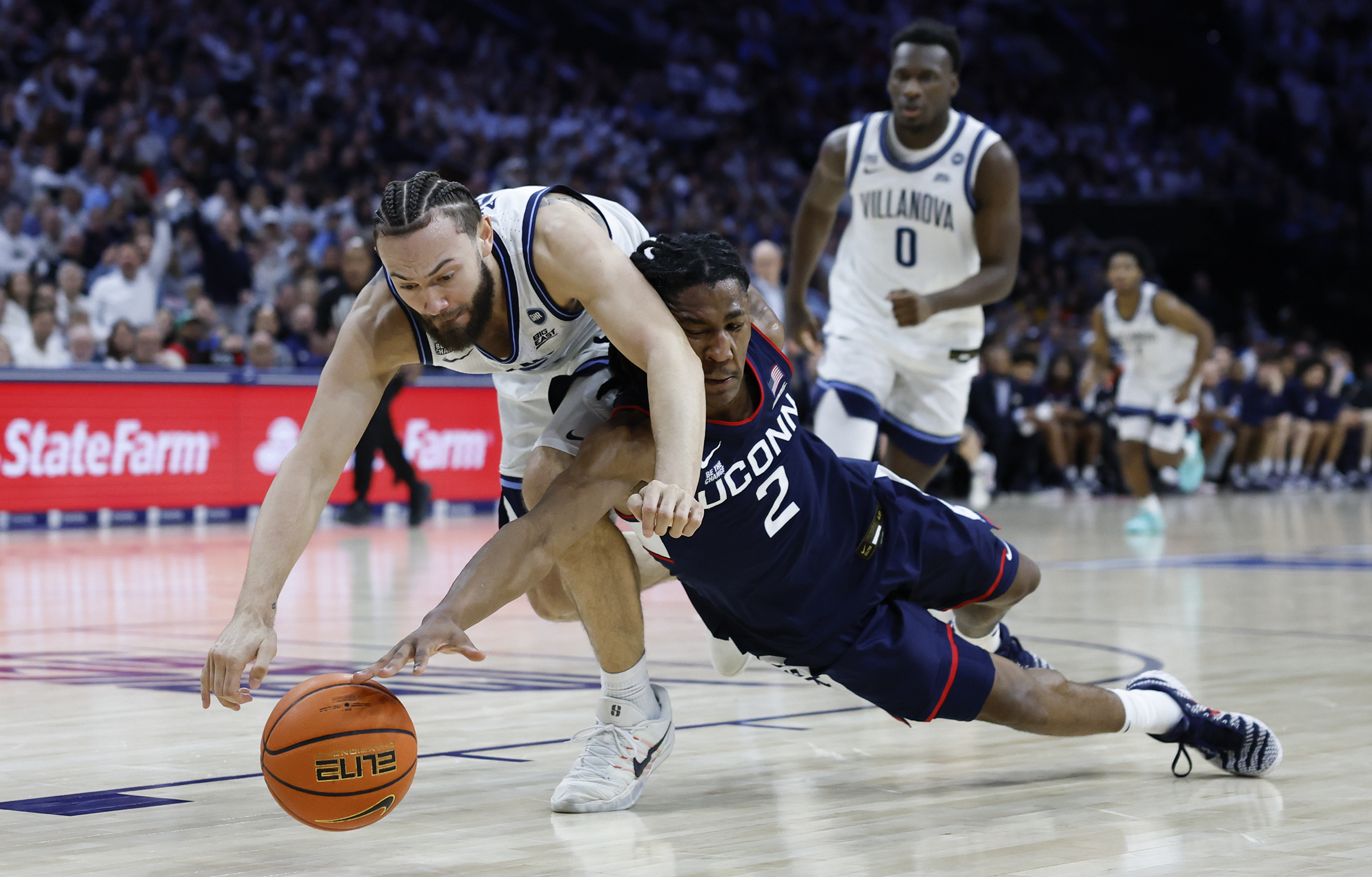
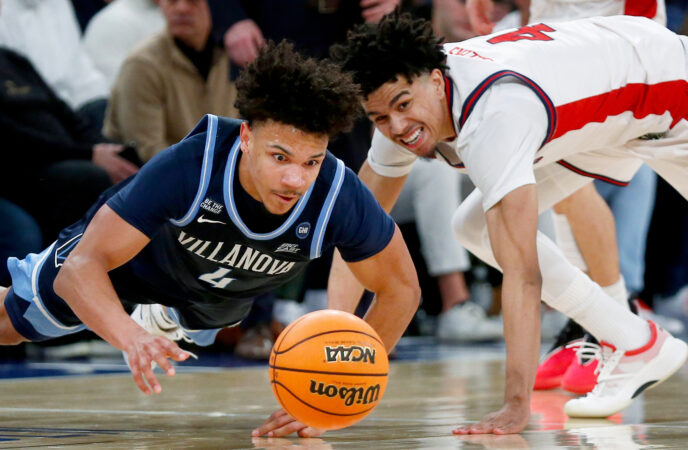
    Villanova guard Devin Askew and UConn guard Silas Demary Jr. dive after a loss ball. The Wildcats trail only St. John’s and UConn in the Big East.
    Members of Imhotep’s girls’ team lock arms during the national anthem before their PPL championship game against Audenried.
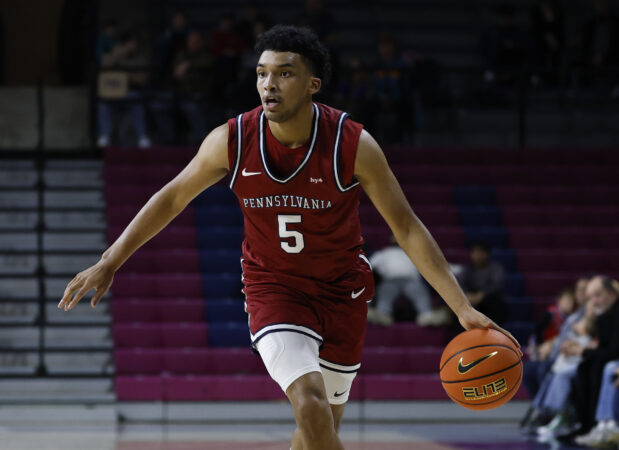
  • A senior who never transferred? Among Big 5 men’s basketball teams, Penn’s Cam Thrower is one of one.

    A senior who never transferred? Among Big 5 men’s basketball teams, Penn’s Cam Thrower is one of one.

    It was senior day Saturday at the Palestra, and four members of the Penn men’s basketball team were honored: Ethan Roberts, Cam Thrower, Johnnie Walter, and Dylan Williams.

    “It’s definitely bittersweet,” Thrower said Wednesday after a morning practice at the Palestra.

    More for him than the rest of them.

    Among the four players, Thrower, a native of Southern California, is the only one who attended Penn as a freshman and never transferred. It makes him a Lone Ranger of sorts on a basketball team that has undergone change with name, image, and likeness legislation, the modern transfer portal, and, this season, a new coach, Fran McCaffery, who took over after Steve Donahue was fired at the end of last season.

    Thrower, though, isn’t just the only four-year senior at Penn. Among the six Big 5 men’s basketball programs, Thrower, a 6-foot-3 guard, is sort of a unicorn. He is the only senior who plays, the only non-walk-on, who is at the same school where he first attended classes as a freshman.

    It is a sign of the times in a sport that, at least locally, has lost some of its luster. People are less invested when they don’t know any of the players at their favorite schools. One class below Thrower, there are just four juniors in the Big 5 who are in their third year at the same place, and two of them are at Penn.

    The sport has rapidly changed, and you don’t need to go back far to see the effects. In the 2019-20 season, before the pandemic upended the four-year track and before NIL and the transfer portal took over the sport, the numbers were drastically different. That year, there were 12 four-year seniors in the Big 5 and 14 three-year juniors.

    This isn’t just limited to men’s hoops. On the women’s side of the Big 5, only seven Throwers exist. Two at Drexel, two at St. Joseph’s, and three at Penn.

    “It’s definitely a rare thing nowadays,” said Thrower, whom Donahue recruited out of the venerable Harvard-Westlake School. “But for my family and I, the biggest thing coming into college was finding a situation where, regardless of what happens with basketball, I could meet great people, and having a great, well-rounded experience was something that we valued and Penn has provided that and changed my life for the better.”

    Thrower said he wears the distinction that was recently brought to his attention as a ”badge of honor.” But the Wharton student knows that everyone’s journey is different, and he doesn’t judge those around him and in college basketball for moving around and finding the best situation for themselves.

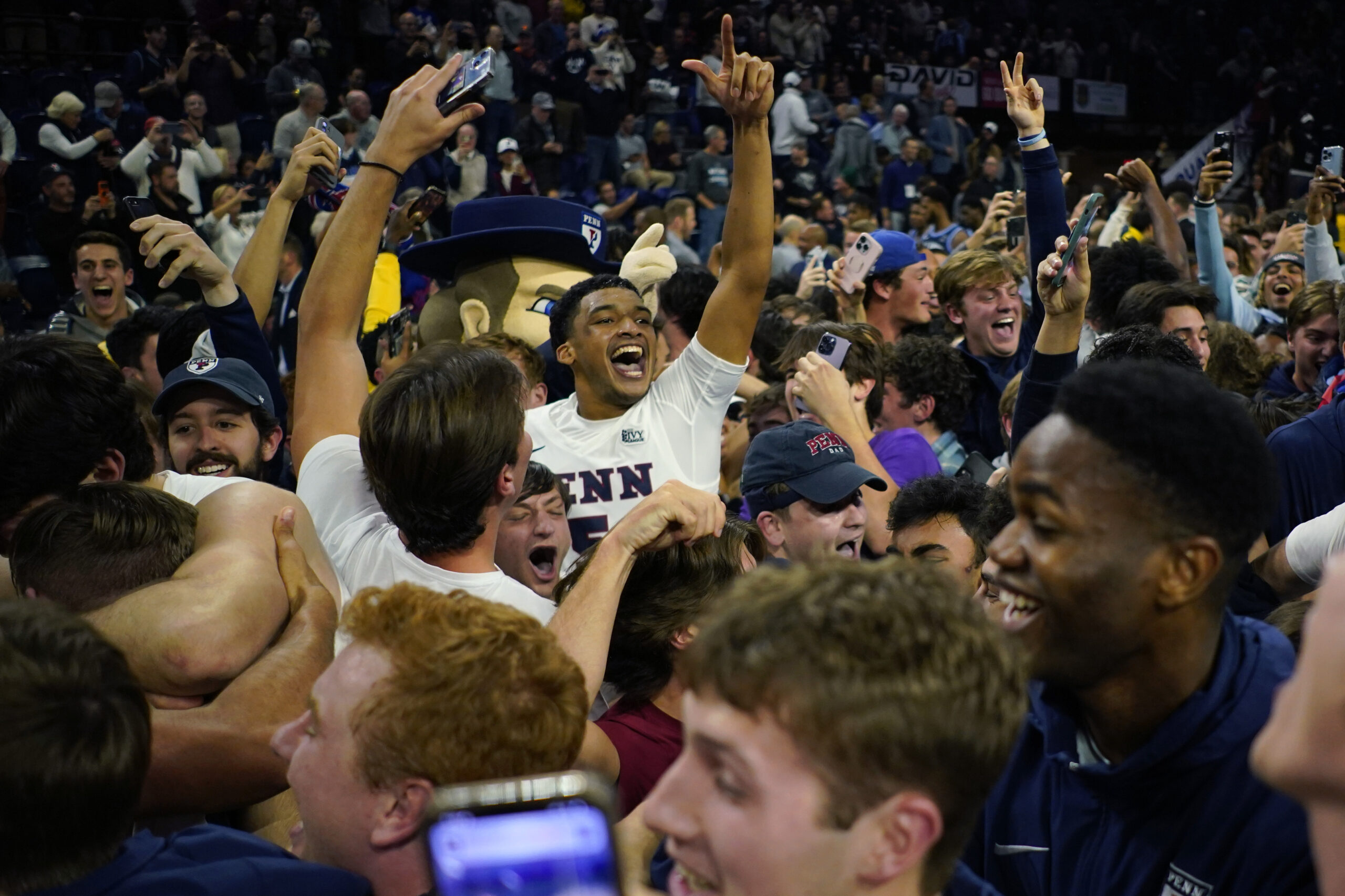
    Cam Thrower celebrates with fans as they storm the court after Penn beat Villanova in 2023.

    “Penn has been great to me,” Thrower said. “Basketball has been great to me.”

    The backup guard is averaging 5.2 points in 16.5 minutes in 21 games this season after missing all of last year with a wrist injury. His basketball journey has had ups and downs. One of the highs came in his sophomore year. He started and scored 11 points in 26 minutes when the Quakers knocked off a nationally ranked Villanova team at the Palestra.

    The injury wiped out his junior season, then Donahue was fired. Transferring wasn’t really an option, Thrower said. A Penn degree is more valuable than wherever he might transfer to continue playing basketball. So Thrower stayed, and he helped McCaffery and a new team transition into a new season.

    “His attitude and his leadership and his work ethic, for a new coach it’s incredibly appreciated,” McCaffery said. “You need your veteran guys to show the example for the younger guys, and that’s what he does.”

    McCaffery, who last coached at Iowa, is a Philadelphia native who was a rarity in 1978 when he transferred from Wake Forest to Penn. Back then, moving around from school to school wasn’t as prevalent as it became.

    “It’s just a different time,” McCaffery said. “Thank God for Cam that he went to Penn for all the right reasons and he stayed.”

    Thrower said the end of the season is bringing a “sense of urgency,” one the team talked about after practice Wednesday. The Quakers had two home games this weekend — Friday vs. Dartmouth, and Saturday vs. Harvard — and finish the season next weekend with a road game at Brown. Penn (15-11, 8-5 Ivy) clinched one of four spots in the Ivy Madness tournament with Saturday’s come-from-behind 64-61 win over Harvard. The Quakers are two wins from reaching the NCAA Tournament, a possibility, however small, that excites Thrower.

    From left, Penn forward Ethan Roberts, guard Cam Thrower, guard AJ Levine, and forward Augustus Gerhart react in the final minutes of the win against St. Joseph’s on Nov. 17.

    Off the court, he is spending his final few months on a campus and with a community that will stay with him forever. On the court, Thrower is savoring his final games and practices with a group of teammates that he’s constantly learning from. He scored 5 points in 14 minutes vs. Dartmouth on Friday and 3 in 17 minutes vs. Harvard on Saturday.

    “It’s helped me learn what life is and sometimes you may be with certain people for a year or two and then they move on with their lives,” Thrower said. “It’s a trial run of understanding what life can look like.”

    What’s next?

    Thrower is weighing the possibilities. He has studied finance, sports business, and legal studies and has learned a lot about professionalism and amateurism at an interesting time for those topics . But school isn’t done. Thrower said he wants to pursue his MBA and get his formal finance and accounting training under his belt before entering the workforce.

    Surely, he could do those things at Penn. That wrist injury from last year, however, left him with another year of basketball eligibility, and Ivy League rules prohibit graduate students from playing varsity sports.

    What if they didn’t?

    “Penn has been great,” Thrower said, “but I want to see what else is out there.”