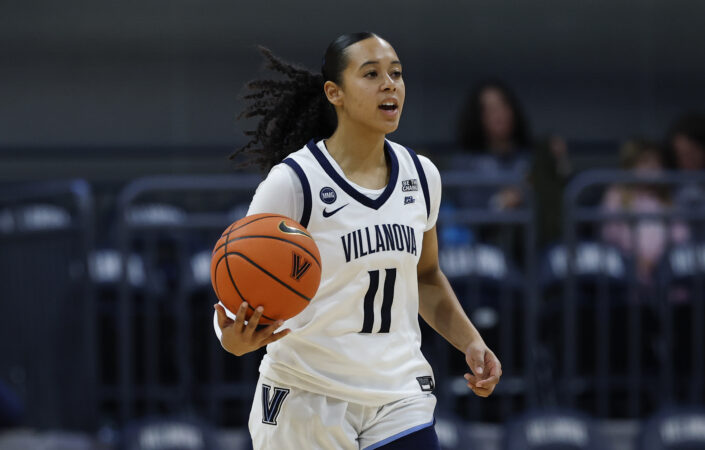
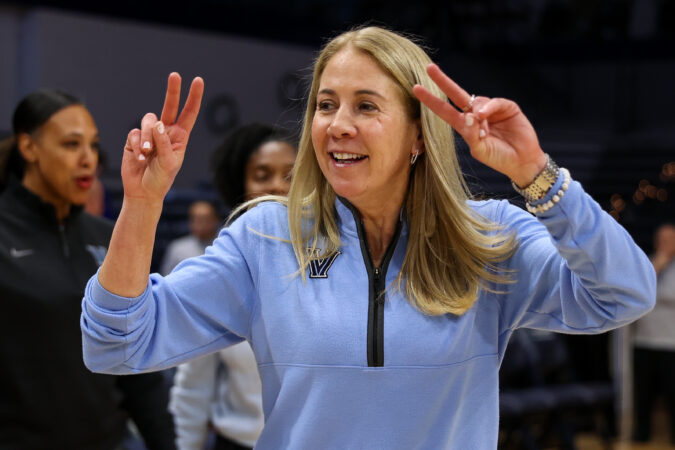
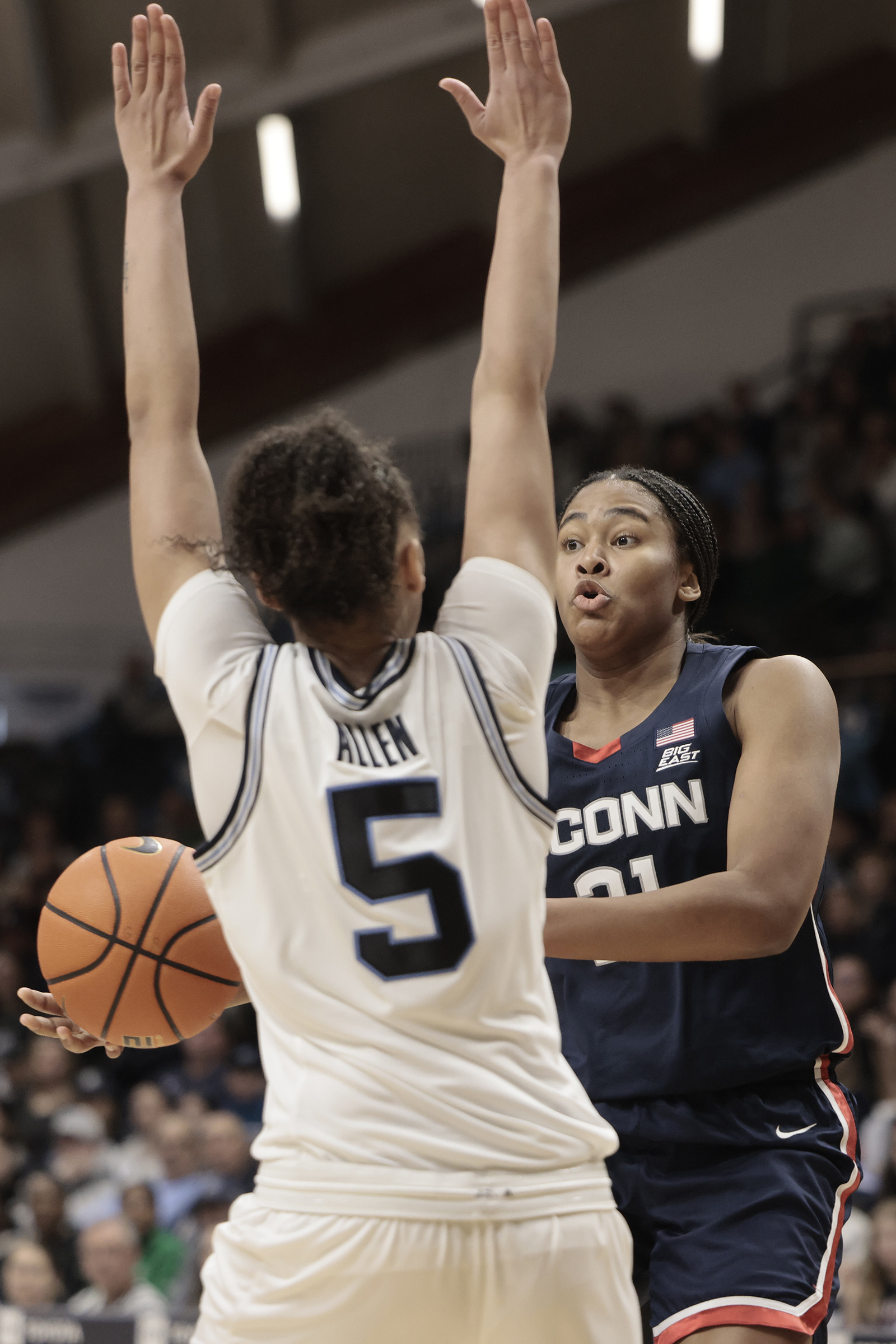
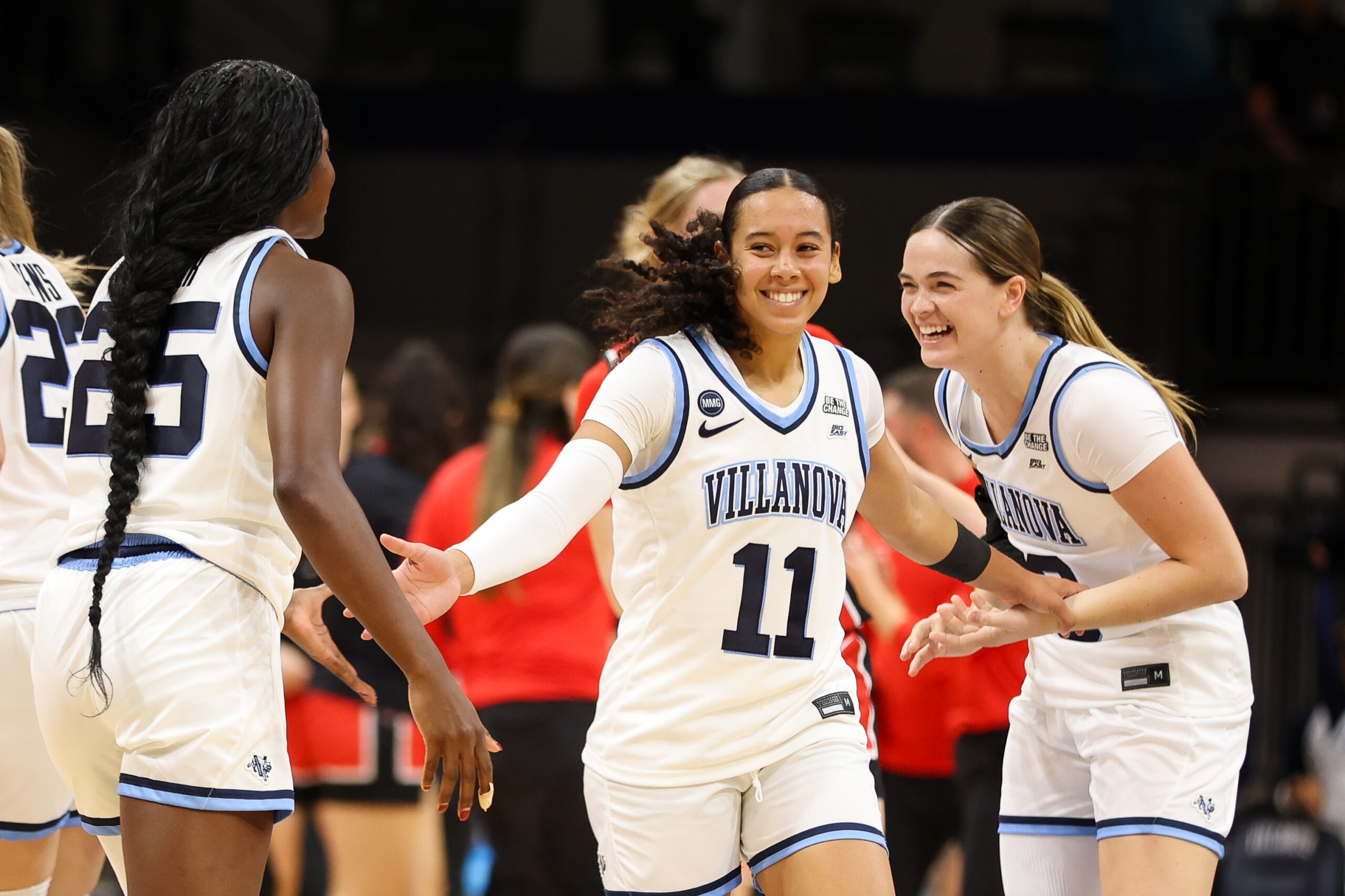
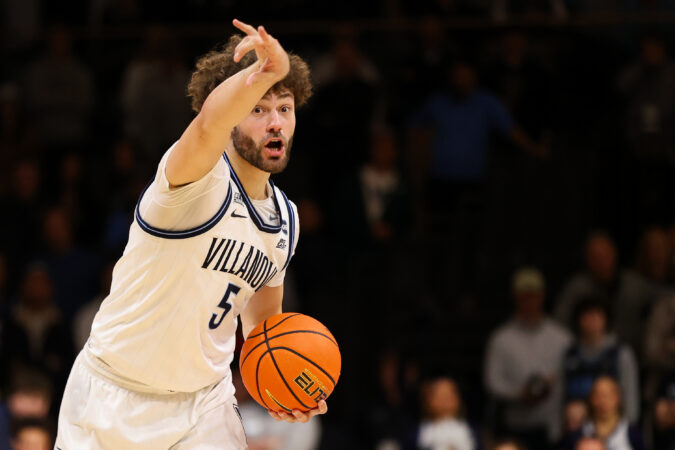
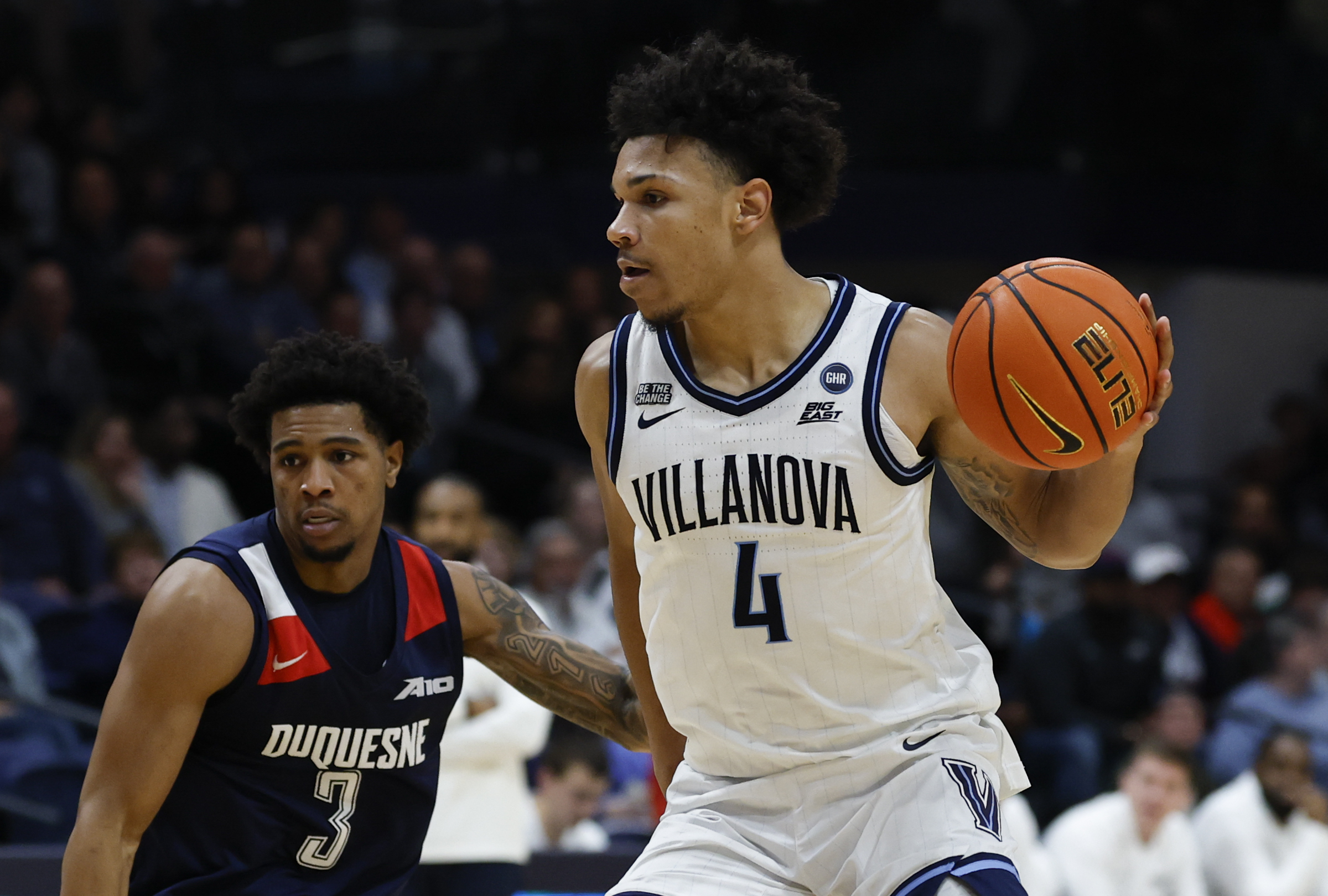
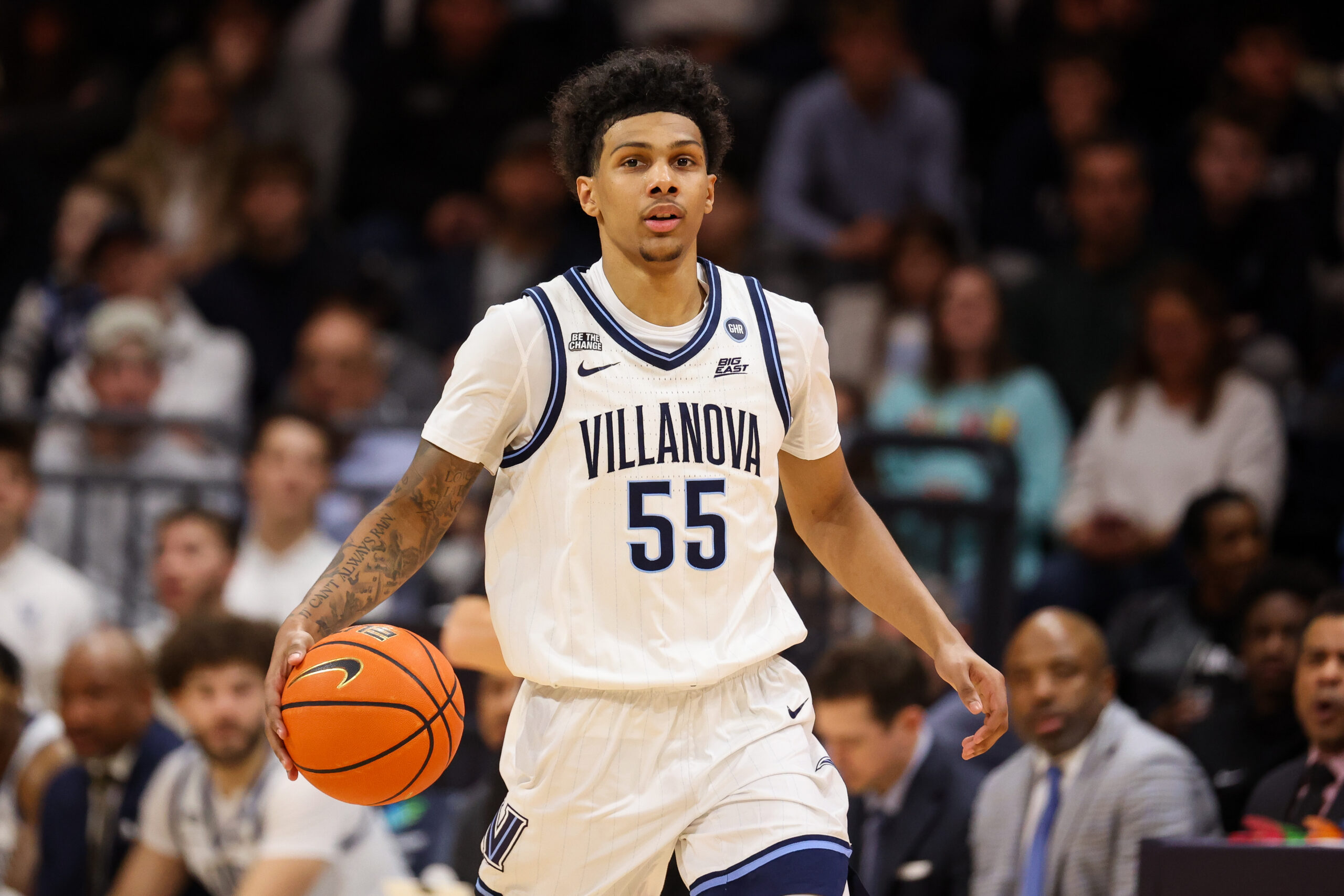
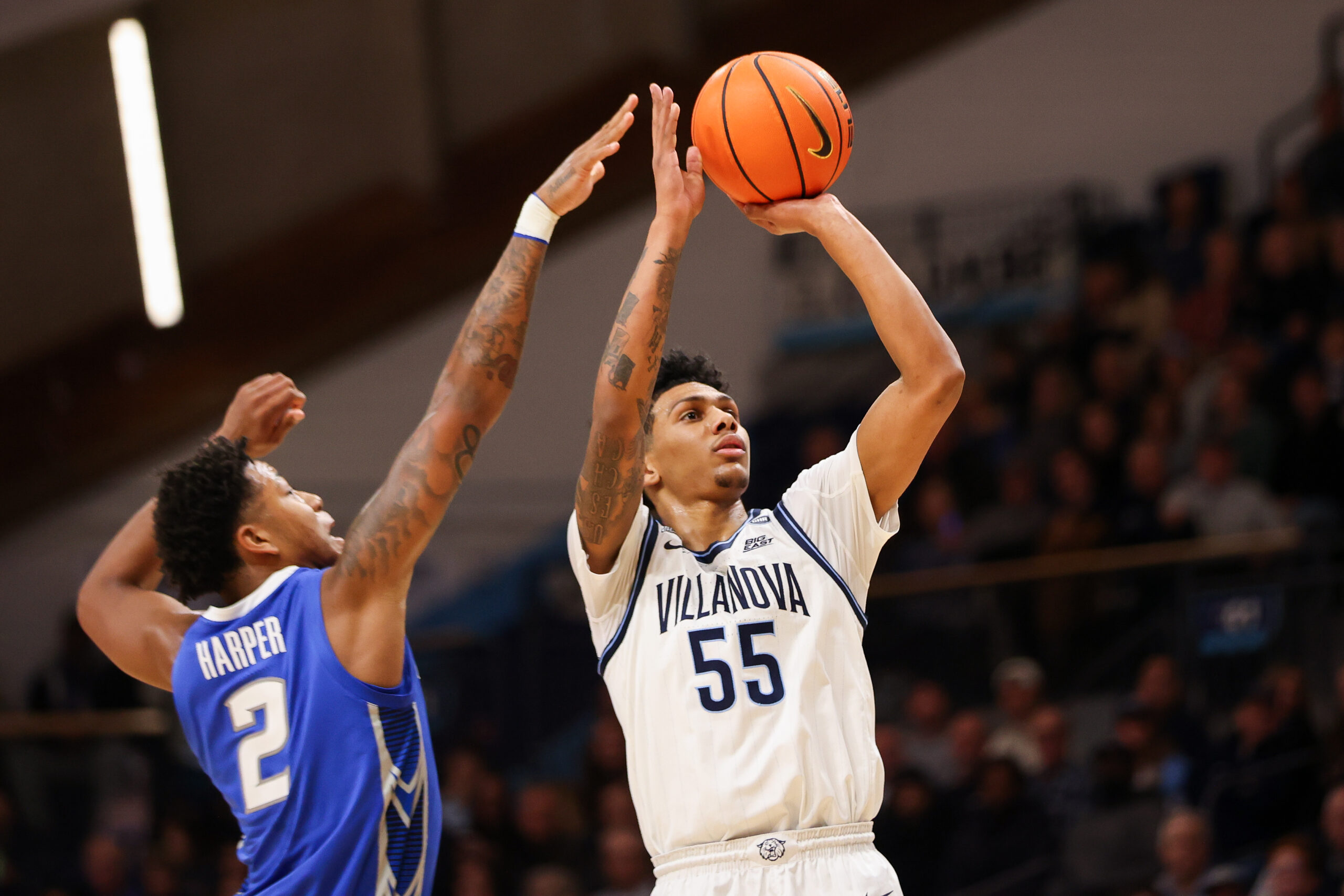
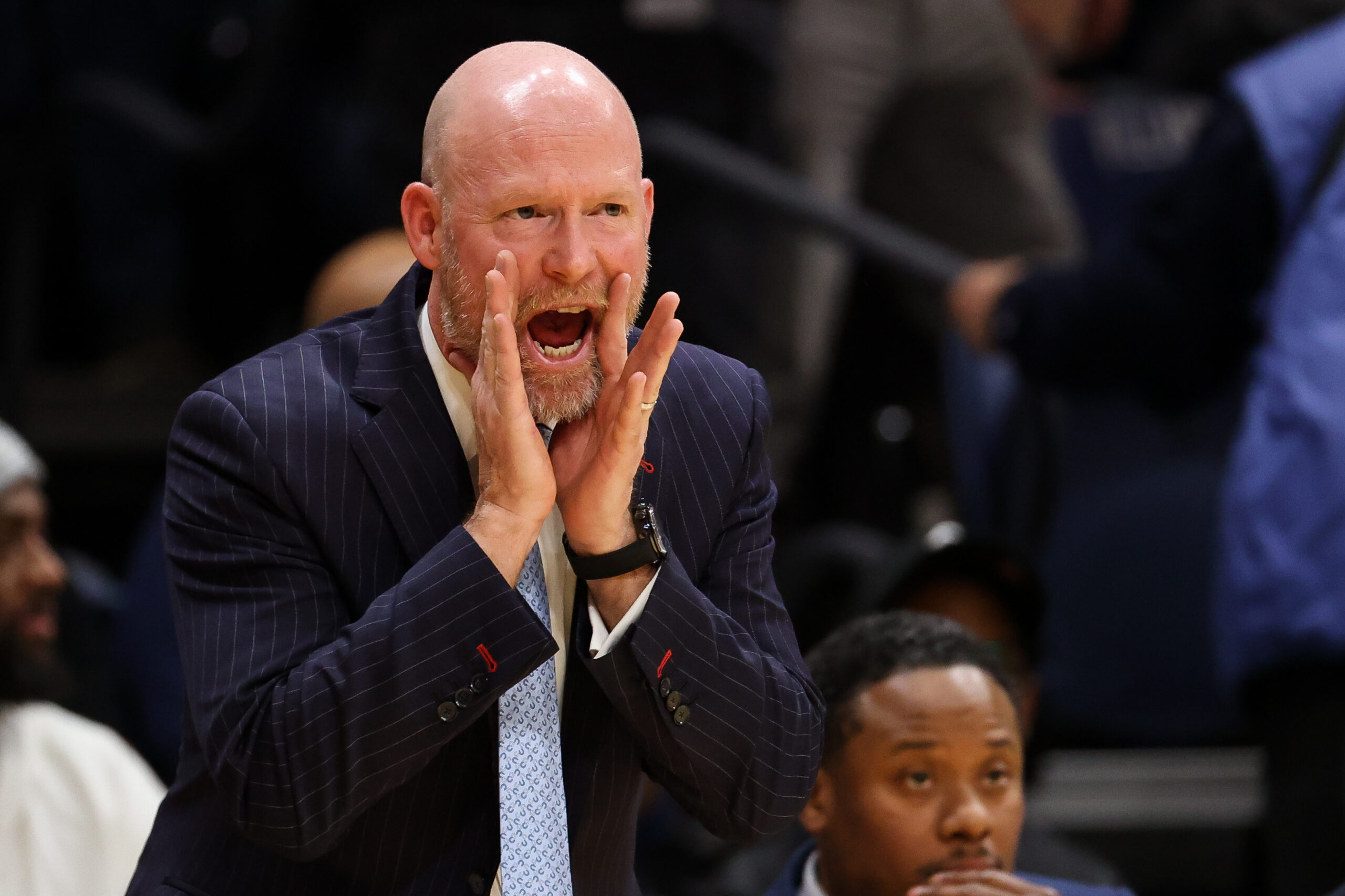
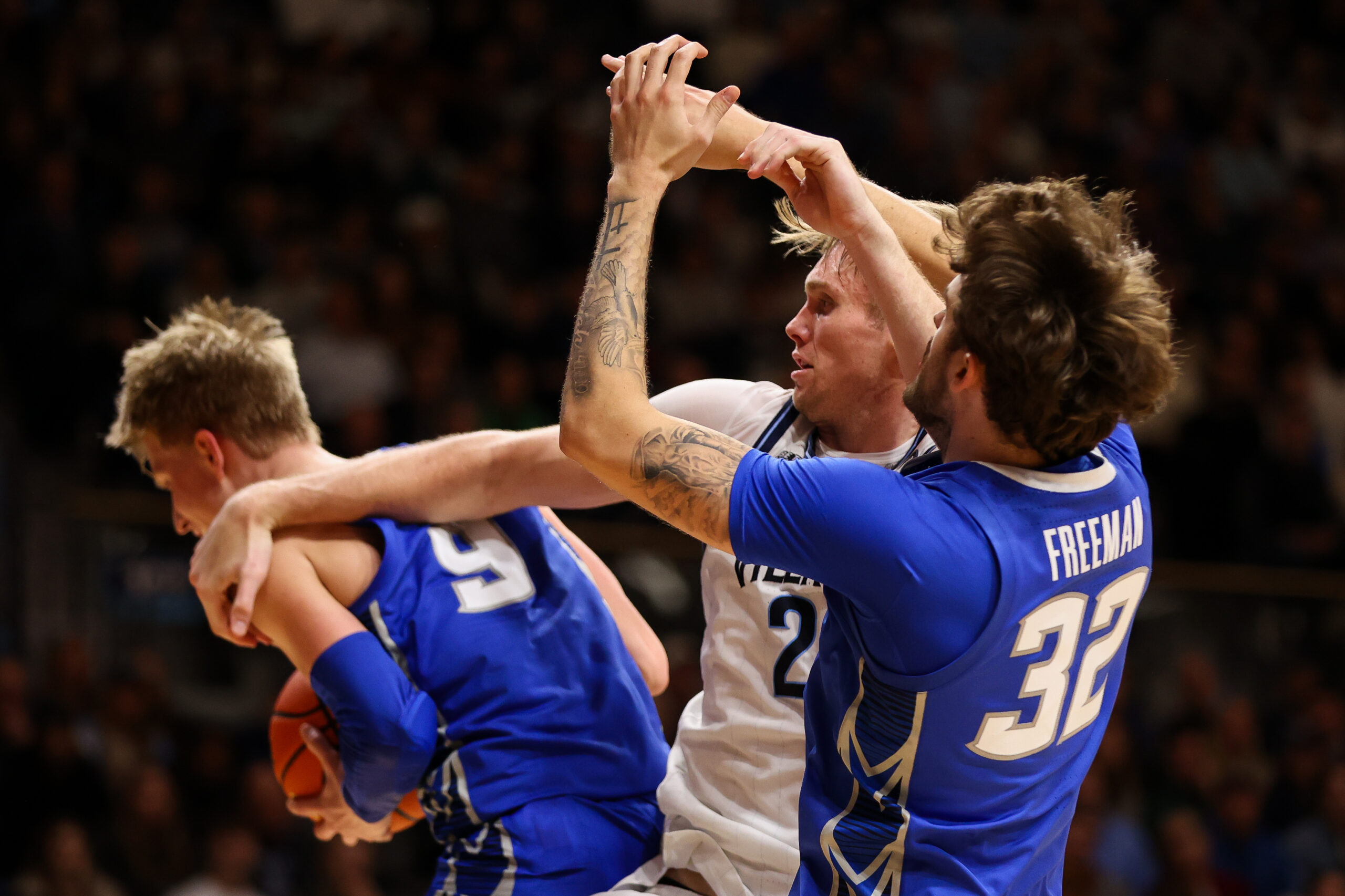
For sophomore guard Jasmine Bascoe, Villanova is “right where we want to be” after a 73-65 victory over Butler on Sunday at the Finneran Pavilion.
Bascoe led the way with 22 points and added two rebounds and six assists as Villanova (15-4, 8-2 Big East) maintained its hold on second place in the conference.
The Wildcats trailed by 33-31 at the half but used a productive third quarter to seal another Big East win. In their last outing, they were thumped, 99-50, at No. 1 UConn on Thursday.
“We want to be trailing UConn in the Big East,” Bascoe said. “That’s a great spot for us going into the second half of the league [schedule], and then hopefully the Big East Tournament. … So it’s just continuing to push through.”
Turning it around
Heading into the game, Villanova coach Denise Dillon urged the team to come out stronger after halftime.
Butler (8-11, 2-7) went on a 7-0 run in the final 1 minute, 13 seconds of the second quarter. The Bulldogs kept the game close in the first half with efficient shooting, going 60.9% from the field. Meanwhile, Villanova shot just 34.4% from the field and 16.7% from the three-point range in the half.
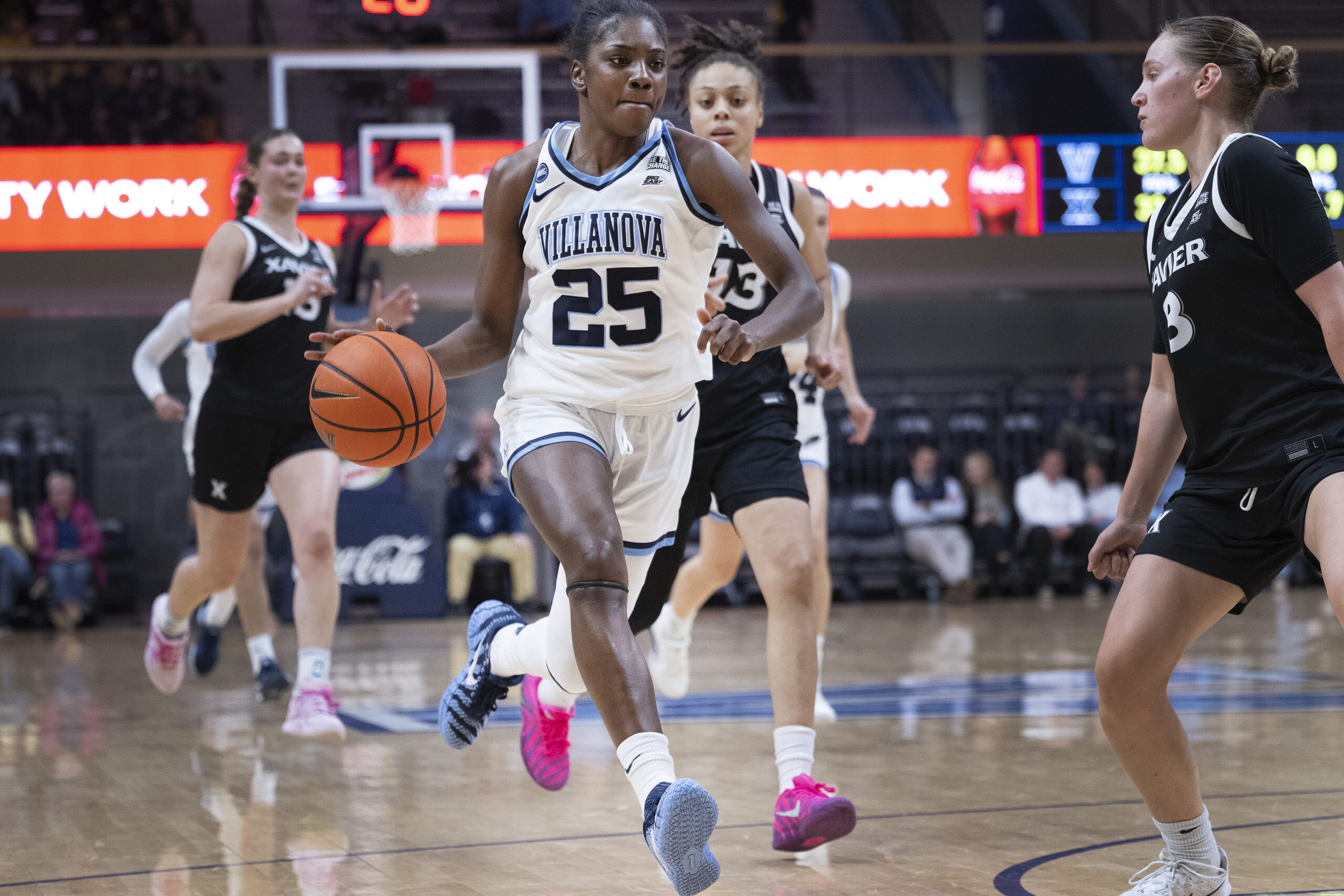
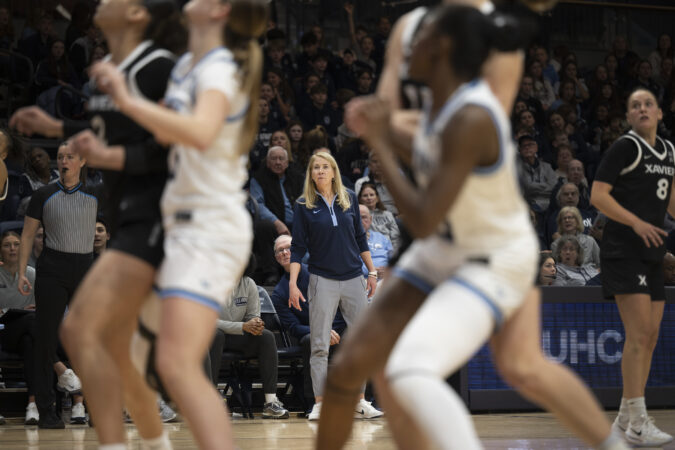
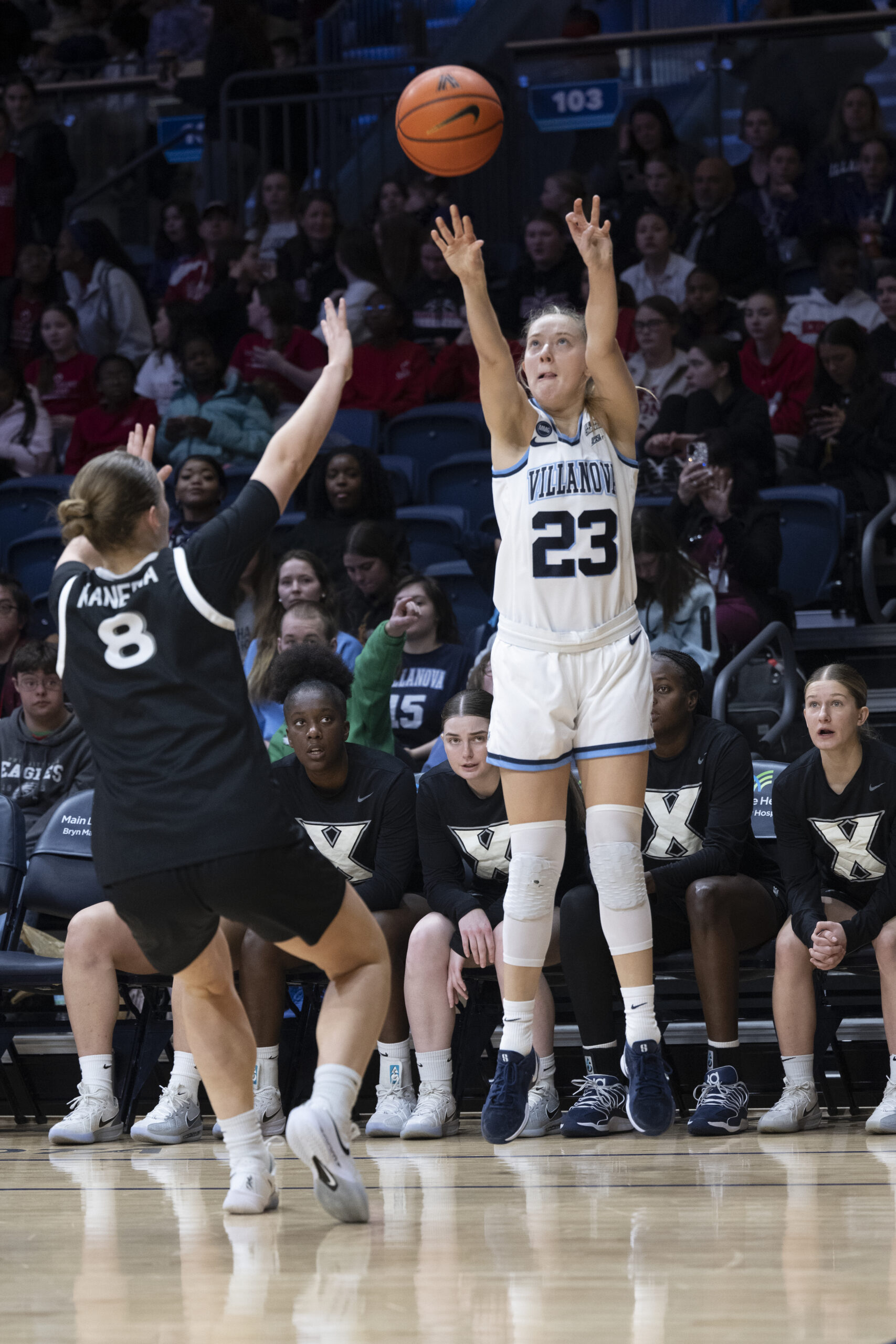
Villanova’s Denae Carter in action against Xavier on Jan. 8.
“[At halftime,] we just acknowledged that we weren’t playing like ourselves in the first half,” Bascoe said. “And to finish off the game right, we had to come out hard in the third quarter. So, you know, we drew up some plays, we intensified our defense, and then it kind of slowed down from there and we didn’t have to force any shots.”
Carter has her moment
Villanova opened the third quarter with a 7-0 run of its own. Bascoe sank a three-pointer and layup off a Butler turnover. Then, sophomore forward Dani Ceseretti assisted on a layup by junior forward Brynn McCurry.
The Wildcats outscored the Bulldogs, 24-15, in the third quarter and led for the rest of the game.
Graduate forward Denae Carter accounted for 11 of those points, shooting 5-for-7 from the field. She added six points in a scoring burst within the last 1:31 of the quarter.
“This is [Carter’s] final run, and when she realizes it, it just fuels her,” Dillon said. “There’s nothing better for this group. You can even see it in the huddle, when all of a sudden she’s like, ‘I’m ready to go.’ … Denae is one of our top defenders, and when she’s disruptive, good things happen for us.”
With less than four minutes left to play, Carter had to leave the court after she was struck in the face and Butler was charged with a flagrant foul. She finished the game with 15 points and four rebounds.
Next up
Villanova visits St. John’s (15-5, 5-4) on Saturday (2 p.m., FS1).
Six minutes was all it took for the things that had to have worried Kevin Willard ahead of Villanova’s Saturday night showdown with St. John’s to make the difference.
Villanova’s deficit at halftime was just one point, but by the time St. John’s converted the fifth Villanova turnover of the second half into a layup, the deficit was 56-39 with 14 minutes to go in an eventual 86-79 St. John’s victory.
Some inherent disadvantages were working against Villanova at Xfinity Mobile Arena. Chief among them were the size, strength, and experience that St. John’s possesses, and the way its defensive pressure can be unrelenting. Three of Villanova’s top five scorers — Acaden Lewis, Bryce Lindsay, and Matt Hodge — are in their first or second season playing college basketball. The Red Storm, meanwhile, starts four seniors to Villanova’s one. All of that showed during a 20-4 run.
St. John’s had 12 offensive rebounds to Villanova’s seven. Four of the 12 came during that fateful six-minute stretch. Each team had eight turnovers by halftime, but Villanova finished with 14, five during the opening six minutes of the second half, and St. John’s had just one over the final 20 minutes. The Red Storm converted those Villanova turnovers into 17 points. St. John’s had 42 paint points to Villanova’s 22.
The youthful Wildcats eventually got back in the game and trailed by five with 6 minutes, 36 seconds left and again inside of a minute to play. But St. John’s was too big, too strong, and too experienced for Villanova to get over the hump, no matter how hard junior Tyler Perkins and senior Devin Askew — who scored 23 and 21 points, respectively — tried.
Villanova’s lone senior starter, center Duke Brennan, a transfer from Grand Canyon, was no match for his experienced Big East counterparts. Zuby Ejiofor had 17 points and seven rebounds. Bryce Hopkins had 20 and six. Brennan was minus-14 on the night. Lewis finished with a season-low three points and a season-high six turnovers and was on the bench for the final 11 minutes.
Lewis, who was also minus-14, looked like a freshman, which has only happened a few times this season. Hodge normally scores 10.6 points per game but was held to four. Lindsay entered Saturday scoring 15.2 points per game and scored 11, all in the second half.
“Acaden, Bryce, Matt — freshman, freshman, sophomore — against grown men,” Willard said. “That’s why Devin and Tyler played well, because they’re grown men. They’re physical, able to play against a St. John’s where I think Acaden, Bryce, and Matt are all trying to figure out, ‘How do I play when I play against a physically dominant team?’ We’ve struggled against physically dominant teams for that reason.”
Saturday night offered Villanova (14-4, 5-2 Big East) a chance for its first real signature win. Instead, it showed, for now, where the Wildcats are. They have beaten teams projected to make the NCAA Tournament like Wisconsin and Seton Hall, but they have been knocked off by the three big dogs on the schedule so far: BYU, Michigan, and now St. John’s. Villanova is where it is — ranked 25th in the NCAA’s NET rankings and 27th at KenPom as of Saturday — in large part because it has beaten the teams it’s supposed to beat.
Villanova entered Saturday as the 21st team in ESPN bracket guru Joe Lunardi’s projected NCAA Tournament field. The best of all the No. 6 seeds. St. John’s, meanwhile, was 26th. Saturday should at least cause a flip-flop.
“You’ve got to sit back as a coach every once in a while and realize there is a process to this,” Willard said. “Sometimes you’ve got to play bad and go back and watch film and kind of … we did some things in the second half late, defensively, that made no sense.”
It is not a talent thing, Askew said. Villanova has the players, but it needs to play in games like Saturday’s to get better.
“It’s an experience thing,” said Askew, a sixth-year senior who is averaging 18 points off the bench in his last three. “As they play more games in atmospheres like that, they’ll get better. … They just have to get used to it and they will.”
Villanova coach Kevin Willard believes his team is still learning to deal with physical opponents.
The good part for Villanova is that very few teams in the Big East are built to hurt Villanova the way St. John’s can.
The Wildcats are back at the Finneran Pavilion on Wednesday night against Georgetown, which is 1-6 in the Big East. After that is another big test — a road game at No. 3 UConn next Saturday afternoon that will give Villanova a chance to quickly show what it learned from its step up in competition.
“It’s a little bit of a learning process,” Willard said. “This group, they have a great attitude, they work hard. We’re going to have some bumps in the road. It’s a part of conference play.
“We’re not at the level where we’re going to pitch a shutout. We can’t give up 50 points in the second half. We can’t give up nine offensive rebounds in the second half. We can’t come out and turn the ball over three times. That’s all part of the learning curve a little bit.”
No. 1 UConn continued to storm through the Big East — and women’s college basketball in general — with a 99-50 rout of Villanova on Thursday night in Storrs, Conn.
UConn brought the intensity on defense that has helped the defending national champions hold opponents to 51.7 points per game and maintain a 38.7 scoring margin. The Huskies (18-0, 9-0 Big East) took control early and repeatedly stifled Villanova possessions.
UConn limited Villanova to more than 20 points below its per-game average of 73.8 points and just 27.7% shooting from the field, including 25% from three.
Villanova (14-4, 7-2 Big East) remains in second in the conference. Freshman guard Kennedy Henry led the Wildcats in scoring with 12 points and four rebounds.
Here’s what we learned from Villanova’s showdown with the nation’s top team:
UConn defense looks unbreakable
The Huskies were spearheaded by sophomore forward Sarah Strong, who recorded 24 points, nine rebounds, and five blocks.
The versatile Strong proved difficult to stop from the beginning and scored 15 of her points in the first half. Junior guard KK Arnold (13 points) facilitated UConn’s offense with a team-high seven assists.
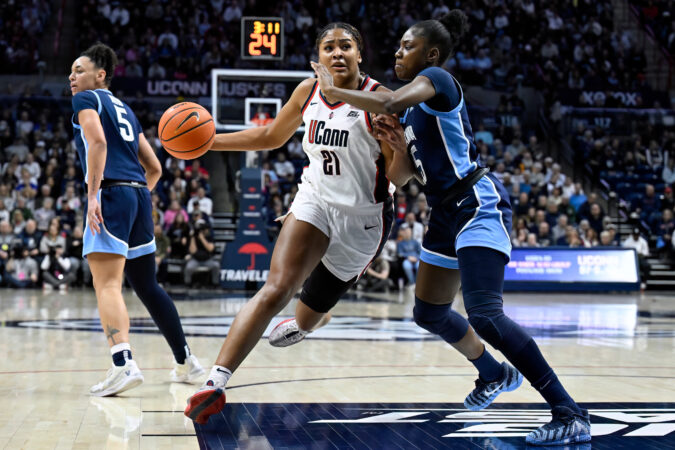
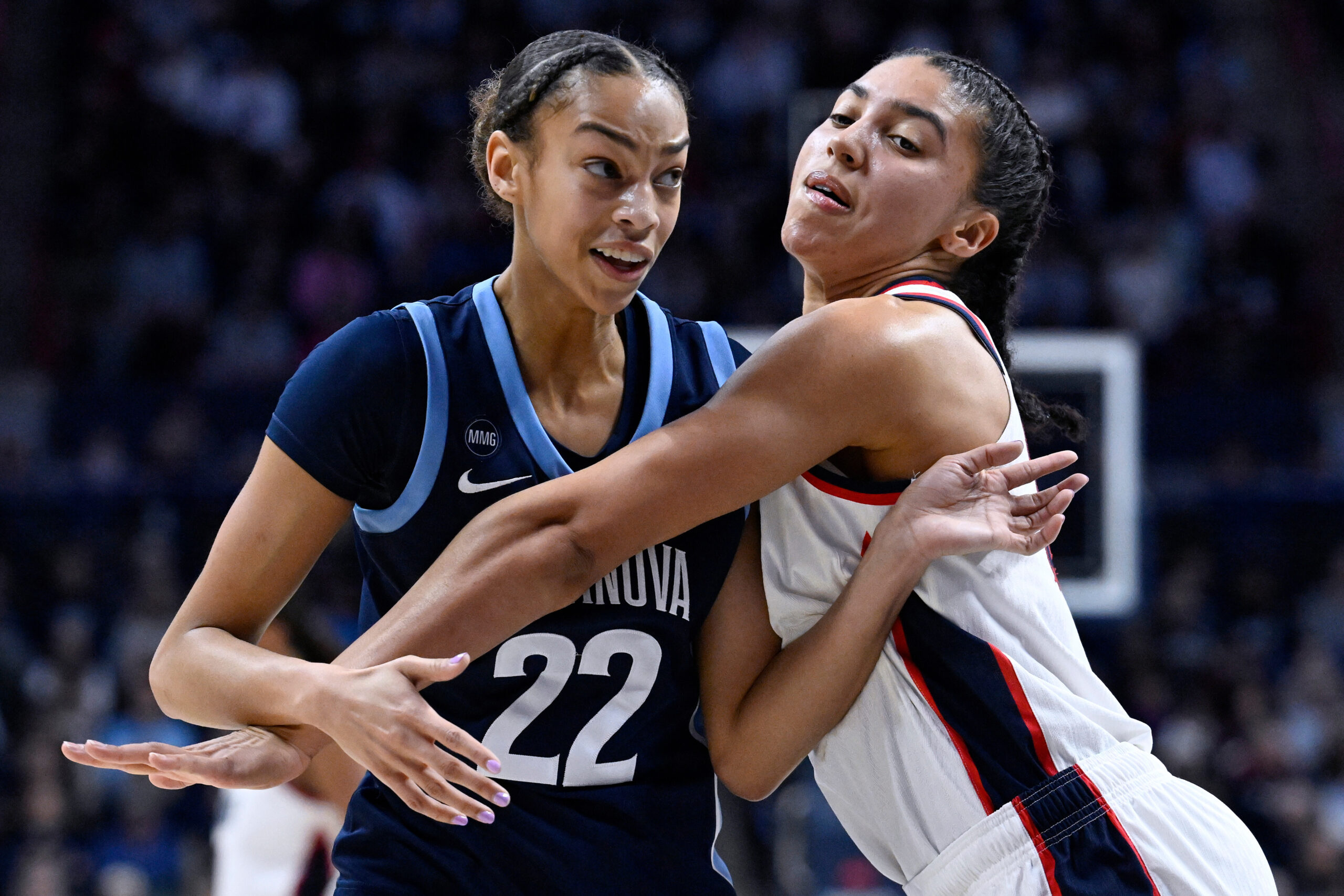
Villanova guard Kennedy Henry (22), who’s being guarded by UConn star Azzi Fudd, was the team’s leading scorer on Thursday.
Villanova made just three baskets in the first quarter, as UConn raced out to a 26-8 lead. The Huskies defense didn’t let up, forcing 26 turnovers, which they parlayed into 36 points.
UConn also benefited from a significant size advantage and won the rebound battle, 46-34. That advantage also paid off in the paint, where the Huskies scored 58 of their 99 points.
UConn swarmed sophomore guard Jasmine Bascoe, who’s Villanova’s scoring leader this season and the third-leading scorer in the Big East. Instead, Henry and junior forward Brynn McCurry (11 points, five rebounds, and three blocks) led the Wildcats in scoring.
The Huskies forced the Wildcats outside and allowed just one made basket in the paint in the first half and 12 points in the paint overall.
Instead, Villanova found looks from beyond the arc to create offensive momentum late in the second quarter. The Wildcats put together a 10-0 run over 1 minute, 26 seconds that was sparked by a three-pointer by senior guard Ryanne Allen to close the deficit to 38-23 with 2:58 left in the first half.
But that was the closest that Villanova would get. Bascoe was fouled with three seconds until halftime and left the court after making both foul shots. She played just five minutes in the second half and finished with eight points.
Villanova struggled to get around UConn’s press and shot just 2-for-16 from the field in the fourth quarter. By the final three minutes, UConn held a 40-point lead.
Villanova has a few days to recover from its battle at UConn, next hosting Butler on Sunday (2 p.m., ESPN+) at Finneran Pavilion. The Bulldogs (8-10, 2-6 Big East) are 10th in the 12-team conference.
At local colleges with major sports programs, some student athletes are now getting paychecks — from their athletic departments.
Pennsylvania State University, Temple, Villanova, St. Joseph’s, Drexel, and La Salle are among the Pennsylvania schools that have begun to directly pay athletes following a settlement last year in federal class-action lawsuits over student athlete compensation.
The move arguably ends college athletes’ status as amateurs and begins to address long-standing concerns that players haven’t fairly profited from the lucrative business of some college sports.
It also raises questions about how schools will fund the athletes’ pay and whether equity complaints will arise if all athletes are not comparably awarded. Some also question how it will impact sports that are not big revenue makers.
Locally, most colleges have been mum on how much they are paying athletes, and some have also declined to say which teams’ athletes are getting money through revenue sharing, citing competitive and student privacy concerns. Villanova, a basketball powerhouse that has 623 athletes across 24 sports, said it will provide money primarily to its men’s and women’s basketball teams.
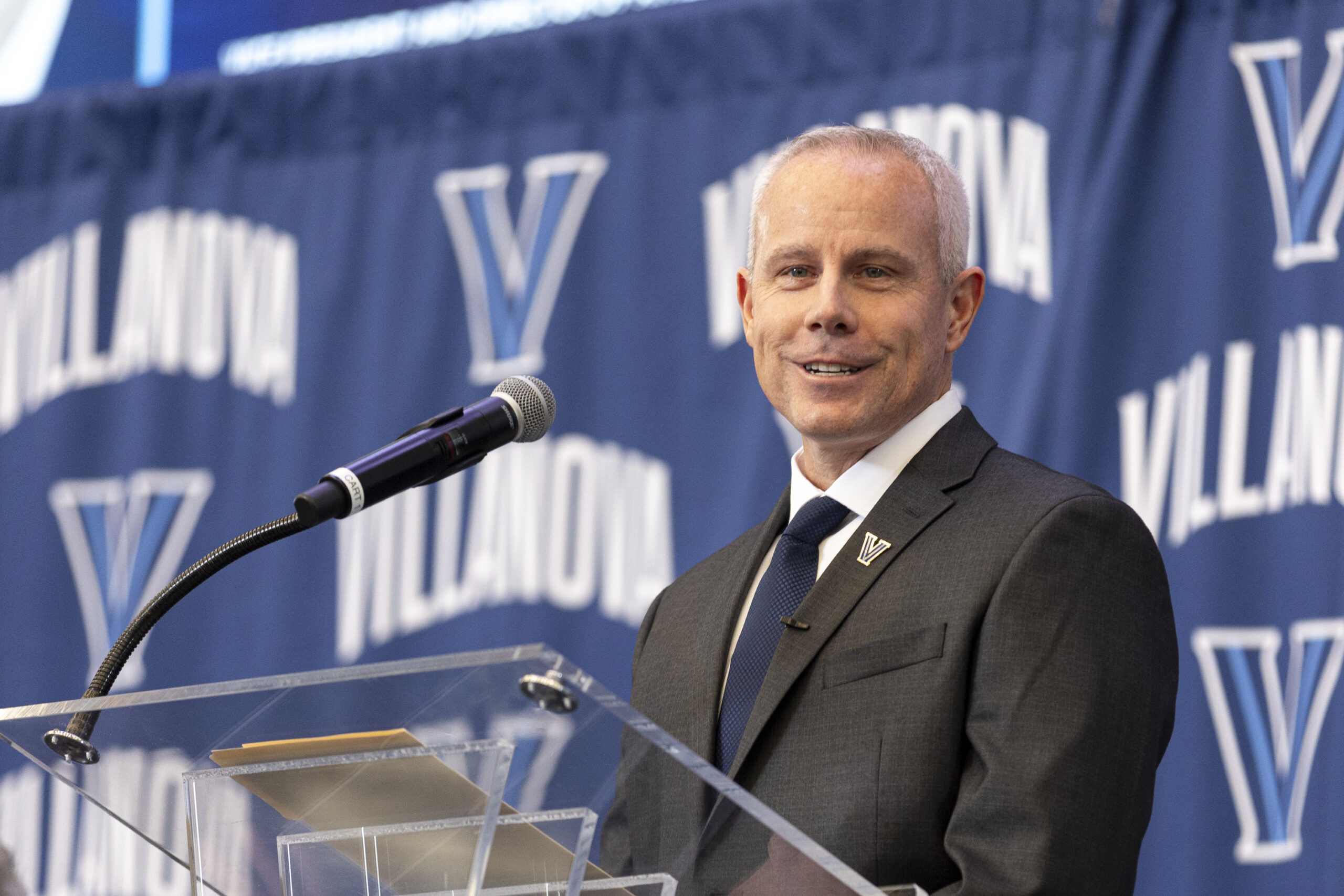
Erica Roedl, Villanova’s vice president and athletic director, speaks during a news conference at the school’s Finneran Pavilion in 2024.
“Our objective is to share revenue at levels which will keep our basketball rosters funded among the top schools in the Big East [Conference] and nationally,” Eric Roedl, Villanova’s vice president and director of athletics, said in a June message after the court settlement.
St. Joe’s, another basketball standout, said its arrangement is also with men’s and women’s basketball athletes, like its peers in the Atlantic 10 Conference.
Temple University established Competitive Excellence Funds that allow all of its 19 teams to raise money for revenue sharing, but declined to say which teams are currently distributing money to athletes.
“Donors could, if they wanted to, make sure their money went to a certain sport,” said Arthur Johnson, Temple’s vice president and director of athletics. “They have that ability.”
Other local colleges, including St. Joseph’s and Villanova, also launched funds to help raise money for revenue sharing. And all three schools also plan to use athletic revenue.
Under the revenue-sharing framework established by the court settlement, each college can pay its athletes up to a total of $20.5 million this academic year. Football powerhouse Penn State, which has about 800 athletes, has said it intends to reach the cap, according to a June 7 statement from athletic director Pat Kraft.
“This is a rapidly evolving environment that we are monitoring closely to ensure our approach remains consistent with applicable rules, while supporting the well-being and academic success of our student-athletes,” said Leah Beasley, Penn State’s deputy athletic director for strategic engagement and brand advancement.
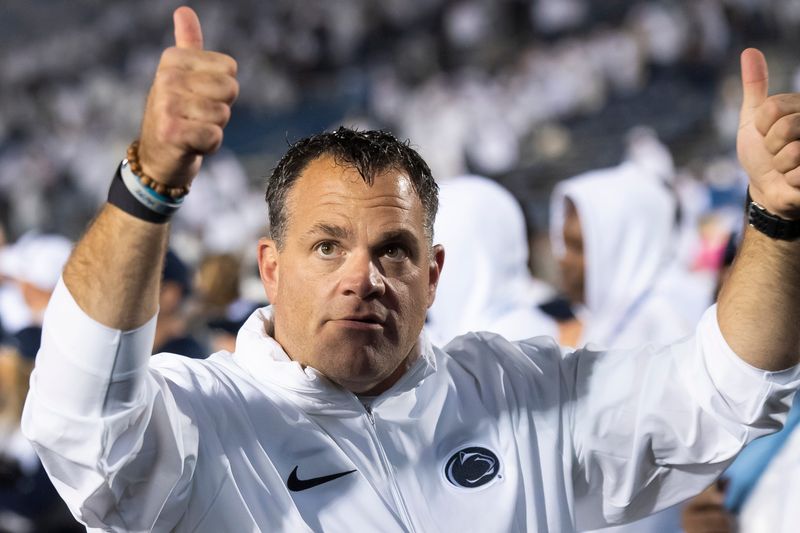
Penn State athletic director Pat Kraft gives two thumbs up to the student section following a 31-0 win in a football game against Iowa in 2023.
‘It’s a job’
To athletes, revenue sharing seems only fair, given many are so busy practicing and playing through summers and other breaks that they don’t have time to work.
“It is a job at the end of the day,” said former Villanova University basketball player Eric Dixon, who holds the Wildcats’ record as all-time leading scorer. “You put a lot of time into it every single day, every single week.”
Players get hurt and can see their sports careers harmed or halted, said Dixon, who grew up in Abington and played at Villanova from 2020 to 2025. College may be their only time to earn money for their sports prowess.
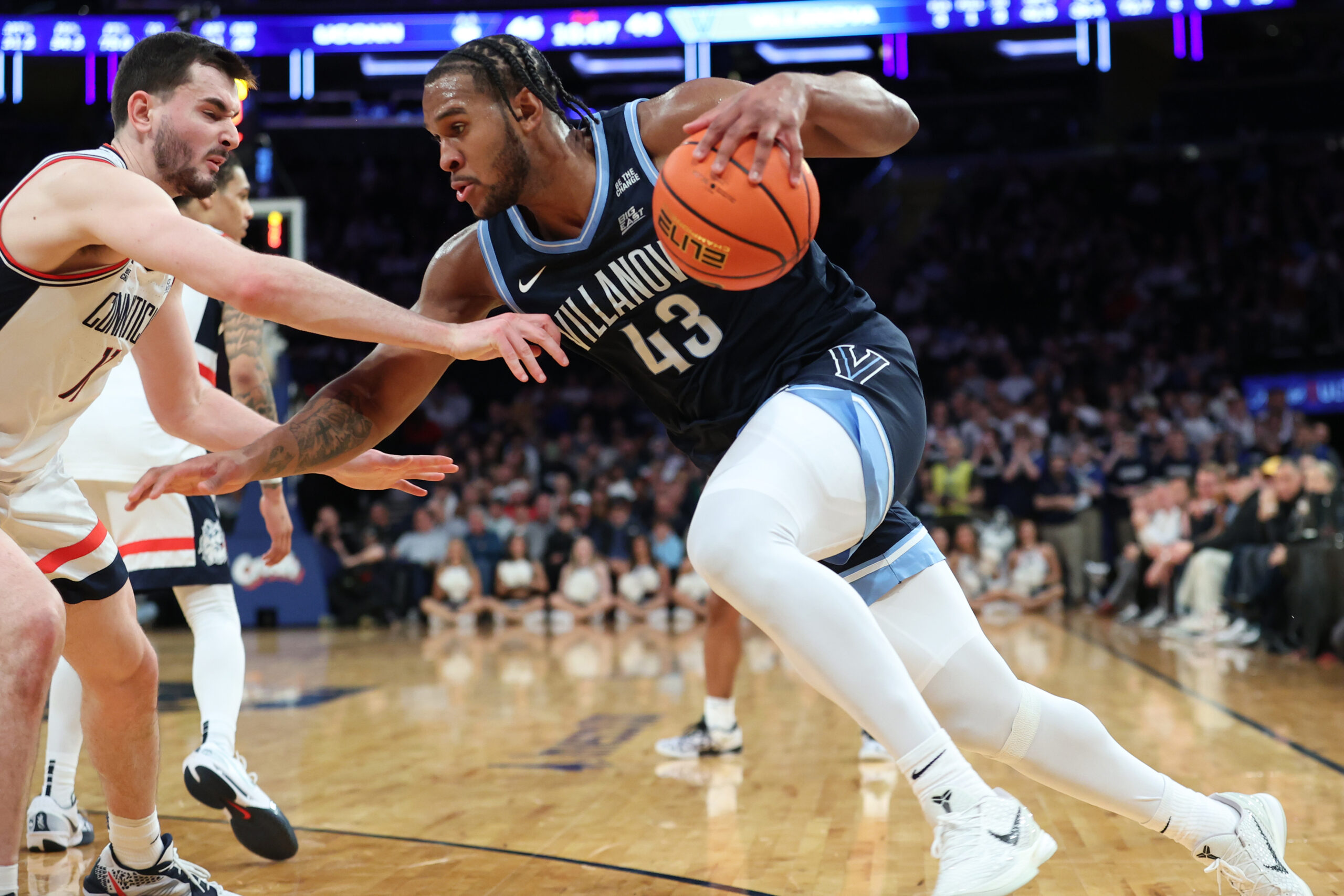
Villanova’s Eric Dixon drives against Alex Karaban of UConn during the 2025 Big East Tournament at Madison Square Garden in New York.
Dixon didn’tbenefit from revenue sharing. But he got money through external name, image, and likeness (NIL) endorsements and sponsorships that the NCAA began allowing in 2021. Dixon declined to specify how much he received, but said it was “seven figures” over four years and allowed him to help his family.
Like some other schools, Villanova, he said, provided players with financial guidance so they could make wise decisions on how to use their money.
External NIL arrangements, though, he said, were a little “like the Wild West.”(NIL compensation is allowed to continue under the lawsuit settlement, but deals of more than $600 have to be reported.) Revenue sharing from colleges will offer athletes more predictable income, said Dixon, who now plays for the Charlotte Hornets’ affiliated team in the G League.
Tyler Perkins, a Villanova junior from Virginia, currently plays for the Wildcats, who won national championships in 1985, 2016, and 2018. While he declined to say how much he is receiving, he said revenue sharing is helping him prepare for his future and “set up for the rest of my life.”
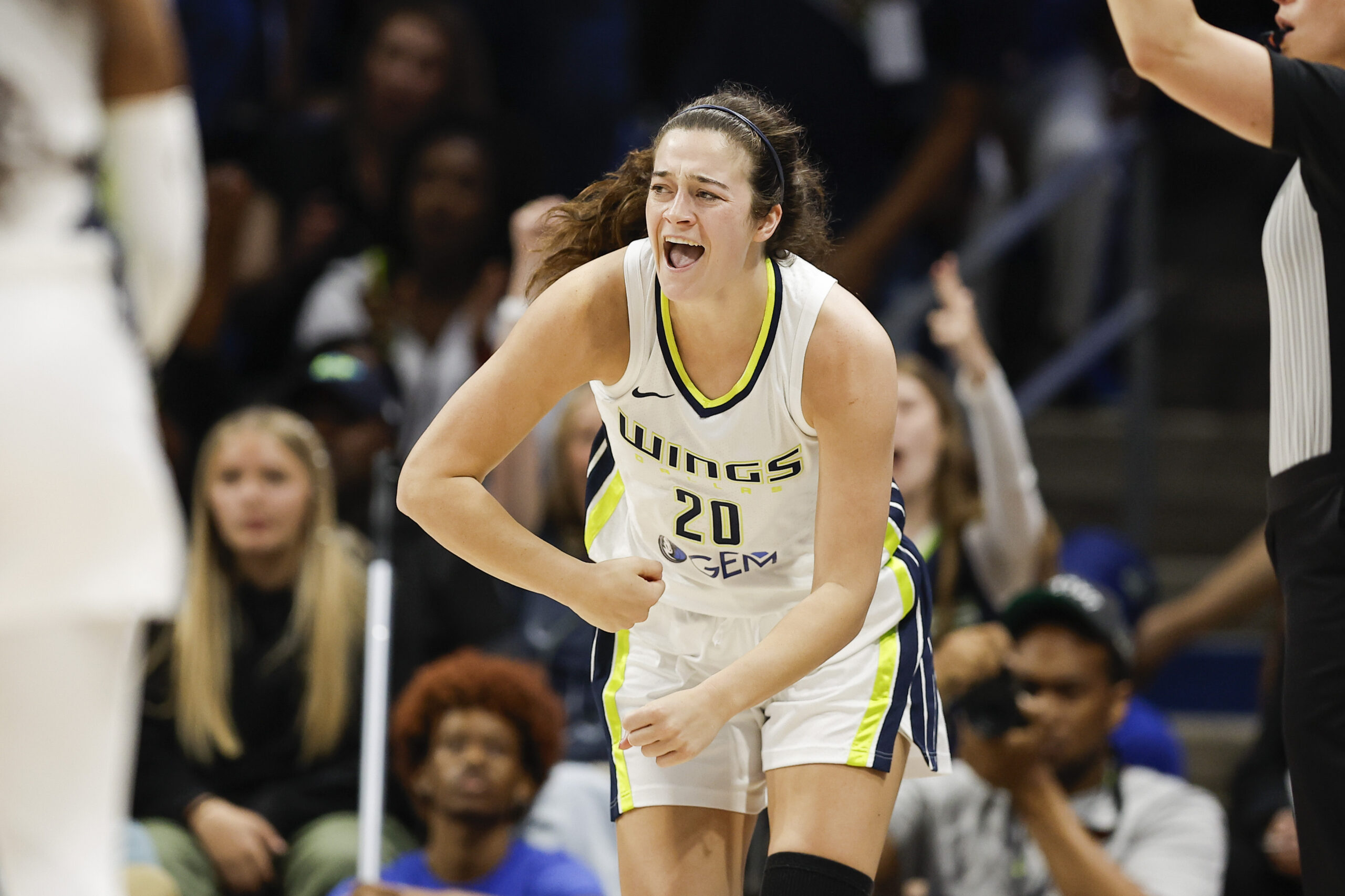
Maddy Siegrist, also a former Villanova basketball player who now plays for the Dallas Wings in the WNBA, is pleased universities are able to share revenue directly with athletes.
“It will be interesting to see how it all plays out,” said Siegrist, the Big East’s all-time leading scorer in women’s basketball and Villanova’s overall highest scorer, of men’s and women’s basketball.
Dallas Wings forward Maddy Siegrist celebrates a three-point shot during a WNBA basketball game against the Chicago Sky in 2024 in Arlington, Texas.
While the big revenue sports are likely to see the money first, she said, “I would hope there will be a trickle-downeffect where almost every sport is able to benefit.“
A lawsuit spurs changes
For years, there have been growing concerns that athletes were not getting their fair share of the profits from college sports, which make money onbroadcast rights, ticket sales, and sponsorships. Meanwhile, coaches can be among the highest paid in a university’s budget.
In 2020, former Arizona State swimmer Grant House became the lead plaintiff in House vs. NCAA, a class-action antitrust lawsuit that argued athletes should be able to profit from the use of their name, likeness, and image and schools should not be barred from paying them directly.
The settlement approved in June of that suit and two others against the NCAA requires the NCAA and its major conferences to pay $2.8 billion in damages to current and former Division 1 athletes. Another provision gave rise to the revenue sharing.
It initially applied to the major sports conferences: the Big Ten, Atlantic Coast Conference, Southeastern Conference, and the Big 12. Penn State belongs to the Big Ten and the University of Pittsburgh to the Atlantic Coast.
But other athletic conferences, along with many of their members, decided to opt in to the agreement to remain competitive in select sports. St. Joseph’s, La Salle, Villanova, Drexel, and Temple all are part of conferences participating in revenue sharing with athletes this year.
“We support student-athletes’ ability to pursue value among their peers and to leverage commercial opportunities that may benefit them or the institution,” said Maisha Kelly, Drexel’s vice president and director of athletics and recreation.
Temple belongs to the American Athletic Conference, which said its members must agree to pay at least $10 million over three years to its athletes. Johnson, Temple’s athletic director, noted that total also includes new scholarships, not just pay.
No tuition, state dollars to be used
Pitt alumnus J. Byron Fleck has called on the Pennsylvania State Board of Higher Education to advise three state-related colleges — Penn State, Temple, and Pitt — not to use tuition dollars, student fees, or state appropriations to fund athlete payments.He also asked lawmakers to take action.
“It doesn’t relate to any educational or academic purpose,” said Fleck, a 1976 Pitt alumnus and lawyer in California.
Karen Weaver, an expert on college athletics, higher education leadership, and public policy, said the same concerns about public funds being used to pay athletes have risen in other states, including Michigan and Washington.
But Penn State, Temple, and Pitt all said in statements that they would not use tuition, student fees, or state appropriations to fund revenue sharing with athletes.
“Penn State Intercollegiate Athletics is a self-sustaining unit of the university,” said Beasley, Penn State’s deputy athletic director.
Pitt said it would use athletic revenues.
In addition to donations, Temple, too, is using athletic department revenues, such as ticket sales, but it is also looking at other “nontraditional ways” to raise money, Johnson said.
“We’re turning over every stone,” he said.
Weaver, an adjunct professor at the University of Pennsylvania, said she worries that as the caps on revenue sharing get higher and costs grow, schools, especially those tight for cash, may start raising recreation and other student fees. The University of Tennessee added a 10% student talent fee for season ticket renewals, according to the Associated Press, while Clemson is charging a $150 per semester student athletic fee, according to ESPN.
Roedl, the Villanova athletic director, said in a statement that it had launched the Villanova Athletics Strategic Excellence (VASE) Fund to raise money for the payments.
“Additionally, we are looking for other ways to maximize revenue through ticketing, sponsorships, and events, and identifying cost efficiencies throughout our department,” he said.
St. Joe’s, which has about 450 student athletes, said that it started a Basketball Excellence Fund to raise revenue and that payments also are funded by the basketball program. Athletes that receive funds “serve as brand ambassadors for the university,” the school said in a statement. “… These efforts have included community engagement — particularly with youth in the community — and marketing initiatives that directly support the Saint Joseph’s University brand.”
La Salle declined to say how much student athletes receive or in what proportion.
“We can share that any funds provided to students come from external sources and not tuition dollars,” said Greg Nayor, vice president for enrollment management and marketing.
Weaver, author of a forthcoming book, Understanding College Athletics: What Campus Leaders Need to Know About College Sports, said plans that call for the bulk of revenue sharing to go to football and basketball players would lead to legal action, charging that female athletes are not being treated equally.
“Any day now I expect we’ll see a huge Title IX lawsuit,” she said.
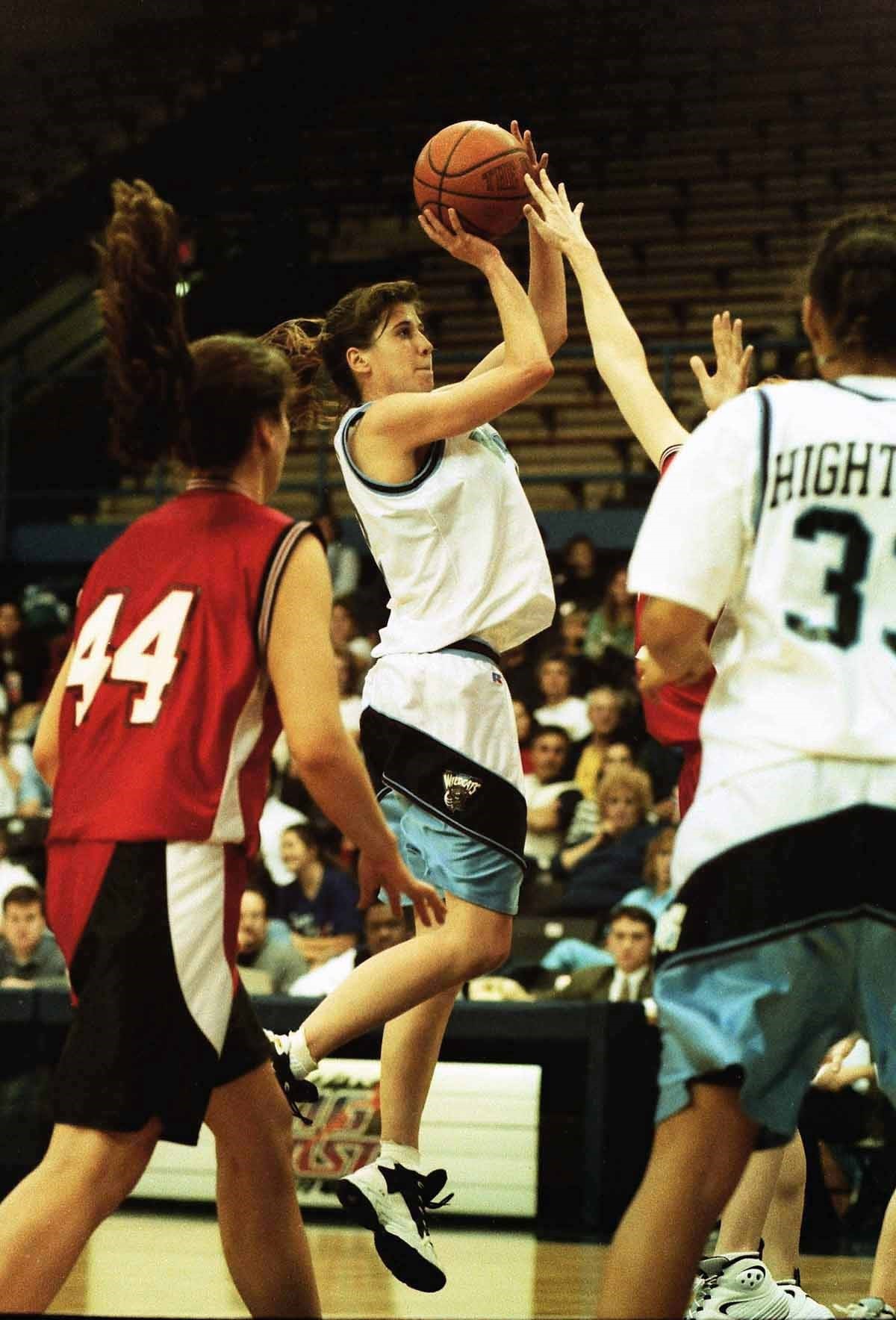
Since Denise Dillon’s playing days at Villanova, much has changed in the Big East — and college basketball in general. But one constant has been the presence of Geno Auriemma.
Auriemma has been the head women’s basketball coach at Connecticut since 1985, so he already was well-established by the time Dillon was playing for Villanova from 1992 to 1996. Dillon has continued to face Auriemma, who grew up in Norristown, since she took over as Villanova’s coach in the 2020-21 season.
Denise Dillon played for Villanova from 1992-96.
As the winningest coach in college basketball, Auriemma has been both an opponent and a mentor for Dillon over the years.
“I have the utmost respect for Geno,” Dillon said. “The wins column speaks for itself, but also just what he’s done for the game. He was a women’s basketball coach before it was popular and has seen how it’s evolved. But he’s always given back to the game, and by giving back to the game, he’s given to coaches.”
Villanova (14-3, 7-1 Big East) is second in the conference as it enters its biggest test of the season yet. The Wildcats head to Storrs, Conn., on Thursday for their first matchup this season with the Huskies (7 p.m., FS1).
No. 1 UConn (17-0, 8-0) looms over the Big East, with an average scoring margin of 38.1 points.
The defending national champions are led by the returning duo of sophomore forward Sarah Strong and graduate guard Azzi Fudd. Strong, the Big East’s leading scorer, averages 18.4 points and 8.1 rebounds.
UConn’s Sarah Strong, here being guarded by Villanova’s Ryanne Allen in a game at Finneran Pavilion last season, currently is the Big East’s leading scorer.
Auriemma’s characteristic high-pressure defense has overwhelmed opponents this season. The Huskies have limited opponents to just 51.8 points per game.
The Huskies won soundly in each of last year’s meetings with the Wildcats. Their last regular-season matchup was a 100-57 rout on Jan. 22, 2025, in Storrs. UConn also has knocked Villanova out of the Big East tournament in three of the last four seasons.
Under Dillon’s leadership, Villanova has posted a 1-9 record against UConn, which has claimed the conference title every year since rejoining the Big East in 2020-21, the season when Dillon took over on the Main Line.
Villanova veterans like graduate forward Denae Carter and sophomore guard Jasmine Bascoe anticipate the intensity of a matchup at a loud UConn home court.
“Playing [UConn] at any point is a challenge, but seeing them the first time this year on the road will be one that we’re going to rely on some of those who have experienced it, just to prepare the others,” Dillon said.
When it comes to attacking UConn’s press, Villanova aims to utilize the depth that has led to success in conference play.
With the additions of junior forward Brynn McCurry, who missed last season with an injury, and graduate forward Kylee Watson, a Notre Dame transfer, the Wildcats have a much different look than the last time they traveled to Storrs.
“A key point for us has always been having those versatile post players, with Denae Carter, Brynn McCurry, and Kylee Watson, and making sure that they are ready and willing to initiate the offense for us, being there with the press break,” Dillon said.
From left, Denae Carter, Jasmine Bascoe, and Brynn McCurry will be key players for Villanova in Thursday’s matchup with UConn.
Since UConn has a grip on the top spot in the conference, stacking wins over other Big East rivals has been crucial for Villanova. A 85-69 loss to Marquette on Jan. 4 provided what Dillon called a “wake-up call” for the team.
“There were lessons learned out there in Milwaukee against a very good Marquette team,” Dillon said. “It just shows that if you don’t come in mentally ready for the battle of the Big East, you’re going to get taken advantage of.”
Auriemma and the Huskies continue to uphold top-tier standards for the Big East. In Dillon’s view, Thursday’s trip to Storrs will be a chance for Villanova to compete against the nation’s best and show its program-wide improvement.
“It does start with that mental prep of where we need to be in order to embrace some of the blows we’re going to take in the game,” Dillon said. “That’s what we want this group to recognize: You have an opportunity to get better together every time you step on the floor. So take it in one possession at a time, as we say with every game, and see where we stand. Fight till the end.”
Villanova picked up its fourth consecutive Big East road win Tuesday with an 88-82 victory at Providence.
Villanova (14-3, 5-1 Big East) was able to outscore Providence (8-9, 1-5), which entered the game averaging 89.1 points. Devin Askew led the Wildcats with 20 points and seven assists off the bench.
“I thought we did a good job in the first half of slowing them down,” coach Kevin Willard said. “We gave up a lot of twos, but once a game gets up and down, sometimes you’ve got to find ways to score. And I think against them, you’ve got to get up and down a little bit.”
The Friars were the highest-ranked KenPom offense (36th) Villanova has faced since its 89-61 loss to Michigan on Dec. 9. Providence’s leading scorer Jason Edwards, who is scoring 17.2 points per game, missed Tuesday’s matchup because of a foot injury.
Three Friars — Jaylin Sellers (24), Jamier Jones (23), and Stefan Vaaks (21 points) — combined for 68 of their 82 points.
“You’ve got to match [Providence’s] pace,” Willard said. “[Even] on the road, where I don’t like to do that. They just get out and go so well. And they have so many guys that can hurt you that you’ve got to take advantage and go right back down.”
The Wildcats collected 14 offensive rebounds, with Duke Brennan being responsible for five of them. Brennan totaled 14 points and eight rebounds.
Villanova shot 32-for-64 from the field, 10-for-28 beyond the arc.
Villanova guard Tyler Perkins, shown on Nov. 15, scored 15 points on Tuesday night.
Perkins is rejuvenated
Tyler Perkins scored 15 points for the Wildcats, shooting 6-for-12 from the field, along with eight rebounds.
He came up big in key moments, especially in the second half. Perkins scored on a post-up in the paint while Providence was trying to cut into Villanova’s double-digit lead.
“That was huge because that kind of got us back up [by eight points],” Willard said when asked about Perkins. “I thought [that] was huge at that point.”
Perkins is averaging 14.4 points and 5.4 rebounds on 48% shooting over the last five conference games.
Villanova’s bench helps drive offense
Outside of Askew, Villanova’s bench has been quiet offensively since conference play began. Askew scored eight points during a 10-0 scoring run early in the first half.
He has come off the bench in all of Villanova’s games this season besides the season opener against Brigham Young.
During conference play, Askew has developed into a veteran Willard can lean on in difficult moments. Askew is averaging 10.8 points over his last five games.
Malachi Palmer collected 10 points in the first half to tie his career high, which he set at Maryland last year.
“My mindset is just come in and play as hard as possible and whatever happens, happens,” Palmer said.
Being unselfish
Willard has consistently talked about the unselfishness of his team this season. Acaden Lewis has been the prime example of what Willard has harped on.
The four-time Big East Freshman of the Week dished out a team-high eight assists while scoring only seven points, marking his fourth consecutive and ninth overall game with six or more assists.
Villanova guard Acaden Lewis, shown last week against Creighton, had a team-high eight assists on Tuesday night.
As a whole, Villanova had 21 assists, its second-best total this season. The Wildcats had 28 against Sacred Heart on Nov. 11.
Six of eight Villanova players who played collected at least one assist.
Up next
Villanova will host St. John’s (12-5, 5-1) in its first game at the Xfinity Mobile Arena this season on Saturday (8 p.m., Peacock). St. John’s entered the season ranked in the AP Top 25 poll, but has since dropped out.
Villanova split the regular-season series with St. John’s last year.
Powered by its star newcomer, Villanova snapped a losing streak at Marquette that was approaching six years long.
It took the game’s final minutes, but, fueled by Acaden Lewis, the Wildcats won, 76-73, marking the first time since Dec. 23, 2020, that they beat Marquette on the road. Lewis, a freshman guard who has impressed since arriving on the Main Line, scored a team-high 20 points and had eight assists, tying a career-best.
Villanova (13-3, 4-1 Big East) picked up its third consecutive conference road win. Wildcats coach Kevin Willard noted that while he’s pleased, replicating that success inside the Finneran Pavilion has been a challenge.
“I think we’ve really developed a road identity,” Willard said. “I think we need to take that identity and bring it home and really have that same kind of dog mentality that we have on the road at home. I think if we can develop that same attitude, we’ll continue to get better.”
Lewis, the four-time Big East Freshman of the Week, is averaging 12.5 points and 5.0 assists.
Despite being outscored in the second half for the second consecutive game and third time this season, Villanova shot 48.2% in the second half to escape Milwaukee. Graduate guard Devin Askew led Villanova’s second-half effort with 13 points off the bench.
“[Devin] has been playing really well,” Willard said. “The last four or five games, [he] hasn’t been shooting well, but he’s been playing well. And I thought he got a couple of good mismatches, hit a couple of really big pull-up jumpers that kind of settled us down and kept the lead going.”
Overall, the Wildcats shot 31-for-56 (55.4%) from the field, including 7-for-25 from beyond the arc, and 7-for-7 from the free throw line.
Defensive ups and downs
Villanova struggled defensively to stop the worst three-point shooting team in the Big East from beyond the arc in the first half. However, the Wildcats shut Marquette down in the second half, though they lacked defensive stops throughout the game, much like in their four-point home loss to Creighton on Wednesday.
The Golden Eagles (6-11, 1-5) entered the game 340th in the country in three-point percentage, averaging 29.5% but shot 11-for-31 on three-pointers on Saturday. Nigel James Jr. led the way with a career-high 31 points, shooting 7-for-9 from deep.
James was perfect in the second half offensively with 12 points, shooting 4-for-4 from the field, including 2-for-2 from beyond the arc. Royce Parham scored 15 of his 17 points. The duo accounted for 27 of Marquette’s 35 second-half points.
“[Marquette was] just scrappy,” Askew said. “They were playing hard, and I’m glad we could pull it through.”
In the second half, Villanova held Marquette to 3-for-13 (23.1%) from beyond the arc and 11-for-24 (45.8%) from the field.
Villanova got into foul trouble in the back half of the game. Duke Brennan (12 points, four rebounds), the nation’s third-leading rebounder, picked up four fouls in the second half and fouled out with 4 minutes, 29 seconds to go.
After Brennan’s fourth foul, at the 8:28 mark, Villanova shifted to a small-ball lineup, with Matt Hodge (14 points, five rebounds) at center.
“Luckily [Marquette] went small,” Willard said. “So we were able to play [Hodge] at the five and Malachi [Palmer] at the four. And so we didn’t have to really worry about battling something at the rim. We were able to kind of go small with them.”
Villanova committed 16 personal fouls, and Marquette was in the double bonus with 8:13 to go. Marquette shot 12-for-15 (80%) from the free-throw line.
Up next
Villanova will look to make it four straight away from home in a road game against Providence (8-7, 1-3) on Tuesday (6:30 p.m., FS1). Providence defeated Villanova, 75-62, in Rhode Island in the teams’ last matchup.
After a deep semifinal run in the Football Championship Subdivision playoffs, Villanova football will have to retool its roster for an upcoming inaugural season in the Patriot League.
Villanova lost a large portion of its starters to the transfer portal or graduation. With Power Four programs being able to spend more money on players, it is becoming increasingly difficult for Villanova to retain its players.
The program will be losing at least 15 players who no longer have collegiate eligibility. Notably, that includes quarterback Pat McQuaide, wide receivers Luke Colella and Lucas Kopecky, most of the offensive line, and linebackers Shane Hartzell and Richie Kimmel.
Nine players have officially entered the transfer portal, with three of them already committing to new schools.
Villanova historically is a program built on culture and growth. The program has retained key assets each offseason over the last six years. Current Buffalo Bills defensive back Christian Benford spent four years with the Wildcats and was drafted in the sixth round of the 2022 NFL draft. Benford recently signed a $76 million contract with the Bills last March.
Last year, Villanova convinced David Avit to return to the program after he entered his name in the transfer portal and visited multiple Football Bowl Subdivision programs.
Villanova has to fill some key position openings for the 2026 season.
Here is where Villanova stands one week into the transfer portal window, which closes next Friday.
David Avit (left) departed Villanova for Arizona State via the transfer portal.
Portal addition and subtractions
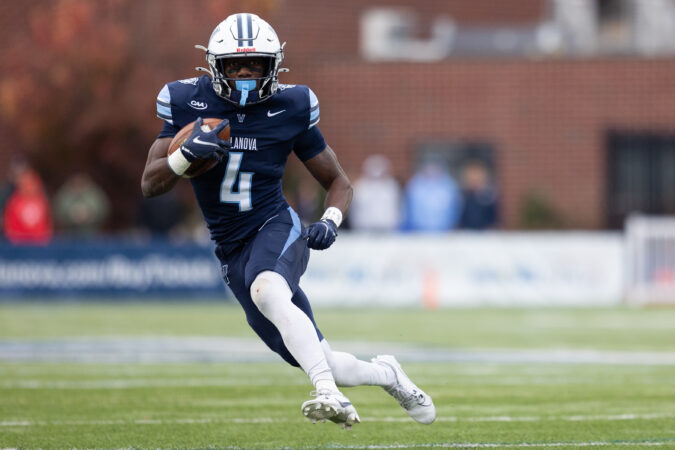
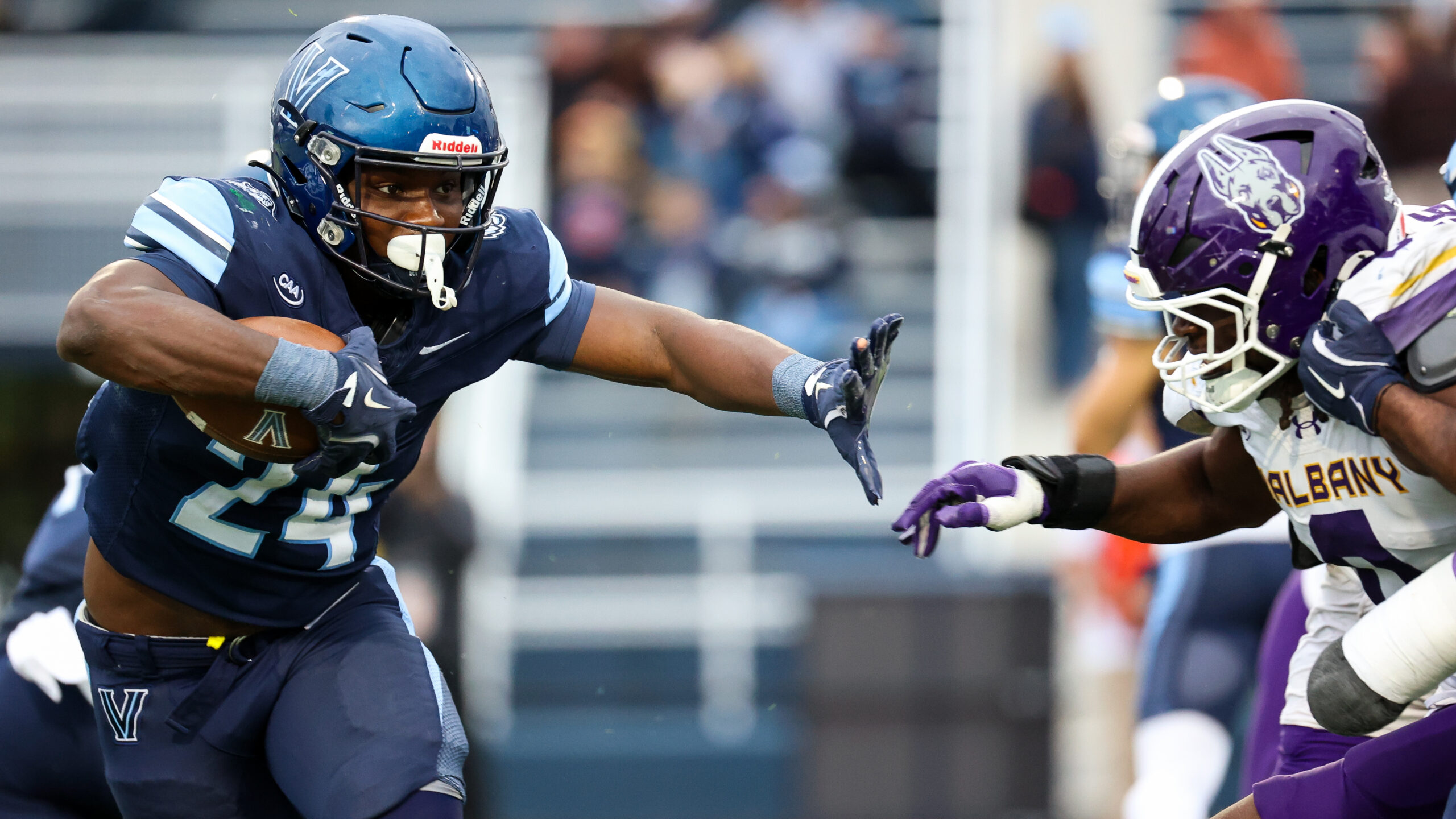
Villanova is bringing back Ja’briel Mace, who had a breakout season at running back and as a kick returner.
Mace withdrew his name from the transfer portal and announced he was returning to Villanova for the 2026 season on social media. The 5-foot-9, 175-pound running back rushed for a career-high 946 yards and 11 touchdowns on 128 carries..
Avit entered the transfer portal and quickly toured Arizona State before committing officially the following day on Jan. 4. The former Coastal Athletic Association offensive rookie of the year, Avit was Villanova’s main running back this past season. He rushed for 687 and eight touchdowns on 125 attempts until he suffered a knee injury against Towson on Nov. 8. It forced him to miss five consecutive games.
Defensive back duo redshirt sophomore Zahmir Dawud and redshirt freshman Anthony Hawkins also departed from Villanova via the transfer portal. Dawud, who only allowed one touchdown in coverage last season, committed to Rutgers in his hometown state of New Jersey.
Hawkins, a FCS Freshman All-America honoree, committed to Iowa.
Tight end Antonio Johnson, defensive back Nino Betances, offensive lineman Capri Martin, defensive back Damill Bostic Jr., and punter Daniel Mueller remain in the transfer portal.
As of Thursday, Villanova has not signed anyone from the transfer portal.
High school class
Villanova signed 13 high school recruits on National Signing Day on Dec. 3. Five recruits signed to join Villanova’s offense, and eight signed to its defense.
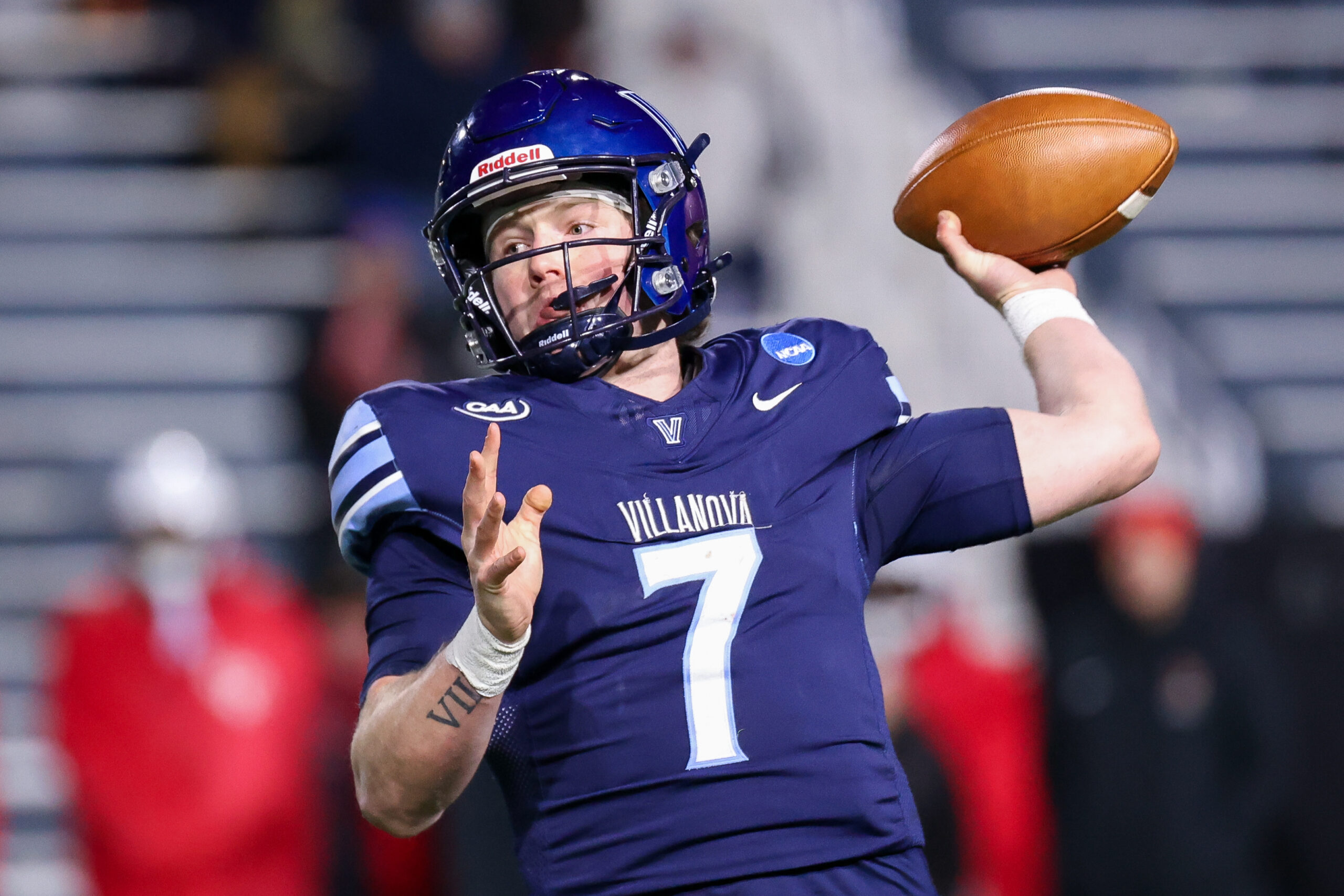
Villanova quarterback Pat McQuaide is graduating, leaving a vacancy at quarterback next season.
Who will be the next quarterback?
McQuaide has exhausted his eligibility. He became Villanova’s starter after a quarterback battle with junior Tanner Maddocks the entire summer camp. Maddocks ended up being Villanova’s backup quarterback and saw playing time late in games.
While Maddocks still had two years of eligibility remaining, he announced on LinkedIn that he had “wrapped up (his) time” with Villanova football. He instead is going forward full-time with his faith-branded energy drink brand, Agape Energy.
That means Villanova’s next starting quarterback is unknown. Villanova had seven quarterbacks on its roster last season. It could be a position that Villanova could pursue in the transfer portal after McQuaide’s success.
No current rostered quarterbacks have played any snaps under center for Villanova.
After getting Kopecky, a former Villanova lacrosse player, an extra year of football eligibility and adding Colella out of the transfer portal last year, the Wildcats had legitimate receiving weapons.
Villanova will now need to replenish its wideouts along with having a new quarterback under center. Colella caught a team-high 77 receptions, totaling 1,071 receiving yards and eight touchdowns.
Retooling the defense
There will be needs at various positions on Villanova’s defense, including at linebacker and in the secondary.
In addition to Dawud and Hawkins’ departures to the portal, Villanova also lost safety Christian Sapp, who is out of eligibility. Villanova had depth on its defense in 2025, but it will need to refill its depth chart even if the current rostered players step into starting positions.
At linebacker, Hartzell and Kimmel are large holes that will need to be filled after five years.
With the depth at linebacker, Villanova still has redshirt freshman Omari Bursey and juniors JR Strauss and Turner Inge, who will step into the starting roles as long as they remain on the Main Line.
Villanova maintained second place in the Big East women’s basketball standings with a 67-50 victory over Xavier on Thursday afternoon at the Finneran Pavilion.
On Sunday, Villanova (13-3, 6-1 Big East) was handed its first conference loss by Marquette, which snapped a 10-game winning streak. The loss also dropped Villanova from No. 28 to No. 34 in the NCAA’s NET rankings.
But the Wildcats bounced back against the Musketeers, thanks to junior guard Kelsey Joens. The Iowa State transfer scored a career-high 18 points on six three-pointers with four rebounds.
Villanova’s Kelsey Joens finished with a career-high 18 points against Xavier on Thursday.
The Wildcats’ three-point shooting propelled their win. Villanova made 15 of 32 three-pointers, while Xavier shot 4 of 13.
Sophomore guard Jasmine Bascoe added 15 points along with four rebounds and seven assists. Bascoe is the conference’s third-leading scorer, averaging 17.5 points.
Dropping threes
The Wildcats shot 5-for-9 from deep in the first quarter, which set the tone.
Villanova started to break away at the end of the first quarter, scoring eight consecutive points to take a 17-11 lead. To open the second, Villanova’s scoring run stretched to 11-0.
From there, the Wildcats maintained a double-digit lead and entered halftime with a 33-20 advantage.
Villanova held Xavier (9-7, 2-5) to 35% shooting from the field, including 2-for-9 from deep, and exploited its errors, as the Wildcats scored 18 points off turnovers in the first half.
Bascoe controls the court
The Musketeers picked up their shooting in the second half. Xavier went on an 8-0 run across 2 minutes, 35 seconds, shrinking Villanova’s lead to seven.
Bascoe took care of Villanova’s response. With two minutes left in the third quarter, she notched a steal and drove to the basket for an uncontested layup. Bascoe then assisted a Joens three-pointer to end the quarter.
Villanova succumbed to Creighton, 76-72, marking its first home and conference loss of the season on Wednesday night.
Villanova (12-3, 3-1 Big East) had its five-game winning streak snapped and picked up its first defeat since Dec. 9. The Wildcats could not find defensive stops in the second half, which was coupled with poor three-point shooting. Creighton (10-6, 4-1) pulled away after shooting 18-for-27 (67%) from the field in the second.
Acaden Lewis finished with a team-high 20 points for Villanova. He dished out five assists within the first few minutes of the game and ended with seven and only one turnover. The freshman guard also collected a game-high three steals. Lewis is averaging 13.4 points and 4.3 assists in conference play.
In the paint, ’Nova’s Duke Brennan continued to be a force, picking up his sixth double-double of the season with 16 points and 12 rebounds (seven offensive).
Villanova guard Acaden Lewis led the team with 20 points against Creighton on Wednesday.
Villanova shot 44% from the field and 25% from beyond the arc, compared to Creighton’s 50% on field goals and 30.4% on three-pointers.
Next, Villanova will visit Marquette (6-10, 1-4) on Saturday at 2:30 p.m. (TNT/truTV). The Wildcats lead the all-time series, 28-20.
Decisive second half
For just the second time this season, Villanova was outscored in the second half, 46-38. The only other time was in the 76-66 overtime win against Wisconsin on Dec. 19.
Villanova had no answer defensively for a surging Creighton offense. The Bluejays spun off a 13-2 run, while Villanova went on a three-minute scoring drought.
Kevin Willard coaching Villanova during the second half against Creighton on Wednesday.
“I thought [the Bluejays] did a really good job of using their size to their advantage,” Villanova coach Kevin Willard said. “I thought [Josh] Dix and [Blake] Harper made some really big plays just using their size against us, and every time we tried to get a stop. You’ve got to give those two credit. They played really well.”
Creighton made Villanova’s best shooter, redshirt sophomore Bryce Lindsay, a nonfactor. Lindsay, who averaged 45.8% from deep in the last three games, went 0-for-3 on three-pointers against Creighton. Villanova made only 2 of 12 three-pointers in the second half.
“We had our opportunities at the rim,” Willard said. “I thought [Jasen] Green had two really good wall-ups towards the end, but we had our opportunities. It had nothing to do with [our] offense. It was totally just abysmal defense.”
Beaten on the boards
Villanova kept Creighton at bay in the first half, and at one point led by25-15. However, it all slipped away after halftime. Villanova gave up 13 offensive rebounds, which Creighton turned into 11 second-chance points.
“Just defense,” Willard said when asked about what he took away from the loss. “I thought we took some bad shots in the first half, when we had a good run going. And I thought we were playing good defensively early. So I thought our offense in the first half was the issue. But defensively, you just can’t give up 13 offensive rebounds to a Greg McDermott team. You’ve got no chance.”
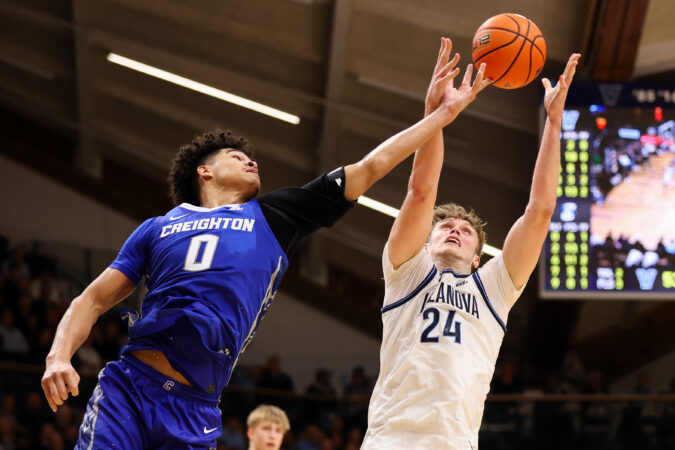
Villanova forward Duke Brennan (center) reaches for the ball against Creighton guard Ty Davis (9).
Brennan was quick to take accountability for Villanova’s defensive performance.
“Being a senior, I need to adjust my ball-screen coverages on different teams as we play,” Brennan said. “I don’t think I did a great job at it tonight, but I do look at the film and help out our defense. I’m that line for us.”
Creighton’s 76 points were the most a conference opponent has scored against the Wildcats this season.
Watching rotations
At the beginning of the season, Willard consistently rotated nine to 10 players each game. Injuries limited the rotations with Devin Askew and Zion Stanford missing time to start the season. Villanova had multiple games with eight or more scorers.
Now, it looks like Willard has found his rotations that work efficiently. The coach has leaned on his starting five of Lewis, Lindsay, Tyler Perkins, Matt Hodge, and Brennan for a bulk of the minutes, with most of them playing an average of 30 minutes or more.
As of recently, only Askew and Malachi Palmer have had meaningful minutes off the bench. Freshman guard Chris Jeffrey has missed the last five games due to a knee injury that required surgery, sidelining him indefinitely.