Category: Crime & Justice

  • Defense lawyers seek to block AG’s appeal of overturned murder convictions

    Defense lawyers seek to block AG’s appeal of overturned murder convictions

    Lawyers for three Philadelphia men whose murder convictions were overturned in May are asking a judge to block the Pennsylvania Attorney General’s Office from intervening in the case in an effort to reverse that outcome.

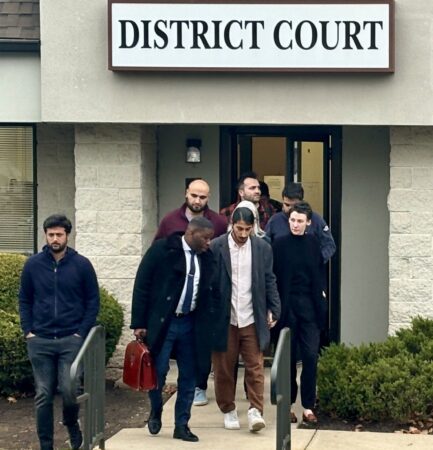
    Attorneys for Marc Brittingham, Jermal Shuler, and Rasheed Turner have asked Common Pleas Court Judge Jennifer Schultz to reject state prosecutors’ effort to appeal the decision that allowed the men to go free. The lawyers said the office did not have the right to intervene at this late stage.

    On June 16 — three weeks after the men’s convictions were vacated — the Pennsylvania Supreme Court issued a landmark decision expanding the state’s role in Philadelphia’s post-conviction cases. But that ruling, the lawyers said, doesn’t apply retroactively.

    At issue is whether the authority of the attorney general’s office extends to cases still within a window for appeal when the court issued its sweeping decision granting state prosecutors new power to step into post-conviction cases in Philadelphia.

    The answer could determine how broadly the attorney general’s office can exercise its new authority.

    Last week, the office sought to intervene in the case of Brittingham, Shuler and Turner, whose convictions in the 1997 killing of Essie Mae Thomas were vacated after Philadelphia prosecutors, defense attorneys, and the judge agreed that newly uncovered evidence had undermined their confidence in the jury’s verdict.

    The attorney general’s office filed notices seeking to intervene and appeal 29 days after Schultz vacated the convictions, prosecutors withdrew the charges, and the men were released from prison after more than 28 years.

    The move marked the office’s first effort to invoke the high court’s ruling, a sharply worded decision in which it accused Philadelphia District Attorney Larry Krasner’s office of repeatedly misleading courts while seeking to overturn convictions. The court ordered that, going forward, trial judges must notify the attorney general’s office whenever Philadelphia prosecutors concede post-conviction relief and give it an opportunity to review the case and potentially intervene.

    The filings also underscore a complication the Supreme Court anticipated. The deputy attorney general assigned to the case, Hugh Burns, previously worked in the Philadelphia District Attorney’s Office, where he opposed earlier appeals by Brittingham, Shuler, and Turner to seek DNA testing in an effort to have their convictions reversed.

    Justice Christine Donohue warned that the new intervention process could create conflicts when former Philadelphia prosecutors now employed by the attorney general’s office are asked to defend convictions they previously handled.

    Defense attorneys say Burns’ involvement highlights that concern. They also described the attorney general’s effort as part of “an ongoing political and ideological battle” between state prosecutors and the district attorney’s office, arguing that Brittingham, Shuler, and Turner “should not be caught in the crossfire.”

    The lawyers say the Supreme Court’s order forecloses the attorney general’s attempt to intervene. In its decision, the high court wrote that state prosecutors have “the right to intervene” in any case where the district attorney’s office concedes relief “before [a] ruling on the concession” is made.

    The attorney general’s office, they said in the filings, is attempting to “change the rules after the fact.”

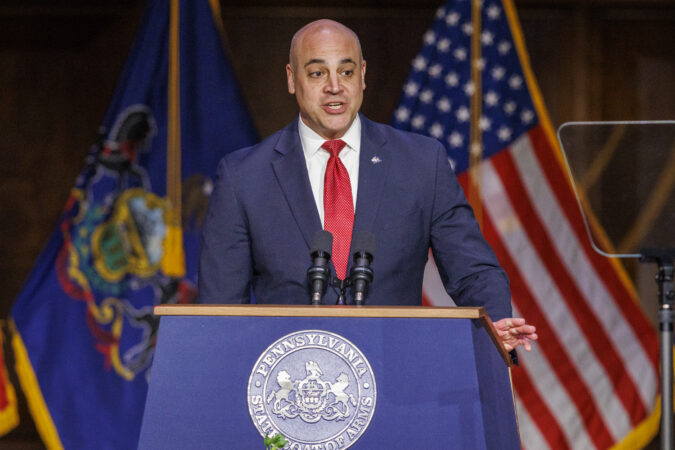
    Attorney General Dave Sunday did not respond to questions about the case.

    In a statement Tuesday, he said, “I don’t think that it benefits anyone for criminal justice leaders to editorialize a lot of the work we do. We intend to litigate in the appropriate venue — the courts.“

    He added: “The last thing individuals who live in the community want to hear are elected officials yelling at each other. They want to see outcomes.”

    In an earlier interview with The Inquirer, Sunday said that after the high court ruling, his office would be reviewing “cases that are still going through the appellate process.”

    In this case, the district attorney’s office sided with the defense, saying in its own filing that the high court’s decision created a right to intervene “before [a] ruling,” not after. While prosecutors said they would comply with the court’s directive in future cases, they argued that nothing in the decision authorizes intervention in this case.

    In a statement filed in the men’s case, Burns acknowledged that the state Supreme Court had not yet issued its ruling when Schultz granted the men their freedom. Even so, he asked whether the court should temporarily vacate its order to allow the attorney general to intervene.

    Burns’ filing does not challenge the evidence that prompted prosecutors to support overturning the convictions.

    That evidence centered on newly disclosed information about the disciplinary history of Bennett Preston, a former assistant medical examiner whose testimony at trial helped establish Thomas’ time of death — testimony prosecutors later concluded was unreliable.

    Two forensic pathologists hired by defense attorneys and prosecutors also concluded that Preston had incorrectly estimated when Thomas died. Schultz found that the new information likely would have changed the outcome of the trial had jurors heard it before issuing their verdict.
  • Police find ‘significant amount’ of blood inside Olney house linked to investigation of missing women, sources say

    Police find ‘significant amount’ of blood inside Olney house linked to investigation of missing women, sources say

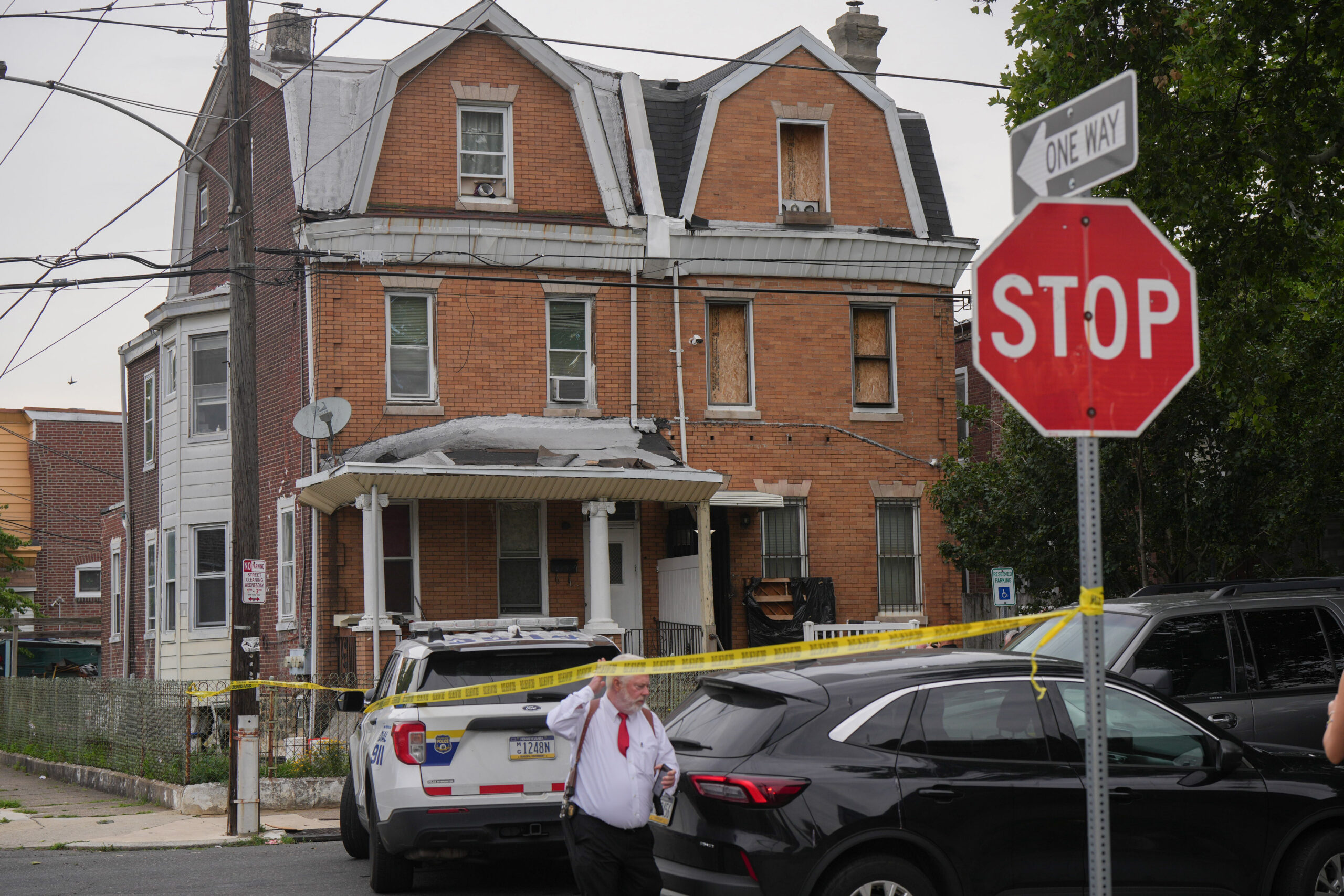
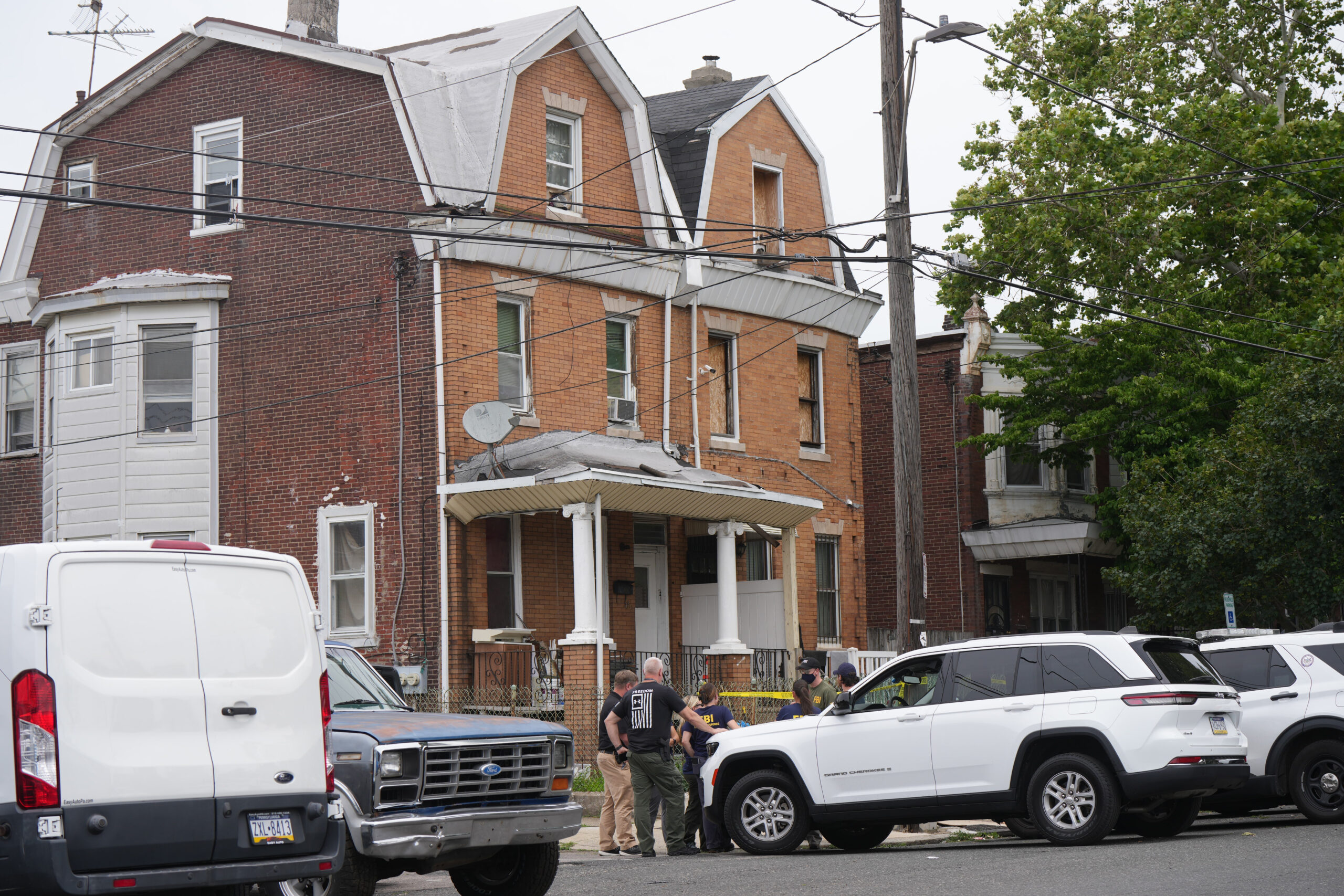
    Philadelphia police found a “significant amount” of blood inside the decrepit Olney house linked to the investigation of at least two missing women, multiple law enforcement sources said.

    The sources, who spoke on the condition of anonymity to discuss an ongoing investigation, said forensic testing has not yet determined whose blood it is or whether it’s even human — a process that could take several weeks to complete. But, the sources said, police are prepared to excavate the front and backyards of the West Chew Avenue home in the coming weeks in search of potential human remains.

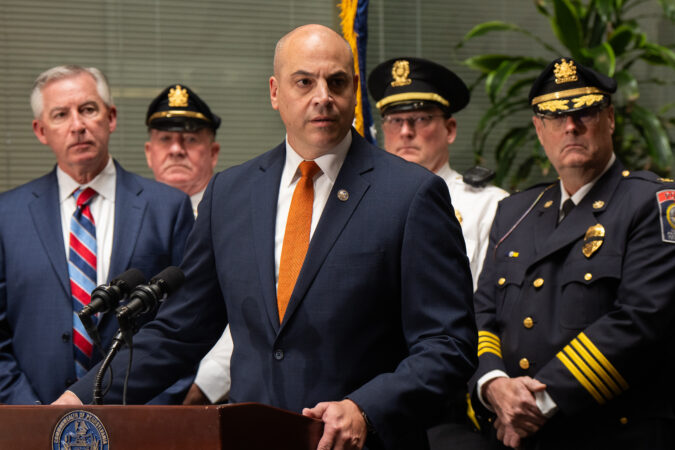
    Deputy Police Commissioner Frank Vanore declined to confirm or comment on the discovery Monday afternoon, citing the ongoing investigation. Vanore said Friday that police had not recovered any human remains from the home and were awaiting testing of the tubs of chemicals and other materials found in the basement.

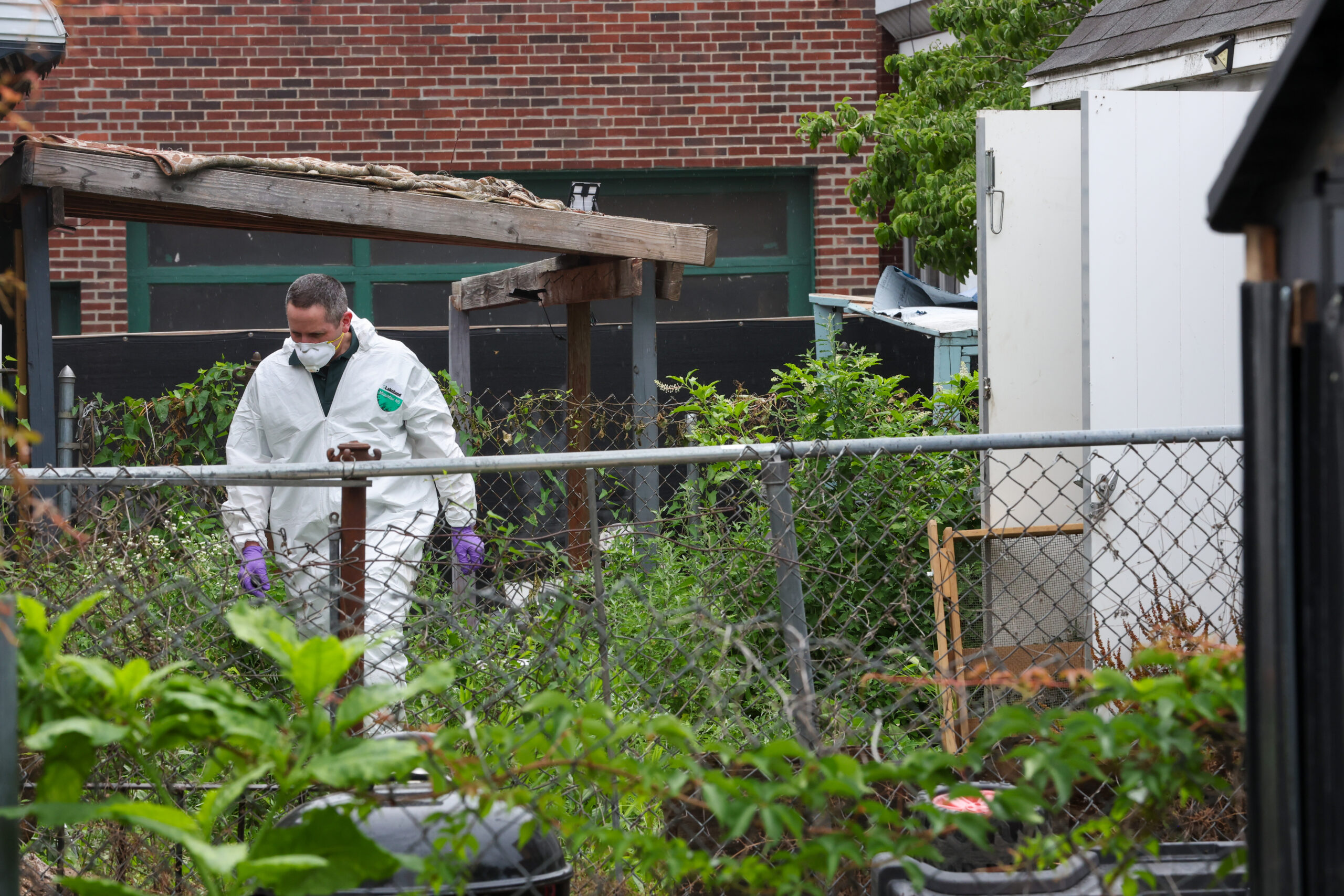
    Forensic investigators search the backyard of 417 W. Chew Ave. on June 27.

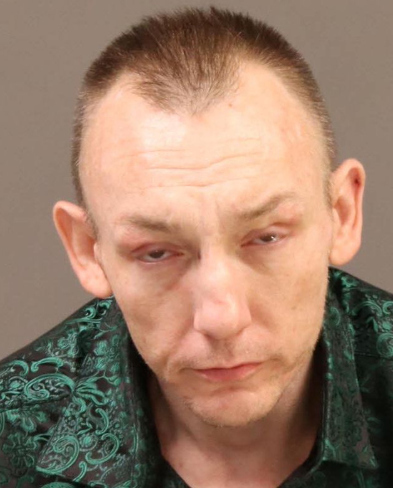
    The finding marks the latest development in an unusual saga that began after the arrest of Eugene Albert Horsch, 44, the owner of the Olney home now being searched by law enforcement for a second week in connection with the disappearance of at least two women who have been missing for years.

    Horsch was arrested June 19 after U.S. Park Police saw him parked in his black BMW near Sixth and Market Streets, acting suspiciously. When a ranger approached the car, police said, he heard a woman in the back seat say, “You’re going to hurt me” and saw drug paraphernalia.

    Police searched the car and reported recovering two guns with obliterated serial numbers, as well as cocaine, fentanyl, and marijuana, a cattle prod, switchblade knives, handcuffs, and a fake U.S. Drug Enforcement badge featuring Horsch’s photo.

    The woman with Horsch falsely identified herself to the officers as Blair Tonzelli, a 38-year-old woman who had been reported missing in Kensington in 2023, police said.

    The woman, 39, later told investigators that she gave Tonzelli’s name because she had open warrants for her arrest in ongoing drug cases and that Horsch had made her fake identification cards in that name and said she could use it if she was ever stopped and questioned by police, sources said.

    Eugene Albert Horsch, 44, was arrested June 19 for illegal gun possession and drug crimes.

    The woman said she did not know Tonzelli or even that she was missing — but the way Horsch spoke about her and other women made her feel like something bad had happened to her, the sources said.

    Philadelphia homicide detectives then began reviewing that missing woman’s case, and, alongside federal law enforcement, searched Horsch’s home at 417 W. Chew Ave. last week.

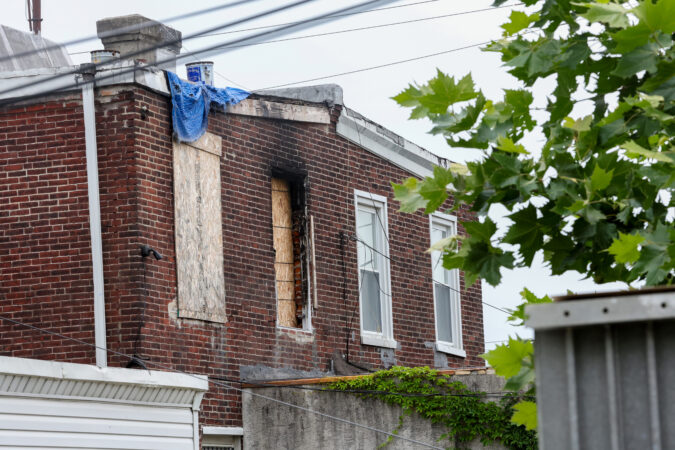
    That search produced a trove of bizarre discoveries: a basement with drums filled with chemicals, bottles of unknown substances, Tonzelli’s bank card, the death certificate of another woman, and what appeared to be urns holding at least one of Horsch’s relatives’ cremated remains.

    Investigators also found another handgun, materials used to grow marijuana, and a 55-gallon drum with connections to waterlines leading into a hole in the ground.

    Federal investigators also discovered a multipage, unsigned, handwritten letter that appeared to describe hurting people and referenced the serial killer Ted Bundy, according to the affidavit of probable cause to search the home that was obtained by The Inquirer.

    Eugene Horsch lived at 417 W. Chew Ave. with his father until he died last year.

    Law enforcement sources said police were working to determine whether the writings were part of a novel or screenplay. Horsch’s late father, Raymond “R.C.” Horsch was a known drug manufacturer and erotic filmmaker who had published several works of fiction with violent, masochistic themes, including one described as an “autobiographical memoir of a caring, empathetic serial killer.”

    The probe into the younger Horsch took another twist when investigators learned that Raymond Horsch’s ex-wife Amy McHale was last seen at the Olney property in 2016 and has not since be located. A lawyer for Eugene Horsch and his father said the two men had nothing to do with McHale’s disappearance and said she struggled with substance abuse and mental illness.

    Horsch has been charged with illegal gun possession and drug crimes by Philadelphia authorities.

    He is also facing a federal gun possession charge, court records show. The U.S. Attorney’s Office filed a complaint against Horsch on Friday, charging him with possession of a firearm by a felon and centering their allegations on the guns that park rangers found in his car during an encounter in Center City earlier this month.

    Horsch has not yet been arraigned in that matter, and he remained in a city jail, held on $500,000 bail as of Monday afternoon. But the case could give federal prosecutors an opportunity to argue to a judge that he remain in federal custody until trial.

    This is a developing story and will be updated.

    Staff writers Jesse Bunch, Max Marin, Barbara Laker, and Chris Palmer contributed to this article.

  • She disappeared from Kensington three years ago. A fake ID in her name led police to a disturbing Olney house.

    She disappeared from Kensington three years ago. A fake ID in her name led police to a disturbing Olney house.

    Blair Tonzelli had been missing from Kensington for more than three years when her name turned up somewhere unexpected: on the fake ID of a woman in the backseat of a car parked near Independence Hall.

    The woman showed the ID to U.S. Park Police on June 19 after they found her and Eugene Albert Horsch, 44, seated in his black BMW, with drug paraphernalia, guns, and knives stashed in the car, according to police records. The woman later told officers that Horsch made her the fake ID in Tonzelli’s name and urged her to use it if she ever got into trouble.

    That encounter sparked a sprawling investigation into Horsch and an ongoing search of his Olney home for connections to Tonzelli and at least one other missing woman. Amy McHale — ex-wife of Raymond Horsch, Eugene’s father — was last seen at the Horsch property on West Chew Avenue in 2016.

    Tonzelli was 35 when a friend reported her missing in early 2023. Police records now link her to Horsch following his arrest during the car stop. Philadelphia homicide detectives began probing Tonzelli’s disappearance last week and interviewed at least two women who said they believed something bad may have happened to her, according to police documents.

    One reported that Horsch was “a sociopath,” and that while he had never been violent toward her, he said things that suggested he was to others. According to the police documents, the woman told detectives that Horsch said that he knew of three chemicals needed to melt human remains and that he could make a body “so small it could be flushed down a toilet.”

    The woman told police that Tonzelli was a home healthcare aide who had worked in Horsch’s Olney house, according to the records. She believed Tonzelli and Horsch had a disagreement over money at one point, the records say, and that he still had access to a CashApp account under Tonzelli’s name.

    Horsch remains in a Philadelphia jail after officers searched his car and found two firearms with obliterated serial numbers, as well as cocaine, fentanyl, and marijuana, a cattle prod, switchblade knives, handcuffs, and a fake U.S. Drug Enforcement badge featuring Horsch’s photo. He is being held on $500,000 bail for illegal gun and drug charges.

    Jerome Brown, an attorney for Horsch, declined to comment on Monday.

    Horsch has not been charged with any crimes linked to Tonzelli’s disappearance. But the statements in law enforcement records raise concerns about her well-being and have provided local and federal investigators probable cause to search the Olney property for more than a week.

    Inside the boarded-up twin, officers recovered several fake IDs in Tonzelli’s name and her bank card, according to police records. Investigators also found drugs, guns, vats of unknown chemicals, a 55-gallon drum, and an unsigned, handwritten letter that graphically described hurting people.

    Police said they have not recovered any human remains at the house, but law enforcement sources on Monday said there was a “significant amount” of blood inside. Investigators are awaiting forensic testing to determine whose blood it is or if it’s even human, a process that could take weeks to complete.

    Police are preparing to excavate the front and backyards of the home, the sources said.

    Local and federal investigators continued to scour Horsch’s home Monday for additional evidence.

    In the years before her disappearance, Tonzelli struggled with an opioid addiction and floated through the streets of Kensington, spending time in and out of jail on drug and prostitution charges. David McCarty, 72, said that he lived with her for a time in a house on Wensley Street and that their friends would try to look out for one another.

    Even in the throes of her addiction, Tonzelli was fiercely loyal, McCarty recalled. She once threw herself in front of a tow truck to prevent the operator from illegally taking McCarty’s car, yelling “You’re not gonna do this to my friend!”

    But Tonzelli, he said, would disappear for stretches, often with a man from Olney who sold marijuana. She told McCarty she was visiting with a man named Raymond, he said.

    At the time, Eugene Horsch lived with his father, Raymond “R.C.” Horsch, a convicted drug dealer and a producer of erotic films and novels. His work often focused on serial killers and the sexual exploitation of women with substance-abuse problems. The elder Horsch, who died in the Olney house in 2025, often featured women who frequented Kensington in his films.

    Tonzelli typically returned from her trips to see Horsch, McCarty said, but then he didn’t hear from her after August 2022.

    Joseph Gunkel said in an interview that he and a friend called police to report Tonzelli missing in February 2023 after months had passed without hearing from her.

    The friend told police that Tonzelli was last seen at the Olney home of a “sketchy” man who scared her, according to police records. Tonzelli was meant to meet someone one afternoon and never showed up, and none of her acquaintances — from Philly to Florida — had heard from her since, the friend said.

    McCarty grew worried as days became weeks. He knew she needed regular medical attention because of a drug-related wound that ran from her armpit down to her knee. McCarty said he replaced the gauze and applied ointment to the open gash twice a day, and Tonzelli needed daily medication to fight off the infection.

    “I can’t tell you how many times I spent visiting her and putting her in the hospital,” McCarty said. ”People make choices. She’s an adult, and it didn’t matter what I’d say or what I’d do to help her.”

    Gunkel said he didn’t hear from police again about Tonzelli until last week, when homicide detectives asked him to come in for an interview about her disappearance. He said he was relieved someone was finally looking into her whereabouts, even if it was three years later.

    “At least reporting her missing helped out some,” he said.

    Tonzelli’s Facebook page says she attended Archbishop Ryan High School. Her mother, who grew up in Fishtown, died when Tonzelli was 18, according to an online obituary.

    Tonzelli’s family declined to speak this week. McCarty said that Tonzelli was estranged from her relatives but that she had a son who she talked about often.

    After she went missing, McCarty urged a mutual friend to file a police report, because he worried no one else would.

    “My soul just believes something was going on,” he said.

  • Uber driver pleads no contest in the rape of a Villanova student inside her dorm room

    Uber driver pleads no contest in the rape of a Villanova student inside her dorm room

    An Uber driver pleaded no contest Monday in the rape of a Villanova University student inside her dorm room in 2024.

    Mirvan Dinler, 27, was set to begin his trial before Delaware County Court Judge Mary Alice Brennan when he instead entered the no-contest plea to rape of an unconscious victim. Prosecutors said Dinler attacked the woman after driving her home from a bar in North Philadelphia and walking her to her dorm room as she drifted in and out of consciousness.

    Semen found on a comforter and towel inside the dorm room were found to be a match to Dinler’s DNA, according to Assistant District Attorney Danielle Gallaher. And surveillance footage taken from cameras outside of the dorm building showed Dinler escorting her inside, arm-in-arm, because she was too intoxicated to walk on her own, the prosecutor said.

    In agreeing to plead no-contest, Dinler did not admit guilt but did not dispute the prosecution’s statement of the facts in the case.

    Gallaher said she would seek a prison term of three to six years at sentencing in October.

    Dinler’s attorney, Shaka Johnson, did not return a request for comment Monday. Previously, Johnson said there were “glaring, glaring cracks” in the woman’s account of what happened that night.

    The woman, who was a senior at Villanova at the time, testified at a preliminary hearing that she woke up, drunk and disoriented, as Dinler raped her in September 2024. She said she was too terrified to fight back or call out for help.

    Earlier that evening, she said, she had been drinking with friends on campus before the group headed to Warehouse on Watts, a bar in North Philadelphia.

    The woman said she did not drink regularly, but on that night had three glasses of wine and two shots of liquor. After arriving at the bar in the city, she said she felt dizzy and ill, and decided to return home.

    “I knew I wasn’t feeling good, and I didn’t want my friends to have to babysit me,” she said.

    The woman ordered an Uber, and Dinler arrived in his Toyota Prius to pick her up, she said.

    Her memory was spotty, she said, until waking up to find that Dinler was raping her.

    After the assault, she said, Dinler returned to the dorm and loudly banged on her door, demanding that she pay a cleaning fee because she had vomited in his car during the ride.

    Gallaher, the prosecutor, said there was evidence that Dinler, using the victim’s phone with her permission, sent a $150 payment to a friend of his through Venmo. That person then transferred the money to Dinler’s bank account.

  • Three men have been shot near Hunting Park Rec Center over the last month in what appear to be linked crimes, officials say

    Three men have been shot near Hunting Park Rec Center over the last month in what appear to be linked crimes, officials say

    Philadelphia police are investigating whether three men shot near the Hunting Park Recreation Center in the last month — two of them fatally and just six days apart — were targeted by the same gunman, according to law enforcement sources.

    The two men killed this month were found partially undressed and shot in the torso inside the large North Philadelphia park, said the sources, who spoke on the condition of anonymity to discuss an ongoing investigation. A third man was shot in late May and survived.

    Police believe the same person was involved in both killings, the sources said, and are looking into whether the men had met the suspect through a dating app.

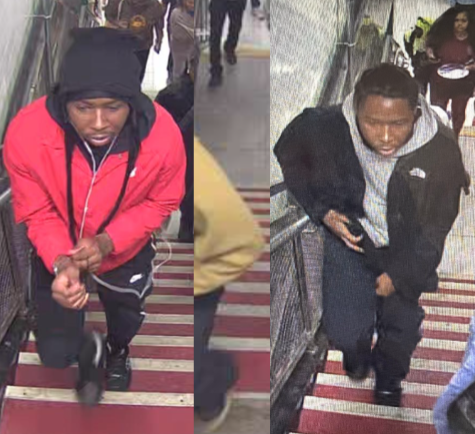
    Deputy Police Commissioner Frank Vanore said investigators have identified a person of interest interest in the case, a man in his late teens or early 20s, after capturing his image on surveillance footage as he entered and exited a Broad Street Line station.

    The man — whom investigators did not identify — is considered armed and dangerous, Vanore said at a news conference Monday.

    Philadelphia police said this man is a person of interest in the shooting deaths of two men near the Hunting Park Recreation Center in separate incidents within the last 10 days.

    “All three incidents are perpetrated very similarly, in the same geographic area,” he said. “We’re believing now that they’re all connected and being done by the same person.”

    On June 20, officers responded to the park, at 1101 W. Hunting Park Ave., shortly after 10 p.m. and found Martin Higgins, 45, on the bleachers of the baseball field, suffering from a gunshot wound to the torso. He died at the scene, police said.

    Then, on June 26, police responded and found another man just before 11 p.m. suffering from multiple gunshot wounds near the basketball courts. Police have not yet identified the man but said he was 29-years-old.

    Police now believe a third shooting last month is linked to the gunman.

    In that May 29 incident, a 55-year-old man was shot in the elbow and torso in the park just before 10 p.m. The victim later told investigators that a man wearing all black who appeared to be in his 20s approached and told him that he was being robbed, according to Vanore.

    Vanore said investigators had yet to determine a motive tying the cases together, though they believe robbery is the motivation behind the shooting that was not fatal.

    Asked whether the victims had met the suspect on a dating app — a detail law enforcement sources said they are investigating — Vanore declined to comment, citing the ongoing investigation.

    “If that is [part of the case], that’s something we’ll have to develop moving forward,” he said. “But at this point we know that this individual appears to be preying on people.”

    Higgins’ relatives could not be immediately reached for comment Monday. An obituary shared online said he was a graduate of Temple University’s business school and worked as an inspector for the city’s Community Life Improvement Program.

    “Marty was known for his passion for clothing, style, and self-expression,” the obituary said. He had a “kind heart, generous spirit, and unwavering support for those he loved” and “was the person who showed up when someone needed him, always making time for family and friends no matter what was going on in his own life,” his family wrote.

    He was one of six children and was an uncle to many nieces and nephews.

    Meanwhile, as investigators continue to search for the gunman, they are asking anyone with information about the crimes to contact the homicide unit at 215-686-3334 or submitting an anonymous tip at 215-686-TIPS (8477).

  • Man stabbed on SEPTA bus in West Philadelphia, authorites say

    Man stabbed on SEPTA bus in West Philadelphia, authorites say

    A 39-year-old man was stabbed during a fight on a SETPA bus in West Philadelphia early Monday, authorities said.

    The incident began around 2:44 a.m. when two men got on the L1 Owl bus at 15th and Market Streets and began fighting, police said.

    The bus driver flagged down a nearby Philadelphia police officer for assistance.

    After an unsuccessful attempt to separate the men, the officer deployed a Taser on the 39-year-old man, whom police did not identify.

    While taking him into custody, the officer saw that the man had been stabbed. He was taken to Jefferson Hospital, where he remained in stable condition late Monday morning.

    Investigators are looking for a the second person they said was involved in the fight and fled the scene.

    Officers recovered a knife. Police gave no motive for the stabbing which remains under investigation.

  • Pa. Attorney General Dave Sunday talks Supreme Court’s Krasner ruling, abortion appeal

    Pa. Attorney General Dave Sunday talks Supreme Court’s Krasner ruling, abortion appeal

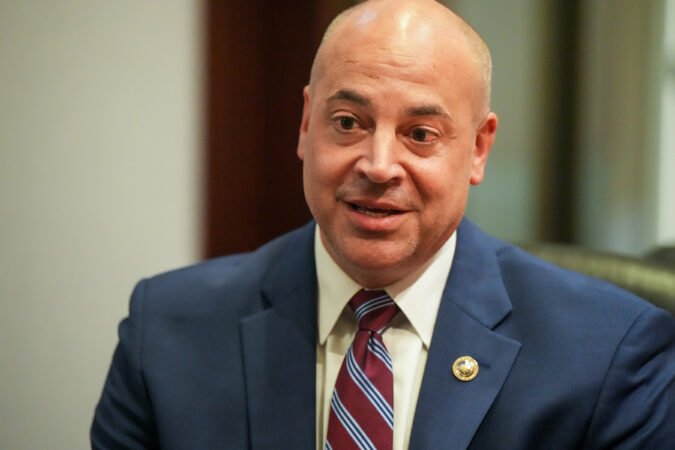
    Attorney General Dave Sunday has spent 18 months as the state’s chief law enforcement officer, overseeing a sprawling office that handles criminal prosecution, civil litigation, consumer protection services, civil rights enforcement, and more.

    In that time, the 51-year-old Republican and Harrisburg native says, he has taken on issues ranging from the opioid crisis to illegal crime guns. And last week, the Pennsylvania Supreme Court handed his office broad authority to review the efforts of Philadelphia prosecutors to overturn murder convictions they have called unjust, a signature initiative of District Attorney Larry Krasner’s office.

    In a recent interview at his Philadelphia office, Sunday talked about that and more.

    What is your reaction to the Supreme Court ruling on the work of District Attorney Larry Krasner’s Conviction Integrity Unit?

    Obviously, it’s an unprecedented ruling.

    Oftentimes, the best outcome is through the adversarial process. We work with the Philly DA’s office in a lot of different areas, and I viewed this ruling as any other that provides me with instructions on a way on which I have to run my office.

    Moving forward, the ruling requires your office to review any post-conviction concession that Krasner’s office aims to pursue. How will that work?

    There are questions. How many times will we have to intervene? What will that do to staffing? Will we have the logistics and resources to do it appropriately? I think that process will unfold over the next month or so.

    There’s no other real comparison for this ruling, and so what I can say very simply is this: It is absolutely crucial that there is a voice for the families of victims, and at the same time, I think it’s crucial to make sure that we protect the rights of individuals who are charged with crimes and convicted of crimes.

    That balance is found in applying the law and the facts to the issue. That’s something we will enthusiastically do.

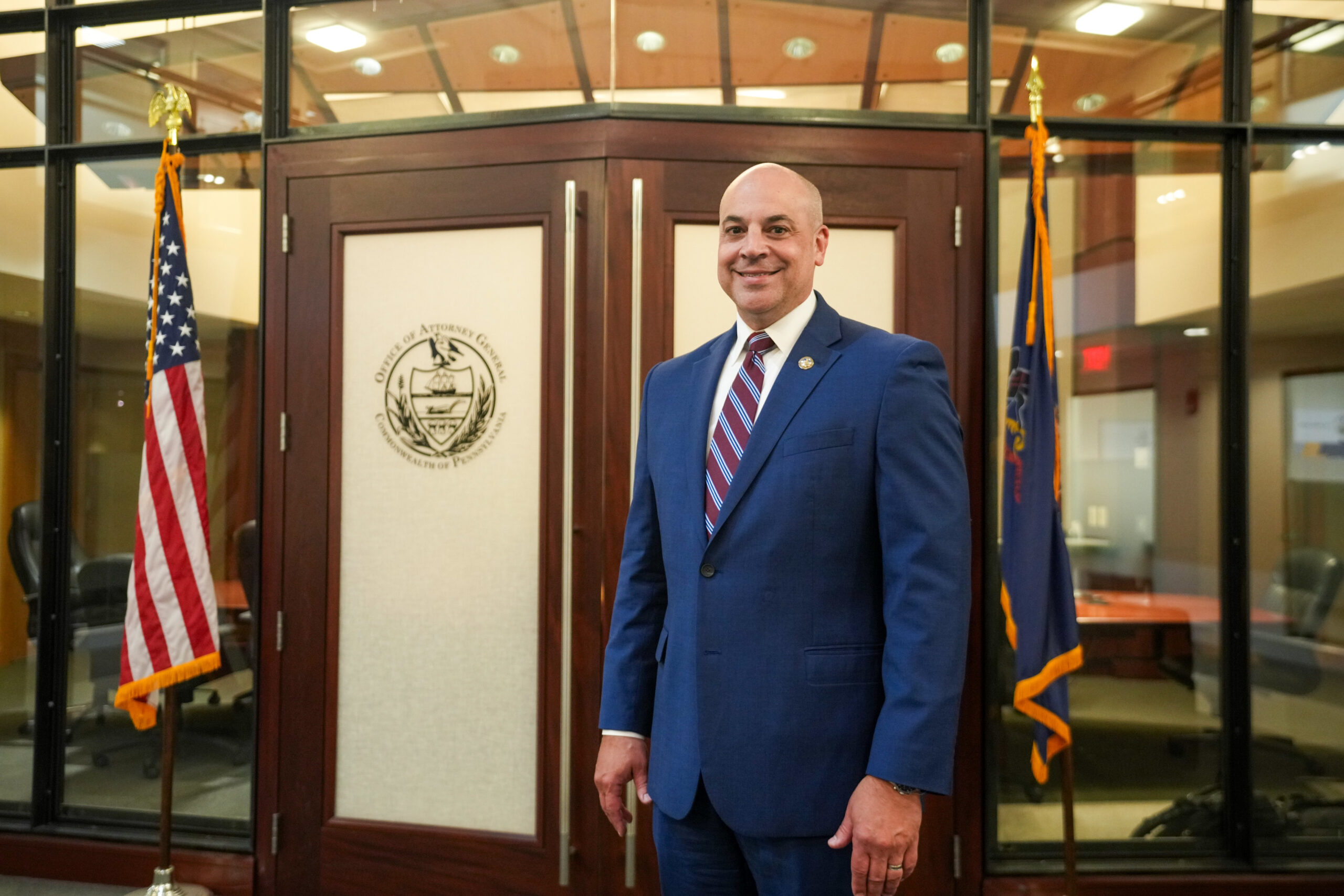
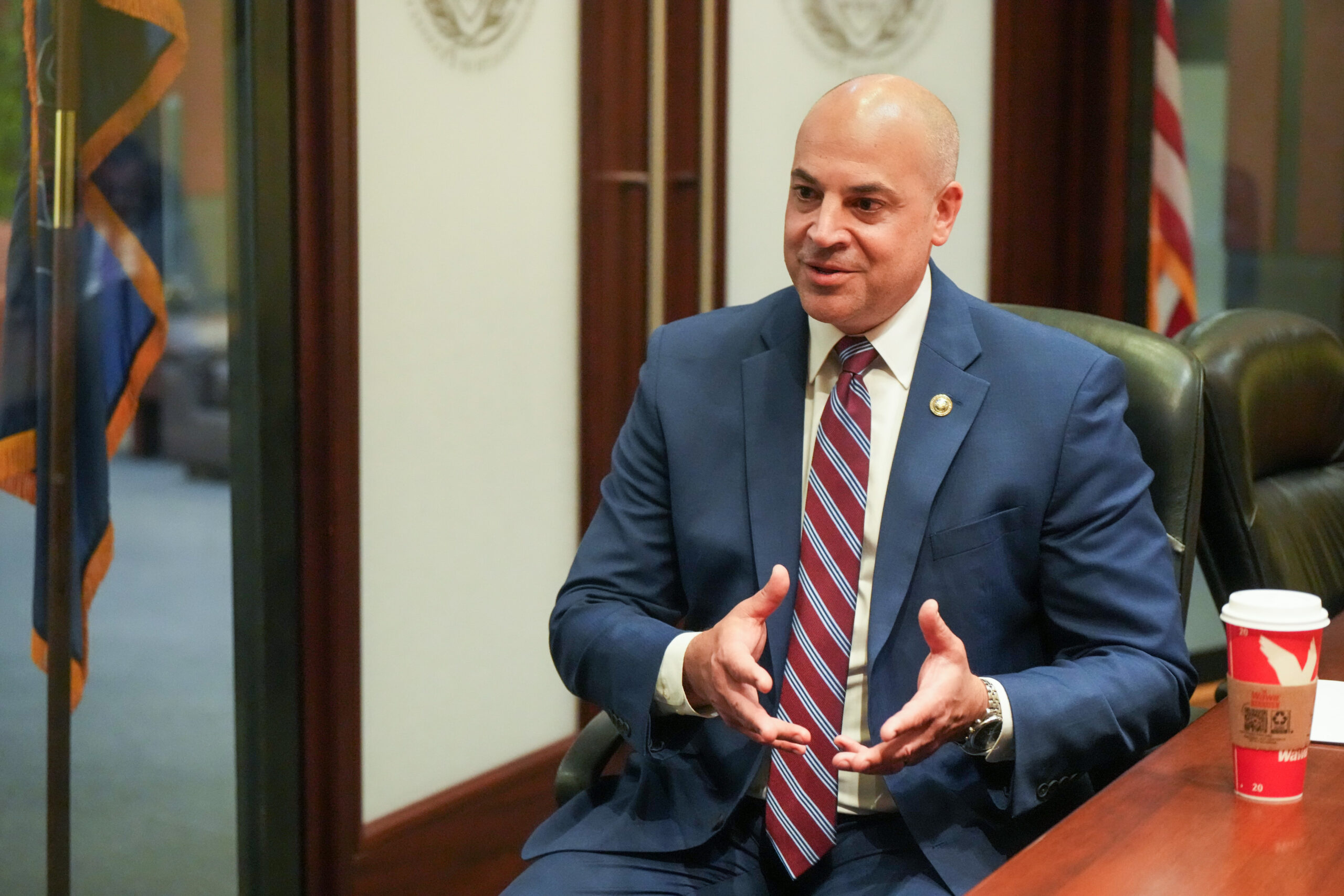
    .Assistant General David Sunday, in Philadelphia, June 23, 2026.
    Since Krasner first took office, his prosecutors have supported efforts to overturn around 115 convictions. Given the Supreme Court’s findings, do you now question whether some of those overturned convictions should be reconsidered?

    Well, we have to look at the legal process there. For individuals who the court has already ruled in a manner in which they’re out of prison, those cases are done.

    But with cases that are still going through the appellate process, individuals that are incarcerated, those are situations where we’re going to have to take a look at it. I mean, this is very serious, and when the Pennsylvania Supreme Court rules in this manner — not just the ruling itself, but the verbiage — I, as attorney general, take that extremely seriously.

    We will do our job, and we’ll do our duty, and we’ll review it, but it’s also important to understand that this isn’t a quest to prove someone wrong. It’s a quest to ensure that all parties are zealously advocated for.

    Krasner has strongly opposed the ruling. He’s likened this issue to the struggles of the Civil Rights Movement and said that the decision undermines the votes of those who elected him to office. What is your response to that?

    I don’t think that it benefits anyone for criminal justice leaders to editorialize a lot of the work we do.

    It’s critical that the citizenry knows and understands that their case will be dealt with by applying the facts to the law — and I know that’s not the most exciting answer, but there are things that are in my control and there are things that aren’t in my control, and his reaction to anything is completely out of my control.

    The last thing individuals who live in the community want to hear are elected officials yelling at each other. They want to see outcomes.

    Earlier this year, justices ruled that mandatory life sentences without parole for those convicted of second-degree murder are unconstitutional. What are your thoughts on that?

    Third-degree murder, second-degree murder, those are cases where the acts resulting in the crime are vastly different case to case. As a prosecutor, I’ve tried horrific second-degree murder cases — one was an in-home burglary where an individual was left face down on the ground, duct-taped, and they ultimately died from positional asphyxiation, which really is torture.

    At the same time, there are second-degree murder cases where you have multiple codefendants, and — this case is highlighted a lot — one of the codefendants pulls a gun out, kills an individual, and all those codefendants, because they were acting in concert and furthering some conspiracy, they’re all guilty of second-degree murder and they’re in for life.

    So there are second-degree murder cases where the individuals should have an opportunity for parole, and at the same time, there are cases that are absolutely horrific, where individuals should spend the rest of their lives in prison.

    The important place we’re in now is the legislative process, moving forward to ensure that the punishment is commensurate with the harm caused in the crime.

    Violent crime has fallen dramatically from its pandemic-era highs in Philadelphia and across the state. Should the attorney general’s office get some credit for that?

    There is no one individual or agency that can take credit for these outcomes. We’re with our federal partners, we work with everybody.

    After I was elected, some of the very first calls I made were to the Philadelphia mayor and the police commissioner, and I made it very clear that we’re partners. I’m excited, let’s go. And that’s what we’ve done.

    The Attorney General’s Gun Violence Task Force is a huge part. We do everything we can every day to go after gun traffickers, illegal straw purchasers. We’ve removed more than 500 crime guns off the streets [statewide] in 2025.

    In addition to that, our Bureau of Narcotics works every day in Philadelphia. Last year, we removed 56 million doses of fentanyl from the streets, and a large portion of that was in the city.

    The Commonwealth Court struck down a decades-old law that banned Pennsylvanians from using their Medicaid benefits to pay for abortions, and last month, your office appealed. Why?

    A lot of people don’t understand the role of the AG in a lot of issues. In Pennsylvania, we have the Commonwealth Attorneys Act, the rules that dictate the job, and one of the rules in there is that the attorney general shall defend the constitutionality of statutes in Pennsylvania.

    I have irritated the entire political spectrum, because I am defending statutes whether you like them or not. That’s literally my job. What a lot of people don’t understand is that the [Medicaid] law is part of the Abortion Control Act — the same law that allows abortions to occur up to six months of pregnancy, the very same law.

    In that law is a subsection that also says that government funds cannot be used for abortions — so I’m defending the abortion law in Pennsylvania, just like I would any other section of that law.

    Critics say that by appealing the ruling and prolonging this issue, you are denying Pennsylvanians of what the court called a “fundamental right to reproductive autonomy.” How do you respond?

    Just like every law we defend — every single one — there are people that like it and don’t like it, and they will have commentary. I certainly respect their absolute right to have that commentary.

    What I will say is, this decision has nothing to do with that. It is the job of the attorney general to defend the statute.

    .Assistant General David Sunday, in Philadelphia, June 23, 2026.
    What would you say has set your tenure apart from your predecessor, Gov. Josh Shapiro, and his appointed successor, Michelle Henry?

    Very simply, I came into this job as a prosecutor. I ran on public safety. I wasn’t a legislator, so when I look at the office, I view it as a place where you follow the facts in the law, and you fight hard to keep people safe.

    With that being said, I have hyper-focused on issues impacting citizens. We have huge crises in Pennsylvania that need to be addressed, specifically the mental health crisis.

    When I came into office, I saw our prisons are full of people that have mental and behavioral health challenges. Individuals go to jail solely because they have a mental health crisis, and what I want to see are people getting treatment.

    What we did was create a new initiative that gives police a toolbox, so when they come into contact with someone in a mental health crisis [who is committing a low-level criminal offense], they can get that person into treatment [if the person chooses to do so]. At the same time, that person can be charged, and the police have the flexibility to hold that charge.

    This is brand-new, and we have nine counties that are already signed up and are rolling. We have five more lined up and ready to roll over the next few months.

    President Donald Trump held a rally in Pennsylvania on Tuesday, and he was joined by some of the state’s other top Republican officials, such as Stacy Garrity. Is that an event you would have liked to attend?

    In all candor, I have events that have been scheduled for months and months, and the reality is, a lot of these [presidential] events pop up pretty quickly.

    On Tuesday, I had an event with the first elected attorney general in Pennsylvania, LeRoy Zimmerman. I was with him at a fireside chat, talking about what the AG’s office has looked like, and how it’s changed over the last 30 years.

  • A woman missing since 2016 had close ties to the Olney house that’s now the target of a massive investigation

    A woman missing since 2016 had close ties to the Olney house that’s now the target of a massive investigation

    Amy McHale and Raymond “R.C.” Horsch met on the streets when she was battling pneumonia and needed medical care.

    She had long struggled with mental health issues and drug and alcohol addiction. She saw Horsch, an erotic photographer and filmmaker 30 years her senior, as her rock, said her mother, Gloria McHale.

    “He was like her savior.”

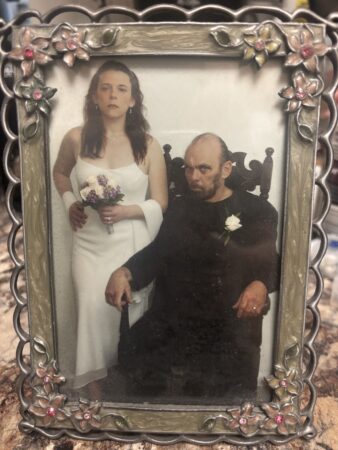
    They held their wedding reception beside a greenhouse in the sprawling, serene backyard of his Chalfont home in September 2004. The marriage lasted only a few years, but Amy McHale kept going back to Horsch after he moved to a house on West Chew Avenue in the Olney section of Philadelphia with his son, Eugene Albert Horsch.

    She was staying there on June 14, 2016, when she left a voicemail message for her daughter, Amanda Stofer, saying all was OK. At the time, Amy McHale was a 44-year-old mom and grandmother of three.

    She has been missing ever since.

    “She would never leave her daughter and grandchildren,” Gloria McHale, 79, said by phone after news broke this week that authorities had been combing through that house for days. “She loved them, adored them.”

    For more than a week, Philadelphia police and federal authorities have been searching the crumbling Horsch twin home to determine if there is any connection to the disappearance of Amy McHale and one other woman.

    R.C. Horsch was a controversial figure who had been convicted of forgery and drug manufacturing when he died in May 2025 of chronic obstructive pulmonary disease at age 82. Police have not named him as a person of interest in a missing-person investigation.

    His son, Eugene Albert Horsch, is being held on $500,000 bail at Curran-Fromhold Correctional Facility on charges of illegal gun possession and drug crimes. He had a criminal history that included at least 10 other arrests for drug possession, dealing, assault, and drunken driving when he was arrested earlier this month near Independence Hall after his actions drew the attention of U.S. Park Police.

    “This is much ado about nothing,” said Eugene Horsch’s attorney, Jerome Brown, of his client’s connection to any missing-person investigation. “They’re barking up the wrong tree.”

    When the news broke, McHale’s mother and daughter thought they might finally discover what happened.

    “But I don’t feel much closure, and today is an emotional low,” McHale’s daughter, Amanda Stofer, said Saturday. “I was hoping for some answers about my mother from the home, but I’m doubtful that will happen.

    “It just feels heavy and sad.”

    The case came to light under bizarre circumstances. U.S. Park Police stopped Horsch, 44, near Sixth and Market streets on June 19. In his black BMW, officers recovered two firearms with obliterated serial numbers and a phony drug enforcement badge with Horsch’s photograph under the name “Eugene Frederick Steiner.” He also had large amounts of cocaine, fentanyl, and marijuana, according to an affidavit of probable cause for his arrest.

    A woman with Horsch gave officers a false name, one that belonged to a 38-year-old woman who had been reported missing in Kensington in February 2023. Horsch’s passenger told investigators that he had made her fake ID cards with that name before and advised that if she was ever stopped by police, she could use them.

    Law enforcement wearing FBI clothing at the scene of an ongoing investigation in the 400 block of West Chew Avenue, searching a home in Olney.

    In Horsch’s dilapidated home, investigators found another handgun, hidden compartments, a 55-gallon drum with connections to water lines leading to a hole in the ground, and chemicals and bottles of liquid that forensics investigators are working to identify. There were also what appeared to be urns holding remains, one set of which was apparently his father’s. The basement resembled some sort of chemical lab.

    Federal investigators also found a unsigned and handwritten letter that referenced hurting unspecified people and the serial killer Ted Bundy, according to an affidavit of probable cause obtained by The Inquirer.

    Investigators are working to verify the authenticity of the letter, and whether it was meant to serve as a portion of a novel or screenplay.

    Under a gloomy sky Saturday, about 15 FBI agents, some wearing hazmat suits, streamed in and out of the boarded-up twin home. “They’ve begun processing the scene,” Philadelphia Deputy Police Commissioner Frank Vanore said. Forensic experts were determining what evidence had to be sent away for scientific analysis, he said. “It’s going to take some time.”

    Art and weed

    R.C. Horsch, who was born in East Stroudsburg, Monroe County, in 1943, is described in an author’s biography as “an artist, filmmaker, composer, writer, porn performer, drug smuggler, sometime political activist, art forger, counterfeiter, pot grower, air show pilot, army deserter, fugitive, sociopath, ex-convict and all-out villain.”

    Throughout his life, R.C. Horsch worked on avant-garde artwork and erotica, often focused on scantily clad women in sadomasochistic settings, including a book described as an “autobiographical memoir of a caring, empathetic serial killer.” He directed his first film, The Erotic Memoirs of a Male Chauvinist Pig, in 1973.

    A 1968 news report identified Horsch, then in his mid-20s, as the operator of a theater on the 2000 block of Sansom Street known as “Underground Cinema 16” — later the Roxy — which screened avant-garde films, including his own, but was shut down for operating without a license.

    Horsch was married at least three times. He married Anna Ferkuniak, a native of Nant-y-moel, Wales, who was Eugene Horsch’s mother. She died in 1989 at age 39 after a lengthy illness, according to her obituary.

    R.C. Horsch also had an extensive criminal history.

    He pleaded guilty to passing bad checks in North Carolina in 1973, and the following year the Secret Service charged him and another man in Doylestown with passing nearly $180,000 in fake 10-dollar bills and possessing phony driver’s licenses.

    In 1977, federal authorities raided what was described as his home laboratory, seizing equipment they alleged was meant to make methamphetamine. But Horsch left for New Zealand, later returning to California, according to court records, and operating under the alias “Richard Harris.”

    Eugene Horsch was born in 1981, while his father was still a fugitive.

    Authorities captured R.C. Horsch in Florida in 1985. A psychologist hired by his defense attorney claimed Horsch had a 140 IQ, according to court records, but had “deep rooted emotional problems.”

    He was sentenced to three years’ imprisonment, plus probation. He later settled in Chalfont but acquired the Chew Avenue house after his aunt died in 2004. In 2007, he used power of attorney to legally transfer ownership to his son for $1.

    In 2009, R.C. Horsch was indicted in Chalfont for growing “455 marijuana plants.” Investigators also confiscated two shotguns. The feds seized his suburban home and he was sentenced to 54 months in prison.

    Federal inmate records show he was released from prison in 2013, and later moved into the Chew Avenue property, where he would reside until his death. He authored several erotic novels in the 2010s, often focused on women battling substance abuse or mental health issues.

    Krista Marie Killen is credited as appearing in multiple erotic films that he directed, including one released as recently as 2021, and at times listed the Chew Avenue house as her residence.

    In 2025, a motorist sued R.C. Horsch, Killen, and an unidentified man, claiming the trio crashed their Chrysler 300 into her SUV near Adams Avenue and Montour Street in 2023. Court papers list Killen’s occupation as “caregiver” and the “adult in charge of residence.”

    She died the next month, according to an obituary, three months after Horsch.

    In searching the home recently, investigators found a death certificate for Killen. According to the affidavit of probable cause, the cause of death was drug intoxication.

    ‘People don’t vanish’

    R.C. Horsch and Amy McHale had become a couple in the 1990s.

    “I was a young kid when they started dating, and I want to say he had been around for at least 10 years by the time they got married,” Stofer recalled.

    They divorced after a few years and McHale moved in with her mother on South Hutchinson Street in Philadelphia. She went to Peirce College, became a paralegal, and was trying to get her life back on track, said Gloria McHale, 79.

    But she could not kick her drug and alcohol addiction, she said. She would periodically return to Horsch’s home on Chew Avenue.

    “They stayed friendly with each other,” Stofer said. “I’m sure it had something to do with the drugs and alcohol. I think he enabled her with things that weren’t really permitted in my grandmother’s house.”

    On June 13, 2016, she went to Horsch’s. She called her mom that night to tell her she was on her way home. “She was obviously very drunk and I told her to stay where she was, because to get home she would have to take the subway, and she was in no shape to take the subway.”

    The next day, she called Stofer and left a message. “She told me she was at Ray’s house and she was OK.”

    That’s the last they heard from her.

    Amy McHale would sometimes be gone for a couple of days, but never for much longer, they said. Stofer had three children, and her mother doted on them. Stofer was planning her September wedding.

    “My mom had her struggles with addiction,” said Stofer, 38. “But my mom would not want to disappear in my life. She would never do that. She always came back around. She never missed big things like my kid’s kindergarten graduation.”

    Gloria McHale searched all over for her daughter. “I put signs up all over Kensington,” she said.

    Detectives interviewed Horsch. He told police and the McHale family that she was drinking vodka and he went to bed. “He said when he woke up, she was gone,” McHale said.

    And Horsch stopped reaching out to her family.

    “When she would disappear before, Raymond would always keep calling me. ‘Did you hear from her?’ And after this I never heard from him.”

    McHale is hoping someone will come forward now with new information.

    “Somebody has to know something,” she said.

    “People don’t vanish into thin air.”

    Amy McHale.

    Staff writers Brett Sholtis, Michelle Myers, and Isabel Maney contributed to this article.

  • Man fatally shot in West Philly

    Man fatally shot in West Philly

    A man was fatally shot in a car Friday night in West Philadelphia during a possible transaction arranged online, police said.

    The shooting happened around 8:40 p.m. on the 800 block of North Palm Street, police said. The man was taken to Penn Presbyterian Medical Center, where he was pronounced dead.

    A woman and two young children who also were in the car may have been injured by broken glass caused by the gunfire, Inspector D.F. Pace said.

    The man, who was not identified, was possibly in the area as part of a transaction arranged through Facebook Marketplace, Pace said.

    No other details about the shooting were immediately available.

  • A Philly wedding photographer was sued by the Pa. attorney general for allegedly ripping off brides

    A Philly wedding photographer was sued by the Pa. attorney general for allegedly ripping off brides

    A Philadelphia wedding photographer who has been the target of complaints from so many couples in Pennsylvania and New Jersey that they created their own Facebook group was sued on Friday by the Pennsylvania Attorney General’s Office for allegedly ripping off her customers for at least $75,000.

    Christina Garcia, who also did business as Christina Hernandez Artistry LLC and Wandering Stardust Collective, allegedly failed to provide contracted photo and video services and refused to refund deposits, the attorney general’s office said.

    Attorney General Dave Sunday vowed in a statement Friday to make sure “this photographer never again conduct[s] business in the Commonwealth.”

    Sunday said in his statement: “A wedding day is one of the most precious and cherished moments in the lives of a couple, and this business darkened those days by neglecting appointments, then refusing to refund customers.”

    Garcia has been the focus of reports from the Washington Post, NJ.com, and CBS New York.

    She could not be reached for comment Friday. Her Instagram account and business website are now set on private.

    Edward S. Robson, who was described as Garcia’s lawyer in a Washington Post story published in March 2025, also could not be reached for comment.

    In that Post story, Robson said it was “an unfortunate situation” where Garcia faced a “perfect storm that included a health emergency regarding her husband, significant technological issues, and becoming so sought after that there were not enough hours in the day for her to finish her work as promptly as she would have liked.” Robson said Garcia was trying to “do right by her clients.”

    The Post reported that nearly 50 unhappy customers were part of a private Facebook group called “Brides Wronged by WSC.” It was unclear on Friday if the group still exists.

    A customer posted on Reddit about Garcia last June and said she was a member of the Facebook group. The customer said Garcia, with the help of a lawyer, supposedly was trying to deliver some of her contracted photos and videos. It was unclear what happened after that Reddit post.

    The Pennsylvania Attorney General’s Office alleged that Garcia had represented that she would personally photograph their weddings. Instead, Garcia allegedly double- or triple-booked herself on wedding dates and canceled at the last minute, sending replacement photographers instead.

    Customers who believe they were victimized by Garcia were urged to contact the Pennsylvania Attorney General’s Office to file an online complaint.