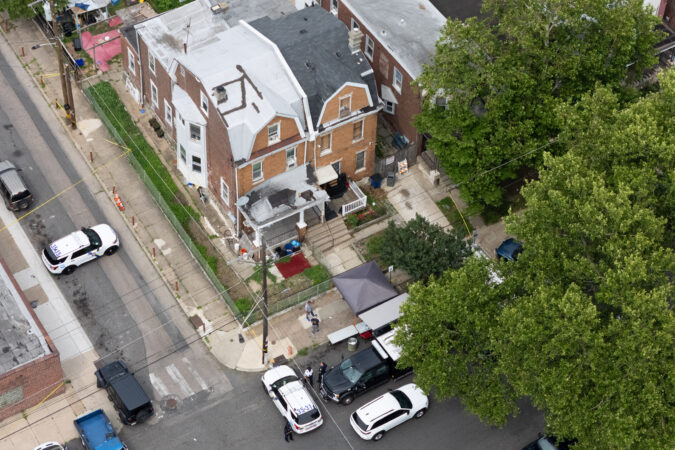
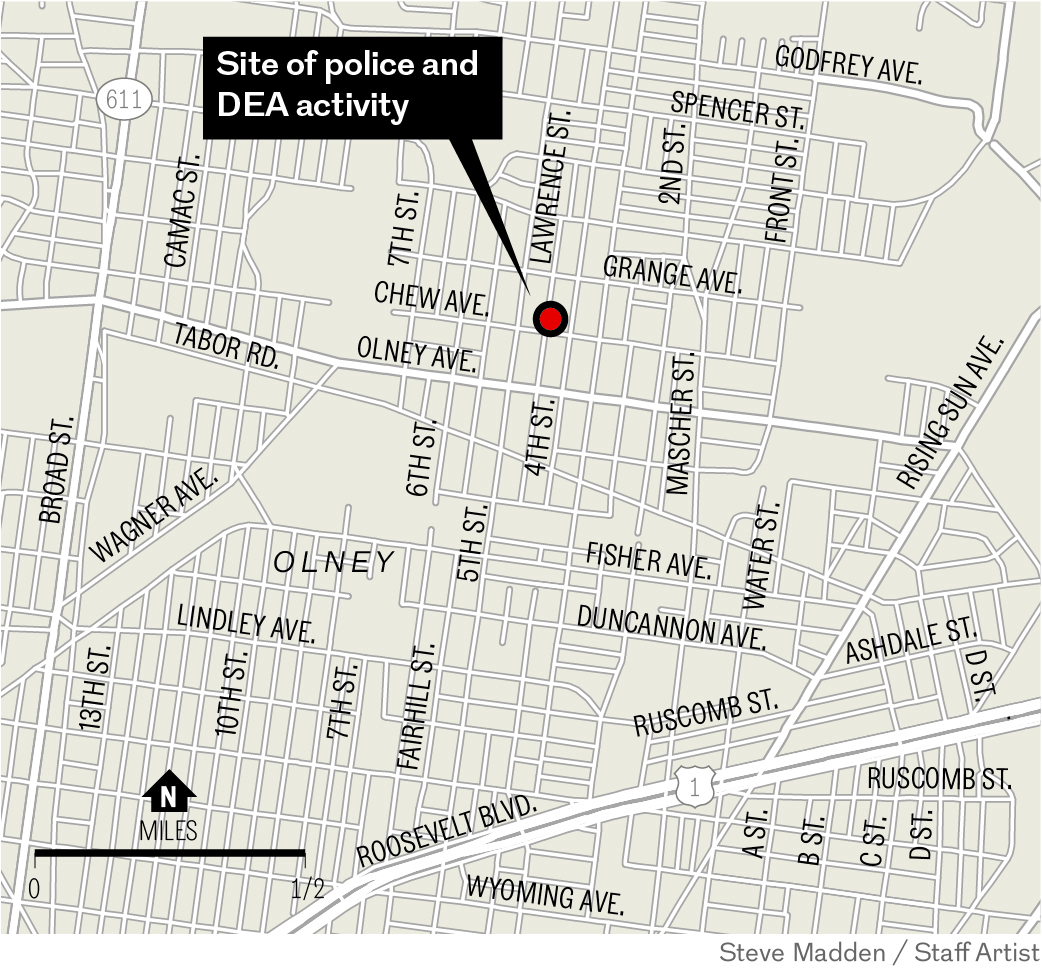
The 400 block of West Chew Avenue in Olney was largely shut down Friday afternoon as Philadelphia and federal law enforcement officials searched a home on the block to determine if its owner had connections to at least two missing women.
Residents of the block had effectively been sealed in as caution tape and Philadelphia Police Department vehicles cordoned off the street. Some residents gathered on their porches or sidewalks as federal officials produced equipment from the back of a black, unmarked utility truck.
“I have been living here all my life,” Larry Alosi, 56, said. “It used to be a safe place, but it changed with time.”
Consisting largely of rowhouses and small businesses, the North Philadelphia neighborhood of Olney is among the city’s most diverse, with large Korean American and Latin American populations calling the area home.
The search had been ongoing for nearly a week, and came after U.S. Park Police encountered Eugene Albert Horsch, 44, acting suspiciously in a black BMW near Sixth and Market Streets on June 19, police said. Investigators recovered two firearms with obliterated serial numbers from Horsch’s vehicle, as well as cocaine, fentanyl, and marijuana — along with a baton, a cattle prod device, a switchblade, and a falsified U.S. Drug Enforcement Administration badge with Horsch’s photograph depicting a falsified name.
Officials took Horsch into custody following the stop, and charged him with illegal gun possession and drug crimes. Searches of his home began last week.
Horsch was being held Friday at Curran-Fromhold Correctional Facility with bail set at $500,000.
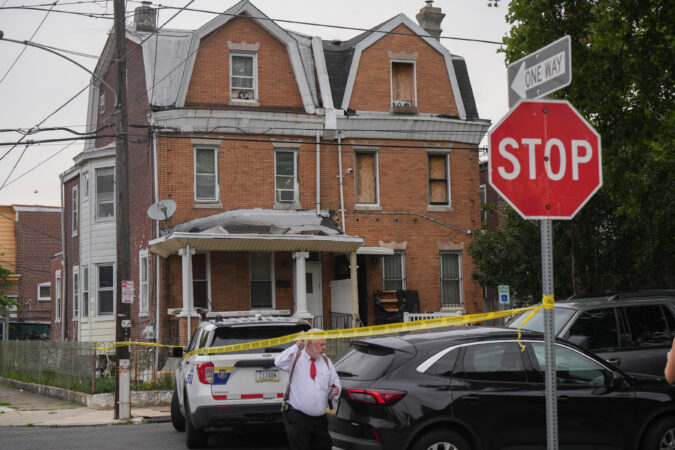
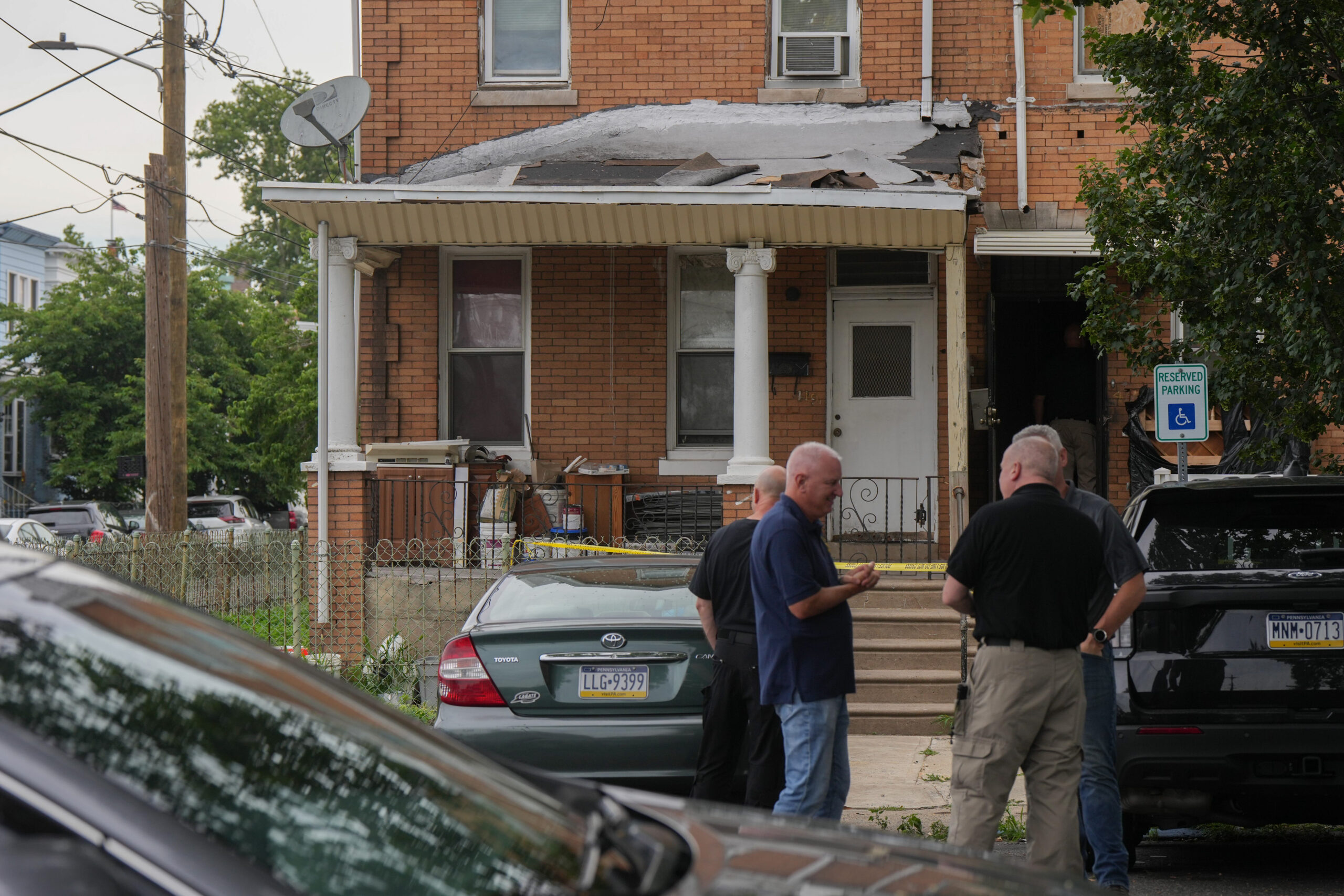
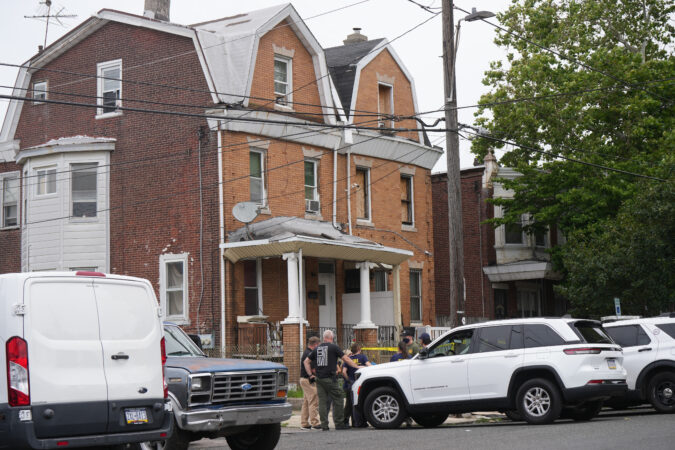
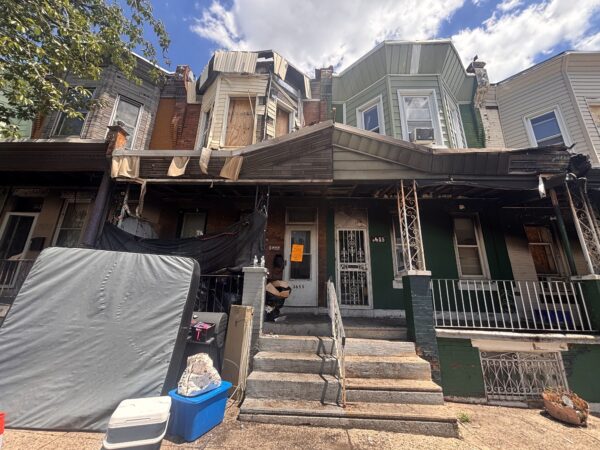
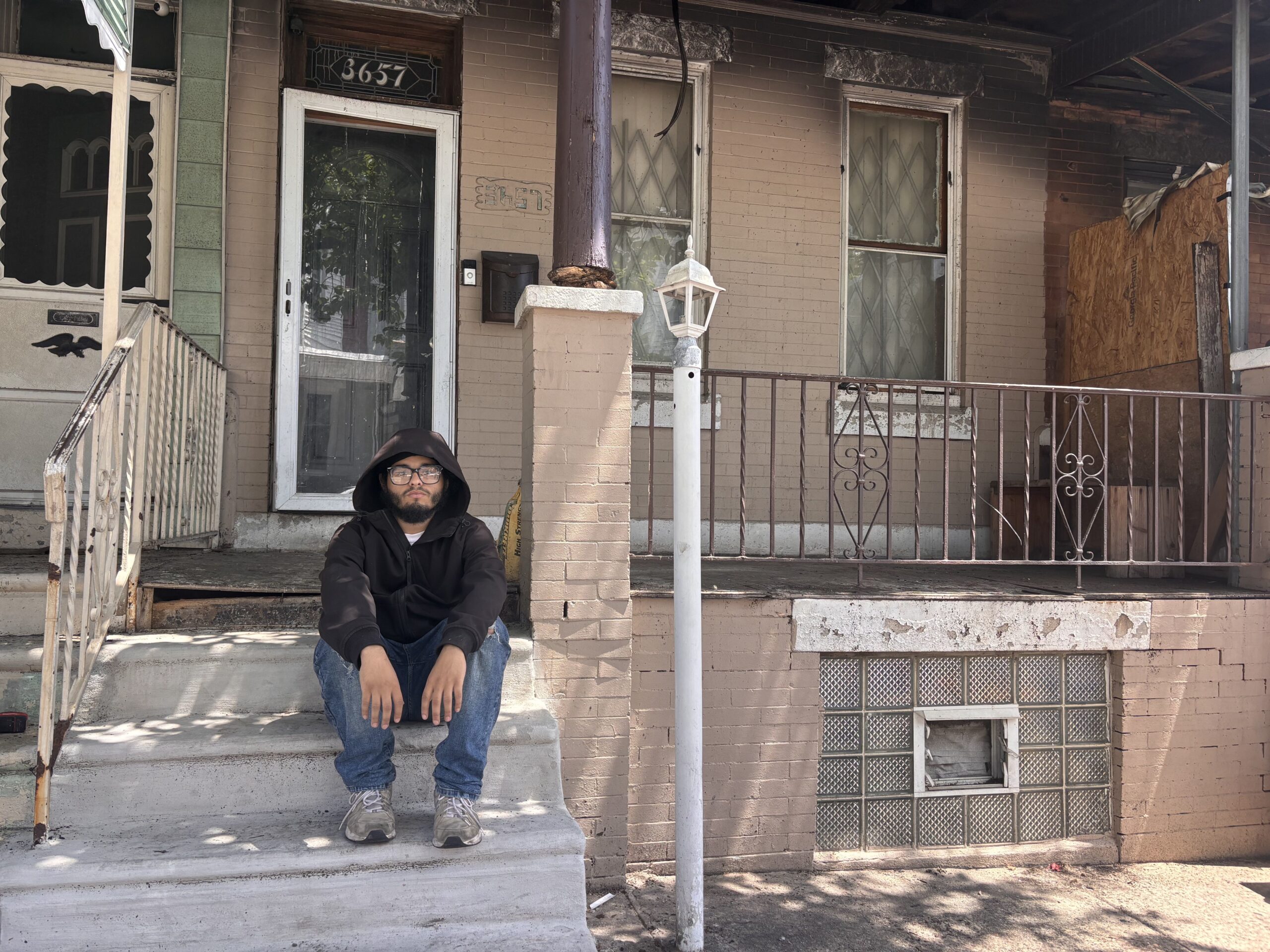
A passerby called the West Chew Avenue residence “a house from a scary movie,” with boarded-up windows on its second and third floors. A camera on the exterior points to the street. The windows on the first floor have bars from top to bottom. Pink flowers remain on the lawn, decorated with pieces of broken glass from the door.
Neighbors on Horsch’s block said the area is a quiet one, though it occasionally has its issues. Fabin Ingram, an area resident, said he never saw anyone coming or going at the corner of West Chew near Horsch’s home, and he largely worked to avoid the intersection.
“I’m big on energy and feelings,” Ingram said. “If I get an eerie feeling, I act on it.”
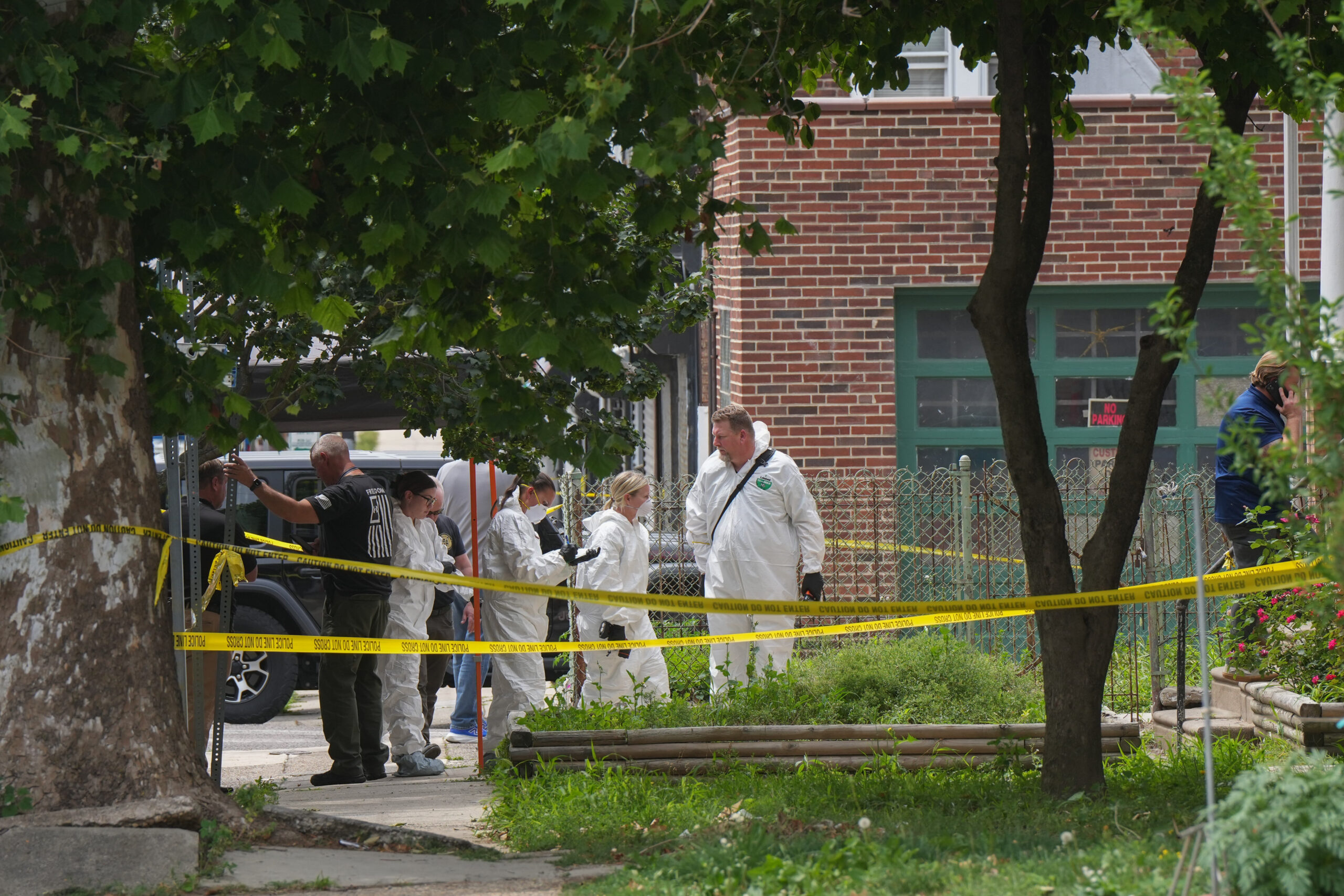
Investigators at 417 W Chew, searching a home in Olney neighborhood in Philadelphia, June 26, 2026.
One neighbor, Sid Brunson, who used to cut Horsch’s grass, described Horsch as a quiet, jittery man who “had a lot on his mind.” Brunson said that Horsch’s father, R.C. Horsch, a convicted drug manufacturer and erotic filmmaker, died in 2025, leaving a pall over the home.
“You will never see a man other than him coming or leaving the house after that,” Brunson said. “If there was visitors at the home, it was always a female, never a male.”
Another neighbor, who asked not to be identified for fear of reprisal, said Horsch was someone who got into disagreements with neighbors over parking and trash. He had long driven an impeccably maintained gold 1980s Lexus, and in recent years had started driving a new black BMW — and was often seen bringing women home with him, the neighbor said.
The ongoing search of Horsch’s home this week was the latest in a series of odd developments at the property, with investigators saying that several urns had been found inside the home, including one that was labeled with the name of a deceased relative. Officials also discovered a 55-gallon drum with connections to water lines leading into a hole in the ground, as well as materials to grow marijuana, though it was not immediately clear if the items in the home were connected to drug manufacturing or more violent purposes.
On Friday, law enforcement officials wearing hazmat suits were seen entering and exiting the property.
During Horsch’s arrest last week, a woman falsely identified herself using the name of a 38-year-old woman who had been reported missing in Kensington in February 2023, sources told The Inquirer. Deputy Police Commissioner Frank Vanore declined to identify the woman who had been reported missing, but reports indicate that Horsch’s father had been questioned in the 2016 disappearance of his ex-wife, Amy McHale, of South Philadelphia.
By late Friday afternoon, the investigation into Horsch’s home had not ceased, but a large FBI truck was spotted leaving the scene. Late in the day, the area had been largely left quiet, with the crime-scene tape on the home’s door serving as conspicuous evidence of the day’s events.
Staff writer Andrea Padilla contributed to this article.
During a weeklong search of a crumbling Olney twin, federal agents and Philadelphia police found guns and drugs, tubs of chemicals, a curious unsigned letter, and fake law enforcement badges as they were investigating the homeowner’s connection to at least two women who have been missing for years.
The unusual investigation began under similarly bizarre circumstances: U.S. Park Police encountered Eugene Albert Horsch, 44, acting suspiciously in his black BMW parked near Sixth and Market Streets on the morning of June 19, Deputy Police Commissioner Frank Vanore said.
As the ranger approached the car, Vanore said, he heard a woman in the backseat say, “You’re going to hurt me.” The woman then falsely identified herself to the officers using the name of a 38-year-old woman who had been reported missing in Kensington in February 2023, said the sources, who spoke on the condition of anonymity to discuss an ongoing investigation.
The woman, 39, later told investigators that she’d given the alias because she had open warrants for her arrest in ongoing drug cases, and that Horsch had previously made her fake identification cards in that name, telling her she could use it if she was ever stopped and questioned by police, the sources said.
And later, the sources said, she told officials that she did not know that missing woman — but feared something bad may have happened to her.
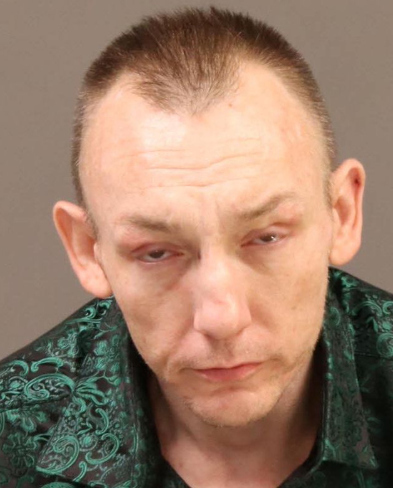
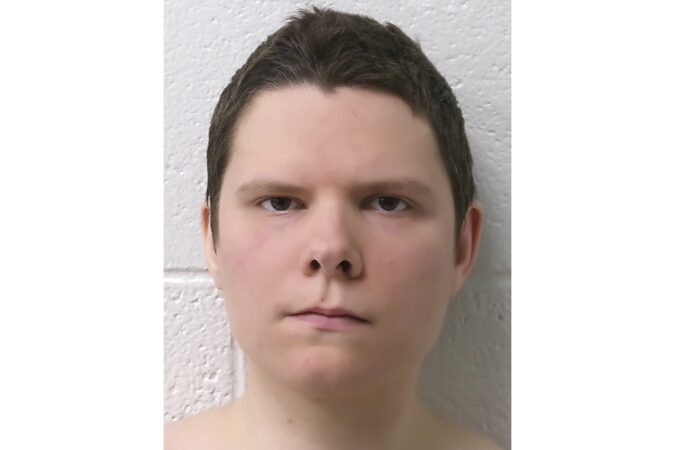
Eugene Albert Horsch, 44, of Philadelphia.
When police searched Horsch’s car outside Independence Hall, they recovered two firearms with obliterated serial numbers, as well as cocaine, fentanyl, and marijuana, according to an affidavit of probable cause for his arrest. What’s more, a source said, the car also contained a collapsible baton, a cattle prod, switchblade knives, and a fake U.S. Drug Enforcement badge with Horsch’s photograph under the name “Eugene Frederick Steiner.”
Horsch was taken into custody and charged with illegal gun possession and drug crimes. He’s currently being held on $500,000 bail at Curran-Fromhold Correctional Facility.
Officials with federal drug enforcement began searching Horsch’s home on the 400 block of West Chew Avenue alongside Philadelphia police on June 19.
The house at the 400 block of W. Chew Avenue in Olney being investigated.
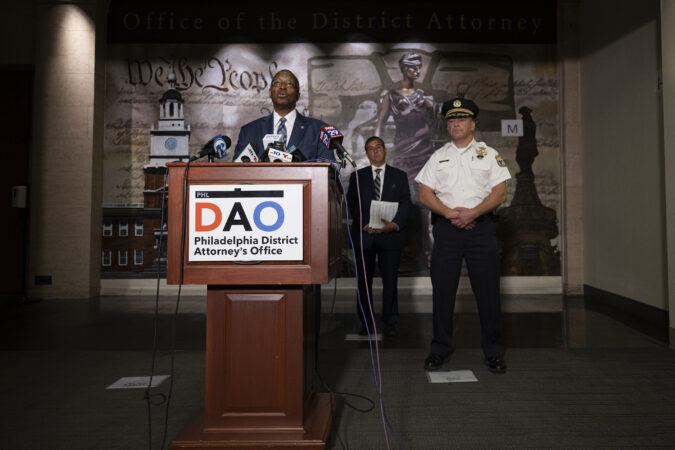
Vanore, in a news conference Friday, said the conditions of the boarded-up twin and materials recovered inside of it — including hidden compartments, drums filled with chemicals, and what appeared to be urns holding at least one of Horsch’s relatives’ cremated remains — only deepened the mysteries of the case.
And investigators soon found themselves confronting a second concerning thread: Horsch’s late father, R.C. Horsch, a convicted drug manufacturer and erotic filmmaker, had an ex-wife who was last seen at the Olney property in 2016 and has never been found.
Horsch’s attorney, Jerome Brown, said he did not have details about the ongoing police investigation.
Brown said R.C Horsch, who died in 2025, had been questioned in the June 2016 disappearance of his ex-wife Amy McHale, of South Philadelphia. She suffered from mental health and substance abuse issues, he said.
“This is much ado about nothing,” Brown said of the missing persons investigation. “They’re barking up the wrong tree.”
Inside Horsch’s home, investigators found another handgun, chemicals and bottles of liquid that forensics investigators in white hazmat suits were still working to identify on Friday, Vanore said. There was also a 55-gallon drum with connections to waterlines leading into a hole in the ground, he said, and materials to grow marijuana upstairs.
Federal investigators also found a multipage and unsigned handwritten letter that described references to hurting unspecified people, and references to the serial killer Ted Bundy, according to an affidavit of probable cause to search the home that was obtained by The Inquirer.
“Acting on emotion is where problems occur. What I don’t think I told you was that the first time it was planned ahead of time. The threat was made before you know who came over and I already had a 2ft zip tie in my pocket and a drum set up,” the letter said, according to the affidavit.
According to the warrant, it went on: “I had been ready and waiting and I damn sure showed no hesitation. And it was fun.”
Law enforcement sources said investigators were working to verify the authenticity of the letter, who wrote it, and whether it was meant to serve as a portion of a novel or screenplay. Horsch’s father published several works of fiction with masochistic themes, including one described as an “autobiographical memoir of a caring, empathetic serial killer.”
Police also found bank cards in the name of the woman who went missing in 2023, and also recovered what appeared to be a death certificate for another woman who died last year, the document stated.
Vanore said no human remains were found inside the home.
Forensic experts from the FBI are now analyzing the liquids and materials recovered in the home, he said.
Vanore said it wasn’t clear whether the chemicals were intended for a drug manufacturing operation or another purpose.
“We just don’t know what he’s doing, if he’s producing something, if he’s making something, if he’s irrigating something, we don’t know,” Vanore said. “I’m not a chemist, but from what I’ve been told … they could have been explosives.“
And, he said, it was too early to say whether the evidence would speak to any of the missing person cases tied to the property. He declined to identify the woman who had been reported missing in 2023 and did not answer questions related to the ongoing investigation into McHale’s disappearance.
“We’re certainly going to look into the activities that went on at that house,” he said.
Investigators on W. Chew Avenue.
News reports of the search of the Horsch home reopened wounds for McHale’s family. Gloria McHale said her daughter struggled with mental health issues and a drug addiction, and was married to R.C. Horsch for several years before disappearing June 14, 2016.
In an interview Friday, she said when police questioned R.C. Horsch at the time of her daughter’s disappearance, he said he last saw McHale drinking vodka before he went to bed, and that when he woke up, she was gone.
“I knew that wasn’t right,” McHale’s mother said. “She wouldn’t disappear. She had a daughter and grandkids. Her daughter was about to get married.”
Prior to his arrest last week, Eugene Horsch had a criminal history that included at least 10 other arrests for drug possession, dealing, assaults and drunk driving. He was sentenced to four to eight years in prison after police discovered $1.9 million worth of cannabis inside the Chew Avenue home in 2013, court records show.
He was arrested again in May 2025 for possession of marijuana and amphetamines and handed three years’ probation.
Then, in March, he was charged with aggravated assault after police said he stabbed a man in the stomach at Eighth and Market Streets. Prosecutors withdrew the charges in May after a witness failed to appear in court, court records show.
Since his release from jail, he appeared to be living back at his rundown home on Chew Avenue, a property that city inspectors cited as vacant and unsafe in recent years and that neighbors described as an increasingly off-putting presence on the block.
On Friday morning, anxiety swirled along the typically quiet residential neighborhood, about a mile from the Montgomery County border.
A security camera mounted on Horsch’s home between the boarded-up windows on the upper floors looked out over an overgrown yard where at least a dozen local and federal agents collected and tested evidence into the late afternoon.
Sid Brunson, a construction worker who lives nearby and occasionally cut the grass in front of Horsch’s house, said Horsch often had women who appeared to use drugs at his property. A fire broke out on the upper floors of the property several months ago, he said, which led to plywood covering the windows.
He described his neighbor as a “quiet” and “real jittery” man who kept to himself.
“He always had a nice shirt on like he was going to the office,” Brunson said, “but he never gave you enough time to talk because he was always rushing.”
Staff Writers Ryan W. Briggs, Samantha Melamed, Brett Sholtis, Michelle Myers, Isabel Maney, Andrea Padilla, and Jesse Bunch contributed to this article.
A U.S. park ranger last week conducted what seemed like a routine traffic stop near Independence National Historical Park, approaching a black BMW that was parked in front of a fire hydrant and asking to speak with the driver.
But just moments into the encounter, the ranger discovered a series of alarming pieces of evidence inside the car, according to a police report obtained exclusively by The Inquirer: switchblade knives, drug materials, a cattle prod and, eventually, two loaded guns.
The car’s occupants, too, were displaying troubling behavior, the report said — a woman inside said the driver was going to hurt her. And she then produced a fake identification that included her photo, but had the name of another woman who had been missing for three years.
The episode kicked off what has since become a weeklong investigation into the car’s owner and a variety of unsettling materials police have since found in the man’s Olney rowhouse.
And the probe has only intensified in recent days, growing to include Philadelphia homicide detectives, FBI agents specializing in chemical analysis, and unsubstantiated rumors spilling across social media about corpses being found in a basement.
Officials said Friday that they had no indication that Eugene Albert Horsch, 44 — the man who owns the BMW and the home in Olney — had actually stored human remains in his house on the 400 block of West Chew Avenue. But Deputy Commissioner Frank Vanore cautioned that the investigation remained ongoing, and that law enforcement agents were examining a host of unusual evidence connected to Horsch and his home.
Horsch, in the meantime, remains jailed on gun and weapons charges that were filed after his initial encounter with the park ranger last Friday.
The police report obtained by the Inquirer, as well as the affidavit of probable cause for Horsch’s arrest, gave this account of how that episode unfolded:
Around 8 a.m. on June 19, a park ranger patrolling the area noticed Horsch’s BMW stopped on Sixth Street in a restricted area, and the ranger walked up to the car to speak with the driver.
When Horsch rolled down his window, the ranger heard a woman inside the car yell out that the man inside was going to hurt her. The ranger also noticed signs of potential drug use by the occupants of the car, including a butane lighter and tweezers, and he asked both people in the vehicle for identification.
The woman then provided an ID that had her photo but the name and other details of a woman who had been reported missing several years ago.
And when the ranger asked Horsch to step out of the car, he noticed Horsch had scissors, a switchblade knife, and a glass drug pipe. The ranger’s partner then searched the car and found more troubling signs under the floorboards: two loaded firearms.
The rangers then handcuffed Horsch and the woman, but Horsch told police the guns were not hers. He also then said he had crack cocaine in a compartment near his steering wheel.
Both Horsch and the woman — whom The Inquirer is not identifying because she has not been charged with a crime — then began hyperventilating, and were taken in separate vehicles to Jefferson Hospital.
Officers continued searching Horsch’s car and found more apparent drug materials, a baton, a cattle prod, another knife, and fake credentials that purported to identify Horsch as an agent with the Drug Enforcement Administration.
After being released from the hospital, Horsch and the woman were taken to DEA headquarters. Horsch declined to speak with investigators.
The woman, however, said she’d met Horsch a few months ago, and provided enough details about their interactions at his house that investigators applied for a search warrant.
Vanore, of the police department, said investigators were continuing to sort through a mix of guns, drugs, chemicals, and even urns they’d found inside — including during searches Friday.
The possibilities of why such materials could have been on hand include drug manufacturing, explosive production, or other activities, he said, adding: “We’re certainly going to look into the activities that went on at that house.”
A West Philadelphia man who was convicted last year of seeking to build bombs in support of Islamic extremist groups was sentenced Thursday to 20 to 40 months in prison and six years of probation.
Muhyyee-Ud-din Abdul-Rahman, 20, was found guilty in September of charges including attempting to possess weapons of mass destruction after jurors concluded he had experimented three years ago in and around his Wynnefield home with dangerous chemicals often found in high-volume explosives.
Authorities said that Abdul-Rahman had done so after he communicated with Syrian extremists on Instagram, and that their arrest of Abdul-Rahman in 2023 had prevented him from unleashing a terror attack on the region.
Jurors, however, found Abdul-Rahman not guilty of the more serious charge of possessing weapons of mass destruction, suggesting they believed he intended to build a bomb but had never succeeded. Common Pleas Court Judge Michele Hangley also threw out a conspiracy charge after ruling that prosecutors had not proved Abdul-Rahman had been working with anyone else.
Abdul-Rahman told Hangley after being convicted that he had matured during his time in custody, much of it spent in a juvenile facility because he was arrested as a teen. And he said he had come to reject the radical beliefs promoted by the group he was following, Katibat al Tawhid wal Jihad, or KTJ.
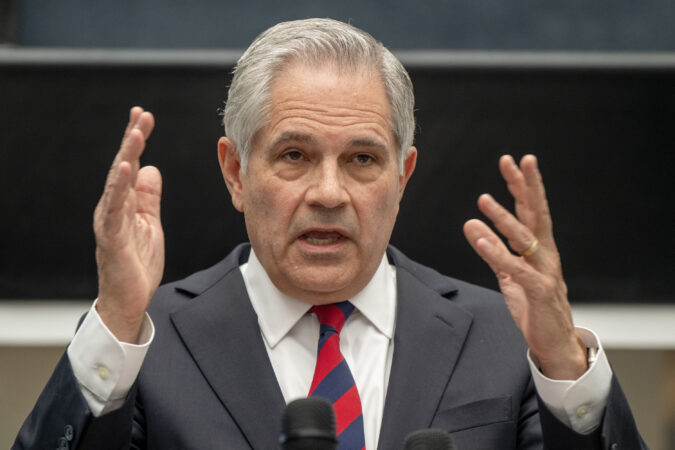
Still, District Attorney Larry Krasner said Thursday that he was “deeply concerned” by what he cast as an insufficient penalty for a would-be terrorist. Krasner said his office had asked that Abdul-Rahman serve at least 10 years behind bars because prosecutors believe he remains “an extreme danger” to the city.
“We ought to be able to live in a city where a terrorist is kept off the streets for a reasonable amount of time,” Krasner said.
Federal investigators looking into KTJ’s activities in the United States in 2023 found that Abdul-Rahman was the only person in the country exchanging messages with some of its key online propagandists. Further investigation later revealed that Abdul-Rahman, around that time, had also applied for his first passport, tried to reach out to a Syrian border-crossing office, and purchased or possessed wires and chemicals common in homemade bombs.
When authorities went on to conduct surveillance of Abdul-Rahman, officials said at trial, officers tailing him at a Lowe’s store saw him buy muriatic acid, a key component in a violent explosive dubbed TATP, also known as “the mother of Satan.” And a review of his internet search history around that time showed he had been looking up Philadelphia parade routes, trash can bombs, and nuclear power plants — something authorities said was consistent with “target and tactic” research.
When federal agents questioned Abdul-Rahman inside a police station, an official testified, he admitted conducting bomb tests near his house and said he wanted to become a “bomb guy” for KTJ in Syria.
Authorities arrested Abdul-Rahman in August 2023, just as he was to begin his senior year in high school. At the time, he was a promising wrestler with a college scholarship offer, and his father, Qawi Abdul-Rahman, is a well-known criminal defense lawyer who has mounted unsuccessful campaigns to become a city judge.
Abdul-Rahman’s attorneys said at trial that he had made mistakes, but that he was an impressionable teen who had fallen down a “rabbit hole” of online propaganda. They also said he had never succeeded in building a bomb and did not take serious, in-person steps to advance the radical views he expressed online or in his house.
At a hearing last month, one of his attorneys, Donald Chisholm, urged Hangley to consider that Abdul-Rahman’s path to the crime began when he was 16 years old.
“Even at the age he is now,” Chisholm said, “he’s not fully matured.”
Chisholm, said Thursday that he thought the sentence was fair, and that Krasner’s continued insistence on casting his client as dangerous was “disingenuous” and did not account for factors such as his client’s age at the time of arrest, or his growth over the last several years.
The case attracted attention in part because it was a rare example of the district attorney’s office seeking to convict someone it described as a would-be international terrorist.Although federal counterterrorism agents were heavily involved in the investigation, juveniles are rarely prosecuted in federal courts.
Krasner said Thursday that Abdul-Rahman likely would have faced a significantly harsher penalty if he had been convicted of similar conduct in the federal system, and he criticized the state’s sentencing guidelines, which prosecutors said Hangley cited when imposing her penalty.
Abdul-Rahman has already served about 34 months in custody, meaning he will face a maximum of another six months in prison under the penalty Hangley imposed.
Krasner said his office was weighing whether to appeal the sentence.
Staff writer Jillian Kramer contributed to this article.
Ciara VanBuren was on the couch with her 4-year-old daughter in the next room and her 13-year-old upstairs when she smelled something burning.
She looked out the window of her Franklinville rowhouse a few moments later and saw smoke coming from her neighbor’s window. She heard pounding on the door as neighbors and firefighters checked for anybody inside. In the moments that it took to get outside with her daughters, the front porch had collapsed, with the blaze killing a 69-year-old man and prompting charges for the woman accused of setting it.
Natasha Teague, 38, has been arrested and charged withmurder and arson, among other offenses, in connection with the Monday fire, police said Wednesday. Teague had been a frequent presence in the neighborhood over the last year, said neighbors, who said they believed she knew the fire victim’s brother.
Two fires were started on the block that day. In the early morning, police were called to the 3600 block of Percy Street after a small fire was started on the porch, according to the Philadelphia Fire Department. The fire department was not called, and no one was arrested. In the early afternoon, police say,Teague started the second fire, which severely damaged five homes and killed Barry Turner.
A preliminary hearing for Teague is scheduled for July 13. She remained in custody Thursday and no attorney for her was listed in court records.
Turner, 69, grew up in the area and came back to live with his brother, neighbors said. Other residents have described Turner as having been a straight-A student in school, said James Martinez, a 21-year-old who was in the shower when his house started to burn down.Hesaid he did not know Turner well.
Martinez sat by the burned porch, sighing as he looked toward to the homes that were destroyed. “We are missing half a block.”
James Martinez sitting on the porch of a neighbor’s house on Percy Street.
Neighborssaid they were saddened and scared by the tragedy. Kendra Olen, who lives a few houses down from the fire with her 66-year-old mother and 22-year-old daughter, said she had not been able to sleep since the fire.
“It’s from fear,” she said. Firefightersknocked down the front door to rescue her mother, and they had to install fans in the house to get rid of the smoke.
This was the second incident of arson reported on the block in less than a month, according to the fire department. On May 23, a Molotov cocktail was thrown into an unoccupied house. No other houses were affected. Before these two incidents, neighbors could not remember a fire starting on their block in recent decades.
The fires concerned and confused neighbors who previously thought of their block as an idyllic place.
Days after the fire, there was a clear blue sky and cool breeze. Many residents sat on their porches as they usually do. Jose Vazquez lounged comfortably, wearing a blue-and-white-striped linen shirt, as he looked out to the row of burned houses.
“Almost everyone knows me, even if I forget their names,” Vazquez, who is 85 and has lived in the neighborhood for decades, said with a laugh. He does not plan to move.
The notice, filed Wednesday in Philadelphia Common Pleas Court, seeks to insert the attorney general’s office into the case of Marc Brittingham, Rasheed Turner, and Jermal Shuler, whose convictions in a 1997 killing were vacated in May after prosecutors and defense attorneys said key evidence presented at their trial was unreliable.
But last week, the Pennsylvania Supreme Court said in a forceful ruling that District Attorney Larry Krasner’s office had displayed a pattern of misleading judges while seeking to overturn murder convictions. Moving forward, the justices said, the state attorney general’s office should be given the opportunity to review such cases before a judge can decide whether to grant relief.
The filings raise a procedural question at the heart of the new ruling. The Supreme Court’s decision requires judges to notify the attorney general and gives the office “the right to intervene in the case before ruling on the concession.” But in this case, that moment had already come and gone; the judge had accepted the district attorney’s position and overturned the convictions.
What may have allowed the attorney general back in was timing: The 30-day window to appeal the decision had not closed yet. The office filed its notice of intervention and an appeal on day 29.
Krasner, in a brief phone call Wednesday, said, “I hope the public will watch this case carefully.”
“I hope they will watch what our attorney general’s office stands for and what the district attorney’s office stands for,” he said. “Stay tuned. It’s going to tell us a lot about what’s really going on.”
Deputy Attorney General Hugh Burns did not say in court documents how or why the office believed it had authority to intervene in this case, saying only that it was taking the action in response to the state Supreme Court’s order from last week.
A spokesperson for the office declined to comment.
Wednesday’s filing seeks to reopen a case in which many of the facts underlying the district attorney’s decision to join defense lawyers in seeking to vacate the convictions remain obscured by extensive redactions in court filings.
Prosecutors and defense attorneys said the case was undermined by newly uncovered information about the work of Bennett Preston, a former assistant medical examiner whose testimony helped establish the prosecution’s timeline of Essie Mae Thomas’ death.
Thomas, 73, was found stabbed to death inside her Northwest Philadelphia home in November 1997. A jury convicted Brittingham, Turner, and Shuler the following year, after hearing testimony from a neighbor who placed them at the home and from Preston, who linked Thomas’ time of death to the witness’ account. Nearly three decades later, Krasner’s prosecutors said that the testimony of the witness and Preston was questionable, and that disciplinary action had been taken against Preston.
The details of those disciplinary actions, however, were redacted from filings.
Officials with the district attorney’s office have said that the discovery of previously unknown disciplinary action involving Preston helped prompt the reinvestigation. But prosecutors have declined to publicly detail much of that information, and court records filed in the case concealed significant portions of the evidence that led them to conclude the convictions could no longer stand.
When Common Pleas Court Judge Jennifer Schultz vacated the convictions in May, she found that the newly uncovered evidence would likely have changed the outcome of the trial. Prosecutors then withdrew the charges, ending the case and allowing the men to walk free.
Jules Epstein, a criminal law professor at Temple University, said “this is unknown territory.” Because a court order is not final for 30 days, he said, the office could have a right to appeal.
“What disturbs me is did they actually look at the merits of this decision? Or did they just knee jerk and say, ‘It’s Krasner, we’re going to challenge it’?”
Marissa Boyers Bluestine, assistant director of the Quattrone Center for the Fair Administration of Justice at the University of Pennsylvania‘s law school, said the language of the high court’s order did not appear to leave room for retroactivity.
Bluestine, who worked on Brittingham, Turner, and Shuler’s case in her previous role leading the Pennsylvania Innocence Project, said it was also curious that the attorney general’s office was involving itself without the judge’s invitation.
“They’re saying that they are intervening, not requesting permission to intervene, which is an interesting way to put it,” she said.
A former employee at a Hatboro daycare injured a child with special needs by slamming him, hard, into a chair and, later, onto the floor, Montgomery County prosecutors said Wednesday.
Thomas Coleman, 42, of Holland, Bucks County, has been charged with endangering the welfare of a child and simple assault in connection with the March 23 incident involving a 4-year-old boy at KinderCare on Warminster Road.
Coleman remained in custody Wednesday with bail set at $25,000. His attorney, Stephen Jones, did not return a request for comment.
Coleman had been the subject of two previous investigations of his conduct toward children at KinderCare, according to the affidavit of probable cause for his arrest. Those incidents involved him “putting a kid down on a mat too hard and yelling at students,” the affidavit said.
Administrators at KinderCare placed Coleman on leave after the earlier incidents, the affidavit said, but they allowed him to return to work after completing training.
After the latest incident, however, he was fired, the affidavit said.
KinderCare’s director, Ashley Ross, did not return a request for comment Wednesday.
Hatboro police learned of the alleged assault when the boy’s parents contacted them in March, the affidavit said.
The mother said another parent had seen Coleman pick up her son, who is autistic, by his arms and roughly place him in a chair, hitting the boy’s neck on the back of the chair, and then forcefully push the chair into a nearby desk, the affidavit said.
The boy then got out of his seat and walked to a carpeted area of the room, according to the parent who witnessed the assault. Coleman, appearing frustrated, than grabbed the boy by his chin and slammed him down onto the floor, the parent said.
When the boy’s mother picked him up from daycare, she said, she noticed scratches and marks on his neck. Coleman told her the injuries were self-inflicted but would not provide more details, the affidavit said.
Later, the woman had her son examined by a chiropractor, who told her the boy’s hips were out of alignment.
Coleman is scheduled to appear before a district judge for a preliminary hearing on July 2.
A former Delaware County woman tied to an extremist group known as the Zizians has been charged with killing her parents, execution-style, inside their Chester Heights home in December 2022.
Michelle Zajko, 33, has long been a person of interest in the slayings of her parents, Richard and Rita Zajko. After years of investigation, Delaware County District Attorney Tanner Rouse filed first-degree murder charges Wednesday and accused her of shooting the couple on her 30th birthday.
New information obtained in the last few months, including ballistics evidence and an extensive download of text messages and other data from Zajko’s cell phone, allowed prosecutors to piece together the case against her, according to the affidavit of probable cause for her arrest.
Rouse, in announcing the charges Wednesday, said he believes that while Zajko planned and carried out the killings, she likely did not act alone. The investigation is continuing, he said.
Building the case against her, he said, took years of skilled and disciplined police work as investigators interviewed dozens of people and connected threads of information in several states.
“I want to emphasize — I cannot stress this enough — this is just about as exhaustive of an investigation that I’ve been a part of in my 16 years as an attorney,” Rouse said. “We don’t have a smoking gun. It is piece after piece after piece of evidence that has been collected painstakingly over many years.”
Investigators say Zajko, an alumna of Cardinal O’Hara High School and Cabrini University, drove to her childhood home on Highland Circle in Chester Heights with a plan to kill her parents. She shot them both in the head, leaving their bodies for police to find days later, after a concerned friend reported they had missed an appointment to care for Rita Zajko’s elderly mother.
The motive for the killings remains unclear.
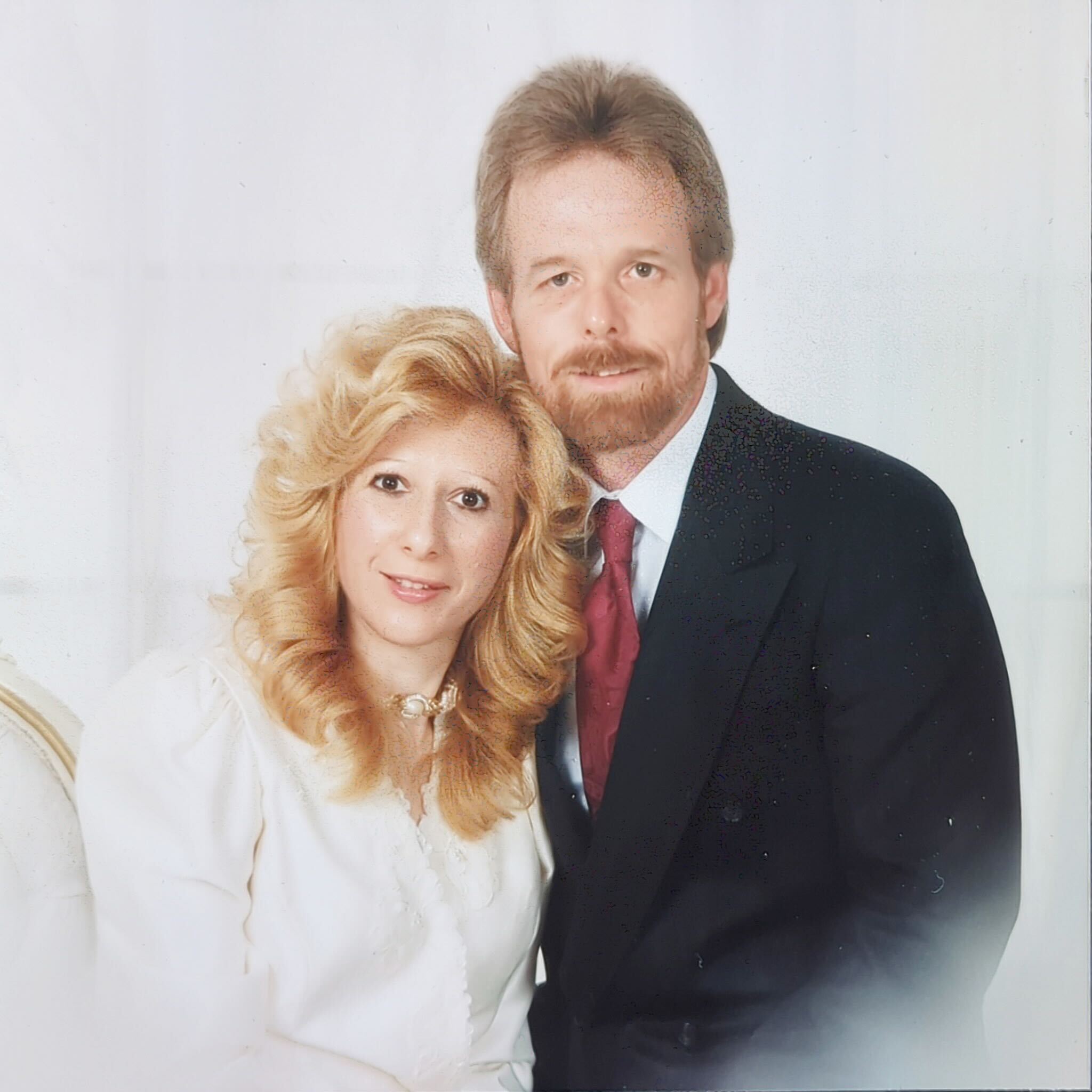
Rita and Richard Zajko, seen here in a 1993 family portrait.
Zajko told friends she had a difficult relationship with her mother, and accused her of years of emotional abuse. In online writings, Zajko said her mother criticized her constantly, arguing with her over religion and her desire to be vegan.
That strained relationship was detailed in the final text messages Zajko sent her father days before authorities say she killed him, according to the affidavit.
“Every time I interact with mom in a nonsuperficial way she spends the time insulting a life she knows nothing about, makes assumptions that imdoing nothing, etc,” Zajko wrote, the document said. “Itsuncalled for. I don’t want to speak to someone who treats me like that.”
But Rita Zajko, just nine hours before she was killed, attempted to reconcile with her daughter, sending her a happy birthday text and apologizing for whatever she had done to alienate her, according to the affidavit.
On Wednesday, Rosanne Zajko, the wife of Richard Zajko’s brother, stood alongside the prosecutor as he announced the charges against her niece. Losing her brother- and sister-in-law, she said, was “like the lights going out of our lives.”
“We don’t know yet if the trial will begin to heal the void in our lives and the ache in our hearts,” she said. “But we do know that the detectives, the DA’s office, and we, the family, have done everything possible to achieve justice for Rick and Rita.”
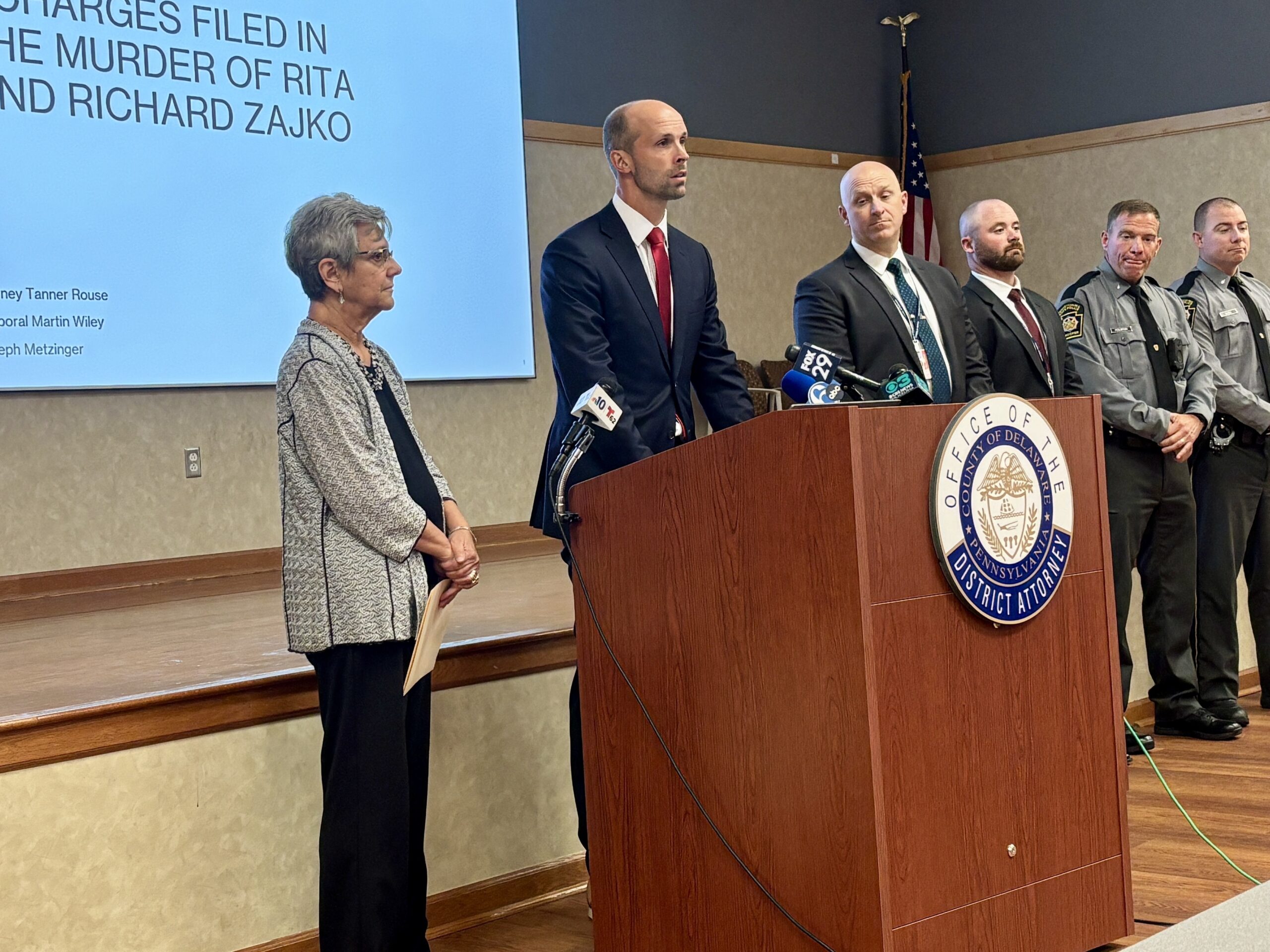
Delaware County District Attorney Tanner Rouse announces murder charges Wednesday against Michelle Zajko. Zajko’s aunt, Rosanne (left) spoke briefly about the impact the killings has had on her family.
Michelle Zajko, for her part, has said she had been unjustly accused.
In a sprawling, handwritten letter sent to The Inquirer and other news outlets last year, Zajko insisted she did not kill her parents. Rosanne Zajko said Michelle Zajko told her at the couple’s funeral in January 2023 that she had not killed her parents, but said she knew who did. She would not name the killer, her aunt said.
“I’m viscerally reminded of the witch hunts, of the Satanic Panic, of the mob that burned Joan of Arc at the stake, and of the mob that ripped apart Hippolyta,” Michelle Zajko said in the letter, written in a jail cell in Maryland, where she is awaiting trial on trespassing, gun, and drug charges. “The papers are lying. … I did not murder my parents.”
Sources familiar with the investigation say it is possible that, as an only child, Zajko may have expected to inherit her parents’ substantial estate. The value of the estate has not been made public, but the sources, who spoke on the condition of anonymity to discuss an ongoing case, say it is worth several million dollars.
A person close to Zajko said she had contacted an attorney in the weeks after her parents were killed to discuss how she could access her parents’ estate.
Zajko remains in custody in western Maryland with two other members of the Zizians, including the cultlike group’s leader, Jack “Ziz” LaSota, who identifies as female.
Zajko is also charged with illegally supplying the guns used by other members of the Zizians in a fatal shootout with a U.S. Border Patrol agent weeks before her arrest in Maryland.
In her letter from jail, Zajko said she and her friends were innocent of all criminal charges they face. She said they were being targeted by other members of the Bay Area tech community seeking to discredit them.
Members of the Zizians — a group whose philosophy encourages making decisions through reason and logic, rather than emotion — are connected to six killings across the country, authorities say. Prosecutors have denounced the group as extremists and accused them of using violence when their worldview is challenged.
For years, the deaths of Richard and Rita Zajko remained the only ones tied to the Zizians that remained unsolved.
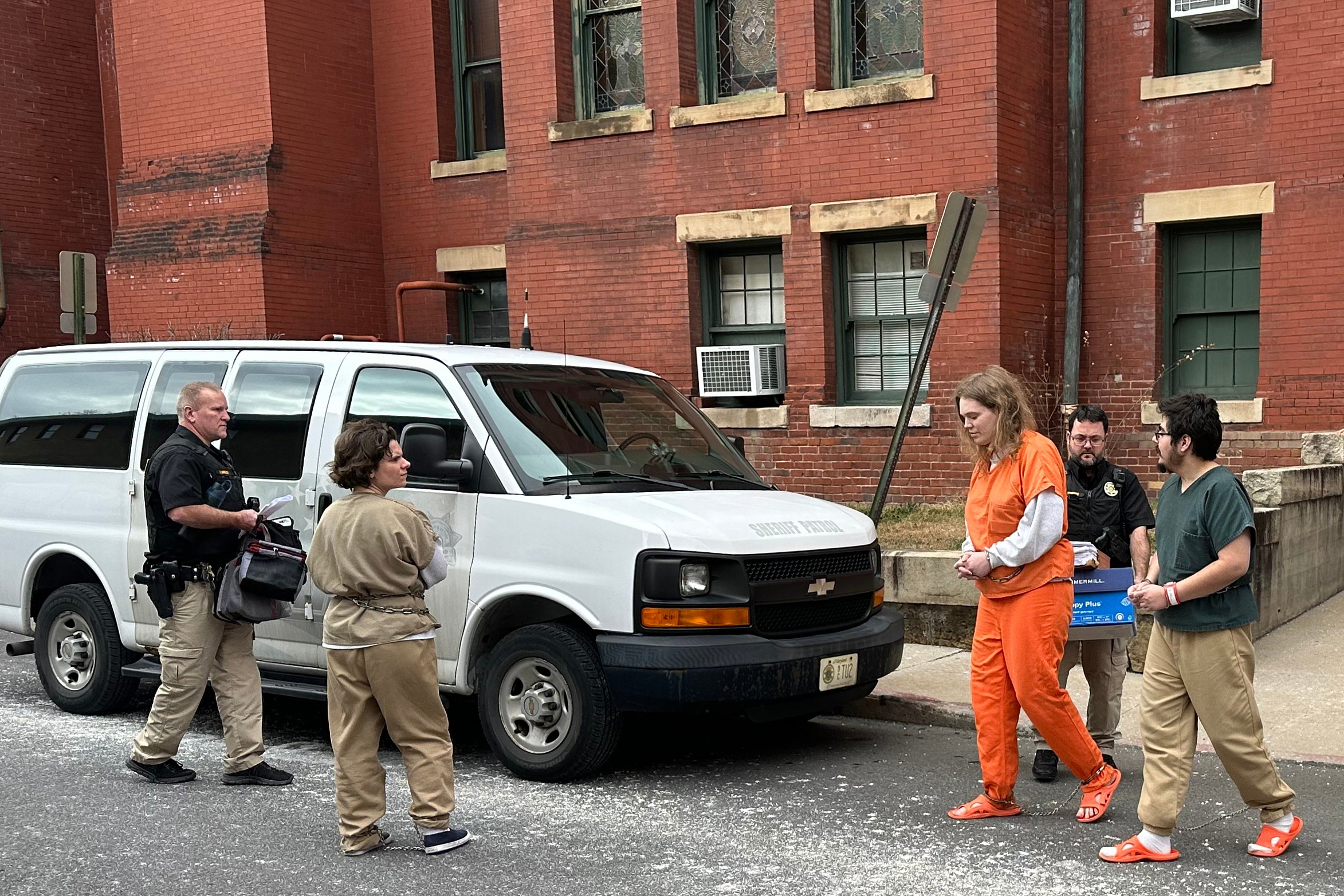
Deputies escort Michelle Zajko, left, Daniel Blank, right, and Jack LaSota, in orange, from the Allegany County Courthouse in Cumberland, Md. in January.
Almost immediately after the killings, investigators in Delaware County learned that Zajko had been at her parents’ home on the night they were shot — a neighbor’s Ring security camera recorded someone screaming “Mom!” shortly before police believe the fatal shots were fired.
The couple were found in their daughter’s childhood bedroom, which had remained virtually unchanged since she had moved out of the house decades earlier, the affidavit said.
The gun used to kill the couple was the same caliber as, and a similar model to, one Zajko had purchased in Vermont weeks earlier, investigators said. She was labeled a person of interest in the case as a consequence. But authorities said there was not enough evidence to prove she had committed the crime.
That changed this week, prosecutors said.
When investigators spoke with Zajko at her home in Vermont after her parents’ killings, she showed them a different type of ammunition from the kind found at the Chester Heights home, the affidavit said. However, while serving a subsequent search warrant there, detectives found cartridges that were an exact match — and that they said Zajko had hidden from them.
Initially, forensic investigators said they were unable to determine if the shell casings found near Rita and Richard Zajko’s bodies had been fired from their daughter’s gun. But late last fall, other casings found near trees behind Michelle Zajko’s home in Vermont, which she had used for target practice, had been fired by the same gun that killed her parents, authorities said.
Another crucial piece of evidence, investigators said, was a list found on Zajko’s cell phone titled “There are so many things we f— up” that detailed missteps, including not taking shell casings from the homicide scene, according to the affidavit.
The murder charges mark an unexpected turn for Zajko, whom friends and loved ones described as an ambitious, accomplished young woman with a keen interest in science. In her early 20s, Zajko pursued a career in bioinformatics and conducted research at Children’s Hospital of Philadelphia with colleagues from the University of Pennsylvania.
At the same time, Zajko became immersed in the Zizianmovement through online message boards, and met some of the group’s members while interning with NASA in California.
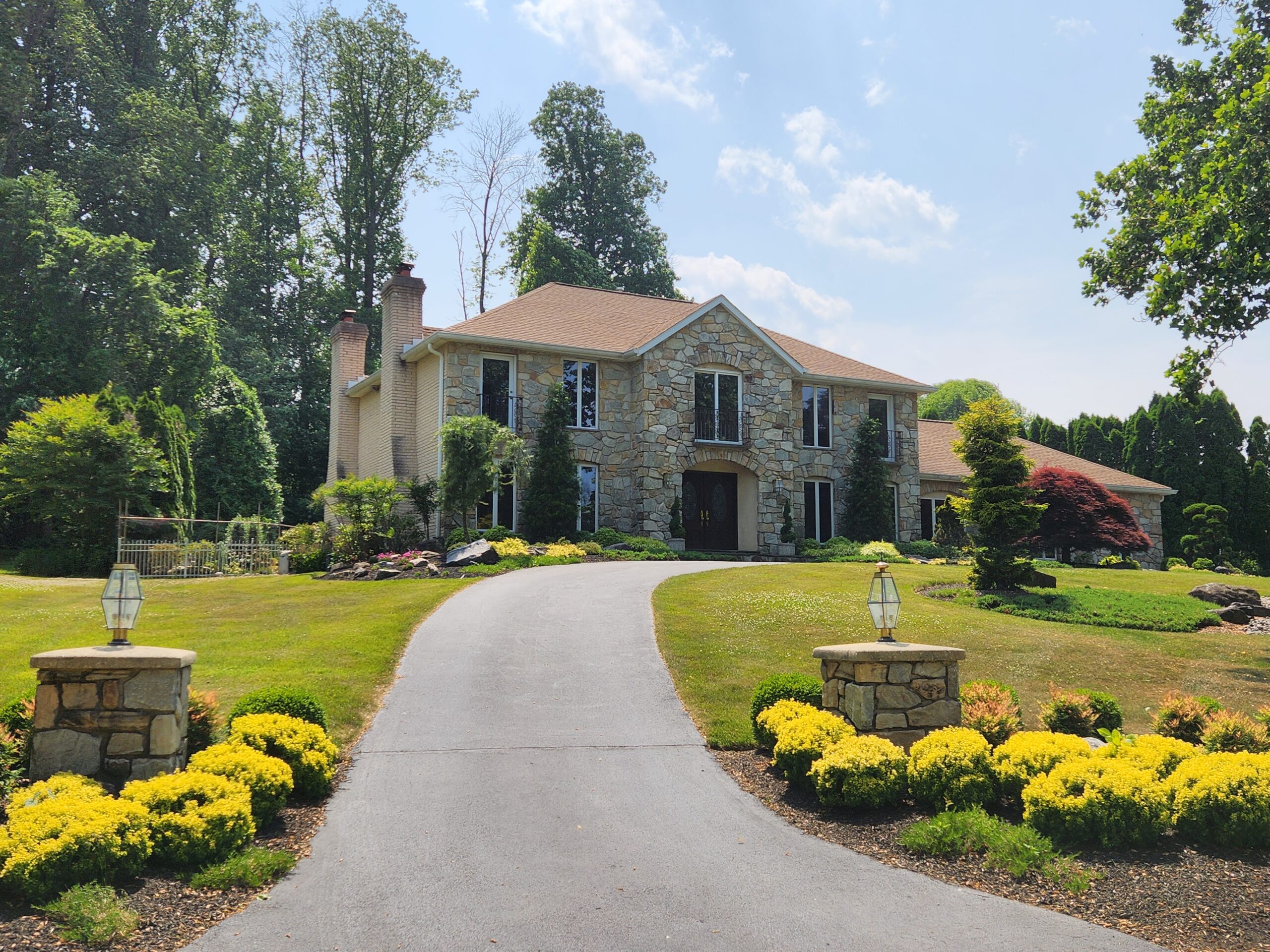
The Chester Heights, Delaware County home where Richard and Rita Zajko were murdered on New Years Eve 2022.
In 2021, partly in reaction to the COVID-19 pandemic, Zajko abandoned her scientific research and moved to rural Vermont, where she lived with other Zizians and grew close to LaSota, the group’s leader.
Zajko, in her prison letter, said that she rejects the characterization of LaSota as her “leader” and that the group does not refer to themselves as Zizians. Instead, she said that she and LaSota are close friends, and that she loves LaSota “infinitely more than I could ever express.”
Investigators now believe that Zajko, LaSota, and Daniel Blank, another Zizian, traveled to Chester Heights together on the day Zajko’s parents were killed, and intentionally left their cell phones in Vermont to prevent authorities from tracking their movements, according to the affidavit.
The three made that trip a second time weeks later, in January 2023, so Zajko could attend her parents’ funeral in Marple Township. Pennsylvania State Police troopers investigating her parents’ killings briefly detained Zajko and Blank at a hotel where they were staying in Chester.
LaSota, however, refused to answer the troopers’ questions, was charged with obstruction of justice, and remained in custody in Delaware County for months before being released on unsecured bail.
LaSota did not show up for subsequent hearings, and a bench warrant for her arrest was still active when Maryland State Police took her into custody last year alongside Zajko and Blank.
As Zajko awaits trial in both cases, Rouse, the prosecutor, said her crimes “go beyond comprehension and circumstance.”
“This is a child who killed her parents, who walked into her childhood home, took her mother to her childhood playroom, and executed her,” Rouse said. “There aren’t words or emotions that can capture it.”
The Pennsylvania Supreme Court’s decision to limit Philadelphia prosecutors’ ability to seek to overturn old convictions not only took aim at one of District Attorney Larry Krasner’s defining initiatives — it altered the work of an office he will one day leave behind.
The high court’s ruling adds an extraordinary new layer of oversight to an issue that helped make Krasner one of the nation’s most prominent progressive prosecutors: correcting what he has described as injustices of decades past.
But the newly established changes to the appellate processes in Philadelphia will outlive Krasner’s tenure and reshape the way the office reviews post-conviction cases for years to come. It could not only apply to high-profile exonerations in murder convictions, but also extend to cases that even Krasner’s more conservative predecessors were eager to undo, like drug and gun convictions linked to corrupt cops.
It also deepens a yearslong conflict between Krasner and his critics in the justice system. Several justices, in dissenting opinions, raised concerns that the change could inject politics into a high-stakes legal process.
Since taking office in 2018, Krasner has made post-conviction review a centerpiece of his reform agenda. His office said it has overturned the wrongful convictions of 59 people — almost all of them Black men. It has also struck deals that allowed defendants to plead guilty to lesser charges in dozens of other cases in which prosecutors did not say those charged were innocent, but agreed their original trials were unfair, often because of prosecutorial or police misconduct.
But the high court, in a forceful majority opinion written by Justice Kevin Dougherty, said Krasner’s prosecutors had misled judges in several of those cases, that the prosecutors were not acting as the necessary adversaries to test the cases’ merit, and that the courts could no longer trust his prosecutors’ word when deciding whether to overturn a conviction.
Pennsylvania Supreme Court Justice Kevin Dougherty greets supporters during an election night party in November 2025.
Moving forward, the justices ruled, if the district attorney’s office agrees to alter a sentence or overturn a past conviction, judges must ask the state attorney general’s office to review the case before proceeding. The ruling applies only to Philadelphia; prosecutors in every other Pennsylvania county can continue to evaluate cases on their own.
Krasner declined to comment this week. While it was not immediately clear whether he had a legal path to challenge the ruling, he said in a video statement last week that it “undermines the value of a vote in Philadelphia.”
He compared criticism of his post-conviction review efforts to attacks that have been leveled against other social and racial justice movements.
“We know where we are in the fight,” he said, “and once we get past the fight, we all win.”
But the Supreme Court’s ruling sharply curtails part of that effort, and it is expected to significantly reshape — and likely slow — one of the most consequential parts of Krasner’s agenda.
It was “an extraordinary remedy for something the court thought was an extraordinary problem,” said Aaron Marcus, chief of the appeals division at the Defender Association of Philadelphia.
But, he added, “the remedy might go beyond what was necessary in the court’s mind to address the problem in front of it.”
While the decision gives the attorney general broader authority to intervene when city prosecutors support post-conviction relief, it remains unclear how often — or when in the process — it will weigh in.
Brett Hambright, a spokesperson for the office of Attorney General Dave Sunday, a Republican, said in a statement this week that officials were still evaluating the order and its potential impact. Because of the many unknowns, he said, “it may be difficult to fully assess … until the process truly begins.”
Still, on Wednesday, Sunday’s office filed a notice of intervention in a murder case that Philadelphia prosecutors helped overturn just last month — setting up a potential test case for the new legal landscape around the issue.
Marcus, of the Defender Association, said the ruling could cause confusion — and delays — in cases that the conviction integrity unit does not typically handle, such as weapons and drug-possession cases, as well as more routine matters, like correcting prison sentences that had been miscalculated.
“There’s already too few attorneys with too little time and insufficient resources,” he said.
Marissa Boyers Bluestine, assistant director of the Quattrone Center for the Fair Administration of Justice at the University of Pennsylvania’s law school, said that because the courts did not set a timeline for how quickly the attorney general’s office must review each case, the added oversight could draw out an already yearslong appellate process filled with delays. And, she said, it could create “confusion on who exactly is representing the state.”
“Now you have two entities who are potentially in opposition to each other,” she said. “It raises confusion and diminishes the real trust in the criminal legal system.”
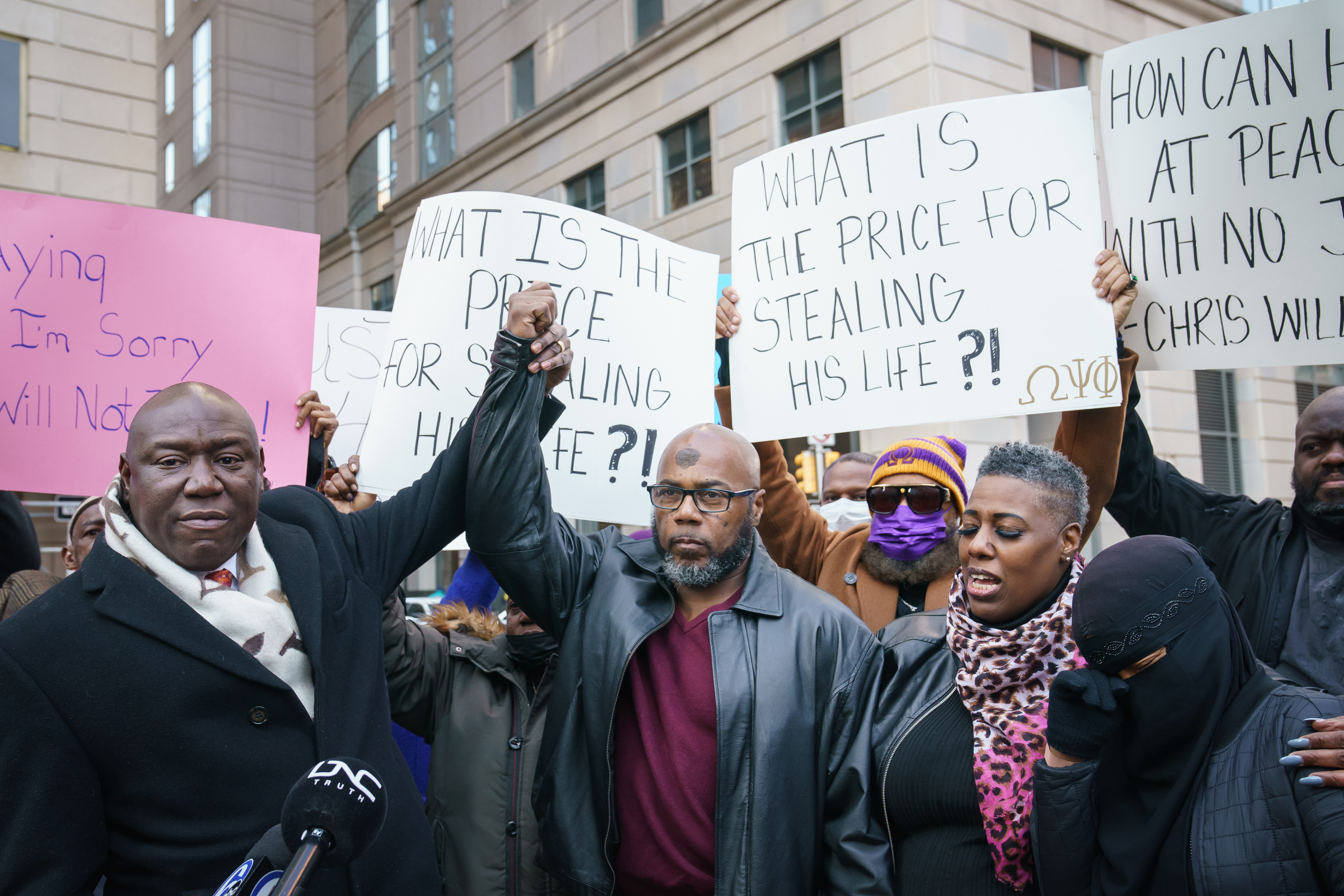
Dozens of people have been released from prison in Philadelphia after prosecutors agreed their trials were unfair. In this 2021 photo, Christopher Williams, center, gathered outside the Criminal Justice Center to announce a lawsuit against the city of Philadelphia, police and prosecutors. Williams was exonerated and released from prison in February 2021 after more than 25 years on death row.
Several defense lawyers who handle post-conviction cases were similarly concerned about the unknowns of the ruling — and said the majority opinion did not address the decades of problematic police and prosecutorial behavior that led to this moment.
Michael Wiseman said Krasner’s office has opposed most of his clients’ petitions over the years. Like other district attorneys before him, Krasner is not perfect, Wiseman said, but the high court “is vexing in its willingness to ignore all the times when Krasner’s office got it right.”
At the same time, he said, “It is similarly vexing for not recognizing the imperfections of past administrations, who, unlike Krasner, defended every conviction without regard to innocence or unconstitutional convictions.”
Adding to the complexity of the issue, some justices believed the majority’s decision could threaten to reignite long-running feuds between Krasner and prosecutors he has clashed with in the past.
In one of his first actions after taking office in 2018, Krasner fired dozens of veteran prosecutors, effectively describing them as unfit to serve in a reform-oriented administration. Some who were ousted then went on to work in the state attorney general’s office, and Krasner, in a remark that was widely criticized, jokingly referred to that office as “Paraguay,” a South American country where Nazis fled after World War II.
Justice Christine Donohue warned in a dissenting opinion that the majority’s ruling could threaten to inject personal disputes between rival lawyers into a process that is supposed to be unbiased. In addition, she said, giving the attorney general’s office authority in those cases could give some state prosecutors a role in defending convictions they helped obtain when they worked for the city.
“This is in stark contrast to acting as a friend of the court,” she said.
Ben Lerner, a former Philadelphia Common Pleas Court judge and former chief defender, said Krasner deserves credit for creating a meaningful system to revisit convictions — something he said previous administrations largely failed to do.
But state and federal courts have repeatedly raised concerns about the office’s methods, he said, including allegations that prosecutors excluded investigating officers and former trial attorneys from parts of the review process, and focused disproportionate attention on cases tied to prosecutors Krasner had clashed with during his years as a defense lawyer.
“In my view, it’s a shame,” he said, “because this was basically a very important thing that he was doing that previous district attorneys had had no interest in doing.”
The Abington School District is reviewing security procedures after police charged a 25-year-old man with trying to rape a student who repeatedly let him into Abington Senior High School.
Police charged Raeem Grange-Allen of Philadelphia on Friday with attempted rape by force and attempted statutory sexual assault, among other charges. The student, a 14-year-old girl, told police she had met Grange-Allen at the high school.
Grange-Allen initially identified himself as a student and began communicating with the girl through text messages and social media, according to a police affidavit.
Grange-Allen later asked the girl to let him into the school “and requested she perform oral sex on him behind a stairwell,” according to the affidavit. The girl told police she “saw him or let him into the school approximately three to four times.”
In a message to families Tuesday, Abington Superintendent Jeffrey Fecher said the girl let Grange-Allen into the high school on two occasions in March, opening a back door during the school day.
“Video footage shows he was wearing a hoodie and was able to briefly blend in as a student while moving in the hallways,” Fecher said.
On March 27, Grange-Allen came to the girl’s home in Abington Township, where he held her down and attempted to rape her, according to the police affidavit. The girl screamed, and her mother caught Grange-Allen, according to the affidavit. The girl went to the police the next day.
Fecher said there were “numerous unresolved questions about this man’s presence in the high school, as well as, where and when he initially encountered the victim.”
The district is “launching a third-party internal investigation” and reviewing security protocols, Fecher said. While exterior doors are locked throughout the school day, “building occupants always have the ability to open them from the inside for evacuation purposes, as required by law,” he said.
Fecher said the district would be working with the Montgomery County Department of School Safety “to determine whether additional security measures can be put in place.”
“We share in the concern and shock that this information causes, and we are committed to addressing it effectively,” Fecher said.
As of Wednesday, Grange-Allen was being held at the Montgomery County Correctional Facility on $250,000 cash bail.