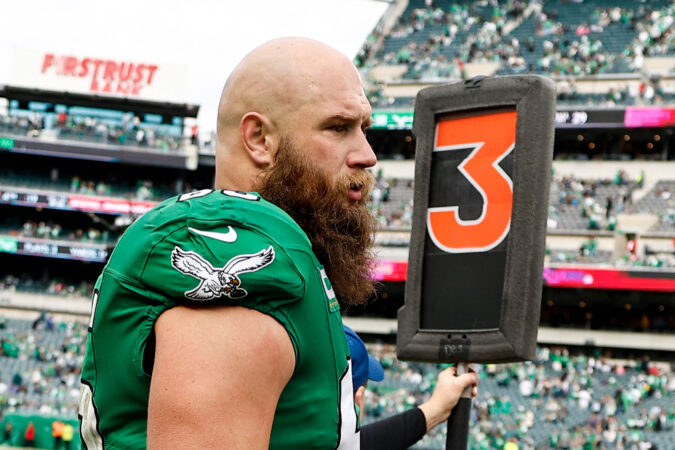
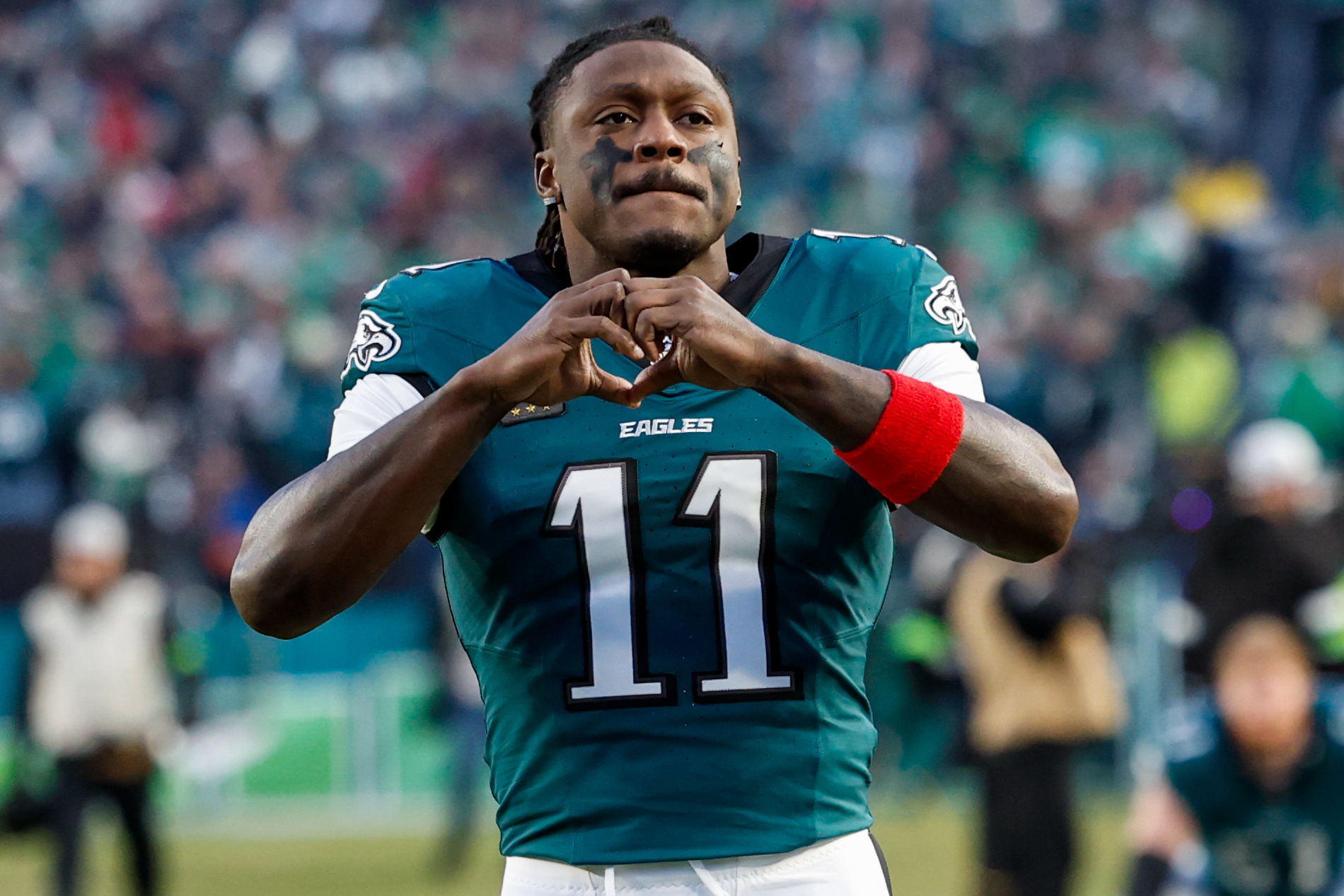
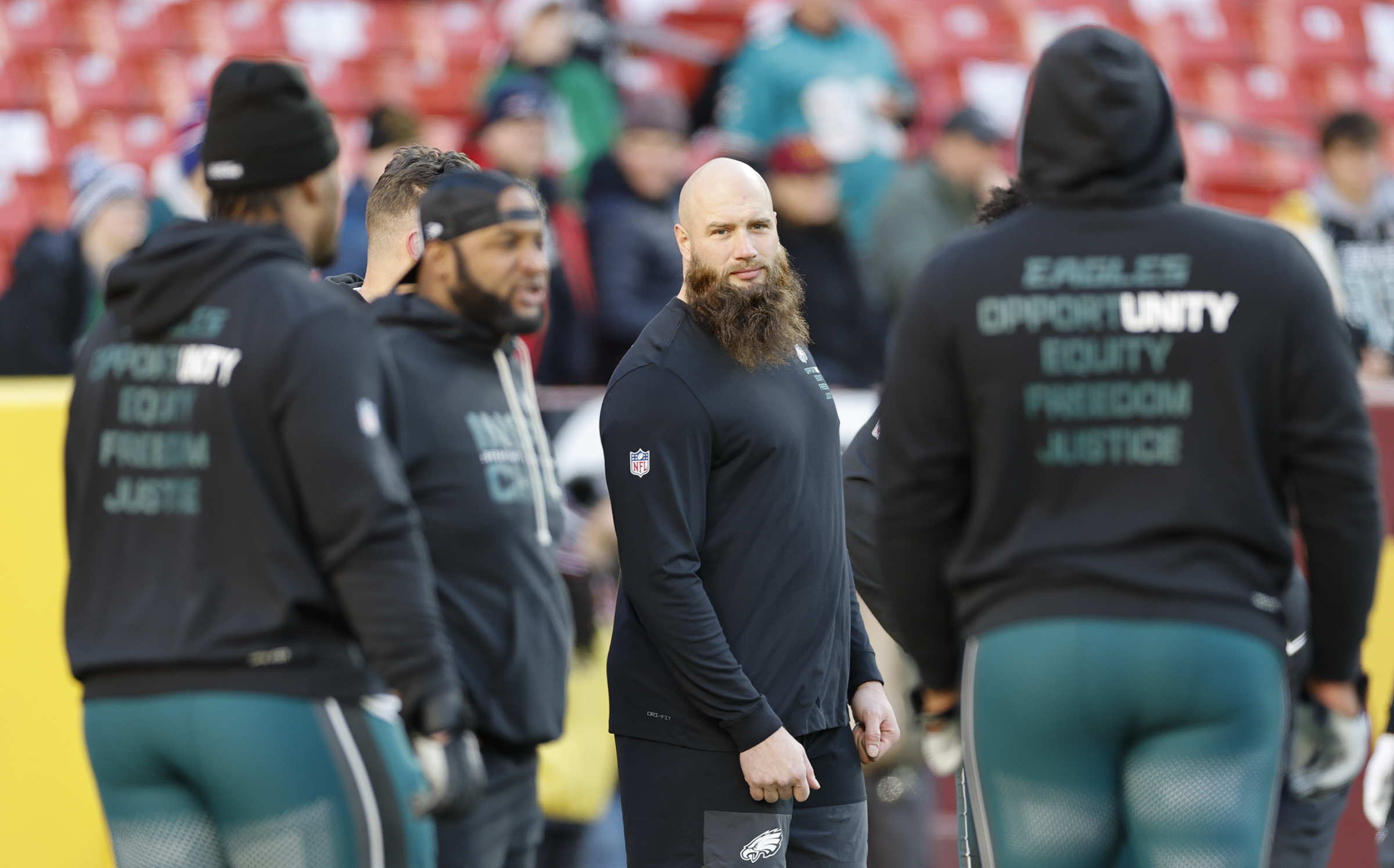
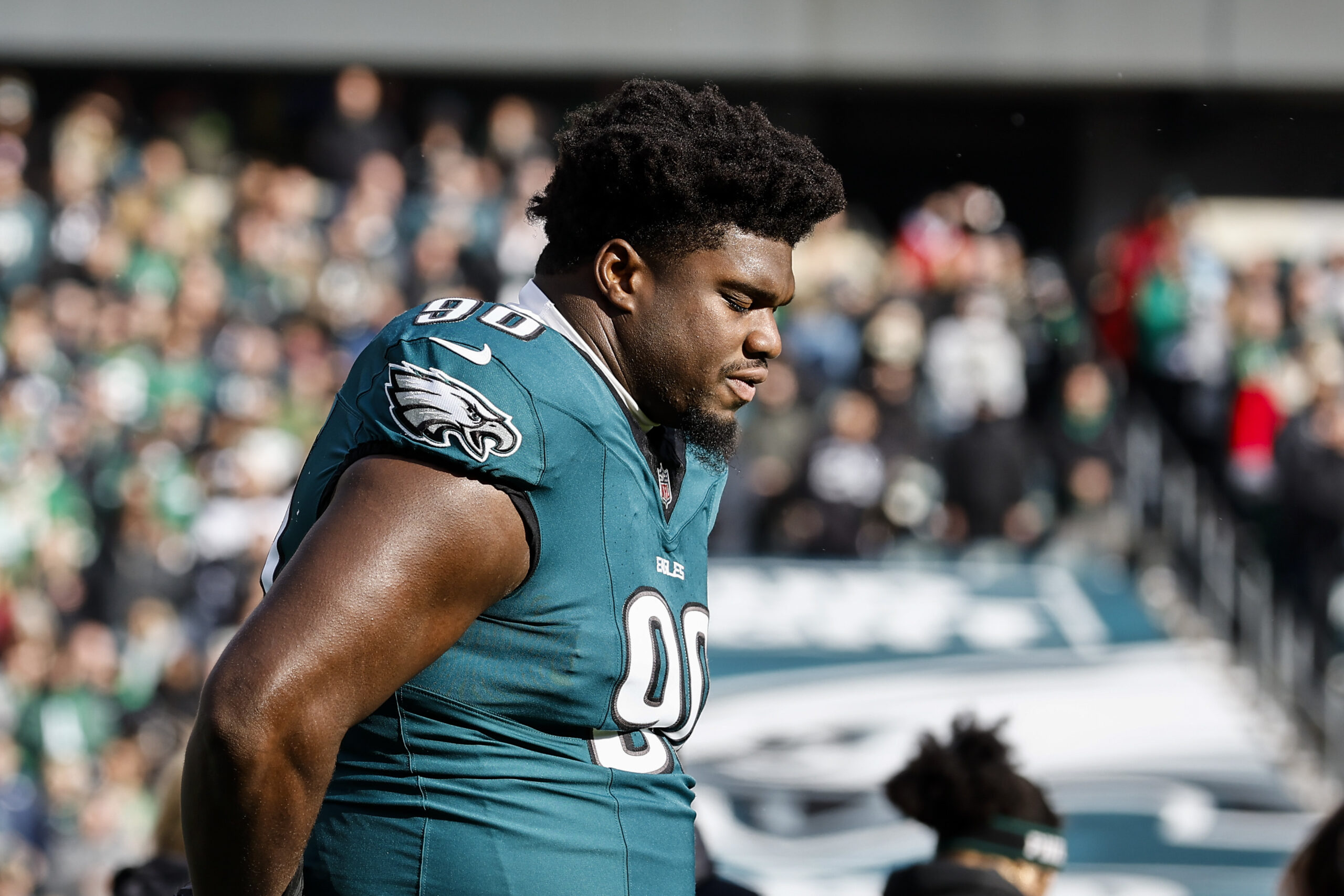
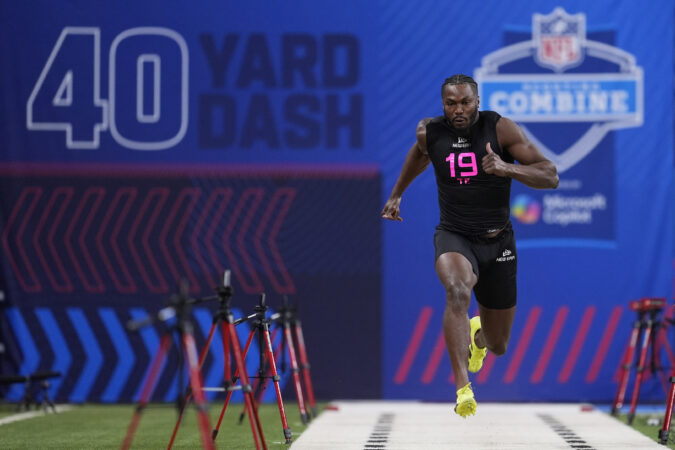
Lane Johnson is officially returning for a 14th season with the Eagles.
The right tackle told The Inquirer on Thursday that he will be back in 2026 after a month of uncertainty about his future following a season-ending injury and significant change in the Eagles’ coaching staff, most notably the departure of offensive line coach Jeff Stoutland.
Johnson said he would address Stoutland’s sudden resignation and the new staff, led by offensive coordinator Sean Mannion, at his next media availability. But he met with Mannion and new O-line coach Chris Kuper recently and is excited about turning the offense around, sources close to the situation said.
The return of Johnson, who turns 36 in May, will be key to coach Nick Sirianni’s expressed desire to “evolve” an offense that regressed significantly following a Super Bowl title just a season ago. Mannion is expected to bring with him the “Shanahan” system he both played and coached under as a quarterback and quarterbacks coach.
There will likely be changes to the Eagles’ blocking schemes, especially in the running game. Stoutland left when it was apparent he would no longer have responsibilities as run game coordinator. Sirianni did want him to return as O-line coach, however, sources told The Inquirer.
A six-time Pro Bowl player, Johnson was having another strong season until he suffered a Lisfranc foot fracture in Week 11. He had missed parts of other games with various setbacks, but the foot injury shelved him for the final eight games, including the wild-card playoff loss to the San Francisco 49ers.
Johnson avoided surgery on his foot, but the injury never healed enough for him to return last season. He has continued to rehab and is expected to be at full strength in the near future.
The Eagles have been a decidedly different team when Johnson is in the lineup vs. when he isn’t over his 13-year career. They are 110-57-1 when he plays and 18-27 when he doesn’t.
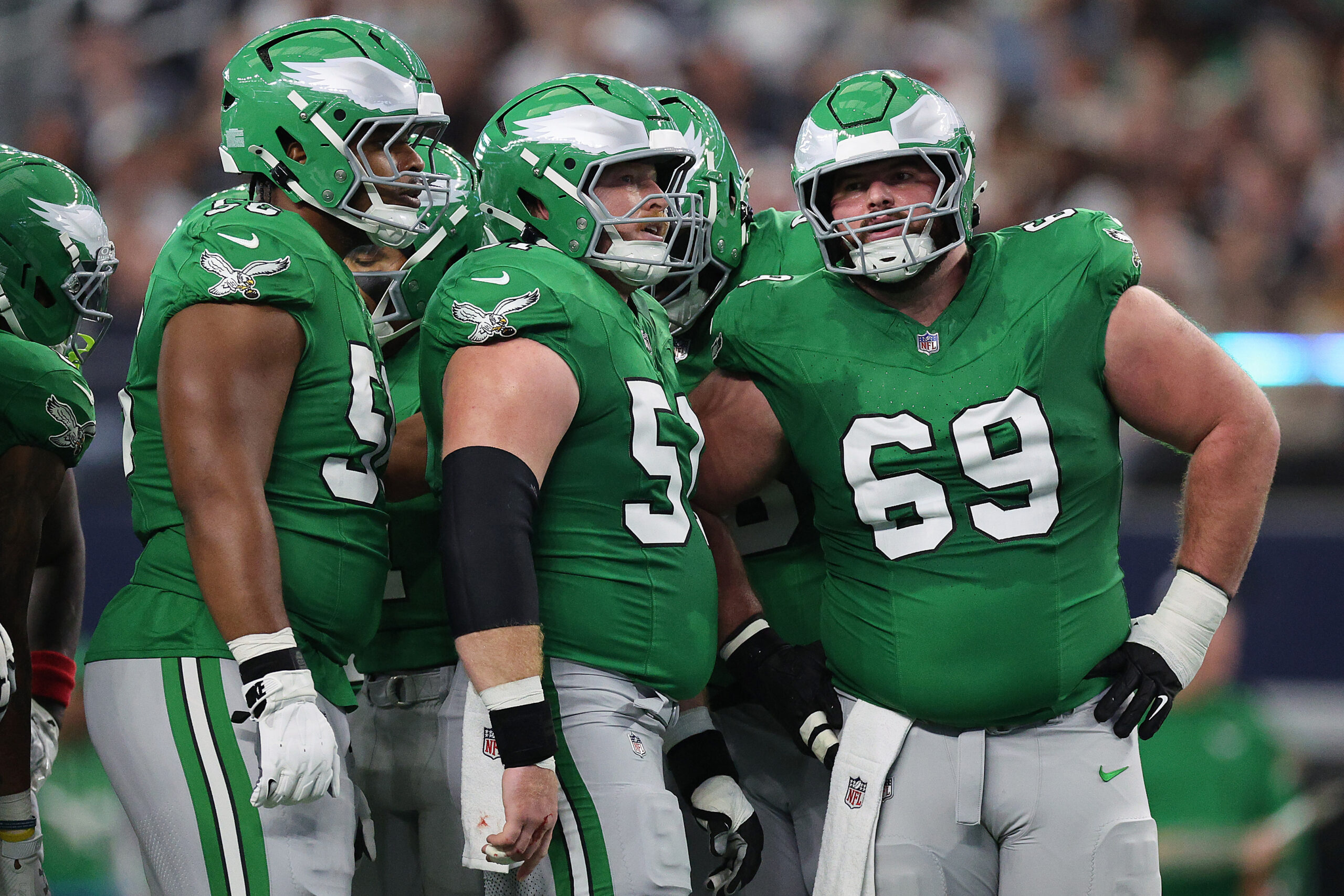
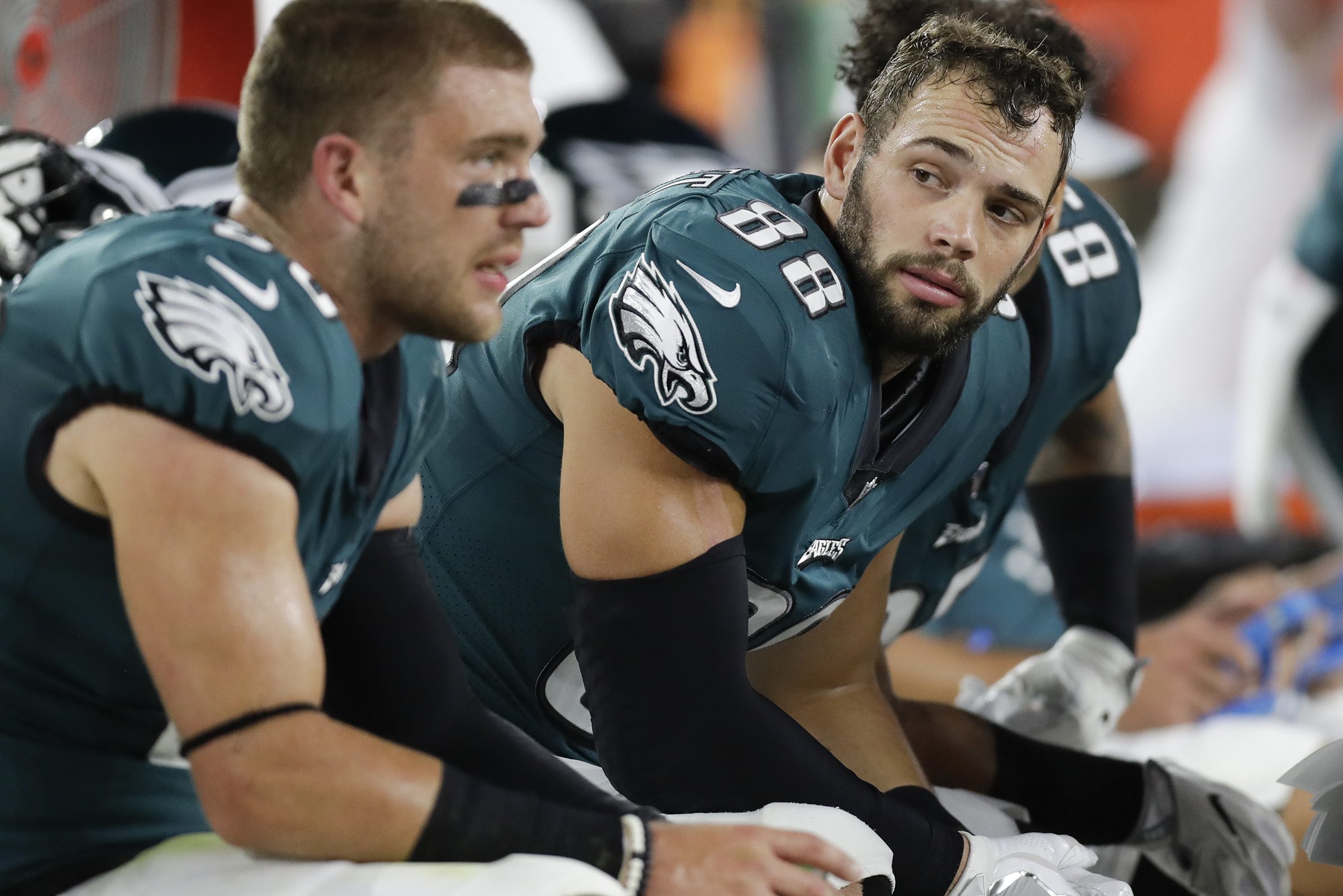
Center Cam Jurgens, (center) and guard Landon Dickerson (right) are among the other Eagles who were banged up this past season.
Johnson wasn’t the only offensive lineman who was banged up this past season. Left guard Landon Dickerson missed just two games, but he underwent knee surgery in August and played with multiple injuries throughout the campaign.
Dickerson, 27, expressed some doubt about his future immediately after the 49ers defeat. He has yet to publicly address his plans, but there have been concerns inside the Eagles organization about his health.
Recent indications are that Dickerson will return for his sixth season. The Eagles will likely have a clearer understanding of his plans ahead of next week’s NFL combine, when Sirianni and general manager Howie Roseman are expected to be available to reporters in Indianapolis.
Center Cam Jurgens wasn’t 100% following offseason back surgery, especially early last season. He struggled to return to form, although he was the lone Eagles offensive lineman voted to the Pro Bowl in 2025. Jurgens recently traveled to Colombia for stem cell treatment on his back.
“I’m excited to get healthy and get ready for this next season, so that’s why I’m down here,” he posted on Instagram, referring to the country in South America.
Left tackle Jordan Mailata and right guard Tyler Steen didn’t miss time to injury, but the unit was clearly affected by the tenuous health of the O-line, particularly in the running game. The Eagles again had one of the better pass-blocking units, according to most metrics.
The new league year is right around the corner, and it’s almost time for the 2026 Eagles roster to start coming into focus.
But first, the annual NFL Scouting Combine.
It’s the next thing on the offseason calendar, and while the focus for much of the week will be on the athletes going through performance testing, when it comes to the Eagles, it should be a big week for news related to the team.
Reporters typically get to talk to Nick Sirianni and Howie Roseman around the combine, and there are certainly plenty of questions to ask this year.
Here’s a look at five of the most pressing Eagles topics the coach and general manager may be addressing soon:
Why did the Eagles choose Sean Mannion, and why did they assemble this staff around him?
It’s been three weeks since the Eagles filled their vacancy at offensive coordinator by hiring Green Bay Packers quarterbacks coach Sean Mannion, a 33-year-old former quarterback with only two years of coaching experience. But we’ve yet to hear from Sirianni or Roseman, besides an initial statement released by the team, on why the Eagles hired Mannion, what they liked about him, and what hiring him means for the future of the scheme.
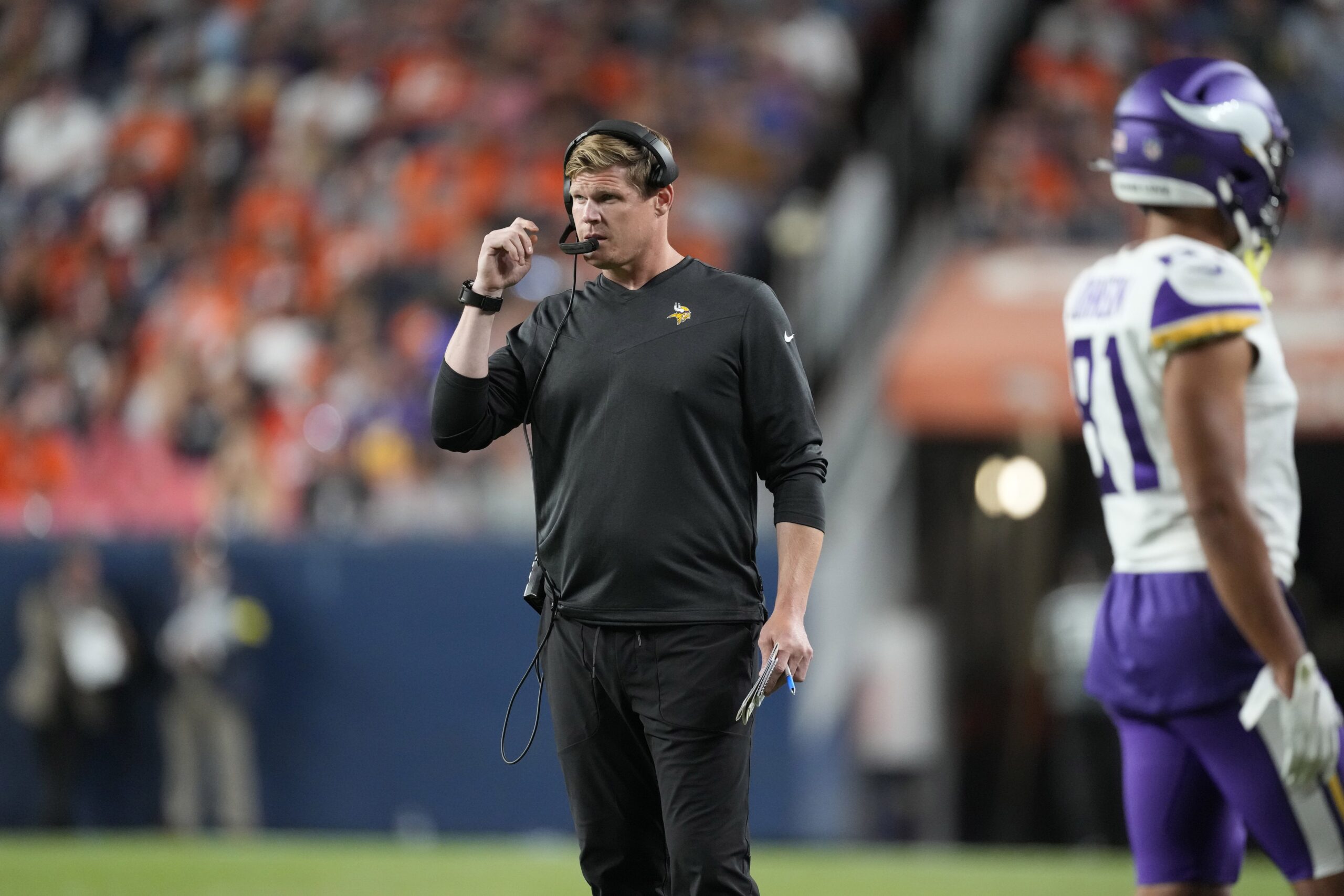
In the weeks since, the rest of the offensive coaching staff has been filled out. The Eagles hired one of their other coordinator candidates, former Tampa Bay offensive coordinator Josh Grizzard, as pass game coordinator. They hired Packers wide receivers coach Ryan Mahaffey to be the tight ends coach and run game coordinator. Longtime offensive line coach Jeff Stoutland left the team (more on that later), and he was replaced by Minnesota Vikings offensive line coach Chris Kuper.
The Eagles retained wide receivers coach Aaron Moorehead and running backs coach Jemal Singleton, sources told The Inquirer, and, according to CBS Sports, plan to shift Parks Frazier, last season’s pass game coordinator, to quarterbacks coach.
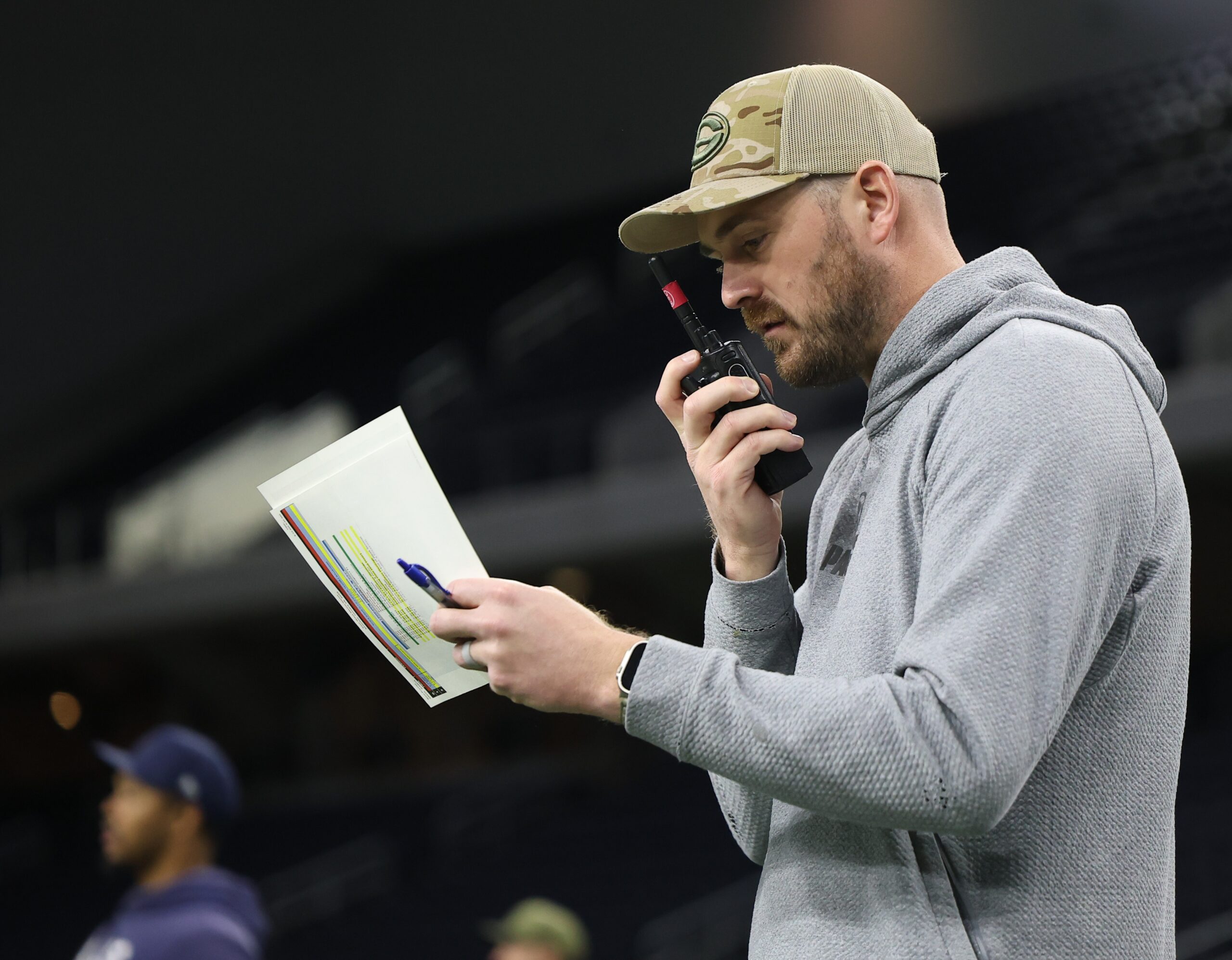
Sean Mannion will be calling plays for the first time under intense scrutiny in Philadelphia.
The new offensive coaching staff, under a first-year play-caller, is an amalgamation of coaches with different backgrounds. What will it mean for the scheme going forward?
Sirianni said after removing Kevin Patullo that the offense needed to “evolve.” He’ll soon have the chance to explain why and how this group can help it do that.
What happened with Jeff Stoutland?
The longest-tenured coach in the building, who has been widely regarded as the best offensive line coach in the sport, is no longer coaching with the Eagles.
Why?
The Eagles wanted Stoutland back as the offensive line coach, league sources said, but Stoutland, who also held the title of run game coordinator, wasn’t going to be as involved in the running game, and the Eagles are shifting schemes. Change is in the air. But Stoutland’s role in the running game decreased as last season went on, The Inquirer’s Jeff McLane reported recently on the unCovering the Birds podcast.
How did it get to this, and how much of an impact will his departure have on the offensive line moving forward?
Don’t expect Roseman to say anything that strays too far from his normal line when it comes to A.J. Brown and players like him.
Here’s what Roseman said at the end-of-year news conference on Jan. 15 when asked if he was open to trading Brown or if trading him was a nonstarter: “It is hard to find great players in the NFL, and A.J.’s a great player. I think from my perspective, that’s what we’re going out and looking for when we go out here in free agency and in the draft is trying to find great players who love football, and he’s that guy. I think that would be my answer.”
Still, Roseman likely will be asked about the star receiver’s future in Philadelphia in the coming days. It’s for good reason. Brown, of course, hasn’t been shy about his frustrations with the direction of the offense. But during Super Bowl week, Brown appeared on Micah Parsons’ podcast and spoke about his excitement for the future and the new offensive coaching staff. “Sometimes change is not a bad thing,” he said. He also called Philadelphia “home.”
Does wide receiver A.J. Brown have enough love for Philadelphia to remain an Eagle?
While he didn’t sound like someone who was about to ask for a trade, it’s still early in the offseason.
Brown’s future with the team impacts how the Eagles approach the draft and free agency, so a decision on whether the Eagles see him in their immediate plans probably is already made. It’s complicated, however, because of the salary cap implications. The cost to trade Brown before June 1 would be $48.939 million, according to Over the Cap. If the Eagles traded him after that, they would incur a dead cap charge of $22.09 million. Much more palatable, but still a lot of dead money.
It begs the question, too: Could the Eagles ever get good value in a trade for Brown?
Roseman probably won’t be showing his cards in the coming days, but it’s a topic he’ll have to address.
How much has the future outlook of the offensive line changed, and how will it impact the plans?
The offensive line took a big step back in 2025 thanks to a slew of injuries. Lane Johnson missed half the season. Landon Dickerson was never fully healthy and may never be again. Cam Jurgens played through back pain.
At the time of Stoutland’s departure, it wasn’t even a sure thing that Johnson and Dickerson would be back for the 2026 season. A unit that basically was plug-and-play has turned into a big question mark for the Eagles. How much longer will Johnson and Dickerson play? (Editor’s note: Johnson announced his return for 2026 on Thursday.)
Eagles offensive tackle Lane Johnson’s health and future were in doubt before he announced his return on Thursday.
Jurgens, meanwhile, shared a video this week on social media of him in Colombia undergoing stem cell treatments. Jurgens, via his agent, declined to comment further on what led him to go that route or how he is feeling. The center had back surgery after the Super Bowl last year and did not play to his 2024 level this past season.
This impacts how the Eagles approach the draft and free agency. They’re due to get an eventual replacement for Johnson in the door, but they now need to think about the future of the interior.
Who stays, who goes, and who could get extended or restructured?
It soon will be time for the Eagles to go shopping on the free agency market, but there are some players on the current roster in line to have their contracts extended or possibly restructured.
Let’s start with Jordan Davis, who broke out in 2025 and earned himself a new contract. The Eagles picked up Davis’ fifth-year option last year, but signing him to a new deal is almost too obvious because it would free up much-needed cap space for 2026.
Will defensive tackle Jordan Davis be first in line for a contract extension after a breakout season?
There’s also Jalen Hurts, whose cap number jumps from nearly $22 million in 2025 to nearly $32 million in 2026. It will be more than $42 million in 2027, more than $47 million in 2028, and a whopping $97.5 million in 2029. But Hurts has no guaranteed money beyond this season. A restructure or extension could be on the table sooner than later.
What about the free agents? Jaelan Phillips, for example, is one of the best edge rushers on the market, and the Eagles need some of those. Safety Reed Blankenship is slated to hit the market, and the Eagles need a safety.
Roseman may not tip his hand, but he’ll certainly be asked about all of it with free agency just a few weeks away.
Next week, 319 college football prospects will descend on Indianapolis for the annual NFL scouting combine, where they will be tested physically, mentally, and medically, interviewed by NFL front office personnel, and will speak with hundreds of media members.
This latest step in the 2026 NFL draft process allows teams to home in on the next crop of players that will fill their franchises. All 32 teams will have 45 “formal interviews,” which last just under 20 minutes, can include watching film or any questions teams want to ask a prospect, and typically take place in the Lucas Oil Stadium suites.
The first direct touch point with prospects happened at last month’s Shrine and Senior Bowl games. NFL teams will utilize this next piece of the puzzle to identify which prospects match their team needs.
Here is how we’re ranking the combine position groups from strongest to weakest — and how they could help the Eagles address some roster needs.
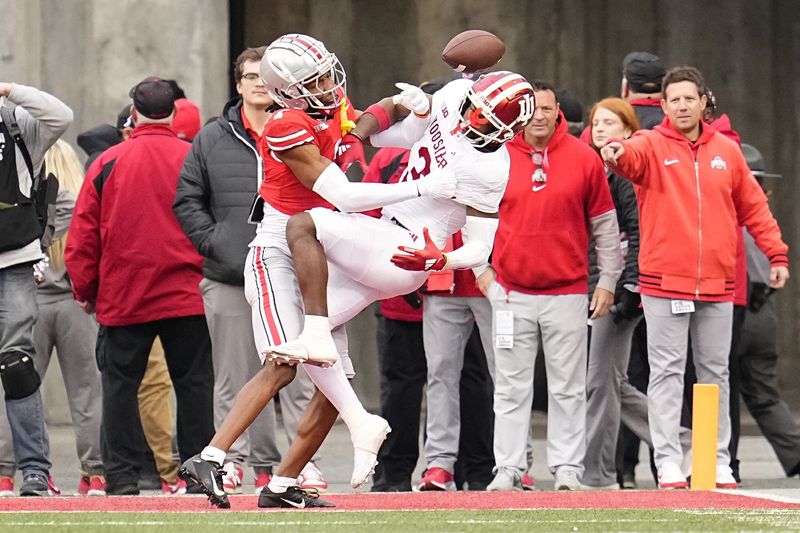
Ohio State cornerback Davison Igbinosun (1) is a potential target for the Eagles beyond the first round.
1. Cornerbacks
It’s a good year to add a secondary player, whether they play outside corner, nickel, or safety. But outside and boundary corners, specifically, will be plentiful from the first round to Day 3 of the draft.
This is a position the Eagles could address early, but not one that will likely be prioritized in the first round. Among the early projected draft picks at the position are LSU’s Mansoor Delane, Tennessee’s Jermod McCoy and Colton Hood, Clemson’s Avieon Terrell, and South Carolina’s Brandon Cisse.
Finding a corner to develop into a starter opposite of Quinyon Mitchell — assuming they don’t bring back Adoree’ Jackson, who is set to be a free agent — should be among the Eagles’ objectives. Keep an eye on San Diego State’s Chris Johnson, Ohio State’s Davison Igbinosun, Arkansas’ Julian Neal, Georgia’s Daylen Everette, and Texas A&M’s Will Lee as players who could interest the Eagles.
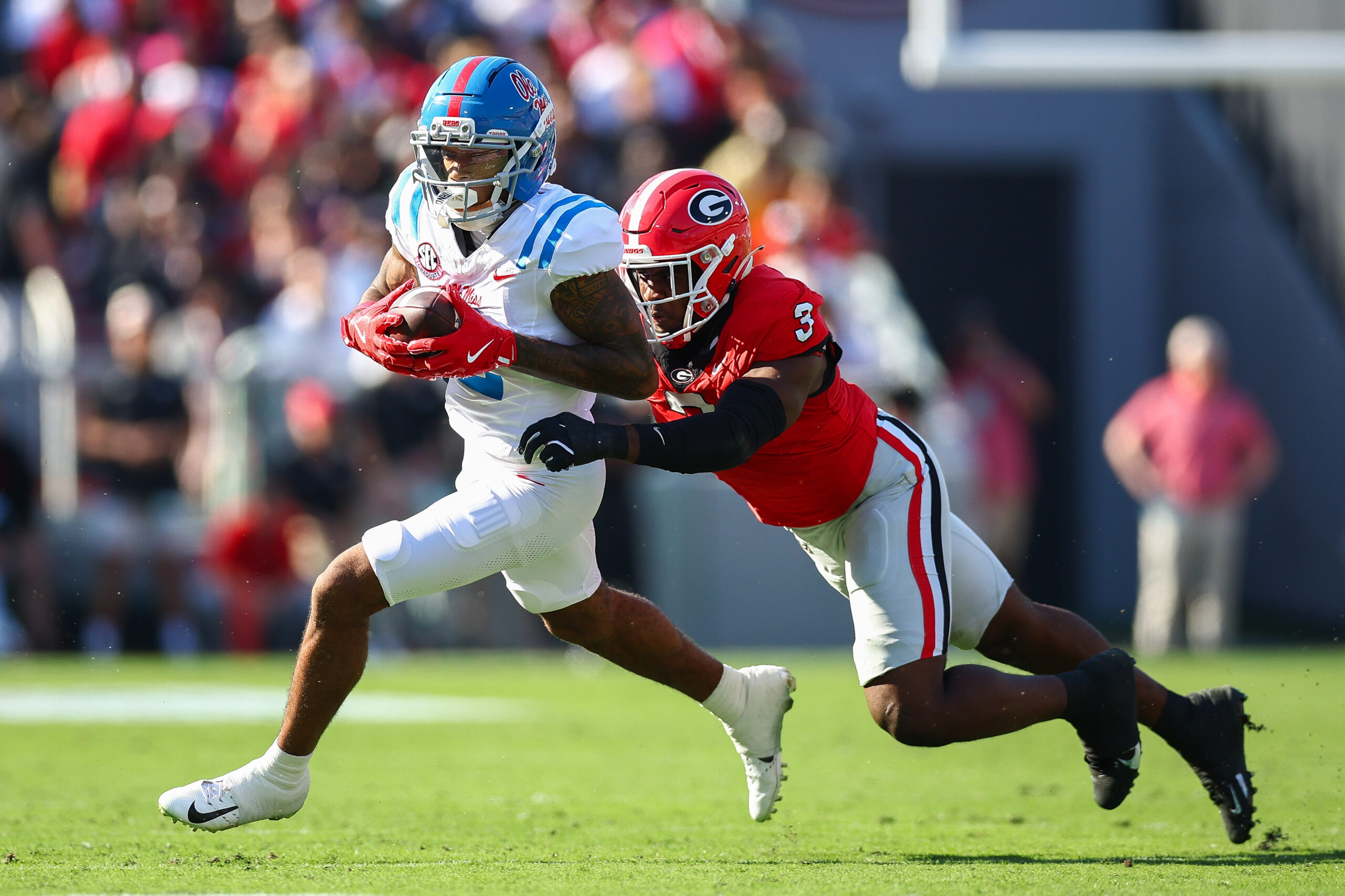
Ole Miss wideout Harrison Wallace III (2) could be a depth or slot option for the Eagles.
2. Wide receivers
There is always a healthy stable of receivers entering the draft, and 2026 is no different. The Eagles, of course, won’t be drafting a wide receiver early — unless they trade A.J. Brown before the draft — but they will need to add more depth to the room regardless.
The top of the class is led by Ohio State’s Carnell Tate, Arizona State’s Jordyn Tyson, and USC’s Makai Lemon, but the receivers heading to the combine feature several skill sets.
The Eagles’ WR3 spot is a potential question mark heading into next season with Jahan Dotson heading into free agency. Players like Ole Miss’ Harrison Wallace, Baylor’s Josh Cameron, Georgia Tech’s Eric Rivers, and Clemson’s Antonio Williams are players to keep an eye on that can occupy either a slot role or have moved around the formation in their collegiate careers and could fit in a depth role for the Eagles.
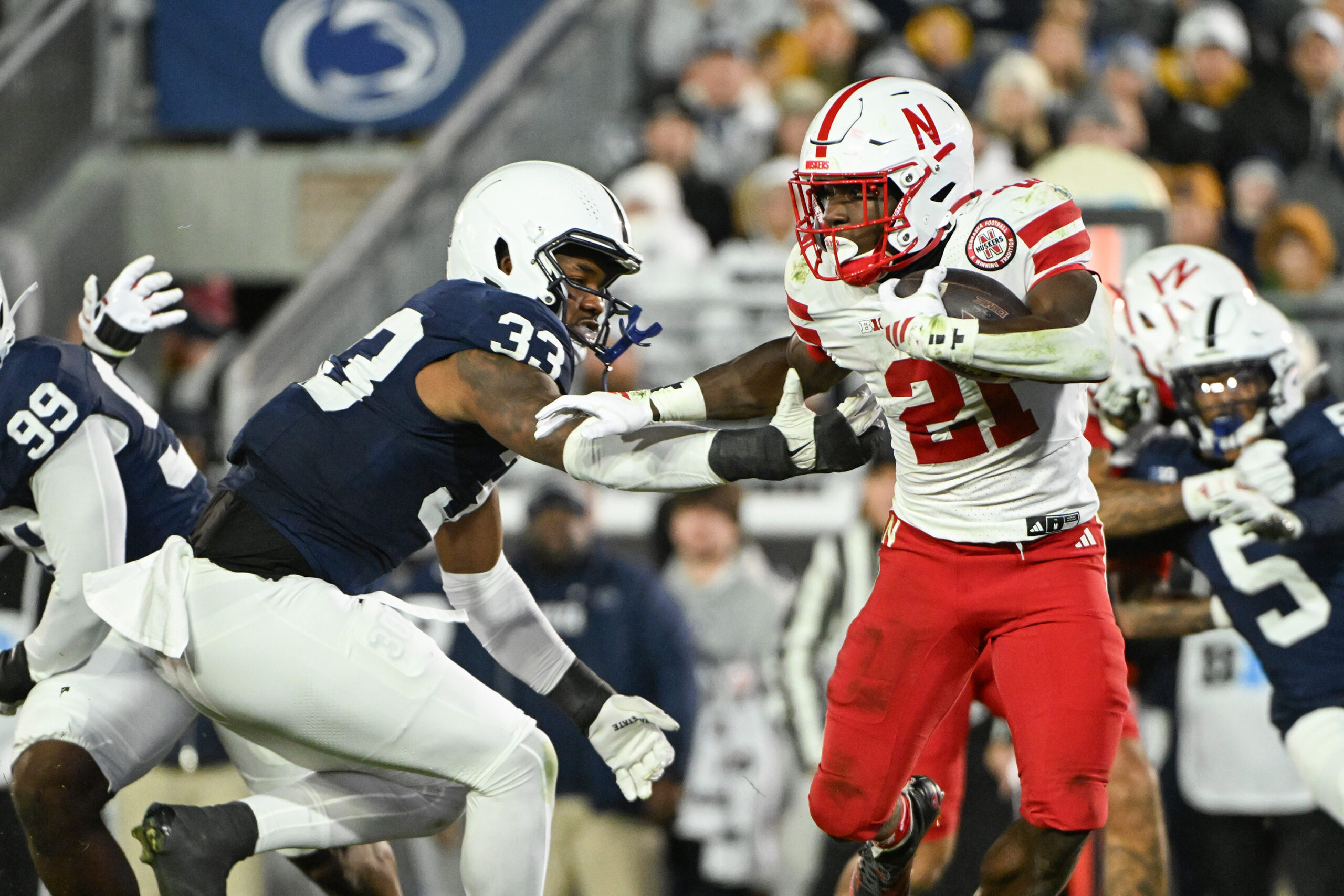
Would Penn State defensive end Dani Dennis-Sutton (33) be a fit for the Eagles’ pass rushing group?
3. Edge rushers
There is an abundance of edge rushers worth drafting in this class, with Miami’s Rueben Bain, Texas Tech’s David Bailey, and Auburn’s Keldric Faulk as the top names. With Jaelan Phillips and Azeez Ojulari set to become free agents and Brandon Graham’s status unknown for 2026, the Eagles’ edge rusher room desperately needs more depth.
The versatile edge rusher types might interest the Eagles more in this class, though, to complement the relatively light-body types in the edge rusher room currently. Alabama’s LT Overton, Florida’s Tyreak Sapp, and Penn State’s Dani Dennis-Sutton are all players who are bigger in size and have the ability to play from three-techniques out to true pass rusher alignments.
As for developmental pass rushers, keep an eye on Michigan’s Jaishawn Barham, Western Michigan’s Nadame Tucker, and Boston College’s Quintayvious Hutchins as late Day 2 and early Day 3 options as pure pass rushers.
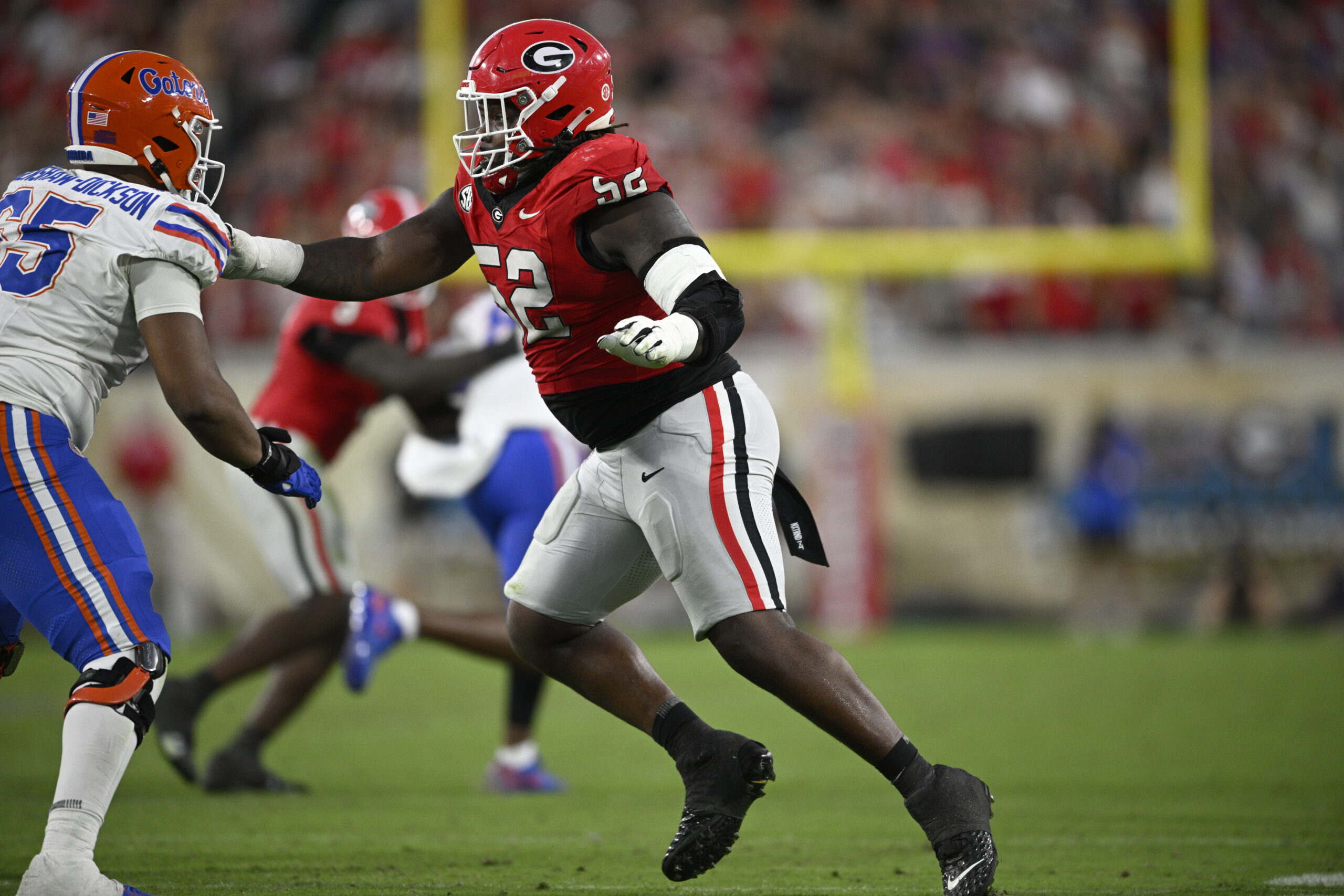
Christen Miller (52) is another Athens-to-South Philly possibility for the Eagles.
4. Interior D-line
As the Eagles and Seattle Seahawks proved in the last two Super Bowls, an interior pass rush presence matters a whole lot, and the NFL has a deep group of prospects to choose from in this class.
There are run stuffer types such as Texas Tech’s Lee Hunter, Ohio State’s Kayden McDonald, Iowa State’s Domonique Orange, and Georgia’s Christen Miller, and twitchy pass rushers including Clemson’s Peter Woods and Florida’s Caleb Banks.
Jalen Carter and Jordan Davis could soon get extensions from the Eagles, but adding more bodies to have a deeper rotation and talent level in the room would only help keep those players fresh. Michigan’s Rayshaun Benny, Missouri’s Chris McClellan, and Texas A&M’s Tyler Onyedim are a few Day 2 and 3 options to keep tabs on.
Eric Gentry is a local product who might be of interest to the Eagles.
5. Linebackers
The Eagles linebacker room became a strength of the defense over the last few seasons and they won’t need to expend an early-round pick on one. But this class has three first-round caliber players at the position: Ohio State’s Arvell Reese and Sonny Styles and Georgia’s CJ Allen.
The Eagles could lose Nakobe Dean to free agency this offseason, but still have Jihaad Campbell and Zack Baun penciled in as starters. There are two players in this class with Philly-area ties: USC’s Eric Gentry, the former Neumann Goretti standout, and Missouri’s Josiah Trotter, the younger brother of Jeremiah Trotter Jr. Josiah Trotter and Gentry are both expected to get drafted.
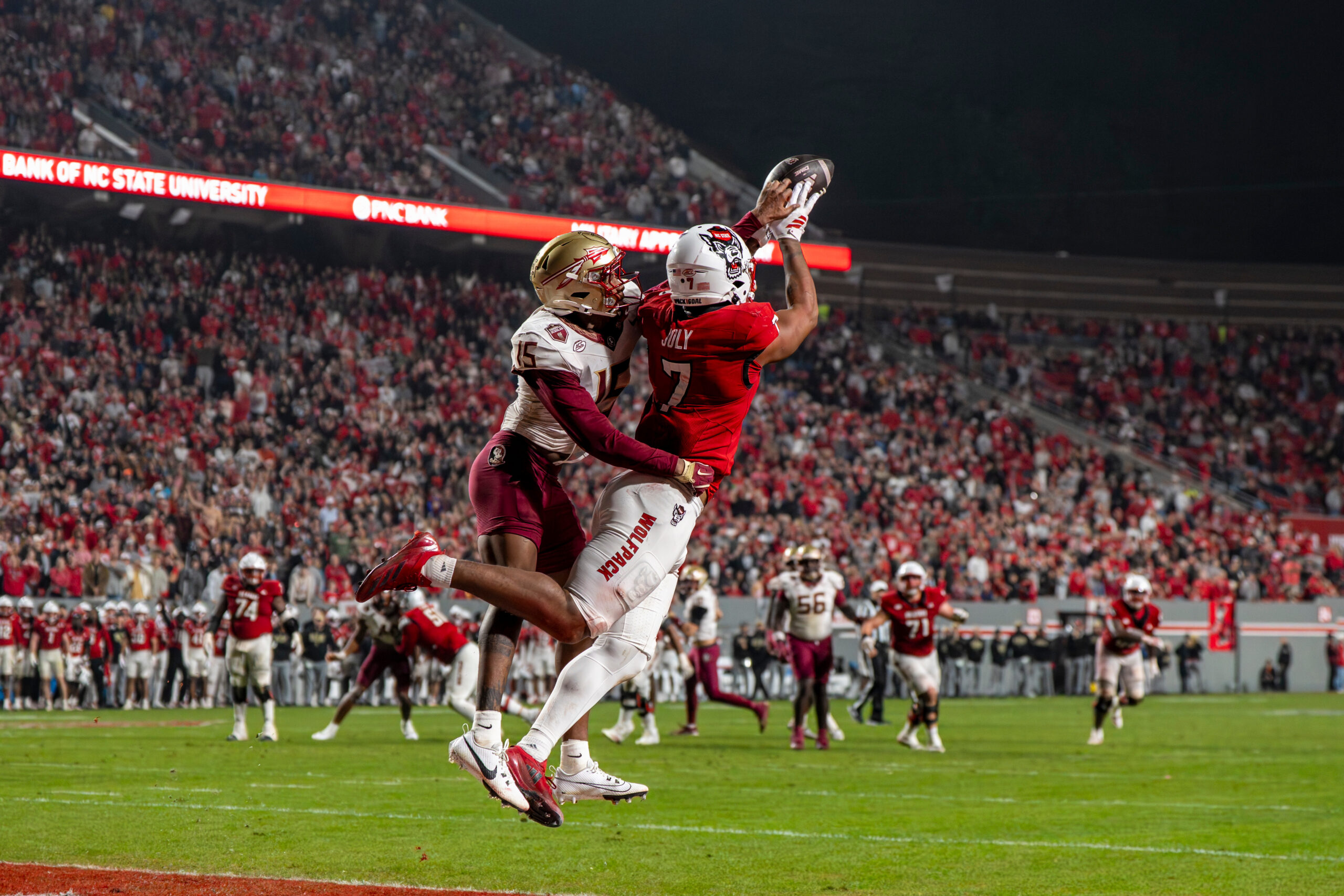
North Carolina State tight end Justin Joly (7) could be an intriguing target for the Eagles.
6. Tight ends
Put a big circle around this group, because tight end is one of the pressing needs for the Eagles. Dallas Goedert, Grant Calcaterra, and Kylen Granson are all set to be free agents, and regardless of whether any of those players return, the room needs more talent in it.
Oregon’s Kenyon Sadiq is at the top of the class, and likely the only tight end to go in Round 1. But this class is strong on Day 2 and 3.
Ohio State’s Max Klare, NC State’s Justin Joly, Georgia’s Oscar Delp, and Baylor’s Michael Trigg are all receiving tight end prospects worth taking on Day 2. Players who can thrive in-line as blockers and have some receiving chops as well include Ohio State’s Will Kacmarek, Penn State’s Khalil Dinkins, Texas A&M’s Nate Boerkircher, and Indiana’s Riley Nowakowski, who can also play fullback.
Other later names, including Utah’s Dallen Bentley, Ole Miss’ Dae’Quan Wright, and Stanford’s Sam Roush are developmental options on Day 3 and could fill roles as second or third options in multi-tight end formations.
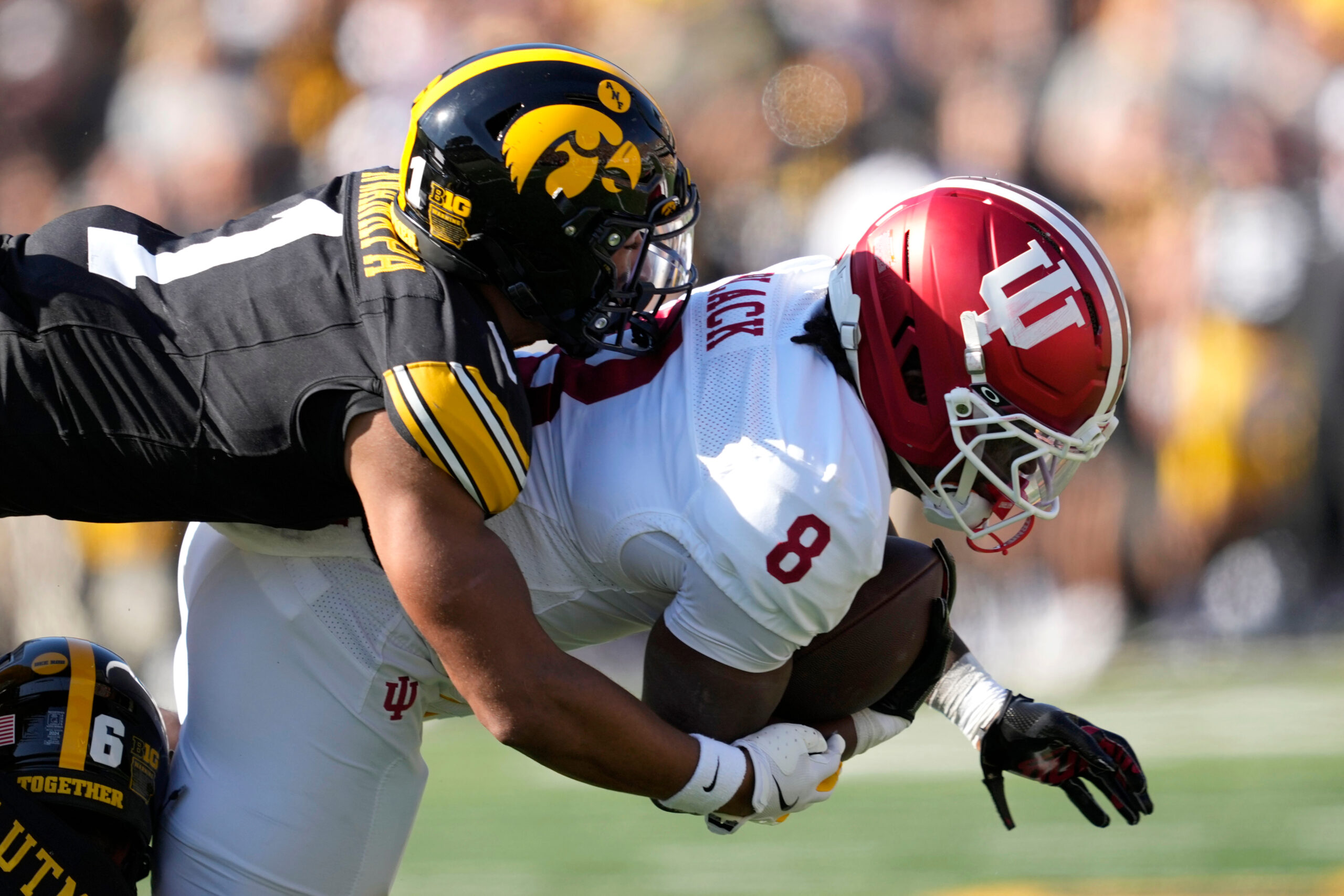
Could Xavier Nwankpa (1) join Cooper DeJean as another ex-Hawkeye in the Eagles secondary?
7. Safeties
This is a position that probably needs more attention than it generally gets, considering Reed Blankenship and Marcus Epps are soon-to-be free agents. Drew Mukuba and Sydney Brown are the only players under contract for next season who have taken significant snaps at the position.
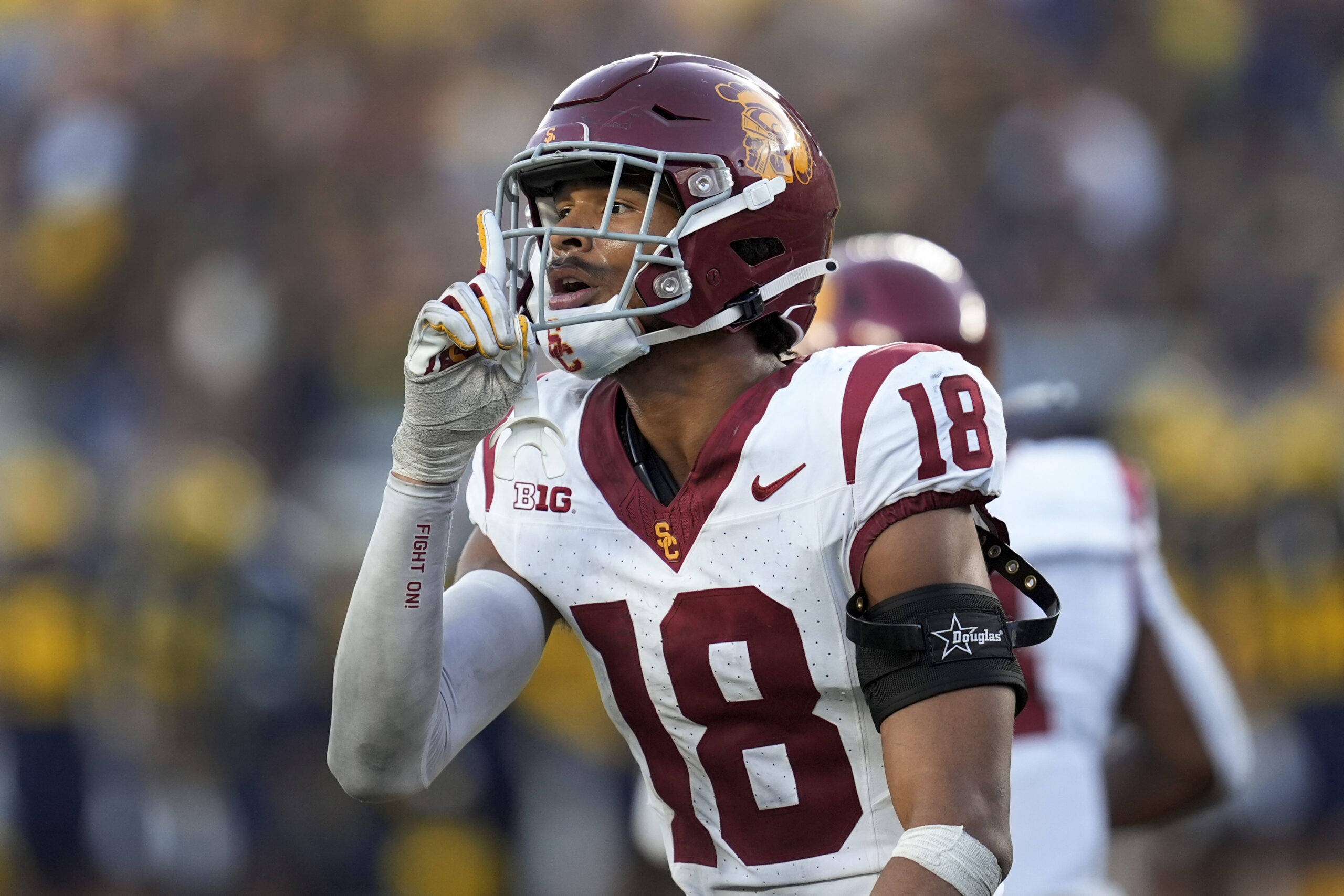
This is a strong safety class, led by Ohio State’s Caleb Downs, who is also one of the best players in the draft class. Quinyon Mitchell’s alma mater, Toledo, has another early-round pick in Emmanuel McNeil-Warren, and there are plenty of coverage specialists such as USC’s Kamari Ramsey, LSU’s A.J. Haulcy, and Arizona’s Genesis Smith.
Since Blankenship played more near the line of scrimmage, the Eagles could be looking to pair that skill set with Mukuba, and players including Penn State’s Zakee Wheatley, Oregon’s Dillon Thieneman, and Iowa’s Xavier Nwankpa fit the bill.
Kadyn Proctor (74) is generating buzz as a possibility along the Birds’ offensive line.
8. Offensive linemen
This is the spot the Eagles need to upgrade most heading into next season, yet it’s among the weakest groups in this class in terms of starting caliber players. Still, there are players that will interest the Eagles.
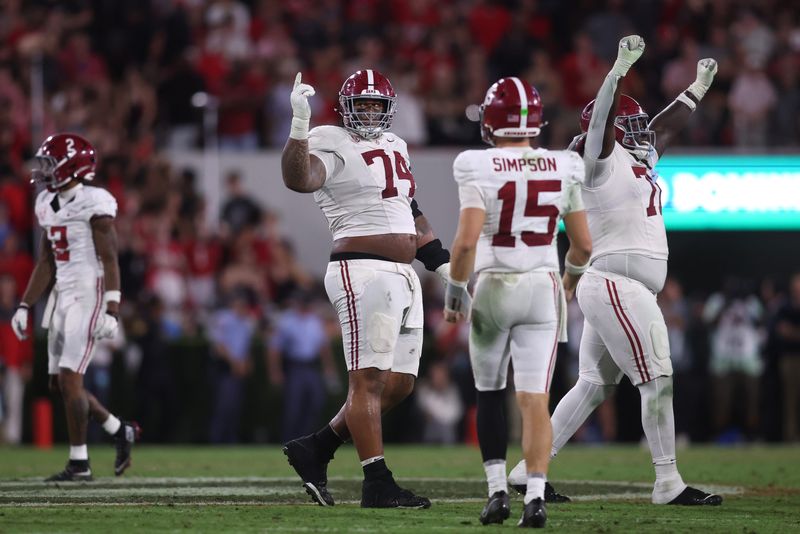
The player most commonly linked to the Birds is Alabama’s Kadyn Proctor, a massive offensive lineman with unique athleticism at 6-foot-7, 366 pounds. Is he a tackle or guard? That debate could get settled at the combine next week.
The other top offensive linemen are Utah’s Spencer Fano and Caleb Lomu and Miami’s Francis Mauigoa. Fano and Mauigoa are also players that could move to the interior at the NFL level. Georgia’s Monroe Freeling, Arizona State’s Max Iheanachor, and Clemson’s Blake Miller are the next group of fringe first-round players who will strictly be tackles in the NFL and could serve as potential heirs to Lane Johnson whenever he retires.
As for interior offensive line, Penn State’s Olaivavega Ioane is the only true guard prospect that is Round 1 worthy. The Day 2 prospects like Texas A&M’s Chase Bisontis, Oregon’s Emmanuel Pregnon, Georgia Tech’s Keylan Rutledge, and Notre Dame’s drop-off could be players the Eagles have interest in, especially with Landon Dickerson’s uncertain future.
The overall O-line class has a steep drop-off after the starting-caliber players, so if the Eagles want one, they’ll need to draft one early.
9. Running backs
The Eagles seem set at the running back position for now with Saquon Barkley, Tank Bigsby, and Will Shipley. A quick glance at the running back invites at the combine shows a relatively limited group to pick from.
There’s only one running back right now that has first-round consideration, and that’s Notre Dame’s Jeremiyah Love. Beyond him, the next running back could wait a full one or two rounds before hearing their name called in the 2026 draft.
Illinois quarterback Luke Altmyer is a potential developmental QB the Eagles might evaluate.
10. Quarterbacks
As we alluded to in the All-Star game takeaways, this is not a strong quarterback class and it’s reflected in the number of combine invites. Indiana’s Fernando Mendoza is the projected top pick, but beyond him, the class is wide open. Alabama’s Ty Simpson could go in Round 1, but the gap between the second and third quarterback taken in this class could be very wide.
The class overall lacks starting caliber players, and the sweet spot of the class is likely between Rounds 3-6. The Eagles could draft one to develop since Sam Howell is a free agent and Tanner McKee could move on over the next year via trade or free agency.
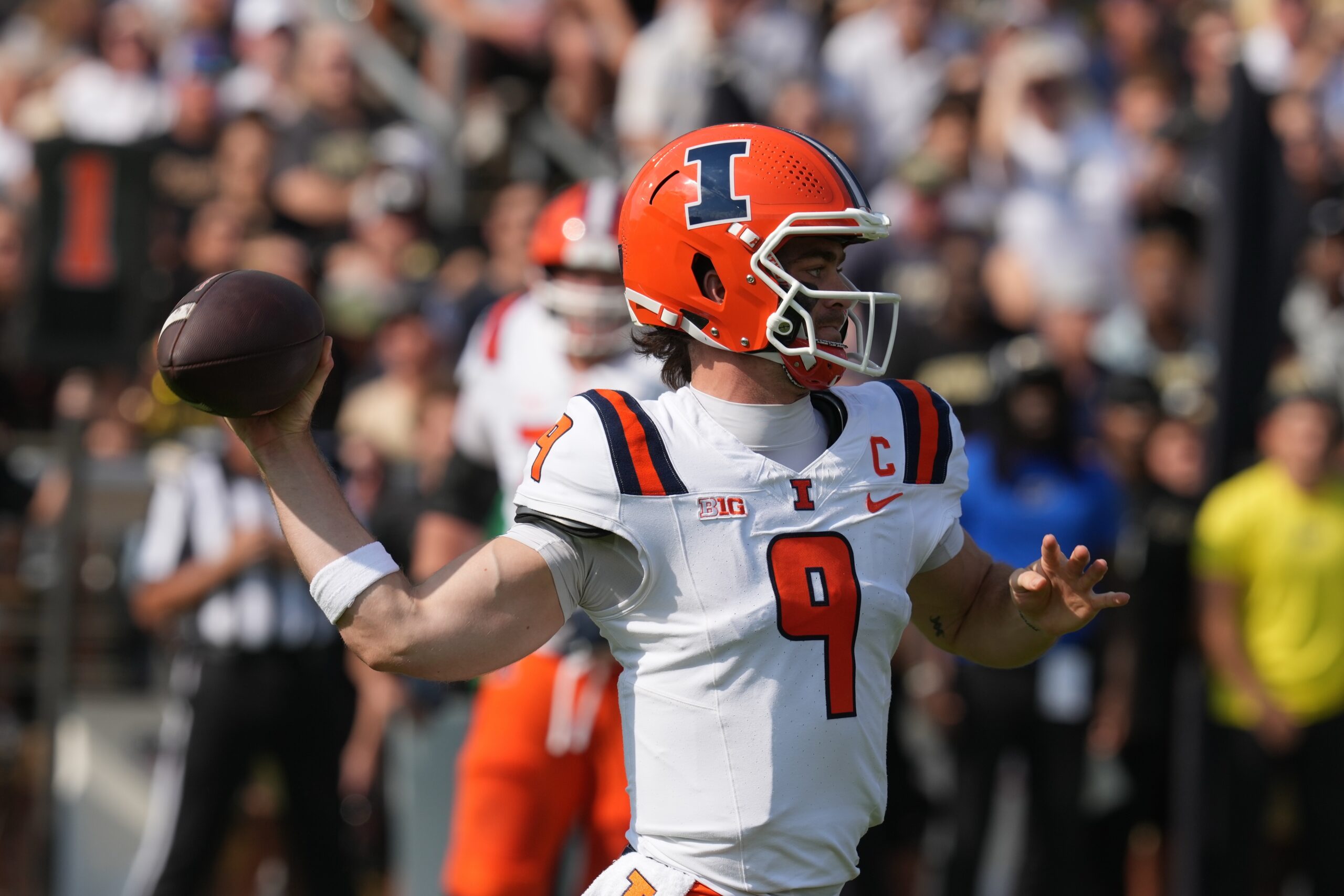
Some players attending the combine that could make sense for the Eagles include Kansas’ Jalon Daniels, Arkansas’ Taylen Green, and Illinois’ Luke Altmyer.
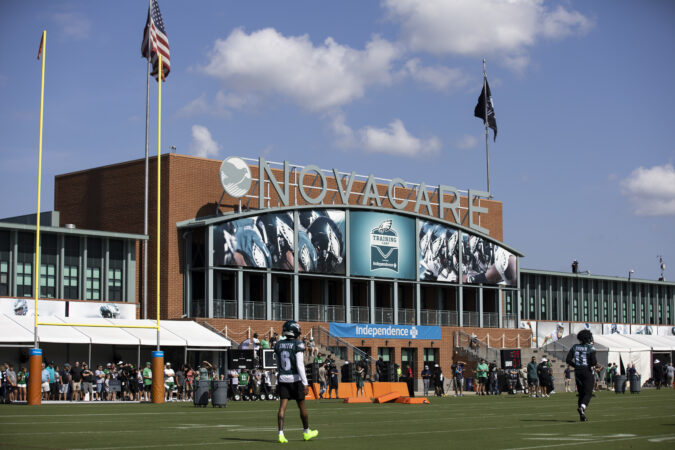
The Eagles’ training facility in South Philadelphia will have a new name this upcoming season: Jefferson Health Training Complex.
Since the practice facility opened in 2001, it has been known as the NovaCare Complex. It’s been home to Eagles training camp since 2013.
The team announced new sponsorship agreements with Jefferson Health and with NovaCare Rehabilitation on Tuesday, which included the renaming of the Eagles’ facility.
The facility, located on the side of Broad Street across from the sports complex, is home to the Birds’ main locker room, team offices, and more.
“The longstanding partnership between the Eagles and Jefferson Health has been built on a shared commitment to the region we serve,” Eagles president Don Smolenski said in a press release. “This multi-year extension marks a defining moment in our partnership — one that will now call the Jefferson Health Training Complex home to the Philadelphia Eagles. We are thrilled to celebrate this moment together and look forward to building upon our joint impact in the community through the core values we share.”
Jefferson Health will also continue to be the jersey patch sponsor for the Eagles’ practice jerseys, while NovaCare will continue to be the team’s official rehabilitation partner.
The Birds will return for practices in late April and May, ahead of mandatory minicamp in June and training camp in July.
When evaluating NFL prospects, a player’s past performance is often the best predictor of future performance. The same can be said for the act of scouting itself.
Howie Roseman, who began serving as Eagles general manager in 2010, has an extensive draft history that can be used to project his future prospect preferences. Roseman has had personnel control during 15 draft cycles, not including 2015 when Chip Kelly was in charge of those decisions. Those 15 draft classes offer windows into Roseman’s valued traits and abilities at each position.
For years, the Eagles’ player personnel department has been gathering information about the 2026 draft class. At the scouting combine next week, Roseman and his staff will continue to learn about the scores of NFL hopefuls and determine their prospective fit within the organization.
What can the Eagles’ draft history tell us about the questions they will seek to answer about some of the top prospects at three positions of need next week?
Will new Eagles offensive line coach Chris Kuper have the same impact on the team’s draft board as did his predecessor Jeff Stoutland?
‘Critical factors’ on the offensive line
Jeff Stoutland is no longer the Eagles offensive line coach, but will his philosophies in scouting prospective talent linger within the front office?
Throughout his 13-year tenure, Stoutland often emphasized the importance of his players possessing “critical factors” — traits that make them unusual (in a positive way) — to fit in on the Eagles line. Those factors were essential for everyone, from free-agent additions to Day 3 draft picks.
The Eagles may still take his approach in identifying offensive line talent, which is one of their key responsibilities this offseason. Given the uncertain future of Lane Johnson, regardless of whether he returns for the upcoming season or not, the Eagles could look to bolster their prospects at tackle.
For Johnson and Jordan Mailata — Roseman’s biggest draft success stories at tackle — “critical factors” trumped time on task. Johnson, the No. 4 overall pick out of Oklahoma in 2013, had three seasons of tackle experience going into the draft. Mailata, the Eagles’ 2018 seventh-rounder, had none.
They were remarkable athletes at their size, though. Johnson flaunted his athleticism at the combine, ranking in the 99th percentile in the 40-yard dash (4.72 seconds). But most offensive linemen aren’t running 40 yards unabated downfield. His 98th percentile 10-yard split (1.61 seconds) was a reflection of the short-area burst that would help provide the foundation for his All-Pro career.
This tackle class is top-heavy with talent that could interest the Eagles. Kadyn Proctor, the 6-foot-7, 366-pound tackle from Alabama, stands out for his movement skills at his hulking size. He can reinforce that notion with a strong performance at the combine. In addition to athleticism, Stoutland valued versatility along the offensive line. Proctor has the skill set to line up at guard, too, giving the Eagles another interior option if Johnson returns for a 14th season.
After a standout week at the Senior Bowl, Max Iheanachor, the 6-6, 330-pound tackle out of Arizona State, could be on the Eagles’ radar. He’s a rawer prospect than Proctor, beginning his football career in junior college only five years ago. Iheanachor has the requisite size and quickness at the position, though, and he could continue to improve his draft stock with eye-catching numbers at the combine.
However, without Stoutland on the staff developing the offensive linemen, it will be interesting to see if the Eagles gravitate toward a tackle prospect with a higher floor.
Zach Ertz (left) and Dallas Goedert were productive college tight ends who were selected by the Eagles beyond the first round.
Tight end production
Come the start of the new league year next month, the Eagles will likely put up their “help wanted” sign at tight end. After eight seasons in Philadelphia, Dallas Goedert is set to become a free agent, and his asking price may be too steep for the Eagles to meet. Grant Calcaterra, the Eagles’ second-string tight end, is poised to hit the open market, too.
The Eagles will likely draft a tight end in April, but how early? Goedert was a 2018 second-rounder (No. 49 overall) out of South Dakota State. Zach Ertz was drafted in the second round, No. 35 overall, out of Stanford in 2013. With Roseman at the helm, the Eagles have never selected a tight end in the first round, but could that change in 2026?
Kenyon Sadiq, the 20-year-old out of Oregon, is the consensus top tight end in this year’s draft class who could come off the board within the Eagles’ range (potentially earlier) at No. 23 overall. His speed and athleticism are his strengths, and he will likely continue to turn heads at the combine workouts.
Sadiq doesn’t boast the college production that most first-round pass-catchers have achieved, though, a group that includes the Eagles’ pair of second-round tight ends. In three seasons at Oregon, Sadiq posted 892 yards and 11 touchdowns on 80 receptions. Since the turn of the century, only one offensive skill player with at least 40 games played and fewer than 1,000 yards from scrimmage has been drafted in the first round — tight end Benjamin Watson (by the New England Patriots in 2004, No. 32 overall out of Georgia).
Goedert and Ertz were their respective teams’ top weapons by the end of their collegiate careers. Sadiq, who declared for the draft after his junior season, was not. Why? That’s the question the Eagles must answer as they mull the decision to use a first-round pick on the versatile hybrid tight end.
At 6-3, 245 pounds, Sadiq is smaller than Goedert (6-5, 256) and Ertz (6-5, 249). Still, Sadiq makes for an intriguing fit in the Shanahan-esque scheme that new Eagles offensive coordinator Sean Mannion is expected to bring to Philadelphia. The speedy Sadiq has the ability to exploit mismatches in the passing game, given his ability to outrun linebackers. He excels at making plays with the ball in his hands, which could be a benefit to the Eagles in the screen game.
Realistically, Days 2 and 3 could be the ideal spots to draft a tight end given the depth at the position in this year’s draft class. But Sadiq, a better athlete than Goedert or Ertz, could quell some doubts about his college production by dazzling at the combine.
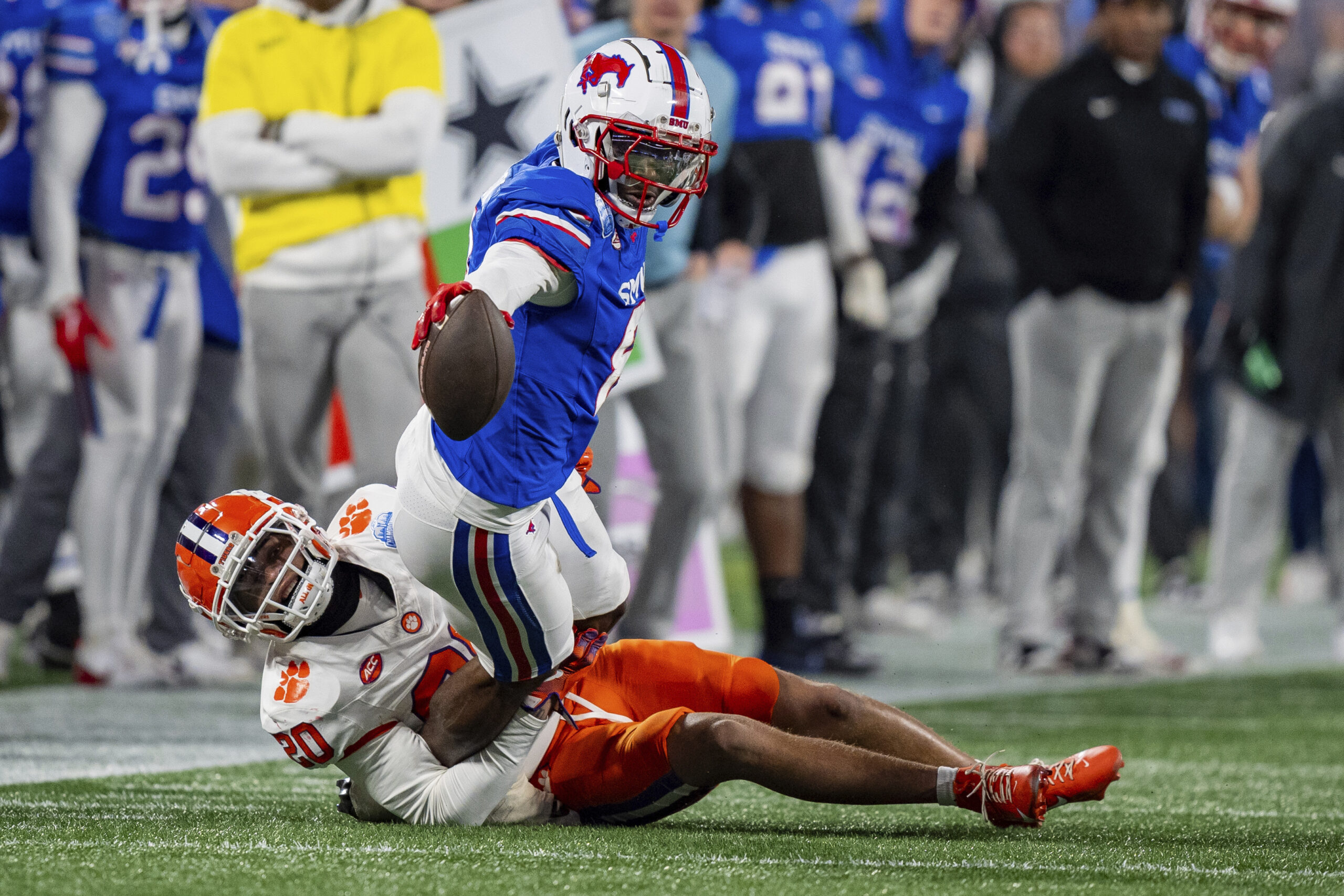
Clemson cornerback Avieon Terrell (tackling SMU wide receiver Jordan Hudson) is a player who has been linked to the Eagles in multiple mock drafts.
Need for speed, skill at cornerback
The cornerback position is a reminder that Roseman’s track record isn’t always predictive. Going into the 2024 draft, he had never drafted a cornerback in the first round. That year, he bucked the trend with the selection of Quinyon Mitchell with the No. 22 overall pick.
One of the biggest questions about Mitchell’s future in the NFL as CB1 was answered at the Senior Bowl. He had mostly played in off coverage and zone at Toledo, but he performed well in press-man against other top prospects in Mobile, Ala. Roseman said after the first night of the draft that Mitchell’s Senior Bowl showing helped him see his “diverse array of skill sets.”
Mitchell also helped his draft stock at the combine. He ran a 4.33-second 40-yard dash, the second-fastest speed by a cornerback that year. Unsurprisingly, speed seems to be one of the priorities for the Eagles at the position, with their cornerback selections over the last three draft classes running at most a 4.41 in the 40 at the combine. Cooper DeJean, who did not participate at the combine because of an injury, ran a 4.42 at his pro day.
Could Roseman go back to the cornerback well in the first round again? The Eagles have a need at CB2, with Adoree’ Jackson set to become a free agent in March.
Some notable draft analysts seem to think so. Daniel Jeremiah and Bucky Brooks, NFL Network draft analysts, tabbed Clemson cornerback Avieon Terrell to go to the Eagles in their first mock drafts of the year.
The 5-11, 180-pound Terrell is relatively undersized at the position, although that might not necessarily be a deal-breaker. By comparison, Mitchell has fairly average size at 6 feet, 195 pounds, but his 34th-percentile arms (31 inches long) haven’t seemed to hold him back in the NFL.
Regardless of his size, Terrell has solidified himself among the top cornerbacks in this year’s draft class with his smart instincts and competitive spirit, a pair of traits that would be coveted by Vic Fangio. He also has inside-outside versatility if the Eagles ever decide to move DeJean outside full-time. If Terrell tests well at the combine, he could get his foot in the door of the late first round.
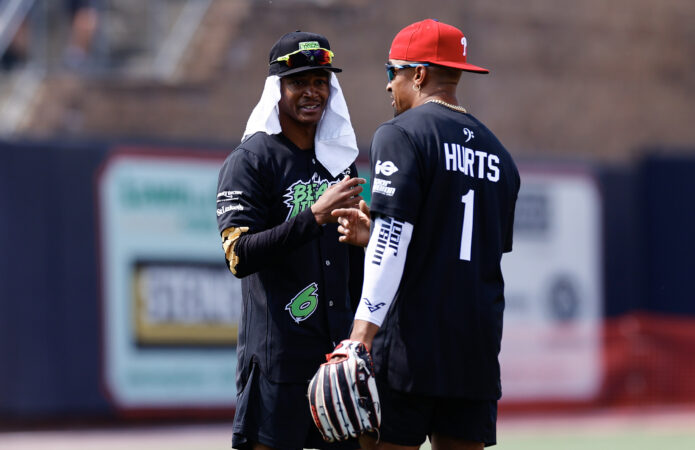
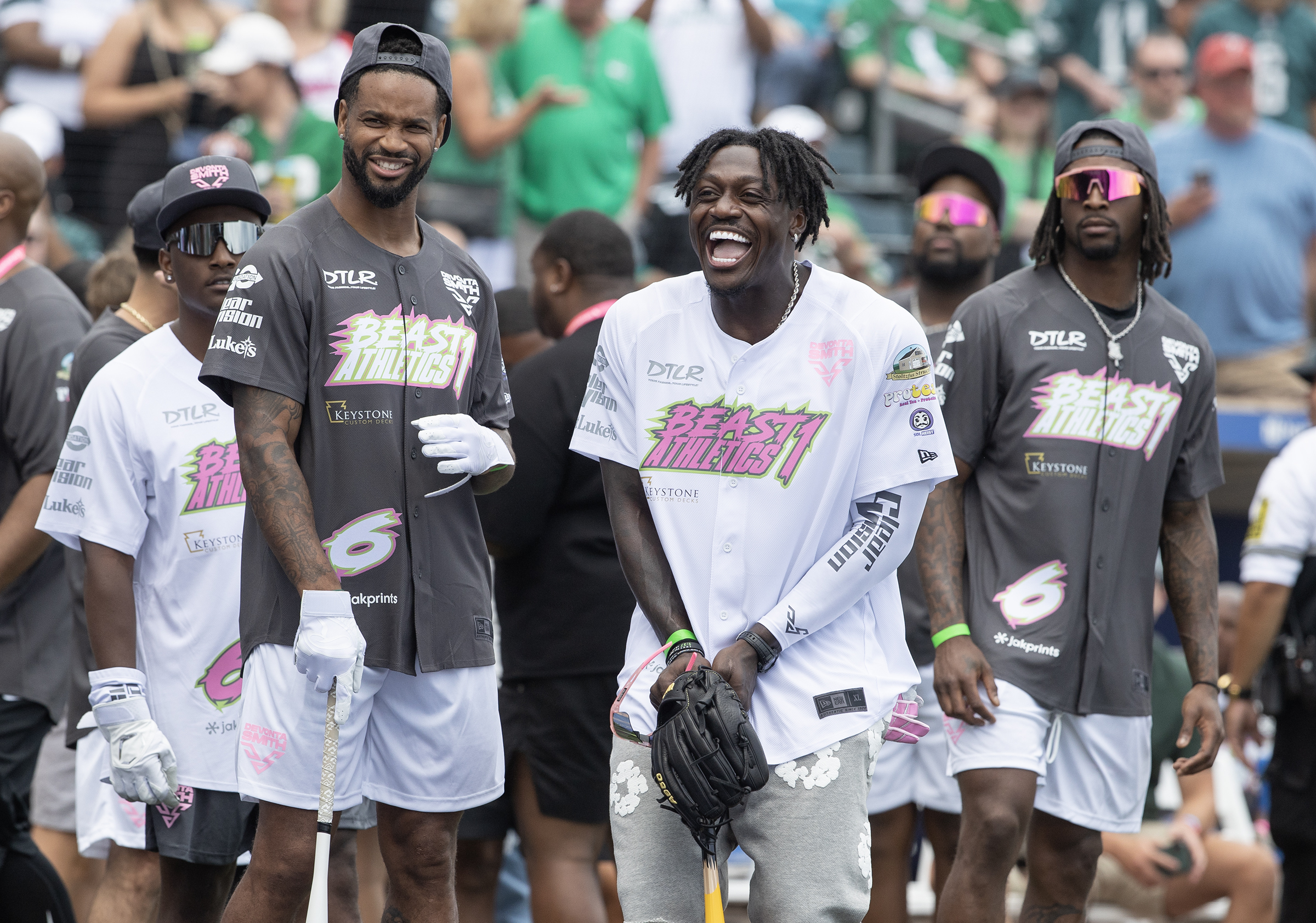
Eagles wide receiver DeVonta Smith will host his fifth celebrity softball game in Allentown on May 2, the Lehigh Valley IronPigs announced Monday. The event will take place at Coca-Cola Park, the IronPigs’ home stadium.
Smith had another successful campaign for the Eagles, recording 1,008 receiving yards and four touchdowns on 77 receptions. It was the third time Smith has topped 1,000 yards in a season.
The softball game will feature some of Smith’s teammates, friends, and other NFL players. A home run derby will take place at 1:30 p.m. followed by the softball game at 3 p.m.
Darius Slay (left) and A.J. Brown at DeVonta Smith’s celebrity softball game in 2024.
Smith’s game has provided fireworks for fans in the past. Running back Saquon Barkley, defensive end Brandon Graham, tight end Dallas Goedert, and cornerbacks Darius Slay and Cooper DeJean participated last year, along with former Eagles wide receiver Terrell Owens. DeJean earned last year’s game MVP.
Packers edge rusher Micah Parsons built his own team in 2022 to face Smith’s team. That year, Smith had wide receiver A.J. Brown on his team. Brown beat Parsons in the home run derby, then hit the walk-off home run to beat Team Parsons, which featured Miami Dolphins wide receiver Jaylen Waddle and former Eagles running back Boston Scott.
Participants for this year’s game will be announced at a later date.
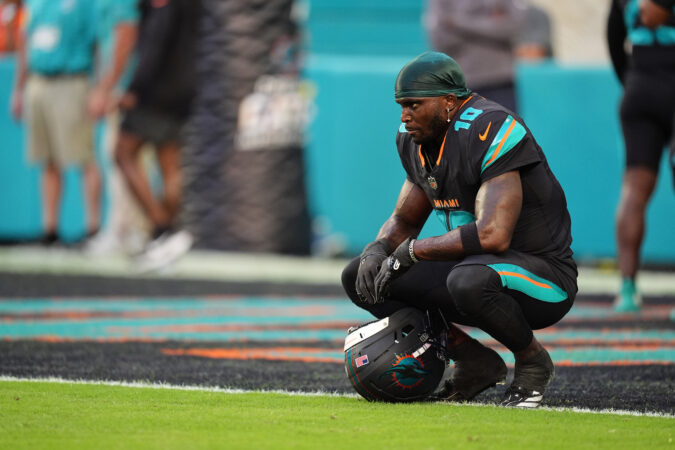
MIAMI GARDENS, Fla. (AP) — The Dolphins are releasing star receiving Tyreek Hill, ending the All-Pro’s four-year tenure in Miami, a person familiar with the move told the Associated Press on Monday.
Hill, who turns 32 on March 1, is recovering from a season-ending injury suffered in a game against the New York Jets on Sept. 29 that required surgery to repair significant damage to his left knee, including a torn anterior cruciate ligament.
It is one of several major roster cuts the Dolphins made on Monday morning, the person said, speaking to the AP on condition of anonymity because the team had not made any announcements. Miami also will release two-time Pro Bowl pass rusher Bradley Chubb and cut offensive lineman James Daniels and receiver Nick Westbrook-Ikhine, the person said.
The Dolphins acquired Hill in a trade with Kansas City ahead of the 2022 season and gave him a $120 million, four-year contract extension that made him the highest-paid player at his position at the time.
His contract, which runs through 2026, would have represented around $51 million against Miami’s cap.
In 2014, after one season as the Eagles’ head coach, Chip Kelly decided he’d had enough of DeSean Jackson, who’d been kind of a headache. Jeffrey Lurie had given Kelly power over the roster, and Kelly cut Jackson.
Jackson proceeded to lead the NFL in yards per catch in three of the next five seasons, two of which were 1,000-yard seasons. The Eagles would have just one 1,000-yard wide receiver in the next eight seasons (2014-21). They later had two in the same year, 2022, and the No. 1 receiver was A.J. Brown.
Today, 12 years after Kelly’s first foolish move — he also traded running back LeSean McCoy and he drafted disappointing receivers Nelson Agholor and Jordan Matthews — the Eagles again have a high-production receiver who’s been kind of a headache. NFL sources say they Eagles are considering trading him, even though such a trade would carry severe salary-cap ramifications; about $16 million, minimum.
That receiver is A.J. Brown.
Trading him would be crazy.
The Eagles should not even entertain offers for Brown. He is 28. He is driven. He is dedicated. He is irreplaceable. He’s spent the last four years making quarterback Jalen Hurts look good. That’s got to count for something.
Sure, he’s a diva, but then, he’s always been a diva. He was a diva when they traded for him four years ago. Brown immediately hung an “Always Open” sign above his locker. Huge diva move.
He has, at times, looked exasperated on the field. He has argued with coach Nick Sirianni on the sideline. For the last two seasons he’s continually criticized the offense both in person and on social media. The Eagles let him get away with it because they knew he’d still play well. They also let him get away with it because they knew, when they made the trade, and when they extended his contract twice, that he was likely to act like this.
Think about it: If you let your kid throw tantrums on the floor of the grocery store for three years, you can’t expect him to stop throwing tantrums when he’s 4. You just hope the tantrums aren’t so bad you can’t keep shopping.
Could this behavior be a distraction? On most teams, yes. But nobody in the Eagles locker room pays much attention to Brown’s antics.
“There is a genuine appreciation for A.J,” Jason Kelce said Wednesday on 94 WIP.
Kelce has been retired for two seasons, but he remains well-connected to his former coaches and teammates. On Wednesday, Kelce also noted that Brown’s frustrations might be limiting the receiver’s effectiveness. Kelce certainly would know. In his final season, Kelce, himself an emotional player, counseled Brown on harnessing frustration.
Both Kelce and Brown’s current teammates know Brown for who he is. They also know the Eagles cannot afford the luxury of sudden sanctimony.
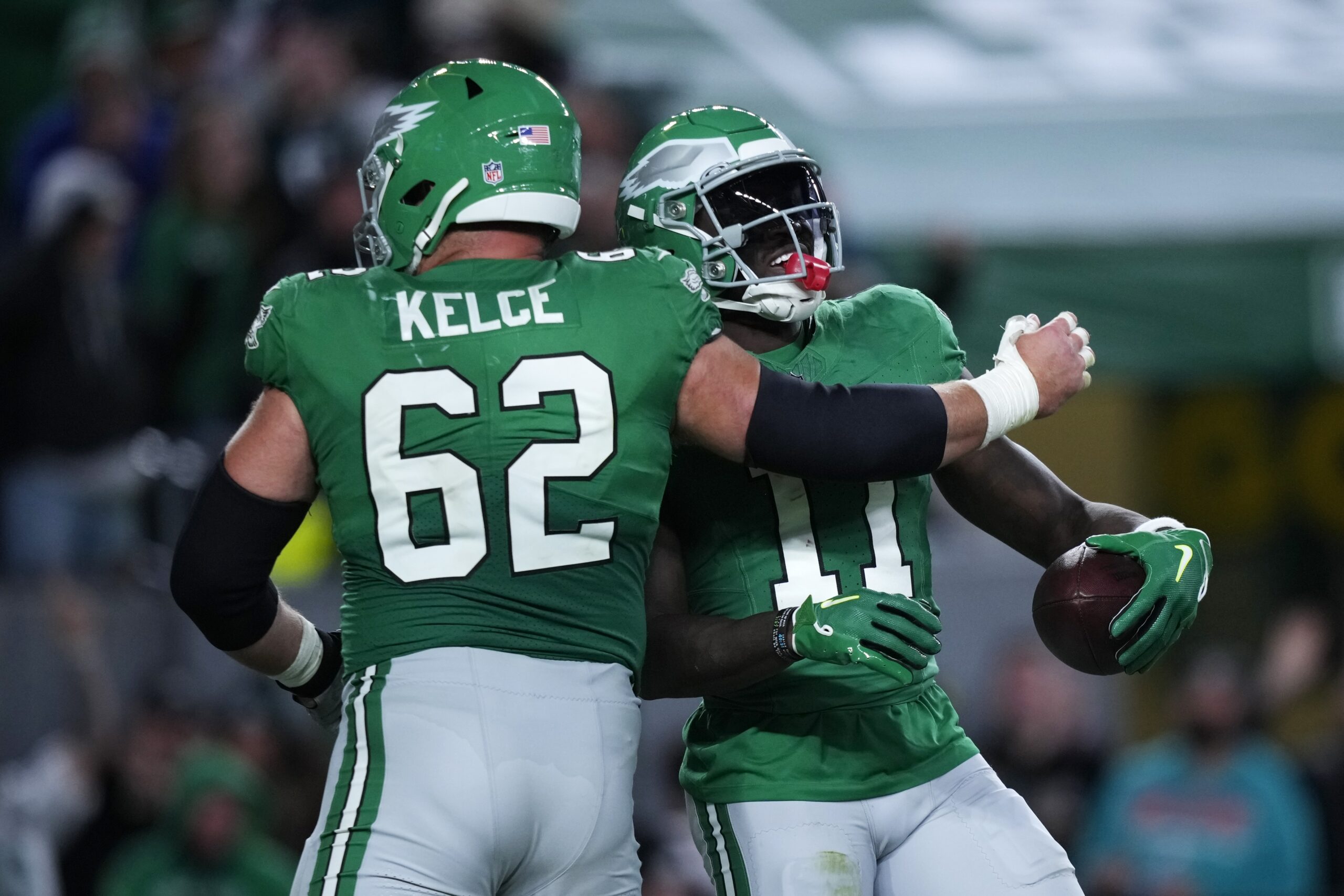
Eagles wide receiver A.J. Brown (11) celebrates a touchdown with center Jason Kelce during the 2023 season.
But does he really want to be here?
Brown hinted during the season that he might want to leave Philadelphia, posting the Bible verse Mark 6:11 after Week 4 on X: “If you’re not welcomed, not listened to, quietly withdraw. Don’t make a scene. Shrug your shoulders and be on your way.”
He then ignored the media for the season’s final two months. When he departed the locker room after the Eagles’ home playoff loss to the 49ers, he hugged several teammates in scenes that looked like permanent goodbyes.
However, last week, Brown broke his media silence on Micah Parsons’ podcast, apparently to send the message that he’d be happy to return to the Eagles.
“As an offense, we just come back and just really watch the tape and rediscover ourselves,” Brown said.
Asked if he was excited about new offensive coordinator Sean Mannion, he replied, “I’m excited for the season. I’m excited for what’s to come.”
In the bigger picture, it’s less important whether Brown wants to return than whether the Eagles can win another championship without him.
They cannot.
The Eagles have a shrinking window in which to reach another Super Bowl without a significant rebuild. They went to two of the last four Super Bowls. Get rid of Brown, and you can forget reaching a third any time soon.
He just had a 1,000-yard season in only 15 games, and that was his worst season in Philly. In 2024 he had a 1,000-yard season and played in just 13 games. He gave up on a few routes this season, and he disappeared in the wild-card playoff loss, but even when he’s bad, he’s good.
He’s gained 5,034 receiving yards on 339 catches in four seasons. That’s 387 more yards and 76 more catches than Mike Quick’s best four seasons, 986 yards and 104 catches than Harold Carmichael’s best four seasons, and 1,097 yards and 131 catches more than Tommy McDonald’s best four seasons as an Eagle. They played in different eras, especially McDonald, but if you think A.J. Brown wouldn’t have dominated in the 1950s and ’60s, then you need to YouTube some NFL Films.
Why would you trade the best receiver in team history if he’s still in his prime?
Which opens another discussion: Is Brown still in his prime?
If you look at simple stats, then probably yes. If you look at some advanced metrics, you might think his moon is waning.
For instance, Brown’s average separation last season, according to NFL Next Gen Stats, was 2.2 yards, eighth-lowest among qualified receivers. It also was an improvement; his 2.1 average in 2024 was third-lowest. But does it matter? After all, when he went to the Pro Bowl in 2022 and 2023 his separation averages were 2.6 and 2.4 yards, respectively.
Brown still consistently draws coverage from the other team’s best cornerback. He still consistently draws double teams. Last season, Pro Football Focus ranked him 11th in all-around play among receivers with at least 60 targets. He was No. 2 in drop rate.
That’s not to say he couldn’t have played better, but then, the wide receiver position is more dependent on the rest of the team than any other position.
The Eagles passing offense has averaged fewer than 195 yards per game each of the last two seasons, which seems absurd considering the weapons at Hurts’ disposal, but nobody in their right mind would consider this issue to fall at the feet of Brown, nor DeVonta Smith, nor Dallas Goedert.
In 2024, with defenses having discovered Hurts’ shortcomings and challenged Hurts’ arm, veteran offensive coordinator Kellen Moore leaned on running back Saquon Barkley and a historically dominant offensive line. That’s how the Eagles won the Super Bowl.
In 2025, opposing defenses sold out to stop Barkley, which worked, since the line had deteriorated due to age and injury. Challenged again, and with a first-time coordinator in Kevin Patullo, Hurts failed.
Not Brown. Hurts.
Let’s be real, folks.
You’re talking about trading the wrong damned guy.
We knew that Roger Goodell was serious about pushing the NFL internationally, but we didn’t know he was this serious.
The NFL is considering beginning the 2026 season on a Wednesday night, bucking a two-decade trend of holding the annual NFL Kickoff game on a Thursday night.
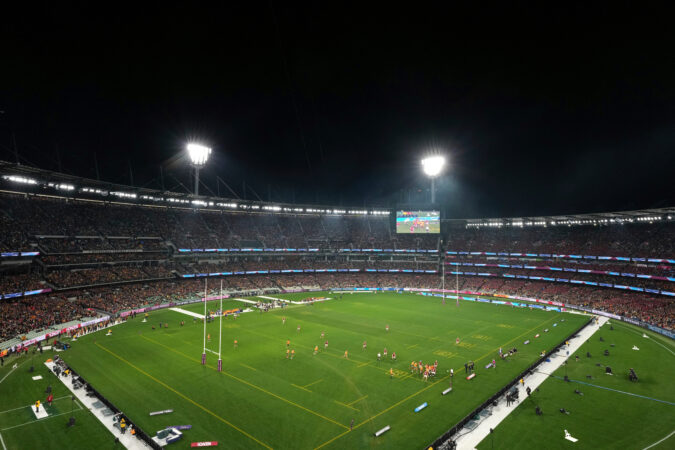
After winning the Super Bowl, the Seattle Seahawks would traditionally host the kickoff game Thursday. But the NFL has also announced that its first game in Melbourne, Australia — featuring the San Francisco 49ers and Los Angeles Rams — will take place in Week 1, and sources confirm the report from Puck’s John Ourand that the NFL is considering having it be the first game of the season.
The league could also decide to hold the traditional Seahawks-hosted kickoff game Wednesday and the Australia game Thursday. Either way, we’re looking at the 2026 season beginning on a Wednesday night for just the second time in nearly eight decades.
The last time the NFL kicked the season off on a Wednesday was 2012, when the league shifted its schedule to avoid going up against President Barack Obama’s speech during the final night of the Democratic National Convention. Prior to that, the NFL hadn’t opened the season on a Wednesday since 1948.
So why doesn’t the NFL just schedule its new Australian game on Friday, as they’ve done the past two years with their Brazil games? Because under the Sports Broadcasting Act of 1961, the NFL is prohibited from scheduling games on Friday nights from mid-September to mid-December to protect high school and college sports.
With some help from the calendar, the NFL was able to squeeze in a Week 1 Friday night game the past two seasons. This year they league isn’t so lucky, with kickoff Thursday falling on Sept. 10.
Whether it happens Wednesday or Thursday, the Seattle Seahawks will begin to defend their Super Bowl championship title at home to start the season, likely against the Chicago Bears.
Two big question marks remain: The first is where will the Australia game air? The NFL is negotiating broadcast rights with streaming companies, and the favorite has to be YouTube, which streamed last year’s Kansas City Chiefs vs. Los Angeles Chargers matchup from Brazil.
There’s also Netflix, which is entering the final year of streaming NFL Christmas day games and looks for big events to stream on its platform. The league’s first-ever game in Australia airing in primetime in the U.S. would certainly quality.
But Peacock could also be a possibility. NBC’s subscription streaming service had the rights to the NFL’s first Brazilian game, and last year it had the rights to a Week 17 Saturday night game between the Green Bay Packers and Baltimore Ravens.
Another unanswered question is when the game will air in the United States. Airing the game in prime time on the East Coast means dealing with a 16-hour time difference. An 8 p.m. kickoff time in Philadelphia on a Wednesday would mean the game was starting at noon Thursday in Melbourne.
Eagles likely to play in an international game?
The Eagles played in São Paulo, Brazil in Week 1 of the 2024 season.
The expansion into Australia is one of a record nine NFL games being held outside the United States this season.
Here’s a quick recap of what we know:
Melbourne, Australia: 49ers at Rams
Rio de Janeiro, Brazil: TBA at Dallas Cowboys
Paris, France: TBA at New Orleans Saints
Munich, Germany: TBA at TBA
Mexico City, Mexico: TBA at 49ers
Madrid, Spain: TBA at TBA
London, England (Tottenham Hotspur Stadium): TBA at TBA
London, England (Tottenham Hotspur Stadium): TBA at TBA
The Eagles have a ninth home game in 2026 thanks to the NFL’s 17-week season, and season-ticket holders have been notified that all will be played at the Linc. But the Birds remain in the mix to play an international game as an away team.
First, there’s Rio de Janeiro, where the Eagles could face the Cowboys. The Birds have marketing rights in Brazil and played there two seasons ago, but the NFL generally avoids scheduling divisional matchups in international games (though it’s already bucking that trend with 49ers-Rams in Australia, plus the Chiefs have played the Chargers, an AFC West foe, twice on foreign soil).
Still, this year’s Brazil game will take place on a Sunday afternoon — during daylight saving time, there is a one-hour difference between the East Coast and Rio de Janeiro. While the NFL likely won’t want to move such a marquee matchup into an international venue, Eagles-Cowboys at 4:25 p.m. on a Sunday does feel right.
Mexico City is also in play, because the Eagles face the 49ers on the road next season. So is London, because the Birds are scheduled to play a road game against the Jacksonville Jaguars and the home teams in the two remaining games have yet to be announced. But it doesn’t seem likely the NFL would want to waste the ratings potential of the Eagles on a game with a 9:30 a.m. Philly kickoff.
The NFL also hasn’t announced which teams will host games at Allianz Arena in Munich, Germany, and Bernabéu in Madrid, Spain.
Quick hits
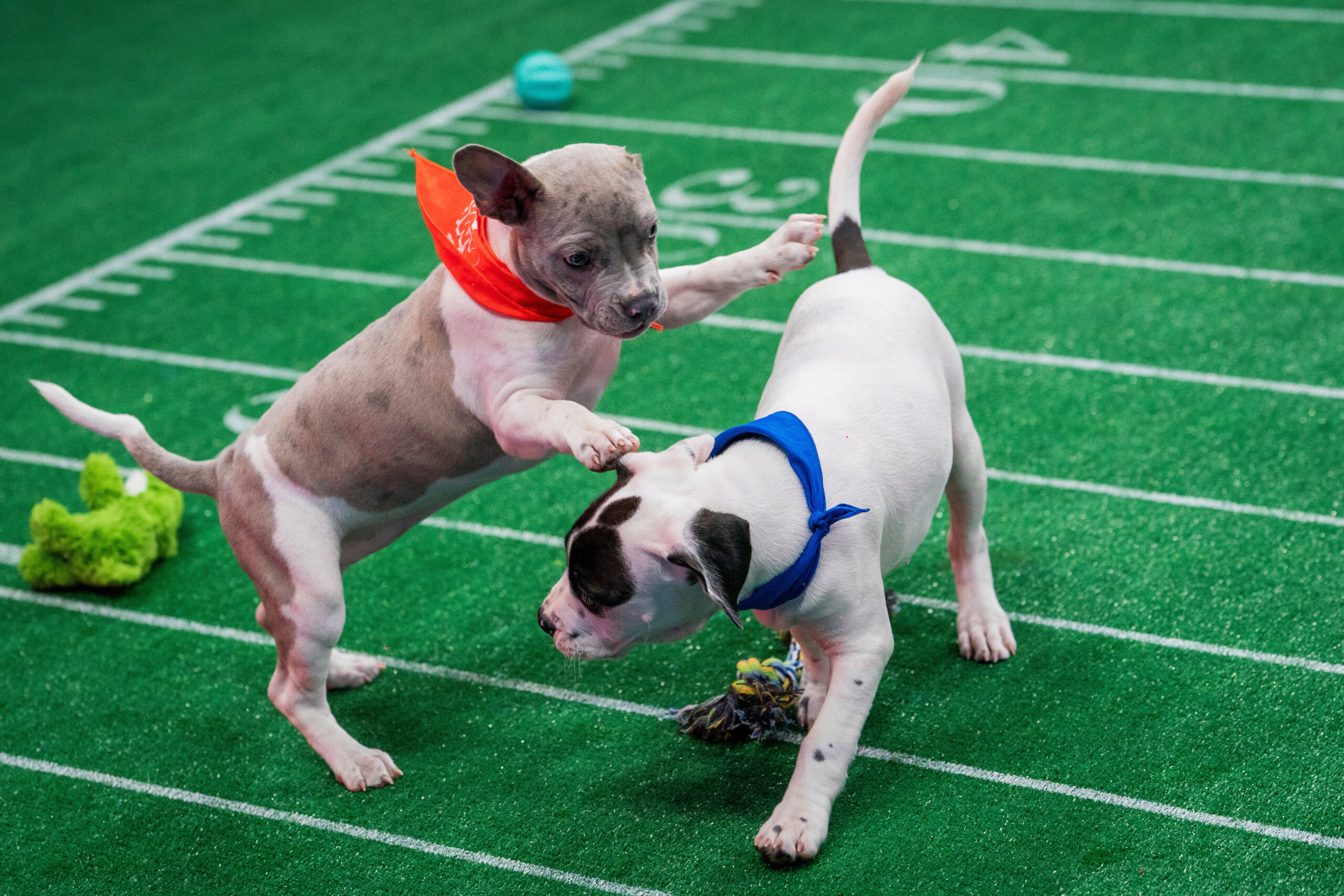
Two puppies go at it during Puppy Bowl XXII Sunday.
The Super Bowl averaged 124.9 million viewers Sunday, down from last year but still good enough for the second-highest audience in the game’s history. But we should be talking about this year’s Puppy Bowl, which featured three Pennsylvania pups and drew 15.3 million viewers on Animal Planet and across Warner Bros. Discovery properties earlier in the day, the show’s biggest audience since 2018.
Just a point of annoyance: Yeah, Nick Castellanos confirmed the beer-in-the-dugout story. But the real credit goes to @MattGelb, who had it & went to Castellanos & his agent for comment. Only then did Castellanos put it out there. Good reporting forced his hand.#Phillies
Kudos to the Baltimore Banner, the successful digital news start up down in Charm City, which announced plans to expand its sports coverage to Washington after the Washington Post eliminated its entire sports desk. Banner editor in chief Audrey Cooper said the outlet plans to start by hiring beat reporters to cover the Washington Nationals and Washington Commanders, calling it “part of our unwavering commitment to serve Maryland with honest, independent journalism.”
Sports podcaster Josh Shapiro, who also happens to be the governor of Pennsylvania, got former Sixers general manager Billy King discussing a wild, four-team trade that nearly sent Allen Iverson to the Detroit Pistons ahead of the 2000-01 season. Of course, Iverson went on to be named NBA MVP that season and led that iconic Sixers team to the NBA Finals. They haven’t been back since.
I asked Billy King to give us a glimpse into the front office during one of the defining moments for the @sixers franchise — when Allen Iverson almost left Philadelphia. Check out the full conversation on my YouTube: https://t.co/8OT8LIicgKpic.twitter.com/O6w4T8esBU
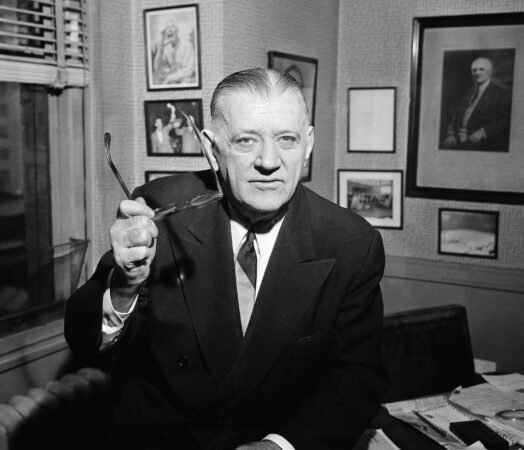
Bert Bell pulled the defunct Frankford Yellow Jackets out of bankruptcy, and started a new NFL franchise in Philadelphia in 1933.
His wife, actress Frances Upton Bell, paid her husband’s share of $2,500 (more than $60,000 in today’s money) to seal the deal.
Bell spotted a billboard for Franklin D. Roosevelt’s New Deal, which included the insignia of a bald eagle, and decided this new team should be called the Philadelphia Eagles.
The NFL back then was a nine-team league. And for players it was a free market. The best and brightest could join whichever team they saw fit.
The Eagles were the worst. And in 1935, Bell tried to sign Stan Kostka, a 6-foot-2 fullback from the University of Minnesota. After failing to close the deal, he decided there had to be another way.
Bell came up with an idea whereby each team had a fair shot at the top players. His solution was a draft, in which teams would select from a pool of new players entering the league.
And the key idea: The order of player selection would be in reverse order of the previous year’s standings. So the worst-performing franchise would pick first, and the league champions would pick last.
They called it “the selection of players.” And the first iteration would be held during the owners’ meetings, Feb. 8 and 9, 1936.
It made sense to hold the event in Philadelphia. It was a midway point among the nine cities, and Bell’s father owned the hotel.
On the clock
The Eagles held the first-ever pick in the NFL draft.
They selected Jay Berwanger, Heisman Trophy-winning halfback from the University of Chicago. But his salary demands were high, reported at $1,000 per game. (That would be $25,000 per game today.)
So immediately the team tradedhim to the Bears for veteran tackle Art Buss.
Berwanger, unimpressed with the Bears’ contract offer, took a job with a rubber company instead.
He never played a minute in an NFL game.
In that hotel room, the nine owners drafted 81 players over nine rounds, kicking off what would become an industry unto itself and the league’s third marquee event, behind the NFL’s opening weekend and the Super Bowl.