Philadelphia is a happening place. No, I’m not referring to the winning sports teams or the great restaurants. I’m talking about the economy. For the first time in generations, Philadelphia’s economy is among the nation’s strongest.
Among the 25 largest metropolitan areas in the country with populations of more than 3 million, Philly enjoyed the strongest job growth last year. Soak that in for a second. Our hometown’s economy grew faster than those of high-flying cities such as Atlanta, Dallas, Denver, and Phoenix.
To be transparent, Philadelphia’s economy looks good, in part, because the nation’s economy is struggling to create jobs. Since so-called Liberation Day in April, when President Donald Trump announced massive tariffs on all our trading partners, many nervous businesses stopped hiring, and job growth has come to a standstill.
Some industries are actually suffering serious job losses, especially those on the front lines of the global trade war, including manufacturing, agriculture, transportation, and distribution. These are big industries in many parts of the South and Midwest, but not in Philadelphia.
Federal government jobs have also been hit hard by the Trump administration’s workforce cuts, which began soon after he took office a year ago. Of course, the broader Washington, D.C., area has struggled with these job losses. These positions were also important to many communities across the country, but less so in Philadelphia.
window.addEventListener(“message”,function(a){if(void 0!==a.data[“datawrapper-height”]){var e=document.querySelectorAll(“iframe”);for(var t in a.data[“datawrapper-height”])for(var r,i=0;r=e[i];i++)if(r.contentWindow===a.source){var d=a.data[“datawrapper-height”][t]+”px”;r.style.height=d}}});
Eds and meds
In fact, Philadelphia’s economy is fortunate to be powered by education and healthcare — eds and meds — the only industries consistently adding to payrolls nationwide. The largest employers in the region are world-class institutions of higher education and healthcare providers, including the University of Pennsylvania, Thomas Jefferson University, the Children’s Hospital of Philadelphia, and Temple University.
Employers in eds and meds are especially attractive, as demand for the services they provide is fueled by the insatiable need for highly educated workers in the age of artificial intelligence, and the inexorable aging of the population. Baby boomers have aged into their 60s and 70s and will require high-quality healthcare for years to come. And since healthcare is largely delivered in person, it is less vulnerable to losing jobs to AI.
These large institutions employ workers of all skill levels. There are highly trained physicians, nurses, and researchers, as well as middle-skilled technicians and administrators, and lesser-skilled maintenance workers. An entire economy can be built on eds and meds, and that’s Philadelphia.
The Philadelphia region also has the good fortune of being home to successful companies across a diverse range of industries. Examples include the media giant Comcast, the financial services powerhouse Vanguard, the global software company SAP, and the technology giant Siemens.
Cost of living
It isn’t cheap to live and work in Philadelphia, but it is highly affordable when compared to neighboring New York and D.C. For example, the typical-priced home in Philadelphia costs about $400,000, which is almost four times the typical household income. In D.C., houses typically cost close to $600,000, or 5.5 times income, and New York house prices exceed $1 million, or 10 times income.
I could go on, but I’m beginning to sound like a Chamber of Commerce, and Philadelphia certainly has big challenges. The nation’s universities and research centers are facing large budget cuts and heightened federal scrutiny. This is a huge shift from the financial largess from D.C. they’ve come to rely on.
Challenges and what’s ahead
Poverty and all the attendant social ills, like crime and drug use, are also long-standing problems in the city. Although the poverty rate has dipped a bit recently, close to one-fifth of the city’s residents live below the poverty line, a disturbing stat. Of the nation’s big cities, only Houston has a higher rate.
The high poverty rate is the result of a complicated brew of factors, but the severe shortage of rental housing for lower- and middle-income residents is one of them. Putting up more homes is a priority for the city’s mayor, and with good reason.
The city’s high wage tax remains a barrier to even stronger growth. It is encouraging that it has declined since peaking more than 40 years ago, but it remains prohibitively high, hindering the city’s efforts to attract workers back into its office towers. The lower-taxed suburban Pennsylvania counties are the key beneficiaries.
It won’t be easy for Philadelphia to consistently remain among the nation’s best-performing economies. We need to support our institutions of higher education and healthcare, work to address poverty, and make it more affordable to live and work here. If we do, we have a good chance of always being in the mix. Kind of like our Eagles.
CLAIRTON, Pa. — For Don Furko, Aug. 11, 2025, was a normal shift. Until it became the shift he would never forget.
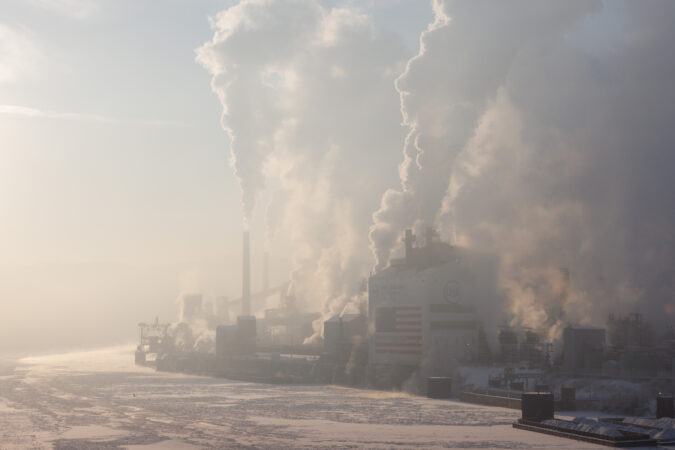
At 10:47 a.m., U.S. Steel’s Clairton Coke Works outside Pittsburgh — a sprawling riverside industrial facility and the largest of its kind in the Western Hemisphere — erupted in an ear-piercing boom.
A steelworker for 25 years and former Clairton local union president, Furko pulled on flame-retardant jacket and pants, a hard hat and safety glasses, left his post and rushed to the black plume of smoke rising from the facility’s batteries — the massive arrangements of industrial ovens that heat coal to some 2,000 degrees, turning it into carbon-rich coke.
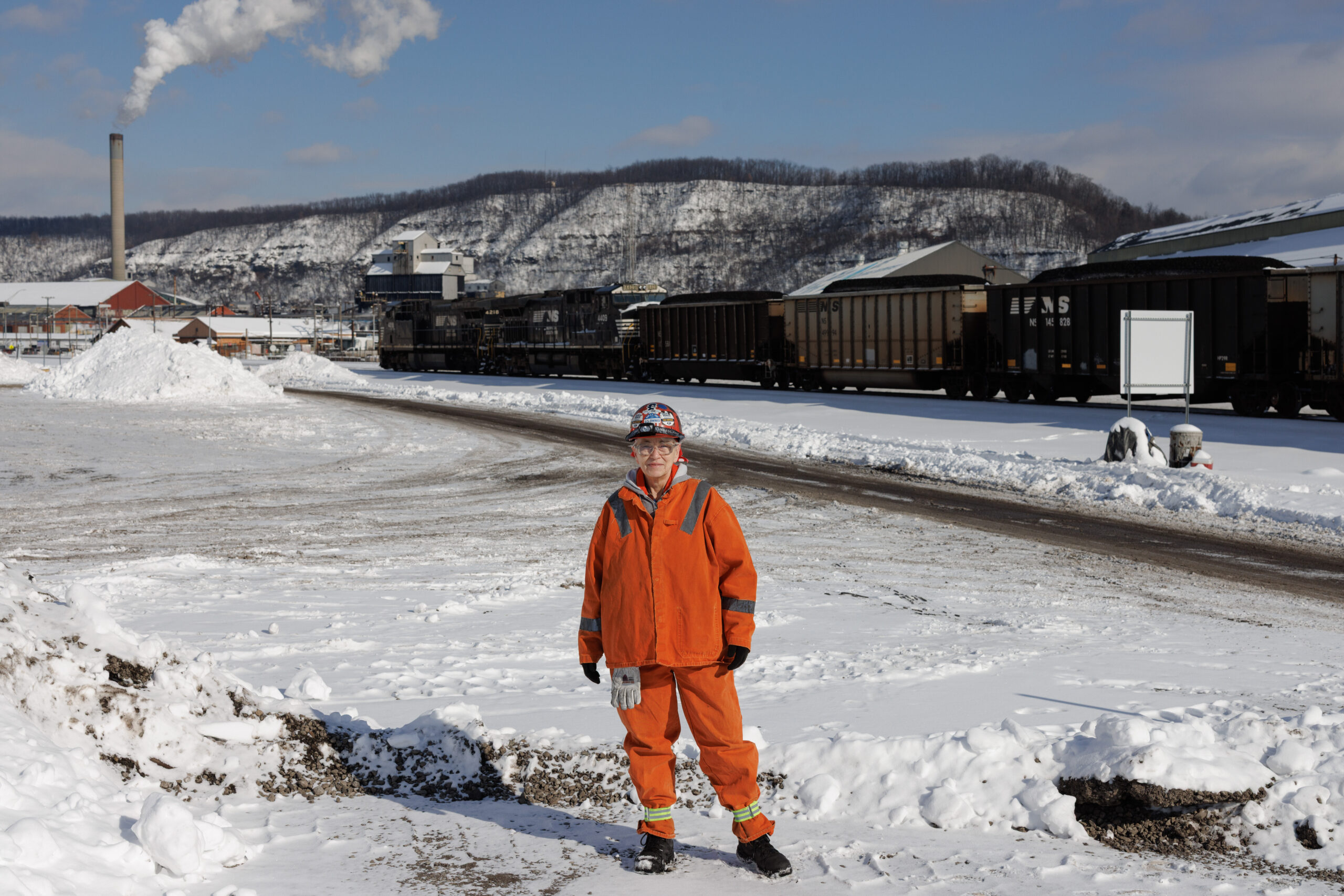
Steelworker Renee Hough stands at U.S. Steel’s Clairton Coke Works in Clairton, Pa., on Jan. 29. (Quinn Glabicki/Pittsburgh’s Public Source via AP)
Near the wharf, Renee Hough, a utility technician in charge of loading coke, sat in the cab of the plant’s screening station when the explosion ripped through the air, blinding her in black dust. “My first thought was I was dead,” Hough recalls. Flames emerged as the dust settled, and a voice crackled through the radio: Battery 13 had just exploded.
“I can’t even explain how mangled everything was,” Furko recalls. “There were flames everywhere.” Workers shuttled the injured to the helipad for evacuation. Through the chaos, Furko heard a fellow steelworker screaming, buried beneath the rubble.
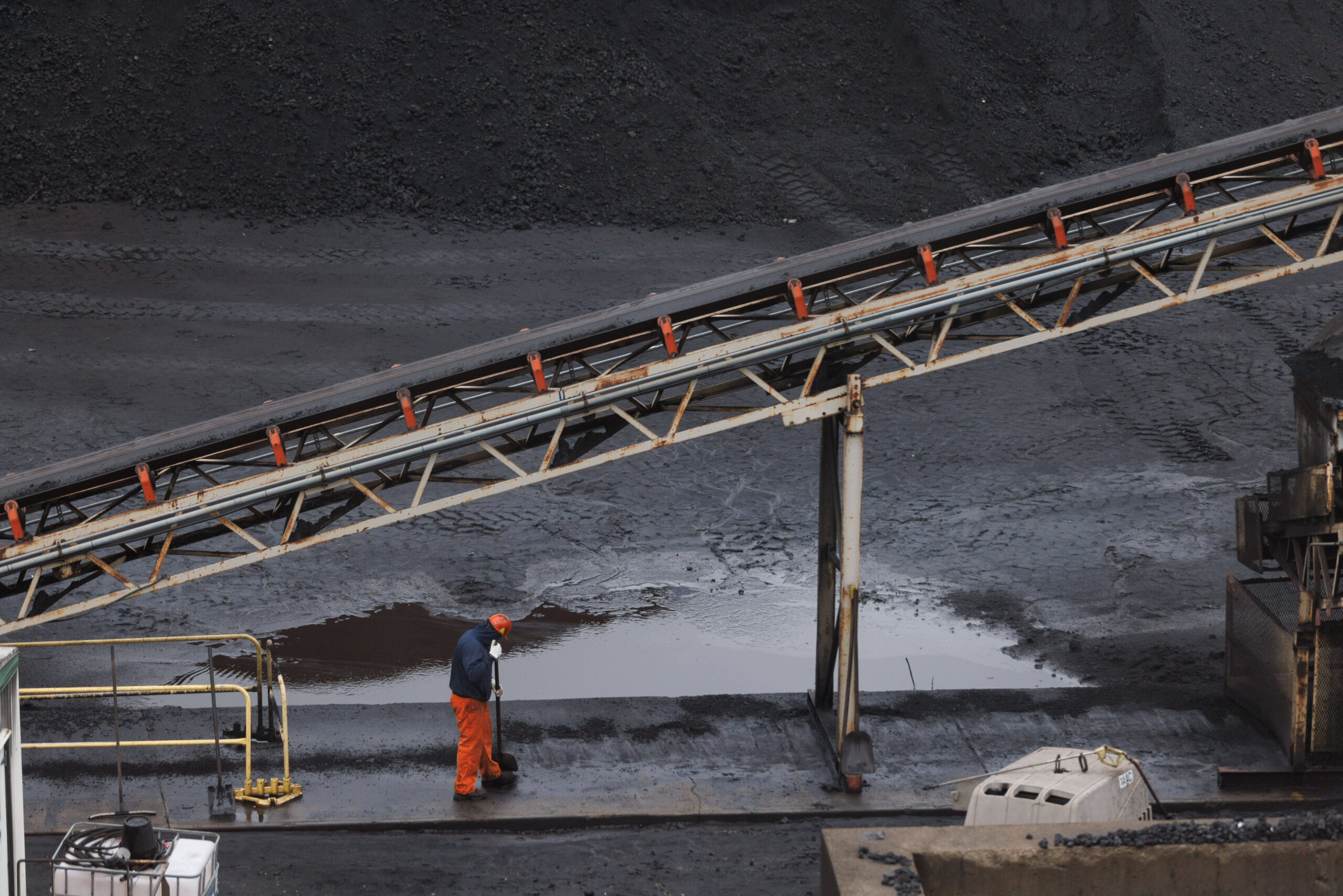
A worker in the coal fields at U.S. Steel’s Clairton Coke Works in Clairton, Pa., on Nov. 19, 2025. (Quinn Glabicki/Pittsburgh’s Public Source via AP)
The blast killed two U.S. Steel workers and injured 11 others, including contractors, according to the Chemical Safety Board, a federal agency investigating the incident.
Six months later, workers remain rattled and community concerns about air pollution from the plant are heightened.
The blast comes on top of a string of other accidents at the Clairton plant over time as well as a long history of legal battles between U.S. Steel and Allegheny County regulators, who regularly accuse the company of flouting environmental rules at the facility. As recently as Jan. 27, pollution control equipment at the Clairton plant temporarily broke down and nearby air monitors recorded elevated air pollution, according to the Allegheny County Health Department.
To U.S. Steel’s critics, the August blast highlighted chronic problems at the facility. And some current and former workers at Clairton Coke Works say poor management and underinvestment have exacerbated air pollution and undermined workplace safety at the plant where operators already have little margin for error, Pittsburgh’s Public Source and the Associated Press have found.
The August explosion also came after Nippon Steel’s $15 billion acquisition of U.S. Steel in June 2025. It’s an open question whether the Japanese steel company will invest significantly in Clairton Coke Works and address issues raised by workers, government officials and environmental watchdogs.
The Chemical Safety Board has said that the August explosion occurred while workers were preparing to replace a damaged valve that was detected in July, as well as other valves. The agency’s investigation continues; it said in December that it has identified “potentially unmitigated hazards for workers at Clairton Coke Works that warrant immediate attention.”
“They try to say ‘safety first, safety first,’” said Brian Pavlack, a current worker at Clairton Coke Works. “Safety is not the first priority for them.”
Nippon Steel did not provide a response to written questions. In a written statement responding to detailed questions, U.S. Steel stressed its commitment to safety.
“Safety is our core value and shapes our culture, influences how we lead, and anchors our responsibility to ensure that every employee returns home safely, every single day,” the company said.
Dangerous work
The 392-acre Clairton Coke Works opened more than a century ago, 20 miles south of Pittsburgh along the west bank of the Monongahela River. The ovens at the plant heat coal at high temperatures for hours to make coke, a key component in steelmaking. Its ovens produce 3.6 million tons of coke annually, which is shipped to the company’s operations farther up the river at the Edgar Thomson Works in Braddock, and to U.S. Steel’s Gary Works in Indiana.
But making coke isn’t a clean process or without risk. The heat removes impurities, producing a flammable byproduct called coke oven gas. Coke oven gas includes hydrogen, methane, nitrogen and carbon monoxide, and some of it is used as fuel to heat the coke ovens. Coke oven gas is explosive due to high hydrogen content, said Fred Rorick, a former operations manager at Bethlehem Steel and steel industry consultant.
“At a coke works, when you have that, you have to be very, very, very careful,” Rorick said.
According to the Chemical Safety Board, the August explosion happened while workers were closing and opening a gas isolation valve in a basement after pumping water into the valve. U.S. Steel’s written procedure did not mention the use of water and a U.S. Steel supervisor directed workers to pump the water, the agency said. Kurt Barshick, U.S. Steel’s vice president of the Mon Valley Works, said during an October presentation to residents in the wake of the August explosion that workers trapped “3,000 PSI water inside of a valve that’s rated for 50 PSI.” The valve cracked and gas filled the area, Barshick added.
Drew Sahli, the Chemical Safety Board’s investigator in charge, said there was a “release of coke oven gas” and that the gas “contacted an ignition source” and exploded. The agency is still investigating how the gas was released, Sahli said.
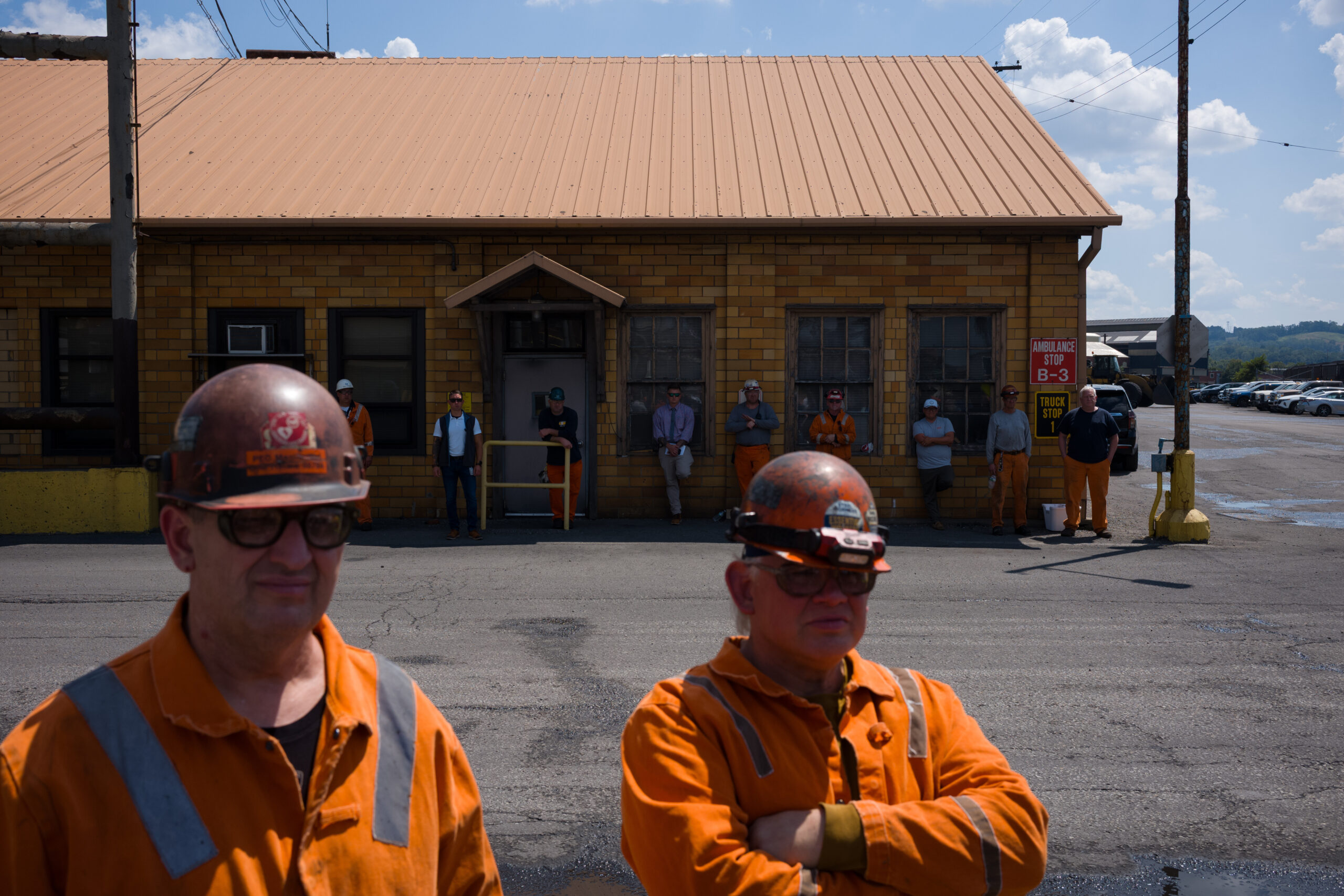
Steelworkers stand at U.S. Steel’s Clairton Coke Works in Clairton, Pa., on Aug. 12, 2025, a day after an explosion at the facility killed two workers. (Quinn Glabicki/Pittsburgh’s Public Source via AP)
U.S. Steel said it has “strengthened several safety protocols” based on its own ongoing investigation, including prohibiting the use of high-pressure water for valve cleaning and reviewing their “Management of Change program, which assesses proposed changes in procedures and evaluates risk.”
Before the August blast, Clairton Coke Works already had a history of accidents and explosions.
In 2009, a maintenance worker was killed in a blast.
In 2010, an explosion injured 14 employees and six contractors.
In 2014, a worker was burned and died after falling into a trench.
In February 2025, a problem at a battery led to a “buildup of combustible material” that ignited, injuring two people, according to the Allegheny County Health Department.
After the 2010 explosion, the Occupational Safety and Health Administration fined U.S. Steel and a subcontractor $175,000 for safety violations. U.S. Steel appealed its citations and fines, which were later reduced to $78,500 under a settlement agreement. U.S. Steel admitted no wrongdoing as part of the settlement.
While there’s “a lot of ways that you can get yourself hurt or killed” at Clairton Coke Works, explosions are the biggest hazard, said Calvin Croftcheck, who previously worked at the plant and served as the United Steelworkers safety coordinator for U.S. Steel.
“Since 2009, there have been three accidents that have resulted in fatalities and that is just not common in today’s age of safety,” said Phillip Kondrot, a workers’ compensation attorney who represents workers injured at Clairton Coke Works. “That is a dangerous place to work.”
“We have intensive procedures that are currently in place at Clairton and our other facilities, and our employees are charged with following them,” U.S. Steel said. “We will not respond to comments from for-profit lawyers and stand behind the safety professionals who tirelessly work at U. S. Steel.”
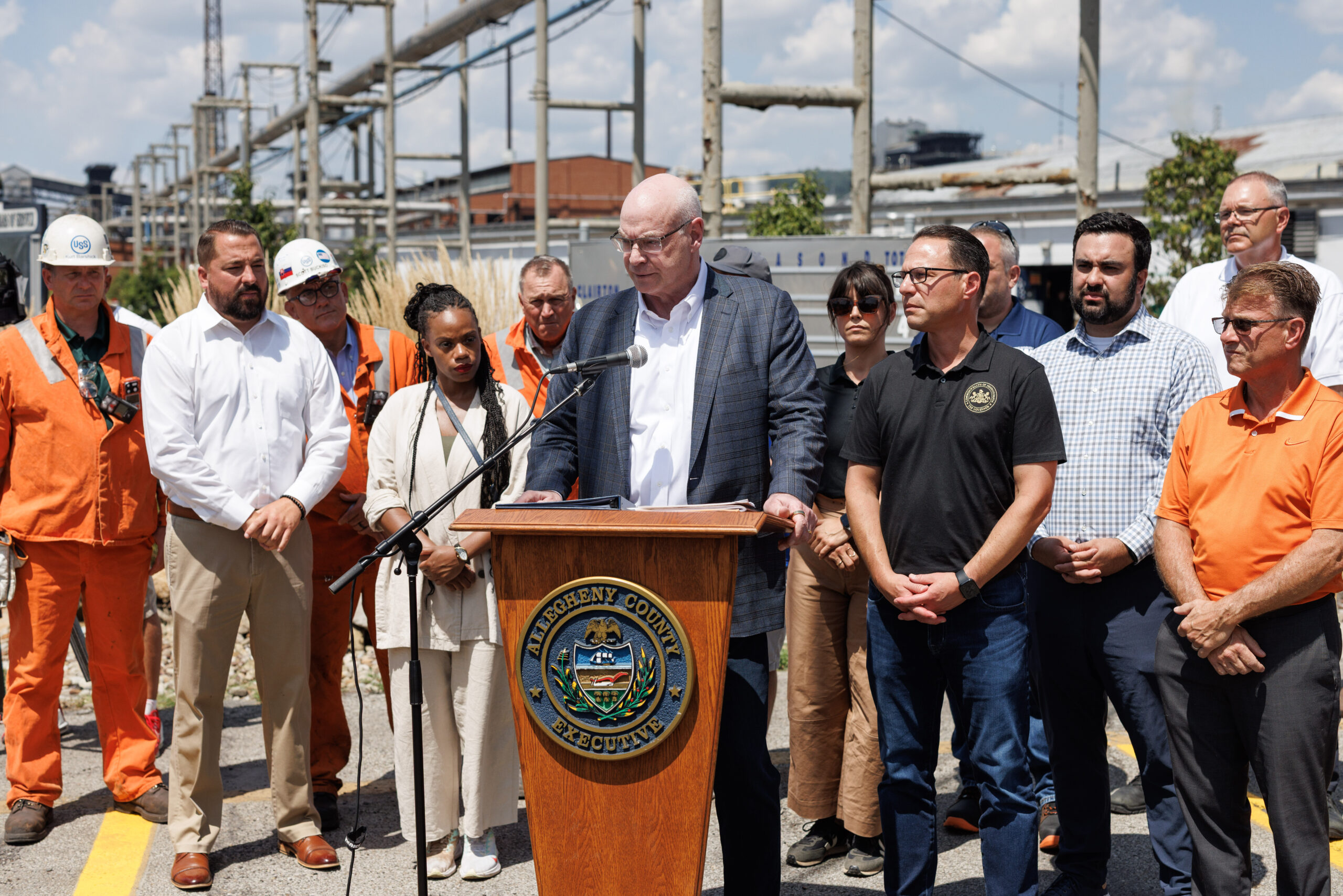
U.S. Steel president and CEO David B. Burritt, accompanied by Pennsylvania Gov. Josh Shapiro (center right) and other officials, speaks during a news conference at U.S. Steel’s Clairton Coke Works in Clairton, Pa., on Aug. 12, 2025, a day after an explosion at the facility killed two workers. (Quinn Glabicki/Pittsburgh’s Public Source via AP)
Management questioned
Some current and former workers at the Clairton plant fault U.S. Steel’s management of the aging facility, saying that it has caused a range of operational problems.
“A lot of things that have happened there, where they needed something fixed and something went wrong, it was because corporate wouldn’t approve them ordering the parts,” said Jonathan Ledwich, who worked at Clairton Coke Works between 2011 and 2022 trying to prevent emission leaks from the coke ovens. “We did the best we could with what we had.”
Ledwich points to a fire at the Clairton plant on Christmas Eve 2018. It shut down pollution control equipment and led to repeated releases of sulfur dioxide and hydrogen sulfide, according to a lawsuit filed by environmental groups after the incident. In the wake of the fire, Allegheny County warned residents to limit outdoor activities, with residents saying for weeks afterward that the air smelled like rotten eggs and was hard to breathe.
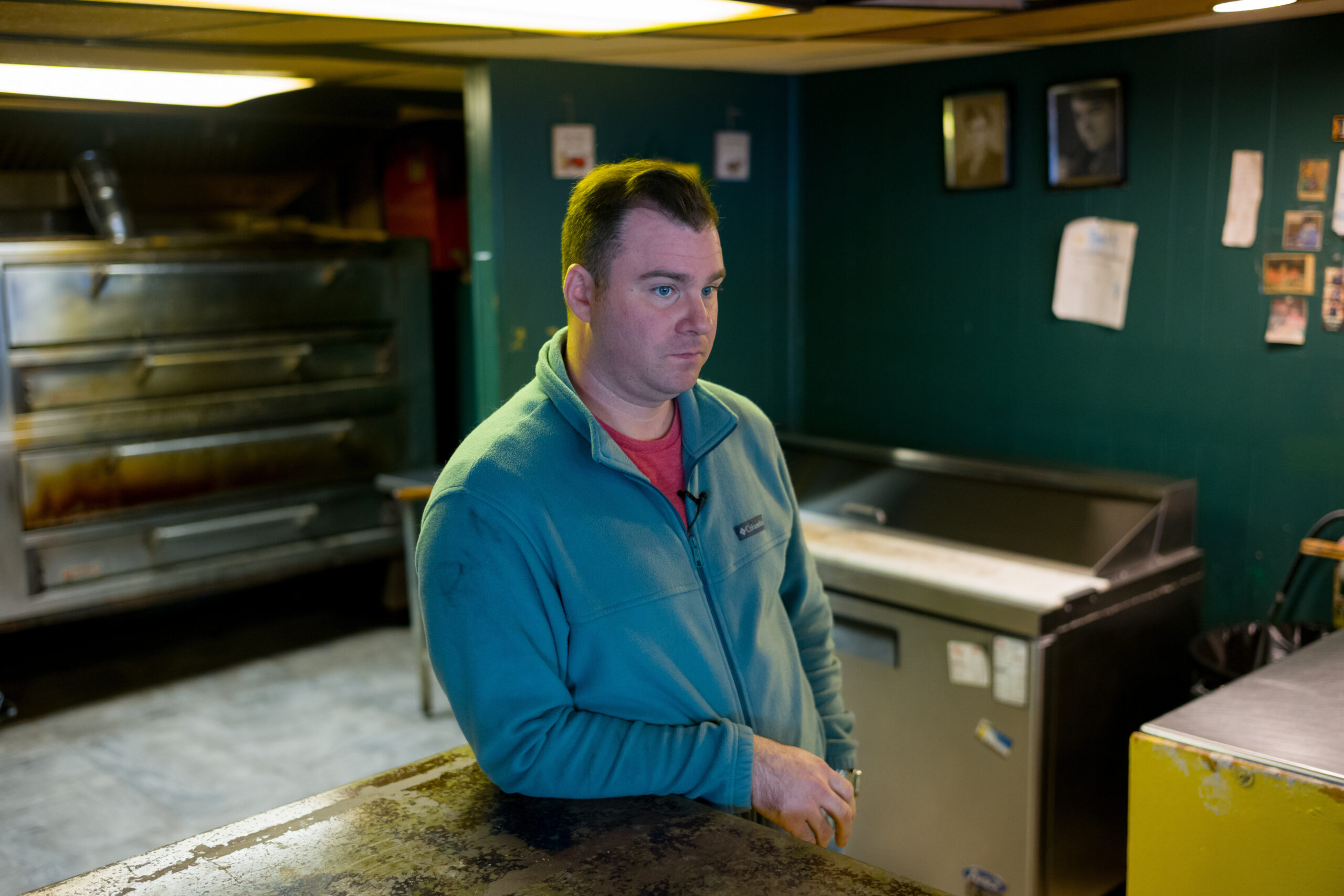
Former U.S. Steel worker Jonathan Ledwich stands at the pizza shop he now owns in Trafford, Pa., on Dec. 15, 2025. (Quinn Glabicki/Pittsburgh’s Public Source via AP)
Ranajit Sahu, an engineer hired by the plaintiffs, wrote in a report filed in the case that he found “no indication” that U.S. Steel “has an effective, comprehensive maintenance program for the Clairton plant.” Sahu also wrote that the 2018 accident, which was precipitated by piping falling due to corrosion, was “preventable by a robust inspection and preventive maintenance program and by better plant design.”
In a 2024 consent decree settling the lawsuit, U.S. Steel agreed to measures including investing close to $20 million in facility upgrades and permanently idling a battery of coke ovens at the plant. As part of the consent decree, U.S. Steel admitted no liability.
Hough, the utility technician in charge of loading coke, said that the lack of proactive maintenance at Clairton Coke Works makes her feel unsafe at times.
“There’s a lot of things that need to be repaired that they’re not prioritizing because you can’t stop production,” Hough said of U.S. Steel.
Some current and former plant workers also describe difficulty getting coke oven doors replaced. Ledwich, the former Clairton steel worker, said some doors that needed to be replaced would leak emissions.
In a 2020 deposition for the lawsuit related to the 2018 Christmas Eve fire, James Kelly, former deputy director of the environmental health bureau at the Allegheny County Health Department — the agency that oversees emissions at the plant — said the facility is “one of the most decrepit facilities” that he’d ever seen.
The litigation surrounding the Christmas Eve fire wasn’t the first time U.S. Steel was accused in court of skimping on maintenance. In a 2017 amended federal class action lawsuit alleging violations of federal securities laws, U.S. Steel shareholders said that the company CEO hired the consulting firm McKinsey & Company in 2014 after multiple unprofitable years and “implemented extreme cost-cutting measures” in 2015 involving layoffs and deferrals of “desperately-needed maintenance and repairs.” The lawsuit was eventually settled and the U.S. Steel defendants admitted no wrongdoing.
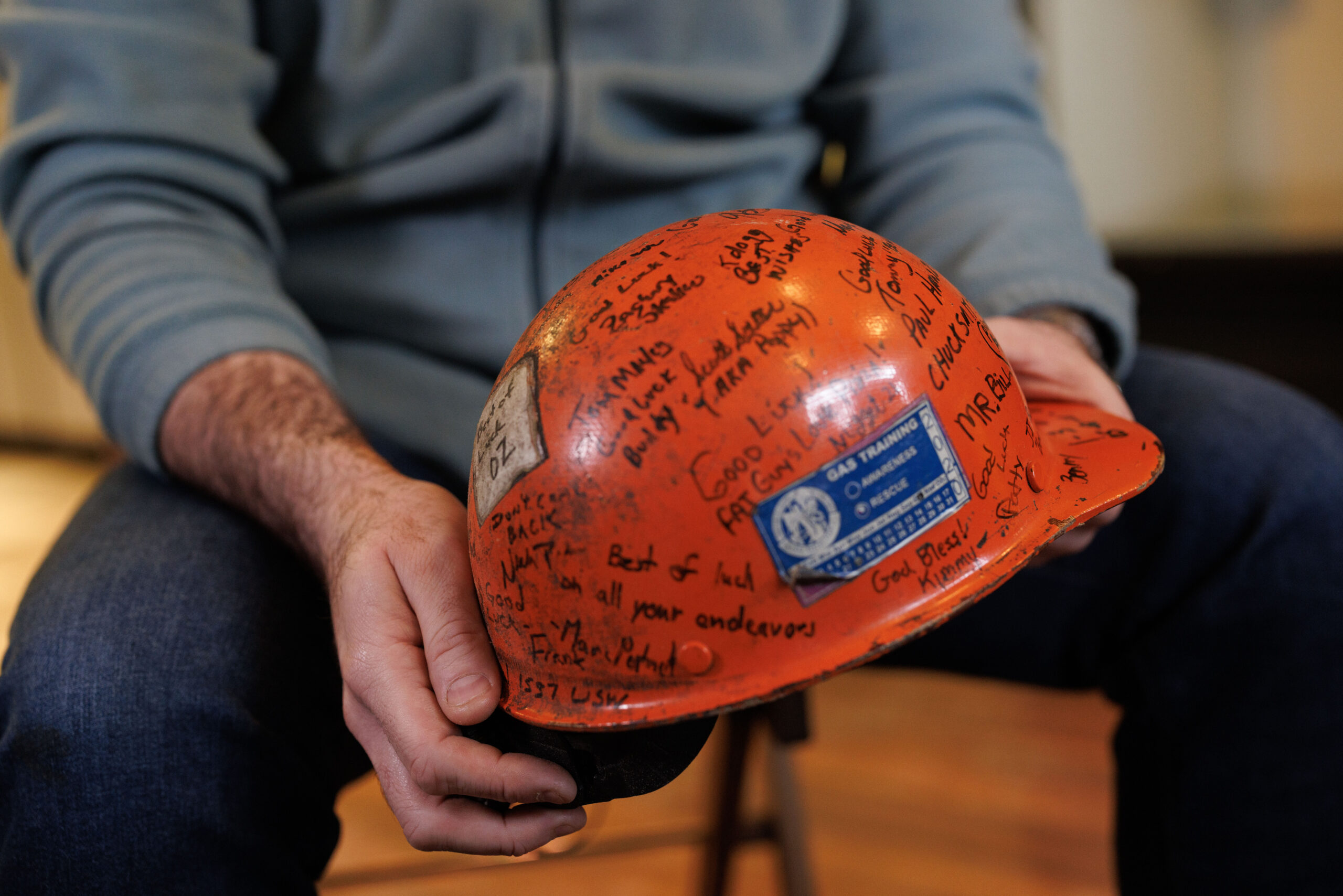
Former U.S. Steel worker Jonathan Ledwich holds his old hard hat at the pizza shop he now owns in Trafford, Pa., on Dec. 15, 2025. (Quinn Glabicki/Pittsburgh’s Public Source via AP)
U.S. Steel had “one of the best safety staffs in the country,” said Mike Wright, former director of the health, safety, and environment department at the United Steelworkers. But key safety department leaders were fired, according to Wright and Croftcheck, the former union safety coordinator. Wright said the dismissals occurred in 2016.
Ed Mazurkiewicz, former director of safety and industrial hygiene at U.S. Steel, said that he was let go by the company in 2016. While he knew at the time that McKinsey had been “evaluating all of U.S. Steel” and that there would be downsizing, it was still a shock when his job was eliminated, Mazurkiewicz said.
U.S. Steel said it has “worked with many advisers and partners” over the years and that the company’s “overall transformation efforts have improved our company’s performance, created a robust maintenance program, and improved employee safety over time.” In response to questions about U.S. Steel’s safety department and the firing of department leaders, the company said: “We cannot comment on personnel matters.”
“They brought in McKinsey to tell them really how to run things,” Wright said of U.S. Steel. “We were a little outraged by that.”
McKinsey said in a statement that the company is one of “many advisers that have served U.S. Steel in support of its efforts to keep manufacturing jobs in the United States, improve operational resiliency, and invest in and support the communities in which it operates.”
“As with all our work for the company — and with all our clients — safety is always a top priority,” the company added.
Maintenance practices have changed over time, some current and former workers say.
“I used to see a lot more maintenance and taking care of things and fixing things before they broke, or replacing things that were worn out,” said Hough, who has worked at the plant for 29 years. “That used to happen back when I was first hired there, and that hasn’t happened in the last 10 or so years.”
Battles over air pollution
For years, Clairton Coke Works has drawn the ire of government regulators, environmental advocates and community members concerned about air pollution originating from the plant. Air quality in the region has improved over time, but the Clairton plant has been the largest local source of air pollution — such as sulfur oxides and particulate matter — in recent years, according to the Allegheny County Health Department. Particulate matter, for instance, is linked to various health issues, including heart attacks and aggravated asthma. The plant also emits carcinogenic benzene.
While the Clairton plant is allowed to emit some air pollution, county Health Department regulators routinely clash with U.S. Steel over alleged violations of the plant’s operating permit, such as excessive emissions or failing to use pollution control equipment. In 2023, for instance, the Allegheny County Health Department fined U.S. Steel more than $2 million for violations at Clairton Coke Works.
“You’re sort of in this cycle of patching, monitoring, fining, patching, monitoring, fining, and it’s never really good enough,” said Karen Hacker, director of the Allegheny County Health Department between 2013 and 2019. “You can’t say it hasn’t improved. Just look at the sky in Pittsburgh, right? But it hasn’t removed a source of pollution.”
In response to questions from Public Source and AP, the Allegheny County Health Department said in a written statement that the agency “inspects coking operations daily” and “addresses violations as discovered during inspections” with a full compliance evaluation every two years.
The department also said that air monitoring stations near the Clairton plant “have measured a 15-25% reduction in annual average particle pollution concentrations compared to ten years ago.” The department declined to comment on “open investigations, enforcement orders, or pending litigation.”
Nationally, Clairton Coke Works’ environmental compliance track record is an outlier, according to a Public Source and AP analysis of federal Clean Air Act data from about 14,000 facilities. The analysis found that Clairton Coke Works is classified by the EPA as a “high-priority violator” — only about 11% of major emitters fall into that category. It’s even rarer for facilities to garner financial penalties on the magnitude that Clairton Coke Works has faced in the last five years, the analysis shows. Just 11 facilities, including Clairton Coke Works, have faced $10 million in penalties or more in the last five years.
“It’s a massive facility. It’s a complex facility and it’s an underfunded facility,” said Adam Ortiz, former EPA regional administrator of the Mid-Atlantic region during the Biden administration. “All those things make it tough.”
Clairton resident and environmental advocate Melanie Meade stands at the entrance of the Clairton Coke Works in Clairton, Pa., on Aug. 12, 2025, a day after an explosion at the facility killed two workers. (Quinn Glabicki/Pittsburgh’s Public Source via AP)
U.S. Steel said in its statement that the company spends “$100 million annually on environmental compliance at Clairton alone and has consistently achieved an environmental compliance rate exceeding 99% for regulated activities per year at our Clairton Plant, the largest coke-making facility in North America.”
The company said that it has “invested more than $750 million in environmental improvement projects in the Mon Valley” and that preliminary data shows that a county air monitor located downwind of the Clairton plant has met the Environmental Protection Agency’s national ambient air quality standard for particulate matter since 2024.
“Our steadfast pursuit of environmental excellence will continue,” the company said. “We maintain a productive relationship with the ACHD and other regulators, with a commitment to regulation grounded in science and law.”
Some environmental advocates have argued that the Allegheny County Health Department is outgunned against U.S. Steel. The department’s air quality program, which handles oversight of Clairton Coke Works, is funded by fees paid by industrial polluters. But the program has struggled financially in recent years. In a 2018 report, the EPA asserted that revenue from emissions-based fees was “diminishing as a result of emissions reductions” and that the existing fee structure could potentially “undermine long-term program sustainability.” The Allegheny County Council approved raising the fees in 2021 and again in November.
Meanwhile, the Trump administration has signaled that it is taking a more hands-off approach with polluters. In November, President Donald Trump temporarily exempted Clairton Coke Works and other coking plants from provisions of a Biden-era rule that, for instance, required fence line monitoring for benzene emissions. U.S. Steel previously requested an exemption.
U.S. Steel said that the rule “imposed significant compliance costs while setting technically unachievable standards and providing little or no environmental benefit.” Its Mon Valley facilities have “never been fined” for exceeding benzene emission standards, the company said.
New ownership arrives
Before the August explosion, workers and outside observers were already watching Nippon Steel closely for clues about their plans for Clairton Coke Works and the Mon Valley. Now, questions about Nippon’s intentions have become even more pressing.
In the nearly $15 billion deal to buy U.S. Steel, Nippon Steel pledged to invest $14 billion in domestic steelmaking operations, including building a new electric arc furnace somewhere in the U.S. Much of that money remains publicly uncommitted, and U.S. Steel has been firm that it wants to keep the Clairton plant operating.
“The Clairton Coke Plant is an important part of our North American Flat-Rolled integrated operations,” the company said in November. The company added that a “steady coke supply remains critical” and that the “Clairton Coke Plant will be maintained for the next generation of steelmaking.”
Since Nippon Steel acquired the company, things have started to change, according to Hough. The company has invested more in repairs and preventive maintenance, she said.
“Nippon is putting the money into the plant, and let me tell you, they’ve got a long way to go,” Hough said. “U.S. Steel let it go so bad for so long.”
However, U.S. Steel has not publicly committed to spending money at the Clairton plant to expand production, extend its life, improve efficiency, upgrade safety or reduce its polluting air emissions.
In response to questions about its investment plans for Clairton Coke Works, U.S. Steel said the company plans to invest “more than $2 billion at Mon Valley Works.”
Furko served as Clairton local union president in 2021 when U.S. Steel canceled a pledged $1 billion investment in the Mon Valley Works. He remains wary of Nippon’s promises.
“Until I see shovels start to hit dirt,” Furko said, “then I don’t believe it until I see it.”
Of the $14 billion, U.S. Steel has said $2.4 billion will go toward its Pittsburgh-area plants. A portion of that money will be spent on building a new hot strip mill to replace the one at its Irvin plant, just down the Monongahela River from Clairton, that processes steel into massive sheet rolls, primarily for the automotive, appliance and construction industries.
It’s unclear how Nippon and U.S. Steel will address recent findings from federal investigators. In December, the Chemical Safety Board recommended that U.S. Steel conduct a siting evaluation of all buildings at the Clairton plant that are occupied or could be occupied to identify and assess potential hazards for workers. The agency said that the company has not conducted a facility siting evaluation as part of efforts to rebuild and relocate its “personnel facilities” after the blast.
U.S. Steel continues to cooperate with the Chemical Safety Board and the Occupational Safety and Health Administration and “evaluate their recommendations,” the company said.
Even with Nippon’s promise of revitalizing U.S. Steel with billions of dollars of investment, the August explosion is still darkening the minds of workers. Furko said he struggles to motivate himself to go to work on some days.
“I’ve been there 25 years. There’s been guys who have lost legs from rail equipment running over them. Bad falls and stuff like that,” Furko said. “Nothing has affected me like this has.”
This story is a collaboration between Pittsburgh’s Public Source and the Associated Press.
Canadian Prime Minister Mark Carney may have given the most important economic speech of all the attendees at the World Economic Forum in Davos, Switzerland.
In it, he addressed the changing face of world economic relationships with a clear, challenging conclusion: “Let me be direct: We are in the midst of a rupture, not a transition.”
His statement made it clear that the imposition of rules by the world’s most powerful nations will no longer be accepted quietly.
On behalf of Canada, the tenth largest economy, Carney threw down the gauntlet, saying the pattern of trade and economic relationships that has persisted for decades will undergo great changes, led not by the world’s superpowers, but by the midsize nations who trade with them.
The potential economic consequences for the U.S. are massive, though it could take many years before the impacts are clearly understood.
Many countries will alter their U.S. trade
While trade is a country-to-country activity, it is no different from a business-to-business relationship.
If your business partners work well with you, the relationship is long-lasting. But if your partner becomes abusive, a change in the nature of the collaboration is inevitable. You diversify.
After all the tariffs and threats, our trading partners realize they cannot remain overly dependent on the U.S. They must spread their exports and imports across a larger number of nations.
Already, Canada, Britain, and the European Union are discussing or finalizing deals with China and India on a variety of goods. These are just the start.
Agriculture in the crosshairs
China has cut back on soybean purchases from U.S. farmers. For the five months ending in October 2025, China bought no soybeans.
Given that China has been purchasing about 55% of U.S. production, U.S. soybean farmers have been devastated, requiring a multibillion-dollar bailout.
And to make it clear this is not a one-time reduction, China is working to expand its agricultural relationships with South American nations to more permanently diversify its farm supply chain.
The Canadian call to arms indicates other nations will likely follow the Chinese playbook to escape the political/tariff consequences of disagreeing with U.S. policy.
There is no coming back from that, to the long-term detriment of U.S. farmers.
Other key industries at risk
The military industrial complex is one. Europe purchases a significant amount of U.S. military products because its defense industry cannot supply the continent with enough weapons to go it alone. Instead, it has been hiding behind the U.S. defense shield.
With U.S. support for NATO in question, Europe now understands it must expand its domestic defense production and diversify its military supply chain.
While in the near-term, much of the growing European military demand might be met by U.S. suppliers, over the next five to 10 years, a whole new European defense industry is likely to be developed, putting sales to NATO nations by U.S. manufacturers at risk.
In China, EV sales topped 50% of the market last year, while in Europe, EV demand exceeded gasoline-powered vehicles in December for the first time. Sales growth in areas such as South Korea and South and Central America were up by about 50% in 2025.
Placing tariffs on products being embraced by the rest of the world, while disincentivizing their purchases domestically, is shifting the EV supply chain to countries where it is welcomed.
Similarly, the antagonism toward renewable energy is also creating competitive issues for U.S. companies.
Europe blew it badly when it decided to depend on Russian oil and natural gas for a significant portion of its energy needs. That has changed dramatically.
Europe is in a race to diversify its energy supply chain. But instead of ramping up demand for U.S. petroleum products, it is making agreements with energy companies based in the Middle East, North Africa, and Canada, and is rushing into renewable energy sources such as wind and solar.
As long as the U.S. wants to dictate to foreign countries how they should behave, the search for more dependable trading partners will continue. That will affect not just the industries highlighted but the entire economy.
The delinking of Europe and other countries from the U.S. will, over time, reduce foreign demand for our exports. They will have other sources of supply. That slows growth.
Prices and interest rates may rise
Interestingly, this change in the world’s trade patterns could force some manufacturers to return to the U.S.
That may sound positive, but it’s not. The reason goods aren’t produced domestically is that they can be produced more cheaply outside the U.S.
The only way previously imported products can be manufactured here is if the tariffs are high enough to make foreign goods more expensive than the domestically produced ones.
If the price we pay for the made-in-America goods is higher than what we paid when they were imported, replacing imported goods with tariff-protected domestic production is inflationary.
Higher prices also reduce consumer spending power.
WASHINGTON — President Donald Trump on Thursday threatened Canada with a 50% tariff on any aircraft sold in the U.S., the latest salvo in his trade war with America’s northern neighbor as his feud with Prime Minister Mark Carney expands.
Trump’s threat posted on social media came after he threatened over the weekend to impose a 100% tariff on goods imported from Canada if it went forward with a planned trade deal with China. But Trump’s threat did not come with any details about when he would impose the import taxes, as Canada had already struck a deal.
In Trump’s latest threat, the Republican president said he was retaliating against Canada for refusing to certify jets from Savannah, Ga.-based Gulfstream Aerospace.
Trump said the U.S., in return, would decertify all Canadian aircraft, including planes from its largest aircraft maker, Bombardier. “If, for any reason, this situation is not immediately corrected, I am going to charge Canada a 50% Tariff on any and all Aircraft sold into the United States of America,” Trump said in his post.
Spokespeople for Bombardier and Canada’s transport minister didn’t immediately respond to messages seeking comment Thursday evening.
The U.S. Commerce Department previously put duties on a Bombardier commercial passenger jet in 2017 during the first Trump administration, charging that the Canadian company is selling the planes in America below cost. The U.S. said then that the Montreal-based Bombardier used unfair government subsidies to sell jets at artificially low prices.
The U.S. International Trade Commission in Washington later ruled that Bombardier did not injure U.S. industry.
Bombardier has since concentrated on the business and private jet market in recent years. If Trump cuts off the U.S. market it would be a major blow to the Quebec company.
Treasury Secretary Scott Bessent warned Carney on Wednesday that his recent public comments against U.S. trade policy could backfire going into the formal review of the U.S.-Mexico-Canada Agreement, the trade deal that protects Canada from the heaviest impacts of Trump’s tariffs.
Carney rejected Bessent’s contention that he had aggressively walked back his comments at the World Economic Forum during a phone call with Trump on Monday.
Carney said he told Trump that he meant what he said in his speech at Davos, and told him Canada plans to diversify away from the United States with a dozen new trade deals.
In Davos at the World Economic Forum last week, Carney condemned economic coercion by great powers on smaller countries without mentioning Trump’s name. The prime minister received widespread praise and attention for his remarks, upstaging Trump at the gathering.
CARACAS, Venezuela — Venezuela’s acting President Delcy Rodríguez on Thursday signed a law that will open the nation’s oil sector to privatization, reversing a tenet of the self-proclaimed socialist movement that has ruled the country for more than two decades.
Lawmakers in the country’s National Assembly approved the overhaul of the energy industry law earlier in the day, less than a month after the brazen seizure of then-President Nicolás Maduro in a U.S. military attack in Venezuela’s capital.
As the bill was being passed, the U.S. Treasury Department officially began to ease sanctions on Venezuelan oil that once crippled the industry, and expanded the ability of U.S. energy companies to operate in the South American nation, the first step in plans outlined by Secretary of State Marco Rubio the day before. The license authorization by the Treasury Department strictly prohibits entities from China, Russia, Iran, North Korea, or Cuba from the transactions.
The moves by both governments on Thursday are paving the way for yet another radical geopolitical and economic shift in Venezuela.
“We’re talking about the future. We are talking about the country that we are going to give to our children,” Rodríguez said.
The legislation promises to give private companies control over the production and sale of oil and allow for independent arbitration of disputes.
Rodríguez’s government expects the changes to serve as assurances for major U.S. oil companies that have so far hesitated about returning to the volatile country. Some of those companies lost investments when the ruling party enacted the existing law two decades ago to favor Venezuela’s state-run oil company, Petróleos de Venezuela SA, or PDVSA.
The revised law would modify extraction taxes, setting a royalty cap rate of 30% and allowing the executive branch to set percentages for every project based on capital investment needs, competitiveness and other factors.
It also removes the mandate for disputes to be settled only in Venezuelan courts, which are controlled by the ruling party. Foreign investors have long viewed the involvement of independent courts as crucial to guard against future expropriation.
Will change Venezuela’s economy
Ruling-party lawmaker Orlando Camacho, head of the assembly’s oil committee, said the reform “will change the country’s economy.”
Meanwhile, opposition lawmaker Antonio Ecarri urged the assembly to add transparency and accountability provisions to the law, including the creation of a website to make funding and other information public. He noted that the current lack of oversight has led to systemic corruption and argued that these provisions can also be considered judicial guarantees.
Those guarantees are among the key changes foreign investors are looking for as they weigh entering the Venezuelan market.
“Let the light shine on in the oil industry,” Ecarri said.
Some oil workers support overhaul
Oil workers dressed in red jumpsuits and hard hats celebrated the bill’s approval, waving a Venezuelan flag inside the legislative palace and then joining lawmakers in a demonstration with ruling-party supporters.
The law was last altered two decades ago as Maduro’s mentor and predecessor, the late Hugo Chávez, made heavy state control over the oil industry a pillar of his socialist-inspired revolution.
In the early years of his tenure, a massive windfall in petrodollars thanks to record-high global oil prices turned PDVSA into the main source of government revenue and the backbone of Venezuela’s economy.
Chávez’s 2006 changes to the hydrocarbons law required PDVSA to be the principal stakeholder in all major oil projects.
In tearing up the contracts that foreign companies signed in the 1990s, Chávez nationalized huge assets belonging to American and other Western firms that refused to comply, including ExxonMobil and ConocoPhillips. They are still waiting to receive billions of dollars in arbitration awards.
From those heady days of lavish state spending, PDVSA’s fortunes turned — along with the country’s — as oil prices dropped and government mismanagement eroded profits and hurt production, first under Chávez, then Maduro.
WASHINGTON — Democrats and the White House struck a deal to avert a partial government shutdown and temporarily fund the Department of Homeland Security as they consider new restrictions for President Donald Trump’s surge of immigration enforcement. But passage was delayed late Thursday as leaders scrambled to win enough support for the agreement before the midnight Friday deadline.
As the country reels from the deaths of two protesters at the hands of federal agents in Minneapolis, the White House agreed to separate homeland security funding from a larger spending bill and fund the department for two weeks while they debate Democratic demands for curbs on the U.S. Immigration and Customs Enforcement agency.
“Republicans and Democrats have come together to get the vast majority of the government funded until September” while extending current funding for Homeland Security, Trump said in a social media post Thursday evening. He encouraged members of both parties to cast a “much needed Bipartisan ‘YES’ vote.”
Still, all senators weren’t yet on board. Leaving the Capitol just before midnight Thursday after hours of negotiations, Senate Majority Leader John Thune said there were “snags on both sides” as he and Democratic leader Chuck Schumer tried to rally support.
“Hopefully people will be of the spirit to try and get this done tomorrow,” Thune said.
Sen. Lindsey Graham, R-S.C., said late Thursday that he was one of the senators objecting. He said Immigration and Customs Enforcement agents were being treated unfairly. He has also opposed House language that would repeal a new law that gives senators the ability to sue the government for millions of dollars if their personal or office data is accessed without their knowledge.
Democrats had requested the two-week extension and say they are prepared to block the wide-ranging spending bill if their demands aren’t met, denying Republicans the votes they need to pass it and potentially triggering a shutdown.
Rare bipartisan talks
The rare bipartisan talks between Trump and his frequent adversary, Senate Democratic leader Chuck Schumer, came after the fatal shooting of 37-year-old Alex Pretti in Minnesota over the weekend and calls by senators in both parties for a full investigation. Schumer called it “a moment of truth.”
“The American people support law enforcement. They support border security. They do not support ICE terrorizing our streets and killing American citizens,” Schumer said.
The standoff has threatened to plunge the country into another shutdown, just two months after Democrats blocked a spending bill over expiring federal health care subsidies. That dispute closed the government for 43 days as Republicans refused to negotiate.
That shutdown ended when a small group of moderate Democrats broke away to strike a deal with Republicans, but Democrats are more unified this time after the fatal shootings of Pretti and Renee Good by federal agents.
Democrats lay out demands
Democrats have laid out several demands, asking the White House to “end roving patrols” in cities and coordinate with local law enforcement on immigration arrests, including requiring tighter rules for warrants.
They also want an enforceable code of conduct so agents are held accountable when they violate rules. Schumer said agents should be required to have “masks off, body cameras on” and carry proper identification, as is common practice in most law enforcement agencies.
The Democratic caucus is united in those “common sense reforms,” and the burden is on Republicans to accept them, Schumer said.
“Boil it all down, what we are talking about is that these lawless ICE agents should be following the same rules that your local police department does,” said Democratic Sen. Tina Smith of Minnesota. “There has to be accountability.”
Earlier on Thursday, Tom Homan, the president’s border czar, stated during a press conference in Minneapolis that federal immigration officials are developing a plan to reduce the number of agents in Minnesota, but this would depend on cooperation from state authorities.
Still far apart on policy
Negotiations down the road on a final agreement on the Homeland Security bill are likely to be difficult.
Democrats want Trump’s aggressive immigration crackdown to end. “If the Trump administration resists reforms, we shut down the agency,” said Connecticut Sen. Richard Blumenthal.
“We need to take a stand,” he said.
But Republicans are unlikely to agree to all of the Democrats’ demands.
North Carolina Sen. Thom Tillis said he is opposed to requiring immigration enforcement officers to show their faces, even as he blamed Homeland Security Secretary Kristi Noem for decisions that he said are “tarnishing” the agency’s reputation.
“You know, there’s a lot of vicious people out there, and they’ll take a picture of your face, and the next thing you know, your children or your wife or your husband are being threatened at home,” Tillis said.
South Carolina Sen. Graham said some of the Democratic proposals “make sense,” such as better training and body cameras. Still, he said he was putting his Senate colleagues “on notice” that if Democrats try to make changes to the funding bill, he would insist on new language preventing local governments from resisting the Trump administration’s immigration policies.
“I think the best legislative solution for our country would be to adopt some of these reforms to ICE and Border Patrol,” Graham posted on X. But he said that the bill should also end so-called “sanctuary city” policies.
Uncertainty in the House
Across the Capitol, Speaker Mike Johnson, R-La., told The Associated Press on Thursday that he had been “vehemently opposed” to breaking up the funding package, but “if it is broken up, we will have to move it as quickly as possible. We can’t have the government shut down.”
On Thursday evening, at a premiere of a movie about first lady Melania Trump at the Kennedy Center, Johnson said he might have some “tough decisions” to make about when to bring the House back to Washington to approve the bills separated by the Senate, if they pass.
“We’ll see what they do,” Johnson said.
House Republicans have said they do not want any changes to the bill they passed last week. In a letter to Trump on Tuesday, the conservative House Freedom Caucus wrote that its members stand with the Republican president and ICE.
“The package will not come back through the House without funding for the Department of Homeland Security,” they wrote.
A 30-gallon stoneware crock sat in the corner of Lois Jurgens’ back porch for nearly three decades, collecting dust through Nebraska summers and snow through the winters. Her late husband used it as a makeshift table to rest grilling tongs and platters. They almost never thought of it.
On Jan. 10, that same crock sold at auction for $32,000.
“I just couldn’t believe it,” said Jurgens, who turned 91 on the day the crock was sold. “It’s the biggest thing I’ve ever gotten on my birthday.”
The crock was manufactured by Red Wing Stoneware, probably between 1877 and 1900. The nearly knee-high crock features molded side handles and a cobalt blue butterfly, along with the company name stamped twice. Unlike later models finished with a smoother zinc glaze, the crock is salt glazed, giving it a coarser texture. Despite its many years outdoors, it is still in good condition.
“It’s very unusual,” said Ken Bramer, the owner of Bramer Auction & Realty in Amherst, Nebraska, which sold the piece. “That’s the first one of those I’ve seen in 40 years of auctioneering.”
Jurgens, who lives in Holdrege, Neb., said she can’t recall how or when she and her husband acquired the crock.
“I really don’t know how it came into the family,” said Jurgens, whose husband died in 2022. She has three children and four grandchildren.
Whatever its origins, Jurgens said, she never imagined it might be valuable. Stoneware crocks were common household items, historically used for food preservation before modern refrigeration. Today, some are still used for fermenting or as decorative objects, and pieces like Jurgens’s are seen as rare collectors’ items. In 2019, a salt-glazed stoneware cooler sold for $177,000.
“Some people collect strange things,” Bramer said.
Jurgens had spent the past several months clearing out items from her home that she no longer needed. Last summer, she had a garage sale and considered putting the crock out with the rest, but it never made it to the driveway.
“It was too heavy for us to handle,” Jurgens said, adding that her daughter helped her with the garage sale. “We just decided we weren’t going to bother with it.”
Then, earlier this month, she saw a notice in the local Holdrege Daily Citizen newspaper about an upcoming auction for antiques and collectibles, including many Redwing crocks. She called Bramer Auction & Realty, and Bramer offered to stop by Jurgens’s house and take some photos of the crock.
“I said, ‘Oh my goodness, that’s a good one,’” Bramer said, telling her: “I think you will be pleasantly surprised by what it brings.”
Jurgens’s son let Bramer know they were prepared to sell it for $20 at the garage sale, and they’d be glad if it fetched more than that.
“She was hoping for $100,” Bramer said.
Bramer posted pictures of the crock on his website and Facebook, and offers started pouring in.
“I was getting calls from collectors all over the United States,” Bramer said. “I knew it was a good piece, but I really didn’t know how good.”
Since so many calls came in from bidders outside Nebraska, Bramer said he allowed people to call in with offers during the auction on Jan. 10. Jurgens did not attend the auction, as she was at church for a funeral.
He started bids at $1,000 for the crock, and things escalated quickly.
“People just started bidding like crazy,” Bramer said, noting that the most he had sold a crock for was about $5,800 last year. “People were standing up in the crowd, and they all had their cameras out, taking pictures and videos of it … it’s something that doesn’t happen every day.”
The bidding war ended when a crock collector in Kansas offered a whopping $32,000 for the crock. About an hour later, while the auction was still happening, Jurgens walked in with her daughter.
“I stopped the auction and asked Lois if she’d come up to the front,” Bramer said. “I introduced her to the crowd and said, ‘This is the young lady who had the crock on the back porch.’”
He asked her how much she thought it sold for.
“I hope you got $100,” Jurgens said.
“I think we did just a little bit better,” Bramer replied.
When he revealed the final number, “she kind of went weak in the knees,” Bramer said.
Jurgens said she was — and still is — in disbelief.
“The whole situation kind of left me in shock. Thankful, but in shock,” she said. “I just couldn’t believe it.”
Bramer said he, too, was stunned by the outcome.
“It was really fun for both of us to be surprised,” Jurgens said. “I feel guilty that I didn’t even pretend to take care of it.”
Jurgens said that since the auction, people stop her when they see her out and about and ask her to tell the story. It was first reported by local news personality Colleen Williams.
“I can’t go anywhere or they recognize me,” Jurgens said.
She said she plans to give part of her windfall to her church, and she’s still thinking about what to do with the rest.
“It would have been fun to share with him if he was still alive,” she said of her husband.
He would have gotten a kick out of his trusty makeshift table being an actual treasure.
It seems like it is déjà vu all over again. The economy is growing, people are getting rich, and we are assuming the next great economic engine of growth, AI, will keep on keeping on.
Unfortunately, history has shown us that growth, when it is not well diversified, can meet an untimely and difficult end.
In the 1980s to early 1990s, savings and loan institutions teetered on the edge of failure. Many crashed and burned and so did the economy.
In the second half of the 1990s, the dot.com mania spurred enormous investment — until the bubble burst, taking the economy with it.
The mid-2000s gave us the housing bubble and the over-leveraging of the financial sector. The resulting near-total-meltdown of the world’s financial system led to the Great Recession.
And now the economy has become dependent on artificial intelligence (AI), which has exploded with the creation of generative AI programs, new chip technologies, rapidly advancing robot technology, and the need for data centers.
Will AI lead to an extended period of growth, or will we discover it was just another bubble?
AI turned tepid growth into decent growth in 2025
The economy grew moderately last year, but it needed significant help from the rush to cash in on AI.
Spending on new data centers, servers, software, infrastructure, chip production, and everything else that goes into creating and supporting the AI computing capacity is estimated to have accounted for roughly 25% of GDP growth in the first half of 2025.
When you account for the secondary expenditures by the public sector on things such as roads, utilities, and energy capacity, the AI capital expenditure binge impact on growth was even greater, as much as 30%.
But there is more.
AI-driven labor productivity gains are just starting to appear. It is hard to estimate how much AI has or will add to output per worker. But it will.
Essentially, AI likely boosted 2025 growth from a tepid 1.5% to about 2%.
This year, AI-related activity could be the most important driver of growth.
Has the AI exuberance reached bubble status?
AI has kicked the nation’s competitive spirits into high gear, pulling in capital similar to the way dot.coms did during the high-tech bubble.
Every major tech company is spending or planning to spend at levels not seen before. The approach is simple: Spend big or pack it in.
The problem is, we have no idea who or if there will be any big winners in the race to the top of the AI world.
And we don’t know how long the winners can stay at the top of the mountain. The pace of innovation has accelerated to the point where leaders could be taken down in a much shorter time period than previously.
Until then, the racers are being rewarded royally. And that is a worry.
The Morningstar US Market Index measures most of the stocks traded. Last year, the tech and communication services sectors accounted for almost 60% of the index’s rise. Chipmaker Nvidia by itself accounted for about 12% of the total market’s gains.
When it comes to the equity markets, it has been all about AI and its associated industries.
That raises the question: Are the equity markets suffering from what former Fed Chair Alan Greenspan called “irrational exuberance?”
The answer to that question will not be known for a while. As Greenspan noted, it is really difficult to determine whether a bubble exists or has reached a dangerous level until it has actually burst.
He also recognized that slowly letting the air out of the bubble is exceedingly difficult without causing a recession. Greenspan’s successor, Ben Bernanke, learned that lesson all too well when he thought the housing market was headed for a soft-landing. Whoops.
That’s the fear. The dot.com bubble was not a problem until it was a really big problem. Housing was not a problem until it was an even bigger problem and nearly took down the world economy.
Now, few believe the concentration of growth in AI is a problem.
What does this all mean?
There are some lessons we can learn from the tech collapse.
Dot.coms were going to change the world and guess what, they did! It’s just that there were too many of them and some were too far ahead of the times. Some had brilliant ideas that didn’t survive the competitive meat grinder. Some just ran out of money, especially when the bubble started to burst.
And some just had products or services that were readily reproducible by competitors. Being first in or early leaders didn’t ensure survival. Remember BlackBerry, AOL, Netscape, and Myspace?
Will we wind up with so many competitors that the demand cannot support all of them?
Unlike the tech bubble, the other bust periods don’t tell us much.
The S&L crisis was due to regulatory changes that essentially made those financial institutions zombies. That is not the case now.
The housing bubble bursting caused a financial crisis because the sector became way overleveraged. The regulators were asleep at the switch. It’s not clear how regulation fits into today’s situation.
Most of the companies fighting the AI survival of the fittest test are massive and at least for now financially capable of carrying on the fight for an extended period.
But there is a problem that the Federal Reserve faced when the financial crisis reached its peak: Are there companies that are too big to fail?
Few thought the biggest banks could be taken down so easily, but almost all needed bailout funding to survive.
And that is my concern. The tech behemoths need to show the value of AI to the economy as a whole. They need to start generating real earnings this year. And they need to show that having a data center on every corner is a sustainable business model.
AI holds out great hopes for the economy, but significant risks as well. Those hopes will be confirmed if at the end of the year we are saying “AI that” instead of “Google that.”
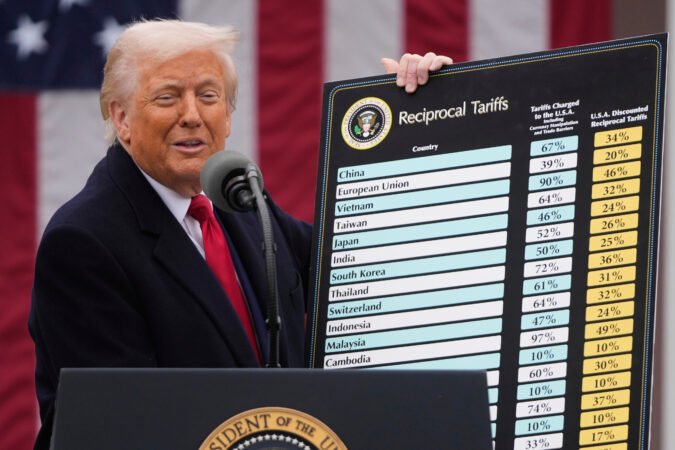
Since returning to the White House in January, President Donald Trump has overturned decades of U.S. trade policy — building a wall of tariffs around what used to be a wide open economy.
His double-digit taxes on imports from almost every country have disrupted global commerce and strained the budgets of consumers and businesses worldwide. They have also raised tens of billions of dollars for the U.S. Treasury.
Trump has argued that his steep new import taxes are necessary to bring back wealth that was “stolen” from the U.S. He says they will narrow America’s decades-old trade deficit and bring manufacturing back to the country. But upending the global supply chain has proven costly for households facing rising prices. The taxes are paid by importers who typically attempt to pass along the higher costs to their customers. That includes businesses and ultimately, U.S. households.
And the erratic way the president rolled out his tariffs — announcing them, then suspending or altering them before conjuring up new ones — made 2025 one of the most turbulent economic years in recent memory.
Here’s a look at the impact of Trump’s tariffs over the last year, in four charts.
Effective U.S. tariff rate
A key number for the overall impact of tariffs on U.S. consumers and businesses is the “effective” tariff rate — which, unlike headline figures imposed by Trump for specific trade actions, provides an average based on the actual imports coming into the country.
In 2025, per data from the Yale Budget Lab, the effective U.S. tariff rate peaked in April. But it’s still far higher than the average seen at the start of the year. Before finalizing shifts in consumption, November’s effective tariff rate was nearly 17% — seven times greater than January’s average and the highest seen since 1935.
Tariff revenue vs America’s trade deficit
Among selling points to justify his tariffs, Trump has repeatedly said they would reduce America’s longstanding trade deficit and bring revenue into the Treasury.
Trump’s higher tariffs are certainly raising money. They’ve raked in more than $236 billion this year through November — much more than in years past. But they still account for just a fraction of the federal government’s total revenue. And they haven’t raised nearly enough to justify the president’s claim that tariff revenue could replace federal income taxes — or allow for windfall dividend checks for Americans.
The U.S. trade deficit, meanwhile, has fallen significantly since the start of the year. The trade gap peaked to a monthly record of $136.4 billion in March, as consumers and businesses hurried to import foreign products before Trump could impose his tariffs on them. The trade gap narrowed to $52.8 billion in September, the latest month for which data is available. But the year-to-date deficit was still running 17% ahead of January-September 2024.
Import shifts with America’s biggest trading partners
Trump’s 2025 tariffs hit nearly every country in the world — including America’s biggest trading partners. But his policies have had the biggest impact on U.S. trade with China, once the biggest source of American imports and now No. 3 behind Canada and Mexico. U.S. tariffs on Chinese imports now come to 47.5%, according to calculations by Chad Bown of the Peterson Institute for International Economics.
The value of goods coming into the U.S. from China fell nearly 25% during the first three-quarters of the year. Imports from Canada also dropped. But the value of products from Mexico, Vietnam, and Taiwan grew year-to-date.
Market swings
For investors, the most volatile moments on the stock market this year arrived amid some of the most volatile moments for Trump’s tariffs.
The S&P 500, an index for the biggest public companies in the U.S., saw its biggest daily and weekly swings in April — and largest monthly losses and gains in March and June, respectively.
The answer to this question is a big deal for the approximately one-third of well-to-do Americans who own most of the stock. However, it also matters to the broader economy and thus by extension to the majority who don’t.
All of the ingredients that go into making a bubble are evident. Most important, stock prices have been on a tear. Prices never move in a straight line, but they’ve rocketed more or less straight up over the past decade, more than doubling since the COVID-19 pandemic.
This amount of price growth has happened in only three other decades since the late 1800s, when the Dow Jones Industrial Average index, comprising the 30 largest publicly traded companies, was first published. Those decades were the 1920s, the 1950s, and the 1990s.
The roaring 1920s, of course, ended terribly in the 1929 stock market crash, which ushered in the Great Depression of the 1930s. That was clearly a bubble.
In the 1950s, stock market gains were powered by U.S. companies’ dominance of the global economy after World War II. This included companies such as General Electric, AT&T, General Motors, U.S. Steel, and DuPont. That wasn’t a bubble.
And then there was the 1990s internet craze, which ended soon after Y2K with a dramatic decline in stock prices. No question: That was a bubble.
The internet was a game-changing technology that resulted in enormous productivity gains and ultimately generated significant profits. However, investors had discounted all this and much more. Stock market valuations — stock prices relative to corporate earnings — surged.
Valuations aren’t quite as lofty today as they were in the late 1990s, but they are close. And they are still on the rise. My favorite valuation measure is the ratio of the value of all publicly traded stocks, as measured by the Wilshire 5000, to economy-wide corporate profits from the Bureau of Economic Analysis.
In the 75 years for which this valuation measure can be calculated, stock prices have averaged 12 times corporate profits, a 12-1 ratio. Currently, the ratio is 20-1. The only other time valuations have been higher was at the height of the Y2K bubble, when the measure briefly spiked to 24-1.
But perhaps today’s extraordinary stock market valuation is justified. After all, this largely reflects the investors’ optimism about the large artificial-intelligence companies. These so-called hyperscalers are nothing like many of the fly-by-night internet companies (think Pets.com) that inflated the Y2K bubble.
This is undoubtedly the case, but like those internet companies, the stock prices of today’s AI companies are being juiced up by investor speculation. That is, an increasing number of investors are piling into these stocks, driven by the simple logic that since their prices have risen a lot, they will continue to rise. This momentum will continue, and if it doesn’t, they will be smart enough to recognize this and find other unwitting investors to buy their stocks before the bottom drops out.
Another form of arguably accidental speculation may also be taking hold in the stock market via the fast-growing index funds. These funds passively track a market index, like the Standard & Poor’s 500, by holding stocks in the same proportion as the index. The goal is to match the market’s performance. Index funds offer the benefits of diversification and low fees but aren’t based on an analysis of the underlying companies’ strengths.
Thus, if the stock price of a company is rising, it will attract more investments from index funds, and its price will rise even further. There is no argument that AI-chip juggernaut Nvidia’s stock price should be up significantly, for example, but it has increased substantially more due to this self-reinforcing dynamic.
The soaring stock market has been a powerful tailwind to the entire economy.
The wealthy, who own the bulk of the stocks, are now much wealthier and spending accordingly. In the past year alone, stock wealth has increased by nearly a staggering $10 trillion. This newfound wealth supports a significant amount of spending, which, in turn, supports a substantial number of jobs.
This brings into clear relief a significant threat to the economy. If the stock market is a bubble and it bursts, wiping out this wealth, consumer spending will suffer a significant blow, triggering a recession. This is precisely what happened after the bursting Y2K bubble.
So, is the stock market a bubble?
Well, if it isn’t, it soon will be if the current trends continue for much longer. The final ingredient for a bubble is that nearly all the naysayers are silenced. That happens when they’ve called out the bubble for so long, they are no longer considered credible. Any skepticism is thrown to the side, and the bubble inflates more.
We aren’t there yet. There are still too many naysayers like me.