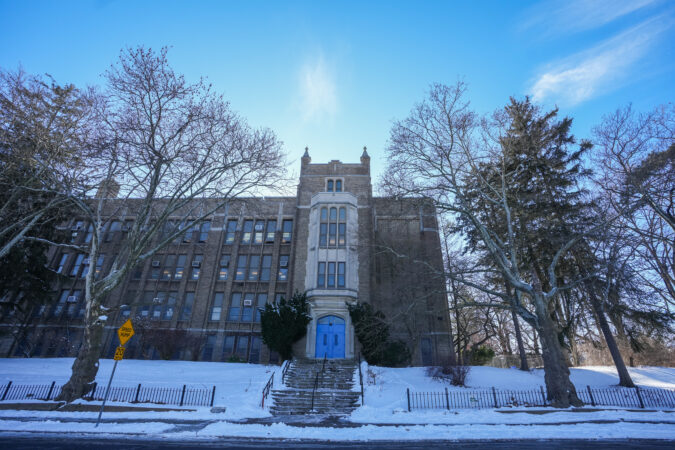
For nearly a century, the Samuel Pennypacker School has survived — a three-story brick anchor of the West Oak Lane neighborhood in Northwest Philadelphia.
Now it faces the threat of extinction.
ThePhiladelphia School District says the school’s building score is “unsatisfactory” and modernizing it would cost more than $30 million. District officials are calling for shutteringPennypacker following the 2026-27 school year, funnelingits students to nearby Franklin S. Edmonds or Anna B. Day schools— part of a citywide proposal to close20 district schools.
The recommendation, district officials say, is no reflection of the “incredible teachers, community, [and] students” at Pennypacker. Rather, it is an attempt by the district to optimize resources and equity for students.
Like many district schools, Pennypacker, which serves students in kindergarten through eighth grade, is aging and outdated, having opened in 1930. At just over 300 students, it is among the city’s smaller schools — and operating at about64% of building capacity.
Yet, it is those same qualities — its size and longevity — that represent some of its greatest strengths, say those in the school community who are not happy about the proposed closure.
It’s a school, they say, that is more than the sum of its aging parts.
On the school’s walls are pocks of chipped paint, yes, but also the colorful detritus of a small but vibrant student population: a poster composed of tiny handprints in honor of Black History Month; a “Blizzard of Positivity” — handwritten messages reading “Smile” and “Hugs” and “Help your friends when they fall.”
It’s where Wonika Archer’s children enrolled soon after the family emigrated from Guyana — the first school they had ever known.
“A lot of firsts,” Archer said. “Their first friends, their first teachers outside of their parents.”
It’s where, since 1992, Andreas Roberts’ youth drill team has been allowed to practice. The team, which includessome Pennypacker students, recently participated in its first competition andwon first place.
“Pennypacker has been very, very useful to us,” he said. “We have nowhere else to practice for the kids.”
It’s where Christine Thorne put her kids through school, her son and her daughter, and where her grandchildren now go. Around the school, they call her “Grandmama.”
“I feel as if my household is being destroyed,” she said recently.
For students, news of the imminent closure has been no less jarring.
When Janelle Pearson’s fourth-grade students learned recently that their school was poised to be shuttered under the district’s plan, they took it as a grim reflection on themselves.
“It makes them feel like, ‘What did we do wrong that they want to close our school?’” said Pearson, who has taught at Pennypacker for abouta decade. “That’s the part that tugs at your heart.”
Unwilling to go down without a fight, the fourth graders resolved to do what they could. Soon, a poster took shape, in marker and crayon, a series of pleas addressed to Philadelphia Superintendent Tony B. Watlington Sr.
“Pennypacker is our home.”
“Don’t uproot our education.”
“Our neighborhood depends on this school!”
The poster was presented to district officials earlier this month at a community meeting held in the school’s wood-seated auditorium.
At that meeting, representatives from the district did their best to explain the reasoning for the proposed closures. They presented a tidy PowerPoint and talked of student retention and program alignment, of building capacity and neighborhood vulnerability scores.
It stood in stark contrast to the parents and teachers and staffers who, one by one, held a microphone and spoke of love and family and community, of teachers and staffers who routinely went above and beyond to make their children feel safe. To make them feel special.
“It’s not just about a building,” said Richard Levy, a onetime Pennypacker teacher who now works at St. Joseph’s University. “The challenges here aren’t reasons to close the school — they’re reasons to strengthen it.”
Whether their appeals might affect the district’s decision remains to be seen. Other schools in the district slated for closure have mounted efforts of their own, and, despite a recent grilling by City Council members, it seems all but certain that several schools will ultimately shutter.
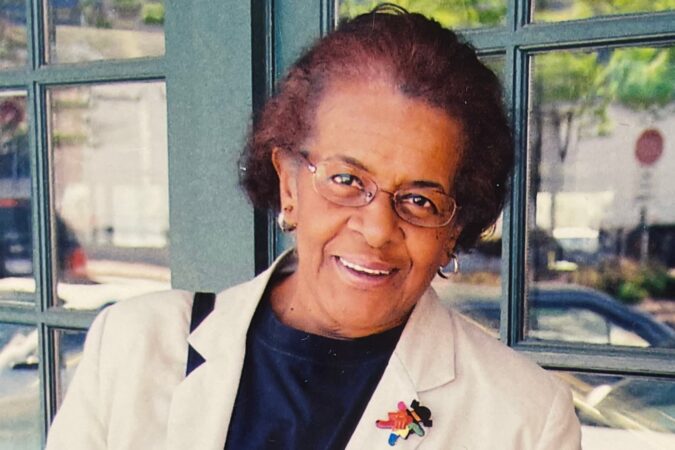
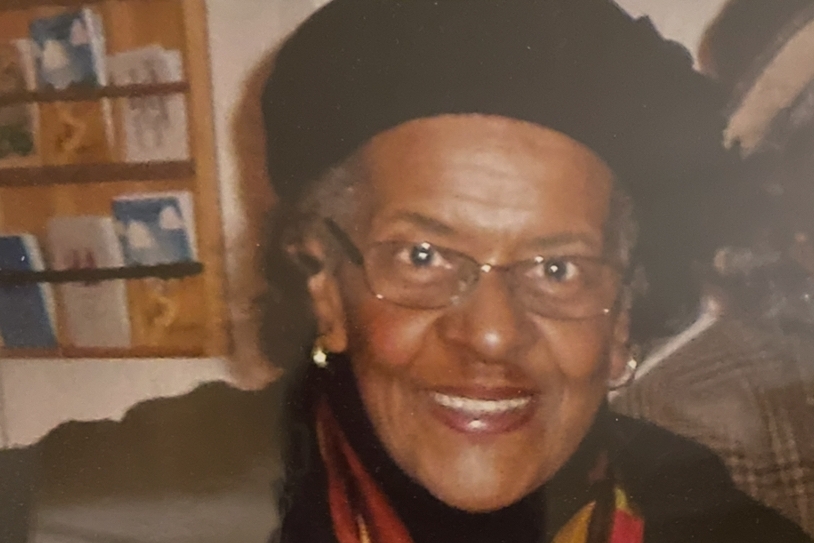
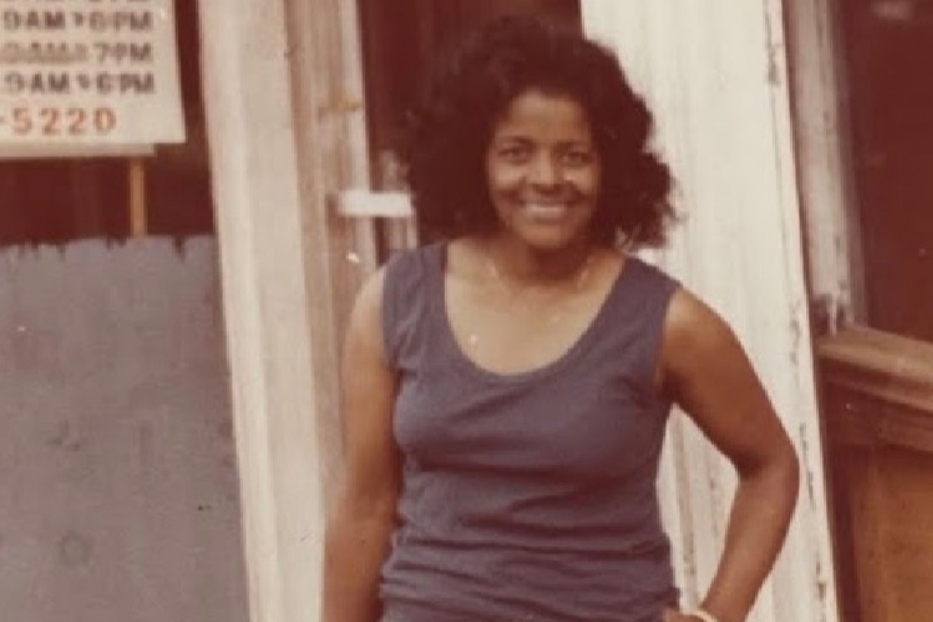
Mae Laster, 87, of Philadelphia, retired French, algebra, and photography teacher for the School District of Philadelphia, longtime president of Friends of Wynnefield Library, award-winning committee chair for the Philadelphia section of the National Council of Negro Women Inc., community center adviser, church trustee, volunteer, and undisputed Laster family Scrabble champion, died Friday, Jan. 2, of age-associated decline at Lankenau Medical Center.
Born in Philadelphia, Ms. Laster earned academic degrees at West Philadelphia High School and Temple University. She was a lifelong reader and stellar student, and she tutored her high school classmates in math and later taught elementary and middle school students for 30 years.
“She was a firm and no-nonsense kind of teacher,” a former student said in an online tribute. “But she was a lot of fun. As an adult, she always offered guidance and advice.”
Her daughter, Lorna Laster Jackson, said: “She had a passion for learning and sharing with others. She was always an advocate for children.”
Ms. Laster chaired community service and Founder’s Day committees for the National Council of Negro Women Inc.
Ms. Laster served as president of Friends of Wynnefield Library for more than 20 years and was active at its many book readings, content discussions, concerts, and fundraisers. She earned several important financial grants for the library, and her personal collection of books at home numbered more than 1,000.
“She loved reading to our young patrons, especially during our Dr. Seuss birthday celebrations,” library colleagues said in a tribute.
She chaired community service and Founder’s Day celebration committees for the National Council of Negro Women and earned the local section’s achievement award in 1998. “Mae was a blessing to the Philadelphia section,” colleagues said in a tribute. “We will always remember her feisty way of asking questions and not easily put off.”
Ms. Laster was an advisory board member at the Leon H. Sullivan Community Development Center and a trustee at Zion Baptist Church. Colleagues at the community center called her “a very thoughtful and talented person.” They said: “She was always forthright and had a strong opinion.”
Ms. Laster (center) especially enjoyed reading to young people at the Wynnefield Library.
At church, she was a member of the New Day Bible Class and proofreader for the newsletter. She also volunteered with the Wynnefield Residents Association, the Girl Scouts, and the 4-H Club.
In a citation, City Council members praised her achievements regarding “education, community service, and all those whose lives were enriched by her wisdom, kindness, and unwavering faith.” In a resolution, members of the state Senate noted “her extraordinary life, her enduring contributions, and her lasting impact on education, community, and faith.”
Friends said in online tributes that she “had a great sense of humor” and was “the sweetest mom on the planet, who was always like a mom to me.” One friend called her “a community-minded leader who advocated tirelessly to preserve the quality of life in Wynnefield.”
At home, Ms. Laster studied the dictionary, knew words that nobody else did, and became the undisputed Scrabble champion of her family and friends. She was so good, her daughter said, that nobody volunteered to play against her. “It was humiliating,” her daughter said.
Ms. Laster was a lifelong advocate for children.
Mae R. Johnson was born June 5, 1938, in Philadelphia. She grew up in Winston-Salem, N.C., with her grandmother and returned to Philadelphia in the 1950s to live with her mother and begin high school.
She was an excellent student, especially good with words and numbers, and she graduated from West Philadelphia High in 1956 and earned a bachelor’s degree in early childhood education at Temple.
She met Francis Laster in the neighborhood, and they married, and had a daughter, Lorna, and sons Francis Jr., Charles, and Ahman. Her husband owned and operated the popular Rainbow Seafood Market, and they lived in West Philadelphia and Wynnefield. They divorced later. He died in 2020.
Ms. Laster enjoyed bowling, photography, and horticulture. She listened to jazz, classical, and gospel music. She collected butterflies and stamps.
Ms. Laster was “all about positive change,” her daughter said.
She shared recipes with friends and kept in touch through memorable phone calls. She helped organize high school reunions and appreciated the educational TV shows on the Public Broadcasting System. She retired from teaching about 20 years ago.
“She was all about positive change,” her daughter said. “She spoke from compassion and her truth. She did more good than she knew. She was dynamite.”
In addition to her children, Ms. Laster is survived by six grandchildren, three great-grandchildren, three great-great-grandchildren, a sister, and other relatives. A brother died earlier.
A celebration of her life was held earlier.
Donations in her name may be made to Friends of Wynnefield Library, Attn: Terri Jones, 5325 Overbrook Ave., Philadelphia, Pa. 19131.
Ms. Laster graduated from West Philadelphia High School in 1956 and earned a bachelor’s degree in early childhood education at Temple.
Haverford College president Wendy Raymond is considering convening a committee that would review whether mega donor and U.S. Commerce Secretary Howard Lutnick’s name should remain on the campus library.
Raymond’s statement to the campus community this week follows concerns expressed by Haverford students and alumni about Lutnick’s ties to sex offender Jeffrey Epstein. She noted “a growing number of Fords have written to express their dismay.”
“While forming a naming review committee does not predetermine any outcome, it is a serious step and not something I would take lightly,” Raymond wrote to the campus. “I will take the time necessary to continue to reflect and to engage with thought partners before determining whether to activate a review committee.”
Under Haverford’s gift policy, the school can rename a building if “the continued use of the name may be deemed detrimental to the college, or if circumstances change regarding the reason for the naming.” If Raymond convenes a committee, she would then consider its recommendations and make her recommendation to the external affairs committee of the board of managers, as well as to its chair and vice chair. The external affairs committee then would make its recommendation to the full board of managers.
Lutnick, a 1983 graduate and former chair of the college’s board of managers, is one of the school’s biggest donors, having given $65 million. Documents released by the U.S. Justice Department this month show that Lutnick had contact with the late financier as recently as 2018, long after Epstein pleaded guilty to obtaining a minor for prostitution and soliciting a prostitute.
And during congressional testimony last week, he said he visited Epstein’s private island with his family in 2012. Lutnick previously said he had not been in a room with Epstein, whom he found “disgusting,” since 2005.
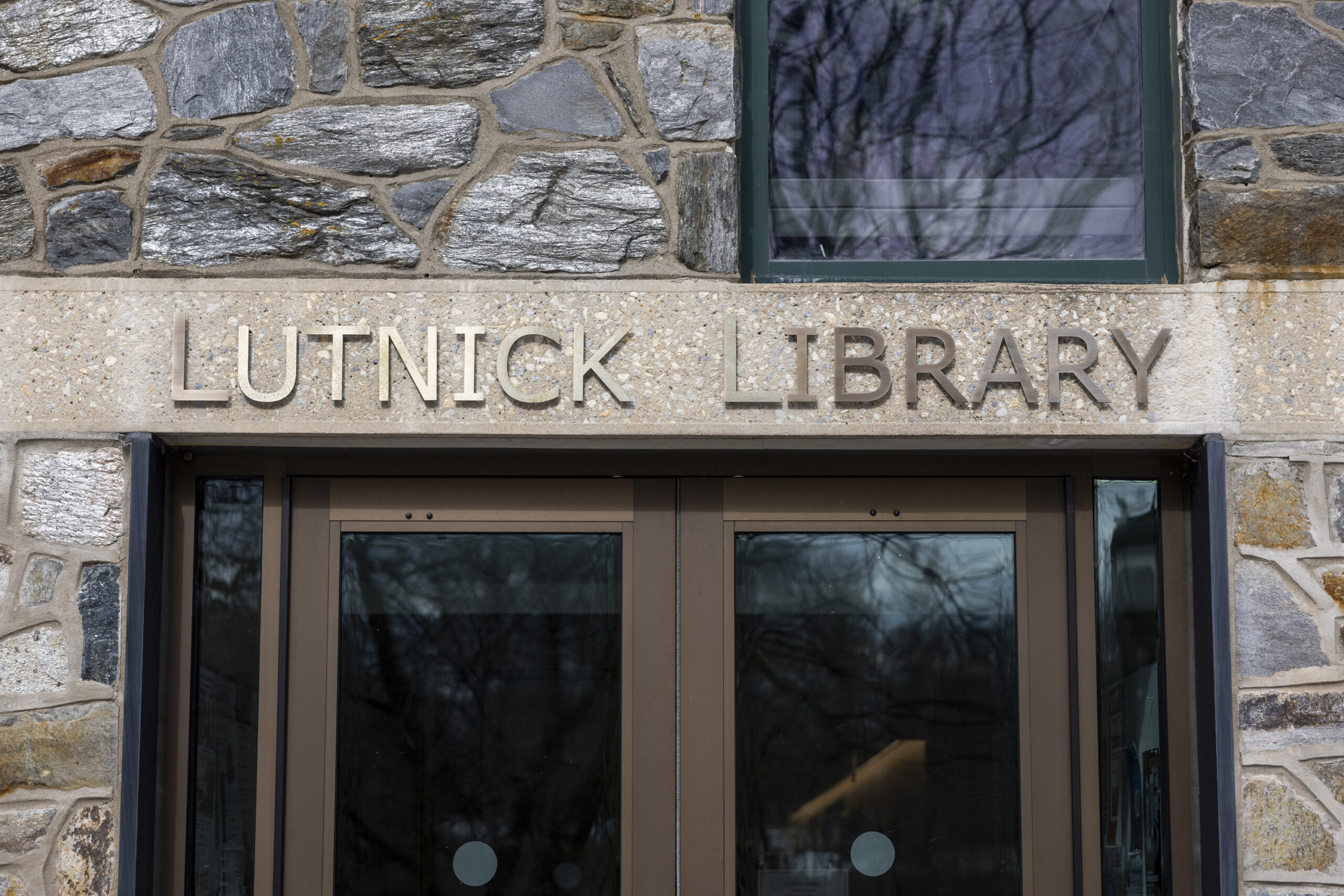
The outside of the Lutnick Library at Haverford College.
Raymond’s announcement comes one day after students held a town hall to discuss their concerns and feelings about Lutnick‘s ties to Epstein.
Students who organized the town hall said Raymond’s communications about Lutnick have fallen short. They said they had hoped at least to see a review committee started.
“Many students, including myself, are deeply disappointed and, in many cases, hurt by the neutral and softened language in these communications,” senior English major Paeton Smith-Hiebert wrote to Raymond.
Smith-Hiebert is co-founder of the Haverford Survivor Collective, which started in 2023 and is led by Haverford students and survivors of sexual assault. She said while Raymond notes she is having conversations about the topic, the collective hasn’t been consulted.
“Given the gravity of this situation, survivors are among those most directly affected,” she wrote. “Many are feeling significant harm and institutional betrayal … While I understand there are many stakeholders to consult, it is difficult to reconcile the stated commitment to engagement with the apparent absence of those most impacted.”
Raymond’s message, she said, also should have included a reference to resources or support for survivors who are struggling, she said.
Between 50 and 100 students attended the nearly two-hour town hall, several attendees said, with no students speaking in favor of keeping Lutnick’s name on the building. Students introduced an open letter with demands that has since been signed by 235 students, staff, and alumni as of 8:30 a.m. Friday, said Smith-Hiebert. The letter calls on the college to immediately convene a review committee, rename the library, acknowledge the distress and harm members of the community are experiencing, and “adopt a clear and unambiguous morals clause” in the gift policy.
Students also discussed the possibility of protest actions to urge the college to act as soon as possible.
The issue of Lutnick’s name on the library is likely to come up at a plenary session,where students discuss and vote on important campus issues. That session is scheduled forMarch 29.
If the students were to pass a resolution calling for the removal of Lutnick’s name from the library, it would go to Raymond for signing.
Milja Dann, 19, a sophomore psychology major from Woodbury, N.J., said she went through all of the Epstein files that mention Lutnick and Epstein and saw references to at least seven planned in-person encounters. Students compiled a 10-page document on the Lutnick-related material in the files.
“I feel it is extremely difficult for survivors of sexual violence to see that name and know it is so closely associated with a man who has perpetuated violence and harm to so many people,” Dann said.
A Commerce Department spokesperson told the Associated Press last month that Lutnick had had “limited interactions” with Epstein, with his wife in attendance, and had not been accused of “wrongdoing.” Lutnick told lawmakers last week: “I did not have any relationship with him. I barely had anything to do with him.”
Some students at the town hall talked about the difficulty of going in the library, which is the heart of the academic campus.
“For me, walking into that space has been uncomfortable for a while,” Smith-Hiebert said, referring to when Lutnick was named President Donald Trump’s commerce secretary. “That discomfort has only intensified given this news.”
Lutnick, formerly chairman of Cantor Fitzgerald L.P., a New York City financial firm that lost hundreds of employees in the 9/11 World Trade Center attacks, served on Haverford’s board for 21 years.
In addition to the library, which also bears his wife Allison’s name, the indoor tennis and track center is named for his brother Gary Lutnick, a Cantor Fitzgerald employee who was killed on 9/11, and the fine arts building carries the name of his mother, Jane Lutnick, a painter. He also funded the college’s Cantor Fitzgerald Art Gallery.
Students discussed whether removing Lutnick’s name from the library would be enough or if other references should come down, too, said Cade Fanning, the associate editor of the Clerk, Haverford’s student newspaper, who attended the meeting.
“That had the most split opinions,” said Fanning, 21, a senior history major from Annapolis.
But people were concerned thatseeing the Lutnick name on anything, even if it was a relative, would be difficult for survivors, Fanning said. And the relatives’ names still signify Lutnick’s “imprint” on the college, he said.
Students also discussed that while they want his name off the library, the college should install a plaque explaining the history, rather than erasing it, Smith-Hiebert said.
During a talkby an Israeli journalist at Haverford College earlier this month, a group of about a dozen masked people sat and stood in the audience.
At one point, one of them began shouting through a bullhorn, “Death to IOF,” or Israeli Occupying Forces, a name critics use to refer to Israel Defense Forces,and “Shame,” according to a video of the incident and people who attended the event. The protesters’ faces were covered by masks or keffiyehs, a symbol of Palestinian identity.
“When Gaza has burned, you will all burn, too,” the protester shouted at the audience of about 180 people, many of them members of the local Jewish community, according to another video viewed by The Inquirer.
An audience member grabbed at the bullhorn and appeared to make contact with the protester as the protester yelled in his face, according to a video. The college’s campus safety personnel ejected both the bullhorn user and the audience member and has since banned both from campus, college officials said, noting that neither is an employee, student, or alumnus of Haverford.
The event sparked renewed charges of antisemitism on the highly selective liberal arts campus, which already is under scrutiny by a Republican-led congressional committee for its handling of antisemitism complaints and is the subject of an open investigation by the U.S. Department of Education.
It will also lead to changes in Haverford’s policies. In a message to the campus after the event, president Wendy Raymond — who faced intense questioning from the congressional committee about the school’s response to antisemitism last year — said “shouting down a speaker whom one does not agree with is never acceptable and stands outside of our shared community values.”
College officials acknowledged that Haverford needs to upgrade its event policies andsaid changes would be rolled out no later than after spring break.
Some people who attended the event to hear journalist Haviv Rettig Gur said they were afraid because they did not know who the masked attendees were or what they had in their belongings, and in light of recent mass violence at Jewish events around the world.
“I was scared to walk back to my car by myself, which is the only time I ever felt that way in Lower Merion, where I live,” said Susan Taichman, a resident of Bala Cynwyd, who was in the audience.
Barak Mendelsohn,professor of political science at Haverford College
Several students in attendance that night said most of the protesters sat or stood silently during the event — which is permitted under campus policy.
“I went into that event not with hatred for Jewish people, as some … have claimed was the intention of the protesters at the event,” said one Haverford student protester who asked that her name be withheld for safety reasons. “I went in with love, empathy, and deep concern for the Palestinians experiencing abhorrent amounts of violence in their homeland, as well as an understanding of the historical contexts that led to this violence, including the historic persecution of Jewish people that led to the development of Zionist thought.
“This context, in my opinion, is not an excuse for the genocide. It’s something really tragic that is going on, and I feel really strongly that it has to be stopped.”
Cade Fanning, the associate editor of the Clerk, Haverford’s student newspaper, cited three interruptions by protesters. One early on argued with Gur for an extended period, followed by the bullhorn incident less than an hour into the event, and then some banging on doors and yelling outside the room, said Fanning, 21, a senior history major from Annapolis, who attended the event.
Haverford professor Barak Mendelsohn, who helped organize the nearly three-hour event and has complained about the college’s handling of antisemitism in the past, said attendees were terrified as disruptions continued.
“I can’t tell you how ashamed I am as one of the organizers,” said Mendelsohn, an Israeli-born professor of political science and a terrorism scholar.
Leaders of Haverford’s students’ council, meanwhile, voiced concerns that an audience member had initiated physical contact with the protester, “which deeply frightened and disturbed members of Students’ Council,” they wrote. “We believe it is paramount to prioritize the safety of members of our college community. Actions like this have no place in our community.”
Some community members also interrupted and “heckled” protesters, Fanning said, adding that Gur belittled the activists as “children” who did not know enough about the world. The college, Fanning said, should have addressed that in its statement to the community.
“It would have been beneficial had they at least acknowledged that he wasn’t the most conducive to respectful, honest, open debate either,” Fanning said of Gur. “He didn’t treat the students with the most respect.”
But Anna Braun, 21, a senior English major from New York City who attended the event, said she was impressed with how Gur handled the protesters.
“He decided to engage with them one on one to really ask them questions and try to deconstruct why they were protesting,” she said. “The only way we can have any hope for peace is for people to listen to each other and to find some middle ground. And if you’re ignoring each other or if you are interrupting each other, then there is no potential for seeing eye to eye.”
An effort to ensure safe events
“It has become clear that there are gaps in how events are reviewed, supported, and managed on campus,” Raymond said in her message to campus. “We are actively revising our event management and space use policies to improve clarity and processes.”
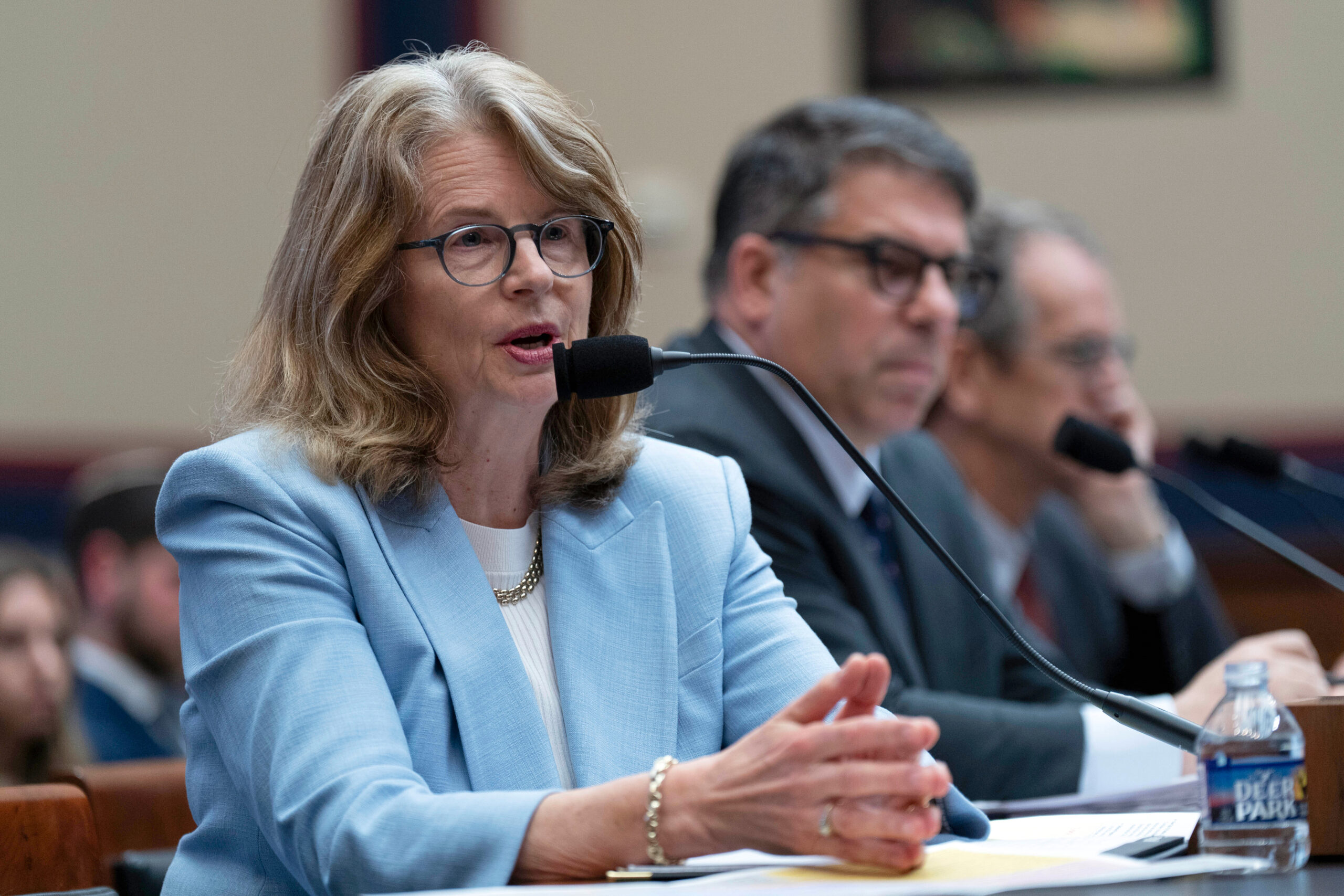
Wendy Raymond, president of Haverford College, testifies before the House Committee on Education and Workforce hearing on antisemitism on American campuses on May 7, 2025.
The new policy, she said, “will clarify expectations for different types of events, strengthen coordination among College offices, and establish additional planning and support for events that require heightened attention.”
Factors such as “significant attendance or operational complexity, heightened public visibility, safety, security, or crowd-management considerations, media presence or external participation, and increased likelihood of disruption or protest activity” may trigger the need for additional review to determine whether more resources are needed, said Melissa Shaffmaster, Haverford’s vice president for marketing and communication.
“Our intention … is not in any way to restrict free speech or restrict access for different speakers or topics to be discussed on campus,” she said. “We want to make sure that the proper resources are allocated so events can happen safely, people can have really thoughtful discourse, and these events can go off the way they are intended.”
The indoor use of bullhorns violated the school’s “expressive freedom” policy put in place last spring, she said.
The college is participating in the Hillel Campus Climate Initiative, touted as an effort to help college leaders counter antisemitism. A survey “to better understand the current climate for Jewish students” will be part of the effort.
Haverford also is preparing for a major change in leadership. Raymond said in November she would step down as president in June 2027; John McKnight, the dean of the college, also announced he would be leaving at the end of this semester for a new role at Dartmouth College; and the college’s vice president for institutional equity and access also will exit that post in May.
‘The howling cry of an uneducated child’
Gur’s talk was titled “Roots, Return, and Reality: Jews, Israel, and the Myth of Settler Colonialism.” In an opinion piece for the Free Press after the talk, Gur said he had gone to Haverford to talk “about the Jewish history that forged Israeli identity.”
While he saw the audience “tense up” when protesters entered, he wrote, he saw it as “a chance to explore managing an encounter with the abusive ideologues.”
He said he invited protesters to stay, but told them they had to remove their masks, which they did not do. Most protesters remained for the entire talk, he said, some even crying and engaging in dialogue with him.
“The more I treated them like neglected children hungry for knowledge, the more likely they were to respond in healthy and productive ways,” he wrote.
The event was organized by Kevin Foley, a 1983 Haverford graduate. Foley said he was impressed with Gur, a political correspondent and senior analyst for the Times of Israel, after seeing a video of him teaching.
“I thought I could do something good for Haverford by having him teach there,” said Foley, who lives in Connecticut and New York City and spent his career running electronic trading businesses at Bloomberg and Cantor Fitzgerald.
Foley’s best friend was killed in the 9/11 attacks and he said he experienced Hamas’ October 2023 attack on Israel as an “echo trauma.” To see concerns at Haverford about its handling of antisemitism “was disappointing,” he said, and what happened at Gur’s talk reinforced those concerns.
“What I can’t believe is that Haverford has so abandoned its liberal values of academic freedom, freedom of inquiry, that it’s considered acceptable for protesters to come in and disrupt and shut down an educational class,” Foley said.
Foley called on the college to ban masks and have metal detectors available when needed, and to apologize to Gur’s audience.
Shaffmaster said the college’s policy allows people to wear masks, but they must remove them if they are asked by campus safety officers or administrators for identification purposes.
Ongoing tensions on campus
Several students in attendance, who asked not to be named because of tensions on campus over the issue, said they thought campus safety and the college handled the event as best they could without silencing either side.
“No matter what they had done, people would be mad at them,” one said.
Fanning, the student editor, understood why older community members may have been fearful, but said protesters also have fears of being harassed or doxed for their pro-Palestinian advocacy if their identity is known.
“They are not fearless themselves,” Fanning said. “Nobody is.”
But Mendelsohn, the professor, was disturbed that Haverford seemed to equate the actions of the audience member who grabbed the bullhorn with those of the protester.
“The person acted in self-defense and managed to get the bullhorn from her hands,” he said. “If someone turned to you with a microphone and screamed, you would not sit there and do nothing.”
Mendelsohn has been at the forefront of allegations that Haverford has not done enough to address antisemitism, and the college has investigated him for speaking out on social media and in emails, according to a lawsuit filed against the college last year by a Jewish group. Much of the complaint was dismissed, but the judge allowed a portion involving breach of contract that would result in nominal damages to proceed, and that is in mediation, court records show.
The actions at Gur’s speech were just one of several ongoing problems with antisemitism on the campus, Mendelsohn said. His mezuzah — an object signifying the Jewish faith — was stolen from his office door a couple of months ago, he said. And he referred to a bias complaint over comments made around funding for the Haverford Chabad board. That remains under review, the college said.
Braun, the English major, said that she was heartened to see improvement in Haverford’s handling of the Gur event and that the campus has been more welcoming to Jewish students. Most people she has spoken with, she said, did not think the use of the bullhorn was appropriate.
“That’s not something I would have heard two years ago on this campus,” she said. “I sincerely believe there is more of a desire to create an inclusive environment.”
Rudolph Blankenburg Elementary School in West Philadelphia serves kids with complex needs — and test scores reflect that.
The school, where nearly 95% of students are considered economically disadvantaged, had been a Comprehensive Support and Improvement school — a federally mandated designation for schools performing in the bottom 5% statewide.
But last fall, Blankenburg shed that label. Many students are still struggling but are making gains, teachers said — progress they fear will be threatened by a district proposal to close the schoolas part of a sweeping facilities plan.
“We’ve worked really hard, with a consistent staff and all types of resources in place, for our students to pull ourselves out of that status,” said Flori Thomas, a middle school science teacher at Blankenburg.
That’s her biggest fear, she said: “You’re going to impact our scholars.”
Blankenburg is one of 20 district schools proposed for closure under the plan released last month. Six other schools would be colocated and more than 150 modernized as part of the proposal — which is facing resistance from City Council.
District officials say closures are needed in a system that has lost more than 80,000 students over the last 30 years, many to charter schools. The district has struggled to fund repairs of aging buildings — including at Blankenburg, where staff report chipping paint and roof leaks.
Marquita Jenkins, the school’s dean of climate and culture, does not disagree that the building, which opened in 1925, needs repairs — or that it is underutilized. The K-8 school, which currently enrolls 278 students, has room for almost 600. Officials said the school’s enrollment has declined by about 100 students over the last four years.
But the relatively low enrollment has also enabled smaller class sizes, helping student growth, Jenkins said. A former fourth- and sixth-grade teacher at Blankenburg, she recalled teaching a class of 33 students, 11 of whom had individualized special education plans: “It was tough.” Classes now are smaller, she said.
Like other staff, she worried about where Blankenburg students would end up. The district proposes to reassign them to Edward Heston School, James Rhoads Elementary School, and a newly colocated Martha Washington Academics Plus School and Middle Years Alternative School.
Blankenburg‘s building near 46th and Girard, meanwhile, would be conveyed to the city for “affordable workforce housing and/or job creation,” according to the district.
Jenkins and other staff questioned the safety of the routes to schoolfor reassigned students.
They also voiced concern for particularly vulnerable students: Blankenburg is surrounded by at least seven homeless shelters and “tends to have attendance fluctuations,” assistant principal Sandra Pitts said at a virtual community meeting with district officials this month. She questioned how families would be “assisted to avoid further trauma.” (Officials said they would be supporting students with housing instability in placements.)
Staffers noted that Blankenburg also has a significant population of students with special needs, who make up 25% of its enrollment.
Among them is Sherell Robinson’s kindergartener, Illiyin, who has autism and medical complexities.
Robinson, who lives in West Philadelphia, said that Illiyin had been denied enrollment at other district schools, and that she was told she had to send her daughter to Blankenburg.
Robinson initially had a negative impression of Blankenburg but was impressed with the school’s principal, Sheena Wilson, who “didn’t try to sell me, or placate me” — just presented what the school had to offer, she said.
What Robinson found was a small environment, “loving people,” and a routine for Illiyin. Now she is panicked at the prospect of the school closing.
“For them to be taking this whole community away is really devastating,” Robinson said. “It takes time to find the correct programming and environment and teachers who are neuro-affirming, especially for Black children.”
A real estate agent, Robinson said there was an irony to the district’s plan to convert Blankenburg to workforce housing — something she believes she currently would qualify for. But if she does not find a stable school environment for her daughter, she isn’t sure she will be able to keep her job.
“They might look at me as a single case, but I can assure you I am not an anomaly,” said Robinson, who also works for a disability nonprofit and is in touch with other parents of autistic children. “This is going to affect how we can take care of our families, how that perpetuates what we’re already experiencing. … I don’t want to normalize that struggle to them.”
Teachers said they are committed to Blankenburg’s students. “We bring a lot of positivity and try to keep our kids safe,” said Jenkins, who has led field trips to places including the Kimmel Center in Center City and the National Museum of African American History and Culture in Washington.
Thomas, who grew up in the neighborhood around Blankenburg and now lives in New Jersey, said that whenever students learn about her commute, she tells them they are worth the drive.
Others outside the city see headlines about crime, Thomas said, but she tells students: “I see you.”
As cars whizzed by on B Street, one student banged a drum and another struck a cymbal. Others waved signs and marched in circles.
“Save our school!” the group of about 50 middle schoolers shouted outside Stetson Middle School in Kensington last week. “Save Stetson!”
Stetson is one of 20 schools Superintendent Tony B. Watlington Sr. has proposed closing as part of a $2.8 billion facilities plan. Officials say closures are necessary to improve educational outcomes and equity system-wide, and to balance enrollment in a district that has 70,000 empty seats.
Love Letters to Stetson decorate the hallway during a community meeting at John B. Stetson Middle School in Kensington last week. Stetson is one of 20 Philly public schools facing closure.
But Stetson isn’t going down without a fight.
The school is 59% occupied, by the district’s calculations, and its building is in “unsatisfactory” condition. Stetson also scored “poor” on program alignment, a measure that takes into account a school’s ability to offer “appropriate spaces” for things like art, music, physical education, and career and technical education.
Its supporters say Stetson has been left to languish and that their neighborhood is overrepresented on the closure list. The district, they say, is taking away a community that’s been a constant for families in a struggling neighborhood at the center of the city’sopioid crisis.
“You tell this community that they are not worth investment,” one Stetson studentsaid at a meeting at the school last week. “How is it equitable to shut a school in a neighborhood that already lost so much? If this building needs repair, fix it for the children, not for the administration.”
Twelve requests to fix a leaky roof
The district has said it plans to hold on to the Stetson building and operate it as “swing space” — a building that can be used to relocate students from other schools that must temporarily shut down to accommodate repairs.
Instead of closing soon, the district is proposing phasing Stetson out gradually. The school would stop accepting new fifth graders in 2028, and close in 2030.
Students who previously would have gone to Stetson will go to Cramp and Elkin elementaries, which will grow to accommodate middle grades. Both schools are less than a mile from Stetson.
Students, teachers and supporters rally before a community meeting at John B. Stetson Middle School on Thursday, Feb. 12, 2026 in Philadelphia. Stetson is one of 20 Philly public schools facing closure.
Officials have also said the move to shut downStetson is part of a larger strategy of movingaway from middle schools and focusing instead onK-8 schools.
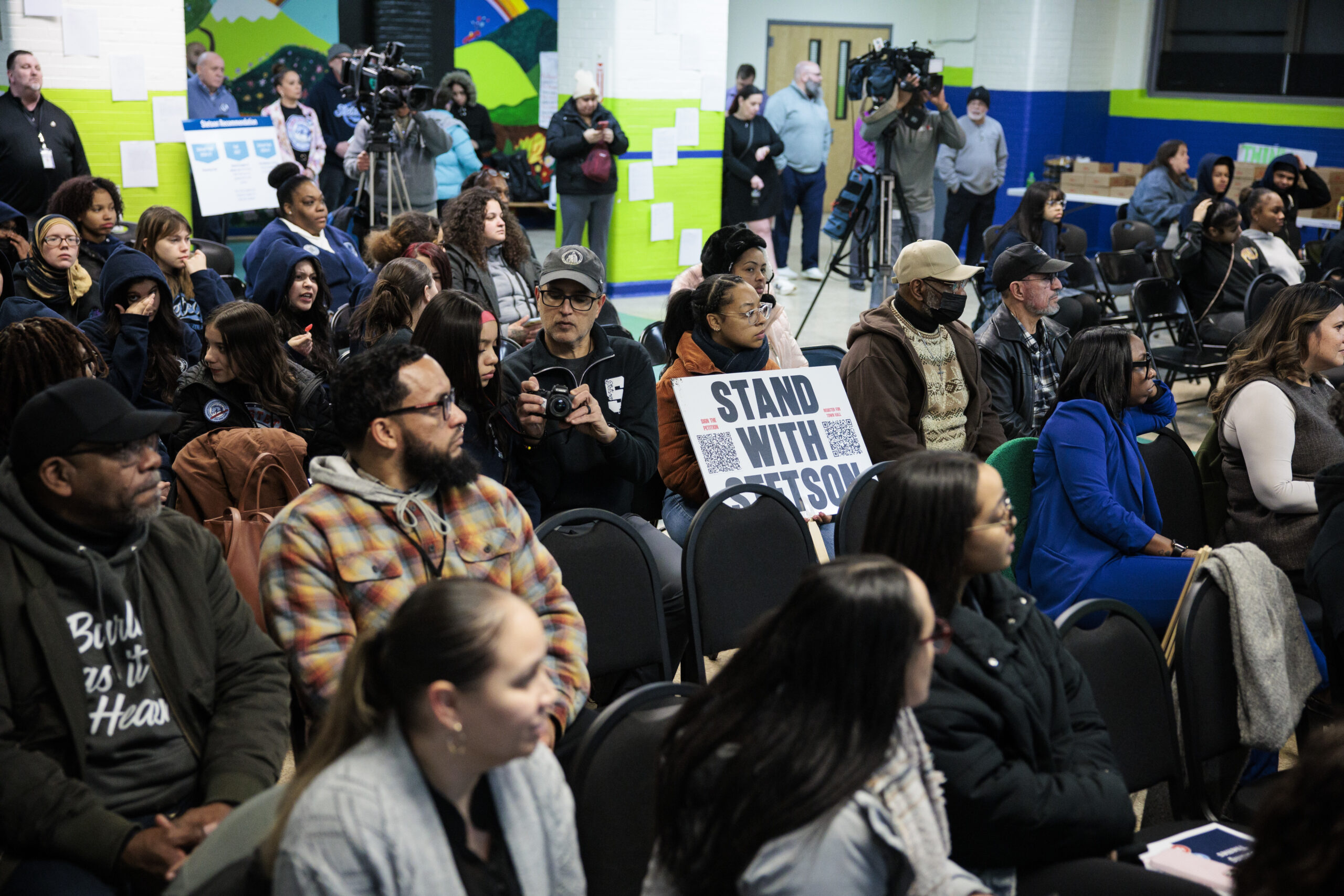
Community angst spilled over at the closing meetinglast week, with audience members booing district officials who were there to present information and answer questions, and applauding for those who spoke up for Stetson.
If the district has money to spend on fixing up buildings, why not spend on Stetson’s building, students asked.
Students and attendees listen during a community meeting at John B. Stetson Middle School last week.
“We have a fourth floor,” one sixth grader said. “Y’all could just fix that, y’all could fix the pipes, y’all could fix everything.”
Another student said she was frustrated by mold in the school, and a leaky roof.
“I heard that it’s your fault,” the student said.
Later, at a Tuesday City Council hearing, Councilmember Quetcy Lozada told Superintendent Tony B. Watlington Sr. that Stetson staff have put in 12 separate requests to fix the leaking roof.
“That roof is still leaking,” a frustrated Lozada said. “Can I have someone please today commit to going to Stetson and checking their leaking roof?”
Watlington said he would “make that happen.”
‘The void that it’s going to leave behind’
The district got the Stetson call wrong, said Kathryn Lajara, a special-education teacher at the school.
“Our school is being penalized for allegedly lacking space — P.E., special education, art,” Lajara said. “These conclusions are based on incomplete and misleading information, not on lived reality of what happens in our building every single day.”
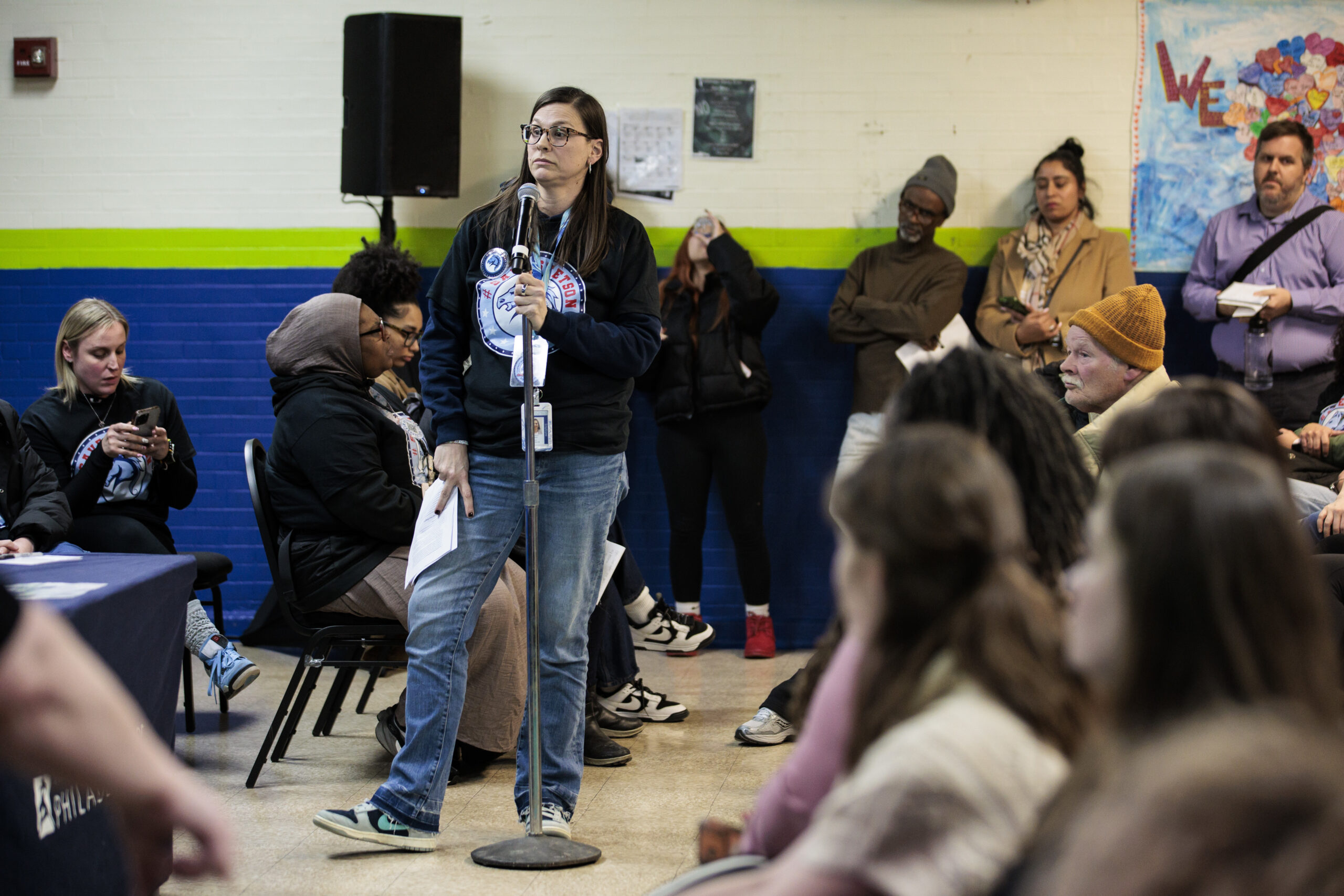
Special ed coordinator Kathryn Lajara speaks during a community meeting at John B. Stetson Middle School last week. Lajara and others spoke out against the recommendation to close the school in Kensington.
Stetson has an art lab, rooms for piano class, dance, a music room, anda photography room, Lajara said. And it serves 140 students with disabilities, despite the district saying it had inadequate special-education spaces.
Lajara was also frustrated by the district’s upkeep of the building.
“We fight the dripping water every day from the roof that you continue to neglect,” Lajara told district officials at the community meeting.
“I’m going to admit to you: We have neglected this building over decades,” Deputy Superintendent Oz Hill told the audience.
Lajara looked at Hill.
“Instead of continuing to neglect, how about we decide that our community and our students are best to invest in?” she said.
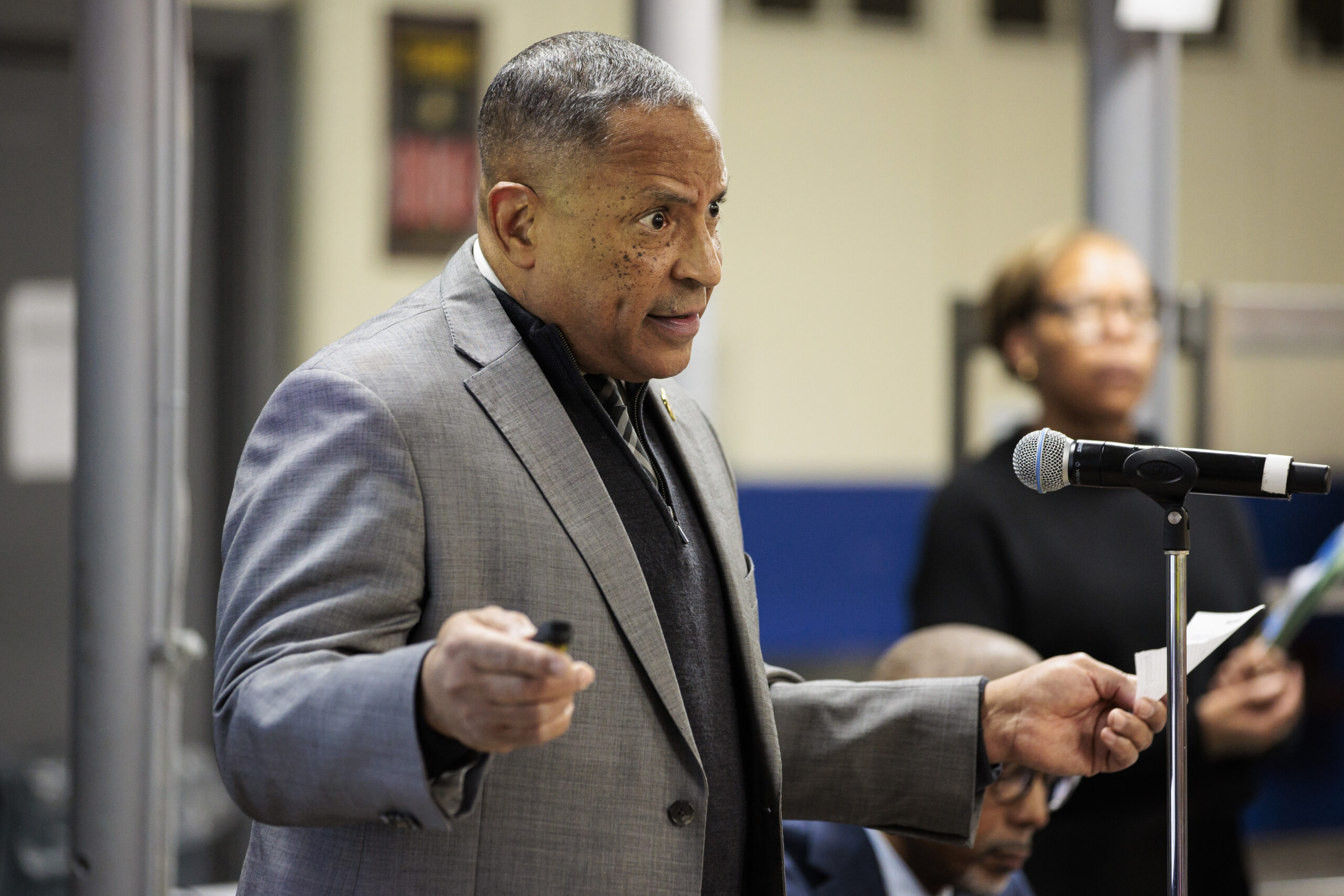
Deputy Superintendent Oz Hill speaks during a community meeting at John B. Stetson Middle School last week.
Crystal Pritchett, another Stetson teacher, suggested the district’s decision to send students to Cramp and Elkin was not in tune with neighbors’ wishes about safety and comfort.
Families have safety concerns about sending their kids to other schools, Pritchett said.
“You know nothing about this community,” Pritchett said. “You aren’t listening.”
Stetson opened in 1915 and was a district schoolfor nearly 100 years. It turned into a charter school runby the nonprofit Aspira in 2010, but the district took it backin 2022 after Aspira failed to meet district standards.
Abandoning it altogether is unthinkable, said the Rev. David Orellana, a pastor at CityReach Church in Kensington.
“I don’t think we’re taking into account the negative impact and the void that it’s going to leave behind,” Orellana said. “Taking Stetson away is taking the heartbeat of this community.”
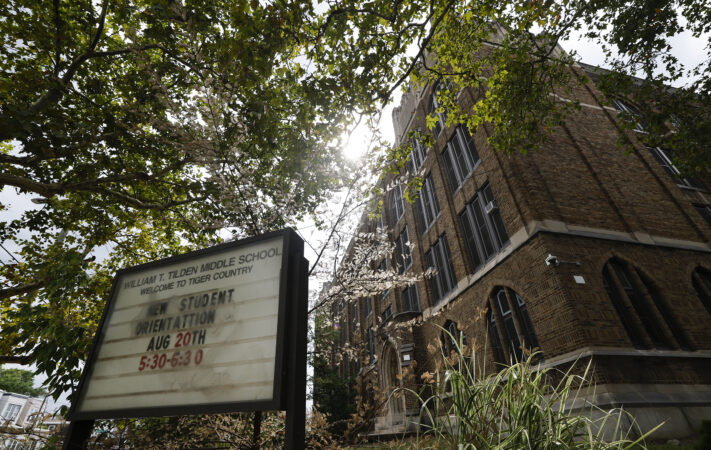
Students streamed out the front doors of William T. Tilden Middle School on a recent Friday afternoon, past the “Welcome to Tiger Country” sign at the corner. As they shouted to friends and threw snowballs to celebrate the weekend, they were dwarfed by the massive brick school building behind them.
That building, which spans half a city block in Southwest Philadelphia, is a primary reason the Philadelphia School District has proposed closing Tilden alongside19 other schools.
Capable of holding roughly 1,400 students, Tilden had only 266 enrolled last year, the district said. That means it is at just 18.5% capacity — the second-lowest of all the schools tapped to close, according to an Inquirer analysis. While enrollment in the school district overall has increased in the last four years, it has declined at Tilden, with just 24 students in this year’s fifth-grade class, district data shows.
The district has rated Tilden’s building as “poor” when it comes to being safe and accessible, meeting environmental standards, and having modern technology. Tilden is also one of six middle schools that Superintendent Tony B. Watlington Sr. has proposed closing in an effort to shift the district’s focus to the K-8 model.
Unlike some of the otherschools on the chopping block, the Tilden community so far has not mounted an organized fight against its closure as the school board prepares to vote this winter on Watlington’s recommendations. Just a dozen employees and residents showed up to an in-person meeting on a frigid Saturday morning earlier this month to discuss the school’s possible closure, according to Chalkbeat Philadelphia, and about 30 attended a virtual meeting about Tilden a few days later. There is no online petition to keep it open, as there are for manyother schools slated for closure.
Students who were set to graduate before the proposed changes would take effect said in interviews outside the school that they did not care much about the possible closure, though some adults expressed more concern.
“This school has had, and still does have, excellent community programs,” said Tilden teacher Cheryl Padgett through tears at the virtual meeting.
The district’s draft facilities plan recommends that in the fall of 2027, Tilden stop accepting new fifth graders, and then gradually phase out its remaining classes, closing for good in 2030.
All of Tilden’s current students would be able to graduate from the school under the proposal; new students who would have attended Tilden for middle school will instead stay at Patterson, Catherine, and Morton — the elementary schools that currently feed into Tilden. The district said all three of those schools would receive increased investment as they add grades and become K-8 schools.
Tilden is in a neighborhood deemed especially vulnerable by the district, which ranked it as “high risk” to account for its experience with previous school closures, as well as its high poverty rate, lack of publictransportation, and language barriers. (The district’s top vulnerability ranking is “very high risk.”)
Tilden’s building would eventually be repurposed as a sports facility for Bartram High and the broader neighborhood under the plan.
At the virtual meeting, community members worried that the buildings slated to become K-8 schools are not equipped for older children, and that younger students would be exposed to problematic behavior from older kids.
Some community members said they feared that changes resulting from the district’s plan, which spans a 10-year period, would not come soon enough.
“Do something now,” said Mama Gail Clouden, a longtime community activist. “While you’re talking about ‘in two years,’ and what you’re planning to do — right now, children and parents and staff are suffering in these schools.”
Tilden also has received additional support and funding from the city’s tax on sweetened beverages through the community schools program pioneered by former Mayor Jim Kenney.
“Our kids can succeed,” Kenney said at a 2017 news conference at Tilden announcing funding for the first group of schools. “They can meet their potential if we give them the resources.”
Asa community school, Tilden’s building serves as a center for such resources: The school hosts a food pantry every Friday, and families can access case management and utility and housing assistance and other supports through a partnership with Methodist Services.
“These kids, they have a way of growing on your heart,” said Wanellie Cummings, an attendance case manager with Methodist Services assigned to Tilden.
Cummings works with kids who have three or more absences to try to address any barriers at home that might prevent them from getting to school. She said she has not heard much from her clients about the potential school closure, though she did worry about Tilden’s food pantry closing.
“When you take that away from a community, what’s left? If those grandmoms and grandpops have to go somewhere else to get food …,” she said.
The district has said it would spend the 2026-27 year planning for how to maintain the resources now offered at Tilden.
Ann B. Levine, 75, of Philadelphia, expert recruiter, longtime dean of admissions at Franklin Learning Center, business teacher, popular radio host, and community activist, died Saturday, Jan. 31, of age-associated decline at Thomas Jefferson University Hospital.
Bubbly, charismatic, and skillful at engaging with young people about their interests and goals, Ms. Levine worked as dean of admissions at Franklin Learning Center in Philadelphia from 1980 to her retirement in 2010. For 30 years, she recruited thousands of high-performing junior high school students to admission-only Franklin Learning Center, pored over more than 1,000 yearly applications, and helped choose the final 250 for admission.
Every year, she toured the city’s junior high schools, cutting-edge slideshow in tow, and spoke to students and families about the curriculum, activities, staff, and student body at Franklin Learning Center. She interviewed the teenage applicants personally, routinely showed interest in their lives as well as their grades, and made countless lifelong friends.
“You could tell she had their attention when she talked because they asked questions,” said her husband, Bob Bosco. “She was enthusiastic and thorough. She could connect. She found her niche.”
Ms. Levine (center) “was always a friendly, smiling face,” a friend said in a tribute.
Friends described Ms. Levine in online tributes as “happy and joyful,” a “sweet girl,” and “so fun to be with.” One friend said she “shared her views openly and freely.” Another said: “She was always a friendly, smiling face.”
She also founded and was the first director of Franklin Learning Center’s celebrated mock trial team. She persuaded several prominent attorneys and lawyers to mentor her students after school and on weekends, and several of her pupils went on to their own impressive legal careers.
In 2005, her eight-member mock trial team was one of 12, out of 270 overall, to advance to the Pennsylvania Bar Association statewide mock trial championships at the Dauphin County Courthouse in Harrisburg. Before becoming dean of admissions, she taught business and business law at Franklin Learning Center.
After she retired, Ms. Levine joined her husband as a fill-in radio host for a decade. They played oldies on WVLT-FM in Vineland, WRDV-FM in Hatboro, and other stations. Her natural charm, love of music, and ability to entertain made her a hit with listeners.
Ms. Levine married Bob Bosco in 1981.
“First it was the Bob and Ann Show,” Bosco said. ”Then it was the Ann and Bob Show. Then it was Ann and what’s his name.”
Ann Barbara Levine was born April 12, 1950, in Trenton. She worked on the yearbook, graduated from Trenton High School, and earned a bachelor’s degree in business at Drexel University and a master’s degree at the old Marywood business school.
She was taking tennis lessons at the Young Men’s Hebrew Association center in Philadelphia in 1975 when she met Bob Bosco. He was playing basketball.
They married in 1981, lived in Center City, and traveled together on memorable cruises and visits to Europe, Cuba, and Florida. Ms. Levine was an avid reader. She followed current events and enjoyed The Real Housewives TV shows.
Ms. Levine “really influenced the lives of a lot of young women,” her husband said.
For years, she was active with neighborhood groups in Southwest Center City. “She knew everybody,” her husband said. “She really influenced the lives of a lot of young women. She worked with the best of the best.”
In a tribute, a friend since childhood said: “Though we lived far apart, she was always special to me.”
In addition to her husband, Ms. Levine is survived by other relatives. A brother died earlier.
Philadelphia City Council may not have a vote on Superintendent Tony B. Watlington Sr.’s sweeping facilities plan, but it indicated Tuesday that it will have a say in school closings.
As a packed hearing began in Council’s chambers Tuesday morning, both Council President Kenyatta Johnson and Isaiah Thomas, chair of the Education Committee, said Council refused to be a “rubber stamp” to Watlington’s proposal to close 20 schools, colocate six, and modernize 159.
“I’m infuriated that we don’t get a say,” Councilmember Jimmy Harrity said, warning the district officials who appeared before him. “But, Council president, you and I both know we do get a say, because budget’s coming. And we will be looking. Mindful is the word I would use for today — be mindful.”
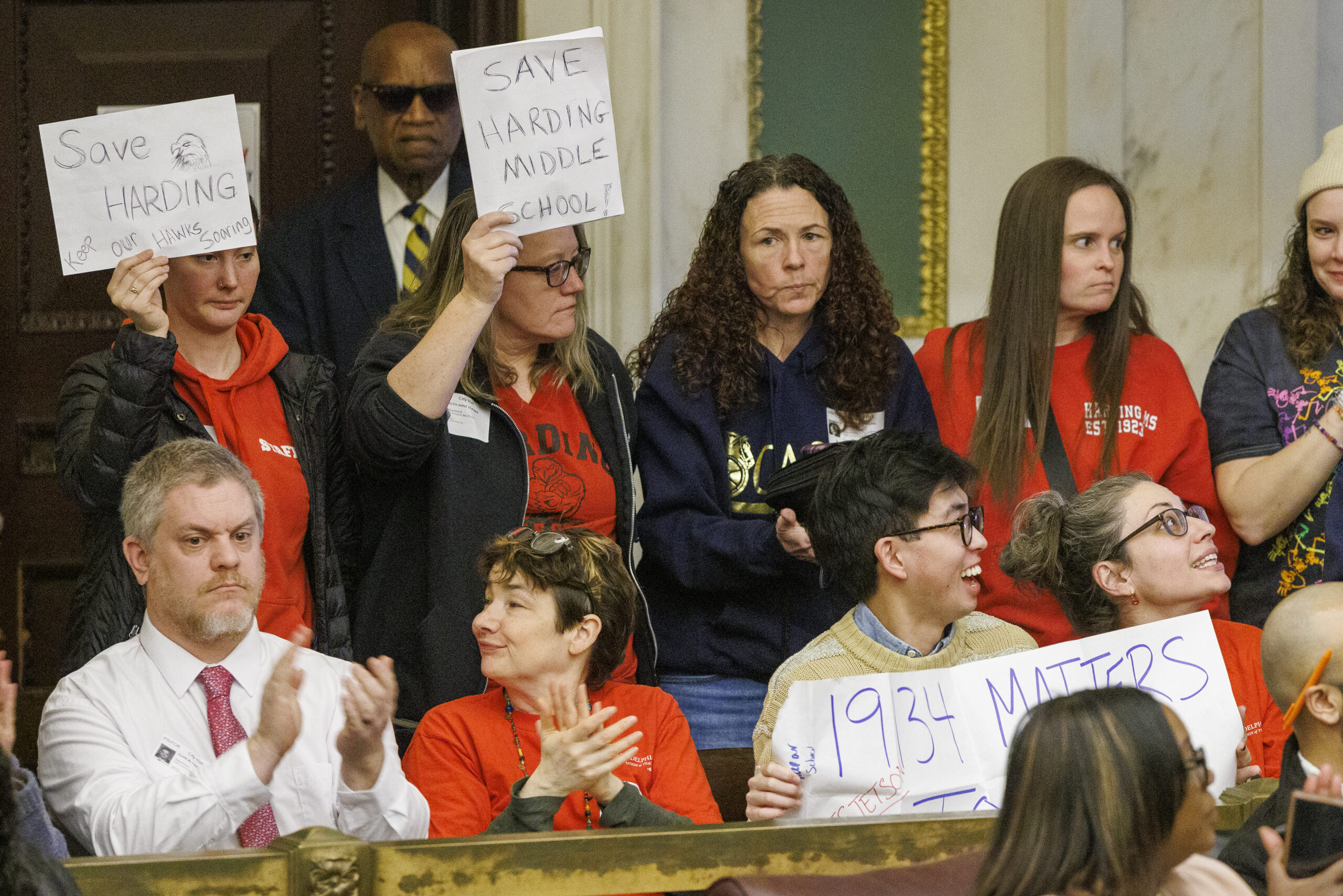
Concerned citizens stand with signs in support of Harding Middle School before the start of a Philadelphia City Council hearing Tuesday at City Hall on the school district’s plan to close 20 schools.
About 40% of the district’s nearly $5 billion budget comes from local revenue and city funding, which City Council and Mayor Cherelle L. Parker must approve in the annual city budget by the end of June.
Harrity, an at-large Council member, said he was “tired that every time cuts come, they come from a certain neighborhood. You know, I live in Kensington, in the 7th District. I talk to these kids. They’re good kids. They deserve everything that other kids in other neighborhoods are getting. … You can see that this isn’t what our people want.” Watlington has proposed closing four schools in the 7th District.
More than 100 community members holding babies and waving signs opposing the facilities plan filled Council chambers on the fourth floor of City Hall on Tuesday as Council members spent hours grilling Watlington and other district officials.
Watlington, meanwhile, stood by his plan in testimony to Council on Tuesday, sayingthat 20 closings was a much smaller number than he could have settled on.
“We could have come here and presented a plan that closed twice as many schools and been able to defend it,” Watlington said.
A once-in-a-lifetime opportunity?
District officials have said thefacilities process is not about saving money, but about optimizing education and equity for the city’s 115,000 students.
But it was clear Tuesday that finances played a part: The district has lost 15,000 students in the last 10 years, and over 80,000 since 1997, when charter schools were first authorized in Pennsylvania. It has 300 buildings, many of them 75 years and older and in poor repair, and some schools with more than 1,000 empty seats, while others are overcrowded.
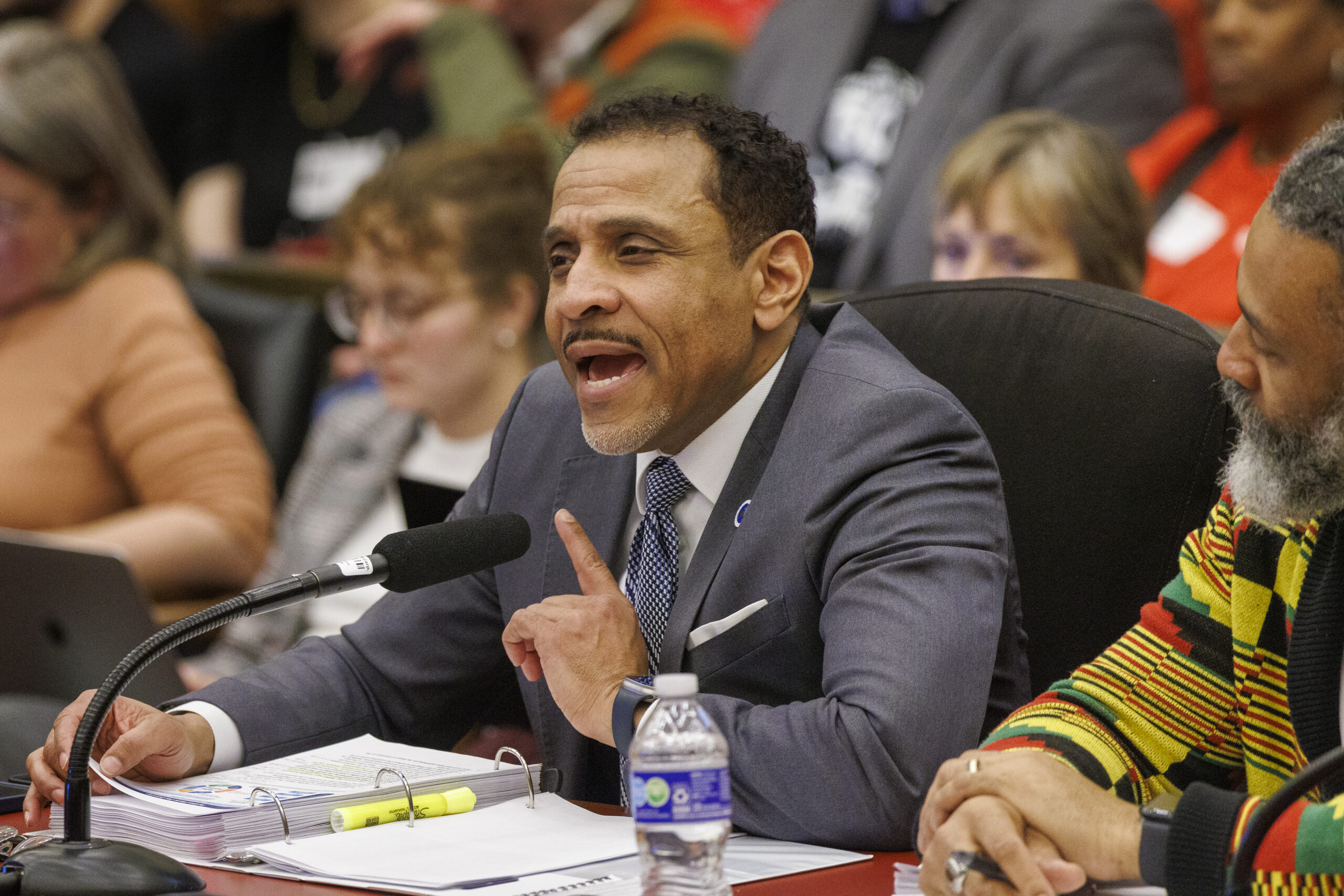
Tony B. Watlington Sr., superintendent of School District of Philadelphia, speaks at a City Council hearing Tuesday on his proposal to close 20 schools.
“We’ve got to be very careful with our limited resources in a historically underfunded district,” Watlington told Council.
Watlington and board president Reginald Streater, who also testified, pitched the plan as a way to add things the district cannot now offer — Advanced Placement courses in every high school, the opportunity for all eighth graders to take algebra, more prekindergarten, and career and technical education programs.
“I do not believe we’ll get this opportunity again in our lifetime,” Watlington said.
The superintendent dropped a few previously undisclosed facts about the facilities road map, indicating that his recommendations could shift slightly before he presents the plan to the school board on Feb. 26. No date has been set for the board’s final vote, which is expected later this winter.
“It’s premature to say how the final recommendations will land,” Watlington said.
But, the superintendent said, “if there are schools that Council wants me to take off the list, and add others on that list, we are open to you telling me what those are, but we cannot get to a place where we address our 35% non-utilization rate in buildings if no changes are made.”
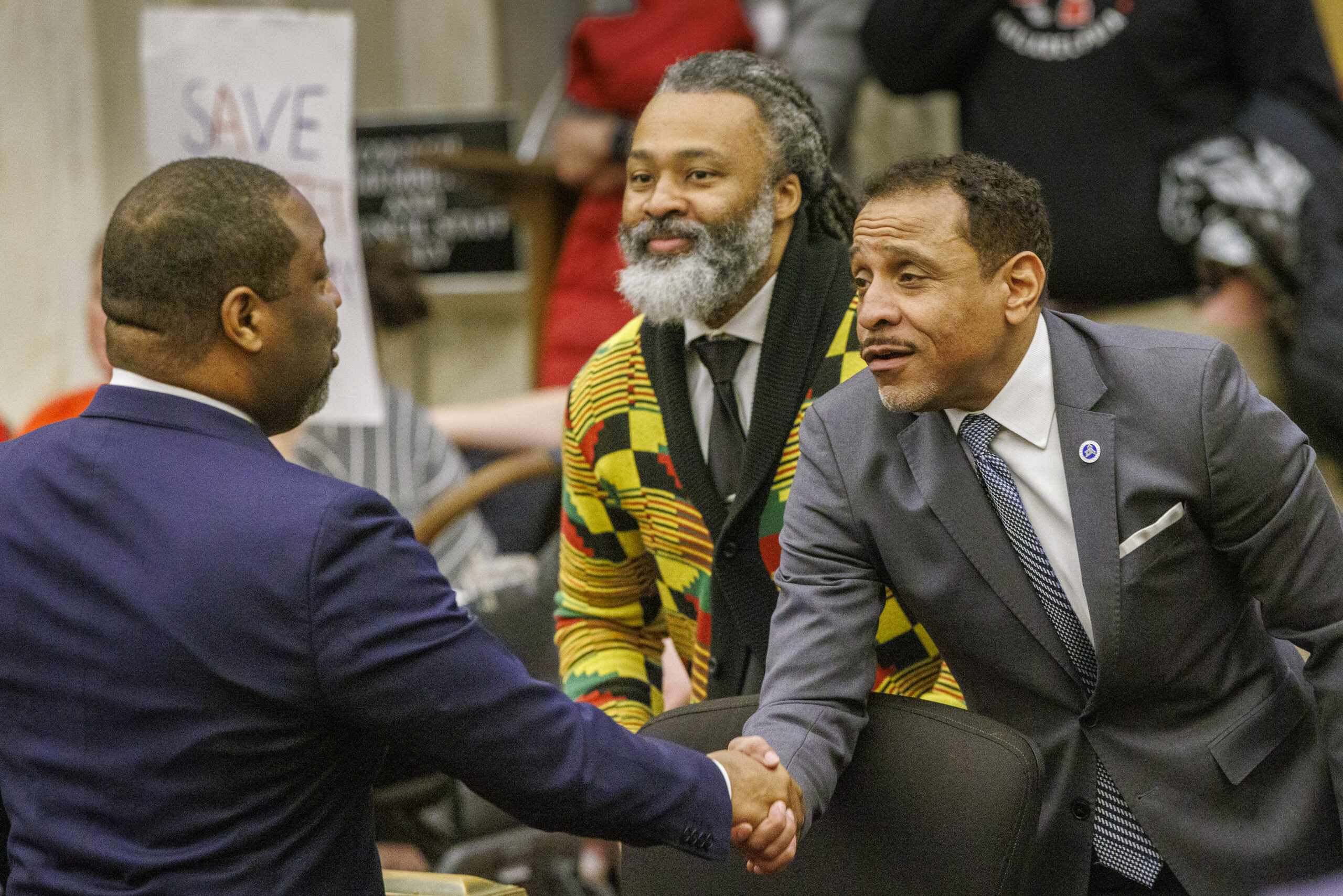
Philadelphia City Council President Kenyatta Johnson (left) greets Dr. Tony Watlington, Superintendent of School District of Philadelphia Philadelphia City Council holds hearing with board members of School District of Philadelphia, Tuesday, Feb. 17, 2026. Reginald L. Streater, Esq., President Board of Education. (center)
Debora Carrera, the city’s chief education officer, who spent three decades as a district teacher and administrator, told Council that Parker believes “the current district footprint is unsustainable.”
Carrera said her own experience as principal of Kensington High School for Creative and Performing Arts shows that it is right for the district to focus resources on neighborhood high schools.
“My high school was a small high school,” Carrera said. “I could only offer my children two AP courses, when other schools like Central — where my son went — could offer them over 20-plus AP courses.“
‘Breaking down of public education’
The hearing got tense at times.
“I feel like this is the breaking down of public education in Philadelphia,” said Councilmember Cindy Bass, who said some of the district’s own decisions had led to closures.
Several members of Council raised questions about the plan’s price tag. Prior district and city estimates put the cost just under $8 billion, but members of Watlington’s team said they could they could actually do the work for $2.8 billion — $1 billion from district capital funds, and $1.8 from yet-unpromised state and philanthropic sources.
In the past, the district had made public detailed facilities condition assessments for every school in the district, Councilmember Rue Landau noted.
Residents could look up their school and see exactly what the condition of every system in the building was, and how much money would be required to fix those that needed repair.
“We don’t have any of those details,” said Landau, who went so far as to say she believed the district should be spending more than $2.8 billion on the plan. “What is the increased investment, and why don’t we have any of those details? They are not out there in the public for us, so none of us have any understanding as to why this is happening, This should all be public so all of the public can see.”
“You need much more money than that,” Roseman told Council. “We need more money than this plan comes close to.”
Some Council members pushed the district and the board on the plan’s timing.
The city has been asking for a long-range facilities plan for years, Councilmember Quetcy Lozada pointed out.
“It’s taken us all this time,” Lozada said. “Now, you guys have come up with a plan, and now we want to rush through it. Now all of a sudden there’s this urgency to get through this plan, which I don’t understand.”
Streater said the board is moving forward with hearing Watlington’s plan on Feb. 26, but won’t vote until it hears more feedback.
But ultimately, he said, the board will vote on “a plan that is dynamic, that can evolve over time. … I think that we all understand that things change, facts change, funding changes, enrollment trends change.”
And, Streater said, there will also likely be policy changes based on redrawing some catchment areas, or boundaries that determine which neighborhood schools children attend.
Streater, who introduced himself at the beginning of the hearing as “Reggie from Germantown,” underscoring his history as a graduate of two district schools that closed — Germantown High and Leeds Middle School — said that changes must be made.
“I think if we continue doing the same thing, expecting a different result — which I would argue is chronic underachievement — we are doomed.”
The University of Pennsylvania soon may be off-limits to Army officers and other military service members who are seeking tuition aid to further their educations.
The Ivy League university in West Philadelphia is among 34 schools the Army says are at risk of being banned from military funding for service members to pay for their graduate programs and other education, according to a CNN report. The messaging has caused confusion among military officers seeking advanced degrees in law, medicine, and nuclear engineering, the report states.
The G.I. Bill and similar programs to pay for college have long been a major draw for people who join the military. But last week, Defense Secretary Pete Hegseth said the DOD “will discontinue graduate-level professional military education, fellowships and certificate programs” at Harvard.
“Too many faculty members openly loathe our military,” said Hegseth, who obtained a master’s degree in public policy from Harvard in 2013. “They cast our armed forces in a negative light and squelch anyone who challenges their leftist political leanings, all while charging enormous tuition.”
File this under: LONG OVERDUE
The @DeptWar is formally ending ALL Professional Military Education, fellowships, and certificate programs with Harvard University.
Hegseth, a former Army National Guard officer who served in Iraq and Afghanistan, said the department, which he calls the Department of War, is evaluating its relationships with other schools as well.
“[We] will evaluate all existing graduate programs for active-duty service members at all Ivy League universities and other civilian universities,” he said. “The goal is to determine whether or not they actually deliver cost-effective strategic education for future senior leaders when compared to, say, public universities and our military graduate programs.”
CNN obtained a “preliminary list of at-risk schools compiled by the Army,” which includes the University of Pennsylvania, as well as nearby Princeton University and Carnegie Mellon University in Pittsburgh. Officials at Princeton and Penn did not immediately respond to requests for comment Sunday.
“We are aware of reports indicating that Carnegie Mellon is among several universities whose eligibility to support graduate training for military officers may be under review. At this time, we have received no formal notification confirming that any such review is underway,” a spokesperson for Carnegie Mellon said in a statement. “As always, CMU stands ready to engage constructively with the Department on ways to strengthen and advance military education.”
Numerous schools on the list are the alma maters of Trump administration officials. In addition to attending Harvard, Hegseth obtained a bachelor’s degree in politics from Princeton. President Donald Trump holds a bachelor’s degree in economics from the Wharton School of the University of Pennsylvania. Vice President JD Vance holds a law degree from Yale University.
Here is the preliminary list of “at-risk” schools:
American University
Boston College
Boston University
Brown University
Carnegie Mellon
Case Western University
Columbia University
College of William and Mary
Cornell University
Duke
Emory
Florida Institute of Technology
Fordham
Georgetown
George Washington University
Harvard
Hawaii Pacific University
Johns Hopkins University
London School of Economics and Political Science
MIT [Massachusetts Institute of Technology]
Northeastern University
Northwestern University
New York University
Pepperdine
Princeton
Stanford
Tufts
University of Miami
University of Pennsylvania
University of Southern California
Vanderbilt
Wake Forest
Washington University in St Louis
Yale
Update: This article has been updated to include comment from Carnegie Mellon University.