Esperanza Academy Charter School laid off 17 employees this month — a move that officials say was necessary amid a challenging financial climate.
But some Esperanza Academy veterans say the 4% reduction in the workforce — which came with no notice a few weeks before the holidays — is emblematic of troubling recentchanges at the Hunting Park charter.
Ten Esperanza Academy staffers, students, and parents spoke with The Inquirer and detailed concerns about changes at the school in the last year.
Teachers say morale is low, particularly at the high school, where staff have filed paperwork to form a union for the first time in the school’s history. Student frustration bubbled over recently, with hundreds walking out to express their anger over the loss of teachers, a counselor, an administrator, and more.
“Students are protesting,” Jarely Cruz-Ruiz, an Esperanza Academy ninth grader, wrote in a letter to the charter’s board of trustees, “because even we see the wrong being done.”
School officials declined to be interviewed, but in a statement, CEO Evelyn Nuñez said: “Like many academic institutions across the commonwealth and nation, Esperanza Academy is navigating a challenging economic environment.”
But, Nuñez said, the board and leadership team will ensure “the school will be a source of hope in this neighborhood for years to come.”
An anchor, changing
Esperanza has operated a charter school in North Philadelphia since 2000; the school has expanded to encompass grades K-12, and now serves more than 2,000 students in multiple buildings.
The charter is part of the Nueva Esperanza organization, a sprawling nonprofit “opportunity community,” as its founder, theRev. Luis Cortés Jr., has described it, a one-stop shop for neighborhood revitalization work, job training, legal services, and more.
Esperanza opened a brand-new, 73,000-square-foot elementary building on the nonprofit’s campus at the beginning of this school year. Officials, in a statement released after the student walkout, said the project was planned for many years and noted that the broader organization, not the charter school, pays for campus improvements.
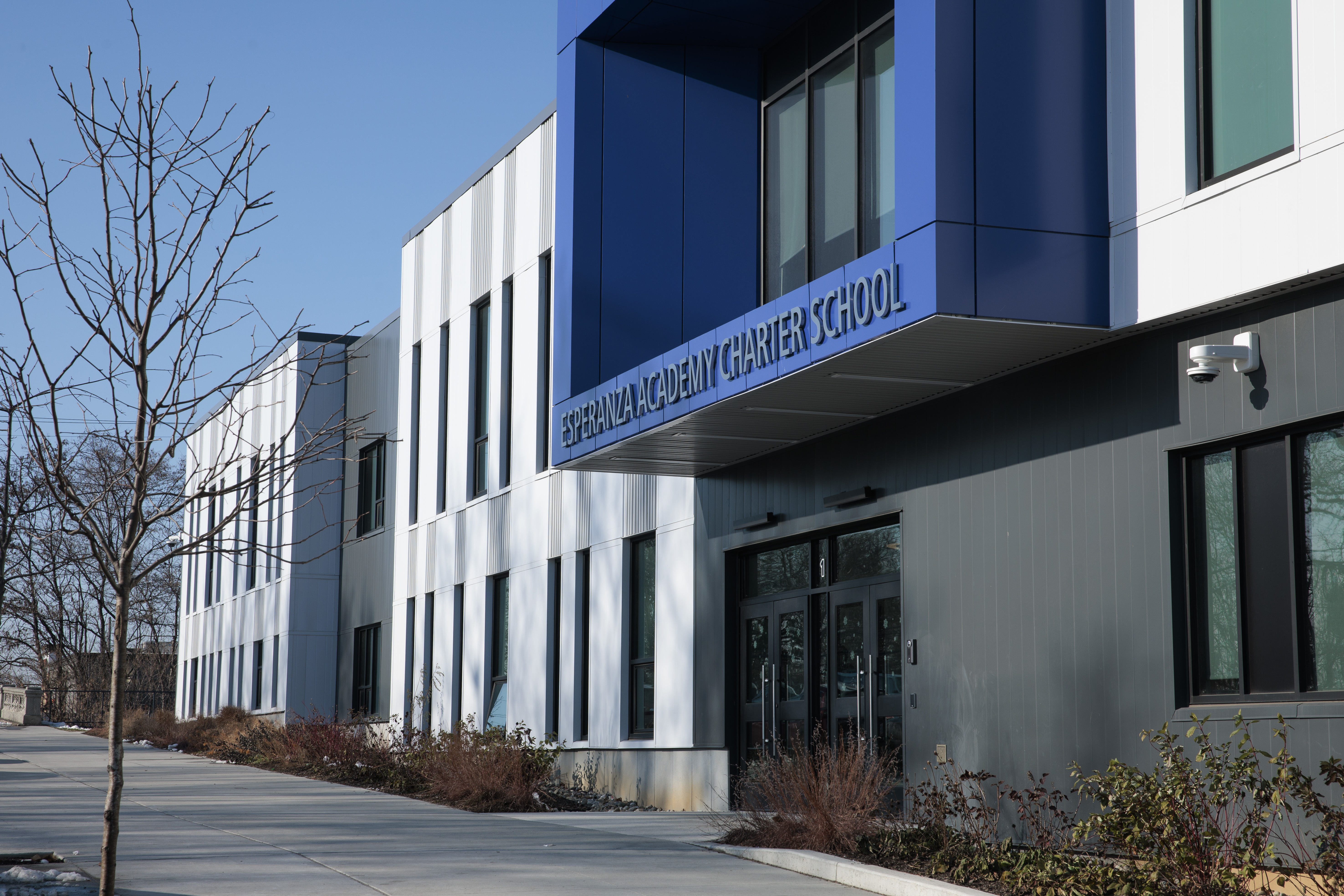
The exterior of the new Esperanza Academy Charter elementary building at 201 West Hunting Park Ave.
Esperanza has long been an anchor in the neighborhood and the larger Latino community, a place with a one-big-family feel.
But Daniel Montes, who came to the school as a climate control officer in 2017 and worked his way up to be a teacher, said shifts began happening about a year ago. Montes was among those staffers laid off recently.
Nuñez came to the school from the Philadelphia School District last year to become its CEO.
“Things started to change when we got the new CEO,” Montes said. “I don’t know if it’s when you get a new broom, it sweeps clean.”
At a staff retreat just before the start of this school year, Cortes, Esperanza’s founder, alluded to coming financial difficulties, said one staffer, who asked not to be named for fear of reprisal.
“He said, ‘Stuff’s happening, you have to buy in or get out,’” said another staffer, who asked not to be identified because they did not want to be targeted by leaders. “He said it was politically driven [at the national level], and that funds would be tight.”
‘Three strikes’
Tensions began to simmer among high school staff.
“There are very unilateral changes being put into effect extremely quickly,” saidanother teacher, who also asked not to be named for fear or reprisal. “We’ve had major changes go into effect on a Monday after a meeting on a Friday. They said, ‘We don’t have subs and you’re going to be covering classes for free.’”
Montes and others said teachers were frustrated over new schedules, lost prep time, and the order to cover classes without compensation — Esperanza Academy had, in the past, paid teachers for covering classes.
“It was three strikes,” said Montes.
“We just did not feel heard,” a third teacher, who also asked not to be named for fear of retribution,said. “We’re out of paper towels, and staples for the printer. The printer’s broken, but they hired six-figure administrators.”
Most charter schools do not have unionized staff; in October, a majority of Esperanza Academy’s high school teachers signed union authorization cards and chose to affiliate with the American Federation of Teachers.
Layoffs came Dec. 4, a Thursday, with no warning — some of the affected staff were pulled out midclass and given notice.
Students weren’t told what was happening, but something seemed off that day, they said. And a basketball game was canceled.
Those who remained at Esperanza Academy’s high school were told they would be absorbing the job responsibilities of the laid-off workers, including classes, coverages, and special-education caseloads.
Some teachers got extra classes added to their schedules — with no extra pay. Other classes were combined, with class sizes growing.
Interventionists — those charged with working with the neediest students — were laid off, and staffers saidno plan has been articulated about who will do that work.
In every staff meeting, teachers said they are reminded that the school’s focus is increasing attendance, boosting the number of students who meet state standards, and decreasing the number of students who score at the lowest levels.
“How are we doing that if we don’t have any interventionists?” the second teacher said.
Student protest
The layoffs stunned students. They mobilized and held a walkout a few days later.
Hundreds showed up, voicing their displeasure with the cuts and their support for the lost staff. They carried homemade signs and chanted.
Nuñez acknowledged the walkout in an email to students and families the next day, saying students demonstrated “thoughtful advocacy and respect as they honored the staff members affected by the recent reductions, and we are proud of the way they used their voices to support their school community. School leadership will continue working closely with the [student government] on how we can best support our students as we move through this transition together.”
Cruz-Ruiz, the Esperanza Academy ninth grader, said the school no longer felt like a family.
“In this building,” Cruz-Ruiz wrote in her letter to the board, “data matters more than people. You named this school Esperanza. Hope. But hope doesn’t live here, scores do. Reputation does. Those graphs and percentages you stare at do.”
‘It’s affected so many of the kids’
Francesca Castro, mother of an Esperanza Academy 10th grader, said she’s been very pleased with the education her daughter has received since middle school.
But the layoffs were deeply unsettling, she said.
“It’s affected so many of the kids,” said Castro. “I’m in the corporate world — I understand sometimes you need to make cuts. But there was no preparation, and it was right around the holidays. Couldn’t we find a different way, see what else we could cut?”
Montes and other laid-offstaff were some of the most important people in the building in terms of relationships with students, Castro said.
“What worries my daughter and some of the students and parents is: If these changes were made all of a sudden, what other changes could happen?” she said. “Are the athletes going to get less? Are the after-school programs being cut? Are they going to start cutting academics?”
Officials said in a statement that the layoff decision was not made lightly, and “our priority throughout this process has been to preserve the high-quality learning environment and supportive services that our students and families rely on. We remain fully committed to ensuring that the school year continues with minimal disruption to classrooms, instruction, or student support.”
Students are aware of the larger changes at the school, said teachers, parents, and staff. They can’t understand why those closest to the students were taken away.
“We’re broke, but we have all these new administrators, and we just built a new building? Students are savvy to that stuff — they’re angry,” said the third teacher.
What’s next?
Wendy G. Coleman, president of the American Federation of Teachers-PA, sent Nuñez a letter Dec. 10 asking Esperanza to formally recognize an AFT-affiliated union at the school.
The staff wants a salary scale anda voice on working conditions and class sizes, Coleman said.
“The overwhelming majority of the staff has signed cards,” said Coleman. “That is something I hope the administration of Esperanza will voluntarily recognize so that we can collaboratively bargain their first contract.”
Esperanza Academy leaders on Friday told the AFT they will not voluntarily recognize the union; Coleman said she will soon file paperwork with the National Labor Relations Board seeking certification.
“I would hope that we can work together to do this as amicably as possible,” Coleman said. “The staff has spoken, and the likelihood of Esperanza avoiding a union coming is pretty slim.”
Haverford College senior Jackson Juzang earlier this year had been talking to a school administrator about the need for more resources to support student journalism.
The administrator, Chris Mills, Haverford’s associate vice president for college communications, asked if there was a network of student newspaper journalists in the region that Haverford could join and seek support from.
There wasn’t.
“So I decided to create one,” said Juzang, 22, an English major from Pittsburgh who serves as associate editor of the Clerk, Haverford’s student newspaper.
Jackson Juzang explains why he started the Philadelphia Student Press Association.
He established the Philadelphia Student Press Association as a nonprofit and created a board with student editors from 11 college news organizations around the region, including Temple, Drexel, Villanova, St. Joseph’s, La Salle, Rowan, Rutgers-Camden, Bryn Mawr, Swarthmore, Haverford, and Eastern.
With the slogan “Rooted in Philly, Reporting for All,” the group — which collectively represents about 400 student journalists — is seeking funding from organizations to support student journalism at a time when college budgets are tight and the news industry faces challenges, including rising print costs and lower readership. The association already has held workshops with more planned next year, and its 21-member board meets monthly and discusses common issues and problems and brainstorms solutions.
“We have so many people coming from different regions, but we are united in the sense that we are all here for the same reason,” said Claire Herquet, an editor at the La Salle Collegian.
At a recent meeting, members talked about artificial intelligence and what to do if an editor suspects a student writer used it, Herquet said. There were two instances over the past semester when she read an article submission and thought the terminology and phrasing didn’t sound like the writer, she said.
“If I didn’t have PSPA, I wouldn’t have people to lean on,” said Herquet, 21, a junior communications major from Camden. “It would just be me versus the problem.”
Herquet manages communications for the association. She has been reaching out to foundations about obtaining grant funding for the association. Some college newsrooms are better funded than others and can give writers and editors stipends.
She’s hopeful that uniting the newsrooms will result in better experiences for students and more funding.
La Salle’s publication is only digital; there is no print version. Costs are minimal, but funding would cover professional workshops for students and costs, such as travel, associated with their reporting.
The Whit, Rowan University’s student news site, prints a newspaper once a week and receives financial support via student government, but print costs are rising, said junior Katie Thorn, who serves as managing editor.
“We’re trying to figure out with the budget we have if it is possible and what we are going to have to sacrifice to keep our paper printing,” Thorn said.
Thorn, who is serving as treasurer for the association, said it’s been helpful to learn that other student organizations are facing the same challenges.
“Journalism as a whole is such a scary world right now,” said Thorn, 20, a journalism major from Mantua, Gloucester County, “and you’re kind of throwing yourself into the fire. Am I going to find a job? Where does my future lie? Having people who support you and uplift you is a great thing.”
Haverford’s student newspaper has received funding via the president’s office and is able to pay its writers, Juzang said. In January, the Clerk will publish its first print edition.
But the Clerk would like resources for deeper reporting and investigative work and mentorship, he said.
Juzang, who hopes to pursue a graduate degree in communication management next year at the University of Southern California, said he’s invested thousands of dollars of his own money to get the association started. He currently works as a research/editorial intern for NBC Sports.
He said the association also has received support from the Philadelphia-based Foundation for Individual Rights and Expression.
Juzang said he would like to help schools, including Widener and Lincoln, that used to have student news sites revive them. He also has begun talking to student journalists in other metro areas, including Washington, Boston, New York, and Baltimore, about starting an association for their university newsrooms, he said.
Mills, the Haverford communications administrator, was pleased to see Juzang take that conversation the two had last March and create a mechanism for student journalists to share their experiences and learn from each other.
“It’s really important for the students to share resources and knowledge and wisdom,” he said. “For those of us who value student journalism, it’s great to see them prioritizing this and making the time to do it.”
The superintendent of the Wissahickon School District in Montgomery County said Friday that she and other district leaders are recommending that an elementary school principal be fired after he allegedly was recorded in a voicemail to a parent making antisemitic comments.
Philip Leddy, the principal of Lower Gwynedd Elementary School, acknowledged to the district that he made the call, “thought the call had disconnected, and then continued talking,” Superintendent Mwenyewe Dawan said in a statement Friday to the Wissahickon schools community.
“He confirmed he had made some remarks he knew were not appropriate. In the call, the principal can be heard making antisemitic comments and speaking disparagingly about the parent to another staff member who was in the office at the time,” Dawan said.
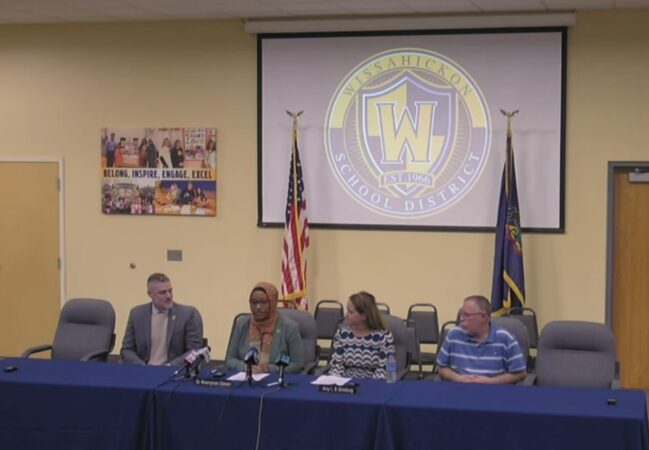
The district leadership “moved swiftly with immediate action to start the process seeking the principal’s termination,” said Dawan, who also spoke at a news conference Friday afternoon with Amy Ginsburg, president of the district’s school board.
“Wissahickon is no place for hate. This is a community where all students are welcomed and where safety and well-being truly is our priority,” Ginsburg said.
“We cannot and will not allow this to divide us,” Ginsburg said later.
Leddy, who became the principal at Lower Gwynedd in 2023, could not be reached for comment Friday.
While the district is pursuing his termination, Leddy is required under state law to have a due-process hearing, which is scheduled for Monday, Dawan said.
The other staff member present for Leddy’s comments and who allegedly did not report them or take any other action has been placed on administrative leave pending further investigation, Dawan said.
“The fact that any employees entrusted with the care and well-being of students could make, or passively tolerate, such remarks raise concerns that extend beyond the conduct of a single individual. This incident underscores concerns for broader, systemic issues related to antisemitism that must be examined and addressed,” Dawan said.
The Jewish Federation of Greater Philadelphia said in a statement Friday that in the recording, Leddy was heard saying something about “Jew money” and that “they [Jews] control the banks.” Leddy was asked if the parent was a lawyer and then remarked, “the odds probably are good.”
“These are deeply rooted antisemitic tropes that have historically been used to demean, marginalize, and endanger Jewish people,” the federation said.
The district must apply accountability and transparency to its investigation and response, the federation said, and engage directly with the Jewish community and commit to education and training about antisemitism.
The district recently faced criticism from Jewish parents over a booth run by a Muslim student group at a district cultural fair in late November that included, among other things, the flag used to represent Palestinian people and the state of Palestine.
At the time, Dawan acknowledged the concerns of the Jewish parents and also noted that some Muslim students reported feeling unsafe after the controversy gained wider attention.
On Friday, Dawan said the district will ensure that counselors are available on Monday for students and staff. She said the district will communicate additional information in the coming weeks, including more about steps being taken and further staff training.
Alycia Marshall will earn $295,000 as the new president of the Community College of Philadelphia under terms of a contract approved by the board of trustees Friday.
Marshall, 52, had been serving as interim president since April when longtime president Donald Guy Generals was forced out. Her salary is similar to what Generals earned before he left.
In October, the board selected Marshall for the permanent post from among four finalists and said it would negotiate a contract with her.
The new contract, commencing Jan. 1, is for three years and six months and after that would renew on an annual basis.
“This is a great birthday present,” Marshall said following the unanimous vote on her contract at the brief board meeting. “Today is my birthday. Thank you so much for your support. … It’s been a pleasure serving as the interim and I’m excited to move into the next chapter.”
Under the contract, she will be eligible for a bonus of up to 15% of her base pay annually and will receive a $2,000-per-month housing allowance and a $650-per-month car allowance.
Marshall, who has maintained a residence in Maryland, is required to move her primary residence to Philadelphia within six months under the contract terms. She would face termination if she failed to do so, the contract states. Marshall has said she intended to move to Philadelphia if she got the permanent job.
Marshall had served as CCP’s provost and vice president for academic and student success for nearly three years before stepping into the interim role at the college, which had an enrollment of 12,400 credit students and 1,381 noncredit students last spring.
She received her bachelor’s in mathematics from the University of Maryland Baltimore County, her master’s in teaching from Bowie State University, and her doctorate in mathematics education from the University of Maryland.
A native of Maryland, she started her career as an adjunct professor at Anne Arundel Community College in Maryland, near Annapolis, and later became a full tenured professor and chair of the mathematics department. She was promoted to associate vice president there and founded the African American Leadership Institute and spent a total of nearly 23 years at the Maryland community college.
A South Jersey school was hit with an outbreak of gastrointestinal illness last week, as cases of norovirus, a common stomach bug, recently surged nationwide.
Camden County officials could not definitively say the illness was norovirus, since no lab testing has been done. However, they noted it was a candidate.
“The symptoms, infectious period, and incubation periods seem to be consistent with norovirus,” said Caryelle Vilaubi, director of the Camden County Department of Health and Human Services.
The school in Haddonfield, which officials declined to identify further, first reported a spike in gastrointestinal symptoms among students on Dec. 10, followed by an increase the next day.
Cases have since fallen dramatically, Vilaubi said, as outbreak control measures — including use of disinfectants, sending sick students home, and promoting proper hand hygiene — have been put into place.
They’re hoping to end the outbreak in the school community as early as next week, if they can go without new cases for four days, she said.
A variety ofsources can cause gastrointestinal illness, including viruses, bacteria, and parasites. Norovirus is one of the common culprits this time of year.
“We typically see a spike from November through April, not just in Camden County, but throughout the state, and often throughout much of the country,” Vilaubi said.
The highly contagious virus can spread through close contact with an infected person or with contaminated food, water, and surfaces. Symptoms usually include nausea, vomiting, diarrhea, and stomach pain, and start 12 to 48 hours after exposure.
Most people will feel better after one to three days.
Here’s what to know about the virus:
How can you protect yourself against norovirus?
Norovirus is a “hardy and resistant virus,” Vilaubi noted, making it especially hard to clean off. Hand sanitizers are not effective against it.
It is also relatively resistant to heat, able to survive temperatures up to 145°F.
People should make sure to regularly disinfect high-touch surfaces such as doorknobs, keyboards, and light switches.
How long does norovirus last in adults?
Though people will usually feel better after one to three days, they are still highly contagious for a few days after.
“If your child begins to show symptoms, please keep them home until at least 48 hours after symptoms resolve to prevent further spreading the illness,” Virginia Betteridge, liaison to the Camden County Department of Health and Human Services, said in a Dec. 12 news release.
Those infected with norovirus should avoid contact with others as much as possible during this period.
How to treat norovirus at home?
There is no cure or specific treatment for norovirus. The advice generally is to let the virus run its course.
To ward off dehydration, people should make sure to drink lots of fluids to replace what’s lost from vomiting and diarrhea. Taking small sips of water and sucking on ice chips may be easier on an upset stomach.
People can also consider drinking clear broths, noncaffeinated sports drinks, and oral rehydration solutions, which are available over the counter.
Drinks that contain a lot of sugar, including soft drinks and certain fruit juices, can make diarrhea worse and should be avoided.
How does norovirus spread from person to person?
Norovirus is considered highly contagious, as only a small amount of virus is needed to infect someone.
People contract it by accidentally touching tiny particles of stool or vomit — where the virus is primarily shed — from an infected person and getting them in their mouths.
These particles easily contaminate hands, surfaces, food, or water.
Pennsylvania’s fledgling State Board of Higher Education on Thursday rolled out itsfirst strategic plan, setting goals addressing affordability, increased degree attainment, the state’s workforce and economic development needs, and the fiscal health of colleges.
The board voted unanimously to post the 10-year plan for public comment.It will consider adoption in February.
“The plan will strengthen partnerships, break down silos, and enable effective reinvestment in the sector,” Cynthia Shapira, chair of the board, said in a statement introducing the plan.
It comes as the sector faces perhaps its greatest challenge in decades. Both private and public universities have been losing enrollment as the number of high school graduates falls — with another dip beginning next year and a 12% decline expected in Pennsylvania by 2037. Public trust in colleges has faltered, while concerns about cost and student debt have mounted.
They are also facing scrutiny from President Donald Trump’s administrationand a forecasted gap in workers who require a postsecondary credential in essential areas, such as healthcare, teaching, and advanced manufacturing.
The Pennsylvania State System of Higher Education, which oversees the state’s 10 universities, endorsed the plan’s emphasis on collaboration across private and public colleges and universities.
“Within our own system, we have learned that when universities work together, they can innovate, overcome challenges and better serve students and the Commonwealth,” the system said in a statement. Shapira is also the chair of PASSHE’s board.
The 21-member higher education board includes college presidents, administrators, legislators, and students.It was formed in 2024 by the governor and General Assembly to help public and private colleges work more cohesively and better serve students and the state’s workforce needs. The plan rollout follows public hearings that drew comments from more than 1,200 people, the board said.
The plan outlines the challenges facing the higher education sector including another coming decline in the high school population, financial constraints, and the lack of coordination among institutions. Student debt averages more than $40,000 per student in Pennsylvania, the plan notes.
“Multiple comparative state-level analyses … place Pennsylvania at or near the bottom in terms of affordability, attainment, and state investment per capita,” the report stated. “Adding to these challenges are a large and growing postsecondary workforce credential gap, and a range of closures and mergers that threaten to reduce access to postsecondary education.”
In the Philadelphia region, Cabrini University and the University of the Arts closed in 2024 and Rosemont College announced earlier this year that it would cease operations in 2028 and that Villanova University would purchase its campus. Salus University was merged into Drexel University. Six of Pennsylvania’s state universities were merged into two entities in 2022, and St. Joseph’s University absorbed the University of the Sciences the same year.
Other local colleges have struggled with enrollment declines and deficits. Temple University, for example, has gone from more than 40,000 students in 2017 to less than 30,000 this year.
What are the specific goals in the plan?
The new plan set six goals:
Increase postsecondary attainment.
Ensure affordable pathways to postsecondary credentials.
Support the economic development needs of the state.
Support the workforce development needs of the state.
Ensure accountability and efficient use of state funds.
Strengthen the fiscal health and stability of the higher education sector.
How will the board work toward those goals?
To meet the goals, the board proposes a “strategic communications plan” that touts the benefits of postsecondary education and how it impacts employment outcomes.
It also emphasizes expanding funding for dual credit programs and enrollment in those programs to streamline the path from high school to college and allow students to accumulate more credits before they graduate high school. In addition, the plan proposes studying how to improve retention rates and focusing on reenrolling adults who started college but didn’t finish; there are more than 1.1 million Pennsylvanians with some college experience.
Among its plans for addressing affordability are support of policies that “expand financial aid and forgive debt for in-demand, high-quality credentials,” take advantage of new federal Pell grants for workforce programs, and boost access to “open educational resources” to reduce the cost of course materials.
The report also discusses the intent to “maximize the impact of research universities,” recruit out-of-state students to broaden the talent pool, and increase access to paid work experiences for students.
To promote fiscal health, the plan recommends identifying and promoting best practices for fiscal efficiency and cost savings, and developing resources and an advisory group to help financially struggling colleges.
“If institutions decide to close or merge, tools and expertise to assist in this process will help maximize savings, retain access to critical academic programming, and mitigate negative effects on students and communities,” the plan states.
Another advisory group is recommended to help communities where colleges close maintain access to postsecondary education.
What comes next?
After the public comment period and the plan’s final adoption, the board intends to report annually on progress toward the goals and to consider revisions to the plan every five years.
Over the span of nearly a decade, the State College Police Department underreported hundreds of rapes in the central Pennsylvania community, leading to highly inaccurate publicly reported crime statistics, Spotlight PA has learned.
From 2013 to 2021, State College police reported a total of 67 rapes in crime submissions to Pennsylvania State Police, when in fact there had been 321 — a 254-case difference — according to a 10-month Spotlight PA investigation.
Those missing cases were instead classified as sex offenses, a category with lower penalties and one that is treated with less urgency by law enforcement. In response to Spotlight PA, the department conceded it had been using an outdated definition of rape until late 2022 — despite the federal government announcing a change to it in 2012, and that update being subsequently implemented by thousands of police agencies across the U.S. in 2013.
Under the old definition, “a vast array of violent, degrading, abusive sexual assaults were excluded from the data that are used to inform the public about the prevalence of rape,” said Lila Slovak, director of the Women’s Law Project’s Philadelphia office.
Crime statistics in a place like State College, nicknamed “Happy Valley,” are particularly important because it is a college town. Most Pennsylvania State University students live off campus, and federal law requires the school to report only crimes that occur on its premises, on its property, and in public places right next to it.
State College Police Chief John Gardner told Spotlight PA that he was not aware until 2022 that the FBI had updated its definition of rape. He learned when a department records supervisor that year completed a training and implemented the change. Gardner’s predecessor, Tom King, who retired from the department in 2016, said he learned about the incorrect reporting only when contacted by Spotlight PA this summer.
But the department had never acknowledged the longstanding error or disclosed it to the public until approached by Spotlight PA about potential data discrepancies. The department calculated the number of affected cases after Spotlight PA requested a review.
“The inaccurate reporting was not done intentionally,” said Gardner, who is retiring at the end of this year. “The minute we found out about it, we made the correction, and we’re open to sitting down and talking to you about it. We owned it.”
“We want to make this community safe and want people who live here to feel safe,” he said.
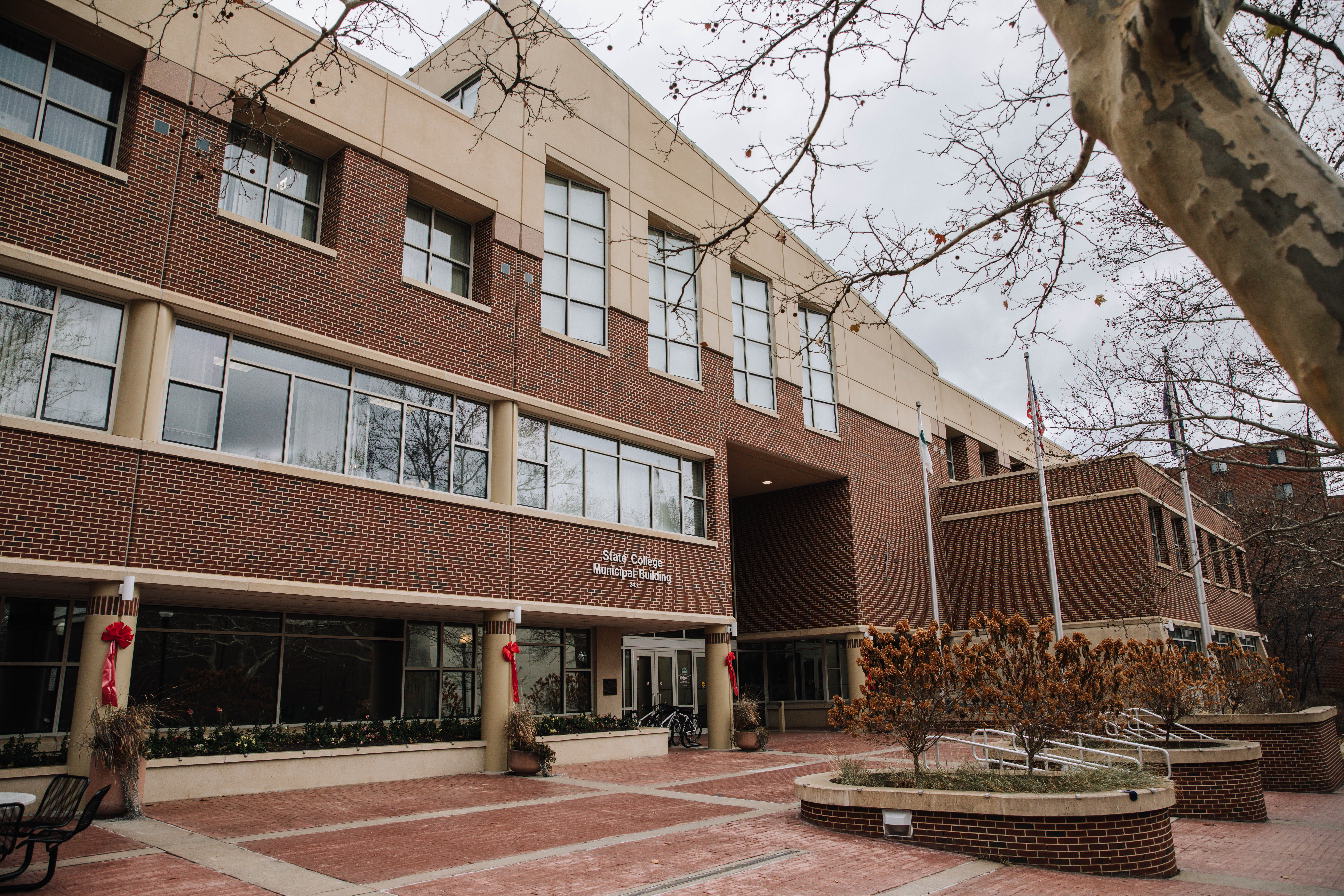
The police department is located on the first floor of the borough building in downtown State College.
Pennsylvania State Police share crime statistics from local departments, including State College, with the FBI’s Uniform Crime Reporting Program, known as UCR. Those figures influence numerous aspects of life in a community and help governments decide where to deploy resources and direct public funds.
Criminologist Eli B. Silverman, professor emeritus at John Jay College of Criminal Justice, said accurate data are also key to good policing and maintaining trust with the community.
“When crime statistics lose their credibility, the public loses confidence in the police and is less inclined to report crime,” Silverman said. “This, in turn, further diminishes the effectiveness of [a] police organization.”
Over the course of Spotlight PA’s investigation, the newsroom found other potential issues with the department’s handling of reported rapes.
For years, rape cases were habitually described as “assaults” in internal police records, Spotlight PA found. The newsroom also questioned whether factors other than the new definition made previous rape numbers appear low, especially as top officials in the department did not seem clear on how crime reporting works, and at times offered confusing or incorrect information.
Additionally, Spotlight PA identified a case in which two victims reported rapes and the police recorded only one. One police official told reporters that rapes are counted by incident, not by victim — going against well-established FBI rules and indicating a violation separate from underreporting.
Police appear to be “trying to minimize the extent of sexual assault in State College,” Cassia Spohn, a criminologist and professor at Arizona State University, told Spotlight PA. “Doing so can produce a false sense of security among potential victims, leading eventually to an increase in victimization and a decline in public safety.”
Before this investigation was published, Spotlight PA sent a detailed list of findings to police officials and State College borough.
In response, the department offered a joint statement from Gardner, King, longtime State College Borough Manager Tom Fountaine, and State College assistant police chief Matthew Wilson, expressing “a great level of dissatisfaction.”
“The information presented appears to be more representative of an op-ed article than an objective reporting piece. The information you provided for our review is largely misleading and omits perspectives from community stakeholders,” the statement said in part. Read the full response here.
‘I don’t recall’
For more than 80 years, the FBI defined rape as “the carnal knowledge of a female, forcibly and against her will.” That meant only forced attacks involving penetration of the vagina by a penis were considered rape.
This left out things like forced oral or anal sex, and sex acts that were committed against someone’s will but without force. Attacks on men or boys were also not counted.
That longstanding definition was “narrow, outmoded and steeped in gender-based stereotypes,” the Women’s Law Project wrote in a 2001 letter to then-FBI Director Robert Mueller.
In 2012, the FBI announced it would broaden its definition of rape to “ensure justice for those whose lives have been devastated by sexual violence,” then-U.S. Attorney General Eric Holder said at the time.
“This new, more inclusive definition will provide us with a more accurate understanding of the scope and volume of these crimes,” Holder added.
Leading national organizations for police and sheriffs backed the change, as did women’s organizations and anti-rape groups.
Under the new definition, rape is: “Penetration, no matter how slight, of the vagina or anus with any body part or object, or oral penetration by a sex organ of another person, without the consent of the victim.”
John Derbas, a former deputy assistant director of the FBI, told Spotlight PA that by 2015, 15,000 law enforcement agencies across the nation had adopted the reform.
David Hendler, who oversees records at the Abington Township Police Department in Montgomery County, said both he and his predecessor knew about the change when he started working in the department in 2013. Officers talked about it among themselves, he told Spotlight PA.
“Every cop I knew knew about it,” Hendler said.
Yet King, who led State College police from 1993 to 2016, said word never reached him. He was not aware that State College police were incorrectly reporting rapes until Spotlight PA contacted him this summer, he said.
“I don’t recall it. In 2025, as we sit here talking about it today, I don’t recall,” King said in an August interview. He questioned who within the department might have been contacted by Pennsylvania State Police, which ensures that law enforcement agencies across the state submit crime data that go to the FBI.
“Whoever they addressed it to, I don’t recall ever seeing any direction from the State Police to make a change, or being aware that it was changed,” said King, who became the interim police chief in neighboring Ferguson Township in October. “That doesn’t mean they didn’t. We’re talking about 12 years ago.”
A spokesperson for Pennsylvania State Police told Spotlight PA the agency alerted local police departments about the change. A December 2012 notification “outlined the new definition and instructed agencies to report offenses accordingly, starting in January 2013,” Myles Snyder wrote in an email. After that, “the responsibility for ensuring correct and timely reporting lies solely with contributing agencies,” he added.
A five-paragraph notice was sent via the Commonwealth Law Enforcement Assistance Network, or CLEAN, a platform police departments use to communicate with other agencies, on Dec. 27, 2012 — less than a week before the new requirement took effect, according to a document obtained through a public records request.
State police have “the highest level of confidence in this communication system,” Snyder said when asked if the notice reliably reached all of the roughly 2,000 local law enforcement agencies in Pennsylvania.
Agencies like the State College Police Department have to acknowledge receipt of every message sent over CLEAN, he said. It is not optional, and “lives depend on it.” The messages are kept for 10 years, Snyder told Spotlight PA, so Pennsylvania State Police cannot verify who, if anyone, confirmed receipt of the notice.
In 2014, statewide data showed a 12% increase in rapes for the 2013 annual report, Snyder said. That indicated that submitting agencies were recognizing and using the new offense classification rule.
No one from Pennsylvania State Police or the FBI told the department it had missed the memo and was reporting erroneously, Gardner said in a joint interview with King and Fountaine.
State police are legally bound to collect data from local departments, and those agencies must use the FBI’s definitions for crimes. The agency checks on two things for UCR compliance: that a police department submits data, and that the numbers add up, Snyder said.
Between 2016 and 2023, Pennsylvania State Police logged 65 instances of local departments being out of compliance. The agency did not provide information on why, but two chiefs told Spotlight PA it was because their departments did not submit any numbers. The violations, which came with the threat of losing some state grant funding, were deemed fixed by state police as long as the departments began filing monthly.
“Submitting agencies are solely responsible for the accuracy of their information,” Snyder told Spotlight PA.
Both State College police chiefs told Spotlight PA that they did not intentionally disregard the FBI mandate to report rapes accurately. “I know with absolute confidence that had I received that notification … we would have made the change,” King said.
“When crime statistics lose their credibility, the public loses confidence in the police and is less inclined to report crime,” Criminologist Eli B. Silverman told Spotlight PA. “This, in turn, further diminishes the effectiveness of police organization.”
A late revelation
The department, with 53 sworn officers today, serves over 57,000 residents in State College and neighboring College and Harris Townships. Its jurisdiction borders Penn State’s University Park campus, which has its own police force. However, many of the university’s nearly 49,000 undergraduate students live, work, and recreate off campus — so State College police regularly interact with students.
During a typical academic year, 75% of rape victims are Penn State students, Lt. Chad Hamilton, State College police detective supervisor, said.
For years, rape numbers reported by State College police were consistently low, hovering in single digits for the most part. When the department reported its 2021 crime statistics to UCR, police claimed that there was not a single rape that year.
It turns out that there were at least 30.
But instead of rapes, those cases were submitted to the Uniform Crime Reporting system as sex offenses. These are considered a “part two” crime, a category that the FBI collects less information about and rarely mentions in its regular announcements about crime in America.
In police speak, part one crimes are the most severe offenses: homicide, rape, robbery, aggravated assault, human trafficking. They are high priorities for law enforcement, often bringing with them pressure to make arrests and clear cases. These are considered indicators of the level of crime occurring in the country, according to the FBI Uniform Crime Reporting Handbook.
Rape cases should never go into part two crime counts, Spohn, the criminologist, told Spotlight PA. Sex crimes under the part two category include acts like fondling or indecent exposure, she said. The category does not include sex crimes involving penetration. “The UCR handbook is pretty specific,” she said.
But by its own admission, the State College Police Department did exactly that — incorrectly reporting at least 254 part one crimes as part two ones.
“It’s not like we weren’t reporting,” Wilson told Spotlight PA in a February interview. He said the police department was not calling these incidents rapes, but it was calling them sexual offenses. “I don’t see it as a huge deal,” he said.
Three years ago, a longtime staffer, Alecia Schaeffer, took over as records supervisor. That is the position ultimately responsible for reviewing each incident, ensuring the coding follows the rules, and submitting monthly reports to the state.
Schaeffer — who was trained and certified on Uniform Crime Reporting in 2002 — got a refresher course in December 2022, bringing back with her an urgency to update the police department’s practice.
Spotlight PA repeatedly requested to interview Schaeffer. The borough and department refused, saying they generally do not make staff available to the media.
Gardner said he was in the conversation following Schaeffer’s training but remembered “very, very little” about it — “other than the fact that she learned through training that … all these offenses were to be coded as rapes,” he said.
Fountaine, who oversees State College police in his role as borough manager, said he became aware of this change when the department was first contacted by Spotlight PA.
Experts told Spotlight PA that the way rapes are labeled matters for victims and communities.
“It’s not just about how it shows up in statistics, it’s about how people think about what’s happened to them, how other people think about what’s happened to them, how the community thinks about what’s happened to them,” said Anne Ard, former executive director of Centre Safe, a State College-based organization that supports survivors of sexual violence.
Department officials say the way the cases were coded had no impact on how police handled them.
However, between 2013 and 2023, State College police’s rate of arrests for rape was double that for sex offenses, according to a Spotlight PA analysis of data submitted to UCR.
State College police said that driving any investigation is the strength of evidence, the victim’s wishes, and input from the district attorney’s office.
“It doesn’t matter to us what is coded. It’s going to be thoroughly investigated to the best of our abilities,” Wilson told Spotlight PA.
Other potential issues
King, the department’s former police chief, told Spotlight PA that incidents of sexual violence were “very, very, very high priorities for the department.”
King said that the department applied for grant funding to address sexual violence, and that it created specialized investigative units and response teams as far back as 2006. Officials communicated with the public “over and over again” on the significance placed on these crimes, King said.
The department, with 53 sworn officers today, serves over 57,000 residents in State College and neighboring College and Harris Townships.
But throughout its investigation, Spotlight PA identified other potential issues with the way State College police handled rape cases.
One issue is the accuracy of State College’s rape numbers unrelated to the definition change.
Because the new rape definition was broader, the FBI anticipated a rise in reported rape figures nationwide — as much as 41.7% in 2013, it said. In State College, however, it saw a 222% increase for 2013. Between the years 2013 and 2020, the revised definition produced an average annual increase of 384%.
Spotlight PA asked the department about the discrepancy, whether factors other than the new definition affected the low 2013 rape count, and if the inconsistency raised concerns about previous UCR reporting.
Both chiefs emphatically defended those figures.
Spotlight PA asked the department to review cases between 2005 and 2012 to ensure compliance with the FBI’s legacy rape definition; to allow the newsroom to do so; or to make the records supervisor available for either an interview or written responses to questions. Officials declined.
Without an independent review of investigative files and records, questions about the department’s crime reporting accuracy could not be fully answered.
But one case sheds light on the long-term consequences of the department’s errors.
‘I was raped’
Standing in a parking lot by her dorm building on a summer night in 2019, Lexi Tingley, barely a freshman at Penn State, texted her mother. It was 2:44 a.m., and the worst had happened.
“Mommy.”
“I think I need to go to the ER.”
“I was raped.”
“I’m scared.”
Tingley’s mother knew the lot; she had dropped her daughter off there recently for summer sessions. Frantically, she drove Tingley and her friend, who had also been raped that night, to Mount Nittany Medical Center. Tingley was examined, was tested for sexually transmitted diseases, and met with a State College police officer at the hospital.
Tingley’s statements became the experiences of “victim 1” in the police report. Her friend, Hanna Friedenberger, was victim 3 in the report. Another friend, victim 2, witnessed the crimes and had a panic attack, but was not assaulted. (Both Tingley and Friedenberger spoke to Spotlight PA and agreed to be named.)
Both Tingley and Friedenberger said they were raped at the Legend, a student rental complex three blocks from campus. Police took both their statements.
But State College police records show that one of the rapes was not accounted for.
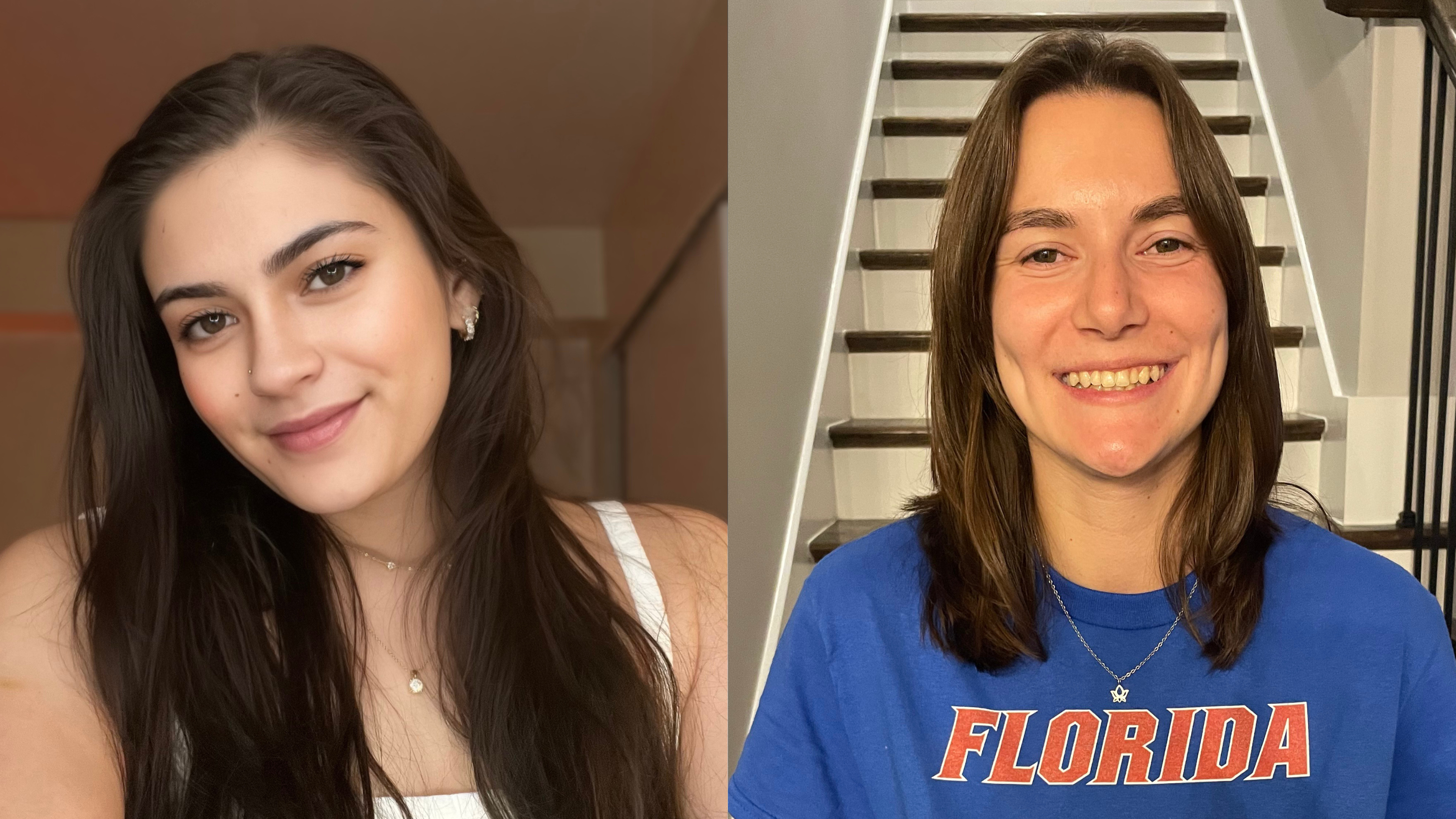
Lexi Tingley, left, and Hanna Friedenberger, right
The department keeps an internal crime log, a set of records detailing every call it responded to in the last 20 years. It’s the first draft of crime statistics that would be reviewed, cataloged, and corrected if needed before submitting to the Uniform Crime Reporting system. The log contained one rape for the day that Tingley and Friedenberger were attacked.
Wilson, the assistant police chief, said in an August email that rape cases are counted per incident, not per victim — although FBI rules say cases should be counted by the number of victims. Wilson, whose responsibilities include overseeing the department’s records operations, did not respond when Spotlight PA sought additional clarity. Wilson will become the police chief for State College’s neighboring Ferguson Township in 2026.
UCR data for that month, August 2019, show three rapes reported by State College police.
However, Gardner said in an email that there were two other rapes that month that were not related to Tingley and Friedenberger. That means the department should have reported four rapes to UCR.
In an interview, Gardner told Spotlight PA that the UCR data for August 2019 included both Tingley and Friedenberger. “You report victims to UCR, OK, we don’t do it by incident. Do you understand?”
Gardner insisted the department handled the case properly, and said he did not know the source of the discrepancy.
There is another notable problem.
The internal crime log reviewed by Spotlight PA contained four pieces of information for this incident. The time the call was received was 3:49:44 a.m. on Aug. 1, 2019. The outcome of the incident, called disposition, was “ECA” or exceptional clearance of an adult — commonly used for when prosecutors declined to file charges, as happened in the women’s case.
Additionally, there was a description and a code.
When State College police officers file incident reports, they describe the calls they respond to — for example, “burglary” or “traffic stop.” The actual criminal violation that resulted would be recorded as a four-digit code. In State College’s system, for example, 0210 is code for forcible rape. Coders in the records department — not officers — are responsible for doing that.
In Tingley and Friedenberger’s case, the report was coded 0210, referring to rape. But the description — crucial for any layperson not familiar with State College police coding to understand the nature of a case — said “assault earlier.”
For at least a quarter-century, State College police have held daily media briefings where reporters were handed daily law incident summaries, or what the department calls a press log. These documents include the description, but not the case code, of each incident.
Between 2005 and 2021, State College police in these logs described 110 cases that were ultimately classified as rapes as “assault” or “assault earlier.” That is four out of every five rapes recorded by the department during that period.
window.addEventListener(“message”,function(a){if(void 0!==a.data[“datawrapper-height”]){var e=document.querySelectorAll(“iframe”);for(var t in a.data[“datawrapper-height”])for(var r,i=0;r=e[i];i++)if(r.contentWindow===a.source){var d=a.data[“datawrapper-height”][t]+”px”;r.style.height=d}}});
Asked how residents or reporters who attended these briefings would be able to distinguish rape cases from physical fights because they were lumped together under the title of “assault,” Gardner said the officers in charge would note if any case was sexual in nature.
“It’s serious,” he said an officer in that situation would say, arguing the vagueness protected victims’ privacy.
That approach leaves the quality of State College crime data to chance.
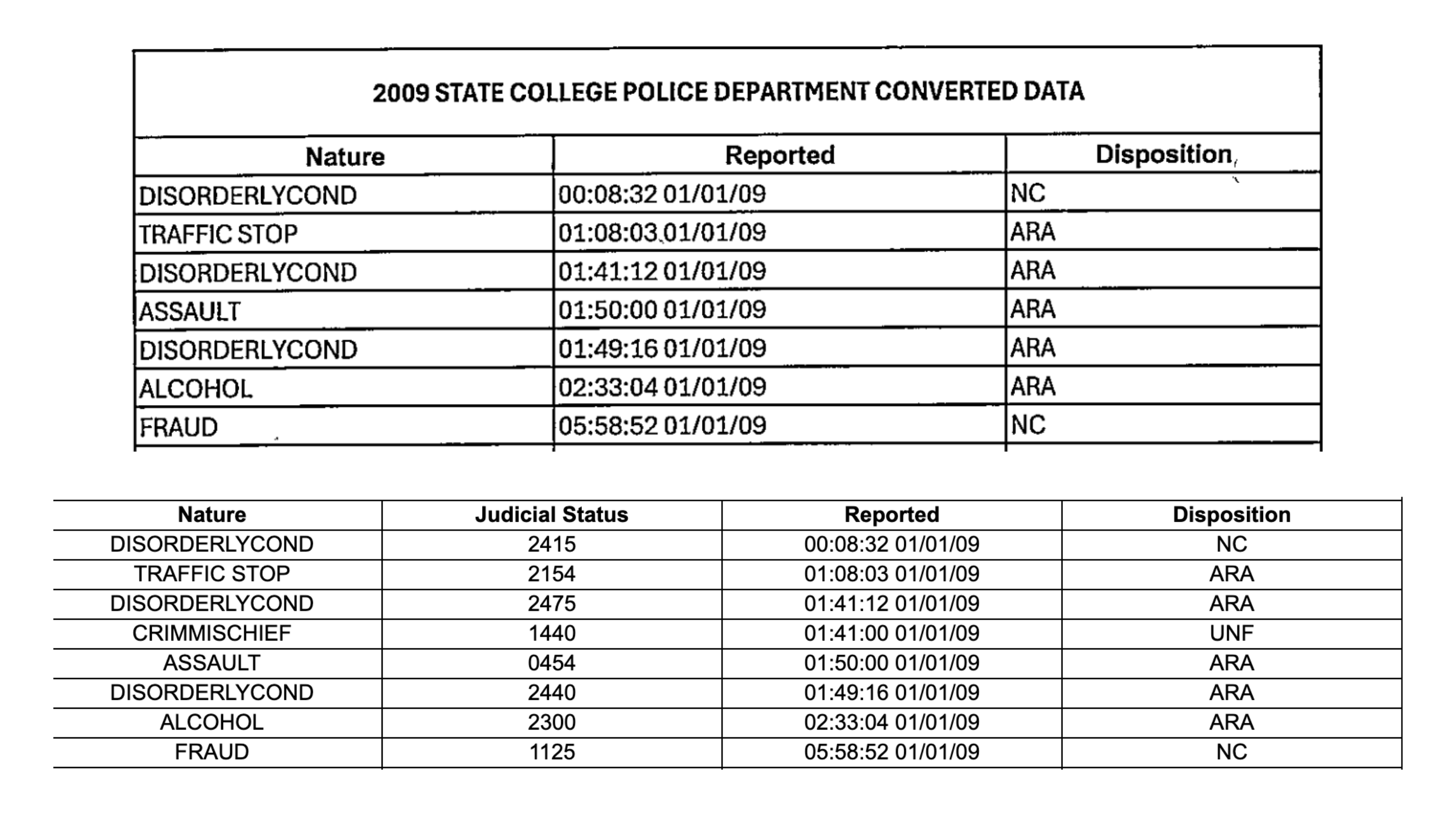
This happened when the department provided its 2009 crime log to an open-records requester this February, which was later posted online. The requester asked for the type of crime for each incident and received the crime log with the incident description listed but not the numeric case code.
No rapes were listed in the 161 pages that State College turned over. If incident codes had been included, the log would show two cases of rape that year.
Gardner serves as the police department’s Right-to-Know officer. He told Spotlight PA that the code was not given to the requester because the person did not specifically ask for it.
Spotlight PA submitted a Right-to-Know request asking for the same information as the original requester, and did not ask for the 4-digit code. But police provided both the data and the code to the newsroom.
An open records request for 2009 State College police data posted online (top), and an open records request made by Spotlight PA for the same information (bottom).
It is impossible to determine if Tingley and Friedenberger’s case was unique. The newsroom cannot determine if undercounting rape victims by using the incident count was an isolated incident or a more prevalent problem. State law does not allow public access to police investigative files, and State College police refused Spotlight PA’s request to review them.
Tingley and Friedenberger, already heartbroken over the outcome of their case, would not find out until contacted by Spotlight PA that State College police had undercounted their rapes in public crime data.
Tingley, now 24, said it is hard to separate the rape and what followed. The treatment she received from law enforcement — a “false promising,” as she called it — was “equally painful” as the worst thing that has happened to her.
SUPPORT THIS JOURNALISM and help us reinvigorate local news in north-central Pennsylvania at spotlightpa.org/donate. Spotlight PA is funded by foundations and readers like you who are committed to accountability and public-service journalism that gets results.
Temple University plans to increase its patrol officer ranks by 58% over five years after a study assessing staffing levels showed the school was below the middle tier of a framework that rates law enforcement agencies.
The university currently has 77 sworn officers — 50 of them patrol officers — and president John Fry pledged to add 29 patrol officers, one detective, six sergeants, and one lieutenant. That would increase the overall number of sworn officers to 114.
Temple president John Fry said safety was his first priority. Now he plans to increase patrol officers by 58% over five years.
No target has been set for how many officers will be hired per year, but those discussions are underway, said Fry, who named public safety a top priority when he started in November 2024.
The university’s declaration comes amid a particularly difficult time for police hiring, with departments nationally — including the Philadelphia Police Department — continuing to face shortages. Temple has been working for several years to attract more officers, including increasing salaries and benefits, adding signing and retention bonuses and higher contributions to retirement accounts, and hiring an associate director to focus solely on hiring, recruitment, retention, and training. The department also moved to 12-hour shifts to give officers more days off.
Yet, the number of sworn officers has decreased from 81 in March 2024 to the current 77, despite additional hires being made, including four new officers from the Temple University Municipal Police Academy in October.
“We must, and we will, deploy ever more compelling and creative incentives to make Temple’s Department of Public Safety a destination employer for law enforcement in our region,” Fry said. “Our plan is to look closely at what we are doing in the areas of recruitment and retention over the next several months and see what improvements can be made.”
Temple plans to hire former Philadelphia Police Commissioner Charles H. Ramsey’s 21CP Solutions company to assist, including with how best to recruit and retain more officers, Fry said. The university had hired Ramsey to assess safety following the shooting death of student Samuel Collington in November 2021 and has implemented almost all of the 68 recommendations from his report released in April 2023.
The staffing study was one of the final recommendations that Temple had to complete.
Former Philadelphia Police Commissioner Charles Ramsey speaks at a press conference on the Temple safety audit his firm completed in April 2023.
New bike patrol officers
In addition, Philadelphia Police Commissioner Kevin Bethel has committed to providing six bike patrol officers and a sergeant assigned to Temple, beginning Jan. 5. That’s up from the current four officers and supervisor, who were not always the same personnel.
“The ability to have relationships and collaborations … will be better because it’ll be a consistent group,” said Jennifer Griffin, Temple’s vice president for public safety.
“The ability to have relationships and collaborations … will be better because it’ll be a consistent group,” Jennifer Griffin, vice president for public safety at Temple University, said about the city’s six bike patrol officers that will be dedicated to Temple.
Members of the Temple University Police Association, the officers union, have complained for years of inadequate staffing. In a social media postabout a year ago, the union said the department had lost more than 50 officers since 2022.
But Andrew Lanetti, president of the union, said he is pleased with the direction outlined by Fry.
“From our talks here in the past few days, I am happy with where we’re going in the future,“ he said. ”I believe this is going to be a very positive experience and it’s going to help our community a lot.”
University and union officials already have been discussing ways to recruit and retain more officers, and a more positive working relationship between the union and the university could help move the needle on hiring and retention.
“We’re going to work together and our goal is all the same,” Griffin said. “We want a safer Temple and a safer community.”
Budget woes
The move also comes as the university attempts to close a budget deficit, made worse this fall when the school missed enrollment projections for its main campus that translated to about $10 million in lost revenue.
“It will be a challenge,” Fry said of the new police officer hiring, “but it’s a priority, so we will meet that challenge.“
He said money for the new staffing will be built into the university’s five-year budget plan.
Temple last February hired safety and security consulting companies Healy+ and COSECURE, ancillary businesses of the Cozen O’Connor law firm, to conduct the staffing study. They used a tiered framework “to assess the capacity and effectiveness of law enforcement agencies,” Temple said. The university declined to release the full report, citing its proprietary information.
“Temple is positioned below the middle tier of the framework, meaning the department is presently staffed to meet the essential public safety and emergency response needs of our community,” Fry said. “However, additional personnel would allow the department to organize and coordinate its activities to focus on additional proactive and community engagement activities that would position it higher in the consultant’s framework.”
With the additional police officers that Temple plans to hire, the school would rise from just below the third of five tiers in the consultant’s rating system to the second tier, Fry said. The second tier, he said, connotes “higher levels of proactive enforcement, more presence, more mitigation strategies, and then more outreach, more community engagement.”
Public safety is extremely important as the university plans to release its strategic plan and campus development plan early next year and as Fry seeks to spur economic development along the Broad Street corridor, from Temple’s new Terra Hall location in Center City to the health campus in North Philadelphia.
“There’s going be a campus development plan, which clearly is going to put more activity on this campus, which means we’re going to have to support our police,” Fry said.
Potential investors, he said, are watching.
“When they’re about to commit significant investment, they want to know the area is safe,” he said.
‘Hold ourselves accountable’
Former Temple president Jason Wingard pledged to increase the police force by 50% the month that Collington was killed, and those numbers never materialized. In fact, the number of officers dropped.
Fry said what is different this time is that he has specified the exact numbers that will be added over a distinct time frame.
“This is not something we’re just sort of speculating about,” he said. “This is based on a professional study. … We’ll be able to hold ourselves accountable.”
The university already has made a host of changes that were recommended by Ramsey in the 2023 report. They include more foot patrols and security cameras and increased technology in the communications center.
The university in 2024 touted a decrease in aggravated assaults, robberies, and thefts in its patrol zone. Despite improvements, Temple has continued to face safety challenges in its North Philadelphia neighborhood, including large groups of juveniles that sometimes gather on or near campus — a challenge in other areas of the city, too.
And a student was shot and killed by another student near off-campus housing inFebruary.
Temple University will offer a voluntary retirement program for faculty, the school announced Wednesday.
The move comes as the university attempts to close a budget deficit that stood at $27 million earlier this year but that worsened when the school did not meet projected enrollment targets for its main campus — which president John Fry had said translated to $10 million less in revenue.
“It is important for us to explore strategies that will allow the university to make meaningful changes, as this is key to optimizing the budget and improving our financial results moving forward,” Fry and interim provost David Boardman said in a message to the campus community.
The university did not say how many faculty it hopes will take the offer, but those who are 62 years and older and have at least 10 continuous years of experience are eligible. They must be tenured, tenure-track, or appointed as non-tenure-track under a contract that expires after June 30.
Temple did not immediately provide the number of eligible faculty.
The move also will allow the university to hire new tenure-track faculty over time, Fry and Boardman said.
Fry said the university would fund the program with federal COVID-19 stimulus funds that came in a onetime tax credit reimbursement to businesses that kept employees during that period. Temple last offered faculty a voluntary retirement program in 2023.
Pennsylvania State University last year offered buyouts to its faculty and staff on its Commonwealth campuses as it made plans to close seven of those campuses. More than 380 employees — 21% of those eligible — took the buyout in June 2024.
Also on Wednesday, Temple announced it had tapped Rob Reddy, formerly the vice president for enrollment management at St. Louis University, to serve as interim vice provost for enrollment management. He will begin Jan. 1
Reddy replaces Jose Aviles, who left Temple last month for a new enrollment job at Rutgers University. He has three decades of experience in admissions, financial aid, and veterans’ relations, Boardman said in an announcement to the campus community.
“Rob comes to us with deep experience in the field and a reputation for taking on challenging assignments,” Boardman said.
He previously served as assistant vice chancellor of enrollment management and dean of student financial services at Northeastern University.
The university intends to launch a search for a new enrollment leader in the spring, Boardman said.
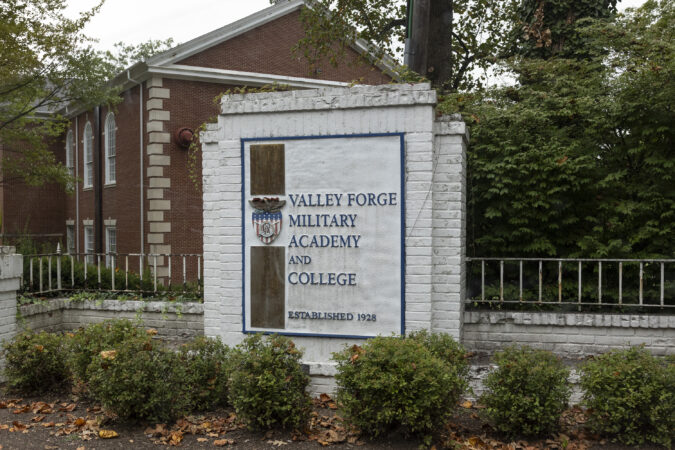
Radnor school board officials are now considering a plan for a charter school seeking to open in the fall of 2026on the Valley Forge Military Academy campus.
A group seeking to openValley Forge Public Service Academy Charter School on the site of the closing military school is already equipped with a leadership team and board, but it cannot open as a publicly funded charter school without approval from the local school board.
The group began the formal charter approval process Tuesdayat a Radnor school board meeting with a presentation pitching a nontraditional high school experience that could prepare studentsfor public service jobs.
Liz Duffy, the board president, said the board entered the hearing “with an open mind toward gathering information.”
“And no decisions have been made or will be made on the application today,” she added.
At least one more hearing will follow before the board votes on the proposal. Radnor has never approved a charter school, despite receiving earlier proposals.
The Radnor school board has voted down two previous proposals to add a military-themed charter school to the campus, which the board had argued would serve as a way to subsidize the military academy. The current proposal, The Inquirer has reported, has been in the works since March — months before the private military academy announced it would shut down.
Chris Massaro, a Radnor native who runs a firm that advises educational institutions, had begun working to help the military academy in January and thought a new charter school could be a way to preserve the institution’s legacy.
Massaro said at the hearing Tuesday that he introduced charter school consultant Alan Wohlstetter to the Valley Forge Military Academy Foundation in April and “they got to work” on the plan. Massaro and Wohlstetter are both listed as founders of the potential new school.
The applicants and the foundation are presenting themselves as separate entities that would simply have a landlord-tenant relationship.
“This proposal is entirely new,” said Stephen Flavell, the prospective charter school’s founding CEO. “It has a new mission, new leadership, and a new board.”
He said the school would provide a “uniquely different” experience for students who might not be a good fit for a regular public school.
“This is an ‘and’ for Radnor, not an ‘or,’” he added.
Charter schools are publicly funded but privately run, and receive per-pupil funding from school districts.
What would the charter school offer?
Organizers said the school would prepare students in grades six through 12 for public service jobs, such as law enforcement, emergency response services, and the military. The entity’s website says its mission is “to provide a rigorous, service-oriented education that emphasizes character, discipline, academic excellence and career readiness.” Applicant spokespeople emphasized providing students with career-path alternatives to four-year college degrees.
The school would cap the number of Radnor School Districtattendees at 25%, andwould alsocater to students from nine other localschool districts, according to the applicant team. “Every student graduates with a diploma plus,” said Deborah Stern, a board adviser for the prospective school. She said the school would give students opportunities to secure college credits or industry-recognized credentials in addition to their high school diploma, alongside connections in the field of their choice.
Would there be any construction?
Dave Barbalace of BSI Construction said the applicant team would pursue a $2.4 million renovation that would take six to seven months to “repair, refresh, and modernize” the building.
The renovation would include making the restrooms on the first floor bigger, a new roof, walkway repairs, and an Americans with Disabilities Act-accessible ramp, he said.
When would the charter school open?
The applicant team said the school would be readyto open in September 2026 if it is approved by the Radnor School District.
The school would have 50 students per grade, starting with just sixth through eighth grades in the fall and adding another grade each year through 12th grade..
A few students have already pre-enrolled, according to the applicant team.
What feedback has the proposal gotten?
Jim Higgins, a lifelong Radnor resident who grew up across the street from the military academy, told the school boardhe did not support the prior two charter school proposals but is supportive of this one.
“I care personally about what happens to the property, so I’ve been watching it,” said Higgins, who previously worked as a CEO and principal of a North Philadelphia charter school and has two kids in the Radnor school system.
“I did not support the other charter applications. I thought they were the wrong people. There wasn’t a community investment. I’m excited by this one,” he added.
Jibri Trawick, a member of the applicant team, said the team has done over 35 outreach events and collected 115 petition signatures, though not all are from Radnor residents since the school would serve the region. The applicants also have 18 letters of support from local businesses and organizations, Trawick said.
One person at the hearing expressed concern about young students sharing a campus with college students, and another questioned what was different between the proposed school’s programming and the existing options for students at Radnor’s district schools and the Delaware County Technical School.
Michael Kearney, a Wayne resident, expressed concern over whether the applicant team was planning for the unexpected expenses that come with using an aged building.
“I caution you that we don’t get too excited about what is a great idea and ignore the uncertainty and risk that are inherent in the proposal,” he said.
What comes next?
This hearing was designed for the charter school team to present its project, and a second hearing set for Jan. 20 is designed for the board, the school district’s administration, and its solicitor to question the applicant team.
The school board has to make a decision byMarch 1.
If Radnor rejects the application, the groupcould reapply, and ultimately could appeal to the Pennsylvania Department of Education.