Category: Education

  • Penn State asks Pa. Supreme Court to stop the release of internal trustee documents

    Penn State asks Pa. Supreme Court to stop the release of internal trustee documents

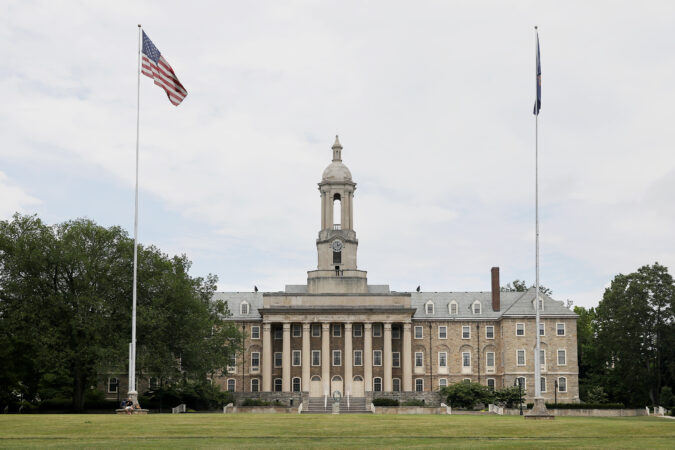
    Pennsylvania State University and the Pennsylvania Department of Education want the state’s highest court to overturn a recent lower court ruling that sided with Spotlight PA and stop the release of internal Board of Trustees documents.

    The case could have major implications in the state for public access to documents stored in cloud-based services.

    Last week, the university and state agency each filed a “petition for allowance of appeal,” asking the Pennsylvania Supreme Court to hear the public records case. There is no timeline for the court to decide whether it will hear the arguments, and the court denied 87% of requests to review a lower court decision in 2024, according to the court’s annual report.

    Spotlight PA is represented pro bono by the Reporters Committee for Freedom of the Press and the Cornell Law School First Amendment Clinic. Paula Knudsen Burke, the Pennsylvania attorney for RCFP, said in a statement: “The Commonwealth Court rightly made clear that Penn State trustees cannot shield certain records from the public simply by storing them in a file-sharing system or alleging they contain proprietary information. We will continue to push for access to these records on behalf of Spotlight PA so that all Pennsylvanians can better understand how a prominent state-related institution — supported with millions of dollars of public money — is operating.”

    A Penn State spokesperson told Spotlight PA in an email that the university does not comment on “pending litigation.” The state education department did not respond to a request for comment.

    In May 2023, Spotlight PA filed public records requests with Pennsylvania’s agriculture and education departments for documents the agencies’ secretaries used while serving on Penn State’s governing board. While the university is largely exempt from the state’s Right-to-Know Law due to a legal carveout, a 2013 court ruling said records that the agencies’ secretaries used as trustees could be accessed by the public.

    The Office of Open Records ruled in 2023 that some of the records the newsroom requested should be made public. Penn State and the education department appealed the decision to Commonwealth Court.

    Penn State, in legal filings and in court in September, argued the state agencies did not possess or control the records Spotlight PA sought because Penn State housed the files on Diligent, a cloud-based file-sharing service. The online system allows the university to control who can access which files and whether the records can be downloaded.

    The court sided with Spotlight PA in its decision last month, ruling that Penn State’s argument was “without merit.” Taking the university’s position, the court said, would contradict the intent of the state’s open records law for transparency and would “perversely incentivize Commonwealth agencies, local agencies, and affected third parties like Penn State to utilize remote servers and/or cloud-based services, in order to ensure that they would no longer need to disclose what would otherwise constitute public records.”

    Penn State was also ordered to unredact portions of a 2022 document given to trustees about the university’s “fiscal challenges” and altering the budget to better align with Penn State’s “priorities and values.”

    In its petition to the state Supreme Court, Penn State said the lower court wrongly determined that the agency secretaries received the records and therefore could provide them to the newsroom. By providing documents to trustees through Diligent, the university controls who can “download, print, forward, or otherwise obtain the document.”

    The file-sharing service, the university wrote, “is the electronic equivalent of a Penn State official holding a physical document in their hand and inviting the Secretaries to look at the document. Importantly, in this analogy, the Penn State official never lets go of the document, and the Secretaries never possess the document.”

    The education department, in its filing, said the lower court’s decision ignores the intent of, and improperly expands, Pennsylvania’s open records law.

    Spotlight PA, through its legal team, will file its response to the petition in the coming days.

    Earlier this year, the Penn State board settled a separate lawsuit that Spotlight PA brought against it over alleged violations of Pennsylvania’s Sunshine Act, the state law mandating transparency from governing bodies.

    As part of the settlement, the board agreed to release more information about its private meetings, including who is leading the gatherings and the topic discussed. The board also participated in a legal training in September on the open meetings law and what governing bodies must do to comply with it. The terms of the settlement will last for five years. Read the full agreement here.

    This story was produced by the State College regional bureau of Spotlight PA, an independent, nonpartisan newsroom dedicated to investigative and public-service journalism for Pennsylvania.

    SUPPORT THIS JOURNALISM and help us reinvigorate local news in north-central Pennsylvania at spotlightpa.org/donate. Spotlight PA is funded by foundations and readers like you who are committed to accountability and public-service journalism that gets results.
  • Philly principals union has a tentative contract

    Philly principals union has a tentative contract

    Philadelphia School District principals have a contract — and raises.

    The tentative, four-year deal was struck Monday night, nearly three months after an August contract deadline for the Commonwealth Association of School Administrators, Teamsters Local 502.

    It also came days after CASA members publicly called out district officials, accusing them of negotiating in bad faith.

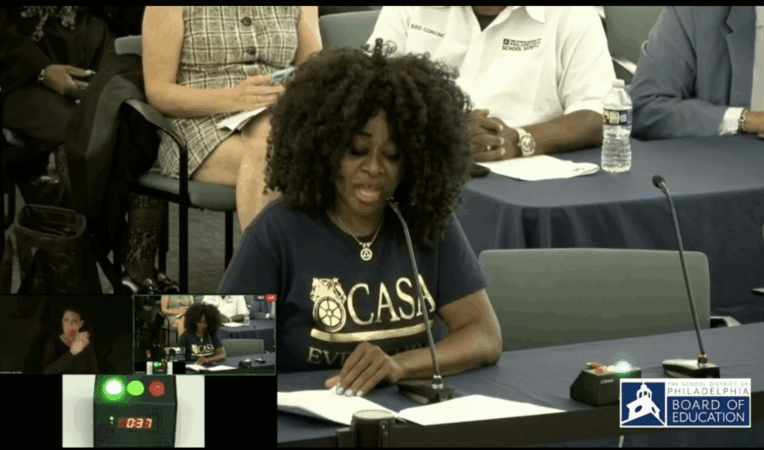
    Robin Cooper, president of the nearly 1,000-member union — which represents principals, assistant principals, climate managers, and other administrators — said in a statement that the contract “will provide continued stability for our administrative leaders.

    The pact, Cooper said, “affirms the dedication and innovative leadership of CASA administrators, recognizing them as pivotal change agents, who drive both student and teacher success. It also represents a meaningful step toward honoring and uplifting our exceptional leaders by addressing wage compression, providing across-the-board salary increases, and including collaborative language that acknowledges administrators as vital partners in the educational process.”

    Details of the contract were not immediately available; neither was the date CASA members will meet to consider ratifying the contract.

    “We are pleased to have reached a tentative four-year agreement that both honors the dedication of our CASA members and upholds our commitment to strong financial stewardship,” Superintendent Tony B. Watlington Sr. said in the statement. “This agreement provides the stability, clarity, and momentum we need to continue our strong partnership with CASA and to advance our five-year strategic plan, Accelerate Philly.”

    Last week, Cooper rallied her members publicly, appearing at a hearing on district matters before City Council and at a school board meeting to draw attention to CASA’s lack of a contract.

    Cooper had said that the main sticking points in the negotiations were related to finances.

    “First-year people are making what senior people make,” Cooper said.

  • Five Cherry Hill elementary schools will be overcrowded by 2028. The district is considering how to redistribute students.

    Five Cherry Hill elementary schools will be overcrowded by 2028. The district is considering how to redistribute students.

    Faced with a forthcoming increase in elementary school enrollment, the Cherry Hill School District may redraw boundaries for its 12 neighborhood schools.

    The South Jersey school district has been studying expected demographics for the coming years and came up short; there are not enough available seats to accommodate an anticipated burst in elementary student population.

    To meet the demand, the district has undertaken an “Elementary Enrollment Balancing,” which means possibly adjusting where students go to school. Cherry Hill is the 12th-largest district in the state, with nearly 11,000 students.

    “We want to make sure there is not a negative impact on children and families,” Superintendent Kwame Morton told parents at a recent community meeting.

    Why is Cherry Hill rebalancing its elementary schools?

    The demographic study conducted in 2024 showed that five of Cherry Hill’s 12 elementary schools are expected to have a shortage of seats in the 2028-29 school year, said George Guy, director of elementary education.

    Based on census data and housing construction projections, the district will be short about 337 seats, according to Guy. The demographic survey examined possible growth over a five-year period, from 2024-25 through 2028-29.

    “Those kids are coming. We have to do something,” Guy said in a recent interview. “We can’t wait to do it.”

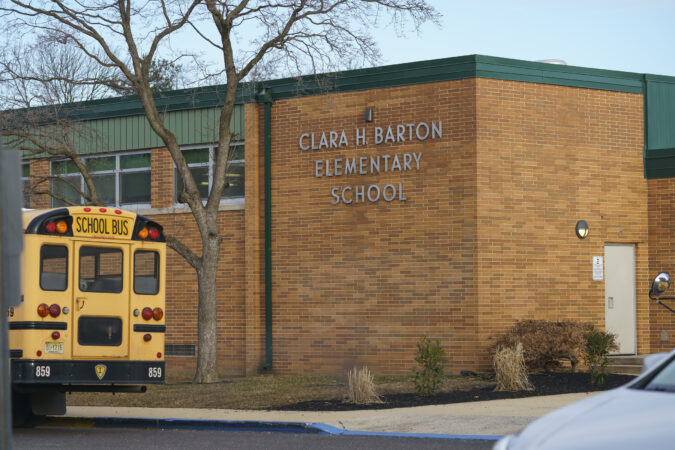
    The five schools in question and the expected growth in their enrollment are: Clara Barton, 126 students; Joyce Kilmer, 81 students; Horace Mann, 50 students; Richard Stockton, 56 students; and Woodcrest Elementary, 50 students, Guy said.

    What will the process involve?

    It is not yet clear how many students could be affected by the rebalancing, district officials said. Some elementary schools are nearing capacity, and a few have surplus seats.

    At a school board presentation this month about the enrollment balancing project, several parents expressed concerns about their children possibly being moved. Parents like the convenience and proximity of a neighborhood school.

    “What’s the game plan here?” asked Nicole Marley, who has three sons. “I don’t want my kids to leave their school. It’s stressful.”

    Guy said possible options include grouping schools by proximity, with nearby schools to share students and programs, and reassigning students to less-crowded schools. Also under consideration is converting the Arthur Lewis administration building to an elementary school, which could accommodate about 200 students, he said.

    District officials currently are not considering a bond referendum to raise funds to build a new school, Guy said. In October 2022, Cherry Hill voters overwhelmingly approved a $363 million school bond referendum, one of the largest in New Jersey history.

    “We want to be open to anything,” Guy said. “We don’t want to take anything off the table.”

    How will they make a plan?

    A board committee has been charged with developing a plan to address the overcrowding. Parents peppered the committee with questions at an information session held at Cherry Hill East.

    “We’re still very early in the process,” said board president Gina Winters.

    Currently, the sprawling 24.5-mile community of nearly 75,000 is divided into elementary school zones. Most students are assigned to a neighborhood school within two miles of where they live.

    Morton said the board has set parameters for the rebalancing committee. Besides minimizing potential disruptions, transportation must be taken into consideration, he said.

    The district doesn’t want students riding a bus for long periods of time, especially special needs students, Guy said. Two of the affected schools — Barton and Kilmer — are located on the west side of Cherry Hill, while the other three — Mann, Stockton, and Woodcrest — are on the east side.

    Kwame Morton, superintendent of Cherry Hill schools.

    What is the timeline for the plan?

    The committee plans to present a preliminary rebalancing plan to the school board in January or February. A final plan is expected by June or July.

    The district held three community meetings in November to get feedback from residents and answer questions. More community meetings are planned for March.

    Parent Dan Levin, an urban planner, questioned how the committee gathered its data. He suggested the committee consider more long-term planning for 15 years down the road.

    “You’re shooting in the dark,” said Levin, whose son attends James Johnson Elementary. “You’re throwing good money after bad.”

    Morton said the district wants to implement the rebalancing plan for the 2027-28 school year, before enrollment is expected to swell in the 2028-29 school year.

    Will middle schools and high schools be impacted?

    Guy said the district’s most pressing need for more seats is at the elementary schools. He said officials are not yet examining future enrollment needs at the middle and high schools.

    Cherry Hill is in the third year of a four-year middle school redistricting plan. The district is expanding its preschool program, with 240 new spots set to open in January.

  • Director of Penn State Cancer Institute resigns after Spotlight PA investigation about chemo errors, ‘toxic’ leadership

    Director of Penn State Cancer Institute resigns after Spotlight PA investigation about chemo errors, ‘toxic’ leadership

    This story was produced by the State College regional bureau of Spotlight PA, an independent, nonpartisan newsroom dedicated to investigative and public-service journalism for Pennsylvania. Sign up for Talk of the Town, a daily newsletter of local stories that dig deep, events, and more from north-central PA, at spotlightpa.org/newsletters/talkofthetown.

    Raymond Hohl, the director of the Penn State Cancer Institute, resigned Friday following a Spotlight PA investigation into his care of patients and leadership of the center.

    Hohl made the decision “thoughtfully and with the best interests of the Institute in mind,” according to an internal email, which was signed by Karen Kim, dean of the Penn State College of Medicine, and Michael Kupferman, CEO of Penn State Health. The email says he will remain a faculty member of the university’s medical college.

    Hohl started as director in 2014 with the goal of achieving National Cancer Institute designation, a prestigious federal recognition, for the center based in the Milton S. Hershey Medical Center. The university invested hundreds of millions of dollars in the cancer center in pursuit of designation, records show.

    A Spotlight PA investigation published Nov. 20 found that Hohl was the subject of a series of damning internal reviews between early 2022 and mid-2023. The reviews found a series of problems with Hohl’s care of at least 10 patients. His sloppy recordkeeping caused multiple errors. Several of Hohl’s patients received extra doses of chemotherapy by accident. Others faced unexplained delays in changing their treatment, or having scans done to check whether their cancer had progressed, according to documents obtained by the newsroom.

    Penn State’s reviews also concluded that Hohl perpetuated a toxic culture of fear and mistrust that chewed up doctors and researchers, who left the organization in droves during this time period. Getting federal designation was Hohl’s top priority, but after nearly a decade under his leadership and some $410 million invested, the cancer institute was “significantly behind where it needs to be,” a December 2022 review found. Records show that Hohl disputed the findings and offered a rosier assessment at the time.

    Penn State Health’s former chief executive officer and former chief operating officer, as well as the hospital’s then-chief medical officer and two medical school deans, including Kim, had extensive knowledge of these problems, records show.

    In 2023, leaders privately considered removing Hohl as director of the cancer institute, internal records show. The doctor kept his position and was placed on a two-month performance improvement plan, under which he was asked to adhere to national guidelines for cancer treatment, demonstrate active listening skills, and show that he was a team player, among other goals.

    In May 2024, Penn State quietly removed Hohl’s oversight of clinical care, a move the Penn State Health spokesperson declined to explain in September 2025. Hohl was still seeing patients as of early 2025.

    Following publication of Spotlight PA’s investigation, Penn State Health said in a statement: “We believe the reporting by this outlet is based almost entirely on materials more than two years old and it does not provide an accurate representation of Penn State Cancer Institute (PSCI) as it exists today. During the last two years — we have made significant changes to PSCI’s leadership, staffing, operations, clinical capabilities and research processes.”

    According to the internal announcement, institute deputy director Jeff Peters will be the interim director of the cancer center.

    SUPPORT THIS JOURNALISM and help us reinvigorate local news in north-central Pennsylvania at spotlightpa.org/donate. Spotlight PA is funded by foundations and readers like you who are committed to accountability and public-service journalism that gets results.
  • City Councilmember Jeffery Young’s plan to relocate the Cecil B. Moore Library met with pushback from community who want to see it renovated

    City Councilmember Jeffery Young’s plan to relocate the Cecil B. Moore Library met with pushback from community who want to see it renovated

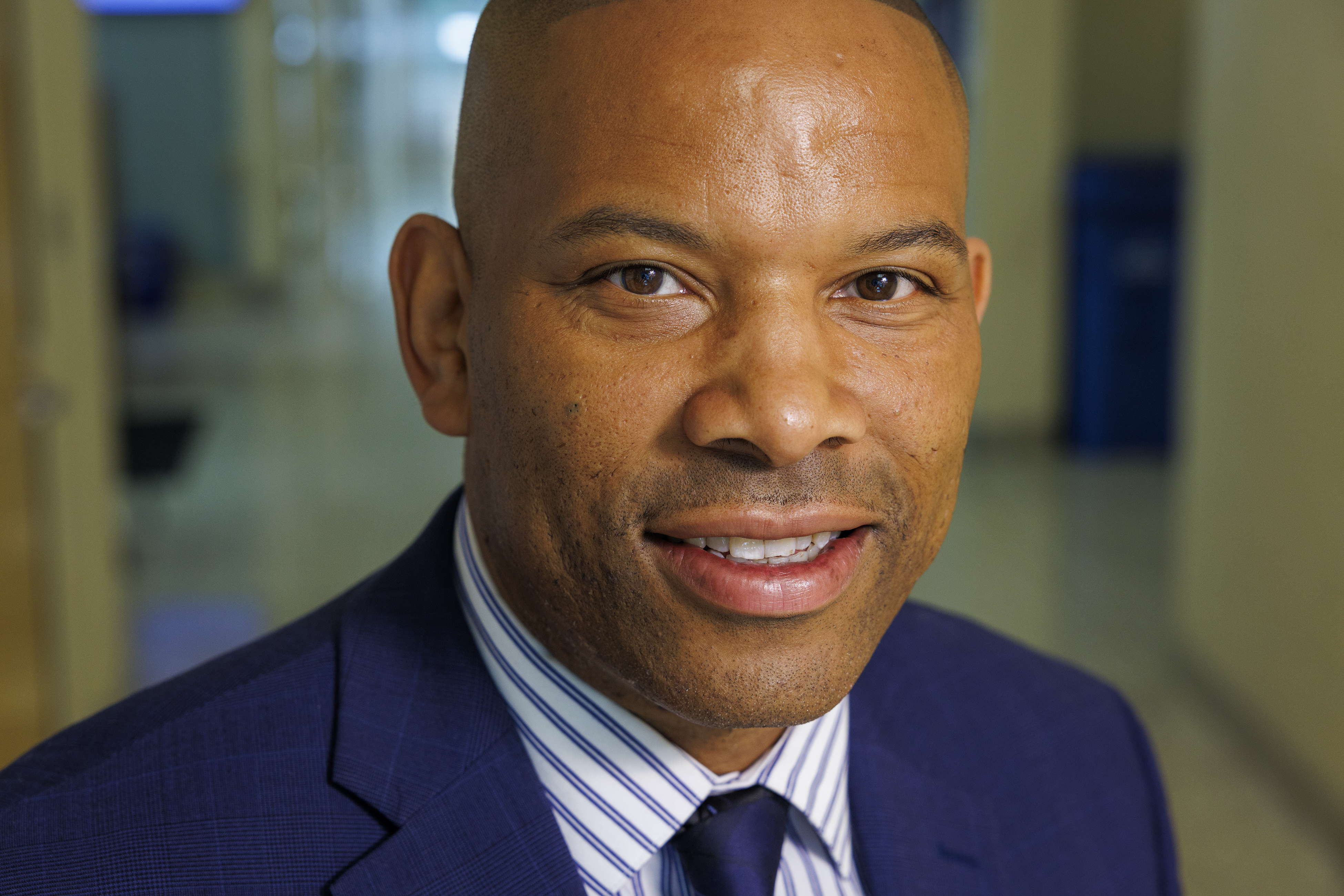
    During an occasionally contentious Saturday meeting on the future of the Cecil B. Moore Library in North Philadelphia, City Councilmember Jeffery Young Jr. told residents he wants to build a new library instead.

    But, as with Young’s previous suggestion that the city move the library, residents held fast to their stance that the 64-year-old building should be preserved.

    “This space is easily accessible to everyone who needs it, and that’s why it should be renovated, not relocated,” said Cierra Freeman of the Brewerytown Sharswood Neighborhood Coalition.

    She criticized Young for proposing a plan without any “tangible written documents” — and for presenting a solution that she said nobody had asked for.

    Young said he wants to build a new library less than a half mile away, using city property on 19th Street. He argued that the community — and teens in particular — would be better served by a new facility.

    “The systems in this library are old,” Young told the crowd of about 40 people gathered at the library on Cecil B. Moore Avenue near 24th Street. “They’re old. As we continue to use this space, things are just going to continue to fall apart.”

    It was the second time this year Young proposed a plan for the library. In March, he suggested that the city demolish the building and replace it with a new library that has affordable housing units above it — an idea that also drew intense pushback from community members.

    This time, Young suggested the current building be kept as a public space.

    Like the street it is on, the Cecil B. Moore Library is named for the civil rights figure — a World War II veteran, lawyer, and politician who, while serving as the Philadelphia NAACP president, played a central role in the push to desegregate Girard College.

    The building has issues with its aging HVAC, plumbing, and electrical systems, all of which need to be upgraded, according to the Save the Cecil B. Moore Library Greater Coalition. The library was closed from January through March this year due to problems with the heating system.

    Other renovation plans include building a new teen space, adding windows, an elevator to the basement, and ADA-accessible bathrooms, and other initiatives, the group said.

    Due to the city’s long tradition of councilmanic prerogative, Council members have near-total control over whether projects in their districts move forward. Young has not yet filed a “notice to proceed,” a necessary step to release funding and begin renovation, according to the coalition.

    Young said the needs of young people have changed significantly since the 1960s. He described a space with things like podcasting studios and e-gaming technology that he said would draw in young people.

    Councilmember Jeffery Young speaks to community members at the Cecil B. Moore Library Saturday, Nov. 22, 2025.

    “If you look at this community, there is nothing to attract teenagers,” Young said. “Our kids deserve better. Our kids deserve new things.”

    But many of those present, including Cecil B. Moore library worker and AFSCME union member Kate Goodman, said that moving the library east toward Temple University would remove a prime resource from a neighborhood that needs spaces for people to congregate.

    “It’s a half-mile, but it’s a whole world of difference,” said Jordan Holbert of the proposed move.

    Event moderator Joel Northam said that if the funds are not released soon, costs of labor and supplies will keep going up, shrinking the amount of work that can be done.

    “We literally can’t afford to have this put off,” Northam said.

    He suggested that the next step would be to support a campaign to unseat Young in 2027.

  • Temple marching band is preparing to go to New York for Macy’s Thanksgiving Day Parade

    Temple marching band is preparing to go to New York for Macy’s Thanksgiving Day Parade

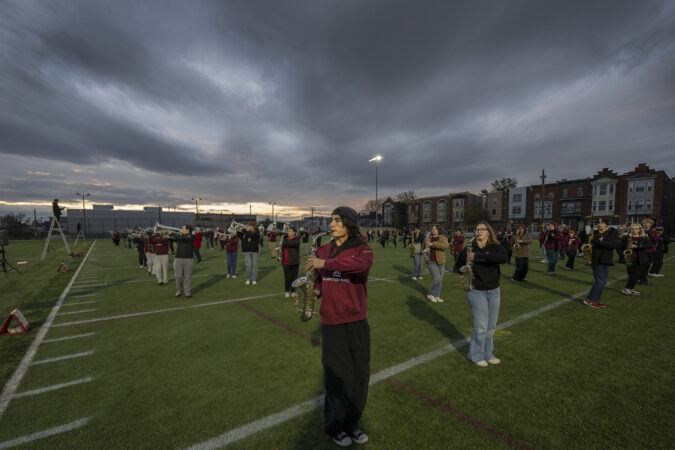
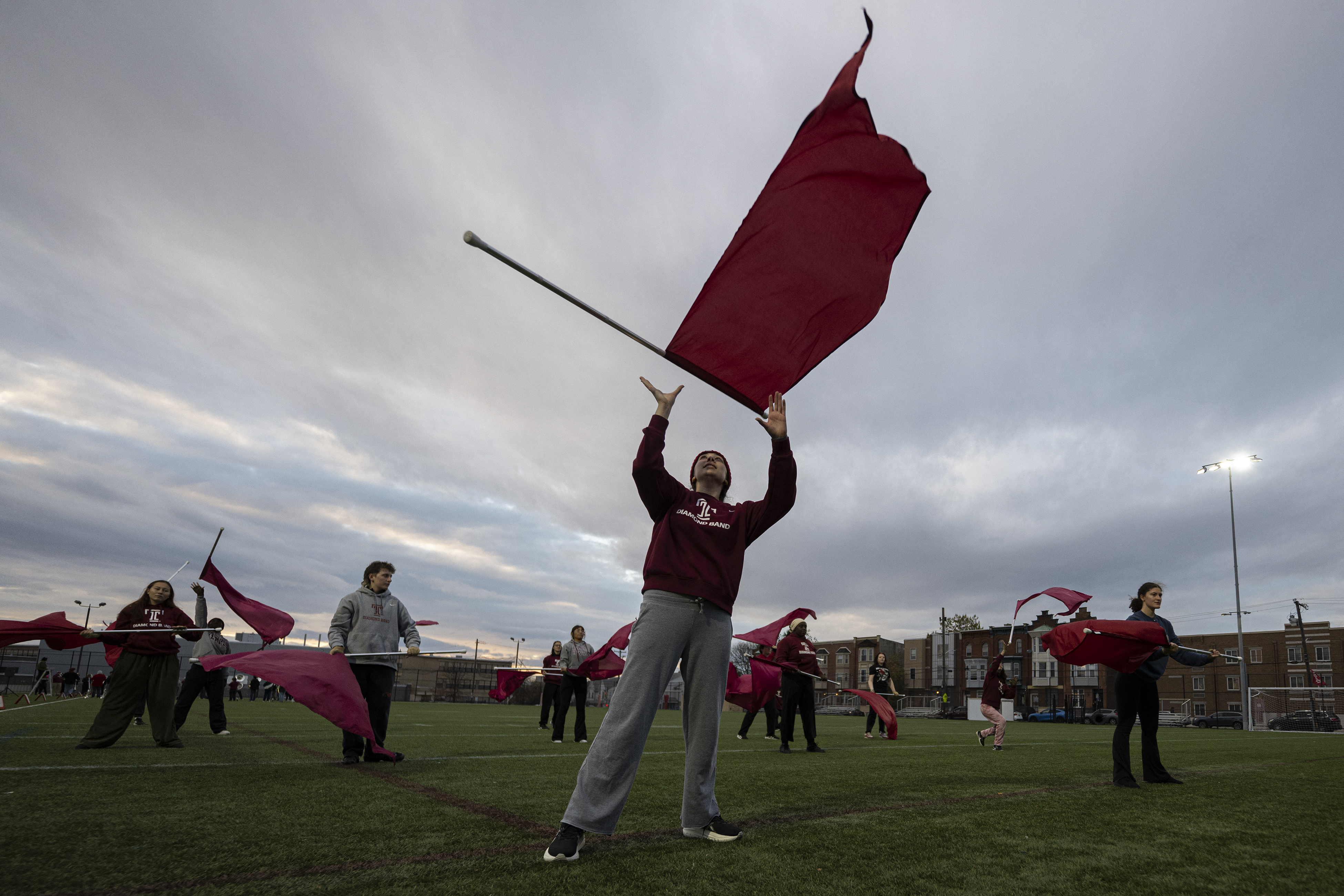
    As the pink of twilight peeked through the November clouds, Temple University’s Diamond Marching Band, instruments and flags in tote, practiced on the campus’ Geasey Field.

    They ran through selections by Taylor Swift and from the movie KPop Demon Hunters while athletic bands director Matthew Brunner studied their sound and formation from a scissor lift 25 feet in the air.

    “Notes should be long,” Brunner called out over a microphone after one selection. “Don’t try to play them too short.”

    There were few spectators that afternoon. But that’s about to change in a big way.

    The 200-member band is one of only 11 that have been selected to participate in the Macy’s Thanksgiving Day Parade in New York City. It’s a first for Temple, which will be the only band from Pennsylvania or New Jersey in this year’s parade. More than 30 million people likely will be watching from home and 3.5 million in person, if prior numbers are any indication.

    Members of the Temple University Marching Band prepare to practice. The band will perform in the Macy’s Thanksgiving Day Parade this year.

    That’s a lot of exposure for the Cherry and White, which could be a boost for recruitment and fundraising.

    “I can scarcely think of a better way to bring visibility to Temple,” said John Fry, Temple’s president.

    And that visibility could lead to more people visiting Temple’s website and seeing what the university has to offer, he said.

    “It’s going to be incredible for the university,” said Brunner, who initially announced Temple’s band had been selected for the parade in August 2024. “There’s no television event, other than the Super Bowl, that is bigger.”

    The excitement is palpable among students, some of whose families plan to attend the parade.

    “It’s a once-in-a-lifetime opportunity,” said Erin Flanagan, 21, who grew up watching the parade with her family and notes she wanted to march in it since she was 6. “I mean, the Macy’s parade is iconic.”

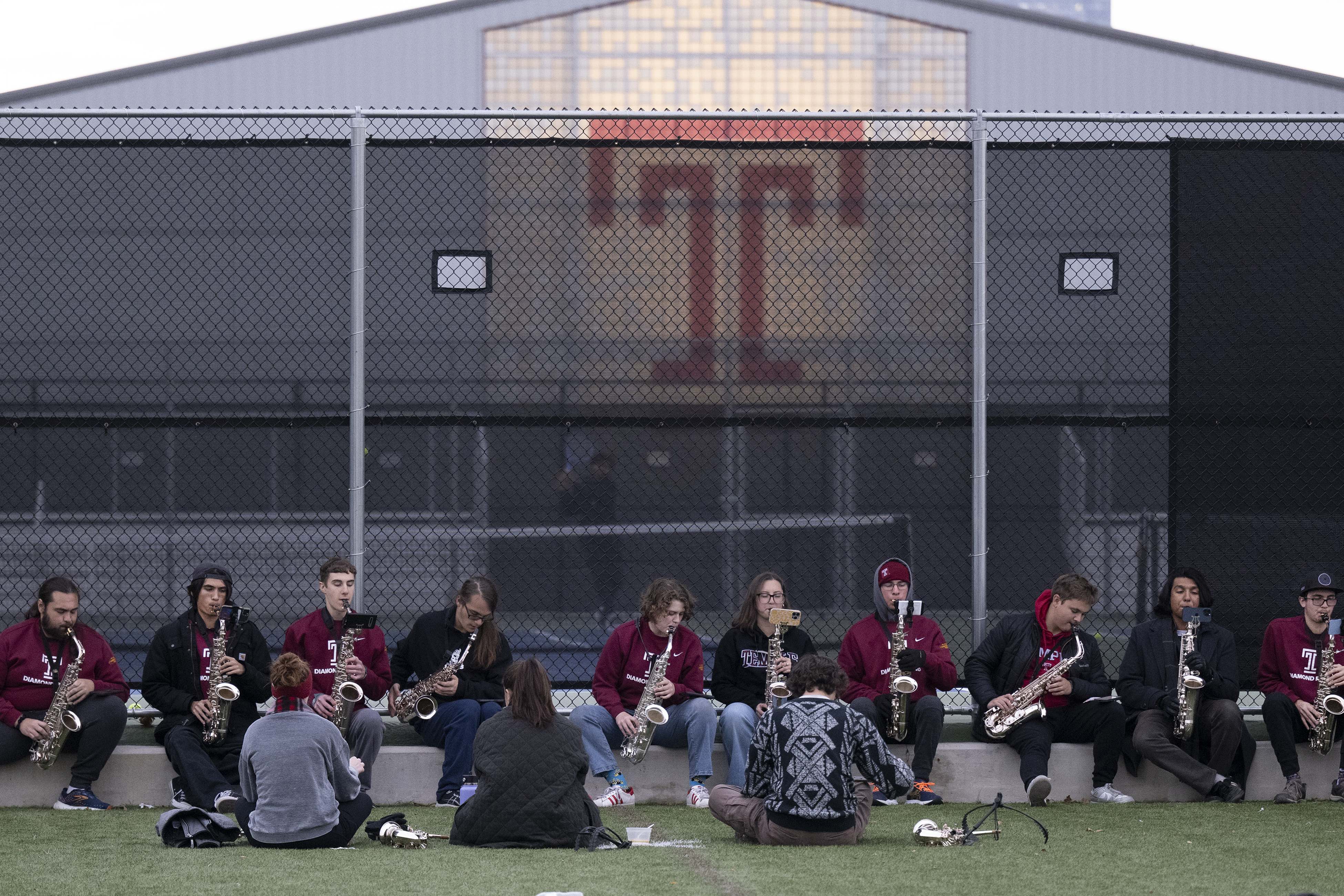
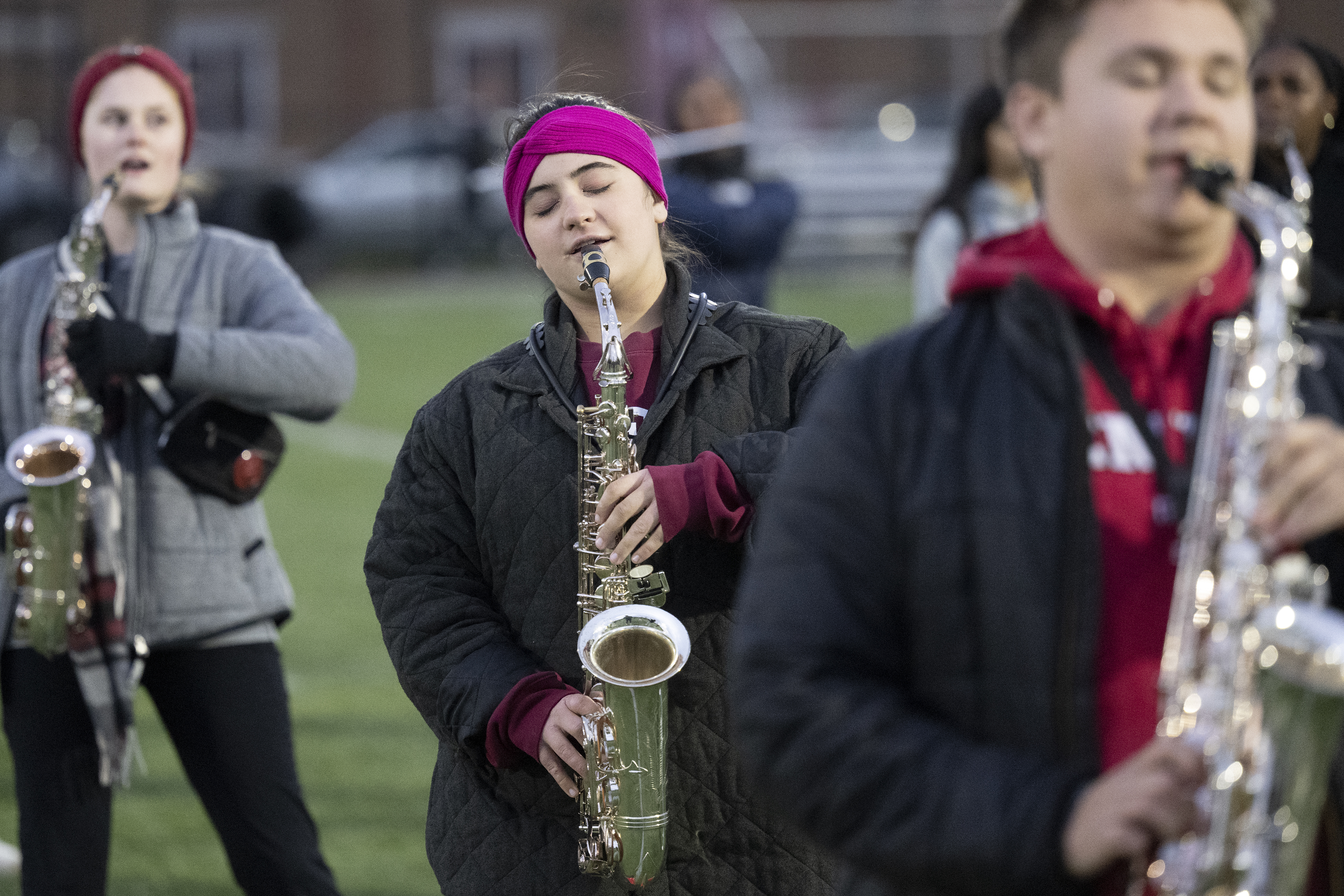
    Temple University alto saxophone player Erin Flanagan rehearses with the marching band.

    The music education major from Manasquan, N.J., who is a senior, said it likely will be her last performance with the band, and she could not have scripted it better.

    “I get to go to this awesome performance and just show everybody what Temple stands for,” said Flanagan, an alto saxophone section leader.

    It’s the 99th anniversary of the 2.5-mile parade, which kicks off about 8:30 a.m. on Thanksgiving Day on NBC and Peacock, hosted by Savannah Guthrie, Hoda Kotb, and Al Roker.

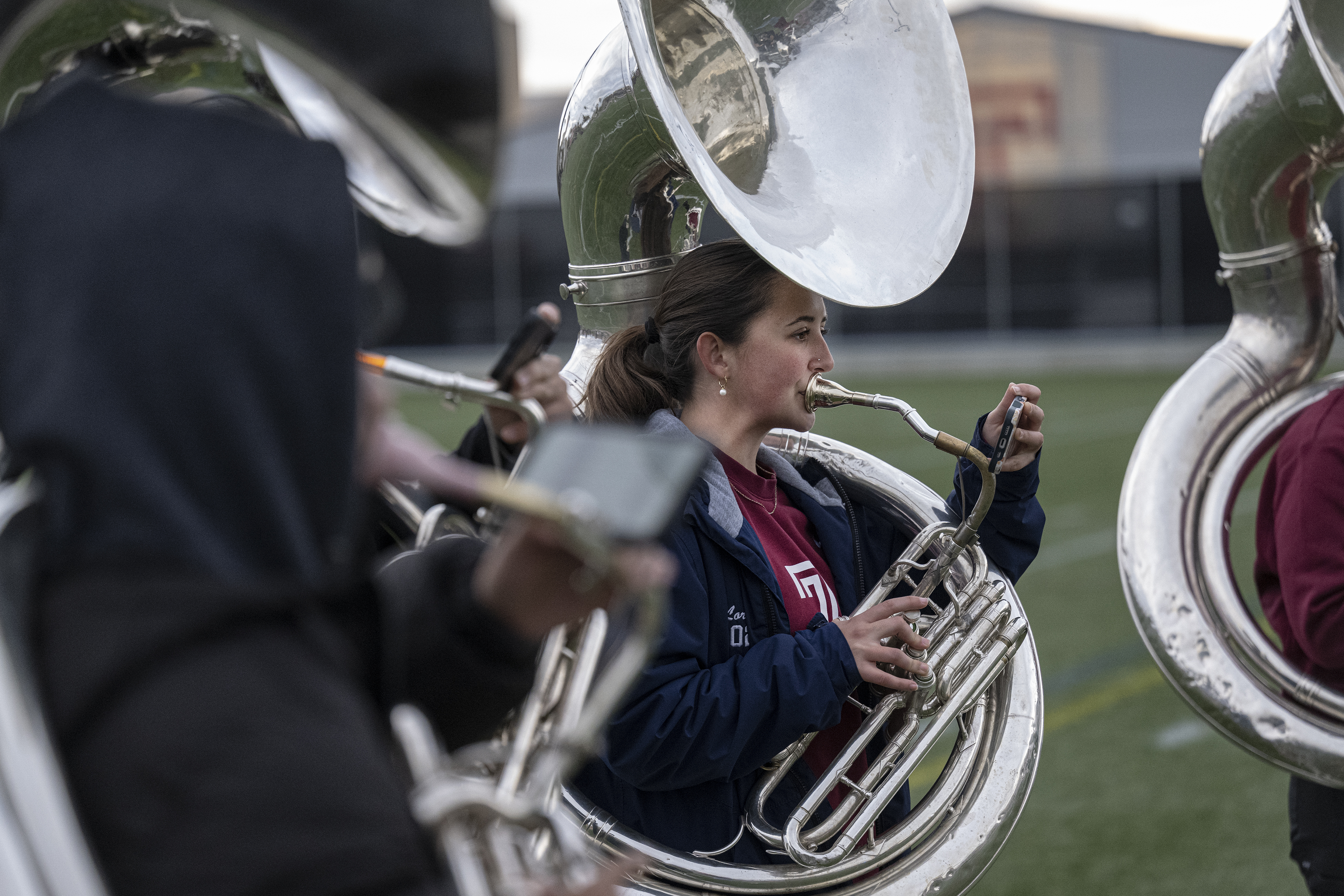
    Temple University tuba player Lorali Minde plays the tuba in the marching band.

    Lorali Minde, 18, a freshman from Levittown, will be marching while playing the tuba, a 36-pound instrument.

    “You kind of get used to it,” she said. “It’s like carrying a really heavy purse.”

    Brunner, who has led the marching band for 18 years, said he had applied to be in the parade several times before. It’s a competitive process, with more than 100 applicants vying for a spot. He had to submit video of a performance — he sent the 10-minute show the band did off the Barbie movie soundtrack — pictures of the band in uniform, reasons that Temple deserved a shot, and the band’s resume and biography.

    Matthew Brunner, athletic bands director, leads a practice in 2018.

    When his wife saw the Barbie show, Brunner said, she texted him: “That’s the show you need to send to Macy’s.”

    It proved a winner.

    “They loved the fact that the music we play is current,” he said.

    The honor comes at a special time for the band, which is celebrating its 100th anniversary. Brunner played that fact up in the application, too.

    Under Brunner, the band has grown and has been hitting high marks. Over the years, the school has been recognized as one of the top collegiate marching bands in the nation by USA Today and Rolling Stone, appeared on Good Morning America, The Tonight Show Starring Jimmy Fallon, and an episode of Madam Secretary, and was featured in two Hollywood movies, The Wolf of Wall Street, starring Leonardo DiCaprio, and the remake of Annie. Some of its performances have received millions of views on YouTube, including a 2018 performance of “Idol” by the K-pop group BTS, which currently has more than five million views on Ricky Swalm’s YouTube channel.

    The band includes a color guard, a baton twirler, brass and woodwind instruments, a drum line, and a dance team. The group typically practices three times a week for two hours at a time.

    Temple University Marching Band tuba players practice.

    “The band is infectious,” Brunner said. “When you see them perform, you can’t help but smile.”

    Students have been eying the parade opportunity for a while.

    When Flanagan was a sophomore, she asked Brunner point-blank: “When are we doing the Macy’s parade?”

    Recently, she and her roommates, also band members, have been counting down the days on a whiteboard.

    Brunner declined to say exactly what the band will perform on Thanksgiving, but promised a mix of holiday, audience participation, and Temple songs.

    “We’re hoping for no wind,” he said.

    Temple University Marching Band Color Guard Captain Abigail Rosen practices with her flag.

    Abigail Rosen, color guard captain, and her cocaptain are planning an “epic toss” of their flags over other band members, and wind could hinder it, he explained.

    “It’s an exchange toss,” said Rosen, 20, a junior advertising major from Abington. “So I toss my flag to Dana [Samuelson] and she tosses her flag to me, and we catch each other’s flags.”

    Bands selected received $10,000 from the retailer, which Temple officials said helped them get started on fundraising to pay for the trip.

    The band will be heading to New York on Tuesday for an alumni event, then a performance on the Today show Wednesday. Band members will be up in the wee hours of the morning Thursday for a rehearsal, and after the parade, they will be treated by the school to a Thanksgiving dinner cruise along the Hudson River.

    Andrew Malick, 20, a music education major from Carlisle, Pa., who plays the tuba, can’t wait.

    “It will be cool to say you’ve done it for the rest of your life,” he said.

    Jeremiah Murrell, a freshman trumpet player from Savannah, GA, rehearses with the Temple University Marching Band Thursday, Nov. 13, 2025.
  • Philly principals, working without a contract for months, demand action: school board roundup

    Philly principals, working without a contract for months, demand action: school board roundup

    City principals — working without a contract for nearly three months — showed up in force Thursday night to urge the Philadelphia School District to take their demands more seriously.

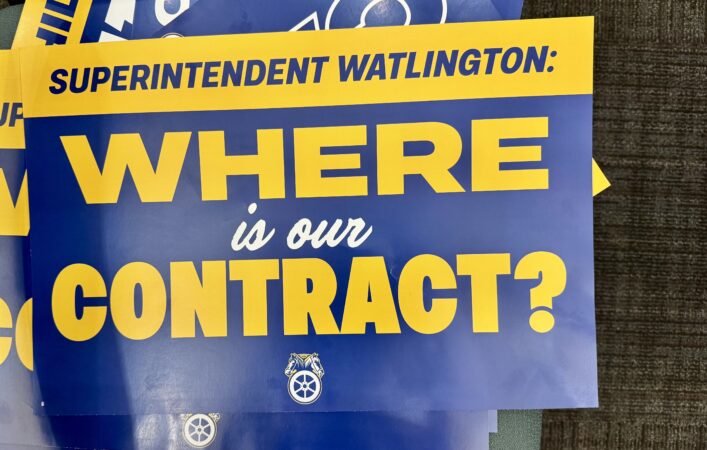
    Dozens of administrators waved signs and chanted as their union president addressed the school board.

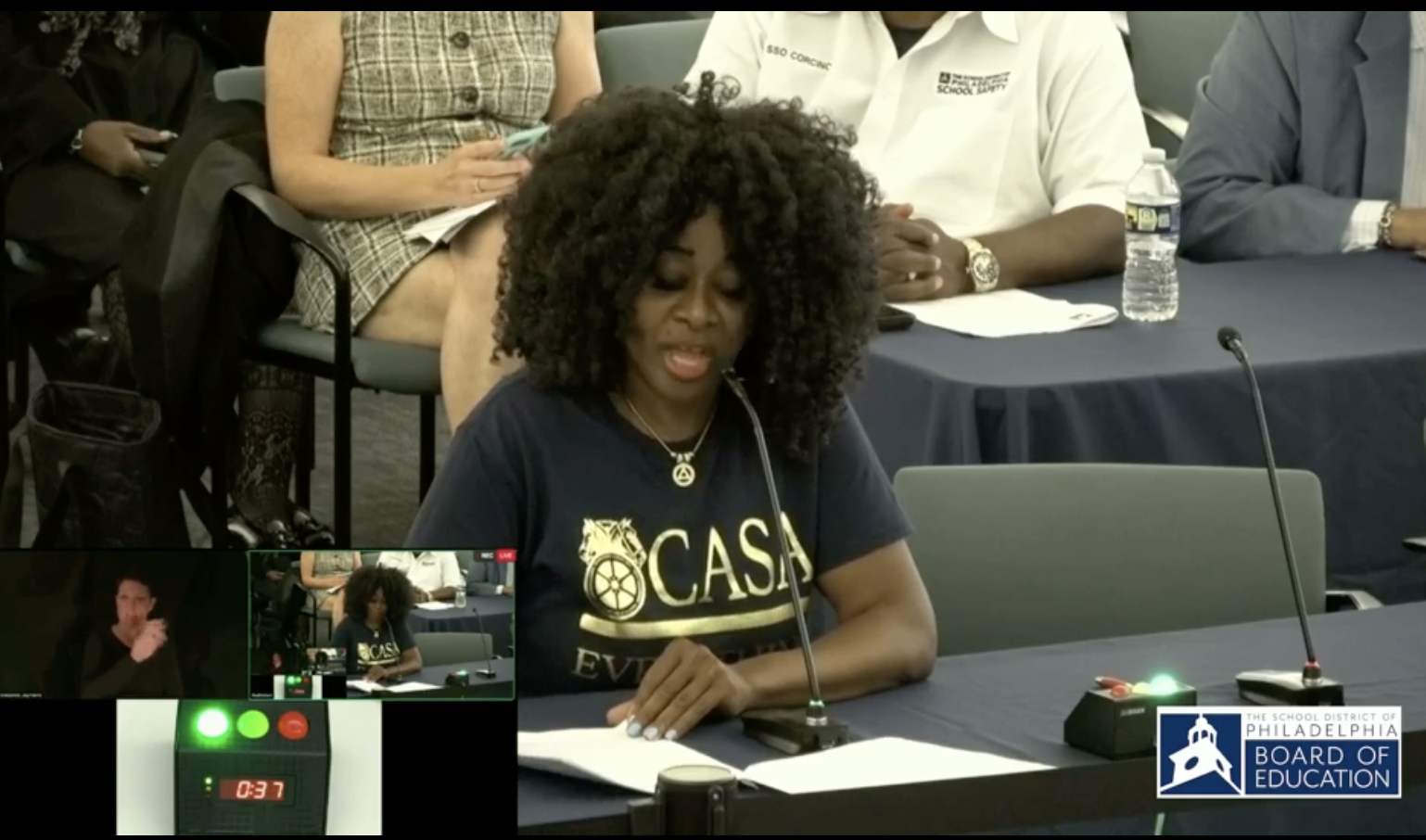
    “When is it time for the district to give back to those who consistently have your front and back?” asked Robin Cooper, president of the principals union. “We get pushed to the background with no mention of our blood, our sweat, and tears in the ongoing transformation of our beloved district.”

    Cooper said the district was “negotiating in bad faith.”

    CASA — the Commonwealth Association of School Administrators, Teamsters Local 502 — represents just under 1,000 principals, assistant principals, climate managers, and other workers.

    The union can’t strike, but Cooper and CASA members have ratcheted up public pressure. On Tuesday, many union representatives attended a City Council hearing, prompting Council members to ask Superintendent Tony B. Watlington Sr. why CASA still has no contract.

    Watlington and board president Reginald Streater both said they cannot comment on negotiations in public.

    “You are valued, and we’re going to get this done,” Watlington told Cooper and members of CASA.

    But Cooper was clearly frustrated, and skeptical. At the last negotiating session, held this week, CASA presented multiple proposals, but the district countered with the same offer it put on the table previously.

    CASA’s current contract expired Aug. 31, as did pacts with the Philadelphia Federation of Teachers and School Police Association of Philadelphia — but those two unions reached deals that included raises.

    The main sticking points for CASA, Cooper said in an interview, include issues related to wages.

    “First-year people are making what senior people make,” said Cooper.

    Robin Cooper, president of the city’s principal union, speaks at the monthly school board meeting on Aug. 21.

    The union also takes issue with the fact that some workers have to take pay cuts to become administrators — the district’s senior career teachers earn more than assistant principals are paid.

    “You can’t have a promotion and make less,” said Cooper, who said she believes that after agreeing to PFT and school police deals, the district “came to the table with whatever was left over.” She also takes issue with the school board paying millions to outside contractors but not settling with CASA.

    Her members will continue to show up to work, Cooper said, but CASA isn’t finished showing its muscle.

    “I’m not one to be bullied,” said Cooper.

    No facilities master plan, but community pushback over what’s to come

    In other school board happenings, officials did not present a facilities master plan — expected to include school closings — this month, as originally planned.

    Watlington said earlier this week he was extending the timeline to gather more public input around four emerging themes: strengthening K-8 schools, reinvesting in neighborhood high schools, reducing school transitions, and expanding access to 5-12 criteria-based schools.

    “We’re committed to not fumbling the football on the 2-yard line,” Watlington told the board Thursday night.

    Still, members of the public said they wanted no school closings at all.

    “Public education is not a business,” said Deborah Grill, a retired district educator and member of the Alliance for Philadelphia Public Schools. “It is a civic obligation. The school district is not a business to be rightsized.”

    The school system has 70,000 excess seats, a large number of old buildings in poor condition, and some schools that are overcrowded. Officials have said they will close schools — but also order colocations and other repurposing, as well as new construction and major renovations — not to save money, but to offer students citywide a more equitable and better education.

    Paul Brown, a psychologist in the district, said schools are still dealing with the fallout of mass building closures in 2013.

    “We need to keep our schools open,” Brown said. “The goals of efficiency should not come at the expense of our most vulnerable.”

    Seeking a better wellness policy

    The board also heard impassioned testimony about its wellness policy, which was to be considered at Thursday’s meeting, but was temporarily withdrawn.

    A grassroots parents group — supported by several members of City Council — is pushing for officials to guarantee students bathroom and water breaks and 20 minutes to eat their lunches.

    Watlington has said he agrees that children should be able to use the bathroom, but said policy shouldn’t dictate it, that it should be left to schools to work out how best to handle things. At a board hearing earlier this month, he also pushed back on parents’ statements that some children wear diapers to school because they fear having accidents without guaranteed bathroom access.

    Inella Ray, a Lift Every Voice board member, told the board and Watlington that “we do not want our stories dismissed as lies. Girls wear Depends because they cannot always change their pads. And we must believe them.”

    Parents will not “scapegoat, report or target teachers,” Ray said.

    “When harm occurs across dozens of schools, it is a policy and leadership issue, not a teacher problem,” Ray said.

  • Police investigating reported sexual assaults by Temple University student, officials say

    Police investigating reported sexual assaults by Temple University student, officials say

    Philadelphia police are investigating two reported sexual assaults possibly involving the same Temple University student, school officials said Thursday.

    In a statement, Temple officials said the university “has received two credible reports” alleging sexual assault, “one during a social event in a residence hall and a second incident at an off-campus location, potentially involving the same suspect who was positively identified yesterday.”

    The university has placed “a student of interest” on interim suspension pending investigations by the Philadelphia Police Department, Temple’s Department of Public Safety, and the university, the statement said.

    While suspended, the student is prohibited from being on campus or in university buildings or classes, according to the statement signed by Jennifer Griffin, the university’s vice president for public safety and chief of police, and Jodi Bailey Accavallo, vice president for student affairs.

    “As these investigations are ongoing,” the statement said, “we strongly encourage students with information or otherwise in need of support regarding any concerns of sexual misconduct to contact” Temple Police at 215-204-1234 or police@temple.edu, the Title IX coordinator at 215-204-3283 or titleix@temple.edu, or the Dean of Students Office at 215-204-7188 or dos@temple.edu.

    Students and other members of the university community or members of the public can also submit an anonymous report at helpline.temple.edu.

  • Haverford College president to step down in 2027

    Haverford College president to step down in 2027

    Haverford College president Wendy Raymond announced she will retire in June 2027, and the college plans to launch a search for her replacement early in the new year.

    The announcement comes after a particularly difficult year for the college and Raymond, who faced intense grilling in May by a Republican-led congressional committee probing antisemitism complaints on college campuses. The school also is under investigation by the U.S. Department of Education over its handling of antisemitism complaints.

    “This was not an easy decision, but after more than three decades in higher education, I am ready to step away from academia,” Raymond said in her message to campus.

    Her news comes just two days after she announced John McKnight, the dean of the college, would be leaving in June for a new role at Dartmouth College.

    Raymond said she wanted to give the college’s board of managers time to search for a replacement.

    Raymond, 65, a molecular biologist, became president of the 1,470-student liberal arts college on the Main Line in July 2019. She came to Haverford from Davidson College in North Carolina, where she had been vice president for academic affairs and dean of faculty.

    She has been in the job longer than her three most recent predecessors, Kim Benston, who served four years; Daniel Weiss, who was there two; and Stephen G. Emerson, who had four years.

    In her announcement, she noted accomplishments including the completion of a strategic plan, efforts to advance diversity, equity, and access, the launch of the Institute for Ethical Leadership and Inquiry named for board chair Michael B. Kim, and the new recital hall.

    She also acknowledged challenges, including the pandemic, the strike for racial justice in 2020 in which students refused to attend class and demanded that Haverford do more to support its Black and brown students, and “more recent times of social unrest and public scrutiny.”

    Raymond earlier this year in a message to the campus acknowledged that she “came up short” in dealing with conflict over antisemitism complaints and said both she and Haverford can do better.

    “To Jewish members of our community who felt as if the College was not there for you, I am sorry that my actions and my leadership let you down,” she said in that message.

    Haverford was the only local college earlier this year to receive an F on a report card by the Anti-Defamation League for its response to antisemitism — a rating given to less than 10% of schools nationwide. The ADL’s methodology for categorizing antisemitism has been questioned, and critics have argued that criticism of the state of Israel and its government have been wrongly conflated with antisemitism.

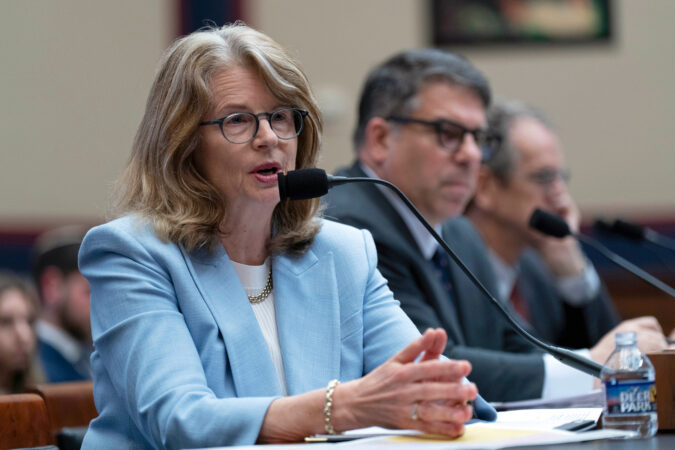
    But the F rating caught the attention of the congressional Committee on Education and Workforce, which called on Raymond and two other college presidents to testify in May. Raymond took the worst of the grilling, largely because she was reluctant to answer questions about discipline for alleged antisemitism, especially in specific cases. Raymond testified that the college does not release data on student suspensions and expulsions.

    In June, the committee demanded answers about faculty and student discipline. And in August, the education department, which has launched a flurry of investigations of colleges regarding antisemitism, said it would probe Haverford.

    The investigation follows “credible reports that Haverford has failed to respond as required by law to multiple incidents of discrimination and harassment against Jewish and Israeli students on its campus,” the department said at the time.

    In her testimony to the congressional committee, Raymond noted the college had made a plethora of changes to address concerns about antisemitism, including changes in the antibias policy and rules around protesting, steps to revise the honor code, and increases in campus safety at events.

    Kim, the board chair, thanked Raymond for her service amid a difficult time in a message to campus Thursday.

    “She has guided the College with great care during periods of both remarkable growth and significant challenge,” he said. “During her tenure, Haverford has welcomed two of its largest incoming classes, increased support for student resources, access, and engagement, and continued to graduate students who use their liberal arts education to effect positive change in the world.”

    Raymond said in her Thursday message that through the challenges, “ … the College has remained strong and resolute in its mission to foster a campus culture of belonging and respect, where academic freedom and freedom of expression remain fundamental to Haverford’s nearly 200 years of academic excellence and open inquiry, and where our values guide us through new territory.”

  • Former Central Bucks superintendent and principal appeal their terminations over handling of abuse allegations

    Former Central Bucks superintendent and principal appeal their terminations over handling of abuse allegations

    Former Central Bucks School District Superintendent Steven Yanni and former Jamison Elementary School principal David Heineman have appealed their terminations by the school board over their handling of abuse allegations in an autistic support classroom.

    The Central Bucks school board voted to terminate the duo last month, nearly a year after a classroom aide reported the alleged abuse.

    A report from the watchdog group Disability Rights Pennsylvania released in April found that students were illegally restrained, creating a “reasonable likelihood of bodily injury” and likely interfering with their breathing.

    The school board initially stood by the district’s leadership, but members’ tune shifted after the report’s publication. Yanni and Heineman were placed on leave the following day, and a two-day termination hearing was held in August.

    Yanni, who has accepted a position as the CEO of Northwood Academy charter school in Philadelphia, filed his appeal Monday in Bucks County Court.

    The filing rehashes the arguments Yanni made during the August hearing, including that he did not make an immediate report to ChildLine, Pennsylvania’s reporting system for child abuse or neglect, because he relied on the assessment of district officials during an internal investigation.

    Yanni’s appeal also says he did not remove the accused teacher and educational assistant from the classroom because the members of his leadership team closest to the investigation told him there was no reason to suspect abuse.

    The 139-page court filing attacks the termination hearing process and calls the school board biased. It notes that board member Jim Pepper‘s son was one of the alleged victims of abuse.

    Pepper recused himself from the hearing and other votes related to the investigation, but the appeal alleges that “he actively participated in the Board’s investigation and disciplinary actions and made public allegations.”

    Pepper declined to comment.

    “For almost a year now, there has been inaccurate and defamatory information shared about me,” Yanni said in a statement. “My appeal corrects the record and clearly articulates the truth around the Jamison situation.”

    The Central Bucks School District said it would not comment on the case because it is active litigation.

    Heineman, meanwhile, challenged his termination Oct. 29 by filing a petition through the Pennsylvania Department of Education’s tenure appeal process, according to a copy of his appeal obtained by The Inquirer. That process, unlike Yanni’s appeal in court, is private.

    The former principal accuses the board of terminating him after 26 years as a district employee over a series of “unproven allegations” that were made at his termination hearing.

    These include the notion that as principal he created a “chilling effect” that deterred staff from making reports to ChildLine, and that he threatened to fire the classroom aide for making the allegations.

    Heineman‘s petition notes that in the days after the allegations of abuse were made, the district’s leadership “unanimously agreed that there was no abuse, and no need to make a ChildLine report.”

    Heineman also says that there is no basis to the way he was characterized during the termination hearings.

    “CBSD’s allegation that Mr. Heineman ‘does not care about children’ carries no support in the record, and appears to be, once more, inflammatory rhetoric made more for the public than for purposes of meeting CBSD’s burden to terminate Mr. Heineman,” the petition says.

    Central Bucks also declined to comment on Heineman’s appeal. The attorney representing Heineman did not immediately respond to a request for comment.

    The school district responded to the petition this week, according to a copy of the filing obtained by The Inquirer that denies most of Heineman’s claims and stands by the termination decision.

    As for the allegation that the top leadership of the school concluded that there was no abuse before making a ChildLine report, Central Bucks says, “regrettably admitted.”