Category: Education

  • Wallingford-Swarthmore schools are cutting nearly 20 positions amid a ‘spending problem’

    Wallingford-Swarthmore schools are cutting nearly 20 positions amid a ‘spending problem’

    The Wallingford-Swarthmore school board on Tuesday approved a plan that would eliminate nearly 20 positions as it tries to reverse what officials have called a trend of unsustainable spending in the affluent suburban district.

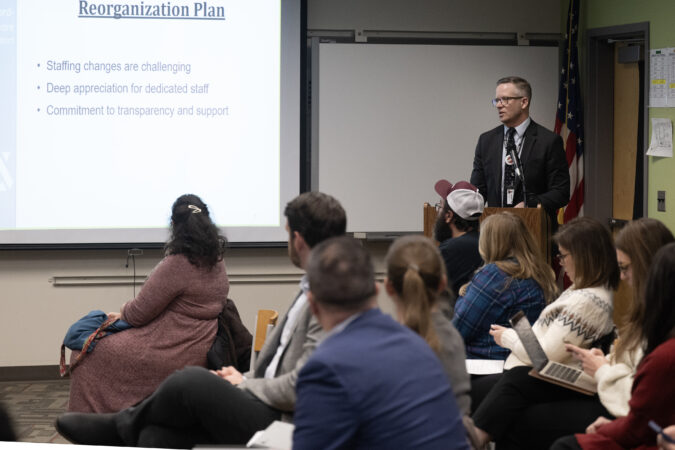
    The reorganization plan, which was approved by the board 8-0 and takes effect July 1, will save the district about $2 million, said Superintendent Russell Johnston. Five administrative positions will be eliminated, along with positions for instructional assistants at the middle and high schools, a high school special education teacher, high school secretary, and high school part-time guidance counselor, among other roles.

    Some of those positions are currently unfilled. And not everyone whose position is being eliminated will be leaving the district: Employees with seniority will be able to bump less senior staff, Johnston said.

    Overall, the changes will result in three to four layoffs, Johnston said Tuesday. Seven long-term substitutes will also no longer work in the district.

    “This is not about solving a problem in this year’s budget,” but ensuring the district can sustain its programs in the future, Johnston said Tuesday.

    Why is the district making budget cuts?

    District officials told the board in November that they were facing mounting budget challenges.

    “Bottom line: the district has a spending problem,” DeJuana Mosley, the district’s business administrator, said at a November finance committee meeting. She said there had been “considerable increases” in staffing since 2021 — and the district’s budget grew by 18%, from $89 million to $105 million — despite no increase in enrollment.

    The district also lacked adequate inventory management, Mosley said — describing a “culture of just ordering stuff” — and faces other mounting pressures, including deferred maintenance and a lack of curricular investments, including some course materials not aligned to Pennsylvania or Advanced Placement standards.

    Mosley described the district’s $164 million capital plan as “added pressure,” but not the source of budget troubles.

    Meanwhile, the district’s tax base — which is heavily residential, with limited commercial properties — has declined, Mosley said. Taxable assessed value dropped by $6 million from 2024 to 2025, resulting in a loss of $175,000 in annual tax revenue for the district.

    Even if the district raised taxes for the coming year by 3.5%, the maximum amount allowed by state law, it would still be short $2.6 million, Mosley said.

    Why weren’t the budget issues addressed earlier?

    It wasn’t clear why Wallingford-Swarthmore’s budget troubles weren’t discussed publicly sooner.

    The school board parted ways with former superintendent, Wagner Marseille, in 2024, after an opposition campaign from parents that accused Marseille of excessive spending, among other allegations. Marseille, who had led the district since 2021, was replaced on an interim basis in August 2024 by Jim Scanlon, a former West Chester superintendent.

    The board hired Johnston, a former Massachusetts education commissioner, in May.

    In an interview this week, Johnston said that in planning for the fiscal year starting July 1, he “began to see more and more signs that we needed to make this adjustment.”

    He said that in November, “I brought the full scope of the problem before the board.”

    Which positions are being cut?

    Five administrative positions will be cut under the plan approved Tuesday: director of assessment, compliance, and federal programs; supervisor of counseling and wellness; safety and security coordinator; communications and community relations liaison; and supervisor of buildings and grounds.

    Other cuts include: two high school and one middle school instructional support positions; a high-school part-time guidance counselor; a high school secretary; a high-school special education teacher; a middle-school safety aide; a middle-school long-term substitute; a middle-school substitute custodian; and six teachers on special assignment helping with new curriculum rollouts. (The plan also includes the creation of two new curriculum supervisor positions.)

    In outlining the cuts Tuesday, Johnston said, “This is really about a change in positions, not people.” He said responsibilities from discontinued administrative positions would be shifted to other administrators.

    “What’s good for students is sometimes hard for adults,” he said.

    The district is also eliminating “Cultural Proficiency Equity Teacher Leader” positions, which were created in 2022-23 and gave additional money to teachers working on equity initiatives.

    Johnston said at a finance committee meeting last week that “this is no way a backing off of our commitment to equity,” and responsibilities would be absorbed elsewhere.

    What happens next?

    The reorganization plan isn’t the only way the district is trying to save money. At last week’s finance meeting, Johnston said the district would eliminate redundant software programs and increase oversight of supply purchases. He also said he would be sending a memo to staff to cut back on snacks at after-school events.

    The district, which taxes residents at a relatively high rate compared to others, will be limited in how much it can increase taxes in future years, with the Act 1 index that dictates how much they can increase taxes projected to decline, Johnston said. The board directed district officials to prepare a budget for 2026-27 with an increase between 3-3.4%, under the 3.5% state-imposed limit.

    “We want to make sure what we live with next year, we can live with in future years,” he said last week.
  • Swarthmore College president to step down in 2027 after 12-year run

    Swarthmore College president to step down in 2027 after 12-year run

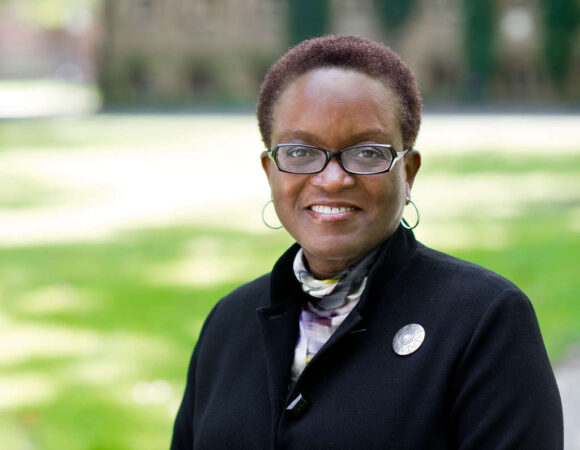
    Swarthmore College President Valerie Smith will step down in June 2027 after concluding her 12th academic year in the job.

    Smith, the highly selective liberal arts college’s first African American president, said in a message to campus that she decided to announce her decision now to give the school time for “a thoughtful, seamless transition.”

    “Serving as Swarthmore’s 15th president has been one of the great privileges of my life,” she said.

    Smith, 70, didn’t say specifically why she is choosing to leave the presidency, but it will be at the end of her current contract, which had been extended in 2024. An attempt to reach her for comment Tuesday was not successful.

    “These are tumultuous times,” Smith wrote. “Like many institutions, we are navigating new pressures, including unprecedented threats to our very mission. We will continue to face these challenges together, thoughtfully and deliberately. In doing so, we reaffirm Swarthmore’s enduring value.”

    The college said it would launch a search for Smith’s successor and already had chosen a search firm.

    “This is a pivotal moment for the college and for higher education more broadly, and the board recognizes how consequential this search will be in shaping Swarthmore’s future,” said Harold “Koof” Kalkstein, a 1978 graduate and chair of the school’s board of managers.

    A scholar of African American literature and culture, Smith came to Swarthmore in July 2015 from Princeton, where she had been dean of the college and a professor of literature and English.

    Smith steered Swarthmore through COVID-19, various student protests — including a pro-Palestinian encampment that was erected on campus in 2024 — and more recently, funding threats from the federal government. Swarthmore had feared that the federal government would increase the excise tax on its endowment earnings, but the school actually ended up not having to pay at all under new rules announced last year.

    In 2021, the college decided to stick with a plan to partner with an organization that places retired military personnel on campus as visiting faculty members despite pushback.

    “I ultimately drew from the College’s mission and my fundamental belief that critical to the liberal arts is our ability to engage in the exchange of diverse and often opposing views, not to shut them out,” Smith wrote at the time.

    When she arrived at Swarthmore, she said her plan for dealing with a student body known for its activism was to listen carefully, craft a careful and well-researched response, and communicate.

    “It’s critically important to maintain open dialogue with students,” she said at the start of her presidency in 2015.

    Kalkstein expressed gratitude for her service.

    “She has modeled integrity, intellectual curiosity, compassion, and empathy, all in service of our shared mission,“ Kalkstein said. ”Swarthmore is forever stronger thanks to Val’s leadership.”

    Smith will be leaving at the same time as Haverford College President Wendy Raymond, who announced her departure in November. That will leave Bryn Mawr College President Wendy Cadge, who has been at the school for less than two years, as the senior leader of the three members of a tri-college consortium.

  • Philly school officials want to close Lankenau High and give it to the city. A 1970s legal agreement may snarl that deal.

    Philly school officials want to close Lankenau High and give it to the city. A 1970s legal agreement may snarl that deal.

    Could a 1973 legal agreement help save Lankenau High?

    The Schuylkill Center for Environmental Education hopes so.

    The Philadelphia School District has proposed closing Lankenau, the city’s environmental science magnet school, and giving it to the city to help further Mayor Cherelle L. Parker’s affordable-housing goals, or for job creation.

    But the Schuylkill Center, Lankenau’s neighbor, believes it’s prohibited from doing so, and just notified Superintendent Tony B. Watlington Sr.

    The Schuylkill Center “holds a right to repurchase the property in the event that it is transferred or conveyed or used for any purpose other than school purposes, pursuant to a restriction in the October 4, 1973 deed by which [the Schuylkill Center] conveyed the property to the Lankenau School,” a lawyer for the environmental center wrote in a letter sent to the district Monday.

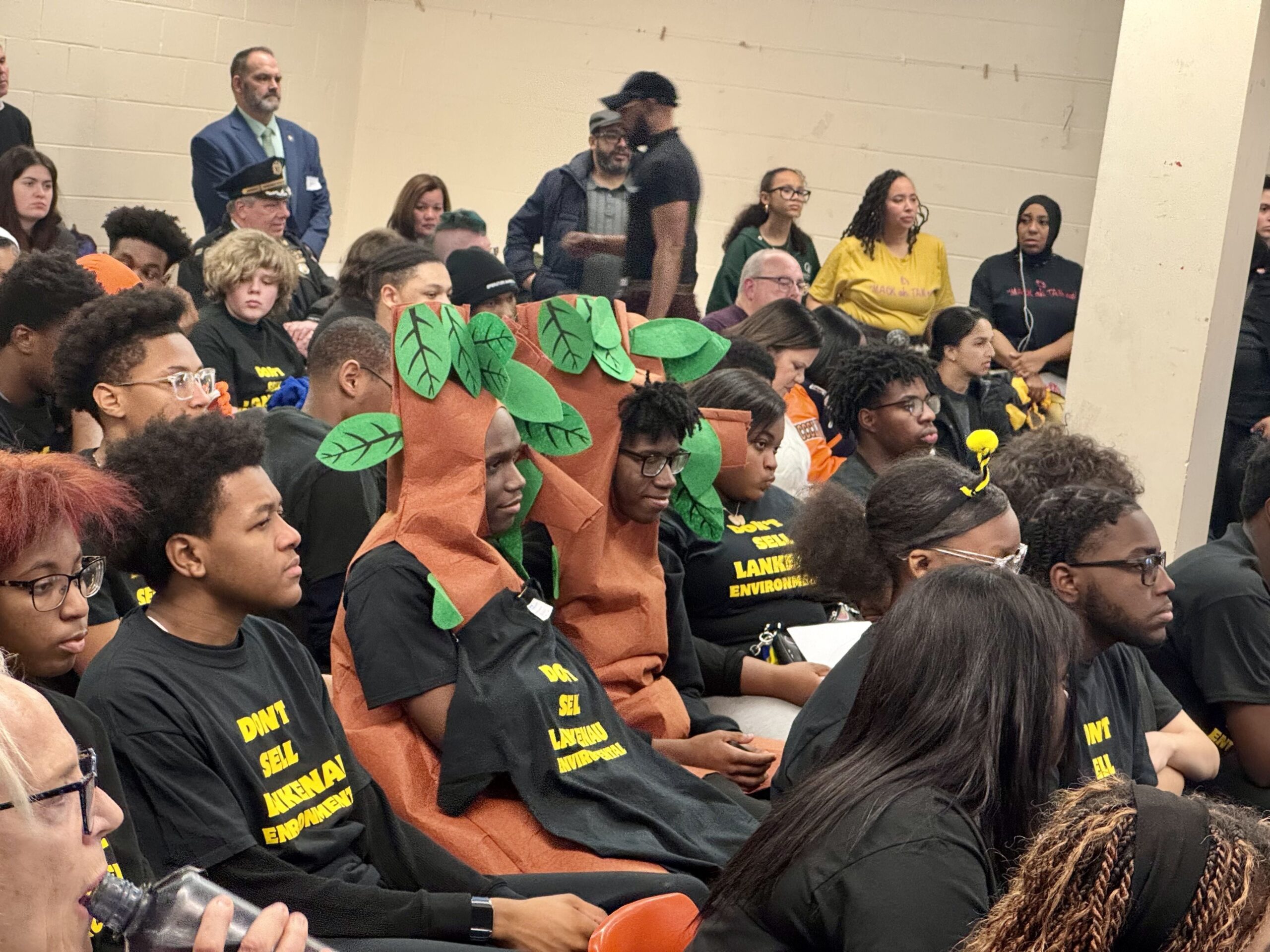
    Students, staff, and community members who support Lankenau High School – including some dressed as trees – packed a recent community meeting at the school about its proposed closure.

    If the district is “considering a sale of the property or using the property for any purposes other than continued use as a school, this letter serves as written notice of [the Schuylkill Center’s] right to repurchase,” lawyer Sean T. O’Neill wrote to Watlington, “The school district must provide [the Schuylkill Center] with reasonable advance notice of any potential conveyance or change in use and allow [the Schuylkill Center] the opportunity to exercise its right to repurchase.”

    The center, which touts itself as “one of the first urban environmental education centers in the country,” was founded in 1965. It has trails and a visitors’ center and runs educational programs and a wildlife clinic.

    District officials had no immediate comment.

    Lankenau’s history

    Lankenau sits amid 400 wooded acres adjacent to the Schuylkill Center. The 17-acre parcel Lankenau High now sits on was originally the site of the private Lankenau School for Girls; after that school closed, the Philadelphia School District purchased the land.

    What is now Lankenau High was first a program of Saul High and then Germantown High, but in 2005, it became a standalone school as part of then-CEO Paul Vallas’ small schools initiative.

    Since then, Lankenau has soared as a diverse, hands-on magnet with a 100% graduation rate in a location like no other.

    News that Lankenau landed on the district’s closure list infuriated students, parents, community members, and elected officials, who have mounted a robust campaign to fight plans to shut the school and relocate it as an honors program inside Roxborough High.

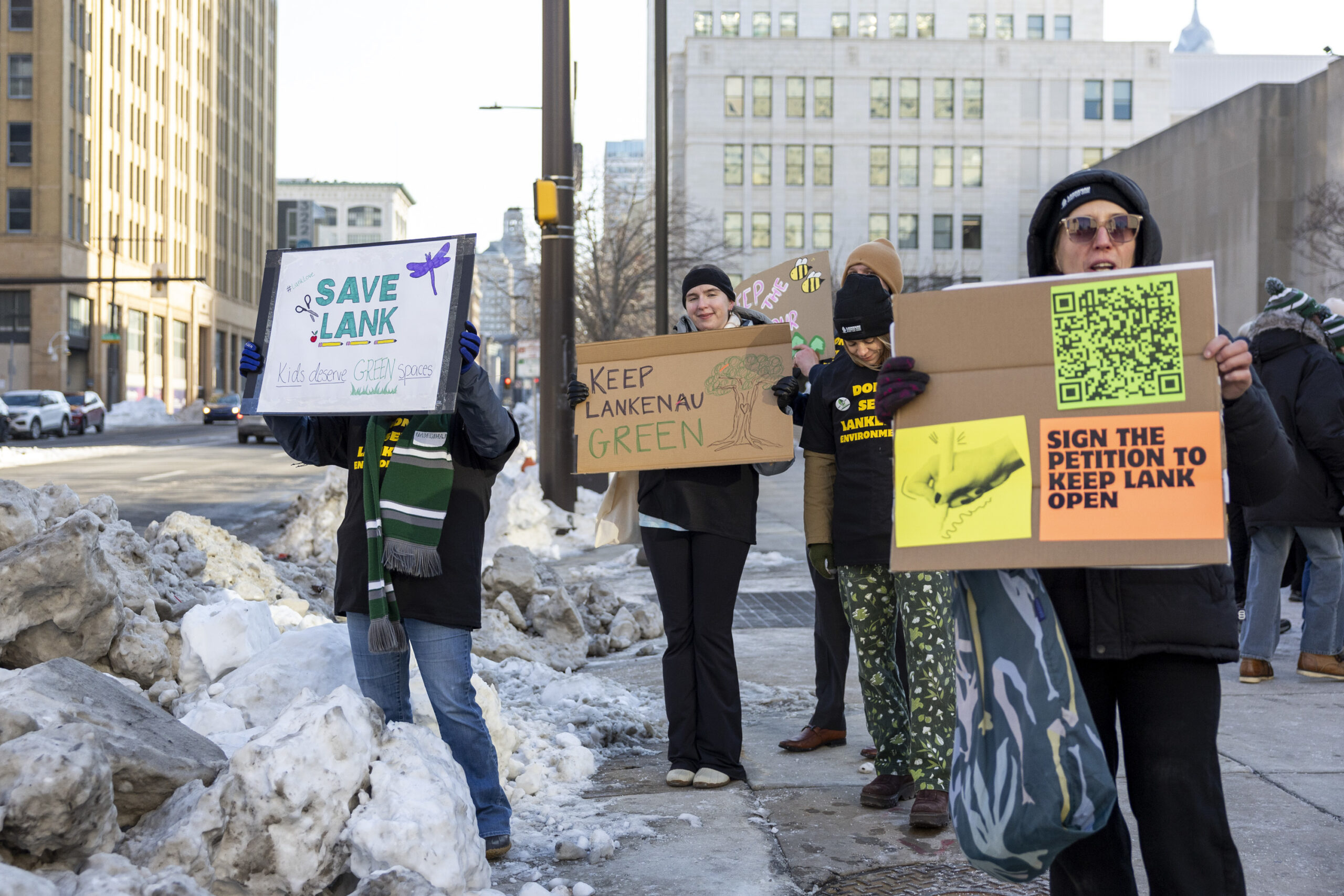
    Teachers, students, and community members from Lankenau High School rally outside a Philadelphia school board meeting in January.

    They’re particularly alarmed that Lankenau’s small size, used to justify its closing, came as enrollment shrank after the school system ordered changes to its special-admissions policy.

    The Schuylkill Center’s first priority is for Lankenau to remain as it is, said Erin Mooney, executive director of the 60-year-old organization, which now partners closely with Lankenau.

    “We are in opposition to Lankenau’s closing,” said Mooney, “but should something change with Lankenau, we want to ensure that the site continues to be used to teach people about nature.”

    Mooney, who has been public in the Schuylkill Center’s support for the school, discovered the language giving the Schuylkill Center right of first refusal if the property ever ceases being a school in the 1973 agreement.

    Watlington is scheduled to present his sweeping facilities plan — which as of January included 20 closures, six co-locations and 159 modernizations — at a school board meeting Thursday.

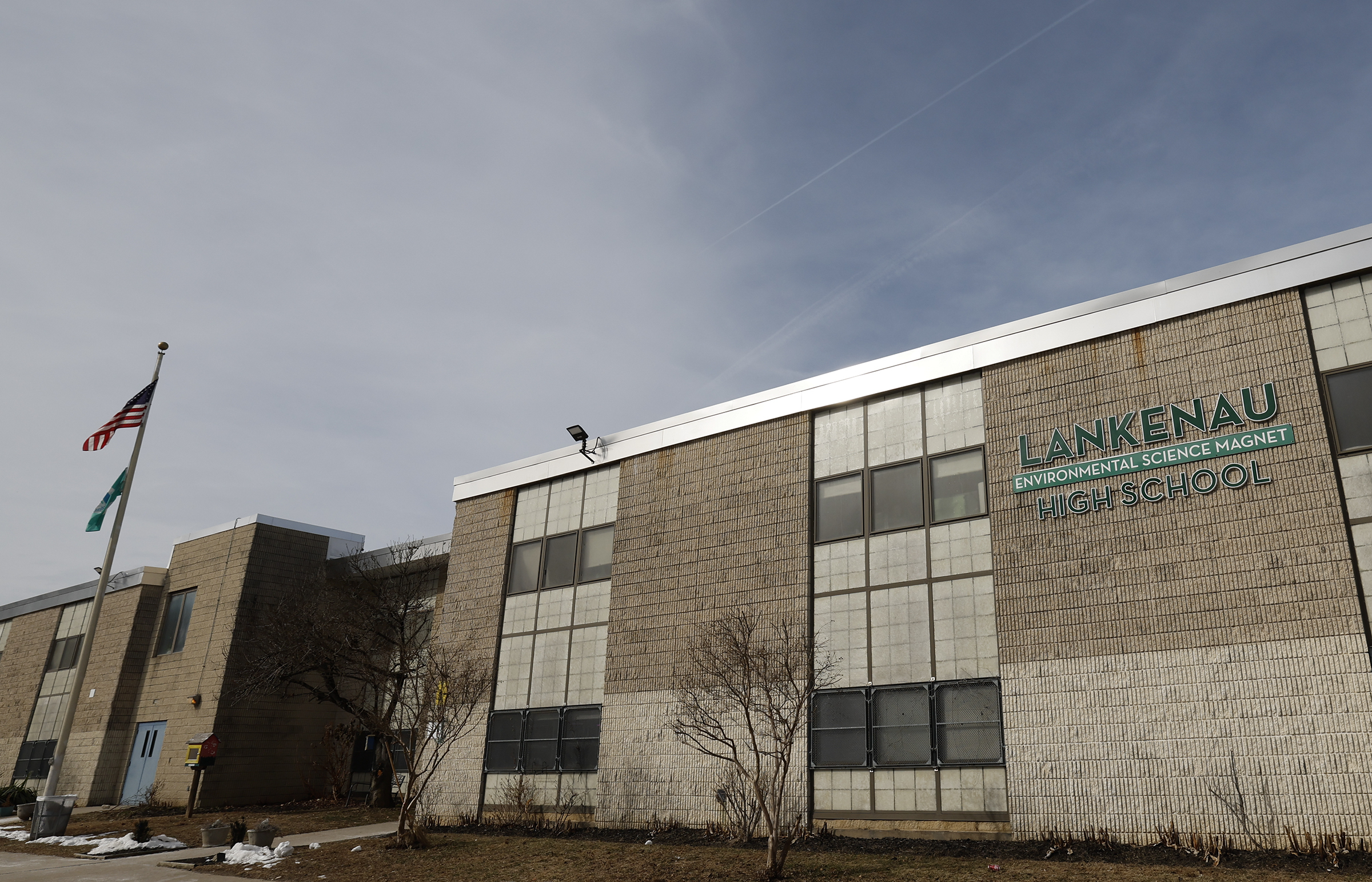
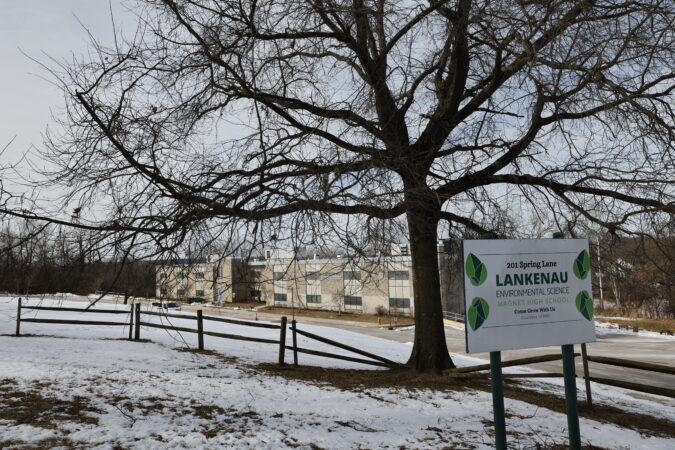
    The Lankenau Environmental Science Magnet High School in Roxborough on Saturday, January 24, 2026.

    But the superintendent has said what he presents to the board may include some tweaks to his initial recommendations.

    Mooney hopes the information the Schuylkill’s lawyers sent Monday helps Lankenau come off the closing list.

    “We want Lankenau to stay,” she said, “and I wanted the school board to have this information as part of its decision-making.”

    Watlington’s recommendations are just that; the school board has ultimate say. It has not given a date for the final vote on school closings, but said no vote will happen Thursday.

  • Students would transition from this closing North Philly school to worse-performing ones in the district’s plan

    Students would transition from this closing North Philly school to worse-performing ones in the district’s plan

    Philadelphia School District officials said they considered poverty rates and prior school closings in a neighborhood when weighing which schools to close.

    Each school had a score based on its surrounding neighborhood, and only one of 20 proposed closures is in a “very high risk” neighborhood: John Welsh Elementary.

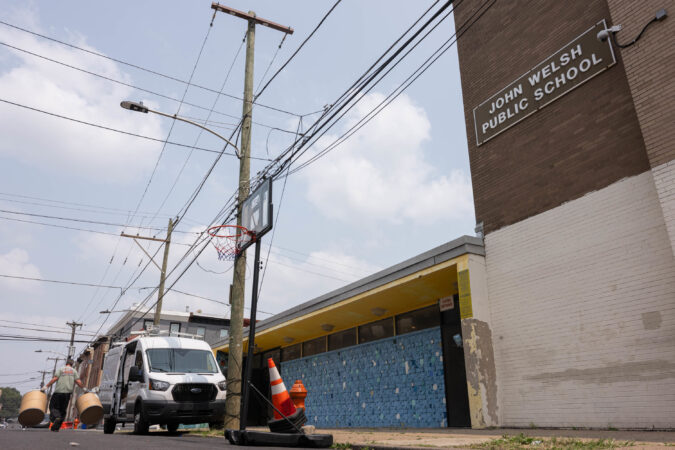
    Welsh, on the northern edge of the Norris Square neighborhood, has 185 K-8 students and operates at under a quarter of the building’s capacity. Enrollment has declined over the past several years and the school now holds an average of 20 students per grade, including only 9 second graders. About two-thirds of the students are Latino, and the other third are Black.

    While it’s small and its building is not in good shape, it was not necessarily obvious that the district would target Welsh for closure — because so-called neighborhood vulnerability was a factor in officials’ decision-making.

    But Welsh parents and students argue the school shouldn’t be closed because its students were performing well, despite the lack of investment from the district, as well as the condition of the building and its surrounding neighborhood.

    Kareemia Boyd, the parent of a Welsh eighth grader, credited the school with helping her son turn around his grades after he came from a charter school. She transitioned her son to Welsh in fifth grade, when his grades were suffering and he experienced bullying. Now poised to graduate this year, she said he gets A’s and B’s.

    “I didn’t expect he would actually grow in so many ways,” she said at a recent community meeting about the closure plan.

    The district’s draft plan calls for the Welsh building to be upgraded and converted into a new year-round high school which would open for the 2029-30 school year.

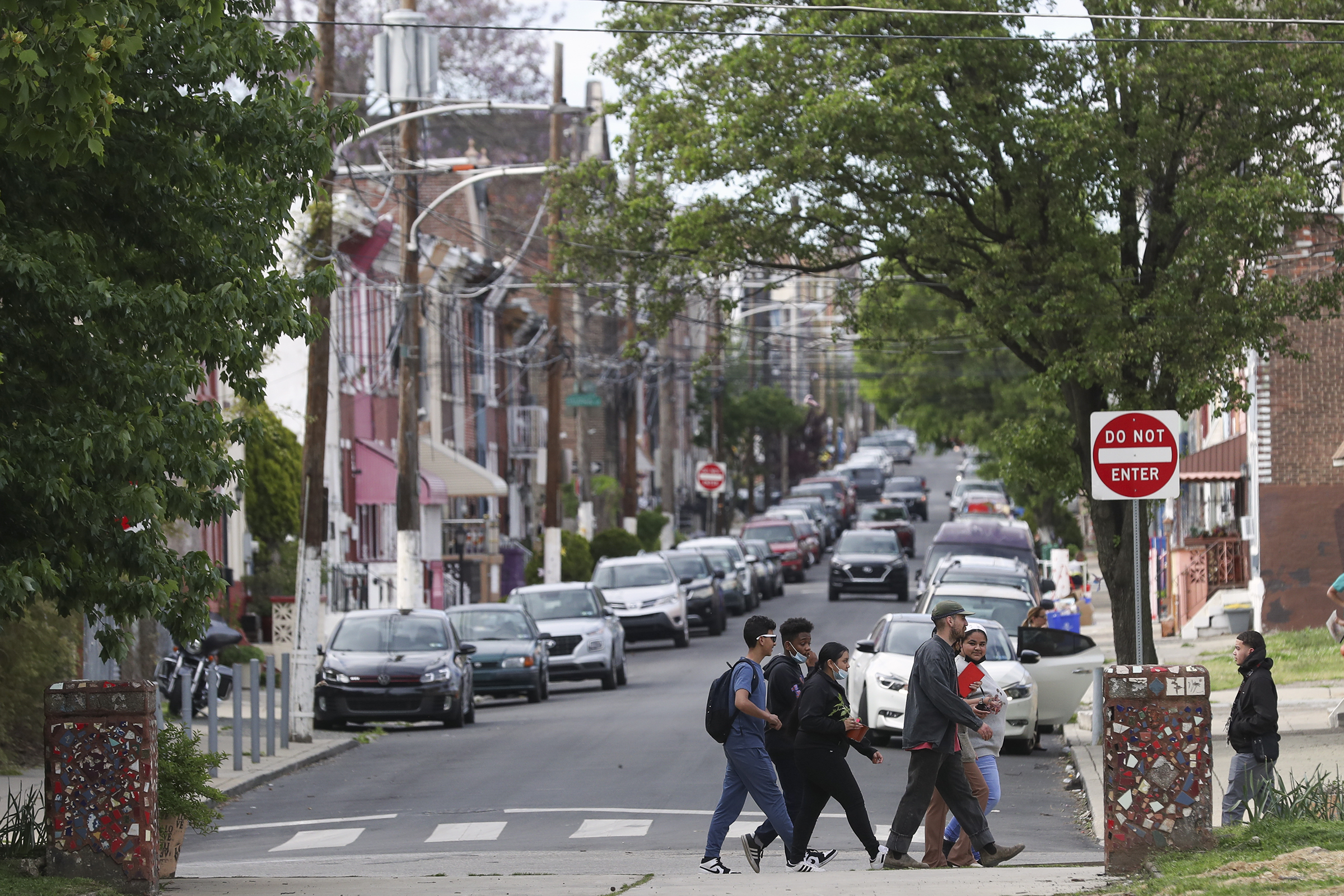
    Pedestrians walk along Susquehanna Avenue in the Norris Square neighborhood in 2022.

    Current Welsh students would transition to John F. Hartranft School or William McKinley School. Hartranft and McKinley would receive new ADA investments and other renovations, Algebra I instruction, and pre-K programming, officials said.

    Several students asked district officials at the community meeting why they would be transitioned to Hartranft and McKinley, when those schools have performed worse academically than Welsh. About 14% of students at Hartranft and 10% of students at McKinley scored at least a proficient level on state English language arts exams last year, compared to 20% of Welsh students.

    District representatives said they did not consider academic performance when deciding whether to close schools. Instead they focused on getting proper resources to students and schools, they said, which will be more feasible once schools are consolidated.

    Boyd said her son’s teachers at Welsh pushed him to improve, and wouldn’t let him settle for less than what he was capable of. She appreciated how much they cared about him, and said they had “a big impact.”

    “I want somebody to care about my kid as much as I do,” she said.

    She said she believes the declining enrollment has to do with the school’s neighborhood. Boyd said people are concerned about crime and drugs, and don’t feel safe sending their kids to the school, particularly when school security is limited.

    But for those who have stayed, Sary Rodriguez, a parent of current Welsh fifth and eighth graders, said it’s a community where everyone looks out for others.

    “We all know each other. We all support each other. So it’s hurting a lot of people,” she said about the district’s plan.

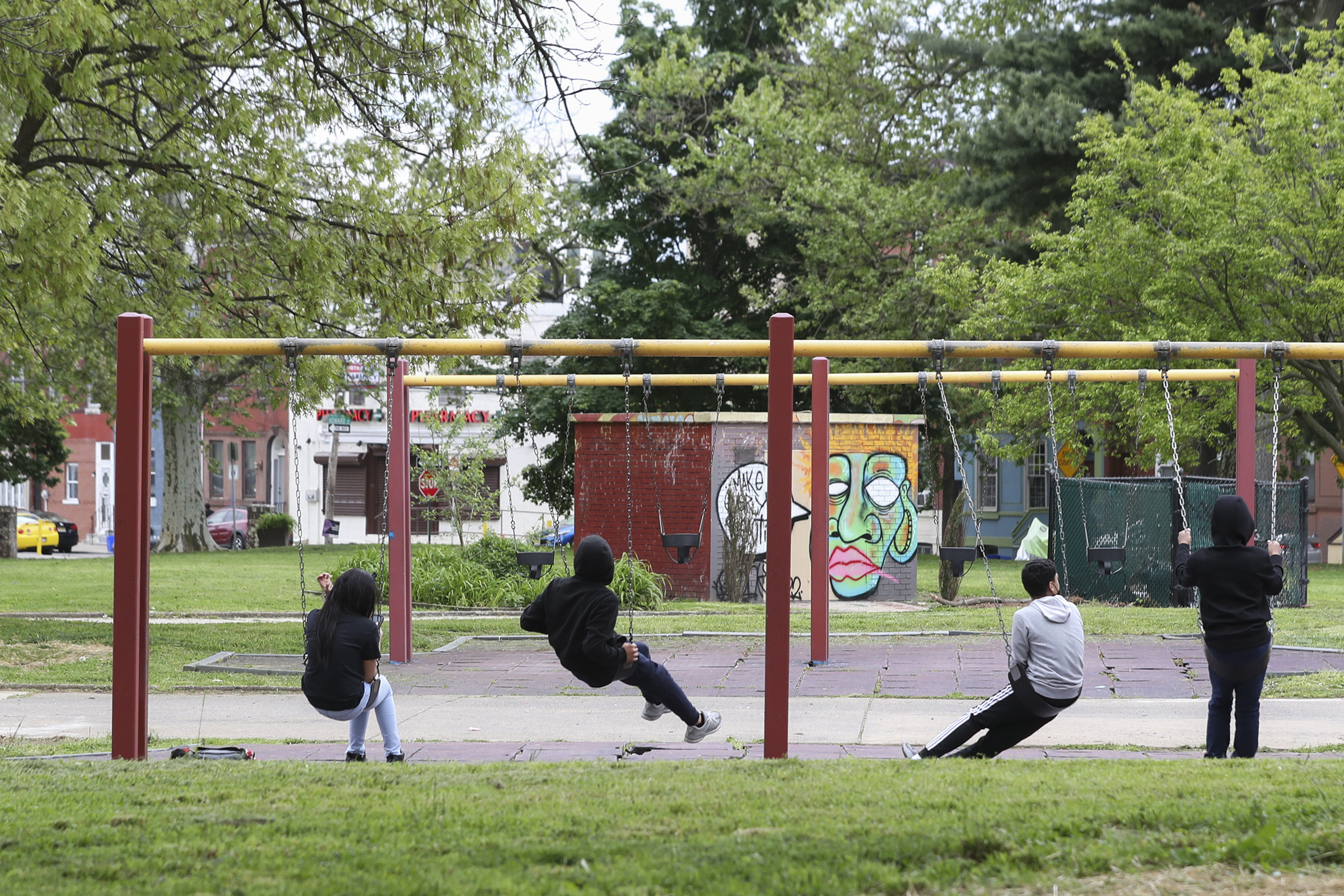
    Young people enjoy Norris Square Park in the Norris Square neighborhood, where Welsh Elementary School is slated to close under a proposal from the school district.

    Rodriguez also has a 19-year-old daughter who graduated from Welsh and works at the school. But Rodriguez said she’s considering moving her children to charter schools if the school closes, in part because of her concerns for the academics at McKinley and Hartranft. No matter where they go, transitions are difficult for all involved, she said, including parents.

    “It’s not only the students that have to meet new people and new friends and new teachers, their parents have to start all over [with] a new relationship with teachers and students, the neighborhood … I don’t know nothing about those schools,” she said.

    Rodriguez implored the district officials at the community meeting to genuinely consider pleas to keep the school open.

    “I really have the feeling it doesn’t matter what we say or what we do. It’s just going to be a decision that they’re gonna make,” she said.

    Rodriguez said she’s upset that the district hasn’t invested in Welsh, but plans to put resources into a new school at the same location.

    “It bothers me that they’re going to spend the money to fix it for a high school and they can’t fix it for our kids,” she said.

    Ava Huertas, a sixth grader at Welsh, planned to graduate from the school just like her grandmother, mother, and sister did. She’s been enrolled there since she was in kindergarten, and now would have to move to a new school for eighth grade before transitioning again for high school.

    She asked several questions to district officials about why they were planning to close her school, reading off notecards and avoiding eye contact. As she wrapped up her final question, she thanked the officials for listening, but had to be honest about her feelings.

    “I hope that the plan doesn’t go through, I’m not gonna lie,” she said.

  • Quakertown schools are planning counseling and police presence after student arrests at ICE protest

    Quakertown schools are planning counseling and police presence after student arrests at ICE protest

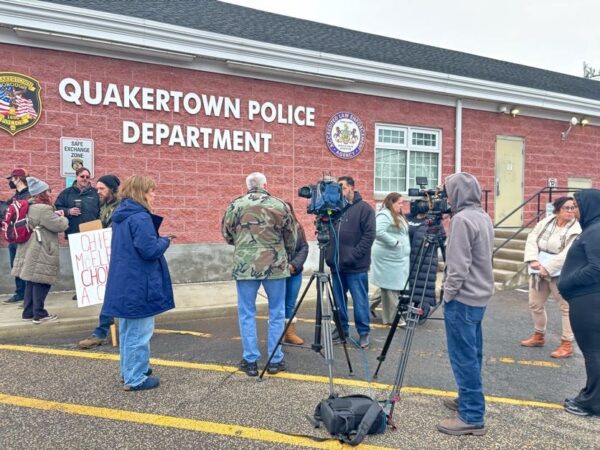
    The Quakertown Community School District is planning to offer counseling and has requested a police presence this week after a student walkout Friday to protest federal immigration enforcement ended in a clash with police and multiple student arrests.

    “Our responsibility is to focus on creating as safe and supportive a learning environment as possible for students and staff to return to school this week,” acting Superintendent Lisa Hoffman said in a statement Sunday night.

    Like districts across the region, Quakertown schools were closed Monday because of snow. But administrators are preparing to reopen amid continuing intense attention from Friday’s walkout, which involved about 35 students from Quakertown Senior High School. Unlike other walkouts at Philadelphia-area schools by students protesting U.S. Immigration and Customs Enforcement, Quakertown’s protest turned confrontational.

    Videos circulating online appear to show the Quakertown Borough police chief putting a teenage girl in a chokehold during the incident, which police said involved students entering traffic and damaging property and resulted in the arrests of five students and one adult.

    The status of the students who were arrested, including whether they were still in custody, wasn’t clear Monday. A spokesperson for the Bucks County District Attorney’s Office — which is investigating the police response to the protest — said state law barred the office from discussing the teenagers’ cases.

    The spokesperson, Manuel Gamiz, did not respond to questions about the charges, where the students were being held, or when they would be arraigned. While police had said one adult was arrested, Gamiz said that to his knowledge “no adult was ever charged” in connection with the incident.

    Community members organized by the group Upper Bucks United demanded the immediate suspension of the police chief, Scott McElree, at a borough council meeting Monday night. An online petition also calls for McElree’s resignation.

    McElree, who is also the borough manager, did not respond to requests for comment Monday.

    Reached by phone Monday afternoon, borough council vice president James Roberts Jr. hung up on a reporter. He did not answer a second call. Messages left for four other council members were not immediately returned Monday.

    Witold Walczak, legal director of the ACLU of Pennsylvania, said in a statement Monday that “by all accounts, including abundant video evidence, there were no issues at the demonstration until Quakertown police arrived and incited violence.”

    Walczak called for a “full and transparent investigation” and for Quakertown police and McElree “to be held accountable for their actions if the evidence confirms the apparent excessive force, retaliation and false arrest.”

    In response to a series of questions sent Monday, the police department sent a written statement, saying the borough and department were “fully cooperating with the Bucks County District Attorney’s Office concerning this investigation. Until this investigation is complete, neither the Borough nor its Police Department will be commenting on this matter.”

    Tensions led to walkout cancellation

    In her statement Sunday, Hoffman offered more context about Friday’s walkout, which the district had attempted to cancel that morning.

    In the week leading up to the walkout, Hoffman said, administrators met with student organizers “to discuss alternative ways to demonstrate their right to free speech that wouldn’t disrupt the school day.”

    Like “nearly every school district across the region,” Hoffman said, “it is our practice not to endorse or facilitate a student walkout during the school day for any reason. However, we also know it is our responsibility and duty to provide reasonable safety and security support for students and staff members who enter and exit our schools.”

    The district was concerned that students who planned to participate in the walkout reported they were being bullied and threatened, Hoffman said.

    At 9 p.m. Thursday, Hoffman said, “the district received what was deemed a new and concerning threat of violence.” A district spokesperson did not respond to questions Monday, including about the nature of the threat.

    Though the district issued a notice and met with student organizers before school Friday, attempting to cancel the protest, administrators gathered in front of the high school at 11:25 a.m. Friday, preparing for the “the possibility that students would proceed with their walkout despite the safety concerns shared with them,” Hoffman said.

    As students walked off campus — not following any previously discussed route, Hoffman said — district officials heard from community members that some students in town “were engaging in disruptive and unsafe behavior,” Hoffman said.

    At that point, students “were no longer under the district’s custodial control or supervision, and we have almost no legal ability to regulate or investigate their behavior,” she said.

    Hoffman said the district has no additional information on arrests or the investigation. She said administrators and “many of our staff members have been inundated with hateful messages and concerning physical threats to our personal safety via email, phone, and social media” since the walkout.

    “This is simply inexcusable,” Hoffman said. “We have and will continue to report these threats to the appropriate law enforcement agencies.”

    The district is working with the Bucks County Intermediate Unit to develop a “counseling support plan” for students and staff, Hoffman said. She also said it had “communicated with our law enforcement partners for police presence and support as we return to school.”

    Over the weekend, supporters created a GoFundMe campaign to raise money for the students’ legal fees, court costs, medical expenses, and other support services. By Monday afternoon, it had collected more than $28,000. The campaign’s organizer did not respond to a request for comment.

  • Philly schools will remain virtual on Tuesday; other Pa. and N.J. districts are a mixed bag

    Philly schools will remain virtual on Tuesday; other Pa. and N.J. districts are a mixed bag

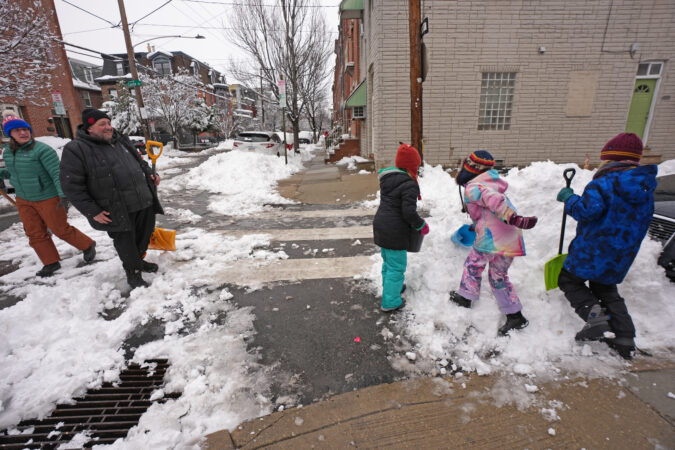
    School districts around the region made varying calls for how they’re handling classes Tuesday as the region continues to dig out from the massive snowstorm that dumped more than a foot of snow in many places — with some closed altogether, others fully open, and others open, but delayed.

    The Philadelphia School District opted for another day of virtual instruction.

    Superintendent Tony B. Watlington Sr. has said the nation’s eighth-largest school system favors in-person instruction, but places student and staff safety as its highest priority.

    In Upper Darby, Delaware County, Superintendent Dan McGarry made the call to bring students in on time.

    “The district transportation team and facilities team have been working hard all day to clear snow from our facilities for in-person instruction,” McGarry wrote in a message to families and staff. “We have been in communication with the township as well, and I want to thank them for their hard work getting roads clear for school tomorrow.”

    Districts including Council Rock and Pennridge, both in Bucks County, called two hour delays.

    In Montgomery County, Cheltenham and Lower Merion schools both announced a two-hour delay.

    “Buses are expected to arrive at bus stops two hours after their normal pickup times; however, please be patient as snow and ice on some streets may cause additional delays,” Lower Merion spokesperson Amy Buckman said in a message to families Monday evening.

    Cherry Hill and Moorestown, in Camden County, will also hold classes with a two-hour delay.

    Renewed debate over virtual instruction in New Jersey

    And while some Pennsylvania districts pivot to virtual instruction when significant snow falls, that’s not possible in New Jersey, where state law prevents it.

    A handful of New Jersey districts opted for total closures. Lenape Regional, Evesham, and Medford schools, all in Burlington County, cancelled classes altogether.

    Winslow schools in Camden County will remain closed Tuesday for a second consecutive day, said interim Superintendent Mark Pease. The district was shut down for three days during the last storm.

    Pease said the district would use two days from its spring in April to make up the missed days. The break will be cut to three days, he said.

    “If we get another storm, we will be extending the school year,” Pease said. “Let’s hope this is it for the winter.”

    The snow storm renewed calls among some New Jersey educators to the state to allow virtual and hybrid instruction to avoid closing schools due to inclement weather.

    In a social media post, Camden Education Association President Pam Clark said she was asking Gov. Mikie Shirrell to revisit the virtual option for traditional public schools. She used the hashtag “not fair.”

    New Jersey allowed virtual and hybrid instruction when the pandemic shut down schools.

    However, state law now strictly limits remote learning, according to the state Department of Education. Districts must meet a state requirement of 180 days.

    School districts may seek approval for virtual learning for school closures lasting more than three consecutive days because of a declared state of emergency or a declared public health emergency.

    There has been pushback against virtual learning because of concerns about learning loss suffered during the pandemic. There also are concerns that some schools don’t have enough Chromebooks or devices for students to log on.

    Timothy Purnell, executive director of the New Jersey School Boards Association, said districts should have the flexibility to pivot when circumstances warrant such as a snow day.

    Districts have invested in technology and training to successfully implement virtual instruction, he said.

    “Limiting virtual instruction days exclusively to public health emergencies is yesterday’s logic,“ Purnell said in a statement.

  • Temple’s new provost has an academic background in urban planning and comes from Arizona State University

    Temple’s new provost has an academic background in urban planning and comes from Arizona State University

    An Arizona State University vice provost and dean, who has degrees in mathematics and geography and has studied urban planning, will become Temple University’s next senior vice president and provost.

    Elizabeth “Libby” A. Wentz, 62, an Ohio native with a doctorate from Pennsylvania State University, will step into her new role at Temple July 1, subject to approval by the board of trustees, the school announced Monday.

    “My background in urban planning has kind of shaped who I am and shaped my thinking, and I just think that there’s so many great opportunities for recruiting students, for creating internships for students, for creating research experiences for students in an urban environment that the university’s rural counterparts don’t have in the same way,” Wentz said in an interview.

    Wentz has overseen Arizona State’s Graduate College since 2020 and previously was dean of social sciences, which included geography and urban planning. She will replace David Boardman, who has been Temple’s interim provost since July when Gregory Mandel left the job. Boardman was not a candidate for the job and will continue his role as dean of the college of media and communication.

    As Temple’s provost — essentially the university’s number two leader — she will oversee 17 schools and colleges, multiple campuses, and the school’s undergraduate, graduate, and professional programs.

    She is the first provost in at least more than a decade to come from outside the university and was selected through a national search, chaired by a faculty member and a dean.

    “Libby sort of stuck out for me after the hour I spent with her as being literally right on the same page relative to her ability to articulate the mission and the purpose of Temple and why that was so important,” Temple president John Fry said in an interview.

    He was struck by her commitment to student success, he said. “She obviously had time to interact with students and, I think took like really special care and interest in our students,” he said.

    And, Arizona State has grown tremendously in part because of its commitment to online programs, he said, which are a priority in Temple’s strategic plan. Temple has lost about a quarter of its enrollment over the last decade.

    “We don’t have the kind of online enrollment that you would expect a place like Temple to have,” Fry said. “One of the things Libby and I did speak about was her familiarity with the ASU online infrastructure. She’s taught in it. She obviously has led parts of it.”

    Temple remains amid searches for several other key positions, including chief operating officer and law and engineering school deans.

    Wentz said she was attracted to Temple because she wanted to remain at an urban university and has long admired the work of Fry, who has had a longstanding relationship with Arizona State president Michael M. Crow. Temple a year ago became part of the University Innovation Alliance, a small nonprofit sponsored through Arizona State that is aimed at finding innovations to improve learning and increase college attendance, retention, and graduation rates ― especially for low-income students ― then scaling those innovations.

    “They built a really strong rapport and have a very similar philosophy around higher education which also very much aligns with kind of my own interest and my own philosophy,” Wentz said.

    Both Temple and Arizona State, which has its main campus in Tempe, are major research institutions; Arizona is much bigger with over 194,000 students, compared to Temple with more than 33,000, including its international campuses.

    “Honestly the biggest difference [between the two] is the weather right now,” Wentz joked, noting that it was 81 and sunny in Tempe on Sunday as Philadelphia prepared for blizzard conditions.

    Arizona State does not have a faculty union, so learning to work with Temple’s faculty union will be new.

    “That’s going to be an exciting area for me to learn about,” she said.

    Urban planning background

    Fry has a reputation as an urban planner and in his prior leadership jobs at the University of Pennsylvania, Drexel, and Franklin and Marshall focused on development and improving the campuses and their neighborhoods. He has aspirations for Temple, too, including building an “innovation corridor” stretching from Temple’s recently acquired Terra Hall at Broad and Walnut Streets in Center City to the health campus, a little more than a mile north of main campus on Broad Street.

    Wentz said she and Fry had not talked about urban planning, but that she looks forward to working on the university’s new strategic plan, which includes more green spaces, a new 1,000-bed residence hall, a STEM complex, and an emphasis on more attractive and defined entrances to its North Philadelphia main campus. The three pillars of the plan are student success, research in action, and place-based impact.

    “Those are going to be some really exciting conversations that I look forward to having with John, as well as with the Temple planners to think about how do we make it a safe space for students and a great learning environment.” she said.

    During a 2022 talk at Arizona State, Wentz discussed how urban planning figured into her work.

    “Most of the work that I do applies to the urban environment and urban analytics, so trying to understand how it is that cities work and trying to make the physical urban environment a better place for people to live,” Wentz said during that talk.

    Building trust and collaboration

    In her new role at Temple, she said, early on she will focus on getting to know the community and the university’s financial model and make clear her commitment to shared governance and data-informed decision making.

    Wentz, who grew up near Cleveland and got her bachelor’s in mathematics and master’s in geography at Ohio State University, spent the last 30 years at Arizona State. She became a professor there in 1997.

    She helped the university launch its medical school and has grown graduate enrollment and graduate student funding.

    Wentz said she prides herself on building a culture of trust and collaboration and has worked with the local community. She said she’s looking forward to doing the same at Temple.

    She plans to come to Philadelphia in a couple weeks and look for a place to live, she said.

    “I’m going to come after the snowstorm, I think, instead of before,” she said Sunday.

  • Penn State’s THON raises record $18.8 million

    Penn State’s THON raises record $18.8 million

    Pennsylvania State University’s THON dance marathon raised a record $18.8 million to fight pediatric cancer, organizers announced Sunday at the conclusion of the annual event.

    The 46-hour dance marathon, which has been going on for more than 50 years at the state’s flagship university, began 6 p.m. Friday inside Penn State’s Bryce Jordan Center on the main University Park campus and finished 4 p.m. Sunday. More than 700 dancers competed.

    The money raised goes toward Four Diamonds charity, which supports research for a cure and families whose children get treatment at Penn State Health Children’s Hospital.

    “While we are incredibly proud of this record-breaking total, the true success of THON is found in the thousands of Penn State students who came together with a singular purpose,” Benjamin Roitman, THON executive director, said in a statement “This milestone is a direct reflection of the tireless effort and collective spirit of our community who, embodied the ‘Love Leads Forward’ theme, proved that there is no limit to what we can achieve when we stand together for the common cause of conquering childhood cancer.”

    THON’s total this year beat last’s year $17.7 million.

    More than 16,500 student volunteers participated in THON, which along with Four Diamonds has helped more than 4,800 children through the years, the organization said.

    Billed as the largest student-run philanthropy in the world, THON has raised more than $254 million.

  • Philly’s school closure plan targets middle schools. Here’s why the district is moving away from them.

    Philly’s school closure plan targets middle schools. Here’s why the district is moving away from them.

    The Philadelphia School District is walking away from middle schools — mostly.

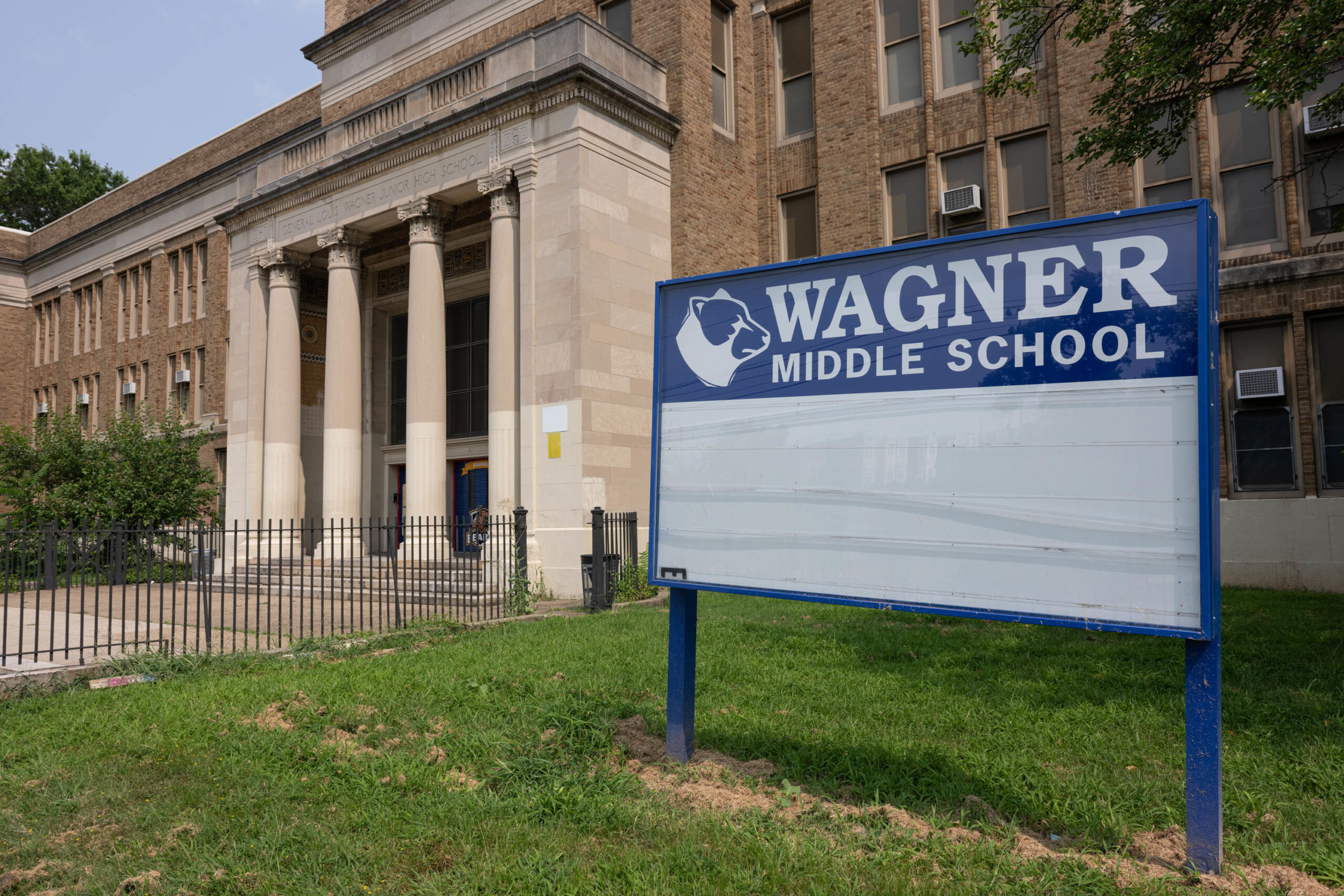
    Of the 20 schools Superintendent Tony B. Watlington Sr. has recommended to close, six are middle schools — AMY Northwest, Conwell, and Stetson in Kensington; Harding in Frankford; Tilden in Southwest Philadelphia; and Wagner in West Oak Lane.

    The district plans to expand elementary schools to take in those students in most cases, and Conwell, a magnet middle school, would send students to AMY at James Martin.

    “Our research does not say that traditional middle school children in Philadelphia perform better academically than K-8 students,” Watlington said when he rolled out his tentative plan in January. “Nationally, and in Philadelphia, there’s a mixed bag.”

    While the school district says the K-8 model reduces transitions for students and helps maximize resources, critics of the district’s plan say closing middle schools will uproot their children and abandon successful schools.

    Education experts, meanwhile, say instructing middle school-age students has long been a complex and controversial issue — and it’s a debate that Philadelphia district officials are reigniting with their sweeping facilities proposal.

    Among the top complaints from critics of the plan: The pivot isn’t absolute. Though many middle schools are disappearing, Philadelphia will still have 13 standalone middle schools and secondary-middle schools if those six close. And some will even grow.

    Middle-grades students from Masterman, the popular and elite city magnet, would take over the closing Laura Wheeler Waring school building in Spring Garden “to expand access” to Masterman, officials said.

    The district is also adding a new Academy at Palumbo Middle School to give students a feeder pattern into the South Philadelphia high school magnet. The new middle school will co-locate with Childs Elementary in Point Breeze.

    And in the Northeast, where schools are bursting at the seams, two standalone middle schools — Castor Gardens and Baldi — will be untouched. So will a handful of others, including Roberto Clemente in North Philadelphia, Feltonville School of Arts and Sciences, Grover Washington in Olney, AMY at James Martin in Fishtown, and MYA and Science Leadership Academy Middle School in West Philadelphia.

    Why is the district targeting middle schools?

    Though officials said the facilities plan is not driven by finances, it’s clear that the underfunded school system needs to shrink its footprint.

    With 70,000 empty seats citywide and an inequitable distribution of programs and opportunities, system officials say they need to make changes to do better for all kids.

    “We can more efficiently distribute our limited resources in a K-8 model by operating 13 grade spans as opposed to six,” Watlington told City Council at a hearing on March 17. “This is an efficiency issue.”

    At present, the district has 13 different grade spans throughout its schools — from a single K-2 to K-4s, K-5s, K-8s, 5-8s, 6-8s, and others. It is proposing shrinking, mostly, to six different grade bands, and emphasizing K-8 or 5-12 as preferred models.

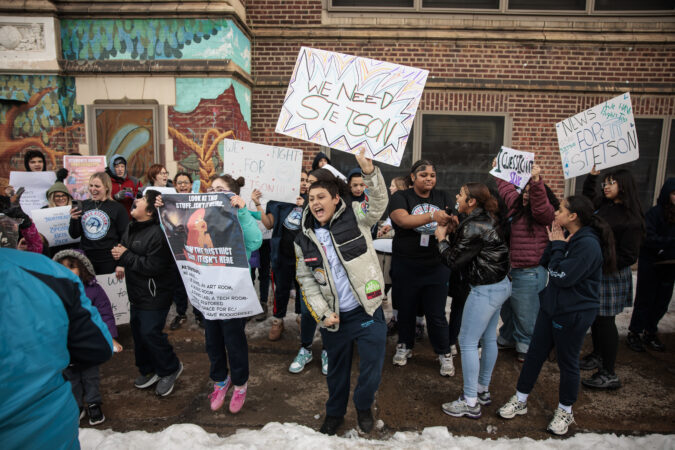
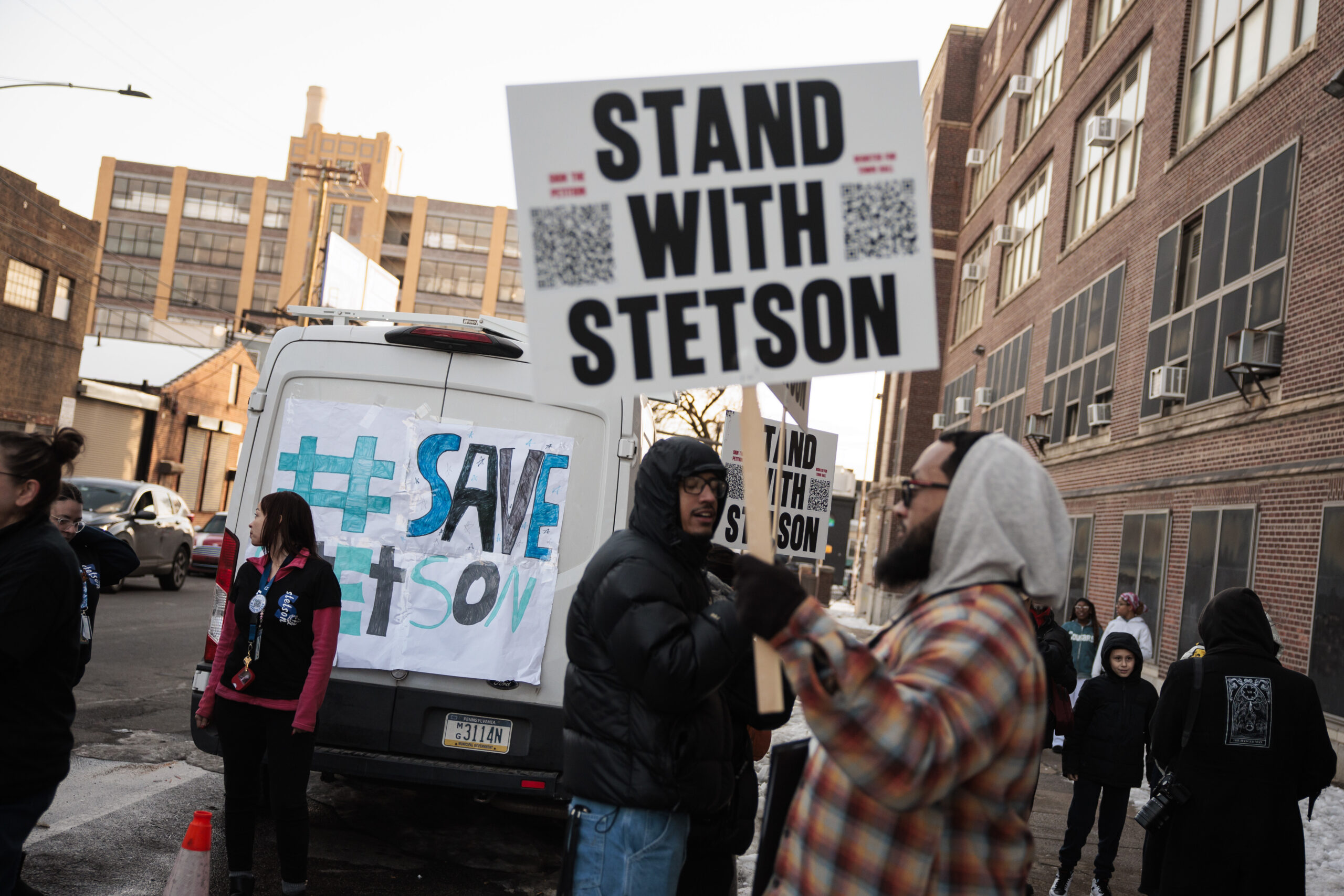
    Students, teachers, and supporters rally before a community meeting at John B. Stetson Middle School this month. It’s one of six middle schools that is slated for closure.

    Officials say they’re also relying on feedback received in surveys taken and meetings held prior to the plan’s release, despite critics’ worry that the feedback was crafted to give the district the answers it wanted.

    Hilderbrand Pelzer III, an associate superintendent, told a crowd of more than 100 people gathered at a Stetson Middle School meeting this month that in the surveys, families told the district they wanted to minimize transitions.

    “Think of safety in the sense that young people should remain in one place longer, pre-K to 8,” Pelzer said. “Hence why we want to recommend some of our K-4s, K-5 schools grow to K-8. Now that may not be the answer you want to hear, but the voices that have informed that have allowed us to make that a recommendation.”

    But critics of the district’s plan say they worry that the feedback was crafted to give the district the answers they wanted. And the audience at Stetson that day pushed back: Minimizing transitions is not what they want. They want their middle school to stay at their current school.

    “Why can’t you inform recommendations from people at Stetson?” one person shouted.

    The long and thorny history of middle schools

    Wrestling with where middle-grades learners should attend school is nothing new, said Penny Bishop, dean of Boston University’s Wheelock College of Education and Human Development.

    “We have been struggling to figure out how to provide appropriate schooling for this age group for well over a century,” Bishop said. “It’s a question with a long and thorny history” dating to the 1800s, she said, with much back and forth.

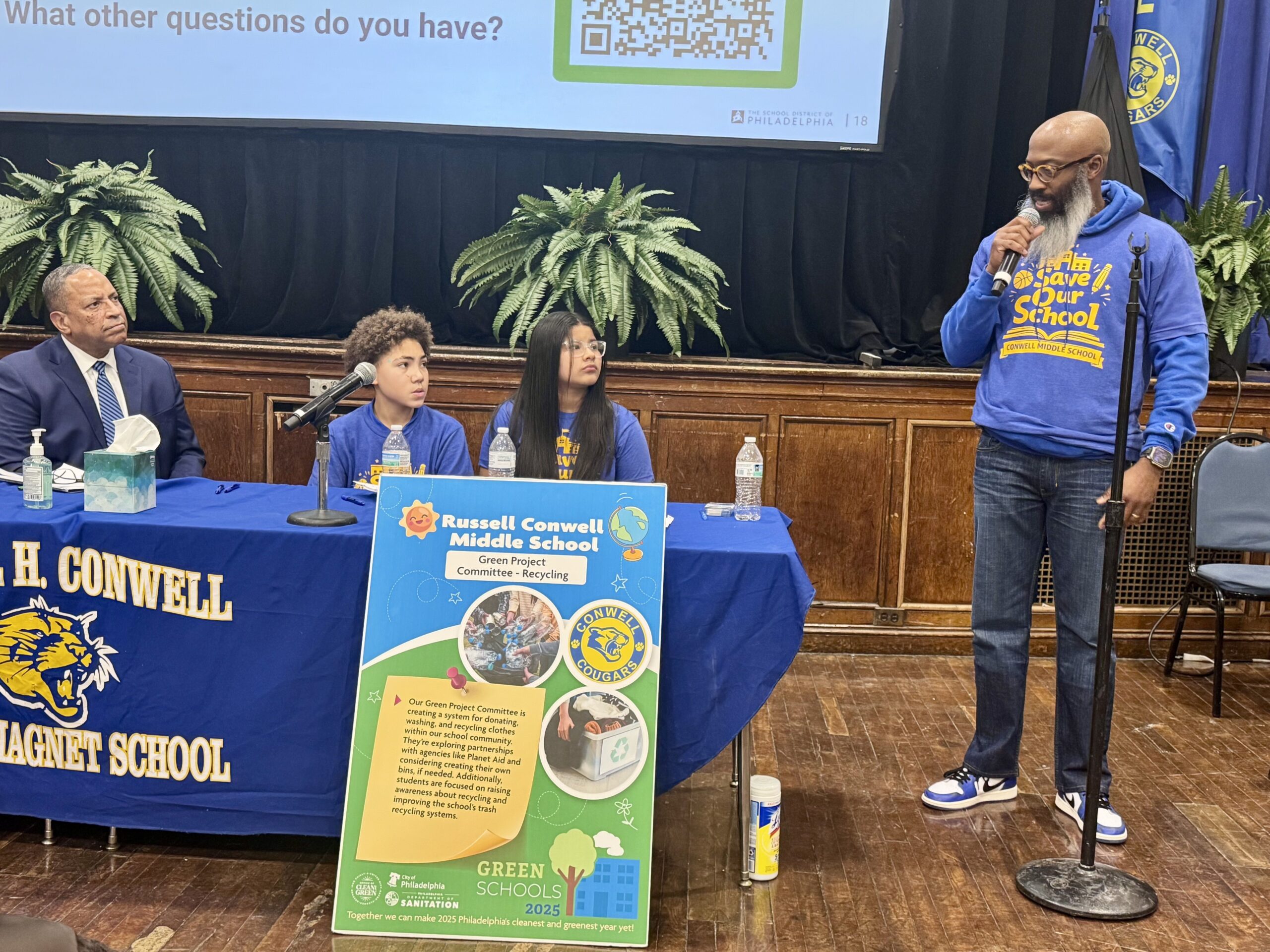
    Philadelphia School District Deputy Superintendent Oz Hill (left) and student moderators listen to Andre Sanford-Adams, Conwell Middle School’s health and physical education teacher, speak during a recent community meeting about why he thinks it’s a mistake to close Conwell.

    Many of Philadelphia’s middle schools began as junior highs. Middle schools as a concept first surfaced in the United States in the 1960s and took off in the 1980s as part of an explicit attempt to create schools “designed based on the developmental needs of this particular age group, as opposed to saying, they’re short high schoolers or they’re tall elementary students,” Bishop said.

    But tweens and early adolescents can be a tough age group to educate well, and middle schools got a bad rap among some, said Bishop. As school choice and shifting birth rates caused belt-tightening in some places, some districts began to shift grade configurations.

    Boston recently shut its last standalone middle school as that district contracted amid enrollment losses, for instance.

    Both Bishop and Katie Powell, director for middle level programs at the Association for Middle Level Education, said that research doesn’t support one kind of grade configuration or another.

    “What matters most for middle school-age students is that we understand that they are going to need a different experience than their elementary counterparts in a K-8 building, and having a defined middle school, even within that K-8 school — that’s what tends to be most successful,” Powell said.

    And, Bishop said, “a lot of this is tied up in the degree to which the leadership understands the developmental needs of the students.”

    At a recent meeting at slated-to-close Wagner Middle School, Kim Newman, another Philadelphia associate superintendent, vowed that the district will spend time and resources planning thoughtful transitions as grade configurations change.

    Adding middle grades to elementary schools hasn’t always been done well in the district, Newman said.

    “In the past, what we’ve done is said, ‘Let’s just add some furniture and books, great,’ grow a grade each year, and that’s really not what children need,” said Newman.

    She said she hopes receiving schools and closing middle schools will work together on what middle-grades learners need in the newly expanded elementary schools.

    Philly skepticism

    Claire Andrews has taught at Wagner Middle School for 40 years — years ago, it had 1,000 students, but today, fewer than 300 are enrolled.

    In the past, “we had opportunities for students, and as the years have gone on, they have just disappeared,” Andrews said. “Over the years, everything has just been pulled away.”

    Wagner Middle School is one of six middle schools that is facing potential closure in Philadelphia.

    Andrews, like others in the city, raised questions of equity.

    “Are they closing schools in the Northeast?” Andrews said.

    Councilmember Isaiah Thomas, chair of City Council’s education committee, highlighted Philadelphia’s complicated middle school position at a Council hearing last week.

    The district’s talking points around middle school sound good, he said. But he questioned decisions to expand middle grades at magnet schools, like Masterman and Carver High School of Engineering and Science, while closing a number of neighborhood middle schools.

    “I want us to have nuanced dialogue around where we are and what we need to do,” said Thomas, who has spoken out against closing Conwell, of which he’s an alumnus. “And I also recognize that there’s pushback on every decision you made. I understand that we have to make tough decisions somewhere else, there is no real facilities plan, and we do need a plan.

    But the reality is that we’re still not sending the right message to people, and I think our position around middle school is problematic.”

    Watlington stressed the research around middle schools and the surveys.

    The superintendent said the district is committed to modernizing and expanding receiving schools, where needed, and was not just focused on the Northeast.

    “We absolutely will not present a plan that just pushes resources in parts of the cities that’s growing fastest,” Watlington said. “I think this is as strategic a plan as we could create.”

  • Lincoln University announces new plans for event safety following homecoming shooting last year

    Lincoln University announces new plans for event safety following homecoming shooting last year

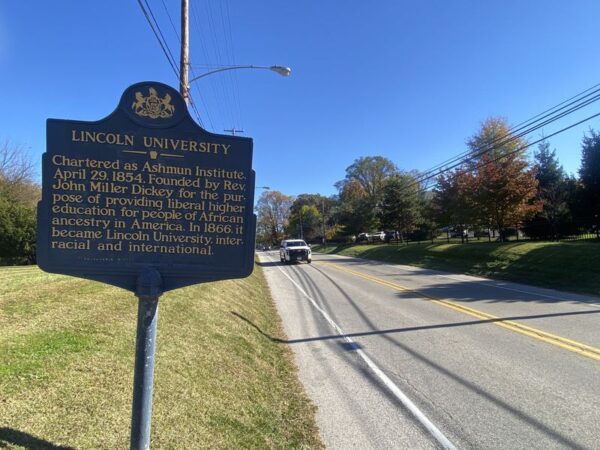
    Lincoln University at its board meeting Saturday announced new safety plans for large events after the on-campus shooting at homecoming last October that left one dead and six others shot.

    No outdoor events will be permitted after dusk, and events will be held within “a controlled environment” so that guests can be screened, Lincoln University Police Chief Marc Partee told the board. The university will employ a zone plan for security with help from Chester County emergency management, the Pennsylvania State Police, and Lower Oxford Township, and at the upcoming Spring Fling event, only one registered guest will be permitted per student, Partee said.

    University officials did not say at the meeting when Spring Fling would be held this year — Partee did not return a call for comment Sunday — but it’s typically in April.

    “We’ve … cultivated those relationships that were sorely needed in this area so that we can do what we need to do and protect our students and keep the community itself happy about what we’re doing,” Partee said.

    Lincoln, a historically Black university with 1,650 students in rural Chester County, has been under pressure from its neighbors and Lower Oxford Township to make changes since the Oct. 25 homecoming shooting. Several officials in Lower Oxford had reported ongoing problems with parking, trash on neighbors’ lawns, disturbances, and, in some cases, crime when the university hosts events. After thousands gathered for homecoming, emergency personnel had to use all-terrain vehicles to transport patients on stretchers because ambulances could not access the campus, given how many cars were parked around the venue, they said.

    The township’s board of supervisors has been discussing a plan to enact a special events ordinance. A vote could come as soon as the supervisors’ March meeting.

    Andrew Cope, who lived near Lincoln for nearly two decades and still owns property there, said Lincoln’s plan is “progress compared to past years,” but that concerns remain. He said there should be screening at the university gates, not just at the entry to an event, and that there was no indication as to how parking and trash will be managed.

    A strong events ordinance is still needed with a permit process, he said.

    “I am encouraged that we have seen a plan come out of the university,” he said. “I need to give them credit for doing something. I’m pleasantly optimistic … but I would still like to see some of the T’s crossed and I’s dotted.”

    Partee said the new plans followed a meeting earlier this month between about 30 people from Lincoln, local and state law enforcement, emergency management, and the township. The Chester County district attorney and county detectives also participated, he said. And the collaboration will be ongoing, he said, as Lincoln plans for other events, such as homecoming

    “We’re getting a lot more resources, a lot more collaboration,” Partee told the board.

    But he said Lincoln ultimately has control over the plan.

    “We’re not stepping back and saying, ‘We had this immense tragedy. Come in and take over,’” he said. “This is still our legacy.”

    The plans also include input from the Student Government Association, he said.

    Events after dark would be moved indoors, he said, noting issues that have arisen after dark at outdoor university events.

    “What you’ll see is, and something that I saw, the crowd changed as the sun went down,” Partee told the board. “Our family started leaving. Other people started coming in.”

    He noted potential sites for outdoor events, such as the auxiliary field with a fence.

    “We’re able to control access to the fence, which means we can screen people coming in,” he said. “We have wands, all of these things that we can put in place to protect the event. We’re working on not having just a free-for-all because free-for-all gives people the impression that they can come here and do whatever they want to do.”

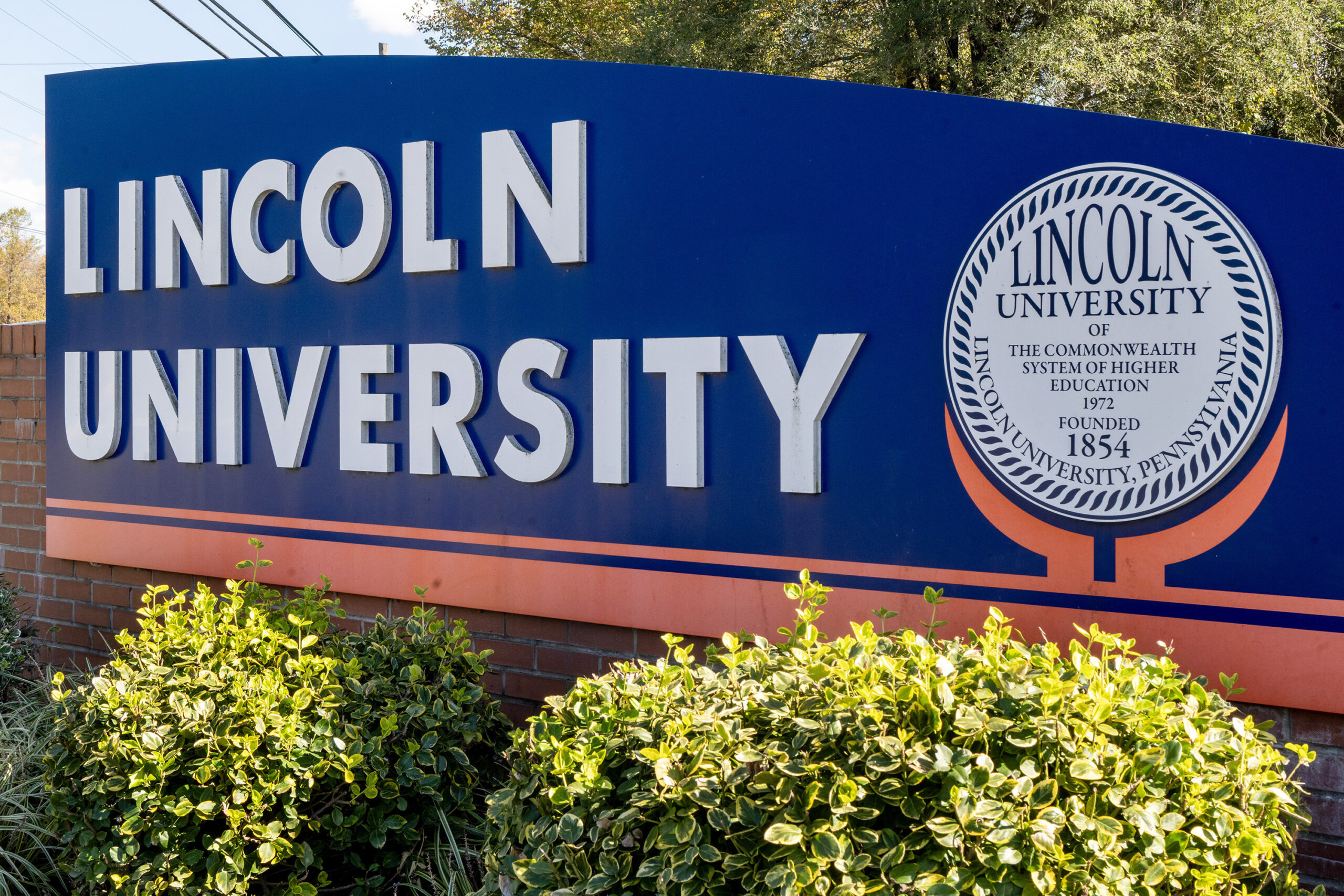
    A sign for Lincoln University on its campus in Chester County.

    He said events will be more structured, noting that students are talking about “zip lines and food trucks” for Spring Fling.

    As for the zone security, Partee said his university police and security would man the “center ring” or “hot zone” for Spring Fling. The outer ring will be covered by Pennsylvania State Police, which have allocated 10 troopers that will be deployed in two-man teams, he said.

    Other patrols will be stationed at areas outside the university gates to monitor illegal parking and other issues, he said. And Chester County, he said, has offered its mobile command post where cameras placed strategically around campus can be monitored and all radio communication can be patched together on one channel, he said.

    “We’re going to have somebody dedicated to just watch cameras from Chester County Emergency Management,” Partee said.

    For larger events, such as homecoming, more safety personnel will be deployed, he said.

    “We’re able to scale it up and down,” he said of the plan. “Spring Fling will be our test case.”