Category: Entertainment

Entertainment news and reviews

  • The man who made musical instruments out of everything: glass bowls, trees, buildings, and even an island

    The man who made musical instruments out of everything: glass bowls, trees, buildings, and even an island

    David Tudor was born in West Philly in 1926 and, at least for a musical prodigy, his career started out conventionally enough.

    He began studying the piano at age 6 before switching his focus to the pipe organ at 11. By his mid-teens he was working regularly at places where you’d expect to find an organist — churches like St. Mark’s in Center City and Trinity Episcopal in Swarthmore, or playing the famed midday concerts at John Wanamaker’s department store.

    But as exemplified by a recent concert of works associated with Tudor, presented by Bowerbird earlier this month at the Community Education Center, Tudor’s music became extremely unconventional over the course of his lifetime.
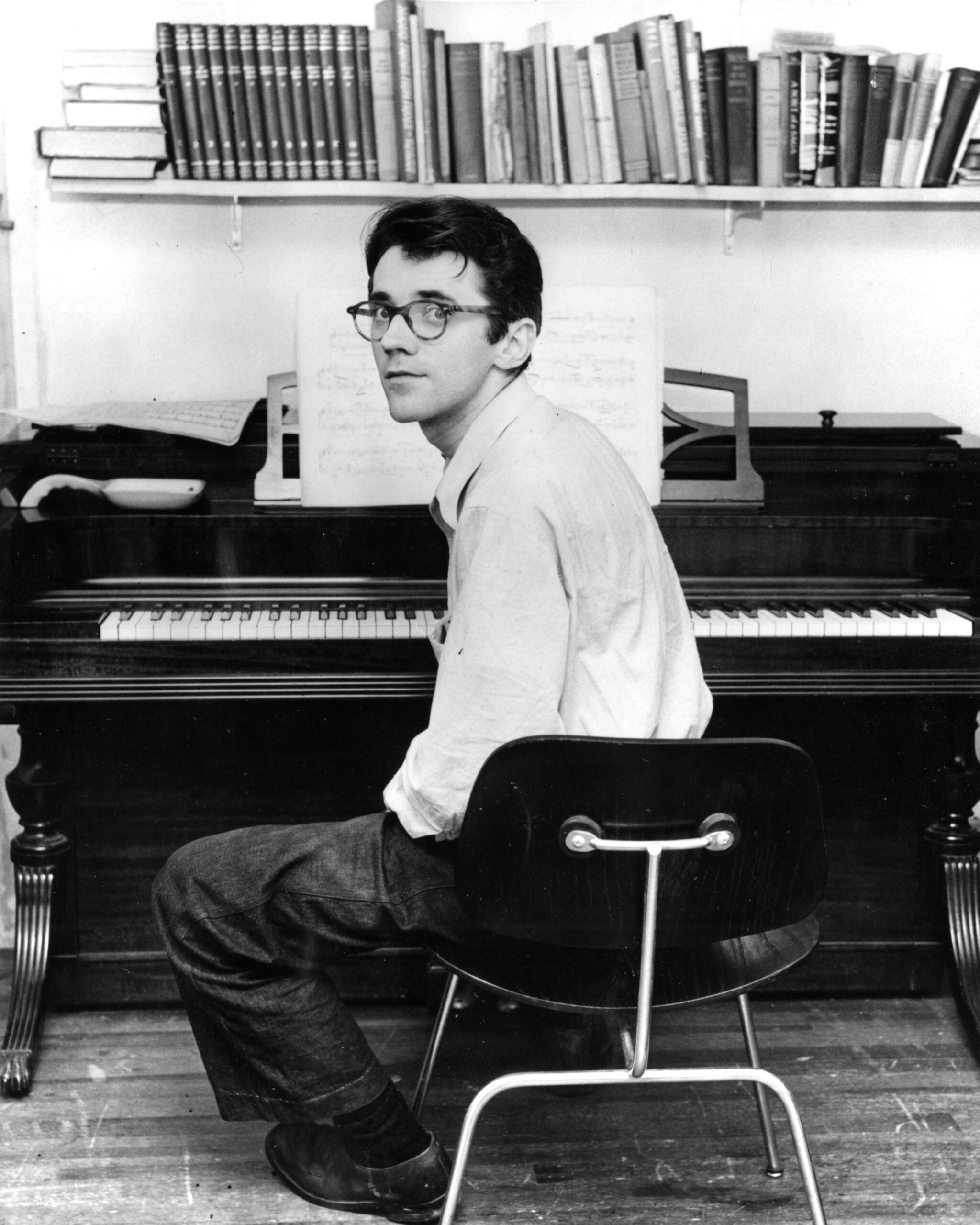
    David Tudor at the piano in 1953.

    Just a few miles from the composer’s alma mater, Overbrook High, a half dozen musicians were seated emulating Tudor’s music making process, behind tables piled high with an impenetrable tangle of boxes, wires, knobs, and switches; electronic tendrils snaked from these sources to a bewildering array of objects: glass bowls, a suspended box fan, an oversized die, a copper pot still, even a tree. Each was connected to transducers that took advantage of their resonant properties, turning them into natural amplifiers.

    A century after his birth and three decades since his death in August 1996, David Tudor’s music still seems like something created in a distant, if more analog, future.
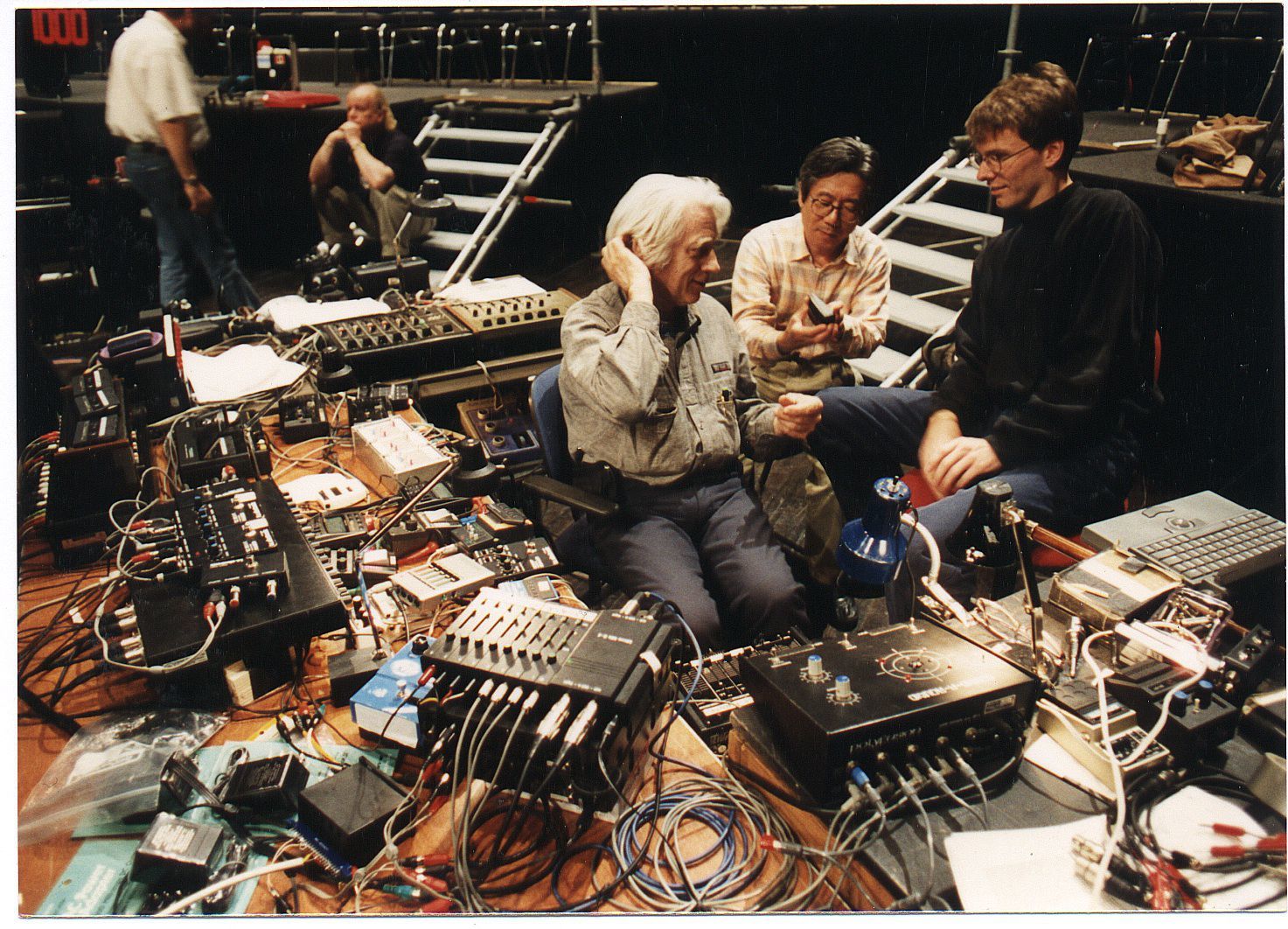
    David Tudor with composer Takehisa Kosugi and musician/engineer John D.S. Adams on the set of Ocean, a collaboration with the Merce Cunningham Dance Company

    Years before, the AI-generated “band” Velvet Sundown grabbed headlines by chalking up more than 1 million subscribers on streaming services and fooling journalists, Tudor was experimenting with machine-learning systems in the early ‘90s, working with engineers from Intel on a project called the Neural Network Synthesizer.

    Those experiments evolved from Tudor’s work with the generation of contemporary classical composers that emerged in the decades after World War II, when he became the pianist and collaborator of choice for such groundbreaking artists as John Cage, Morton Feldman, Earle Brown, Merce Cunningham, and Robert Rauschenberg.

    He was a particularly vital collaborator with Cage, who found in Tudor the ideal vehicle for the use of chance operations in his compositions.
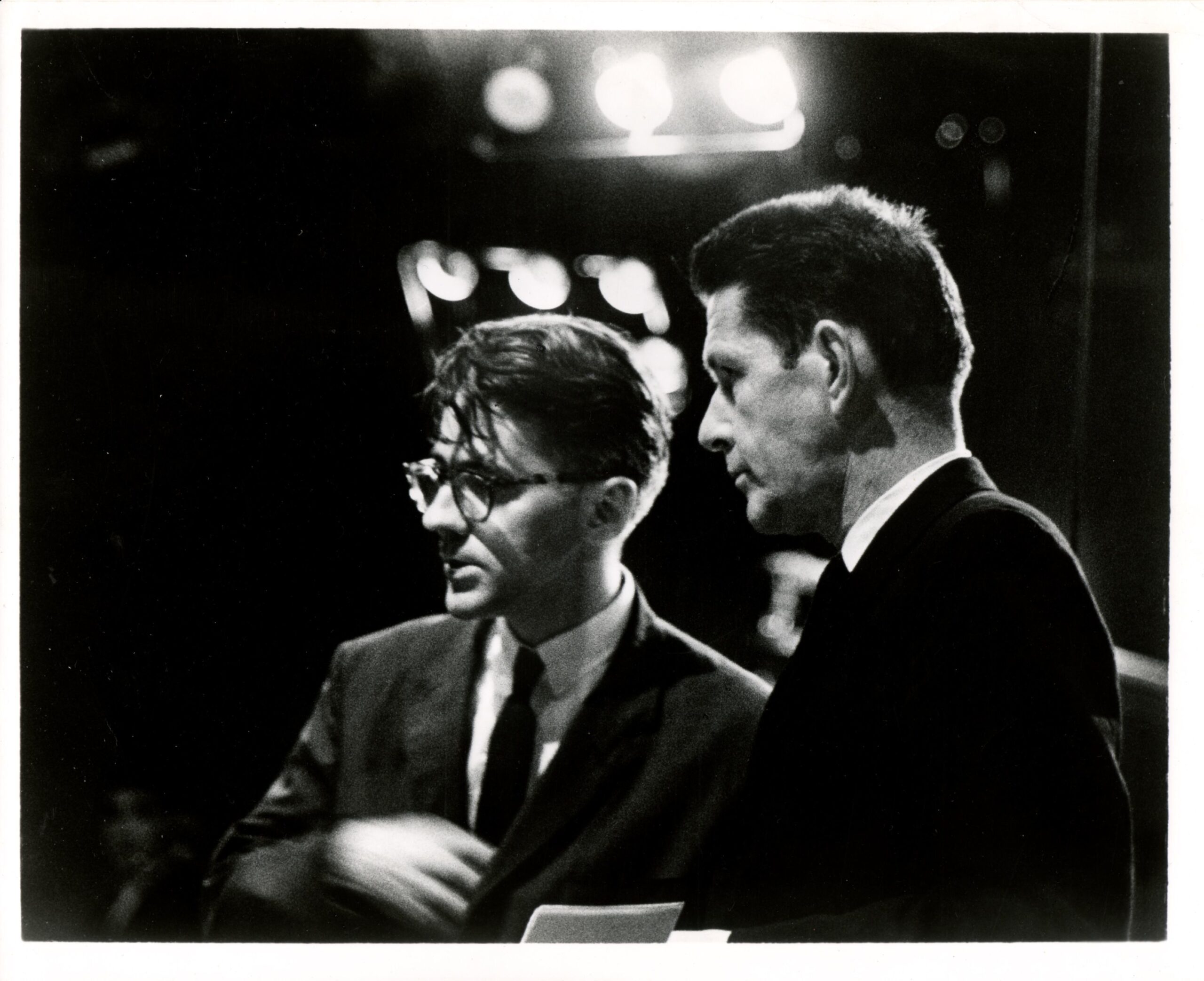
    David Tudor with composer John Cage.

    The turning point for Tudor came at Settlement Music School in South Philly, where he studied with the pianist Irma Wolpe. The young pianist became close with Wolpe and her husband, the modernist composer Stefan Wolpe, and the couple introduced Tudor to new developments in modern music at the time.

    An ongoing exhibition at Drexel University’s Pearlstein Gallery, “David Tudor: A View From Inside,” traces the roots of his iconoclastic approach to performance and composition back to his early days in Philly.

    The pipe organ — an instrument that literally surrounds the performer, and that they play from within — proved to be a foundational influence on Tudor’s musical philosophy for the rest of his life, said Dustin Hurt, co-curator and director of Philly presenting organization Bowerbird.
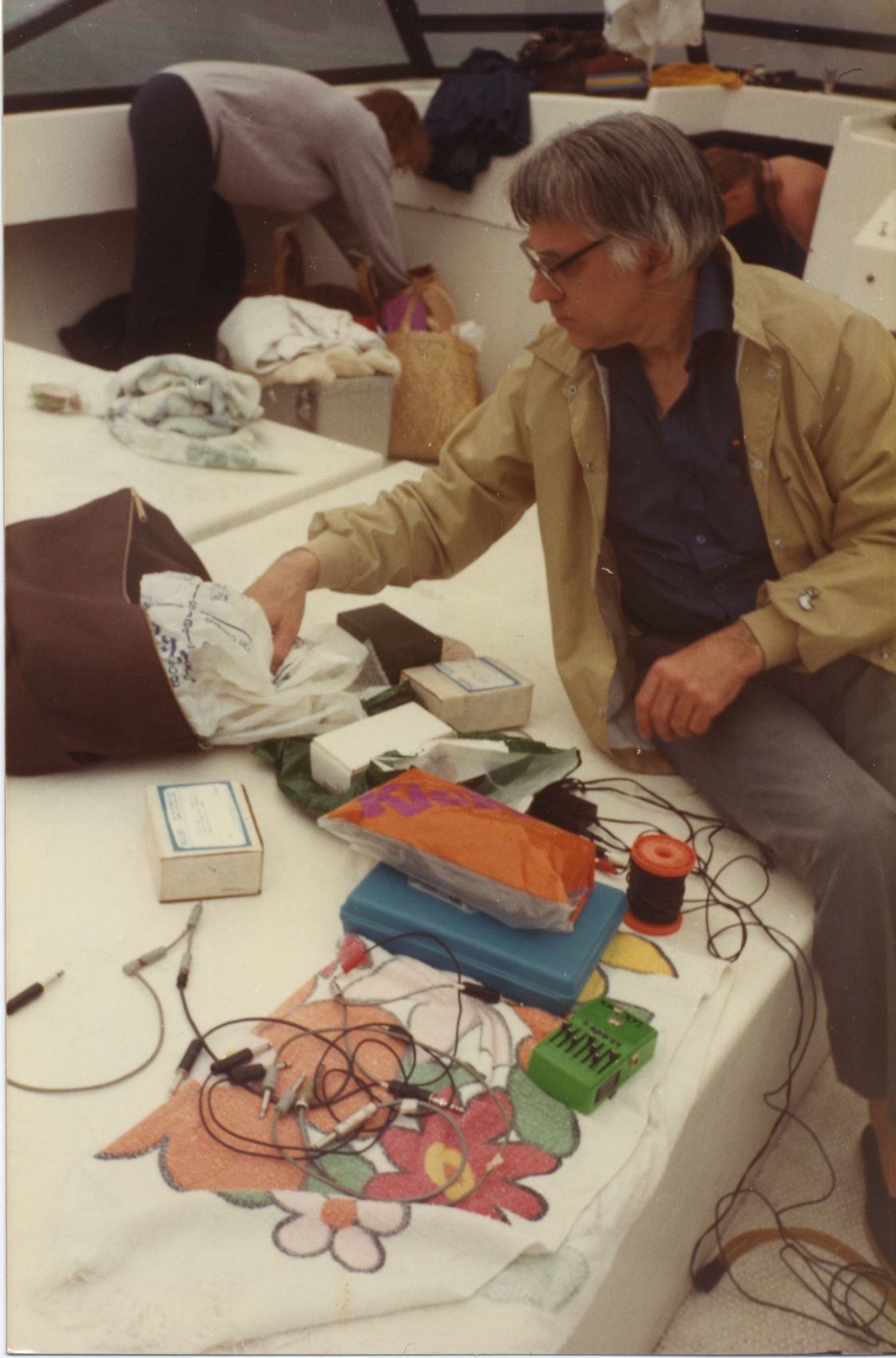
    David Tudor in the Bahamas during the filming of Sea Tails, a project that included sounds collected underwater.

    “That led to the more metaphorical angle of David’s music, which involved discovering what the instruments do on their own,” said Hurt. “That’s the ‘View From Inside.’ He’s not saying, ‘I want to make this music, let me find the instruments that do it.’ He’s saying, ‘This is the stuff that I have. Let’s see what it does.’”

    Discovering Tudor’s fascination with puzzles, composers presented him with scores that offered problems to solve rather than music to play. The exhibition includes mind-boggling lists of calculations and measurements that the pianist meticulously assembled in preparation of performing certain pieces.

    By the 1960s, he started to abandon the piano altogether, modifying small electronic devices to craft unpredictable music from feedback.
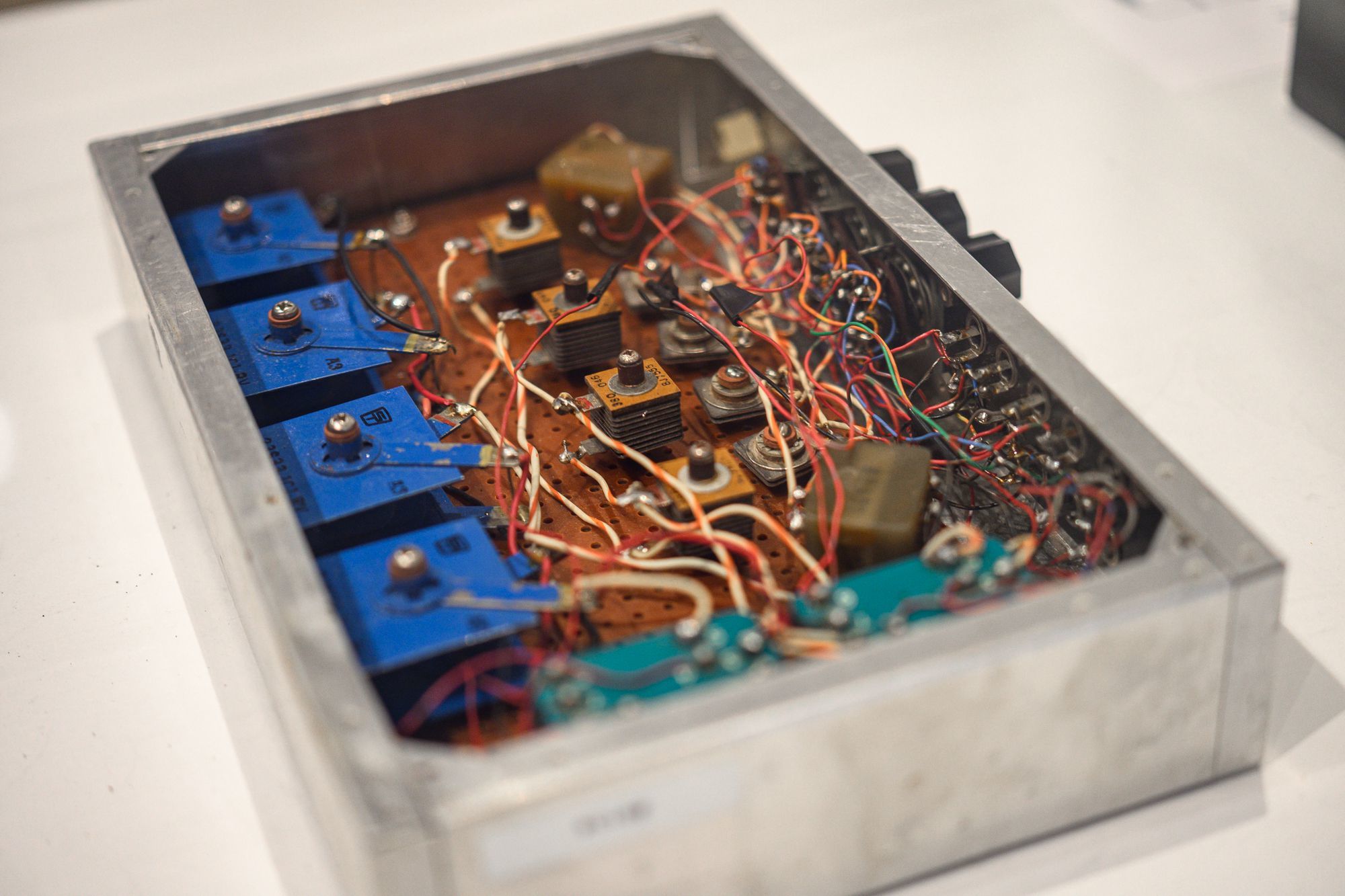
    “David Tudor: A View From Inside” is on view at Drexel University’s Pearlstein Gallery through March 21

    “Tudor was such a skilled virtuoso on the piano, but he showed no interest in performing the classical repertoire,” said co-curator You Nakai, a professor at the University of Tokyo and author of Reminded By the Instruments: David Tudor’s Music.

    “He would only perform scores that challenged him to solve them and produce music that the composer never really thought of,” said Nakai. “So when he started making his own instruments, he strongly focused on ways to implement indeterminacy within the workings of the instruments themselves.”

    Composer Stanley Lunetta includes the following instructions in his “Piece for Bandoneon and Strings”: “If you are already David Tudor, you will have no problem performing this piece; if you are not David Tudor, you must study hard, for you must be him during this performance.”
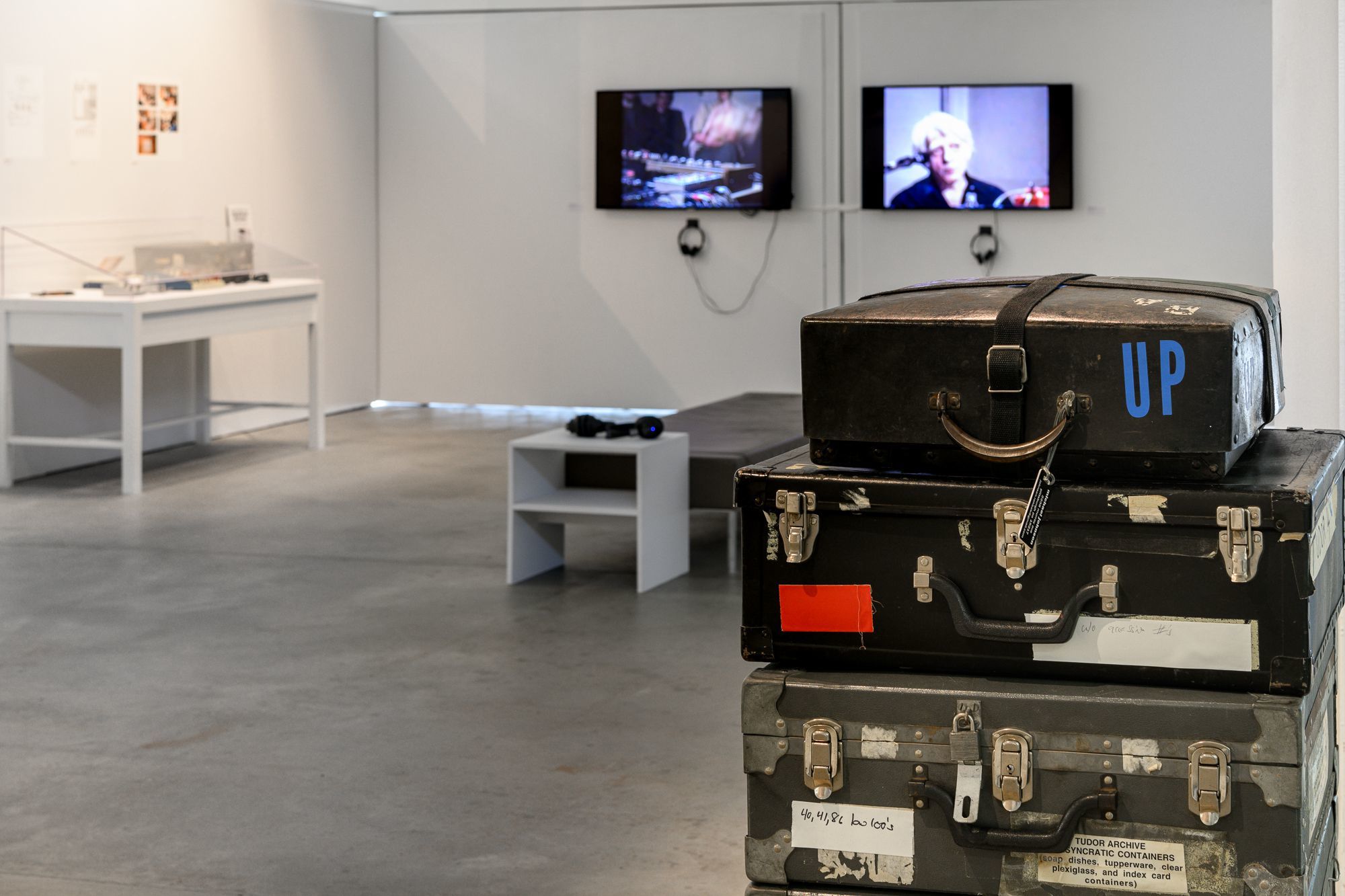
    “David Tudor: A View From Inside” is on view at Drexel University’s Pearlstein Gallery through March 21.

    The strings in the piece were not the expected violins and cellos, but tethers from Tudor’s limbs to a group of puppeteers who triggered him to play sections of Lunetta’s score.

    Gradually, Tudor’s vision of an instrument that could be inhabited grew in scale far beyond even a department store-sized pipe organ. For Expo ‘70, the 1970 world’s fair in Osaka, Japan, he transformed an entire building into an instrument by mounting loudspeakers in the dome of the Pepsi Pavilion. A few years later, he drew up plans to convert an entire island into an instrument by recording the natural sounds of the space, manipulating them, and playing them back via speakers scattered throughout the island.

    That project wasn’t realized until 2024, long after his passing, off the coasts of Japan and Norway via a collaborative project spearheaded by Nakai.
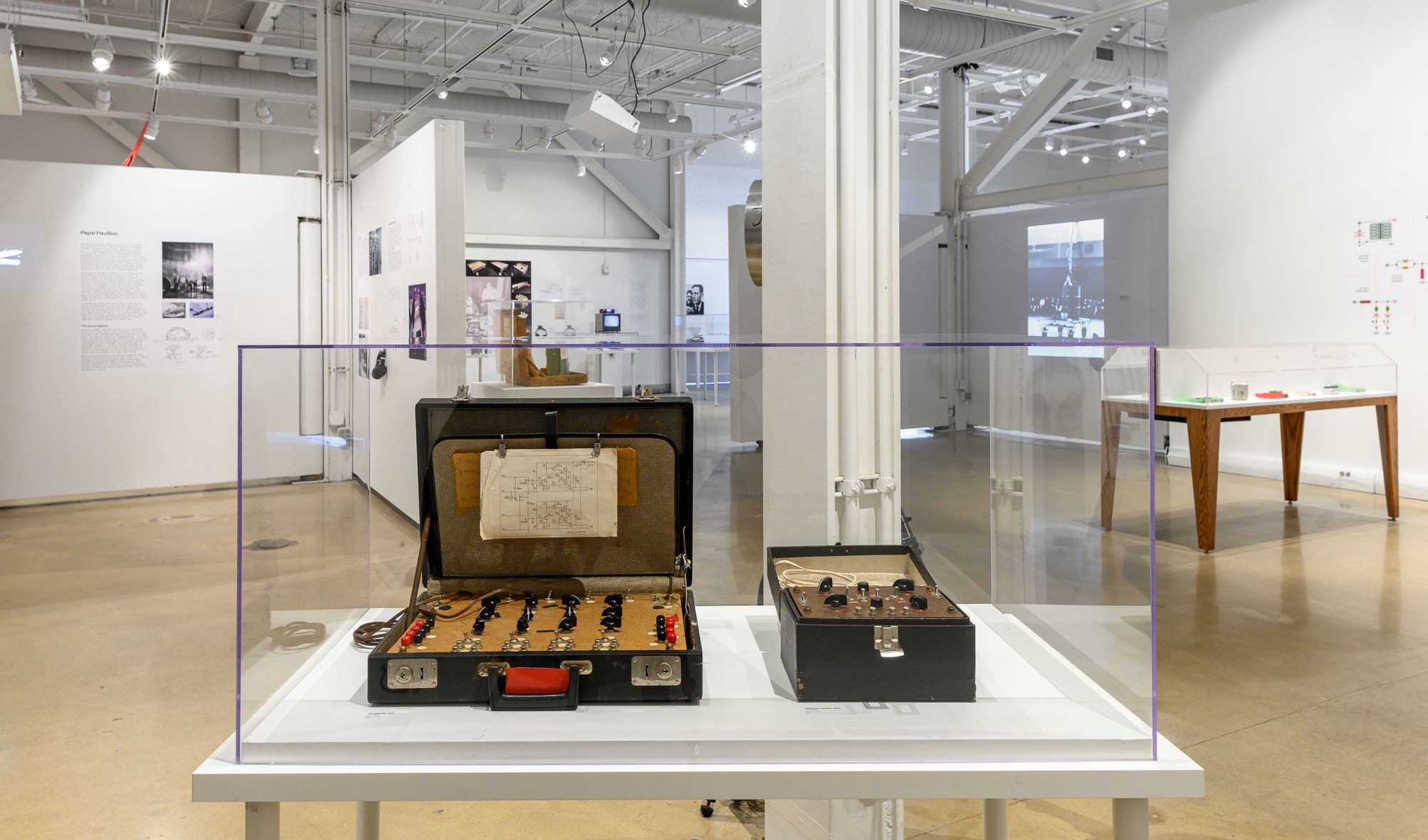
    “David Tudor: A View From Inside” is on view at Drexel University’s Pearlstein Gallery through March 21.

    Tudor’s pioneering experiments with electronic music seemed to make him an apt collaborator for the Intel engineers and their new neural network chip, but his interest in the technology was diametrically opposed to theirs.

    For all his love of puzzles, “Tudor showed no interest in repeating his past,” said Nakai.

    “He opened it up, went inside the circuitry and figured out how to let the instrument speak for itself. He didn’t understand everything, but he didn’t need to because he was making music that he liked.”

    “David Tudor: A View From Inside” runs through March 21, Pearlstein Gallery in Drexel University’s URBN Annex, 3401 Filbert St. bowerbird.org

  • Manong brings creative Filipino-American flavors to Fairmount — plus, it’s a lot of fun

    Manong brings creative Filipino-American flavors to Fairmount — plus, it’s a lot of fun

    Chance Anies grew up at the tables of America’s chain restaurants. His mom’s career as a manager opening locations for TGI Friday’s, Olive Garden, Dave & Buster’s and others meant he and his siblings spent some of their most important life events in the glow of neon flair illuminating bottomless breadstick bowls and blooming onions.

    “There was something magical about growing up there,“ says Anies, 34. “There was always something for everybody, for anyone who walked in the door, including kids. They were also affordable. And what I’ve found over the years is that middle-class dining like that has been dying.”

    Manong, which opened three months ago in the former Tela’s space at 19th and Fairmount Avenue, is filled with references to the mid-tier chains of his youth. From the longhorn skull emblazoned on the sign at its front door, to the Teenage Mutant Ninja Turtles arcade game being played for free by guests in the corner, to actual neon signs from both Applebee’s and Outback alight in its two bathrooms, the cues are here for what Anies calls his chain-inspired Filipino-American steakhouse. There’s even the signature Bloom Shroom, a fantastic fungi riff on the blooming onion, whose deep-fried thatch of enoki mushrooms is irresistible — at least, when it isn’t overcooked or oversalted, as it was on my first visit.

    The Bloom Shroom at Manong on Thursday, Nov. 20, 2025 in Philadelphia.

    This kitchen has largely been more reliable than that, and nailed the shroom on a following visit, when its broom-like sweep of crunchy-earthy mushrooms threads lived-up to their potential. It was also clear after my visits here that catchy labels trying to characterize Anies’ sequel restaurant to Tabachoy, his Filipino BYOB hit in Bella Vista, really don’t do its concept justice. For one thing, it’s not a steakhouse, considering Manong didn’t even have a steak on the menu (beyond grilled beef skewers) for its first three months, when an intriguing hanger steak with fish sauce and pickled onions replaced the prime rib.

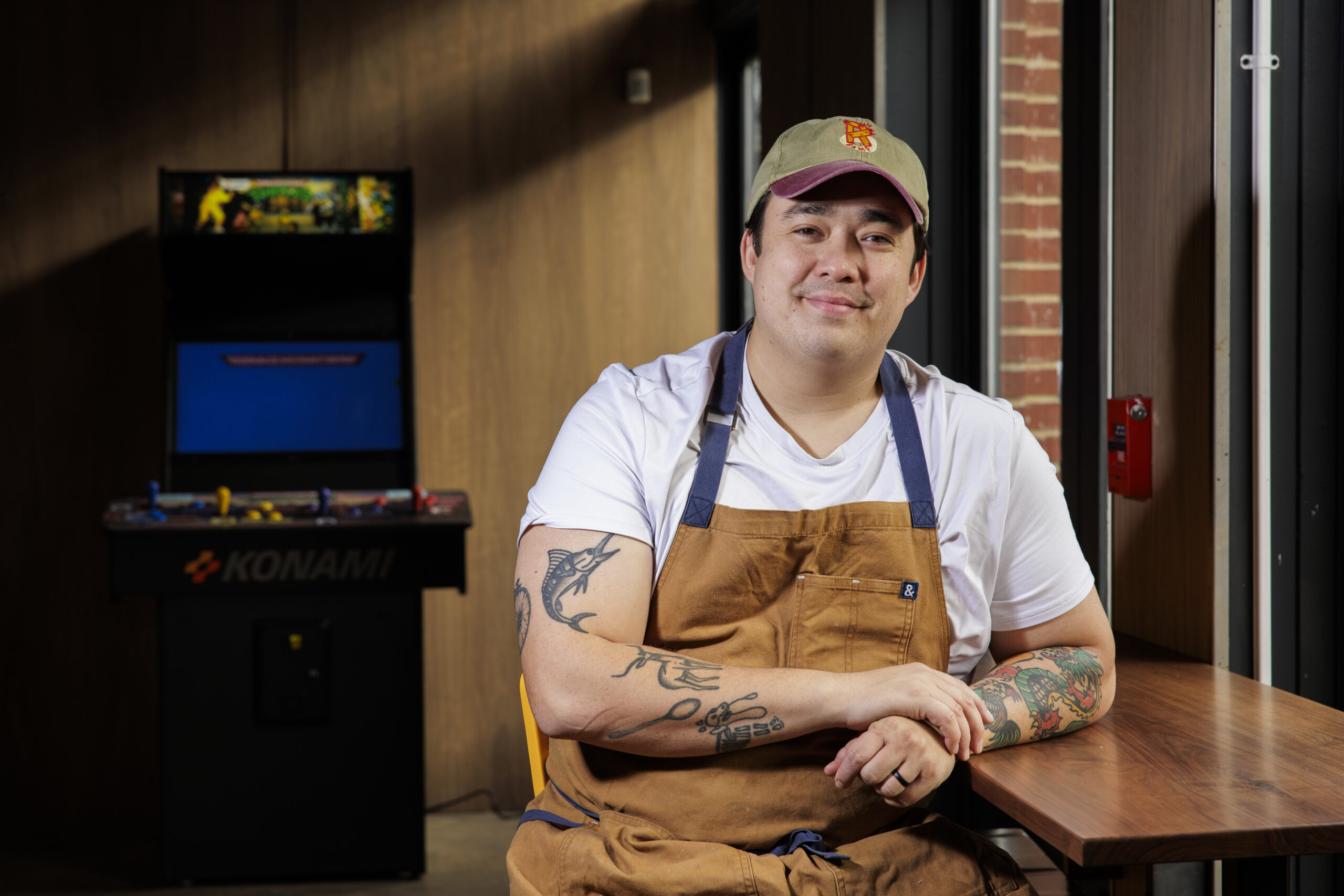
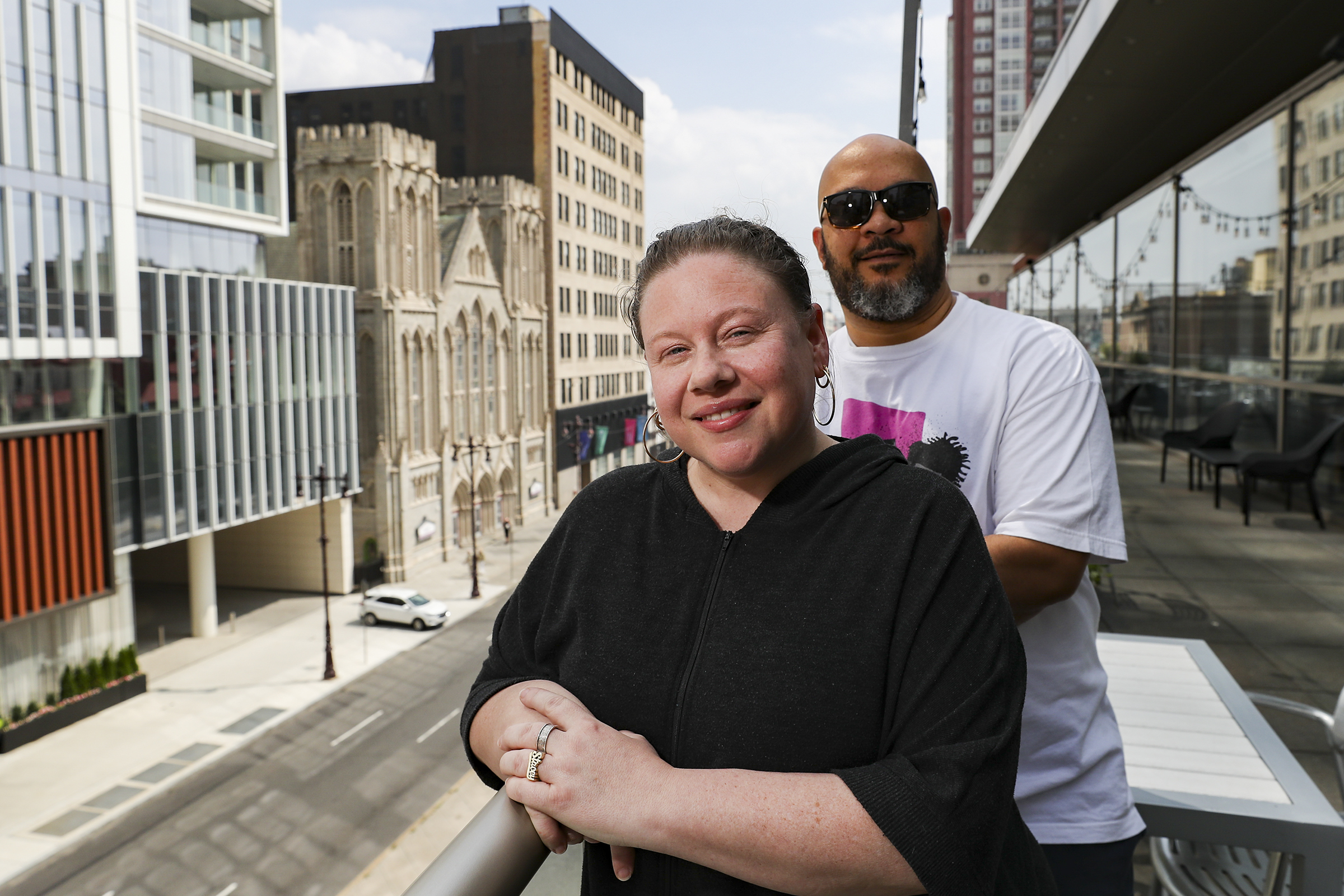
    Chef Chance Anies posed for a portrait at Manong on Thursday, Nov. 20, 2025 in Philadelphia.

    The swap was a pragmatic concession to keep the menu on the more affordable side, a prime characteristic of chain restaurant culture Anies says inspires him. With check averages around $50 to $60, including drinks, dinner at Manong costs more than going to Longhorn. But it succeeds in hitting a more accessible sweet spot than most of Philly’s pricier destination restaurants without sacrificing the quality of from-scratch food. There’s a balancing act of handcraft and value here most chain restaurants simply can’t touch.

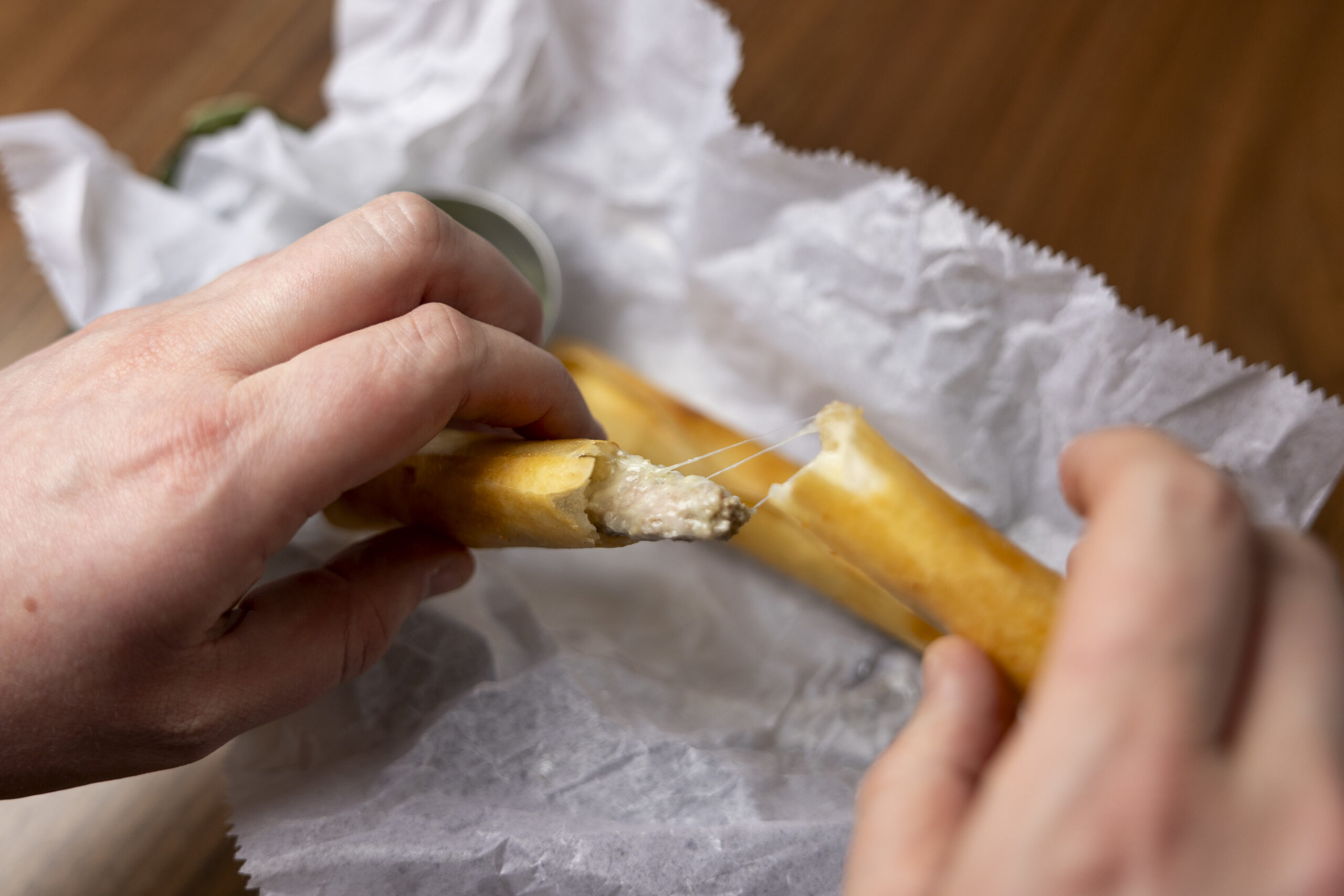
    The dynamite lumpia at Manong in Philadelphia, Pa., on Thursday, March. 5, 2026.

    There’s also a level of personality, bold flavors, and storytelling to the food at Manong that is the antithesis of the sanitized corporate restaurant. This menu is a unique reflection of Anies’ childhood and life experiences as a Filipino-American — including his previous careers as an English teacher, medical researcher and food truck operator — that also diverges with its whimsy and creativity from the more traditionally-framed Filipino flavors anchoring Tabachoy.

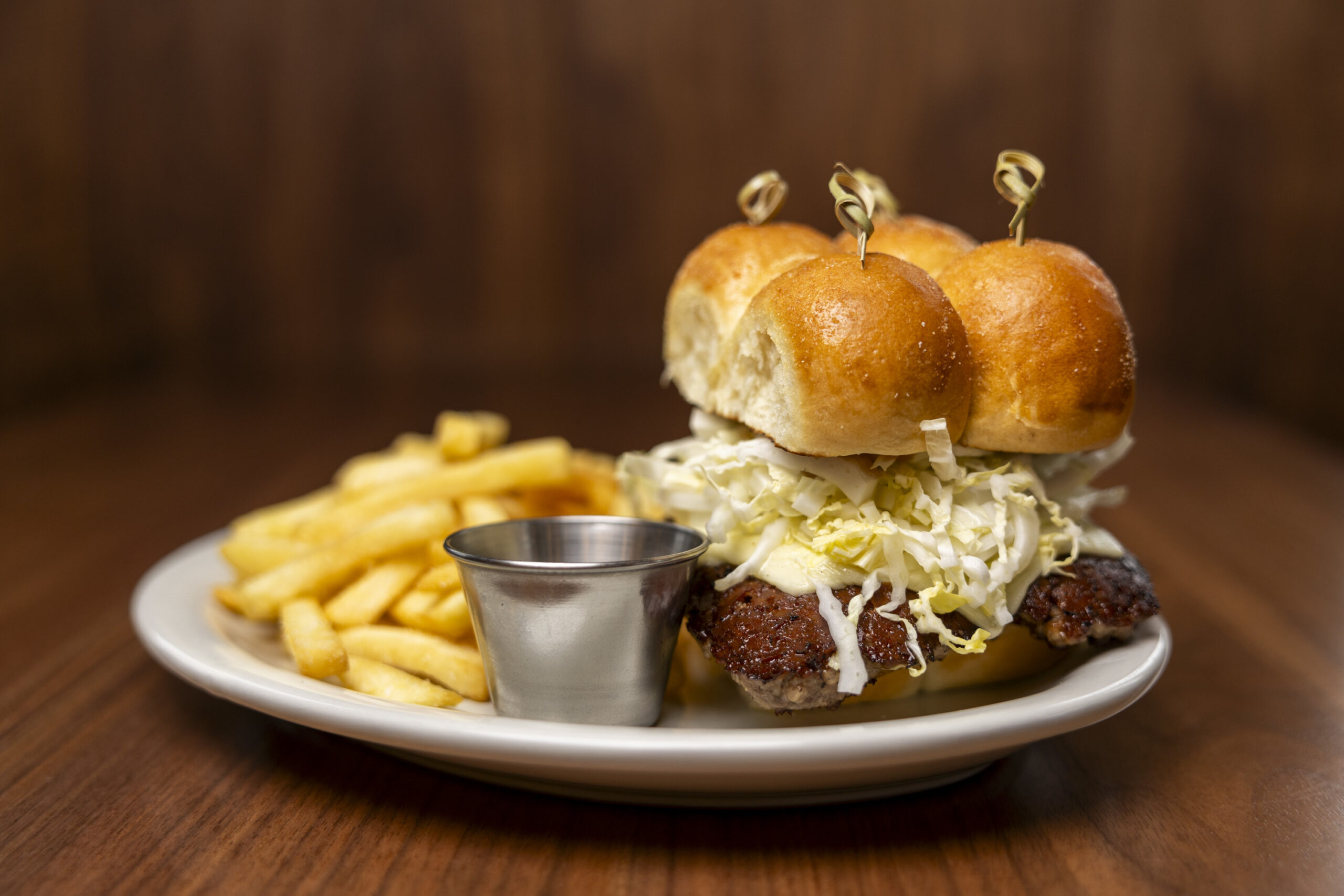
    There’s an equivalent to mozzarella sticks at Manong, the dynamite lumpia, but they’re wrapped inside crispy spring roll wrappers and laced with tender pork and minced jalapeños alongside a sweet chili dip. Manong also offers one of the most distinctive new cheeseburgers in the city, a half-pound patty that spans the width of four small pandesal rolls that are still attached, like King’s Hawaiian bread.

    The connected rolls can easily be divided into shareable sliders, but avoid the urge to supersize it into a full one-pound of meat because it throws all the proportions off. The standard serving maximizes its many Filipino flourishes, from the light sweetness on the fresh-baked bread to the tropical backnotes of the house banana ketchup, the calamansi-tanged slaw, and a mayo shaded by bangus (tinned milkfish), whose oily fillets are buzzed into an umami-rich spread that Anies says carries a Pinoy schmear of “je ne sais quoi.”

    The 1/2lb balong burger at Manong in Philadelphia, Pa., on Thursday, March. 5, 2026.

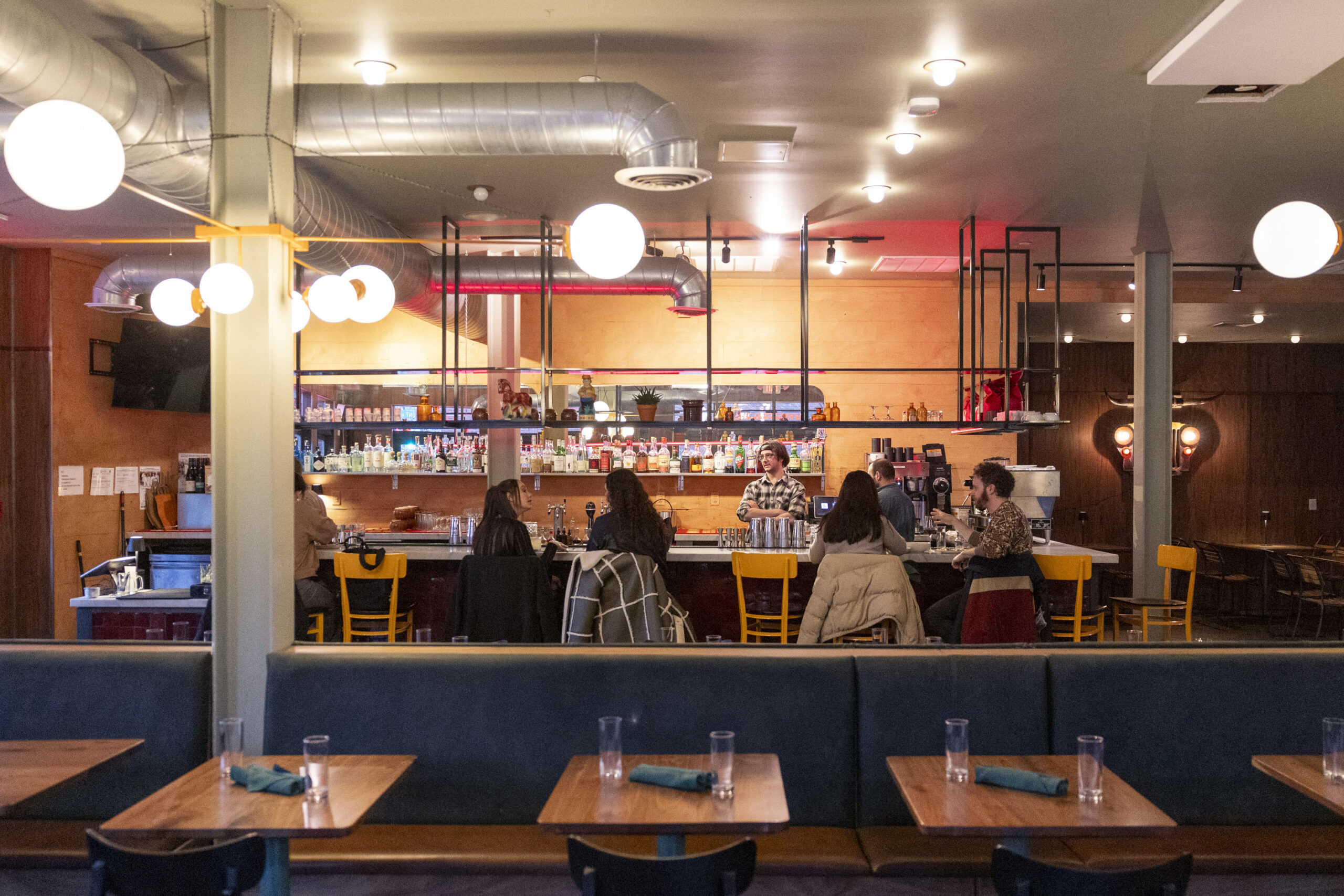
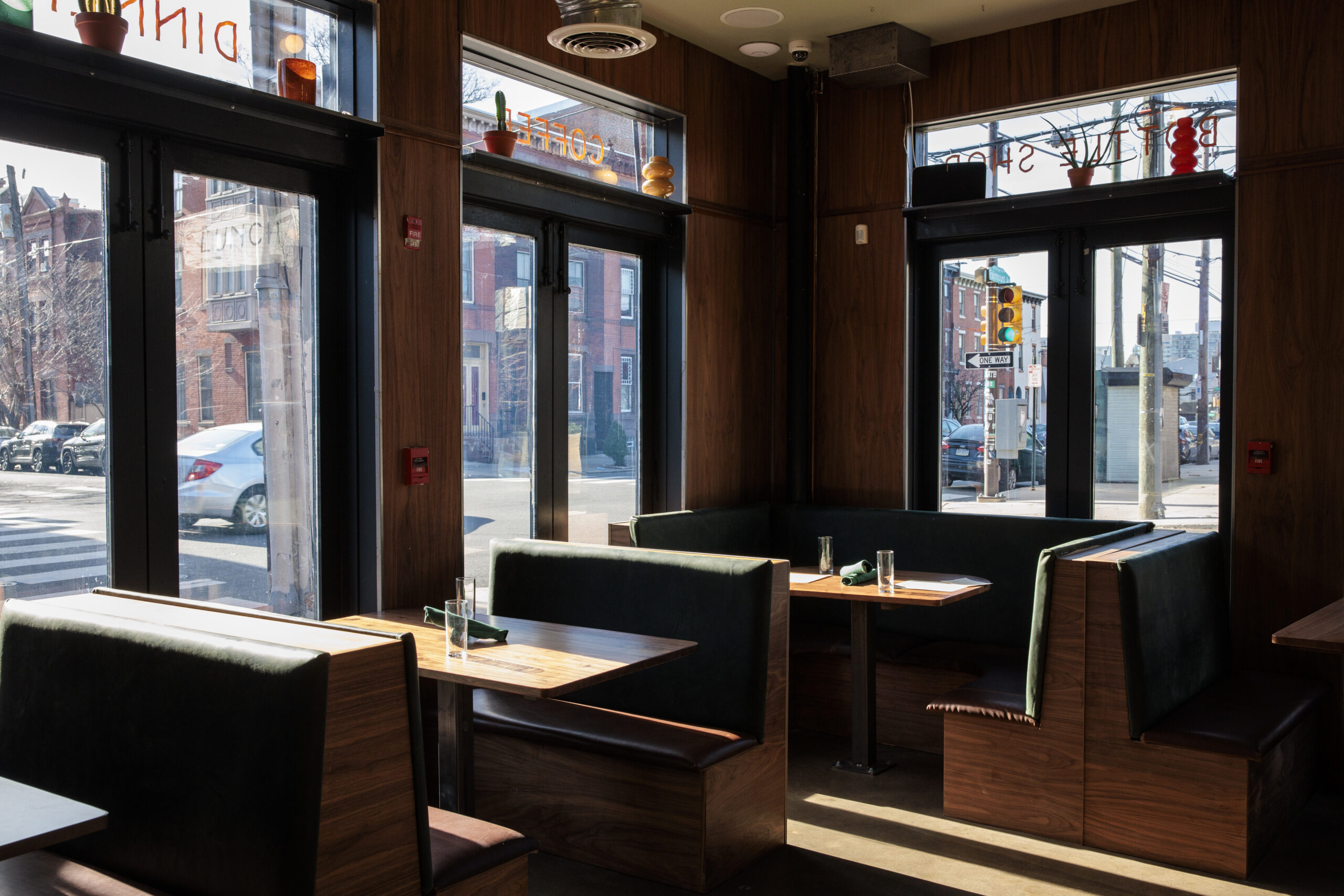
    The 75-seat Manong, which means “elder brother” in Ilocano, the Filipino dialect of Anies’ father’s family, is close to three times as big as Tabachoy, a 28-seater in Bella Vista so snug you need to access the bathroom through an alley door at the rear of the building. But Anies has made good use of this sunny, high-ceilinged corner space, warming its interior with rustic walnut accents and adding convivial booth seating to both its window walls and a central banquette.

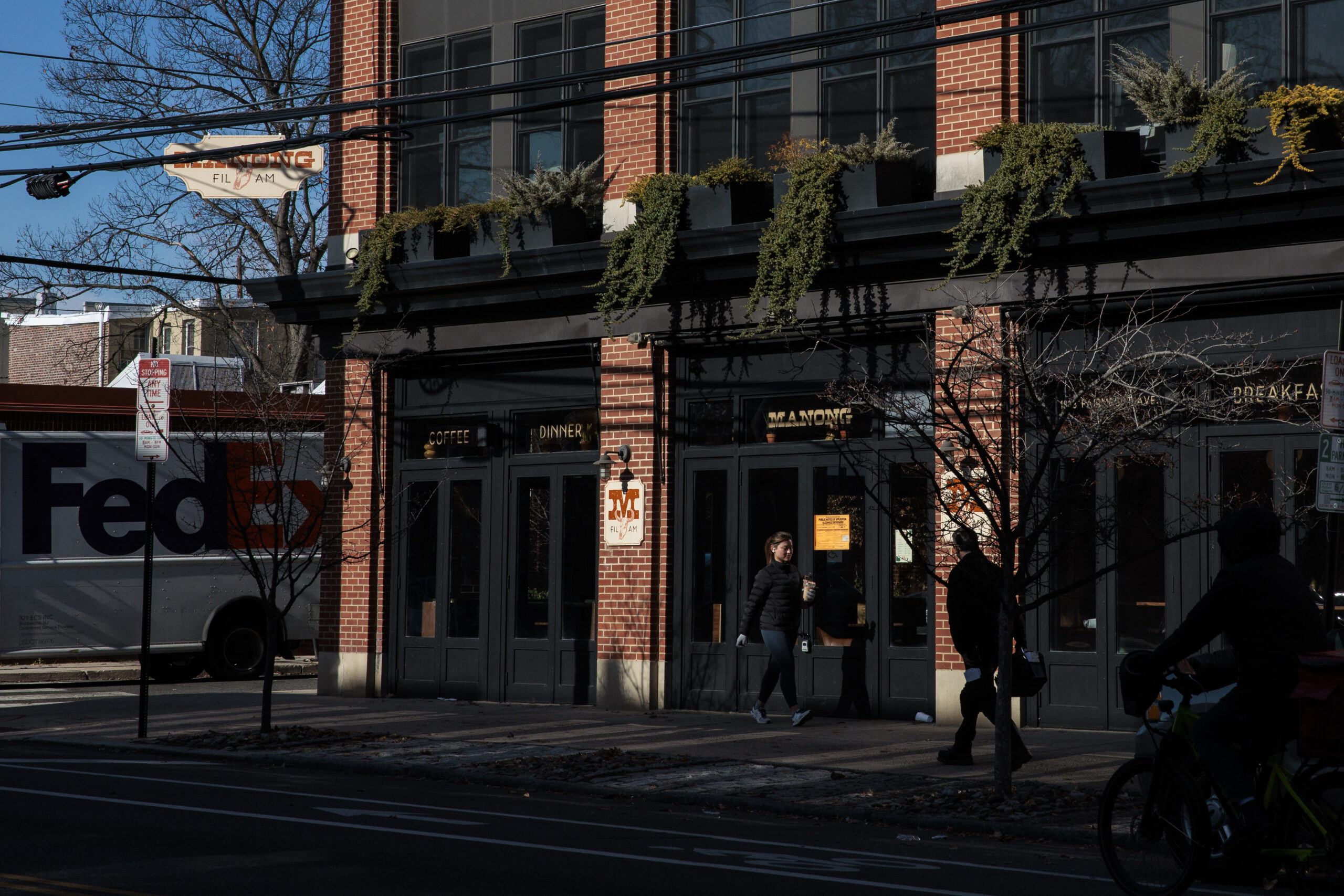
    The exterior of Manong on Tuesday, Dec. 9, 2025 in Philadelphia.

    With room for large parties, including a back alcove beneath mounted horns and a vintage truck grill with illuminated headlights, plus 13 seats at the bar, there were more groups of people simultaneously celebrating at Manong than any restaurant I’ve visited in recent memory. Conjuring that kind of joy, and for such a broad cross-section of customers, is one aspect of “everyone’s family” magic that Anies has successfully channeled.

    Customers enjoying drinks and food at the bar at Manong in Philadelphia, Pa., on Thursday, March. 5, 2026.
    The interior of Manong on Tuesday, Dec. 9, 2025 in Philadelphia.

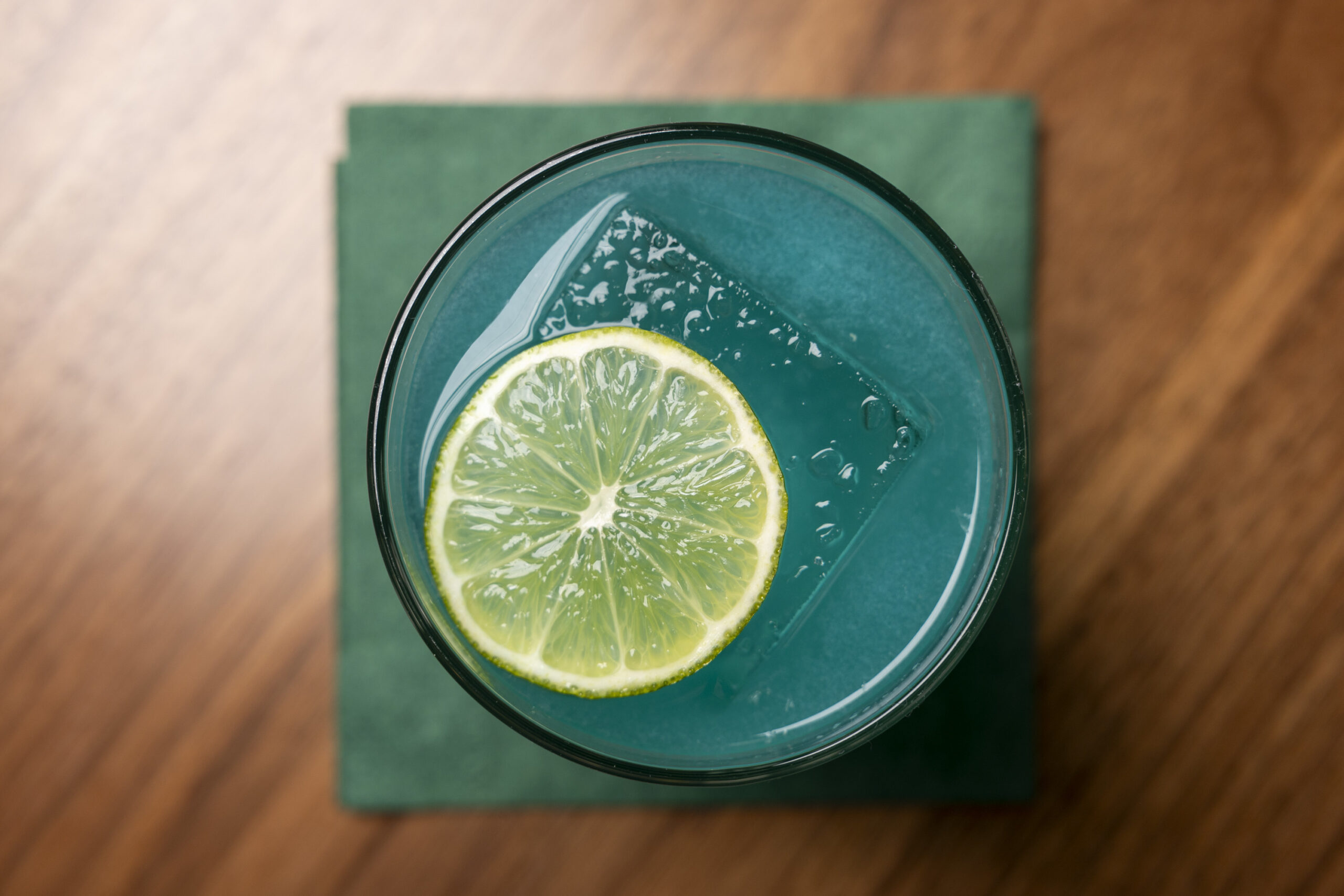
    A drink program overseen by beverage manager Eli Ezer helps buoy the festive mood with a variety of fun, colorful drinks that also offer thematic twists, like the sky blue Otso Otso, a riff on a spicy margarita infused with green peppercorn, lemongrass, and calamansi, or an espresso martini with the added taste of sweet corn (a combo with roots in the Philippines), or a Pinoy version of the City Wide, pairing San Miguel Lite with a shot of Kasama rum.

    The Otso Otso cocktail at Manong in Philadelphia, Pa., on Thursday, March. 5, 2026.
    The Pandan latte at Manong in Philadelphia, Pa., on Thursday, March. 5, 2026.

    It’s no surprise this room has a serious noise problem, and will eventually require some significant investment to sound-proof its hard surfaces. It recently opened for new daytime cafe hours to pump out purple ube and pandan lattes with Herman’s Coffee, along with a limited selection of pastries, and plans to expand the daytime menu with breakfast sandwiches for a brunch debut this spring. There’s also a retail bottle shop where a fridge case full of Red Horse beer, natural wines, and sakes add yet another reason to visit.

    For now, however, Manong’s dinner is more than a worthy enough draw on its own. Aside from the bloom shroom, all of the skewers are winners, including the juicy grilled chicken thighs glazed in Filipino barbeque sauce and tagalog beef sticks that evoke Japanese negamaki with thin-sliced flank steak bundles on the skewer rolled around crunchy scallions in a calamansi soy-garlic glaze.

    Anies aims to evoke the rich chain restaurant pastas of his youth with the “creamy pasta” entree, but it’s infinitely more interesting here with basil fettuccine tangled in a sauce creamed with coconut and Parmesan, flavor-boosted with ginger, garlic, and thin slices of pork belly. The “super duper creamy” version may be tempting, but once again, like that burger, the “more” option was less appealing. When we opted for the bonus of trout roe and shrimp on my second visit, it came in an overly thickened cream sauce that bordered on sludge.

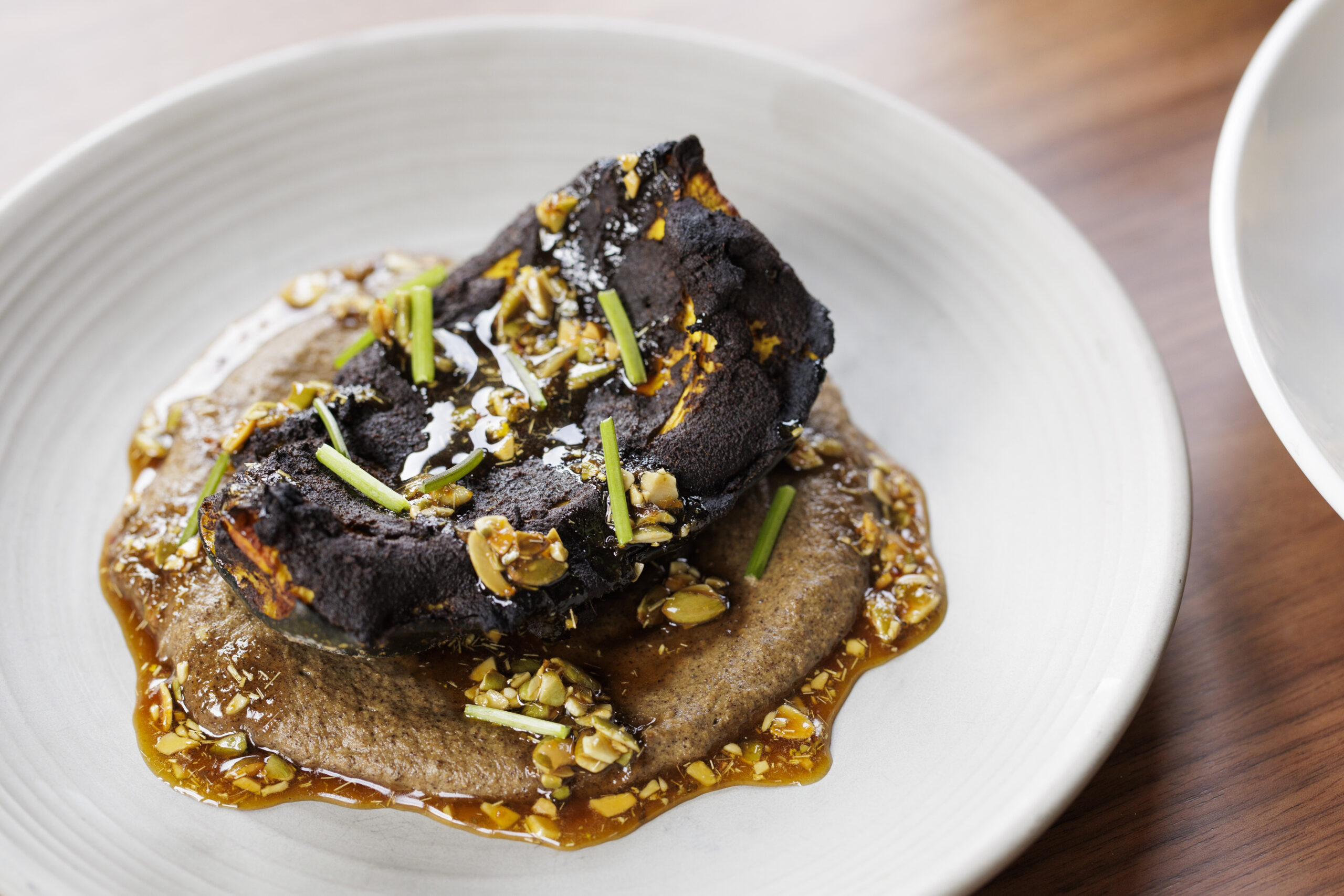
    The squash at Manong on Thursday, Nov. 20, 2025 in Philadelphia.

    One of Manong’s most creative dishes is its singular option for vegans, kalabasa pyanggang, a koginut squash marinated in a garlicky paste of charred coconut husks that’s served with a sweet vinegar lemongrass drizzle over a rich coconut milk sauce scattered with pepita seeds.

    I would have loved the grilled swordfish with green mango-bitter melon salad if it had been fully cooked. That’s one fish I don’t enjoy medium-rare. But Manong has its roasted half-chicken down, a juicy lemongrass-infused bird glazed in tart calamansi vinegar and orange annato butter — at $28, a relative bargain in an era of high-priced chicken entrees

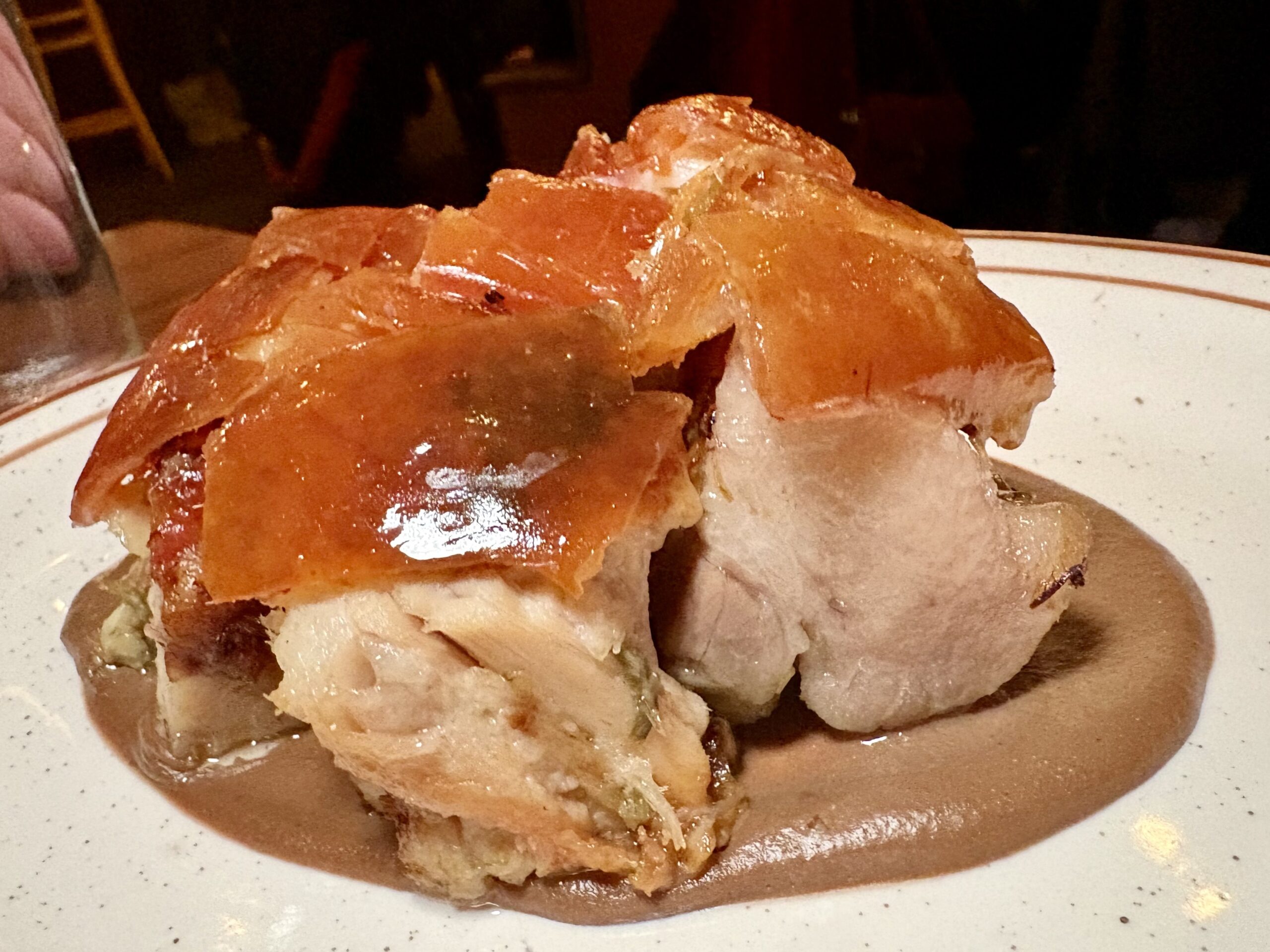
    The kitchen’s pork dishes are also exceptional, including a traditional lechon liempo pork belly whose superbly tender chunks of meat are set beneath shattering amber sheets of crispy pig skin, atop a silky swoosh of creamy liver sauce.

    The lechon liempo at Manong is slow-roasted pork belly topped with crispy skin over a sauce of pureed chicken liver.
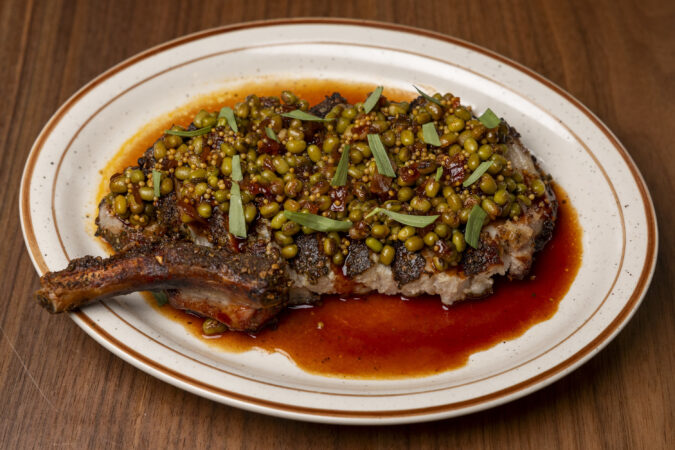
    The pork & beans at Manong in Philadelphia, Pa., on Thursday, March. 5, 2026.

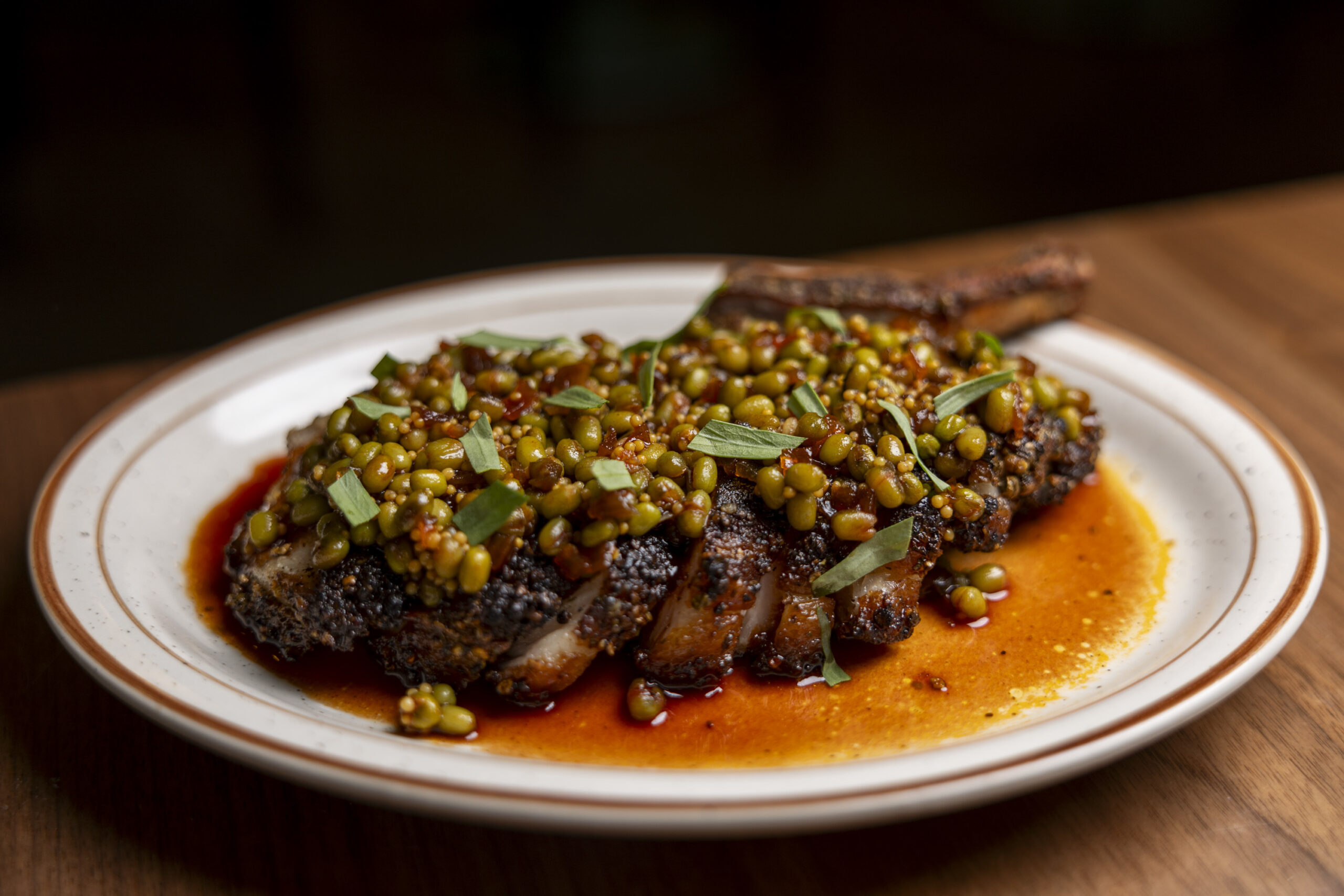
    Perhaps my favorite dish at Manong is the “pork & beans”, a multi-cultural mash-up of a juicy grilled pork chop encrusted with green peppercorns and smothered with sweet and zesty mung beans. Think of the canned Heinz baked beans classic, but with a Filipino swagger of cane vinegar, the sweetness of brown sugar, and red yeast rice (typically used in Chinese char siu bbq), and firmer beans that possess a nutty snap of extra texture.

    “Is it American? Is it Filipino? It’s neither, but also both,” says Anies, summing up not only this dish, but so much of the menu at Manong, where steaming sides of garlic rice, coconut-creamed spinach, and whipped potato salad studded with more crunchy garlic, corn, and shear potato skin chicharrones create a spirited fusion feast like no other.

    Add some calamansi or mango water ice for dessert sandwiched on those fresh pandesal rolls, or the deep purple richness of its ube ice cream, and Manong’s Filipino fusion takes on a distinctly Philly vibe, too. Anies’ chain restaurant childhood may have been the impetus for the affordable and fun spirit of Manong, but he’s created something here that feels like an original.

    The ube and mango ice cream sandwich at Manong in Philadelphia, Pa., on Thursday, March. 5, 2026.

    Manong

    1833 Fairmount Ave., Philadelphia, PA 19130, 445-223-2141; manongphilly.com

    Dinner Wednesday to Sunday, 5-11 p.m. Cafe open for coffee and pastries Wednesday to Sunday, 8 a.m.-2 p.m.

    Dinner entrees, $19-$35.

    About 30% of the menu is gluten-free, including the bloom shroom, cooked in a gluten-free fryer.

    Wheelchair accessible.

    Menu Highlights: Bloom shroom; dynamite lumpia; beef stick tagalog skewer; balong burger; cream pasta; pork & beans; lechon liempo; kalabasa pyanggang; mango water ice; ube ice cream.

    Drinks: The cocktail list delivers affordability and style, with a series of classic templates transformed colorful tropical twists, from the sky blue Otso Otso infused with green peppercorn and lemongrass, to a backnote of corn in the espresso martini and Filipino rum mixed with coconut and purple sweet potato for the Ube Halaya. The beer list features both local brews and Filipino imports, including the smooth but potent Red Horse. There’s also a selection of natural wines by the 6 oz. carafe. In addition, a retail bottle shop has a fine selection of natural wines and sakes to go.

  • Who is Chris Kearney? This Downingtown teacher tested his knowledge on ‘Jeopardy!’

    Who is Chris Kearney? This Downingtown teacher tested his knowledge on ‘Jeopardy!’

    On TV, you may not have been able to see the thrill that went through Chris Kearney when Jeopardy! host Ken Jennings read the clue, “Mrs. Proudie is the domineering wife of a bishop in this Victorian’s The Last Chronicle of Barset and Barchester Towers.”

    But five years ago, as he studied up for the possibility of ending up on the long-running game show, Kearney decided to search friends’ names to see if they had a famous counterpart. His freshman roommate happened to be a Trollope — though pronounced slightly differently — which brought Kearney to Victorian author Anthony Trollope. He penned a flashcard on the novelist to add to his ever-growing studying hobby.

    Kearney rung in first.

    “Who is Trollope?” he said, pronouncing it à la his roommate’s name.

    That flashcard scored him $2,000 in the “Recurring Characters” category last week, as the Downingtown High School West teacher competed against two others on Jeopardy! Kearney ultimately placed second, behind then three-day champion James Denison (Denison’s reign ended after his fourth win).

    “After the game’s over, Ken Jennings does a postgame chat session with the contestants for about five minutes, and he asked me about getting that clue, because that was a tougher clue,” Kearney recalled. “I just told him … it’s my freshman college roommate’s last name. I just wanted to make sure I knew that. So he got a chuckle out of that.”

    Kearney’s appearance on Jeopardy! last Wednesday was the culmination of a lifelong dream for the social studies teacher.

    Kearney, 48, grew up watching Jeopardy!, regularly tuning in when he was in middle school and all through high school. But about eight years ago, he decided he was going to try his hand at getting on the show.

    To appear on Jeopardy!, first you must take an “anytime test” — a 50-question exam that you can take at any time on the show’s website. If you pass the test — rumor has it, you have to get 35 out of the 50 questions correct — then you may move on to another 50-question test that is proctored online live.

    Should you pass that exam, then you could move on to a mock game and interview over Zoom. After that hurdle, you join a pool of candidates who could, at any time in the next two years, get a call inviting you to be on the show. If those two years lapse without a call, you return to the start.

    Kearney completed the anytime test almost every year. He ascended to the candidate pool in 2021, but never got the call. In 2023, he tried his hand again, but never heard back. The next year, he took the entry exam again, and did hear back. In January, he was invited to the show.

    “It was a dream come true, something that I had been just working on for a long time,” he said. “A feeling of relief too — that, ‘All right, finally.’ So: A lot of emotions, but ones I had to kind of keep quiet.”

    Preparing for if he ever got that call became something of a hobby — or perhaps a part-time job, he said. He was constantly reviewing, studying, and learning new things. There’s a strategy to playing the game, which he became familiar with, and there’s major topics and categories that are typically featured. He built up a base knowledge in those areas, and then tried to get more and more specific. Hence, Trollope.

    But it was a natural fit for someone who always liked school, and who just likes learning about things.

    It helped expose Kearney to new topics, too. He didn’t know much about art and historic art movements, but he began to look at various paintings and sculptures. He hadn’t listened to much classical music, but he became familiar with major composers, listening to their famous pieces. It gave him a new perspective on things.

    “I think it just kind of helps me appreciate the world around me a little better,” he said.

    Kearney arrived on set in California within about two months of getting the call (he had to lie to his colleagues that he was sick; they have since forgiven him). He was surprised that he wasn’t too nervous. Instead, he felt like he had accomplished his goal — that this was exactly where he wanted to be. He bonded immediately with his fellow contestants, and found it to be a welcoming environment, where people treated it like the special event that it was.

    “I was cognizant of the fact that many people want to be there and haven’t been there yet, and so I just appreciated every moment I was there,” he said.

    And though he knew the experience of the game would be different from playing from the comfort of the couch, he realized how hard it was to prepare for what it feels like to be on stage.

    The first part of the game he was just trying to acclimate to the pace and choosing when to ring in. There was a lot to consider — and to consider quickly. Still, it was “kind of a good stress,” he said.

    Friends and family celebrated with a watch party in Downingtown. Surrounded by screens of the show, he watched the people around him root for him. He played the episode for his students the day after, pausing to tell them what was going through his mind at certain points of the game.

    Of course, Kearney hadn’t been able to share the results before the show aired. As he watched people around him getting excited, he told his wife he felt bad that they were going to see him lose.

    “But they didn’t care. They were just so happy to be a part of it, to celebrate and cheer me on,” he said.

    This suburban content is produced with support from the Leslie Miller and Richard Worley Foundation and The Lenfest Institute for Journalism. Editorial content is created independently of the project donors. Gifts to support The Inquirer’s high-impact journalism can be made at inquirer.com/donate. A list of Lenfest Institute donors can be found at lenfestinstitute.org/supporters.

  • The Penn vs. Penn State mix-up, cheesesteak diplomacy, and a very good boy | Weekly Report Card

    The Penn vs. Penn State mix-up, cheesesteak diplomacy, and a very good boy | Weekly Report Card

    The cheesesteak diplomacy phase of the DNC bid: B+

    Philadelphia is once again trying to convince a room full of national political operatives that we are the perfect place to host their giant televised event.

    The pitch is familiar: plenty of hotel rooms, an arena in South Philly, SEPTA ready to move thousands of delegates around, and a city that knows how to handle the logistical chaos of a major convention. We did it in 2016, after all. And these days, we’re basically hosting everything. World Cup matches. The MLB All-Star Game. The country’s 250th birthday.

    But the real strategy is the soft sell. When the selection committee visits, they’ll get the full Philly treatment: Reading Terminal, skyline views, maybe a rooftop party, definitely a cheesesteak.

    And that’s not a guess. That was pretty much the marketing strategy when DNC officials toured Philly ahead of the 2016 convention.

    Because every big event bid in this city eventually comes down to the same argument: Look how fun we are.

    And clearly, it’s been working.

    Philadelphia Phillies center fielder Johan Rojas takes the field before the game against the Washington Nationals at BayCare Ballpark on Thursday, Feb. 26, 2026 in Clearwater, Fla. The Philadelphia Phillies defeated the Washington Nationals 7 to 3.

    Losing Johan Rojas (and his walk-up song): C

    Johan Rojas potentially missing 80 games for a failed PED test is frustrating for the Phillies in a specific way: They don’t really have another center fielder.

    Rojas isn’t exactly an offensive powerhouse, but he plays defense in a spot where the roster is otherwise thin. Take him out of the mix and the Phillies are left juggling a few spring-training options and hoping someone looks like a center fielder by opening day.

    That’s the baseball problem.

    The smaller but still tragic loss is the walk-up song. Every time Rojas stepped to the plate, Citizens Bank Park got “Oh Oh Oh (Veo Veo),” which was extremely fun and made you want to shimmy on a random Tuesday night.

    The Phillies will figure out center field eventually, but the stadium is at risk of losing one of its best vibes.

    Jeffrey Epstein vs. the Penn vs. Penn State mix-up: A

    Newly released emails show the disgraced financier repeatedly claimed he funded a “Quantum Gravity Program” at Penn. The problem: The research program he actually helped fund was at Penn State.

    To outsiders, that might sound like a harmless mix-up. Technically both are universities, sure. But socially it lands closer to mixing up Wawa and Sheetz. People will notice.

    Few things irritate University of Pennsylvania alumni more than being mistaken for Penn State. The Ivy League school has spent decades correcting people on this, to the point that alumni sell novelty shirts that read, “Not Penn State.

    Apparently, Epstein missed the memo.

    Reddit planning a Philly itinerary for a Midwesterner: B+

    A visitor from Columbus popped into Reddit after a first trip to Philadelphia to rave about the walkability, Chinatown food, and an Angelo’s cheesesteak — and ask locals what to do next time.

    Naturally, the internet responded by assembling a pretty respectable itinerary.

    One commenter suggested the Barnes: Another recommended the Schuylkill River Trail and neighborhood hopping through Fishtown, Manayunk, and the Italian Market. A third pushed the visitor farther west for food: “Some great Ethiopian and other African restaurants.”

    There was also the very Philly observation that the tourist somehow skipped the city’s most predictable cheesesteak stop. “It is so rare when a tourist does not stop at a Pats or Genos. They can’t help themselves.”

    The thread is mostly right. But if you want the full Philly experience, we’d add a few more essentials: a Phillies game at Citizens Bank Park, a wander down the Italian Market, and a long, aimless walk through one of the city’s rowhouse neighborhoods where every block looks a little different.

    Also, credit where it’s due. The guy went to Angelo’s on his first trip. Some visitors take years to figure that one out.

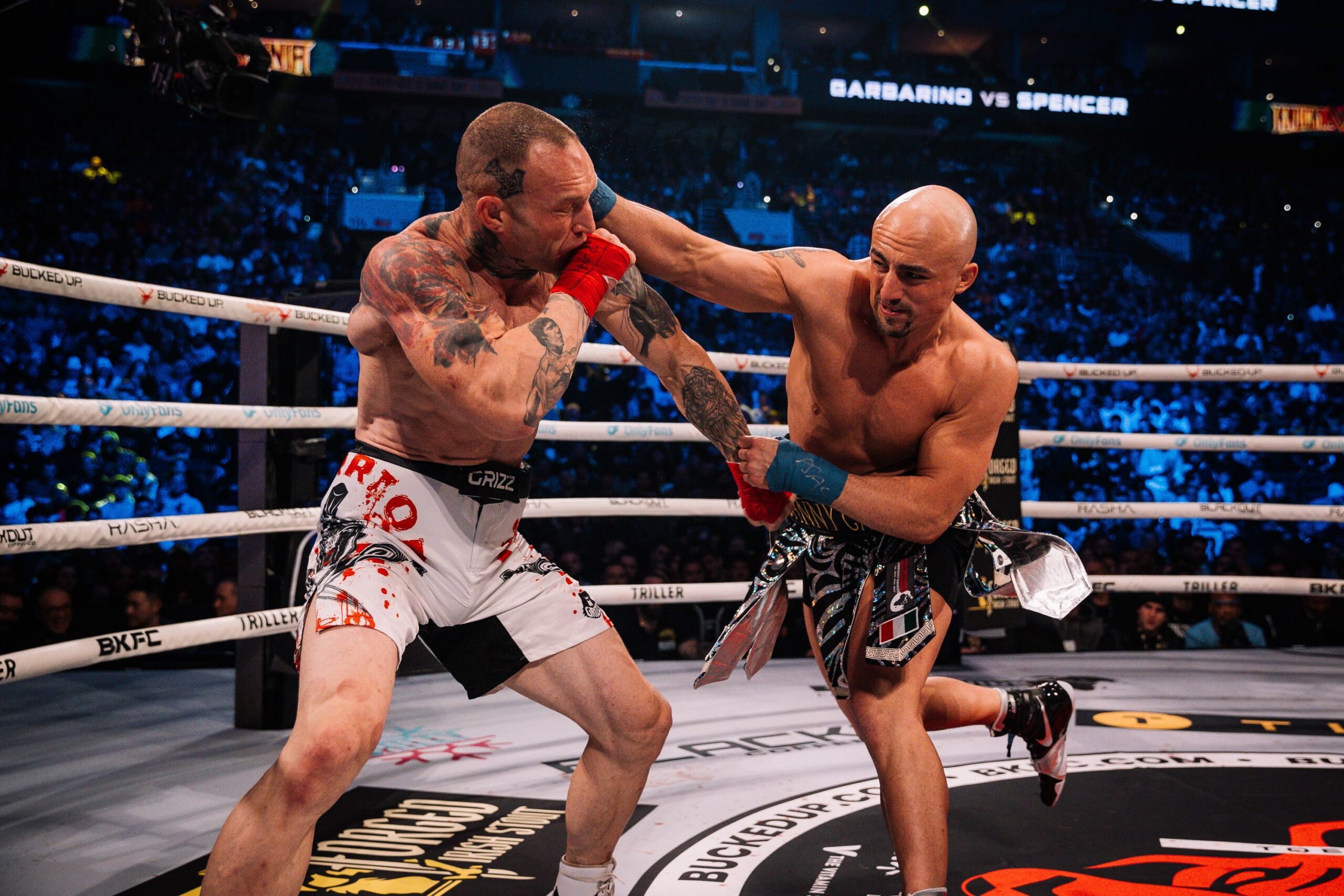
    Johnny Garbarino hitting his opponent Apostle Spencer with an overhand right at the Wells Fargo Center during BKFC’s KnuckleMania V event.

    A Flyers fight coach starting a fight outside Barstool: F

    The Flyers once brought Johnny “Cannoli” Garbarino, an undefeated bare-knuckle boxer, in to teach players how to handle themselves in hockey fights.

    So it’s not ideal that he’s now at the center of a late-night brawl outside Barstool Sansom Street.

    Video shows Garbarino punching the bar’s plexiglass vestibule, threatening onlookers, and setting off a multiperson street fight after destroying someone’s phone. Police are investigating an assault complaint.

    Hiring a professional fighter to teach hockey players how to fight makes a certain kind of sense. Being surprised when that same fighter gets into a fight outside a bar at 2 a.m. makes a little less.

    Not exactly the kind of player development the Flyers had in mind.

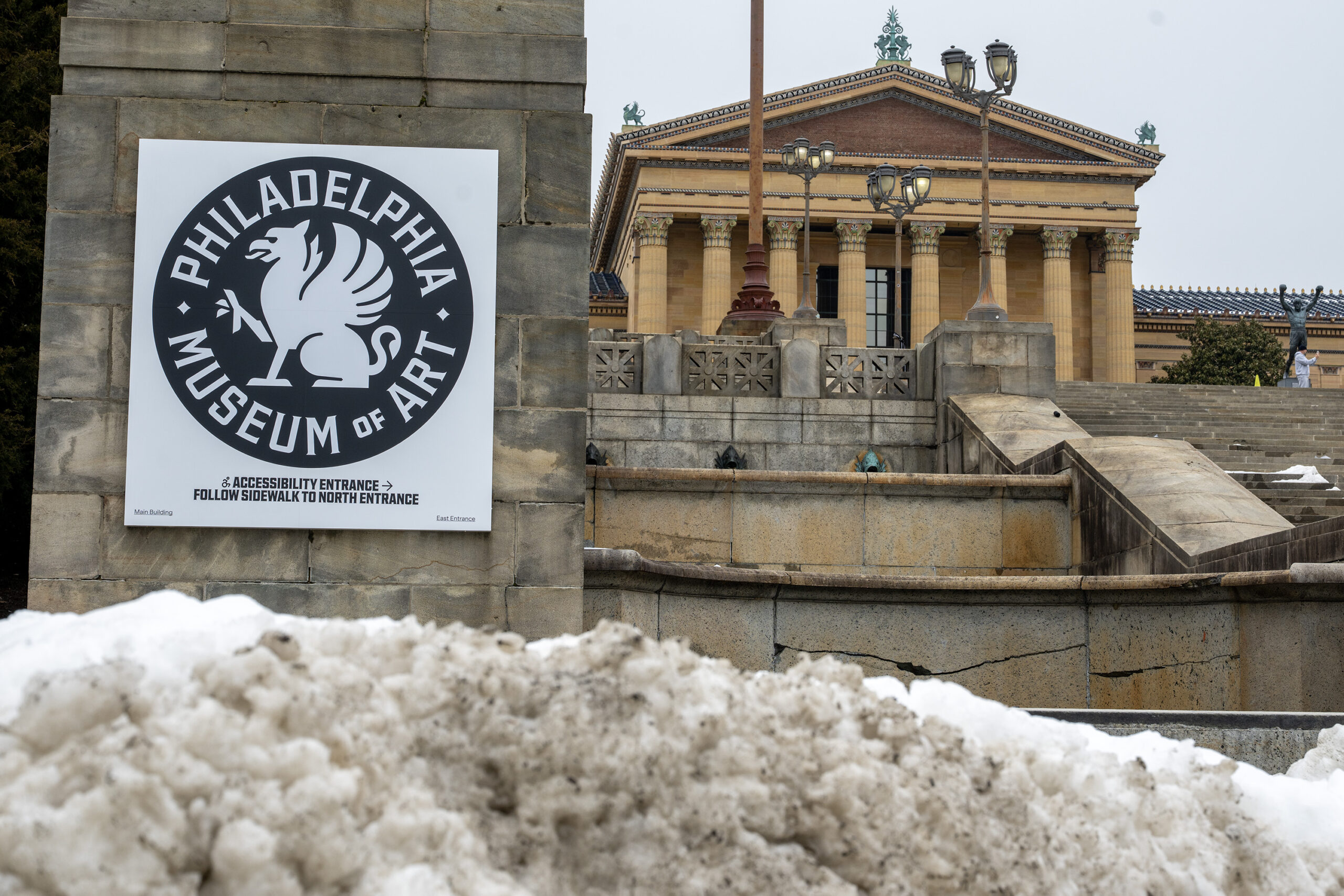
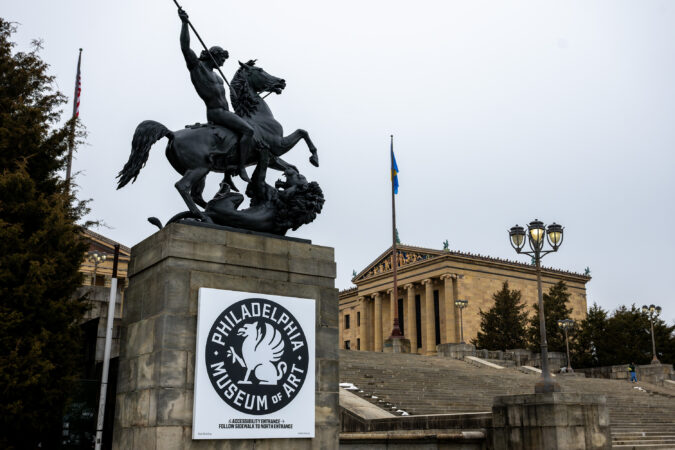
    One of the newly-installed signs for the recent old/new name change at the Philadelphia Museum of Art, on Thursday, Feb. 26, 2026.

    Pay-what-you-wish Fridays at the PMA: A

    The Philadelphia Museum of Art is bringing back something locals have loved for years: pay-what-you-wish admission on Friday nights.

    Considering a full-price ticket can run up to $30, that’s not a small change. Museums love to talk about accessibility but removing the price barrier is one of the few ways to actually make that happen.

    The timing is also convenient. After months of headlines about leadership drama, rebrands, and legal disputes, the museum seems eager to remind people that the actual point of the place is, you know, art.

    And if letting people decide what to pay gets more Philadelphians wandering the galleries on a Friday night, that’s probably a pretty good reset.

    Ivan, a drug-sniffing K-9 dog working for the Pennsylvania State Police, made a 40-pound drug bust in Delaware County last month.

    K-9 Ivan doing police work: A

    A Pennsylvania State Police K-9 named Ivan helped troopers uncover 40 pounds of marijuana and $6,000 in cash during a traffic stop on I-95 in Ridley Township last month.

    From a law enforcement perspective, that’s a pretty significant drug bust.

    From a public relations perspective, it’s also a reminder that every police department should have at least one extremely good dog on staff.

    Ivan alerted troopers to the scent of narcotics in the vehicle, leading to a search warrant and the eventual discovery of boxes and buckets full of marijuana.

    Which means somewhere in Delaware County, a very good boy probably got a treat and a lot of praise — as he should.

  • How to have a perfect Philly Day, according to Jill Scott

    How to have a perfect Philly Day, according to Jill Scott

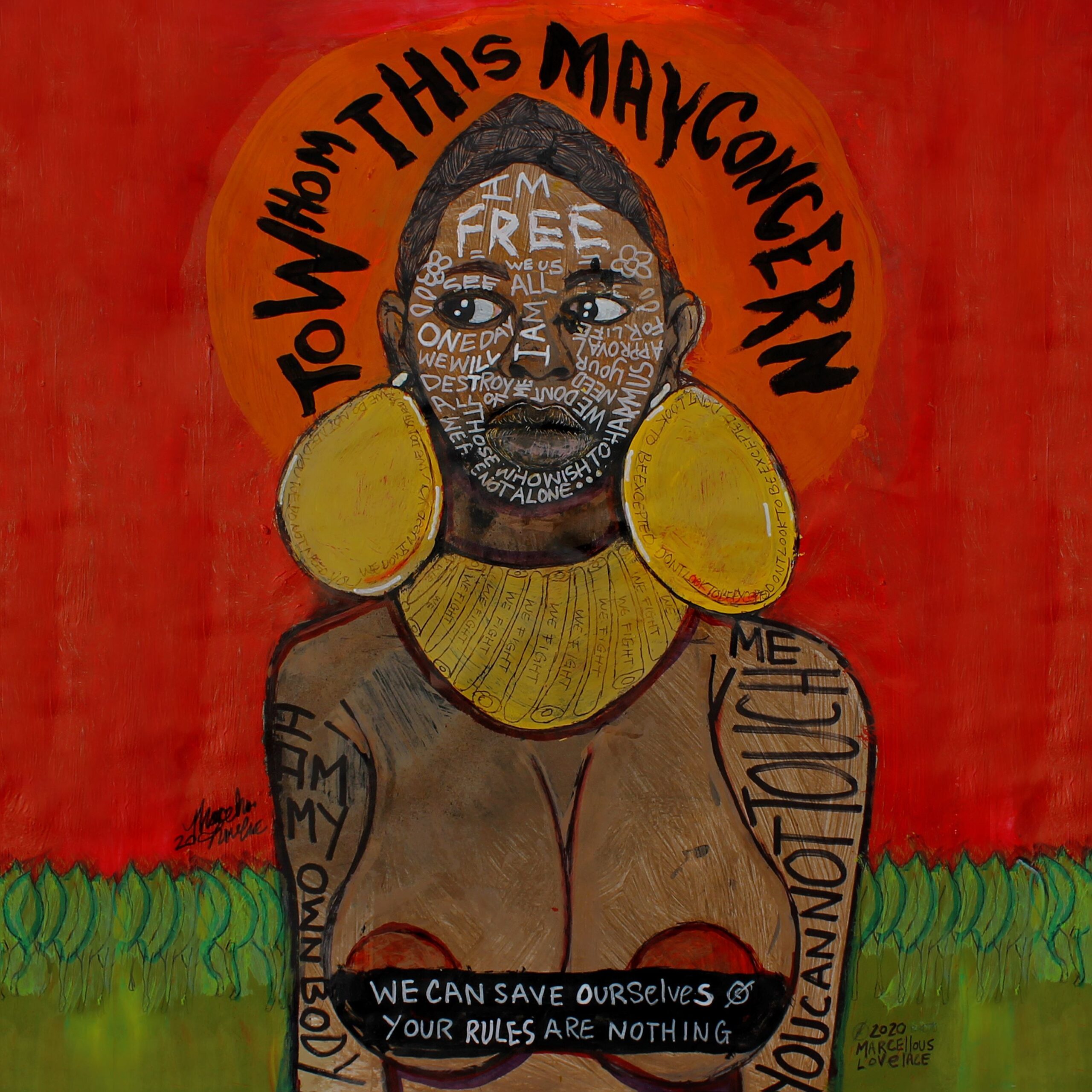
    Jill Scott’s sixth studio album To Whom This May Concern is a tapestry of Scott’s familiar easy rhythms with lyrics equal parts sweet longing and self-love.

    But on this 19-track project — Scott’s first collection of new music in more than a decade — she isn’t just telling us she plans to live her life like it’s golden the way she did 22 years ago. She’s also telling us about the great life she has right now. And she’s urging us to join her in the present moment with funky beats, powerful lyrics, and tight rhymes.

    “You might as well go ahead and be great,” Scott said in a recent video chat. “There’s literally nothing stopping you from being all of yourself.”

    Album cover of Jill Scott’s sixth studio “To Whom This May Concern” is a portrait of Jill Scott by muralist Marcellous Lovelace

    To Whom This May Concern is Scott’s assertion of self-love especially evident in the album cover’s illustration — by Chicago-based muralist Marcellous Lovelace — of the 53-year-old multi-hyphenate wearing big gold earrings and her natural hair in a top knot. “I’m free” is written in block letters across her forehead.

    “I’m pushing and supporting all of the art we have created as Black people in America,” Scott said. “I support that. [But this album is not for] limited ears. It’s definitely not limited music.”

    But it’s definitely Philadelphia music.

    Scott, who lives in Nashville, Tenn., recorded most of the album in Philly with Grammy winning producer — and her cousin — Carvin Haggins. She has traveled all over the world and says there is no place like Philadelphia.

    “The people at home are so dear and warm,” Scott, who often goes by Jilly from Philly, said. “I was grateful to find that again.”

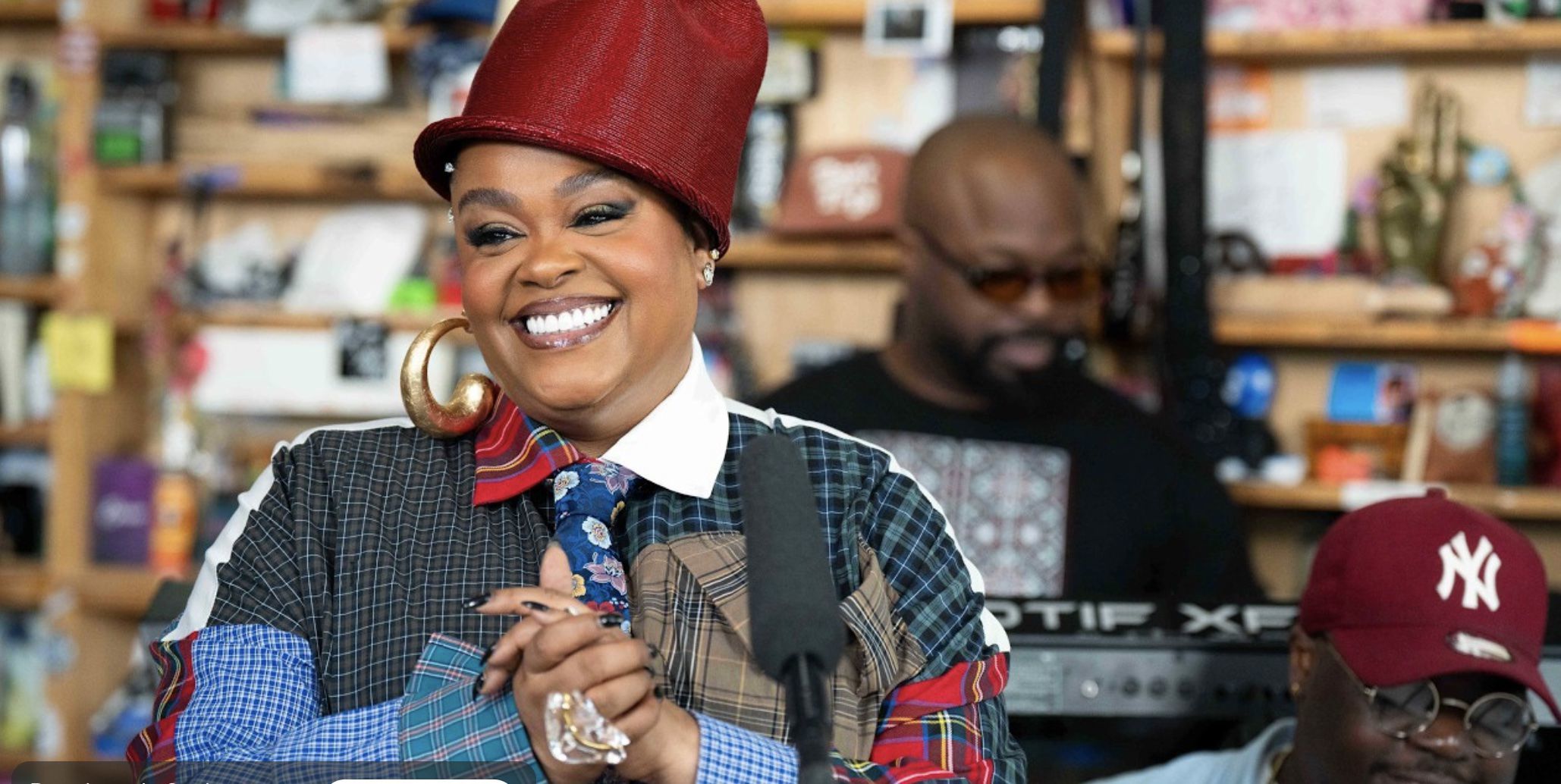
    Jill Scott performing on NPR Music Tiny Desk Concert series. The North Philly singer’s new album is ‘To Whom This May Concern.’

    Scott loves every nook and cranny of her hometown, but she still pours an extra bit of love for the “Norf Side,” to borrow from the lyrically sound rap she performs with Tierra Whack on the new album.

    “So often people have shunned me, making me feel less than because I come from North Philadelphia,” Scott said. “I wanted to shout out my area and remind [that people from] North Philly, we can do anything.”

    Here is the songstress’s idea of a perfect Philly day.

    7 a.m.

    If I lived in an apartment or condo in Philly near a park I’d get up and take a long walk, first thing.

    9:30 a.m.

    In the summer, I’d go over to the Blues Babe offices on North Broad and greet the kids at summer camp [Blues Babe is Scott’s nonprofit that sends children from Philadelphia and Camden to free summer camp]. The children gather there before taking trips all over the city. It’s important that I tell these kids that came from the same place I do, that they can do anything.

    12:30 p.m.

    I’d have lunch at Continental Midtown on Chestnut Street. (I’m really sad they closed the one in Old City.) I just love their turkey burger. Then I’d walk over to Rittenhouse Square and sit at the park. I love watching nature. On my perfect day, the artisans would be out selling jewelry and art and I’d find a good deal because you know I like to save money.

    2:30 p.m.

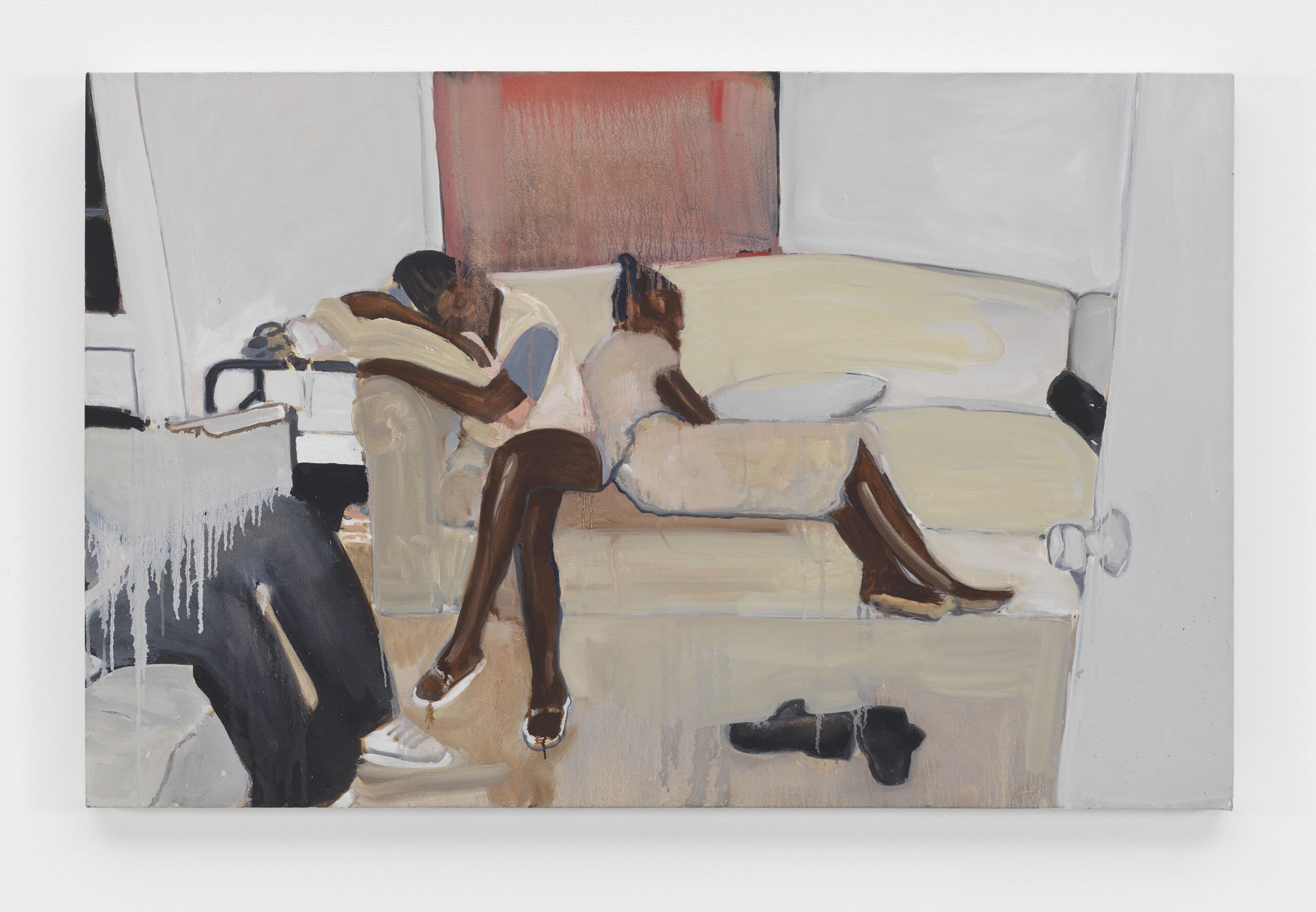
    From there, I’d go to the Philadelphia Museum of Art and maybe catch the Noah Davis show. Then, I’d go to the African American Museum of Art before making my way down to Ishkabibbles on South Street. There, I’d order a pizza steak with fried onions and mustard and pickles. (Nobody has to understand your cheesesteak.)

    “Untitled Girls” This painting by Noah Davis will be on display in the Philadelphia Art Museum’s 2026 exhibition named after the late artist

    5:30 p.m.

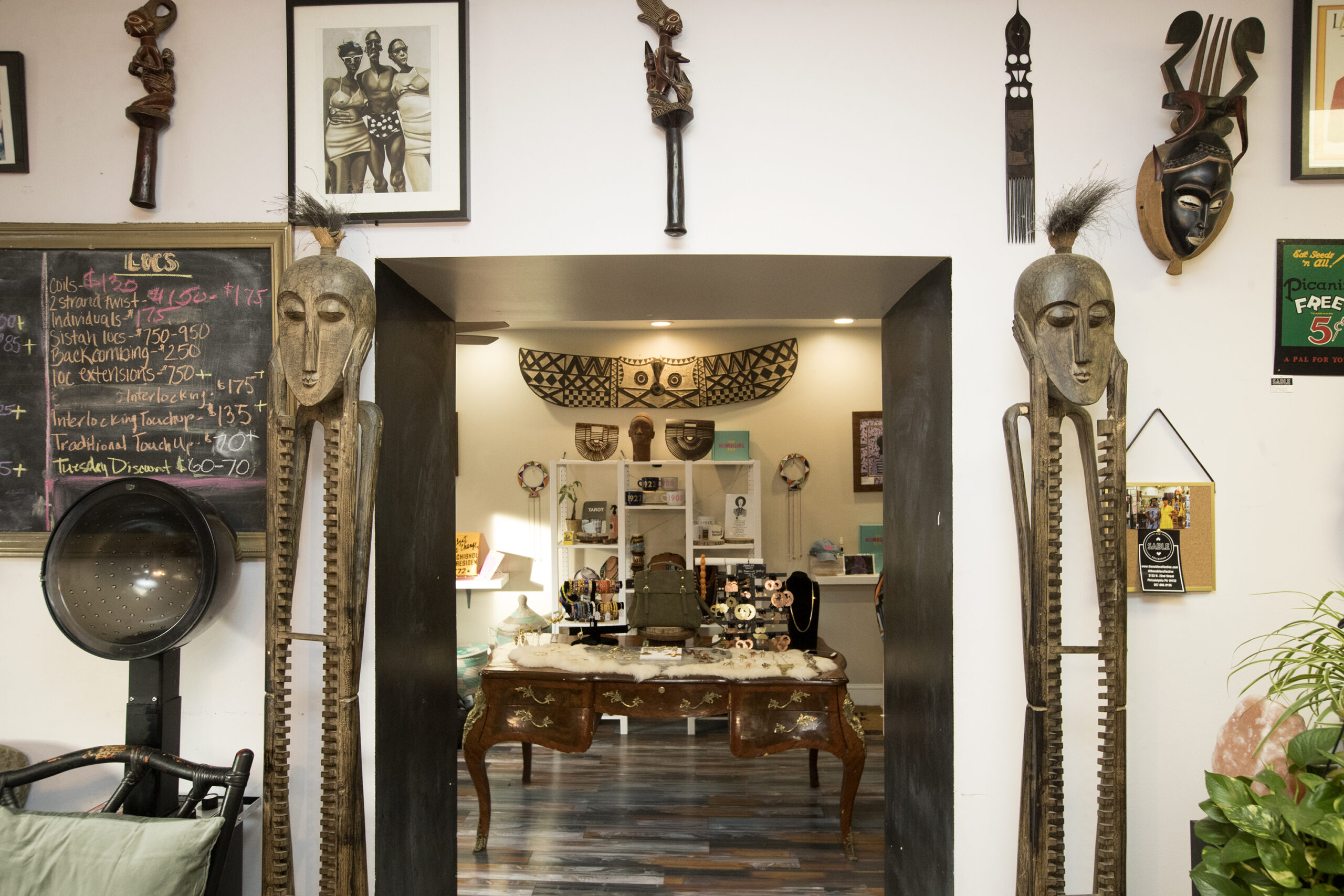
    I’d make my way back up to North Philly and visit my friend Syreeta Scott at the natural hair salon Duafe. She has such beautiful art work in there. It’s so peaceful. The energy is so good. We would go out, or she might cook something amazing. I would raid her closet and just chill.

    Inside Duafe Holistic Hair Care.

    7:30 p.m.

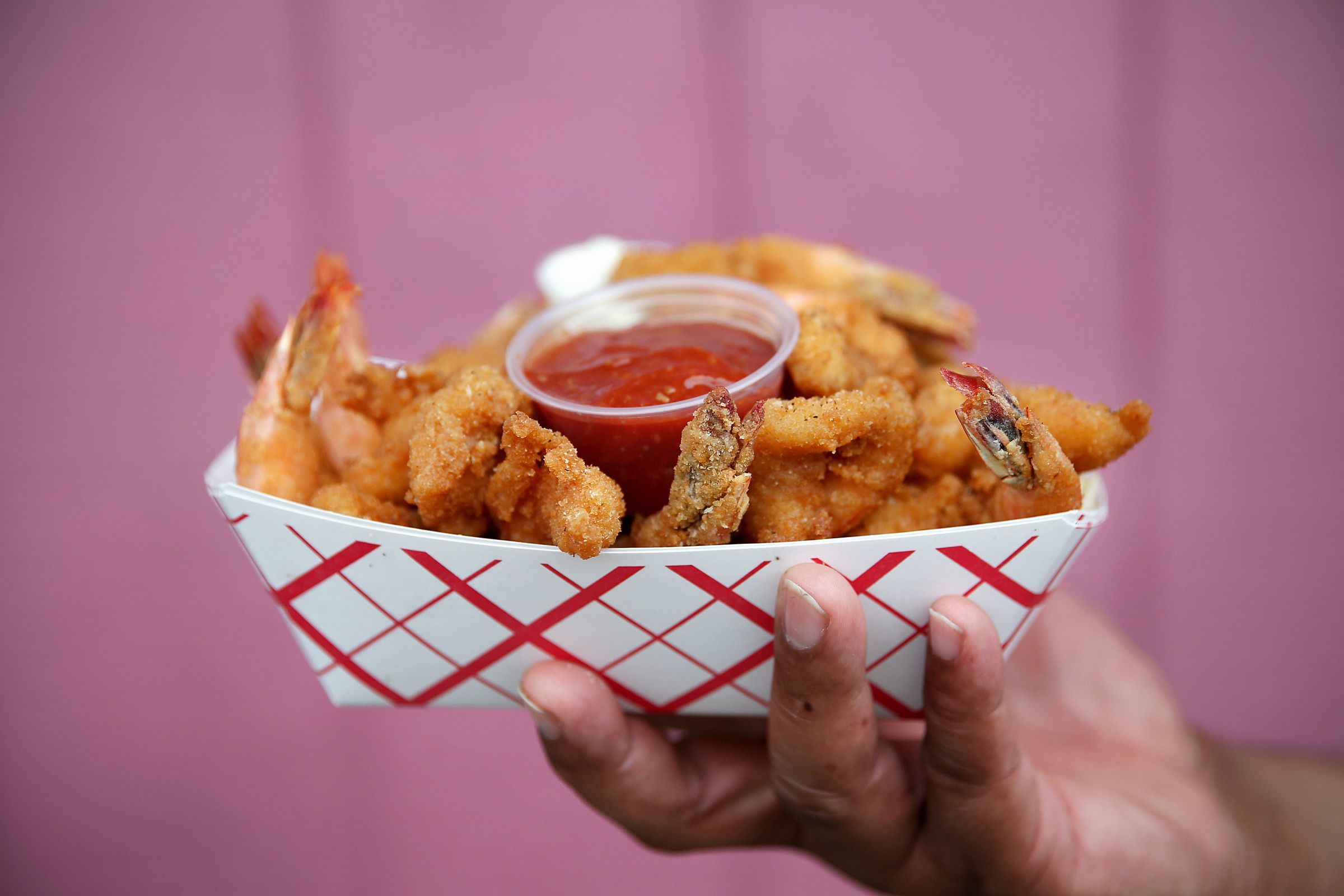
    If Syreeta isn’t cooking, we’d make our way to Sid Booker’s. I got to have it. Let me give you the deal: When you go to Sid Booker’s, you have to eat it in the car. There is no such thing as waiting until you get home. You are wasting it. You will ruin it. And if you like ketchup and hot sauce you have to get it on your shrimp, not on the side. But on your shrimp.

    Fried shrimp are pictured at Sid Booker’s Shrimp Corner in North Philadelphia on Friday, Sept. 14, 2018.

    10:30 p.m.

    I’d hope that Stacy “Flygirrl” Wilson is having a party with Mike Nyce, I would definitely go there. That is always a good time.

    Stacey “Flygrrl” Wilson and DJ Mike Nyce at the Kimmel Center during a summer happy hour.
  • A lot of orchestras play a lot of Mahler but the Philadelphians do it with a high-energy symphonic precision

    A lot of orchestras play a lot of Mahler but the Philadelphians do it with a high-energy symphonic precision

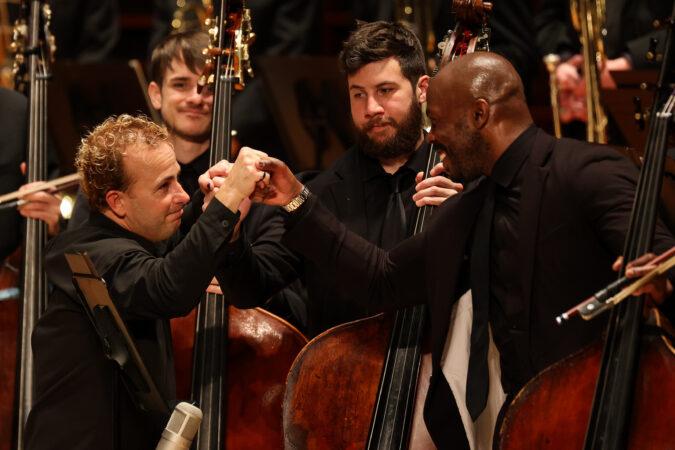
    Symphonic circles look like ongoing constant Mahler festivals these days, but Philadelphia Orchestra’s music-artistic director Yannick Nézet-Séguin somehow leaves you wanting more.

    This weekend’s performances of Mahler’s Symphony No. 2 (“Resurrection”) opened on Friday at Marian Anderson Hall with a well-deserved vociferous audience response to what felt like a very special occasion, whether or not it actually was.

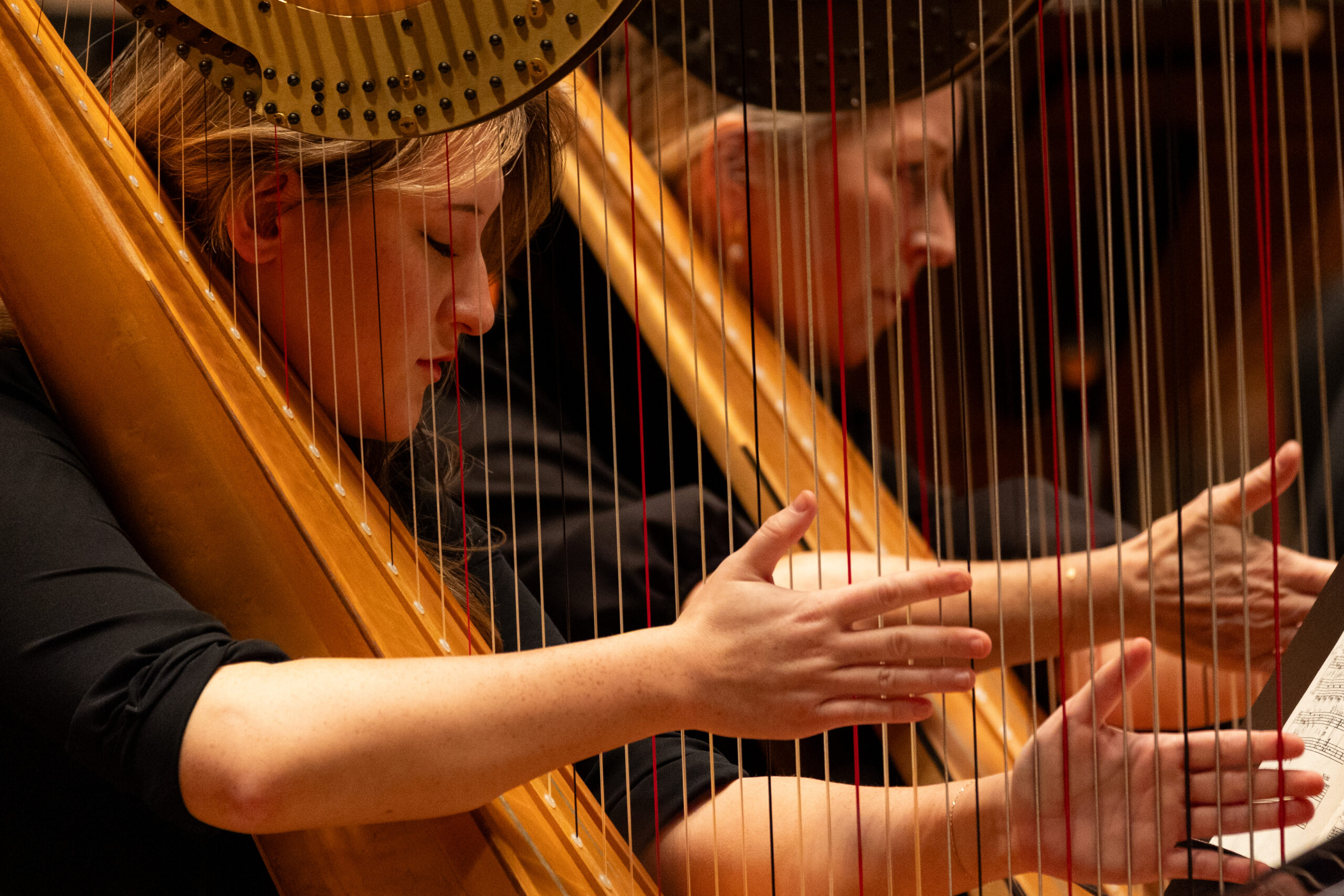
    A member of the Philadelphia Orchestra plays the harp during the performance of Mahler’s Symphony No. 2 at The Kimmel Center on Friday, March 6, 2026, in Philadelphia.

    The Philadelphia Orchestra’s standing is such that Tuesday’s repeat performance at the Mahler-glutted Carnegie Hall had all of six unsold seats as of Friday.

    The laborious Mahler performances of decades past have given way to ones that discover hidden worlds that can be investigated without the symphonic whole lapsing into grandiose incoherence. Not so on Friday.

    The incisive, explosive five-movement 80-minute “Resurrection” symphony—a large orchestra, a competing offstage band, two vocal soloists pondering our existence plus the Philadelphia Symphonic Choir supplying grandeur—had a vast but particularly specific range of expression on Friday.

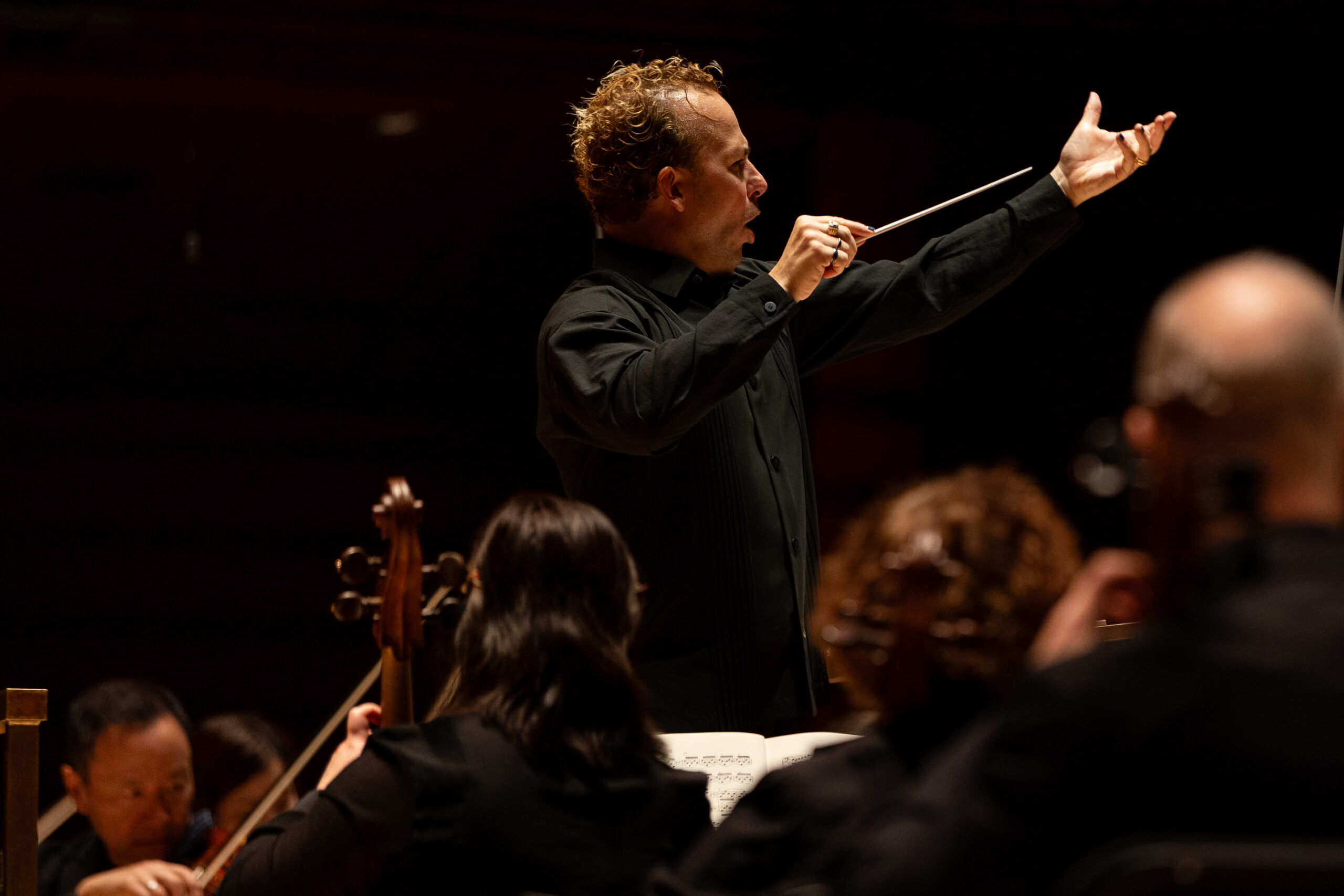
    Yannick Nézet-Séguin conducts the Philadelphia Orchestra’s performance of Mahler’s Symphony No. 2 at The Kimmel Center on Friday, March 6, 2026, in Philadelphia.

    While some conductors slow down to spotlight specific points, Nézet-Séguin was inclined to accelerate; not to be a speed demon but to suggest that this was Mahler “off his meds.” Nothing conveys emotional extremes like high-energy symphonic precision.

    Apocalyptic moments are expected in the violently contrasting sonorities and gestures of the first movement. However, the dance-based second and third movements had their landmine that, in this performance, never allowed moments of gentility and repose to rest easy.

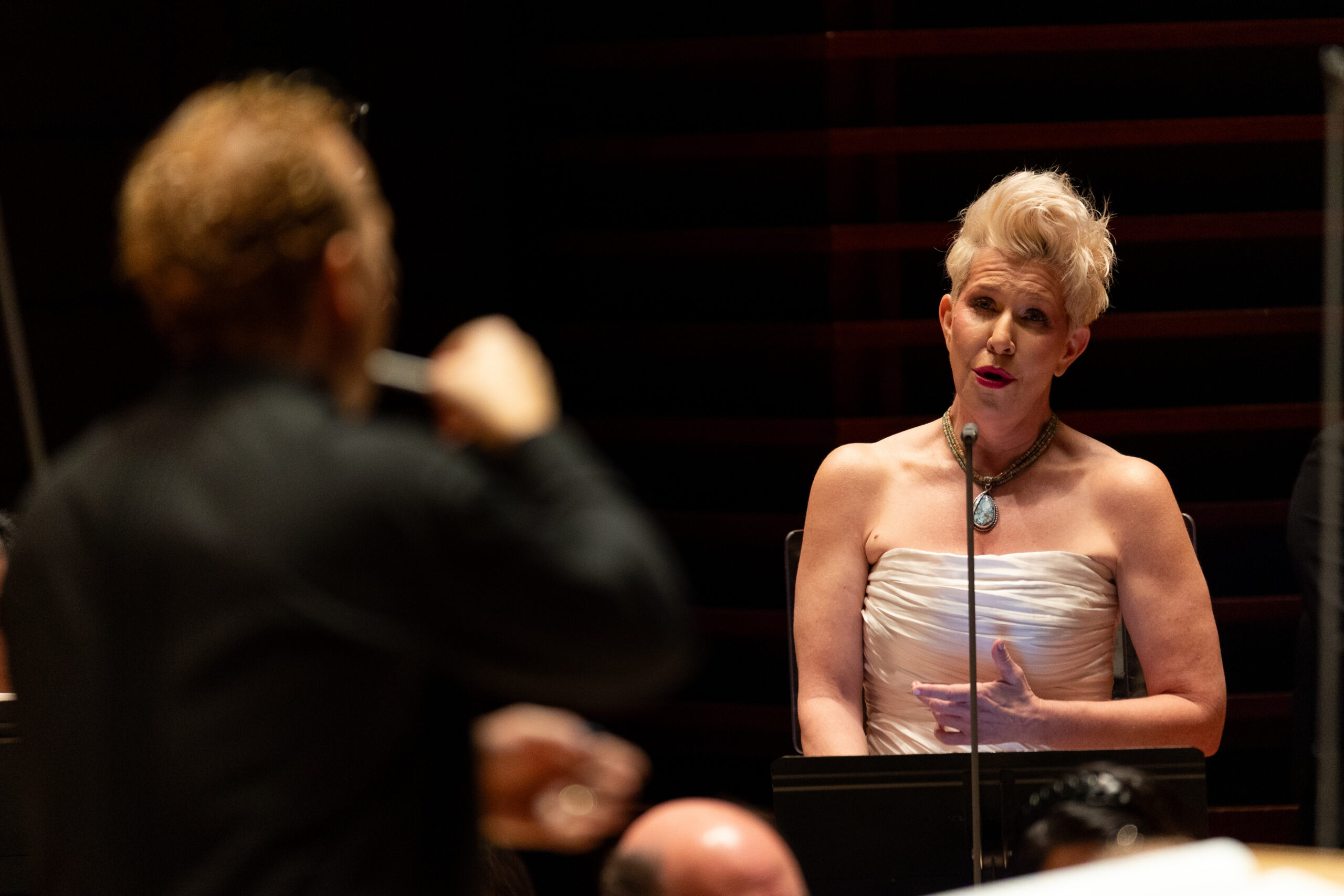
    Mezzo-Soprano Joyce Didonato performs a solo during the Philadelphia Orchestra’s performance of Mahler’s Symphony No. 2 at The Kimmel Center on Friday, March 6, 2026, in Philadelphia.

    In the spare depths of the fourth “Primal Light” movement, mezzo-soprano Joyce DiDonato didn’t just convey profundity, but lived it.

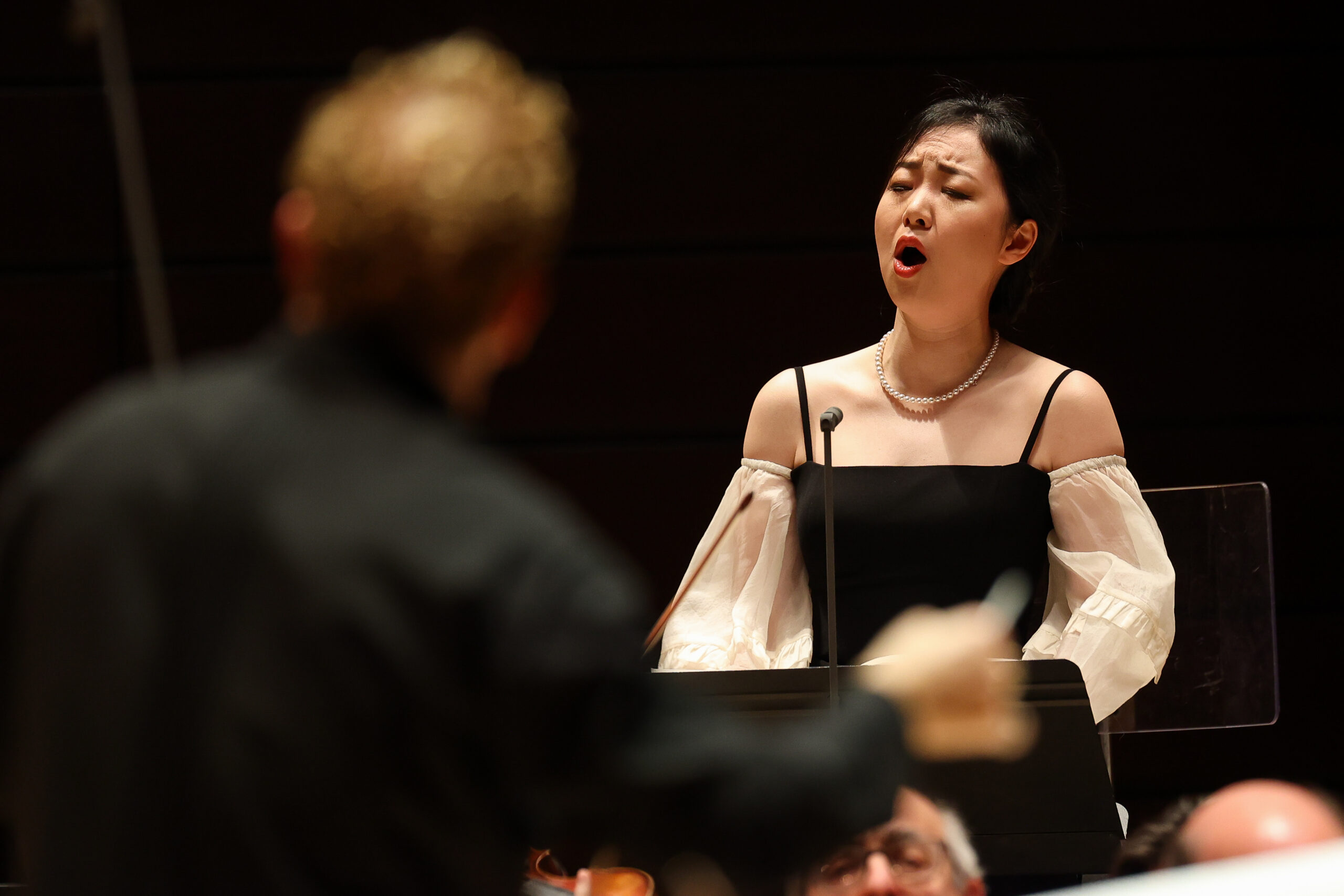
    Though the multisection fifth movement is sometimes framed by soaring solo soprano writing (so well sung by Ying Fang), the words included by Mahler can put the symphony’s many moving parts in perspective.

    For me, in this performance, it was “You were not born for nothing!” This has special poignancy for a composer who had boyhood aspirations to become a martyr. Not a sign of great self value. Is this a to-be-or-not-to-be symphony? With all questions answered with affirmation in fortissimo?

    Soprano Ying Fang performs a solo during the Philadelphia Orchestra’s performance of Mahler’s Symphony No. 2 at The Kimmel Center on Friday, March 6, 2026, in Philadelphia.

    The four previous movements teetering on so many different edges, the symphony was a litany of the joys and horrors of existence; which one can’t help contemplating amid current global power struggles.

    Just for fun: One point of reference was the Mahler 2nd finale that Nézet-Séguin recorded for the Leonard Bernstein biopic Maestro: It’s more imposing but with no sense of triumph over anguish. It was Mahler “on his meds.”

    Good for the film. Not for me. I’m a no-meds Mahlerite.

    “The Mahler Symphony No. 2″ will be repeated 8 p.m. Saturday and 2 p.m. Sunday at the Kimmel Center. $77-$252. philorch.ensembleartsphilly.org
  • Painted Bride’s new executive director is an arts leader who, many years ago, interned at the arts organization

    Painted Bride’s new executive director is an arts leader who, many years ago, interned at the arts organization

    Nearly a year after longtime executive director Laurel Raczka announced she was stepping down from her post at Painted Bride Art Center, the arts organization has found a new leader.

    Risë Wilson is the organizations’s new executive director, succeeding Raczka, who led the Bride for 26 years.

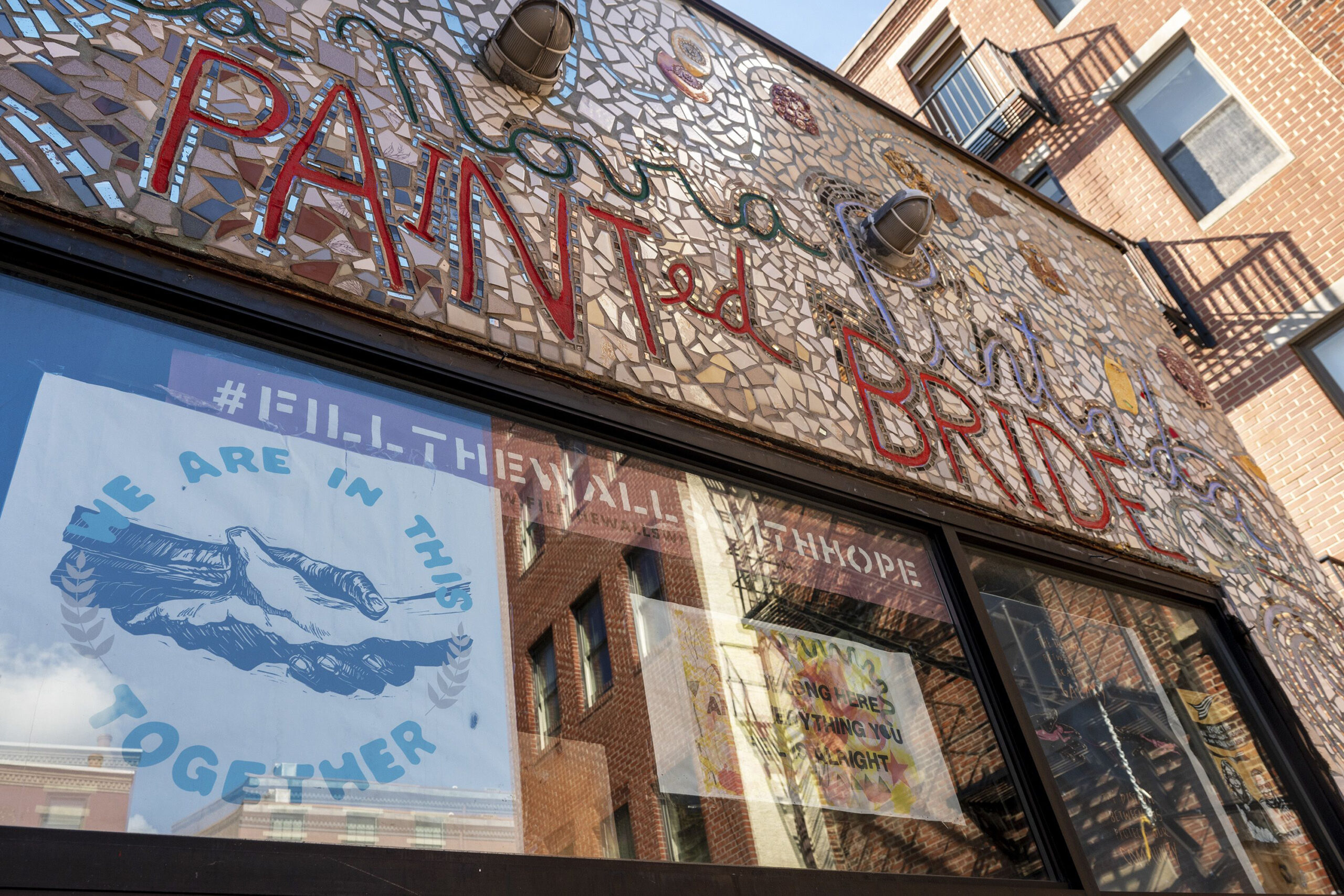
    Th exterior of Painted Bride Art Center Project Space, 4029 Cambridge St., Philadelphia, Wednesday, September 3, 2025.

    With this appointment, Wilson, a Germantown native, will be returning to her hometown and the organization that kick-started her arts career nearly 30 years ago.

    Wilson interned at the Bride under Raczka and former leader Gerry Givnish, who transformed the former cooperative gallery into an alternative performance space.

    “That experience changed my life,” Wilson said in a statement, responding to questions from The Inquirer, “setting me on a course to develop my own socially-engaged artistic practice while championing fellow artists committed to community-based work.”

    Executive director Laurel Raczka and Painted Bride board chair John Barber at the Painted Bride Art Center Project Space, 4029 Cambridge St., Philadelphia, Wednesday, Sept. 3, 2025.

    For the past two decades, Wilson has engaged with that work in Brooklyn, spearheading organizations such as the Laundromat Project, using art as a tool for community building and engagement.

    Wilson’s career has spanned public engagement, artist development, strategic planning, and philanthropic practice. Her previous roles include being the inaugural director of philanthropy at the Robert Rauschenberg Foundation. She has also worked with the Ford Foundation, Parsons: The New School for Design, MoMA, and the International Center for Photography.
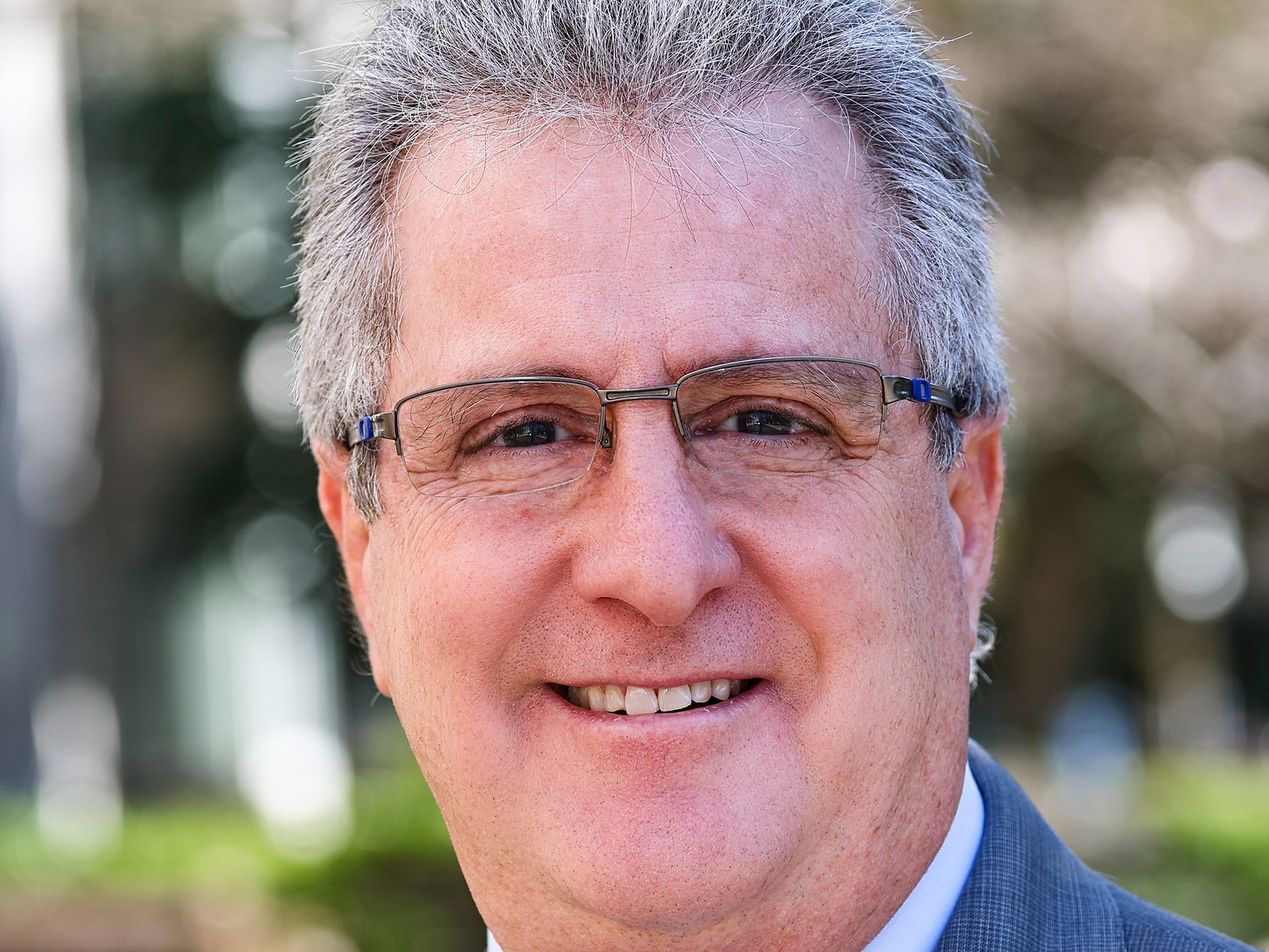
    The community organizer and activist holds a bachelor of arts degree from Columbia University, where she was a Kluge Scholar, and a master of arts degree from New York University, where she was a MacCracken Fellow.

    The former Painted Bride with the iconic mosaic by Isaiah Zagar. Photo taken on Oct. 18, 2023.

    After years at 52nd and Market Streets, the Painted Bride recently moved to a 3,200-square-foot performance space in East Parkside. In her statement, Wilson said she’s stepping in at a time when “we all need to protect and exercise our imaginations.”

    The Bride’s storied commitment to supporting artists and “culture-bearers” is one of many reasons the role resonated so strongly with her.

    “I feel privileged to work for a cultural institution long committed to cultivating the conditions for artists to thrive, for dialogues to deepen, and for each of us to be the authors of our own story,” Wilson said in her statement.

    As she transitions into her new role, Wilson is planning more artist-centered programming and “public-facing cultural dialogue,” which includes added workshops, public discussions, and collaborative projects.

    She’s also working on strengthening collaboration between artists, neighborhood organizations, and the city’s cultural partners. These efforts, Wilson wrote, will firmly establish the Bride’s role as a “civic cultural space.”

    Raczka said she’s confident the organization will continue to be a place for artist development and community engagement under Wilson.

    “I’m excited to see [Wilson] bring her leadership and vision to this next chapter,” Raczka said. “Her work has long centered artists as essential contributors to civic life, and I believe the Bride will continue to grow as a vital cultural space under her stewardship.”

  • Philadelphia Museum of Art hires a new chief financial and operating officer

    Philadelphia Museum of Art hires a new chief financial and operating officer

    Philadelphia Museum of Art director and CEO Daniel H. Weiss has hired a longtime associate to be the museum’s new executive vice president and chief financial and operating officer.

    Mitchell Lee Wein will oversee finances, facilities, operations, risk management, and strategic initiatives, the museum announced Friday.

    Weiss and Wein worked together in similar roles when Weiss was president of Haverford College and, before that, at Lafayette College. Wein, 63, has extensive experience on the financial and operations side of nonprofit organizations, but has never worked in a museum.

    A Philadelphian for more than three decades, he takes up the new post April 22.

    “It’s such an important institution that I’m happy to play a role for as long as I can and leave it better for the future. I think the mission is critical,” said Wein. “When I was in the private sector I thought about how we attract firms to Philadelphia, how people can have a great experience here, and the museum plays a role in that. I smile when I think about the opportunities.”

    Mitchell Lee Wein, newly named CFO and COO of the Philadelphia Museum of Art.

    Wein is currently senior vice president for finance and COO at the Brookings Institute, the Washington, D.C.-based think tank. He was senior vice president for administration and finance at Haverford College and held a similar position at Lafayette College. Previously, he was managing director in investment banking with UBS Investment Bank/UBS PaineWebber, and, before that, at PNC Capital Markets.

    Weiss took over the museum in December and has been making a series of changes in the executive leadership team as he determines how to close the operating deficit and revive attendance. He must decide what to do about paused expansion plans and much-needed maintenance on existing buildings. And he will consider whether to re-open to the public the Ruth and Raymond G. Perelman Building, the museum’s major addition that closed during the pandemic.

    Among Weiss’s early moves: he reversed the name change that had been unveiled months earlier as part of the museum’s widely-panned rebranding.

    Wein says he has been following coverage of the museum’s challenges and reading financial statements in preparation for his start. He said he looked forward to developing a plan for the museum “in support of what Dan has outlined along with other colleagues.”

  • A new streaming series tells the story of a Philadelphia high school cheer squad

    A new streaming series tells the story of a Philadelphia high school cheer squad

    Spirit, the docuseries on George Washington High School national cheerleading championship run, is now available for streaming on Peacock.

    The four-part series follows the underdog team’s rise to become the first cheer squad from the School District of Philadelphia to compete in the National Cheerleaders Association High School Nationals, the biggest cheerleading event anywhere.

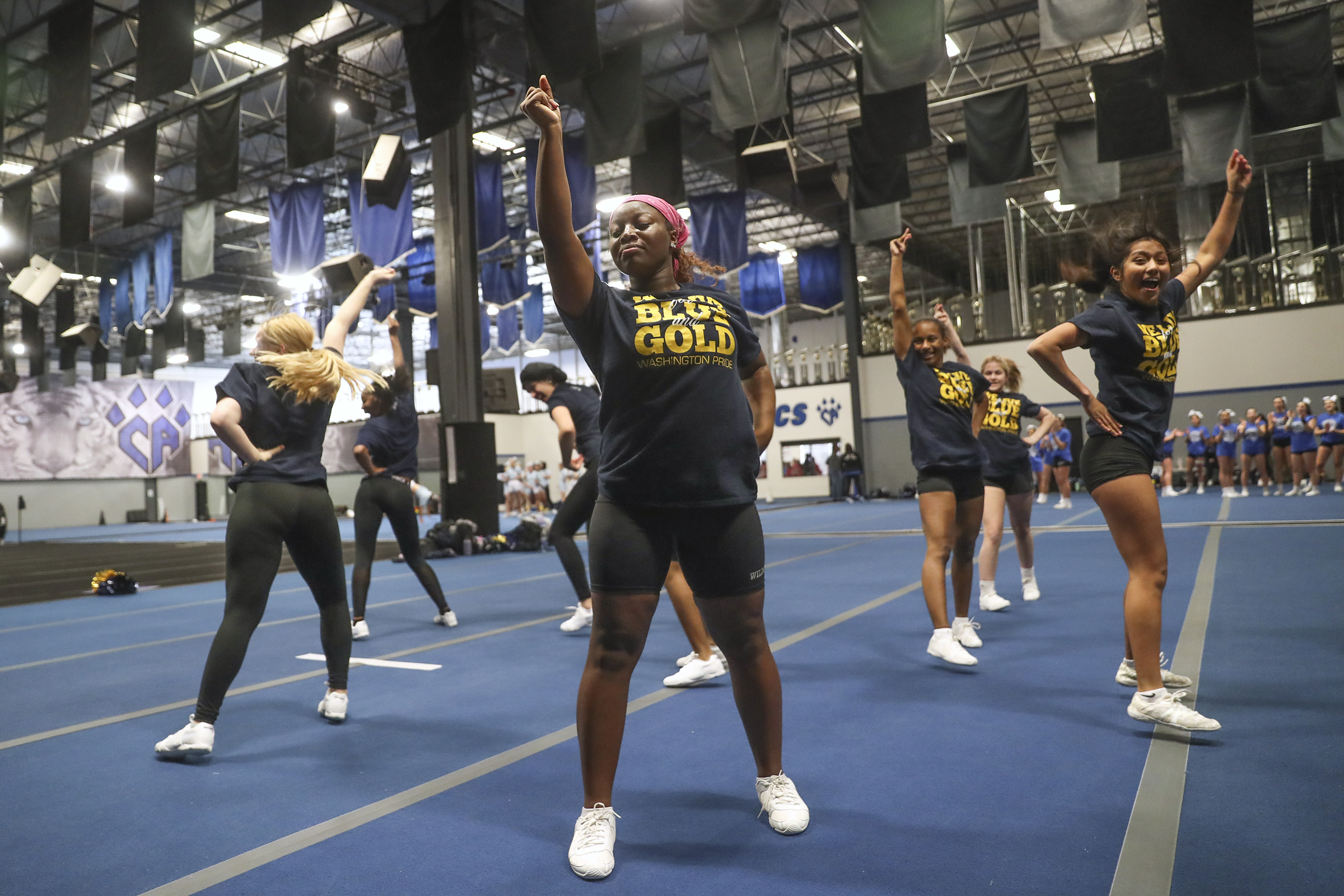
    Aaliyah Armour, center, and the George Washington High School cheer team practicer their routine at Cheer Athletics in Plano, Texas on Friday, Jan. 20, 2023. Cheer Athletics is regarded as one of the best cheerleading gym in the worlds. The George Washington High School cheer team became the first Philadelphia School District cheerleaders in history to qualify for nationals, where they spent the weekend competing in Dallas.

    Produced by basketball star Steph Curry, the series had previously aired to limited audiences on Comcast’s Black Experience platform.

    Directed by Philadelphia filmmaker and La Salle University alum, Matt Howley, who learned about the team through a 2022 Inquirer story, the series tracks the 15-person coed squad from its humble beginnings, including collecting change to scrape their way to the nationals.

    The series delves into the trying home lives of students, like star player Adamaris Lopez, who competed while successfully fighting her father’s deportation.

    “A lot of us come from poverty,” Lopez, who now studies nursing at the University of Pennsylvania, says in the first episode. “People don’t really expect us to come from low-income houses to win a national championship.”

    Other players discuss traumatic home lives and the loss of loved ones from gun violence. Despite placing 10th in the nation, many of the George Washington students had no previous experience in cheerleading, a pricey sport where many children begin young.

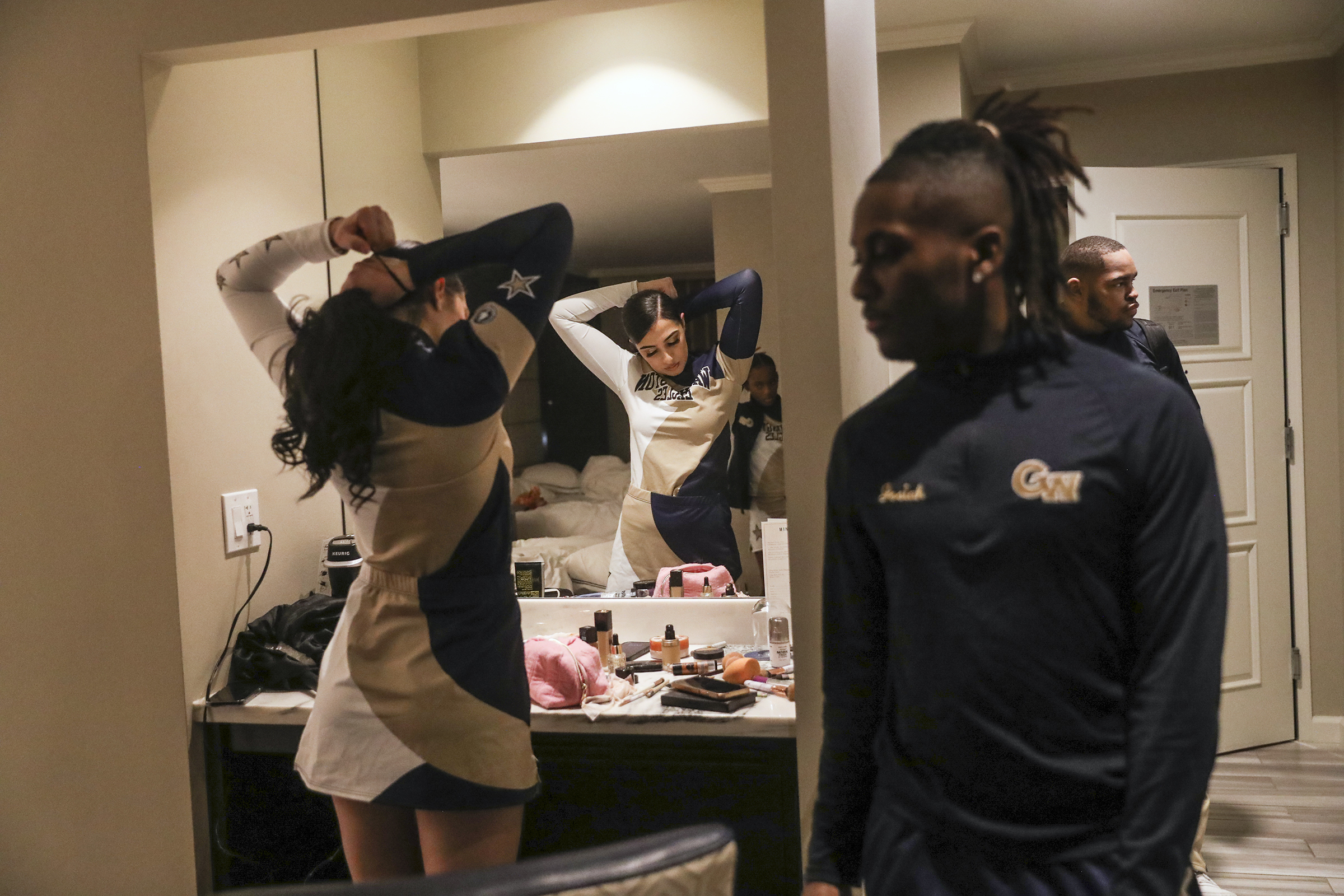
    Irsida Kola gets ready in the mirror for the first day of competition as teammates Josiah Jeudy, front, and Roland Williams enter the room before the team departs at The Adolphus Hotel in Dallas, Texas on Saturday, Jan. 21, 2023. The George Washington High School cheer team became the first Philadelphia School District cheerleaders in history to qualify for nationals, where they spent the weekend competing in Dallas.

    “Matt did a tremendous job capturing the dynamic of the team and the individual stories,” said Coach Michelle Sorkin-Socki. “It really showed that it was more than just cheerleading. They were able to overcome their individual adversities. They found that power within each other.”

    The team, which placed fourth in the nation this year, and has been to nationals now five years in a row, attended a ritzy red carpet premier of the series at the Franklin Institute last year.

    Many of the players have moved onto college, but keep in contact about the film, said Sorkin-Socki.

    (L-R) George Washington High School’s Josiah Jeudy, Sarai Jeudy, Irsida Kola and Roland Williams before the premiere of “Spirit,” at the Franklin Institute in Philadelphia, on Thursday, February 27, 2025. “Spirit,” is the story about the George Washington HS cheer team, the first Philly public school team to make it to nationals in a sport that’s dominated by wealthy suburban (and majority white) teams.

    “It’s bonded us,” she said.

    All of it — the national rise, the series, the attention — has been surreal, said Sorkin-Socki.

    “But I think the students felt heard,” she said. “I think they felt seen.”

    The series has not only had an impact on the former players, the coach said. But on younger ones too.

    “They know they can do great things,” she said. “Their trauma doesn’t define them.”

  • Timothée Chalamet said ‘no one cares’ about opera and ballet. He should get to Philadelphia more often.

    Timothée Chalamet said ‘no one cares’ about opera and ballet. He should get to Philadelphia more often.

    From the department of weirdly random, gratuitously hurtful actor observations about the world, Timothée Chalamet has informed us that opera and ballet are passé:

    “I don’t want to be working in ballet, or opera, or things where it’s like, ‘Hey, keep this thing alive, even though, like, no one cares about this anymore.’ All respect to all the ballet and opera people out there.”

    After suggesting that both art forms were wanting for support during a talk with actor Matthew McConaughey at a Variety and CNN town hall in University of Texas at Austin, the American and French actor joked: “I just lost 14 cents in viewership. I just took shots for no reason.”

    Chalamet then mimicked an opera singer, the event video shows.

    Opera and ballet figures all over have seized on his comments, and Philadelphia — where both opera and ballet fill the hall regularly — would like to have a word with the 30-year-old actor.

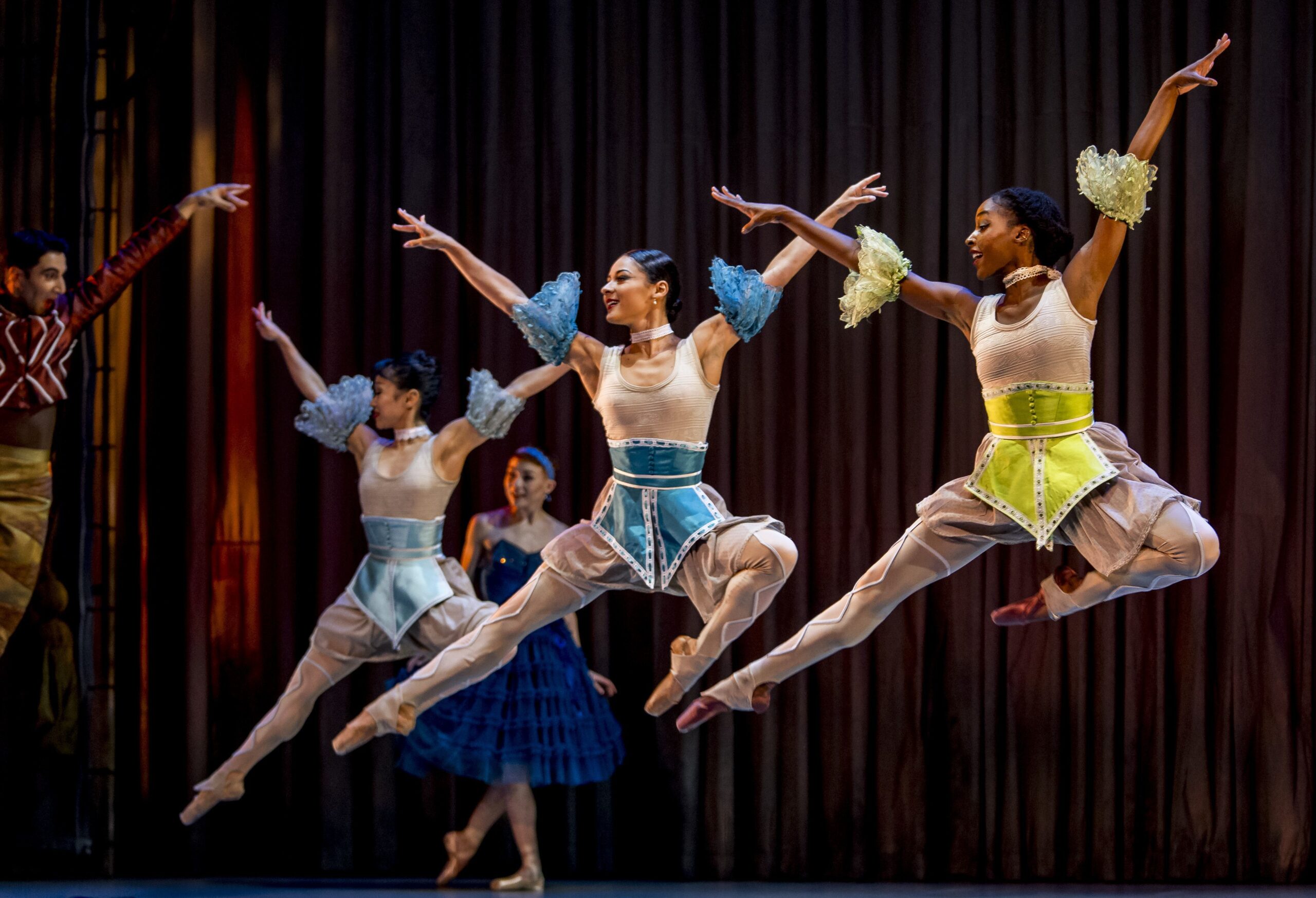
    BalletX dancers Ashley Simpson, Itzkan Barbosa, Minori Sakita, and Lanie Jackson (back) in Amy Hall Garner’s “Petrushka.”

    “I am a huge Timothée Chalamet fan, and I was shocked,” said Christine Cox, artistic and executive director of BalletX. “It was so dismissive and hurtful of entire industries. I see generations of people coming to this art form. We shouldn’t be putting each other down, we should be lifting each other up.”

    BalletX’s spring run of seven performances this month are nearly sold out, Cox pointed out.

    Philadelphia Ballet chief executive officer Shelly Power said that “Mr. Chalamet is obviously living outside the majority of the ballet world and out of touch. If his comments were true, why are our ticket sales and attendance numbers hitting all-time highs? We saw 10,000 more patrons from 2024 to 2025 in The Nutcracker alone.”

    The company premiered its The Merry Widow Thursday night.

    Its subscriber base, Power said, has returned to pre-pandemic numbers.

    This season, most Opera Philadelphia performances have sold out or sold close to capacity. General director and president Anthony Roth Costanzo said that “in terms of whether I agree that no one cares about it, no, obviously I don’t agree with that as someone who cares about it a lot.”

    But Costanzo says he prefers to focus on the underlying question of how to get even more people to care about both opera and film.

    Anthony Roth Costanzo (right), countertenor, and Leah Hawkins (left), soprano, perform during ‘Home for the Holidays’, a concert part of Opera Philadelphia’s ‘Pipe Up!’ series at The Wanamaker Building’s Grand Court on Tuesday, Dec. 2, 2025.

    “Timothée was talking about making film as relevant as it can be, and in that context, he said that he didn’t want to work in something that wasn’t relevant, to try and make it more relevant, and that’s what I’m doing. So in a way I feel allied. He’s just saying that he doesn’t want to do it in a medium that’s more difficult, so I guess he’s a little bit more of a wimp than I am.”

    BalletX’s Cox said that Chalamet’s comments were surprising coming from someone whose mother, Nicole Flender, was a Broadway dancer, and someone who attended a performing arts high school. Chalamet attended New York City’s Fiorello H. LaGuardia High School of Music & Art and Performing Arts.

    At left is Dayesi Torriente, playing Gulnare leaps in front of Angel Corella, artistic director, Philadelphia Ballet during rehearsal for “Le Corsaire” at the Philadelphia Ballet, Wood Street, Philadelphia, Wednesday, October 2, 2024.

    “I bet you he’s going to be at a ballet soon, because he’s going to have to fix this,” Cox said.

    As for Chalamet mimicking an opera singer during his talk with McConaughey, Costanzo has an idea.

    “I invite him to star in an opera whenever he wants. Because after he said that, I saw some contrition as he tried to then sing an operatic note. And I thought, ‘Okay, there’s some promise there.’ So if he wants voice lessons, I’m available.”