Category: Entertainment

Entertainment news and reviews

  • NBC Sports Philadelphia fans will soon be able to save money on YouTubeTV

    NBC Sports Philadelphia fans will soon be able to save money on YouTubeTV

    Philadelphia sports fans will soon be presented with a first — a chance to actually save money during the streaming wars.

    Beginning this week, YouTube TV is rolling out a sports-specific plan featuring channels with major sports rights that will cost $64.99 a month, $18 less than what it currently charges for a subscription.

    New subscribers can nab the deal for $54.99 a month for a year.

    The plan will include all the major broadcast networks — ABC, NBC, CBS, and Fox — and cable channels that hold sports rights, including ESPN’s networks (and full access to ESPN Unlimited beginning in the fall), FS1, TNT, TBS, TruTV (for the NCAA men’s basketball tournament), CBS Sports Network, Golf Channel, and USA Network, the U.S. home of Premier League games.

    NBC Sports Philadelphia also will be included in the slimmed-down sports bundle for those who live in the Philadelphia TV market, a YouTube spokesperson confirmed. So will NBC’s other three regional sports networks in their respective areas: Boston, the San Francisco Bay Area, and Northern California. NBC Sports Philadelphia also still will be available to stream without a cable subscription through Peacock and MLB.TV.

    YouTubeTV’s sports bundle will also include league-centric channels like the NFL Network (now owned by ESPN), the Big Ten Network, and NBA TV, which this season basically just airs a whip-around show called The Association and a handful of NBA games.

    While the plan gets sports fans the bulk of NFL, MLB, NBA, and NHL games, there are a few omissions. Amazon’s Prime Video, which features Thursday Night Football, weekly NBA games, and playoff games in both leagues, isn’t included. It also doesn’t include the handful of NFL and MLB games streamed by Netflix, or Apple TV+’s Friday Night Baseball or MLS games.

    Another notable omission is MLB Network, which hasn’t been available on YouTube TV since 2023 because of a carriage dispute.

    YouTube TV is also rolling out slimmed-down subscription offerings for entertainment fans ($54.99 a month), a sports-plus-news package ($71.99 a month), and a family-focused plan ($69.99 a month).

    Why now? Growth. YouTubeTV is the third-largest cable TV provider in the country and growing, with over 10 million subscribers, trailing just Charter (12.6 million) and Comcast (11.3 million). While Comcast has been shedding video customers, Charter has been able to stem its losses by offering its own skinny bundle, something fans and non-fans alike have been complaining about for years.

    NBC Sports Philadelphia still will be available to stream without a cable subscription on Peacock. It’s also available through MLB.TV, although because it’s now run by ESPN, you’ll need to jump through a few hoops so you’re not also charged for ESPN Unlimited.

    More NFL games coming to YouTube?

    YouTube, the free older brother of YouTube TV, hasn’t been quiet about wanting to stream more NFL games in the near future. It could get its wish as soon as next season.

    As part of its purchase of NFL Media and the NFL Network, ESPN agreed to give the league back the TV rights to four games. Those will now head to the marketplace, where YouTube is expected be among the bidders. It’s no surprise that YouTube CEO Neal Mohan was among the big names sitting with NFL commissioner Roger Goodell in his Super Bowl box on Sunday at Levi’s Stadium.

    “We really value our partnership with the NFL,” Christian Oestlien, YouTube’s vice president of subscription product, told Bloomberg.com in a recent interview. “Everything we’ve done with them so far has been really successful. And so we’re very excited about the idea that we could be doing more with them.”

    YouTube’s biggest competitor for those four games likely will be Netflix, which is entering the last year of its three-season deal to stream NFL Christmas games. Ted Sarandos, Netflix’s co-CEO, was also in Goodell’s booth.

    YouTube streamed its first NFL game last season, the Week 1 matchup between the Kansas City Chiefs and Los Angeles Chargers played in São Paulo, Brazil. The game drew 17.3 million global viewers, including 16.2 million in the United States, a big number boosting the streamer’s chances of landing more games.

    More sports media news

    • ESPN will broadcast next year’s Super Bowl in Los Angeles, and you’re going to hear a lot over the next year about it being the network’s first. But it has aired on sister network, ABC. As pointed out by Sports Media Watch’s Jon Lewis, ABC has broadcast three Super Bowls since being purchased by ESPN’s parent company, Disney, in 1996 — in 2000, 2003, and 2006, with coverage featuring Chris Berman and a number of ESPN personalities. The Super Bowl also has aired in Spanish on ESPN Deportes.
    • Happy trails to the laptop of The Athletic’s Tony Jones, which was destroyed after it was hit by a T-shirt shot by a cannon during the fourth quarter of Sunday’s Super Bowl. Jones said the rolled-up T-shirt hit his computer, which then hit him in the face, cracking the screen and preventing him from filing a story.
    • NBC will air MLB games this season for the first time since 1989 and is filling out its broadcast bench, adding studio analysts (and recent MLBers) Clayton Kershaw, Anthony Rizzo, and Joey Votto. You might not see much of them during the regular season, but all three will be part of NBC’s coverage of the wild-card series, which it’s taking over from ESPN.
    • Super Bowl viewership numbers will be out later Tuesday. If you care about such things and have seen numbers on social media, ignore them. The Eagles’ blowout win last year against the Chiefs averaged over 127 million viewers, peaking with Kendrick Lamar’s halftime show, with over 133 million people tuning in. We’ll see how Bad Bunny and Sunday’s boring Super Bowl can match that.
  • A Northeast Philly woman helped break down Bad Bunny’s halftime show stage in under seven minutes

    A Northeast Philly woman helped break down Bad Bunny’s halftime show stage in under seven minutes

    Delilah Dee was crying from the moment she woke up on Super Bowl Sunday.

    “I’m an emotional person. I just feel things heavily,” said the marketing professional from Mayfair. “And it was more because I knew the impact that this was going to have.”

    On Sunday night, Dee was one of hundreds of team members who worked behind the scenes of Bad Bunny’s halftime show at Levi’s Stadium in Santa Clara, Calif.

    In Philadelphia, Dee, 35, works in marketing and branding and runs Jefatona, a social community for Latina women, and La Cultura Flow, which organizes Latin American night parties as way of celebrating the community.

    “Everything I’ve been standing on is just really promoting the Latino experience in a positive light,” Dee said. “I build a community everywhere I go.”

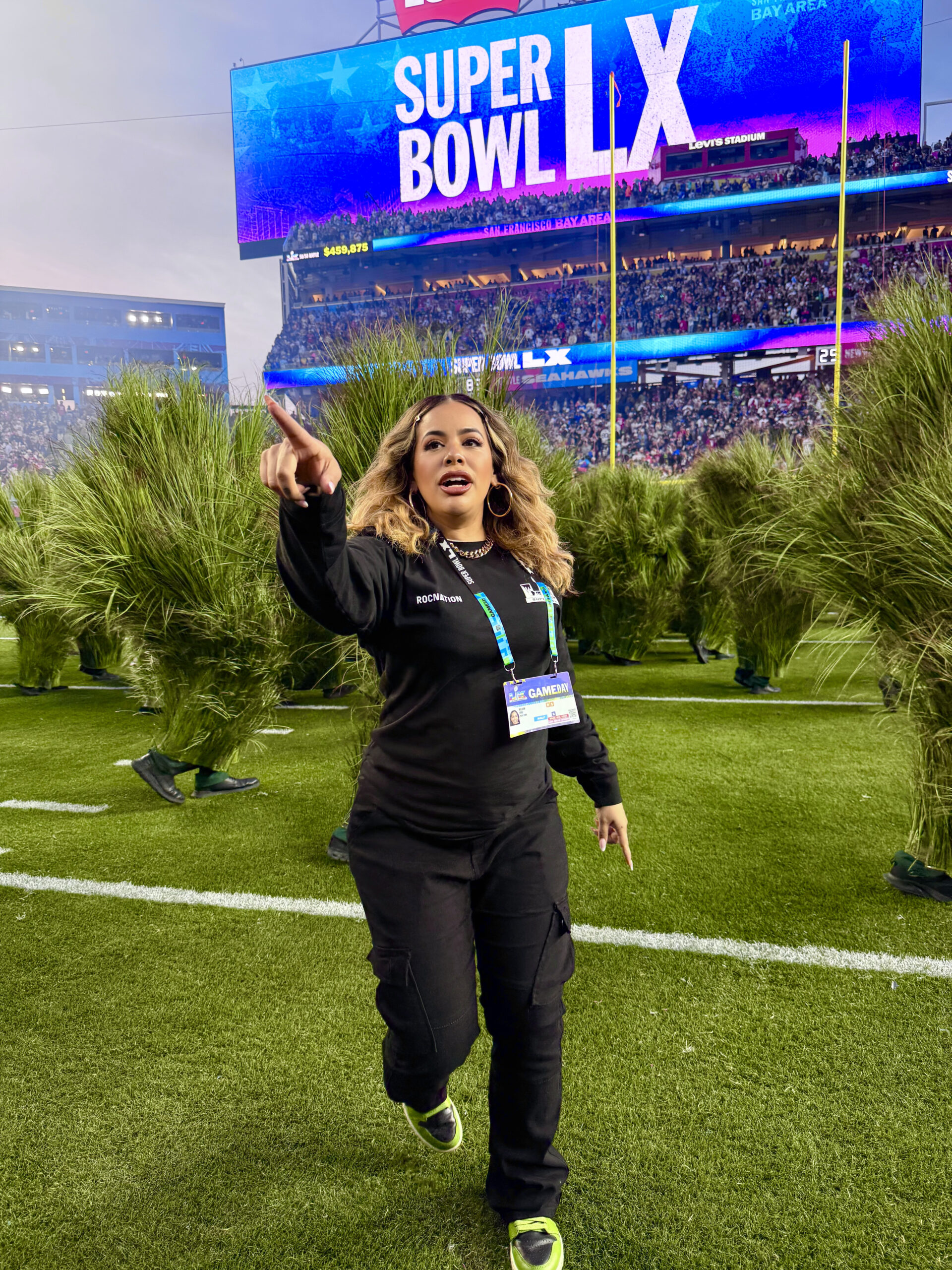
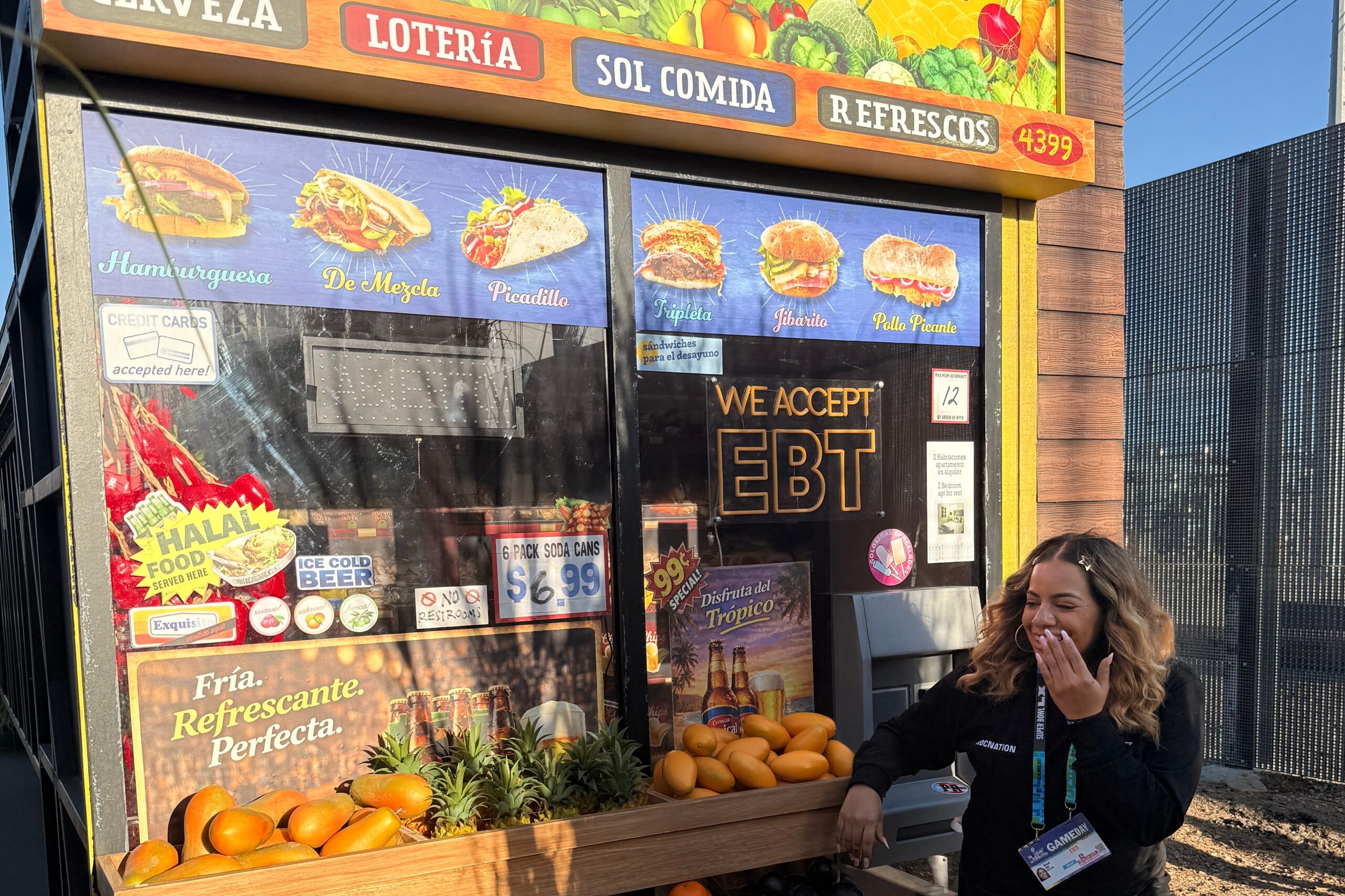
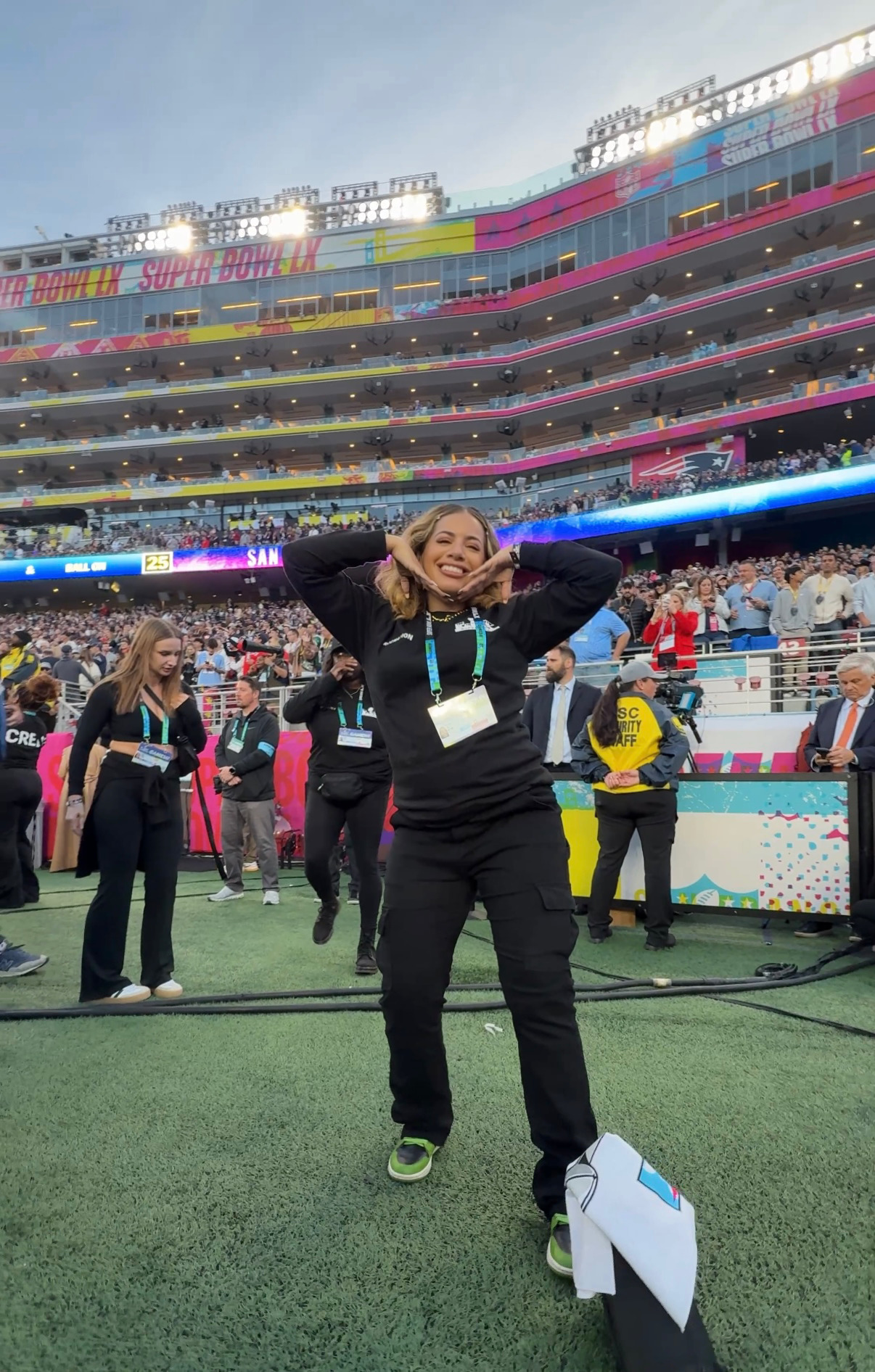
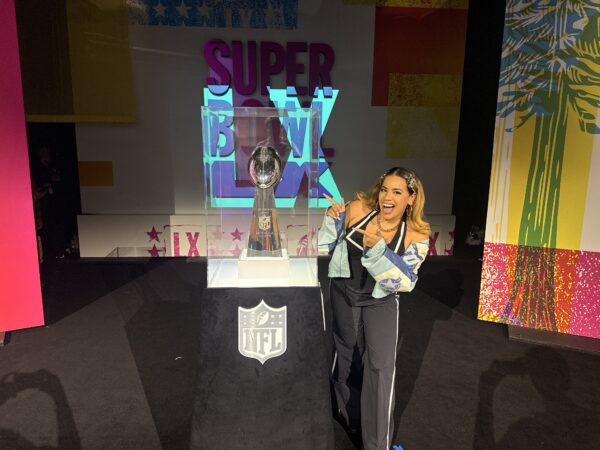
    Northeast Philadelphia’s Delilah Dee walks through Bad Bunny’s halftime show stage at Santa Clara’s Levi’s Stadium, on Feb. 8 2026

    So what made her travel to the West Coast to work at the Super Bowl?

    “Benito!” she said. “I feel like I’ve shared a lot of milestones with Bad Bunny.”

    When he first played Wells Fargo Center, in March 2022, Dee was in charge of an art installation at the show.

    “He was the first reggaeton artist at the time to sell out the Wells Fargo, and I was there for that,” she said.

    When he was the first Spanish-language artist to headline Made in America, in September 2022, Dee was the promotions director at iHeartRadio and worked on the show.

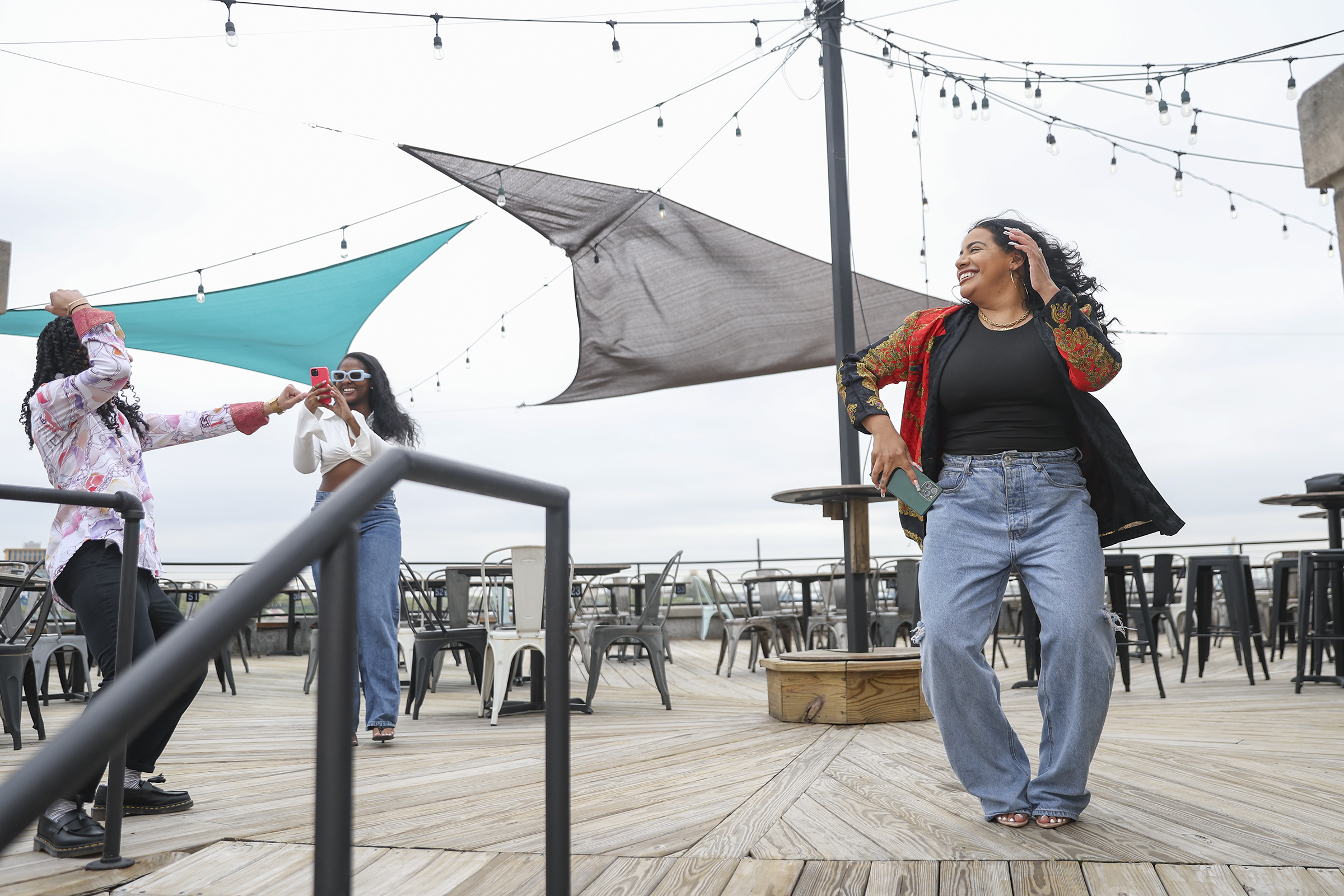
    Delilah Dee, right, founder of Jefatona, dances and laughs while DJ Bria G, center, records DJ Flakka before they pose together for a photo on the rooftop of Liberty Point in Philadelphia on Thursday, April 18, 2024. Jefatona, Philly’s reggaeton and Caribbean party created to be a safe space for women, will have their own exclusive space at El Movimiento’s Cinco de Mayo Festivale on the waterfront.

    She had just launched La Cultura Front when Bad Bunny began his residency in Puerto Rico last July. So naturally, their first party was Bad Bunny-themed. When he announced his final concert would stream on Amazon, Dee threw a watch party in Northern Liberties’ Craft Hall.

    Last September, when Bad Bunny was announced as the Super Bowl halftime show performer, Dee’s friends texted her asking if she’d host a watch party again. She said no.

    Northeast Philadelphia’s Delilah Dee walks through Bad Bunny’s halftime show stage at Santa Clara’s Levi’s Stadium, on Feb. 8 2026

    “I said, ‘Guys, I know this sounds crazy, and it may be a little bit delusional, but I’m going to be at the Super Bowl.’”

    “But you know what’s so funny is that my community was so supportive of me. No one thought I was crazy. They were like, ‘You know what, Delilah? If anyone’s gonna make it to the Super Bowl, it’s gonna be you.”

    Thanks to her best friend who lives in Los Angeles and works in the event management industry, Dee applied for a job at the Super Bowl in November. On Dec. 31, she was accepted for a position with the field team.

    “I got the email while I was at the gym. I just started to break down. I couldn’t even finish my workout,” said Dee, who was a part of the team that helped dismantle Bad Bunny’s grass and casita-filled stage in less than seven minutes on Sunday night.

    For the last two weeks, she has been in Santa Clara, and staying up late for rehearsals and working her job during East Coast hours. Bad Bunny joined the rehearsals last week.

    Northeast Philadelphia’s Delilah Dee was a part of the field team that helped break down Bad Bunny’s halftime show stage at Santa Clara’s Levi’s Stadium, on Feb. 8 2026

    “We had a full dress rehearsal on the Thursday before Super Bowl, and he made sure to thank everyone. He stopped the rehearsal and he was like, ‘You know guys, this isn’t about me. This is about our culture, our community. All of you guys play a part in this.’”

    Having worked in the events space for a long time, Dee is not the one to fangirl over celebrities.

    But, she said, fighting back tears as she drove to the San Jose airport for her flight back home, “especially in this political climate we’re in and we feel like we’re constantly under attack for our Latin roots, we need a little bit of healing.”

    Bad Bunny and Lady Gaga perform during halftime of the NFL Super Bowl 60 football game between the New England Patriots and the Seattle Seahawks, Sunday, Feb. 8, 2026, in Santa Clara, Calif. (AP Photo/Matt Slocum)

    “We need to feel seen, to feel heard. To know that I am playing a part in that … I don’t take it lightly at all,” said Dee, who is of Puerto Rican and Peruvian descent.

    The Philadelphia born-and-bred in her was, however, disappointed by the absence of the Birds on the field.

    “I wanted it to be an Eagle and Benito Bowl, but I still made the best of it. Go Birds!”

  • Joe Frazier statue could move to base of Art Museum steps, taking Rocky’s place

    Joe Frazier statue could move to base of Art Museum steps, taking Rocky’s place

    History may not repeat itself, but at least in Philadelphia, it sure does rhyme.

    Twenty years ago, our famed Rocky statue made the move from its former perch at the stadium complex in South Philly to the base of the steps of the Philadelphia Museum of Art, where it has stood since.

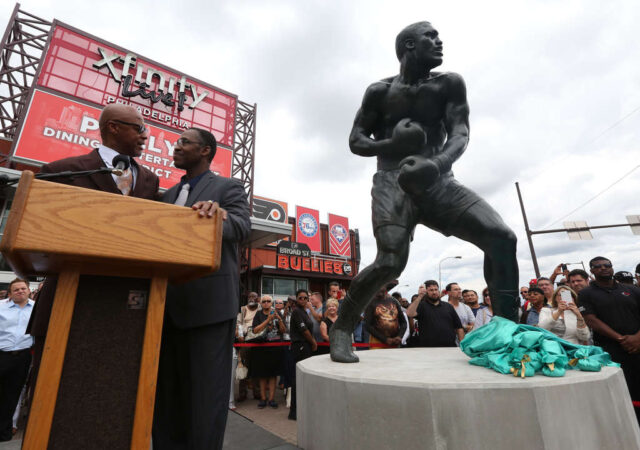
    Now, the city’s statue of former world heavyweight champion “Smokin’” Joe Frazier could soon do the same.

    Creative Philadelphia, the city’s office for the creative sector, is slated to present a proposal at a Wednesday Art Commission meeting that would have the Frazier statue take over the Rocky statue’s current home at the base of the Art Museum’s steps. Last month, the commission approved the Rocky statue’s coming move back to the top of the steps, where it supposedly will permanently stay starting in the fall and following its first-time display inside the museum.

    “Relocating the Joe Frazier statue to this prominent civic and cultural space would … create a respectful dialogue between two complementary representations of Philadelphia’s spirit,” chief cultural officer Valerie V. Gay and public art director Marguerite Anglin wrote in a letter to the Art Commission. “Rocky Balboa as a symbol of hard work and aspiration, and Joe Frazier as the embodiment of those values lived out in real life.”

    Created by sculptor Stephen Layne in 2014, the Frazier statue has stood in the sports complex outside what is now Stateside Live! for about a decade, and has been a part of the city’s public art collection since its inception. In an effort led by Joe Hand, the owner of Feasterville’s Joe Hand Boxing Gym and a longtime friend of Frazier’s, the statue’s commission was funded by the boxer’s family and supporters before its donation to the city.

    The statue, standing at about 12 feet tall, depicts Frazier just moments after besting Muhammad Ali in the so-called “Fight of the Century” — the March 1971 bout in which Ali suffered his first professional loss after 15 grueling rounds.

    Frazier, who died in 2011, was a well-accomplished boxer before that matchup, having won an Olympic gold medal in 1964 in Tokyo. He held the heavyweight championship title from 1970 to 1973, when he lost the belt to fellow legend George Foreman following a bout in Kingston, Jamaica, in a matchup referred to as “The Sunshine Showdown.” He retired in 1976, the year following a vicious loss to Ali in the famed “Thrilla in Manila” fight. After returning for a 1981 match against “Jumbo” Floyd Cummings that resulted in a draw, Frazier left the sport for good.

    Relocating the Frazier statue to the Art Museum is expected to cost roughly $150,000 in city funds, and has support from leaders including Mayor Cherelle L. Parker, City Councilmember Katherine Gilmore Richardson, State Sen. Sharif Street, and State Sen. Anthony Hardy Williams, according to Creative Philadelphia’s Art Commission proposal.

    “Placing the Joe Frazier statue at the Art Museum affirms Philadelphia’s commitment to honoring real-life achievement alongside cultural mythology,” Parker wrote in a letter supporting the move. “Together, these figures reflect the city’s spirit, where determination, resilience, and opportunity meet.”

    Friends of Frazier also expressed support in letters included as part of Creative Philadelphia’s proposal — in part, at least, because the Art Museum has higher foot traffic than where the statue currently stands.

    The move “will give the Frazier statue many more eyes on it than at the Xfinity area,” wrote Nicholas L. Depace, the boxer’s friend and former physician.

    Frazier served as a major inspiration for the Rocky Balboa character, with the man and the character sharing several key elements, according to Creative Philadelphia. Like Rocky, Frazier trained for boxing matches by hitting frozen raw meat, ran the Art Museum steps, and faced opponents that closely mirrored those actor Sylvester Stallone’s character faced in the franchise.

    “Stallone made 5 Rocky movies mostly based on the real life humble champion Smokin’ Joe Frazier from Philadelphia,” wrote Smokin’ Frazier Championship Foundation Inc. CEO Pete Lyde in a letter of support for the move. “Joe Frazier’s statue at the Philadelphia Art Museum Steps symbolizes and celebrates the real life human heart and potential within us all worldwide.”

    The Rocky statue, meanwhile, is cleared for installation atop the Art Museum steps following its exhibition in “Rising Up: Rocky and the Making of Monuments,” an Art Museum program slated to run from April to August. After that, the statue now displayed at the top of steps — which Stallone lent to the city for the inaugural RockyFest in December 2024 — will head back to the actor’s collection, and the original, screen-used statue will take its place.

    It was not immediately clear when the Frazier statue could head to the Art Museum. Creative Philadelphia did not immediately respond to a request for comment.

    “Placing the Smokin’ Joe Frazier statue at the Art Museum steps would not only correct a historical imbalance but also serve as an inspirational symbol for residents and visitors alike,” wrote Councilmember at-large Jim Harrity in a letter of support. “It would elevate a true Philadelphia champion whose impact reached far beyond the boxing ring and whose contributions to sports, labor history, and community service continue to resonate today.”

  • There is no Black Philadelphia history without Patti LaBelle

    There is no Black Philadelphia history without Patti LaBelle

    On a bitterly cold afternoon last month, Patti LaBelle walks gingerly down Mother Bethel A.M.E. Church’s center aisle, her left hand grazing the top of each pew, steadying her balance.

    Half a dozen content creators, directors, and Visit Philadelphia staff coax the Grammy award-winning songstress toward the 18th century church’s magnificent altar, their voices overflowing with encouragement, reverence, and love.

    LaBelle’s stockinged footsteps are deliberate, her unblinking eyes affixed on the organ pipes in front of her.

    She’s as contemplative as she is careful.

    “Come on, Miss Patti,” cooed Kyra Knox, the Emmy award-winning filmmaker who is directing Visit Philadelphia’s Black History Month promotional video, “We Are the Fabric. We are the Thread,” starring the Philadelphia legend. “You are doing great.”

    “We Are the Fabric” is part of the nonprofit tourism agency’s “Indivisible” campaign, a yearlong initiative highlighting Philly’s diverse tourist destinations during America’s 250th birthday and Black History Month, which, coincidentally, is celebrating its 100th birthday this year. (Carter G. Woodson introduced Negro History Week in 1926. It was extended to Black History Month in 1976.)

    The videos are streaming on several online platforms including Hulu and HBO Max in seven markets, including Philadelphia, New York, Atlanta, and Washington, D.C. During the month of February, Visit Philly will conduct a series of neighborhood walks through the city’s historic districts with a special focus on Black history courtesy of the historical arts organizations 1838 Black Metropolis and the Black Journey.

    “You cannot tell the story of American culture, innovation, music, art, and food without Black Americans because they are woven into every thread of the national narrative,” said Angela Val, president and CEO of Visit Philly.

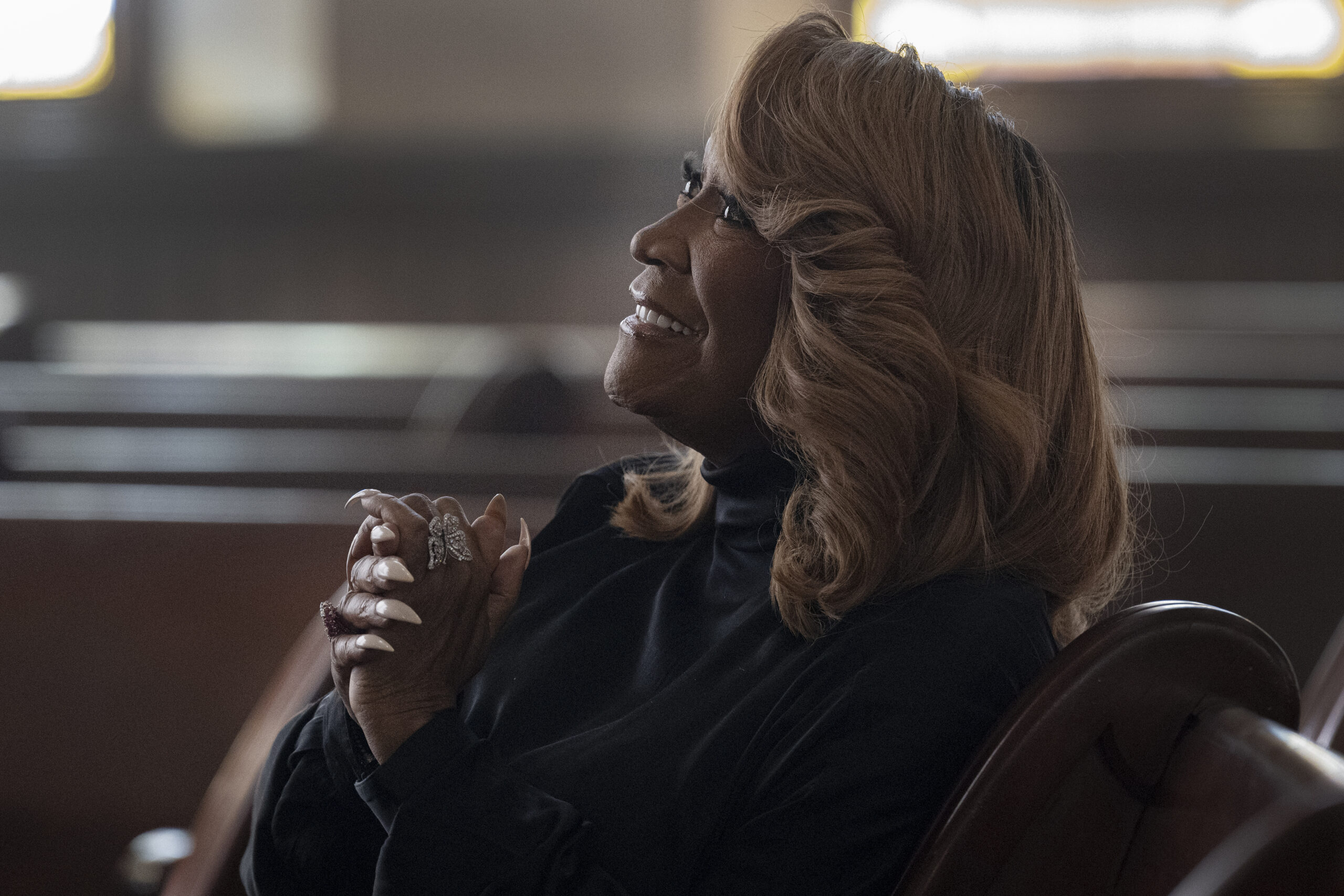
    The filmmakers squeezed in a lot of places on the cold Thursday afternoon. Mother Bethel — the home of America’s first Black Christian church founded by formally enslaved Richard Allen — is the first stop on the hours-long shoot. After recording takes of LaBelle’s coffin-shaped ivory nails in prayer and the centuries-old church’s sunlit stained glass windows, LaBelle and the crew drive 14 blocks west to South Philadelphia’s Union Baptist Church.

    Film rolls and cameras flash as LaBelle, wrapped in an ankle-length vintage chocolate brown fur, is reflective in front of Union Baptist’s 111-year-old stately exterior. Inside, barrier-breaking early 20th century contralto Marian Anderson once sang in the choir. Like Anderson, LaBelle got her start singing gospel at Southwest Philly’s Beulah Baptist Church.

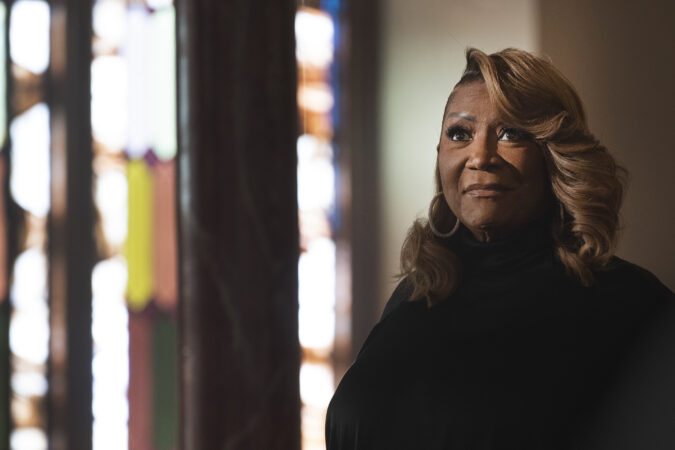
    Singer Patti LaBelle at Mother Bethel A.M.E. Church in Philadelphia during a shoot for Visit Philadelphia’s “Indivisible” initiative, part of an effort to celebrate the city’s communities of color during the city’s 250th anniversary. LaBelle is starring in the campaign’s Black History Month promotion.

    After a few windy takes, the crew made its way to the southwest corner of City Hall in front of the statue of martyred 19th century civil rights leader Octavius Catto. The day ended at the Arden Theatre, a nod to Philadelphia’s vibrant Black performing arts community.

    LaBelle stars in and narrates the video. She’s accompanied by 9-year-old Riley Mills and visits historical sites and modern locations, like Uncle Bobbie’s Coffee & Books in Germantown, reminding us that Black history is to be passed through the generations.

    “When the Constitution couldn’t hold us, we held each other,” LaBelle says, her voice clear, sharp, and determined.

    “We made the music you move to,” she continues as images of Teddy Pendergrass, Kenny Gamble, and Leon Huff fill the screen. And then, in an “if you blink, you will miss it moment,” there LaBelle is, in an old photograph flanked by her Labelle group members Sarah Dash and Nona Hendryx, followed by her powerful words: “When they wouldn’t give us a stage, we built one.”

    Living Black history

    Patti LaBelle is 81. She knows she’s Black history. She’s proud of it and doesn’t take it lightly.

    “Black people stand for everything,” LaBelle told The Inquirer in between takes at Mother Bethel, her voice barely a whisper, worn out from her performances in the “Queens: 4 Legends Tour” starring LaBelle, Chaka Khan, Gladys Knight. and Stephanie Mills. They all came of age before the Civil Rights Act of 1964 was passed.

    “And we continue to. We continue to fight while things are being taken away from us.”

    As Visit Philly filmed “We Are the Thread,” the National Park Service was in the midst of dismantling an exhibit honoring nine enslaved people who worked at George Washington’s house when Philadelphia was America’s capital city.

    The removal was part of President Donald Trump’s executive order “restoring truth and sanity to American history.” Recently, Trump shared a video that depicted former President Barack Obama and first lady Michelle Obama as cartoon primates.

    “If we don’t fight to keep what is ours,” LaBelle said, her scratchy voice taking on urgency. “It will be lost.”

    Visit Philly’s choice of LaBelle as its Black history spokesperson this year is thoughtful and necessary.

    Her generation of civil rights warriors bridges the gap between Black Americans who lived through Jim Crow and those of us who only heard horror stories of how difficult it was for our ancestors to go to school, work, and vote.

    As this administration claims that the Civil Rights Act resulted in “white people being very badly treated,” it’s important that stories like LaBelle’s aren’t just repeated but remembered and celebrated — especially as they get up there in age.

    We need to give them their flowers now.

    Without Patti LaBelle, Philadelphia — and its music — would be a different place.

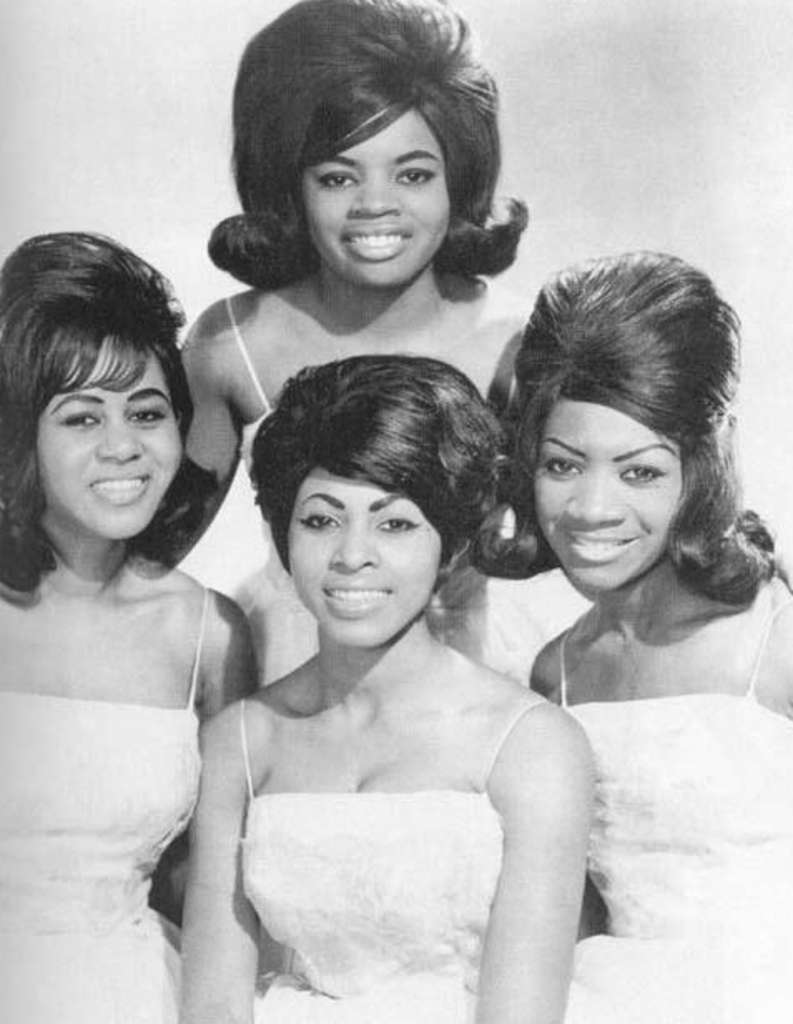
    Patti LaBelle (right) and the Blue Belles, the group with which she had her first hit, in 1962: “I Sold My Heart to the Junkman.”

    A Philadelphia girl

    LaBelle was born Patricia Louise Holte in Southwest Philadelphia in 1944. Her dad, Henry, came to Philadelphia from Georgia in the early part of the 20th century during the Great Migration. He worked on the railroad, was a singer, and an occasional gambler. Her mom, Bertha, was a homemaker. LaBelle was the youngest of five.

    She went to Bartram High and sang at Beulah Baptist before becoming the lead singer of Patti LaBelle and the Blue Belles.

    The group’s 1962 hit, “I Sold My Heart to the Junkman,” sold millions of copies, cementing LaBelle’s stardom, getting her a spot on the Chitlin’ Circuit for performances at Uptown Theater. She appeared on American Bandstand and Jerry Blavat’s radio show.

    By 1975, the group was simply known as Labelle and was a visual smorgasbord of Afrofuturistic sequins and space suits. It released the iconic “Lady Marmalade” that catapulted Labelle to the cover of Rolling Stone, becoming the first Black music group to be featured.

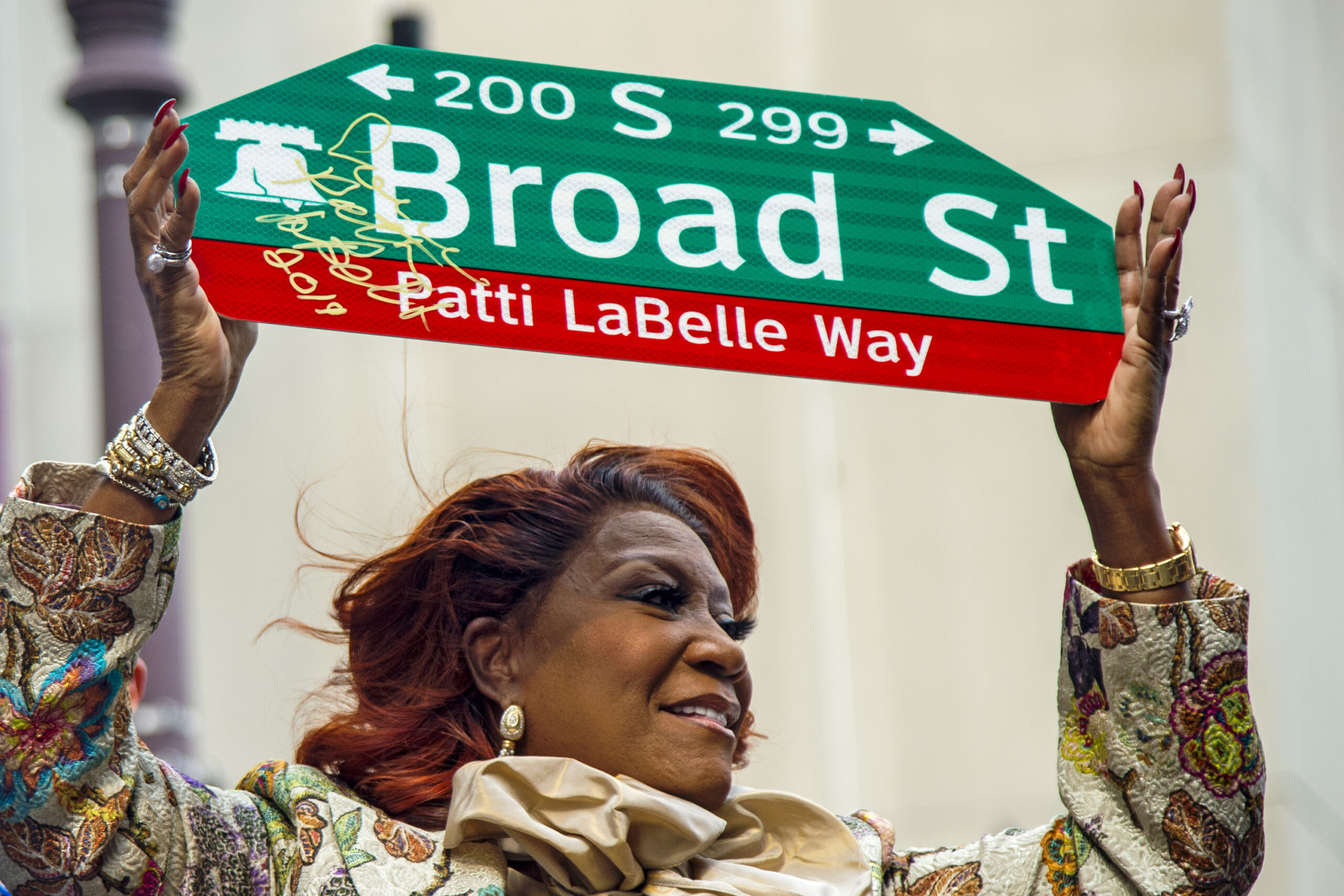
    Patti LaBelle holds up a sign during a celebration on July 2, 2019, as the block of Broad Street between Spruce and Locust Streets is renamed Patti LaBelle Way.

    “I’ve had a lot of wonderful moments in my career,” LaBelle said. “It’s nice to remember, to be proud. We made a lot of history.”

    (Christina Aguilera, Lil’ Kim, Mya, and Pink covered “Lady Marmalade” in 2001 for the Moulin Rouge soundtrack. And in 2003 Labelle’s “Lady Marmalade” was inducted into the Grammy Hall of Fame.)

    In 2016, LaBelle received the Marian Anderson Award. Three years later, the city named a block of Broad Street between Spruce and Locust Patti LaBelle Way.

    LaBelle, who lives in Villanova now, never left the Philadelphia area.

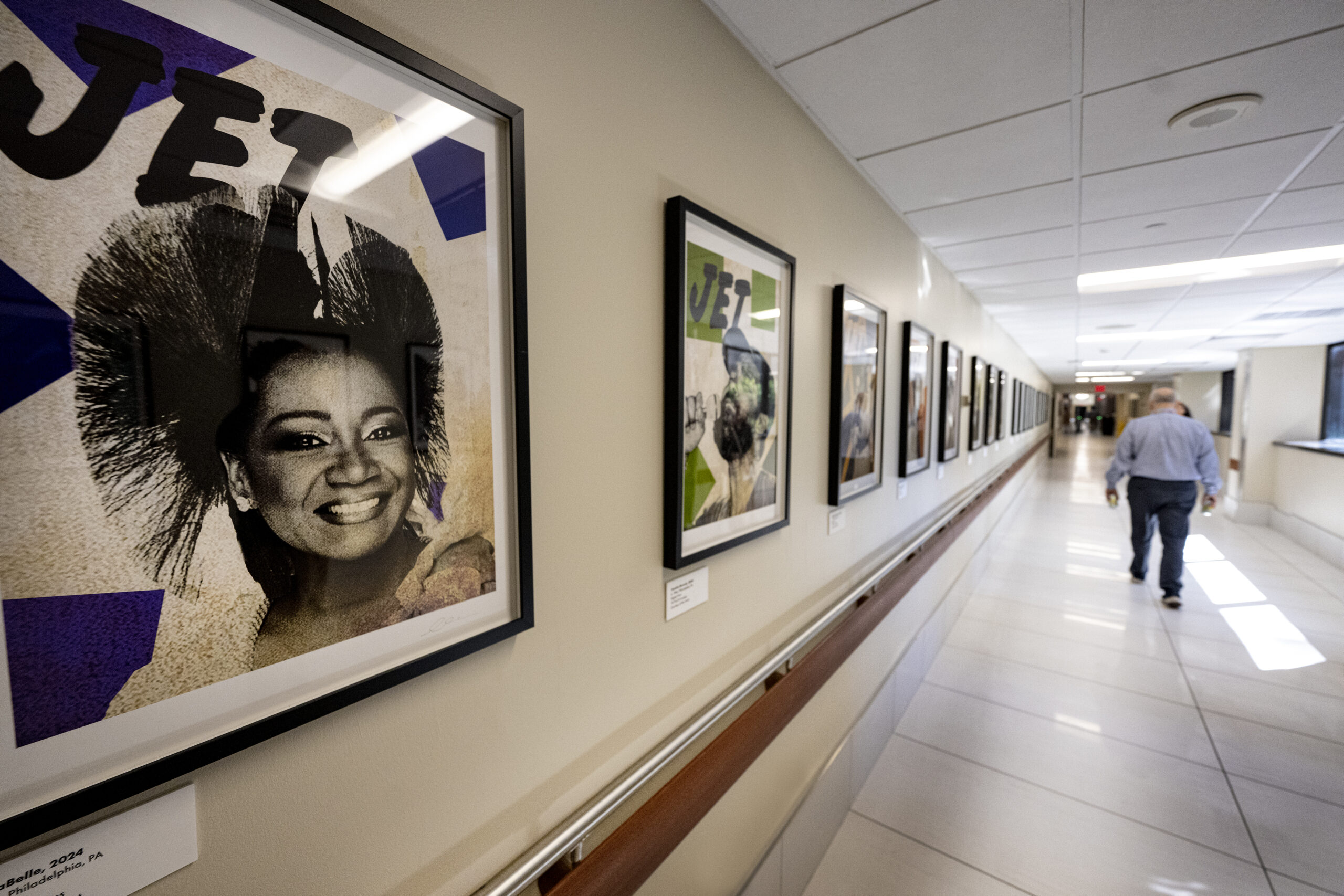
    Patti LaBelle and Frankie Beverly are two of the celebrities featured on reimagined Shaheed Rucker’s ‘(re)Covering the Iconic” in in Jefferson Einstein’s community corridor. Monday, Sept. 8, 2025.

    I’m a Philadelphia girl,” she said with pride. “It’s laid back, comfortable. … How I like it.”

    Over the decades, she has had a few entrepreneurial endeavors including two short-lived Philadelphia boutiques and a clothing collection on HSN. However, she’s best known for her indisputably yummy line of desserts — sweet potato pies and cobblers. Late last year, she introduced pancake mix and syrup that, she says for the record, is nothing like Aunt Jemima.

    “For one,” she said, mustering up a bit of her trademark LaBelle sass, “I’m a real person.”

    Real to her core.

    “She’s given a lot to Philadelphia,” Val said. “She’s given so much to the country … to the Black community.”

  • Philadelphia Museum of Art’s chief of staff and CFO have resigned

    Philadelphia Museum of Art’s chief of staff and CFO have resigned

    Two more Philadelphia Museum of Art senior staffers are departing as the museum continues to plot out its path after a period of institutional turmoil.

    Maggie Fairs, who was promoted to chief of staff last year by former director and CEO Sasha Suda, will leave the museum at the end of the month. CFO Valarie McDuffie has also resigned, with her last day this Friday.

    Previously, the museum parted ways with its marketing chief Paul Dien as of Feb. 1. Days later, the museum announced that it was reversing course on a renaming while keeping its new logo. Both changes were unveiled four months earlier in a rebranding overseen by Suda and Dien.

    No other immediate departures are expected, though the museum is working on an “organizational review,” with more changes possible later, a spokesperson said.

    Suda announced the arrival of both Fairs and McDuffie in May 2023, saying that “these two colleagues reflect the future of the institution.” Fairs was hired as vice president of communications after having worked in the United States, United Kingdom, and Canada. McDuffie had previously held several senior financial posts in secondary education.

    Fairs was promoted by Suda to chief of staff in May 2025. A replacement will not be hired, as the museum is restructuring the director’s office without that position.

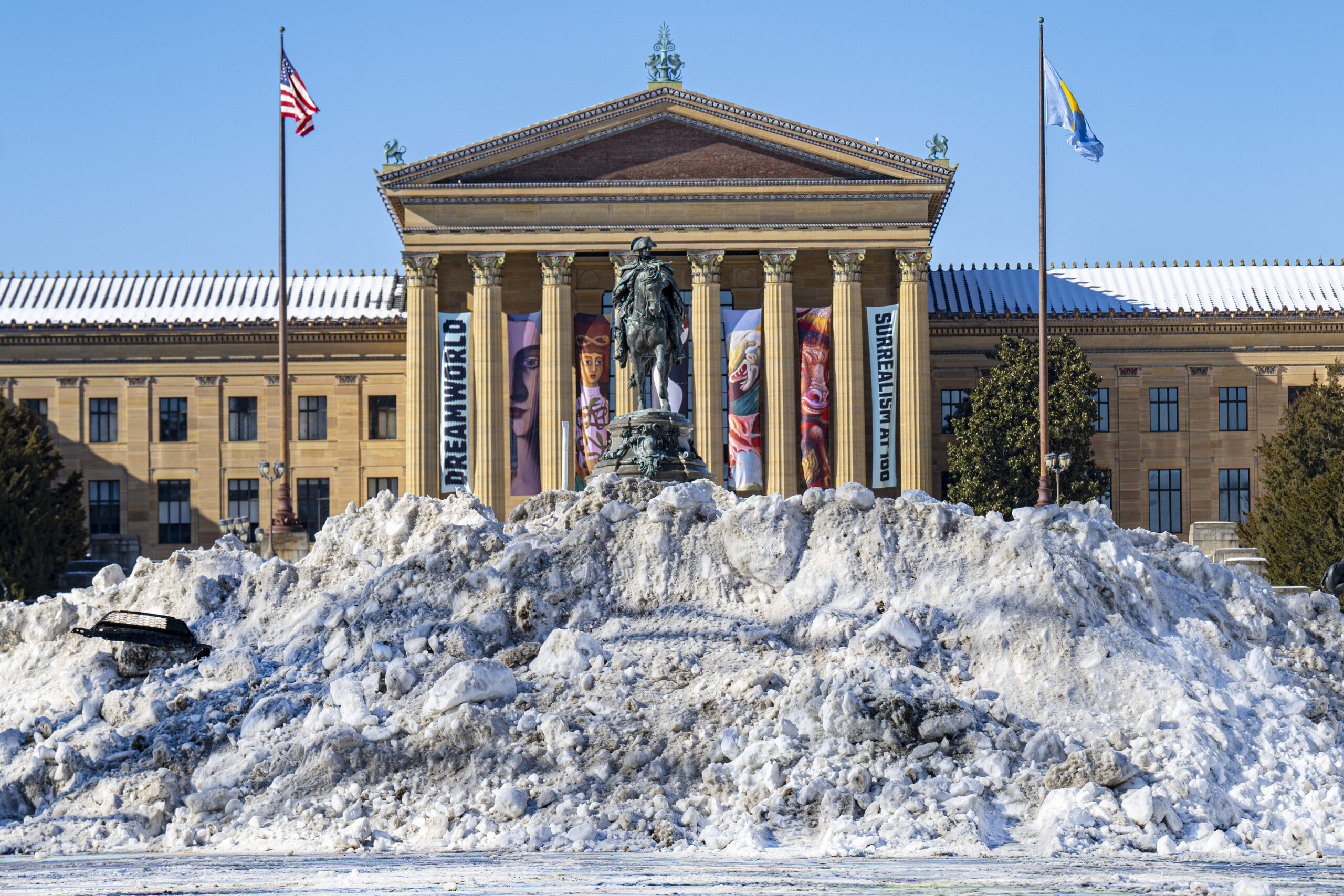
    A pile of snow and ice sits on Eakins Oval in front of the Philadelphia Museum of Art on Feb. 2.

    Suda was dismissed from the museum in November and subsequently filed a lawsuit alleging that her dismissal was “without a valid basis.” The matter is now headed to arbitration.

    Director and CEO Daniel H. Weiss, who took over in December, said in January that the staff of the museum was “the heart and soul of the place and they need to be treasured and supported and also held accountable,” and that the museum needed “a senior management team that is available to them and transparent in its processes and also accountable.”

    Asked at the time whether there would be a reorganization, he said:

    “With our ambition and our mission, and as that evolves a little bit under each new leader, there needs to be careful review of how the organization serves the needs of the moment. So that’s underway.”

    The museum on Monday also announced Katherine Anne Paul as new curator of Indian and Himalayan art. Paul was most recently curator of Asian Art at the Birmingham Museum of Art since 2019, and held earlier positions at the Newark Museum, the American Museum of Natural History, and the Textile Museum in Washington, D.C. She holds a Ph.D. in languages and cultures of Asia from the University of Wisconsin–Madison.

    Weiss, in Monday’s announcement, singled out Paul’s scholarship and her extensive knowledge of the Philadelphia Museum of Art’s collection. She was assistant and associate curator of Indian and Himalayan art at the museum from 2002 to 2008.

    A previous version of the headline misrepresented the terms of the employees’ work termination. They resigned.

  • Bad Bunny’s ‘Benito Bowl’ was a celebration of Puerto Rican pride

    Bad Bunny’s ‘Benito Bowl’ was a celebration of Puerto Rican pride

    Bad Bunny has rescued the Super Bowl.

    The first half of the final game of the NFL season was a low-scoring, nearly lifeless affair, but once Benito Antonio Martinez Ocasio appeared for his much ballyhooed and endlessly analyzed halftime show, Levi’s Stadium came brilliantly to life.

    The Latin trap rapper and charismatic entertainer promised that the Benito Bowl would be a proud celebration of his native Puerto Rico, and boy was it ever!

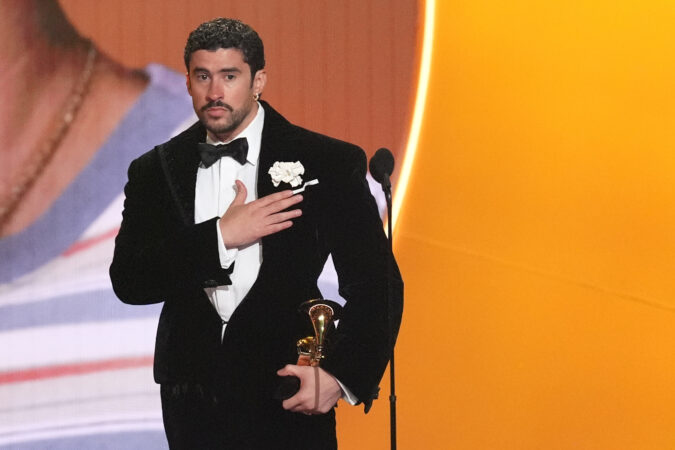
    Dressed in white with a football tucked under his arm, Bad Bunny — who became the first-ever Spanish-language Grammy album of the year winner last Sunday — kept up his February winning streak.

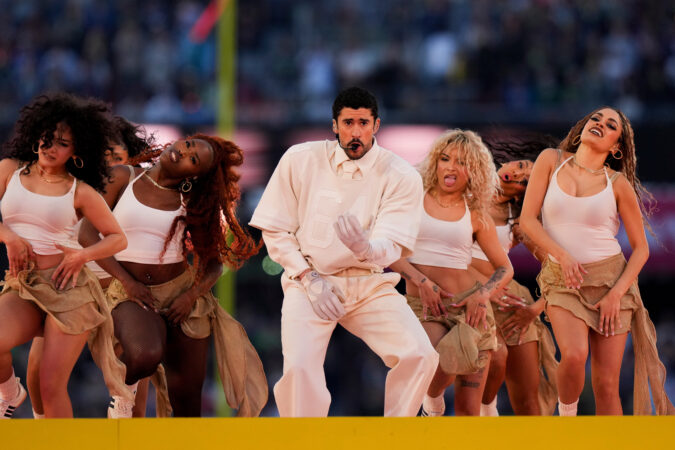
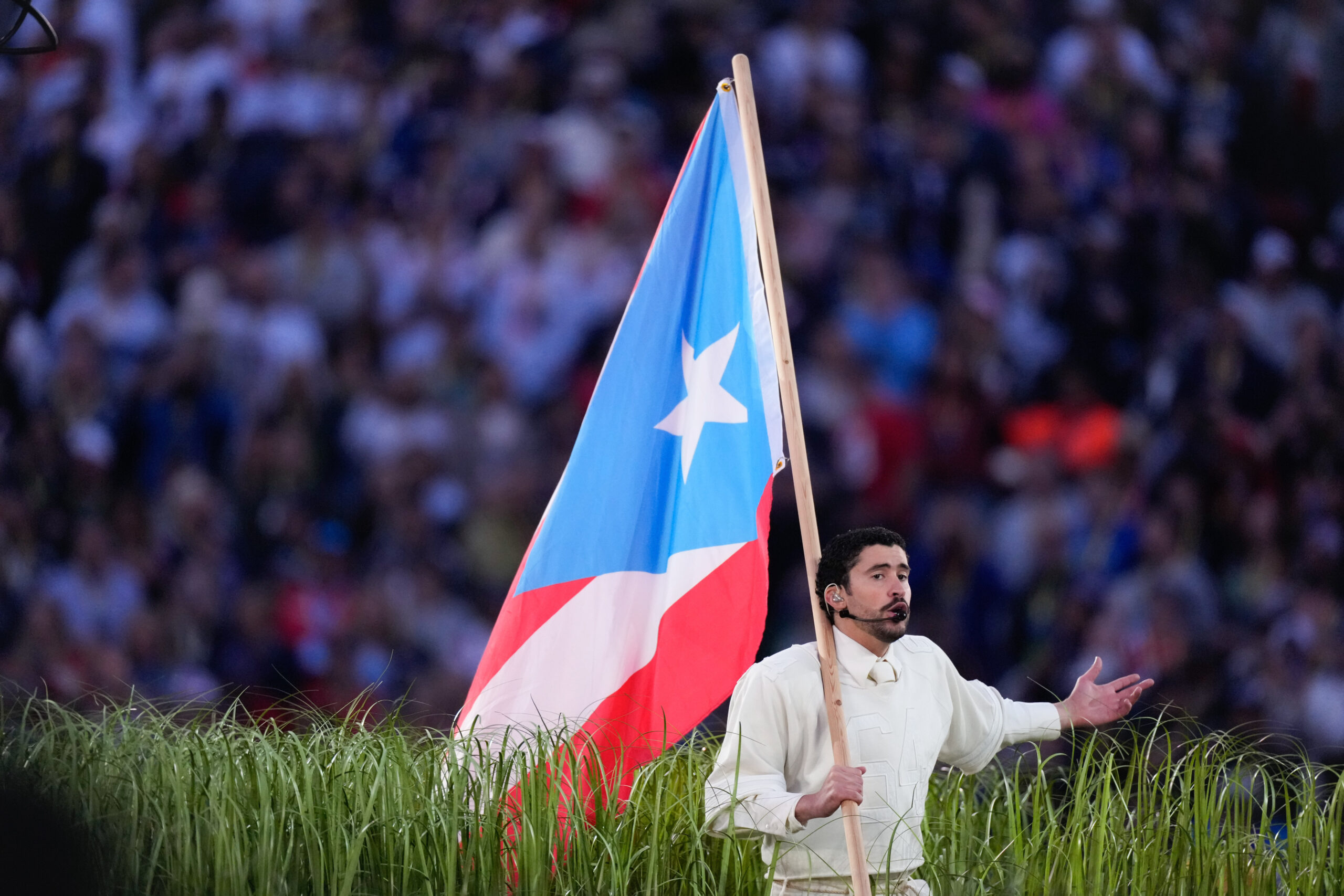
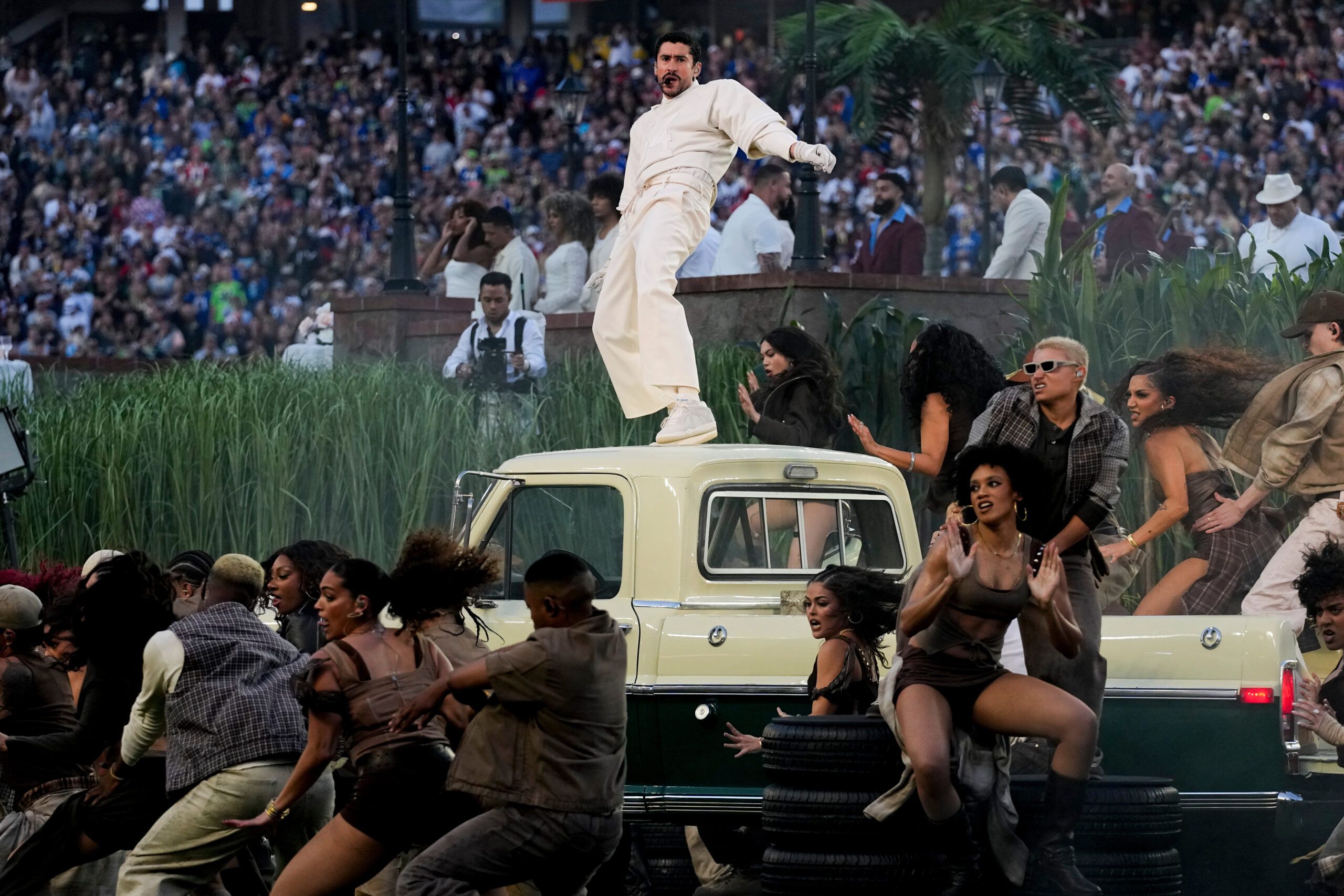
    His dazzlingly choreographed performance transformed the field into sugarcane fields (actual people dressed as sugarcane plants) with a casita at the center that Bad Bunny danced on top of, before dramatically falling through the roof. An allegedly real wedding was officiated, and Bad Bunny crowd-surfed, carried the Puerto Rican flag, stopped at coco frio and taco stands, said hello to a pair of sparring boxers, paid tribute to reggaeton stars Daddy Yankee and Don Omar, and packed in portions of 12 songs in just under 13 minutes.

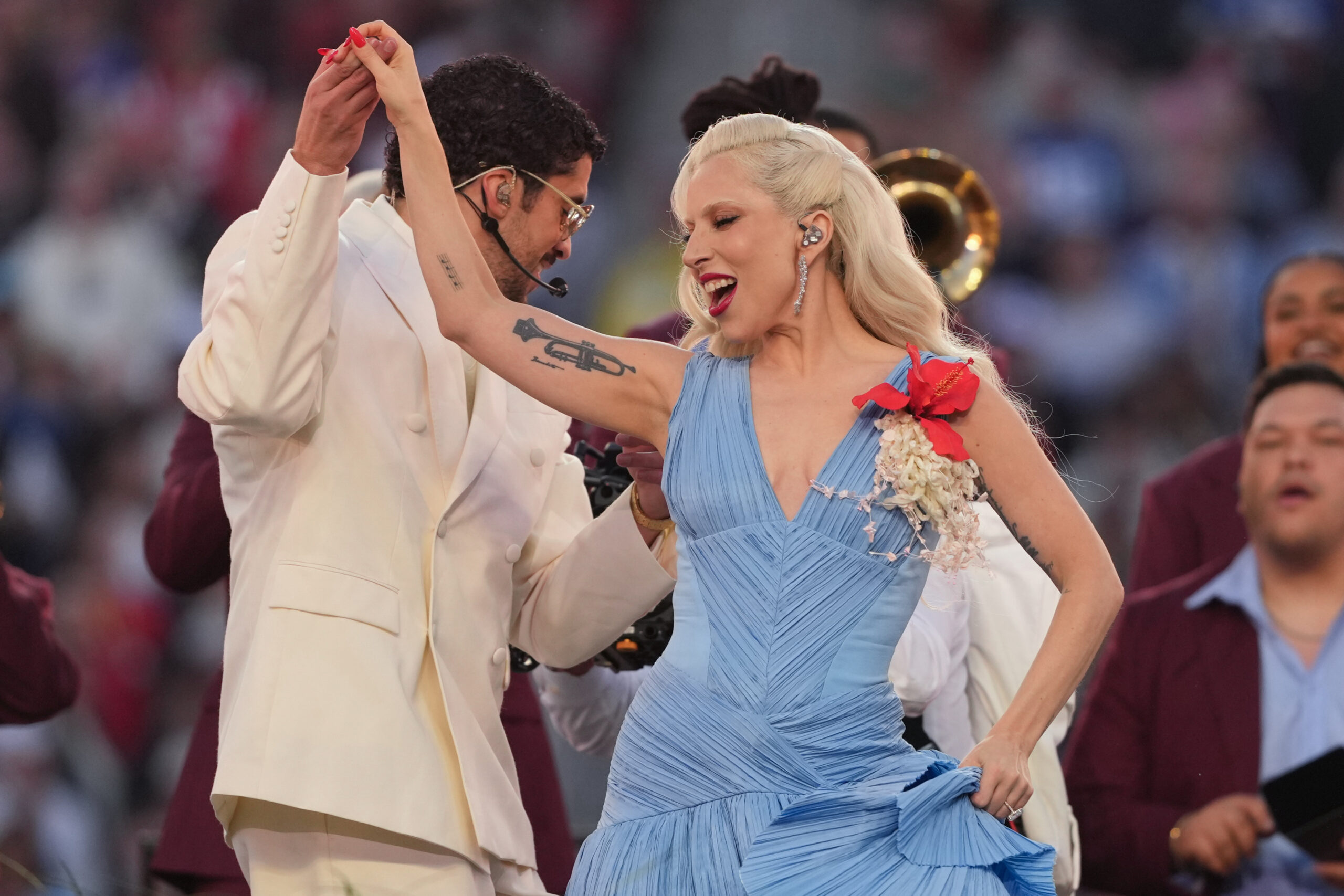
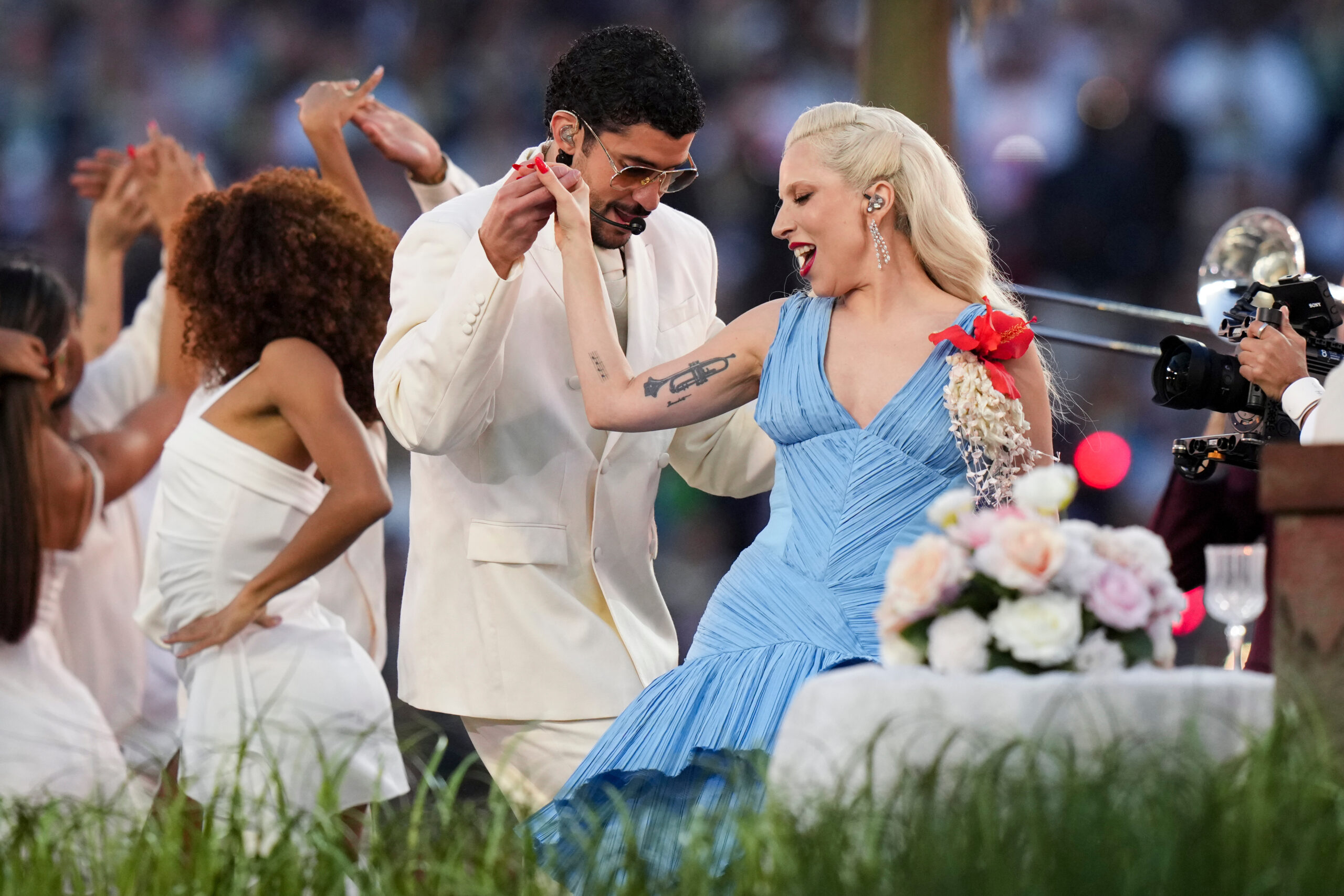
    Bad Bunny and Lady Gaga perform during halftime of the NFL Super Bowl 60 football game between the New England Patriots and the Seattle Seahawks, Sunday, Feb. 8, 2026, in Santa Clara, Calif. (AP Photo/Lynne Sladky)

    The big-name guest performers — the source of much speculation and wagering beforehand — turned out to be Lady Gaga, who sang her hit “Die With a Smile” wearing a traditional Puerto Rican dress complete with a brooch that looked like the national flower, the flor de maga. Then followed a salsa version of “Monaco” and a surprise appearance by Ricky Martin, the “Livin’ La Vida Loca” Puerto Rican crossover star whose success preceded Bad Bunny’s by a generation.

    With Bad Bunny, Martin sang “Lo Que Le Pasó a Hawaii,” a powerful protest anthem warning people of Puerto Rico so they don’t suffer the same fate as Hawaii.

    Fleeting cameo appearances were made by many others — Cardi B., Karol G., Pedro Pascal, Jessica Alba, Alix Earle, and Young Miko among them. Not to mention a cast of what seemed like hundreds of dancers and bit players.

    But the focus was on the artist and global cultural powerhouse who brought together the community in Levi’s Stadium, and the ones watching on TV and phone screens around the world.

    Bad Bunny performs during halftime of the NFL Super Bowl 60 football game between the New England Patriots and the Seattle Seahawks, Sunday, Feb. 8, 2026, in Santa Clara, Calif. (AP Photo/Mark J. Terrill)

    The NFL — and Jay-Z’s Roc Nation, which booked the show — was savvy to bring in the most widely streamed musician in the world to attract a youthful, international audience. That, while resisting pressure from the Trump administration and conservative critics who argued that Bad Bunny — an American citizen — was somehow an “un-American choice” to headline the most red, white, and blue sporting event of the year.

    As promised, Bad Bunny rapped only in Spanish, so viewers like me who don’t speak the language, were somewhat clueless. But it wasn’t so hard to get the gist of communal solidarity, though. To make it plain for the gringos, a giant video screen spelled out in English the words Bad Bunny used in his Grammy acceptance speech last week: “The only thing more powerful than hate is love,” underscoring the common humanity of immigrants fighting for freedom and respect.

    Bad Bunny, left, performs during halftime of the NFL Super Bowl 60 football game between the New England Patriots and the Seattle Seahawks, Sunday, Feb. 8, 2026, in Santa Clara, Calif. (AP Photo/Godofredo A. Vásquez)

    While remaining in constant motion, Bad Bunny addressed the crowd in words that translate as: “You’re listening to music from Puerto Rico, from the neighborhoods, from the slums.”

    “The reason I’m here,” the former grocery store bagger said, “is because I never stopped believing in myself.”

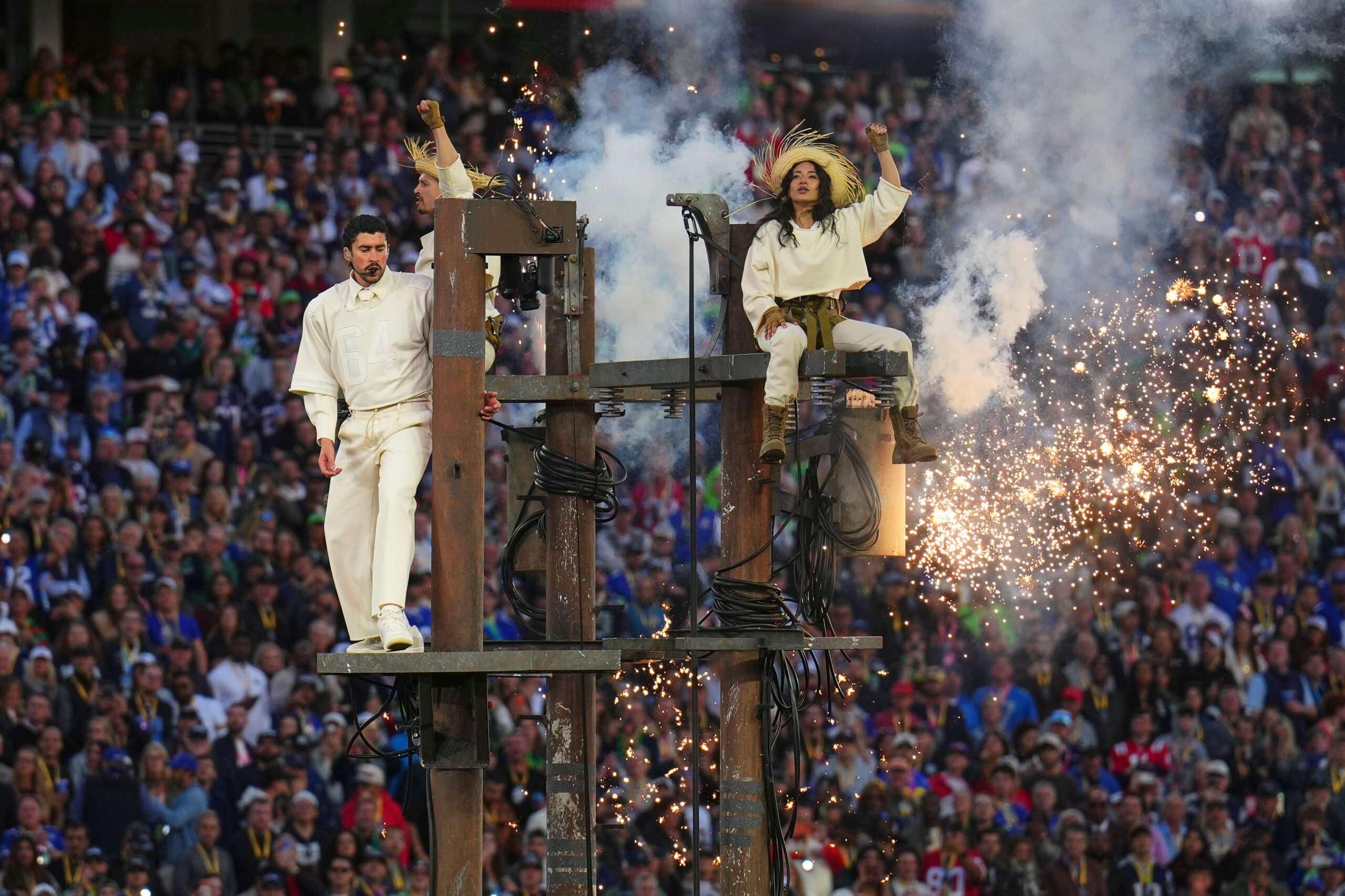
    To the bomba beat of “El Apagon,” Bad Bunny stood atop a utility pole that rose above the faux sugarcane and palm trees. He rapped about the power failures that have plagued the island and which he has insistently called attention to since Hurricane Maria in 2017.

    And in that same song — in Spanish — he put into words an ecstatic celebration of his people and Spanish-language culture that joyfully countered the criticism that his being named Super Bowl halftime headliner initiated.

    “Now,” he exulted, with scores of dancers aligned behind him, “everybody wants to be Latino.”

    Bad Bunny performs during halftime of the NFL Super Bowl 60 football game between the New England Patriots and the Seattle Seahawks, Sunday, Feb. 8, 2026, in Santa Clara, Calif. (AP Photo/Lynne Sladky)

    He did, however, say three words in English: “God bless America” before listing the nations that make up the continent, starting with Chile, Argentina, and Uruguay, and ending, of course, with Puerto Rico.

    The stadium-sized pop-punk band Green Day, led by Billie Joe Armstrong who hails from Berkeley, Calif., qualifies as a local band for the Super Bowl being played in Santa Clara, Calif. The band played a fast-paced four-song medley before the game.

    Green Day has a long history of speaking out against President Donald Trump. Trump, in return, said he is “anti-them” when asked about the Super Bowl entertainment by the New York Post in January.

    At the Super Bowl, however, Armstrong did not sing out in protest. With drummer Tre Cool and bassist Mike Dint, Armstrong banged out condensed versions of hits “Good Riddance (Time of Your Life),” “Holiday,” and “Boulevard of Broken Dreams,” before getting to the finale of “American Idiot,” the title song to their 2004 album.

    Usually when the band gets to the song’s lyric “I’m not part of a redneck agenda,” Armstrong sings “I’m not part of a MAGA agenda,” and at times, he has tweaked it to target Elon Musk.

    On Sunday, however, that verse was left out of the song. Instead of a protest, it became a celebration of the big game, with several former Super Bowl MVP players, including Tom Brady, San Francisco 49er local heroes Joe Montana, Jerry Rice, and Steve Young, and the Eagles’ Jalen Hurts, joining the band at the front of the stage.

    Following Green Day — and after actor Chris Pratt introduced the Seahawks and Jon Bon Jovi did the same for the Patriots — Brandi Carlile sang “America the Beautiful.”

    The Washington state native accompanied herself on acoustic guitar and was joined by Sista Strings, the sibling duo of Chauntee (violin) and Monique Ross (cello). It was an understated and effective version by the country and rock singer, who opens her “Human” tour in Philadelphia at the Xfinity Mobile Arena on Tuesday.

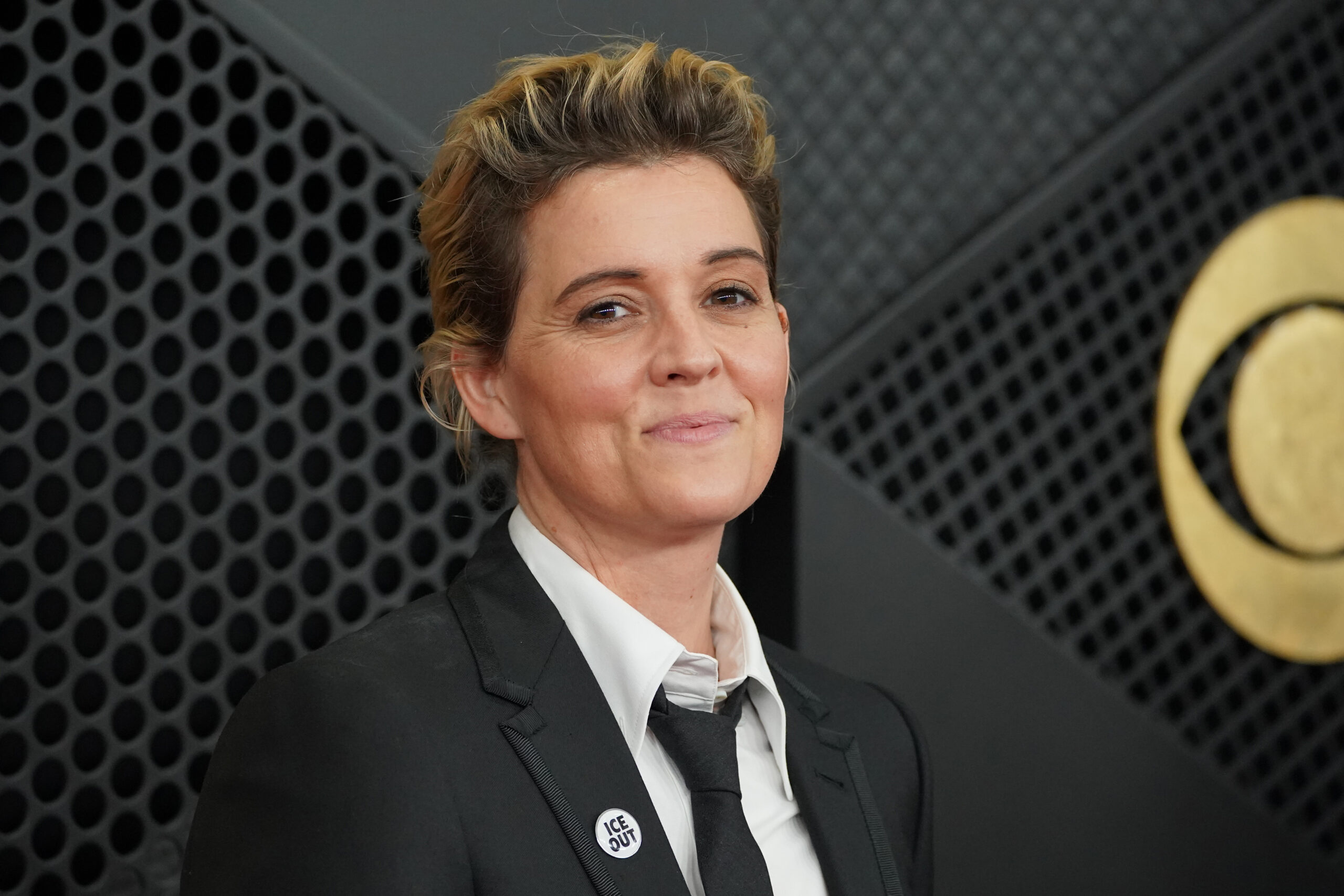
    Brandi Carlile arrives at the 68th annual Grammy Awards on Sunday, Feb. 1, 2026, in Los Angeles. (Photo by Jordan Strauss/Invision/AP)

    Earlier in the week at Super Bowl press event, Carlile spoke about being chosen to sing the song. “This is a song about a country, a beautiful country, that ebbs and flows in terms of hope,” she said. “And it’s a work in progress. And the song believes we can get there, and I believe we can get there.”

    Central Jersey songwriter and pop star Charlie Puth followed Carlile with a blue-eyed soul version of “The Star-Spangled Banner,” joined by a choir for vocal support. Puth’s approach was low-key and perfectly respectable, and not likely to be the subject of much Monday morning water cooler conversation on a night when Bad Bunny took center stage.

    Singer-songwriter Coco Jones got the pregame music started with a version of “Lift Every Voice and Sing,” the song that’s come to be known as the “Black national anthem.” Written first as a poem by James Weldon Johnson in 1900, it was then set to music by his brother John Rosamond Johnson. Jones delivered a powerful, emotionally direct version, joined by a string octet.

  • The Philadelphia Orchestra’s ‘Peter and the Wolf’ is a gift to children and adults alike

    The Philadelphia Orchestra’s ‘Peter and the Wolf’ is a gift to children and adults alike

    Stagecraft and technology being what they are these days, one can imagine any number of ways Peter and the Wolf could be souped up. If the key to audience-building is children, Prokofiev’s children’s classic would seem to be the perfect chance to engage them with eye-popping visuals.

    But the Philadelphia Orchestra is smart enough to let the piece speak for itself.

    It also knows you don’t mess with success. Saturday morning in Marian Anderson Hall marked the 10th time the orchestra has presented the piece with actor-narrator Michael Boudewyns over nearly two decades, and no one should ever touch a hair on this modest production’s furry little head. In its simplicity and humor, here is one of those rare, perfect things in this world.

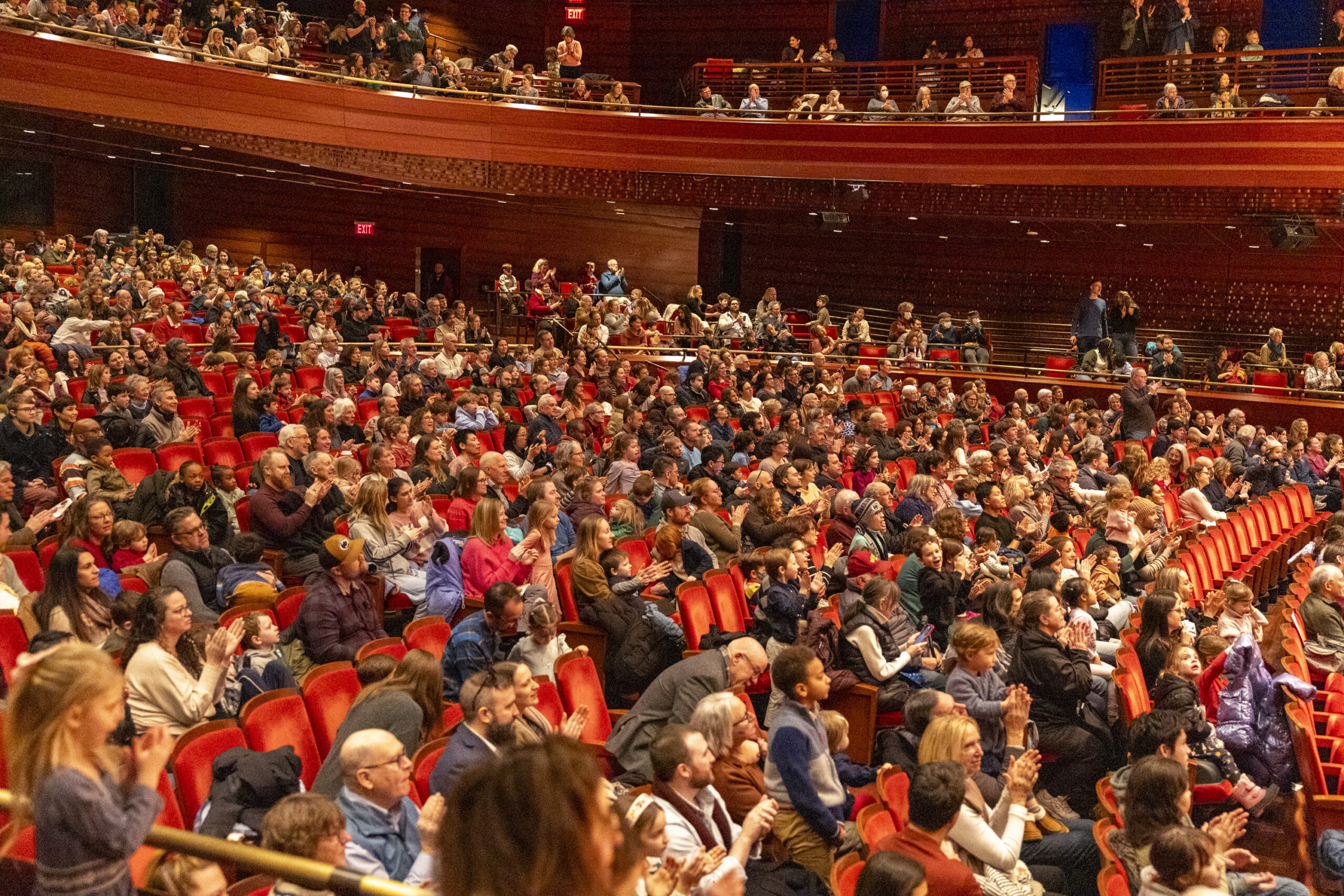
    The audience applauds for the Philadelphia Orchestra’s performance of “Peter and the Wolf” Saturday in Marian Anderson Hall.

    Saturday’s concert was also, judging from an audience whose ages looked to span from 2 years old to 80, a powerful generational bridge. Surely there were a few grandparents in the hall who remember going to these Philadelphia Orchestra family concerts with Leopold Stokowski on the podium.

    The series continues in March with another on-ramp to classical music: Britten’s dazzling The Young Person’s Guide to the Orchestra.

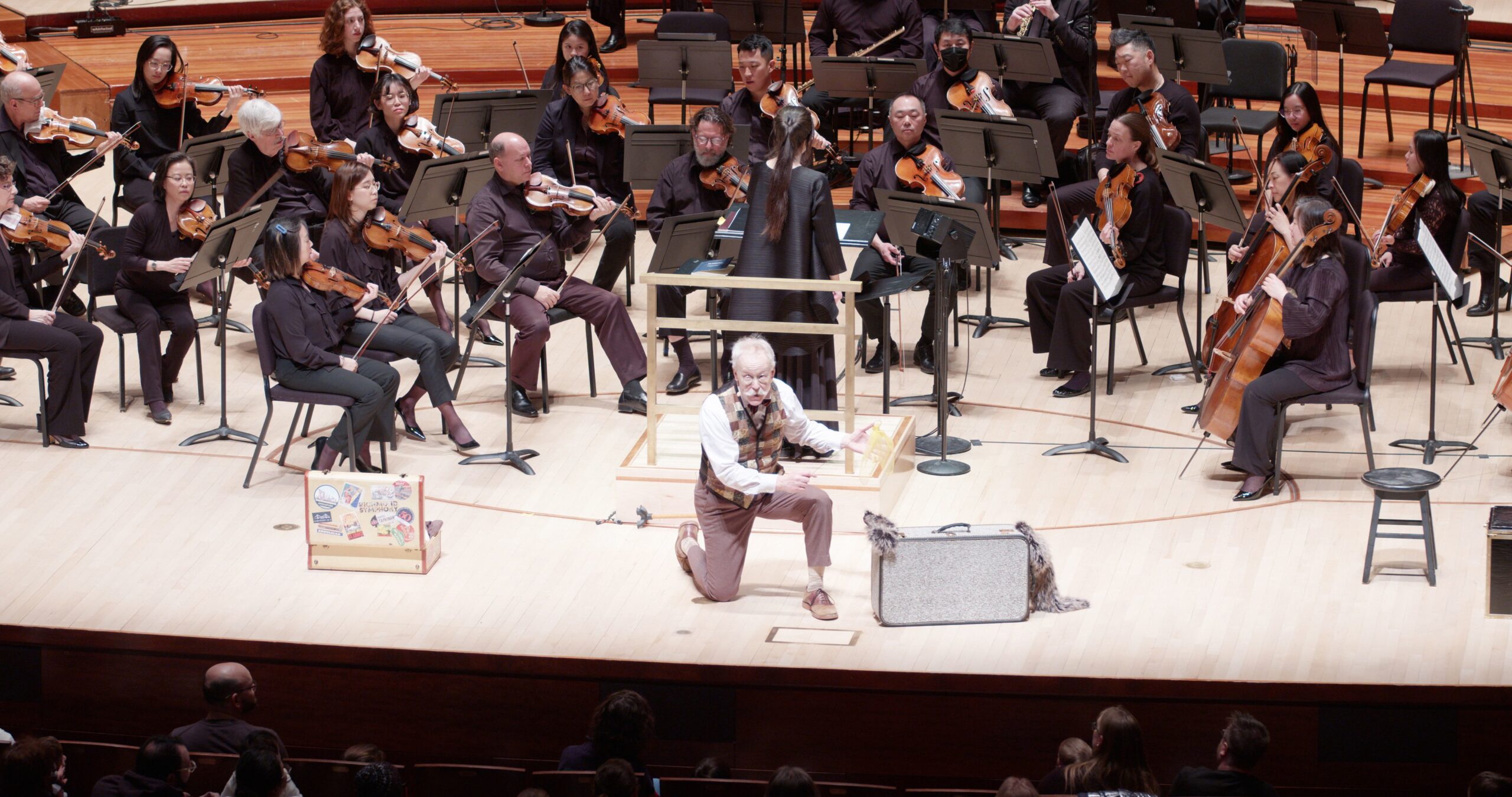
    Michael Boudewyns narrating “Peter and the Wolf” with conductor Naomi Woo leading the Philadelphia Orchestra, Feb. 7, 2026, in Marian Anderson Hall.

    Prokofiev’s piece — which is about to turn 90 years old — can be frightening in some productions: The French horns are as menacing as the fang-bearing wolf they depict. But Boudewyns has a grab bag of tricks so disarming that the scare factor practically disappears.

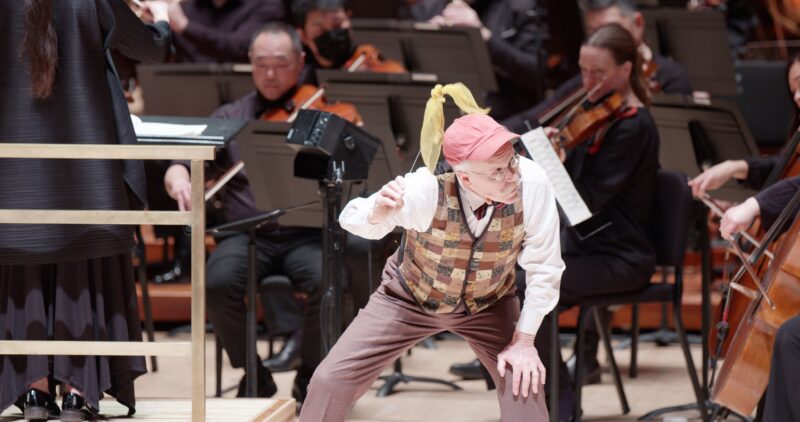
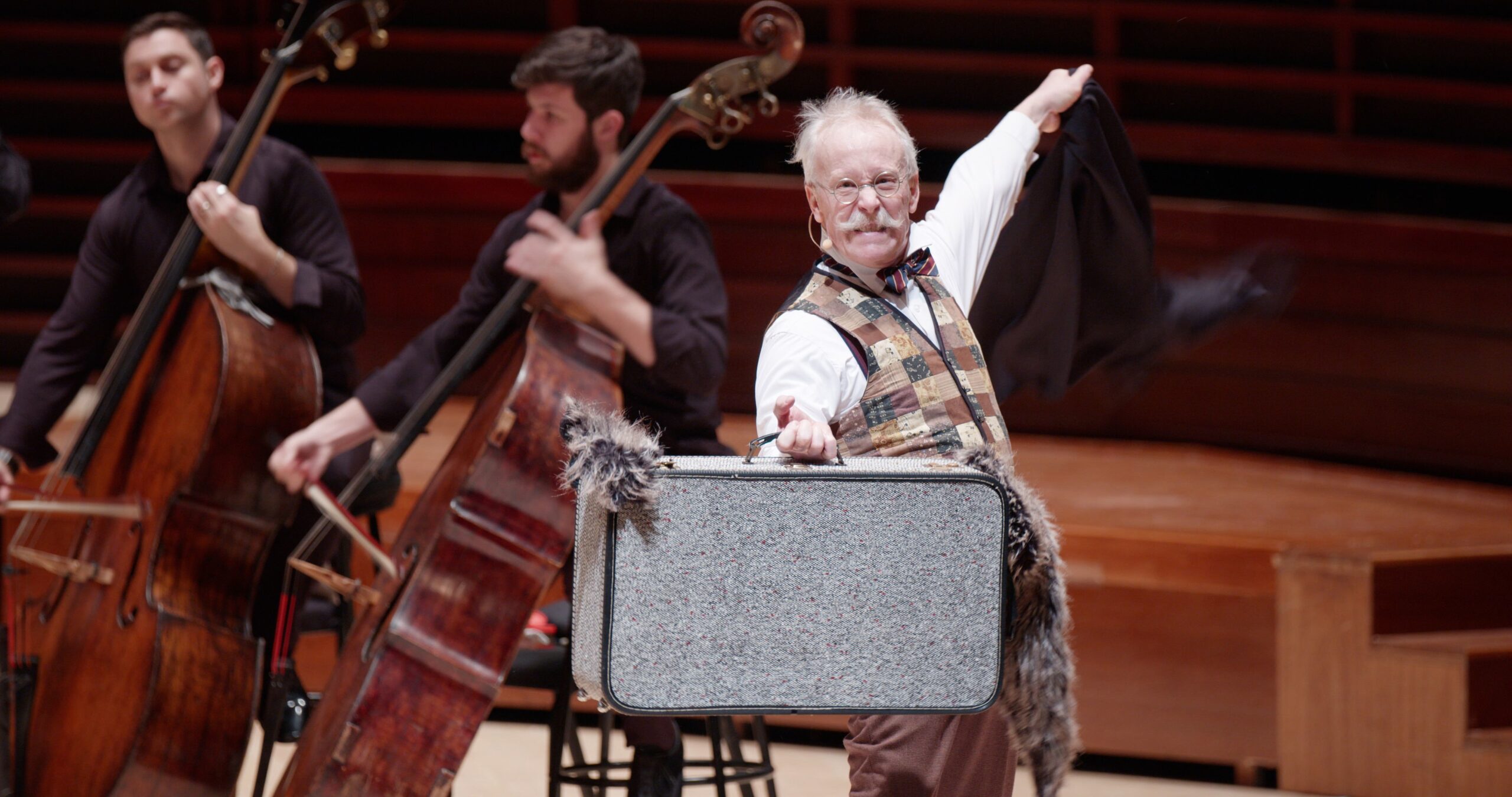
    His props are drawn from household items: The duck is a feather duster, the bird a diaphanous, darting, bright yellow swatch of fabric. Who can’t help but laugh at a gun represented by a toilet plunger? Boudewyns narrates while choreographing the action in response to the changing character of the music and arc of the story. For an audience growing up in the digital thicket, here was a bright clearing. Nothing beats a good story, enticingly told and heightened by a great score.

    With a suitcase as the wolf, Michael Boudewyns narrating “Peter and the Wolf” with the Philadelphia Orchestra, Feb. 7, 2026, in Marian Anderson Hall. It was his 10th time performing with work with the orchestra since his first appearance in 2007.

    Naomi Woo, the orchestra’s assistant conductor, was visually engaging, leading the work and three others, including a truncated version of the first movement of Beethoven’s Symphony No. 5. These concerts are another reminder of the deep bench of talent within the orchestra beyond the principal chairs. In the Prokofiev, that meant Patrick Williams’ glossy flute sound as the bird, clarinetist Samuel Caviezel as the bouncy cat, oboist Peter Smith’s poignant duck, and the appropriately lumbering (but polished) grandfather emanating from the bassoon of Mark Gigliotti.

    All deserved special recognition, and Woo gave the players bows, but no orchestra roster was published in the concert’s Playbill (even though the usual lists of board, staff, and oodles of donors were included).

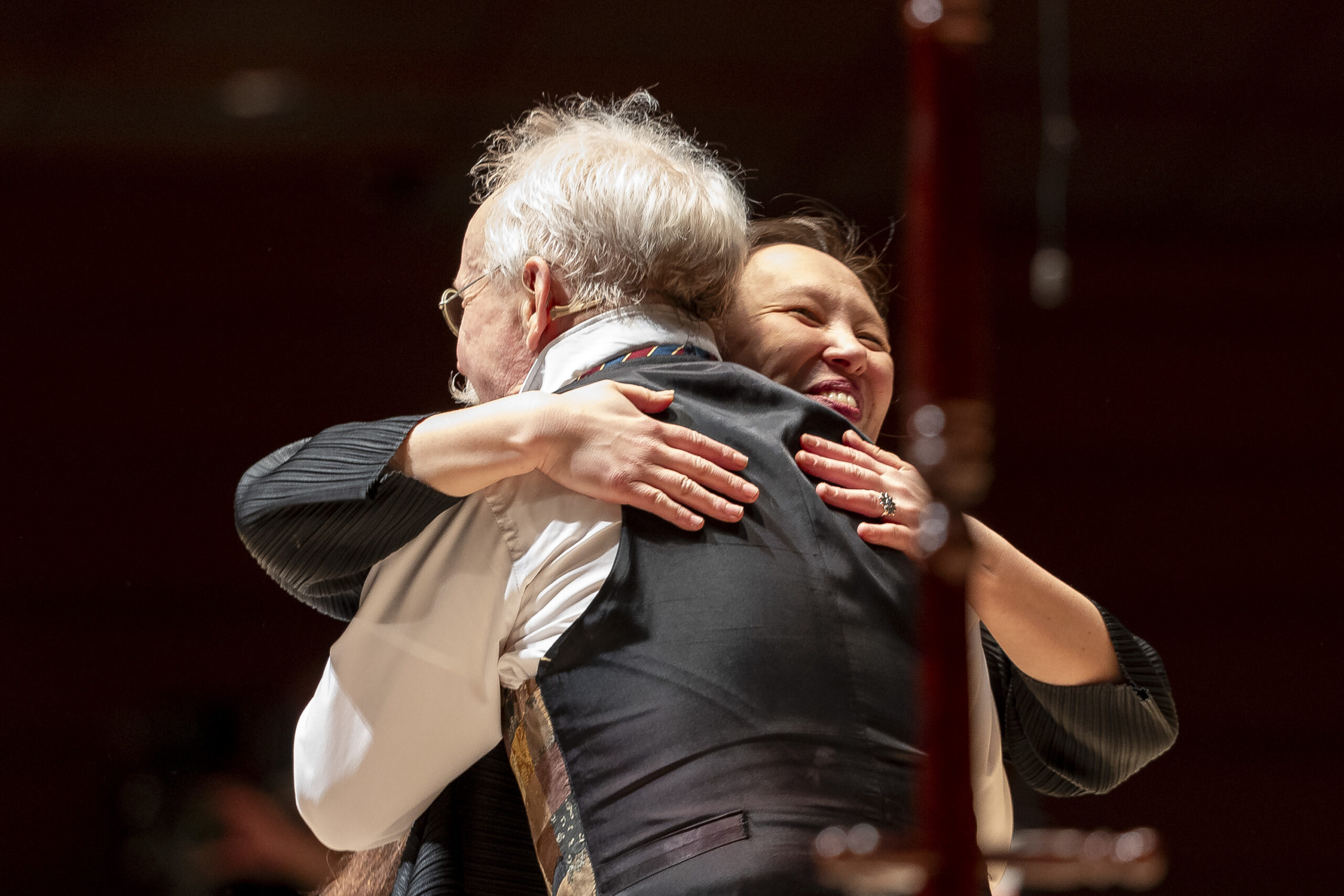
    Narrator and actor Michael Boudewyns and conductor Naomi Woo embrace after their performance of “Peter and the Wolf” in Marian Anderson Hall on Saturday.

    One of the unspoken truths of all art is that its effect on people is ultimately unknowable. The two children in front of me — one looked to be 3, the other even younger — were ostensibly too small to be there, and yet there’s no way of knowing what they were absorbing. The power of these concerts is in being in the presence of this orchestra, with that incredible sound. No other kind of ensemble has the same impact. And despite all the squirming and low chattering coming from the next row, there was really only one thought to which I kept returning: what lucky children.

    The Philadelphia Orchestra, conductor Naomi Woo, and actor Michael Boudewyns perform Britten’s “The Young Person’s Guide to the Orchestra,” March 14, 11:30 a.m., Marian Anderson Hall, Broad and Spruce Streets. Tickets $29-$66. ensembleartsphilly.org, 215-893-1999.

  • The Pennsylvania pups, rejected by breeders and owners, who went on to become Puppy Bowl stars and find loving homes

    The Pennsylvania pups, rejected by breeders and owners, who went on to become Puppy Bowl stars and find loving homes

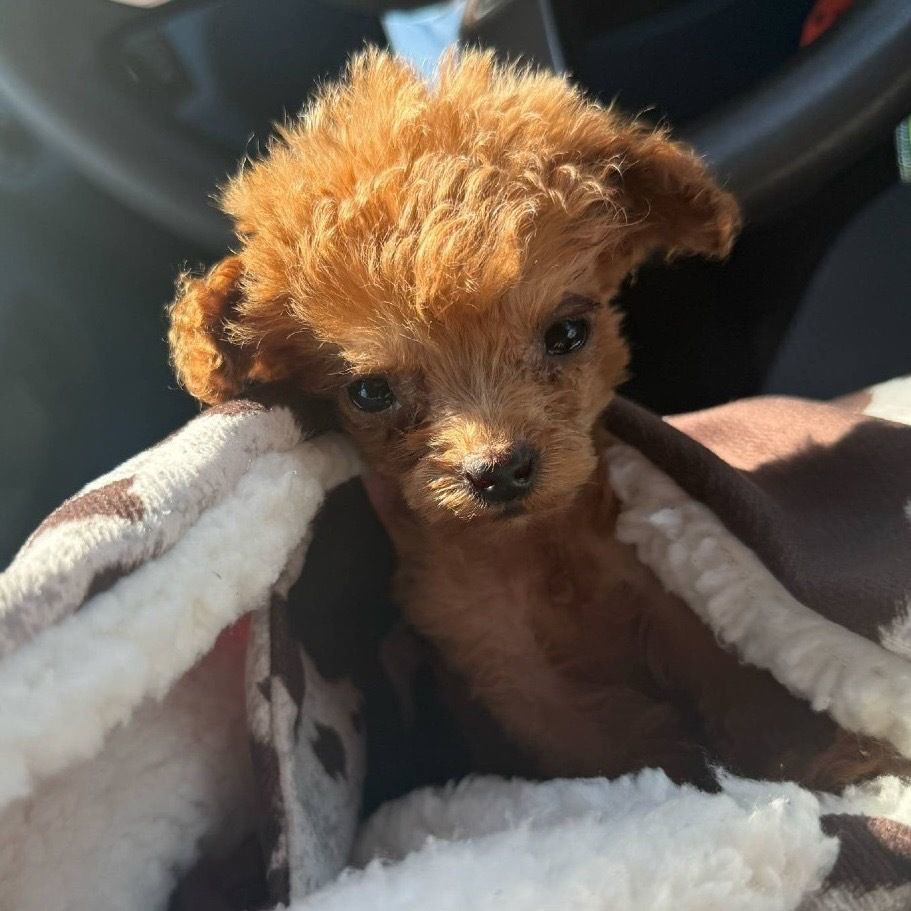
    Oscar was the ultimate underdog.

    Born in a puppy mill in Peach Bottom, Lancaster County, Oscar suffered from “failure to thrive,” his breeder said.

    By the time the breeder turned the 6-week-old toy poodle over to Phoenix Animal Rescue in Chester County, Oscar weighed just 7 ounces, according to Marta Gambone, a coordinator at the all-volunteer organization.

    “But one of our volunteers was able to turn him around, from this scraggly little hamster to this wonderful Puppy Bowl player,” Gambone said.

    When Oscar, a toy poodle, was rescued from a puppy mill in Lancaster County, he weighed just 7 ounces. After being nursed back to health, he’s playing in the 2026 Puppy Bowl.

    After being nursed back to health, Oscar traveled to Glens Falls, N.Y., to participate in the October 2025 taping of the 22nd annual Puppy Bowl, which airs today before the Super Bowl.

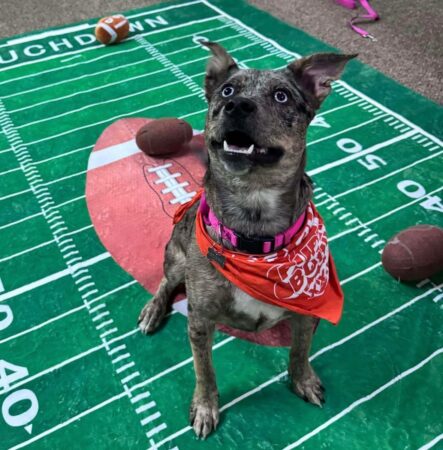
    Gambone said the annual event has become a wonderful way to raise awareness for animal rescues across the United States. Every one of the 150 dogs in the competition — between Team Ruff and Team Fluff — comes from a rescue.

    Oscar, a toy poodle nursed back to health in Chester County, is one of this year’s Puppy Bowl stars.

    Oscar, now 8 months old, has developed into a playful, social, and upbeat young dog who has found a loving home, Gambone said.

    Oscar is one of six puppies from Phoenix Animal Rescue in the annual TV special this year, Gambone said. Jill, an 8-month-old Cavalier, was suffering from a hernia when she was turned over by a breeder in New Holland, Lancaster County.

    The rescue also has four dogs participating in this year’s first-ever “Oldies vs. Goldies” senior dogs’ competition: Tiki, a Shiba Inu; Starlight, a Jack Russell terrier; Daisy, a Pomeranian; and Emmie, a Maltese mix.

    Tiki, a Shiba Inu, is in this year’s “Oldies vs. Goldies” senior dog competition.

    They all came from breeders in Lancaster County and were in need of care, Gambone said, “and now they’re all playing on a national stage, and getting lots of attention, and finding their forever homes.”

    Though all of this year’s stars have since been adopted, Gambone noted that the rescue gets about a dozen dogs per week, across a wide variety of breeds and mixes.

    “Anybody looking can find what they’re looking for if they have a little patience,” she said.

    Carrie Pawshaw sits for a portrait. Pawshaw, a rescue dog from the Pittsburgh region, competed in the 2026 Puppy Bowl.

    Across the state in Springdale, Allegheny County, Jacqueline Armour said it’s the third year that some of her rescue dogs are playing in the Puppy Bowl.

    She founded Paws Across Pittsburgh, a rescue that places dogs with foster parents until they find permanent homes. The dogs come from owners and shelters from as far away as West Virginia, Kentucky, and Ohio.

    This year, a playful Jack Russell mix named Meeko is their star, along with a Norwegian elkhound and American Eskimo dog mix named for Sarah Jessica Parker’s character in the TV show Sex and the City.

    “They pick some of them and rename them,” Armour explained, “so initially I thought they were going to call her Sarah Jessica Barker. And then they said Carrie Pawshaw.”

    Armour noted that, because her organization uses foster homes, their puppies are already learning how to live in a home — getting house-trained and crate-trained, and learning how to get along with children and other pets. This also gives volunteers a chance to see the dogs’ personalities, which can be helpful in matching a dog with an owner.

    Both Armour and Gambone emphasized that rescue operations offer a variety of ways for volunteers to help out.

    For those who’ve never owned a dog, Armour said the experience can be profound. The medical community consensus is that having a dog can help people get more exercise, improve mental health, and lower blood pressure, and can help children learn how to properly treat an animal.

    In Chester County, Gambone said she’s seen firsthand how dogs can add vitality to someone’s life.

    “They help with loneliness, and on the physical side, they help people stay more active,” she said. “We have so many senior citizens coming to us saying, ‘I just need something — something to love.’ And it changes their lives.”

  • Is protest music coming back? From Bad Bunny to Bruce Springsteen, Grammys to the Super Bowl, the answer seems to be yes

    Is protest music coming back? From Bad Bunny to Bruce Springsteen, Grammys to the Super Bowl, the answer seems to be yes

    Bad Bunny vows to protest with love. Bruce Springsteen has opted for a more confrontational approach.

    Both are part of a growing wave of pop-music dissent aimed at what critics see as overreach by the Trump administration’s Department of Homeland Security — actions in Minneapolis that have been linked to the deaths of two American citizens during encounters with U.S. Immigration and Customs Enforcement agents.

    Bad Bunny, the Puerto Rican superstar known as the King of Latin Trap, was the world’s most-streamed pop music maker in 2025. The rapper-singer-producer, whose full name is Benito Antonio Martínez Ocasio, has a massive platform to air his grievances if he chooses, serving as the half-time show headliner at Super Bowl LX on Sunday.

    This year’s half-time show is likely to surpass Kendrick Lamar’s 2025 performance, which drew 113.5 million viewers as the most-watched in history.

    The decision to book Bad Bunny, whom, NFL commissioner Roger Goodell this week called “one of the world’s great artists,” has been steadily attacked by conservative critics since September.

    Those critics include President Donald Trump. “I’m anti-them. I think it’s a terrible choice. All it does is sow hatred. Terrible,” he said last month, referring to Bad Bunny and Green Day, who will play a pregame concert during NBC’s broadcast. The clash between the Seattle Seahawks and New England Patriots will also stream on Peacock.

    Bad Bunny haters have an alternative: Kid Rock, whose 5 million monthly Spotify listeners is dwarfed by Bad Bunny’s 87 million, will top the bill on Turning Point USA’s All-American Halftime Show, shown on TPUSA’s YouTube page and conservative media outlets. Country singers Brantley Gilbert, Lee Brice, and Gabby Barrett will also perform.

    Will Bad Bunny’s performance be a virulent attack on the Trump administration’s immigration policy?

    That remains to be seen. But the speech he gave at the Grammys last weekend, after winning best música urbana album for Debí Tirar Más Foto — which also became the first Spanish-language album of the year winner — suggests a more subtle expression of Puerto Rican pride that emphasizes the humanity of demonized brown-skinned immigrants.

    Speaking in English, Bad Bunny thanked God, said “ICE Out,” then continued: “We’re not savages, we’re not animals, we’re not aliens. We are humans and we are Americans.” (As a Puerto Rican native, Bad Bunny is an American citizen unlike recent MAGA convert Nicki Minaj, who was born in Trinidad and Tobago.)

    “Hate gets more powerful with more hate. The only thing that is more powerful than hate is love. We need to be different. If we want to fight, we have to do it with love.”

    Bad Bunny’s speech was one of many gestures opposing ICE at the Grammys, from Bon Iver’s Justin Vernon wearing a whistle on his lapel to Billie Eilish criticizing anti-immigrant voices with a terse line: “Nobody is illegal on stolen land.”

    Olivia Dean, the British singer who won best new artist, said: “I’m up here as a granddaughter of an immigrant. I’m a product of bravery, and I think those people deserve to be celebrated.”

    Vernon and Eilish immediately were embroiled in left-right political back and forth. Eilish’s brother, Finneas O’Connell, sparred with multiple critics on social media and Vernon with Sirius/XM host Megyn Kelly.

    But the Grammys didn’t include any overtly political new music. A rumor that Springsteen would open the show with “Streets of Minneapolis” proved unfounded. Springsteen wrote the new anti-ICE broadside the day protester Alex Pretti was killed by federal agents.

    But Springsteen’s protest song leads the way in a trend toward musicians opposing the Trump administration in song, in many cases consciously connecting with a tradition that reaches back to Woody Guthrie, Peter Seeger, Bob Dylan, and the Civil Rights protest of the 1960s.

    In “Street of Minneapolis,” Springsteen meets the moment by expressing outrage at the deaths of Renee Good and Pretti, specifically the administration’s initial pronouncements that placed blame on the dead rather than the federal agents.

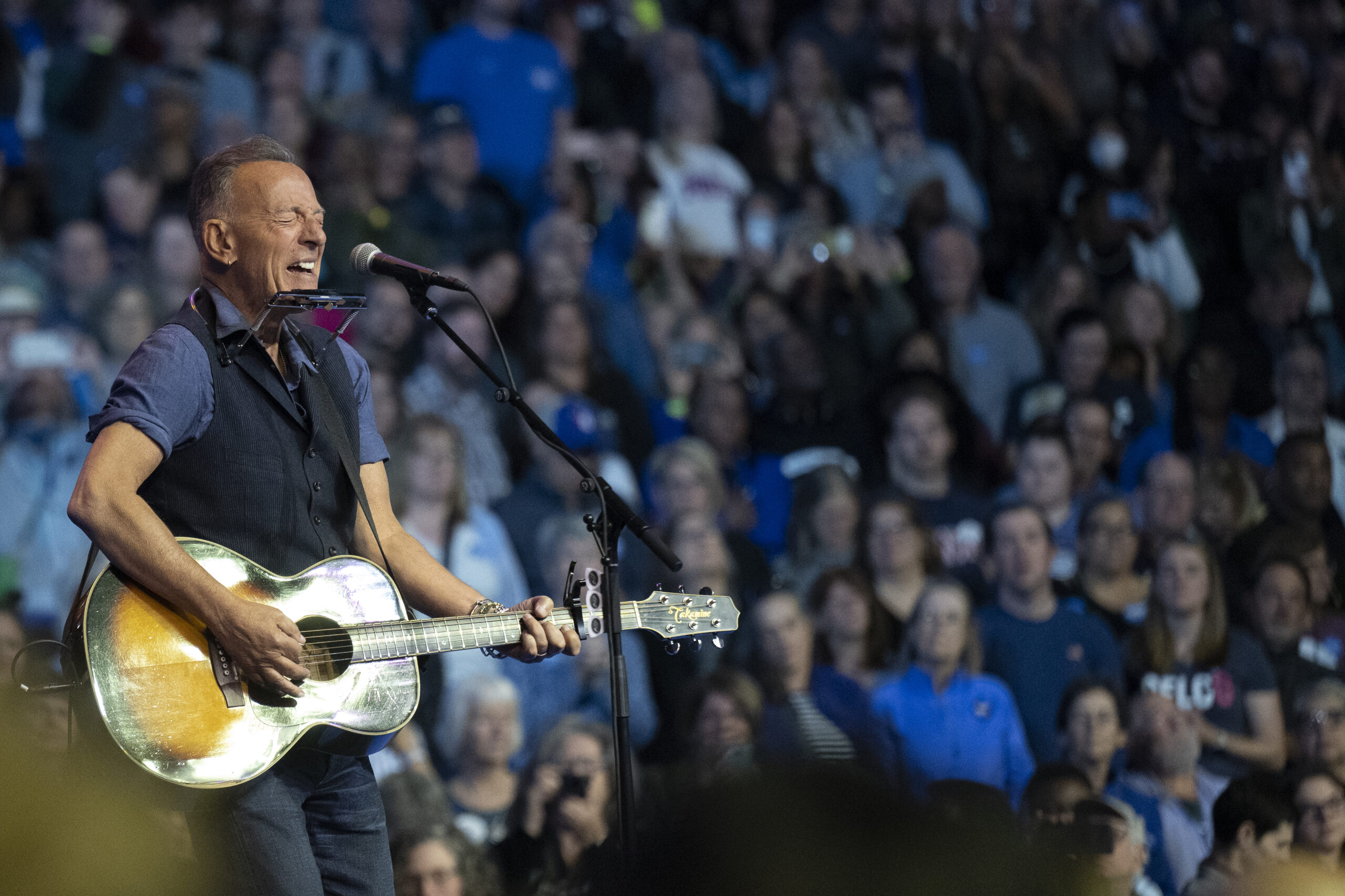
    Bruce Springsteen performs Oct. 28, 2024, during a Democratic concert rally at the Liacouras Center at Temple University.

    “Their claim was self-defense sir, just don’t believe your eyes,” the Boss sings. “It’s these whistles and phones against Miller and Noem’s dirty lies.”

    The song builds to a rousing “ICE out” chorus that’s so unsubtle it even gave the Boss pause.

    Performing in Minneapolis last month with rabble-rousing former E Street Band member Tom Morello, Springsteen said he asked the guitarist whether “Streets” was too “soap boxy.” Morello, of Rage Against the Machine, replied: “Nuance is wonderful, but sometimes you have to kick them in the teeth.”

    Springsteen, of course, can afford to be aggressively provocative. Not only is he a revered superrich artist at the tail end of his career whose loyal audience is not going anywhere. He’s also a white man whose fans who look like him are not in danger of being detained and deported.

    And he has a history of sparring with Trump, whose administration he repeatedly labeled “corrupt, incompetent, and treasonous” on stage in Europe last spring. At the time, Trump responded by calling the Jersey rocker “not a talented guy — Just a pushy, obnoxious JERK.” The president hasn’t responded to “Streets of Minneapolis” as of yet, but loyalist Steve Bannon called Springsteen “fake and gay, as the kids say.”

    Springsteen’s singing out will also surely lead to others joining the chorus. And plenty of broadsides have been in the works already.

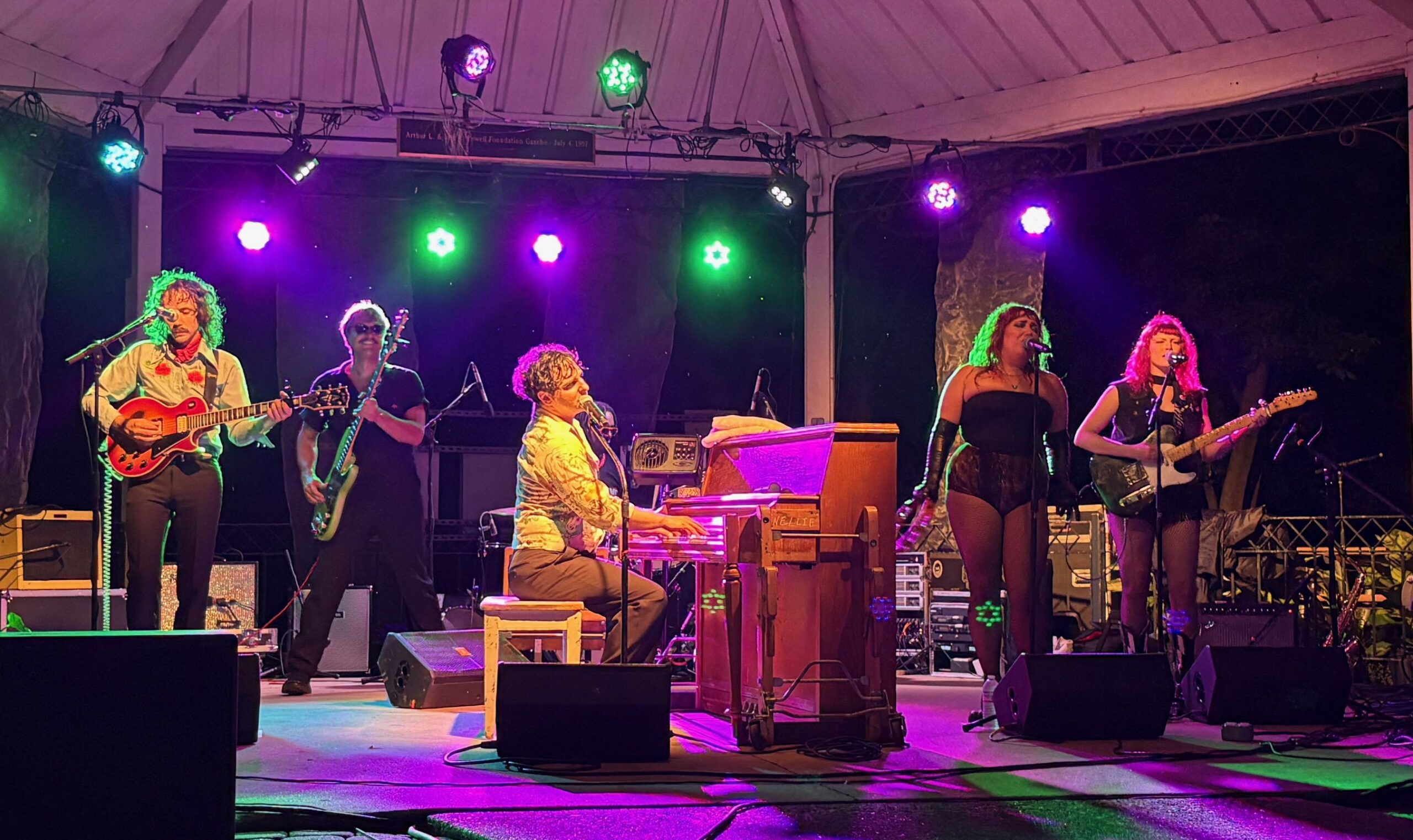
    Low Cut Connie at Concerts Under The Stars in King of Prussia on Friday August 1, 2025. Left to right: Rich Stanley, Nick Perri, Adam Weiner, Jarae Lewis (on drums, partially hidden), Amanda “Rocky” Bullwinkel, Kelsey Cork.

    Philadelphia’s Adam Weiner of Low Cut Connie has been an outspoken Trump critic, among the first to pull out of a Kennedy Center performance last year.

    He’s announced an entire protest album called Livin’ in the U.S.A. Weiner said he made the album “because I am disgusted to see our country descend into an authoritarian hell, a place where art does not lead the cultural conversation.” It arrives timed to the Semiquincentennial on July 3.

    The same day that Springsteen released “Streets of Minneapolis,” British folk-punk singer Billy Bragg dropped “City of Heroes,” also written to commemorate Pretti’s death.

    Veteran punk rockers are joining in, too, sometimes by rewriting lyrics to old protest songs like Boston band Dropkick Murphys’ “Citizen I.C.E.” — a new version of “Citizen C.I.A.”

    The protest isn’t manifest only in topical song writing. In Philly, local events in the indie music scene are aiming to assist immigrants. Juntos, the organization that aids Philadelphia communities affected by ICE, will be the beneficiary of “A Jam Without Borders” at Ortlieb’s on Wednesday, with local musicians Arnetta Johnson, Nazir Ebo, and others.

    New generation protest singers include Liberian-born Afro Appalachian singer Mon Rovia, whose buoyant 2025 song “Heavy Foot” remains upbeat as he sings “the government staying on heavy foot / No, they never gonna keep us all down.”

    Most prominent in branding himself as a modern folk troubadour is Jesse Welles, whose “No Kings” duet with Joan Baez came out in December.

    Welles’ “Join ICE” uses humor as a weapon, with an early Dylan persona. “There’s a hole in my soul that just rages,” he sings. “All the ladies turned me down and I felt like a clown / But will you look at me now, I’m putting people in cages!”

    He plays the Fillmore on March 4.

    Serious songwriters are likely to continue to pen protest songs as long as scenes of turmoil continue to show up on TV and social media screens.

    But high-profile artists worried about alienating their audience aren’t likely to start flooding the zone with anti-ICE screeds if they’re concerned about backlash.

    A case in point would be formerly Philadelphian country superstar Zach Bryan. Last October, he released a song snippet of “Bad News” that included the lyrics “ICE is gonna come, bust down your door” and cited “the fading of the red, white and blue.”

    The song was met with disdain by the White House. Spokesperson Abigail Jackson said, “Zach Bryan wants to open the gates to criminal illegal aliens and has condemned heroic ICE officers.” DHS secretary Kristi Noem was “extremely disheartened and disappointed.”

    Bryan did include the song on his album With Heaven on Top in January, but not before taking great care to explain he wasn’t on one political side or the other.

    “Left wing or right wing, we’re all one bird and American,” the Eagles fan said. “To be clear I’m not on either of these radical sides.”

  • Creating art for U.S. coins is tricky. These Pa. artists have made a career of it.

    Creating art for U.S. coins is tricky. These Pa. artists have made a career of it.

    This story first appeared in PA Local, a weekly newsletter by Spotlight PA taking a fresh, positive look at the incredible people, beautiful places, and delicious food of Pennsylvania. Sign up for free here.

    If you’ve got coins in your pocket, purse, or wallet, you’re likely carrying around Pennsylvania-created art.

    The U.S. Mint produces coins in four cities: Denver, Philadelphia, San Francisco, and West Point, N.Y. But the Philly location — located just a few blocks north of Independence Hall — is the Mint’s hub for engraving, and employs a team of medallic artists who sculpt all the new designs for circulating coins, congressional medals, and collectible pieces.

    Yes, sculpt. The images in coins are three-dimensional and extremely detailed despite being only slightly raised.

    “There’s a great challenge in making something in relief like this,” said Phebe Hemphill, a medallic artist who has worked at the Mint since 2006. “It’s kind of a weird, fascinating challenge to fit everything into that very, very low space we’re allowed to sculpt.”

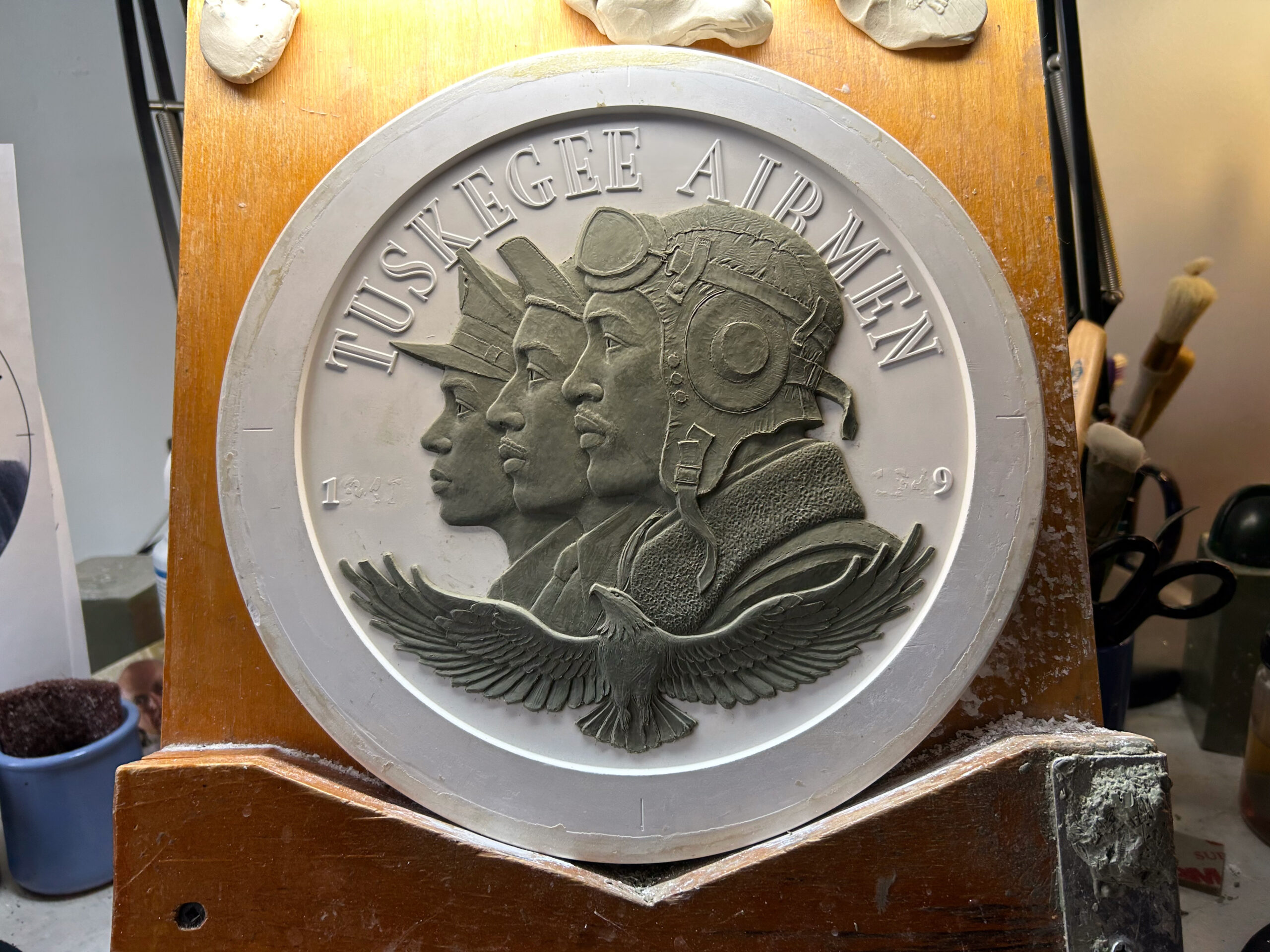
    Hemphill, a Pennsylvania Academy of the Fine Arts alumnus originally from West Chester, got some early experience working at the Franklin Mint, a private Delaware County-based company that produces coins and other collectibles. Her design and sculpting credits over her two decades at the U.S. Mint number in the dozens, from a Congressional Gold Medal presented to Tuskegee Airmen to a quarter depicting the Cuban American singer Celia Cruz.

    The coin-sculpting process requires many “small technical nuances” to create “the illusion of depth,” said Eric David Custer, another medallic artist at the Mint. While medals allow for a bit more “freedom” because they are larger, he said, coins like quarters are trickier. The sculpted image ends up being about as thick as “two or three human hairs” stacked on top of one another.

    Custer, who grew up in Independence Township in Western Pennsylvania, did some of his early engraving work at Wendell August Forge, a Pennsylvania-based artisan metalware company. An alumnus of the Art Institute of Pittsburgh with a degree in industrial design, he joined the Mint in 2008 as a product designer and became a medallic artist in 2021.

    Custer and Hemphill are part of a small team of medallic artists who span a range of backgrounds and skill sets. One previously designed dinnerware and pottery, while another founded a community sculpture studio.

    “Everyone that’s arrived here has come from different avenues in art, sculpture, and manufacturing,” Custer said.

    Since the first U.S. Mint was established in Philadelphia in 1792, the city has been the country’s center for coin engraving, according to spokesperson Tim Grant. The Mint’s headquarters moved to Washington in the 1870s, but its engraving operation remained in Philly.

    Some notable names in sculpture, such as Augustus Saint-Gaudens, have designed coins for the Mint over the years — a history that is not lost on the artists who work there now.

    “A perk of this job and to have this position is that you know that the greats went before you here,” Hemphill said.

    How coins are made

    The making of new coins and medals generally starts in Congress, which passes laws to authorize their creation.

    The Mint then outlines design standards, and taps staff artists and its pool of over two dozen freelancers from around the country to submit line drawings for consideration. The designs go through a robust revision and review process before one gets final approval from the U.S. treasury secretary.

    From there, the in-house medallic artists take the selected line art drawing and sculpt it into three dimensions, which can involve adding more detail than what is in the sketch.

    “The sculptor has to make some decisions,” Hemphill said. “They can’t just solely take a design and, you know, make it look good as a coin. You have to enhance certain things.”

    The completed artwork is then machine-engraved onto steel hubs, which are used to stamp dies that get used to strike coins. And once they enter circulation, the coins make their way to our pockets, jars, and couch crevices.

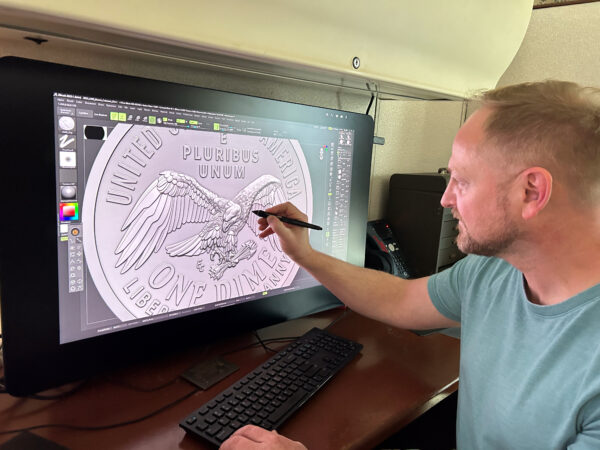
    Some medallic artists prefer to sculpt the designs by hand with clay or plaster on rounds that are about 8 or 9 inches in diameter, while others use software, Hemphill explained. She prefers to work by hand initially, then scan her work to make finishing touches digitally.

    The traditional approach “really allows the sculptor to gauge the depth properly using your own binocular vision,” Hemphill said, while digital tools make some “cool tricks” possible that “you wouldn’t even imagine you could do in traditional.”

    A clay and plaster sculpture in relief of the Tuskegee Airmen by U.S. Mint medallic artist Phebe Hemphill for a Congressional Gold Medal.

    Regardless of the methods used, the artistic process involves lots of constraints and “hard limits,” Hemphill said.

    First, designs have to comply with the legislation that authorized them, which outlines required elements like the type of people or symbols the coins must depict, as well as phrases to include.

    In some cases, stakeholders named in the law that authorized a coin — which can mean governors, museums, or organizations relevant to the design — have to be consulted.

    Time is a factor, too. After a design is approved, things can move pretty quickly to meet production schedules, with artists getting around 16 business days to translate a line drawing into a sculpture, according to Hemphill and Custer.

    And then there are medium-specific musts: Artists have to create designs that fit coins and medals. For example, certain angles don’t work well in coin art, Custer said, and nickels, dimes, and quarters each have specific font size requirements.

    Production design staff also have to provide feedback to artists to make sure an image will be “strikable” and won’t result in manufacturing errors or inconsistencies, Custer explained.

    “Designing and sculpting — they’re both problem-solving processes as much as they are art,” he said.

    Sculpting stories

    A medallic artist’s job ultimately boils down to finding a way to translate iconic moments or people in history into pocket-size art.

    In Philadelphia, one of the country’s oldest and most storied cities, that history can be pretty accessible. When working on a new series of coins meant to honor the nation’s 250th birthday, for instance, Custer drew on resources that are practically in the Mint’s backyard.

    His background research for the new “Emerging Liberty” semiquincentennial dime led him to the Museum of the American Revolution, a 10-minute walk from the Mint.

    Custer’s design for the tails side of the coin — which features an eagle with one empty claw and one claw holding 13 arrows — won out in the selection process.

    The image takes inspiration from the Great Seal of the United States, and represents the colonists before and during the American Revolution, Custer explained. While he included the arrows from the seal, he left out the olive branch to symbolize the fact that the colonies had not yet reached peace — but left the claw open to demonstrate that they were waiting for it.

    Hemphill also used the neighborhood to her advantage while working on the series. She sculpted the back of the “U.S. Constitution Quarter,” a design by Donna Weaver that features an image of Independence Hall.

    When translating a line drawing of a building to a three-dimensional coin, sculptors benefit from having additional visual context, like a photograph, to get the details right, Hemphill said. In this case, though, she didn’t need a photo.

    “I had a nice little walk down the street to really get a good gauge of how to do that one.”