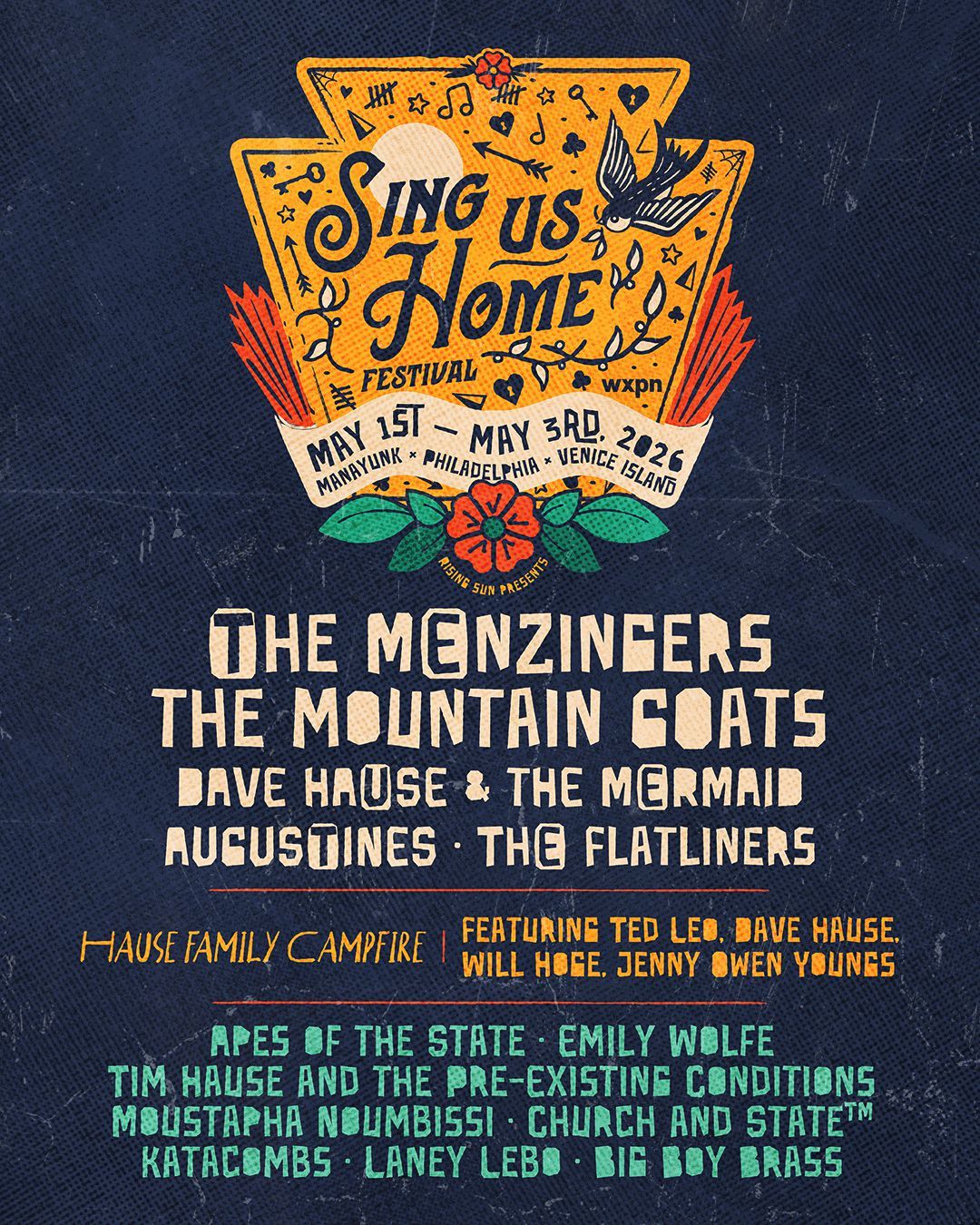
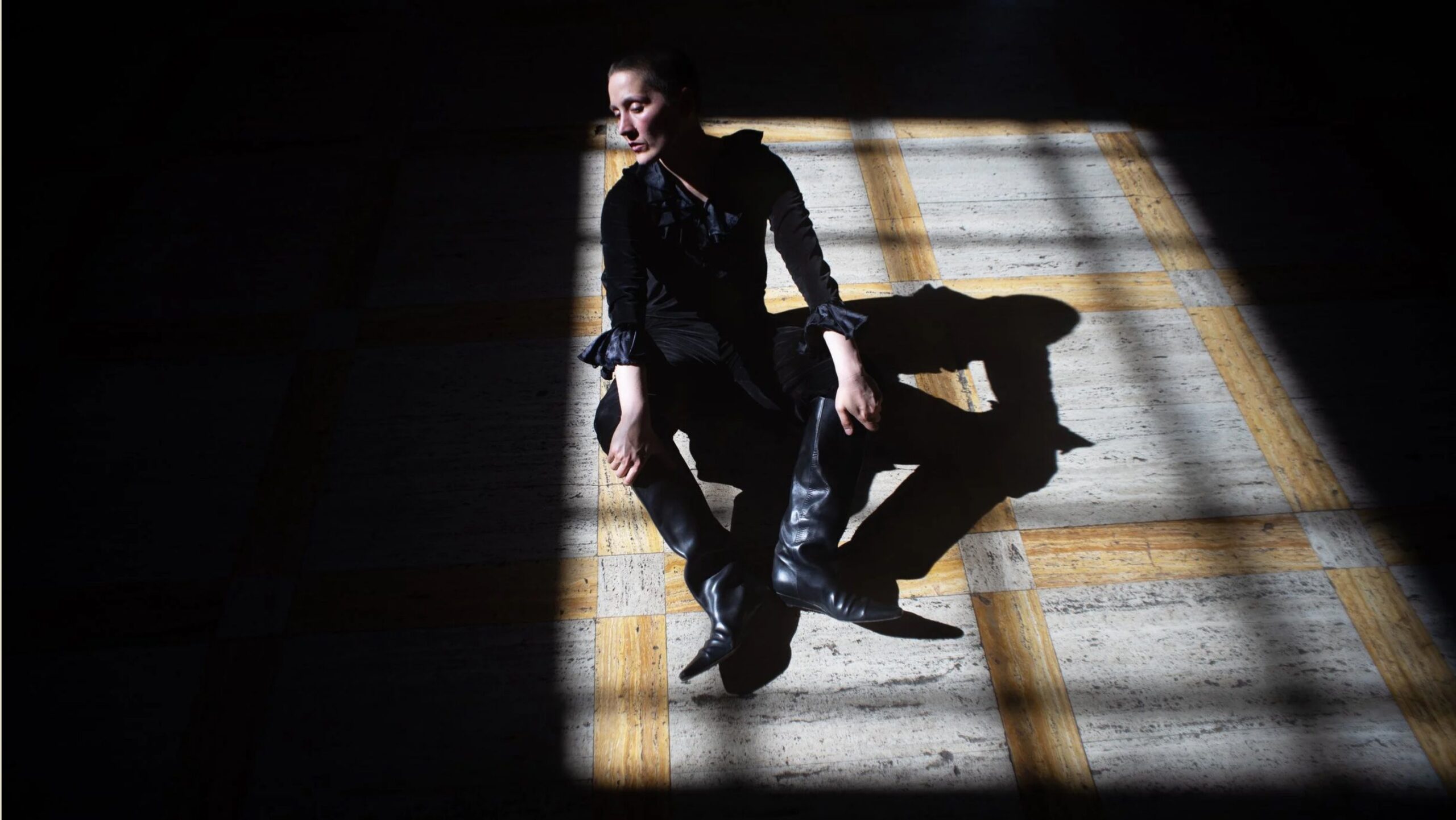
This year’s Sing Us Home festival will feature founders Dave and Tim Hause, Scranton pop-punk band the Menzingers, prolific indie rockers the Mountain Goats, punk veteran Ted Leo, and a certain late night TV comedian and political commentator playing drums.
In its fourth year, Sing Us Home will be staged on Venice Island in Manayunk from May 1-3. It will again take its place as the opening event of Philadelphia’s outdoor music festival season.
Produced by Ardmore-based music promoters Rising Sun Presents, the fest will kick of on a Friday night with its traditional opening set billed as the Hause Family Campfire. That includes Roxborough-raised Dave Hause joined by Leo, Will Hoge, and Jenny Owen Youngs, with all four songwriters on stage at once, sharing songs and stories.
Along with the aforementioned headliners and Dave Hause & the Mermaid, the three-day fest also includes Tim Hause & the Pre-Existing Conditions, fronted by Hause’s younger brother and festival cofounder.
The lineup for the 2026 Sing Us Home Festival.
The lineup also features blues guitarist Emily Wolfe, Canadian punks the Flatliners, New York indie rockers Augustines, New Jersey band Church and State™, Philly singer Moustapha Noumbissi, Lancaster folk-punk band Apes of the State, singer-songwriters Katacombs and Laney Lebo, and horn happy outfit Big Boy Brass, who will parade the grounds.
The political pundit funnyman playing the drums will be Jon Stewart, who sits on the throne behind his kit with Church and State™, the new band with whom he has played only a handful of gigs.
Last month, he told the audience on the Daily Show that he picked up the stick after failing to master the guitar or piano, and that playing in his first band at age 63 was extremely fun.
Most touring bands are still on a winter break this early in January, but that doesn’t mean the live music business shuts down. This week in Philly music is a mostly local affair, packed with hometown talent and worthwhile benefit shows, as well as R&B, country, and indie rock acts that are on the road.
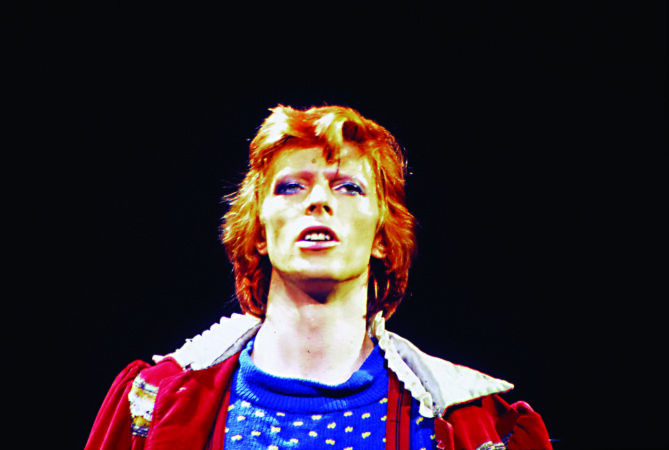
David Bowie was born on Jan. 8, 1947 and died 10 years ago on January 10. 48 Record Bar in Old City will host its third annual free Philly Loves Bowie Week listening party, with DJ EBG III spinning full album sides by the artist who famously recorded 1974’s Young Americans at Sigma Sound Studios. 7 p.m., 48 Record Bar, 48 S. Second St., 48RecordBar.com
Thursday, Jan. 8
El DeBarge
Eldra “El” DeBarge scored 1980s R&Bs hits like “Rhythm of the Night” and “Who’s Holding Donna Now?” with his family band DeBarge before going on to score solo hits such as “Who’s Johnny” and “Real Love.” 8 p.m., City Winery Philadelphia, 990 Filbert St., citywinery.com/philadelphia
Lowercoaster / Dear Season / Sharing Contest
These three Philly bands all identify as emo, with the subtlest of them being Sharing Contest, the trio of singer-guitarist Alex Fichera fronting the rhythm section of Sam Ansa and Jordan Colucci. 7 p.m., Kung Fu Necktie, 1248 N. Front St., kungfunecktie.com
Bowie Quizzo / Bowieoke
Patti Brett, the owner of Doobie’s Bar and one of the original Sigma Kids, hosts Bowie Quizzo at Ray’s Happy Birthday Bar in South Philly, with DJ Robert Drake spinning and John Stanley of John’s Dollar Bin fame serving drinks. And Sara Sherr’s Sing Your Life Karaoke goes all Bowie at MilkBoy. Both events are free. 8 p.m., Ray’s Happy Birthday Bar, 1200 E. Passyunk Ave., thehappybirthdaybar.com, and 8 p.m., MilkBoy, 1100 Chestnut St., milkboyphilly.com
Dale Watson and His Lone Stars play Sellersville Theater in Bucks County on Friday and Elkton Music Hall in Elkton, Md. on Saturday.
Friday, Jan. 9
Dale Watson and His Lone Stars
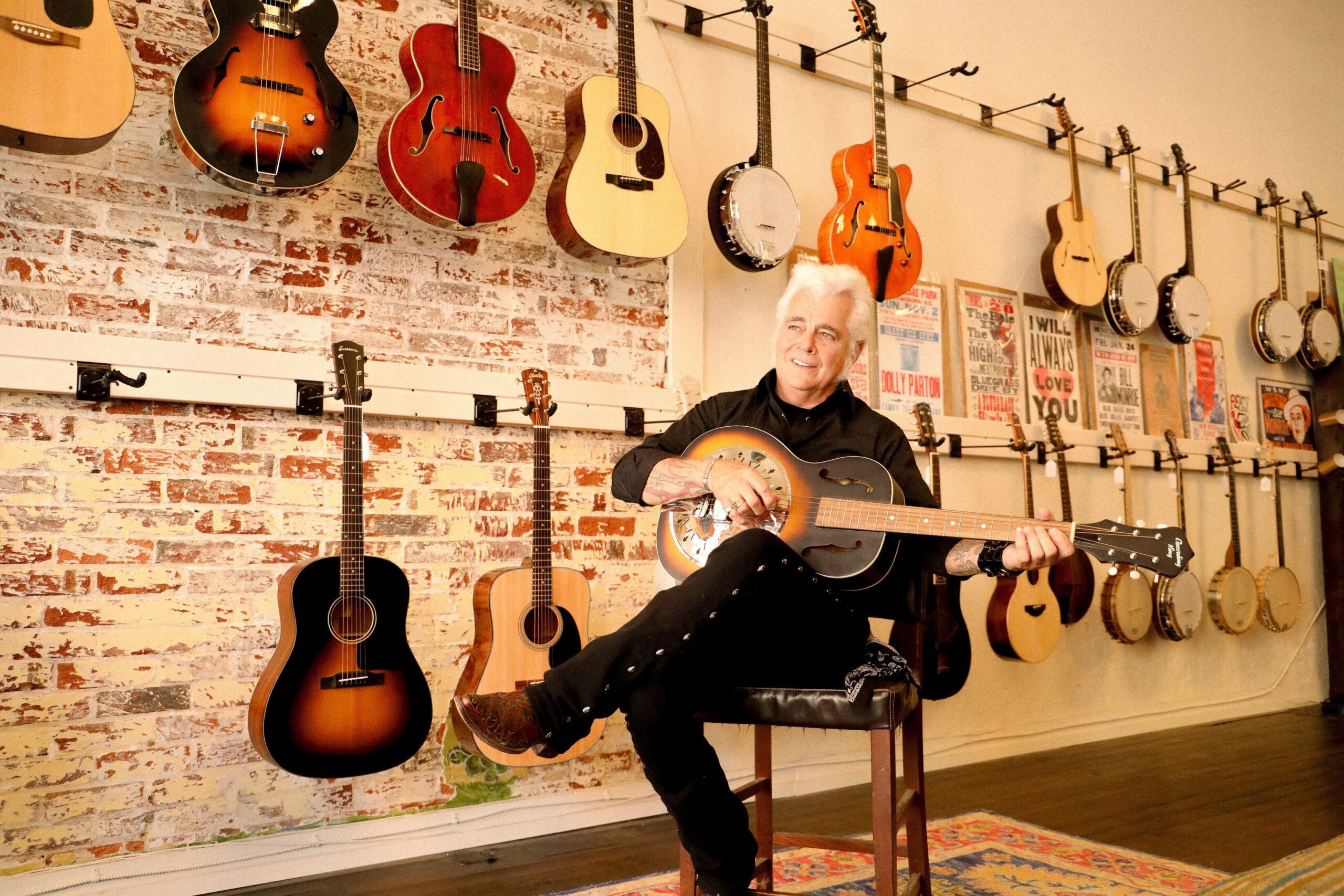
Alabama-born Texas-based hardcore country singer Dale Watson has two area gigs this weekend: Friday at the Sellersville Theater in Bucks County and one at Elkton Music Hall on Saturday. 2023’s Starvation Box is the most recent album by the “Feelin’ Haggard” singer-guitarist, who teamed with Montgomery County cowboy Ray Benson on 2017’s Dale & Ray. 8 p.m., Sellersville Theater, 24 W. Temple Ave., Sellersville, st94.com and 8 p.m., Saturday, Elkton Music Hall, Elkton, Md., elktonmusichall.com
Eric Slick. The Philadelphia-raised songwriter and Dr. Dog drummer is playing Johnny Brenda’s on Friday with Dominic Angelella in a “Hardcore Friends” show.
Dominic Angelella and Eric Slick
These two Philly multi-instrumentalists both have long resumes backing other musicians. Angelella just finished a tour playing bass with Lucy Dacus. Slick is Dr. Dog’s drummer. Together as Lithuania, the duo has released two albums, 2015’s Hardcore Friends and 2017’s White Reindeer. At Johnny Brenda’s, they’ll be playing songs from those, as well as music from Angelella’s band Drgn King. The Tisburys and Twin Princess are also on the bill. 8 p.m., Johnny Brenda’s, 1201 Frankford Ave., johnnybrendas.com
Labrador
The Pat King-fronted self-described “maximum alt-country” band’s album My Version of Desire was one of the best local releases of 2025, starting with the outstanding title song. The Philly band opens for Jewel Case and Dominy. 7:30 p.m., Kung Fu Necktie, 1248 N. Front St., kungfunecktie.com
Hazy Cosmic Jive
The Bowie tribute band will perform the Thin White Duke’s 1976 album Station to Station in its entirety. 8 p.m., Brooklyn Bowl Philadelphia, 1009 Canal St., brooklynbowl.com/philadelphia
Sound & Vision Happy Hour and Bowie / Prince Night
There are two Bowie dance parties in the Eraserhood. The Trestle Inn hosts a happy hour with music by DJ Hardbargain and the Slinky Vagabond, plus Go Go from Jennie Jones and Cynthia Rose. And a block away at Underground Arts, that will be followed by a Bowie/Prince dance party with DJ George Purkins. 6 p.m., the Trestle Inn, 339 N. 11th St, thetrestleinn.com and 9 p.m., Underground Arts, 1200 Callowhill St., riotnerdphilly.com
Kid Davis & the Bullets play 118 North in Wayne on Saturday.
Saturday, Jan. 10
Under the El
Philly rapper Reef the Lost Cauze and DJ Sat One will be featured — along with pioneering graffiti artist Cornbread — at a street art and hip-hop event at Vizion Gallery in Kensington on Saturday afternoon. It’s presented by the organization Recovery Done Simple. 1 p.m., Vizion Gallery, 3312 Kensington Ave., recoverydonesimple.com
Dog Fest
Indie promoters 4333 Collective present a canine-themed five-band bill featuring Armbite, Fruit Dawg, Pennydog, Dog Beach, and Haunt Dog. It’s a benefit for the pet shelter people and the good girls and boys at PAWS, the Philadelphia Animal Welfare Society. 6 p.m., Philly Style Pizza, 2010 N. Broad St., 4333Collective.net
Reef the Lost Cauze at Voltage Lounge in Philadelphia in 2015. He’ll play an “Under The El” show on Saturday afternoon. Tim Blackwell / Philly.com
A Night of Stardust
The show that annually closes out Bowie week is celebrating its 10th anniversary. Presented by Greg Shelton, it will feature 30 Bowie songs performed by 14 vocalists, including Richard Bush, Olivia Rubini, and Johnny Showcase. 7 p.m., Union Transfer, 1026 Spring Garden St. utphilly.com
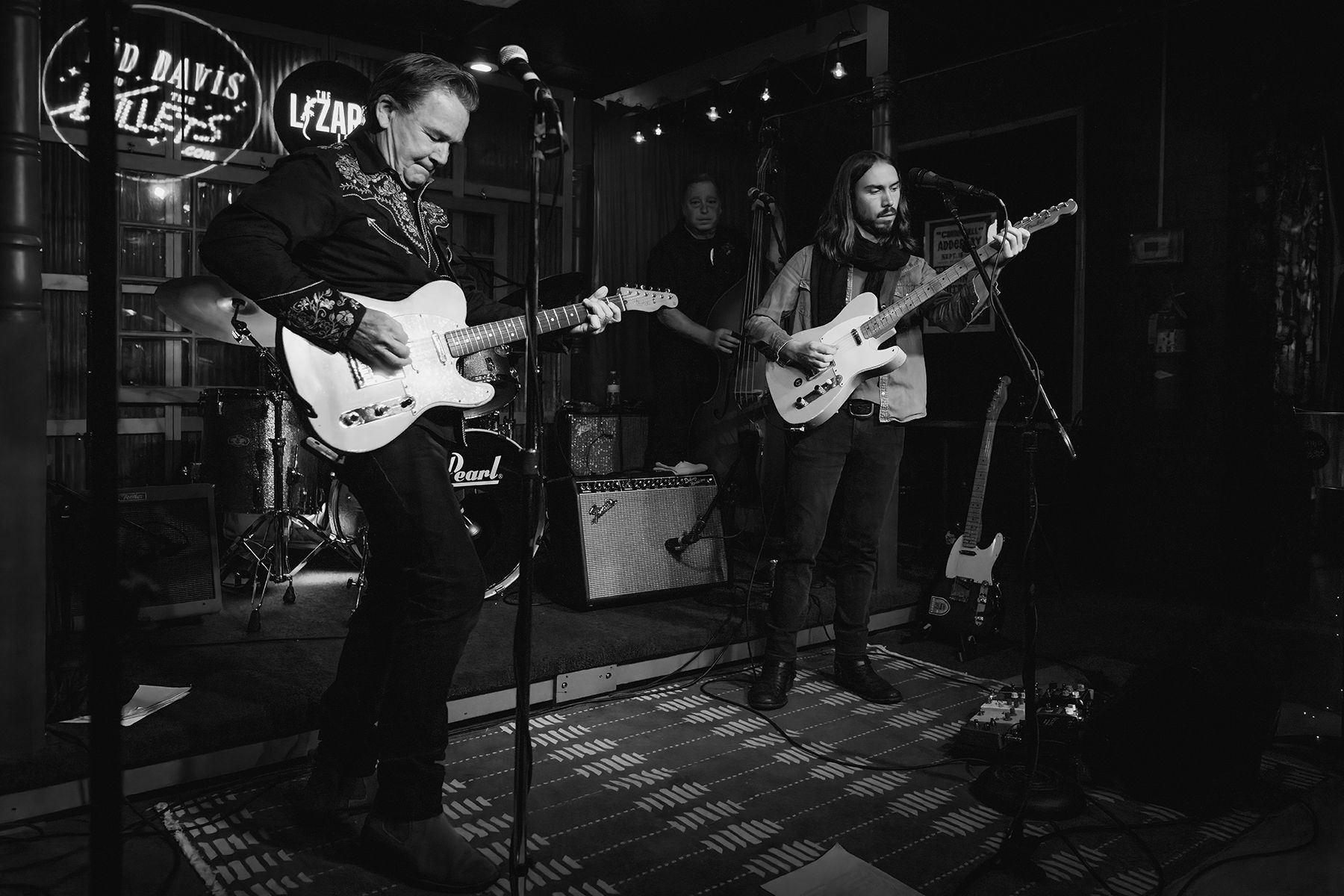
Kid Davis & the Bullets
Delaware roots-rockers Kid Davis & the Bullets celebrate the release of their new album Amsterdam at 118 North in Wayne on Saturday. The blues and rockabilly-flavored collection was produced by James Everhart of standout Philly band Cosmic Guilt and features contributions from vocalists Hannah Taylor and Ali Wadsworth. 8 p.m., 118 North, 118 N. Wayne Ave., Wayne, 118NorthWayne.com
Sadie Dupuis, singer for Speedy Ortiz, performs with the band at World Cafe Live for Free at Noon in Philadelphia in 2023. As Sad13, she’ll perform as part of the World Cafe Live workers benefit on Sunday.
Cate Le Bon plays Union Transfer on Tuesday. The Welsh musician’s new album is “Michelangelo, Dying.”
Tuesday, Jan. 13
Cate Le Bon
Welsh art-pop songwriter Cate Le Bon has been a consistently compelling music maker through a 15-year career, with the experimental duo Drinks and through solo albums like 2021’s Pompeii and the new Michelangelo, Dying. She has also produced music by Wilco, Horsegirl, and Kurt Vile, and it wouldn’t shock anyone if the Philly rock star dropped in at her show. Frances Chang opens. 7 p.m. Union Transfer, 1026 Spring Garden St., utphilly.com
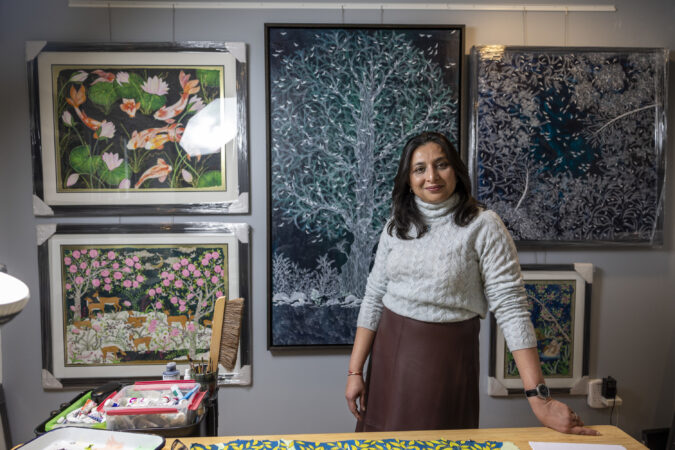
As a blanket of snow and sleet melted into the grass and an early winter fog hung over the Delaware Valley last month, Rinal Parikh’s art studio was a tranquil portal to the outside world.
In her studio, lofty windows look out onto a sprawling backyard. The walls are adorned with Parikh’s paintings, both completed and in progress, and its shelves are stacked with art supplies and mementos.
“What inspires me is my surroundings, and I’m blessed with an amazing backyard,” Parikh said, looking out the window. “That is my main inspiration.”
Parikh is a Media-based painter and biochemist by trade whose art blends traditional Indian folk styleswith contemporary themes. Her art, rich in texture, color, and meaning, uses a collection of materials, from sand and fabric to glass, beads, and stucco. She paints with acrylic and watercolors, and creates detailed drawings with thin brushes. Her work fuse her upbringing in India with her current life in Media, an amalgamation of past and present, of here and there.
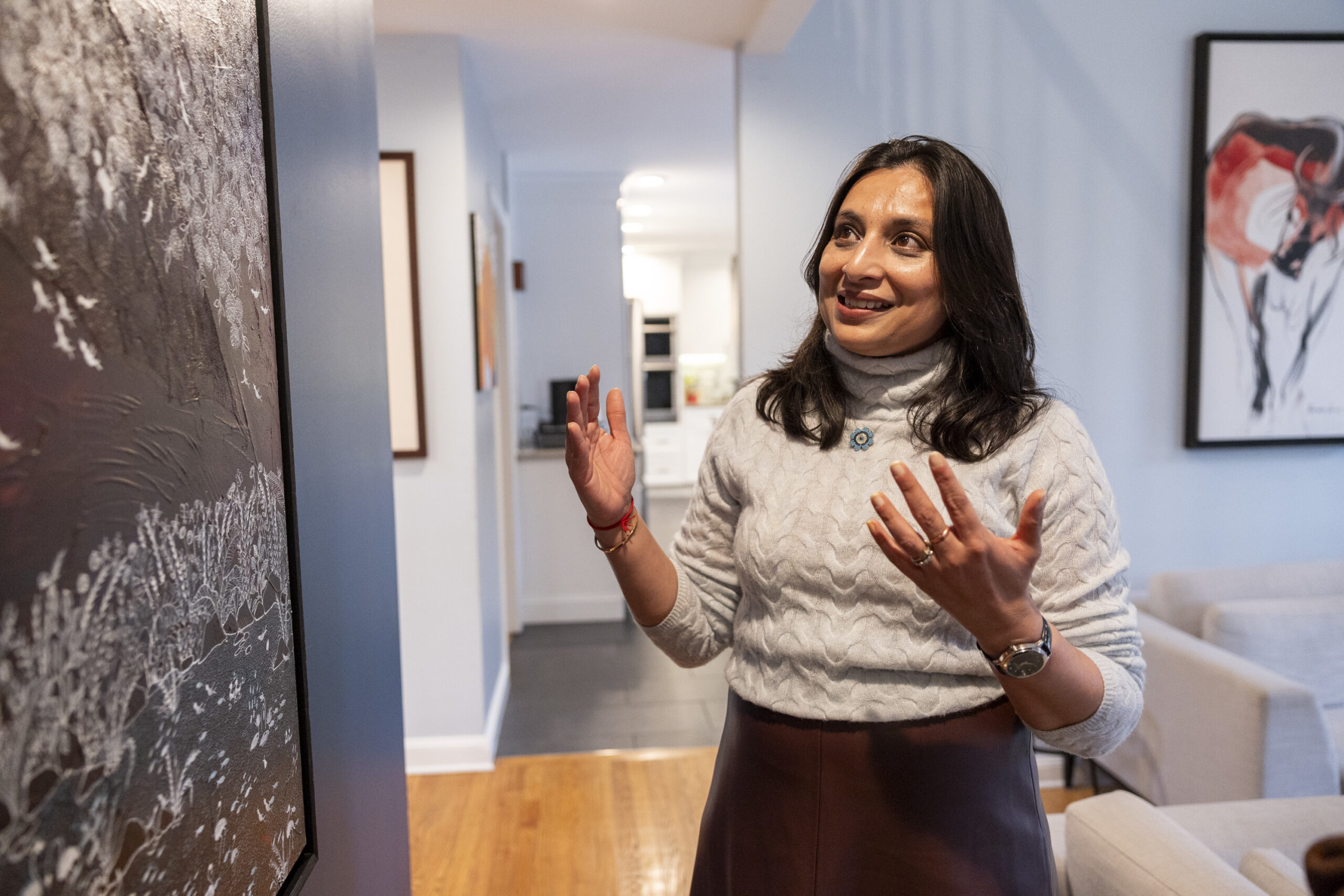
Rinal Parikh, 43, Media-based artist, talking about her art work in her home in Media, Pa., on Tuesday, Dec. 23, 2025.
Parikh, 43, took a circuitous route to becoming an artist. She moved to Philly in 2005 from Gujarat, India, to follow her husband, Bhavin, who had immigrated a few years earlier (the day of our interview was the 20th anniversary, to the date, of her arrival in the U.S.). She enrolled in a masters in molecular biology program at Drexel University, a step toward her Ph.D., and got a job in a lab at Penn Presbyterian Medical Center.
A few years after her move, Parikh’s first son was born with health complications. With no family close by, Parikh quit her job to focus on taking care of her son. He’s now a healthy teenager, she notes.
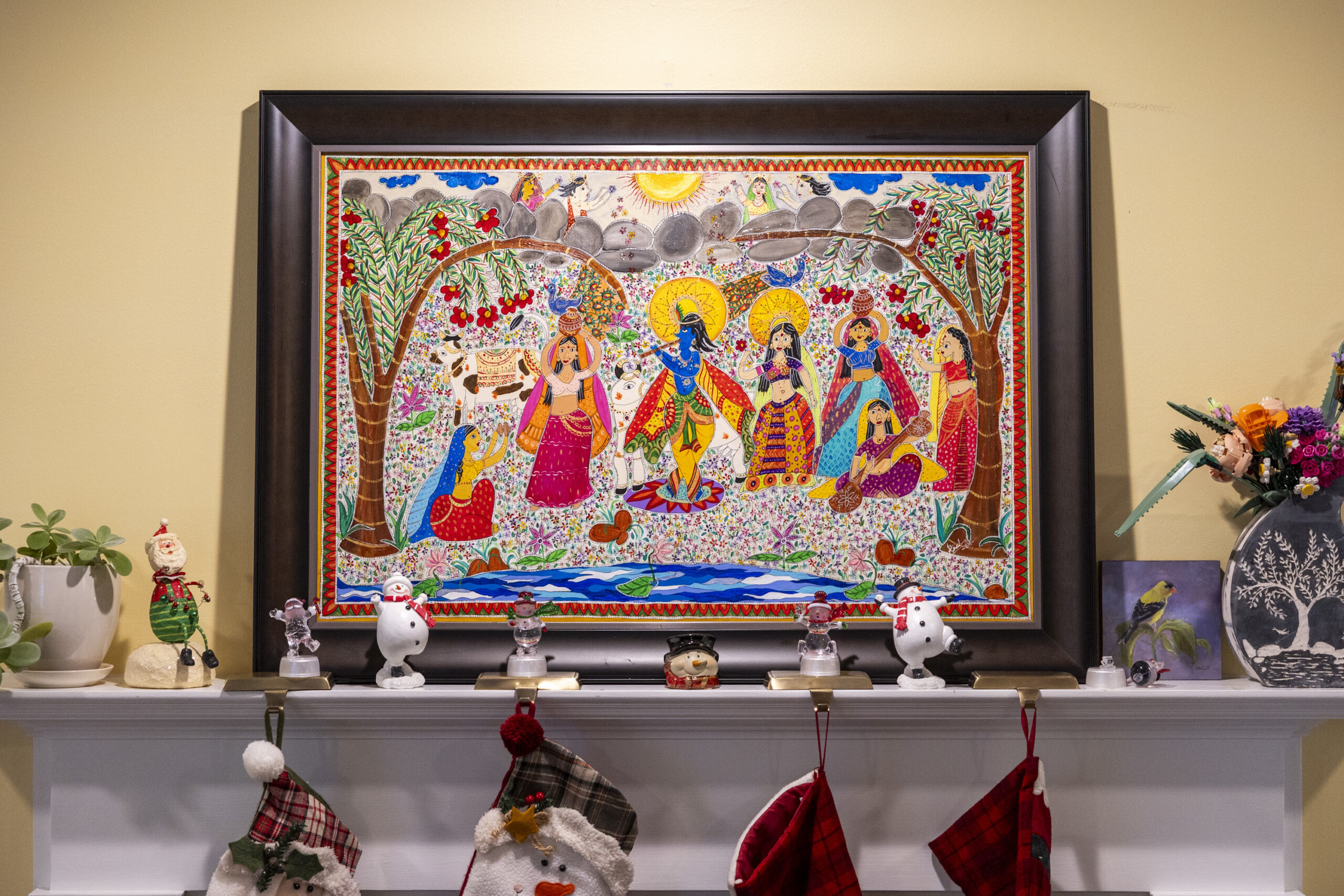
Seeing that Parikh was missing out on work, her husband made a suggestion: Why not paint something for their new house? That first painting, “Krishna-leela,” now hangs in the Parikhs’ living room, an eye-catching depiction of the Hindu deity Krishna.
Rinal Parikh’s painting “Krishna-leela” is displayed at home in her formal living room in Media, Pa., on Tuesday, Dec. 23, 2025.
When her son was 9 months old, Parikh stopped by an art fair at the Creative Living Room, a community arts center in Swarthmore. She struck up a conversation with some of the women there. A few days later, they called with a question: Would she like to do a solo show?
“I didn’t even know what that means,” she said.
Nonetheless, she agreed. She worked tirelessly for three months to make 20 pieces. She didn’t know where to buy art supplies, so she imported them from India (someone would later point her toward the now-closed Pearl Art & Craft Supplies on South Street). In fall 2009, she displayed her paintings for the first time as a professional artist — and sold her first painting, too. The rest, she said, is history.
Parikh melds together three types of Indian folk art — Warli, Madhubani, and Kalamkari. Warli is a tribal art that depicts day-to-day life in a mural-like format. Madhubani uses geometric patterns and typically reflects celebrations of life. Kalamkari, Parikh said, is “very refined,” a style of art that uses a fine brush to create delicate and detailed line drawings. All three art forms have traditionally been practiced by women.
Parikh feels like she speaks “a global language.”
Though her paintings take inspiration from the traditional Indian folk style, the scenes depicted are not just of India. They’re often of the Philly area, and of the flora and fauna in her backyard.
“I still practice Indian folk art, but the subject matters are very ‘now,’” Parikh said. “The language is still very traditional, but the conceptualization, the visualization, is much more contemporary.”
A painting called “Home” painted by Rinal Parikh, 43, displayed in the family room of her home in Media, Pa., on Tuesday, Dec. 23, 2025.
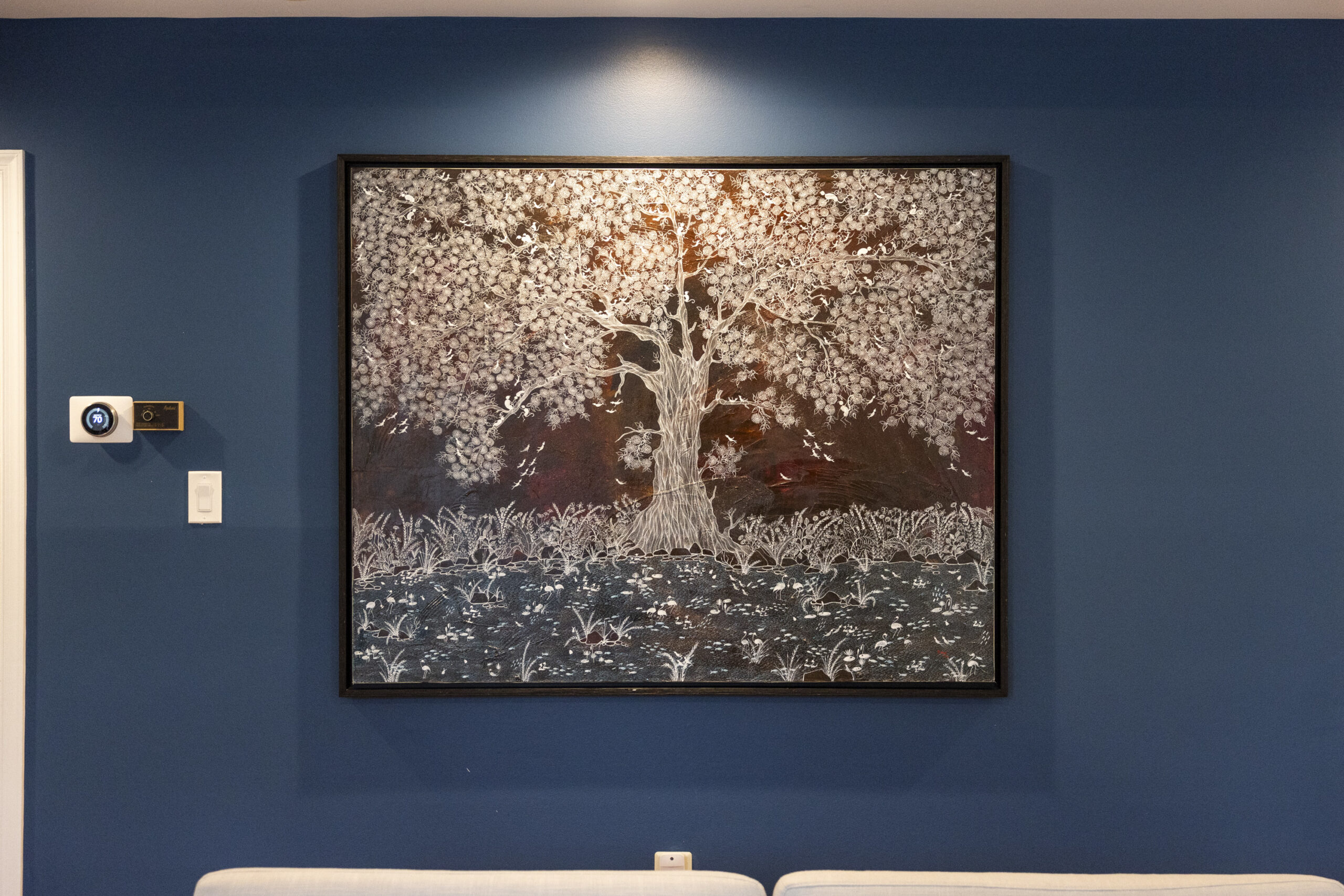
In her family room hangs “Home,” a 2021 Warli painting of a tree. The background is complex in both texture and color, with blues, browns, and purples peeking out. Hanging from the tree are monkeys, which Parikh said captures the energy of having two boys, now 17 and 12,in the house. (They’re very good kids, she clarifies.)
“I observe my surroundings, I experiment with styles, I do a lot of repetitive patterns, and I tell my story,” she said.
Since jumpstarting her art career, Parikh has become involved in the region’s growing art community. She’s the marketing chair for the Rittenhouse Square Fine Arts Show and is involved with the Community Arts Center of Wallingford.
She said she understands the anxieties of young artists and wants to support the organizations that nurture their careers.
“I was supported by the community, and I want to do the same thing.”
Parikh’s art can be found on her website and her Instagram page.
This suburban content is produced with support from the Leslie Miller and Richard Worley Foundation and The Lenfest Institute for Journalism. Editorial content is created independently of the project donors. Gifts to support The Inquirer’s high-impact journalism can be made at inquirer.com/donate. A list of Lenfest Institute donors can be found at lenfestinstitute.org/supporters.
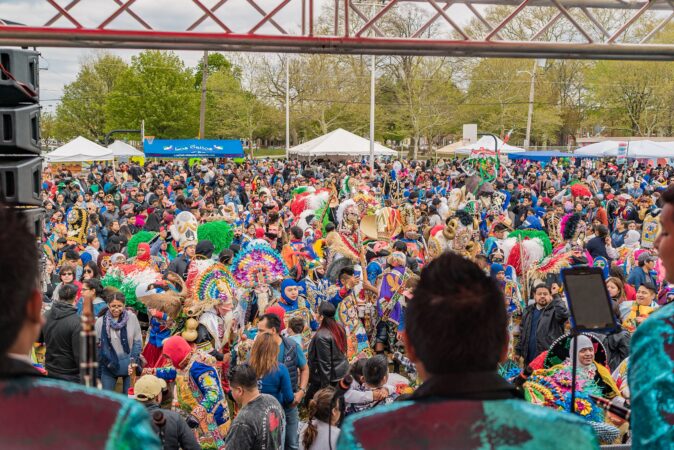
El Carnaval de Puebla, one of the biggest yearly celebrations of Mexican culture in Philadelphia and on the East Coast, is not returning in 2026.
For the second year in a row, the current immigration policies have overshadowed the festival that commemorates the Battle of Puebla traditionally celebrated on May 5, but not for the reasons one might expect.
“We are not scared of ICE; it is not fear that drives us,” said Edgar Ramirez, founder of Philatinos Radio and a committee member for San Mateo Carnavalero. “Many of the people who attend the carnival are second or third generation, but we are living at a time where the feeling of rejection is palpable, and it is not a suitable environment.”
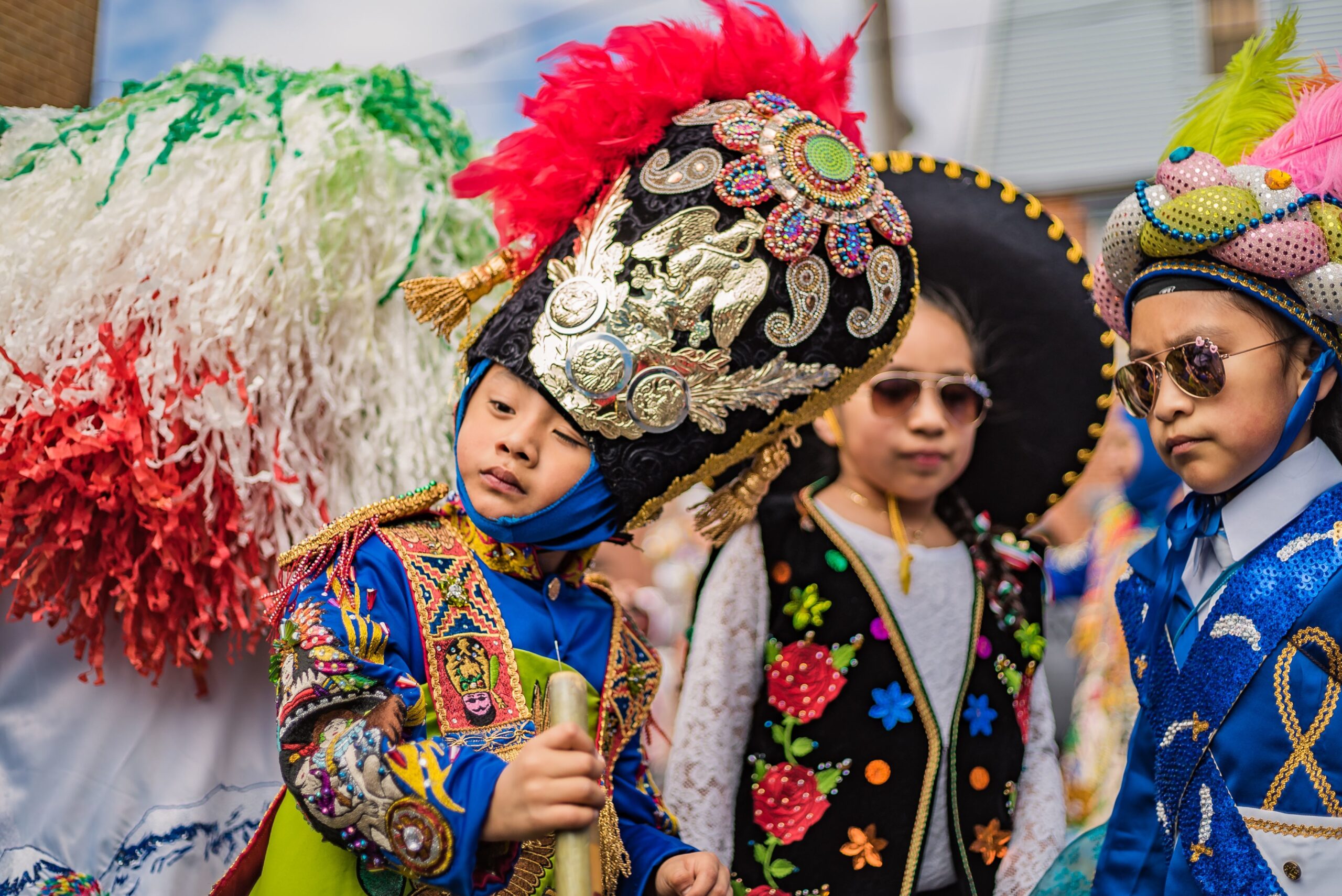
A group of children dress up for the 2019 Carnaval de Puebla.
El Carnaval de Puebla has been a long-standing tradition for the city since 2005, stopping only during the pandemic, the first year of Donald Trump’s presidency in 2017, and last year following his reelection, as concerns for attracting immigration enforcement actions arose.
Since Trump’s reelection, the number of immigrants in federal detention facilities has increased beyond 65,000, a two-thirds increase since he took office last January.
Such uncertainty over when ICE might strike puts festival attendees at risk, making it harder to find sponsors and generate enough revenue to pay for city permits and requirements to hold the event, said committee member Olga Renteria.
“It’s hard to ask people to invest when there is no certainty that the carnival will be able to drive the success of previous years,” said Renteria, who noted that over 15,000 people attended the carnival in 2024. “The carnival is about family, sharing, drinking, enjoying yourself, and right now, any excuse is good enough to arrest someone; one incident is enough.”
For the community, this feels like a loss of space, both literally and figuratively.
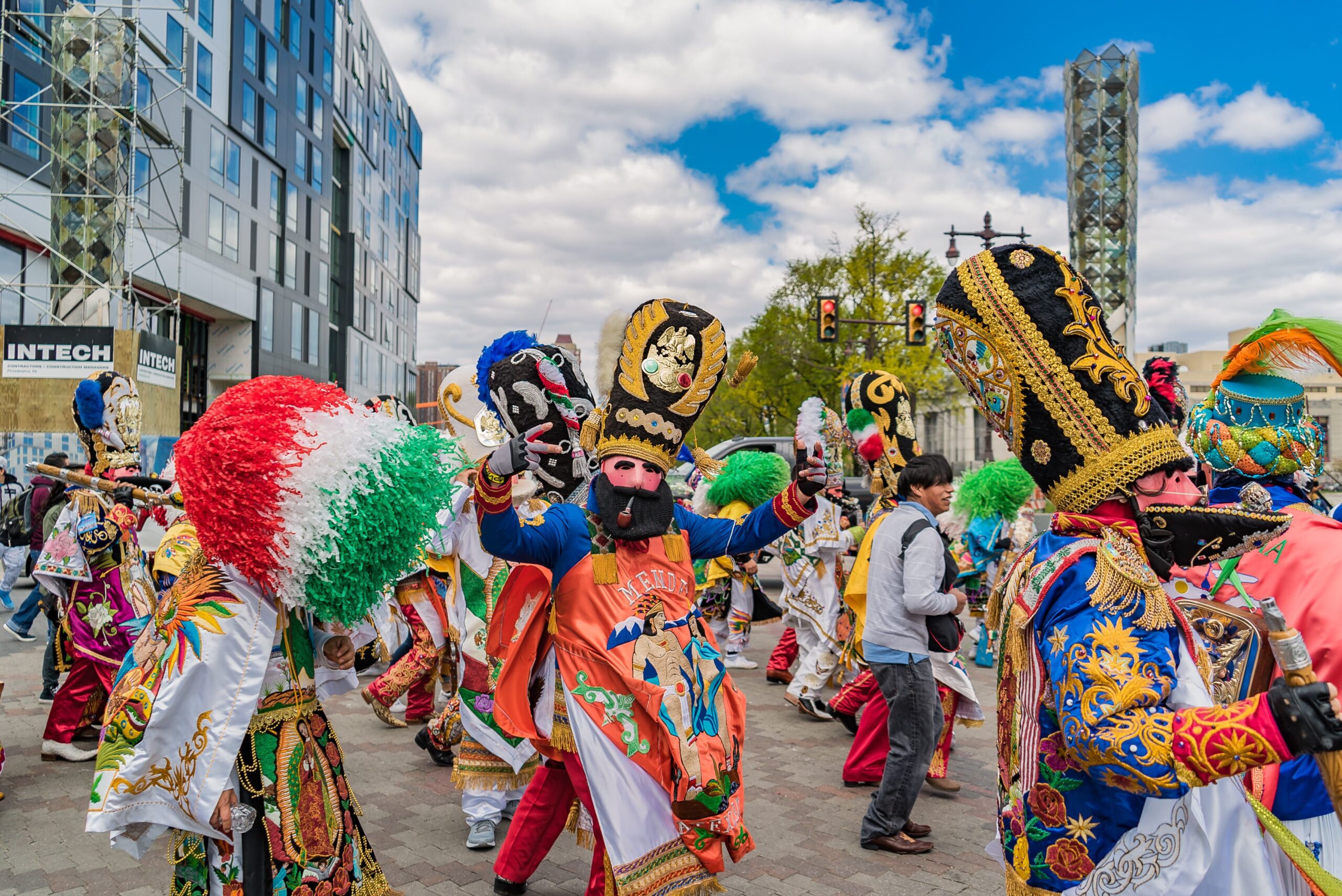
A group of Carnavaleros march on Broad Street during the 2019 Carnaval de Puebla.
Longtime carnival attendee Alma Romero looked forward to seeing people in traditional attire, dancing andparading on Washington Avenue, triggering memories of her home in Puebla once a year.
“The carnival would have been good to lift our spirits, just as the Day of the Dead celebrations did,” Romero said, referring to the Ninth Street Corridor festivities in November that commemorate loved ones who passed away. “Without it, it feels like a sense of pride and unity is missing; now we just carry it in our hearts.”
After having attended the parade at all 19 past El Carnaval de Pueblaevents in Philly, Karina Sanchez, too, feels that sense of loss.
“I understand it’s important for the community to feel safe, but it’s sad to see us shrinking ourselves,” Sanchez said. “When that sentimentgrows, it is not a loss just for us, but for Philadelphia as a whole.”
Currently, there are no plans to replace El Carnaval de Puebla, but there is hope among many for a return.
“We have to come back,” Ramirez said. “We must because we are part of this city too, and things have to get better at some point.”
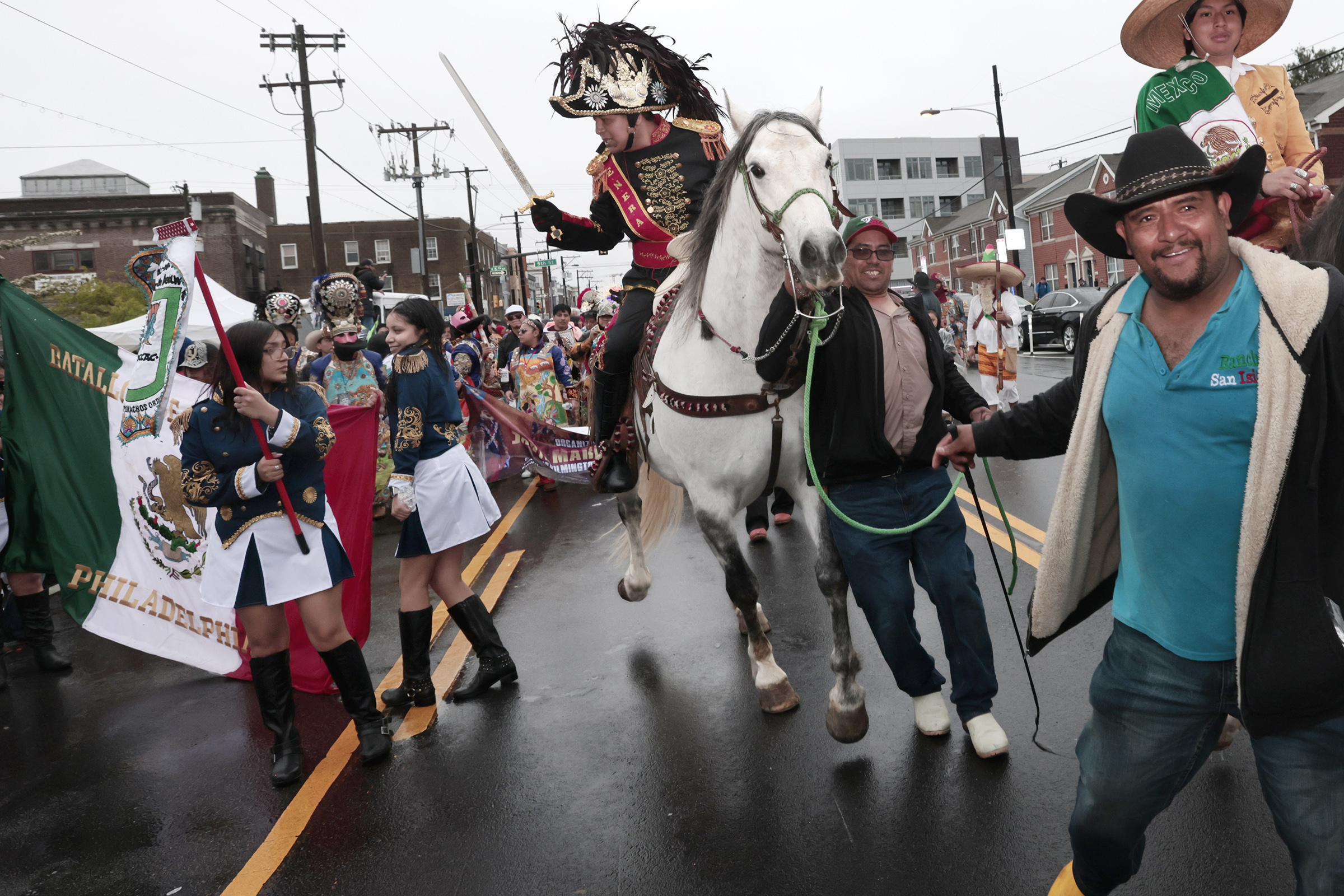
The parade that included horses arrives at the 18th annual El Carnaval de Puebla at Sacks Playground on Washington Avenue on April 30, 2023. El Carnaval de Puebla falls on Mexico’s “Day of the Children” and is one of the city’s biggest celebrations of Mexican culture. The celebration featured a parade, traditional games, food, live music and dancing.
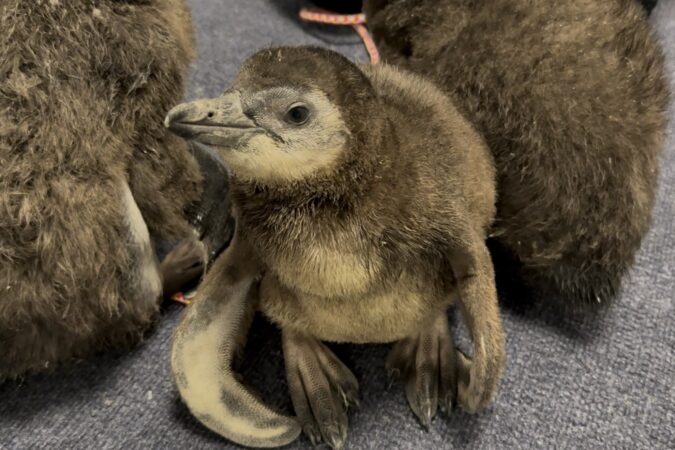
A new baby African penguin at the Adventure Aquarium in Camden was unveiled Monday and a contest was announced to name him.
The unnamed chick was hatched Nov. 21 and was the third African penguin to be hatched at the Adventure Aquarium in 2025. The announcements of new chicks are held off until biologists determine the new bird is healthy and expected to survive.
“Although he’s a little bit younger than the other two, he does make up for it in size. He is quite a big baby penguin chick,” Maddie Olszewski-Pohle, a biologist, says in the aquarium’s introduction video posted on social media.
Starting Monday, aquarium visitors can vote on one of four names offered for the new penguin: “Scrappy,” “Zero,” “Flounder,” or “Toothless.”
The unnamed chick is being parented by Mushu and Hubert, who also parented a 2024 chick, Shubert. Mushu was named for a dragon sidekick from the Disney movie “Mulan,” so the aquarium’s birds and mammals team chose possible names using a dragons and sidekicks theme.
The naming contest will close Jan. 19, and the winner will be announced Jan. 20, Penguin Awareness Day, the aquarium staff said.
African penguins, which originate from the waters around southern Africa, are classified critically endangered, so the hatches are important to the survival of the species.
“As an ambassador for his species, this chick is helping raise awareness and funds to protect African penguins in South Africa,” Olszewski-Pohle said in a statement.
The three baby penguins will remain behind the scenes until they develop waterproof feathers and the weather warms up, aquarium staff said.
The Barnes Foundation removed a precious Pierre-Auguste Renoir painting from view last year for some much-needed rehabilitation.
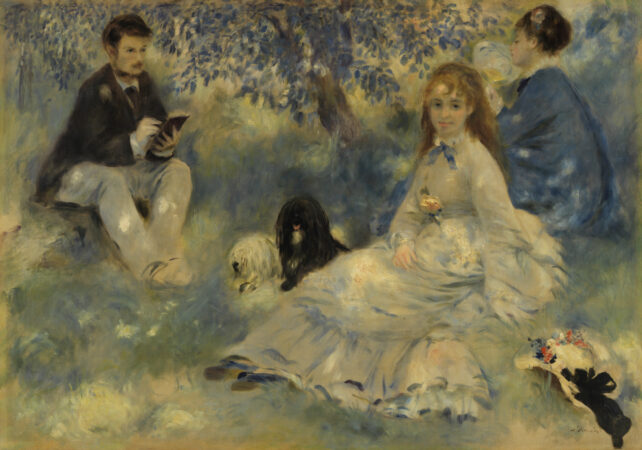
The Henriot Family (La Famille Henriot), an oil painting completed around 1875, is an impressionist work depicting three people and two long-haired dogs relaxing in a forest. A young woman in a white dress gazes directly at the viewer while a man to her right appears to be drawing her. The central figure is Henriette Henriot, one of Renoir’s frequent models, and her admirer is the painter’s brother, Edmond Renoir.
It’s one of 181 Renoir paintings that Albert C. Barnes amassed during his lifetime, leading the Barnes Foundation to hold the largest collection of Renoir artworks in the world. He purchased the piece from art dealer Etienne Bignou in 1935 for $50,000, which amounts to about $1.17 million today.
A close-up of “The Henriot Family” demonstrates the old layer of varnish that has yellowed the painting over time.
Sitting above a doorway in the museum’s main room, The Henriot Family has long been eyed for restoration, according to WHYY. The staff brought the painting into the conservation lab in February 2025.
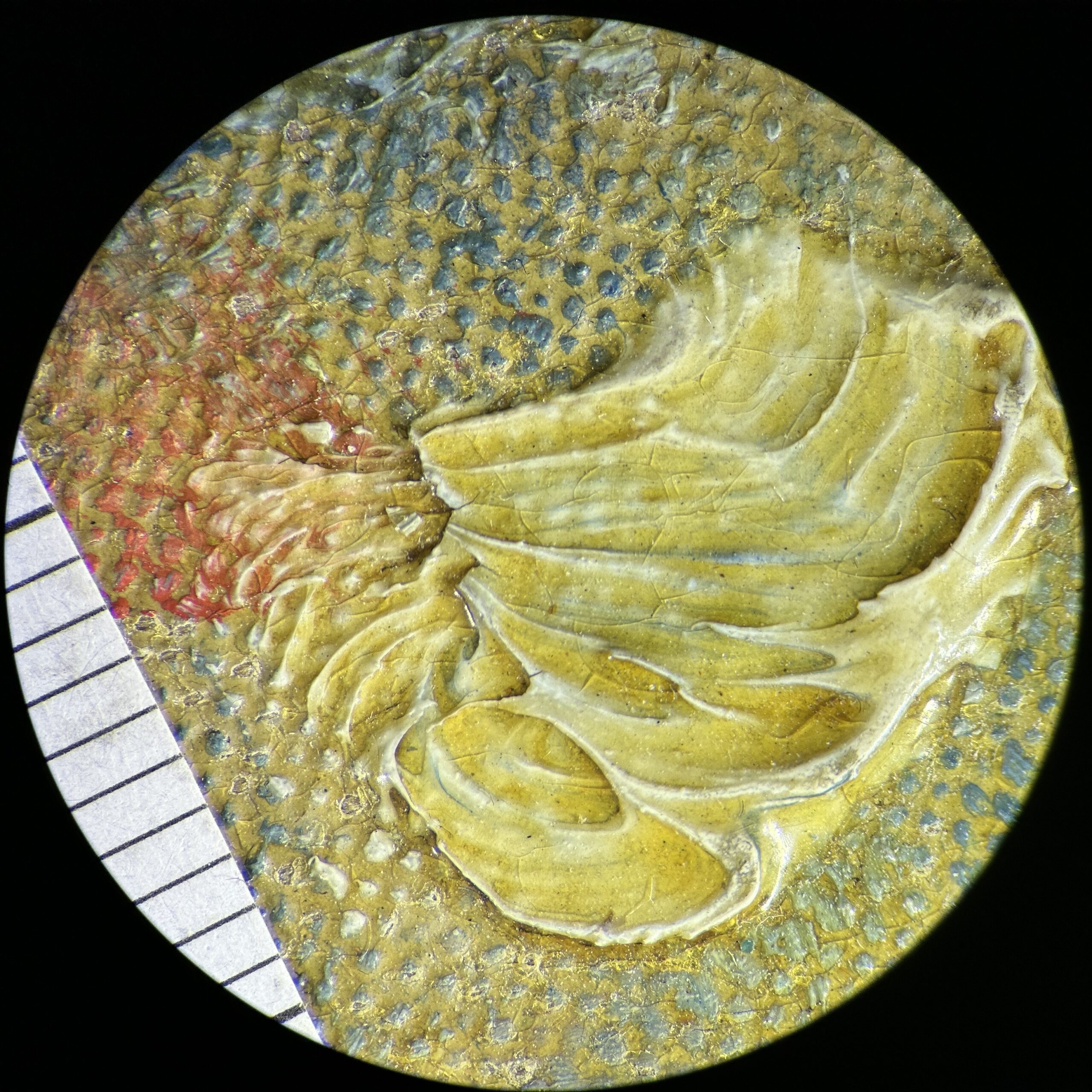
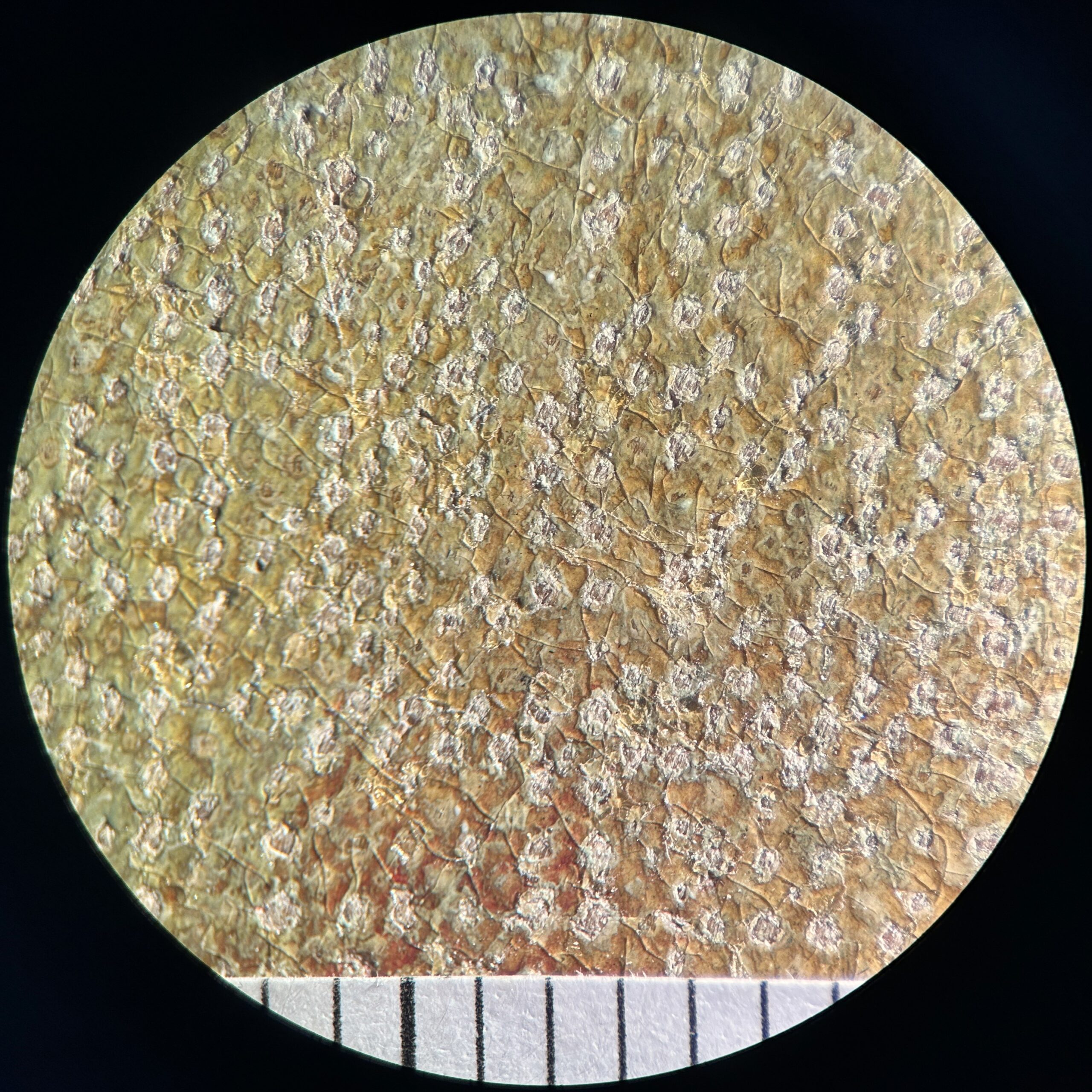
An old layer of resin varnish on the paint has altered the colors over time, turning them from blue and gray to yellow and green. On a microscopic level, the paint has also begun separating from the canvas and the base layer in a process called “micro-flaking.”
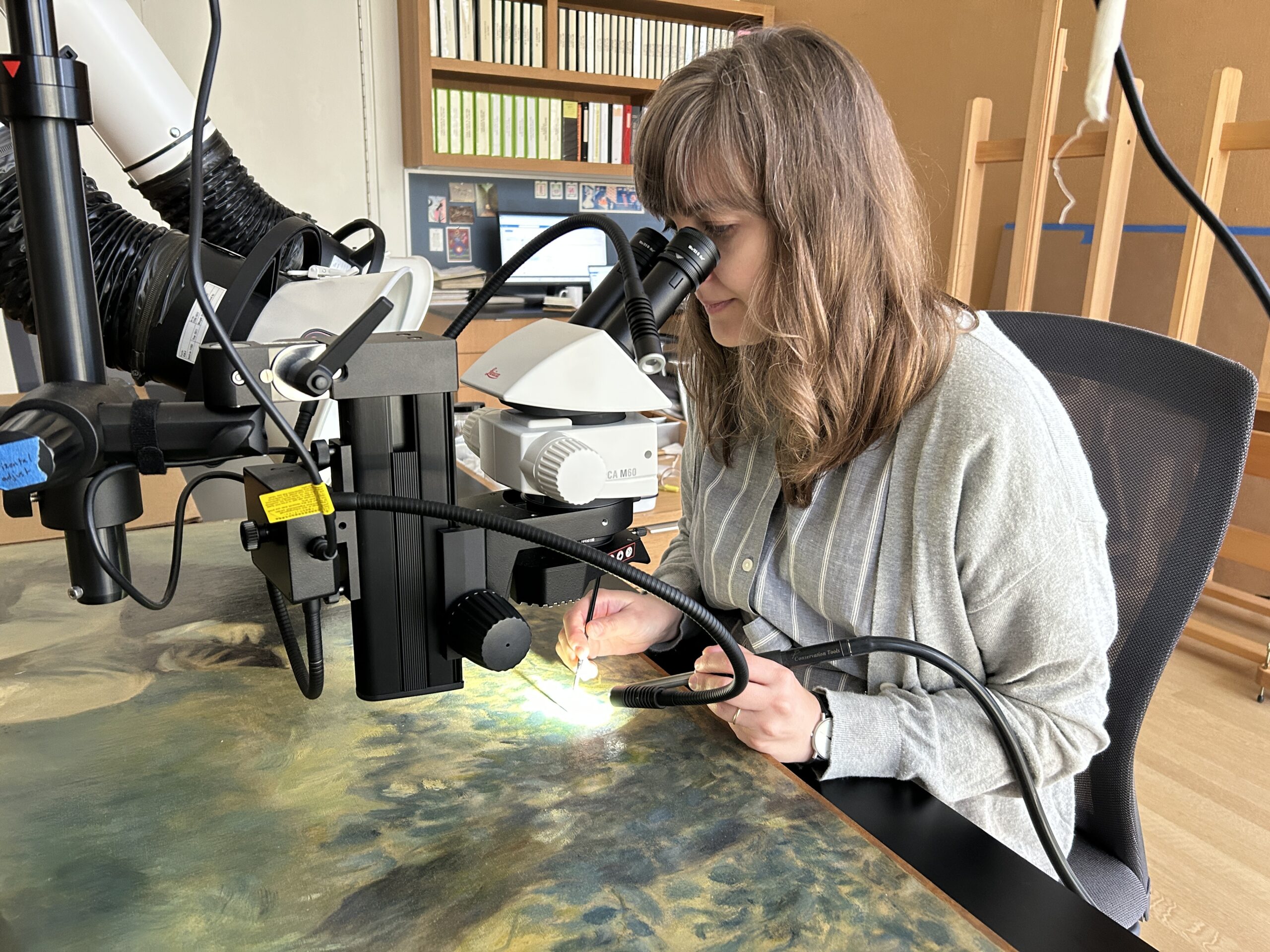
The Barnes Foundation’s associate conservator of paintings Christie Romano studies “The Henriot Family” under a microscope.
So far, Barnes’ associate conservator of paintings Christie Romano has reportedly put in some 200 hours studying the painting under a microscope to identify problematic areas.
The conservation efforts will remove the yellowing layer of resin to restore the original colors underneath and fix the areas most affected by micro-flaking using calcium carbonate. The project is funded by a grant of an undisclosed amount from Bank of America as part of its Art Conservation Project; the Barnes is one of 16 recipients worldwide.
A microscopic close-up of “The Henriot Family” painting demonstrates “micro-flaking” damage.
Cultural institutions in Philadelphia have benefited from the bank’s conservation grants in previous years. In 2019, the bank funded the restoration of The Large Bathers by Paul Cézanne at the Barnes and The Great Bathers by Renoir at the Philadelphia Art Museum. Over the past 16 years, the Art Conservation Project has issued grants for some 275 conservation projects across 40 countries.
The Henriot Family will be back on view at the Barnes sometime in February, with its gray and blue looking brand new.
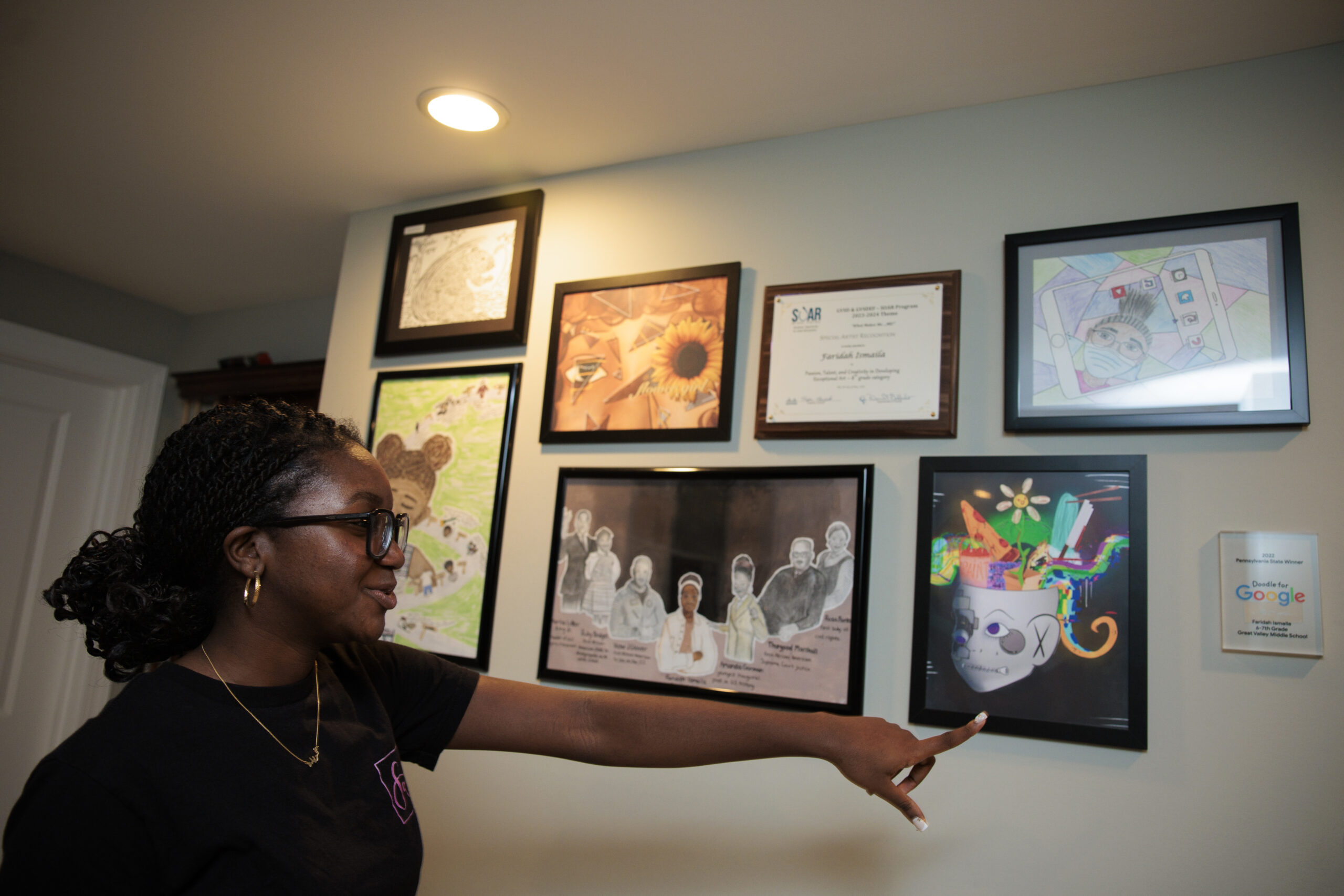
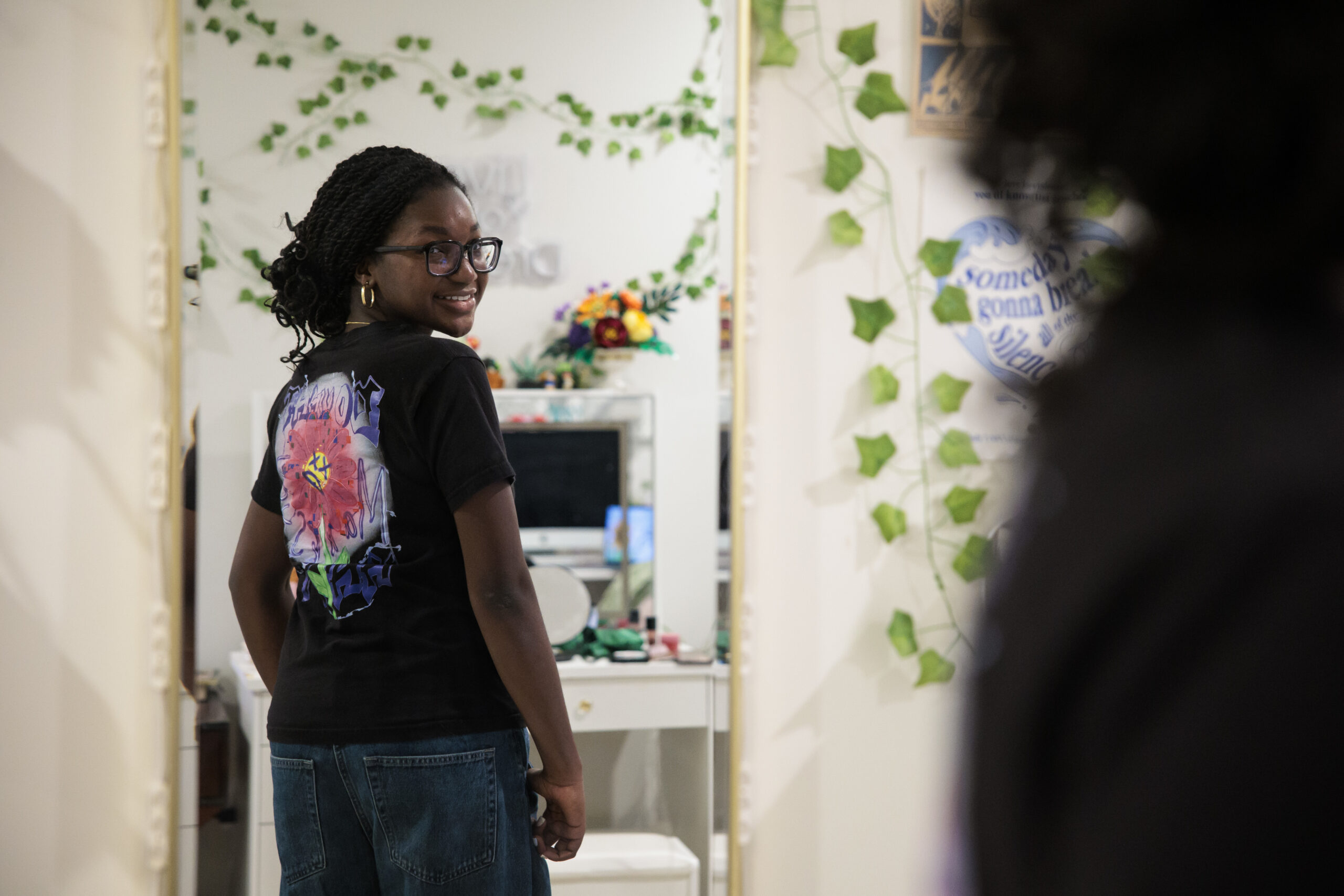
Something about the phrase “Do what makes you happy” struck Faridah Ismaila. It became the title of, and inspiration behind, one of her art pieces. It’s printed onto the back of her T-shirt. It’s something the 15-year-old artist lives her life by.
“When I do art, it’s because it makes me happy, and when I can give my art to other people or spread the joy of art, it’s making them happy,” she said.
Following that guiding light of happiness, Ismaila, a digital artist and a sophomore at Great Valley High School, recently launched her nonprofit, A Paint-full of Promise, which offers free monthly art classes for kids in her school district in kindergarten through gradesix.
Working with educators in the district, Ismaila devises themed art projects and provides supplies and classroom time to teach young artists how to express themselves. The first club is slated for mid-January, with a winter wonderland theme. Children will make snowflakes and paint winter-themed coasters.
Ismaila has been recognized for her art nationally: She was the state winner and a national finalist in the 2022 Doodle for Google competition, where young artists compete for their work to be featured as the Google homepage design. That recognition helped give her the confidence to pursue big dreams, like her nonprofit and club.
“It makes me feel I can still do this. Because sometimes I’ll doubt myself. … I can’t be having all these big dreams,” she said. “But if people want to vote for me and I am recognized nationally, I feel on top of the world. I can do anything.”
The first brushes of the nonprofit — which she hopes one day will grow to multiple sessions a month — started years ago, when Ismaila began making YouTube videos, teaching the fundamentals of art. She showed viewers how to make a gradient, how to depict a sunrise. She circulated the videos around her Malvernneighborhood, and she thought: Why not hold a class for younger kids?
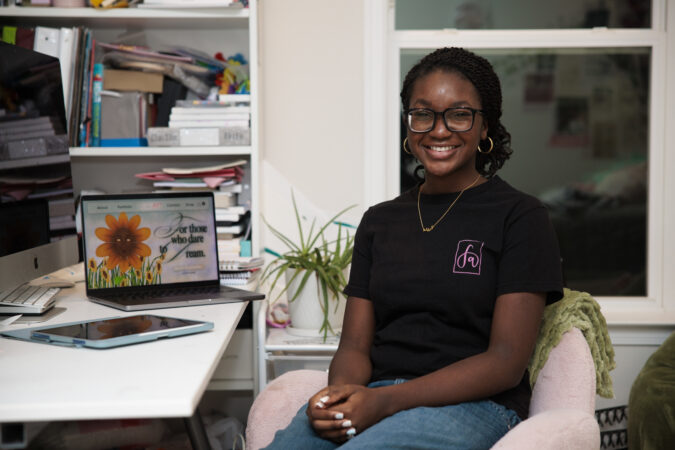
Faridah Ismaila, 15, poses for a portrait at her home on Wednesday, Dec. 17, 2025, in Malvern. Ismaila started a kids art nonprofit called A Paint-full of Promise. She also sells her art online.
Over a summer, in her garage, she set up two art projects — painting and colored pencils — and led about eight kids through a lesson. She called it Faridah’s Art Crafty Corner.
Holding the class made her happy. So she did it again, but bigger, turning it into a summer camp, under the new name: A Paint-full of Promise.
“Then I decided, why not actually make this a club, so not only my community can get this, my entire district can?” she said.
And now, the teenager has a nonprofit under her belt. She officially launched the organization last month at an event in Malvern, where she raised money by auctioning off prints of her work and selling T-shirts with her designs.
Anne Dale, an art teacher at Great Valley High School who is an adviser for the club, said she was impressed with Ismaila’s ability to get other high school students involved in running the club.
“A lot of students have big ideas for clubs, but there’s not always follow-through. With her, it’s definitely different, and I knew that when she approached me with it,” Dale said.
Giving kids the tools and opportunity to create artwork was essential to Ismaila, who gravitates to art to process her emotions.
“It’s just the best thing ever,” she said. “Once you start doing art as a kid, it’s just a great way to get your feelings out there and express yourself, even if you can’t use words to describe it.”
One of her pieces, Beauty Within, depicts a skeletal hand holding a white mask, a tear running down its cheek. Behind the mask, flowers bloom. It came from a feeling of constantly analyzing herself, the feeling that what you show people is not necessarily what’s on the inside.
Another piece, made when she was “seriously sleep-deprived,” shows a face with an assortment of pixels, pizza, stick figures, and paint pouring out.
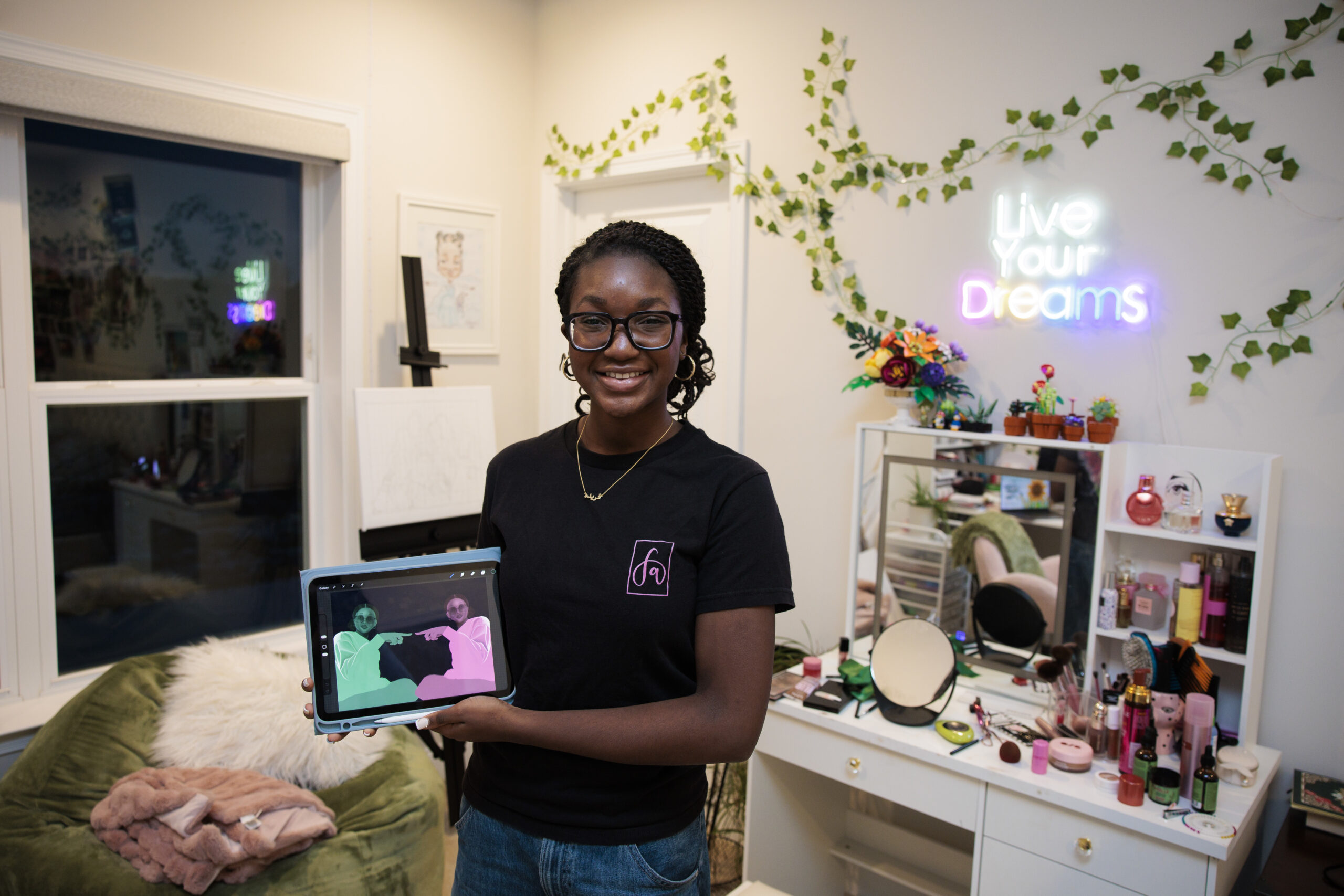
Faridah Ismaila, 15, talks about some of her early works at her home on Wednesday, Dec. 17, 2025, in Malvern. Ismaila started a kids art nonprofit called A Paint-full of Promise. She also sells her art online.
A piece she is working on now shows herself, in vibrant colors, pointing to her reflection. She wanted to capture the feeling of two versions of the self — one confident, the other fragile.
Sometimes, her mother Nofisat Ismaila said, her parents feel as if they are holding her back.
“I don’t know how I’m gonna keep keeping up with this girl, because she’s just taking us to places, keeping us busy, keeping us on our toes,” she said. “She’s turning out to be a really young, determined adult.”
Faridah Ismaila, 15, poses for a portrait at her home on Wednesday, Dec. 17, 2025, in Malvern. Ismaila started a kids art nonprofit called A Paint-full of Promise. She also sells her art online.
But to Faridah Ismaila, it’s about finding happiness, and giving it to others, too.
“I really hope the kids just do what makes them happy. … It’s also just not being afraid to get out there, because when I was a kid-kid, I wasn’t afraid of anything,” she said. “I think middle school really kicks some kids in the butt, and getting up out of that — at least for me, art was a way to do that. I just want to give that to kids.”
This suburban content is produced with support from the Leslie Miller and Richard Worley Foundation and The Lenfest Institute for Journalism. Editorial content is created independently of the project donors. Gifts to support The Inquirer’s high-impact journalism can be made at inquirer.com/donate. A list of Lenfest Institute donors can be found at lenfestinstitute.org/supporters.
If you’re going to get married in Philadelphia, this is the correct way to do it: sequins, sneakers, a string band, bitter cold, delayed schedules, and a crowd that didn’t ask for romance but got it anyway.
A couple saying “I do” in the middle of the Mummers Parade is the purest expression of this city’s personality. Equal parts earnest and unhinged. Romantic, but only after everyone’s been standing around freezing for hours. Vegas chapel energy, but filtered through South Philly logistics and Broad Street chaos.
This wasn’t a viral stunt or a look-at-us wedding. It was two people already marching, already committed, deciding that if they were going to wait around in the cold anyway, they might as well get married while they’re at it. Honestly? Efficient.
The details make it sing: golden sneakers instead of heels, a flask for warmth and nerves, vows practiced on a bus, Elvis officiating, and the inevitable Philly closer, “I’m glad it’s done so I can get warm.” That’s love, but realistic.
And of course it happened at the Mummers. The parade that routinely features feathers, fake arrests, grown adults sobbing at saxophone solos, and more sequins than dignity. If any institution could absorb a full wedding without breaking stride, it’s this one.
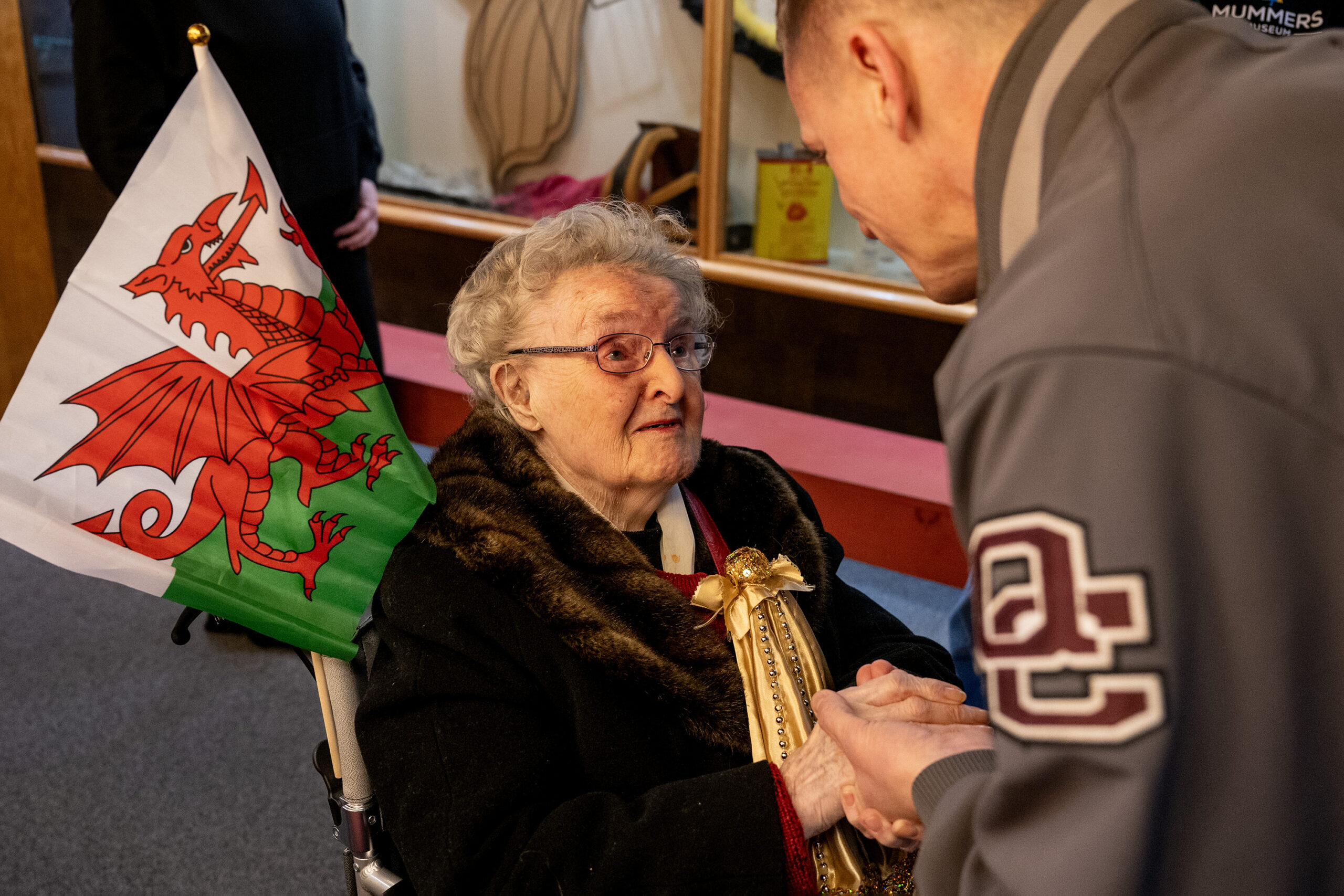
”Queen Mumm” Avril Davidge, a 93-year-old Welsh grandma meets Quaker City String Band Captain Jimmy Good as he surprises her at the Mummers Museum on Wednesday, Dec. 31, 2025. Davidge got to live her dream of going to the Mummers Parade, starting on New Year’s Eve morning with a tour of the museum.
Mummers devotion, no notes: A+
Yes, we’re grading two Mummers stories this week, and no, that’s not an accident.
Avril Davidge didn’t come to Philadelphia for irony or spectacle. She came because she fell genuinely, deeply in love with the Mummers through YouTube — learned the string bands, picked favorites, developed opinions — and decided, at 93, that she needed to see it in person. That alone clears the grading curve.
What makes this story land isn’t just the transatlantic trip. It’s how naturally Philly met her energy. A museum tour. A surprise meeting with her favorite band captain. A golf cart to the parade. No skepticism, no gatekeeping … just, “Yeah, of course. Welcome.”
And then there’s the wedding: sequins, sneakers, vows exchanged in the cold on Market Street, because if you’re already marching, why not also get married? It’s unhinged. It’s beautiful. It’s extremely us.
No notes.
Philadelphia’s cost of living vs. the suburbs: C (with math and feelings)
On paper, this sounds like a win: It’s up to 26% cheaper to live in Philadelphia than in places like Ardmore, King of Prussia, and Phoenixville, Philadelphia Business Journal reported. Congrats to the city for clearing the extremely low bar of not being the suburbs.
The problem is the second half of the equation: income.
Suburban households make dramatically more money, which means they somehow pay more and end up with way more left over. Ardmore residents, for example, are apparently out here saving more than $50,000 a year, which is a number that sounds fake if you live south of Girard.
So what we really have here isn’t a victory lap. It’s a familiar Philly paradox. The city is more affordable because it has to be. Lower costs don’t feel like a flex when they’re paired with lower wages, longer commutes, and the constant background hum of “maybe next year.”
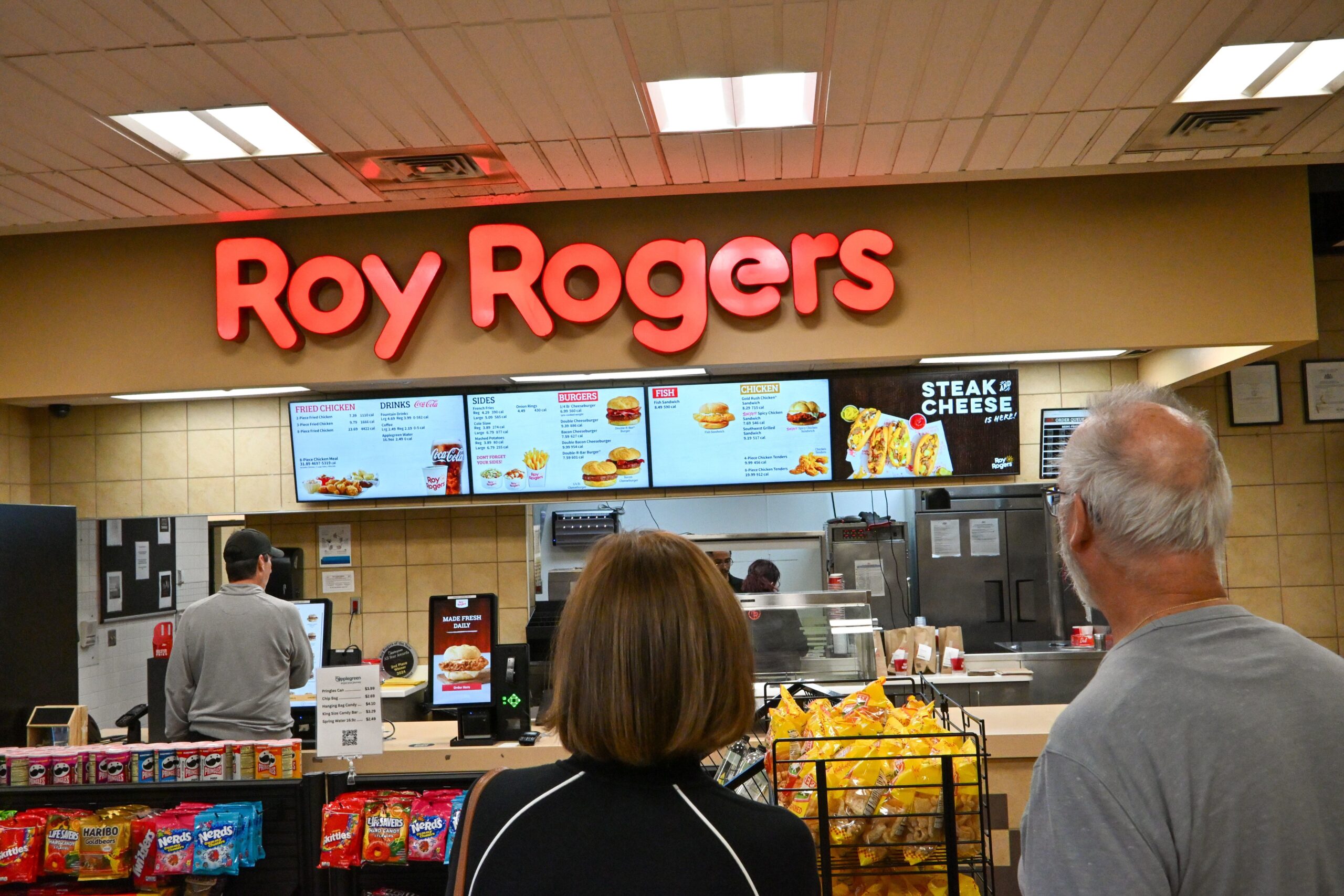
Mary Wright and Rich Misdom of Collingswood consider their options at the Roy Rogers located in the Peter J. Camiel Service Plaza on the Pennsylvania Turnpike in late November 2025.
This isn’t just personal bitterness; it’s structural. The Turnpike’s dining lineup is effectively locked in by a decades-old contract, which explains why eating on one of the state’s busiest roads feels less like a pit stop and more like a museum exhibit titled Fast Food, 1998. Auntie Anne’s. Burger King. Dunkin’. Starbucks. Repeat until New Jersey.
To be clear, this isn’t about disrespecting Roy Rogers. Roy Rogers has survived longer than many of our friendships. But when New Jersey and New York travelers are choosing between Shake Shack and Pret a Manger, and Pennsylvanians are debating whether this Sbarro feels better or worse than the last one, something has gone off the rails.
A C+ feels right. The food won’t kill you. It will fill the void. It might even unlock a memory of your mom liking Roy Rogers, which is sweet in its own way. But if the Turnpike is going to keep charging premium tolls, it might eventually want to acknowledge that the rest of the world moved on from mall food courts, and took better rest-stop dining with it.
Eagles quarterback Tanner McKee hands off the football to running back Tank Bigsby against the Las Vegas Raiders in the fourth quarter on Sunday, December 14, 2025, in Philadelphia.
Eagles resting the starters (and trusting the vibes): B+
This is one of those decisions that feels smart, responsible, and completely terrifying all at once … which means it’s extremely on brand for Philadelphia football.
The Eagles are essentially turning Week 18 into a spa day for Jalen Hurts and most of the starters, handing the keys to Tanner McKee and asking the football gods to be normal about it. On paper, it makes sense. They’ve been here before. Sirianni keeps pointing out that the two Super Bowl runs came with byes, rest, and fresh legs. He’s not wrong. The scars from 2023 — A.J. Brown getting hurt in a meaningless finale, Hurts dislocating a finger — are still very much part of the group chat.
But this is Philly, so we can’t just rest people quietly.
Because technically, this game still matters. There’s still a path to the No. 2 seed. There’s still a chance to build offensive momentum, which has been… inconsistent, let’s say. And instead, the Eagles are choosing peace. Or at least the idea of it.
If McKee plays well, WIP will combust. If he struggles, everyone will retroactively insist the starters should’ve played. There is no outcome where this doesn’t get litigated.
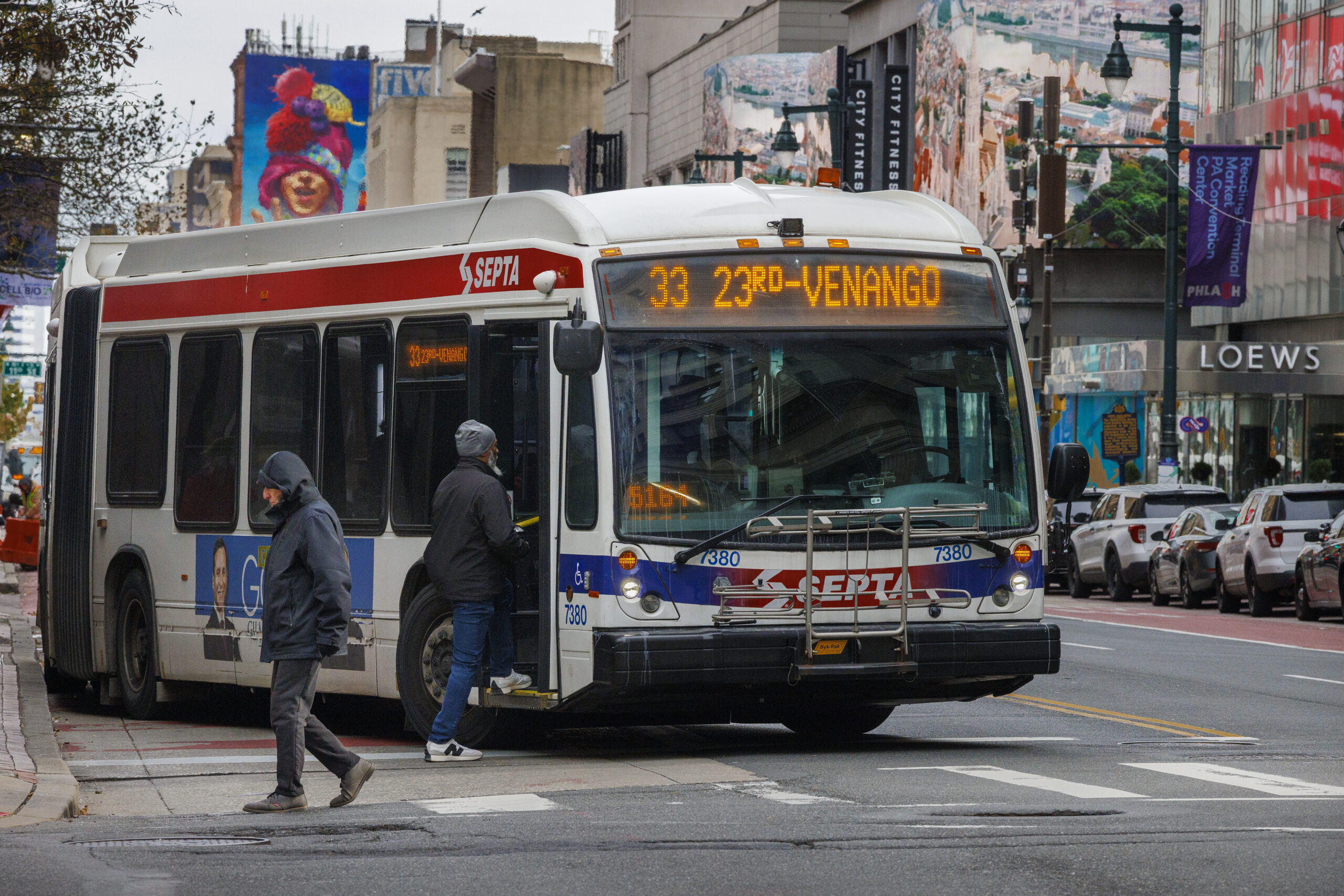
SEPTA 33 bus picking up passengers at 13th and Market Street, Center City Philadelphia, Monday, December 8, 2025.
If you rode transit even semiregularly this year, you don’t need a recap. You felt it in missed connections, sudden service cuts, mystery delays, and that low-grade anxiety that comes from not knowing whether your train is late, canceled, or quietly on fire. Five Regional Rail fires. A trolley tunnel that closed, reopened, and closed again. A budget cliff so real it had a dollar amount attached to it. Near-strikes. Court-ordered service reversals. Emergency money parachuting in at the last second like SEPTA is a reality show contestant who keeps surviving elimination.
The most Philly part? SEPTA technically survived. Barely. With duct tape, emergency funds from Gov. Josh Shapiro, and the kind of last-minute labor deal that had everyone holding their breath. There’s something almost admirable about how resilient the system is — not because it’s thriving, but because it simply refuses to collapse on schedule.
To be fair, some things improved. Serious crime dropped. Fare evasion finally got gates and consequences. SEPTA moved hundreds of thousands of people for the Super Bowl parade without melting down, which honestly might have been the most impressive transit achievement of the year.
But none of that erases the larger truth: SEPTA spent 2025 lurching from crisis to crisis, stuck in the same funding limbo it’s been warning about for years, with riders paying the price in time, stress, and reliability. The money fixes were temporary. The politics were familiar. And the promise for 2026 is essentially: please let us just do the basics.
That’s a low bar… and one SEPTA hasn’t consistently cleared in a while.
New Jersey’s minimum wage lapping Pennsylvania: D (for us)
We love to say we’re better than New Jersey. Spiritually. Culturally. Hoagie-wise. But on minimum wage? Absolutely not. Not even close.
New Jersey is heading into 2026 with a $15.92 minimum wage, adjusted for inflation like it’s a normal, functioning place that occasionally updates laws to reflect reality. Pennsylvania, meanwhile, is still parked at $7.25 — the same number it’s been since 2009, back when we all thought flip phones might be making a comeback.
That gap isn’t just embarrassing; it’s structural. You can cross the bridge and make more than double per hour doing the same work. And while yes, New Jersey is more expensive overall, that doesn’t magically excuse Pennsylvania paying wages that don’t come close to covering basic needs. Even the MIT living wage calculator, which is not exactly a radical think tank, says Pennsylvanians need far more than $7.25 to survive. Shock.
Philly has been stuck in the same frustrating loop for years. The city wants the power to set its own minimum wage. The governor supports raising it. Bills exist. Rallies happen. And yet nothing changes, leaving workers watching Jersey do the thing we keep promising to “get to.”
Daniel Rodriguez travels through Philadelphia’s Suburban Station on Friday, Dec. 19, 2025, in Philadelphia. Rodriguez uses the station to commute between Philadelphia and metro Atlanta, taking a train from Center City to Philadelphia International Airport before boarding flights to and from his company’s Atlanta office.
Flying to Atlanta twice a week so you can keep living in a Jewelers’ Row apartment with your wife, avoid owning a car, and still make your job work is the kind of stubborn, impractical devotion this city respects. It’s extreme. It’s exhausting. It makes no sense on paper. And yet it somehow feels more reasonable than moving to the suburbs.
This isn’t about hustle culture or going viral (though he did). It’s about refusing to uproot your life because the job market is broken, SEPTA is unreliable, and cities don’t always make it easy to stay. Instead of leaving Philly, Rodriguez made the commute worse. Heroic behavior.
Is it sustainable? Questionable. Is it environmentally clean? Debatable. Is it the most Philly response imaginable to a bad system? Absolutely.
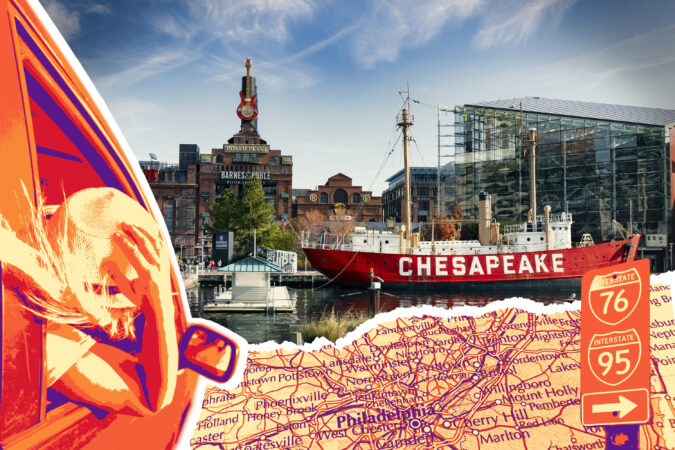
Sometimes you take a road trip to experience something totally different from the world you inhabit — the absolute silence of a state forest, the carnivalesque majesty of the shore in full swing. A weekend in Baltimore is not that kind of trip.
Charm City is the most Philly of the cities on the Acela corridor: smaller in size, but equally quirky, proud, and shaped by blue-collar roots. (Our accents are even passably close.) It’s also stacked with restaurants, museums, and cultural institutions that compete on a national level, all with a distinctly Baltimorean flavor, less than two hours away.
Once arriving in Baltimore proper, take I-83 up to the Remington neighborhood on the north side of the city, where Café Los Sueños roasts and brews its own beans in a peaceful, light-washed space a couple blocks off the highway exit. (The name translates to “Café of Dreams,” fitting for owner Carlos Payes, who came to the U.S. from the coffee plantations of El Salvador.) A horchata latte and croissant make for a perfectly calming start to the trip.
📍 2740 Huntingdon Ave., Unit B, Baltimore, Md. 21211
If it’s not too cold — and you’re up for a walk — Los Sueños sits near the eastern edge of Druid Hill Park, the third-oldest urban park in the country and, for millennials, the namesake of Dru Hill. Follow the path along Druid Lake toward the Rawlings Conservatory, a circa-1888 botanical garden with five greenhouses. Even when it’s frosty outside, the impressive Victorian conservatories filled with tropical orchids, ceiling-skimming palms, and citrus blossoms deliver full-on summer music-video energy.
Check into the Pendry Baltimore, a moody, stylish 127-room hotel housed in a grand 1914 building on the former Recreation Pier. The Fell’s Point location is both charming and convenient, putting you within walking distance of many of Baltimore’s marquee attractions. Many of the wood-and-leather-clad rooms overlook the waterfront. The huge pool, which seems to float in the Inner Harbor, will have you booking a return visit for summer.
No curveball here. The National Aquarium is Baltimore’s claim to fame, and if the last time you were here was on an eighth-grade field trip, you should come back as an adult, with or without your own kids. The sprawling complex houses 2.2 million gallons of water and residents ranging from reef sharks and puffins to otters and moray eels. Don’t miss the Harbor Wetland exhibit, which opened in 2024 along a series of floating docks in the Inner Harbor and be sure to book tickets in advance. Aim for off-hours to beat the crowds.
📍 501 E. Pratt St., Baltimore, Md. 21202
View: American Visionary Art Museum
The title Cap Bathing Moligator With Angelic Visitation (Dickens 44) tells you just about everything you need to know about the boundary-pushing work housed at the American Visionary Art Museum. This brick-and-mirror-clad institution in Federal Hill celebrates outsider art in all its surreal glory from landscapes to cosmological oil paintings to sculptures of a mosaic-winged Icarus and Baltimore icon Divine. The collection embodies the city’s DIY spirit and unbreakable creative streak.
With its deep pedigree and polished service, Charleston in Harbor East possesses a sense of occasion that few restaurants have anymore. Even if you’re just passing through for drinks in its swanky little lounge, where local power brokers and big-night-out suburbanites mingle with tourists, those drinks are crafted with gravitas and élan as much as sparkling wine, passionfruit and honey (the Ipanema Fizz), or blanco tequila, Strega, and ginger (the Arandas Monk). The wine list is famously deep, which helps explain why Charleston won the James Beard Award for Outstanding Wine and Other Beverages Program.
From one medalist to another, the Wren, one of Bon Appetit’s best new restaurants of 2025, sits less than a 10-minute walk from Charleston in Fell’s Point. The location is an ideal spot for drink or dinner, with a much more casual silhouette with its wood paneling, pressed-tin ceilings, and no-reservations policy. It’s a pub essentially, and like the very best pubs in Ireland and the U.K. (partner Millie Powell hails from Dublin), the cooking comforts and satisfies on a cellular level. Think glazed ham, golden onion pie, sharp cheeses, honey-roasted apple cake, and the like. (Your Philly analog is Meetinghouse.) As expected, the bartenders pour a precise pint of Guinness, the perfect finale to a Baltimore weekend.
Robert Caputo was captivated by the natural world, its animals and people. So he spent 35 years, from 1970 through 2005, traveling through Africa, Asia, and South America, taking photos, writing stories, and making films and TV shows for National Geographic magazine, Time, PBS, TNT, and other media outlets.
From Kenya to Egypt, Venezuela to Zanzibar, in China, Cuba, New Orleans, and Boston, Mr. Caputo chronicled the beauty and tragedy of everyday life. He reported as a freelancer, with a camera and a notepad, for National Geographic for decades, covering political coups, civil wars, and famines in Sudan and Somalia, and the AIDS epidemic in Uganda.
He worked for photographer and filmmaker Hugo van Lawick in Tanzania in the 1970s and then camera-stalked lions and leopards for National Geographic on the Serengeti Plain. He sent back striking images of the Abu Simbel Temples in Egypt and the old Kingdom of Mustang in Nepal.
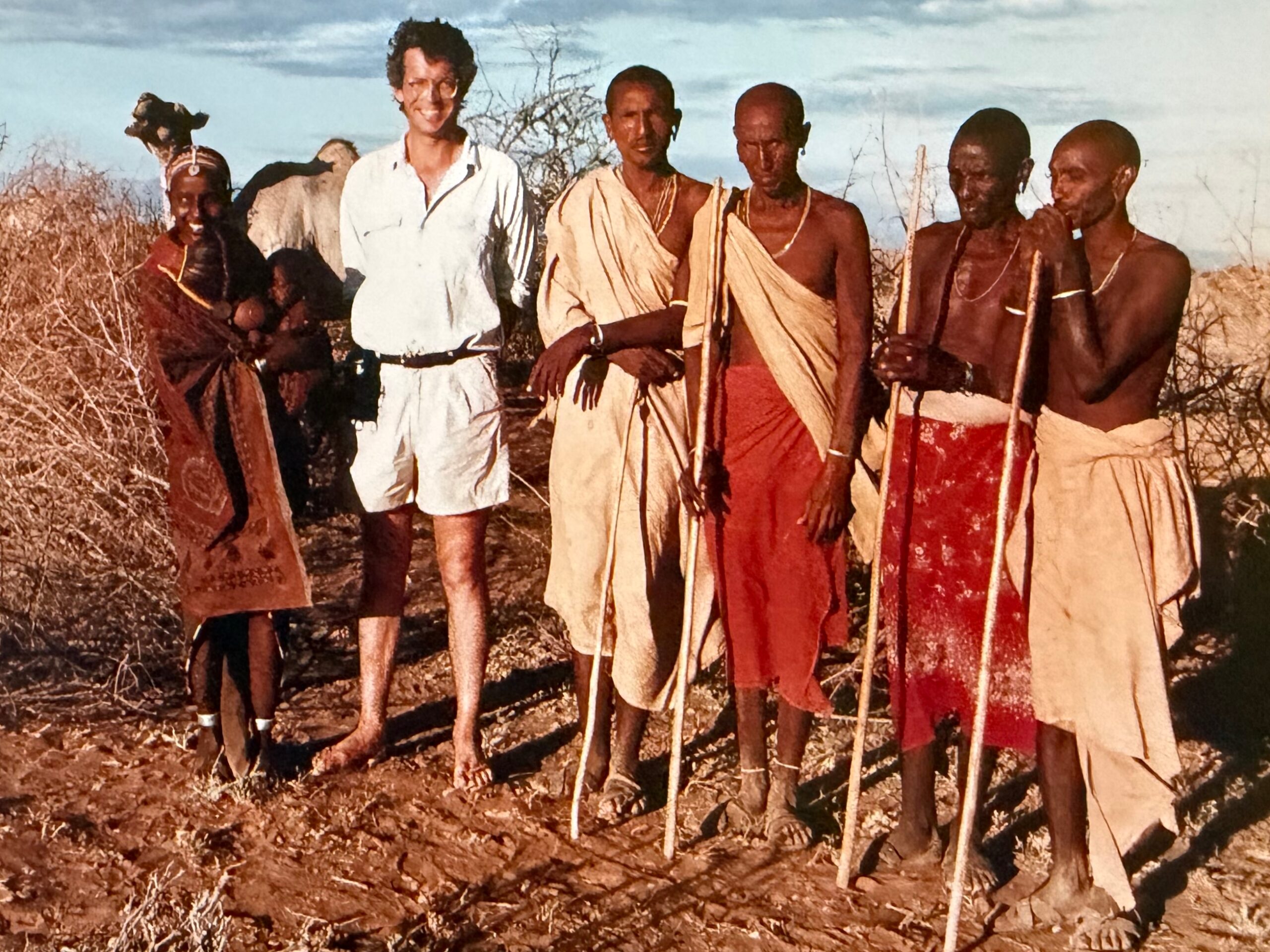
In Sudan, he sipped tea with camel traders, slept under the stars, and posed for portraits with tribal chiefs. He trekked the Himalayas and photographed fishermen on the Congo, Nile, and Mississippi Rivers. His poignant August 1993 cover photo for National Geographic of a starving Somali woman gained worldwide attention.
“In fact, it is a great job,” Mr. Caputo told the Washington Post in 1995, when he was featured in a TV show about the Geographic photographers. “You really do get to go places and do things others only dream about.”
He told the New York Daily News in 1995: “I’ve always thought of my job as a license to be nosy.”
In 2002, as he was winding down his international travel, Mr. Caputo moved from Washington, D.C., to a farmhouse in Kennett Square, Chester County. In early 2025, he was diagnosed with Alzheimer’s disease. In December, he and his family traveled to the Pegasos Swiss Association voluntary assisted dying center in Basel, Switzerland. He died Thursday, Dec. 18. He was 76.
“Fairly early on, Bob had expressed his wishes to go out on his own terms,” said his wife, Amy. “We were able to honestly and pragmatically deal with our situation, and he remained his thoughtful self, with his sense of humor intact till the end.”
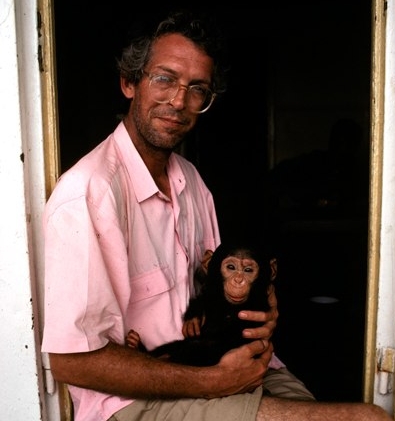
Mr. Caputo loved spending time with animals.
Mr. Caputo first went to Africa in 1970. He dropped out of Trinity College in Connecticut as a senior and meandered with friends across the vast continent, from Morocco to Tanzania.
He returned to earn a bachelor’s degree in film at New York University in 1976. Then, until 1979, he lived in Nairobi, Kenya, and sold photos and stories about Africa to Time, Life, and other magazines.
“He liked to learn about things,” said his son Nick. “He was constantly inquiring into things.”
In 1981, National Geographic hired him to report from Sudan on the verge of its civil war, and he produced striking cover photos, dramatic picture spreads, and detailed stories about Africa. In 1984 and ’85, he spent eight months and traveled 4,000 miles on steamboats, tugboats, and all-terrain vehicles to document traditional daily life along the Nile.
Mr. Caputo had several cover photos for National Geographic.
“Everywhere he went,” his family said, “Bob found that the people he met were fundamentally good and generous, happy to share their often limited food with him, a perfect stranger, and excited to tell him about their lives.”
There were challenges, too, he said in many interviews. He was detained by border guards in Uganda in 1979 and contracted malaria nine times. The monthslong assignments in search of remote Indigenous people were often lonely, and he got hungry and tired.
But the connections he made with people he encountered were worth it, he said. “The great advantage of working for National Geographic is having time,” he told the New York Daily News. “You can go to a village in Africa and not just have to waltz in and start shooting away. You can spend time getting to know people, and they can know you.”
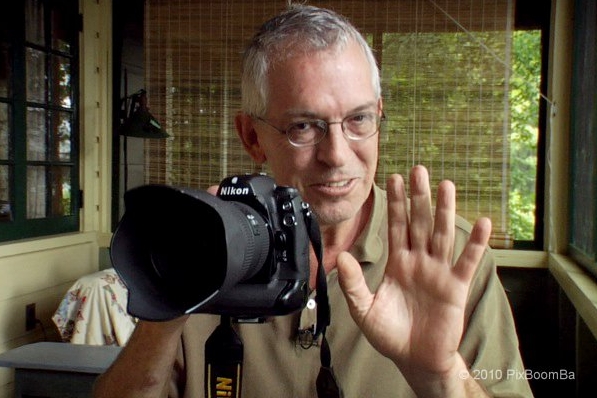
Mr. Caputo was a natural innovator and teacher, and he organized photo workshops and lectured about photography around the world. He taught digital photography at the Center for Digital Imaging Arts at Boston University and cofounded Aurora & Quanta Productions in Maine in 1985 and the PixBoomBa.com photo website in 2010.
Mr. Caputo (second from left) poses with local people in Africa.
He wrote and appeared in wildlife shows, hosted TV programs and YouTube videos about photography, and wrote the story on which Glory & Honor, a 1998 award-winning TV film, is based. He made films about making films in Nigeria and the history of Boston’s Fenway Park.
He earned awards from the National Press Photographers Association, the American Travel Writers Foundation, Communications Arts journal, and other groups. He was personable and energetic, colleagues said, and he cofounded the annual National Geographic Prom at the Washington office.
“He was a tremendously caring and loving person,” his son Nick said. “He looked out for other people.”
Mr. Caputo met TV and film producer Amy Wray on a National Geographic TV shoot in the Amazon rainforest. They married in 1997 and had sons Nick and Matt.
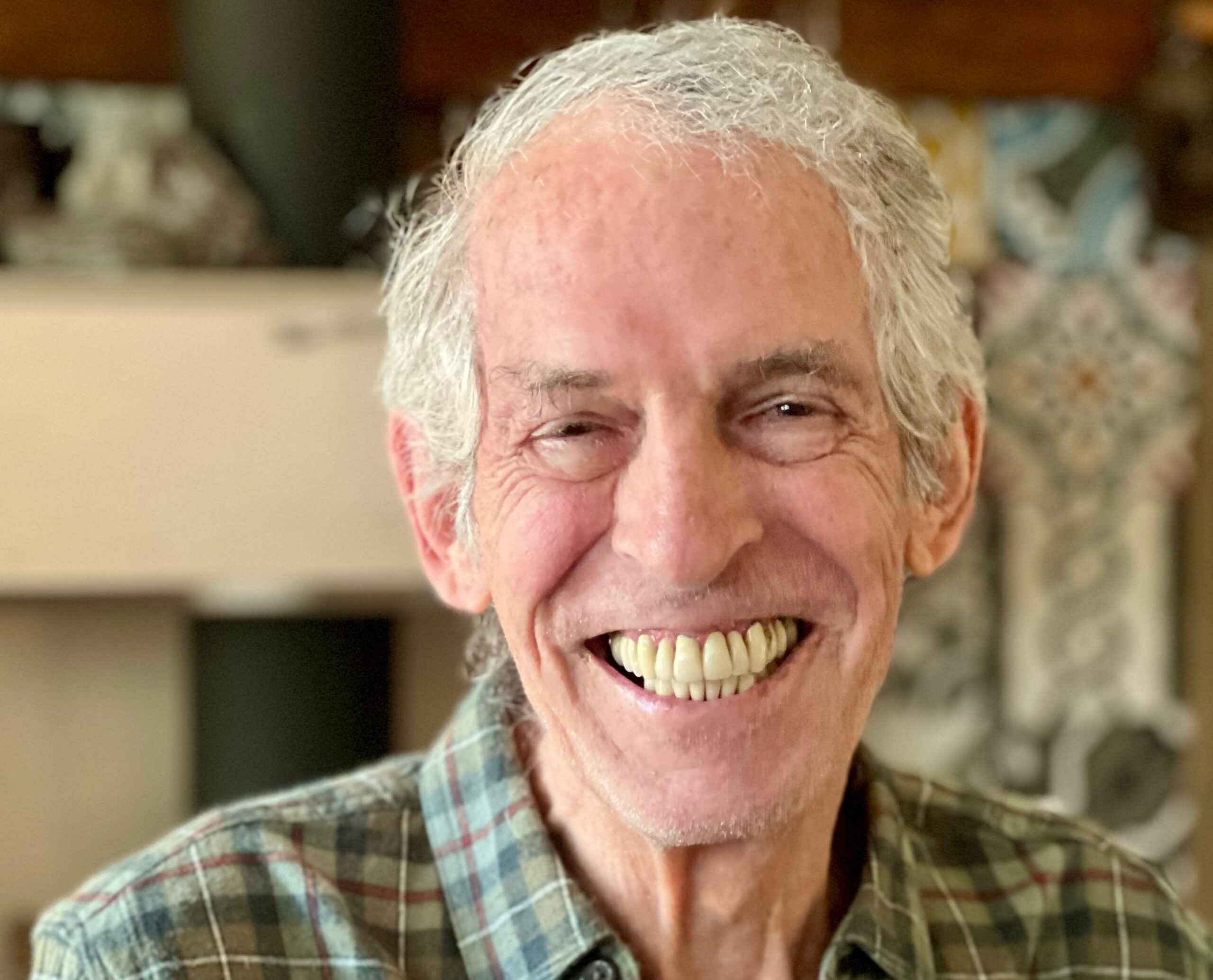
This photo is featured on Mr. Caputo’s website.
In Facebook tributes, friends and colleagues noted his “wonderful smile” and “deep love of people and animals.” They called him a “legend” and “amazing.” Robert J. Rosenthal, former Africa correspondent and former executive editor of The Inquirer, called Mr. Caputo “one of the best humans I ever knew.”
Mr. Caputo told MainLine Today in 2009: “My personal heroes are the people who work for aid organizations and nongovernmental organizations, who go to some faraway place to help people they’re not related to and often put themselves in harm’s way.”
Robert Anthony Caputo was born Jan. 15, 1949, at Camp Lejeune, N.C. His father was a career Marine and moved the family to bases in Virginia and then Sweden for an assignment at the U.S. embassy there.
In a 1991 interview with the Newhouse News Service, Mr. Caputo said: “I remember as a kid going to sleep listening to artillery going off in the distance down at the range. It was kind of comforting. I wouldn’t change it for anything.”
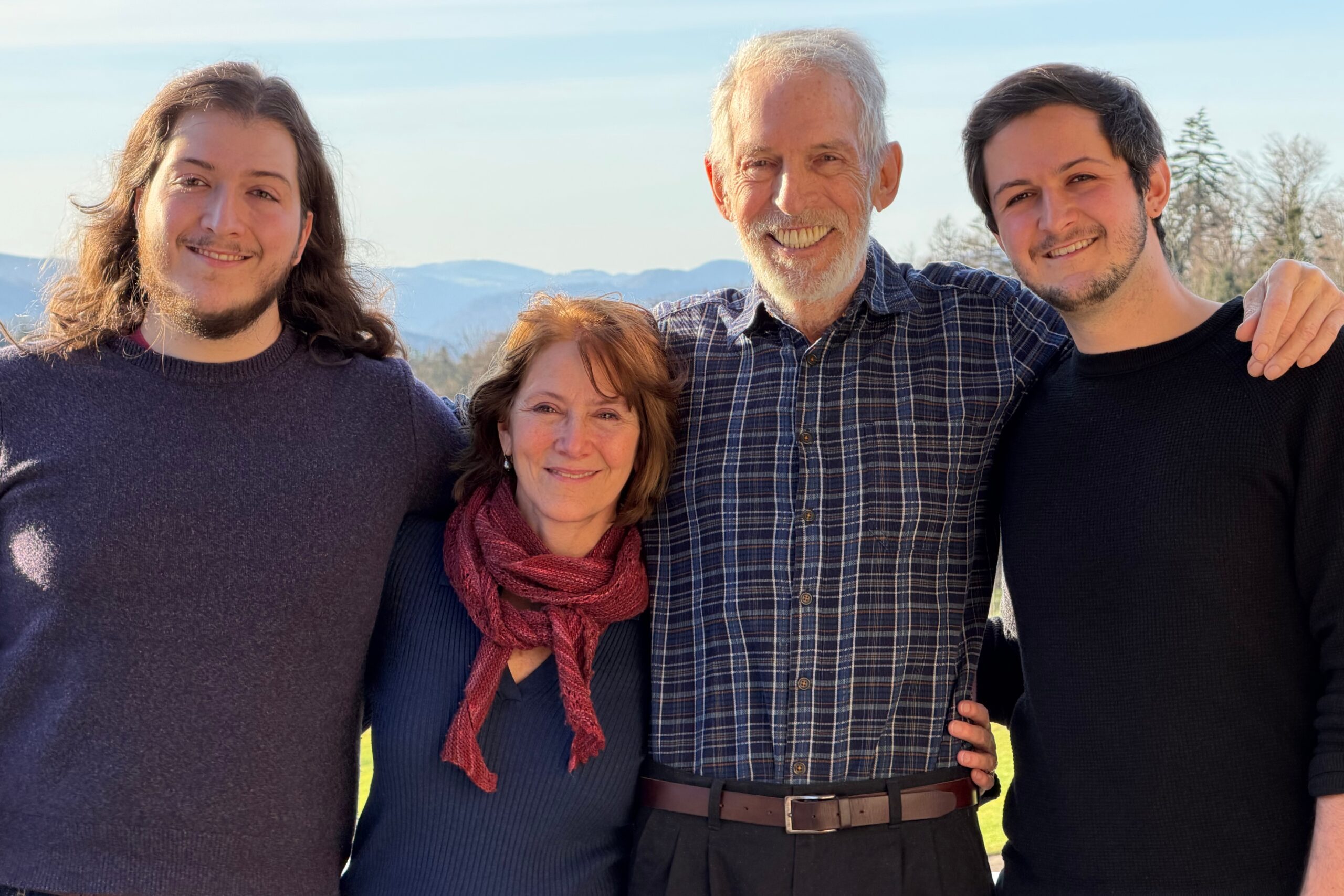
Mr. Caputo (second from right) doted on his wife and sons.
He attended a Swedish middle school, learned the language, skied, and played soccer. He returned to the United States in the late 1960s to attend boarding school in Virginia and then Trinity.
In Kennett Square, Mr. Caputo was a soccer, baseball, and basketball coach to his sons, and a Cub Scouts leader. He walked the boys to the school bus stop in the morning. He told them bedtime tales about secret agents and pirates, they said, and built a tree house in the backyard.
He decorated his truck on Halloween and grew impressive gardens. His neighbors called him Farmer Bob.
He took his family on trips to Kenya and Tanzania. He dabbled in experimental playwriting and literature when he was young, and enjoyed classic movies and William Blake’s poetry.
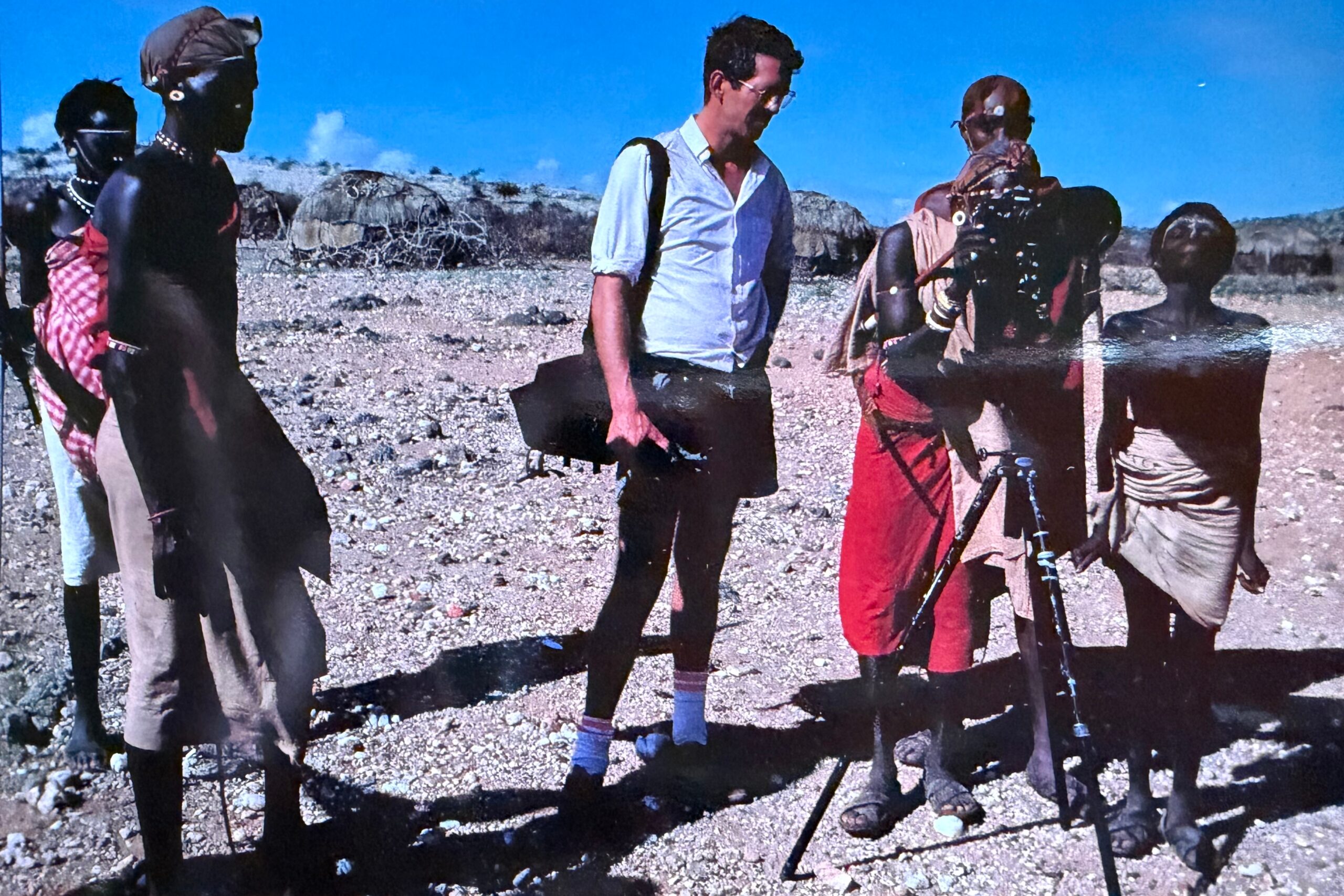
Mr. Caputo (center) shows his camera to the locals in Africa.
“He felt extraordinarily lucky to have lived the life he did,” his wife said, “full of adventure, family and friends. And in the end he said, ‘I’m ready.’”
In addition to his wife and sons, Mr. Caputo is survived by a sister and other relatives.
Services are to be at 11 a.m. Saturday, Jan. 10, at Kennett Friends Meeting, 125 W. Sickle St., Kennett Square, Pa. 19348.
Donations in his name may be made to Doctors Without Borders, Box 5030, Hagerstown, Md. 21741.
His family called Mr. Caputo “buttered side up” when he was young “because no matter
how he fell he always seemed to end up the right way, and his life was full and lucky.”