Category: Entertainment

Entertainment news and reviews

  • Philadelphia’s latest fashion craze? A coat inspired by Kalaya’s Chutatip ‘Nok’ Suntaranon. And her dogs.

    Philadelphia’s latest fashion craze? A coat inspired by Kalaya’s Chutatip ‘Nok’ Suntaranon. And her dogs.

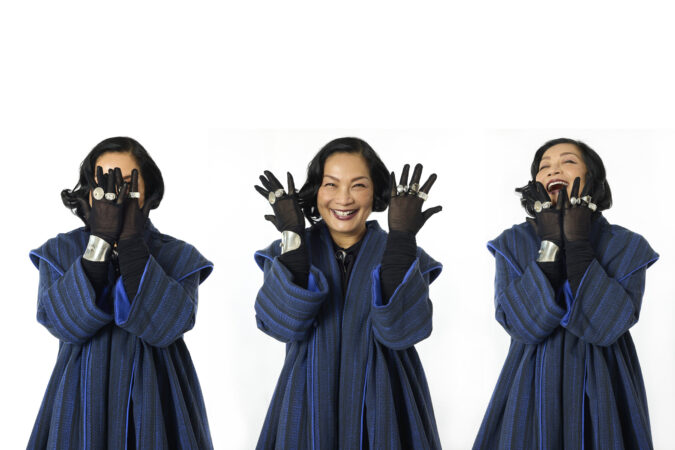
    Chef Chutatip “Nok” Suntaranon — the culinary genius behind the James Beard Award-winning restaurant Kalaya — is known for her delicious Thai cuisine and trotting her adorable Pomeranians, Titi and Ginji, around her Queen Village neighborhood.

    That’s how Suntaranon caught the eye of sustainable fashion designer and Lobo Mau boutique founder Nicole Haddad.

    “To me, she was the lady with the restaurant and the Pomeranians,” Haddad said. “I would see her walking around Fourth Street and she’d have her Pomeranians with her. I have an obsession with Pomeranians. They are the most adorable creatures on the planet.”
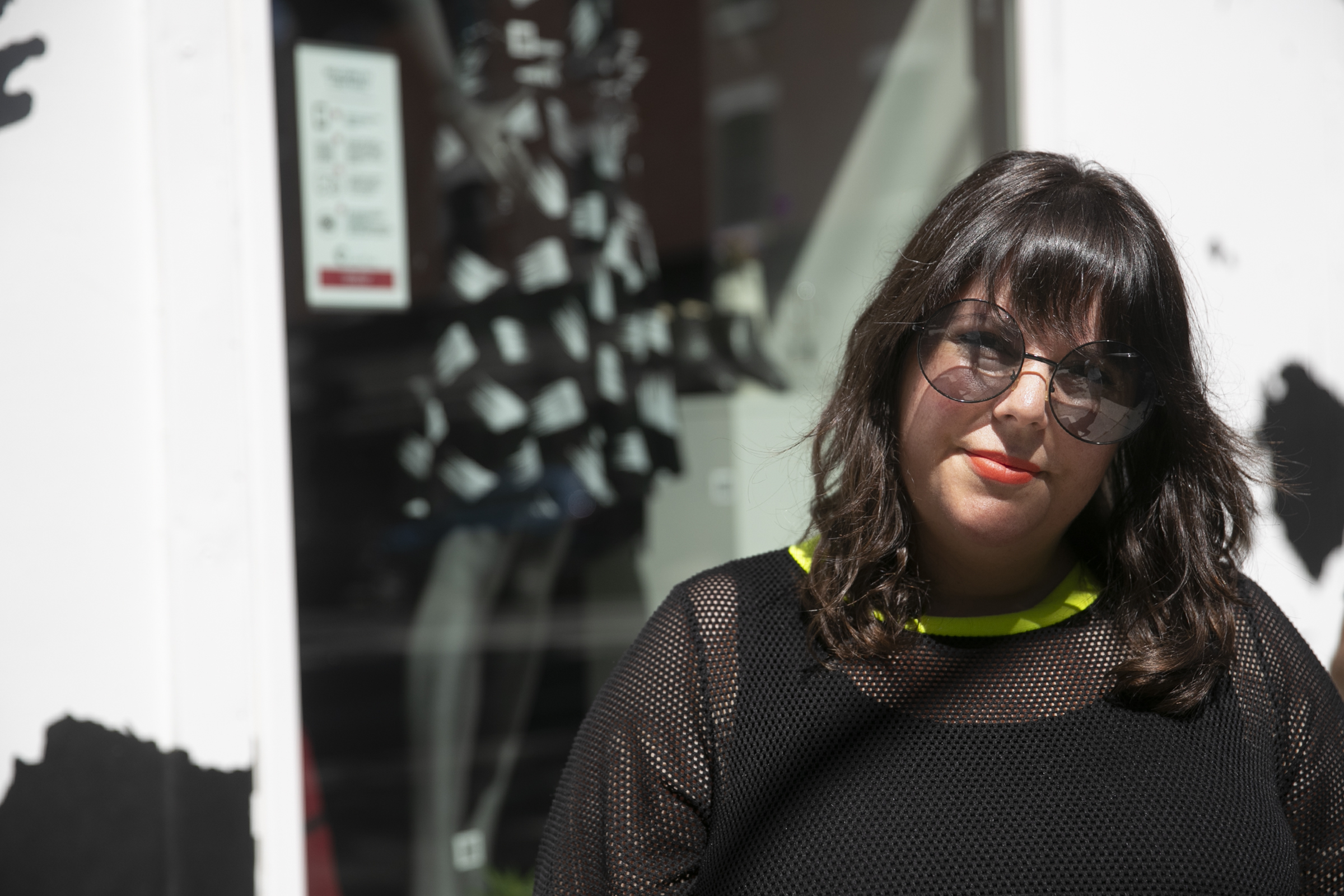
    Nicole Haddad stands in front of her boutique, Lobo Mau, in Philadelphia before it closed in 2024.

    So when a mutual acquaintance of Haddad and Suntaranon’s suggested the two entrepreneurs work together on a Philly fashion collaboration, Haddad jumped at the opportunity. She had the perfect project, a reimagining of Lobo Mau’s top-selling women’s swing coat, the Pom Jacket, named after Haddad’s favorite breed of dog.

    This new version would be called the Nok Pom.

    “It felt like kismet from the beginning,” Haddad said.

    The original

    About 15 years ago, Haddad was in Venice visiting the Peggy Guggenheim Museum when she chanced upon a black-and-white photo of the New York heiress and art collector surrounded by her beloved Lhasa apsos.

    “She was wearing a voluminous swing coat surrounded by five little dogs that reminded me of Pomeranians and I immediately thought, ‘I want to design something like this.’”

    Back in Philly, Haddad made a black-and-white swing coat just like the ones popularized in the 1930s by jazz musicians. These coats were designed by the likes of Elsa Schiaparelli and Balenciaga and sold in the world’s top specialty stores, including Philadelphia’s Nan Duskin.

    Haddad’s swing coat, the Pom Jacket, was tapered at the shoulders and flared at the waist, featuring a wide shawl collar and three-quarter-length cuffed sleeves. Priced at $398, it became a bestseller within weeks; finding a cult following, including NPR host Terry Gross, in the city.
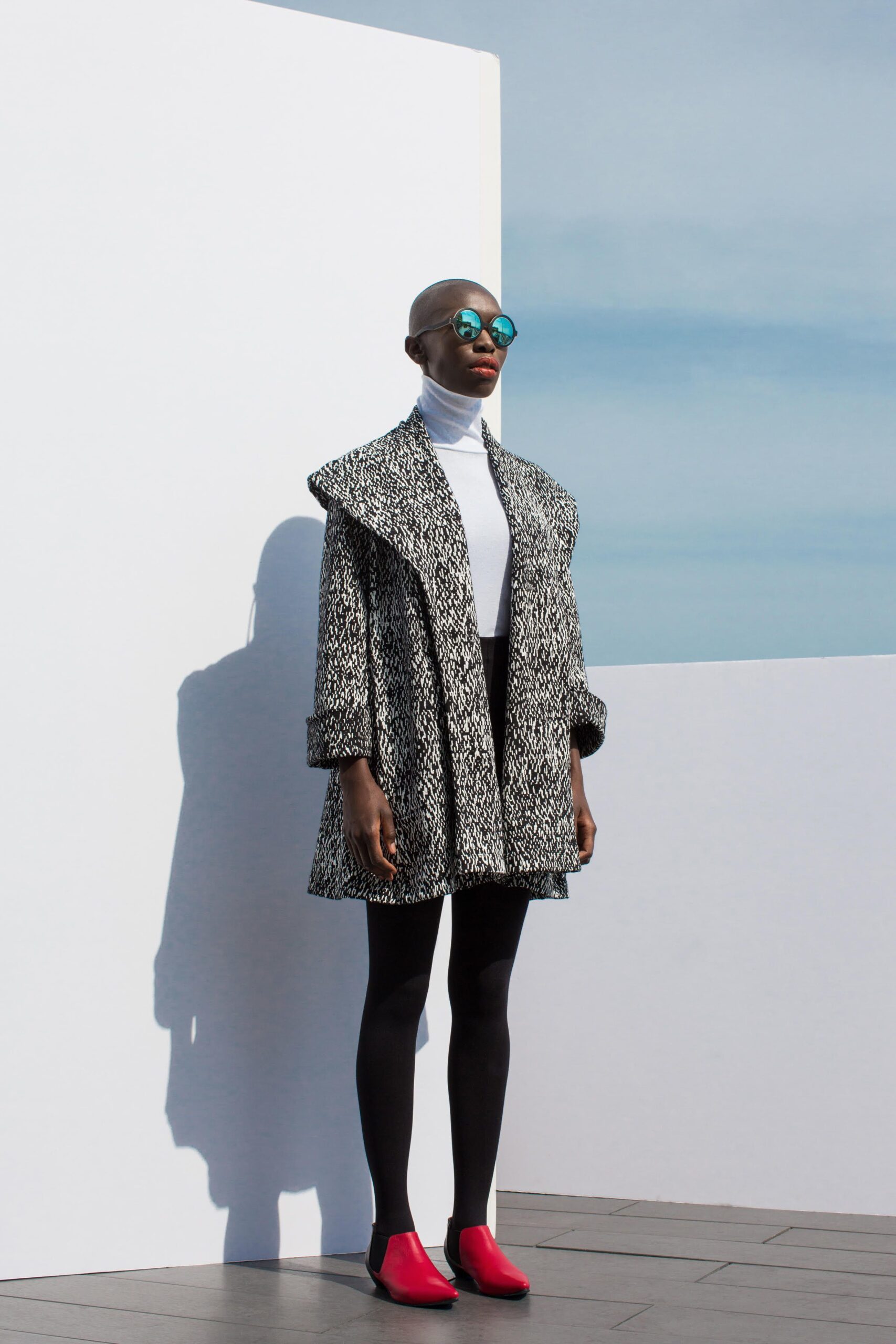
    Model Khalil Abner wears Nicole Haddad’s original Lobo Mau Pom Jacket.

    In 2022, the Pom caught the eye of a buyer at New York’s Guggenheim Museum where it sold in the museum’s gift shop through 2024.

    “It was a full circle moment,” Haddad said.

    Meanwhile Suntaranon and Natalie Jesionka, the coauthor of Suntaranon’s 2024 book, Kalaya’s Southern Thai Kitchen: A Cookbook, had their eyes set on the Pom Jacket.

    The remix

    On a winter afternoon in 2019, Suntaranon stopped on a dime in front Lobo Mau’s then-Bainbridge Street boutique. She had to have the original black-and-white Pom Jacket in the window.

    “Within two seconds, we sold her the jacket and she left,” Haddad said.

    Suntaranon loved her jacket and has since been a supporter of Lobo Mau. It was Jesionka, a longtime Lobo Mau client who owned several iterations of the Pom, who suggested Suntaranon and Haddad collaborate.

    Haddad knew Suntaranon gravitated toward bold-hued pieces that appeared architectural but flowed like liquid over women’s curves. She also knew that Suntaranon collected origami-inspired pieces by Japanese womenswear designer Issey Miyake.

    “I’ve been collecting [Miyake] since I was 22,” Suntaranon, 57, said, mentioning the pleated teal, limited-edition Issey Miyake gown she wore to the 2025 James Beard Awards dinner in Chicago. “It’s timeless and beautiful.”

    Suntaranon arrived at Haddad’s Bok Building studio in September 2025 — she closed her Bainbridge Street store in 2024 after landlords tripled the rent — with a clear idea of her dream Nok Pom.

    She wanted a fuller silhouette that was longer in the back and had a button closure.

    “I wanted a more dramatic look,” Suntaranon said.

    Haddad created a print featuring a trompe-l’oeil 3D-effect that gave the illusion of Issey Miyake-style pleats. She had it digitally printed on cobalt blue sweatshirt material.
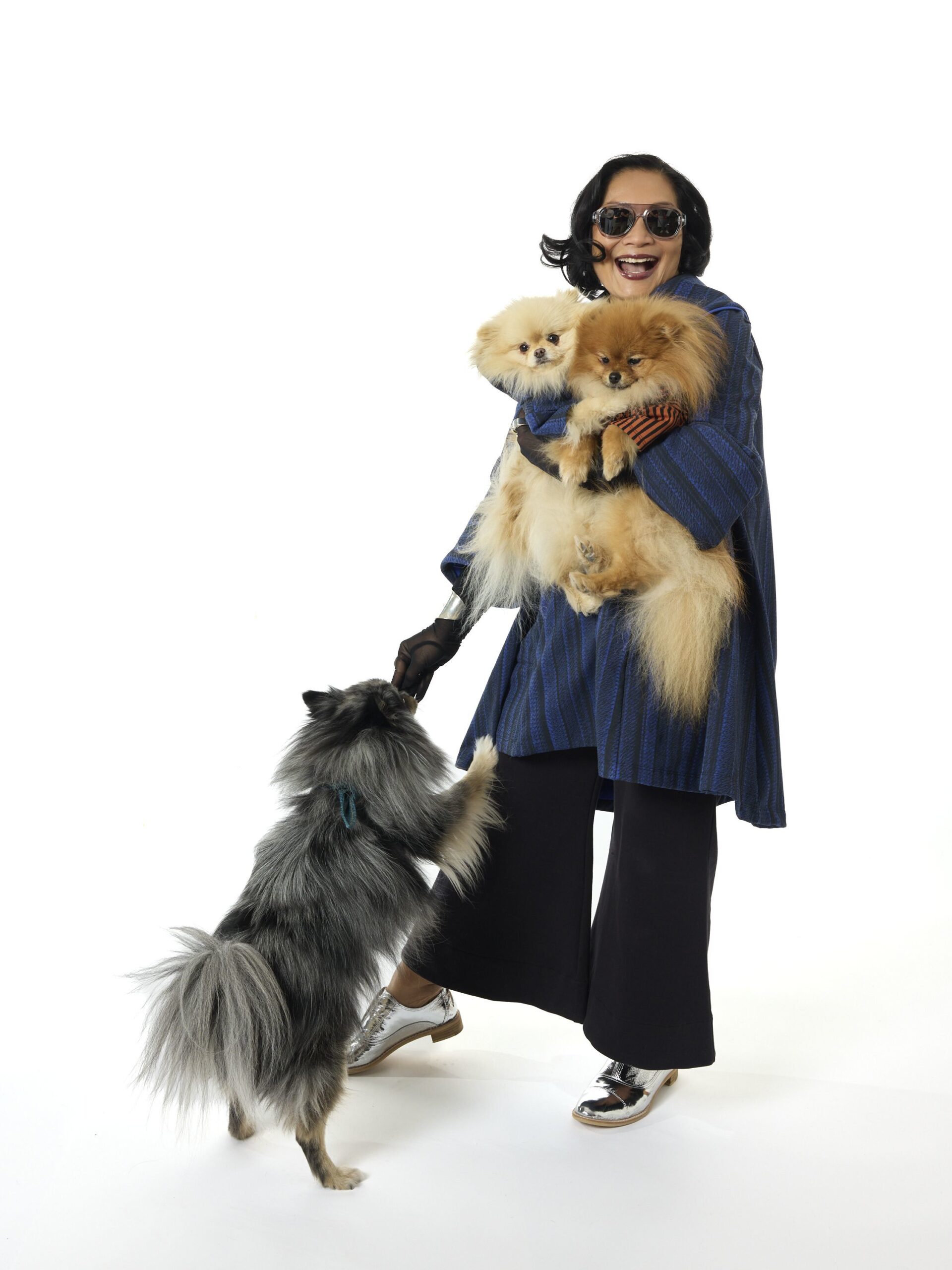
    Kalaya’s chef Chutatip “Nok” Suntaranon poses in Lobo Mau’s exclusive Pom jacket. The acclaimed chef collaborated with local designer Nicole Haddad for an updated version of Hadddad’s original Pom Jacket. Styled by Nicole Haddad and Miranda Martel; jewelry by Feast and Forge and Finish; shoes by Elena Brennan; Hair and makeup by Tarah Yoder.

    She added a box pleat in the jacket’s center back to create volume and drama, piping along the outer edge of the collar, and pockets on the inside and outside of the jacket. As a final touch, she put a big black button under the bustline.

    The Nok Pom was ready.

    “It’s beautiful,” Suntaranon said of her eponymous fashion piece. “It’s exactly how I envisioned it.”

    The Nok Pom, priced at $450, is a limited-edition item and is available to order through Jan. 10.

    In February , Haddad got a Pomeranian of her own that she named Johnny. She designed matching hoodies for Johnny, Titi, and Ginji, that are also for sale.

    Suntaranon is flattered that she — and her pooches — are a part of the city’s food and fashion scene.

    “Fashion — just like food — is a big part of my life,” Suntaranon said. “Fashion and food are an art. When the fashion industry is thriving and the food industry is thriving, the city is thriving.”

    The Nok Pom is available online through Jan. 10 on lobomau.com
  • ‘Sibling’ Liberty Bell will ring on Cherry Street Pier to celebrate New Year’s Eve

    ‘Sibling’ Liberty Bell will ring on Cherry Street Pier to celebrate New Year’s Eve

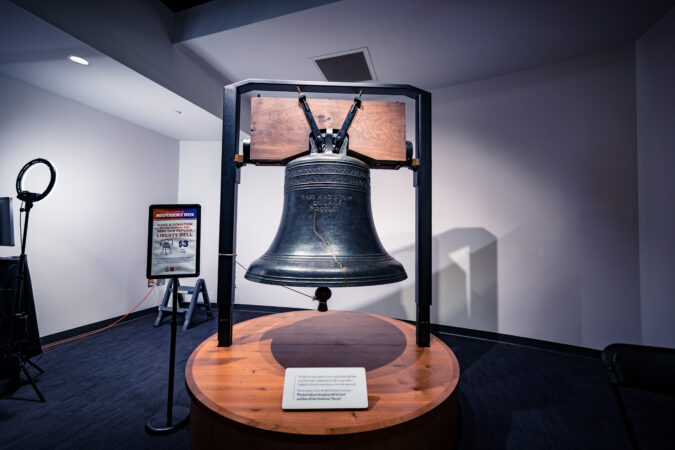
    A 2,000-pound “sibling” bell, typically displayed at the National Liberty Museum at Fourth and Chestnut, and produced by the same London-based foundry as the original, will be temporarily moved to the Cherry Street Pier as part of the city’s annual New Year’s on the Pier celebration Wednesday night.

    Getting it there, however, will be no easy task.

    “We’ve done a couple months of prep,” said Alaine K. Arnott, president and CEO of the National Liberty Museum, of the logistics of moving a one-ton piece of history for an outside event. “It’s the rental of a forklift, it’s getting a truck big enough to house it, it’s figuring out which route to take it through the City of Philadelphia.”

    The bell — which features a replica of the original bell’s famed crack, as well as the functionality its sibling lacks — will be on hand for a pair of ticketed New Year’s Eve events on the pier.

    The New Year’s Eve Kids Countdown — which includes music, crafts, and giveaways — runs from 5 p.m. to 7 p.m. on the pier, with tickets on sale now for $27 per person. (Children 2 years old and younger are admitted free). Tickets for the pier’s 21-and-older event, which runs from 10 p.m. to 1 a.m., are $32 and include a Champagne toast, cash bar, and optimal views of the fireworks.
    The festivities will be anchored by a pair of fireworks displays, part of Visit PA New Year’s Eve Fireworks on the Waterfront. The first display is set to begin at 6 p.m., and the other at midnight.

    (A third fireworks show will take place at midnight on the Benjamin Franklin Parkway, part of a free concert by headliner LL Cool J, with additional performances by DJ Jazzy Jeff, Adam Blackstone, Dorothy, and Technician The DJ.)

    “I think it is a fantastic symbol and representative of our country,” Arnott said of the bell. “It inherently reminds people that liberty is something we’ve got to protect or it will vanish.”

    “It’s also really fun” she added, “when you actually get to ring it.”

    This year’s New Year’s Eve events mark the official launch of the city’s much-anticipated Semiquincentennial celebration honoring the nation’s 250th birthday — and if Arnott has her way, the sibling bell could feature prominently into the yearlong slate of events.

    “Once we do it [for New Year’s Eve], we’re really hoping to kick it off with MLB, with FIFA,” Arnott said of Major League Baseball’s All-Star Game and the FIFA World Cup, both of which will be hosted next year in Philadelphia.

    “How cool would it be to do this for some of those events?”

  • Among the 100 or so concerts he attended in 2025, our pop music critic picks his favorites

    Among the 100 or so concerts he attended in 2025, our pop music critic picks his favorites

    Philadelphia concert stages were busy in 2025, from the South Philly sports complex to the Mann Center in Fairmount Park, and plenty of intimate venues in between.

    This list, sorted by date, gathers a dozen shows that stood out among the 100 or so I saw this year, and also includes two I sadly missed. They were enthusiastically reviewed for The Inquirer by my colleagues Earl Hopkins and Shaun Brady.

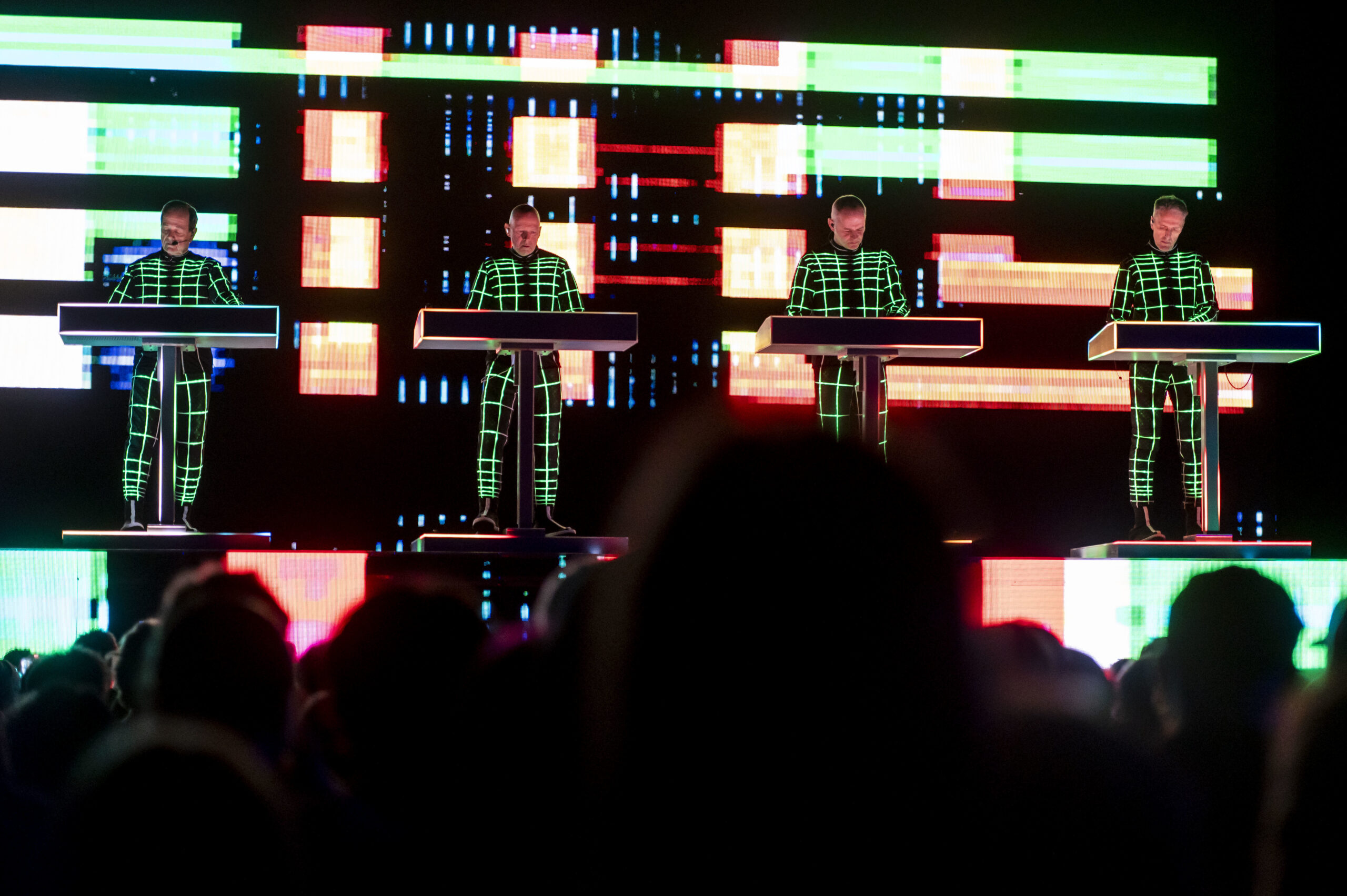
    Kraftwerk performs at the Franklin Music Hall on Thursday, March 6, 2025. Philadelphia is the first stop on their tour, “Multimedia,” which celebrates the 50-year anniversary of the group’s album “Autobahn.”

    Kraftwerk

    March 6, Franklin Music Hall

    The German electronic music pioneers served a reminder that they were making music about “The Man-Machine” a half-century before AI threatened to make human labor obsolete. The band whose “Trans Global Express” “became a foundational building block for the New York DJs who created hip-hop in the 1970s, embraced all things electronic early in its career. Its members stood almost completely still last March while making kinetic music that barreled down the “Autobahn” with irresistible momentum.

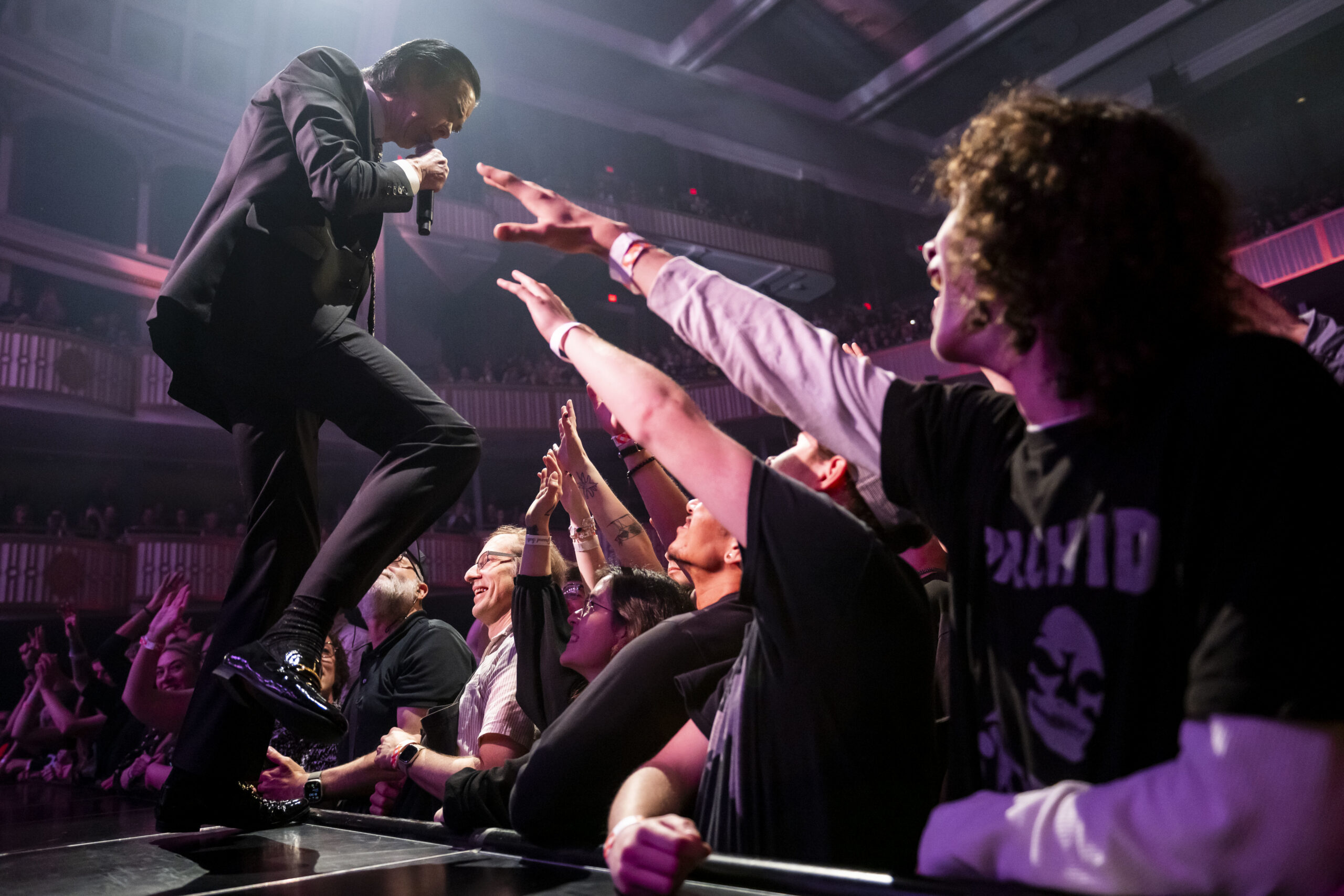
    Nick Cave and the Bad Seeds perform at the Met Philadelphia on Saturday, April 26, 2025. Cave performs his new album, “Wild God.”

    Nick Cave & the Bad Seeds

    April 27, Met Philly

    This was a two-and-a-half-hour leap “toward love, wonder, meaning, and transcendence,” as Cave put it, with the vampiric Australian goth-punk veteran leading his flock in a thumping Saturday night church service on his “Wild God Tour.” Backed by a band that included whirling dervish violinist Warren Ellis and Radiohead bass player Colin Greenwood, Cave dedicated “Long Dark Night” to late Philly-born music producer Hal Willner and acknowledged the tragic losses in his own life while insisting: “We’ve all had too much sorrow, now is the time for joy.”

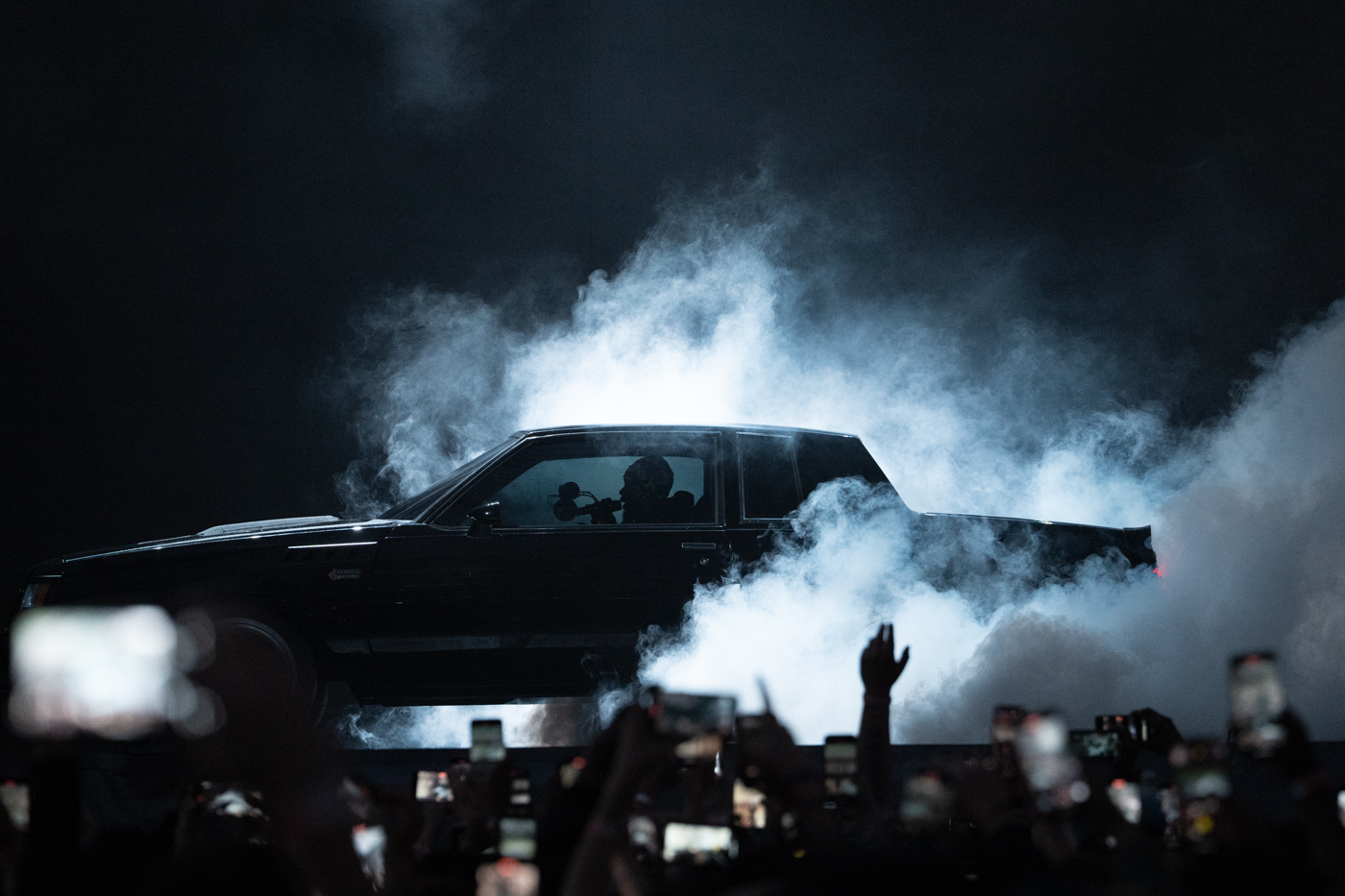
    Superstars Kendrick Lamar and SZA take Philly fans on a glorious ride through the streets of Compton and to moss-covered meadows during their “Grand National Tour” stop at the Linc on May 5.

    Kendrick Lamar & SZA

    May 5, Lincoln Financial Field

    Just months after scoring five Grammy wins and headlining the most-watched Super Bowl halftime of all time, Kendrick Lamar continued the victory lap with an electrifying performance. Lamar was joined by R&B star SZA for the “Grand National Tour,” and the two musical supernovas combined their distinct styles and shared hits across eight acts. Lamar transported fans to the Compton streets, while SZA’s sultry tunes brought the audience into her whimsical, moss-covered labyrinth. While the momentum occasionally slowed during the three-hour show, there were few concert moments this year more dazzling than when Kendrick and SZA shared the stage. — Earl Hopkins

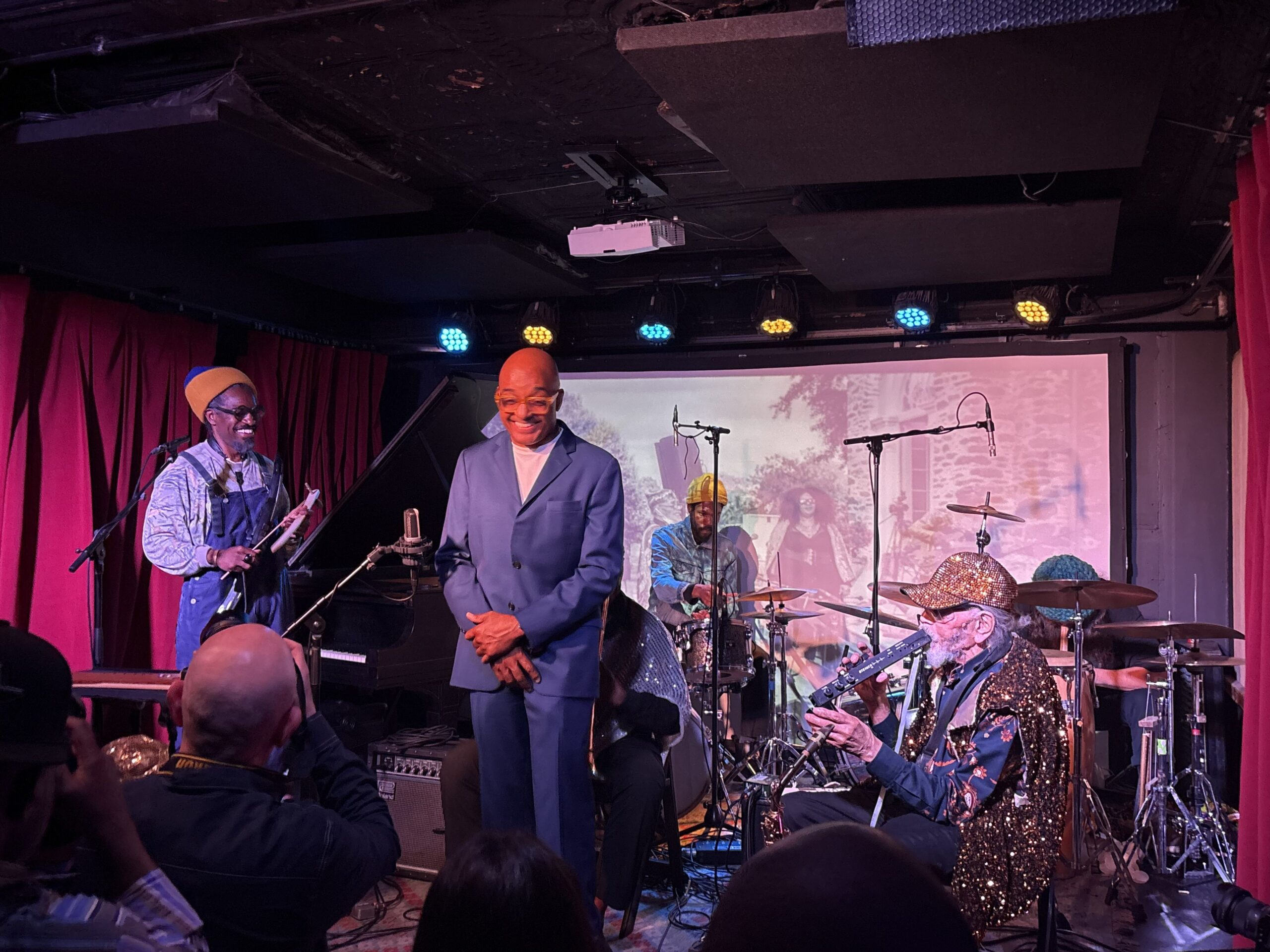
    Sun Ra Arkestra bandleader Marshall Allen’s 101st birthday celebration at Solar Myth in South Philadelphia in May, with Andre 3000, Ronnie Boyd, who is Marshall Allen’s son, and Allen.who is seated. Drummer Austin Williamson is in the background.

    Marshall Allen’s 101st Birthday Party

    May 25, Solar Myth

    The Sun Ra Arkestra bandleader and remarkable experimental musician celebrated the beginning of the second year of his second century. The party featured an all-star band that included Andre 3000 of OutKast (not rapping, but playing flute and piano) as well as special guests Jamaaladeen Tacuma and Tara Middleton. The Ars Nova Workshop event celebrated Allen’s new Live in Philadelphia album, recorded with the Ghost Horizons Ensemble.

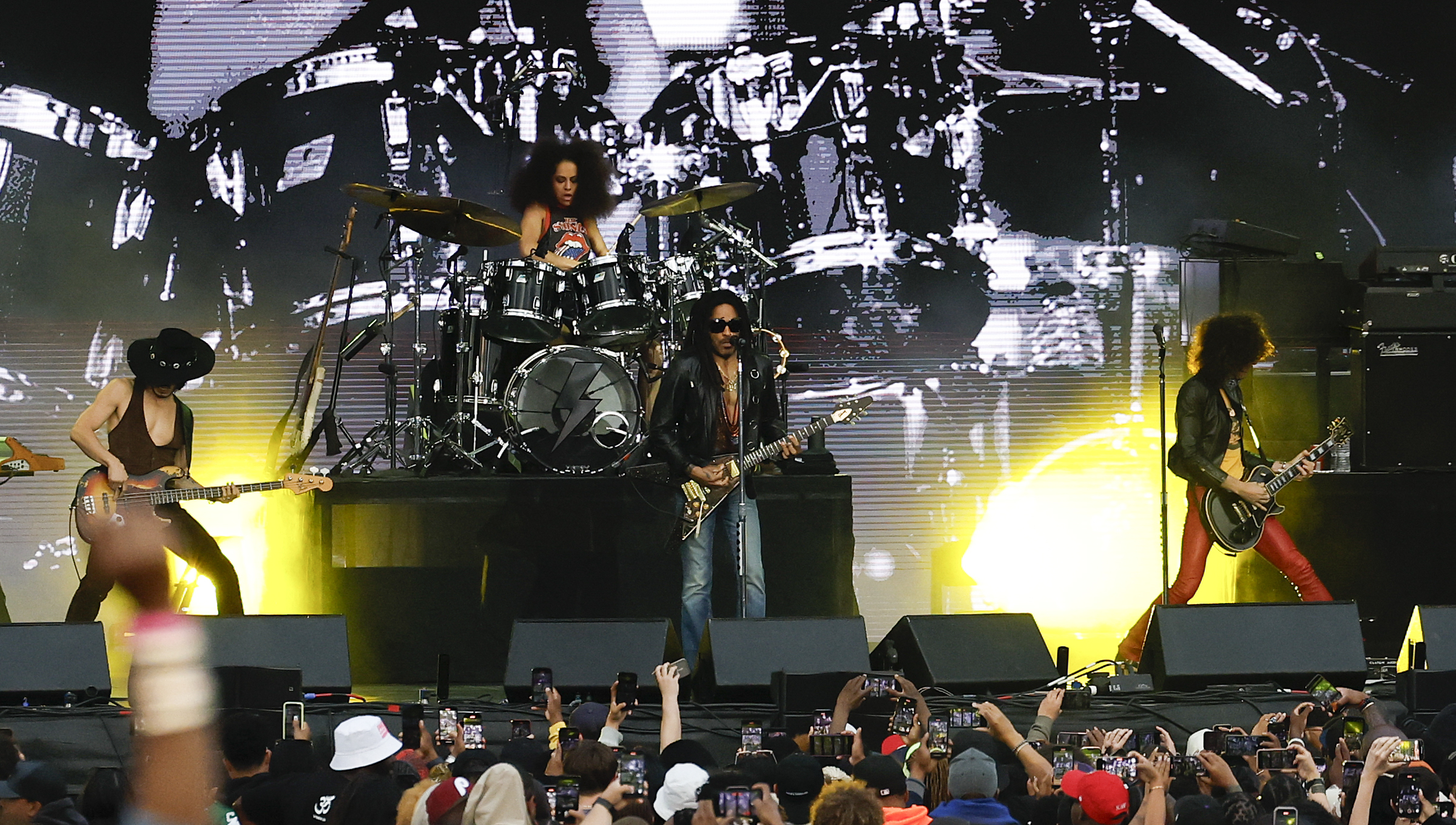
    Lenny Kravitz (center) performs on the Fairmount Park Stage during The Roots Picnic 2025 at the Mann Center on Sunday, June 1, 2025.

    Maxwell and Lenny Kravitz at The Roots Picnic

    May 31-June 1, Mann Center

    This year, things didn’t go as planned at Philadelphia’s signature summer concert event. D’Angelo, who died of pancreatic cancer later in the year, canceled due to illness. Then torrential rains caused delay, angering ticket holders who waited outside the gates for hours.

    Maxwell was the hero of the Picnic’s first night, stepping in as D’Angelo’s super sub and delivering a silky performance that (mostly) made the bad vibes go away. Then on Sunday, the clouds parted and the Picnic got the feel-good sun-baked “Let Love Rule” rock star performance from Kravitz that Questlove & Co. had been hoping for.

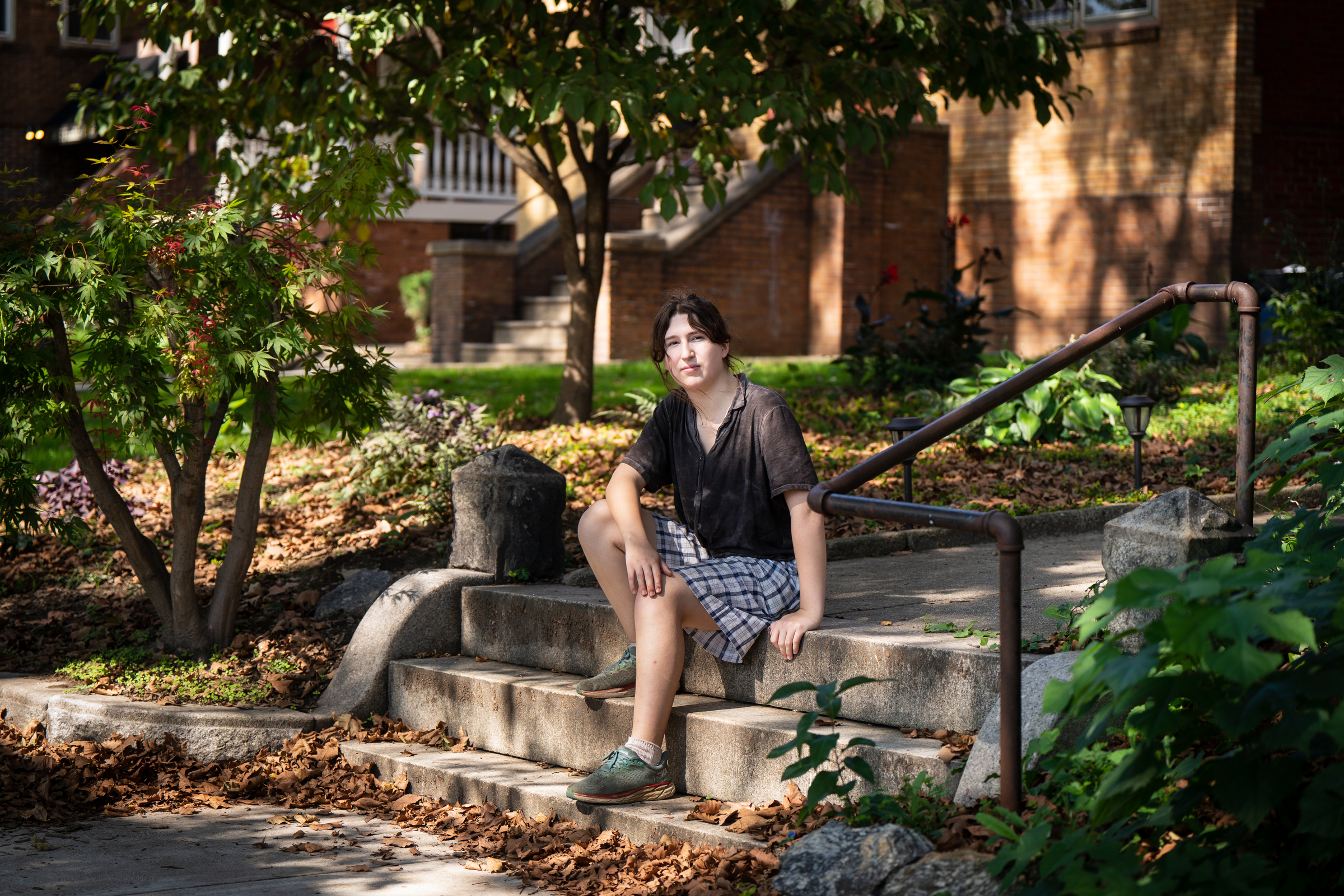
    Francie Medosch, leader of the rising Berwyn-born country rock band Florry. Photo from October 2023.

    Florry and the Hold Steady

    June 27, Foundry at the Fillmore and Brooklyn Bowl Philadelphia

    Philly concert FOMO is an ongoing issue. Why can’t a music-loving person be at two places at once? The beauty of this particular evening was the venues were next to one another. The terrific Philly rocking country band Florry was at the Foundry, the upstairs venue at the Fillmore, where the Francie Medosch-led band was ripping through the ragged and right songs on its new Sounds Like … And the timing was such that I was able to catch almost all of Florry’s set and then run over to the Brooklyn Bowl to catch bar band extraordinaire, the Hold Steady, in the middle of its “Constructive Summer” three-night run.

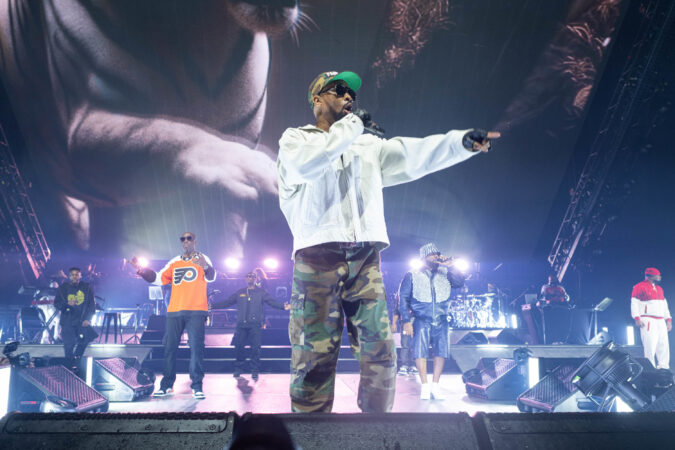
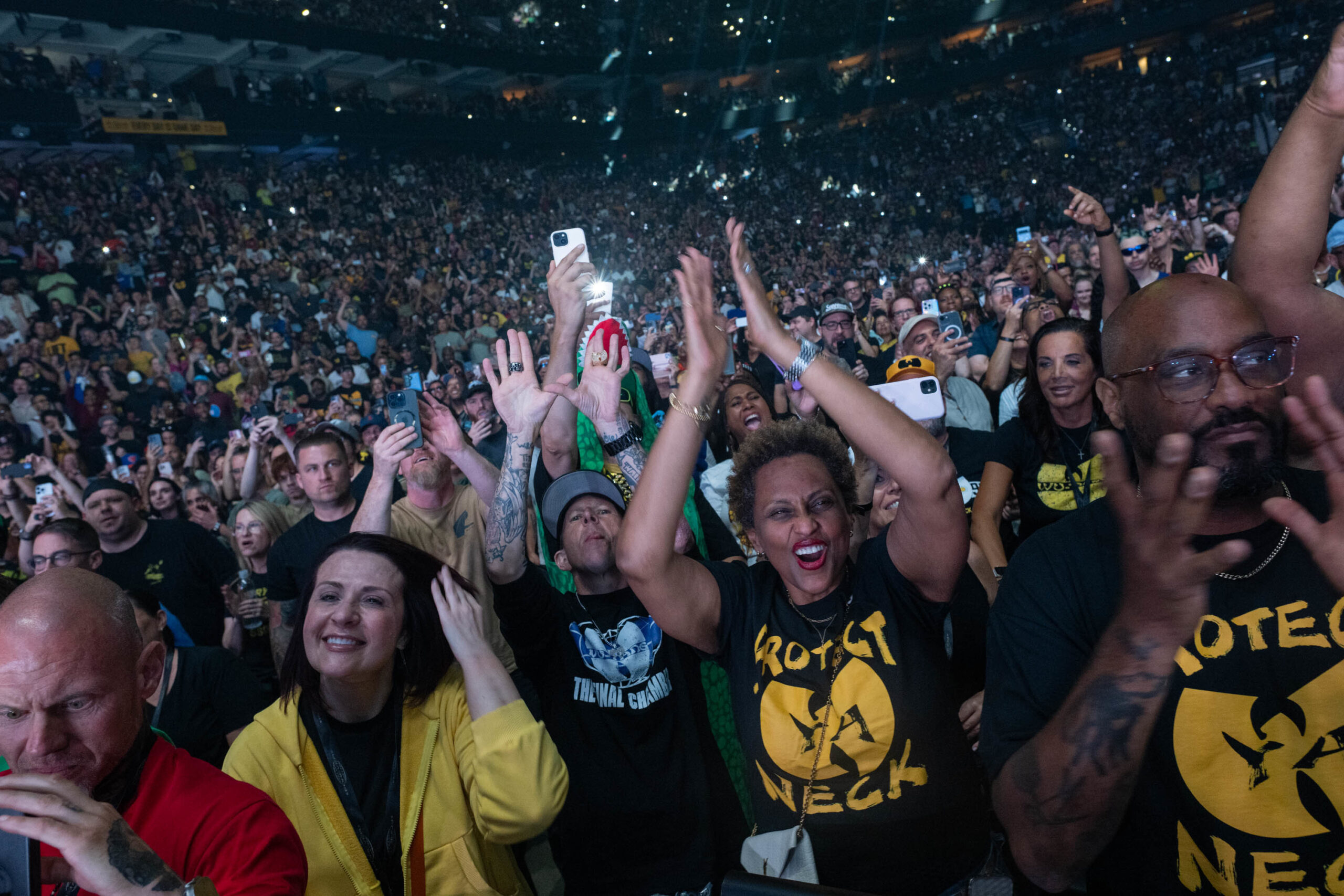
    Audience members applaud during the Wu-Tang Clan’s final performance of their farewell tour, “Wu-Tang Forever: The Final Chamber,” at the Wells Fargo Center in Philadelphia on Friday, July 18, 2025.

    Wu-Tang Clan

    July 18, Xfinity Mobile Arena

    Was this the final fully-staffed Wu-Tang clan show ever? Not only were all nine surviving members, plus Ol’ Dirty Bastard’s son Young Dirty Bastard, in the house on the last stop on the Wu-Tang Forever: The Final Chapter tour, LL Cool J, Ms. Lauryn Hill, Freeway, and Philadelphia City Council president Kenyatta Johnson, who gave the pioneering hip-hop proclamations of appreciation, were also present. All that, plus a knockout opening act in Run the Jewels.

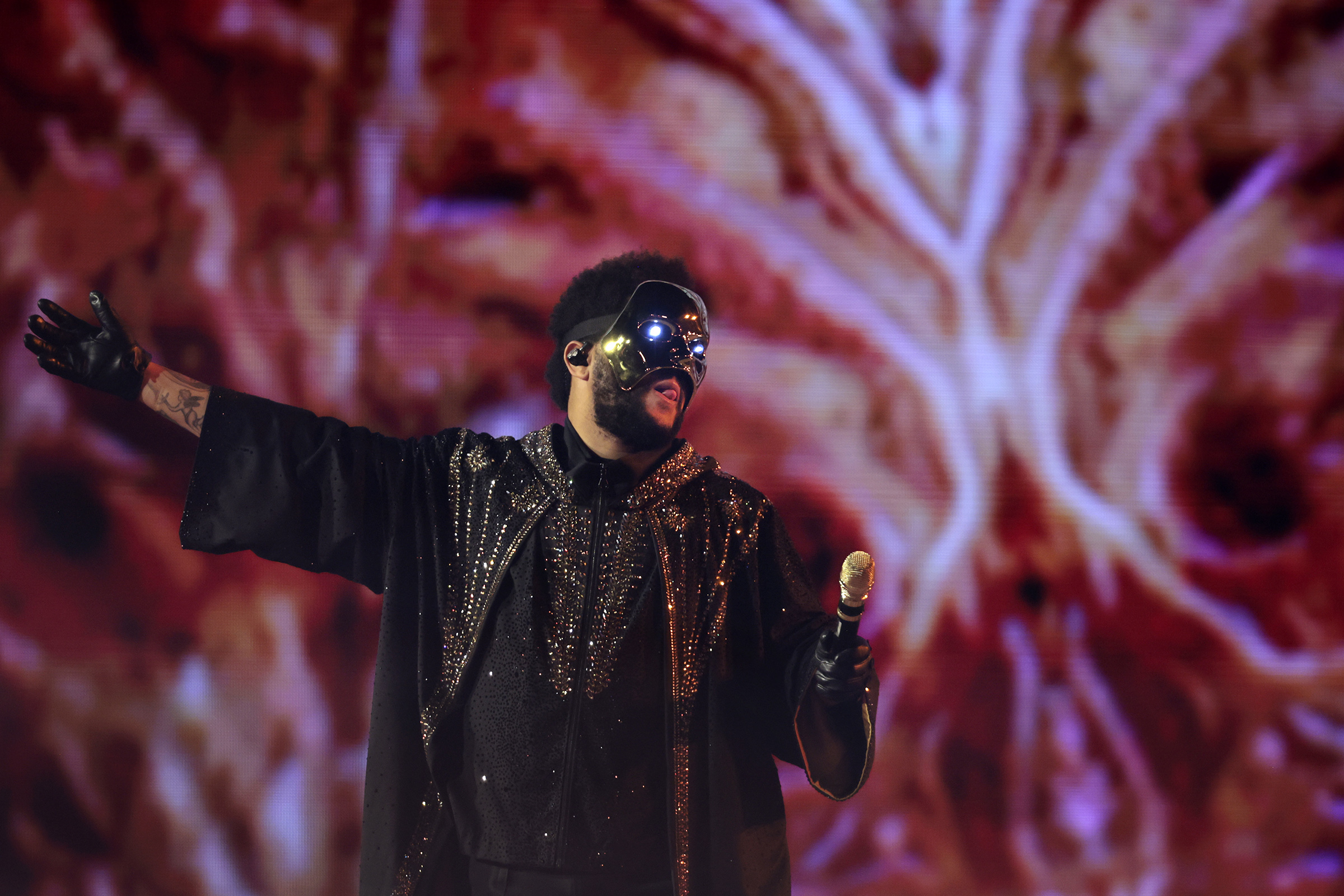
    The Weeknd performs during his After Hours Til Dawn Stadium Tour stop at Lincoln Financial Field in Philadelphia on Wednesday, July 30, 2025.

    The Weeknd

    July 30, Lincoln Financial Field

    Was this really a retirement party? The Weeknd — Canadian pop superstar born Abel Tesfaye — says he’s ready to put his character to rest. But at the Linc — where he and Metallica were the only artists to play multiple nights this year — Tesfaye seemed to have a glorious time. Dressed like a wizard, he must have felt like one, as he stood at the 50 yard line of the Linc and listened to 65,000 fans sing along to his every word.

    Leon Bridges and Charley Crockett

    Sept. 5, TD Pavilion at the Mann Center

    “The Crooner and the Cowboy Tour” featured retro-leaning R&B singer Bridges, who headlined, and Crockett, the honky-tonk singer who blends blues and soul. The result was an evening that — with the added attraction of opener Reyna Tropical — offered a delightful combo of tough-minded twang and sultry soul from the Texas. The twosome attracted a refreshingly diverse, intergenerational crowd.

    The Pogues

    Sept. 5, Franklin Music Hall

    Without frontman and songwriter Shane MacGowan, who died in 2023, the Pogues carried on this year with original members Spider Stacy, Jem Finer, and James Fearnley. They were joined by a dozen or so players who have the Irish folk-punk band’s music in their blood. The result was raucous, and restorative. Long live Shane MacGowan!

    Making Time ∞

    Sept. 17-19, Fort Mifflin

    Fort Mifflin is the coolest festival site in Philadelphia and DJ-impresario David Pianka put the grounds of the Revolutionary War era structure to imaginative use in the fifth year of his internationally renowned electronic music-plus gathering. The three-day fest attracted crowds with its new rave-tastic Option 5 stage and big name acts like Panda Bear, mellow afternoon live band shows like a collaboration between Marshall Allen and harpist Mary Lattimore, and a food and beverage program that outpaces all musical competition.

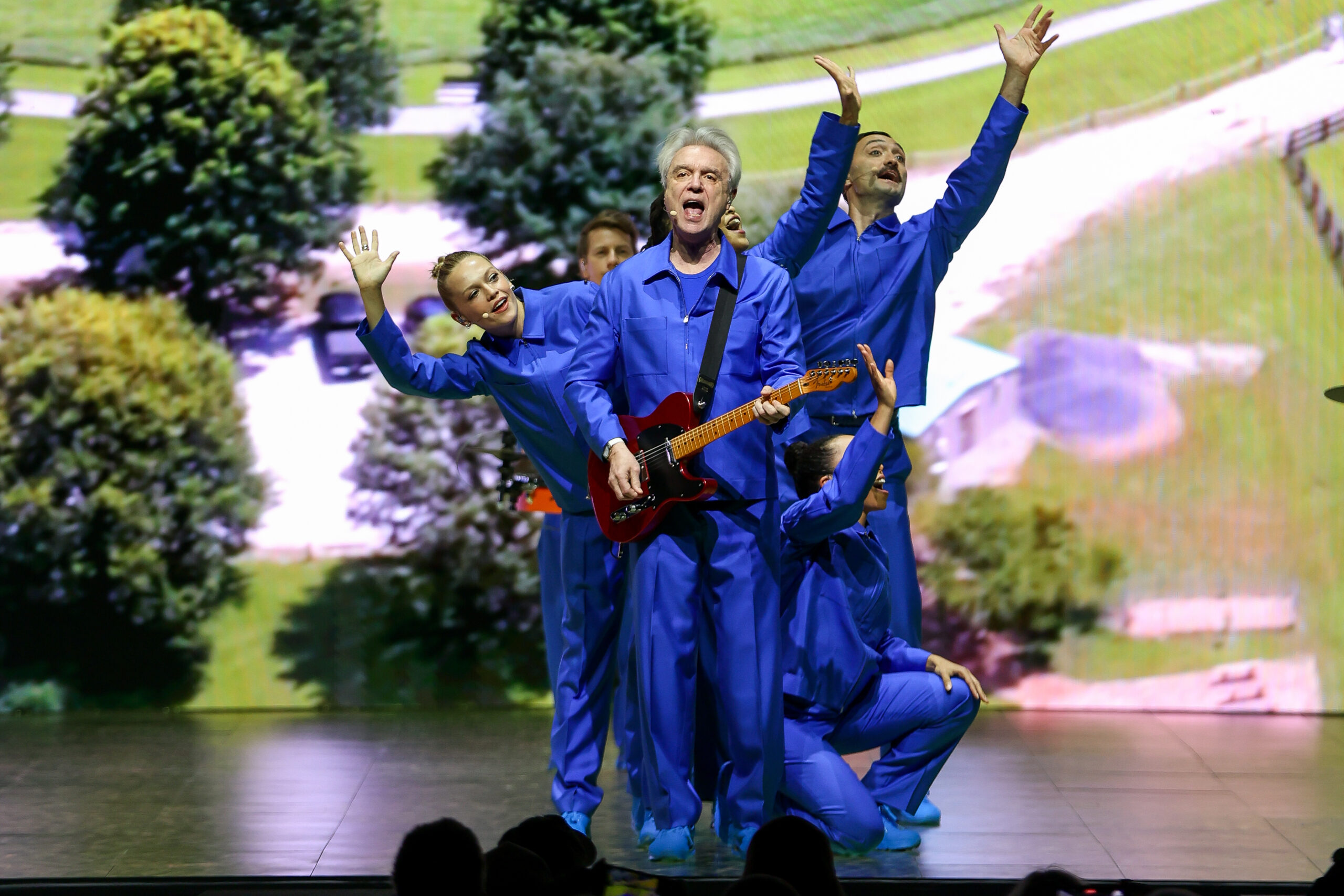
    David Byrne performs songs from his solo album “Who Is the Sky” at the Met on Thursday, Oct. 16, 2025, in Philadelphia.

    David Byrne

    Oct. 16, Met Philly

    The first of the former Talking Heads leader’s three shows, Inquirer reviewer Shaun Brady wrote, found “Byrne and his 13-piece band engaged in a vibrant act of communion and celebration.” The musicians all used wireless mics and dressed in pajamalike outfits. The stage “abounds in color and movement,” Brady wrote. “A semicircular video screen surrounds the band, illustrating Byrne’s songs in sometimes literal, sometimes wry fashion.”

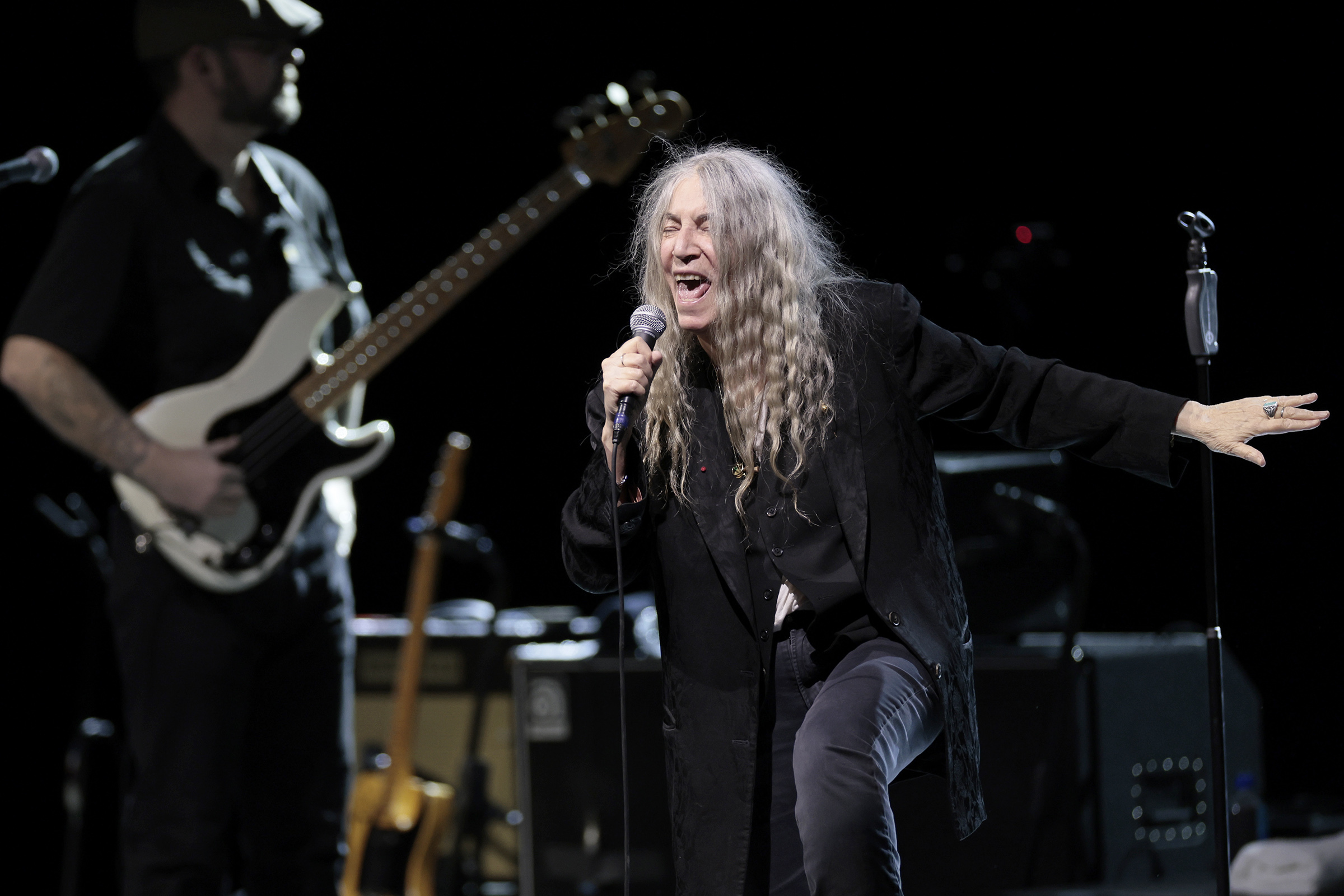
    Patti Smith and Her Band perform “Horses” on its 50th anniversary at the Met Philly in Philadelphia on Saturday, Nov. 29, 2025.

    Patti Smith

    Nov. 29, Met Philly

    The punk rock poet who grew up in Philadelphia and South Jersey finished the tour for the 50th anniversary of her 1975 debut album, Horses at the Met, and turned it into a celebration of the 215 beginnings that she chronicles in her new Bread of Angels memoir. The still electrifying performer, who identified with downtown New York in the 1970s, reminded her fans that it all started in Philly. “I might have left Philadelphia physically,” she said. “But it’s always been in my heart.”

    Glory Glory Allan Sherman

    Dec. 4, Weitzman National Museum of American Jewish History

    This only-in-Philly performance was a ragtag wonder, a tribute to the musical comedian who wrote “Hello Mudduh, Hello Faddah.” Inspired by Philly-born musical alchemist Hal Willner, the evening featured killer bands and Philly talent, including Wesley Stace, Adam Weiner, Rodney Anonymous, and the aforementioned Marshall Allen. It also accomplished something far too rare this year: It made me laugh.

  • The urban designer whose weekly work commute is from Philadelphia to Atlanta, and back

    The urban designer whose weekly work commute is from Philadelphia to Atlanta, and back

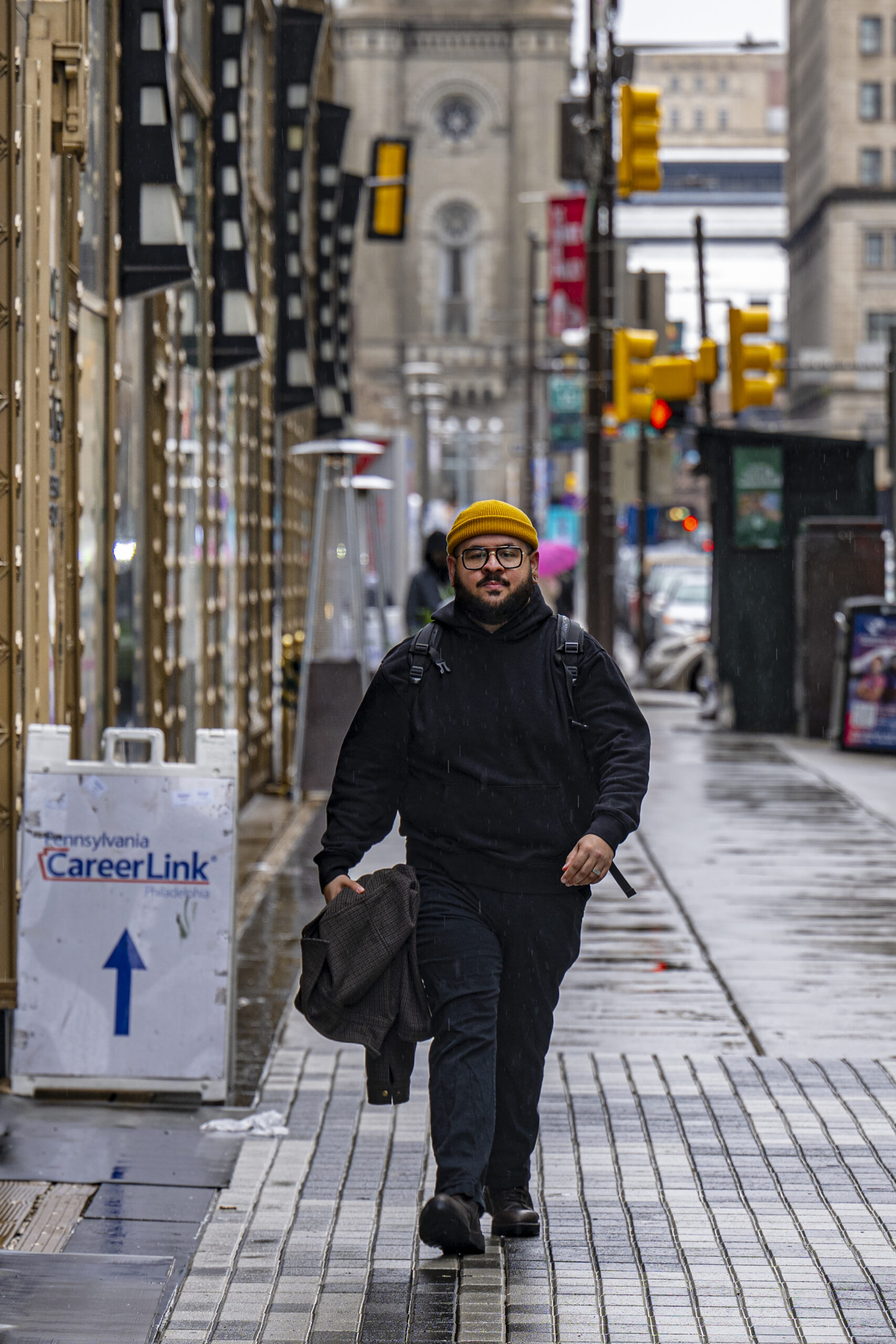
    Philadelphia’s congested highways or crowded SEPTA platforms don’t get in the way of Daniel Rodriguez’s commute to work.

    That’s because the Philadelphia-based urban designer’s commute between his firm’s two offices consists of two flights, two trains, and a bus between two states each week.

    Rodriguez, who lives with his wife in their Jewelers’ Row apartment, ping pongs between his home (and his Center City office) in Philadelphia and his office in midtown Atlanta, twice a week.

    Rather than moving to Georgia or embracing a simpler, work-life balance, Rodriguez prefers an 800-mile trek to work that doesn’t have him dealing with Philly rush hour traffic and the restrictions car owners face.

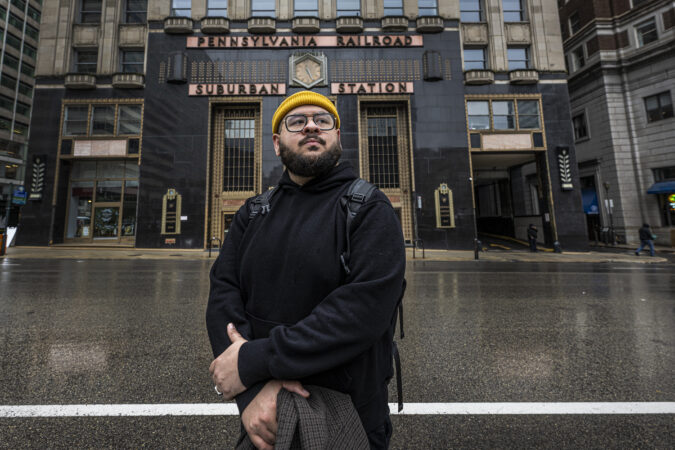
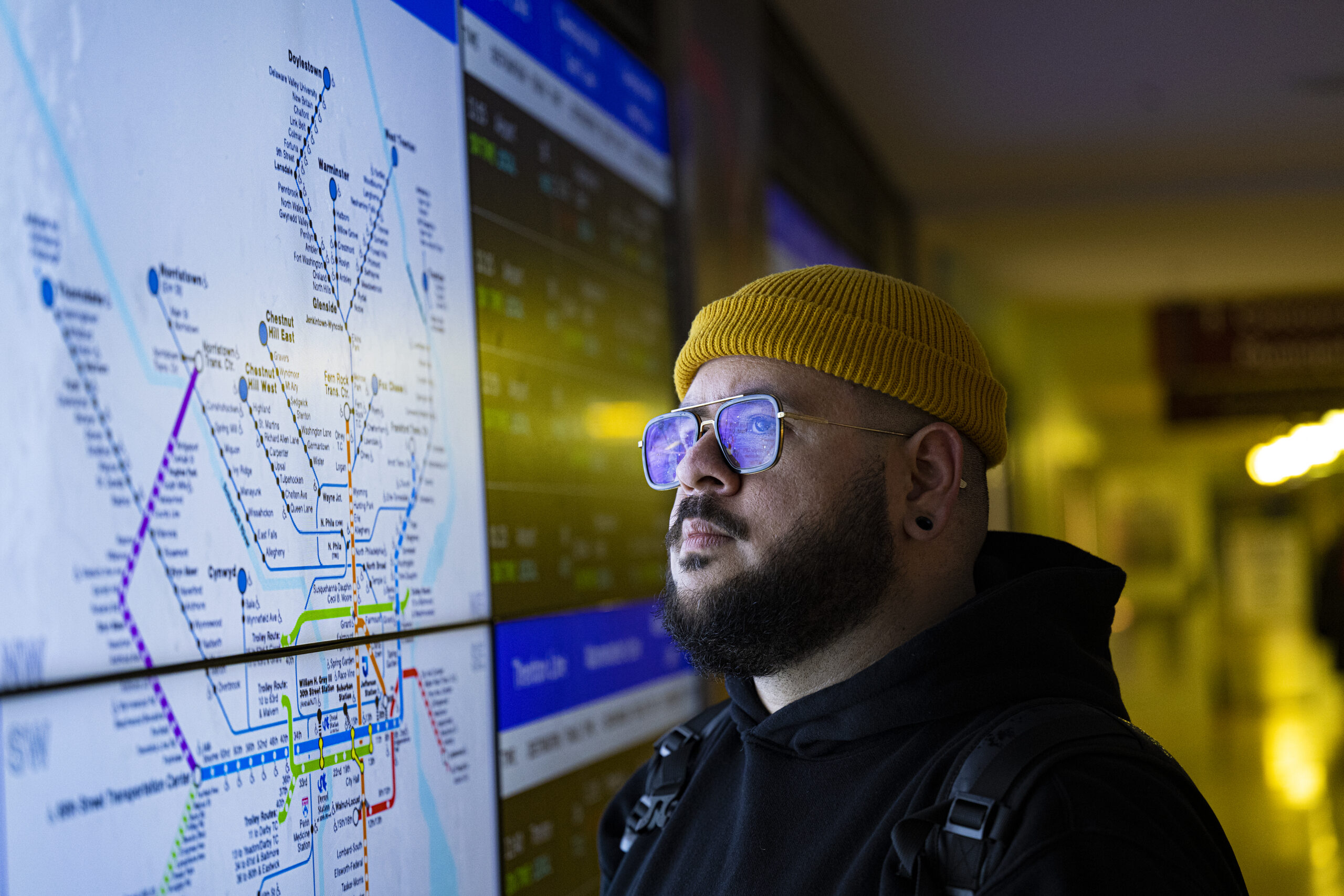
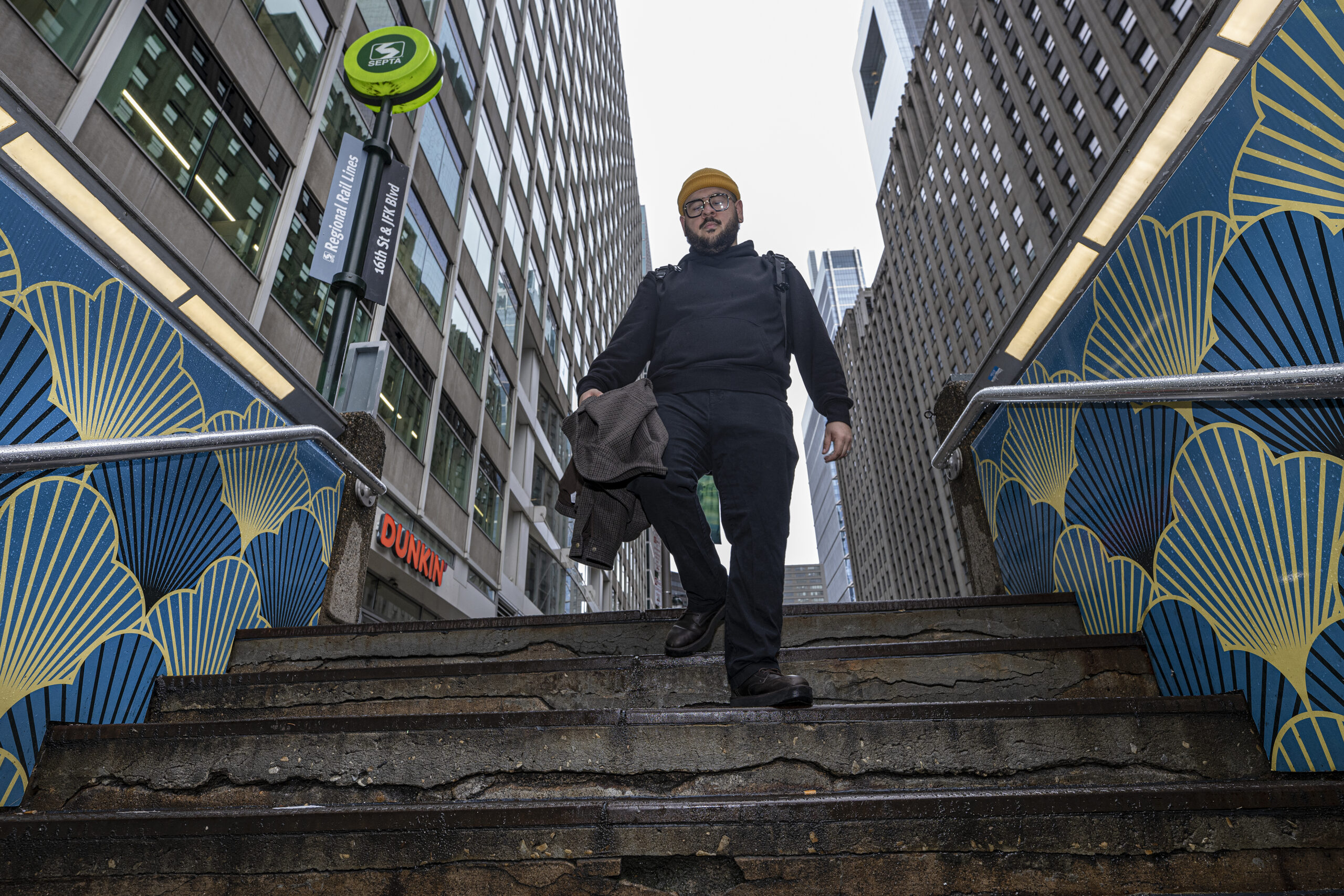
    Daniel Rodriguez travels to the Philadelphia’s Suburban Station on Friday, Dec. 19, 2025. Rodriguez uses the station to commute between Philadelphia and metro Atlanta, taking a train from Center City to Philadelphia International Airport before boarding flights to and from his company’s Atlanta office.

    “I want to live a life that’s intentionally, anti-whatever everybody else is doing,” Rodriguez said. “I feel like there are problems in society, and this is one of them that just trickles and affects so many things in our personal and professional lives. It’s not anti-car. It’s really about getting away from the dependency and focusing on building systems that help people move. That’s my whole philosophy.”

    Rodriguez, who grew up in Bayamon, Puerto Rico, said it’s a lifestyle driven by the independence and movement he felt was missing in his youth.

    The geographical barriers of the island often led to feelings of physical and mental entrapment as a child.

    “Where I come from, I’ve never seen people so hungry to have something in life, with no ability to achieve it,” he said. “And I’m willing to do extreme things to do that.”

    In May, the 34-year-old began posting videos of his travels to and from Philadelphia and Atlanta. His TikTok and Instagram posts have drawn millions of viewers, with hundreds of users questioning how Rodriguez balances his workload and travels.

    His schedule varies each week, but he usually flies into Atlanta on Sunday nights and returns to Philadelphia on Tuesday nights. Sometimes, he will fly out on Monday mornings and return on Wednesday mornings. He also does same-day round trips a couple of times a month.

    The planning for his trips to Atlanta begins the night before. Rodriguez packs his bags and puts toothpaste on his toothbrush before going to bed.

    Daniel Rodriguez travels through Philadelphia’s Suburban Station on Friday, Dec. 19, 2025. Rodriguez uses the station to commute between Philadelphia and metro Atlanta, taking a train from Center City to Philadelphia International Airport before boarding flights to and from his company’s Atlanta office.

    He wakes up at 4 a.m., grabs his belongings and walks to Suburban Station. Here, he boards the train to the Philadelphia International Airport and lands in Terminal F for his flight to Atlanta. He does have to factor in the regular delays.

    “Terminal F is like the dingleberry of Philadelphia. It’s the last one at the airport, and really far,” he joked.

    After the 90-minute flight to Atlanta, he walks over to the Metropolitan Atlanta Rapid Transit Authority platform for a 30-minute train ride to his company office in midtown Atlanta.

    He’s not completely “anti-car,” he insists. He often rents a Zipcar for small errands and to explore Atlanta restaurants, art galleries, and sites that feed his architectural interests.

    “I’m more along the lines of, ‘I don’t want to be dependent on a car,’” he said. “I don’t want to put my money toward that. I’d rather put that into something else, and suffer the consequences.”

    Once his work day is finished, he either uses ride-share or takes a one-and-a-half-hour bus ride to a friend’s apartment in Decatur, arriving around 9 p.m. And before he rests his head for the night, Rodriguez begins his routine all over again for his return to Philly the following morning.

    Rodriguez said his travel costs come out to about $180 each week, with the most significant barrier being the time and energy he spends to balance out his travels.

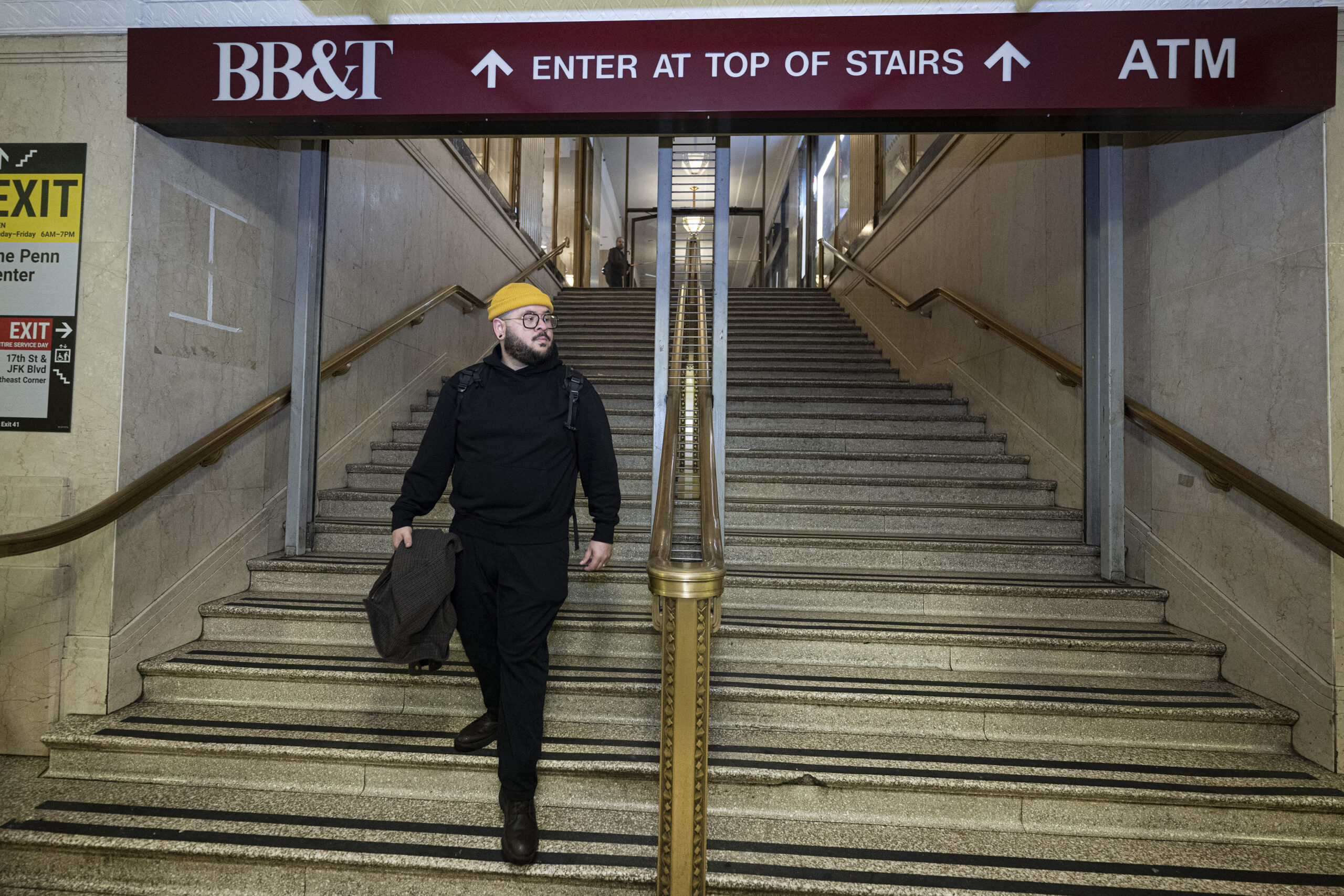
    Daniel Rodriguez travels through Philadelphia’s Suburban Station on Friday, Dec. 19, 2025, in Philadelphia. Rodriguez uses the station to commute between Philadelphia and metro Atlanta, taking a train from Center City to Philadelphia International Airport before boarding flights to and from his company’s Atlanta office.

    “It’s not unachievable,” Rodriguez said. “I feel like the pain point for a lot of people is the time. People don’t want to spend the time.”

    Rodriguez didn’t always live like this. His super commute began after years of uncertainty. He moved to Philly in 2022 and between 2023 and 2025, Rodriguez was laid off twice and incurred thousands in debt.

    “I wasn’t even paycheck to paycheck anymore. I was living in the negative,” he said.

    After another eight months of job hunting, he was at a crossroads. With limited jobs in his industry in Philly, he applied for roles in other cities.

    He applied to an urban design firm in Atlanta, and the week his unemployment ran out, he landed his current role in May 2025. While the company has an office in Center City, the Atlanta location was the only one hiring in his specific field.

    Rodriguez consults on transportation, green space, urban design, and master planning in Atlanta and other cities along the East Coast.

    While the demands of the commute were challenging at first, Rodriguez believes he has made a decision that works for him. “I have my wife here, and I don’t want to uproot her,” he said.

    Since he started making videos of his commute, his world has “completely flipped,” Rodriguez said.

    He’s landed brand deals with travel-based companies and has spoken in various cities across the country about how fellow millennials can traverse the country without the burden of a vehicle.

    Daniel Rodriguez travels through Philadelphia’s Suburban Station on Friday, Dec. 19, 2025, in Philadelphia. Rodriguez uses the station to commute between Philadelphia and metro Atlanta, taking a train from Center City to Philadelphia International Airport before boarding flights to and from his company’s Atlanta office.

    Rodriguez plans to become a content creator full-time to encourage viewers across YouTube, Instagram, TikTok, and other platforms to avoid the pitfalls of car ownership.

    His ambitions haven’t gone unchecked. Environmentalists who watch his videos often point to the carbon footprint he leaves behind, despite his aversion to car ownership.

    Rodriguez admits his lifestyle could be viewed as contradictory. His modes of travel contribute to gas emissions, but he contends he’s not the sole source of the issue, simply a product of a system already in place.

    “I did not pass the laws that allow oil barons to drive or force corporations to fuel jets that release stored carbon,” he said. “I am a participant in society, and there is no fully ethical way to exist within it.”

    While he understands people’s precaution and confusion, Rodriguez is confident his weekly commute and lifestyle will work as well for others as they do for him.

    “I love to create. I love to build. And I don’t want to do anything where you’re just staying still,” he said.

  • Gary Graffman, pianist and former Curtis faculty member and president, has died at 97

    Gary Graffman, pianist and former Curtis faculty member and president, has died at 97

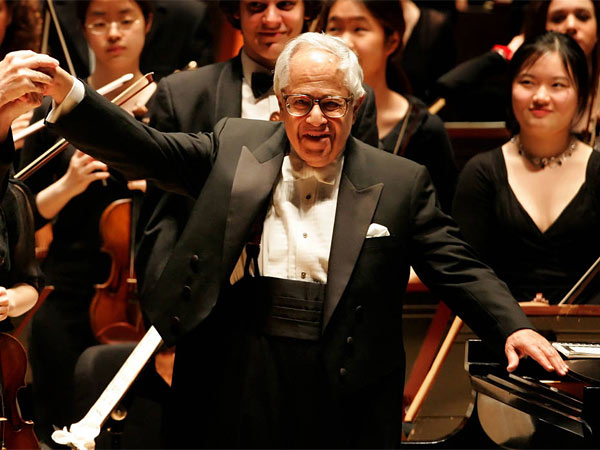
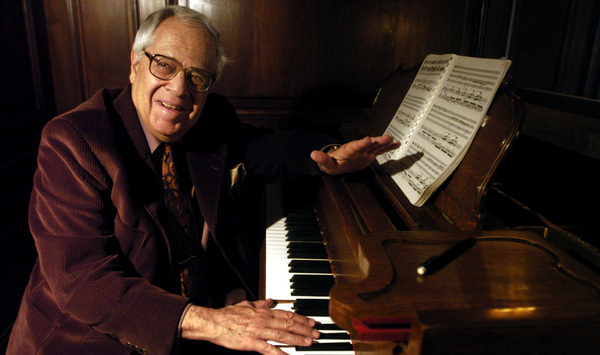
    While the classical music world knew Gary Graffman as a distinguished visiting concert pianist, Philadelphia was his launching pad and artistic home over roughly eight decades. He was both a student and president at the Curtis Institute of Music, nurturing young talents to international fame before his death on Saturday in New York. He was 97.

    His death was confirmed by his longtime publicist.

    The New York City-born pianist arrived at Curtis at age 7. He graduated at age 17 and played roughly 100 concerts a year between the ages of 20 and 50 before retiring from touring due to a compromised right hand. Diagnosed with focal dystonia (a neurological disorder), he went on to premiere works for the left hand by Jennifer Higdon and William Bolcom.

    Mr. Graffman returned to Curtis as a teacher in 1980, became director in 1986, and the president of the conservatory in 1995, with a teaching studio encompassing nearly 50 students, including Yuja Wang and Lang Lang among others. He performed on numerous occasions with the Philadelphia Orchestra from 1947 to 2003.

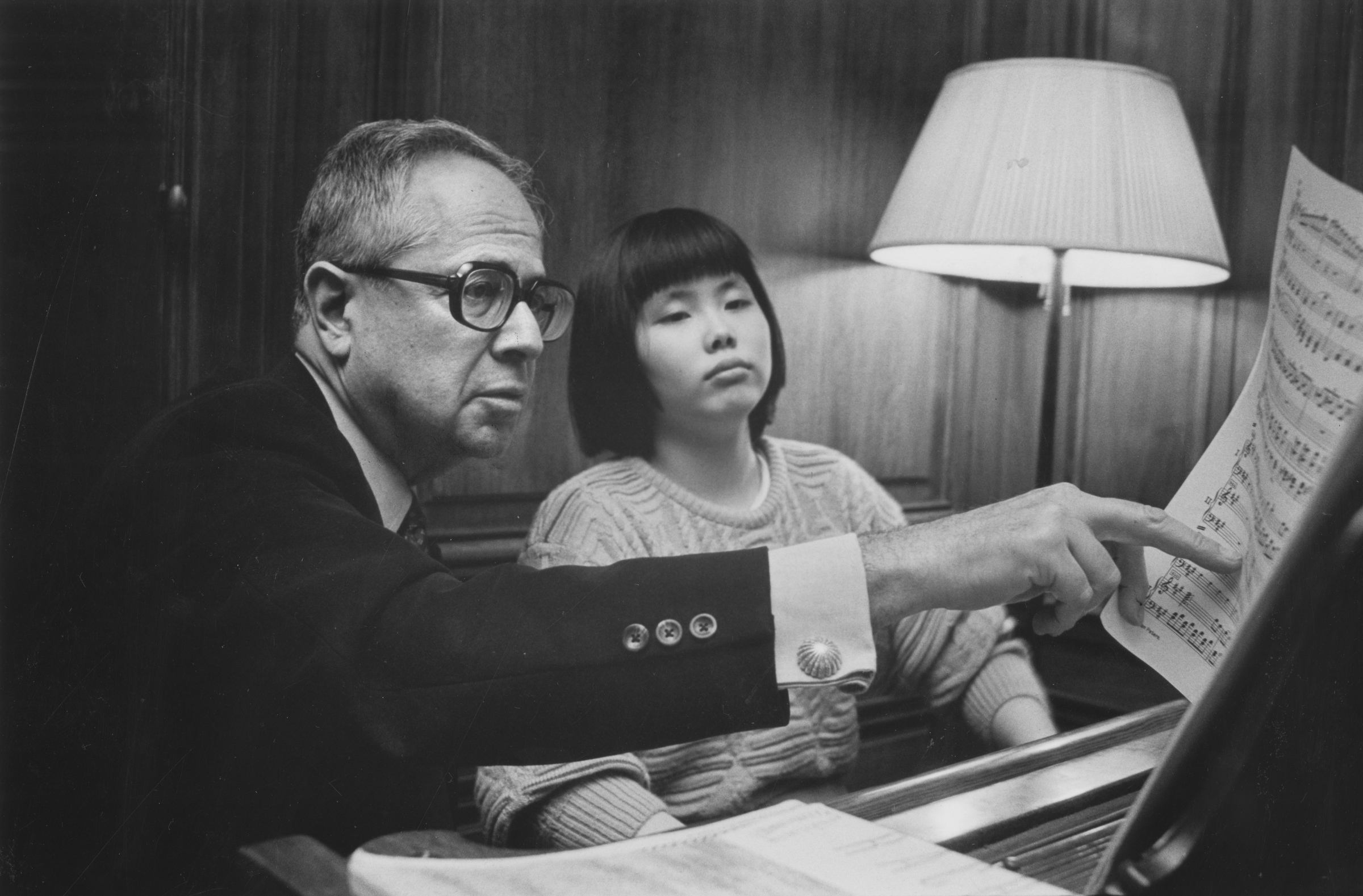
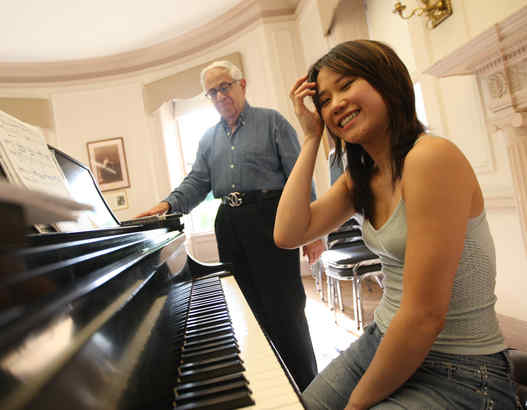
    Former Curtis Institute director Gary Graffman during a 1989 piano lesson with Angela Au, then 13.

    He stepped down from the faculty at age 92 in 2021, mainly due to travel challenges, having commuted for years between New York and his Philadelphia home at the Wanamaker House on Walnut Street. Yet he maintained a family-like association with students at his longtime 57th Street Manhattan home that was filled with antiques he acquired over many visits to China. He joked that he had cleaned out the continent, saying (with his characteristic humor), “There’s no more left. All gone!”

    Mr. Graffman’s interest in nonmusical matters helped ease his transition out of full-time touring. Often accompanied by his wife, Naomi (who preceded him in death in 2019 at age 90), he projected a been-there-done-that attitude and was relieved not to have more comprehensive ailments, having been diagnosed with Parkinson’s disease. “It’s only your hand,” he told commentator Zsolt Bognár in an extended, candid interview for Living the Classical Life, a distinguished series of podcasts.

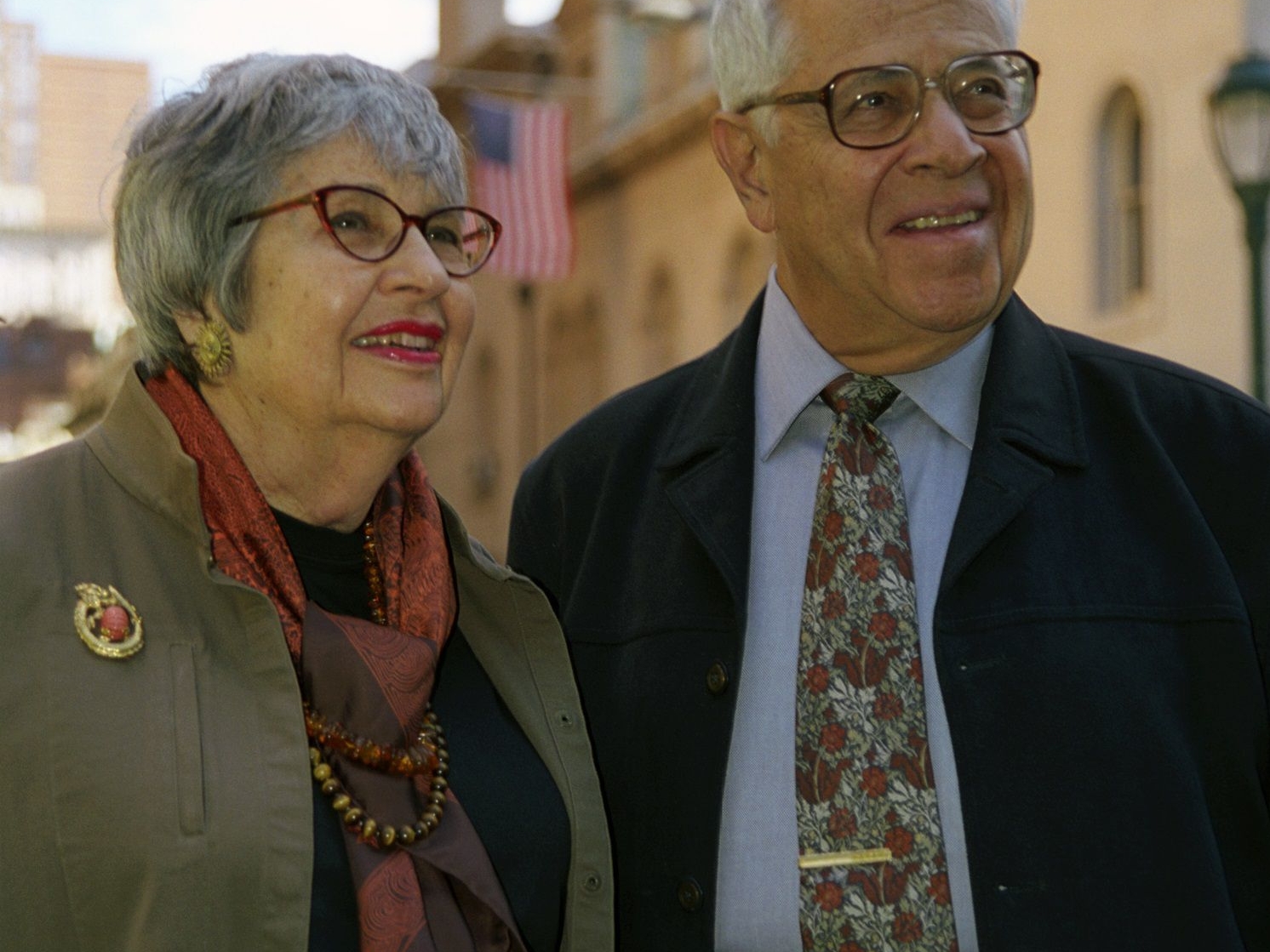
    Naomi and Gary Graffman.

    Having started playing piano at age 3 under the guidance of his Russian-heritage parents, Mr. Graffman began studying in earnest in 1936 at Curtis. Though he went on to study at Columbia University and to win the Leventritt Competition, his career effectively began at age 17 after winning the Rachmaninoff Fund competition, as documented in a short squib in the New York Times, dated March 28, 1947:

    “Gary Graffman of 226 West Ninety-seventh Street, New York, made his debut this afternoon with the Philadelphia Orchestra, conducted by Eugene Ormandy, playing Rachmaninoff’s Second piano concerto. The 18-year-old pianist was recalled to the stage several times, amid shouts of ‘bravo’ from the more than 3,000 persons in the Academy of Music.”

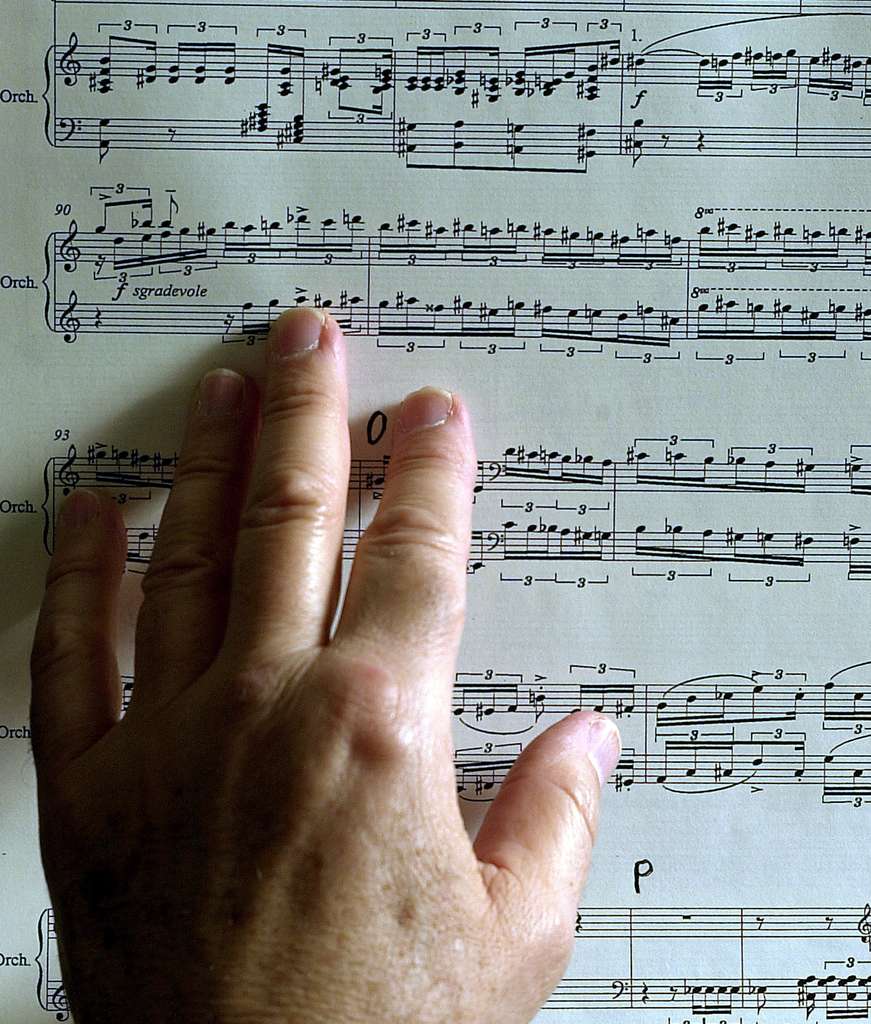
    Gary Graffman’s left hand rests on sheet music of composition by Prado. File photograph.

    Years of less-formal studies followed with the legendarily strong-minded Russian pianist Vladimir Horowitz, from whom Mr. Graffman learned how to bring out the individual voice of a student. During lessons, Horowitz never went to the keyboard to demonstrate how he would play a particular phrase.

    From there, Mr. Graffman had a top-of-the-line career. He recorded much of the romantic-era piano literature for RCA and Columbia, and with some of the great orchestras of the United States. Most notably, he recorded his signature Rachmaninoff Piano Concerto No. 2 with the New York Philharmonic under Leonard Bernstein.

    But while recording Tchaikovsky’s Piano Concertos 2 and 3 in Philadelphia with Eugene Ormandy, Mr. Graffman began noticing finger problems that, at the time, he was able to work around.

    Gary Graffman in 2006 near his retirement.

    Like many musicians experiencing such difficulties, it was initially assumed (even by his wife) that he wasn’t practicing enough.

    At age 50, he canceled engagements but managed to record Gershwin’s Rhapsody in Blue, which was used for the soundtrack of the Woody Allen movie Manhattan, and pursued various treatments.

    Back then, focal dystonia was little known or understood. Mr. Graffman’s colleague Leon Fleisher had been struggling with the ailment for years, finally having a late-in-life resurgence as a two-handed pianist. Not Mr. Graffman.

    He made the Ravel Piano Concerto for the Left Hand the center of his repertoire, explored other left-hand works commissioned by the Viennese pianist Paul Wittgenstein (who lost his right arm in World War I) and performed new left-hand works, including concertos by Bolcom, Daron Hagen, and Ned Rorem.

    Though he is often characterized as having been limited to repertoire for the left hand only, the practical truth is that Mr. Graffman maintained some use of his afflicted hand, allowing him to perform works that made limited use of the right hand, such as Alfred Schnittke’s Piano Quintet and Jennifer Higdon’s 1999 Scenes from the Poet’s Dream, commissioned by the Philadelphia Chamber Music Society.

    Yuja Wang takes her final lesson with Gary Graffman at the Curtis Institute of Music in 2008.

    Returning to Curtis, Mr. Graffman was good to his word in teaching each student as an individual whose journey was yet to be discovered.

    Ignat Solzhenitsyn, who graduated in 1995, became a conductor with Chamber Orchestra of Philadelphia and the Kirov Opera. Yuja Wang (2008) has pursued a mixture of new and traditional repertoire, also giving marathon concerts of the Rachmaninoff piano concertos all in one day. Though Mr. Graffman was generally against piano competitions, Hao Chen Zhang (2012) had trouble establishing his career until entering and winning the Van Cliburn Competition.

    Most interesting among Mr. Graffman’s students was, perhaps, Lang Lang (2002). His career seemed to be launched by filling in for Andre Watts at Chicago’s Ravinia Festival. Mr. Graffman maintained that event only sped up the inevitable.

    For years, Mr. Graffman had Lang Lang trying out repertoire in private events, starting small with Mendelssohn and working his way up to bigger repertoire. When Lang Lang was sidelined by tendinitis around 2017, he reportedly turned to Mr. Graffman to find his way back to the concert stage.

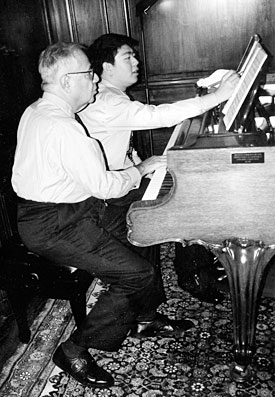
    Lang Lang with teacher Gary Graffman at Curtis.

    Financially, Curtis thrived during Mr. Graffman’s tenure. From 1985 to 2005, annual giving rose from $300,000 to $1.8 million and the endowment went from $45.5 million in to $140 million.

    The major blot on Mr. Graffman’s administrative career, however, was considerable. In 2019, violinist Lara St. John came forward with reports of faculty rape during her mid-1980s student years at Curtis. Investigations concluded that Mr. Graffman had failed to take appropriate action on her reports of sexual assault.

    No doubt, Mr. Graffman will be most remembered as a pianist. Truly a child of the post-Arturo Toscanini generation, Mr. Graffman played with a deep respect for the letter of the score. Often, Mr. Graffman’s Russian heritage could roar into the fore during, say, cadenzas of a Beethoven piano concerto. His impish wit could often be heard in performances of Rachmaninoff’s Rhapsody on a Theme of Paganini. And not surprisingly.

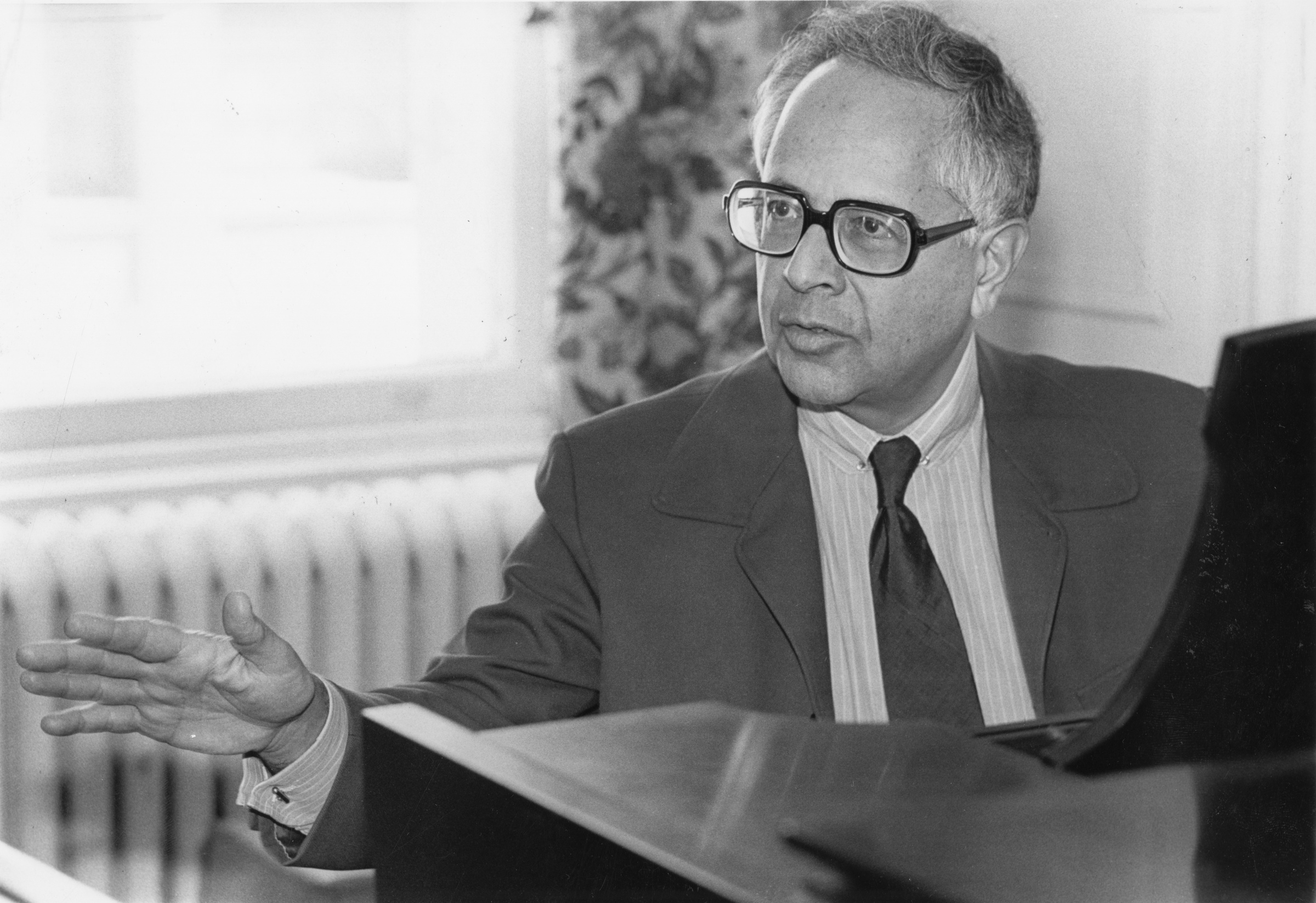
    Former Curtis Institute director Gary Graffman.

    Offstage, Mr. Graffman projected a sense of fun, which is often apparent in his 1981 memoir, I Really Should be Practicing. When Japanese-born pianist Mitsuko Uchida declared having great artistic affinity for the Central European Jewish community, Mr. Graffman began sending her Hanukkah cards. Regarding Wang, he said that she was fascinated by arts beyond the music saying, with mock incredulity, that she went to museums “because she really wants to!” When recordings by the British pianist Joyce Hatto were scandalously discovered to have been stolen from other pianists in 2007, Mr. Graffman quipped that he would be ”deeply offended” if his recordings weren’t among them.

    Mr. Graffman leaves no immediate survivors. Memorials will be announced at a later date.

  • America’s 250th birthday is the moment Philly museums have been waiting for

    America’s 250th birthday is the moment Philly museums have been waiting for

    No one throws a “Happy 250th Birthday, America” jammy jam like a Philadelphia museum.

    Embedded into the fabric of our nation’s birthplace, Philly cultural institutions are gearing up for high-level deep dives into history, fun, folly, and reflection. Just in time for the Semiquincentennial.

    Our museums’ dynamic programming for America’s big birthday kicks off on Jan. 1.

    The Philadelphia Art Museum, the National Constitution Center, the Museum of the American Revolution, and smaller outfits like Eastern State Penitentiary and Historic Germantown will, as expected, reimagine the history of our republic in an homage to the forefathers’ ingenuity.

    Many are also honoring the perspective of marginalized Americans, upon whose backs this country was built.

    Mixed into the Semiquincentennial festivities are other milestone birthdays. Carpenters’ Hall will celebrate the Commonwealth of Pennsylvania’s 250th with an exhibit, historical marker, statewide town halls, and virtual lecture series.

    The African American Museum in Philadelphia, the Mummers Museum, and the Please Touch Museum — all born out of the 1976 Bicentennial — are turning 50, expanding permanent exhibitions, hosting artist talks, and welcoming school children on field trips.

    The new year also marks Germantown’s the Colored Girls Museum‘s 10th anniversary; it will open its fall 2026 season with a rare show from renowned sculptor vanessa german.

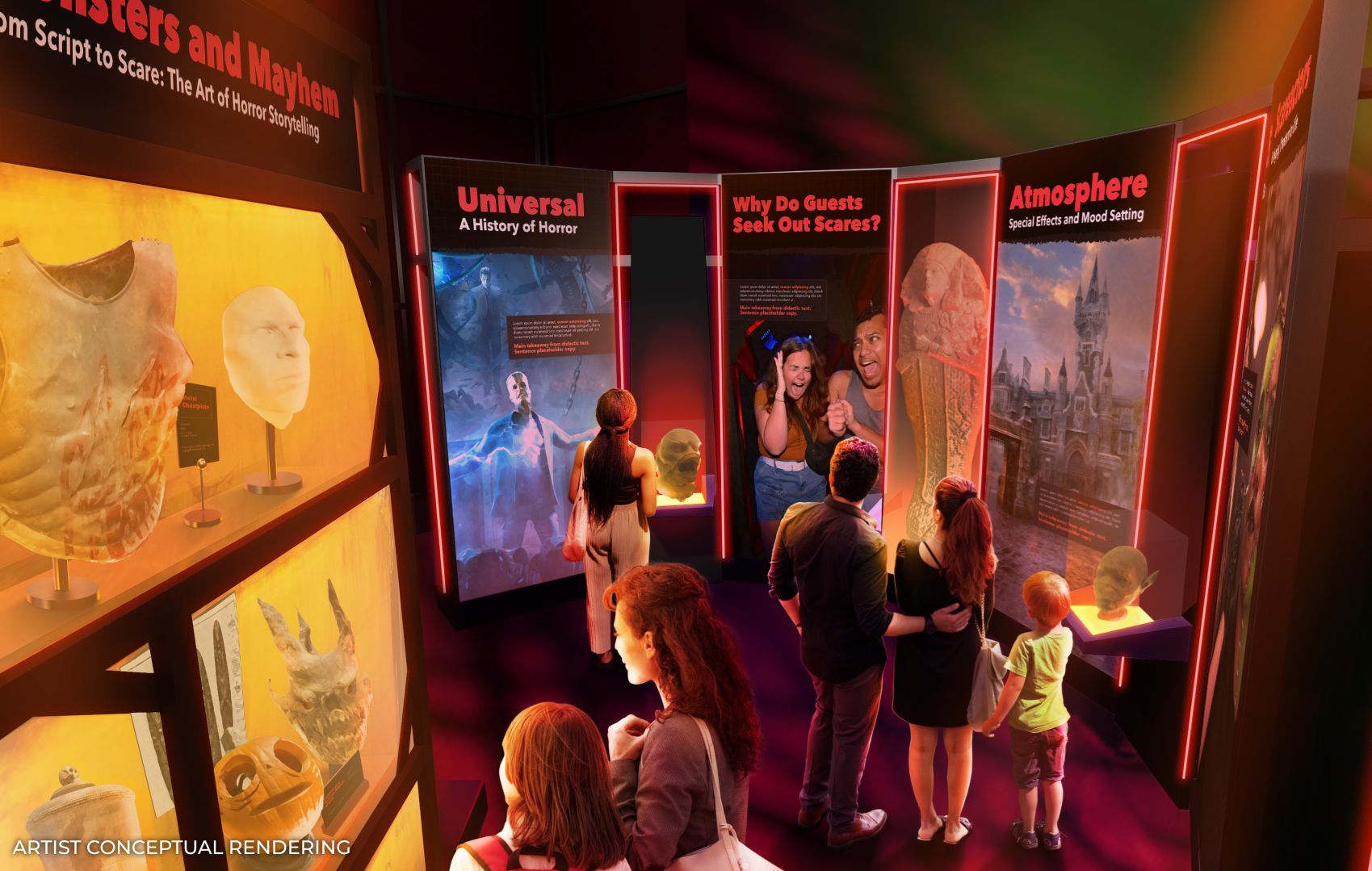
    In a nod to amusement parks — cornerstones of 20th century American entertainment — the Franklin Institute will premiere “Universal Theme Parks: The Exhibition” in February, taking visitors on a virtual trip through attractions from Jaws to Jurassic World.

    Renderings of The Franklin Institute’s world premiere of “Universal Theme Parks: The Exhibition” February 14, 2026 – September 7, 2026.

    Philly is America’s birthplace. Our 250th birthday energy can’t be outdone.

    From the looks of it, it won’t be.

    Philadelphia Art Museum

    The Philadelphia Art Museum has three major shows in 2026.

    Noah Davis

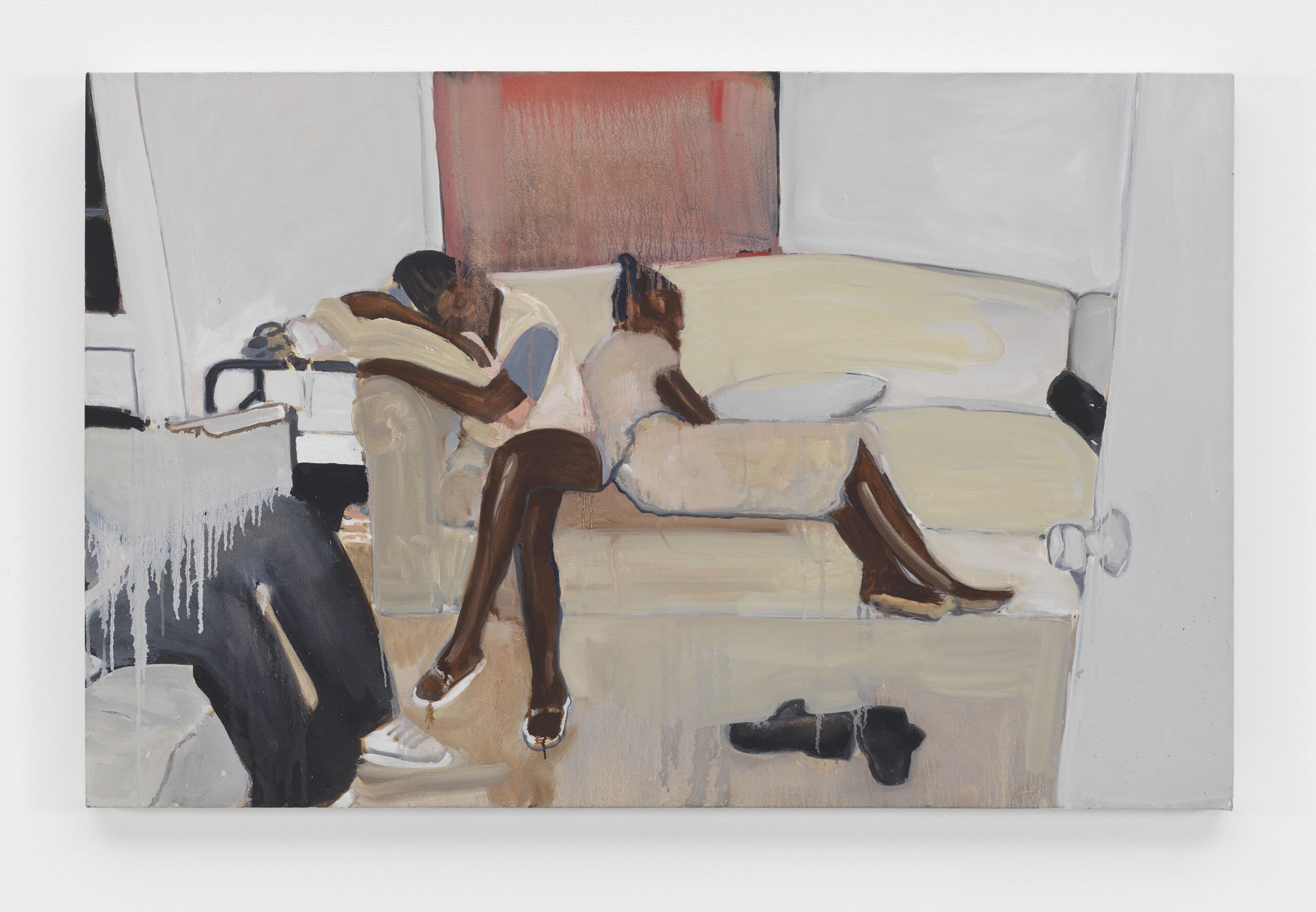
    The art museum’s Morgan, Korman, and Field galleries will feature the work of the late African American artist Noah Davis (1983-2015). Davis’ paintings, sculpture, and works on paper capture the history and intricacies of American Black life from antebellum America through his untimely death. Jan. 24-April 26.

    “Untitled Girls” This painting by Noah Davis will be on display in the Philadelphia Art Museum’s 2026 exhibition named after the late artist

    A Nation of Artists

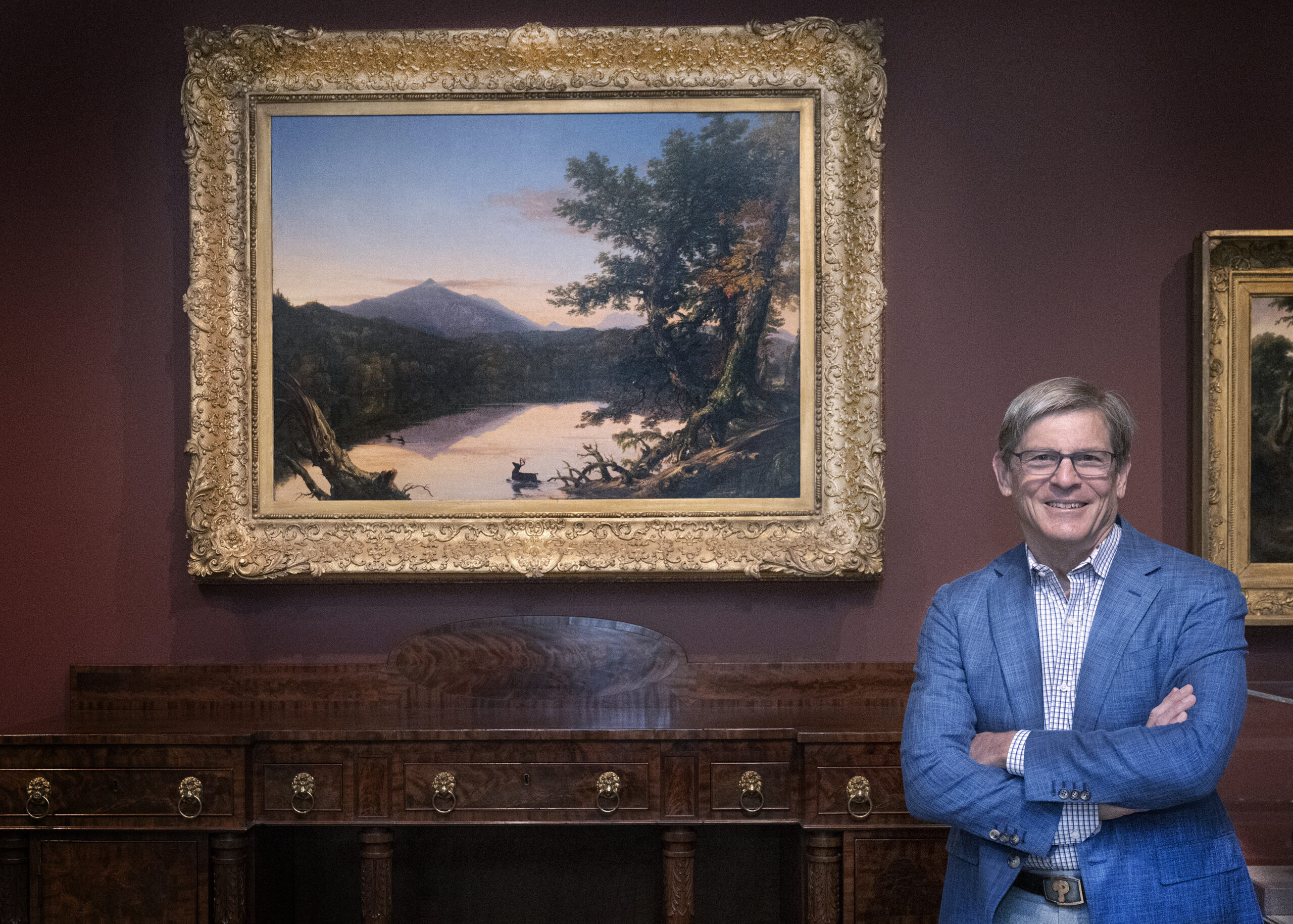
    Paintings, furniture, and decorative arts from Phillies managing partner John Middleton and his wife, Leigh, will center the “A Nation of Artists” exhibit, telling the 300-yearslong story of American creativity. The exhibit is a joint project between the Philadelphia Art Museum and the Pennsylvania Academy of Fine Arts and is billed as “the most expansive presentation of American art ever mounted in Philadelphia.” Opens April 12.

    Rising Up

    2026 marks the 50th anniversary of the release of the first Rocky film. To coincide, the Art Museum in April will open “Rising Up: Rocky and the Making of Moments” in the museum’s Dorrance galleries. The exhibit will explore how the Rocky statue outside the museum brings people together. April 25-Aug. 2.

    Phillies owner John Middleton is photographed next to a painting to his left, part of his personal collection and soon to be exhibited at the Philadelphia Museum of Art.

    Museum of the American Revolution

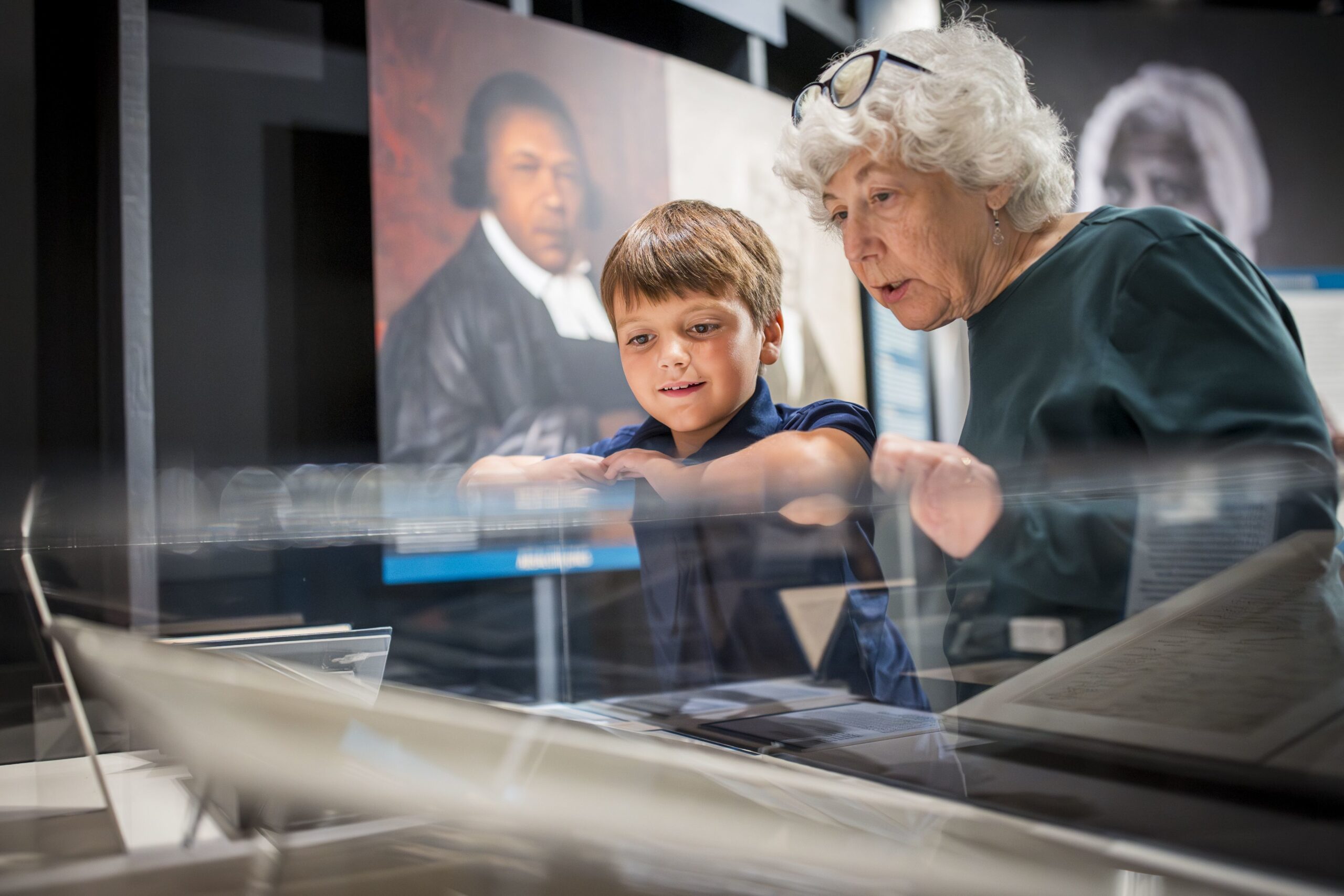
    The Museum of the American Revolution’s “The Declaration’s Journey” includes more than 100 objects that speak to the Declaration of Independence’s enduring power, complexity, and unfilled promise. A chair that once belonged to Thomas Jefferson and the Rev. Dr. Martin Luther King Jr.’s prison bench are on display, as well as manuscripts penned by abolitionists, clergymen, and Free African Society cofounders Absalom Jones and Richard Allen. Through Jan. 3, 2027.

    Visitors at the Museum of the American Revolution in front of a portrait of Absalom Jones, abolitionist and founder of The First African Episcopal Church of St. Thomas. Jones’ writings are on display.

    Penn Museum

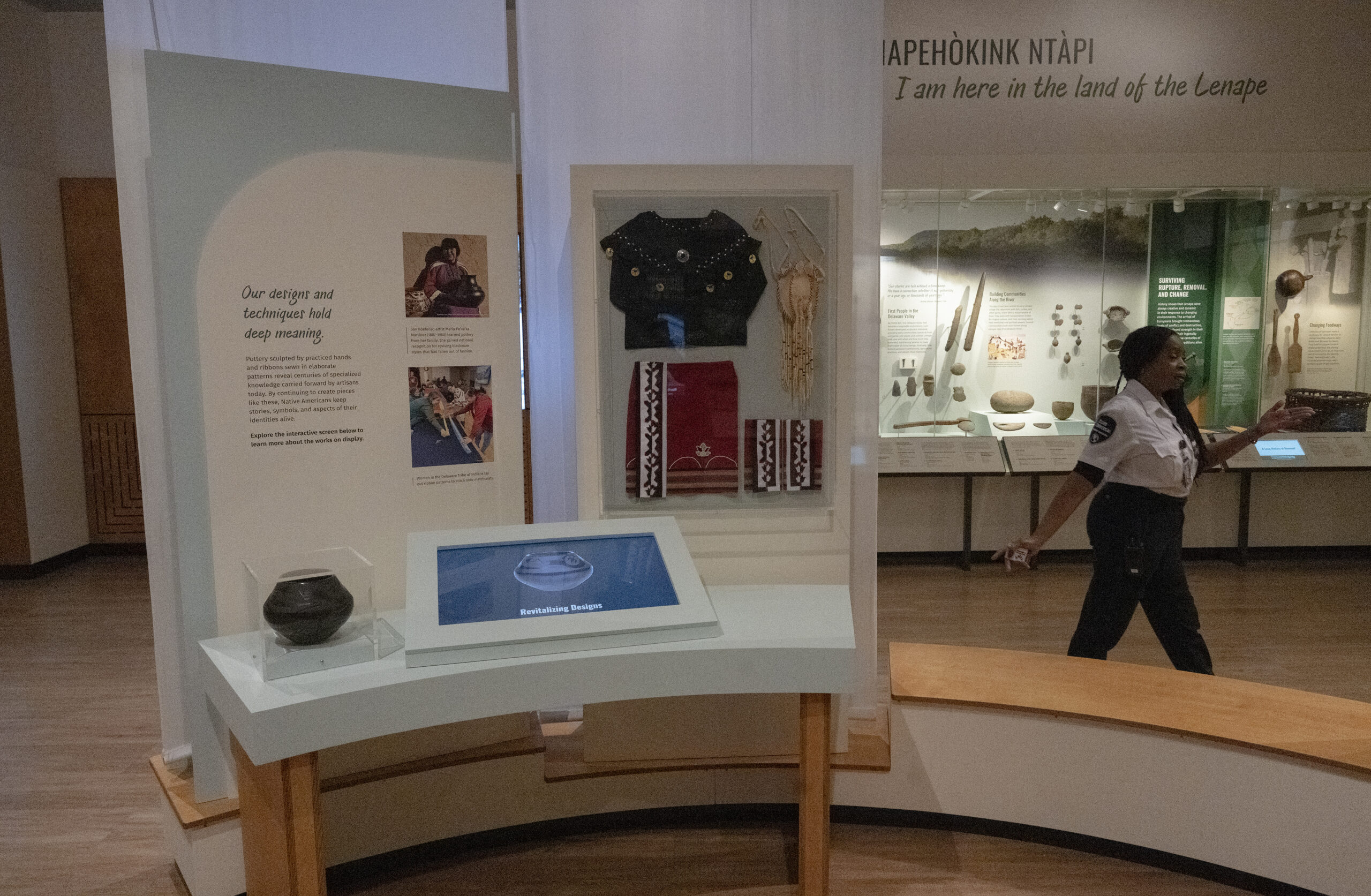
    Spear points dating to 3,000 B.C., centuries-old bowls, and 19th century beaded collars are a few of the items that illustrate the lives Lenape Indians led fishing on the banks of the Schuylkill and hunting in Fairmount Park. These are on display at Penn Museum’s new Native North American gallery. Visiting curator Jeremy Johnson chose these artifacts because, he said, they best “tell the story of his people — who the Founding Fathers tried to erase.” Through 2027.

    A gallery of Native American art is displayed at the Penn Museum on Friday, Nov. 21, 2025, in Philadelphia. As celebrations of Native American culture and precolonial Philadelphia plants grow, museums across the city prepare for America’s 250th birthday.

    Weitzman National Museum of American Jewish History

    On Nov. 16, 1776, the Andrew Doria brigantine arrived in the Caribbean on the British colony St. Eustatius, waving the first national flag of the United States. The Jewish merchants and English settlers, treated poorly by their antisemitic Anglican monarchs, greeted the newly minted Americans with a 13-cannon salute. In that moment, St. Eustatius became the first country to recognize America’s sovereignty.

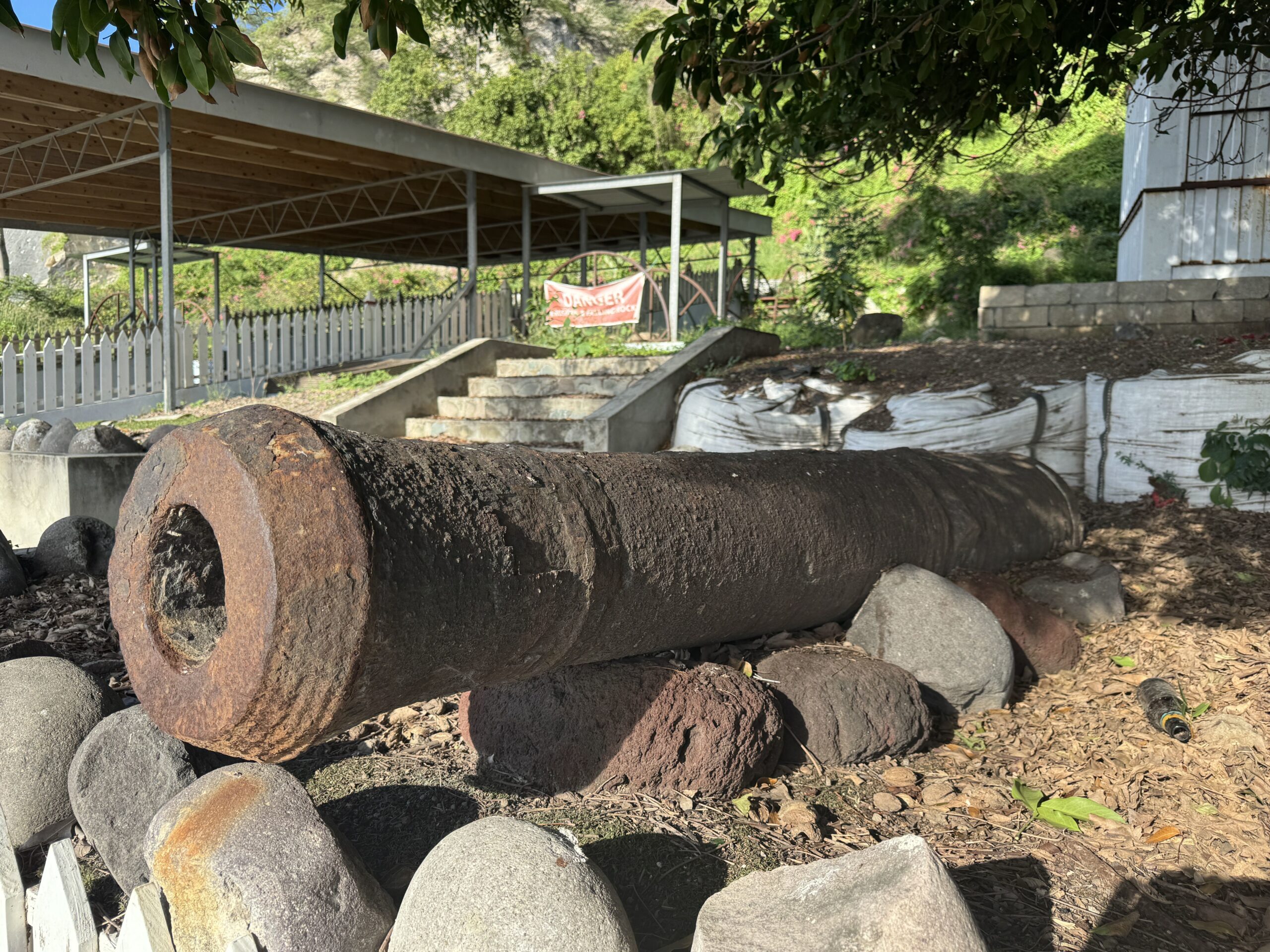
    Cannon from the shores of St. Eustatius much like those fired in the 18th century that will will be on display during “First Salute.” 250tharts-12-28-2025

    Weitzman National Museum of American Jewish History’s “The First Salute” exhibit will recount this largely untold story — including how the Jewish merchants smuggled the Americans’ gunpowder in tea and rice bags, giving Pirates of the Caribbean meets Hamilton vibes. Artifacts on display will include 18th-century currency, a series of paintings from prominent Jewish Philadelphian Barnard Gratz’s art collection, and an actual cannon shot from the island’s shores. From April 23, 2026, through April 2027.

    National Constitution Center

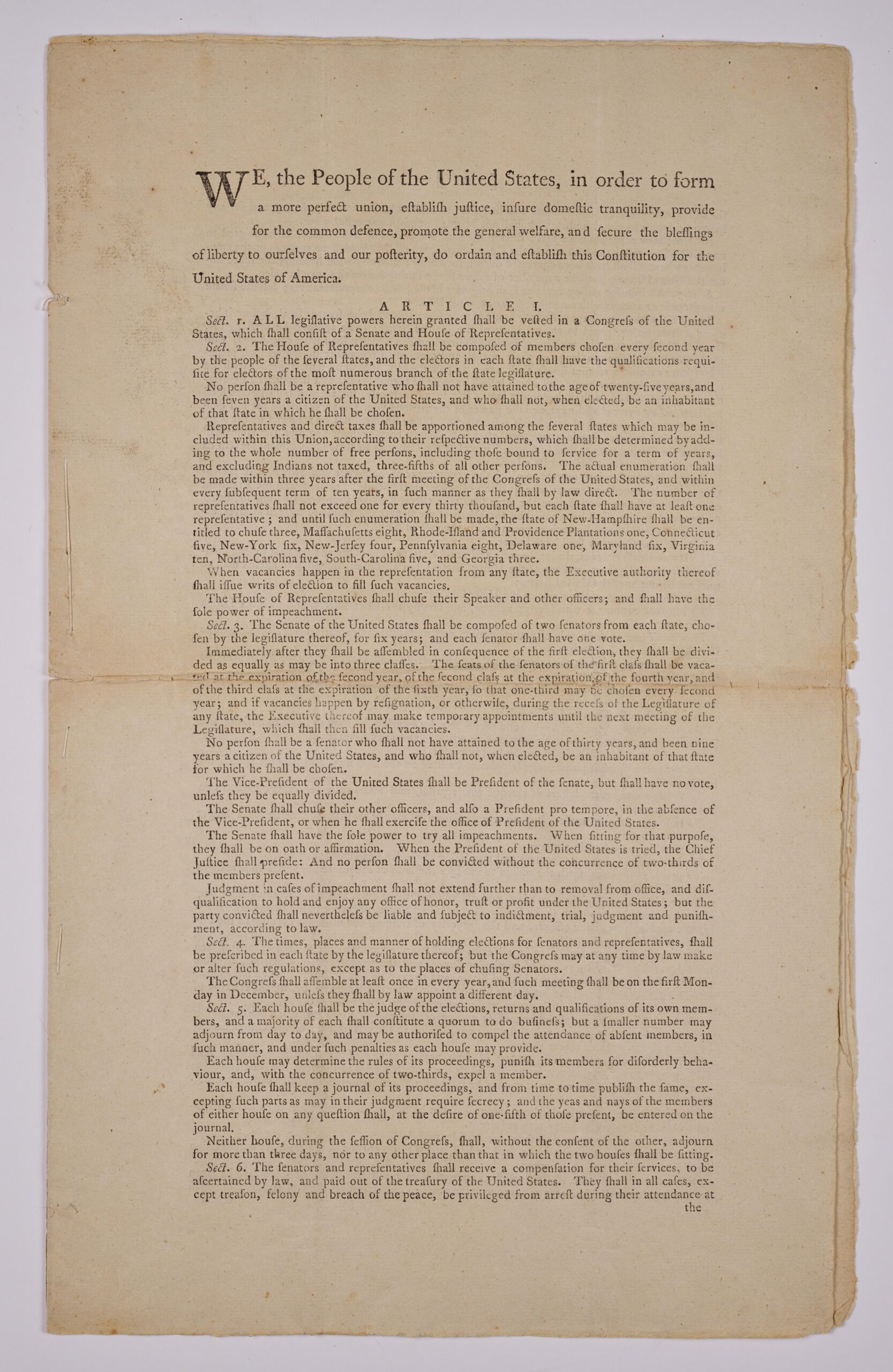
    Centered around a rare, centuries-old copy of the U.S. Constitution — a gift from billionaire hedge fund manager Kenneth C. Griffin — the National Constitution Center will present “America’s Founding.“ The gallery will be dedicated to the exploration of our early, colonial principles that led our fight for independence. How do they stand up now? Opens Feb. 13.

    This original copy of the U.S. Constitution, one of only 14, was donated to the National Constitution Center by billionaire hedge fund manager Kenneth C. Griffin. It will be featured in the Constitution Center’s upcoming “America’s Founding” exhibit.

    A second gallery will explore how the Constitution defines roles and balances power between the legislative, judicial, and executive branches of government. Opens in May.

    African American Museum in Philadelphia

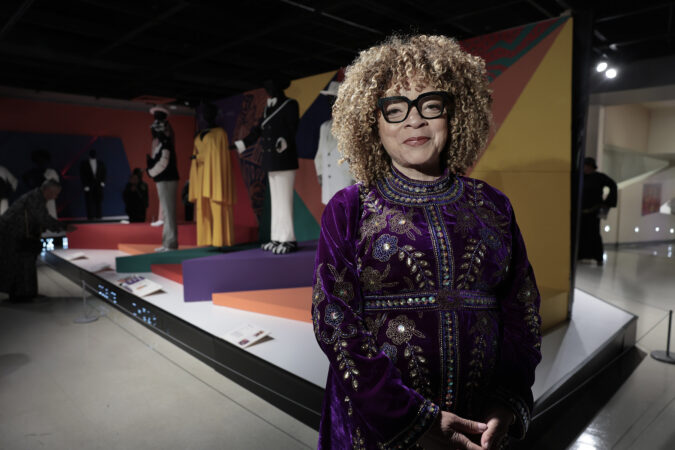
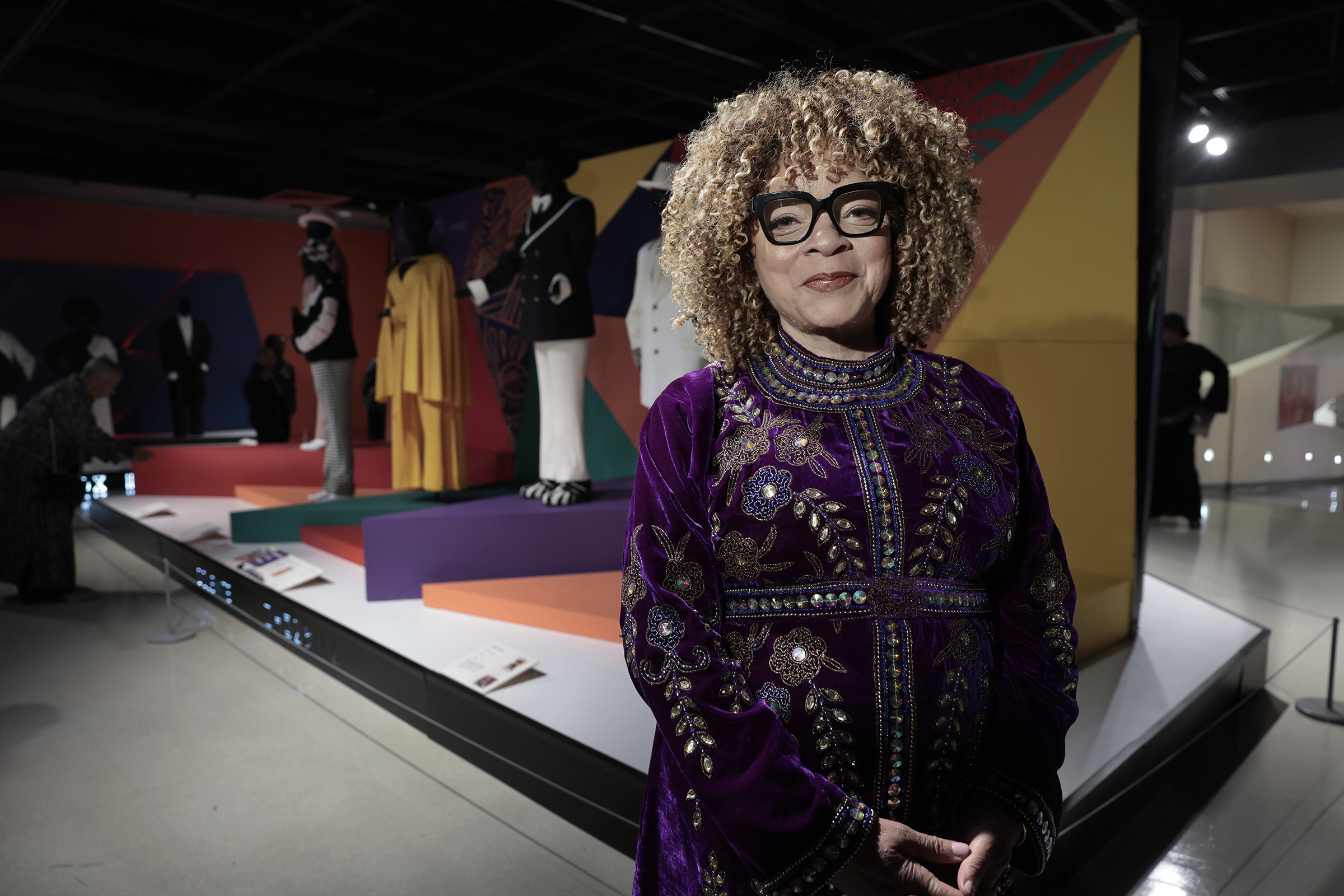
    The African American Museum in Philadelphia began its celebration of America’s 250th — and its own 50th — with a yearlong nod to the future with “Ruth Carter: Afrofuturism in Costume Design.” Through September.

    Ruth E. Carter pauses briefly during the “Ruth E. Carter: Afrofuturism in Costume Design” opening gala at the African American Museum in Philadelphia on Saturday, Nov. 1, 2025.

    In October 2026, AAMP will premiere the extension of its “Audacious Freedom” exhibit. Currently on the ground floor, the exhibit is a study of Black Philadelphians from 1776 to 1876. The expanded show will bring “Audacious Freedom” up to present day and will include 20th-century artists and educators, from Charles Blockson to Jill Scott.

    Woodmere Art Museum

    Inspired by Philadelphia illustrator and friend of Woodmere Jerry Pinkney, the Chestnut Hill museum’s Semiquincentennial show, “Arc of Promise,” acknowledges America’s painful histories of slavery, injustice, and displacement of its Indigenous people while affirming its capacity to rebuild, renew, and evolve. Featuring art by Philadelphians dating to 1790, “Arc of Promise’s” paintings, sculptures, maps, and flags explore what freedom and justice for all truly means. Opens June 20.

    The Academy of Natural Sciences of Drexel University

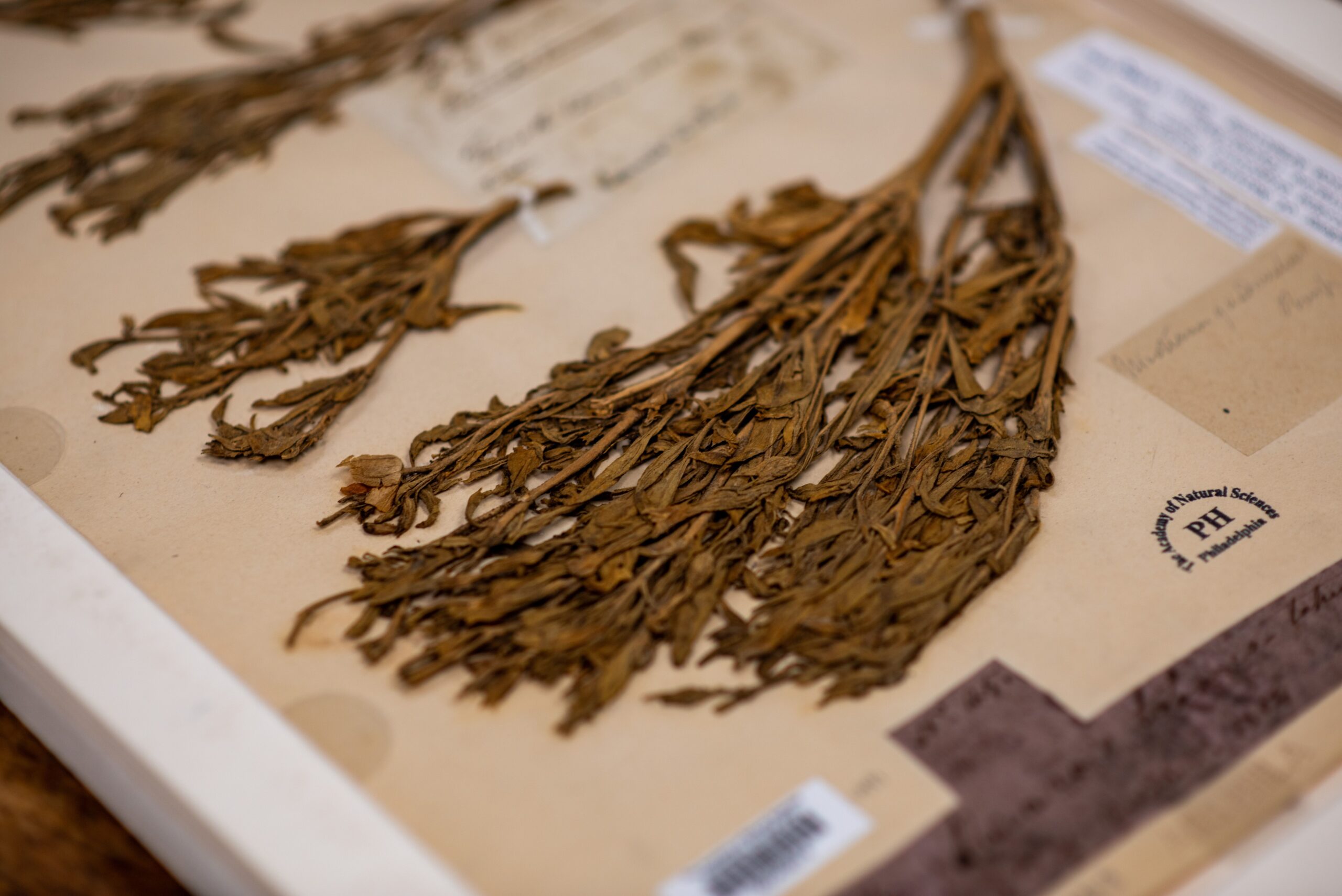
    In collaboration with California State University ethnobotanist Enrique Salmón, the Academy of Natural Sciences at Drexel University will debut “Botany of Nations: Indigenous Ecological Knowledge and the Lewis & Clark Corps of Discovery.” These centuries-old plants, collected by explorers Meriwether Lewis and William Clark, were a gift to Philadelphia’s American Philosophical Society from Thomas Jefferson. Organizers hope the selection of now-pressed plants — prairie turnip, camas root, and Western red cedar — will be a vegetative portal to the Indigenous perspective in American frontier life. From March 28, 2026, through Feb. 14, 2027.

    Samples from Botany of Nations. Academy of Natural Sciences of Drexel University, March 28, 2026 – February 14, 2027

    The Clay Studio: Center for Innovation in Ceramic Art.

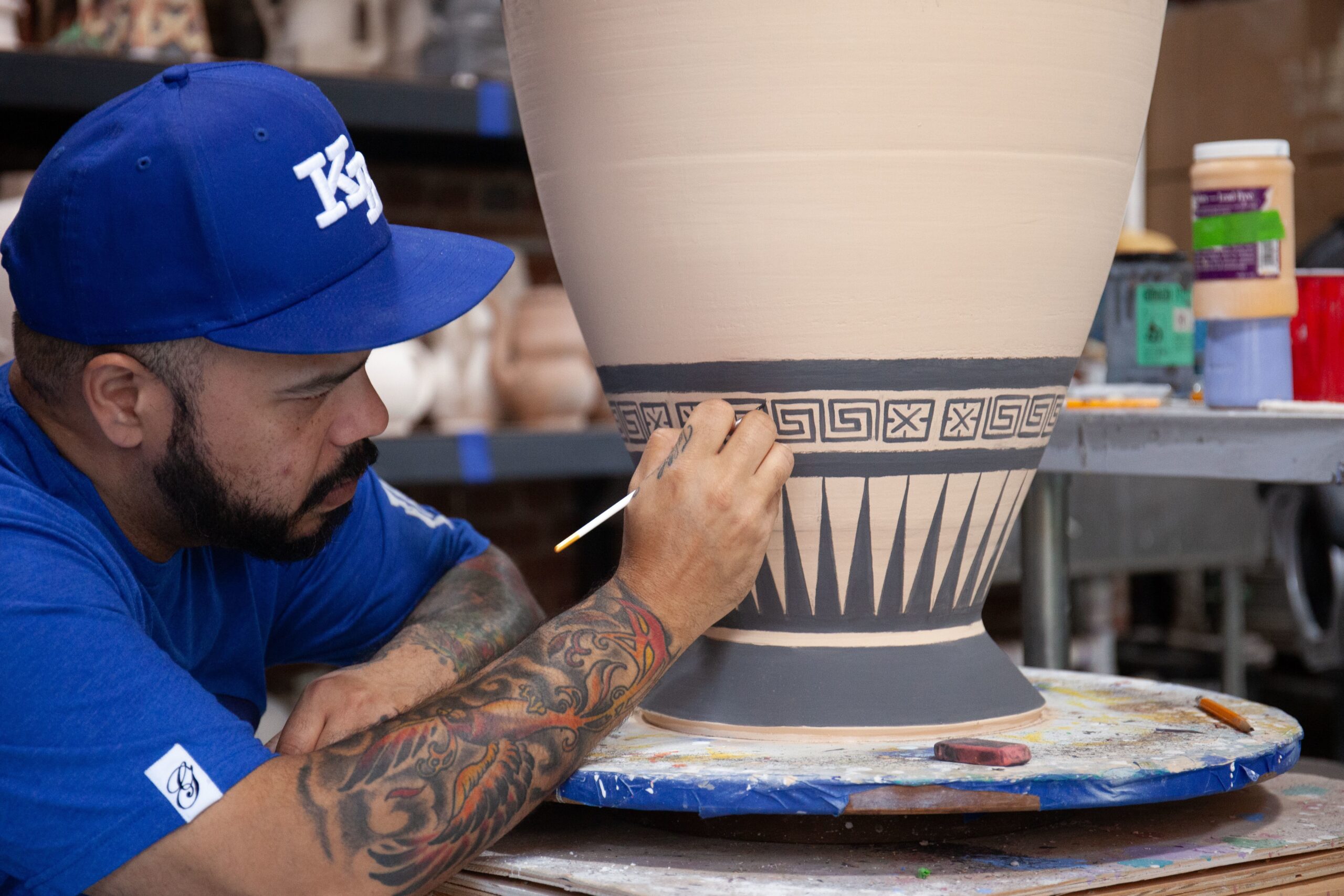
    Twenty-five artists from 20 Philadelphia cultural institutions will present projects that show how the definition of independence evolved from 1776 through 1876, 1926, 1976, and 2026 under the umbrella of the Clay Studio. The exhibit, “Radical Americana,” will start with a compelling show by Kensington potter Roberto Lugo on April 9. Artists will mount additional shows at participating institutions throughout the year, including at the Museum for Art in Wood and Cliveden Historic House. A full list is available at theclaystudio.org. Opens April 9.

    Roberto Lugo is shown working on one of his Greek vases that is now part of a new exhibition, “Roberto Lugo / Orange and Black” at Art@Bainbridge, a gallery project of the Princeton University Art Museum

    Mural Arts Philadelphia

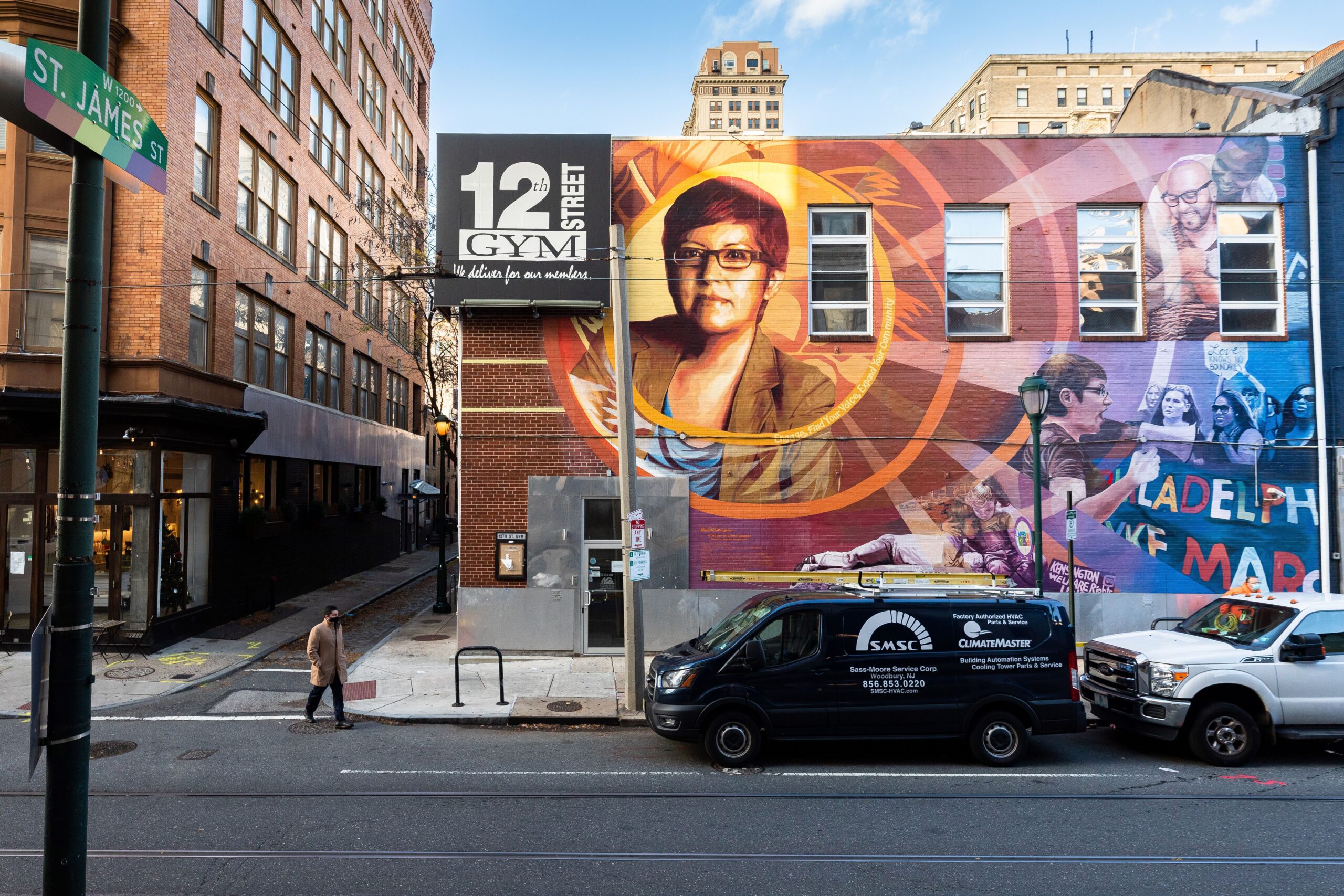
    Mural Arts is working on several projects that will spruce up the city in 2026. That includes a new focus on the city’s entryways, the restoration of several murals, and a collaboration between Free Library of Philadelphia in a community printmaking project. At least three new murals will debut and include a tribute to artists Questlove (of the legendary Roots crew) and Boyz II Men. A refurbished mural in honor of Philadelphia’s first director of LBGTQ affairs, the late Gloria Casarez, will be unveiled. Mural Arts also is partnering with the Philadelphia Historic District on sculptures for next year’s 52 Weeks of Firsts programming and with the Bells Across PA program to create Liberty Bell replicas in neighborhoods throughout the city.

    A rendering of a tribute to Gloria Casarez City of Philadelphia Mural Arts Program, Michelle Angela Ortiz, 12th Street Gym, 204 South 12th Street.
  • Philly named the world’s best place to visit in 2026, apparently | Weekly Report Card

    Philly named the world’s best place to visit in 2026, apparently | Weekly Report Card

    The Wall Street Journal crowns Philly the best place to visit in 2026: A

    Congratulations to Philadelphia, which has officially been named the world’s best place to visit in 2026 — a sentence that still feels fake even after you say it out loud.

    The Wall Street Journal says it’s because of America’s 250th birthday, the World Cup, March Madness, the MLB All-Star Game, and a stretch of months where Philly will be hosting basically every major event short of the Olympics.

    But let’s be clear: Big events don’t make a city great. They just expose whether it already is.

    Philly works as a destination because it can handle the chaos. This is a city that treats historic milestones and sports meltdowns with the same emotional intensity. Where strangers will give you directions, opinions, and a life story within 30 seconds. Where the best part of your trip will almost certainly be something you didn’t plan: a bar you ducked into, a neighborhood you wandered through, a crowd you got absorbed into without realizing it.

    So why not an A+? Because Philly being crowned “best place to visit” comes with consequences we know all too well. Inflated hotel prices, SEPTA stress tests, streets that were never designed for this many people, and locals being asked, again, to carry the weight of a global party while still getting to work on time.

    And because, frankly, Philly doesn’t need outside validation. This city didn’t suddenly get interesting because the Wall Street Journal noticed. We’ve been loud about this for years, from barstools, stoops, and comment sections, and now the rest of the world is finally catching up (and booking flights).

    Still, credit where it’s due. This is a huge moment, and a deserved one. Philly is about to have the kind of year cities dream about, even if we’ll spend most of it grumbling, redirecting tourists, and muttering “we told you so.”

    We’ll host the world. We’ll complain the entire time. And somehow, we’ll still prove them right.

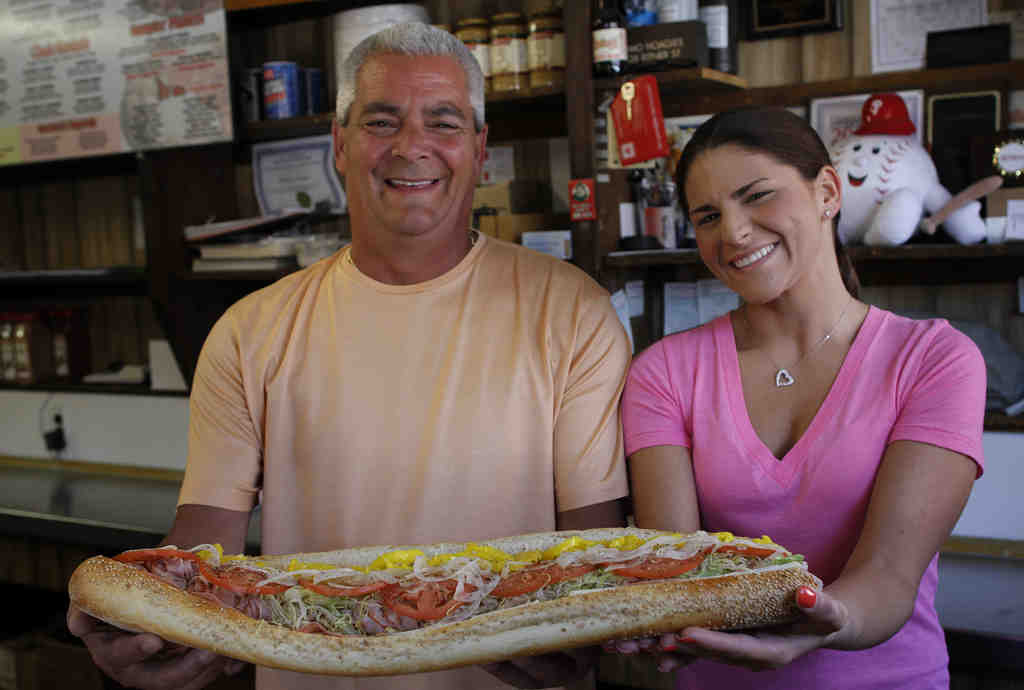
    Primo’s founder Rich Neigre and Audrey Neigre, his daughter, hold a whole Italian hoagie in 2011.

    Primo Hoagies covering big-dog adoption fees: A+

    This is what “using your powers for good” looks like.

    As PhillyVoice reported, Primo Hoagies quietly covering adoption fees for large dogs at a South Jersey shelter is the kind of move that cuts straight through the holiday noise. No brand stunt. No overexplaining. Just: These dogs keep getting passed over, that’s not right, let’s fix one part of it.

    Big dogs are the last ones out the door. Everyone wants the tiny, apartment-friendly, Instagram-ready pup. Meanwhile, the 70-pound sweethearts sit there, year after year, wondering what they did wrong (answer: nothing). Removing the fee doesn’t solve everything, but it removes one very real excuse, and sometimes that’s all it takes.

    Also, this is extremely on-brand Philly energy. Feed people. Love dogs. Don’t make a big deal about it. Just do the thing.

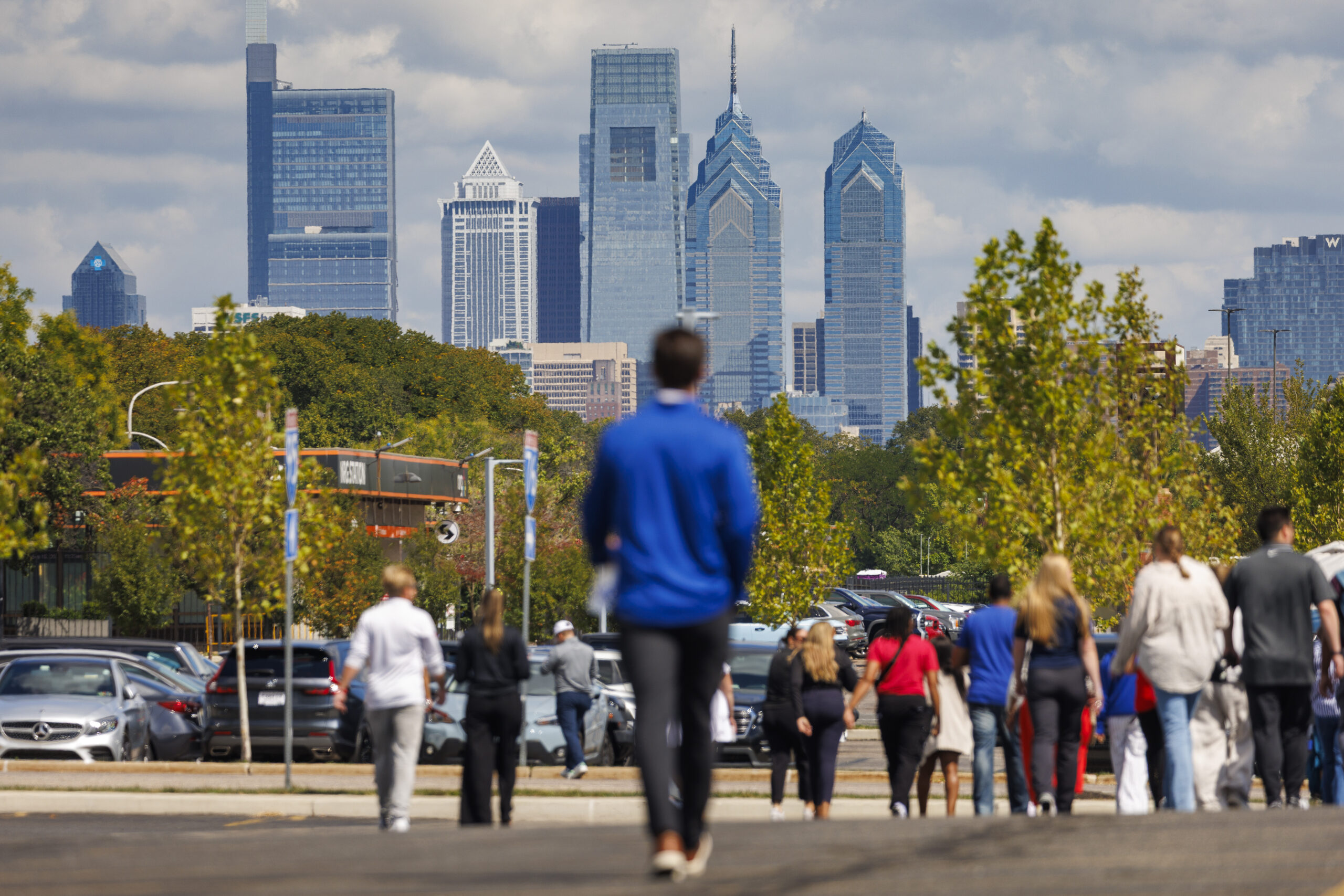
    City skyline with people present for the unveiling of the new logo for Xfinity Mobile Arena the former Wells Fargo Center on Tuesday, September 2, 2025.

    Philly making Zillow’s hottest housing markets list: B (with side-eye)

    Congratulations to Philadelphia, the only actual big city crashing Zillow’s list of America’s most popular housing markets… entirely because we’re still, somehow, cheaper than everywhere else that wants to be us.

    That’s the compliment. Also the warning.

    Zillow’s takeaway is that Philly is “affordable,” centrally located, and culturally desirable. Which is true. It’s also the most polite way possible to say: People are moving here because they’ve been priced out of everywhere else. Welcome! Please enjoy our rowhouses, strong opinions, and streets that were absolutely not designed for this many buyers.

    The median home value sitting around $230,000 looks great on a national list. On the ground, it translates to open houses packed like an Eagles tailgate and starter homes disappearing in 48 hours with cash offers that make lifelong renters quietly spiral. Philly didn’t suddenly become hot. It became relatively attainable, which in 2025 is the real flex.

    But let’s acknowledge that there is tension baked into this moment. Being desirable is good. Being affordable is better. Staying both at the same time? That’s the hard part.

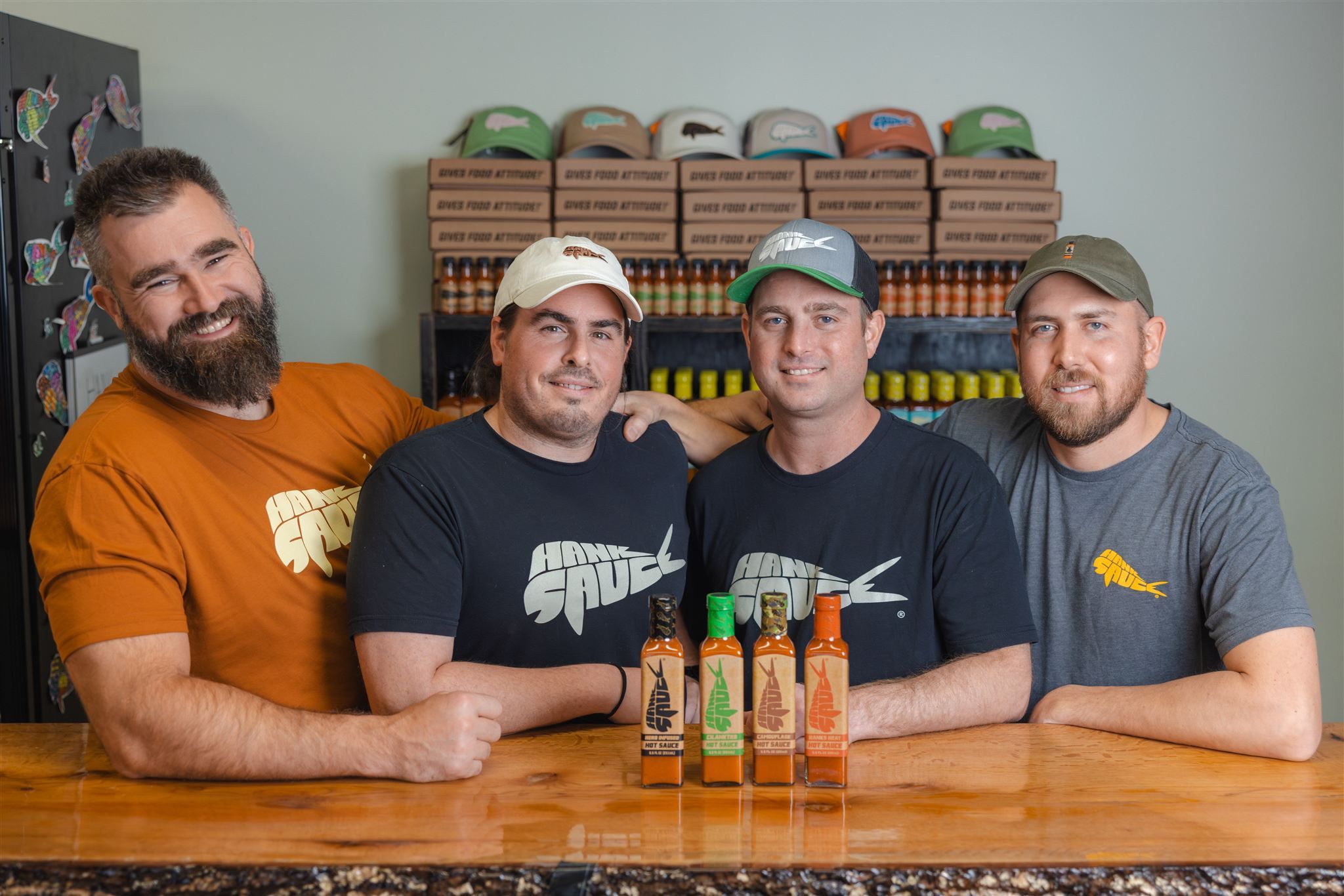
    Jason Kelce with the Hank Suace cofounders (from left): Matt Pittaluga, Brian “Hank” Ruxton, and Josh Jaspan. Hank Sauce was founded in 2011 and is based in Sea Isle City. Kelce announced a partnership with the local brand and his family’s Winnie Capital.

    Jason Kelce investing in Hank Sauce: A+ (this was inevitable)

    There are celebrity investments, and then there are ones so perfectly aligned they feel less like a business move and more like destiny. Jason Kelce backing Hank Sauce, a Sea Isle City staple sold in surf shops, Shore houses, and Philly-area grocery stores, is very much the latter.

    Sea Isle is so Jason Kelce. He’s there constantly. He bartends there. He fundraises there. He rips his shirt off there. He eats there. At this point, investing in a Sea Isle brand feels less like branching out and more like protecting his natural habitat.

    And Hank Sauce? Also a perfect match. It’s not about pain tolerance or macho heat levels. It’s a hot sauce for people who want flavor without suffering, which somehow mirrors Kelce’s whole deal: loud, intense energy paired with surprising warmth and accessibility.

    This doesn’t feel like a celebrity slapping his name on a product he just met. Kelce was already a customer. Already a fan. Already drinking beers with the founders in the back room years ago. Philly and the Shore can smell authenticity a mile away, and this one passes immediately.

    Will this help Hank Sauce grow further nationally? Almost certainly. But more importantly, it feels earned. It’s a local guy with local roots putting money behind something that already belonged to the place — and to him.

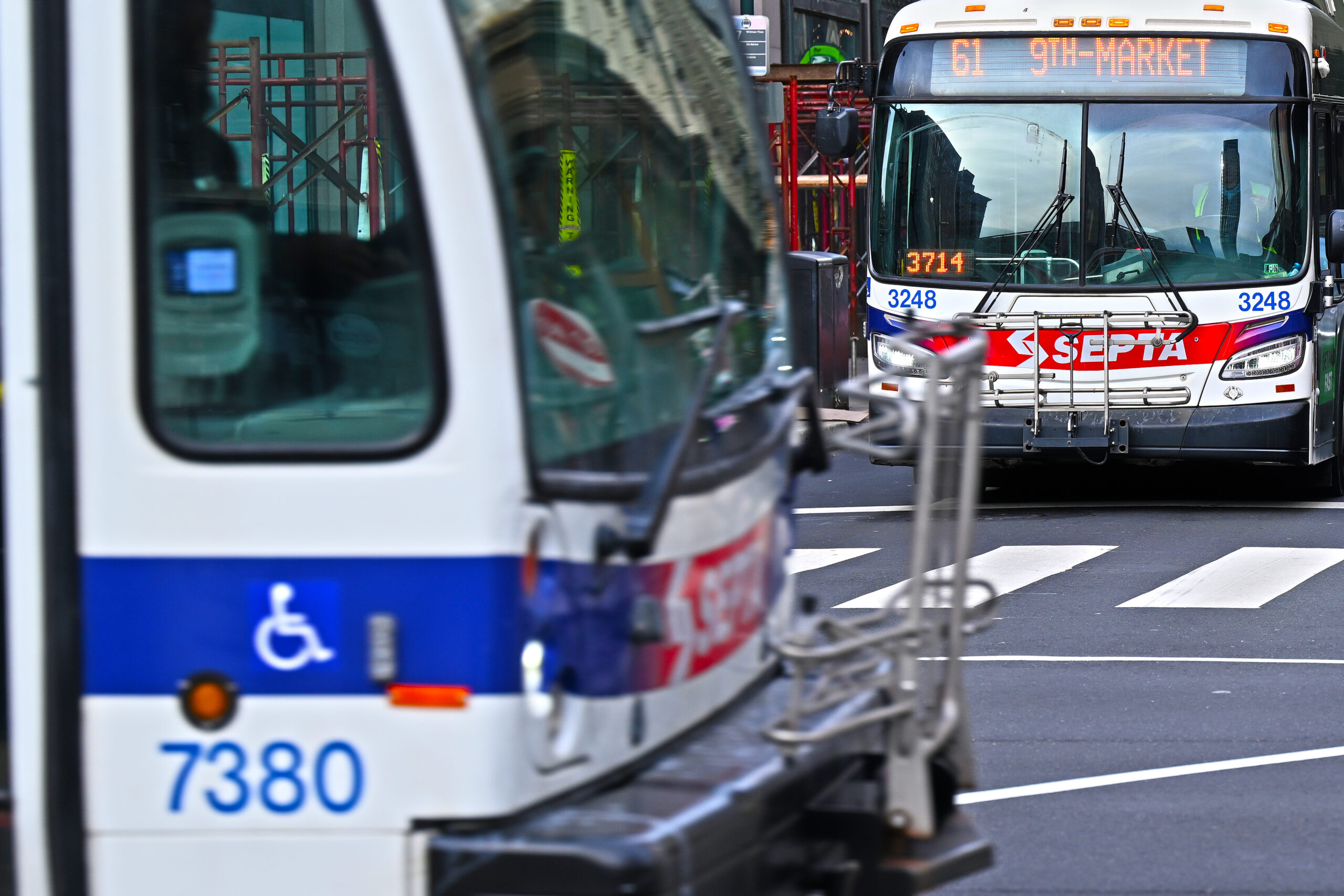
    SEPTA buses travel along Market Street on Dec. 8, 2025, in Philadelphia.

    Philly’s ever-lengthening commute: C-

    Nothing bonds Philadelphians quite like the shared understanding that getting to work will take longer than it should, feel more chaotic than advertised, and somehow still be your fault for not “leaving earlier.”

    A new report confirms what everyone stuck on the Schuylkill, the El, or a delayed Regional Rail train already knows: Philly’s average commute is longer than most big cities — and it got worse last year. Thirty-three minutes doesn’t sound brutal until you remember that’s a one-way trip, on a good day, assuming nothing’s on fire (which, this year, was not a safe assumption).

    Yes, return-to-office mandates are part of it. Yes, traffic is bad everywhere. But Philly commuters have been playing on hard mode: SEPTA funding drama, service cuts that almost happened, service cuts that did happen, train inspections, near-strikes, and the ever-present question of whether your bus is late or just gone.

    The most Philly part is that it’s still technically better than 2019. Which feels less like a victory and more like saying, “Hey, at least it’s not the worst version of this misery.”

    New York’s commute is longer. Congrats to them. But Philly’s special talent is making 33 minutes feel like an emotional journey. You leave your house hopeful. You arrive at work already needing a break.

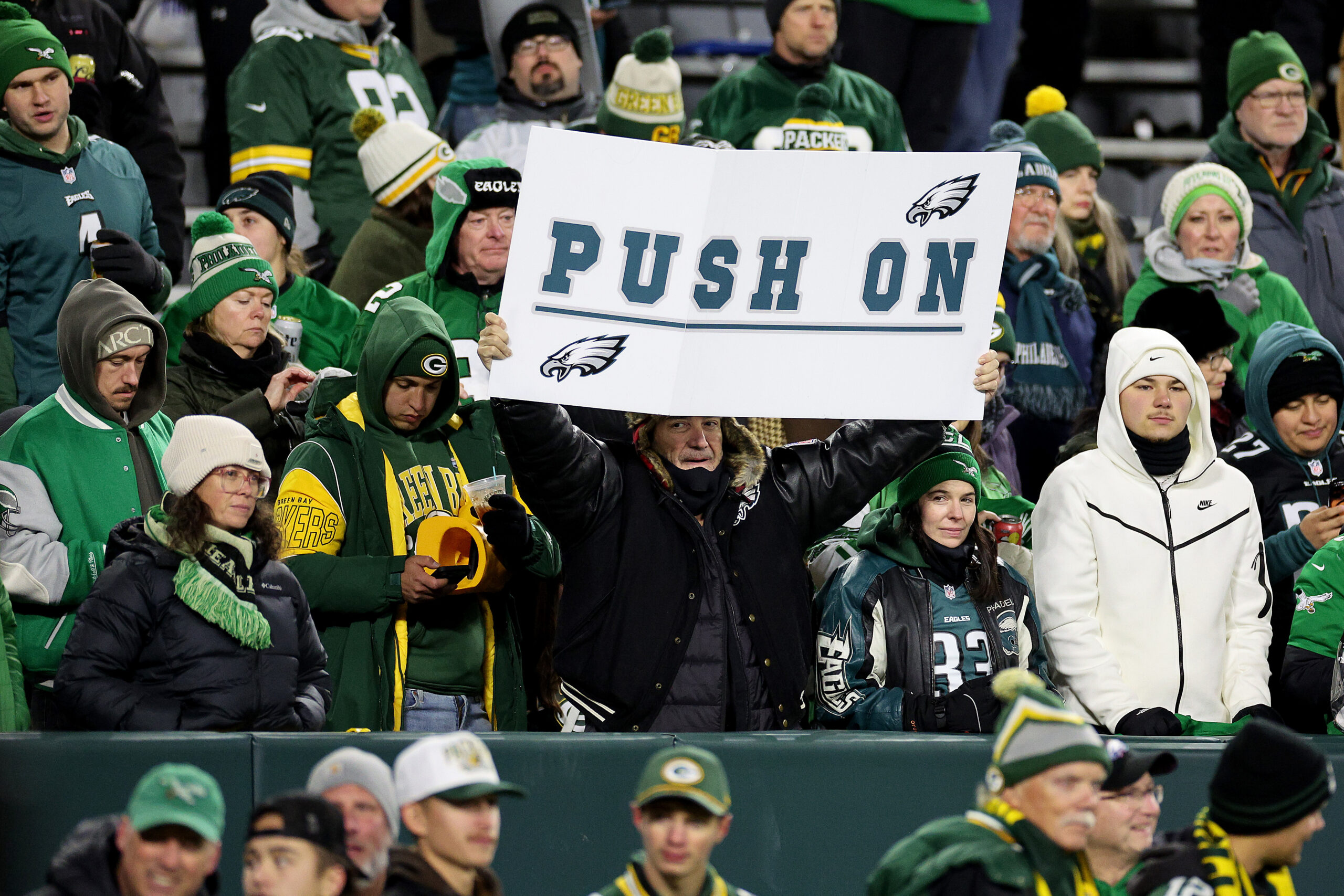
    An Eagles fan holds up a sign supporting the Tush Push as the Eagles faced the Green Bay Packers at Lambeau Field last month.

    The Tush Push is officially losing its magic: C

    Let us be honest with each other, because denial is unbecoming. The Tush Push is no longer a cheat code. It’s a memory. A beautiful, violent, once-automatic memory.

    Three tries. Three failures. False starts, no gain, another flag, and then Nick Sirianni punting like a man quietly admitting something he didn’t want to say out loud. When the Eagles chose not to run it on fourth-and-1, that was the tell. Not the stats. Not the penalties. The vibes. Coaches don’t abandon unstoppable plays. They abandon plays that might get them booed.

    For a while, the Tush Push was everything Philly loves: blunt, physical, a little rude, and wildly effective. It turned short-yardage into theater. It broke opponents’ spirits. It sent NFL discourse into absolute hysterics. It won games. It won a Super Bowl. It made grown men scream about “nonfootball plays” like the Eagles had discovered witchcraft.

    And now? Teams figured it out. Officials started staring at it like it personally offended them. Hurts clearly got tired of being a human battering ram. What was once inevitable is now… work. And unreliable work at that.

    This grade isn’t a condemnation. It’s grief. The Tush Push didn’t die because it failed once. It died because it stopped being feared. It went from “automatic” to “ugh, here we go,” and that’s not good enough in January.

    The Eagles will be fine. They have Saquon Barkley, creativity, and other ways to move the ball. But the era of lining up and daring the defense to stop you, knowing they couldn’t, is over.

    Raise a glass. Pour one out. Say something nice. Then move on.

  • How to have a Perfect Philly Day, according to WXPN host Joey Sweeney

    How to have a Perfect Philly Day, according to WXPN host Joey Sweeney

    Musician, writer, journalist, DJ, and tastemaker Joey Sweeney has been having a conversation about Philadelphia with Philadelphians for more than 25 years.

    The native Fishtowner broke into the Philly music scene in the ’90s, eventually fronting bands like the Barnabys, the Trouble with Sweeney, and Joey Sweeney & The Neon Grease, as well as recording and performing solo.

    Founding and publishing Philly’s first cityblog, the now dormant Philebrity, in 2004, Sweeney wrote about Philly daily for a decade with signature snark. Before that, he wrote about music and culture for Philadelphia Weekly, City Paper, and national outlets.

    Since 2023, Sweeney, who is soon releasing a new single with the Grease, has also been creative director — and “vibe Sherpa” — at 48 Record Bar.

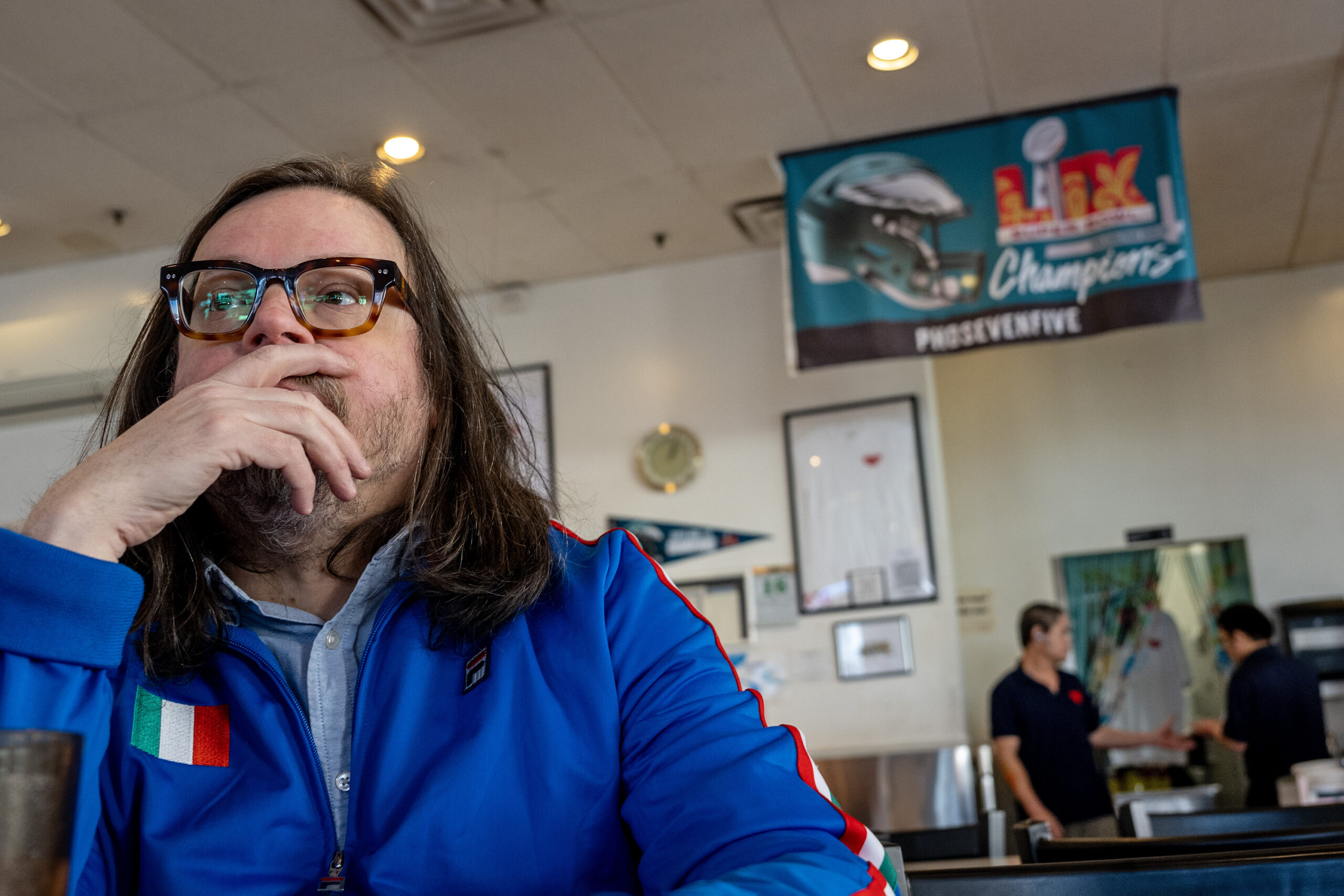
    Joey Sweeney waits for his lunch at Pho75 on Washington Avenue.

    In August, Sweeney, 53, joined WXPN as new Saturday morning host of Sleepy Hollow, one of the station’s longest running weekend programs, which has played an intimate, ambient blend of folk, jazz, New Age, and indie since 1973.

    A definite change of pace for the longtime nighthawk — “I’ve only recently discovered mornings,” Sweeney said with a laugh — joining the iconic show has been a “dream,” he said.

    “The biggest wallop of it is experiencing that WXPN community from the other side,” he said. “The staff is amazing. The listeners are really passionate about loving the station. They really give their love to it. Especially with Sleepy Hollow. It’s this legacy program, and you really want to honor that. The audience and the longevity and all the people who made it happen all those years. It’s a powerful thing.”

    Sweeney, who lives in Society Hill with his wife, Elizabeth Scanlon, poet and editor in chief of the American Poetry Review, and stepson, Sully, 20, says his perfect Philly day would revolve around a diverse culinary excursion through the Italian Market, record store shopping, a corner bar pit stop, and some late-night guitar in his attic.

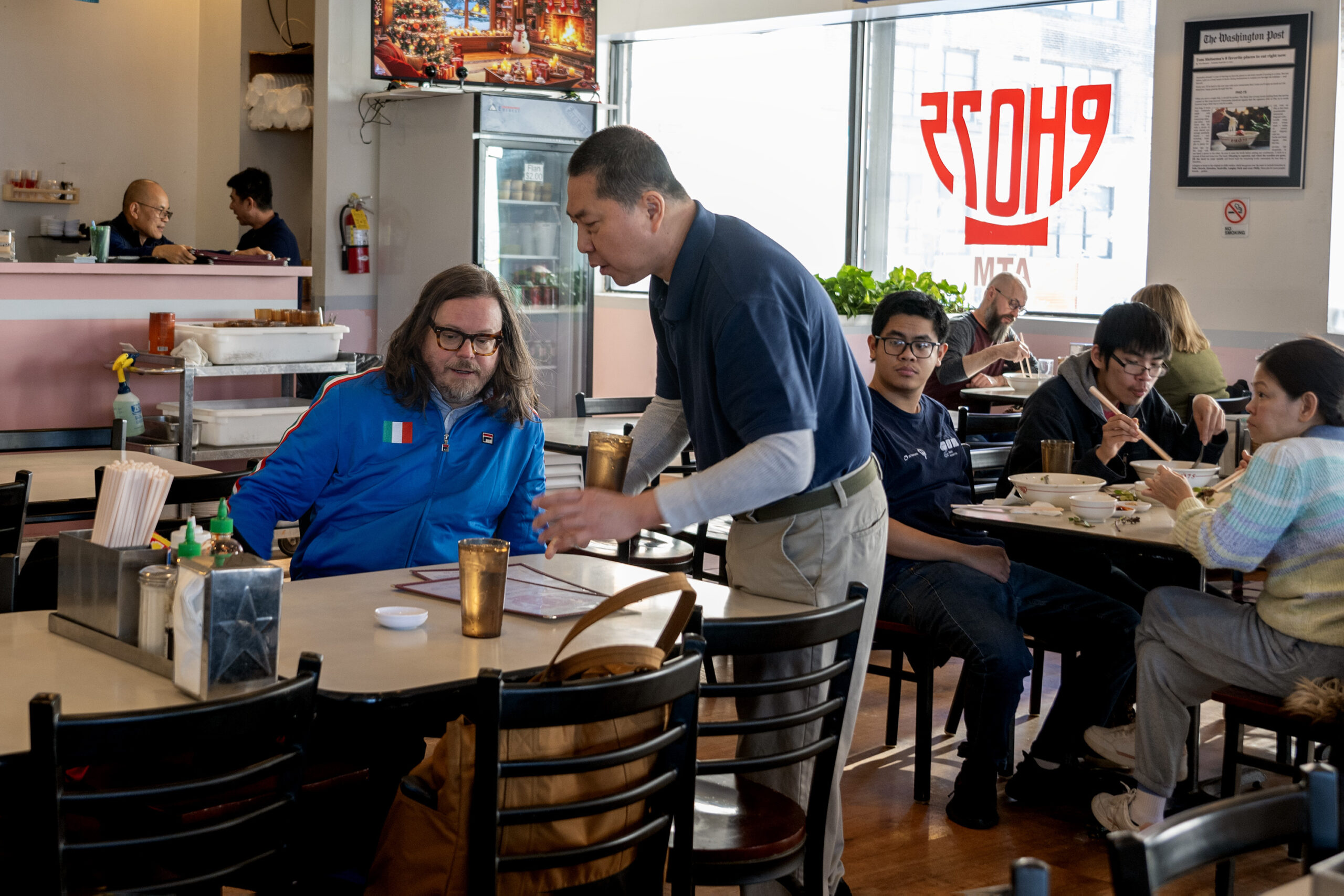
    Joey Sweeney is greeted by server Kevin Trinh as he stops for lunch at Pho75 on Washington Avenue.

    8:30 a.m.

    I’m going to Loretta’s on Second Street. It’s the coffee shop closest to my house, and they do wonderful things. Generally for me, it’s coffee and pastry, usually a chocolate croissant. If I’m feeling extravagant, I’ll go for their Betty sandwich. It’s their breakfast sandwich, which is a really amazing riff on the classic bacon, egg, and cheese.

    10 a.m.

    Then I’ll head over to South Philly to Pho 75. I am a big pho-for-breakfast or pho-for-mid-morning-meal guy. I love Pho 75. Get the brisket with extra noodles.

    11 a.m.

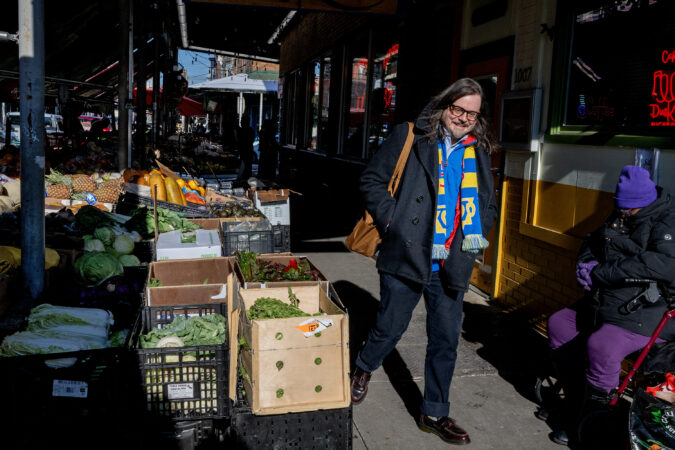
    Then, I hunt and gather my way back to my house. I walk down Ninth Street and get all the food we need for the week. All of the things that we need and eat on the regular, that are good, come from a six-block area around Ninth Street. My whole palate lives on that street or thereabouts.

    I’m going to the Hung Vuong Supermarket, at 11th and Washington. Hung Vuong has all the noodles and dumplings and the chili crisp and fish sauce — all that stuff you need.

    At Ninth Street, it will be any combination of the following: Anastasi Seafood, where I will probably get a half dozen already cooked crabs, and whatever fish we need for the week. Cod. Maybe, Branzino. Anastasi always does me right. They are our household’s Seven Fishes place. God forbid they ever went away. I don’t know what happens to the fish order.

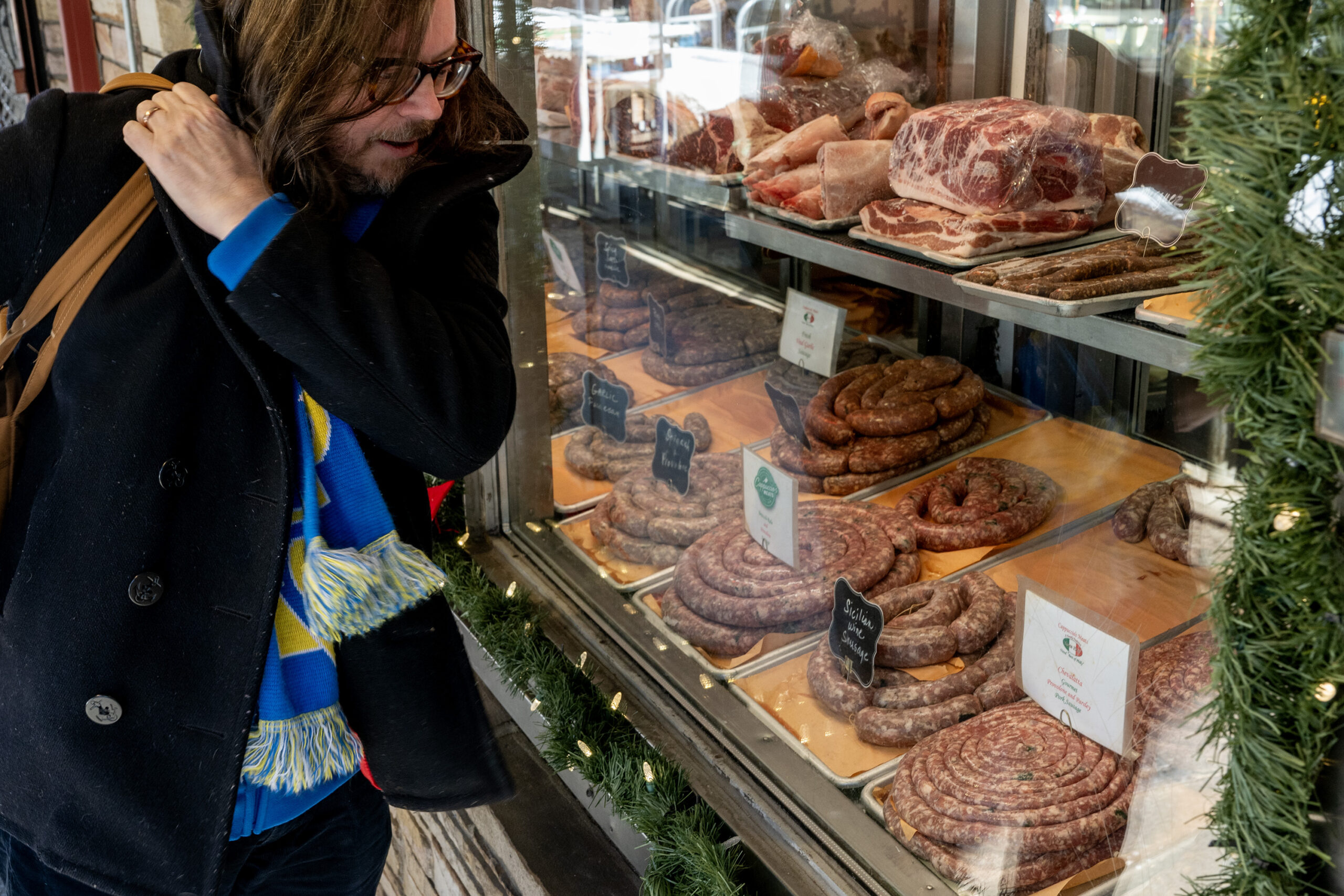
    Joey Sweeney at Cappuccio’s Meats. He especially likes their chevalatta gourmet pork sausage with provolone and parsley.

    Then, it’s Cappuccio’s Meats for their chevalatta. It’s this very thin sausage with greens and cheese. It’s a very Philly Catholic thing. And Esposito’s Meats. Because Esposito’s will grind meatball mix for you while you wait. The veal, beef, ground pork mix. They don’t put it out with the rest of the stuff. You have to ask for it, and they go in the back and grind it up for you. It’s the best way to make meatballs, by the way. My whole life, I’ve been searching for how to get my Grandma’s meatballs. She left us a long time ago, and I don’t have the recipe. I finally figured it out. You gotta get it ground right there, and not use the crushed tomatoes. Use the canned tomatoes you squeeze with your hands.

    1 p.m.

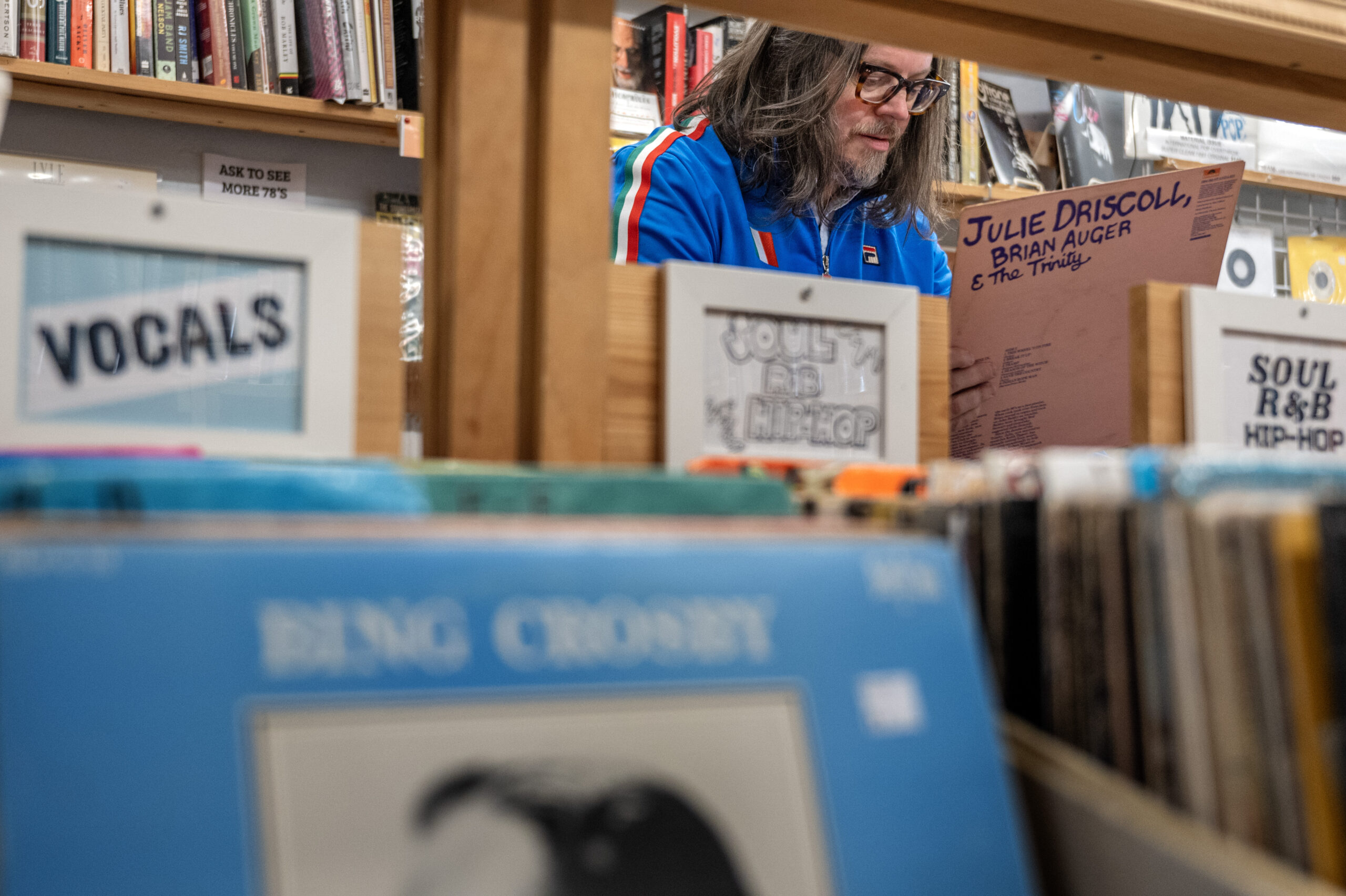
    Somewhere in the middle there, I will pop across the street to Molly’s Books & Records. Pound for pound, Molly’s has the best used record selection in the city, and the inventory changes over frequently. They don’t gouge you on the prices. I’ve been going to Molly’s for as long as I can remember. I love giving Molly any shine.

    I would also go to Tortilleria San Roman at Ninth and Carpenter. They have these tortillas that they make right there. If I am doing meatballs, I am going to Talluto’s, because they have cavatelli pasta, our house favorite.

    Joey Sweeney looks through bins at Molly’s Books & Records.

    2 p.m.

    I’ve gotten my giant bag of food and records. At this point, I would like to go to Grace & Proper, over on Eighth. It’s a corner bar right off the market. They’re open Saturday and Sunday afternoons. It’s got this cafe kind of vibe and there’s something about it in the daytime. It depends how perishable the food is in my bag. But I might go there, have a drink, have a snack, before I come home and listen to whatever records I got.

    6 p.m.

    I cook. But my wife, Elizabeth, is the better cook. If we’re not cooking, I like an early bird dinner. Since I’m back in the neighborhood at this point, I’m going to either Cry Baby or Bloomsday.

    Cry Baby, especially, is like a second home. Bridget Foy, who owns the place, was kind enough to let me shadow at Cry Baby before 48 Record Bar opened, because I had never had a proper hospitality job. She put me on every station in the place just about. It feels so casual and friendly, like a family spot. But you pop the hood on that place, and it runs like a machine. Her team is so amazing that by the end of it, I was like, oh, man, I would work here.

    9 p.m.

    Creative times usually come after dinner. Maybe I’ll put on a record or play some guitar. Or I will get on my computer in my attic office and start working on tunes. My wife and I had this really funny moment, like six months ago, where we were hanging out up in the office, and I started playing some of the songs that I’ve been recording up there after dinner. And she’s like, “You never played this for me. This is an album you’ve got. This might be one of the better things you’ve ever done. When are you doing this?” I’m like, “I do it after dinner.”

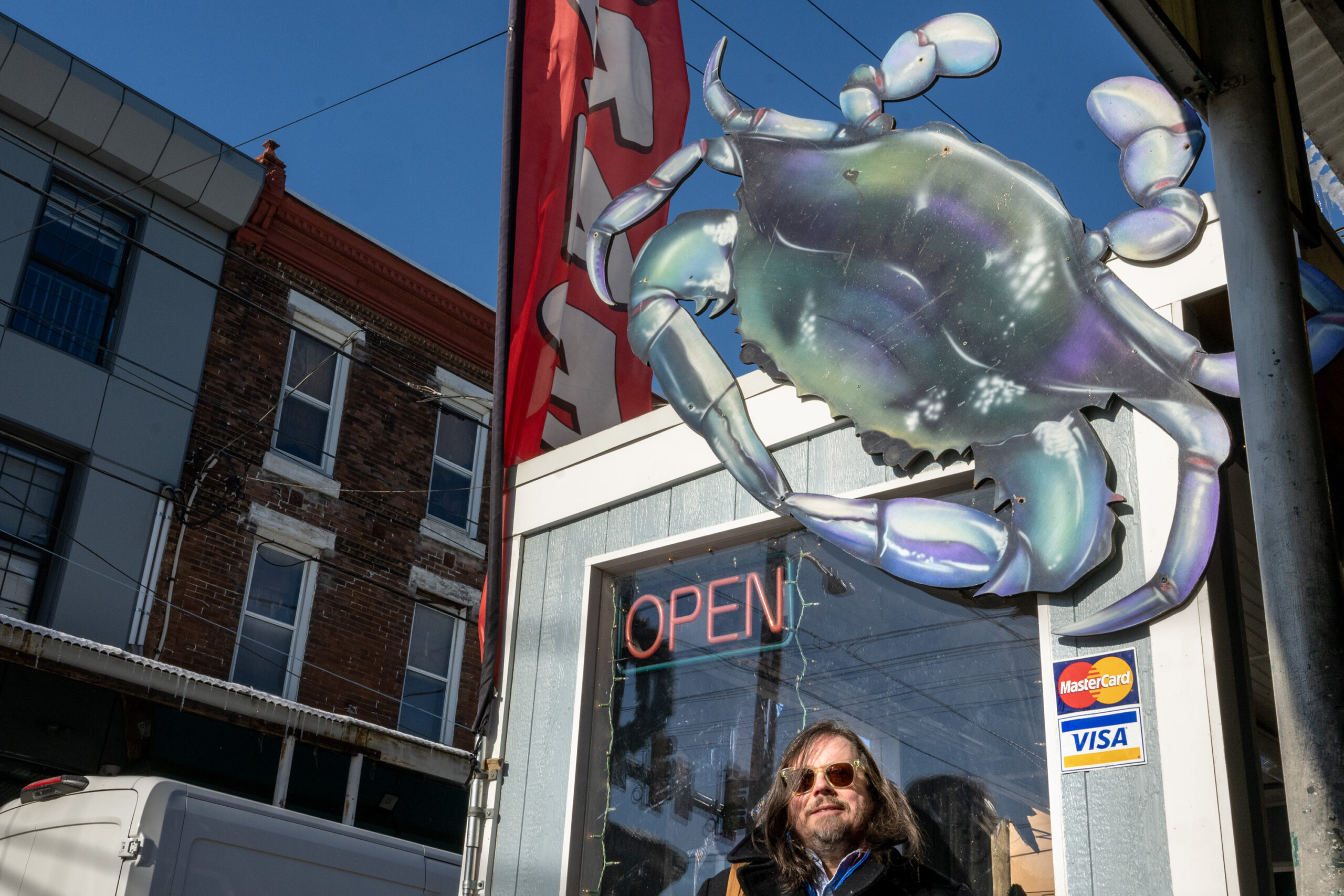
    Joey Sweeney pauses under a big crab sign.
  • Behind the scenes at world-renowned Martin Guitars

    Behind the scenes at world-renowned Martin Guitars

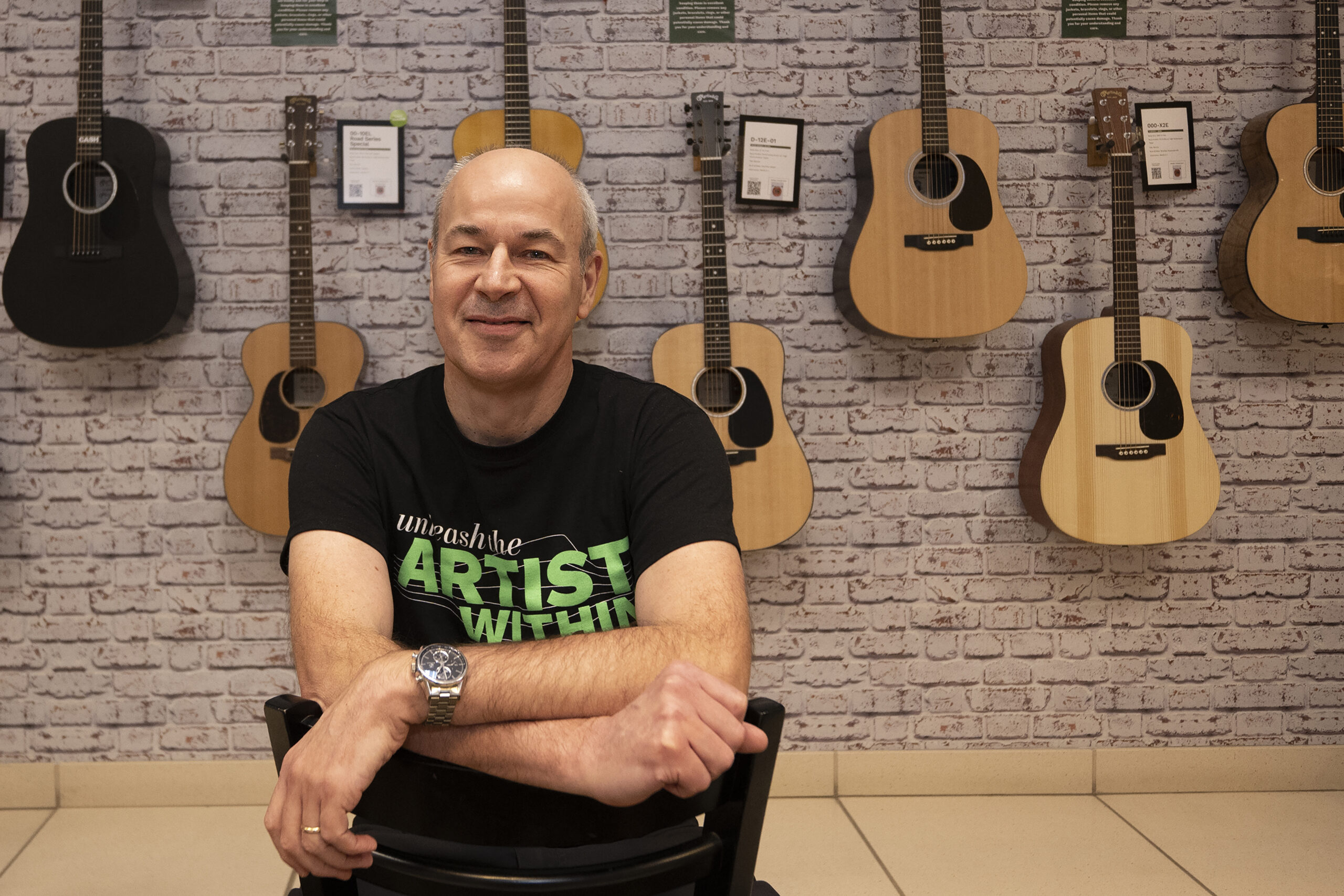
    Whenever Christian F. Martin IV hears a Martin guitar, whether it’s the timeworn piece Willie Nelson’s nearly strummed a hole through, or a customer nervously picking a D-300 that looks like fine art and costs $300,000, he beams with pride. Like a father.

    Martin is the executive chairman of C.F. Martin & Co., the sixth generation of Martins to create arguably the world’s most-renowned acoustic guitars out of Nazareth, Northampton County. Founded in New York City in 1833 by German luthier Christian Frederick Martin, the company moved to Nazareth in 1839 and has crafted 3 million guitars, all of them intertwined with the family tree.

    So when Martin took his daughter to a Post Malone concert in 2020 and watched the artist play a Martin, he smiled from afar. Later, when Malone dragged — yes, dragged — what appeared to be the same guitar across the stage, Martin’s heart dropped.

    “I’m freaking out,” Martin said. “I’m looking at my wife, and she’s looking at me like ‘I don’t know.’”

    Martin was still processing the trauma of a 145-year-old Martin guitar being smashed in the 2015 Quentin Tarantino film The Hateful Eight. So when Malone smashed the guitar onstage and poured a beer on it, Martin’s heart broke into small pieces, too.

    “I need to leave,” he told his wife.

    Luckily, before Martin could flee the concert in Hershey to process the trauma, he was told the smashed guitar was a prop, not a Martin.

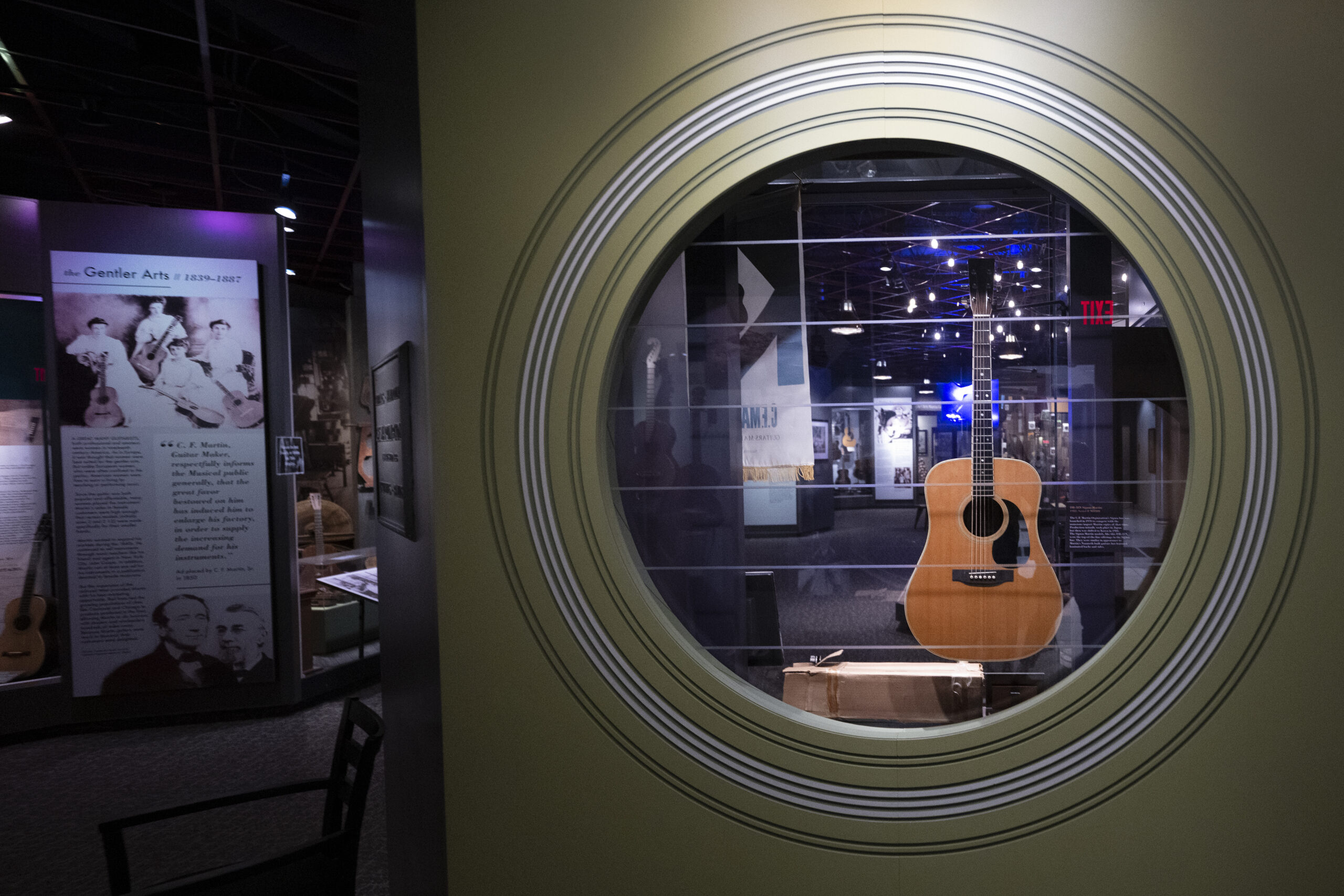
    That’s how seriously Martin, and its devotees, takes guitars. On a recent fall weekday in the Nazareth headquarters, tourists were lining up before the building opened for tours, taking selfies. Inside, guitars that belonged to Nirvana frontman Kurt Cobain and Hank Williams, two of thousands of artists who played Martins, sat in glass cases.

    (Later that day, Martin flew to London to give a special presentation about the Martin D-18 Cobain played during Nirvana’s famed Unplugged set in 1993.)

    “I’ve always just gravitated toward playing Martins,” said Delaware County musician Devon Gilfillian. “When I first started playing, that was just always the goal. The tone is just so perfect and warm. Plus, it’s from Pennsylvania.”

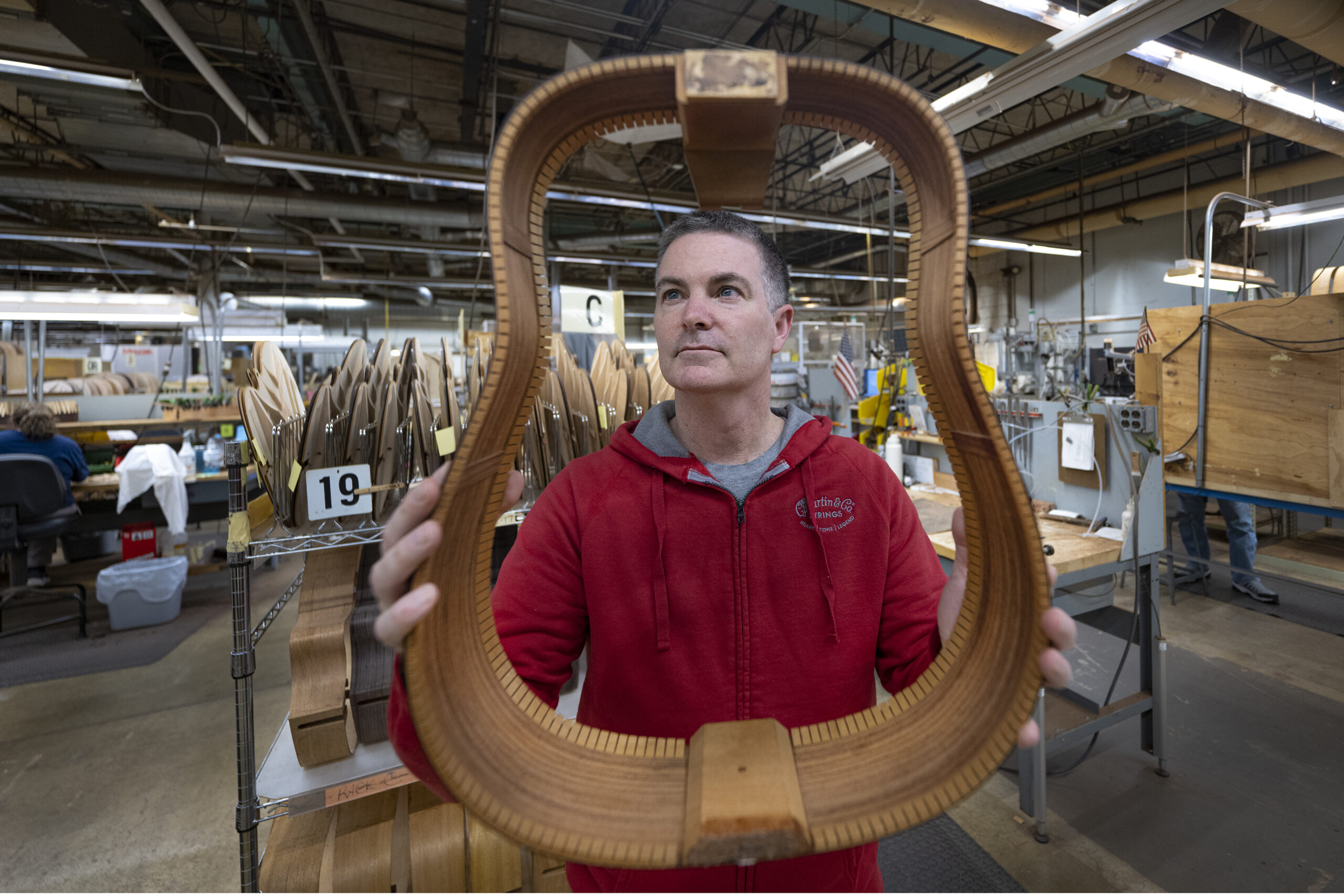
    Mike Nelson inspects a guitar frame at C.F. Martin & Co.

    Martin said guitar sales booms are usually tied to specific cultural moments or trends in popular music. Folk music in the 1960s, for example, or the popularity of MTV’s iconic Unplugged series that featured Nirvana, Eric Clapton, Alice in Chains, and countless others.

    Today, Martin is still feeling the effects of the COVID-19 pandemic, when many workers were forced to stay home and went looking for something to do. The company is producing approximately 500 guitars per day in Nazareth and a plant in Navojoa, Mexico.

    “We’re on a bit of a roll,” Martin said.

    “I think it’s important to show people this is where a Martin guitar is made and this is what it takes to make a Martin guitar,” he said. “For many guitar players, coming to the Martin factory is like going to mecca.”

    Inside, the factory floor is divided into sections, an assembly line of sorts, with some specialists focusing on fretboards, others on the necks. Some were spraying lacquers, with ventilation masks on, while other lucky employees — musicians themselves — do sound checks, strumming chords for tone. Few guitars are rejected.

    The factory is both high and low tech, with robotic arms meticulously sanding bodies while workers use ancient woodworking tools to shape some parts.

    That level of specialization, Martin said, makes Martin’s craftsmen the best in the business.

    “You’ll see what it takes,” he said. “You’ll see why we’re the best.”

    Most Martin guitars are made with various timbers, including a slew of different spruces, along with rarer mahogany and rosewood.

    All businesses change, subject to the whims of markets and greater global issues. While the overall design of a guitar hasn’t changed all that much over the centuries, newer and different materials may be in the pipeline, due to issues with climate change and deforestation. The tropical hardwoods grow slowly and are under threat.

    Temperate hardwoods like maple and walnut are more abundant, and the company is exploring them, Martin said. The use of alternate materials might be possible, but they would all fall under the same standard: the guitar would need to sound like a Martin.

    “We would not use a material that doesn’t work,” he said.

    Martin has committed to reforestation projects in Costa Rica and the Republic of the Congo. Martin’s sustainable Biosphere III, with a polar bear design by company artist Robert Goetzl, benefits Polar Bears International and retails for $2,399.

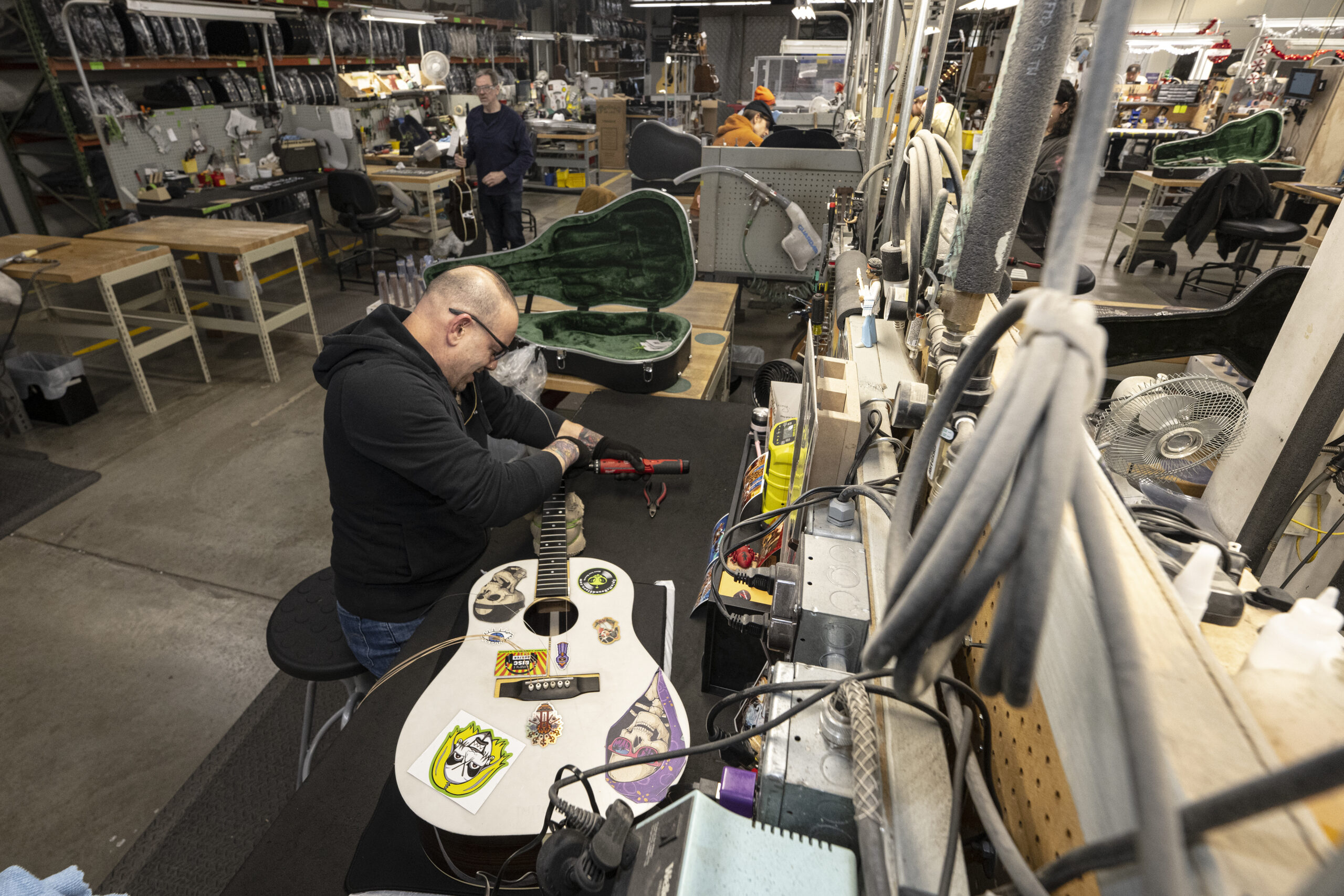
    Gregory Jasman strings a guitar. The list of musicians who play Martins could fill a music hall of fame.

    Goetzl has been responsible for most of Martin’s “playable art,” and he cherishes the idea that his art will make art.

    “It is art, and it could be hung on a wall, but that would kind of be a shame,” he said on the factory floor, holding a guitar featuring owls and the northern lights. “It’s not cheap. It’s a very real instrument with a beautiful design.”

    On this weekday, a buyer had come to Martin to possibly purchase a guitar worth more than a quarter-million dollars.

    The list of musicians who play Martin is endless, enough to fill a music hall of fame — Nelson and his famous “Trigger,” Bob Dylan, Johnny Cash, Ed Sheeran, Joni Mitchell, and so many others.

    Thomas Ripsam, president and CEO, at the C.F. Martin assembly line.

    “We are very intentional about who we want to work with,” said Thomas Ripsam, who assumed the role of CEO in 2021. ”We don’t really pay artists for playing our guitars, so we are looking for artists who have a sincere connection.”

    One of them is Billy Strings, a popular, Nashville-based guitarist who combines bluegrass, rock, and even metal.

    “When you think of the word guitar, I think of a Martin D-28,” Strings said in a promotional video for guitars that the company designed for him. “It’s so American. It’s like baseball or something.”

    An A-frame guitar adorns the museum entrance Thursday, Dec. 18, 2025, at C. F. Martin & Co. Inc. in Nazareth, Pa.
  • Where to watch Philly’s New Year’s Eve fireworks along the Delaware River, from free spots to ticketed parties

    Where to watch Philly’s New Year’s Eve fireworks along the Delaware River, from free spots to ticketed parties

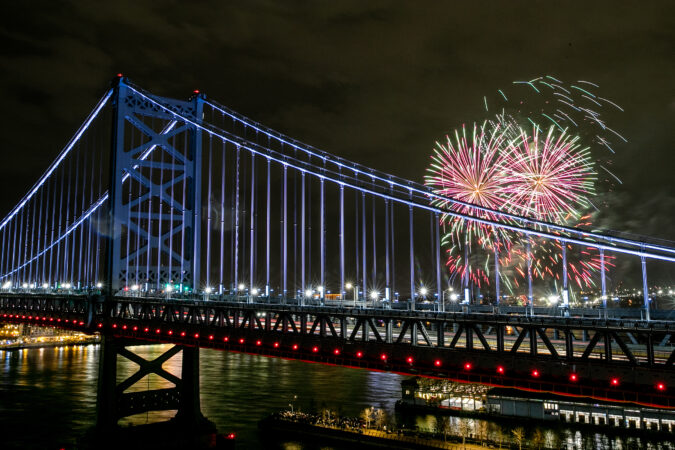
    Ring in 2026 with fireworks lighting up the Delaware River waterfront. Philadelphia’s New Year’s Eve shows will return with two displays, including an earlier, family-friendly show at 6 p.m., followed by a midnight celebration to welcome the new year. The Rivers Casino fireworks are a rain-or-shine event, with views from several free spots along the waterfront.

    Best free viewing spots

    For those looking to enjoy the show without a ticket, the fireworks can be seen from various locations along the waterfront, including:

    • Race Street Pier: 📍 North Christopher Columbus Blvd., Philadelphia, Pa. 19106
    • Washington Avenue Pier: 📍Washington Avenue Green, South Christopher Columbus Blvd., Philadelphia, Pa. 19147
    • Pier 68: 📍At the end of Pier 70 Blvd., Philadelphia, Pa. 19148
    • Spruce Street Harbor Park: 📍301 S. Christopher Columbus Blvd., Philadelphia, Pa. 19106
    • Great Plaza at Penn’s Landing: 📍101 S. Christopher Columbus Blvd., Philadelphia, Pa. 19106

    Ticketed events with great views

    Elevate your celebration with one of these ticketed options:

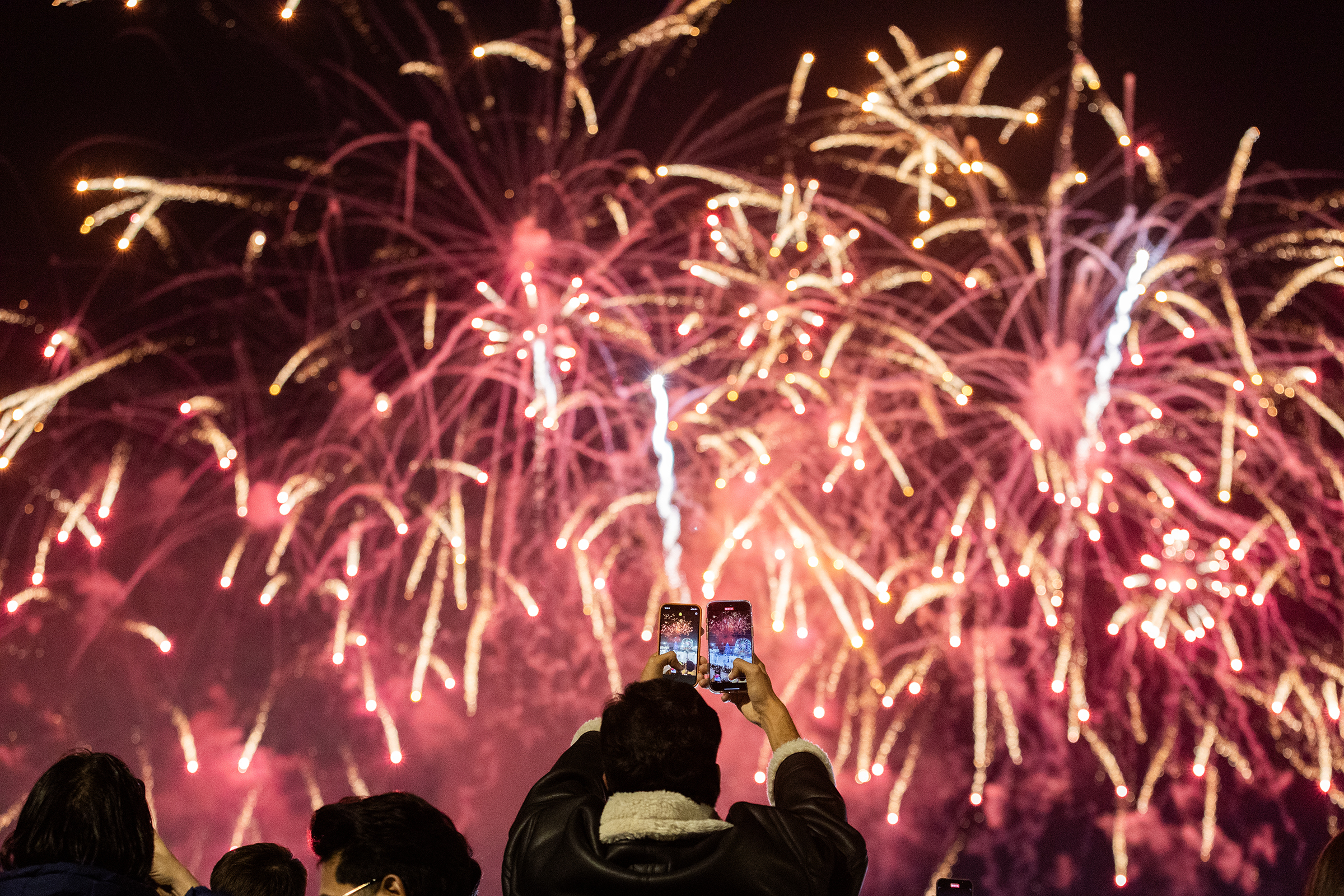
    A man at Penn’s Landing use two phones to film the midnight New Year’s Eve fireworks over the Delaware River on Jan. 1, 2025.

    Pro tips

    • Arrive early to secure a prime viewing spot.
    • Dress warmly and be prepared for crowds, as this is one of the city’s most-anticipated events.
    • Each fireworks show is unique, with different themes and soundtracks, so catching both shows is worth it if you can.