Category: Flyers/NHL

  • Flyers takeaways: Power-play struggles continue, Rick Tocchet frustrated about missed reads

    Flyers takeaways: Power-play struggles continue, Rick Tocchet frustrated about missed reads

    Still not the worst, but pretty darn close.

    The Flyers’ power play has slipped to 31st in the NHL, with a paltry 15% success rate.

    (You may want to look away at this moment.)

    It ties last year’s percentage through 82 games, but is worse than 2022-23, the first year former coach John Tortorella and Rocky Thompson were in charge. On the plus side, it is better than the 2023-24 season (12.2%).

    While some of the puck movement has looked good, the man advantage is having trouble converting — and it’s costing the Flyers games. They couldn’t score when they faced the league’s worst penalty kill, the Seattle Kraken, in a losing effort despite three-man advantages right after the holiday break.

    And on Thursday, the Flyers lost 2-1 in overtime to the Toronto Maple Leafs despite having more than three minutes of power-play time in the third period. They were up 1-0 in the third period when Toronto’s Matthew Knies was called for slashing Denver Barkey, and 68 seconds later, Troy Stecher tripped Owen Tippett.
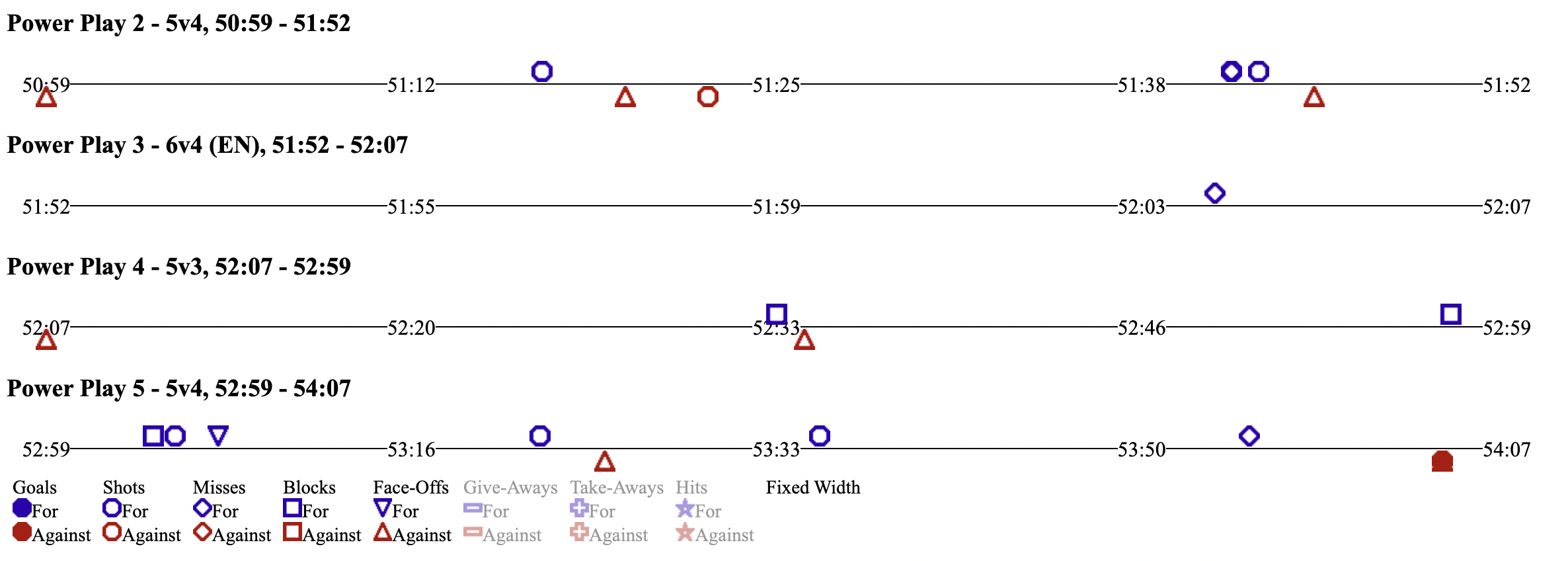
    The Flyers’ power play had 11 shot attempts in the third period but couldn’t get the puck past Maple Leafs goalie Dennis Hildeby.

    Two minutes of the man advantage were a five-on-three, and they even had a six-on-three when Dan Vladař went to the bench during the delayed call on the second penalty. But they still couldn’t score — kinda.

    “I mean, on the other hand, against Anaheim … we had quite a few looks, quite a few shots,” said Travis Sanheim about Tuesday’s game, when the Flyers went 1-for-8. “Just got to keep working away at it, and keep trying to get better each day, and hope that we can start putting some in. Obviously, it’s a big part of good teams, and something that we obviously got to be better at.”

    With Knies in the box, out came Trevor Zegras, Cam York, Christian Dvorak, Matvei Michkov, and Tippett. Zegras and York have finally been united, and Dvorak has one objective: to stand in front of the goalie. Usually, Travis Konecny is with this unit, but he did not return for the third period due to an upper-body injury.

    The opening faceoff saw Dvorak lose to none other than former Flyer Scott Laughton, who was a top penalty killer during his days in Philly. The Flyers were able to regroup quickly in the neutral zone and reenter with 1:53 left in the power play.

    They were able to set up, and Michkov, now on the left side with Konecny out and Zegras a threat in the right circle — the normal spot for the Russian winger on the other unit — got the puck down low to Tippett. One of the best Flyers on the night, and the past few weeks, spun and got a shot on goal from atop the crease.
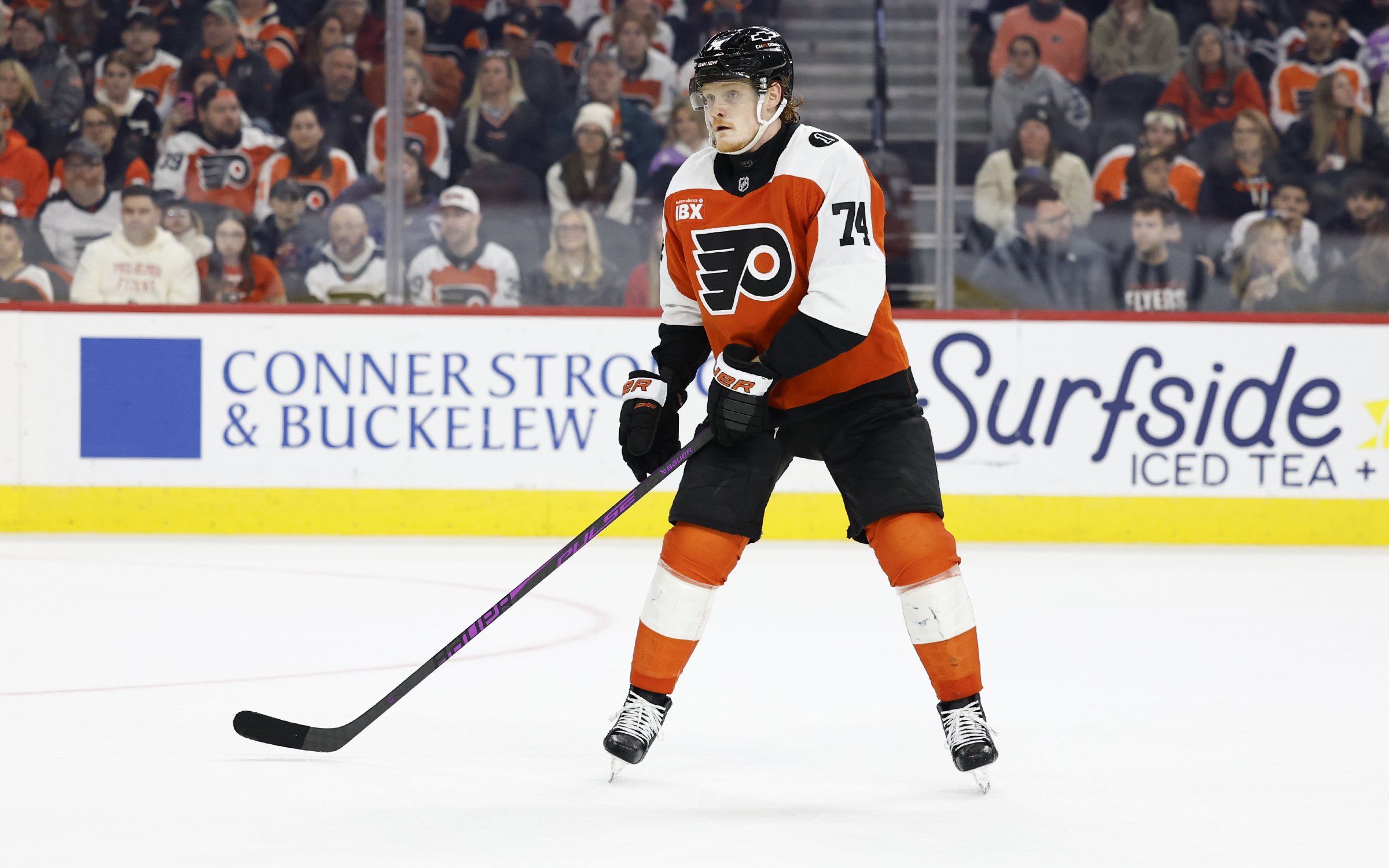
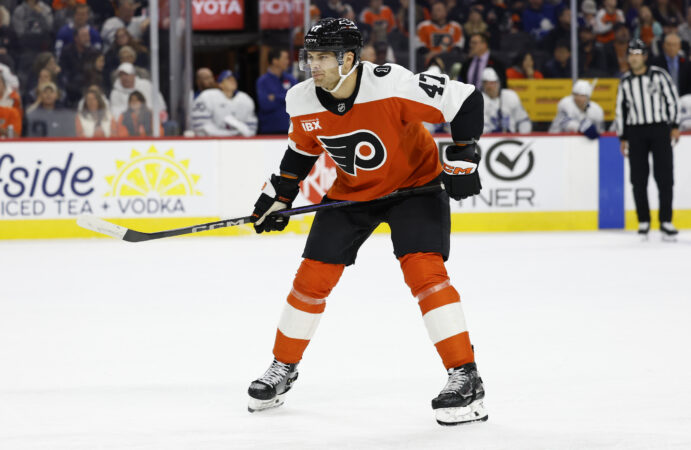
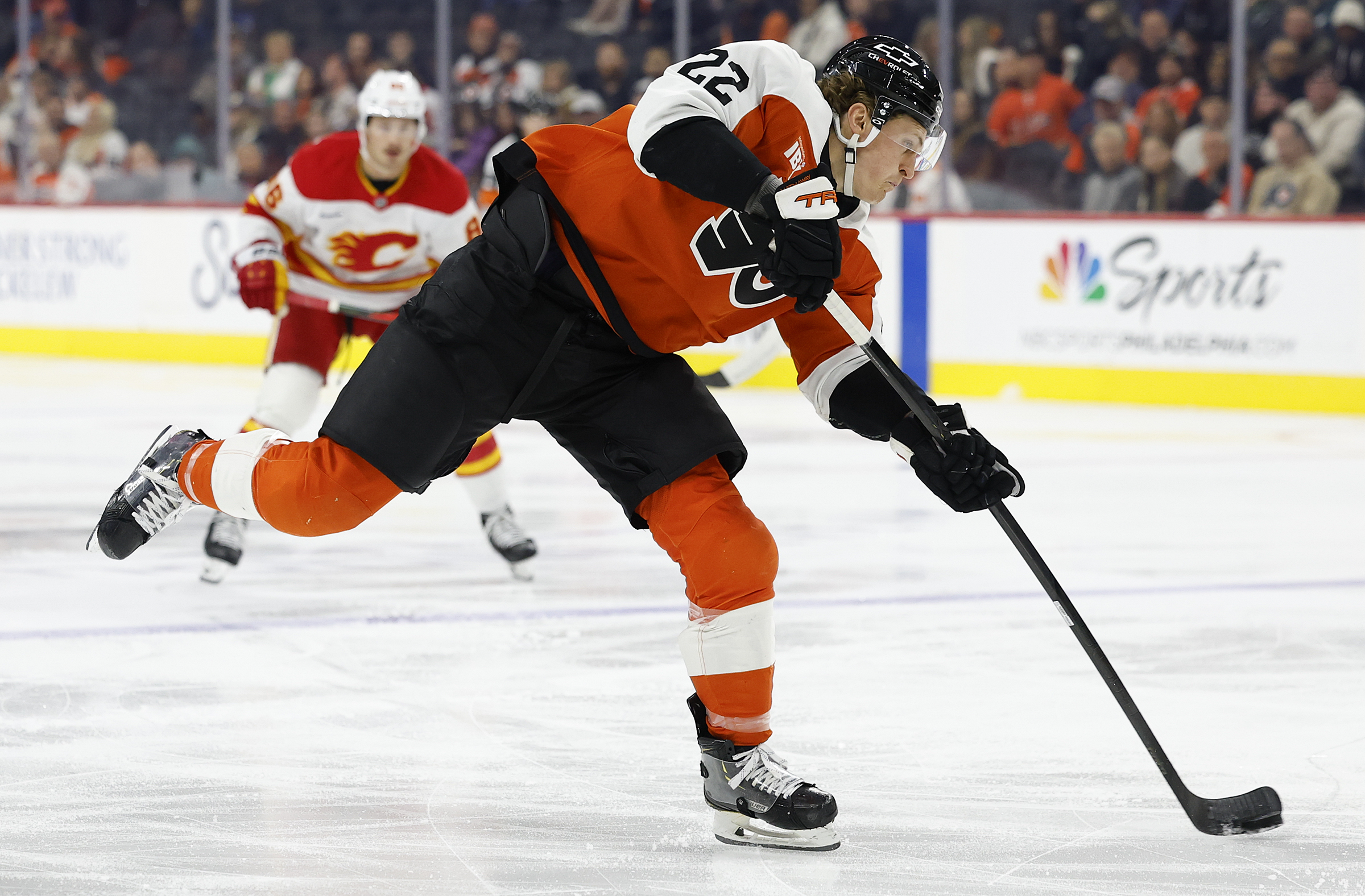
    Owen Tippett is among the Flyers who have had chances but not been able to convert.

    With 1:39 left on the penalty to Knies, that unit stayed on the ice and again Laughton beat Dvorak in the faceoff circle — Laughton was 19-for-20 on the night. The puck was sent down the ice, and the Flyers started their breakout.

    York scooped up the puck and dropped it back to Tippett, who sent it over to Zegras. Tippett got it back as he skated through the neutral zone and took off. Using his greatest asset, his speed, he flew past Maple Leafs defenseman Troy Stecher, and his wraparound hit the post.

    Dvorak got a great rebound attempt, and Zegras thought he then jammed the puck in — and maybe it was with Hildeby’s arm half into the goal and half out, and the goalie deftly moving to hide where the puck was — but it was reviewed and ruled the puck did not cross the line.

    With 1:14 left, the unit stayed out, and Laughton won another faceoff, but this time, Tippett hustled to get to the puck first along the end boards and was pulled down by Stecher. Vladař went right to the bench for an extra attacker, and Sean Couturier came on and went right to the net. York sent a shot on goal that was deflected wide, and the Leafs touched up.
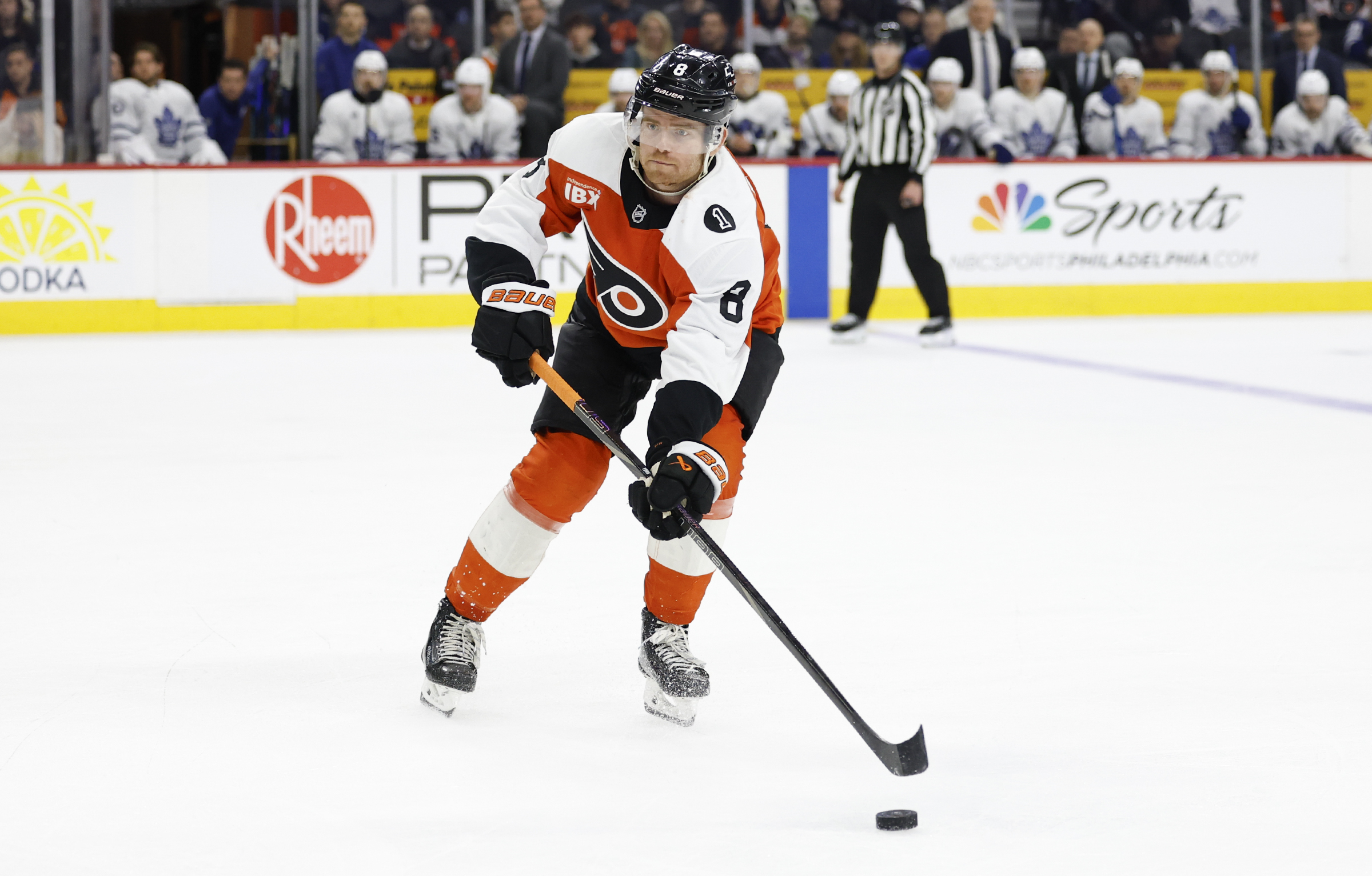
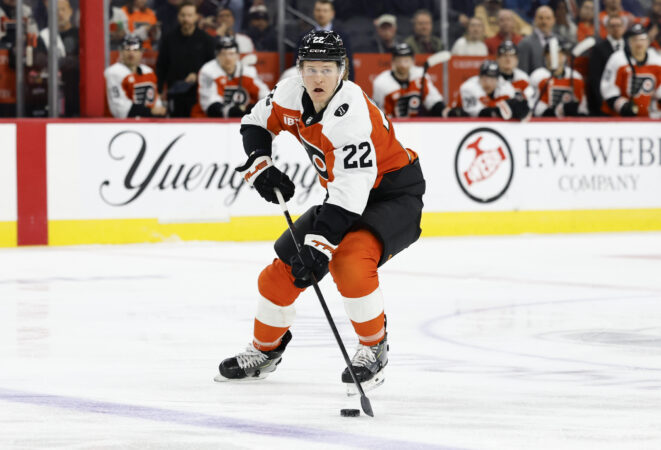
    Flyers defenseman Cam York passes the puck against the Toronto Maple Leafs on Thursday.

    It gave the Flyers a 52-second two-man advantage. The only change was Rasmus Ristolainen swapping with York. Laughton once again beat Dvorak in the circle, and the Flyers had to regroup, knocking off 11 seconds before they got back in the offensive zone.

    Herein lies the problem. They started moving the puck around the perimeter — on a five-on-three — and eventually Zegras got a one-timer deflected out by Toronto defenseman Simon Benoit.

    The Flyers have been controlling the puck better and sustaining pressure, and NHL Edge has them up to 59.4% of offensive-zone time with the man advantage; they have risen from 24th on Nov. 15 to 17th in the NHL in offensive-zone time on the power play.

    But they still need to get to the net. According to Natural Stat Trick, they are tied for the sixth-fewest high-danger chances on the power play (82).

    With 25 seconds left on the two-man advantage, Laughton won another draw, and they didn’t get back in until 10 seconds were left. Benoit lost his stick with six seconds left, leaving him vulnerable. Ristolainen put a shot on goal from that side of the ice, but it hit a teammate in front, and with 64 seconds left in power-play time, Cowan got back into the play from the penalty box.

    But then Michkov scooped up the puck and made a really nice move when he was able to bounce Laughton off him as he cut through the slot. He avoided the rest of the Leafs and got a shot on goal after his first shot was blocked by Benoit — who still didn’t have a stick — as he drove to the net.
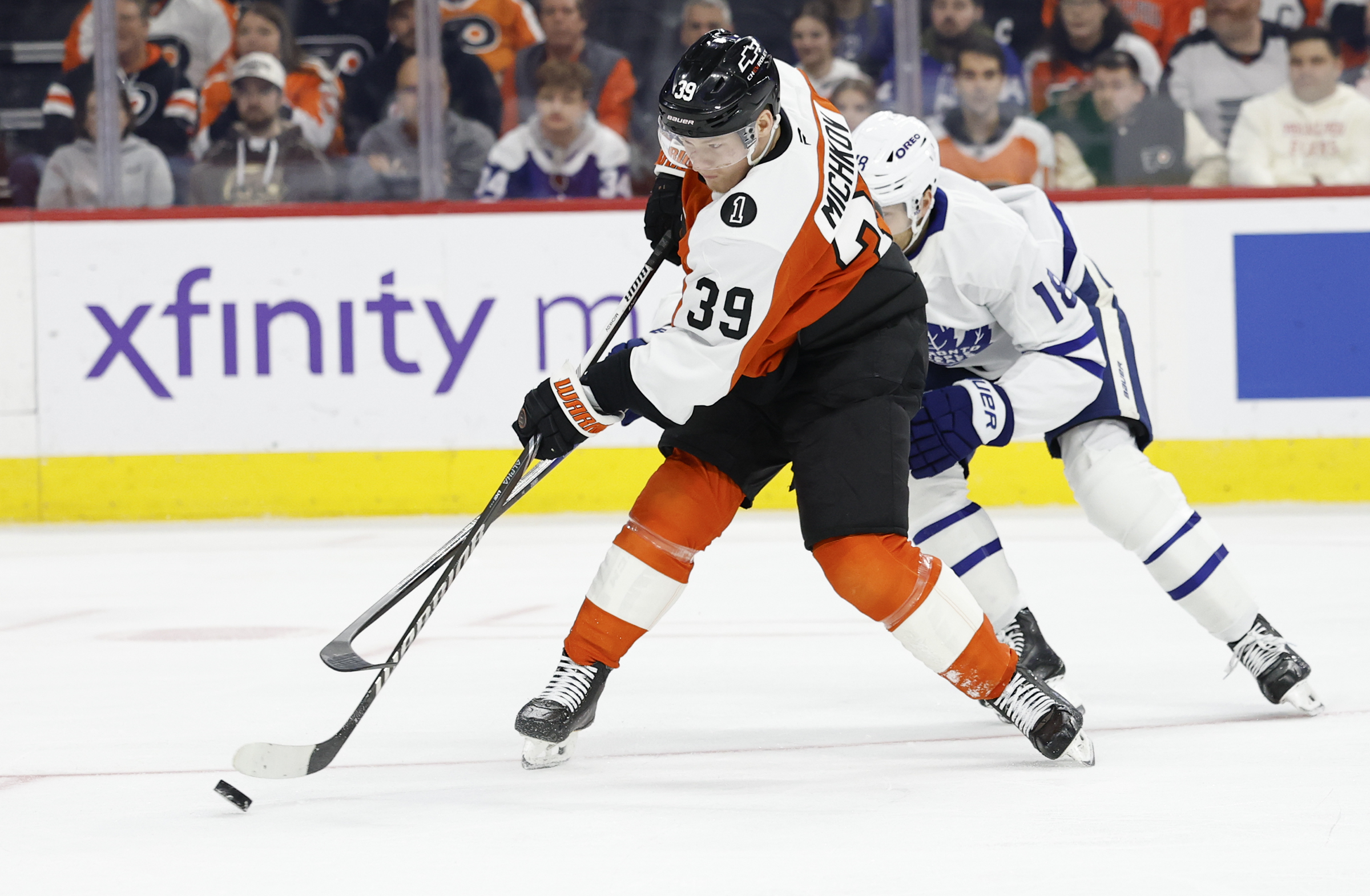
    Flyers right wing Matvei Michkov couldn’t put it home against the Leafs at a critical moment.

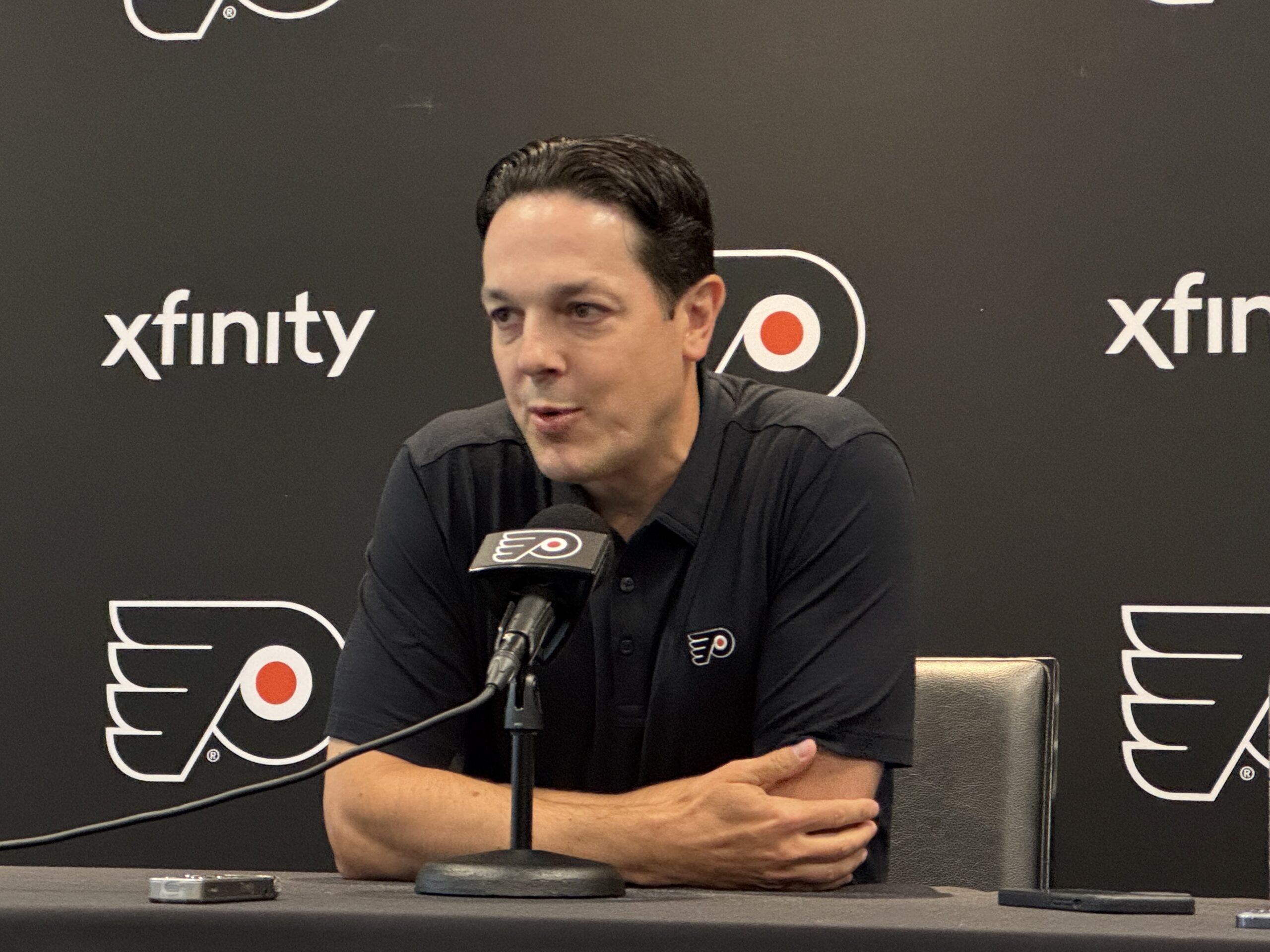
    Flyers coach Rick Tocchet expressed frustration after the game about the power play, noting his team is missing reads.

    “They had two guys on one side, and if we made one pass, somebody would have been wide-open. But we’re looking for plays instead of organically playing,” he said of the five-on-three.

    “Yeah, you want to roll [around the zone] and all that stuff, but sometimes a team will just be all in. They had a guy with no stick, and we had the puck on the other side. That’s a hard one for me to swallow, because you want the puck on the side of the guy with no stick, right? You want to pick on him, but we have the puck on the other side.”

    “I don’t know if it’s the pressure with the power play; sometimes I think guys are squeezing it so much,” he added. “But we need some guys to kind of understand the pressure and convert.”
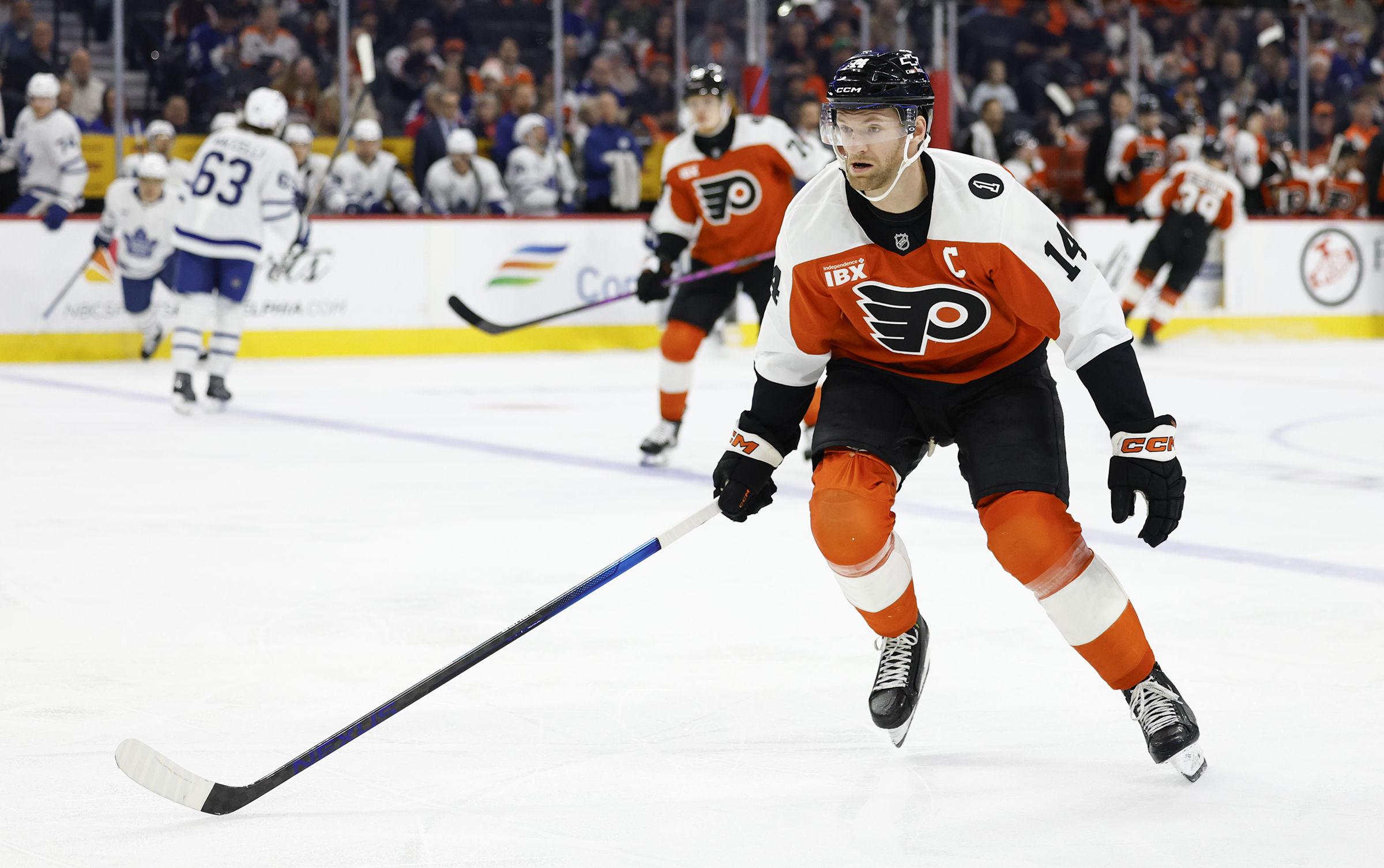
    Flyers center Sean Couturier on the ice against the Toronto Maple Leafs on Thursday night.

    After a shift that lasted 2:08, the next unit came out with Couturier, Sanheim, York, Denver Barkey, and Noah Cates. Couturier didn’t have to face Laughton and won the draw against Nicolas Roy, allowing the Flyers to set up.

    It was now a five-on-four, and after some perimeter work, York put a shot on goal that Couturier — who went to the net right after the faceoff and never left — tipped in front. Hildeby was able to pounce on the puck. Couturier got tossed, and Cates took the faceoff, lost it, but the Flyers recovered it in the offensive zone.

    Couturier, who was, like Tippett, heavily engaged on the power play, got the puck on the half-wall and put another good shot on goal with Cates screening. The Leafs were able to clear, and with time ticking down, after getting back into the zone, Sanheim sent a shot wide that led to Laughton’s short-handed goal to tie the game.

    “Sanny can’t miss the net on that one,” Tocchet said. “You have to hit the net, or at least take it a little bit off. We had people going to the net, and they score that goal. … I still think the guys played hard. I mean, that’s a hard game to play, second [game] coming off the road, emotional [against Anaheim] and stuff, so I give them a lot of credit, yeah. The special [teams] stuff, yeah. Do you wish some guys converted? Yeah.”


  • Flyers defenseman Jamie Drysdale lands on injured reserve; Travis Konecny and Bobby Brink are day-to-day

    Flyers defenseman Jamie Drysdale lands on injured reserve; Travis Konecny and Bobby Brink are day-to-day

    The injury bug has officially bitten the Flyers.

    On Friday, defenseman Jamie Drysdale was placed on injured reserve with an upper-body injury retroactive to Jan. 6, and announced forwards Bobby Brink and Travis Konecny are day-to-day with upper-body injuries. In a corresponding move, defenseman Adam Ginning has been recalled from Lehigh Valley of the American Hockey League.

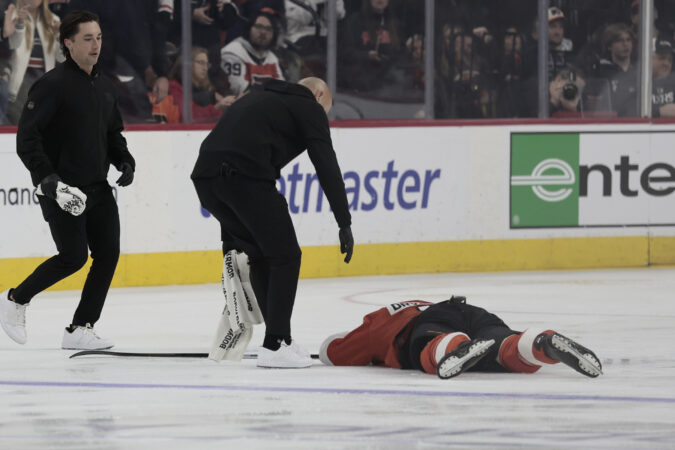
    Drysdale was injured in Tuesday’s win against his former team, the Anaheim Ducks, by a hit well away from the puck by forward Ross Johnston in the second period. There was no supplemental discipline or fine handed out by the NHL’s department of player safety.

    Brink also suffered his injury in the game on a blindsided hit in the first period by forward Jansen Harkins. He did not play on Thursday.

    “Still getting evaluated, type of thing,” coach Rick Tocchet said on Wednesday, adding he didn’t have an update after the team’s morning skate on Thursday. “I don’t want to say it’s a day-to-day. I don’t know yet. So it’s kind of one of those things. … I really don’t know. I talked to them today; they’re in a half-decent mood. Still being evaluated, so we’ll see.”

    Drysdale was curling in the offensive zone and did not see Johnston, who was skating into the zone, as the puck was deep in the Ducks’ end. They collided, and Johnston appeared to claim to officials that it was incidental contact or just a collision between two players who didn’t see one another.

    However, the video indicates that Johnston not only had enough time to avoid Drysdale but also stuck out an arm and threw it into the defenseless blueliner. Drysdale lay on the ice and did not move for a considerable amount of time before doctors and a stretcher arrived on the ice. He eventually sat up and skated off with help.

    Johnston was given a five-minute major for interference and a game misconduct.

    “Yeah, it’s tough. Anytime you see the stretcher come out, for either team, it’s not a good situation,” defenseman Cam York, who is a good friend of Drysdale’s, told The Inquirer on Thursday. “So it’s obviously not an ideal situation, but he’s OK now. So obviously that’s really good. I talked to him after that second intermission.”

    Konecny was injured on Thursday in the Flyers’ 2-1 overtime loss to the Toronto Maple Leafs. He scored the team’s lone goal in the second period but did not return for the third period. Konecny was interviewed during the second intermission by NBCSP, but appeared to be uncomfortable and winced as he walked off.

    Tocchet said after the game he did not have an update, but that “something was bugging him, I guess, early on. I think he fell or something. I don’t know [all of] the whole details.”

    The Flyers have a tough stretch ahead, and without Drysdale, and if Brink and Konecny, who is second on the team in points, cannot play, it will make it a tall task. Philly is home for games Saturday (7 p.m., NBCSP) and Monday, both against a Tampa Bay Lightning team that has won eight straight while outscoring opponents 38-22. The Flyers travel to play the Buffalo Sabres, winners of 12 of their last 13, Wednesday, and the Pittsburgh Penguins, who have won six straight Thursday.

    Ginning made the Flyers out of training camp and played in five games in October. Before being assigned to the Phantoms on Dec. 1, after clearing waivers, he was loaned to the Phantoms on a conditioning stint Nov. 18. In 17 games with Lehigh Valley, the defensive defenseman has one goal and three points.

    Veteran blueliner Noah Juulsen played with Emil Andare on Thursday. According to Natural Stat Trick, when they were on the ice together at five-on-five, the Flyers had 64.29% of the shot attempts and four scoring chances to one for the Maple Leafs.

    Flyers defenseman Jamie Drysdale on the ice against the Vancouver Canucks on Dec. 22.

    The loss of Drysdale, however, is huge as he was having a breakout year. Known for his offensive abilities with questionable acumen on the defensive side of the puck, the 23-year-old has built his game from the ground up to become a blueliner who can play a complete 200-foot game.

    This season, he had 18 points (three goals, 15 assists) in 41 games, and before the Anaheim game, he was averaging 21 minutes, 35 seconds, tying his career high and ranking third on the Flyers. He also had a plus-minus of plus-1, the highest of his career.

    “One hundred percent,” he told The Inquirer on Monday when asked if he has pride in how his defensive game has grown. “I mean, at the same time, it [stinks] to kind of have the results on the other end from the last few years. Definitely take pride in it.

    “And I think that it’s also just coming to me more naturally now; I would say that’s kind of one way to put it. So that feels good. And I think it’s just building my game, and just taking it to another level. I think it can get there, so just going to keep working at it.”

    After being acquired in the deal for Cutter Gauthier in January 2024, he played just 24 games for Philly, missing time with a shoulder injury sustained against the Penguins at the end of February. In April 2024, he underwent surgery to repair a core injury he suffered while playing for the Ducks. And he missed time last season with an upper-body injury.

    Entering 2024-25, he had played in just 147 games across four NHL seasons, missing significant time with shoulder injuries, including a torn labrum that required an operation in 2022. Since playing 81 games in his first full NHL season in 2021-22, he has never played more than the 70 he skated in last year.

  • Flyers’ first Phish night had DIY Gritty costumes, Phish trivia, and more: ‘A dream come true’

    Flyers’ first Phish night had DIY Gritty costumes, Phish trivia, and more: ‘A dream come true’

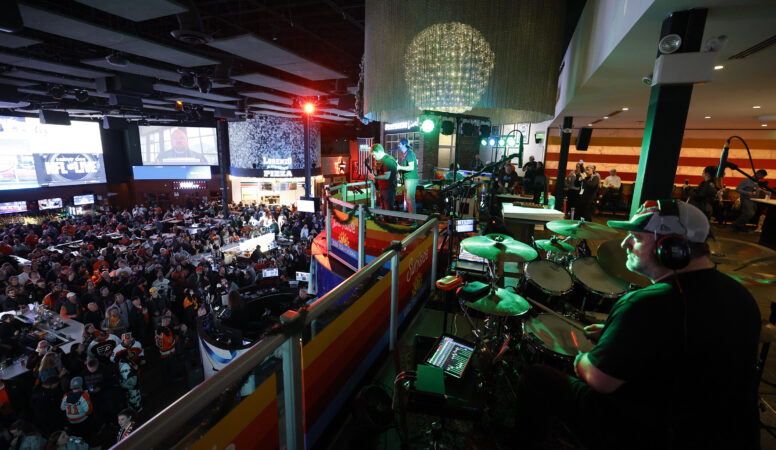
    Hundreds of fans gathered at Stateside Live! ahead of the Flyers’ home game against the Toronto Maple Leafs on Thursday night to celebrate the franchise’s first Phish Night.

    Whether they were dressed in Flyers gear, wearing Phish merchandise, or custom Trey Anastasio Flyers T-shirts, they danced to the sounds of Philly’s Phish tribute band, Rift, as they performed their 90-minute pregame set to get fans excited for what was in store for the rest of night.

    Phish Night was a highly anticipated event for 45-year-old Doylestown native Brett Erpel and his brother Aaron. After the official announcement, Brett received a text message from his 47-year-old brother that read “Let’s go to this.”

    The brothers have been fans of the band since 1995 after watching them perform for the first time at the Mann Music Center. Brett’s fandom has stretched over three decades.

    For diehard fans like Brett and Aaron, Thursday night was the perfect combination of three things they love the most: Philadelphia, the Flyers, and Phish.

    “I’m a huge Phish fan,” said 23-year-old Andrew Singer, a Philadelphia native. “The Flyers are an integral part of our city, especially during the winter time. I love Phish, the city of Philadelphia, and the Flyers. I just wanted to come out and support that.”

    The Flyers and the band have had long connection. Phish’s first-ever performance at the Spectrum took place on Dec. 15, 1995, which saw their guitarist and singer Anastasio perform in a No. 10 John LeClair Flyers jersey. And before that performance the band visited the team in their training center.

    Flyers fans listen to Philly Phish tribute band Rift, at Stateside Live! on Thursday, January 8, 2026.

    Since then, Phish had historic performances at The Spectrum which became immortalized on the album The Spectrum ’97.

    “Tonight is sort of like the culmination of this long dating process,” said Ike Richman, who owns a communications company and is long-time friends with Phish. “Tonight’s their wedding day. The Flyers and Phish are finally getting married because we’ve had this parallel for so many years. The Flyers fans know about Phish and the Phish fans know about the Flyers. But, tonight they get to all come together in this beautiful night that features their music and celebrations.”

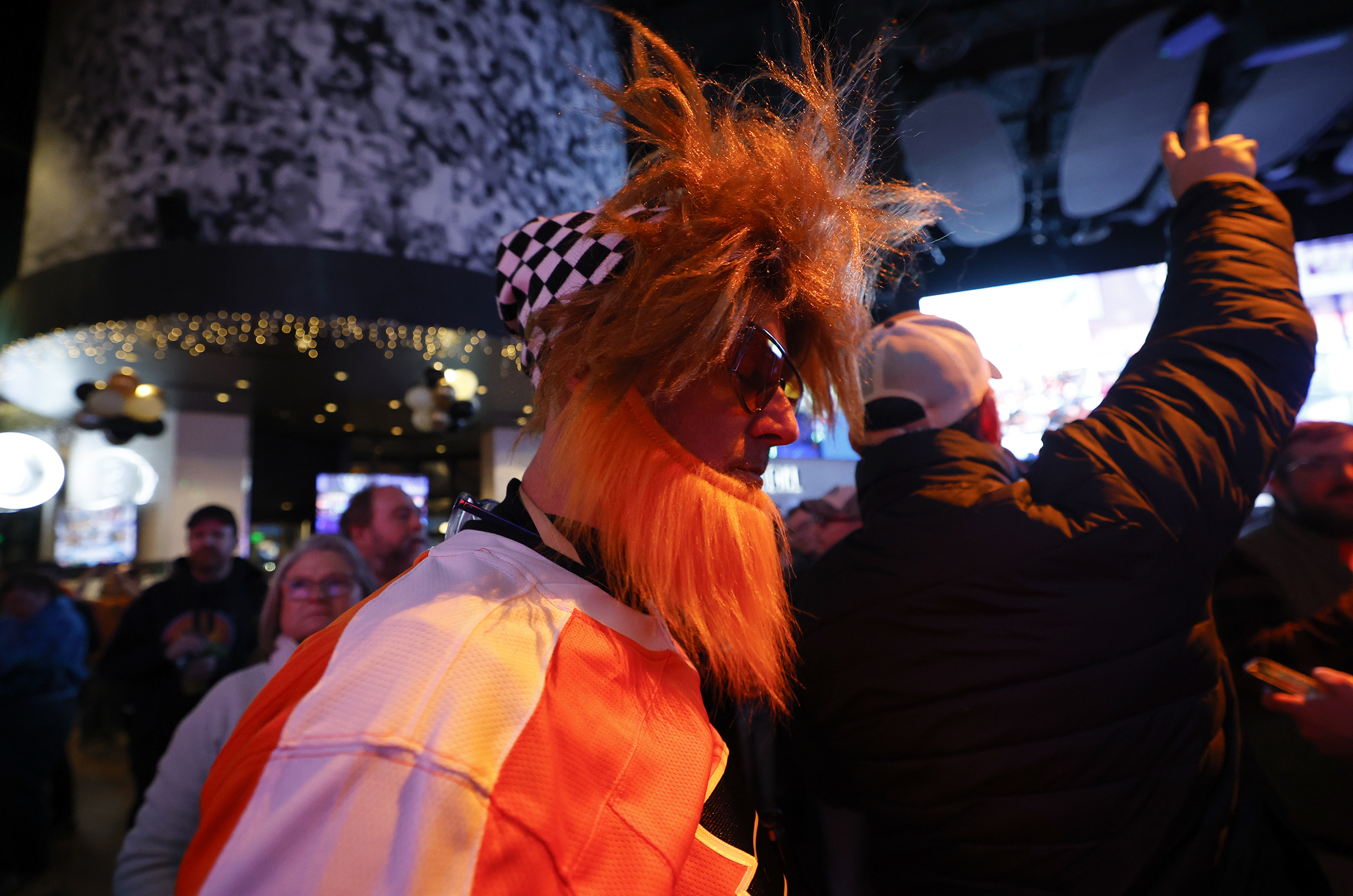
    Anastasio has been a lifelong fan of the Flyers. Some have even made the connection that Anastasio and Flyers mascot Gritty look very similar, leading to some fans dressing up as the NHL mascot for a DIY Gritty costume contest, including Frank McGannon.

    “I’m 50-years-old and dressed like this,” McGannon said. “I was invited to the concert being that it was Phish Night tonight. … And I was nominated to dress up for the Gritty contest. I guess I have that spirit, and here I am.”

    McGannon made his way to the Xfinity Mobile Arena after the concert to get his one-of-a-kind, co-branded Phish and Flyers T-shirt, which features the band’s logo decorated in Gritty’s orange fur with the bubbles replaced by popcorn. The line for the shirt stretched across 11 sections, starting at the Sales and Service table, located across from Section 112, and ending at Section 101.

    Flyers fan Greg McGannon listens to Phish tribute band Rift at Stateside Live! in a DIY Gritty costume.

    “The shirt is great,” McGanon said. “I’m not going to lie, it’s the only reason I’m here.”

    Along with the exclusive merchandise, fans could grab special menu items only available on Thursday night — including a Fishman doughnut from Federal Donuts & Chicken, a Split Open and Melt cheesesteak, a Poor Heart burger, a Ruby Waves vodka cocktail, and a Scent of a Mule vodka mule with a hint of mint.

    Throughout the Flyers-Maple Leafs game, there were singalong moments from some of the band’s greatest hits, and Phish trivia questions which resulted in a fan winning a signed vinyl record from the band.

    “It’s like a dream come true to see this happen,” said Richman, who presented the Flyers with the idea over the summer. “I’m grateful, again, that the Flyers are doing this and Phish is doing this. But, this is really for the fans and we want the fans to have a real good time. And as they say, let’s get down to the nitty-gritty and let’s get this show on the road.”

    A portion of the tickets sold from the event will benefit The WaterWheel Foundation, which supports causes in the Phish community.

  • Scott Laughton scores in his return to Philly as the Maple Leafs beat the Flyers, 2-1, in overtime

    Scott Laughton scores in his return to Philly as the Maple Leafs beat the Flyers, 2-1, in overtime

    It was another sellout at Xfinity Mobile Arena, the building’s third straight, and the Flyers welcomed back another former member of the organization in Scott Laughton.

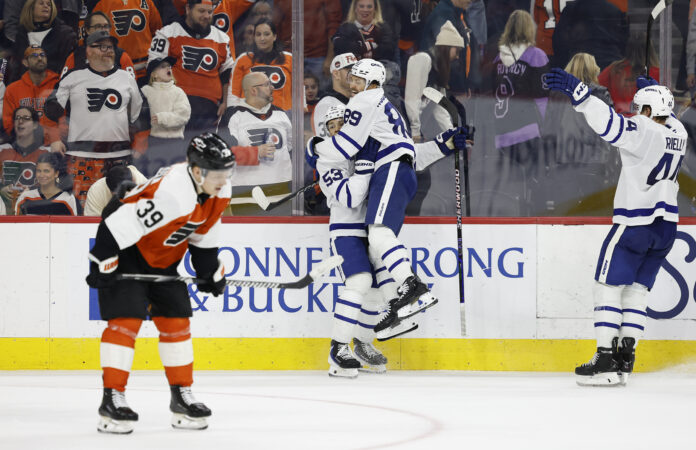
    But the emotions and vibes weren’t nearly as high, and in the end, the Flyers lost 2-1 in overtime to the Toronto Maple Leafs. Easton Cowan scored the game-winner in overtime off a spin-around pass from John Tavares.

    The Flyers’ loss snapped a two-game winning streak but extended their point streak to three games.

    Laughton, playing in his first game as a visitor to Philly in his NHL career, tied the game 1-1 with 5 minutes, 56 seconds left in regulation.

    Travis Sanheim shot the puck wide during a Flyers power play, and Laughton scooped up the puck before heading up the ice. He used his ex-teammate, Rasmus Ristolainen, as a screen before executing a pull-and-shoot shot past Dan Vladař.

    It was Laughton’s fifth goal with Toronto and second while short-handed. He scored 10 short-handed goals as a member of the Orange and Black.

    Travis Konecny did not come out for the third period after suffering an upper-body injury.

    Coach Rick Tocchet said he did not have an update after the game, but said, “Something was bugging him, I guess, early on. I think he fell or something. I don’t know [all of] the whole details.”

    But the forward and alternate captain had already left his mark in the game, giving the Flyers a 1-0 lead 55 seconds into the second period.

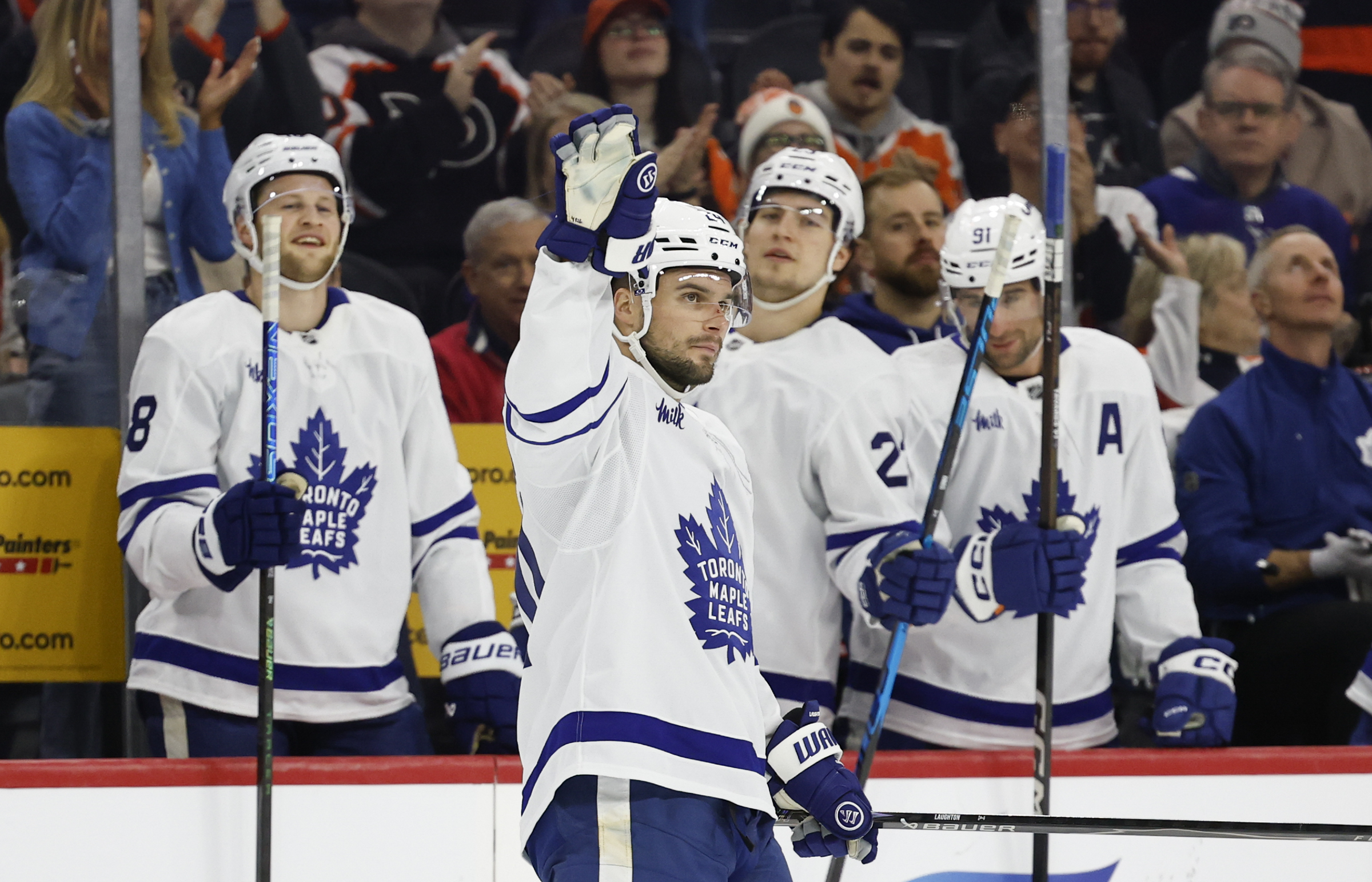
    Maple Leafs center Scott Laughton, a longtime Flyer, waves to fans after a video tribute to him Thursday at Xfinity Mobile Arena.

    The Flyers broke out of their own end after Sanheim stopped Leafs forward Calle Järnkrok in the Flyers’ end. Konecny scooped up the puck and fed Ristolainen, who dumped the puck in from the neutral zone.

    Sanheim had taken off after breaking up the rush and was the first on the puck as it rang around in the Leafs’ zone. He tipped it to Christian Dvorak as he provided puck support along the boards, and the newly extended centerman carried the puck back down to the bottom of the left circle.

    Konecny glided through the Leafs’ zone untouched and unnoticed into the left circle. He got the pass from Dvorak and sent the puck past the blocker of Toronto goalie Dennis Hildeby.

    The goal was Konecny’s 14th of the year and 212th of his career, moving him past Sean Couturier for 14th in the Flyers’ record book. He is also now tied with Reggie Leach for 15th in points (514).

    Philly had its chances to extend the lead but couldn’t find the back of the net. In the third period, they had their best chance when Toronto’s Matthew Knies was called for slashing Denver Barkey, and 1:08 later, Troy Stecher tripped Owen Tippett.

    The Flyers had 11 shot attempts, including a Tippett wraparound attempt that missed and popped out, and Dvorak tried to bang it in. Trevor Zegras thought the puck crossed the line and, although it was reviewed, the NHL’s Situation Room said the video “supported the referees’ call on the ice that the puck did not cross the Toronto goal line.”

    The Flyers also had several attempts in overtime as the puck bounced around, with Matvei Michkov and Couturier around the net, but they couldn’t get it cleanly on goal before Cowan scored.

    Breakaways

    Forward Bobby Brink and defenseman Jamie Drysdale did not play after getting injured in Tuesday’s win against the Anaheim Ducks, each with an upper-body injury. Matvei Michkov returned to the lineup after missing that game with a lower-body injury. Noah Juulsen took Drysdale’s place in the lineup. … Sanheim played in his 621st NHL game, surpassing Ed Van Impe for fourth place on the Flyers’ all-time games played list among defensemen.

    Up next

    The Flyers begin a two-game set against the Tampa Bay Lightning at Xfinity Mobile Arena on Saturday (7 p.m., NBCSP).

  • Noah Juulsen is the next man up for the banged-up Flyers; Scott Laughton returns ‘home’ to Philly

    Noah Juulsen is the next man up for the banged-up Flyers; Scott Laughton returns ‘home’ to Philly

    The Flyers’ defense will be missing a key piece on Thursday.

    Jamie Drysdale left in the second period on Tuesday after a cheap hit well away from the puck by Anaheim Ducks forward Ross Johnston. He did not practice on Wednesday or participate in Thursday’s morning skate.

    “You hate to see a teammate go down like that. And even when the stretcher comes out,” said Emil Andrae, Drysdale’s defensive partner. Drysdale was able to skate off with help and ultimately did not need the stretcher.

    “Usually what happens, I think it pumps up the team a little bit, because you get mad when a guy does that to you, and all you want to do is — hopefully Jamie is fine — but you want to win that game.”

    The Flyers did, beating the Ducks and former prospect Cutter Gauthier, whom Drysdale was acquired for. They carry a two-game winning streak and a five-game home point streak into Thursday’s matchup against the Toronto Maple Leafs (7 p.m., NBCSP).

    Drysdale has been a key piece to the defense, building up his defensive chops after being heralded for his offensive game in his draft year and early NHL days. Andrae will now partner with Noah Juulsen, who has played in 28 of the Flyers’ 41 games but only once since Rasmus Ristolainen returned.

    “Obviously, I’m here for a reason,” said Juulsen, who is seventh on the depth chart and plays a steady defensive-defenseman style. “The coaches know what I bring. The team knows what I bring. So I think that’s the biggest thing. You don’t have to do anything special. Just go out there and play my game.”

    Emil Andrae says playing with Noah Juulsen may give him a little more freddom to jump into the play offensively.

    Andrae and Juulsen played 99 minutes, 29 seconds together this season, before the former was paired up with Drysdale. Juulsen sees more confidence in the Swede as he grows in NHL experience.

    “I want to join the rush,” said Andrae, who is a puck-moving buleliner like Drysdale. “But in this pairing, I can probably do it more, so hopefully I can start doing that a little bit more, since I know his strength is in the defensive zone.

    “My strength is the offensive zone, maybe we can balance together there, but I think just read off each other and just play the way we played before.”

    Laughton returns

    Scott Laughton was back in Philly with the Maple Leafs in November. At the time, he was inching his way closer to a return from a lower-body injury and watched the game, a 5-2 loss for the Flyers, from the press box.

    Now he’ll get a true return as he suits up on Thursday for his first game back in Philly, a place he says “feels like a second home” after being traded alongside two middle-round picks last March for Nikita Grebenkin and a future first-rounder. A 2012 first-round pick by the Flyers, Laughton had 106 goals and 159 assists in 661 regular-season games with another 10 points in 24 playoff games across his tenure.

    Scott Laughton played parts of 12 seasons with the Flyers. On Thursday, he will face them in Philly for the first time.

    “You never want to be hurt and anything like that. We had a couple of days here [in November], so it was nice to catch up with some people and kind of see all the people away from the game,” he said in the visitors’ locker room at Xfinity Mobile Arena.

    “So yeah, it just gave me a little bit of, I guess, closure, if that’s the word for it, here. It’ll be nice. Try to get in a nap here and go from there. But, yeah, this one was circled on the calendar after I was hurt in the other one, and it’s a special place, and it means a lot to me. So it’ll mean a lot going out there and trying to beat them.”

    Laughton will try not to blow at high dough or get too excited for his return. But it won’t be easy. Heavily active in the community when he was here in Philly, there will be several familiar faces in the crowd.

    And there will be several across the ice for the guy sporting No. 24, like Nick Seeler, who was one of the reasons he picked that number — and a guy he said he may try to avoid during the game— and his buddy Travis Konecny.

    “He’s a rat. He’s a big-time rat,” Laughton said of Konecny. “So I’m sure he’ll be chirping, but he can back it up for sure. He’s a good player and a really good friend. We grew very close with my time here, and he’s a great human being. So he’s about as big of a rat as they come.”

    Breakaways

    Matvei Michkov will return to the lineup after missing one game with a lower-body injury. He will be reunited with Noah Cates and will have Carl Grundström in place of Bobby Brink on the wing. Brink remains out. Tocchet said he will be fluid with Grundström and Grebenkin on that wing. … Dan Vladař (16-6-3, .910 save percentage) gets the start in net.

  • World Juniors: Grading Jack Berglund, Porter Martone, and the rest of the Flyers prospects

    World Juniors: Grading Jack Berglund, Porter Martone, and the rest of the Flyers prospects

    Every December and January, the World Junior Championship delivers exhilarating hockey, unrivaled drama, and a lot of debate surrounding the sport’s top under-20 prospects, some of whom have been drafted and others who are about to be.

    While the 10-day tournament in isolation is far from a perfect way to evaluate prospects, it does provide a snapshot to gauge players’ development and a chance to see how they perform in a best-on-best environment.

    “It’s not a be-all, end-all. Especially in Canada, it gets so blown up on the stage, people get crazed if guys don’t make it or make it,” Flyers assistant general manager Brent Flahr recently told The Inquirer of the tournament.

    “But the thing that fans don’t understand is that the coaches of those teams and management have different goals than what we have. … There’s been lots of great players who have been cut [or have lesser roles] that go on to have great careers,” Flahr said.

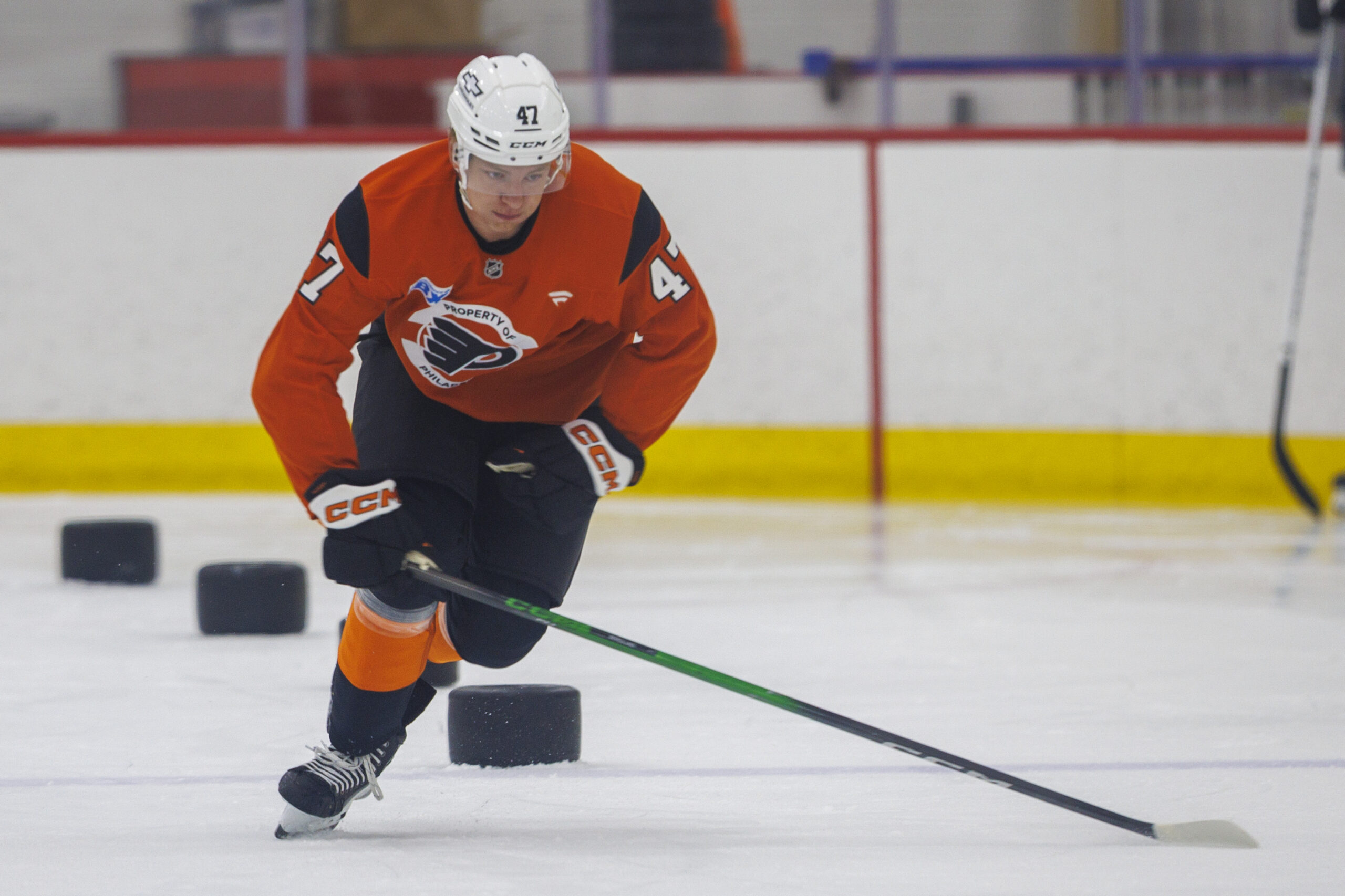
    That brings us to the Flyers, who were well represented in Minnesota’s Twin Cities. Amid the team’s ongoing rebuild and the high-end nature and sheer volume of the team’s draft picks in recent years, the Flyers sent six prospects — tied for third-most among NHL teams — to this year’s edition of the tournament.

    Here’s a look at how each of the six performed relative to expectations. (These grades are purely based on performance at the World Juniors and are not reflective of prospect rankings or the players’ seasons overall.)

    Jack Berglund, C, Sweden

    Jack Berglund’s skating has come on over the past year but the rest of his game is well-rounded.

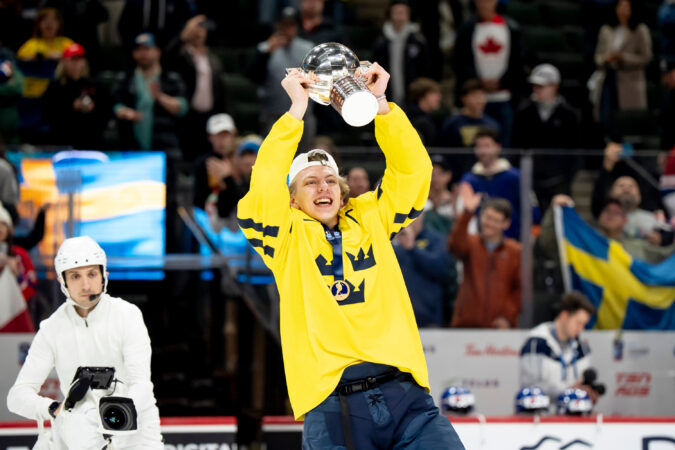
    Captain Jack led Sweden to its first World Junior gold in 14 years and only its second in the past 45, and was dominant along the way. Berglund plays well-rounded and winning hockey and is almost impossible to get the puck off of.

    While Anton Frondell scored more goals, and 2026 draft eligibles Ivar Stenberg and Viggo Björck earned most of the headlines, Berglund was the unquestioned heartbeat of Team Sweden and led by example like a captain should from the opening puck drop.

    The 2024 second-round pick tallied three goals and a joint team-high 10 points in the tournament and delivered several clutch moments in the knockout rounds, including scoring a do-or-die penalty shot to keep Sweden in the tournament in the semis and delivering assists on Sweden’s first two goals in the gold medal game.

    Berglund’s skating and lack of speed will always come under scrutiny, but he plays at his own pace, and his strength and reach at 6-foot-4 and 210 pounds allowed him to get where he needed to go at this level.

    Berglund’s a horse when it comes to puck protection and wall work, and after some early skepticism, he has now aced his last three major test: Flyers development camp, the World Junior Summer Showcase, and the World Juniors.

    Grade: A

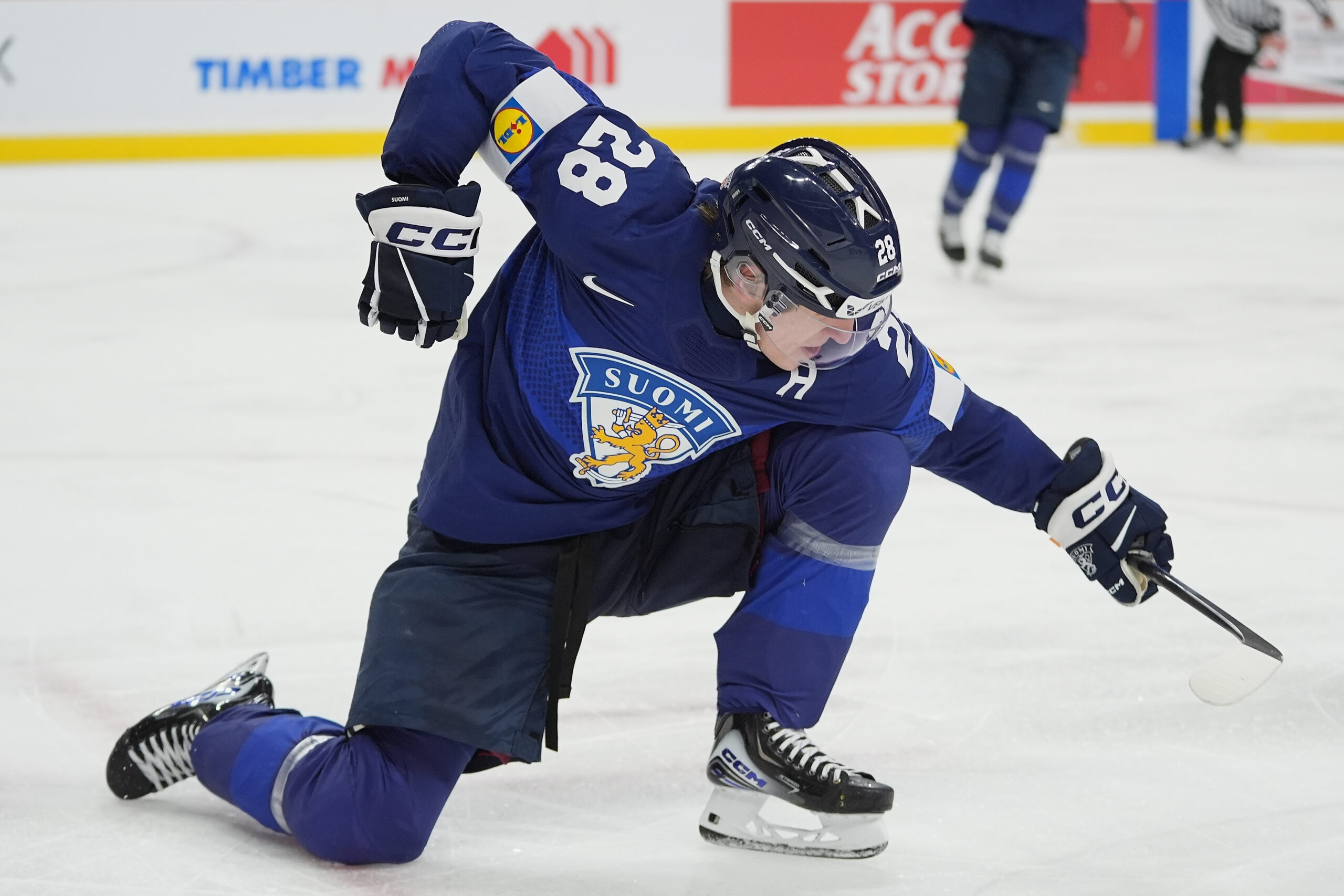
    Heikki Ruohonen, C, Finland

    Finland center Heikki Ruohonen always seems to save his best for international competition.

    Ruohonen, a player the Flyers’ brass has gone out of its way to namecheck the past few years when asked for under-the-radar prospects, backed up that praise in Minnesota with a strong tournament.

    For my money Finland’s top player at the event, the 2024 fourth-rounder led Suomi with nine points (three goals, six assists) across seven games and was a plus-six.

    Not the flashiest guy, Ruohonen has great hockey sense and always seems to make the right play. He’s also very calm with the puck under pressure and empties the tank shift to shift from a competitiveness perspective.

    The Harvard freshman impressed me here with his ability to transport the puck, and I think he has a little more skill and cleverness with the puck than he gets credit for. Though still a few years away, he’s definitely one to monitor.

    Grade: B+

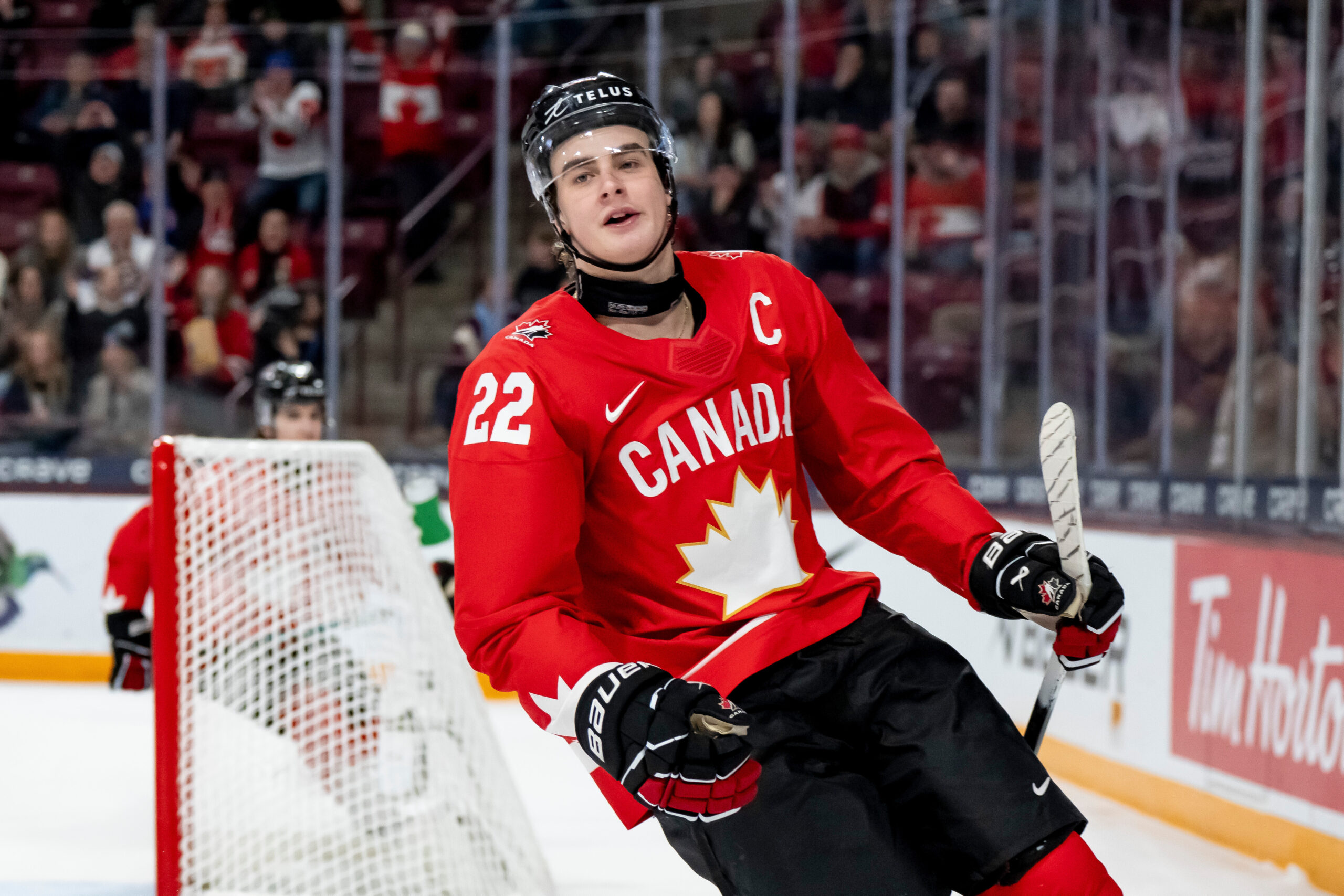
    Porter Martone, RW, Canada

    Canada’s Porter Martone was good but not great at the recent World Junior Championship.

    Martone was good: He led the tournament with six goals and had nine points in seven games. But he wasn’t nearly as impressive or impactful as those numbers might suggest while captaining a Canada team that fell short of the expectation of winning gold.

    Three of Martone’s goals and five of his points came in 7-1 and 9-1 blowouts of overmatched Slovakia and Denmark, and another one of his goals was an empty-netter against Czechia.

    Speaking of that empty-netter, his controversial butt tap of a Czech player afterward earned him a silly unsportsmanlike conduct penalty and ultimately came back to bite him and Canada when Czechia got the last laugh and knocked them out in the semifinals.

    Martone did score a clutch tying goal late in that semifinal, which was a huge moment and should not be discounted, but big-time plays in the biggest games were few and far between across the tournament for a player whom many expected to dominate.

    This grade might seem a tad harsh, but I thought Martone, who has the potential to be a truly special player given his combination of size, skill, and snarl, disappeared at times and wasn’t the consistent driver Canada needed atop its lineup.

    Grade: B

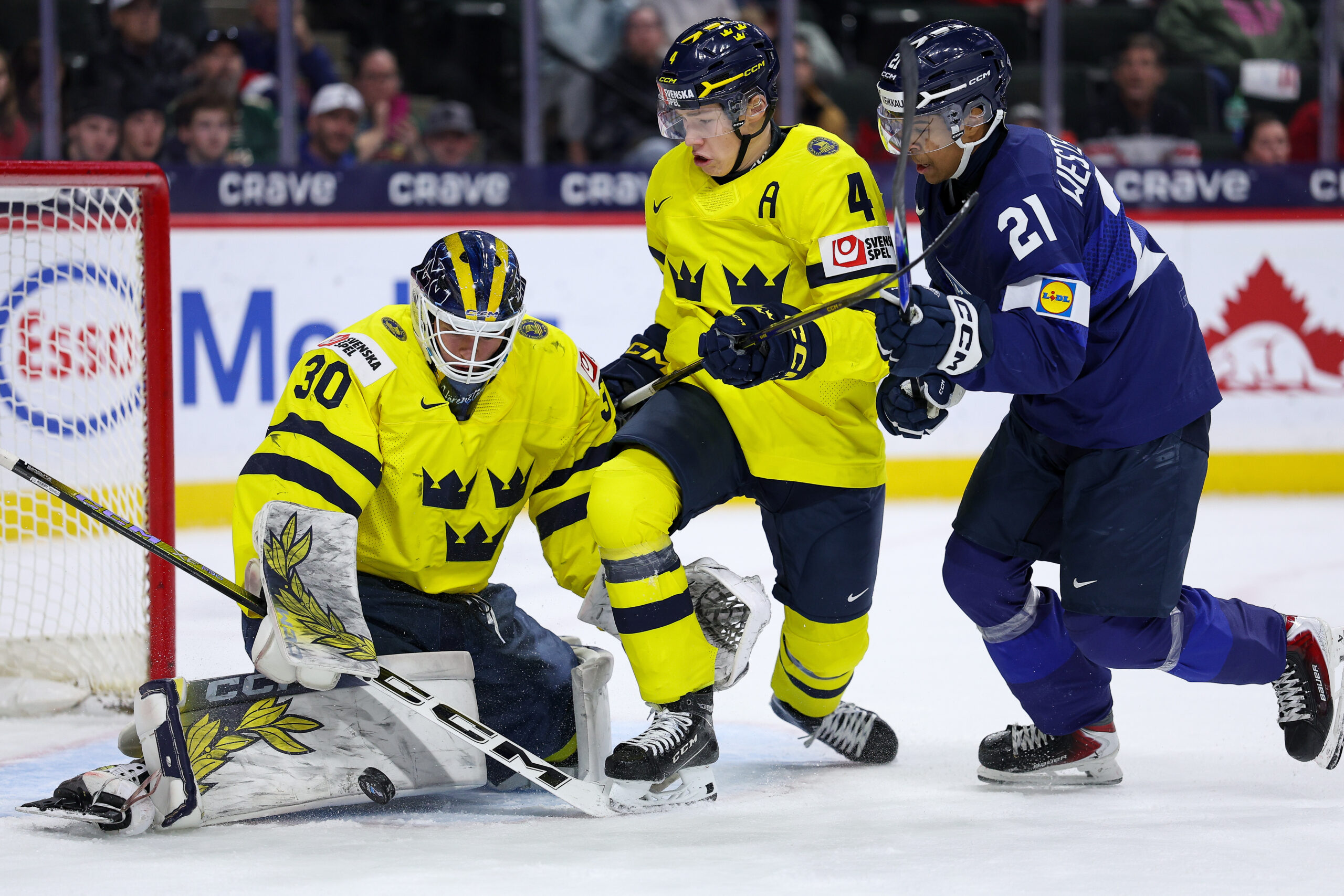
    Max Westergård, LW, Finland

    Max Westergård has some intriguing offensive skills and already has a fan in former Flyers star and current team adviser John LeClair.

    It’s early, but the Flyers might have found something in Westergård, a 2025 fifth-round pick. One of the youngest players in his draft class, Westergård was noticeable on almost every shift and consistently made things happen offensively with his speed, vision, and skill.

    Westergård looked threatening in transition throughout and also worked hard below the goal line to retrieve and keep the puck. He had a goal and four points in six-plus games — he probably deserved a few more — before being knocked out of the bronze medal game early after taking a big hit from Canada’s Kashawn Aitcheson.

    Relative to expectations, Westergård improved his stock the most in my eyes and should be a leading contributor for Finland at next year’s tournament.

    Grade: B

    Jett Luchanko, RW, Canada

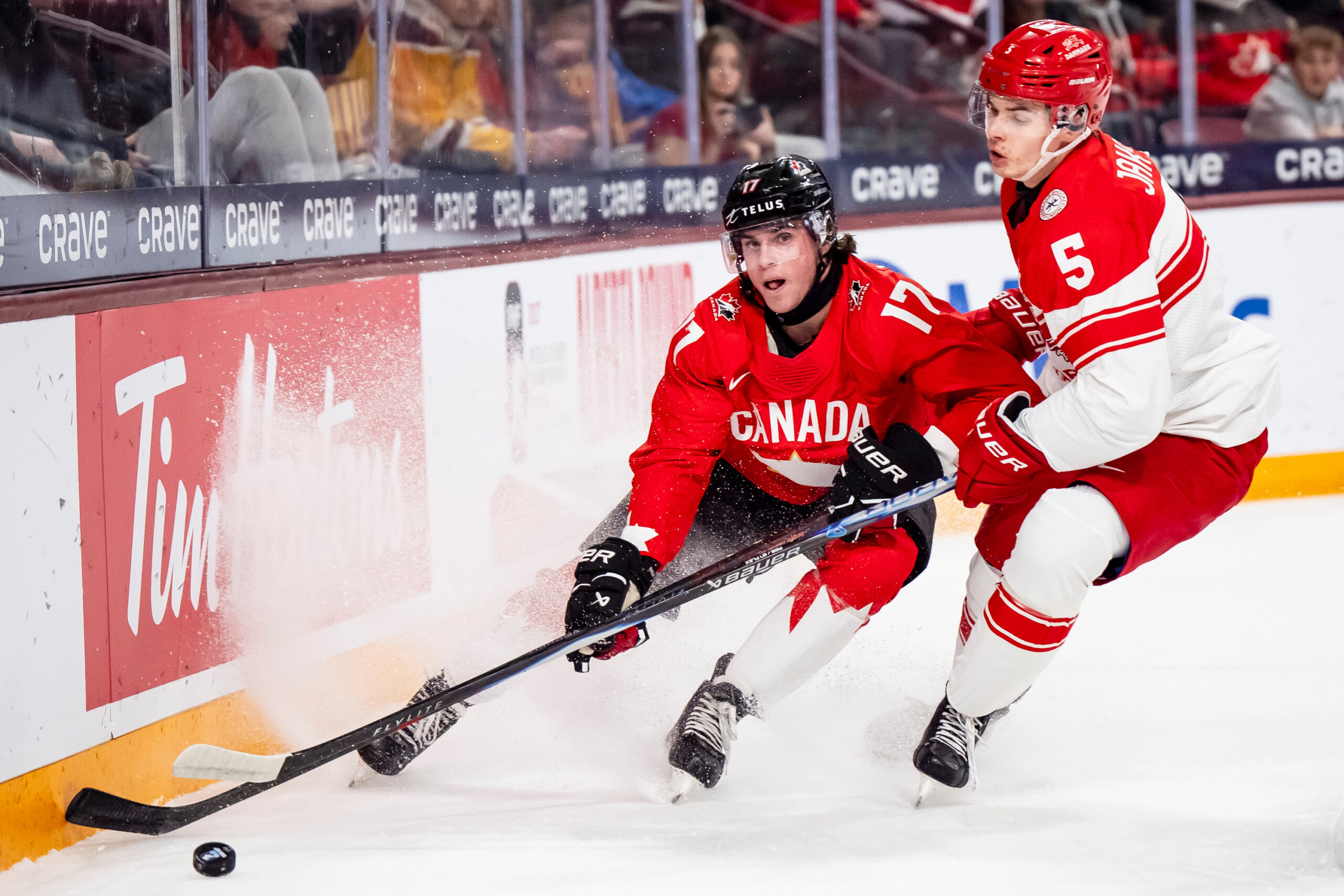
    Canada’s Jett Luchanko (17) underwhelmed for the second consecutive World Juniors.

    Flyers general manager Danny Brière was vocal about his disappointment in Luchanko’s use at last year’s tournament, but this year more of the blame has to fall on the 19-year-old’s shoulders. Playing out of position on the wing, Luchanko had an unspectacular tournament while filling a depth role.

    In seven games, Luchanko had just one assist — battling in front to dig out a puck in the lead up to Tij Iginla’s opener in the semis — and was a minus-four, including being tagged with a minus-three in that semifinal loss to the Czechs.

    Luchanko’s details and speed are real positives, but his play with the puck left a lot to be desired here, as he was largely a non-factor offensively despite being on one of star-studded Canada’s power-play units.

    It’s far too early to give up on Luchanko as a prospect, but more was expected in Minnesota. His second half with new OHL team, Brantford, will be intriguing to follow.

    Grade: C-

    Shane Vansaghi, RW, United States

    Flyers prospect Shane Vansaghi wasn’t the physical presence many expected him to be for the United States.

    It would be hard to say anything other than Vansaghi had a disappointing tournament. Deployed in a bottom-six role, the Michigan State sophomore averaged a team-low 5 minutes and 11 seconds of ice time and was a healthy scratch in two of Team USA’s five games.

    Vansaghi’s hallmarks of grit, physicality, and net-front activity were curiously absent in this tournament, as he was a minus-four despite his limited ice time. He was particularly exposed in a 6-3 loss to Sweden.

    Grade: D

  • Flyers takeaways: Trevor Zegras’ knack for the big moment and three other reasons this team has staying power

    Flyers takeaways: Trevor Zegras’ knack for the big moment and three other reasons this team has staying power

    The Flyers beat the Anaheim Ducks on Tuesday night, 5-2.

    But hockey is all about the details. So, as the Flyers hit the halfway mark with a 21-12-7 record, let’s take a look at why the small details from Tuesday night matter in the big picture.

    Trevor Zegras is a lightning rod

    The Flyers forward conceded postgame that he was downplaying how important the game was to him when he spoke to the media earlier in the day.

    “It was a tough ending with my time there, and I’ve been thinking about this game for a long time,” said Zegras, who was acquired by the Flyers from the Ducks in June. “It was one that meant a lot to me, and it was cool to get one and then, obviously, two.”

    “Playing against your old team, that kind of shoved you out the door, that third one would have been pretty cool,” he added. “But we got the win, so that’s what matters.”

    Despite coming out hard, the Flyers trailed 1-0 after public enemy No. 1, Cutter Gauthier, scored a power-play goal. They needed a boost and got it with Zegras scoring not once, but twice, each via a one-timer from beneath the right circle that coach Rick Tocchet said “looked a little [Leon] Draisaitl-ish.” Indeed.

    Zegras is the game-breaker the Flyers have been craving for years. He is someone who can change the course of a game in an instant, pressuring and creating turnovers with his deftness and quick footwork, setting up his teammates with his creativity, or having the drive to find the back of the net.

    He’s never played a Stanley Cup playoff game, but that doesn’t mean Zegras has not starred on some of hockey’s biggest stages. The New York native — who said Philly “is home for me” on Tuesday — helped USA Hockey defeat Canada to win gold at World Juniors. He is back to being the guy who dazzled fans when he entered the NHL, and it’s clear he is someone who won’t shy away from strapping the Flyers to his back and carrying them when it matters — maybe in late April?

    The Flyers can play a heavy game

    The Flyers have one of the NHL’s youngest teams, and they might not be giants, but it is clear that they are up to the task of playing the heavy game that successful teams tend to deploy in the postseason.

    Typically, a heavy game is described as a physical one in which teams are aggressive on the forecheck, lay big hits, win puck battles, and consistently pressure. Tocchet equates a heavy game to good body positioning and being tough to play against.

    If the NHL provided the information on zone time for individual games, the ice would have noticeably been tilted in favor of the Flyers. They outshot the Ducks 39-18, limiting them five shots in each of the first two periods.

    And, unlike the Ducks, who seemed to be head-hunting the whole game, the Flyers delivered clean, hard checks.

    In the last few games, Owen Tippett has played like a true power forward by using his speed, skill, and 210-pound body to throw huge checks and create time and space for scoring opportunities. He had 10 shot attempts (four shots on goal and five that missed the net) and three hits.

    But the player who stood out the most was Garnet Hathaway, who showed why he has been a hot commodity at past trade deadlines when teams want to bulk up for the postseason.

    The forward, who was playing in his second game since being a healthy scratch for six, and doesn’t have a point thus far this season, threw several bone-crunching — but legal — hits. He had six hits, including ones on Olen Zellweger and Ian Moore that could be heard vividly in Xfinity Mobile Arena.

    “Garny laying two huge hits,” Cam York said. “That’s playoff hockey, and we feel like we’re a playoff team.”

    “[Hathaway] dragged a lot of people in the fight with us,” Tocchet added.

    Hathaway ended up dropping the gloves with former Flyers defenseman Radko Gudas after his hit on Moore, and Noah Cates — Noah Cates! — had a tilt of his own with Jansen Harkins after the latter’s high hit on Bobby Brink in the opening minutes. Brink ended up leaving the game with an upper-body injury.

    “I don’t know, just kind of, I guess, maybe, speaks to the confidence and strength I kind of put on and different things like that,” said Cates, who joked that the one fight HockeyFights.com has him listed as having, which was in juniors, wasn’t really a fight.

    “But, just wanted to defend a teammate. With Bobby [it] looked like a bad hit [but] wasn’t a penalty. … But I think the boys respect it, and it’s kind of a necessary thing in the game.”

    The bench boss liked what he saw Tuesday and if the Flyers play as they did against Anaheim, good things should happen.

    Rick Tocchet has raved about Travis Konecny’s development as a leader and key locker room voice.

    Focus and unity

    Whether skating as a five-man unit or going to bat for one another, the Flyers are united. They cheered when Hathaway and Cates dropped the gloves.

    They chirped at Gauthier, who didn’t want to play for the Flyers, and got in his face any chance they could. Aside from Cates going after Harkins, they tried to get at Jacob Trouba and Ross Johnston after they threw high, dirty hits.

    And they checked on one another. Travis Konecny was seen going up to Denver Barkey, appearing to ask if he was OK, as he got on the ice for a power play. The power play happened after Trouba went headhunting on him.

    Konecny, 28, has become a true leader in every sense of the word for the Flyers.

    “I love the kid. I can understand how [John Tortorella] loves him, too, in the sense of — what did he call him, a wing nut?” Tocchet said. “For me, he does some stuff that you go, ‘What are you doing?’ And then he does some stuff like, wow. So, there’s a balance there.

    “But he’s an unreal guy in the room. This is a close team, and I think he’s one of the reasons why, whether it’s a football pool or whether it’s a dinner, he’s leading the brigade, or whether it’s, hey, unacceptable first period, he’s saying it.”

    Home-ice advantage

    The Flyers are now 12-5-4 at Xfinity Mobile Arena and, for the second straight game, sold out the building.

    It’s a major step for a team that hasn’t packed the barn consistently for a while. And from the moment the puck dropped Tuesday, the faithful were into the game.

    The fans at Xfinity Mobile Arena were up to the task on Tuesday, something the Flyers players hope to see consistently as they push for the playoffs.

    A lot of the attention was directed at Gauthier, but that didn’t stop them from cheering and booing other aspects.

    “The fans were just electric all night,” Christian Dvorak said. “It was a lot of fun.”

    “The crowd was outstanding,” said Tocchet, who is in the Flyers Hall of Fame as a player. “I just remember the days when I played; that’s a loud building tonight. They were awesome. I think they really gave our team some juice.”

    York said it felt like a playoff atmosphere and that he would “wish it [would] maybe happen more than once a year.” Well, if the Flyers keep playing the way they’re playing, it should.

    It did give the players a look into what could be the future. Most of the Flyers have not played in a playoff game, and only Konecny, Travis Sanheim, and Sean Couturier were on the roster the last time Philly made the postseason in the 2020 bubble.

    “We don’t want to be satisfied here,” Couturier said after the game. “We’ve got to keep pushing, take it to another level. It’s going to be tight till the end of the year. Look at the standings, doesn’t matter if you win one or you lose one, it’s so tight. So we’ve got to focus one game at a time.”

    Before the Olympic break, the Flyers play 15 more games. That leaves 26 when the schedule picks back up at the end of February. Forty-one games down. Forty-one to go. It’ll be an interesting journey.

  • Contract grades: Was signing Christian Dvorak for the long haul the right move for the Flyers?

    Contract grades: Was signing Christian Dvorak for the long haul the right move for the Flyers?

    With a dearth of centers on the market, the pivot-needy Flyers acted quickly to retain one of their own, signing Christian Dvorak to a five-year, $25.75 million contract extension on Monday night.

    The deal, which kicks in next season, carries a reasonable $5.15 million average annual value but will pay the soon-to-be 30-year-old Dvorak through the age of 35. It also contains some player trade protection, including a full no-move clause in the first two seasons.

    But was general manager Danny Brière right to lock in a player who is having a career year but doesn’t necessarily fit the team’s age profile? We asked our writers to grade the deal from a Flyers perspective.

    Jackie Spiegel: B

    Why did the Flyers sign Dvorak to an extension? Just take a look at Trevor Zegras’ first goal in the Flyers’ statement win Tuesday against the Anaheim Ducks.

    There is no denying the chemistry the two friends have on the ice. According to Natural Stat Trick, when they are on the ice together at five-on-five, the Flyers have scored 27 goals. When it’s Zegras without Dvorak? Seven. When it’s Dvorak without Zegras? Five.

    But while their connection has not only fueled a possible career year for Zegras, it has done the same for Dvorak. At 29 years old, he is on pace for 18 goals and 53 points, which would demolish his career high of 38 set in 70 games during the COVID-19-impacted 2019-20 season. And his coach that year? Rick Tocchet.

    Dvorak has an established bond with Tocchet and Zegras, and while both appreciate his smart 200-foot play and his propensity to drive the net — something this team has long missed — Dvorak also brings stability and versatility. He can play up and down the lineup at wing or center, and at any strength.

    Flyers center Christian Dvorak is on pace to tie his career high of 18 goals and shatter his career high of 38 points.

    This is something to keep in mind when asking the question about him standing in the way of future centers like Jett Luchanko, Jack Berglund, and Jack Nesbitt. Although no one knows what the roster will look like in one to three years, knowing the veteran forward can slide over or down when those guys are ready is key.

    And there has been some chatter that maybe, just maybe, because the Flyers have an abundance of high-end talent on the wing in Porter Martone, Matvei Michkov, Tyson Foerster, Alex Bump, and, for argument’s sake, Zegras, the need is just for solid centers who can complement these guys. Why not have a responsible two-way guy like Dvorak fill one of those slots?

    Plus, it needs to be noted how much the Montreal Canadiens and their reporters have said that Dvorak is missed in the locker room and on the ice.

    Now, it is only 41 games into Dvorak’s tenure in Philly, so it’s interesting that Dvorak is being handed a long-term deal; he did say on Tuesday that term was important to him. But Brière continues to stress that he likes guys who bet on themselves, like Ryan Poehling, like Noah Juulsen, like Dan Vladař, and like Dvorak did when he signed over the summer and did again on Monday.

    Will there be the same motivation going forward? Dvorak seems like a guy who is determined to keep the pedal to the floor.

    “We wanted to get to know him a little better, and since he arrived, total pro,” the GM said. “What he’s done on the ice, he’s a good example for our players and for all our young guys that are coming up; that’s the part that I love.

    “His play speaks for itself, obviously. But I’m excited about what he’s bringing to the rest of the team, and eventually all our good young prospects, being able to play both ends of the ice, win faceoffs, smart hockey. I’m excited that he wanted to stay here. I think for us, it’s a good sign [that] someone who bet on himself chose us and then wants to stay here. It’s very exciting.”

    There’s a lot to read between the lines on that quote, but the biggest is “chose us.” Philly hasn’t been a destination for a while, and it’s fair to say that with the free-agent market for centers shrinking by the day, Dvorak would have been paid handsomely. But he chose the Flyers because he believes in what is happening here.

    The Flyers are doing so well in part because of a good vibe in the locker room. It happened for a long chunk of the 2023-24 season before the wheels fell off. Locker room chemistry is vital to on-ice production. Teams have fallen apart when players have been traded. It’s why a team makes, let’s say, the Stanley Cup Final, and, for lack of a better term, a glue guy is allowed to walk or is traded, and it quickly falls apart.

    Could this deal age poorly? Sure. But could it also work out and pay off? Yes. And why not take a gamble when you know things are going well now, things should get better for the team in the future, and well, there’s not much else out there?

    Trevor Zegras has thrived alongside Christian Dvorak and was thrilled to see his close friend sign a long-term deal in Philly.

    Gustav Elvin: C

    I’ve been largely a Brière defender to this point, as I think he’s done an underrated job of clearing bad contracts or fits from the previous regime like Ivan Provorov, Kevin Hayes, Tony DeAngelo, and Joel Farabee, while patiently stockpiling assets and making some shrewd additions like Sean Walker, Zegras, and Vladař. But I simply can’t wrap my head around this one for the Flyers.

    Dvorak is a good player, and $5.15 million is fair monetary value for a player who plays a position of need and seems to have some untapped offensive skill and chemistry alongside Zegras. But giving an oft-injured, soon-to-be 30-year-old center, not to mention one who has primarily been a third- and fourth-liner until this season, five years is a major risk and potentially a costly misstep as the rebuilding Flyers inch closer to their window of contention. A three-year deal with a higher $6 million or $6.5 million AAV would have made more sense to me from a Flyers perspective.

    Flyers general manager Danny Briere is taking a risk signing a nearly 30-year-old center to a five-year contract.

    To borrow a 2024 line from former coach John Tortorella, whom I did not expect to be channeling here, the Flyers “can’t fall in love” with players who don’t fit the timeline or plan. Signing Dvorak — someone the team prioritized signing to a one-year deal so much so that it overpaid him just six months ago — to a contract with this long a term is doing exactly that. It’s a rash response to a barren center market and an overreaction to a player on pace for a career year while attached to a really good creator in Zegras.

    To me, this screams: We don’t have a No. 1 center and none are available, so let’s sign the closest thing we’ve got, even though he’s ideally a third-line center. To make matters worse, the Flyers already have two of these guys signed long-term in Sean Couturier and Noah Cates.

    From a 30,000-foot view, the move appears to be a signal that the Flyers are done rebuilding in earnest and now are ready to push for the playoffs. It will be a popular deal with the players in the locker room and surely will add juice for them to try and get over the line this spring. But might it have lasting consequences?

    While I don’t think this move alone completely kiboshes the team’s future, it sets a worrying precedent. The mantras of “patience” and “threading the needle” that Brière and president Keith Jones have constantly preached suddenly seem to be taking a backseat to winning. This will remind many of the panic moves from the Flyers’ past, when general managers and ownership prioritized sneaking into the playoffs rather than looking in the mirror, tearing it down, and trying to build a sustainable Stanley Cup contender from the studs up.

    It also seems like a bit of an indictment of the center prospects in the system like Luchanko, Nesbitt, and Berglund, and their potential timelines to becoming NHL contributors. The Flyers are no closer to having a bona fide No. 1 center or No. 1 center prospect after this deal, and no matter how good their wingers are or how hard they work collectively, they won’t be legitimate Cup contenders until they unearth or acquire at least one. Dvorak is a solid player, not a great one, and the Flyers already have plenty of those. While he might help the Flyers reach the playoffs this season, he isn’t the type of needle-mover that will help them truly contend in a top-six role.

    At best, Brière’s big bet pays off and Dvorak stays healthy and continues to produce at this season’s level. But I’ve seen this story countless times before with aging centermen with a lot of tread on the tires. It usually doesn’t end well.

  • Flyers’ Bobby Brink, Jamie Drysdale ‘still getting evaluated’ after injuries

    Flyers’ Bobby Brink, Jamie Drysdale ‘still getting evaluated’ after injuries

    Tuesday’s Flyers-Ducks game was always going to have extra emotion and intensity given the connections and bad blood between the teams after Cutter Gauthier demanded a trade from Philadelphia two years ago.

    That bad blood quickly ratcheted up another level when two Flyers were injured by blindsided hits. Bobby Brink and Jamie Drysdale each left the game and did not return.

    “Still getting evaluated, type of thing,” coach Rick Tocchet said on Wednesday. “I don’t want to say it’s a day-to-day. I don’t know yet. So it’s kind of one of those things. … I really don’t know. I talked to them today; they’re in a half-decent mood. Still being evaluated, so we’ll see.”

    Brink was blindsided by a Jansen Harkins hit just 2 minutes, 38 seconds into the first period.

    Off the rush, the Flyers winger received a pass from Nikita Grebenkin and was skating toward the slot when Harkins cut across the slot and clipped Brink up high. The Flyers winger did not return to the bench in the first period and was later ruled out with an upper-body injury.

    Noah Cates went right after Harkins, and the two dropped their gloves. Both players received five-minute majors for fighting, and Cates was handed an extra two minutes for instigating. Harkins was not assessed a penalty for the initial hit.

    According to Hockeyfights.com, it is Cates’ first pro hockey fight. The site says he logged one fight when he was with Omaha of the United States Hockey League in 2018, dropping the gloves with Paul Cotter, who now plays for the New Jersey Devils.

    Injury struck for the Flyers again in the second period, as Drysdale went down after a cheap hit well away from the puck by Ducks forward Ross Johnston.

    Johnston was skating into the zone and ran over an unsuspecting Drysdale, who was curling up top near the blue line. The puck was deep in the Ducks’ zone at the time. Johnston appeared to be pleading that the hit was incidental and just a collision between two players who didn’t see one another. On replay, it appeared that Johnson had enough to see and avoid Drysdale and that he even stuck out an arm and threw it into Drysdale. The two seemed to bang knee-to-knee, with Drysdale also absorbing a blow up high.

    Johnston was handed a five-minute major for interference and a game misconduct. The play by Johnston came after Garnet Hathaway drilled Olen Zellweger — cleanly — in the offensive zone. The Flyers failed to score on the five-minute power play.

    Drysdale, who was acquired in the deal for Gauthier almost two years ago to the day, laid on the ice and did not move for a considerable amount of time. The stretcher did come out, and the doctors came out of the stands, but Drysdale sat up and skated off the ice with help.

    He did not return and was officially ruled out at the start of the third period with an undisclosed injury.

    There was no supplemental discipline handed out by the NHL on any of the hits.

  • Flyers fans still don’t like Cutter Gauthier. Trevor Zegras has made it sting a little less.

    Flyers fans still don’t like Cutter Gauthier. Trevor Zegras has made it sting a little less.

    Cutter who?

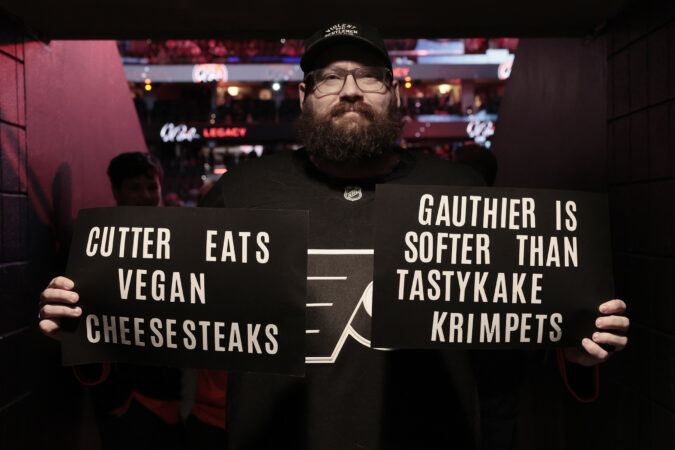
    That was the message from Flyers fans for former top prospect Cutter Gauthier on Tuesday in his second career game in Philadelphia — at least on some of the pregame signs.

    If fans had somewhat gotten over the whole ordeal in warmups, Tuesday’s game — a 5-2 Flyers win over the Anaheim Ducks — unfolded perfectly to hook them back in.

    “The crowd was outstanding,” Flyers coach Rick Tocchet said. “I remember the days when I played, that’s a loud building tonight. They were awesome. I think they really gave our team some juice. Even when they scored the first goal, they didn’t let up.”

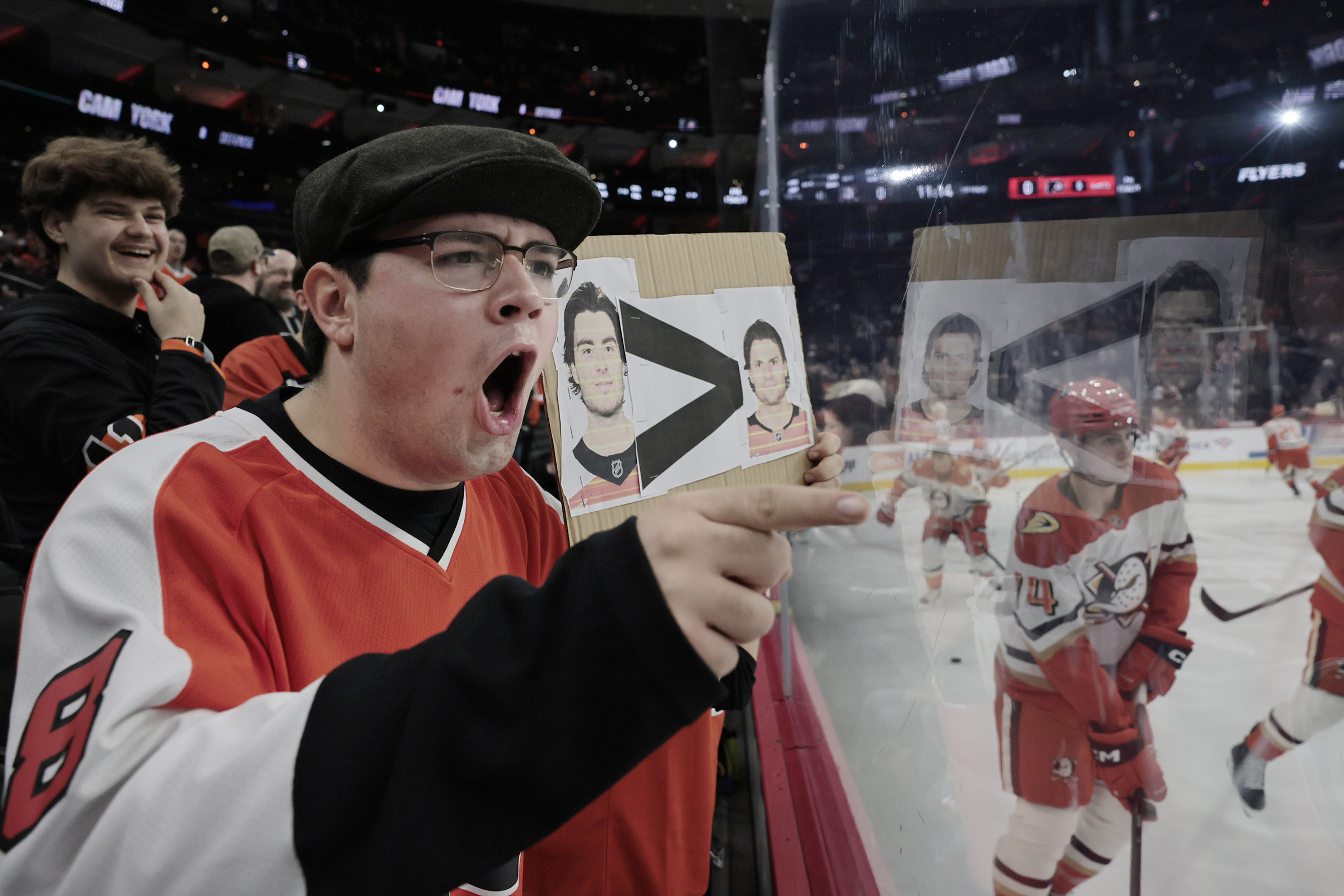
    Colin Meehan, a 19-year-old St. Joseph’s student, came armed with a sign he made with a picture of Jamie Drysdale and a picture of Gauthier to support the player the Flyers received in the trade out of Philly that Gauthier forced nearly two years ago.

    Drysdale is having the best season of his young career, but Meehan still wondered pregame what could have been if Gauthier hadn’t asked out.

    “Imagine if we had Trevor Zegras, [Matvei] Michkov, Cutter, [Travis] Konecny, we would have been unstoppable,” Meehan said. “I feel like we would have been first in the league.

    “Jamie, he’s not a quitter,” Meehan added. “I’ll tell you that. He tried with the Ducks. The Ducks didn’t want him. We’ll happily take him.”

    St. Joseph’s student Colin Meehan yells at Anaheim’s Cutter Gauthier as he skates by during warmups before Tuesday’s game.

    While Gauthier still got a healthy round of boos as the Ducks took the ice for warmups, most of the signs lining the glass weren’t about him at all. Many celebrated the addition of former Duck Trevor Zegras, who was playing his first game against his old team.

    Gauthier did have a small group of supporters in the form of two Boston College students from Philadelphia who, for the second year in a row, made a sign supporting the player who’d brought their college hockey team to the national championship game.

    “I think it’s a lot to put on someone who’s 21, 22 years old,” one of the students said. “It might be really loud in here and people are rooting against you, but there is someone in the building who’s rooting for you.”

    Compared to his first game here last year, the proceedings in warmups were civil. Instead of a raucous crowd shouting expletives the entire warmup, fans mostly stayed quiet after the Ducks had taken the ice.

    When the puck dropped, though, fans started chanting “We want Cutter!” Once Gauthier was on the ice, he was greeted by a loud chorus of boos.

    But Gauthier quieted the crowd by scoring the first goal of the game to give Anaheim an early lead, and he gave it back to the crowd.

    Not to be outdone, Zegras scored against his former team to tie it at 1 later in the first, and then hung up the phone on the Ducks, which he said postgame was meant to mimic the length of the phone call he got when he found out he was getting traded.

    Zegras scored his second goal of the game from the same spot a few minutes later, pumping up the already-juiced crowd even more.

    “This is home for me,” Zegras said. “I love being here. These guys are amazing. I’m having a blast, but it’s always going to feel good playing them for sure.”

    But the game took a more somber turn after Ross Johnston checked Drysdale behind the play. Drysdale was down on the ice for a long time and nearly left the game on a stretcher, but he ultimately stood up and left the ice on his skates with assistance. The crowd rang out with a supportive “Jamie’s better” chant.

    Anaheim’s Cutter Gauthier carries the puck during second period while facing the Flyers on Tuesday.

    Drysdale’s injury took some of the bite out of the crowd, but, as the game continued, Flyers fans got back in the hating spirit.

    As the Flyers closed out their win, chants cursing Gauthier continued to ring out, and the team left the ice to a standing ovation from the sold-out crowd.

    It wasn’t quite as raucous as a year ago, but the crowd still created a playoff-type atmosphere. Cam York said postgame that what’s important now is continuing to play meaningful games so that Xfinity Mobile Arena doesn’t get loud only once a year.

    “Pretty crazy, great atmosphere, felt like a playoff game,” York said. “It was really cool, a little bit different when there’s so much noise during the play, but I think I’d probably rather have it that way.”